


Spring arrives in Greece with an almost reckless urgency – as if determined to compensate for every color, every fragrance, every shaft of light that winter withheld. It is the season when nature blooms without apology, when rivers stir and run full again, when gorges fill with the sounds of wanderers and trails unspool like green ribbons, beckoning the traveler to follow.
Every season transforms a landscape, but spring does it irresistibly. Across the country – from Thessaly and the Peloponnese to Epirus and Macedonia – there are places that, at this time of year, feel more alive than ever. Small pauses along the way, moments to look around, listen to the water, take a sip of AQUA Carpatica, and keep going.
Photography: Filia Dimitriadi, Costis Aggelopoulos, Nikos Kokkas, Armondos Kyriakis
01
1. Verligka: The Alpine Plateau That Only Blooms in Spring
#SeasonalLake #Pindus #AlpineHiking
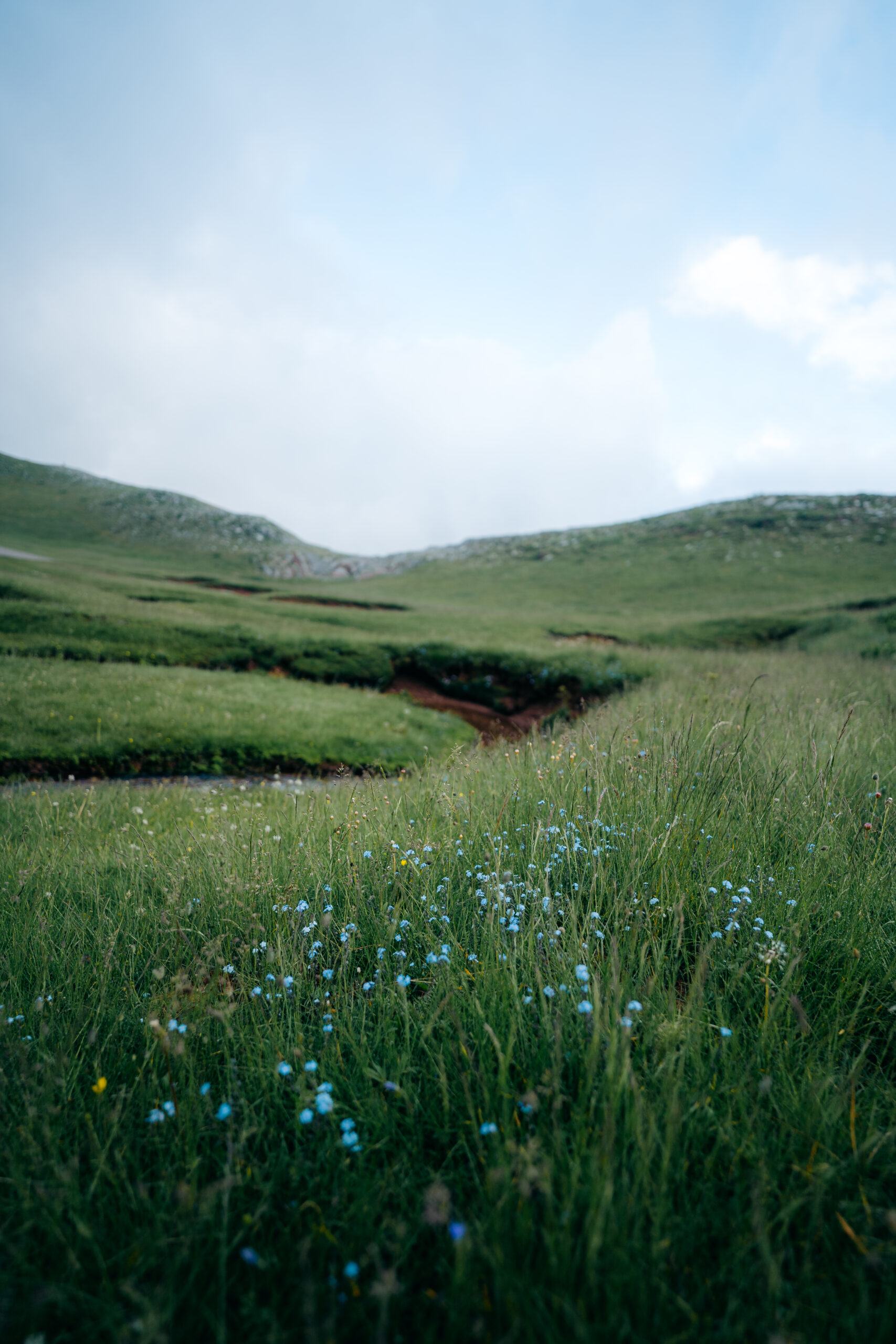
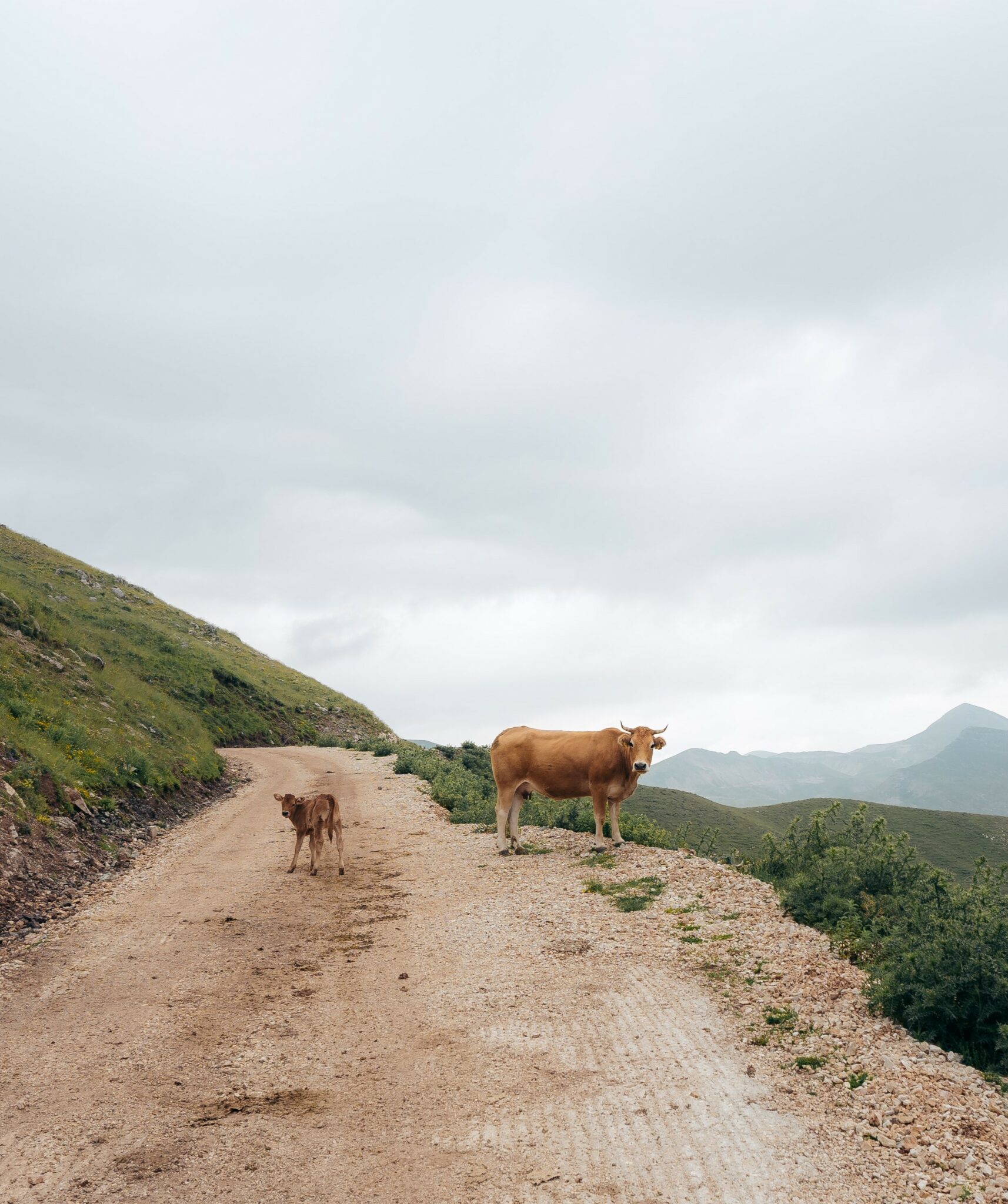
Perched on the summits of Mount Lakmos, Verligka is a place of pronounced alpine identity, set apart within the mountain landscape of Pindus. Each year, a seasonal lake forms and shifts according to the snow and rain. Its meandering shapes are carved by waters descending from the slopes, spreading into the natural hollows of the plateau. The ascent begins from Chaliki, one of the characteristic villages of Aspropotamos, and passes through fir forests, grazing lands, and streams – until, quite suddenly, the alpine panorama opens before you. At an elevation of roughly 2,050 meters, framed by Megas Trapos and Tsoukarela, Verligka reveals one of the most singular images in all of Pindus.
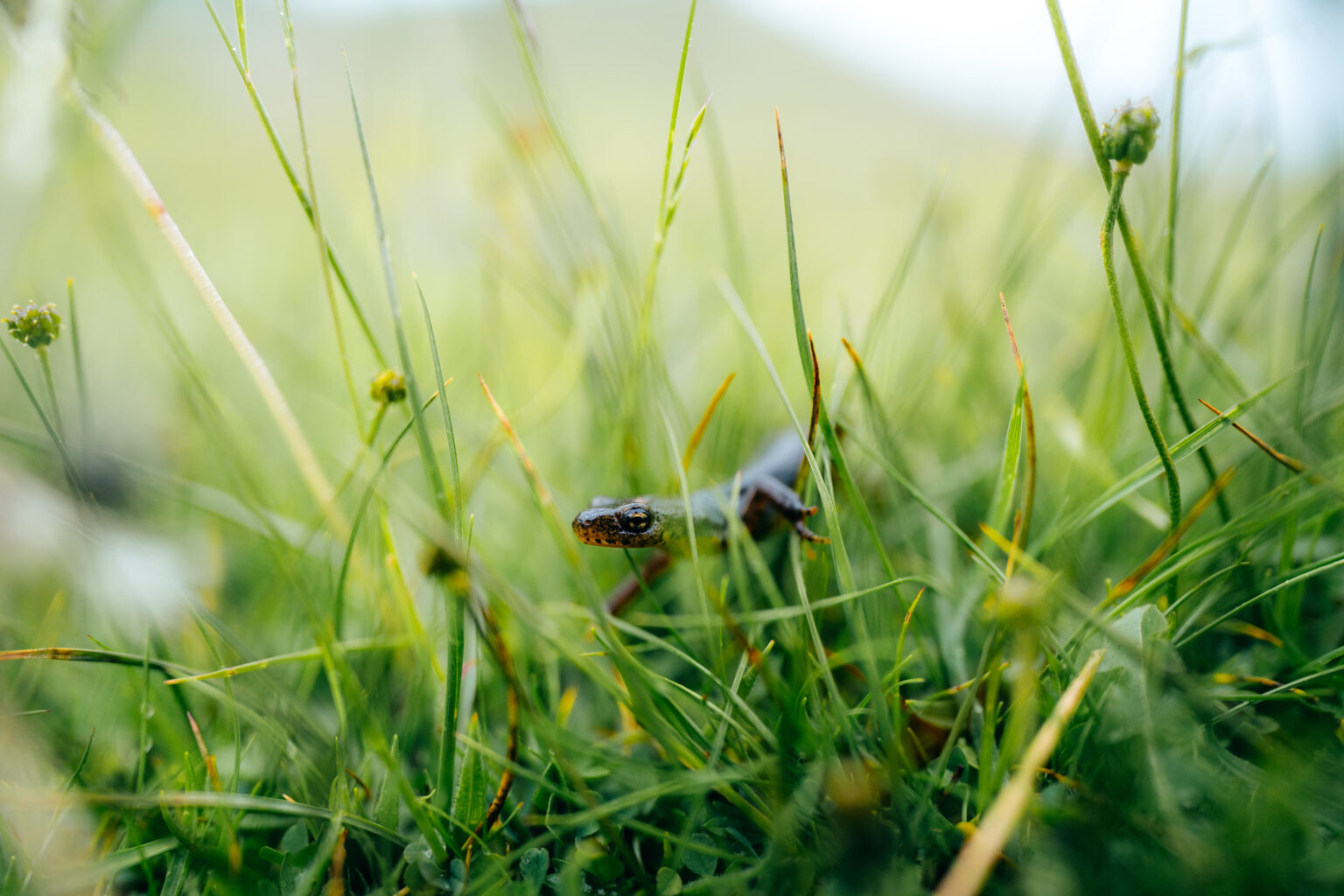
Here, where local lore once linked the landscape to legends of dragons, rare amphibians now thrive in the alpine environment, inhabiting the seasonal formations of the lake. Blooming cyan wildflowers, buttercups, and crocuses paint the slopes. This is a landscape in constant flux throughout spring – a phenomenon that appears for a limited window, typically from May through early summer, before the waters recede and the plateau returns to its familiar form. Verligka remains one of the most authentic alpine places in Pindus.
02
Veria: The Pink Peach Orchards of Northern Greece
#PeachBlossoms #NorthernGreece #SpringBlooms
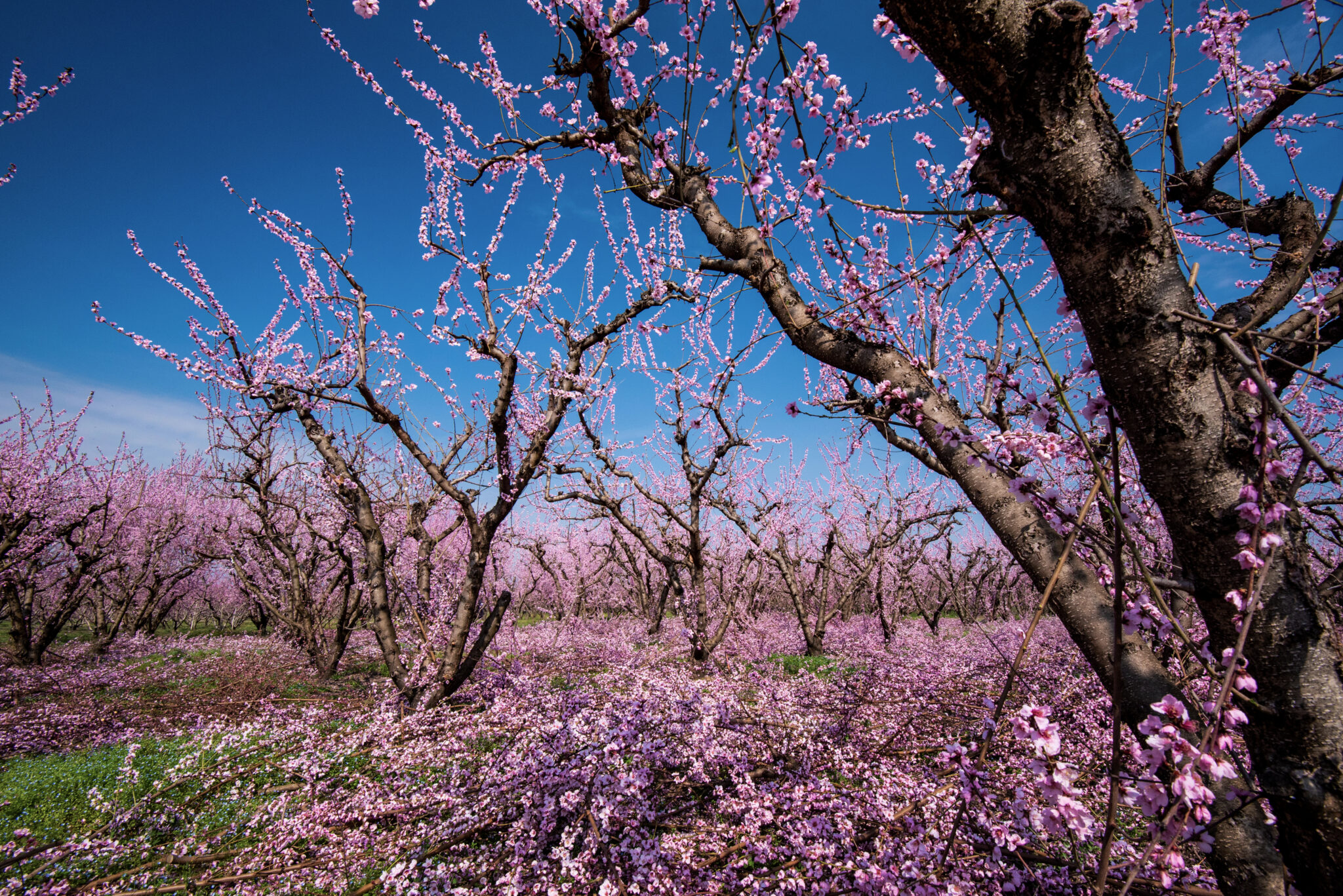
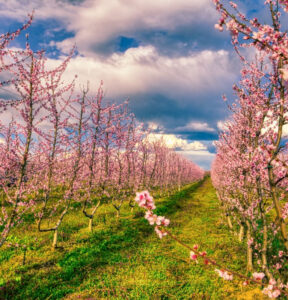
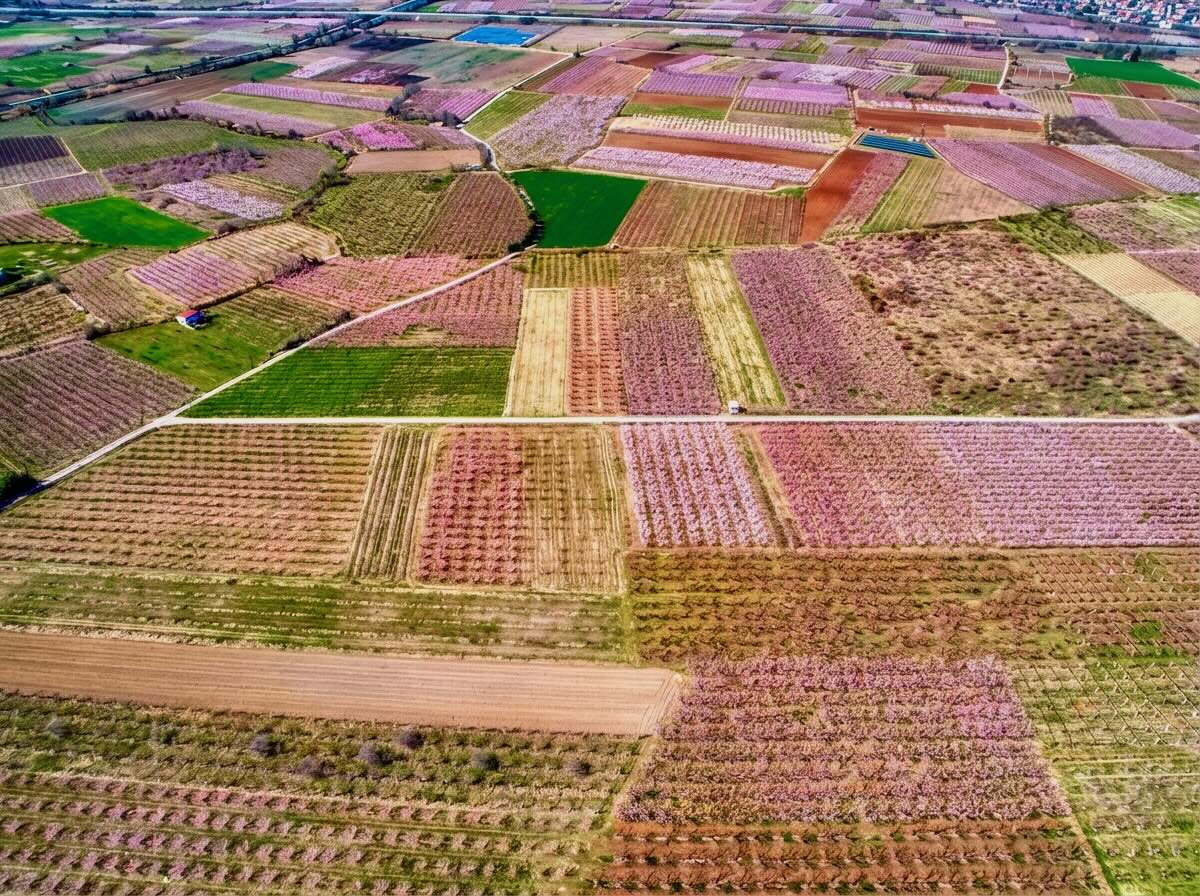
In spring, Veria shows its most romantic face. Thousands of acres of peach trees flood the plain of Imathia, creating a landscape reminiscent of Japanese cherry blossom season – with an unmistakably Greek identity. The trees bloom almost simultaneously, turning the terrain into a vast expanse of pink and white. Roads cut through this celebrated scenery, and those who understand the rarity of the moment have planned their route among the peach groves well in advance. Every year, events are organized, and pink petals drift through the air, composing a scene synonymous with spring in northern Greece.
Hikes, cycling routes, and photography competitions are arranged annually in celebration of the blossoming trees. Each March, the plain of Imathia becomes an open field of natural experience, where visitors do not merely observe the landscape – they become part of it. Herodotus noted that in the broader region lay the “Gardens of Midas,” at the foothills of Mount Vermio, where, according to tradition, roses with sixty petals and an intense perfume once grew.
03
Neda Waterfalls: The Mythical Gorge of the Peloponnese
#HiddenWaterfalls #GreekMythology #GorgeHiking
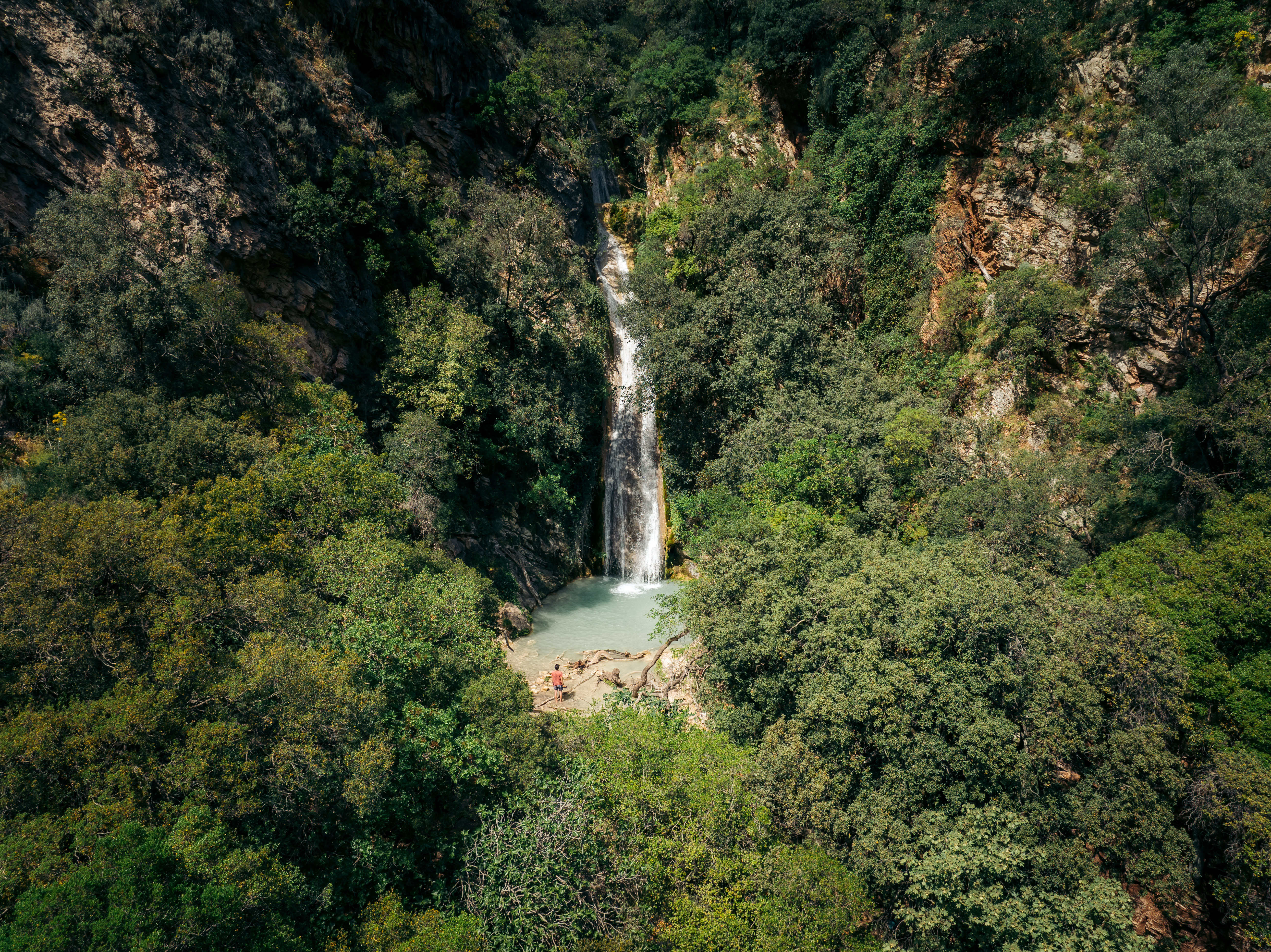
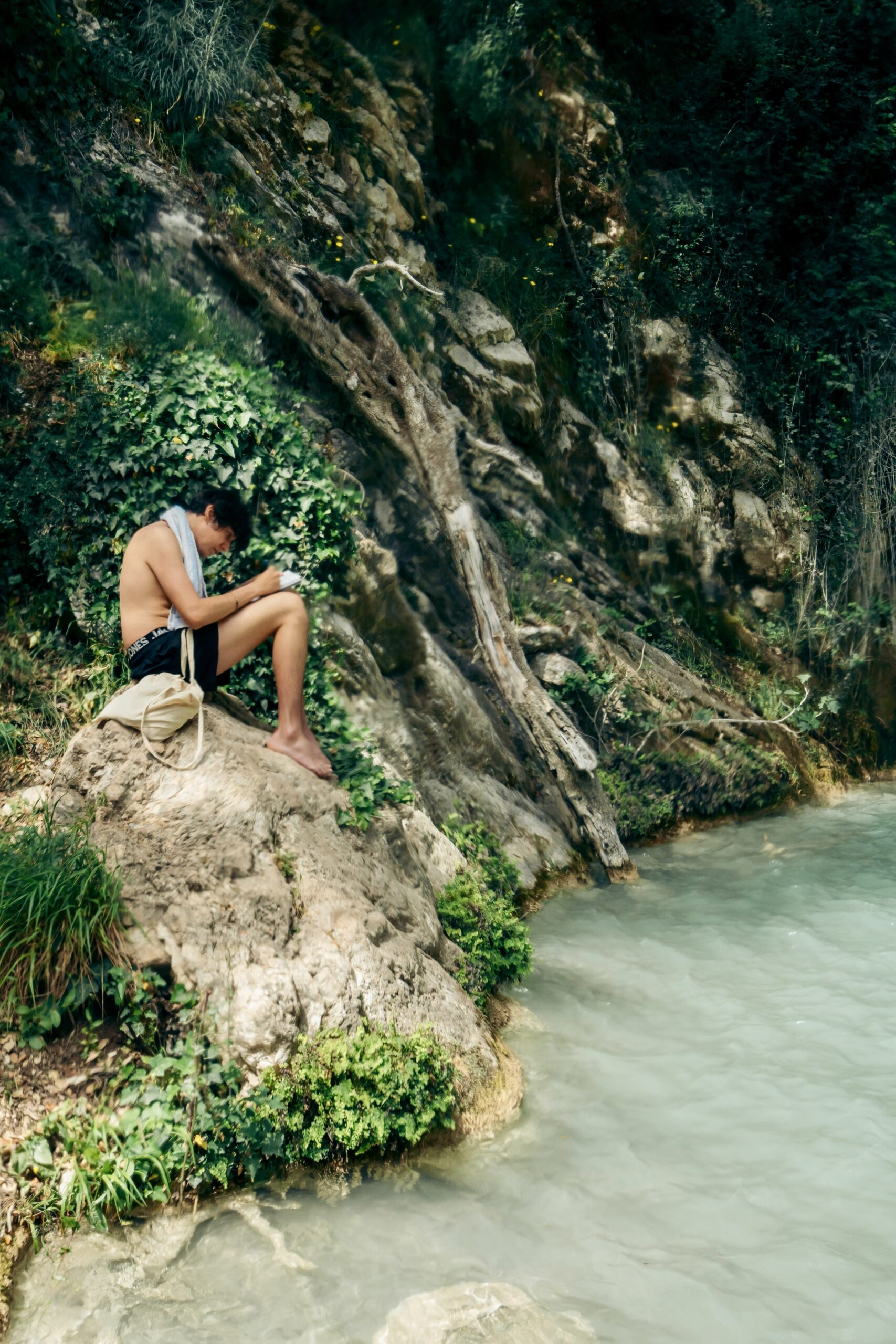
The river Neda is a living myth – a natural boundary between Ilia and Messinia, and one of the most enchanting spring destinations in the Peloponnese. As winter yields to spring, the nature surrounding the gorge awakens in spectacular fashion. The water strengthens, rushes ceaselessly, plummets over waterfalls, and swirls into pools and natural basins. The plane trees are reborn, wildflowers rise with vigor, and the rocks dress themselves in moss. The sound of water becomes the backdrop of the journey, a natural rhythm that seems to follow you everywhere.
The river Neda – one of the very few rivers in Greece bearing a feminine name – passes through a gorge roughly 32 kilometers long before emptying into the Gulf of Kyparissia. It is a landscape sculpted by water and time, full of narrow trails, lakes, pools, and natural swimming holes. Neda’s most impressive waterfall drops from a height of approximately 20 meters, embraced by water-loving plants and trees. Its waters land in a blue-green pool — ideal for a spring plunge, for those who can endure its invigorating chill. According to myth, Neda was the nymph who cared for and protected the infant Zeus, lending the river’s course a dimension of legend.
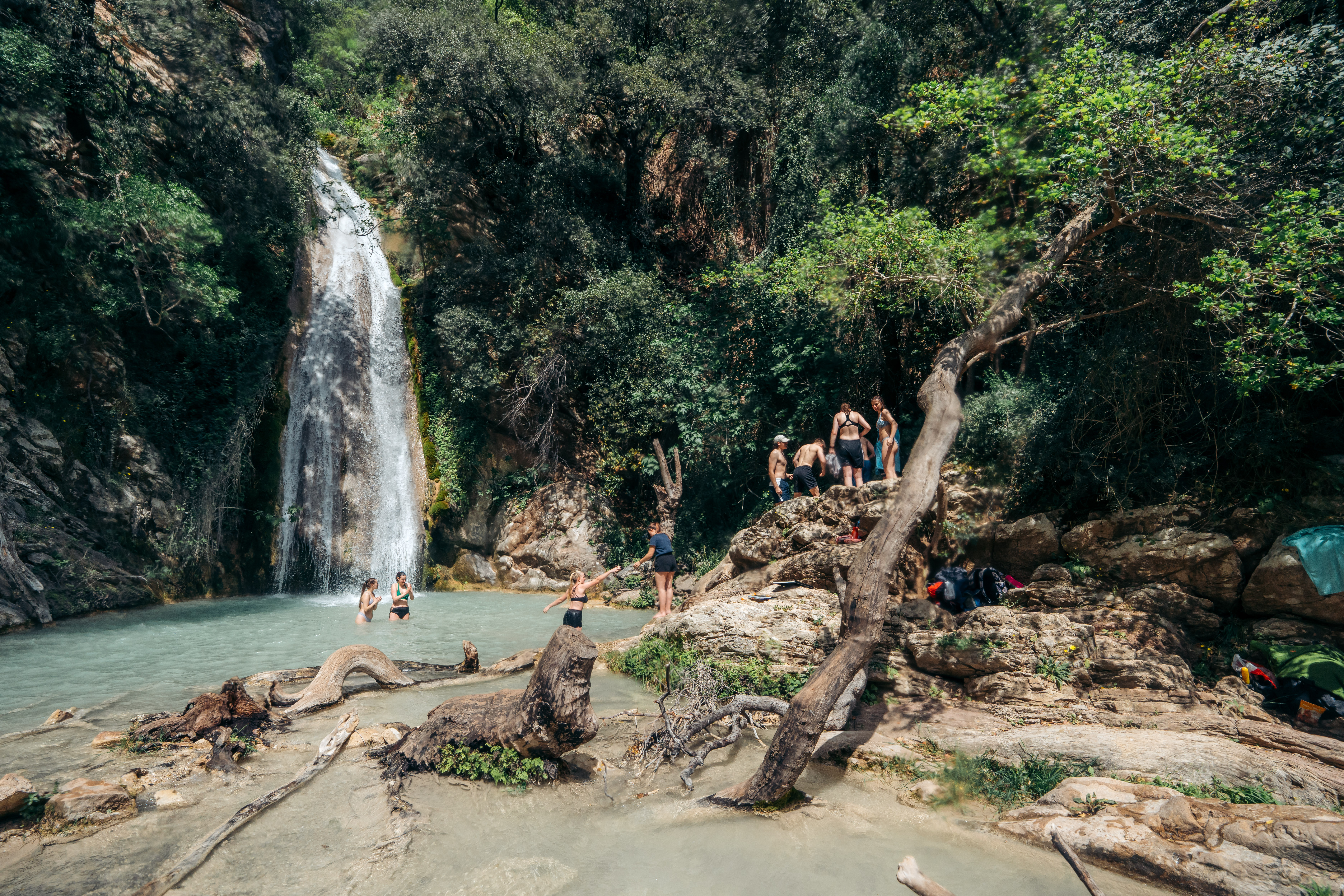
Access is straightforward: either from the village of Platania, via its short trail, or from the traditional settlement of Figaleia. Whichever route you choose, the experience leaves a lasting imprint. Hiking through the gorge, every turn reveals a new facet – small waterfalls, pools in shades of turquoise, old stone bridges, and roots that clasp the earth. In spring, Neda is generous: far from the summer crowds, she offers her cool waters in the very place where, as the story goes, nymphs once washed their hair.
In such a route, a bottle of AQUA Carpatica in your backpack becomes a true ally to the hike.
04
Lake Plastira: The Mountain Mirror That Changes With the Light
#MountainLake #Agrafa #SpringInGreece
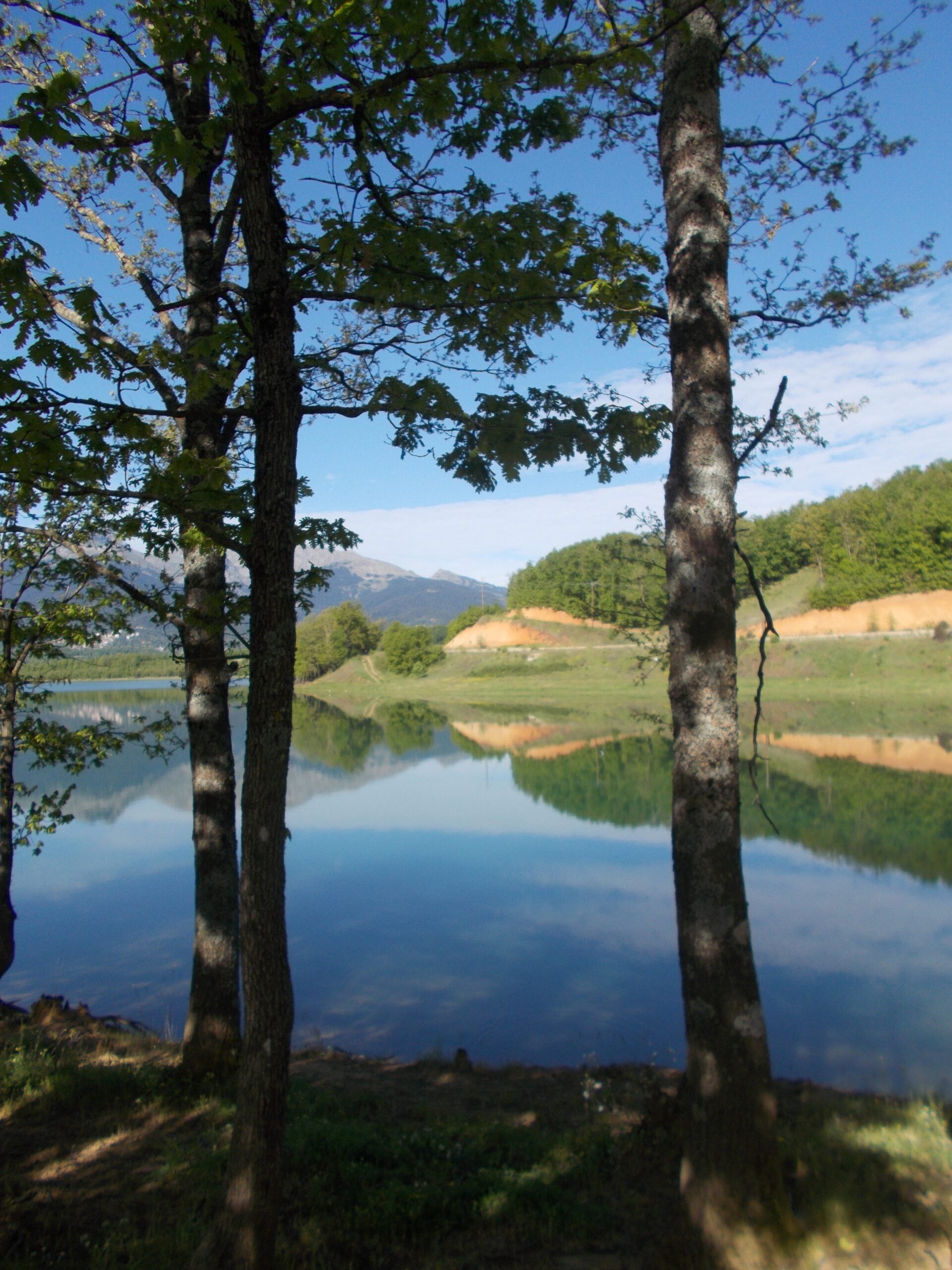
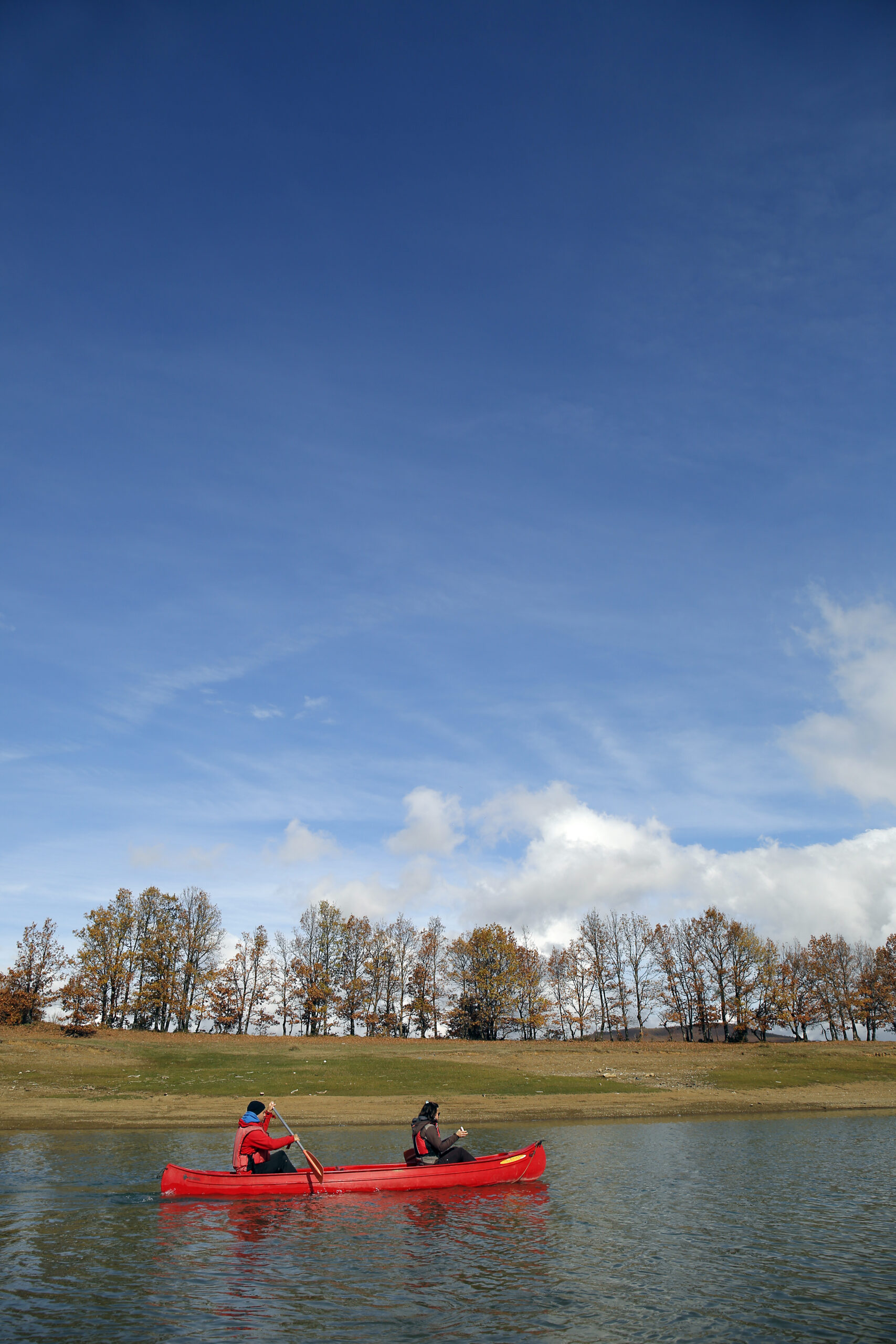
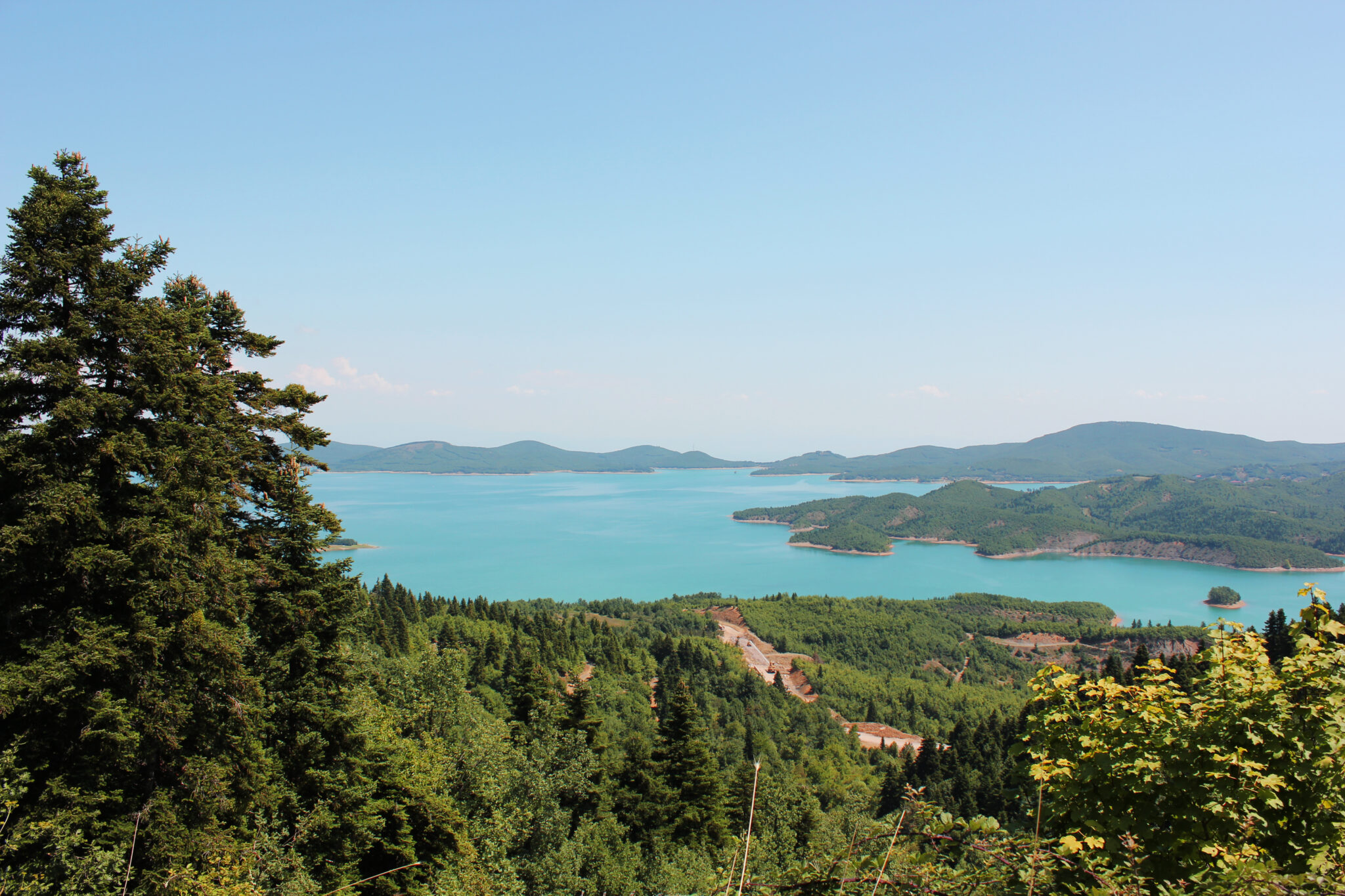
At the heart of this seasonal transformation lies Lake Plastira – a place awash in blossoming firs and chestnut trees. The air fills with the scent of fresh leaves, the waters mirror the clear sky, and the sounds of nature grow louder once more, completing the landscape’s sense of renewal.
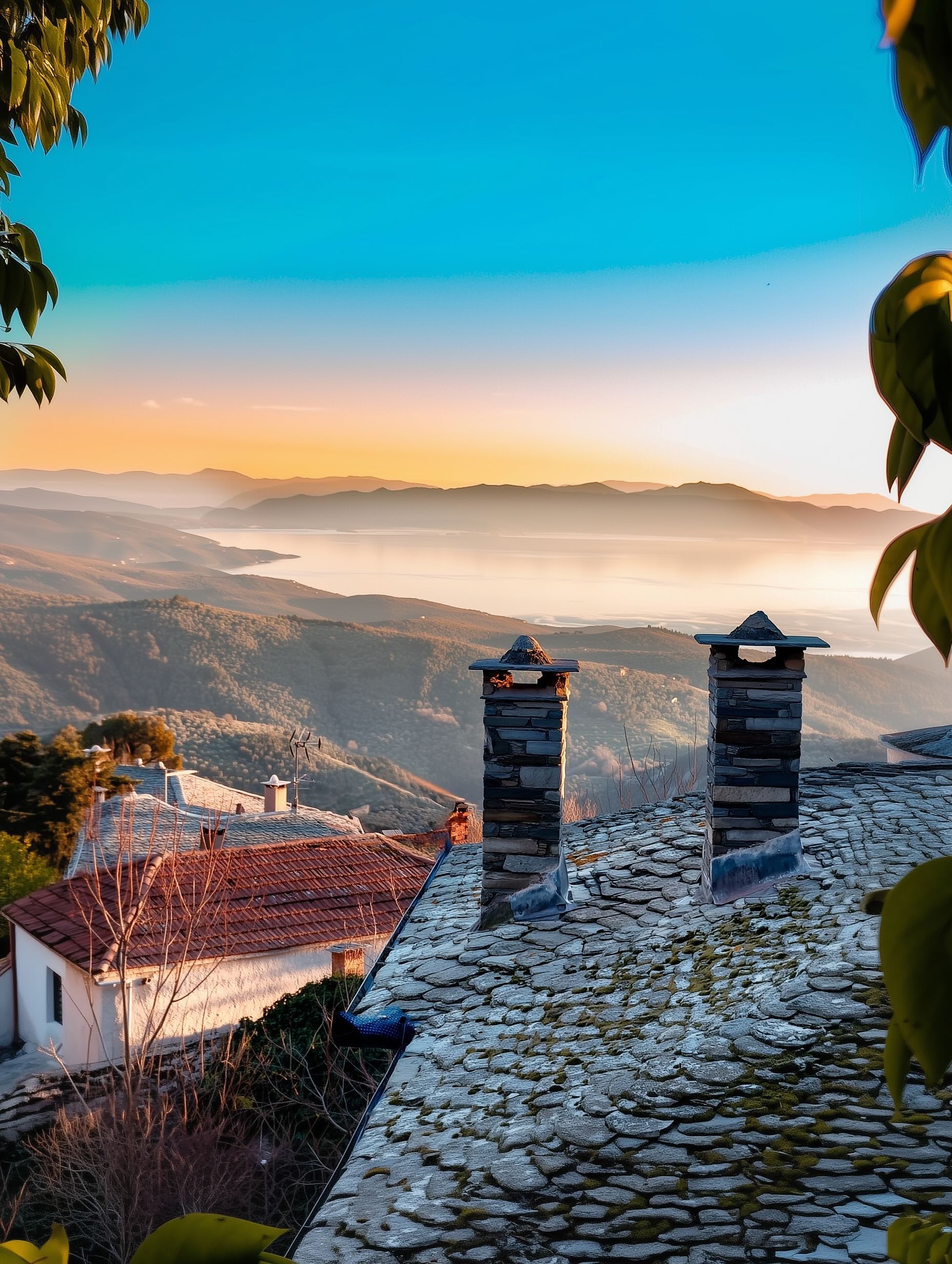
Nestled among the peaks of the Agrafa range, at an altitude of roughly 800 meters, the lake offers images that shift constantly with the light. In the morning, a soft mist veils the surface of the water; at midday, the deep green of the mountains reflects in the lake; and at dusk, the warm tones of the sun paint the scene in gold and pink. Spring here lends itself to outdoor pursuits: cycling around the lake, hiking along forest trails, and pausing at panoramic viewpoints. The surrounding villages – Neochori and Kastania among them – round out the picture with genuine hospitality and local flavors. It is a destination defined by stillness, one that invites you to draw a breath and experience spring in its natural element.
Spring in Greece feels like a promise of rebirth – a reason to step outside again and explore the world with a different gaze. The pink plains of Veria, the watery meanders of Verligka, the mythical waterfalls of Neda, and the reflections of Lake Plastira fill the country with color, sound, and fragrance. Together, they compose the Greek spring as it deserves to be lived.