


 The
The










Greece from Above

PLAY FULL VIDEO




We Love Travel.gr
Share your email with us to receive our newsletter with frequent doses of travel inspiration






PLAY FULL VIDEO
Share your email with us to receive our newsletter with frequent doses of travel inspiration
The Municipality of Kimolos maintains the current list of local emergency and service contacts.
Verify seasonal timetables, opening hours and reservations directly before traveling. On Kimolos, weather and the rhythms of a very small island still shape the day. That remains the strongest reason to go.
Read more about what matters now and during your visit:
Milos: The Complete Guide
From Sarakiniko and Kleftiko to Plaka, Pollonia and the island’s volcanic history, everything you need to explore one of the Aegean’s most cinematic destinations.
Serifos: The Cycladic Art of Keeping Things Simple
Discover the beaches, food, mining landscapes and design-led stays transforming understated Serifos into the Cyclades’ quietly ascendant island.
Astypalaia: A Guide to the Aegean’s Butterfly Island
A complete guide to the spectacular Chora, secluded beaches, local cooking and contemporary spirit of the Aegean’s butterfly-shaped beauty.
Prassa: Kimolos’ Postcard-Perfect Beach
White sand, dazzling turquoise water and an otherworldly mineral landscape make Prassa one of the most memorable beaches in the Cyclades.
The Traditional Pies of Kimolos
From tomato-rich ladenia to local cheeses, breads and handmade pasta, a delicious introduction to Kimolos’ distinctive culinary traditions.
Just 15 minutes by ferry from Paros, Antiparos is a slip of Cycladic limestone with about a thousand year-round residents and a talent for understatement. Whitewashed lanes corkscrew past bougainvillea and blue doors; tamarisk-fringed beaches give way to water the color of blown glass. In the afternoon, the island slows: octopus dries on lines, backgammon clacks in the shade, and cats thread the alleys like locals. By evening, dinner tables lengthen toward the quay and conversations drift until the stars take over.
In recent years, Antiparos has found itself newly on the map — a quiet darling of the jet set — with discreet villas tucked into the hills and low-key restaurants that hum through August. Yet the island’s core remains stubbornly simple: a cave at its heart, a castle at its center and a horizon that refuses to be hurried. Greece, yes — but tuned to an older frequency, where the wind keeps time and the sea edits out the noise.
The Port welcomes you with the essence of Cycladic charm: whitewashed cubic houses cascading towards the water, fishing boats swaying in the blue, and an airy, unhurried atmosphere that resets your pace on arrival. Chora, the main village, stretches along the northwest coast like a set designed for summer.
Narrow lanes open into shaded squares where cafés double as meeting points and tavernas still cook the traditional way. Shops offer handmade keepsakes, and locals share real stories. Antiparos has held onto an authenticity that’s rare in today’s Aegean.
Though just 35 square kilometres, Antiparos’ coastline delivers range. Psaralyki—two adjoining beaches—is the island’s social hub, with loungers, umbrellas, and beach bars easing into sunset with chilled playlists.
For seclusion, Faneromeni at the southern tip is pure quiet—golden sand, clear water, and only the sound of waves. Glyfa, near the island’s celebrated cave, offers easy access, crystalline shallows, and breezes perfect for windsurfing. And then there’s Sifneiko, or “sunset beach,” where the horizon flares gold and rose each evening.
Below the island lies one of Greece’s most striking caves. First recorded in the 15th century, it draws visitors for its monumental stalactites and stalagmites, formed over millions of years into a natural cathedral.
The 85-metre descent is both adventure and revelation—the formations a testament to nature’s patience, the stillness inside a reminder to pause.
Local cooking balances tradition with new ideas. In seaside tavernas, fish and seafood arrive simply grilled over charcoal, finished with olive oil, lemon, and oregano. Meze carries its own character here: stuffed vine leaves, marinated octopus, tomato fritters, fava—paired with slow sips of ouzo or tsipouro as the Aegean stretches ahead. Younger chefs have brought fresh techniques, making the dining scene as rewarding for purists as for culinary explorers.
After a day steeped in salt and sun, Antiparos’ dining scene beckons with its growing mix of flavors and moods. At Captain Pipinos, the catch of the day arrives straight from the sea, while Vassilenas Blue Antiparos refines Greek cuisine into an elegant seaside affair. In Chora, Kalokeri reimagines beloved classics with contemporary finesse, and Yam—tucked behind the bustle of the main street—invites you into its leafy garden for leisurely brunches and eclectic plates.
When evening falls, the island’s central promenade stirs to life. Beneath cascades of bougainvillea, sip a well-made cocktail at Boogaloo as the Aegean breeze drifts through, carrying music from nearby bars.
Down at Soros, The Beach Club blends languid luxury with panoramic sea views and polished Cycladic style. For a shift in rhythm, Beach House Antiparos offers yoga at sunrise and massages in the shade, while Time Marine channels a Bali-inspired energy, all sandy feet and late-night beats.
Since 1981, La Luna disco has been the island’s late-night institution—a blend of vintage styling and modern beats where nights blur into early mornings.
The Venetian Castle, with its thick defensive walls and houses built into the fortifications, recalls a time of maritime power. Inside, a lattice of lanes and courtyards offers shade and history in equal measure.
The Historical and Folklore Museum gathers objects from daily island life across centuries—tools, jewellery, and clothing that trace a community’s quiet resilience.
A short boat ride away, uninhabited Despotiko reveals both archaeological intrigue and natural beauty. Excavations have uncovered the remains of a sanctuary to Apollo, while the beaches remain pristine.
Antiparos is not just a place to visit—it’s a community that has preserved its rhythms and values. Fishing and herding still shape livelihoods, children play in the squares, and traditions pass unbroken through generations.
Its greatest asset is not just beauty but a genuine way of life—one that moves at its own pace, values human connection, and welcomes discovery. In an era of over-tourism, Antiparos stands as proof that an island can evolve without losing itself.
" ["post_title"]=> string(60) "Antiparos Guide: The Cycladic Island That Honors Its Secrets" ["post_excerpt"]=> string(114) "Some destinations slip into your itinerary almost by accident - and become its highlight. Antiparos is one of them" ["post_status"]=> string(7) "publish" ["comment_status"]=> string(6) "closed" ["ping_status"]=> string(6) "closed" ["post_password"]=> string(0) "" ["post_name"]=> string(15) "antiparos-guide" ["to_ping"]=> string(0) "" ["pinged"]=> string(0) "" ["post_modified"]=> string(19) "2026-07-13 22:34:49" ["post_modified_gmt"]=> string(19) "2026-07-13 19:34:49" ["post_content_filtered"]=> string(0) "" ["post_parent"]=> int(0) ["guid"]=> string(31) "https://www.travel.gr/?p=481448" ["menu_order"]=> int(0) ["post_type"]=> string(4) "post" ["post_mime_type"]=> string(0) "" ["comment_count"]=> string(1) "0" ["filter"]=> string(3) "raw" ["post_views"]=> string(4) "4983" } [21]=> object(WP_Post)#5481 (25) { ["ID"]=> int(558805) ["post_author"]=> string(2) "19" ["post_date"]=> string(19) "2026-07-21 16:43:58" ["post_date_gmt"]=> string(19) "2026-07-21 13:43:58" ["post_content"]=> string(64488) "Leros sits between Kalymnos and Patmos, closer to Turkey than to Athens, and greener than almost anywhere else in the Dodecanese. Pine, oak, olive and eucalyptus climb hills that elsewhere in the Aegean would be scorched to bare rock. The island rarely feels like one place. It unfolds instead as a scatter of bays and villages, each keeping its own mood, its own light, joined by roads short enough to drive without thinking twice. Renting a car here isn't a convenience; it's how the island actually opens up.
What gives Leros its texture is history, layered rather than curated. Above the capital, an 11th-century Byzantine castle still holds the high ground. Below, Lakki survives almost untouched, a town of 1930s Italian rationalist architecture built when the island served as Mussolini's naval base in the Aegean, its wide avenues looking more like interwar Rome than the rest of the Dodecanese. Just outside town, the War Museum of Merikia sits inside the same tunnels where the Battle of Leros played out in 1943, rock walls still bearing the weight of what happened there. The century held harder chapters too, taken up later in this guide.
None of it was built for an audience. Leros works for a living. Travelers who slow down find it rewarding anyway.
Agia Marina is the island's second port and the arrival point for hydrofoils and catamarans, its 19th-century Italianate waterfront lined with cafés and restaurants. It sits almost fused with Platanos, the capital, just ten minutes uphill, and with Panteli, the old fishing village on the other side, both gathered beneath the hill of Pityos and its castle.
Lakki, a few kilometers south, is the island's main port and its most distinctive settlement: a planned Italian town from the 1930s, wide avenues and rationalist civic buildings still standing much as they were built, closer to an open-air museum than a present-day port town, which remains very much a working one.
Alinda, on the opposite side of the island, is the busiest resort village, spread along a long sandy bay with most of the tourist infrastructure. Vromolithos, Xirokampos, Gourna and Partheni round out the map, each quieter, greener and more spread out than the last.
Platanos, Agia Marina and Panteli feel more like one continuous settlement than 3 separate villages, linked by short walks along the slopes of Pityos Hill. Platanos itself centers on a small square shaded by its namesake plane tree, with the town hall on one side and a scatter of shops and kafeneia on the others; the atmosphere is unhurried, an active island capital rather than a resort. Panteli, just below, keeps its identity as a fishing village, with boats still pulled up along the small harbor beneath the castle walls, and a small chapel of Agios Ilias just behind the castle that makes a quiet spot to watch the sun set over Alinda Bay.
Lakki is a village to stroll rather than rush through. Built as Portolago, the Italian naval station, in the 1930s, it remains one of Greece's only intact examples of Italian rationalist town planning: the former Naval Administration building, the covered market with its circular atrium and clock tower, and the church of Saint Nicholas, originally Catholic, all still stand, laid out around wide avenues and eucalyptus-lined squares that feel closer to interwar Italy than to the rest of the Dodecanese. Alinda, by contrast, is Leros at its most relaxed and social: a mile-long beach lined with tamarisks, cafés and restaurants, with the twin-towered Belenis mansion, now a museum, anchoring its northern end.
The War Museum at Merikia, just outside Lakki, is Leros's essential stop: a genuine Italian ammunition tunnel from the 1930s, its winding rock-cut corridors now lined with weapons, uniforms, photographs and personal letters from the Battle of Leros, with a small military park of decommissioned vehicles and a fighter plane outside. It is a sober, unsentimental account of one of the bloodiest engagements fought in the Dodecanese, and worth the visit even without a particular interest in military history.
In Alinda, the Belenis Tower, a fortified 1920s mansion built by an expatriate benefactor, houses the island's Historic and Folklore Museum: embroideries, traditional costume, wood-carved icons and domestic objects from Leros's prosperous bourgeois period around 1900, alongside a small WWII-era hospital room preserved from when the tower briefly served as a field hospital.
The Archaeological Museum in Agia Marina, built with funding from the Lerian expatriate community in Cairo, holds coins, inscriptions and grave stelae spanning the island's ancient history, while the Ecclesiastical Museum, set inside the castle itself alongside its underground cisterns, keeps a collection of rare manuscripts, vestments and icons.
Above it all, the Castle of Panagia, Byzantine in origin and rebuilt under the Knights of St John, still holds an annual festival inside its walls each August. A second, older fortress, the Castle of Lepida, stands above Xirokampos on the island's oldest inhabited hilltop, its fourth-century chapel floor still holding fragments of an early mosaic.
Two smaller sites round out the island's harder history. Near Partheni, excavations have uncovered the remains of a Hellenistic-era sanctuary believed to honour Artemis, for whom the island was known in antiquity, layered beneath an early Christian church built from the same reused stone. Nearby, the tiny blue-domed chapel of Agia Kioura was decorated by political prisoners, among them the resistance figure Manolis Glezos, held at the Partheni army base during Greece's 1967-74 military dictatorship, and is now a protected monument.
Leros's most difficult modern history is also among its most significant. From 1957, a state psychiatric institution operated near Lakki, eventually holding well over a thousand patients transferred there from institutions across Greece, many with no remaining family contact. Conditions inside deteriorated badly over the following decades and remained largely unknown outside the country until 1990, when a British newspaper investigation and a Channel 4 documentary "Island of Outcasts" exposed severe overcrowding and neglect, prompting international outcry and European Union-backed reform. The long-standing medical neglect became a turning point for psychiatric care across Greece, as patients were gradually moved into smaller, community-based housing through the 1990s. It is not a tourist site, and this guide does not treat it as one. Yet this history remains essential to understanding Leros, alongside the island's wartime past and Italian-era architecture.
Leros keeps its coastline uncrowded, and that alone shapes how each bay feels. Dyo Liskaria sits at the far end of the Alinta gulf, sheltered enough that even a strong meltemi barely ruffles the water. Sand gives way to fine pebble underfoot, tamarisk trees lean in for shade, and a beach bar tucked among them (Zephyros, with hammocks strung beneath the eucalyptus trees) keeps the pace relaxed. Families favor it in the morning; the crowd shifts younger by late afternoon.
Blefouti lies at the opposite end of the island, near the airport at Partheni, and is the quieter counterpart. Offshore, one of the more accessible wartime relics in Leros waters, a German bomber downed in 1943, rests close enough to shore to be reached with a snorkel rather than diving equipment. It is easy to miss and worth asking locally for current guidance before swimming out.
Xirokampos, on the southern coast facing Kalymnos, is the largest of the three and the most geared toward staying a while, with a diving center, several campsites, and water deep enough close to shore to draw divers rather than paddlers. A short walk east brings you to the chapel of Panagia Kavouradena and a smaller rocky cove beside it, for anyone who finds even Xirokampos too busy.
For a change of scenery entirely, the White Islands (Aspronisia) are a cluster of low limestone islets a short boat ride from Agia Marina, their pale rock throwing the water into an improbable turquoise. Wooden caiques run there daily through the summer, usually combined with a stop at Archangelos for lunch; a seat is best booked the afternoon before, directly at the port. No ferry timetable applies, and no two operators keep quite the same hours, so asking at the harbor still works better than searching online.
Leros is an island full of experiences and activities, and hiking and cycling are among the best ways to experience it. The climb up from Platanos to the Kastro, the fortress crowning the island, follows roughly 500 steps through the lanes of Agia Paraskevi, past the scent of wild thyme, before delivering a view over both coasts at once; islanders still make the ascent as a pilgrimage to the chapel inside. Further south, the trail from Xirokampos up to the summit of Skoumbardos climbs an old zigzagging dirt road through Italian-built gun emplacements and barracks left over from the 1943 battle, with Kalymnos filling the horizon from the top.
A gentler coastal path from the same starting point leads along the water to the chapel of Panagia Kavouradena, its stone approach kept in good repair by the municipality, with the option to continue inland toward the ruins at Paleokastro.
Cycling has become the quieter counterpart to all this walking. Leros holds official Bike Friendly status, with its own Cycling Club, and the municipality has mapped and signed a genuine network rather than a handful of token routes; laminated copies turn up at the tourist information points near the port. The flattest riding links Merikia, Lakki, Temenia and Xirokampos, an easy loop past the rationalist Italian architecture of the old capital that suits a first afternoon on two wheels.
Leros Bikes, based in Lakki, rents both standard and electric bicycles and runs guided tours graded from historical rides through soft, hard and full mountain-biking outings, with child seats and trailers available for families.
The island's biggest religious feast is Panagia tou Kastrou, celebrated at the castle church above Platanos on August 14 and 15, drawing crowds from across Leros for the vigil and procession. Agia Marina keeps its own two-day feast on July 16 and 17, filling the harborfront with music and food. At Xirokampos, the feast of Agios Fanourios on August 26 and 27 is one of the liveliest on the calendar, traditionally including a reenactment of grape-treading as part of the island's wine-making customs.
Holy Week has its own local rhythm: on Good Friday, three separate epitaphios processions, from the churches of the Annunciation, Agia Paraskevi and Christ, converge in the streets of Platanos in one of the more striking small-island Easter traditions in the Dodecanese. Each August, Alinda also hosts the Alindeia, a nautical sports festival now in its ninth decade, built around swimming and other water-based competitions along the bay.
Mylos By The Sea, set in front of a working windmill on the Agia Marina waterfront, is the most acclaimed table on Leros, awarded a Top Notch distinction in Athinorama's 2026 Golden Hats. Run by two brothers, one of them chef, it specializes in dry-aged and raw seafood technique alongside grilled fish and an unusually serious wine list, and books out fast in summer.
Psaropoula, on the beach at Panteli, has been run by the same family since 1962 and remains Leros's most enduring seafood address, its tables close enough to the water that the waves reach the front row. Psaropoula's stewed octopus and lobster spaghetti, now something of a local legend, are the dishes mentioned first.
Tis Kakomoiras, on the cliffs above Vromolithos, pairs modern meze, fresh oysters and its signature shrimp-and-kataifi dish with broad sea views.
El Greco has operated under the same chef, known locally as Patimenos, since 1989, though the taverna itself moved from Panteli to Lakki in 2023; its wood-fired lamb and grilled ray fish with roasted beetroot are worth seeking out at its new address.
Serza Leros, near Merikia beach, sets its tables in a courtyard with sea views and leans more contemporary than most island tavernas, built around whatever chef Theodosis Theodosiou finds each morning, from Kalymnos-style octopus meatballs to a serious Greek and international wine list.
Ouzeri o Sotos, at the far end of the small settlement of Drymonas, is barely more than a seaside fish shop with tables, run by a fisherman who cleans the day's catch in full view of diners; the grouper souvlaki and shellfish are the reason people make the drive.
Aloni, built on an old threshing floor above Xirokampos beach, is a family-run taverna serving home-style Greek cooking, particularly its Sunday specials of slow-cooked lamb or goat, in a setting that doubles as a good excuse to spend the whole day at the beach below it.
Archontiko Angelou, a 19th-century family villa just behind the Alinda seafront, is the most characterful stay on the island: original stonework, a shaded garden, and homemade bread and preserves at breakfast, all overseen personally by the family that has run it for decades.
Castelo Beach Hotel, on the beach at Panteli, takes its medieval-style architecture from the castle on the hill above it; a straightforward, well-located budget choice with sea and castle views from most rooms and the fishing village on its doorstep.
Alidian Bay Suites, right on Alinda's beachfront, is the more design-led choice: rooms and suites with kitchenettes, a pool, a private beach, and an on-site restaurant.
Hotel Elena, a small family-run apartment complex on a rise above Alinda bay, pairs sea and castle views from every balcony with proper kitchens rather than kitchenettes, run for three generations by a family who tend to know most guests by name within a day.
Il Canto delle Cicale, tucked into an olive grove above Krithoni bay, is the most intimate stay on the island: four individually decorated rooms, a garden with hammocks and a hot tub, and a homemade Italian breakfast served by Ambra and Davide, who have lived on Leros for years and dispense the best local tips along with it.
Crithoni's Paradise, on the coast between Agia Marina and Alinda, is Leros's largest and longest-running resort hotel, open year-round since 1996, with gardens, a pool, spa facilities and a restaurant built around Mediterranean cuisine. It remains the island's most complete option for a family stay or a longer holiday.
Leros has its own small airport at Partheni, with domestic flights connecting to Athens and other islands, alongside a regular ferry network from Piraeus that takes roughly eight to eleven hours depending on the route, arriving at Lakki. Faster connections run from Kos, Kalymnos and other Dodecanese islands by hydrofoil and catamaran, arriving instead at Agia Marina.
Once on the island, distances between villages are short but genuinely spread out compared to a single-village island: a local bus connects Agia Marina, Platanos, Alinda, Lakki and Xirokampos, though schedules thin out considerably outside peak summer. Most visitors staying more than a couple of days rent a car or scooter, both widely available in Agia Marina, Lakki, Panteli and Alinda, since several of the island's best beaches and paths sit down unpaved or unbussed roads. Three to four nights are enough to cover the essentials.
European emergency number: 112
Leros General Hospital: +302247360100
Leros Police Department: +302247022222
Leros Port Authority: +302247022224
Leros Airport: +302247022275
Municipality of Leros: +302247360200
Taxi: +302247023070
The Villages That Give Leros Its Shape
A closer look at Agia Marina, Lakki, Panteli and the settlements that reveal the island's different rhythms.
What Leros Tastes Like
From seafood and thyme honey to gavafa and local pies, a deeper guide to the island's culinary identity.
The Dodecanese at Its Most Remote
A candid 2026 guide to another history-rich island shaped by distance, architecture and the sea.
Thessaloniki’s after‑hours scene has settled into a quiet confidence. New bars sit comfortably alongside old stone buildings, while a younger generation of bartenders draws on the city’s layered past to shape thoughtful, contemporary drinks. Many of these places blur boundaries - part café, part aperitivo bar, part cocktail space - offering a style of hospitality that feels open‑minded and modern without losing its local grounding.
Stop by early for carefully brewed coffee, ease into a long brunch, or arrive later as the pace slows and the music turns relaxed and sun‑warmed. Tradition surfaces in understated ways: restored mansions serving fortified wines, retro interiors featuring geometric glassware, and cocktails built around regional ingredients such as tsipouro, citrus, and mastiha. From reworked classics to straightforward local beers, Thessaloniki’s best bars show how the city balances its heritage with a calm, forward‑looking sensibility.
A three-level hideout tucked into the old Bezesteni market, this bar has carved out a distinct identity through experimentation, seasonality and a strong sense of purpose. Ingredients are sourced from small Greek producers, many grown or infused in-house, and menus shift often to reflect whatever is freshest or most intriguing. The space moves from intimate ground-floor corners to livelier upper levels, each carrying the same polished, forward-thinking energy. It is also the only bar in Thessaloniki included in the World’s 50 Best Bars “Discovery” list, a nod to its inventive spirit and consistent ambition.
Long known as one of Thessaloniki’s defining night spots, The Residents builds its identity around sound. Live sets, DJ sessions and late-night playlists shape the room’s tempo, giving the space a charged, slightly underground edge. The crowd is easygoing, the lighting is low, and the bar keeps things unpretentious, creating an atmosphere where you can slip into the music without feeling rushed. It’s a familiar stop for locals who want a night that unfolds naturally, with warm energy and confident, alternative style.
This refined spot in the Ano Ladadika area is housed inside a beautifully preserved neoclassical building, with plush interiors that channel a bit of Parisian salon and a bit of speakeasy glam. Le Cercle de Salonique is known for its polished service, elegant glassware, and the kind of cocktail menu where each drink comes with a story, or at least an unexpected twist. The "Velvet Fig Negroni" and the "Dry Martini with Mastiha" are local favorites, both elevated by a stellar back bar of premium spirits and rare finds. It’s the kind of place to linger solo at the bar, or with a group in one of the deep banquettes, with a soundtrack that leans toward jazz, soul, and downbeat electronica.
Thermaikos has long held its place as a shoreline landmark, drawing people in with its expansive bar, thoughtful playlists and effortless shift from daytime calm to nighttime rhythm. The atmosphere invites expression, blending café culture, art-minded energy and dancing that often carries on well past midnight. Drinks are served beside wide-open sea views, and the room’s eclectic décor gives the space a personality that feels both familiar and quietly theatrical. It’s a dependable stop for anyone who wants a drink with scenery, music with intention and a crowd that knows how to settle in.
Yfilios is small in size but deeply rooted in the city’s nightlife, carrying close to three decades of steady regulars and easygoing evenings. The atmosphere is casual and familiar, the kind of place where groups gather without planning and stay longer than expected. Drinks come quickly, conversations stretch out till late and the mood stays light, helped along by simple bar comfort food like hot pizza that keeps the night balanced. It remains a trusted meeting point for friends who want something unpretentious and genuine.
This spot has spent more than a decade shaping a quiet reputation as one of the city center’s most atmospheric hideouts. The room is compact and warmly lit, with jazz and soul guiding the pace from early evening to late night. Regulars come for the calm, the curated music and the sense of familiarity that builds after a few visits. Cocktails are mixed with style and care and often arrive with a small tale from behind the bar, adding to the sense that this is a place designed for unhurried nights and good company.
Tucked into a side street of the ever-energetic Valaoritou district, La Doze is more than just a cocktail bar — it’s a rotating cast of DJs, artists, and late-night energy. The vibe is distinctly alternative, with interiors that flirt with warehouse rawness and a bar menu that balances classics with creative new mixes. Behind the bar, bartenders aren't shy about nudging you toward something unexpected: maybe a clarified punch with aged rum, or a savory-spiced gin blend with fermented tomato. La Doze also connects to Toss Gallery next door, which hosts experimental exhibitions, video installations, and other artistic happenings — making this a bar where culture and cocktails spill into each other.
Vinyl-only playlists shape the atmosphere here, creating a warm, nostalgic mood that fits the room’s mix of records and vintage finds. The space feels lived-in and inviting, the kind of place where you can settle in with a drink and lose track of time while flipping through albums or talking with friends. Each evening brings a new selection from the shelves, keeping the experience fresh for regulars who return for the music, the easy pace and the quietly distinctive character.
This long-running favorite has been welcoming night owls since 1995, offering steady energy and a view of the Thermaic Gulf that pairs easily with a late drink. The shelves carry a thoughtful mix of spirits, dependable wines and well-kept beers, along with a set of cocktails made with classic technique. Evenings tend to stretch out thanks to the lively crowd and the relaxed, open feel of the room, making it a comfortable stop for anyone who likes their night to unfold without hurry.
This well-established cocktail spot has spent more than a decade shaping a loyal following through careful craft and a smoke-free environment that keeps the focus on the glass. The room is minimal, warm and deliberately calm, creating an ideal setting for both quick early-evening stops and slow, lingering nights. The menu lists more than seventy cocktails, including several that build on Greek ingredients such as mastiha, island citrus or cognac-based blends. Everything is prepared with quiet precision, giving the bar a reputation for thoughtful, steady excellence.
High energy and inventive thinking define this spot, where each menu arrives as a fresh experiment in flavor. Classics are treated as starting points rather than templates, often emerging as bright sodas, layered cordials or silky purees after months of behind-the-scenes testing. The team works with unusual techniques and a wide palette of ingredients, creating drinks that feel familiar in structure yet surprising in taste. The atmosphere stays lively and upbeat, making it a natural choice for anyone who enjoys cocktails with a sense of curiosity and momentum.
You won’t stumble on this one — you’ll need to know where to look. Above a coffee shop in the Ladadika neighborhood, Speakeasy Floor is a nod to prohibition-era bars, but with a distinctly Thessaloniki twist. Expect tufted leather, dim lighting, and a menu that plays with both old-school and contemporary cocktail techniques. One night might bring you a barrel-aged Boulevardier, the next a cold-infused gin sour with thyme and citrus. There’s a low hum of jazz and swing in the background, and a cigar list for those inclined. Whether you’re coming for the atmosphere, the craft, or the escape from street-level chaos, this bar makes a strong case for keeping things just a little bit secret.
This lively corner spot stands out for its open, barless setup where every drink is prepared in full view, giving the experience an easy, theatrical flow. The mood leans tropical and bright, with a design that keeps the room feeling warm and contemporary. Cocktails follow the same spirit of creativity, drawing on unexpected pairings and carefully built flavors, including earthy, nut-forward mixes and lighter, aromatic combinations found on its “Shibui of Aesthesis” menu. Service stays attentive and upbeat, which helps the space feel both relaxed and finely tuned.
This eco-minded hangout builds its character through restored vintage pieces, collectible décor and a clear commitment to keeping waste to a minimum. The atmosphere feels warm and leans somewhat into vintage vibes, with soft lighting and small details that reward a slow look around the room. Drinks range from easygoing cocktails to beer and specialty coffee, all set against playlists that slide between funk, soul and jazz. The result is a space that balances retro charm with a modern, sustainability-first outlook.
Set within an 1881 villa, this bar carries a sense of old-world elegance while embracing a contemporary approach to flavor. High ceilings, patterned floors and period details create a refined backdrop for cocktails that draw on tradition without feeling tied to it. New ideas are tested through regular tasting sessions, and the menu often features combinations that highlight Greek ingredients in subtle, inventive ways. The overall experience feels celebratory, as if each drink is meant to honor both the building’s history and the city’s broader cultural heritage.
Housed inside the ON Residence boutique hotel, this all-day spot moves with a polished, contemporary rhythm from morning through night. Daytime brings carefully prepared coffee, light snacks and a calm atmosphere that suits both quick stops and unhurried breaks. As evening settles in, the lighting softens, the ‘80s playlist grows bolder and the focus shifts to a selection of cocktails designed with clarity and balance. The space feels composed and stylish, offering a smooth transition from daytime ease to an elegant nighttime mood.
Evenings here unfold with an upbeat, playful energy that draws a wide mix of people, from fashion-minded regulars to laid-back night wanderers. The room carries a touch of vintage glamour and a confident sense of fun, helped along by a cocktail list that favors imaginative blends, including a set of gin drinks inspired by iconic film actresses. Music shapes the atmosphere as the night moves on, keeping the space lively without feeling rushed. It’s a dependable choice for anyone who wants a spirited crowd and a mood that leans toward the theatrical.
This upbeat all-day venue has become a fast favorite thanks to its lively energy and striking setting inside the bright atrium of the historic Pelosof Arcade. Mornings revolve around well-made coffee and a steady flow of pastries, while lunch and early evening bring a mix of light dishes that suit both quick visits and longer catch-ups. As night approaches, the atmosphere grows louder and more social, with cocktails and easygoing drinks filling the tables beneath the arcade’s century-old architecture. The design feels fresh without losing the charm of the building, making it a stylish meeting point at the heart of the city.
A Thessaloniki institution, Malt n’ Jazz has been serving up serious drinks and serious tunes for more than 20 years. You’ll find it on the first floor of a stately building near the city center — part whiskey den, part music lounge. The decor is warm and worn in, with a bar that seems to have been built for long, meandering conversations. The soundtrack is a steady rotation of blues, rock, and jazz, often delivered live from the small but mighty stage. Whiskey fans will feel at home here — the menu spans everything from small-batch bourbons to rare single malts — and the bartenders are always ready to steer you toward your next favorite dram.
Italian aperitivo culture takes center stage here, with a menu built around sparkling, spritz-style cocktails mixed to feel bright, light and unapologetically celebratory. The room carries an easy elegance, echoing the mood of early-evening gatherings in northern Italy. A buffet of small Italian bites accompanies the drinks, offering everything from crisp snacks to simple savory plates that keep the experience social and relaxed. It’s a cheerful stop for anyone who wants a taste of aperitivo hour in the middle of Thessaloniki.
A dedicated natural-wine bar that fills a clear gap in the city’s wine bar scene. The space — tall-ceilinged, rectangular, with spare décor and a theatrical industrial-style light-scape - evokes a train-carriage ambience: benches and bar stools flank the walls, bottles chill in refrigerators, and at the far end one finds a small open kitchen. The wine list is strictly natural or low-intervention Greek bottles - about sixty-six in total - with roughly one in three available by the glass. Accompanying the wines are modest bites: regional cheeses and cold-cuts such as a goat’s cheese from Kozani or Lefkadian salami. Evening by evening, Super Ioulios emerges as a refined, quiet option for wine lovers seeking something rooted in the land.
Hidden inside the historic market district of Kapani, Tzela Delta begins its day as a no-frills coffee and snack bar. As afternoon turns to evening, it shifts mood and lights, becoming a small cocktail spot with its own character. The house list includes seven original cocktails — from reworked Negronis to espresso-martini riffs — crafted with attention to balance rather than theatrics. The vibe tilts toward electronic, rock or disco music, with a noticeable boost Thursday through Sunday when DJs take over. For a late-market drink or a rapid transition from espresso to aperitif, Tzela Delta offers an easy, flexible stop.
This low-key sanctuary for serious wine drinkers has a cellar - visible on a feature wall - that houses over four hundred labels from Greece and abroad, with more than one hundred accessible by the glass. Patrons can choose from a broad range of wines, including a notably rich Santorini section, and enjoy small plates designed to pair with their pours: pinsa, cheese or cured-meat boards, wine-aged graviera, and other light plates tailored for sharing. The atmosphere is calm and grown-up — less bar, more wine lounge — ideal for those who want to taste slowly, converse quietly, and let the wine do the work.
Dangara brings a distinctly regional character to Thessaloniki’s bar scene. Situated near Rotonda, it calls itself a “gastronomic bar,” combining hearty dishes from Western Macedonia and Florina (like sout makalo meatballs, giant beans, smoky tomato-glazed pork belly or Prespa beans) with a selection of northern-Greek wines. The space has a rustic, convivial energy — not refined minimalism — and invites group dinners that easily stretch into late hours. Dangara is less about sleek cocktails and more about substantial flavors, regional identity and communal atmosphere.
High above the city center, this rooftop favorite pairs wide Thessaloniki views with a playful sense of myth-inspired creativity. Daytime brings a calm flow of coffee drinkers and remote workers, but the atmosphere shifts as the sun drops behind the gulf and the music grows warmer. Cocktails draw on Mediterranean herbs, seasonal fruit and subtle nods to ancient stories, often arriving with unexpected aromatic twists. The setting feels open and relaxed, with soft lighting, an easy crowd and a steady run of DJ sets that carry the night without overwhelming it. It’s a breezy, confident stop for anyone who wants a drink with altitude and a bit of imagination.
A wide city view sets the tone here, especially at sunset when both the terrace and the indoor lounge fill with an easy, social buzz. Days are relaxed, with coffee, light plates and soft music shaping the mood, while evenings tilt toward cocktails that favor balance over theatrics. The crowd is mixed and friendly, and the space keeps a comfortable pace from early evening through late hours. It’s a dependable choice when you want a drink with atmosphere but without any fuss.
Simplicity and locality guide the philosophy at this contemporary bar, where many ingredients are sourced from producers within a short radius of the city. The ground floor offers a calm setting for a casual drink, while the upper level lends itself to slower, more deliberate tasting. Drinks are built around clean flavors and thoughtful technique, giving the menu a quiet confidence. Hive O2 appeals to anyone who appreciates a grounded, ingredient-driven approach to cocktails.
A warm, quietly stylish bar with an emphasis on comfort, conversation and soft lighting, this spot invites slow evenings rather than high-octane nights. Cocktails lean toward clean, elegant builds with gentle aromatics and seasonal touches, supported by a small list of wines and easygoing pairings. The atmosphere is intimate and unhurried, making it an appealing choice for people who prefer a more understated night out. It’s the kind of place where you settle in and stay longer than planned.
" ["post_title"]=> string(59) "How Thessaloniki Drinks in 2026: The 28 Best Bars Right Now" ["post_excerpt"]=> string(102) "In the northern capital, a new generation of bars merges global polish with distinctly Greek character" ["post_status"]=> string(7) "publish" ["comment_status"]=> string(6) "closed" ["ping_status"]=> string(6) "closed" ["post_password"]=> string(0) "" ["post_name"]=> string(27) "thessaloniki-best-bars-2026" ["to_ping"]=> string(0) "" ["pinged"]=> string(0) "" ["post_modified"]=> string(19) "2026-07-13 17:16:24" ["post_modified_gmt"]=> string(19) "2026-07-13 14:16:24" ["post_content_filtered"]=> string(0) "" ["post_parent"]=> int(0) ["guid"]=> string(31) "https://www.travel.gr/?p=413141" ["menu_order"]=> int(0) ["post_type"]=> string(4) "post" ["post_mime_type"]=> string(0) "" ["comment_count"]=> string(1) "0" ["filter"]=> string(3) "raw" ["post_views"]=> string(5) "36235" } [23]=> object(WP_Post)#5415 (25) { ["ID"]=> int(306542) ["post_author"]=> string(2) "19" ["post_date"]=> string(19) "2026-02-11 17:51:28" ["post_date_gmt"]=> string(19) "2026-02-11 14:51:28" ["post_content"]=> string(96734) "In the soul of every Greek pulses a deep-rooted love for wine - a passion etched into their DNA as clearly as the ancient tales of Dionysus, the God not just of wine, but of wild revelry and untamed festivities. It's a scene set alive in the bustling wine bars of Athens, a city that has seen an explosive renaissance in the wine-drinking culture. Gone are the days when wine was just a dinner table companion; now, it's the star of the show, with every respectable restaurant boasting a seasoned sommelier, curating pairings that dance across the palate.
These spaces are perpetually abuzz, filled with locals and visitors alike, all united in their thirst to explore not just the rich tapestry of Greek wines but the wider world of international vintages. It's a journey of discovery that mirrors the very ethos of the Greeks - an adventurous, playful dive into the myriad grape varieties and the intricate craft of winemaking. Over the last 30 years, this passion has transcended borders, placing Greece firmly on the global wine map with its diverse and characterful regional offerings.
The places we list here are all top of the range, some much newer than others, and mostly in the city centre, making a wine-bar tour not only a possibility but an essential fun outing. Many will also present you with the opportunity to experience wine tastings introducing you to grape varieties from around the country, and often also pairings with beautifully executed dishes.
This wine bar is structured around scheduled listening sessions. A dedicated sound system and vinyl programming determine the pace of the evening, with seating arranged to face the speakers rather than a stage or open floor. The wine list focuses on small producers who ferment with native yeasts and avoid heavy filtration or additives, presented through a rotating by-the-glass selection and a broader bottle catalogue. The food choice is limited to preserved fish, cheese, charcuterie and bread, allowing the format to function without the mechanics of a full kitchen. The room operates as a place to sit, drink and listen with attention.
Nikiou 9, Syntagma
Named after the grape variety associated with Beaujolais, this wine bar centers its identity on varietal exploration. The list, curated by sommelier and co-owner Giannis Pappas, includes over 130 labels, with at least 20 offered by the glass. Service takes place within a preserved building, structured around a central bar that anchors the room. The kitchen serves up soothing plates, including ladenia (a type of Greek pinsa), tacos, burrata salad and charcuterie, that pair well with the wine menu.
Zoodochou Pigis 42, Exarcheia
Small in scale and discreet in character, this uber-trendy wine bar keeps its focus tightly on the Greek vineyard. Around seventy-five percent of the list is made up of Greek varieties and labels personally selected by the owner, available both by the bottle and by the glass. The food menu remains concise, with three to four small plates designed to accompany the wine rather than compete with it. With only a handful of tables, arriving early is advisable.
Chavriou 1, Syntagma
Walk In, the sibling of Line, owned by the multi-awarded The Clumsies bar team, recently opened on Mavromichali Street in Exarchia. The space shares the same philosophy as Line in Petralona, with transparency-positive industrial elements, a spacious bar, and scattered tables throughout an airy venue. The menu also embraces sustainability and zero waste principles. A notable addition is the on-tap service of distinctive fruit-made wines (without using grapes). The wine selection also includes bottled wines made with gentle winemaking processes from Greek vineyards.
Marvromihali 56, Exarcheia
This is the talk of the town: There are vases filled with fresh flowers and candles adorning a marble bar, artwork by Michael McGregor adorning the wall, subdued lighting, and pleasant music streaming from the speakers. However, if you arrive without a reservation, especially after 8pm, you're unlikely to find anywhere to sit. Newly opened in the Neos Kosmos area, this highly popular bar has a wine selection with delightful offerings from France and Greece. With around 10 choices available by the glass, mostly from magnum bottles, the collection includes over 100 different labels. The appetizers pair perfectly. As the evening progresses, the music volume rises, transforming the into a full-fledged party with orders for Aligoté, Viognier, Assyrtiko, and Serifiotiko wines. Also try Fua, an organic Assyrtiko wine from Sifnos produced in collaboration with a winery in Santorini, that's exclusively available in Athens at this location.
Maiaichmou 3B, Neos Kosmos
BoBo, in Koukaki, is a fusion of its owners' bohemian spirit and a minimalist 70s style, a laid-back bar set in a converted garage. Dedicated to its loyal clientele, it specializes in Greek and eclectic international wines, which are listed on the daily chalkboard. Enjoy a curated selection of around 25 biodynamic and organic wines by the glass and tasty tidbits like carpaccios and salads in a vibrant yet unpretentious atmosphere.
Anastasiou Zinni 36, Koukaki
In the heart of the city, in Plaka, this elegant wine bistro, a classic, offers a hidden retreat with over 500 wine labels, including rare Greek and international vintages, and more than 200 by-the-glass options. Enjoy your selection in a quaint arcade or on the tree-lined square, in the shadow of the Russian Orthodox Church. A Mediterranean menu complements the extensive wine selection.
G. Souri 3 & Filellinon, Ralli Arcade, Syntagma
Wine education here is paramount. Staff use maps and visuals to illustrate the origin of each wine and offer very popular curated tastings of three or five Greek wines. The original Cinque Wine & Deli Bar in Psiri and its Monastiraki sibling, Cinque Wine Delights, both exude intimacy and charm, with an emphasis on exceptional service in a warm and vibrant atmosphere.
Agatharkou 15, Psyrri and Voreou 10, Monastiraki
Heteroclito is a wine connoisseur's delight in a cosy, bistro-style setting. With a wine list of 200 labels, this establishment prides itself on Greek wines only, with around 20 available by the glass. It's the ideal place for those seeking rare labels, limited production and natural wines. Here you can taste different grape varieties from different terroirs, perfectly paired with Greek cheeses, dried fruits or homemade pies. And if a particular bottle catches your eye, you can buy it to enjoy at home.
Fokionos 2 & Petraki, Syntagma
Junior (Does Wine) stands out for its wine and food pairings in the Ilisia district of Athens. With over 60 indie labels selected by sommelier Vasiliki Galani, focusing on small, alternative producers, it offers around 15 wines by the glass, complemented by seasonal snacks such as bruschetta. Founders George, Nick and Chris have created a welcoming space for exploring diverse wines and flavorsome bites.
Μaiandrou 5, Ilisia
In Petralona, To Koperti stands out as a celebrated wine restaurant known for its exquisite selection of wines and starters. It exudes an atmosphere of authenticity and relaxed comfort. The menu evolves with the seasons, carefully curated to complement the nuanced flavours of the wines, and draws culinary enthusiasts from all over the city.
Trion Ierarchon 188, Petralona
Kiki de Grece, founded by Rosa Kardara, combines a wine-centric ambience with culinary delights. This venue presents a selection of 50 Greek wines, 80% of which are available by the glass. The concise menu complements the wines with offerings such as cheese and honey trios, fava with caramelised onions and smoked eel, and an array of meze. The wine-tasting experience is further enhanced by a selection of snacks. Inspired by the adventurous spirit of Kiki de Montparnasse, the bar also features a detailed map showing the origin of each of the wines.
Ippitou 4, Syntagma
Atop the Athens Utopia hotel, the Manouka wine bar boasts an expansive view of Athens' skyline, highlighting landmarks such as the Acropolis, Lycabettus Hill, the Parliament Building and the National Observatory. With over 100 Greek wines curated by head sommelier Vassilis, each available by the glass, it's a haven for exploring local viniculture. Dear Manouka, its sister venue in Pangrati, offers a tranquil experience in a beautifully restored neoclassical townhouse.
Ermou 46, Monastiraki
Located near the Museum of Contemporary Art, Materia Prima is a sophisticated wine bar where sommelier Michalis Papatsimbas showcases over 20 rotating wines by the glass. He focuses on rare finds from small Greek winemakers and minimum intervention wines, and pairs this exclusive selection with a sophisticated menu. Its counterpart at Pagkrati offers a similar experience.
Mesologgiou Sq 3, Pangrati
In central Athens, MONK Grapes & Spirits offers an eclectic wine experience in a renovated, high-ceilinged house with an industrial-artistic vibe. Here, you can sample from an impressive selection of 180 wines by the glass, curated to complement Greek-Mediterranean cuisine. The venue also hosts themed wine events, including tastings and dinners, with reservations recommended, particularly from Thursday to Saturday.
Karori 4, Monastiraki
A pioneer in the capital's wine bar scene since 2008, Oinoscent in Athens boasts a vast selection of over 700 wines from around the world. Run by the Agapitos brothers and with award-winning sommelier Aris Sklavenitis, it offers tastings from a dynamic list of Greek and international wines. Expanded in 2012, the cellar now houses over a thousand labels, offering a rich, exploratory wine experience for enthusiasts and connoisseurs alike.
45 Voulis, Syntagma
Another hot spot combining a unique culinary atmosphere with a vibrant wine scene, Pharaoh is located in central Athens. A curated selection of 400 natural wines, overseen by sommelier Paisley Tara Kennett, complements chef Manolis Papoutsakis' wood-fired cuisine. The venue doubles as a Japanese jazz bar where top DJs play an eclectic mix on vinyl, creating a multi-sensory experience where food, wine and music come together.
Solomou 54, Exarcheia
Wine is Fine, a recent addition to Athens’ wine bar scene, is dedicated to gently vinified wines, primarily Greek and French, with some selections from Portugal, Italy, Slovenia, and beyond. While there are only a few wines available by the glass, there's a total of around eighty options to explore. The bar, located on Vyssis Street near bustling Athinas, offers a nostalgic nod to the 90s in its aesthetics and is an endeavor by Frenchmen Rafael Wallon-Brownstone and Thomas Brengou, in collaboration with Greek chef Stavros Chrysafidis.
Vissis 6, Psyrri
Just steps from the Acropolis Museum, this Athens wine bar is renowned for its exclusive commitment to Greek wines, offering a rotating selection accompanied by cheese and charcuterie platters and a jazzy soundtrack. The sommelier will help you choose, and guests are introduced to the 'winemaker of the month'. With around 250 labels from 120 wineries, it's a prime destination for local and visiting wine lovers, and bottles are available for purchase.
Porinou 2, Makryianni
Located just a 10-minute walk from Kypseli Square, Mellem attracts its own crowd despite being away from the area's popular spots. The small corner space, adorned with mosaics, large windows, and sidewalk tables, serves coffee in the morning but transitions to a wine bar later in the day, offering a select list of gently processed wines. For snacks, aged graviera from Tinos, manuli from Kasos, and other local cheeses and deli meats selected from Karamanlidika tou Fani deli and restaurant are available.
Faidriadon 76, Kypseli
Opened in early 2025, this is a chiefly Greek-label wine bar that pairs a tight, local-facing list with DJ sessions (mainly house music) and late-night energy. Indeed, the room is run as a bar first, with music as a scheduled feature rather than background. Service is built around wine, with a food section that stays in snack territory, keeping the format flexible for walk-ins, short stops, as well as longer sessions.
Karori 5, Monastiraki
This is the Athens branch of the established wine retailer Terroirist, now operating as a dedicated wine bar with on-site service. The wine list centers on organic, biodynamic and low-intervention producers, with a strong representation of Greek vineyards alongside selected international bottles. Wines are available by the glass and by the bottle, allowing for both structured tastings and extended table service. The food centers around cheese, charcuterie and small plates that accompany the wine list.
Embedokleous 28-30, Pangrati
This venue presents itself clearly as a wine bar, with a program structured around labels selected from small producers and a rotating by-the-glass list. The space offers both seated service and bar-counter drinking, and music forms part of its weekly schedule without shifting the focus away from wine. The food menu is short and bar-centric, designed to accompany tasting flights or a single bottle shared between two.
Louka Bellou 3, Ambelokipi
Shelving filled with bottles runs the length of the room, making the range immediately visible. The list draws from Greek and international vineyards, with emphasis on organic and biodynamic producers, and a rotating by-the-glass section that allows guests to taste across regions and grape varieties. Bottles are also available for retail purchase. The kitchen stays within the wine bar format, serving Mediterranean small plates and sharing boards designed to accompany either a tasting sequence or a full bottle at the table.
Irakleidon 30, Thisseio
Tasting flights are central to the format here. The program highlights Greek vineyards, with curated samplings that move across grape varieties and regions in structured sequences. Bottles are available for on-site service and for retail purchase, supported by staff-led guidance. The kitchen is pairing-oriented, offering cheese, charcuterie and small plates designed to match the flight format and encourage longer sessions around the table.
Navarchou Nikodimou 5, Exarcheia
Seating is arranged to invite both eye-level conversations and slow exploration of the cellar. The wine list spans Greek and European labels, with by-the-glass options that change regularly and a broader selection by the bottle that rewards time spent browsing. Staff are keenly knowledgeable and willing to guide guests through tasting choices. Small plates and boards sit alongside the wine list, piled with cheese and charcuterie that pair well with the wines.
Tzort 24, Exarcheia
The wine list is the central statement here, with 135 labels spanning the Greek and international vineyard. The wine list is curated by sommelier Vasilis Papadopoulos, whose selection gives the cellar both depth and range. The kitchen is inspired by Mediterranean, French and comfort flavors - from bruschetta to mushroom and chicken volovans to smash burgers. This allows the venue to operate equally as a wine bar and as a casual dinner stop.
Kallidromiou 17, Exarcheia
Around 100 labels shape the list here, with emphasis on New World producers alongside selected Greek bottles. Seventeen wines are available by the glass, allowing structured comparison without committing to a full bottle. The Mediterranean food menu includes light bites, cheese and charcuterie boards as well as warm dishes like tagliata. Seating along the pedestrian stretch creates a setting suited to extended evening service under low lighting and steady music.
Charitos 43, Kolonaki
In the ever-shifting rhythm of Kolonaki, Alfiere endures with quiet confidence - a tiny, debonair italian/wine bar that has become something of a neighborhood institution. Its scale is intimate, almost conspiratorial, which may explain why on any given evening you might find yourself seated shoulder to shoulder with an artist, a shipping heir, or - don’t be surprised - even the prime minister. The staff are exceptional in that understated, deeply professional way: they remember your drink, your preferences, and often your story, cultivating a loyal following that includes patrons (the editor of this post among them) who have been returning for more than a decade. Its Mykonos outpost (at the fabulous Nammos Village) brings the same polished ease to the island crowd, yet the Kolonaki original remains the true clubhouse - discreet, well-mannered, and reliably elegant with a short, exceptional wine list that's always - of course - served in the right temperature.
Sekeri 5, Kolonaki
Blue and white tones define the interior, reflecting the owners’ origins from Naxos. The name derives from the ancient Greek verb meaning “to illuminate,” and the wine list focuses exclusively on Greek indigenous grape varieties. The current selection at this wine bar and spritzeria includes 20 Greek labels, forming a well-defined list. The food menu centres on light bites like bruschetta with smoked fish, sandwiches and even main dishes like steaks and salads, allowing the venue to function as both a tasting stop and a seated dinner option.
Varnava Square, Pangrati
This spot runs on a wine-first program with spritzes as a parallel lane, and a small-plates menu conceived for sharing at the table. The wine list leans strongly Greek, with a shorter by the glass section, and the drinks side extends into spritz-style serves and a broader cocktail page. Food stays in the bar register, with seafood-leaning cold plates and deli-style boards alongside more composed dishes.
Vasilikis & Kolokotroni, Syntagma
At Tanini, a laid-back wine bar, over a hundred biodynamic, natural, organic, and terroir-driven wines are showcased by knowledgeable sommeliers. The wine list is complemented by dishes from Maria Kofitsa, enhancing the tasting experience. Known for personalized service and wine-focused discussions, Tanini also offers bi-monthly tasting seminars and a weekend brunch menu with live piano, starting in May.
Ippokratous 91 & Methonis, Exarcheia
In Athens' Kolonaki - where standards are exacting and taste is practically a civic duty - Mr. Vertigo rises to the occasion with quiet, assured chic. Nominally a wine shop, it offers the added pleasure of a perfectly poured glass enjoyed just outside, turning a quick stop into a small, civilized ritual. The curation is thoughtful, the mood unfussy yet refined, and the clientele as polished as the neighborhood it serves. We are making a rare exception by including it in our best wine bars list - a testament to the fact that sometimes the most elegant experiences begin with a bottle and a bit of pavement (not any pavement - on a the new subway station construction front).
Pl. Filikis Eterias 15, Kolonaki
" ["post_title"]=> string(55) "Athens Is the New Wine Capital. Here Are 33 Reasons Why" ["post_excerpt"]=> string(109) "The wine scene in Athens is thriving, and rightly so. Explore the top spots, including our newest discoveries" ["post_status"]=> string(7) "publish" ["comment_status"]=> string(6) "closed" ["ping_status"]=> string(6) "closed" ["post_password"]=> string(0) "" ["post_name"]=> string(29) "best-wine-bars-in-athens-2026" ["to_ping"]=> string(0) "" ["pinged"]=> string(0) "" ["post_modified"]=> string(19) "2026-07-11 12:28:58" ["post_modified_gmt"]=> string(19) "2026-07-11 09:28:58" ["post_content_filtered"]=> string(0) "" ["post_parent"]=> int(0) ["guid"]=> string(31) "https://www.travel.gr/?p=306542" ["menu_order"]=> int(0) ["post_type"]=> string(4) "post" ["post_mime_type"]=> string(0) "" ["comment_count"]=> string(1) "0" ["filter"]=> string(3) "raw" ["post_views"]=> string(5) "31903" } [24]=> object(WP_Post)#5472 (25) { ["ID"]=> int(122284) ["post_author"]=> string(2) "12" ["post_date"]=> string(19) "2026-06-26 17:25:47" ["post_date_gmt"]=> string(19) "2026-06-26 14:25:47" ["post_content"]=> string(75951) "Rhodes has always known how to feed a crowd, but its best tables are not all speaking the same language. Some belong to polished hotel dining rooms where Rhodian ingredients are handled with precision; others are rooftops in Lindos, courtyards inside the medieval city, seaside restaurants where the view does half the work, or village taverns where the cooking still follows older rhythms. The island’s size helps. A meal can move from Faliraki to Apollona, from Rhodes Town to southern Profilia, from a formal tasting menu to goat, seafood, pitaroudia, local greens, honey, sesame and long-baked dishes served without ceremony.
What makes the current scene interesting is that it is no longer split neatly between “tourist food” and “traditional food.” Rhodes now has chefs revisiting local recipes with contemporary technique, hotels treating dinner as a serious part of the stay, plant-based kitchens broadening the city’s range, and old addresses that still matter because they have not lost their sense of place. The result is a dining landscape that feels unusually varied: elegant, coastal, rural, historic, ambitious, casual, sometimes all within the same day.
Here, we gather some of the island’s most compelling restaurants and taverns for 2026, from high-end dining rooms and modern Greek kitchens to direct seafood addresses, inland cookhouses and beloved local classics.
From the seventh floor of the Elysium Resort & Spa, dinner opens onto wide Aegean views over Faliraki Bay, with glass, low lighting and a polished hotel setting giving the evening a sense of occasion. Executive chef Giorgos Troumouchis and chef Spyros Kougios continue to work with Rhodian recipes, local producers and contemporary technique, presenting progressive island cuisine with strong cultural references. The kitchen draws on old village dishes, herbs, seafood, pot greens, citrus, fish roe, dairy, honey and sesame, often in tasting-menu form. Recent dishes listed by the hotel include fish of the day with pot herbs, potato, fish roe and bergamot, and a white chocolate and apricot dessert. The crowd is adult, international and well dressed, with couples, hotel guests and food-focused travelers booking for a formal evening meal rather than a casual resort dinner.
Above Vlycha Bay, inside Lindos Blu Luxury Hotel & Suites, this elegant evening restaurant has one of the most impressive terraces on the east coast of Rhodes. The view is all sea, slope and sky, while the restaurant itself works in a calm, polished register, with linen, glassware, discreet service and a smart-casual dress code. The kitchen presents contemporary Greek cuisine built around local ingredients, selected seafood, vegetables, herbs and refined versions of familiar island flavors. The hotel lists dinner service with reservations, along with a weekly lobster night that gives the season a clear seafood note. Expect Greek culinary references expressed through a more formal hotel format, accompanied by a serious wine list and attentive pacing. The crowd is mostly couples and hotel guests, with travelers looking for a quiet, high-end dinner above the bay.
On St Paul’s Bay, with the Acropolis of Lindos above the water and the sand close enough to feel part of the meal, this remains one of Rhodes’ most scenic summer restaurants. The setting carries much of the pleasure: pale stone, beach furniture, tables near the shore, boats in the bay and one of the island’s most photographed views. The cooking is Mediterranean and Greek, with seafood, pasta, seasonal vegetables, grilled dishes and coastal flavors suited to a long lunch or early evening dinner after a swim. Recent international coverage has pointed to linguine with mussels and lobster pasta, while the restaurant also offers cocktails, Greek wines and beach service during the day. The crowd is relaxed, stylish and international, with couples, groups of friends and Lindos visitors staying on for sunset.
In Lindos, beneath the Acropolis, this rooftop restaurant combines town views, sea air and a more ambitious version of modern Greek meze. The lower terrace works for bistro-style eating, while the upper roof garden is the main evening setting, with whitewashed architecture, low lighting, cocktails and the full drama of Lindos around the table. The kitchen moves between Greek comfort and contemporary technique, with dishes such as crispy calamari, meatballs, breads with dips, feta saganaki and more elaborate plates. Current fine-dining examples include a moussaka-inspired dish with gyoza cappelletti, oxtail ragù, aubergine cream, cherry tomato, yogurt and feta. The wine list is broad and the service polished. The crowd is lively, cosmopolitan and well dressed, with couples, groups and repeat Lindos visitors booking ahead in peak season.
At Rodos Palace, this garden restaurant overlooks the lagoon and works with Dodecanese culinary memory through a contemporary hotel-fine-dining format. The setting is sheltered and polished, with greenery, water views and a slower evening pace than the busier restaurants of Rhodes Town. Executive chefs Lefteris Kampourakis and Michalis Stalas draw on island households, old recipes, root vegetables, fish, herbs, foraged sea ingredients, local stews and modern technique. The menu has included dishes inspired by traditional Dodecanese cooking, from octopus, salted cod, local greens and aromatic oils to desserts built around Greek coffee, rose, hazelnut and island sweets. Vegetables from the hotel garden and ingredients from local producers remain part of the restaurant’s identity. The crowd is composed and mostly adult, with hotel guests, visiting couples and travelers looking for a formal dinner close to Ixia.
In the main square of Lindos, this historic tavern has been part of the island’s food story for more than a century. The white-and-blue pebbled courtyard, grapevines, mulberry trees and old village setting give dinner a strong sense of place, while the cooking remains rooted in Rhodian products and family memory. Dimitris and Michalis Mavrikos continue a line of Greek island cooking that respects old dishes without turning them into museum pieces. Recent coverage points to fish roe dip with pumpkin, black butter beans with carob honey, fennel braised in sweet Moscato, cuttlefish cooked with its ink, local shrimp, seasonal fish, tuna belly, lamb with thyme and garlic, and pork pancetta with molasses. The crowd is mixed and devoted: Greek regulars, international food travelers, Lindos visitors and guests who reserve because of its long reputation.
In Pefkos, this restaurant brings contemporary Rhodian cooking into a handsome courtyard setting with pebble mosaic, stone, wood and the characteristic ceiling style of the Lindos area. Chef-owner Kyriakos Iakovidis and chef Eirini Georgoudiou work with local producers, island dishes and Greek technique, giving traditional references a more current, polished form. The menu has included seafood pastitsio with minced seafood, shrimp sauce and chives, as well as inventive versions of dolmades, local greens, grouper in egg-lemon sauce, swordfish roe, asparagus, cured beef with spices, tomato salad, local cheese, capers and spoon sweets. The experience can be casual or more structured, with private dining and the Hellas Experience Table also listed. The crowd is food-interested and international, with returning travelers, couples and guests staying in Pefkos and Lindos.
Inside Rhodes Old Town, in the garden of a historic guesthouse, this remains one of the most atmospheric dinner reservations within the medieval walls. The entrance leads away from the tourist flow into an enclosed courtyard with old stone, plants, candlelight and the kind of setting that suits a long evening meal. The kitchen, now associated with chef Lefteris Sotirakis, works across Mediterranean and Greek flavors, with seafood, vegetables, grilled meats, pasta, salads and local ingredients. Past favorites have included seafood salad with octopus and shrimp, oven-baked sea bream with kakavia-style sauce and vegetables, and grilled tagliata, while the wine list and homemade liqueurs add to the sense of hospitality. The crowd is international, stylish without being flashy, and often made up of travelers who book well ahead for a memorable Old Town dinner.
In a restored mansion dating from 1906, with a roof terrace facing the Acropolis of Lindos, this restaurant has become one of the island’s strongest contemporary Greek addresses. The setting combines old Lindian architecture, modern decor, an elevated entrance porch and one of the most seductive evening views in the village. Chef Vasilis Diakoulas works with Rhodian tradition, island products and Greek technique, using ingredients such as cucumber, lemon, pickled strawberry, ouzo foam, buttermilk, chickpeas, orange, cumin, tarama, smoked herring, bottarga, wild greens and local oil pita. Earlier dishes have included pumpkin-based pitaroudi with tarama cream from sea squirt, salted mackerel with legumes and sea urchin, and a melekouni dessert with sesame, almond cream, orange, hibiscus and pollen ice cream. The crowd is grown-up, well traveled and willing to book for food as much as the view.
Within Atlantica Imperial Resort in Kolymbia, this romantic à la carte restaurant opens onto gardens, sea views and Tsambika Mountain in the distance. The setting includes a windmill, terrace seating and a polished resort atmosphere suited to a slower holiday dinner. The kitchen works with modern Greek cuisine, using local ingredients and familiar dishes in a more refined hotel format. Previous menus have included Greek salad with feta cream, dried olives and bread crust, red porgy with white tarama tartare and kakavia fish-soup dressing, and chicken pastitsada with truffle oil and Naxos graviera cream. Current hotel material mentions amberjack fillet, traditional aperitifs and desserts, while the wider resort has strengthened its 2026 gastronomic programme through chef events at Blue Bay. The crowd is mostly couples and hotel guests, with reservations required.
In Rhodes Town, this bright vegetarian restaurant gives the island’s food scene a different kind of range, with a menu that speaks to vegan, vegetarian, gluten-free and wellness-minded travelers without feeling austere. The setting is casual, colorful and urban, with playful interiors and an easygoing all-day rhythm that suits breakfast, lunch or an early dinner after exploring the city. The kitchen works across Mediterranean comfort food, salads, pasta, bowls, plant-based burgers, juices, kombucha and vegan desserts. Current menu examples include vegan moussaka, falafel with hummus, linguine, ravioli, colorful salads and gluten-free sweets. The crowd is mixed and informal: locals, international travelers, plant-based diners, families with dietary needs and visitors looking for something lighter between more elaborate island meals.
In Rhodes Town, chef Dimitris Kontaratos has turned a compact urban restaurant into one of the island’s most interesting new food addresses. After years connected with award-winning hotel gastronomy, he now works in a freer format, with head chef Andreas Dermatis also part of the current kitchen team. The atmosphere is contemporary and intimate, with an open, workshop-like feeling, a food-aware local crowd and travelers who have followed the island’s new gastronomy map. The menu changes often, combining a stable core with daily specials shaped by the market. Dishes draw on Rhodian and Greek recipes, with matured fish and meat, koji-based seasonings, fava with caramelized onion, salads with bulgur and nuts, seafood evenings and the local lamb-and-bulgur dish that gives the restaurant its name. In 2026, it rose to two FNL stars.
In Apollona, at the entrance to the village, this traditional cookhouse offers one of the clearest routes into inland Rhodian cooking. The building, once used as an Italian officers’ club, has the feel of a proper village restaurant: stone, wood, clay vessels, a wood oven, family service and a local rhythm far from the coastal resort circuit. The cooking is based on old Rhodian recipes, long baking, local meat, legumes, cheeses, bread, pies, herbs and seasonal produce. Goat, stifado, slow-cooked dishes, wood-fired bread and village preparations give the menu its character, while clay pots and the oven remain central to the kitchen. The crowd includes Greeks, informed travelers, food lovers and day-trippers willing to drive inland for a meal that explains the island through appetite, agriculture and memory.
In Faliraki, this low-profile restaurant gives a resort area known for easy holiday food a more serious Greek address. The setting is relaxed and contemporary, with an open terrace, warm lighting and a calmer pace than the surrounding resort strip. The kitchen works with seasonal menus, local ingredients, Greek recipes and references to Rhodian countryside, Aegean fish and island olive groves. Dishes have included grilled dolmades with egg-lemon sauce and dill-infused olive oil, grilled sea bream with greens, Greek salad finished at the table, chicken souvlaki with Rhodian pita and a brioche dessert with milk ice cream and roasted strawberries. It is not a formal fine-dining restaurant, but the cooking has ambition and clarity. The crowd is mixed: hotel guests, locals, couples and travelers who want a better dinner in Faliraki.
In Rhodes Old Town, away from the most crowded tourist paths, this fish tavern has been serving seafood since 1970. The setting is straightforward and atmospheric, with shaded outdoor tables, old-city stone and a quieter rhythm than the main squares. The kitchen is built around Aegean fish and seafood, treated directly: grilled fish, fried calamari, octopus, shellfish, salted fish, small meze and classic Greek accompaniments. There is no need for theatrical presentation here; the pleasure lies in good raw material, correct grilling, lemon, olive oil, herbs and the ease of a proper seafood meal inside the medieval city. The crowd is mixed in the best Old Town way, with locals, returning visitors, international travelers and guests sent by word of mouth. It works especially well as the list’s direct seafood address within the walls.
In Rhodes Town, this historic all-day restaurant has entered a new phase while keeping its place as one of the city’s familiar meeting points. The address dates back to 1946, and the current version combines restored interiors, terrace seating and a menu that runs from coffee and breakfast to lunch, dinner and evening drinks. The renewed menu places emphasis on doughs, pasta, risotti, seasonal produce and ingredients from Rhodian producers, while current dishes include pasta, risotti, sea bass, salmon, beef fillet, Black Angus rib-eye and pork tomahawk. Recent updates also mention chef Kostas Chalimourdas in connection with the new menu. The setting is urban, elegant and practical, useful for visitors staying in Rhodes Town who want a polished year-round option. The crowd includes locals, business diners, travelers, hotel guests and groups meeting at different points of the day.
In Profilia, in southern Rhodes, this tavern is worth the drive for anyone interested in the island beyond Lindos and the organized beaches. The setting is rural and shaded, with views toward the mountain landscape and a mood shaped by distance, local produce and unhurried service. Savvas and Konstantina Papasavvas are associated with a menu of traditional cooking that includes local lamb, honey, herbs, legumes, stews, pitaroudia, yaprakia, grilled meats and village-style starters. The food is direct, generous and tied to the older habits of the area, with portions and flavors suited to a long table. FNL recognition gives the address added weight, but the appeal remains simple: a southern Rhodes tavern with character, local regulars, Greek travelers and foreign visitors who have done their homework.
" ["post_title"]=> string(57) "Where to Eat in Rhodes Now: 17 Restaurants Worth the Trip" ["post_excerpt"]=> string(128) "Fine dining rooms, seaside tables, medieval courtyards, mountain taverns - the island's kitchens have never had this much to say" ["post_status"]=> string(7) "publish" ["comment_status"]=> string(6) "closed" ["ping_status"]=> string(6) "closed" ["post_password"]=> string(0) "" ["post_name"]=> string(23) "rhodes-best-restaurants" ["to_ping"]=> string(0) "" ["pinged"]=> string(0) "" ["post_modified"]=> string(19) "2026-07-09 21:51:38" ["post_modified_gmt"]=> string(19) "2026-07-09 18:51:38" ["post_content_filtered"]=> string(0) "" ["post_parent"]=> int(0) ["guid"]=> string(31) "https://www.travel.gr/?p=122284" ["menu_order"]=> int(0) ["post_type"]=> string(4) "post" ["post_mime_type"]=> string(0) "" ["comment_count"]=> string(1) "0" ["filter"]=> string(3) "raw" ["post_views"]=> string(5) "40816" } [25]=> object(WP_Post)#5473 (25) { ["ID"]=> int(178608) ["post_author"]=> string(2) "19" ["post_date"]=> string(19) "2026-06-29 17:30:14" ["post_date_gmt"]=> string(19) "2026-06-29 14:30:14" ["post_content"]=> string(46679) "Corfu has always known how to stage a summer day: the green hills dropping toward blue water, the Venetian silhouettes in the distance, the long lunches that somehow slip into sunset without anyone checking the time. Its beach bars are part of that rhythm, less a pause between swims than a full-day ritual of sunbeds, cold drinks, seafood, music and people-watching, set against some of the Ionian’s most cinematic shorelines.
From polished seaside addresses in Kalami and Paleokastritsa to barefoot hangouts on the west coast and lively spots made for late-night dancing, the island’s beach scene moves easily between elegance and ease. Expect Mediterranean plates, fresh fish, global touches, local wines and bright cocktails, with the mood shifting as the light changes: slow and salt-kissed by day, golden at sunset, and often ready to carry on long after dark.
Set on Kalami Bay, close to San Antonio Corfu Resort, this polished north-east beach address offers loungers by the pebbled shore, views across the bay and an all-day rhythm that moves from beach snacks and relaxed lunches to atmospheric dinner service. The menu is Mediterranean, with Corfiot ingredients, seafood, salads and summery plates, while the bar keeps the mood easy-going from morning to night.
Kalami Bay
In the heart of Corfu's Old Town, below the Palace of St Michael and St George, this remains one of the island’s most unusual seaside addresses: a beach restaurant and bar with direct access to Faliraki and views towards the Old Fortress. Open daily from morning until late, it provides sunbeds and you can enjoy swimming followed by modern Mediterranean food, shared plates, signature drinks and later a lively events programme. Private gatherings can also be arranged, with custom menus, DJ sets and live music.
Corfu Old Town
On Halikounas, between the Ionian Sea and Lake Korission, this relaxed beach spot makes the most of a long, sandy stretch known for its dunes and a wilder south-west Corfu atmosphere. Open daily from 10am until late, it serves coffees, juices, smoothies, light snacks and beach drinks, with loungers, shade and useful facilities. Later in the day, music and weekend parties bring a livelier tone without losing the laid-back character.
Halikounas
A bohemian all-day hangout with a playful, easy-going spirit, this Marathias favourite is made for unhurried hours by the sea. Wooden structures, hammocks, greenery and cushioned lounging areas create a relaxed tropical feel, while the sandy beach and clear water invite long swims and slow afternoons. The food leans casual and satisfying, with burgers, homemade pasta, salads and Mediterranean options, while the soundtrack, resident DJs and occasional live events help carry the day into evening.
Marathias
Broad beachfront, shallow water and easy lounging make this a reliable choice for a relaxed day on Acharavi’s northern shore. The casual restaurant-café setup works from daytime snacks to informal dishes, with light bites, hot and cold snacks through the afternoon, but much of the charm lies in its nightlife activities - themed parties, DJ sets and late-night events that draw a lively crowd after sundown. Lounge areas, evening lighting and music give the place a sociable summer feel, especially after a day exploring this part of the island.
Acharavi
Sunset is one of the main reasons to linger at this Kontogialos beach address, where the west-coast setting gives the day a naturally cinematic finish. Open from morning until midnight, it offers loungers, shaded spaces, sea views and a restaurant serving Greek-inspired beachside favourites, light bites and more substantial plates. The kitchen operates through the afternoon, while later hours bring music, with DJ sets and a more animated mood.
Kontogialos
Modern without feeling overbuilt, this newer Barbati address brings a design-conscious mood to one of north-east Corfu’s most popular swimming spots. Open daily from 9am to 9pm, it is set directly by the water, with comfortable sunbeds, a Mediterranean menu and a polished but relaxed atmosphere that works for a beach day, lunch or early dinner. Clear water and views across to the mainland complete the setting.
Barbati
More dramatic cliffside bar than conventional beach club, this Paleokastritsa landmark is built into the rocks above a deep-blue cove. Reached by stairs descending towards the water, it offers platforms, swimming spots and memorable views, with a setting that feels instantly recognisable. The atmosphere can be busy in high season, especially in the afternoon, when swimmers, groups of friends and visitors arriving for the view all converge.
Paleokastritsa
One of the island’s stronger seaside dining options, this organised beach setup pairs a sheltered Agia Triada location with a polished restaurant experience. Open daily from 9am until late, it serves lunch, snacks and dinner, with Mediterranean fish and seafood, salads, handmade bar food and a more romantic evening service. Views over the bay, olive trees and neighbouring islets, along with pool and beach facilities, add to the holiday feel.
Agia Triada
A layered day-to-night experience unfolds across three levels, with a beach bar, lounge bar, restaurant, boutique and event spaces on Barbati’s pebbled shore. The look is relaxed but considered, with African-inspired details, shaded lounging and sea-facing dining. The restaurant serves Mediterranean and seafood dishes, while summer events, DJ sets, live concerts and late-night gatherings make it a strong option for staying long after the swim.
Barbati
Creative Mediterranean cooking, fresh produce and seafood-led plates give this recent Paleokastritsa arrival a more refined identity than the island’s louder beach bars. Part of the Akrotiri Beach Resort setting, it occupies a site with a long hospitality history and has been redesigned with a Riviera-influenced, 1960s-inspired aesthetic that nods to the area’s past. It suits a lingering lunch, a slower afternoon by the sea or dinner as the light fades.
Paleokastritsa
" ["post_title"]=> string(62) "Toes in the Sand, Cocktails in Hand: Corfu’s Best Beach Bars" ["post_excerpt"]=> string(93) "Long swims, cold cocktails, slow lunches and late nights on Corfu’s most atmospheric shores" ["post_status"]=> string(7) "publish" ["comment_status"]=> string(6) "closed" ["ping_status"]=> string(6) "closed" ["post_password"]=> string(0) "" ["post_name"]=> string(57) "toes-in-the-sand-cocktails-in-hand-corfus-best-beach-bars" ["to_ping"]=> string(0) "" ["pinged"]=> string(0) "" ["post_modified"]=> string(19) "2026-06-29 17:30:39" ["post_modified_gmt"]=> string(19) "2026-06-29 14:30:39" ["post_content_filtered"]=> string(0) "" ["post_parent"]=> int(0) ["guid"]=> string(31) "https://www.travel.gr/?p=178608" ["menu_order"]=> int(0) ["post_type"]=> string(4) "post" ["post_mime_type"]=> string(0) "" ["comment_count"]=> string(1) "0" ["filter"]=> string(3) "raw" ["post_views"]=> string(5) "98313" } [26]=> object(WP_Post)#5476 (25) { ["ID"]=> int(310461) ["post_author"]=> string(2) "19" ["post_date"]=> string(19) "2026-07-06 14:57:35" ["post_date_gmt"]=> string(19) "2026-07-06 11:57:35" ["post_content"]=> string(103376) "There is a particular kind of vertigo that comes from standing in a room where a 3,500-year-old gold death mask catches the same afternoon light as a glass wall framing the Parthenon outside. Greece has always been a country where history refuses to stay buried - it surfaces in olive groves, under city sidewalks, in the foundations of hotel lobbies. What has changed is how the country now chooses to hold that history up to the light.
Gone are the days of dim vitrines and yellowing museum labels. In their place: cathedral-scaled galleries where marble gods are lit like runway models, subterranean excavations you can walk straight through, and curatorial choices that treat absence - an empty pedestal, a missing frieze — as a statement in itself. Greek museums have entered their sculptural era, as concerned with architecture and atmosphere as with the artifacts they house. Accessibility, once an afterthought, is now built into the experience itself, from tactile tours for the visually impaired to ramps discreetly folded into centuries-old stone.
But the real shift is emotional, not architectural. These are no longer places you visit once and check off a list. They're institutions with pulses - hosting late-night talks, artist residencies, workshops for children who might otherwise find antiquity boring, and gift shops that function more like concept stores, stocked with objects designed by contemporary Greek talents in conversation with the ancient world.
What follows is not a survey. It's a shortlist - the museums in Athens, across the mainland, and scattered through the islands that don't just display Greece's past, but argue for why it still matters.
Already on the ground? Jump to the right section.
A must-see for anyone interested in delving into the farthest depths of Greek history and art, the museum boasts more than 20,000 artifacts documenting Greek civilization from the earliest times to the end of Antiquity. It covers 8,000 square meters of exhibition space and is housed in a late 19th-century neoclassical building with five main collections: Prehistory, Sculpture, Vases and Small Objects, Metallurgy and Egyptian and Near Eastern Antiquities. Highlights include Mycenaean antiquities with treasures from the 15th century BC and restored Santorini frescoes, as well as significant Geometric, Archaic and Classical art.
The museum, which is wheelchair accessible, presents educational programs and services for individuals with total or partial loss of vision via tactile thematic tours and workshops.
Patission 44, Exarcheia
The new Acropolis Museum houses a dazzling array of ancient artifacts in a sleek, ultra-modern setting flooded with natural light. Its spacious design accommodates a vast collection, ranging from the "Acropolis Slopes" exhibit to the detailed Archaic period displays. This area presents artifacts from the Acropolis area, featuring theatrical masks and vases dedicated to Nymphe, a marital deity. An entire floor showcases the Archaic era (650 BC–480 BC), including a wide array of statues. This section also houses artifacts from the Hekatompedon, possibly an earlier structure than the renowned Parthenon, like the famous lion and bull sculpture from 570 BC. Additionally, the museum honors the iconic Caryatids, the female sculptures from the Erectheion, by leaving an empty spot for the one located in the British Museum in London.
The museum's most impressive area, the Parthenon Gallery, aligns perfectly with the Parthenon itself, offering a unique perspective of the ancient temple. This gallery poignantly highlights the absence of the original Parthenon Marbles, emphasising Greece's stance on their return. Visitors can witness a blend of the nation's archaic grandeur and contemporary architectural ingenuity, walking along glass floors and almost always with views of the majestic Acropolis looming right above. Kids can enjoy treasure hunts and drawing materials to make their visit - and yours, a lot more enjoyable. The museum is fully accessible for people with physical disabilities.
The Acropolis Museum remains one of Europe’s most rigorously conceived archaeological museums, and its significance deepened with the opening of the Museum Under the Museum, a permanent extension integrated into the building’s ground level. This subterranean exhibition presents more than one thousand artifacts uncovered during excavations beneath the museum itself, tracing everyday life in an ancient Athenian neighborhood from the Late Neolithic period through the Byzantine era. Visitors move through preserved streets, houses, workshops, and infrastructure, gaining a rare sense of continuity between domestic life and monumental history.
Dionysiou Areopagitou 15, Makriyianni
Originally the neoclassical residence of the Benaki family, since 1926 the museum offers a titillating visual journey through history and art, with Greece at its centre. The museum's 36 rooms travel visitors through different eras, showcasing everything from ancient gold bowls and Byzantine icons to Lord Byron's pistols, and brilliantly illustrating the many facets of Greece's rich past. Its elegant interiors contain a fascinating collection ranging from prehistoric, ancient Greek and Roman art and post-Byzantine and Neo-Hellenic art to Chinese, Korean, Coptic and Islamic art, as well as modern pieces that reflect the breadth of Greek civilisation as well as influences from abroad.
This may be the original museum, but it is not the only Benaki Museum in Athens; there are also an avant-garde annex on 138 Pireos Street, the Museum of Islamic Art in Kerameikos, and the Toy Museum in Faliro.
Koumbari 1, Kolonaki
Founded in 1914, the museum stands as a key cultural institution in Greece, dedicated to preserving and exhibiting the region's Byzantine and post-Byzantine heritage from the Early Christian, Byzantine, Medieval, post-Byzantine and later periods. It houses an impressive collection of some 25,000 artifacts, including portable icons, sculptures, ecclesiastical textiles, ceramics and a range of artistic and architectural pieces, from murals to mosaics.
The vast permanent collection is divided into two sections: the first, covering the Byzantine period (4th to 15th centuries), contains around 1,200 objects, while the second, entitled 'From Byzantium to the Modern Era', contains 1,500 objects from the 15th to 20th centuries. The museum hosts temporary exhibitions and its cafe has a loyal clientele who enjoy its coziness in winter and a scenic garden setting in summer.
Vas. Sofias Ave 22, Kolonaki
A rich fabric of ancient Aegean and Cypriot heritage is housed at this museum, which centres on Cycladic art of the third millennium BC. Visitors can walk through a diverse collection of over 3,000 artifacts, including 350 from the Cycladic Bronze Age, known for its famously shaped marble figurines. The museum also offers fascinating insights from the 4th millennium BC to the 6th century AD, with special exhibits on Cypriot art and ancient daily life. At the Stathatos Mansion, visitors can see the museum's temporary exhibitions.
The venue also offers a multitude of educational programs for kids and adults, special exhibits for the visually impaired, a lovely cafe in a Cycladic-style courtyard with a skylight and a shop selling art replicas and original Greek design pieces. Individuals with physical disabilities can enter the Main Building 4 Neophytou Douka via a wheelchair ramp and access the floors by using the lift.
Neophytou Douka 4, Kolonaki
Opened in October 2019, the Basil and Elise Goulandris Foundation in Athens, near the Panathenaic Stadium, showcases a prized collection worth $3 billion, including Impressionist, Modernist, and post-war avant garde art. The permanent collection features works by foreign artists like Cezanne, Van Gogh, Picasso, Gauguin, Monet, Degas, Rodin, Toulouse-Lautrec and Monet as well as Greek artists such as Hadjikyriakos-Ghika, Tetsis, Tsarouchis and Moralis.
Developed over 30 years, the museum's collection is presented on floors dedicated to Western art from the 19th and 20th centuries and Greek art from the last century. Highlights include Van Gogh's "Olive Picking," Picasso's "Woman Nude with Raised Arms," and Monet’s Rouen Cathedral series. The facility also includes a café, gift shop, and a library housing about 4,500 art books. Wheelchair access to the Foundation is easy and the building has spacious lifts, which allow access to all areas.
Eratosthenous 13, Pangrati
This one-of-a-kind museum highlights the Ancient Greeks often overlooked technological achievements - of which there are a mind-boggling number, as one can discover here. It features around 300 working replicas of their inventions. The period covered is from 2000 BC to the end of the Ancient Greek era. The collection includes replicas of groundbreaking devices such as early automation, proto-cinematic equipment, intricate timekeeping devices and the ingenious Antikythera mechanism.
The impressive inventions have been painstakingly recreated by Kostas Kotsanas, who spent 22 years studying ancient texts and rare archaeological finds in order to create these pieces, many of which have travelled around Greece and abroad. The exhibition is remarkable for its authenticity and detail, with interactive exhibits and extensive audio-visual aids, including descriptive labels, intricate diagrams and informative videos, providing a deep insight into the technological heritage of ancient Greece.
Pindarou 6 & Akadimias, Kolonaki
In 2021, the new National Gallery of Athens Alexandros Soutsos Museum, reopened after a €60 million renovation - and a long wait for art-loving Athenians - in a state-of-the-art building, now occupying 20,760 square meters – almost twice its previous size. An essential stop for culture vultures, the three-storey space not only showcases an awe-inspiring collection of western European art but also more than 20,000 works of Greek paintings, sculptures, engravings and other forms of art from the post-Byzantine times until today. The collection includes over 1,000 artworks by modern Greek painters, presented in a minimalist setting with wonderful lighting. Exhibitions include Post-Byzantine Art, the Painting of the Independent Greek State, the Bourgeois Class and its Painters and Around 1900 to Modernism and Tradition, Greek Interwar Printmaking and Modern Greek Art.
The gallery also features an auditorium, educational spaces, a museum shop, a cafe, and a courtyard. The museum hosts temporary exhibitions, educational activities and other events throughout the year. The museum is fully accessible to people with physical disabilities.
Vas. Konstantinou 50, Ilisia
Housed in the former FIX brewery on Syngrou Avenue, EMST has established itself as Greece’s principal platform for contemporary art, with a clear international orientation. Its permanent collection focuses on post-1960 practices, with strong representation of Greek artists in dialogue with global movements, alongside photography, video, sound, installations, and socially engaged, timely projects. Although somewhat soulless, the museum is very large, and its scale allows for ambitious temporary exhibitions.
Curatorial direction is often progressive and tapped top global philosophies affected by socio-political, psychological, religious and communsal factors and, emphasizing themes of identity, migration, memory, and political history as shared experience. With its generous public spaces, clear circulation, and a strong commitment to accessibility, EMST reflects Athens as a city actively shaping contemporary cultural discourse rather than simply hosting it.
Kallirois Ave & Amvr Franzis, Koukaki
Dedicated to one of the 20th century’s most influential and admired operatic figures, the Maria Callas Museum offers an immersive, narrative-driven introduction to the life and career of the Greek-American soprano. Rather than functioning as a traditional biographical display, the museum uses sound, archival material, costume, correspondence, and audiovisual installations to explore Callas’s technique, artistic discipline, and enduring cultural impact.
Visitors of all ages engage directly with her voice through curated listening stations, while contextual material situates her career within the wider world of opera, performance, and celebrity. Centrally located and designed for a broad audience, the museum adds a strong music-focused dimension to Athens’s cultural landscape.
Mitropoleos 44, Plaka
Located within the archaeological site of Corinth, the museum, which was founded in 1932, displays artifacts from Corinth and the surrounding area and following its expansion in 1950 and subsequent renovations, is divided into two main sections. One part presents the findings from the twin cemeteries of Kouroi and Tenea, and the other highlights the cultural, commercial and military history of Corinth through contemporary audiovisual displays.
The collections span from the Geometric Period until the destruction of Corinth by the Romans in 146 BC, with exhibition spaces dedicated to Prehistoric Corinth, Corinth, the Powerful City State, the Asklepieion Healing Sanctuary and the Famous Kouroi of Kleneia, as well as audiovisual presentations. The museum is accessible to people with physical disabilities.
Ancient Corinth Archaeological Site
Starting in the late 19th century, excavations at Delphi uncovered significant historical treasures, leading to the establishment of the Delphi Museum, one of the most important in Greece. Showcasing items from the period spanning from the second millennium BC, prior to the establishment of the Sanctuary, through to Late Antiquity, marked by the formation of a small Christian community in Delphi.
Across 14 rooms, visitors can learn about ancient Greek religion, art and mysticism in a modern, immersive and sophisticated way. Most notable among its many impressive exhibits are the imposing (2.22 meters) marble Sphinx of Naxos and the renowned statue of the life-size (1.8 meter) Charioteer, also known as Heniokhos. The museum has a ramp and a wheelchair-friendly WC.
Archaeological Site of Delphi, Fokida
Often described as deeply atmospheric, transportive and unique in its near-mystical ambience, the museum's design remarkably enhances the experience of the displayed artifacts, offering a journey through ancient Macedonia's thunderous past. Among its notable exhibits are King Phillip II's shield and armor, and the exquisite Golden Larnax, with its finely crafted golden wreath of oak leaves and acorns, accompanied by diminutive, yet intricately carved ivory figures. Also on show are a diverse array of items from everyday life to royal regalia, giving insight into the domestic and ceremonial aspects of ancient Macedonian culture.
The carefully arranged exhibits pay homage to the era's artistic and cultural achievements; while also serving as a tribute to Professor Manolis Andronikos, whose archaeological work brought these treasures to light and contributed significantly to their preservation and understanding.
Aigai Archaeological Site, Vergina, Imathia
The museum is renowned for its impressive collection, housed in a modern glass and marble building near the historic site. Notable displays include sculptures from the Temple of Zeus and the famous Hermes of Praxiteles Carrying the Infant Dionysus, discovered in the Temple of Hera.
The museum's central gallery features the pedimental sculptures and metopes from the Temple of Zeus, illustrating Hercules's Twelve Labors. Also exhibited is the celebrated Nike of Paionios, alongside significant terra-cotta figures, the head of Hera's cult statue, works related to Herodes Atticus's family, and various bronzes like votive figures, cauldrons, and armor. Among the many historically significant items is a helmet offered by Miltiades, victor at Marathon, and a cup from the workshop of the sculptor Pheidias, found on the Olympia site. The museum has a ramp at its entrance and can provide a wheelchair upon appointment.
Ancient Olympia
Enriched by the northern capital's rich ancient Greek, Roman and Byzantine heritage, the museum offers an array of exhibits. Following a complete renovation in 2003, the museum now presents six permanent thematic units. It contains a vast collection ranging from Neolithic artifacts to Archaic, Classical and Roman sculptures, as well as objects from the Archaic temple at Thermi.
Among its most famous pieces is the Derveni Crater, which has attracted worldwide interest, and the small Arch of Galerius, depicting the emperor. The museum is housed in a modest single-storey building. The displays trace the history of Thessaloniki and present early urban settlements in the region, making it an accessible and enlightening destination for all visitors. The museum, which is accessible to people with disabilities and has a cafe and shop, also hosts numerous temporary exhibitions in collaboration with the world's leading museums. The museum is accessible to people with disabilities and for blind or partially sighted visitors, a "Touch tour" can be arranged.
Manoli Andronikou 6, Thessaloniki
The War Museum of Thessaloniki offers a structured and extensive presentation of Greece’s modern military history, from the Balkan Wars through the twentieth century. Its collections include uniforms, weapons, vehicles, archival photographs, and personal testimonies, presented in a clear chronological framework. The museum places particular emphasis on northern Greece’s strategic role and on lived experience during conflict, making it an important complement to the city’s archaeological and Byzantine institutions.
Gr. 4 Lambrakis Street, Areos Field camp area
Located in the historic commercial center of Thessaloniki, the museum documents the city’s once-vibrant Sephardic Jewish community, which shaped Thessaloniki’s social, economic, and cultural life for centuries. Through photographs, archival documents, religious objects, personal testimonies, and everyday artifacts, the museum traces Jewish presence from antiquity through the Ottoman period and into the twentieth century, culminating in the devastation of the Holocaust, when the vast majority of the city’s Jewish population was deported and murdered.
The museum’s strength lies in its clarity and restraint: exhibitions are carefully structured to foreground lived experience, labor, language, and urban life, rather than treating Jewish history as a closed chapter. Temporary exhibitions and educational programs further situate Thessaloniki within wider Mediterranean and European Jewish networks. Compact but rigorous, the museum provides essential historical context for understanding the modern city and stands as one of Greece’s most important institutions dedicated to memory, identity, and civic history.
Agiou Mina 11, Center
Located near Ioannina, the museum is a renowned wax museum established by sculptor Paul Vrellis in 1983. Housing 150 lifelike wax models across 37 displays, it focuses mainly on Greek history, especially the 1821 War of Independence, offering visitors the chance to time travel through history in a memorable way.
The wax figures, made predominantly from natural materials and dressed in authentic costumes from the represented time periods, as well as being in settings that include antique furnishings, bring pivotal moments in Greek history to life in a unique way. Key 'moments' in history include the Krifo Scholio (the Clandestine School), Filiki Eteria (the Friendly Brotherhood, a Greek revolutionary secret society created ahead of the Greek War of Independence), the Slaughter of Ali-Pasha, the Battle of Crete, and various scenes from WWII, offering visitors an immersive journey through Greece's past. The museum is accessible to disabled persons or persons with special needs. However, due to the unique complexity of the interior space, it is required that such visitors be escorted.
12th Km on Ioannina – Arta National Road, Ioannina
Located in the historical centre of Kalamata,the museum occupies the site of the former bustling Municipal Market, rebuilt after the catastrophic 1986 earthquake. The space, provided by the Municipality of Kalamata to the Ministry of Culture, houses an exhibition designed to illustrate the cultural evolution of Messinia from prehistoric times to the Byzantine period.
The museum is organised into four geographical sections - Kalamata, Messina, Pylia, and Trifyllia - each displaying significant archaeological finds from the region, whether unearthed through systematic excavations, surface research, or accidental discoveries by locals. A central pathway, symbolizing the Pamisos river, links these sections, while ten thematic areas use visual aids to elucidate the historical context of the artifacts and their regions. The museum is accessible to people with physical disabilities.
Benaki 3 & Agios Ioannis, Kalamata
Serving one of antiquity’s most important sacred landscapes, the Elefsina Archaeological Site Museum focuses on the Sanctuary of Demeter and Persephone and the mysteries performed there for nearly two millennia. The museum’s displays emphasize (mystical) ritual practice, architectural remains, and votive offerings, providing essential context for understanding the site beyond its monumental ruins.
Following cultural investment linked to Elefsina’s designation as a European Capital of Culture only a few summers aho, the modernized museum has gained renewed visibility as a place where religion, civic identity, and landscape converge.
5 Themistokleous, Elefsina Archaeological site
The Archaeological Museum of Argos reopened in June 2026 after a 12-year renovation, giving visitors a fresh and accessible introduction to one of Greece’s oldest cities. Its modernized galleries bring together finds from Argos and the wider region, including impressive pottery, sculptures, inscriptions, everyday objects and ancient burial offerings, with displays that help explain how people lived, worshipped, traded and were buried here over thousands of years. Highlights include beautifully preserved Geometric vases, Roman-era statues and nine ancient vessels recently returned to Greece from Budapest. Located in the centre of Argos, the museum is an easy cultural stop for anyone visiting the Argolid, especially when combined with nearby Mycenae, Nafplio or the Byzantine Museum of Argolis.
An extraordinary museum in disguise. The Palace of the Despots in Mystras reopened in May 2026 after 42 years of restoration, adding a major new reason to visit one of Greece’s most atmospheric UNESCO World Heritage sites. The restored Byzantine palace complex, the only surviving one of its kind in Greece, now welcomes visitors with upgraded routes, improved accessibility and new museum exhibitions that bring the late Byzantine world of Mystras closer to life. Displays focus on the city’s ruling families, court culture, clothing and the way Mystras captured the imagination of European travellers and scholars, using both historic material and modern presentation methods. For first-time visitors, it offers a clearer and more complete way to understand the fortified city beyond its churches and hillside ruins, making the palace a natural highlight of any trip to Laconia or nearby Sparta.
This museum houses an extensive collection of Minoan artifacts, mainly from the Palace of Knossos and other Minoan sites. These pieces, some dating back 3,000 years, were unearthed by Sir Arthur Evans. Notable among them are the mysterious Phaistos Disk and Linear B script-inscribed seal stones. The museum's frescoes from Knossos, including the famous "Des Parisiennes," depict Minoan life and mythological scenes.
Minoan artistry is showcased in metalwork, stone carving, and pottery, such as the delicate Kamares ware. The zenith of their craftsmanship is evident in the later palace period (1700–1450 BC), with masterpieces like the serpentine bull's head rhyton and ivory acrobat figures. Bull-leaping, a central theme, reflects either a religious ritual or a sport. Also remarkable are vases from Ayia Triada and a rock crystal rhyton from Zakro, illustrating various aspects of Minoan culture. The museum is best visited early morning or late afternoon to avoid crowds. The museum is accessible to people with physical disabilities.
Sapoutie 2, Heraklion
Reopened after a full renovation and reinstallation of its permanent collection, the Archaeological Museum of Agios Nikolaos offers one of the clearest introductions to eastern Crete’s prehistoric and ancient past. The museum is particularly strong in Early Minoan material, including burial assemblages, figurines, stone vessels, seals, and finely worked gold jewelry that reflect local social structures and craft traditions. The updated displays follow a clear chronological narrative, supported by new interpretive material and improved lighting. Finds from sites such as Mochlos, Gournia, and Vasiliki underline the role of eastern Crete in early urban development and long-distance exchange.
74 Konstantinos Palaiologos, Ag. Nikolaos
Centrally located in Fira, Santorini, the museum is a key Greek cultural institution that opened in 2000. Primarily featuring artifacts from the Akrotiri excavations, along with finds from various sites on the island, it provides a comprehensive overview of the island's early history. The museum was an initiative of archaeologist Spyridon Marinatos, responsible for the Akrotiri site, which was engulfed in ash following a 16th-century BC volcanic eruption. This natural preservation led to the excellent condition of many frescoes, objects, and artworks.
Spread across four sections, the museum chronicles Thera's history from the Late Neolithic to the 17th century BC, focusing on Akrotiri's golden age. The chronological display includes Neolithic pottery, Early and Middle Cycladic artifacts, bird jugs, metal objects, and remarkable wall paintings depicting various scenes and motifs from the Minoan period. The collection also features pre-human fossils from Thera, offering a window into the island's ancient environment. The museum provides accessibility features for people with physical disabilities.
Fira, Thira
The Archaeological Museum of Rhodes, previously the Hospital of the Knights, dating back to 1489, encloses a historic Byzantine courtyard. This erstwhile hospital, which catered to knights and townsfolk, now exhibits relics from Rhodes' ancient cities of Ialysos, Kameiros, and Lindos, as well as neighboring islands. Its collection boasts a splendid array of ceramic amphoras and oenochoe, evidencing the island's affluent trade history.
The museum sequentially presents the evolution of Attic pottery, ranging from early geometric patterns to the distinguished red-on-black figures from the 5th century BC. Amongst its treasures are two famed representations of Aphrodite, including the "Aphrodite of Rhodes" and "Aphrodite Thalassia," and two 6th-century BC kouros statues from Kameiros.
Old Town, Museum Square
The largest museum in Corfu, this two-storey building has a courtyard garden and balconies on the south and east sides. Most of the exhibits are on the first floor, in four rooms and a corridor. One of the most outstanding pieces is the massive pediment of the Temple of Artemis, dating from 580 BC. It is 17 metres wide and 3 metres high and depicts the myth of the Gorgon.
Key exhibits at the museum include the archaic Funerary Lion of Menekratis from the late 7th century BC, an archaic pediment depicting a Dionysian banquet scene, a bronze statuette of a running "komastos" from 570 BC, a 6th century B.C. kouros head unearthed at Paleopolis in Mon Repos, a 490 BC clay statuette of Artemis found at Kanoni, the 530 B.C. Parian marble kouros of Corfu and the 630-600 BC arniada discovered near Garitsa. The museum also houses artifacts from the Palaeolithic, Early Bronze Age, Hellenistic and Roman periods.
1 Armeni Vraila, Corfu
Visiting this museum, you're transported into a noble family's life in Corfu during the early to mid-19th century under British rule. This setting, different from typical museums, offers an intimate exploration of history, ensuring a memorable visit.
Casa Parlante, or the "speaking house," uses animated figures to portray a noble household from that era. The house is filled with authentic 1800s furnishings and art, showcasing Corfu's unique history shaped by Venetian, French, and British influences. Centrally located, it's an ideal educational experience for all ages, delving into the island's architecture, traditions, and lifestyle.
Νikiforou Theotoki 16, Corfu
" ["post_title"]=> string(60) "Greece’s Best Museums for 2026: From Athens to the Islands" ["post_excerpt"]=> string(66) "Chosen for what they do best: provoke, contextualize, and surprise" ["post_status"]=> string(7) "publish" ["comment_status"]=> string(6) "closed" ["ping_status"]=> string(6) "closed" ["post_password"]=> string(0) "" ["post_name"]=> string(27) "best-museums-in-greece-2026" ["to_ping"]=> string(0) "" ["pinged"]=> string(0) "" ["post_modified"]=> string(19) "2026-07-06 14:57:36" ["post_modified_gmt"]=> string(19) "2026-07-06 11:57:36" ["post_content_filtered"]=> string(0) "" ["post_parent"]=> int(0) ["guid"]=> string(31) "https://www.travel.gr/?p=310461" ["menu_order"]=> int(0) ["post_type"]=> string(4) "post" ["post_mime_type"]=> string(0) "" ["comment_count"]=> string(1) "0" ["filter"]=> string(3) "raw" ["post_views"]=> string(5) "14190" } [27]=> object(WP_Post)#5474 (25) { ["ID"]=> int(554118) ["post_author"]=> string(2) "19" ["post_date"]=> string(19) "2026-07-05 10:13:03" ["post_date_gmt"]=> string(19) "2026-07-05 07:13:03" ["post_content"]=> string(80316) "Karpathos is not simply another Greek island with handsome beaches and a harbour town. Set between Rhodes and Crete, it unfolds almost in stages: pale southern bays, wind-beaten plains, mountain villages, western sunsets, severe northern roads and, finally, Olympos, where tradition still has sound, costume, bread, ritual and consequence.
The island’s force lies in these contrasts. In a single day, Karpathos can move from shallow turquoise water to dry-stone terraces, from fishing tavernas to high settlements, from easy port-town life to a north that feels almost outside the present tense. Its distances are longer than they look, its winds matter, and its villages are not interchangeable. The south is open and practical, the west more maritime and sunset-facing, the centre shaped by memory and altitude, and the north by isolation, music and vertical drama.
Karpathos also has a rare kind of loyalty around it. Visitors who understand the island tend to return with unusual devotion, while its diaspora remains deeply present: restoring houses, supporting feasts, sustaining family ties and helping keep customs from becoming decorative relics. That continuity is part of what gives the place its emotional weight. It is beautiful, certainly, but it is also lived-in, worked for and defended.
This is the part of Karpathos that rarely fits into the usual international travel-magazine recommendations. The real story is not only where to swim, eat or sleep, but how many separate worlds the island manages to hold without softening their edges. Somehow, as always, we beg to differ.
Karpathos is best understood by region. Pigadia is the practical base, with the main port, museum, accommodation, boat departures, waterfront life and town beach. It is not the island’s most atmospheric place, but it works well for arrivals, short stays and travellers who prefer easy logistics.
Amoopi, south of Pigadia, offers clear water, coves, hotels, tavernas and an easy beach rhythm. Further south, toward Afiartis and the airport, the landscape opens, the wind strengthens, and Damatria, Diakoftis and the Afiartis bays attract both swimmers and windsurfers.
The west coast feels different. Arkasa has a village centre, sunset views, Agios Nikolaos beach and traces of antiquity at Palaiokastro. Finiki is small and maritime, Lefkos offers sandy bays and a relaxed seaside base, while Mesochori is one of the island’s best villages for a late-afternoon walk.
The central villages give Karpathos much of its character. Menetes, above Pigadia, is visually striking; Aperi, once the island’s capital, remains important to local life; and Volada, Othos and Pyles add museums, workshops, agricultural memory and highland quiet.
The north is the island’s strongest argument for staying longer. Olympos is the best-known village, but Avlona explains the old agricultural landscape, while Diafani gives the area its maritime base and access to Saria and northern beaches. This is Karpathos at its most dramatic and remote.
Olympos is the cultural centre of northern Karpathos and one of the most singular settlements in the Aegean. Built high on the mountain and long protected by difficult access, it preserved customs, music, dress, language and domestic architecture with unusual intensity.
The village is often crowded during day-trip hours, so it is best experienced early or late, when the lanes are quieter. Walk beyond the souvenir stretch and notice the houses built into the slope, decorated interiors, oven rooms, terraces, windmills, steep lanes and views toward sea and mountain.
Traditions are most visible around major feasts, especially the Assumption of the Virgin Mary on August 15, when dress, music, ritual and community memory come together. Visitors should approach such events with respect. These are not tourist shows, even when visitors are present.
Avlona, north of Olympos, is essential for understanding the area’s older agricultural life, with its plateau, fields, storage buildings, dry-stone structures and walking routes. Diafani, the northern port, is quieter and more maritime, with a pebble beach, tavernas, simple accommodation and boat connections to beaches and Saria.
Saria island, separated from Karpathos by a narrow strait, is one of the most rewarding boat excursions, with ruins, coves, walking possibilities and a dry, exposed landscape best explored with a local boat.
Karpathos has a deeper history than many visitors expect. In Pigadia, the Archaeological Museum, housed in the Eparcheio complex from the Italian occupation period, presents finds from prehistoric settlements, ancient cities, early Christian basilicas and Byzantine sites.
Arkasa adds another historical layer. Palaiokastro, above the modern settlement, is associated with ancient Arkesia and later remains, while the Folklore and Archaeological Museum of Arkasa connects religious, domestic and local memory. The west-facing setting also makes it an easy stop before dinner in Arkasa or Finiki.
Menetes deserves time beyond the usual photograph. Its folklore museum preserves everyday objects, photographs, tools, textiles and domestic material, while the church of the Dormition of the Virgin Mary anchors the village. Othos, one of the island’s highest settlements, has a folklore museum recreating a traditional house interior, with sleeping platform, textiles, carved wood and household objects.
Pyles, on the western side, has an agricultural museum that reminds visitors Karpathos is not only maritime. Farming, grain, livestock, bread, wine, honey and seasonal work all belong to its identity.
The cultural route is best approached through village visits: Pigadia for archaeology, Menetes for colour and memory, Othos for domestic culture, Pyles for rural life, Arkasa for antiquity and ecclesiastical heritage, Olympos for living tradition, and Diafani for the maritime north.
Karpathos has some of the most varied beaches in the Dodecanese, but beach days depend on wind, distance and road conditions. A bay that is perfect one day may feel exposed the next.
Apella is the most famous, set below steep slopes with pine trees, pale pebbles and blue-green water. It can be reached by road or, in season, by boat from Pigadia, and is best early in high summer. Nearby Achata is narrower and rockier, while Kyra Panagia combines a photogenic bay, a church above the beach and tavernas, though it draws crowds in busy weeks.
Amoopi is easier and more practical, with several sandy and rocky coves, clear water, accommodation and food close by. The south and southeast are shaped by wind: Damatria has pale water and an open feel, Diakoftis has shallow turquoise water near the airport, and Afiartis is the island’s windsurfing centre.
The west coast gives Karpathos its sunset beaches. Agios Nikolaos near Arkasa is good for sand, waves and late light; Finiki has a small harbour beach and fishing-village mood; and Lefkos offers several bays, tavernas and accommodation nearby.
The north is for travellers willing to go further. Diafani has its own pebble beach, while Vananda, Forokli and other northern beaches feel more remote, often with little or no organisation. Saria’s coves are among the island’s most memorable swimming experiences when the sea allows the trip.
Walking is one of the best ways to understand Karpathos, especially outside the strongest summer heat. Old paths connect villages, chapels, fields, ancient sites, beaches and mountain slopes, with the north offering some of the island’s most rewarding routes.
The area around Olympos, Avlona and Diafani is the most distinctive. Paths cross agricultural land, chapels, ridges, abandoned structures, pine-shaded stretches and sea views that explain why the north feels so separate. These walks should not be rushed; exposure, hard light and distance are part of the experience.
Official routes include Avlona–Tristomo–Vananda–Diafani, a long and demanding walk that can be combined with swimming; Avlona–Vananda–Diafani, shorter but still substantial; and Kato Lastos–Spoa, linking mountain and sea. They require water, proper shoes, realistic timing and local advice.
Diafani is a useful walking base, with routes toward nearby beaches and the northern landscape. Central Karpathos also has rewarding village walks through Menetes, Aperi, Volada, Othos and Pyles, combining views, churches, old houses and agricultural traces.
Karpathos has an unusually strong cultural identity, most visible in Olympos but present across the island. Music, dance, costume, dialect, church feasts, bread-making, embroidery and family rituals remain part of its social fabric.
The musical tradition is one of its great treasures. The lyra, laouto and tsambouna belong to local celebrations, and the songs often have an improvised, poetic character. A Karpathian feast is not simply an evening with music, but a gathering built around church, family, food, memory and participation.
Panigyria take place across the island in summer and around major religious dates. The most famous is August 15 in Olympos, but Menetes, Aperi, Arkasa, Othos, Pyles, Mesochori and other villages also have important feast days, often with services, communal meals, music and dancing.
Dress is another visible part of Karpathian culture. In Olympos especially, traditional clothing is still worn by some women in daily life or on formal occasions, while festive costumes, jewellery and embroidery carry family, marital, economic and symbolic meaning.
Food is closely tied to tradition too, from handmade pasta, breads and cheeses to goat, pulses, honey and festival dishes. For visitors, attentiveness matters: ask before photographing people, avoid blocking church entrances during feasts, and stay longer than the day-trip hour if possible.
Karpathos has one of the most distinctive food traditions in the Dodecanese. The island’s cooking is shaped by mountain villages, pastoral life, agriculture, fishing, migration and the old need to make generous food from local ingredients.
Makarounes are the dish to look for first. These handmade pasta pieces are usually served with browned onion and local cheese, often sitaka or stakovoutiro, giving one of the simplest and most satisfying plates on the island. Goat is central too, usually braised, roasted or cooked in tomato sauce with potatoes. Look also for psilokouloura, the island’s sesame biscuits; breads and rusks from village bakeries; local honey; pies; stuffed courgette flowers; wild greens; legumes; seafood in the coastal villages; and byzanti, the Easter dish of stuffed lamb baked slowly in a wood oven.
Set by the harbour in the island’s capital, this is one of the most dependable choices for travellers who want to try Karpathian food without leaving town. The cooking is traditional and direct, with handmade makarounes, local cheese, dolmadakia, omelette with wild greens, sardines from local fishermen, meatballs and Karpathian sausage among the dishes that make sense here. The setting is central, but the kitchen is closer to a family taverna than to the more generic port restaurants that can surround it.
In the northern port below Olympos, this traditional taverna is a useful address for anyone spending proper time in the wilder part of the island. Tables sit in a lane behind the sea, under vine shade, and the food stays close to the local repertoire: makarounes with stakovoutiro, goat with potatoes, chickpea salad, stuffed courgette flowers, grilled meats and generous home-style plates. It works especially well after a visit to Olympos, a swim near Diafani, or a boat trip along the northern coast.
Above Agios Georgios beach, close to Finiki and Arkasa, this is one of the strongest west-coast choices for travellers who want sunset with substance. The owners’ agricultural background gives the meal its base, with vegetables, meat and simple cooked dishes connected to local production. Goat, grilled meats, homemade bread, salads and Greek taverna staples are the point here. Arrive late in the afternoon if you want the view to do some of the work.
On the southern side of the island, near Damatria and the windsurfing coast, this is the most clearly chef-led restaurant in the selection. Chef Angela Papavassiliou works with local ingredients and a more contemporary language, combining Karpathian and Greek references with Mediterranean influences. The setting, under trees with sea views below the hotel, makes it especially useful for a different kind of dinner: less taverna, more composed, but still connected to the island through produce and place.
In Olympos, a meal should feel connected to the village rather than detached from it. This family-run taverna is one of the better-known choices in the settlement, with traditional food, local dishes and a terrace view that makes the climb into the village feel worthwhile. It is best approached outside the most crowded day-trip hours, when Olympos becomes quieter and the meal can feel less like a stop on an excursion route.
At one of the island’s most photographed bays, this is a more polished seaside choice than the classic beach taverna. The menu moves through Greek and Mediterranean cooking, with local products, appetisers, pasta and a full beach-day rhythm. The view over Kyra Panagia gives the meal its atmosphere. It suits travellers who want to stay for lunch or an early dinner after swimming, especially when the east-coast beaches are calm and the setting is at its best.
For a first visit, use Pigadia for convenience, Diafani and Olympos for northern food culture, Finiki and Agios Georgios for west-coast sunsets, Afiartis for a more contemporary kitchen, and Kyra Panagia for a scenic beach meal. The best food days on Karpathos usually come from matching the table to the part of the island you are already exploring, rather than driving long distances for a single reservation.
Where to stay on Karpathos depends heavily on movement. The island is long, mountainous and slower to cross than it looks on a map. Pigadia gives the easiest logistics, Amoopi gives accessible beach days, Arkasa and Finiki give west-coast atmosphere, Lefkos gives a slower seaside rhythm, and Diafani or Olympos make sense for travellers who want the north to be central to the trip.
A car is strongly useful for almost every stay, unless the plan is limited to Pigadia, Amoopi, taxis and organised excursions. Location matters here more than on smaller islands. A beautiful hotel in the wrong part of Karpathos can become inconvenient, especially for dinner, northern excursions, or repeated beach changes according to the wind.
This adults-only boutique hotel is one of the island’s most appealing small stays for travellers who want a quieter base close to good swimming. Set above Amoopi, with access to the area’s coves and a short drive from Pigadia, it combines practical location with a more personal, design-conscious mood than the larger beach hotels. The rooms and apartments are individually styled, and the property suits travellers who want independence, calm and a beach base without feeling isolated.
This is one of the island’s stronger wellbeing-oriented stays, with suites, a retreat atmosphere and a location that works for travellers who want the southern half of Karpathos without staying in the middle of Pigadia. The appeal lies in the combination of privacy, views, modern comfort and a wellness language that fits the island’s open-air, slow-living side. It is best for couples or travellers who want a quieter, more polished stay and will have a car.
Above Finiki, this villa-style property is one of the best choices for travellers who want privacy, sunset views and a west-coast base. The accommodation is designed around independent stays, with private pools, terraces and views over the Aegean and the rocky slopes around Finiki. It works well for those who prefer evenings on the quieter side of the island, with fish tavernas, Arkasa, Agios Nikolaos beach and Lefkos all within practical reach by car.
This five-star beachfront hotel remains one of the island’s most complete full-service options. Set close to Karpathos Town, it gives direct access to the sea, a large pool, spa facilities, restaurants and the convenience of being able to walk or take a very short ride into the capital. It is the right choice for travellers who want comfort, services and logistics more than village atmosphere, especially on a short trip or a first night after arrival.
Also on the Pigadia side, this large beachfront hotel suits travellers who want resort facilities, sea views and easy access to town. The scale is very different from Karpathos’ smaller boutique stays, but the location is useful: the beach is close, the capital is nearby, and the hotel works for guests who prefer a structured, full-service base. It is less intimate than the smaller properties, but convenient for those who want everything within easy reach.
Karpathos is not a polished Cycladic shopping island, and that is part of its appeal. The best finds are connected with food, leatherwork, embroidery, jewellery, ceramics, local art, honey, herbs and village craft rather than fashion-led browsing.
Olympos is the strongest place for traditional craft, although the main lane can feel tourist-oriented at peak hours. One address worth seeking out is J. Prearis Hand Made Shoes, where the island’s traditional leather stivania are still made by hand. ND Creations is another useful stop in the village, especially for handmade jewellery and small craft pieces that feel more connected to Karpathos than standard souvenir stock.
In Pigadia, Kipseli Greek Market is practical for edible gifts such as honey, olive oil, herbs, cosmetics and other Greek products. Minas Vlahos Art Center adds a more personal note, with works by the Karpathian artist in his Pigadia gallery.
For village art, Bonendis Art Center in Menetes is worth including on a route through the central settlements, particularly for travellers interested in local painting, sculpture and handmade objects. Elsewhere, the best purchases may come from bakeries, small groceries and low-key village shops rather than formal boutiques.
Food products remain the easiest things to take home: psilokouloura, local honey, herbs, rusks, pasta, spoon sweets and, when transport allows, cheese. On Karpathos, the best recommendation often comes from a baker, taverna owner or neighbour at the next table.
Karpathos has an airport, with domestic flights from Athens and seasonal international flights in summer. Ferries connect it with Piraeus and other islands in the Dodecanese and southern Aegean, including Rhodes, Kasos, Sitia, Heraklion and Santorini, though the Piraeus journey is long.
The island has two main ports: Pigadia in the south-central east and Diafani in the north. Not all routes serve both in the same way, so arrival and departure details matter when choosing where to stay.
A car is strongly recommended unless the trip is limited to Pigadia, Amoopi and organised excursions. Karpathos is long, the north is far from the south, and public transport does not give enough freedom to understand the island properly. Roads to main villages and beaches are generally manageable, but distances, wind, curves and night driving should be taken seriously.
For a short stay, base yourself in Pigadia or Amoopi and take one long trip north. For a fuller trip, divide time between the south or west coast and the north. Karpathos deserves at least five days; a week is better. Anything shorter risks turning one of Greece’s most culturally distinctive islands into a beach-and-Olympos dash.
Alimounda Mare Hotel
Area: Pigadia
Phone: +30 22450 23902 / reservations +30 22420 29551
Website: Website
Best for: full-service beachfront stay near Karpathos Town
Althea Boutique Hotel
Area: Amoopi
Phone: +30 22450 81152
Website: Website
Best for: adults-only boutique stay close to beaches
Sophid Wellness Suites
Area: Amoopi
Phone: +30 693 469 9916 / +30 22454 40900
Website: Website
Best for: polished suites, privacy and wellness mood
Arpathea Villas
Area: Finiki
Phone: +30 694 534 6847
Website: Website
Best for: west-coast privacy, sunset views and villa-style stays
Konstantinos Palace
Area: Pigadia / Afoti Beach
Phone: +30 22450 23401
Website: Website
Best for: resort facilities and easy access to town
Orea Karpathos
Area: Pigadia
Phone: +30 22450 22501
Website: Website
Best for: Karpathian dishes in town
Acropolis
Area: Pigadia
Phone: +30 22450 23278
Website: Website
Best for: steak, grill and central-town dining
Ellinikon
Area: Pigadia
Phone: +30 22450 23932
Website: Website
Best for: traditional Greek cooking
To Kyma
Area: Pigadia
Phone: +30 697 691 3002
Website: Website
Best for: harbour seafood
Al Porto Pizza Spaghetti
Area: Pigadia
Phone: +30 22450 22772
Website: Website
Best for: pizza, pasta and an easy town dinner
Anixi
Area: Diafani
Phone: +30 22450 51226
Website: Website
Best for: traditional food in the north
The Dolphins / Delfinia
Area: Diafani
Phone: +30 22450 51354
Website: Website
Best for: seafood after Olympos or northern beach trips
Kedros
Area: Agios Georgios / Finiki
Phone: +30 697 241 4686
Website: Website
Best for: west-coast sunset meal
Delfini
Area: Finiki
Phone: +30 22450 61060
Website: Website
Best for: seafood and lobster spaghetti
Marina’s
Area: Finiki
Phone: +30 22450 61100 / +30 697 268 2270
Website: Website
Best for: dolmadakia, meze and seafood
Poseidon Blue
Area: Damatria / Afiartis
Phone: +30 22450 91066
Website: Website
Best for: more composed, chef-led island cooking
Stin Ygeia Mas
Area: Amoopi
Best for: chicken and casual taverna food
Note: no reliable public phone/site found in quick search
Folia
Area: Spoa
Phone: +30 22450 71341 / +30 698 270 9663
Website: Website
Best for: meal stop on the northern route
Milos Taverna
Area: Olympos
Phone: +30 22450 51333
Website: Website
Best for: traditional food and village views
Parthenon
Area: Olympos
Phone: +30 22450 51307
Website: Website
Best for: morning coffee or traditional meal in Olympos
Kriti Cafe
Area: Olympos
Phone: +30 22450 51222
Website: Website
Best for: traditional coffee stop
Zografidis Cafe
Area: Olympos
Phone: +30 22450 51251
Website: Website
Best for: coffee in Olympos
Kalliopi Drakou Bakery
Area: Olympos
Best for: traditional bakery stop
Note: no reliable public contact found in quick search
Kelaria
Area: Kyra Panagia
Phone: +30 698 857 3498
Website: Website
Best for: scenic beach meal at Kyra Panagia
Archaeological Museum of Karpathos
Area: Pigadia
Phone: +30 22450 23441
Website: Website
Best for: island history from prehistoric to Byzantine periods
Historical and Folklore Museum / Arkasa Museum
Area: Arkasa
Website: Website
Best for: local history, ecclesiastical and domestic memory
Menetes Folklore Museum
Area: Menetes
Best for: everyday objects, textiles, photos and local memory
Othos Folklore Museum
Area: Othos
Phone: +30 22450 31460
Website: Website
Best for: traditional Karpathian house interior
Agricultural Museum of Pyles
Area: Pyles
Phone: +30 697 643 3067
Website: Website
Best for: rural life, farming tools, windmill and wine press
Palaiokastro
Area: Arkasa
Best for: ancient Arkesia and sunset-side history
Church of the Dormition of the Virgin Mary
Area: Menetes
Best for: village landmark and views
J. Prearis Hand Made Shoes
Area: Olympos
Phone: +30 22450 51310 / +30 694 417 5959
Website: Website
Best for: traditional leather stivania and handmade shoes
ND Creations
Area: Olympos
Phone: +30 690 912 2026
Website: Website
Best for: handmade jewellery and local craft
Kipseli Greek Market
Area: Pigadia
Phone: +30 22450 29099
Website: Website
Best for: honey, olive oil, herbs, cosmetics and edible gifts
Minas Vlahos Art Center
Area: Pigadia
Website: Website
Best for: local art and gallery visit
Bonendis Art Center
Area: Menetes
Phone: +30 22450 81138
Website: Website
Best for: handmade objects, local art and village craft
Pigadia / Karpathos Town
Best for: port, museum, hotels, shops, waterfront meals and logistics
Amoopi
Best for: easy beach base south of Pigadia
Afiartis
Best for: windsurfing coast and airport-side beaches
Arkasa
Best for: west-coast base, antiquity and sunset side
Finiki
Best for: fishing-village meals and west-coast seafood
Lefkos
Best for: slower seaside stay and sandy bays
Mesochori
Best for: late-afternoon village walk
Menetes
Best for: views, colour, church and folklore memory
Aperi
Best for: former capital and central-village route
Volada
Best for: highland quiet and central Karpathos
Othos
Best for: folklore museum and mountain-village culture
Pyles
Best for: agricultural museum and rural island memory
Spoa
Best for: stop between south and north
Olympos
Best for: living tradition, architecture, music and early/late visits
Avlona
Best for: old agricultural landscape and northern walks
Diafani
Best for: northern port, Olympos access and boat trips
Diakoftis
Area: Afiartis / south
Best for: shallow turquoise water
Damatria
Area: Afiartis / south-east
Best for: pale water, beach meal or breakfast stop
Christou Pigadi
Area: Afiartis
Best for: south-coast swim near the airport
Chicken Bay
Area: Afiartis
Best for: windsurfing scene
Agios Nikolaos
Area: Arkasa
Best for: sand, waves and sunset light
Agios Theodoros
Area: Arkasa
Best for: west-coast beach day
Apella
Area: East coast
Best for: classic Karpathos beach, early in high summer
Achata / Ahata
Area: East coast
Best for: narrower, rockier bay near Apella
Kyra Panagia
Area: East coast
Best for: iconic beach, church view and tavernas
Lefkos
Area: West coast
Best for: several sandy bays and easy beach rhythm
Finiki Beach
Area: Finiki
Best for: small harbour beach before or after seafood
Diafani Beach
Area: Diafani
Best for: simple northern-port swim
Vananda
Area: near Diafani
Best for: quiet northern swim, reachable from Diafani
Forokli
Area: northern/eastern Karpathos
Best for: remote, unorganised beach; check access locally
Papa Mina
Area: near Diafani
Best for: secluded pebbly beach and walking route
Saria
Area: north of Karpathos
Best for: boat excursion, ruins, coves and exposed landscape
Avlona-Tristomo-Vananda-Diafani
Best for: long, demanding northern walk
Avlona-Vananda-Diafani
Best for: shorter but still substantial northern route
Kato Lastos-Spoa
Best for: mountain-to-sea walking route
There are places you visit, and others you experience. Crete belongs to the second category. The short flight from Athens feels like a passage, as the noise of the city gradually gives way to the silence of the Aegean. As the plane descends, the land reveals itself not simply as an island, but as an ancient presence. Its rugged, sun-scorched spine rises out of the endless blue, a promise of experiences touched by salt and scented with thyme.
Arrival in Chania is only the beginning. The true introduction to contemporary Cretan hospitality begins quietly, almost magically. The transfer from the airport to your destination - a singular villa carved into the Cretan coastline - unfolds seamlessly, like a choreographed experience that allows you to surrender completely to the landscape opening up before you. Olive groves silvering under the sun and the sea appearing unexpectedly around bends in the road compose the welcome. Here, the idea of concierge service becomes a personal narrator of your journey, a discreet ally ensuring that your only concern is discovery itself.
This feeling of effortless flow, where every detail seems to have been anticipated before you have even thought of it, is no accident. It is the signature of etouri, the company behind the villa. Their approach redefines the meaning of rental accommodation, transforming it into a complete hospitality experience. Their commitment is to bridge the privacy of a luxury residence with the flawless, personalized support of a high-end hotel. Acting as discreet guardians of the experience, they take care of everything behind the scenes, allowing the guest to experience Greece in its purest and most unobstructed form.
In some places, architecture imposes itself on nature. At Villa Beach Rock, it converses with it. Arrival here is not simply check-in; it is a revelation. The building, with its clean industrial lines, seems to have emerged from the very rock on which it stands. It is not a residence, but an observatory of the Aegean.
Inside, the high ceilings and minimalist spaces create a sense of freedom. The conventional idea of boundaries is abolished. The professional-grade kitchen flows harmoniously into the living area, where an 85-inch screen awaits movie nights.
The real magic, however, happens when the giant glass doors slide and disappear into the walls. At that moment, the interior becomes one with the exterior landscape. The sound of the waves becomes the soundtrack of the house, and the sea breeze its natural air conditioning.
Each of the five bedrooms is designed as a private sanctuary with views of the endless blue. Waking up here is an experience in itself, with the first light of day bathing the pool and the sea directly in front of you.
And then, there is the pool. A 90-square-meter infinity pool that seems like a watery extension of Kalathas Bay, which stretches 60 meters below. Immersing yourself in its waters is an illusion of swimming in the open sea.
The outdoor space is a playground for adults: loungers for an afternoon siesta, a ping-pong table for friendly matches, and a dining table for ten under the stars, placed so that every dinner turns into a celebration with the sunset as its backdrop.
Leaving behind the absolute privacy of the villa, our route leads us to Onar Seaside Lounge. The transition is like changing music, from a calm, atmospheric rhythm to a melody full of life and cosmopolitan energy. Its name, borrowed from the ancient Greek word for dream, could not be more fitting.
Here, the experience is dreamlike, yet at the same time deeply rooted in the present. The bohemian aesthetic of the space, with natural, ecological materials and smart design, harmonizes completely with the sand and the sea. It is the contemporary version of beach life, where high aesthetics meet environmental consciousness.
At the heart of this experience beats the restaurant Ormos, a contemporary Greek taverna that returns to the true meaning of the good Greek table: where hospitality, simplicity, and fine taste meet in an authentic way.
With an emphasis on seasonality, traditional recipes, and exceptional raw ingredients, Ormos brings the warmth of Greek cuisine to the foreground through a menu that honors freshness and the joy of sharing. Curated by Lefteris Lazarou, Greek gastronomy is approached with respect for tradition and with a discreet, contemporary perspective.
Selected meats, and beloved Greek flavors compose an experience that recalls everything that makes the Greek taverna so loved: good raw materials, handmade flavors, a generous atmosphere, and that rare feeling that the whole soul of summer can fit around a single table.
If Onar is a calm, bohemian whisper, Baja Restaurant Beach Club, in Rethymno, is the joyful, loud voice of the Cretan summer. Here, the landscape changes again, transforming into a vibrant oasis under the sun, a multi-purpose space designed to celebrate every moment of the day.
Surrounded by palm trees and clean architectural lines, Baja is a self-contained world of experiences. Energy flows from the endless beach to the central pool, where the sound of music blends with laughter and conversation. From comfortable loungers to impressive gazebos offering private corners of luxury, every spot is an invitation to enjoyment.
It is the ultimate destination where the relaxation of the day gradually gives way to the energy of the afternoon, offering a holistic taste of the island’s contemporary, cosmopolitan heart.
As sunset approaches, our journey reaches its peak at Canale Restaurant, set against the old Venetian harbor. The lighthouse stands opposite, its stone warm in the fading light. Dining here feels like stepping into a scene that has played out for centuries - the same water, the same horizon, only the faces at the table are new.
Canale’s cuisine is a contemporary reading of Cretan gastronomy. Classic Greek recipes are reborn with a fresh perspective, always with respect for the raw ingredient. A dinner here is more than a meal. It is a ritual, a dialogue with the past of a city that never stops enchanting, a perfect epilogue to a day that proves Crete is not only a destination, but a state of mind.
Leaving Crete, you realize what you truly take with you. It is not the photographs, nor the souvenirs. It is the feeling. It is the memory of bare concrete beneath your feet, the taste of salt on your lips, the whisper of history in the alleys of the old harbor. Here, you understand that luxury, in its truest form, is not only material. It is space, time, the absolute connection with a landscape that absorbs you and regenerates you.
Crete does not only offer you an escape. It gives you a deeper sense of place and, ultimately, of yourself. And this is an experience that stays with you, long after the rock and the sea become once again a distant, faint blue line on the horizon.
If you’re excited about Western Crete and Chania, we’ve more than got you covered:
Where to Eat in Chania: The Best Restaurants for 2026
Crete, Unlocked: An Interactive Map That Redefines Island Exploration
The Ultimate Guide: Adventures and Experiences in Chania
" ["post_title"]=> string(64) "3+1 Experiences in Crete, Where Hospitality Is Still an Art Form" ["post_excerpt"]=> string(110) "From a clifftop villa to a Venetian-harbor dinner, 4 reasons Crete’s greatest luxury is still its generosity" ["post_status"]=> string(7) "publish" ["comment_status"]=> string(6) "closed" ["ping_status"]=> string(6) "closed" ["post_password"]=> string(0) "" ["post_name"]=> string(61) "4-experiences-in-crete-where-hospitality-is-still-an-art-form" ["to_ping"]=> string(0) "" ["pinged"]=> string(0) "" ["post_modified"]=> string(19) "2026-07-06 11:31:50" ["post_modified_gmt"]=> string(19) "2026-07-06 08:31:50" ["post_content_filtered"]=> string(0) "" ["post_parent"]=> int(0) ["guid"]=> string(31) "https://www.travel.gr/?p=488420" ["menu_order"]=> int(0) ["post_type"]=> string(4) "post" ["post_mime_type"]=> string(0) "" ["comment_count"]=> string(1) "0" ["filter"]=> string(3) "raw" ["post_views"]=> string(4) "2076" } [29]=> object(WP_Post)#5444 (25) { ["ID"]=> int(278785) ["post_author"]=> string(2) "19" ["post_date"]=> string(19) "2026-04-26 09:53:07" ["post_date_gmt"]=> string(19) "2026-04-26 06:53:07" ["post_content"]=> string(106058) "Athens may have come late to brunch, but it embraced the ritual with conviction. What arrived a decade ago as a borrowed trend has settled into the city’s weekly rhythm, turning late mornings into occasions that stretch, unhurried, into the afternoon.
Across the capital, restaurants and cafés now treat brunch as a serious affair. Menus move easily from silky eggs Benedict to Greek-inflected comfort dishes like kayana, alongside airy pastries, decadent sweets and thoughtfully sourced coffee. In some places, the line between brunch and lunch dissolves entirely; in others, a single signature plate inspires near-devotion. Just as notable is the accessibility - many kitchens deliver polish and creativity at refreshingly grounded prices.
The mood shifts by neighborhood. Koukaki is roaring back, its compact streets packed once more. Kolonaki remains a safe bet - polished and consistent. Psiri and Pangrati are still the daring ones, where younger crowds and inventive menus push brunch in new directions.
From seaside Voula to leafy Kefalari, the scene stretches wide, but it is in central Athens that it beats loudest. These are the standout, tried-and-tested brunch spots shaping the city’s late-morning appetite.
During daytime hours, this relatively new and highly popular Koukaki micro-bakery/restaurant serves breakfast, brunch and lunch in one space and sells pastries to go in another. At night, the dining area turns into 'More Feelings', a gastro-taverna serving modern Greek food inspired by tradition.The brunch here honors sourdough breads and tasty brunch plates with global influences, built around what is produced in-house each morning. This place is unwilling to be defined by any particular cooking style and instead shines forth with its special character, fresh - mostly local - ingredients and a delicious vision by quality chefs (especially pastry chef extraordinnaire Alexandros Koniaris, one of Greece's top in his category). The menu includes fried caramelized chicken with kimchi and waffle, egg dishes served on fresh bread, savory bakes, filled croissants, fresh seasonal desserts and sandwiches. Coffee is specialty-focused. Book ahead or join the queue, especially on the weekend, as seating is limited and the reputation consistently great.
Anastasiou Zinni 34, Koukaki
Sunday breakfast is served here from 10:00 to 13:00, after which regular lunch service begins. White tablecloths replace the usual setup and the open kitchen counter fills with brioche loaves, country bread, tarts, metal egg cups and whole honeycomb. The menu, created by chef Lukas Mieler, focuses on mostly handmade preparations: soft-boiled free-range eggs, house-cured bacon, a French-style omelet served with lettuce heart, sheep’s yogurt from Strouga on Evripidou with honeycomb, and brioche with butter and fig–bitter almond jam. Drinks include grapefruit, pomegranate or orange juice, pét-nat and a rotating cocktail such as an Americano. Austrian references appear in a schnitzel served in potato bread, ciabatta with ham, and a clear beef broth for dipping. A beef consommé with thin crepe strips is also offered, especially during colder months.
Melanthiou 2, Psyrri
Under a 'rain' of red roses, this trendy Syntagma haunt at the Gatsby Hotel serves a classic brunch with dishes like Salmon Royale (a take on Eggs Benedict), burgers, tagliata, Club Sandwich and cevice. Deeply satisfying desserts include tiramisu, brownie with salted cream and caramel ice cream, and pancakes. The space is large and open and the bar calls to those who want to linger after eating with great cocktails.
Breakfast is served daily except Monday and is built around Greek ingredients from small producers. Pies, sourdough breads, honey, house jams, organic eggs and regional cheeses form the base. Current dishes include charcoal-baked greens pie with soft egg and Naxos arseniko cheese, mushroom omelet with fresh Greek truffle, and house-marinated, wood-smoked apaki with sweet potato, eggs and sourdough bread. On weekends, kokoropita with hand-rolled phyllo, peppers and Kimolos sour cheese is prepared. Organic milk from Livadero Farm is served warm with honey. A brioche-based plate with soft eggs and pepper references older home cooking formats. Mountain tea and sage from Kea accompany the meal. Viennoiserie changes seasonally and currently includes croissant with quince and almonds.
Aminta 12, Pangrati
Brunch runs as an all-day format with walk-in seating and a full drinks list alongside coffee and fresh juices. The current menu includes Eggs Benedict on sourdough with hollandaise and a choice of sautéed spinach, bacon, or smoked salmon; shakshouka eggs with tomato and bell pepper sauce, feta, cumin, basil and sourdough; and a steak open sandwich with tri-tip Black Angus, smoked cheese, caramelized onions, rocket and mayo. There are also sweeter plates such as blueberry pancakes with mascarpone cream, red berries and maple syrup, plus larger plates that sit well as a late lunch, including a buttermilk chicken waffle with fried chicken and egg, pickles, salad and maple syrup. Opening hours are listed as 07:30–18:00 on weekdays.
Lepeniotou 19, Thisseio
A dedicated gluten-free café focused on breakfast and brunch dishes plus gluten-free baking, with vegetarian and vegan options running through the daytime menu. The delivery menu gives a clear picture of what is actually on the pass right now: vegan banana oat pancakes made with oats, banana and almond milk; keto pancakes using almond flour and coconut milk; scrambled eggs served on gluten-free bread; and a “Melbourne Hit” built around 2 poached eggs with smashed avocado, feta and mint on gluten-free wholegrain bread. Smoothies, milkshakes, cakes and cookies sit alongside the savory plates, and contact details are published directly by the business.
Aischylou 42, Psyrri
This is a dedicated brunch address with a menu curated by chef Iosif Sykianakis and built around egg plates and brunch breads. The core lineup includes Eggs Benedict with bacon, pastrami, or smoked salmon, then moves into house combinations such as a Thessaloniki-style bun filled with Mykonos pork and aged gruyere, served with 2 poached eggs. Expect sweet plates (pancakes feature heavily in the daily program), plus coffee and daytime drinks, with outdoor seating part of the setup when weather allows. Hours are posted as 08:00–16:00 Monday to Friday and 08:00–18:00 on weekends.
Agias Theklas 5, Monastiraki
All-day brunch runs daily with full table service for food and drinks, plus reservations handled by phone or email. The menu is built around Mexican-leaning plates and breakfast items that hold up as a later meal: a breakfast burrito with eggs, chorizo, beans, avocado cream, pico de gallo and sour cream; quesadillas with chicken, peppers, corn and cheddar; and pancakes that can be ordered as maple-syrup pancakes with smoked butter and add-ons (bacon, extra syrup, fresh fruit), or as “Snickers” pancakes with peanut butter mousse, chocolate praline and caramel. Payment cards are accepted on site, and the same opening hours apply across food, beverages and alcohol service.
Falirou 47, Koukaki
A spot that exudes a sleek, minimalist vibe, with a keen eye for design, this unique place caters to the most demanding gourmands with its top-notch brunch offerings. It also addresses the needs of hospitality professionals, selling stylish aprons and a diverse selection of placemats, decorative pillows, organic cotton T-shirts, and shopping bags. The brunch options include a standout acai bowl garnished with blueberries, coconut, passion fruit, peanut butter, and oats. For egg enthusiasts, there are scrambled eggs on sourdough and waffles topped with a sunny-side-up egg, cheddar, and ham. The desserts are equally tempting, like choco porridge with caramelized pecans and a rich Valrhona Guayana chocolate fondant alongside a delectably sweet pumpkin treat.
Praxitelous 37, Syntagma
Brunch reaches new heights at this place, perched atop Central Hotel with sweeping views of the Acropolis, the Temple of Hephaestus, and the historic cityscape. The setting is as refined as the Mediterranean-inspired menu, where expertly prepared egg dishes and gourmet brunch staples take center stage. Whether for a weekend feast or a special occasion, the panoramic backdrop makes every visit memorable.
Apollonos 21, Plaka
Every weekend, the Winter Garden in the Grande Bretagne Hotel transforms into a dreamy venue for an opulent brunch. This event is marked by a grandiose setting within the classic luxury of the hotel, ideal for a royal treat. The brunch begins with an assortment of freshly baked goods including handmade French butter croissants, chocolate croissants, aromatic sweet bread with mastic, and warm baguettes served with homemade jam, vanilla cream, and fresh butter. The meal extends to include a variety of fresh juices and beverages, alongside sophisticated starters like crab and jamon serrano, sumptuous eggs with caviar, and lobster eggs benedict with asparagus.
Vasileos Georgiou 1A, Syntagma
A stone's throw from the Monastiraki metro station this urban cafe with a contemporary European air serves one of the finest coffees you can taste in the city. Perhaps its greatest charm is its splendid inner courtyard, set within an arcade. The coffee variety here is vast, and to accompany your brew there are plenty of freshly made snacks. Think sublime cheesecake, fluffy cinnamon rolls, and those lemon and strawberry rolls that have half of Athens buzzing. Moreover, there's a selection of health bars, chocolates, freshly squeezed juices, and eggs in various renditions: poached, in omelettes, kagianas (a tomatoey Greek scrambled eggs) and on avocado toast.
Praxitelous 33, Monastiraki
A nod to Fellini’s cinematic world, Zampanó in Psyrri channels retro elegance with warm lighting, vintage details, and jazz spinning on vinyl. The brunch menu blends classic European elements with Greek flavors: strapatsada, fluffy scrambled eggs folded with feta and fresh tomatoes, is served on rustic sourdough, while a croque madame combines buttery brioche, melted graviera, and crisp bacon. Classic cocktails like mimosas and Bloody Marys complete the leisurely, old-world brunch experience.
Sarri 18, Psyrri
Indulge in expertly made coffee made from beans sourced from Ethiopia, Costa Rica, Brazil, and El Salvador. Alongside your coffee, try a sando (Japanese-stryle) sandwich made with fluffy white bread and delicious combinations of ingredients, like the egg sando with homemade coleslaw. When you're especially hungry, try the pastrami sandwich on sourdough bread, layered with mustard, cucumber pickle, Gruyere cheese, and iceberg lettuce. The burgers are succulent too, and if you can't tear yourself away, or are arriving later, try their well-mixed cocktails.
Evridamantos 19, Neos Kosmos
Brunch turns into an everyday indulgence at this art-filled space within the Athens Capital Hotel MGallery Collection. Natural light floods the gallery-style dining room, complementing modern artwork and a menu that merges classic brunch comforts with inventive dishes. The mango-acai bowl brims with granola, chia seeds, and Brazilian nuts, while the poke bowl layers salmon, avocado, and spicy mayo. Glass display cases house tempting pastries, while specialty coffee elevates the experience.
Panepistimiou 4 & Kriezotou, Syntagma
Ohh Boy's a perfect brunch spot for a lazy morning, with a laid-back atmosphere, minimalistic indoor seating and inviting white outdoor tables with wooden accents. The brunch menu features oat milk porridge with homemade granola, cinnamon, and maple syrup, flourless protein pancakes with organic eggs, almond butter, walnut, and maple syrup, as well as chia pudding. Notably, the scrambled eggs served in a quesadilla with jalapenos, cheese, and spinach accompanied by a fresh salad with avocado and cherry tomatoes are a unique dish. For salad lovers, one great option is the quinoa with roasted carrots, cauliflower, pickled onions, raisins and fresh herbs in a honey mustard sauce. The menu is rounded out with delicious sweets, cookies, vegan treats, and a selection of beverages, juices, and smoothies.
Archelaou 32, Pangrati
Wild Souls delights with its hip New York style cafe charm. It specializes in sugar-free and highly nutritious homemade nut butters - there's no palm oil or preservatives in them either. Its brunch menu is a hit because it is both healthy and delicious. Try the richly textured smoothies and the cashew butter bowl, with a blend of nut butter, fruits, and spices, and the pistachio iced matcha. The menu also includes gratifying vegan sandwiches and superb halva sweetened with honey, available in variations like cashew and hazelnut, perfect alongside coffee or tea.
Voulis 36, Syntagma & Irodotou 14, Kolonaki
Every Sunday, Athens’ brunch scene shines even brighter because of the option of going to the progressively designed interiors of New Hotel, where chef Babis Kountouris elevates Greek flavors with a creative, Greek-flavor-packed and elegant touch. Taking traditional dishes with top quality ingredients sourced from around the country, he creates dishes like Bouyiourdi - with stewed peppers, cheese and tomato, and tiganopso - homomade pitta bread that's fried to perfect crispiness and served with creamy goat's cheese, as well as international classics like egg Benedict. Don't miss out on the Matcha and whiote chocolate dessert, which is delicate, not overly sweet and full of moreish taste. The experience unfolds in the Art Lounge, a vibrant rooftop space overflowing with greenery and the Campana brothers’ signature upcycled aesthetic. Ideal for lingering brunches, solo escapes, or casual business meetings.
Filellinon 16, Syntagma
Philos is elegantly housed in a beautifully preserved neoclassical building dating back to 1937. The space exudes vintage charm with high aesthetic decor and a warm ambiance, complete with a cozy speakeasy bar worth visiting. The brunch menu at Philos focuses on egg dishes, including delicious eggs benedict with poached eggs, bacon, and hollandaise sauce on fresh brioche, as well as scrambled eggs with salmon, zucchini, and scallions. Unique offerings like scrambled eggs with Mani pork in tomato sauce, and scrambled eggs with Epirus feta and tomatoes, add local flair. The menu also features tasty and healthy salads. Sweets like pancakes and yogurt with honey and nuts, along with select beverages and natural juices, complete the meal.
Solonos 32, Kolonaki
Merely a stone's throw from the Thisseio train station, Minu elegantly blurs the lines between an all-day cafe-bar, a curated concept store, and a florist. Stepping into Minu is akin to taking a brief countryside sojourn without leaving the city's rhythm. The sensation only deepens when you take a seat in the back garden, a serene escape from Athens' urban hustle. Indoor spaces are also luxuriantly draped in lush greenery. Weekends at Minu buzz with activity, largely attributed to their commendable brunch offerings. Do indulge in the 'egg bowl', a delightful blend of poached eggs, avocado, and a hint of chilli flakes. Complement it with their tempting sweets, which pair impeccably with Minu's outstanding coffee.
Sarri 50, Psyrri
After a morning stroll through the Acropolis and Philopappos Hill, Morning Bar in Koukaki is the go-to for top-notch coffee and quick bites. The space, formerly occupied by the Greek streetwear brand ME THEN, now resides in the basement, allowing the cafe's minimal design and large windows to fill the neighborhood with the aroma of freshly roasted coffee. Morning Bar bakes its own sourdough bread, used in its exquisite sandwiches. Must-tries include the English scones with cheddar and fresh onion, and the oven-baked egg brioche. Daily freshly made cinnamon rolls, cardamom buns, marble cake, French biscuits, and other treats are highlights, not to mention the irresistible burnt cheesecake, of which one slice is never enough.
Odyssea Androutsou 36, Koukaki
Embark on your journey starting from the vicinity of the Acropolis. When hunger beckons, cross over to Syngrou Avenue where you'll discover this brunch hotspot. Housed in a neoclassical building from the 1930s, it has a singular ambience that gives you a great appetite for its delicious choices. Whether you fancy a gratifying meal, the charm of bespoke furniture, or cultural events, Teras has it all. The courtyard, adorned with fig trees, is the scene for a delightful brunch. Indulge in classics like poached eggs on sourdough or vegan scrambles.
Theodoritou Vresthenis 45, Neos Kosmos
The Clumsies reinvents brunch with the same ingenuity that earned it global recognition for its cocktails. Chef Athinagoras Kostakos presents unconventional yet expertly balanced dishes like soft-boiled eggs with graviera cream and prosciutto, or an avo bowl layered with fresh rocket, cherry tomatoes, and mushrooms. The pastry selection, curated by Spyros Artelaris, includes the indulgent ban-coffee—a half-baked cookie with banana ice cream and toasted pecans, perfect alongside a signature drink.
Praxitelous 30
This chic and easygoing brunch spot joint beckons with its heavenly sourdough bread and, notably, its flaky, crisp, airy croissants and pastries. It's renowned for its flawlessly executed eggs Benedict, served with smoked salmon or prosciutto crudo. Regulars also swear by the Wagyu beef burger and the indulgent club sandwich with slow-cooked turkey fillet, fluffy and succulent scrambled eggs, San Daniele prosciutto, tomato, lettuce, avocado, and cheddar cheese.
Patriarchou Ioakeim 45, Kolonaki
Set within a restored neoclassical building (with accommodations) from the 1930s, this cafe bistro has a hint of Parisian allure, but also captures the essence of old-world Athens. Its interiors are elegant, with tastefully chosen furnishings with vintage undertones. Here, you can savor aromatic coffees and indulge in delectable brunch dishes presented in generously hearty portions. Try the uncommon trahanas dish, but also the burgers, bruschetta options, and open sandwiches. And naturally, no brunch is complete without pancakes. A must-try is the Greek-style pancakes drizzled with honey, sprinkled with feta and a dash of cinnamon – they are simply exquisite.
Zan Moreas 6 & Veikou, Koukaki
This all-day hangout with sleek lines and minimalistic design quietly awaits behind vast glass facades, inviting visitors into a contemporary and luminous haven. At Spook, the day begins early. On weekdays from 8 am and weekends from 9, both regulars and newcomers pause here for a takeout coffee and croissant or a cereal bar to kick-start their day. As the hours advance, linger awhile and delve into a delightful array of dishes that includes refreshing super bowls brimming with yoghurt and fruits, sandwiches layered with delectable cheeses and eggs, and a variety of tasty, health-conscious snacks. Spook is the place where you'd pop in after a reviving stroll with your dog, and where Sundays meld into leisurely brunches and hearty conversations.
Dimofontos 10, Ano Petralona
In a restored neoclassical building in Thissio, this cafe-restaurant delivers a brunch experience steeped in Athenian charm. The setting blends classic architecture with contemporary style, making it a picturesque spot with Acropolis views where you can enjoy dishes spanning from sweet pancakes with seasonal fruits and honey to savory eggs with smoked salmon on rustic bread. Its prime location, a stone’s throw from the Acropolis, only adds to its appeal.
Iraklidon 2, Thissio
A haven for coffee purists, The Underdog roasts its beans in-house and pairs them with an indulgent yet unfussy brunch menu. Industrial-chic-inspired interiors, with exposed brick, wood accents, and lush greenery, set the tone for laid-back mornings. Expect scrambled eggs with avocado and crispy bacon on sourdough, or cinnamon roll pancakes drenched in maple syrup. Coffee lovers will find their match in expertly pulled flat whites and rich cold brews.
Iraklidon 8, Thissio
At Picky, the brunch experience centres on specialty-coffee precision and fresh, thoughtful plates in a leafy courtyard in the heart of Psyrri. The team sources quality beans (from Guatemala, Colombia and Brazil) and pairs them with dishes such as smoked-salmon eggs Benedict or a tiramisu pancake layered with mascarpone and coffee syrup. Bowls of granola, creamy yogurt or innovative smoothie blends carry the health-conscious tone, while the outdoor yard offers a relaxed but stylish setting for mid-morning indulgence.
Christokopidou 14 & Navarchou Apostoli, Psyrri
Tucked into the creative pulse of Koukaki (in a former garage-turn-coffee-bar), Bel Ray delivers brunch with an urban edge: bright, high-ceiling space, strong visual character and a menu that covers both traditional brunch favourites and more design-driven plates. Expect scrambled eggs with salmon, croque madame options and a bustling weekend energy that shifts into bar mode by late afternoon.
Falirou 88 & G. Olymbiou, Koukaki
At Kobra, brunch is as bold as the bar’s eccentric decor, where irreverent details, including a confession booth (!), set the stage for a playful yet sophisticated dining experience. Chef Adam Kontovas reimagines classics like the Kobra Dam, a croque madame with smoked cheese béchamel and prosciutto, and dorayaki pancakes filled with delicate tea-infused cream. Unique drinks like the mandorlatte, an almond-based latte, enhance the unconventional brunch spread.
Navarinou 11, Exarcheia
In the Kairi arcade near Monastiraki, September 18 has quickly become one of central Athens' brunch hotspots. The space has an earthy, industrial calm to it, the menu is satisfying without overreaching, and the crowd tends toward the younger, more discerning end of the Athenian spectrum. Chef Christos Chanias runs the kitchen; Nepheli Sachverdian and Giannis Tsachlis are behind the concept. Good coffee, good cocktails, unhurried service, and the sense that this corner of Athens is being used exactly as it should be.
Kairi 6, Historical Center
" ["post_title"]=> string(74) "32 Beautiful Brunch Places in Athens for Late Mornings and Long Afternoons" ["post_excerpt"]=> string(107) "Our favorite sunlit tables, hidden patios and thoughtful plates that redefine the city’s in-between meals" ["post_status"]=> string(7) "publish" ["comment_status"]=> string(6) "closed" ["ping_status"]=> string(6) "closed" ["post_password"]=> string(0) "" ["post_name"]=> string(29) "best-brunch-spots-athens-2026" ["to_ping"]=> string(0) "" ["pinged"]=> string(0) "" ["post_modified"]=> string(19) "2026-05-02 21:15:17" ["post_modified_gmt"]=> string(19) "2026-05-02 18:15:17" ["post_content_filtered"]=> string(0) "" ["post_parent"]=> int(0) ["guid"]=> string(31) "https://www.travel.gr/?p=278785" ["menu_order"]=> int(0) ["post_type"]=> string(4) "post" ["post_mime_type"]=> string(0) "" ["comment_count"]=> string(1) "0" ["filter"]=> string(3) "raw" ["post_views"]=> string(5) "99682" } [30]=> object(WP_Post)#5454 (25) { ["ID"]=> int(544238) ["post_author"]=> string(2) "19" ["post_date"]=> string(19) "2026-05-18 18:00:50" ["post_date_gmt"]=> string(19) "2026-05-18 15:00:50" ["post_content"]=> string(27352) "Athens has a rare advantage among European capitals: in summer the sea can effortlessly become a daily part of the city's geography. From the center, the road drops quickly toward the southern suburbs, then follows the Saronic Gulf past the townships of Vouliagmeni, Varkiza, Saronida and Sounio, where the coastline changes from easy urban beach to small coves, sandy bays and rockier edges with open water ahead.
See, most visitors to Athens know two options: the organized Riviera beaches with steep entrance fees, or the ferry to an island. These are the swims in between - the ones Athenians actually drive to on a Saturday morning before the heat sets in. A few are organized and easy, with sunbeds, showers and food. Others are best reached by car, reward an early start, and feel more like the coast you came to Greece to find. All of them allow the same small luxury: leaving the city behind for a few hours or the day and returning with deeper color and salt on your skin.
KAPE is one of the most satisfying swims on the Sounio coast, partly because reaching it already feels like a decision. The beach takes its name from the nearby Centre for Renewable Energy Sources, and access requires a descent of roughly 100 steps from the road. At the bottom, the reward is a compact cove with pebbles, fine gravel, clear cool water and a view toward the islet of Patroklos. There are no sunbeds or beach bars on the shore, only a canteen above the steps, so this is a beach for people who arrive prepared and do not mind the climb back up.
A clear-water swim with a wilder Attica feeling, away from the organized Riviera beaches.
By car or taxi, allow about one hour from central Athens, taking Syngrou Avenue toward the coast and then continuing along the Athens-Sounio coastal road. Parking is usually found above the beach, near the point where the steps begin. By public transport, take the KTEL Attikis bus from Athens toward Sounio on the coastal route and get off at the KAPE Beach stop, which appears on the official Sounio route stop list. From there, walk to the steps and descend to the cove. Note: This is not a comfortable option with heavy bags, umbrellas or small children.
Stay close and go to KAPE Beach Bar, the most natural after-swim choice for this beach. It suits the day’s rhythm: a simple coastal stop, a drink after the climb back up from the cove, and the Sounio road still ahead of you if you want to continue toward sunset.
Althea is small, pretty and easy to underestimate from the road. The beach sits below the coastal route near Agia Marina and has clear water in blue and green tones, with a view toward the islet of Douni. It has become better known in recent years, so the word quiet depends on when you go. Early in the day, especially in late spring or early summer, it still works beautifully for a first swim without the full machinery of an organized beach. Bring shade, water and whatever you want to eat.
A smaller cove within reasonable distance of Athens, especially for readers who want clear water without paying for an organized beach.
By car or taxi, allow around 40 to 50 minutes from central Athens, depending on traffic. Follow the Athens Riviera south through Glyfada, Voula, Vouliagmeni and Agia Marina. Parking can be difficult on warm weekends, so morning arrival is a real advantage. By public transport, take the metro to Elliniko, then continue with bus 122 toward Saronida, but it's long walk. The Althea stop is served by bus 122, and the Athens-Sounio coastal route can also be useful depending on departure point.
If you're heading back toward Athens afterward, Royal Beach in Vouliagmeni (a solid 20 minutes drive) makes a natural stop on the way. The cove is quieter than most Riviera spots, the menu moves from light beach-bar food to Japanese-inspired dishes, and the setting shifts easily from late afternoon into evening.
Legrena offers one of the most convincing arguments for driving farther down the Attica coast. The beach has soft sand, clear water and small dunes, with a more open, natural character than the busier southern-suburb beaches. The wider area is environmentally sensitive, as parts of the coast are associated with protected wetland and Natura 2000 zones, so visitors should treat the landscape with care and avoid leaving anything behind. This is a beach for a slower day: swim, read, walk, continue to Sounio if you want the sunset.
A sandy swim near Sounio, with more space and a looser beach rhythm than the Riviera beaches closer to Athens.
By car or taxi, allow about one hour and 10 to 20 minutes from central Athens. The most scenic route follows the coastal road past Vouliagmeni, Varkiza, Lagonisi, Saronida and Palaia Fokaia, then continues toward Sounio. By public transport, take the KTEL Attikis bus from Athens toward Sounio on the coastal route and get off at the Legrena entrance stop. From there, expect a walk toward the beach. This route is possible without a car, but it works best as a full-day outing. KTEL’s official Sounio stop list includes Legraina Entrance.
After Legrena, continue along the Sounio road to FreezBe Beach Bar at Charakas, about 10 minutes away by car. It keeps the evening close to the same coast, with clear water, sunbeds, music, coffee, beers and cocktails in a sandy beach setting before Sounio. It works best as a late-afternoon continuation of the swim rather than a formal night out: stay for another dip, order a drink, and let the day run toward sunset without leaving the southern edge of Attica.
Kavouri is one of the easiest ways to swim near Athens. It has shallow water, sandy sections, public access and enough nearby cafés and restaurants to make the outing simple. In late spring and early summer, before the highest heat and weekend crush, it gives visitors a clear picture of everyday Athens Riviera life: people walking along the coast, families arriving with towels, swimmers staying until early evening, and the city still close behind.
A simple, accessible Riviera swim, especially for visitors without a car.
By car or taxi, Kavouri is usually around 25 to 40 minutes from Syntagma, depending on traffic. Follow Syngrou Avenue toward the coast, continue through Glyfada and Voula, then turn toward Kavouri before Vouliagmeni. Parking is easier early in the day. By public transport, take the metro to Elliniko and continue by bus toward Voula, Vouliagmeni or Saronida. Bus 122 is one of the most useful coastal connections for this stretch, and bus 117 also serves nearby Riviera stops.
Nearby in Vouliagmeni (Kavouri is an area within Vouliagmeni) you'll find Zen Beach, a restaurant serving all-day treats. Nearby in Voula visit The C, especially if you'd like to continue being by the water without shifting into full club mode. The setting combines beach, cabanas, sunbeds, cocktails, wines and food.
Erotospilia, near Porto Rafti, is not a secret, but it still feels different from the southern Riviera beaches. The cove has clear water, a compact setting and an eastern Attica mood that makes the outing feel more like a proper escape from Athens. It gets crowded as the season advances, so it is best early in the day or outside peak weekends. The beach is better by car, and the surrounding Porto Rafti area makes it easy to stay for food or drinks afterward.
A clear-water cove on the eastern side of Attica, especially for readers with a car.
By car or taxi, allow around 45 minutes to one hour from central Athens, heading east toward Markopoulo and Porto Rafti. Once in Porto Rafti, continue toward the Erotospilia area and expect the final approach to be on local roads. By public transport, take the metro to Nomismatokopio or another convenient transfer point for the KTEL Attikis Porto Rafti route, then continue by local taxi or on foot depending on the exact stop. This is less convenient than the Riviera beaches without a car. KTEL Attikis lists Erotospilia among the beaches of Porto Rafti.
Stay in Porto Rafti and go to Nakal State of Mind. It is the strongest fit after Erotospilia because it keeps the evening on the eastern side of Attica, with a sea-facing lounge-bar and restaurant atmosphere that suits the bay after dark.
Thymari sits on the quieter southern stretch of Attica, after Palaia Fokaia and before Sounio. It is not difficult in an adventurous sense, but it asks for more effort than Kavouri or Vouliagmeni. The beach is unorganized, with clear water, rock, sand and a simpler coastal setting that suits people who want to swim without music, service or rows of umbrellas. Bring water, shade and shoes you can walk in. A car makes the day much easier.
A lower-key swim on the Sounio road, with less infrastructure and a more local summer feeling.
By car or taxi, allow about one hour from central Athens, following the Athens-Sounio coastal road past Varkiza, Lagonisi, Saronida and Palaia Fokaia. The final access is easiest by car because you can stop close to the relevant point on the coastal road.By public transport, take the KTEL Attikis bus from Athens toward Sounio on the coastal route and get off at one of the Thymari stops. The official KTEL stop list includes 1st Thymari and 2nd Thymari. This remains a better beach for drivers, especially with umbrellas, water and food.
After Thymari, the closest option with sunbeds and drinks is Mavro Lithari, a sandy beach bar just before Saronida on the coastal road. It has the easygoing energy of a proper beach club without the Riviera price tag or production: clear water, a straightforward menu, cocktails, and enough music to carry the afternoon into evening. For something quieter, continue to Saronida or Palaia Fokaia, where the bars are smaller, more local, and better suited to an after-swim drink on the pavement than a curated night out.
Tsiou, also written as Chiou in some listings, is one of the smaller coves near the southern end of Attica. It is reached by following the road toward Lavrio and Akrotiri, parking where the road ends, and continuing on foot down to the beach. The cove is small, plain and best approached with light bags, proper shoes and a willingness to do without services.
A small Sounio-area cove for visitors who have a car and want to swim in a less crowded beach.
By car or taxi, allow around one hour and 10 minutes from central Athens, following the coastal road toward Sounio and then continuing toward Lavrio. Near the beginning of Lavrio, follow signs toward Akrotiri, continue until the road ends, park, and follow the footpath down to the cove. By public transport, this is not a practical first-choice option. You can take a KTEL Attikis bus toward Sounio or Lavrio and then use a taxi for the final section, but the beach is best reached by car.
After Tsiou, stay close to the southern coast and head toward Anavyssos for Nuevo Loca Beach Bar, about seven to 10 minutes away by car. It is a practical after-swim stop rather than a detour, with drinks, music and an easy beach-bar atmosphere close to the water.
" ["post_title"]=> string(61) "8 Attica Beaches That Athenians Love and Visitors Rarely Find" ["post_excerpt"]=> string(119) "Beyond the €120 sunbeds of the Riviera, the coast Athenians actually swim - quiet coves, clear water, no entrance fee" ["post_status"]=> string(7) "publish" ["comment_status"]=> string(6) "closed" ["ping_status"]=> string(6) "closed" ["post_password"]=> string(0) "" ["post_name"]=> string(54) "attica-beaches-athenians-love-and-visitors-rarely-find" ["to_ping"]=> string(0) "" ["pinged"]=> string(0) "" ["post_modified"]=> string(19) "2026-05-18 18:00:50" ["post_modified_gmt"]=> string(19) "2026-05-18 15:00:50" ["post_content_filtered"]=> string(0) "" ["post_parent"]=> int(0) ["guid"]=> string(31) "https://www.travel.gr/?p=544238" ["menu_order"]=> int(0) ["post_type"]=> string(4) "post" ["post_mime_type"]=> string(0) "" ["comment_count"]=> string(1) "0" ["filter"]=> string(3) "raw" ["post_views"]=> string(4) "8421" } [31]=> object(WP_Post)#5469 (25) { ["ID"]=> int(550247) ["post_author"]=> string(2) "19" ["post_date"]=> string(19) "2026-06-18 16:54:18" ["post_date_gmt"]=> string(19) "2026-06-18 13:54:18" ["post_content"]=> string(44916) "Imbued in many layers of history, Chania is a city of many textures and styles, and the most appealing places to stay make intelligent use of the city's most attractive attributes - of which there are plenty. Some are housed inside restored houses in the Old Town, where the day begins with coffee, the opening of wooden shutters and leisurely strolls on calm, cobbled roads. Some face the sea in Tabakaria, the old tannery quarter of Halepa, and others still, spread along the coast west of town or out on Akrotiri, with pools, spas, beach access, children’s clubs, serious food and enough space for guests to stop performing tourism and simply remain happily in place.
This year, the choice has become even more impressive. New arrivals from Hilton and JW Marriott bring a bigger, more international resort approach to the region. The 10 places we list here were chosen for their sharp design, setting, gastronomy, wellness services or historic character among other features. They offer different versions of the same essential promise: Crete with taste, comfort and a proper sense of place.
This new opening brings resort-level comfort to Nea Chora, close to the sea and within easy reach of the Old Town (within 500 meters). That combination gives it immediate value in Chania, where many beautiful historic hotels have atmosphere in abundance but somewhat limited leisure facilities. Here, guests enjoy sea-view rooms, private pool options, indoor and outdoor swimming, spa facilities, dining, bars and concierge service, with the Venetian harbor close enough for dinner and a late walk.
The rooftop Celeste bar-restaurant, with an infinity pool and sunset views over the sea, is one of the property’s strongest calling cards. The spa gives the stay a more rewarding wellness dimension. This is a contemporary urban resort, made for travelers who want the old town nearby, a visual connection to the sea and the ability to return after dinner to somewhere polished, spacious and calm.
Akti Kanari - G. Pardali, Nea Chora
Located in Stavros, on the Akrotiri peninsula, this adults-only all-inclusive resort is made for guests who want to feel effortless and pampered. The location works well: close to the airport, close enough to Chania for an evening in town, and coastal enough for mornings that begin with time in the sea rather than rushing about.
There are several outdoor pools, garden and sea-view accommodations, and room categories with private or shared pool access. Dining includes Mediterranean buffets, Greek sharing plates, Italian dishes and Asian flavors, with drinks, entertainment, wellness activities, seamless spa access and fitness folded into the stay. Stavros also has its own cinematic footnote as the crescent-shaped, sheltered beach where the final scene of the legendary Zorba the Greek was filmed.
Stavros
Set in Marathi, above Souda Bay, this large new coastal resort has architectural substance as well as space. Block722 designed the property with stone, timber, terracotta tones, woven textures and local craft, giving it a warmer, earthier character than the usual international beach resort. It sits on 100 coastal acres, with 160 rooms, suites and villas, many with sea views and private pools.
Gastronomy gives the stay much of its weight. Anoee focuses on Cretan open-fire cooking. Onalos works with seafood, Cuccagna serves Italian dishes, and the other venues cover Mediterranean dining and drinks. Spa, fitness, beach access, snorkeling and family facilities make it especially pleasant for longer stays, families and mixed-age groups. It is big, but the better kind of big: plenty of room, several ways to eat, and enough coast for everyone to disappear for a while.
Marathi
In Kissamos, this 20-suite Design Hotels member belongs to the quieter, more design-minded side of western Chania. Architecture by Pieris Architects, a setting close to Falasarna and Balos, and a wellness-led philosophy give it a different character from the larger resorts nearer town.
The design uses sandy concrete, earth tones, organic textures and private outdoor spaces with lounge pools. Wellness is central, with an in-house spa, rooftop yoga terrace, sauna and indoor magnesium pool. Anemoia, the restaurant, follows a zero-waste, plant-forward approach rooted in seasonal Cretan ingredients. Vogue’s Global Spa Guide has singled out the property, noting its bioclimatic architecture, slow-living ethos and tailored experiences such as hiking, foraging and wine tastings. It is polished, calm and modern, with enough earth under it to avoid feeling precious.
Kissamos
This remains one of Chania’s most stylish family resorts because it solves the problem many hotels seem to overlook: children need lots of space, activity and food, and adults still want beauty. Set west of town in Kato Daratso, the resort spreads low bungalows, suites and villas across a coastal site of concrete, timber, rattan, palms, shaded terraces, private gardens and pools.
There is private beach access, two swimming pools with adult and family areas, Soma Spa, private or shared pool accommodation and a Montessori-inspired kids’ club. Beach House and Zamana serve Greek, Cretan and Mediterranean flavors in a relaxed resort setting. Michelin Guide Hotels has included the property in its hotel selection, and the resort has been associated with Michelin Key recognition. It is handsome, family-minded and close enough to Chania for dinner in town when everyone still has the energy to behave.
Apteron Street, Kato Daratso
This adults-only beach resort at Agioi Apostoloi is set west of town, drawing on the vaulted forms of the city’s Venetian shipyards and turning them into arches, terraces, pale surfaces and poolside geometry. The mood is sea, spa, cocktails, music and food, with Chania close enough for the night to continue elsewhere.
Topos, the signature restaurant, is an awarded neo-Greek seafood address led by executive chef Dionysios Pliatsikas, while Raw Bar brings sushi, sashimi and cocktails to the poolside hours. The hotel has also hosted gastronomic events with Michelin-starred chef Petros Dimas of Makris Athens. Add Soma Spa, beach access, concierge experiences and lifestyle events, and the result is a grown-up coastal address with more appetite than hush. Come here for salt, drinks, dinner and the luxury of leaving socks out of the conversation.
Strati Pantelaki 5, Agioi Apostoloi
This is one of the best settings in Chania: Tabakaria, the old leatherworking district of Halepa, where former tanneries still stand by the water with their stone façades intact. The property occupies restored heritage buildings, and the result has more gravity than the average pretty seafront stay.
With 20 suites, it combines small-hotel calm with architectural character. The interiors bring together stone, large windows, parquet floors, marble bathrooms and wide sea views. The spa has a heated indoor pool, hydromassage, massage room, steam room, fitness room and outdoor Jacuzzi. Periplous, the restaurant on the ground floor by the water, serves Cretan dishes, cocktails and local wines, using fresh local ingredients. This is the choice for travelers who like buildings with a previous life, sea views without gloss, and a neighborhood that still shows its bones.
Vivilaki 19-25, Tabakaria
Set on the Nea Chora fishing port promenade, this adults-only address is close to the beach, tavernas, shops and the walk toward the old town. It is compact and contemporary, with 34 rooms, spa, indoor pool, rooftop terrace, sea-view fitness center and two restaurants.
Its main virtue is ease, which sounds plain until you arrive in July with luggage and ambition. Guests can swim, walk to lunch, reach the Venetian harbor, come back for a rooftop drink and keep the sea in view for most of the day. The 360 Fine Dining Restaurant has panoramic views over the sea, the White Mountains and Chania, while the breakfast and brunch restaurant keeps mornings civilized. It is a strong choice for couples and short stays, especially for travelers who want both beach and town without choosing sides.
Petrof 61 and Paleologou, Nea Chora
This classic old-town hotel occupies a restored 17th-century Venetian mansion on Theofanous Street. The building has belonged to the same family for six generations, and that continuity gives the stay a depth no design brief can fake.
The details carry the experience: original stonework, individual rooms and suites, a handmade pebbled mosaic courtyard, a private spa and a roof garden with views over the harbor and old town. Breakfast has a Cretan character, and the concierge can arrange guided walks, private excursions, beach visits and cultural outings. This is not the address for pool drama or beach-club performance. It is a historic house with manners, placed in the old town, close to everything Chania does best after dusk.
Theofanous 9
This small five-star boutique hotel occupies a restored 15th-century Venetian house on Skoufon Street. The scale is intimate, the location is superb, and the building supplies the atmosphere: stone walls, arched ceilings, timber, traditional furnishings, modern bathrooms and the quiet satisfaction of sleeping inside the old town.
The Telegraph has praised the quality of the renovation, noting the mansion character, cave-like wine bar, hammam and courtyard garden. Breakfast is served in the suites, while drinks and coffee are available at the bar. Museums, restaurants, shops and the old port are all close by. There are no beach-club theatrics here, no grand resort apparatus. The pleasure is simpler and more Chania-specific: old walls, good taste, breakfast in the room, and the city waiting outside the door.
Skoufon 4
" ["post_title"]=> string(47) "Chania’s 10 Most Beautiful New Hotels in 2026" ["post_excerpt"]=> string(103) "Lush resorts, restored Venetian houses and design-led places to stay in Crete’s most atmospheric city" ["post_status"]=> string(7) "publish" ["comment_status"]=> string(6) "closed" ["ping_status"]=> string(6) "closed" ["post_password"]=> string(0) "" ["post_name"]=> string(44) "chanias-10-most-beautiful-new-hotels-in-2026" ["to_ping"]=> string(0) "" ["pinged"]=> string(0) "" ["post_modified"]=> string(19) "2026-06-18 16:54:20" ["post_modified_gmt"]=> string(19) "2026-06-18 13:54:20" ["post_content_filtered"]=> string(0) "" ["post_parent"]=> int(0) ["guid"]=> string(31) "https://www.travel.gr/?p=550247" ["menu_order"]=> int(0) ["post_type"]=> string(4) "post" ["post_mime_type"]=> string(0) "" ["comment_count"]=> string(1) "0" ["filter"]=> string(3) "raw" ["post_views"]=> string(4) "3188" } [32]=> object(WP_Post)#5467 (25) { ["ID"]=> int(549652) ["post_author"]=> string(2) "19" ["post_date"]=> string(19) "2026-06-12 12:34:34" ["post_date_gmt"]=> string(19) "2026-06-12 09:34:34" ["post_content"]=> string(54624) "Serifos sits in the Western Cyclades, close enough to Piraeus for a direct summer crossing and different enough from its neighbors to feel like a fresh proposition. The island has no need for decorative persuasion. Rock, wind, dry hills, mining scars, white chapels, hard paths, tamarisk shade, and beaches reached by road or boat give it a character that is immediately visible and not easy for all. But that very challenge is part of its appeal.
The ferry arrives at Livadi, the port and practical base of the island, set below the high white settlement of Chora. The bay provides the first usable 'map' of Serifos: ferries, cafes, rental offices, restaurants, the long beach of Avlomonas, the smaller curve of Livadakia, and the steep road climbing toward the island’s capital. Above it all, Chora holds the image most visitors remember - that of a Cycladic settlement piled high on the slope, with the Kastro on top, looking out across the water.
Serifos is often described as simple, but the island is certainly not lacking in substance, and its land carries many layers of history. There is the mythic Serifos of Danae and Perseus. There is the ancient island, visible in the archaeological finds of Chora and in the marble White Tower near Megalo Chorio. There is the medieval hilltop settlement, built for height and protection. There is the mining island of the southwest, where iron extraction shaped labor, wealth, violence, and memory. There is also the contemporary Serifos of ceramics, design-led stays, yoga retreats, restored miners’ houses, and small restaurants that still depend on chickpeas, capers, fennel, honey, goat, fish, and local cheese.
The result is one of the most rewarding islands in the Western Cyclades for travelers who like landscape with a past attached to it.
Livadi is the point of arrival and the useful center for first-time visitors. It has the port, transport, shops, all-day cafés, restaurants, and immediate access to beaches. Chora, above it, gives the island its strongest visual identity and a more memorable base for evenings. The south and southwest hold some of the best beaches and the mining landscape. The north is wilder and more open, with villages, churches, rougher roads, and beaches that feel more remote than their distance suggests.
Northern Serifos has a character of its own. The road toward Panagia, Galani, Pyrgos, Sykamia, and Platis Gialos passes through an exposed part of the island where the landscape becomes drier, quieter, and less visited. Sykamia is one of the island’s best northern beaches, broad and open, with a strong sense of distance. Platis Gialos, on the north side, forms part of a small beach grouping with Mesiano and Vorino. This side of Serifos depends heavily on wind and road conditions, but it gives the island one of its most attractive qualities: space without display.
Chora is best explored slowly and on foot. It is divided between Upper (Ano) and Lower (Kato) Chora, with the upper settlement gathered around the Kastro, churches, whitewashed lanes, steep stairs, and houses that follow the slope. From the top, the view reaches Livadi, the surrounding hills, and the sea lanes that connect Serifos with the rest of the Cyclades. Near the entrance to the settlement, the windmills create one of the island’s most recognizable scenes, especially in late afternoon.
Lower Chora has a quieter domestic texture. The Folklore Museum, founded by the Serifians Association, preserves tools, textiles, costumes, domestic objects, and traces of everyday life on the island. It fits naturally into a walk through Kato Chora, where Serifos feels less like a summer view and more like a working settlement with its own rhythms and memory.
The Archaeological Collection of Serifos, in Livadi, adds another necessary stop. Its finds from the Classical, Hellenistic, and Roman periods place the island inside the longer history of the Cyclades. The Kastro area itself also includes ancient material incorporated into later walls, a reminder that height, defense, and settlement mattered here long before the white Cycladic village took its present form.
The old path between Livadi and Chora remains one of the best short walks on the island. Before the modern road, it was the natural connection between port and capital. Today it gives a useful sense of Serifos’ vertical geography. It should be done early or late in summer, with water and proper shoes, but it rewards the effort with one of the clearest introductions to the island.
The mood changes in the southwest. The road toward Koutalas, Megalo Chorio, and Megalo Livadi enters the mining landscape that shaped modern Serifos. Iron mining was active here from the late 19th century until the 1960s, and the remains are still visible: loading bridges, rails, wagons, tunnels, company buildings, workers’ houses, and the former administrative headquarters at Megalo Livadi. This is one of the most prominent industrial landscapes in the Cyclades and one of the island’s defining cultural sites.
In August 1916, miners on Serifos went on strike, demanding better working conditions, fair wages, and the eight-hour workday. The strike ended in violence at Megalo Livadi and became an important episode in Greek labor history. Today the bay holds sea, shade, ruined infrastructure, and the memory of that struggle in the same frame. A swim here comes with the sight of rusting structures and abandoned buildings on the shore. The setting is beautiful, but its beauty is not ornamental.
Two ancient landmarks near this wider area deserve attention. The White Tower, near Megalo Chorio, is a Hellenistic marble tower associated with the island’s ancient landscape. Psaropyrgos, widely known as the Throne of the Cyclops, is a large rectangular construction made of long schist slabs in the southwest. Its date is usually placed in the late fourth century BC or the Hellenistic period, although the absence of systematic excavation means that the claim should remain modest. The nearby Cyclops Cave is no longer accessible, but the name belongs naturally to an island where myth, stone, and exposed land often meet.
Serifos is an excellent beach island because it offers different kinds of days. Some beaches are close to the port. Some have tavernas. Some have tamarisk trees. Some require a walk. Some are best by boat. Many remain lightly organized or unorganized, and wind matters more than reputation.
Livadakia, Livadi, and Avlomonas are the practical beaches. They are great for arrival day, families, short stays, and travelers who want to stay close to ferries, restaurants, and accommodation. Livadakia has the easiest holiday rhythm, while Avlomonas gives Livadi a proper sandy beach within walking distance of the port.
Psili Ammos is one of the island’s best-known beaches, with pale sand, shallow water, and a chapel above the shore. It is popular and best visited early in high season. Nearby Agios Sostis has one of Serifos’ most beautiful beach-and-chapel settings, with a small white church above the water and a wide Cycladic horizon. Lia, on the eastern side, is a quieter option when the weather allows it.
The southern and southwestern beaches give the island much of its summer character. Ganema is one of the largest, with a long curve of sand and pebbles, tamarisk shade in parts, and enough scale to absorb people even in busy weeks. Vagia has a more direct connection with Serifos’ mining history, since restored former miners’ houses sit near the beach. Kalo Ampeli requires a walk and is better for travelers who like to earn a swim. Maliadiko and Koutalas continue the same rougher coastal line, with less convenience and more exposure.
The north has a different character. Sykamia is broad, open, and remote in feeling, especially outside the peak of August. Platis Gialos, reached through the northern road network, forms a small beach group with Mesiano and Vorino. These beaches are not the automatic choice in strong northerly winds, but they are essential for anyone who wants to understand Serifos beyond the classic Chora, Livadi, Psili Ammos circuit.
Walking makes Serifos much easier to understand and merge with. The island’s paths connect port, Chora, beaches, chapels, villages, ancient remains, mining sites, and viewpoints. Several routes have been mapped and digitized in recent years, which has made the island easier to explore without removing the need for common sense.
The Livadi to Chora route is the best introduction. It climbs from the port to the settlement and shows how dramatically the capital sits above the sea. A shorter walk through Chora, the Kastro, and the windmills works well in late afternoon.
The Livadi, Ramos, Kalo Ampeli route connects walking with swimming. The Vagia circular route belongs naturally to the south, where beach, slope, and mining memory meet. The Panagia to Sykamia route introduces northern Serifos, with its villages, exposed hills, and descent toward the beach. The Mining Gallery route belongs to the southwest and should be treated with respect for both safety and history.
Summer walking on Serifos should be done early or after the heat drops. Take water, a hat, and proper shoes, and check the current status of routes before setting out. Some paths may be closed or difficult at different times, and local advice is valuable.
Serifos has more than 100 churches and chapels, and many of them are still celebrated each year on the feast day of the saint to whom they are dedicated. These panigyria usually last two days. On the eve of the feast, the service of vespers is held, followed in many cases by a communal meal at the church’s holy table. The priest sits at the head of the table and gives the blessing, while the organization, serving, and upkeep of the church are handled by the ktitores, the lay custodians of each chapel.
The role of the ktitores is one of the most meaningful elements of local religious life. Traditionally, they were descendants of the families who owned the land around the chapel and took responsibility for maintaining it in honor of the local saint. Over time, others have also joined this role, even without ancestral ties to the specific area, because they wish to serve the church and keep the custom alive. In practice, the panigyri becomes a form of continuity: a religious observance, a family inheritance, a village duty, and a shared meal.
The food served at Serifos’ panigyria is part of the experience. The table often includes fava with olives, tomatoes, and onion; short-cut pasta with goat in tomato sauce; tourlou; and boiled goat with potatoes cut in thick wedges. Local wine is central to the gathering, passed from jug to jug as the evening loosens. Some feasts include live music with traditional island musicians and dancing that can continue until the early morning hours. The following day, the Divine Liturgy is held, followed again by a communal meal, and sometimes another round of music and dancing.
This tradition gives Serifos’ summer calendar a local structure that does not depend on staged events. Visitors may come across a chapel feast in Panagia, Galani, Megalo Livadi, Chora, or one of the island’s rural areas, but dates and details should always be checked locally. Some feasts are large and festive, while others are quieter and centered on the service and meal.
Serifos Sunset Race gives the island a late-summer sporting event, with the 2026 edition scheduled for September 12 and 13. Its running and swimming routes use the island’s coastal landscape directly, especially around the Koutalas, Vagia, and Ganema area.
Serifos is not a gastronomic island in the Sifnos sense, and that is part of its appeal. Food here works best when it stays close to the island’s products: chickpeas, capers, fennel, local cheeses, cured pork, thyme honey, goat, fish, summer vegetables, and Serifiotiko, the island’s white grape variety, which has returned in limited production. Look for revithada, the slow-baked chickpea dish common across the Cyclades; marathotiganites, the island’s fennel fritters; caper stews; local louza and sausages; matsi, the handmade pasta of Serifos; and bread or rusks from old-style bakeries.
In Chora, the evening usually begins around the squares, windmills, and lanes between Upper and Lower Chora. Marathoriza remains one of the most useful addresses for Serifian cooking rather than a generic island dinner. The dishes include chickpeas baked in clay, fennel fritters, capers, stews, lamb, rabbit, local sausages, louza, and other food drawn from the island’s domestic repertoire. Its location near the windmills makes it practical after a walk through Chora.
Aloni, on the hillside outside Chora, is a different kind of island table, with a terrace view, grilled meats, and Greek cooking. It suits travelers who want a fuller meal outside the tighter lanes of the settlement. In Kato Chora, Petrias has added a more contemporary note. Created by chef Stefanos Stefanidis, owner and chef of the Athens restaurant, with his sister Dimitra Stefanidi, it opened in the old post office as a grocery, café, and meze place. The original idea was built around Greek and Cycladic ingredients, with dishes such as wood-fired okra with smoked mussels, tarama with lakerda, buffalo kebab with handmade pita, hummus made with Serifos chickpea stew, smoked herring, melon, and local cheese.
Livadi gives the island its most practical food scene. Kalis is the established seafood address by the port, useful for fish, seafood, and a table close to the water. Axinos, also in Livadi, is a more contemporary seaside restaurant with a Mediterranean direction, a full wine list, and an active official presence for the current season. Metalleio remains one of the island’s better-known long-standing bar-restaurants, with a menu that has moved beyond the simplest taverna model and a setting that works for dinner as well as drinks. Takis, on the Livadi side, is the classic fish-taverna choice for tables close to the beach and daily fish.
The north and the beaches need a lighter plan. Nikoulias, near Platis Gialos, is useful for travelers exploring northern Serifos, where food options are fewer and distances feel longer. Psili Ammos usually has seasonal beach tavernas, including long-running names such as Manolis and Stefanakos, but beach operations should be checked close to travel. The same applies to Ganema, Sykamia, Koutalas, and Megalo Livadi, where setting often gives the meal much of its appeal, but opening periods can shift.
Where to stay on Serifos depends on movement. Chora gives atmosphere, views, evening walks, and the island’s most beautiful settlement. Livadi and Livadakia give the easiest logistics, with the port, beaches, restaurants, shops, rentals, and buses close at hand. Vagia and the south coast work better for travelers who want quieter beach access and have a car. Agios Ioannis and the eastern side suit villas and design-led stays. The west, around Megalo Livadi and Koutalas, belongs to travelers who want mining history and a slower base.
COCO-MAT Eco Residences Serifos remains one of the island’s most meaningful places to stay because it connects hospitality with the mining past. Set at Vagia, the property occupies restored miners’ houses dating from 1910 and uses natural materials, the brand’s bedding, and simple interiors oriented toward the beach and dry southern landscape. It is not the most convenient base for travelers who want to walk everywhere, but it is one of the strongest choices for a quiet beach stay with historical context.
Nōstos Boutique Hotel is one of the island’s notable boutique-hotel entries. Listed by the Michelin Guide and Tablet Hotels, the small hotel in Livadi has design by C-O Lab, the Athens and Serifos architecture studio closely associated with the island’s contemporary built language. Its appeal is logistical as well as aesthetic: it gives access to the port side of the island while offering a more designed stay than the average rental.
Perma Serifos brings a different profile. It is an adults-only wellbeing hideaway near Lia Beach, with five suites and a retreat character. This is the strongest option for those seeking a small, quiet, design-conscious stay with a wellbeing angle, and it connects naturally with the island’s newer holistic identity.
Rizes Hotel, above the Livadi and Livadakia area, remains a useful boutique-hotel choice for travelers who want views, a pool, an on-site restaurant, and a base that is quieter than the port but less remote than Vagia or the western coast. Its current material includes apartments and suites, breakfast, food and drink, yoga retreat references, personal training, and massage.
Homa Serifos Pool Villas, above Vagia, belongs in the design-led stay category. The three two-bedroom villas, designed by Mold Architects, sit close to Vagia beach and use sand-colored volumes, terraces, private pools, and a built-into-the-slope architectural language.
Seriphos Estate, at Agios Ioannis, is another design-conscious villa option. Its two villas, Kelyphos and Edaphos, overlook Agios Ioannis beach and have been noted in recent design travel coverage for their architecture and interiors. It works best for travelers who want privacy, views, and a stay away from the port’s practical rhythm.
For a first visit, the most dependable choices are Chora for atmosphere, Livadi or Livadakia for ease, Vagia for a quieter beach stay, and Agios Ioannis for villas. Serifos is small, but location still matters. A beautiful stay in the wrong part of the island can become inconvenient without a car.
Shopping on Serifos is best approached through objects with a sense of hand, material, and place. Chora and Livadi have small shops for jewelry, clothing, ceramics, design pieces, and gifts, but the island’s most distinctive creative address is Kerameio, the ceramic studio founded by Natasa Kalogeropoulou in Kato Chora. The studio works with stoneware clay and produces tableware, decorative objects, jewelry, and limited pieces shaped by the island’s dry colors, mineral land, and simple forms. It also presents work by Greek traditional and contemporary ceramists, which makes it one of the most worthwhile stops for anyone interested in contemporary Greek craft.
Serifos also has a small art-and-workshop scene rather than a formal gallery circuit. Think of Serifos ART LAB, on Avlomonas beach in Livadi, hosts exhibitions of painting, photography, ceramics, and other arts, along with workshops for adults and children. Argilos Gallery Shop in Chora combines functional and decorative ceramics, jewelry, clothing, and art courses. For visitors looking for art editions, 100% GREEK in Chora focuses on limited art editions and design objects, while Fe Jewelry in Livadi carries handmade jewelry by Greek designers as well as its own Nora Jo line.
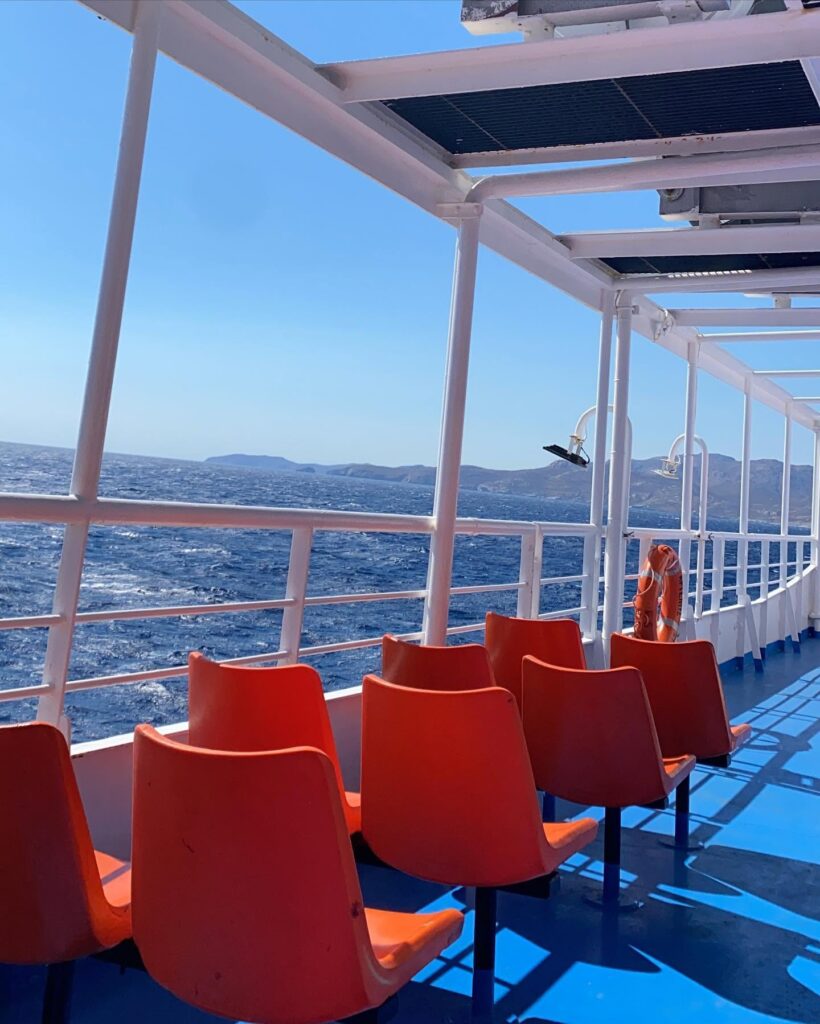
Serifos is reached by ferry, mainly from Piraeus, with the fastest crossings taking around two hours depending on vessel and season. Seasonal Lavrio connections may also operate from late spring into early autumn. The island connects by ferry with several Cycladic islands, including Sifnos, Milos, Kythnos, Paros, and Santorini, which makes it easy to include in a Western Cyclades route.
A car, scooter, or ATV is strongly useful unless the trip is limited to Livadi, Livadakia, Chora, and a few bus-served beaches. The road network reaches many of the main beaches, but some coves require walking and some roads demand patience. Taxis and buses operate on the island, although summer frequency and availability should be checked close to travel.
" ["post_title"]=> string(56) "Serifos Guide: The Cycladic Art of Keeping Things Simple" ["post_excerpt"]=> string(126) "This understated Cyclades island, hardy and unhurried, is finding a wider audience as the rest of the archipelago grows louder" ["post_status"]=> string(7) "publish" ["comment_status"]=> string(6) "closed" ["ping_status"]=> string(6) "closed" ["post_password"]=> string(0) "" ["post_name"]=> string(55) "serifos-guide-the-cycladic-art-of-keeping-things-simple" ["to_ping"]=> string(0) "" ["pinged"]=> string(0) "" ["post_modified"]=> string(19) "2026-06-12 12:34:35" ["post_modified_gmt"]=> string(19) "2026-06-12 09:34:35" ["post_content_filtered"]=> string(0) "" ["post_parent"]=> int(0) ["guid"]=> string(31) "https://www.travel.gr/?p=549652" ["menu_order"]=> int(0) ["post_type"]=> string(4) "post" ["post_mime_type"]=> string(0) "" ["comment_count"]=> string(1) "0" ["filter"]=> string(3) "raw" ["post_views"]=> string(4) "2188" } [33]=> object(WP_Post)#5471 (25) { ["ID"]=> int(552097) ["post_author"]=> string(2) "19" ["post_date"]=> string(19) "2026-06-24 13:40:35" ["post_date_gmt"]=> string(19) "2026-06-24 10:40:35" ["post_content"]=> string(62988) "Sifnos has the rare gift of feeling both chic and well lived-in. Set in the western Cyclades, it is an island of pretty villages, terraced hills, old footpaths, blue-domed chapels, dovecotes, dry-stone walls, and bays that shift from easy summer sand to clear, rocky coves.
Its history stretches back to the Cycladic world of the 3rd millennium BC, and in antiquity it was rich from gold and silver mines, quarries, and clay. That wealth left one of its finest traces at Delphi, where the marble Treasury of the Sifnians became one of the great Ionic monuments of the 6th century BC. Later centuries brought Byzantine churches, Venetian and Frankish rule, Ottoman administration, the fortified settlement of Kastro, and a local culture unusually strong in letters, religion, craft, and domestic life.
What makes Sifnos so appealing today is the way those layers remain visible. The island is also known for its churches (around 235) and monasteries, from the much-photographed monastery of Panagia Chrysopigi, built on a rocky promontory above the sea, to sugarcube hilltop chapels, and remote whitewashed shrines reached by footpath. Religious life is still tied to local festivals, which bring the landscape to life with the community's social character.
Much of Sifnos' charm lies in the clean geometry of its villages, the smell of food coming from wood-fired ovens, the glow of whitewashed churches against the sea, and the sense that every path, pot, chapel, and plate belongs to the same ancient, intelligent and intuitive rhythm of island life.
On a recent visit to Sifnos, I followed two of the island’s strongest threads, which reflect some of my own key passions - ceramics and gastronomy - meeting the locals behind the enticing potteries and restaurants, many of them enthusiastically carrying on their trade from the generations that preceded them. These are people who love, respect and honor their island's heritage, and keep up traditions that are too easily forfeited or forgotten in our time.
The Village Circuit
Fields, Farms and Old Ways
The Island of Clay
Coastal Allure
The Old Sifnos Tables
The New Sifnos Tables
At the time of writing, Sifnos only has 10 taxis, which can make getting around somewhat challenging. The local bus network is reliable and very affordable, but can seriously confine or over-extend your visiting time to villages. The best idea, especially if you're in a small group, is to hire a minivan transfer like Sifnos Experience. Our driver, Christina, who also owns the company, also acted as an excellent guide, taking us to the places we were interested in visiting and suggesting ones we had never heard of, and stopping at places to show us fabulous views or landmarks that we probably would have overlooked. The island has 13 inhabited villages, but in a few days there are five that you mustn't miss: Apollonia, Kastro, Artemonas, Platy Yialos and Vathy.
Apollonia is the island’s capital and the practical centre of Sifnos, set inland rather than by the sea, with the island’s main shops, cafés, restaurants, bars, bakeries, small hotels and bus connections gathered around it. Its lanes run through whitewashed houses, chapels, courtyards, steps and low Cycladic buildings, with the evening walk known locally as the Steno (narrow roadway) forming one of the island’s busiest social summer rituals. It is the ideal start for a first orientation: close to Artemonas, Exambela, Katavati and Kastro, linked to the beaches by short drives or summer buses, and lively at night without losing the scale of a village.
Walk the Steno for plenty of boutiques, bars and cafés, then stop at the Folklore Museum (+30 22840 & 33730) on Plateia Iroon, Agios Spyridon, the island’s Metropolitan Cathedral, Panagia Ouranofora church and Ble Sifnos for handmade jewelry and Cycladic objects. This is by far the best and most atmospheric village for evening window-shopping, a coffee or cocktail plus people-watching, without needing a car.
Artemonas sits just above Apollonia and offers a calmer, more residential view of Sifnos, with neoclassical houses, old family mansions, gardens, dovecotes, windmills and churches set along stone-paved lanes. It has long been associated with some of the island’s most elegant domestic architecture, and its houses often show the wealth brought by shipping, trade and Sifnos’ older professional families. The village is especially good in the early morning or late afternoon, when the walk from Apollonia or through the village feels easy and the views open toward the central settlements, the hills and the sea.
Come for Theodorou (Tel +30 22840 31370), the historic pastry shop known for the most authentic and flavorsome traditional Sifnian and Cycladic sweets, then add the beautiful churches of Panagia Kochi, Panagia tis Ammou, Panagia tou Bali, Zografeion Art Gallery and the village’s old mansions and gardens. It is the best inland village for morning wandering, sweets, architecture and a quieter café stop.
Platy Yialos is one of Sifnos’ largest sandy beaches and among its most developed coastal settlements, with hotels, rooms, restaurants, cafés, that attract a younger, more vibrant crowd, ceramic studios and small shops arranged close to the shore. The long beach is sheltered and easy, which makes it one of the island’s most lively swimming spots, especially for families and visitors who want to stay directly by the water.
The main stops are the beach itself, the seaside cafés and restaurants, the small shops, and the walk or boat view toward Kitriani, whose church of Panagia Kitriani is one of the oldest on Sifnos. Nearby, the White Tower gives the area a historical point beyond the beach, while the village is also a practical base for hikes toward Fikiada and Vathy. Have iced coffee or a cocktail at Palmira.
Kastro is the highly picturesque, old fortified capital of Sifnos and one of the most historically important settlements on the island. Built on the site of ancient Sifnos, it preserves a dense medieval plan, with arched passages, narrow lanes, old mansions, churches, carved lintels, reused ancient marble and houses arranged around the defensive logic of the settlement. The village is almost entirely pedestrian, and its outer edge opens suddenly to dramatic sea views, with the chapel of the Epta Martyres below on its rock.
Go for the Archaeological Museum, the medieval lanes, Panagia Eleousa church, the old gateways, the former school building when summer exhibitions are on, and the descent to the Church of the Seven Martyrs. Loggia is the obvious stop for wine and views in summer, as is Cantina across on the beach for food (both need to be booked well ahead of your visit) while the whole village works best as a wandering visit rather than a shopping stop.
Gentle, quiet and beautiful Vathy lies on the west coast, around 10 kilometers from Apollonia, in a broad sandy bay with a slower rhythm than the busier beach settlements. The area has archaeological interest, with prehistoric finds and tombs discovered at Punta tou Polemikou, and a more recent history tied to pottery, since it was once a village of potters.
Stop at the 16th-century church of Taxiarches on the beach, then use the bay for unhurried cafés, seafront tavernas, grocery stores and the hiking routes toward Fikiada and Platy Yialos through protected landscapes. This is not about shopping but about sand, quiet, meals by the water, pottery history and one of the island’s most atmospheric seaside churches.
Near Apollonia, Narlis Farm offers one of Sifnos’ most inspiring and educational introductions to the island’s agricultural and culinary habits. This three-generation farm has more than 100 years of history and extends across 20 acres of farmland, where vegetables, fruit, herbs and other seasonal ingredients are grown naturally and organically. What makes this place even more special is that they grow everything without water, which means the flavor is significantly pronounced. The produce grown here - everything from sesame and chickpeas to melons and tomatoes - is used for cooking lessons given to visitors and the family, while anything left over is sold directly at the farm. Guest visits usually combine traditional cooking, a discussion of the farm’s history and the island’s food traditions, a walk through the fields, tastings of available vegetables and fruit, and a look at how farming was practised on the island a century ago. The experience can also include a visit to a pottery workshop, run by the owner, Gianni's son, with a demonstration arranged on request.
Anthi Farm is a small working farm where visitors get to know Sifnos through its animals, dairy habits, and everyday rural farming routines. In a cinematic chaos and cacophony of geese, chickens, pigs, goats, a donkey and a horse among many other creatures great and small, visitors can learn how to milk a goat and make manoura cheese. The farm offers the experience with an al fresco group dinner of many Sifnean and Greek specialties. There are also appointment-only breakfast and dinner visits: breakfast may include eggs, manoura, mizithra, bread, Sifnos honey or homemade marmalade and cake, while dinner is based on dishes made with seasonal ingredients, with meat available by advance request.
Pottery remains one of the island’s great signatures, shaped by local clay, sun, wind, and the practical needs of the kitchen. The same clay vessels are tied to its best-known dishes.
In Artemonas, this family workshop belongs to one of Sifnos’ older pottery lines. Here, I was faint with delight at what I saw - ceramics so exquisite in shape and design that I couldn't believe my eyes. The Lembesis Pottery workshop was first established by the family’s grandfather in Cheronissos around 1910, before Giannis Lembesis later moved it inland; today, Nikos Lembesis has taken over, with the help of his partner Betty Koraki, who paints the ceramics based on Nikos's mother's patterns and her own creative touch, and his father, still involved in the work. Four generations of the family have worked with the traditional Sifnian side-turned wheel, making pieces closely tied to the island’s domestic life: tsikalia, gastra, mastela, flaroi, water jars, jugs and hand-painted tableware. The pieces are handmade without molds, with decoration often drawn from the sea, plants and the older Sifnian repertory. The workshop and display area give visitors a direct view of a craft that remains useful on the island, especially in cooking, where clay pots are still part of the way Sifnos understands food. The workshop collaborates with many museums that opt to present their exemplary art.
This workshop, also in Artemonas, brings a more contemporary line to the island’s long ceramic tradition. Sifnos Stoneware was opened in 2006 by Antonis Kalogirou, who was raised in Athens and studied mechanical engineering at the University of Nottingham before returning to Sifnos to learn pottery from his father, Costas Kalogirou, a retired potter who came back to the wheel to teach him. The family background in ceramics reaches back several generations and includes time in the United States, where the elder Kalogirou worked in stoneware production. The workshop makes durable, high-fired stoneware for daily use, including dinnerware, vases, mugs, pitchers, cookware, bowls, serving pieces and one-of-a-kind thrown objects. Its own lead-free glazes, strong colors and crystalline-glazed pieces give the work a different language from the island’s older red-clay cookware, while still keeping the focus on objects meant to be used at the table.
In Vathy, at Tsopos, this historic workshop and store is one of the island’s most important surviving pottery sites, and has an antique kiln that can be seen outdoors. The family history begins in 1870, when Giannis Atsonios bought an already operating pottery workshop, after which his son Giakoumis built the ceramic tradition that later generations carried forth. Antonis Atsonios developed the workshop further while maintaining the traditional kiln, and the current generation includes Giannis Atsonios, a graduate of a pottery school, who continues the family line with new techniques and slightly more modern forms.
The Atsonios Ceramics workshop, located at the very end of Vathy's coastline, can be reached on foot along the shore and rocks, along which there are small steps and a paved pathway, but the less active can arrive by car. I was amazed how small and basic the two wheels used are; considering the quality, quantity and size of what they make here. Practically untouched by time, the place is closely connected to the older cooking vessels of Sifnos, especially the kind of handmade pots once essential to island kitchens and restaurants, while also producing tableware, serving pieces, bowls and decorative ceramics. Its scenic setting by the sea gives one a clear sense of why so many Sifnian potters once worked by the coast, where clay, fire, transport and trade met in daily practice.
Vathy sits on the west coast, around a wide sandy bay with the 16th-century church of Taxiarches directly by the water and a long pottery history behind it. There are places to eat and stay, buses run from Kamares and Artemonas, and the atmosphere is more unhurried than Platy Yialos, attracting families, couples, repeat visitors and people who prefer a beach day that can turn into a lazy early dinner.
Faros is a sheltered fishing village with three nearby swims: the small harbour beach, Glyfo along the paved coastal path, and Fasolou, where there is a restaurant and rooms to let. Buses connect Faros with Kamares and Artemonas, and the area suits swimmers, walkers, low-key food lovers and visitors who want a village feel, a taverna lunch and the option of continuing on foot toward Chrysopigi and Apokofto.
Vroulidia is a small pebble beach near Herronissos, set well away from the central beach circuit and reached by road toward the island’s north. There are two café-restaurants with umbrellas and sunbeds, so it is not completely wild, but the distance gives it a more self-contained, out-of-the-way feel that suits confident drivers, couples and visitors looking for a quieter cove with food still within reach.
Fikiada is a small sandy beach between Platy Yialos and Vathy, reached by sea or by walking paths from either side, with the chapel of Agios Georgios nearby and an old olive tree behind it. There are no shops, tavernas or easy bus stop at the beach itself, so it belongs to hikers, boat arrivals and swimmers who bring water, snacks and shade, and who want the wilder side of Sifnos without expecting services.
Platy Yialos is the island’s easiest full-day beach base, with a long sandy bay, regular buses, waterfront restaurants, pottery workshops and enough services to stay from morning swim to dinner. The crowd is broad and easy-going, with families, Greek summer regulars, couples and comfort-seeking beachgoers who want soft sand, food nearby and a full day by the water without planning very much.
Boat trips are one of the easiest ways to see the more private side of Sifnos, especially the beaches and coves that are awkward or impossible to reach by road. Local boats run excursions around the island, often stopping at places such as Fikiada, Vathy, Faros, Chrysopigi, Herronissos and smaller swimming spots along the coast, while longer outings may continue to nearby islands such as Polyaigos, Kimolos or Milos, depending on the weather and the operator.
Polyaigos is the classic day-trip fantasy: an uninhabited island of pale rock, startling blue water, sea caves and anchorages where the swim is the point of the journey. These trips suit visitors who want quiet coves, long swims, snorkelling, photographs and a sea-level view of Sifnos’ churches, cliffs and old coastal settlements, with private charters available for those who prefer a slower, more flexible day. Charters can run from 3 hours to a full day, and usually include meals on board.
Sifnos’ traditional food begins with chickpeas, clay pots, local cheeses, capers, onions, herbs, honey, almonds, goat, lamb, fish, pulses and vegetables grown in dry island soil. Its best-known dish is revithada, the Sunday chickpea stew cooked slowly overnight in a covered clay pot called a skepastaria, often taken in the past to the communal wood-fired oven and collected after church. Mastelo, named after the clay vessel in which it is cooked, is usually made with lamb or goat, wine and herbs, with vine branches placed at the bottom of the pot so the meat cooks above the liquid. The island’s everyday table also includes revithokeftedes (fried chickpea patties), caper salad, pies, aged manoura cheese, fresh mizithra cheese, local honey, amygdalota almond sweets and melopita, a simple cheese-and-honey cake that tastes of the older Cycladic kitchen rather than pastry-shop display.
Nikolaos Tselementes, the most influential Greek cookery writer of the 20th century, was born in the village of Exabela in Sifnos in 1878, and his name became so famous that in Greek the word tselementes still means a cookbook, as it revolutionized Greece's restaurant and especially home cooking.
His influence and fame gave the island a national culinary aura, now marked each September (weekends alternate each year) at the Cycladic Gastronomy Festival “Nikolaos Tselementes” in Artemonas, where islands from across the Cyclades present their dishes, music and customs. The event has become more commercial than local over the years, but still offers a chance to get a feel of regional foods.
Regardless of the Tselementes factor, however, I repeatedly heard from locals that the island’s daily cooking has remained far simpler and authentic than his grander influence might suggest. Locals today still appreciate simplicity and opt in their daily lives for easy food of the oven and the clay pot: chickpeas, local meat cooked with wine and potatoes, seasonal vegetables, aged cheese, fire-oven-baked bread, thyme honey, and fresh fish when it's available.
And then there's the new wave of Sifnos' cuisine, which has lured visitors from around the world to its shores to try it. One of these eclectic foodies is the self-confessed 'Gastronomad', chef, former presenter of Taste New Zealand TV show, author and tour creator Peta Mathias, who traveled across the planet to research a food tour she'll be bringing to Sifnos in May 2027. "I studied very carefully before choosing Sifnos, and was enchanted by its gastronomic profile, the fact there's a 'buzz' around it, its quality, sweetness, beauty and the fact that the famous Tselementes cookbook came from here - not to mention its exciting new scene."
Chef Giorgos Samoilis has become one of the defining figures of contemporary Sifnian gastronomy, partly because his route into cooking was so unusual. A former molecular biologist with a doctorate in biochemistry, he returned to Sifnos, his mother’s island, and began to build a restaurant language around locality, seasonality, waste reduction and the older wisdom of island life.
At Cantina, in the small bay of Seralia below Kastro, that philosophy becomes exacting and almost elemental: the restaurant works only with local products, many of them brought down to the former fishermen’s huts by mule, and turns the difficulty of its setting into part of the experience. What arrives at the table feels sophisticated without losing the directness of Sifnos itself: fish, pulses, herbs, vegetables, local cheese, bread, ceramics, smoke, salt and fermentation appear in dishes that are elegant, surprising and deeply connected to the place.
Pelicanos, on Faros beach, carries the same vision into a more relaxed, seaside register, with bright Cycladic ease, excellent seafood, beautiful small plates and flavors that feel polished, generous and unmistakably of the island.
Omega3, on Platy Yialos, was the restaurant that first brought Giorgos Samoilis’ cooking to wider attention on Sifnos, and the charismatic chefs that followed have kept it in the limelight. As its original chef, he helped shape a new seafood language for the island: raw fish, small plates, Greek wine, local ingredients and cosmopolitan references served directly by the beach, with the looseness of a Cycladic summer lunch and the confidence of a restaurant that knew exactly what it was doing. The restaurant remains one of the island’s best-known modern addresses, associated with bright seafood, sharp flavors and a more international way of eating beside the water.
Discover Sifnos' Best Restaurants
Read about Where to Stay in Sifnos
" ["post_title"]=> string(62) "3 Days on Sifnos, Where Food, Craft and Sea Still Set the Pace" ["post_excerpt"]=> string(109) "We discovered why this place is so widely loved for its soothing authenticity, natural beauty and warm people" ["post_status"]=> string(7) "publish" ["comment_status"]=> string(6) "closed" ["ping_status"]=> string(6) "closed" ["post_password"]=> string(0) "" ["post_name"]=> string(17) "sifnos-mini-guide" ["to_ping"]=> string(0) "" ["pinged"]=> string(0) "" ["post_modified"]=> string(19) "2026-06-26 15:38:46" ["post_modified_gmt"]=> string(19) "2026-06-26 12:38:46" ["post_content_filtered"]=> string(0) "" ["post_parent"]=> int(0) ["guid"]=> string(31) "https://www.travel.gr/?p=552097" ["menu_order"]=> int(0) ["post_type"]=> string(4) "post" ["post_mime_type"]=> string(0) "" ["comment_count"]=> string(1) "0" ["filter"]=> string(3) "raw" ["post_views"]=> string(4) "2101" } [34]=> object(WP_Post)#5443 (25) { ["ID"]=> int(176248) ["post_author"]=> string(2) "19" ["post_date"]=> string(19) "2026-04-24 14:05:12" ["post_date_gmt"]=> string(19) "2026-04-24 11:05:12" ["post_content"]=> string(60609) "Corfu's appeal has always been partly visual: Venetian architecture, wooded headlands, the particular light of the Ionian coast. But the island's kitchens have become a reason to visit in their own right. Cretan influence is less dominant here than on other Greek islands, and in its place there is a cooking tradition shaped by centuries of Venetian, French, and British presence, along with an agricultural base that includes olive oil, citrus, and some of the best fish in the Ionian.
The result is a dining scene with real range. Fire-lit tavernas, hotel fine dining, Italian-leaning bistros, and a few more unexpected arrivals now sit alongside one another, and the best restaurants on the island are increasingly run by chefs who take both local ingredients and broader technique seriously. These are 15 addresses worth knowing.
Set on one of the most beautiful squares in the old town, The Venetian Well has long been one of Corfu's most atmospheric dinner addresses. Owner Yannis Vlachos continues to shape the restaurant around reworked Corfiot references and a more contemporary style of cooking: red mullet tartare, veal tartare inspired by polpeta, stonefish velouté with cod gnocchi and sea urchin. The wine list is extensive, the setting remains exceptional, and the kitchen still earns its reputation as one of the island's more ambitious tables.
Kremasti Square, 1 Lili Desyla
Along Corfu Town's waterfront, Ora brings a calm, contemporary Mediterranean sensibility to one of the city's most attractive positions. Chef Yannis Liokas draws on both Greek and Italian traditions, with dishes like sea bass carpaccio and slow-braised beef short ribs, served on a terrace with views that make a strong case for arriving before sunset. The wine list and cocktails are well considered, and the overall effect is polished without being stiff.
Agoniston Polytechniou
The home base of Corfiot-Tuscan chef Ettore Botrini, Etrusco has been recognized as Greece's best restaurant by the FNL Awards for 11 consecutive years. The cooking draws on local tradition and recalibrates it into precise, inventive dishes that have a clear identity. The estate surrounding the restaurant supplies flowers, aromatic herbs, and vegetables, which helps keep the menu rooted even at its most ambitious. It remains one of the most important restaurant addresses in Greece.
Kato Korakiana
In the fishing village of Benitses, Klimataria has been a family-run taverna since 1997, with Nikos and Lily Bellou behind a kitchen that takes Corfiot cooking seriously. The 17-table setup is intimate, and the food matches: octopus pastitsada, slow-cooked and spiced, served with pasta, and bourdeto, the hearty fish stew that is one of the island's signature dishes. It is the kind of place where tradition is not a marketing word but a description of how the cooking actually works.
Benitses
Inside the Domes Miramare resort, Makris offers a more refined take on Greek cooking. Chef Petros Dimas works with local ingredients in a polished, multi-course format, with dishes such as veal pastitsada and sea urchin risotto. The interior is restrained and natural, and the wine and champagne list suits the tone. It is hotel fine dining done with clarity and local awareness.
Domes Miramare, Moraitika
At Cook's Club in Gouvia, Smoke Grill takes a looser, more direct approach: grilled meats, burgers, charred vegetables, and flavors built around smoke and heat. It is a useful counterpoint to the island's more composed restaurants, and suits a relaxed afternoon-to-evening meal by the pool.
Cook's Club Corfu Hotel, Gouvia
On the rooftop above the Liston, Arcadion Bistrot has one of the better views in Corfu Town, looking across to the old fortress. The menu stays close to Greek and Mediterranean cooking and keeps enough Corfiot references to feel connected to the island rather than adrift in generic bistro territory. For visitors spending a day in the historic center, it is well placed and well suited to a meal that fits into a wider itinerary.
Kapodistriou 44, Liston, Chora
Opposite Town Hall Square, Nolita is one of the strongest Italian restaurant in Corfu Town. The menu moves well beyond the basics: burrata, beef carpaccio, risotto, sourdough pizzas, and pastas such as rigatoni carbonara and linguine cacio e pepe, with ingredients like San Marzano tomato, mozzarella di bufala, and prosciutto di San Daniele. In a town where casual tourist dining is the norm, this is a proper restaurant with a clear identity and a location people genuinely seek out.
71 Gilford, Town Hall Sq.
At the Grecotel Corfu Imperial in Kommeno, Aristos brings a fine-dining register to one of the island's most privileged waterfront positions. The approach is French rather than broadly Greek, which makes it distinct within Corfu's wider dining landscape. The wine list includes organic labels, and the menu accommodates vegan, vegetarian, and gluten-free preferences without making that the headline. It is polished, evening-focused, and suited to a more formal meal.
Grecotel Corfu Imperial, Kommeno
At Olivar Suites in Mesoggi, Flya works with Corfiot and Mediterranean cooking in a contemporary hotel setting. Dishes such as grouper carpaccio, amberjack à la polita, sea urchin, steamed mussels, and fish croquettes show a kitchen that takes local sourcing seriously while keeping the presentation current and clean.
Olivar Suites, Mesoggi
On Skaramanga Square in the historic center, Pomo D'Oro is one of Corfu Town's established wine restaurants, with chef-owner Aristotelis Megoulas shaping a menu built closely around local produce. The cooking has moved toward something more personal in recent years: ravioli filled with lamb, a fish terrine with herbs and spring vegetables, and desserts built around fruit and dairy. The cellar remains central to the experience, and the restaurant holds its place through consistency and an attachment to its own patch of the island.
Skaramanga Square 13
In operation since 1981, Toula's remains one of Corfu's defining seaside restaurants. Toula Katsarou-Vergetis is still behind the food, and the menu gives proper space to local dishes, including the bianco that has long been associated with the house. Seafood is central, but vegetables, herbs, and fruit from the restaurant's own organic garden broaden the range. What gives the place its staying power is continuity: a long track record, a loyal kitchen, and a setting at Agni Bay where the sea is never far from the plate.
Agni Bay
The main à la carte restaurant at Nido, part of the Mar-Bella Collection, Apaggio is built around Corfiot and Greek cooking with a more polished finish. The menu keeps close to the island in flavor and ingredient, and dinner is served on a terrace looking out to the Ionian Sea. For visitors staying on this part of the coast, it offers a well-composed hotel meal with a recognizably local foundation.
Nido by Mar-Bella Collection, Agios Ioannis Peristeron
A long-running fish taverna by the sea at Agios Georgios Argyrades, Kafesas is one of the places that gives the island's dining scene its local texture. Fish is central: sardines, lobster, and the day's catch, but the menu also includes meat dishes for mixed groups. The pleasure lies in the simplicity: a coastal taverna where the cooking is shaped by the catch, the setting, and the straightforward good sense of a place that has been doing this well for a long time.
Agios Georgios Argyrades
At Unda, on the island's north coast, Nami is one of the more unexpected arrivals in Corfu's restaurant scene. Under the creative direction of Chef Thanos Stasinos, the cooking takes a Nikkei direction, bringing Japanese-Peruvian references to an island more readily associated with Greek, Italian, and seafood traditions. What gives the restaurant its place is not novelty alone, but definition: a kitchen with a specific point of view, confident enough to hold its own in a landscape where most restaurants default to the familiar.
Roda Karousades
Read more:
Corfu's Best Hotels
Greek summer drinking does not have to mean the classic, well-known bottle pulled from the ice bucket. The most interesting choices often come from cooler mountain vineyards, island varieties with salt and sun on their skin, old-school styles newly reconsidered, and reds that can take a little chill without losing their character.
This hand-picked, very-2026 selection, is designed to pair harmoniously with summer dishes that enhance and dance with the flavors that shine from the aromas in the wines.
Amyndeon
Produced in Amyndeon, Greece’s northernmost and coolest wine-growing zone, this sparkling rosé from Xinomavro has the freshness and acidity that make the region such a natural home for this style. In the glass, it shows a lively mousse and aromas of red cherry, underripe strawberry, tomato water, and bread, giving it both fruit and a savory edge. Serve it well chilled as an aperitif, or place it beside raw seafood and other clean, bright summer dishes.
Santorini
This Aidani from Sigalas has a medium lemon color and expressive aromas of lemon, peach, pineapple, wet stone, and flowers. Medium-bodied, with moderate acidity, it is a wine to enjoy young, fresh, and cool, while its fruit and mineral notes are still vivid. Serve it with green salads, light vegetable dishes, or stuffed zucchini blossoms.
Naxos
Potamisi is an emerging Greek variety with a profile that brings together green fruit, lemon, and a herbal note. With two years of bottle age, it can develop a fine mineral character, while its fuller texture, very light tannic grip, and cool acidity give it real interest at the table. Serve it with pork cooked with leeks and celery, finished with extra lemon to meet the wine’s freshness.
Heraklion, Crete
Made from Muscat of Spina with orange-wine vinification in amphora, this is a gastronomic white with structure, aroma, and personality. Expect notes of dried flowers, kumquat, and bitter orange, with enough depth to benefit from time in a carafe. Give it around an hour of decanting before serving so it can open properly. Serve it with Thai food, especially dishes with spice, herbs, and citrus, and it will make complete sense.
Markopoulo, Attica
This new work from Papagiannakos looks back to the older character of retsina, made with Savatiano and resin sourced from Kouvaras. In the glass, it offers aromas of rosemary, lemon, and thyme, along with a rounded, buttery texture that gives the wine more body than expected. It is made for the Greek table. Serve it with dolmadakia, taramosalata, and small fried fish would all sit naturally beside it.
Naoussa
Made entirely from Xinomavro grown in Ramnista, Giannakochori, this rosé has a slight suggestion of sweetness, crisp acidity, and aromas of strawberry, sour cherry, and red cherry. It has the brightness needed for summer drinking, but also enough character to handle food with heat and spice. Serve it chilled with Mexican dishes or other spicy plates where fruit, acidity, and freshness are needed.
Syros
A rosé made from Mavro Aidani on Syros, this wine carries a distinctly Cycladic character. The palate brings notes of redcurrant, butterscotch, wild cherry, and cornelian cherry, combining fruit with a warmer, more textured impression. For bold pairings, serve it with seafood pasta, shrimp risotto, or crayfish risotto, especially at a summer table where the wine is served cool but not ice-cold.
Heraklion, Crete
This is a juicy Mandilari with generous fruit and well-worked tannins, making it a red that can comfortably enter the summer rotation. Serve it slightly chilled to bring out its red and black fruit, along with its herbal profile. Serve it with Greek vegetable dishes cooked in olive oil and tomato, such as okra or braised green beans.
" ["post_title"]=> string(41) "8 Greek Wines to Drink This Summer (2026)" ["post_excerpt"]=> string(130) "Tantalize your summer palate with wines that offer fresh perspectives on Greece's multifaceted vineyards selected by our sommelier" ["post_status"]=> string(7) "publish" ["comment_status"]=> string(6) "closed" ["ping_status"]=> string(6) "closed" ["post_password"]=> string(0) "" ["post_name"]=> string(39) "8-greek-wines-to-drink-this-summer-2026" ["to_ping"]=> string(0) "" ["pinged"]=> string(0) "" ["post_modified"]=> string(19) "2026-06-15 13:47:56" ["post_modified_gmt"]=> string(19) "2026-06-15 10:47:56" ["post_content_filtered"]=> string(0) "" ["post_parent"]=> int(0) ["guid"]=> string(31) "https://www.travel.gr/?p=549666" ["menu_order"]=> int(0) ["post_type"]=> string(4) "post" ["post_mime_type"]=> string(0) "" ["comment_count"]=> string(1) "0" ["filter"]=> string(3) "raw" ["post_views"]=> string(4) "3174" } [36]=> object(WP_Post)#5470 (25) { ["ID"]=> int(373374) ["post_author"]=> string(2) "19" ["post_date"]=> string(19) "2026-06-19 18:16:20" ["post_date_gmt"]=> string(19) "2026-06-19 15:16:20" ["post_content"]=> string(66809) "A perennial star in the Cyclades, Sifnos charms with terraced hillsides, white-washed villages, and a culinary tradition as deep as the Aegean. Cooking here remains a daily ritual: chickpeas slow-baked overnight in clay pots, capers drying on sun-bleached rooftops, honey infused with wild thyme. Small wonder the island has become a magnet for food lovers.
A new wave of chefs, some Sifnian and others adopted, is now reworking family recipes with ideas gathered from kitchens around the world. Cliff-top dining rooms present raw amberjack like modern art, while waterfront tavernas still draw big flavor from yesterday’s catch and tomorrow’s tomatoes.
Below, we chart the island’s standout tables - forward-looking kitchens and tavernas that keep Sifnos' soul intact. Meet the cooks, taste their stories, and, above all, come hungry.
In Kastro you'll find Cantina, a restaurant that's reachable via a trek that's well worth your while. Perched on rocks right over the sea, this place has become a haute and hot destination for gastronomy lovers from around the world, and it's not unusual to see A-list celebs stepping off yacht dinghies to reach it. The award-winning restaurant is the vision of Giorgos Samoilis and Yiannis Olympios, who have created a stellar culinary concept. The restaurant is housed in a weathered building among dry-stone walls, brought back to life by architect David Gonzalez, and the buzzy vibe here is enhanced by an uplifting playlist and friendly staff. However, the true architect of Cantina is the impeccable allure itself, with views of the water and skyline and a feeling of blissful escape. Giorgos Samoilis unfolds his dynamic personal cooking vision, balancing creativity with taste, familiarity with delightful originality.
Their cuisine is glamorous and "naked," emphasizing nature, sustainability, and the best of authentic traditional quality, with ingredients sourced entirely from the terroir of Sifnos (they describe it as "hyper-local"). The dishes vary from day to day and are impressive: from raw melt-in-your-mouth tuna with crisp rocket to caramelized pumpkin with a cream of the local cheese and granola, or fava bread with xinomizithra cheese, smoked beetroot and capers. In your time on Sifnos, or the Cyclades, Cantina is the exciting and unforgettable destination restaurant that shouldn't be missed. Reservations need to be made well in advance.
Seralia, Kastro
Set in a restored neoclassical building above the island’s central settlement, Alyelo pairs a more contemporary seafood menu with one of Sifnos’ most elegant dining settings. From its terrace, the view opens across whitewashed houses, church domes, dry-stone terraces, and the surrounding hills, giving dinner a sense of height and quiet remove without losing the island’s village character.
Chef Thodoris Grigoriadis, with long experience at Spondi, Marconi’s and Pantheon, has created a seasonal menu built around fish, seafood, bright acidity, Greek wines, herbs, and fruit. The dishes include sea bass ceviche with confit lemon and peach, Evia crayfish crudo with citrus zest, Aegean tuna marinated and cut poke-style, roasted pumpkin risotto with smoked eel, grouper bianco cooked with Assyrtiko and confit lemon, and lobster with ravioli and Metaxa sauce. It is a strong choice for a more polished Sifnos dinner, with a kitchen that gives local and Greek ingredients a refined, technically assured treatment.
Faros
Located in the heart of Platis Gialos, the island's most popular beach, Yalos Seaside Obsession is a haven for sea lovers and food enthusiasts alike. Here, chef Manolis Monogyios, with his expertise and passion for fresh ingredients, creates dishes that blend tradition with modern cuisine.
The menu features a variety of recipes centered around fish and seafood. Freshly grilled fish, ceviche, steamed mussels, octopus, orzo, and delicious salads form a menu that can satisfy every visitor. The wine list offers a journey through Greek vineyards, with a strong presence of wines from the Cyclades. The restaurant's minimalist decor, comfortable furniture, and pleasant music create a relaxing environment that perfectly complements the gastronomic experience.
Platis Gialos
At the entrance to one of the old stone passageways of Kastro, this small wine bar has become one of Sifnos’ essential evening stops. Tables and low seating spill across the whitewashed steps, with a hearteningly dramatic view of the sea below, Seralia at the foot of the rock, and the silhouette of Antiparos visible across the water. It opens at sunset and runs late, with music, wine, and a setting that has made it one of the most distinctive places to drink in the Cyclades.
The wine list focuses on natural and low-intervention labels, with a strong Greek and Cycladic presence, plus bottles from abroad and the team’s own Sifnos Assyrtiko. Food is served as wine-friendly small plates rather than a conventional dinner: fresh oysters, salads with fruit and cheese, local vegetables, Cycladic cheese and charcuterie boards, and daily dishes that change with what is available. Book ahead for dinner tables, especially in high season; for a looser evening, the steps are part of the appeal.
Kastro
On Faros beach, Pelicanos brings the Cantina family’s more contemporary cooking to one of Sifnos’ most appealing seaside settings. The restaurant sits close to the water, with an open, relaxed feel and a menu that gives Greek island ingredients a sharper, more current treatment. Giorgos Samoilis, known from the award-winning Cantina in Seralia, created it as a looser bistro-style address, with seafood, local produce, good bread, wine, and dishes designed for a long meal by the bay.
The menu has included crayfish with bottarga and lemon, one of its best-known dishes, along with fish and seafood plates (raw and cooked) that draw on the freshness of the Cyclades. Comfort dishes also appear with a Sifnian accent, including churros filled with gyromeni manoura, the island’s matured local cheese, jalapenos and yogurt cream. Bread comes from nearby Betty’s Bakery, a small but important detail in a place where sauces, seafood juices, cheese, and oil deserve proper company. It is a strong Faros choice for a polished seaside meal without the stiffness of a formal restaurant.
Faros
Part of Verina Astra, Bostani sits high in Poulati, with a garden of aromatic herbs and plants, and a wide view over the Aegean that makes it one of Sifnos’ most atmospheric dinner settings. The restaurant’s name refers to a vegetable garden, and the menu follows that idea through local produce, Cycladic ingredients, and a contemporary Greek direction led by chef Nikos Thomas.
The cooking is more elaborate than a traditional taverna, with dishes that have included tomato and strawberry salad with Greek salad broth, revithada with crayfish and marrow, fish of the day with lemon-and-olive-oil dressing and greens, goat with labneh and fennel sauce, lobster mac and cheese, and lasagna filled with local Sifnos manoura. There is also a tapas bar for lighter plates, while the main restaurant offers à la carte and tasting menu options. It is best kept for a proper dinner, especially at sunset, when the view, garden, cocktails, and wine list make the setting part of the meal.
Poulati
Set on the sand at Platis Gialos, Omega3 is still one of Sifnos’ most talked-about seafood addresses: a tiny fish and wine bar with high tables, a casual - and somewhat chaotic - beachside setup, and a menu that treats seafood with a modernist approach. Since opening in 2013, originally led by Giorgos Samoilis who envisioned the menu, it has helped define the island’s contemporary restaurant scene, with small plates, raw preparations, grilled fish, shellfish, and a wine list built around Greek small-producer bottles.
The menu changes, but its direction is clear: tarama with homemade bread, fava cream with marinated capers, tiradito with fish, shrimp, scallop and sea urchin, shrimp ceviche with avocado mousse and tomato juice, crayfish orzo with Kozani saffron and ouzo, aged sous vide fish, and dishes using manoura, smoked herring, sea asparagus, herbs, citrus, and local vegetables. Book ahead in high season; the restaurant is small, the beach tables go quickly.
Platis Gialos
In Artemonas, Perivoli is a garden restaurant with a calmer village setting than the island’s beach tavernas, making it a useful choice for dinner away from the water. The name means garden, and the restaurant’s current direction follows that idea through a menu that brings together land, sea, vegetables, herbs, handmade pasta, and contemporary Greek cooking without losing touch with the island.
The menu changes with the season, but recent dishes include handmade ravioli, homemade bread, cheese donuts, octopus with pistachio, salad of the day, and grilled chicken. The kitchen works well for a table that wants something more composed than a classic taverna meal, with enough familiar Greek references to keep the food accessible. Service starts in the early evening, and the setting makes it especially good for a slower dinner after a walk through Artemonas.
Artemonas
On Vathy’s sandy beach, Tsikali is one of Sifnos’ most established traditional tavernas, with tables set by tamarisk trees and a wooden pergola, a few steps from the water. The Frantzeskakos family has kept the restaurant close to the island’s older food habits, using products from its own farm and dairy, including local cheeses such as chloro-manoura and mizithra.
The menu is built around classic Sifnian and Greek cooking: revithada baked in the wood oven, revithokeftedes, manoura cheese fritters, caper salad, eggplant salad, oregano rabbit, goat cooked with wine and dill, baked pork with cheese, tomato and pepper, and fresh fish when available. It is an easy place to settle in after the beach, especially for a long lunch that moves from salads and cheese to slow-cooked food and seafood. The setting is simple, shaded and close to the sea, with the kind of dishes that explain why Vathy remains one of the island’s best places for traditional food.
Vathy
A traditional taverna and butcher’s shop with a clear focus on local meat, grilled dishes, and Sifnian cheeses. The setting is simple and village-based, with the food doing the work: lamb chops, grilled meats, mastelo, and salads made with local mizithra rather than decorative flourishes or contemporary plating.
The order can begin with cheeses and a village salad before moving to the grill, where meat is the main reason to come. Mastelo, the island’s lamb or goat dish baked slowly with dill and local wine, brings the Sifnian side of the menu into focus, while the butcher’s-shop connection gives the kitchen a more grounded identity than a standard island taverna. It is best for a straightforward dinner built around meat, cheese, and classic local flavors.
Artemonas
A remote beach taverna at the northern end of the island, with tables close to the water and the kind of simple cooking that fits a long, quiet swim day. The approach is traditional and unfussy: Greek salads, grilled dishes, seafood, fish when available, vegetables, fries, beer, ouzo, and the straightforward plates people want after the road down to the bay and a few hours in the sea.
The setting is the main reason to include it. The beach is small, beautiful, and more secluded than the island’s busier southern bays, with clear water, a stony entrance at the first few meters, and a feeling of distance that changes the meal. This is not a polished restaurant stop; it is a practical, enjoyable taverna for anyone spending the day there and wanting lunch without leaving the beach.
Vroulidia Beach
A classic fish taverna with deep family roots, operating since 1973 and now run by the next generation. Tables sit close to the sea, under tamarisk trees and beside the small harbor, with fishing nets, boats and the day’s catch giving the meal its direct connection to the water. The setting is plain, practical and beautiful in the old Cycladic way, especially for lunch after a swim or a long drive to the northern edge of the island.
The menu is built around traditional meze, seafood and fresh fish from the family’s boats. Specialties include charcoal-grilled fish, fish soup and lobster pasta, with other dishes such as handmade tsiros for ouzo, little fried fish, local green beans and potatoes, revithokeftedes, spinach pie with handmade phyllo, octopus and grilled shrimp. This is a place for fish, simplicity, sea air and a table that stays close to the working life of a fishing village.
Heronissos
A seaside fish taverna with tables under tamarisk trees and close to the water, suited both to lunch after swimming and to a slower dinner under the stars. By day, the setting has the easy movement of a small beach and fishing harbor, with boats nearby, clear water in front, and shade for a long meal after the sea. By night, the same simplicity becomes quieter and more atmospheric, with the table set close enough to the bay to keep the water in view.
The kitchen serves fresh fish, lobster, octopus, seafood meze, grilled dishes, meat options, and cooked plates, with the meal usually built around Greek salad, fried potatoes, fish, and seafood. It is a straightforward Cycladic fish taverna rather than a polished restaurant, which is exactly its appeal: lunch in a swimsuit, dinner in the open air, and a table where fish, wine, sea air, and the small harbor setting do not need embellishment.
Heronissos
A family taverna operating since 1976, with tables near the beach and a kitchen rooted in traditional Sifnian cooking. The menu brings together seafood, vegetables, salads, local cheeses, grilled meats, and slow-cooked dishes, with ingredients from the family’s small farm used where possible. The traditional oven is central to the kitchen, especially for the island dishes that need time, heat, and the right vessel.
Every Sunday, the taverna serves revithada, Sifnos’ slow-cooked chickpea soup, and mastelo, lamb baked with dill and local wine in the taverna's traditional outdoor oven, the only one of its kind on the island. The rest of the meal can move easily from salads and manoura cheese to fish, meat, and home-cooked dishes, with a great choice of Greek wines, and beers from small breweries. It is a classic choice for a long lunch after swimming or a relaxed dinner by the water, with the kind of family service and familiar food that have kept it part of the island’s summer routine for decades.
Vathy
A traditional taverna suited to a swim-day meal of Sifnian staples, vegetables, pies, seafood, and slow-cooked dishes. Tables sit close to the water, giving the meal the relaxed ease of a beachside lunch without turning the setting into the whole story. The cooking stays close to familiar Greek and island recipes, with a menu that favors substance over decorative presentation.
The meal can begin with cheese croquettes, eggplant rolls, chicken and leek pie, caper salad, and revithokeftedes before moving to revithada, rabbit, seafood, or mastelo, the island’s lamb or goat baked slowly with dill and local wine. It is a straightforward choice for a meal built around chickpeas, capers, local cheese, vegetables, fish, and the cooked dishes that remain central to Sifnos’ traditional food culture.
Vathy
A courtyard meze cafe-restaurant with a relaxed village character, suited to dinner built around shared plates, wine, and tsipouro. The pace is more meze than formal meal, which makes it especially useful for a table that wants to order gradually and taste across several dishes without following the usual starter-main-course structure.
The kitchen works with Greek and Mediterranean flavors, including pork bites, eggplant saganaki, lamb meatballs in tomato sauce, hummus, local salad, octopus in vinegar, cod croquettes, and potato salad with chickpeas. Vegetarians have enough to order properly, while the seafood and meat meze give the table weight. It is a good evening choice before or after a walk through the neoclassical lanes and quieter corners of the village.
Artemonas
" ["post_title"]=> string(48) "16 Hand-Picked Places to Eat on Sifnos Right Now" ["post_excerpt"]=> string(129) "From beachside tavernas to ambitious new kitchens, this is where the island’s deep culinary tradition meets its modern appetite" ["post_status"]=> string(7) "publish" ["comment_status"]=> string(6) "closed" ["ping_status"]=> string(6) "closed" ["post_password"]=> string(0) "" ["post_name"]=> string(23) "sifnos-best-restaurants" ["to_ping"]=> string(0) "" ["pinged"]=> string(0) "" ["post_modified"]=> string(19) "2026-06-19 18:47:07" ["post_modified_gmt"]=> string(19) "2026-06-19 15:47:07" ["post_content_filtered"]=> string(0) "" ["post_parent"]=> int(0) ["guid"]=> string(31) "https://www.travel.gr/?p=373374" ["menu_order"]=> int(0) ["post_type"]=> string(4) "post" ["post_mime_type"]=> string(0) "" ["comment_count"]=> string(1) "0" ["filter"]=> string(3) "raw" ["post_views"]=> string(5) "24861" } [37]=> object(WP_Post)#5440 (25) { ["ID"]=> int(116223) ["post_author"]=> string(1) "2" ["post_date"]=> string(19) "2026-04-08 14:31:19" ["post_date_gmt"]=> string(19) "2026-04-08 11:31:19" ["post_content"]=> string(151205) "The great and growing popularity of Paros, both within and outside Greece, has brought along the respective crowds, and as a result you’ll find fish carpaccio, ceviche and tartare side by side with the tomato and courgette fritters. As a general rule, restaurants are busy and should be booked ahead.
The culinary tour of the island starts in Parikia, goes through Naoussa, then through Lefkes, and down south. Apart from the taverns and the star restaurants we list here, there are many more to discover. Please note that most of the restaurants listed are opened from May to October. We advise you contact them via their site (all links listed below) if you're considering visiting off-season.
A serious newer arrival in Parikia, set away from the waterfront and built around open-fire cooking, bread, and Cycladic ingredients. The courtyard and open kitchen give the place energy, while the menu moves through Greek and island dishes shaped by the grill and wood oven. Breakfast has drawn attention, but dinner is where the restaurant shows its range most clearly. A strong addition to Parikia for readers interested in a more current, ingredient-driven restaurant.
Parikia
On the western side of Parikia, Crios combines the energy of a beach club with the finesse of a fine restaurant. Under executive chef Hippokratis Anagnostelis, the menu blends Greek summer flavors with cosmopolitan flair: amberjack tartare with sea urchin and wakame, lobster paccheri with feta and ouzo, and crisp fried sardines. The in-house pastry chef completes the experience with playful desserts. With its boho-luxe design, polished service, and sweeping sea views, it is one of Paros’s most stylish seaside dining spots.
Krios Beach
In the center of Parikia, on the upper floor of a neoclassical building, SAMA brings a more dressed-up town mood to Cycladic cooking. Chef Manolis Sarris works with local produce, fish from island boats, and ingredients from nearby islands, with a menu that shifts with the season. The dishes draw on familiar Greek flavors, though the execution is more polished than at the island’s simpler tavernas. A smart addition to the Parikia section.
Parikia center
A traditional little taverna, favored by locals, with a lovely terrace that looks out to the harbor of Parikia. A great place to savor well-made traditional Greek dishes. The rooster pasta is a must, as are dishes centered around fresh seafood, and some traditional Paros dishes. Polite and friendly service.
Parikia harbor
Located on the beach in Parikia's sheltered bay, Cabana Bar is a laid-back spot where the day stretches between morning swims and relaxed evening dinners under exotic palm trees. With friendly service and an enticing range of food and drink options, it attracts a diverse crowd, from casual visitors to those staying for the day. Known for its vibrant beach club atmosphere, this place becomes lively at sunset, offering a more energetic alternative to the nearby quieter tavernas.
Parikia bay
Set along the marina, Aroma is a laid-back taverna with a greenery-framed open-air terrace that catches the island breeze. The menu leans deeply into Greek tradition with dishes like slow-cooked lamb in lemon sauce and grilled sea bream straight from local waters. The zucchini fritters, crisp and golden, pair well with a chilled glass of Assyrtiko, or one of the other Greek wines available. As the sun dips behind the masts of anchored boats, it’s an easy spot to settle in and stay a while.
Livadia beach
On the bay, serving fresh fish and nice mezze with a good selection of meat dishes. Make sure to order the squid ink risotto, the steamed mussels, the gouna and whatever is the fish of the day when you visit.
Parikia
Set above Agia Irini at Mythic Paros, this newer restaurant is built around wide sea views, sunset dining, and a Mediterranean menu that draws on Cycladic produce, seafood, and selected meats. Dinner is the main event, though there is also all-day dining and a degustation option. The setting is hotel-based and more composed than the island’s traditional tavernas, but the kitchen keeps its focus on season and place. A good fit for this side of the island.
Ag. Irini, Sarakiniko
At Luura Paros Cliff, Mimi Kakushi brings a very different note to Paros, with Japanese cooking shaped by the brand’s established style and its blend of Japanese technique and Western influence. This is not a local or Cycladic restaurant, but a high-profile international arrival aimed at the island’s luxury crowd. It adds something your current list does not really cover: a destination restaurant with a strong concept of its own. Another summer 2026 opening worth noting.
Luura Paros Cliff
A nice ouzeri on the port, overlooking the bobbing caiques. Souma and a wide variety of ouzo along with many meze. If there’s tuna available (they catch it themselves) you must order it. The shrimp pies and the fish soup are also great.
A sophisticated outpost of the globally celebrated Nobu brand, set at Avant Mar’s Piperi beach just outside Naoussa. This restaurant earned a Gold Hat in 2025, thanks to its elegant design, open-kitchen concept, and inventive fusion cuisine blending signature Nobu elements with Mediterranean and South American twists. The ambiance - understated luxury with sweeping sea views - makes it ideal for special evenings.
Piperi beach
In Livadia, in an atmospheric corner of the old port of Naoussa, the owners have created one of the island's best, most loved, restaurants. The menu comprises new Greek cuisine based on fresh fish, with light, aromatic and distinct dishes. Apart from the famous fish pasta, make sure to order the grilled sardines with vine leaf sauce. Reservations are required.
Livadia
In this restaurant, located in the Cove Hotel, the experience is as much about the atmosphere as it is about the food. Helmed by acclaimed Chef Gikas Xenakis, the menu reimagines Greek classics with a contemporary twist, served in a setting that’s both elegant and unpretentious. Set right on the beach, the open-air pavilion invites diners to enjoy their meals while the Aegean Sea stretches out before them, especially striking as the sun dips below the horizon. The laid-back luxury of RADA, paired with its inventive Mediterranean dishes and refreshing cocktails, makes it a standout destination for anyone looking to escape the dining scene in Paros.
Agioi Anargyroi
Tucked within the stylish Parilio hotel, Paron earns a Top Notch award in 2025 for its bold, sustainable approach. Under Chef Thanos Feskos’s direction, it delivers eco-aware comfort food using local ingredients, all served poolside in a modern, tranquil setting. A thoughtful, sensory journey that balances finesse with casual summer ease.
Kolympithres
A meze restaurant in the old harbour that has been open since 1950. Swarmed by people daily, for its fish mezze and mostly for its gouna – charcoal-grilled mackerel, that has dried in the sun for five or six hours. Great, professional service that manages despite the pressure and the crowds. Reservations required.
Old harbor
An exuberant spot, reflective of its owner Evgenios Hamilothoris, where you'll hear loud '90s music, rub shoulders with international celebrities and choose among 150 wine labels – including 20 champagnes. The menu is focused on fish and seafood, including delicious dishes with gourmet touches, as well as traditional local recipes. The location is amazing, overlooking the chapel of Agios Nikolaos and the Venetian castle, and next door to the best nightclubs. Reservations required.
Limanaki
The space resembles a quaint taverna, but the menu is of high-end restaurant standard. In the cool, elevated veranda, and in the courtyard, you’ll eat seafood and fish dishes with a unique twist, be it a special sauce or an unusual garnish. The fresh tuna filet from Kalymnos is grilled over charcoal and arrives juicy with a side of quinoa, Paros pickles and “Hirovoskos” wild fennel, olive and lemon sauce (a local delicacy). The owner and his son use many family recipes, and the service is polite and effective.
Safran brings a refined yet unfussy take on Mediterranean flavors. The cod loukoumas, a delicate balance of crispy dough and flaky fish, pairs beautifully with beetroot tartare and roasted garlic. The marinated red mullet is bright and fresh, while dishes like slow-cooked lamb with artichokes lean into Greek tradition with a modern edge. Without the chaos of the waterfront, its quiet alleyway setting makes for an intimate, slow-paced meal.
Naoussa town
Open since the 1960s, this place keeps tradition alive serving classic and favorite meze dishes like fried calamari and picarel, its famous meatballs, dolmades, the aubergine sauce, hand cut fries and more. Every evening, a queue forms in front of its distinctive green door, and if you get one of the tables on the alley, next to the tavern, you’re among the lucky ones.
Naoussa town
Right by the sea, on the way to Santa Maria, with a lovely, cool garden decorated in white and blue shades, surrounded by green and with a very peaceful atmosphere. You'll find well-made dishes focused on fish and seafood. These include local recipes, like the melt-in-your-mouth Paros chickpea stew, cooked in the traditional clay pot with rosemary and garlic. The angler linguini is amazing, the fish carpaccio with sea urchin and seaweed is good, as is the shrimp ragou pasticcio. You can select your fish for frying or grilling from the display.
Xifara
An authentic fish taverna, with their own caique – set right next to the sea, across from Naxos. A very romantic place, where everyone receives the same service, no matter whether you come from rags or riches. Christiana is known for its soothing and flavorsome kakavia (fisherman's) soup, the lobster pasta and well-cooked fresh fish.
Ampelas beach
Probably the only seaside place in Paros with such a great variety of shellfish (which you can see in the aquarium). They also serve raw fish dishes (carpaccio, ceviche, tartare), various renditions of oysters, an amazing baked goat, a delicious fish fricassee with egg-lemon sauce, and the incredible string beans with fruit and nuts.
Ampelas beach
Within the new Vione Paros hotel in Ampelas, this restaurant extends the Mario name into a more polished, sea-view setting. The menu is presented through a Mediterranean lens, with local ingredients, seafood, meats, and a broader hotel rhythm that includes breakfast, all-day dining, and dinner. The atmosphere is more refined resort restaurant than harbour-side fish place, but the connection to the Mario legacy keeps it within the island’s established dining conversation. A plausible newer addition for Ampelas.
Ampelas bay
A sweet-smelling kitchen: climbing the steps, you’ll find yourselves in a dreamy little veranda with the sweetest aesthetics and a peaceful view of the surrounding villages. The small kitchen where Mrs Polina and her daughter Anna prepare their fresh homemade pasta, pies, cakes and casseroles, is decorated in a sweet, fairy tale style. Here you can try traditional Greek casserole dishes – gemista, imam bayildi, great pasta dishes, and of course lovely cakes. They also give lessons on breadmaking and filo spreading. Reservations required.
Lefkes
A famous meat tavern with kondosouvli, charcoal grilled meats and casserole dishes (chickpea stew, fava stew, moussaka, rabbit stew and more). The seating area is in a dreamy, a covered veranda with fragrant potted basil plants and a view of the surrounding mountains. The pork is from their farm, and the tomatoes and potatoes from their vegetable garden. The rest of the ingredients and produce is either from Paros or when demand rises, from neighboring Naxos. The lamb and pork chops are their trademark dish. We also recommend the kontosouvli (large skewer of pork) and the kokoretsi (intestines wrapped around offal), as well as the lovely xinomyzithra cheese.
Lefkes
With fresh, crispy vibes from the bright white tables and chairs and the lovely, covered balcony with the calming mountainous views. Simple, well-prepared food, mixing tradition and modern cuisine: eggplant rolls, tomato balls, pasturma pies, stuffed chicken filet, oven-baked chickpea stew, great rib eye, beetroot risotto, and cuttlefish risotto. Great, friendly service.
It first opened in 1969 as a coffee shop where the locals could play cards and checkers and drink ouzo, and now has turned into a cute grill-taverna. They have a cool backyard, a working juke box inside, and lovely naif paintings by local painter Giorgos Marmarinos, as well as a few tables out front. Apart from their meat dishes, make sure to order the oven-baked chickpea stew, the zucchini balls with red pumpkin and amazing kefalotyri cheese. The owner, Vlasis Roussos and his wife Maria Tzanakopoulou are in charge of the kitchen. It’s located at the entrance of the village.
Prodromos
Right on the main square, with retro decor and great doses of character. Apart from the shellfish that Mr Antonis regularly catches, you can enjoy a variety of delicious dishes including capers salad, baked eggplant with tomato and cheese, stuffed calamari, octopus in wine sauce, baked goat with potatoes.
Prodromos
This simple taverna serves an incredible variety of food under two enormous mulberry trees on the main square. Mrs Haroula, with her beloved husband and son prepare a panorama of Parian cuisine including the best tomato fritters, rabbit patties, breaded brains, fried beef testicles, aromatic fennel pies, kalogeraki (eggplant stuffed with chicken and cheese served with tomato sauce), and fried stuffed zucchini blossoms. They grow most of the vegetables they use, and source the meat either from Paros or Naxos.
Marpissa
A restaurant that’s a category of its own, with the young owner, Giannis Ragkousis telling us that “I’m a farmer who opened a cafeteria”. With “cafeteria” he describes a restaurant-cocktail bar in a verdant garden with tables mixed with sofas for more chilled situations in the evening. The menu is small with wonderful dishes using vegetables, fruit and herbs from Giannis’ family farm. Try the watermelon salad with tomatoes and feta, Green Project’s twist on a traditional dish farmers used to eat. We also recommend the cheese platter with local cheeses and homemade marmalades and chutneys. They make interesting cocktails, play great music, and have very polite service.
Drios
Relocated to the Aliki marina, this is a fish tavern, but the menu created by experienced chef Marios Salamatanis is that of a good restaurant serving light, aromatic Greek cuisine. The bogue with beetroot cous-cous, the tinker mackerel with tzatziki gazpacho, and the cod mosaic with parsley powder, wild garlic mayonnaise and saltwort stand out from the menu. The atmosphere is laidback and ideal for the holidays – from the sea straight to the table for a meal.
Aliki marina
Aliki Restaurant sits right on the waterfront in the charming fishing village of Aliki, Paros, offering a relaxed and authentic island dining experience. Family-run since 1974, it specializes in traditional Greek cuisine with an emphasis on fresh seafood and local ingredients. The stuffed calamari with feta and tomato is rich and satisfying, the seafood linguine, brimming with shrimp, mussels, and calamari, is a highlight, as are the lamb chops served with grilled vegetables and the salt-dried cod. With tables set along the harbor, guests can enjoy stunning views of the Aegean, the gentle sounds of the sea, and the glow of fishing boats in the evening.
Aliki bay
On the pier of Aliki, a nice tavern with a wide range of appetizers, including raw, Greek, as well fusion. The menu includes many pasta dishes with fish or seafood, all of them perfectly prepared and delicious, as well as a small selection of meat dishes. Don't miss the scorpionfish pasta. It’s an establishment that runs really smoothly, under the guidance of the owner Theologos Skandalis (Akis) who also cooks with the rest of the kitchen team.
Aliki
At the Summer Senses Resort, Galazia Hytra offers a seasonal fine-dining experience that links Paros with Michelin-starred Athens. Open from June through September, the restaurant presents creative interpretations of Greek cuisine with refined international touches, highlighting pristine island ingredients. Dishes arrive with careful attention to detail, balanced between artistry and flavor, while the terrace setting under Cycladic skies creates an atmosphere of discreet luxury. A collaboration with the renowned Hytra team, this is one of the island’s most ambitious gastronomic addresses.
Punda beach
" ["post_title"]=> string(51) "The 34 Most Delectable Restaurants in Paros in 2026" ["post_excerpt"]=> string(98) "At Paros the restaurants, from traditional to modern, are a masterclass in barefoot sophistication" ["post_status"]=> string(7) "publish" ["comment_status"]=> string(6) "closed" ["ping_status"]=> string(6) "closed" ["post_password"]=> string(0) "" ["post_name"]=> string(27) "paros-best-restaurants-2026" ["to_ping"]=> string(0) "" ["pinged"]=> string(0) "" ["post_modified"]=> string(19) "2026-04-16 11:36:34" ["post_modified_gmt"]=> string(19) "2026-04-16 08:36:34" ["post_content_filtered"]=> string(0) "" ["post_parent"]=> int(0) ["guid"]=> string(31) "https://www.travel.gr/?p=116223" ["menu_order"]=> int(0) ["post_type"]=> string(4) "post" ["post_mime_type"]=> string(0) "" ["comment_count"]=> string(1) "0" ["filter"]=> string(3) "raw" ["post_views"]=> string(5) "41616" } [38]=> object(WP_Post)#5466 (25) { ["ID"]=> int(549288) ["post_author"]=> string(2) "19" ["post_date"]=> string(19) "2026-06-10 16:58:49" ["post_date_gmt"]=> string(19) "2026-06-10 13:58:49" ["post_content"]=> string(60170) "Astypalaia (read 'Astypalea') looks, at first, like a Cycladic island that has drifted east and has kept going. White houses climb toward a castle. Windmills stand on the ridge above Chora. The sea cuts into the island from several directions, leaving coves, bays, inlets, hard rock, tamarisk shade, and beaches that require more intention than impulse. From above, the island has the shape that gave it its most familiar nickname: the butterfly of the Aegean.
Administratively, Astypalaia belongs to the Dodecanese. Geographically and visually, it sits at the meeting point of two island worlds. Its whitewashed Chora, blue doors, limewashed lanes, and dry hillsides bring the Cyclades to mind, while its position, older history, and maritime connections place it firmly in the southeastern Aegean. That in-between quality explains much of the island’s character.
Astypalaia has become more visible in recent years, partly because of its smart-mobility project, partly because of the rise of better boutique accommodation, and partly because travelers looking beyond the standard Cycladic summer have begun to understand its appeal. Yet it remains a place that asks for some adjustment. Roads can be rough. Some beaches need a boat or a slow drive. The wind matters. The best tables and stays should be booked early. The pleasures are substantial, but they belong to travelers who enjoy a certain amount of friction with their beauty.
Astypalaia lies in the southeastern Aegean, west of the main Dodecanese chain and east of the Cyclades. Its two main sections, Mesa Nisi and Exo Nisi, are joined by a narrow strip of land, giving the island its butterfly shape. Chora occupies the western side, above Pera Gialos, the old port. Livadi lies below Chora, with one of the island’s most accessible beaches and a green valley by local standards. Further east, beyond the central isthmus, are Analipsi, also known as Maltezana, Schoinontas, and Vathy.
The island is small enough to get to know in a few days, but not so small that it can be experienced at once. Chora, Livadi, Maltezana, and Vathy each give a different version of local life. The surrounding islets, including Koutsomitis and Kounoupes, extend the experience by boat. The coastline changes constantly: organized beaches close to settlements, pebbly coves, rougher bays exposed to wind, and pale water around offshore sandbars.
Astypalaia’s position also gives it a useful distance from the more heavily rehearsed Greek-island summer. It has become fashionable, but it has not turned itself into a boutique stage set. Daily life still involves the port, the mills, the bakery, the beach road, the evening walk through Chora, the tavernas that fill fast, and the slow calculation of where the wind will allow a swim.
The island’s history reaches back to antiquity, but the most visible historical presence is the Querini, or Guerini, Castle above Chora. Built during Venetian rule, it occupies the natural high point of the settlement and gives Astypalaia one of its most memorable silhouettes. The castle walls enclose the churches of Panagia Evangelistria and Agios Georgios, whose white domes rise above the stone. From below, the structure appears almost fused with the houses that climb toward it.
The old settlement around the castle deserves time on foot. Steps, arches, narrow passages, small terraces, courtyards, and white facades create a compact urban landscape shaped by defense, heat, wind, and the need to make use of steep ground. This is not a large museum island, but it has strong cultural markers: the castle, the churches, the windmills, the Archaeological Museum in Pera Gialos, and the small domestic details of Chora.
The Archaeological Museum gives useful context to the older island. Its exhibits include finds from different periods of Astypalaia’s history, from prehistoric material to later historical layers, and help connect the polished summer image of the island with its longer life in the Aegean. It is a sensible first stop before walking up through Chora, because the island’s beauty becomes more interesting when placed against its older settlement patterns, maritime routes, and religious traditions.
Chora is the island’s central stage. The settlement rises from Pera Gialos toward the castle in tiers of white houses, blue shutters, terraces, exterior staircases, chapels, and small squares. The line of windmills near the central square is one of the most photographed places on the island, but it also works as a practical reference point: from here, paths lead upward toward the castle, downward toward Pera Gialos, and outward toward bars, restaurants, shops, and sunset viewpoints.
The best time to walk Chora is late afternoon into evening. The climb is real, especially in heat, but the changes in view are constant. At the top, the castle gives a full sense of Astypalaia’s geography: Pera Gialos below, Livadi on the other side, the open Aegean beyond the houses, and the dry, folded land extending toward more remote beaches.
Pera Gialos, the old port below Chora, has a different character. It is lower, more practical, and useful for boat departures, casual food, and the beginning or end of a day on the water. Ferry operations may vary by season and port condition, with Agios Andreas normally serving as the newer ferry port while arrivals can shift to Skala or Pera Gialos when required. Before travel, check the exact arrival port on the ferry company’s current notice.
Astypalaia’s summer culture is built on religious feasts, local music, public gatherings, and a newer festival energy that has added a contemporary layer to the island. The major panigyria remain essential to understanding summer here. The calendar includes Prophet Elias on July 19, Agios Panteleimon on July 26, the Transfiguration on August 5, the Dormition on August 14 and 15, Agios Ioannis Prodromos on August 28, and Panagia Poulariani on September 7.
The most important feast is that of Panagia Portaitissa in mid-August. It is connected with one of the island’s most beloved churches, below the castle, and with the old forms of island hospitality: food prepared in quantity, local music, dancing, and a gathering that belongs to residents, returning families, and visitors who understand how to take part without turning it into spectacle. Lambriatis, the festive stuffed lamb or goat associated with Astypalaia, belongs naturally to this part of the island’s food culture.
Tsoula Festival, held July 4 to 12 in 2026, has added a livelier contemporary chapter. Its name comes from the tsoula, the traditional Astypalaian amulet once worn on the back of women’s dress as a protective symbol. The festival brings concerts, panigyria, screenings, talks, and cinema nights to different island locations. Astypalaia does not need a large cultural infrastructure to become interesting in summer. A square, a beach, a courtyard, a screen, a concert, and the right night are often enough.
Astypalaia has beaches for different temperaments, and the distinction matters. Livadi is the easy one: close to Chora, organized, protected in many wind conditions, and lined with cafés, tavernas, rooms, and beach infrastructure. It is the obvious first swim and a practical base for anyone who wants the sea close without giving up access to Chora.
Agios Konstantinos lies south of Chora, reached by road with a final dirt section, and has one of the island’s best views back toward the castle. The beach is pebbly, with deep clear water, tamarisk shade, a chapel, and usually, seasonal food or beach service.
Tzanakia, beyond Livadi, is less developed and better for clear-water swimming with a view back toward the castle, though shade is limited. Agios Konstantinos is organized, with tavernas nearby and one of the most rewarding views of Chora from the water. It works well for a full beach day without abandoning basic comfort.
Vatses is more rugged. The road includes a long dirt section, and the beach is exposed depending on wind direction, but it has a stronger sense of arrival. Seasonal beach-bar service has operated there in recent summers, though 2026 operation should be checked before relying on it. The broader setting remains relatively raw: pebbles, tamarisks, dry hills, and open sea.
On the road from Chora toward Maltezana, Plakes is reachable via a short path that leads down from the road, where the choice is between a pebbly section and the flat rock slabs that give the beach its name. The water is deep, clear, and good for mask-and-snorkel exploration, with no shade or facilities, so it works best as a morning or late-afternoon swim
Kaminakia is one of the island’s most popular longer excursions, reached by dirt road or boat, with tavernas near the beach and a more settled summer rhythm than the route might suggest. Agios Ioannis is more remote and requires a rougher approach, but it rewards the effort with clear water, rock, and a stronger sense of distance from Chora.
Koutsomitis is reached by boat and is one of Astypalaia’s essential swimming excursions, with shallow, luminous water, pale sand, and the feeling of being temporarily removed from the main island. The trip is best planned according to wind and sea conditions, often combined with Kounoupes and nearby islets for a full day of swimming.
The boat trips are central to the island. Koutsomitis and Kounoupes are the names to know: pale water, small-island swimming, and the kind of Aegean blue that justifies the day at sea. Boats also run to beaches such as Vatses, Agios Ioannis, and Kaminakia in summer, depending on weather and local schedules. On Astypalaia, a good beach day begins with the wind. Asking locally is the difference between a difficult outing and an excellent one. Some cruise trip companies to contact are Infinity Sea Cruises, Perla, and Avra Cruises.
Livadi sits below Chora in a fertile valley, with orchards, rooms, tavernas, and one of the island’s most practical beaches. It suits travelers who want to swim before breakfast, return from the beach without a long drive, and still reach Chora easily in the evening. Its beach is organized, accessible, and useful during windy days, which gives it real value in August.
Maltezana, also called Analipsi, lies on the eastern side of the island and has a calmer, seaside-village quality. It is associated with lower-key summer stays, family-run restaurants, small beaches, and a gentler pace than Chora. Schoinontas, nearby, has fish tavernas and beach life with an eastern-island feel. This part of Astypalaia is a good choice for travelers who want to sleep close to the sea and visit Chora rather than stay in it.
Vathy is more remote and more unusual. Set around a narrow, almost lagoon-like bay on Exo Nisi, it requires a longer drive and a willingness to move beyond the obvious routes. It has fishing-village character, sparse development, and access to the Dragon’s Cave by boat when conditions allow. It is one of the places that reminds visitors that Astypalaia is not only its castle view and white Chora.
Astypalaia’s landscape is dry, open, and exposed, with low vegetation, stone, hills, small chapels, and roads that lead from settlement to rougher coast. Walking is best early in the morning or late in the day, and the island rewards simple movement: the climb through Chora, the approach to the castle, coastal walks near Livadi and Tzanakia, routes toward chapels, and short explorations around beaches and viewpoints. Heat and wind should be taken seriously. Proper shoes and water are necessary outside the settlements.
The island’s caves and boat-access points add another layer to its natural geography. The Dragon’s Cave near Vathy, known for its stalactites and stalagmites, is reached by boat when the sea permits. Around Koutsomitis, Kounoupes, and the smaller islets, the sea becomes the main route into the landscape. Astypalaia is not an island for passive beach collecting alone. Its best natural experiences usually require a bit of timing, local advice, and adjustment to the day’s conditions.
This is also where the island’s mobility experiment enters daily travel in a useful way. ASTYBUS, the on-demand transport service, and astyGO electric vehicle sharing give visitors alternatives to using a conventional rental car for every movement between Chora, Livadi, Maltezana, the port, and selected routes. Charging points and electric vehicles have become part of the island’s visible infrastructure. The point is not to treat Astypalaia as a completed eco-utopia. It is more interesting as a working island where visitors can use shared and electric mobility for ordinary summer needs: dinner in Chora, a beach transfer, a port arrival, or a night out without another car on the road.
Astypalaia’s cooking has enough local identity to stand apart from the usual island menu. Look for chlori, the island’s fresh goat’s-milk cheese; poungia, small pastries filled with mizithra, cinnamon, and honey; kitsikakia, young goat with olive oil, lemon, and oregano; lambriatis, slow-cooked stuffed lamb or goat; onion pie; local honey; seafood; and simple fish tavernas. Xirotigana, honeyed fried pastry ribbons, appear at celebrations and in traditional sweet making, while petoura, the island’s local pasta, turns up in more substantial seafood dishes.
In Pera Gialos, Akti Restaurant occupies one of the island’s most dramatic dining positions, built into the rock in several levels, with balcony-like terraces looking toward the sea and Chora. The Petridis family opened the restaurant in 1980, and the current version has been renovated with a spare, white, maritime look. The kitchen is centered on fish and seafood, with fish soup, seafood risotto with bisque, lobster pasta made with petoura, fresh local fish fillets, fava with caper stew, tarama in three versions, classic summer meze, and chlori served with extra-virgin olive oil.
In Chora, Barbarossa sits above the Town Hall and works as a more urban evening address. The setting combines wood, glass, views, and a wine-bar feel, with a menu that moves between local cooking and more contemporary Greek dishes. Astypalaian octopus, eggplant rice, moussaka, seafood, and a strawberry salad are among the dishes associated with the restaurant, making it a useful choice for dinner in Chora when the evening is not built around the waterfront.
Antikastro, in Pera Gialos, has the advantage of a courtyard and a view toward the castle. The cooking is traditional, with zucchini fritters, shrimp saganaki, grilled dishes, local meat, vegetables, dolmadakia, and local cheese among the kinds of dishes to expect. It belongs to the straightforward taverna side of the island’s food scene, especially for an easy meal with the castle in sight.
Para thin Alos, on Livadi beach, is a family-run seaside restaurant with an open terrace and a direct view toward the water and the castle. The menu combines seafood, meat, pulses, grilled dishes, pasta, fish, lobster, prawns, octopus, and simple Greek taverna cooking, making it a practical address for travelers staying in Livadi or returning from the beach without wanting to climb back to Chora for dinner.
Astypalaia also has enough nightlife for a drink without turning into a party island. In Chora, the bars around the windmills and castle-view lanes fill after dinner, while Livadi and Pera Gialos keep the slower seaside rhythm.
The best place to stay depends on how the day should begin and end. Chora is the choice for evenings on foot, castle views, restaurants, bars, shops, and the full visual drama of the island. It is also steep, busy in high summer, and not always practical for travelers who want the beach immediately outside the door. Livadi is better for easy swimming and a softer daily routine below Chora. Maltezana and Schoinontas suit quieter seaside stays, especially for travelers who prefer village scale and do not need to be in Chora every night.
Kallichoron Art Boutique Hotel, in Chora, is one of the island’s most established boutique stays, with an eco-conscious profile, art elements, views, and a breakfast identity built around local products. Tholaria Boutique Hotel, close to the windmills and central square, offers castle and sea views, a pool, and easy access to Chora’s evening life. Pylaia Boutique Hotel & Spa is another Chora-area option for travelers who want spa facilities and a more hotel-like stay.
Saluti Da Stampalia Suites, near Livadi, belongs to the island’s more private upper-budget category, with suites and a stronger sense of retreat close to the beach. Melograno Villas and similar villa-style properties work for travelers who want space, privacy, kitchens, terraces, and the ability to settle in for a longer stay. Good-value studios and family-run apartments remain important on Astypalaia, especially in Livadi, Pera Gialos, and Maltezana, where simple, well-kept accommodation can be a better fit than a more styled hotel.
The island’s accommodation supply is limited. The best places are often small, and August availability can disappear months earlier. Location matters more than amenities: a beautiful suite far from the evening walk may require transport every night, while a simpler stay in Chora or Livadi can make the island feel easier.
Astypalaia has a small airport, with flights from Athens depending on the season and schedule. The flight is short, but aircraft capacity is limited, so summer seats should be booked early. Ferries connect the island with Piraeus and other Aegean islands, with journey times varying by route, vessel, and season. Blue Star Ferries serves the Piraeus connection, while Dodekanisos Seaways links Astypalaia with parts of the Dodecanese network. Schedules change, and the island is not a place for last-minute assumptions.
Ferries usually connect through Agios Andreas, the newer port, though port changes can occur. Blue Star has recently announced temporary approaches to Skala or Pera Gialos because of a problem at Agios Andreas, so the exact arrival point should be checked before travel. Transfers should be arranged in advance during high season, especially for late arrivals. ASTYBUS has made local movement easier by offering app-based, on-demand transport, while astyGO adds shared electric mobility. Conventional car and scooter rentals still exist and remain useful for remote beaches, but not every day requires a vehicle.
The most comfortable way to experience the island is to combine transport methods: walking in Chora, ASTYBUS or taxis for evenings and port transfers, boats for beaches where the road is rough or the sea route is better, and a car or scooter for one or two days of wider exploration.
Querini (Guerini) Castle, Chora
Church of Panagia Portaitissa, below the castle
Archaeological Museum of Astypalaia, Pera Gialos
+30 22430 61500 | Website
Windmills, Chora
Tsoula Festival (4-12 July 2026)
Panagia Portaitissa Feast (14-16 August)
Akti Restaurant, Pera Gialos
+30 22430 61114 / +30 698 750 2587 | Website | FB | IG
Barbarossa, Chora
+30 2243 061577 | FB
Antikastro, Pera Gialos
+30 22430 62316 / +30 698 396 1770 | FB
Para Thin Alos, Livadi
+30 22430 62227
Agoni Grammi, Chora
+30 22430 62196 | FB
Argo, Pera Gialos
+30 22430 59854
Astropelos, Livadi
+30 22430 61473 | FB
Linda's, Kaminakia
+30 6972 290088
Castro Bar, Chora
+30 694 676 1230 | FB
Mylos Bar, Chora (windmills)
+30 22430 61854 / +30 6979 649830
Sti Thea, Chora (windmills)
+30 693 114 4806
Kafeneio tou Mouggou, Chora
Vatses Beach Bar, Vatses
+30 697 287 4686
Infinity Sea Cruises, Pera Gialos
+30 22430 62047 | Website
Perla Daily Cruises
+30 694 626 4440 | Website | FB | IG
Avra Cruises
+30 697 713 2552 | Website | FB | IG
Kallichoron Art Boutique Hotel, Chora
+30 22430 61935 | Website | FB | IG
Tholaria Boutique Hotel, Chora
+30 22430 62072 | Website | FB | IG
Pylaia Boutique Hotel & Spa, Chora
+30 22430 61001 / +30 6980 077875 | Website | FB | IG
Saluti Da Stampalia Suites, Livadi
+30 22430 62185 / +30 6986 150750 | Website | FB | IG
Melograno Villas, Chora area
+30 22430 59869 | Website | FB | IG
Astypalaia Island National Airport (JTY)
+30 22430 61554 / +30 22430 61410 | Website
Blue Star Ferries
Dodekanisos Seaways
ASTYBUS (on-demand shuttle)
astyGO (electric vehicle sharing)
" ["post_title"]=> string(54) "Astypalaia: A Guide to the Aegean’s Butterfly Island" ["post_excerpt"]=> string(123) "Between the Cyclades and the Dodecanese, this place has plenty of beauty and a quieter appeal than its recent fame suggests" ["post_status"]=> string(7) "publish" ["comment_status"]=> string(6) "closed" ["ping_status"]=> string(6) "closed" ["post_password"]=> string(0) "" ["post_name"]=> string(50) "astypalaia-a-guide-to-the-aegeans-butterfly-island" ["to_ping"]=> string(0) "" ["pinged"]=> string(0) "" ["post_modified"]=> string(19) "2026-06-10 16:58:50" ["post_modified_gmt"]=> string(19) "2026-06-10 13:58:50" ["post_content_filtered"]=> string(0) "" ["post_parent"]=> int(0) ["guid"]=> string(31) "https://www.travel.gr/?p=549288" ["menu_order"]=> int(0) ["post_type"]=> string(4) "post" ["post_mime_type"]=> string(0) "" ["comment_count"]=> string(1) "0" ["filter"]=> string(3) "raw" ["post_views"]=> string(4) "1819" } [39]=> object(WP_Post)#5465 (25) { ["ID"]=> int(549160) ["post_author"]=> string(2) "19" ["post_date"]=> string(19) "2026-06-09 16:16:27" ["post_date_gmt"]=> string(19) "2026-06-09 13:16:27" ["post_content"]=> string(29103) "Naxos is so much more than what the tourist maps reveal. The long pier at the island’s port demands a walk all the way to the parking area, under the gaze of the Portara, standing proud for centuries on the left. The progress of passengers with their suitcases to the end of that narrow concrete structure feels like a pilgrimage to the entrance of the adventure this island can offer.
There I was, right in the center of the Cyclades, in the middle of the blue Aegean. Green, lush, fragrant, and beautiful. Large, round, mountainous, full of valleys, low ridges, fields, and brackish grazing lands. I went on a two-day wander in search of flavors, aromas, producers, ‘artists’ of the land, to experience primary production, and the remarkable transformation of products into foods that are singular and unforgettable.
My car is there, ready, white, and gleaming in the light. The exit toward the villages proves to be an exercise in patience, as happens with every ship arrival. But very quickly, a few kilometers farther east, the landscape, the traffic, and the mood all change at once. Marble yards, car-repair shops, and business warehouses give way, as the kilometers pass, opening to the first cultivated fields of mainly potatoes and various vegetables.
The view of Chora as the road climbs toward the mountains resembles a marble-white colony set amid the deep green of cultivated acres and the intense blue of the sky. Arrival on the regular ferry is usually a little in the afternoon, and now, a short while later, as the sun drops toward the west, the mountain silhouettes appear, with chapels on their summits, the sea turning gold, and Paros peeking through in between. My destination is Apeiranthos and my compass is the growling in my stomach, but I stop at Toubakades, in Vivlos, to meet my dear Kostantis Chouzouris, or Pharaoh, as he has been nicknamed,at his “Little Farm of Naxos.”
The entrance to the farm looks like a scene from a road movie, with colors on the low walls that shield it from view. The welcome from this singular cultivator, lover of nature and of its products, is always a warm, tight embrace and a greeting in the shade of his deep voice, with a characteristic rasp. Kostantis cultivates almost anything that can grow in Naxian soil. Countless varieties of cherry tomatoes, peas, broccoli, greens of every kind depending on the season, peppers, and herbs, searching for memories and for a pure, clean era, somewhere back in the 1950s and 1960s, in the way he handles the land.
A bit of an anarchist, he seems to set his own rules at his post, offering the local residents of the island everything they need. He sees a future in primary production on Naxos, so that touristification does not prevail entirely, with a large number of young people, mainly livestock farmers from Filoti, quietly and unobtrusively moving in that direction. As I leave, he gives me a small glass bottle of tomato juice, “to open the appetite,” as he says. As though I needed any help with that.
In Apeiranthos, nature is fragrant. Wildflowers have colored the green carpets of the fields, and the aromas waft about loose and uncontrolled. There are several ways to enter the village. I choose the lower entrance, with the many steps that take you straight to the small square with the plane tree.
A few tourists wander through the spotless marble lanes of the beautiful, mountainous, historic village. A few steps farther on, the scents of nature are snagged by that of perfectly grilled lamb chops, the sweet note of tomato in rosto, and hand-cut fried potatoes. Giorgos Amorginos, Katerina, and Voula are there.
The table is almost instantly set. Questions and news are exchanged between delicious mouthfuls, authentic flavors, and tastes that are wonderfully forceful, zesty, and aromatic. Thinly sliced Zamboni (a traditional cured meat from mountainous Naxos with an intense flavor and a reason all its own for someone to visit Apeiranthos) with graviera and a little anthotyro go perfectly together on a Naxian table, adorning the white plate like painterly strokes. Giorgos shows me around a beautiful place with strong traditional elements, where he guides visitors into a room with cheeses that are patiently aging, and cured meats dangling like decorations from heavy wooden beams.
On the return, with no particular plan, I follow the road between mild hills, sharp turns, and small settlements embraced by olive groves, only a few kilometers on the speedometer, perhaps irritatingly slowly for the vehicles behind me. Time has stopped in certain parts of this island, fortunately. The mountains, with their insides open and the marble quarries illuminating both the present and the history of Naxos; the fallen, slightly broken kouroi bearing witness to the pursuit of perfection in the DNA of the Naxians; the well-preserved towers, legacy of noble families from the past; the tended terraces: all reveal a place where life moves at natural rhythms, all year round, in a harmonious marriage of the environment with the contemporary way of living.
In Halki, a stop is required for Spitiko Galaktoboureko from the hands of Katerina Galani at the traditional kafeneio, as is a visit to the citron distillery that has always been housed in a beautiful building in the center of the village. Aromas everywhere here too, from the buttery sweetness of the syrupy tray to the particular nose of the greenish fruit, Naxos’ trademark when it comes to distillates.
The second day has the character of mapping: gastronomic, geographic, and experiential. The first appointment is very early in the morning, in the far south of the island, in the area of Yialous, in Agiassos. I had met Maria Krassa the previous afternoon at the one and only Axiotissa, in Kastraki.
The taverna of Yiannis Vasilas and Sofia Dimakopoulou is, and will always be, my necessary and unfailing stop every time I come to the island. Aromas, flavors from seasonal cooking, wines from Cycladic fruit, colors, contact with nature, and our primal relationship with food.
Nothing can go wrong here, from the cooking and raw materials, for which Kostantis is partly responsible, to the contact with the people of the business and the respect given off by respectful visitors, with very few exceptions. Yiannis Vasilas lets me go into the kitchen to photograph colors and aromas, and Maria Krassa is there too.
The following day she and her son Dimitris welcome me to her husband, Dimitris Kalavros' farm, with bright energy and a eagerness to show me around. The two kilometers of rough dirt road before I reach this height above the large beach of Agiassos are automatically forgotten, with the smell of Greek coffee filling a small arched room with beds covered in throws, a large table in the middle, and a television playing something uninteresting, simply for company. They guide me to the milking room, where appointments do not allow for postponement or cancellation, and bleating sounds like conversations, gossip, and also a sign of trust. Next stop, the refrigerators with the Naxian treasure: PDO Arseniko cheese.
Maria and her son radiate a sense of pride and fulfilment in which physical fatigue, in the face of their production and their goals, doesn't matter. Maria and her husband have officially been selling their dairy products since September 2025, but the quality of the flavor shows an experience and knowledge of many more years in the work. Until recently, she confides, they were milking around 300 sheep and goats in the old traditional way, twice a day, by hand, until they recently acquired a milking unit.
As I depart for my next appointment, on the other side of the island in Melanes, I realize that none of the producers I have met so far spoke to me about financial satisfaction of their work. Instead they talked about their passion, the continuation of traditions inherited from their ancestors, and their love for this way of life. I expected that, when visiting the livestock unit and cheese dairy of Nikolas Pittaras, I would encounter a more technocratic approach, relatively speaking.
Nikolas’ business is a significantly sized unit, with major milk and dairy production. But the differences between him and the smaller units only come down to scale. Nikolas Pittaras' enthusiasm, as he shows me around the refrigerators, the cheese-production areas, the stables with the animals, and the small office where his young son is practicing the violin with his teacher, reflects a man with self-knowledge. From the way to started to where he has reached today, his only weapon has been his hard work. He makes cheeses for the people of Naxos, who have authentic local tastes in their minds, their bodies, and their souls.
“Some visitors call this place a vault,” he tells me as we move through the corridors with shelves full of cheeses up to the ceiling, “and it is a vault,” he admits. In the year Nikolas was born, his father got a heifer so they could drink milk, and since then they have never slaughtered a female animal. His aim is for every bite of cheese to be a unique work of art, made exclusively for the person who tastes it, and his own reward is the expression on the face of the person tasting it. I wonder whether he noted my expression as I enjoyed his achievements. “It’s impossible for someone involved in primary production not to be proud,” he tells me as he waves goodbye, leaving me with an open invitation for my next visit to the island.
Mighty vineyards, well known for their production. Strong plants, resilient, and growing in very good soil. In the area of Glinado, winegrower Konstantinos Makrydimitris has revived and cultivates vineyards whose history reaches as far back as 250 years. Potamisi, Monemvasia, Assyrtiko, Aidani, Kountoura, Fokiano, Mandilaria, Mavro Potamisi, Mavro Aidani, Mavrotragano. Local varieties, always here, in certified organic cultivation. Konstantinos makes wine in the old way, with the logic of the field blend, in which one vineyard contains all the varieties within it, a chaos, the “viticultural paradox,” as he calls it.
The varieties coexist without exactness but with a strange, delicate balance. A blend in the field, not in vinification. Each bottle has, on average, seven varieties. Nature sees to the balance. Since I first met Konstantinos, around ten years ago now, his passion for wine has not retreated by even one root.
He shows me the newest part of the estate, where he cultivates one plant per stake, and crumbles in his palms the “pasparo,” the soil that characterizes the terroir of the area. Since 2018, he has collaborated with agronomist and oenologist Lefteris Anagnostou, with whom he bottled the single-varietal Potamisi for the first time. Aromas of Naxos drawn from its heart, its soils, and its wine history.
Konstantinos and I arranged to visit a new gastronomic venture in Mesi Potamia a few hours later, so the clock’s odometer brings me, in the meantime, climbing toward Kinidaros to meet Vasilis Klouvatos at the restaurant and butcher shop Stou Vasilarakiou. Few words fit here to describe the quality and evolution Vasilis has brought to Naxos' meat culture, from cooking methods and cuts to aging. In combination with the working butcher shop at the entrance, a selection of local cheeses on the menu and in the display case, and the unexpectedly large wine selection for the area, curated by his brother Angelos, a visit to Stou Vasilarakiou belongs among the gastronomic pilgrimages of Naxos.
With calm in movement and speech, Vasilis talks to me about his new occupation with cured meat production. He brings out an air-dried salami, a spicy chorizo-style one, and two mortadellas, one pork and one beef. Together with a louza ham, we compose a photographic scene, since his amateur engagement with photography is notable. While we photograph and taste the cured meats, we talk about the terroir of milk and meat, according to the place where the animals live and feed on the island, exchanging valuable knowledge.
A few hours now before my departure from springtime Naxos, as I descend toward Mesi Potamia and the taverna O Charchalias, I feel a strange sense of what is real and what is dreamlike on this island. Without losing my attention on the road, I feel so lucky to enjoy a place without the hordes of tourists who will soon begin arriving, in its genuine form, its historical continuity, its gastronomic culture. We discuss all this with Konstantinos and Yiannis Oikonomou at his taverna, Charchalias, where he cooked only for us. Of Apeiranthos origin, with credentials from major hotels and important collaborations, Yiannis, at 32, returned to his island, got married, had two children, and cooks local recipes as well as his own proposals, with results that revive even the already full.
Raw materials from the island, seasonal products, and his own bread with old sourdough from his village draw his profile. Tzatziki with cabbage instead of cucumber, singed greens, sweet-pumpkin briam, “patatavghoura” or “patatavghoula” in the Apeiranthos dialect, meaning potatoes with eggs, and kid goat tsigaristo adorned our table and, together with Konstantinos’ wines, made me think about missing the plane home.
From the fishing boat that hosted me for two days for the experience of the catch, the nighttime full-moon photography of what may be the world’s oldest olive tree, the free running among the remains of an abandoned hotel skeleton, the long dive into the crystalline waters of Mikri Vigla, the “wet” Epitaphios in Kastraki, to the feeling of the beginning of summer a few years ago, Naxos fills its traveler with memories and sensations. Aftertaste and aromas. And they remain resistant to time.
" ["post_title"]=> string(54) "The Taste of Naxos: 9 Stops Far From the Tourist Trail" ["post_excerpt"]=> string(104) "Beyond the beaches, meet the fiercely independent artisans keeping Naxos’ rich culinary heritage alive" ["post_status"]=> string(7) "publish" ["comment_status"]=> string(6) "closed" ["ping_status"]=> string(6) "closed" ["post_password"]=> string(0) "" ["post_name"]=> string(51) "the-true-taste-of-naxos-9-stops-off-the-beaten-path" ["to_ping"]=> string(0) "" ["pinged"]=> string(0) "" ["post_modified"]=> string(19) "2026-06-10 11:53:35" ["post_modified_gmt"]=> string(19) "2026-06-10 08:53:35" ["post_content_filtered"]=> string(0) "" ["post_parent"]=> int(0) ["guid"]=> string(31) "https://www.travel.gr/?p=549160" ["menu_order"]=> int(0) ["post_type"]=> string(4) "post" ["post_mime_type"]=> string(0) "" ["comment_count"]=> string(1) "0" ["filter"]=> string(3) "raw" ["post_views"]=> string(4) "1929" } [40]=> object(WP_Post)#5461 (25) { ["ID"]=> int(547254) ["post_author"]=> string(2) "19" ["post_date"]=> string(19) "2026-06-01 16:28:53" ["post_date_gmt"]=> string(19) "2026-06-01 13:28:53" ["post_content"]=> string(35773) "Paros is famous across the world, and for many different reasons. For generations of Greek and foreign travelers, it has been tied to a sense of youth, freedom, and the intoxicating allure of the Cycladic isles. As early as the 1980s, the island offered the full Aegean promise: nature, whitewashed villages, lively lanes, the sea in its most elemental form, ease, and pleasure.
Just before the arrival of the intense summer season, certain moments, places, flavors, smells, and above all people reveal another part of this magnificent island, an aspect that is still authentic and deeply attractive.
The rain was heavy, pouring down the windshield of my rented car beneath a dark mass of cloud.
A few minutes later it had quickly passed, and the warm sun evaporated the humidity, creating an atmosphere that was weird and briefly stifling. The ring road of Parikia was already offering a clear preview of traffic and the inevitable congestion to come. Beautiful, hospitable islands may be generous in spirit, but they have limited space for the number of cars that demand to circulate along their roads. At the familiar little grove of pine trees, I turned right toward Naousa, heading for the whitewashed villages beneath the shadow of Agios Antonios. Since a previous visit to the island, I had been harboring an unmet desire: to visit the Tsitsanis taverna in Prodromos.
Although it was still early in the morning, well before noon, Vlassis Roussos had no qualms about serving up local Parian kefalotyri, chickpeas, and broad beans with artichokes, which completely immersed me in their flavors, and a portion of rooster in a rich red wine sauce, a traditional recipe executed beautifully.
Tsitsanis is the oldest taverna in eastern Paros, operating since 1969. Vlassis’s father, Ioannis Roussos, opened it originally as a little bit of everything: part grocery, part meze shop. Over the years, it has maintained its local character and has become a reference point for visitors who want to understand the cooking of the area.
The walk through the white villages on the island’s eastern side continued a few meters farther on, in Marmara. By midday, I was searching through the labyrinthine lanes for Pezoula (not to be confused with the famous pastry shop in Lefkes), for a relatively new meze spot, which opened in its current form in 2025. The large wooden refrigerator behind the counter reveals the premises' former life as the butcher shop of the family of Fanouris Petropoulos, who now runs the place with his partner, Aimilia Karkoulia. Traditional village elements are presented throughout the space: the ceiling, the wooden shelves filled with products, baskets of fruit, braids of garlic hanging overhead, simple wooden tables, and, of course, the smells escaping from the small kitchen at the back.
Fanouris is a shepherd, farmer, cook, and musician. He plays the laouto, a long-neck fretted instrument of the lute family, and gatherings with friends are one of the defining elements of Pezoula, as well as one of the main reasons it opened. “People had no reason to enter the narrow lanes of the village, so we gave them one,” he told me as he prepared the dishes for my second meal of the day. Aimilia, meanwhile, is from Haidari in Attica, studied architecture in Athens, spent one year gaining professional experience in Barcelona, and worked for four years at a local construction company in Paros. Meeting Fanouris changed everything, and judging by her constant smile, it brought the change she had wanted. We all sat together at the table beside the large front window, enjoying, among other things, a remarkable fava made from Fanouris’s own crop, grown from the Amorgos seed known as katsouni.
During my travels around the Greek islands, I have returned to the traditional habit of reading an up-to-date printed map instead of relying on electronic navigation, an old-school practice that works better for anyone with an appetite for exploration.
More than once, a navigator has read an almost impassable dirt road as the preferred route through places with grazing land, private plots, wire fences protecting animals, eroded uphill tracks, and dead ends. The home of Maro Voulgari, Giannis Loukis, also known by the nickname Fountoukos, and their son Argyris lies in just such a part of Paros, high up among sheepfolds, on the road to the island’s highest point, with views across the sea and toward Antiparos.
Their estate is called Alisfakopi, and I had the great honor of being invited there for an afternoon grill accompanied by wine of their own production. As Maro set the large wooden table beneath the shelter, the sun began to sink deeper into us as it moved toward the west. Giannis, having prepared the meat, had gone to collect eggs from the chicken coop, while Argyris walked downhill with the two dogs through the field of grain directly in front of us. Here, Parian nature leaves no space for doubt. The sound of the wind fills the gaps in our silences, and the pleasures of the senses accumulate with the essence of the Cyclades.
Maro also takes an active part in Naoussa life through the delicatessen she runs, offering products that help visitors become acquainted with the island’s primary production.
Smells and flavors were everywhere. At a difficult moment for a famous and delicious seafood restaurant, I stepped into To Balkoni tou Aki in Aliki. A little after one in the afternoon, guests had already begun filling the tables downstairs beside the water, as well as the upstairs interior, and the kitchen was operating at full steam. I apologized for the inconvenient timing of my visit, though, as it quickly turned out, there was no need. After the first mild shock, Akis Skandalis displayed the full extent of his hospitality. He seated me at a large table near the kitchen and immediately offered souma with a cured-fish meze while he prepared the rest.
The dishes began to flow from the pass in quick succession: tuna carpaccio with wakame, cherry tomatoes with xynomyzithra from a local shepherd, shrimp pasta, kakavia with dusky grouper, which, with permission, I watched Akis prepare himself in the kitchen, and cuttlefish in its ink, as striking as a painting. Akis sources all his fish from the fishermen of Aliki: scorpionfish, squid, red mullet. Before closing the circle of flavors, he offered me a portion of kalfa, wild local greens known in Paros and Naxos, as well as on other Cycladic islands such as Tinos and Andros.
On my last day on the island, the wider Naousa area held hospitable secrets, home recipes, local tradition, and wine. Early in the morning, Mrs. Loula, whose full name is Stavroula Vavanou, asked me to visit her at her home in Pano Panagia, Naousa.
“You’ll see the cacti outside. You can’t miss it,” she told me, and she was right. She was already prepared and had seen me from behind the screen of her kitchen window, making sure I had found the right place, like the privacy of tinted windows in a luxury car. I heard her voice calling me, but I saw her only when she came to the door. “Before you come into the kitchen, go up to the roof terrace and see Naousa from above. There is no view like it,” she urged me. The flat, connected terraces allowed me to reach a point from which the scene carried beauty, architectural completeness, and a desire to preserve that visual impression.
Mrs Loula prepared some kolokythoryzo, a sweet-and-sour pumpkin and rice dish that is much-loved in this place, which is both a treat and a meal. We talked about various subjects concerning Naousa while she cooked. The sweet scent of the pumpkin had filled the spacious kitchen, along with Mrs Loula’s pride. “In the summer months, I also act as a traffic officer,” she said, since cars looking for a parking space before heading down toward the well-known little harbor get tangled in the narrow lanes and even lose their way. A difficult situation. A necessary situation for the locals, I imagined. I ate the freshly cooked dish greedily and dared to ask for a second portion of this distinctive Parian specialty.
I left on foot, walking down the paved lane to the parking area beside the stream, where in May, I still had the luxury of finding a space easily. I was going to visit Asteras Winery (Ktima Roussos), only a few kilometers from the seaside settlement, in the area known as Asteras. Konstantinos Roussos and his wife, Eftychia Kritikou, welcomed me with a hospitality that felt honest and immediate.
From the first moment, they were happy to show visitors the work they had put in. The reception area is plain and simple, with one wall holding the bottles produced through their labor in beautiful order. Since their first production in 2017, they have been making wine from native Greek and Cycladic varieties: Malagouzia, Assyrtiko, Monemvasia, Mavro Aidani, Aspro Aidani, and Mandilaria.
Today, the winery releases seven PDO and PGI labels, some of which have received international awards. Konstantinos Roussos, the owner and producer, continues the family’s traditional viticulture with passion, following the work of his grandfather and father. He first expanded the existing family vineyards by planting new local varieties in linear rows. He intends to expand production in the coming years, since the response to his efforts is already clear. Having tasted his wines over the course of a month after returning from Paros, I can only agree.
Before driving across, past the famous Kolymbithres, to the boatyard of Stathis Aliprantis for a special gathering, I spoke briefly with the Skiadas brothers, Vangelis and Dimitris, as they tended their nets after the night’s fishing. Dimitris, who is also the president of the Naousa fishermen, spoke warmly about fishing, overfishing, the protection of marine catches, and the tradition of fishing itself, an activity and process closely bound to the island morphology of Greece.
The smell of iodine, the roughness of the hands of those who work at sea, the sunburned skin, and the love of place are images and sensations deeply carved into my mind for years. The yellow nets trap memories and a connection to processes far removed from city life.
At the boatyard, after parking outside, there was the kind of movement one expects at the end of spring. A large bulldozer was pulling an impressive big vessel, guiding it toward the slipway so it could feel the salt of the Aegean against its sides for the first time that year. Smells of paint and turpentine filled the outdoor space, while wood and cloth were being prepared to complete the last pieces before departure.
Antonis Barbarigos led me into the small building at the back of the yard, then into the back room, where the windows were salted by drops from the waves breaking on the rocks below. There were Stathis, Ilias, Loukas, whom they call the head chef, and Katerina.
Loukas was making shrimp kritharoto (orzo) and was responsible for fogging the windows from the inside this time. Souma was poured into glasses from a miniature gas pump, a playful gesture full of humor. Antonis had brought cured fish: sardine, bonito, and marinated mackerel. His involvement with cured fish comes from the desire to preserve a local gastronomic tradition, and also from the fact that cured fish makes an excellent meze.
“Cured fish has always existed,” he told me. “It was the way people preserved the abundance of fish the place offered, from the time before refrigerators.” He learned how to make it from older people, and also because he owns Takimi, a meze restaurant in Naousa where, naturally, he served it as meze. Sometimes, through social media, he organizes workshops on curing fish, usually before March 25, because of the holiday and the free time before the start of the tourist season.
“What I feel is missing from restaurants today is the grandmother, the mother, that sense of gastronomic love, of home, of hospitality,” he told me, while admitting that every kind of gastronomic proposal in restaurants is necessary.
Photography by Nikos Kokkas
Key People: Vlassis Roussos Phone: +30 22840 41375 / +30 22840 42258 Physical Address: Prodromos 844 00, Paros Registry Profile: https://www.e-kyklades.gr/showroom/tourism/OTSITSANIS
Key People: Fanouris Petropoulos & Aimilia Karkoulia Phone: +30 22840 45629 Email: paros.pezoula@gmail.com Physical Address: Marmara Village, Paros 844 00 Registry Profile: https://www.e-kyklades.gr/travel/showroom/tourism/PEZOULA_PAROS
Key People: Maro Voulgari, Giannis Loukis, and Argyris Loukis Physical Address: High-altitude sheepfold region (on the road to Profitis Ilias), Paros
Key People: Akis Skandalis Phone: +30 22840 91512 / +30 6947 684861 Email: akisbalcony@gmail.com Physical Address: Aliki Harbor, Paros 844 00 Facebook Page: https://www.facebook.com/akisskandalis.balcony
Key People: Stavroula Vavanou Physical Address: Pano Panagia neighborhood, Naoussa, Paros 844 01
Key People: Konstantinos Roussos & Eftychia Kritikou Phone: +30 22840 51798 Mobile: +30 6932 616782 Email: info@ktimaroussos.gr Website: https://www.ktimaroussos.gr/ Instagram Page: https://www.instagram.com/ktima_roussos/ Facebook Page: https://www.facebook.com/ktimaroussos/ Physical Address: Asteras, Paros 844 00
Aliprantis Shipyard "Ai Giannis"
Key People: Petros Aliprantis & Efstathios Aliprantis Phone: +30 22840 53300 Fax: +30 22840 53350 Email: shipyard@aigiannis.com Website: https://aigiannis.com/paros/ Physical Address: Naoussa, Paros 844 00
Key People: Antonis Barbarigos & Giolanta Alexandropoulou Phone: +30 22840 55095 Mobile: +30 6973 735416 email: musiccafetakimi@gmail.com Instagram Page: https://www.instagram.com/takimiparos/ Facebook Page: https://www.facebook.com/takimiparos Physical Address: Unnamed Road, Naoussa, Paros 844 01
Continue reading:
The 34 Most Delectable Restaurants in Paros
A Deliberately Quiet Ascent: The 10 Hotels Defining Paros Now
The Athens Epidaurus Festival returns in 2026 with a new and exciting artistic chapter, a wide-ranging program across Athens and Epidaurus, and one of its most symbolically charged summers in recent memory.
After the 70th anniversary edition of 2025, the Festival now enters the first season under artistic director Michail Marmarinos, the Greek theatre director known for his deep engagement with ancient texts, collective memory, and the physical life of performance.
This year’s program is shaped by transition. Peiraios 260, the industrial cultural complex that has become one of the Athens Epidaurus Festival’s most important contemporary stages, celebrates 20 years of continuous artistic life. The Odeon of Herodes Atticus, one of Athens’ defining summer venues, is presented through a concentrated series of farewell events before its period of restoration. In Epidaurus, the ancient theater program opens with opera, continues through Aeschylus, Euripides, Sophocles, and Aristophanes, and brings together Greek directors, international co-productions, live music, dance, and new approaches to the ancient canon.
The result is a season with several different temperatures. There are major nights for music lovers under the Acropolis, rare international appearances at Peiraios 260, an unusually strong Epidaurus program, and smaller works at the Little Theater of Ancient Epidaurus and the Ancient Stadium that make the journey to the Argolid feel fuller and more adventurous.
Odeon of Herod Atticus
Peiraios 260
Ancient Agora of Athens
Ancient Theatre of Epidaurus
Little Theatre of Ancient Epidaurus
Planning Note
Built in 161 CE by Herodes Atticus in memory of his wife, Aspasia Annia Regilla, the Odeon of Herodes Atticus remains one of the most famous open-air performance venues in the world. Set on the southwest slope of the Acropolis, it has long been associated with the grand musical nights of the Athens summer. In 2026, its Festival programme carries added weight, as the season has been framed as a farewell celebration before restoration works.
#greekmusic #orchestral #concert
Stavros Xarchakos belongs to the core memory of modern Greek music, and his return to the Odeon has the character of a civic gathering as much as a concert. The program, titled Here and Now, places one of Greece’s most important living composers in the Festival’s most public Athens venue, with the audience seated under the Acropolis for a night rooted in song, orchestration, and the shared musical vocabulary of postwar Greece.
#opera #musicaltheatre #comedy
Stamatis Kraounakis takes Aristophanes to the Odeon with Lysistrata: A Hilarious Opera, a musical-theatrical reading of the famous comedy of sex, war, civic absurdity, and female strategy. It is one of the most obviously Athenian propositions of the month: ancient comedy, a living Greek composer, a large summer audience, and the acoustics of the Herodeion.
#choral #sacredminimalism #classicalmusic
Arvo Pärt’s music asks for silence, concentration, and space. At the Odeon, performed by the Estonian Philharmonic Chamber Choir and the Tallinn Chamber Orchestra under Tõnu Kaljuste, it should become one of the season’s most intense listening experiences. This is a concert for those drawn to sacred minimalism, vocal purity, and the kind of music that changes the scale of a venue without raising its voice.
#industrial #experimental #avantgarde
One of the boldest bookings of the Odeon program, Einstürzende Neubauten bring industrial sound, experimental structure, and European avant-garde history to Athens. The German group’s presence at the Herodeion gives the farewell season a more abrasive, contemporary edge, and makes this one of the most unusual nights of the month.
#electronicmusic #poetry #greekmusic
Two major Greek artists meet at the Odeon in a concert that brings together electronic composition, poetry, political memory, and one of the most recognizable voices in Greek music. Lena Platonos and Maria Farantouri occupy very different places in the country’s cultural history, which makes Fortunes one of the most intriguing Greek-language music events of the season.
#indiepop #concert #melancholic
The Swedish singer and songwriter makes her Greek debut at the Odeon, bringing her spare, melancholic pop into a venue that changes the scale of every performance placed inside it. This is one of the Festival’s more accessible international music nights, and likely to draw an audience beyond the usual classical and theater public.
#ancienttragedy #greektheatre #politicaldrama
Euripides enters the Odeon through Hecuba, directed by Stathis Livathinos and presented in connection with the 100th anniversary of the Academy of Athens. The subtitle, In the Shade of Plato’s Republic, suggests a production that reads tragedy through questions of political order, grief, defeat, and the collapse of civic ideals.
#rnb #soul #concert
John Legend closes the Odeon’s June program with Evening of Songs and Stories, one of the most high-profile popular music appearances of the Festival. His presence turns the Herodeion into an intimate concert setting for a major international artist, with the added appeal of a set built around voice, piano, and storytelling.
Peiraios 260 has become the Festival’s great laboratory: industrial, adaptable, urban, and essential to the contemporary identity of the Athens programme. In 2026, it marks 20 years of continuous operation, and the anniversary has clearly shaped the season. The programme moves across theatre, dance, music, performance, film, installations, late-night events, and international work from Europe, the Middle East, Asia, and the United States.
#contemporarydance #livemusic #ritual
Michael Keegan-Dolan’s MÁM arrives in Athens after extensive international acclaim. Combining dance, live music, ritual energy, and the physical charge of a rural gathering, it has become one of the Irish choreographer’s signature works. At Peiraios 260, it stands out as one of the early June highlights for audiences interested in dance that feels communal, musical, and bodily rather than decorative.
#performanceart #documentarytheatre #multimedia
South Korean artist Jaha Koo brings Haribo Kimchi to Peiraios 260, a performance that uses food, migration, language, and memory as theatrical material. Koo’s work often moves through personal history and geopolitical tension without losing humor or strangeness, and this piece belongs to the part of the Festival program that looks closely at identity, displacement, and the everyday objects through which culture travels.
#contemporarydance #dabke #palestinianculture
Badke(remix) brings Palestinian dance, popular movement, and collective energy to Peiraios 260. Its title refers to dabke, the Levantine line dance associated with weddings, village gatherings, protest, and shared celebration. In the context of the 2026 program, which includes several artists from the Arab world and Iran, this is one of the works that gives the Festival its urgent contemporary frame.
#experimentaltheatre #avantgarde #provocative
Spanish theatre-maker Angélica Liddell is one of Europe’s most provocative stage artists, and Seppuku brings her severe, confrontational theatre language into the Peiraios 260 program. The piece takes Yukio Mishima as a point of departure and enters a territory of death, beauty, performance, violence, and self-exposure. It is not a safe or easy recommendation, but it is one of the season’s most important international theater events.
#documentarytheatre #tragedy #politicaltheatre
Milo Rau, one of the defining European theater-makers of recent decades, appears with NTGent in Medea’s Children. Rau’s work often joins documentary material, political violence, and classical reference, and his presence in the 2026 Festival is a major statement. For audiences following the contemporary European stage, this is not to be missed.
#cantata #experimentaltheatre #warhistory
Lee Miller, the American photographer, war correspondent, and former Surrealist muse, becomes the subject of a tragic cantata by Needcompany. The title refers to the famous photograph taken in Hitler’s Munich apartment in 1945, after Miller had witnessed and documented the liberation of Dachau. This is one of the Festival’s most striking propositions: a work about image, war, evidence, and the moral burden of looking.
#performanceart #politicaltheatre #lebanesetheatre
Lebanese artists Lina Majdalanie and Rabih Mroué bring one of the important Arab-world presences in the 2026 programme. Their work has long examined theater, testimony, politics, and media through spare, intelligent stage forms. Four Walls and a Roof should appeal to audiences interested in performance that thinks through the instability of public language and private experience.
#contemporarydance #minimalism #repetition
TAO Dance Theater is one of China’s most internationally visible contemporary dance companies, known for rigorously structured movement works built around repetition, accumulation, and formal discipline. In 16 and 17, the company continues its numbered series, making this one of the strongest dance events in the July Peiraios 260 appearances.
#postmoderndance #choreography #conceptualart
The Festival pays homage to Deborah Hay, one of the major figures of postmodern dance. Her work has influenced generations of choreographers through its open scores, attention to perception, and refusal of spectacle. This event is for dance audiences who want to see the intellectual and physical lineage of contemporary choreography placed directly inside the Festival’s summer performances.
#cinematheatre #experimentaltheatre #politicaldrama
Brazilian director Christiane Jatahy brings A TRIAL, based on Henrik Ibsen’s An Enemy of the People, to Peiraios 260. Jatahy’s theatre often crosses live performance, cinema, politics, and the mechanics of spectatorship. In a summer program filled with works on collective pressure, truth, public speech, and institutional failure, this production has clear contemporary force.
The Ancient Agora adds a different kind of experience to the 2026 Festival. This was the civic, political, commercial, and philosophical center of ancient Athens, and its inclusion allows the programme to move outside conventional theatre architecture and into the city’s archaeological fabric.
George Drivas creates a walking performance through the Ancient Agora built around artificial intelligence, philosophical dialogue, and the historical weight of the site. The premise is immediately compelling: a technological conversation placed in the landscape where public speech, argument, law, commerce, and philosophy once formed part of everyday civic life. It is one of the season’s most distinctive site-specific events.
The Ancient Theater of Epidaurus remains the symbolic heart of the Festival. Built in the late fourth century BCE and associated with the sanctuary of Asclepius, it is famous for its symmetry, acoustics, and the experience of watching ancient drama in a landscape where theatre, healing, and ritual were historically connected. The 2026 program here is unusually rich, beginning with opera and continuing through tragedy, comedy, dance-theatre, and major Greek and international directors.
#ancienttragedy #greektheatre #antiwar
Aeschylus’ The Persians is the oldest surviving complete work of ancient Greek drama and one of the most unusual: a tragedy about recent history rather than myth, written only eight years after the Battle of Salamis. Christos Theodoridis makes his first appearance at the Argolic theatre with a production centered on mourning, defeat, collective trauma, and the human cost of war. With a large chorus continuously present on stage, this is likely to be one of the most urgent tragedy productions of the season.
#ancienttragedy #livemusic #internationalcoproduction
One of the most talked-about Epidaurus events of 2026 brings the Ivan Vazov National Theater, Bulgarian director Javor Gardev, Greek and Bulgarian actors, and live music by The Tiger Lillies into Euripides’ The Bacchae. The production is performed in English with Greek surtitles, and its central interest lies in the collision between Dionysian force, social order, fear, and collective breakdown. With live music on stage, this is one of the most distinctive international co-productions of the Epidaurus summer.
#ancienttragedy #greektheatre #existential
Dimitris Karantzas directs Euripides’ Alcestis for the National Theatre of Greece, bringing one of the playwright’s strangest works to Epidaurus. The play sits between tragedy, myth, domestic grief, and unsettling restoration: a woman dies in her husband’s place, Heracles intervenes, and the ending refuses simple emotional closure. Karantzas’ work often places pressure on voice, silence, and the unstable emotional life of an ensemble, which makes this a major Greek entry in the season.
#ancientcomedy #greektheatre #musiccomedy
Nikos Karathanos returns to Aristophanes with Eirene, a revisit to Peace. Karathanos has a gift for theatrical abundance, music, humor, and strange tenderness, and Aristophanes gives him a text where public exhaustion, fantasy, appetite, and political desire can all share the stage. This should be one of the warmer and more accessible Epidaurus nights, with enough complexity beneath the comic surface to make it more than a summer crowd-pleaser.
#ancienttragedy #greektheatre #antiwar
Eleni Efthymiou directs Euripides’ The Trojan Women for the National Theatre of Greece, bringing one of the most devastating anti-war plays in the ancient repertoire to Epidaurus. The play begins after the fall of Troy and remains with the women who must live through the aftermath: Hecuba, Cassandra, Andromache, Helen, and the anonymous captives of a destroyed city. In a 2026 programme strongly marked by war, displacement, and grief, this production belongs at the center of the Festival’s moral landscape.
#tanztheater #ancienttragedy #contemporarydance
Norwegian choreographer and director Alan Lucien Øyen brings a Greek-debut production inspired by Sophocles’ Antigone. His work often combines theater, dance, narrative fragments, and emotional detail, making this one of the more formally adventurous Epidaurus offerings. Antigone’s conflict between state power, kinship, burial, and conscience remains one of the ancient theatre’s most inexhaustible subjects.
#ancientcomedy #greektheatre #politicalsatire
The National Theatre of Northern Greece presents Aristophanes’ Lysistrata under the direction of Asterios Peltekis. The comedy’s premise remains direct and theatrically effective: women withhold sex to force men to end war. At Epidaurus, its mixture of bodily comedy, political argument, and public spectacle usually finds a natural scale.
#ancienttragedy #greektheatre #identity
The Ancient Theatre lineup closes with Euripides’ Ion, presented by the Cyprus Theater Organization and directed by Thomas Moschopoulos. A play of identity, divine violence, birth, recognition, and Athenian myth, Ion is less frequently staged than the better-known Euripidean tragedies, which makes this closing production especially interesting for audiences who want to go beyond the familiar titles.
The Little Theatre of Ancient Epidaurus offers a more intimate counterpoint to the grandeur of the main ancient theatre. Set near Palaia Epidaurus, it is smaller, closer to the sea, and ideal for music-theater, chamber forms, and works that benefit from a tighter relationship between performers and audience. The 2026 program carries the title “From Little Epidaurus to the whole world,” and several of its events extend the Festival’s ancient themes in more experimental formats.
#performanceart #grotesque #slapstick
Euripides Laskaridis brings TOURNÉE to the Little Theatre, opening the venue’s season with his distinctive mixture of performance, dance, visual strangeness, humor, and grotesque transformation. His work has travelled widely abroad, and his presence here gives Little Epidaurus a sharp contemporary start.
#choral #antiwar #vocalperformance
Polish director Marta Górnicka presents Mothers: A Song for Wartime, a choral work that brings together voice, women’s testimony, and the public sound of grief and survival. In a Festival where war and its aftermath appear repeatedly, this event adds another register: collective vocal force, stripped of decorative comfort.
#electronicmusic #poetry #liveconcert
Konstantinos Vita (K.Bhta), one of Greece’s most prominent electronic music composers, appears at Little Epidaurus with Nine Water Lilies from the Dead Shore. The setting alone gives the event interest: electronic composition and poetic atmosphere inside a small ancient theatre near the sea. For audiences drawn to the Festival’s music program way beyond the Odeon, this is one of the essential July nights.
#sitespecific #narrativetheatre #localhistory
Thodoris Gkonis creates a work rooted in the landscape and memory of Palaia Epidaurus. The title alone places the piece close to the local world of the venue, with its citrus groves, small harbor, summer houses, and ancient remains. It should be one of the events most closely tied to place, and a good reason to turn an Epidaurus performance into a full weekend.
#musicmusic #chamberopera #vocalperformance
1961 is described as a sonic excursion to the ruins of the present, with one actress, two voices, and six instruments. The date inevitably echoes the historic Maria Callas Medea at Epidaurus, which also returns as a major reference point in this year’s opening opera. This smaller work may become one of the more curious and rewarding links between archival memory and contemporary composition.
#choral #theatremusic #vocalperformance
Kharálampos Goyós’ CHOREKA, subtitled Voices for the Speaking Silences, adds another music-theatre proposition to the Little Theatre programme. Its placement alongside the main-stage Trojan Women weekend gives visitors a way to build a richer Epidaurus itinerary around voice, silence, grief, and ancient material.
#contemporarytheatre #worldpremiere #technologicaldrama
The Little Theatre programme closes with the world premiere of I-ONE, directed by Galin Stoev and written by Ivan Vyrypaev. Stoev, a Bulgarian director with a major European career, gives the small theatre an international closing note and adds to the 2026 season’s emphasis on cross-border stage languages.
For Athens events, the most concentrated June route is between the Odeon of Herodes Atticus and Peiraios 260. The Odeon programme is especially strong from 3 to 30 June, while Peiraios 260 carries the contemporary theatre and dance weight of the season through late July.
For Epidaurus, the most powerful weekends are 20 June for the Greek National Opera’s Medea, 10 and 11 July for The Bacchae with The Tiger Lillies, 17 and 18 July for Alcestis, 31 July and 1 August for The Trojan Women, and 7 and 8 August for Antigone. For visitors who want a fuller trip, pair the main Ancient Theatre performance with a Little Theatre or Ancient Stadium event on the same weekend.
Tickets for major Odeon nights, the opening Medea at Epidaurus, and the international productions should be booked early and can be found here. The festival's email for ticket info is: tickets@aefestival.gr. For Epidaurus, arrive with enough time for the archaeological site, the museum, and a slow evening meal before the performance.
" ["post_title"]=> string(65) "The 33 Essential Highlights of the 2026 Athens Epidaurus Festival" ["post_excerpt"]=> string(119) "We distill the season into a curated guide to the performances, concerts, and site-specific works worth planning around" ["post_status"]=> string(7) "publish" ["comment_status"]=> string(6) "closed" ["ping_status"]=> string(6) "closed" ["post_password"]=> string(0) "" ["post_name"]=> string(65) "the-33-essential-highlights-of-the-2026-athens-epidaurus-festival" ["to_ping"]=> string(0) "" ["pinged"]=> string(0) "" ["post_modified"]=> string(19) "2026-06-05 19:59:22" ["post_modified_gmt"]=> string(19) "2026-06-05 16:59:22" ["post_content_filtered"]=> string(0) "" ["post_parent"]=> int(0) ["guid"]=> string(31) "https://www.travel.gr/?p=547785" ["menu_order"]=> int(0) ["post_type"]=> string(4) "post" ["post_mime_type"]=> string(0) "" ["comment_count"]=> string(1) "0" ["filter"]=> string(3) "raw" ["post_views"]=> string(4) "5686" } [42]=> object(WP_Post)#5462 (25) { ["ID"]=> int(547530) ["post_author"]=> string(2) "19" ["post_date"]=> string(19) "2026-06-03 17:02:36" ["post_date_gmt"]=> string(19) "2026-06-03 14:02:36" ["post_content"]=> string(54764) "The first and most powerful impression that lands upon a traveler arriving in Kastellorizo is its singular, almost theatrical beauty. A small harbor lined with Italian-style pastel houses, deep cobalt-blue water, and a rocky slope rising behind the town is the first sight that meets the eyes (a stark departure from the whitewashed architecture typically associated with Greece).
For travelers who know the country through popular destinations like Athens, Mykonos, or Santorini, this tiny, remote island feels almost unrecognizable at first glance. Officially named Megisti, it sits in the far southeastern corner of the Dodecanese, close to the coast of Turkey and far from the better-known island routes, yet unusually rich in its visual impact.
Lately, however, Kastellorizo has undergone a quiet but profound shift. Once a remote secret, it has suddenly been crowned the ultimate destination for those in the know by expert editors at the likes of Condé Nast Traveler and Travel + Leisure. This global spotlight is well-deserved, yet it remains highly unexpected and not entirely welcomed by the locals, who cherish the island's fragile, slow-paced tranquility.
Its immediate charm is reflected in its single natural harbor: the colored facades, tiled roofs, bobbing boats, stone steps leading into the town, an antique mosque, a castle, and swimmers entering the water from ladders along the quay. But the deeper impression comes from understanding its history, culture, gastronomy, and somewhat cosmopolitan allure.
The truth is that Kastellorizo is not for everyone. It requires a long, tedious journey to reach, and its rewards are reserved for those who appreciate raw, unfiltered authenticity over manicured luxury. In keeping with Travel.gr's signature honesty, this guide is designed to align expectations with reality, ensuring that only those who truly fit the island's unique, rugged character make the voyage to this exceptional destination.
Kastellorizo belongs to the Dodecanese, the island group that includes Rhodes, Kos, Patmos, Symi, and Karpathos, but it sits apart even within that family. It lies at Greece’s southeastern edge, opposite the Turkish town of Kaş, around 72 nautical miles from Rhodes and just over one nautical mile from the Asia Minor coast. Ancient writers knew it as Megiste: the Periplus of Pseudo-Skylax, a navigational text from antiquity, mentions it as an island of the Rhodians off the Lycian coast. That old geographical fact still explains much of the island’s character. Kastellorizo has always looked both toward the Aegean and the eastern Mediterranean, with Rhodes, Lycia, Cyprus, the Levant, Italy, Australia, and modern Greece all present in its story.
Its official name, Megisti, means “largest,” because it is the biggest island in a tiny surrounding cluster that includes Ro, Strongyli, Agios Georgios, Psomi, Psoradia, and other rocky islets. The irony is useful: Megisti covers just over nine square kilometers and has one main settlement around the harbor. There are no long beaches, no large resorts, and no scattered villages.
Instead, the island offers a protected harbor that once supported a prosperous shipping community, a borderland position of sea caves, old footpaths, swimming ladders, neoclassical houses, and constant views toward another coast. Marie Rivalant, the architect behind the island's Hotel Mediterraneo, described the waterfront as “a theatre set,” with the backstreets revealing the island’s real local life. That is a good way to read Kastellorizo: front row first, deeper story behind it.
Megisti has been inhabited since antiquity, with traces of prehistoric settlement and later Dorian presence. Its position gave it importance: close to Asia Minor, connected to Rhodes, and placed along maritime routes between the eastern Mediterranean and the Aegean. Roman, Byzantine, and later medieval layers followed.
The island's archaeological heritage is often encountered outdoors, during ordinary movement. Palaeokastro, the ancient acropolis of Megisti, stands above the settlement and gives a clear sense of the island’s strategic position. The Lycian rock-cut tomb below the castle is one of the most striking visible signs of the island’s closeness to Asia Minor. Ancient wine presses cut into the rock appear along walking routes, showing cultivation, local production, and older patterns of use on a stony island with limited land.
The Knights of St. John built the castle known as Castel Rosso in the 14th century, and that name helped shape the island’s later identity.
The 19th century brought extraordinary maritime prosperity. Shipbuilding, trade, and seafaring created wealth, and the settlement around the harbor filled with substantial houses. Then the 20th century brought occupation, bombardment, destruction, hardship, and migration. Kastellorizo was held by different powers, suffered heavily during wartime, and was incorporated into Greece on March 7, 1948. Its present calm sits over a history of repeated rupture and return.
For a small island, Kastellorizo has a surprisingly rich cultural circuit, and much of it can be reached on foot. Start below the Castle of St Nicholas, where the Diachronic Museum of Kastellorizo brings together archaeological, Byzantine, and folklore material in a building whose own history belongs to the island’s layered past. The museum is the clearest place to begin if you want to understand Megisti across time: ancient finds, objects of daily life, traditional dress, ecclesiastical material, and traces of the island’s maritime and domestic culture.
Keep the former Ottoman mosque as a separate stop. Built in 1755 and set near the harbor, it now houses a historical and folklore collection connected with the island’s more recent story. Together with the Church of Saints Constantine and Helen, built in 1835, and the Santrapia School, completed in 1903 through the benefaction of Loukas Santrapes, these buildings give Kastellorizo something rare: a complete cultural walk in miniature, from antiquity and faith to education, trade, occupation, and civic ambition.
A different kind of museum to visit is the Puzzle Museum, one of the island’s most unexpected cultural spots. It was created by mathematician and puzzle maker Pantazis Houlis, who was born in Perth, Australia and grew up on Kastellorizo, studied mathematics, spending decades collecting and constructing puzzles. The museum contains thousands of puzzles and games of logic, many of them interactive. Its presence gives the island a clever, eccentric dimension that visitors rarely expect.
The museum has also helped give Kastellorizo a small but distinctive role in science culture. The Kastellorizo Puzzle Festival, also known through its “Science Games” identity, brings workshops, talks, experiments, competitions, and hands-on activities to the island. Its recent editions have connected education, mathematics, creativity, and play in a setting usually associated with sea views and summer leisure.
Kastellorizo entered the imagination of many international travelers through cinema. Gabriele Salvatores’ 1991 film Mediterraneo was shot on the island and later won the Academy Award for Best Foreign Language Film. The film used the harbor, houses, wartime setting, and Mediterranean atmosphere in a way that carried the island’s image far beyond Greece.
The island also honors film and music through two major events. The Beyond Borders Kastellorizo International Documentary Festival, returns from August 23 to 30 for its 11th edition. Beyond Borders gives Kastellorizo a serious place on the international documentary map. The 2026 edition's full film lineup was still to be announced at the time of writing. Expect the festival’s familiar structure of main competition, short-film section, premieres, industry meetings, pitching activity, and parallel cultural events, with documentaries focused on history, political life, human rights, memory, and cross-cultural stories. On this island, those subjects arrive with unusual force.
Meanwhile, Near & Far Kastellorizo International Festival, scheduled for June 25 to 28, brings music and performance into the island’s summer. It hosts four days of concerts and public events shaped by the island’s position between Greece, the eastern Mediterranean, and the diaspora. Founded by composer Pericles Kanaris, the festival gives the harbor live musical evenings open to all.
The houses around the harbor are among the great sights of the Dodecanese. Their colors create the first impact: ochre, coral, blue, green, cream, terracotta, and white against the water and rock. Their form tells a deeper story. Neoclassical facades, balconies, tiled roofs, shutters, staircases, and narrow lanes recall the island’s shipping wealth and its relations with the eastern Mediterranean.
Some houses have been restored with care and are lived in again during summer. Others remain closed or weathered, pointing to absence, migration, and the interruptions of the last century. This mixture gives the settlement its seriousness. Kastellorizo is beautiful in photographs, yet the architecture is more than a surface. It shows the scale of a former maritime community, the damage of war, the force of emigration, and the renewed attachment of families who still return.
Kastellorizo is a rocky island, and that fact should be understood before arrival. The coastline has no long sandy beach culture. Swimming happens from ladders, platforms, rocks, boats, and small coves. This makes the sea feel immediate and informal. You leave breakfast, take a few steps, and enter the water. The best experiences here are simple: those who like clear water, rock, boats, walking, and compact distances will quickly fall in love with it. The absence of large beaches protects the island from the usual summer throngs and gives daily life a more fluid rhythm.
Take a boat when the sea allows it. Sit on the quay after dinner and watch the opposite coast appear in lights. The Blue Cave is the island’s natural headline. It is reached by small boat, and the visit depends on wind and sea conditions. The best time is usually early, when the light enters the cave and turns the water an intense blue that seems to come from below the surface. It is one of the most memorable boat trips in the Dodecanese, and it should be planned with the captain rather than forced into a fixed schedule.
Boat days also help visitors understand the island group around Megisti. Ro is associated with Despina Achladioti, known as the Lady of Ro, who became part of modern Greek memory for raising the Greek flag there.
Kastellorizo is small, rocky, and excellent on foot. The best-known walk starts at the edge of the settlement and climbs roughly 400 steps to the plateau and the Monastery of Agios Georgios tou Vounou, built in 1759 on the site of an earlier Christian basilica. For an easy historical route, walk 1.2 kilometers to Palaeokastro, the island’s ancient acropolis, or continue as a 4.7-kilometer loop.
The path to Agios Stefanos is about two kilometers and ends with swimming from rocks, while the three-kilometer route to Naulakas follows the French Path, a stone-built military road from 1915. The distances are short, but the terrain is exposed. Go early, wear proper shoes, carry water, and expect views, ruins, cisterns, goats, dry stone, and open sea at every turn.
Kastellorizo’s community cannot be understood only by counting year-round residents. The island once had a large, prosperous maritime population; war, fire, economic hardship, and migration scattered many families abroad. Australia became especially important, and the Kastellorizian diaspora remains one of the defining facts of the island’s life.
That connection is visible in summer, when families return, houses reopen, benefactions appear in public buildings, and old names keep circulating in conversation. The harbor can feel unusually international without losing its small-scale order: local families, returning Australians, Greek travelers, Italians, Turkish day visitors from Kaş, boat crews, documentary people, and repeat visitors who know the island’s habits. The result is neither resort anonymity nor village enclosure. It is a social world shaped by departure, return, and recognition.
Kastellorizo’s cooking belongs to the sea, the Dodecanese, family kitchens, and the old closeness of Asia Minor. Look for fish, small seafood, shrimp, octopus, stuffed onions, chickpea fritters, dolmades, goat, lemony stews, ladera, spoon sweets, katoumari, and strava.
Billy’s keeps the old kafeneio-ouzeri feeling on the waterfront, with grilled fish, seafood, and a direct connection to local fishermen. Ta Platania, up in Horafia, is a taverna for home cooking: stuffed onions, chickpea fritters, lemony goat, ladera, bamies, soutzoukakia, and spoon sweets, served with the ease of a long-established family restaurant.
Alexandra’s Restaurant sits on the quay with traditional recipes, seafood, and a stronger restaurant rhythm, while Lazarakis has deep roots, beginning as a kafeneio in 1947 before developing into one of the island’s established fish restaurants, with wine, jazz, amberjack carpaccio, caramelized octopus, and raw shrimp among its more contemporary dishes.
Lazarakis adds a more composed harborside seafood table, with roots in a family kafeneio opened in 1947 and a current reputation for Symi shrimp, grilled octopus, lobster pasta, raw or lightly prepared seafood, and Greek wines.
After dinner, the island stays close to the water. For drinks, keep to the harbor: Stratos works from coffee and brunch way into evening cocktails; Meltemi, open since 1985, is the old-faithful café-bar for an iced coffee, wine, or late drink; and Faros, near the former mosque, is the name to know for sunset cocktails, quayside lounging, and swims between rounds. Kastellorizo has no large-scale nightlife. Its evenings are built around the waterfront, a second glass, and the lights across the strait.
Accommodation on Kastellorizo is limited, so the best places go early. For atmosphere, start with Hotel Mediterraneo, a seven-room seafront guesthouse, bright with color, shared breakfasts on the terrace, and harbor views that place you directly inside the island’s daily rhythm. Casa Mediterraneo, by the same owner, is more private and grown-up villa with six sea-view suites in three restored mansions above the port, with terraces, garden breakfasts, and a quieter sense of retreat.
Megisti Hotel is the more conventional polished choice, set on the east side of the harbor with sea views and direct access to swimming. Poseidon offers studios and apartments in a family-run seafront complex, practical for travelers who want independence and a kitchenette. For groups, The Admiral’s House is the one to check first, a three-bedroom seafront villa with terraces, a kitchen, and space for a family or friends.
There is also always Airbnb, though options are highly curated. We identified just 39 properties on the island, with weekly prices ranging from 3,000 euros for fabulous villas to 600 euros for modest but worthy apartments. Note that Airbnb's search system does not fully understand the local archipelago geography, so results often include listings in Rhodes or Kaş (in Turkey) - beware not to book the wrong destination. Interestingly, some owners of the cutest local properties have actually listed them under Rhodes (most likely due to postal code confusion). Do not be discouraged from checking these out, as long as they appear correctly on the Kastellorizo map.
Reaching Kastellorizo is neither easy nor impossible, but with a bit of planning ahead, the journey is entirely worth the effort.
Diachronic Museum of Kastellorizo
Website
+30 22460 49283
Beyond Borders Kastellorizo International Documentary Festival
Website | IG | FB
Near & Far Kastellorizo International Music Festival
Website | IG | FB
Billy's (Kafeneio-Ouzeri)
+30 22460 49224
Ta Platania (Taverna)
FB
+30 22460 49206
Alexandra's Restaurant
FB
+30 2246 049019
Lazarakis (Seafood Restaurant)
IG | FB
+30 2246 049370
Stratos (Cafe-Bar)
IG | FB
+30 2246 049257
Meltemi (Cafe-Bar)
FB
+30 2246 049249
Faros (Cafe-Bar)
FB
+30 22460 49509
Mediterraneo / Casa Mediterraneo
Website | IG
+30 22460 49007
Megisti Hotel
Website | IG | FB
Poseidon (Studios & Apartments)
Website | IG | FB
The Admiral’s House
+30 697 5321804
In the 1990s, Athens sustained itself on two reliable street‑side constants: souvlaki skewers and sesame‑crusted koulouri. Today, the city tells a different story. A steady influx of new cultures, matched by a distinctly Greek entrepreneurial instinct, has turned its sidewalks into something closer to an open‑air tasting menu.
You might start with a Saigon‑style banh mi, pass a stall stretching Anatolian gözleme, then stop for Roman pizza al taglio or a taco bright with Baja heat. The cooks behind these counters aren’t chasing trends. They work from memory, market produce, and technique - small, personal details that give even the quickest bite a sense of intention.
This is our tried and tested address book of Athens’s most compelling handheld food, which we make sure is regularly updated. We’ve largely left out the city’s classic souvlaki, pizza, and burger institutions - they deserve a guide of their own - and focused instead on the places that add surprise to an afternoon of wandering. Most sit within the historic center, neatly positioned between ruins and galleries. Walk, taste, repeat.
#modernsouvlaki #boldflavors #latenightenergy
Newly opened and already widely talked about, Ringo Kalamaki Pub is an edgy, music-infused hangout serving standout street food with real heart. The lamb kebab is smoky, spiced, unforgettable. Pork skewers are citrusy and melt-in-your-mouth, while the marinated chicken is juicy with charred edges and bold flavor. Liver skewers? Rare to find elsewhere and surprisingly tender and bold. Don’t miss the old-school wraps - juicy meat, no fluff. And the meatballs drizzled with chipotle and roasted tomato sauce and amazingly crisp, round, hand-cut fries? Feel-good perfection. And then there are the dips and sides you won't find at other souvlaki place. This place hits real different.
Protogenous 8, Psirri
#classicsandwiches #customizable #budgetfriendly
Guarantee, a renowned sandwich shop in Athens, has been making queu-worthy sandwiches since 1988. Located in Koukaki, near the Syngrou Fix metro, this venue prides itself on constant improvement and high-quality ingredients. Known for its highly diverse selection of breads and eclectic fillings, it allows customers to create their dream sandwich or helps them along the way. Over the years, their menu has expanded to include nourishing salads and juices made from fresh fruit and vegetables, maintaining their commitment to unbeatable quality at affordable prices.
Veikou 41, Koukaki
#japanesestreetfood #robatagrill #naturalwines
Ekiben Kitchen, under the visionary leadership of Chef Ari Vezené, brings the essence of Japan's bento culture to Athens. This gastropub offers something new to Athens - an adventurous culinary experience with a menu celebrating traditional Japanese flavors with creative twists. Highlights include the kuruma shrimp sando, pork katsu don, and ondori ramen, with the standout Smash Burger drawing special attention. The intimate, Tokyo-inspired interior and outdoor seating provide the perfect ambiance for enjoying yakitori fresh off the robata grill, complemented by a curated selection of natural wines. Guests can also purchase ingredients from the market to recreate these flavors at home. Ekiben Kitchen has recently got a twin, which opened in late 2025 in Glyfada.
Skoufou 15, Syntagma
#asianstirfry #buildyourown #quickeats
This popular stop is an easy and delicious alternative to the usual Asian street food options and specializes in Asian stir-fry. It stands out with an innovative three-step menu, where customers get to pick their ingredients, including a choice of noodles or rice, a variety of vegetables, seafood or meats, and a selection of sauces, leading to a personalized meal cooked right in front of them. The concept emphasizes fresh, healthy ingredients and speedy preparation, offering a unique, customizable dining experience. Street Wok has multiple locations across Athens, including Aiolou and Syntagma, making it a convenient option for those looking to enjoy a quick and delicious Asian meal.
Aiolou 21, Monastiraki
#phobanhmi #southeastasian #casual
Whether it’s a spicy Pho (meat or vegetarian), Car Sui, fried noodle dishes with a variety of ingredients or stir-fried rice dishes, steamed or pan-sizzled dumplings or fresh or fried spring rolls that your mouth is watering for, this cheap, cheerful and authentic enough Vietnamese place delivers full Southeast Asian flavors on the hoof in the heart of Athens.
Perikleous 56, Syntagma
#baobuns #creativefillings #sweetsavory
At Thess Bao in Syntagma, the daily-made bao buns stand out for their fluffy freshness and creative fillings, with a menu featuring popular choices like pulled beef bao with oyster sauce, fresh vegetables, cilantro yoghurt, and shimeji mushroom pickles or the BBQ pancetta bao with kimchi cucumber and smoked black garlic mayo. They also serve unique bao burgers and vegan options like mushroom gyro bao with avocado tzatziki. For dessert, their fried bao-bougatsa with cream and cinnamon is a must-try, blending traditional Greek flavors with creative twist.
Perikleous 30-32, Syntagma
#falafelwraps #middleeastern #vegetarianfriendly
Falafellas stands out for its sought-after falafel wraps. It is known for its delicious, high-quality sandwiches, with falafels served in either small and large pita wraps and enhanced with a variety of ingredients like minty yoghurt, tahini, pickled aubergine, crisp cucumber, chilli sauce, and hummus. This popular spot often sees long queues, a testament to its rewarding offerings.
Aiolou 51, Agia Irinis Sq, Monastiraki
#mexicantacos #handmadetortillas #boldspice
Alfonso Alvarez, affectionately known as Poncho, runs this small and vibrant taco spot near Syntagma. The menu offers three kinds of tacos and quesadillas. Each day, Poncho and his team prepare fresh masa de mais taco dough, which is then topped with choices like mushroom, pork gyro, or chicken, and garnished with cheese, spring onion, pineapple, and coriander. For added zest, lime wedges and a selection of sauces, including salsa verde, chipotle, and habanero, are available. They also serve unique homemade beverages like agua de Jamaica and agua de tamarindo, tequila-based cocktails and craft beers.
Karytsi Sq 10, Syntagma
#mexicanclassics #frozenmargaritas #casualdining
El Burro, in Koukaki, is a must-visit place for Mexican food lovers. This restaurant charms with its quirky décor, blending a canteen's appeal with 90s nostalgia, with neon rainbows and bright, colourful details. Its menu, rich in fresh, quality ingredients, includes favourites like tacos, burritos, and quesadillas, guacamole, alongside unique dishes such as Carne Tirada con Pina and Pollo Asado. The bright atmosphere is enhanced by their signature frozen margarita.
Dimitrakopoulou 102, Koukaki
#marketsouvlaki #meatballs #oldschool
Located at the entrance of the Varvakeio Meat Market on Athinas in Psyrri, Volvi is a compact eatery, occupying just two-by-two metres, yet it's a hub of culinary enjoyment. Specialising in a limited yet memorable menu, they serve pork souvlaki skewers and soutzoukakia, which are meatballs baked in a rich, spiced tomato sauce. Freshness is key here, as the meat is sourced daily from nearby butchers. Customers relish the tender pork skewers, served either in a pita wrap or as a main dish with tomato, onion, chilli flakes and mustard.
Evripidou 24, Psirri
#elevatedsouvlaki #premiummeats #modernsetting
This modern souvlaki joint offers a refined twist on classic street food. Located in Monastiraki in a spacious setting with high ceilings, it has four areas: a bakery, a fresh produce section, a butcher's counter, and a grill station. At its heart lies a large marble bench where cooks in aprons meticulously prepare ingredients. The menu includes four types of premium meat – pork, beef, chicken, and ewe – presented in three styles: wrapped in small pitas, atop pitta bread, or served over thin, crispy, hand-cut fries. For those preferring vegetarian options, the eatery offers calamari or dolmadaki (stuffed vine leaves) in pita, alongside salads and aubergine dip.
Ag. Irinis Sq 9, Monastiraki
#foodtruck #creativecomfortfood #veganoptions
Galiantra, a unique food truck behind a 1920s mansion on Metaxourgeio's Avdi Square, sells a fusion of traditional and modern street food in a carefree setting that echoes a Greek summer vibe, with a white gravel floor, colourful tin barrels as seating, young bitter-orange trees, fairy lights and flags. The truck prides itself on its homemade offerings, from sauces to bread rolls. Their grilled meatballs and fries are menu highlights, alongside inventive vegan choices like sloppy joes with braised soy mince and mushroom gyro souvlaki. Patrons are encouraged to pair their meals with a popular and refreshing frozen margarita.
Iatraki 4, Avdi Sq, Metaxourgio
#indianwraps #quickservice #heartyflavors
Managed by the same team as the Indian Chef restaurant on Syggrou Ave, this fast-food Indian outlet in Syntagma offers a pleasingly rich menu. Among their specialties are savoury Indian souvlaki-style wraps, with options like a Chicken Korma and tandoori filling. The menu also boasts a variety of dishes including delicious basmati rice bowls, a selection of chicken and vegetable dishes cooked in different styles and numerous vegetarian options. For a refreshing drink, try the Iassi, a traditional Indian yoghurt drink available plain or flavored with mango.
Kolokotroni 37, Syntagma
#indiancomfortfood #traditionalrecipes #vegetarianfriendly
At Naan Stop in Ambelokipi, the chef's mission is to authentically present traditional Indian cuisine in Europe. The restaurant serves fresh, spicy, and delicious dishes with a menu that keeps evolving. Choose from a selection of Indian classics and regional specialties passed down through generations, as well as plenty of vegetarian options. Notable dishes include the Makhni Curry with tomato butter cream sauce and the vegetarian Tadka Daal with creamy yellow lentils. Complement your meal with a Lassi, available in mango, strawberry, or classic sweet or salted flavors.
Leof. Alexandras 223, Ambelokipi
#sourdoughpizza #woodfired #modernitalian
Granello, in Monastiraki, aims to redefine Neapolitan pizza with its unique sourdough base, fermented for 48 hours for a distinctive taste. Set in a revamped 1865 brick building, this pizzeria features an impressive wood-fired oven from Naples and a stylish, somewhat futuristic interior. Their menu includes a variety of pizzas, including seasonal specialties and a standout carbonara pizza with parmesan cream and mozzarella. To drink, try a wine from their quality menu or a craft beer.
Perikleos 18, Monastiraki
#piroshki #russianflavors #sweetandsavory
Piroski from paradise can be found in Exarcheia, in this place loved for its Russian flavours. The piroski here range from fried varieties with meat or potatoes and mushrooms to lighter, baked versions, all with a fluffy, melt-in-your-mouth texture. In summer, try their diet-friendly piroski made from wholemeal flour with a mizithra filling. Complementing their savoury dishes are sweet berry-filled piroski and refreshing granitas.
Solonos 81, Exarchia
#hotdogs #latenightclassic #indulgent
This is one of the city's most beloved 'vromiko' ('dirty', the classic term Greeks use for street-food) hot dog and sandwich spots in the city. Located at the back of Mavili Square, for decades it has catered to Athens' boozy night owls streaming from the surrounding bars since 1989. Its chicken nuggets literally covered in mayo sauce and its large hot dogs with fluffy buns, are best enjoyed loaded with coleslaw, pickled carrots, onions, and a variety of oozy sauces. Top it off with several dashes of dash of Tabasco.
Dim. Soutsou 3, Mavili Sq
#levantinestreetfood #artisanal #familyrun
Located near Plaka and opened in 2014 by a five-member family, this place artfully merges Balkan and Levantine cuisine. With its innovative menu, it blends Eastern and Western culinary styles, featuring lahmacun, peinirli, wraps, soups, beef pies, and several vegetarian options. The atmosphere is relaxed, and the fresh, artisanal dishes that elevate traditional street food to new heights, will have you going back for more.
Karori 23, Plaka
#handmadebagels #breakfastlunch #gourmetfillings
Amandine's Bagels in Syntagma, is beloved especially for its diverse and delectable range of homemade bagels made with Greek flour and a French passion for food. Their speciality lies in the unique handmade sauces and varied fillings available - from goat cheese and prosciutto to jamón and cockerel, along with fresh vegetables and pickles. Customers can also buy plain bagels, cookies, eclairs, soups and other treats to enjoy at home. Whether for a quick lunch or a leisurely breakfast with coffee and a satisfying bagel, Amandine's caters to all tastes.
Nikis 13, Syntagma
#kurdishcuisine #kebabsandlahmajoun #openkitchen
Located in Exarchia, Hayat offers a genuine Kurdish culinary experience. The open kitchen showcases the creation of every dish, from toasted buns to handmade boat-shaped pineirli topped with aromatic kebabs. Try the spicy Adana kebabs, the robust eggplant salad with chunky garlic and Peinirli with egg. Diners can also savour the wafer-thin lahmajoun, the light pastourmas cake and the mercimek kofte. Hayat's warm, unpretentious ambience complements its unforgettable, authentic Eastern flavors.
Ippokratous 78, Exarchia
#greekpies #asiaminorrecipes #artisanal
Cocona, a quiet corner on a buzzy pedestrian road in Kolonaki, sells a mouthwatering array of traditional Greek pies with an Asia Minor influence. The secret to Cocona's unparalleled taste lies in the quality of the ingredients used; the vegetables and herbs are always fresh, and they exclusively use fine extra virgin olive oil in all their preparations. The menu includes tray-baked options like the spinach and feta cheese pie, mushroom, chicken, and herb-rich greens pie. Apart from the presence of its welcoming and effervescent owner Ioanna, the most special feature is the Mikrasiatiko Gkiouzleme, a thin, curved metal-baked pastry rolled out daily using a traditional rolling pin and filled with choices fresh mushrooms, spinach with herbs, pastourma & kasseri cheese.
Milioni 10, Kolonaki
#ethnicstreetfood #creativewraps #comfortingsoups
Lacantina, a quaint eatery established in 2016 in Exarcheia, is more than meets the eye. Inspired by his travels in Asia and Europe, its owner created a canteen that doubles as a compact restaurant. Specializing in ethnic street food, it offers a culinary journey from Lebanon to India. Highlights include uniquely prepared falafel with fava beans, as made in Egypt, and unconventional salads like that with mung beans with goat cheese and balsamic dressing. The bestseller, the Chicken Curry Wrap, is a must-try, with chicken cooked in coconut milk with mushrooms and peppers. Also, the daily selection of seven velvety soups, ranging from classic celery root to chestnut soup with cognac, offer feel-good warmth on a cold day.
Zodochou Pigis 24, Exarchia
#serioussandwiches #generousfills #balancedflavors
A serious sandwich address in Pangrati, with a loyal following that happily queues for its generously filled breads. The menu is broad, but the combinations show real taste and finesse: omelette with chorizo, arugula, buffalo mozzarella, and herb oil; chicken salad with curry and iceberg; truffled turkey with buffalo mozzarella, mixed leaves, and aromatic mayo; and an excellent finocchiona sandwich with ricotta, mixed greens, pickled onion, and figs. Big, balanced, and consistently satisfying.
Archelaou 19, Pangrati
#housemadeeverything #sourdoughbread #craftcoldcuts
This sandwich shop does everything from scratch, and it shows. Michalis Vrachliotis bakes the sourdough focaccia and soft loaves daily, prepares every sauce in-house, smokes his own cold cuts, and slow-cooks the meats. Standouts include ewe’s milk prosciutto with San Michali cheese and fig jam, pork coppa with cream cheese and sun-dried tomato, and rosemary-stuffed pancetta with parmesan, garlic, arugula, caramelised onion, and truffle mayo. Precise, rich, and deeply personal.
Spetson 49 & Paxon, Kypseli
#heartycomfort #boldsandwiches #easygoing
Bright, relaxed, and reliably tasty, this spot has become known for sandwiches and other street food delights that cover a wide spectrum of cravings. For bold flavours, there’s sourdough filled with handmade village sausage, sautéed peppers, crunchy cabbage, pickled onion, and pepper chutney. For comfort, brioche cradles slow-cooked beef in dark beer sauce with coleslaw, pickles, and crisp onion rings. Hearty, thoughtful, and easy to return to.
Vryoulon 15, Nea Filadelfeia
#southernbbq #slowcookedmeats #oversizedsandwiches
Born from chef Vasilis Sporos’s deep dive into authentic Southern barbecue, this Psyrri project treats low-and-slow cooking as craft rather than trend. The smoked meats shine on their own, but the oversized sandwiches are where everything comes together. The pulled pork Po’ Boy pairs smoky shoulder with dijonnaise, bourbon glaze, iceberg, tomato, and sweet-sour pickle. The shrimp roll brings sautéed shrimp, garlic butter, cheddar, herbs, lime, and cream into a soft lobster-roll bun.
Agatharchou 12, Psirri
loadedhotdogs #indulgent #messyfun
Queues form early and move slowly here, which tells you most of what you need to know. Dealers specialises in oversized hot dogs and loaded sandwiches that lean unapologetically indulgent. The La Bombonera is the one to order: grilled sausages in handmade bread with ketchup, mustard, tomato, onion, mayo sauce, fries, and two fried eggs. Loud, messy, and fully committed.
Taxiarchon 18, Korydallos
#latenightclassic #bigportions #grilledsandwiches
A late-night institution, Billy’s caters to serious hunger with generously filled, grill-marked breads. Options range from pork or chicken skewers and village sausage to breaded chicken, burgers, and vegetarian choices. Portions are unapologetically large, prices remain approachable, and the goal is clear: leave full and satisfied.
Thivon 470, Ilion
#smashburgers #craftbeer #hiphopvibes
Opened in mid-January 2025 at the start of Mesolongiou Street, this Exarchia spot blends hip-hop soundtracks with carefully built burgers and sandwiches. Everything is prepared directly at the bar, in full view, following a smash-burger philosophy that’s currently at its peak in Athens. Craft beers from small breweries complete the picture, making this a compact, energetic stop that feels current without trying too hard.
Mesolongiou 1, Exarchia
#luxurystreetfood #lobsterrolls #elevatedcomfort
Nosh rhymes with...posh. Kolonaki’s newest sandwich arrival debuted in December 2024 and quickly made its case with elevated luxury street-food execution. Lobster rolls anchor the menu, offered either Maine-style with mayo and lime or the house version with hollandaise and chives. Adding Imperia caviar is optional but encouraged. The brioche deserves special mention, one of the best versions currently in Athens, soft yet structured enough to carry the filling without distraction.
Kapsali 5, Kolonaki
Read more:
Athens' Best Restaurants
Athens' Best Hotels
“The way things are here is simple. We do not lock our houses, and in summer the children play in the streets until midnight.” With a single sentence, Mr. Ilias, a kind and smiling airport taxi driver, captures the quiet soul of Skyros.
This is an island of living traditions, rich folklore, and a deliberate, unhurried rhythm that one immediately wishes to adopt. A first stroll through the Village - as locals refer to the beautiful town - quickly confirms his words. In the main square, children play freely without the weight of constant supervision, and residents greet you warmly the moment your eyes meet.
Many describe Skyros as an island of contrasts. Although it is the largest of the Northern Sporades, it belongs administratively to the Regional Unit of Evia in Central Greece. Its lush green landscape, particularly vibrant at this time of year, clearly aligns it with the Sporades, yet its white, unadorned houses and whitewashed alleys climbing the rugged rock could easily belong to the Cyclades.
With convenient access by ferry or plane and a collection of beautiful beaches, Skyros possesses all the elements of a major destination. Yet, remarkably, it preserves its truly unique identity and slow pace. On this island of contrasts, everything eventually falls into place, gently nudging you to adjust to a slower way of life. The very position of the amphitheatrically built capital demands it, while the surrounding nature draws you in.
As time seems to expand, a brief 2-day escape to Skyros Town becomes surprisingly rich with distinct experiences - suspended between the Byzantine Castle at its highest peak and the sweeping sandy stretch of Magazia beach below. What follows is a curated collection of our absolute favorites, a sensory roadmap designed to guide you through the town's most evocative corners.
To help you make the most of every step, we have compiled a complete directory of these local landmarks, artisans, and culinary spots below, ensuring you can easily find and fully immerse yourself in each experience.
Directory ↓
To truly understand the island’s defensive soul, one must get lost in the labyrinth climbing the northeastern slopes. Clinging to a steep, 179-meter rock, the Town was deliberately built to remain entirely unseen by pirates and raiders approaching the coast. For added protection, the houses stand close together, often built side by side, surrounded by a tangle of intricate alleys that add to the settlement’s character and invite you to lose yourself as you wander up and down countless steps.
These are the so-called “pirate alleys,” as Skyrians call the uphill cobbled lanes that led residents to the safe refuge of the fortified former acropolis while confusing invaders during raids. The dominance of white is interrupted by doors and windows in vivid colors, bougainvillea crowning passages, and violets appearing everywhere with their sweet scent.
As one postcard-like image follows another, notice the small details: the way the lowest step on the exterior staircases of houses is narrower to save space, or the gray line painted along the bottom of exterior walls where they meet the lanes, known locally as the “frydatsi.”
The central pedestrian street of the Town, Megali Strata, crosses the settlement and leads easily from the main square to Eternal Poetry Square, or Brooke Square, as everyone calls it. There stands the statue of the English poet and philhellene Rupert Brooke (1887-1915).
Created by sculptor Michalis Tombros in 1930, the statue of the young man gazing toward the open Aegean honors the fact that Brooke died on a ship anchored off Skyros and was buried in an olive grove on the island.
To help you make the most of every step, we have compiled a complete directory of these local landmarks, artisans, and culinary spots below, ensuring you can easily find and fully immerse yourself in each experience.
Directory ↓
Just steps from the monument, the town’s deep past is preserved in two quiet sanctuaries standing almost face-to-face, each illuminating a different chapter of an island first settled 7,000 years ago. At the Archaeological Museum of Skyros, a small but substantial collection covers the period covers the period from the Early Helladic era to Roman times. The exhibits come from several parts of the island, including the archaic temple of Apollo at Fourka, the temple of Poseidon at Markesi, and the fortified settlement at Palamari.
Among cult vessels, burial finds, and jewelry made of gold, faience, and crystals, do not miss the folklore collection that forms part of the museum. It vividly recreates the distinctive layout and furnishing of a traditional Skyrian house.
From the elaborate boulmes partition to furniture representing the island’s important woodcarving tradition, from painted handmade ceramics decorating the fireplace and walls, exactly as they still do today, to woven textiles and embroideries filled with bright motifs and symbols, the domestic life of the island’s inhabitants seems to come alive.
For a deeper, more intimate descent into the island’s living memory, one crosses over to the Manos Faltaits Historical and Folklore Museum. Established in 1964 as one of Greece's very first private folklore institutions, this extraordinary space feels less like a formal exhibition and more like a labyrinthine Aladdin’s cave filled with rare heirlooms.. It is housed in the old Faltaits mansion, beside the tower of the island’s ancient Pelasgian walls.
Manos Faltaits, continuing the legacy of his father Konstantinos, devoted himself to preserving and presenting every aspect of Skyrian history and culture. Objects representing all branches of Skyrian handicraft coexist with items connected to the primary and secondary economy of Greece as a whole, in spaces marked by the patina of other eras while still seeming alive.
Each area contains a striking surprise: rare testimonies and editions by the writer and journalist Konstantinos Faltaits from the Asia Minor Catastrophe; traditional needlework requiring countless hours of labor; 16th-century volumes on the library shelves; bust models of important figures by Loukia Georganti; old icons; and a valuable iconostasis of exceptional workmanship.
Look for the manuscripts of Papadiamantis, the unique documents connected to the Filiki Eteria and the Greek Revolution of 1821, and do not miss the vivid reconstruction of a Skyrian house framed by traditional costumes. Also worth seeing is the personal creative space of the prolific Manos Faltaits, with paintings that represent 30 years of artistic work and have notable psychological depth.
Looming above every corner of the town is its crown jewel: a sheer rock face rich in myth, once the ancient acropolis of King Lycomedes, the legendary hiding place of Achilles, and later a fortified Byzantine stronghold. Reaching the Castle requires climbing what appear to be endless steps, although it is also possible to drive fairly close and continue uphill on foot for a few minutes. In either case, the panoramic view is ample reward, especially when looking toward Magazia beach.
Magazia is the closest shore to the Town and an ideal end point for a short walking route from the island capital. Afterward, a first swim can be combined with a meal by the broad sandy beach.
Beyond the panoramic vistas, the summit holds the island's spiritual heart. Nestled within the medieval fortress walls is the historic monastery dedicated to Skyros’ patron saint. While the original foundation dates back to 960 AD under Nikephoros Phokas, a marble inscription on the bell tower indicates that the present church dates to 1600.
From the 15th century onward, the monastery gained renown throughout Greece, and it was the reason Venetian documents and maps referred to Skyros as Isola San Giorgio, meaning the island of Saint George. In addition to two important icons of the patron saint of Skyros and the 18th-century frescoes in the katholikon, the castle monastery holds an unexpected surprise for the faithful: the gold Olympic medal of Spyridon Louis, which the great athlete offered as a votive gift.
Descending back into the village, the physical exertion of the climb provides the perfect justification for indulging in the town's morning rituals. Here, traditional recipes have been preserved in family notebooks for generations, honored daily by local cooks who rely on pristine island ingredients.
The day must begin with Skyrian pie. On one hand, the corner bougatsa shop Mitsos tempts every passerby with the aromas of butter and cinnamon spilling into the surrounding lanes. For Skyrians it is an open secret, while visitors are surprised by Mrs Kali’s freshly baked bougatsa at Mitsos, which are rich in cream. She has been at work since 1975, when her husband opened the island’s first pie workshop so locals would have something delicious to accompany their coffee.
Also essential are the handmade pies of Kyria Maria, opposite the main square. The shop has been a point of reference for 26 years, drawing loyal customers who form lines from early morning and visitors who have learned where to find the island’s most delicious pies. In charge of the workshop is Mrs Maria Ftouli Mavriki, a master at rolling phyllo, who turns tradition and craft into savory baked goods every day.
Come early and be certain to try everyone’s favorite marmarita, a distinctive pumpkin pie made with red pumpkin, mizithra, plenty of sautéed onion, and dried mint. Also try the onion pie, whose secret ingredient is lamb caul fat, and her own version of Skyrian ladopita with cheese filling.
The culinary journey continues as afternoon transitions to evening and the town's small squares fill with tables. At Plaza café, the day’s simple pleasures include freshly fried ladopita paired with sharp xinotyri, while down the street at Goniako café, which can be recognized by the straw hats hanging beneath the painted tables on the pedestrian street, dishes range from cooked food made with seasonal vegetables from their own garden to tasty meat plates. Its homemade rice pudding can easily be eaten at any hour of the day.
Excellent charcoal-grilled meats are served at Margetis in the evenings, while local fresh fish is also available depending on the weather. It would be an omission not to devote one meal to the terrace of Stefanos taverna, overlooking Magazia beach.
With the third generation now running the kitchen first started by grandfather Polyvios, the seaside tables have been consistently full since Carnival season, when the taverna opens for lunch and dinner. Lobsters appear on platters of generous lobster pasta, one of the culinary signatures of Skyros, along with red mullet, groupers, saddled seabream, scorpionfish soup, and Skyrian goat with honey.
Honey is a local star. The aromas of the Skyrian countryside, especially thyme, the island’s most widespread herb, can be taken home in the excellent Skyros honey produced by Melissonas Fergadis.
At the elegant grocery store in the heart of the Town, the fourth generation of a family of dedicated beekeepers continues a tradition of 86 years. In addition to thyme honey, they produce heather honey, pine honey, honeycomb, pollen, handmade pasteli, jams in which part of the sugar is replaced with honey, and traditional beeswax balm made with pure beeswax and organic virgin olive oil.
No exploration of the town's culinary landscape is complete without a stop dedicated entirely to its sweet legacy. The undisputed destination for this is Ta Glyka tis Faltainas, a beloved confectionery whose reputation has traveled far beyond the island's shores thanks to its award-winning amygdalota.
Made from an exclusive family recipe, with a filling of thyme honey and walnut, and with clove adding extra aroma to each snowy white ball, they have received enthusiastic praise from distinguished Greek chefs and won first place unanimously in a gastronomic competition for Evia and Skyros.
They can be enjoyed while walking through the lanes as a sweet, wholesome snack, or as ice cream, one of the pure homemade flavors prepared daily in the family workshop outside the Town. They also make an ideal edible souvenir or gift. Do not overlook the 38 varieties of spoon sweets, among them sour cherry with Amaretto, watermelon, olive, tsapela, and lemon blossom. The last disappears as soon as it reaches the shelves.
To step inside a Skyrian home is to realize that art here is entirely domestic. Every household takes immense pride in its ceramics, displaying them prominently on carved wooden shelves and using them in daily life. This living heritage is kept alive on Megali Strata by two deeply devoted artisans who display their creations in open dialogue with the present. The shop windows where they display
The shop windows where they display their ceramic creations on Megali Strata are certain to attract attention. It is worth going inside to enter a world where tradition remains in open dialogue with the present, filled with distinctive motifs, colors, and forms, where every object tells its own story.
Above all, it is worth meeting the makers themselves and listening to them speak about the roots of Skyrian ceramic art, which stretch far back through the centuries.
Olga Zacharaki, who has deep knowledge of the island’s folklore and has published particularly interesting books on the subject, creates handmade ceramics together with her son Michalis. Their works are faithful copies of old designs dating from the 15th century onward.
He shapes the clay, preparing deep and shallow platters, traditional household vessels, pitchers, utilitarian and decorative objects. In his mother’s hands, these become true ornaments for any interior. She dedicates hours, sometimes days, to painting each one. From the first moment, it is clear that she has devoted her life to ceramics and the study of folklore.
Equally dedicated, Yiannis Ftoulis does not hide his enthusiasm when he speaks about his own handmade pieces, mostly traditional designs, along with his own creations that play with lines and two-color compositions.
Continuing the art of his father, Stamatis, and with the Aegean shimmering through the window of his workshop in Magazia, he takes up his brushes and paints ceramics made either by himself or by his collaborators. The designs capture the identity of his place, an island where authenticity and folk tradition remain non-negotiable.
Photography by Arietta Pouliou
A curated resource of cultural landmarks, bakeries, tavernas, and local artisans mentioned in this story.
• The Byzantine Castle (Kastro)
Location: Skyros Town (Chora) — crowning the highest point of the village.
Skyros Castle Information
• The Holy Monastery of Saint George
Location: Skyros Town (Chora) — nested within the Byzantine Castle walls.
Monastery of Saint George Guide
• Archaeological Museum of Skyros
Location: Skyros Town (Chora) — near Brooke Square.
Ministry of Culture - Archaeological Museum of Skyros
• Manos Faltaits Historical and Folklore Museum
Location: Skyros Town (Chora) — adjacent to Brooke Square.
Faltaits Museum Official Website
• Mitsos Bougatsa Shop
Location: Skyros Town (Chora) — on the central pedestrian street (Megali Strata).
Bougatsa Instagram
• Traditional Phyllo Workshop "Kyria Maria" (Maria Ftouli Mavriki)
Location: Skyros Town (Chora) — opposite the main square.
Kyria Maria Facebook Page
• Ta Glyka tis Faltaina
Location: Skyros Town (Chora) — central market (Agora) / workshop outside Chora.
Faltainas Pastry Shop Official Website | Faltainas Pastry Shop Facebook
• Plaza Café
Location: Skyros Town (Chora) — central square.
Plaza Cafe Facebook Page
• Goniako Café
Location: Skyros Town (Chora) — pedestrian street (Megali Strata).
Goniako Cafe Instagram
• Margetis Taverna
Location: Skyros Town (Chora) — pedestrian street (Megali Strata).
Margetis Taverna Facebook Page
• Stefanos Restaurant (Polyvios)
Location: Magazia Beach (coastal settlement directly below Chora).
O Stefanos Restaurant Facebook Page
• Melissonas Fergadis (Fergadis Apiary)
Location: Skyros Town (Chora) — central boutique grocery store.
Melissonas Fergadi Official Website Melissonas Fergadi Facebook Page
• Olga Zacharaki & Michalis (Handmade Ceramics)
Location: Skyros Town (Chora) — Megali Strata.
Olga Zacharaki Ceramics Info
• Yiannis Ftoulis (Handmade Ceramics)
Location: Magazia (workshop) / Skyros Town (Chora - Megali Strata shop).
Yiannis Ftoulis Facebook Page Yiannis Ftoulis Instagram
Plaka is the romantic Athens neighborhood most visitors explore first but sometimes never truly get to know. It sits below the Acropolis, between Syntagma, Monastiraki, Thiseio and the ancient archaeological zone, which means nearly every visitor passes through it at some point, usually deliberately. Remember the postcard version: souvenir shops, bougainvillea, tavernas, marble steps, cinematic views of the Parthenon? Well that's all there, but there's also so much more.
Plaka is old, singular in its identity and appearance and very layered. It is made up of ancient Athens, Byzantine chapels, Ottoman-era elements, 19th-century neoclassical houses, old family businesses that have survived many changes, shops and stops of every kind, and some of the most enticing venues in the city. It may have been photographed into cliché (with a bouzouki soundtrack), but it remains one of the few places in Athens where the city’s long history can still be digested while traipsing along.
The trick is to approach it properly. Do not treat Adrianou, the main, pedestrian shopping strip, as the whole neighborhood. Do not rush from the Acropolis to Monastiraki with a souvenir bag and a dripping ice cream.
Plaka is especially wonderful very early in the morning, before throngs of tourists pour through its streets. It's the place to explore cobbled side lanes, small museums, antique homes, stores selling handmade leather sandals, sit at tables under a plane tree, and walk after the sun sets, when the Acropolis is lit above the roofs and the streets feel less like a backdrop and more like part of an old yet vibrant city they still line. In this guide we direct you to the world of Plaka, with hand-picked choices for accommodations, places to eat, drink and indulge, culturally nourishing stops and scenic walkways.
A full directory of our recommendations - including addresses, phone numbers, websites and Instagram profiles - awaits at the end of the story for easy reference.
Most visitors choose Plaka because they want to sleep near the Acropolis, but the best stays here offer more than proximity to one of the world's most famous sites. The places we've picked here let you walk before the crowds arrive, return easily for a rest during the heat of the day, and head out again in the evening without having to navigate the city like a military operation.
A restored neoclassical address on Adrianou, this boutique stay works well for travelers who want Plaka’s old-Athens setting with a polished, small-scale hotel experience. Suites include options with Acropolis views, and the location places guests directly in the neighborhood’s main walking zone.
Adrianou 77
A smart all-suite hotel in the heart of Plaka, close to the Acropolis, the Acropolis Museum and the Arch of Hadrian. The rooms and suites are larger than standard hotel rooms, with kitchenettes or kitchen facilities depending on category, which makes it especially useful for families, longer stays or travelers who want more independence without leaving the old city. The location also gives easy access to Makrygianni, Dionysiou Areopagitou and the quieter lanes below the Acropolis.
A long-established full-service hotel with one of Plaka’s most recognizable Acropolis-view settings. It is a practical choice for travelers who want the neighborhood’s historic location with a garden, pool, rooftop dining and the comforts of a larger city hotel.
Nikodimou 18-20
Set in a restored neoclassical mansion on Mitropoleos, The Dolli is one of central Athens’ most polished luxury stays, with direct views toward the Acropolis and a rooftop pool and restaurant that have quickly become part of the city’s hotel conversation. It works best for travelers who want Plaka, Monastiraki and Syntagma within walking distance, but prefer a more private, high-design base than the neighborhood’s smaller guesthouse-style hotels.
Mitropoleos 49
Housed in a 19th-century neoclassical building designed by Ernst Ziller, this place reflects an enticing architectural element of old Athens across the Athens Metropolitan Cathedral. The hotel is small, central and well placed for Plaka, Syntagma and Monastiraki, with a rooftop restaurant that looks toward the Acropolis. It suits travelers who want historic atmosphere, city access and a more intimate stay than the larger hotels nearby.
Mitropoleos 54
Plaka is best understood as a sequence, not as a checklist. Start early, before the tour groups thicken and before summer heat settles into the stone. Walk up toward Anafiotika, loop down through the Roman Agora, add one or two small museums or historic houses, and leave the Acropolis Museum for the hotter hours or a second visit.
The tiny Cycladic-style settlement below the Acropolis was built in the 19th century by craftsmen from Anafi, who came to Athens after the establishment of the modern Greek state. Go early, keep your voice low, and remember that people still live there. The reward is one of the most unusual walks in Athens: whitewashed walls, narrow passages, cats, colorful plants, cobbled steps and epic views over the city.
The Roman Agora was built in the 1st century BC with gifts from Julius Caesar and Augustus, and it remains one of the clearest places in Plaka to understand the city’s Roman layer. The Tower of the Winds, inside the site, is the neighborhood’s great ancient surprise: an octagonal marble horologion linked with time, weather and the winds.
Polygnotou 3
Just beyond Plaka toward next door Monastiraki, this is an easy add to the same walk. The site gives scale to Roman Athens and helps connect Plaka with the wider ancient center, especially if you continue toward the Ancient Agora or Monastiraki. Timed-entry tickets apply to the site.
Areos 3
One of Plaka’s most important historic houses, the Benizelos Mansion is the last surviving konaki in Athens and one of the few preserved examples of this type of Ottoman-period mansion in southern Greece. It is associated with the Benizelos family, whose daughter was Athens' Patron Saint Agia Filothei, and gives visitors a rare view of domestic life in pre-modern Athens.
Adrianou 96
Small, beautiful and often missed, this ancient monument stands on one of Plaka’s most atmospheric corners. It commemorated a victory in a dramatic competition in 335/334 BC and gives the surrounding square a sense of continuity that most visitors register only after they stop moving. Plenty of cafes around the square for a pause.
Epimenidou 3
This small museum near the Roman Agora is one of Plaka’s most rewarding cultural stops. Housed in one of the neighborhood’s older buildings, it presents Greek traditional instruments in a way that works for adults, children and anyone interested in the sound of local culture - you can read, see, touch and listen.
Diogenous 1-3
Shopping in Plaka can be excellent if you avoid the weakest souvenir stretches. The best stops are the ones that give you something made, designed, selected or fitted in Athens: sandals, jewelry, Greek design, prints, ceramics, perfumes and small objects you will still like after the holiday ends.
The famous “Poet Sandal Maker” tradition continues with handmade leather sandals based on ancient Greek models and the maker’s own designs. The workshop is now near Makrygianni rather than deep inside Plaka, but it belongs in this guide because the experience is part of old Athens: choose the design, get fitted, leave with shoes that actually carry the city home.
Tzireon 16
A contemporary Greek design store on Adrianou with gifts, prints, tableware, accessories, T-shirts, books and design objects that offer a smarter alternative to generic souvenir shopping. It opened in 2014 and remains one of the easiest places in Plaka to buy something light, useful and Greek without falling into cliché.
Adrianou 100
A jewelry gallery in Plaka presenting contemporary and fine jewelry by Greek and international designers, along with selected fragrances and objects. The current address on Pittakou places it close to the Acropolis Museum and the quieter side of the neighborhood, which makes it a natural stop before or after a museum visit.
Pittakou 8
A traditional textile stop for woven goods, rugs, fabrics and decorative pieces with a more tactile connection to Greek craft. It is a good address for travelers who want something warmer and more lasting than another printed tote or magnet.
Adrianou 94
Plaka’s cafés divide into two categories: places that exist mainly for passing tourists, and places that are imbued with a rich local history. Choose the second variety. The best stops here are small, atmospheric and useful between museums, shopping and the afternoon climb toward Anafiotika.
A colorful, handmade-feeling café hidden in Plaka’s lanes, with art, coffee, drinks and a looser personality than the neighborhood’s more predictable terrace cafés. It works well for a quiet pause, especially when you want somewhere with character and no Acropolis-view performance attached.
Iperidou 5
A Plaka classic for coffee, Greek yogurt and homemade desserts, placed close to the smaller lanes below Anafiotika. It is especially useful in the late afternoon, when you want to sit without leaving the old neighborhood’s walking route.
Thrasivoulou 9 & Klepsydras
A long-running Plaka café dedicated to Melina Mercouri, with photographs, memorabilia, coffee, drinks, sweets and simple food in a small old-Athens setting. It works well as a cultural pause rather than a generic café stop, especially before or after the walk toward Anafiotika and the Roman Agora.
Lysiou 22
A café beside the ancient sites, close to the Ancient Agora and Roman Agora walking route. It is useful for a practical pause during sightseeing rather than a destination café, which may be exactly what travelers need in this part of Plaka.
Adrianou 39
Plaka has tourist traps, but it also has tavernas with history, courtyards, shade and simple Greek cooking. The best approach is to know exactly where you are going, book when needed, and avoid choosing a table only because someone waved a menu at you.
A family-run taverna on Kydathineon, operating in Plaka since 1970, with the feel of an old neighborhood basement address. Come for traditional Greek dishes, a direct setting and the sense that this part of Athens still has places built around regular use rather than passing traffic.
Kydathineon 21
A classic taverna beside the square’s plane tree, close to the Tower of the Winds and the Museum of Greek Folk Musical Instruments. The setting is the point: a small square, old Athens scale, traditional Greek cooking and a location that fits naturally into a cultural walk.
Diogenous 4
Established in 1898, this is one of Plaka’s best-known historic tavernas, set on the slope below the Acropolis. It is tourist-facing, of course, but the age, location and evening atmosphere make it a useful address when visitors want the classic Plaka dinner without drifting into random choices.
Erechtheos 16 & Erotokritou
For a more contemporary meal, look toward the edges of Plaka: Makrygianni, Syntagma, Mitropoleos and the quieter lanes just outside the tourist core. These addresses keep you within walking distance of the neighborhood while giving dinner a sharper city feel.
A food-led hotel, market, café and restaurant on Mitropoleos, useful for breakfast, lunch, dinner or a practical stop between Plaka and Syntagma. The marketplace format includes a greengrocer, butcher, fishmonger, roastery, delicatessen and restaurant, which makes it one of the strongest modern food addresses near the neighborhood.
Mitropoleos 23
Set above Mitropoleos inside The Zillers hotel, this rooftop restaurant brings a more formal, destination-dining note to the Plaka/Syntagma edge. The kitchen offers creative Greek-influenced tasting menus, while the terrace gives dinner one of the clearest Acropolis views in the historic center. It is an evening address, better for a planned dinner than a casual drop-in. Michelin lists the restaurant and notes chef Vasilis Roussos’ tasting menus.
Mitropoleos 54
Inside Electra Palace Athens, Zohós gives the neighborhood a polished Greek restaurant with a garden setting and a menu based on familiar Greek flavors handled with modern technique. The restaurant describes its cooking through seafood, meats, vegetables and herbs, with a regularly evolving menu; it also works well for travelers who want to stay in Plaka for dinner without choosing a standard taverna.
Navarchou Nikodimou 18-20
On the Syntagma side of Plaka, Okio is a contemporary restaurant with Mediterranean-Asian direction, seasonal à la carte dishes and a tasting menu. Michelin lists it at Nikis and Navarchou Nikodimou, and the restaurant’s own site notes its 2026 summer menu and evening opening from Monday to Saturday. It suits a sharper, more urban dinner after a Plaka walk.
Nikis 33 & Navarchou Nikodimou 3
Plaka after dark is not a nightlife district in the usual Athenian sense. It is better for one or two drinks before or after dinner: a liqueur in a historic bar, Greek wine near Mitropoleos, or a rooftop drink with the Acropolis above the old city.
The essential Plaka drink stop. Operating since 1909, it is described by the business as the oldest distillery in Athens, with Greek spirits, liqueurs, brandy, tsipouro, ouzo, wine and one of the most photographed backbars in the city. Go early if you want a seat.
Kydathineon 41
A serious wine bar just off Mitropoleos, close enough to Plaka to use before or after dinner. The focus is Greek wine, including by-the-glass options, and the address is especially useful for travelers who want a better introduction to the country’s vineyards than a random house white at a taverna.
Fokionos 2 & Petraki
A relaxed Greek wine bar on the Syntagma side of Plaka, with local labels, wine tastings and small plates built around cheese, charcuterie and easy food for sharing. It works well before or after dinner, especially for travelers who want a casual introduction to Greek wine without leaving the old center.
Navarchou Nikodimou 5
For travelers who want the Acropolis view with a proper seat and a full-service hotel setting, this is one of the easiest choices inside Plaka. It works best at sunset or after dinner, when the historic center settles and the view does most of the work.
Nikodimou 18-20
A traditional café-ouzeri on a quiet Plaka corner, good for a slower drink in more authentic, old-world local style, with meze, coffee or raki when the neighborhood’s busier streets begin to feel too obvious. The setting has old-Athens charm without needing much decoration: simple tables, shade, greenery, and the feeling of a small square hidden inside the old city.
Open-air cinemas are one of the great pleasures of an Athenian summer. Plaka’s best option gives the experience its most famous visual setting: film, rooftop, warm air and the Acropolis visible above the screen.
One of Athens’ most beloved open-air cinemas, Cine Paris operates on a rooftop garden in the heart of Plaka with a direct view of the Acropolis. It screens films under the night sky and, after its reopening, has become one of the most charming ways to turn a Plaka evening into something memorable without overplanning it.
Kydathineon 22
Where to Stay • A77 Suites by Andronis — Adrianou 77 · Web · +30 210 325 0577 · IG • AVA Hotel & Suites — Lysikratous 9-11 · Web · +30 210 325 9000 · IG • Electra Palace Athens — Navarchou Nikodimou 18-20 · Web · +30 210 337 0000 · IG • The Dolli at Acropolis — Dionysiou Areopagitou 7 (article says Mitropoleos — fix) · Web · +30 210 924 1545 · IG • The Zillers Athens Boutique Hotel — Mitropoleos 54 · Web · +30 210 322 2277 · IG
A Perfect Day: What to See • Roman Agora & Tower of the Winds — Pelopida & Aiolou · Web · +30 210 324 5220 • Hadrian's Library — Areos 3 · Web · +30 210 324 9350 • Benizelos Mansion — Adrianou 96 · Web · +30 215 215 7141 · IG • Museum of Greek Folk Musical Instruments — Diogenous 1-3 · Web · +30 210 325 0198
Where to Shop • Pantelis Melissinos Sandals — Tzireon 16 · Web · +30 210 321 9247 · IG • Forget Me Not — Adrianou 100 · Web · +30 210 325 3740 · IG • Eleni Marneri Galerie — Pittakou 8 · Web · +30 210 861 9488 · IG • The Loom — Adrianou 94 · Web · +30 210 322 7758 · IG
Cafes and Sweet Stops • Kimolia Art Cafe — Iperidou 5 · +30 210 324 6015 · IG • Klepsydra Kafeneio — Thrasivoulou 9 & Klepsydras · +30 210 321 2493 · IG • Melina Cafe — Lysiou 22 · +30 210 324 6501 · IG • Dioskouri — Adrianou 39 & Dioskouron · +30 210 325 3333 · IG
Where to Eat: Traditional Tavernas • Taverna Saita — Kydathineon 21 · +30 210 322 5247 · IG • Taverna O Platanos — Diogenous 4 · +30 210 322 0666 · IG • The Old Tavern of Psarras — Erechtheos 16 & Erotokritou · Web · +30 210 321 8733 · IG
Where to Eat: Modern Dining • Ergon House — Mitropoleos 23 · Web · +30 210 010 9090 · IG • The Zillers Rooftop — Mitropoleos 54 · Web · +30 210 322 2277 · IG • Zohós — Navarchou Nikodimou 18-20 (inside Electra Palace) · Web · +30 210 337 0000 · IG • Okio — Nikis 33 & Navarchou Nikodimou 3 · Web · +30 210 322 9883 · IG
Where to Drink • Brettos — Kydathineon 41 · Web · +30 210 323 2110 · IG • Heteroclito — Petraki 30 & Fokionos 2 · Web · +30 210 323 9406 · IG • Drunky Goat — Navarchou Nikodimou 5 · Web · +30 210 323 6677 · IG • Electra Roof Garden — Navarchou Nikodimou 18-20 · Web · +30 210 337 0000 · IG • O Glykys — Angelou Geronta 2 · +30 210 322 3925 · IG
Watch a Movie • Cine Paris — Kydathineon 22 · Web · +30 210 322 2071 · IG
" ["post_title"]=> string(47) "Secret Plaka: A Multi-Layered World Unto Itself" ["post_excerpt"]=> string(116) "Athens’ oldest and most visited neighborhood never ceases to thrill and engage anyone who looks beyond the surface" ["post_status"]=> string(7) "publish" ["comment_status"]=> string(6) "closed" ["ping_status"]=> string(6) "closed" ["post_password"]=> string(0) "" ["post_name"]=> string(54) "secret-plaka-a-multi-layered-world-unto-itself-a-guide" ["to_ping"]=> string(0) "" ["pinged"]=> string(0) "" ["post_modified"]=> string(19) "2026-05-27 14:09:15" ["post_modified_gmt"]=> string(19) "2026-05-27 11:09:15" ["post_content_filtered"]=> string(0) "" ["post_parent"]=> int(0) ["guid"]=> string(31) "https://www.travel.gr/?p=545712" ["menu_order"]=> int(0) ["post_type"]=> string(4) "post" ["post_mime_type"]=> string(0) "" ["comment_count"]=> string(1) "0" ["filter"]=> string(3) "raw" ["post_views"]=> string(4) "2296" } [46]=> object(WP_Post)#5464 (25) { ["ID"]=> int(548435) ["post_author"]=> string(2) "19" ["post_date"]=> string(19) "2026-06-05 19:49:50" ["post_date_gmt"]=> string(19) "2026-06-05 16:49:50" ["post_content"]=> string(42626) "In Greece, the green-island narrative has long suffered from a certain decorative fatigue. For years, it has been defined by well-meaning beach cleanups, municipal recycling slogans, and glossy, far-off master plans presented at mainland conferences. But on a handful of small islands in the Aegean and Ionian seas, sustainability has quietly transitioned from a marketing pitch into actual, functioning infrastructure.
These are places where the daily rhythm is now dictated by hybrid wind-and-solar grids, door-to-door waste separation, and community-owned energy cooperatives. The scale, of course, is modest. These are small communities with limited footprints, but that is precisely where their value lies. A small island functions as a closed-loop laboratory. It shows us, with absolute clarity, what actually works, what remains frustratingly difficult, and what the rest of the Mediterranean might realistically copy.
To be clear, none of these destinations has discovered a magical escape from the realities of modern travel. They still rely on diesel-burning ferries, imported goods, seasonal surges in tourism, and fragile supply chains. Their true interest lies not in a fantasy of flawless, carbon-neutral isolation, but in the tangible systems they have managed to build, test, and run. For the traveler who looks closely, these islands offer something far more compelling than a standard vacation: a window into how communities actually adapt.
We have written this with more technical detail than our usual travel coverage. It seemed the only honest way to tell the story.
Tilos is the strongest green-island story in Greece because its progress is no longer limited to one area alone. The island first became known internationally through the TILOS Project, a hybrid renewable-energy system that combined wind power, solar energy, and battery storage on one of the smaller Dodecanese islands. That project placed Tilos in the European conversation about how remote islands can reduce dependence on imported fuel and diesel-based electricity.
The more striking story today is waste. Before the Just Go Zero initiative kicked off, the island was sending most of its waste to landfill and had no complete system of selective collection. The change that followed was practical and visible. Public bins were removed. Waste began to be collected door to door. Households and businesses separated materials at source. Organic waste, recyclables, and special waste streams were handled through a circular system. The landfill was closed.
International and Greek coverage has made Tilos one of the clearest examples of island-wide behavioral change in the Mediterranean. Reuters revealed that the island’s 745 residents reduced their waste by almost 40% in one year, while only 12.6% of the remaining waste was non-recyclable. Other circular-economy sources have placed the island’s recycling and composting performance close to 90%. Greek reports describe how the pilot began with a small number of homes and expanded across the island, turning household participation into a municipal system.
What gives Tilos' story its power is the daily nature of it. Plastic bags, plastic packaging, plastic bottles, hard plastic, paper, glass, aluminum, food waste, clothing, batteries, and appliances all need different routes. This is not a decorative green identity added to a pretty island. It is a change in how every resident, shop, taverna, hotel, and visitor handles what they leave behind.
For travelers, the island’s environmental profile fits its character. Tilos is quiet, small, and rich in walking routes, birdlife, beaches, and protected landscapes. It also carries one of the Aegean’s most unusual natural-history stories: the cave of Harkadio, where the remains of dwarf elephants were discovered. The island now links deep time, biodiversity, renewable energy, and circular waste management in a way few Greek destinations can match.
How to Visit Without Breaking the Model:
Skip the public bins. Follow the local household rules by separating your organic waste, recyclables, and non-recyclables directly at your accommodation.
Agios Efstratios, usually called Ai Stratis, belongs near the top of any 2026 list because its green transition has moved into operating infrastructure. This small northern Aegean island has long carried a history heavier than its size suggests. For much of the 20th century, it was known as a place of exile. Today, it is also becoming known for one of Greece’s most serious energy experiments.
The Ai Stratis Green Island Project is built around a hybrid system that combines a wind turbine, photovoltaic station, battery storage, electric boilers, hot-water storage, and district heating. Its purpose is not only to produce renewable electricity, but also to use renewable energy for heating buildings and producing hot water. That distinction makes the project more important than a standard solar or wind installation. It addresses one of the ordinary needs of permanent island life.
The system includes a 900 kW wind turbine, a photovoltaic station, battery storage, electric boilers, and a district-heating network. Excess electricity can be stored, while heat can be distributed through the settlement. A conventional generator remains as backup, which is important to state clearly. The island is testing a high-renewables model, not a fantasy of perfect isolation from all conventional systems.
Recent energy-sector coverage has described the hybrid system as being in trial operation in 2025, while official project information presents it as an innovative model combining renewable energy and teleheating. In 2026, the project also received recognition at the Green Brand Awards. Its importance lies in replicability. Many Greek islands that are not connected to the mainland grid still depend heavily on fuel-based electricity production. Agios Efstratios shows how a remote island with a small permanent population can combine renewables, storage, heat, and energy management.
For a traveler, Ai Stratis is also a reminder that sustainability does not always arrive through glossy branding. Here, the story is infrastructural and sober: a small community, a difficult energy reality, and a system designed to cover everyday needs. The result is one of the most substantial green-island developments in Greece.
How to Visit Without Breaking the Model:
Tread lightly on resources. Remember that this remote community is managing a delicate, self-contained energy balance to heat their homes.
Halki became the first island in Greece’s GR-eco Islands initiative, and its strongest achievement is solar energy linked directly to local benefit. The Dodecanese island, close to Rhodes, has become a test case for what policy makers call energy democracy: residents and businesses gaining access to renewable electricity through a local energy-community model.
The heart of the project is a 1 MW photovoltaic park owned by the ChalkiON energy community. Through virtual net metering, the solar park helps cover local energy needs and reduce electricity bills for residents and businesses. This is what gives Halki’s project its force. The clean-energy system is not only a piece of infrastructure placed on an island. It changes the household economy of the people who live there.
Foreign and Greek energy coverage has focused on that point. Euronews presented Halki as a model for solar-power communities, while Greek energy press reported on the project’s impact after the island became the first GR-eco island in November 2021. Other reporting has described annual electricity bills reduced dramatically, with some bills very low or even negative. On islands where energy costs can be high and dependence on imported fuel is a long-standing problem, the household bill is not a minor detail. It is one of the places where environmental policy becomes real.
Halki has also introduced electric vehicles for public services and charging points at the port. These additions do not make it a fully transformed island across every sector, but they strengthen its role as a small-island model. The point is not that Halki has answered every sustainability question. Its value lies in showing how a small community can use renewable energy in a way that residents can see and use.
The green story sits alongside the island’s existing identity: a compact harbor settlement, neoclassical houses, clear water, and a slower scale of movement than nearby Rhodes. Halki’s sustainability work is not as broad as Tilos, but its solar-energy community remains one of the most powerful examples in Greece of renewable energy entering local daily life.
How to Visit Without Breaking the Model:
Support the local economy directly. Choose locally owned guesthouses and shops that benefit from the island’s solar energy cooperative.
Amorgos brings a different kind of sustainability into the article. Its story is not primarily about electricity, vehicles, or municipal systems. It is about the sea, and about fishers who decided that the future of their work depended on protecting the waters around the island.
The initiative is Amorgorama, created by the Professional Fishing Association of Amorgos. Its roots go back more than a decade, when local fishers began to see the consequences of declining fish stocks and marine pressure. Their response was unusual because it came from inside the fishing community. During April and May, when many fish species reproduce, the fishers proposed pausing fishing and using their boats to collect plastic and waste from remote coasts that are difficult to reach by land. They also pushed for changes in fishing gear and for official fishing restricted areas around the island.
In August 2025, Presidential Decree No. 73 was published in the Government Gazette, defining regulatory measures for fishing in the coastal zone of Amorgos. For the initiative’s supporters, it was the moment when a local idea became law. Marine-conservation organizations described the decree as a historic step for Amorgos and for Greek seas, while Greek coverage presented Amorgorama as a fisher-led model of marine conservation.
The story has rare narrative power because it joins livelihood and conservation. These are not outside campaigners telling an island what to do. They are fishers using their own boats, their own knowledge of the coast, and their own concern for the future of the sea. Foreign press has also picked up the human side of the story: the conversations among members of the fishers’ association, the change in catches from one generation to the next, and the realization that marine protection had become necessary for fishing itself to survive.
Earlier stages of the initiative included large-scale clean-ups of remote shores, with fishers collecting bags of plastic, abandoned nets, ropes, and other waste from coasts that cannot easily be reached from land. The protected-area framework gives that local effort a stronger future.
For travelers, Amorgos is already associated with walking, deep-blue water, the monastery of Hozoviotissa, dry-stone landscapes, and a wilder Cycladic character than many of the more heavily developed islands. Amorgorama adds a contemporary environmental layer to that identity. It makes the island one of the most important marine-conservation examples in Greece.
How to Visit Without Breaking the Model:
Support the fishers who protect the sea. Look for tavernas that collaborate with the Amorgorama initiative and respect seasonal fishing pauses.
Astypalaia is Greece’s most visible smart-mobility island. Its transformation began through a collaboration between the Hellenic Republic and the Volkswagen Group, with the aim of turning the island into a model for electric mobility, shared transport, and cleaner energy use.
The operating story is mobility. Astypalaia has introduced electric vehicles for public services, private e-vehicle incentives, chargers, e-scooters, e-bikes, and an on-demand public transport service. Instead of relying only on conventional buses with fixed routes, the ASTYBUS service allows passengers to book rides through an app or by phone. The island has also promoted car sharing, which is especially relevant in a place where summer traffic, rental cars, and limited road space can quickly strain daily life.
Greek and foreign coverage has often presented Astypalaia as the first smart and sustainable island in the Mediterranean. That visibility matters, but the language needs control. The island is not yet a completed carbon-neutral model. The energy part is still a transition. Official project information from HEDNO describes a pilot clean-energy system with a photovoltaic park and battery storage. The first phase is designed to cover part of the island’s daily energy needs and the full charging needs of electric vehicles, while the later phase is intended to raise total coverage much further.
That makes Astypalaia an important working test case rather than a finished answer. Its strongest present achievement is transport: electric vehicles, charging, app-based movement, and shared mobility used in an actual island setting. Its next major test is whether the energy system can catch up with the mobility story.
Astypalaia also has a useful symbolic role. It is a beautiful, increasingly desirable island, with a whitewashed Chora, a Venetian castle, long beaches, and a position between the Cyclades and the Dodecanese. Its green transition is happening in a place that travelers already want to visit. That makes the experiment visible, and sometimes visibility helps new behavior travel faster.
The strongest way to describe Astypalaia in 2026 is as a working model for how island transport can change. It is not the finished version of a carbon-neutral island. It is a place where taxis, public vehicles, private cars, scooters, chargers, and app-based mobility are being folded into a cleaner transport system, with renewable energy planned as the next major step.
How to Visit Without Breaking the Model:
Leave the rental car behind. Download the local transit app and use the on-demand, shared electric ASTYBUS to get around.
Lipsi belongs in this article because it shows a smaller, quieter side of island sustainability: water. The island does not have the energy fame of Tilos, Agios Efstratios, or Halki, and it does not have the high-profile corporate partnership of Astypalaia. Its importance lies in the way it treats water scarcity as a central fact of small-island life.
Recent Greek and English-language coverage has given the island more weight as a sustainability case. In June 2026, Lipsi was presented at the Water Dialogues conference in Rhodes as an example of sustainable island development and effective water-resource management. Greek reports described the island’s movement toward water autonomy through desalination, water-resource management, recycling, and protection of the natural environment.
The mayor, Fotis Mangos, has described the island’s earlier water shortages as part of living memory, with serious consequences for residents, local production, and tourism. For small islands, water is not a general environmental theme. It affects agriculture, households, hotels, cleaning, food production, summer population growth, and the limits of development.
Lipsi was also selected as the fourth destination of the “Water is in Our Hands” initiative by Finnish and Global Water Partnership-Mediterranean. The programme distributed water-saving kits to 250 households and tourism accommodation facilities, including aerators for kitchen and bathroom taps, and organized public education around water use. The island adopted a collective goal of saving 1.5 million liters of water in one year.
How to Visit Without Breaking the Model:
Water is precious here. Ask your host for a water-saving tap aerator kit if your room doesn't already have one installed.
" ["post_title"]=> string(67) "The 6 Greek Islands Where Sustainability Has Stopped Being a Slogan" ["post_excerpt"]=> string(111) "A look at the Aegean environmental experiments that have moved past the conference brochure and into daily life" ["post_status"]=> string(7) "publish" ["comment_status"]=> string(6) "closed" ["ping_status"]=> string(6) "closed" ["post_password"]=> string(0) "" ["post_name"]=> string(30) "most-sustainable-greek-islands" ["to_ping"]=> string(0) "" ["pinged"]=> string(0) "" ["post_modified"]=> string(19) "2026-06-05 19:49:51" ["post_modified_gmt"]=> string(19) "2026-06-05 16:49:51" ["post_content_filtered"]=> string(0) "" ["post_parent"]=> int(0) ["guid"]=> string(31) "https://www.travel.gr/?p=548435" ["menu_order"]=> int(0) ["post_type"]=> string(4) "post" ["post_mime_type"]=> string(0) "" ["comment_count"]=> string(1) "0" ["filter"]=> string(3) "raw" ["post_views"]=> string(4) "2337" } [47]=> object(WP_Post)#5457 (25) { ["ID"]=> int(545004) ["post_author"]=> string(2) "19" ["post_date"]=> string(19) "2026-05-22 16:51:01" ["post_date_gmt"]=> string(19) "2026-05-22 13:51:01" ["post_content"]=> string(23368) "There are approximately 6,000 islands in Greece, and almost 230 of them are inhabited. Most visitors never get past a handful. The well-known ones have their charms, of course, but they also have lines at the port bakery, reservations-only beach clubs and the particular exhaustion that comes from being somewhere everyone else also decided to be.
These 10 are different. They are the kind of places where the day's only real decision is whether to swim before lunch or after, where dinner is whatever the taverna pulled from the water that morning, and where your feet stay sandy from sunrise to well past sunset. No sights to rush between. No outfit changes. No noise beyond the wind and the occasional passing ferry horn.
If you are the kind of traveler who measures a good holiday by the quality of the silence, the temperature of the water and the feeling of salt drying on your skin in the late afternoon sun - rather than by how many things you managed to see - these islands were waiting for you. They are authentic, naturally generous, and quietly visited by people who wear the word "off-beat" as a badge of honor. (We've used the Google Maps spelling for each island - so you can at least find them on a screen before you find them in person.)
Located in the eastern Aegean, between Patmos and Lipsi, Arkoi is the sort of place one might describe as a village with the sea attached to it. There are no large hotels or organized beaches. There are a few family-run tavernas and a sequence of sheltered coves where sailing boats drop anchor. Those arriving without their own boat can reach the island by ferry from Patmos, Lipsi, or other nearby Dodecanese islands, depending on the seasonal schedules.
Isolation is part of this island’s DNA. The Antikythera Mechanism, the famous ancient artifact that unfolded a new chapter in the study of ancient Greek technology, was discovered in the famous Antikythera shipwreck, in the waters around the island. You'll find churches, a handful of tavernas, and people who still keep a natural distance from the passing visitor, until they understand that you have come to experience the place with something more than curiosity.
The northwesternmost point of Greece, in the Diapontia Islands, is identified by local tradition with Ogygia, the island of Calypso, where Odysseus stayed for seven years. The myth gives Othonoi a special, almost Homeric aura. Its white, vertical cliffs and blue-green waters need no filter. Calypso’s Cave, on the western side of the island, is about 100 meters long and is reached mainly by boat. Chorio, built inland, has a different character from Ammos, the island’s port.
Of the three Diapontia Islands, Othonoi, Ereikoussa, and Mathraki, the last is also the quietest. There are very few permanent residents, the rhythm of life has been turned down several notches, and the coastline is defined by reefs and islets. The sea rewards those who enjoy peaceful swims, exploration, and a sense of being far, far away from bustling summer settings. Fiki Bay, on the northwestern side of the island, is one of its key points.
Sandy beaches, shallow waters, and a small village gathered around the port. In the mornings and early afternoons, Pserimos welcomes a flow of day-trippers from the larger surrounding islands. Later, once most boats have left, the island returns to its familiarly quiet rhythm. Getting around is done mainly on foot, since the island is small. That shift between daytime liveliness and the quiet that follows is part of its particular charm.
This small island feels like an alternate universe. Here, people move around on foot, and the sea is always in the foreground. It was once joined to Kalymnos and was separated from it after a powerful earthquake in the 6th century AD. Since then, it has maintained the feeling of a place with an entirely distinct personality. In recent years, it has also become a popular destination for climbers, thanks to its limestone cliffs.
Gavdos is the southernmost point of Greece and one of Europe’s most characteristic southern edges, and its geography shows in the light and in the color of its sea, with cedars reaching all the way to the beach. Kastri offers a few rooms to rent, a bakery, and the basic infrastructure of a small, authentic settlement that still belongs to its very own daily existence. Vatsiana has a Folklore Museum well worth visiting. Ambelos, once a village with vineyards, now survives mainly through its traces, old paths, and the memories of a place that was inhabited differently.
Heather, from which the island takes its name, blooms in autumn and gives Erikousa its characteristic color. Paths through the interior lead to quiet coves. The island does not need many sights in order to win visitors over. Its sandy beach, abundant greenery, slow rhythms, and pure sense of simplicity are enough to draw many people back.
Between Lefkada and the mainland, Kastos lives quietly. The village is built around the harbor, with stone houses and small tavernas, while getting around is done mainly on foot or by boat. Around it are olive groves, low hills, and an indented coastline. The beaches of Ambelakia, Fiki, and Agios Emilianos have waters that indent themselves into visitors’ memories. You can reach it by small boat from Mytikas or Lefkada, and depending on the seasonal schedules, stay for a few days, leaving with the feeling that time can indeed move in another way. Among the island’s points of interest are the Church of Agios Ioannis Prodromos and the chapel of Agios Emilianos.
West of Fourni, between Ikaria and Samos, Thymena is closely tied to the sea, fishing, and small local productions, including Fournoi honey, which owes much of its character to the aromatic plants of the area. Tourism exists, but it has not changed the island’s character. Keramidou Beach, near the small settlement of the same name, has natural shade from tamarisk trees and a calm atmosphere. Fish here does not require much of a menu. They tell you what came in that day, and you choose.
" ["post_title"]=> string(55) "10 Secret Greek Islands for a Perfectly Planless Summer" ["post_excerpt"]=> string(101) "Tiny, unhurried, gloriously empty - these are the places where summer still feels the way it used to." ["post_status"]=> string(7) "publish" ["comment_status"]=> string(6) "closed" ["ping_status"]=> string(6) "closed" ["post_password"]=> string(0) "" ["post_name"]=> string(55) "10-secret-greek-islands-for-a-perfectly-planless-summer" ["to_ping"]=> string(0) "" ["pinged"]=> string(0) "" ["post_modified"]=> string(19) "2026-05-22 16:51:02" ["post_modified_gmt"]=> string(19) "2026-05-22 13:51:02" ["post_content_filtered"]=> string(0) "" ["post_parent"]=> int(0) ["guid"]=> string(31) "https://www.travel.gr/?p=545004" ["menu_order"]=> int(0) ["post_type"]=> string(4) "post" ["post_mime_type"]=> string(0) "" ["comment_count"]=> string(1) "0" ["filter"]=> string(3) "raw" ["post_views"]=> string(4) "2824" } [48]=> object(WP_Post)#5455 (25) { ["ID"]=> int(544858) ["post_author"]=> string(2) "19" ["post_date"]=> string(19) "2026-05-20 20:37:42" ["post_date_gmt"]=> string(19) "2026-05-20 17:37:42" ["post_content"]=> string(56594) "Athens ends and a different town begins. Forty-five minutes north of Syntagma (the central square) - on a good day - the city's noise gives way to plane trees, stone walls and the cooler air that first drew wealthy Athenians to Kifisia (also spelled Kifissia) in the 19th century, when they built summer villas among its gardens and treated the area as a countryside retreat.
The neoclassical houses survived. So did the temperature drop. What changed is everything around them. Kifisia today is the unofficial capital of Athens' Northern Suburbs, a stretch of leafy, residential neighborhoods clustered around Mount Penteli and as far from the coastal energy of the Athenian Riviera as you can get while staying inside the city. If the Southern Suburbs are Athens' Miami, the Northern Suburbs are its New England - old money, green canopy, a quieter frequency. But the comparison only goes so far.
Kifisia's main streets hum with polished boutiques, major fashion labels, patisseries that have been open since the 1890s and restaurants that would hold their own anywhere in central Athens. Multimillion-euro villas sit a few blocks from sidewalk cafes where teenagers still meet on Friday nights, the way they have for decades (those signing this story included). It is residential and retail, old Athens and new, and increasingly a destination in its own right for travelers willing to leave the Acropolis radius. Its popularity among visitors has been building for years, and 2026 may be the tipping point.
The suburb - along with its quieter satellite areas Politeia, Kato Kifisia and Kefalari - functions as a self-contained town within the city: a place to stay, eat, shop and spend a full day without once needing to reach for a metro map. Levidou, Kassaveti, Kolokotroni, Kyriazi streets and the lanes leading toward Kefalari are the chicest commercial streets north of Syntagma - and what follows is a guide to the best of them, written by certified 'Voupoú' (the snarky way Athens call those from the Northern Suburbs) who have known these sidewalks since long before they were so cool.
Most visitors to Athens book in the center and don't think twice about it. Kifisia makes a case for a different kind of stay - quieter, greener, with the feeling of checking into a small town rather than a capital city. The hotel options are few but distinct, each with its own personality (though not as updated as the downtown options), and all of them within walking distance of everything in this guide. For travelers who've already done the Acropolis-and-Plaka circuit, or for anyone who prefers sleeping somewhere the air is cooler and the streets go quiet after midnight, these are the best addresses in the Northern Suburbs.
The hotel that put Kifisia on the design-travel map. Commissioned by art patron Dakis Joannou and designed entirely by Karim Rashid, the Semiramis opened as Athens' first true design hotel and still feels like nothing else in the city. Bold color, sculptural furniture, a pool that doubles as an outdoor living room. A member of Design Hotels, now bookable through Marriott. 51 rooms and an incredible new bar (more below).
Charilaou Trikoupi 48
A boutique hotel by the team behind Mykonos' The Wild Hotel by Interni - 21 rooms at number 21 Kolokotroni, set inside a lush garden with a pool, two restaurants (the main Twenty One Restaurant and the garden-side Isabella's) and the kind of low-key elegance that makes you want to cancel your afternoon plans and stay by the pool. The newest and most polished hotel addition to Kifisia.
Kolokotroni 21
A converted 19th-century mansion in the heart of Kefalari, with 13 suites that blend period character with modern comfort. The building alone - stone, shutters, old trees - is worth the booking. Quieter and more intimate than the larger hotels, and perfectly placed for evening walks toward Kefalari's restaurants and bars.
Pentelis 1
If you know the Coco-Mat brand (natural mattresses, sustainable materials, a Greek company with a cult following), this is its Kifisia hotel. Understated, comfortable, with the focus on sleep quality and natural living rather than flash. A strong pick for travelers who care more about how they feel in the morning than how the lobby photographs.
Pellis 6
The shopping in Kifisia doesn't announce itself. There's no mall, no luxury strip behind a velvet rope. The boutiques sit between cafes and plane trees along the suburb's main streets, and you move through them the way locals do - coffee first, then a window that pulls you in, then lunch, then maybe one more stop on the way to home in Kefalari. It's one of the more pleasant ways to shop in Athens, precisely because it never feels like that's all you're doing.
Worth mentioning not for the brand - you know what Ralph Lauren is - but for the building. The Kifisia store is set inside one of the suburb's handsomest neoclassical properties, and the result is a retail space that rivals or outshines most of the label's top US locations. Even if you're not shopping, it's worth a look.
Kassaveti 19
One of Athens' most established luxury multibrand destinations, with a Kifisia outpost on Kolokotroni carrying international designers for men and women. The flagship is in Kolonaki; the Kifisia branch brings the same edit to the Northern Suburbs.
Kolokotroni 11
A polished Kifisia boutique with designer labels including Louboutin, Balmain and Nina Ricci. The Levidou store has been a fixture of Northern Suburbs fashion shopping for years.
Levidou 16
A well-known Greek multibrand chain with both a women's and men's store on Papadiamanti, near Kefalari. The selection leans current and international, and the location makes it easy to pair with dinner or drinks nearby.
Papadiamanti 6a & 6b
The physical home of the Greek label's feminine, resort-influenced world - vintage textures, gypset details, and pieces that feel made for the islands but work just as well in the city. A strong pick for travelers looking for something distinctly Greek and not available everywhere.
Levidou 1A
An upscale menswear boutique that started in Kolonaki in 1989 and opened its Kifisia branch on Papadiamanti. Tailored pieces, premium footwear and a curated mix of established and emerging designers.
Papadiamanti 7
+
Not fashion but absolutely essential. Carpo is a beautifully designed fine-food store - think premium nuts, dried fruit, chocolate, dates, figs stuffed with walnuts, coffee - with a cafe on the first floor where you can pair your coffee with the house chocolate. A perfect edible-gift stop or afternoon pause.
Levidou 2
Kifisia isn't a museum district in the way central Athens is - you're not going to spend 3 days in galleries here. But what it does offer is a different kind of visual interest: a neighborhood built over 150 years by wealthy Athenians and foreign diplomats, lined with neoclassical mansions, old gardens and tree-canopied streets that feel more like a European spa town than a Greek suburb. The walk itself is the main attraction, especially the stretch from Kifisia's center up Kolokotroni toward Kefalari, where the architecture shifts from commercial to residential and the scale drops to something almost village-like. The Alsos park - a small, shaded green space with a fishpond and benches - is worth a stop if you need a break from pavement. For actual institutions, the list is short but strong:
The cultural anchor of the neighborhood. Founded in 1964, this is Greece's first and most important natural history museum, with collections covering biodiversity, geology, paleontology and the natural environment of the Greek landscape. The building also houses the GAIA Centre, a permanent exhibition on climate change. It's the kind of museum that works for all ages - serious enough for adults, visual enough for children - and gives Kifisia a cultural weight that goes beyond shopping and dining.
Levidou 13
A private painting museum founded in 1995, focused on Greek figurative painting and sculpture. The collection includes both established and lesser-known Greek artists, and the building itself - purpose-built at the corner of Levidou and Papadiamanti - sits right in the center of the neighborhood's commercial area. Free and open Tuesday through Sunday, which makes it an easy add to any Kifisia walk.
Levidou 11
Kifisia also has a small but active gallery scene. Mihalarias Art (Kifisias Avenue 260) is a large-format gallery in a renovated building on the avenue, showing Greek and international painters and sculptors. Galerie Lefakis (Tatoiou 73) is an international gallery established in 1979 with outposts in St. Paul de Vence, Brussels and Nicosia - the Kifisia branch focuses on contemporary and modern European work. Neither requires a special trip, but both reward a wander if you're in the area and the door is open.
Kifisia runs on coffee and sugar in roughly equal measure. The cafe culture here leans old-school - garden tables, proper pastry counters, a slower midday rhythm than anything you'll find downtown - but a handful of newer spots have added brunch menus and specialty coffee to the mix without losing the neighborhood feel.
The anchor. Varsos has been on Kassaveti since 1892, making it one of the oldest patisseries in Athens. The space has been refreshed over the years but never modernized out of recognition, and the kitchen still turns out traditional sweets, dairy desserts, tsoureki, cakes and ice cream using the original recipes. You can sit at the cafe or buy by the kilo to take with you - the galaktoboureko and rizogalo (rice pudding) are local staples. If you visit one cafe in Kifisia, this is the one.
Kassaveti 5
The hippest. A compact, contemporary brunch-and-coffee spot with a younger following and a more personal setting than the bigger all-day addresses nearby. Good for a morning that starts late and doesn't need to go anywhere fast. And has to be yummy and healthy too.
Kassaveti 19
The alternative. A garden cafe tucked into one of Kifisia's green pockets - trees, flowers, the kind of quiet that makes you forget you're still in Athens. Coffee, brunch, sweets and a pace that rewards sitting still. The right stop when you want somewhere with more character than a standard all-day cafe.
Agion Theodoron 10
The contemporary. An American-style bakery for red velvet, carrot cake, brownies, cookies and casual brunch plates. The Kifisia branch is small and informal - a good detour for anyone with a sweet tooth and no interest in formality.
Argyropoulou 3
An ice cream and dessert stop in the quieter reaches of Kifisia, with more than 25 flavors, waffles, crepes and coffee. The move here is simple: lunch somewhere in the center, then a 10-minute walk to Zillion's for gelato before heading back.
Dionysou 69
One thing travelers rarely expect from a suburb this polished: Kifisia and its surrounding neighborhoods still have the kind of traditional tavernas that feel closer to a countryside lunch than a city dinner. The reason is historical - before the boutiques arrived, this was genuinely rural, and the old garden tavernas that once served farmers and summer visitors never left. Greeks call them exochika kentra - loosely, "countryside dining spots" - and the best of them still operate with courtyards, charcoal grills, handwritten menus and kitchens that cook by the day, not by the order. If you've been eating in central Athens and want something with deeper roots and a slower pace, this is where to find it.
A family taverna open since 1975, with a garden shaded by old trees and a kitchen built around charcoal-grilled meats and Greek home cooking. The menu is handwritten and changes with what's available - pork tenderloin, coq au vin, smoked steak, classic salads. This is the kind of place where regulars have been eating the same dishes for decades and see no reason to stop.
Kyrou 7
A proper neighborhood koutouki - the Greek word for a small, no-frills tavern where the food does all the talking. The menu is broad and deeply traditional: oven-baked goat, veal giouvetsi, moussaka, dolmades, snails in tomato, chickpeas, fava, grilled sausage, saganaki. The kind of place you come to hungry and leave slow.
Leoforos Kifisias 308 & Kritis
A classic Greek taverna with a spacious garden and a long local history. The cooking centers on daily-prepared dishes - what Greeks call mageirefta - and grilled meats. A straightforward, reliable address for a traditional meal without pretension.
Leoforos Kifisias 284
Kifisia has always attracted restaurants that aim higher than the neighborhood average. The crowd here dresses for dinner, the terraces compete with the gardens, and the kitchens tend to skew European - Italian especially, but also French, Mediterranean and contemporary Greek with a polish you won't find in most Athenian suburbs. If the traditional tavernas in the previous section represent where Kifisia came from, these are where it's going. Several occupy neoclassical villas or converted mansions, which adds architectural interest to the meal. The dress code is unwritten but real: smart casual at minimum, and on weekend nights the sidewalks around Kefalari feel closer to Milan than to central Athens.
A small Italian restaurant inside a delicatessen, family-owned since 1998 and one of the most quietly beloved dining addresses in Kifisia. The cooking is genuine Italian built on premium ingredients - fresh Parmigiano Reggiano, Prosciutto di Parma, seasonal dishes that change with what arrives - and the setting is intimate enough that reservations are non-negotiable on weekends. A place people return to for decades.
Panagitsas 3
A 3rd-generation meat restaurant that traces its roots to an interwar taverna in Kifisia. The current owners took over in 1999 and turned it into an award-winning grill house built around dry-aged cuts, premium steaks and a serious wine list. This is where local carnivores go when they want something a step above the neighborhood taverna, without the steakhouse theatre.
Fragkopoulou 19
The Kifisia outpost of one of Greece's most respected seafood names. Papaioannou started in Piraeus and built its reputation on impeccable sourcing - the fish is fresh, seasonal and handled simply, in the classic Greek psarotaverna tradition but with a more refined setting and service. The Kefalari location is elegant without being stiff, and the kitchen lets the raw material do the work. If you eat fish once in the northern suburbs, this is where.
Kolokotroni 32, Kefalari
The fish option for this part of town. A seafood bar-restaurant with a European accent - oysters, shellfish, raw preparations, pasta and cocktails in a setting that skews evening and urban rather than taverna casual. If you want a polished seafood dinner without driving to the coast, this is the address.
Papadiamanti 7
A Kifisia institution since 1961. The cooking is French, the service old-Athens formal, and the dining room has a retro character that feels both dated and entirely appropriate for the suburb. 3rd- and 4th-generation customers still eat here. Not cutting-edge, but for a certain kind of evening - one that calls for linen and a wine list - there's nothing else quite like it in the northern suburbs.
Panagi Tsaldari 37
A modern all-day restaurant with a large garden and a contemporary Greek menu that pulls from Mediterranean and international sources. Popular with the Kifisia crowd for both weekend lunches and evening dinners. The garden is the main draw in warm months.
Kritis 27 & Charilaou Trikoupi
Kifisia's nightlife doesn't try to compete with the center of Athens - it doesn't need to. What it offers instead is a handful of polished bars where the crowd is well-dressed, the drinks are taken seriously, and the settings tend toward converted villas, hotel lounges and tree-lined sidewalk terraces. The energy peaks on Thursday through Saturday, when the streets around Kefalari and Kassaveti fill up and the suburb starts to feel like a small European city that happens to stay out late.
The most talked-about opening in Kifisia in recent years. Koumkan is a lounge bar and restaurant inside the Semiramis Hotel, designed by architect Andreas Kostopoulos and James McNally of MPNYC - the same firm behind some of New York's most distinctive hospitality spaces. The interior is built around pink travertine, green marble and a curved bar that feels closer to a private members' club in London or Hong Kong than to anything else in the northern suburbs.
Charilaou Trikoupi 48, Kefalari (inside Semiramis Hotel)
The old reliable. A long-running Mexican bar-restaurant in Kefalari with food, drinks, music and a crowd that's been coming back for years. The jalapeño poppers and fajitas have a loyal following, and on weekends the energy tilts toward dancing and salsa nights. Not trying to be cool - it already is, by attrition.
Patriarchou Maximou 1
An all-day cocktail and pizza bar on Kassaveti - Kifisia's main pedestrian strip - that works as a daytime coffee stop and transitions into a proper cocktail bar by evening. The signature cocktails are the draw, the pizza is better than it needs to be, and the sidewalk tables put you in the middle of the foot traffic.
Kassaveti 12
A gastrobar that runs from brunch through late-night cocktails, with a kitchen that holds up on both ends. Café by day, bar-restaurant by night, open daily until 2am. A useful address when you want one spot that can carry an entire evening without moving - start with dinner, end with drinks, skip the logistics.
Argyropoulou 1-3
The wine option. A wine bar and cellar in Nea Kifissia with over 600 labels from Greek and international vineyards, rare bottles, by-the-glass pours and tastings. For a suburb with this many cocktail bars, the fact that it has a serious wine address too is worth knowing - especially if you want to explore Greek wine beyond the tourist-menu basics.
Elaion 41 & Aiolias 1, Nea Kifissia
Open-air cinemas are one of the great summer rituals in Greece, and if you haven't been to one, a night in Kifisia is as good a place to start as any. The format is simple: a walled garden, rows of chairs under the trees, a projector, a bar selling drinks and snacks, and a film that starts once the sky is dark enough - usually around 9pm. Most run from late May through early October and screen a mix of new releases and classics, often in the original language with Greek subtitles. It's one of those things that sounds modest on paper and feels completely magical in person.
Tucked into Kassaveti - Kifisia's main pedestrian street - Chloë has the feel of watching a movie in a secret garden. Trees overhead, warm air, the sound of the neighborhood just beyond the walls. It's small, intimate and exactly the kind of summer cinema that makes you wonder why anyone would watch a film indoors between June and September.
Kassaveti 17
The oldest open-air cinema in Greece. Boboniera first screened films in 1918, and generations of Kifisia residents have been coming here since - it's as much a neighborhood institution as any restaurant or shop on this list. The original 1,050-seat layout has been scaled down to around 500, but the atmosphere hasn't lost a thing. Located on Papadiamanti, a short walk from Kefalari's bars and restaurants, which makes it easy to build a full evening around a screening.
Papadiamanti 12
" ["post_title"]=> string(69) "A Guide: Why Kifisia Is the Athens Neighborhood Every Traveler Misses" ["post_excerpt"]=> string(113) "From a 1892 patisserie to a bar featured in Wallpaper, Kifisia packs more personality than most of central Athens" ["post_status"]=> string(7) "publish" ["comment_status"]=> string(6) "closed" ["ping_status"]=> string(6) "closed" ["post_password"]=> string(0) "" ["post_name"]=> string(35) "kifisia-guide-athens-chicest-suburb" ["to_ping"]=> string(0) "" ["pinged"]=> string(0) "" ["post_modified"]=> string(19) "2026-05-20 21:27:36" ["post_modified_gmt"]=> string(19) "2026-05-20 18:27:36" ["post_content_filtered"]=> string(0) "" ["post_parent"]=> int(0) ["guid"]=> string(31) "https://www.travel.gr/?p=544858" ["menu_order"]=> int(0) ["post_type"]=> string(4) "post" ["post_mime_type"]=> string(0) "" ["comment_count"]=> string(1) "0" ["filter"]=> string(3) "raw" ["post_views"]=> string(4) "6476" } [49]=> object(WP_Post)#5456 (25) { ["ID"]=> int(545303) ["post_author"]=> string(2) "22" ["post_date"]=> string(19) "2026-05-22 16:00:53" ["post_date_gmt"]=> string(19) "2026-05-22 13:00:53" ["post_content"]=> string(5157) "For anyone who has spent time on Mykonos, Nammos Village needs no introduction. Set directly on Psarou Beach - the island's most polished stretch of sand - it has quietly become the Aegean's answer to a luxury shopping destination, drawing fashion's most prestigious names to its whitewashed arcades every summer. It is, in other words, exactly where you would expect to find Chanel.
After a successful third season last year, the house is reopening its 142-square-meter boutique in Building 4 of Nammos Village, once again in partnership with Linea Piu, its exclusive Greek retail partner. The 2-level space leans into the architecture of the Cyclades - cubic volumes, white walls, natural light - while the interior trades the typical island brightness for something warmer: neutral tones, woven burlap, tweed-covered walls (a nod to the house's signature fabric) and amber-toned glass vitrines.
The ground floor is devoted to accessories and fragrance. Expect new-season handbags, shoes, sunglasses and Les Eaux de Chanel, the olfactory collection inspired by destinations that shaped Gabrielle Chanel's life. Upstairs, a dedicated Watches and Fine Jewelry salon showcases the Première and J12 timepieces alongside pieces from Coco Crush and Camélia jewelry line. Next door, a full ready-to-wear salon carries Matthieu Blazy's Spring-Summer 2026 collection - his first for the house - as well as the Coco Beach 2026 resort line, designed for exactly the kind of sun-drenched island days Mykonos does best. The Métiers d'art 2026 collection and Fall-Winter 2026 pre-collection will rotate in through the season.
In a destination where lunch at Nammos can easily become an afternoon of browsing, Chanel's furnished terraces are a smart touch - a place to sit with a coffee while someone else decides between the J12 and the Première.
Chanel Boutique Mykonos | Building 4, Nammos Village, Psarou Beach | https://www.chanel.com/
" ["post_title"]=> string(63) "Chanel Returns to Mykonos for a Second Summer at Nammos Village" ["post_excerpt"]=> string(129) "The French house reopens its seasonal Psarou Beach boutique with Matthieu Blazy's debut collection and a full fine jewelry salon." ["post_status"]=> string(7) "publish" ["comment_status"]=> string(6) "closed" ["ping_status"]=> string(6) "closed" ["post_password"]=> string(0) "" ["post_name"]=> string(63) "chanel-returns-to-mykonos-for-a-second-summer-at-nammos-village" ["to_ping"]=> string(0) "" ["pinged"]=> string(0) "" ["post_modified"]=> string(19) "2026-05-28 14:31:36" ["post_modified_gmt"]=> string(19) "2026-05-28 11:31:36" ["post_content_filtered"]=> string(0) "" ["post_parent"]=> int(0) ["guid"]=> string(31) "https://www.travel.gr/?p=545303" ["menu_order"]=> int(0) ["post_type"]=> string(4) "post" ["post_mime_type"]=> string(0) "" ["comment_count"]=> string(1) "0" ["filter"]=> string(3) "raw" ["post_views"]=> string(4) "1749" } [50]=> object(WP_Post)#5459 (25) { ["ID"]=> int(241009) ["post_author"]=> string(2) "19" ["post_date"]=> string(19) "2026-05-28 17:33:19" ["post_date_gmt"]=> string(19) "2026-05-28 14:33:19" ["post_content"]=> string(28589) "The open-air cinema in Athens was never just about the film. It begins with the walk there: warm pavements, courtyard walls, the sound of plates and glasses from nearby restaurants, the city slipping from high heat into evening. The best cinema nights are simple and well-planned: a screening under the sky, followed by dinner or drinks (or both, for true Greek style outings) nearby.
This guide brings together the Athenian summer cinemas to know, in the city's most attractive central neighbourhoods, along with some of the city's best nearby bars and restaurants that can turn a movie night into a cinematic experience.
(A pedestrianized quarter at the foot of the Acropolis, popular for its evening promenade and views of the ancient monuments.)
Open since 1935, Athens’ oldest operating open-air cinema still has one of the most beautiful settings in the city, on Apostolou Pavlou with the illuminated Acropolis visible from the seats. The canteen is part of the appeal, known for fresh cheese pie, homemade sour cherry drinks, spoon sweets, small baklava and tsipouro.
Smoking Barrels: An analog-music-and-alcohol bar on Herakleidon, with vinyl, drinks and the right low-lit rhythm for a Thissio cinema night.
Rudu: A small bar on the Herakleidon edge of Petralona, close enough for a post-film walk and better suited to night drinking than the more touristic rooftops around the station.
Kuzina: Modern Greek cooking on Adrianou, close to the pedestrian route and easy to combine with a screening.
Merceri: A small bistro on Herakleidon, run by chefs Melina Chomata and Maria Ntioudi, with a more interesting kitchen than the standard Thissio dinner route.
Explore the neighborhood beyond the screen
(The historic old town nestled below the Acropolis, known for its neoclassical architecture, narrow streets and traditional tavernas.)
Cine Paris is the essential 2026 addition. Reopened under Cinobo (a premium streaming service), it sits on a rooftop garden in Plaka with a direct Acropolis view and a program that includes new releases, classics and cinephile favorites. It gives Plaka back one of its best summer-night addresses.
Brettos: A Plaka classic since 1909, with backlit bottles, Greek liqueurs, ouzo, rakomelo and a bar interior that still feels distinctive.
Drunky Goat: A Greek-wine bar near Syntagma and Plaka, with a long local wine list, tapas, cheese platters and playful goat-themed interiors that keep the mood relaxed before a rooftop.
Athinaiki Taratsa: A rooftop restaurant and bar on Mitropoleos, with Greek and Levantine cooking, signature cocktails and wide views over the historic center.
To Kafeneio: A traditional Plaka meze restaurant housed in a building that dates back at least 400 years, serving Greek dishes, wine and meze on Epicharmou, just off Tripodon.
Follow your screening with something great on the plate
(Athens' central square, flanked by the Parliament building and luxury hotels - the city's civic heart.)
Pool Your Cinema lifts the classic summer screening to the 7th floor of the Hotel Grande Bretagne, set beside the pool with city lights and Lycabettus in view. The mood is less neighborhood cinema, more uber‑premium hotel evening: wide, comfortable chairs, classic films and Hollywood titles, and a burger-and-finger-food menu served with drinks. The ticket price is steep but fitting for the level of service and the one‑off setting.
The Bar in Front of the Bar: A small, high-energy multi-awarded cocktail bar a few minutes from Syntagma, good for one sharp drink before returning to the square and heading up to the rooftop.
Baba au Rum: A landmark Athens cocktail bar (one of the World's 50 Best Bars for 11 years) near Syntagma, known for its deep rum list, tropical drinks, serious bartending and lively downtown crowd, ideal for a polished drink before or after a central open-air screening.
Birdman: A compact Japanese grill pub and grill near Syntagma, with yakitori, gyoza, karaage, smash burgers, exquisite cocktails and a late-evening bar rhythm.
Okio: A stylish Michelin-guide Syntagma restaurant with Mediterranean-Asian dishes, a sharing-style menu and a lively downtown mood.
(A residential neighborhood just west of the Acropolis, known for its old-Athens character, local tavernas and a growing food scene.)
Retro, green and deeply cinephile, Zephyros remains one of Athens’ most loyal film addresses. Its place on Troon keeps it close to Ano Petralona’s small restaurants and bars, while its programme still favors classics, re-releases, documentaries and selected world cinema.
Upupa Epops: A strong Petralona cocktail address with an all-day format and a leafy setting for a pre-film drink.
Line: A contemporary, innovative bar-restaurant known for fermentation, wine and cocktails and a noteworthy example of the newer Athens bar scene.
Oikonomou: A historic taverna almost beside the cinema, open since the 1930s and one of the most natural pairings in Ano Petralona.
Afaia: A modern Greek restaurant in Petralona with seasonal cooking, an easy neighborhood mood and a menu built for sharing, making it a strong dinner stop before a screening at Zephyros.
Explore the neighborhoods tables in depth
Dive deeper into the neighbourhood:
Petralona: The new and old face of the central neighbourhood
Petralona: A Journey into the Heart of Athens’ Folk Culture
(A bohemian, student-driven neighborhood north of the center, known for independent bookshops, street art and a strong café culture.)
Ekran remains one of the defining summer cinemas of Exarcheia and Neapoli, tied to downtown film culture, student nights and Greek song. Its facade, with Georges Méliès’ moon, gives it one of the city’s most recognizable cinema images, while the programme keeps its cinephile character.
Warehouse: A stylish Exarcheia wine bar with coffee, Greek wines, spirits and sharing plates, a strong pairing before a cinephile screening.
Ziraf: A recent Exarcheia wine address with Afro beats, open windows, more than 135 wine labels and Mediterranean comfort food.
Pharaoh: A wood-fire restaurant, wine bar and listening bar on Solomou, with natural wines and vinyl sets.
Stepa: A cool Neapoli restaurant and bar with small plates, drinks and an easy downtown mood, close enough to work before or after a screening at Ekran.
Keep the night going with something good to eat
(A leafy residential neighborhood next to the Panathenaic Stadium, with a village-like square life and a lively local dining scene.)
Hidden in Pangrati, Oasis has the character of an old neighborhood garden, with greenery, a nostalgic entrance and decorative ceramic kouroi and korai. Its current listings place it firmly in the summer circuit, close to some of the most useful night addresses in Pangrati.
Terroirist: A wine bar-bistrot near Varnava Square, with small-producer wines, comfort-style food and the lively Pangrati energy that works well before or after a summer screening.
Abstract: A colorful bar-bistro on a quiet pedestrian street, with cocktails, hot dogs, outdoor tables and a young local crowd that suits a low-key cinema night.
Mavro Provato: A reliable Pangrati favorite for Greek dishes, meze, good ingredients and a full neighborhood crowd, close enough for dinner before walking to the cinema.
Amen: A contemporary Greek restaurant in Pangrati with Cretan references, cocktails and a polished dinner mood, close enough to work naturally before a screening at Oasis.
Pair your screening with Pangrati’s best tables
" ["post_title"]=> string(63) "6 Open-Air Cinemas and the Art of a Perfect Athens Summer Night" ["post_excerpt"]=> string(121) "From a 1935 Acropolis-view screen to a rooftop in Plaka, the cinemas and the neighborhood spots that complete the evening" ["post_status"]=> string(7) "publish" ["comment_status"]=> string(6) "closed" ["ping_status"]=> string(6) "closed" ["post_password"]=> string(0) "" ["post_name"]=> string(59) "open-air-cinemas-for-unforgettable-athenian-summer-evenings" ["to_ping"]=> string(0) "" ["pinged"]=> string(0) "" ["post_modified"]=> string(19) "2026-05-28 17:33:20" ["post_modified_gmt"]=> string(19) "2026-05-28 14:33:20" ["post_content_filtered"]=> string(0) "" ["post_parent"]=> int(0) ["guid"]=> string(31) "https://www.travel.gr/?p=241009" ["menu_order"]=> int(0) ["post_type"]=> string(4) "post" ["post_mime_type"]=> string(0) "" ["comment_count"]=> string(1) "0" ["filter"]=> string(3) "raw" ["post_views"]=> string(5) "11986" } [51]=> object(WP_Post)#5453 (25) { ["ID"]=> int(542618) ["post_author"]=> string(2) "19" ["post_date"]=> string(19) "2026-05-15 11:15:27" ["post_date_gmt"]=> string(19) "2026-05-15 08:15:27" ["post_content"]=> string(41090) "Since antiquity, Athens is known for it intense music and theatre magic, especially the kind performed under the stars on summer nights. The types of performance may have signifcantly changed over the millennia, but in essence the desire to gather with hundreds or thousands to take in a deeply transportive on-stage experience still reigns supreme. The summer of 2026 promises to give the city an electrifying musical charge for a series of hot weeks in the form of live performances by world-class artists.
The Greek capital has become a major music destination in its own right, with open-air stages, waterfront festival grounds, ancient theaters, and hilltop venues filling the summer calendar with live performances worth building an entire trip around. Add the city’s after-dark life - late dinners, rooftop cocktails, neighborhood meze, buzzy crowds, sea air, and that particular Athenian talent for stretching one night into the next - and the concerts become part of an even grander summer ritual. Come for the music, then let Athens do the rest.
Here is our choice of the 16 top performances to experience this summer.
When: Friday, 15 May 2026 & Where: Municipal Theater of Lycabettus
A powerful late-spring lead-in to Athens’ summer live-music season, with Patti Smith. The Chicago-born, New Jersey-raised singer, poet, author, and visual artist altered the course of rock with Horses in 1975, an album later added to the Library of Congress National Recording Registry. Her Athens 2026 show comes a whopping 51 years after that debut, which promises to give the night a quiet historical charge. Expect rock, spoken word, literary voltage, and the presence of an artist who entered the Rock & Roll Hall of Fame in 2007.
When: Saturday, 13 June 2026 & Where: Municipal Theater of Lycabettus
Chris Isaak opens the Release Athens summer run with a special show at Lycabettus theatre, bringing Athens his all-American mix of rockabilly, country-shaded balladry, surf guitar, and velvet-noir vocals. Born in California, Isaak became an international name through “Wicked Game,” but his career has always carried a wider vintage-rock style, with echoes of Roy Orbison, Elvis Presley, Ricky Nelson, and Duane Eddy. And then there's the setting: Lycabettus is exactly the kind of verdant hilltop, after-dark venue that suits his cinematic sound.
When: Monday, 15 June 2026 & Where: Plateia Nerou, Faliro
Limp Bizkit bring the full nu-metal blast to Plateia Nerou, with Viagra Boys and Ecca Vandal also on the Release Athens bill. Formed in Jacksonville, Florida, the band became one of the loudest crossover forces of the late 1990s and early 2000s by welding rap, heavy guitars, turntables, and arena-sized aggression into a sound built for crowds that want to scream every line back. The added spark is the bill itself: Swedish post-punk troublemakers Viagra Boys give the night a sharper, stranger edge before the headline nostalgia detonates.
When: Sunday, 21 June 2026 & Where: Great Lawn, SNFCC, Kallithea
The Great Lawn at the Stavros Niarchos Foundation Cultural Center becomes the setting for David Byrne’s Who Is the Sky? tour, with Nation of Language and Deadletter also listed for the Release Athens x SNF Nostos date. Born in Scotland and raised in North America, Byrne became globally known as the frontman of Talking Heads, then built a restless solo career across music, film, theater, visual work, and his Luaka Bop label. One useful measure of his range is the awards shelf: Oscar, Golden Globe, Grammy, special Tony, and Rock & Roll Hall of Fame induction with Talking Heads.
When: Monday, 22 June 2026 & Where: Great Lawn, SNFCC, Kallithea
Electronic music gets one of the summer’s most visually stunning dates when Jean-Michel Jarre will reign over the Great Lawn, with Sebastien Tellier also on the Release Athens lineup. The French composer and performer is a landmark figure in synthesizer music and lighting effects, best known for albums such as Oxygene and concerts that treat light, architecture, projections, and crowd scale as part of the highly immersive composition. His live history includes some of the most ambitious outdoor electronic shows ever staged, which makes the Athens performance feel like a theatrical event as well as a concert.
When: Wednesday, 24 June 2026 & Where: Plateia Nerou, Faliro
By late June, Release Athens will reach one of its strongest alternative-rock peaks with Nick Cave & The Bad Seeds, Baxter Dury, and Anna von Hausswolff sharing the bill. Cave, from Victoria, Australia, has traveled through post-punk, gothic rock, piano balladry, film scores, literature, and his ongoing public correspondence project, The Red Hand Files. The Bad Seeds remain one of rock’s great, core live forces, capable of turning musical intimacy into a physical sensation. In Greece, Cave also has the advantage of a highly devoted audience that knows the darker corners of the catalogue.
When: Thursday, 25 June 2026 & Where: Plateia Nerou, Faliro
One of the most playful, genre-crossing and highly anticipated bookings of the season comes with Gorillaz at Plateia Nerou, joined by The Flaming Lips and Jehnny Beth. Created in 1998 by Damon Albarn of Blur and artist Jamie Hewlett, the project turned the idea of a band inside out by building a fictional animated group around real songs, real collaborators, and a constantly changing sound. Alternative rock, hip-hop, dub, pop, and electronic music all enter the mix. The animation concept never stopped the music from being taken seriously: Gorillaz have one Grammy win and 12 nominations.
When: Saturday, 27 June 2026 & Where: Plateia Nerou, Faliro
British synth-pop arrives at the waterfront with Pet Shop Boys, whose work has always carried more intelligence, melancholy, and dry wit than the camp surface glitter suggests. Neil Tennant and Chris Lowe built one of pop’s most distinctive catalogues through electronic hooks, deadpan vocals, club culture, social observation, and a theatrical sense of scale. Their 2009 BRIT Award for Outstanding Contribution to Music is a useful marker for a duo whose songs have moved between radio, clubs, fashion, theater, and large live productions without losing their cool, exact identity.
When: Saturday, 27 June 2026 & Where: Olympic Tennis Center of OAKA, Maroussi
Classic-rock radio gets a major Athens moment with Foreigner’s 50-year celebration at the Olympic Tennis Center of OAKA. The British-American band built a catalogue of arena-ready songs with choruses that still travel easily across generations. Their Athens date comes after a significant institutional milestone too: the group was inducted into the Rock & Roll Hall of Fame in 2024, giving the anniversary tour additional weight. For readers who want a big, familiar, sing-along night, this is one of the most accessible entries in the summer calendar.
When: Tuesday, 30 June 2026 & Where: Odeon of Herodes Atticus, Makriyianni
The Odeon of Herod Atticus gives John Legend’s An Evening of Songs & Stories the most prestigious setting of the month, as part of the Athens Epidaurus Festival. The Ohio-born singer, songwriter, and pianist became one of the defining R&B and soul voices of the 21st century, with a career spanning albums, film music, television, and Broadway-connected work. The festival presents the concert as his Greek debut. The achievement that gives the listing extra weight is his EGOT status: competitive Emmy, Grammy, Oscar, and Tony wins, a rare career landmark.
When: Tuesday, 30 June 2026 & Where: Plateia Nerou, Faliro
Description: Thrash metal takes command of Plateia Nerou with Megadeth, while Sepultura add another heavy name to the same Release Athens date. Founded by Dave Mustaine after his departure from Metallica, the Los Angeles band became part of thrash metal’s so-called Big Four, with music built on speed, technical guitar work, political bite, and live momentum. After years of nominations, Megadeth won the Grammy Award for Best Metal Performance in 2017 for “Dystopia,” a late-career formal recognition of a catalogue that had already shaped metal history.
When: Wednesday, 1 July 2026 & Where: Plateia Nerou, Faliro
The first night of July brings electronic music, alternative rock, and turn-of-the-millennium memory together, with Moby headlining a Release Athens bill that also includes Garbage and Pale Blue Eyes. The New York musician, producer, and DJ became globally known with Play, an album that carried blues and gospel vocal samples into electronic music and reached far beyond club culture. Its visibility across film, television, and advertising made Moby’s sound familiar even to listeners who never owned the record, which gives this date a broad recognition factor.
When: Tuesday, 7 July 2026 & Where: Plateia Nerou, Faliro
California punk-rock energy hits the waterfront with The Offspring, Bad Religion, and High Vis on the same Release Athens bill. Formed in Orange County, The Offspring helped push punk into the mainstream in the 1990s through fast songs, blunt hooks, and a sense of suburban mischief that still works on festival crowds. Their key historical marker is Smash: released on Epitaph in 1994, it became one of the most successful independent-label albums of all time and helped define the pop-punk explosion.
When: Thursday, 9 July 2026 & Where: Municipal Theater of Lycabettus
Lycabettus hosts one of Athens’ essential rock-related nights with Robert Plant, Saving Grace, and Suzi Dian performing All That Glitters. Plant’s Led Zeppelin history gives the date instant stature, but this project follows a different path, drawing on blues, folk, gospel, country, psychedelic folk, and the shared vocal presence of Suzi Dian. The interesting detail is its origin: Saving Grace began in 2019 as a relatively low-key local project near Plant’s Welsh borderlands, far from the machinery of legacy-rock spectacle.
When: Tuesday, 14 July 2026 & Where: OAKA, Marousi
EJEKT Festival’s first 2026 date brings Florence + The Machine to OAKA for one of the summer’s largest contemporary headliner moments. Led by London-born Florence Welch, the band broke through with Lungs, which won British Album of the Year at the 2010 BRIT Awards, and developed a sound built around percussion, large choruses, art-pop scale, and Welch’s commanding physical performance. The project has BRIT wins and multiple Grammy nominations, with a live identity that can feel both stadium-sized and emotionally exposed.
When: Wednesday, 15 July 2026 & Where: OAKA, Marousi
Much awaited by die-hard fans, The Cure will perform at EJEKT in the height of summer. Formed in Crawley, England, and led by Robert Smith, the band helped shape post-punk, goth, alternative rock, and modern pop through songs that made melancholy huge, melodic, and strangely communal. Their Rock & Roll Hall of Fame profile credits them with influence across goth, alternative, grunge, and modern pop, which is a useful reminder that their reach goes far beyond black eyeliner and cult devotion.
FESTIVALS
VENUES
Municipal Theater of Lycabettus
" ["post_title"]=> string(63) "The Most Unmissable Music Performances of Summer 2026 in Athens" ["post_excerpt"]=> string(111) "We point you to the 16 most talked about and electrifying music concerts taking place during the hottest months" ["post_status"]=> string(7) "publish" ["comment_status"]=> string(6) "closed" ["ping_status"]=> string(6) "closed" ["post_password"]=> string(0) "" ["post_name"]=> string(53) "the-most-unmissable-music-performances-of-summer-2026" ["to_ping"]=> string(0) "" ["pinged"]=> string(0) "" ["post_modified"]=> string(19) "2026-05-15 11:15:28" ["post_modified_gmt"]=> string(19) "2026-05-15 08:15:28" ["post_content_filtered"]=> string(0) "" ["post_parent"]=> int(0) ["guid"]=> string(31) "https://www.travel.gr/?p=542618" ["menu_order"]=> int(0) ["post_type"]=> string(4) "post" ["post_mime_type"]=> string(0) "" ["comment_count"]=> string(1) "0" ["filter"]=> string(3) "raw" ["post_views"]=> string(4) "7220" } [52]=> object(WP_Post)#5390 (25) { ["ID"]=> int(329789) ["post_author"]=> string(2) "19" ["post_date"]=> string(19) "2025-12-06 14:33:27" ["post_date_gmt"]=> string(19) "2025-12-06 11:33:27" ["post_content"]=> string(101204) "In modern and deeply historical Thessaloniki, you'll find a wide range of accommodations to fulfill your most demanding needs and preferences. From luxurious five-star hotels with stunning sea views to quaint, stylish hotels in the city's heart, there's something for every traveler.
Hospitality here reflects the city's multicultural essence, blending tradition with modern luxury. Whether you're looking for a luxury hotel or the more authentic experience of a small boutique hotel, you're sure to find exactly what you need. In addition, the hospitality and service will make you feel right at home, while the city's rich culinary and cultural scene will ignite your senses. Get ready for an unforgettable experience at Thessaloniki's hotels.
Set in downtown Thessaloniki near Aristotelous Square, this contemporary boutique hotel opened quietly in 2021, quickly becoming known for its understated style and genuine warmth. Rooms have a calming minimalism, softened by thoughtful details like espresso machines, comfortable bedding, and modern bathrooms.
Mornings begin effortlessly, thanks to a generous à la carte breakfast featuring fresh, local ingredients. A sleek fitness center and hot tub allow guests to unwind, while the professional yet informal service—including airport transfers and private parking—caters discreetly to travelers who value seamless hospitality and ease.
Dodekanisou 6
Expansive rooms and suites are well designed with chic furnishings and all key amenities for a smooth and modern experience. The hotel’s great location, near the city center and the airport, makes it an especially good choice for travelers.
The hotel has an outdoor pool surrounded by beautifully tended gardens, providing a peaceful hideout fin the city. Guests can enjoy diverse types of foods, with both local Greek flavors and international fare served in a relaxed setting. The on-site spa offers a replete range of treatments, as well as steam rooms and saunas for rejuvenation. For those wanting to stay active, the fitness center provides all the equipment needed for a solid workout. Combining tranquility with modern convenience, Hyatt Regency Thessaloniki offers a truly restful stay.
13th Km Thessaloniki-Perea
This five-star hotel offers luxury and comfort with views of the Thermaic Gulf and the Ladadika area. The hotel has 111 rooms and seven suites, each designed for maximum comfort, blending modern amenities with elegant décor. Its spacious lobby showcases an eclectic mix of styles, from Chesterfield sofas to mid-century furnishings, creating a welcoming yet grand atmosphere.
Guests can enjoy spacious rooms with cherry wood furniture, plush mattresses, and marble bathtubs, accompanied by premium Damana toiletries. The conference rooms are ideal for hosting events, backed by a team of experienced staff to ensure smooth service. The hotel's Diplomatico restaurant is known for its abundant breakfast buffet and expertly prepared dishes by Chef Paschalis Balobas, who emphasizes local cheeses in creations like feta balls and steaks topped with talagami.
Salaminos 3 & Karatassou
The Modernist, just steps from Aristotelous Square in Thessaloniki, offers a stylish stay with easy access to the seafront promenade’s shops and bars. Though there’s no on-site parking, guests can take advantage of discounted rates nearby. The friendly, denim-clad staff provide seamless service, greeting guests with a glass of prosecco on arrival.
Rooms, categorized from Small to Family, feature sleek tones of charcoal and amethyst, with local artwork by Philippos Theodoris adding character. Amenities include Marshall radios, Nespresso machines, and Candia Strom mattresses. Retro bathrooms have walk-in showers and marble sinks, with thoughtful touches like hampers of local treats. Extra Large rooms offer added space with balconies and separate living areas.
Ermou Street 32
Located discreetly in the heart of Thessaloniki, this boutique residence occupies a stylishly renovated 1920s building divided into elegant apartments and suites. Interiors are inviting and thoughtfully designed, blending subtle luxury with historic charm through high ceilings, hardwood floors, and contemporary furnishings.
The hotel effortlessly generates an atmosphere of comfortable independence, ideal for guests seeking both privacy and easy access to the city’s cultural landmarks, shops, and cafés. Attentive touches like personalized check-ins, city tips from the friendly staff, and reliable Wi-Fi add effortless convenience for travelers who appreciate genuine hospitality.
Tsimiski 97
Perfectly located on bustling Aristotelous Square, Electra Palace Thessaloniki offers luxury accommodation within easy reach of the city's cultural attractions, including museums, monuments and local restaurants. The hotel's stunning architecture, which incorporates neoclassical and Byzantine influences, complements the historic character of the square, originally designed by Ernest Hébrard. Recently renovated, the interior reflects a timeless elegance, with rich walnut woods, marble floors, and spacious rooms that balance comfort and sophistication. The rooftop restaurant, with a menu created by a talented local chef, offers breathtaking views of the city and is a favorite for breakfast and dinner.
For relaxation, the hotel’s spa is equipped with a pool and treatment rooms, ensuring a rejuvenating experience. While the square can be lively, offering a view of its vibrant activity from the balcony, quieter rooms are available for guests who prefer a more peaceful retreat. Electra Palace’s attention to detail and excellent service make it a top choice in the city.
9 Aristotelous Sq, City Center
Opened in February 2022, this contemporary four-star hotel occupies a prime location just steps away from Thessaloniki’s major attractions, including the White Tower and Museum of the Macedonian Struggle. The sustainability-centered hotel exudes a cool minimalism with a fresh, appealing decor, comfort-focused rooms and stylish, functional furnishings, with select units featuring private terraces.
Particularly favored by women travelers, the hotel emphasizes personalized hospitality with concierge services, bike rentals, and car hire available for exploring. A satisfying buffet, continental, or American breakfast ensures a strong start each morning, setting the tone for an engaging city experience.
Mitropolitou Iosif 8
Another key landmark of the city, The Met offers luxury and a chic aesthetic in every room and suite. Situated near Thessaloniki's New Port, it offers a refined stay just a few minutes from the lively Ladadika district and city center. Rooms feature contemporary decor with Coco-Mat beds, Wenge hardwood floors, and spacious marble bathrooms. Although some rooms may feel snug, they come fully equipped with amenities, including a smartphone for free calls and internet.
Avenue 48 serves a varied breakfast with local specialties, while the rooftop Sky Bar, open during warmer months, provides great city views and a pool. For drinks, The Long Bar offers a stylish setting, and Chan restaurant presents innovative Asian cuisine.
26th Oktovriou
Situated on Thessaloniki’s renowned Ermou street, this stylish five-star property, established in October 2021, brings contemporary elegance to the city center. Rooms are refined, featuring plush beds, minimalist decor, and select units offering balconies with panoramic city views.
Amenities include a modern fitness center, a trendy restaurant serving innovative dishes, and a chic bar ideal for evening cocktails. With a highly professional, 24-hour reception, efficient airport transfers, luggage storage, and seamless Wi-Fi throughout, the hotel caters equally to business travelers and leisure visitors seeking an upscale and conveniently located urban retreat.
Ermou 15
Situated just steps from Thessaloniki's center, this urban hotel housed in a historic building designed by Jacques Moshe, appeals to travelers who value design and individuality over predictability. Its rooms showcase contemporary aesthetics such as clean lines, subtle pops of color, and an easygoing vibe, while ensuring comfort with quality beds, spacious showers, and thoughtful amenities.
The communal areas encourage guests to mingle, offering a casual bar, inviting lounge spaces, and friendly service from staff happy to share local recommendations. Ideal for creatives, digital nomads, or anyone preferring an authentic city experience without fuss, it's a relaxed base for discovering Thessaloniki at your own pace.
Ionos Dragoumi & Papadopoulou Corner
An integral part of the city's history, the hotel occupies a privileged location in the heart of Thessaloniki, just a few steps away from Aristotelous Square, and its unique character, elegance and history create an unparalleled stay. The high level of service, personalised experiences and culinary delights provide a unique environment.
The Excelsior is renowned for its modern facilities, delicious dining options and attention to detail. Guests enjoy services such as 24-hour room service, reception and concierge services, travel planning and car hire upon request, a gym and beauty salon. The hotel also has an impressive space known as "The Showcase" on Mitropoleos Street, which serves as a medium to express and promote fashion design. Designer Achilleas Taktikos, in collaboration with the Association for the Education of Young Women, created the first showcase with a stunning dress representing the history of the Excelsior.
Komninon 10 & Mitropoleos 23
ON Residence redefines luxury with a perfect mix of classic elegance and modern innovation. Situated on Thessaloniki’s waterfront, the hotel is steps away from vibrant restaurants, bars, and boutiques, making it one of the city's most sought-after locations. Originally built in the 1920s and home to the iconic Olympos Naoussa restaurant, the hotel has been meticulously restored, retaining its intricate floor tiles and grand crown mouldings.
The hotel’s 60 rooms and suites combine comfort and style, with many featuring private balconies. For stunning views, the Deluxe Seafront rooms on the upper floors provide a peaceful retreat. Bathrooms offer walk-in showers and twin sinks, with top suites boasting tubs. The Olympos Naoussa restaurant serves up a buffet breakfast and innovative takes on Greek classics, while the adjoining Tiger Loop Bar impresses with its unique decor and zodiac-inspired cocktails. Guests can also enjoy the exclusive ON Rooftop bar for a chic cocktail experience.
Leoforos Nikis 5
Housed within an elegant building dating back to 1860, this boutique property belongs to the distinguished Historic Hotels of Europe collection and is located in Thessaloniki’s vibrant Ladadika neighborhood. Individually decorated rooms and suites showcase a sophisticated style with antiques, Persian carpets, and artful touches.
Breakfast includes freshly prepared specialties served in the intimate lobby, while El Correo Cocina Argentina restaurant attracts guests with its Argentine-inspired menu, specialty coffees, and extensive wine selection. Complimentary bicycles, attentive hospitality, and close proximity to Thessaloniki’s central market and waterfront make it particularly popular among couples seeking authentic charm.
Monastiriou 16
Situated along Thessaloniki’s waterfront, this hotel combines sleek, modern design with luxurious amenities, creating an elegant and comfortable stay. The hotel’s rooms and suites offer stunning views of the Thermaic Gulf, providing a serene setting for relaxation. With a focus on detail, the spaces are designed to feel sophisticated and inviting.
The dining experience is exceptional, featuring a menu that highlights local ingredients and flavors, while the rooftop bar offers a laid-back atmosphere with impressive cocktails and panoramic views of the city and sea. Located centrally, Daios Luxury Living places guests within easy access to Thessaloniki’s attractions, historic sites, and vibrant dining spots.
Nikis Ave 59
Onoma Hotel brings a quietly playful, tech‑inflected sensibility to Thessaloniki’s hospitality landscape. Its design language leans clean and contemporary, with bright, graphic touches that give the interiors a crisp, urban energy. Technology is woven seamlessly into the stay, allowing for a level of customization that feels intuitive rather than intrusive, and giving the property a distinctly modern rhythm.
The culinary program skews fresh and light, with thoughtful vegan and gluten‑free options anchored in local produce. Up on the Cloud Rooftop Bar, the city stretches outward while a telescope turns stargazing into a small evening ritual. Below, the garden - aptly named the Backyard Social Place - has become a magnet for relaxed gatherings, its playful aesthetic lending the space an almost effortless charm.
Monastriou 24
Marriott International’s MonAsty Autograph Collection threads contemporary design through a soft Byzantine lens, resulting in interiors that feel at once polished and quietly atmospheric. Clean lines, warm materials, and discreet historical nods give the spaces a composed, cosmopolitan character that sits comfortably within Thessaloniki’s urban fabric.
Its location places the hotel within an easy rhythm of the city, while the dining program leans into sun‑soaked Mediterranean flavors with assured execution. The rooftop bar opens to wide, luminous views - an elevated perch that captures the northern capital’s shifting light from afternoon into evening. MonAsty operates with the calm confidence of a modern stay that knows exactly where it stands: refined, rooted, and distinctly of its place.
Vas. Irakleiou 45
City Hotel offers a distinctive urban nature experience, creating an environment with interior features that inspire total relaxation. Friendly service, warm Greek hospitality, and environmental sustainability come together to offer the ultimate urban exploration experience in the heart of the city. It embraces an eco-friendly lifestyle and nature-inspired decor with a focus on ecological philosophy and has been awarded the Green Key label for its environmental responsibility and sustainable tourism operations.
The hotel has modern meeting rooms, "Meet in the City" and "City Business", serving as an optimal venue for business events. It also offers a variety of services such as travel organisation, car rental and personalised event programmes for a unique experience in Thessaloniki. Finally, for a complete wellness experience, City Beauty & Massage offers rejuvenating and relaxing treatments in collaboration with Melispa.
Komninon 11
A five-star experience in Thessaloniki’s historic center, just a short walk from Antigonidon and Aristotelous Squares. With 38 rooms and suites, this boutique hotel embraces a minimalist yet luxurious design, creating a serene and stylish atmosphere. Housed in a beautifully restored 1931 building, the property combines timeless architecture with modern touches, making it both elegant and comfortable.
The hotel sits above a historical Roman site, adding a unique dimension to the stay. Ideal for travelers looking to explore Thessaloniki’s vibrant heart, Antigon Urban Chic is perfect for those seeking both luxury and a connection to the city’s rich history.
Adigonidon 15
NYX Hotel Thessaloniki brings a bold, urban sensibility to the city, shaped by street-art influences, sharp lines, and a confident, contemporary character. Rooms and suites follow a streamlined design language, focusing on comfort, clarity, and modern utility. Public areas, including the lounge, bar, and all-day restaurant, carry the same cosmopolitan energy, with a lively rhythm that feels connected to the pace of central Thessaloniki rather than sealed off from it.
Guests can move easily between the city’s commercial core and the hotel’s quieter upper floors, where select rooms look toward the Thermaic Gulf. NYX functions as an efficient base for business or weekend travel, offering reliable service, late-evening dining, and a social atmosphere that suits travelers who want a central location with a distinctly contemporary point of view.
Tsimiski 1
Right at the western entrance of Thessaloniki, this hotel and presents a polished combination of scale, quiet luxury, and dependable five-star service. Its interiors follow a clear neoclassical vocabulary, with broad corridors, warm woods, deeper tones, that give the hotel a dignified, established identity. Rooms and suites are spacious and well-appointed, with a focus on comfort and ease rather than trend-driven design. Guests who prefer hotels with presence and a sense of order will find it a reliable base.
Facilities are suitable for both leisure and business travelers, with a modern wellness center, indoor pool, and one of the city’s largest collections of conference rooms and event spaces. Service is attentive without feeling over-managed, and the hotel’s location allows quick movement toward the city center, the port, or the western suburbs.
Monastiriou 305
A place that brings a fresh, youthful tone to Tsimiski Street, balancing clean lines with an approachable, easygoing aesthetic. Each room has a unique layout and personality, but the overall direction is practical, uncluttered, and comfortable, with thoughtful touches that appeal to travelers who like a boutique feel without formality. The building’s restored structure gives the interiors natural character, and the hotel maintains a friendly, lived-in atmosphere that fits its central location.
Breakfast and light dining options create a relaxed rhythm for guests, while the small spa area offers a welcome pause from the pace of the city. This place is great for short stays, work trips, and weekend breaks, giving visitors quick access to Thessaloniki’s shopping district, waterfront, and surrounding neighborhoods. It suits travelers who want central placement, clear design, and a straightforward four-star experience supported by warm, informal service.
Tsimiski 13
This hotel remains one of Thessaloniki’s marquee waterfront hotels, known for its generous sense of space and steady, professional service. Rooms and suites face either the city or the gulf, with many upper-floor units offering wide sea views that set the tone for a relaxed stay. Interiors follow a balanced, contemporary style - clean silhouettes, soft neutrals, and materials chosen for comfort and longevity. The hotel’s public areas, including lounges and sea-level terraces, contribute to an atmosphere that feels open and calm even during busier months.
Its amenities support long stays as comfortably as short ones: a large outdoor pool overlooking the promenade, a well-equipped wellness center, and dining venues that highlight both local and international direction. Makedonia Palace suits travelers who value dependable luxury, an easy connection to the seafront, and the convenience of being close to both the city’s museums and the coastal walking route.
Leoforos Megalou Alexandrou 2
Occupying a renovated early-20th-century townhouse near the historic center, this place is a warm, more personal alternative to the city's larger hotels. Interiors feel relaxed and inviting, with wooden floors, soft textures, and a subtle vintage direction that complements the building’s character. Each room has its own layout and mood, but the overall atmosphere remains consistent: calm, comfortable, and grounded in genuine hospitality rather than themed design.
Breakfast is prepared with care and served in a communal area that inspires a more relaxed start to the day, while the staff’s local insight helps guests navigate the city with confidence. The Caravan suits travelers who prefer small-scale stays with personality, steady service, and a strong sense of place. Its central position makes it an easy base for exploring markets, cultural sites, and the surrounding neighborhoods on foot.
Rempelou 1
" ["post_title"]=> string(54) "The Best Hotels in Thessaloniki: 23 Top Picks for 2026" ["post_excerpt"]=> string(98) "Design‑minded stays, effortless comfort, and the northern capital’s most interesting addresses" ["post_status"]=> string(7) "publish" ["comment_status"]=> string(6) "closed" ["ping_status"]=> string(6) "closed" ["post_password"]=> string(0) "" ["post_name"]=> string(29) "thessaloniki-best-hotels-2026" ["to_ping"]=> string(0) "" ["pinged"]=> string(0) "" ["post_modified"]=> string(19) "2025-12-29 12:24:02" ["post_modified_gmt"]=> string(19) "2025-12-29 09:24:02" ["post_content_filtered"]=> string(0) "" ["post_parent"]=> int(0) ["guid"]=> string(31) "https://www.travel.gr/?p=329789" ["menu_order"]=> int(0) ["post_type"]=> string(4) "post" ["post_mime_type"]=> string(0) "" ["comment_count"]=> string(1) "0" ["filter"]=> string(3) "raw" ["post_views"]=> string(5) "13726" } [53]=> object(WP_Post)#5452 (25) { ["ID"]=> int(543389) ["post_author"]=> string(2) "19" ["post_date"]=> string(19) "2026-05-14 11:55:45" ["post_date_gmt"]=> string(19) "2026-05-14 08:55:45" ["post_content"]=> string(23625) "Greece is easing into the summer of 2026 with a subtly redrawn coastline. By joint ministerial decision, the country's register of "untrodden beaches" — shores deemed to hold exceptional aesthetic, geomorphological or ecological value — has grown to 251, a quiet but consequential expansion. On these beaches, the leasing of sand for commercial use is no longer permitted, and any intervention that might alter the natural contour of the place is off the table. The premise is disarmingly simple: here, the dunes, the junipers, the sea caves, the nesting grounds and the water itself are the attraction.
The decision arrives in a season already attuned to the idea. Two summers ago, a grassroots gesture known as the towel movement - sparked on Paros, where residents laid out their towels between encroaching rows of sunbeds - rippled across the Aegean and prompted a national conversation about who, exactly, the coast belongs to. The state has since answered with tools of its own: MyCoast, a citizen-reporting app that lets anyone photograph and flag infringements on public shoreline, and a program of drone surveillance that has already produced fines for illegal beach occupation. Taken together, they amount to a soft but steady recalibration.
For the traveler, the appeal is less about policy than about pace. These are places that ask something of you - a boat, a walk, a packed lunch, a pair of shoes that can handle stone - and return the favor in the oldest currency the Greek summer has to offer: heat, salt, wind and the long, pacifying silence between swims. What follows are ten of them, chosen for the particular way each one rewards the effort.
Polyegos is the largest uninhabited island in the Aegean, a Cycladic landscape of pale limestone, rare endemic flora, seabirds and free-ranging goats. It lies just east of Kimolos, which in turn sits off the northeastern tip of Milos in the western Cyclades, and the only way in is by excursion boat — typically a day caique from Pollonia on Milos or from Kimolos's port at Psathi. Galazia Nera, often translated as Blue Bay, is the island's most arresting swimming place: mineral cliffs fall into water so luminously turquoise it reads as unreal in photographs, and there is nothing on shore to dilute the rawness of the place.
Saria is the small, uninhabited island off the northern tip of Karpathos, in the southern Dodecanese between Rhodes and Crete. Palatia makes the case that in these waters, the journey is half the pleasure: a caique from Diafani — the quiet northern port reached by local ferry from Karpathos town (Pigadia) on the south coast — drops you on a shore of sand, pebbles and tamarisk shade. Behind the beach, the ruins of a Byzantine settlement climb the hillside, with no café, kiosk or concession to interrupt the view.
Iraklia is the westernmost of the Small Cyclades, the cluster of islands strung between Naxos and Amorgos, and Alimia sits on its southwestern flank. Access is by boat taxi from Agios Georgios, the island's only port, or — for the well-shod and weather-wise — a demanding hike from the interior. The cove offers fine sand, a sliver of natural shade, and water clear enough that the wreck of a Second World War German aircraft, lying nine meters down just offshore, is visible to snorkelers on a calm day.
Grammata lies on the far northern side of Syros, a world away from the easy southern beaches and the neoclassical bustle of Ermoupoli, the island's port and capital. Syros itself sits near the center of the Cyclades, a short ferry hop from Piraeus, Mykonos or Tinos, and Grammata is reached either by chartered boat from Kini on the western coast or along one of the old footpaths crossing the wild Apano Meria plateau. The reward is sand, clear water and, etched into the surrounding rocks, the inscriptions of ancient and medieval sailors who once sheltered here and left their prayers behind.
Also known as Platia Pounta, Italida has become one of the most photographed shores in the Small Cyclades precisely because of what is absent — no rows of furniture, no heavy structures, just a curve of fine sand meeting water the color of a swimming-pool ad. Ano Koufonisi, reached by ferry from Naxos or Amorgos, is the smaller and more walkable of the two Koufonisia islands, and Italida lies along its southern coast, an easy stroll on the coastal path east of Chora (the island's single village) past the beaches of Finikas and Fanos.
Samos, one of the larger North Aegean islands, sits close to the Turkish coast and is reached by ferry from Piraeus or by air from Athens. Megalo Seitani lies along the island's wild northwestern shore, inside a Natura 2000 zone that protects one of the last Mediterranean monk seal populations. There is no road in: arrive by small boat from the port of Karlovasi, or walk the coastal path from the hamlet of Potami, about an hour on foot through a gorge and over low cliffs. The beach itself opens into a broad sweep of pale sand backed by steep slopes, unserviced and, on most days, almost empty.
Gavdos is the southernmost inhabited point of Europe, a small island in the Libyan Sea about two hours by ferry from the port of Sfakia on Crete's south coast. Tripiti sits at its remote southern edge and is reached either by on-demand boat from the island's small harbors or on foot along the sandy tracks that cross the island from the tiny settlements of Vatsiana and Korfos. There are no facilities on the beach, which is precisely why it still feels — correctly — like the end of something. Just inland stands the famous oversized wooden chair marking the southernmost point of Europe.
Folegandros is a small, cliff-sided island in the southern Cyclades, reached by ferry from Piraeus, Santorini, Milos or Naxos, and Katergo is one of its great raw beaches — a long shore of smooth pebbles and clean blue water on the southern coast. Access is by local caique from Karavostasis, the island's port, or on foot from the nearby hamlet of Livadi along a rocky footpath that rewards sturdy shoes and an early start. There is little shade and nothing to buy, which is the point.
Kedrodasos sits at the far western tip of Crete, just beyond the famous pink sands of Elafonissi, and is reached by a rough coastal footpath from the Elafonissi parking area (about twenty minutes on foot) or by the E4 European long-distance trail. The name means "cedar forest," though the trees are in fact Phoenician junipers — a protected species whose gnarled, low-slung canopies shelter pockets of pale sand and translucent water. There are no umbrellas or shops, and the landscape itself is the reason to come.
Andros is the northernmost of the Cyclades, a quick ferry ride from the port of Rafina, east of Athens, and Achla lies on its wilder eastern coast. Reach it by boat from Chora, the island's main town, or by a long dirt road best attempted in a high-clearance vehicle. The beach itself is a small masterpiece of Cycladic geography: white pebbles and sand, emerald water, a freshwater river running down from the mountains, a stand of plane trees, a modest wetland, the chapel of Agios Nikolaos at one end and the Gria lighthouse at the other. The shore is unserviced, and the surrounding ONAR estate — a cluster of stone villas that hosts occasional retreats — is the only trace of human design for miles.
" ["post_title"]=> string(57) "Sand, Not Sunbeds: 10 Wild Greek Beaches to Visit in 2026" ["post_excerpt"]=> string(102) "Greece has quietly set aside 251 shores for the sand, the junipers and the silence. Here are our picks" ["post_status"]=> string(7) "publish" ["comment_status"]=> string(6) "closed" ["ping_status"]=> string(6) "closed" ["post_password"]=> string(0) "" ["post_name"]=> string(55) "sand-not-sunbeds-10-wild-greek-beaches-to-visit-in-2026" ["to_ping"]=> string(0) "" ["pinged"]=> string(0) "" ["post_modified"]=> string(19) "2026-05-15 01:51:26" ["post_modified_gmt"]=> string(19) "2026-05-14 22:51:26" ["post_content_filtered"]=> string(0) "" ["post_parent"]=> int(0) ["guid"]=> string(31) "https://www.travel.gr/?p=543389" ["menu_order"]=> int(0) ["post_type"]=> string(4) "post" ["post_mime_type"]=> string(0) "" ["comment_count"]=> string(1) "0" ["filter"]=> string(3) "raw" ["post_views"]=> string(4) "8392" } [54]=> object(WP_Post)#5433 (25) { ["ID"]=> int(529822) ["post_author"]=> string(2) "19" ["post_date"]=> string(19) "2026-03-17 20:58:34" ["post_date_gmt"]=> string(19) "2026-03-17 17:58:34" ["post_content"]=> string(42871) "There are Greek islands that announce themselves at once, and then there is Ithaca (Greeks call it Ithaki). You arrive by sea, follow the curve into Vathy, and begin to read the place through scale: the folded coastline, the wooded slopes, the harbor settlements, the roads that cut through olive groves and return, almost without warning, to open water. The name is loaded with mythology, about which Christopher Nolan has recently completed making the much-antiipated film 'Odysseus', but the island itself feels direct, quiet, and deeply livable.
People come for the coves, the swimming, the boating, the scenic walking, and the sense that a day does not need much embellishment here. A morning by the water, lunch in a harbor village, and a slow drive back at dusk can be enough. That same scale defines where you stay. Ithaca has no large luxury resorts or fashionable hotels and very few properties that dominate the landscape. What it does have is a strong mix of small hotels, polished villas, and independent houses that suit the island exactly as it is.
Vathy remains the most practical base, especially for travelers who want to be near shops, tavernas, boats, and the movement of the harbor. Kioni has one of the prettiest waterfront settings in the Ionian. Stavros suits those drawn to the quieter north, while Marathias works well for travelers who want privacy and easy access to the sea. The best addresses are distinguished by location, upkeep, comfort, and a clear sense of purpose. On Ithaca, that matters more than scale.
One of the island’s best hotel choices, this long-established property stands above the harbor in Vathy. An early 19th-century neoclassical mansion with later additions, it is one of the few stays that is a boutique hotel rather than a villa rental or rooms-to-let operation. The current setup includes 17 rooms and suites, a pool, breakfast service, and direct access to town life without the need to drive back and forth each day. This is a good choice for visitors who want a hotel with reception, shared facilities, and a strong sense of place, while still being small scale. The architecture, the position, and the practicality all justify its standing.
Vathy
Set in a converted 19th-century olive press in Vathy, this small hotel has the kind of scale that makes immediate sense on Ithaca. With just seven rooms, it offers something more intimate than the island’s better-known town hotels, but with enough character to stand on equal footing. The building itself gives the place its identity, while the stay is shaped by a central location that puts the harbor, shops, and waterfront tavernas within easy reach. This is a good choice for couples who want a hotel rather than a villa, and who value architecture, calm, and a setting that feels rooted in the fabric of the town rather than removed from it.
Vathy
This is one of the most favorable villa options near Vathy for travelers who want privacy without feeling isolated from town. The property consists of two houses set in greenery above the harbor, each with its own pool, equipped kitchen, outdoor sitting areas, and broad views across the landscape. The atmosphere is residential rather than hotel-like, which gives it a different kind of appeal. This works well for couples who want seclusion and for small families who want a self-contained base with outdoor space and the ability to organize the day at their own pace. The design is polished without becoming generic, and the balance between independence, view, and proximity to Vathy makes it one of the more persuasive villa stays on the island.
Vathy
Close to Vathy but positioned to take in open views, this stone-built villa address continues to stand out for its setting and visual coherence. The current setup has expanded beyond the earlier two-villa concept, with a third villa joining the collection in 2026, which makes it a stronger proposition for different kinds of travelers. The houses include pools, terraces, outdoor dining space, fitted kitchens, and a layout that allows guests to spend real time at home rather than treat the accommodation as a place to sleep only. This is a good fit for couples or small groups who want a contemporary villa stay with natural materials, a strong sense of privacy, and quick access to Vathy without being in the middle of the harbor zone.
Vathy
Above Vathy, this family-run property promises a chic and contemporary Ithaca stay: more spacious than a standard hotel room, more structured than a private rental, and well suited to travelers who want comfort without moving into full villa territory. The suites come with sea views, parking, and the kind of layout that works well for couples or smaller parties staying several days at a time. The appeal lies in the balance. You have privacy, a little more room to settle in, and easy access to the harbor when you want it. For readers looking at Vathy but wanting something newer and more self-contained, this is one of the stronger additions.
Vathy
Olivea offers one of the more polished self-catering concepts in Ithaca right now. The collection includes several accommodation types and sizes, with private gardens, composed interiors, and a clear design language built around natural materials. Stavros is a good base for travelers who want a quieter part of the island, easier access to northern beaches, and some distance from the concentration of summer movement around Vathy. This makes Olivea a strong fit for guests who want good-looking accommodation that also functions well in practical terms. The planning feels coherent, the atmosphere is calm, and the houses suit couples, families, and small groups who want privacy and a proper sense of living on the island rather than merely passing through it.
Stavros
In the quieter north of Ithaca, Pilikas offers one of the island’s more substantial villa propositions. The collection of stone-built houses, each with its own pool and outdoor space, is well suited to families and groups who want to establish a proper base rather than revolve around hotel routines. This part of the island attracts travelers who are looking for privacy, open views, and access to beaches and villages without the movement of Vathy, and the villas fit that rhythm well. There is enough room here for longer stays to feel easy, and enough independence for days to unfold at your own pace. For a 2026 edit of Ithaca’s strongest stays, this deserves inclusion.
Stavros
In Stavros, ONIRO Villas brings a more contemporary sensibility to the north of Ithaca, with a setup that suits travelers looking for privacy, clean-lined interiors, and a stay that feels more composed than many standard island rentals. The accommodation is geared toward couples, with self-contained villas that include kitchens, outdoor sitting space, and sea views, making it easy to spend long stretches of the day at the property rather than using it simply as a base. This part of the island appeals to visitors who want a quieter rhythm, access to nearby beaches, and a location removed from the concentration of Vathy, and the format works well for that. For a northern Ithaca stay with a more polished and current profile, this is a strong addition.
Stavros
For travelers who want a larger private villa with a pool and enough room for a family or a small group, this remains one of the clearer choices near Vathy. The house is set in the Marathias area, close to Kaminia Beach, and accommodates up to six guests. The current presentation includes three bedrooms, a private pool with jacuzzi, balconies, a garden, parking, and a fully equipped kitchen. Those features matter more than stylistic claims because they make the villa workable for real summer use. You can spend full days at the property when needed, cook, eat outdoors, and move easily between sea and town. It is a complete villa stay rather than a decorative one, and that makes it one of the more useful upper-end options on this part of Ithaca.
Marathias
On the Kioni side of Ithaca, Homer’s View Villas offers a quieter alternative to staying directly in the village, while keeping this particularly attractive stretch of the island within easy reach. The property consists of self-catering villas with a private, residential feel, suited to travelers who like having outdoor space, kitchen facilities, and enough room to settle in properly for several days. This is the kind of stay that works well for couples, families, or a small group who want independence and a slower daily rhythm shaped around swimming, driving, and meals at home. The position gives it much of its appeal: you are close to one of Ithaca’s prettiest harbor settlements, but removed from its summer movement and better placed for privacy and uninterrupted views.
Kioni
From Athens, there is no direct ferry to Ithaca, so the most practical routes are by car or KTEL bus to a mainland port, then ferry, or by flight to Kefalonia plus a short ferry hop.
The fastest all-round land-and-sea option is usually Athens to Patras, about 211 km by road and roughly 2 hours 15 minutes to 2 hours 30 minutes by car (closer to 3 hours 30 minutes by bus), followed by the Levante Ferries sailing to Pisaetos, Ithaca, which on current 2025–2026 schedules takes about 3 hours 50 minutes.
Another common option is Athens to Astakos, about 291 km and around 3 hours 10 minutes by car, then the Ionion Pelagos ferry to Pisaetos, currently around 3 hours 5 to 3 hours 20 minutes.
A third route is to fly from Athens to Kefalonia, a direct flight of about 1 hour 5 minutes, then continue by ferry from Sami to Pisaetos, a short crossing on the current 2026 timetable. Pisaetos, Ithaca’s ferry port, is about 7 km from Vathy, so whichever route you choose, you will still need a short taxi or drive to reach the island’s main town.
" ["post_title"]=> string(58) "Top 10 Places to Stay in Ithaca – The Island of Odysseus" ["post_excerpt"]=> string(98) "Small hotels, polished villas, and well-run houses on one of the Ionian’s most beautiful islands" ["post_status"]=> string(7) "publish" ["comment_status"]=> string(6) "closed" ["ping_status"]=> string(6) "closed" ["post_password"]=> string(0) "" ["post_name"]=> string(31) "top-10-places-to-stay-in-ithaca" ["to_ping"]=> string(0) "" ["pinged"]=> string(0) "" ["post_modified"]=> string(19) "2026-03-17 21:30:55" ["post_modified_gmt"]=> string(19) "2026-03-17 18:30:55" ["post_content_filtered"]=> string(0) "" ["post_parent"]=> int(0) ["guid"]=> string(31) "https://www.travel.gr/?p=529822" ["menu_order"]=> int(0) ["post_type"]=> string(4) "post" ["post_mime_type"]=> string(0) "" ["comment_count"]=> string(1) "0" ["filter"]=> string(3) "raw" ["post_views"]=> string(4) "2591" } [55]=> object(WP_Post)#5413 (25) { ["ID"]=> int(330546) ["post_author"]=> string(2) "19" ["post_date"]=> string(19) "2026-02-08 11:59:22" ["post_date_gmt"]=> string(19) "2026-02-08 08:59:22" ["post_content"]=> string(54166) "Choosing an all-inclusive luxury resort in Crete is all about making your holiday as relaxing and enjoyable as possible, without the fuss of researching and managing every little detail. When you go all-inclusive, everything from your meals and drinks to entertainment and activities is covered in one upfront cost. This means you can indulge in the island's delicious cuisine and local products, sip on your favourite drinks, and try out a variety of activities, all without worrying about your budget or planning logistics.
What makes Crete the perfect spot for an all-inclusive stay, whether for families, couples or friends, isn't just the convenience but the easy-going, seamless experience. The island is blessed with stunning landscapes, from other-worldly beaches to millennia-old historic sites and jungle-like nature, and staying at an all-inclusive resort promises a comfortable base to explore from or relax at without having to consider anything else. Plus, the emphasis on sophisticated and comfortable hospitality at the resorts we list here, some of which are adults-only but others that cater to kids, means you're looked after from the moment you arrive, allowing you to truly unwind.
Part of the Autograph Collection hotels, the resort offers a distinctive all-inclusive luxury experience in a stunning setting. It combines exquisite dining, spa and leisure facilities, with a gratifying array of dining venues serving international, Mediterranean and Greek cuisine, including innovative and creative cooking, and several bars. Guests can relax in outdoor swimming pools, including adults-only areas for added tranquillity. The spa offers a range of personalised treatments and therapies and there is a fully equipped gym as well as fitness activities.
The all-inclusive package at Domes of Elounda includes gourmet meals, selected beverages, access to the spa and use of the fitness and leisure facilities.
Domes of Elounda, Elounda
With lavish suites, rooms and villas, Creta Maris Beach Resort's all-inclusive stay promises a seamless and comprehensive holiday experience, with a wide array of dining options, including several restaurants that cater to international tastes as well as traditional and modern Greek cuisine, complemented by several bars throughout the property.
Ideal for all the family, the resort's amenities and leisure facilities include six outdoor swimming pools, a water park with slides for adults and children, and a fitness centre for those wishing to maintain their workout routine. The sustainably responsible resort also has a luxurious spa offering a range of treatments for relaxation and rejuvenation.
For active guests, there are tennis courts, a mini-golf course and a range of water sports. The all-inclusive package at Creta Maris Beach Resort includes meals, drinks, entertainment and access to the resort's extensive leisure and wellness facilities.
Dimokratias, Hersonissos
Nana Golden Beach Resort embodies the essence of an all-inclusive holiday, offering a blend of leisure, culinary delights and wellness facilities. With numerous restaurants serving international, Mediterranean and local Greek cuisine, the resort offers a diverse dining experience. Guests can enjoy drinks at various bars located throughout the property, perfect for socializing or relaxing with views.
For those looking to unwind, the resort's spa offers a range of treatments designed to rejuvenate and relax. A large water park, multiple swimming pools and adults-only swimming areas ensure that guests can find their ideal spot to unwind or engage in aquatic activities. The resort also has a well-equipped gym for fitness enthusiasts. A variety of sports facilities are available, including tennis courts and a sports club.
The resort's all-inclusive package includes meals, drinks, access to the spa, sports facilities and entertainment, providing a comprehensive holiday experience.
Hersonissos
With 400 guest rooms and plenty of recreational activities, the resort offers an all-inclusive experience that is both relaxing and adventurous. Fun in the sun is guaranteed for kids and adults alike at the resort's centrepiece, an on-site water park with slides and pools. Dining options abound, with several restaurants serving a mix of international, Mediterranean and Greek cuisines, complemented by several bars serving refreshing drinks and snacks throughout the day.
For wellness and relaxation, the spa offers a range of treatments, while a fully equipped gym and sports facilities, including tennis and beach volleyball courts, cater for active guests. Fodele Beach's all-inclusive package includes not only food and beverage, but also unlimited access to the water park and recreational activities, making it an ideal choice for families and individuals seeking a dynamic yet relaxing holiday experience.
Heraklion
Located on Anissaras Beach near Hersonissos, this five-star beachfront resort operates on an ultra all-inclusive basis and is designed to accommodate both families and couples. The property includes several restaurants offering a broad range of international and Mediterranean menus, along with multiple bars distributed across the grounds.
Facilities include large outdoor swimming pools, a spa and wellness centre, children’s amenities, and direct access to the beach. The all-inclusive programme covers dining, drinks, entertainment, and use of leisure facilities, positioning the resort among Crete’s established premium all-inclusive destinations currently in operation.
Aquila Elounda Village Resort, a destination for adults only, is the epitome of the all-inclusive concept focusing on luxury and tranquillity. The resort offers a variety of dining experiences with restaurants serving gourmet international and local Greek cuisine, ensuring that every meal is an event. Perfect for intimate evenings or socialising, bars throughout the property offer elegant settings for enjoying premium drinks and cocktails.
Guests in search of relaxation will find peace at the spa, where a wide range of treatments are available to rejuvenate the body and mind. A well-equipped gym and various sports facilities, including tennis courts, are available for those wishing to keep fit.
The resort's Premium All-Inclusive meal plan provides guests with the convenience of all-day access to multiple outlets for selected meals and various brands of spirits specified in the hotel's catalogues. Additionally, guests can enjoy in-room minibar services, as well as tea and coffee facilities available daily. Exclusive to Premium All-Inclusive guests are opportunities to partake in a variety of Theme nights and a Gala Dinner evening, ensuring enjoyable and lively holidays in a welcoming Cretan atmosphere for them and their companions.
Pigadakia, Elounda
The resort offers a comprehensive all-inclusive service designed to ensure a fulfilling experience without having to leave the premises. They have three dining options (buffet, Mediterranean and Asian), as well as several bars where guests can enjoy refreshing cocktails whilst taking in the sea and sunset views. The large outdoor swimming pool and the special kids' pool provide fun for every age.
The resort also offers a variety of sports facilities including tennis courts and beach volleyball as well as a well-equipped gym, while the spa has a sauna, Jacuzzi, hammam, tepidarium and laconium, and offers beauty and wellness treatments. An ideal destination for a hassle-free holiday, Arina Beach Resort's comprehensive all-inclusive package covers meals, drinks, sports and entertainment.
Kokkini Hani
Multi-awarded Mythos Palace Resort & Spa offers an all-inclusive package that incudes a rich experience in gastronomy, with four restaurants serving buffet-style meals with international dishes, à la carte restaurants specialising in Mediterranean tastes and local Greek cusine, and three quality bars.
For recreation and wellness, guests have access to an expansive outdoor swimming pool, a children's pool and a water park, ensuring enjoyment for families and solo travellers alike. The resort's spa centre offers a haven of relaxation and fitness enthusiasts can keep up their routine at the gym or take part in various on-site sports activities, including tennis and beach volleyball.
The comprehensive all-inclusive package at Mythos Palace covers food, drink, leisure activities and entertainment, all seamlessly integrated into your stay.
The resort specialises in providing an all-inclusive holiday for those seeking a great combo of luxury and relaxation. It has a variety of room types, including one you can swim too, and plenty of food options, with several restaurants serving Italian, beach bar, Asian, international, Mediterranean and Greek cuisine. Guests can savour a variety of signature and classic drinks at the resort's bars, and delight in the sunset at the beach bar.
An extensive menu of treatments are offered at the spa, while the resort's multiple swimming pools provide plenty of options for a leisurely dip. Fitness buffs will appreciate the fully equipped gym and the many sports facilities, including water sports, and activities.
The all-inclusive package ensures that guests can enjoy a hassle-free holiday, with all meals, drinks and access to the recreational facilities included in the price.
Glaros, Nea Kydonia
Situated in the Analipsi area near Hersonissos, this adults-only resort operates as a luxury all-inclusive property with a strong focus on design-led accommodation and resort-scale facilities. The layout includes distinctive overwater bungalows, multiple outdoor pools, and direct access to private beach areas.
Dining is spread across several restaurants and bars, while wellness facilities include a full-service spa and a well-equipped gym. The all-inclusive programme incorporates meals, drinks, and access to leisure and wellness areas, and the resort continues to feature prominently in international travel rankings and expert-led reviews.
Grecotel Lux Me White is set on Crete’s radiant north coast and represents Grecotel’s leadership in modern all‑inclusive hospitality. The resort showcases a refined approach to all‑inclusive living, combining contemporary design, light‑filled rooms and suites with sweeping views of the Cretan Sea, and a relaxed yet sophisticated atmosphere rooted in genuine Greek hospitality. Dining is a central part of the experience, with a diverse selection of à la carte and buffet restaurants, unlimited premium drinks, wines and cocktails, and thoughtful in‑room touches such as stocked mini bars and quality amenities, all supported by seamless, personalized service.
The experience extends across a one‑kilometre beachfront, a striking collection of pools, and access to a nearby aqua park, creating a sense of freedom and ease throughout the stay. Wellness, fitness, music‑driven entertainment and curated experiences bring energy and balance, while families benefit from generous inclusions such as children staying and dining free and engaging kids’ programmes. Stylish, sociable and effortlessly indulgent, Grecotel Lux Me White sets a benchmark for what an all‑inclusive luxury holiday in Greece can be.
Rethymno
Opening in April 2026 in the Stavros area of Chania, this resort represents the return of the Aulūs concept under the Curio Collection by Hilton umbrella. The property is positioned as an ultra all-inclusive resort, with a clear emphasis on comprehensive dining, leisure, and wellness facilities within a contained beachfront setting.
The resort is set to include multiple restaurants and bars, outdoor pools, spa and fitness areas, and structured daily activities, all incorporated into its all-inclusive offering. Its launch has been confirmed through official brand communications and hospitality trade coverage, placing it among the most anticipated new resort openings in Crete for the 2026 season.
Stavros, Chania
Scheduled to open in 2026 on Kissamos Bay in western Crete, this new resort marks the brand’s first presence on the island. The property is being developed as a full-scale, luxury all-inclusive resort with a strong focus on dining, leisure, and beach access, following the group’s established all-inclusive framework used across its Greek portfolio.
Planned facilities include multiple restaurants and bars, extensive outdoor pools, direct beach frontage, spa and fitness facilities, and a wide range of activities included in the stay. The opening has been formally announced by the brand, with bookings expected to follow the standard seasonal operation model typical for large resorts in Crete.
Kissamos
" ["post_title"]=> string(51) "The Best All‑Inclusive Resorts in Crete Right Now" ["post_excerpt"]=> string(124) "Whether you're vacationing with family, friends or a romantic partner, enjoy a hassle-free stay in a beautiful, modern place" ["post_status"]=> string(7) "publish" ["comment_status"]=> string(6) "closed" ["ping_status"]=> string(6) "closed" ["post_password"]=> string(0) "" ["post_name"]=> string(40) "best-all-inclusive-resorts-in-crete-2026" ["to_ping"]=> string(0) "" ["pinged"]=> string(0) "" ["post_modified"]=> string(19) "2026-03-27 12:30:45" ["post_modified_gmt"]=> string(19) "2026-03-27 09:30:45" ["post_content_filtered"]=> string(0) "" ["post_parent"]=> int(0) ["guid"]=> string(31) "https://www.travel.gr/?p=330546" ["menu_order"]=> int(0) ["post_type"]=> string(4) "post" ["post_mime_type"]=> string(0) "" ["comment_count"]=> string(1) "0" ["filter"]=> string(3) "raw" ["post_views"]=> string(5) "13290" } [56]=> object(WP_Post)#5451 (25) { ["ID"]=> int(542424) ["post_author"]=> string(2) "19" ["post_date"]=> string(19) "2026-05-11 11:21:58" ["post_date_gmt"]=> string(19) "2026-05-11 08:21:58" ["post_content"]=> string(41840) "With spring is in full bloom and summer just around the corner, Greece offers many idylliuc excuses for family getaways that combine glorious nature, fun activities, and an enticing mix of cultural and historical discoveries.
Here we have listed four key destinations that are ideal for trips with children especially at this time of year. In some places, a host of activities and programs designed especially for kids are on offer.
This is a place that can work beautifully as a day trip combining pleasure with easy learning, although we suggest staying at least one night in Delphi or the wider area for a more fulfilling experience. From Athens, the drive to Delphi takes roughly three hours. Especially on a clear day, the view from the town toward the olive grove of Amfissa and the Corinthian Gulf is truly memorable.
The jaw-droppingly beautiful archaeological site of Delphi is an excellent gateway for introducing children to the mysteries and events of the ancient Greek world. During the drive, you can begin by telling them what they can expect to discover there: The Panhellenic sanctuary of Delphi, with its famous Pythia oracle, was founded on the slopes of Mount Parnassus, the Sacred Mountain of the ancients, within the imposing landscape formed between the two towering rocks of the Phaedriades.
For many centuries, it served as a spiritual and religious center, as well as a symbol of unity for the ancient Greek world. Through the institution of the Amphictyonies, it signaled the ideals of friendship and peaceful coexistence, which formed the fundamental pursuit of the Delphic Idea.
According to tradition, the area of Delphi was originally home to a sanctuary dedicated to the goddess Gaia, guarded by the dragon Python. Apollo, god of light, arrived at Kirra, the port of Delphi, transformed into a dolphin and accompanied by the Cretans. After killing Python, he founded his own sanctuary. This myth survived through various festivals, and, of course, through the celebrated Pythian Games, which included musical contests and athletic competitions, as well as through the many architectural remains found at the archaeological site. Touring the archaeological site and museum is a unique experience for people of all ages and backgrounds. Make sure to wear the right footwear however, since the route includes steep uphill stretches.
Another village in the area well worth visiting is Chrisso. It has retained its traditional character and lies just 10 minutes from Delphi, and 10 minutes from the seaside town of Itea. You will also find good, affordable family accommodation options there.
Another family-friendly suggestion is Vagonetto. Giona and Parnassus are two Greek mountains closely associated with bauxite production, and around 40 kilometers from Delphi there is a theme park dedicated to the region’s mining past and present. The Fokida Mining Park, Vagonetto, is partly housed inside an old gallery opened in 1967, whose deposit was exhausted in 1972.
Amalia Delphi Hotel is a reliable four-star classic with generous public areas, gardens, a large pool, valley views, and easy access to Delphi’s archaeological sites. Nidimos Hotel has gained its reputation as a well-run, family-owned hotel with 34 spacious rooms, balconies, views toward the Amfissa olive grove and Itea Bay, and a Greek-products breakfast. Kastalia Boutique Hotel is a comfortable boutique hotel with 24 rooms, modern and traditional interiors, valley and sea views, and an in-house restaurant with an open veranda.
To Patriko Mas is a long-standing Greek-Mediterranean restaurant with broad valley views, a proper sit-down menu, and a setting that suits families after the archaeological site. Taverna Vakhos is known as a family-run tavern in Delphi serving traditional Greek cooking, homemade dishes, and familiar mountain-town hospitality in a central location. Elia Restaurant is located within the Kastalia Boutique Hotel and serves salads, light meals and local cuisine, on an open veranda with views toward the valley and the sea.
We consider Kalavryta the ultimate family-friendly destination. Not far from Attica, about two and a half hours from the center of Athens, it has good, well-kept infrastructure and a very good road network, especially given that it is a mountain destination.
One of the first things you see as you enter the town is the station of the so-called “Odontotos” rack railway. It begins in Diakopto and, after passing through Zachlorou, arrives in Kalavryta, completing a magical route over the forested river bed. The name “rack railway” describes the toothed rail system used by trains in order to climb steep gradients. Crossing the Vouraikos Gorge, the little train covers 22 kilometers, climbs to an altitude of 750 meters, and reaches Kalavryta after about one hour.
Today, the route is tourist-friendly and deeply impressive, with the train crossing the Vouraikos gorge through points where beauty and wildness intermingle. The most striking section is the area known as the “Dikastiria,” while other places with impressive views include the “Katarraktis” location and the so-called “Meteora of Zachlorou.”
Other places children will especially love include Planitero and its unique plane-tree forest, watched over by Mount Helmos, as well as the springs of the Aroanios River, which emerge, for the most part, from the bottom of a spring-fed pool at the base of a rock on the southwestern side of the mountain. The waters burst forth, flow, and leap between stones and rocks, forming a scene of fairytale-like beauty that stays in the memory.
Nearby is the Cave of the Lakes, a natural attraction that's ideal for kids. It lies about 15 kilometers from Kalavryta and is unique of its kind in Greece. This is not one of those caves that impress chiefly because of their stalactites; its defining feature is the one that gives the cave its name; the lakes create an other-worldly setting.
Of the cave’s 13 lakes in total, the visitor's route takes you to three. Walking above them is an unforgettable experience, especially in spring, when visitors will see more gushing water, along with small stepped “stone waterfalls” formed by waters that have solidified.
If you are in the area on especially hot days, you can drive to Pounta Beach, around 40 minutes from Kalavryta, to refresh yourself and swim in the Corinthian Gulf, known for its white pebbles and crystal-clear waters.
Kalavrita Canyon Hotel & Spa is a central four-star hotel with 36 modern rooms, spa facilities, and immediate access to the town’s pedestrian streets, shops, and restaurants. Finday Eco Boutique Hotel offers a quiet hillside stay on a six-acre property at the foot of Helmos, with independent guest units, garden paths, and walking access to town. Anerada Hotel is a small hotel above the town, about 750 meters from the center, with mountain views, private parking, and a location on the road toward the ski center.
Varvitsiotis is a well-established Kalavryta tavern known for traditional Greek cooking, generous mountain dishes, and a steady local reputation. Peri Orexeos is a cozy, central tavern serving cooked dishes, grilled meats, meze, and local wine in a family-friendly setting. Avli Taverna you can enjoy what you'd wish for from a straightforward local place serving handmade pies, grilled meats, and hearty Greek cooking in an informal setting suited to families.
Vamvakou, a Laconian village on the western side of Mount Parnon, is around two hours and 45 minutes' drive from Athens. Until recent years, the village, whose school had more than 200 pupils in the mid-19th century, was following the fate of many places in alpine Greece: abandoned, uninhabited or half-ruined houses, with less than 10 permanent residents.
However in 2018, when the social cooperative enterprise “Vamvakou Revival” was founded, they made it their goal to bring sustainable development to the village. It was established by a group of friends whose roots lay in this part of Laconia and who associated the village with happy childhood summers. The project has had, and continues to have, the financial and moral support of the Stavros Niarchos Foundation, since Vamvakou was Stavros Niarchos' ancestral home.
Since the community's ambitious rehaul, the village’s image has changed dramatically. They created the Voureiko restaurant-cafe, the Rouga Vamvakous guesthouse, and hiking and cycling trails were cleared and restructured. The redevelopment of Vamvakou’s playground moved forward, and, the School was converted into a venue for educational programs, cultural events, and innovation workshops held at V.Lab, the Vamvakou Technology Lab. V.Lab is a modern engineering and technology laboratory where a series of classes and activities connected with science, information technology, and the arts take place. The activities are designed and implemented by museologists, musicians, teachers, and educators, and are free of charge.
Ruga of Vamvakou Homes is a restored guesthouse formed from three old village houses, created as part of the Vamvakou Revival initiative and suited to travelers who want to stay inside the village. Arachovitika Kalyvia, Karyes offers what you'd expect at a practical three-star hotel in nearby Karyes, about 12 kilometers from Vamvakou, useful when village accommodation is limited or fully booked. Meterizi Guesthouse, Varvitsa is a traditional-style stone-built mountain guesthouse in nearby Varvitsa, closer in spirit and geography to the Laconian side of Parnon, with a quiet village setting and a more suitable base for combining Vamvakou with the surrounding mountain villages.
Voureiko is the main café-restaurant in Vamvakou serves Greek and Mediterranean dishes in a restored stone building and on the village square under the plane tree. Go to Taverna Areti, Karyes to experience a meal at a historic (since 1890) family tavern in nearby Karyes, known for village cooking, local ingredients, grilled meats, and cooked dishes in a traditional stone setting. Taverna Koukounari, Tsintzina is a mountain tavern in Polydroso, also known as Tsintzina, serving traditional food and local flavors, with reservations recommended during busy periods.
Central Evia is the most developed part of the island in terms of tourism infrastructure, yet it also is rich with natural landscapes, ancient sights, and charming spots that feel almost untouched by tourism. Importantly, this central section of the island is reachable by land, via the bridge connecting mainland Greece with Chalkida, as well as by sea, from the port of Oropos, with ferry routes to Eretria.
This is an area of magnificent nature, with picturesque villages and seaside resorts that will reward you especially when traveling as a family. In Eretria, in central Evia, visit its seaside pedestrian promenade. On one side of it lies the port, with little boats and ferries coming and going constantly. In the middle, there is a long row of all-day cafe-bars, restaurants, and tavernas, with outdoor tables looking out to sea. At the far end, you will see the once-famous “Island of Dreams,” or Pezonisi, which can be reached on foot and also has a large beach suitable for swimming.
The promenade combines, in one strip, all the pleasures of Greek summer life. Behind it, however, Eretria reveals, with ease, its old, luminous image, as well as its ancient past. Every other step seems to lead to one of its scattered yet charming traces.
If you are interested in visiting a pretty mountain village and going hiking or enjoying other nature-based activities, it's also worth visiting Steni, about 40 minutes drive from Chalkida.
Negroponte Resort Eretria is a five-star beachfront resort near Eretria with sustainability-friendly sea-facing facilities, dining, family activities, and a convenient position for exploring central Evia. At Avantis Suites Hotel you'll find a modern seafront suite hotel near Eretria, with studios and suites, a family-friendly atmosphere, and views over the South Evian Gulf. Miramare Hotel Eretria is a polished four-star seaside hotel outside Eretria, that's ideal for families as it has a new water park, expansive gardens, pools, sports facilities, family rooms and beach access.
Remezzo, Eretria, a seaside restaurant on Eretria’s waterfront, serves Greek seafood and home-cooked Greek cuisine in a relaxed coastal atmosphere, with dishes such as grilled fish and shrimp saganaki. Lykos Restaurant & Winery, Eretria is a polished Greek-Mediterranean restaurant connected with Lykos Winery, with a countryside setting outside Eretria, good local wines, and dishes such as grilled meats and slow-cooked lamb. To Limanaki, Amarynthos is a popular harborfront fish tavern in Amarynthos, with a simple, high-quality seafood focus, waterside tables, and dishes such as fresh fish and lobster pasta.
" ["post_title"]=> string(55) "Four Destinations Near Attica Ideal for Family Getaways" ["post_excerpt"]=> string(129) "Visit places that are ideal for an adventurous family weekend of natural beauty, exciting activities, great food & places to stay" ["post_status"]=> string(7) "publish" ["comment_status"]=> string(6) "closed" ["ping_status"]=> string(6) "closed" ["post_password"]=> string(0) "" ["post_name"]=> string(55) "four-destinations-near-attica-ideal-for-family-getaways" ["to_ping"]=> string(0) "" ["pinged"]=> string(0) "" ["post_modified"]=> string(19) "2026-05-11 12:24:00" ["post_modified_gmt"]=> string(19) "2026-05-11 09:24:00" ["post_content_filtered"]=> string(0) "" ["post_parent"]=> int(0) ["guid"]=> string(31) "https://www.travel.gr/?p=542424" ["menu_order"]=> int(0) ["post_type"]=> string(4) "post" ["post_mime_type"]=> string(0) "" ["comment_count"]=> string(1) "0" ["filter"]=> string(3) "raw" ["post_views"]=> string(4) "1782" } [57]=> object(WP_Post)#5445 (25) { ["ID"]=> int(539096) ["post_author"]=> string(2) "19" ["post_date"]=> string(19) "2026-04-27 20:03:47" ["post_date_gmt"]=> string(19) "2026-04-27 17:03:47" ["post_content"]=> string(47246) "Coffee first, wine later, a little bitterness before dinner, something cold and effervescent when the pavements begin to glow with late evening sunlight. Over the past few years, the city has developed a sharper appetite for spritz culture, not as borrowed Italian theater, but as a useful urban pleasure: low-alcohol drinks, vermouth, Greek wine, small plates, outdoor tables, and the hour of the day when work loosens its grip.
The new spritzerias and aperitivo bars of Athens are not identical. Some lean Italian, with cicchetti, pizza, vermouth, and Campari. Others bring in Greek cheeses, island breads, cured meats, bottarga, retsina, and wines from small producers. What links them is a rhythm the city understands instinctively: a drink before dinner that may turn into dinner, a table taken early that stays occupied longer than planned, and the simple brilliance of something bitter, cold, and sparkling in the glass.
At this Rouf aperitivo and wine bar, the long bar, the courtyard-like setting, and the steady early-evening pulse make the place one of the most complete examples of Athens’ spritz culture. The team of Konstantinos Bolas and Alexandros Kamperis built it around aperitivo, wine, low-alcohol drinking, and food made for sharing - all after a highly inspiring holiday in Italy that led them to divert to new careers. The drinks program by Mario Iliopoulos includes aperitivi with and without alcohol, twisted classics, spritzes, and cocktails whose names draw from Italian cinema. Chef Nikos Dinapogias has expanded the kitchen’s identity with cicchetti, sharing plates, seasonal dishes, and weekend lunch and family-table menus.
Meg. Vasiliou 40, Rouf
This Greek spritzeria arrived with a clear local point of view: spritz, wine, and small plates filtered through Greek ingredients and habits. The setting is industrial and minimal, with tables on the pedestrian street and a soundtrack built for the after-office hour. The menu follows the name’s Cycladic hint, with Kimolos ladenia in two versions, bruschette with Greek cheeses and jams, tomato carpaccio with pickled onion, caper leaves, and mozzarella, along with wines from the Greek vineyard. The drinks list includes classic aperitivi, signature spritzes, Cappuccino Spritz, and a white Negroni variation.
Chrysospiliotissis 4, Historic Center
In Pangrati, this spritzeria opened near Prophet Elias Square with a name, decor, and cocktail language that all draw from the neighborhood’s ecclesiastical reference. Candles, devotional details, and dark, intimate lighting give the place its visual character, while the team behind Tragos in Psyrri brings the bar experience. The wine list was created by sommelier Giorgos Karampinis, while the spritzes move from classic serves to signatures named after prophets. Ezekiel combines mezcal, prosecco, and pink-grapefruit soda; Job uses blended Scotch whisky; Jonah brings together Campari, pineapple syrup, and white vermouth. Cold cuts, cheeses, and bruschette keep the drinking grounded.
Profitis Ilias Square 5, Pangrati
On Kalamiotou, this Italian all-day restaurant and spritzeria occupies a central Athens address already familiar to the city’s food crowd. The concept brings together aperitivo, pizza, handmade pasta, and Italian drinking culture, with owners Angelos Bouras and Giorgos Fitagoridis placing house-made preparation at the center of the project. The kitchen makes its own cured meats, sausages, bread, fresh pasta, sauces, and pizza dough, while the drinks list gives space to Aperol Spritz, Italian-style spritzes, and wines from regions such as Piedmont, Tuscany, and Sicily. It works equally well for an early drink, a casual dinner, or a full Italian-leaning meal downtown.
Kalamiotou 15, Historic Center
In Neos Kosmos, this Greco-Italian spritzeria by Skevi Erotokritou has become one of the city’s clearest expressions of the aperitivo habit. The space has the look of a small Italian bar, with mosaic flooring, checked tablecloths, a good-looking bar, and pavement tables that fill early. The drinks list is built around vermouth, Aperol, Campari, Averna, and Cynar, with classic aperitivo cocktails such as Negroni, Americano, Garibaldi, and Sbagliato. The menu keeps to the logic of small plates: banderillas, selected cold cuts and cheeses, bread, cherry tomatoes, pickles, and bottarga with roasted almonds.
Menechmou 1-3, Neos Kosmos
On Karitsi Square, this tiny wine bar and spritz spot has grown with the renewed energy of one of central Athens’ most atmospheric squares. Tables spread behind the church of Agios Georgios, making it an easy stop for a glass after work or before a longer night in the center. The list focuses on classic spritzes and wine, accompanied by pizzetti, cheeses, and cold cuts. It keeps the format simple and useful: good drinks, a compact food selection, and a location that turns a short stop into an easy downtown ritual.
Plateia Karytsi 5, Historic Center
A long-standing reference point for vermouth and aperitivo in Athens, this all-day Italian address remains one of the city’s most dependable choices for spritz, wine, Neapolitan pizza, and casual Italian cooking. Its square-side tables are almost always busy, while the interior keeps the warmth of an old Italian country house without losing its urban tempo. A recent renovation gave the restaurant more space for food while preserving the bar’s central energy. Vermouth remains the protagonist, joined by wine, pizza, and an Italian kitchen that works from lunch into the night.
Skouleniou 2, Historic Center
In Koukaki, this was one of the first Athens bars to understand how naturally spritz could fit into the city’s daily rhythm. It works through a simple and persuasive formula: sparkling wine, dry wine, Campari, Aperol, bottles from a well-kept wine list, and food that knows how to sit beside the glass. The address has long attracted people who want something informal and well made, with enough Italian feeling to suit the drink and enough Athenian ease to make it feel local.
Zitrou 20, Koukaki
Under the plane tree in Pangrati, this bar keeps close to the Italian aperitivo habit, with spritzes, stronger drinks, and cicchetti served in one of the neighborhood’s most relaxed outdoor settings. The idea is clear and durable: low-alcohol drinks, small bites, and the pleasure of a table that can work before dinner, after the office, or as the entire evening. It opened in 2022 and remains one of the area’s natural addresses for people who want an aperitivo without ceremony.
Dikaiarchou 57A, Pangrati
The suburb of Argyroupoli's entry into the spritz conversation opened in early 2026 with a clear format: wood-fired pizza, spritzes, and an industrial-minimal room with neon signage that pulls you in from the street. The pizzaiolos toss dough in front of you before it hits the oven, charcuterie and cheese platters are built for sharing, and there is a dessert pizza to close. The drinks lean aperitivo, with spritzes taking the lead and the energy building as the evening moves on. The space is large, with clean lines and an edge that reads more southern-suburbs nightlife than Italian nostalgia. Open daily from 6 pm, it signals how far the aperitivo habit has spread beyond the center and is worth the hike.
Marinou Geroulanou 110, Argyroupoli
" ["post_title"]=> string(46) "Feel Those Bubbles: Athens' Top 10 Spritzerias" ["post_excerpt"]=> string(127) "Athenians have caught up with the Italian passion for Spritz, or aperitivo. Here are the best spots for refreshing nose-tingles" ["post_status"]=> string(7) "publish" ["comment_status"]=> string(6) "closed" ["ping_status"]=> string(6) "closed" ["post_password"]=> string(0) "" ["post_name"]=> string(44) "feel-those-bubbles-athens-top-10-spritzerias" ["to_ping"]=> string(0) "" ["pinged"]=> string(0) "" ["post_modified"]=> string(19) "2026-04-29 16:59:30" ["post_modified_gmt"]=> string(19) "2026-04-29 13:59:30" ["post_content_filtered"]=> string(0) "" ["post_parent"]=> int(0) ["guid"]=> string(31) "https://www.travel.gr/?p=539096" ["menu_order"]=> int(0) ["post_type"]=> string(4) "post" ["post_mime_type"]=> string(0) "" ["comment_count"]=> string(1) "0" ["filter"]=> string(3) "raw" ["post_views"]=> string(4) "3736" } [58]=> object(WP_Post)#5446 (25) { ["ID"]=> int(539638) ["post_author"]=> string(2) "19" ["post_date"]=> string(19) "2026-04-29 17:28:10" ["post_date_gmt"]=> string(19) "2026-04-29 14:28:10" ["post_content"]=> string(62590) "Behind every croissant, roll, and cream-filled bun, the city’s bakers are turning technique, patience, and appetite into a satisfying all-day treat. Athens has entered its pastry-chef era. Across Koukaki, Pangrati, Syntagma, Psyrri, Kolonaki, Ilisia, Piraeus, and the historic center, the city’s most interesting bakeries are no longer defined only by bread shelves and breakfast habits.
They are led by bakers and pastry chefs who have deep knowledge of fermentation, lamination, temperature, butter, sourdough, dairy, nuts, chocolate, and plant-based substitutes as the real grammar of pleasure. Some work in the French tradition, some return to Greek milk-shop desserts, some build entire menus around cinnamon rolls, and others turn vegan baking into a field of serious craft. The result is a new bakery map for Athens: technical, ingredient-driven, and full of flavor, with the people behind the counter finally receiving the attention they deserve.
Pastry chef Alexandros Koniaris is behind one of Athens’ most talked-about bakery returns, now in a larger Koukaki address where daytime baking and evening dining belong to the same house. Morning is when the pastry counter does its work: sourdough plates, buttery buns, cookies, croissants, and sweets with a contemporary hand. The gianduja croissant is flaky and generous, the caramelized chocolate brioche has depth, and the miso white chocolate cookie shows why pastry chefs have become Athens’ new morning stars.
Anastasiou Zinni 34, Koukaki
This fully vegan bakehouse in Syntagma brings plant-based pastry into the same conversation as the city’s butter-led bakeries. The team works without animal products, building its display around puffy croissant doughs, cruffins, buns, cakes, brunch plates, sandwiches, juices, smoothies, and organic coffee. The pistachio wonder wheel is the signature order, with flaky pastry and rich pistachio cream showing how far vegan technique has moved. It suits the current Athens trend perfectly: craft baking with strong identity, flavor, and accessibility for a wider way of eating.
Nikis 23, Syntagma
Pangrati has no shortage of bakeries, but this address has built a steady following through its bread, pastries, and a compact display that makes decisions difficult. Buttery croissants, crisp-crusted loaves, house-made chocolate bars, and seasonal bakes sit beside coffee in a warm, easygoing café setting. The breads carry nutty depth, the pastries arrive with crisp layers, and the sweet options feel generous without excess. It works for a morning coffee, a pastry on the spot, or a loaf taken home for breakfast.
Imittou 225, Pangrati
Pastry chef Alexandros Koufas, known from the Hotel Grande Bretagne and King George, gives this central Athens address its serious bakery credentials. His part of the project covers dough, bread, croissants, viennoiserie, and sweets, with the morning vitrine carrying the polish of a French-style café and the technical backbone of a hotel-trained pastry chef. Golden croissants, framboise tarts, cinnamon rolls, artisan breads, savory pastries, baguettes, and sandwiches turn the all-day format into one of the city’s clearest examples of patisserie-led hospitality.
Dragatsaniou 6, Athens
Pavlos Tsiolekas built this Pangrati pastry address around Scandinavian references, seasonal bakes, and open-kitchen visibility. The name comes from the Danish word for maturity, and the work follows that idea through sourdough tsoureki with mahlepi, mastic, and orange, chocolate babka, cardamom buns, cinnamon rolls, Basque cheesecake, lemon tart, cookies, apple pies, peach tarts, and berry tarts. The counter feels current because it allows the chef’s hand to show: fewer theatrics, clear technique, strong flavors, and pastries that look handmade in the best sense.
Pratinou 53 & Amaseias 6, Pangrati
Head pastry chef Antonis Prasinos gives this compact downtown bakery its technical signature, after a two-year development period built around pastry and cinnamon rolls. The result feels very Athens 2026: a small, design-conscious space where the making is visible and the product has one clear obsession. Rolls are shaped, brushed, baked, glazed, and served warm through a street window, with classic sugar-dusted or abundantly glazed versions beside tiramisu, lemon blueberry, apple crumble, minis, and a rich pistachio roll that has already gathered its own following.
Ithomis 28, Athens
Founded by pastry chefs Alkis Zervas, Ioannis Kikiras, and Spyros Pappas, this croissanterie helped make laminated pastry a citywide obsession. The growth to multiple shops has not erased the founding idea: French-style croissants as a standalone subject, with butter, folding, fermentation, baking, and filling treated as the main event. Pistachio brings dense nut flavor, cheesecake with red fruits moves toward restaurant dessert territory, and the limited pulled pork collaboration with Starlight Burgers showed how far the croissant can travel between breakfast, pastry, and savory street food.
Praxitelous 27, Athens
Co-founded by Maria Alafouzou and pastry chef-baker Ianthi Michalaki, this Kolonaki bakery helped shift Athens toward long fermentation, sourdough, and serious viennoiserie. Michalaki’s background includes work in Copenhagen, and that northern European baking discipline is visible in the use of time, butter, grain, and fermentation. The pain au chocolat with Valrhona is crisp, dark, and slow-eating, while savory pastries such as spianata, cheddar, and potato show how the same laminated base can move from breakfast to a full, wintery bite.
Anagnostopoulou 44, Kolonaki
This French family bakery, established in 1889, brings a different kind of authorship to Athens: the continuity of a house style. The Panepistimiou branch stays close to the canon, with golden butter croissants and pain au chocolat made for those who want classic French bakery flavor without novelty. In the current Athens pastry boom, its role is useful. It reminds the city that every new croissant trend still begins with lamination, butter, heat, and repetition.
Panepistimiou 10, Syntagma
Pastry chef Yiannis Vlasiou and baker Dimitris Dritsas built this Piraeus croissanterie around butter, dough, and a focused counter. The formula is direct and demanding: French butter with 84% fat, Greek nuts, Callebaut chocolate, and a short list of viennoiserie made with visible craft. Croissants, cinnamon rolls, and puff pastry braids with cinnamon are displayed on marble like finished objects, but the real story is technical. Laminated pastry here is treated as a discipline, with flavor coming through fat, fold, bake, and filling.
Athanasiou Axarlian 2, Syntagma
This bakery made time its main ingredient, starting with 72-hour maturation for its sourdough and extending the same logic to viennoiserie. The team behind the counter works in the current Athens language of fermentation, structure, and texture, where a croissant is judged by its layers, body, aroma, and finish. At the Mitropoleos and Patroou corner, the line usually forms before any conscious decision has a chance to. Bread brings the philosophy, but the croissants show how fermentation culture has moved from loaves into the pastry case.
Mitropoleos 27 & Patroou 9-11, Athens
Founder Nikolaos Karagiorgos created an Ilisia bakery with a French-inspired artisan base and a strong bread reputation, but the pastry work deserves equal attention. The team uses high-quality ingredients, including Breton butter, free-range eggs, and natural sourdough starter, bringing technique into everyday neighborhood baking. The croissants are light, buttery, and properly layered, while the ham and cheese pie with airy pastry and tomato sauce shows the same approach applied to a Greek savory classic. This is where the Athens bakery trend feels most useful: skilled, local, and genuinely edible.
Papadiamantopoulou 30, Ilisia
Swedish-born Anne Meurling brought a Scandinavian bakery language to the Neapoli–Exarchia border, inside a former family-run bakery with roots in the 1960s. The counter works through Nordic comfort with an artisan hand: sourdough loaves, cinnamon buns, cardamom buns, cookies, Swedish sweets, sandwiches, coffee, and the house’s Scandi koulouri. Head baker Max Collin, raised near Uppsala, adds a clearer Swedish line to the project, making this one of the city’s most relevant new addresses for the broader Athens pastry trend: slower mornings, visible craft, strong grain flavor, and recipes that travel well without losing their origin.
Ippokratous 192, Neapoli-Exarchia
" ["post_title"]=> string(48) "The 13 Best Bakeries Leading Athens' Pastry Boom" ["post_excerpt"]=> string(121) "The sweet, savory and creamy tastes, the flaky, buttery textures and the sheer creativity make all these places essential" ["post_status"]=> string(7) "publish" ["comment_status"]=> string(6) "closed" ["ping_status"]=> string(6) "closed" ["post_password"]=> string(0) "" ["post_name"]=> string(44) "the-best-bakeries-leading-athens-pastry-boom" ["to_ping"]=> string(0) "" ["pinged"]=> string(0) "" ["post_modified"]=> string(19) "2026-05-02 11:45:54" ["post_modified_gmt"]=> string(19) "2026-05-02 08:45:54" ["post_content_filtered"]=> string(0) "" ["post_parent"]=> int(0) ["guid"]=> string(31) "https://www.travel.gr/?p=539638" ["menu_order"]=> int(0) ["post_type"]=> string(4) "post" ["post_mime_type"]=> string(0) "" ["comment_count"]=> string(1) "0" ["filter"]=> string(3) "raw" ["post_views"]=> string(4) "6213" } [59]=> object(WP_Post)#5450 (25) { ["ID"]=> int(418032) ["post_author"]=> string(2) "19" ["post_date"]=> string(19) "2026-05-08 12:46:22" ["post_date_gmt"]=> string(19) "2026-05-08 09:46:22" ["post_content"]=> string(85578) "Henry Miller once called Athens a city with 'the most vivid, dramatic, living quality.' He was talking about the streets, but the description now applies equally to a generation of boutique hotels that have absorbed the city's character rather than insulating guests from it.
These are buildings with histories - textile factories, embassies, neoclassical mansions, a former music hall - converted by people who understood that the architecture was already doing most of the work. The rooms are quiet where the city is loud. Natural stone, warm wood, linen that improves with washing, light that arrives through tall windows and stays all afternoon.
Nothing is over-explained. The design has the confidence of restraint: a brass fitting placed correctly, a wall left bare because the plaster is beautiful enough. On the rooftops, the Acropolis is not a backdrop. It is uncomfortably close - ancient, floodlit, indifferent to the cocktail in your hand.
Kitchens here have also become serious. Chefs work small menus built around Greek olive oil, mountain herbs, island cheeses, and seasonal vegetables treated with the precision they deserve. Service is personal without being performative. By your second morning, the staff already know how you take your coffee.
From Kolonaki to Koukaki, Psiri to Keramikos, these 20 addresses prove that a small hotel in the right hands can be the best argument for spending more time in Athens than you originally planned.
This restored 1881 neoclassical mansion in the city center balances historical grandeur with understated luxury. Each of its nine rooms is uniquely appointed, featuring soaring ceilings, antique carpets, and modern accents. The Epos Room offers an Acropolis-view veranda, while wellness amenities include a spa and 24-hour concierge. Architectural details like marble balconies and plaster moldings are seamlessly integrated into its contemporary redesign, creating a tranquil yet refined atmosphere.
Mitropoleos 5, Syntagma
Infused with neoclassical heritage and mid-century sophistication, this hotel offers a serene retreat in an upscale Athens neighborhood. Its rooms are tailored for indulgence, featuring premium COCO-MAT bedding, curated bathroom amenities, and high-end extras like espresso machines and Bluetooth speakers. A tranquil indoor pool, a bike rental service, and an honesty bar add to its charm. Guests can enjoy natural light and city views while starting the day with a nourishing breakfast. This elegant property harmonizes timeless design with contemporary comfort.
Patriarchou Ioakim 38, Kolonaki
Housed in a repurposed embassy, this design-forward property delivers laid back luxury in Kolonaki. Rooms feature crisp lines, warm wood finishes, and custom brass accents, with larger suites boasting private terraces or hot tubs. Minimalist bathrooms are equipped with Physis Laboratory products, enhancing the streamlined aesthetic. Guests can savor light fare at the café, browse local creations at the concept store, or unwind with drinks on the rooftop, where the Acropolis forms a stunning backdrop. This stylish hub epitomizes modern urban living.
Ioannou Gennadiou 4, Kolonaki
Housed in a repurposed 1950s textile factory, this boutique hideaway in Psyrri combines bohemian flair with industrial elegance. Its 20 individually designed rooms feature concrete walls, linen drapery, and velvet seating, creating a cozy yet artistic vibe. Unique decor touches like designer pieces and vintage-inspired ceramics elevate the experience. Guests enjoy a refined breakfast buffet and curated room service from local eateries. The rooftop, with breathtaking Acropolis views, transforms into a lively cocktail space during Club MONAmour events, offering a dynamic mix of leisure and sociability.
Kakourgodikiou 4, Psyrri
Near Philopappou Hill in Koukaki, this serene retreat emphasizes minimalist design and a calm atmosphere. Its rooftop stands out with a “Let’s Bubble” dining experience in transparent domes, offering stunning vistas of the Acropolis and Piraeus. The sleek plunge pool and impeccable service enhance its appeal. Designed with functionality and elegance in mind, the hotel provides a peaceful base while keeping Athens’ vibrancy within easy reach. Perfect for unwinding after exploring the city's bustling streets.
Mitsaion 8, Makryianni
Set in lively Agia Eirini Square, this Bauhaus-inspired property merges 1930s aesthetics with contemporary style. Earthy tones, marble finishes, and bespoke furnishings define its chic interiors. Each room offers thoughtful touches, while the Penthouse Suite boasts a private pool and sweeping views. The on-site Zen Center provides complimentary yoga and martial arts classes, adding a unique dimension to the guest experience. Its central location makes it a prime spot for exploring Athens’ culture and nightlife.
Aiolou 2, Monastiraki
A hidden gem in Psyrri, this industrial-chic hotel combines 1930s architectural elements with lush greenery and mid-century design. Its 12 suites feature rustic wood ceilings, vintage furniture, and fully equipped kitchens, making it ideal for extended stays. Guests can savor locally sourced wines and wood-fired pizzas in the whimsical rooftop garden overlooking the Acropolis. With its unique style and proximity to historic sites like the Agora, this is an inspired choice for both leisure and adventure.
Sarri 40, Psyrri
This boutique gem combines culinary excellence with refined luxury, creating an unmatched hospitality experience. Its 43 rooms and suites, including a signature suite designed to impress, are stylishly appointed with natural tones, hardwood floors, and marble accents, offering views of either Lycabettus Hill or the historic Old Parliament. The highlight is Estiatorio Milos, helmed by renowned Chef Costas Spiliadis, where Greek seafood is elevated to an art form. A wellness center and fitness area complete the offering, blending indulgence with relaxation.
Kolokotroni 3-5, Syntagma
A hidden retreat in the city center, this hotel pairs minimalist industrial design with thoughtful Greek-inspired touches. Rooms and suites feature clean lines, muted tones, and modern amenities, all arranged around a peaceful internal courtyard. Guests are treated to a fresh, locally sourced breakfast each morning, setting the tone for exploring nearby landmarks. With its tranquil ambiance and convenient location, this is a sophisticated choice for travelers seeking understated charm and accessibility.
Georgiou Souri 3, Plaka
In a meticulously renovated midwar building, Gatsby brings understated luxury to the heart of Athens. This flamboyant property in the Historic Triangle redefines fun with its bold design and playful touches. The 33 rooms, named whimsically instead of numbered, come equipped with a cheeky “Dare Me” button. The penthouse Party Suite offers a rooftop terrace with a fireplace and private cinema setup, adding a touch of glamour. Downstairs, the vibrant lobby bar serves all-day brunch and afternoon tea, blending style and substance. Perfect for a spirited getaway, this hotel exudes irreverent charm – starting from the lobby – and showcase an unwavering commitment to good taste.
Lekka 18, Syntagma
Set along the iconic pedestrian street leading to the Acropolis, this contemporary boutique property reinterprets Greek culture with sleek modernity. Its spacious rooms are adorned with understated furnishings and artistic accents, offering a welcoming balance of comfort and style. The rooftop SENSE Restaurant provides an unforgettable dining experience, combining creative Greek dishes with panoramic views of the Acropolis. This exceptional location makes it a stylish base for exploring Athens’ historic and cultural treasures.
Dionysiou Areopagitou 5, Acropolis
Opened in 2024, this boutique on Mitropoleos Square brings neoclassical heritage into the present with bold design and airy rooms. Many feature balconies, and the all-day bistro offers seasonal Greek cuisine. A central base for exploring Plaka and Monastiraki.
Palaiologou Venizelou 11-5, Syntagma
In a former music hall on Adrianou Street, La Divina has 12 suites that look across to the Acropolis and Ancient Agora. Original neoclassical details remain, paired with muted modern design and tall windows that bring in the light. Breakfast and light meals are served downstairs, and the location in Thissio places guests among some of Athens’ most atmospheric streets.
Adrianou 3, Thissio
A 5-star cultural boutique hotel by the Acropolis, Anthology blends marble and wood with biophilic design and lush rooftop gardens. Rooms and suites feature balconies with views of the Temple of Zeus or Acropolis, some with outdoor Jacuzzis. The Botany Roof Garden serves modern Greek cuisine against striking monument views, while the Peristyle bistro offers relaxed all-day dining. An elegant stay with refined comforts and panoramic perspective.
Andrea Syngrou Ave. 4, Acropolis Area
Above its bustling food hall and delicatessen, Ergon House has 38 rooms where minimalist design meets warm natural textures. The stay is closely tied to the culinary concept: guests can browse the market, join tastings or cooking workshops, and then return upstairs to a quiet, design-forward room. The rooftop bar is a highlight, with views stretching to the Acropolis and a lively yet relaxed atmosphere that bridges hotel and agora.
Mitropoleos 27 & Patroou, Syntagma
et in a restored townhouse near the Acropolis Museum, Kyria Boutique House has just five suites arranged around a serene courtyard. High ceilings, vintage pieces, and muted palettes give the interiors a homely yet refined air. Guests appreciate the sense of seclusion, along with personal touches from the hosts. Its scale and location make it feel more like staying in a private residence than a hotel, with the city’s landmarks only steps away.
Dionysiou Aeropagitou & Vironos 4
This 10-room hotel in a neoclassical building on Mitropoleos Street balances intimacy with a privileged outlook. Rooms are bright and contemporary, accented by classical details that reflect the building’s history. The rooftop bar-restaurant is one of Athens’ most atmospheric, serving inventive Greek dishes and cocktails with the Acropolis illuminated in the background. Its combination of scale, style, and location makes it a distinct Plaka address.
Mitropoleos 54, Plaka
Okupa is a multi‑purpose urban hub in Keramikos that blurs the lines between hotel, social space, and cultural platform, attracting a distinctly modern and creatively minded crowd. Conceived as a place to break down social barriers between locals and travelers, it brings together thoughtfully designed rooms with lively communal areas, a restaurant, and flexible spaces that encourage connection and exchange. The aesthetic draws from contemporary urban Athens, with street‑level energy and creative expression woven into both public and private spaces. What truly sets Okupa apart is its steady rhythm of happenings, from DJ sets and pop‑ups to open calls for artists and storytellers, positioning it as an active participant in the city’s cultural life rather than just a place to stay. Social, informal, and community‑driven, Okupa appeals to travelers who want to plug directly into Athens’ creative pulse.
Psaromiligkou 9, Keramikos
Located in a restored 1920s mansion, this highly curated property operates somewhere between boutique hotel and private residence. With only a handful of suites, each individually designed, the focus is on aesthetics, privacy, and atmosphere rather than traditional hotel services. Original architectural elements sit alongside contemporary art and bespoke furnishings, while shared salons, terraces, and a garden create a residential rhythm. It appeals to design-literate travelers looking for a low-key, highly personal stay.
Mantzarou 10, Exarcheia
Anise Aluma Athens opened in December 2025 as the first Tapestry Collection by Hilton property in the Greek capital, adding a small, design-led hotel to Evripidou Street near Psiri. The hotel has 57 rooms, one restaurant, and a rooftop pool and bar serving cocktails and Greek-inspired snacks. Its strongest context is the surrounding neighborhood, one of central Athens’ most distinctive food and trade areas, with spice shops, traditional stores, small restaurants, bars, and Monastiraki within easy walking distance.
This is a good choice for travelers who want a central stay with local texture and a lighter lifestyle-hotel feel. For the main luxury reference list, it should be included only if the article keeps its broader “best places to stay” approach, because its scale and boutique character place it outside the category of large luxury hotels.
Evripidou 82, Psyrri
Looking for the top hotels in Athens? Click here.
The fifth edition of This Is Athens City Festival continues until May 31 with more than 300 events across the city, including concerts, film screenings, exhibitions, guided walks, food and drink festivals, literary gatherings, family events, DJ sets and large open-air parties.
For visitors arriving in Athens now, and for local expats looking for a sharper route through the city’s May calendar, the festival offers a useful way to experience the capital way beyond the standard museum-and-monument circuit.
The This is Athens Festival program in 2026 moves through some of the city’s most fascinating public and cultural spaces: the National Archaeological Museum, Kypseli Municipal Market, Technopolis, the First Cemetery of Athens, the Cavafy Archive, Zappeion, Lycabettus, Theseus Square, Amerikis Square and Athinas Street. The remaining month includes photography, queer cinema, Latin American culture, crime fiction, electronic music, architecture walks, alternative Greek bands, public fitness sessions and neighbourhood street events.
Our selection centers on 20 highlight events ordered by date that will appeal to anyone keen on understanding Athens' spirit, landmarks and people via real time happenings, while getting to know its neighbourhoods and enjoying exciting a multitude of cultural textures and shades.
Date: May 5, 2026
Location: metacosmoi
This multimedia exhibition examines Athens after dark through 88 black-and-white photographs by Thanasis Karatzas, taken between 2008 and 2022, with a wider visual environment created by multimedia director Byron Nikolopoulos. The project uses augmented reality, virtual reality and video projections to expand the original street photographs into an immersive installation. Hosted at metacosmoi, near Omonia, it is one of the strongest visual-art entries in this year’s programme and a useful cultural starting point for the month ahead.
Date: May 5, 2026
Location: National Archaeological Museum
Cheimerinoi Kolymvites, the long-running Greek band whose name translates as The Winter Swimmers, perform in the courtyard of the National Archaeological Museum. Their songs have occupied a particular place in Greek music since the late 1970s, with lyrics that move through love, solitude, company and everyday life. The setting gives the concert added interest: one of the country’s most important museums opens its outdoor space for a free evening of Greek song with a loyal intergenerational audience.
Date: May 5, 2026
Location: Eleftherias Park
Eleftherias Park hosts one of the festival’s wellness events, placing movement and exercise in a public green space close to the city centre. The fitness session is part of a recurring series during May and gives the program a daytime, open-air option for visitors and residents who want something practical and social. It also widens the festival’s scope, since the month is built around much more than concerts and performances. Sports, wellness and public parks are part of this year’s civic calendar too.
Date: May 6, 2026
Location: Macart’s Cultural Space
Macart’s Cultural Space, in collaboration with iFocus Gallery, presents a collective photography exhibition dedicated to Athens and its urban surface. Urban Frictions brings together 30 Greek and international photographers looking at the city through streets, architecture, movement, public life and daily contact. The Lenorman location also gives the article useful geographical range, away from the familiar museum-and-gallery centre. For readers interested in contemporary photography and the visual language of Athens today, this is one of the clearest exhibition choices.
Date: May 14, 2026
Location: Megaro Arsakeiou
Silent cinema enters one of central Athens’ most impressive interiors with a Music & Film screening of F.W. Murnau’s Sunrise: A Song of Two Humans, the 1927 landmark often placed among the greatest films in cinema history. The story follows a farmer, his wife and the woman who draws him into a violent plan, before the film moves into guilt, reconciliation and the pull of the modern city. Pianist Manos Kitsikopoulos performs live, creating an improvised score for the screening inside the Arsakeio Mansion’s courtyard, beneath its glass roof.
Date: May 6 to 10, 2026
Location: Trianon Cinema
Trianon Cinema hosts Queer Movie Nights, a curated film program dedicated to LGBTQI+ cinema through features, shorts and documentaries. The series gives the festival a strong cinematic strand and brings audiences into one of Athens’ historic neighborhood cinemas. Screenings run across several evenings, with ticketed admission, and the program offers an important counterpoint to the month’s outdoor concerts and parties. For local expats and international visitors, it is also a direct entry into the city’s contemporary queer cultural scene.
Date: May 6, 2026
Location: Kypseli Municipal Market
Kypseli Municipal Market hosts the Lusophone Festival on the occasion of World Portuguese Language Day. The Lusophone event brings Portuguese-speaking cultures into the festival through music, dance, food and community participation. Kypseli is one of Athens’ most interesting neighbourhoods for anyone trying to understand the city beyond the old centre, and the municipal market has become an active venue for public culture. This is a strong international entry in the programme, with language, gastronomy and live performance gathered in one civic space.
Date: May 8 to 10, 2026
Location: Technopolis City of Athens
Technopolis hosts the World of Beer Festival for a three-day event dedicated to beer, food and music. The former gasworks in Gazi gives the gathering a large industrial setting, with enough space for tastings, stands, live entertainment and evening crowds. The event is ticketed and has a broader food-and-drink appeal than many of the festival’s smaller cultural entries. For readers looking for an easy social evening in Athens, this is one of the most accessible weekend choices.
Date: May 9, 2026
Location: Klafthmonos Square
Klafthmonos Square hosts Athina Latina, a one-day Latin American and Caribbean festival with music, food and public celebration in the centre of Athens. The event adds another international dimension to the programme and brings dance, rhythm and gastronomy into one of the city’s central squares. It is also a good example of how the festival uses public space for community-led cultural events. For visitors, it offers a relaxed way to see contemporary Athens as a city of many languages, cuisines and musical traditions.

Date: May 20, 2026
Location: Eleftherias Park
David Bowie’s music takes over Eleftherias Park with Heroes Tribute Band, a Greek multi-vocalist ensemble dedicated to his songs, personas and long influence on popular culture. The Heroes concert moves across several Bowie periods, from Ziggy Stardust and the glam years to the Berlin recordings and the 1980s. It is a strong open-air pick for listeners who know the catalogue well, and an easy entry point for anyone drawn to the voice, theatricality and constant reinvention that made Bowie one of modern music’s defining figures.
Date: May 29, 2026
Location: Plato’s Academy Park
Vassilis Skoulas, one of the best-known figures in Cretan music, brings the sound of the island to Plato’s Academy Park for a live feast built around voice, lyra, laouto and dance. The Cretan concert gathers musicians around a tradition that remains active, social and strongly tied to public celebration. In the setting of one of Athens’ most historic open spaces, the event offers a direct encounter with Cretan music as it is meant to function: performed live, shared by a crowd and carried by rhythm.
Date: May 14, 2026
Location: Avissynias Square
Dan Snaith, the Canadian musician and composer known internationally as Caribou and Daphni, comes to Avissynias Square for one of the festival’s strongest electronic-music events. Monastiraki square, closely linked with the city’s antiques market, gives the EDEN block party a setting with history, foot traffic and immediate access to the old commercial centre. Snaith’s work has moved across electronic music, pop structure and club rhythm for more than 20 years, making this a major free event for dance-music fans.
Date: May 9, 2026
Location: Zappeion Megaron
Yucatan brings its open-air party format to the Zappeion, one of Athens’ most recognizable civic landmarks. The event takes place in the Zappeion grounds and adds a contemporary electronic-music entry to the festival’s second weekend. Its appeal lies in the combination of central location, DJ culture and an outdoor setting within easy reach of Syntagma, the National Garden and the wider historic centre. For readers looking for a polished night event without leaving central Athens, this is a strong choice.
Date: May 10, 2026
Location: Lycabettus Theatre Parking Lot
The Athens All Star Party returns to the Lycabettus Theatre Parking Lot, one of the festival’s most recognisable open-air locations. Set high above the city, the event gathers DJs, music collectives and a large crowd for an afternoon and evening party with a full view over Athens. It repeats one of the most successful formats of recent editions and remains a signature festival event: public, social, music-led and tied to a location that gives the experience its scale.
Date: May 11, 18 and 25, 2026
Location: Plato’s Academy
Film critic Akis Kapranos brings Midnight Express outdoors for three free screenings at Plato’s Academy, reviving the spirit of late-night cinema in an open-air festival setting. The Midnight Express program is devoted to three 1980s films: Sydney Pollack’s Out of Africa on May 11, Jim Henson’s Labyrinth on May 18 and John Carpenter’s Big Trouble in Little China on May 25. The series gives the festival a relaxed cinema strand for several Monday nights, with nostalgia, genre pleasure and big-screen viewing outside the usual theater setting.
Date: May 8, 2026
Location: Klafthmonos Square
Nikos Oikonomidis, a leading violinist of Aegean island music, performs at Klafthmonos Square with Kyriaki Spanou and the Keros Music Group. The Traditional Island festival brings the sound of the Cyclades into the centre of Athens through violins, songs and rhythms associated with island panigiria. This is one of the festival’s strongest traditional-music events, especially for visitors who want to hear Greek music connected to dance, community and summer custom, without leaving the city centre.
Date: May 15, 2026
Location: Ipitou Street
A Victim of Society and Mechanimal bring Athens’ alternative music scene into the street with guitars, electronics, vocals and a darker urban sound than many of the festival’s open-air parties. Ipitou Street, close to Syntagma and Plaka, gives the event a compact central setting. This is one of the sharper music entries in the remaining program, especially for readers who want to hear Greek independent acts outside a conventional venue. It also shows how the festival uses smaller streets as live stages.
Date: May 17, 2026
Location: Amerikis Square
Amerikis Square hosts E=MC², a street-culture event that brings music, movement and public performance into one of Athens’ residential neighbourhoods. The location matters, because it takes the festival away from the better-known central squares and into a part of the city with its own social history and everyday life. This is one of the strongest choices for readers interested in youth culture, urban expression and neighbourhood-based events. It also adds another layer to the festival’s use of public space.
Date: May 17, 2026
Location: Theseus Square
LTJ Bukem is one of the most important international names in this year’s festival program. A defining figure in atmospheric drum and bass, he helped bring jazz, soul and deep electronic textures into club culture. His Athens appearance with Junior SP at Theseus Square gives the month a major electronic-music highlight in an open-air public setting. For anyone following dance music, this is one of the most obvious dates in the programme and one of the strongest headline events of the festival.
Date: May 31, 2026
Location: Athinas Street
The festival's Closing Party will be on Athinas Street, one of the centre’s main commercial arteries, running between Omonia and Monastiraki. This year’s finale brings disco, Greek DJs, a large sound system and lighting to the street for the last major gathering of the month. The location gives the closing party a direct connection to everyday Athens, with the Central Municipal Market, old shops, warehouses, food traders and constant pedestrian movement nearby. It is a fitting final event for a festival built around public space.
" ["post_title"]=> string(71) "Insider’s Cut: The Very Best from 'This Is Athens City Festival 2026'" ["post_excerpt"]=> string(101) "Music, cinema, art, walks, street culture, books and open-air parties: 20 events not to miss this May" ["post_status"]=> string(7) "publish" ["comment_status"]=> string(6) "closed" ["ping_status"]=> string(6) "closed" ["post_password"]=> string(0) "" ["post_name"]=> string(65) "insiders-cut-the-very-best-from-this-is-athens-city-festival-2026" ["to_ping"]=> string(0) "" ["pinged"]=> string(0) "" ["post_modified"]=> string(19) "2026-05-09 20:09:40" ["post_modified_gmt"]=> string(19) "2026-05-09 17:09:40" ["post_content_filtered"]=> string(0) "" ["post_parent"]=> int(0) ["guid"]=> string(31) "https://www.travel.gr/?p=540687" ["menu_order"]=> int(0) ["post_type"]=> string(4) "post" ["post_mime_type"]=> string(0) "" ["comment_count"]=> string(1) "0" ["filter"]=> string(3) "raw" ["post_views"]=> string(4) "6504" } [61]=> object(WP_Post)#5449 (25) { ["ID"]=> int(541011) ["post_author"]=> string(2) "19" ["post_date"]=> string(19) "2026-05-07 13:12:51" ["post_date_gmt"]=> string(19) "2026-05-07 10:12:51" ["post_content"]=> string(14262) "If you have ever chewed mastic gum, tasted chewy ice cream with something resinous in it, ordered a cocktail with a clean, piney finish, or used a Greek natural toothpaste, you have already encountered mastic. You just may not have known where it comes from - or that it comes from only one place on earth.
Mastic (or mastiha, as it is known in Greece) is the aromatic resin of the mastic tree, and while the tree grows across the Mediterranean, it only produces resin in meaningful quantities on the southern tip of Chios, a Greek island in the northeastern Aegean. Something in the limestone soil and the local microclimate makes this narrow stretch of land the sole viable source. Attempts to replicate production elsewhere in the Mediterranean have never approached the scale or quality of Chios. This is why authentic Chios mastic carries a Protected Designation of Origin, and why a small bag of it costs what it does in a London deli or a New York specialty shop.
Where you already meet mastic: In Greek kitchens, it flavors tsoureki (Easter bread), loukoumi (Turkish delight), ice cream, liqueurs, and ouzo. Across the Levant and North Africa, it appears in pastries, smoked foods, and sweets. The English word "masticate" derives from the Greek mastichein - to chew - because mastic was the original chewing gum of the ancient world. Today, it is also found in natural cosmetics, digestive supplements, and niche perfumery.
Hippocrates is said to have used mastic in his treatments. The Romans stirred it into wine and sweets. By the Middle Ages, Genoese merchants had built fortified villages across southern Chios to protect what had become one of the most valuable commodities in the eastern Mediterranean. When the Ottomans took control, they guarded the trade with equal seriousness - theft of even a small quantity was punishable by law. For centuries, mastic functioned simultaneously as medicine, fragrance, sweetener, and currency.
Twenty-four settlements in southern Chios still form the heart of mastic production. Mesta, Pyrgi, Olympi, Kalamoti, Vessa, and Elata are among the most prominent - tightly built medieval villages with cobbled lanes, fortress-like stone houses, and a distinctly Genoese architectural character that feels closer to central Italy than to the rest of the Aegean. In Mesta, the streets are narrow enough to touch both walls at once, the houses sealed and inward-facing, built for defense as much as for daily life.
These are not preserved museum towns. They are working agricultural communities where visitors can taste mastic liqueurs, try mastic ice cream, buy cosmetics and soaps made with the resin, and - during harvest season - watch the collection process firsthand. The villages are the reason the product exists, and seeing them explains why it costs what it costs.
Every spring, producers clean the ground beneath the trees and spread it with asprochoma, a fine white limestone that cushions the falling resin. In summer comes the kentima - the careful scoring of the bark, a series of small incisions that allow the sap to emerge.
The resin drips slowly, sometimes over days, and hardens into small translucent crystals as it reaches the ground. These are the 'tears' - collected by hand, sorted, and cleaned of dust and bark throughout the winter, one crystal at a time. The method has not changed in centuries, and in 2014 UNESCO recognized it as intangible cultural heritage.
It is this painstaking, entirely manual process that explains mastic's price: you are paying for seasonal handwork on a single island, not industrial extraction.
Scientists have studied the question for decades without a definitive answer. The mastic tree (Pistacia lentiscus) grows across the Mediterranean basin, but only on Chios does it produce resin in commercial quantities. The island's limestone soils, mild winters, dry summers, and coastal microclimate appear to create conditions that cannot be replicated.
The resin is, in the most literal sense, a product of place - which is precisely what makes a trip to southern Chios feel less like tourism and more like visiting the source of something you already know, without ever having known where it began.
Without mastic, tsoureki is just brioche. Loukoumi is just sugar. Ouzo is just anise. A few translucent grains from a single island give some of Greece's most iconic flavors the one quality that cannot be substituted.
" ["post_title"]=> string(62) "Mastic: The Ancient Greek Resin You've Probably Already Tasted" ["post_excerpt"]=> string(123) "It flavors cocktails, scents your skincare & comes from exactly one island. The story behind the world's most elusive resin" ["post_status"]=> string(7) "publish" ["comment_status"]=> string(6) "closed" ["ping_status"]=> string(6) "closed" ["post_password"]=> string(0) "" ["post_name"]=> string(82) "mastic-mastiha-the-precious-ancient-greek-resin-from-chios-you-have-already-tasted" ["to_ping"]=> string(0) "" ["pinged"]=> string(0) "" ["post_modified"]=> string(19) "2026-05-09 19:54:56" ["post_modified_gmt"]=> string(19) "2026-05-09 16:54:56" ["post_content_filtered"]=> string(0) "" ["post_parent"]=> int(0) ["guid"]=> string(31) "https://www.travel.gr/?p=541011" ["menu_order"]=> int(0) ["post_type"]=> string(4) "post" ["post_mime_type"]=> string(0) "" ["comment_count"]=> string(1) "0" ["filter"]=> string(3) "raw" ["post_views"]=> string(4) "2362" } [62]=> object(WP_Post)#5441 (25) { ["ID"]=> int(531783) ["post_author"]=> string(2) "19" ["post_date"]=> string(19) "2026-04-16 11:34:43" ["post_date_gmt"]=> string(19) "2026-04-16 08:34:43" ["post_content"]=> string(29068) "Vinyl and food belong together because both work on appetite. One reaches you through taste, the other through atmosphere, and when a place gets both right, the effect is immediate. The room softens. Conversations stretch to a different rhythm. Dinner stops feeling as scheduled and starts feeling more open-ended.
In Athens, this has become one of the city’s more interesting emerging nightlife and dining trends: a small but growing group of restaurants and bar-restaurants are building evenings around records, not as a retro gimmick, but as part of the experience itself. The crackle, the warmth, the physical act of putting on a record all suit places where people come to eat well, drink properly, and stay late. In this article you'll discover the Athens spots where the menu has substance, the bar has purpose, and the soundtrack gives the night its shape.
In Exarchia, Pharaoh is a wood-fire restaurant and natural-wine address with a sturdy late-night rhythm. The menu centers on contemporary Greek cooking, while the wine list goes deep into low-intervention labels. Dinner often begins at the table and ends around the bar, with a crowd that stays for the vibe as much as the meal.
Vinyl is core part of the identity here. The sound moves through afrojazz, Brazilian tropicalia, Anatolian rock, funk, soul, and other groove-led selections. It is a restaurant with regular vinyl-led nights rather than a place built around one fixed weekly slot, so enjoy the surprise element depending on when you choose to visit.
Solomou 54, Exarcheia
Teleion, in Kypseli, is housed in the former Teleion pastry shop and carries some of that history into a modern listening-bar format. It centers on a formula of drinks, sound, and a strong sense of place. It feels social without tipping into chaos, which makes it a good fit for visitors seeking to enjoy a good night out with a clear intention to relax over well-mixed cocktails and music.
This is one of the clearest viny-centric in Athens, with a great selection of records as part of the daily format. The range includes jazz, afro, disco, funk, blues, italo disco, and world music. The sound program is key to the ambiance every day.
Ithakis 40, Kypseli
A vibrant, community-focused multispace that combines hotel, hostel, library, courtyard, restaurant, and bar all in one address. The restaurant runs from brunch into dinner, now with a renewed seasonal menu based on Mediterranean cooking with Levantine touches, sharing-style dishes, and locally sourced ingredients. Natural wines, cocktails, and daily specials boost the day-to-night flow, while the outdoor area keeps the place active well into the evening, sometimes hosting small gatherings or other happenings.
Vinyl is tightly woven into the concept, with listening sessions taking place Tuesday to Sunday. As a Kitchen & Listening Bar, it comes as no surprise that the record-led setup is present at the opening of the room, (and in warmer months outdoors too) so vinyl lovers are guaranteed an experience of music, drinks, and bites. In spring, that lively atmosphere pours into the courtyard, while Sundays add live jazz from midday through brunch and selected curators later on the decks as the mood shifts into the evening.
Psaromilingou 9, Kerameikos
Birdman is one of the strongest restaurant-and-vinyl addresses in central Athens. With a concept as a Japanese pub and grill with counter seating, yakitori, comfort dishes, and direct, unfussy drinks, the vinyl sessions only enhance the experience. The place is compact and social, with the kitchen, bar, and music working in one continuous line.
Sophisticated viny playing sessions are central to the experience. The venue draws on Japanese jazz kissa culture, and the analogue system is part of the point. The music moves through Japanese jazz, Nigerian funk, roots, hip hop, and Salsoul disco.
Voulis 35 & Skoufou 2, Syntagma
In Agia Paraskevi, Finos is the smallest and most intimate room in this group. It is more bar than restaurant, with cocktails at the center and a compact, retro atmosphere. This is a place for drinks and listening best visited before or after a meal.
Vinyl is the default 'language' of the bar. The music repertoire includes jazz, classic rock, and older Greek recordings, with an album-led sensibility that suits the room. It is one of the clearest listening-focused addresses a short drive from the center of Athens.
Agiou Ioannou 63 & Eleftherias 1, Agia Paraskevi
Ekiben Kitchen fits this story as a looser hybrid, although it includes a record store area. The food side includes robata meats, ramen, gyoza, katsu sando, smash burgers, sake, Japanese gin, beer, and natural wine, with a direct link to the adjoining Ikigai market. It works best as a lunch or dinner address where retail, dinner, and drinks overlap in stimulating ways.
Records are ingrained in the concept and the atmosphere of this popular place. Vinyl music lovers can listen, eat, drink and shop. Who could ask for anything more?
Skoufou 15, Syntagma
" ["post_title"]=> string(35) "The 6 Best Listening Bars in Athens" ["post_excerpt"]=> string(114) "These places combine regular vinyl sessions with good food, well-made drinks, and an atmosphere worth lingering in" ["post_status"]=> string(7) "publish" ["comment_status"]=> string(6) "closed" ["ping_status"]=> string(6) "closed" ["post_password"]=> string(0) "" ["post_name"]=> string(29) "best-listening-bars-in-athens" ["to_ping"]=> string(0) "" ["pinged"]=> string(0) "" ["post_modified"]=> string(19) "2026-04-16 11:35:41" ["post_modified_gmt"]=> string(19) "2026-04-16 08:35:41" ["post_content_filtered"]=> string(0) "" ["post_parent"]=> int(0) ["guid"]=> string(31) "https://www.travel.gr/?p=531783" ["menu_order"]=> int(0) ["post_type"]=> string(4) "post" ["post_mime_type"]=> string(0) "" ["comment_count"]=> string(1) "0" ["filter"]=> string(3) "raw" ["post_views"]=> string(4) "6767" } [63]=> object(WP_Post)#5442 (25) { ["ID"]=> int(218697) ["post_author"]=> string(2) "22" ["post_date"]=> string(19) "2026-04-16 11:37:54" ["post_date_gmt"]=> string(19) "2026-04-16 08:37:54" ["post_content"]=> string(71678) "Naxos may be ringed by perfect beaches, yet its real seduction begins at the table. The island is a bumper pantry, turning out PDO treasures such as buttery graviera, tangy xinotyro, sweet-fringed potatoes from the Tragea plateau, and the citrus liqueur kitron, distilled since Venice ruled these shores. Menus lean confidently on what the land and sea hand over each morning: spit-slick lamb, caper leaves still briny from the jar, tomatoes that taste of August even in June.
The tavernas gathered here keep things disarmingly simple. Tables spill into vine-strung courtyards or across breezy terraces, ceramic jugs sweat with local rosé, and recipes travel straight from a grandmother’s notebook to the stovetop. Order the Greek way, filling the middle of the table with small plates - maybe goat simmered in red wine, zucchini fritters lifted by mint, or a slab of graviera seared in honey. Pass, taste, repeat; let conversation wander until the moon rises above the fortress of Chora. This is Naxos at its most persuasive, a lesson in how profoundly place can season a meal.
About 20 minutes from Chora, Axiotissa is one of the island’s best-known tavernas, with a leafy courtyard and a kitchen that has stayed loyal to local cooking. Many of the ingredients come from its own farm, and the menu moves through dishes such as slow-cooked lamb with garlic and kefalotyri, rooster in tomato sauce with linguine, fried potatoes, and seafood handled with a light touch. It is a place people return to for the setting, the ingredients, and the feeling that nothing is being overdone.
Kastraki
Hidden in the greener interior near Danakos, To Gefyraki is a true village taverna, the kind of place where the cooking feels inseparable from the landscape around it. Goat in red sauce, salads with xynomizithra, zucchini fritters, and other Naxian staples come out of a kitchen that values patience over showmanship. Add generous portions, excellent house wine, and the sound of running water nearby, and the whole meal feels rooted in the countryside.
Danakos
Set right on the sand at Maragas, Petrino brings the sea into the picture without turning into a generic beach restaurant. Fish has an important place on the menu, alongside stews and other cooked dishes that suit a long lunch or an early dinner by the water. The wine list stays firmly in Greece, with strong island representation, and the atmosphere is relaxed without becoming careless. It is one of the places that proves coastal dining on Naxos can still feel grounded.
Maragas
On Agios Georgios beach, Sun Kyma brings a fresher, more contemporary energy to the island’s restaurant scene. The menu moves between seafood, mezze, and vegetable dishes, with local produce appearing throughout and enough restraint to keep things from slipping into beach-club cliché. The setting is easy and attractive, especially later in the day, but there is real attention in the kitchen too. It feels modern, but still recognizably Naxian.
Agios Georgios
In Moutsouna, with tables by the sea and views toward the Portara, Apanemi has one of the most memorable settings in this list. Seafood leads the way here, from marinated anchovies and bream carpaccio to pasta and shellfish, all handled with a Mediterranean sensibility and a lighter touch than a standard fish taverna. The restaurant has history behind it, but it doesn’t feel stuck in it. Come for a long meal, preferably when the light begins to soften.
Moutsouna
In Melanes, O Vassilis is a traditional taverna with wide views over one of the island’s greenest landscapes and a menu built around the strengths of inland Naxian cooking. Meats, local cheeses, vegetables, and house wine all have a central place, and the dishes that stand out most are the straightforward ones: rooster in wine with handmade pasta, grilled meats, and sausage cooked in tomato sauce. Nothing here feels calculated. The appeal is its steadiness and the confidence of a kitchen that knows its ground.
Old Market Street, Chora
In the heart of Apeiranthos, Amorginos is one of those meat tavernas that still feels closely tied to local habits rather than to visitor expectations. Dishes such as rosto and kalogero sit alongside roast meats, grilled specialties, local cheeses, homemade pies, and myzithrokeftedes, all served with a strong sense of place. The balcony at the back is part of the draw, but the real reason to come is the cooking, which keeps close to the village and its own traditions.
Apeiranthos
In Kinidaros, Stou Vasilarakiou has earned its reputation as the island’s leading destination for meat. The Klouvatos family are breeders and butchers as well as restaurateurs, and that closeness to the ingredient is obvious from the first plate. Lamb chops, kokkoretsi, kontosouvli, sausages, and dry-aged cuts are cooked with confidence and precision, while the old butcher-shop setting gives the place a direct, unpolished character that suits it. Reservations are a very good idea.
Kinidaros
On the central square of Galini, Platia is a family-run taverna with a whitewashed courtyard and the kind of food that makes sense the moment it reaches the table. Ingredients come from the owners’ cultivation and nearby producers, and the menu stays close to home-style Naxian cooking: casseroles, grilled dishes, stuffed onions, zucchini balls, and vegetables baked with local cheese. It is simple, generous, and quietly dependable, exactly what many people hope to find on the island and often don’t.
Galini
Just behind the Portara, Naxos Apothecary belongs to the more polished side of dining in Chora. The menu leans toward seasonal plates, crudo, salads, roast meats, and cocktails built with botanical infusions, all served in a setting that feels pared back and carefully composed. It is more bistro than taverna, but it still keeps a strong connection to the island through herbs, smaller producers, and a measured approach to flavor. Best for a slower evening meal when you want something more refined without losing the local thread.
Chora
In the mountain village of Koronos, Matina Stavros Platsa feels inseparable from its setting: a stone fountain, a vine-covered pergola, and a kitchen that depends on what the family’s farm provides. Meats, cheeses, eggs, and vegetables all come from close at hand, and the menu changes according to what is available rather than what is expected. Rabbit braised in wine, stewed goat, and homemade cheeses are among the dishes that give the place its reputation. More than anything, it is a taverna shaped by season, household rhythm, and a genuine sense of village life.
Koronos
On the central cobbled street of Apeiranthos, Stou Lefteri is another strong argument for the village’s enduring pull as a place to eat. The courtyard, shaded by a walnut tree, sets the tone, while the menu leans into hearty meat dishes and local specialties: stuffed beef patty with Naxian gruyere, stuffed zucchini or zucchini flowers, village potatoes, and charcoal-grilled lamb. It is the kind of place people return to for substance rather than novelty, though dessert - especially the handmade galaktoboureko - gives the meal a fittingly generous finish.
Apeiranthos
At the entrance to Melanes, O Giorgis serves the kind of food that keeps a village taverna in constant circulation among both locals and visitors. The balcony looks onto the surrounding mountains, while the kitchen draws on ingredients from the family’s own farm for a menu of cooked dishes, grilled meats, and island staples. Rooster in tomato sauce, beef stew with pasta, pork casserole with potatoes, and weekend roast pig are among the reasons people come hungry and leave loyal.
Melanes
In Moutsouna, Alos brings a more contemporary mood to the island’s eastern side while staying clearly anchored in local ingredients. Part of the Ostria Inn, it combines a sea-facing setting with a menu that moves between seafood, meat, and vegetable dishes handled with more polish than a traditional taverna usually aims for. The cooking has ambition, but not at the expense of clarity. If you want something a little more refined in a quieter part of Naxos, this is one of the strongest choices.
Moutsouna
In Eggares, Charis belongs in any serious Naxos food guide for one simple reason: people go out of their way to eat here. Rabbit with lemon, beef with potatoes, rooster in red sauce, lamb, and a large omelette made with local eggs, potatoes, and Naxian graviera all come out of a kitchen that values proper cooking over presentation. The food is traditional, generous, and deeply satisfying, the kind of meal that reminds you how well Naxos eats when it keeps things simple. (Please check ahead.)
Eggares
At Kavos Naxos, Stelida offers a calmer, more polished dinner option near Chora, open to non-residents as well as hotel guests. The setting looks over the Aegean and suits sunset well, while the kitchen handles local ingredients in a more contemporary register than a standard village taverna. Dishes such as linguine with Naxian beef and potatoes with fresh thyme keep the menu tied to the island, even within a more understated hotel setting. It is a useful option when you want something quieter and more composed than the port or the beach strip.
Agios Prokopios
At Laguna Coast Resort in Stelida, Tâma is one of the more atmospheric places to eat on the island, especially after dark. Between the sea and the Portara view, the restaurant moves easily from bright afternoon calm to something softer and more dramatic in the evening. Chef Elpida Morfouli’s cooking is rooted in local produce and a farm-to-table sensibility, but the food avoids the sermonizing tone that sometimes comes with that language. The result is refined, good-looking, and still grounded enough to feel connected to Naxos rather than merely staged on it.
Stelida
" ["post_title"]=> string(57) "From Traditional to Very Now: Dining Across Naxos in 2026" ["post_excerpt"]=> string(118) "Naxos is home to some of the Cyclades’ most memorable restaurants, where superb local produce meets a sense of place" ["post_status"]=> string(7) "publish" ["comment_status"]=> string(6) "closed" ["ping_status"]=> string(6) "closed" ["post_password"]=> string(0) "" ["post_name"]=> string(27) "naxos-best-restaurants-2026" ["to_ping"]=> string(0) "" ["pinged"]=> string(0) "" ["post_modified"]=> string(19) "2026-04-16 11:37:55" ["post_modified_gmt"]=> string(19) "2026-04-16 08:37:55" ["post_content_filtered"]=> string(0) "" ["post_parent"]=> int(0) ["guid"]=> string(31) "https://www.travel.gr/?p=218697" ["menu_order"]=> int(0) ["post_type"]=> string(4) "post" ["post_mime_type"]=> string(0) "" ["comment_count"]=> string(1) "0" ["filter"]=> string(3) "raw" ["post_views"]=> string(5) "55442" } [64]=> object(WP_Post)#5437 (25) { ["ID"]=> int(155988) ["post_author"]=> string(2) "19" ["post_date"]=> string(19) "2026-03-27 10:35:32" ["post_date_gmt"]=> string(19) "2026-03-27 07:35:32" ["post_content"]=> string(75321) "Athens has always known how to stage a scene, but nowhere does the city feel more cinematic than from its rooftops - those breezy perches where ancient marble glows like a votive candle and Lycabettus drifts in and out of silhouette. Here, fine dining is lifted - literally - into a multisensory performance: cocktails perfumed with alchemical homemade essences, tasting menus that remix Greek culinary traditions, and service choreographed to the slow-burn of the Attic twilight.
Whether you’re hunting for the ultimate skyline backdrop, an open-air chef’s counter, or simply the most romantic table in town, consider this list your insider’s map to the 18 best rooftop restaurants in Athens (in no particular order).
Set above the city with a rooftop that is designed to feel open to the air in every season, Amphibian brings a more relaxed, high-energy counterpart to the team behind Soil. The concept is bistro-led and accessible, built around modern creative Mediterranean cooking with international references that include Japan and Northern Europe, while keeping taste, seasonality, and strong Greek sourcing at the center. The menu is à la carte and flexible enough for a quick dinner, a long night out, or a larger celebration, with dishes that move from beef dumplings, tartare, and Iberico pork schnitzel to seafood, ramen, and vegetable-led plates. The overall mood is urban, casual, and polished, with a younger rhythm than a formal tasting-menu restaurant, an expertly assembled wine list, low- and no-alcohol options, and gastronomic cocktails that suit the setting from aperitif through late evening.
Stegi Onassis, Syngrou Ave 107, Neos Kosmos
High above Syntagma, the 10th-floor restaurant of Electra Metropolis offers a dramatic rooftop canvas. The Acropolis seems touchable here, and the food does its part to match the view. Mediterranean flavors, with a nudge towards Italian cuisine, guide the menu, with delicate flavors and a modernist flair. It’s elegant but unpretentious, with soft jazz in the background and waitstaff who know when to lean in and when to disappear. Perfect for romantic nights, business dinners with ambiance, or family meals with a view and a glass of Assyrtiko.
15 Mitropoleos, Syntagma
Perched above the EMST contemporary art museum, NYN Esti takes inspiration from both place and provenance. The team behind it crafts seasonal dishes that explore Greek ingredients through a contemporary lens, with a great emphasis on foraged, organic and sustainable ingredients and dishes, from finger food to sea ('Aqua') or land ('Fauna') sourced plates, served in designer ceramic crockery. The space is stark and modern, with clean lines and spectacular Acropolis views. There’s a quiet confidence here, not just in the food but in the whole experience: thoughtful, deliberate, deeply satisfying. Ideal for art lovers and gastronomy fans looking for something off the main path.
51-53 Andrea Syngrou, Koukaki
Mona Rooftop Bar in Athens has a cozy and offbeat, inviting space where sweeping views of the Acropolis meet the city's sprawling urban landscape. The minimalist decor emphasizes comfort and style, making it an ideal spot to unwind. The bar features a thoughtfully curated menu with a range of specialty wines, signature cocktails, and refreshing drinks, perfect for enjoying the scenic surroundings. During warmer months, the rooftop transforms into CLUB MONAmour, hosting social gatherings and creative events that attract a mix of hotel guests, locals, and visitors.
4 Kakourgodikiou, Psirri
A stylish yet unpretentious urban oasis in the heart of Athens, with a unique cocktail truck where guests can try a diverse menu of creative drinks, including cocktails that highlight the flavors of Greece. Also on offer are carefully selected wines from local vineyards, and craft beers from nearby breweries. The atmosphere is vibrant and inviting, making it a perfect spot to relax. The experience is further elevated by magnificent views of the Acropolis, offering a perfect blend of modern comfort and ancient history.
Mitropoleos 23, Plaka
Sense, on the seventh floor of the Athens Was boutique hotel, offers a delightful mix of delicious Greek food and drinks with sumptuous views. It looks out on a panoramic view that includes the Acropolis and Lycabettus Hill to the Arch of Hadrian and Temple of Olympian Zeus, offering a full-on contact with the city's best sights. The menu is Greek in character and based on traditional recipes, presented as more modern and creative renditions. The appetizers, served on a tray with a map of Greece as its base, over the locations that inspired them, make a great first impression.
Dionysiou Areopagitou 5, Koukaki
A modern, inviting space with sweeping views of the Acropolis and the city skyline. The terrace features sleek, minimalist decor with comfortable seating arrangements that create an intimate yet open atmosphere. The drink menu is thoughtfully curated, showcasing a selection of signature cocktails, local wines, and premium spirits. Whether you're unwinding by the pool during the day or enjoying the vibrant evening ambiance, Neoma provides a memorable setting for both locals and visitors looking to experience Athens from a new perspective.
Mouson 13, Koukaki
On the rooftop of the sleek Academias Hotel, NYX brings high-end Japanese fusion to the Athenian skyline. Chef Dimitris Kotsalis has prepared a menu that blends precision and flair - think seabass nigiri with spicy mayo, crayfish wrapped in shiso leaves, and signature maki rolls with bold Mediterranean accents. It’s modern and minimalist in look and rich in detail, with phenomenal views of the Acropolis that glow after dark. Cocktails and Japanese whiskies add a polished finish. Ideal for stylish nights out with a cosmopolitan twist.
Akadimias 38, Kolonaki
Tucked away in a neoclassical townhouse just off Ermou, Makris feels quietly exceptional. Chef Petros Dimas leads the kitchen with a commitment to seasonal purity, a zero waste philosophy and sustainable produce sourced from his own ancient Corinthian farm. The tasting menu lets the ingredients speak, delighting diners with flowers, herbs and other tantalisingly imaginative touches that go way beyond just looking phenomenal. There’s a soft elegance to the space: low lighting, fine glassware, and a rooftop that faces the Acropolis. Service is impeccable, warm, educative and never invasive.
Ermou 119 & Astiggos 10, Thiseio
On the pedestrian stretch of Adrianou, Kuzina serves up some of the most reliable rooftop views in Athens—and the food lives up to it. Chef Aris Tsanaklidis gives modern weight to traditional Greek recipes presented with a creative, contemporary twist. The chic, open space is warmly lit and open-kitchened, the Acropolis practically hovering over your table. It’s the kind of place where dinner turns into drinks, and where locals bring out-of-towners to impress. Open-air dining is seasonal, but the inside’s just as inviting in cooler months.
Adrianou 9, Thisseio
Crowning the Athens Capital Hotel, Mappemonde is part rooftop hideaway, part urban observatory. The space is lush with greenery and contemporary sculpture, surrounded by skyline views that stretch from the Acropolis to Lycabettus. The restaurant leans into Japanese sushi culture with precision, with plenty of sushi options on offer, but also dishes inspired from South America and the Mediterranean. There’s also an ambitious wine list and cocktails that skew botanical and balanced. Service is polished but discreet, and the crowd is a steady mix of well-traveled Athenians and in-the-know visitors. Whether you come for a full meal or settle in with small plates by the infinity pool, the atmosphere is consistently cool, serene, and cinematic.
Vasileos Georgiou A 4, Syntagma
For a memorable night out with one of the best views of the city, this rooftop bar-restaurant at the Herodion Hotel is a must-visit. The bar is perfectly positioned between the lounge and dining areas, offering an unobstructed view of the Parthenon that adds a magical touch. What sets this spot apart is the thoughtful pairing of complimentary tapas with each cocktail, like the delightful handmade loukoumades (Greek doughnuts) served alongside a mastic-infused Greek cocktail, which enhances the experience of indulgence with a taste of local flavor.
Rovertou Galli 4, Koukaki
Above the buzz of Mitropoleos Street, Taratsa offers one of the most captivating rooftop settings in the city—hip yet relaxed, with a direct line to the Acropolis. The open kitchen is helmed by Alexandros Karakatsanis, who brings regional depth and playfulness to a menu that spans Greek and Levantine influences. Cocktails nod to the Middle East and Med with infusions and spice-forward pairings. It’s a spot that feels made for golden hour: easygoing music, a stylish Athenian crowd, and plates that encourage sharing. Ideal for a long, lingering dinner under the stars.
Mitropoleos 60, Monastiraki
The ideal place to relish a relaxed, garden-like atmosphere perfect for unwinding with friends or enjoying a casual but sophisticated meal. The rooftop bar serves a selection of local wines, craft beers, and freshly made pizzas, making it a great spot for those seeking a laid-back dining experience. The space is adorned with greenery and comfortable seating, creating a peaceful urban retreat. From this rooftop, guests can also enjoy stunning views of the Acropolis, adding a touch of Athenian history to the tranquil setting.
Sarri 38, Psirri
On the 8th floor of the opulent Hotel Grande Bretagne, the stylish and contemporary roof terrace has a premier dining restaurant and bar that are abuzz with an international clientele. Situated in the heart of Athens, directly adjacent to Syntagma Square, the terrace offers impressive views of the Acropolisand the bustling city center. The GB Roof Garden Restaurant, a multiple award-winner, serves up New Mediterranean cuisine and is considered one of the finest eateries in Athens. Meanwhile, the GB Rooftop Bar presents a selection of over 50 excellent cocktails. During the summer months guests can also indulge in refreshing cocktails at Bar 8, an open-air, chic cocktail bar.
Vasileos Georgiou A1 , Syntagma
Sitting like a stage atop The Dolli at Acropolis, this rooftop restaurant offers one of the most cinematic and jaw-droppingly remarkable dining experiences in the city. The views sweep across the entire Acropolis, the Temple of Hephaestus and the Agora, offering a luxurious sense of openness and beauty. The menu delivers elegant Mediterranean fusion cuisine, with some Asian dishes and seafood specialties, while wine list spans top Greek vineyards and European estates. Whatever you do, order a cocktail to begin or end your night - they are so perfectly mixed you'll be thinking of it for quite a while after.
Mitropoleos 49, Plaka
Above Ergon Bakehouse Athens, +2H Rooftop Restaurant, an "experiential culinary hideaway", brings a more contemporary and concept-led energy to the rooftop category. The menu is built around dough and fermentation, using sourdough and slow-risen preparations as a starting point for dishes that move between comfort, invention, and a more casual kind of finesse. The room itself has an easy, design-forward character, with striped awnings, mixed materials, and a younger rhythm than the city’s more formal hotel rooftops. It works particularly well for diners who want something current and ingredient-focused, without losing the appeal of eating above the city in open air.
Mitropoleos 27 & Patrou, Syntagma
One of the newer additions to central Athens rooftop dining, Focal sits at the top of the newly reworked Electra Rhythm Athens, just off Syntagma square. The concept turns toward Greek cooking with a more relaxed, sociable format, bringing together generous plates, local ingredients, a strong wine focus, and a splendid view of the Acropolis from the top floor. The atmosphere is calmer than some of the louder rooftops in the center, which makes it as charming for dinner as for drinks.
Electra Rhythm, Ermou 5, Syntagma
" ["post_title"]=> string(69) "Athens in the Air: 18 Rooftops for Slow Sunsets and Stargazing Nights" ["post_excerpt"]=> string(108) "From sunset champagne to midnight meze, these elevated tables plate panorama and gastronomy in equal measure" ["post_status"]=> string(7) "publish" ["comment_status"]=> string(6) "closed" ["ping_status"]=> string(6) "closed" ["post_password"]=> string(0) "" ["post_name"]=> string(39) "best-rooftop-restaurants-in-athens-2026" ["to_ping"]=> string(0) "" ["pinged"]=> string(0) "" ["post_modified"]=> string(19) "2026-03-31 17:41:04" ["post_modified_gmt"]=> string(19) "2026-03-31 14:41:04" ["post_content_filtered"]=> string(0) "" ["post_parent"]=> int(0) ["guid"]=> string(31) "https://www.travel.gr/?p=155988" ["menu_order"]=> int(0) ["post_type"]=> string(4) "post" ["post_mime_type"]=> string(0) "" ["comment_count"]=> string(1) "0" ["filter"]=> string(3) "raw" ["post_views"]=> string(5) "54348" } [65]=> object(WP_Post)#5438 (25) { ["ID"]=> int(533150) ["post_author"]=> string(2) "22" ["post_date"]=> string(19) "2026-03-30 14:35:40" ["post_date_gmt"]=> string(19) "2026-03-30 11:35:40" ["post_content"]=> string(33105) "Most people who come to Greece follow a familiar itinerary: Athens, the islands, near or far, great food and drinks, a sunset. There's nothing wrong with that kind of itinerary. But it accounts for only a fraction of what the multifaceted country actually contains - and misses out entirely on parts of Greece that is, by almost any measure, more historically dense, more scenically dramatic, and more genuinely alive than most of what ends up on the feed.
Arcadia is one of those parts. Not the mythological Arcadia of pastoral poetry - though that association is not entirely accidental - but a real administrative region in the central Peloponnese, defined by mountain ranges, river gorges, stone villages, and a depth of cultural and intellectual history that most visitors to Greece never encounter. It is roughly three hours from Athens. It is largely unknown to international travelers. And in summer, or early spring, or almost any season that isn't the height of August, it is exactly where you should go.
Dimitsana sits at about 950 meters above sea level, in the mountains of Gortynia, above the Lousios Gorge - one of the most dramatic river landscapes in the Peloponnese. The village has steep stone lanes, tall houses with slate roofs, churches, schools, old public buildings, and ravines that drop abruptly into forested landscapes. It is the kind of place that makes you realize the word "village" has been applied to things that don't really deserve it.
It also has history in the most literal sense. The Public Historical Library of Dimitsana was founded in 1764 - twenty years before the United States had a constitution - and the village played a meaningful role in the Greek War of Independence of 1821. Below it, monasteries built into the rock face of the Lousios Gorge date back centuries further. This is not a place that has been retrofitted with heritage. The heritage was always here.
Visiting in spring, when Greek weather taunts and teases us with sharp contrasts of hot, bright sun and sudden ominous skies and iced, biting winds, we arrived with an appetite for crackling fireside hospitality, strong cooking, and action well suited to the region: visits to old cafes and pretty villages with dramatic views and friendly, ruddy-faced folk, all within less than three hours from Athens.
In summer, the region opens outward rather than shutting down. Days begin with clean, crisp air and long light, which continues through village drives, museum visits, rafting adventures and gorge walks, and dims at a much slower tempo, usually while people gather animatedly around a table to start the night.
En Dimitsani stands at the entrance to the village, and that placement tells you something about the project. This is not a hospitality concept imported into Dimitsana from elsewhere. Its owner, Stefanos Tsekas, built the guesthouse on a family site - the very place where his grandparents once kept their cheesery, remembered locally as the first of its kind in the Peloponnese. It grows directly out of local family presence, local food memory, and the material culture of the place.
The building follows the architectural grammar that suits this part of Arcadia: stone walls, timber, fireplaces, carved details, and a direct relationship to the green, open views. Ten rooms, each named after a flower or plant, each with traditional furnishings, warm plush textiles, and balconies looking onto the village and the gorge. The decor stays within the region's own visual world while making room for modern comforts and hints of artfulness. The result is homey without sacrificing ease.
The guesthouse also reflects Tsekas himself, and that is part of the reason it has such a clear identity. He is a host with deep local knowledge, an instinct for gathering people, and a serious understanding of food - he often finds himself in the kitchen to cook. On our visit, he walked us through the basement level where a spa is currently being built; even unfinished, it was easy to visualize something special coming into the making. His is not an approach of create-and-settle. Every detail is continuously reconsidered.
The experience extends beyond the building itself: village drives through Mainalo, time in old coffee houses, long meals and music by the fire, local products on the table, and a practical introduction to the way Arcadian life still works when it remains tied to lived local habits. That gives En Dimitsani more weight than a conventional mountain stay. With only 10 rooms and a village that gets busy on weekends, booking ahead is essential.
Mikri Arktos Boutique Hotel: One of the most polished stays in Dimitsana, this 11-room boutique hotel brings together the village's stone-built architecture with a more current interior language, and several rooms open onto wide views toward the Lousios Gorge. It suits travelers who want a more refined base without losing contact with the scale and texture of the village itself.
Enastron Guesthouse: A strong choice in the center of Dimitsana, Enastron occupies a renovated traditional building and keeps the focus on warmth, comfort, and easy access to the village on foot. It has the kind of straightforward mountain-guesthouse character that works especially well here, where the setting does much of the work.
Archontiko Deligianni: One of the best-known traditional stays in the village, this mansion-style guesthouse leans fully into the historic fabric of Dimitsana, with stone, wood, and the formal character of an older Arcadian house. Well suited to travelers who want a stay with a stronger sense of period and place.
Food is central to the En Dimitsani project, and the restaurant makes that clear from the moment you walk in. It occupies the renovated lobby area - a spacious room with fireplaces, stone walls, windows looking out to greenery, wooden tables, rugs, kilims, objects from older domestic life, and tools linked to the family cheesery. It is warm without being overdesigned, and local in a way that feels earned. In summer, outside tables extend the space further.
The menu is created by Chef Stavros Koustenis, who has operated as a consultant for the restaurant for five years, and his background gives the restaurant its center of gravity. Meanwhile also in the key role of chef patron, Tsekas cooks the food throughout the year, completely aligned with Koustenis' vision because of his own roots, expertise and lifelong gastronomic experience, with the assistance of sous chef Dionyssios Boulis. Like Tsekas, Koustenis is from the village. His culinary concepts orbit the memory of Arcadian food already in him - traditional preparations, local produce, family dishes, mountain ingredients - but that is only his foundation. His work outside the region, including at Cesar Meze Bar, his awarded restaurant in Rhodes, have brought him a broader culinary vocabulary, technical range, and a more sophisticated structure. The combination gives his cooking both roots and reach.
The menu draws on traditional Greek and Arcadian cooking while maintaining a clear restaurant sensibility. Dishes are built from local butter, milk, flour, regional cheeses, alpine meats, trout, fresh truffle, and familiar preparations reworked just enough to feel current without losing their connection to place. For a first-time visitor to this part of Greece, it offers the ideal introduction: food that is distinctly, specifically Greek, without being reducible to the clichés of Greek food.
The summer 2026 menu followed that logic closely: a pitta-bread pie based on briam, built for sharing; a cool zucchini spaghetti crispy nest with mint and a fiery fresh garlic cream; green Feneos fava — a protected regional legume almost unknown outside Greece — with smoked trout, spring onion and capers. Among the mains, beef-cheek croquettes, rabbit kebab, and rooster bolognese. Desserts returned to classic form: a galaktoboureko with crisp phyllo and rakomelo syrup that must be ceremoniously broken to be entered, and a syrupy orange pie with kaimaki ice cream.
The wine list was curated by Christos Theodoropoulos, head sommelier of the award-winning Hervé Restaurant, and spans 40 labels from across the Peloponnese, with particular emphasis on Mantinia and Arcadia - appellations that serious wine drinkers are beginning to pay attention to, and that most casual visitors to Greece have never encountered.
The cocktail program was developed by internationally award-winning bartender Ntina Nikolitzi, who created six drinks using traditional Greek spirits and distillates - ouzo, tsipouro, Metaxa, liqueurs, and wine - combined with local honey, chestnuts, herbs, spices, nuts, and seasonal fruit. What makes the dining experience here persuasive is not the range of references but the fact that the food remains legible to the region while still showing confidence. Arcadia is fully present in the ingredients, the structure of the menu, and the instinct behind it. Nothing feels imposed.
Once you have settled in and eaten well, Dimitsana itself easily fills several days - which will surprise visitors who arrive expecting a quick scenic stop.
The first essential is the Open-Air Water Power Museum, just outside the village in a green setting threaded by running water. It is one of the clearest museum visits in Greece because it explains something practical and fundamental to the region: how water powered workshops, mills, and local production before industrial systems replaced them. It also deepens your understanding of Dimitsana itself — the village becomes easier to read once you have seen the productive world around it.
Back in the center, the Public Historical Library of Dimitsana gives the settlement its intellectual scale. This is not a token cultural stop. The library belongs to the educational history of the village and to the broader learned culture that made Dimitsana more than a mountain outpost. A visit there shifts the atmosphere of the place. The houses, schools, and public buildings begin to register differently once that history is in view.
Then there is the route into the Lousios Gorge - the valley that runs directly below the village and that, for first-time visitors, tends to be the moment Arcadia stops being a place on a map and becomes somewhere they understand viscerally. The path toward the Monastery of Philosophos, with its older and newer foundations linked through the gorge landscape, brings together religion, rock, vegetation, altitude, and time in a way characteristic of this part of Greece. Even travelers who are not usually drawn to monastic sites tend to respond to this route, because the setting is so exact.
An essential part of the Greek School of Dimitsana and inextricably linked to it from the very beginning was its library. Manuscripts of various content, also rewards less formal wandering. Walk the lanes, pause in the square, stop for coffee, look into the shops, and give the village some unstructured time. The cafes are part of the daily life of the village, not simply service points for visitors. A coffee in Dimitsana works best when it is allowed to take longer than planned.
From Dimitsana, the surrounding area opens up naturally into a wider landscape that most visitors to Greece will find entirely unfamiliar — and immediately addictive.
On the drive in via Tripoli, Alonistaina is one of the quieter mountain villages on Mainalo, with stone houses, slate roofs, old fountains, and a denser forest setting. The reason to stop is Kafeneion Trichimia, a traditional cafe that functions as a genuine part of everyday local life. The food is simple and direct: graviera cheese, local sausage cooked with peppers, apaki, olives, and melt-in-your-mouth tomatoey gigantes beans. It is the kind of breakfast or mid-morning stop that recalibrates your expectations for the rest of the day.
Stemnitsa is one of the most handsome mountain villages in Gortynia and still carries the silversmithing tradition for which it is known. It suits a slow walk, a stop for coffee, a look in the shops, and an hour or two without agenda.
Zatouna has a quieter profile - altitude, stillness, and a slower pace that sets it apart from the better-known stops. Karkalou is smaller still, best as a brief halt rather than a destination in itself.
Magouliana deserves a deliberate detour for one very good reason: Iosif, the meat taverna there. The village itself has the high-altitude reserve characteristic of these mountain settlements, and the taverna gives you exactly what you want in that setting — prime-quality meat cooked with skill and gusto, a direct link to local production, and the feeling that lunch is an immediate part of the landscape. In an area like this, such places matter.
The wider landscape makes summer travel especially rewarding. The Menalon Trail links several of these villages through one of Greece's most important walking networks - largely unknown outside the country, and one of its genuine surprises. The Lousios and Alfeios river systems make rafting one of the area's principal warm-weather activities, while horseback riding in the Mainalo region offers another way into the landscape for those who want movement without committing to long hikes.
This is one of the reasons Dimitsana works so well in spring and summer. You can move between trail, river, village, museum, coffee, and dinner within the same day - and none of it feels forced together. For travelers who have already done Greece and want to understand what they missed, this is the answer. For those coming for the first time and willing to venture beyond the obvious, it may turn out to be the best decision of the trip.
" ["post_title"]=> string(44) "Dimitsana: Under the Radar, Above the Clouds" ["post_excerpt"]=> string(129) "In the mountains of Arcadia, Dimitsana has been quietly extraordinary for centuries. It's only just becoming impossible to ignore" ["post_status"]=> string(7) "publish" ["comment_status"]=> string(6) "closed" ["ping_status"]=> string(6) "closed" ["post_password"]=> string(0) "" ["post_name"]=> string(35) "the-best-of-dimitsana-arcadia-guide" ["to_ping"]=> string(0) "" ["pinged"]=> string(0) "" ["post_modified"]=> string(19) "2026-03-30 17:39:19" ["post_modified_gmt"]=> string(19) "2026-03-30 14:39:19" ["post_content_filtered"]=> string(0) "" ["post_parent"]=> int(0) ["guid"]=> string(31) "https://www.travel.gr/?p=533150" ["menu_order"]=> int(0) ["post_type"]=> string(4) "post" ["post_mime_type"]=> string(0) "" ["comment_count"]=> string(1) "0" ["filter"]=> string(3) "raw" ["post_views"]=> string(4) "2209" } [66]=> object(WP_Post)#5447 (25) { ["ID"]=> int(362225) ["post_author"]=> string(2) "19" ["post_date"]=> string(19) "2026-05-01 00:11:26" ["post_date_gmt"]=> string(19) "2026-04-30 21:11:26" ["post_content"]=> string(15260) "Every 1 May, Greece marks Protomagia - the country's oldest and most instinctive celebration of spring. Doorways are hung with hand-twisted wreaths of wildflowers, city dwellers leave for the countryside with picnic baskets and blankets, and the air carries that particular late-April warmth that tells you the season has properly turned. The tradition reaches back to the Anthesteria, the ancient Athenian festival of flowers, but it has never felt like a museum piece.
May Day in Greece is still physical, still communal, still about getting outside. Its modern layer - International Workers' Day (basically, the 'Labor Day' for Americans) - provides the public holiday that sends the entire country into parks, meadows, and seaside clearings. Families spread out, friends claim tables under plane trees, and everywhere people gather flowers, eat slowly, and stay longer than planned.
The name May is thought to derive from the Roman deity Maia (from the Greek maia, meaning nurse or mother), one of the Pleiades and mother of the god Hermes. The Romans dedicated the month to her as a figure of growth and maternal care - a fitting patron for the season when the earth is at its most generous.
In ancient Greece, the month was known as Thargelion, and its central celebration was the Anthophoria (flower-bearing), a festival dedicated to the goddess Demeter and her daughter Persephone. According to myth, Persephone returns from the underworld each spring, and her emergence signals the renewal of all growing things. The Anthophoria marked that moment with garlands, processions, and offerings of first fruits - a collective acknowledgment that the land had come back to life.
In Rome, May brought the Rosalia (festival of roses), a celebration of flowers and remembrance that survived well into the Byzantine period, when emperors continued to observe it in modified form. Roses were laid on graves, woven into crowns, and scattered in public spaces - a gesture that blurred the line between honoring the dead and celebrating the living. This duality has always defined the month.
May holds rebirth and ending in the same hand: Persephone returns, but she will leave again; the roses bloom, but they are also placed on tombs. Growth and dormancy, light and its eventual withdrawal, all converging on the first day - which is perhaps why cultures across the Mediterranean have treated the 1st of May not simply as a date on the calendar, but as a threshold.
The most widespread custom is the gathering of wildflowers. Across the country, people collect daisies, poppies, and whatever else is in bloom to weave into a stefani (wreath). Traditionally, the wreaths also included thorns, nettles, and garlic - believed to ward off evil. Once finished, they are hung on front doors as symbols of regeneration and remain there until midsummer, when they are burned in the Klidonas (midsummer divination) bonfires of late June. Each region brings its own rituals and variations:
The island marks the day with the Mayoxilo (May log), a procession in which young men in traditional dress carry a festively decorated log through the streets, singing kantades (serenades) as they go. The log is eventually set alight, and the celebration continues with music and dancing into the evening.
On this Cycladic island, wreaths take a rougher, more protective form - wildflowers woven together with nettles, barley, and garlic. The emphasis here is less decorative than apotropaic (preventive): the wreath is meant to guard the household, not just ornament it.
In the village of Ayiassos, wreaths include a wide-leafed wild herb with yellow flowers known locally as demonaria (demon plants), intended - with characteristic humor - to frighten off prospective grooms and keep unwanted suitors from the door.
In Heraklion, Protomagia is anchored by a large anthokomiki ekthesi (flower exhibition) that draws both residents and visitors, celebrating the region's rich floral diversity. Families from across the prefecture gather to display arrangements, exchange seedlings, and mark the season together.
The day blends flower-picking with communal feasting, live lyra music, and dancing. Villagers head out early to collect blossoms, then return to shared tables set outdoors, where the food, the music, and the flowers all belong to the same celebration.
In parts of Western Macedonia, May Day is marked by fertility rituals and songs that reach back well before Christianity. In the village of Vlasti, near Kozani, residents begin the day by emptying all water containers and fetching fresh agiasma (blessed water) from nearby springs. Children carry oak branches to the surrounding hills, while girls gather to perform the ritual of pianoun ton Mai (catching May) - a circle dance believed to welcome the season and ensure a good harvest.
In some rural areas, the night before May Day brings the practice of jumping over fire. Villagers build a bonfire and take turns running and leaping over the flames - a ritual understood as purification, a way to leave winter's darkness behind and cross into spring cleansed. The custom is also believed to offer protection from illness and harm throughout the coming year.
In the city, Protomagia empties the apartments and fills everything green. Athenians head to Pedio tou Areos, Filopappou Hill, the National Garden, the pine forests of Kaisariani, and the slopes of Hymettus with blankets, baskets, and the unspoken agreement that no one is doing anything productive today. Some drive further - to Parnitha, to Schinias beach, to the olive groves of the Mesogeia plain - turning a single public holiday into a long weekend whenever the calendar allows it.
Parks become improvised festivals: families set up camp under the trees, children run with kites, portable speakers compete with birdsong, and the smell of grilled souvlaki drifts from every second clearing. In the center, the labor movement adds its own energy. Unions and political parties march from Syntagma to Omonia or along Panepistimiou, and the rallies - loud, colorful, occasionally theatrical - are as much a part of the day as the flowers. Because 1 May is also Ergatiki Protomagia (Labor Day), public transport often runs on a reduced schedule or stops entirely: buses, trams, and metro lines may not operate fully, so check schedules before planning to cross town.
Having said that, one of the season's great highlights is the Kifissia Flower Show, now in its 72nd edition - 130 years in. Held in the historic Alsos Dimitris Zomopoulos park, it transforms the verdant northern suburb into a sprawling landscape of blooms, rare botanical collections, and garden designs that balance horticultural tradition with a more contemporary, sustainability-minded sensibility.
Beyond the flower stalls, the program includes concerts, cultural events, children's activities, and workshops. It is the kind of May 1st outing where you go for a quick look and stay until after sunset, drinking coffee under the plane trees as the gardens light up and the city feels suddenly greener, softer, and a little more hopeful.
" ["post_title"]=> string(62) "Wreaths, Wildflowers & Fire: How Greece Celebrates May Day" ["post_excerpt"]=> string(125) "'Protomagia' is part ancient ritual, part public holiday, part excuse to eat outside until sunset. Here's what happens where." ["post_status"]=> string(7) "publish" ["comment_status"]=> string(6) "closed" ["ping_status"]=> string(6) "closed" ["post_password"]=> string(0) "" ["post_name"]=> string(60) "protomagia-may-day-in-greece-flowers-community-and-tradition" ["to_ping"]=> string(0) "" ["pinged"]=> string(0) "" ["post_modified"]=> string(19) "2026-05-01 00:51:29" ["post_modified_gmt"]=> string(19) "2026-04-30 21:51:29" ["post_content_filtered"]=> string(0) "" ["post_parent"]=> int(0) ["guid"]=> string(31) "https://www.travel.gr/?p=362225" ["menu_order"]=> int(0) ["post_type"]=> string(4) "post" ["post_mime_type"]=> string(0) "" ["comment_count"]=> string(1) "0" ["filter"]=> string(3) "raw" ["post_views"]=> string(5) "10660" } [67]=> object(WP_Post)#5439 (25) { ["ID"]=> int(533691) ["post_author"]=> string(2) "19" ["post_date"]=> string(19) "2026-04-01 21:22:11" ["post_date_gmt"]=> string(19) "2026-04-01 18:22:11" ["post_content"]=> string(27734) "Eight years in, Culinary Journeys at Daios Cove has become one of the more quietly ambitious fixtures on the Mediterranean gastronomic calendar. The premise is simple - the execution rarely is. Each season, the luxury resort on Crete's northeastern coast (in the stunning Lasithi region) invites a handful of celebrated chefs to cook in one of Greece's most scenically persuasive settings, creating a program that sits somewhere between destination dining and cultural exchange.
The 2026 lineup is the strongest yet. Sergio and Javier Torres of Cocina Hermanos Torres in Barcelona bring three Michelin stars to the Ocean Restaurant, joined over the course of the season by Amaury Bouhours of Le Meurice in Paris, Emmanuel Pilon of Le Louis XV in Monte Carlo, and Nicolai Nørregaard of Kadeau in Copenhagen.
The Greek contingent is equally considered: Giorgos Samoilis of Cantina in Sifnos, Gkikas Xenakis of Aleria in Athens, Nikos Leivadias of Tudor Hall, and Angeliki Charami of Omnia in Kastelruth, whose plant-based fine dining has been drawing serious attention well beyond the islands.
That's a lot of names (and stars). For those who approach a dinner reservation the way others approach a job interview (as they should), the full profiles are below - because what makes Culinary Journeys worth the trip is not the star count but the combination of setting, kitchen talent, and a level of ambition that treats Crete not as a backdrop but as an argument: for Greek produce, Greek flavors, and what happens when the best of Mediterranean cooking meets the rest of the world at the same table.
May 26
Giorgos Samoilis & Gkikas Xenakis
Cantina, Sifnos & Aleria, Athens
RHO
June 27
Amaury Bouhours
Le Meurice, Paris
Ocean Restaurant
July 10
Sergio & Javier Torres
Cocina Hermanos Torres, Barcelona
Ocean Restaurant
July 22
Nicolai Nørregaard
Kadeau, Copenhagen
Ocean Restaurant
August 13
Emmanuel Pilon
Le Louis XV, Monte Carlo
Ocean Restaurant
August 27
Nikos Leivadias
Tudor Hall, Athens
Ocean Restaurant
September 3
Angeliki Charami
Omnia Restaurant, Kastelruth
RHO
September 22
Giorgos Samoilis & Gkikas Xenakis
Cantina, Sifnos & Aleria, Athens
RHO
Javier and Sergio Torres grew up in Barcelona, and by the time they were eight years old, cooking was already the thing that mattered most. The credit, they have always said, goes largely to their grandmother Catalina, who cooked for aristocratic families and understood instinctively that food was a form of precision and care. That understanding became the foundation of everything that followed.
Their training took them through some of the most demanding kitchens in Spain, Switzerland, and France before they brought it all back to Barcelona. Dos Cielos, their first restaurant together, earned two Michelin stars. When they outgrew it, they didn't refine it. They closed it and started again, this time with more space and a clearer vision.
The result was Cocina Hermanos Torres: an 800-square-meter former industrial warehouse in which the kitchen sits at the center of the room, visible and central, the point around which everything else is organized. Two Michelin stars arrived in 2019, a third in 2022, a Green Star for sustainability in 2023. In 2024, the international Best Chef Awards placed them 20th in the world. Their cooking is not easy to describe without making it sound quieter than it is. The ingredients are handled with minimal intervention. The dishes look simple. They are not. The depth is in the restraint.
Nicolai Nørregaard is the head chef and co-owner of Kadeau in Copenhagen and Kadeau on Bornholm. Born and raised on the island of Bornholm in the Baltic Sea, he was deeply influenced by his grandfather, who grew his own vegetables, caught seafood, and preserved ingredients to remain self-sufficient through the winter months.
The smokehouses of Bornholm, especially the one run by Nicolai’s uncle on the island’s west coast, stand at the center of Kadeau’s philosophy. With their tall chimneys marking the landscape, only 10 remain in operation today. His uncle belonged to the last generation of craftspeople still using the traditional open-chimney smoking method, a slow process that requires constant attention to the fire.
As an early figure in the Nordic food movement, Nicolai brought these deeply rooted practices into the center of his cooking. Kadeau works in close alignment with the seasons. During summer, the team gathers produce from the restaurant’s garden, the island’s forests, and its beaches. A large part of the year is also devoted to preserving that seasonal abundance so the kitchen remains supplied through winter with the produce and materials of Bornholm.
Emmanuel Pilon trained in Lyon under two Meilleurs Ouvriers de France, Christian Têtedoie and Davy Tissot, before joining the Ducasse world in 2009. His first posting was Le Louis XV in Monaco, working alongside Franck Cerutti and Dominique Lory.
From there he moved to Paris, where he spent eight years as Assistant Chef at Alain Ducasse au Plaza Athénée, working closely with Romain Meder on Naturalité Cuisine, the kitchen philosophy that placed nature and seasonality at the center of haute cuisine. A further chapter came through ADMO, the pop-up that brought together Romain Meder and Albert Adrià under the Ducasse name.
Alain Ducasse later handed him the kitchen at Le Louis XV in Monaco, where he now leads the restaurant. Ducasse on the appointment: "He knows Mediterranean cuisine well and brings his experience, rigour and sensitivity to it. He will enrich the restaurant's offering by putting his creativity at the service of Naturalité cuisine."
Nikos Leivadias has spent the better part of his career cooking in some of Greece's most recognized dining rooms, from Lycabettus Restaurant in Oia and Electra Palace to Andronikos in Mykonos, before taking the kitchen at Tudor Hall, the restaurant of the historic King George hotel in the center of Athens.
At Tudor Hall, he cooks with Greek ingredients at the core and a technique shaped by international kitchens, treating traditional flavors as a foundation rather than a constraint. The kitchen holds a Michelin star for the second consecutive year, a distinction that speaks to both the consistency of the cooking and its contribution to how Greek cuisine is understood by an international audience.
A former molecular biologist with a PhD in biochemistry, Giorgos Samoilis moved into gastronomy after cooking for friends in Sifnos. Having lived and worked extensively in Brazil, he absorbed the country’s rich culinary culture before turning his attention fully to food. The founder and head chef of O3 Fish and Wine Bar has long focused on sustainability, locality, and seasonality.
Today, Samoilis cooks at the zero-waste restaurant Cantina in Sifnos, drawing inspiration from the Greek islands and Latin America to shape a dining experience with strong character and a distinct point of view.
Born and raised in Thebes, Gkikas Xenakis traces some of his earliest memories to good food and the rhythms of life in the Greek countryside. That sense of origin and familiarity with simple ingredients remains central to his cooking. A graduate of Le Monde culinary school, he has worked in Greece and abroad alongside notable chefs.
As head chef of Aleria, he has led one of Athens’ best-known restaurants through a period of continued recognition, including its latest Golden Chef’s Hat, one of Greece’s highest culinary distinctions. His cooking draws on Greek culinary tradition and regional variety while bringing his own creative language to the table.
After studying at the hospitality school in Soissons, Amaury Bouhours began his path in gastronomy as an intern at Louis XV – Alain Ducasse in Monaco. He then continued as Commis Chef at Alain Ducasse au Plaza Athénée in Paris, where he worked under Christophe Moret, Christophe Saintagne, and Romain Meder.
He quickly rose to Head Chef de Partie and then Junior Sous-Chef before joining Adrien Trouilloud as Sous-Chef at Lasserre. Bouhours now serves as Chef de Cuisine at Le Meurice. Alain Ducasse has said that he chose him because he has the capacity to embody a new stage in the life of the restaurant.
Angeliki Charami has spent her career quietly becoming one of the most interesting figures in Greek plant-based cooking. Her kitchen CV runs through some of the country's most design-conscious addresses, including Vammos and Ekali Club (the kind of Athens places where the crowd is as considered as the menu), before she moved on to lead the kitchens at Mama Tierra and Crudo. From 2020, she headed the culinary program at Koukoumi in Mykonos, the first vegan hotel in Greece, which put plant-based fine dining on the map in a country not exactly known for restraint at the table.
She now serves as Executive Chef at Omnia Plant-Based Restaurant in Kastelruth, set in the Dolomites of Italy. Her cooking draws on both classic vegan technique and Japanese influences, built around handmade, minimally processed ingredients. The result is a fine-dining approach that makes the case for plant-based cuisine not as a diet but as a point of view.
Read also:
Lasithi Experiences: Where Adventure Meets Cretan Beauty
Lasithi’s Beaches Unfiltered: A Visual Ode to Crete’s Lunar Coast
" ["post_title"]=> string(76) "Crete Is Getting 11 (!) Michelin Stars This Summer & We Have the Details" ["post_excerpt"]=> string(120) "Daios Cove brings Athens, Barcelona, Paris, Monte Carlo and Copenhagen to the Cretan table. Here's who's coming and when" ["post_status"]=> string(7) "publish" ["comment_status"]=> string(6) "closed" ["ping_status"]=> string(6) "closed" ["post_password"]=> string(0) "" ["post_name"]=> string(66) "crete-is-getting-11-michelin-stars-this-summer-we-have-the-details" ["to_ping"]=> string(0) "" ["pinged"]=> string(0) "" ["post_modified"]=> string(19) "2026-04-01 21:22:13" ["post_modified_gmt"]=> string(19) "2026-04-01 18:22:13" ["post_content_filtered"]=> string(0) "" ["post_parent"]=> int(0) ["guid"]=> string(31) "https://www.travel.gr/?p=533691" ["menu_order"]=> int(0) ["post_type"]=> string(4) "post" ["post_mime_type"]=> string(0) "" ["comment_count"]=> string(1) "0" ["filter"]=> string(3) "raw" ["post_views"]=> string(4) "4299" } [68]=> object(WP_Post)#5436 (25) { ["ID"]=> int(81059) ["post_author"]=> string(1) "8" ["post_date"]=> string(19) "2026-03-20 13:50:28" ["post_date_gmt"]=> string(19) "2026-03-20 10:50:28" ["post_content"]=> string(61257) "In Athens, a new generation of gastro‑tavernas is quietly reshaping the city’s dining culture. Rooted in familiar Greek flavors yet open to creative interpretation, these kitchens expand on tradition without losing its ease. The atmosphere remains relaxed and sociable, places meant for sharing, lingering, and returning to, while the food reflects a deeper, more thoughtful engagement with the country’s culinary heritage.
Many of the chefs behind this movement approach classic recipes with curiosity rather than reverence alone. Influenced by travel, professional kitchens, and personal taste, they introduce subtle variations that feel considered rather than contrived. Menus lean heavily on seasonal, mostly local ingredients, often sourced from small producers, and are frequently adjusted to reflect what’s freshest on any given day.
What emerges is a style of cooking that feels both elevated and accessible, serious about quality but free of pretense. Below, we’ve selected the Athens gastro‑tavern(a)s, including all recent openings, that capture this spirit particularly well and offer a compelling window into one of the city’s most exciting contemporary food scenes.
Topa presents a refreshing and tasteful dialogue between Crete and the Basque Country, centered on shared dining through meze and pintxos. It was conceived from the desire to bring together two places that share a common temperament: proud, expressive, grounded in a strong culture of gathering and a deep respect for the product.
Its chef is driven by what gives an ingredient its character, what defines the identity of a place, and how that knowledge, when shared, can carry real social meaning. Topa's kitchen focuses on dishes designed to accompany wine, vermouth, or tsikoudia, encouraging conversation and connection at the table. Its approach brings each culinary tradition into direct contact without blending them, relying on the intensity of raw ingredients, simple execution, and clear flavors.
Sourcing follows strict criteria of quality, seasonality, and identity, with top quality Cretan produce and selected Spanish PDO products such as Iberian pork, cheeses, and conservas. The result is a menu built on few ingredients, defined taste, and consistent character, evolving with availability.
Fokionos Negri 43, Kypseli
Situated on one of Athens’ most storied streets, this modern taverna quickly established a loyal following among both locals and visitors. The dining room is warm and animated, encouraging shared plates and extended meals, while remaining comfortable at all hours of the day. Its central location makes it a natural meeting point, yet the atmosphere remains grounded and welcoming.
The menu changes often with the seasons, but recent plates include wood-roasted root vegetables brightened with citrus and herbs, slow-braised lamb with herbs, and fresh seafood lightly grilled or dressed in oil and lemon. Meze selections balance vibrant salads and dips with hearty vegetable stews, while grilled meats offer clean-cut flavour and texture.
Greek wines selected for everyday drinking complement the food well, supporting a format that feels polished without feeling formal.
Ermou 98, Monastiraki
A recent arrival on the leafy Gouva square in Pangrati, this understated neighborhood address brings a sense of calm focus to the city’s dining scene. Defined as a kafeneio–refreshment bar–grill, the space feels immediately familiar, with a high-ceilinged room, large windows, original mosaic flooring, marble-topped tables, and simple retro chairs. There is no decorative excess, just an easy, lived-in atmosphere that mirrors the rhythm of the square outside. Tables extend toward the park, drawing in families, neighbors, and groups who come as much for the setting as for the food.
The kitchen operates with a daily-changing menu shaped by market availability and the mood of the day. Cooking revolves around fire, charcoal, and wood ovens, with small meze and heartier plates designed to be ordered freely and shared. Recent favourites sampled on the daily-determined menu include wood-fired carrots with blue cheese, grilled cauliflower with carrot-leaf pesto, and leek-and-potato stew that feels like a warm Greek hug.
Seafood lovers might find raw prawns paired with charred wood-roasted carrots, while the rooster pilaf here has been widely praised. Evening grills often feature fried cod or slow-braised chicken wings with pilaf, backed by a delicate chocolate tart or buttery galaktoboureko for dessert. This is food that feels lovingly considered and deeply satisfying. The overall experience feels generous, relaxed, and deeply rooted in everyday Greek eating, shaped by skill rather than display.
Gouva Square, Pangrati
This compact, light-filled taverna offers a clear, contemporary take on familiar Greek cooking, shaped by a chef with wide experience in both Greek and international kitchens. The room feels calm and welcoming, with white tablecloths, mosaic flooring, pale wood surfaces, and soft lighting creating an atmosphere that suits both casual meals and unhurried dinners. Large windows bring in natural light, while warmer months extend seating onto the pavement.
The menu is structured around twelve dishes inspired by everyday grill and taverna cooking, filtered through the experience of Pavlos Kyriakis, a chef with a long trajectory in demanding kitchens in Greece and abroad, with Michelin and FNL distinctions. Ingredients are sourced from Greek producers and handled with precision, allowing familiar flavors to feel composed and assured.
The current menu draws on traditional tavern staples such as handmade pork gyros with sweet paprika and rosemary, chicken kontosouvli with tomato and fries, and meatballs with lamb, beef, and pork meat. Lighter plates include seasonal greens dressed with herb and lemon, smoky yogurt with cucumber and dill, and tomato salad with local olive oil and capers. Classics like marinated dolmades and fried potatoes with toppings appear alongside richer options like slow-cooked beef brisket with kritharaki.
Odissea Androutsou 36, Koukaki
A lively restaurant and bar brought to life by the team behind Ami Italian Bistrot and the acclaimed Athens cocktail bar, Bar in Front of the Bar. Situated high above Mitropoleos Square, it offers stunning views of both the Acropolis and the surrounding area. The decor channels a distinct '70s vibe, while rhythmic tunes fill the space, creating a dynamic yet relaxed atmosphere. The kitchen, helmed by chef Alexandros Karakatsanis, delivers a menu inspired by Levantine and Greek flavors.
Recent dishes are shaped by the wood-fired kitchen and include house-made louza and slow-braised goat with local herbs, while hand-formed kebabs carry depth from charcoal and smoke. Accompaniments might range from whipped yogurt and grilled greens to deeply savoury Arabic bread and pickled accents. A standout shawarma of beef short rib appears and the rooster, cooked to perfection in the wood oven. And for dessert, the kunefe is a revelation: instead of the traditional kataifi, it’s made with bread, semolina, and cheese, offering a unique, pudding-like texture.
Mitropoleos 60, Syntagma
This recent arrival in Maroussi (northern Athens) brings a well-defined gastro-taverna identity to the northern suburbs, an area where the genre has been largely absent. The space has been redesigned in calm, earthy tones, with an understated layout that keeps attention on the table rather than the room. The atmosphere feels relaxed and welcoming, suited to regular dining rather than special occasions.
The kitchen is led by Thomas Matsas, known for his work at Alemagou, Voulkanizater, Pāppu, Le Sapin, and most recently Thirio, and focuses on comfort-driven Greek cooking shaped by refined technique. The menu evolves seasonally, with smaller adjustments each month and broader updates planned across the year. Dishes place particular emphasis on meat, supported by careful sourcing and confident execution. Early standouts have included Rumeli-style fricadelli with aromatic yogurt and paprika oil, lamb tagliata, and giouvetsi prepared with short ribs. Desserts receive equal attention, overseen by Lambros Zarkadoulas, while a concise wine list highlights Greek labels chosen to work easily with the food.
Agiou Konstantinou 56, Maroussi
Set in Agioi Theodoroi Square, this new gastro taverna by acclaimed chef and restauranteur Aris Vezenes, in partnership with Lelo Georgopoulos and Socrates Toulia, gained immediate popularity since it opened. With a focus on Greek meats and a “nose to tail” approach, the taverna emphasizes sustainable dining. This philosophy shapes both the menu and the dining experience, making it a must-visit for meat lovers looking for an authentic sense of Greece.
The taverna’s decor echoes its culinary concept - modern and minimalist yet warmly rustic. Scraped walls, exposed concrete, and weathered wooden tables are thoughtfully paired with pristine white tablecloths, blending tradition and contemporaneity in an inviting setting. It’s a place where the atmosphere feels relaxed, but the excitingly tasty food takes center stage.
Recent menus mix generous grilled lamb and sheep chops with lightly charred seasonal salads and classic spreads such as spicy tyrokafteri paired with crusty bread. Organ-meat lovers will find tender beef liver enlivened with tangy vinegar and slow-braised short ribs that fall apart on the fork. Fried zucchini and eggplant arrive crisp and paired with cool sheep’s yoghurt, while a rich meat broth pasta completes the savoury arc of a meal built around robust texture and deeply satisfying flavours. Desserts such as caramelised brioche with pistachio praline and milk ice cream add a thoughtful finish.
Platia Agion Theodoron 3, Historical Center
A gastronomic venture of the Pitsilis family, advised by celebrated chef Christoforos Peskias, this is a modern meze eatery. It is spacious, with a simply designed interior with marble tables and straw-seat chairs, a mosaic floor, and colorful rugs, while the outside tables are set on the picturesque Ag Theodoron square.
Dopios serves classic Greek taverna meze dishes enhanced with Anatolian and Asian cuisine elements. The specially tweaked traditional dishes proposed by Peskias are executed by chef Dimitris Malis, who uses top-quality, fresh ingredients.
The tasty yet unremarkable menu includes a separate section featuring vegan and vegetarian selections. The rustic trahanoto, made with trahana pasta boiled in a vegetable broth with onion and caramelized cauliflower, manouri cheese, and sheep’s milk yogurt, is a standout item. As for meat dishes, the wild boar – while still available - from the Peloponnese’s Taygetus mountain range is slow-baked with vegetables, red wine, and chicken broth and served with dried prunes and leek.
Skouleniou 1, Syntagma
Amore spritzeria stays true to its concept, offering an authentic aperitivo experience with a playful Greek touch. This charming addition to the lively Neos Kosmos dining scene presents old-world Italian aperitivo culture that's very much set in Athens. Located on a bustling pedestrian street, this spot offers a cozy yet vibrant atmosphere, complete with small, checkered-tablecloth-covered tables and a curved bar stocked with Italian spirits. Outside, a handful of tables spill onto the sidewalk, creating an intimate setting ideal for people-watching as you enjoy your drinks.
The heart of Amore’s menu is the spritz selection, featuring popular Italian bitters like Aperol, Campari, Averna, and Cynar (made from artichoke). Alongside these refreshing, low-alcohol cocktails, the bar also serves classic aperitivi, including Negroni, Americano, Garibaldi, and the bittersweet Sbagliato, a mix of Campari, vermouth, and prosecco. For Martini lovers, their signature “dirty” version combines olive, anchovy, pickled cucumber, and caper for a drink that doubles as a snack. Amore’s small plates are simple but thoughtful, offering a range of Mediterranean flavors.
Menechmou 1-3, Neos Kosmos
This restaurant thrives on spontaneity and innovation, offering a nearly daily changing menu that highlights fresh, seasonal Greek ingredients. With a philosophy rooted in celebrating raw materials, Akra transforms simple ingredients into extraordinary dishes through thoughtful yet creative combinations.
The restaurant’s bakery, open in the morning hours, attracts visitors with its freshly baked goods, adding to the overall appeal. The menu shifts almost daily, but recent plates include smoky grilled zucchini and chanterelles, tender leeks finished with Xinomavro vinegar and olive oil, and fragrant lamb with wild artichokes from the local markets.
Akra’s chef, Giannis Loukakis, and pastry chef, Spyros Pediaditakis, put together each dish with skilled attention, blending traditional Greek flavors with modern concepts. In a minimalist space designed by architect Myrto Kiourti, guests can enjoy an intimate atmosphere, with an open fire at the center of the room. The playlist ranges from Psarantonis to Velvet Underground, adding a unique touch to the dining experience. Accompanying the meal are fine local wines, perfectly paired with freshly baked sourdough breads.
Amynta 12, Pangrati
Tucked away in a hidden arcade in Syntagma, this small spot has a sign featuring a depiction of chef Argiro Koutsou, a self-taught cook known for her unorthodox style and flair, blending traditional family recipes with innovative touches. The chalkboard daily menu can include robust fava with lemon sausage, delicate keftedes (meatballs) paired with fresh greens, and hearty wheat trahana uplifted with local Sifnos sausage and Tinos manoura. Seasonally, plates such as stuffed spleen and slow-roasted pork with Volaki cheese from Andros signal a kitchen that thrives on tradition and surprise in equal measure.
The ambiance is cozy, with blue-painted chairs and sand-colored linens. Tourists and locals alike are relishing Koutsou’s cuisine, which steps away from stereotypical Greek dishes like moussaka or gyros. The restaurant offers a more personal, authentic taste of somewhat quirky, everyday Greek cooking. Diners can pair their meals with select wines or premium spirits, ending with a simple yet satisfying dessert, like homemade yogurt with fresh strawberry preserves.
Xenofondos 15A, Syntagma
The gastro-taverna, run by Anna Repousi, was launched in 2014 in Metaxourgeio and although not as trendy as it was when it first opened, remains one of the best options in the area. Seychelles uses Greek quality products, emphasizing creative dishes inspired by traditional concepts. An extensive list of Greek cheeses, ranging from salty to buttery, figure prominently on the menu. They include aged Naxos arseniko, Ios goat’s milk kefalotyri, as well as Zakynthos gidotyri and ladotyri, plus softer cheeses, such as Metsovo chevre and cheeses that are perfect for charcoal grilling, including Chios mastelo.
In the salad category, we suggest you try the black-eyed pea salad, adroitly combined with smoked eel. Top meze dishes include smoked eggplant with tahini and caramelized tomato. Similarly, the Pappardelle in a tomato sauce with Komotini kavourma sausage and mild, refreshing gyalomyzithra cheese is a must. The meat dishes, which dominate the menu, include delicious beef cheeks, slow-cooked in a clay pot with various spices and accompanied with eggplant puree.
Kerameikou 49, Metaxourgeio
" ["post_title"]=> string(63) "The 12 Best Athens Gastro‑Taverns for Greek Food with a Twist" ["post_excerpt"]=> string(74) "The kitchens, ingredients, and ideas behind Athens’ most exciting tables" ["post_status"]=> string(7) "publish" ["comment_status"]=> string(6) "closed" ["ping_status"]=> string(6) "closed" ["post_password"]=> string(0) "" ["post_name"]=> string(27) "best-athens-gastro-tavernas" ["to_ping"]=> string(0) "" ["pinged"]=> string(0) "" ["post_modified"]=> string(19) "2026-03-24 20:24:59" ["post_modified_gmt"]=> string(19) "2026-03-24 17:24:59" ["post_content_filtered"]=> string(0) "" ["post_parent"]=> int(0) ["guid"]=> string(30) "https://www.travel.gr/?p=81059" ["menu_order"]=> int(0) ["post_type"]=> string(4) "post" ["post_mime_type"]=> string(0) "" ["comment_count"]=> string(1) "0" ["filter"]=> string(3) "raw" ["post_views"]=> string(5) "38589" } [69]=> object(WP_Post)#5434 (25) { ["ID"]=> int(501846) ["post_author"]=> string(2) "19" ["post_date"]=> string(19) "2026-03-18 13:43:32" ["post_date_gmt"]=> string(19) "2026-03-18 10:43:32" ["post_content"]=> string(53157) "For a long time, Italian food in Athens occupied a comfortable but predictable corner - decent pizzas, dependable red sauces, the odd tiramisu. Nobody complained, but nobody lingered over it either.
That has changed. A new generation of kitchens - some led by Italian-born chefs, others by Greek cooks who spent formative years between Bologna and Naples - has quietly recalibrated what Italian dining means in this city. The shift isn't loud. It shows up in the flour selections, in the refusal to skip a fermentation step, in wine lists that read like love letters to small-batch producers south of Rome. Simplicity, here, is not a shortcut - it's a conviction.
What follows are restaurants where that conviction is most clearly felt: from polished rooms in Kolonaki and Kifissia to soulful neighborhood spots in Pangrati and Kerameikos, and one exceptional table on the Riviera. Together, they make a persuasive case that Athens has become one of the more compelling places in southern Europe to eat Italian - not as imitation, but as dialogue.
Many thanks to Gregory Filippatos for his expert consultation.
Stylish Italian dining in Neo Psychiko blending cuisine and nightlife energy, Lolita’s Athens presents an Italian menu with a clear ambition: handmade pastas, quality pizzas, emblematic Italian dishes and a drink and social-scene element that sets it apart from pure trattoria. The kitchen and bar design lean toward upscale city dining, and the location suggests a destination rather than casual lunch. For diners who want Italian food combined with elevated ambiance and occasional live-mood energy, this is a strong pick.
Leoforos Kifisias 340, Neo Psychiko
A suburban Italian osteria offering handmade pasta and a solid wine roster, Il Trovatore maintains a menu grounded in Italian culinary custom, emphasizing handmade pasta, generous dishes, and a wine list that includes a number of respected Italian producers. The setting is relaxed and neighborhood-driven, the cooking clear and familiar, and the overall experience pleasurable. It’s a strong option when visiting southern Athens.
Gorgopotamou 14 & Achaion, Palaio Faliro
Contemporary Italian plates shaped by a strong wine mentality. Brunello takes a plush, modern approach: fresh pasta, seasonal vegetables, artful antipasti, well-prepared meats, and a wine list designed to support the menu rather than overwhelm it. The Kolonaki styling is polished but understated, and the atmosphere suits everything from a casual dinner to a more deliberate night out. Quality here is dependable and quietly sophisticated.
Loukianou 21B, Kolonaki
An Italian kitchen with an authentic pasta-first identity, Amante Athens focuses on classic flavors, Mediterranean accents, and a menu shaped by chef Daniele Chiantini’s current direction. The dishes lean toward familiar Italian formats, including arancini, perfectly crisp cotoletta ala Milanese, butter and sage ravioli, lasagna, fried pizzette, 'nudi' spinach balls, steak tartare and other rustic handmade pastas. The space combines neoclassical architecture with pop-art details - think the Mona Lisa looking down at diners while blowing a pink bubble gum - and a retro 90's style gallery-like atmosphere. Cocktails, spritzes, and a wine list built largely around Greek and Italian labels complete the picture, giving the place an easy balance of polish, sociability, and appetite.
Paramithias 13, Kerameikos
A trattoria‑style kitchen with a clear pasta‑and‑pizza identity, Cupola builds its reputation on handmade pasta, properly fermented doughs, and unfussy Italian comfort dishes. Flavors stay direct and satisfying - tomato sauces with depth, seafood pastas that really lean on product, and pizzas shaped by confident, no‑nonsense technique. The room is laid‑back, service is genuinely friendly, and the cooking lands in that sweet spot between rustic and refined.
Efforionos 13, Pangrati
Contemporary Italian bistro energy with seasonal plates and an urban mood, Ami shapes its menu around fresh pasta, produce‑driven combinations, and a sharing‑plate format that suits its central location. Cocktails and wines are thoughtfully paired with the food, and the ambiance blends casual movement with a refined edge. It’s a modern, flexible interpretation of Italian dining that still respects the fundamentals.
Voulis & Apollonos, Syntagma
Enjoy fresh pasta and bold flavors served with casual, energetic hospitality at this lively spot. It leans into generous portions and straightforward Italian comfort cooking, and pasta is central to the menu, with sauces that are lovingly prepared, and the overall experience is relaxed. It’s a dependable destination outside the center for diners who want strong, satisfying Italian flavors in an unfussy setting.
El. Venizelou, 190, Ilioupoli
A chic and refined Italian kitchen on the Athenian Riviera with seasonal focus. Located at the Four Seasons Hotel on the Athenian Riviera, Mercato takes a polished approach to Italian cuisine: handmade pasta, seafood inspired by Mediterranean freshness, and desserts made with technical precision. The space is elegant without being formal, service is well-orchestrated, and the ingredient quality justifies the trip south.
Apollonos 40, Vouliagmeni
Athens’ highest benchmark for true Neapolitan pizza and rustic Italian dishes, Napul’è relies on a wood‑fired oven, long‑fermentation dough, and strict, old‑school technique to stay at the top of the city’s pizza hierarchy. Beyond the pies, the kitchen turns out classic antipasti, pasta rooted in honest Italian comfort, and a warm, bustling atmosphere. It’s a reference point for anyone seeking authentic southern Italian flavor in Athens and worth the (very long) drive.
Leoforos Vas. Konstandinos 43, Vari
A dough-driven pizza workshop built on long fermentation and premium flour, Etien’s approach is technical and precise: custom-milled flour, twenty-four-hour fermentation, and a compact menu that treats pizza as craft rather than comfort food. The setting is straightforward, the execution reliable, and the focus narrow by design. While it leans more toward a dedicated pizzeria concept than full trattoria, the quality of the dough work places it among the strongest pizza specialists in the city.
25i Martiou 28, Neo Psychiko
Modern Italian cooking in the heart of the city with confident execution. Ovio interprets Italian cuisine through a contemporary lens: handmade pasta, refined sauces, and balanced dishes shaped by modern technique. The location keeps it busy, but the kitchen maintains a consistent standard. Service is polished, the atmosphere has central Athens energy, and the cooking offers both comfort and precision.
Apollonos, 4, Syntagma
A stylish vermouth-bar and Neapolitan pizza outpost with Italian fidelity, Odori brings an Italian-inspired concept to Athens, combining properly executed Neapolitan-style pizza with a serious vermouth and amaro program. The space feels more bar-bistro than classic trattoria, but the dough work is disciplined, fermentation is treated with care, and the atmosphere consistently draws a food-savvy crowd. A good choice when you want Italian flavors in a livelier, evening-forward setting.
Skouleniou, 2, Historic Center
A family-inspired Italian kitchen with refined simplicity, Osteria Mamma operates in the heart of Kerameikos on a pedestrian street, offering a menu of four antipasti, four pasta dishes, mains and desserts - each composed with agility, discipline and clear technique. The space is quietly elegant, and the kitchen honors Italian tradition while navigating Athens with confidence.
Salaminos 64, Kerameikos
Santa Lucia is a quietly confident trattoria in Pangrati that lets its cooking do the talking. Traditional Italian recipes meet a Mediterranean mindset, with a short, focused menu built on carefully sourced ingredients: vegetables and herbs from Cretan villages, 36‑month aged graviera and kefalotyri, low‑acidity olive oil from Kolymvari, and Italian products from small producers. The space is bright, simple, and welcoming, mirroring the food’s philosophy: no theatrics, just honest, soulful flavors and a clear respect for both Italian tradition and Greek produce.
Archelaou 30, Pangrati
Elevated Italian cuisine in a 19th‑century Kifissia mansion, without the distraction of pizza. Monzù channels chef Yiannis Liokas’ point of view into a focused, contemporary Italian menu, where classic flavors are reworked with precision, restraint, and just enough flair to feel special.
Leoforos Kifisias 317B, Kifisia
Prac.sitele runs on modern sensibility, serving handmade pasta, well-fermented Neapolitan-style pizza and a focused menu shaped by clean flavors and disciplined technique. The space carries a contemporary urban mood, service is streamlined, and the kitchen treats both its pasta and pizza programs with equal commitment. It’s a reliable choice in the historic center, where quality and consistency matter more than noise.
Praxitelous 7, Athens
" ["post_title"]=> string(43) "16 Italian Kitchens Worth Knowing in Athens" ["post_excerpt"]=> string(132) "Discover restaurants where the city's appetite for handmade pasta, regional tradition, and honest Italian cooking is at its sharpest" ["post_status"]=> string(7) "publish" ["comment_status"]=> string(6) "closed" ["ping_status"]=> string(6) "closed" ["post_password"]=> string(0) "" ["post_name"]=> string(31) "athens-best-italian-restaurants" ["to_ping"]=> string(0) "" ["pinged"]=> string(0) "" ["post_modified"]=> string(19) "2026-03-19 07:46:50" ["post_modified_gmt"]=> string(19) "2026-03-19 04:46:50" ["post_content_filtered"]=> string(0) "" ["post_parent"]=> int(0) ["guid"]=> string(31) "https://www.travel.gr/?p=501846" ["menu_order"]=> int(0) ["post_type"]=> string(4) "post" ["post_mime_type"]=> string(0) "" ["comment_count"]=> string(1) "0" ["filter"]=> string(3) "raw" ["post_views"]=> string(5) "12805" } [70]=> object(WP_Post)#5435 (25) { ["ID"]=> int(334111) ["post_author"]=> string(2) "19" ["post_date"]=> string(19) "2026-03-19 14:05:28" ["post_date_gmt"]=> string(19) "2026-03-19 11:05:28" ["post_content"]=> string(67199) "The culinary landscape of Athens is undergoing a delightful evolution, especially for those who prioritise health, ethics and sustainability in their dining choices. Vegan restaurants are emerging across the city, signalling a growing passion for plant-based cuisine among locals and tourists alike. Whether for ethical or health reasons, Greeks are turning a new - nicely sautéed - leaf.
For the global audience looking to explore Athens through its food, the city offers a rich choice of vegan options that go beyond the traditional Greek salad. These establishments are creating dishes that are as nourishing as they are flavorful, proving that vegan food can be both indulgent and health-conscious. It's an exciting time for food enthusiasts to discover how Athens is integrating plant-based meals into its culinary identity.
This article aims to guide you through the vibrant vegan dining scene in Athens, showcasing how traditional ingredients and modern culinary techniques come together to offer a fulfilling dining experience. Whether you're a dedicated vegan or a curious foodie, these restaurants promise an adventure for your taste buds, all while contributing to a healthier lifestyle and a more sustainable world.
Avit, named thus because its owners spent enough years in London to enjoy playing with words, serves tasteful and well-presented vegan dishes like baby broccoli with parsdnip cream, midso and hazlenut, mushrooms convincing the tastebuds as fried 'calamari', a pink Ceasar's salad with vegan chicken and hearty pasta dishes like agile, olio e pepperoncino, lasagna, served on their Italian nights, or carbonara. The menu offers choices for both lunch and dinner based chiefly on Mediterranean cuisine. Dessert options include an airy and fluffy baklava cheesecake and a mouthwatering banoffee. The restaurant is known for its cozy atmosphere and friendly staff.
Kalamiotou 8, Monastiraki
The menu at Winners on the ground floor of the Niki Athens Hotel features an exciting array of vegan dishes, starting from energising breakfast options to savoury all-day meals. Signature creations like the Beyond Meat Not a Cheeseburger, and Mac n Cheese with a creamy nut-based ‘cheez’ sauce and coconut bacon, reflect innovative twists on classic favourites. Specialities include a unique take on smoked salmon using marinated carrots on sourdough and a fresh mango and yellow pepper guacamole, demonstrating Winners' expertise in crafting flavourful, plant-based versions of traditional dishes.
Nikis 27, Syntagma
This place is vegetarian, with vegan options, and is one of the few central addresses built around a dedicated gluten-free format. The menu is strongest at breakfast and brunch, with vegan smoothies and vegan banana oat pancakes alongside a broader selection of gluten-free dishes and desserts that also includes non-vegan options. It suits readers who want a plant-friendly stop in the center, but it should be presented for what it is: a gluten-free vegetarian café with vegan choices, not a fully vegan restaurant.
Aischylou 42, Psyrri
Vegan Beat is popular for its Greek and street food-inspired dishes, with fans raving about its Big Boss Burger, lahmacun, and unique takes on moussaka, gyros, hot dogs, salads, smoothies, juices and burritos. The restaurant's dedication to flavour and quality, using vegetables in creative ways for their dishes, has earned it glowing reviews. With a central Monastiraki location that makes it an ideal vegan stop amid sightseeing, and reasonable prices, it's a must-visit for those seeking tasty vegan options, in savoury as well as sweet options.
Perikleous 56, Monastiraki
Known as the first place to revolutionise the traditional Greek souvlaki experience by introducing an entirely vegan option, possibly the first of its kind globally, which even those new to vegan food rank among the best souvlaki they've had. Breaking away from souvlaki's meat-centric origins, Cookoomela, named after a regional term for a type of mushroom, serves wraps filled with alternatives like mushroom (‘gyros’) and homemade sauces, including a fresh herb sauce and an organic soy yoghurt sauce. Meanwhile, their use of biodegradable packaging underscores a dedication to environmental sustainability.
Themistokleous 43-45, Exarcheia
A cult Athenian brand built on 100% plant-based nut butters, halva and tahini-led sweets now has a chic Kolonaki address, alongside its buzzing historic-centre shop. Expect sesame-forward desserts (from halva “sandwiches” to tahini brownies), creative toasties loaded with pistachio or hazelnut spreads, granola bowls, and specialty coffee with plant milks. A quick, flavour-packed stop for breakfast, an afternoon pick-me-up, or edible gifts with minimalist Greek design.
Irodotou 14 & Karneadou, Kolonaki & Voulis 36, Syntagma
This popular Glyfada place distinguishes itself as a premier vegan-raw restaurant, drawing a large, eclectic and health-conscious crowd with its top-quality gluten, sugar, and dairy-free offerings. It specialises in inventive hot and cold soups and is popular for its celebrated Burrito platter. The restaurant's menu has a broad array of homemade plant-based cheeses and nut "butters" focusing on non-processed, raw ingredients to craft dishes like the nutrient-rich harvest veggie bowl, quinoa mushroom risotto, the veggie lasagna, gourmet pizza, zucchini noodle dishes, burgers, Lebanese wraps as well as some delicious raw desserts.
Grigoriou Lambraki 69, Glyfada
Located in Glyfada since 2019, Crudo stands out for its non-pretentious gourmet vibe and unique recipes. The restaurant is in a bright and earthy space, beautified with small potted plants and floral tapestries, with a welcoming atmosphere. Specialising in vegan and raw dishes, Crudo's menu features favourites like courgette and avocado tartare, a Poke Bowl with brown rice and roasted beets among other vibrant ingredients, and raw spring rolls filled with vegetables and sunflower cream, paired with a spicy ginger sauce. For those indulging in a healthy feast, options include a jackfruit burger with BBQ sauce, whole wheat linguine with mushrooms and cashew cream, and a burrito with smoked tempeh. The owner takes pride in Crudo's nutritional programmes, offering weekly and monthly menus for those without the time to cook who seek balanced meals, alongside a three-day detox plan for a refreshing taste of vegan cuisine.
Poseidonos Ave 70, Glyfada
A feast of vegan delights awaits you here, combining classic techniques with innovative twists. Customers are invited to indulge in their renowned Pistachio Wonder Wheel, a croissant marvel filled with rich pistachio paste and luscious patisserie cream, or to explore the monthly cruffin and croissant specials, inspired by the freshest seasonal produce. The bakery's commitment to freshness and seasonality extends to its savoury selections as well, featuring handmade pies, tarts, and puffs that promise an unforgettable culinary journey. Try a variety of viennoiseries, cookies, tarts, brioche, babka, and buns—all made by hand and baked daily. From breakfast and brunch to light lunch and early dinner options, each meal is designed to delight and satisfy, with a focus on wholesome, plant-based ingredients.
Nikis 23, Syntagma
A 2025 arrival on Ermou bringing Levantine vegetarian-and-vegan comfort food to Monastiraki: handmade pitot straight from the oven, creamy hummus with all the toppings, crisp falafel, stuffed vine leaves, punchy salads and all-day shakshuka. Casual, lively, central — and dialled-in for plant-based eaters without compromising on spice, smoke or crunch.
Ermou 117, Monastiraki
Formerly vegetarian but now fully vegan, Mama Tierra offers a unique fine dining experience catering to those seeking more than just casual eats. Alongside its famed vegan moussaka, which creatively replaces traditional ingredients with beans, aubergine, potatoes, carrots, and a coconut béchamel, the restaurant serves various multi-ethnic dishes. Guests can indulge in Greek classics reimagined, such as oven-baked souzoukakia with red sauce, alongside international favourites like falafel, hummus, guacamole, and macrobiotic salads. Not to forget, their innovative burgers made from vegetables or mushrooms offer a diverse palette of flavours.
Chatzichristou 29, Makriyianni
Exploring new flavours that might change your dining habits is essential, especially with handmade, delicious vegan dishes and sweets available. Highlights include a gluten-free bean steak with kombucha and soy sauce, garnished with celeriac, onion, and nutritional yeast flakes, served with sweet potatoes, seasonal salad, and vegan BBQ sauce. Another must-try is the young jackfruit burger enhanced with onion, coriander leaves, chili powder, organic baked potatoes, homemade vegan mayo, and chickpea flour bread. Desserts like apple pie with organic apples and maple syrup, cinnamon-scented, and brownies with vegan dark chocolate, royal dates, and vegan Nutella, make a sweet part of a plant-based diet.
Dimtrakopoulou 95, Koukaki
Tucked away among Koukaki's trendy spots, Peas is a vibrant vegan café known for its ethical approach and fresh, local ingredients, many of which are organic. Established in 2017 with a commitment to cruelty-free, flavoursome, and intriguing food, it offers a variety of dishes. Highlights include their unique take on traditional Greek souvlaki, jackfruit burgers, tofu nuggets, and especially the pea and rosemary pie. Peas operates with a zero-waste policy, avoiding plastic entirely, and even offering glass straws. The menu features a range of raw and gluten-free options, delicious wraps, savoury tarts, and the nutritious Buddha Bowl. Their raw apple pie, sweetened only with natural fruits, stands out for dessert lovers.
Falirou 40, Koukaki
Meaning 'little vegan' in Greek, this cosy restaurant by the New Acropolis Museum has a welcoming indoor space, unlike some vegan spots in Athens that only serve takeaway. Since opening in April 2018, it has become known for transforming traditional Greek recipes into delightful vegan versions, using fresh, flavourful ingredients. The owners take pride in homemade dishes like moussaka with red lentil mince and almond milk béchamel, and pastitsio made with soy mince. Their oven-baked falafel, wrapped in handmade Arabic pita, stands out as one of the city's best, proving street food can be healthy and vegan. Besides Greek-inspired dishes, Veganaki serves a range of all-day vegan meals, Fairtrade coffee with plant-based milk options, gluten-free Mediterranean cuisine, and homemade desserts like raw tiramisu with agave syrup, ensuring a healthy, tasty, and guilt-free dining experience.
Athanasiou Diakou 38, Makriyianni
One of the more useful vegan addresses in Tavros for a proper meal, this fully plant-based kitchen covers more ground than a wrap shop or juice stop. The menu runs from breakfast and brunch into lunch and dinner, with seitan gyros, mushroom shawarma, tofu wraps, chickpeas with curry paste, tempeh dishes, salads, smoothies, juices, and desserts all in regular circulation. There is enough variety here for a quick lunch, a plate-based meal, or coffee and something sweet, and the house-made element is part of the identity rather than an afterthought.
Kerameikou 101, Tavros
This Exarcheia stop created by well known vegan cuisine teacher and chef Nikos Gaitanos is built around vegan street food in sandwich form and beyond, and the menu is broad enough to keep the concept from feeling narrow. Gyros sandwiches, plant-steak sandwiches, hot dogs, club sandwiches, souvlaki-style options, kebabs, salads, fresh-cut fries, sauces, pasta bakes, curries, cheesecake, and more elaborate combinations all appear on current listings, including one with seitan bacon, soy fillets, vegan cheddar sauce, Guinness sauce, pickles, and rocket. The format is compact, the food is direct, and the whole place makes sense in the way a good fast-food address should: quick to use, full of recognizable choices, and solid on portions.
Tzortz 3, Exarcheia
" ["post_title"]=> string(66) "Athens' Best Vegan Restaurants Are Rewriting the City's Food Scene" ["post_excerpt"]=> string(125) "Whether you're a dedicated vegan or a curious foodie, these 16 restaurants promise delicious, healthy and ethical experiences" ["post_status"]=> string(7) "publish" ["comment_status"]=> string(6) "closed" ["ping_status"]=> string(6) "closed" ["post_password"]=> string(0) "" ["post_name"]=> string(38) "best-vegan-restaurants-cafes-in-athens" ["to_ping"]=> string(0) "" ["pinged"]=> string(0) "" ["post_modified"]=> string(19) "2026-03-19 14:08:57" ["post_modified_gmt"]=> string(19) "2026-03-19 11:08:57" ["post_content_filtered"]=> string(0) "" ["post_parent"]=> int(0) ["guid"]=> string(31) "https://www.travel.gr/?p=334111" ["menu_order"]=> int(0) ["post_type"]=> string(4) "post" ["post_mime_type"]=> string(0) "" ["comment_count"]=> string(1) "0" ["filter"]=> string(3) "raw" ["post_views"]=> string(5) "25764" } [71]=> object(WP_Post)#5432 (25) { ["ID"]=> int(529101) ["post_author"]=> string(2) "19" ["post_date"]=> string(19) "2026-03-16 16:01:51" ["post_date_gmt"]=> string(19) "2026-03-16 13:01:51" ["post_content"]=> string(27763) "Remote work has become an increasingly popular model in recent years, embraced by both employers and employees for several reasons. Many of us choose to work outside the office because of the many benefits it provides - in the sense of both mental and emotional wellbeing. Productivity often rises, stress levels plummet, and the overall mood improves.
Time spent outdoors has a measurable impact on positive thinking and emotional balance, and boosts our vitamin D levels, which also contributes to a better mood. Contact with nature stimulates our so-called “happiness hormones”: Serotonin and endorphins rise, creating a sense of ease and a more positive outlook. This shift often encourages creativity as well. Ideas appear more easily, and the mind begins to form connections between what it sees and experiences in the moment. These stimuli can evolve into thoughts, memories, and new perspectives.
Imagine lifting your eyes from the screen and seeing a mountain peak ahead, with a lake stretching quietly below it. Or feeling a warm spring breeze and sunlight while working in a quiet garden or park. The contrast with the recycled air of an office building and the oft maddening traffic is sharp. Even a short experiment with this kind of unconventional workspace can noticeably increase focus and productivity, not only during working hours but throughout the entire day.
Exploring new landscapes and forming new memories also encourages movement and physical well-being. Walking through unfamiliar surroundings reveals details that remain hidden during routine days. As spring gradually unfolds, opportunities for remote work expand. Even within the city, certain locations can feel like a journey to another part of the map.
Even within the city itself, several gardens offer environments where a workday can unfold at a slower pace. These spaces combine shade, greenery, and cafe tables where a laptop can remain open for several uninterrupted hours while the rhythm of the city continues at a distance.
One reliable option is the courtyard café of the Numismatic Museum on Panepistimiou Street. The museum occupies the former residence of Heinrich Schliemann, and its garden café extends through a quiet courtyard planted with palms, citrus trees, and seasonal flowers. Tables spread across the shaded garden allow visitors to remain there for long stretches with a laptop and coffee. The space feels removed from the busy avenue outside, creating an atmosphere that supports steady concentration during a working morning or afternoon.
A few minutes away, the gardens surrounding the Zappeion Hall provide another open-air setting for work at Aigli Zappeiou. Gravel paths, lawns, and tall palms surround the historic building, and the garden café places its tables beneath wide umbrellas and tree cover. Power outlets and reliable internet allow visitors to work comfortably for several hours. In spring the gardens fill with flowering plants, and the large open space allows for short walks between tasks before returning to the table.
Further north, the courtyard cafe of the National Archaeological Museum offers a quieter alternative. The museum garden contains hundreds of plant species associated with ancient Greek life, including herbs and trees referenced in mythology and early medicine. Tables sit among dense greenery that separates the café from the surrounding streets. Visitors often remain here for extended periods reading or working, with the garden providing a calm environment in the middle of the city.
→ Discover the most interesting courtyards in Athens
In Neochori, in the region of Karditsa, an all-day cafe-bar-restaurant looks out over Lake Plastira. A table with a favorite drink, a notebook, and a laptop are enough to begin the day. The view across the water offers a wide horizon that reminds visitors how much beauty exists in the surrounding landscape. During spring, trees and flowers around the lake begin to bloom. Their colors reflect across the clear water and create a scene that remains in memory long after the visit ends.
→ See more stunning springtime landscapes in Greece
A short island escape at the beginning of the season often proves the simplest way to change the rhythm of a workday. The islands of the Saronic Gulf lie close enough to Athens to reach within a morning, allowing visitors to combine a working day with the feeling of a small journey.
Aegina remains one of the most convenient choices. Ferries connect the island with Piraeus throughout the day, and cafés along the waterfront provide steady views of the harbor while boats move slowly across the water. Beyond the port, visitors can explore the Ancient Olive Grove, where some trees are estimated to be several centuries old. The island also holds the former homes of artists such as sculptor Christos Kapralos, writer Nikos Kazantzakis, and painter Yannis Moralis. Local pistachios, harvested from groves across the island, appear in many cafés and small shops.
→ Find smart and affordable stays in Aegina
Poros offers another setting where the day can unfold beside the sea. The town stretches along a narrow harbor facing the Peloponnese coast, with neoclassical houses rising in tiers above the waterfront. Cafés along the quay provide shaded tables where a laptop can remain open while ferries and fishing boats pass steadily through the channel. A short walk uphill leads to views across the Saronic Gulf and the pine-covered slopes that characterize the island.
Agistri, smaller and quieter, appeals to those who prefer a slower environment. The harbor at Skala holds several cafés with tables placed directly beside the water. Pine forests cover much of the island, and short walking paths lead toward small beaches where the day can continue after work finishes. With frequent ferry connections from Piraeus and neighboring Aegina, Agistri makes an easy destination for a workday that ends with a swim before the return to Athens.
For those who prefer a workday surrounded by forest rather than city streets, the mountain refuges of Parnitha offer a setting where a laptop can share the table with a wide mountain view. Located inside Parnitha National Park, these refuges combine simple accommodation, food service, and access to walking trails that begin directly outside the buildings.
At an altitude of approximately 1,160 meters, Bafi Refuge sits on the southern slopes of Mount Parnitha overlooking the Attica basin. The refuge is reached either by hiking trails or by road from the Parnitha cable car station, making it one of the most accessible mountain lodges near Athens.
Large terraces and outdoor tables face the forested slopes and the distant coastline. Visitors often spend several hours here with a laptop and coffee while clouds move slowly across the mountain ridge above. Inside, the refuge operates a restaurant serving warm meals, drinks, and light snacks throughout the day. Power outlets and indoor seating make it possible to continue working even when temperatures drop outside.
Bafi also provides accommodation for overnight stays in shared rooms and dormitory-style spaces. From the refuge, several marked hiking routes lead through fir forests and across open ridgelines toward other parts of the national park. Short walks during breaks from work reveal the wildlife of the mountain, including deer that often appear in the surrounding clearings.
Higher on the western side of Mount Parnitha, Flampouri Refuge offers a more secluded environment. Located at roughly 1,200 meters above sea level, the lodge sits within dense fir forest and looks out toward the Gulf of Corinth and the mountains of Central Greece.
The refuge operates as a small mountain lodge with accommodation in private rooms and shared spaces, along with a restaurant that serves home-style meals prepared with local ingredients. Tables on the outdoor terrace allow visitors to work while facing the long mountain horizon that opens westward beyond the forest.
Flabouri also functions as a base for outdoor activities. Hiking paths begin directly beside the lodge and connect with longer routes across the national park. Guided mountain walks, forest exploration, and seasonal activities such as mushroom foraging and wildlife observation are organized throughout the year.
Spending a working day in this environment changes the pace of the routine. A laptop on the terrace, the scent of pine in the air, and the quiet of the forest create a workspace that feels far removed from the city, even though Athens remains less than an hour away.
In Litochoro, the cobbled lanes of the village lie in the shadow of Mount Olympus. A table facing the mountain peaks introduces a striking view that changes throughout the day as clouds move across the ridges. Nearby, the waters of the Enipeas River flow through the landscape, providing a constant natural sound while work continues.
For those who want an even stronger sense of place, one of the mountain refuges on Olympus can become a temporary workspace. From these higher points, the view opens toward the Thermaic Gulf in the distance. Layers of blue sea and green hills extend across the horizon. A laptop, a warm drink, and the quiet of the mountain often prove sufficient for a memorable working day.
Remote work does not have to remain limited to the office, the house, or the neighborhood café. With some flexibility, it can combine professional responsibilities with exploration and new experiences. Working from different locations can also lead to a deeper connection with a place, allowing visitors to experience it more naturally and less like passing tourists. The possibilities exist both near and far, waiting to be used whenever circumstances allow.
→ Dine like a God in Mt. Olympus
" ["post_title"]=> string(46) "Working Remotely in Blooming Springtime Greece" ["post_excerpt"]=> string(128) "Free yourself of your four walls and escape to nature, for perfect springtime inspiration. Here are our top location suggestions" ["post_status"]=> string(7) "publish" ["comment_status"]=> string(6) "closed" ["ping_status"]=> string(6) "closed" ["post_password"]=> string(0) "" ["post_name"]=> string(46) "working-remotely-in-blooming-springtime-greece" ["to_ping"]=> string(0) "" ["pinged"]=> string(0) "" ["post_modified"]=> string(19) "2026-03-17 21:46:36" ["post_modified_gmt"]=> string(19) "2026-03-17 18:46:36" ["post_content_filtered"]=> string(0) "" ["post_parent"]=> int(0) ["guid"]=> string(31) "https://www.travel.gr/?p=529101" ["menu_order"]=> int(0) ["post_type"]=> string(4) "post" ["post_mime_type"]=> string(0) "" ["comment_count"]=> string(1) "0" ["filter"]=> string(3) "raw" ["post_views"]=> string(4) "1439" } [72]=> object(WP_Post)#5431 (25) { ["ID"]=> int(528104) ["post_author"]=> string(2) "19" ["post_date"]=> string(19) "2026-03-12 13:45:38" ["post_date_gmt"]=> string(19) "2026-03-12 10:45:38" ["post_content"]=> string(46168) "In Greece, Easter is not merely observed - it is felt. The incense, the midnight flames, the slow processions through cobblestone streets: Holy Week here carries a weight and beauty that no other season quite matches. It is also, for those who know where to look, an invitation to travel differently - to trade the noise of the everyday for landscapes that seem to breathe at a slower, older pace.
The destinations that follow - mountain villages wrapped in mist, coastal towns just beginning to warm - each possess a character all their own. What unites them is a certain quality of stillness, threaded with ritual, where the first light of spring meets centuries of tradition. Consider this a guide to spending the most luminous week on the Greek calendar in the places that do it best.
When is Easter this year?
In 2026, Western Easter is on Sunday 5 April and Greek Orthodox Easter is on Sunday 12 April.
#culturetrip #foodandwine #beachescape
Rethymno, the third-largest city on the island of Crete, is a vibrant, multifaceted city blending lively modernity with a deep historical legacy. Its streets tell the story of centuries and multiple cultures layered over time. The Old Town, dominated by the Venetian Fortezza Castle, invites visitors to discover the local expression of Cretan spirit. Likewise, the nearby Arkadi Monastery leaves a strong impression with its long and meaningful history.
While in Rethymno, take the chance to explore the region’s wine heritage. The unique microclimate shaped by the presence of Mount Psiloritis creates a significant difference between daytime and nighttime temperatures, helping grapes mature slowly and develop rich aromas and a distinctive quality profile. And naturally, Rethymno offers opportunity for swimming on some truly stunning beaches blending turquoise waters, dense vegetation, and white or golden sands, such as Preveli, Souda, Damno, and Ammoudi.
From Athens, the most practical route is by air or ferry via Heraklion or Chania. Direct flights from Athens International Airport to Chania or Heraklion take about 50 minutes. From Chania, Rethymno lies about 70 km away and the drive takes roughly 1 hour along the northern coastal highway; from Heraklion it is about 80 km and takes around 1 hour 15 minutes. Regular KTEL buses also connect both airports with Rethymno. Ferries from the port of Piraeus to Heraklion or Chania take about 8 to 9 hours overnight; once on Crete, continue by car or bus.
→ Read about ideal Eastertime stays in Crete
→ Read more about the top experiences in Rethymno
#familyfriendly #coastalliving #historylovers
Kalamata, the capital of Messinia in the Peloponnese, is ideal for a short getaway combining beach relaxation with archaeological and nature excursions. Upon arrival, a stop at the harbor for coffee overlooking the sea is well worth it. Now that spring is fully underway, a swim on one of the beautiful pebble shores of Verga, Mikri Mantineia, or Almyros makes for a perfect next step. For those with a car and willingness to drive about an hour, smaller bays like Avia and Peroulia offer unique landscapes where banana trees and cypresses coexist.
The Kalamata Castle, perched on a hill in the city’s northern neighborhood, deserves a visit. It embodies the broader history of the region, spanning the Frankish period to liberation from Ottoman rule. For a deeper historical experience, the Archaeological Museum in the historic city center and the ancient city site of Messene, approximately 33 km away, are recommended. When it comes to dining and nightlife, Kalamata offers numerous bars and restaurants in its center, especially around the marina.
Kalamata lies about 240 km southwest of Athens and is easily reached by car in about 2 hours 30 minutes via the modern A7 motorway through Corinth and Tripoli. Regular intercity KTEL buses depart from Athens and take around 3 hours. Domestic flights from Athens to Kalamata Airport operate seasonally and take about 45 minutes, followed by a 15-minute drive into the city. Driving offers the advantage of exploring nearby beaches and archaeological sites around Messinia.
→ Read about the top activities in Kalamata
#eastertraditions #islandvibes #citybreak
No place in Greece is more closely associated with Easter celebrations than Corfu, where traditions like the "Botides" (clay pots) being thrown from windows onto the cobblestone streets crack through the solemnity of Good Friday. However, Easter in Corfu is about much more than this famous custom. Celebrating Easter here means experiencing the Resurrection at the city’s Upper Square, where windows of surrounding homes open wide and are adorned with dozens of lit candles. It also means a vibrant Easter Sunday filled with marching bands, schools, scouts, and choirs.
Beyond the Easter festivities, Corfu offers a timeless charm blending Greek and European influences. The Old Town’s captivating atmosphere, with the enchanting Kampielo neighborhood, one of the city’s oldest quarters featuring strong Venetian influences—is the perfect starting point for your visit. Wander the narrow alleys, where scattered churches and bell towers transport visitors to past eras, revealing an aristocratic history. Yet, Corfu is not only about nostalgia and tradition but also a thoroughly contemporary destination.
Cafés, art studios, and shops provide ample opportunities to enjoy coffee or shopping, breaking pleasantly from the overall peaceful mood of Easter celebrations. To enjoy your first spring swims, less than half an hour from the city center, you can reach breathtaking beaches like Paleokastritsa with its blue-green waters or Glyfada with its golden sand.
From Athens, Corfu can be reached by plane, ferry, or a combination of road and sea. Direct flights from Athens to Corfu take about 1 hour. By land and ferry, drive roughly 470 km from Athens to the port of Igoumenitsa (about 5 hours), then take a ferry to Corfu Town, which takes between 1 hour and 1 hour 30 minutes depending on the vessel. KTEL buses from Athens also run to Igoumenitsa with coordinated ferry connections.
→ Read more about Easter in Corfu
→Discover the best restaurants in Corfu
#mountainescape #outdoorlife #slowtravel
Pelion creates a world of its own, always ready to move visitors with its many faces of mountain charm. There are plenty of stops to make here, each sure to impress.
From Portaria, the most famous village in the Pelion range, beloved by hikers for the Centaurs' Path, to Zagora with its rich history, picturesque stone-paved streets, and distinctive Municipal Library, to Tsagarada with enchanting cobblestone alleys and remarkable architecture, all villages - large or small, boast unique beauties. Moreover, they’re all close to some of Pelion's most stunning Aegean beaches, like Mylopotamos, Papa Nero, Agios Ioannis, and Fakistra.
Activities in Pelion don’t stop at sightseeing. You can hike beautiful trails connecting villages such as Kissos, Mouresi, and Agios Ioannis, or try canyoning in moderately challenging gorges with the help of expert guides, especially in the greater Fakistra area, suitable even for beginners.
Pelion lies about 330 km north of Athens and the main gateway is the city of Volos. Driving from Athens takes about 3 hours 30 minutes via the A1 motorway toward Thessaloniki, exiting near Volos. Intercity KTEL buses run regularly from Athens to Volos and take around 4 hours. From Volos, villages such as Portaria, Tsagarada, and Zagora are reached by car in 30 to 90 minutes depending on location. Having a car is recommended for exploring the mountain villages and nearby beaches.
→ Discover the magic of South Pilion
#adventureseekers #authenticgreece #seasidecalm
Leonidio, the charming seaside town in Arcadia on the shores of the Myrtoan Sea and beneath the Parnon mountains, is an excellent choice especially for this season. Neither isolated nor overly touristy, Leonidio is dominated by the imposing Red Rock, which has made it popular among climbing enthusiasts.
The town is also famous for its beautiful two- and three-story mansions with stone-paved courtyards and fountains, some of which are open to visitors thanks to initiatives by the heirs. Notable examples include the Tsikaliotis Tower, the Polytimos Mansion, and the Katsikogiannis Mansion, all typical examples of the traditional Tsakonian architecture.
Nearby beaches with crystal-clear waters are perfect for a swim. Just minutes outside Leonidio, the beach of Plaka resembles a small Aegean fishing village with several options for dining and entertainment. There is also the pebble beach of Lakkos and the clear blue waters of Sabatikos.
Leonidio is located about 220 km from Athens on the eastern coast of the Peloponnese. The drive takes about 3 hours, usually via the Corinth Canal and then through Argos and Astros before following a scenic coastal road along the Argolic Gulf. KTEL buses from Athens to Leonidio operate regularly and take approximately 3 hours 30 minutes. Driving is the most convenient option, especially for visiting nearby beaches and villages in the Parnon mountain region.
→ Discover the hiking capital of Greece
#quickgetaway #spiritualescape #islandvibes
Just off the coast of Athens, the small island of Aegina boasts a surprising number of charms. Here, religious visitors will find the Saint Nektarios Monastery, while a walk among the pine trees on the hill of Paliochora with its ruined chapels is highly recommended. Upon arrival, you can also admire the neoclassical buildings that line the waterfront, alongside shops.
Next to the landmark Town Hall building from 1886, you can enjoy coffee at two of the city’s oldest cafés. Opposite, floating markets open all day add to the island’s maritime ambiance alongside the various boats anchored at the port. Close to the docking point, visit the Kolona Archaeological Site, reflecting the long history of the ancient Aegina acropolis. The Temple of Aphaia, a key example of archaic architecture, along with buildings from the Kapodistrian era like the Metropolis and the Eynardios School, contribute to the island’s rich and diverse heritage.
Of course, a visit to Aegina wouldn’t be complete without tasting the famed Aegina pistachios, plentiful across the island. For swimming, the Moni Aegina beach, named after the small islet beside the larger Saronic Gulf island, is distinguished by its blue waters and pine trees descending to the shore. The Klimataria beach is also well-equipped and more accessible, offering facilities for a long, relaxing day in the cool waters.
Aegina is one of the closest islands to Athens and is reached by ferry from the port of Piraeus. High-speed ferries take about 40 minutes, while conventional ferries take about 1 hour 15 minutes. Ferries run frequently throughout the day. From central Athens, reaching Piraeus takes about 20 to 30 minutes by metro, taxi, or car. Once on the island, local buses and taxis connect the port with beaches and villages, though renting a scooter or car offers greater flexibility.
→ Discover Aegina's most interesting restaurants
#springescape #sailinglife #relaxedluxury
Porto Heli holds a rare charm during the springtime. Before the streets fill with summer visitors, the calm seas reveal their most peaceful side. The waters stay quiet, sailboats look like white brushstrokes against the blue, and the small church of Evangelistria, painted white and blue, perfectly complements the coastal scene.
At night, when the lights come on, the harbor reflects almost perfectly on the surface of the bay, creating a serene and atmospheric image.
In the first weeks of spring, the cosmopolitan resort of Argolis moves at a relaxed pace. A walk along the pedestrian street, coffee with a view, few people around, and the sense that everything is preparing for the new season. Its organized marina and floating piers make it a regular meeting point for sailboats and yachts, which increase in number year after year. Within this setting, the solemnity of the Easter season takes on a particularly special meaning.
The area also has its glamorous side, with large estates and luxury villas in prime locations of the peninsula. However, Porto Heli is not just for a select group of visitors. It offers options for those who want to explore the coastline, seek accessible beaches, or rent a small boat to view the surrounding shoreline from a different perspective, including the small island of Hinitsa, which adds a discreet island charm to the landscape.
And if you love history, you will surely find something to captivate you here. In the greater Porto Heli area, the ancient city of Alies once thrived. Hills, walls, remains of old homes, and parts of the ancient city now submerged underwater due to changing sea levels create an intriguing puzzle that will make your Easter escape even more fascinating.
Porto Heli lies about 175 km from Athens in the Argolis region. Driving takes around 2 hours 30 minutes via Corinth, Epidaurus, and Kranidi. Regular KTEL buses also connect Athens with Porto Heli, with a journey time of about 3 hours 30 minutes. During the warmer months, high-speed ferries and hydrofoils depart from Piraeus and stop at Porto Heli after about 2 to 2 hours 30 minutes, often continuing toward nearby islands such as Spetses and Hydra.
#romanticescape #seaviews #islandfeel
Parga is one of those places that are hard to express in words, no matter how exaggerated that sounds. Yet when you first see it, you immediately realize it truly exceeds description. Built amphitheatrically on a lush green hillside, it overlooks the Ionian Sea like a natural balcony. Its Venetian heritage remains evident, with the Castle dominating the hilltop, a reminder of the times when the area played a key role in the history of western Greece and the maritime routes of the Ionian Sea.
Though located on the mainland, Parga has a distinctly island-like vibe: narrow cobbled streets, countless steps, shops and houses that seem to hang over the water. The scene calls to mind Mediterranean resorts like Positano and Amalfi, while its historical and commercial connections to the Ionian Islands reinforce this nautical identity even further. At the same time, Parga serves as an ideal base for spring excursions to nearby Syvota, especially when the weather turns warm.
For lovers of mythology and the mysteries of the region, about 25 kilometers away lies the Necromanteion of Acheron. The route passes through Ammoudia, from where you can continue to the river estuaries, anciently connected with the underworld.
As for Parga’s summer face, its beaches alone are reason enough to visit: from the large, well-organized Valtos Beach to quieter spots like Ai Giannakis and the impressive Sarakiniko, the experience strongly resembles that of an island.
Parga is located about 420 km northwest of Athens on the Epirus coast. Driving takes around 5 hours via the A1 and then the Ionian Odos (A5) motorway toward Preveza before continuing along the coastal road. KTEL buses connect Athens with Parga, typically with a transfer in Preveza or Igoumenitsa, and the trip takes about 6 to 7 hours. The nearest airport is Aktion Airport near Preveza, about 65 km away, which is roughly a 1 hour drive to Parga.
→ Discover Parga's best restaurants
" ["post_title"]=> string(54) "8 Magical Greek Destinations Perfect for Easter Travel" ["post_excerpt"]=> string(127) "From Corfu’s iconic Easter traditions to Pelion’s mountain calm, these destinations promise the perfect Holy Week getaway " ["post_status"]=> string(7) "publish" ["comment_status"]=> string(6) "closed" ["ping_status"]=> string(6) "closed" ["post_password"]=> string(0) "" ["post_name"]=> string(54) "8-magical-greek-destinations-perfect-for-easter-travel" ["to_ping"]=> string(0) "" ["pinged"]=> string(0) "" ["post_modified"]=> string(19) "2026-03-12 13:45:39" ["post_modified_gmt"]=> string(19) "2026-03-12 10:45:39" ["post_content_filtered"]=> string(0) "" ["post_parent"]=> int(0) ["guid"]=> string(31) "https://www.travel.gr/?p=528104" ["menu_order"]=> int(0) ["post_type"]=> string(4) "post" ["post_mime_type"]=> string(0) "" ["comment_count"]=> string(1) "0" ["filter"]=> string(3) "raw" ["post_views"]=> string(4) "6661" } [73]=> object(WP_Post)#5430 (25) { ["ID"]=> int(528730) ["post_author"]=> string(2) "24" ["post_date"]=> string(19) "2026-03-12 13:26:10" ["post_date_gmt"]=> string(19) "2026-03-12 10:26:10" ["post_content"]=> string(17263) "Spring arrives in Greece with an almost reckless urgency - as if determined to compensate for every color, every fragrance, every shaft of light that winter withheld. It is the season when nature blooms without apology, when rivers stir and run full again, when gorges fill with the sounds of wanderers and trails unspool like green ribbons, beckoning the traveler to follow.
Every season transforms a landscape, but spring does it irresistibly. Across the country - from Thessaly and the Peloponnese to Epirus and Macedonia - there are places that, at this time of year, feel more alive than ever. Small pauses along the way, moments to look around, listen to the water, take a sip of AQUA Carpatica, and keep going.
Photography: Filia Dimitriadi, Costis Aggelopoulos, Nikos Kokkas, Armondos Kyriakis
#SeasonalLake #Pindus #AlpineHiking
Perched on the summits of Mount Lakmos, Verligka is a place of pronounced alpine identity, set apart within the mountain landscape of Pindus. Each year, a seasonal lake forms and shifts according to the snow and rain. Its meandering shapes are carved by waters descending from the slopes, spreading into the natural hollows of the plateau. The ascent begins from Chaliki, one of the characteristic villages of Aspropotamos, and passes through fir forests, grazing lands, and streams - until, quite suddenly, the alpine panorama opens before you. At an elevation of roughly 2,050 meters, framed by Megas Trapos and Tsoukarela, Verligka reveals one of the most singular images in all of Pindus.
Here, where local lore once linked the landscape to legends of dragons, rare amphibians now thrive in the alpine environment, inhabiting the seasonal formations of the lake. Blooming cyan wildflowers, buttercups, and crocuses paint the slopes. This is a landscape in constant flux throughout spring - a phenomenon that appears for a limited window, typically from May through early summer, before the waters recede and the plateau returns to its familiar form. Verligka remains one of the most authentic alpine places in Pindus.
#PeachBlossoms #NorthernGreece #SpringBlooms
In spring, Veria shows its most romantic face. Thousands of acres of peach trees flood the plain of Imathia, creating a landscape reminiscent of Japanese cherry blossom season - with an unmistakably Greek identity. The trees bloom almost simultaneously, turning the terrain into a vast expanse of pink and white. Roads cut through this celebrated scenery, and those who understand the rarity of the moment have planned their route among the peach groves well in advance. Every year, events are organized, and pink petals drift through the air, composing a scene synonymous with spring in northern Greece.
Hikes, cycling routes, and photography competitions are arranged annually in celebration of the blossoming trees. Each March, the plain of Imathia becomes an open field of natural experience, where visitors do not merely observe the landscape - they become part of it. Herodotus noted that in the broader region lay the "Gardens of Midas," at the foothills of Mount Vermio, where, according to tradition, roses with sixty petals and an intense perfume once grew.
#HiddenWaterfalls #GreekMythology #GorgeHiking
The river Neda is a living myth - a natural boundary between Ilia and Messinia, and one of the most enchanting spring destinations in the Peloponnese. As winter yields to spring, the nature surrounding the gorge awakens in spectacular fashion. The water strengthens, rushes ceaselessly, plummets over waterfalls, and swirls into pools and natural basins. The plane trees are reborn, wildflowers rise with vigor, and the rocks dress themselves in moss. The sound of water becomes the backdrop of the journey, a natural rhythm that seems to follow you everywhere.
The river Neda - one of the very few rivers in Greece bearing a feminine name - passes through a gorge roughly 32 kilometers long before emptying into the Gulf of Kyparissia. It is a landscape sculpted by water and time, full of narrow trails, lakes, pools, and natural swimming holes. Neda's most impressive waterfall drops from a height of approximately 20 meters, embraced by water-loving plants and trees. Its waters land in a blue-green pool — ideal for a spring plunge, for those who can endure its invigorating chill. According to myth, Neda was the nymph who cared for and protected the infant Zeus, lending the river's course a dimension of legend.
Access is straightforward: either from the village of Platania, via its short trail, or from the traditional settlement of Figaleia. Whichever route you choose, the experience leaves a lasting imprint. Hiking through the gorge, every turn reveals a new facet - small waterfalls, pools in shades of turquoise, old stone bridges, and roots that clasp the earth. In spring, Neda is generous: far from the summer crowds, she offers her cool waters in the very place where, as the story goes, nymphs once washed their hair.
In such a route, a bottle of AQUA Carpatica in your backpack becomes a true ally to the hike.
#MountainLake #Agrafa #SpringInGreece
At the heart of this seasonal transformation lies Lake Plastira - a place awash in blossoming firs and chestnut trees. The air fills with the scent of fresh leaves, the waters mirror the clear sky, and the sounds of nature grow louder once more, completing the landscape's sense of renewal.
Nestled among the peaks of the Agrafa range, at an altitude of roughly 800 meters, the lake offers images that shift constantly with the light. In the morning, a soft mist veils the surface of the water; at midday, the deep green of the mountains reflects in the lake; and at dusk, the warm tones of the sun paint the scene in gold and pink. Spring here lends itself to outdoor pursuits: cycling around the lake, hiking along forest trails, and pausing at panoramic viewpoints. The surrounding villages - Neochori and Kastania among them - round out the picture with genuine hospitality and local flavors. It is a destination defined by stillness, one that invites you to draw a breath and experience spring in its natural element.
Spring in Greece feels like a promise of rebirth - a reason to step outside again and explore the world with a different gaze. The pink plains of Veria, the watery meanders of Verligka, the mythical waterfalls of Neda, and the reflections of Lake Plastira fill the country with color, sound, and fragrance. Together, they compose the Greek spring as it deserves to be lived.
" ["post_title"]=> string(49) "Spring in Full Color: 4 Stunning Greek Landscapes" ["post_excerpt"]=> string(113) "Pink orchards, alpine lakes, mythical waterfalls - the destinations that reveal a Greece most travelers never see" ["post_status"]=> string(7) "publish" ["comment_status"]=> string(6) "closed" ["ping_status"]=> string(6) "closed" ["post_password"]=> string(0) "" ["post_name"]=> string(48) "spring-in-full-color-4-stunning-greek-landscapes" ["to_ping"]=> string(0) "" ["pinged"]=> string(0) "" ["post_modified"]=> string(19) "2026-03-18 12:32:26" ["post_modified_gmt"]=> string(19) "2026-03-18 09:32:26" ["post_content_filtered"]=> string(0) "" ["post_parent"]=> int(0) ["guid"]=> string(31) "https://www.travel.gr/?p=516536" ["menu_order"]=> int(0) ["post_type"]=> string(4) "post" ["post_mime_type"]=> string(0) "" ["comment_count"]=> string(1) "0" ["filter"]=> string(3) "raw" ["post_views"]=> string(4) "1926" } [74]=> object(WP_Post)#5429 (25) { ["ID"]=> int(529273) ["post_author"]=> string(2) "22" ["post_date"]=> string(19) "2026-03-12 12:58:04" ["post_date_gmt"]=> string(19) "2026-03-12 09:58:04" ["post_content"]=> string(6262) "By early summer, the light in Athens turns the color of honey, glazing the Acropolis, slipping down neoclassical facades and dissolving into the Aegean. This year, it is falling on a subtly different crowd.
A downturn in Gulf tourism tied to escalating regional tensions is reshaping global travel plans. According to industry research cited by Reuters, the Middle East could see between 23 million and 38 million fewer international visitors in 2026, an 11% to 27% drop from previous forecasts. Analysts warn the region stands to lose $34 billion to $56 billion in visitor spending this year alone.
The shift is already visible. Vacation rental cancellations in the United Arab Emirates reportedly more than doubled in a single day after tensions escalated. Budget carrier Ryanair said bookings to Middle Eastern destinations have fallen sharply, with many travelers redirecting to southern Europe instead.
Among the biggest beneficiaries is Greece.
Short-haul leisure travelers, including couples, families and spring holidaymakers, appear to be the first to reroute. With flexible dates and a desire for predictability, many are swapping Dubai, Abu Dhabi or Doha for Athens, Crete and the Cyclades. Stopover travelers are also trimming Gulf layovers from long-haul itineraries, choosing simpler European routes instead.
Travel companies report that Greece and Portugal are seeing some of the strongest gains as tourists exchange Gulf city breaks for Mediterranean coastlines.
For Greece, where tourism accounts for roughly a quarter of GDP when direct and indirect activity is included, the timing is significant. The country has spent the past decade upgrading regional airports, expanding marina infrastructure, investing in luxury hospitality and extending its shoulder seasons. Athens has repositioned itself as a cultural capital rather than simply a gateway to the islands.
Redirected demand is now strengthening bookings in Athens, Santorini, Mykonos and Crete, particularly for late spring and early summer. Travel advisers say clients who had planned multi-city Gulf itineraries are instead lengthening their stays in Greece.
The Gulf’s tourism model has long centered on spectacle, from skyline-defining towers to vast retail complexes and meticulously engineered beach resorts. Greece offers a different proposition. Five-star refinement exists in abundance, from cliffside suites in Santorini to design-led retreats in Mykonos and large-scale resort expansions in Costa Navarino. Yet it is framed by olive groves, archaeological ruins and pine-fringed coves.
For travelers unsettled by geopolitical headlines, the appeal is as much psychological as aesthetic. Greece feels anchored and familiar. As a member of the European Union with dense ferry connections and short-haul flight networks, it offers a sense of logistical reassurance at a moment when flexibility matters.
Industry experts caution that the Gulf’s slowdown represents a confidence shock rather than a structural collapse. Recovery will depend on declining cancellation rates, stabilized airline bookings and stronger forward demand from tour operators.
In the meantime, southern Europe could feel the pressure. Analysts warn that redirected demand may tighten hotel availability and push peak-season prices higher across Mediterranean destinations in 2026.
In Greece, the response is pragmatic. Tourism here has always moved in cycles, shaped by global economics and geopolitics. After years of crisis and recovery, the country has built a more resilient and diversified travel economy.
The light still returns each season.
And in 2026, more travelers appear to be following it west, choosing Greece for its history, its sea and its sense of steadiness in an uncertain world.
" ["post_title"]=> string(63) "Travelers Reroute to Greece as Gulf Tourism Faces Sharp Decline" ["post_excerpt"]=> string(133) "Falling demand in the Middle East is driving new bookings to Athens, Santorini, Mykonos and Crete as Mediterranean travel accelerates" ["post_status"]=> string(7) "publish" ["comment_status"]=> string(6) "closed" ["ping_status"]=> string(6) "closed" ["post_password"]=> string(0) "" ["post_name"]=> string(62) "tourists-reroute-to-greece-as-gulf-tourism-faces-sharp-decline" ["to_ping"]=> string(0) "" ["pinged"]=> string(0) "" ["post_modified"]=> string(19) "2026-03-16 17:17:17" ["post_modified_gmt"]=> string(19) "2026-03-16 14:17:17" ["post_content_filtered"]=> string(0) "" ["post_parent"]=> int(0) ["guid"]=> string(31) "https://www.travel.gr/?p=529273" ["menu_order"]=> int(0) ["post_type"]=> string(4) "post" ["post_mime_type"]=> string(0) "" ["comment_count"]=> string(1) "0" ["filter"]=> string(3) "raw" ["post_views"]=> string(4) "2530" } [75]=> object(WP_Post)#5428 (25) { ["ID"]=> int(233818) ["post_author"]=> string(2) "17" ["post_date"]=> string(19) "2026-03-10 13:53:27" ["post_date_gmt"]=> string(19) "2026-03-10 10:53:27" ["post_content"]=> string(71323) "Hydra - the car-free, time-stopped Saronic island that has long captivated artists, writers, filmmakers and the international set - is having a fresh moment this year, not least as the backdrop for the filming of The Riders starring Brad Pitt. But the real reason to arrive has always been the same: the light, the stone, the sea, and the table.
With minimal natural resources of its own, Hydra has historically sourced its ingredients from the neighbouring Peloponnese, while its waters have supplied the rest. The island's cuisine is defined by seafood - red mullets on toast, wine-braised octopus, stuffed squid, cuttlefish with ink pilaf, fish soup - alongside Arvanitiko gogges pasta, hortopita, and snail stew. In cooler months, arnaki kapamas (lamb with cinnamon and cloves) and roast meat with quinces take over, while the island's almond sweets, scented with flower water and shaped like small pears, remain an enduring signature.
In recent years, the island's beloved old-guard tavernas have been joined by a new wave of more polished restaurants. What follows are our most seasoned picks - places where the ingredients are fresh, the cooking is honest, and every table comes with a view worth staying for.
Set on the seafront at Bellevalia Hydra, since 2005, this taverna began as the family kitchen of Tassia Rampia and has since become one of Hydra's most comfortable places to linger over food and wine. The day here opens with breakfast on a shaded terrace above Plakes Beach - island honey, soft cheeses, homemade pastries - before shifting into a seasonal lunch-and-dinner menu built around the day's catch, grilled meats, fresh salads, and traditional meze, all served with refinement. After dark, the setting turns low-lit and the bar pours citrus- and herb-driven cocktails alongside Greek wines well into the night. It's home-style cooking, elevated just enough, and unmistakably Hydra.
Vlychos, Bellevalia
Set inside a restored nineteenth-century boat factory above Avlaki, this upscale restaurant combines an interior dining room with a sea-facing terrace, a short walk from the harbor. The kitchen works seasonally, drawing on Greek and Mediterranean traditions, with technical training evident in the plating and balance of flavors. Dishes often include seafood pasta, lamb, and vegetarian starters, along with mains that rely on strong raw materials rather than heavy sauces: arancini moussaka, crispy calamari with sweet chilli dressing, lamb rump, and Black Angus striploin. The cocktail list nods to Hydra’s literary past, while the wine selection favors Greek producers. Service is structured and paced around dinner reservations.
Avlaki Beach
"We used to jump off the rocks of the Omilos ast dawn, after long nights of partying!" an old American writer who had lived in Hydra in the '60s told me. Today the yacht club is more fancy restaurant than launching pad for a fresh awakening. Perched on high rocks at the harbor’s entrance, today the chic waterfront restaurant has lunch and dinner menus that reflect modern Mediterranean cooking with Greek sourcing: raw fish preparations, structured salads, seafood pasta with sophisticated sauces, grilled fish, and composed meat dishes. The deconstructed Greek salad remains a reference point. In summer, the dining service transitions into late-night bar activity. Reservations are advisable in high season.
Spilia
Set directly on the harbor promenade, ideal for people- and boat-watching over home-style cooking, this long-running, high-end taverna maintains a broad Greek and Mediterranean menu. The chef prepares classics such as hearty beef stews and baked dishes alongside fresh fish, ceviche-style plates, and seasonal salads. Seating runs parallel to the harbor traffic, with closely arranged tables and consistent service flow. The wine list includes Greek labels suited to seafood.
Hydra Harbor
Famous for being one of Leonard Cohen's dining spots, this place goes back generations, located in the central square above the harbor. The historic taverna continues to serve traditional Greek cooking beneath old trees, with a sumptuous menu centered on moussaka, kleftiko baked in paper, juicy keftedes, daily casseroles, and fresh fish when available. This is the place where combining an endless stream of wine that goes down too easy, a musician with a guitar (on low-profile holiday after releasing his new record), and a bunch of friends old and new can lead to all-night singing, eating and closing the place down.
Hydra Town
Situated on an elevated terrace above the port, this place serves a full dinner menu designed around the freshest seafood like steamed mussels and fried squid and wholesoe home-style Greek cooking (ask for Ms Toula's signature dishes), as well as contemporary Mediterranean/Italian dishes like tortiglioni with pork fillet and mushrooms, sometimes with a modern twist. Expect grilled fish, stuffed vine leaves, moussaka, pastitsio with thick, creamy bechamel, and crispy, refreshing salads. I loved the eggplant rolls with feta cheese. The layout resembles a private veranda, with white walls and compact table spacing.
Hydra Town
Overlooking Kamini harbor, this waterfront taverna operates as both lunch stop and evening dining address. The chefs focus on seafood: grilled squid, shrimp in tomato sauce, whole fish by weight, and composed salads, alongside standard Greek meat dishes. A shaded terrace wraps around the building, facing fishing boats and anchored water taxis. Evening service carries a slower pace than midday traffic.
Kamini Harbor
Situated on the road toward Kamini, this scenically shaded and comfortingly informal taverna facing out to the glittering water is the ideal stop after swimming or coastal walks - and post meal I have often enjoyed lying on the rocks below for an idyllic snooze laced with ozonic sea air. The menu is always pleasing, with traditional Greek dishes and wonderfully fresh ingredients that feel like a real treat - sea samphire salad, if you're lucky to find it, is one of my favourites. The grilled fish, juicy tomatoes, grilled sardines doused in lemon, garden-picked salads, and well-cooked stews are perfect for a shared lunch.
Kamini Road
Located at Mandraki Bay near organized beach facilities and the Mandraki Beach Hotel, this friendly taverna inspires an all-day plan of swimming at the 'other side' of the island (reachable by water taxi in minutes or on foot in around half an hour), frosty beer, and flavorsome traditional dishes. I was delighted by the simplicity and singular freshness and lightness of the Imam eggplant topped with creamy feta and fresh tomato, the steamed mussels and grilled fish. The kitchen prepares meat cooked several ways, fresh locally-caught fish, modern-style and customary salads, and traditionally-cooked dishes suitable for families and groups arriving by boat taxi. Seating is simple and oriented toward the shoreline.
Mandraki Bay
A family-run harbor-facing restaurant covering lunch through dinner with a broad, multi-category menu. Seafood, grilled meats, pasta dishes, salads, and traditional Greek mains coexist, making it suitable for mixed groups with varied preferences. The kitchen is structured to handle steady volume, and tables along the promenade turn over quickly during peak hours. Busy, buzzy but always maintaining a quality standard in its flavors and ideas, this place is naned The Plate because its walls are lined with plates painted by patrons - many of them A'list celebrities like actors, singers and fashion designers who have dined there. Not everyone gets a go, but the experience is worth anticipating.
Hydra Harbor
An Italian-owned restaurant on Tombazi Street with a sheltered courtyard layout, ideal for a quiet date or an escape from Greek fare. Pasta is made in-house, including filled ravioli and gnocchetti paired with seasonal vegetables and seafood. The menu reflects southern Italian technique while incorporating Greek ingredients, inclkudingn fresh seafood, and fish ceviche. Seating capacity is moderate, and peak-season evenings require advance booking.
Tompazi Street, Hydra Town
A courtyard restaurant just off the harbor, open from breakfast time through late evening. Morning service is sumptuous, including several egg dishes - from scrambled to Benedict - yogurt, pastries, pancakes, healthy modern porridges with quinoa or polenta and coffee. Later hours shift to Mediterranean plates, from burgers and club sandwich to salads, grilled fish or meat, ceviches and vegan options. Tables are arranged beneath greenery in a stone-paved yard that buffers harbor traffic, offering calm and meditative recovery from the night before. The kitchen handles a wide menu efficiently, making it practical for mixed groups and extended daytime stays.
Miaouli Street
A Vlychos institution operating since the early 1960s, positioned above the cove where sea taxis dock, so yes, very scenic. The menu centers on grilled and fried fish, octopus, seasonal greens, salads, and home-made desserts such as syrupy orange pie and walnut cake. Lunchtime sees the highest turnover, particularly from swimmers arriving by boat.
Vlychos
A terrace and interior dining space near the central square, offering plated Mediterranean dishes that reinterpret familiar Greek ingredients in a more contemporary and sophisticated restaurant style. The menu includes sea bream with greens, octopus-based pasta, flavorsome pasta dishes, and composed starters. The wine list is Greek-focused and service is paced for dinner.
Hydra Town
A small seasonal courtyard taverna with limited seating capacity. Tables are arranged beneath citrus trees in a pretty enclosed garden space, creating a peaceful dining area away from the harbor’s action. The kitchen focuses on traditional Greek island cooking: grilled fish by weight, octopus, fish soup depending on the catch, and slow-cooked seafood dishes. Due to its size, reservations are strongly advised in July and August.
Tompazi 8, Hydra Town
An established Italian restaurant operating near the harbor in a quieter side street, with consistent summer presence over several decades. The sizable menu includes a broad variety of dishes, from fresh or dry pasta dishes and thin-crust pizza baked to order, to hot dishes like chicken fillet or pork escalope with blueberry sauce, carpaccio, and classic antipasti, accompanied by a quality mixed Italian-Greek wine list. It remains one of the island’s most reliable Italian dining options.
Hydra Town
Positioned along the ramparts near the harbor entrance, this waterfront restaurant is oriented toward late-day dining, and as its name suggests is the perfect place from where to take in a glorious sunset view over the sea. The kitchen focuses primarily on seafood: delicious fish soup, fresh oysters, shellfish platters, carpaccio, and grilled whole fish sold by weight, making it ideal for a seafood feast, although you'll also find plenty of meat dishes like lamb rack, ribeye black angus and chicken tagliata. Tables closest to the water offer direct sunset views, though wind conditions can affect seating comfort on certain evenings.
Spilia
" ["post_title"]=> string(49) "17 Dining Spots in Hydra Fit for a Hollywood Star" ["post_excerpt"]=> string(129) "We’ve rounded up the places that locals, visitors and industry insiders consistently choose - for the unmistakable Hydra energy" ["post_status"]=> string(7) "publish" ["comment_status"]=> string(6) "closed" ["ping_status"]=> string(6) "closed" ["post_password"]=> string(0) "" ["post_name"]=> string(22) "hydra-best-restaurants" ["to_ping"]=> string(0) "" ["pinged"]=> string(0) "" ["post_modified"]=> string(19) "2026-03-10 13:53:28" ["post_modified_gmt"]=> string(19) "2026-03-10 10:53:28" ["post_content_filtered"]=> string(0) "" ["post_parent"]=> int(0) ["guid"]=> string(31) "https://www.travel.gr/?p=233818" ["menu_order"]=> int(0) ["post_type"]=> string(4) "post" ["post_mime_type"]=> string(0) "" ["comment_count"]=> string(1) "0" ["filter"]=> string(3) "raw" ["post_views"]=> string(5) "17542" } [76]=> object(WP_Post)#5427 (25) { ["ID"]=> int(528087) ["post_author"]=> string(2) "22" ["post_date"]=> string(19) "2026-03-06 12:59:36" ["post_date_gmt"]=> string(19) "2026-03-06 09:59:36" ["post_content"]=> string(5921) "As tensions escalate in the Middle East, a worldwide caution issued by the U.S. Department of State has reshaped the landscape of international travel. American citizens have been advised to exercise increased vigilance globally, particularly in regions directly affected by recent developments. The advisory also notes the potential for disruptions to air travel due to periodic airspace closures.
In this climate, official U.S. travel advisories carry renewed weight, influencing not only individual travelers but also the broader tourism market. American outbound demand has long served as a barometer for global travel trends, both in volume and spending power. State Department assessments often ripple through industry decisions.
At Travel.gr reviewed the current safety ratings issued by the U.S. Department of State for American tourists traveling to Greece and other key destinations.
Greece remains at Level 1: Exercise Normal Precautions, the lowest advisory level in the U.S. system. The guidance, in effect since October 23, 2025, indicates that Greece is generally considered a safe destination.
The advisory notes incidents of petty crime in popular tourist areas and the possibility of sudden demonstrations that could disrupt transportation or public services. There is no reference to systemic terrorist threats or widespread instability that would alter the country’s ranking. Maintaining this level is particularly significant at a time of heightened regional tension.

Among leading Mediterranean destinations, Portugal joins Greece at Level 1, according to guidance issued December 23, 2025. The country is regarded as generally safe, with advisories focused mainly on petty theft in crowded tourist areas and on public transportation. U.S. authorities recommend that travelers monitor local news and follow the guidance of local officials.
Several other popular Southern European destinations are currently classified at Level 2: Exercise Increased Caution.
Italy, under an advisory in effect since May 23, 2025, is placed at Level 2 due to terrorism concerns. Potential targets cited include tourist sites, transportation hubs, shopping centers, hotels, and major cultural or sporting events.
Spain, with guidance effective May 12, 2025, is also at Level 2, citing both terrorism and civil unrest. Frequent demonstrations may disrupt transportation and public life.
France, under advisory since May 28, 2025, is classified at Level 2 for terrorism and unrest, with frequent pickpocketing in crowded areas also noted. Strikes and protests may affect transportation networks.
Albania remains at Level 2, based on guidance issued December 31, 2024, primarily due to crime and limited law enforcement capacity in certain areas.
Regional developments are already influencing travel advisories in the Eastern Mediterranean. Cyprus is a notable example. According to a new advisory issued March 3, 2026, the country has been elevated to Level 3: Reconsider Travel.
The upgrade reflects concerns over the threat of armed conflict in the broader region following the outbreak of hostilities between the United States and Iran on February 28, as well as significant disruptions to commercial flights. The advisory also references a March 2 drone strike on a building at a British base in Cyprus.
U.S. authorities urge American citizens considering travel to Cyprus to carefully review their plans, maintain contingency departure options, monitor local developments, and enroll in the Smart Traveler Enrollment Program to receive updates from the U.S. embassy.
Travel advisories are not marketing tools. They are institutional assessments of perceived risk. A Level 1 classification does not imply the absence of challenges. It indicates that, based on available information, there is no elevated systemic risk requiring stricter warning.
For countries such as Greece, retaining this status in a fluid geopolitical environment underscores a sense of stability. In a global travel market increasingly shaped by risk management, stability remains one of the most valuable assets of all.
" ["post_title"]=> string(50) "Greece Seen as a Safe Haven for American Travelers" ["post_excerpt"]=> string(125) "As global tensions rise, the U.S. keeps Greece at its lowest advisory level, underscoring its stability in the Mediterranean " ["post_status"]=> string(7) "publish" ["comment_status"]=> string(6) "closed" ["ping_status"]=> string(6) "closed" ["post_password"]=> string(0) "" ["post_name"]=> string(50) "greece-seen-as-a-safe-haven-for-american-travelers" ["to_ping"]=> string(0) "" ["pinged"]=> string(0) "" ["post_modified"]=> string(19) "2026-03-06 13:17:40" ["post_modified_gmt"]=> string(19) "2026-03-06 10:17:40" ["post_content_filtered"]=> string(0) "" ["post_parent"]=> int(0) ["guid"]=> string(31) "https://www.travel.gr/?p=528087" ["menu_order"]=> int(0) ["post_type"]=> string(4) "post" ["post_mime_type"]=> string(0) "" ["comment_count"]=> string(1) "0" ["filter"]=> string(3) "raw" ["post_views"]=> string(5) "11851" } [77]=> object(WP_Post)#5424 (25) { ["ID"]=> int(274049) ["post_author"]=> string(2) "19" ["post_date"]=> string(19) "2026-03-05 12:23:31" ["post_date_gmt"]=> string(19) "2026-03-05 09:23:31" ["post_content"]=> string(43165) "Once upon a time in Athens, venturing out for a coffee or a sweet treat meant far more than a simple café visit. It was an occasion - sometimes the most anticipated moment of the week. Young women would plan their outfits days in advance, exchanging ribbons, social tidbits and advice, treating the outing as both ritual and celebration.
Over time, cafés in the heart of the capital, from Zappeion to Plaka, took on a glamorous cultural presence. They were not merely gathering spots but vibrant salons where urban society converged. Poets and writers, aspiring politicians, diplomats, actors and composers all passed through their doors, and these spaces blossomed into centers of intellectual, artistic and romantic exchange.
Though the decades have shifted the city’s rhythm, a handful of Athenian cafés still quietly carry that spirit. They preserve the aura of a world that may have faded, yet lives on in atmosphere and memory. Here, we revisit them - places where the past still lingers, elegantly and invitingly, in the present.
At the foothills of Lycabettus hill, beside one of the city’s nicest open-air cinemas, and the impressive ancient Roman aquaeduct that this spot is named after, you can sit at a green metal table (usually after queueing for at least 10 minutes, as this place doesn't accept reservations) and enjoy a real taste of Athens nostalgia.
Dexameni was once the haunt of acclaimed Greek writers Alexandros Papadiamantis and Kostas Varnalis, and poet Odysseas Elytis, in who's honor a statue was erected in the square. The popular urban cafe emerged as an intellectual hub for many years until it closed its doors for a few years at the beginning of the 21st century. When it reopened in 2012, in a modern and renovated yet still cosy and buzzy rendition, it quickly regained its stature as one of the city's favourite casual hangouts suitable at any time in the day when the climate is good - from morning coffee with the paper and a slightly boozy after-work meze, to a post-cinema drinks.
Order a frosty tap beer, icy tsipouro or an Aperol Spritz and some essential Greek meze dishes and let go in the carefree yet vibrant ambience in one of the most beautiful spots in the entire capital.
Dexameni Square, Kolonaki
Situated, since 1920, on Mitropoleos Street, at the corner of the Pandrosou arcade, with interiors that are more reminiscent of a museum than a coffee shop, this old Athenian locale is laden with historical artefacts, original documents from the early 20th century, silkscreen prints, linocuts, antique engravings, utilitarian items, clothes and accessories from a different era.
During the warmest days of the year, you can opt to sit at its outdoor tables, although the view from the cafe's first floor, with a splendid design overseen by renowned architect Dimitris Pikionis - is so lovely that you'll probably be tempted to stay right there.
Grab a spot by the window and soak up the captivating beauty of the Anafiotika neighbourhood, which sprawls uphill, and the Acropolis, so close that you'll feel you can reach out and touch them. Don't forget to try some Turkish delight with your coffee.
Mitropoleos 9 & Pandrosou 36, Syntagma
On Skoufa Street, just a few meters down from the Church of Agios Dionysios, you'll come across this cafe, a renowned intellectual haunt in Athens that has been attracting a select crowd for 32 years. Elegant yet unadorned, refined and unpretentiously cosmopolitan, Filion embodies the spirit and the aura of old Athens. The venerated establishment, once known as Dolce, stands steadfastly in place at the junction of Skoufa and Lykavittou streets.
At its outdoor tables, beneath the distinctive green awning inscribed with the name 'Filion', somewhat reminiscent of a Parisian café, you will always see figures from the local political arena, actors, artists, composers, and writers. They begin their day with a warm cappuccino and a piece of syrupy orange pie on the side, often delving into deep conversations.
In the quaint quarter of Kolonaki, Filion continues to serve exceptional sweets, including nostalgic Greek desserts like 'sokolatina', a rich, creamy chocolate cake. When there, also try their crepes and ice cream, which pair harmoniously with flavourful coffees.
Skoufa 31, Kolonaki
Without question one of the most stylish and scenic cafes in the city, Alexandrino has an undeniable finesse that has captivated a loyal clientele who have loved its ambience and service for decades. The allure doesn’t only meet you indoors; the few marble tables placed on the pedestrian pavement of Emmanouil Benaki Street are invariably occupied, come morning or night, year-round.
Alexandrino is hewn from the very same fabric that once defined the old central Athenian cafes; it is innately destined to become a haunt and a rendezvous point. This place stands as a perpetual appointment for those drawn to its discerning music selection, its dollhouse-like milieu, and a home-like aura reminiscent of our ancestral living room.
The cafe’s decor and menu are visibly influenced by French bistro culture. In the evenings, the subdued lighting creates an unimaginably romantic atmosphere, perfectly condusive for unwinding and engaging in conversation. The bar, with its array of splendid cocktails and drinks, promises to lure you back as a cosy retreat of elegance and warmth.
Emmanouil Benaki 69A, Exarcheia
Among the most notable traditional coffeehouses in Athens, on the steps of Mnisikleous Street, Iasemi more than just a popular haunt for the locals who flock to its signature tables every weekend; it has also carved a niche as an attractive stop for tourists eager to savour homemade mezedes and exquisite handmade sweets under the Acropolis.
When the weather is not quite warm enough to settle on the photogenic Plaka steps, the cafe has a wonderfully cosy and stylish interior with a large, vintage-style fireplace that turns it into a snug and nostalgic getaway.
At Iasemi, whatever you choose to order is fresh and homemade. From the dishes of the day to the spoon sweets and fruit juices, it serves remarkable food, and over the past few years, has expanded to accommodate a burgeoning clientele. On the first floor, you'll discover another elegantly designed room, featuring large windows with a view of Anafiotika.
Mnisikleous 23, Plaka
On Mitropoleos street, Athenians and tourists alike make a pit stop at a cafe that catches the eye of passers-by from the very first instance. The pretty cafe-bistro has gastronomic roots deeply embedded in Greek tradition, serving light meals and snacks inspired by classic recipes with a slightly modern twist, as well as hot drinks, delicious refreshments and desserts.
Sit inside, where a bar takes centre stage, or watch the world go by at an outdoor table, in the morning, when you can order a substantial and delicious breakfast with eggs, homemade jams, cold cuts and cheeses, or late into the evening with a glass of wine and light meal, observing the city's bustling life. Alternatively, opt for an afternoon Greek coffee accompanied by the utterly chocolatey Cherchez La Femme cake, or a refreshing delicious homemade mandarin juice.
Mitropoleos 46, Monastiraki
At the corner of Voukourestiou and Panepistimiou streets in central Athens, one of the city’s most historic meeting places continues to operate much as it has for decades. This landmark cafe first opened in the 1930s known as Zonar's, quickly becoming 'the' meeting point for politicians, artists, writers and socialites who met here to discuss the day’s events over coffee while seeing and being seen. The current, renovated space preserves the spirit of the original establishment while presenting a more contemporary, polished interior that combines marble surfaces, polished wood and a mix of antique and modernm touches.
Throughout the 20th century the cafe developed a reputation as one of Athens’ most recognizable urban salons. Journalists stopped by between deadlines, theater actors arrived after evening performances, and prominent public figures made it a regular stop during the day. Today too, the location in the commercial heart of the city ensures a constant flow of office workers, shoppers and visitors moving between Syntagma Square, the University buildings and the luxury boutiques of the surrounding streets.
Order an espresso, freddo cappuccino or a classic cocktail and an indulgent dessert and sit at one of the outdoor tables watching the rhythm of central Athens unfold. Light dishes, salads, sandwiches and sweets accompany the drinks, while the steady movement of the crowd reflects the enduring role this historic cafe continues to play in the daily life of the capital.
On a small pedestrian street in Plaka, just below the whitewashed lanes of Anafiotika and a short walk from the Acropolis, this long-running cafe pays homage to Greece’s legendary actress and former Minister of Culture Melina Mercouri. Photographs, film stills and memorabilia from her life line the walls, recalling a figure whose voice and presence shaped modern Greek cultural identity and whose apartment once stood nearby.
The cafe has been part of the neighborhood for decades and follows the easy rhythm of Plaka throughout the day. Visitors stop for coffee before climbing toward Anafiotika, locals linger over breakfast or light lunch, and in the evening the small tables outside fill with people ordering drinks beneath vines and balconies. The atmosphere remains relaxed and familiar, with the steady flow of passersby typical of this historic part of the city.
Order a Greek coffee, freddo cappuccino or a glass of wine and accompany it with simple cafe fare such as pies, omelets, crepes, salads or a slice of cake. With its central location, open-air seating and enduring connection to one of Greece’s most celebrated cultural figures, it continues to draw both Athenians and visitors looking for a pause in the heart of old Athens.
Inside the historic Hotel Grande Bretagne on Syntagma Square, the Winter Garden is one of Athens’ most recognizable hotel cafés. Elegant yet relaxed, it sits beside a luminous atrium filled with tall palm trees, the source of its name, rather than opening directly onto the square. High ceilings, marble floors and classical detailing frame the space, while natural light filters in from the adjacent glass-roofed atrium, lending the room a calm, almost conservatory-like atmosphere. The hotel itself has welcomed heads of state, artists and travelers since the nineteenth century, and the café carries that quiet sense of continuity.
The Winter Garden functions throughout the day, beginning with breakfast and moving into light lunches and coffee service. It is above all a café, a place to pause rather than a formal restaurant, and it has become particularly known for its afternoon tea. Silver stands arrive layered with delicate pastries, finger sandwiches and, most famously, warm scones served with cream and preserves. The ritual of high tea here has become something of an Athenian institution.
Visitors often drop in after shopping along nearby Ermou and Voukourestiou Streets or between meetings in the government district, while hotel guests settle into the armchairs for coffee, tea or a glass of champagne. In the evenings, live piano music fills the hall, adding a gentle soundtrack to the setting. Though the menu includes well-prepared salads, pasta, seafood, meat dishes and desserts from the hotel kitchens, the Winter Garden’s enduring appeal lies in its refined café character, a bright indoor garden in the heart of the city where tea, conversation and music take center stage.
" ["post_title"]=> string(48) "9 Stylish Cafe-Restaurants with Old Athens Vibes" ["post_excerpt"]=> string(109) "We visit haunts that travel us back in time to a deeply romantic, elegant and atmospheric era in the capital " ["post_status"]=> string(7) "publish" ["comment_status"]=> string(6) "closed" ["ping_status"]=> string(6) "closed" ["post_password"]=> string(0) "" ["post_name"]=> string(57) "stylish-cafes-restaurants-with-nostalgic-old-athens-vibes" ["to_ping"]=> string(0) "" ["pinged"]=> string(0) "" ["post_modified"]=> string(19) "2026-03-06 13:11:27" ["post_modified_gmt"]=> string(19) "2026-03-06 10:11:27" ["post_content_filtered"]=> string(0) "" ["post_parent"]=> int(0) ["guid"]=> string(31) "https://www.travel.gr/?p=274049" ["menu_order"]=> int(0) ["post_type"]=> string(4) "post" ["post_mime_type"]=> string(0) "" ["comment_count"]=> string(1) "0" ["filter"]=> string(3) "raw" ["post_views"]=> string(5) "18432" } [78]=> object(WP_Post)#5426 (25) { ["ID"]=> int(168654) ["post_author"]=> string(2) "16" ["post_date"]=> string(19) "2026-03-05 13:44:18" ["post_date_gmt"]=> string(19) "2026-03-05 10:44:18" ["post_content"]=> string(47509) "Zakynthos (also known as Zante) is renowned not only for its rich cultural heritage but also for its breathtaking natural beauty - the lush greenery and crystalline waters throughout the island are renowned for enchanting every kind of visitor. Match that with a fabulous abode, to sleep you and your loved ones in complete comfort and luxurious style, with spanning sea and landscape views and a nearby beach, and you can easily call it heaven.
Here, we have selected ten of the most impressive, accommodating - in every sense- and memorable stays on this beautiful Ioanian island. All have pools and inner as well as exterior dining areas, glorious vistas and many other comforts that make all the difference during your valuable time off. Some are ultra-modern and envisioned by visionary architects, while others are part of the island's past architectural heritage.
On a quiet stretch of the east coast near Tragaki, this collection of private beachfront villas occupies one of the most sheltered corners of Zakynthos. The sea here is typically calm, with shallow water extending far from the shore, making it ideal for long swims and early morning paddleboarding.
Each villa functions as an independent residence, with enclosed gardens, heated pools and terraces facing the Ionian. Interiors are generous rather than ornate: wide living rooms, marble bathrooms, and large windows that open toward the sea. Villas range from one bedroom up to four, accommodating couples as comfortably as multi-generational families.
The wider estate provides support without intruding on privacy. Chefs, spa therapists and boat charters can be arranged, while two restaurants and beach service remain available for guests who prefer to leave cooking to someone else. The result sits somewhere between private villa and discreet resort, with the autonomy of the former and the reliability of the latter.
Tragaki
At the northern tip of Zakynthos near Cape Skinari, the island changes character. The coastline becomes rocky and dramatic, carved by caves and steep headlands. Boats depart from nearby harbours to visit the Blue Caves, where sunlight reflects through the water and colours the limestone in shades of cobalt.
Figari occupies one of these elevated coastal sites. The villa complex spreads across several buildings connected by terraces and stone paths, creating the feel of a small private estate rather than a single house. A long infinity pool runs along the edge of the property, facing open sea and distant horizon.
Inside, bedrooms are distributed across the compound to give larger groups room to spread out. Outdoor dining areas sit beneath pergolas, while sun terraces follow the slope of the land. Steps lead down toward the water for those inclined to swim directly from the rocks.
It is a place for long, leisurely lunches, heartening late sunsets and the kind of tranquility that only comes with real distance from the busier eastern coastline.
Cape Skinari
Inland from the northern coast, the terrain softens into farmland and olive groves. Small roads wind through vineyards and orchards before arriving at Stouvega, a restored farmhouse compound that reflects the agricultural heritage of the island.
The property consists of three separate buildings arranged around a central courtyard. Thick stone walls and timber beams keep interiors cool through the hottest months, while wide terraces provide shade for outdoor meals. The house accommodates large groups (sleeps 18) comfortably, with multiple kitchens, living rooms and sleeping areas spread across the compound.
Outside, a large swimming pool facing out to the green landscapr below is partially framed by olive trees, with a view extending toward the distant sea. In the evening the air carries the scent of wild herbs and citrus orchards. Local villages remain close enough for daily provisions, yet the immediate surroundings feel entirely rural.
It is the sort of place where mornings begin slowly and dinners stretch long after sunset.
North Zakynthos
Perched high above the sea on Cape Skinari, this contemporary villa looks directly across the Ionian toward Kefalonia on clear days. The landscape here is dramatic: steep cliffs, cobalt blue, deep water and winds that carry the scent of pine and salt.
The house is arranged around a long infinity pool aligned with the horizon. From the terrace, the view stretches uninterrupted across open sea. Glass doors slide back from the main living space, allowing the interior to merge naturally with the outdoor dining area.
Bedrooms are arranged across two levels, each with wide sea views. The design keeps lines simple and open, allowing the setting to dominate. Boat excursions to the Blue Caves and the shipwreck coast depart nearby, yet the villa itself remains removed from the day-trip crowds.
Guests often spend entire days within the property: swimming, reading, cooking and watching the light change across the water.
Cape Skinari
On the southwest coast near the village of Agalas, the landscape shifts again. Cliffs rise above deep water, and sunsets arrive unobstructed across the Ionian. The nearby Keri cliffs and Mizithres rock formations are among the island’s most striking natural landmarks.
Artelia stands on elevated ground overlooking this stretch of coast. The villa’s architecture follows clean lines and pale materials that reflect the brightness of the surrounding limestone. A wide terrace extends from the main living space toward the infinity pool, positioned for uninterrupted sunset views.
Bedrooms are evenly proportioned and arranged to give each guest a similar outlook across the sea. Inside, the atmosphere is calm and uncluttered, with large windows framing the changing light throughout the day.
It is a setting well suited to evenings spent outdoors: long tables, local wine, and the steady rhythm of waves breaking far below the cliffs.
Agalas
Along the quieter northern stretch of the east coast lies Alikanas, a coastal village known for its long sandy shoreline and shallow turquoise water. Fishing boats still moor in the small harbour, and tavernas line the waterfront serving grilled fish and local wine.
Zante Beach Villas occupy a small headland just outside the village. Each villa faces the sea directly, with private pools and terraces that lead down toward the water. Interiors are bright and contemporary, with open kitchens and living areas that extend naturally outdoors.
Steps provide direct access to the shoreline, making daily swims easy without leaving the property. At sunset the beach grows quiet, and the lights of Kefalonia appear faintly across the horizon.
For travellers seeking relaxed seaside living with nearby village life, this corner of Zakynthos offers an appealing balance.
Alikanas
Ammoudi sits on a small bay north of Tsilivi where the sea remains calm and remarkably clear. Early mornings bring fishing boats returning with the day’s catch, while the water stays warm and inviting well into autumn.
This villa stands directly above the beach, with a pool terrace overlooking the sand. Bedrooms open toward the sea, allowing the sound of waves to travel through open windows. The interior layout is compact but comfortable, designed for smaller groups who prefer simplicity over scale.
Outdoor space forms the heart of the property. Sun loungers line the pool, while a shaded dining table sits beneath a pergola for afternoon meals. From the garden, a short path leads straight to the water.
It is an easygoing setting where the sea remains the central presence throughout the day.
Ammoudi
Few villas on Zakynthos combine contemporary design with direct beach access. Set directly above the shoreline just outside Zakynthos Town, Villa Nacra places the sea at the centre of daily life. The house stands on a waterfront plot with uninterrupted Ionian views, while a private pathway leads from the garden straight down to the beach below. Guests can move easily between terrace, pool and sea, often starting the morning with a swim before breakfast.
The villa accommodates ten guests across five bedrooms, each opening onto a balcony with clear sea views. Interiors follow a contemporary Mediterranean style, with wide glazing, pale materials and large living areas that connect directly with the outdoor terraces. Air conditioning runs throughout the house, and a fireplace anchors the main sitting room.
Outside, the main terrace faces the water, with a large swimming pool and sun loungers arranged along the edge. A jacuzzi and barbecue area create a natural gathering point for outdoor meals. With daily housekeeping and concierge support included, the villa allows guests to focus on the pleasures of the setting: the sound of the sea, the shifting light across the Ionian, and the quiet rhythm of the coast.
Near Zakynthos Town
On a large coastal estate overlooking Kapari Bay, this villa spreads across approximately twenty-five acres of hillside land facing the Ionian. From the terraces, the view extends across open water toward Kefalonia and, on clear days, the distant mountains of the Peloponnese.
The architecture recalls an Italian country house, with coloured shutters, terraces cut into the slope and gardens planted around the property. Inside, the atmosphere shifts to a lighter coastal style. White timber finishes, natural fabrics and large windows allow daylight to move easily through the living spaces.
The main house accommodates groups across several bedrooms, while a separate one-bedroom guest residence known as the Sea Folly provides additional privacy. Outdoor areas form the centre of daily life. A private oval swimming pool looks directly toward the sea, and steps descend from the terrace toward the water below.
Evenings often gather around the outdoor table, with the lights of passing boats crossing the Ionian after sunset.
Kapari Bay, Zakynthos
Above the village of Agios Nikolaos in northern Zakynthos, Villa Asimi occupies high ground with wide views across the Ionian toward Kefalonia. The house stands apart from neighbouring properties, surrounded by rocky hillside and Mediterranean vegetation, giving it the quiet atmosphere typical of the island’s northern coast.
The architecture is stark and contemporary: a white geometric structure with floor-to-ceiling glazing that frames the sea from almost every room. Bedrooms follow the same visual language, with pale interiors and uninterrupted views through large glass panels. The result is a house designed around light and horizon.
Outside, an infinity pool stretches toward the sea, with terraces arranged for long meals and late evenings outdoors. From this vantage point, both sunrise and sunset remain visible across the water, an unusual advantage on Zakynthos where many villas face only one direction.
The setting suits groups seeking privacy and open landscape rather than village bustle. Agios Nikolaos harbour, where boats depart for the Blue Caves and Navagio Beach, lies a short drive below the hillside.
Agios Nikolaos, Zakynthos
" ["post_title"]=> string(54) "Living La Villa Loca in Zakynthos: 10 Gorgeous Choices" ["post_excerpt"]=> string(100) "Clifftop and beachfront villas in Zakynthos offering privacy, sea views and effortless Ionian living" ["post_status"]=> string(7) "publish" ["comment_status"]=> string(6) "closed" ["ping_status"]=> string(6) "closed" ["post_password"]=> string(0) "" ["post_name"]=> string(51) "villas-and-hotels-on-the-ionian-island-of-zakynthos" ["to_ping"]=> string(0) "" ["pinged"]=> string(0) "" ["post_modified"]=> string(19) "2026-03-06 13:26:18" ["post_modified_gmt"]=> string(19) "2026-03-06 10:26:18" ["post_content_filtered"]=> string(0) "" ["post_parent"]=> int(0) ["guid"]=> string(31) "https://www.travel.gr/?p=168654" ["menu_order"]=> int(0) ["post_type"]=> string(4) "post" ["post_mime_type"]=> string(0) "" ["comment_count"]=> string(1) "0" ["filter"]=> string(3) "raw" ["post_views"]=> string(4) "3359" } [79]=> object(WP_Post)#5421 (25) { ["ID"]=> int(526320) ["post_author"]=> string(2) "22" ["post_date"]=> string(19) "2026-02-27 13:34:44" ["post_date_gmt"]=> string(19) "2026-02-27 10:34:44" ["post_content"]=> string(12865) "There is a particular kind of validation that comes not from tourist arrivals or Instagram hashtags but from the printed page. When a place begins showing up more and more in literature, it suggests something deeper than a trend. It suggests a hold on the imagination.
A recent study by CV Villas analyzed mentions of more than 140 destinations in books published between 2000 and 2022, using Google Books' Ngram dataset to track how frequently each place appeared over time. The resulting ranking does not measure which destinations are written about most in absolute terms. Instead, it captures growth: the places whose literary presence has expanded most dramatically in the past two decades.
Greece claims multiple spots in the top 20, a distinction shared only by Italy and Croatia among the countries on the list.
The top 20 destinations rising in popularity in literature
| Rank | Destination | Country | % Increase (2000–2022) |
|---|---|---|---|
| 1 | Amalfi Coast | Italy | 257% |
| 2 | Cinque Terre | Italy | 182% |
| 3 | Corfu | Greece | 105% |
| 4 | Dubai | UAE | 81% |
| 5 | Lefkada | Greece | 66% |
| 6 | Cappadocia | Turkey | 64% |
| 7 | Lake Bled | Slovenia | 62% |
| 8 | Kotor | Montenegro | 53% |
| 9 | Apulia | Italy | 48% |
| 10 | Byron Bay | Australia | 47% |
| 11 | Hvar | Croatia | 43% |
| 12 | Porto | Portugal | 42% |
| 13 | Sicily | Italy | 41% |
| 14 | Lofoten Islands | Norway | 33% |
| 15 | Rome | Italy | 32% |
| 16 | Ibiza | Spain | 29% |
| =17 | Dubrovnik | Croatia | 26% |
| =17 | Kefalonia | Greece | 26% |
| 18 | Lapland | Finland | 23% |
| 19 | Marrakech | Morocco | 20% |
| 20 | Venice | Italy | 18% |
Corfu leads the Greek entries at number three. The island's appeal to writers is nothing new. Gerald Durrell's "My Family and Other Animals" turned his childhood years there, from 1935 to 1939, into one of the most beloved memoirs in the English language. More recently, Dinah Jefferies' 2025 novel "The Greek House" revisits the island through the story of a woman returning to her family home and the memory of her brother's disappearance.
Corfu has the kind of layered texture that gives writers something to work with: Venetian architecture in the old town, mountain villages farther inland, beaches that shift from pebble to sand depending on which coast you follow. It is a place with enough history and contradiction to sustain a narrative.
Lefkada, at number five, is sometimes called the Caribbean of Greece for its improbable turquoise water. Simon Scarrow set his novel "Hearts of Stone" there, beginning in 1938 and following a friendship torn apart by the Second World War. The island's relative quiet, compared to its more famous neighbors, may be part of what draws authors looking for a setting that feels both specific and uncrowded by associations.
Kefalonia ties for seventeenth place with Dubrovnik. The island's literary reputation owes a lasting debt to Louis de Bernières' "Captain Corelli's Mandolin," which put its wartime history into wide circulation and never quite let go.
Italy, it should be said, dominates the list outright. The Amalfi Coast sits at number one, followed by Cinque Terre. Apulia, Sicily, Rome and Venice all appear as well, giving the country six entries in total. Rebecca Serle's bestselling "One Italian Summer," set in Positano, is one recent example of the Amalfi Coast's pull on contemporary fiction. But the lineage runs back at least to Patricia Highsmith's "The Talented Mr. Ripley," whose fictional resort town Mongibello is widely understood to be modeled on Positano.
Elsewhere on the list, the surprises are instructive. Dubai at number four reflects a city whose real-world transformation over the past two decades has given novelists new material to explore. Joseph O'Neill's Booker-longlisted "The Dog" follows a New Yorker relocating there after a breakup, using the city's gleaming surfaces as a kind of mirror for emotional displacement. Cappadocia, Lake Bled and Kotor all appear in the top ten, places where landscape and atmosphere are strong enough to carry a story on their own. The Lofoten Islands of Norway, at number fourteen, suggest that remoteness and dramatic light hold their own particular appeal for the literary imagination.
What the CV Villas study ultimately reveals is not just where writers are setting their stories but where the collective imagination is wandering. These are not necessarily the most visited places in the world, or the most written about in total. They are the ones gaining narrative momentum. And for Greece, the presence of three islands on the list suggests that the country's hold on writers is not a leftover from classical tradition but something alive and still growing.
" ["post_title"]=> string(48) "3 Greek Islands Authors Can't Stop Writing About" ["post_excerpt"]=> string(120) "A new study tracking literary mentions shows which destinations are gaining ground in the pages of novels and nonfiction" ["post_status"]=> string(7) "publish" ["comment_status"]=> string(6) "closed" ["ping_status"]=> string(6) "closed" ["post_password"]=> string(0) "" ["post_name"]=> string(47) "3-greek-islands-authors-cant-stop-writing-about" ["to_ping"]=> string(0) "" ["pinged"]=> string(0) "" ["post_modified"]=> string(19) "2026-03-06 13:21:42" ["post_modified_gmt"]=> string(19) "2026-03-06 10:21:42" ["post_content_filtered"]=> string(0) "" ["post_parent"]=> int(0) ["guid"]=> string(31) "https://www.travel.gr/?p=526320" ["menu_order"]=> int(0) ["post_type"]=> string(4) "post" ["post_mime_type"]=> string(0) "" ["comment_count"]=> string(1) "0" ["filter"]=> string(3) "raw" ["post_views"]=> string(4) "3415" } [80]=> object(WP_Post)#5425 (25) { ["ID"]=> int(527774) ["post_author"]=> string(2) "22" ["post_date"]=> string(19) "2026-03-05 12:43:55" ["post_date_gmt"]=> string(19) "2026-03-05 09:43:55" ["post_content"]=> string(6148) "Organized by Travel.gr - the largest travel media brand in Greece - in collaboration with Proto Thema and with the support of the Region of Crete, the conference sets out to trace the island’s contemporary identity. It will take place at Grecotel's Amirandes in Heraklion.
Crete has long stood on the strength of a resilient economy, steadily evolving over decades. Today, the island finds itself at a pivotal juncture: major investments, new infrastructure, the arrival of international brands and renewed global interest are reshaping its place on the European map. The conference captures this moment of maturity. Tourism, entrepreneurship, culture, architecture and gastronomy operate as communicating vessels within an ecosystem in constant motion.
Greece Talks opens a dialogue on Crete’s position in a new era, examining how the island distinguishes itself - and how it signals what comes next. The discussion moves from tourism and development as the next great opportunity, to the infrastructure projects redrawing the map and building Crete’s tomorrow, and to the destination’s connection with the world amid intensifying international competition. At its core lies Crete as both experience and global tourism brand, with an emphasis on outward-looking strategy and the caliber of what it offers. Gastronomy emerges as a marker of identity; the island’s music, as a voice that travels beyond borders - together composing a contemporary narrative of a place evolving with confidence and intent on claiming its role on the international stage.
Among those in attendance will be Kostis Hatzidakis, Vice President of the Government; Kyriakos Pierrakakis, Minister of National Economy and Finance and President of the Eurogroup; Christos Dimas, Minister of Infrastructure and Transport; along with influential figures from Greece and abroad spanning tourism, business, finance, culture and gastronomy.
At the heart of the conference are the people who know Crete from within: hoteliers who shaped new standards of hospitality, investors with a long view, institutional leaders tasked with designing responsibly, and creators who continually redefine the Cretan identity.
Kostis Hatzidakis – Deputy Prime Minister of Greece
Kyriakos Pierrakakis – Minister for the National Economy and Finance; President of the Eurogroup
Christos Dimas – Minister of Infrastructure and Transport
Pavlos Yeroulanos – Member of the Hellenic Parliament (PASOK – KINAL); Parliamentary Spokesperson
Stavros Arnaoutakis – Governor of Crete
Andreas Fiorentinos – Secretary General, Greek National Tourism Organisation (GNTO)
Ilias Kikilias – Director General, INSETE (Institute of the Greek Tourism Confederation)
Fokion Karavias – Chief Executive Officer, Eurobank S.A.
Ioannis Grylos – Founder and Chairman, IOGR Group (SKY express)
Mari Daskalantonaki – Chief Executive Officer, Grecotel
Kyriakos Mageiras – Executive Chairman of the Board, Attica Group
Anastasios Aranitis – Chief Executive Officer, AKTOR Construction & AKTOR Equity
Dinos Benroubi – Vice Chairman & Chief Executive Officer, METKA ATE
Christos Panagiotopoulos – Chief Executive Officer, TERNA S.A.
Andreas Taprantzis – Chief Executive Officer, Avis Greece
Michalis Lembidakis – Chief Executive Officer, Plastika Kritis S.A.
Andreas Metaxas – Chief Executive Officer, Metaxa Hospitality Group
George Spanos – Vice Chairman & Chief Executive Officer, Domes Resorts
Ilias Kokotos – Director of Business Development, Elounda Collection Hotels & Resorts
Demetrios M. Kalaitzidakis – Group Operations Director, Grecotel Hotels & Resorts
Nikos Douloufakis – Viticulturist, Winemaker and Oenologist
Katerina Xekalou – Chairwoman & Chief Executive Officer, Avli Hotel
Panagiotis Magganas – Owner, Peskesi Restaurant & Peskesi Organic Farm
Ross Daly – Musician; Founder, Labyrinth Musical Workshop
" ["post_title"]=> string(70) "Greece Talks Lands in Crete: Our Signature Conference Arrives March 13" ["post_excerpt"]=> string(97) "Crete Forward: Experience, Culture & Connection aims to capture the island’s evolving identity." ["post_status"]=> string(7) "publish" ["comment_status"]=> string(6) "closed" ["ping_status"]=> string(6) "closed" ["post_password"]=> string(0) "" ["post_name"]=> string(83) "greece-talks-lands-in-crete-travel-grs-signature-conference-arrives-friday-march-13" ["to_ping"]=> string(0) "" ["pinged"]=> string(0) "" ["post_modified"]=> string(19) "2026-03-05 18:10:00" ["post_modified_gmt"]=> string(19) "2026-03-05 15:10:00" ["post_content_filtered"]=> string(0) "" ["post_parent"]=> int(0) ["guid"]=> string(31) "https://www.travel.gr/?p=527774" ["menu_order"]=> int(0) ["post_type"]=> string(4) "post" ["post_mime_type"]=> string(0) "" ["comment_count"]=> string(1) "0" ["filter"]=> string(3) "raw" ["post_views"]=> string(4) "1107" } [81]=> object(WP_Post)#5423 (25) { ["ID"]=> int(443324) ["post_author"]=> string(2) "19" ["post_date"]=> string(19) "2026-03-03 13:46:05" ["post_date_gmt"]=> string(19) "2026-03-03 10:46:05" ["post_content"]=> string(47556) "Athens is a living, breathing capital that is constantly shifting between a profound history that has left many signs of its old-world charm and a paradoxical ultra-modern energy in the space of a single street. Easily explored on foot, the city's central neighborhoods are a pleasure to enjoy one by one or even all within the same day.
Here we present Kolonaki, Pangrati, and Syntagma, three central neighborhoods that one can combine in a day's walk or spend countless hours connecting with on separate days, and the five key things to see and do when in each. From hidden hilltop cafés to marble-clad stadiums, world-class art museums, and buzzy community squares, we introduce you to the places where Athens can be experienced as it is by locals.
Whether you’re after cultural enrichment, people watching, shopping or nature walks, you'll find the best handful of things to see in each neighborhood via this guide.
Kolonaki is widely known for its high-end boutiques, restaurants and cafes, as well as its scenic streets and beautiful architecture. Some of Athens’ most fascinating museums are tucked within its neoclassical facades. The Museum of Cycladic Art houses temporary exhibitions as well as the country's most impressive collections of the characteristic minimalist marble figurines that inspired Picasso, while the Benaki Museum stitches together Greece’s many layers, from Byzantine relics and Ottoman silks to modernist paintings and classical statues.
The Kotsanas Museum of Ancient Greek Technology showcases ancient ingenuity with inventions such as Archimedes’ war machines and the world’s first robot. The Museum of the History of Greek Costume explores Greece’s sartorial past through more than 25,000 pieces, including regional costumes, intricate traditional jewelry, and porcelain dolls dressed in traditional attire. Established in 1988 under the Lyceum Club of Greek Women, it preserves textiles and stories of regional identities, social customs, and artistic expression woven into each thread.
👉🏻 Discover the top 8 museums in Athens here.
👉🏻 Find out about the 50 best art spaces in Athens here.
Kolonaki Square is a lively stage where the top players in Athenian society gather to see and be seen, and indeed the cafés circling the square have seen everything, from clandestine political meetings to love affairs over aromatic cigars.
From the early morning, tables at places like DaCapo cafe are filled for quick or leisurely meet-ups of sunlit chatter over freddo cappuccinos and pastries. In the evenings and until the late hours, particularly from Friday until Sunday, locals and visitors glitz up and sip fine wines over a plate of carpaccio atLykovrissi restaurant-bar while older generations prefer Kolonaki Tops. There are so many cafes in Kolonaki, and most are stylish and serve great coffee, cakes and even food. Brunello on Loukianou, Chez Michel, Me and Wild Souls on Irodotou, Petite Fleur on Omirou and Filion on Skoufa are some local favourites. For one of the mosat oputstanding views in Athens, head to Prasini Tenda on Lycabettus Hill.
👉🏻 Read about 6 stylish cafés with Old Athens vibe here.
Top restaurants in the neighborhood vary significantly in style and cuisine. The ones to definitely not miss include Simul for fresh, creative and sublimely flavorsome Greek cuisine, Iodio for seafood and fish, Brutus for meat lovers, Philippou for top quality classic home-style cooking, Codice Blu and Malconi's for easygoing and chic Italian, Kalamaki Kolonaki for down to earth souvlaki, and Nice N Easy for farm-totable dining.
👉🏻 Read all about Kolonaki's restaurant scene here.
At night, Kolonaki offers several great options for enjoying a few snazzy cocktails or wine and bites. Socialities and party animals can head to Zurbaran, which is also a restaurant, and even later to Zelus, while if you prefer elegance with a buzz visit Athenee. For more intellectual and sophisticated vibes head to Bar 56, which specializes in rare rums, or Jazz N Jazz for special whiskies, jazz soundtracks and vintage decor.
👉🏻 Explore the top Athens cocktail bars here.
The area's main shopping strip, Patriarchou Ioakeim street is where the windows of polished storefronts change as quickly as the passing crowds. High-end boutiques stand next to niche concept stores, luring passers-by in with everything from designer clothing and handmade jewelry to luxury lingerie, artisanal chocolates, and rare books. One moment, you’re admiring beautiful footwear, the next, you're tasting sugar-free gourmet delicacies or rare organic produce in a deli as polished as a jewelry store. Perfect for passing the time. But boutiques abound throughout the neighborhood.
For clothes and accessories by leading Greek designers, stop by Aesthet, Maison Caya or dtales to see the briadest selection of Greek designer gear, or the atelier/stores of Vassilis Zoulias, Paris Valtadoros, Orsalia Partheni, Elena Soulioti or Stelios Koudounaris among many others. Stores like Massimo Dutti or Prince Oliver have more highstreet prices and Second Hand Lux, as its name suggests, sells high-end vintage items. For leading Greek and global brands, walk down Voukourestiou street, a pedestrian road linking Kolonaki to Syntagma.
👉🏻 Discover the top Greek designers redefining luxury fashion here.
Athens’ highest point comes at a price - your physical stamina. The climb up Lycabettus Hill is a steep one, but the payoff is staggering: a panorama that stretches from the Parthenon to the sea of Piraeus. If you’re not up for the trek, the 'teleferik' cable car on Aristippou street zips you up through the pines. At the top, you'll reach St. George’s church, with even more superb spectacular views, especially glorious at dawn and twilight, when the city lights go on. Many enjoy the hill for hearty jogs, dog walking and canoodling among lush greenery that is well maintained by the City of Athens. You might even spot a fox!
👉🏻 Read all about exploring Lycabettus Hill here.
A few steps from the designer boutiques and below the St George hotel, Dexameni Square is an entirely different Kolonaki - unpolished, unhurried, and soaked in history. Built around a Roman-era aqueduct, it has been a haunt of poets like Odysseus Elytis, whose statue you'll see here, philosophers, and late-night dreamers for over a century, and on sunny days is thronging with groups of friends enjoying frosty beer or icy tsipouro. In summer, crowds also queue up to watch movies at the open-air Cine Dexameni, which features two screenings per night, while kids play in the playground or kick a ball around outside of it until dark.
The Panathenaic Stadium, where the modern Olympics were reborn, is steeped in history. Originally built in 330 BCE, it hosted the first modern Olympics in 1896, setting the stage for the Games as we know them. Run a lap on its legendary track (at a cost, and only during a brief morning window), sit where ancient spectators once cheered, and imagine the roar of 50,000 people filling this all-marble masterpiece.
On either side of the stadium are two very visit-worthy hills. While most visitors flock to Filopappou hill near the Acropolis and Lycabettus hill near Kolonaki and Exarcheia, Pangrati lovers can hike up the lush and scenic Profitis Ilias and Ardittou hills, which offer their own kind of magic. These ancient places are where locals jog, sip their morning coffee with a view, or sneak in a romantic moment under the cypress trees. At sunset, the Acropolis, seen from afar, glows above with a golden light.
In an unassuming corner of Pangrati, beneath an imposing church, the Goulandris Museum of Contemporary Art presents one of Greece’s most astonishing art collections. Van Gogh, Picasso, Monet - they’re all here, thanks to the lifelong curation of the Goulandris family, who own several other important museums in Athens and on Andros in the Cyclades. The museum’s sleek design contrasts with the intimate nature of the collection. There is a restaurant and cafe, that periodically organizes wonderful events like olive oil tastings or other such happenings that connect viewers with both art and gastronomic culture at once.
Sound a little eerie as a place to visit? Not when you consider that the First Cemetery of Athens is very much like an open-air sculpture gallery, a hushed oasis where some of Greece’s greatest minds were laid to rest. Marble angels lean mournfully over tombs, while 19th-century crypts are intricate and evocative works of art in their own right. Walking through, you’re tracing the city’s past through the lives of its poets, politicians, aristocrats, rulers and revolutionaries, who lie here, as do members of some of the city's most prominent families.
Increasingly popular and social over the last decade, yet still very much a residential neighborhood, Pangrati has two central squares that define its local community's lifestyle. Varnava Square is where locals start their night with craft beers and gourmet bites, as kids play, while Proskopon Square is for the late-night crowd, hopping between bistros and smoky jazz bars. Between the two, there are several great spots to discover for food and drinks.
From early morning, tables in Pangrati fill quickly for quick coffees or long brunch meet-ups that stretch toward midday. Regulars move between takeaway counters and shaded outdoor seating, ordering freddo espresso, flat whites, and generous egg dishes. Blind Spot pairs specialty coffee with cinnamon rolls and savory plates in a bright, plant-filled space, while Foyer Espresso Bar focuses on quality brews alongside freshly baked buns and cakes. Hippy 3 draws a steady crowd for scrambled eggs, croque madame, pancakes, and carrot cake, Coterie & Bro is ideal for working at, as is Motiv, and Ohh Boy is known for oat porridge, protein pancakes, quesadilla-style scrambled eggs, juices, and vegan sweets. There are many cafes across the neighborhood, and most serve strong coffee, brunch plates, and desserts from morning until late afternoon.
Top restaurants in the neighborhood vary significantly in style and cuisine. The ones to definitely not miss include Akra for seasonal Greek produce cooked over open fire, Ex Machina for inventive fusion dishes shaped by Asian and Middle Eastern influences, and Soil for refined farm-to-table set menu dining in an elegant villa setting. For traditional Greek flavors, Vyrinis offers classic taverna dishes in a relaxed courtyard, while O Mavros Gatos serves slow-cooked stews, grilled meats, and fresh salads in a warm, welcoming space. Pangrati’s dining scene moves comfortably between contemporary kitchens and long-standing neighborhood favorites.
👉🏻 Read all about Pangrati's restaurant scene here.
By evening, Pangrati’s energy shifts from coffee and dinner toward animated bars where drinks and conversation spill into the night. Shakers Athens attracts a lively crowd with a broad range of cocktails and an easygoing vibe that keeps tables full through the weekend. ZIGGY Cocktail Bar is a local favorite for meticulously mixed drinks and a cozy atmosphere that works well for first rounds or longer nights. For those who prefer a classic pub feel, Berlin by 5 Drunk Men serves cold pours in a relaxed setting that stays buzzing after dinner. See You keeps going into the early hours with upbeat music and well-priced drinks for late-night gatherings. Across the neighborhood, other standout spots like Papia, Bríki, and Aperitif add to Pangrati’s varied after-dark rhythm.
The Evzones, Greece’s elite ceremonial guards, stand motionless in front of the Tomb of the Unknown Soldier at the frontr of the Parliament Building- until, suddenly, they move in slow, perfect synchronization like clockwork toys. Inspired by Greece’s freedom fighters in the 1821 War of Independence, their uniforms include pom-pom-tipped tsarouhi shoes weighing three kilograms each and skirts that when unwrapped are four meters long. The changing of the guard is a hypnotic, precise ritual that never ceases to inspire or impress tourists and Athenians alike, reflecting the country's military discipline and rich history.
Athens may be known for ancient ruins, but the Athenian Trilogy proves the city can do neoclassicism just as well. The National Library, the University of Athens, and the Academy of Athens stand on Panepistimiou street a few minutes' walk from Syntagma square like an architectural fantasy from another century, all tall columns that soar to the sky, perfect symmetry, and glittering grandeur. The best time to visit is the late afternoon, when the marble turns soft pink under the setting sun, or at night, when you can connect to the majestic statues here in privacy.
👉🏻 Discover the most unmissable Athens monuments and landmarks here.
Athens’ busiest pedestrian street is the city's most well known shopping hub, aside from the Monastiraki flea market. A mix of high-street fashion brands and Greek stores and cafes draw in the crowds, and towards Monastiraki, and crumbling neoclassical buildings remind you of the city’s layered past. Make sure to step into the saunken Byzantine church of Kapnikarea, a tiny 11th-century church stubbornly standing in the middle of the chaos, as if holding its ground against time itself, to find a moment of silence as you light a candle.
Behind the government buildings and political commotion, Zappeion Hall and the National Garden offer a serene retreat. Once used for Olympic events, Zappeion is a masterpiece of classical architecture, while the garden, originally commissioned by Queen Amalia of Greece, is a maze of hidden statues, ponds that swans and ducks swim in, refreshingly shaded walkways, goats, and the occasional peacock strutting like it owns the place. This is where a lot of Athenians' childhood memories of days out with their grandparents were created, and thankfully the place has hardly changed over the decades, remaining an old fashioned and tranquil escape just steps from all the action on Constitution Square.
From early morning, Syntagma runs on coffee, with a steady flow of office workers, museum-goers, and shoppers cycling between quick takeaways and longer sit-downs. Tailor Made Coffee Roasters is a steady choice for specialty brews and light bites, while Kimolia Art Cafe is for those seeking quiet respite. Clemente VIII, and Third Place attract a professional crowd for espresso, pastries, and informal meetings. Barreldier brings a more design-led setting to the daily coffee routine, and Paul serves French pastries and sandwiches throughout the day.
Top restaurants in the neighborhood vary significantly in style and cuisine. The ones to definitely not miss include Birdman for Japanese bar-grill cooking centered on yakitori and skewers, Ekiben Kitchen for Japanese bento-inspired comfort dishes built around steamed buns, fried chicken, and rice bowls, and Okio for contemporary Mediterranean cooking with Asian accents, designed for sharing. For more formal dining, GB Roof Garden remains a reference point for rooftop views and polished service, while Tudor Hall continues to offer fine dining with a direct view toward the Acropolis.
There are numerous zones where clusters of restaurants can be found in the Syntagma area. Branching off from Syntagma Square, Mitropoleos Street, named after the Metropolitan Cathedral of Athens, is where some of Athens’ most popular, old-school food stops draw in the hungry crowds. Noisy tables at classic souvlaki restaurants such as Savvas, Bairaktaris, and O Thanassis fill with mouthwatering plates of kebab, souvlaki, Greek salad, and fries, clogging the pedestrian street as it reaches toward Monastiraki Square.
👉🏻 Find the best restaurants in Athens here.
At night, Syntagma offers several great options for cocktails and late drinks within walking distance of the square. The Clumsies remains a leading address for inventive cocktails served across multiple rooms that stay busy throughout the week. Baba Au Rum continues to specialize in rum-focused classics and a lively standing crowd that spills onto the street. The Bar in Front of the Bar operates as a compact, high-energy stop for signature drinks and quick rounds. 7 Jokers provides a darker, late-night setting with a strong cocktail list and a loyal following. For a more formal hotel bar experience, Alexander’s Bar offers table service, a broad spirits selection, and a quieter atmosphere suited to a longer, seated drink at the end of the evening.
👉🏻 Read more about the top wine bars in Athens here.
" ["post_title"]=> string(70) "A Hidden Portrait of Athens: Where Old-world Charm Meets Modern Energy" ["post_excerpt"]=> string(107) "Kolonaki, Pangrati and Syntagma: 3 Athenian neighborhoods that capture the city's evolving spirit, decoded." ["post_status"]=> string(7) "publish" ["comment_status"]=> string(6) "closed" ["ping_status"]=> string(6) "closed" ["post_password"]=> string(0) "" ["post_name"]=> string(66) "a-hidden-portrait-of-athens-hotspots-in-kolonaki-pangrati-syntagma" ["to_ping"]=> string(0) "" ["pinged"]=> string(0) "" ["post_modified"]=> string(19) "2026-03-03 17:44:42" ["post_modified_gmt"]=> string(19) "2026-03-03 14:44:42" ["post_content_filtered"]=> string(0) "" ["post_parent"]=> int(0) ["guid"]=> string(31) "https://www.travel.gr/?p=443324" ["menu_order"]=> int(0) ["post_type"]=> string(4) "post" ["post_mime_type"]=> string(0) "" ["comment_count"]=> string(1) "0" ["filter"]=> string(3) "raw" ["post_views"]=> string(4) "4673" } [82]=> object(WP_Post)#5414 (25) { ["ID"]=> int(520185) ["post_author"]=> string(2) "19" ["post_date"]=> string(19) "2026-02-09 19:33:31" ["post_date_gmt"]=> string(19) "2026-02-09 16:33:31" ["post_content"]=> string(61221) "Greek summer dressing has always been practical at heart: clothes designed for heat, salt, movement, and long use. The brands below work within that reality, each from a different angle.
Some focus tightly on swimming, others build full resort wardrobes, and a small number extend the language of Greek craft into footwear. What unites them is clarity of purpose and consistency of design.
Texture and surface distinguish this swimwear; ribbed finishes, pique-style fabrics, and structured knits sit alongside solid colors, giving the pieces visual depth. The collection focuses on bikinis, one-pieces, and long-sleeved swim styles, cut to remain secure during swimming and extended wear. Italian technical fabrics dominate, usually polyamide with elastane, selected for resilience and shape retention. The brand is widely recognized in Greek fashion media and is stocked through its own website as well as select Athens retailers.
The design language here is direct and leans toward athletic, with silhouettes that reference sports swimwear rather than decorative beach fashion. High-cut briefs, firm tops, and clean one-pieces define the range. A clear sustainability position runs through the brand, with recycled polyamide and elastane used across collections. The result is swimwear with a classic vibe intended for active use rather than occasional wear. Pieces are sold through the brand’s website and through major Athens department stores, alongside international resort stockists.
This swimwear range is defined by clean geometry and controlled volume, with designs that sit between minimal and sculptural. The collections include bikinis and one-pieces with balanced coverage and stable construction, intended for repeated wear. Materials focus on technical swim fabrics with firm stretch and lining for support. The brand, also with a great variety of beachwear, operates online and is widely stocked through Greek and international retailers, with a clear presence in Athens through multi-brand boutiques.
This label approaches swimwear with a strong emphasis on surface, texture, and form. One-pieces and bikinis often feature cut-outs, asymmetric lines, and sculpted shaping. Fabrics are technical swim blends selected for structure and durability. The collections are positioned firmly within fashion-forward swimwear and are sold through the brand’s own website and selected international retailers, with availability in Athens via curated stockists.
This swimwear leans toward expressive shapes and bold construction. The range includes bikinis and one-pieces with cut-outs, high-leg lines, and defined straps. Fabrics are standard high-quality swim materials designed for stretch and hold. The brand sells primarily online and is positioned toward a fashion-conscious audience seeking statement swimwear rather than understated basics.
The design language centers on sensual silhouettes with a strong emphasis on fit and body-contouring cuts. Collections include bikinis and one-pieces with plunging necklines, minimal backs, and high-cut legs. Materials are technical swim fabrics chosen for elasticity and smooth finish. The brand has an established international profile, sells directly through its website, and maintains solid visibility in Athens through fashion retail channels.
Print-led and wide-ranging, this brand offers one of the most extensive swim selections across Greek brands. Bikinis, one-pieces, and surf-style suits for adults and kids appear each season. Fabrics are typical swim blends designed for stretch and durability, with an emphasis on comfort across different body types. The brand has appeared repeatedly in Greek and international fashion coverage and operates both online and through an Athens showroom.
Beyond swimwear, the brand produces coordinated beachwear designed to work as full outfits. Cover-ups, lightweight dresses, and relaxed separates extend the visual language of the swim collection into clothing. The emphasis remains on ease and comfort, with garments intended to be worn directly over swimwear without additional layering. Sales run through the brand’s online platform and Athens showroom.
This swimwear range is part of a broader lifestyle concept rather than a standalone category. The designs prioritize clarity of shape and wearability, with pieces that sit comfortably alongside the brand’s clothing offer. Materials focus on practicality and breathability.
The clothing offer covers the core categories of modern resort dressing: shirts, caftans, dresses, tunics, shorts, and relaxed separates. Linen and lightweight cotton dominate, chosen for airflow and comfort in high temperatures. Cuts remain loose without becoming oversized, allowing the garments to work across beach settings, town walks, and travel days. Distribution is one of the brand’s strengths, with a strong presence in Athens, airports, and high-end Greek resorts, alongside online sales.
This resortwear range is rooted in traditional embroidery and decorative detail, applied to modern silhouettes. The collection includes dresses, tunics, kaftans, and separates suited to beach settings and evening use. Cotton and linen dominate, often combined with handcrafted elements. The brand has strong international distribution, operates online, and maintains a visible retail presence in Athens.
The focus here is on the shirt dress as a central summer garment. Designs emphasize proportion, volume, and movement, with variations in length and sleeve construction. Fabrics include cottons and linens selected for breathability. The brand sells through its own website and is stocked by select Greek and international retailers, with Athens availability through fashion-focused boutiques.
Resort and summer collections draw heavily on Greek textile heritage and artisanal production. Garments include dresses, tunics, kaftans, and lightweight separates, often featuring woven or embroidered fabrics. Natural materials such as cotton, silk, and linen are central. The brand operates its own boutiques, sells online, and has a strong retail footprint in Athens as well as international luxury stores.
This resortwear is built around relaxed silhouettes and tactile fabrics. The collections include dresses, tops, and flowing separates suited to warm-weather dressing. Emphasis is placed on fabric texture and color, as well as ease of wear rather than highly structured tailoring. The brand sells online and through selected stockists, with visibility in Greek resort retail environments.
This brand references classical Greek dress codes through draping, pleating, and elongated silhouettes. Resort garments include dresses and tunics designed for movement and heat. Natural fabrics play a key role, reinforcing the brand’s historical orientation. Sales take place through the brand’s website and select boutiques, including availability in Athens.
Resortwear from this label is defined by bold pattern, color, and decorative surface. Dresses, kaftans, and statement pieces dominate the offer, intended for high-visibility summer settings. Fabrics range from silks to cotton blends. The brand sells online, through international luxury retailers, and maintains a strong presence in Athens.
Resort collections focus on lightweight dresses, tunics, and separates with a relaxed fit. Linen and cotton fabrics support breathability and comfort in heat. The aesthetic remains clean and practical, designed for extended wear across summer environments. The brand operates online and is stocked widely in Greek resort destinations, with Athens availability.
The collections draw on ancient Greek references interpreted through modern resort silhouettes. Dresses, tunics, and kaftans dominate, often with embroidered or woven details. Natural fibers such as cotton and linen are central. The brand sells online, through its own stores, and maintains a clear retail presence in Athens and Greek resort locations.
Resortwear here emphasizes handwork and artisanal techniques. Dresses and statement garments are produced in limited quantities, often incorporating traditional craftsmanship. Materials focus on natural fabrics, and silhouettes allow for movement and heat. The brand sells through its website and selected international and Greek retailers.
The defining feature here is balance between appearance and function. Leather sandals are constructed with attention to sole thickness, strap placement, and long-term comfort. Styles range from minimal straps to more structured forms, all intended for extended walking on stone, sand, and uneven surfaces. The brand has a strong international presence, operates its own e-commerce platform, and maintains dedicated retail space in Athens.
A long-established Athens workshop producing handmade leather sandals, including custom and made-to-measure options. Forms reference classical Greek styles but remain practical for daily wear. Leather quality and durability take precedence over trend-driven design. Sandals are purchased directly through the workshop and official websites, with production and sales rooted firmly in Athens.
The brand focuses on beach textiles designed to replace bulky towels with lighter, faster-drying alternatives. Collections center on oversized beach towels and pareos intended for swimming, lounging, and travel. Materials are typically cotton-based, often in jacquard or woven finishes that allow for absorbency without excessive weight. Designs use strong graphic motifs and bold color combinations that read clearly on sand and sunbeds. Products are sold directly through the brand’s website and are widely available in Greek resort retail environments, concept stores, and beach destinations. They also produce beach bags and beachwear.
Bags form the core of the brand’s summer offer, with a clear emphasis on resort, beach, and boho-oriented designs. The range includes large beach totes, woven carryalls, shoulder bags, and smaller evening-ready styles that extend beach looks into town use. Materials combine leather with textile elements, often incorporating hand-finished details. Construction favors structure where needed for daily carrying, balanced with softness for comfort. The brand sells through its own website and maintains strong distribution in Athens and Greek resort destinations through curated retail partners.
This label is centered on handcrafted bags produced using traditional techniques. The collection includes baskets, totes, and shoulder bags suited to beach and resort settings, with forms designed to carry daily essentials rather than function as decorative accessories. Natural materials such as straw, raffia, and woven fibers dominate, often combined with leather handles or trims. Each piece reflects manual production rather than uniform industrial finish. Sales take place through the brand’s website and selected Greek and international retailers, with a clear presence in summer resort markets.
" ["post_title"]=> string(65) "The Best Greek Swimsuit and Resortwear Brands to Know This Summer" ["post_excerpt"]=> string(121) "A curated edit of swimwear, resort clothing, and accessories rooted in Greek craft, modern design, and practical elegance" ["post_status"]=> string(7) "publish" ["comment_status"]=> string(6) "closed" ["ping_status"]=> string(6) "closed" ["post_password"]=> string(0) "" ["post_name"]=> string(57) "best-greek-swimsuit-and-resortwear-brands-to-discover-now" ["to_ping"]=> string(0) "" ["pinged"]=> string(0) "" ["post_modified"]=> string(19) "2026-02-09 19:44:39" ["post_modified_gmt"]=> string(19) "2026-02-09 16:44:39" ["post_content_filtered"]=> string(0) "" ["post_parent"]=> int(0) ["guid"]=> string(31) "https://www.travel.gr/?p=520185" ["menu_order"]=> int(0) ["post_type"]=> string(4) "post" ["post_mime_type"]=> string(0) "" ["comment_count"]=> string(1) "0" ["filter"]=> string(3) "raw" ["post_views"]=> string(4) "3723" } [83]=> object(WP_Post)#5422 (25) { ["ID"]=> int(526882) ["post_author"]=> string(2) "22" ["post_date"]=> string(19) "2026-03-02 17:19:12" ["post_date_gmt"]=> string(19) "2026-03-02 14:19:12" ["post_content"]=> string(10987) "There is a version of wellness that exists mostly as aspiration: the cucumber water, the white robe, the Instagram-ready infinity pool. And then there is the kind that shows up in the data - the measurable proximity of a population to places where they can, on a regular Tuesday, get a massage, sit in a steam room, or simply slow down. A new European study from the wellness provider Drip Hydration has attempted to map the latter, ranking 25 major destinations by the number of spa and wellness facilities per 10,000 residents. The results are striking, and the city at the top is not the one most people would guess.
Mykonos - yes, the Cycladic island better known for its beach clubs and late-night hedonism - leads the continent by an extraordinary margin, with 51 wellness facilities per 10,000 residents. That figure is more than five times higher than the second-place finisher, Gstaad, and it reframes the island not as a place of excess but as one of uncommon access. The concentration of spas, yoga studios, and meditation spaces, combined with notably clean air (a PM2.5 reading of just 5), creates an environment where recovery is not something you plan a holiday around - it is simply part of the infrastructure.
What makes the Greek story especially compelling is that it doesn't end at Mykonos. Athens, with its dense urban fabric and well-documented air quality challenges (PM2.5 of 14.6), still places tenth on the index, with 3 spa and wellness facilities per 10,000 residents. That two Greek cities appear in the top ten speaks to something deeper than tourism economics. It suggests a cultural orientation toward physical restoration - one with roots in the ancient tradition of the loutra, the public baths that were, for centuries, as central to Greek civic life as the agora.
👉🏻 Discover the best Spas in Athens
The full ranking reveals a varied and sometimes counterintuitive picture of European wellness:
| Rank | City | Spa & Wellness Facilities per 10,000 Residents | Green Space Access (1 = limited, 4 = high) | Air Quality PM2.5 (lower = cleaner) |
|---|---|---|---|---|
| 1 | Mykonos, Greece | 51 | 3 | 5 |
| 2 | Gstaad, Switzerland | 10 | 4 | 0.5 |
| 3 | Brussels, Belgium | 7 | 3 | 10 |
| 4 | Paris, France | 5 | 1 | 11.7 |
| 5 | Geneva, Switzerland | 5 | 2 | 0.5 |
| 6 | Lisbon, Portugal | 5 | 2 | 7.5 |
| 7 | Zurich, Switzerland | 4 | 3 | 0.5 |
| 8 | Barcelona, Spain | 4 | 1 | 11.6 |
| 9 | Florence, Italy | 3 | 3 | 11.9 |
| 10 | Athens, Greece | 3 | 1 | 14.6 |
| … | ||||
| 24 | Oslo, Norway | 0.6 | 4 | 6.7 |
| 25 | Istanbul, Turkey | 0.3 | 1 | 17.9 |
For the complete list of 25 cities and full methodology, visit Drip Hydration.
Switzerland, predictably, makes a strong showing. Gstaad, Geneva, and Zurich all land in the top ten, reinforcing the country's longstanding identity as Europe's benchmark for spa culture. Gstaad, in particular, deserves attention: officially certified as a "Wellness Destination" by Switzerland Tourism, the car-free Alpine village pairs pristine air (PM2.5 of just 0.5) with 10 facilities per 10,000 residents and a life satisfaction index of 6.9. It is perhaps the clearest example on the list of wellness woven organically into a place's character rather than layered on top of it.
Despite its centuries-old hammam tradition and global reputation as a cultural capital, the city ranks last. It has 455 spas - a number that sounds substantial until you divide it among a population of roughly 15 million. The resulting density of 0.3 per 10,000 residents, combined with limited green space, few yoga and meditation studios, and significant air pollution (PM2.5 of 17.9), paints a picture of a metropolis where wellness remains difficult to access on any regular basis. Istanbul's position at the bottom of the index is a reminder that even deep cultural heritage around bathing and restoration can be overwhelmed by the pressures of rapid urbanization.
The broader argument of the index is worth taking seriously. At a moment when stress-related illness, burnout, and recovery needs are rising across Europe, the proximity of wellness services is becoming less a marker of luxury and more a genuine indicator of quality of life. Cities where spas and recovery spaces are abundant and nearby tend to see them used more frequently — and the health implications of that regularity are well documented.
"Access is just as important as the treatment itself," says Dr. Neal Kumar, a board-certified dermatologist, MBA holder in healthcare administration, and co-founder of Drip Hydration. "When wellness facilities are close by, residents use them more often. The science shows that spa sessions and hydrotherapy can lower blood pressure, reduce cortisol levels, improve sleep quality, and support muscle recovery. Even moderate but consistent use can strengthen cardiovascular and mental health, helping prevent stress-related conditions."
For Greece, the takeaway is clear: a small island in the Cyclades, with a permanent population that could fit inside a single Athenian apartment block, has built a wellness infrastructure denser than anything else on the continent. It is an unlikely achievement - and one that suggests the future of European well-being may have as much to do with cultural memory as with clinical innovation.
Cover photo: Cocoon Urban Spa in Athens
" ["post_title"]=> string(58) "The Greek Island That Has Become Europe's Wellness Capital" ["post_excerpt"]=> string(100) "A new index ranking spa density across the continent puts Greece at the very top with 2 destinations" ["post_status"]=> string(7) "publish" ["comment_status"]=> string(6) "closed" ["ping_status"]=> string(6) "closed" ["post_password"]=> string(0) "" ["post_name"]=> string(57) "the-greek-island-that-has-become-europes-wellness-capital" ["to_ping"]=> string(0) "" ["pinged"]=> string(0) "" ["post_modified"]=> string(19) "2026-03-02 17:19:51" ["post_modified_gmt"]=> string(19) "2026-03-02 14:19:51" ["post_content_filtered"]=> string(0) "" ["post_parent"]=> int(0) ["guid"]=> string(31) "https://www.travel.gr/?p=526882" ["menu_order"]=> int(0) ["post_type"]=> string(4) "post" ["post_mime_type"]=> string(0) "" ["comment_count"]=> string(1) "0" ["filter"]=> string(3) "raw" ["post_views"]=> string(4) "1140" } [84]=> object(WP_Post)#5418 (25) { ["ID"]=> int(522772) ["post_author"]=> string(2) "19" ["post_date"]=> string(19) "2026-02-17 14:48:25" ["post_date_gmt"]=> string(19) "2026-02-17 11:48:25" ["post_content"]=> string(18606) "Lent calls for a table built on tradition: taramas, fava, olives, seafood, and simple vegetable dishes arranged with unpretentious abundance. It is a ritual of restraint that somehow feels generous, a meal shaped as much by memory as by flavor.
The dishes may be familiar (or maybe not), but choosing what to drink with them is where the table becomes personal. Below, six pairings are presented just as originally suggested - thoughtful, balanced choices designed to accompany each moment of the meal.
The meal begins as the warm lagana reaches the table. Instead of wine, the first pairing is a beer. Odyssey Premium Weiss, with its full and rich body and its characteristic aromas of bread and yeast, pairs naturally with freshly baked lagana.
A small tip that makes all the difference: spread butter on the warm bread. The yeast notes of the beer and the softness of the lagana come together beautifully. It is a comforting and generous way to open the table.
From Apostolidi Estate in Drama, this Retsina Cuvée is a blend of 50% Assyrtiko and 50% Malagousia. It has fermented in Italian amphorae, which contributes to its earthy character, botanical profile, and subtle tannic sensation, alongside a lemony acidity.
It pairs seamlessly with the spreads of the day, especially taramas and fava. Its freshness and herbal elements work easily with the flavors that define the Lenten table.
From Naxos and the much-loved Fokiano variety, grown on own-rooted vines and cultivated with biodynamic practices, this gastronomic rosé offers aromas of cornelian cherry and strawberry, floral elements, and notes of peach and bitter orange.
With medium body and medium-plus acidity, it finds its place next to red mullet, vinegared calamari, and pink tarama. It is a wine that sits comfortably beside seafood and Lenten dishes alike.
Xerokampos Vidiano 2024 comes from Messinia in the Peloponnese. This Vidiano presents a buttery and rich white wine profile combined with a lemon character.
It pairs well with grilled fish and dolmadakia yalantzi served with white sauce. The texture and citrus notes align naturally with these flavors.
From Ktima Theopetra in Trikala, this Limniona 2022 expresses a delicate Thessalian variety. It shows aromas of red cherry, a botanical profile, and sweet tobacco. With medium body and high acidity, it remains balanced and versatile.
It can accompany fish in red sauces, seafood cooked in tomato with short pasta, and even a tuna steak on the grill. Its structure allows it to sit comfortably alongside dishes that carry depth and intensity.
At the end of the meal, after so much food and wine, I suggest we sit out on the veranda. A balcony, a terrace, a view of the sea, whatever each of us has at hand. Take a well-chilled glass filled generously with ice and close the day with something a little different.
The spritz is called “Fue,” produced by Therós Wine Collectiva in Heraklion, Crete, from the Plyto variety, a rare Cretan grape. Of the three available expressions, I choose Cucumber and Dandelion. A small personal tip: I like to combine it with gin.
Ingredients: Ice, Fue Spritz Cucumber and Dandelion, Gin, optional.
Method: Fill a large wine glass generously with ice. Pour the Fue Spritz over the ice. If desired, add a measure of gin. Stir gently and serve well chilled.
" ["post_title"]=> string(61) "6 Elegant Pairings for a Lenten Meal: From Beer to Rare Wines" ["post_excerpt"]=> string(72) "Our sommelier curates Greece inspired drinks to elevate the Lenten table" ["post_status"]=> string(7) "publish" ["comment_status"]=> string(6) "closed" ["ping_status"]=> string(6) "closed" ["post_password"]=> string(0) "" ["post_name"]=> string(39) "top-wine-food-pairings-for-clean-monday" ["to_ping"]=> string(0) "" ["pinged"]=> string(0) "" ["post_modified"]=> string(19) "2026-02-24 16:53:29" ["post_modified_gmt"]=> string(19) "2026-02-24 13:53:29" ["post_content_filtered"]=> string(0) "" ["post_parent"]=> int(0) ["guid"]=> string(31) "https://www.travel.gr/?p=522772" ["menu_order"]=> int(0) ["post_type"]=> string(4) "post" ["post_mime_type"]=> string(0) "" ["comment_count"]=> string(1) "0" ["filter"]=> string(3) "raw" ["post_views"]=> string(4) "1233" } [85]=> object(WP_Post)#5419 (25) { ["ID"]=> int(208730) ["post_author"]=> string(2) "17" ["post_date"]=> string(19) "2026-02-20 13:38:11" ["post_date_gmt"]=> string(19) "2026-02-20 10:38:11" ["post_content"]=> string(49981) "Andros has resisted the development arc that reshaped its Cycladic siblings. There are no monolithic five-star resorts rising from the scrub, no glossy hotel chains staking out the coastline. Unlike Mykonos and Santorini - and, more recently, Paros and Naxos the island has sidestepped the arms race of infinity pools and brand-name excess.
Instead, hospitality here unfolds at a more intimate scale. In Chora, neoclassical townhouses from the 19th century have been quietly restored, their marble staircases and painted ceilings intact. Above Batsi, clusters of suites step down the hillsides, whitewashed and wind-brushed. Near Gavrio, family-run beachfront hotels have been welcoming summer regulars for decades. Elsewhere, discreet villa compounds occupy secluded coves, polished but never performative.
Andros is large by Cycladic standards, and where you stay shapes the rhythm of your days. In Chora, museums and small galleries are a short walk away, as are cafés that spill into narrow lanes. The west coast offers easy access to beaches and the ferry port. Head north or east, and the roads grow quieter; the rewards - empty strands, terraced hills, the feeling of having arrived somewhere slightly apart - belong to those willing to drive.
Located in a semi-rural setting a short drive from Chora, this small guesthouse occupies a restored estate surrounded by citrus trees and gardens. Rooms are individually arranged with tiled or stone floors, earthy furnishings, and private entrances opening onto outdoor areas. Breakfast highlights local produce and homemade preparations served on shaded terraces. The property does not operate as a full-service hotel; it functions as a country guesthouse suited to guests combining visits to Chora with exploration of nearby beaches and inland villages.
Set within a restored 19th century neoclassical mansion in the older part of the center, this small luxury hotel combines original architectural elements with contemporary interiors. Rooms and suites have high ceilings, wooden floors, marble bathrooms, and tailored furnishings; some open onto garden or courtyard spaces. Facilities include an outdoor pool, a spa with hammam and treatment rooms, also open to non-guests, and an on-site restaurant serving seasonal Mediterranean cuisine. The location allows fast access to the Goulandris Museum of Contemporary Art, the Archaeological Museum, and the pedestrian streets that structure Chora’s daily life.
Located near the entrance to Chora on elevated ground above Neimporio beach, this hotel has sea-view rooms and suites arranged across landscaped grounds. Public areas include a large outdoor swimming pool, pool bar, tennis court, and shaded terraces oriented toward the Aegean. Interiors follow a classic island format with tiled floors and light wood furnishings. Breakfast is served outdoors in warmer months. Both the beach below and the historic center are reachable on foot, making it practical for guests dividing time between swimming and town visits.
In a restored townhouse on a quiet street in the Chora, this small hotel has a limited number of rooms arranged across traditional floor plans. Interiors include slanted wooden ceilings, wood and metal beds, tiled or wooden floors, and bathrooms consistent with the building’s original proportions. Breakfast is served in a shared sitting area or courtyard depending on the season. Some rooms have a sea view and some have balconies. Museums, shops, and the main pedestrian street are within short walking distance.
Overlooking Batsi Bay from a terraced hillside plot, this small complex includes studios and maisonettes designed for independent stays. Each unit has a kitchenette, private balcony or veranda, and open views toward the harbor. A central swimming pool with adjacent bar-restaurant forms the shared area. Interiors follow a minimalist Cycladic air with built-in furnishings in earthy elements (rattan, wood, marble) and bright white surfaces. The beach and harbor promenade are reachable on foot, allowing guests to move between swimming, dining, and evening walks without relying on a car.
Set above Batsi Bay on a quiet hillside, this collection of villas and suites offers private outdoor areas oriented toward sunset views. Accommodation includes full kitchens, separate living spaces, and modern bathrooms; several units provide private pools or outdoor hot tubs. Architecture follows contemporary Cycladic geometry with stone detailing. Access to Batsi’s beach and harbor requires a short drive. The layout suits families or groups needing multiple bedrooms and independent living areas within a defined residential complex.
Established in the 1970s on Kypri Beach near Agios Petros, this seaside hotel provides direct, family-friendly access to sand and shallow water, and less wind than most other areas on days when the island famously gets blitzed by the meltemi (not a rare occurence on Andros). Most rooms and suites include sea-facing balconies arranged along the shoreline. The hotel is known for the tasty food at its Mediterranean restaurant, beach bar, and sunbeds. The property operates seasonally and is located a short drive from Gavrio port, making arrival and departure straightforward. Its position favors guests who want immediate beach access while remaining close to ferry connections and the island’s western villages.
Located in Kato Agios Petros near Gavrio, this contemporary boutique hotel comprises a limited number of rooms and suites arranged across a low-rise structure. Interiors are clean, minimal and fresh, with gray tones, stone and tile, as well as neutral decor items and modern bathrooms; selected categories include outdoor hot tubs, garden views or private terraces. A swimming pool and sea-view breakfast terrace serve as common areas. Saint Peter’s Beach and the port are within short driving distance. The scale and layout suit couples seeking modern accommodation near the ferry gateway.
Operating from a restored stone mansion near Gavrio, this guesthouse offers rooms with private terraces set within garden grounds. Interiors are inspired by traditional island life with an elegant twist, with upcycled wooden antiques and stone floors consistent with local building customs. Breakfast is served on a shared outdoor terrace and emphasizes regional ingredients, and the outdoor BBQ is a meeting point for special nights. The beach is accessible on foot, and Gavrio’s port facilities are within short driving distance. The property appeals to independent travelers who prefer old villa-like accommodation over resort structures, and runs retreats for like-mined spirits.
Situated in the Fellos area near Gavrio, this small complex offers contemporary suites distributed across landscaped grounds. Units include open-plan interiors, modern bathrooms, and private outdoor spaces; several categories provide whirlpool features. A central swimming pool and breakfast terrace structure the shared areas. Fellos Beach is reachable by car within minutes. The property is great for couples and small groups looking for modern design near the island’s western beaches without remaining directly in the port area.
Located near Achla Beach on the island’s eastern side, this getaway immersed in nature consists of independent stone cottages set within landscaped gardens, between what is arguably Andros' most beautiful beach, Achla, and the river. Each unit includes a kitchenette, private outdoor seating area, and simple built-in furnishings. An on-site restaurant operates during the season with a menu based on local produce, and yoga and other retreats are regularly hosted here. The road requires a vehicle, and the setting is remote relative to Chora. The format suits guests prioritizing contact with nature, wellness, seclusion and direct access to one of the island’s most distinctive shorelines.
Set above Zorgos Beach on the island’s northern coast, this low-density resort is designed as a village-style complex with stone pathways and central squares. Suites and villas are distributed across landscaped terraces; many include private pools or expansive verandas. Facilities include a main swimming pool, restaurant, and open-air event space. The location is remote and requires a vehicle, but offers direct access to a long sandy beach. The scale accommodates families and groups seeking privacy in a defined resort setting.
" ["post_title"]=> string(49) "Rising Star: The 12 Best Places to Stay in Andros" ["post_excerpt"]=> string(108) "So popular and just a short trip from Athens, this island has several hotels and villas for a memorable stay" ["post_status"]=> string(7) "publish" ["comment_status"]=> string(6) "closed" ["ping_status"]=> string(6) "closed" ["post_password"]=> string(0) "" ["post_name"]=> string(25) "best-andros-hotels-villas" ["to_ping"]=> string(0) "" ["pinged"]=> string(0) "" ["post_modified"]=> string(19) "2026-02-26 21:09:55" ["post_modified_gmt"]=> string(19) "2026-02-26 18:09:55" ["post_content_filtered"]=> string(0) "" ["post_parent"]=> int(0) ["guid"]=> string(31) "https://www.travel.gr/?p=208730" ["menu_order"]=> int(0) ["post_type"]=> string(4) "post" ["post_mime_type"]=> string(0) "" ["comment_count"]=> string(1) "0" ["filter"]=> string(3) "raw" ["post_views"]=> string(4) "5250" } [86]=> object(WP_Post)#5420 (25) { ["ID"]=> int(525105) ["post_author"]=> string(2) "22" ["post_date"]=> string(19) "2026-02-24 15:58:25" ["post_date_gmt"]=> string(19) "2026-02-24 12:58:25" ["post_content"]=> string(7439) "There is a particular quality to walking in Athens that no other European capital quite replicates. The distance between its greatest landmarks is so short that the city feels almost deliberately compressed, as though someone folded the map in half and pressed the centuries together.
The Parthenon crowns the Acropolis like a thesis statement carved in Pentelic marble, and from its summit the route to the next landmark is already visible below you. A few minutes on foot and you are in the Plaka, the oldest neighborhood in the city, where neoclassical facades and bougainvillea line streets narrow enough that no car could bother you even if it tried.
That is the thing about Athens on foot. The walk itself is the experience. Small-batch natural wine bars and ceramicists' studios have opened in recent years alongside tavernas that have been there forever, and you encounter all of it not because you planned to but because it fell along a route that barely required a detour. No taxi, no metro transfer, no fifteen-minute bus ride between highlights. Just one landmark leading to the next, with the city filling in the gaps.
A new study by Radical Storage, which scored the 50 most populous European cities on distance between top attractions, elevation gain, step count and travel time, places Athens in a tie for second, with an index score of 9.8 out of 10. The full route connecting its five most visited landmarks clocks in at just 2.8 kilometers, roughly 5,769 steps, completable in under 45 minutes. The elevation gain is a modest 17 meters, though in July and August, when temperatures hover near 29°C, even modest inclines have a way of making themselves known. Comfortable shoes and a water bottle are non-negotiable.
What makes Athens exceptional in this company is that its walkability is not merely convenient but narratively coherent. The route tells a story, from sacred hilltop to living neighborhood, in a way that a taxi or metro ride would only interrupt. It is the rare major capital where the highlights are not scattered across sprawling districts but concentrated in a dense, almost conspiratorial proximity, as though the city wants to be understood whole.
Athens shares its second-place ranking with Copenhagen, Bergamo and Antwerp, and trails only Milan and Porto, which tied for first.
Here is the full top ten, each scored on a ten-point index.
The study was conducted by Radical Storage, which analyzed data across the 50 most populous European cities as of December 2025, scoring each on distance, elevation, step count and estimated travel time between the five most popular attractions. Cities in Russia, Ukraine and Belarus were excluded.
" ["post_title"]=> string(58) "Athens Is One of Europe's Most Walkable Cities: Here's Why" ["post_excerpt"]=> string(106) "European cities were ranked by how easily their attractions can be explored on foot - Athens placed second" ["post_status"]=> string(7) "publish" ["comment_status"]=> string(6) "closed" ["ping_status"]=> string(6) "closed" ["post_password"]=> string(0) "" ["post_name"]=> string(46) "athens-is-one-of-europe-s-most-walkable-cities" ["to_ping"]=> string(0) "" ["pinged"]=> string(0) "" ["post_modified"]=> string(19) "2026-02-24 16:13:17" ["post_modified_gmt"]=> string(19) "2026-02-24 13:13:17" ["post_content_filtered"]=> string(0) "" ["post_parent"]=> int(0) ["guid"]=> string(31) "https://www.travel.gr/?p=525105" ["menu_order"]=> int(0) ["post_type"]=> string(4) "post" ["post_mime_type"]=> string(0) "" ["comment_count"]=> string(1) "0" ["filter"]=> string(3) "raw" ["post_views"]=> string(4) "1453" } [87]=> object(WP_Post)#5417 (25) { ["ID"]=> int(332121) ["post_author"]=> string(2) "19" ["post_date"]=> string(19) "2026-02-16 12:40:06" ["post_date_gmt"]=> string(19) "2026-02-16 09:40:06" ["post_content"]=> string(90602) "One of the greatest pleasures of being in Athens is that you can make the most of all the wonderful things the capital has to offer but also enjoy it as a base for day trips that land you in entirely different worlds.
Within one to three hours, you can hop onto a bus, boat or car and reach magnificent destinations, each with its fascinating history, culture and nature.
Here we present the best places to visit near Athens for an enriching day of exploration, heart-opening views and memorable activities. All of the places listed here are wonderful for longer visits too, with accommodations and restaurants that will keep you busy and satisfied for at least a few days. The destinations are arranged in geographical order, creating an easy and natural route around Athens, from mountain forests and coastal landmarks to islands and the Peloponnese.
Lake Beletsi is a quiet, natural retreat near Athens, surrounded by pine forests on the eastern slopes of Mt Parnitha. An artificial lake with wonderful flora and fauna teeming around it, it offers tranquil surroundings ideal for leisurely visits and relaxation.
Why Go? Take relaxing strolls, cycle through wooded trails, or picnic beside the serene waters. Nearby Sfendali village offers local cuisine. Don't Miss: Relaxing picnic afternoons by the lake. How to Get There: Approximately 45 minutes from Athens by car.
Skala Oropou is a modernized town from where you can easily drive to magical archaeological spots, beaches and pretty landscapes.
Why Go? To walk through the marvelous Amphiareion sanctuary, to observe the colorful birdlife in nearby wetlands, and visit the Phaethon Technology Museum. Relax with leisurely harbor walks. Don't Miss: The Amphiareon archaeological site, once a healing center that still has some wonderfully preserved ruins. How to Get There: About 50 minutes from Athens by car.
Chalkida welcomes visitors to a world of rich historical heritage and modern energy. Set by the Euripus Strait, the city is characterized by its intriguing tidal currents and a lively waterfront lined with lively cafés and seafood spots.
Why Go? Walk across the sliding Old Bridge, visit Karababas Fortress for stunning views, and explore ancient discoveries at Halkida’s Archaeological Museum. Waterfront dining completes the experience. Don't Miss: The unusual tides at the Evripus Channel. How to Get There: Around an hour from Athens by car or train.
Set on Evia, Greece’s second-largest island yet beautifully close, Eretria offers a blend of ancient remains, beaches and serene village life. From Oropos, you can take a short ferry there and explore a landscape of coastal walks, archaeological remains and relaxed cafés.
Why Go? Explore the archaeological museum and theatre at Eretria, enjoy beach time on the gulf side, and have a relaxed lunch by the sea. Don't Miss: The short ferry crossing and a stroll through Eretria’s waterfront promenade. How to Get There: About one hour from Athens to Oropos, followed by a 30-minute ferry to Eretria.
Vravrona combines historical intrigue with natural beauty, located conveniently close to Athens. Its centerpiece, the 5th-century BC Temple of Artemis, reflects the area’s significant religious past, accompanied by a museum displaying detailed insights into ancient life through art and everyday objects.
Why Go? Explore the archaeological site and nearby museum, observe diverse bird species in the vibrant wetlands, swim at Hamolia or visit nearby historical landmarks like the medieval Frankish Tower and the Cave Koutouki, famous for its impressive geological formations. Don't Miss: Exploring the fascinating ruins of the Temple of Artemis. How to Get There: Less than an hour’s drive east from Athens.
Located at the dramatic southern tip of the Attica peninsula, Cape Sounio is where ancient ritual meets sweeping Aegean views. The coastal drive is part of the pleasure, passing seaside villages and quiet beaches.
Why Go? Visit the Temple of Poseidon perched above the sea, explore the nearby ruins at Thorikos and enjoy one of Greece’s most memorable sunsets. Don't Miss: Watching the light fade from the temple cliffs with a view across the Aegean. How to Get There: Approximately 1.5 hours by car from Athens along the Athenian Riviera.
Kea offers a quick island escape with Cycladic charm and earthy sophistication. Less crowded than other islands, it combines traditional villages, hiking paths and calm beaches.
Why Go? Visit the main village of Ioulida with its alleys and stone houses, walk to the ancient Lion of Kea, or swim at beaches like Koundouros and Otzias. The island’s inland trails make it ideal for walkers. Don't Miss: The sea views from Ioulida’s hilltop square. How to Get There: One-hour drive from Athens to Lavrio port and about one-hour ferry to Kea.
Aegina radiates breezy sophistication and is a place of millennia-old historic depth that has slowly but surely become a hub for a creative, open-minded Greek-international community. Elegant neoclassical homes and lively markets line the harbor, as well as cafes and tavernas. Aegina’s landscape is dotted with pistachio groves, which shape local culture.
Why Go? Visit the impressive Temple of Aphaia, wander through Paleochora’s quiet medieval ruins, or seek serenity at Saint Nektarios Monastery. The waterfront, with cafés and seafood restaurants, invites hours of relaxation in good company. Don't Miss: The island’s famed pistachio products - especially the salted pistachio ice cream. How to Get There: Regular ferries from Piraeus port (around one hour).
Agkistri is perfect for travelers seeking unpretentious people and picturesque beauty aplenty. Smaller and less crowded than its Argosaronic neighbors Aegina, Hydra and Spetses, Angistri's pine-covered hills and clear turquoise waters create a refreshing atmosphere for relaxation.
Why Go? Swim at pristine beaches like Chalikiada and Dragonera, explore charming villages (rent a bike locally if you're in the mood for action) such as Megalochori and Skala, or enjoy scenic hikes through lush forests. Traditional tavernas offer delightful local seafood and traditional dishes. Don't Miss: Experiencing a tranquil sunset swim at Chalikiada Beach. How to Get There: A short ferry ride from Piraeus, approximately 1 to 1.5 hours.
Poros has a low-key, elegant, traditional and somewhat Bohemian spirit, which is why it attracts visitors and residents who love art and especially literature as much as nature, calm and community. Its neoclassical architecture and tranquil waterfront atmosphere call for pausing time and chilling out with no pressure to be glamorous.
Why Go? Explore the Archaeological Museum, the Russian Naval Base ruins, and peaceful Zoodohou Pigis Monastery. Enjoy leisurely meals at waterfront restaurants serving local dishes. Don't Miss: Sunset at the Clocktower and evening drinks at the harbor. How to Get There: By ferry from Piraeus (around one hour)or a two-and-a-half-hour drive to Galatas port and then a 10 minute crossover by boat.
Chic, artsy Hydra is a feast for the eyes with elegant mansions lining quiet, vehicle-free roads and steep paths leading to astonishing sea views. Its historic maritime wealth and lively art scene now translates into a sophisticated contemporary culture.
Why Go? Explore winding streets leading to mesmerizing views or visit venues centered around history, music, and film, as well as art hosted by the DESTE Foundation, dive into the sea at Hydronetta, and browse chic boutiques. Relax at a waterfront taverna or cafe ideal for a sunset aperitif. Don't Miss: the Cathedral of the Assumption of the Virgin Mary, also known as Panagia Faneromeni, next to the harborfront Clock Tower. How to Get There: Ferry journey of approximately two hours from Piraeus.
Methana offers volcanic landscapes, healing springs and coastal serenity. It’s a small peninsula linked to the Peloponnese, known for its ancient craters and laid-back charm.
Why Go? Hike to the volcano crater for panoramic views, visit the Roman baths, and relax in the therapeutic waters. Small coves around the peninsula are perfect for a quiet swim. Don't Miss: Walking the path through volcanic rock to the crater rim. How to Get There: Around two hours by car from Athens via the Corinth Canal, or by ferry from Piraeus.
Spetses elegantly combines historical depth with modern allure. Its charming main town, Dapia, is a place of graceful neoclassical architecture and the majestic Poseidonion Grand Hotel. With a rich maritime heritage, the island was a strong player in the Greek War of Independence, the history of which is presented at the Spetses Museum in Hatzigiannis Mexis’ mansion and the fascinating home-turned-museum honoring the 1821 revolutionary heroine Laskarina Bouboulina.
Why Go? To traipse happily along Dapia’s bustling harbor lined with stylish boutiques, cafés, and seafood tavernas. The Old Harbour, a short walk or romantic carriage ride away, offers picturesque views and more upscale and scenic dining options. Hidden beaches as much as yacht-filled marinas create a sense of excitement. Don't Miss: Visiting the historic mansion museum of Laskarina Bouboulina. How to Get There: Two-hour ferry from Piraeus.
Loutraki is a popular destination known for its hot springs, which combines therapeutic wellness traditions with coastal fun and magnificent historical relics. Long admired for its curative waters and drawing in crowds for decades with its casino, the town now combines relaxed seaside living with exploration opportunities.
Why Go? Relax in soothing thermal spas, discover ancient Heraion sanctuary ruins, and explore scenic trails in Gerania Mountains. The seaside promenade offers vibrant tavernas serving fresh local seafood. Don't Miss: The Heraion Sanctuary seaside ruins. How to Get There: One-hour drive from Athens.
This quick yet striking stop takes you to the heart of ancient commerce, myth and engineering marvel. The region retains powerful vestiges of a once-dominant city-state, together with the modern canal slicing through the rock.
Why Go? Walk through the ruins of Ancient Corinth, gaze at the Corinth Canal, and ascend to Acrocorinth, a fortress-topped hill offering panoramic views over the Peloponnese and the Saronic Gulf. Once dedicated to Aphrodite, it served as a stronghold for centuries. Don't Miss: Standing atop the Acrocorinth at sunset for wide-open views over land and sea. How to Get There: About an hour’s drive west of Athens.
Set in the fertile Argolic plain, Nemea is a scenic combination of vineyards, ancient sanctuaries and relaxed village life. It blends rural charm with heritage and makes a rewarding countryside escape.
Why Go? Visit the archaeological site of ancient Nemea, once home to the Nemean Games, and tour local wineries producing celebrated Agiorgitiko reds. Explore surrounding villages where traditional tavernas serve simple, delicious meals. Don't Miss: Wine tasting and a walk among the valley’s vineyards. How to Get There: Around 1.5 to 2 hours’ drive from Athens via the Peloponnese highway.
Tolo is a scenic seaside village combining historical depth and relaxing coastal charm. Its beaches, including Kastraki, Plaka (Drepano Beach), and Vivari, offer diverse experiences, from quiet bays to vibrant shores with welcoming tavernas.
Why Go? To have a great time at the beach, savor fresh seafood and local Greek dishes in charming beachfront eateries and easily explore nearby archaeological treasures. Discover the ancient city of Asini, visit the legendary Mycenae, home to famous Bronze Age ruins, and experience performances at the magnificently preserved ancient theatre of Epidaurus, with its perfect acoustics. Don't Miss: Exploring the atmospheric ruins of Mycenae. How to Get There: Two-hour drive from Athens.
Nafplio enchants visitors through its Venetian elegance, layered history, and lively ambiance. As the inaugural capital of independent Greece, its diverse historical influences manifest distinctly in refined architecture and imposing fortresses that command sweeping views over the sea.
Why Go? Stroll the historic Old Town’s winding streets, visit imposing fortresses like Palamidi and the island fortress of Bourtzi, and enjoy cafes, restaurants, and boutique shops. Nearby archaeological sites, such as Tiryns, Argos, and Nemea, offer deeper insight into Greece’s ancient past. Don't Miss: Climbing Palamidi Fortress for panoramic views of the town and sea. Ηow to Get There: Approximately a two-hour drive from Athens.
Delphi remains legendarily captivating with its mystical heritage and scenic mountain setting. Once home to the famed Oracle Pythia, visited for advice by the movers and shakers of the ancient world, this UNESCO-listed site offers fascinating glimpses into ancient Greek mythology and Greek nature at once.
Why Go? Tour the ancient Temple of Apollo, the iconic Athena Pronaia sanctuary, and the acclaimed Delphi Museum. Nearby Arachova buzzes with a café, food and cocktail culture ideal for relaxation. Don't Miss: Admiring the remarkable Tholos at Athena Pronaia. How to Get There: Roughly two hours' drive from Athens.
Amfiklia blends mountain tradition with relaxed village life at the northern foot of Mt Parnassus’ foothills. Its charming streets, traditional stone architecture, and scenic views make it inviting for leisurely visits.
Why Go? Visit the Artos Museum showcasing local bread-making traditions, enjoy skiing or hiking around Parnassos, and dine in tavernas serving authentic Greek dishes. Don't Miss: The unique Artos Museum experience. How to Get There: A two-hour scenic drive from Athens.
Densely surrounded by fir trees, Agoriani, on the northwestern side of Mt Parnassus has a rural charm because of its glorious nature, especially enjoyable during the cooler months of the year. Traditional stone buildings color its rustic beauty, and local taverns and cafes offer a sense of social warmth.
Why Go? Hike gentle forest paths, unwind by picturesque waterfalls, and taste mountain specialties like nettle croquettes at tavernas offering warm hospitality. Don't Miss: Savoring a freshly made wild greens pie. How to Get There: About two hours by car from Athens.
Goura is an authentic mountain village imbued by quiet, unassuming architectural charisma and lush surroundings. Stone buildings, picturesque streets, and life lived at a relaxed tempo comforts those seeking peace away from crowds.
Why Go? Hiking scenic trails around beautiful Lake Doxa, enjoying lush forest views, and indulging in local specialties at cozy village tavernas. Don't Miss: Hikes at Lake Doxa. How to Get There: A two-hour drive from Athens.
Kythnos lies between Kea and Serifos in the western Cyclades and remains one of the closest Cycladic island escapes from Athens; if you leave early enough in the morning and return late enough at night, you can still enjoy most of a day away. The island is known for its dry-stone terraces, simple whitewashed villages and more than 70 beaches. Loutra contains natural thermal springs that flow directly into the sea. Kolona Beach forms a narrow sand strip connecting the main island to a rocky islet, creating two bays on either side.
Why Go? Swim at Kolona, visit the Castle of Oria, relax in the thermal springs at Loutra, and walk through Chora’s narrow alleys. Don’t Miss: The double-sided shoreline at Kolona Beach. How to Get There: Around 1.5 to two hours by ferry from Lavrio port, which is one hour by car from Athens.
The northernmost island of the Cyclades, Andros is home to a combination of neoclassical maritime architecture with waters running from the mountains into the sea, cultivated valleys and some of the best marked hiking routes in Europe. The main town, Chora, extends along a narrow peninsula with museums including the Museum of Contemporary Art and the Archaeological Museum. Inland, stone paths connect villages, springs and small waterfalls such as Pithara. Beaches range from organized stretches near Batsi to remote coves like Achla, accessible by track or boat.
Why Go? Walk Chora’s museums and pedestrian lanes, hike endless kilometers of signed island trails, and swim at wonderful beaches on both the west and east coasts. Don’t Miss: The coastal walk at the edge of Chora, overlooking the Aegean. How to Get There: One hour from Rafina port on the fast boat, and two hours by the regular ferrry. Rafina is around 30 to 40 minutes by car from Athens.
Elefsina sits west of Athens along the Saronic Gulf and carries one of the most important religious histories of the ancient world. The Sanctuary of Demeter and Kore was the center of the Eleusinian Mysteries, initiation rites held for nearly two millennia. Visitors can walk through the remains of the Telesterion, the great initiation hall, and continue to the Archaeological Museum, which displays votive reliefs and monumental sculpture. The town also functions as a working port, with shipyards and industrial structures along the waterfront.
Why Go? Explore the fascinating ancient sanctuary complex and recently renovated museum, then walk the harbor promenade. Don’t Miss: The ruins of the Telesterion inside the archaeological site. How to Get There: Approximately 45 minutes by car from Athens.
Marathon occupies the historic coastal plain northeast of Athens. The area is known for the Battle of Marathon, where the Athenian army defeated the Persians in 490 BC. At the top of the ancient site stands the Tomb of the Athenians, a large burial mound marking the battlefield. Nearby, the Archaeological Museum of Marathon presents local finds from Neolithic through Roman times, and the Marathon Race Museum tells the story of the long-distance event named for the town. Schinias Beach stretches along the protected Schinias–Marathonas National Park, offering swimming and seaside cafés.
Why Go? To walk historic terrains tied to ancient warfare and modern sport, visit museums with regional artifacts, see the Tower of Oinoe, and swim on a long sandy shoreline. Don’t Miss: The tumulus at the Marathon archaeological site holding the remains of fallen warriors. How to Get There: Around 40 to 50 minutes by car from Athens.
" ["post_title"]=> string(38) "One Fine Day: 26 Day Trips From Athens" ["post_excerpt"]=> string(103) "Your roadmap to remarkable mainland and island worlds orbiting the capital, each just a short trip away" ["post_status"]=> string(7) "publish" ["comment_status"]=> string(6) "closed" ["ping_status"]=> string(6) "closed" ["post_password"]=> string(0) "" ["post_name"]=> string(25) "top-day-trips-from-athens" ["to_ping"]=> string(0) "" ["pinged"]=> string(0) "" ["post_modified"]=> string(19) "2026-02-16 12:43:19" ["post_modified_gmt"]=> string(19) "2026-02-16 09:43:19" ["post_content_filtered"]=> string(0) "" ["post_parent"]=> int(0) ["guid"]=> string(31) "https://www.travel.gr/?p=332121" ["menu_order"]=> int(0) ["post_type"]=> string(4) "post" ["post_mime_type"]=> string(0) "" ["comment_count"]=> string(1) "0" ["filter"]=> string(3) "raw" ["post_views"]=> string(5) "36933" } [88]=> object(WP_Post)#5416 (25) { ["ID"]=> int(522307) ["post_author"]=> string(2) "19" ["post_date"]=> string(19) "2026-02-13 13:10:01" ["post_date_gmt"]=> string(19) "2026-02-13 10:10:01" ["post_content"]=> string(36708) "
Athens doesn’t do Valentine’s Day quietly. On Saturday, February 14, the city turns into a backdrop for morning walks under the Acropolis, long brunches, spa rituals, sunset drinks and late-night parties.
Whether you’re a couple that prefers slow strolls, adventurous experiences or dancing till dawn, this guide maps out a full Valentine’s weekend in the Greek capital – with a final surprise for anyone who isn’t a Valentine’s person at all.
Begin beneath the Acropolis Museum and follow Dionysiou Areopagitou toward the Odeon of Herodes Atticus while the marble is still cool. Climb into Anafiotika, the 19th-century Cycladic enclave built against the rock, where whitewashed houses and narrow passages create a natural sense of closeness. Descend into Plaka before crowds gather. On Valentine’s morning, this route offers quiet proximity without effort, and the city feels like it belongs only to the two of you.
For couples who prefer something wilder and less structured, walk through Filopappou Hill and across to Pnyx. Pine trees, ancient stone paths and panoramic Acropolis views make this one of the most cinematic morning routes in Athens. An ideal route for couples who want movement, conversation, greenery and open views along the footsteps of the ancient Greeks before returning to the city center.
Kimolia Art Café
Inside a preserved neoclassical house, Kimolia Art Café feels like a quiet little escape from the moment you step through the door. Coffee, herbal infusions, homemade cakes and light breakfast plates create a gentle Valentine’s pause after your walk. Its cute vintage feel makes it especially cozy.
Lisikratous 21, Plaka
Melina Café
Dedicated to the famous Greek actress and former Culture Minister Melinas Mercouri, Melina Café is decorated wih paraphenelia dedicated to her life and career, in a cozy ambiance. It serves omelets, traditional pies, fresh juices, quality warm beverages and cakes. The atmosphere is relaxed and intimate, ideal for couples who want a proper Valentine breakfast without spectacle. Its position in Plaka makes it easy to continue your walk through the historic center.
Iperidou 5, Plaka
Little Tree Books & Coffee
Little Tree Books & Coffee warmly pairs bookshelves and wooden tables with a creative brunch service. Eggs, salads, cakes and specialty coffee make it a warm, sheltered Valentine morning stop off the Acropolis pedestrian zone. It is particularly suited to couples who want to sit and talk before moving on.
Kavalloti 2, Koukaki
Approach either by stairs at the top of Loukianou with Aristippou streets in Kolonaki or take the funicular located further aloing Aristippou, at the top of the Ploutarchou street stairs. At the summit terrace, Athens stretches in every direction, rooftops, sea line, mountains. February air is crisp and clear. A shared coffee at the top becomes a symbolic start to the day, offering you the bigger poicture on life and love, especially when followed by brunch in Kolonaki below.
Wild Souls
Wild Souls focuses on plant-forward brunch, nut-based spreads and specialty coffee in a modern setting. It offers a lighter Valentine’s start and works well after an active walk on Lycabettus. The contemporary interior keeps the mood fresh and vibrant.
Queen Bee
Queen Bee delivers a classic Saturday brunch atmosphere with croissants, sourdough bread and great egg dishes served from early morning. It is polished yet lively, making it a dependable Valentine meeting point before spa or activity plans.
Patriarchou Ioakeim 45, Kolonaki
Philos Athens
A concept store and cafe-restarant all at once, Philos has a relaxed, sophisticated setting ideal for breakfast and brunch, serving freshly baked breads, organic produce, seasonal salads, and homemade cakes, and specialty coffee in a restored neoclassical townhouse.
Solonos 32, Kolonaki
Al Hammam Traditional Baths
Al Hammam in Plaka offers Turkish-style steam, exfoliation and foam wash beneath domed ceilings. The ritual unfolds gradually - heat, rinse, rest - and is ideal for shared immersion. Valentine weekend appointments fill quickly, so book ahead, and experience an intentionally slow and tactile time together.
Tripodon 16, Plaka
Banya Athens
Banya Athens offers several services inspired by Russian heat and cold experiences, that a couple can truly enjoy together. From a deeply relaxing sauna infused with aromatherapy oils that are skillfuly blown in your direction by an Aufguss therapist, calming the mind and clearing the respiratory system, to plunges into ice baths or frozen water buckets to pour over yourselves, and massage treatments for two, it is certainly something different to enjoy together. All this in a cool, funky space.
Assomaton 13, Thisseio
GB Spa at Hotel Grande Bretagne
This luxurious spa, the city's oldest, runs its Valentine’s Spa Bliss through February 22, pairing full-body massage with a premium facial treatment. From February 13–15, stay packages include champagne on arrival and breakfast in-room. It is one of the most complete Valentine pampering packages in the city.
Vasileos Georgiou A 1, Syntagma
Heteroclito Wine Bar
Heteroclito offers guided Greek varietal tastings in an intimate seated format. It works as an enjoyable Valentines interlude before dinner, allowing you to taste, compare and discuss exciting varieties rather than simply sit.
Fokionos 2 & Petraki, Syntagma
Read more about Athens' Wine bars here
Read about Athens' Cocktail bars here
Brown Acropol Rooftop
Brown Acropol Rooftop is hosting a Valentine dinner with live violin and panoramic skyline views. The special menu includes salmon lasagna with scallops and grilled veal with porcini crust at €70 per person, with optional stay packages from February 13–15. It delivers height, music and structure in one evening.
Panagi Tsaldari 1 & Pireos, Kerameikos
Sense Restaurant Athens
Sense Restaurant Athens is presenting the “EROS” tasting experience overlooking the Acropolis. The multi-course menu unfolds as a narrative of flavor and texture under the direction of Chef Alexandros Charalampopoulos. It is suited to couples who see Valentine’s dinner as an event rather than a booking.
Dionyssiou Aeropagitou 5, Acropolis
Moo Casa
Moo Casa enhances its à la carte format with Valentine specials including the “Lovers on Ice” seafood tower and Steak & Lobster Risotto. Dessert is themed around this special day - indulgent and unapologetically celebratory.
Kapodistriou 114, Neo Irakleio
Vezene
A classic, elegant dining staple in the Athens dining scene, Vezene will on this special day keep its daily à la carte philosophy rather than creating a fixed menu, but adds Valentine's dishes designed for sharing. The steady rhythm, soft lighting, sparkling decor and wine list all conspire to enhance the experience.
Vrasida 11, Hilton area
New Hotel
New Hotel presents a Valentine dinner by Executive Chef Babis Kountouris culminating in Black Forest dessert. The hotel's design-forward setting and delicious Sunday brunch extension make it ideal for couples planning a full weekend rather than a single night.
Filellinon 16, Syntagma
The Dolli
Chic and progressive, The Dolli runs its “K.I.S.S. at First Sight” concept from February 10–16, combining rooftop dining, Le Salon pâtisserie and Champagne Supernova evenings at Le Bar Secret. The Acropolis backdrop does much of the work.
Mitropoleos 49, Monastiraki
Geco
Playful and serving sophisticated, flavorsome cuisine, Geco Athens fully embraces Valentine’s with a bold red, love-themed décor, live violin and a sharing-friendly menu. The experience can extend with a stay at Gatsby Athens Hotel, making it a fulfilling, centrally-based celebration.
Mitropoleos 23, Syntagma
Burger Disco Club
Burger Disco Club hosts “Be My Disco Valentine,” featuring DJs Disco Bambino, Sunshine Pedro and Midnight City. Dinner transitions into a full disco takeover with rare Italo-disco selections and high-energy dancing. It promises to be one of the most overtly celebratory Valentine parties in the city.
Nikis 11, Syntagma
Botoxe Athens
Made for party-lovers, Botoxe Athens presents a Masquerade Valentine Party beginning with dinner at 21:00 and continuing with DJ sets. Masks, music and momentum will keep you there till the early hours.
Petrou Ralli 38, Egaleo
Romantso
Cosmic Bordello at Romantso proposes a costume-driven Valentine party inspired by theatrical self-expression and immersive dance-floor energy. This party aims to be playful, romantic, inclusive and unapologetically different.
Anaxagora 3–5, Omonoia
IT Athens
IT Athens runs electronic DJ programming into the early hours on February 14. For couples who prefer underground beats to formal dinners, it provides a late-night continuation.
Solomou 38, Exarcheia
Forget the roses and the restaurant deadlines. This February, hoper reframes Valentine’s Day as something far more liberating: a flight plan. With its “Fly now. Love later.” campaign, the helicopter service is offering a 1+1 free ticket deal on all scheduled domestic routes booked between today and Sunday (travel valid from February 19 through August 30), effectively turning romance into a two‑for‑one escape. Fares start from €89 one way per person across a network of 17 Greek destinations - from a brisk 14‑minute hop to Kea to Cycladic crossings between Santorini, Mykonos, Naxos and beyond -making the helicopter feel less like fantasy and more like a smart, time-saving alternative. The premise is disarmingly simple: don’t wait for the perfect partner. Bring a friend, a sibling, a new crush - or no grand love story at all. Book now at 50 percent, lift off with your chosen +1, and let the island - and the view that begins before you even land - take care of the rest.
" ["post_title"]=> string(45) "Athens, In Love: The Perfect Valentine's Plan" ["post_excerpt"]=> string(126) "From Acropolis walks and Kolonaki brunches to spas, skyline dinners and all‑night parties, Athens is ready for Valentine’s" ["post_status"]=> string(7) "publish" ["comment_status"]=> string(6) "closed" ["ping_status"]=> string(6) "closed" ["post_password"]=> string(0) "" ["post_name"]=> string(31) "athens-valentines-day-2026-plan" ["to_ping"]=> string(0) "" ["pinged"]=> string(0) "" ["post_modified"]=> string(19) "2026-02-13 15:15:31" ["post_modified_gmt"]=> string(19) "2026-02-13 12:15:31" ["post_content_filtered"]=> string(0) "" ["post_parent"]=> int(0) ["guid"]=> string(31) "https://www.travel.gr/?p=522307" ["menu_order"]=> int(0) ["post_type"]=> string(4) "post" ["post_mime_type"]=> string(0) "" ["comment_count"]=> string(1) "0" ["filter"]=> string(3) "raw" ["post_views"]=> string(4) "2774" } [89]=> object(WP_Post)#5410 (25) { ["ID"]=> int(518391) ["post_author"]=> string(2) "19" ["post_date"]=> string(19) "2026-02-02 14:04:38" ["post_date_gmt"]=> string(19) "2026-02-02 11:04:38" ["post_content"]=> string(55844) "Bars in Athens were never meant to feed you. Drinking came first; food, if it appeared at all, was an afterthought - a bowl of tired nuts, a few bitter olives meant to slow the pace rather than sustain it.
That hierarchy has begun to shift. Over the past few years, a different model has taken hold, one that’s now impossible to miss. A growing number of bars operate with kitchens that stay open late, turning out food that’s substantial enough to matter without interrupting the rhythm of the night.
These are not restaurants stretching their hours, but bars broadening their sense of hospitality. Music, conversation and accomplished cocktails remain central, but they’re now joined by dishes - small and generous alike - that are imaginative, flavor-driven and meant to be eaten well past dinner. The places we’ve gathered here capture that change. Together, they suggest that in Athens, eating has quietly become part of going out: not a novelty, but an increasingly natural way to structure an evening.
What matters more is how the bar operates as a neighborhood place that moves easily from day into night. A distinctive horseshoe-shaped bar anchors the room, encouraging people to gather rather than disperse. Cocktails rework familiar classics, including a house Negroni, a Garibaldi variation with coconut and pineapple, and a whisky sour built around fruit and spice, with some offered in smaller pours. Food is designed to be eaten by hand, with corn ribs, chicken karaage, broccoli with miso and pumpkin seed, fish and chips, mini burgers, and a recurring trio of chicken skewers. Music comes from guest DJs several nights a week, without overtaking conversation.
Laskaridou 7 & Louizis Rankour, Ampelokipi
Most people arrive here with food already in mind. Seating gathers around the bar and the open kitchen, where chicken karaage, pork gyoza, and yakitori skewers, including tsukune, are prepared throughout service. Orders tend to come in waves rather than courses, and delectable small plates are replaced as drinks continue. The room stays busy, with a steady sound level shaped by use rather than design. Cocktails align closely with the menu: the Ume Bloody Mary, built with ume and spice, is a frequent order, while refreshing Japanese whisky highballs weith apple and yuzu move quickly alongside the grill.
Voulis 35, Syntagma
Drinks set the pace, but food now plays a more deliberate role. The menu includes shrimp ceviche with citrus and chili, beef carpaccio, and handmade gnocchi with gorgonzola and beetroot, allowing tables to settle in rather than move on. The interior carries warmth without excess, and the crowd reflects the bar’s long-standing reputation. Cocktails remain central: Devil’s Milk, built on aged rum and spice, appears steadily across the room, while the Mai Tai is served in a restrained, balanced version that works alongside food.
Klitiou 6, Monastiraki
Pizza determines both the menu and the tempo. The kitchen turns out New York–style pies, including the ’nduja pizza with scamorza and honey, alongside pasta such as mezzi rigatoni with pistachio pesto. Orders are placed early and repeated later, often as the music takes over the room. The bar fills quickly and stays active well into the night. Cocktails follow familiar forms: the Burnout Margarita, built with fruit and chili, is ordered consistently, while a classic Negroni appears once the table settles into food.
Dragatsaniou 8, Syntagma
Service begins early, with coffee and brunch dishes such as bagels, pancakes, and eggs prepared in several versions, before the menu shifts later in the day toward thin-crust pizzas, fresh salads, and smash burgers that have quickly become regular orders. By evening, attention settles at the bar, where cocktails and spirits take the lead and music moves from relaxed selections into higher energy, with DJ sets on certain nights. Seating extends indoors and onto the square, and the room stays active from morning through late hours.
Ir. Polytechniou 3, Ilioupoli
The reference to a Japanese cultural concept remains secondary to how the bar actually functions. Set on a quiet pedestrian street, the room is compact and dark-toned, with a low ceiling and a custom-built bar that concentrates activity rather than dispersing it. The drinks list works through collaborations and favors Japanese spirits, tea, and careful ice work, with highballs and Margaritas reinterpreted through ingredients such as shiso, oolong, and fruit cordials. Food looks toward Japan without imitation, including wagyu sliders, chicken karaage, and gyoza filled with shrimp and pork. Music leans electronic, without fixing itself to a single register.
Agiou Markou 38, Psyrri
The room brings together elements associated with Kolonaki over time, combining clean lines with older architectural details and a layout that encourages lingering rather than quick turnover. Food is served throughout the day and evening, built around a small menu designed for sharing. Dishes such as burrata with tomatoes and carob rusk, sea bass ceviche with leche de tigre, and eggs with stakovoutyro and truffle appear regularly, alongside a pastrami sandwich ordered well into the afternoon. The drinks list balances wine and cocktails, with an emphasis on versatility rather than volume.
Ploutarchou 10, Kolonaki
A corner of Asklipiou Street that once served mainly foot traffic has become a bar that convinces people to stay well into the night. As service progresses, more substantial items such as grilled meatballs and rigatoni with beef ragù and Metsovone cream are ordered repeatedly, alongside lighter options including avocado ceviche and chickpea fritters. The room accommodates indoor seating as well as tables spilling onto the pedestrian street, and music carries enough momentum to support later hours. Cocktails work within familiar structures, with a dirty martini variation ordered regularly and a citrus-led spritz moving easily alongside food.
Asklipiou 61A, Exarchia
Italian aperitivo culture informs both drinks and food. Vermouth-based serves dominate, supported by vitello tonnato and thin-crust pizzas that arrive gradually and encourage return orders. The room accommodates early evening gatherings as well as later arrivals, with considerable overlap between the two. Drinks stay close to tradition: a Negroni built around vermouth and a vermouth tonic appear most often alongside food.
Skouleniou 2, Psyrri
The menu is designed for movement rather than sequence. Chickpeas with squid circulate easily across tables, while the Basque-style cheesecake made with local cheeses often appears later in the evening. The space supports long conversations and shared ordering, with a crowd that favors groups. Drinks follow Mediterranean logic: vermouth served neat or over ice sets the tone, followed by cider or a straightforward gin and tonic chosen to match the food.
Fokionos Negri 43, Kypseli
Food is treated here as a natural extension of drinking rather than a separate event. The menu includes sourdough bruschettas with katiki and seasonal mushrooms, graviera from Syros with beef pastrami and tomato chutney, and straightforward cheese and charcuterie boards. Salads range from burrata with basil oil to beetroot with katiki and walnuts, while ceviche of the day’s fish and beef tartare anchor the more substantial options. Less expected dishes, such as a hot dog with house coleslaw or chicken meatballs with sweet potato purée, appear regularly. The Kypseli setting supports an unhurried evening pace.
Paxon 34, Kypseli
What distinguishes this bar early on is the way food and cocktails are developed in parallel rather than hierarchically. The drinks list works from familiar forms, but ingredients and techniques are adjusted in ways that reward attention, as in a Martini built around umami elements or a Margarita reworked with roasted citrus and spice. Food follows the same logic. Street-food formats such as a beef meatball sub with marinara or a shrimp sub with jerk-spiced mayonnaise and kimchi are substantial enough to shape the evening. Additional spaces upstairs and below allow for periodic changes in focus, but the ground-floor bar remains the point of continuity.
Georgiou Stavrou 2-4, Monastiraki
The second iteration of this wine-led project shifts the focus toward a more bar-oriented use of space, without losing sight of the list. The room retains much of its original structure, opening easily onto the street and allowing both seated and standing drinking. The wine selection, shaped around Greek producers with a smaller international component, changes daily by the glass and extends well beyond the printed list. Food supports that approach, beginning with cheeses and charcuterie from small Greek producers and moving into shareable plates such as vitello tonnato tartare, fried cauliflower with gochujang and honey, and Black Angus kushiyaki with ponzu and béarnaise.
Embedokleous 38, Pangrati
The menu moves well beyond accompaniments, with cheese and charcuterie boards forming a reliable base and plates such as pasta with seasonal vegetables or sausages served hot appearing as the night develops. Ordering tends to happen in stages, often prompted by another glass rather than by hunger alone. The room stays animated without becoming loud, drawing a crowd that treats wine as part of nightlife rather than ceremony. Cocktails remain secondary but present. A Negroni and a vermouth-based aperitif are the usual alternatives when bottles are not the first choice.
Voulis 45, Syntagma
" ["post_title"]=> string(47) "The 14 Athens Bars Where Food Is Key to the Fun" ["post_excerpt"]=> string(108) "Athens bars are quietly changing the rules, serving food meant to be eaten late - not just alongside a drink" ["post_status"]=> string(7) "publish" ["comment_status"]=> string(6) "closed" ["ping_status"]=> string(6) "closed" ["post_password"]=> string(0) "" ["post_name"]=> string(26) "best-athens-bars-with-food" ["to_ping"]=> string(0) "" ["pinged"]=> string(0) "" ["post_modified"]=> string(19) "2026-02-08 12:05:43" ["post_modified_gmt"]=> string(19) "2026-02-08 09:05:43" ["post_content_filtered"]=> string(0) "" ["post_parent"]=> int(0) ["guid"]=> string(31) "https://www.travel.gr/?p=518391" ["menu_order"]=> int(0) ["post_type"]=> string(4) "post" ["post_mime_type"]=> string(0) "" ["comment_count"]=> string(1) "0" ["filter"]=> string(3) "raw" ["post_views"]=> string(4) "4170" } [90]=> object(WP_Post)#5412 (25) { ["ID"]=> int(312908) ["post_author"]=> string(2) "19" ["post_date"]=> string(19) "2026-02-05 14:17:15" ["post_date_gmt"]=> string(19) "2026-02-05 11:17:15" ["post_content"]=> string(120302) "Greek fashion has undergone a remarkable evolution over the past decades, with a new generation of designers gaining international recognition and redefining the country’s creative identity. Today, luxury Greek design is as likely to be discovered in Athens as it is in destinations such as Mykonos, Santorini and Chalkidiki - and increasingly across other islands and mainland hubs - where collections can be experienced firsthand through touch, fit, and craftsmanship.
For a global audience, these same designs are now readily accessible online, opening a window into a vibrant and expanding fashion landscape. In the sections that follow, we begin by exploring 2 key retail platforms offering an exceptional range of Greek luxury brands, spanning ready-to-wear, accessories, footwear, jewelry, and home décor, before turning our focus to Greece’s most celebrated designers - all 20 of them. Together, these brands offer a comprehensive entry point into the richness, diversity, and contemporary relevance of Greek design.
A sophisticated online boutique, that bears true homage to Greek fashion excellence. It proudly features a curated collection of illustrious Greek luxury brands, each with its distinctive allure. From the timeless elegance of Zeus+Dione, drawing inspiration from Greek heritage to the avant-garde creations by Angelos Bratis, Aesthet's offerings encompass a wide spectrum of apparel, accessories, and more. With renowned names like Ancient Kallos and MI-RO in their carefully chosen lineup, Aesthet is a dedicated platform for celebrating the innovation and quality of contemporary Greek design. The store has physicakl stores in Athens at the Golden Hall mall and in Mykonos.
Explore the vibrant world of Greek fashion via this platform. This online boutique showcases an array of exquisite creations by talented Greek designers. From elegant apparel to unique accessories, Greek Designers offers a diverse selection of high-quality, original fashion items. Discover the essence of Greek style and craftsmanship while supporting local talent. Whether you're seeking contemporary designs or timeless classics, this platform connects you with the best in Greek fashion innovation, bringing a piece of Greece's creative spirit to your wardrobe.
(in no particular order)
Working at the intersection of art and fashion, the collections are characterised by experimental forms and a willingness to challenge conventional garment construction. Dresses and sculptural pieces often reference the body indirectly, using abstraction and volume rather than fitted tailoring. Presentations have appeared within artistic and cultural frameworks as much as traditional fashion settings, reinforcing the work’s conceptual orientation. Within the Greek context, the practice stands out for its commitment to fashion as an expressive, research-driven medium.
Evi Grintela operates within a refined, editorial universe where clothing is conceived as part of a broader visual language rather than as isolated fashion statements. Rooted in the timeless shirtdress and informed by Grintela’s deep background in fashion direction and curation, the brand emphasizes fluid, airy silhouettes crafted in silk, voile, and fine Swiss and Italian cottons - pieces designed for ease, movement, and modern living. Collections evoke an understated resort sensibility, balancing intellectual simplicity with sensual comfort, while the brand’s expanding presence in homeware and curated objects reinforces its identity as a holistic design house. This considered, cross-disciplinary approach places Evi Grintela beyond seasonal trends, defining it as a quietly luxurious lifestyle label with a singular point of view.
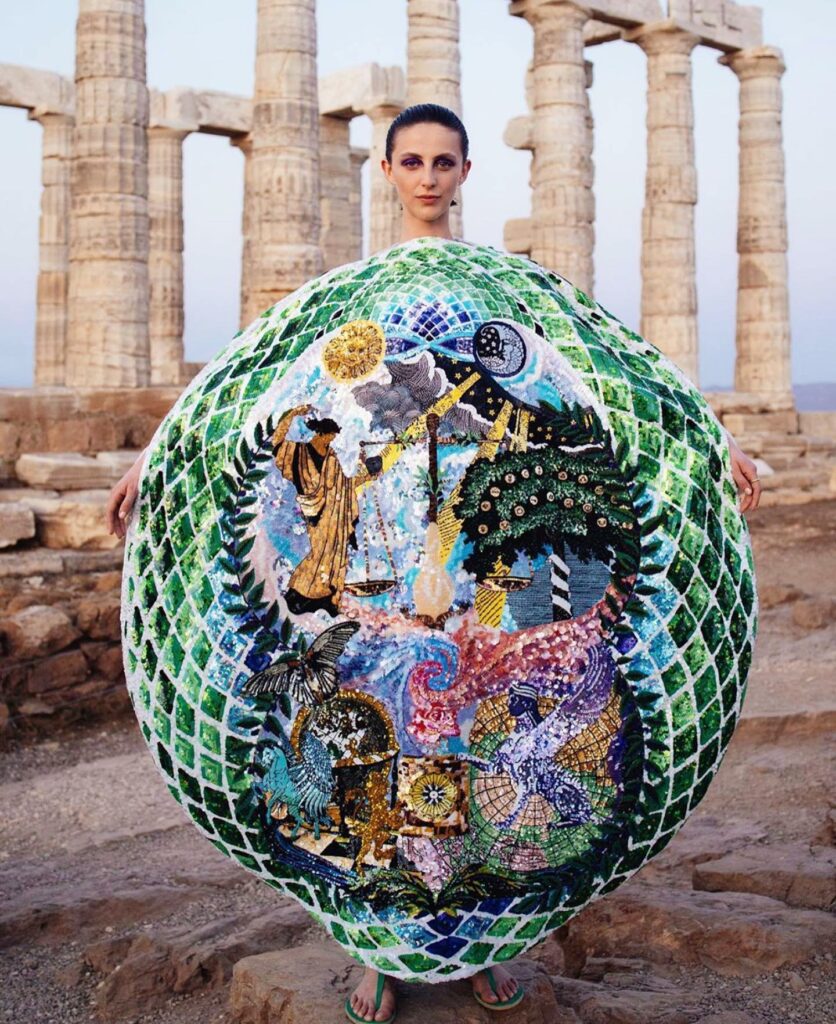
Known as the 'Queen of Print', Mary Katrantzou has revolutionised fashion with her striking designs. With trompe l'oeil dresses featuring digital patterns and opulent embellishments, she opened the graduation show at Central Saint Martins in February 2008, and the rest is history. Her collections, characterised by bold prints and innovative silhouettes, have been influential across high fashion and high street brands. In particular, her collection of lampshade skirts for Spring/Summer 2011 was a major success at London Fashion Week. Her work epitomises a bold, artistic femininity, fusing contrasting aesthetics and combining technology with craftsmanship. Her designs, which are available in more than 30 countries, continue to set trends and captivate a global audience.
With an initial focus was on costume jewellery, Dassios has since 2005 developed into an acclaimed designer of iconic accessories and garments. Known for his haute couture moulage technique, he shapes fabrics on mannequins; the result is striking, geometrically draped pieces. His designs are a blend of Greek tradition and global influences. They feature authentic embroidery, ethnic detailing and handmade fabrics. His denim and kaftan ranges in particular stand out for their must-have status, with each handcrafted piece exuding a unique identity. Dassios' meticulous approach elevates his work beyond conventional pret-a-porter and makes each piece a work of art in itself.
Celebrated for his fluid silhouettes and masterful draping, Bratis' style denotes effortless elegance. His garments, crafted primarily from wool and silk with minimal seaming, showcase a natural flow, gracefully contouring the body. His designs have graced international runways from Milan to New York, gaining global acclaim. Bratis' collaborations with brands like L`Oreal Paris and Johnnie Walker Black Label further highlight his innovative approach. His work, characterized by a unique blend of simplicity and sophistication, has redefined modern elegance in fashion.
Zeus+Dione, inspired by Greek mythological heritage, reimagines contemporary style and design. Named after the ancient Greek goddess's divine parents, the brand blends tradition with a modern twist. Central to its ethos is the Greek Delta (Δ), symbolizing spirituality, harmony, and creativity. Inspired by classic Greek architecture, the collections feature minimalist structures, geometric precision, and elegant patterns. This brand is a tribute to Greek artisanal craftsmanship, offering innovative, timeless pieces that redefine tradition and material quality, appealing to those seeking unique yet classic lifestyles created in sustainable ways.
Inspired by Mariano Fortuny and her Greek heritage, Valente has been a fashion innovator using pleats since 1985. Her unique approach begins with simple fabric rectangles, creating flowing, minimal-seam designs that allow freedom of movement, reminiscent of ancient Greek attire. Her timeless, seasonless collections cater to all body types, denoting understated elegance. A proponent of slow fashion, Valente uses high-quality, sustainable synthetic materials, aligning with her commitment to vegetarian principles and avoiding animal products in her designs.
Zoulias embraces a bold style of old-school femininity, combining romantic prints and voluptuous, slim-fitting silhouettes with a noble, aristocratic charm. In 2002, Zoulias opened his boutique in Athens, introducing luxury accessories and limited collections. Following his passion for dressing women in timeless elegance, he launched his ready-to-wear collection in 2007, a tribute to vintage glamour with a contemporary, finely crafted touch. In 2008, he debuted his first haute couture and bridal collection. Celebrating the eclectic glamour of bygone eras, his modern yet nostalgic designs have a "bon chic" international flair, crafted with grace. His work flatters the modern woman, from the exotic to the austere - think ‘Emily in Paris’, for which the Greek designer created five epic looks.
A masterful balance between the ethereal grace of ancient Greece with edgy, sexy modern flair describes Lebessi's style today. Initially drawing inspiration from Grecian elegance with flowing one-shoulder gowns and statue-like draping, the line has evolved to include more contemporary elements. Her use of light, classic materials like silk chiffon and organza in understated tones is now complemented by minimalist, geometric, and even urban influences. Lebessi's work, always embracing a dreamy and timeless elegance, also extends to handmade jewelry and chic accessories, reflecting a seamless blend of classical beauty and modern sophistication.
Merging classical and modern art influences with Greek heritage, Kourbela creates fashion that is both ethereal and grounded. Her unique collections, informed by her background in fashion design as well as the arts, have established her as a pioneer of contemporary Greek creativity. Her brand features four lines, including the couture-inspired IOANNA KOURBELA and the natural-material-focused "EN OIKO" collection, reflecting a synergy between body, clothing, and environment.
Yiorgos Eleftheriades excels in crafting unrestricted, dynamic silhouettes, merging structural innovation with fluid grace. His collections, showcased in Athens, Milan, Paris, Barcelona and beyond, are, distinguished by voluminous and geometric shapes, and present a meticulous balance of form and movement. Using eco-friendly fabrics, Eleftheriades emphasises functionality and versatility, creating timeless pieces that adapt to various occasions. His technique, rooted in expert tailoring and a commitment to sustainable fashion, results in clothing that not only looks striking but also engages the wearer in both thought and style, transcending conventional fashion boundaries.
Known for its timeless, unisex and elegant Greek aesthetic, Parthenis was first established in Athens and later Mykonos in 1970. Today, Orsalia Parthenis continues the legacy of her father Dimitris with 'chic sportif' designs that blend natural fibres such as wool, silk and cotton into relaxed, figure-flattering silhouettes. Parthenis recently collaborated with fashion illustrator David Downton on a limited-edition resort collection, reflecting the brand's commitment to innovative yet classic design, all produced in Athens.
Ancient Kallos skillfully and subtly infuses ancient Greek aesthetics into elegant modern designs with clean lines. Their collections encompass various pieces, from flowing dresses inspired by classical Greek attire to bold gold linen cabana trousers, accessories that evoke the splendor of ancient jewelry, to home decor items. You'll find meticulously crafted garments featuring drapery, pleats, and delicate embroidery inspired by traditional weaving and Hellenic heritage. Accessories like sandals and jewelry showcase the brand's dedication to timeless elegance. Explore their website to experience a harmonious blend of contemporary fashion and classical Greek beauty in every creation.
MI-RO, created by Dimitris Mastrokalos and Giannis Raptis, stands out in Greek fashion for its innovative style of fresh, timeless classical lines and audacious glamour. Known for creating dynamic silhouettes and feminine lines, their designs are made with precious materials and detailed tailoring. The duo's distinctive approach has led to presentations at major fashion events and collaborations with global brands. Their influence extends to other areas, including costume design, further highlighting their versatile and impactful design ethos.
Pattern is the starting point here, treated not as surface decoration but as a structural element that travels easily between clothing, accessories, and objects. Early collections established a recognisable vocabulary of bold paisleys, graphic florals, and ornamental motifs, applied to silk scarves, jewellery, and leather goods before expanding into ready-to-wear. The work has moved comfortably between fashion and lifestyle contexts, with collaborations for international brands and limited projects that position print as the central gesture. Signature pieces include silk scarves designed to function as wardrobe anchors rather than seasonal accents, along with jewellery built from hard-edged shapes and charm motifs that translate the same visual language into metal.
The collections are rooted in eveningwear and sharply defined silhouettes, with a consistent emphasis on the female form through fitted bodices, clean waistlines, and controlled volume. Since launching his label in two thousand eight, the designer has built a recognisable aesthetic through dresses and jumpsuits that rely on cut and fabric choice rather than surface excess. Satin gowns with wrapped constructions, structured bustier dresses, and wide-leg jumpsuits appear season after season as core propositions. Parallel to the label’s retail presence, his visibility as a television judge has placed the work firmly in the public eye, creating a rare overlap between fashion production and mass cultural recognition in Greece.
At the head of Greece’s oldest couture house, founded in 1906, the current creative direction is defined by made-to-measure couture, bridal, and formal eveningwear produced from the Athens atelier. The work centres on sculptural silhouettes, controlled volume, and surface detail developed through traditional couture construction. The house presents officially on the Paris Haute Couture calendar, placing the designer within the small circle of couturiers working under the Fédération de la Haute Couture et de la Mode. Recent collections continue to focus on dramatic gowns built around corsetry, precise bodice work, and full skirts, alongside bridal designs that translate the same construction methods into ceremonial form. The output balances public commissions for high-profile events with private atelier work, maintaining couture as a living practice rather than a historical reference.
The collections are built around ease of wear and movement, with flowing dresses, lightweight layers, and silhouettes suited to warm weather and travel. Print plays a central role, used to animate simple garment forms rather than overwhelm them. Designed with seasonal retail in mind, the work fits naturally into island boutiques and summer wardrobes, offering pieces that transition easily from day to evening. The brand’s focus remains firmly on clothing that functions in situ, responding directly to Greece’s climate and lifestyle rhythms.
The brand moves fluidly between fashion, interiors, jewelry and collectible design, with clothing collections forming part of a wider visual system rather than standing alone. Resortwear plays a central role, expressed through silk dresses, kaftans, and printed separates designed for warm climates and seasonal travel. Beyond clothing, the work has extended into tableware and home objects through high-profile collaborations, including projects developed with Dior Maison and earlier porcelain collections created for destinations such as Skorpios. This cross-disciplinary approach positions the label as a design house rather than a conventional fashion brand.
Emerging from the Athens fashion scene with a clear interest in gender-neutral dressing, the collections explore fluid silhouettes and adaptable forms. Dresses, tunics, and layered garments recur across seasons, often presented in monochrome palettes that foreground cut and movement. The work has been shown consistently within Greek fashion week contexts, contributing to ongoing conversations around inclusivity and non-binary fashion in Greece. By prioritising versatility and form over ornament, the label has carved out a distinct position within contemporary Greek ready-to-wear.
" ["post_title"]=> string(41) "The 20 Designers Redefining Greek Fashion" ["post_excerpt"]=> string(126) "From Athens ateliers to island boutiques, the brands shaping the fashion language, rooted in craft, culture, and modern luxury" ["post_status"]=> string(7) "publish" ["comment_status"]=> string(6) "closed" ["ping_status"]=> string(6) "closed" ["post_password"]=> string(0) "" ["post_name"]=> string(37) "best-greek-luxury-fashion-brands-2026" ["to_ping"]=> string(0) "" ["pinged"]=> string(0) "" ["post_modified"]=> string(19) "2026-02-08 14:37:01" ["post_modified_gmt"]=> string(19) "2026-02-08 11:37:01" ["post_content_filtered"]=> string(0) "" ["post_parent"]=> int(0) ["guid"]=> string(31) "https://www.travel.gr/?p=312908" ["menu_order"]=> int(0) ["post_type"]=> string(4) "post" ["post_mime_type"]=> string(0) "" ["comment_count"]=> string(1) "0" ["filter"]=> string(3) "raw" ["post_views"]=> string(5) "29659" } [91]=> object(WP_Post)#5408 (25) { ["ID"]=> int(86165) ["post_author"]=> string(2) "12" ["post_date"]=> string(19) "2026-01-28 14:10:31" ["post_date_gmt"]=> string(19) "2026-01-28 11:10:31" ["post_content"]=> string(76381) "Nigiri, sashimi, robatayaki (robata), toban-yaki, yakitori, tataki: words that make Japanese cuisine appear complex and as distant as its country of origin but also prove that Japanese cuisine is a lot more than raw fish. Words in a language that has become well known to Athenians today.
Apart from the classic raw fish dishes (nigiri, sashimi), Japanese cuisine includes a wide range of charcoal-grilled dishes (robata), dishes cooked on a hot ceramic dish (toban-yaki), as well as dishes with food that has only been seared at very high temperatures (tataki), skewered chicken (yakitori) dishes, as well as dishes with other meats – including beef and fish. Throughout its existence, Japanese cuisine has been influenced by many cultures and religions. What has remained unchanged is the emphasis on the beautiful aesthetics of every dish, as well as of the whole table; the use of fresh seasonal ingredients, the variety of seafood and vegetables, even flowers, used, as well as the delicate clarity of flavors.
With an extremely wide variety of flavors and dishes prepared using clean ingredients, Japanese cuisine is one of the tastiest and healthiest cuisines in the world. We’ve found the top restaurants serving Japanese food in our city – with modern and high-end cosmopolitan choices, as well as every day and street food options – that are worthy representatives of this rich and diverse cuisine. All are in central Athens except Matsuhisha, Kinjo and OMA, which we couldn't fail to mention here.
You won't find any seafood here, and that's exactly what makes this singular, unpretentious, cozy yet exclusively singular place stands out. You see, Birdman reinterprets Japanese technique through meat rather than fish, with top quality beef nigiri, a concept created by owner Ari Vezene and his team, as its defining feature. Premium European cuts and wagyu are shaped into nigiri and lightly seasoned to emphasize texture and fat rather than sauces. And then there's the Yakitori, donburi bowls, and a cornucopia of nose-to-tail preparations that reinforce the kitchen’s focus on meat, and especially chicken, cookery. The crispy chicken skin skewers are unforgettable. Chef’s selection menus provide the clearest introduction to the concept, positioning Birdman as one of the city’s most distinct Japanese-adjacent dining experiences. Linger at the bar for hours ordering a slow succession of satsfying bites to be accompanied by state of the art cocktails.
Voulis 35, Syntagma
Onuki brings to Athens a Japanese fine-dining approach shaped by deep research and expert engagement with the authentic principles of the cuisine rather than trend-driven gestures, and its focus is to reframe familiar dishes in tantalizing ways. The kitchen, part of The Ilisian's elegant new complex (House of Nynn, which is a member's club although Onuki is open to all), works with an unusually broad range of seafood and fish at the sushi bar. This, alongside seafood, meat like prime quality wagyu steak (A5 striploin) or chicken skewers cooked on a robata grill, and succulent vegetable dishes like the snowpea, avocado, ginger and broccoli salad. Dishes reflect regional as well as modern tastes and seasonal thinking, with ingredients sourced from around Japan's diverse regions. Elaborate raw preparations are impressive, while warm dishes explore classic methods through a contemporary lens. The setting combines Japanese minimalism with a polished metropolitan calm. Based on the concept of 'transcendence', meaning that the experience of the drink chanmges from the first to the final sip, the drinks menu draws on rare and classic Japanese whiskies, shochu, sake (like the excellent Junmai series of five sakes by Dom Perignon) , and unique signature cocktails built around homemade concoctions and herbs.
The Ilisian, Michalakopoulou 5, Ilisia
Tanpopo has always positioned itself closer to everyday Tokyo than to destination dining, and that stance remains its strength. The menu moves comfortably between sushi, sashimi, and a range of hot dishes, with ramen continuing to anchor the experience. Ramen options range from pork-based broths to vegetarian versions, while dishes such as Black Angus tataki, wakame salad with trahana, and simple fried sides show a kitchen confident in blending Japanese technique with select local ingredients. The atmosphere is informal and unfussy, reinforcing its role as a reliable, repeat-visit restaurant rather than a special-occasion address.
Evripidou 2, Psyrri
This restaurant continues to operate at the intersection of global luxury and high-level Japanese technique. Part of the Four Seasons Astir Palace complex, the restaurant follows Nobu Matsuhisa’s established culinary language, combining brilliantly precise sushi work with robata-grilled and wood-oven dishes. Signature preparations remain reliable, while Greek seafood and produce are integrated where appropriate. The dining room, designed by Rockwell Group, emphasizes openness and calm, with sea views shaping the experience as much as the food. Service is polished and measured, and the bar program highlights Japanese whisky, sake, and refined cocktails, making timing and pacing central to the visit.
Apollonos 40, Vouliagmeni
Sushimou offers one of Athens’ most focused omakase experiences, which means the menu choices are left to the chef, who serves a sequence of dishes based on the best ingredients available that day.Chef-owner Antonis Drakoularakos works directly in front of guests σεατεδ ατ α 12-σεατ ψοθντερ, shaping nigiri and sashimi with minimal intervention and an emphasis on seasonality. Seafood quality, knife skills, and correctly prepared rice define the menu, while sauces and garnishes are used sparingly. A signature nose-to-tail fish presentation extends the experience beyond sushi alone. Service follows the chef’s pace, with a concise wine list and a carefully selected sake offering supporting the meal.
Skoufou 6, Syntagma
This Kolonaki institution approaches Japanese dining as a social experience, combining sushi with cocktails, wine, and an evening-driven atmosphere. The menu includes premium nigiri, including wagyu and toro, alongside ceviche-style starters and polished raw dishes. While technique remains solid, the emphasis is equally on the exclusive mood, with a glamorous interior that leans closer to Milan than Tokyo. The wine cellar is substantial, cocktails play a central role, and the restaurant’s longevity reflects consistency.
Xenokratous 21, Kolonaki
Osaka Sushi Bar balances classic sushi forms with occasional high-end flourishes. Alongside reliable nigiri, maki, and tempura, the menu includes more indulgent touches such as foie gras nigiri, uni and ikura gunkan, and carefully seasoned oysters. Tuna tataki and donburi dishes broaden the offering without overwhelming it. The approach remains rooted in simplicity, making it a great option for both traditionalists and diners seeking richer combinations.
Lepeniotou 12, Monastiraki
Operating as a contemporary rooftop gastrobar rather than a traditional Japanese restaurant, with sushi forming part of a broader fusion menu, NYX's kitchen emphasizes freshness and acidity, pairing sushi and nigiri selections with raw dishes, dumplings, and lighter cooked plates. Presentation is clean, creative and modern, often incorporating ice service and freshly grated wasabi, micro greens and other boldly flavoured and pretty garnishes. The setting, music-forward and plant-filled, with a stunning Acropolis view through glass walls, draws a local crowd and functions as much as a social space as a dining destination.
Omirou 19, Kolonaki
Here, Sushi is prepared with a clear understanding of proportion. Nigiri, sashimi, and maki remain the popular core, supported by chirashi designed for takeaway, as well as udon, donburi, tonkatsu, and tori karaage. Seating extends onto the sidewalk, reinforcing its everyday character as a central and easygoing sushi destination. The focus stays firmly on flavor clarity and repetition done well.
Nikis 17, Syntagma
Here you'll find a more casual interpretation of Japanese dining, combining sushi with noodles and comfort-driven dishes. Rolls and nigiri are straightforward and correctly assembled, while ramen and udon bowls offer warming, accessible options. Dishes such as duck bao and vegetable-forward rolls broaden the menu’s appeal. The atmosphere remains relaxed and functional, positioning Mikaku as a dependable choice for informal Japanese meals rather than destination dining.
Koletti 33, Makryianni
The menu here presents a combination of modern sushi with playful, crowd-pleasing mixed varieties. Signature rolls feature classic Japanese ingredients layered with contemporary sauces, while salads and dumplings expand the menu beyond raw fish. Cocktails and Japanese spirits are integral to the experience, reinforcing its role as a lively evening spot rather than a purist sushi bar. The overall approach favors accessibility and atmosphere over strict adherence to tradition.
Ploutarchou 16, Kolonaki
A novel approach to Japanese comfort food through a contemporary, highly personal lens, created by Ari Vezene, who also envisioned Birdman. The menu centers on karaage, gyoza, ramen, and udon, with influences that occasionally nod toward Greek flavors without diluting the Japanese core. Originally launched as a delivery-only concept, the physical space now reflects its broader cultural ambitions, integrating various concepts in one space. The famous smash burger, Japanese sandos and noodle dishes coexist comfortably, reinforcing its role as a hybrid rather than a traditional Japanese restaurant. The restaurant is sceney, with a vinyl record store, live DJ sessions and a Japanese deli all coexisting in the same space. Ekiben has now opened a sister restaurant, Ekiben South, in Glyfada, serving the same menu.
Skoufou 15, Syntagma
A valid dedication to Nikkei cuisine, which combines Japanese technique with Peruvian influences, this restaurant's menu emphasizes contrast, pairing clean raw fish preparations with acidity, spice, and smoke. Sushi shares space with robata-grilled items and bolder cooked dishes, while the room leans into a moody, sculptural aesthetic. Technique remains the anchor, preventing the concept from tipping into excess, and positioning Mayan as a contemporary, globally minded address.
Panepistimou 39, Center
Nakama embraces high-energy Japanese fusion with a focus on bold combinations and social dining. Sushi rolls incorporate unexpected pairings, while tacos, cocktails, and a glossy interior shape a late-night rhythm. Tradition is not the priority; instead, the menu favors enjoyment of bold and colorful flavors and delicate textures.
Massalias 5, Kolonaki
Creativity in textures and laser-like precision are the defining characteristic at Oma. Rolls are tightly made, nigiri are more delicate because of the accuracy of their cuts, and even accompaniments such as pickled ginger are prepared in-house. Signature items include marinated white-fish rolls, fire-seared sea bream nigiri, and Japanese curry udon with beef and shiitake. Poke bowls offer a lighter counterpoint, maintaining balance across the menu.
Andrea Papandreou 22, Ilioupoli
Ronin draws on a classical Japanese reference, but the restaurant itself speaks in a contemporary Athens voice, grounded in technique and clarity. The room is minimal and composed, split between a lively main floor and a quieter mezzanine, and the kitchen stays close to traditional Japanese cooking. Raw fish is treated with confidence, from aji tataki with lime and ginger ponzu to tuna tartare with spicy miso, while sushi rolls keep structure and balance, including versions with crab or crisp salmon skin. Warm dishes move further into the canon, with shrimp tempura, beef amiyaki, hire katsu, and black cod with eggplant agedashi. A compact wine and drinks list supports the menu, which ends simply, often with ice cream.
Xanthippou 2, Kolonaki
Shizen Rituals is built around accessibility without shortcuts. The focus is on daily preparation, with fresh tuna, salmon, crab, and shrimp arriving every morning and everything made in-house. The operation leans toward take-away, with a few tables for quick eating, and a menu that moves easily between sushi fundamentals and comfort-driven plates. Rolls include a tofu version crusted in chives with house vegan mayo and vegan teriyaki, alongside onigiri wrapped in nori and filled with spicy tuna, creamy salmon, or a plant-based option. A signature roll with lightly seared tuna, eggplant, and dill has recently joined the lineup. Beyond sushi, chicken katsu rolls and pork curry extend the offering, while desserts by pastry chef Filio Tziouropoulou range from matcha tiramisu to sweet sando.
Louizis Riankour 75, Ambelokipi
Kinjo has earned its reputation by letting the day’s catch shape the menu rather than forcing consistency. Nigiri arrive one by one, built around fish such as John Dory, red mullet, weever, scorpionfish, or lightly smoked bonito, paired with rice that holds its shape and character. Seasoning is subtle but deliberate: a touch of house-made kanzuri to lift red mullet, a trace of yuzu kosho to cut through oilier fish. Beyond sushi, the kitchen moves confidently into dishes like hijiki seaweed salad with crab and pickles, raw langoustine with citrus and heat, chawanmushi with shiitake and scallop, kushiyaki from the Japanese grill, and udon finished with shellfish bisque and bottarga. The space is pared-back, the wine list wide-ranging, and the cooking consistently worth the journey.
Konitsis 29, Vrilissia
Read more:
Best restaurants in Athens
Best hotels in Athens
Best rooftop dining in Athens
Souvlaki, at its best, is an exercise in balance. Properly grilled meat should stay juicy inside while picking up a light char on the outside, with smoke, salt, and fat doing most of the talking. The pita needs warmth and elasticity, never dry, ready to soak up meat juices without collapsing.
In Athens, souvlaki lives everywhere: tiny counters that sell out daily, family-run grills unchanged for decades, late-night neighborhood psistaries, and newer addresses that fine-tune technique without abandoning tradition. Pork remains the classic choice, though beef, chicken, kebab, and even plant-based versions now share the spotlight.
Fun fact: the word souvlaki comes from souvla, meaning skewer, and Greeks still argue fiercely over sauce, bread, whether the pita should be oily or dry and whether fries belong inside at all. Time to reach your own conclusion?
The Achilleas souvlaki spot is situated at a narrow street in Neos Kosmos. For 34 years now, Marinos, the proprietor, inspects all ingredients before buying and prepares everything himself. He prepares the gyro, skewered pork and chicken, as well as the tzatziki (yoghurt and garlic dip). The pork gyro, without a doubt this grill’s highlight, is juicy, delicious and marinated in a herb mix. Sizeable gyro pieces are cut and served in a pitta wrap or as a dish with pita bread pieces, tzatziki, tomato and onion.
The shop does not offer tables and seats, nor does it provide home delivery service. Getting there not too late is recommended as the place can be entirely out of food after 9 pm. The spot can hold on to a few portions for you by phone.
Kostas, a pint-sized souvlaki spot, situated in the centre of Athens, at a narrow side-street off Mitropoleos st, has been based at this address since 1950, serving skewered pork and beef bifteki, made simply yet filled with quality, either in pitta or without. The business is now run by a third generation of the family, with all the original quality intact. The meat is fat-free, charcoal-grilled and served either plain, with olive oil and oregano flavouring, as is customary at village festivals around Greece, or wrapped in pitta bread, crispy on the outside and soft on the inside, with tomato, onion, parsley, red pepper and yoghurt, which is preferred to tzatziki. The proprietors here believe the intense garlic flavour of tzatziki overwhelms meat flavour. This small shop does not offer seating. Customers can either order over the counter or online for home delivery.
Enjoying the city’s greatest cult status, Panerythraikos, in Nea Erythraia, northern Athens, offers a village café-like setting with wooden chairs out on the pavement. The menu is limited but worth exploring to its fullest. On the menu you'll find skewered pork, small in size but very delicious, juicy and slightly fatty. The spot also offers freshly cut fried potato chips, salad with diced and peeled tomatoes, onion and parsley, as well as feta cheese topped with olive oil and oregano. The souvlaki is served either plain or in pitta bread, oiled to perfection, with paprika, tomato, onion and parsley. One objection: The pitta bread could have been smaller for a better match with the short skewers. Whether ordered with or without pita bread, one souvlaki here will not fill your tummy.
Kafteros, situated at a small side street off Kifisias Avenue in the Kato Halandri area, has been run by the Exarhopoulos family since 1970. The spot is renowned for its spicy sauce recipe. The menu includes skewered pork, chicken and kebab, the latter being a highlight. It is worth trying kebab as a dish, consisting of oil-free pitta bread pieces and four skewered juicy kebabs topped with tomato and finely cut onion. The spicy sauce is served in a separate plate. The only detail revealed here about the sauce recipe is that it is made with a variety of peppers and is spicy. The spot offers tables at a charming yard space as well as home delivery service.
Located next to the worker housing facilities in the Dourgouti area of the Neos Kosmos district, this juicy haunt has been in business since 1983, always at the same address. Founder Tomas Khampartsoum kneads mince daily for his kebabs and also prepares a variety of other Armenian delights, recipes he learnt from his mother. The lamb-and-beef kebab mix with salt and onion is undoubtedly the spot’s best seller. Countless kebab skewers are prepared every morning. They are charcoal-grilled and served juicy and soft with oil-free pita bread, tomato and onion. Fried potato chips and tzatziki are nowhere to be seen at this spot. The business is nowadays headed by the founder’s son, Marios, just as devoted and hard-working as his father. The spot has a limited number of tables and also offers home delivery service.
Lefteris O Politis, based on a side-street off busy Omonia Square since 1951, has now entered its third generation as a business, offering Anatolian recipes that are simple yet attentively prepared and absolutely delicious. The menu is limited to beef bifteki and Anatolian soutzouki (spicy sausage), both skewered and well grilled on the outside but still juicy. Pita bread, slightly oiled, is placed over the meat on the grill to absorb meat flavour. The meat options are served in pita wraps with tomato, finely cut onion, freshly cut parsley and chili pepper. The business also opened a second address in central Athens five months ago. Both shops have a limited number of tables and also serve take away.
On Agia Eirini Square, this small, no-fuss counter has been feeding downtown Athens for decades, famous for a very specific house style that regulars can recognize blindfolded. The move here is classic souvlaki in pita, built around pork, a tomato-based sauce that many people consider its signature, plus onion, and the option of fries. Service is fast, the space is tight, and the queue tends to form early, partly because the place keeps the focus on a few things done the same way, day after day. It is one of those central stops that feels woven into the square’s daily life, from office lunches to weekend wandering.
In the Varvakios market space, this newer arrival made its name fast by plugging into the neighborhood’s food DNA: spices, butchers, and people shopping with purpose. The space is extremely small, set up for takeout and quick bites, and the menu stays close to the classics, with souvlaki in pita and a strong emphasis on seasoning and sauces that lift the meat without turning the wrap into a salad. It suits the street it’s on, where you can grab a wrap, keep walking, and let the aromas of Evripidou do the rest. The popularity comes from how well it fits the setting, and how confidently it delivers a satisfying, market-day kind of souvlaki.
This is the Pangrati outpost of the cult souvlaki story that began in Kerameikos, originally tied to a butcher-shop background, then turning into one of the city’s most talked-about skewer specialists. The style leans heavily toward kalamaki, with pork and chicken skewers grilled with real attention to char and juiciness, often served with pita on the side, plus fries if you want the full late-night plate. It is especially popular with people out for drinks in Pangrati, partly because the hours suit the neighborhood’s nightlife and partly because the cooking holds up when you are hungry and impatient. The atmosphere is simple and lively, and the pace stays brisk well into the night.
A newer, more polished addition near Ermou and the Metropolis, designed to feel comfortable while still staying close to the souvlaki tradition. The menu centers on souvlaki and other grill staples made with selected meats, plus hand-cut fries that have become part of the draw for many customers. The location makes it easy for a mid-shopping lunch or a quick meal between central errands, and the setting is more relaxed than the classic shoulder-to-shoulder counters. It is popular because it sits in the heart of Athens, keeps quality as the headline, and delivers a dependable, satisfying version of the things people actually order.
A hot destination in Korydallos that people seek out for classic grill-house flavors and an old-school spirit that does not even try to appear modern. The focus is on traditional souvlaki and especially bifteki, served in the familiar Athens way, with sides that keep the plate grounded rather than decorative. The room has a retro feel, and the menu tends to value doing a smaller range well, which is often exactly what loyal customers want from a neighborhood psitopoleio. It is not a center-of-town quick stop, but it earns its place in a citywide souvlaki conversation because it delivers that specific Greek grill comfort, consistently, with no theatre.
In Gkyzi, this long-running neighborhood grill has built a loyal following over decades by doing what local psistaries are meant to do: feed people consistently, with warmth, speed, and a menu that covers the staples properly. Alongside the expected pork and chicken souvlaki and gyro options, you will usually find a broader lineup than a street kiosk, including plates and everyday Greek comfort food, which helps explain why it attracts regulars rather than only passersby. The appeal is the combination of familiarity and reliability, plus the feeling that this is part of the neighborhood’s routine, not a trend. It works equally well for takeout and for a quick sit-down meal when you want something straightforward and filling.
In Exarchia, this place made headlines for being the first in Athens to treat souvlaki seriously in a fully plant-based format, not as an afterthought. Instead of pork and chicken, the menu builds its wraps around mushroom souvlaki and other vegan grill-style fillings, with sauces that aim for smoke, spice, and depth. It has become a reference point for locals and visitors who want to see how street food adapts to new eating habits while still respecting the mechanics of a good wrap: hot filling, good bread, and a balance of punchy flavors. It is fast, casual, and widely appreciated for offering something different without turning it into a novelty act.
Kalamaki Bar in Koukaki is a modern, long-standing neighborhood grill on the pedestrian stretch of Drakou Street, where the answer to Athens’s eternal “kalamaki or souvlaki?” debate is firmly—and deliciously—settled. For nearly 15 years it has focused on juicy, expertly grilled skewers in impressive variety, from classic pork and chicken thigh to beef, milk-fed lamb, and kebabs, alongside thoughtful vegetarian options like mushroom or halloumi skewers. The menu goes beyond handheld bites with generous meat plates served with fries, rice, or vegetables, while starters such as house-made tzatziki, melitzanosalata, spicy kopanisti, and bougiourdi set the tone for relaxed sharing. Add crisp fries, balanced salads, a solid list of Greek wines and spirits, and a casual, convivial atmosphere that spills onto the sidewalk, and Kalamaki Bar feels less like a quick souvlaki stop and more like a dependable local hangout built around very good grilling.
Kapsa is chef Christoforos Peskias’s fiery take on Athens’s favorite street food, bringing chef-level care to a classic souvlaki joint in the city center near Praxitellous Street. Everything here is cooked over charcoal: pork gyro slowly turning on a custom-built vertical spit fueled by glowing coals, and skewers of pork neck brined for 12 hours for extra tenderness and flavor. The gyro is marinated with subtle influences from Mexico’s al pastor—including poblano chili, achiote, and a touch of pineapple juice—yet tastes comfortingly familiar. Handmade sauces are a standout, especially the “keratenia” green sauce with parsley, coriander, hot horn pepper, and olive oil, which manages to burn and refresh at the same time. With proper yogurt tzatziki, freshly cut fries, quality pita from a longtime Athenian bakery, and a focused menu that skips excess, Kapsa delivers bold, smoky, expertly executed souvlaki that lives up to its name.
Squeeze in one more bite of Athens: continue with our Street Food Guide for more handheld hits – including where to track down the city’s juiciest burgers.
Zitsa is not the name of a place that's often repeated in Epirus, even among more seasoned travelers to Greece. Set on a gentle plateau just outside Ioannina, it has long existed quietly, its identity defined by rolling vineyards, traditional stone houses, and a pace of life shaped by altitude and season. That discretion is part of its character, but it is also why many people, myself included, decide to visit here only when given a reason.
Mine was Apostolos Thymiopoulos. After one of Greece’s most influential winemakers took over the historic Glinavos winery, I came to Zitsa to meet him and to taste the new wines marking the start of this fresh chapter. What emerged was not only a compelling wine experience, but discovering a village with cultural depth, landscape, a lively community and proximity to one of northern Greece’s most interesting cities, which make it worth far more than a fleeting visit.
Zitsa lies at elevations ranging from roughly 500-700 meters, in a landscape shaped by limestone soils, forested edges, and a cooler continental climate. These conditions have defined viticulture here for generations, favoring freshness, acidity, and clarity over weight or ripeness. The village's identity is inseparable from Debina, a native white grape variety that thrives in this environment and expresses it with unusual transparency.
Debina produces wines with modest alcohol, pronounced acidity, and a restrained aromatic profile that moves through green apple, pear, citrus peel, and herbal tones, often accompanied by a mineral impression linked directly to the limestone beneath the vines. Its character makes it particularly sensitive to both site and winemaking choices, which is precisely what drew Thymiopoulos to Zitsa.
Apostolos Thymiopoulos does not speak about winemaking as an act of control, but as a practice of attention. “My role is not to impose,” he says. “It’s to understand what the vineyard wants to give and help it reach that point.” That philosophy has shaped his work from the beginning.
Raised in Naoussa, he grew up among vineyards and wild natural landscapes, observing seasonal cycles and agricultural realities long before winemaking became a profession. As a child, he imagined two possible futures for himself, as a veterinarian or as a winemaker, as both are rooted in offering consistent care based on deep knowledge, working in connection with nature, as well as being able to face long-term responsibilities.
His reputation grew slowly but surely through his work with Xinomavro in Naoussa at Thymiopoulos Vineyards, where he demonstrated that the variety could express place and structure with clarity and confidence. Each wine he produced had a clear purpose, and none existed simply to expand a range. That same discipline defines his approach at Glinavos.
Upon acquiring the winery, there was no intention to reinvent it. “The Glinavos Winery already had rich history,” he explains. “My first responsibility was to listen, to understand Zitsa, Debina, the altitude, the limestone, the air that comes down from the mountains.” Thymiopoulos describes Zitsa as a place that resists haste, both viticulturally and emotionally, and that resistance is part of its value, and tells me that part of his decision was inspired by how connected he is to its natural beauty.
Measured experimentation is one of the prolific winemakers' priorities. Working with the same vineyards, he's keen to explore different expressions of Debina through fermentation choices, time on lees, and sparkling methods, allowing the grape to reveal multiple facets without ever losing its identity. “Debina has simplicity,” he says, “but it also has depth. That combination gives you space to explore without distortion.”
The first wines released by Thymiopoulos at Glinavos read as variations on a single idea rather than as separate projects, all centered on Debina and its response to Zitsa’s altitude and limestone-rich landscape. Fine Debina takes the most measured approach, with short, cool maceration, spontaneous fermentation, and extended time on fine lees giving the wine texture and quiet depth while preserving its natural acidity and mineral clarity, shaped by green apple, pear, and citrus peel. The Poème de Nature White Semi-Sparkling shifts the same grape into a more immediate register, using a second fermentation in tank to highlight freshness, fine bubbles, and a clean, stony edge, while the rosé version introduces Xinomavro in a supporting role, adding restrained red-fruit aromatics without altering the wine’s sense of altitude and balance. Together, the three wines outline a shared intention, allowing Debina to move between still and sparkling forms while remaining firmly anchored in place and season.
Thimiopoulos' goals for his winery remain pragmatic, but also infused with visionary perspectives. Rather than expanding labels, he speaks about understanding the microclimate more deeply and following the vineyard over time. Other local varieties may follow only if they prove meaningfully connected to the place, he says, with Vlachiko mentioned as a future possibility grounded in altitude and regional history rather than novelty. And the focus is always organic and keeping the winemaking process as pure and uncomplicated as possible.
Zitsa rewards time spent walking. The village is compact, with stone-built houses and views that open toward surrounding hills. Daily life unfolds quietly, shaped by the area's agriculture and efficient local rhythms. Here are our suggestions of what to see.
One of Zitsa’s most important landmarks is the Monastery of Prophet Elias (Profitis Ilias), founded in 1598 and set on a hill overlooking the village and surrounding countryside. The site is closely linked to Lord Byron, who stayed here for two nights in 1809 after being caught in a violent storm during his travels through Epirus (though local legend has it that he was enjoying the local wine and a love affair), an episode later referenced in Childe Harold’s Pilgrimage.
Today, the monastery remains a point of historical and cultural reference, valued as much for its panoramic setting as for its place in the region’s connection to European intellectual history. When we visited, we met the resident monk, who lives there alone with his dog, Tequila. He showed us the beautiful interiors that include antique frescoes as well as bullet holes from an Ottoman attack.
A second site of interest is the Monastery of Paliouri, dedicated to the Nativity of the Virgin Mary and dating to the eighteenth century. Located in a green, secluded landscape near the settlement of Paliouri, it reflects the area’s long religious tradition and offers a quieter, more contemplative counterpoint to the prominence of Prophet Elias.
The Zitsa Etchings Museum adds another layer to the village’s identity. Housed in a restored stone building, it focuses on engraving and printmaking, with works by Greek and international artists, reinforcing Zitsa’s long relationship with the arts beyond wine and agriculture.
The collection traces the development of modern Greek printmaking from its 19th Century roots, when woodcuts circulated mainly through books and newspapers, to its full artistic autonomy in the twentieth century. It brings together key figures who shaped Greek etching, lithography, and wood engraving, reflecting the moment when printmaking moved from craft to recognized art form, closely linked to drawing, social history, and the evolution of modern Greek visual culture.
Just west of Zitsa, the Kalamas River, also known as the Thyamis, cuts a wide, unhurried path through open countryside, shaping the agricultural landscape and offering easy access to nature throughout the warmer months. Its broad banks and slower currents lend themselves to swimming, relaxed canoeing, and long riverside walks, particularly in spring and early summer, when water levels are generous and the surrounding fields are at their greenest.
Within easy driving distance, the Voidomatis River flows through the Vikos–Aoos National Park, fed by mountain springs and known for its exceptionally clear, cold water. Here, organized rafting routes trace stretches of the river beneath plane trees and historic stone bridges, while parallel footpaths allow hikers to follow the water through shaded sections of the gorge, making the river one of the most immersive ways to experience the scale and calm of Epirus’s natural environment.
And for delicious pastries, cakes, pies and bread, don't miss out on the local bakery, aka 'The Best Bakery in the World', which has become internationally recognized for its artisanal and very friendly approach. Run by a husband and wife team, it functions as both a local institution and a welcoming destination in its own right.
Indeed, Kostas, whose family has run the bakery for generations, and Anna, his American Environmental Lawyer partner, accommodate passing tourists - mainly cyclists - who come through the village, often free of charge in exchange for light assistance at the bakery, offering them food, bed and the special opportunity to experience authentic country life in this lush and serene destination. They are also currently building a community, helping families from around Greece and abroad (upon visiting there was a waiting list of 25 of them) to find homes in the village.
Anna, Kosta and their friends also host occasional events and cooking workshops, with the help of Kostas' mother and other locals. Anna too, who met her husband while holidaying there for a few days with her sister, was deeply drawn to settling in Zitsa because of its peacefulness, friendliness, simplicity and beauty, and she says her friends from the US love finding refuge there. The appeal is significant, as Rea Kapetanaki, a Greek who although raised in Athens spent a significant part of her life living in the UK, and has now moved to the village for a simpler life, told me. "I didn't expect to be so busy!" she laughs, holding bags full of freshly made panettone, which she helped make. "People in the city seem quite - agitated - all the time, and I wanted a quieter pace, and after moving here I realized there is so much life and so much to do, but there's also nature, for long walks and swims, and quiet coffees in the village square."
Zitsa’s proximity to Ioannina is one of its greatest assets. Less than thirty minutes away, the city offers a different scale and rhythm without overwhelming the village experience.
Ioannina is built around Lake Pamvotis, whose presence shapes the city’s atmosphere. The old town, enclosed within castle walls, reflects centuries of Byzantine and Ottoman history, with museums, mosques, and narrow streets that encourage wandering rather than scheduling. A long tradition of scholarship and craftsmanship gives the city a cultural confidence that feels grounded and lived-in.
For visitors based in Zitsa, Ioannina provides access to dining, shopping, and museums, while allowing an easy return to vineyard landscapes by evening.
Positioned directly on the edge of Lake Pamvotis, this long-established hotel combines late-modern architecture with generous interior spaces designed for comfort and functionality. Rooms are spacious and understated, while public areas open toward the water, reinforcing a relaxed, outward-looking feel. A full spa, wellness facilities, and professional service make it a practical and polished base for exploring Epirus while returning to a sense of ease at the end of the day.
Set in a historic stone building, Kamares combines traditional Epirus architecture with contemporary design choices. Vaulted spaces, warm materials, and a muted palette define the interiors, while the small spa adds a layer of comfort suited to slower travel. The overall mood is intimate and reflective, making it a good fit for travelers drawn to characterful spaces with a sense of continuity.
Housed in a restored neoclassical building near the city center, this hotel blends period architectural elements with modern comforts. Rooms feature high ceilings, classic proportions, and understated decor that respects the building’s original character. The atmosphere is discreet and composed, appealing to visitors who appreciate heritage settings without formality or excess.
Set in a restored mansion near Ioannina’s historic center, Archontariki draws on the proportions and materials of traditional Epirus architecture, with stone walls, wooden ceilings, and carefully preserved structural details. The interiors combine classic antique furnishings with contemporary comfort, creating a warm, residential atmosphere that feels rooted in place rather than styled for effect. The breakfast downstairs is memorable.
A chef-driven restaurant focused on contemporary Greek cuisine grounded in Epirus ingredients and seasonal availability. Dishes draw on regional recipes and products, reworked with modern techniques and careful presentation, without drifting into excess. The dining room is understated and warm, with an atmosphere that encourages lingering and conversation.
A contemporary taverna that treats traditional Epirus cooking with respect and clarity, focusing on well-sourced meats, seasonal vegetables, and familiar flavors presented without nostalgia. The menu changes regularly, reflecting availability rather than fixed categories. The setting is relaxed and modern, with a lively but grounded atmosphere that draws a loyal local following.
An established favorite for elevated meze, designed around sharing and long tables rather than formal courses. The menu spans classic Greek small plates alongside more polished interpretations, supported by a thoughtfully assembled wine list. The space is convivial and energetic, balancing urban ease with a sense of continuity in the city’s dining culture.
" ["post_title"]=> string(74) "A Winemaker Heads to Zitsa, and the Epirus Village Becomes a Place to Know" ["post_excerpt"]=> string(115) "A historic winery enters a new chapter under Apostolos Thymiopoulos, and an unassuming town reveals its true colors" ["post_status"]=> string(7) "publish" ["comment_status"]=> string(6) "closed" ["ping_status"]=> string(6) "closed" ["post_password"]=> string(0) "" ["post_name"]=> string(29) "winemaker-zitsa-epirus-greece" ["to_ping"]=> string(0) "" ["pinged"]=> string(0) "" ["post_modified"]=> string(19) "2026-02-02 15:03:42" ["post_modified_gmt"]=> string(19) "2026-02-02 12:03:42" ["post_content_filtered"]=> string(0) "" ["post_parent"]=> int(0) ["guid"]=> string(31) "https://www.travel.gr/?p=517989" ["menu_order"]=> int(0) ["post_type"]=> string(4) "post" ["post_mime_type"]=> string(0) "" ["comment_count"]=> string(1) "0" ["filter"]=> string(3) "raw" ["post_views"]=> string(4) "2112" } [94]=> object(WP_Post)#5405 (25) { ["ID"]=> int(441706) ["post_author"]=> string(2) "19" ["post_date"]=> string(19) "2026-01-21 18:53:53" ["post_date_gmt"]=> string(19) "2026-01-21 15:53:53" ["post_content"]=> string(106689) "There is a Greece beyond coastlines and beach umbrellas: one shaped by forests, uplands, cultivated valleys, and farms, where daily life is still loyal to seasonal logic. Over recent decades, a new generation of agritourism projects has sprung up across the mainland and islands, blending hospitality with agriculture, environmental awareness, and a quietly refined approach to design.
The stays collected here are not defined by a single type of traveler. They suit couples seeking privacy and quiet, friends traveling together, solo guests drawn to nature and process, as well as families who value open space and participation over urban entertainment. What unites them is an emphasis on authenticity without austerity: working land, real production, and accommodations that feel intentional rather than improvised.
Days are shaped by harvesting, foraging, walking, cooking, or simply observing how the land operates. Meals are made with what grows nearby. Interiors are well designed, cozy and sometimes almost luxurious, but simplicity rules. Some of these places lean toward wellness, others toward food or agriculture, others toward landscape and architecture, but all share a respect for rhythm, place, and proportion.
Set on a 20-acre organic farm at nearly 1,000 meters, and only a 10 minute drive from the historic village of Kalavrita, Orias Guesthouse is an escape into the raw beauty of the northern Peloponnese, with Mt Chelmos towering in the distance. The guesthouse is simple but comfortable, surrounded by gardens, cherry orchards, and fir trees, and expansive natural landscapes.
Guests can get their hands in the soil, help out in the gardens, feed the farm animals, or - come October - join the grape harvest and traditional pressing. Cooking classes highlight local ingredients, while guided mushroom hunts uncover the edible secrets of the land. Adventurous visitors can set out on hikes, mountain biking trails, or backcountry ski routes in winter. A summer camp immerses kids and teens in farm life, letting them learn by doing. Meals, prepared with ingredients from the estate and local producers, are served in the farm’s restaurant, bringing the full-circle experience of food from earth to table.
Kalavrita, Peloponnese
Set near the shores of Lake Kerkini, one of Greece’s premier birdwatching destinations, Ikoperigitis is a cozy guesthouse that acts as a gateway to one of the country’s most diverse ecosystems. The setting is tranquil, with mountain views on one side and the lake’s ever-changing landscape on the other.
Nature is the focus here. Guests can set off on boat or canoe tours of the nearby lake, spotting water buffalo, rare birds, and flamingos. Hiking and mountain biking trails wind through the surrounding area, while guided excursions offer rock climbing and archery for those looking to test their skills. In summer, the property hosts a children’s nature camp, where kids learn everything from first aid to identifying local flora and fauna.
Lake Kerkini, Northern Greece
Tucked away in the Laconian countryside, Eumelia is a farmstay and immersion into regenerative agriculture and sustainable living. Olive trees stretch for miles, homegrown produce basks in the sun, and five earth-toned cottages sit under their shade, inviting guests into the rhythm of the land.
Grape harvesting in late summer includes barefoot stomping and lessons in natural winemaking. The olive harvest in autumn lets guests pick from centuries-old trees and dive into the history, varieties, and organic production of olive oil. Year-round, visitors can join cooking workshops, take part in culinary tours, or wind down with yoga and massage sessions. Days end with farm-to-table meals and a glass of Peloponnesian wine, under a sky undisturbed by city lights.
Gouves, Laconia, Peloponnese
Born from a desire to support Greece’s farmers and food artisans, and especially rural women, Mama’s Flavours isn’t just about tasting food, it’s about understanding where it comes from. Based in Kalamata but spanning the entire Peloponnese, the initiative opens doors to small-scale producers and their daily lives.
Visitors can spend a morning with a cheesemaker, taste wine at a boutique vineyard, press olives at a family-run mill, or join a local for a hands-on cooking class. Urban food tours explore Kalamata’s bustling markets, while deeper dives into the countryside reveal the traditions behind olive oil, wine, and bread-making.
Kalamata, Peloponnese
Set amongst the hills outside Nafplio, Opora Country Living is a luxurious farmstay set on 40 acres of olive groves and citrus orchards. Its stone-built country houses, each with rustic charm and modern comforts, provide a secluded retreat steeped in agrarian tradition. With uninterrupted views of the landscape, an infinity pool reflecting the olive trees, and a warm sense of hospitality, this is a place to slow down and savor the land.
Guests can participate in olive harvesting and pressing, gaining a hands-on understanding of the process before tasting the estate’s golden-hued oil. Wine tastings featuring Nemea’s famed local varieties are a natural extension of the region’s heritage, while seasonal cooking classes bring visitors into the kitchen to create dishes rooted in Greek tradition. Free bicycles are available for countryside rides, and hiking trails weave through the surrounding hills, inviting exploration of this fertile landscape.
Pyrgiotika, Nafplio, Peloponnese
Hidden among citrus groves, Agroktima Guesthouse is a cluster of ten stone-built cottages offering a quiet retreat into nature. Mornings are slow here, filled with the scent of oranges and lemons ripening on the trees, while evenings are spent fireside, wrapped in the warmth of rustic simplicity.
Guests can collect fresh eggs, pick fruit straight from the trees, or harvest olives in season. A nearby greenhouse cultivates seasonal vegetables, where visitors can learn about organic growing methods. Time slows to the rhythm of the land, whether sipping tea under the trees or gathering produce to cook with.
Leonidio, Arcadia, Peloponnese
Set in the mythical mountains of Pelion, Amanita Guesthouse is a great introduction to the edible wonders of the region, offering a rewarding farm-to-table experience. With dense forests on one side and the Aegean Sea on the other, the setting is as rich as the traditions it preserves.
Wild herb and mushroom foraging workshops take guests deep into the forest, learning to identify edible plants and fungi alongside expert guides. Culinary sessions bring these ingredients into the kitchen, teaching traditional techniques to turn foraged finds into regional dishes. The experience is an invitation to see nature not just as a backdrop, but as a provider.
Tsagarada, Pelion
A working farm set among the foothills of Pieria, Ktima Bellou is a place where organic agriculture and hospitality meet. The estate follows the seasons, from grape harvesting to beekeeping, while its traditional architecture and cozy atmosphere make it a restful escape into rural life.
Visitors can explore vineyards and learn about winemaking, help with the olive harvest, or try their hand at beekeeping. Cooking workshops bring fresh, organic ingredients straight from the farm into the kitchen, and hikes through the surrounding mountains open up breathtaking views.
Agios Dimitrios, Pieria
A farm set in deep greenery along the road to Mount Athos, Platanorema offers a chance to live close to the land. Its wooden and stone-built accommodations sit within 35 acres of untouched landscape, with nature dictating the pace of life.
Days here are spent feeding the animals, ducks, peacocks, goats, cows, and horses, or picking vegetables and herbs straight from the garden. Guests can try their hand at making yogurt, hike through the surrounding forest, or test their skills in activities like archery, climbing, and horseback riding. Meals at the restaurant celebrate the best of the region’s produce, from farm-raised meats to organic garden fare.
Halkidiki
A farm retreat that feels like you're living in a fairytale village, Vasilikia offers stays in cozy cottages, an Airstream land yacht, and a treehouse, all surrounded by dense forests and rolling fields. This is the kind of place where childhood nostalgia meets the charm of country life.
Beyond hiking and nature excursions, guests can explore the farm’s greenhouse, herb gardens, and orchards, meeting the animals that call the land home. The property’s thoughtful outdoor spaces provide quiet spots for unwinding after a day spent in the fresh air. Hiking, mountain biking and forest walks are all part of the experience here.
Thessaly
At the foot of Mt Parnassos, Argyriou Winery offers a retreat where wine and nature take center stage. The guesthouse, housed in a beautifully restored 1867 building, blends rustic charm with modern comforts, providing a tranquil stay in the heart of Greece’s wine country. Vineyards stretch across the landscape, and the warm, welcoming atmosphere makes it a perfect base for those looking to immerse themselves in local winemaking traditions.
This is a place to taste and understand wine from the roots up. Visitors can explore the estate’s vineyards, which have been cultivated since 1998, and take part in guided wine tastings showcasing the winery’s small-batch production. The estate also participates in agricultural projects, offering guests an insight into local farming practices. Seasonal events and winemaking experiences allow visitors to deepen their knowledge of viticulture while enjoying the serene mountain surroundings.
Polydroso, Parnassos
High in the Agrafa mountains, Montanema Handmade Village is a secluded retreat where forests, rivers, and traditional craftsmanship shape the experience. Designed as a mountain hideaway, the wooden and stone-built accommodations are spread across a lush, rugged landscape. A mix of cozy rooms, apartments, and cottages, all with warm folkloric décor, make it an ideal escape for those seeking nature with a touch of comfort.
Seasonal food and farming traditions take center stage here. Guests can forage for wild mushrooms, learn to make cheese, or take part in soap-making workshops using herbs from the farm. Cooking classes offer a deep dive into regional flavors, while horseback rides along the lake provide a unique way to explore the surrounding wilderness. Archery, horseback riding and hiking trails invite adventure, and when the weather allows, forest picnics turn a simple meal into an immersive experience.
Agrafa, Thessaly
Spread across 40 acres of lush greenery, Cherryland is a hands-on introduction to farm life. A mix of fruit orchards, vegetable gardens, and shaded walking paths makes this an easygoing destination for visitors of all ages. A small lake at the heart of the property adds to the peaceful atmosphere, while a network of trails invites guests to explore beyond the farm. The Kalavrita ski slopes are at around 15 minutes' drive.
A working farm means getting involved. Guests can feed the animals, including chickens, rabbits, ponies, and donkeys, or learn the seasonal rhythms of vegetable farming. Hands-on activities vary throughout the year, from planting and harvesting to taking part in a vineyard visit during grape-picking season, while yoga and art classes are sometimes also part of the experience. Those looking for adventure can hike along the Ladopotamos Gorge, a scenic route that starts just beyond the estate.
Kastoria, Western Macedonia
Between the rivers and mountains of Karpenisi, Ninemia Stay & Play is a countryside retreat designed with families in mind. Spread across a green estate, its spacious accommodations and outdoor play areas make it an ideal escape for those looking to combine relaxation with hands-on activities. A small working farm, outdoor sports, and an emphasis on environmental education create an experience that balances fun with learning.
From feeding farm animals to picking apples, quinces, and berries straight from the trees, guests are encouraged to engage with the land. Small-scale farming activities include harvesting vegetables, composting, and learning about organic gardening. Kids can race through obstacle courses, ride bikes, or take part in traditional Greek games. Seasonal workshops turn freshly picked fruit into spoon sweets, jams, and liqueurs, preserving the flavors of the region.
Karpenisi, Central Greece
Set on the outskirts of Chania, Metohi Kindelis is a long-established organic farm and guesthouse complex rooted in agricultural continuity rather than tourism trends. The property occupies a historic Venetian estate that has been carefully adapted into three independent guesthouses, each with its own outdoor space and private pool. Architecture and interiors remain understated, allowing the surrounding olive groves, gardens, and cultivated land to define the atmosphere. The sense of privacy makes the stay feel self-contained, while the agricultural setting keeps it firmly grounded.
Life at Metohi follows the rhythms of the farm. Guests encounter seasonal produce grown on the estate, observe organic cultivation practices, and engage with composting and low-impact living as part of daily routines rather than formal workshops. A dedicated outdoor wellness area hosts yoga, massage, and quiet movement sessions, available exclusively to guests. Time is largely unstructured, encouraging a balance between privacy, rest, and immersion in the land.
Hidden in a fertile valley beneath the granite slopes of Exomvourgo, Under the Linden Tree occupies a restored eighteenth-century farmstead that reflects Tinos’s layered agricultural and cultural history. Five independent houses are set among orchards, vineyards, water channels, and shaded gardens, all restored with close attention to local architectural language and materials. The presence of an ancient linden tree at the centre of the estate gives the property both its name and its quiet sense of continuity.
Guests can explore the farm’s cultivated landscape, including the olive grove, vineyard, vegetable garden, and small winery. The setting lends itself to walking, observation, and seasonal engagement rather than activity-led stays. At intervals throughout the year, retreats focused on well-being and reconnection with place are hosted on the property, complementing a stay otherwise shaped by calm, privacy, and immersion in the island’s interior.
Occupying a protected coastal landscape on Antiparos, The Rooster combines private residences with an agricultural core that anchors the property firmly in its environment. Spread across rolling land, dunes, and an untouched beach, the architecture is intentionally discreet, allowing the terrain to remain dominant. Accommodation ranges from individual houses to larger residences suitable for shared stays, each designed to maintain privacy while remaining visually connected to the land.
Experiences
Agriculture plays a central role through The Farm, the property’s organic garden and open-air dining space, where produce grown on-site informs daily menus. Guests may structure their days around outdoor exploration, wellness practices, or simply time spent between garden, sea, and landscape. Activities are offered selectively rather than programmatically, allowing the experience to remain fluid and personal.
Located in the countryside of Zakynthos, Logothetis Organic Farm operates as a working agricultural estate that integrates accommodation into its daily production. The farm was developed with an emphasis on sustainability and experiential tourism, offering guests direct exposure to the processes behind olive oil, food, and local gastronomy. Accommodation is informal and spread across the property, reinforcing a sense of openness and participation.
Guests can take part in olive oil production and tastings, learn about Mediterranean food traditions, and engage with the farm’s broader activity offering, which includes horseback riding and diving excursions arranged through local partners. Participation is flexible, allowing visitors to shape their stay around hands-on learning or quiet observation of farm life.
Just outside Portaria, the farm is set within the lush, mountainous terrain of Pelion, with accommodation arranged around gardens and cultivated land. The emphasis is on domestic hospitality rather than spectacle, with stone-built houses designed to feel lived-in and functional. Views extend across forested slopes, reinforcing the sense of retreat without isolation.
Food production lies at the heart of the experience. Guests can gather vegetables, take part in traditional cooking sessions, and bake using a wood-fired oven. The surrounding area offers access to Pelion’s network of paths and villages, allowing for walks that complement time spent on the farm.
Giagias Family Farm is a small-scale agritourism property near Kranidi, centred on a traditional stone house set within a cultivated garden. The approach is personal and low-key, shaped by everyday rural life rather than hospitality concepts. Guests stay in the farm's stone cottages.
Guests engage with seasonal farm activities as they occur, from garden care to simple agricultural tasks, without formal scheduling. Time is typically spent outdoors, enhanced by the natural beauty and simplicity of the setting and the absence of programmed distractions.
" ["post_title"]=> string(58) "Farm Life, Elevated: 21 Agritourism Retreats Across Greece" ["post_excerpt"]=> string(131) "From olive groves and mountain vineyards to island farms, these guesthouses invite you to experience a slower, more grounded Greece" ["post_status"]=> string(7) "publish" ["comment_status"]=> string(6) "closed" ["ping_status"]=> string(6) "closed" ["post_password"]=> string(0) "" ["post_name"]=> string(41) "best-agritourism-retreats-farms-in-greece" ["to_ping"]=> string(0) "" ["pinged"]=> string(0) "" ["post_modified"]=> string(19) "2026-01-21 18:55:49" ["post_modified_gmt"]=> string(19) "2026-01-21 15:55:49" ["post_content_filtered"]=> string(0) "" ["post_parent"]=> int(0) ["guid"]=> string(31) "https://www.travel.gr/?p=441706" ["menu_order"]=> int(0) ["post_type"]=> string(4) "post" ["post_mime_type"]=> string(0) "" ["comment_count"]=> string(1) "0" ["filter"]=> string(3) "raw" ["post_views"]=> string(5) "17370" } [95]=> object(WP_Post)#5404 (25) { ["ID"]=> int(319295) ["post_author"]=> string(2) "19" ["post_date"]=> string(19) "2026-01-21 08:15:03" ["post_date_gmt"]=> string(19) "2026-01-21 05:15:03" ["post_content"]=> string(98893) "Athens is a city filled with exciting possibilities for fun things to do as a family, from expansive gardens and parks with great playgrounds to exciting cultural sights and museums, but surely the best way to show your kids a great time is by far to visit places offering programs designed for them. Here we present you with the many wonderful spaces and places where kids - and the entire family - are guaranteed to have a memorable experience.
Whether you're seeking some outdoor action that includes cultural sights or museums, or visits to cultural institutions running specialized programs artfully designed to engage, stimulate, and entertain children with a variety of educational, creative, or fun activities, we've got you covered with this guide to all the best places to visit with kids in the capital today.
The Adventure Park offers a range of activities for children, including tree-to-tree zip-lining, archery and a bungee trampoline, in a safe, structured forest environment. Catering for different age groups with courses from 'Mini Squirrels' to 'Hard Eagles', it offers progressive challenges to keep children and adults active and engaged. The park prioritizes safety with state-of-the-art equipment to ensure a safe experience while kids can engage in physical and team-building activities, making it an ideal place for children to grow and explore.
Winding through the whitewashed alleys of Anafiotika, just beneath the towering Acropolis, feels like being transported to a sleepy Cycladic island village without ever leaving Athens. This tiny, hidden neighborhood is full of narrow passageways, colorful doorways, and stone steps perfect for curious feet and wandering minds. Kids will love the almost labyrinth-like feel as they explore, while parents soak in the peaceful views of the city below. It’s quiet, car-free, and beautifully photogenic—a refreshing break from the bustle of downtown and a perfect place to let little adventurers roam with freedom and imagination. It’s also a great shortcut between Plaka and the Acropolis.
A wonderful attraction for families wishing to connect with the animal kingdom, the Athens Zoological Park, located in Spata, was established in 2000 and is Greece's first and largest private zoo. It's a sanctuary for over 2000 animals, including rhinos, lions, pumas, zebras, giraffes and several species of monkeys, among other mammals, as well as numerous kinds of birds, insects and reptiles. Engaging activities such as animal feeding and educational talks add to the experience, while at the ZooCafe Restaurant you can enjoy coffee or lunch overlooking the 'African Savannah' while kids play carefree.
Located in Haidari, the Diomedes Botanical Garden is Greece’s largest and one of its best-kept secrets. Spanning over 460 acres, it’s home to more than 3,000 plant species, including herbs, trees, and flowers from around the world. Kids can roam through themed sections like the historical plants area, featuring species mentioned in Greek mythology and ancient texts. There are shaded paths, ponds, and picnic spots, making it ideal for a family day out. The garden also hosts educational programs aimed at raising environmental awareness among young visitors. Admission is free, and it’s a peaceful retreat just a short drive from the city center.
Located in Pallini, The Wall is the largest climbing facility in Greece, covering an area of 4 hectares. It features a 1200 square meter climbing area at a height of 14 meters, two beach volleyball courts, six sports trampolines, two bungee trampolines and a ropes course. There are also pedal go-karts, three air-conditioned entertainment rooms, modern changing rooms with toilets, a cafeteria, a snack bar and a 150-metre square garden. The friendly and well-trained staff ensure that the children have a great time, moving them from experience to experience while keeping them safe. Website Parents can relax in the cafe.
Just outside Athens in Ilion, Pyrgos Vasilissis - also known as the Queen’s Tower - is a fairytale-like estate with a rich royal past. Built in the 19th century for Queen Amalia, this neo-Gothic tower is surrounded by vineyards, olive groves, and gardens that have been lovingly restored. Families can join guided tours to explore the interiors, learn about the estate’s sustainable farming practices, and even meet farm animals. The grounds are peaceful and spacious, perfect for a relaxed afternoon with kids who enjoy nature and a touch of history. Keep an eye out for seasonal events and workshops that often include hands-on activities for younger visitors. Adults can also do some wine tasting as there is a winery on-site.
Karagiozis, the mischievous hero of traditional Greek shadow puppet theatre, is a playful way to introduce kids to local folklore. These shows are fun, fast-paced, and rely on slapstick humor and clever storytelling that transcends language barriers. While the dialogue is in Greek, the action is visual enough that young audiences can follow along easily. Performances often pop up during festivals or in small venues across the city, especially in summer. Keep an eye out for posters or ask locals where to find one - this is Greek entertainment in its most old-school and charming form, and it rarely disappoints.
A visit to the Spathario Museum of Shadow Theater is well worth making too. This small museum showcases the sets, props, and puppets used by renowned shadow-puppet master Evgenios Spatharis, who began performing with Karagiozis during World War II, and his shows remained popular across Greece until the early 1980s. Recognizing their cultural value, the Greek Ministry of Culture has officially designated 465 items on display at the Spathario Museum of Shadow Theater in Marousi as Contemporary Monuments, underscoring their importance to Greece’s artistic heritage.
The Athens Happy Train is a charming red, toy-like train that sets off from Ermou Street near Syntagma Square daily. It offers a 40-minute tour of Athens' main attractions and is a hop-on-hop-off service, making it ideal for sightseeing at places like the Panathenaic Stadium and the Plaka neighborhood. This scenic ride provides a fun and efficient way to navigate the city's landmarks. Your ticket lasts for 10 hours, providing a flexible and enjoyable way to explore Athens at your leisure.
With exciting attractions such as an interactive water maze and a nature-inspired forest playground, the park is a brilliant destination for children. This green oasis combines fun and learning and is the perfect place for family excursions where kids engage in both physical activity and imaginative play as they expend excess energy at engaging features like the outdoor training space. An excellent choice for a day of adventure and discovery in Athens, the verdant and pacifying park has been designed with safety and fun in mind and is near the sea.
The Stavros Niarchos Foundation Cultural Centre or SNFCC in the southern suburb of Faliro provides an enriching experience for kids with diverse features and activities. Hosting the National Library and Greek National Opera, it has a vast park, with tailored play areas and includes installations, a lake that you can skim across on a pedalo or kayak ride, beautiful ‘dancing fountains’, and an expanse of olive trees. Regular workshops and events are designed for family engagement and education, while cycling and running paths, all within a sustainably designed, community-centric venue, are ideal for exercise. Daily, the SNFCC runs events like yoga, theatre workshops, and all kinds of creative activities for visitors of all ages.
The legendary George Averoff battleship, permanently docked at Flisvos Marina in Faliro, offers a fascinating dive into Greece’s naval past. This imposing vessel, now a museum, played a major role in securing Greek command of the Aegean in the early 20th century. Kids and adults can explore the ship’s multiple levels and exhibits, imagining life at sea. Just steps away, Flisvos Marina is perfect for a post-visit stroll—with stylish cafés, lush seaside parks, and a standout playground full of trampolines and water pedal cars. It’s a great mix of learning, leisure, and playtime all in one spot.
In the Makriyanni neighborhood, near the Acropolis Museum and the Lalaounis Jewellery Museum, the unique 'Six Thresholds' playground, designed by PX Athens architects, is divided into six sections with parabolic concrete play areas that double as seating and play structures. The design blends seamlessly into the surrounding urban landscape, which includes a school, and invites children to an innovative play experience. It's a creative and interactive space designed for community engagement, offering a creative twist on the traditional playground.
Lycabettus Hill is great for a hearty uphill trek in nature and panoramic views of Athens, making it a hit for families. If you're not in the mood for the said walk, especially younger kids will love the funicular ride up, that ends by the church of St George at the top of the hill. At the base of Lycabettus, Dexameni Square is a vibrant spot with its open-air cinema (open May to September), a playground, and an all-day cafe-restaurant (open in summer and in the colder months, only on fine weather days).
The National Garden, once King Otto and Queen Amalia's back garden, is perfect for leisurely strolls and has a new wooden playground where children can climb, slide, and explore amidst the greenery. In addition to the garden's duck ponds, wild goats, parrots, ancient ruins, and rich botanical diversity, makes it a delightful spot for young explorers. At Zappeio next door is another playground. Enjoy walking around and admire the majestic architecture of Zappeion Hall and its large fountain, as well as open, green spaces ideal for strolls.
This agency curates engaging and educational tours and activities like the "Mythology Origami Workshop" and "The Trojan Horse Workshop," alongside explorations such as "The Great Street Art Family Exploration" and "The Acropolis for Children." These experiences blend cultural history with interactive learning, designed to captivate young minds and help kids discover the city in exciting new ways.
For a unique summer night out with kids, head to one of Athens' open-air cinemas like Cine Thisio or Riviera. These cinemas regularly show family-friendly movies, often in English with Greek subtitles. Sitting under the stars with a backdrop of the Acropolis or lush Athenian rooftops is a magical experience in itself, and many screenings feature classics or newer animated films that kids will love. There’s a snack bar with popcorn and soft drinks, and the atmosphere is relaxed and welcoming to families. Come early for good seats and let the kids enjoy cinema the old-school way—outside.
Read More About Athens' Open Air Cinemas
The museum offers creative and educational workshops for families and children, inspired by ancient and modern history, culture and art. Children become art explorers, travelling through time to discover treasures, observe works and explore contemporary art periods. The Family Kit adds an interactive dimension, providing a box full of surprises for a museum tour, including maps, copies of exhibits, a tablet with an app and other activities that enhance their experience.
This unique museum introduces families to the jaw-dropping realm of ancient Greek innovation. The exhibition features around 300 (some life-size) working models of Greek inventions, covering a vast period up to the end of the ancient Greek world. It offers an audio-visual experience with interactive displays, detailed diagrams and informative documentaries, allowing visitors to engage with inventions such as early vending machines, the first robot, the first door alarm, intricate lifting mechanisms and even an ancient form of cinema.
Based in a castle-like villa in Faliro, the museum offers an endearing experience for families as it displays some 3,000 toys and games from Maria Argyriadi's extensive collection of 20,000 toys, dating from Roman and Byzantine times to the last century. Visitors can explore handmade dolls in traditional costumes, intricate fashion dolls from France, mechanical toys, Karaghiozis shadow theatre figures, puppets, lead soldiers, model trains and airplanes among many other things. The museum's fairytale architecture, complete with ornamental murals, red marble fireplace and rich wooden details, adds to the magical atmosphere, promising an engaging visit for children and a nostalgic journey for adults.
The museum provides a captivating and entertaining exploration of perceptual wonders, with many interactive exhibits designed to challenge visitors' senses. Mind-bending optical illusions, holograms, and immersive rooms that defy gravity and size perception are showcased, inviting engagement and thought. Ideal for families and the curious, the museum provides a playful space where education meets entertainment and guests are encouraged to explore, reflect and understand the science behind the illusions.
The museum offers interactive programs for families, including seasonal events and workshops for kids. These fun educational initiatives are complemented by free 'family backpacks' and discovery leaflets that guide families on museum trails. A highlight for young visitors is the imaginative 120,000 LEGO® brick model of the Athenian Acropolis, which took around 300 hours to build. The way the museum combines historical exploration and interactive learning provides an enriching experience for all ages and ensures kids can learn without being bored.
Located in the leafy northern suburb of Kifissia, the museum houses an extensive collection of zoology, botany, marine biology, and more. The centerpiece of its exhibits is a large model of triceratops, as well as other paleontological specimens like fossils. Visitors are also encouraged to explore the Gaia Centre a short walk away, which offers interactive displays focusing on environmental issues. This educational center is one-of-a-kind in Athens and ideal for younger children especially.
The museum offers a melodious journey through Greece's musical heritage, housing a collection of over 1,200 traditional Greek instruments from the 18th century until the present day. What makes it most enjoyable is that visitors can listen to each instrument by wearing headphones while admiring the craftsmanship of each piece. The experience is engaging thanks to interactive exhibits and occasional live demonstrations, providing an educational yet entertaining visit that showcases the diversity and history of Greek music.
The museum provides an interactive and educational environment for children aged 12 and under. It showcases exhibits such as 'Hello Pythagoras', 'The Kitchen - Discover the World of Biscuits', and 'Drive and Walk Safely.' The museum also offers a range of educational programs designed for school groups, families, educators, and individuals with special needs. Children are encouraged to learn and discover through play in a welcoming, creative space. They engage in role-play, assembly, and sensory exploration.
The planetarium, which is part of the Eugenides Foundation, draws visitors with its screenings and science exhibitions in its domed theatre, which has the largest screen in Europe and uses state-of-the-art digital projection systems to offer a variety of shows such as 'The Enchanted Reef' and 'Space Storms & the Polar Aurora,' designed for varying age groups. The Planetarium is also a place to explore the cosmos, offering interactive and educational experiences in physics, chemistry and other subjects, and appealing to a wide audience of students and astronomy enthusiasts.
This cultural venue offers a variety of educational programs tailored for children, with special workshops every Sunday for kids aged five to twelve, designed to encourage communication and creativity through interactive activities focusing on the ancient Greek world, mythology, art, and various contemporary topics such as weather, time and recycling. For younger children aged three to five years, family educational workshops are held every Saturday, offering hands-on activities inspired by Greek mythology, the Greek diet, and folklore. The programs are designed to stimulate the children's imagination and creativity through active participation, discussion, games, and various constructions, as well as audiovisual stimuli.
The school offers tailor-made culinary activities for children aged 2-16 and is the first European culinary school for children. With a variety of programs such as Baby Chef, Junior Chef and Top Chef, as well as specialist cooking camps and school programs, it caters for a range of ages and skill levels. The courses are designed to create a fun and educational environment for learning culinary skills and to get young chefs involved in creating recipes themselves.
Designed especially for younger children, the Playmobil Fun Park in the northern suburb of Kifissia is a large indoor playground built entirely around the iconic toy universe. Inside, kids move freely between themed play zones filled with oversized Playmobil figures and complete sets, including Ancient Greek gods, mythical heroes, and fantasy creatures alongside classic Playmobil worlds. The main area is best suited to children aged three to ten, while a separate, enclosed section caters safely to toddlers under three with larger, age-appropriate pieces. Trained staff supervise the play areas throughout the day, and parents can take a break at the on-site café while keeping an eye on the action.
For children who have reached their limit of temples and statues, the Hellenic Motor Museum drives you to a fast-paced change of scene. Spread across three floors, the museum houses more than one hundred vintage and classic cars from the nineteenth and twentieth centuries, including models by Chrysler, Packard, Ford, and Ferrari. Multimedia displays and clearly written information panels make the collection accessible to younger visitors, while the Formula One simulator at the end of the route is a guaranteed highlight. A special section traces the evolution of the wheel itself, linking ancient engineering to modern automotive design with exhibits dating back more than two thousand years.
Golden Hall remains a popular choice for families looking to combine shopping, dining, and children’s activities in one place. The mall’s outdoor areas include thoughtfully designed playgrounds divided by age group, allowing for safer and more focused play. Inside, Xplore operates as a dedicated children’s entertainment and learning space with three distinct themed zones: Science, Adventure, and the Oceans aquarium area. Across these zones, children take part in hands-on activities that encourage exploration, experimentation, and discovery. Parents can relax in designated café and dining areas while kids are supervised nearby. During holiday periods, the mall is often festively decorated and hosts free performances and activities for children in specially arranged communal spaces, with schedules announced on its official website.
Selepitsari Park is one of the most important green spaces in Keratsini, a coastal residential district just west of central Athens, near Piraeus and reachable by public transport or car. Covering approximately 43 acres, the park is well laid out and family-friendly, with swings, a sandbox, sports courts, and a small lake populated by fish and turtles that reliably captures children’s attention. A café inside the park makes longer visits easy, while open lawns and clearly defined play areas make it suitable both for everyday outings and for relaxed children’s parties away from the city center.
At an altitude of 1,161 meters on Mount Parnitha, Bafi Refuge sits at one of the highest accessible points near Athens, just under an hour from the city center. Surrounded by rich flora and wildlife, the refuge offers a warm, welcoming space where families can enjoy simple, homemade food such as traditional pies and hot drinks after a walk in nature. The combination of clean mountain air, open views, and quiet forest surroundings makes it an ideal day trip with children, especially for families seeking a gentle introduction to hiking and outdoor life beyond the urban landscape.
Mount Hymettus stretches from Agia Paraskevi and Glyka Nera to Ilioupoli and Glyfada, and the Aesthetic Forest of Kaisariani is among its most inviting sections. Often referred to as the “living room of Hymettus,” this reforested area was created between 1946 and 1988 and is now rich in vegetation, wildlife, and plant species. At its heart sits the historic Kaisariani Monastery, set among plane trees and springs, adding a cultural stop to a day outdoors. Easy paths, shaded clearings, and picnic-friendly spots make the area particularly suitable for families with children, offering a natural setting for walking, observation, and unstructured outdoor play within the Athens metro area.
" ["post_title"]=> string(56) "Athens, with Kids: 33 Activities They’ll Actually Love" ["post_excerpt"]=> string(135) "From hands‑on museums and inventive playgrounds to forest escapes and starlit domes, a carefully curated guide to Athens for families" ["post_status"]=> string(7) "publish" ["comment_status"]=> string(6) "closed" ["ping_status"]=> string(6) "closed" ["post_password"]=> string(0) "" ["post_name"]=> string(39) "best-activities-for-kids-in-athens-2026" ["to_ping"]=> string(0) "" ["pinged"]=> string(0) "" ["post_modified"]=> string(19) "2026-01-21 08:15:05" ["post_modified_gmt"]=> string(19) "2026-01-21 05:15:05" ["post_content_filtered"]=> string(0) "" ["post_parent"]=> int(0) ["guid"]=> string(31) "https://www.travel.gr/?p=319295" ["menu_order"]=> int(0) ["post_type"]=> string(4) "post" ["post_mime_type"]=> string(0) "" ["comment_count"]=> string(1) "0" ["filter"]=> string(3) "raw" ["post_views"]=> string(5) "35974" } [96]=> object(WP_Post)#5401 (25) { ["ID"]=> int(49260) ["post_author"]=> string(1) "2" ["post_date"]=> string(19) "2026-01-18 08:08:22" ["post_date_gmt"]=> string(19) "2026-01-18 05:08:22" ["post_content"]=> string(89674) "Athens has taken the burger from borrowed Americana and turned it into something distinctly its own. Across the city, local kitchens have refined the form with disciplined technique, thoughtful sourcing, and an instinct for playful subversion.
What defines the scene now is confidence. Dry‑aged patties are charred just so; smash burgers arrive with lacey edges and melted, thrift‑shop nostalgia; buns are chosen with intent; sauces are calibrated with the precision of perfume. There are knowing nods to the diner canon, but also fearless detours - spice routes, island herbs, midnight snacks reimagined.
From smoke‑kissed classics to clever cross‑cultural riffs, Athens is cooking at full throttle. These are the addresses that make the case for the city as one of Europe’s most compelling burger capitals right now.
Small, focused, and clearly part of the new smash-burger wave, this newcomer keeps its menu deliberately tight. Thin, succulent beef patties are pressed hard on the griddle to create crisp edges and deep caramelization, then paired with melted cheese, pickles, and a tangy house sauce. The double version adds intensity without tipping into heaviness. Fries are classic and unfussy, especially good with the jalapeno mayo, reinforcing the back-to-basics appeal that defines the place.
Falirou 40, Koukaki
New to the Athens burger scene, this spot commits fully to smash technique, prioritizing texture and flavor over excess. The cheeseburger arrives with thin, well-seared patties, melted American cheese, chopped onion, and a sharp, slightly acidic sauce that cuts through the richness. A fried chicken sandwich adds contrast, while loaded fries provide a satisfying side. The menu stays focused, letting execution do the talking.
Mega Alexandrou 2, Dafni
Big Nick takes a daring approach to burgers, emphasizing ingredients that are obtained locally and freshly. Their flagship dish, the Big Nick burger, is a beef patty topped with caramelized onions, cheddar, bacon, and BBQ sauce that tastes rich and filling. With jalapenos, cheddar, and house-made spicy sauce, the Spicy Nick amps up the heat - perfect for anyone who likes a little kick. For a fusion twist, the Spicy Korean burger stands out, blending a beef patty with kimchi, gochujang sauce, and pickled cucumber, producing a savory and acidic balance of flavors. Serving hand-cut fries or a crisp coleslaw alongside its gourmet burgers, Big Nick takes pride in its no-nonsense approach to cooking.
145 Vouliagmenis, Nea Smyrni
The unpretentious atmosphere and attention to quality ingredients sets this place apart. The El Capone burger stands out with a juicy 200g beef patty, cheddar, crispy bacon, and spicy BBQ sauce for a bold flavor combination. Those looking for a more decadent option can indulge in the Truffle Shuffle, in which truffle mayo elevates the rich beef patty with layers of cheddar and caramelized onions. With a focus on artisanal takes on classic American flavors, Tarantino maintains a neighborhood feel with a contemporary twist on comfort food. Vegetarians will love the portobello mushroom burger with truffle mayo and grilled haloumi cheese.
Dimitrakopoulou 17, Koukaki
This place on Patriarchou Ioakim street is known for its smash burgers, thin beef patties with crispy edges, and juicy fillings. The menu is based on organic and homemade ingredients. The patties are made with 100% forty-day dry-aged beef, the chicken is free-range, the potato rolls are made with selected Greek flours, the cheese, bacon, and tomato are organic, the sauces are made in-house, and the potatoes are from Naxos. Try the classic Teddy's with the double patty, the Moldo for mushroom lovers, and the spicy Korean Fried Chicken with the nicely crispy breaded chicken and kimchi.
Patriarchou Ioakim 48, Kolonaki
It was New York-raised chef and restauranteur Aris Vezene who first introduced Athens to smash burgers. And he did it most enticingly. First at Birdman, a Japanese gastropub in Syntagma, and now also at Ekiben Kitchen, which is inspired by Japanese bento railway culture, he serves up a delicious Smash Burger. It's easy to make this burger disappear in two to three bites. The cooks use two thin patties made from grass-fed cow meat, topped by melted American cheese, homemade tonkatsu ketchup, chopped lettuce and onions, and homemade, fluffy potato rolls. Also delicious is the Chicken Katsu burger, with Japanese coleslaw, pickled cucumber, and wasabi aioli. Ekiben has now also opened in Glyfada.
Skoufou 15, Syntagma
A recent addition by Ergon Foods that favors boldness over restraint, Balboa leans into indulgent, generously built burgers. Thick beef patties form the backbone of the menu, layered with melted cheese, bacon, and assertive sauces. A spicier option introduces chili heat and jalapeños, while sides like onion rings and seasoned fries are clearly designed for dipping. The overall feel is hearty, confident, and unapologetically old-school.
Ermou 98 & Artemidos, Monastiraki
Here, the chef has created a menu that revolves around their signature smoking station, where every kind of meat - whether it's brisket, ribs, or burgers - is smoked to perfection. The Holy Cow burger is a standout, featuring a smoked beef patty made from Serres beef, topped with caramelized onions, cheddar, a rich cheese fondue, and house-made BBQ sauce, all served on a buttery brioche bun. The smoked beef patty retains a pink hue, a signature characteristic of the smoking process, not its doneness, ensuring a juicy and tender bite. This burger, like all the offerings at Po' Boys, comes with a side of perfectly crisp, golden fries that complement the richness of the burger.
Agatharhou 12 & Lepeniotou, Psirri
As the name suggests, this newer opening embraces height and layering, delivering burgers that arrive stacked and substantial. The double cheeseburger is the obvious standout, built around juicy patties, melted cheese, and sauces that hold their own against the volume. A fried chicken option offers crunch and richness in equal measure. Portions are generous, and the menu clearly targets diners with a serious appetite.
Thivon 438, Ilion
Juicy Grill has become a local favorite for its bold, creative burgers and hearty portions. The Matty’s Burger stands out with a juicy beef patty, sharp cheddar, caramelized onions, crispy bacon, iceberg lettuce, and signature BBQ sauce, offering rich, smoky flavors. For a crunchy option, the Fluffy Fried Chicken burger features a perfectly fried chicken filet, cheddar, bacon, lettuce, and mayo, delivering a satisfying bite. Another hit is The Billion, served on garlic buns with regato cheese, double bacon, lettuce, tomato, and Caesar’s sauce.
Paleon Patron Germanou 7, Syntagma
Even though it’s centrally located, this place is at the same time hidden away on the pedestrian Kalamiotou street, near a cluster of fabric shops. Their burgers might be small but they’re also affordable, and what can be described as honest. Thus, if you have a bit of a raging appetite, you can easily try two together with fries. Go for the mushroom burger with three different kinds of mushrooms, parmesan flakes, lettuce, and a generous serving of mayonnaise. Also, the chicken burger with the nicely grilled chicken breast and pickles, homemade tomato sauce, and mayonnaise, is satisfyingly succulent. The Mediterranean burger with feta and olive paste makes a nice change from American classics.
Kalamiotou 14, Agias Irinis Square, Monastiraki
Jackaroo has become a staple in Athens’ fast comfort food scene, blending fried chicken and burger culture under one energetic roof. Their menu leans hard on big flavor—signature Chicken Melt sandwiches, stacked burgers, loaded “mega” sandwiches, and crunchy fried chicken fingers with a corner turned on sauces. Everything is cooked to order: buns are sourced locally, meats served fresh, and sauces are made in house. The style is bold, unpretentious, and loud—built for grabbing, digging in, and going back for more. Jackaroo also has chains in Panormou, Neos Kosmos, Piraeus and Thessaloniki
Fokionos Negri 18, Kypseli
Minimalism plus deep indulgence shapes the approach here, with a menu that keeps attention on the core elements. Beef patties are well-seasoned and juicy, paired with soft buns and sauces used sparingly for balance. The cheeseburger anchors the offering, while a double version adds depth without overwhelming the palate. Sides like crunchy salads remain straightforward, reinforcing a philosophy that favors clarity over complication.
Eratosthenos 3, Pangrati
Bright, playful and centered on smash burgers, Saint’s by Mpoumpou has drawn attention with its stripped-down menu and bold style. The star is the beef smash burger, thin patties with crisp edges, served with minimal toppings that highlight the seared meat. A chicken option rounds out the offering, with golden fries and tangy house sauces. The interior bursts with color and pop culture references, creating a lighthearted and vibrant setting. It’s a small space with a lot of personality, and a firm nod to the fast-casual spirit done right.
Pinelopis Delta 8, Neo Psychiko
Burger Disco Club merges burgers with nightlife in an underground setting that transforms after dark. By day and evening, the focus is on creative, gourmet burgers crafted with care, often paired with artisanal sauces and sleek presentation. Once night falls, the venue evolves into a listening bar and club, with curated music and cocktails. The dual identity gives the burgers extra buzz, making them part of a bigger experience. Its retro-futuristic decor and eclectic beats add to the sense of discovery for anyone looking for something beyond the classic burger house.
Nikis 11, Syntagma
A newer street-level concept that blends indulgence with a lighter touch, this burger joint focuses on clean flavors and balance. Beef burgers arrive juicy and neatly structured, while a chicken option offers a crisp alternative without excess heaviness. Sauces lean bright rather than rich, and sides follow the same logic. The result feels contemporary and controlled, without losing comfort-food appeal.
Ymittou 130, Pangrati
This burger-focused outpost strips things back to essentials, relying on precision rather than breadth. The cheeseburger is offered in single or double form, built with high-quality beef, melted cheese, and exact seasoning. There’s no decorative garnish or unnecessary flourish; each element is chosen for clarity of flavor. The narrow menu signals confidence, delivering consistency and focus rather than variety.
Solomou 33, Exarchia
This place has earned steady acclaim in Koukaki, praised for its flavorful patties and unfussy approach. The burgers lean on freshness and balance: juicy beef with well-chosen toppings, tucked inside soft buns that hold together without overwhelming the fillings. Sweet potato fries and simple sides complement the menu. The relaxed atmosphere and attentive service make it a favorite among locals and visitors alike, with a straightforward authenticity that feels reassuring in the city’s fast-moving burger scene.
Dimitrakopoulou 82, Koukaki
Here you'll find a playful cosmic theme and a menu dedicated to smash burgers. The space-themed decor adds humor and lightness, while the food keeps things serious: crisp-edged patties pressed thin on the griddle, topped with melting cheese, tangy sauces, and soft buns built to hold the flavor. The vibe is casual, quirky, and youthful, appealing to anyone looking for a fun twist on the smash burger wave without compromising on execution.
Spirou Merkouri 22B, Pangrati
Starlight pushes the burger scene into new territory by offering both meat and vegan options with equal care. Their lineup features juicy beef burgers alongside plant-based creations, with monthly specials that keep regulars intrigued. Think smoky vegan patties with inventive toppings or classic cheeseburgers with a twist, always presented with bold flavor combinations. With locations downtown and in Glyfada.
Kolokotroni & Praxitelous 1, Syntagma
A futuristic brand identity on the Athens burger map, sleek in both design and execution. The menu is streamlined, centered on cheeseburgers that focus on clean lines of flavor - juicy patties, crisp lettuce, and signature sauce in perfectly proportioned buns. Presentation is minimal yet confident, designed to highlight quality ingredients rather than excess. The pared-down aesthetic of the space matches its food philosophy, aiming for impact through simplicity. With an eye toward expansion, it’s a concept that signals ambition from its first bite.
Agathonos 7, Psirri
" ["post_title"]=> string(57) "A New Burger Capital? These 21 Athens Spots Make the Case" ["post_excerpt"]=> string(70) "A guide to the burgers, kitchens, and flavors shaping Athens right now" ["post_status"]=> string(7) "publish" ["comment_status"]=> string(6) "closed" ["ping_status"]=> string(6) "closed" ["post_password"]=> string(0) "" ["post_name"]=> string(31) "the-best-burgers-in-athens-2026" ["to_ping"]=> string(0) "" ["pinged"]=> string(0) "" ["post_modified"]=> string(19) "2026-01-18 08:10:04" ["post_modified_gmt"]=> string(19) "2026-01-18 05:10:04" ["post_content_filtered"]=> string(0) "" ["post_parent"]=> int(0) ["guid"]=> string(30) "https://www.travel.gr/?p=49260" ["menu_order"]=> int(0) ["post_type"]=> string(4) "post" ["post_mime_type"]=> string(0) "" ["comment_count"]=> string(1) "0" ["filter"]=> string(3) "raw" ["post_views"]=> string(5) "41162" } [97]=> object(WP_Post)#5406 (25) { ["ID"]=> int(238738) ["post_author"]=> string(2) "17" ["post_date"]=> string(19) "2026-01-22 18:55:08" ["post_date_gmt"]=> string(19) "2026-01-22 15:55:08" ["post_content"]=> string(38748) "Adrenaline-driven travel in Greece goes far beyond postcard beaches. This is a country shaped by wind corridors, fractured limestone, deep gorges, thermal updrafts, and rivers that carve their way through remote mountain ranges.
For travelers who seek physical engagement with the landscape — speed, height, exposure, resistance — Greece offers a surprisingly wide and high-quality playground.
Below, we list the country’s most compelling extreme sports, where to practice them, when to go, and who they are best suited for.
Best season: Late May to September
Skill level: Intermediate to expert (select beginner-friendly bays)
The Cyclades and eastern Aegean form one of Europe’s most dependable wind corridors. During summer, the meltemiaccelerates between islands, creating steady, high-quality wind conditions prized by experienced riders.
Paros remains a benchmark destination. Pounda Bay delivers strong, side-onshore winds and flat-water speed runs, while Naoussa and Kolymbithres introduce choppier conditions suited to advanced control and wave technique.
Naxos adds nuance and scale. Mikri Vigla offers two opposing bays, allowing riders to choose conditions based on wind direction, while Agios Georgios provides a more forgiving setup for progression. Thermal winds typically build from midday onward, making mornings useful for skill development.
Tinos is increasingly recognized among serious windsurfers for its raw, exposed conditions. Beaches such as Kionia, Kolymbithra, and Livada experience powerful, accelerated meltemi winds, often stronger than neighboring islands. The terrain favors confident riders comfortable with gusts, chop, and open-water sailing rather than controlled flat-water cruising.
Rhodes (Prasonisi) remains unique for its dual-water environment, offering wave sailing on one side of the sandbar and flat water on the other — a rare combination that allows riders to cross-train within the same session.
Best season: March–June and September–November
Skill level: Beginner to expert (route-dependent)
Mountain biking in Greece is defined by steep gradients, geological drama, and a trail network that often predates modern roads. Ancient mule paths, forest tracks, and limestone ridgelines form routes that demand both endurance and technical control.
The Peloponnese offers some of the country’s most varied riding. In Arcadia and Mani, long ascents lead to fast, exposed descents with open views across olive groves and mountain basins. Trails frequently link remote villages, allowing for multi-hour or multi-day rides with cultural stops built in.
Crete, particularly the White Mountains (Lefka Ori), is a serious test for experienced riders. Loose stone, sustained climbs, and extended downhill sections toward the Libyan Sea favor enduro and advanced cross-country riders. Shuttle-supported routes are common and recommended.
Closer to Athens, Mount Parnitha surprises with dense pine forest, technical singletrack, and rapid elevation changes — ideal for half-day rides with a high training payoff.
Operators such as Athens Extreme Sports and regional MTB guides offer route planning by skill level, E-MTB support, and logistics for longer itineraries.
Best season: May–October
Skill level: Beginner (training dives) to advanced technical and free divers
Greece’s underwater environment rewards patience and precision rather than spectacle alone. Clear waters, limited boat traffic in many areas, and complex seabed formations create ideal conditions for both scuba and free diving.
Zakynthos, particularly around Keri and Marathonisi, features underwater caves, arches, and historic wreck sites with excellent visibility. Water temperatures remain comfortable through early autumn, allowing for long dive windows.
Southern Crete offers a more dramatic profile. Vertical walls, caverns, and reef systems shaped by seismic activity suit experienced divers, while calm conditions and clarity make the region attractive for depth-oriented free diving.
Certified operators provide full PADI training, night dives, and increasingly, structured free-diving programs focused on breath control, technique, and safety protocols.
Best season: March–June and September–November
Skill level: Intermediate to expert (select beginner crags available)
Greece’s climbing reputation rests on limestone of exceptional quality and density, combined with a climate that allows climbing across much of the year.
Leonidio (Peloponnese) has emerged as one of Europe’s premier sport-climbing destinations. Hundreds of bolted routes span technical slabs, overhangs, and endurance lines on distinctive orange limestone. The area supports sustained progression for intermediate climbers and serious challenges for advanced ones.
Meteora presents a fundamentally different experience. Long, exposed multi-pitch climbs on towering conglomerate pillars demand strong route-finding skills, composure at height, and experience with traditional protection. This is not an entry-level environment.
Kalymnos complements both with steep sea-cliff climbing and pocketed limestone routes, drawing an international climbing community year-round.
Local guides offer instruction, equipment, and access to less-traveled routes.
Best season: April–October
Skill level: Beginner (tandem flights) to experienced pilots
Paragliding in Greece benefits from consistent thermals, reliable sea breezes, and launch sites with immediate altitude gain.
Mount Olympus combines mountain lift with coastal proximity, allowing for long flights that transition from alpine terrain to open sea views. Thermal conditions are strongest in late spring and early autumn, when air stability supports extended airtime.
Santorini offers striking visuals but requires careful wind assessment due to exposure and limited landing zones. Tandem flights here are tightly managed and weather-dependent, making them suitable primarily for first-time flyers under professional supervision.
Operators plan flights around narrow weather windows, prioritizing safety and flight quality over spectacle alone.
Best season: April–October
Skill level: Beginner-friendly (guided only)
Bungee jumping in Greece is about precision rather than volume. Each site is carefully engineered and heavily regulated.
The Corinth Canal remains the country’s most iconic jump, with a clean vertical drop between sheer limestone walls. Controlled conditions, professional rigging, and easy access make it suitable for first-time jumpers.
Aradena Bridge (Crete) adds environmental intensity. The narrow bridge spans a deep gorge in a remote landscape, where wind conditions and isolation heighten the psychological challenge. Jumps here are carefully scheduled based on weather stability.
Best season: March–October
Skill level: Beginner (tandem) to advanced AFF students
Skydiving in Greece is concentrated around established drop zones near Athens, where airspace control and meteorological conditions support consistent operations.
Tandem jumps typically launch from eight to fourteen thousand feet, offering extended freefall followed by a long canopy descent over countryside and coastal plains. Visibility is often exceptional, particularly outside midsummer haze.
Certified schools such as Skydive Athens offer both tandem experiences and AFF (Accelerated Freefall) programs for those pursuing solo skydiving certification, with strict safety and training standards.
Best season: Year-round (weather-dependent)
Skill level: Beginner (guided tours) to advanced drivers
4×4 travel opens access to Greece’s interior landscapes — mountain passes, abandoned settlements, dry riverbeds, and high plateaus rarely reached by paved roads.
The Peloponnese, particularly Mani and Mount Taygetos, offers rocky ascents, exposed ridgelines, and panoramic viewpoints. Epirus and Zagori provide forest tracks, stone bridges, and high-altitude routes shaped by centuries of transhumance.
Professional operators combine technical driving with cultural context, often integrating short hikes, photography stops, and regional food experiences.
Best season: May–September
Skill level: Beginner to advanced (route-specific)
Northern Greece is the country’s canyoning and rafting stronghold, with water systems fed by mountain snowmelt and spring rainfall.
Epirus, particularly the Voidomatis and Arachthos rivers, offers cold, clear water and controlled rapids. Spring delivers higher flow and more technical rafting, while summer conditions are calmer and suitable for beginners.
Canyoning routes in Zagori and Tzoumerka combine rappels, natural slides, and jumps through narrow limestone gorges, with routes selected based on participant experience and water levels.
Operators such as Via Natura and Trekking Hellas maintain high safety standards and adjust itineraries to conditions.
Best season: June to September
Skill level: Beginner to expert (location-specific)
Kitesurfing thrives in Greece thanks to wide beaches, reliable summer winds, and water temperatures that stay comfortable well into early autumn. What sets Greece apart is the clarity of wind patterns and the availability of large, uncrowded launch areas — especially outside the Cyclades hotspots.
Keros Beach, Lemnos is widely regarded as one of the finest kitesurfing spots in the eastern Mediterranean. The bay’s shallow, waist-deep waters extend far from shore, creating ideal learning conditions, while consistent meltemi winds provide reliable lift without excessive gusting. The surrounding wetlands and open landscape keep the area free from turbulence, making it equally appealing for freestyle progression and controlled cruising.
Paros (Pounda) also functions as a crossover destination for windsurfing and kitesurfing, with strong side-onshore winds and a well-established infrastructure. The water here is choppier than Keros, favoring riders with solid board control.
Naxos, particularly Lagouna and Mikri Vigla, offers steady wind and space for longer tacks, with conditions that suit intermediate riders building confidence in stronger wind ranges.
As everywhere in the world, extreme sports involve a brush with danger. It's crucial to approach your well-planned activity with care and self-respect. Train well, equip yourself appropriately, learn all the essentials and never forget– your safety is paramount. Greece waits to share its exhilarating secrets; are you ready to discover them?
From the wind-whipped waters of Rhodes to the imposing cliffs of Meteora, Greece's diverse landscapes offer countless opportunities for thrill-seekers. This year could be your most adventurous yet! So, strap on your gear, feel the adrenaline surge, and dive into the heart of a Greek adventure.
" ["post_title"]=> string(56) "An Extreme Sports Guide to Greece’s Wildest Landscapes" ["post_excerpt"]=> string(123) "Beyond the beaches lies a land of wind corridors, fractured rock, and deep gorges for riders, climbers, divers, and flyers" ["post_status"]=> string(7) "publish" ["comment_status"]=> string(6) "closed" ["ping_status"]=> string(6) "closed" ["post_password"]=> string(0) "" ["post_name"]=> string(48) "the-best-places-for-extreme-sports-in-greece-now" ["to_ping"]=> string(0) "" ["pinged"]=> string(0) "" ["post_modified"]=> string(19) "2026-01-22 18:59:15" ["post_modified_gmt"]=> string(19) "2026-01-22 15:59:15" ["post_content_filtered"]=> string(0) "" ["post_parent"]=> int(0) ["guid"]=> string(31) "https://www.travel.gr/?p=238738" ["menu_order"]=> int(0) ["post_type"]=> string(4) "post" ["post_mime_type"]=> string(0) "" ["comment_count"]=> string(1) "0" ["filter"]=> string(3) "raw" ["post_views"]=> string(4) "6074" } [98]=> object(WP_Post)#5400 (25) { ["ID"]=> int(388265) ["post_author"]=> string(2) "19" ["post_date"]=> string(19) "2026-01-13 13:34:38" ["post_date_gmt"]=> string(19) "2026-01-13 10:34:38" ["post_content"]=> string(134987) "
Thessaloniki’s food scene is shaped by memory and momentum in equal measure. In Greece’s northern capital, dishes tend to arrive with two signatures: recipes passed carefully through families, and ideas that feel freshly sharpened, bright with citrus and intent. It’s a city that eats generously and with purpose, folding tradition into invention until the distinction barely matters. Familiar, occasionally surprising, and always assured, the dining culture balances prime ingredients with small, thoughtful deviations, more evolution than reinvention, and all the better for it.
Set along the Thermaic Gulf, with Mount Olympus lingering on the horizon, Thessaloniki moves easily between past and present. Archaeological layers sit comfortably beside contemporary life; Byzantine walls meet Art Deco lines; the long seafront promenade keeps the city in motion (now joined by a subway that reveals antiquities mid‑commute). Its culinary reputation travels well beyond Greece, and rightly so. Flavor is the local dialect. Begin with the 29 restaurants gathered here and draw your own conclusions. Each table tells a variation on the same story, and it’s one worth lingering over.
Many thanks to our very own Gregory Filippatos for his expert recommendations and great taste.
#historiclandmark #modernGreek #specialoccasion
Olympos Naoussa is a historic culinary landmark on Thessaloniki's waterfront, elegantly restored to blend its iconic past with contemporary sophistication. Originally established in the 1920s, it became synonymous with the city’s vibrant social scene, hosting celebrities, artists, and intellectuals. Today, the restaurant returns, carefully preserving its heritage while embracing a fresh vision through stylish interiors, refined hospitality, and thoughtful modern Greek cuisine.
Led by chef Dimitris Tasioulas, it honors its colorful tradition while surprising diners with unique tastes. Try the comforting nettle velouté with tsalafouti cheese and fried rice, the earthy Valia Calda dish featuring crunchy malt, smoked mushrooms, and beetroot sorbet, hearty goat pasta with Lemnos flomari and Vinsanto wine, seafood yiouvetsi with shrimp in crayfish broth, or an elevated moussaka layered with Black Angus rib-eye and delicate vegetable mille-feuille.
Nikis Ave 5
#seafoodclassic #freshfish #elegantdining
A culinary landmark located in Kalamaria, Mavri Thalassa excels at sophisticated seafood dining, consistently celebrated for its excellent selection and sophisticated preparation of fresh fish. The atmosphere has elegance and warmth, clean lines, understated decor, and nautical elements that echo its marine-inspired cuisine.
Diners savor specialties such as tender grilled octopus, impeccably fresh sea bass, and creative preparations highlighting local catch paired with minimal seasoning to preserve natural flavors. Signature dishes include fresh carpaccio, fish fricasse with egg-lemon sauce and the king crab. A thoughtfully curated wine list complements seafood dishes perfectly, enhancing each carefully presented plate and affirming the restaurant’s esteemed reputation for uncompromising quality.
Nikolaou Plastira 3, Kalamaria
#mezedes #seafoodfocus #socialeating
The arrival of Mezen in Thessaloniki marked a turning point in how the city approached meze dining. Expanding from its celebrated base in Volos, it brought a “never-ending” philosophy of small plates — seafood, fried red mullet, octopus, tarama, and other delicacies arriving one after the other until the diner signals they’ve had their fill. Paired with tsipouro and rooted in a casual, communal spirit, it reshaped the meze tradition into something more playful and urban without losing authenticity.
Its younger sibling, ΨΙ by Mezen on Skra Street, pushes the idea into new territory with Thessaloniki’s first seafood charcuterie workshop. Here, seafood is treated with the same reverence as meat: dry-aged bluefin tuna sliced thin, marinated anchovies, smoked and cured fish, and imaginative spreads that pair naturally with tsipouro and regional wines. Minimalist and compact in design, it feels both experimental and distinctly Thessalonian — an evolution of the meze spirit into a sharper, more surprising form.
Mezen: Rogoti 3. ΨΙ by Mezen: Skra 8
#creativefish #refinedseafood #localfavorite
This long-established favorite in Pylaia has built its reputation on imaginative seafood plates that balance refinement with straightforward flavor. The setting is clean-lined and contemporary, with pale woods and generous light creating a warm, unfussy backdrop. What arrives on the table reflects a clear philosophy: quality ingredients, minimal intervention, and a willingness to play with technique.
Diners encounter delicacies such as tuna cured into “bacon” with smoked olive oil, ceviche sparked with citrus, smoked eel paired with pickled onions, or scallops resting on black garlic cream. Traditionalists are equally rewarded with grilled fish, risotto from the day’s catch, and calamari stuffed with feta and tomato. Their own tsipouro label, Euforikon, distilled from Muscat grapes, is a distinctive companion to the food, while service is polished and quietly attentive.
Meg. Alexandrou 46, Pylaia
#cretancuisine #ingredientdriven #rusticelegant
When Charoupi burst onto the scene on the outskirts of the run-down Ladadika neighborhood, it transformed it into a culinary hotspot alongside +trophē and Trizoni. Archaeologist-turned-chef Manolis Papoutsakis brings Crete’s authenticity, deliciousness, and grandeur to the city, with a fresh and daring perspective. He has been cooking refined Cretan cuisine here since 2016, celebrating simplicity and fine ingredients.
Pan-fried snails with fresh rosemary, garlic and aged vinegar, freshly made warm goat cheese infused with mint, wrapped in rustic filo pastry and served alongside thyme honeycomb, a wide selection of cheeses and fresh veggies and greens served up in various mouthwatering renditions transport diners to the great island and keep people coming back to this place.
Doxis 4
#modernGreek #frenchinfluence #winefocused
Located elegantly along Mitropoleos Street, Clochard confidently reinvents its identity serving contemporary urban Greek with French influences. A sophisticated interior accented with strategically placed mirrors, subdued lighting, and an impressive glass wine showcase, sets a refined tone. Although celebrated classics remain, innovative dishes now command center stage, including octopus carpaccio paired with chickpea mousse and bottarga, delicate wagyu picanha nigiri, and perfectly executed line-caught cod with lemon-caviar sauce.
Dishes like wild cod with white and green asparagus, lemongrass beurre blanc, caviar and bric or slow cooked venison infused with juniper, pumpkin cream, quince, and pomegranate sauce encapsulate Clochard’s tasteful culinary style. An extensive international wine collection enriches every dining occasion.
Komninon 10 & Mitropoleos
#contemporaryGreek #localproduce #creativetwists
Since opening its doors nearly a decade ago, Extravaganza has consistently impressed with vibrant culinary creativity and dedication to exceptional local sourcing. Ingredients arrive from thoughtfully chosen Greek producers: seasonal organic produce from Chilli Factor farm, premium meat from Arethousa, artisanal feta cheese from Halkidiki, and flavorful eels from Messolongi.
The dishes include crisp baby lettuce topped with Caesar dressing, Parmesan panko, bacon jam, and cured egg yolk; a fresh fish-of-the-day ceviche dressed in orange-lime ponzu with toasted sesame; and grilled pork neck accompanied by kopanisti with kimchi, curry mayonnaise, and handmade naan bread. A concise yet purposeful Greek wine selection harmoniously complements each bite, reflecting Extravaganza's genuine commitment to quality.
Stoa Ptolemeon 29A
#fineGreekdining #seaviews #celebrationtable
This restaurant has become a culinary hotspot since its inception around eight years ago, transforming the Makedonia Palace restaurant into a gourmet haven. Renowned chef Sotiris Evangelou leads the way, offering the finest Greek cuisine. His dishes include light moussaka, unforgettable zucchini with avgolemono, fresh pasta with slow-cooked beef, and memorable desserts.
The restaurant is famous for its festive ‘Sunday dinner’ featuring youvarlakia, spit-roasted lamb, patsas (intestine soup), honeyed venison, and seasonal specialties. With exemplary service, stunning sea views, an extensive wine selection, and decadent desserts, Salonika easily stands out. Open year-round.
Megalou Alexandrou Ave 2
#inventiveGreek #seasonalcooking #chefsrestaurant
Mikhail Bulgakov's novel 'The Master and Margarita' could probably only become a restaurant name in Thessaloniki. In the midst of the 2015 crisis, the owners fired up their ovens and blew diners away. Try the handmade ravioli filled with beef and lamb mince served with spicy Florina pepper sauce and pichtogalo cheese; grilled cabbage rolls stuffed with kavourma and sour trahana alongside charred celeriac tzatziki; and flame-torched fish of the day with grilled kale, crispy giant beans, and taramas.
Creative, inspiring dishes with exceptional ingredients and profound deliciousness. Open from September to May.
Fragkon 3 & Sfetsou
#oldschoolgrill #classicmeats #institution
A landmark grill house near Platia Fanarioton, this institution has remained faithful to its old-school ethos for decades. Inside, white tablecloths, attentive staff, and a quietly formal air recall another era of dining, while the kitchen insists on preparing everything to order. Its reputation rests above all on the legendary soutzoukakia: elongated, delicately spiced meat patties served with a pinch of boukovo.
Alongside them, the house gyro is cut straight from meat that has been butchered and marinated in-house, while dishes such as grilled liver, hand-cut potato rounds, Russian salad, and a robust tomato-mustard dip keep the menu grounded in tradition. This is straightforward Thessaloniki grilling, delivered with consistency and grace.
Stratigou Kallari 13
#modernmeze #playfulplates #shareable
Expect a unique dining experience, in which the chef delightfully fuses elements of meze, taverna fare, and high-brow dining. The innovative menu, inspired by Chef Manolis' roots in Kissamos, Crete, proposes creative dishes like red mullet served with artichoke cream and pickled okra and fried salted cod served with sautéed greens and quail eggs.
Highlights include marinated anchovies served with pickled stamnagathi, spicy pepper, artichoke, and radish, and lamb meatballs accompanied by chickpea cream flavored with cumin and curry, finished with hot paprika oil. Meanwhile, the chef's international travels have inspired Greek interpretations like octopus sausage hot dogs and deep-fried quail with smoked plum cream. Open year-round.
Stratigou Kallari 4
#intimategastronomy #globalkitchen #destinationdining
A bold culinary venture by chef Ioanna Theodorakaki, Duck Private Cheffing has long been a success in exotic Pylaia. In a recently renovated space, the eminent chef creates dishes with international flair and memorable tastes. The cozy, country-home-like setting, complete with a garden for fresh vegetables and herbs, enhances the experience.
The menu features a variety of dishes, such as valerian salad with figs and foie gras, and scallops with celery root cream. With house-baked bread, an extensive wine list, and top-notch service, this place keeps us returning to discover what’s next. Open year-round (apart from August).
Halkis 3, Patriarchika Pylaia
#traditionalGreek #cozytaverna #localwines
Located in Ano Poli since the late 1960s, Nea Folia captures diners with its authentic charm and inventive cooking. The cozy, rustic interior sets a welcoming backdrop for a thoughtfully curated menu. Signature offerings include aromatic liver accompanied by sautéed cabbage and the distinctive Xanthi kavourmas, a spiced beef confit complemented by sweet pomegranate and caramelized kale.
Accompanying these flavors are carefully chosen wines from Greek boutique wineries, completing Nea Folia’s elegant yet deeply traditional dining experience.
Aristomenous 4
#seasonalGreek #zerowaste #vegetableforward
Created by Yiannis Loukakis of Mourga, Trofi is widely acknowledged as a culinary gem. The name SinTrofi (read ‘SinTrofi’) means both ‘plus food’ as well as ‘companions,’ (syndrofi) reflecting its inviting atmosphere. Although the menu here changes almost daily, at the time of our visit the restaurant treated us to exquisite dishes like beetroots served with roasted sweet potato, carrot pickles, walnuts, hazelnuts, and aromatic yogurt. Also delicious is their signature Politiki-style cabbage, slow-cooked to perfection with roasted carrots, celery, and carob syrup, accompanied by a spinach salad with orange and cured black pork, with baked potatoes topped with smoked herring and mayonnaise.
Embracing a zero-waste philosophy, Loukakis uses high-quality, organic ingredients. Co-owner Alexandros Barbounakis curates a wine list featuring biodynamic wines. Open year-round (apart from August 14-19).
Doxis 7
#seafooddriven #marketcooking #chefled
Daily, this place is creating its own school and producing armies of chefs, each following their own path and making history. Mourga in Thessaloniki, led by Yiannis Loukakis, takes raw ingredients and glorifies them in a remarkable way, with simplicity, rigor and authenticity. From his kitchen, with a menu based on the day’s catch and market finds; don't miss the crayfish with a garlicky goat butter, the stove-cooked potatoes with rye milk and a delectable casserole of black beans with smoked swordfish and cod eggs.
Also amazing are the portraits by photographer Nikos Vavdinoudis that adorn the walls, creating the perfect ambience. Open year-round (apart from August 14-19).
Christopoulou 12
#creativefish #rawbar #neighborhoodfavorite
This place originated in Halkidiki in the backyard of a house, with the super-fresh daily catch of a skilled fisherman. A few years later, chef Asterios Sousouras, catapulted himself to a neoclassical building in Ladadika and brought fresh, creative seafood cuisine standard to this corner of the city.
The stonefish kakavia (fish soup), white taramosalata with yuzu, steamed mussels and warm sourdough bread complete the neighborhood’s culinary scene. The menu has many sections that include 'Trizoni Classics', the 'Raw Bar', 'Organic Farm', 'Seagnaztures' and 'Sea & Pasta', offering a wonderful array of culinary styles and flavors.
Doxis 1 & Salaminos 12, Ladadika
#classicmeatdishes #tavernavibes #groupfriendly
With its nostalgic name and hearty cooking, this tavern channels the atmosphere of Athens in another time while staying firmly rooted in Thessaloniki’s present. The mood is warm, informal, and convivial, designed for groups to gather over shared platters and conversation.
Meat is at the heart of the menu, with standout specialties such as gardoumba — slow-cooked offal wrapped in intestines — as well as lamb roasted with herbs, pork souvlaki, and other time-honored favorites. A well-chosen wine list complements the fare, while service is brisk and unfussy, true to the tavern spirit.
Imvrou 24
#seafrontdining #freshseafood #relaxedmeals
Perched on Sofouli, this bright restaurant borrows its aesthetic from the sea it overlooks, with a breezy interior of pale colors and understated nautical accents. It has quickly become a destination for diners seeking seafood that is at once fresh, familiar, and carefully prepared.
Menus lean into raw or grilled fish dressed simply with lemon and olive oil, steaming bowls of mussels, and traditional saganaki dishes, with forays into seafood pastas or risotti. The experience is straightforward and satisfying, elevated by the relaxed waterfront setting that encourages long lunches and unhurried dinners.
Themistokli Sofouli 86
#experimentalGreek #tinyspace #foodloverfavorite
Tucked away in a small alleyway next to the city’s Turkish consulate, this place is hopefully here to stay. Headed up by Giorgos Zannakis, a creative and tight-knit team serves up unique dishes – truly unlike anything else – and simply bursting with flavor. Think dumplings in goat’s broth, smoked mackerel with wasabi, handmade pastry filled with pastirma and goat cheese, shrimp and cuttlefish noodles in coconut milk, or wrasse fricassee and roasted cauliflower with poached egg cream. It’s a delight for professional gourmets and traditionalists alike. Reservations are essential as the place is tiny.
Aeschylus 5
#quirkyGreek #comfortclassics #playfulsetting
Playfully eccentric and intentionally offbeat, Kits kai S'Efaga transforms dining into an eclectic spectacle along Olympou street. The décor teeters delightfully between vintage charm and quirky extravagance—flamingos mingle with retro floral wallpapers and whimsical statues, creating a surreal yet inviting atmosphere. The cuisine mirrors this playful spirit, updating hearty Greek classics with creative twists. Every bite balances comforting tradition and fresh flavor concepts, capturing the essence of Thessaloniki’s playful gastronomic character.
Try the Epirus-style fricandeau served with tangy carrot salad, sourdough pita, and pickled grapes, or the American Black Angus tri-tip steak accompanied by organic green beans and a rich roast sauce. For a hearty side, the baby potatoes with smoked pork apaki, spinach, and feta are a standout. Traditional Greek magoula slow-cooked to perfection pairs beautifully with our signature aromatic tomato jus.
Olympou 89
#modernMediterranean #polishedcasual #allrounder
Positioned in Kalamaria’s stylish Sofouli Center, To Manitari combines contemporary design and culinary innovation to attract diners seeking thoughtfully executed dishes. The interior is refined, marked by sleek lines and gentle lighting that create a comfortably upscale atmosphere. The menu highlights seasonal ingredients, bringing fresh interpretations to familiar Mediterranean flavors with dishes such as tenderly grilled meats, sophisticated seafood plates, gnocchi salads, and flavorful vegetarian creations.
A concise yet diverse selection of wines complements the menu thoughtfully, reflecting the restaurant’s meticulous commitment to offering balanced, delicious dining experiences in an inviting modern setting.
Themistokli Sofouli 57
#modernmeze #minimalstyle #cleanflavors
A newcomer with a modern sensibility, Ntangara presents Mediterranean cuisine with contemporary flair in a minimalist setting. The kitchen focuses on clarity of flavor and playful technique, turning out plates such as grilled cuttlefish with spinach rice, steamed mussels with Florina pepper sauce and croutons or Florina-style kebabs with yogurt, grilled pita bread, and cumin.
Its style is less about reinventing tradition than about distilling it into something fresh, light, and memorable. The ambiance is calm and modern, giving space for the food to take center stage.
Ag. Georgiou Sq. 7
#marketmeze #authenticlocal #seafoodsmallplates
Hidden in the Kapani market, this small kafeneio with a huge reputation (and celeb visitors llike Jamie Oliver) embodies Thessaloniki’s meze culture at its most authentic. The space is modest — kafeneion tables, a counter laden with cheeses and preserved fish, bottles of tsipouro and ouzo — but the food carries a spark of creative vision and dedicated cooking.
The daily menu might feature monastic sausage made with cuttlefish, octopus with couscous, shrimp and mussels folded through noodles, or trahana simmered with seafood. Fried anchovies, grilled squid with sundried tomato, raw fish dishes and homemade sourdough bread are other highlights. Prices are modest, flavors direct, and the atmosphere utterly local.
Vlali 11, Kapani Market
#fishfocused #traditionaltechnique #daycatch
Once a fisherman’s kaiki, later a fish crate, and now a full restaurant, Psaras has grown into a city address while staying faithful to its origins. Everything revolves around the day’s catch, prepared with restraint to let freshness shine. Diners may find crab salad dressed with citrus, grilled eel served alongside feta, several delectable raw fish dishes or a simple, deeply flavored fish soup.
A seafood “cocktail” that combines raw and cooked elements underscores the balance of tradition and modern sensibility. Decor is understated, evoking a maritime feel without affectation, while the focus remains squarely on the plate.
Vagdamali 3
#urbanseafood #rawbar #stylishdining
From the team behind Glikanisos, this downtown spot has quickly asserted itself as one of Thessaloniki’s sleekest seafood addresses. Its interior of marble, wood, and glass feels urban and airy, and the food matches the setting: raw tuna sashimi and shrimp tartare, sea bream ceviche with citrus, oysters, scallops, pasta with shellfish, and smoked octopus are among the signature plates.
Desserts such as warm chocolate souffle finish things on a rich note. Service is polished yet relaxed, and the wine list is designed to match the marine flavors.
Lori Margariti 13
#historiccafe #alldaydining #patisserie
Founded in 1905 and reborn in recent years, Tiffany’s was known as one of Thessaloniki’s oldest patisseries, now restored and rebranded as both a pastry workshop and refined cafe-restaurant with all-day dining. The interior is marked by its high ceilings, chandeliers, and polished marble counters, evoking the cosmopolitan aura of early-20th-century Thessaloniki while functioning as a modern meeting point.
Guests can enjoy croissants, brioches, and mille-feuilles alongside light savory plates such as quiches, salads, carpaccio, steaks, and delicately prepared pasta and risotto dishes. Service carries a sense of ceremony, reflecting the establishment’s long heritage, and the atmosphere blends nostalgia with present-day elegance.
Iktinou 3
#alldaycafe #casualdining #cityviews
A café-bar that doubles as an all-day meeting spot, combining views over Nikis Avenue with a menu that shifts effortlessly between light bites, brunch and relaxed dining. The interior is stylish without being sharp — wooden tables, soft lighting, an open bar — allowing visitors to settle in for coffee, cocktails or a casual meal. It’s praised for its atmosphere: guests mention “relaxing mood,” good service, and a spot to linger.
On the menu you’ll find things like scrambled eggs, meat pie, burgers, healthy salads, and comfort items alongside pastries, smoothies and a solid selection of drinks from wine to cocktails. There’s a reputation for keeping things versatile: breakfast through late evening, with a balance between café fare and more substantial dishes.
Nikis Ave 21
#upscaleseafood #classicplusmodern #destinationrestaurant
A distinguished seafood destination in the upscale Panorama suburb, this place is known for its chic, hearty take on traditional, seasonal, fresh and local flavors - from succulent fish straight off the boat to home-style dishes, it centers around quality and flavor above all. The menu celebrates both traditional preparations and sophisticated gourmet interpretations, with standout dishes including delicate fish carpaccio and tartare, silky kritharoto with langoustine in rich broth, a velvery pumkin soup with shrimps, and the signature 'psari lemonato ahnisto' - fish in lemon sauce over steamed potatoes. Asian twists include sushi rolls and tempura dishes, while meat dishes include grilled prime cuts, burgers and roasts.
Fresh seafood pasta like the linguini with crawfish and risotto dishes like the truffle and porcini mushroom dish, as well as a broad array of salads are part of the menu's more grounded side, while the extensive wine list complements the varied menu.
Venizelou 5B, Panorama
#woodfiredGreek #sharingplates #wineforward
Opened in December 2023 on the charming cobblestone stretch of Kalapothaki Street, Voukakrato has quickly established itself as a neighborhood favorite and culinary destination in the heart of Thessaloniki. The restaurant's name draws from Byzantine tradition, referring to bread dipped in wine before breakfast, setting the tone for its philosophy of authentic Greek flavors and warm hospitality. Every dish showcases exclusively Greek ingredients through the distinctive character of a wood-fired oven. The spacious interior features a prominent bar alongside the open kitchen, allowing diners to witness the culinary theater while enjoying instrumental music and Greek melodies in a welcoming atmosphere that encourages sharing and connection.
The menu balances tradition with contemporary sensibility, offering wood-oven octopus, traditional fried meatballs in tomato sauce, innovative preparations like chickpeas with samphire and shrimp, fresh Greek fish with creative combinations, and house-made breads and daily-changing pies by pastry chef Stella Papakonstantinou, whose exceptional tiramisu has garnered devoted fans. An extensive Greek wine selection features labels from vineyards across the country, alongside quality tsipouro and ouzo options, while the outdoor tables provide perfect people-watching along one of the city's most attractive streets.
Kalapothaki 6
" ["post_title"]=> string(68) "The 29 Best Restaurants Defining Thessaloniki’s Food Scene in 2026" ["post_excerpt"]=> string(142) "Here’s what you’re about to discover: Culinary rock stars, humble, historic kitchens, and modern restaurants that will startle your senses" ["post_status"]=> string(7) "publish" ["comment_status"]=> string(6) "closed" ["ping_status"]=> string(6) "closed" ["post_password"]=> string(0) "" ["post_name"]=> string(37) "best-restaurants-in-thessaloniki-2026" ["to_ping"]=> string(0) "" ["pinged"]=> string(0) "" ["post_modified"]=> string(19) "2026-01-13 13:34:40" ["post_modified_gmt"]=> string(19) "2026-01-13 10:34:40" ["post_content_filtered"]=> string(0) "" ["post_parent"]=> int(0) ["guid"]=> string(31) "https://www.travel.gr/?p=388265" ["menu_order"]=> int(0) ["post_type"]=> string(4) "post" ["post_mime_type"]=> string(0) "" ["comment_count"]=> string(1) "0" ["filter"]=> string(3) "raw" ["post_views"]=> string(5) "56822" } [99]=> object(WP_Post)#5402 (25) { ["ID"]=> int(324253) ["post_author"]=> string(2) "19" ["post_date"]=> string(19) "2026-01-18 09:11:29" ["post_date_gmt"]=> string(19) "2026-01-18 06:11:29" ["post_content"]=> string(103601) "For many first-time visitors to Athens, not to mention locals who are constantly excited to discover a mind-spinning array of new openings, the sheer volume and variety of welcoming, attractive bars across in the city is a deeply satisfying (if somewhat FOMO-inducing) surprise.
Most of these bars present a brightly conceived identity, ambience, menu, concept, music, design and decor that makes them different from the rest, in some cases outstandingly so. Many of them are proud to serve cocktails mixed by barpersons who, if not just well-trained and experienced are internationally awarded drink masters. Some create their own infusions, syrups and other ingenious concoctions to give their drinks an even greater edge, showing a spirit of not only professionalism but inventiveness and vision.
Today's bar owners and their staff are in tune with the rest of the world of mixology and then some, pleasing the crowds so much they can't help but keep coming back for more of not just the drinks but the whole experience, and in some cases, such tantalising touches that win them global awards and mentions year after year. Discover them in this guide, which includes the cocktail bar superstars, the unmissable classics, the trendy newcomers and everything (of top quality) in between. The bars festured here are not listed in any particular order.
Looking for wine bars? Here are our top recommendations and here the coolest entries that are having a moment.
Red tones and New York references frame a concept built openly around pizza, cocktails, and party energy - described as "Beats and Slices" - located directly opposite buzzy Agion Theodoron Square. Margaritas, Palomas, and spirit-forward classics move quickly across the bar under the guidance of World Class Greece winner Ektoras Vezyrgiannis. The pizza program is handled by Nikos Sotiropoulos, completing the declared triangle.
Classics sit at the core here, sometimes untouched, sometimes lightly adjusted, always served with precision. Martinis and Zombies move across the bar under the watch of a Hieronymus Bosch triptych, while music and a steady flow of regulars fill the room from early afternoon. The project belongs to Ilias Marinakis and takes its place quietly but firmly on Mayandrou. The bar has a grandiose air about it, and sitting at it feels a little like being part of a film. The drinks are smoothly mixed, which only adds to the charm of being there.
Sound defines the experience inside the former Teleion pastry shop in Kypseli, now transformed into a "listening bar" with visible care for detail. Vinyl records and CDs rotate through jazz, afro, and disco, supported by a high-fidelity sound system. Behind the drinks is Popi Sevastou, whose cocktail list avoids shakers entirely, relying on stirred builds such as a Negroni with apricot and Pedro Ximénez sherry, a ginger-forward 50/50 Martini, and a banana-inflected New York Sour. Popular from the moment it opened, this place looks like it's here to stay.
Kias Street in Exarcheia gained a new point of bar gravity in this space aligned firmly with retro vibes. Visual language, music selection - mainly funk, soul, jazz, rock, and more contemporary experimental house - and drinks operate on the same wavelength. Specials include the Creamy Daiquiri (with rum and patisserie cream), and a pina colada reconceptualized as Purlpe Rain (with rum, pieapple and coconut) and classic cocktails such as Martinis and Negronis made in slightly original ways and forming the backbone of the menu.
Legendary by now, The Clumsies is a vibrant and innovative cocktail hub, consistently ranked in the World's 50 Best Bars because of the delicious creativity of its owners. It is loved especially for its innovative twists on classic cocktails, blending traditional Greek elements with progressive techniques. Signature drinks such as the Clumsy Smash, which features an unusual blend of dill, vodka, vermouth, chocolate oil, matcha tea and lemon, reflect their daring approach. The bar also offers unique creations such as the Nostalgia, a Greek-inspired rum blend with biscuit, hazelnut and mountain tea, and the Mediterranean Gimlet, a play on the Greek salad.
Despite its diminutive size, trendy Falaina packs a punch with its reasonably priced cocktails and youthful Exarchia crowd. The neon-lit interior adds a touch of pink to a minimalist decor, carefully curated by a set designer. Falaina serves good classic cocktails without excessive garnishes, purees or syrups. They also go green by using sustainable packaging and wheat-based straws.
With a daily changing menu, The Bar in Front of the Bar offers a dynamic, if somewhat quirky, because of its overall concept, cocktail experience. This unique venue, featuring an inside bar and - you guessed it - another, smaller one out front - thrives on a zero-waste philosophy, creatively repurposing leftovers into new concoctions. LED mottos and a carefully thought-out drink selection made with handcrafted syrups, purees and bitters make the flavours more memorable. Cocktails range from new-age twists on classics to six daily signature surprises, ensuring a fresh experience every time you visit.
Athens' first Japanese bar. Dark tones, low ceilings, and a deliberately restrained palette define this pedestrian-street address in the center. Precision shows in the glass, where attention to pure ice supports clean serves such as Martinis and highballs. A custom-made bar station anchors the room, while house and electronic music shape the soundtrack.
The inverted-horseshoe bar dictates both movement and social flow in this Panormou-area address. Reworked classics dominate the list, with cocktails such as a balanced Old Fashioned or a well-judged Daiquiri setting the tone. The project comes from Armelina Antonaropoulou, Mikaela Tsikoudaki, and Spyros Anagnostou, drawing on long-standing experience behind the bar.
Combining the bombastic vibes of a New Orleans party with the exotic charm of Panama, this bar is a great place for party animals to be from dusk till dawn. Its has a colonial-style setting that transports you to the essence of Latin America, with palm trees planted in the middle of the space and in the late hours, barmen who shake tambourines and bang metal drums creating an ambience that makes dancing irresistible. The bar offers an eclectic cocktail list that has been ingeniously categorised to cater to a variety of tastes, with highlights such as a sangria made with a blend of Caribbean rums and a range of 'twisted classics' such as the Lococo Tici, a rum-based drink with a hint of banana and coconut.
Established in 1978, this bar is an ideal change of scene for jazz lovers who like cosy spots with quality drinks - and especially a great selection of whiskies and rums. In a cozy speakeasy ambience with cluttered, yet not stifling, vintage decor like gramophones, jazz band statues, typewriters, vinyl records and black-and-white photos of the world's greatest jazz legends, you can savour well mixed classic cocktails or a warming quality whisky while enjoying a nostalgic soundtrack spanning jazz genres. Come here for the music, the quality drinks and the vibe, and enjoy conversing in a corner till the late hours.
Acclaimed as one of the 50 Best Bars in the World, Baba Au Rum is renowed for the moreish and sophisticated cocktail experience it provides without fail every time. Offering a diverse and innovative drinks menu, this world-acclaimed establishment boasts over 400 varieties of rum. Renowned for its avant-garde cocktails, it serves some of the finest Pisco Sours and Mai Tais, considered by many to be the best. A favourite with locals and travellers alike, this bar with its warm, offbeat ambience buzzes with energy even on a typical Tuesday night, and in summer customers pack the street outside it. Its selection extends beyond rum to include everything from Japanese beers to Italian wines, making it a haven for discerning drinkers, and now they serve bites too.
An all-day bar in Ilioupoli, replacing the historic Garage with a contemporary space marked by a deep blue bar. Cocktails lean toward familiar territory, with choices such as Negronis and Gin & Tonics fitting naturally into the setting. DJ sets appear on selected evenings, keeping the rhythm flexible rather than fixed.
Athens' popular open-air skate bowl, with a garden shed cafe and performance space, this place was esigned by a skater-architect and is loved for its unique 3D plywood bowl that doubles as a seating area at night. Try the Latraac mule in the garden in a no-frills, new agey space complemented by trees and urban gardening. There is a happening blend of experimental electronic music and nightly DJ sets. Open only May to October.
A favourite among locals and just-off-work bartnenders alike, this Syntagma haunt gets very busy and animated in the after hours, while its outdoor tables occupied all day. The unpretentious, theatrical and vibrant bar is known for its great music, especially during themed events, as well as its theatrical decor, which includes large puppets dangling from the ceiling and tribal masks. The bar creates serves up great cocktails using special edition spirits, aged distillates and rare brands, and its classics such as the Bloody Mary are memorable.
This place can get crowded, but that just adds to the excitement. DJs spin Greek and international hits, making it perfect for late night bopping. Inside, the decor is reminiscent of a heist scene, with distressed walls, a central vault-like bar and a neon sign that reads 'Wrong... in all the right ways'. The menu is full of cryptic recipes, with cocktails named after famous thieves such as El Coyote and Thomas Crown. Try the Alan Conway, a nutty blend with Brugal Blanco rum, or the spicy Thomas Crown with Finlandia vodka, grapefruit and pepper.
A stylish whiskey haunt since 1972, this place is known for its classic American-inspired yet deeply Athenian bar ambiance and rich history, which makes a boozy portal to the past. Patrons can sip old fashioneds and dry martinis alongside a selection of traditional Scottish and Irish whiskies, gins and vodkas. Galaxy is the kind of place to go when you are not out to see and be seen, but where you can relax over a long conversation without multiple distractions.
If you're in search of one of the best Aropolis views, this bar-restaurant atop the Herodion Hotel is a must-visit. The bar itself is set between the lounge and a dining area, prominently placed to face a fantastic view of the Parthenon that makes your cocktail taste even better. Unique to the bar is its pairing of complimentary tapas with each cocktail, like the handmade loukoumades served with a mastic-flavoured Greek cocktail. Open only May to October.
Limits structure the offering on Ploutarchou Street, where ten wines and ten cocktails define the menu. Martinis and Spritz-style drinks appear alongside a carefully controlled selection, curated by Anastasios Behrakis and Dimitris Loukidis. Architectural references balance established Kolonaki formality with modern lines, with DJ sets mainly on Sundays.
Spread over three 1930s buildings, this is a vibrant contemporary space with historic roots - one was a sugar and salt shop, another a brass pottery workshop and the third a former residence. The bar's cosy interior is a showcase of creativity. Try the Art Brut with strawberry, lemon, balsamic cream, herb liqueur, peach and vodka, or the Amnesia with rum, pineapple, lime, ginger, maraschino liqueur and absinthe. Upupa Epops is known for its signature and seasonal cocktails, creating a compelling reason to return. Enjoy the lively atmosphere in the charming courtyard.
A moodily lit, distinctive bar with an atmospheric, gothic-inspired vibe and the longest bar in the capital. The cinematic setting offers an escape from the everyday as does the soundtrack of diverse music, with a selection from spiritual jazz to film-nerd abstract soundtracks. Instead of typical bar snacks, indulge in carefully curated plates with charcuterie, breadsticks and cheese as you watch bartenders meticulously perform cocktails, making drinks like an expertly crafted gin and tonic or one of the city's finest Bloody Marys.
This bar is the second life of a familiar Athenian bar brand, located inside the Lemos commercial centre in Kolonaki, a spot that one could easily pass if they aren't in the know. Technique and ingredient quality guide the menu, with Martinis, Old Fashioneds, and seasonal signatures taking priority. The shift from its Kolokotroni past comes with a clearer bar-first focus.
The name borrows from Odysseus’s alias, while the space itself focuses on social closeness and interaction. Moroccan tiles frame the room ad a smooth wooden bar with metallic stools contrasts with clean lines. The space is driven by soul and alternative music, with cocktails such as Negronis and Whiskey Sours forming the core of the list. The address on Louizis Riankour positions it clearly as a central neighborhood meeting point.
Expect the unexpected at this rooftop bar. The founder, a world-class cocktail competition winner, makes drinks to be savoured with a twist, while you enjoy mesmerising views of the Acropolis and Monastiraki Square. The 'Odyssey' menu, inspired by Ulysses' 10-year journey, is widely considered a very drinkable masterpiece. The bar is renowned for its cocktails, including the 'A for Athens', made with mastic and rosemary, and the Apple Martini, made with vodka infused with apples, pears, cinnamon and cloves. The drinks menu also features 20 rum options and 15 tequila labels, offering unique twists on traditional drinks.
At the city's original vermouth bar, you'll discover a carefully curated drinks menu. The Negroni, a classic cocktail, gets a unique twist here as you can enjoy a trio of cocktails that trace the history of the drink; try it made with a special blend of vermouth, aged or tomato infused. For another complex flavour experience, don't miss the Shang Dynasty Cocktail or cocktails like the Magenta Americano, infused with the fragrant notes of dittany, jasmine and rose, or the Old Portraits Changing Cocktail, a blend of whisky, rice syrup and sandalwood bitters.
In an atmosphere that channels '80s kitsch nostalgia, with an emphasis on bamboo accents, plants and leopard-print chairs, this mainstay bar serves up a range of exotic cocktails that are made with sophisticated care. The Jamaican Sour, a refreshing blend of fresh lime, Campari, a unique bitter made in-house from absinthe, is a good choice, as is the American Smash, made with Tennessee whiskey, lime, orange peel and mint, with a fizzy soda twist. For something more tropical, try the Dominican Margarita, where rum replaces tequila to add depth to the classic. Weekends get lively and dancing may be involved.
Cafe culture, wine bar sensibilities, and pintxo-counter references overlap at this Exarcheia bar on buzzy Fokionos Negri. Vermouth, cider, and wine lead the drinks program, joined by uncomplicated aperitif cocktails designed for long sits, which is what customers here often enjoy. An interesting juxtaposition of Basque traditions and Cretan influences run quietly through the concept.
The uber-elegant Hotel Grande Bretagne's signature bar, Alexander's grandiose style and sophisticated drinks reflect the hotel's historical stature. With a giant and imposing 18th-century tapestry of Alexander the Great behind a long bar, this is a bar for lovers of whiskey and cognac, of which there are extensive choices, and both classic and modern cocktails. Highlights include the perfectly balanced Negroni and the unique "Tears of Chios," which blends mastic and vodka with Mediterranean grape aromas. Unsurprisingly, the wine and champagne list is top standard.
With a simple, earthy decor reminiscent of a Mexican farmhouse patio, this bar captures the essence of Mexico. It specialises in agave-based spirits, especially tequila and mezcal, with an extensive selection. Highlights include the smooth Paloma and a zesty Margarita. Lively weekend music and enthusiastic bartenders add to the vibrant atmosphere, making it a go-to spot for tequila enthusiasts and cocktail lovers alike.
Cocktails here draw directly on kitchen techniques, including advance preparation, filtration, and aging. Signature serves at Subject of Athens (SOA) share space with classics such as a Dry Martini or a Margarita, executed with precision. DJ sets appear regularly, shaping the flow of the room near Kotzia Square.
" ["post_title"]=> string(48) "Athens After Dark: Inside 30 Great Cocktail Bars" ["post_excerpt"]=> string(122) "Bar-hopping made easy in a city of exceptional cocktails, all-night energy, striking design, and unforgettable experiences" ["post_status"]=> string(7) "publish" ["comment_status"]=> string(6) "closed" ["ping_status"]=> string(6) "closed" ["post_password"]=> string(0) "" ["post_name"]=> string(36) "best-cocktail-bars-in-athens-in-2026" ["to_ping"]=> string(0) "" ["pinged"]=> string(0) "" ["post_modified"]=> string(19) "2026-01-29 17:32:26" ["post_modified_gmt"]=> string(19) "2026-01-29 14:32:26" ["post_content_filtered"]=> string(0) "" ["post_parent"]=> int(0) ["guid"]=> string(31) "https://www.travel.gr/?p=324253" ["menu_order"]=> int(0) ["post_type"]=> string(4) "post" ["post_mime_type"]=> string(0) "" ["comment_count"]=> string(1) "0" ["filter"]=> string(3) "raw" ["post_views"]=> string(5) "35870" } [100]=> object(WP_Post)#5403 (25) { ["ID"]=> int(515201) ["post_author"]=> string(2) "19" ["post_date"]=> string(19) "2026-01-20 04:45:01" ["post_date_gmt"]=> string(19) "2026-01-20 01:45:01" ["post_content"]=> string(42596) "From politically charged group exhibitions to landmark museum moments and rare photographic work, the city’s cultural calendar sharpens its focus for early and mid-2026.
Athens enters the new year with a cultural program that feels both alert and deliberate. Museums, institutions, and galleries are leaning into exhibitions that reward attention rather than spectacle, addressing themes that range from migration and ecological collapse to mythology, material culture, and the politics of memory.
What emerges is a season defined less by blockbuster excess and more by curatorial vision: carefully framed commissions, exhibitions grounded in research, and artists given the space to articulate complex ideas without dilution. Below, a clear-eyed guide to the exhibitions and cultural moments worth placing firmly on your calendar.
Rather than revisiting abstraction as a closed historical chapter, this exhibition reopens it through the work of women who shaped its language across different geographies. Featuring works by Op Art pioneer and Greek modernist figures alongside artists from the Middle East and beyond, the exhibition foregrounds the intellectual rigor and formal clarity of geometric abstraction while restoring visibility to voices long sidelined in dominant narratives.
The show sets the tone for a program that positions the foundation as a space for reconsidering modernism through a contemporary lens.
Vasilissis Sofias 9, Athens
Dates: January 7 – February 1, 2026 — closed January 17 and 29.
Rather than treating accessibility as an add-on, this exhibition places it at the center of the curatorial process. Developed within amaka’s TouchingART program and drawing on works from the museum’s permanent collection, the project activates touch, sound, and bodily presence as essential interpretive tools. Tactile works, Greek audio description via QR, soundscapes, Braille, and adapted tours invite visitors to slow down and engage through multiple senses.
Also running until March 2026, the museum is presenting the large-scale exhibition Matisse to Warhol, which brings together landmark works by Henri Matisse, Pablo Picasso, Joan Miró, Francis Bacon, Jackson Pollock, Andy Warhol, and other defining figures of twentieth-century art. Drawn largely from the Goulandris Collection, the exhibition maps the shifts from modernism to post-war abstraction and Pop, offering a rare chance to see canonical movements articulated through museum-quality works in a single, coherent narrative.
A visit also opens onto the museum’s permanent collection, one of the strongest presentations of modern and contemporary art in Athens, with works by Pablo Picasso, Francis Bacon, Jackson Pollock, Alberto Giacometti, Cy Twombly, Lucio Fontana, and Constantin Brâncuși displayed across its upper floors.
Eratosthenous 13, Pangrati
Dates: January 10 – March 8, 2026
Eight works built from unrealized fresco studies form a shifting polyptych that resists easy categorization. Presented as part of the Vorres Museum’s ongoing “365 Project,” the White Series moves between painting, drawing, and sculptural perception, treating incompletion as an active condition rather than a deficit. Curated by Olga Daniilopoulou, the works enter the collection with quiet deliberation.
The exhibition unfolds within the broader context of the Vorres Museum’s permanent holdings, which span post-war Greek art, folk traditions, and international modernism. Galleries dedicated to figures such as Yannis Tsarouchis and Takis, along with outdoor sculpture spaces and architectural installations, make the museum a destination in its own right.
Konstantinou 1, Paiania
Dates: Until September 30, 2026
While renovation work continues across parts of the National Gallery, visitors can already experience this quietly ambitious exhibition by Natassa Biza. Drawing on archival material and overlooked historical narratives, Changing Grounds unfolds as an investigation into how records are formed, distorted, or erased. Presented as part of the Space in Between program, the exhibition occupies the central building and offers a thoughtful counterpoint to the institution’s broader transformation.
At the same time, work is progressing on the museum’s third floor, which is expected to reopen in the first half of the year with a redesigned presentation of the permanent twentieth- and twenty-first-century collection—an important reset for how modern and contemporary Greek art is framed within the national canon.
Vasileos Konstantinou 50, Ilisia
Dates: January 13 – February 8, 2026
This mixed art exhibition begins from a specific, devastating point: the Adriana shipwreck off Pylos in June 2023. Presented by the Nikos Poulantzas Institute, it examines migration through maritime routes shaped by desperation and deterrence policies that erode democratic values. Painting, sculpture, installation, video art, and mixed media form a dense field of visual testimony, alongside Yannis Behrakis’ Pulitzer Prize-winning photograph from Idomeni.
Housed in the former military police headquarters at Parko Eleftherias, the Athens Municipality Arts Center has increasingly focused on exhibitions engaging with political memory, state violence, and democratic accountability, placing Blind Spot within an ongoing institutional conversation rather than as a standalone gesture.
Vasilissis Sofias 1, Athens
Dates: January 22 – February 21, 2026
At first glance, the works appear rigorously ordered. Spend time with them and a quieter tension emerges. Psyllaki draws on architectural training, mythological references, and the human figure to construct paintings where precision never erases the presence of the hand. Repeating motifs, vessels, paired forms, balanced structures, suggest intimacy and interdependence as compositional logic rather than metaphor.
Iasonos 45, Metaxourgeio
Dates: January 22 – February 21, 2026
Conceived as an evolving ecosystem rather than a closed exhibition, Telling the Bees unfolds across video, sculpture, drawings, textiles, sound, and ritual objects. Research, folklore, speculative thinking, and feminist theory intersect alongside Telling the Bees (The Game), a video game developed as part of the same narrative world. The Beeseeker, moving through an Aegean landscape marked by environmental exhaustion, anchors an exploration of care, shared knowledge, and interspecies communication.
Iasonos 45, Metaxourgeio
Dates: Opening January 22, 2026
The Benaki’s early-year program opens with a project that places material intelligence and making at the forefront. Presented at the Pireos 138 branch, Eleftheriou’s exhibition brings the logic of the workshop into the museum context, positioning contemporary design as a cultural practice shaped by labor, form, and production.
Beyond its temporary exhibitions, Pireos 138 functions as the Benaki’s contemporary core, hosting rotating shows devoted to modern Greek art, design, photography, and archival material, while the museum’s wider network across Athens traces Greek culture from antiquity to the present.
Koumpari 1, Kolonaki
Dates: February 12 – May 24, 2026
Rather than a chronological survey, this major retrospective reads Akrithakis through the persistence of the line. From early psychedelic works to a later graphic language, the exhibition traces how gesture became biography, humor, and conceptual pressure. Curated by Chloé Akrithaki and Alexios Papazacharias, the show argues for drawing as a complete way of thinking.
The exhibition sits alongside the Benaki’s permanent and semi-permanent displays, which connect twentieth-century visual culture with broader social and historical shifts in Greece.
Pireos 138, Tavros
February 18 – May 3, 2026
Anniversary momentum shapes this exhibition, which revisits the Exodus of Messolonghi with an emphasis on its enduring resonance. The framing stresses continuity rather than closure, positioning the historical event as a living element of collective memory rather than a sealed chapter.
Koumpari 1, Kolonaki
Dates: March 19 - August 21, 2026
Presented at the Stathatos Mansion of the Museum of Cycladic Art, Jeff Koons’ Balloon Venus Lespugue (Orange) is exhibited as a single sculptural work in dialogue with ten replicas of Upper Paleolithic Venus figurines. The sculpture draws directly from the Venus of Lespugue, a small mammoth-tusk ivory figurine carved around 28,000 years ago, long associated with exaggerated abstraction of the female body.
Influenced by this prehistoric form since the late 1970s, Koons revisits it through his Antiquity series, translating the compact original into a monumental, mirror-polished stainless-steel sculpture whose inflated scale and industrial surface radically shift its material and visual register. The work invites reflection on how a foundational archetype of fertility is reinterpreted across radically different historical, cultural, and material contexts.
The exhibition unfolds against the backdrop of the Museum of Cycladic Art’s permanent collections, which trace Cycladic civilization through marble figurines and everyday objects, alongside ancient Greek and Cypriot art, grounding the contemporary work in three millennia of Aegean visual culture.
Neophytou Douka 4, Kolonaki
Dates: March 7 – May 17, 2026
Known internationally for a body of films that redefined contemporary Greek cinema, Yorgos Lanthimos turns here to still images. The exhibition brings together photographs from the past five years, including work made around film productions and soundstage environments, alongside a distinct series created in Athens and the Aegean.
Emerging from the Greek New Wave with Dogtooth, Lanthimos went on to direct The Lobster, The Killing of a Sacred Deer, The Favourite, and most recently Poor Things, earning international awards and multiple Academy Award nominations. The photographs on view will reveal the same controlled strangeness, compositional rigor, and psychological tension that shape his films, offering insight into how his cinematic worlds are built visually before they reach the screen.
Date: June 16, 2025 to June 28, 2026
Elsewhere in the building, Onassis Stegi is also presenting one of its most personal and high-profile projects at Onassis Ready, where Tilda Swinton takes center stage in a deeply autobiographical exhibition developed with long-standing collaborators from film, fashion, and visual art.
The project brings together newly commissioned works and reconfigured pieces that move between cinema, installation, performance, and dress, including a newly created film and sculptural portrait, immersive environments, reworked film footage presented as installation, and a multi-day live presentation built around Swinton’s personal wardrobe of film costumes, garments, red-carpet looks, and family heirlooms.
Syngrou 107, Neos Kosmos
Dates: October 2025 - October 31, 2026
The reopening of the Old Acropolis Museum marks a new chapter in a long-term collaboration between the Acropolis Museum and NEON. Central to this moment is Lamassu of Nineveh (2018), Michael Rakowitz’s monumental sculpture, originally installed in the outdoor garden of the Acropolis Museum and presented as part of the Michael Rakowitz & Ancient Cultures trilogy, curated by Nikolaos Stampolidis and Elina Kountouri.
Reconstructed from empty cans of Iraqi date syrup, the sculpture reimagines the Assyrian Lamassu that once guarded the Nergal Gate of ancient Nineveh and was destroyed in 2015. Part of Rakowitz’s ongoing series The Invisible Enemy Should Not Exist, the work traces histories of displacement, loss, and survival through materials tied directly to human labor and damaged economies. With the reopening of the Old Acropolis Museum, the Lamassu will be placed there, entering into direct dialogue with ancient artefacts and extending its role as guardian into the present through memory rather than power.
Date: Completion expected within 2026
One of the most significant archaeological discoveries of recent decades is being given a permanent home on the Faliro Esplanade, next to the Stavros Niarchos Foundation Cultural Center. The so-called Desmotes of Faliro, 79 shackled skeletons dating to the second half of the seventh century BC, will be presented in a purpose-built museum structure designed to preserve both the remains and the gravity of the site. Funded with six and a half million euros through the Recovery Fund, the project is on track for completion in 2026.
The exhibition is conceived as a careful meeting of archaeology and history rather than a display of violence. Visitors will descend gradually below ground level, moving from the present into the ancient world, before encountering the remains through large glass openings, without entering the burial chamber itself. Contextual material places the executions within the political unrest of Archaic Athens, offering a measured understanding of a moment that shaped the city’s early social and civic transformation.
Date: Opening date to be announced
Piraeus is set to gain a long-awaited national institution devoted entirely to underwater antiquities, housed within and connected to the historic SILO building at the city’s port. Scheduled to open in 2026, the National Museum of Underwater Antiquities will bring together more than 2,500 objects recovered from Greek seas, many of which have never been publicly displayed. The permanent collection spans ancient merchant shipwrecks, naval remains, and finds from Byzantine and early modern maritime history, offering a comprehensive view of Greece’s relationship with the sea.
The museum combines the restored 1930s industrial silo with a contemporary extension, preserving key elements of its working past while accommodating exhibition spaces, conservation laboratories, and research facilities. Advanced digital tools will allow visitors to explore submerged settlements, shipwrecks, hulls, and cargoes in detail, while a carefully structured exhibition route situates underwater archaeology within broader environmental, historical, and social contexts. By the time it opens, the museum is expected to stand not only as a landmark for Piraeus, but as a defining statement of Greece’s commitment to safeguarding its maritime heritage for future generations.
Date: Winter 2026
Set on the northern edge of Athens, beneath the slopes of Mount Parnitha, the Tatoi Estate is approaching a long-anticipated reopening in 2026. Once the summer residence of Greece’s royal family, the estate is being reintroduced not as a monument to monarchy but as an expansive cultural and environmental park shaped for public use.
Restoration began in 2019 and has gradually brought the estate’s core buildings and grounds back into working condition. The former palace has undergone extensive structural and interior conservation, while outdoor infrastructure, pathways, and planting schemes are redefining the surrounding landscape. Several secondary buildings are also gaining new roles: the old stables are being adapted into a museum dedicated to royal carriages, and the New Dairy will host exhibitions exploring both the site’s agricultural history and its use as a royal retreat, alongside spaces for talks and cultural programming.
When the estate reopens, visitors will have access to a network of restored buildings, gardens, and exhibition spaces that examine modern Greek history through architecture, land use, and conservation practice. Long abandoned after the abolition of the monarchy in 1973, Tatoi is now being reshaped as a shared civic space—one that acknowledges its complex past while establishing a clear, contemporary role within Greece’s cultural landscape.
" ["post_title"]=> string(81) "Art, Power, Desire: The Athens Exhibitions Everyone Will Be Talking About in 2026" ["post_excerpt"]=> string(106) "Museums and galleries lean into urgency, research, and emotion as the city enters a defining cultural year" ["post_status"]=> string(7) "publish" ["comment_status"]=> string(6) "closed" ["ping_status"]=> string(6) "closed" ["post_password"]=> string(0) "" ["post_name"]=> string(42) "athens-the-exhibitions-not-to-miss-in-2026" ["to_ping"]=> string(0) "" ["pinged"]=> string(0) "" ["post_modified"]=> string(19) "2026-01-20 04:45:02" ["post_modified_gmt"]=> string(19) "2026-01-20 01:45:02" ["post_content_filtered"]=> string(0) "" ["post_parent"]=> int(0) ["guid"]=> string(31) "https://www.travel.gr/?p=515201" ["menu_order"]=> int(0) ["post_type"]=> string(4) "post" ["post_mime_type"]=> string(0) "" ["comment_count"]=> string(1) "0" ["filter"]=> string(3) "raw" ["post_views"]=> string(4) "7029" } [101]=> object(WP_Post)#5397 (25) { ["ID"]=> int(78430) ["post_author"]=> string(2) "12" ["post_date"]=> string(19) "2026-01-05 13:34:35" ["post_date_gmt"]=> string(19) "2026-01-05 10:34:35" ["post_content"]=> string(60435) "The fish taverna remains one of the most enduring rituals of Greek dining, and in Athens it still serves as a place to linger: wine poured without flourish, the day’s catch set at the center of the table, conversations stretching well past sunset. This updated guide to the city’s best fish restaurants keeps that spirit intact while gently widening the view, pairing long‑running, family‑owned tavernas with a small number of understated, more refined rooms where the Aegean is handled with care and restraint.
Across the city, seafood expresses itself in familiar, quietly beautiful ways: sardines grilled over charcoal, fennel‑scented stews, raw preparations arranged with a light hand, served on hand‑painted plates or crisp white linen. Athens, shaped by the Saronic Gulf, eats with the tides - octopus drying in Piraeus, sea urchin and bottarga appearing in discreet dining rooms downtown, gilt‑head bream and red mullet along the southern coast.
The restaurants gathered here range from checked‑tablecloth tavernas to contemporary kitchens with deep cellars and loyal followings. What connects them is a shared approach: transparent sourcing, confident technique, and service that feels practiced rather than performative. Together, these 13 addresses offer a clear picture of how Athens eats seafood now - rooted in tradition, open to quiet evolution, and focused, above all, on flavor.
In the heart of Piraeus, the legendary Iperokeanio is run by Andreas Kantsos, a long-time sea captain and sea-lover, with origins from Kimolos island in the Cyclades. The interior is simple but cozy, with a few tables, many paintings of steamships, and a lovely little corner with a food display and a scale that looks like one from an old grocery store.
The kitchen is visible in the background, and through its permanently open door, mouthwatering smells escape. Most of the tables are spread outside, next to the tangerine trees, on a spacious sidewalk. For Andreas, using fresh, top quality ingredients and cooking them artfully, letting the seafood’s flavors emerge, is crucial. Seasonality is also very important, with salads and boiled greens and fish on offer changing according to the season.
The menu includes many exceptionally tasty dishes. From the first courses, the salad Kimolos is delicious and filling, as are the irresistible, golden and crispy Kimolos pitarakia (pies). The kakavia traditional 'fisherman's soup' is full bodied and velvety-textured and a real balm to the soul. The smoked calamari is very interesting, and the grilled octopus with the balsamic sauce and capers is really tender and tasty.
Maria Hatzikiriakou 48, Piraeus
This fish tavern opened in the neighbourhood of Tzitzifies in Kallithea in 2010. The name comes from the owner, Nikos Mihail’s village in Evia, and the space is colorful and welcoming. Reed screens all around the restaurant, beautiful plants, and vases with flowers all compose a very special setting, while the sounds of beloved Greek composers transport us to past eras.
They only use fresh ingredients that are mostly sourced from Kallithea’s market. The recipes are created by Nikos Mihail, during his 30-year-old career in Greek fish gastronomy and are inspired by his favorite flavors. Apart from the salads, the boiled greens and the grilled vegetables, there’s a list of delicious fish and seafood – raw and perfectly marinated, cooked in the pot or oven, or grilled. The raw dishes are marinated using particularly tasty seasonings, ranging from citrus fruit and yuzu to bergamot, and are so tasty and fresh they are bound to make an impression. Our favorites include orzo with shellfish (mussels, oysters, smooth clams), boiled to perfection with lovely aromas and a full, rich flavor. For the perfect experience, don’t even look at the menu – ask Nikos to make any dish he wants at that time, since, as he says, in the future he would like to do away with the menu.
Agisilaou 49-51, Tzitzifies
Located right next to the Stavros Niarchos Foundation, this fish taverna first opened in 1951 and is now in the hands of the family’s third generation, with Panagiotis Pezoulas in charge. The friendly, vibrant atmosphere and great food have made it a popular haunt for many Athenians, including some legends of the golden era of the Greek song scene.
The garden with island-like whitewashed walls, wooden tables and straw chairs has a Cycladic feel, while the simple and intimate setting of the interior resembles a small taverna of the past. The menu has many interesting choices, including raw options like the seabream ceviche, that with the freshness of citrus fruit and crispiness of black sesame is truly great, as well as the tiradito tuna marinated in aji Amarillo Peruvian hot pepper sauce. The epic kakavia fish soup with a velvety feel and rich flavour prepared with the recipe of Grandpa Panagiotis, using fish from the daily catch and vegetables is a must.
Aside from the dishes on the menu you can pre-order a series of amazing dishes, like seafood trachanoto (trachanas is a traditional pasta made with flour and milk or yogurt) made mostly with prawns, as well as with whatever else is included in the day’s catch (like octopus, mussels, calamari etc.), it’s creamy with a homemade sauce with tomato, onion, garlic and fennel that adds aromas to the dish.
Pisistratou 11, Kalithea
Opened in Moschato since 1950, the restaurant is now run by the third generation of the Argiropoulos family, with one main principle – they serve few but truly great things, cooked to perfection. That’s why they offer a sui generis fish eating experience. The interior is simple and vintage, since nothing has changed from when the restaurant first opened – even the old mosaic floor has remained the same.
The tables are spread under a vine and a fig tree in a well-kept garden that’s just lovely to look at and relax while you enjoy your meal. The tomato salad is the only salad on the menu, however it’s quite unique in flavor – using juicy tomatoes, finely chopped onion and grated tomato on top, aromatic and fresh. The feta cheese and olives come in separate dishes and, together with the salad, complete the selection of first courses.
The restaurant’s star is definitely the fried caramote prawn form the Platamonas area, crispy and incredibly juicy. The fish is always fresh and what’s on offer changes daily, depending on the catch. We loved the fried surmullet, that was crispy and delicious. The simplicity of the clean flavors allow the ingredients’ taste to shine and offer a unique culinary experience.
Kanari 119, Moschato
It may not have a view of the sea of the Cyclades, but it does have a large balcony overlooking Athens, offering a fantastic view. The space is well-kept, with clean lines, and the atmosphere is warm and friendly. The Kovaiou brothers (Aggelos, Antonis and Christos) focus on sourcing quality ingredients, and on the creation of tasty and easy to digest dishes, as well as on reducing waste to the greatest extent possible, and so they try to use every part of the fish and seafood.
The chef has created a wonderful menu with a variety of really tasty dishes, including the fresh fish tartare marinated in citrus fruit juice, the most rustic-flavoured sardine bruschetta with homemade aromatic bread with fennel seeds, and the full-bodied handmade ravioli filled with crayfish meat. We loved the grilled squid, stuffed with fragrant spinach risotto served with a miso butter sauce. The fish is fresh and delicious whichever way it’s prepared.
Pavlou Mela 13, Vyronas
Psariston has been around in the northern suburbs, in Neo Iraklio, since 2000. It’s a particularly funky fish tavern with a deliberately disordered decor that reveals the playful philosophy of Vasilis Akrivos, the chef and owner of the restaurant.
The flavors center around quality ingredients and creative ideas. Akrivos, inspired by his trips around the world, experiments and delivers unique dishes and unusual tastes. The menu includes traditional dishes, like a variety of fish – including red porgy, seabream, white seabream – that are masterfully grilled and offer great pleasure. But it also includes a variety of freshly conceived dishes with unusual food combinations that never fail to surprise with their perfectly balanced flavor.
The fried tarama salad with spring onion, dill and ouzo is a particularly unusual and tasty dish. The Symi island shrimp with ginger is amazing – it brings out the lemony and slightly spicy flavor of ginger without covering the tastiness and slight sweetness of the Symi shrimp. Another special dish worth trying is the escolar with shisho leaf, as well as the shrimp with gorgonzola served with kimchi sauce. We enjoyed the noodles with smoked eel in white sauce, it had a voluptuous umami flavor. The great number of amazing dishes and the goal of constantly evolving make it no surprise that Psariston has become a must destination for fish eating in Athens.
Kalavriton 15, Neo Iraklio
Near the main fish market, on the homonymous street, you’ll find Aiolou 68, which opened in 2016. Three hospitality sector businessmen are behind this restaurant, restauranteurs Vasilis Akrivos (Psariston, Gidi), and Aggelos Frantzis (Bar Bee Kiou) as well as oenologist Giorgos Tarnaris. Combining their experience and knowledge has added a great fish-eating destination to the city’s culinary map. The interiors are modern and minimal, with white as the primary color. Wooden tables and pops of blue on the doors add a laidback, island vibe to the space.
The open bar, with wooden fish on display is particularly cool, while the garden with tables underneath the fig trees creates the feeling of being in an island alley. The menu includes traditional Greek and international recipes, as well as dishes with more unique ingredients. You’ll find fava, fragrant crab salad, crispy Symi shrimp, fresh cockles and smooth clams that smell of the ocean, as well as tuna and salmon sashimi or ceviche. The homemade farfallini pasta with spicy salsiccia sausage and mussels, a very intense comfort food, as well as the grilled prawns with truffle that are fine and fragrant, in perfect flavor balance.
Aiolou 68, Monastiraki
At the border of Penteli, in Vrilisia, this family fish taverna was opened by the three Kyriakopoulos brothers and quickly became a special destination for fish on the mountain. With a dedication to providing great service and using quality Greek ingredients they have rightfully earned their place as one of the best fish taverns in Athens, as the crowds it gathers attest.
The interior is roomy and light, and the white and blue create a Cycladic island vibe, while the corner fireplace keeps the hall warm. The garden, for sunny days, is gorgeous, relaxing and just right for a lovely meal. The menu mainly includes perfectly executed traditional fish recipes. There are a number of dishes you must try, including the crispy fried cheese pie from Skopelos, the crunchy Symi shrimp and the dreamy crayfish meat that’s so soft and airy, you just can’t get enough. We particularly liked the shrimp orzo – it was delicious with perfectly cooked shrimps. For grilled fish lovers, it’s definitely worth trying one of the day’s fish over open fire.
Leoforos Pentelis 168, Ano Vrilisia
Located in the centre of the charming Glyfada neighbourhood, Psarou is a modern fish tavern with great food and island vibes. The space is particularly nice, with large windows and a ceiling that opens up. The open plan kitchen, the stylish bar and the light-coloured straw chairs create a laidback, pleasant atmosphere, while the Greek music playing adds cheerfulness. Psarou combines traditional recipes with new culinary trends of Greek and international cuisine. The menu is long with dishes that are prepared daily on the premises.
The feast starts with meze on a tray and goes on with a large variety of tasty appetizers, salads and boiled greens and vegetables, main courses and desserts. Apart from the meze from the tray, it’s worth trying the fresh tuna tartare and the raw marinated seabass, as well as the grilled haloumi with spicy fig jam. The rocket salad with anevato cheese, tomato, croutons, thyme and balsamic and honey vinaigrette is rich and fresh.
There are many great choices for the main course with delicious and perfectly grilled fresh fish, traditional recipes like fresh bearded umbrine fricassee with chicory and herbs, as well as dishes with a twist, like fresh mussels teriyaki with ginger and sweet chilli. It’s worth mentioning and, for those who have a taste for it, worth trying, that they have 50 different kinds of ouzo and tsipouro (traditional pomace raki) that can be seen on display around the restaurant and are from various areas of islandic and mainland Greece.
Lazaraki 14, Glyfada
The restaurant Garbi has been around, in Vouliagmeni, right by the blue waters of the Argosaronic gulf, since 1924. Its view is just magic. The space is particularly elegant, painted white, while the plants and the chic bouquets decorate the space. Large window panels all around, and a neat, discreet garden at the back, with tables and huge umbrellas. The restaurant is managed by the second the third generation today, with Ms Angeliki, her daughter Elisabeth, and her nephew Pavlos continuously offering culinary comfort to the restaurant’s regulars, using traditional recipes that have become favourites, while also adding some more modern touches. You’ll find tasty choices on the menu, made using fresh, quality ingredients.
Its airy, creamy tarama salad is one of the best in town, while the deliciously smoky aubergine salad is absolutely worth trying. The veloute fish soup with the fish fillet and shrimp is a highlight – its broth is prepared with a variety of fish and gives the soup a rich, deep flavor. The seabass carpaccio, beautifully marinated and delicate in aromas, is very tasty, as is the crayfish meat with spicy mayonnaise. Those who like grilled fish should definitely try the fish of the day that comes daily from Leros, Crete or Andros and is masterfully grilled over coals.
Iliou 21, Kavouri
Step into an Athens ouzeri that has long been a haven for the city's diverse community. This spot, once frequented by the likes of Beba Selim and George Zambetas, is more than just a place to eat; it's a piece of living history. Located on the ground floor of a charming 1938 apartment building, the ouzeri welcomes guests with a menu that beautifully balances tradition and innovation.
Under the care of Michalis Giannelis since 2007, the establishment continues to serve its classic meze dishes while introducing new flavors to keep things fresh. Patrons can savor a variety of ouzo from Lesvos, complemented by tsipouro or bottled wines. The culinary offerings include delights such as pickled mackerel, marinated anchovies, fava beans, meatballs, potato fritters, fried cuttlefish in vinegar, cod with garlic sauce, and assorted fried fish.
Whether seated at the bustling sidewalk tables or inside amidst the nostalgic decor—complete with an old piano, barrel organ, jukebox, gramophone, and original mosaic floors—diners are treated to an atmosphere rich in history and character. This ouzeri remains a beloved gathering place where the past and present harmoniously converge.
Emmanouil Benaki 38, Exarcheia
An unpretentious - yet highly popular haven for seafood lovers, this place, located next to the Naval Academy, opened in 1944 and has no menu, nor does it accept table reservations. It only serves red mullet and shrimps, fried to perfection, along with Greek salad. The decor of this always-busy place is simple, a reflection of its straightforward approach to food – top quality, no-frills and comforting. Its reputation is built on the freshness of its ingredients and the mastery of traditional cooking techniques, and customers relish the experience of rustic-style eating – dunking bread into the succulent tomato and feta juice in the Greek salad and opening the crispy seafood with their hands.
The shrimp served here are frozen and sourced from the North Atlantic, while the small fish are fresh and come directly from the Keratsini fish market in Greece. To ensure quality tomatoes throughout the year, they are purchased at a premium from various suppliers known for their excellent produce. The feta cheese used in the Greek salad is from Argos, and the olive oil is sourced from Argolida. The white wine is Savvatiano from the Apikos winery in Markopoulo, available in bulk. For dessert, you can enjoy a slice of orange pie.
Hatzikyriakou 126, Piraeus
In a quiet street of Peristeri, Pappu occupies what was once an auto repair shop, transformed by three friends into a contemporary gastro-taverna that feels both urban and personal. The space retains its industrial bones but exudes warmth, with polished concrete, soft lighting, and a mural by street artist Achilles depicting the grandfather after whom the restaurant is named. The open kitchen anchors the room, drawing diners into the hum of a place that feels alive with conversation and creativity.
Chefs Fotis Michopoulos and Thomas Matsas lead the kitchen with a clear vision: Greek flavors expressed through refined technique and cosmopolitan curiosity. Dishes shift with the seasons and lean on local produce—fermented polítiki cabbage with hazelnut and carob honey, liver with stewed-onion cream, and panko-crusted fish with citrus and truffle are among the standouts. The sea bream ceviche with pear, chili, and leche de tigre is a vibrant nod to Latin America, while in winter, a pumpkin velouté scented with citrus and chorizo oil offers quiet comfort. Every meal begins with slow-fermented bread from Triboulidis bakery, olive oil from Zaharo, and sea salt—a small ritual that sets the tone for what follows.
Mesologgiou 100, Peristeri
" ["post_title"]=> string(56) "Lemon, Oil, Go: Top 13 Fish Taverns In and Around Athens" ["post_excerpt"]=> string(102) "Being in Athens doesn't mean going without fresh, traditional - or just so exciting - seafood and fish" ["post_status"]=> string(7) "publish" ["comment_status"]=> string(6) "closed" ["ping_status"]=> string(6) "closed" ["post_password"]=> string(0) "" ["post_name"]=> string(36) "best-athens-traditional-fish-taverns" ["to_ping"]=> string(0) "" ["pinged"]=> string(0) "" ["post_modified"]=> string(19) "2026-01-05 13:41:13" ["post_modified_gmt"]=> string(19) "2026-01-05 10:41:13" ["post_content_filtered"]=> string(0) "" ["post_parent"]=> int(0) ["guid"]=> string(30) "https://www.travel.gr/?p=78430" ["menu_order"]=> int(0) ["post_type"]=> string(4) "post" ["post_mime_type"]=> string(0) "" ["comment_count"]=> string(1) "0" ["filter"]=> string(3) "raw" ["post_views"]=> string(5) "58716" } [102]=> object(WP_Post)#5394 (25) { ["ID"]=> int(349573) ["post_author"]=> string(2) "19" ["post_date"]=> string(19) "2025-12-29 12:38:37" ["post_date_gmt"]=> string(19) "2025-12-29 09:38:37" ["post_content"]=> string(147422) "In 2026, Athens is cooking with quiet confidence. We’ve skimmed the very best into a tightly edited ledger, less a list than a field guide for locals with exacting standards and visitors intent on eating like insiders.
This is not a casual tally. It’s a deliberate distillation of the city’s most celebrated kitchens, rooms where securing a table feels like a small victory and dinner plays out with a sense of occasion. Greek, Greek‑adjacent or pointedly un‑Greek, each address captures a different inflection of the capital’s evolving palate. Taken together, they chart Athens’s swift ascent as a serious dining city.
Assembling it was a privilege, an opportunity to recognize both the singular force of these restaurants and the ecosystem that sustains them. Consider this an invitation to the gold standard.
With quiet gratitude to Gregory Filippatos, restaurant critic at Cantina, for his invaluable counsel.
Travel.gr maintains no partnerships, financial or otherwise, with any restaurant featured here. Every inclusion arises from independent editorial judgment, offered solely to enrich your time in Greece.
Simul, located in Kolonaki, delivers a spirited and youthful bistronomic experience under Chef Nikos Thomas. It is celebrated for creative, in-situ cuisine using the very best seasonal Greek ingredients, presented with technique, personality and subtle irreverence.
At Simul, bistro-style sharing plates are both inventive and polished. The focus is on playful, flavor-driven dishes that spotlight local produce via an evolving à la carte and tasting menu. The tone is contemporary and informal—confident but approachable.
Diners appreciate standout plates like ramen with a rich pork broth and smoked eel, lamb green curry, mushroom ice cream with white chocolate and scallops with vanilla and dukkah, combining bold flavors in exquisite presentations. Desserts such as Gianduja custard with miso caramel are praised as unforgettable. The kitchen also recommends expert wine pairings selected by knowledgeable staff.
The interior feels cozy yet chic, with intimate seating in this chic Athens neighborhood. Service is knowledgeable and warm, inviting guests into a relaxed, convivial atmosphere. It’s ideal for food lovers seeking bold flavor and thoughtful hospitality.
Ipsilantou 63, Kolonaki
A recent arrival in Kolonaki, Iodio, helmed by pioneer chef Giorgianna Halidaki with Erasmia Balaska focuses on contemporary Greek- Mediterranean seafood dishes and presents them with creative precision and deeply satisfying flavor. The restaurant is known for celebrating fresh, seasonal ingredients, particularly seafood and fish, and its refined approach to Greek culinary traditions.
Iodio highlights the natural flavors of the sea while incorporating sophisticated modern techniques. Its creative approach prioritizes sustainability and the thoughtful use of high-quality, locally sourced ingredients.
The menu features dishes such as sea urchin or bottarga pasta, dolmades made with wakame seaweed and an elevated rendition of kakavia (fish) soup. Start with bottarga with white chicolate and fresh oysters in a delicately spiced green pepper sauce. Don't miss out on the raw mackarel nigiri with jalapeno and desserts like Iodio signature pistacchio ice cream, an elaborate affair, or the Chicago in Kolonaki.
With minimalist decor and understated references to the treasures of the sea, the ambiance balances sophistication and comfort, and sitting out on Loukianou is fun for people-watching. The warm and attentive service and serene, island-like atmosphere make it an ideal choice for a relaxed yet high-quality dining experience.
Loukianou 36, Kolonaki
Makris, in Thisio, is a highly lauded Michelin-starred restaurant that reinterprets Greek culinary heritage with a nature-loving, zero-waste philosophy. Under the direction of Chef Petros Dimas, it presents an enticing and stunningly beautiful degustation menu.
The chef here redefines traditional Greek flavors through modern techniques and innovative presentation. The restaurant’s philosophy focuses on the use of seasonal and organic produce - 85% of which is sourced from their bountiful gardens in ancient Corinth - to create dishes with depth and character. Service offers deep knowledge and feel-good storytelling.
The degustation menus, Genesis and Utopia, include dishes like the 'Bouquet from the Farm', red Hellenic shrimp with caviar from Epirus, and a delightfully frothy and airy mushroom cappuccino with chestnut and brioche euilletée, dry aged grouper with rockfish sauce and langoustine ravioli. The excellent wines and memorable sourdough bread play a significant role in the experience. Each dish is artfully designed to emphasize balance and flavor, paired with an extensive wine selection.
The dining space is housed in a historic building, with glass floors in the interior revealing ancient ruins. The outdoor area, overlooking the ancient Agora, feels like a fresh, intimate garden, and the terrace provides striking views of the Acropolis.
Astiggos 10 & Ermou 119, Thissio
On the border between Plaka and Syntagma, this understated yet Michelin-recognized restaurant marries refined Mediterranean–Asian fusion with Greek traditions. The restaurant is noted for its vibrant, sharing-style tasting menus and polished execution.
Okio balances Mediterranean heartiness and Asian finesse. Under Chef Panagiotis Giakalis and George Tsolkas, the restaurant employs seasonal, sustainably sourced Greek ingredients prepared with imaginative flair. Dining is communal and elevated.
Signature dishes include bonito with almonds, chilli and maple, octopus with almond purée and kale tempura, cod with nori and mussels, lamb with kalathaki cheese, and ravioli of Iberico pork. A well-curated wine list and creative cocktails like Tangerine Gimlet are also highlights. Tasting menus leave guests fully satisfied and gustatorily renewed.
Okio’s decor is modern and intimate, with cozy indoor seating, an outdoor terrace overlooking the street, and a private mezzanine for intimate gatherings. The vibe is relaxed but stylish, with polished, attentive service and a convivial feel that suits both romantic and group dining.
Nikis 33 & Navarchou Nikodimou 3, Syntagma
This is the brainchild of chef Yannis Loukakis, a forerunner in Greek bistro cuisine. Celebrated for his influential bistros Mourga and Syntrofi in Thessaloniki, the chef combines culinary prowess with Chef Pediaditakis, who brings a pedigree from Michelin-starred Spondi restaurant and his beloved patisserie, Ourse.
Akra infuses daily menu rotations with creativity and experimental flair. The culinary philosophy leans heavily on spontaneity and innovation, utilizing Greek ingredients to their fullest potential. The essence of the restaurant's already highly popular uniqueness lies in its dedication to celebrating raw materials. Through simple yet intriguing combinations, it elevates everyday ingredients into something extraordinary. The restaurant's approach to cuisine is underscored by its nearly daily changing menu, driven by seasonal and local finds. The Akra bakery lures people in from daylight hours.
The cuisine here takes one on a singular journey through Greek flavors. Dishes like marinated vine shoots, whole roast courgettes stuffed with fish cheeks, and a fish soup with grouper are a delight. Desserts ascend to remarkable heights, featuring simmered strawberries over milk ice cream and caramelized brioche with hazelnut praline. Fine local wines and fresh breads complement the dining experience.
Akra is housed in a modest space that pays homage to the essence of minimalism while celebrating the art of cooking. An open fire graces the dining room, serving as a focal point and a symbol of the restaurant's commitment to grilled and roasted fare. The decor is understated yet inviting, creating an intimate atmosphere where cooks and wait staff move with precision.
Amynta 12, Pangrati
Since its inception in 2006, Aleria has been pivotal in enhancing the area's dining scene. Under the guidance of chef Gikas Xenakis, a fervent proponent of modern Greek cuisine, Aleria has garnered multiple awards, firmly establishing itself among Athens' culinary elite. The juxtaposition of nostalgia with a playful modern twist offers a sophisticated yet cozy ambiance that transitions seamlessly throughout the seasons.
Aleria offers a dining experience that intertwines classic elegance with Mediterranean innovation. Chef Xenakis’s commitment to a modern rendition of traditional flavors positions the restaurant as a notable voice in the evolution of Greek gastronomy. Diners can choose between two thematic tasting menus, Earth & Sea and Garden & Nature. Both reflect Aleria’s dedication to showcasing the versatility of local and seasonal ingredients through creative and intelligent dishes.
The restaurant’s tasting menus (which include a pescatarian menu and a vegan menu) include dessert. Dishes include Risotto Gemista (a classic dish of stuffed tomatoes and peppers) and Pumpkin Mousse with roasted celeriac and black truffles. A well-curated wine list complements the dining experience, with standard and premium wine pairing options.
Aleria’s charm is amplified by its location in a beautifully renovated neoclassical mansion, with an atmospheric garden for summer dining. The garden is lit by feel-good fairy lights and adorned with creative touches that add to the charm. The interior dining area, elegant and welcoming, has a bar area and well-spread-out seating. With high-quality service and a menu that never fails to impress, the restaurant excels in creating quality dining experiences.
Megalou Alexandrou 57, Metaxourgeio
Chef Alexandros Tsiotinis's culinary venture illuminates a corner of Kerameikos with its highly inventive approach to Greek cuisine, classic French techniques, and global influences. More recently, Tsiotinis transformed the backyard of a neoclassical building into a sophisticated dining hotspot.
The heart of CTC's culinary philosophy is a daring exploration of flavors, encapsulated in the CTC Voyage - an 11-course blind tasting menu. This gastronomic adventure, paired with an expertly curated wine selection, invites diners to experience a spectrum of tastes and textures, with surprises at every turn. From corn soup with lobster essence to avant-garde avocado desserts, the menu reflects Tsiotinis's ever-evolving prowess and restless creative spirit
The dishes at CTC are shrouded in mystery until their ingenious presentation, ensuring an element of surprise, which emboldens the dining experience. Seasonal changes and a commitment to sustainability guide the Blind Taste menu's evolution. Try dishes like beef cheeks in bianco sauce and a confit of Greek cod with ossetra caviar. Playful yet refined desserts crafted by pastry chef Manolis Stithos, such as the cauliflower cremeux, conclude the meal on a high note.
Set amidst the architectural diversity of a post-industrial Athens zone, during summer the restaurant combines the charm of alfresco dining with the elegance of its neoclassical backdrop. The pretty courtyard complements the modern interior, which is minimalist with polished wooden floors, metallic touches, and modern white seating.
Plataion 15, Kerameikos
Founded in 2011 by acclaimed Greco-Italian chef Ettore Botrini, the restaurant in Halandri has become a hallmark of modern Greek-Mediterranean cuisine. Known for its uniquely innovative take on regional flavors, executed by Bottrini's three-Michelin star executive chef, the highly inventive Ilias Doukas, the restaurant has earned a Michelin star, reflecting its reputation for culinary excellence.
At the heart of Botrini’s is a dedication to transforming Greek culinary traditions with a contemporary approach. Chef Botrini highlights seasonal, high-quality ingredients that celebrate the essence of local produce while infusing personal and cultural narratives into each dish.
The restaurant offers two carefully designed tasting menus, Varkada and Taxidi, which guide diners through imaginative creations rooted in Mediterranean and Greek influences. The menu changes with the season, although some classics, like the refreshing swordfish 'in the way of Elba' with bitter orange salad, remain. the Chrysanthemum Garden - a flower made with bottarga, lemon and chamomile, sets the dreamy tone for a meal that includes playful dishes like a mini celeriac gyros and pasta that starts like a rich tomato spaghetti and ends up tasting like pizza. The comprehensive wine list, featuring over 1,300 labels, is curated to elevate the dining experience.
Set in a refurbished schoolhouse, the interior space blends simplicity with sophistication, with modern artworks inspired by street signs and elegantly low lighting. The open kitchen invites diners to watch the chefs at work, adding an interactive dimension to the experience. During summer months, the serene garden provides an inviting outdoor setting, making for a tranquil escape in the city.
Vas. Georgiou B 24B, Halandri
Seeds is a personality-rich restaurant led by Chef Dimos Samourakis. It blends minimalist aesthetic and French culinary technique with locally sourced seasonal Greek ingredients. The dining concept is centered on two fixed tasting menus.
Seeds offers two tasting menus—Short Talk and Long Story—each showcasing creative, minimalist cuisine influenced by French technique. A vegetarian option is also available. Courses are designed for sharing in a calm, refined setting.
The tasting menu comes in four versions—Small talk, Short story, Long story, and a vegan option—plus the flexibility to create your own three- or four-course story à la carte, with expertly curated wine pairings. Standout dishes include roasted pumpkin purée with bacon marmalade and toasted seeds, fire-kissed crayfish with vin jaune beurre blanc, fragrant steamed mussels with dill oil, lobster claw dusted with raspberry powder and curry, and a show-stealing rooster served with a refined celery root–chard mille-feuille.
The space is minimalist and elegant—a quiet residential aesthetic with a loft upstairs for private dining. Service is professional and informed. The ambiance is deliberate and serene, perfect for relaxed, contemplative meals.
Oumplianis 14 & Diocharous 27, Pangrati
Situated atop The Dolli at Acropolis hotel, this restaurant has become a distinguished dining destination in Athens. With its incomparable panoramic views of the Parthenon and the historic Plaka neighborhood, the restaurant offers a dizzyingly upper scale dining experience.
The Dolli's presents a fusion of Greek and international cuisines, emphasizing authentic flavors and time-honored recipes. The menu is thoughtfully curated to provide guests with a gastronomic journey that reflects both local traditions and global culinary trends.
The restaurant's offerings include a variety of inspired dishes, with an emphasis on fresh, local ingredients. While specific menu items may vary, guests can expect a selection that showcases the chef's creativity and dedication to quality. Dishes like sea bass tarare with ossetra caviar, lime and mango are wonderfully refreshing, and apart from a selection of sushi rolls guests can enjoy classic Asian dishes like salmon teriyaki and crispy duck with pancakes. If you prefer Greek flavors, don't miss out on the grilled calamari with fava bean puree.
The jaw-dropping rooftop setting provides unobstructed views of Athens' ancient landmarks, creating a mesmerizing backdrop for diners. The ambiance is upscale and chic, with a design that harmonizes with the lively energy of the city.
Mitropoleos 49, Plaka
On the 7th floor of the King George Hotel, Tudor Hall pairs contemporary Greek cuisine, conducted by charismatic Chef Nikos Leivadias, with impressive Acropolis and city views. The restaurant’s approach highlights seasonal ingredients and culinary creativity.
Tudor Hall reinterprets Greek culinary traditions with a focus on high-quality, locally sourced produce and modern techniques. The evolving menu reflects the seasons, offering diners a fresh perspective on familiar flavors. Each dish is crafted with precision, delivering a dining experience that balances innovation and authenticity.
The menu includes standout dishes such as red shrimp tartare with caviar, grilled turbot with carrot confit, or guinea fowl breast with kimchi, beetroot, berries, shallot chutney and gravy, as well as fresh seasonal salads. The dfegustation menu includes red shrimp tartare, lamb, fish and luscious dessert. The wine list is extensive, with options carefully chosen to enhance the dining experience. Guests can also enjoy a selection of creative cocktails inspired by Greek ingredients.
The neoclassical interior combines elegance and comfort, with large windows framing the Acropolis and Syntagma Square. The terrace is a highlight, offering breathtaking views that add to the dining experience. The ambiance is refined yet welcoming, making it a perfect choice for special occasions or a relaxed evening.
King George Hotel, Syntagma Square
Ex Machina marks the Athens debut of the talented chef Adam Kontovas, offering a space where barriers to culinary creativity are non-existent. This restaurant embodies a rock fusion cuisine ethos, with a core inspiration drawn from Asia and the East, allowing for a daring combination of diverse ingredients that hit the spot in memorable ways. Kontovas's unique touch extends beyond flavors, shaping the restaurant's music, decor, and even the sustainable practices it implements daily.
Ex Machina is a culinary playground where Chef Kontovas expresses his unapologetic vision of fusion cuisine. The menu is a bold amalgamation of Eastern and Western flavors, showcasing dishes that blend elements from Asia, Egypt (reflecting Kontovas's heritage), and contemporary Western tastes. The restaurant is also committed to sustainability, as revealed in its daily operations and food presentation.
The menu at Ex Machina wows guests with standout dishes like the raw fish of the day with chilli vinaigrette and tapioca, gyoza with mince, gruyere mousse, and black truffle and the pork steak with smoked mussels and pistachios. Each dish is a carefully balanced act of bold flavors and textures, demonstrating the chef's mastery.
Ex Machina's industrial decor is softened by a warm bistro-like buzz, in a space where old mosaics and expansive windows add nostalgic grace and an urban edge. The upstairs glass cloud room offers a more atmospheric dining experience with a monastic table set against a backdrop of art, cooking books, and Egyptian memorabilia. The vibe is effortlessly cool, supported by Chef Kontovas's carefully curated soundtrack, and the service is relaxed yet precise.
Embedokleous 34, Pangrati
Gallina, a modern bistro in trendy Koukaki, opened with a focus on the harmonious blend of design, wine, and gastronomy, it has quickly become a cosmopolitan hub. The award-winning chef Pavlos Kyriakis has created a menu that brings together French culinary techniques with top-quality ingredients, managed by Christos Chitos and his team. The wine list boasts over 700 labels, making Gallina one of the year's most alluring openings for foodies and wine lovers.
Deeply influenced by French traditions yet distinctly modern, Gallina offers a culinary experience that's both refined and approachable. The inclusion of luxury ingredients like foie gras, caviar, and truffles across the menu elevates the dining experience, while the extensive wine list ensures the perfect pairing for every dish.
The menu features a range of innovative dishes, that can be enjoyed at the bar with a drink or as a meal of shared delights. Start with a fresh oyster with vedouvan sauce and an irresistible eel and jamon croquette. Tantalising mains include charcoaled duck fillet with polenta cream, handmade pasta with comte cheese and mushrooms and the highly tasteful Wagyu beef and prawn tartare with ossetra caviar. For dessert try the unique Basque cheesecake and caviar and the milk ice cream with pickles and fleur de sel.
Gallina's artistic decor includes expressionist wall tapestries and minimalist lighting for an ambiance reminiscent of a gallery. The interior, designed to reflect the fusion of art and gastronomy, provides a cozy yet sophisticated setting for diners. The corner bar spot, offering views through the large windows, is the prime location to fully absorb the bistro's vibrant atmosphere.
Markou Mpotsari 49, Koukaki
Situated in the off-Broadway vibe of the Petralona neighborhood, Herve introduced the city to a completely unique fine dining experience. Chef Herve Pronzato's progressive culinary artistry, his lifelong passion for travel, and impressive positions in numerous restaurants across the world result in an unforgettable culinary perspective.
At Herve, the culinary narrative unfolds over a 17-stage degustation menu, meticulously curated by Chef Pronzato and head Chef/co-owner Grigoris Kikis. This delightful dining odyssey reflects a melding of classic gastronomy skills with innovative concepts and the authenticity and brilliant variety of exotic street food tastes. The result is a seamless delectable blend of flavors, presented in a way that is both groundbreaking and visually stunning.
The set tasting menu is as ambitious as it is dizzyingly satisfying. Dishes like a duck air baguette with port wine and cocoa nibs start the show. The rooster with porcini and miso offer a hearty comfort. While the quail egg with spinach fricassee and the option for Ossetra caviar epitomize the menu's luxury and depth. Each course is an invitation to explore endearingly familiar as well as excitingly new tastes. Order a bottle or opt for the excellent wine pairing presented by sommelier Christos Theodoropoulos.
Entering Herve requires a unique code sent to one's phone, setting the stage for an exclusive dining experience. The decor includes a homage to street art with low lighting and sleek, minimalist touches. These are highlighted by a striking curved bar that surrounds the buzzy open kitchen. The enchanting outdoor courtyard, with colorful graffiti murals and greenery, offers a contrastingly serene dining setting.
Trion Ierarchon 170, Petralona
Merceri, in Thissio near the Herakleidon Museum, is a refined modern-Greek bistro run by chefs Melina Chomata and Maria Dioudi. It reimagines Greek flavors with subtlety and international flair, earning consistent critical acclaim.
This is a quietly sophisticated bistro that fuses Greek tradition with international techniques. The focus is on reinterpreting familiar ingredients through modern finesse, presented à la carte or via a tasting menu with wine pairing options.
Highlights include tuna sashimi, amberjack, lobster cake, shrimp pasta, and Iberico secreto. Reviewers frequently praise prawn and tuna dishes and a dessert selection that lingers. Wine list emphasizes Greek labels alongside international references.
The interior is stylish yet understated—think Japanese-influenced elegance, soft lighting, stone paving outside and artful decor. Seating for around 30 inside, with outdoor tables. Service is warm, attentive and knowledgeable. The mood is tranquil and polished, ideal for celebrations or refined dinners.
Iraklidon 21, Thissio
Newly opened Jerar quickly and firmly established itself in the Athenian dining scene (and diner's hearts). Originating from the same minds behind the celebrated Spoiled Bar, Haris Nikolouzos and Giorgos Kavaklis, Jerar continues their tradition of elevating the local culinary landscape.
The restaurant embraces the international bistro cuisine trend, blending the warmth of Parisian neo-bistros with a Scandinavian aesthetic, with an open kitchen. Jerar's concept revolves around dynamic, seasonally changing menus that highlight the chef's Corfiot heritage through a modern lens. This approach to bistro dining, characterized by a strong Greek identity, sets Jerar apart.
The menu offers dishes that balance tradition with inventiveness. Standouts include spanakopitakia with house-made yogurt, grilled cabbage with roasted peppers, and fried rabbit with the singular spetsieriko spice. Standout dishes include starters like the Okras Kimchi, Beetroot Salad with 'burnt' grapefruit, Oysters From France with green apple, and mains like John Dory with fennel puree, Steak Frites with dry-aged beef. The wine list, curated by Giannis Epitropakis, favors small boutique wineries from Greece and France. Feel free to seek advice when choosing from the impressive by the glass selection.
Jerar's space is designed with an open kitchen, allowing diners to feel connected to the culinary process. This blend of styles, along with the thoughtful service, makes Jerar a standout.
Aghias Varvaras 55, Dafne
Pharaoh's Michelin Bib Gourmand-awarded kitchen, led by acclaimed chef Manolis Papoutsakis, immediately became the talk of the town when it opened. Its feel-good, defiant modern Greekness and back-to-roots approach embrace the Greek tradition with open arms. Yet you won't for a second think you're in a classic Greek taverna. The a la mode restaurant is the collaborative effort of four individuals, each a star in their own right.
Pharaoh blazes out with a dedication to traditional Greek cuisine, presented with a modern narrative that respects the integrity of its ingredients. It's a must-visit for those seeking a heartwarming taste of Greece combined with cool minimalism, quirky decor, and excellent DJ sets with vinyl records. The essence of Pharaoh's menu is an homage to Cretan "cucina povera". This is a philosophy of using minimal, high-quality ingredients to create dishes that are simple yet profoundly flavorful. Chef Papoutsakis certainly draws inspiration from his Cretan roots. He offers a menu that pairs the island's culinary traditions with his heartful and sophisticated touch.
The menu at Pharaoh shows dedication to simplicity and quality, high taste and emotion. Notable dishes include the chef's inventive take on classic 'ladera'. Try the "orphan" dolmades, served with a creamy sauce made from whole cabbage leaves, olive oil, and lemon. The mouthwatering chestnut stifado is a super-gratifying dish that makes the meat version a long-lost memory. The wood-fired oven plays a pivotal role, especially in the creation of the signature sourdough bread. Achieving remarkably high heat, this oven, the star of the open kitchen, mirrors the slow-cooking virtues of traditional appliances. Connoisseurs will know that such ovens have a great advantage; they gently coax out the tenderness in ingredients. They also imbue them with a depth of smoky essence that elevates the flavor profile of each dish.
The wine list focuses on minimal intervention wines, sourced from organic or biodynamic grapes, to complement the meal. Ingredients are sourced directly from small Greek producers, ensuring freshness and quality in every dish.
Pharaoh's setting is intimate, with seating available at the bar counter - for a close-up view of the kitchen's action - as well as tables on both the ground and floors. But the heart of the restaurant beats at the large bar. Most come for dinner, but the wine and music appeal too. Till the late hours, customers stay close to hear eclectic live DJ sets with an incredible selection of vinyl records.
Solomou 54, Exarcheia
At the Stavros Niarchos Foundation Cultural Center (SNFCC), this restaurant swiftly became a key reference point for avant-garde gastronomy in Athens. Under the visionary leadership of Executive Chef George Papazacharias, the establishment has garnered two Michelin stars, reflecting its commitment to excellence.
Delta's philosophy intertwines sustainability with high culinary artistry, aiming to elevate Greek cuisine on the global stage. The restaurant emphasizes locally sourced ingredients, many harvested from its own farm, ensuring freshness and ecological responsibility.
The tasting menu is a symphony of innovative dishes, each course meticulously crafted to surprise and delight the palate. While specific menu items are seasonal and subject to change, guests can anticipate a scintillating journey through utterly modern and unexpected interpretations of Greek flavors, paired with an extensive selection of wines curated to complement each dish.
The interior exudes modern elegance, with minimalist design elements that allow the culinary creations to take center stage. Floor-to-ceiling windows offer panoramic views of Athens, enhancing the dining experience with a sense of place and grandeur.
SNFCC, 5th floor GNO building, Syggrou Avenue 364, Kallithea
Housed in an elegantly renovated neoclassical building from 1925, Soil is the endeavor of Tasos Mantis. The chef is celebrated for his profound connection with nature and exceptional culinary skills. Embracing a farm-to-table philosophy, Mantis has created a menu that honors herbs, fruits, and flowers cultivated in his gardens in Alepochori. With these ingredients and more, he brings a burst of pure freshness directly to the urban palate. This two-story establishment with a beautiful courtyard showcases a dedication to sustainability and natural flavors. The food is served in fabulous handmade ceramic MUD LAB crockery designed by his wife Elia Lampiri.
Soil stands out for its commitment to "earthy gastronomy," a concept that supremely merges the bounty of the garden with the sophistication of fine dining. Offering two degustation menus, Chef Mantis explores the full spectrum of flavors provided by the earth, from delicate herbs to robust fruits and flowers, all while maintaining an elegant simplicity in each dish. This approach not only highlights the purity of the ingredients but also reflects his reverence for nature's gifts.
The dishes at Soil are aesthetically perfect and deeply flavorsome, with a delicate balance of flavors in each course. Highlights include a green salad enriched with a buttery oyster, unripe strawberry, and cherry, and a scallop adorned with yuzu kosho, grapefruit, and lemon confit. The menu's originality extends to a mini eel burger with guanciale, vadouvan, and sorrel, and a refreshingly innovative cucumber sorbet with anise hyssop, green apple, and jalapenos. Complementing these creations is a sophisticated wine list that thoughtfully pairs with the menu's memorably inventive taste experiences.
The villa Soil is housed it and its garden provides a setting that blends old-world glamour with cutting-edge culinary artistry. Service is warmly hospitable and immaculate and the space, described as "home" by its proprietors, provides diners with cozy yet breezily elegant dining.
Ferekidou 5, Pangrati
High on the seventh floor of the AthensWas Hotel, offers modern Greek fine dining beneath sweeping views of the Acropolis. Chef Alexandros Charalabopoulos crafts two tasting menus (plus vegetarian option) that blend international technique with Greek tradition.
Inspired by the Eleusinian Mysteries, Sense serves a seasonal tasting-menu cuisine rooted in Greek ingredients. The atmosphere is elevated, ambient and contemplative—each dish is refined, understated and senses-focused.
Two tasting experiences—often with vegetarian variant—feature aromatics grown on the rooftop terrace and dishes that evoke Greek terroir via modern compositions. Wine pairings are available, though many guests opt instead for a curated selection of glasses. The Roots Through Time menu presents dishes like
'virtual tomato' with mackerel, cherry and a smoked mussels emulsion, scorpion fish confit with a tomato glaze and a creamy bean puree and Venetian pastitsio with Thessaly chickpeas and bucatini.
Elegant and hushed, Sense is defined by its panoramic Acropolis views at sunset, soft lighting and refined service. Though some reviews observe uneven execution in a few dishes, most commend the ambiance and staff. Ideal for unforgettable dining with a view.
5 Dionysiou Areopagitou, AthensWas Hotel, Makrygianni
A "Greek-inspired bistro", Vezene has been going strong since it opened in 2011. Located in the heart of Athens, the brainchild of forward-thinking chef Ari Vezene introduced a culinary concept that was avant-garde then and remains revolutionary today. A self-proclaimed "chef-butcher," Chef Vezene champions the philosophy of provenance and sustainability, sourcing organic meats from small-scale farms and embracing a nose-to-tail approach that breathes new life into overlooked cuts.
At Vezene, traditional Greek cuisine undergoes a transformation, infused with a witty modern twist. Vezené's dedication to quality ingredients and his knack for reimagining classic dishes results in a menu that balances refined luxury with a more relaxed, democratic approach to dining. The restaurant's focus may have shifted over time to include a broader selection of seafood and fish, but meat dishes, crafted with respect for the whole animal, continue to play a pivotal role.
Signature dishes at Vezene showcase its owner's creative flair, worldly perspective and acclaimed technical prowess. Expect to encounter innovative offerings like goat neck fricassee set in a verdant array of greens, fennel, and chervil, and deconstructed pastitsio with al dente lasagne, potato espuma, and beef tartare that is assembled tableside. The menu's bold flavors and generous portions epitomize the concept of hearty, soulful cooking and highbrow comfort food.
Housed in a meticulously renovated space that harmonizes with its gastronomic ethos, Vezene offers both indoor and outdoor dining options. The atmosphere is charged with a lively vibe, reflective of Chef Vezené's passion for food and his commitment to offering a unique dining experience. With vinyl records spinning in the background and a focus on natural wines that go down easy, the ambiance at Vezeneis both hedonistic and inviting, making it a timeless fixture in Athens' culinary landscape.
Vrasida 11, Ilisia
Located in the heart of Koukaki, this unique restaurant - the only one of its kind in Greece, presenting a modern take oin Balkan flavors - offers a very different kind of dining experience. Under the guidance of chef/owner Elvi Dimitris Zyba, the restaurant has become a hub for both gourmets and creatives, celebrated for its fusion of tradition and innovation.
Esthio's philosophy centers on the harmonious combination of traditional tastes in a quietly yet radically reimagined way. The menu reflects a Balkan-inspired cuisine, emphasizing authentic flavors and time-honored recipes, but always with a refreshing twist. The Michelin-recognized restaurant's commitment to culinary excellence is evident in its thoughtful pairings of local wines and instrumental music, enhancing the overall dining experience.
The menu features a variety of dishes that showcase the rich culinary heritage of the Balkans. While specific items may vary seasonally, guests can expect offerings that highlight the chef's creativity and dedication to quality. Dishes like marinated fish in a peach dressing, beef tartare with mushroom powder and hazlenuts, and the unmissable lamb sweetbreads with yogurt and rice are particularly impressive. The wine list is curated to complement the menu, featuring selections from renowned wine regions and artisan, family-owned vineyards.
Housed in a charming neoclassical building dating back to 1931, Esthiō's interior combines historical elegance with modern touches. The ambiance is casual yet chic, with a design that harmonizes with the vibrant energy of the city. The restaurant's atmosphere is further enhanced by its attentive service and commitment to providing an unforgettable dining experience.
7 Dimitrakopoulou, Koukaki
Ovio, in Syntagma, brings authentic Italian flavors to a city that needs no convincing to love them. Under the direction of chef Petros Syrigos, the restaurant has garnered attention for its dedication to traditional Italian cuisine, earning a place in the 2024 Mihelin guide.
Ovio's culinary approach focuses on delivering genuine Italian dishes, prepared with the finest ingredients and traditional techniques. The menu, conceptualized by chef Panos Ioannides, offers a range of options that reflect the rich diversity of Italian gastronomy, from classic pasta dishes to Neapolitan-style pizzas. The restaurant emphasizes quality and authenticity, providing diners with a true taste of Italy in the heart of Athens.
The menu features a variety of Italian specialties, including freshly made pasta, wood-fired pizzas, and a selection of antipasti. Signature dishes may include red sea bream tartare with truffle, pasta with mussels and bottarga and other regional Italian favorites like vitello tonato or puttanesca in a pizza form. The wine list complements the menu, offering a curated selection of Italian and Greek wines to enhance the dining experience.
Ovio's interior exudes rustic charm, with warm wooden accents and an open kitchen that allows guests to observe the culinary craftsmanship firsthand. The atmosphere is cozy and inviting, making it an ideal spot for both intimate dinners and lively gatherings. The restaurant's commitment to hospitality and quality service further enhances the dining experience.
Apollonos 4, Syntagma
This gourmet restaurant stands as a by now classic symbol of haute cuisine in Athens, consistently recognized for its exceptional culinary artistry. Since its establishment, the restaurant has garnered numerous accolades, including a Michelin star, reflecting its dedication to excellence.
Spondi's culinary philosophy centers on contemporary French cuisine, emphasizing the use of premium ingredients sourced both locally and internationally. The menu exhibits culinary principles based around both tradition and innovation, offering dishes that are both visually stunning and gastronomically satisfying. The restaurant's commitment to sustainability is evident in its selection of raw materials from local producers who employ eco-friendly practices.
The à la carte and "Discovery" tasting menus showcase a range of elaborate dishes, with seasonal produce taking center stage. Signature dishes include Lamb with garlic vinegar and miso, pan-fried oie gras, langoustines with caviar and a citrus-infused sauce, and Lamb with eggplant. The wine list is extensive, featuring selections that perfectly complement the culinary creations.
The restaurant's elegant interior features attractive vaulted dining rooms, creating an intimate and sophisticated atmosphere. Two Mediterranean-inspired terraces in the courtyard provide an idyllic setting for alfresco dining, ideal for a romantic candlelit supper. The ambiance is further enhanced by highly professional and attentive service, ensuring a memorable dining experience.
Pyrronos 5, Pangrati
Varoulko Seaside, in Piraeus' scenic Mikrolimano marina, serves up a clean and creative contemporary take on Greek seafood, under the leadership of renowned multi-awarded chef Lefteris Lazarou. The restaurant has earned numerous accolades for its ability to modernize traditional recipes without losing their essence.
The approach at Varoulko Seaside emphasizes fresh, locally sourced ingredients, celebrating the natural flavors of the Mediterranean. Chef Lazarou’s inventive techniques showcase his prolific expertise in seafood preparation, creating dishes that balance modernity with authenticity.
The menu features imaginative creations such as Crabmeat with green apple and ginger, Red Mullet Sauté with cauliflower textures and carrot gel, and Onion Panna Cotta served with marinated crayfish. Each dish is carefully crafted to highlight bold yet refined flavors, accompanied by a thoughtfully curated selection of wines from Greece and beyond.
The indoor dining space offers a serene and elegant atmosphere, with expansive windows providing views of the marina. Guests can also enjoy outdoor seating overlooking the water, an ideal summertime setting for a tranquil and sophisticated dining experience. The understated design allows the cuisine and the picturesque surroundings to shine.
Koumoundourou Coast 54, Piraeus
Right on the water’s edge in Kavouri, Papaioannou has become an institution for Greek seafood dining. Known for its uncompromising focus on freshness and quality, it offers an experience where the bounty of the Aegean takes center stage.
An Athenian favorite for seafood lovers, Papaioannou is deeply rooted in the traditions of Greek coastal cuisine while maintaining a refined, contemporary approach. Strong ties with local fishermen ensure that only the best catch of the day reaches the kitchen.
The menu celebrates the sea with perfectly grilled whole fish, pristine shellfish and timeless classics such as lobster pasta, all prepared with a light hand to highlight the quality of the ingredients. A raw bar selection further elevates the experience for seafood purists. Start with a sea urchin salad, cockles and clams that delight your tastebuds with the taste of the sea, and then adventure with pure fish and seafood flavors in steamed, grilled or cooked form, like the anchovies in red sauce or mussels saganaki. Don't skip the super fresh raw dishes.
Located literally on the water, the restaurant’s panoramic sea views are nothing short of spectacular. The minimal, elegant décor allows the natural beauty of Kavouri’s coastline to shine, creating an inviting yet sophisticated atmosphere ideal for both leisurely daytime meals and intimate sunset dinners.
Iliou 2, Vouliagmeni
" ["post_title"]=> string(81) "The 26 Restaurants Making Athens One of Europe’s Most Interesting Cities to Eat" ["post_excerpt"]=> string(131) "Palates may differ; yet these laurel-laden Athenian addresses promise to imprint themselves indelibly on even the most jaded tongue" ["post_status"]=> string(7) "publish" ["comment_status"]=> string(6) "closed" ["ping_status"]=> string(6) "closed" ["post_password"]=> string(0) "" ["post_name"]=> string(31) "best-restaurants-in-athens-2026" ["to_ping"]=> string(0) "" ["pinged"]=> string(0) "" ["post_modified"]=> string(19) "2026-02-25 14:55:48" ["post_modified_gmt"]=> string(19) "2026-02-25 11:55:48" ["post_content_filtered"]=> string(0) "" ["post_parent"]=> int(0) ["guid"]=> string(31) "https://www.travel.gr/?p=349573" ["menu_order"]=> int(0) ["post_type"]=> string(4) "post" ["post_mime_type"]=> string(0) "" ["comment_count"]=> string(1) "0" ["filter"]=> string(3) "raw" ["post_views"]=> string(5) "99844" } [103]=> object(WP_Post)#5395 (25) { ["ID"]=> int(295403) ["post_author"]=> string(2) "19" ["post_date"]=> string(19) "2026-01-03 19:52:29" ["post_date_gmt"]=> string(19) "2026-01-03 16:52:29" ["post_content"]=> string(95013) "Athens doesn’t archive its history behind glass, it slips it on and steps outside. This is a city where antiquity hums alongside late‑night fluorescents, and its vintage culture mirrors that friction: worn, vivid, and very much alive. Here, decades collide on the same rack. A sun‑softened band tee might hang beside a chain‑strapped classic; hand‑knitted wool from a mountain village flirts with a barely‑there slip from the ‘90s. Western boots brush past Alpine cardigans, Y2K micro‑tops nod to heavyweight mid‑century leather. Getting dressed feels less like shopping and more like curating a mood. One shirt can define a season; the right sunglasses can reroute your day.
What sets Athens apart is restraint. The city doesn’t overwhelm, it refines. Its vintage stores are small, personal, and obsessively cared for, helmed by people who treat garments as artifacts rather than inventory. These are places run by collectors and image‑makers, people fluent in fabric, cut, and context, who know which pieces are fleeting and which deserve permanence. Expect couture that still shines, denim that’s lived a good life, untouched stock alongside handmade oddities, objects that come with history, or at least undeniable presence. Eco‑consciousness is assumed; expression is the goal.
Think of this as your guide to the city’s most convincing reincarnations: boutiques where archival Mugler and Versace feel right at home, hushed nooks dedicated to silk and bias‑cut slips, racks of reimagined leather, embroidered boleros, candy‑colored platforms, and tuxedo jackets with shoulders sharp enough to change your posture. Whether you’re hunting a future heirloom or stumble into something unexpected, Athens caters to both the meticulous seeker and the impulsive romantic. The real charge isn’t only in what you uncover, it’s in the moment it clicks, and suddenly belongs to you.
In the heart of Kolonaki, Second Hand Lux specializes in pre-owned designer fashion, blending high-end labels with timeless vintage finds. Expect pieces from Chanel, Dior, and Giuseppe, alongside eveningwear, handbags, shoes, and accessories - elegance with a second life.
27 Charitos St, Kolonaki
More than just a vintage boutique, Anthophile Vintage is an immersive fashion experience centered around floral prints, embroidered Austrian cardigans, brocade jackets, and statement shirts. Handmade floral chokers and delicate fabric flowers - crafted by the founder’s mother - add a personal, artistic touch.Expect rare finds, from vibrant everyday wear to standout ‘80s Givenchy jackets, all housed in a beautifully curated space unlike any other in Athens.
Zodochou Pigis 55, Exarcheia
Y2K is alive and well here in Athens 2025, with low-rise denim, lacy bustiers, cowboy boots and baby tees in bold colors and playful textures. The boutique leans into ‘80s-to-early-2000s nostalgia, mixing grunge flannels with silky slip skirts.
Frinis 51, Pangrati
With 25 years in Exarcheia, which means it was one of the very first of its kind in Athens, Yesterday’s Bread is a vintage go-to for second-hand fashion and curated contemporary labels. Stocked from Almere, Netherlands, it offers everything from kimonos to coats, dresses, and shoes for those seeking standout styles.
Ioustinianou 2 & Kallidromiou 87-89, Exarchia
A haven for vintage lovers, Like Yesterday’s stocks handpicked pieces from the ‘60s to early 2000s. Statement coats, printed blouses, and classic denim. Accessories like structured handbags and oversized sunglasses complete the retro look. Ideal for those after a bold ‘80s power suit or a delicate lace slip dress.
Protogenous 16, Psirri
A paradise for ‘90s and Y2K lovers, Meow Vintage stocks mesh tops, slip dresses, rockstar-style leather jackets and structured blazers. Rare dead stock sunglasses, retro handbags, and collectible band tees fly off the shelves. Regulars have learned how to shop fast.
Dimitrakopoulou 61-63, Koukaki
Hidden in Psirri, this boutique is packed with retro band tees, oversized blazers, and vintage clothing and accessories from the 60s to the early 2000s. The collection includes vintage leather bags and costume jewelry, as well as sustainable and handmade items, making it a goldmine for those after unique, pre-loved style. A must for true collectors.
Protogenous St, Psirri
A busy, well-loved Exarchia staple where the thrill lies in the hunt. Reset mixes casual second-hand staples with unexpected vintage hits. Think sweatshirts, denim, coats, dresses, and solid basics at approachable prices. Stock moves fast, regulars know to drop by often, and patience is usually rewarded.
Stournari 15, Exarcheia
Minimalist yet nostalgic, NewSkin specializes in contemporary cuts with a vintage twist, like deconstructed denim, sharp blazers, and slip dresses. The accessories section features silver jewelry and reworked leather goods, making it a go-to for clean, curated fashion.
Aristofanous 1, Psirri
Between Psyri and Monastiraki, Amerikaniki Agora has curated vintage treasures since 1975. Spanning the ‘50s to the ’90s, the collection includes both men’s and women’s wear, with rental options for film and theatre.
Athinas 30, Psyrri
A seasonal bazaar for vintage enthusiasts, Vintage Love in central Athens offers an ever-changing mix of second-hand clothing, accessories, and footwear. Prices vary based on brand and craftsmanship, but quality is always key.
Ippokratous 57, Exarcheia
A newcomer in Athens' vintage scene, Seven Sisters focuses on Spanish vintage pieces and upcycled accessories. Handmade hats and repurposed designs reflect a commitment to sustainable fashion.
Papanikoli 6, Pangrati
Luxury meets sustainability at MINT, where pre-loved Chanel, Louis Vuitton, and Gucci pieces - especially fantastic handbags - find new life. The shop stocks clothing, shoes, and accessories, including vintage ties and cufflinks.
Irodotou 17, Kolonaki
Since 2007, BOHBO has specialized in second-hand designer fashion, from Balmain and Gucci to Prada and Pucci. While some pieces are high-end, budget-friendly finds make luxury more accessible.
Ippokratous 39, Exarchia
Run by a costume designer, Miss Ladybug carries a mix of ‘40s structured coats, ‘50s dresses, bold ‘80s prints, and relaxed ‘90s denim. The store also offers hand-knitted accessories and custom crochet pieces for a personal touch.
Keriadon 29, Kato Petralona
A casual vintage haven, Hotsy Totsy stocks backpacks, headscarves, jeans, Hawaiian shirts, and floral dresses - many handmade. Sourced from Amsterdam and Italy, the shop specializes in rare, easygoing fashion finds.
Ippokratous 77, Exarcheia
Inspired by classic cinema, Époque Room specializes in ‘80s leather jackets, sharp blazers, and film-noir-style eveningwear. Vintage ties, suspenders, and silk scarves make it a dream for those who love old-world elegance with an edge.
Sporadon 37, Kypseli
Blending high-end vintage with modern second-hand finds, this legendarily punk-spirited shop draws celebs and fashionistas from across the planet to try on their handmade, usually head-turning designer jackets, ‘90s slip dresses, hand-painted T-shirts and vintage accessories.
Agathoupoleos 6, Kypseli
A hub for bohemian and ethnic fashion, Boho Vintage sells wonderful designs made from quality Indian silks, wool waistcoats, suede jackets with Native American designs, and bold Mexican handbags. A destination for eclectic style.
Ipeirou 8, Victoria
A boutique dedicated to luxury secondhand fashion, Brand Stories offers a curated selection of pre-owned bags, timepieces, jewelry and accessories. Expect labels like Chanel, Gucci, and Hermès alongside rare vintage finds, all authenticated and in excellent condition. With a strong focus on sustainability and timeless style, it’s a must-visit for fashion lovers seeking high-end pieces with a history.
Solonos 27 & Dimokritou, Exarchia
Archive designer, 90s and Y2K streetwear meet here: think rare denim, leather, graphic tees and curated runway‑adjacent finds. The showroom also rents for shoots and projects; expect well‑edited rails and knowledgeable staff.
Athinas 31, Monastiraki, (5th floor)
A second‑floor studio‑style boutique with a tightly curated selection from the ’80s, ’90s and early‑’00s: Benetton knits, slinky tie‑dye, denim, midi skirts, a gazillion coats and jackets, and accessories. Small hours, big personality; go for quality over volume.
Kolokotroni 62, Syntagma
A hidden Monastiraki gem up on the first floor: curated 90s/Y2K dresses, skirts, menswear and statement accessories, with frequent drops and one‑of‑a‑kind pieces. Friendly styling advice and fair pricing keep fans returning.
Miaouli 9 (1st floor inside), Monastiraki
Designer‑forward vintage near the Acropolis - YSL, Mugler, Versace and ’70s–’90s museum‑worthy pieces selected with a couture eye. Intimate, chic, and ideal for anyone hunting investment classics with character.
Veikou 9, Koukaki
Here, you'll find pre‑loved designer items with crisp curation - Missoni knits, tailored Jil Sander coats, and refined wardrobe‑builders alongside select contemporary labels. Compact, elegant and smartly edited.
75 Ippokratous St, Exarchia
A sprawling Monastiraki favorite where you pay by the weight of clothes and accessories. It's great for vintage sportswear, denim, leather, dresses, jeans, hats and other basics. Go early for the best edits; the experience is part of the fun.
Ermou 120, Monastiraki
A compact, colorful second-hand store with a strong focus on accessibility, variety, and everyday wear. Rewear It stocks a wide mix of men’s and women's clothing, from shirts in bold prints and solid colors to trousers in multiple cuts, sportswear, bags, shoes, and accessories. Popular with younger shoppers for affordable athletic and casual pieces, the selection also supports expressive styling through scarves, footwear, and accessories, reflecting the growing acceptance of fluid, playful approaches to unisex style.
Pipinou 21, Ag. Panteleimonas
A thoughtfully curated space with a calm, modern sensibility. MUNDĀ focuses on clean silhouettes, quality fabrics, and vintage pieces that feel current rather than costume-like sharp blazers, minimal dresses, denim, and refined separates.
Themistokleous 35, Exarchia
A bright, pared-back boutique dedicated to refined men’s vintage and deadstock with a distinctly Mediterranean ease. L’On Space focuses on classic shirting, well-cut blazers, straight-leg denim, and timeless trousers, with an emphasis on unworn fabrics and clean lines. The aesthetic leans toward understated elegance.
Praxitelous 33, Monastiraki
A small, well-looked after shop close to Monastiraki that packs a surprising range into a compact space. The selection spans casual vintage, second-hand wardrobe staples, and playful statement items, with fair pricing and a friendly, no-pressure atmosphere. Easy to combine with a wider flea-market wander.
Pentelis 3, Syntagma
" ["post_title"]=> string(68) "Athens’ 30 Best Vintage Stores: The Best Gift You Can Buy Yourself" ["post_excerpt"]=> string(146) "From couture classics to boho one‑offs and conscious secondhand, Athens’ best addresses deliver character, craft, and seriously wearable finds" ["post_status"]=> string(7) "publish" ["comment_status"]=> string(6) "closed" ["ping_status"]=> string(6) "closed" ["post_password"]=> string(0) "" ["post_name"]=> string(36) "best-vintage-fashion-shops-in-athens" ["to_ping"]=> string(0) "" ["pinged"]=> string(0) "" ["post_modified"]=> string(19) "2026-01-03 20:02:33" ["post_modified_gmt"]=> string(19) "2026-01-03 17:02:33" ["post_content_filtered"]=> string(0) "" ["post_parent"]=> int(0) ["guid"]=> string(31) "https://www.travel.gr/?p=295403" ["menu_order"]=> int(0) ["post_type"]=> string(4) "post" ["post_mime_type"]=> string(0) "" ["comment_count"]=> string(1) "0" ["filter"]=> string(3) "raw" ["post_views"]=> string(5) "52239" } [104]=> object(WP_Post)#5393 (25) { ["ID"]=> int(510257) ["post_author"]=> string(2) "19" ["post_date"]=> string(19) "2025-12-24 15:16:08" ["post_date_gmt"]=> string(19) "2025-12-24 12:16:08" ["post_content"]=> string(40892) "The gouri is one of Greece’s most enduring cultural symbols, rooted in a long tradition of customary objects carried for protection, prosperity, and continuity.
Long before it became a New Year tradition, the idea of a lucky charm existed in ancient Greek amulets, engraved gemstones, coins, knots, and talismans designed to ward off harm or attract favor from the gods. Over centuries, these practices took on layers of Byzantine symbolism, folk belief, and regional craft, evolving into objects that combined meaning with everyday use.
By the nineteenth century, the gouri had become closely tied to the turning of the year, a moment charged with hope, renewal, and intention. Today, Greek museums, galleries, and designers treat the gouri not as a novelty but as a compact cultural artifact. Whether inspired by archaeology, folklore, mythology, or contemporary art, each piece carries forward a distinctly Greek way of marking time: thoughtfully, symbolically, and with deep respect for material memory.
For 2026, the Acropolis Museum turns to the layered history beneath its foundations. The official gouri draws on mosaic motifs uncovered in Building Z’, dating to the sixth century CE, translating ancient geometry into a contemporary pendant. Designed by Greek creators Konstantinos Dimopoulos and Giorgos Chronis, the piece - in a larger and smaller rendition - balances symmetry and movement, echoing ideas of abundance, continuity, and protection. Made with a clear scope, it feels purposeful rather than decorative, a charm that carries cultural weight without excess. It is meant to be worn daily, close to the body, as a quiet reminder of Athens’ uninterrupted dialogue between past and present.
For 2026, the Museum of Cycladic Art presents two γούρια that speak through abstraction and lightness rather than literal reference. Bourboulithra, designed by PARI, is a small circular pendant in gold-plated silver, conceived as a bubble-like fish form punctured with tiny stars and moons. Hung on a multicolored cord, it reads as playful and talismanic, compact and intentionally uncomplicated. Alongside it, a second lucky charm takes the form of a short necklace composed of small, rounded gold-plated elements linked rhythmically along a fine chain. Worn close to the collarbone, it relies on repetition, proportion, and simplicity.
For 2026, the Benaki Museum presents γούρια rooted in Greece’s material and folkloric heritage, translated into contemporary metalwork by two designers. One design, created by Maria Lioni, draws on the silver-thread vegetal embroidery of a nineteenth-century felt waistcoat from Kastoria, part of the museum’s Folklore Collection, and is released in silver, gold-plated silver, and silver with gilt details. Alongside it, Katerina Koukou presents a stylised onion-shaped charm in silver, worn on a coloured cord. With its layered lines and serrated outline, the piece references everyday symbols of protection and resilience, offering a tactile, wearable object that bridges domestic tradition and contemporary design.
Elena Votsi is known for jewelry that privileges concept and participation, most famously through her redesign of the Olympic medal. Her approach to the gouri follows the same logic. For 2026, she presents a single, clearly defined design: a pencil-shaped lucky charm crafted in sterling silver and wood. The charm comes with a small piece of paper on which the owner writes a wish, placing intention at the center of the object. There are no symbolic variations or alternate motifs; the emphasis is on ritual rather than multiplicity. Once used, the silver element remains as a pendant, carrying memory rather than message. It is a thoughtful, restrained interpretation of luck as action rather than ornament.
Zeus + Dione approaches the gouri through the lens of heritage filtered into contemporary design. For 2026, the brand releases a small group of lucky charms built around the Asteria motif, referencing stars and navigation in Greek mythology. Thethe core design remains consistent, but it appears in different lengths, scales, and finishes, allowing for subtle personalization. The charms are elegant and wearable, designed to integrate easily into everyday dressing rather than stand apart as ceremonial objects. As with the brand’s wider collections, symbolism is present but controlled, offering a sense of direction and continuity without overt narrative.
LALAoUNIS has long treated mythology as a living design language, and its gouria are among the most established in Greece. For 2026, the house presents multiple versions of the Pegasus charm, offered in different sizes and material combinations, including sterling silver and gold with silver. The variations allow for different price points and wearing preferences, while the motif remains fixed. Pegasus functions here as a symbol of freedom, imagination, and forward movement, rendered with the technical precision that defines the house. These are traditional gouria in the clearest sense: symbolic, collectible, and intended to be worn across generations.
Yannis Sergakis’ Lucky Charm 2026 places the idea of cosmic love at the center of the year ahead. Titled Cosmic Love, the piece reflects the designer’s long-standing approach to jewelry: light, fluid, and quietly radiant. At its heart is labradorite, chosen for its shifting metallic tones, with each stone entirely unique. Depending on the light, it reveals shades of green, blue, and deep brown, creating an effect that feels almost otherworldly, like a miniature disco sphere from a distant galaxy. Available as a pendant or brooch, with or without diamonds, the charm comes in four variations. Handcrafted and gold-plated, it functions as a wearable affirmation, a reminder to move through the year with freedom, harmony, and a sense of joy.
Katerina Psoma is known for jewelry that communicates directly, often through text, color, and bold form. Her gouria for 2026 appear in multiple distinct designs, rather than variations of a single motif. These include message-based charms, such as Fear Not, alongside symbol-led pieces incorporating eyes, medallions, or cross forms. Each design stands on its own, allowing the wearer to choose between verbal affirmation or visual symbolism. The materials and scale are consistent with Psoma’s broader collections, making the gouria easy to layer or wear alone.
Minas is rooted in sculptural jewelry, with an emphasis on form, proportion, and material presence. While the house does not produce extensive gouri collections, certain annual pieces function clearly as lucky charms. For 2026, the As One pendant is offered in different metals and sizes, with variation based on material rather than design. The interlocking form suggests unity and balance, without relying on explicit symbols. The piece reflects the house’s belief that meaning can emerge from structure alone. It appeals to those who prefer abstraction over iconography, offering a quiet, enduring approach to the idea of luck.
Theodora D works within a clean, contemporary aesthetic, often revisiting traditional symbols with precision. For 2026, she releases several gouria built around clearly defined motifs, most notably the eye and medallion forms. These appear in different metals and color finishes, allowing variation without altering the underlying design language. The charms are flat, balanced, and designed to layer easily with fine chains. Symbolism is direct and readable, aligning with the brand’s accessible approach to jewelry. The range offers choice without complexity, making the gouri both recognisable and adaptable to everyday wear.
For 2026, Zolotas turns to one of the oldest geometric symbols shared across ancient cultures: the Flower of Life. Long associated with natural order and cosmic balance, the motif appears throughout the visual languages of Babylonian, Assyrian, and Mycenaean civilizations, as well as in Homeric-era Greece, where it adorned garments, jewelry, and ceramics. Interpreted through a contemporary lens, the ZOE lucky charm explores the symbol’s dual nature: expansive when repeated, concentrated when held within a circle. The result is a collection of jewelry that channels ideas of renewal, stability, and creative force. Offered as pendants, rings, bracelets, and earrings in 18k gold and silver, and accented with carefully selected gemstones, ZOE is conceived as a wearable emblem for the new year—structured, luminous, and enduring.
The Dazzling Peacock is Christina Soubli’s lucky charm for the new year, designed as a pendant in the shape of a stylised crest. At its center sits a peacock rendered in deep green and royal blue enamel, accented with gold-toned details and finished with a small turquoise bead that hangs freely below. The composition is precise and decorative, balancing color with structure. Traditionally associated with renewal, confidence, and good fortune, the peacock is presented here as a wearable emblem rather than a statement piece. Worn close to the body, the charm functions as a personal talisman for the year ahead, combining symbolic clarity with everyday elegance.
" ["post_title"]=> string(67) "2026 'Gouri' Pendants: Greece’s Most Beautiful Good‑Luck Charms" ["post_excerpt"]=> string(113) "From museum shops to jewelry ateliers, a centuries‑old tradition is reimagined by today’s most creative hands" ["post_status"]=> string(7) "publish" ["comment_status"]=> string(6) "closed" ["ping_status"]=> string(6) "closed" ["post_password"]=> string(0) "" ["post_name"]=> string(59) "2026-gouri-pendants-greeces-most-beautiful-good-luck-charms" ["to_ping"]=> string(0) "" ["pinged"]=> string(0) "" ["post_modified"]=> string(19) "2026-01-27 18:24:31" ["post_modified_gmt"]=> string(19) "2026-01-27 15:24:31" ["post_content_filtered"]=> string(0) "" ["post_parent"]=> int(0) ["guid"]=> string(31) "https://www.travel.gr/?p=510257" ["menu_order"]=> int(0) ["post_type"]=> string(4) "post" ["post_mime_type"]=> string(0) "" ["comment_count"]=> string(1) "0" ["filter"]=> string(3) "raw" ["post_views"]=> string(4) "2553" } [105]=> object(WP_Post)#5392 (25) { ["ID"]=> int(508162) ["post_author"]=> string(2) "19" ["post_date"]=> string(19) "2025-12-18 16:39:26" ["post_date_gmt"]=> string(19) "2025-12-18 13:39:26" ["post_content"]=> string(34852) "In an era when travel can feel eerily interchangeable - the same menus, the same plates, the same borrowed ideas - Greek cooking continues to insist on difference. It does so not through reinvention or spectacle, but through fidelity: to land, to memory, to techniques passed down rather than scaled up. The result is a cuisine that remains defiantly local in a globalized world and, increasingly, celebrated for it.
One of the clearest signals of this renewed appreciation comes from TasteAtlas, a global food guide built from hundreds of thousands of verified ratings of dishes, products, and regional traditions, curated to reflect what people actually love to eat where it was born. While it has become a useful reference point for travelers and chefs alike, its latest rankings tell a deeper story than numbers alone. Greece placed second among all national cuisines worldwide, just behind Italy and ahead of Spain, Japan, and China, but more telling is what happened at the regional level.
Greek regions didn’t merely place well; they asserted themselves. Eight distinct Greek food regions earned spots among the world’s 100 best, each defined by its own ingredients, rituals, and sense of place. From island cooking shaped by scarcity and sea air to mountain cuisines built on preservation and patience, these regions confirm what Greeks have long known: there is no single “Greek cuisine,” only a chorus of fiercely individual ones. Just like in antiquity.
The reality, of course, is that most visitors won’t crisscross the country in pursuit of all eight. But nearly everyone passes through Athens, and that is where the story becomes even more interesting. The capital has quietly become Greece’s ultimate tasting hub: a city where regional cooking is not diluted but concentrated, interpreted by tavernas, bakeries, and ambitious chefs who treat tradition as a living language. In Athens, you can taste the country whole.
What follows is a look at the Greek regions that rose to the top 7 of the global conversation, what defines their cooking, why their future looks bright, and, crucially, where to experience their flavors in Athens today. Because if Greek cuisine is having a moment, it’s not a trend. It’s a homecoming.
→ For the full TasteAtlas list click here.
Ranked 3 out of 100
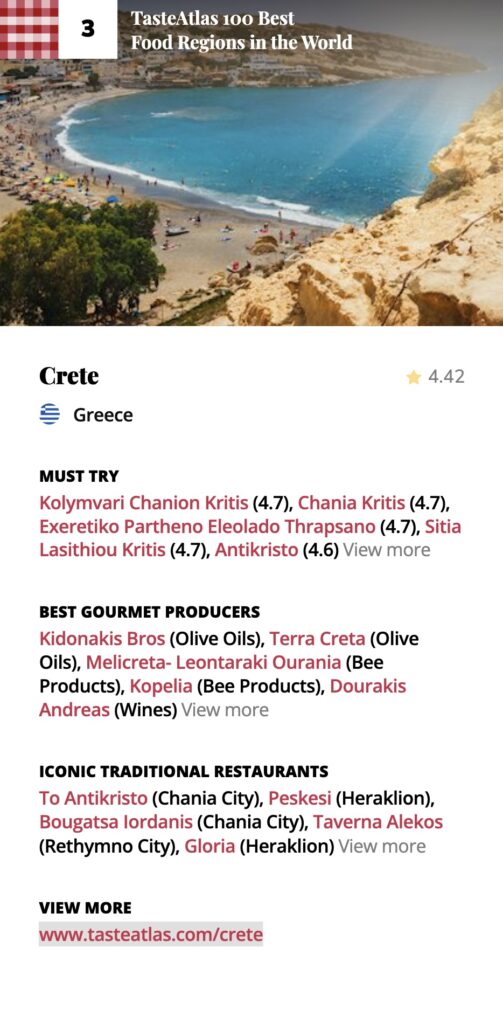
Crete’s cuisine is often cited as the purest expression of the Mediterranean diet, a food culture shaped less by abundance than by balance. Long before nutrition science took notice, the island’s cooking revolved around olive oil as its primary fat, an encyclopedic use of wild greens and herbs, pulses and whole grains, and meat employed sparingly, more as seasoning than centerpiece. It is a way of eating forged by geography and necessity, refined over centuries in mountain villages and coastal towns alike.
TasteAtlas’ regional profile catalogs dozens of Cretan dishes and products, from rustic breads and cheeses to slow-cooked legumes and herb-laced pastries, underscoring a cuisine defined by continuity rather than novelty. Techniques remain stubbornly traditional: hand-harvested olives pressed into peppery oils, foraged horta (boiled greens) gathered with local knowledge, and recipes transmitted orally, family to family. What emerges is not simply a regional cuisine, but a living system - one that continues to influence how the Mediterranean imagines itself at the table.
Crete in Athens
Katsourbos (Pagrati)
A restaurant with a clear Cretan identity: slow braises, handmade pies, and legume dishes driven by exceptional olive oil. Katsourbos' dining room is warm and unpretentious, service is knowledgeable, and menus reflect seasonal island produce rather than trends
Rakoumel (Exarxia)
Authentic, delicious, and generously portioned dishes that transport you to Crete. Rakoumel's fennel pie with fresh herbs, small mizithra cheese pies, zucchini flowers stuffed with rice, potatoes with staka butter, skioufichta pasta with sausage, and more, that pair excellently with the organic raki.
Ranked 5 out of 100
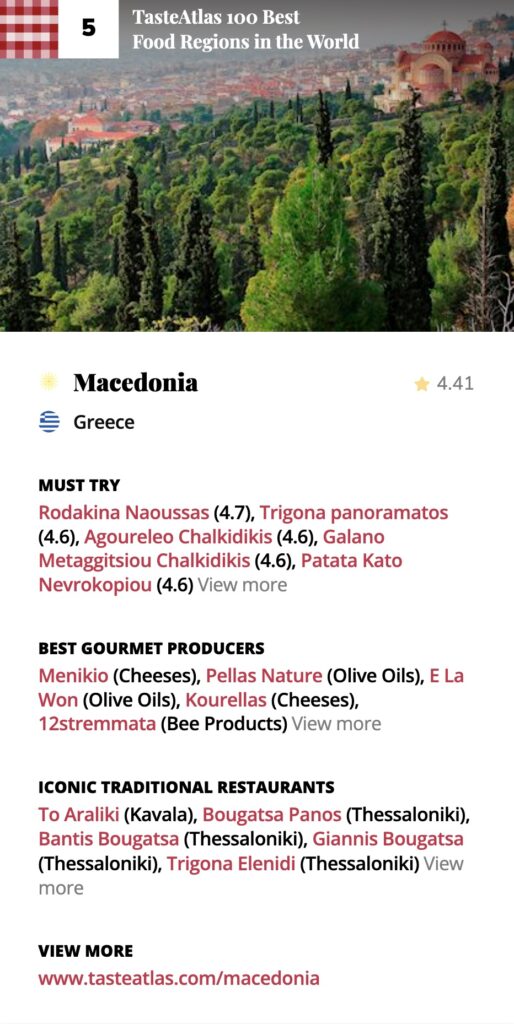
Macedonian cuisine reflects the rhythms of northern Greece, where colder winters, fertile plains, and a long tradition of both pastoral and urban cooking have shaped a heartier table. Influenced by centuries of Balkan and Anatolian exchange, the region’s food culture is built around meat and dairy, layered pies, robust meze, and dishes that favor the grill and the slow pot alike. Peppers, fresh and dried herbs, and preserved vegetables provide brightness and balance, cutting through the richness with purpose.
This is also one of Greece’s most dynamic wine regions. From the historic vineyards of Naoussa, renowned for age-worthy Xinomavro, to the cooler-climate whites and emerging reds of Amyndeon and Drama, Macedonian wines mirror the cuisine’s depth and structure. Whether paired with street foods like bougatsa or shared across communal tables laden with grilled meats and small plates, the cooking of Macedonia favors generosity, intensity, and an unmistakable sense of place - one that is tasted as clearly in the glass as on the plate.
Macedonia in Athens
Ta Vlachika (Vari)
A long-established reference for northern Greek and Macedonian meat culture in Athens. The menu is built around grilled and roasted meats associated with pastoral Macedonia. Lamb, suckling pig, kokoretsi, and hearty oven dishes, are served in generous portions at Ta Vlachika and with minimal embellishment. The setting is expansive and unpretentious, designed for communal dining, while service is efficient and experienced.
Ouzeri tou Laki (Kipseli)
A neighborhood ouzeri with strong roots in northern Greek and Macedonian meze culture, where small plates, seafood, and offal dishes are meant to be shared slowly alongside ouzo or tsipouro. The menu at Ouzeri Tou Laki favors classic preparations over reinterpretation, with flavors and pacing that echo Thessaloniki’s ouzeri tradition rather than Athenian taverna norms.
Ranked 6 out of 100

Cycladic cooking is a study in restraint, shaped by wind-swept terrain, mineral-poor soils, and an island logic that prizes clarity over excess. Pulses, barley rusks, sun-dried tomatoes, capers, and legumes form a quiet pantry, seasoned sparingly to allow the natural salinity and freshness of seafood to take the lead. The cuisine’s power lies not in embellishment but in precision, where a handful of ingredients are treated with confidence and intent.
TasteAtlas’ rotating Must‑Try selections for the Cyclades, which include local specialties such as Graviera Naxou and Fava Santorinis, offer a snapshot of this pared-back palate. What emerges is a cuisine that feels almost architectural in its composition - refined, deliberate, and deeply expressive of place, much like the islands themselves.
Cyclades in Athens
Balcony of the Cyclades (Vyronas)
Longstanding Athens institution focusing on island seafood and simple meze rooted in Cycladic ingredient logic. The very fresh fish at Balcony of the Cyclades is often grilled, the sauces kept simple to allow prime ingredients to shine, and the service friendly and well-versed in seafood nuances.
Amorgiano Perasma (Kallithea)
Amorgos cheese pies with honey and sesame, tomato keftedes, apaki (cured meat dish) with rusks and tomato, and notably, a delectably heartymeat pie can be enjoyed at Amorgiano Perasma. The monastery of Chozoviotissa in Amorgos is the origin of the raki recipe that has given this place its reputation.
The Peloponnese stands out for breadth and depth: olive groves, citrus farms, mountain pastures, and fishing harbours create a diverse food system. TasteAtlas’ regional listing points to top rated local products such as Finiki Lakonias olive oil and Kalamata olives, which act as anchors for everything from stews to salads.
Ranked 8 out of 100
The cuisine of the Peloponnese is defined by agricultural excellence and a quiet confidence in its raw materials. Vast groves of olive trees dominate the landscape, producing some of Greece’s most prized oils and the globally recognized Kalamata olive, whose depth and balance anchor the region’s cooking. Dishes are built to showcase these fundamentals: vegetables glossed with fresh oil, breads and legumes enriched rather than masked, and flavors allowed to unfold without haste.
Fruit plays an equally central role, from citrus and stone fruit to grapes and figs, shaping both the savory and sweet traditions of the region. These harvests extend naturally into a culture of distillation and infusion, yielding refined local liqueurs and spoon sweets that reflect seasonality and restraint. Together, they form a cuisine of clarity and generosity, one that expresses the Peloponnese not through excess, but through the sustained excellence of what the land gives best.
Peloponnese in Athens
ManiMani
An unpretentious, regional-faithful kitchen with smoked meats, slow roasted dishes, and robust olive-oil-led vegetable plates. ManiMani is relaxed but committed to precision, and the service is well-versed in the sources of ingredients.
Arcadia
A traditional Athens taverna near the Acropolis Museum, focused on familiar Greek home-style dishes such as slow-cooked stews, roasts, and classic vegetable preparations. The atmosphere in Arcadia is relaxed and welcoming, with attentive service and outdoor tables on a pedestrian street.
Ranked 10 out of 100
The cuisine of the North Aegean unfolds at the table in small, deliberate gestures, anchored in seafood drawn from deep, open waters, legumes simmered patiently, and aromatic herbs that thrive in salty air. It is a food culture inseparable from mezé, where dishes arrive in rhythm rather than sequence, encouraging conversation as much as appetite. The cooking is generous but never careless, shaped by island life and a long familiarity with the sea, and marked by a quiet modesty that resists excess or display.
What binds these flavors is a distinctive drinking culture. Anise-forward ouzo from Plomari, robust tsipouro, and the celebrated wines of Samos’ Cooperative provide structure and lift, while local olive oils lend a soft, grassy richness to even the simplest plates. Together, they capture the easy sophistication of the region’s seaside tavernas - unpretentious, expressive, and deeply attuned to place.
North Aegean in Athens
I Lesvos Ouzeri
An Athens ouzeri that channels the North Aegean’s small-plate rhythm, seafood meze, and distilled spirit culture. Informal service, focused pairings, and dishes designed to be shared as well as seasonal treats like Kalloni sardines, are what make I Lesvos so special.
Ouzeri tou Laki (Kypseli)
A long-standing ouzeri with a menu built around Aegean fish, shellfish, and classic meze, served in a relaxed neighborhood setting. The cooking at Ouzeri tou Laki prioritises freshness and balance, with flavors aligned to island tavern traditions rather than restaurant reinterpretation.
Ranked 15 out of 100
Thessaly’s cuisine is shaped by the fertile ground of Greece’s great plains, a landscape that has long sustained livestock, grains, and a cooking tradition unapologetically rooted in richness. This is one of Greece’s most substantial regional tables, built on meat, fat, and slow, confidence-inspiring techniques that reflect both agricultural abundance and colder inland rhythms. The food is generous and filling, designed to fortify rather than impress.
TasteAtlas highlights several defining products and dishes, including the crisp, aromatic Mila Zagoras Piliou (apples), the deeply flavored Graviera Agrafon (cheese), and the prized Tonos Alonnisou (cured fish), cured with restraint yet notable depth. At the table, dishes such as spetsofai - sausages simmered with peppers - and fouskakia, soft, fried doughs, underscore a cuisine that favors comfort and weight. Together, they form a regional cooking style that is hearty, grounded, and unmistakably tied to the sustaining power of Thessaly’s land.
Thessaly in Athens
O Thessalos
A casual Athens mezedopoleio drawing on Thessalian and northern Greek cooking, with a menu built around grilled meats, hearty small plates, and traditional flavors meant for sharing. The atmosphere at O Thessalos is lively and informal, with straightforward service that suits relaxed, table-led dining.
Thessalia Tavern
A well-established Athens taverna celebrating the flavours of northern and central Greece, with a menu that blends Thessalian and broader mainland dishes such as grilled meats, hearty casseroles, and seasonal vegetables. Thessalia's setting is relaxed and hospitable, service attentive, and the cooking grounded in traditional techniques that honour the region’s agricultural and pastoral roots.
Ranked 37 out of 100
The cuisine of the Ionian Islands bears the imprint of centuries of Venetian rule, resulting in one of Greece’s most aromatic and sauce-driven regional tables. Rich tomato bases, warm spices, and slow braising distinguish the cooking, setting it apart from the lighter, oil-forward styles found elsewhere in the country. It is a cuisine that favors depth, refinement, and a certain Old World elegance.
Among its defining dishes are pastitsada (slow-braised rooster or beef in spiced tomato sauce) and sofrito (veal cooked in white wine and garlic sauce), both emblematic of the region’s patient, layered approach to flavor. Seafood appears in burdeto (spicy fish stew, often with scorpionfish), while the sweet tradition is represented by mandolato (nougat with almonds and honey) and frigania (custard-soaked dessert with syrup). Together, these dishes form a cuisine that is expressive, indulgent, and unmistakably Ionian in character.
Ionian Islands in Athens
Peinaleon
Dishes inspired by Chios, made with passion and homely touches, such as pork with mastic or the ‘hunkiar beyendi’, which journeyed from Turkey to the Aegean coasts and nearby islands, are paired with stuffed grape leaves (‘dolmades’), fresh salads bursting with aromatic herbs, and top-shelf spirits, bottled or straight from the barrel. On Wednesdays, live music at Peinaleon is performed unplugged, harmonizing perfectly with the gastronomic experience.
O Dyonisakis
A Zakynthian-inspired tavern in Athens that brings the Ionian island’s cuisine to the city with dishes rooted in local seafood, herb-rich sauces, and preparations influenced by Venetian-Ionian culinary traditions. The menu balances grilled fish, island meze, and hearty vegetable plates, served in a relaxed, friendly setting where service is warm and unpretentious.
" ["post_title"]=> string(70) "The Triumph of Greek Regional Cooking & Where to Find It in Athens" ["post_excerpt"]=> string(117) "As global rankings draw attention to Greece’s top food cultures, the capital emerges as the place to taste them all" ["post_status"]=> string(7) "publish" ["comment_status"]=> string(6) "closed" ["ping_status"]=> string(6) "closed" ["post_password"]=> string(0) "" ["post_name"]=> string(64) "the-triumph-of-greek-regional-cooking-where-to-find-it-in-athens" ["to_ping"]=> string(0) "" ["pinged"]=> string(0) "" ["post_modified"]=> string(19) "2025-12-18 22:06:29" ["post_modified_gmt"]=> string(19) "2025-12-18 19:06:29" ["post_content_filtered"]=> string(0) "" ["post_parent"]=> int(0) ["guid"]=> string(31) "https://www.travel.gr/?p=508162" ["menu_order"]=> int(0) ["post_type"]=> string(4) "post" ["post_mime_type"]=> string(0) "" ["comment_count"]=> string(1) "0" ["filter"]=> string(3) "raw" ["post_views"]=> string(4) "2668" } [106]=> object(WP_Post)#5391 (25) { ["ID"]=> int(418827) ["post_author"]=> string(2) "19" ["post_date"]=> string(19) "2025-12-12 12:37:52" ["post_date_gmt"]=> string(19) "2025-12-12 09:37:52" ["post_content"]=> string(97849) "Kolonaki isn’t just Athens’ chic quarter; it’s where breakfast turns editorial and dinner reads like a tasting note. Between marble-counter cafés and designer bistros, the neighborhood edits Greek tradition with a polished hand - croissants with a Parisian accent, mezé with modern punctuation, sushi with skyline views. The crowd? Tailored, curious, and allergic to average.
From sunlit espresso and patisserie runs to seafood ateliers, smart carnivores’ dens, and Italian addresses with brick-and-brass charm, Kolonaki is a compact atlas of taste. You can graze through plant-forward bowls, pause for biodynamic wines, or settle into a steakhouse with cinematic swagger. Consider this your map to 30 spots where quality is the house style - and the vibe is unmistakably - and always - cosmopolitan.
Parisian elegance defines this patisserie and café, adorned with marble countertops and brass accents. Signature items like buttery croissants, artisanal sandwiches, and specialty coffees are crafted with high-quality ingredients, elevating it within the city’s café scene.
Patriarchou Ioakeim 45
A minimalist Italian cafe in central Athens, Da Capo has a sophisticated ambiance with polished lines and neutral tones. They serve expertly brewed espresso, fresh panini, and delicate pastries, making it a favorite for people-watching in the square.
Tsakalof 1
Me Cafe
An all-day café with a steady rhythm from breakfast to dinner. Morning and brunch menus include coconut yoghurt with seasonal fruit, chia pudding, banana toast and acai bowls alongside a range of coffees and smoothies. Desserts include maple pumpkin cheesecake or gluten-free lemon tart, and there’s a full beverage list from fresh juices to wine by the glass. In the evening the menu widens to include dishes such as salmon, sea bass, chicken plates and a small pasta selection, keeping dinner easy and unfussy.
Kapsali 10
Wild Souls
Known for its nut butters, clean snacks and plant-forward bowls, Wild Souls attracts a steady stream of locals throughout the day. The menu revolves around quality raw materials, from tahini and handmade spreads to granola, energy bars and simple toasts. It works well for a quick breakfast, a light midday stop or takeaway items made with minimal processing and clear flavors.
Irodotou 14
To Kafeneio 1987
One of Kolonaki’s historic cafés returned this year with a full renovation and a new culinary approach under chef Kyriaki Fotopoulou. The menu reflects classic urban Greek cooking: daily soups, oven dishes, meatballs, lemon chicken, beef giouvetsi and meze suited to afternoons with wine. The update preserved the familiar neighborhood character while giving the kitchen clearer direction, and the space now holds a steady daytime and early-evening community presence once again.
Loukianou 26
This one Michelin star restaurant is cozy to eat at indoors in winter, to enjoy a stylish and rustic interior, and to sit on the sidewalk in summer. Dishes such as moussaka, sardines, and octopus in vinegar are cooked with loyalty to traditional flavors prepared with a modern flair.
Ploutarchou 15
Known for its deliciously cooked traditional Greek food, this historic spot emphasizes homey simplicity in its decor and cuisine. Signature dishes include lamb kleftiko, pork in lemon sauce, and the shrimp salad, complemented by Greek wines. In summer, book a table across the street to experience the place as locals do.
Xenokratous 19
Lining both sides of a steep cobblestone street in leafy Dexameni square, this neighborhood cafe once favored by famous Greek poets and intellectuals and still drawing an interesting mixed crowd, doubles as a cultural hub. It serves meze plates like sausage with mustard, fried calamari or lentil salad alongside perfectly chilled local beers and house wine at its outdoor seating. Nearby is the open air Cine Dexameni (open May to October) and the impressive Roman Aqueduct the square is named after.
Dexameni Square
Formerly Zonars, Athens' most historic high society coffee room, this beautifully modernized place still oozes glamor and charm but also appeals with its contemporary flair. It is ideal for winter dining indoors with its refined ambiance or summer meals or drinks outdoors amidst the city’s energy. Highlights include fresh seafood, innovative sushi, and decadent pastries. All dishes are made with premium ingredients and attention to detail.
Voukourestiou 9
Deka
A fresh arrival on the Kolonaki scene, Deka brings an artistic sensibility to its all-day format, with walls lined in contemporary works and a compact menu of ten plates designed for sharing. Breakfast and brunch draw an early crowd, while evenings shift toward wine, cocktails and a menu built around seasonal ingredients handled with clarity and restraint. Its atmosphere remains casual, though the space carries a certain polish that sets it apart from typical café-restaurants.
Ploutarchou 10
Modern Greek cuisine takes center stage here, with an open kitchen showcasing creative dishes like deconstructed moussaka, crayfish with black lentils, and lamb tataki with Xo sauce. The sleek, contemporary design complements the focus on boutique Greek wines.
Ypsilantou 63
This eco-conscious cafe inspired by 50s Hollywood highlights farm-to-table dining with modern and ethnic accents. The menu is constantly updated and always centers around top quality ingredients tht are seasonal, health and creatively put together. Vegetarian and vegan options are satisfuing in mains, appetizers and desserts, and the wine list includes organic and biodynamic wines.
Omirou 60
Mediterranean flavors and sophisticated ingredients like oysters, escargot, pesto spaghetti and fresh salads, accompanied by top-quality wines are served at little tables on the sidewalk. This is one of Kolonaki's top haunts for those who like to see and be seen.
Charitos 30-32
Diva
This recent gastrobar opening brings bistronomy to Kolonaki with an open kitchen and a bar that shapes much of the room’s edgy and playful identity. Chef-led cooking defines the menu, which evolves seasonally without leaning into theatrics. Evenings are lively without feeling chaotic, and the space has already gathered a loyal crowd who come equally for the food and the bar program.
Patriarchou Ioakeim 38
Chez Michel
An all-day café-restaurant with a strong neighborhood following, known for European and Mediterranean dishes served from breakfast through dinner. Daytime visits focus on coffee, pastries and lighter plates, while evenings shift toward fuller mains and easygoing bistro-style service. Many locals treat it as a dependable choice for casual meals across the week.
Irodotou 15
The latest addition to Kolonaki’s dining scene, this restaurant is a seafood haven led by the acclaimed Chef Georgianna Hiliadaki, known for her groundbreaking work at the two-Michelin-starred Funky Gourmet. The menu artfully combines Mediterranean traditions with contemporary techniques, with dishes like Sea Urchin Risotto and 'Giouvarlakia' with grouper tartare. The sleek, elegant setting mirrors the sophistication of the cuisine.
Loukianou 36
This fish restaurant serves authentic seafood in a cozy, unpretentious setting that nonetheless draws politicians and other personalities looking for a relaxed taverna-style fish dinner. Menu highlights include grilled sardines in a red sauce, fried fresh mullet, and shrimp orzo, all showcasing fresh Greek ingredients. A carefully selected range of Greek wines complements the dishes.
Charitos 39
Traditional Greek dishes with a modern twist shine in this art-filled space. Guests savor the soothing kakavia fish soup, sea bass carpaccio, lobster pasta, and lemon pie, while the curated wine list combines Greek and international labels to elevate the dining experience.
Fokilidou 15
Sea You Mezeri
A notable newcomer dedicated to seafood meze, serving oysters, raw preparations and modern takes on Aegean classics. The menu includes house-cured fish, octopus, tuna cuts, shrimp couscous and weekend specials meant to be eaten by hand. Its location within the Lemos arcade has quickly made it a point of interest for diners seeking contemporary fish dishes without formality.
Karneadou 25
This upscale, underground steakhouse combines gastronomy with a cinematic ambiance featuring gold details and contrasting tones. Signature items include olive-fed Wagyu Tomahawk steak, American T-bone, and Armenian kebab, paired with an extensive wine selection.
Leventi 3
Specializing in farm-to-table meats sourced from its own farm, this rustic eatery delivers dishes like slow-cooked lamb, grilled pork chops, and homemade sausages. Earthy tones and wooden accents enhance the warm atmosphere, complemented by organic wines.
Solonos 49
A tiny spot with a styrong presence on pedestrian Milioni street, where you'll find beautifully handmasde pies stuffed with delicious fillings. Cocona pairs its friendly service with creative pies with Smyrna-inspired flavors, like lachmajun, spinach and cheese, and creamy mushrooms, or with curry and chicken.
Milioni 10
Kalamaki Kolonaki
A classic stop for quick grilled skewers, this spot keeps things simple: pork, beef and chicken kalamaki, pita wraps, fries, mastelo saganaki, hummus and a few salads for balance. It draws steady traffic from people who work or shop in the area, especially at lunch when orders move fast and portions stay consistent. The flavor profile leans traditional, with well-seasoned meat, warm pita and the kind of no-nonsense service that suits a street-food pitstop. It’s an easy choice when you want something quick, affordable and reliably Greek.
Ploutarchou 32
This cozy trattoria captures the essence of Italian dining with its rustic interior of exposed brick walls and wooden tables. Menu highlights include margherita pizza, tagliatelle al ragu, and panna cotta, paired with a curated selection of Italian wines and aperitifs.
Ploutarchou 38
Rustic elegance defines this Italian eatery, where exposed brick walls and wooden furnishings create an inviting atmosphere. Signature dishes such as pappardelle with wild boar ragu, wood-fired margherita pizza, and creamy tiramisu are complemented by an extensive wine list featuring Italian and Greek labels.
Loukianou 21B
Classic Italian flavors meet modern design in this chic restaurant adorned with contemporary art and sleek furnishings. Diners enjoy dishes like pizza, ruffle risotto, pan seared gnocchi, and panna cotta, alongside Italian-inspired cocktails that enhance both lunch and dinner experiences.
Patriarchou Ioakim 43
Codice Blu
A well-liked Italian restaurant tucked into a leafy corner of Kolonaki where pasta, pizza and other Mediterranean-leaning dishes anchor the menu. Diners regularly praise the spaghetti frutti di mare, tagliata and fresh seafood alongside classic Italian staples like casarecce with pesto and gnocchi. Reviews note a pleasant outdoor seating area and an inviting atmosphere that suits both lunch and dinner, with portions generous enough for sharing. Wine by the glass and a balanced list of salads and appetizers round out the experience, making it a solid choice for relaxed Italian dining in the neighbourhood.
Loukianou 32
This stylish rooftop spot combines Japanese flavors with stunning views of Athens. Minimalist, New York style glass and metal decor and floor-to-ceiling windows set the tone for creative dishes like tuna tataki, spicy tuna rolls, and miso-glazed black cod. The experience is elevated by a curated selection of sake and Japanese-inspired cocktails.
Omirou 19
Kiku
A long-standing Japanese restaurant with an Italian leaning that helped shape modern sushi culture in Athens. The kitchen focuses on top quality fish, clean cuts, caviar and precise technique, with sushi and sashimi at the center of the menu. A few warm dishes round things out, including grilled seafood and tempura prepared with care. The members-club style room draws luxury-lovers and is accordingly low-lit, polished and intimate, making it a popular choice for dinner when guests want something private and glamorous at once.
Xenokratous 21
Tokyo's izakaya culture comes alive in this contemporary space adorned with Japanese art and ambient lighting. Guests can savor sushi platters, ramen bowls, and tempura dishes, paired with Japanese whiskies and sake for an authentic experience.
Massalias 5
" ["post_title"]=> string(53) "The 30 Best Places to Eat in Athens' Kolonaki in 2026" ["post_excerpt"]=> string(87) "Sleek bistros, design-first cafés, and confident kitchens where details do the talking" ["post_status"]=> string(7) "publish" ["comment_status"]=> string(6) "closed" ["ping_status"]=> string(6) "closed" ["post_password"]=> string(0) "" ["post_name"]=> string(38) "best-places-to-eat-in-kolonaki-in-2026" ["to_ping"]=> string(0) "" ["pinged"]=> string(0) "" ["post_modified"]=> string(19) "2025-12-23 11:57:09" ["post_modified_gmt"]=> string(19) "2025-12-23 08:57:09" ["post_content_filtered"]=> string(0) "" ["post_parent"]=> int(0) ["guid"]=> string(31) "https://www.travel.gr/?p=418827" ["menu_order"]=> int(0) ["post_type"]=> string(4) "post" ["post_mime_type"]=> string(0) "" ["comment_count"]=> string(1) "0" ["filter"]=> string(3) "raw" ["post_views"]=> string(5) "31028" } [107]=> object(WP_Post)#5381 (25) { ["ID"]=> int(406492) ["post_author"]=> string(2) "19" ["post_date"]=> string(19) "2025-11-04 20:12:49" ["post_date_gmt"]=> string(19) "2025-11-04 17:12:49" ["post_content"]=> string(44210) "Museum shops in Athens offer a unique opportunity to take home a piece of history, culture, and contemporary design. Each shop, thoughtfully curated to reflect its museum’s identity, provides an array of items that go far beyond the typical souvenir. Visitors can find everything from handmade jewelry and art-inspired home decor to replicas of ancient artifacts and modern design pieces.
Whether you’re looking for eco-friendly creations, one-of-a-kind sculptures, or collectible publications, there’s something for every taste and budget. Many of these shops also showcase local craftsmanship, with products ranging from traditional ceramics to modern accessories crafted from sustainable materials. With selections that include quirky, minimalist designs as well as historically accurate reproductions, these shops make it easy to find a meaningful and stylish keepsake from your visit. All of the shops mentioned here can also be accessed online.
Two boutiques, two moods. On the ground floor, the Acropolis Museum Gift Store edits the galleries into objects: silk scarves for him and her, jewelry with a classical wink, ceramics, stationery and postcards, even children’s games—each piece a distilled memory meant to be taken home. Upstairs, the second-floor Bookstore reads the city: multilingual titles, albums, and the official Museum Guides tracing the art, history, and mythology of the Acropolis and ancient Athens. Everything is uniquely conceived for the museum—exclusive designs, packaging to match—so what you carry out feels less like a souvenir and more like a fragment of inspiration.
Dionysiou Areopagitou 15, Makryianni
The shop at the Museum of Cycladic Art is elegantly composed and deeply rooted in ancient inspiration. You’ll encounter modern jewelry and design objects that mirror the minimalist beauty of Cycladic civilization, alongside accessories, decorative art, books, and prints. The jewellery section offers classis and modern designs in all price ranges, from “Eye Necklaces” set with diamonds in mixed metals, to ancient-style leaf earrings. The shop also features a refined selection of deco items and museum-quality replicas of Cycladic figurines and artwork prints from past exhibitions. With each visit there’s also something of the current show: accessories like T-shirts and bags from the Marlene Dumas and Cindy Sherman exhibitions join the curated offering, giving you stylish wearable art to take home.
Neofitou Douka 4, Kolonaki
The shop at the Basil & Elise Goulandris Foundation gives you the chance to take home pieces rooted in the museum’s exceptional art collection. In its offering you’ll find home-ware, books, accessories, jewellery, limited-edition prints and artworks, office goods, children’s items and more. Among the curated highlights are designer objects and exhibition-themed items: for instance the “Takis 1∞” series includes a cotton tote bag bearing his 1972 Electronic Relief and a notebook featuring Magnetic Wall – The 4th Dimension (2018). There’s also a rich jewellery section: a pendant inspired by Vincent van Gogh’s Olive Picking (1889), a gold-plated silver pendant of Edgar Degas’s Little Dancer Aged Fourteen, and more. Collectors will appreciate the limited-edition category, offering numbered porcelain plates by Yannis Moralis (edition of 100), and plexiglass prints from Maria Filopoulou and Opy Zouni among others. Finally, you’ll find a well-curated book section including a two-volume hardcover of the foundation’s art collection—ideal for any art lover’s coffee table.
Eratosthenous 13, Pangrati
The main shop of the Benaki Museum on Vassilissis Sofias Avenue offers visitors a rich selection of items rooted in Greek cultural heritage. Alongside high-quality replicas of museum pieces, you’ll find handcrafted jewellery, ceramics, textiles and design pieces under the headings “New In”, “Exhibition Ranges” and “Gifts for Professionals”. Highlights include curated collections tied to current exhibitions, like the “Juvenilia” range, plus designer-crafted contemporary objects that reference the museum’s iconic holdings. The jewellery section features modern takes on Byzantine and folk-art motifs, and the ceramics span decorative vases to functional pieces inspired by ancient forms. For aspirant collectors and gift-seekers alike, the “Professionals” range supplies items suited to discerning tastes or corporate gifts—always with authentic cultural origins. The shop also stocks an art-book and print section, offering deeper insight into Greece’s artistic legacy. All of it adds up to a distinct opportunity to carry home a genuine piece of history.
Koumpari 1, Kolonaki
At the Benaki Museum's Pireos 138, the shop offers a modern selection of art, design, homeware, decor items, and photography-related items. Known for its playful yet sophisticated products, this shop includes everything from quirky stationery to one-of-a-kind jewelry. Standout items include the Atlas Shopper handbag by STUDIOLAV, made from recycled olive oil tin containers, and jewelry by Elena Votsi, featuring vintage keys accented with rubies and gold. The shop also houses an impressive collection of books and prints, many tied to ongoing exhibitions. It’s an ideal stop for anyone interested in contemporary Greek design and art.
Pireos 138, Athens
The Theocharakis Foundation’s Artshop takes a playful, contemporary approach with its collection of design-forward artisanal items. Located across from the lobby, the shop is a visual treat, featuring a mix of interior decor pieces. Among the standout items are hand-painted tsarouchia (traditional Greek moccasins), crafted from vintage shoe trees by ENartists, a creative duo known for their unique designs that combine modern Greek history with reclaimed materials. The shop also sells a vibrant selection of bronze ornaments, including delicate micro-sculptures inspired by Greek symbols, lovely jewelry pieces and charming wooden boats, which are perfect as traditional Greek Christmas decorations.
Vassilissis Sofias 9 & Merlin 1, Syntagma
The SHOP AT ΕΜΣΤ at the National Museum of Contemporary Art Athens (EMST) mirrors the museum’s clean, urban aesthetic while adding a dash of wit. Its fashion range features bold graphic T-shirts, caps, and hand fans with tongue-in-cheek slogans, alongside minimalist jewellery and accessories. The sustainability-minded will love the upcycled backpacks by 3Quarters, made from Athenian balcony awnings in smart color combinations. Design collaborations with local studios such as Mud Lab bring handcrafted ceramics with sculptural lines and soft, earthy glazes. The “Prints” section showcases silkscreens, cyanotypes, and posters linked to EMST’s exhibitions, while the “Gifts” range covers homeware, stationery, and collectible pieces with a contemporary edge. Altogether, it’s a shop that turns the museum’s aesthetic into something you can wear, use, or display—art you can actually live in.
Kallirrois Ave. & Amvr. Frantzi 14, Koukaki
Located in the historic Villa Ilissia, the Byzantine & Christian Museum shop sells an impressive range of certified reproductions of Byzantine art, with a particular emphasis on religious iconography. The standout piece is the beautifully crafted replica of Archangel Michael, available in various sizes. For those looking for everyday items with a touch of history, minimalist ceramics by Vassilis Georgiou offer a fresh take on religious symbols and Byzantine landmarks. Silk scarves and umbrellas adorned with intricate patterns from Roman mosaics add a touch of elegance, while the extensive collection of books in Greek, English, and German makes for an enriching dive into Byzantine history.
Vassilissis Sofias 22, Ilisia
The Kotsanas Museum of Ancient Greek Technology offers a fascinating array of items that celebrate the ingenuity of ancient Greek inventors. A highlight of the shop is the detailed replicas of the Antikythera mechanism, a mysterious and sophisticated ancient device that is often considered the world’s first analog computer. The shop also features interactive toys, board games, and puzzles that showcase how ancient Greek technology worked, making for both entertaining and educational gifts. For visitors curious about history and innovation, this shop is a treasure trove of knowledge and creativity, perfect for both adults and children.
Pindarou 6, Kolonaki
" ["post_title"]=> string(67) "Gift-Planning Mode: Artsy, Designer Finds at 9 Athens' Museum Shops" ["post_excerpt"]=> string(107) "Find the perfect replica, decor item, or jewelry ancient or modern, and more, at these cool and chic stores" ["post_status"]=> string(7) "publish" ["comment_status"]=> string(6) "closed" ["ping_status"]=> string(6) "closed" ["post_password"]=> string(0) "" ["post_name"]=> string(24) "athens-best-museum-shops" ["to_ping"]=> string(0) "" ["pinged"]=> string(0) "" ["post_modified"]=> string(19) "2025-11-04 20:12:53" ["post_modified_gmt"]=> string(19) "2025-11-04 17:12:53" ["post_content_filtered"]=> string(0) "" ["post_parent"]=> int(0) ["guid"]=> string(31) "https://www.travel.gr/?p=406492" ["menu_order"]=> int(0) ["post_type"]=> string(4) "post" ["post_mime_type"]=> string(0) "" ["comment_count"]=> string(1) "0" ["filter"]=> string(3) "raw" ["post_views"]=> string(4) "9046" } [108]=> object(WP_Post)#5389 (25) { ["ID"]=> int(504874) ["post_author"]=> string(2) "19" ["post_date"]=> string(19) "2025-12-03 18:00:02" ["post_date_gmt"]=> string(19) "2025-12-03 15:00:02" ["post_content"]=> string(18524) "Pelion (read Pilio) has long held its quiet reputation as the Tuscany of Greece, but in winter it becomes something rarer still: a mountain world where the season settles softly over stone-built villages, cobbled footpaths, and forests dense enough to feel almost painted. It is, in many ways, the winter Santorini of Greece, an unexpected and luminous escape shaped by woodsmoke, mist, and the kind of Old World charm that survives in only a handful of places.
For American and British travelers seeking a holiday tableau untouched by excess, Pelion offers both intimacy and grandeur. Chestnut, beech, fir, and plane trees drape the slopes, while apple orchards pop like small bright notes against the earth. Ravines and hidden springs lend the landscape a quiet, cinematic shimmer, komorebi made Greek, shards of winter light slipping through branches.
To round out the journey, we have included photographs from nearby villages and attractions that elevate the experience even further, each one adding its own layer of splendor. It is a trip worth making, an invitation to step into a landscape that feels both timeless and wholly new.
One of Pelion’s largest and best-organized villages, Portaria sits at 600 meters on the western side of the mountain, overlooking the calm waters of the Pagasetic Gulf and the city of Volos. Its uphill lanes reveal stone fountains, boutique hotels, cozy guesthouses, traditional tavernas, and cafés, as well as mansions that showcase the region’s layered history — from classic Pelion architecture to the elegant residences built by Greek expatriates from Egypt, recognizable by their twin staircases and elevated entrances.
Highlights include the nineteenth-century Church of Agios Nikolaos, the tiny thirteenth-century chapel of Panagia Portarea, and the Folklore Museum housed in an 1864 mansion. Before leaving, pick up chestnuts, apples, jams, and local honey. On a clear day, settle into the village square for a coffee under enormous plane trees. If you’re keen to learn how to make spanakopita from scratch, head to the Karaiskos farm just outside the village on the road toward Chania.
One of Pelion’s most atmospheric villages — and the one with the best views over Volos and the Pagasetic. Narrow cobbled paths, small waterfalls, traditional guesthouses, and a central square filled with running water define this Protected Traditional Settlement. Park your car under the shade of plane trees and walk up the main cobbled lane, where shops selling local products, sweets, honey, jewelry, and souvenirs line the way.
At the square, the massive plane tree and the marble Fountain of “Athanas Water” (1809) instantly draw the eye, along with the Church of Agios Ioannis (1806) and its nineteenth-century carved wooden iconostasis. The panorama here is extraordinary; for an even more serene moment, take the path to the Environmental Education Center — a magical nighttime lookout with sea views illuminated only by the city’s distant lights.
Just above the square, the Byzantine Museum displays ecclesiastical treasures from the thirteenth to the twentieth century. Nearby, you’ll find the historic café featuring a wall painting by the folk artist Theophilos, created in 1910–11.
On the mountain’s eastern side, facing the Aegean, Tsagarada is lush and scattered across four distinct quarters — Agia Paraskevi, Agia Kyriaki, Taxiarchis, and Agios Stefanos — each with its own square and church. Stone paths wind through chestnut, walnut, beech, and plane trees, with old fountains still marking the rhythm of village life.
Below the square of Agia Paraskevi, the marble fountains are among the most photographed in the region. From here, a wonderful trail leads toward Damouchari, passing three historic fountains placed so that travelers were never far from fresh water. The village’s legendary plane tree, said to be a thousand years old with a trunk circumference of about fifteen meters, is a natural monument in itself.
Don’t miss the Achillopouleios Commercial School (1864), the Nanopouleios School (1909), the humble chapel of the Holy Cross hidden in the woods, or the larger Church of Agios Ioannis Prodromos. In the square of Taxiarchis, the Venetian-style carved wooden iconostasis from 1786 is a true masterpiece.
Set around 600 meters above sea level with views sweeping over the Pagasetic Gulf, Agios Georgios Nilias offers a quieter holiday atmosphere than the more visited Pelion villages. Wrapped in deep greenery — chestnut, apple, walnut, cherry, pear, olive, and beech trees — it’s an ideal setting for a Christmas break focused on warmth and rest rather than crowds.
The cobbled lanes reveal glimpses of the sea along with elegant nineteenth-century neoclassical homes, classic Pelion mansions with projecting “sachnisi” windows, and stone fountains adorned with lion heads. In the main square, tavernas set out tables beneath the plane trees whenever the weather allows. At the edge of the village, the fourteenth-century Monastery of the Archangels rises like a small fortress, offering panoramic views over the gulf.
" ["post_title"]=> string(73) "Christmas in the 'Tuscany of Greece': Explore 4 Enchanting Pilio Villages" ["post_excerpt"]=> string(99) "Where chestnut woods, stone paths, and mountain light create Greece’s most magical winter setting" ["post_status"]=> string(7) "publish" ["comment_status"]=> string(6) "closed" ["ping_status"]=> string(6) "closed" ["post_password"]=> string(0) "" ["post_name"]=> string(69) "christmas-in-the-tuscany-of-greece-explore-4-enchanted-pilio-villages" ["to_ping"]=> string(0) "" ["pinged"]=> string(0) "" ["post_modified"]=> string(19) "2025-12-04 13:33:56" ["post_modified_gmt"]=> string(19) "2025-12-04 10:33:56" ["post_content_filtered"]=> string(0) "" ["post_parent"]=> int(0) ["guid"]=> string(31) "https://www.travel.gr/?p=504874" ["menu_order"]=> int(0) ["post_type"]=> string(4) "post" ["post_mime_type"]=> string(0) "" ["comment_count"]=> string(1) "0" ["filter"]=> string(3) "raw" ["post_views"]=> string(4) "1637" } [109]=> object(WP_Post)#5388 (25) { ["ID"]=> int(499247) ["post_author"]=> string(2) "17" ["post_date"]=> string(19) "2025-11-12 16:38:57" ["post_date_gmt"]=> string(19) "2025-11-12 13:38:57" ["post_content"]=> string(10930) "The Lasithi Plateau enchants with its unvarnished calm, traditional villages, and singular landmarks. In the heart of Crete, the Tzermiado - Agios Georgios - Metochi route gathers everything that makes this place unique: the authentic atmosphere of picturesque settlements, encounters with nature through caves of profound historical significance, and a deep connection to a rich cultural heritage.
It’s an itinerary for travelers seeking Crete’s true face, beyond the expected. Once numbering in the hundreds, the Lasithi windmills rose along the field edges, harnessing the wind to power irrigation systems that brought the plain to life. Many now lie in ruins, yet they endure as witnesses to an agrarian past, lending the landscape a distinctive, almost poetic quality that bridges yesterday and today.
The tour begins in Tzermiado, capital of the Plateau. The village preserves a strong traditional character, with stone-built houses, narrow lanes, and handsome gateways opening onto flower-filled courtyards.
Vibrant and authentic, Tzermiado offers a first taste of local life, with tavernas serving Cretan flavors and small, characterful ‘kafeneia’ (traditional coffee shops). It’s a warm welcome to the journey ahead.
Leaving the village, continue to Kronio Cave. Archaeological finds show it was used as early as the Neolithic era and remained active during the Early and Middle Minoan periods. Its easy access makes it ideal for families and for visitors eager to encounter history within a natural monument. The cave’s atmosphere is steeped in mystery, a reminder that Cretan soil has been both sanctuary and place of worship for millennia.
Next stop: the local Folklore Museum, a space dedicated to the memory and daily life of Cretans of the past. Exhibits such as traditional costumes, utensils, tools, and objects of rural life illuminate how the people of Lasithi lived and created through the centuries. It’s a window onto the past that shows how tradition remains alive and inspiring today.
For those keen to extend the route, two more sites merit attention. Psychro Cave, also known as the Dictaean Cave, was one of the most important cult sites in Minoan Crete and is linked to the myth of Zeus’s birth. A visit here is an experience laden with symbolism and mythological resonance. A little further on stands Vidiani Monastery, built in the mid-19th century by the hieromonk Methodios Perakis.
Nestled in greenery, its architecture radiates monastic simplicity and recalls the region’s religious history.
The Tzermiado - Agios Georgios - Metochi route reveals the richness of Lasithi. From Tzermiado’s traditional aura to the mystery of the caves and the memory preserved in the Folklore Museum - plus additional stops that draw visitors even closer to Crete’s historical and cultural legacy - every point along the way offers an experience that lingers.
Read also:
Lasithi Experiences: Where Adventure Meets Cretan Beauty
Lasithi’s Beaches Unfiltered: A Visual Ode to Crete’s Lunar Coast
The Churches and Monasteries of Lasithi
Not so long ago, health food in Athens meant a bag of carob rusks or the corner of a pharmacy shelf. Today, it’s an extremely different story. From sleek organic supermarkets near Syntagma to vegan café–deli hybrids in Exarchia and stylish juice bars in Kolonaki, the Greek capital is now home to a sophisticated, rapidly evolving wellness-centred scene. Whether you're after Greek-grown curative herbs, small-batch kombucha, detox powders, or raw vegan sweets, you’ll find them all — often under one very art-directed roof.
Athens’s new generation of health-food stores combines substance with aesthetics, offering quality produce and an explosive sense of purpose, vision, and a deepening respect for sustainability. Local growers, ethical importers, nutritionists, and even herbalists now collaborate across the city to create spaces where you can shop, sip, and learn. This guide rounds up the most worthwhile places in the center — practical, inspired, and full of flavor.
This cool and chic market is one of the most refined health-food establishments in Athens, located a short walk from Syntagma Square. Inside, you’ll find an extensive selection of fresh organic fruits and vegetables — both from Greek producers and international specialist growers — alongside a curated deli section with charcuterie and cheeses, natural beauty and home-care products, and shelves stocked with superfoods, grains, eco cleaning supplies, and specialty dietary items. The store is a one-stop wellness destination for anyone looking to eat clean and shop consciously while in the city.
Nikis 30, Syntagma
With a flagship store in Monastiraki, this well-known Greek organic chain offers an impressive range of groceries, natural beauty products, gluten-free and vegan items, and ecological household goods. Though part of a network, this particular location stands out for its accessibility and size. For visitors staying in or around the historical center, it’s one of the most comprehensive organic supermarkets in walking distance.
Aiolou 104, Omonoia
A long-standing Athenian institution, BioShop.gr has been supporting holistic lifestyles since 1993. Its mix of organic groceries, dietary supplements, natural cosmetics, and wellness essentials is extensive and well-curated. This is the kind of place where you can stock up on everything from organic herbs and teas to eco-friendly personal care items and niche Greek wellness brands. It’s a quieter, low-profile store — but ideal for travelers who want both quality and purpose behind their purchases.
Veikou 30, Galatsi
This well-stocked store near Syntagma has a more functional, independent feel than some of the glossier options in town. The shelves are filled with fresh produce, frozen organics, teas, natural beauty items, supplements, and eco-conscious cleaning products. It’s especially useful for those staying centrally who prefer an honest, local alternative to the larger chains, and who value variety over design.
Filellinon 2, Syntagma
Bamboo Vegan is a store-cum-community hub in the heart of Exarchia, combining a vegan grocery corner with a cozy café. You’ll find dairy-free cheeses, plant-based meats, cruelty-free cosmetics, and a fridge stocked with meat and dairy alternatives. The café serves smoothies, espresso with plant milks, and vegan pies or sandwiches, all perfect for refueling between city walks. The vibe is unpretentious and warm, ideal for travelers looking to connect with Athens’s alternative side.
Zoodochou Pigis 8–10, Exarchia
Located in laid-back Pagrati, this is a stylish concept store that merges a natural grocery with a plant-forward deli and juice bar. The market section includes organic packaged goods, cold-pressed juices, vegan chocolate, and gluten-free snacks, while the café offers smoothies, vegan ice creams, and small-batch coffee. With its airy layout and wood-accented design, Groceristas is both a place to shop and a place to linger — a local favorite that fits seamlessly into a modern Athenian health routine.
Spyrou Mercouri 50 & Vasileos Georgiou II, Pagrati
Though primarily a plant-based brunch and smoothie bar, Happy Blender also functions as a hybrid wellness stop, offering take-away raw bars, protein mixes, and superfood snacks. The menu leans into acai bowls, activated juices, and gluten-free treats — with enough items available for purchase to make it worth a mention as a café–retail blend. Ideal for readers who want a vibrant, health-conscious meal with the option to bring some wellness goods home.
Ifaístou 39, Psyrri
Located between Omonia and Akadimia, this modern health-food eatery specializes in nutrient-dense meals, smoothies, and supplements — with a small but dedicated selection of packaged goods available for take-away. It’s geared toward the biohacker and the athlete more than the average organic shopper, which gives it a fresh, focused identity in the market. Visitors looking for targeted nutrition and innovative formulations will appreciate its distinct approach.
Akadimias 91, Athina
A health café in the Kolonaki area offering cold-pressed juices, smoothie bowls, protein-packed bites and a retail section of superfoods and detox blends. It’s more café than shop, but the range of products available for purchase — including adaptogenic powders and vegan protein blends — adds hybrid value. A stylish spot for a morning recharge.
Ploutarchou 32, Kolonaki
One of the lesser-known but very reliable stores in Exarchia, Viofos maintains a plentiful inventory of organic pantry items, dried herbs, supplements, eco cleaning products, and natural cosmetics. The space is compact, the staff are knowledgeable, and the selection is spot-on for those seeking high-integrity products. It’s an excellent stop for eco-conscious travelers wanting something local and authentic.
Themistokleous 3, Exarchia
Tucked just south of the Acropolis Museum, this shop offers a generous variety of healthy snacks, plant-based products, organic produce, and bulk teas or herbs. Green Store blends neighborhood warmth with deep knowledge, and although it’s compact, its offering feels carefully selected and practical. Especially good for those staying in the Koukaki–Makrygianni corridor.
Dimitrakopoulou 57, Koukaki
Wild Souls is a modern pantry destination specializing in pure, plant-based spreads, nut butters, and sesame products made without additives or preservatives. Known for its minimalist aesthetic and focus on high-quality Greek ingredients, the concept-store is best loved for its cold-pressed tahini, velvety cashew and almond butters, and naturally sweetened halva. The Kolonaki store offers the full range, including granola blends, small-batch seasonal releases, and beautifully packaged jars designed for gifting. While the café draws a stylish crowd, the shop is worth visiting for clean-label, nutrient-rich staples with a distinctly Greek point of view.
Irodotou 14 & Karneadou, Kolonaki & Voulis 36, Syntagma
" ["post_title"]=> string(52) "Athens' Bio Boom: Green & Healthy Shopping Guide" ["post_excerpt"]=> string(104) "A smart guide to where to find the city’s best variety of organic, plant-based, and feel-good products" ["post_status"]=> string(7) "publish" ["comment_status"]=> string(6) "closed" ["ping_status"]=> string(6) "closed" ["post_password"]=> string(0) "" ["post_name"]=> string(38) "athens-bio-boom-green-healthy-shopping" ["to_ping"]=> string(0) "" ["pinged"]=> string(0) "" ["post_modified"]=> string(19) "2025-11-07 15:00:19" ["post_modified_gmt"]=> string(19) "2025-11-07 12:00:19" ["post_content_filtered"]=> string(0) "" ["post_parent"]=> int(0) ["guid"]=> string(31) "https://www.travel.gr/?p=499001" ["menu_order"]=> int(0) ["post_type"]=> string(4) "post" ["post_mime_type"]=> string(0) "" ["comment_count"]=> string(1) "0" ["filter"]=> string(3) "raw" ["post_views"]=> string(4) "5049" } [111]=> object(WP_Post)#5383 (25) { ["ID"]=> int(498453) ["post_author"]=> string(2) "19" ["post_date"]=> string(19) "2025-11-05 19:12:44" ["post_date_gmt"]=> string(19) "2025-11-05 16:12:44" ["post_content"]=> string(8810) "Greece takes center stage in Condé Nast Traveller’s newly released Best Places to Go in Europe in 2026, with Crete and the Peloponnese standing out among this year’s top destinations.
The annual list, curated by the magazine’s editors and international correspondents, highlights places that embody culture, creativity, sustainability, and a renewed sense of place.
While the 2026 lineup spans the continent - from Saint-Gervais-les-Bains in France and Islay in Scotland to Oulu in Finland, Frankfurt in Germany, and Seville in Spain - Greece’s double mention in a list of just ten is especially impressive. Together, Crete and the Peloponnese offer a portrait of a country that continues to evolve, uniting ancient tradition with modern energy.
Crete: Europe’s 2026 Region of Gastronomy
For Crete, CNT's tribute celebrates the island’s enduring bond between food, land, and longevity. Describing it as “the home of the health-boosting Cretan diet and wine production that dates back to the Bronze Age Minoans,” the magazine calls it a natural choice for Europe’s Region of Gastronomy 2026.
The Cretans’ instinctive way of living off the land —“locavores way before the term was trendy”—and their passion for wild ingredients, are underlined: “askolimbi (golden thistle) whose roots taste like artichoke; kochlioi (snails) swimming in garlicky sauce, or vlita (wild greens) lightly steamed and dressed with sea salt and lemon.” These simple, soulful dishes are celebrated each summer during the Cretan Diet Festival in Rethymnon, which returns in July 2026 beneath the town’s Venetian fortress, CNT writes.
Crete’s new wave of hospitality also stands out. The MGallery Chania, “housed in a sumptuously revamped former soap factory,” will spotlight local produce, while the debut of Rosewood Elounda promises “a raft of unique farm-to-table culinary experiences” overlooking the island of Spinalonga. Crete emerges as both timeless and forward-looking—a destination where tradition, sustainability, and style blend effortlessly.
The Peloponnese: Myth, Cinema, and Adventure
CNT chose Peloponnese for "movie set locations, Homeric history and hiking trails". They mention that Christopher Nolan’s new film The Odyssey will “take viewers on a voyage to Greece’s myth-drenched Peloponnese peninsula,” with scenes filmed along the “cinematic southwest coast of Messinia, where Homer’s epics are anchored in ancient history.”
The article guides readers through an action-based itinerary: “hike to oceanside Nestor’s Cave,” “swim in Poseidon’s realm at omega-shaped Voidokilia Beach,” and “photograph flamingos at Gialova Lagoon.” For those who prefer slower exploration, CNT recommends the new 1,730-kilometre Peloponnese Trails network, launching in spring 2026, which will connect mountain villages, olive groves, and UNESCO sites such as Mystras—inviting travelers to experience Greece on foot, one story at a time.
" ["post_title"]=> string(55) "Crete and the Peloponnese: Among Europe's Stars of 2026" ["post_excerpt"]=> string(106) "The two Greek regions deserve a global spotlight for 2026, according to CNT's European destination awards " ["post_status"]=> string(7) "publish" ["comment_status"]=> string(6) "closed" ["ping_status"]=> string(6) "closed" ["post_password"]=> string(0) "" ["post_name"]=> string(53) "crete-and-the-peloponnese-among-europes-stars-of-2026" ["to_ping"]=> string(0) "" ["pinged"]=> string(0) "" ["post_modified"]=> string(19) "2025-11-05 19:16:42" ["post_modified_gmt"]=> string(19) "2025-11-05 16:16:42" ["post_content_filtered"]=> string(0) "" ["post_parent"]=> int(0) ["guid"]=> string(31) "https://www.travel.gr/?p=498453" ["menu_order"]=> int(0) ["post_type"]=> string(4) "post" ["post_mime_type"]=> string(0) "" ["comment_count"]=> string(1) "0" ["filter"]=> string(3) "raw" ["post_views"]=> string(4) "2354" } [112]=> object(WP_Post)#5386 (25) { ["ID"]=> int(498438) ["post_author"]=> string(2) "17" ["post_date"]=> string(19) "2025-11-07 15:10:50" ["post_date_gmt"]=> string(19) "2025-11-07 12:10:50" ["post_content"]=> string(10420) "Western Rethymno stands out for its raw natural beauty, serene villages, and landscapes that merge into the deep blue of the Libyan Se This journey blends the authenticity of Crete’s hinterland with the freshness of its springs, the thrill of hiking through dramatic gorges, and the calm of remote southern beaches.
From historic Argyroupoli to the striking Kotsifos Gorge and the tranquil shores of Rodakino, this road trip captures Crete’s diversity in all its forms.
Begin in Argyroupoli, built on the ancient city of Lappa. The village is steeped in history, with ancient ruins, Byzantine chapels, and timeworn stone houses that tell stories of centuries past. Wandering its narrow alleys feels like stepping into another era, while the village square, shaded by plane trees and filled with the hum of conversation, reflects the warmth of Cretan hospitality.
Just below lie the famed springs of Argyroupoli—an oasis of flowing water, waterfalls, and towering trees. Tables from nearby tavernas sit beside the stream, creating an idyllic setting for a long, lazy meal surrounded by the sound of rushing water. It’s a place that reconnects you with nature’s rhythm.
Leaving Argyroupoli behind, the road leads to the Kotsifos Gorge—one of Rethymno’s most impressive natural landmarks. The steep cliffs and narrow passageway create a wild, awe-inspiring landscape. The hike is relatively easy, following the riverbed and allowing for close contact with the rugged terrain. Along the way, small chapels carved into the rock and traces of old paths recall the generations that once moved through this land, blending faith and endurance with the natural world.
The journey ends at the beaches of Rodakino, where the mountains meet the Libyan Sea. The area remains peaceful and unspoiled, its beaches defined by their simplicity and crystalline waters. Korakas, with its inviting turquoise shallows, Polyrizos with soft golden sand, and the quieter Peristeres offer options for every mood. Rodakino is the kind of place where time slows down, where travelers can unwind in nature’s silence far from mass tourism. It’s a pocket of authenticity that feels like Crete before the crowds.
A road trip through Western Rethymno is a condensed experience of Crete’s soul—its history, wilderness, and sea. Each stop reveals a different facet of the island, from the ancient village of Argyroupoli to the dramatic Kotsifos Gorge and the serene beaches of Rodakino. Though it can all be done in a single day, the feeling it leaves lingers much longer: the sense of having touched the real heart of Crete, where life still follows the old, unhurried rhythm of the island.
Read also:
Exploring Rethymno the Third Largest City in Crete
Beaches in the North and South of Rethymno Crete
A Journey Through Cretan Civilisation in Rethymno
" ["post_title"]=> string(79) "Road Trip through Western Rethymno: From Argyroupoli to the Beaches of Rodakino" ["post_excerpt"]=> string(62) "Τhis road trip captures Crete’s diversity in all its forms." ["post_status"]=> string(7) "publish" ["comment_status"]=> string(6) "closed" ["ping_status"]=> string(6) "closed" ["post_password"]=> string(0) "" ["post_name"]=> string(78) "road-trip-through-western-rethymno-from-argyroupoli-to-the-beaches-of-rodakino" ["to_ping"]=> string(0) "" ["pinged"]=> string(0) "" ["post_modified"]=> string(19) "2025-11-07 15:12:50" ["post_modified_gmt"]=> string(19) "2025-11-07 12:12:50" ["post_content_filtered"]=> string(0) "" ["post_parent"]=> int(0) ["guid"]=> string(31) "https://www.travel.gr/?p=498438" ["menu_order"]=> int(0) ["post_type"]=> string(4) "post" ["post_mime_type"]=> string(0) "" ["comment_count"]=> string(1) "0" ["filter"]=> string(3) "raw" ["post_views"]=> string(3) "902" } [113]=> object(WP_Post)#5384 (25) { ["ID"]=> int(498490) ["post_author"]=> string(2) "17" ["post_date"]=> string(19) "2025-11-06 14:51:44" ["post_date_gmt"]=> string(19) "2025-11-06 11:51:44" ["post_content"]=> string(8006) "The villages and landscapes around Heraklion reveal a place both under-the-radar and disarmingly authentic. Here, tradition, nature, and Minoan monuments coexist, offering you a true portrait of Crete’s soul.
On a road trip that starts in Kastamonitsa and leads to Aposelemis Gorge and the Minoan palace of Malia, the route becomes a journey through time and the island’s spellbinding scenery.
Your route begins in Kastamonitsa, a village that keeps the traditions of the Cretan countryside vibrantly alive. Built amphitheatrically with views over the plain, the settlement exudes unfiltered authenticity. Narrow lanes, stone-built houses, and old coffeehouses create a tableau seemingly untouched by time and transport you to another era.
Here you feel the intimate bond between people, their land, and their customs. Festivals, age-old rituals, and a local cuisine that showcases the area’s produce form the heart of this beautiful village, which feels untouched by the passing decades. Kastamonitsa is a living window onto everyday Cretan life.
Leaving Kastamonitsa behind, you head toward Aposelemis Gorge. This is an easy, visitor-friendly gorge, ideal if you want to experience nature without the pressure of demanding hikes. The route begins along the riverbed, where water carves its path, then continues on a side trail and dirt road. Here, lush vegetation embraces the gorge, and the way forward reminds you that nature’s beauty needs no embellishment. The calm and authenticity of the landscape are enough for you to gather images that linger long after.
Your final stop ushers you into the world of Minoan Crete. The palace of Malia, the third largest after Knossos and Phaistos, impresses with its sheer grandeur. Built near the sea, it served as a center of administration, religion, and commerce. In its ruins you discover courtyards, storerooms, workshops, and residences - traces of a society that shaped the course of Minoan Crete. The monument’s significance has been recognized internationally, as, being part of the Minoan Palatial Centers, it has been inscribed on the UNESCO World Heritage List.
From the authenticity of Kastamonitsa to the serenity that settles over Aposelemis Gorge and the glory of ancient Crete that remains alive at the Minoan palace of Malia, this route reveals every captivating facet of the Cretan experience.
Here, tradition meets dazzling nature and history brushes the present, offering you a road trip with something for everyone. It’s a route that delivers not only vistas but also powerful emotions: a small proof that Crete will always find a way for you to carry it with you, long after the journey ends.
Read also:
A Whistle Stop Visit to the Cretan Capital of Heraklion
Sunlit Crests & Cobalt Dreams: 16 Heraklion Beaches in Motion
A Guide to Heraklion’s Essential Restaurants
In Athens, sugar has its own geography. It stretches from century-old pastry counters that still whip buttercream by hand to minimalist dessert bars redefining what a tart or truffle can be.
Across the capital, these patisseries blend time-honored recipes, some from a century ago, with modern precision: profiteroles made à la minute, chocolate domes burnished like jewelry, and gelatos bright with Mediterranean citrus. The newer arrivals - run by chefs who treat dessert as art - stand comfortably beside the city’s legends.
A downtown dessert bar from the award-winning Baba au Rum team, this creative offshoot is located right across the famous bar. Expect cocktail-inspired tarts, meringue domes infused with rum or citrus, and rotating éclairs filled to order. The setting is stylish yet relaxed, with a steady hum of music and scent of melted chocolate in the air. Perfect for a mid-afternoon sweet or a pre-dinner indulgence in the heart of the city.
Klitiou 3, City Center (near Agias Irinis Square)
Old-Athens charm with Parisian polish. Since 1969, this Pangrati institution has turned out proper tortes, petits fours, almond-scented biscuits and party-ready cakes with immaculate finishing. Its fan base spans generations for nougatines, chocolate tortes and celebratory orders; the house style favors fresh dairy, clean flavors and restrained sweetness over gimmicks.
Rizari 19, Pangrati
A modern shrine to pâte à choux near Syntagma: indulgent but not too sweet made-to-order profiteroles, éclairs, and cream-filled choux assembled in front of you. Expect crisp shells, light custards, and serious chocolate sauces; the queue moves fast and the product turns over constantly.
Diomeias 2, Syntagma
A long-running Athenian favorite that pulls in locals for rich cakes, ice-cream confections and crowd-pleasing classics. The Monastiraki branch is the easy stop after a walk through the historic center; look for signature chocolate slices, gelato pairings and seasonal specials.
Mitropoleos 80, Monastiraki – also 18 Kolokotroni, Syntagma
Gelato meets patisserie with Italian technique and Greek produce, right off Syntagma. Lines are common for seasonal sorbets, ricotta-bergamot, almond, Sicilian pistachio and pastry-inspired flavors like pavlova and tiramisu. It’s the spot for a refined cup after dinner, year-round.
Mitropoleos 16, Syntagma & Patriarhou Ioakeim 19, Kolonaki
The flagship boutique of Greece’s most celebrated pastry chef, where sleek design meets haute patisserie. The vitrines display glossy tarts, chocolate mousse domes, millefeuilles, and travel cakes with complex layering and restrained sweetness. Every detail—from the packaging to the plating—reflects Parliaros’ belief that dessert is an art form.
Irodotou 24, Kolonaki
An American-style patisserie that introduced Athens to proper layer cakes—red velvet, carrot, chocolate fudge and New York cheesecake. Both locations share the same philosophy: generous slices, creamy frostings, and an easy-going neighborhood feel that suits breakfast, coffee, or an indulgent afternoon break.
Irodotou 15, Kolonaki – and Karyatidon 15, Makrygianni
A new-generation vegan dessert bar and brunch patisserie that fuses plant-based recipes with comfort-style indulgence. Expect cinnamon buns dripping with tahini caramel, vegan brownies, puffy croissant doughs, cruffins, cheesecakes made from cashew cream, and soft-serve inspired by Latin American flavors. Its playful aesthetic, friendly service, and inventive menu have made it one of the most talked-about pastry openings in central Athens.
Nikis 23, Syntagma
Believed to be the oldest pastry shop in downtown Athens, this Exarchia classic is loved for handmade chocolates, kaimaki ice cream, fresh cream desserts and heritage pastries. House truffles and nougatines are old-school perfection, unchanged since the mid-century.
Harilaou Trikoupi 82, Exarchia
A near-centenarian (open since 1930) around the corner from Syntagma with vitrines of old-school temptations—glossy fruit jellies, quince paste, baklava, handmade caramels and almond cakes. The baklava and retro petits fours are benchmarks; locals come for gifts and holiday trays.
Voulis 39, Syntagma
Kolonaki’s grande dame of desserts since 1962, with a salon feel and French-leaning repertoire. Come for Saint-Honoré, Mont Blanc, almond truffles and those delicate iced marzipan petits fours. A polished, resolutely classic experience in the city’s most chic neighborhood.
Dimokritou 6, Kolonaki
A 1923 landmark where Athenians still line up for loukoumades fried to order and drenched in thyme-honey syrup. In summer, the soft-serve “rocket” cones are a nostalgic must; all year, the loukoumades remain a warm, sticky reminder of old Athens.
Aiolou 87, Omonia
A dairy-driven classic since 1931: sheep’s-milk yogurt with honey and walnuts, rice pudding showered in cinnamon, and honey-soaked loukoumades. For a true old-Athens breakfast, order butter and honey on bread—then a slice of galaktoboureko to go.
Marika Kotopouli 10, Omonoia
Kypseli’s cult for almond cake—the towering, nut-studded amygdalou cake—and seriously chocolatey slices. A small daily range keeps everything fresh, from retro wrapped pastries to fragrant tsoureki; Easter sees lines down the block.
Kerkyras & Paxon 39, Kypseli
" ["post_title"]=> string(46) "Athens, Sweetened: The 15 Best Patisseries Now" ["post_excerpt"]=> string(120) "The ultimate guide to the city’s finest patisseries, from classic to contemporary, that sweet lovers will love in 2025" ["post_status"]=> string(7) "publish" ["comment_status"]=> string(6) "closed" ["ping_status"]=> string(6) "closed" ["post_password"]=> string(0) "" ["post_name"]=> string(44) "athens-sweetened-the-15-best-patisseries-now" ["to_ping"]=> string(0) "" ["pinged"]=> string(0) "" ["post_modified"]=> string(19) "2025-11-03 19:28:58" ["post_modified_gmt"]=> string(19) "2025-11-03 16:28:58" ["post_content_filtered"]=> string(0) "" ["post_parent"]=> int(0) ["guid"]=> string(31) "https://www.travel.gr/?p=497679" ["menu_order"]=> int(0) ["post_type"]=> string(4) "post" ["post_mime_type"]=> string(0) "" ["comment_count"]=> string(1) "0" ["filter"]=> string(3) "raw" ["post_views"]=> string(4) "6209" } [115]=> object(WP_Post)#5379 (25) { ["ID"]=> int(497044) ["post_author"]=> string(2) "19" ["post_date"]=> string(19) "2025-10-31 18:04:16" ["post_date_gmt"]=> string(19) "2025-10-31 15:04:16" ["post_content"]=> string(28077) "Let’s admit it: decamping to the middle of nowhere with only a laptop and a phone is a certain kind of eccentricity - but who’s judging? Call it the snow-globe fantasy of remote work: low-budget, high-aesthetic, the hush of fresh powder outside the window and the cursor blinking like a metronome in a room that smells faintly of pine.
Many remote workers settle for the local café - familiar froth, reliable Wi‑Fi - to make the day feel lighter. But if the office no longer insists on your presence, why should your couch? One of the quiet miracles of post-pandemic life is how mobility, even modest mobility, can recalibrate everything: our routines, our neighborhoods, our microeconomies, our sense of what “home” contains.
Sometimes the necessary distance is just a bus ride, a local train, a short drive (or flight) over a ridge. On the other side: lower costs, slower clocks, and the small thrill of a Zoom background that isn’t a bookshelf but a mountain, a stone-paved square, or the cool, dappled shade of an ancient plane tree. Which is why we’re headed to four lesser-known Greek villages, some reached only by a road that asks a little more of you. They’re places that promise to reorder your mood, loosen your grip on the to-do list, and nudge the work itself toward something new.
For experienced travelers, Kalarytes, from the Vlach word calar, meaning “horseman”—is an authentic mountain destination. From Arta, it’s about 83 kilometers through the Tzoumerka slopes, passing through the villages of Agnanta, Pramanta, and Melissourgoi. Perched at an altitude of about 1,200 meters, Kalarytes is separated from its neighboring village, Syrrako, by the deep gorge of the Kalarrytiko River.
The village stands out for its impressive stone-built mansions, its picturesque main square—dominated by a marble column engraved with the names of members of the Filiki Eteria and heroes of the Greek Revolution—and the Church of Agios Nikolaos. You’ll find many guesthouses in Kalarytes, most housed in traditional buildings offering a genuine sense of hospitality. A visit to the classic Akanthos café is a must—whether for coffee, meze, or homemade dishes, or even to work on your laptop while soaking in the village’s distinctive atmosphere.
Dimitsana, one of the most evocative mountain villages in the Peloponnese, is built amphitheatrically on the slopes of Mount Mainalo, overlooking the Lousios Gorge. Stone-built mansions, cobbled alleys, and the gentle rhythm of local life create a cinematic backdrop for anyone seeking quiet productivity. The Open-Air Water Power Museum, housed in restored traditional workshops, gives a glimpse into the area’s industrious past, while the surrounding hiking trails lead to old monasteries clinging to the cliffs.
Many guesthouses and boutique hotels now cater to travelers who work remotely, with solid Wi-Fi and cozy common areas for reading or working by the fire. Cafés along the main square are perfect for a relaxed work session, while nearby tavernas offer hearty Arcadian dishes when it’s time to unplug.
Nafplio - definitely not a village, but had to make this list - the first capital of modern Greece, blends Venetian grace and seaside serenity in a way few towns can. Just a two-hour drive from Athens, it’s ideal for remote professionals seeking balance between productivity and pleasure. Neoclassical mansions, bougainvillea-draped balconies, and marble-paved alleys form a setting that feels both cosmopolitan and intimate. Landmarks like the Palamidi Fortress, Bourtzi Castle, and the Archaeological Museum enrich everyday life with layers of history and art.
Digital nomads are increasingly drawn to Nafplion for its excellent infrastructure, abundance of accommodations, and coastal cafés where one can work with a view of the Argolic Gulf. The old town offers several quiet spots for reading or writing, while the nearby beaches of Karathona and Arvanitia provide easy escapes for swimming or evening walks. With its mild climate, vibrant culture, and year-round liveliness, Nafplion makes an inspiring base for long stays and creative work alike.
Agios Germanos is among the most beautiful villages in Greece—not only for its enchanting view over Lake Prespa. Its main attractions include the 11th-century Church of Agios Germanos and the restored old watermill, a fascinating landmark well worth visiting. The path to the mill is especially scenic, following a stone-paved trail that’s a joy to walk.
In Agios Germanos, you’ll enjoy not just serenity and breathtaking views but also excellent local food, including fresh lake fish. If you can spare a work-free weekend and stay a little longer, take a trip to Mikri Prespa or visit the island of Agios Achilleios. Another short getaway option is Mikrolimni, home to an impressive cormorant colony on the small island of Vidronisi in Mikri Prespa. Don’t miss the centuries-old askitaria—tiny hermitages carved into the rock with remarkable frescoes—near the village of Psarades on the shores of Megali Prespa, accessible by boat.
The historic Samarina lies in northern Pindus, on the eastern slopes of Mount Smolikas, at an altitude between 1,450 and 1,550 meters—making it one of the highest inhabited villages in the Balkans. To its southwest stretches the gorge of Valia Kirna (meaning “Cursed Valley” or “Devil’s Valley” in the Vlach dialect), carved by a stream that originates from Smolikas and runs for about six kilometers.
At roughly 2,150 meters, you’ll find Smolikas’ Drakolimni—a stunning alpine lake of unique beauty. Within the Valia Kirna gorge, the Smolikas waterfall known as Apa Spintzourata (“Hanging Water”) cascades from a height of about 100 meters into a deep ravine. Five kilometers south of Samarina, nestled in a dense forest, stands the Monastery of Agia Paraskevi. It’s easy to see why Samarina offers not only a dreamlike natural setting but also a range of experiences and activities that make it ideal for remote workers seeking to recharge and rekindle inspiration.
Just a two-and-a-half-hour drive from Athens, Galaxidi combines maritime charm with a peaceful pace ideal for remote work. Once a major seafaring center, it retains an air of understated elegance—stone captain’s houses with colorful shutters, serene harborside promenades, and narrow lanes scented with jasmine. The Nautical Museum and the Church of Agios Nikolaos hint at the town’s storied past, while views of the Corinthian Gulf invite deep breaths and slow thinking.
Today, Galaxidi is quietly popular among digital nomads who value tranquility without isolation. Boutique accommodations and seaside apartments offer strong internet connections, and there’s no shortage of waterfront spots to set up your laptop. During breaks, stroll to nearby coves for a quick swim or explore the forested paths that connect to Delphi’s ancient landscape.
Known as the jewel of Mount Voras (Kaimaktsalan), this village sits near one of Macedonia’s most popular ski centers—often dubbed the “Arachova of Macedonia.”
The traditional settlement of Palaios Agios Athanasios was abandoned in the mid-1980s when its residents moved to nearby Neos Agios Athanasios. In the early 1990s, restoration began, highlighting the village’s charming architecture and transforming it into a beloved winter destination for travelers from northern Greece and beyond. Imagine working by your laptop beside the fireplace of a traditional guesthouse, then spending your day off enjoying winter sports just minutes away. Your colleagues will envy your Instagram stories—and rightly so.
If you love adventure and mountain hiking, climb from the ski center up to the highest peak of Mount Voras (2,524 m), which Greece shares with neighboring North Macedonia. At the top stands the small chapel of Prophet Elias, surrounded by breathtaking scenery.
" ["post_title"]=> string(64) "7 Villages Ideal for a Digital Nomad's Winter Escape in Solitude" ["post_excerpt"]=> string(110) "Skip the latte. Clock in from where the Wi‑Fi hums, the elders gossip & your Zoom background steals the show" ["post_status"]=> string(7) "publish" ["comment_status"]=> string(6) "closed" ["ping_status"]=> string(6) "closed" ["post_password"]=> string(0) "" ["post_name"]=> string(63) "7-villages-ideal-for-a-digital-nomads-winter-escape-in-solitude" ["to_ping"]=> string(0) "" ["pinged"]=> string(0) "" ["post_modified"]=> string(19) "2025-11-16 06:51:39" ["post_modified_gmt"]=> string(19) "2025-11-16 03:51:39" ["post_content_filtered"]=> string(0) "" ["post_parent"]=> int(0) ["guid"]=> string(31) "https://www.travel.gr/?p=497044" ["menu_order"]=> int(0) ["post_type"]=> string(4) "post" ["post_mime_type"]=> string(0) "" ["comment_count"]=> string(1) "0" ["filter"]=> string(3) "raw" ["post_views"]=> string(4) "3213" } [116]=> object(WP_Post)#5377 (25) { ["ID"]=> int(496478) ["post_author"]=> string(2) "17" ["post_date"]=> string(19) "2025-10-29 12:18:53" ["post_date_gmt"]=> string(19) "2025-10-29 09:18:53" ["post_content"]=> string(25656) "From its sources in Mount Vrontous and Orvilos, to its meeting with the Strymon River just after Sidirokastro, in the northern prefecture of Serres, the Krousovitis or Ahladitis River creates along its length a beautiful natural environment with trails, arched bridges, waterfalls, ravines, and historic villages.
The morning mist covers the fields and trees in the village of Faia Petra — the base of this journey — adding even more beauty to the landscape of Serres. A short storm the previous night illuminated, with its lightning, the process of tsipouro distillation at the local distillery, intoxicating even more this annual ritual. For less than two months every autumn, the stills of Greece boil and distill the grape pomace, filling the air in every corner of the country with alcoholic aromas. The same happens in the prefecture of Serres, which in any case is famous for the quality of its tsipouro.
The head is not heavy. My appointment with my guide, Savvas Ioannidis — president of the “Mavros Vrahos” (Black Rock) Friends of Speleology and Environment — for the walk to Ahladochori is at the bridge of Faia Petra, which is permanently covered by the heavy branches of centuries-old plane trees, their roots deeply anchored on the banks of the Krousovitis. Halfway up the uphill road, a sign on the right side, just after the turn toward Kapnofyto, leads to the first arched bridge, that of Samokova. A group of hikers has just started its route along the beautiful path by the ravine, aiming to visit all the bridges up to Karydochori.
They are members of the Nature-Lovers’ Mountaineering Club of Giannitsa, visiting for the first time the increasingly popular tourist area of Sintiki, Serres. Their guide is Thanasis Orfanopoulos, a member and volunteer of “Mavros Vrahos” — an imposing figure, a born nature lover, a warm and hospitable man, a connoisseur of the mountains and trails. Savvas returns to the car, and we arrange to meet later at the square of Ahladochori, while the hiking group invites me to walk with them. The brown and green colors of October camouflage the stone bridges we encounter along the fairly easy path toward Ahladochori.
The bridges, built by craftsmen from Western Macedonia about a century ago, were constructed to make access easier for the residents of the villages and their flocks toward Sidirokastro and Serres. The roots of the plane trees, like natural sculptures, intertwine with rounded rocks and stones, as during the winter months the waters rush swiftly and forcefully through the Krousovitis riverbed, carving them over time.
We encounter two more bridges along our route — those of Pechtseta and the most beautiful, that of Toupouvitsa. In a clearing beneath the thick shade of the trees, a well-preserved old watermill, now a sight worth seeing, reveals the older and more toilsome way of life of the area’s residents. The beauty of the spot, as well as of the route up to this point, is beyond description.
The group of hikers continues toward Karydochori, leaving me at the stone bridge of Kato Belitsa to walk about two kilometers along the passable dirt road to the square of Ahladochori. The village is lively. The square hosts shops and cafés but does not lose the authentic color of this borderland region. From the courtyard of the Church of Prophet Elias, high above, beyond the tiled roofs of the houses, the eye reaches the Krousovitis valley and, even farther, the peaks of Mount Beles above Lake Kerkini.
Before we leave Ahladochori, we make a stop at “Dionysos” (Tel. 23230 61115), the tavern of Vasilis Konstantinidis, known as “Bilis,” for meze, grilled meats, fish and seafood, and even game upon request, accompanied of course by traditional tsipouro. A reward for the hikers of the river after their excessive dose of fresh air — and for determined visitors.
On the way back, we turn left toward the quiet and very beautiful Kapnofyto. Tastefully renovated houses, well-tended courtyards, the smell of wood and manure, and a few new cars parked along the uneven cement lanes all indicate a measured return of some residents to their place of origin. A very large number of people from the wider area emigrated — mainly to Germany — in the 1960s, following an invitation from the German state for laborers.
Many of those migrants returned to their homelands after retirement, bringing with them a new sense of organization, order, and a European mentality. They built beautiful houses or carefully renovated the old ones, tending to gardens, vegetable patches, and vineyards. The German influence is evident in certain details and in the language itself, as in the cafés one can hear Greek speech interspersed with German words and the local dialect.
Having previously visited the artificial lake of Kapnofyto and the “Dark Trail,” marked by the Mavros Vrahos association, as well as their mountain shelter built at the top of the Kapnofyto waterfall, we end up in the square talking with young people of the area who have returned here after studying, even abroad, with plans and a desire to develop and promote their region.
Although most accommodation for visitors is found in the small town of Sidirokastro, hospitality ventures are beginning to take shape. A question at “The Moon,” in the square of Kapnofyto, can provide answers for those seeking lodging. As for food, Ioannis Panagiotidis at “Steki” (Tel. 6983481261) provides all year round dishes like free-range rooster, wild boar, and deer — by reservation, of course.
Under the shadow of Mavros Vrahos, a few kilometers from Sidirokastro, lies the valley of Krousovitis. It is the last section before reaching Sidirokastro, yet no less interesting. Researchers believe that inside Mavros Vrahos there is a large and labyrinthine cave, since four smaller ones have been found so far, decorated with stalactites and each with a different entrance. The hole in the center of the abandoned quarry looks like the entrance to an unexplored labyrinth, and its position among the rocks blasted by dynamite gives it an eerie appearance.
A little further down, at the edge of a pomegranate field, lies the cave and the second Hot Waterfall. The shapes on the rock walls, the river that appears from inside the cave, and the warm-water waterfall together create a dreamlike, conspiratorially beautiful image.
In the same area, a few hundred meters toward Faia Petra, is the first Hot Waterfall and the archaeological site of the Sanctuary of Apollo and Pan at Mavros Vrahos, where the god Apollo, the Nymphs, and Pan, god of caves and shepherds, were worshipped. The findings from the site are displayed at the Archaeological Museum of Serres, but a visit to the sanctuary itself rewards the visitor for its natural beauty. The artificial Hot Waterfalls of Krousovitis, beneath the Archaeological Rock-Shelter Site, reflect in their waters and in the shade of the tall trees all the beauty of this northern Greek landscape.
Just before the end of the day and my return to Faia Petra for the night, as Sidirokastro prepares for the 3rd Pallatidis Road Race — 26.8 kilometers of rough terrain along the Krousovitis, organized by the Mountaineering Club of Sidirokastro and named after the Melnik-born benefactor Anastasios Pallatidis — I visit the Melidou Winery (www.melidou.gr), on the banks of the Krousovitis River, very close to Sidirokastro.
The day is drawing to an end for Evangelia Melidou, Dimitris Karanastasis, and Nikolaos Karanastasis. The table in the courtyard is set: cabbage rolls with salad and rusks, accompanied by Syrah “Mavros Vrahos,” reveal the simplicity, hospitality, and modesty of this family of excellent winemakers, whose wines have earned international awards.
I remember, when I was very young, the road from Thessaloniki to Serres and my home village, Faia Petra. It was long and full of turns, making the trip to visit my grandparents an adventure. At the Schistolithos junction, four kilometers before Sidirokastro, there was a military outpost with a barrier for ID checks because the area was near the border. In the village square, a traveling projectionist would set up film screenings, using the wall of a nearby house as a screen, attracting large crowds. I never imagined how much I would appreciate this place after half a lifetime.
Photography by Nikos Kokkas
" ["post_title"]=> string(70) "Krousovitis River: An Amazing Natural Wonderland, Better Than Disney's" ["post_excerpt"]=> string(113) "A photo journey through waterfalls, ravines, mountain trails, and the quiet pulse of northern Greece’s heritage" ["post_status"]=> string(7) "publish" ["comment_status"]=> string(6) "closed" ["ping_status"]=> string(6) "closed" ["post_password"]=> string(0) "" ["post_name"]=> string(31) "krousovitis-river-photo-journey" ["to_ping"]=> string(0) "" ["pinged"]=> string(0) "" ["post_modified"]=> string(19) "2025-10-29 18:38:04" ["post_modified_gmt"]=> string(19) "2025-10-29 15:38:04" ["post_content_filtered"]=> string(0) "" ["post_parent"]=> int(0) ["guid"]=> string(31) "https://www.travel.gr/?p=291155" ["menu_order"]=> int(0) ["post_type"]=> string(4) "post" ["post_mime_type"]=> string(0) "" ["comment_count"]=> string(1) "0" ["filter"]=> string(3) "raw" ["post_views"]=> string(4) "1770" } [117]=> object(WP_Post)#5378 (25) { ["ID"]=> int(496460) ["post_author"]=> string(2) "19" ["post_date"]=> string(19) "2025-10-30 15:27:12" ["post_date_gmt"]=> string(19) "2025-10-30 12:27:12" ["post_content"]=> string(15708) "Each autumn in Crete, when the grape harvest ends and the vineyards quiet down, another season begins. In villages from Chania to Lasithi, fires are lit under copper stills, and the island fills with the scent of fermenting grape skins and wood smoke.
This is the time of tsikoudia - the spirit more commonly known as raki - when winemaking’s humble leftovers are transformed into a drink that embodies the Cretan way of life.
Raki is recognized by the European Union with a protected geographical indication, ensuring that only tsikoudia made in Crete may bear the name. Unlike ouzo or Turkish rakı, it contains no anise; its clarity comes solely from the grape.
But what truly distinguishes it is its role in Cretan life. Each drop carries the weight of the island’s history - from the ingenuity of farmers who refused to waste a harvest to the social bonds that have kept the tradition alive. Around the kazani, the boundaries between work and festivity, labor and joy, have long dissolved. What remains is connection: to the land, to the season, and to one another.
Raki holds a major place at the core of Cretan hospitality. During its distillation, the first drops that emerge from the still, the protoraki, are said to hold special potency. Traditionally, they were used for medicinal or ritual purposes—to clean wounds, soothe sore throats, or even bless newborns. This early distillate is fiery and pure, a symbol of renewal after the grape harvest. Over time, the ritual of sharing that first taste has become a mark of trust among friends and family.
Although it is a deeply local product, tsikoudia has found new life in contemporary Cretan gastronomy. It now appears in high-end restaurants as a base for inventive cocktails and as an accompaniment to traditional desserts like loukoumades or kalitsounia. In rural tavernas, it’s still served from unlabeled bottles, often produced by the owner’s relatives, maintaining the link between table, vineyard, and village. However it is presented, tsikoudia remains unmistakably Crete’s own—an agricultural art form distilled into clarity and spirit.
From early October to December, Crete enters its most festive communal period: The raki distillation season. This time becomes a social calendar in itself, with both organized festivals and informal kazania gatherings taking place across the island.
The historical thread of tsikoudia on Crete stretches from subsistence agriculture to ritual. From the vineyards of the Minoan era to the licensed stills of the early twentieth century, the art of distilling grape pomace (known locally as strafyla) has remained constant in form if not always in scale. Distillation methods arrived in Crete during the Venetian and Ottoman periods; what began as a resourceful way for rural households to recover value from the winemaking residue evolved into a cultural marker of identity.
In the 1920s, the Greek premier Eleftherios Venizelos—himself a Cretan––introduced legislation granting farmers official permits to distill at home, thereby legitimizing what had been a semi-informal practice. Even today many villages maintain one or two licensed stills, and the cauldrons used for traditional runs sit alongside modern craft distilleries.
The traditions surrounding tsikoudia extend beyond production into the very calendar of Crete’s rural life. In autumn the mountains fill not only with the glow of fires beneath copper stills but also with laughter, music and food.
The term rakokazana (or kazananema) denotes the celebratory night when a village’s still is lit for the first time that season, and villagers bring home-cooked dishes, roast meat, and local wine to accompany the new spirit.
Smoke rising from households signals a gathering in progress; visitors driving through the hinterland can often identify these events by the dancing flame and the steady stream of locals holding small shot glasses. Festivals tied to raki-making, such as the annual Raki Festival in Chania (scheduled for October 11, 2025) or the Vlatos Kazani event in the Kissamos region, draw both locals and travellers to witness not only distillation but communal ritual. These feasts are not solely about drinking—they embody hospitality, belonging and shared labour.
Production begins with the grape harvest in September. After the grapes are pressed for wine, the leftover skins, seeds, and stems—known as strafyla—are collected and stored in barrels or sealed containers. Over several weeks, natural fermentation takes place, as wild yeasts convert sugars into alcohol. When the mash is ready, it is poured into the kazani, the copper cauldron used for distillation.
The cauldron is sealed and heated over a wood fire. As the mixture warms, vapors rise through a long copper pipe, the loulas, which runs through cold water so that the steam condenses into liquid. Experienced distillers rely on instinct and scent to know when to stop the process. Around the still, friends and neighbors gather, bringing food, music, and conversation as the first raki of the season flows.
Travelers who wish to experience this living tradition firsthand can visit distilleries that open their doors to guests. In the Rethymno region, 35N Cretan Distillery showcases both traditional and modern methods. Their tsikoudia can be found and perfectly paired at Jerár in Athens.
In the village of Xirosterni, Peroulakis Distillery offers an introduction to winemaking and raki production in tandem, while family-run producers in the Heraklion area continue to distill tsikoudia in small quantities using inherited techniques.
Photography by Nikos Kokkas
" ["post_title"]=> string(54) "Crete’s Tsikoudia Season: Fire, Grapes and Community" ["post_excerpt"]=> string(133) "Vineyards, copper stills and an EU‑protected spirit that binds villages in aromatic smoke, songs, and that very special hospitality" ["post_status"]=> string(7) "publish" ["comment_status"]=> string(6) "closed" ["ping_status"]=> string(6) "closed" ["post_password"]=> string(0) "" ["post_name"]=> string(31) "cretes-making-of-tsikoudia-raki" ["to_ping"]=> string(0) "" ["pinged"]=> string(0) "" ["post_modified"]=> string(19) "2025-10-31 13:27:43" ["post_modified_gmt"]=> string(19) "2025-10-31 10:27:43" ["post_content_filtered"]=> string(0) "" ["post_parent"]=> int(0) ["guid"]=> string(31) "https://www.travel.gr/?p=496460" ["menu_order"]=> int(0) ["post_type"]=> string(4) "post" ["post_mime_type"]=> string(0) "" ["comment_count"]=> string(1) "0" ["filter"]=> string(3) "raw" ["post_views"]=> string(4) "2332" } [118]=> object(WP_Post)#5376 (25) { ["ID"]=> int(496325) ["post_author"]=> string(2) "19" ["post_date"]=> string(19) "2025-10-27 12:38:26" ["post_date_gmt"]=> string(19) "2025-10-27 09:38:26" ["post_content"]=> string(21574) "
The 17th edition of The World’s 50 Best Bars unfolded in Hong Kong with the clean, cinematic precision of a night staged for the global cocktail imagination - and yielded two defining shifts. For the first time in the list’s history, an Asian bar ascended to No. 1, signaling a decisive re-centering of the world’s drinking map toward the Pacific. Just as notably, Athens - lithe, inventive, and newly confident - claimed three coveted spots in the top 50, consolidating the Greek capital’s reputation as Europe’s most dynamic bar city right now.
Athens’ ascent is not an accident but a sensibility. The city’s leading bars are fluent in both archaeology and avant-garde, threading Hellenic botanicals through future-facing technique; they treat the Acropolis as mise-en-scène and the Aegean as a pantry. What distinguishes this generation is restraint and intention: ice cut with jeweler’s care, ceramics that feel like artifacts, olive oil that shimmers where another city might garnish with gold leaf. There is hospitality here too - unguarded and genuinely Greek - that softens the edges of high craft.
Bar Leone: Global Champion
Hong Kong’s Bar Leone was crowned the best bar in the world for 2025. The win marks a milestone for Asia’s cocktail scene, which until now had only reached the podium. Behind the bar stands Lorenzo Antinori, a bartender with a career in legendary venues such as The Savoy’s American Bar and Dandelyan in London.
Bar Leone draws inspiration from the neighborhood bars of 1980s and 1990s Rome, following the philosophy of cocktail popolari—cocktails for the people. The bar publishes its monthly menu as a Google Doc, including the recipes, in a gesture of transparency that has earned international recognition.
Athens’ Triple Success
In the context of a list long dominated by London, New York, and Barcelona, Athens’ three placements read as both recognition and promise. The city has moved past the novelty of “emerging” to the authority of “established,” while keeping its appetite for risk intact. If Hong Kong crowned a new center of gravity, Athens supplied the counterpoint: a Mediterranean capital that has learned to turn heat into clarity, heritage into invention, and a night out into a quiet act of cultural authorship.
Line (No. 8)
The most ambitious project of the Athenian scene, created by Vasilis Kyritsis, Nikos Bakoulis, and Dimitris Dafopoulos. Housed in a former gallery in Kato Petralona, it operates under a circular economy philosophy.
The team produces on site fruit-based wines (not from grapes), beers, and sourdough breads, with leftovers transformed into cocktail ingredients. The fruit wines, called Why-ins, are made in collaboration with winemaker Thanos Georgilas.
Baba au Rum (No. 27)
The pioneering bar of Thanos Prunarus marks its 11th consecutive appearance on the list and won the Rémy Martin Legend of the List award.
Operating since 2009, it offers more than 400 rums. Describing itself as a “society of rum and cocktails,” it is considered the cornerstone of Athens’ modern bar scene and the first bar in the city to introduce patrons to a worldly and sophisticated cocktail experience.
The Bar in Front of the Bar (No. 47)
Athens’ newest entry began literally as a scaffolding structure in front of the actual bar under construction.
From a temporary setup, it evolved into a permanent space with its own identity. Founders Alexandros Tselepís, Konstantinos Theodorakopoulos, and Symeon Papanikolaou focus on classic recipes, seasonal ingredients, and zero waste.
The World's Top 10
The 2025 list features bars from 29 cities, including eight new entries from Athens, Bratislava, Guangzhou, and Tirana. Barcelona and London each place two bars in the top ten, while Athens stands out with Line in 8th position. The top ten also includes bars from Singapore (Jigger & Pony, No. 9) and Buenos Aires (Tres Monos, No. 10).
In the rest of the list (11–50) are, as mentioned, Athens’ Baba au Rum (No. 27) and The Bar in Front of the Bar (No. 47), along with bars from cities such as Paris (three spots), New York (four spots), Tokyo, Lima, Oslo, and Melbourne. You can view the full list here.
List trends
Geographical spread
The 2025 list records the broadest geographical diversity of the past eight years. Beyond the traditional capitals (London, New York, Barcelona), cities like Bratislava, Tirana, and Guangzhou make their appearance.
Asia on the rise
Beyond Bar Leone’s victory, the region placed bars from Singapore, Seoul, Bangkok, and Tokyo. This strong showing confirms Asia as one of the most dynamic centers of global bartending.
Two philosophies, equal recognition
The top ten includes both bars with a laboratory approach and complex techniques (Handshake Speakeasy, Line), as well as venues emphasizing hospitality and neighborhood character (Bar Leone, Tres Monos). The coexistence of both models shows that excellence lies in execution, not philosophy.
Local and global
The most successful bars combine international techniques with a clear local identity. Bar Leone brings Rome to Hong Kong, Nouvelle Vague in Tirana uses pear rakomelo, and Lady Bee in Lima draws inspiration from the local ecosystem.
How voting works
The ranking is determined by votes from The World’s 50 Best Bars Academy, composed of over 800 industry experts (bartenders, consultants, journalists, cocktail specialists). The panel is divided into 29 geographical regions and is renewed by at least 25% each year.
Voting rules:
The list is a subjective ranking reflecting the personal experiences of the voters, not a scientific measurement.
" ["post_title"]=> string(49) "World’s 50 Best Bars 2025: Athens' Winning Trio" ["post_excerpt"]=> string(111) "Athens certainly has a dazzling nightlife scene, with three of its bars again awarded among the world's 50 best" ["post_status"]=> string(7) "publish" ["comment_status"]=> string(6) "closed" ["ping_status"]=> string(6) "closed" ["post_password"]=> string(0) "" ["post_name"]=> string(44) "worlds-50-best-bars-2025-athens-winning-trio" ["to_ping"]=> string(0) "" ["pinged"]=> string(0) "" ["post_modified"]=> string(19) "2025-10-27 12:38:29" ["post_modified_gmt"]=> string(19) "2025-10-27 09:38:29" ["post_content_filtered"]=> string(0) "" ["post_parent"]=> int(0) ["guid"]=> string(31) "https://www.travel.gr/?p=496325" ["menu_order"]=> int(0) ["post_type"]=> string(4) "post" ["post_mime_type"]=> string(0) "" ["comment_count"]=> string(1) "0" ["filter"]=> string(3) "raw" ["post_views"]=> string(4) "7278" } [119]=> object(WP_Post)#5387 (25) { ["ID"]=> int(499713) ["post_author"]=> string(2) "19" ["post_date"]=> string(19) "2025-11-10 20:37:51" ["post_date_gmt"]=> string(19) "2025-11-10 17:37:51" ["post_content"]=> string(20833) "Between the slopes of Mount Pangaio and the fertile plains of Drama stretches one of Greece’s most quietly compelling wine destinations. Vineyards dip toward the Aegean, estates sit beside stone-built villages, and guesthouses welcome travelers who want to taste wines where they are grown.
Staying here means crisp mornings above vine rows, unhurried tastings with winemakers, and the gentle rhythm of rural life set against mountain and sea. Kavala offers coastal vineyards with cool breezes and foothill villages framed by olive groves. Drama, further inland, blends ambitious wineries with serene countryside retreats and forest-lined roads climbing toward Falakro. Together, they create a journey through northern Greek wine culture defined by terroir, authenticity, and generous hospitality.
Set above the village of Myrtofyto on the slopes of Mount Pangaio, this family-run estate brings vineyard life into the overnight stay. The guesthouse sits among vines with quiet views stretching toward the sea. Suites combine stone and wood with understated elegance; terraces face the valley and the estate’s fields. Guests can enjoy cellar tastings, seasonal vineyard walks, and harvest experiences, with nearby beaches at Nea Peramos and the archaeological site of Philippi adding coastal and cultural contrast.
Myrtofyto, Paggaio
In the mountain village of Mesoropi, this restored stone manor blends refined suites with views across Pangaio’s forests and vineyard-lined slopes. Timber beams, soft textiles, and generous terraces give a warm rural feel, while the in-house restaurant celebrates local produce and regional wines. This is an elegant base for visits to nearby estates, including Biblia Chora. Hiking paths begin just outside the village, and the coast is an easy drive away for a day by the sea.
Mesoropi, Paggaio
Set in the mountain village of Volakas beneath Mount Falakro, Aloni Hotel & Spa offers an elegant rural retreat surrounded by the landscapes that shape Drama’s cool-climate wines. The architecture blends stone and wood with modern alpine style, while large windows frame pine forests and distant vineyards. Rooms are airy and minimal, some with fireplaces and mountain-facing balconies. The spa features a heated pool, sauna, and hammam — ideal after a day spent visiting nearby wineries such as Costa Lazaridi in Adriani or Wine Art Estate in Mikrochori. In winter, guests can ski on Falakro’s slopes; in warmer months, the area invites long drives through meadows and vineyard roads. Evenings are calm and restorative, defined by local wine, mountain air, and a sense of quiet luxury.
Volakas
In the historic part of Drama beside the spring gardens of Agia Varvara, Aya Hotel offers a serene, design-driven base for wine touring. Rooms feature marble, oak, and soft lighting, creating calm after a day in the vineyards. The restaurant and bar focus on thoughtful flavors and local bottles. With estates in nearby Doxato, Adriani, and Mikrochori within easy reach, guests can explore the region’s leading producers and return to stroll along the water gardens at dusk.
Agias Varvaras 10–12
Just outside Drama on the road toward Kavala, this four-star hotel is a practical choice for travelers planning multiple winery visits. Rooms are spacious, the pool and garden offer space to reset, and staff can assist with recommendations and tasting arrangements across the region. Ease of movement is the advantage here, with countryside and town both close at hand.
3rd km Drama–Kavala Road
Housed in a restored 1920s tobacco warehouse beside the spring-fed lakes of Agia Varvara, this five-star hideaway is a polished base for wine touring around Drama. Rooms and suites look either to the water gardens or the old town; interiors balance heritage masonry with clean, modern lines. After cellar visits, return to a quiet spa, an all-day cafe bar, and calm evening walks along the boardwalks where ducks drift past plane trees. Drive times to leading estates are short — Doxato, Adriani, and Mikrochori sit in easy reach — so you can stack tastings by day and sleep luxuriously in town at night.
Agias Varvaras 11
How to Get There
Kavala and Drama are both easily reached from Thessaloniki, around two hours by car via the Egnatia Odos motorway. Kavala also has its own small international airport, with seasonal flights from Athens and several European cities.
From Thessaloniki or Kavala, regional roads wind through the Pangaio foothills toward the wine villages of Myrtofyto, Mesoropi, and Kokkinochori. Drama lies inland, about forty minutes from Kavala, and is connected by regular intercity buses and trains. Renting a car remains the most flexible way to explore the vineyards, mountain villages, and cellar routes scattered across both regions.
" ["post_title"]=> string(41) "Wine Country Retreats in Kavala and Drama" ["post_excerpt"]=> string(111) "Where ancient terroir meets modern hospitality, northern Greece invites you to wander and dream among its vines" ["post_status"]=> string(7) "publish" ["comment_status"]=> string(6) "closed" ["ping_status"]=> string(6) "closed" ["post_password"]=> string(0) "" ["post_name"]=> string(41) "wine-country-retreats-in-kavala-and-drama" ["to_ping"]=> string(0) "" ["pinged"]=> string(0) "" ["post_modified"]=> string(19) "2025-11-10 20:37:54" ["post_modified_gmt"]=> string(19) "2025-11-10 17:37:54" ["post_content_filtered"]=> string(0) "" ["post_parent"]=> int(0) ["guid"]=> string(31) "https://www.travel.gr/?p=499713" ["menu_order"]=> int(0) ["post_type"]=> string(4) "post" ["post_mime_type"]=> string(0) "" ["comment_count"]=> string(1) "0" ["filter"]=> string(3) "raw" ["post_views"]=> string(4) "1376" } [120]=> object(WP_Post)#5375 (25) { ["ID"]=> int(495963) ["post_author"]=> string(2) "17" ["post_date"]=> string(19) "2025-10-26 15:57:46" ["post_date_gmt"]=> string(19) "2025-10-26 12:57:46" ["post_content"]=> string(46587) "You don’t come to Mount Olympus for the food. Not at first. You come for the mountain—the myth, the climb, the sudden quiet when the peaks disappear into cloud. But sooner or later, hunger catches up.
In Pieria, that hunger has history. The region below Olympus is a patchwork of forests, vineyards, and farmland, where cooking still follows the rhythm of the land. Ingredients travel short distances: olive oil from nearby groves, herbs picked on mountain paths, wines that reflect the soil they grow in. From inventive kitchens in Litochoro to tavernas tucked into highland villages, this is where the mountain’s raw beauty finds its way to the table.
Photography by Nikos Kokkas
White tablecloths, soft green tones, low-volume jazz — the kind that never intrudes — and bottles of wine lining the walls from every corner of the winemaking world. Facing Litochoro’s imposing Town Hall, Gastrodromio en Olymboquickly becomes both an excuse and, for some, the reason to travel here.
The aromas from the kitchen spread gently through the dining room. Andreas Gavris, owner, chef, and driving force behind the restaurant, appears with quiet confidence, holding a small plate and his coffee cup — a calm figure who knows exactly what he’s doing. He opened the restaurant in 2003 in another part of the village and moved it to this location in 2012.
A former mechanical engineer, Gavris decided at thirty-five to dedicate himself to cooking, honing his craft in hotel kitchens before opening his own. His cuisine remains firmly rooted in Greek tradition, relying as much as possible on local Pierian produce, yet it has evolved over time through his own creative impulses and encouragement from loyal patrons — many from Athens — who urged him to experiment.
The result is a distinct culinary identity. My tasting begins with a small welcome — a cup of light vegetable soup — followed by a seasonal salad that changes throughout the year: on this occasion, a summer version with fried okra and Pieria xynotyri cheese. Then comes an excellent ratatouille with sea bream and vegetables, wild mushrooms with truffle, a fried egg, and Olympus sprouts, and finally black pork stew.
Gavris cooks exclusively with olive oil and only in the evenings. His creative restlessness extends from the kitchen to the exceptional wine cellar he curates himself. For years, he has kept Litochoro’s gastronomy — and that of the wider region — at a consistently high level. From November onward, the restaurant opens mainly on long weekends, so calling ahead is essential.
Litochoro, Pieria
On the ground floor of the namesake guesthouse on the northwestern side of Mount Olympus, in the village of Agios Dimitrios, Giota Theodorou and Lazaros Dimatis, with the help of their daughter Elena, cook dishes that taste exactly as they should in this setting. Wood, stone, and warm earthy tones set the scene for a cuisine that feels mountain-born and deeply local.
The guesthouse has been operating for thirty years. What began as a simple taverna quickly evolved into a full-fledged restaurant. Giota, a self-taught cook who was born and raised in Belgium, speaks with a lilting French accent that somehow fits the atmosphere. Her recipes reinterpret traditional dishes with subtle variations of her own, always using ingredients sourced exclusively from Pieria.
Lazaros, on the other hand, has mastered the grill, and his work is pure pleasure for guests. Giota proudly shows the clay pot where giant beans have been slowly baking for hours, while Florina peppers roast nearby, filling the kitchen with their sweet, unmistakable aroma. Dimatis Restaurant is an unexpected delight in a lesser-known corner of Pieria, serving honest food made with skill and affection. The meal is best enjoyed with a glass of Greek wine, many from vineyards just a few kilometers away.
Agios Dimitrios, Pieria
At an altitude of 900 meters on the western slopes of Mount Olympus, where the range meets Pieria and Titaros, lies Ktima Bellou — a remarkable complex that blends guesthouse, restaurant, and working organic farm. It is both aesthetically refined and philosophically grounded in the harmony between hospitality, gastronomy, and the natural environment.
Since 2009, the Bellos family has cultivated this seventy-acre estate “from the ground up,” as Aphrodite Bellou, daughter of founder Lazaros, explains. Together they have built a world where thoughtful design, organic farming, and sustainable living coexist. After a career in education, Lazaros decided to realize his vision of contributing to his homeland by creating a place that unites nature, culture, and flavor.
The kitchen uses certified organic ingredients, most grown on the estate itself — vegetables, herbs, beans, fruits, and mountain tea — with anything else sourced from nearby producers. The cooking philosophy is clear: to express the landscape through simplicity, balance, and care.
One dish captures this perfectly: a tart of galotyri cheese with grapes, honey, red dock, chard, and wild fennel. It’s a complete interpretation of the estate’s culinary ethos on a single plate. Other highlights include black pork chops glazed with mountain tea and grilled air-dried manouri cheese with seasonal fruits. Dining at Ktima Bellou is both a sensory experience and a quiet lesson in how thoughtful hospitality can mirror its surroundings.
Agios Dimitrios, Pieria
A chance meeting with the abbot of the Monastery of the Presentation of the Virgin Mary in Petra led to a fortunate detour — straight into the irresistible aromas and flavors of Olympos Grill House. The Bezas family knows exactly what they’re doing when it comes to the spit. Without question, they have perfected it.
Here, quality and warmth go hand in hand. Guests who drive up the winding mountain road are rewarded with one of Pieria’s most authentic food experiences. On a Sunday afternoon in early October, the restaurant fills within an hour, and the small village square below is packed with cars. There’s a reason.
The food is honest and abundant: hand-cut fries, spicy bougiourdi (baked feta with peppers), grilled Florina peppers, and seasonal greens, all leading up to the main act — the slow-roasted souvla. For those who think a good spit is easy, it isn’t; here, it’s an art form. The family’s roles are clearly defined: Fotis Bezas, the father, handles the grill; Eleni Beza, the mother, runs the kitchen; while the next generation — Eirini, a teacher, and Asterios, who is gradually taking over — carry the tradition forward with care and pride.
Petra Olymbou, Pieria
Tel: +30 23510 22608, +30 6987474129
At 1,100 meters above sea level, Prionia is the gateway to Olympus for hikers, climbers, and mountaineers tackling the eastern face. The wooden, alpine-style structure sits between steep, forested slopes where the weather shifts constantly and visitors arrive from all over the world.
Run by Dimitris Kyritsis for over twenty years, together with his son Nikolaos and daughter Rania, this mountain tavern serves the kind of food that restores strength and spirit. Their specialties — bean soup and boiled goat stew — have become synonymous with the mountain itself. Soups come with plenty of small dishes on the side, and there are options even for those who aren’t fans of traditional fare.
Foreign visitors love the fasolada (bean soup) and order it again and again. Grilled eggplant with feta appears on almost every table, while tired hikers find comfort in plates of veal in tomato sauce. The satisfaction on their faces completes the scene in the warm, welcoming interior of this wooden refuge.
Open from April 1 to October 31, and on Christmas, Easter, and weekends during the rest of the year — though it’s best to call ahead.
Prionia, Mount Olympus
Tel: +30 6932484868
A newcomer to Litochoro’s dining scene, Cellar 25 opened in July 2025 and quickly made its mark as both wine bar and social hub. Co-owner and sommelier Alexis Stasinopoulos is an engaging guide through this elegantly designed space on Agiou Nikolaou Street.
Always curious about wine, Stasinopoulos left for the UK in 2012, where he studied oenology and spent thirteen years working in restaurants and wine programs. Returning to Greece, he brought that expertise home. As he describes it, Cellar 25 is not just a wine bar but a place for “comfort leisure,” where visitors can relax over small, flavorful plates and good conversation.
The kitchen, curated by Andreas Gavris of Gastrodromio en Olymbo, serves creative dishes that complement the wines beautifully: stuffed mushrooms with pecorino, black-eyed beans with chard and red pepper, and crispy flatbreads like small pizzas. The wine list includes around 100 selections, with more than 200 labels available overall, and at least 25 offered by the glass at any given time.
Open year-round, seven days a week, Cellar 25 is the kind of place that turns an ordinary evening into something quietly memorable.
Litochoro, Pieria
Tel: +30 6940688199
The culinary and wine journey around the foothills of Olympus wouldn’t be complete without a stop at Olympus Wines in Litochoro. Located on 28th of October Street, this inviting wine bar focuses on promoting local producers through tastings and monthly presentations of wineries from across Greece. Visitors can sample Pieria’s wines in a relaxed, intimate setting, guided by people who truly understand the craft. It’s both a showcase of the region’s growing viticultural identity and a reminder that Olympus inspires not only climbers but winemakers too.
Litochoro, Pieria
Perched at Stavros since 1993, the Dimitrios Bountolas Refuge offers one of the most remarkable views on Mount Olympus — a panorama stretching all the way to the Aegean. From here, the mountain feels close enough to touch, yet comfort comes not just from the scenery but from the food.
Run by the Doultsinos family, the refuge has passed from Anastasios and Paraskevi to their son Giorgos and his wife Melina, who have continued the tradition over the last several years. The kitchen serves authentic mountain fare prepared with ingredients from small Pierian farms: goat soup, bean stew, veal in red sauce with potatoes, and broccoli dishes that carry the flavor of the land itself. Everything here is simple, sustaining, and honest — the kind of food that fits the altitude.
Stavros, Mount Olympus
Back down in Litochoro, there’s a place that defies all expectations — Disco Romeiko. A throwback in name and spirit, it’s where locals and travelers end up when the mountain turns dark and the night starts to feel young again. With retro beats, generous drinks, and a carefree atmosphere, it’s a reminder that Olympus has its lighter side too. Whether you’ve climbed the mountain or simply admired it from below, this is where the day finally lets go.
Litochoro, Pieria
Pieria lies in northern Greece, about 430 kilometers from Athens (a five-hour drive) and 90 kilometers — roughly an hour’s drive — from Thessaloniki, which has the nearest international airport.
The town of Litochoro is the natural base for exploring Mount Olympus and is easily reached by highway or train (Thessaloniki–Athens line). From there, local roads lead up to the mountain villages of Agios Dimitrios, Petra, and Prionia. Renting a car is the best option for visiting the scattered tavernas, wineries, and trails that give the region its flavor.
" ["post_title"]=> string(42) "Dining Like a God: The Taste of Mt Olympus" ["post_excerpt"]=> string(70) "A culinary journey around Mt Olympus, where appetite follows altitude." ["post_status"]=> string(7) "publish" ["comment_status"]=> string(6) "closed" ["ping_status"]=> string(6) "closed" ["post_password"]=> string(0) "" ["post_name"]=> string(33) "taste-of-olympus-dining-in-pieria" ["to_ping"]=> string(0) "" ["pinged"]=> string(0) "" ["post_modified"]=> string(19) "2025-10-26 16:05:14" ["post_modified_gmt"]=> string(19) "2025-10-26 13:05:14" ["post_content_filtered"]=> string(0) "" ["post_parent"]=> int(0) ["guid"]=> string(31) "https://www.travel.gr/?p=495362" ["menu_order"]=> int(0) ["post_type"]=> string(4) "post" ["post_mime_type"]=> string(0) "" ["comment_count"]=> string(1) "0" ["filter"]=> string(3) "raw" ["post_views"]=> string(4) "3183" } [121]=> object(WP_Post)#5374 (25) { ["ID"]=> int(495410) ["post_author"]=> string(2) "19" ["post_date"]=> string(19) "2025-10-23 00:08:45" ["post_date_gmt"]=> string(19) "2025-10-22 21:08:45" ["post_content"]=> string(46098) "
Once known mainly for its flea market and antique stalls, Monastiraki has evolved into one of Athens’ most dynamic food areas.
Beneath its tiled rooftops and Ottoman arches, baklava workshops, spice sellers, and grill houses have coexisted for generations. In recent years, however, the neighborhood has become a magnet for young chefs, creative restaurateurs, and new-wave cafés who saw its gritty charm as fertile ground for experimentation.
The result is a layered dining scene where the scent of charcoal-grilled meat mingles with espresso, fresh herbs, and the sweetness of syruped pastries. Here, you can lunch on souvlaki and tahini wraps among market traders, sip wine with a view of the Acropolis, or finish the night over loukoumades and live rebetika in the backstreets of Psirri. Monastiraki today is not just central - it’s the city’s appetite condensed into a few vivid blocks.
The Zillers
High above Mitropoleos Street, The Zillers delivers one of Athens’ most graceful dining experiences. With its Michelin star and postcard-perfect view of the Acropolis, it balances modern technique with Greek clarity. Chef Vasilis Roussos designs two seasonal tasting menus—“Synthesis” and “Synecdoche”—that might include prawn tartare with citrus and bergamot, delicate fish with fennel, or local herbs reinvented in minimal compositions. The atmosphere is elegant yet unpretentious, with attentive service and soft lighting that turns the rooftop into a stage for the Parthenon’s nightly glow.
Mitropoleos 54
Okra
A 2025 newcomer with Acropolis views and a design that blends soft minimalism and open-air energy. Okra’s menu celebrates Greek seasonality through creative small plates—grilled calamari with herbs, tarama topped with pickled onion, zucchini fritters, and fresh salads layered with citrus and herbs. The cocktails are bright and botanical, the crowd cosmopolitan, and the soundtrack mellow. Ideal for shared plates and a long, easy evening.
Mitropoleos 82
Linou Soumpasis & Sia
Hidden on Melanthiou Street, this minimalist taverna by chef Loukas Mailer has become Athens’ quiet culinary revelation. His cooking is stripped-back and seasonal, guided entirely by what the land offers each week. Expect marinated artichokes with Prespa beans and dandelion greens; a vegetable stew of artichokes and potatoes; boiled chard with crushed tomato and olive oil; or fresh peas and asparagus paired with raw red mullet, its skin crisped like glass. The chef even makes his own buffalo-milk cheese, often served with rare black cherry tomatoes from Crete. Unpretentious yet precise, this is one of the city’s most thoughtful kitchens.
Melanthiou 2
Brera
New to Agias Eirinis Square, Brera brings an elegant slice of Milan to central Athens. The concept bridges Italian craft with Greek ingredients: cacio e pepe upgraded with Aegina pistachio, golden pizzas from a wood-fired oven, and seafood pasta lifted by local citrus. The atmosphere is fashionable but relaxed, with a DJ in the evenings and a confident urban crowd. A stylish stop for aperitivo or dinner with flair.
Ag Eirinis Square 6
Taverna Ermou
Set inside the sleek Ergon Athens House on Ermou Street, this taverna revives the Greek dining table through impeccable sourcing and regional pride. The menu reads like a contemporary ode to the country’s pantry—slow-cooked meats, fresh-caught fish, hearty bean stews, and crisp vegetable pies. Everything is made from ingredients supplied by small Greek producers, paired with natural wines and local spirits. The interiors are earthy and elegant, with stone walls, olive-wood tables, and warm light from copper fixtures. A perfect stop for a long, leisurely lunch in the heart of the city.
Ermou 123
Oineas
In the lively backstreets of Psyrri near Monastiraki, Oineas combines the soul of a classic Athenian taverna with a touch of nostalgia. Vintage posters, hanging bottles, and patterned tiles set the tone, while the menu celebrates traditional flavors—grilled octopus with fava, pork with honey and thyme, stuffed vine leaves, and slow-cooked lamb with orzo. The house wine flows easily, the music hums softly, and the staff treats guests like family. Old Athens with just the right dose of charm.
Aisopou 9
O Thanasis
An Athenian classic since the 1960s, O Thanasis is synonymous with the kebab—juicy, perfectly grilled, and wrapped in soft pita with tomato and onion. Lines form daily, but that’s part of the ritual. Mitropoleos Street itself has evolved into the city’s “souvlaki crossroads,” lined with great spots like Bairaktaris and Kostas, making this stretch a carnivore’s pilgrimage route. Grab a plate, a cold beer, and take in the hum of Monastiraki.
Mitropoleos 69
Bairaktaris
Family-run since 1879, Bairaktaris is the other half of Monastiraki’s souvlaki legend. Inside, old photos and vintage mirrors tell its story, while the open grill works nonstop. Order pork gyros or kebab with fries and tzatziki, pair it with a carafe of house wine, and sit outside for a ringside view of the square. Time-tested, satisfying, and full of local color.
Monastiraki Square 2
Hoocut
The new generation of souvlaki. Five chefs joined forces to reinvent the Athenian pita—making their own bread, slicing their own meat, and building wraps that taste clean and modern. Pork, chicken, or beef gyros come with fresh-cut fries, creamy sauces, and perfect balance. It’s lively, stylish, and proof that street food can be culinary craft.
Agias Eirinis 9 & Aiolou
Falafellas
This falafel counter on Aiolou Street has achieved cult status for good reason. Crisp, herbaceous falafel tucked into oversized wraps with tahini, roasted eggplant, and fresh herbs makes for a fast, satisfying street lunch. Always busy, always worth it.
Aiolou 51
Feyrouz
At the edge of Monastiraki, the Dandachi family’s kitchen serves the flavors of Antioch and Istanbul with heart. Lahmajoun straight from the griddle, rice scented with cumin, and oven-baked peinirli filled with spiced cheese all taste like home cooking at its finest. Fragrant, soulful, and consistently excellent.
Karori 23 & Agathonos 1
Zisis – Fish in a Cone
Seafood without ceremony: Zisis fries small fish, calamari, or shrimp to golden perfection and serves them in paper cones to eat as you wander. A squeeze of lemon, a shake of salt, and a stroll through the market—Athens at its simplest and best.
Athinaidos 3
Lukumades
Golden, crisp, and freshly fried, these honey-soaked dough balls revived an Athenian classic. Order them plain with honey and cinnamon, or go indulgent with chocolate, ice cream, or fillings. The corner of Agias Eirinis Square is their original home, and the energy is pure downtown Athens—sweet, noisy, and joyful.
Aiolou 21
Krinos
An Athenian institution since 1923, Krinos still serves the city’s most nostalgic loukoumades in a neoclassical hall of marble counters and mosaic floors. Served on trays, doused in honey and cinnamon, they taste exactly as they should—warm, airy, and timeless.
Aiolou 87
Kokkion
Small, artisanal, and deeply serious about flavor, Kokkion makes its gelato daily with seasonal fruit, Greek milk, and natural ingredients. Pistachio, dark chocolate, and buffalo-milk stracciatella are standouts, while sorbets sparkle with freshness. No fuss—just true craftsmanship.
Protogenous 2
Da Vinci Gelato
Italian-style gelato made fresh each day, known for its silky texture and pure flavors. Pistachio, hazelnut, and tiramisu are classics, though the fruit sorbets are equally bright. The perfect sweet pause between the flea market and the metro.
Adrianou 50
" ["post_title"]=> string(65) "Monastiraki: Where to Eat in Athens’ Most Electric Neighborhood" ["post_excerpt"]=> string(113) "Traditional tavernas, creative kitchens, soulful street eats, and sweet indulgences, all in the heart of the city" ["post_status"]=> string(7) "publish" ["comment_status"]=> string(6) "closed" ["ping_status"]=> string(6) "closed" ["post_password"]=> string(0) "" ["post_name"]=> string(28) "monastiraki-where-to-eat-now" ["to_ping"]=> string(0) "" ["pinged"]=> string(0) "" ["post_modified"]=> string(19) "2025-10-23 00:08:49" ["post_modified_gmt"]=> string(19) "2025-10-22 21:08:49" ["post_content_filtered"]=> string(0) "" ["post_parent"]=> int(0) ["guid"]=> string(31) "https://www.travel.gr/?p=495410" ["menu_order"]=> int(0) ["post_type"]=> string(4) "post" ["post_mime_type"]=> string(0) "" ["comment_count"]=> string(1) "0" ["filter"]=> string(3) "raw" ["post_views"]=> string(5) "10529" } [122]=> object(WP_Post)#5373 (25) { ["ID"]=> int(494768) ["post_author"]=> string(2) "19" ["post_date"]=> string(19) "2025-10-20 15:02:38" ["post_date_gmt"]=> string(19) "2025-10-20 12:02:38" ["post_content"]=> string(20061) "Fall brings out the most poetic side of the Greek landscape. In places like Meteora, Kastoria, or Pelion, the air thickens with mist, the trees burn with color, and the light turns liquid and low. Mountains, lakes, and old stone villages seem to breathe differently now calmer, more vivid, more alive.
The scent of rain, woodsmoke, and fallen leaves fills each moment with a sense of quiet magic. These are the kinds of places where nature becomes atmosphere, and the season unfolds like a moving painting, full of color, texture, and reflection.
Consider this your gentle nudge: knowing these marvels is charming; knowing where they hide is power -and yes, we’ve prepared the map below to point the way.
Meteora seems born for mist and drizzle. The towering rocks rise like pillars into the clouds, their monasteries perched above the valley like silent nests of faith and wonder. In autumn, the view from below glows in shades of amber and rust, while the air thickens with a quiet, mystical light. The fog drifts upward from the plain at dawn, wrapping everything in a slow-moving haze that blurs time itself.
Hours here feel both eternal and fleeting. The chill of the season sharpens every sensation—the sound of your steps on stone, the echo of your breath—in a place that feels balanced between the earthly and the divine.
In depth: Recommended reads
The Secret Trails of Meteora: A Hikers’ Guide
Beyond the Monasteries: More Meteora experiences
& Your Guide to Meteora
Kastoria in autumn is a city made of reflections. The lake mirrors the sky, the houses, the trees—everything doubled, both real and dreamlike. Walking along the waterfront beneath plane trees and willows, their colors shifting from gold to deep orange, the air rich with the scent of damp leaves and cool moisture.
The old town, with its Byzantine mansions, cobbled alleys, and quiet chapels, moves at a slower rhythm, as if time here has softened its edges. When the fog rolls in, the city seems to float above its own waters, suspended between memory and illusion.
In depth: Recommended reads
The Wildly Beautiful Kastoria Village of Gavros
Vegoritida-Kastoria: a Thrilling Car Trip Across 4 Lakes
Cradled in the arms of the Agrafa mountains, Lake Plastira turns into a mirror of stillness in autumn. The slopes glow with hues of ochre, amber, and sienna, while the water below lies calm and glassy, reflecting both earth and sky. Morning mists hover above the surface like a second lake, giving the whole landscape a dreamlike depth.
Here you understand what serenity truly means—Greek mountain tranquility distilled. The forests around the shore are alive with color, the silence almost meditative, as if nature itself were taking a long, deep breath.
In depth: Recommended reads
Lake Plastiras: A Diamond in the Rugged Greek Heartland
Lake Plastiras: A man-made jewel of nature in Thessaly
Few towns wear autumn as gracefully as Nafplio. The Palamidi and Bourtzi fortresses glow under a sky brushed with shades of peach and honey. The narrow lanes of the old town are hushed now, the crowds gone, the echo of your footsteps the only sound threading through history.
Neoclassical houses with wooden shutters catch the late afternoon sun, their façades turning a warm, bronzed tone. The sea below ripples softly, filling the air with a scent of salt and memory. Autumn here feels tender, nostalgic—a quiet reminder that beauty can hum in minor keys too.
In depth: Recommended reads
10 Really Great Places to Stay in Nafplio
Land and Sea Adventures Beyond the City Streets of Nafplio
& Your Guide to Nafplio
Pelion is Greece in transition—where summer hands its warmth to winter. In the villages of Milies and Tsagkarada, stone houses hide beneath trees heavy with apples, chestnuts, and maple leaves. Mist curls through the cobbled lanes, blurring edges, softening distances.
The air carries the perfume of wet wood, chimney smoke, and mulchy earth and streams of water can be heard as you walk under thick, lush canopies. Stop at a local taverna for rich fasolada bean stew with sausage by the fireplace after a long walk in the cool mountain air. From wooden balconies you can glimpse the Aegean fading into silver at the horizon.
In depth: Recommended reads
A Guide: The Magic of South Pelion, Where the Mountain Falls Into the Sea
Volos to Central Pelion: A Journey of Contrasting Landscapes
Dreaming of the Cyclades but dreading the queasy slog from port to port? If the roll of a ferry leaves you green yet the siren song of Aegean blue still calls, consider staying on terra firma. The Greek mainland hides a string of coastal jewels where white-washed alleys, bobbing masts and salt-sweet air feel every bit as insular - minus the open-sea odyssey.
Picture Parga and Syvota in lush Thesprotia, where Venetian facades tumble toward cobalt coves. Or Galaxidi, a Phocian pocket watch chiming with neoclassical mansions and the scent of jasmine. Farther south, Limeni and Kyparissi cling to Laconia’s jagged limestone like Cycladic daydreams, while Agios Nikolaos in Messenia stages golden-hour theatre: fishing caiques, terracotta roofs, the mellow thrum of ouzo glasses meeting marble tables.
Same crystalline water, same sugar-cube architecture, same languid afternoons - only the horizon stays steady, and the voyage is as easy as a coastal drive.
Limeni’s sheltered pocket of jade - revealed in cinematic flashes as you snake down from Areopoli - is only the opening scene of Mani’s double act. Its honey-hued tower houses, laced with bougainvillea, all but wade into the water; balconies float above liquid glass, and lunch in the tavernas turns interactive when a roguish wave kisses the table legs, salt-spraying the octopus that hangs to cure in the sun. Follow the coast a breath farther south and Gerolimeni steals the spotlight: a deeper, darker inlet where sheer limestone bluffs plunge straight into lapis blue and austere stone mansions rise like guardians of the cove. Here, fishing caiques bob beneath weather-beaten battlements, sunset ignites the rock face in copper and rose, and dinner is served on quays so close to the sea you can trail your fingers in the foam between courses. Together, Limeni and Gerolimeni compose a Laconian duet - one luminous, one brooding, both unmistakably island in spirit, yet firmly rooted in the storied soil of the Mani.
Tip: You might want to take a look at Kyrimai Hotel in Gerolimeni.
Approximately a 3.5-hour drive (about 280 km) from Athens city center via the Athens-Sparta motorway (A7/E65).
Parga’s charming harbor instantly transports visitors to an island scene, with vibrantly painted, Ionian-style homes cascading amphitheatrically down the hillside. Small fishing boats bob gently in the water, overlooked by an impressive castle perched to the north - a necessary fixture in any self-respecting island town. The waterfront is lined with cozy tavernas and cafés, while the cobblestone alleyways, shops, and meticulously kept homes blur the line between mainland and island charm. Beaches like Piso Kryoneri and Valtos offer clear, inviting waters and golden sands.
About a 5-hour drive (approximately 430 km) from Athens city center via the E75 motorway, or take a direct KTEL bus from Athens Kifissos Station.
In Kyparissi, a fabulous blend of Mani’s robust stone architecture and the Cycladic tradition of whitewashed homes with vibrant blue shutters awaits visitors. Encircled by lush greenery reminiscent of the Sporades, this formerly hidden gem in Laconia is rapidly gaining attention. The calm harbor beach is steps away, but for those craving variety, the stunning nearby beaches of Megali Ammos and Agia Kyriaki provide equally idyllic alternatives, easily accessible by car.
Around 4 hours (about 300 km) by car from Athens via the Athens-Sparta motorway (A7/E65) and coastal roads.
Galaxidi evokes the elegance and atmosphere of the Saronic islands, notably Hydra and Spetses, with its stately captain’s homes, colorful neoclassical buildings, and picturesque harbor filled with fishing boats. Surrounded by verdant hills and an expansive coastline, the town offers maritime charm and laid-back summer tranquility without the hassle of boarding a ferry. A leisurely 200-kilometer drive from Athens brings visitors directly to seaside tavernas serving chilled ouzo and fresh seafood delicacies.
Approximately 2.5 hours (about 200 km) by car via the Athens-Lamia National Road (E75), or by KTEL bus from Athens Kifissos Station.
Syvota's allure lies in its exceptionally intricate coastline rather than architecture, with beaches overlooking small offshore islets that rival those found in the Cyclades. The bustling presence of yachts further enhances its island-like appeal. Its waters, distinguished by striking turquoise hues and lush greenery that meets the shoreline, are truly extraordinary. The famous Bella Vraka beach, situated on Mourtemeno island, is uniquely reachable on foot, providing a genuine island experience.
Approximately 5 hours (around 450 km) by car from Athens via the E75 motorway, or direct KTEL buses available from Athens Kifissos Station.
Agios Nikolaos, near the popular Stoupa area, is an enchanting fishing village reminiscent of secluded, laid-back Aegean islands. Two-story stone houses with charming, weathered facades cluster around a tiny harbor filled with traditional fishing boats. Visitors and locals alike savor leisurely afternoons sipping ouzo and sampling fresh seafood by the water’s edge, while younger visitors dive into the refreshing waters of the Messinian Gulf from rocks at nearby Gnospi.
Roughly a 3-hour drive (approximately 280 km) from Athens city center via the Moreas Motorway (A7/E65), or KTEL buses from Athens Kifissos Station to Kalamata, followed by local transport or taxi.
" ["post_title"]=> string(52) "7 Mainland Greek Destinations That Feel Like Islands" ["post_excerpt"]=> string(99) "Picturesque coastal villages and harbors with a vibe that convinces you've gotten away from it all " ["post_status"]=> string(7) "publish" ["comment_status"]=> string(6) "closed" ["ping_status"]=> string(6) "closed" ["post_password"]=> string(0) "" ["post_name"]=> string(50) "mainland-greek-destinations-that-feel-like-islands" ["to_ping"]=> string(0) "" ["pinged"]=> string(0) "" ["post_modified"]=> string(19) "2025-07-23 10:08:52" ["post_modified_gmt"]=> string(19) "2025-07-23 07:08:52" ["post_content_filtered"]=> string(0) "" ["post_parent"]=> int(0) ["guid"]=> string(31) "https://www.travel.gr/?p=473045" ["menu_order"]=> int(0) ["post_type"]=> string(4) "post" ["post_mime_type"]=> string(0) "" ["comment_count"]=> string(1) "0" ["filter"]=> string(3) "raw" ["post_views"]=> string(4) "7112" } [124]=> object(WP_Post)#5355 (25) { ["ID"]=> int(135152) ["post_author"]=> string(2) "18" ["post_date"]=> string(19) "2025-09-12 13:33:31" ["post_date_gmt"]=> string(19) "2025-09-12 10:33:31" ["post_content"]=> string(24656) "As the Aegean winds whisper of autumn, Greece beckons with a wardrobe change of its own. Packing for this golden season requires a different approach than summer's carefree beachwear. The off-season unveils a Greece where versatile layers are key, as days oscillate between sun-soaked warmth and crisp evenings. While the global climate may be unpredictable, fall in Greece often greets visitors with gentle sunshine and the occasional refreshing shower.
This sweet spot in the Greek calendar demands a thoughtfully packed suitcase. You'll need attire for lingering at cozy tavernas, exploring uncrowded ruins, and strolling near-empty beaches, as well as for going to fancy restaurants and trendy bars.
TIP: As you curate your fall Greek wardrobe, consider pieces that transition easily from day to night, and don't forget a light jacket for those sea breezes if you're somewhere coastal.
With the right packing strategy, you'll be prepared to embrace the unhurried Greece that emerges as summer fades - a Greece that rewards those who come equipped for its fall charms.
As autumn drapes itself over the Hellenic landscape, Greece offers a meteorological mosaic that savvy travelers can navigate with ease:
• October-November averages: 20ºC to 24ºC (68°F to 75°F).
• Evening temperatures: Often dip below 20ºC (68°F), perfect for al fresco dining.
• Sea temperature: Maintains a swim-friendly 20ºC+ (68°F+).
• Daily sunshine: 6-8 hours, ideal for unhurried exploration.
• Rainfall: Increases gradually, with November seeing more showers.
• Northern Greece & Mountainous Areas: Expect cooler temperatures and earlier onset of autumn.
• Cyclades Islands: Famous for the 'Meltemi' winds, which can bring sudden gusts and cooler air.
• Southern Islands (like Crete): Often extend summer-like conditions well into fall.
• Coastal areas benefit from the sea's moderating effect, staying warmer longer.
• Inland regions, especially at higher elevations, experience more pronounced temperature drops.
Make the most of the comfortable temperatures for extended outdoor explorations without sunstroke and sweat. As you'll be walking around for hours, wear comfy walking shoes or boots with souls that have a good grip (especially helpful in ancient sites or cobblestone streets), take a hat (and water) along and wear layers in case you get very hot.
Wearing several light layers (from sleeveless top to warm jacket) is recommended for sudden temperature transitions as the day gets cooler in the later hours. If you're planning to be out all day, take an easy-to-roll dressy top, scarf, jacket or jewellery along in your back and have a quick change.
The autumnal climate creates an ideal backdrop for immersive Greek experiences, from lingering at sun-dappled tavernas to wandering through olive groves painted in fall hues. Again, layers are the best way to adapt to the day's rhythms, as it can be sunny and hot in the morning and icily cold at night, and you'll be. Comfortable shoes and a spacious bag are essential for long outings, and don't forget your SPF.
The art of fall packing for Greece lies in versatility. Whether you'll going to the city or nature, build your wardrobe around adaptable pieces:
• A chic, lightweight sweater and shirt that pair with at least three outfits.
• A smart blazer or light coat for cooler evenings.
• Jeans as well as comfortable, stylish pants in neutral tones (think navy, beige, or black) that match with many shades.
• Breathable, sleeveless or short-sleeved tops and airy skirts or bermudas for men for warmer days.
Greek fall is a brief, somewhat unpredictable, generally mild and transitional season - your suitcase should be centered around this. From September, Greeks no longer wear very summery clothes, even on (still) hot days. Instead, they begin introducing more fall-style items - scarves, closed shoes, pants, long-sleeved shirts and dresses - into their daily wardrobe. From mid November to February you're more likely to need a thick coat, scarf and boots to keep you warm, though it can still get very hot in the sun.
Maximize your wardrobe with these key pieces:
• A cozy, lightweight cardigan in a neutral shade.
• A scarf that can double as a shawl in the evening - both fashionable and functional.
• Minimalist jewelry for easy day-to-night transitions.
Even in fall, Greece's waters beckon!
• Pack swimwear and a quick-dry beach cover-up.
• Don't forget sun protection: a wide-brimmed hat, quality sunglasses, and broad-spectrum sunscreen are essential even when it's cloudy.
Keep these essentials in your carry-on:
• Passport and important documents.
• A curated guidebook or digital travel resources.
• A versatile day bag - consider purchasing a locally made leather satchel for an authentic touch. You can find these especially in Plaka and Monastiraki.
On islands and more rural mainland areas, the diverse terrain demands thoughtful shoe choices, such as:
• Comfortable walking shoes or ankle boots for cobblestone streets and ruins
• Stylish yet practical sandals with a rubber sole or espadrilles for warmer days
• Skip the stilettos unless you are going door-to-door.
Greeks appreciate a polished evening look:
• Pack one or two dressier outfits for your nights out at restaurants and clubs.
• A versatile blazer or elegant wrap to elevate daytime looks always works.
Embrace local beauty products made with organic ingredients.
• Pack travel-sized essentials, but leave room to explore Greek natural cosmetics
• Look for natural Greek products with mastic, honey, olive oil, or local herb and fruit essences.
• Opt for highly reputed brands like Korres, Apivita, Kear, Aeolis, DOS and Apeiranthos for a touch of Greek beauty innovation.
While there is no real dress code - at least for most mainstream types of vacation, certain venues do require – either officially or not - a general clothing etiquette.
If you are staying in an elegant and luxurious resort hotel, make sure to pack a boho chic style kaftan,a wide-brimmed hat and a sarong. Also a few items of eveningwear, like a collared long-sleeved shirt that can be worn for formal occasions but also from morning to night, or a long silky dress or a LBD that can be as suitable in the morning as at night, with heels and jewelry to dress it up.
If you’re planning to enjoy outdoor action in nature, make sure you pack a sturdy, comfy, and reliable pair of shoes with a good grip for hikes, river-walking, or walking across rocks, which can be slippery. Bring along a light wind and waterproof jacket that can be scrunched up easily into your bag, as well as your swimwear and a hat.
If your itinerary will include religious sightseeing, like a visit to a monastery, there is a fairly strict dress code set by the Greek Orthodox Church: no shorts or miniskirts and no swimwear. In some places of worship, women are required to cover their arms and wear long skirts, but sometimes these are supplied free of charge before entry.
If you don't want your look to scream tourist, avoid the classic shorts, T-shirt, hat, and sunglasses look. Greeks generally love the casual-chic look and take style very seriously these days, but very rarely judge or ogle visitors.
If you are visiting a high-end or gourmet restaurant or glamorous hotel bar, make sure to dress up a little, however. There are many wonderful Greek fashion brands to discover if you'd like to explore and try out the local style for yourself.
Harness the power of packing cubes and pouches to keep your suitcase organized. This method not only prevents smaller items from scattering but also allows for easy access and efficient unpacking upon arrival.
Embrace the roll-and-fold technique to maximize space and minimize creases. This method is particularly effective for casual wear and knits, allowing you to fit more while keeping clothes presentable.
Transform empty spaces into storage opportunities. Stuff socks and underwear into shoes, and use gaps between rolled clothes for small accessories. This approach ensures no space goes to waste.
Opt for thin, versatile layers that can be mixed and matched. Not only does this provide adaptability for Greece's varied fall climate, but it also makes for more compact packing – ideal for carry-on travel.
Begin with abundance, end with efficiency. Lay out all potential items, then ruthlessly edit. Ensure each piece coordinates with at least two others for maximum outfit flexibility.
Limit yourself to three carefully chosen pairs:
• A comfortable walking shoe for exploring ruins and cobblestone streets
• A smarter option for evenings out
• A versatile closed sandal or loafer in a neutral tone, suitable for various occasions
Always leave a bit of space in your luggage. Greece offers unique shopping opportunities, from artisanal crafts and delicious local products to designer boutiques. You'll want room to bring home treasures.
" ["post_title"]=> string(49) "Fall/Winter Travel to Greece? Here's What to Pack" ["post_excerpt"]=> string(100) "All you need to know before setting off on your vacation anywhere in Greece during the cooler months" ["post_status"]=> string(7) "publish" ["comment_status"]=> string(6) "closed" ["ping_status"]=> string(6) "closed" ["post_password"]=> string(0) "" ["post_name"]=> string(52) "what-to-pack-for-your-fall-winter-holidays-in-greece" ["to_ping"]=> string(0) "" ["pinged"]=> string(0) "" ["post_modified"]=> string(19) "2025-09-12 13:33:35" ["post_modified_gmt"]=> string(19) "2025-09-12 10:33:35" ["post_content_filtered"]=> string(0) "" ["post_parent"]=> int(0) ["guid"]=> string(31) "https://www.travel.gr/?p=135152" ["menu_order"]=> int(0) ["post_type"]=> string(4) "post" ["post_mime_type"]=> string(0) "" ["comment_count"]=> string(1) "0" ["filter"]=> string(3) "raw" ["post_views"]=> string(5) "42408" } [125]=> object(WP_Post)#5368 (25) { ["ID"]=> int(492397) ["post_author"]=> string(2) "19" ["post_date"]=> string(19) "2025-10-08 12:01:29" ["post_date_gmt"]=> string(19) "2025-10-08 09:01:29" ["post_content"]=> string(39069) "Athens moves fast, but its yoga studios move differently. In the neighborhoods that ring the Acropolis—Syntagma, Monastiraki, Kolonaki, Exarchia, and Koukaki—the city’s practice culture has matured into a scene that is both cosmopolitan and local, blending traditional schools with boutique lofts and creative hybrids.
For travelers, most of these studios are English-friendly and easy to reach, offering drop-ins alongside workshops and community gatherings. Here are fifteen of the best places to pause, breathe, and practice in central Athens today.
NYSY is Athens’ most established yoga and Pilates hub, a non-profit learning center with two addresses in the historic core. The Nikis Street studio focuses on Pilates and wellness therapies, while the Aiolou Street branch offers yoga—Hatha, Vinyasa, aerial, and more—plus workshops, retreats, and teacher trainings. The atmosphere is professional yet welcoming, with small groups and English-friendly instruction. Spa & Extras: NYSY integrates body therapy into its program, though it doesn’t feature sauna or hammam facilities.
Nikis 25, Syntagma, & Aiolou 43, Monastiraki
A short stroll from Monastiraki Square, Urban Yoga is one of the easiest studios to reach for visitors staying downtown. The program spans Hatha, Vinyasa, and restorative styles, taught with warmth and inclusivity. It is less about specialization than accessibility, offering a reliable drop-in option in the very center of the city. Spa & Extras: This is a simple yoga studio with no spa amenities; its strength is its location and easygoing community.
Athinas 12, Monastiraki
Moksha has been part of the Monastiraki landscape for years, known for steady teaching in Hatha and Vinyasa, as well as teacher trainings. Its reputation is for consistency and convenience rather than innovation, making it a dependable choice for travelers. Spa & Extras: Moksha doesn’t include spa services, but it offers exactly what many visitors want: straightforward classes in the city’s historic core.
Miltiadou 14-16, Psyrri
Spiti Yoga is small, relaxed, and true to its name: it feels like a home. The studio offers yoga and Pilates classes in a casual central setting that has attracted praise from visitors looking for an accessible, welcoming space. It is especially suitable for drop-ins or short stays. Spa & Extras: This is a compact studio with no spa features—just a calm, home-like practice room.
Leocharou 6, Psyrri
Just behind the Acropolis Museum, Earth Yoga Loft offers Vinyasa classes that emphasize alignment and flow, taught in a loft with wooden floors and natural light. The space has the warmth of a neighborhood studio, attracting both locals and visitors. Seasonal workshops and creative events add to its character. Spa & Extras: There are no spa facilities here; the draw is atmosphere and community.
Meidani 24–26, Koukaki
MantaRay focuses on Pilates and body movement, with a tailored, detail-oriented approach. While yoga is not its sole emphasis, the studio’s boutique character and careful instruction appeal to those who value precision. Spa & Extras: There are no spa amenities; this is about alignment and mindful movement.
Spefsippou 14, Kolonaki
Goya combines yoga and Pilates with an art-driven aesthetic, making it as much an art space as a studio. Its classes, often blending Vinyasa flow with creative movement, are framed by an interior that feels curated and stylish. For those who like their practice immersed in beauty, Goya offers a unique experience. Spa & Extras: No spa elements are provided; the “extras” are the artful surroundings themselves.
Spefsippou 21, Kolonaki
Evergreen has become a cornerstone of Exarchia’s yoga scene, offering Vinyasa Krama alongside aerial, restorative, and handstand classes. Its ethos is inclusive, with accessible pricing and community initiatives. The studio’s teachers are known for clarity and warmth, making it suitable for all levels. Spa & Extras: Evergreen offers massage and bodywork, but not sauna or hammam.
Valtetsiou 50–52, Exarcheia
Melli Yoga Shala is playful and dynamic, a space that blends aerial yoga with hoop and pole classes alongside more traditional Vinyasa and Hatha. The energy is lively and creative, attracting a youthful, experimental crowd. Spa & Extras: This is a movement-focused studio without spa features, though its “extra” is the inventive range of classes.
Emmanouil Benaki & Petsovou 12, Exarcheia
Okto is a shala devoted entirely to Ashtanga in its traditional form. Mysore and led classes are taught with rigor and respect for the sequence, in a minimal space designed for focus. It is best suited for dedicated practitioners or those looking to deepen an Ashtanga practice. Spa & Extras: None—this is a place for discipline and breath.
Zoodochou Pigis 17, Exarchia
" ["post_title"]=> string(57) "Stretch and Flow: The Best Yoga Studios in Central Athens" ["post_excerpt"]=> string(113) "A guide to the capital’s most inspiring and highly reputed places for movement, meditation, and modern wellness" ["post_status"]=> string(7) "publish" ["comment_status"]=> string(6) "closed" ["ping_status"]=> string(6) "closed" ["post_password"]=> string(0) "" ["post_name"]=> string(56) "stretch-and-flow-the-best-yoga-studios-in-central-athens" ["to_ping"]=> string(0) "" ["pinged"]=> string(0) "" ["post_modified"]=> string(19) "2025-10-08 12:41:07" ["post_modified_gmt"]=> string(19) "2025-10-08 09:41:07" ["post_content_filtered"]=> string(0) "" ["post_parent"]=> int(0) ["guid"]=> string(31) "https://www.travel.gr/?p=492397" ["menu_order"]=> int(0) ["post_type"]=> string(4) "post" ["post_mime_type"]=> string(0) "" ["comment_count"]=> string(1) "0" ["filter"]=> string(3) "raw" ["post_views"]=> string(4) "3177" } [126]=> object(WP_Post)#5372 (25) { ["ID"]=> int(494301) ["post_author"]=> string(2) "19" ["post_date"]=> string(19) "2025-10-16 17:33:57" ["post_date_gmt"]=> string(19) "2025-10-16 14:33:57" ["post_content"]=> string(15547) "Rhodes is one of the most layered destinations in the Aegean. The largest island of the Dodecanese, it has stood for millennia at the crossroads of Europe, Asia, and Africa — a meeting point of peoples, faiths, and ideas. Its past is written into its landscape: ancient acropolises, Byzantine walls, Gothic towers, and Ottoman minarets. Few places in the Mediterranean reveal such a continuous thread of history.
The island’s capital gathers these centuries together in a living city. Its medieval core, a UNESCO World Heritage Site, remains inhabited, with narrow cobbled streets, small squares, and traces of daily life blending with the stones of the past. Walking through it transports you to another, glorious era, a privilege to be experienced in few places in our world.
In recent years, the South Aegean Region has supported projects that safeguard this environment and promote forms of tourism aligned with heritage preservation. The goal is continuity — protecting what defines the island’s identity while ensuring its cultural wealth remains accessible to everyone. In this guide, we take you through the Medieval Town, a journey of inspiration and awakening.
Visitors usually begin at Kolona Gate, one of the main entrances through the massive fortifications. Just outside the walls lies Mandraki harbor — once the main port of the Knights and still framed by elegant arcades, windmills, and the Church of the Annunciation, whose bell tower and frescoed interior set the tone for the grandeur to come.
Passing through the gate, a network of narrow lanes unfolds, edged with arches and vaulted corridors. These walls, among the best-preserved in Europe, were expanded by the Knights of St. John between the 14th and 16th centuries to protect the city during repeated Ottoman sieges.
A few steps further stands the Church of the Virgin of the Castle, founded in the 11th century. Initially Byzantine, it was rebuilt by the Knights in Gothic style and later converted into a mosque. Its surviving frescoes — the Virgin and Saint Lucia — and the coats of arms of Grand Master Helion de Villeneuve and Pope John XXII capture centuries of transformation.
The route continues uphill along the Street of the Knights, one of the most complete medieval thoroughfares in Europe. Each building once belonged to a different “tongue” or national division of the Order, identified by carved emblems and Latin inscriptions. The architecture is austere yet harmonious, reflecting the discipline and hierarchy of the Knights themselves.
On the left, the Folk Art Museum occupies the former Armoury, presenting woodcarvings, ceramics, textiles, and traditional costumes that illuminate everyday life in the Dodecanese. Opposite, the Archaeological Museum of Rhodes is housed in the Knights’ Hospital, a grand Gothic building with Renaissance influences. Its collection includes mosaics, sculptures, and jewelry that trace the island’s artistic and social history from antiquity to the early Christian era.
At the top of the street, the Church of the Holy Trinity of the Knights — built in the 14th century — displays coats of arms belonging to the Holy See and the English Tongue of the Order. Its interior features a remarkable fresco of the Throne of Grace, one of the few of its kind in Greece.
The Palace of the Grand Master, rising just beyond, dominates the skyline. Constructed in the 14th century on the site of a Byzantine fortress, it was restored by the Italians in the 1930s after being damaged by an explosion. Its vaulted halls and mosaic floors recount the island’s evolution from early Christian Rhodes through the Ottoman era, while its arcaded courtyards open onto views of the sea.
Nearby, the Clock Tower offers sweeping views of the old quarter’s rooftops, domes, and bastions. The Suleymaniye Mosque, built after the Ottoman conquest, adds another architectural layer to the city’s profile with its rose-colored domes and graceful arches.
Around it, a web of narrow, arched streets reveals the quieter beauty of Rhodes — stone passageways curving between courtyards, shaded doorways, and hidden corners that still echo with daily life.
For a more contemplative walk, descend into the city’s moat. Once a defensive trench, it now forms a peaceful route between monumental walls and shaded gardens. The sense of scale is striking — stone, silence, and sky shaping a space that has endured wars, sieges, and centuries of change.
Outside the fortifications, Socratous Street and Ippokratous Square pulse with life — small shops, workshops, and cafés where everyday activity continues against a medieval backdrop. Mandraki harbor, once the main port of the Knights, still functions as the city’s maritime heart. Here stand the New Market, the Fortress of St. Nicholas, the windmills, the Cathedral of the Annunciation, and the columns crowned with deer — symbols of Rhodes and markers of the legendary site where the Colossus once stood.
To the west, the Acropolis of Rhodes rises above the city on Monte Smith Hill. Its ruins — the Temple of Athena Polias, the Nymphaea, the ancient Stadium, and the restored Theatre — connect the medieval city below with its classical origins.
" ["post_title"]=> string(67) "Medieval Rhodes: The City of Knights, Still Breathing - Come Closer" ["post_excerpt"]=> string(105) "A five-part wander through history, on foot - from gates and narrow lanes to palaces, towers, and squares" ["post_status"]=> string(7) "publish" ["comment_status"]=> string(6) "closed" ["ping_status"]=> string(6) "closed" ["post_password"]=> string(0) "" ["post_name"]=> string(63) "medieval-rhodes-the-city-of-knights-still-breathing-come-closer" ["to_ping"]=> string(0) "" ["pinged"]=> string(0) "" ["post_modified"]=> string(19) "2025-10-16 17:34:00" ["post_modified_gmt"]=> string(19) "2025-10-16 14:34:00" ["post_content_filtered"]=> string(0) "" ["post_parent"]=> int(0) ["guid"]=> string(31) "https://www.travel.gr/?p=494301" ["menu_order"]=> int(0) ["post_type"]=> string(4) "post" ["post_mime_type"]=> string(0) "" ["comment_count"]=> string(1) "0" ["filter"]=> string(3) "raw" ["post_views"]=> string(4) "2117" } [127]=> object(WP_Post)#5371 (25) { ["ID"]=> int(493970) ["post_author"]=> string(2) "19" ["post_date"]=> string(19) "2025-10-15 12:47:14" ["post_date_gmt"]=> string(19) "2025-10-15 09:47:14" ["post_content"]=> string(13477) "Less photographed than its sunsets, the Athenian dawn is a quieter show - light slipping across marble, sky, and sea with a painter’s restraint. The sun lifts behind Mount Imittos, and that first breath of day reminds us: everything begins again.
In my younger nights, I’d wait a moment before sleep just to watch the sky move from charcoal to rose. I’ve seen the city wake from the Central Market steps, from Strefi Hill, even from Syntagma Square. I don’t love a distant view; I prefer the world at eye level, within reach. Sunrise doesn’t need chasing—it touches what it touches, then leaves a calm behind.
Face the sun - at dawn or dusk - and it lingers. Especially outdoors: an island in summer, a mountain village in autumn, someplace green in spring, crisp air in winter. The moment hums with the same charge: beginnings within beginnings.
At sunrise, the city holds still. The air, rinsed by night, feels clearer than any other hour. Everything—around us and inside us - seems new. Early risers know its quiet power: focus, vitality, and a strength that carries through the day.
Lycabettus is downtown Athens’ highest peak, and it’s best just before dawn. Climb up and watch the city stretch awake: streetlights fading, a honeyed glow sliding over marble and rooftops. It’s a quiet reveal - trade the night’s beer for a morning coffee; sometimes sunrise is the better party.
Filopappou Hill is best just before dawn. Start at the Monument as the marble blushes apricot, then follow the stony spine to the tip of the hill. Athens opens beside you - Mt Parnitha getting lit, Piraeus sketched in faint lines, the Saronic Gulf breathing silver. Here the sunrise doesn’t burst; it unfurls: blues to lavender to peach to a soft gold slipping through the pines. Birds tune to the light, a bell rings below, and the city feels close - familiar, within reach.
Head up before dawn into the mountain of nymphs and old urban legends, and you’ll see why this city is impossible not to love. The sun rises out of the sea, gilding the paths and the wild herbs that scent the air. It’s a perfect Sunday ritual - one that humbles the night and clears the mind.
Just before Varkiza, the sea opens into a series of small bays known as the Limanakia. Park by the curve of the road and walk a little toward the water—no need to climb down as you would for a swim. From there, the sun rises like a secret over the Saronic Gulf, and for a moment, the southern coast truly earns its Riviera name.
At the edge of Freatida - the seaside stretch of Piraeus, near the sea wall once lined with bars and young voices, there’s a low stone ledge where generations of Piraeus kids once lingered through the night. Now that early mornings pull us more than late nights, we can return—sit quietly, watch the sun emerge behind the lighthouse, and feel something deep inside settle into joy.
Perhaps the most cinematic sunrise in Attica unfolds at Cape Sounion, where the temple of Poseidon faces the Aegean with stoic grace. As the first light spills from behind the islands, the Doric columns seem to ignite. It’s hard not to feel small here, standing before that marble geometry of power and myth, watching the day begin. Inspiration and serenity, distilled into light.
" ["post_title"]=> string(44) "Athens Wakes: A Guide to Its 6 Best Sunrises" ["post_excerpt"]=> string(86) "Follow the first light across the capital, from sacred hills to the edge of the Aegean" ["post_status"]=> string(7) "publish" ["comment_status"]=> string(6) "closed" ["ping_status"]=> string(6) "closed" ["post_password"]=> string(0) "" ["post_name"]=> string(20) "athens-best-sunrises" ["to_ping"]=> string(0) "" ["pinged"]=> string(0) "" ["post_modified"]=> string(19) "2025-10-15 13:05:11" ["post_modified_gmt"]=> string(19) "2025-10-15 10:05:11" ["post_content_filtered"]=> string(0) "" ["post_parent"]=> int(0) ["guid"]=> string(31) "https://www.travel.gr/?p=493970" ["menu_order"]=> int(0) ["post_type"]=> string(4) "post" ["post_mime_type"]=> string(0) "" ["comment_count"]=> string(1) "0" ["filter"]=> string(3) "raw" ["post_views"]=> string(4) "3872" } [128]=> object(WP_Post)#5370 (25) { ["ID"]=> int(493322) ["post_author"]=> string(2) "19" ["post_date"]=> string(19) "2025-10-15 11:43:17" ["post_date_gmt"]=> string(19) "2025-10-15 08:43:17" ["post_content"]=> string(19184) "The Peloponnese is one of Greece’s most beloved destinations, drawing more and more international visitors even beyond the summer season.
This region's greatest charm lies in variety: within an hour you can go from a sandy beach to a fir-clad mountain or a stone village perched over 1,000 meters above sea level. This mix of proximity and diversity makes it perfect for weekend escapes from Athens or for weaving into a longer Greek journey. Below are five scenic road trips worth adding to your travel map.
This drive highlights the contrasts of Greek landscapes and traditions. Leaving Sparta at 200 meters altitude, the road winds into the slopes of Mount Parnon, through thick forests and hairpin bends that open onto ravines and green valleys. Parnon remains one of the lushest but least explored mountains in the Peloponnese, which means you can enjoy its peace without crowds. Stop in Kosmas, a highland Arcadian village at 1,127 meters, with sweeping views that on clear days reach Hydra and Spetses. Just beyond lies Elona Monastery, dramatically clinging to a cliff. The road ends in Leonidio, the seafront capital of Tsakonia, famous for the towering Red Rock beloved by climbers, and its distinctive architectural heritage.
Distance is about 85 kilometers, roughly 1 hour 40 minutes by car from Sparta. The winding road requires careful driving, but the scenery is among the finest in the Peloponnese.
Two of the Peloponnese’s most popular mountain towns are connected by a route rich in nature. Starting in Vytina, the road passes Klitoria and the foothills of Mount Helmos, before reaching the Lousios River springs and the shady forest of Planitero. Here, among giant plane trees and bubbling streams, you’ll find one of the region’s most enchanting natural stops—perfect for a pause with local trout dishes. Continue towards Kalavryta and you’ll encounter the Cave of the Lakes, a geological wonder with tiered rock pools. Visitors follow a path past three of its thirteen lakes, with the water at its most magical in winter and spring. Before reaching Kalavryta, look for the Petmezaioi Tower in Kato Lousoi, a fortified mansion linked to a historic family of the 1821 Revolution.
Distance is 65 kilometers, about 70 minutes by car. The road is straightforward, with plenty of scenic spots for short detours.
This longer route may not be the fastest to Olympia, but it is the most rewarding. It takes you past villages like Vytina and gives you the chance to detour into Arcadian gems such as Dimitsana. The road is well-maintained, offering mountain scenery without being overly demanding. Olympia itself hardly needs introduction, but after exploring the birthplace of the Olympic Games, extend your trip another 20 kilometers to Foloi Forest. This oak forest, unique in Greece and among the largest in Europe, transforms in autumn when golden leaves carpet the ground like a fairy tale. An extensive network of trails and dirt roads makes it easy to explore on foot or by car.
Distance is 130 kilometers, about 2 hours 15 minutes. Best enjoyed in spring or autumn, when the villages and forests are at their most colorful.
A coastal drive that shines in summer, this route runs parallel to the sea and passes some of Greece’s most beautiful beaches, including Finikounda and the famous crescent of Voidokilia. Koroni, amphitheatrically built on a peninsula, feels almost island-like, with its waterfront lined with boats, cafés, and tavernas. Methoni enchants with its vast medieval castle and sheltered port, where warm shallow waters are perfect for families. Carry on to Pylos and Gialova, destinations that have gained global attention thanks to luxury developments like Costa Navarino. The trip ends in Kyparissia, where the atmospheric Upper Town, with its cobbled lanes and lively cafés, offers one of the most romantic settings in the Peloponnese.
Distance is 94 kilometers, about 1 hour 45 minutes. A relaxed coastal drive with plenty of opportunities to stop for swimming and local food.
Start with wine country. Nemea, home of Agiorgitiko, invites you to explore its vineyards and ancient sanctuary before heading into less-traveled territory. The road leads to Stymphalia Lake, part of the Natura 2000 network and a haven for birdwatchers. Continue to the stone-built village of Kastania on the slopes of Mount Kyllini, once known for its chestnut forests. From there, wind through Feneos and Goura towards Lake Ladon. The river here meanders through meadows and wooded valleys, creating natural beaches along its banks. Villages such as Dafni, Dimitra, and Kontovazaina dot the route, while a particularly scenic drive takes you from Kontovazaina to the Lady’s Bridge—a hidden landmark that emerges or disappears depending on the season and the water levels of the artificial lake.
Distance is 120 km, about 2 hours. Ideal for travelers with time to explore slowly, with frequent stops at lakes and mountain villages.
" ["post_title"]=> string(45) "5 Road Trips in Gorgeous Peloponnesian Nature" ["post_excerpt"]=> string(87) "Explore the Peloponnese through winding passes, highland plateaus, and coastal horizons" ["post_status"]=> string(7) "publish" ["comment_status"]=> string(6) "closed" ["ping_status"]=> string(6) "closed" ["post_password"]=> string(0) "" ["post_name"]=> string(45) "5-road-trips-in-gorgeous-peloponnesian-nature" ["to_ping"]=> string(0) "" ["pinged"]=> string(0) "" ["post_modified"]=> string(19) "2025-10-15 11:43:20" ["post_modified_gmt"]=> string(19) "2025-10-15 08:43:20" ["post_content_filtered"]=> string(0) "" ["post_parent"]=> int(0) ["guid"]=> string(31) "https://www.travel.gr/?p=493322" ["menu_order"]=> int(0) ["post_type"]=> string(4) "post" ["post_mime_type"]=> string(0) "" ["comment_count"]=> string(1) "0" ["filter"]=> string(3) "raw" ["post_views"]=> string(4) "4023" } [129]=> object(WP_Post)#5369 (25) { ["ID"]=> int(493487) ["post_author"]=> string(2) "19" ["post_date"]=> string(19) "2025-10-14 17:31:44" ["post_date_gmt"]=> string(19) "2025-10-14 14:31:44" ["post_content"]=> string(22011) "In Athens, animals are not just companions or urban wildlife; they are part of the city’s cultural DNA. They walk through myths, appear in murals, gather in leafy squares, and even inspire contemporary designers.
This is a city where the owl of Athena still looks down from ancient stones, where stray dogs become symbols of civic protest, and where you can sip a coffee in a café while your pet enjoys a treat of its own.
At Knossos Palace in Crete, vivid frescoes painted more than 3,500 years ago show dolphins gliding through deep blue waters beside flying fish and sea plants — an early celebration of life beneath the waves. These images weren’t mere decoration: for the Minoans, dolphins symbolized harmony, intelligence, and a vital link between humans and the sea that sustained them. Similar motifs ripple through ancient Greek art, from Delos mosaics to Santorini’s Akrotiri wall paintings, where marine creatures animate domestic spaces and temples alike, proof that reverence for animals and the natural world runs through the Aegean’s visual history.
Greece has always been alive with animal power. In myth, they were messengers and markers of power. Athena’s owl stood for wisdom and still glints from ancient coins. Zeus’s eagle carried divine authority. Artemis ran with deer and hounds. Apollo was tied to dolphins and swans, Aphrodite to doves, Pan to goats.
Everyday creatures mattered too. The small Alopekis dog shows up in vase scenes as a helper and friend. Aesop’s foxes and lions taught moral lessons. In ritual and tragedy, animals sat at the hinge between human and divine.
The animal presence is written on the streets. The mural of Loukanikos—Athens’ protest dog—blazes at the corner of Riga Palamidou & Sarri in Psyrri. In Metaxourgeio, a giant owl by Wild Drawing spreads across Samou Street, a wink to Athena’s bird. Exarchia’s alleys teem with spray painted wolves, deer, and hybrids, an in Kolonaki you'll find balck cats.
Indoors, the city keeps the conversation going. The Goulandris Natural History Museum in Kifissia anchors biodiversity and geology. The National Museum of Contemporary Art (EMST) put nonhuman life at center stage with a landmark show, 'Why Look at Animals?'.
The Attica Zoological Park in Spata is Greece’s largest wildlife park, home to more than 2,000 animals from 350 species. Its highlights include a vast bird collection, big cats, primates, and a dolphin conservation area. Just thirty minutes from central Athens, it offers an engaging mix of education, conservation, and open-air escape for anyone craving a brush with the wild.
Athens’ café culture has gone to the dogs—in the best way. Across the city, pets are now part of the social fabric, snoozing under café tables while espresso cups clink above.
In Pangrati, Maraboo Ice Cream cools things down with popsicles for pups. Around the corner, Millybird offers calm design and open doors to furry regulars.
South of the center, Dinette in Dafni feels like a local living room where brunch arrives with a bowl of water. In Monastiraki (with a sister store in Nea Smyrni), Peggy Sue charms visitors with its “woof menu,” while nearby Fred keeps dogs and owners shaded under its leafy terrace.
Further north, The Creatures in Holargos doubles as café and pet spa—coffee for you, a bath for them. The co-op Beaver near Gazi remains a creative haunt where pets are part of the scene.
The Cat Cafe in Thisseio is Greece’s first cat cafe—a calm, light-filled space where rescued felines lounge beside guests. Visits are by reservation, and most cats are adoptable through the Ilioupolis Animal Welfare Union. Sip coffee, stroke a purring companion, and maybe leave with a new friend.
At the foot of the hill, St George Lycabettus in Kolonaki welcomes small to medium pets and sits seconds from piney Lycabettus paths. On Syntagma’s edge, Athens Capital – MGallery offers polished rooms and easy loops through the National Garden.
By the Acropolis promenade, COCO-MAT Athens BC pairs design-forward rooms with pet amenities and an effortless stroll along Dionysiou Areopagitou. On Syngrou Avenue, Grand Hyatt Athens makes taxiing to the Faliro seafront a breeze for morning sniffs.
Guests at The Modernist in Kolonaki find a special welcome kit waiting in their room—complete with a soft pet bed, food and water bowls, and a bag of treats. Meanwhile, Brown Hotels Athens host furry companions up to 9 kilograms at no extra charge, blending boutique style with genuine pet-friendly comfort.
If you’re mixing city and Riviera, Four Seasons Astir Palace in Vouliagmeni sets you near pine and sea air—perfect for mellow coastal walks. For classic center-stage Athens, NJV Athens Plaza on Syntagma keeps you minutes from garden shade and café life.
Note: Always check weights, fees, and room types when booking; policies can vary by room category and season.
Across its hills and neighborhoods, new dog parks and leafy paths make the city feel surprisingly walkable.
The National Garden behind Syntagma still sets the standard — shaded, quiet, and alive with sparrows and orioles. Lycabettus Hill rises from Kolonaki with pine trails and open sky, while the ring road around the Acropolis and Philopappos Hill offers olive groves and stone paths for long, scenic walks. For something wilder, Mount Parnitha north of the city gives dogs and humans a true forest fix.
The city’s growing network of municipal dog parks shows how far Athens has come. The Serafio Dog Park in Petralona, opened in 2025, stays lit until midnight, with fenced zones, agility ramps, and water fountains for hot nights. The Gendarmerie School Park on Leoforos Mesogeion spreads over five acres, divided for small and large dogs, with tunnels, ramps, and shaded seating. Nearby, Lambrakis Hill in Neos Kosmos, opened in 2023, offers a smaller but well-equipped playground with a signature “catwalk” trail for uphill sprints.
Elsewhere, Ovrenovits Square provides a pocket of green for quick play, Chorofylaki Park in Holargos and Promponas Grove in Perissos both feature agility gear and running water, while Peristeri Dog Park, created with local volunteers, remains one of the largest fenced areas in the capital. Down by the sea, the S.E.F. Dog Park beside the Peace and Friendship Stadium adds wooden structures and benches where owners sip coffee while their pets socialize.
Beyond these, a handful of neighborhood favorites keep the rhythm going — from the pine-scented Ilioupoli Dog Parkand the broad lawns of Maroussi, to friendly local enclaves in Nikaia and Agia Paraskevi, where dusk brings a familiar chorus of barking and laughter.
" ["post_title"]=> string(59) "Athens for Pet Lovers: Animal Instinct Meets Ancient Spirit" ["post_excerpt"]=> string(107) "How the Greek capital honors animals: from gods and graffiti to dog walks, cafes, hotels, and fab dog parks" ["post_status"]=> string(7) "publish" ["comment_status"]=> string(6) "closed" ["ping_status"]=> string(6) "closed" ["post_password"]=> string(0) "" ["post_name"]=> string(58) "athens-for-pet-lovers-animal-instinct-meets-ancient-spirit" ["to_ping"]=> string(0) "" ["pinged"]=> string(0) "" ["post_modified"]=> string(19) "2025-10-14 22:58:20" ["post_modified_gmt"]=> string(19) "2025-10-14 19:58:20" ["post_content_filtered"]=> string(0) "" ["post_parent"]=> int(0) ["guid"]=> string(31) "https://www.travel.gr/?p=493487" ["menu_order"]=> int(0) ["post_type"]=> string(4) "post" ["post_mime_type"]=> string(0) "" ["comment_count"]=> string(1) "0" ["filter"]=> string(3) "raw" ["post_views"]=> string(4) "2004" } [130]=> object(WP_Post)#5367 (25) { ["ID"]=> int(491964) ["post_author"]=> string(2) "19" ["post_date"]=> string(19) "2025-10-07 08:55:06" ["post_date_gmt"]=> string(19) "2025-10-07 05:55:06" ["post_content"]=> string(32651) "Leave the city for a different kind of blue: forested slopes, stone villages, and clear water falling over rock. In Greece’s highlands, the air is crisp and the past feels close. Flagstone lanes turn underfoot. Plane tree squares hold the afternoon in the shade. Traditions still meet you at the door.
Follow the sound of streams into valleys with patient stone bridges. Breakfast is often a slice of pie and a strong coffee. Trade the sea’s salt for mountain springs, beaches for meadows, bright glare for cool shade. Skip the crowds and walk cobbled paths to a small taverna, then to a viewpoint, then back for dessert. The rhythm is slow and welcoming. Conversations linger. Evenings end with a fire and a glass of something local.
Weekends here are simple: a sweater, good shoes, and an appetite. Ten mountain village clusters open like short chapters, each with its own voice and porch and a gentle way of asking you to stay a little longer. You come for the views and leave with names, recipes, and the feeling that time can stretch when you let it.
Forty-six villages, two national parks, and a world of stone bridges make up this enchanting cluster in Epirus. Start in Monodendri with its legendary pies beneath the plane trees, pause at the monastery of Agia Paraskevi to peer into the Vikos Gorge, sip tsipouro in Dilofo, and wander the noble alleys of Tsepelovo. Adventure-seekers head to Papigo for rafting, hiking, horseback riding, and a dip in the natural pools of Rogovo.
At 1,350 meters on Mount Vitsi, Nymfaio is a masterpiece of stone manors, flagstone paths, and cultural intrigue. Its Silver and Goldsmithing Museum opens a window to centuries of artistry, while the Arktouros sanctuary introduces visitors to bears in their natural habitat. The nearby Zazari Lake draws birdwatchers with its rare avian guests, making Nymfaio a place where beauty and knowledge meet.
Wild cliffs, rushing rivers, and stone villages clinging to sheer rock faces define the Tzoumerka. Syrrako is an architectural jewel with a bygone air, while the hike to Kalarrytes rewards with vistas and a stop at “Akanthos,” a café in operation since 1840. The Monastery of Kipinas, carved into a vertical rock, adds mystery and awe to the journey.
Alive with history and shaded by chestnut forests, the villages of Parnon reveal an authentic Peloponnesian soul. Kosmas charms with its fountains and lively square, Kastanitsa serves chestnut-based dishes, Geraki boasts Byzantine monuments, and Ano Doliana exemplifies careful restoration. At Tzintzina, cool air, hiking paths, and rustic flavors create the sense of a secret retreat.
One of Greece’s highest villages, Samarina rests on the slopes of Mount Smolikas. Mentioned in old maps as Santa Maria de Praitoria, it has long carried historic weight. Today it’s embraced by thick forests, waterfalls, and trails, while its tables serve hearty mountain meats. A place of nature and memory, Samarina embodies the spirit of the highlands.
Just 13 kilometers from Karpenisi, Megalo Horio lies against the slopes of Kaliakouda. Its stone-built architecture and sweeping views set the tone, while the local cuisine and guesthouses make it a beloved year-round base. Excursions to Pruso, the Black Cave, or the Pantavrechei Gorge turn a stay here into a full alpine escape.
A mountain with the soul of the sea, Pelion unfolds through a string of storybook villages. Tsagkarada, Milies, Vizitsa, Lafkos, and Agios Lavrentios enchant with plane-shaded squares, traditional cafés, old libraries, and evenings filled with tsipouro. In Hania, even when the ski center lies quiet outside winter, the views, green slopes, and robust meals keep visitors anchored.
Quiet and authentic, Peleta sits on the eastern side of Parnon, with stone houses and a sense of timeless simplicity. Nearby, the hamlet of Pigadi offers meals at its sole taverna, while the secluded Fokiano beach lures with calm beauty. Further along, Kyparissi waits as a coastal hideaway untouched by crowds, where mountains meet the Aegean.
At 1,430 meters on Mount Grammos, Aetomilitsa is a Vlach village that keeps faith with its pastoral roots. Its stone houses, slow rhythms, and open horizons make it a place of genuine stillness. Hiking paths surround it, while excursions to Konitsa and the pristine Aoos River round out a journey rich in quiet wonder.
Built amphitheatrically on the mountain slopes, Lagadia dazzles with stone mansions and historic lanes. The village gymnasium, dating from 1868, is a listed monument, while the district of Lefkes recalls Kolokotronis and Papaflessas on the eve of the Revolution of 1821. From its heights, views stretch to the Ionian Sea, giving Lagkadia a perspective steeped in both beauty and history.
" ["post_title"]=> string(61) "Peak Retreats: 10 Greek Mountain Village Areas Worth the Trip" ["post_excerpt"]=> string(122) "Across Greece, explore stone-built villages, forested trails, and alpine traditions where fresh air and history intertwine" ["post_status"]=> string(7) "publish" ["comment_status"]=> string(6) "closed" ["ping_status"]=> string(6) "closed" ["post_password"]=> string(0) "" ["post_name"]=> string(57) "10-mountain-villages-in-greece-for-dreamy-weekend-escapes" ["to_ping"]=> string(0) "" ["pinged"]=> string(0) "" ["post_modified"]=> string(19) "2025-11-16 06:53:22" ["post_modified_gmt"]=> string(19) "2025-11-16 03:53:22" ["post_content_filtered"]=> string(0) "" ["post_parent"]=> int(0) ["guid"]=> string(31) "https://www.travel.gr/?p=491964" ["menu_order"]=> int(0) ["post_type"]=> string(4) "post" ["post_mime_type"]=> string(0) "" ["comment_count"]=> string(1) "0" ["filter"]=> string(3) "raw" ["post_views"]=> string(4) "6398" } [131]=> object(WP_Post)#5366 (25) { ["ID"]=> int(491588) ["post_author"]=> string(2) "19" ["post_date"]=> string(19) "2025-10-03 15:44:27" ["post_date_gmt"]=> string(19) "2025-10-03 12:44:27" ["post_content"]=> string(19626) "Athens has always worshiped its cafés, but lately a new species has taken root - hybrid spaces that collapse the distance between shop and coffeehouse, where an espresso can be savored beneath a canopy of philodendrons or beside a stack of ceramics you’re suddenly tempted to buy.
They’re rooms that warm up when the sky turns pewter, yet remain composed and photogenic enough to make a quick break feel like a small occasion. From neoclassical shells with terrazzo underfoot to leafy salons and museum cafés with a curator’s eye, these are the season’s most inviting café-concept stores - places to linger, browse, and leave with more than a caffeine buzz.
Inside the National Museum of Contemporary Art, the new cafe and shop offer a calm, minimalist counterpoint to the bold installations upstairs. The menu is designed to complement the experience of art, while the shop carries exhibition catalogs, books, and carefully selected objects. It feels like an extension of the museum —a pause for reflection before you step back into the city.
Kallirois Ave & Amv. Franzis, Koukaki
In Koukaki, this space blends showroom and cafe with a refined sense of design. Light woods, clean lines, and curated displays create an atmosphere more like a studio than a shop. You can browse artisanal pieces and lifestyle objects, then sit down with coffee and a slice of pastry. It’s a space that feels as if it was designed to slow you down, encouraging you to notice both the taste of what’s in front of you and the details around you.
Erechthiou 30 & Kavalotti, Makriyianni
Housed in a neoclassical mansion on Solonos Street, Philos has been singular in its style since it opened. It is part cafe, part concept store, and part cultural salon. Its cafe-restaurant service area opens into adjoining rooms filled with fashion, accessories, and homeware. High ceilings, marble walls, and timber floors create a sense of faded grandeur, while the café itself feels comfortable and lived-in. It’s an easy place to spend hours—sipping, browsing, or simply soaking up the layered atmosphere of a house that feels both historic and contemporary.
Solonos 32, Kolonaki
Hidden in Psyrri, Minu is a design store, plant shop, and cafe all in one. Tables sit among shelves of ceramics, art objects, and lush greenery, so drinking coffee feels like being invited into a private collection. Everything you see, from the pendant lamps to the side tables, is available for sale, which makes the space playful and ever-changing. It’s cozy in a very urban way—intimate, stylish, and full of detail.
Sarri 50, Thisseio
Just a short walk from Syntagma Square, Anamesa is a lifestyle boutique with a cafe corner, where fashion and design share the stage with strong coffee and light bites. The space has a polished, international feel but remains personal enough to encourage lingering. You can try on a jacket, browse the rails, and then settle in with a slice of cake—an ideal mix for a central Athens pause.
Nikis 24, Syntagma
This pop-up plays with the format, combining skincare and home goods with a cafe counter in a small, design-forward setting. Its temporary nature adds a sense of immediacy—you stumble upon it (or book an appointment via The Greek Foundation site), spend time with a coffee while browsing, and take away something unexpected. In a city that reinvents itself constantly, it’s a reminder that some of the most memorable spaces aren’t meant to last forever.
Konstandinoupoleos 82, Gazi
" ["post_title"]=> string(59) "Athens in the Fall: The City’s 5+1 Coolest Concept Cafés" ["post_excerpt"]=> string(103) "Design, objects, and a hot cup: Athens’s hybrid cafés invite you to linger, out of the wind and rain" ["post_status"]=> string(7) "publish" ["comment_status"]=> string(6) "closed" ["ping_status"]=> string(6) "closed" ["post_password"]=> string(0) "" ["post_name"]=> string(56) "athens-in-the-fall-the-citys-5-n-1-coolest-concept-cafes" ["to_ping"]=> string(0) "" ["pinged"]=> string(0) "" ["post_modified"]=> string(19) "2025-10-03 16:35:23" ["post_modified_gmt"]=> string(19) "2025-10-03 13:35:23" ["post_content_filtered"]=> string(0) "" ["post_parent"]=> int(0) ["guid"]=> string(31) "https://www.travel.gr/?p=491588" ["menu_order"]=> int(0) ["post_type"]=> string(4) "post" ["post_mime_type"]=> string(0) "" ["comment_count"]=> string(1) "0" ["filter"]=> string(3) "raw" ["post_views"]=> string(4) "3318" } [132]=> object(WP_Post)#5364 (25) { ["ID"]=> int(490505) ["post_author"]=> string(2) "19" ["post_date"]=> string(19) "2025-10-01 16:05:08" ["post_date_gmt"]=> string(19) "2025-10-01 13:05:08" ["post_content"]=> string(44685) "Greece isn’t only a summer proposition. Come fall and winter, the country slips into a quieter cadence: fir-lined peaks dusted with snow, steam rising off mineral springs, cities trimmed in light, and resorts that rethink family travel once the crowds have drifted home.
These 9 hotels and guesthouses make the off-season feel like an upgrade, with roomy family suites, generous kitchens, and activities designed for every age. From stone-built villages in Epirus to the chestnut forests and seaside springs of Pilio, here’s where to check in when the temperature drops.
Year-round luxury resort, three private beaches, and a kids club that actually means free time for parents.
Generous family setups and dining breadth (from Pelagos to Mercato to casual seaside) make this an easy win when you want city culture by day and resort comforts by night. The supervised Kids For All Seasons runs year-round; you’ve also got an indoor spa circuit and plenty of space to decompress after museum crawls.
Best family activities nearby: Winter in Athens has a discreet kind of magic once the crowds thin - from ice-skating at the SNFCC Canal (typically December–early January) and picking up “family backpacks” at the Acropolis Museum to catching a planetarium show; all easy taxi hops from Vouliagmeni.
Apollonos 40, Vouliagmeni
Elegant grande dame on Aristotelous Square, in the heart of Thessaloniki, with proper interconnecting family rooms.
Book the dedicated Family Rooms (connecting Premium/Classic) and base yourself steps from waterfront promenades and bougatsa runs; rooftop pool and spa help on drizzly days.
Best family activities nearby: NOESIS Science Center (planetarium, simulator, big weekend hours in school term), the waterfront bike lanes, the White Tower for spanning views, and easy museum hits around the Roman Forum.
Platia Aristotelous 9, Thessaloniki
Family powerhouse with newly refreshed rooms, an enhanced Aqua Park, and a 21-meter indoor pool for off-season swims.
Think bowling, five-a-side, climbing wall, and kids–teens zones; family suites and many private-pool options tick the space box.
Best family activities nearby: Easy wins include the Navarino Agora for casual food/shopping, cycling among olive groves, and day trips to Pylos’ castles or the Palace of Nestor.
Navarino Dunes, Costa Navarino, Messinia, Peloponnese
Stone-and-wood suites and villas in a UNESCO-listed landscape; warm interiors, fireplaces, and an ethos that actually loves families year-round.
Multi-bedroom villas, a small games/play room, and a spa for thawing out post-hike. The resort arranges gentle rafting on the crystal-blue Voidomatis that’s explicitly family-friendly.
Best family activities nearby: Short gorge walks with staggering views, Vikos village hops, and Ioannina city/lake island as a day trip when you want museums and pastries.
Aristi, Zagori
High-altitude hideaway with suites for two adults + two kids, pine-forest views, and a cocooning spa.
The Grand Forest Suites give you a separate lounge and fireplace; the property curates horseback rides, canyoning (for older kids), and softer nature strolls.
Best family activities nearby: Wander the old town of Metsovo (cheeses, folk art), pop to Averoff gardens, and, in snowy spells, head for nearby ski areas for beginner sessions.
Metsovo, Epirus
A cluster of apartments and family suites set in chestnut forests above the sea; proper heated spa facilities for cold snaps.
Expect tennis with Aegean views at the top of the complex, Forest Spa with sauna/hammam/indoor jacuzzi, and 20 apartments designed for four-season use.
Best family activities nearby: Pelion’s “train of Pelion,” woodland trails, and village-to-village hikes; when weather behaves, drive down to sheltered coves on the Pagasitic Gulf.
Tsagarada, Pelion
Stone-built family homes (73–85 meters squared) with fireplaces feel like a little mountain hamlet—because it is one.
Pick from purpose-built Family Homes or Manor Houses; on site you’ve got farm-to-table dining and a schedule that suits real winters.
Best family activities nearby: Hike or cycle around Lake Plastira, pick seasonal fruit and veg, and try low-key adventure (paragliding spots nearby for teens).
Lake Plastira
Right in town, minutes to the funicular and the ski slopes; family-sized rooms and a spa to defrost afterwards.
Suites sleep four; base for Helmos Ski Center and the famous Odontotos rack railway through the Vouraikos Gorge—spectacular even without snow.
Best family activities nearby: Ski and sledge days when Helmos is open; otherwise ride the historic Odontotos, visit the Cave of Lakes, and cap with hot chocolate in the square.
Kalavrita, Achaia
Ottoman-inspired city resort with spacious “Hayati” rooms (up to four) and a big, warming spa—ideal for lake-town winters.
You’re minutes from the promenade; on site, multiple dining spaces cover picky eaters and late arrivals.
Best family activities nearby: Boat to the island on Lake Pamvotida, explore the Ali Pasha Museum and monasteries, and tour the Perama Cave—easy wow-factor for kids.
Dodoni Avenue, Ioannina
" ["post_title"]=> string(65) "9 Standout Family-Friendly Hotels in Greece for Fall & Winter" ["post_excerpt"]=> string(121) "Where fireplaces glow, thermal pools steam, and kids’ clubs stay open long after the beach chairs have been packed away" ["post_status"]=> string(7) "publish" ["comment_status"]=> string(6) "closed" ["ping_status"]=> string(6) "closed" ["post_password"]=> string(0) "" ["post_name"]=> string(59) "9-standout-family-friendly-hotels-in-greece-for-fall-winter" ["to_ping"]=> string(0) "" ["pinged"]=> string(0) "" ["post_modified"]=> string(19) "2025-11-16 06:54:18" ["post_modified_gmt"]=> string(19) "2025-11-16 03:54:18" ["post_content_filtered"]=> string(0) "" ["post_parent"]=> int(0) ["guid"]=> string(31) "https://www.travel.gr/?p=490505" ["menu_order"]=> int(0) ["post_type"]=> string(4) "post" ["post_mime_type"]=> string(0) "" ["comment_count"]=> string(1) "0" ["filter"]=> string(3) "raw" ["post_views"]=> string(4) "6061" } [133]=> object(WP_Post)#5365 (25) { ["ID"]=> int(491080) ["post_author"]=> string(2) "19" ["post_date"]=> string(19) "2025-10-02 12:42:37" ["post_date_gmt"]=> string(19) "2025-10-02 09:42:37" ["post_content"]=> string(19790) "Greece isn’t just defined by its seas. Its character is carved by mountains, ravines, and the endless waters that cascade through its landscapes.
When you look at the map of Greece, it is mountains that dominate. One of Europe’s most mountainous countries, more than half its landmass rises in peaks, ridges, and ranges. Water cuts its way through this terrain, sculpting valleys, gorges, and streams—each erosion creating beauty in motion.
This is why waterfalls spill across both mainland and island Greece, offering oases of coolness, places of myth and memory, and perfect excuses for adventures that end in the spray of rushing water. Here are five of the most remarkable.
The drive from Finikounda to Platanias takes you deep into a land of legends, where the gorge of the river Neda roars beneath thick forests of plane trees. According to myth, the nymph Neda—daughter of Oceanus—saved the infant Zeus from Cronus’s wrath, hiding and bathing him on Mount Lykaion, where the river begins before flowing into the Ionian Sea.
Today, the myth lingers in the untamed beauty of the gorge. From the parking area at Platanias, a short trail leads to a 7-meter cascade. Cross another bridge, and you reach a second fall, this one plunging 20 meters into a glassy emerald pool. For those who dare, the entire 32-kilometer gorge can be explored in summer months. Expect icy waters, demanding passages, and the need for dry clothes—but the reward is walking through one of Greece’s wildest river landscapes.
In northern Greece, the “City of Waterfalls” is one of the country’s most iconic natural spectacles. The Edessaios River spills from the cliffs in torrents, its most famous plunge being the 70-meter Karano fall, beside a cave studded with stalactites. Follow the cobbled paths and you’ll find the rare bifurcated Lamda fall, its water splitting in two before crashing into twin green pools.
But behind the beauty lies history: until the 14th century, a vast lake stood west of Edessa. A violent geological shift sent its waters tearing through the city, creating dozens of cascades. For centuries, they remained hidden behind thick vegetation until the occupying Germans cleared the site in 1942, recognizing its tourist potential. By the 1950s, tree-lined walkways and even a lakeside restaurant had turned the spot into a fashionable place where locals once danced tango and waltz by the spray. Today, it remains a living theater of water, with open-air museums and aquariums enriching the visit.
On the northern edge of Samothraki, the river Fonias carves a dramatic gorge into the island’s wild landscape. Along its course, deep rock pools—known as vathres—invite hikers to plunge into freshwater carved by centuries of flow. Three waterfalls dominate the scene, each accessible by trails beginning near the medieval Tower of Fonias.
The first fall, nicknamed Griá, is reached in about half an hour, its waters pounding down into a pool perfect for a cold natural massage. The second, Gerania, takes a steeper climb, but its setting amid emerald cliffs is worth the effort. The third, Kleidósi, demands over two hours of trekking—rewarding only the truly adventurous with its secluded beauty. And yet, the tallest cascade of Samothraki lies elsewhere: Kremastó Neró, an astonishing 180-meter waterfall that drops directly into the Aegean.
In the village of Mylopotamos on Kythera, a small sign marked “Neraida” leads you into a ravine where myth and nature intertwine. Here, shaded paths weave past brooks and abandoned stone watermills beneath poplars and plane trees. Rising out of this lush green hollow, the 20-meter Neraida (often called Fonissa) waterfall plunges into a turquoise pool. Brave souls dive into its icy waters, most bearable after the heat of summer.
The area is steeped in folklore: locals once believed fairies roamed the gorge. Even today, the place feels enchanted, its bridges and mills echoing with stories of another time. A longer walk leads all the way to the sea, ending at the quiet beach of Kalami, where the freshwaters of the ravine meet the salt of the Mediterranean.
Few places in Rhodes hold such allure as the Eptá Piges (Seven Springs), a verdant refuge at the heart of the island. Surrounded by pine and plane trees, it is part of the Natura 2000 network, sharing ecological significance with the famed Valley of the Butterflies. The waters flow year-round, forming a lake sustained by a 1930s Italian irrigation project, before spilling into the Loutanis River.
A web of trails fans out through the landscape, alive with peacocks and songbirds. Adventurers test their nerves in the 186-meter tunnel built in 1931, wading through darkness until they emerge at the hidden lake. Just beyond lies the waterfall itself, tumbling from the old dam—a curtain of water that offers coolness and calm. For many, it is the perfect finale to a hike before returning to the shade of the forest or a nearby taverna.
" ["post_title"]=> string(58) "Chasing Waterfalls: 5 Unforgettable Journeys Across Greece" ["post_excerpt"]=> string(66) "In a land of summits and stories, these waterfalls steal the scene" ["post_status"]=> string(7) "publish" ["comment_status"]=> string(6) "closed" ["ping_status"]=> string(6) "closed" ["post_password"]=> string(0) "" ["post_name"]=> string(57) "chasing-waterfalls-5-unforgettable-journeys-across-greece" ["to_ping"]=> string(0) "" ["pinged"]=> string(0) "" ["post_modified"]=> string(19) "2025-10-02 12:42:40" ["post_modified_gmt"]=> string(19) "2025-10-02 09:42:40" ["post_content_filtered"]=> string(0) "" ["post_parent"]=> int(0) ["guid"]=> string(31) "https://www.travel.gr/?p=491080" ["menu_order"]=> int(0) ["post_type"]=> string(4) "post" ["post_mime_type"]=> string(0) "" ["comment_count"]=> string(1) "0" ["filter"]=> string(3) "raw" ["post_views"]=> string(4) "1666" } [134]=> object(WP_Post)#5362 (25) { ["ID"]=> int(490001) ["post_author"]=> string(2) "19" ["post_date"]=> string(19) "2025-09-29 16:46:14" ["post_date_gmt"]=> string(19) "2025-09-29 13:46:14" ["post_content"]=> string(28678) "Fall in Greece means the roads open up again to adventurers more than tourists. The beaches are blustery and empty, the heat has resolutely eased off, and trips into other worlds through verdant roadways feel like a truly great idea.
'Tis the season for gathering a good friends and making room in the trunk for snacks that probably won’t last the first hour. Along the way you can stop to admire monasteries on cliffs, stone bridges over rivers, fortress towns, forest trails that transport you to exactly the feeling a fall weekend escape should provide, and of course, more food.
The sandstone pinnacles of Meteora rise out of the Thessalian plain, topped by six active monasteries. Step inside one to get a sense of their scale, then follow trails that link the rocks for sweeping views. Cycling between Kastraki and Kalabaka offers a gentler pace, while guided climbing routes give more adventurous groups a chance to scramble. Sunset from the rocks is hard to beat.
How to get there: Athens → Lamia → Trikala → Kalabaka, around 4–4.5 hours by road.
This region in Epirus is famed for its stone-built villages and graceful arched bridges, with such impressive preservation of an architectural tradition that it has gained a clear spot on the world map. Walk between Monodendri and Vitsa, or head to Kipi where the bridges cluster close together. Zagori's Oxya viewpoint looks straight into Vikos Gorge, one of the deepest in the world. On calmer days, rafting the clear Voidomatis River is as easy as it is beautiful. Evenings are for fireplaces and unhurried meals.
How to get there: Athens → Ioannina via A5/E55, 4.5–5 hours, then another hour into the villages.
The Athamanika mountains feel rugged and untamed. Kipina Monastery, set in a rock face, makes a striking stop, while the trail between Syrrako and Kalarrytes threads two historic Tzoumerka villages. The Arachthos River offers rafting with a bit more punch than in Zagori, and waterfalls such as Kouiassa are good short targets if the group isn’t in the mood for long hikes. Driving the ridges here is an adventure in itself.
How to get there: Athens → Arta via A5, then local roads to Pramanta. 4.5–5 hours.
Pelion is a lush mountain that slopes into the sea, its pretty villages linked by stone-paved paths that are a delight to explore. Walk between Makrinitsa, Portaria, and Tsagkarada, or detour down to beaches like Mylopotamos for a swim if the weather allows. The little heritage train to Milies usually runs weekends in thye fall, and kayaking along the sheltered coastline is another way to take it in. Chestnut and oak forests make even short hikes here feel seasonal.
How to get there: Athens → Volos via A1, 3–3.5 hours, then 20–60 minutes up the slopes.
A fortress town built into a rock and linked to the mainland by a narrow causeway, Monemvasia is not only highly romantic but also fun for airy seafront walks and cozy nights with friends. The lower town’s cobbled lanes hide Byzantine churches, while the upper citadel rewards a short climb with wide sea views. Drives on the plateau above offer still more perspectives, and the nearby coast welcomes you for a late-season swim. Stay until evening for a quieter, more atmospheric experience.
How to get there: Athens → Tripoli → Sparta → Monemvasia via A7/E65, about 4.5 hours.
Mount Helmos has plenty to offer before the snow arrives. The Odontotos rack railway is a Kalavryta highlight, cutting through the verdant Vouraikos Gorge, though the trail alongside works just as well on foot. The Cave of Lakes adds an underground detour, and hiking trails above the town lead to ridges with views across fir forests.
How to get there: Athens → E65/A8 toward Patras, exit for Diakopto, then up the mountain. 2.5 hours.
Set in central Greece, Karpenissi is surrounded by forests and rivers. The road to Prousos Monastery is a classic drive, with cliff-edge views and plenty of stops along the way. Local options include rafting on the Tavropos River, walking into Pantavrechi canyon, or hiking on the slopes of Velouchi. For shorter days, loops from the town keep things easy without losing the scenery.
How to get there: Athens → Lamia via A1, then southwest toward Karpenissi. 3.5–4 hours.
The Peloponnese makes a natural circuit. Begin with Nemea’s ruins and vineyards, where you can book wine tastings, then head into Arcadia for the Menalon Trail and the Lousios Gorge. Drive across Taygetos for switchbacks and pine forests before dropping by rugged Mani to see its tower villages and rocky coves. Finish in Ancient Messene, one of Greece’s most impressive archaeological sites and far less visited than Olympia.
How to get there: Athens → Corinth in an hour; Nemea another 20 minutes, Arcadia 1.5–2 hours, Mani 3.5–4 hours.
Keep it flexible. Aim for one hike, one viewpoint, one food stop—anything more and the day slips away.
Rotate roles. Driver, DJ, navigator—everyone takes a turn to keep it fair and stress-free.
Pack sensibly. Layers, good shoes, a paper map, plenty of water and a small first-aid kit.
Check ahead. Some trains, caves, and rafting trips run seasonally.
September through November is ideal—cooler but not freezing weather for walking, rafting and seeing sites, fewer crowds, and softer light for photographs. From December on many of these places are ideal for skiing. Early starts mean quieter trails and easier parking in villages.
For variety: Kalavryta (2 days) → Pelion (2–3 days) → Meteora (1–2 days) → Zagori/Tzoumerka (3 days), then home. For sea views alongside mountains: Peloponnese loop (Arcadia + Mani, 4–5 days) with Monemvasia as a finale. Karpenissi works well if the group prefers rivers and quieter forests.
" ["post_title"]=> string(65) "Pack the Car: Greece’s Best Fall/Winter Road Trips with Friends" ["post_excerpt"]=> string(104) "From mountain gorges to medieval citadels, eight drives that pair crisp air with action and good company" ["post_status"]=> string(7) "publish" ["comment_status"]=> string(6) "closed" ["ping_status"]=> string(6) "closed" ["post_password"]=> string(0) "" ["post_name"]=> string(61) "pack-the-car-greeces-best-fall-winter-road-trips-with-friends" ["to_ping"]=> string(0) "" ["pinged"]=> string(0) "" ["post_modified"]=> string(19) "2025-11-16 06:55:19" ["post_modified_gmt"]=> string(19) "2025-11-16 03:55:19" ["post_content_filtered"]=> string(0) "" ["post_parent"]=> int(0) ["guid"]=> string(31) "https://www.travel.gr/?p=490001" ["menu_order"]=> int(0) ["post_type"]=> string(4) "post" ["post_mime_type"]=> string(0) "" ["comment_count"]=> string(1) "0" ["filter"]=> string(3) "raw" ["post_views"]=> string(4) "4980" } [135]=> object(WP_Post)#5361 (25) { ["ID"]=> int(489762) ["post_author"]=> string(2) "19" ["post_date"]=> string(19) "2025-09-25 23:18:56" ["post_date_gmt"]=> string(19) "2025-09-25 20:18:56" ["post_content"]=> string(17913) "South of Athens, the city exhales into sea air and late light. The Athens Riviera unspools from Palaio Faliro to Cape Sounio, a sequence of marinas, pocket coves, piney headlands, and classic beach clubs that ends in marble at the Temple of Poseidon. It is where everyday life meets holiday tempo, where a morning swim slides into an espresso, and where the skyline trades concrete for horizon.
This is an orientation to what is already loved and what is soon to arrive. Four chapters trace the coastline from the civic grace of Flisvos and the SNFCC to the open road beyond Vouliagmeni, from the neighborhood ease of Glyfada and Voula to the future city on the sea taking shape at The Ellinikon. Read it as a starting line, not a finish. Now is the perfect time to discover.
Areas Included: Flisvos Marina, Palio Faliro and the Stavros Niarchos Foundation Cultural Center
Begin at Flisvos Marina in Palio Faliro, a polished harbor where strollers thread past superyachts and waterside cafés. Parko Flisvou is the neighborhood lawn with playgrounds, bike paths, shade, and the hum of everyday Athens by the sea. A small detour lands you at the Naval Tradition Park in Trokadero, where the cruiser Georgios Averof and the destroyer Velos sit like time capsules you can board.
From Flisvos, the waterfront promenade rolls east with kiosks, benches, and wide views to Aegina on clear days, and it leads straight to the Stavros Niarchos Foundation Cultural Center, Renzo Piano’s low green hill of culture with the Greek National Opera and the National Library tucked into Mediterranean gardens. Walk up to the rooftop for the two essential lines of the city, Acropolis inland and Saronic Gulf outward, a short, civilized amble that captures the Riviera’s rhythm, public, breezy, and generous.
Areas Included: Vouliagmeni, Varkiza, Anavyssos, Saronida, Lagonisi, Sounio
This is not a coastal footpath. It is a drive or an expert cyclist’s challenge along National Road 91, with the sea in and out of view. Vouliagmeni is the Riviera’s blue chip, an amphitheater of water with the brackish thermal Lake Vouliagmeni tucked beneath honeycomb cliffs, its year round, spring fed warmth a natural spa. Across the bay, the Four Seasons Astir Palace balances the refined modernism of Arion with the midcentury glam of Nafsika, while private Astir Beach lays out the classic grammar of organized seaside life with striped umbrellas, silent swims, and sunset Negronis.
Southbound, the highway skims a string of beach towns. Varkiza opens wide with organized sands and afternoon winds, Lagonisi and Saronida trade in small coves and long lunches, and Anavyssos and Palea Fokea run on a simpler clock with octopus drying on lines, grilled bream, and chilled white poured at tables planted practically in the sand. The road thins, the rock takes over, and then you arrive at Cape Sounio, where the 5th century BCE Temple of Poseidon sits on its headland like a sundial for ships, best met at dusk when the marble learns new colors.
Areas Included: Glyfada and Voula
Glyfada is the Riviera’s urban village, all retail streets, palm lined avenues, and a dining scene that prefers ease to effort. Asteria Glyfadas has returned as a glamorous, midcentury tinged beach complex on a storied spit of land, mixing sandy swims by day with polished alfresco dining after dark. In town, the café to cocktail continuum is straightforward, a freddo on the square, seafood over charcoal, then a late drink along the tram line where neon reflects on steel. The old Glyfada Golf Course is being refreshed, but the neighborhood spirit holds steady with locals in linen, kids with gelato, and a steady drift to the water at golden hour.
Just south, Voula is calmer and more domestic in the best way, with well kept municipal beaches, tidy boardwalks, pocket parks, and seafood tavernas that do not need to shout. On weekends, paddleboards head out at first light and families settle in under umbrellas by ten, and between the two suburbs you catch the Riviera’s everyday pleasures from spanakopita at a corner bakery to marinated anchovies at a seaside canteen to the long social twilight that feels like an institution.
Areas Included: Elliniko
All eyes are on The Ellinikon, the vast redevelopment of the former international airport and the Agios Kosmas shoreline that is set to be the crown jewel of the coast. When complete, it will braid a major coastal park with a new waterfront promenade, marinas, cultural venues, residences, hotels, shopping, and a transit linked urban grid. The Metropolitan Park promises one of Europe’s significant green spaces by the sea, while the shoreline opens more fully to the public with beaches and paths that connect rather than divide.
Expect a (actually two) landmark tower(s), new hospitality names, and the thoughtful reuse of Olympic and aviation heritage. If the Riviera today is a sequence of moments, Hellinikon aims to turn it into a continuous experience that is open, walkable, and coherent, a defining chapter that aligns the coast with the best of Mediterranean waterfront life.
Getting Your Bearings
Take the tram from central Athens to Flisvos and Glyfada, then buses or taxis onward to Voula and Vouliagmeni. Save the Vouliagmeni to Sounio leg for a car because there is no continuous seafront walkway. Summer is for beach clubs and late dinners, winter brings clear water and luminous skies, and at any time the rule is simple, swim when you can, linger when you cannot, and always face the light.
PS. Tip a hat to Island Athens Riviera in Varkiza, the club restaurant that helped define the coast after dark, whose co owner Chrysanthos Panas popularized the phrase Athens Riviera and reframed this shoreline as a single destination.
Across Greece, the ancient marriage of water and healing still runs hot - mineral springs in volcanic gorges, thalasso pools along the Athens Riviera, hammams carved into Peloponnesian stone, and Cretan rituals drawn from olive groves and mountain herbs. The ritual has evolved, not softened: salt, steam, and silence now pair with precision diagnostics and luminous design.
These adults-only retreats refine that lineage into sanctuaries where worldly travelers detox (digitally as much as physically), reset circadian rhythms, and disappear for a few days of unbroken calm. From the Peloponnese to Crete and the Ionian isles, spa menus meet Mediterranean nutrition, architecture edits out noise, and the horizon - always - does the talking.
At the foot of Mount Taygetus, below the Byzantine town of Mystras, Euphoria Retreat is Greece’s most complete destination spa. The multi-level spa features a domed indoor–outdoor hydrotherapy pool, Byzantine hammam, Finnish sauna, salt room, and a Kneipp therapy water circuit. Programs focus on detox, metabolic balance, and emotional healing, combining Chinese and Hellenic philosophies with modern diagnostics. Treatments include acupuncture, energy therapies, and customized nutrition.
The retreat’s design mirrors its purpose—stone, arches, and soft lighting create a monastic calm, while balconies overlook forests of pine and cypress. Dining is integral to the experience: meals are built around Mediterranean ingredients and tailored to guests’ wellness programs. Euphoria is open year-round, and the adults-only policy ensures quiet throughout both spa and accommodations.
How to get there: Fly to Athens (ATH) and drive at around 2.5–3 hrs, or to Kalamata (KLX) and drive around 1 hr 15 min. Open year-round.
Mystras, Peloponnese
Perched above the Ionian Sea in Zakynthos, Lesante Blu is a member of The Leading Hotels of the World, reserved exclusively for adults. Its Essence Wellness & Spa includes a heated indoor pool, hammam, sauna, and jacuzzi, along with treatments developed by Germaine de Capuccini. Rituals highlight marine actives and Greek botanicals, with couples’ massages and thalassotherapy-based therapies among the signature offerings.
The resort’s architecture is sleek and minimalist, with suites facing the open sea—many with private pools. Three restaurants extend the wellness philosophy into gastronomy, from Greek flavors with a contemporary twist to Mediterranean fine dining. While Lesante Blu is primarily a summer property, its spa and indoor facilities provide sanctuary beyond the warm months.
How to get there: Seasonal flights to Zakynthos (ZTH), or ferry from Kyllini (Peloponnese). At around20–25 min drive to Tragaki. Open May to October.
Tragaki, Zakynthos
On Corfu’s east coast, Domes Miramare combines Ionian heritage with a modern adults-only resort design. Originally built for Aristotle Onassis, it still carries the glamour of its past: low villas amid centuries-old olive groves, a shoreline edged by calm waters, and evenings with live music. SOMA Spa uses Elemis and Augustinus Bader products, offering facials, deep-tissue massages, and body rituals. Indoor facilities include a pool, sauna, and steam rooms, with therapies tailored for renewal and circulation.
Guests dine in restaurants that showcase both Corfiot and international flavors, with emphasis on local seafood and produce. The atmosphere is quietly elegant, more retreat than resort, and adults-only access (16+) ensures that the calm is preserved. Though most guests come in summer, the indoor spa spaces make it restorative in the shoulder seasons as well.
How to get there: Fly to Corfu (CFU), around 25–30 min drive to Moraitika. Open May to October.
Moraitika, Corfu
On Crete’s northern shore, Stella Island is often compared to an overwater resort in the Maldives, with lagoon pools threading between wooden decks and bungalows. Its Anassa Spa by Aegeo features a heated indoor pool, sauna, hammam, and couples’ therapy suites. Treatments are based on Elemis botanicals, with aromatherapy, scrubs, facials, and private hammam rituals forming the core of the menu.
The resort’s design is centered on water, but interiors use warm wood and neutral tones to create calm. Guests have several dining choices, including an Asian-fusion restaurant, a Mediterranean fine-dining space, and a buffet that emphasizes Cretan produce. Stella Island is seasonal, operating mainly during the summer months, but its spa ensures that wellness is central whenever it is open.
How to get there: Fly to Heraklion (HER), around 20–25 min drive. Open until late November.
Analipsis Hersonissos, Heraklion, Crete
Thalassa is an intimate adults-only hotel with a clear focus on spa and relaxation. The Elaion Spa offers a full thermal circuit, including sauna, herbal steam bath, and hydrotherapy showers, alongside massages and facials that often incorporate Cretan olive oil, honey, and herbs.
The resort overlooks the Cretan Sea, with a main restaurant serving local cuisine and a bar designed for long, unhurried evenings. Rooms are modern yet comfortable, many with sea views. While the spa includes indoor facilities, Thalassa is a seasonal property, typically operating during the main tourist months.
How to get there: Fly to Chania (CHQ), around 35 min drive to Agia Marina. Open April to end October.
Agia Marina, Chania, Crete
This is a contemporary all-inclusive resort for adults. Its spa features a hammam, sauna, indoor heated pool, and couples’ therapy rooms. Treatments include Swedish massage, aromatherapy, facials, and body wraps using mineral clays and essential oils.
The resort has multiple restaurants and bars, ranging from Greek and Italian to pan-Asian cuisine, with emphasis on premium ingredients and presentation. Architecture is clean-lined and modern, with most rooms oriented toward the sea. Mayia operates seasonally, but while open, its spa and dining venues are central to the experience.
How to get there: Fly to Rhodes (RHO); Kiotari is around 1 hr by car, with Lindos just 20 minutes north. Open end of April to early November.
Kiotari, Rhodes
" ["post_title"]=> string(73) "Greece’s Top Adults-Only Spa Resorts for 2026: Where to Unplug in Style" ["post_excerpt"]=> string(69) "6 standout escapes: thermal springs, hammams, and thalasso by the sea" ["post_status"]=> string(7) "publish" ["comment_status"]=> string(6) "closed" ["ping_status"]=> string(6) "closed" ["post_password"]=> string(0) "" ["post_name"]=> string(69) "greeces-top-adults-only-spa-resorts-for-2026-where-to-unplug-in-style" ["to_ping"]=> string(0) "" ["pinged"]=> string(0) "" ["post_modified"]=> string(19) "2025-09-24 23:01:57" ["post_modified_gmt"]=> string(19) "2025-09-24 20:01:57" ["post_content_filtered"]=> string(0) "" ["post_parent"]=> int(0) ["guid"]=> string(31) "https://www.travel.gr/?p=489467" ["menu_order"]=> int(0) ["post_type"]=> string(4) "post" ["post_mime_type"]=> string(0) "" ["comment_count"]=> string(1) "0" ["filter"]=> string(3) "raw" ["post_views"]=> string(4) "6938" } [137]=> object(WP_Post)#5360 (25) { ["ID"]=> int(489155) ["post_author"]=> string(2) "19" ["post_date"]=> string(19) "2025-09-24 22:35:34" ["post_date_gmt"]=> string(19) "2025-09-24 19:35:34" ["post_content"]=> string(29220) "When the Greek summer crowd drifts away, the trails appear in their best guise. The fall-winter months cool the air and sharpen the light, and spring brings wildflowers to meandering paths that link mountain and sea.
Many of these walks are old routes once used by shepherds, monks, and traders, taking you past fortresses, monasteries, villages, forests and gorges, as well as bold vistas of the sea.
The reward is always the same: views that you can only discover on foot. From Mani’s wild tip to the amphitheatrical lanes of Hydra, from Andros’s mapped network to Olympus’s mythic gorge, these are the essential hikes where land and water meet.
This historic Peloponnesian kalderimi leaves Kardamyli’s waterfront and climbs into the Viros Gorge, once a Spartan route. The Messinian Gulf remains visible behind you, framed by olive terraces and Mani’s stone towers. Chapels such as Agia Sofia perch above the gorge, their whitewashed walls striking against the rock. Sections can be slippery after rain, and there are no facilities along the way—carry water and food, then plan to eat back in Kardamyli.
Distance/time: Around 6 kilometer round-trip, 2–3 hours depending on turnaround point.
How to get there
Fly into Kalamata, then drive around 50 minutes south to Kardamyli (or around 3 hours 45 minutes from Athens via the A7/AKL). Park near the old village and follow signs toward Viros/Agia Sofia.
Above Leonidio, in the Parnon Range, Arcadia, cliffs shoot up directly from the Myrtoan Sea. The path winds up to Elona Monastery, built into a vertical rock face. Its balcony opens over the valley with views toward the coast and Spetses on a clear day. The climb is steep with loose sections, so caution is needed. Water is available at the monastery; for food, head back to Leonidio’s tavernas serving the area’s prized tsakoniki eggplant.
Distance/time: Around 7 kilometers round-trip, 3 hours.
How to get there
From Athens, drive around 3 to 3.5 hours via Corinth–Tripoli–Astros–Leonidio. The path begins near Leonidio’s center, with signs toward Elona.
At Greece’s southernmost mainland tip, in deep Mani, a short trail leads to Cape Tainaron Lighthouse, where the Ionian and Aegean seas converge. Along the way, you pass the ruins of Poseidon’s sanctuary. On clear days, you can see both east and west Mani coasts. The path is fully exposed, with no water or shade—bring supplies and plan your meal afterward in Porto Kagio or Gerolimenas.
Distance/time: 2.5 kilometers round-trip, around 1 hour walking.
How to get there
Drive to Kokkinogia (around 1 hour 15 minutes from Areopoli). The trail begins at the small church of Asomati.
The trail climbs above Voidokilia Beach in Messinia, Peloponnese, famous for its omega shape, to the ruins of Old Navarino Castle. From the ramparts, you see Gialova Lagoon, Sphacteria Island, and the Ionian coastline stretching north and south. The path descends past Nestor’s Cave before looping back along dunes to the beach. Sandy and rocky underfoot, but manageable. No facilities on the route—carry water, then dine later in Pylos or Gialova.
Distance/time: Around 5 kilometer loop, 2 hours.
How to get there
From Pylos, drive around 15–20 minutes to Voidokilia or the castle trailhead. Waymarked paths connect fortress, cave, and beach.
From Hydra’s harbor, a stone-paved path hugs the coastline through Kamini and Vlychos, with constant views across the Saronic Gulf. Fishing boats and rocky islets break the horizon, while behind you Hydra’s amphitheatrical town comes into view. Beyond Vlychos the path becomes stonier as it leads to pine-fringed Bisti cove. Cafés operate in Hydra Town and Kamini, but beyond that you must carry food and water.
Distance/time: Hydra Town to Bisti is around 8 kilometers one way, 3–3.5 hours (option to return by water taxi).
How to get there
Take a ferry from Piraeus to Hydra (around 1 hour 45 minutes). Start from Hydra harbor and follow signs and red-white blazes along the coast.
Andros has the most extensive marked trail network in Greece, with 240 km restored. Coastal routes near Batsi and Gavrio combine stone paths with long Aegean views, while higher ridges give perspectives over valleys running to the sea. Spring brings flowing streams and blooming herbs; winter light makes the views crystalline. Many villages en route have cafés, but carry water for longer stretches.
Distance/time: Route 11A above Batsi is around 5 kilometers, 2 hours; longer routes vary, up to full-day hikes.
How to get there
Take a ferry from Rafina to Gavrio (around 2 hours). Buses connect Gavrio, Batsi, and Chora. Trails are clearly signposted and supported by Andros Routes maps.
Above Karystos in Evia, the trail to Mount Ochi climbs to the summit and the megalithic “Dragon House,” a structure of massive stone slabs. From here the Aegean spreads out below, and on clear days the northern Cyclades are visible. The path is steep and often windy; there are no springs along the way. Food and water are available only once back in Karystos.
Distance/time: Around 5 kilometers round-trip, 3 hours with ascent.
How to get there
From Athens, take the ferry Rafina–Marmari or drive via Chalkida to Karystos. A mountain road leads toward the Ochi refuge, where the trail begins.
The Enipeas Gorge path begins in Litochoro, just above the sea, and winds through bridges, pools, and waterfalls to Prionia. Openings in the gorge reveal the Thermaic Gulf in the distance, while Olympus’ cliffs rise overhead. Springs provide drinking water, and tavernas operate in both Litochoro and Prionia. The hike is long but steady, with no technical sections.
Distance/time: Around 10 kilometers one way, 5–6 hours.
How to get there
From Athens, drive around 4.5 hours to Litochoro (or 1.5 hours from Thessaloniki). The E4 is signed from Myli near the old Monastery of Agios Dionysios to Prionia.
From the village of Zia, a marked path climbs through pine forest and open slopes to the highest point on Kos, Mount Dikeos (846 m). At the summit chapel of Christos Dikeos, the view stretches across the Dodecanese, with Kalymnos, Nisyros, and even the Turkish coast visible in clear weather. The trail is straightforward but uphill, best in autumn, winter, or spring when the air is cool. Zia has tavernas and cafés for before or after, but there are no facilities on the mountain itself.
Distance/time: Around 7 kilometers round-trip, 3–4 hours.
How to get there
From Kos Town, drive around 20 minutes inland to Zia. Park in or above the village and follow signs pointing to the Dikeos trail.
From Tsagarada’s chestnut forests, a stone kalderimi descends to the Aegean at Damouchari in Pelion, Thessaly, a tiny port of whitewashed houses and pebble beaches. The path threads through wooded slopes before revealing coves and steep green hillsides dropping straight to the sea. It’s particularly atmospheric in autumn, when fallen leaves cover the cobbles, or in spring with the forest in bloom. Surfaces can be slick when wet. No facilities mid-route, but both Tsagarada and Damouchari have cafés and tavernas.
Distance/time: Around 5 kilometers one way, 2 hours.
How to get there
From Volos, drive around 1 hour 45 minutes to Tsagarada. Park near Agia Kyriaki square and follow the signed stone path down to Damouchari.
Athens never slows down when it comes to food. Each season seems to bring a new wave of flavors, ideas, and spaces that reshape how the city eats. This fall, the capital’s kitchens are buzzing with energy - chefs returning home, historic venues reborn, and new concepts pushing the boundaries of comfort and fine dining.
From the trattorias of Glyfada to the tavernas of downtown and arrivals in Kolonaki and Kifisia, the city is alive with tradition with reinvention.
The southern suburb welcomes Pino, the new trattoria by chef Luca Piscazzi on Kyprou 18. Inspired by his Roman childhood, the menu highlights Pizza Romana and a smoky carbonara based on his grandmother’s recipe. Nearby in Ano Glyfada, S&Co – The Athenian Bistro is set to debut, a collaboration between Nikos Roussos and the Sovolos brothers. Expect breakfast spreads, specialty coffee, and menus that lean Greek and comfort-driven, led by chef Alexandros Gerontidakis, formerly of Abra Ovata.
In the heart of the city, chef Thomas Matsas and the Striggla team are preparing Thirio, a 20-seat gastrotaverna on Navarchou Nikodimou. The focus: seasonality, Greek identity, and a big central bar. Just launched is the new 12 Piata on Rombis Street, a classic taverna with more emphasis on slow-cooked dishes, following its popular Koukaki sibling.
On Ermou 98, the Ergon House team has opened Taverna Ermou, reviving fish-centric classics like 'Athinaiki' salad in a nostalgic space, guided by culinary director Panagiotis Xantis.
On Lykourgou Street, an old cookhouse from 1932 is being reborn this December as Athinaion. Konstantinos Dagritzicos (Six d.o.g.s) joins forces with Greek-Palestinian chef Vassilis Hamam (Poster, Mirlo) to create a modern Greek taverna with Levantine inflections, a playlist of vintage Greek songs, and a serious cellar of wines and spirits.
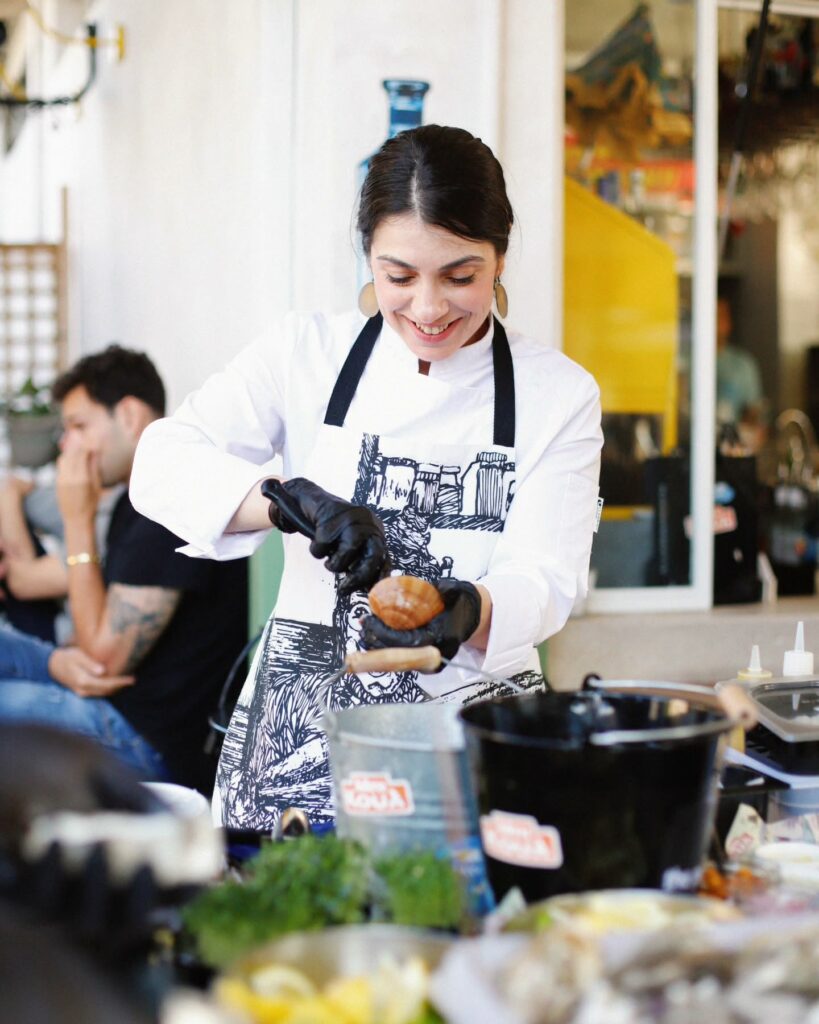
Chef Giorgos Melissaris (Brunello, Brutus, Ox) is bringing back a historic haunt: Cafeneio Kolonaki on Loukianou Street. With Kyriaki Fotopoulou (ex-Sigalas, Kir-Yianni) in the kitchen, the menu pays tribute to Sunday-style comfort meals, like 'lemonato' chicken and beef giouvetsi. A few blocks away, Diva is set to open on Patriarchou Ioakeim Street under chef Dimitris Katsanos. Expect open-fire cooking, fusion instincts, and a devotion to seasonal produce.
In the leafy north, Artisanal enters a new era under chef-owner Yiannis Parikos. Fully renovated, the landmark space is embracing “fine comfort” cuisine with strong Greek undertones, signaling a bold new chapter for the Kifisia dining scene.
Across from EMST, the long-lamented Fabrika tou Efrosynou gives way to Feelings & More Feelings. Conceived by Alexandros Koniaris, Giorgos Zacheilas, and Vaios Koromilas, the venue merges a next-generation bakery with a comfort restaurant. Fans of Koniaris’ original Feelings in Pangrati will recognize his playful signature. Come evening, the josper grill takes over, with wines and small plates setting the tone.
" ["post_title"]=> string(50) "10 New Foodie Openings in Greater Athens This Fall" ["post_excerpt"]=> string(86) "New restaurants, tavernas, bakeries and bistros inspire fresh outings around the town " ["post_status"]=> string(7) "publish" ["comment_status"]=> string(6) "closed" ["ping_status"]=> string(6) "closed" ["post_password"]=> string(0) "" ["post_name"]=> string(50) "10-new-foodie-openings-in-greater-athens-this-fall" ["to_ping"]=> string(0) "" ["pinged"]=> string(0) "" ["post_modified"]=> string(19) "2025-10-03 12:46:43" ["post_modified_gmt"]=> string(19) "2025-10-03 09:46:43" ["post_content_filtered"]=> string(0) "" ["post_parent"]=> int(0) ["guid"]=> string(31) "https://www.travel.gr/?p=490239" ["menu_order"]=> int(0) ["post_type"]=> string(4) "post" ["post_mime_type"]=> string(0) "" ["comment_count"]=> string(1) "0" ["filter"]=> string(3) "raw" ["post_views"]=> string(4) "3887" } [139]=> object(WP_Post)#5358 (25) { ["ID"]=> int(107283) ["post_author"]=> string(1) "8" ["post_date"]=> string(19) "2025-09-22 19:01:23" ["post_date_gmt"]=> string(19) "2025-09-22 16:01:23" ["post_content"]=> string(53115) "Athens treats moviegoing like a rhythm, not a season. When the weather is mild, open-air 'therina' cinemas turn rooftops, courtyards, and leafy terraces into rooms without ceilings: metal chairs skimming over gravel, a paper ticket, a bar that knows its cherry soda from its espresso, and, if you’re lucky, a skyline cameo from the Acropolis.
As nights cool, the city doesn’t power down so much as pivot. The same cinephile energy moves inside to single-screen gems and polished multiplex holdouts where restorations hum, new releases land, and hand-painted posters are still a weekly ritual.
Some houses arrive in matte-black minimalism with pin-drop sound; others keep their tin booths, geraniums, and well-worn aisles. Tourists find them; locals keep them honest. The offer is simple and enduring: sky above or curtain drawn, classics and discoveries in either case, and an audience that still shows up for the shared gasp.
What follows is a citywide map of dependable favorites - rooftop standouts when the breeze cooperates, indoor sanctuaries year-round - modern, storied, and unmistakably Athenian.
Originally established in Plaka in 1920 by a Greek hairdresser inspired by Paris, Cine Paris, curated by Cinobo, is now situated on Kidathineon Street in Athens. This charming cinema is renowned for its rooftop terrace, offering breathtaking views of the Acropolis.
The ambiance at Cine Paris blends nostalgic charm with a contemporary touch, creating a cozy and inviting space. The cinema features a wide selection of films, ranging from Greek classics to modern international releases. The bar offers a great variety of whiskeys and warm cheese pies. Adjacent to the ticket booth, you'll find a shop selling retro film posters and unique memorabilia, adding to the cinema's distinct appeal.
Kydathinaion 22, Plaka
Below the Acropolis and just 10' from the Odeon of Herodes Atticus’ front steps, by Apostolou Pavlou pedestrianized street, which runs to the side of the Acropolis, this is definitely one of Athens’ most visitable summer cinemas. It's not by chance that CNN named it the “world’s best movie theatre”.
The back seats at Cine Thisio offer a breathtaking view of the lit-up Parthenon, while the aroma of the cinema’s rich garden permeates the space. Definitely try the renowned, handmade, buttery cheese pies served in the canteen, and the tart cherry syrup drink ('vyssinada').
Make sure to arrive relatively early for a good seat. This cinema’s reputation has inevitably led to long queues forming outside at the height of summer. The cinema screens rereleases of classic films as well as some of the hottest new releases.
Apostolou Pavlou, Thisio
On the seventh floor of the iconic Grand Bretagne hotel at Syntagma, Pool your Cinema is, without a doubt, the city’s most luxurious summer theater. The hotel’s open-air rooftop cinema screens classic films and international hits on its big screen, with seating in front of the glamorous GB Pool. Film nights here include delicious dishes created by executive chef Asterios Koustoudis. Viewers are served a satisfying combination of handmade nachos, pizza, caramelized popcorn and juicy cheeseburgers, accompanied by a drink, in comfortable armchairs at the pool area.
This one-of-a-kind open-air cinema outing is worth experiencing at least once in your lifetime. The lovely, lit-up Lycabettus hill in full direct view behind the screen elevates the experience. Just take note that tickets cost €50 - not your ordinary movie night fare, and that reservations are necessary.
Hotel Grande Bretagne, Syntagma
Between Kolonaki square and Lycabettus hill, picturesque Cine Dexameni is a 'classic' film-lover's point in the center of town. Reach the narrow, pedestrianized street outside the cinema by climbing a few steps from Fokilidou St and when you reach the top look behind you to take in a wonderful Acropolis view. The square here has a children’s playground, and a popular cafe where Odysseas Elytis once hung out and where today people queue to sit at on hot summer nights.
Despite being in the heart of Athens, everything here seems bright and open-hearted, representing the best of summer and holidays. Dozens of tourists strolling about exploring the area love Dexameni cinema’s whitewashed steps, which create a Cycladic island feel. If you like a good European or global art film, this is the spot for you, though Hollywood films are regularly screened too.
Platia Dexamenis, Kolonaki
Within a large courtyard at the landmark Zappeion building, this cinema was renowned as an entertainment venue for Athens’ high society in the early 20th century. The first film projection here took place in 1903, unquestionably making Aigli Zappeiou one of the city’s oldest summer cinemas in town.
The sophisticated ambience at Aigli Zappeiou cinema, which runs 4K/Dolby-grade projection and is near Syntagma Square, is just one good reason to choose seeing a film there. Another is its ongoing projections of new releases, from American blockbusters to the best of Europe’s latest films, on its giant-sized screen.
Zapion Gardens, Syntagma
A legendary cinema in the centre of town, Zefyros is a truly traditional spot that has managed to maintain its status as one of Athens’ most delightful open-air cinemas. The cinema is located on highly frequented Troon St in Ano Petralona, amongst dozens of meze eateries and cafes. It is close to the area’s train station.
Secure yourself a good seat and let your feet relax on the white gravel surface. This is an ideal place to enjoy classic films before heading out to the vibrant neighbourhood for a drink or dinner. Zefyros is also one of the city’s most affordable summer cinemas.
Troon 36, Ano Petralona
The historic open-air cinema "Athinaia" in Kolonaki is a refreshing oasis in the heart of the city, set against a backdrop of lush greenery and fragrant honeysuckle. Athinaia, located on pedestrian Haritos Street, offers a relaxed, old-fashioned atmosphere.
This top-rated Athenian cinema is renowned for its excellent sound system, comfortable seating, refreshing drinks and comfortable enough seating. It consistently ranks among the top five summer cinemas in Athens, making it a perfect choice for a memorable night out.
Haritos 50, Kolonaki
A truly marvellous cinema in the central Patisia district, Lila has a yesteryear feel. This cinema, featuring a retro entrance with a trademark sign, is one of Athens’ most charming and authentic movie-viewing points.
In a lovely, simple and well-kept space, it definitely rates as an upbeat cultural hotspot, screening select films from around the world, including many films not to be seen elsewhere. Films aside, this cinema is an experience in itself.
Naxou 115, Patisia
A favorite hangout in the vibrant Exarcheia district, Cine Riviera has a lovely space at a prime position on pedestrianized Valtetsiou St. Its yellow chairs are a trademark feature, as is the curtain you pass through at the entrance to reach the cinema space with its verdant garden.
The cinema screens classic as well as contemporary films from around world and also stages extensive tributes covering the work of celebrated directors.
Valtetsiou 46, Exarcheia
Ekran cinema is a timeless, classic urban movie theater that creates a sense of nostalgia in older movie-goers for the sweetness and innocence of bygone summer days.
A small summer cinema, it exudes a romantic charm that perfectly suits the mainly older-era films that it screens, making it a feel-good intellectual spot in the heart of Athens. Plants that exude a pleasant aroma line the sides.
Zonara & Agathiou, Neapoli
Opposite Exarchia’s Blue Condominium, this 1938 rooftop original blends cinephile programming with a warmly urban terrace vibe. Canvas chairs, string lights, and loyal locals make it a quintessential “therino” night—unfussy, atmospheric, and very Athens after dark.
Themistokleous 82, Exarchia
Ambelokipi’s central favorite turns its roof into a polished summer deck: director’s chairs, cocktails, and first-run fare. It’s ideal pre- or post-dinner cinema—slick but friendly, with city views and reliable subtitled programming.
Leoforos Kifisias 14, Ambelokipi
A locals’ pick with a leafy courtyard and quietly discerning selections—arthouse, restored gems, and well-chosen crowd-pleasers. The atmosphere is low-key and authentic; the movie is the point, the garden is the bonus.
Mavromichali 165, Exarchia
Single-screen jewel in a 1930s arcade off Stadiou: deep seats, fine sightlines, and crisp projection for restorations, cult cycles, and auteur seasons. The foyer’s vintage posters and low-lit vibe set the tone; expect OV with English subs when available.
Stadiou 28, (Korai Arcade), Syntagma
Akadimias’ revived classic, now curated by Cinobo. Comfortable raked seating, modern sound, and late-night strands that carry the city-center cinephile torch after Ideal’s closure. Box office is efficient, concessions thoughtful (good espresso), and programs often sync with festivals.
Akadimias 57, Syntagma
Arthouse anchor near Koukaki with a warmly run lobby bar, courteous staff, and reliably sharp subtitling. Expect retrospectives, guest Q&As, and festival partnerships in a room that flatters quieter films as much as bold new releases.
Leoforos Syngrou 106, Koukaki
Family-run since the ’70s, now two large, well-tuned screens with reserved seating, strong acoustics, and regular director talks. Programming balances acclaimed premieres with docs and special series; metro access (Panormou) keeps it easy.
Leoforos Kifisias 109, Ambelokipi
A historic big room for premieres and festival strands with ample legroom and a classic balcony feel. Ticketing is straightforward, the calendar is busy year-round, and mainstream titles sit comfortably alongside occasional deep cuts.
Patission 140
Central favorite famed for its hand-painted weekly posters—a living tradition at the façade. Inside: generous rake, clean sightlines, and polished projection for first-run features. Friendly staff, straightforward concessions, and OV with English subs the norm.
Leoforos Vassilisis Sofias 124, Ambelokipi
Athens in autumn 2025 is a city in motion - restless, radiant, and just a little bit showy. As the summer heat finally loosens its grip and evenings linger in that golden Athenian light, the city’s museums, galleries, and concert halls leap into the spotlight with programming that feels both cosmopolitan and unmistakably local. If you’re the type who prefers your culture with a side of marble columns and a dash of Mediterranean charm, you’re in luck.
From mid-September through late November, expect exhibitions that challenge and charm, and music events that transform marble stages and open-air theaters into the social heart of the city. Athens doesn’t just invite you in - it insists you pay attention. Whether you’re chasing the next big idea or just looking for a reason to stay out past sunset, here’s what should be on your cultural radar this season.
This September, the neoclassical halls of the Zappeion Mansion host the latest edition of Art Athina, the capital’s flagship art fair and one of Europe’s longest-running. Now in its 30th year, the fair brings together seventy-two galleries from Greece and abroad, presenting painting, sculpture, digital works, and experimental practices.
Alongside the main exhibition floor, curated design projects, performance pieces, and the “Art for Tomorrow Talks” expand the program into new directions. It is at once a marketplace, a showcase, and a gathering point for Athens’ thriving art scene — an event that signals the cultural season is officially open.
Zappeion Mansion, Vasilisis Olgas Avenue
Athens’ museums glow at night in autumn. EMST opens late on Thursdays, while the Acropolis Museum extends Fridays, letting visitors see exhibitions and the Parthenon Gallery after sundown. On 26 September, European Researchers’ Night, a European initiative held in over 400 cities across Europe, transforms venues citywide—labs, observatories, and cultural halls—into playful, participatory spaces open till late.
Sammy Baloji: Echoes of History, Shadows of Progress
Until 2 November, 2025
At EMST, the Congolese artist Sammy Baloji unravels colonial legacies and their aftershocks in Africa through photography, video, and installation. His work exposes the entanglements between Europe and Congo, where the exploitation of resources left scars that remain visible today. It is an intellectually dense exhibition, yet visually magnetic, offering visitors an unflinching look at history’s shadows refracted in the present.
Why Look at Animals? A Case for the Rights of Non-Human Lives
Until 15 February 2026
Also at EMST, this vast curatorial project led by director Katerina Gregos shifts the gaze from the human to the more-than-human world. Installations, films, and immersive works ask whether empathy can be extended across species. The show balances urgency with imagination, insisting that art can articulate new forms of care and responsibility in an age of climate crisis.
National Museum of Contemporary Art Athens (EMST), Kallirois Avenue & Amvr. Frantzi Street, Koukaki
Marlene Dumas: Cycladic Blues
Until 2 November 2025
At the Museum of Cycladic Art, Marlene Dumas’s emotionally charged paintings and drawings meet the distilled abstraction of Cycladic idols. Installed in the neoclassical Megaro Stathatos, the exhibition heightens contrasts between vulnerability and timeless form. The encounter between the stark minimalism of marble figurines and Dumas’s nervy brushwork makes this one of the season’s most intense cultural dialogues.
Museum of Cycladic Art, 4 Neophytou Douka
Takis
Until 2 November 2025
The Basil & Elise Goulandris Foundation marks the centenary of Takis, the Greek sculptor whose fascination with magnetism and energy produced some of the most innovative art of the twentieth century. The exhibition focuses on his celebrated Magnetic Fields, delicate constructions that hum and vibrate, capturing invisible forces. Seen alongside the foundation’s permanent collection of Giacometti, Bacon, and Van Gogh, the show situates Takis in the global story of modernism.
Basil & Elise Goulandris Foundation, Eratosthenous 13, Pangrati
Juvenilia: From Early Style to Mature Work
2 October 2025 to 11 January 2026
At Benaki Museum’s Pireos 138 complex, Juvenilia revisits the formative years of eleven major Greek artists, including Yannis Tsarouchis, Yannis Moralis, Nikos Hadjikyriakos-Ghika, Dimitris Mytaras, and Chryssa Romanos. The exhibition juxtaposes early, often tentative works with the mature styles that later defined 20th-century Greek art. Essays by leading art historians accompany the display, offering critical insight into how motifs, gestures, and themes first emerged before crystallizing into an artist’s signature language. More than an archival look back, the show invites viewers to re-evaluate the foundations of modern Greek creativity.
Benaki Museum, Pireos 138
Paolo Colombo: Music and Mosaics
25 September–8 November
Bernier/Eliades Gallery hosts Paolo Colombo in an exhibition where watercolor meets mosaic and sound. By weaving references to Byzantine and Roman floors with delicate brushwork and musical rhythms, Colombo creates a dialogue between antiquity and contemporary practice. Visiting at dusk, before walking Thissio’s pedestrian streets toward the Acropolis, makes the experience all the more atmospheric.
Bernier/Eliades Gallery, Eptachalkou 11, Thissio
World Press Photo Exhibition
25–27 September 2025
For three days in late September, Athens hosts the World Press Photo Exhibition at Peiraios 260. The global showcase brings together the year’s most compelling photojournalism, offering powerful images of conflict, resilience, protest, and change. It is an essential stop for anyone who wants to see the stories that defined the year through the lens of some of the world’s finest photographers.
Peiraios 260
The Holy Art Gallery: Showcase
17–19 October 2025
In Monastiraki, The Holy Art Gallery stages a short but ambitious exhibition featuring international artists across photography, video, and mixed media. With a global selection and an experimental tone, the show is a chance to discover emerging voices and new approaches to visual storytelling in the heart of the city.
The Holy Art Gallery, Normanou 3
Robbie Williams
2 October 2025
Robbie Williams arrives at the Panathenaic Stadium for one of the most anticipated concerts of the year. His Live 2025 / Britpop Tour promises theatrical flair, irresistible anthems, and the thrill of seeing a global pop icon perform in the marble stadium that hosted the first modern Olympics.
Panathenaic Stadium, Vasilissis Olgas Avenue, Pangrati
Gipsy Kings
21 September 2025
The Gipsy Kings bring their infectious rumba flamenca to the Lycabettus Theatre. Under the Athenian night sky, with the city glittering below, their fiery guitars and unmistakable rhythms create an atmosphere of dance and joy.
Lycabettus Theatre, Lycabettus Hill
The Rasmus
25 October 2025
At Floyd, the Finnish rock band revisits their post-grunge hits with theatrical flair. Their moody anthems carry nostalgia for the early 2000s while still resonating with younger fans discovering their atmospheric sound.
Floyd, 16 Syggrou Avenue, Syngrou
Alexei Volodin & Lukas Karytinos
10 October 2025
At Megaron, pianist Alexei Volodin joins conductor Lukas Karytinos and the Athens State Orchestra for a night of classical brilliance. In the city’s most refined concert hall, expect a program of virtuosity and orchestral depth that underscores Athens’ thriving classical scene.
Megaron Athens Concert Hall, Vasilissis Sofias Avenue & Kokkali
La Gioconda
October–November 2025
The Greek National Opera stages Verdi’s La Gioconda at the Stavros Niarchos Hall. With its sweeping arias, orchestral grandeur, and melodramatic plot, it is opera at its most thrilling, a reminder that Athens continues to cultivate world-class productions in a landmark venue.
Greek National Opera, Stavros Niarchos Hall, 364 Syngrou Avenue, 17674 Athens
Public Service Broadcasting
25 October 2025
At Gazarte, the London-based band merges archival footage, electronic beats, and indie guitar lines into an immersive live show. More than a concert, it’s a kind of visual essay in sound, history, and pop culture — a perfect match for Athens’ hybrid cultural spirit.
Turbonegro
9 November 2025
Also at Gazarte, Turbonegro brings punk flamboyance to the city with a performance that is loud, theatrical, and deliberately over the top. For fans of punk rock and high-energy shows, this will be the season’s wildest night out.
Gazarte, Voutadon 32–34, Gazi
As the Aegean sun softens and the summer crowds recede, Greece unveils its most enchanting face. Autumn paints the Pindus mountains in shades of russet and gold, while winter brings a quiet calm to the cobblestone alleys of Nafplio. This is Greece beyond the postcard-perfect islands - a land of misty gorges, riverside tavernas, and snow-dusted Byzantine monasteries.
Imagine sipping tsipouro by a crackling fire in a stone-built Zagori's inn, or strolling hand-in-hand along Kavala's seaside promenade as the city lights flicker to life. Picture yourselves hiking through the fiery foliage of Mount Pelion, mythical home of the centaurs, or rafting the crystalline waters of the Voidomatis River, the spray cool on your cheeks.
From the medieval towers of Monemvasia rising from the Myrtoan Sea to the mist-shrouded peaks of Tzoumerka, mainland Greece in fall and winter offers a wealth of romantic experiences. It's a chance to see this timeless land through new eyes - where every winding mountain road might lead to a candle-lit taverna serving steaming giouvetsi, and each forested trail could open onto a view that takes your breath away.
Join us as we unveil our curated list of ten mainland destinations that promise to kindle - or rekindle - the spark of romance. The best part: We'll guide you to the coziest guesthouses, the most atmospheric eateries, and the experiences that will linger in your shared memories long after you've returned home. Welcome to Greece's secret season of love.
Amid Thessaly’s rugged landscape, the monasteries of Meteora rise on towering stone pillars, appearing to defy gravity. These ancient sanctuaries carry a sense of mystique, sharing stories of hermetic monks, spiritual pilgrims, and curious travelers. Discover the wonders of Meteora, finding peace in its solitude and exploring its hidden depths. As the golden sun casts light on the monumental structures, time seems to pause, offering a momentary view of eternity in a space between earth and sky.
Hike or join a guided tour up the towering rocks to explore the ancient monasteries while taking in expansive views.
Visit at sunset for especially striking vistas.
Consider a hot air balloon ride to see the rock formations from above.
Nearby villages like Kastraki and Kalambaka are ideal for exploring local culture.
Train: A scenic train journey from Athens (Larissa Station) to Kalambaka, the town at the foot of Meteora. This is a relaxing way to travel and allows you to enjoy the views. Book tickets in advance, especially during peak season.
Car: Driving offers flexibility for exploring the area and visiting nearby attractions at your own pace. The drive is around 4-4.5 hours.
Monemvasia, separated from the Peloponnesian coast by an earthquake in 375 AD, became an island once only reachable by boat, now connected to the mainland by a short causeway. Known for its medieval castle town, built into a sea-facing rock and originally hidden from enemies on land, it features two distinct levels and fortified areas: Pano Poli, now uninhabited, and Kato Poli. This historic town, shaped by Venetian, Turkish, French, pirate, and Greek influences, bears the marks of these civilizations. Entering the medieval town feels like stepping back to the 6th century BC, while inside, visitors encounter modern restaurants, shops, cafes, and a range of comfortable accommodations.
Meander through narrow alleyways, discovering hidden courtyards and historical structures.
Climb to the Church of Agia Sofia for a sweeping view of the sea.
Enjoy a meal at one of the intimate, cliffside restaurants or take a peaceful stroll along the fortress walls with the sea breeze.
Unwind at nearby secluded beaches, enjoying an al fresco picnic and tranquil views.
Car: The drive from Athens takes about 3-4 hours. The unique experience of crossing the causeway to reach this island fortress makes the drive itself part of the adventure.
Practically everywhere you turn in Nafplio you'll come across a picturesque scene. Tiled rooftops and stone buildings stretch out towards the Acronafplia peninsula, fuschia bougainvillea drape streets, and the Bourtzi fortress stands watch over the deep blue waters of the Argolic Gulf. Steeped in history, the city has long been sought by invaders for its strategic location and the wealth of the surrounding region. A key player in the emergence of modern Greece, Nafplio's Ottoman, Venetian, and neoclassical buildings around Syntagma Square, including the first parliament, reveal a rich past. Walk through the 300-year-old Porta dela Terraferma, once the only entrance to Nafplio during Venetian rule, and step into a city shaped by adventure, history, and intrigue.
Walk along the coastal Arvanitia Promenade with its beautiful views of the Argolic Gulf.
Visit the Palamidi Fortress and take on the climb to the top for stunning panoramic views.
Wander through the Old Quarter, filled with quaint cafes and shops.
For something more adventurous, take a boat ride to Bourtzi Castle, then enjoy a peaceful sunset by the water.
Car: A pleasant and scenic coastal drive of approximately 1.5-2 hours from Athens.
Zagorochoria’s 46 villages, set across the Tymfi, Mitsikeli, and Smolikas mountains in Epirus, are known for their stone-built homes, arched bridges, and rich craftsmanship. Towering mountains, serene streams, and dense forests create a tranquil setting, where the legacy of Epirote artisans can be seen in every detail. Here, you can swim in crystal-clear rivers, explore hidden gorges, and enjoy the quiet beauty of the landscape. Fall and winter are an ideal time to visit, offering cooler temperatures and a wide range of outdoor activities, from hiking to relaxing picnics under the shade of ancient plane trees.
Take a hike through Vikos Gorge, one of the world’s deepest, where you’ll find breathtaking views in a secluded setting.
Explore the stone bridges and footpaths connecting the villages, or swim in the crystal-clear waters of the natural pools in Papingo.
Go rafting in one of the region's beautiful rivers.
End the day by staying in a charming stone guesthouse and enjoying dinner at a local taverna.
Car: Driving is highly recommended for exploring the Zagori region. The journey takes around 5-6 hours, and having a car allows you to discover hidden villages and scenic viewpoints.
Mosques, mausoleums, and Byzantine towers are shrouded in mist. Ottoman baths, ancient fortifications, and quiet cobblestone streets. The castle town of Ioannina, with its blend of East and West, is an enchanting escape, especially in the fall and winter months. As the air turns crisp and the leaves fall, the town’s centuries-old neighborhoods come alive with warmth and charm. Cozy cafes and local shops line the narrow streets, while the flickering lights from homes create a sense of timeless romance. Stroll through Its Kale and the Acropolis of Aslan Pasha, where the town's history remains alive in the modern winter ambiance, offering a perfect setting for intimate walks.
Take a boat ride across Lake Pamvotis to explore the monasteries on its small island.
Wander around the town’s castle, admiring its Ottoman-era architecture and views of the lake.
History lovers can visit the Archaeological Museum and Ali Pasha’s Museum.
For a relaxing evening, enjoy a meal at a lakeside restaurant as the reflections of city lights shimmer on the water.
Car: The drive from Athens takes approximately 5-6 hours. Having a car allows you to explore the lake and surrounding areas at your leisure. Flights to Ioannina Airport (IOA) are also an option.
Parga’s striking natural beauty leaves first-time visitors in awe. The town is built amphitheatrically on a hill covered in olive groves, surrounding a bay that opens to the Ionian Sea, with views of Paxos and Antipaxos. Close to the shore lies the green islet of Panagia, home to a namesake church and Venetian-era buildings. Overlooking the bay, the Venetian Castle sits atop a fortified hill between the port and Valtos Beach, a reminder of Parga’s storied past. Though Venetian rule ended in 1797, the castle endured until 1819, when the city was sold to Ali Pasha of Ioannina. The Venetian influence remains visible in the architecture: colorful mansions, cobbled streets, arched doorways, and hidden courtyards filled with flowers create the town’s unique charm and scenic allure.
Visit Parga Castle for spectacular views of the town and coastline, perfect for a memorable photo.
In the cooler months, many of Parga’s cozy restaurants offer fireside dining. Enjoy a candlelit dinner with traditional Greek dishes, fresh seafood, and local wine.
The olive groves surrounding Parga are perfect for a tranquil autumn walk. Wander through the peaceful paths, picking a spot to enjoy a scenic picnic.
Visit the mystical Acheron Rivier and the ancient Nekromanteion.
Car: Driving offers the most scenic and flexible way to reach Parga. The journey takes around 5-6 hours. Consider a flight to Aktion National Airport (PVK) near Preveza, followed by a car rental or taxi.
Pelion, sometimes described as 'the Tuscany of Greece' and the 'holiday retreat of the Greek gods', is a mountain of timeless beauty, home to a cluster of villages rich in history and the lushest nature. Tsagarada, with its four distinct neighborhoods, stands out for its architectural elegance, vibrant squares, and centuries-old plane trees. Damouchari, known for its cinematic past, exudes a unique charm, while Mouresi offers sweeping views of the Aegean. Lafkos, quiet and secluded, attracts with its artistic spirit and peaceful scenery, while Agios Ioannis comes to life with the energy of summer. Pouri, remote and rustic, enchants with its tiered square and natural beauty. From pristine seascapes to verdant landscapes with running waters and shards of light, Pelion’s villages invite exploration into a lesser-known Greece.
Take long walks or drives in picturesque mountain villages like those mentioned above, or Makrinitsa and Portaria, where cobblestone streets and stunning views of the Pagasetic Gulf await.
Immerse yourselves in nature by walking along leafy forest trails or breathe in the reviving sea air walking along outstanding beaches like Mylopotamos and Fakistra.
In the depths of winter, go skiing at the Agriolefkes ski resort or sip hot chocolate and enjoy the scenery.
Car: Driving is the best way to explore the numerous villages and beaches of Pelion. The drive takes around 4-5 hours.
Arachova, located northwest of Athens in the Boetia region, becomes a romantic mountain retreat in the winter months. Often referred to as the "Winter Mykonos," this vibrant town seamlessly blends its modern, lively atmosphere with enduring mountain traditions. Snow-covered streets, cozy tavernas, and soft lantern light create an inviting setting for couples seeking a peaceful escape. When Mount Parnassos is covered in snow, the local ski resort offers both adventure and quiet moments. After skiing, relax in luxurious lodgings or spend an evening by the fire, enjoying local specialties and views of the mountains. Even in the quieter, non-winter months, Arachova’s charm endures, making it an ideal spot for a romantic getaway year-round.
Spend a day skiing or snowboarding at Mount Parnassus or take a quiet walk through the town’s stone streets.
Visit Delphi to explore its ancient ruins together.
Snuggle up in a mountain lodge with a fireside meal and local wine.
Nearby Livadi village also has some lovely tranquil hiking trails for couples seeking nature.
Car: A scenic drive of about 2.5-3 hours from Athens. The mountain roads can be winding, especially in winter, so drive carefully.
The Tzoumerka Mountains, which were once remote, have become more accessible due to the improvement of highways such as the Ionian Odos. Nevertheless, the villages of the region retain their authentic charm, making it a perfect romantic escape in the fall and winter. Ktistades, just six kilometers from Pramanta, offers tranquil stone houses and views of the mountains, creating an intimate setting for couples to enjoy. Pramanta, the largest village, offers a lively contrast with its traditional cafes and picturesque sites like the Anemotripa cave. Nearby Syrrako, with its cobbled streets and historic stone houses, offers breathtaking views, especially in winter. Together, in the midst of Tzoumerka's stunning scenery, these villages offer a quiet, romantic retreat.
Hike through Tzoumerka National Park to take in rivers, views and lush forests.
These waterfalls are considered to be the tallest in Greece, with the northern one measuring 87 meters in height and the southern one reaching to 100 meters.
Visit the stone villages of Kalarrytes and Syrrako for an authentic experience.
The Plaka Bridge and Arachthos River offer scenic spots for walks or picnics, while adventurous couples can enjoy rafting and canyoning.
Car: Driving is essential for exploring the mountainous Tzoumerka region. The journey from Athens takes around 5-6 hours.
Built amphitheatrically by the sea, Kavala offers a rich blend of archaeological history, Ottoman monuments, maritime tradition, and access to stunning natural landscapes. The promenade is ideal for strolls, starting from the harbor and stretching towards the fish auction, with the sea on one side and the city skyline on the other. For mountain lovers, Mount Paggaio is nearby, along with the verdant villages of Moustheni and Mesoropi, known for their streams. In the Old Town, known as the Panagia district, cobbled streets, wooden balconies, and blooming gardens create a charming atmosphere. Historical landmarks, traditional taverns, and neoclassical buildings complete the picturesque scenery of Kavala, offering a vibrant yet timeless experience.
Walk up to Kavala Castle for panoramic city and harbor views.
Explore the old town, with its Ottoman-style houses and the Imaret.
Take a day trip to Thassos Island for a day at its sandy beaches and crystal-clear waters.
The ancient city of Philippi and nearby wineries are also worth exploring.
End the day with dinner by the sea, watching the boats return to the harbor as the sun sets.
Flights: Fly from Athens to Kavala Airport (KVA) or Thessaloniki Airport (SKG) and then rent a car or take a taxi.
Car: The drive from Athens is around 7-8 hours. It's a long but scenic journey along the northern Greek coastline.
" ["post_title"]=> string(55) "Fall Amour: 10 Dreamy Greek Escapes for Couples in 2025" ["post_excerpt"]=> string(114) "Embrace the cooler, quieter season's romantic charm with sumptupous sunsets, long walks and adventurous activities" ["post_status"]=> string(7) "publish" ["comment_status"]=> string(6) "closed" ["ping_status"]=> string(6) "closed" ["post_password"]=> string(0) "" ["post_name"]=> string(47) "top-romantic-escapes-in-greece-fall-winter-2025" ["to_ping"]=> string(0) "" ["pinged"]=> string(0) "" ["post_modified"]=> string(19) "2025-09-11 21:14:02" ["post_modified_gmt"]=> string(19) "2025-09-11 18:14:02" ["post_content_filtered"]=> string(0) "" ["post_parent"]=> int(0) ["guid"]=> string(31) "https://www.travel.gr/?p=402852" ["menu_order"]=> int(0) ["post_type"]=> string(4) "post" ["post_mime_type"]=> string(0) "" ["comment_count"]=> string(1) "0" ["filter"]=> string(3) "raw" ["post_views"]=> string(4) "6275" } [142]=> object(WP_Post)#5353 (25) { ["ID"]=> int(486255) ["post_author"]=> string(2) "19" ["post_date"]=> string(19) "2025-09-10 15:45:06" ["post_date_gmt"]=> string(19) "2025-09-10 12:45:06" ["post_content"]=> string(37590) "As the ferry eased into the much-loved island of the Saronic Gulf, it felt like stepping onto a new set. Aegina’s familiar hospitality drew us straight into a morning stroll along the seafront, lively Leoforos Dimokratias, where classic and contemporary café-bars line one side and sailboats trade places with fishing boats on the other.
We walked the length of it, attuned to the hum of the fish market where restaurateurs and locals rush in early for the day’s catch. We paused at the outdoor fruit and vegetable stalls, bright with fresh produce, then chose our first coffee of the day directly across the street, at the traditional coffeehouses along the promenade.
These favorites are simple, unpretentious, and rooted in decades of history. They open early, slowly filling with the island’s elders, then ceding to a younger crowd by evening, with ouzo or tsipouro in hand and a couple of classic meze on the table.
Over our days in Aegina we visited all three: Aktaion, painted in sea blues, open for two decades and housed in one of the island’s handsome historic buildings; the bright red coffeehouse of Anastasia Galari; and the green one of Kostas Moiras. They stand side by side, operating continuously for sixty years beneath the carved balcony of another landmark that once served as Aegina’s Town Hall.
Food threaded through everything. Read about the standout stops from our stay, and be sure to seek them out on your next escape to this Argosaronic retreat.
We had not thought to reserve fresh tuna, or swordfish from the market stalls in the morning so they could be grilled for us at the taverna, as is the custom, but there was always the catch from their own fishing boat or what the owner himself brought in with his speargun.
Luckily, we managed to try the sea urchin salad, which is served almost daily this season, excellent grilled monkfish with vegetables—also available fried with garlic dip—sardines, and the ultimate specialty: cuttlefish sausage grilled over coals. Along with seasonal greens and salads supplied mostly by local producers and a cold beer, it was the perfect honest and satisfying midday meal.
49 P. Irioti, Aegina Town
For our first day’s swims we headed south, seeking cool waters and dividing our hours of relaxation between the beaches of Klima and Sarpa. Following the road toward Sfentouri and before the small port of Perdika, our first stop was Klima, the organized beach that combines sand and pebbles, especially beloved by locals who know the island’s best spots, and also by yachts that anchor in its crystal-clear turquoise waters. After enjoying plenty of swims, we continued further south to Sarpa beach. Via a short dirt road, we reached a lacy sandy cove with calm waters and full facilities.
Swimming and beach volleyball had stirred our appetites, and as the sunset approached we were called to the water’s edge, to the serene setting of the well-known taverna Aeginitissa, right on the sand of the bay of the same name.
With our gaze lost in the warm tones of the golden sunset, we began with well-crafted sushi to accompany our wine, continued with shrimp cigars and Constantinopolitan-style cuttlefish as starters, agreed that the cod paired perfectly with the delicious pistachio garlic dip, and since we could not decide whether to share the linguine with clams or the seafood orzo, we finally indulged in both—the fullness of flavor fully justifying our decision.
Aeginitissa Beach
As for our evening stroll back in the town of Aegina, we gave it the sweet taste of a refreshing handmade ice cream from the excellent pastry shop Melenio. We went for the timeless favorite pistachio flavor, generously sprinkled with grated nuts, but we were also thrilled with a new creation: rose ice cream with orange pie.
4 Mitropoleos
Between our morning visit to the important archaeological site of Kolona and its museum, and the famous Temple of Aphaia, we made a necessary and delightful stop for authentic Neapolitan coffee with freshly made, airy tiramisu that transported us straight from the Saronic Gulf to the Bay of Naples. This came easily in the artistic atmosphere there, in a carefully designed corner all-day café-bar in the heart of town, which often hosts works by young artists.
During our stay, we returned here either for a genuine Italian aperitivo with delicious bruschette made from Greek and Italian ingredients, or to spend a relaxed evening at the pedestrian-street tables, with selected Italian wines and indulgent pasta dishes: beetroot pesto with prosciutto and walnuts, tagliatelle with prosciutto, spicy salami, mushrooms, and red wine, and the authentic carbonara—all recipes of the Neapolitan owner, Dario Perreca.
43 Panagi Irioti
The day was dedicated to a mini sea excursion, from the picturesque harbor of Perdika to the paradisiacal islet of Moni. We combined this wonderful experience and our return to Perdika with food on the pretty balcony of Nontas, from whose well-kept, shaded tables our gaze wandered beyond the colorful fishing boats, back to the green Moni.
Two by two, we ate the crispy shrimp and small fish that arrived sizzling from the pan, along with velvet-smooth fava, refreshing salads, and handmade pies—zucchini, eggplant, or wild greens depending on the season—that have helped make the almost century-old kitchen of Nontas a timeless benchmark for the island.
As, of course, has their specialty: the thick, hearty “fish soup” made with the fish of our choice, as well as calamari with a delicious homemade Aegina pistachio pesto sauce. We completed the meal traditionally with yogurt and spoon sweets, then bought jars of the pesto sauce to take home for our own cooking.
Perdika
Returning from the northern beaches and passing through Kypseli, famed for its sponge diving, we paused to admire the vast orchards of pistachio trees heavy with fruit—and also to enjoy the authentic atmosphere of a straightforward village taverna, like Kokkoras.
Here the standouts are the excellent slow-cooked dishes: rooster with thick pasta, rabbit stew, and tender veal, giving every reason to set seafood aside for a while, though fish is never absent from the menu.
Kypseli
As our final stop before boarding the ferry home, we left one of the top fish tavernas and ouzeris of our islands—Skotadis, of course, which, with integrity, respect for sustainable fishing, exemplary professionalism, and constant evolution, is approaching its eighth decade. The humble kafeneio that first opened in 1945, named after Giannis Alyfantis’s nickname “Skotadis” (Darkness) because he opened before dawn, preparing hot fish soup and morning coffee for the fishermen of Aegina, has remained in the family, evolved into an ouzeri, and taken on gastronomic ambitions.
Here we tasted seafood meze dishes that would impress even the finest restaurants of the genre. We agreed on the aromatic lemon-marinated anchovies, the perfectly cooked octopus with thin slices of Florina peppers and olive oil, the smoked fava, the velvety garlic dip paired with flawlessly fried ray, the fluffy cod croquettes, and the newest addition to the menu: succulent red mullet skewers.
The salads were exceptional too: one with cheeses crusted in Aegina pistachios, another with peeled tomatoes, capers, and coarse salt, and yet another with string beans and feta aged in honey for a month. The famous seafood orzo more than lived up to its reputation as one of the best dishes one can taste in Aegina. We paired it with a bottle from the carefully curated list of wines and spirits and raised a toast to grandfather “Skotadis,” who left such a legacy on the island.
46 Leoforos Dimokratias
To be completely honest, our very last stop was the 65-year-old pastry institution Aiakeion, specializing in pistachio-based sweets in a constantly expanding range of temptations, to which we succumbed more than once during our stay. The long experience, recipes now in the hands of the third generation of the family business, and pure ingredients from Greek producers delighted us in rich waffles, crêpes, and pancakes with their award-winning pistachio spreads, pistachio ice cream made in-house in countless variations, loukoumades drizzled with pistachio cream and plenty of grated nuts, pastries, pistachio profiteroles, and even the Pistalicious coffee: espresso with pistachio ice cream, thick whipped cream, and abundant pistachio crumbs—energizing, refreshing, and truly irresistible.
18 Leoforos Dimokratias
While we left Aiakeion with boxes filled with crunchy florentines, pistachio bites better than truffles, and syrupy morsels like baklava, saragli, and kataifi with pistachios, we did not fail to stop at the traditional sweets shop and grocery Mourtzis, with an equally large variety of pistachio-based treats.
57 P. Ipeiroti
And of course, we could not forget to visit the distinguished dairy of the Soros family, with its 80-year tradition, to buy peppery, ideally spicy ladotyri, the soft and tangy fresh geremezi, and graviera—all made with local milk according to the family recipe.
" ["post_title"]=> string(41) "All-Day Gastronomic Adventuring in Aegina" ["post_excerpt"]=> string(106) "Join us for a memorable culinary experience of the top restaurants of an island just one hour from Athens " ["post_status"]=> string(7) "publish" ["comment_status"]=> string(6) "closed" ["ping_status"]=> string(6) "closed" ["post_password"]=> string(0) "" ["post_name"]=> string(58) "3-all-day-gastronomic-adventures-in-aegina-top-restaurants" ["to_ping"]=> string(0) "" ["pinged"]=> string(0) "" ["post_modified"]=> string(19) "2025-09-10 18:04:35" ["post_modified_gmt"]=> string(19) "2025-09-10 15:04:35" ["post_content_filtered"]=> string(0) "" ["post_parent"]=> int(0) ["guid"]=> string(31) "https://www.travel.gr/?p=486255" ["menu_order"]=> int(0) ["post_type"]=> string(4) "post" ["post_mime_type"]=> string(0) "" ["comment_count"]=> string(1) "0" ["filter"]=> string(3) "raw" ["post_views"]=> string(4) "3769" } [143]=> object(WP_Post)#5352 (25) { ["ID"]=> int(485870) ["post_author"]=> string(2) "17" ["post_date"]=> string(19) "2025-09-09 12:02:29" ["post_date_gmt"]=> string(19) "2025-09-09 09:02:29" ["post_content"]=> string(16644) "Greece’s coastline is strewn with wonders: hidden beaches, coastal forests brushing the water’s edge, and seas shimmering in every shade from emerald to sapphire. Yet nowhere does nature outdo itself quite like in the sea caves, carved patiently into the rock as if inviting us to slip inside and explore.
From the Blue Cave of Kastellorizo, with its stalactites and soaring dome, to Hytra in Kythera, a refuge for falcons and monk seals; from the storybook caves of Paleokastritsa in Corfu to the volcanic grotto of Gerakia in Kimolos, with its shallow turquoise waters and dazzling seabed—the beauty is inexhaustible. Each cave hides its own secret, each dive a small miracle, and each visit a reason to fall deeper under the spell of the Greek sea.
Only two kilometers northwest of Sami in Kefalonia lies one of Greece’s most extraordinary geological formations: Melissani Cave Lake. Its main entrance, a vertical opening, was created when part of the roof collapsed, leaving a natural skylight that opens dramatically into the interior. For visitors, a stairway carved into the rock now provides an alternative, easier way inside.
The exploration is done by boat, starting from the sunlit section before slipping into the darker, inner chamber. At the lake’s center rises a small island where archaeologists uncovered ancient finds. In prehistoric times, the cave had a sacred use: locals worshiped the god Pan here, along with the nymphs of myth. For this reason, Melissani is also known as the “Cave of the Nymphs.”
East of Pori Beach in Koufonisia, tucked beneath towering cliffs, lies one of the island’s most spectacular and little-explored spots: Gala Beach. A rare geological formation, it resembles a natural hole in the earth, almost otherworldly, with sunlight igniting the turquoise waters below.
You can reach Gala on foot from Pori, or more comfortably by boat that brings you directly to this secluded haven. Close by, the Xylobatis Caves reveal even more magic.
The cove hides two remarkable grottoes: the first, a long, tunnel-like passage cut clean through the rock; the second, a cave with its own small sandy beach inside—a paradise of light, sea, and solitude. Access is possible via the paved road linking Pori with the port, or even by swimming across from Pori itself.
Kythera’s coastline is studded with submarine caves, irresistible to divers. One of the most impressive is on Hytra (also known as Avgo, “the Egg”), a rocky islet south of Kapsali. In summer, boats depart daily from Kapsali for the islet, up until mid-September.
Hytra’s cave dazzles with its luminous colors, both within and beneath the surface, where the seabed resembles a natural swimming pool. The waters are strikingly clear, glowing with shades of turquoise and jade. Deep inside, a sheltered corner provides refuge for monk seals, underscoring the cave’s ecological importance.
The islet itself holds its own charms: it is home to Sempreviva, the golden-yellow “flower of eternal love,” whose name means “life forever,” and its cliffs serve as nesting grounds for Eleonora’s falcons, one of the rarest birds of the Mediterranean.
On Corfu’s northern coast, near cosmopolitan Sidari, lies one of the island’s most romantic landscapes—the famed Canal d’Amour, or Channel of Love. Its name stems from local legend: couples who swim the length of the channel together are said to remain bound by a love that never fades.
Here, sculpted sandstone cliffs extend into the sea, forming natural passages and small sheltered coves. Sea and wind have shaped the rocks into a work of art with nature’s finest tools.
Access is easy, with paths and stairways guiding visitors to hidden corners of the shoreline. The waters are crystal-clear and ideal for exploration; with just a mask and fins, you can discover underwater caves and tiny natural pools scattered along the formations.
Kimolos, with its limpid, turquoise waters and unspoiled Cycladic beauty, remains one of the few islands still largely untouched by mass tourism. Among its natural wonders, the northern coast conceals Gerakia Cave.
The cave enchants with its unbelievable shades of blue-green, offering visitors a memory to treasure forever. The best way to reach it is by boat or sea taxi, diving straight into the cave’s shallow waters.
Once inside, you can wade through, exploring its rock-carved vaults at leisure, immersed in an atmosphere both intimate and majestic.
Among Zakynthos’ most celebrated natural wonders, the Blue Caves are famous for their otherworldly light. They owe their name to the dazzling reflections inside, where sunlight transforms both water and rock into a spectrum of blues—from deep cobalt to crystalline turquoise.
Located along the island’s northwest coast, the caves stretch from Agios Nikolaos to Cape Skinari. The formations include a whole series of openings, domed arches, and hidden grottoes, each one reflecting the Ionian Sea’s brilliance in a different way.
Access is either by private boat or on organized sea excursions, which run daily in summer until mid-September. For something more intimate, kayaking trips depart from Agios Nikolaos, tracing the northern shoreline through the caves, with Kefalonia looming across the horizon—a journey through a liquid labyrinth of light.
" ["post_title"]=> string(46) "Exploring Greece’s Most Astounding Sea Caves" ["post_excerpt"]=> string(109) "Living museums of nature, these sea caves are a wonder to explore, especially without the high summer crowds " ["post_status"]=> string(7) "publish" ["comment_status"]=> string(6) "closed" ["ping_status"]=> string(6) "closed" ["post_password"]=> string(0) "" ["post_name"]=> string(33) "greeces-most-astounding-sea-caves" ["to_ping"]=> string(0) "" ["pinged"]=> string(0) "" ["post_modified"]=> string(19) "2025-09-10 15:50:17" ["post_modified_gmt"]=> string(19) "2025-09-10 12:50:17" ["post_content_filtered"]=> string(0) "" ["post_parent"]=> int(0) ["guid"]=> string(31) "https://www.travel.gr/?p=485837" ["menu_order"]=> int(0) ["post_type"]=> string(4) "post" ["post_mime_type"]=> string(0) "" ["comment_count"]=> string(1) "0" ["filter"]=> string(3) "raw" ["post_views"]=> string(4) "3864" } [144]=> object(WP_Post)#5258 (25) { ["ID"]=> int(285477) ["post_author"]=> string(2) "19" ["post_date"]=> string(19) "2024-12-08 15:22:05" ["post_date_gmt"]=> string(19) "2024-12-08 12:22:05" ["post_content"]=> string(39783) "There’s something heartwarming and inherently romantic about the winter months, even when we can't quite determine what makes them feel so idyllically enchanting. One thing is for sure: there’s no more fitting season for an escape to a tranquil, scenic, and eye-opening destination, for just the two of you.
Often, our minds conjure images of a picturesque mountain village, enveloped in a strikingly beautiful natural landscape; strolls beside flowing streams and cobblestone alleys, pit-stops for steaming coffee and hearty meals at a traditional restaurant with a view, at a secluded table. Or perhaps hikes through the riotous nature of mountainous Greece, trails beside crystal-clear lakes, and stays in small, cozy rooms with a roaring fire warming the space perfectly during the year’s first chilliest days.
The wintry side of Greece has something for everyone, whether you’re seeking a few days of utter tranquility and relaxation in a tiny village away from everything and everyone, or want to spend a few days in one of the most popular winter destinations. The options are plentiful for a dreamy escape to some of Greece’s most beautiful villages, which await your discovery. This guide presents the top destinations for an unforgettable romantic stay in some of the loveliest traditional inns in mountainous Greece.
Near historical Dimitsana and the renowned Vitina, there lies Stemnitsa, a village of arresting beauty and vibrant greenery, enveloped by a dense forest at an elevation of 1,100 metres. Towering firs, expansive plane trees, walnut and cherry trees, stalwart chestnuts, and delicate acacias orchestrate a uniquely enchanting landscape. Its name, stemming from the Slavic language, fittingly means "a shady and forested place".
A somewhat secluded location imbues Stemnitsa with the perfect romantic answer for an idyllic, autumnal retreat with your beloved. Imagine going on walks through the magnificent, unspoiled nature that enfolds the village, and lodging within atmospheric, stone-built inns where fireplaces sprinkle the space with warmth and comfort. At the heart of the village, the charming little square becomes a vibrant scene of cafes and restaurants, all under the watchful eye of the Church of St. George and its towering, imposing belfry. Exploring further, meander through the narrow, cobblestone alleys and allow your gaze to linger upon the windows of local shops, showcasing delicate silver jewelry and handcrafted decorations.
Stemnitsa is a place known for its rich tradition in silversmithing and goldsmithing. It's worth visiting the School of Silversmithing, housed within a striking building at the village’s center. The school continues the art and traditions of the village’s original metallurgists, artisans who made exquisite jewelry as well as constructing intricate bell towers. Examples of their remarkable work have traversed from Stemnitsa to the churches of Eastern Europe.
In the picturesque village of Arcadia, take a stroll through the famed Palamidi quarter. The neighborhood, in the northern part of Stemnitsa, is brimming with impressive, historical mansions. Also stop at the Folklore Museum, housed in the beautiful Hatzis Mansion. More than 200 years of history are showcased through valuable exhibits, with handmade jewelry playing a leading role throughout the museum.
To see the most enchanting vista across Stemnitsa, walk up to the ‘Mother of Water’. If you like trekking, follow the path that leads to the Monastery of Zoodochos Pigis with its beautifully carved wooden temple, a masterpiece from 1805.
The entire village is sprinkled with impressive guesthouses that offer a warmly hospitable stay for a truly romantic couple of days. The Bellio, with a view across the village and numerous rooms featuring fireplaces, is a great choice. As is Trikolonion Country with traditional features like stone and wood and stylish decor touches, as well as a spa.
In the mountainous region of Corinthia, journey to one of Greece’s most picturesque winter destinations, that remains relatively unknown to most foreign travelers.
A mere 150 kilometers from Attica, Trikala of Corinthia offers an exceptionally accessible destination for a brief escape with your partner, even if it’s an unplanned, spur-of-the-moment getaway without detailed planning.
Steeped in a history rooted in antiquity, this area is partitioned into three neighborhoods: Kato (lower), Mesaia (middle), and Ano (upper) Trikala, each a distinct “neighborhood” scaled upon the slopes of Mt Ziria. You can hike across them via delightful serpentine routes up the mountain, that are even more thrilling on sunny winter days. The three distinct villages connect in a seamless, natural continuum, as if each unfolds from the last, gradually extending homes and traditional buildings ever higher into the mountains. Each village has its unique character, with the varying altitudes playing their part.
With Trikala as your starting point, you can visit numerous other beautiful spots in the surrounding area, with the must-visit Lake Doxa, of course, at the foothills of Mt Pentelia and Mt Helmos, topping the list. Beside the lake, the small, stone chapel of Agios Fanourios creates a contemplative scene, particularly at sunset, when the lake, situated at an altitude of 900 meters, is at its most captivating, utterly enchanting moment.
Envisage this: a heartening trek up to the monastery of Agios Georgios Feneos, where the church of Agios Fanourios has stood since the 17th century. The panorama from this vantage point is a quiet spectacle, as is the beauty of Lake Doxa. If you find the monastery open, climb the wooden stairs to the upper balcony to enjoy a remarkable view over the lake.
Amid the journey, a pause in Goura, the village midway between the lake and Trikala of Corinthia, is a great idea. The stone-paved, elevated square of Goura, emblematic of the settlement, is arguably among the nicest you’ll find in the mountainous destinations of Greece.
Imagine a deeply romantic cocooning experience together at the luxurious guesthouse Pleiadon Gi, where you can stay in a stone lux suite that offers a real sense of privacy. Alternatively, the comforting rooms at Archontiko Fiamengou, each with its own fireplace, and some even a private jacuzzi, is another great choice.
Some may say that Arachova is the jewel of Greek mountain destinations. However, if you're seeking a deeper sense of tranquility visit Agoriani, a village that's the perfect base near expanses of verdant nature, amidst verdant fir trees and in the pristine mountain air.
Set off from charming Kato Agoriani, (known as Lilaea until 1928), a picturesque village constructed at the foothills of Mt Parnassus that's enshrouded in a lush landscape at an altitude of 330 meters. Upon entering the village, you’ll be greeted by the poignant sign, ‘Martyr Village,’ a silent reminder for visitors of the ruthless days of 1943 when the village was entirely incinerated by German soldiers. Shortly after, in the village’s tiny square, sip your coffee in front of the church and the Kefalovrysa fountain, distinctive features of Kato Agoriani.
Also of interest is the National Resistance Museum, housed in the residence of the fighter, Yiannis Alexandrou. Certainly, take a moment to pause here before wandering through the quaint, cobblestone lanes.
Agoriani is built across seven green hills, and its official name is Eptalofos ('seven hills'). Embraced by a dense fir forest, amidst cool, running waters, it is truly beautiful. Hike up to the Church of Agia Paraskevi to enjoy the best panoramic view over the entire village and then, meander long the cobblestone alleyways, where you will find scores of shops offering delicious local produce and charming souvenirs.
Also, go to the settlement's delightful square from where the view is genuinely remarkable. Inside the village, the Ethnographic Museum of Eptalofos is well worth a visit, brimming with ethnographic treasures that reveal much about the history and traditions of the region. If you're craving a long, exploratory walk in nature, go for a hike along the length of the Agorianiti river. The route guides you to a small yet stunningly beautiful waterfall, which cascades fervently into an untouched landscape of rampant vegetation.
Among the most charming traditional inns of Agoriani, you'll find the Asimina Guesthouse, offering comfortable, impeccably clean rooms with understated decor just 100 meters from the village square. And then, there's the Balkoni of Agoriani, with its traditional rooms, a captivating view, and an on-site restaurant providing a delightful breakfast and exquisite local cuisine.
A mere one and a half hours away from Athens, Nafplion, with its characteristic quaintness, lovely, cobbled alleyways, small but utterly charming Old Town, and its important historic, is one of the most romantic and atmospheric destinations in mainland Greece. It certainly stands as one of the most historical since it was the first capital of the newly formed Greek state at the time.
Any stroll in Nafplion, in essence, mandates starting off with a walk along the much-photographed Megalos Dromos, one of the oldest and quaintest roads of modern Greece. Constructed under the orders of Ioannis Kapodistrias during the era when Nafplion was the capital of the Greek state, Megalos Dromos seamlessly links the beginning of Nafplio town with Syntagma Square.
In this quaint nook of the world, you might find yourself losing track of time wandering through the picturesque alleyways of Nafplion, as you look for the chapel of Agios Spyridon. There, on a stone wall, an indenture reflects a tangible echo from the past: it is the bullet hole that claimed the life of Ioannis Kapodistrias, the first governor of Greece.
If you'd like to take a walk that will take you to new heights, walk the (supposedly 999, though some say it's more) steps to the Palamidi fortress. From its commanding heights, your eyes will drink in scenes where the soothing embrace of the sea laps against the dramatic sweep of history beneath it.
The Archaeological Museum of Nafplion and the Folklore Museum welcome you to delve deeper, presenting collections that include, amidst other artifacts, Kapodistrias’ writing desk. As daylight yields to the gentleness of evening, picture this: you and your beloved, side by side, sipping on a delicious cocktail by the sea, while the illuminated Bourtzi fortress gently flutters across the tranquil waters in a distant yet companionable silence.
Staying in the Old Town not only places you in the intimate proximity of all landmarks but also ensures that you immerse yourself in an authentically romantic residential experience, one that you might forgo otherwise.
Consider Hotel Ippoliti, which captures the spirit of Nafplio’s Venetian past with timeless elegance, with spacious and comfortable rooms and optional whirlpool tubs. Alternatively, let the Amymone and Adiandi Collection bed and breakfast has rooms that are decorated in different styles.
There’s a lingering misapprehension about Arachova that demands a gentle correction: it’s thought among many that this cosmopolitan town warrants a visit solely for indulging in endless hours of skiing at the Parnassos Ski Center or for reveling from afternoon till the deep of night in the bustling square of Lakka, lounging in comfy armchairs under the warm glow of heaters, with fluffy blankets to put on your lap.
Arachova offers the perfect balance between its more touristic side and a robust mountain tradition, reflected in its splendid local products, a lively community, and wonderful surrounding landscapes. One thing is certain: no list of autumnal, romantic destinations in Greece could be deemed complete without including a stop at Arachova, one of the most enchanting towns in the country.
Every wander through Arachova begins with a meander down its serpentine central road, on one side looking out to a view of the Delphi Valley, and on the other a row of the village’s elegant restaurants, cafes and bars, with the clock tower rising above.
Next, retrace your steps to the village center and head up towards the Church of Saint George. Prepare to climb 265 steps, with a backdrop of Arachova’s rooftops and chimneys. In spring, they may not billow with smoke, yet they remain an equally picturesque sight.
Upon reaching the top, take in a wonderful panoramic view of the surrounding nature, in one of the most photographable spots in the entire region. If you wish to head down along a different route, walk along the cobbled paths, seeing all angles of the village.
Undoubtedly, the scenery here is highly romantic, and should you seek more peacefulness, visit Agoriani and other nearby villages, and of course, historic Delphi for a genuinely enlightening journey through time, visiting one of the most significant archaeological sites in Greece.
For a plush, comfortable stay, get rooms in the opulent Santa Marina Arachova Resort and Spa, with its striking indoor pool, or at the Domotel Anemolia Mountain Resort, where perfect vistas of the Delphi Valley and spacious, comfortable rooms await. This eloquent interplay of luxury and tradition offers not just a place to stay, but warm hospitality and the spirit of the Greek countryside.
" ["post_title"]=> string(58) "Ultra Romantic & Lesser-Known Winter Escapes in Greece" ["post_excerpt"]=> string(134) "Long forest walks, leisurely meals in quaint village tavernas, suites with a fireplace and beautiful decor and traditional charm await" ["post_status"]=> string(7) "publish" ["comment_status"]=> string(6) "closed" ["ping_status"]=> string(6) "closed" ["post_password"]=> string(0) "" ["post_name"]=> string(43) "5-extra-romantic-autumn-escapes-for-couples" ["to_ping"]=> string(0) "" ["pinged"]=> string(0) "" ["post_modified"]=> string(19) "2024-12-17 11:26:24" ["post_modified_gmt"]=> string(19) "2024-12-17 08:26:24" ["post_content_filtered"]=> string(0) "" ["post_parent"]=> int(0) ["guid"]=> string(31) "https://www.travel.gr/?p=285477" ["menu_order"]=> int(0) ["post_type"]=> string(4) "post" ["post_mime_type"]=> string(0) "" ["comment_count"]=> string(1) "0" ["filter"]=> string(3) "raw" ["post_views"]=> string(4) "4725" } [145]=> object(WP_Post)#5351 (25) { ["ID"]=> int(485515) ["post_author"]=> string(2) "19" ["post_date"]=> string(19) "2025-09-08 12:28:23" ["post_date_gmt"]=> string(19) "2025-09-08 09:28:23" ["post_content"]=> string(19794) "The story of lighthouses in Greece stretches deep into antiquity. Homer himself evokes their imagery in the Iliad, likening a fire blazing on a mountain peak to a guiding light for sailors. Though he was describing signal fires rather than lighthouses as we know them, the metaphor reveals just how long humanity has sought orientation from distant flames.
Today, Greece has one of the densest and most storied lighthouse networks in the world. Around 1,400 lighthouses remain active across the Aegean and Ionian, their presence essential to navigation but also to the country’s cultural imagination. Each has its own tale, its own cliff or harbor to guard.
The network took shape in the 19th century, when Prime Minister Charilaos Trikoupis established a Lighthouse Fund in 1887, ensuring their systematic construction and maintenance. Over the decades that followed, French-built towers joined Greek ones, especially after the Balkan Wars of 1912–1913, while the remarkable service of Stylianos Lykoudis, who oversaw the Lighthouse Authority for more than half a century, left an indelible mark.
Perhaps the most photogenic lighthouse in Greece, the Turlitis of Andros rises directly from a narrow rock in the sea. Built in 1887 opposite the Venetian castle of Chora, its cylindrical tower—just seven meters high—has guided ships for over 120 years. It was also the first “automatic” lighthouse in Greece, operating without a resident keeper. So iconic is its silhouette that it has been immortalized on a postage stamp, carrying its light across the world.
On the island of Lefkada, the Doukato lighthouse crowns a sheer 60-meter cliff with panoramic views over the Ionian. Its stark white tower has long been a landmark for sailors, but for modern visitors it is also a stage for one of Greece’s most spectacular sunsets. Just beyond lies the legendary beach of Porto Katsiki, its turquoise waters a siren call after the drama of the headland.
In Corfu, the Sideros lighthouse was built in 1822 on the city’s Old Fortress. One of the earliest to shine over Greek waters, it later transitioned to full automation in 1986. Its story is interwoven with the island’s years under British rule, a reminder of how these structures are also monuments to shifting powers and maritime empires.
Few sights in Crete are as enduring as the lighthouse of Chania. First constructed by the Venetians in the 16th century, reshaped by the Egyptians in the early 19th with its minaret-style tower, it now rises 21 meters over the harbor. Its light reaches seven nautical miles, but it also illuminates centuries of layered history. A coffee in Chania’s old port with the lighthouse in view remains a timeless ritual.
At Cape Tainaro, the southernmost tip of mainland Greece, a lighthouse has stood since 1882, staring out over the Libyan Sea. The ancients believed this headland was a gateway to Hades, a myth that lends extra drama to its windswept isolation. Nearby, the Cape Maleas lighthouse—built in 1883—has long been dreaded by sailors for the treacherous currents and storms of its passage. Restored in 2009, it remains one of the most imposing towers in the Peloponnese.
On windswept Tinos, the Papargyras lighthouse stands on the island’s eastern promontory. Built in 1910, its stone form is considered one of the finest examples of open-sea navigation lights, guarding both the Chios–Ikaria passage and the narrow strait between Mykonos and Tinos.
Santorini’s Akrotiri lighthouse, built in 1892, still marks the island’s southwestern cape. With its modest 10-meter tower, it has witnessed the volcanic drama of the caldera for over a century and continues to preside over sunsets that rival those of Oia.
In the small harbor of Nafpaktos, a modest stone lighthouse dating to 1909 still serves as a point of reference within the medieval castle walls. By contrast, the Melagkavi lighthouse near Loutraki is grand in scale and setting. Built in 1897 beside the ruins of the Temple of Hera Akraia, it once guided ships through the Corinthian Gulf en route to the canal. Electrified in 1982 and declared a protected monument in 2001, it remains both a working light and a hauntingly beautiful landmark.
" ["post_title"]=> string(72) "Following the Light: Greek Lighthouses Worth Visiting Before Summer Ends" ["post_excerpt"]=> string(105) "Beacons at the edge of sea and sky, Greek lighthouses carry an allure reflecting history, beauty and myth" ["post_status"]=> string(7) "publish" ["comment_status"]=> string(6) "closed" ["ping_status"]=> string(6) "closed" ["post_password"]=> string(0) "" ["post_name"]=> string(71) "following-the-light-greek-lighthouses-worth-visiting-while-summer-lasts" ["to_ping"]=> string(0) "" ["pinged"]=> string(0) "" ["post_modified"]=> string(19) "2025-09-18 22:42:27" ["post_modified_gmt"]=> string(19) "2025-09-18 19:42:27" ["post_content_filtered"]=> string(0) "" ["post_parent"]=> int(0) ["guid"]=> string(31) "https://www.travel.gr/?p=485515" ["menu_order"]=> int(0) ["post_type"]=> string(4) "post" ["post_mime_type"]=> string(0) "" ["comment_count"]=> string(1) "0" ["filter"]=> string(3) "raw" ["post_views"]=> string(4) "2870" } [146]=> object(WP_Post)#5350 (25) { ["ID"]=> int(485080) ["post_author"]=> string(2) "19" ["post_date"]=> string(19) "2025-09-05 13:15:21" ["post_date_gmt"]=> string(19) "2025-09-05 10:15:21" ["post_content"]=> string(18394) "For those who travel after the crowds have gone—or who simply refuse to let summer slip away—September in Greece is idyllic.
The sea is still warm, the light more forgiving, the islands quieter, and yet their beauty remains in full bloom. Here are five close-to-Athens escapes that feel made for late-summer wanderings.
Every few years, a Cycladic island quietly becomes the season’s must-go. Recently, that honor belongs to Kythnos—a little bohemian, rooted in tradition, yet infused with a new cosmopolitan edge. By September, when the rhythm of everyday life begins to return, the island feels more intimate, more authentic. Accommodation is easier to find, prices dip, and the weather is ideal for long walks and unhurried swims.
The beach at Kolona remains Kythnos’ showstopper: a slender sandbar stretching into the Aegean, linking the main island with the islet of Agios Loukas. But you’ll also want to dive into the crystalline waters at Apokrousi, Megali Ammos, Gaidouromantra, and Episkopi. In Loutra, slip into the thermal springs that bubble into the sea—once housed in a 19th-century spa designed by Hansen and later reworked by Ziller, among the earliest wellness resorts in Greece.
Add to your list the cave of Katafiki, tied to Kythnos’ mining past, and the ruins of Vryokastro, the island’s ancient capital, reached by trail. The medieval fortress of Oria, high on a crag and only accessible on foot, is equally haunting. Nearby, the Mesolithic site of Maroulas offers a rare glimpse into prehistoric life on a Greek island.
Syros, the aristocratic heart of the Cyclades, takes on a more romantic air after summer’s peak. The neoclassical mansions and marble churches of Ermoupoli shine brighter when the streets are calm. Start at Miaouli Square to admire the grand Town Hall by Ernst Ziller, then wander toward Vaporia, a waterfront neighborhood of captains’ houses and domed churches. Step inside Agios Nikolaos with its intricate marble iconostasis, then walk down to Asteria beach for a swim with a view.
In Ano Syra, the medieval upper town, labyrinthine alleys lead to Catholic San Giorgio and the modest Museum of Markos Vamvakaris, dedicated to the legendary rebetiko musician. Don’t miss the Industrial Museum at the old port, where among other treasures sits the Enfield 8000—the first electric car ever built in Greece.
When it’s time for the sea, the island delivers: Kini for sunsets, Galissas for golden sands, Finikas for laid-back charm, and Varvarousa or Gria Spilia for secluded dips reached only by trail or boat. Come late September, Syros also hosts Animasyros, one of Europe’s top animation festivals.
Andros is famed not only for its beaches and refined Chora but also for its vast network of hiking trails, many paved with old stone. September is perfect for exploring: the walk to the Pythara waterfalls near Apoikia is short and lush, while longer hikes thread past watermills, Byzantine bridges, and chapels hidden in ravines.
Where you stay shapes your experience: Batsi hums with life, Korthi offers quiet charm, while Chora, with its marble alleys and neoclassical mansions, radiates old-world elegance.
The beaches are as varied as the landscape: the wide sands of Agios Petros and Chrysi Ammos, the intimate cove of Apothikes, the shaded shore of Fellos, or Achla, where a stream meets the sea. For drama, few spots rival Grias Pidima, with its towering rock column rising from turquoise water.
Art and history run deep here too: the Museum of Contemporary Art of the Basil & Elise Goulandris Foundation brings in major exhibitions, while the Archaeological Museum spans finds from the Neolithic to Byzantine eras. Hikers can also reach the remains of ancient Zagora, a Geometric-period settlement overlooking the sea.
Once synonymous with religious pilgrimage, Tinos today lures travelers for far more: its dazzling villages, imaginative cuisine, sculpted landscapes, and wild beaches. September here is serene but still vibrant, a chance to explore without rush.
The island’s villages are a revelation. Pyrgos, known for its marble artistry, and Volax, built among giant boulders, feel worlds apart. Chora buzzes with whitewashed alleys, while Ormos Kardianis and Panormos promise evenings by the sea.
The beaches are diverse: Kolymbithra, with twin bays of aquamarine, Agios Fokas—the island’s largest—cosmopolitan Kionia, rugged Livada, and remote Agia Thalassa. For flavors, Tinos excels: try tomato fritters, artichoke pie, froutalia (an egg dish with sausage and potatoes), local cheeses like graviera and pungent kopanisti, or sweet xerotigana.
Landmarks include the 1823 Church of Panagia Evangelistria, the Archaeological Museum, and the Museum of Marble Crafts, charting centuries of artistry. Monasteries like Jesuit-founded Loutra and Kechrovouni, perched high on the hills, add a contemplative note to your journey.
Compact, green, and effortlessly nostalgic, Poros feels like a holiday time capsule—an island that still holds the charm of Greece in the 1980s, all neoclassical houses, shady squares, and a harbor that hums quietly. September brings calm seas and slower rhythms: mornings start with coffee at the waterfront, afternoons with swims, and evenings with strolls to the clocktower at sunset.
For the sea, head to Askeli, Monastiri beach near the monastery of Zoodochos Pigi, Kanali right by town, or Vagionia with its transparent waters. More remote options include Gerolimenas and the Russian Bay, shaded by pines and steeped in history.
If you crave movement, Poros rewards walkers. Trails climb through pine forests, from the Russian Bay to the stone Dana lighthouse, or from Askeli to the sanctuary of Poseidon. Both lead you through a landscape where the scent of resin and sea air is inseparable.
" ["post_title"]=> string(54) "5 Greek Islands Near Athens for Mellow September Bliss" ["post_excerpt"]=> string(122) "From Syros’ marble mansions to Andros’ waterfalls and Poros’ pine-scented trails, September reveals a softer Greece " ["post_status"]=> string(7) "publish" ["comment_status"]=> string(6) "closed" ["ping_status"]=> string(6) "closed" ["post_password"]=> string(0) "" ["post_name"]=> string(54) "5-greek-islands-near-athens-for-mellow-september-bliss" ["to_ping"]=> string(0) "" ["pinged"]=> string(0) "" ["post_modified"]=> string(19) "2025-09-15 11:37:06" ["post_modified_gmt"]=> string(19) "2025-09-15 08:37:06" ["post_content_filtered"]=> string(0) "" ["post_parent"]=> int(0) ["guid"]=> string(31) "https://www.travel.gr/?p=485080" ["menu_order"]=> int(0) ["post_type"]=> string(4) "post" ["post_mime_type"]=> string(0) "" ["comment_count"]=> string(1) "0" ["filter"]=> string(3) "raw" ["post_views"]=> string(4) "2290" } [147]=> object(WP_Post)#5357 (25) { ["ID"]=> int(488181) ["post_author"]=> string(2) "19" ["post_date"]=> string(19) "2025-09-18 22:38:26" ["post_date_gmt"]=> string(19) "2025-09-18 19:38:26" ["post_content"]=> string(25551) "As the long blaze of summer recedes and the evenings sharpen, Athens tilts toward a slower rhythm. The air carries a faint thread of roasted chestnuts, cafés set their little “mushroom lamps” aglow on the sidewalk, and soup reclaims its place as the city’s most natural comfort.
Athens has long eaten from steaming bowls - at dawn after the market, in the small hours after dancing, or as a quiet Sunday rite. Today, that tradition ranges from the humble patsatzídiko to the fish tavern with copper pots simmering in the back, to white-tablecloth rooms where stock is treated like perfume. In every direction there’s a kettle whispering: tripe hot and restorative, magiritsa silky and herbal, kakavia dense with the sea, avgolemono bright as a bell. These soups are the city’s overlooked landmarks - hearty, satisfying, and improbably healthful, a rare combination in the pantheon of crowd-pleasers. Autumn in Athens is the moment to lean in, spoon deep, and savor warmth, one bowl at a time.
Step inside Athens’ Central Market and you’ll hear the clatter of pots from Epirus, the city’s most storied soup house. Magiritsa is their calling card, especially on Holy Saturday when Athenians line up with pots for takeaway. But the daily spread is equally remarkable: chicken soup dense with meat and vegetables, clear beef broth, fish soup made with the catch next door, goat stew simmered to marrow-rich depth, and soothing tripe. At least eight soups are always on offer, all served fast with lemon, garlic vinegar, and bukovo flakes on the table. The clientele is as mixed as the city itself: market workers on break, bohemians, artists, late-night revelers, and curious tourists. This is Athens distilled into broth - unpretentious, bustling, and profoundly comforting.
Filopimenos 4, Varvakeios Market, Omonia
In Peristeri, Makis has become almost mythic, known across Athens as the city’s one true round-the-clock tripe soup destination. Here, patsas is serious business: cow stomach and feet are simmered for hours, enriched with abomasum, then finished with “red” - a spicy blend of fat and chili that regulars swear by. The result is a bowl both medicinal and indulgent, restorative on cold mornings or after long nights out.
Alongside tripe, Makis keeps chicken soup, beef broth, goat stew, and magiritsa on the boil, ensuring variety for its loyal clientele. The décor is simple, the atmosphere no-nonsense, but the flavors are deep, generous, and utterly authentic. This is where taxi drivers, shift workers, insomniacs, and soup aficionados gather when only comfort in liquid form will do.
Thivon 235, Peristeri
Across from the Supreme Court, Giorgos Azar begins cooking before sunrise, filling pots with cow’s feet and stomachs for his signature tripe soup. By the time Athenians arrive, the broth is dense with gelatin and flavor, the cuts chopped and served steaming hot.
Regulars speak of it as medicine for bones and joints, but its true appeal is in the way it soothes after long nights or hard days. Even in summer, diehards show up daily, but in winter the repertoire expands to include beef, chicken, fish soup, and goat stew. The space is modest, but the dedication is immense, and the clientele - ranging from elderly regulars to young seekers - attest to the soup’s enduring draw.
Alexandras 152, Ampelokipoi
Since 1970, O Giannis has been ladling tripe soup to an eclectic mix of politicians, journalists, artists, and night wanderers. What sets it apart is the use of avgolemono (egg-lemon) in their patsas, yielding a broth that is simultaneously creamy, tangy, and deeply restorative. The bowl arrives generous, filled with tender meat and that unmistakable citrusy lift.
Loyal patrons argue it is unmatched in the city, a ritual for those who crave comfort with character. Beyond tripe, chicken and beef soups also appear, ensuring that anyone who comes leaves warmed. The atmosphere is that of a classic neighborhood eatery, lived-in and convivial, where conversations spill late into the night over bowls of broth.
Acharnon 258, Agios Nikolaos
Argyro Barbarigou’s Kolonaki restaurant is refined yet soulful, and nowhere is that clearer than in her fish soup. Prepared with the freshest daily catch, it simmers with vegetables until the broth turns delicate yet rich, finished with olive oil and lemon for brightness. The result is elegance in a bowl: light but nourishing, simple yet sophisticated.
In a city where fish soup is usually rustic fare, Papadakis elevates it without stripping away its essence. The dining room is polished, the service graceful, yet the feeling is homely - a reminder that true refinement can still comfort like tradition.
Fokilidou 15, Kolonaki
At Mastra in Ilisia, fish soup is treated like a family recipe. Carrots, potatoes, and zucchini are simmered with cod, rice, and herbs, then bound with egg-lemon into a velvety, fragrant broth. It has the feel of something made by a caring mother: hearty, nutritious, and infused with attention. On cold evenings, locals come in precisely for this kind of comfort - food that reassures as much as it fills.
The atmosphere is warm, casual, and lived-in, a neighborhood haunt where conversation flows easily and bowls are emptied quickly. Mastra’s soup may be humble, but its effect is profound: a balm for the soul.
Papadiamantopoulou 34, Ilisia
A landmark in Tzitzifies (in the southern Kallithea area) since the 1950s, Pezoula has hosted everyone from Dalida to Tsitsanis, and its fish soup has become legend. Unlike rustic versions, theirs is a velouté, creamy and smooth, made from boiled fish and vegetables and served unchanged through the decades.
Locals come for nostalgia as much as flavor, recalling a time when artists and singers gathered here to end their nights with broth and bread. Today, the tavern still feels timeless, an island of continuity in a city that never stops shifting. Each spoonful is a direct link to Athens’ cultural history.
Peisistratou 11, Tzitzifies
In Chalandri, To Vrasto has been known for decades for one dish above all: beef soup. Its name, which means “boiled,” reflects the restaurant’s simple philosophy. The broth is rich, concentrated, and aromatic, built from tender beef simmered with potatoes and carrots. Guests can order it with meat pieces included or just the pure golden broth.
The setting is modest, but the soup has drawn generations of families who appreciate its honesty and flavor. Nothing is superfluous, everything is essential: a bowl that encapsulates Greek cooking’s emphasis on essence over embellishment.
Rodon 3, Chalandri
There’s a particular kind of exhileration that grips you in the Cyclades during the summer. The kind that smells of sun-blasted figs, reviving sea spritzes and grilled octopus, echoes in the clink of glasses and vibrant conversations from twilight to the early hours and crunches aromatically underfoot along herb-strewn garden paths, or pours cooly over your entire being from head to foot as you plunge into the big blue.
These 220 sun-splashed islands generously, boldly, beautifully fill us with a remarkable mix of stark ancient clarity, modern contradiction, beauty, calm, frenzied festivities, fascinating traditional culture, dramatic rugged landscapes and unforgettable memories. Here’s what to love—and how to love it properly.
Let's start with the way the Cyclades look, something that is recognized and loved throughout the world. You might think all those charming white houses and blue domes were created for paintings and posctards, but they weren’t. In fact everything you see built in often rugged, sun-blasted or salt-bitten Cycladic settlements were developed out of need. The whitewashed homes, blue shutters, domed chapels, and stone terraces that now define the islands were originally shaped by environment, economy, and resourcefulness.
Whitewash wasn’t a style choice—it was a practical one. The lime disinfected, reflected heat, and was affordable. Designs hand-painted onto steps and thresholds—swirls, diamonds, and flower shapes—offered both decoration and a way to mark space during festivals and feast days. On islands like Paros, Mykonos, and Naxos, they’re still redrawn each spring.
Blue became the dominant trim color because it was cheap, insect-repelling, and easy to produce from local pigments. Together with white, it made homes more visible in fog and reflected the tones of the surrounding sky and sea.
Stone walls lace the hillsides of Tinos, Andros, and Sifnos, terracing steep terrain and helping with water retention. Narrow alleys in Choras across Folegandros, Serifos, and Ios cut wind and create shade.
Domed church roofs, common on Amorgos, Ios, and Santorini, aren’t just aesthetic—they manage seismic pressure and trap cooler air. Many are built on older sacred sites and hold layers of local history in their construction.
Tinos and Andros are known for dovecotes—multi-level stone towers carved with patterned vents, originally built by Venetian settlers to farm pigeons. Some islands have hundreds, still in use today.
Meanwhilt, Santorini’s cave houses, dug into volcanic pumice, maintain steady temperatures year-round and face west to capture the sunset. In Milos, fishermen’s homes known as syrmata are cut into rock at sea level, with brightly painted boat garages below living quarters.
Cycladic light doesn’t offer comfort or glamour. It reveals. Painter Nikos Hadjikyriakos‑Ghika distilled the landscape into “simple geometric shapes and interlocking planes,” driven by the precision of Cycladic illumination. Poet Odysseas Elytis pointed to Aegean light as elemental—clear enough to expose physical and emotional architecture.
Ancient observers admired Parian marble for precisely the same reason: its reflectivity and clarity in sunlight made it the material of choice for sculptors. Clarity has always defined the light here—it’s why every inclining island façade, every sculpted doorframe seems carved by the sun itself.
Late afternoon brings the so‑called golden hour. The sun’s low angle softens direct glare, deepens color saturation, and draws out long, deliberate shadows while bathing everything in warm light. On Paros—especially in Naoussa Bay and Lefkes—the transition runs fast and clean across marble, sea, and sky, making architecture and geology look cut from the same stone. Serifos responds with flash and contrast—the ochre hillside, domes, and stone paths sharpen into geometry.
Delos stands apart. Its ruins don’t merely reflect light; they store it. At any hour—from dawn through dusk—the ancient temples, fragmented lions, and broken columns reveal new geometry. Light here does not romanticize. It decides what remains visible, what disappears.
On Naxos, the beams filter through olive branches, land on marble steps, and shift with dust—light that moves and ages rather than burns. In Folegandros and Anafi, the sun lingers longer along Chora clifftops. The final glow doesn’t just fade—it withdraws, line by line, until only shape remains.
Summer evenings across the Cyclades bring film to unexpected corners: courtyards, parks, village squares, even remote shores—always chosen with an eye for charm and light.
On Kimolos, Cine Kalisperitis open air screenings are organized by Kimolistes a volunteer group that transforms village squares, rocky hillsides, and even beaches into cinema spaces. Screenings are spontaneous and beautifully low-tech—announced only if the wind cooperates, and always in breathtaking locations.
Milos hosts relaxed movie nights throughout the summer in outdoor spaces—some organized, others improvised. Locals bring chairs, something to sip, and settle in as the film glows against old walls and bougainvillea.
Andros keeps cinema alive in Chora with Cine Avli, a leafy outdoor theater showing a curated mix of Greek films, arthouse features, and family favorites throughout the season. Nearby, Cine Alex also screens films under the stars, offering a more casual setting where neighbors catch up before the opening credits roll.
Paros offers two distinct venues: Cine Rex in Parikia, a long-established classic, and Cine Enastron, set in the natural amphitheater of Paros Park—where films play against a backdrop of sea and sky.
In Mykonos, Cine Manto is tucked inside a shaded municipal garden in Chora, surrounded by pines and palms. The atmosphere is laid-back and welcoming, a quiet antidote to the island’s louder pleasures.
Tinos keeps its cinematic tradition going with Cinema Amore in Chora, and summer screenings often appear in villages like Pyrgos or Isternia during feast days and cultural events—casual, communal, and quietly joyful.
Syros remains the cultural capital, with the neoclassical Pallas Cinema in Ermoupoli operating year-round. In summer, open-air screenings extend to Summer Pallas in Ano Syros and nearby squares, bringing locals together for old films and new discoveries.
The Cyclades don’t give up their best beaches easily. They ask for something first—your patience, your sweat, your curiosity and your determination to meet them. But what you get in return is worth every sunburned step: silence, space, and water so clear it feels like a myth retold in turquoise.
On Folegandros, Katergo lies below a wall of rust-red cliffs, reachable only by boat or a steep footpath—raw, exposed, unforgettable. Amorgos hides Mouros, a pebbled cove with sea caves and dark rocks carved by time and salt. On Andros, Achla appears at the end of a bone-rattling dirt road, where peacocks sometimes wander and the river meets the sea.
Anafi is a revelation: Roukounas stretches wild and golden beneath the monastery cliffs, offering freedom and stillness that feel like exile in the best sense. Iraklia and Schinoussa have stunning beaches with no names, just shades of blue and the rustle of tamarisk trees.
On Naxos, Alyko is guarded by fragrant cedar forest and abandoned graffiti-covered buildings—surreal and soulful. Koufonisia’s Pori is the kind of place you walk to barefoot along dusty trails, stopping to swim in natural rock pools on the way. And in Milos, Tsigrado demands a vertical rope descent through volcanic rock, but delivers lunar sand, teal water, and a sense of having dropped into another world.
Set off at sunset and aim to explore the moonlight-bathed landscapes, ready to ramble late into the night, to truly connect with the magic of these ancient islands. The evening, away from the crowds, reveals their true character—when shadows stretch long across stone and even the wind seems to hush. These are the hours to leave the village square, climb a hill, or follow a rocky path toward silence.
On Naxos, the ancient gateway of the Portara glows silver as the Aegean laps at its base—a front-row seat to the rising moon, framed by marble and myth. In Amorgos, the clifftop Monastery of Hozoviotissa becomes a luminous guardian above the sea, its white façade gleaming like bone under moonlight. Serifos offers high points near Chora where you can lie back and watch the stars unravel over stone terraces and wind-carved chapels.
In Sifnos, walking the old stone trails that link monasteries under moonlight is a rite of its own—cicadas fall quiet, and the scent of fig and thyme rises from the land. On Tinos, where over a thousand chapels stud the landscape, the rock of Exomvourgo gleams like a beacon, anchoring centuries of devotion in the dark.
Andros, wild and deeply green, rewards night wanderers with moonlit paths around Apikia and the hills above Panachrantou Monastery—where the breeze carries the scent of water and earth. On Anafi, untouched by tourism, the trail to the monastery of Panagia Kalamiotissa above the ruins of Apollo’s Temple offers a haunting, otherworldly view of the moon lifting over the cliffs, in silence so complete it feels ceremonial.
Wander a little. Turn left instead of right. Some of the Cyclades’ most compelling shops don’t announce themselves—they hum quietly behind lime-washed doors and curtainless windows, open when the artisan feels like it.
In Tinos, Pyrgos and Isternia are still living sculpture villages, where marble is not just material but heritage. You’ll find carvers shaping icons, chessboards, and delicate mortars from slabs of glinting local stone—each piece echoing centuries of sacred craft. In Mykonos, past the fashion circus, a quieter design world thrives mainly in the Chora: boutiques offering raw silk kaftans stitched with traditional Cycladic patterns, handwoven basket bags, and one-of-a-kind jewelry pieces forged in brass, silver, or lava rock. Galleries in Mykonos town also carry bold contemporary Greek art and ceramics.
Santorini leans into its landscape—expect ceramics glazed in the colors of pumice and sea, abstract paintings inspired by the caldera, and volcanic stone jewelry cut into talismanic forms. In Oia and Fira, many boutiques carry pieces by Aegean-based designers—clothes in muted natural fibers, sculpture-light chandeliers, even perfumes mixed with wild fig and thyme. Syros has ateliers where notebooks are stitched by hand, leather sandals are still cut and nailed on the spot, and linen tailoring has a whiff of neoclassical elegance. In Naxos, you’ll come across small apothecaries bottling sage, mint, and citron into oils, balms, and bitters, while Amorgos sells beautiful andwoven textiles—scarves, towels, shawls—still made on looms passed down through generations.
The sea is the highway here. Ferries, catamarans, caiques—they're part of daily life, not just logistics. Learn their rhythm, and you unlock a whole new kind of travel: unhurried, unfiltered, salt-smeared. The Small Cyclades loop—linking Naxos, Koufonisia, Schinoussa, and Donoussa—moves at the pace of deep breaths and sun-warmed limbs. It's the kind of itinerary where you can dive off the dock in the morning, eat grilled fish with your feet in the sand by lunch, and arrive on a new island just in time for sunset.
Locals take the sea like city folk take the metro—Syros to Tinos for a name day, Paros to Antiparos for an afternoon swim and a gossip session. On certain routes, especially from Naxos or Amorgos, the ferry becomes a floating town square—grocers with crates of peaches, priests, teenagers on summer break, panting dogs sprawled under plastic chairs.
In the Cyclades, panigiria are age-old, soul-deep rituals of music, meze, and communal joy, honoring saints and seasons in chapels tucked into hillsides and coastal coves. These celebrations begin with solemn liturgies and slip seamlessly into feasting and dancing under the stars.
August 15th lights up Naxos and Paros with music-filled vigils in villages like Filoti and Lefkes. But Tinos is a panigiri powerhouse all summer, especially in villages like Kardiani, Isternia, and Agapi, where you’ll find local bands playing island folk, women serving handmade sweets, and families dancing barefoot well past midnight. On Amorgos, Agia Paraskevi (July 25–26) calls the whole island south for two days of communal feasting. Ios celebrates Prophet Elias in mid-July with a clifftop hike, and in Sifnos, revithada pots appear after every saint’s feast.
Ah, the Meltemi. They call it a wind but it's way more than that. It's a character, a force of nature to be reckoned with. It has a wicked sense of humor and a deep, rumbling presence. It's the reason your hat ends up in the Aegean and your shutters sound like they're trying to break loose. You don't fight the Meltemi; you surrender to it. You watch the windsurfers on Andros, tiny human specks of defiance, flying across the golden water. You feel it on your skin, that raw, exhilarating rasp that scrapes away the humid laziness of a summer day with blasts of sand and leaves you feeling utterly maddened. I
On Paros, it charges Golden Beach with windsurfers. Andros sees kites and sailboards skimming the waves at Kypri and Ormos. Over on Tinos, the north coast delivers everything: Megali and Mikri Kolymbithra are first on the wave’s wish list, offering surf lessons or calm swims depending on the breeze. Livada and the southern beaches—Agios Fokas, Kionia, Agios Romanos, Pachia Ammos—shape up for windsurfers and kiteboarders when the Meltemi peaks. It’s the same backdrop, but the experience shifts: more spray, sharper lines, clearer skies.
Elsewhere, Mykonos feels the arrows through its alleyways. The wind snaps shutters, dries laundry in minutes, delays ferries. Locals adapt: seekers of calm head for sheltered coves. So should you, unless you're such soul mates with it you are prepared to accept it fully.
The Cyclades are layered, like sediment: ancient temples half-buried in vineyards, marble lions lounging near graffiti, barefoot DJs mixing under Venetian arches.
In Syros, neoclassical mansions and underground clubs exist within blocks of each other, and crowds gather annually for its International Film Festival.
In Paros, the annual festival of "Routes in Marpissa" blends folklore, performance, and storytelling over three sultry nights.
Tinos hosts the World Music Festival. Andros hosts an annual exhibition of globally prominent art at its Museum of Contemporary Art.
Ios, a rising wave of creative souls repurpose farmhouses as art studios and dance halls. You don’t come here to escape. You come to remember. To see what survives, and to discover what you might, too.
On Naxos, the Axia Music Festival brings live classical and world music performances to the village square of Halki each August. Discover many more festivals on Naxos here.
Serifos hosts the Serifos Festival, with concerts, plays, and contemporary dance set against the island’s rugged terrain.
In Sifnos, the Cycladic Gastronomy Festival “Nikolaos Tselementes” fills the village of Artemonas each September with regional food, music, and open-air cooking.
Amorgos has gained cultural weight with its International Short Film Festival, showcasing travel and documentary films alongside filmmaker talks.
And on Milos, several festivals span two months of music, visual art, and theater, with events held in the island’s villages and historic sites.
" ["post_title"]=> string(36) "10 Things to Love About the Cyclades" ["post_excerpt"]=> string(116) "A high-summer love letter to the wild light, ancient rhythms, and secret pleasures of Greece’s most iconic islands" ["post_status"]=> string(7) "publish" ["comment_status"]=> string(6) "closed" ["ping_status"]=> string(6) "closed" ["post_password"]=> string(0) "" ["post_name"]=> string(36) "10-things-to-love-about-the-cyclades" ["to_ping"]=> string(0) "" ["pinged"]=> string(0) "" ["post_modified"]=> string(19) "2025-08-11 17:30:21" ["post_modified_gmt"]=> string(19) "2025-08-11 14:30:21" ["post_content_filtered"]=> string(0) "" ["post_parent"]=> int(0) ["guid"]=> string(31) "https://www.travel.gr/?p=479833" ["menu_order"]=> int(0) ["post_type"]=> string(4) "post" ["post_mime_type"]=> string(0) "" ["comment_count"]=> string(1) "0" ["filter"]=> string(3) "raw" ["post_views"]=> string(4) "2834" } [149]=> object(WP_Post)#5348 (25) { ["ID"]=> int(484668) ["post_author"]=> string(2) "19" ["post_date"]=> string(19) "2025-09-03 20:16:30" ["post_date_gmt"]=> string(19) "2025-09-03 17:16:30" ["post_content"]=> string(22785) "Pelion (or Pilio) has always carried the charge of myth. In Homer’s world this was the land of Centaurs—half-man, half-horse beings who galloped between mountain and sea.
Even today, the southern tip of the peninsula feels touched by that same elemental energy: forests descending into coves, olive groves spilling to the water, and villages of slate-roofed mansions where time seems to rest in the shade of plane trees.
This is South Pelion: a places with multiple identities. Beaches here are wild, refined, secret, familial places —and inland, stone villages reveal the region’s heritage in squares, churches, and tavernas. It’s a place less about checking sights than slipping into rhythm.
Beyond the sea, Pelion’s villages add another layer. Lafkos with its slate roofs and shaded square, Argalasti with its Byzantine churches, Promyri with terraced gardens—all echo centuries of history. Architecture here is unique: stone, slate, and wood woven into houses that balance mountain and sea life.
The myths linger too. In local lore, Centaurs haunted these forests and springs. Even the peninsula’s name recalls King Peleus, father of Achilles. To wander here is to move through geography steeped in story.
Golden sands framed by colossal rocks, with waves that thunder under the Aegean sun. Arrive at dawn for haunting light, or stay through the afternoon for surf and drama. A rocky path leads south to Melani.
A vast shore stripped of amenities, Milani is raw and elemental—sand, surf, and cobalt depths. Bring provisions and let the sea set the rhythm.
White pebbles, green-blue water shifting into indigo, and silence. A hidden cove north of Potistika, reached on foot, it rewards those who seek seclusion.
Tucked between Kalamos and Pau, Marmaro is all simplicity—pebbled coves shaded by trees, no infrastructure, just calm and light.
A traditional village of stone houses and olive groves, Kalamos opens onto a quiet beach. Neighboring Belian Cove adds another gentle option for swimmers.
A lively harbor village facing the Pagasitic Gulf, Milina offers calm coves, family-friendly waters, and boat trips to monastery islets. Evenings belong to its promenade and tavernas.
Stone mansions turned guesthouses, olive groves brushing the water, and clear bays for swimming. A base for both watersports and mountain walks.
At the southern tip, Kastri feels like a Sporades island without the ferry. Pines meet sand, Skiathos floats on the horizon, and camping keeps the spirit simple.
A fishing hamlet where boats line the day. Watch the catch come in, then follow trails to hidden coves or inland through olive groves.
Beloved for its loyalty, Mikro is a small settlement with a golden beach and calm waters. A footpath links it to Platanias, adding a touch of discovery.
Eight kilometers from Promyri, Mourtias is dramatic: cliffs plunging into crystal waters, caves cut by waves, and a sense of the wild coast beginning.
Sakali Mansion, Pinakates Village — A 19th-century stone manor reborn as a guesthouse, with slate terraces and views over the Pagasitic Gulf. Elegance grounded in heritage.
Peri Elxis Luxury Suites, Mouresi — Minimalist suites with private terraces and Aegean views, ideal for travelers seeking retreat and modern design.
Pelikastri, Promírion (near Milina) — A serene, adults-only escape by the Gulf, with a private shoreline and understated, personal hospitality.
And then there’s the food: wild greens folded into pies, octopus grilled beside the shore, olive oil from centuries-old groves, resinous local wines. South Pelion’s cuisine is earthy, elemental, inseparable from its land.
Salkimi, Milies — In the leafy village square, this taverna serves Asia Minor–inspired classics: vine leaves, courgette flowers, and slow-baked aubergine
Kardamo, Makrinitsa — A restored 1830s residence overlooking the Gulf, refining Pelion’s dishes—spetzofai, lemon-braised goat, beef with aubergine—into polished tradition.
El Resto Bar, Mouresi — Modern and creative, with fresh fish, vibrant salads, and artful plating that reimagines Pelion produce for today.
The calm waters of the Pagasitic Gulf invite sailors and kayakers alike. From Milina, boats can be rented for day trips to the monastery islets of Alatas and Prassouda. Kayaking along the coastline reveals hidden coves, sea caves near Mourtias, and marine life in crystal clarity.
Pelion’s network of stone-paved kalderimi paths once linked villages and harbors for trade. Today, they make superb hiking routes. From Milina, you can follow trails through olive groves to Lafkos, where a shaded square awaits with coffee. The path from Potistika to Melani is shorter but dramatic, tracing the cliffs with sea views that feel mythic.
South Pelion’s olive groves and coastal tracks are perfect for exploring on horseback. Near Katigiorgis and Promyri, stables organize guided rides that move from forested paths down to quiet coves. Sunset rides are especially memorable, with the light turning the Gulf to liquid gold.
Not all activities are physical. Wandering through Lafkos, Promyri, or Argalasti is like entering a living museum: slate-roofed mansions, frescoed churches, old fountains, and squares shaded by towering plane trees. Many villages host small folklore museums, workshops, and summer festivals where music drifts late into the night.
South Pelion also hides antiquity in plain sight. Near Milina, the ruins of ancient Olizon overlook the sea, once a naval base allied with the Greeks at Troy. Scattered monasteries—some still active, some abandoned—reveal centuries of devotion woven into the landscape.
South Pelion changes character with the seasons. July and August bring the full vitality of summer, with animated beaches and busy village squares. June and September are softer—the sea warm, the light golden, the atmosphere gentler. May and October belong to purists: quiet trails, cool swims, and a sense of having the peninsula to yourself.
Volos is the natural gateway, with winding roads leading south toward Argalasti and Milina. A car makes exploration easiest, though small boats are another way to uncover hidden coves like Marmaro or Mourtitsa. Hiking paths lace the coastline, many of them old mule tracks, offering a slower way to experience the mountain-to-sea transitions that define Pelion.
" ["post_title"]=> string(73) "A Guide: The Magic of South Pelion, Where the Mountain Falls Into the Sea" ["post_excerpt"]=> string(102) "What to see and do, where to swim, and where to eat and stay along Greece’s most spellbinding coast." ["post_status"]=> string(7) "publish" ["comment_status"]=> string(6) "closed" ["ping_status"]=> string(6) "closed" ["post_password"]=> string(0) "" ["post_name"]=> string(71) "a-guide-the-magic-of-south-pelion-where-the-mountain-falls-into-the-sea" ["to_ping"]=> string(0) "" ["pinged"]=> string(0) "" ["post_modified"]=> string(19) "2025-09-03 20:20:56" ["post_modified_gmt"]=> string(19) "2025-09-03 17:20:56" ["post_content_filtered"]=> string(0) "" ["post_parent"]=> int(0) ["guid"]=> string(31) "https://www.travel.gr/?p=484668" ["menu_order"]=> int(0) ["post_type"]=> string(4) "post" ["post_mime_type"]=> string(0) "" ["comment_count"]=> string(1) "0" ["filter"]=> string(3) "raw" ["post_views"]=> string(4) "8034" } [150]=> object(WP_Post)#5349 (25) { ["ID"]=> int(485128) ["post_author"]=> string(2) "22" ["post_date"]=> string(19) "2025-09-04 11:19:45" ["post_date_gmt"]=> string(19) "2025-09-04 08:19:45" ["post_content"]=> string(16779) "Tinos refines the Cycladic ideal with a hush rather than a headline. Understated hotels tuck into terraced hillsides, their lines drawn in local stone and limewash, their pools angled toward a horizon that seems to lengthen the day. In town, ateliers and galleries lean into the island’s heritage of marble and craft, while kitchens tilt art-forward - plates arranged with painterly restraint, anchored by olive oil that still tastes of sun and wind. Afternoons slide into the kind of leisure that makes time elastic: a glass of Assyrtiko in the shade, the salt drying on your skin, the Aegean glazing over to silver.
Here, luxury is quiet. It lives in the grain of hand-cut marble and the weight of a linen napkin, in produce delivered from a field you passed that morning and fish landed just beyond the cove. Service anticipates rather than announces - keys appear, routes are sketched in pencil, a table materializes where the breeze is kindest. Even the nights feel tuned to discretion: constellations set close to the ground, a village bell keeping soft time, and an island that insists on pleasure without performance.
While neighboring Mykonos attracts crowds with its party scene, Tinos Island emerges as the Cyclades’ most sophisticated sanctuary for luxury travelers seeking authentic Greek culture combined with world-class amenities. Just a 20-minute ferry ride from Mykonos, this remarkable island offers a thoughtful balance of spiritual serenity, artistic heritage, and contemporary luxury.
Unlike its more commercialized neighbors, Tinos has preserved its character while developing notable accommodations, fine dining, and discreet, high-touch experiences. The island’s blend of religious significance, renowned marble artistry, and pristine natural beauty creates a destination that rewards travelers who value cultural depth and modern polish.
Aeolis Tinos Suites stands as Tinos’ premier luxury address, perfectly positioned in the mountain village of Triantaros, often called the “balcony of the Cyclades” for its commanding views across the archipelago. The property pairs refined interiors with panoramic vistas of the Aegean and neighboring islands, channeling a sense of quiet indulgence rather than flash. Guests can choose from thoughtfully appointed suites and villas, each individually decorated and equipped with premium comforts.
Sea-view doubles suit couples who prefer a more intimate footprint and a balcony for morning light, while junior suites add extra living space and generous outdoor seating. For families and friends, deluxe sea-view suites introduce a second bedroom and larger lounging areas that spill onto furnished patios with sweeping horizons. Private pool suites frame the waterline with exclusive swim access, and cave-style suites carve into the landscape with sculptural forms and a cool, cocooning atmosphere. Larger villas expand into separate bedrooms and airy living rooms for easy indoor-outdoor flow, while the top villa layers privacy with its own pools and ample entertaining space.
Set within 30 acres of olive groves and vineyards traced by small streams, Aeolis Tinos Suites offers an atmosphere of cultivated calm. Every suite includes air conditioning, satellite flat-screen televisions, a well-equipped kitchen, and private bathrooms with premium toiletries and bathrobes. A round-the-clock concierge can arrange car and motorbike rentals, share local knowledge, and secure restaurant reservations, while in-room massage, babysitting, daily housekeeping, and express check-in and check-out keep the experience seamless. An infinity pool and sun terrace take in broad Aegean views. An outdoor hot tub and spa facilities encourage unhurried afternoons. Complimentary private parking and Wi‑Fi, along with bicycle rentals, make movement on and off property effortless.
Within Aeolis Tinos Suites, Trattoria Napole Zoga has become a high point of the island’s dining scene, blending Italian and Greek sensibilities against a horizon of uninterrupted sea. At the helm, Chef Dimitris Karousiotis, whose pedigree includes 15 years at Lefteris Lazarou’s Michelin-starred Varoulko, cooks with precision and restraint, guided by seasonality and a clear respect for ingredients. Guests can dine indoors or on the terrace that looks across the Cyclades. The kitchen serves Mediterranean flavors from breakfast through dinner, with light fare available for lingering afternoons with a view.
Agios Fokas, the island’s most organized stretch of sand, sits roughly 20 to 25 minutes from Tinos Town and is lined with polished beach bars, Golden Beach, Portokali, and Sundara among them, pouring everything from fruit smoothies to leisurely lunches. The shoreline alternates between soft sand and pebbled sections, with double sun beds that signal comfort rather than spectacle. Kolympithra unfolds in two bays, a larger wind-kissed beach favored by surfers and an adjacent cove with gentler waters. Emerald shallows give way to rocky pockets ideal for snorkeling, while mushroom-shaped straw umbrellas and a casual bar impart a relaxed, bohemian mood. Agios Romanos curves along a sheltered coast, offering refuge from the Meltemi winds. Pines throw dappled shade for those seeking quiet corners, while nearby tavernas and beach bars supply a measured dose of service. A Seatrac system provides independent sea access for guests with disabilities.
Private charters around Tinos reveal coves and beaches reachable only by sea. Tinos Sea Tours operates full and half-day outings with experienced captains who tailor itineraries to mood and conditions, including trips to the sacred island of Delos and the pristine anchorages of Rhenia. Sunfos Alessia Yachting offers passages aboard a spacious 33-meter vessel with reliable cruising speeds, bringing comfort and reach to island-hopping days. For sailors, semi-private and private cruises cater to couples and small groups, with locally sourced meals and drinks on board and unhurried swims in quiet bays. Through summer, consistent Meltemi winds create dependable conditions that keep the sails drawing and the air pleasantly cool.
In Tinos Town, the market lanes brim with handmade ceramics, woven textiles, leather goods, and shelves of local produce, olive oil, wine, and honey. In Pyrgos, boutiques highlight the island’s craft heritage with marble sculptures and decorative pieces, alongside hand-loomed textiles, traditional embroidery, and contemporary artisan ceramics.
From April through October, the island settles into warm, dry weather that invites long lunches, late swims, and evenings under the stars. July and August bring the Meltemi, brisk cooling winds that ease the heat and create excellent sailing conditions. On August 15, the island gathers at Panagia Megalochari for its most significant religious celebration, when thousands of pilgrims arrive. Travelers seeking quiet beaches and unhurried dinners might look to the shoulder months of April through June and September through October for softer light and fewer crowds.
The most seamless arrival is via Mykonos, with regular ferries making the crossing to Tinos in about 15 to 30 minutes. Syros, Paros, and Naxos also provide airport gateways with onward ferry links. Renting a car on arrival is the simplest way to reach mountain villages and secluded beaches. For unpaved routes to remote coves, a 4x4 is the sensible choice.
" ["post_title"]=> string(67) "Tinos' Luxury Guide: Understated Villas, Sailing, and Artisan Finds" ["post_excerpt"]=> string(109) "Discover a quiet luxury in the Cyclades - marble craft, Mediterranean light, and discreet, artful experiences" ["post_status"]=> string(7) "publish" ["comment_status"]=> string(6) "closed" ["ping_status"]=> string(6) "closed" ["post_password"]=> string(0) "" ["post_name"]=> string(18) "tinos-luxury-guide" ["to_ping"]=> string(0) "" ["pinged"]=> string(0) "" ["post_modified"]=> string(19) "2025-09-04 11:27:50" ["post_modified_gmt"]=> string(19) "2025-09-04 08:27:50" ["post_content_filtered"]=> string(0) "" ["post_parent"]=> int(0) ["guid"]=> string(31) "https://www.travel.gr/?p=485128" ["menu_order"]=> int(0) ["post_type"]=> string(4) "post" ["post_mime_type"]=> string(0) "" ["comment_count"]=> string(1) "0" ["filter"]=> string(3) "raw" ["post_views"]=> string(3) "918" } [151]=> object(WP_Post)#5336 (25) { ["ID"]=> int(478982) ["post_author"]=> string(2) "19" ["post_date"]=> string(19) "2025-08-11 17:39:30" ["post_date_gmt"]=> string(19) "2025-08-11 14:39:30" ["post_content"]=> string(59917) "Kefalonia doesn’t announce itself so much as unfold - each switchback revealing another register of blue, another layer of history. The island’s spine, Mount Ainos, rises in a sweep of endemic black fir, while below, Melissani’s subterranean lake shimmers like stained glass lit from within. Venetian fortresses still guard headlands tufted with cypress, and hilltop monasteries perfume the wind with frankincense and beeswax. Even the light seems stratified: a silver shimmer at dawn, a molten brass by late afternoon, the whole palette resetting each time the mistral shifts.
Yet Kefalonia is no museum piece. Argostoli pulses with fish-market banter and espresso steam, Assos wraps its pastel houses around a horseshoe bay like charms on a bracelet, and Fiskardo pairs super-yachts with fishing caiques as naturally as it mixes ouzo with gossip. Between them sprawl beaches that defy taxonomy - Myrtos’ marble shingle, Xi’s paprika sand, Dafnoudi’s seal-haunted grotto. What follows is a distilled roadmap to these contrasts and consonances, an invitation to read the island the way locals do: slowly, with all senses tuned to wonder.
Once dubbed the island’s finest settlement, Argostoli blossomed in the 18th century with a Renaissance-Baroque flourish. Though the 1953 earthquake reshaped it, the capital rebuilt itself into a vibrant town alive with palm-lined promenades, pedestrian lanes, lively squares, and a thriving café and nightlife culture. Highlights include the central square with the Vallianos statue, the Focas Cosmetatos Foundation Museum, and the Folklore Museum housed in the Corgialenios Library.
Wander through the neighborhoods dotted with tall church bell towers, early post-quake prefab homes, and newer buildings. The main pedestrian street, Lithostroto, starts at the courthouse and is lined with cafés, boutiques, and local shops. Here you'll find the 18th-century gilded wooden iconostasis of Saint Spyridon Church, the Catholic Church of Saint Nicholas, and the restored bell tower in the historic Campana Square.
As you enter Argostoli, the Koutavos Lagoon welcomes you with lush greenery and an elegant statue of a local political figure. The seafront road has a long pedestrian promenade that leads past the town’s swimming pool and the Merchant Marine Academy, marking the start of the scenic Lassi route. From here, you can also cross the Drapano Bridge toward the villages and roads leading to Lixouri, Fiskardo, and Sami.
What was once a swamp has been transformed into a verdant haven with flowing waters, swans, wild ducks, and other birdlife. Midway through the path, you’ll reach the hill of ancient Krani, where the ruins of cyclopean walls and a Doric temple dedicated to Demeter still stand. An abandoned mill marks the location of Myloi, and to the north lies the chapel of Saint Barbara, offering panoramic views of Argostoli.
No visit to Kefalonia is complete without a drive or walk around Lassi. Home to upscale hotels, excellent restaurants, and beautiful beaches like Makris Gialos and Platis Gialos, the area combines natural beauty with historical intrigue. You’ll pass by the Katavothres—natural sinkholes where seawater disappears underground—and the iconic Lighthouse of Saint Theodoroi, a whitewashed structure with 20 Doric columns and a small tower, rebuilt after the earthquake. Higher up, you'll find the Italian War Memorial, honoring the 10,000 soldiers of the Acqui Division killed in 1943 while resisting the Nazis. The route continues through pine groves and tiny beaches before looping back to Argostoli via Pharaoh Hill.
First discovered in 1835, these natural sinkholes draw seawater into underground channels, eventually resurfacing 15 km away at Melissani Lake. This unique geological phenomenon remained a mystery until 1963, when scientists used dye-tracing to uncover its subterranean path.
Poros gazes out to the Ionian and rests against a backdrop of lush, forested mountains. Its most striking natural landmark is the narrow Poros Gorge—often called the “Little Tempi” for its sheer vertical cliffs rising up to 80 meters. In winter, the gorge fills with the rushing waters of the Vochinas River, which flows into the sea. In summer, Poros Beach is a popular destination for crystal-clear swimming, and remarkably, even the waters beside the ferry dock remain pristine.
Poros has long held strategic and historical significance. In antiquity, it served as the port of the fortified city of Pronnoi. High above, at Paleokastro (elevation 545 m), lie the remnants of its classical acropolis. Nearby, in the village of Tzanata, archaeologists unearthed a large Mycenaean tomb. More recently, excavations in the Drakaina Cave within the gorge revealed prehistoric finds, adding further depth to the area's cultural layers.
In 1821, the British Commissioner Charles Napier settled Maltese families here, calling it “New Malta.” Though the area was eventually abandoned, it was resettled after the 1953 earthquake by villagers whose homes had been destroyed. Today, Poros is a lively coastal hub with hotels, tavernas, an open-air amphitheater, and a central square that remains the heart of community life.
Founded in 1924 through the bequest of island benefactor Marinos Korgialenios, the Korgialenios Library merged with the earlier Public Library of 1887. It houses a notable collection of Ionian literature, Kefalonian newspapers dating back to 1849, and rare manuscripts, including Byzantine musical texts.
Since 1971, the museum on the ground floor of the neoclassical building has showcased Kefalonia’s cultural history—from the Venetian era (circa 1500) to the devastation of the 1953 earthquake. Through exhibits on daily urban and rural life, traditional dress, folk and ecclesiastical art, and pre-quake architecture, the museum honors the island’s rich heritage and key local figures.
Despite the transformations after the 1953 earthquake, Lixouri still radiates the charm of its aristocratic past. Landmarks like the Iakovateios Library and the Geroulanos Mansion—home to a room honoring local saint Panagis Basias—anchor its identity. Throughout the town, statues, busts, and the lively exchanges of locals give it a distinct character.
Though traditional serenades are rarer today, you might still hear them drifting from a tavern. Visit the churches of the Holy Trinity and Saint Nicholas of Miniates, and don’t miss the local delicacies—fig tart (sykomaïda) and honey-almond bars (barboule) handmade by the women’s cooperative.
Kounopetra, in the Akrotiri area of southern Paliki, is one of Kefalonia’s most intriguing geological phenomena. For centuries, this massive coastal rock was observed to move slowly and continuously—visible to the naked eye—though scientists were long unable to explain why.
After the 1953 earthquakes, the rock’s motion became barely perceptible. Recent studies suggest its movement was caused by unstable rock formations beneath it, combined with the effects of wind and sea. Though the mystery has been largely unraveled, Kounopetra remains a fascinating stop for travelers drawn to nature’s oddities.
Fiskardo, the birthplace of poet Nikos Kavvadias, was miraculously spared from the 1953 earthquake and remains one of Kefalonia’s best-preserved traditional villages. Its colorful 18th- and 19th-century mansions, intact Venetian architecture, and vibrant harbor have made it a magnet for upscale travelers since the 1970s.
Stroll its cobbled lanes, browse boutique shops, or dine harborside on fresh seafood and lobster pasta. A coastal trail leads to twin lighthouses and the ruins of a Byzantine basilica, while archaeological finds include Roman baths and carved sarcophagi. Nearby beaches like Foki and Emblisi offer clear waters, smooth pebbles, and serene coastal beauty.
At the heart of the Pylaros region, Agia Efimia is a charming and well-planned coastal town known for its elegant architecture, inviting cafés and tavernas, and sweeping views of Ithaca. Named after the church at its entrance—rebuilt with French aid after the 1953 earthquake—the town retains some pre-quake buildings that hint at its past as a major trading hub.
Its harbor remains a favorite for yachts and sailing boats. Visitors can rent a boat to explore nearby beaches or swim in natural rock pools along the scenic coast to Karavomylos. Don’t miss the Church of Saint Nicholas, whose ornate iconostasis is housed in the Byzantine Museum of Athens.
Nature has been especially generous with Sami—Kefalonia’s main and most international port—blessing it with lush vegetation and rare natural wonders like the Melissani Lake Cave and the Drogarati Cave. Despite its deep historical roots, Sami is also a modern town, lined with shops, cafés, and restaurants along its busy waterfront.
Just outside the center, you'll find the stunning beach of Antisamos, while on the road toward Agia Efimia lies the peaceful lakeside village of Karavomylos, home to a quiet pond and roaming ducks.
The ruins of ancient Sami’s fortified acropolis lie on the hills of Paleokastro and Agioi Fanentes (also known as Kyatis), northeast of today’s town, separated by a deep valley. You can hike up for sweeping views. Once a powerful city-state, Sami was heavily fortified—a sign of its strategic importance. Its final defensive wall, built around 300 BC, protected the city from seaborne threats and enclosed a thriving classical settlement.
Mikis Theodorakis often spoke of the profound effect the Philharmonic School of Kefalonia had on his early musical stirrings—particularly its band in Argostoli. Founded in 1836, the Argostoli Philharmonic became known for its exceptional performances and even took part in the first modern Olympic Games in 1896.
Across the bay, Lixouri’s Philharmonic School was also established in 1836 by Petros Skarlatos, a student of the greats of his time. In 1839, the band refused to perform the national anthem, leading to a temporary ban that lasted until its re-establishment in 1855. Today, with a 60-member ensemble, the Lixouri Philharmonic has a strong presence in Greece and abroad. Both historic bands have been honored by the Academy of Athens and continue to inspire generations. Additional municipal philharmonic bands in Argostoli, Livathos, Sami, and Pylaros further enrich the island’s vibrant musical identity.
Just two kilometers from Sami, Melissani is a collapsed cave with a sunlit lake of surreal clarity. In antiquity, it was a place of nymph worship. Excavations have revealed offerings to Pan and the Nymphs, and boat tours reveal stalactite-draped chambers and the famous little island formed by cave collapse.
Discovered 300 years ago and open to visitors since 1963, Drogarati is estimated to be over 150 million years old. The main chamber, known as the Hall of Apotheosis, is famed for its acoustics and has hosted summer concerts. The cave features dense formations of stalactites and stalagmites that span a 900-square-meter hall.
Skala is one of Kefalonia’s most developed tourist destinations, yet it retains a relaxed, village-like feel. Most accommodations are designed as two-story complexes that resemble clusters of small independent houses, giving the town a low-rise, spacious charm. Built near the sea after the 1953 earthquake, Skala takes its name from the original village—perched higher up on the hillside like a staircase of homes.
Today’s Skala is lively both day and night, with a pine forest separating its center from the long sandy beach. In summer, it draws visitors for its water sports and easy boat access to nearby coves. South of town, in a quiet olive grove by the sea, the ruins of a Roman villa dating from the 2nd century AD were uncovered in 1957. Just north, near the chapel of Agios Georgios, lie the remains of one of the island’s oldest archaic Doric temples, dating back to the 6th century BC.
Often hailed as the island’s most beautiful village, Assos reveals itself from above—its winding cliffside road offering breathtaking views before descending to the coast. Built on a slender isthmus, Assos retains its traditional charm with Venetian mansions, plane trees, palms, and poplars. The setting is postcard-perfect, with quiet coves and a sheltered harbor filled with fishing boats.
A walk up the peninsula leads to the impressively preserved 16th-century Venetian castle, a landmark deeply tied to the village’s history. One of Kefalonia’s major sights, it offers spectacular views at sunset. Inside, you’ll find its arched semicircular gate, three-kilometer defensive walls, the ruins of the Venetian governor’s residence, and the Church of Saint Mark, built in 1604.
Perched atop a pine-covered hill at 320 meters near the village of Peratata, St. George’s Castle is one of Kefalonia’s most important landmarks and a designated heritage site. Thought to have been built by Byzantine emperors to defend against Arab raids and other invaders, the fortress was later expanded by Western rulers who controlled the island between 1185 and 1435, serving as both an administrative and military center.
The Venetians took control in 1500 after a fierce three-month siege that left the stronghold severely damaged. Reconstruction began in 1504 and was completed in 1594. Its irregular 600-meter perimeter was fortified with three bastions, and a settlement developed within the walls, later expanding to the surrounding suburb, or Borgo, where the baroque-style Evangelistria Church still stands.
The castle complex spans 16,000 square meters and includes the chapel of Panagia tou Frourou, the Catholic Church of Saint Mark, the Church of Saint Nicholas, the Provveditore’s residence, barracks, cisterns, warehouses, and a powder magazine—all remnants of a once-thriving medieval hub.
Rising from the sea like a dark green beacon, Mount Ainos—known as the “Black Mountain” or Monte Nero by Venetian sailors—is the tallest peak in Kefalonia and the Ionian Islands at 1,628 meters. Its slopes are densely covered with the endemic Kefalonian fir, Abies cephalonica, which gives the mountain its shadowy appearance and historical importance.
In ancient times, Ainos marked the borders of three of the island’s four autonomous city-states—Krani, Sami, and Pronnoi. The fir forest once stretched across its entire mass and was a key resource for shipbuilding. The tree’s strength and rarity led to its scientific classification in 1838 and contributed to the mountain’s designation as a National Park in 1962. Today, Ainos supports over 100 bird species, a third of which are permanent residents.
While large mammals are absent, a small group of semi-wild horses, descended from the Pindos breed, still roams the southeastern side near the Monastery of Zoodochos Pigi. Once left to graze freely and abandoned after WWII, these tough, small-framed horses (measuring 1.15–1.25 m) developed distinctive traits to survive harsh conditions. Though their population has dwindled in recent years, conservation efforts are underway to protect this unique part of the park’s natural heritage.
Born into a noble family in Trikala of Corinthia, Gerasimos Notaras began his spiritual journey at age 20. He studied and practiced asceticism in Zakynthos, then spent five years on Mount Athos and visited monastic communities across Greece and the Middle East—including Meteora, Jerusalem, Damascus, Antioch, and Sinai. After a period in Crete, he returned briefly to Zakynthos before settling in Kefalonia in 1555.
He first lived as a hermit in a cave near Lassi, then moved to Omala at the foot of Mount Ainos, where he discovered the ruins of a monastery destroyed during the Crusades. At 52, he rebuilt it with local help and continued his life of devotion. Inside the church, he converted an old cistern into a humble hermitage, later tied to miraculous stories.
Saint Gerasimos died on August 15, 1579. His relics, found intact and fragrant in 1581, remain preserved in the monastery, which was expanded with a new church in 1992. He was canonized in 1622. Pilgrims from across Greece gather on August 16 and October 20 to honor the island’s beloved patron saint.
Near St. Gerasimos Monastery lie 40 arched wells built in the early 16th century to supply the nearby castle. According to legend, St. Gerasimos pointed out the water source to the Venetians. A giant plane tree nearby is said to bear the imprint of the saint’s hand.
In Lakithra, a stone monument marks the spot where Lord Byron stayed in 1823. Overlooking Zakynthos and the Ionian Sea, it was here that the poet is believed to have drawn inspiration from the Greek air.
One of Greece’s most photogenic beach, Myrtos stuns with its dramatic cliffs, white pebbles, and ever-changing hues of turquoise and sapphire. It lies below the village of Divarata and is partially organized, but still retains its raw, elemental beauty.
Fteri beach, remote and wild, ranks among the world’s top beaches. You’ll need to hike a steep 45-minute trail or take a boat from Agia Kyriaki to reach it. Expect pure white pebbles, aquamarine waters, and natural sea caves carved into rugged cliffs.
They’ve been featured on Greek and international media countless times, and every August 14th and 15th, they draw thousands of visitors to the village of Markopoulo and the Church of Panagia Lagouvarda. Known locally as Fidousa or Fidou, the church takes its nickname from the tiny, harmless snakes that mysteriously appear each year bearing a distinctive cross-shaped mark on their heads.
The snakes begin emerging around August 6th, often spotted on the bell tower and surrounding church grounds—especially during the evening prayer service dedicated to the Virgin Mary. They remain visible until the religious feast on August 15th, the Dormition of the Virgin. Then, just as suddenly, they vanish, only to return the following year.
Though their numbers have declined in recent decades—and some years none appear at all—the so-called “snakes of the Virgin” are still considered a powerful local omen of good fortune and divine blessing.
Between June and August, female loggerhead turtles (Caretta caretta) arrive on Kefalonia’s southern shores to lay their eggs. Key nesting areas include Mounda Bay—between Skala and Katelios—along with Megali Ammos, Ammes Beach in Minies, Makris Gialos in Lassi, and Mega Lakko near Lixouri. If you're heading to these beaches for a swim, extra care is needed, especially during nesting season.
The female turtle carefully surveys the beach—checking distance from the sea, sand temperature, and texture—before digging a nest. She lays around 120 soft-shelled eggs, which take about 50 days to hatch. Once they do, the tiny hatchlings instinctively crawl toward the sea. But their journey is perilous. Beach obstacles and artificial lights from nearby restaurants and bars often disorient them. Even in the sea, survival isn’t guaranteed. Only one in a thousand hatchlings will make it to adulthood.
Kefalonia’s oldest monastery sits at 760 meters in a dramatic mountain location above Poros. Dating back to the 8th century, this women’s monastery preserves a medieval tower and a rustic, centuries-old refectory.
This model village in fertile Livathos was rebuilt after the earthquake with help from shipping magnate Georgios Vergotis. It features neoclassical buildings, a cultural center, a park, a miniature basilica, and sweeping views of the Ionian Sea and Zakynthos.
Kefalonia’s white wine, certified as a PDO (Protected Designation of Origin) product, is a key export and an integral part of the island’s cultural identity. Grown in poor, mountainous soils, the vineyards are mainly located in the Omala–Troianata region, stretching to the edge of the Ainos National Park fir forest.
Robola is known for its crisp acidity and pale green color with golden highlights. Its primary aroma profile features citrus blossom, peach, citron, and apple—capturing the island’s distinct terroir in every glass.
" ["post_title"]=> string(53) "Kefalonia Uncovered: The Island’s Best Things To Do" ["post_excerpt"]=> string(117) "A curated travel guide to this Ionian gem's must-see towns, monasteries, caves, castles, beaches, and natural wonders" ["post_status"]=> string(7) "publish" ["comment_status"]=> string(6) "closed" ["ping_status"]=> string(6) "closed" ["post_password"]=> string(0) "" ["post_name"]=> string(49) "kefalonia-uncovered-the-islands-best-things-to-do" ["to_ping"]=> string(0) "" ["pinged"]=> string(0) "" ["post_modified"]=> string(19) "2025-08-11 17:43:05" ["post_modified_gmt"]=> string(19) "2025-08-11 14:43:05" ["post_content_filtered"]=> string(0) "" ["post_parent"]=> int(0) ["guid"]=> string(31) "https://www.travel.gr/?p=478982" ["menu_order"]=> int(0) ["post_type"]=> string(4) "post" ["post_mime_type"]=> string(0) "" ["comment_count"]=> string(1) "0" ["filter"]=> string(3) "raw" ["post_views"]=> string(4) "5010" } [152]=> object(WP_Post)#5347 (25) { ["ID"]=> int(484071) ["post_author"]=> string(2) "19" ["post_date"]=> string(19) "2025-08-29 16:16:30" ["post_date_gmt"]=> string(19) "2025-08-29 13:16:30" ["post_content"]=> string(22758) "Trade in your beach towel for a riverside adventure. Across mainland Greece, hidden in gorges and forests, rivers sparkle like mountain jewels.
They’re cold enough to make you gasp, framed by arched bridges and wild greenery, and blissfully free of the summer beach crowds. From myth-soaked streams to secret waterfalls, these are nine rivers where you can plunge straight into nature before the season slips away.
Winding through Tzoumerka’s dramatic slopes, Acheloos is one of Greece’s greatest rivers, rolling across five regions. Along its course, natural swim spots invite long, lazy days. The Acheloos Valley is a classic stop, but locals swear by the suspension bridge at Glystra near Golfari, where you can pair a dip with fishing, mud baths, or a bracing hydro-massage from the rushing current.
By car: Around 4–4.5 hours (around 400 km) via the Athens–Lamia highway, then west toward Epirus and the Acheloos Valley.
By bus: KTEL coaches run from Athens to Arta or Ioannina; from there, a car rental is needed to reach the river.
The Aoos is a river of contrasts: fast currents, green corridors, and quiet swimming flats. The Konitsa bridge is the star, opening onto a gorge that feels like a natural amphitheater. Vovousa’s bridge is another favorite, the river there winding gently beneath a canopy of plane trees. For quieter swims, head out to Bourazani, the collapsed Molivdoskepasti bridge, or the calm river flats below Vrysochori.
By car: Roughly 4.5 hours via the national highway toward Epirus, then regional roads to Konitsa, Vovousa, or Vrysochori.
By bus: Take a KTEL to Ioannina, then continue by rental car for access to river bridges and gorge areas.
Voidomatis isn’t for the faint of heart—its glacier-fed waters will leave you tingling. At the bridge between Aristi and Papingo, swimmers sprawl under the shade of ancient trees. Another dreamy spot is the bridge of Kleidonia, a pocket of green tranquility. For the truly adventurous, a descent from the village of Vikos leads to the springs themselves, where the water gushes icy and pure straight from the mountain.
By car: About 4.5 hours to the Zagori villages; Aristi, Papingo, and Vikos are reached by local mountain roads from Ioannina.
By bus: Athens to Ioannina by KTEL, followed by car hire to reach the gorge and riverside spots.
In Grevena, Veneticos sets the stage for summer. The monumental Aziz Aga bridge is the most photographed, but the hidden gem is the Kangelia bridge near Trikomo, perfect for a dip after a short hike. At the entrance of the Portitsa Gorge, the river flows beneath the Portitsa Bridge in one of the most spectacular settings in Greece. For easy access, try the Spanós Bridge or the river crossing near Eleftherochori.
By car: Drive north via the A1 toward Grevena (around 4.5 hours), then follow local signs to the river and stone bridges.
By bus: Athens–Grevena by KTEL, then car rental or taxi for nearby gorges and bridges.
Once feared as the river of the underworld, today Acheron is a place of renewal. Near the village of Glyki, springs bubble up beneath towering plane trees, creating natural pools that are always alive with swimmers. In peak summer it draws a crowd, but wander a little into the gorge and you’ll find your own shady corner, where the river feels both mystical and deeply refreshing.
By car: Just under 4 hours (around 400 kilometers) northwest to the village of Glyki, near the springs and gorge.
By bus: Athens to Paramythia or Kanalaki by KTEL (around 6.5 hours), then local taxi or transfer to Glyki.
Beloved in Epirus, the Arachthos combines raw scenery with centuries-old bridges. At the Politsas Bridge, built in the late 1800s, you can cool off with a view of jagged peaks and endless forest. The legendary Plaka Bridge—once the largest single-arch stone bridge in the Balkans—makes another spectacular swimming base, while the Tsaris Bridge area offers calmer stretches for those who like it quieter.
By car: Around 4–4.5 hours to the Tzoumerka region, with access to Politsas, Plaka, and Tsaris bridges.
By bus: Athens to Ioannina or Arta by KTEL, then car rental to reach riverside swimming points.
The Neda is the only river in Greece with a female name, and it hides waterfalls worthy of a myth. Rising from Mount Lykaion, it slips between Ilia and Messinia before spilling into the Gulf of Kyparissia. A hike brings you to cascades near Stomio, Figalia, and Platania. Stop at the first fall for a gentler swim, or push on to the larger one—where a plunge into its turquoise pool feels like baptism by summer.
By car: About 3.5–4 hours via Olympia Odos to the Peloponnese, then inland roads toward the waterfalls near Figalia and Stomio.
By bus: KTEL services run to Pyrgos or Kalamata; from there, local transport or a car rental is needed to reach the trailheads.
In Arcadia, the Lousios is as storied as it is beautiful. Near Elliniko and Atsicholos, the stone bridge of Kokkori (also called Polygenis) crosses the river beside the ruins of ancient Gortyna. The banks are thick with greenery, the water clear and cold. Even if you don’t swim, dipping your feet here feels like touching a piece of history.
By car: Approximately 3 hours via Tripoli, then smaller roads toward Elliniko and Atsicholos.
By bus: Athens to Tripoli by KTEL, followed by a car or taxi to the river bridges near ancient Gortyna.
In northern Greece, near the village of Potamoi, the Despatis River meets the Malousta stream beside the tiny chapel of Agios Raphael. The shallow waters aren’t made for diving, but this green sanctuary is ideal for wading, exploring, and cooling off. If a local shows you the path to the Malousta waterfall, the reward is a hidden cascade in a forested ravine—a secret only nature could design.
By car: About 5–5.5 hours north toward Thessaloniki, then east to Drama and the village of Potamoi.
By bus: KTEL Athens–Drama, then local taxi or car rental to reach the Despatis and Malousta waterfall area.
The ferry slips out of Lavrio, and barely an hour later the dry, oak-dotted hills of Kea (or just Tzia) rise from the horizon. The island is the closest Cycladic escape to Athens, yet it feels worlds away: far quieter than Mykonos, wilder than Kythnos, with a rhythm that rewards those who take their time.
For years Kea has charmed travelers almost in secret, building its reputation softly, without the fireworks of mass tourism. You'll be won over by the crystalline beaches and the austere beauty of its landscape, broken only by centuries-old oak groves. And then there's the air of calm, the laid-back culture of its villages, and the sense that here the Aegean has been left to breathe in peace.
Life begins in Korissia, the harbor where ferries unload their weekenders and yachts drop anchor. But Kea’s soul reveals itself in Ioulida, the island’s Chora, a cascade of whitewashed houses on the hillside, their rooftops climbing toward the ruins of a Venetian castle. Views sweep endlessly over the sea.
To the north, Otzias curves around a broad bay; to the west, Poisses and Koundouros promise sunsets and wide horizons. Vourkari, once a fishing village, now hums with the low-key glamour of sailboats and summer evenings. Beyond these hubs, narrow roads wind to hamlets where goats outnumber people and silence is the true luxury.
Kea is blessed with beaches for every mood. For loungers and cocktails, try Yaliskari, Otzias, Spathi, or the western arc of Koundouros and Poisses. For the purists, there are strands with no umbrellas, no music—only the sound of waves.
Orekos, Sykamia, and the small coves beneath ancient Karthaia (reachable only on foot) are perfect for those who crave unspoiled horizons. In the west, Liparo, Kampi, and Lygia remain little-known. Some shores can only be reached by boat, a reminder that Kea still holds secrets.
Few Aegean islands hold such a dramatic underwater history. Divers descend here to explore world-class wrecks: the HMHS Britannic, Titanic’s sister ship, which struck a German mine in 1916 and now lies at 120 meters; the ocean liner S/S Burdigala, sunk the same year; a German Junkers 52 plane resting on the seabed since 1943; and the 19th-century paddle steamer Patris, which went down off Koundouros in 1868. Each is a monument in steel and silence, history written in salt and rust.
Kea is also an island of trails, the kind that connect past and present with stone underfoot and sea views all around. The most iconic leads from Stavroudaki to the marble ruins of ancient Karthaia, once a proud city-state, now a hauntingly beautiful archaeological site above the waves.
Another route sets off from Ioulida, passes the island’s enigmatic Lion of Kea—a colossal stone beast with a knowing smile—and winds down to Otzias for a swim. These walks reveal the island’s dual nature: austere and tender, rugged yet deeply human.
Kea’s cultural fabric is as rich as its landscape. In Ioulida, the Archaeological Museum showcases finds from the island’s storied past, while the neoclassical Town Hall designed by Ernst Ziller reflects the island's 19th-century grandeur. Art lovers seek out the preserved atelier of Alekos Fassianos, a window into the great painter’s world.
In Vourkari, the prehistoric site of Agia Eirini speaks of a civilization that thrived here around 3000 BC, once among the most important cultural centers of the Aegean. For a more spiritual encounter, make the pilgrimage to Panagia Kastriani, a monastery built in 1700 on a cliff where, legend says, a miraculous icon was discovered. The views from here are both earthly and divine.
" ["post_title"]=> string(52) "Kea: Cycladic Splendor Just Over an Hour From Athens" ["post_excerpt"]=> string(116) "A weekend on an island where green trails, cobalt shores, and shipwrecks steeped in myth welcome you to explore them" ["post_status"]=> string(7) "publish" ["comment_status"]=> string(6) "closed" ["ping_status"]=> string(6) "closed" ["post_password"]=> string(0) "" ["post_name"]=> string(51) "kea-cycladic-splendor-just-over-an-hour-from-athens" ["to_ping"]=> string(0) "" ["pinged"]=> string(0) "" ["post_modified"]=> string(19) "2025-08-28 15:51:15" ["post_modified_gmt"]=> string(19) "2025-08-28 12:51:15" ["post_content_filtered"]=> string(0) "" ["post_parent"]=> int(0) ["guid"]=> string(31) "https://www.travel.gr/?p=483745" ["menu_order"]=> int(0) ["post_type"]=> string(4) "post" ["post_mime_type"]=> string(0) "" ["comment_count"]=> string(1) "0" ["filter"]=> string(3) "raw" ["post_views"]=> string(4) "1668" } [154]=> object(WP_Post)#5345 (25) { ["ID"]=> int(483581) ["post_author"]=> string(2) "19" ["post_date"]=> string(19) "2025-08-27 14:35:07" ["post_date_gmt"]=> string(19) "2025-08-27 11:35:07" ["post_content"]=> string(8792) "Across Greece, hot springs burble into the sea, turning ordinary swims into something altogether more elemental: a baptism in mineral-rich warmth where the Aegean exhales steam and salt in the same breath. It’s a spa without turnstiles - open-air, democratic, and improbably glamorous - where the price of admission is a towel and a tolerant sense of wonder.
Since antiquity, philosophers and physicians have praised these waters for their curative gifts. Today, they slip into the landscape with a casual elegance: sometimes corralled by low rings of volcanic rock, sometimes threading straight into a scalloped cove, their heat feathering into the surf as the tide rolls in. You linger until dusk, shoulders unspooling, the sea cooling your face while the earth warms your bones.
Here, along the edges of islands and quiet peninsulas, are some of the most memorable seaside thermal baths - places where nature does the design, and time slows to a mineral-rich drip.
On the island’s southeast coast, 12 kilometers from the town of Kos, a steep path leads to this rugged cove. No golden sand here—just dark pebbles and sheer cliffs, with hot water rising directly into the sea at 30–50°Celsius. Locals have ringed off a pool with stones so bathers can soak where the sea and springs meet, to make the most of the experience.
Kythnos, long called Thermia, has been famed for its hot springs since antiquity. In the village of Loutra, the Agioi Anargyroi spring (36°C, saline) is considered beneficial for arthritis, while the Kakavos spring (52°C, rich in bromide and iodine) was once a royal favorite—King Otto and Queen Amalia even commissioned a neoclassical bathhouse by Theophil Hansen. Today, warm water still flows into the bay, where a stone pool by the jetty offers a free natural soak.
Edipsos is Greece’s best-known spa town, with more than 80 springs scattered between the town, Yialtra, and Ilia. Waters gush hot beneath the seafront, especially under the old school and town hall, where bathers slip into pools carved into the rocks. Modern spa hotels offer curated therapies, but the free outdoor springs—rich in trace minerals—remain a communal favorite.
Opposite Aegina, the volcanic peninsula of Methana has been famed for healing waters since Pausanias described them in the 2nd century AD. The “Baths of Pausanias” at Agios Nikolaos still exist: a rocky basin by the sea, fed by hot water (30–33°C) released at the press of a button in a tiny stone hut. The springs are thought to ease rheumatism, respiratory troubles, and chronic fatigue.
In one of the world’s “Blue Zones,” Ikaria’s thermal waters add another secret to longevity. At Therma beach, near Agios Kirykos, steaming water rises from the seabed and mingles with the Aegean. A cave-like hollow at the shore concentrates the warmth—arrive early to claim a spot. Another spring flows into the sand at Agia Kyriaki, beside the tiny chapel near the airport.
Just north of Molyvos, the Eftalou baths have drawn visitors for centuries. Here, steaming waters (43–46°C) gush from beneath volcanic rock and are guided into a stone bathhouse that stands almost on the shoreline. After soaking in the vaulted chamber, many step directly into the sea, alternating heat with the Aegean’s cool waves—a ritual prized for easing rheumatism and skin ailments.
" ["post_title"]=> string(59) "Nature’s Spas: 6 Greece Thermal Beaches for Reviving Dips" ["post_excerpt"]=> string(113) "From Evia to Ikaria, springs merge with the sea, offering swims infused with mineral warmth and elemental renewal" ["post_status"]=> string(7) "publish" ["comment_status"]=> string(6) "closed" ["ping_status"]=> string(6) "closed" ["post_password"]=> string(0) "" ["post_name"]=> string(55) "natures-spas-6-greece-thermal-beaches-for-reviving-dips" ["to_ping"]=> string(0) "" ["pinged"]=> string(0) "" ["post_modified"]=> string(19) "2025-08-27 14:57:15" ["post_modified_gmt"]=> string(19) "2025-08-27 11:57:15" ["post_content_filtered"]=> string(0) "" ["post_parent"]=> int(0) ["guid"]=> string(31) "https://www.travel.gr/?p=483581" ["menu_order"]=> int(0) ["post_type"]=> string(4) "post" ["post_mime_type"]=> string(0) "" ["comment_count"]=> string(1) "0" ["filter"]=> string(3) "raw" ["post_views"]=> string(4) "4635" } [155]=> object(WP_Post)#5343 (25) { ["ID"]=> int(482982) ["post_author"]=> string(2) "19" ["post_date"]=> string(19) "2025-08-25 16:09:12" ["post_date_gmt"]=> string(19) "2025-08-25 13:09:12" ["post_content"]=> string(13847) "The eastern side of Naxos reveals a different face of the island—one of serene villages, authentic landscapes, and untouched corners that resist the pressures of mass tourism.
For many, this is the “other Naxos,” an insider’s path into a place that evolves slowly and carefully, safeguarding its quiet beauty while making subtle improvements for the people who call it home.
It was nearly a decade ago when I first drove across Eastern Naxos. I still remember the surprise as we reached Apeiranthos, turned right, and began descending toward the sea. The road clings to the slope, while on the right the grandeur of Naxos’ “stone culture” unfolds—ancient dry-stone walls tracing pastures for miles, terraces built over centuries to save even the smallest patch of cultivable land.
“That’s how they managed to pen their animals while carving out small flat plots, the so-called chalia, for mixed gardens,” Antonis, a local who divides his life between Apeiranthos and Moutsouna, later explained. Apeiranthos’ historic port, Moutsouna, remains one of the Cyclades’ most atmospheric little harbors, layered with history yet intact in beauty.
Further along, the road delivers one of the most striking viewpoints in the Aegean. The sculpted cliffs of the Moutsouna peninsula dominate the foreground, framed by the tiny islets of the Makares and the silhouette of Donousa. To the right, Koufonisia, proud Keros, and the gentle outline of Amorgos complete the horizon. It feels like standing on a balcony overlooking an intimate neighborhood of islands, all so close yet each enveloped in its own rich mythology.
Nearby, the small Byzantine chapel of Agios Mamas—one of the oldest on the island—and the roadside shrine of Agia Kyriaki make fitting pauses. The wind may lash the cliffs, but the spot invites both contemplation and photographs.
Soon after, another chapter of local history appears: the remains of the aerial cableway that once carried emery ore from the mountains down to Moutsouna’s port. For decades, this network shaped the economy and social life of five villages in northeastern Naxos, forming entire communities of miners, overseers, and engineers around the trade.
Arriving in Moutsouna, leave the car at the parking area and stroll down to the waterfront. The cranes and hoists that once lifted blocks of emery onto waiting ships now stand rusted against the brilliance of the Aegean, reminders of another era.
Along the quay, three tavernas keep the harbor alive with the scent of grilled fish and the hum of conversation. At Apanemi, the owners bring in their own catch, serving it with the kind of simplicity that lets the sea speak for itself. A few steps away, To Dichti has been part of village life since the 1960s, a breezy spot for crisp salads, fresh pasta, and homemade desserts eaten almost at the water’s edge.
And then there is Alos, named after the halo around sun and moon, where traditional Naxian flavors are given a modern lift and evenings linger over cocktails as the horizon dissolves into starlight. Together, they turn the old working harbor into a place where history, sea, and table come together seamlessly. On my last visit, we sat down to a crisp tuna salad and a steaming seafood pasta prepared by Evdokia, paired with fish caught that morning by Matthaios and his boat, Agios Nikolaos. A sandy beach laps at the edge of the harbor, prized for its clear water and easy access, while a mini-market and a bakery serving handmade pies and strong coffee round out the village’s offerings.
Just beyond Moutsouna lies Azalas, a beach of polished pebbles and a raw, untamed charm. At its left end, a patch of sand makes swimming easier—especially on calm days when the sea is still.
Continuing along the coast, the small hamlet of Ai-Dimitris offers a chapel perched at the water’s edge and hidden coves with quiet stretches of sand, perfect for a quick dip. You’ll find it by turning left at the dirt road marked at Moutsouna’s entrance.
From here, the journey into Eastern Naxos unfolds further, weaving through villages and shores that remain among the island’s best-kept secrets.
" ["post_title"]=> string(52) "The Other Naxos: A Journey Through Timeless Villages" ["post_excerpt"]=> string(110) "Step off the main road and Naxos opens into hidden harbors, mountain paths, and peaceful coves rich in history" ["post_status"]=> string(7) "publish" ["comment_status"]=> string(6) "closed" ["ping_status"]=> string(6) "closed" ["post_password"]=> string(0) "" ["post_name"]=> string(51) "the-other-naxos-a-journey-through-timeless-villages" ["to_ping"]=> string(0) "" ["pinged"]=> string(0) "" ["post_modified"]=> string(19) "2025-08-26 15:47:29" ["post_modified_gmt"]=> string(19) "2025-08-26 12:47:29" ["post_content_filtered"]=> string(0) "" ["post_parent"]=> int(0) ["guid"]=> string(31) "https://www.travel.gr/?p=482982" ["menu_order"]=> int(0) ["post_type"]=> string(4) "post" ["post_mime_type"]=> string(0) "" ["comment_count"]=> string(1) "0" ["filter"]=> string(3) "raw" ["post_views"]=> string(4) "1793" } [156]=> object(WP_Post)#5344 (25) { ["ID"]=> int(483321) ["post_author"]=> string(2) "19" ["post_date"]=> string(19) "2025-08-26 14:31:01" ["post_date_gmt"]=> string(19) "2025-08-26 11:31:01" ["post_content"]=> string(21064) "Even since the War of Independence, when it took a leading role in overthrowing Ottoman rule, Hydra has always been a stage for legends. The island’s steep cobblestone steps once carried musical legends, poets with notebooks stuffed in their pockets, and painters chasing the vibrantly elusive, mercilessly beautiful light.
Among those who stayed, who truly folded their lives into Hydra’s story, is the German artist Angelika Lialios Freitag. From bohemian Hydra in the 1970s to her flower canvases and collages today, Angelika has lived the island’s shifting seasons of art, beauty, and freedom. She first arrived in 1972, young and restless, and has been shaping art—and being shaped by the island, Greece, nature and life —ever since.

Before Hydra ever entered her life, Angelika was already chasing images. At the Werkkunstschule in Wiesbaden, she dabbled in everything—graphic design, illustration, photography, sculpture—hungry to try it all. “It included basically everything,” she says. “I chose graphic design, but we could join illustration classes and do new drawings.”
When her studies ended, she packed up her little car with a friend and drove through Yugoslavia toward Greece. “We had read about Hydra—that there were many artists, and that the Athens School of Fine Arts had its residence there,” she recalls. “Greece was the land of culture—the Acropolis, the statues, Athens.” Her friend, expecting marble gods to line the border crossing, was disappointed to see only mountains. Angelika laughs at the memory: “She asked, ‘Where are the statues?’”
They tried Poros first but found it uninspiring. Crossing the strait to Hydra, they landed in a world that felt different—smaller, rougher, but electric. She remembers walking into private exhibitions in people’s homes, pencil drawings pinned to walls, paper collages passed around like secrets. “I met all these people and so the next year we went straight to Hydra for three weeks and that's when I met a Norwegian writer called Felix and he introduced me to George and that was that. We clicked immediately and then I came back and he came to Germany and it went back and forth."
"I didn't draw then," Angelika says. "I ran a fashion boutique in Germany with designer clothes and I began drawing towards the end of the '70s. I bought my etching press from a German company—80 kilograms!—that was transported to the house by donkeys and I started doing etchings and very small drawings which I colored with watercolor. I had my first exhibition at Loulaki Gallery which at the time was where now is a hardware store on Kala Pigadia and they had a gallery."
The Hydra Angelika discovered was far less polished than it appears today, affordable, and exhilarating. Some of its grand houses were half in ruins, and rents were low enough that foreign writers and painters could stay through winter. “The foreigners in Hydra were eccentric—writers, painters,” she remembers. “The Hydriots kept more to themselves, but the foreign community was very lively. People invited each other into their homes, and it was inspiring.”
The island’s reputation for decadence, she insists, is mostly myth. "It’s quite overrated. You could say London was decadent or anywhere was decadent at that time. People were hippies. They were jumping in the fountains in Trafalgar Square. They were swimming here nude and the bishop went crazy. They were drinking till dawn at Bill's bar and diving off the rocks at the Yacht Club. Some were smoking weed because they were on the way to India or somebody came from India and brought a little bit, but it's exaggerated now. It was a much freer lifestyle. They were sitting in the coffee house making bets on how long a marriage would last and of course it didn't last because everybody was flirting with everybody.
"We didn't have mobile phones; we went down to the port and actually met people. Leonora, whose former lover was the Cuban military officer and dictator Fulgencio Batista, used to host huge meals because the food was so cheap. You could invite 10 people and pay 100 drachmas. You could have five drinks an evening and you wouldn't go bankrupt. Bill Cunliffe, (of Bill's Bar), once brought caviar and salmon from Geneva and opened a bottle of champagne in his bar for everybody, and he held some exhibitions there which sold out. It was just fun."
Angelika's first works on the island were tiny etchings—domestic details, painted doors, hand-lettered market signs, steps glowing white with fresh limewash. She tinted them with watercolor, making each version slightly different. “It was much more colorful then, much more fantasy,” she says. “Those etchings became a picture of a time that has already vanished.”
By the 1980s, Hydra had claimed her fully. “My first exhibition came in 1985, just before my daughter Kai was born. The second followed in 1989, and by 1994 I was showing much larger watercolours at the municipal hall. Two of my biggest pieces were bought by a professor of architecture—they remain on Hydra, even though he later sold the house that held them.”
Over the years Angeilka's work grew larger and bolder, yet her rhythm was dictated as much by family as by art.“If you look at painters, you hardly find famous women who also had families,” she reflects. “For me, family always came first. That meant I had to stop, then start again at a different point, often in a different style.”
Things changed when she moved to Athens in 1991 so her daughter could attend the German school. "After that, we came to Hydra only at Easter and in summer. My art shifted too—the works became larger. In Athens I had access to bigger sheets of paper and all the materials I needed, whereas on Hydra everything had to be small enough to carry. I could finally leave watercolors on a scaffold over winter without the paper crinkling, and that made a huge difference.”
Hydra’s landscapes gave way to different forms of expression. "When the children were small, I turned to photography, and that began to influence the way I painted. Around 2000 I started painting flowers—first small acrylics on canvas, then larger works as the flowers themselves became more abstract. I was exploring light and color, always what fascinated me most. Art is about mood, light, beauty. It’s how something makes me feel.”
"When we moved from an apartment into a house with a garden at the end of the ’90s, I became captivated by the petals, the texture, the way light passed through them. By the time we moved to England in 2009, I had begun my ‘Garden Series.’ I studied botanical painting at Kew Gardens, joined the Botanical Society and the Miniature Society, and embarked on a trilogy of large garden canvases, each one taking a year. I still love those. When we returned to Greece in 2019, I continued painting flowers but also returned to watercolors and small drawings.”
As her art evolved, so did Hydra. By the 1990s, the bohemian outpost had shifted into something far glossier. Mansions were restored, prices climbed, tourists started to return more frequently, and the artists who once squatted in crumbling rooms were replaced by high-end collectors and curators. "The romantic side is a myth of the past,” Angelika says. "Hydra is still an art island, but in a different way.”
In 2023, the Historical Archives–Museum of Hydra presented a retrospective of Angelika’s work, a journey through decades of etchings, watercolors, and flower canvases. For her, it was both recognition and renewal. “I can imagine another exhibition with my recent collages,” she says, “and I dream of including the music of my husband’s father, Dimitri Lialios, whose Mahler-influenced symphony was performed in Prague.”
These days Angelika still paints, and also teaches. Together with her daughters—actress-turned-yoga-teacher Skyrah and author Kai, who writes under the name Kai Knight—she has opened her Hydra home to visitors under the name Artemis Retreats.
“Some people haven’t drawn since childhood,” she says. “Then suddenly they create something amazing. We start simple—with sketches, then watercolor, then gouache. It’s about rediscovering play, the joy of making.”
The retreats now include creative writing and yoga, extending Hydra’s long tradition of cross-pollination between disciplines. For Angelika, it is less a new project than a continuation of the life she has always lived here: art woven into daily existence, shared with others.
Sitting in her centuries-old house, Angelika is surrounded by quiet beauty—beams darkened by time, carved furniture, stone floors worn smooth. She draws inspiration from everything: the patterns of embroidery, the calmness of the house, the way light falls on wood. “We keep it as it was—no TV, no noise,” she says. “That’s what people love when they come. It’s a way to escape.”
For Angelika, art has never been separate from living. It has carried her through love, family, change, and return, always finding new forms without abandoning its essence. To look at her work is to glimpse the constancy behind all reinvention: a devotion to beauty and to the act of creation itself. That, more than any myth of Hydra, is the creative continuum she embodies.
" ["post_title"]=> string(60) "The Light of Hydra: Angelika Lialios-Freitag’s Life in Art" ["post_excerpt"]=> string(106) "From 1970s bohemia to bold florals and collages, a German artist’s 50-year love affair with Greek beauty" ["post_status"]=> string(7) "publish" ["comment_status"]=> string(6) "closed" ["ping_status"]=> string(6) "closed" ["post_password"]=> string(0) "" ["post_name"]=> string(56) "angelika-lialios-freitag-hydras-muse-of-modern-greek-art" ["to_ping"]=> string(0) "" ["pinged"]=> string(0) "" ["post_modified"]=> string(19) "2025-08-26 15:40:32" ["post_modified_gmt"]=> string(19) "2025-08-26 12:40:32" ["post_content_filtered"]=> string(0) "" ["post_parent"]=> int(0) ["guid"]=> string(31) "https://www.travel.gr/?p=483321" ["menu_order"]=> int(0) ["post_type"]=> string(4) "post" ["post_mime_type"]=> string(0) "" ["comment_count"]=> string(1) "0" ["filter"]=> string(3) "raw" ["post_views"]=> string(4) "1486" } [157]=> object(WP_Post)#5342 (25) { ["ID"]=> int(482556) ["post_author"]=> string(2) "22" ["post_date"]=> string(19) "2025-08-22 09:15:40" ["post_date_gmt"]=> string(19) "2025-08-22 06:15:40" ["post_content"]=> string(20101) "A weekend on Kythnos is enough to feel the island’s Cycladic poise work on you. Just 25 nautical miles from Attica, Kythnos has beauty, traditional architecture, and marquee sights - yet it has sidestepped the machinery of mass tourism. Which, frankly, is its blessing.
It remains largely untouched. Two jewel-like settlements - Chora and Dryopida. The spare, sun-burnished Cycladic landscape. A major archaeological site at Vryokastro, once the ancient city, where ongoing excavations keep revealing buildings and rare portable finds. And a scalloped coastline of beaches, each seemingly lovelier than the last.
Kolona may be the star not just of Kythnos but of the Aegean. Tourism here never led the narrative; the famously warm locals turned to it only recently. Windmills scattered across the island recall centuries when agriculture anchored the economy. The island raises livestock known for exceptional meat, turns out standout cheeses, and produces thyme honey so prized it rarely lingers on shelves.
The ferry docks at Merichas, the island’s port - a place I’ve often seen in passing on the way to other islands but had never stepped into. This time, I do. Even with its marina for yachts and sailing boats, its many rooms to let, shops, tavernas, cafés, and bars, Merichas still breathes Aegean. The settlement sits at the head of a closed bay, caught between the sea’s blue and the island’s lean Cycladic palette - scant green, all the ochres and browns.
At one end of the narrow beach rises the church with the curious name Agioi Akindynoi (means harmless), regarded as patrons of the port and passing ships; its big panigyri (celebration) is on November 2. Another historic church, Panagia Episkopi, stands by a nearby beach, accessible by paved road. Close by is the Vryokastro archaeological site, identified as Ancient Kythnos, inhabited from the 12th century BC to the 6th–7th centuries AD.
On the acropolis, archaeologists have brought to light a sanctuary of Goddess Demeter and Kore (her daughter) from the Classical era. On a lower terrace, two monumental rectangular buildings - likely 4th or 3rd century BC temples - and another sanctuary at the plateau’s northern edge. The digs continue to yield portable treasures: figurines, vases, hydriae, ceramics, votive offerings, pyxides (compasses), jewelry, and more. In 2023, finds spanned the Archaic through Hellenistic periods: two built altars and, beside them, a twin temple, probably 7th century BC. The adyton (the place mortals can't reach) was intact, its Archaic votives - chiefly fine jewelry - still in situ. The deities remain unconfirmed, though the evidence points to Gods Apollo and Artemis. A dry-stone-edged path climbs to the acropolis summit; on-site signage orients you.
Chora drapes the western slope of Prophet Elias hill, hidden from the sea, inhabited since the 17th century. Also known as Mesaria, it’s disarmingly hospitable. Whitewashed houses tangled with bougainvillea and basil. Tight lanes and pass-throughs tumbling into little squares full of flowers. Churches. Whitewashed terraces everywhere. A main cobbled spine of thoughtful boutiques, café-bars, and restaurants—color-forward, beautifully lit. Local resident Mrs. Flora has painted neighborhood scenes on house walls, amping the cheer. Stroll and catch the small rhythms—older women sharing news from low walls, children playing freely—no cars here—your gaze softens, your breath evens.
Chora is home to the pottery studio of Giorgos Georgoulis, where the ceramic tradition runs through generations, from traditional to modern, functional to decorative—the color-drenched showroom is a lesson in self-restraint. The village’s oldest church is the single-aisled basilica of Agia Triada. You’ll also find Agios Savvas, built in 1613 with the coat of arms of the Venetian Gozzadini lords, and Metamorphosis (Transfiguration), whose iconostasis was painted in the 17th century by artists of the Cretan School.
The Archaeological Museum of Kythnos sits here too, in the neoclassical former primary school, with finds from Vryokastro and the Mesolithic site at Maroulas. For a short stroll beyond the village, head to the Monastery of Nikous (1 km) for a panoramic sweep. Its name comes from the Byzantine epithet of the Virgin, Nikopoios, “Bringer of Victory.” Built atop the ruins of an ancient temple, its katholikon is quintessential post-Byzantine Aegean.
Dryopida’s red-tiled roofs hide in a ravine between two hills, invisible from the sea - at first glance, more Epirus than Cyclades. Once called Syllakas, it took its current name under King Otto, linking it to the pre-Hellenic Dryopes who settled here in the Archaic period. Pottery thrived in the village; tiled roofs arrived after locals worked in Athens’s kilns.
This settlement is as authentic as they come - and quieter than Chora. With a defensive layout, it’s a tangle of narrow lanes lined with bright pot plants, low lean-tos, and arches that conceal doors and windows. Wander the Cycladic labyrinth and let it unfold. The large central church is dedicated to the Apostles and Saint Anna. In the Galatas quarter, the parish church honors Saint Minas. There’s a Folklore Museum and an Ecclesiastical Museum in the church of Agios Georgios. For tavernas, small shops, and cafés, head to Piatsa.
From the main lane, follow signs to the Katafiki cave, south of the settlement at Fires. In earlier times, Easter was celebrated in its main chamber, the “Great Square.” In the interwar period, a foreign mining company owned the cave and cut an artificial tunnel connecting it with the sea. Beyond the Great Square, a winding corridor leads to the “Stalactite Chamber,” with stepped galleries and stalactite walls. During the Aegean’s pirate years, locals used the cave as a refuge.
Spread across three coves on the northeast coast, Loutra is Kythnos’s busiest resort area. Cafés and restaurants sit shoulder to shoulder at the water’s edge; there’s a small marina, hotels, and rooms to let. Archaeological evidence suggests the thermal springs were used more systematically in Roman or Byzantine times. In the modern era, spa facilities were developed under King Otto. The Agioi Anargyroi spring runs at 40.5°C and is indicated for rheumatic, arthritic, and gynecological conditions. The second, Kakavos, runs hotter at 52°C—superheated, iron-rich, and open-flow; it empties straight into the sea near the cove, and people soak even on cold winter days.
North of Loutra, a dirt road becomes a 3.5 km footpath to the island’s medieval capital. When inhabitants left Vryokastro in the 6th century AD, they moved to the sheer height of Katakefalos and fortified it. Under the Venetians, a thriving castle-town rose here; tradition counts 100 churches. Today, only Agia Eleousa—also called “Keralousa”—survives, along with fragments of wall and house ruins. Local lore links Katakefalos to the legendary “Castle of the Fair Maiden” from the Acritic ballads—a name shared around Greece. What’s certain: the Ottomans destroyed it in 1570, and it was never resettled.
The domed basilica of Panagia Kanala stands at the tip of the bay’s arm where the namesake seaside settlement lies. Built in 1869 on the site of an earlier church, it houses Kythnos’s most sacred symbol: the wonder-working icon of the Panagia Kanala. Legend says fishermen from Kythnos discovered it in the narrow channel - kanali - between Kythnos and Serifos. The island’s most important pilgrimage site, it celebrates with a grand festival. The settlement is well developed, with small hotels and rental homes or apartments.
Schist erosion has carved Kythnos’s shore into a chain of intimate coves—sand or pebbles, many unorganized, reached by paths or dirt roads. For several, the smartest approach is by rented boat.
Kolona: the island’s signature beach—and a Cycladic icon—with electric-turquoise water where yachts and sailboats anchor. A sandbar—230 meters long and 30–80 meters wide—ties the peninsula, crowned by the white chapel of Agios Loukas, to the island and sketches two bays. The western side runs warmer than the eastern; either way, the swim is unforgettable. Access is via a narrow, potholed dirt road.
Fikiada: close to Kolona, with golden sand.
Apokrisi: a long sandy arc with tamarisks and deep blue-green water; among the busiest, thanks to easy access by paved road.
Episkopi: the beach near the historic church, with a few tamarisks; also reached by paved road. Shallow waters make it a family favorite.
Flampouria: south of Merichas, a wide sandy strand below the church of Panagia Flambouriani.
Gaidouromantra: at the southern end; pebbles at the edge, sandy bottom within. Access via dirt road and steps.
Agios Sostis: at the island’s northern tip, with sand and fine pebbles below the tiny chapel of the same name.
Agios Stefanos: sand, pebbles, and tamarisks.
Lefkes: sand and pebbles, with Piperi islet on the horizon, below the summer settlement of the same name.
Megali Ammos: true to its name, a generous sweep at the head of the bay in Kanala.
Potamia: north of Loutra, a secluded sandy cove with deep water and a few tamarisks.
Kythnos’s seafloor is a quiet revelation - teeming, textured, and suited to every level. Highlights include two walls, the so-called Abyss, the Crater, Vouvokera, the Glyfada reef, the “Submarine,” and more, plus the wrecks of the Pepe Michalis and the Papoutsadiko.
" ["post_title"]=> string(63) "Long Weekend on Kythnos: Where Calm and Simplicity Set the Tone" ["post_excerpt"]=> string(118) "A beautiful island close to Athens is an ideal weekend escape for anyone seeking the quiet it so effortlessly provides" ["post_status"]=> string(7) "publish" ["comment_status"]=> string(6) "closed" ["ping_status"]=> string(6) "closed" ["post_password"]=> string(0) "" ["post_name"]=> string(23) "long-weekend-on-kythnos" ["to_ping"]=> string(0) "" ["pinged"]=> string(0) "" ["post_modified"]=> string(19) "2025-08-26 15:49:36" ["post_modified_gmt"]=> string(19) "2025-08-26 12:49:36" ["post_content_filtered"]=> string(0) "" ["post_parent"]=> int(0) ["guid"]=> string(31) "https://www.travel.gr/?p=482556" ["menu_order"]=> int(0) ["post_type"]=> string(4) "post" ["post_mime_type"]=> string(0) "" ["comment_count"]=> string(1) "0" ["filter"]=> string(3) "raw" ["post_views"]=> string(4) "2003" } [158]=> object(WP_Post)#5338 (25) { ["ID"]=> int(480803) ["post_author"]=> string(2) "19" ["post_date"]=> string(19) "2025-08-11 18:20:46" ["post_date_gmt"]=> string(19) "2025-08-11 15:20:46" ["post_content"]=> string(33437) "Athens has never been short on places to drink well, but 2025 has raised the stakes. From Kypseli’s vintage-glam hideaways to Ilisia’s polished cocktail counters and Exarchia’s neon-lit haunts, the city’s bartenders are experimenting with flavor, design, and mood in ways that feel both thrillingly new and effortlessly timeless.
Recently, Athens claimed the title of World’s Best City for Nightlife in Monocle magazine’s 18th annual Quality of Life Survey, a nod to its round-the-clock energy and creative reinvention of urban spaces.
Whether you’re here for an icy, precision-poured Martini, a spritz kissed with lemon and cacao, or a glass of natural wine spinning to the crackle of vinyl, these 10 new bars capture the capital’s evolving spirit—equal parts creative, sociable, and irresistibly fun.
A historic 1960s pastry shop reborn as a jewel-box bar with a cheeky “elevator door” entrance and obsessive attention to detail—vintage glassware, warm wood, lush sound. Drinks skew precise: chilled Martinis (a refined 50/50 riff with fino sherry), a Negroni kissed with apricot, and a classic-first list engineered for quiet stirring rather than shaker theatrics. Design by Mariette Sans-Rival sets a golden glow; bar program by Popi Sevastou keeps things elegant and exacting. The crowd is Kypseli locals, music heads, and cocktail nerds settling in for “one more.”
Ithakis 40, Kypseli
Just above Kotzia Square, SOA is a compact, mood-lit lab from Konstantinos Vasilakopoulos and Dimitris Roussos. Expect culinary techniques in the glass—pre-batched, clarified, or “cooked” cocktails like a blue-cheese-aromatic Martini, alongside jalapeño-bright Margaritas and razor-clean classics. The soundtrack shifts from low-slung funk to clubby highs as after-work crews hand the bar to night owls. Room is intimate, stainless-steel gleam meeting soft shadow; service is sharp yet playful. Opened in early 2025, it’s the downtown bar pushing flavor boundaries without losing the fun.
Georgiou Stavrou 2–4, Omonia
Ilisia’s grown-up cocktail den from scene legend Ilias Marinakis feels instant-classic: bolt-down stools, a deep blue palette, sturdy wooden bar, and a Hieronymus Bosch triptych presiding over immaculate glassware. Martinis star—icy, crystalline, dialed to your preference—backed by a tight list of honed standards served with quiet swagger. Outside, bistro tables catch the neighborhood breeze; inside, the mood is confident and unhurried. Opened spring 2025 and already a local fixation for pre- and post-dinner rounds.
Meandrou 7, Ilisia
A little beauty on Meandrou’s rising mini-strip: white-marble-and-wood bar, mosaic floor, and those handsome “anti-explosive” lamps that glow just right. The pitch is simple—great neighborhood bar—delivered with value and care. Short signature list (try Ginger Pergamondo, Amalfi Collection, or a snappy Sherry Mule), plus textbook classics poured with respect. Music leans funky and rockish; the vibe is locals who “just dropped in for one” and stayed for three. Opened late April 2025
Meandrou 9, Ilisia
Opened May 2025, this spritzeria spun out of Kazakos Drink Bank, one of Athens’ storied bottle shops. By day: coffee and pastries; by late afternoon: a parade of spritz variations from classic Aperol to lemon-spiced and cacao-bitter twists, plus Hugo with prosecco and elderflower. Pair with focaccia, pizzas, and cheerful bagels (that finocchiona number hits). The room pops with bottle-shop energy; the crowd is Kypseli’s sun-chasing set warming up their evening with bubbles.
Patision 101, Kypseli
No rooms—just a cleverly named wine & spirits bar on a Kypseli corner, with vinyl shelves you’re invited to browse and a taste for aperitivo-leaning cocktails. Food runs comfort-savory—tartare, ceviche, hot dogs with personality—served under a retro-theatrical glow. Inside, brushed steel meets warm lighting; outside, sidewalk tables pull in the neighborhood. It’s become a meet-me-there anchor for this creative district.
Paxon 34 & Kaukasou 8, Kypseli
A listening-bar love letter to natural wine by Chris Kontos and friends—Parisian attitude, zero-sulphite bottles, and an audiophile system that gets the room humming at low volume. The list roams widely through new-wave Europe; snacks are simple and good. The downtown crowd is fashion folk, artists, expats, and curious drinkers comparing notes between pours. Doors opened recently and the word spread fast: Nikiou Street has a new ritual.
Nikiou 9, Centre
Exarchia’s neon beacon where hospitality is silky and the classics hit hard: bracing, glass-frosted Martinis; razor-bubbled Gin & Tonics; and a playful Popstar (a bright, pop-spirit riff on the famous passion-fruit number). A mural nodding to the Belle Époque’s bande à Bonnot adds story; the room balances edge and polish. It’s a true go-to—date nights at the bar, friends debriefing on stools, and bartenders who read the room.
Emmanouil Benaki 57, Exarchia
From veteran bartender Markos Priftis, this Exarchia hideaway opened in 2024 delivers the comfort of a “proper bar”: crystal-clear Martinis with olives on the side, a sturdy Martinez, and zero-waste flourishes (think citrus oils instead of peels). Backbar selections invite neat pours; mornings bring specialty coffee and a few tidy snacks. The space is compact, warm, and unpretentious—perfect for easing into the night or finding your second wind.
Kleisovis 12, Exarchia
A rhythmic sanctuary where hi-fi sound meets smartly stirred spirits under a dimly lit, effortlessly cool vibe. With no reservations—just walk-in magic—you slide right into grooves that pulse alongside inventive cocktails: think reinterpretations of timeless classics wrapped in sharp, modern flair. DJs spin vinyl or warm electronic textures while barkeeps lean into precision and playful balance. The crowd? City-savvy night-seekers chasing connection through sound and sip, drawn instantly by the bar’s magnetic groove. Lights turn low, music stays crisp, and time almost slows—5:30 pm to 2:00 am were made for nights like this.
Kiafas 8, Exarcheia
Mid-August in Greece arrives like a cymbal crash: cicadas crescendo, sun refracts into a hard, theatrical light, and ferries empty onto islands already gleaming with people. Some travelers want the great Greek opera: tables pushed together under plane trees, a nightly parade along the harbor, the full choreography of August. Others are after a quieter meter: mornings that begin with the sound of halyards ticking against masts, afternoons stitched with swims, evenings when the only crowd is constellations. For them, the Aegean and Ionian still hold out pockets of soft volume.
Consider four islands that read like footnotes in a summer of headlines: places where the timetable is set by currents rather than clubs, and where the geography invites you to move slowly. In the Ionian, Kastos is a whisper of an island before the mainland lifts into Aetolia-Acarnania, a green thread in a sea of blues, known to sailors who anchor for the night and to almost no one else. Cross to the far eastern edge of the map and the Dodecanese scatter into small points: Agathonisi, three whitewashed hamlets and a coastline dimpled with coves, wears its history lightly, Hellenistic fortifications now keeping guard over silence. Nearby, Pserimos measures just 14 square kilometers and seems to exhale all day long; you choose a beach the way you would choose a chair in the shade and stay until the light leans gold. North of Chios, the Oinousses cluster surfaces, maritime to its core, its main island walking you past neoclassical homes toward water that looks hand-polished.
Each island has its own tempo and texture. Kastos is amphitheater views and footpaths that end in pebbled coves; the west coast is a line of rock ledges reachable only by boat, the east a run of easy swims. Agathonisi asks you to navigate by chapel domes and stone waymarks; rent a small boat and you will find scalloped inlets where the water shifts from bottle green to sapphire in a single breath. Pserimos keeps its promises close: a harbor beach when you cannot be bothered to go far; a necklace of small bays when you can; a chapel on the islet of Plati if you crave the feeling of being nearly nowhere. Oinousses offers a different quiet, civil, cultivated, sea-minded, where a Nautical Museum houses models of ships that once charted the family fortunes, and hilltop trails deliver the wide-screen horizon that has long been both compass and comfort for those who leave and return by water.
The practicalities are part of the pleasure. Reaching Kastos means a hop from Preveza to Mythikas and then a short crossing, enough transit to shake loose the city from your shoulders. Agathonisi arrives only by sea, ferries stitching it to Samos, Patmos, Leros and beyond, which is exactly right for a place that seems to have opted out of hurry. Pserimos is a morning boat from Kalymnos or Kos, the perfect scale for a day bag and a paperback, though you will want more than a day. Oinousses is an hour off Chios, its schedules shaped by island logic rather than demand curves, and that is the point: you make your plans around the boat, and your days around the light.
What unites them is the sensation, rare in a month when Greece is at full beam, of space. Space on the beach and in your calendar, in the lanes and in the water, in the conversations that collect at cafe tables where no one is rushing you along. They are not ascetic; they simply refuse the performance of summer. Instead, they trade on smaller pleasures: the clean architecture of a swim at noon; the taste of tomatoes that have not traveled; the shade under a tamarisk that remembers last year’s wind. You come for the quiet and leave with a map of sounds: goat bells on Kastos, a skiff engine on Agathonisi, the soft clink of cutlery on Pserimos, flag halyards on Oinousses.
In a season when Greece is an invitation shouted across continents, these islands are the aside spoken just to you. Follow it.
In the Ionian Sea west of mainland Greece, opposite Mythikas in Aetolia-Acarnania and near Kalamos and Meganisi, Kastos is a rare find for lovers of isolation. Reached by small boat from Lefkada or Mythikas, it’s a discreet favorite among sailors yet remains blissfully off the mainstream tourist map.
The island’s single settlement is split in two: one cluster hugging the port and another, the so-called “upper village,” perched slightly higher with sweeping views over the Ionian. Accommodation is limited to a handful of rooms, a few café-bars, and small tavernas. Cars are scarce; you get around on foot or by boat. Beaches on the eastern shore are the easiest to reach, while the wilder, rockier west can only be accessed from the sea. When you’re not swimming, wander the narrow lanes, linger over coffee with a view, and let the friendly locals fold you into their slow-paced world.
Fly into Preveza-Aktion National Airport, served by domestic and seasonal international flights. From there it is about 50 minutes by road to the port of Mythikas, where small ferries and caiques make the 50-minute crossing to Kastos. In summer, boats also run from Lefkada.
On the opposite edge of the map, in the eastern Aegean, Agathonisi stretches across just 13 square kilometers and holds three settlements: Agios Georgios, the port, plus Mikro Chorio and Megalo Chorio. Cars are almost irrelevant here—the distances are made for walking.
Your days are measured in swims and sun-warmed strolls. The beaches—reached by footpaths or by boat—are left untouched by organized facilities, leaving nothing between you and the glittering sea. Whitewashed chapels crown hilltops, offering wide-open views of the Aegean. Hiring a small boat unlocks the island’s scalloped coastline of secret coves. History, too, has a quiet presence here: the archaeological site at Kastraki flourished during the Hellenistic period and still reveals remnants of a fortified harbor settlement, military quarters, a sanctuary, beekeeping facilities, and a workshop for producing the prized purple dye of antiquity.
Agathonisi is reached only by boat. Ferries connect from nearby islands including Samos, Patmos, Leros, Kalymnos, Leipsoi and Chios. The sailing from Pythagorio in Samos takes just over an hour and runs several times a week. Crossings from Kalymnos or Patmos vary from two to three hours, depending on the route and vessel.
Out on the eastern fringes of the Aegean, Pserimos is built for slow, quiet holidays. With just 14 square kilometers to its name and a single harbor settlement, it wears its unhurried pace on its sleeve. Mornings begin with the hush of the island and a Greek coffee before deciding which beach will be your refuge for the day.
Some, like Avlakia right by the port, are a few sandy steps away; others—Panagia Grafiotissa with its crumbling chapel, Trevathia, Vathy, Tafos, Roussa, Glistra, and Marathounda—call for a short walk or a boat ride. The eastern and northern waters hide shipwrecks that lure divers, while to the west, the islet of Plati—with its chapel of Agios Nikolaos—makes a perfect day trip for those seeking even deeper solitude.
Pserimos has no direct link to the mainland. The simplest route is via Kalymnos, which is served by ferries and flights from Athens and Kos. Small passenger boats make the 20-minute crossing from Kalymnos to Pserimos several times a day in summer. There are also boats from Mastichari on Kos, taking around 35 minutes.
This small island cluster off Chios has saltwater in its veins—Oinousses is the birthplace of many of Greece’s famed sea captains. The main settlement curls around the port, where neoclassical mansions and traditional captain’s houses look out over the sea. With 15 square kilometers of land and around 800 residents, it’s the largest and most populated of this quartet, and a protected Natura 2000 site.
The archipelago counts nine islands and islets, but only Oinoussa—“Aignousa” to locals—is inhabited. Its beaches shimmer with clear water: Chochlakas and Katsikas to the north, Bilali, Fasoli, Apigano, Fokia, Fourkerou, Marmaro, Aliki, and Tselepí scattered around the coastline. After swimming, wander the uphill alleys, step inside the Nautical Museum housed in the Pantelis A. Lemos Mansion, and pay a visit to the church of Agios Nikolaos, adorned with seafarers’ votive offerings and home to a relic brought from Sicily in 2001.
For walkers, trails lead to chapels with sea-spanning views. The climb to the Stavros of Oinousses—a towering cross set high on a hill—rewards with a panorama that sweeps across land and horizon, a view that has guided sailors for generations.
Oinousses is reached most easily from Chios, with daily ferries making the one-hour trip. There are also direct sailings from Piraeus twice a week, taking just under nine hours. Chios itself is connected to Athens by both air and ferry, as well as to several other Aegean islands.
" ["post_title"]=> string(59) "4 Mid-August Off-Grid Escapes of Sea, Nature, and Seclusion" ["post_excerpt"]=> string(114) "Dodging the crowds? 4 islands where the season softens, the beaches breathe, and the days unfold at their own tide" ["post_status"]=> string(7) "publish" ["comment_status"]=> string(6) "closed" ["ping_status"]=> string(6) "closed" ["post_password"]=> string(0) "" ["post_name"]=> string(57) "4-mid-august-off-grid-escapes-of-sea-nature-and-seclusion" ["to_ping"]=> string(0) "" ["pinged"]=> string(0) "" ["post_modified"]=> string(19) "2025-08-18 14:21:49" ["post_modified_gmt"]=> string(19) "2025-08-18 11:21:49" ["post_content_filtered"]=> string(0) "" ["post_parent"]=> int(0) ["guid"]=> string(31) "https://www.travel.gr/?p=481427" ["menu_order"]=> int(0) ["post_type"]=> string(4) "post" ["post_mime_type"]=> string(0) "" ["comment_count"]=> string(1) "0" ["filter"]=> string(3) "raw" ["post_views"]=> string(4) "1233" } [160]=> object(WP_Post)#5340 (25) { ["ID"]=> int(481724) ["post_author"]=> string(2) "19" ["post_date"]=> string(19) "2025-08-15 11:20:04" ["post_date_gmt"]=> string(19) "2025-08-15 08:20:04" ["post_content"]=> string(15374) "On August 15, Greece dresses in its festive best. From the highlands of Macedonia to the sunlit Aegean islands, the Feast of the Dormition of the Virgin Mary marks the most significant religious moment of summer. Often called the Easter of August, the day is steeped in deep devotion.
In every corner of the country, thousands of worshippers make their way to sacred sites, following routes handed down through generations. It’s not merely a ritual of faith—it is a living tapestry of collective memory, where tradition meets reverence and the joy of a feast mingles with the solemnity of worship.
At the heart of this spiritual map lies Tinos, the island synonymous with sacred pilgrimage for the Greek people. In the Church of Panagia Evangelistria, the icon of the Virgin Mary—discovered in 1823—has shaped the island’s destiny ever since. Each August 15, thousands of pilgrims climb from the port to the church on their knees, eyes brimming with tears, hearts heavy with prayer. The procession that follows transforms the streets into a moving sea of devotion, blurring the line between heaven and earth.
On the northeastern slopes of Mount Vermio, the Monastery of Panagia Soumela stands as one of the most important shrines of Pontic Hellenism. Every August 15, thousands of Pontians from across Greece and abroad gather here, keeping alive the memory of their lost homeland on the Black Sea. The celebration is a rare blend of sacred ceremony and cultural reunion—pontic lyra music, traditional dances, and embraces between families long separated. It is a day when faith and heritage weave seamlessly together, linking past and present.
In the heart of the Aegean, Paros marks the day in the historic Church of Panagia Ekatontapyliani—“the church of a hundred doors.” According to tradition, it was founded by Saint Helen herself. The celebration bridges Byzantine grandeur with Cycladic grace. As the August sun sinks into the horizon, fishing boats draped in colorful flags glide into the harbor of Parikia. Fireworks burst above the sea while music drifts through the whitewashed alleys, carrying the celebration deep into the night.
Beyond the great pilgrimages, the Greek islands shelter smaller, yet equally moving sanctuaries. In Amorgos, the Monastery of Panagia Hozoviotissa clings to a sheer cliff, offering breathtaking views and profound spiritual stillness. On Nisyros, the Monastery of Panagia Spiliani sits beside the volcano’s rim, its sacred icon sheltered inside a cave—a worship site unlike any other in the Aegean.
The celebration is not confined to liturgy alone. In Lesvos, pilgrims walk for hours from Mytilene to the village of Agiasos in a tradition recalling the great Christian pilgrimages of centuries past. In Kefalonia, in the village of Markopoulo, harmless small snakes appear each year inside the Church of the Virgin—an unexplained phenomenon that has fascinated both the faithful and scientists for generations.
August 15 in Greece is a living fresco of history, tradition, and devotion—an expression of a people who, despite the trials of centuries, have preserved their spiritual identity intact. On this day, the boundaries between sacred and ordinary dissolve. In village squares and church courtyards, generations share food, wine, and stories, dancing to songs that echo until dawn.
As the night deepens and the last pilgrims begin their journey home, they leave behind more than candle wax and flowers. They entrust hopes, prayers, and dreams to the Virgin, renewing a cycle of faith that has endured for centuries.
August 15 in Greece is a journey through places of devotion, where every island, mountain, and church tells the story of a people who see in the Virgin Mary not only the mother of Christ, but their own eternal spiritual protector.
" ["post_title"]=> string(55) "August 15 in Greece: A Nationwide Spiritual Celebration" ["post_excerpt"]=> string(99) "How one August day blends ancient devotion, island traditions, and summer celebration across Greece" ["post_status"]=> string(7) "publish" ["comment_status"]=> string(6) "closed" ["ping_status"]=> string(6) "closed" ["post_password"]=> string(0) "" ["post_name"]=> string(54) "august-15-in-greece-a-nationwide-spiritual-celebration" ["to_ping"]=> string(0) "" ["pinged"]=> string(0) "" ["post_modified"]=> string(19) "2025-08-15 11:22:30" ["post_modified_gmt"]=> string(19) "2025-08-15 08:22:30" ["post_content_filtered"]=> string(0) "" ["post_parent"]=> int(0) ["guid"]=> string(31) "https://www.travel.gr/?p=481724" ["menu_order"]=> int(0) ["post_type"]=> string(4) "post" ["post_mime_type"]=> string(0) "" ["comment_count"]=> string(1) "0" ["filter"]=> string(3) "raw" ["post_views"]=> string(4) "5111" } [161]=> object(WP_Post)#5339 (25) { ["ID"]=> int(481113) ["post_author"]=> string(2) "19" ["post_date"]=> string(19) "2025-08-12 15:17:25" ["post_date_gmt"]=> string(19) "2025-08-12 12:17:25" ["post_content"]=> string(11503) "Ferry travel runs through Greece’s summer like DNA. With more than 200 inhabited islands and dozens of daily routes, these ships are part lifeline, part tradition. They carry locals heading home, produce bound for remote harbors, and travellers chasing the first sight of an island’s shoreline.
Step on board and you enter a moving world - decks washed in salt air, the low hum of engines, the shuffle of passengers staking out corners to sleep. Ticket prices may be higher than ever, yet the overnight crossing remains one of the most vivid ways to arrive in Greece.
It’s the slow approach that does it: watching the night thin into dawn until your destination rises from the horizon, and the journey feels stitched into the place itself.
There’s a magic to night ferries that can’t be faked. You leave the harbor under a sky that smells faintly of salt and diesel, the city lights sliding away, and somewhere in the small hours, the Aegean swallows you whole. By the time you arrive - just before dawn - the experience feels less like a journey and more like a rite of passage into summer.
Who hasn’t boarded a ship in the heat of July? Coffee cup braced against the wind, a sweatshirt zipped up against the overzealous air-conditioning. Ferries bound for Crete, Rhodes, or the far reaches of the Aegean carry their own mythology. If their steel hulls could speak, the stories would run for days.
Hours at sea dissolve into the hypnotic churn of the engines. Holiday dreams are stuffed into the same bags as paperbacks and sandals. What I always notice - what I love - is the public sleep that takes over the ship. Decks turn into dormitories. People sprawl across molded seats, curl up in stairwell corners, lie back against railings. No one seems embarrassed. The body simply gives in.
It feels almost childlike, this surrender - a temporary safety, an unguarded tenderness. Belongings left unattended, strangers’ shoulders used as pillows. The only interruptions come from the ship’s loudspeakers, murmuring announcements that drift into dreams like half-remembered conversations. I’ve been lulled under myself, waking once on a Piraeus–Ios crossing to find two children shaking me awake. Wrong island, wrong plan. But sometimes the wrong turn is the more interesting route.
I remember the old Cretan crossings, when as soon as the crew gave the signal, blankets unfurled across the floors like makeshift campgrounds. That freedom didn’t last - too many passengers had paid for cabins.
Ironically, the one time I booked a cabin myself, I couldn’t sleep. A bed on a ferry feels unnatural. Better the upright seats, or a table in the café with your folded arms as a pillow, the hum of the ship as your lullaby.
On my last trip to Psara, I took a slow lap around the ship before turning in. Three images stayed with me. Two friends pulling on socks, slipping into the same playlist, music so loud I could catch the rhythm as I walked past.
A family curled together on the carpet, complete with pillows, sheets, and the choreography of affection - the father’s arm around his son, the daughter leaning into her mother, the mother’s hands stretched to gather them all in. And a young man, no more than twenty-five, asleep in a seat with his legs hooked over the armrest, a winter beanie tugged low over his face - privacy against the small vulnerabilities of sleep.
The most exquisite moment comes just before it ends. I wake with a start, but feel strangely restored. I queue at the kiosk for coffee - one of life’s little non-negotiable luxuries, in the same category as airport cappuccinos. Mediocre, yes. Essential, always.
I take it out to the deck, the salt air stinging my eyes, the sea now lit with the faint pink of coming daylight. There’s a freshness here, a mix of saltwater and iron, that feels like a transfusion of optimism.
And then, the island emerges. The loudspeaker cracks to life. People stir. Sweaters tied around waists, backpacks slung on, dogs scooped into arms. From their faces you can tell who slept deeply and who never closed an eye, though soon it no longer matters.
Somewhere inside, we still carry the memory of sleeping shoulder to shoulder with our own tribe - whether in the caves of early humans or on the carpeted decks of a modern ferry.
In sleep, people seem briefly incapable of harm. It’s an illusion, but summer is built on illusions. Sleep. Fall in love. And above all, keep traveling.
" ["post_title"]=> string(48) "Sleepless in the Aegean: Between Waves and Stars" ["post_excerpt"]=> string(122) "A rite every Greek knows: Drakaki chronicles a luminous passage across the night, where sleep and sunrise fuse into summer" ["post_status"]=> string(7) "publish" ["comment_status"]=> string(6) "closed" ["ping_status"]=> string(6) "closed" ["post_password"]=> string(0) "" ["post_name"]=> string(47) "sleepless-in-the-aegean-between-waves-and-stars" ["to_ping"]=> string(0) "" ["pinged"]=> string(0) "" ["post_modified"]=> string(19) "2025-08-13 16:25:14" ["post_modified_gmt"]=> string(19) "2025-08-13 13:25:14" ["post_content_filtered"]=> string(0) "" ["post_parent"]=> int(0) ["guid"]=> string(31) "https://www.travel.gr/?p=481113" ["menu_order"]=> int(0) ["post_type"]=> string(4) "post" ["post_mime_type"]=> string(0) "" ["comment_count"]=> string(1) "0" ["filter"]=> string(3) "raw" ["post_views"]=> string(4) "2451" } [162]=> object(WP_Post)#5337 (25) { ["ID"]=> int(480180) ["post_author"]=> string(2) "19" ["post_date"]=> string(19) "2025-08-11 17:46:01" ["post_date_gmt"]=> string(19) "2025-08-11 14:46:01" ["post_content"]=> string(35074) "Kefalonia reveals its culinary soul through restaurants that honor heritage while embracing innovation. From mountain villages to seaside promenades, from age-old recipes to contemporary reinterpretations of Ionian flavors, the island serves up a multifaceted culinary adventure.
This is a land where land and sea collide, and where gastronomy reflects a deeper connection to seasonality, authenticity, and evolution. The local cuisine is grounded in fresh, often hyper-local ingredients, slow-cooked dishes, and chefs who dare to reimagine while remaining rooted in tradition. From rustic farm kitchens to cosmopolitan coastal tavernas, each place tells a story—through its flavors, techniques, and the people behind the stove.
Since 1989, Palia Plaka in Argostoli has been a benchmark for traditional Kefalonian cuisine. Its menu reads like a love letter to Greek culinary heritage: giant beans in tomato sauce, wild herb-scented rabbit stew, and octopus with kritharaki reflect the island’s classic flavors. The house-made moussaka and pastitsio follow time-honored recipes, while the iconic cod pie—a local delicacy—offers a rare taste of Kefalonia’s past.
Baked dishes like roast chicken with potatoes or beef giouvetsi emerge from the oven like edible heirlooms. Even the simplest plates—stuffed vegetables, white bean soup—carry the weight of memory. Palia Plaka is a guardian of tradition, nourishing guests with the deep comfort of ancestral cooking in an age of fast change.
Agnis Metaxa, Argostoli
Set above the crystalline waters of Alaties beach, Alati All Day Restaurant provides a sea-breeze ambiance and a devotion to Greek flavors. Mornings here begin with freshly baked pastries, hearty omelets, and fruit-forward plates. As the day unfolds, the menu leans into grilled meats, zesty salads, and just-caught seafood.
Signature dishes such as spice-rubbed grilled fish and creamy moussaka shine at dinner, when the golden hour casts a soft glow over the Ionian. With a barefoot-elegant setting and attentive service, Alati offers a seamless experience from breakfast to sunset. Whether it’s a lazy brunch, a family meal, or a romantic table for two, this seaside gem proves that true pleasure lies in the balance of taste, setting, and heartfelt hospitality.
Alaties Beach
Tucked in the Omalon Valley near the monastery of Saint Gerasimos, Botsolos is a local favorite for meat lovers. This traditional taverna has earned its reputation with perfectly grilled lamb chops, pork neck, sausages, and chicken souvlaki. Every dish is kissed by smoke and seasoned with tradition. The Greek salad is among the best on the island, while side dishes like spicy bougiourdi and creamy tzatziki round out the feast.
The shady outdoor seating, set beneath leafy trees, offers a refreshing atmosphere ideal for summer nights. Despite the crowds, service remains warm and fast. Open year-round, Botsolos is a beloved stop for travelers en route between Argostoli and Sami—or for anyone seeking an honest, delicious, no-frills Greek dining experience that holds tight to its roots.
Valsamata
Halfway to the legendary Myrtos Beach, Soul offers a design-forward escape inspired by Ionian summers. The orange-and-white striped floors echo beach towels and sunsets, while olive-branch ceilings, stone-textured tables, and touches of green conjure a sensorial dialogue with the landscape.
Sea-salt hues and golden-accented ceramics elevate the ambiance without losing the laid-back soul of the setting. In the kitchen, local ingredients lead the way—think organic olive oil, orchard-fresh fruit, and preserves sourced from monastic producers. This is a space where food, nature, and design come together to create something quietly memorable.
Divarata
At Votsalo, the signature restaurant of the Emelisse hotel, culinary artistry meets Ionian luxury in a setting of understated refinement. Chef Antonis Foskolos orchestrates a seasonal menu that evolves throughout the day. At lunch, guests enjoy langoustine linguine laced with ouzo bisque, and shrimp pasta seasoned with chili and chives.
Come evening, the open kitchen turns theatrical: scallops in passionfruit sauce with blueberry caviar, Kefalonian veal carpaccio with pepper crust and beet chips, and rib-eye with truffle emulsion and velvety potato purée are paired with one of the island’s best wine lists. Highlights include local Robola and Assyrtiko from Santorini, alongside international classics like Dom Pérignon and Chablis. Set beside the pool with views over the sea, Votsalo invites guests to linger, taste, and savor—a dining experience elevated to ritual.
Emelisse Hotel, Fiskardo
Without flashy signage or gimmicks, Odysseas in northern Kefalonia has become a quiet legend. Set near the small cove of Agia Jerusalem, this taverna is the real thing—family-run, soulfully cooked, and entirely unpretentious. The house-baked bread, served warm with a crackling crust and soft center, sets the tone. Grilled meats and seafood come seasoned simply, with lemon, olive oil, and wild oregano. What sets Odysseas apart is its commitment to real Greek wine: the evolving cellar includes carefully selected boutique labels, a rare touch for a traditional taverna.
In the kitchen, Dionysia—the matriarch—cooks side by side with her grandson Kostas, a trained chef. Their dishes find a delicate harmony between memory and modernity. Gerasimia, Odysseas’s sister, is ever-present, ensuring every detail is cared for. Open for lunch during the summer and closing by late afternoon, Odysseas stands as proof that authenticity still has a home.
Agia Jerusalem Beach
At Comidoro, the culinary heritage of Kefalonia is not just preserved—it’s transformed. This elegant Lixouri restaurant operates like a gastronomic atelier, reworking traditional flavors through a contemporary lens. The beloved meat pie becomes a velvety risotto, layered with memory and depth. Local graviera is crusted in oat and carob flour, its crisp shell giving way to molten cheese, balanced by the sweet tang of house-made tomato marmalade.
Egg-lemon meatball soup gets a modern twist with crispy rice chips, bringing texture and surprise to a nostalgic dish. A standout is the crudo sea bass with cucumber glaze, melon, and mint—an ode to Mediterranean clarity. Every plate is grounded in local ingredients and thoughtful technique. Comidoro proves that culinary innovation doesn’t mean forgetting the past—it means making it speak to the present.
Grigoriou Lambraki 39, Lixouri
Since 2019, Giorgos Giafis Farm has offered one of the island’s most heartfelt dining experiences. Set in the quiet rural area of Throgano near Sami, this family-run farm and taverna channels the rhythm of village life. Giorgos welcomes guests with youthful charm, his father Nikos commands the grill with old-school mastery, and mother Rosa prepares rustic dishes with love and precision.
The menu centers on meat: pork and lamb chops, grilled chicken, spit-roasted and skewered specialties—all slow-cooked over coals for maximum flavor. The homemade cheese pie is a standout, and the house red wine flows generously. Service is swift, warm, and unfussy. With its simple pleasures, fair prices, and genuine hospitality, Giorgos Giafis Farm reminds diners that true flavor begins with care—both in cooking and in connection.
Throgano, Sami
The ferry rounds the last headland and Tinos rises like a study in opposites: crystalline coves bracketed by slabs of granite that look quarried from a lunar sketchbook; wind-combed plateaus that, by late July, rattle under the full force of Aeolus, the mythic keeper of winds said to rule from Tsikniàs, the island’s highest peak. Sculpture, too, seems woven into the place - this is the birthplace of masters such as Gyzis, Lytras, Chalepas and Filippotis, whose chisels first carried the island’s name beyond the Aegean.
Yet what draws today’s pilgrims as surely as the marble dovecotes is the table. On soil that reads, at first glance, as inhospitable, growers coax out fistfuls of wild thyme and fennel, capers the size of pearls, the island’s emblematic artichokes and more than a dozen varieties of fig. Local dairies still turn morning milk into malathouni, petroma, karíki and the peppery kopanistì, while sausages of saltsísi cure in the breeze. Add the daily haul of red mullet, scorpion fish and spiny lobster, and you have a pantry that has, over the last two decades, inspired a quietly radical dining culture - one that folds avant-garde technique into recipes older than the wind towers.
With that in mind, we crossed the ridges and fishing ports of Tinos to assemble a shortlist of restaurants where landscape, craft and plate speak in the same dialect. Together they form a kind of edible itinerary for an island that, even in a region famed for food, feels singular.
Inside Aeolis Tinos Suites, high in the mountain village of Triantaros - locally nicknamed “the balcony of the Cyclades” for its sweeping line of sight across neighboring islands - Trattoria Napole Zoga occupies a stone terrace tucked between olive and plane trees and the hotel’s infinity pool. From this perch you look first onto Aeolis’s own vineyards, then the unbroken blue of the Aegean, and, on a clear day, as far as Delos and the Chora of Mykonos. The trattoria takes its name from one of the region’s oldest fishing techniques; its rustic-chic room of local stone and limewash sets an unhurried pace that feels more village square than resort dining room.
Chef Dimitris Karousiotis - whose résumé includes the Michelin-starred Varoulko and the Neapolitan pizzeria Napule in Athens - works with a tight circle of Tinian producers; by his count, roughly 90 percent of the kitchen’s larder is sourced on the island or grown in the estate’s own plots. Cherry tomatoes, capers, sea samphire, fennel and heirloom eggplants arrive daily; herbs and edible flowers come straight from the chef’s garden; the extra-virgin olive oil is pressed nearby. The menu is concise but wide-ranging: Aegean fish served whole or as lobster spaghetti; Cycladic scampi brightened with bottarga and lemon; chickpea fritters that collapse at first bite; octopus rendered tender without fuss; yard-long beans reworked into something almost playful. A separate section nods to the trattoria’s Italian half—true Neapolitan pizzas, handmade pasta, slow-stirred risotti - while the pantry turns out its own Zea-flour pies, hemp-seed rolls, pizza dough and brioche.
A brunch service occupies the same terrace in late morning, scented by the surrounding rosemary and oregano beds, and an all-Greek wine list - heavy on small Cycladic labels - threads through both seatings. Soft music hovers in the background; the horizon does most of the decoration. What results is not so much a showpiece restaurant as a quietly detailed study of what the island already offers, filtered through equal parts Mediterranean and Italian vernacular cooking.
Hotel Aeolis Tinos Suites, Triantaro
On the windswept shores of Agios Fokas, Marathia remains the soul of Tinos’ culinary scene - a place where sea, land, and memory collide. The restaurant’s founder and chef Marinos Souranis, was a pioneer in the dry-aging of fish in Greece. His life’s work, recently distilled into a book, finds its purest expression on the plate: a prosciutto-style dusky grouper, aged for nine months to peak tenderness, opens the meal with melt-in-the-mouth texture and unforgettable depth. Beside it, bottarga, aged fish charcuterie, and wild artichokes smoked and paired with house-cured pork and mature graviera all tell stories of Tinos - its past, people, and raw, elemental beauty.
Chef Valantis Tsakalidis now leads the kitchen, continuing Marathia’s zero-waste ethos with a deep respect for every part of the fish. His dishes echo the restaurant’s identity rather than chasing trends, allowing each ingredient to speak. The menu ventures across the island’s farms and waters - from wood-fired chickpeas to hand-rolled kritharoto with shrimp, mussels, and squid in seawater stock. Even the desserts - such as carob ice cream over tsoureki or a spiced ode to pumpkin - balance emotion with precision.
Agios Fokas
A stone’s throw from Hora, near the port, you’ll find Kalopsia, a warm, friendly restaurant set in an open, minimal, well-designed space and the chic decor with the wooden details and the muted colours. The tables are well-spaced, offering comfort while the amazing view of the sea amps your pleasure. The huge kitchen can be seen behind large windows, inviting visitors to look inside. Kalopsia plays with various cooking techniques and local products of the best quality, offering extremely delicious, simple and accessible comfort food. The flavors take you on a trip around Greece, passing through Crete, the chef’s home, and around the Mediterranean.
The menu, created by chef George Stylianoudakis, includes land and sea dishes and comprises of fresh, raw, delicious appetizers, light salads and well-prepared mains, many of which are cooked in the wood-burning oven. The wine list includes labels from the Greek and international vineyard that perfectly accompany the dishes. Attentive service, a laid-back atmosphere, comfortable and elegant seating and beautiful views make this a place to visit more than once.
Kionia
On a pier in the Isternia bay, where boats from Piraeus used to moor 25 years ago, look forward to the luxury of reviving seafront dining. With wooden furniture, seats made with wood from old ships, stone lintels, replicas of some of the oldest lintels found on the island, carefully carved curved corners and whitewashed walls, combine tol create a dreamy island setting. The owners have their own vegetable garden where they grow all the herbs and vegetables, as well as collaborating with quality local producers. The menu includes fragrant appetizers, amazing local cheeses, fresh salads, excellent fish and seafood as well as juicy casseroles with meat, and delicious desserts.
Distinctly local and Greek, with unique, visionary touches, epic flavors and masterfully set dishes, it also has a great wine list with labels from Tinos’ and Greece’s vineyard that perfectly accompany the menu. The refreshments are good too: instead of sodas and fizzy drinks try fresh, homemade juices made with seasonal fruit. And then there's the gorgeous views and warm hospitality that make it an even more one-of-a-kind experience.
Isternia
Located along the stone pathways of Komi, Svoura is marked by hand-painted red and white signs, guiding you to a heartwarmingly authentic, family-run establishment with a sister restaurant in Athens. The rustic decor includes wooden tables covered with paper, and freshly baked bread is served in brown bags. Starters designed for sharing include unique local options such as a spicy cheese dish or the fava dip, perfect alternatives if you’ve had your fill of tzatziki and hummus. For the main course, delicious options include pork neck with chili, marinated onion and fresh handpicked oregano, beef fillet with parsley salad and pickled zucchini, and cured fish, desalted and served with olive oil, bulbs, purslane, and fresh tomato. Even if you’re full, be sure to save room for the complimentary dessert, hopefully the delectable chocolate fridge cake, sliced into bite-sized pieces for easy sharing.
Komis Square, Komi
Tucked away in the winding cobbled streets of Kampos village, Horeftra Taverna offers an unforgettable experience. The ambiance is enhanced by al-fresco wooden tables set on uneven ground, under a canopy of vibrant pink bougainvillaea. Soft, yellow Edison lights add to the enchanting nighttime atmosphere.
The menu presents the finest local Greek cuisine, with starters like juicy artichokes, smoky aubergine, and spicy sausage. Main dishes feature flavorsome slow-cooked meats and succulent grilled shrimp. Don’t miss the honey-baked feta pastry, best enjoyed with a glass of crisp local white wine.
Kampos
There’s something quietly magical about Agnanti, a timeworn taverna tucked into the hillside village of Ktikados. Originally a village shop run by Eleni, the grandmother of the current owners, this tiny spot has been serving simple, soulful dishes since 1927. The menu is modest but deeply satisfying—lemony beef stew, perfectly crisp zucchini fritters, braised artichokes with sundried tomatoes, and plump, herb-fragrant meatballs. Everything is homemade, unfussy, and generously portioned, the kind of food that tastes like a summer memory. Service is warm and familial, and the mood is slow and timeless.
Set beneath a shady trellis with just a few wooden tables spilling onto the narrow path, Agnanti feels like a secret kept by locals. There’s no menu chalkboard, no gimmick - just the hum of village life, a few carafes of local wine, and whatever’s simmering in the pot that day.
Ktikados
Maru is what happens when a seaside tavern keeps its roots deep in tradition but grows its branches into full-blown culinary confidence. At first glance, it’s all sun-bleached tables and soft sea chatter in Panormos - an unhurried stretch of stone and tide on the island’s northwestern lip. But the kitchen is sharper than it lets on. Fresh sardines, grilled and gleaming, are served under a blanket of cherry tomato confit. Prawns—sweet and snappy - come dressed with orange zest so fragrant it competes with the salt wind. There’s a slick risotto blackened with squid ink that tastes like shipwrecks and summer storms, and a fillet of cod dressed in beetroot and garlic sauce that looks almost too pretty to eat. Almost.
Service runs with the rhythm of the bay: unforced, friendly, and completely unfazed. Lunch melts into dinner, and the kitchen stays open until 10:30pm. It’s a place where tourists quietly mix with in-the-know Athenians, where a quick bite turns into three courses and a bottle of wine. If you come looking for flash, you’ll be disappointed. But if you come for a masterclass in fresh, unpretentious island cooking with an eye for detail - you’re home.
Panormos
Set directly on the pebbled edge of Giannaki Bay, with salt in the air and the soft rattle of forks against ceramic, O Dinos has quietly become a shrine for seafood lovers who like their elegance without the frills. The setting? A stone’s throw from the sea, waves licking the foundations, and a few white tables tracing the shoreline like punctuation marks. But the real poetry is on the plate. Calamari comes sliced and curled over black fava with shaved truffle - inky, earthy, and unapologetically indulgent. Caramelized octopus is served with vivid orange carrot purée, a dish that looks like modern art and tastes like something from a Cycladic fever dream. Grilled cuttlefish arrive with spinach-pie cream, while smoky mussels nestle in a citrus-bright parsley salad.
Even the starters - Tinos artichoke in oil and vinegar with sun-dried tomato, or soft island cheese with cherry tomatoes and caper marmalade - refuse to play second fiddle. Dinos is still a family affair, still proudly low-key, and still wildly popular for all the right reasons. Reserve early or settle for watching from the beach with envy. Either way, this is one of Tinos’s definitive tables.
Giannaki Bay
Myrsini is the kind of village you could walk through in five minutes and miss everything—unless you duck under a stone archway and spot the potted basil, the bentwood chairs, the handwritten menu at Teresa’s. Part tavern, part old-school grocery, this is the kind of place that exists on no map but lives rent-free in the memory of anyone who’s eaten here.
The oregano-braised pork is rich and layered, the cumin-scented soutzoukakia soft and swimming in tomato sauce. Artichoke pie is a seasonal knockout, and the marathokeftedes—fried fennel greens shaped into fragile, crispy pucks - are gone in seconds. The traditional fourtalia, an omelette loaded with sausage and potato, arrives hot enough to blister the tongue and soft enough to melt into it. Rooster in red sauce rounds it all out, especially with a jug of local wine that somehow costs less than a bottle of water at the port. You sit under the arch, you watch the light shift on the whitewashed walls, and you remember why village food matters.
Mirsini
There’s a quiet confidence to this place, perched just at the entrance of Dyo Horia, the kind of village where grandmothers still sweep the marble steps and the mountain air smells faintly of fennel. The taverna sits on a raised terrace under a sprawling plane tree, with the Aegean flickering like tin foil in the distance. You don’t come here for theatrics - you come hungry, and you leave slow, heavy, and happy. The house favorite? Rooster braised in wine and served with handmade local pasta. The kind of dish that hushes a table. There’s a mousaka so silky and golden it might ruin all future versions for you, and burgers - homemade, breadless, smoky from the grill—that have quietly built a cult following.
Portions are large, so resist the urge to over-order, no matter how poetic the specials sound. Beef cheeks in tomato, lemony goat, okra stew - they’re all here, all done properly. In a region where “traditional” is often code for tired, Dyo Horia is proof that doing things the old way still works - if you do them well.
Dyo Horia
" ["post_title"]=> string(57) "11 Places to Eat in Tinos for Rich Flavors and Good Vibes" ["post_excerpt"]=> string(142) "The best of Tinos: Laid-back, authentic restaurants with an idyllic atmosphere, incomparable views, great hospitality, and spectacular cuisine" ["post_status"]=> string(7) "publish" ["comment_status"]=> string(6) "closed" ["ping_status"]=> string(6) "closed" ["post_password"]=> string(0) "" ["post_name"]=> string(29) "best-restaurants-in-tinos-now" ["to_ping"]=> string(0) "" ["pinged"]=> string(0) "" ["post_modified"]=> string(19) "2026-01-10 00:16:15" ["post_modified_gmt"]=> string(19) "2026-01-09 21:16:15" ["post_content_filtered"]=> string(0) "" ["post_parent"]=> int(0) ["guid"]=> string(31) "https://www.travel.gr/?p=118960" ["menu_order"]=> int(0) ["post_type"]=> string(4) "post" ["post_mime_type"]=> string(0) "" ["comment_count"]=> string(1) "0" ["filter"]=> string(3) "raw" ["post_views"]=> string(5) "39260" } [164]=> object(WP_Post)#5334 (25) { ["ID"]=> int(479381) ["post_author"]=> string(2) "19" ["post_date"]=> string(19) "2025-08-07 18:08:31" ["post_date_gmt"]=> string(19) "2025-08-07 15:08:31" ["post_content"]=> string(11830) "Some places feel as though they’ve always been there—as if they rose straight from the landscape that cradles them, born of its beauty and timelessness. One such place is Ora, a restaurant perched within Corfu’s iconic Old Fortress. It seems to hover above the water, drawing guests into one of the island’s most idyllic locations—an extraordinary setting not only for Corfu, but for the entire Ionian Sea.
There’s a kind of enchantment to Ora: from your very first visit, it becomes impossible to imagine this restaurant anywhere else in the world. Not just because of the sweeping views of the Ionian Sea, which feels as though it opens its arms to embrace the space, but because of how seamlessly it blends with its surroundings. Ora is in constant dialogue with the island’s beauty, its history, and its cultural identity.
Corfu, after all, is a place that has long understood the art of hospitality. From the mythical Phaeacians to the Venetians, and later the British and French, the island has been a crossroads of civilizations, flavors, and ideas.
This multicultural heritage is etched not only in its music and architecture, but also in its cuisine—recipes passed down through generations, ingredients that smell of the sea. Standing at the heart of this tradition, with a gaze fixed firmly on the present, is Ora: a restaurant that brings Corfiot heritage into conversation with modern sensibilities.
Ora does this with elegance and restraint. Through simplicity, refinement, and meticulous attention to detail, it creates a dining experience that feels both elevated and deeply rooted. The space is airy, filled with light, contemporary and inviting—designed not to compete with the landscape, but to complement it. Sunlight pours in through wide openings, falling softly across the tables, while the sea breeze carries the scent of salt across your skin. As the sun begins to set and the Old Fortress is bathed in golden light, Ora becomes the perfect stage for a dinner you’ll remember long after the night ends.
In the kitchen, Executive Chef Yiannis Liokas and Head Chef Giorgos Spanos have crafted a menu that honors Greek culinary identity while reimagining it with a modern voice. Seasonal Greek ingredients take center stage in a style that’s clean, thoughtful, and evocative—aimed not just at flavor, but at stirring memory, scent, and image.
The meal begins with a smoked gazpacho, where tomato meets strawberry, herbs, and croutons in a chilled soup that jolts the senses awake. Just as compelling is the amberjack bourdeto carpaccio—seasoned with paprika, tomato, and pickled onion—a dish that speaks to the refined simplicity of Ionian cuisine. The marinated sea bass with chili, coriander, cucumber, green tomato, olives, and citrus dressing offers a fresh, bright flavor profile that evokes the sea itself.
Among the starters, the burrata with grilled zucchini, avocado, edamame, herb sauce, and Aegina pistachios proves that simplicity, when treated right, can be thrilling. Grilled scallops with tomato-chorizo chutney, butter sauce, and trout roe reveal the precision behind each pairing. Dishes like squid with jalapeño vinaigrette and seasonal vegetable couscous or octopus yakitori with smoked pepper cream and Padron peppers show that when cooking has awareness, extravagance becomes unnecessary.
From the pasta selection, tagliatelle with Pecorino, Sichuan pepper, shrimp-scallop tartare, lime, and bottarga delivers bold, exacting flavor. Lobster kritharoto, simmered in bisque with fresh herbs, carries a quiet kind of luxury. For mains, the sea bass fillet with broccoli cream, charred lemon, green beans, and grilled wild greens captures the openness of the Ionian coast.
A standout is the modern take on kakavia, a seafood soup with vegetables and Kozani saffron—traditional in spirit but contemporary in execution. For those who crave earthier flavors, the Ora Burger with Black Angus beef, brioche, aged cheddar, tartare mayo, and meat sauce is a rich, balanced choice. The slow-cooked milk-fed lamb leg, served with pita, spicy yogurt with pickled lime, and grilled cucumber-tomato sauce, is deeply generous.
Desserts are given the final word, and rightly so. The orange pie with white chocolate cream, candied orange, and kumquat sorbet is a crisp, cool blend of nostalgia and freshness. Caramel panna cotta with blackberry sauce, chocolate granita, and miso offers a sweet lesson in balance. The Ferrero—featuring praline, chocolate crumble, vanilla ice cream, and hot chocolate sauce—is a love letter to chocolate. For those who wish to share, the Exotic Cheesecake with cookie base, pineapple, lime, and mint is the perfect closing note.
Ora is not just a place to eat—it’s a gastronomic destination, where every dish is thoughtfully paired with a wine from a carefully curated list focused on Greek labels and small producers. Cocktail lovers will find a bar that takes flavor seriously, crafting original blends that align with the kitchen’s palette and the laid-back island ambiance—especially magical at sunset.
Behind Ora’s culinary vision is the Abros Group, founded by the Alexopoulos brothers—a recognized name in premium dining and modern entrepreneurship. With deep respect for local identity and a forward-looking spirit, Abros has shaped Ora into a consistent and exceptional presence on Corfu’s culinary map. Dining here is a journey where each dish tells a story—rooted in memory, reimagined for today, and always, unmistakably, of this place.
Open daily from 19:00 to 01:00
Old Town, Corfu
orarestaurant.gr
Facebook, Instagram
Reservations: +302661041300 or online via i-host.
Tucked into the far-north elbow of the Aegean, Thasos - nicknamed the “Emerald Isle” for its pine-green slopes - offers a mood worlds apart from the sun-bleached dazzle of the Cyclades. A swift ferry ride from Kavala or Keramoti deposits you on an island where marble ruins lie half-submerged in gin-clear coves and goat bells carry farther than car horns.
Long adored by Northern Greeks and road-tripping Balkan neighbors yet still pleasantly low-profile abroad, Thasos layers eras and experiences with casual ease. Bronze-Age gold mines and a Hellenistic theater crown the capital, Limenas; Ottoman stone mansions and walnut-shaded squares await in mountain hamlets like Theologos and Kazaviti. Around the coast a necklace of family-friendly beaches - Golden Beach, Pefkari, Psili Ammos - alternate with hidden pine-framed inlets you can claim for an afternoon swim.
Nature remains the island’s quiet trump card: hiking trails climb to 1,200-meter Mount Ypsarion, jeeps skirt waterfalls and natural rock pools, and every turn offers a picnic spot perfumed by wild thyme. Add a culinary scene that punches well above its weight - think honey tinged with pine resin, briny Throumba olives pressed into velvety oil, and tavernas grilling red mullet over vine clippings - and you have a destination that feels both richly cultured and effortlessly accessible.
Use the following mini-guide to chart your own course through Thasos’s ruins, ridgelines, and seaside tables - before the rest of the world catches on.
Because it offers something more grounded, more authentic. Thasos is a place where the Aegean feels intimate and wild, where ancient marble meets pine-scented paths, and where you can have a quiet beach to yourself - even in August.
For families, solo travelers, history buffs, and nature lovers alike, Thasos offers a slower, more soulful Greek island experience.
With a legacy dating back to the 7th century BC, Thasos was once a powerful city-state known for its gold mines, vineyards, and fine marble. Today, the island remains culturally rich, but it’s the extraordinary natural beauty that makes it unforgettable. Dotted with pine forests, olive groves, and dozens of pristine beaches - many framed by turquoise waters and soft, golden sand - Thasos offers a quieter, greener Greek island experience, ideal for those who like their holidays to include a bit of adventure, history, and culinary discovery.
Thasos is famous for its many beaches, especially those perfect for families. One standout is Paradise Beach, just 2 kilometers from the village of Kinira on the island’s eastern side. True to its name, Paradise boasts fine, pale sand and a bay of shallow, aquamarine water that glows in ever-shifting hues throughout the day. Towering pine trees stretch almost to the shore, giving the area a tropical feel and natural shade - ideal for barefoot strolls and lazy afternoons.
Well-organized but never overcrowded, Paradise Beach has beach bars, sunbed rentals, space for your own umbrella, and even a beach volleyball court. Though originally popular with naturists (and still discreetly frequented by some at its rocky edge), today it’s a magnet for families, sun-seekers, and water-sports enthusiasts alike. If windsurfing is your thing, the occasional strong breeze makes for excellent conditions.
Nearby Kinira village offers a solid post-swim lunch scene with casual tavernas serving fresh seafood and traditional dishes. You’ll find classics cooked in wood-fired ovens at Faros, creative plates like seafood souvlaki at Agorastos, and laid-back spots like Sta Kala Kathoumena offering well-executed local fare alongside unbeatable sea views.
Another iconic swimming spot is Giola - a natural rock pool carved into the rugged southern coast of the island. Shaped by millennia of crashing waves, this crystalline basin, nicknamed “Aphrodite’s Tear,” is about 20 meters long, with water that glows a surreal emerald. Reaching Giola requires a bit of a hike, but the reward is one of the most photogenic places in the Aegean. It’s best visited early in the day or outside peak season, as the flat surrounding rocks fill up fast.
While Thasos has no shortage of seaside charm, its interior is equally captivating. Head uphill to discover villages like Panagia, a traditional settlement perched at 300 meters on the slopes of Mount Ypsarion. Stone fountains, shady plane trees, and preserved white houses with wooden balconies make this a lovely spot to explore on foot. Close by, Potamia is a green, cool village that serves as the gateway to a challenging yet rewarding hiking trail up to Ypsarion’s summit - the island’s highest peak at 1,206 meters.
Further inland, Maries is known for its fresh air, nearby artificial lake, and tranquil atmosphere, while Theologos impresses with its preserved mountain architecture and excellent tavernas specializing in grilled meats.
If hiking is your thing, Thasos is a dream. The island’s extensive network of footpaths and forest roads crisscross dense pine woods, olive groves, chapels, springs, and remote beaches. Trails vary from easy coastal walks to more ambitious climbs, making it ideal for everyone from casual strollers to serious trekkers. While trail signage can be hit-or-miss, even getting a bit lost often leads to delightful discoveries - just pack water and a bit of curiosity.
Thasos was once a thriving ancient hub, and traces of its classical past are everywhere. Start at the Archaeological Museum of Thasos (the island’s capital and main port), home to over 1,700 artifacts from the 7th century BC to the 7th century AD. Don’t miss the monumental 3.5-meter kouros (male statue) or the fascinating inscriptions on early wine laws, considered some of the oldest known.
Nearby, the Ancient Theater of Thasos offers not only historical intrigue but also panoramic views over the town and sea. In summer, it comes alive with concerts and performances. Other significant sites include the ruins of the Ancient Agora, the temples and sanctuary at Alyki (also known for its marble quarries), and the Archangel Michael Monastery, dramatically perched on a southern cliffside.
Thasos is synonymous with olives - and not just any olive. The island’s signature product is the Throuba Thassou, a wrinkled black olive with Protected Designation of Origin (PDO) status, known for its intense flavor and naturally low bitterness. To dive deeper into this culinary heritage, visit the Thasos Olive and Olive Oil Museum, where you can explore traditional tools, watch documentaries on olive oil production, and even wander among dozens of different olive tree varieties planted in the garden.
Thasos is also known for its fragrant pine honey, artisanal cheeses, sun-dried figs, and rustic wines. Many family-run tavernas take pride in sourcing ingredients locally - think grilled fish caught that morning, salads with just-picked greens, and fresh goat cheese from nearby farms.
Thasos is one of the most accessible islands in the northern Aegean. The easiest way to reach it is via ferry from the Keramoti Port near Kavala. The crossing takes just 35 minutes and lands you in Limenas, the island’s capital. If you're flying in, Kavala Airport is only a 15-minute drive from Keramoti.
Once on the island, a car or scooter rental is highly recommended to fully explore its coastal roads, hidden beaches, and mountain villages. The ring road that circles the island is in excellent condition and offers spectacular sea views with frequent detours to coves, forests, and archeological sites.
" ["post_title"]=> string(55) "Thasos' Mini-guide: Hidden Greece at its Most Authentic" ["post_excerpt"]=> string(109) "Forests, ruins, and golden beaches meet on this island, a lesser-known paradise in Greece’s northern Aegean" ["post_status"]=> string(7) "publish" ["comment_status"]=> string(6) "closed" ["ping_status"]=> string(6) "closed" ["post_password"]=> string(0) "" ["post_name"]=> string(48) "thasos-guide-hidden-greece-at-its-most-authentic" ["to_ping"]=> string(0) "" ["pinged"]=> string(0) "" ["post_modified"]=> string(19) "2025-08-01 12:20:00" ["post_modified_gmt"]=> string(19) "2025-08-01 09:20:00" ["post_content_filtered"]=> string(0) "" ["post_parent"]=> int(0) ["guid"]=> string(31) "https://www.travel.gr/?p=478439" ["menu_order"]=> int(0) ["post_type"]=> string(4) "post" ["post_mime_type"]=> string(0) "" ["comment_count"]=> string(1) "0" ["filter"]=> string(3) "raw" ["post_views"]=> string(4) "3638" } [166]=> object(WP_Post)#5331 (25) { ["ID"]=> int(477396) ["post_author"]=> string(2) "17" ["post_date"]=> string(19) "2025-07-28 15:51:02" ["post_date_gmt"]=> string(19) "2025-07-28 12:51:02" ["post_content"]=> string(34076) "Santorini is less an island than a tectonic fever dream: wild, seismic, forever on the verge of reinvention. The place vibrates: pumice cliffs glowing pink at dawn, obsidian beaches inhaling the Aegean, villages poured across the rim in white-washed filigree. Black vans glide from Fira to Oia, their windows dark as ink; jets trace lazy ellipses overhead. Everything feels in motion, as though the land itself is still trying to remember the moment it exploded into being.
Out of this scorched amphitheater comes one of the planet’s great paradoxes: Assyrtiko, a wine as racy and salt-etched as sea spray. Its vines, coiled into tight, low baskets called kouloura to dodge the furnace winds, seem like artifacts from another century. Phylloxera never breached this volcanic fortress, so the roots run ancient and ungrafted, gulping minerals that read as electricity in the glass.
Volumes of scholarship and vanity have been devoted to the grape, yet the surest way to understand it is as ancient sailors once navigated these waters: by instinct. Forget itineraries. Choose a winery, any winery, step into the blinding light, and taste the island straight from the stone.
Built in 1947 above the caldera near Megalochori, Venetsanos is one of Santorini’s most breathtaking wineries. The site stirs awe on arrival. Led by Petros Vamvakousis - winery manager and a passionate guide to Santorini’s oenological landscape - the tour follows the building’s design: from top to bottom.
The island’s first industrial winery begins on the highest floor, where traditional vaulted ceilings known as stavrotholaria are immediately visible. This technique, used in Cycladic bridge construction, was masterfully applied by builder Tzortzis Saliveros, also known as Batzanis, who’s behind several architectural gems across the island.
The museum area elegantly presents the Venetsanos family history—from early years in Egypt to their first labels and the chromatic choices in the tasting rooms. Inside, the space is cool and sunlit, where light filters through carefully designed openings. Blended into the caldera’s contours, the winery forms a gentle, functional labyrinth. Egg-shaped tanks carved into volcanic ash once held 100 tons of wine. Their shape—now common in modern winemaking - was ahead of its time. Back then, they lacked manholes, so workers had to climb in and out from the top, adding an oddly intimate dimension to the labor.
Descending an Escher-like staircase through hand-dug corridors, we reach the tank bases. Strategically perched above Athinios port, the winery was designed to let wine flow by gravity directly to docked ships. The stable, pleasant interior temperature? A legacy of the island’s late electrification - Kamari, for instance, didn’t receive power until the late 1970s.
Emerging into the fierce Cycladic sunlight for a tasting, our conversation shifts to the present and future. Santorini’s wine scene faces challenges: water shortages due to climate change, diminishing humidity from the volcano, rising land development, and fewer young growers. Despite this, Santorini wine remains one of the island’s strongest trademarks. The tasting ends with a stunning Nyktéri and Vinsanto, their richness lingering on the tongue and in the mind.
Driving toward the organic Hatzidakis Winery in Pyrgos Kallistis, I can’t shake the thought that grape yields on the island have dropped by nearly 75% in recent years. But optimism returns the moment we arrive. At 330 meters elevation, Haridimos Hatzidakis and Konstantina Chrysou expanded a natural cave to 15 meters depth, creating a kanavaki, a small family-style winery carved below their land to avoid disturbing a single vine.
Inside, the temperature remains steady at 14°C with 75% humidity. The production line is mostly manual, and grapes are sorted by hand with quiet reverence. Wines are fermented with wild yeasts, no additives - earning vegan and organic certifications. Used barrels are favored to avoid dominant wood aromas. Our guide, food technologist Maria Galaiou, explains the process in a tone that feels almost devotional.
Walking past rows of Vinsanto casks and monastic wooden tables, there’s a sense of invisible order, a near-sacred atmosphere. The estate cultivates about 100 stremmata in Pyrgos, Megalochori, and Emporio, producing 60,000–70,000 bottles a year - 40% of which are exported. Despite the quality, yields are down by half in recent years.
The winery’s intimate tasting table sits beside a locked display showcasing the story of Hatzidakis, which began in 1997. Every decision here, every vine, carries intention - and love.
The visit to Estate Argyros in Episkopi is a masterclass in elegance. From the geometric rows of low-trained vines to the minimalist tasting room bathed in natural light, this is Santorini’s viticulture on full display. The Argyros family has been in wine for over 200 years, officially founding the estate in 1903. Today, Matthaios Argyros - fourth generation - oversees 132 vineyard plots across 1,300 stremmata.
Dimitris Motsos, the estate’s director, welcomes us warmly. He explains the kouloura system with clarity: vines are trained into tight baskets to protect the fruit from scorching sun and brutal winds, while also trapping humidity. It’s iconic of Santorini but not exclusive, and while beautiful, it’s low-yielding - making the labor more precious.
Every bottle is the result of meticulous labor, from vineyard to harvest. The tasting unfolds as a sensory expedition through lava, salt, and citrus. Assyrtiko here is vibrant, high in acidity, structured yet alive—a geological journey in every sip.
Visiting the winery of the Santorini Union of Cooperatives - Santo Wines - is almost mandatory for anyone wanting to understand the island’s agricultural soul. Built in 1992 in Pyrgos, its terraced structure mirrors the way vines are cultivated across the cliffs. Katerina Filippou, director of promotion and marketing, leads our tour across the site and history.
We pause on the roof, gazing out at the famous view. Katerina tells us how Santorini was spared from the phylloxera plague that devastated Europe in the 19th century. The volcanic soil, rich in sulfur, is inhospitable to the parasite. Santorini’s vineyards, at least 4,000 years old, have remained intact.
Founded in 1911, the cooperative was created to protect local growers, traditional practices, and regional identity. Santo also produces PDO products - fava, capers, caper leaves, cherry tomatoes - and develops native plant nurseries.
Inside the tasting area, Katerina clarifies a local myth: Nyktéri, the famous Assyrtiko wine, wasn’t named because the harvest happens at night. The grapes were picked early in the morning, pressed slowly throughout the day, and crushed at night to avoid heat. To qualify as Nyktéri, a wine must contain at least 85% Assyrtiko, with Athiri and Aidani completing the blend.
Giannis Valambous returned to Santorini from a finance career in London and founded Vassaltis in 2014 - right at the peak of Greece’s economic crisis. What he inherited wasn’t just land, but a calling. He didn’t want to build just another winery. He wanted to keep tradition alive while crafting world-class wines that would travel.
Alongside Elias Roussakis and Yiannis Papaeconomou, he created a refined, modern winery. Today, Vassaltis cultivates 250 stremmata on Thira and Thirasia and just released its 10th vintage. In addition to Assyrtiko, they grow Aidani, Mandilaria, Mavrotragano, and Athiri. While Greek wine has gained global traction, Giannis remains cautiously optimistic. Tourism, construction, and the climate crisis are putting pressure on the vineyards.
At 44, he’s clear-eyed about the road ahead. “As long as I’m here,” he says, “I’ll protect it, preserve it, expand it—and restore it where needed.” There’s a quiet conviction in his voice, a sense that quality and place still matter. Santorini may be small, but for Valambous, its viticultural significance is enormous.
Before we leave, we visit a photography exhibit by Robert McCabe, curated by Christina Petkopoulou and housed inside the winery - a reminder that wine, like art, preserves memory.
As I leave the island - after countless conversations and shared bottles - I try to remain as objective as possible. Yet the lingering feeling is this: in the world of wine, I’ve walked across a delicate floor, whose fine texture revealed just how fragile it all really is.
Photography: Nikos Kokkas
" ["post_title"]=> string(54) "Santorini’s Iconic Top 5 Vineyards: Ash to Assyrtiko" ["post_excerpt"]=> string(118) "A wine lover’s crash course in Santorini’s volcanic terroir and its most compelling estates that you must read now" ["post_status"]=> string(7) "publish" ["comment_status"]=> string(6) "closed" ["ping_status"]=> string(6) "closed" ["post_password"]=> string(0) "" ["post_name"]=> string(22) "santorini-top-wineries" ["to_ping"]=> string(0) "" ["pinged"]=> string(0) "" ["post_modified"]=> string(19) "2025-07-28 15:54:08" ["post_modified_gmt"]=> string(19) "2025-07-28 12:54:08" ["post_content_filtered"]=> string(0) "" ["post_parent"]=> int(0) ["guid"]=> string(31) "https://www.travel.gr/?p=472651" ["menu_order"]=> int(0) ["post_type"]=> string(4) "post" ["post_mime_type"]=> string(0) "" ["comment_count"]=> string(1) "0" ["filter"]=> string(3) "raw" ["post_views"]=> string(4) "5653" } [167]=> object(WP_Post)#5329 (25) { ["ID"]=> int(477087) ["post_author"]=> string(2) "19" ["post_date"]=> string(19) "2025-07-27 11:05:25" ["post_date_gmt"]=> string(19) "2025-07-27 08:05:25" ["post_content"]=> string(21472) "Northern Evia feels less like a destination than an invitation to exhale. A short hop from Athens, the island-like peninsula unspools a coastline of almost cinematic breadth: mile-long crescents of sand where you can decide, on a whim, between a languid lounger with a cocktail in hand or a private patch of untamed shore that’s yours alone. Beyond the beach, cypress-lined gorges double as natural catwalks for hikers, waterfalls offer impromptu freshwater plunges, and the island’s famed thermal springs - ranging from ramshackle rock pools to hushed, high-design spas - serve up wellness in every register.
The villages, spared the excesses of mass tourism, trade postcard perfection for something rarer: unfiltered charm. Whitewashed homes bear the patina of real life, café terraces are shaded by generous mulberries, and strangers greet you as if you’ve been absent, not foreign. It’s here, in the measured cadence of an afternoon coffee or the lingering note of an ouzo toast at dusk, that Northern Evia’s quiet luxury reveals itself - a place where authenticity is the most coveted amenity of all.
Facing the North Euboean Gulf and the coast of Atalanti, Limni is one of Northern Evia’s most beloved villages. Neoclassical mansions line the waterfront, interspersed with tavernas and ouzeris. Tucked into the hills behind, you’ll find stone-built homes and peaceful old neighborhoods. Life unfolds along the promenade, where locals and visitors gather for swims, sunbathing, or a long, lazy lunch by the sea.
Known for its famed thermal springs, Aidipsos has long drawn visitors in search of healing waters. Nearly 80 mineral springs bubble up in the region, with temperatures ranging from 93°F to 180°F (34–82°C). You can bathe for free at public spots, or book a luxurious treatment at one of the local spa hotels.
Set between olive groves and the sea, Rovies offers a relaxed, understated charm. The village itself is simple—stone houses, mulberry trees, a few traditional cafés—but it’s the beach that steals the show: long, wide, and ideal for days spent doing absolutely nothing.
Just beyond Rovies, Ilia is a tiny fishing village tucked between lush mountains and the sea. There’s a thermal spring right by the beach, turning every swim into a restorative soak. Quiet, green, and unspoiled, it’s the kind of place that lends itself to slow mornings and early nights.
A larger and more organized village with a small harbor, Agios Georgios offers a range of accommodations, tavernas, and cafés. From here, you can take a boat across to the dreamy islets of Lichadonisia.
Agios Kampos serves as both a beach destination and a ferry port to Glyfa on the mainland. Nearby, the harbor village of Orei lies just a few miles from Istiaia, Northern Evia’s largest town.
These coastal villages gaze toward the Pagasetic Gulf and remain summer favorites for their easygoing vibe and classic seaside charm.
On the Aegean side, this string of beach villages offers a slower, simpler pace. Agia Anna stands out for its beauty and popularity, but each spot has its own quiet rhythm. Other villages in this area are Agios Nikolaos, Psaropouli, Vasilika, Achladi, and Agali.
Head to Limni, Kochyli Beach, Aidipsos, Agia Anna, Agios Kampos, Neos Pyrgos, or Vasilika for beach bars, energy, and a social vibe.
Try Ilia, Rovies, Agios Nikolaos Beach, Mouni (just past Aidipsos), Rododafni, Mylos Gialtron, Kavos, Chrysi Akti, Nisiotissa, or Pefki.
Seek out the far ends of Rovies’ long shoreline or Krokidia, where it’s just you, the sea, and open space.
Swim beneath the Town Hall in Aidipsos, or soak in warm seawater at the edge of Ilia’s beach—no fees, just nature.
Take a boat to Lichadonisia—volcanic islets with dazzling turquoise waters and a dreamlike setting you won’t forget.
A surreal, manmade wonder: fourteen deep, blue-green lakes formed in abandoned mining quarries. Two clusters exist—one near Paraskevorema and another on Mount Kandili near Kalyvia. Their eerie stillness and color make them a rare inland spectacle.
Above the stream of Voudouros and just past Agia Anna Beach lie the ruins of Kirinthos, mentioned in Homer’s Iliad. Though mostly vanished, fragments of fortification walls and a large stone gate remain.
Nature lovers can hike to the Drymonas Waterfall, whose waters tumble into a pristine mountain pool. Other cascades include Dafnokouki near Ilia, Kremasi near Vasilika, and the green-shaded Gerakio waterfall near Gouves and Pefki.
More than just a honey producer, Bee Naturalles brings together traditional beekeeping and scientific expertise to create award-winning organic honeys inspired by Northern Evia’s wild landscapes. Their fennel-blossom “gastro-honey” has earned international acclaim for its bold, anise-scented flavor, and their nomadic hives follow seasonal blooms across forests and wetlands. Tasting sessions and apitourism experiences are available year-round by appointment at their workshop in Nea Artaki.
Housed in a beautifully restored neoclassical mansion in the heart of Limni, this small museum preserves local life artifacts—traditional costumes, tools, photographs, and personal mementos dating back to the 19th century. Open seasonally with regular daytime hours, it offers a gentle journey through the region’s domestic and maritime heritage.
This historic monastery (known also as Osios David) sits tranquilly in the forested slopes near Rovies and remains an active monastic community welcoming visitors daily. Founded centuries ago and still revered today, it offers spiritual serenity, mountain air, and access to a cool natural spring often associated with healing. Open year-round, typically from early morning until evening.
Located in Istiaia town, this museum—founded by the local hunting association—features a curated collection of over 200 species of birds, mammals, reptiles, amphibians, fish, shells, rocks, and minerals. Open six days a week, it’s a top choice for nature-minded visitors and families seeking educational discovery.
Located in Prokopi near Istiaia, this active pilgrimage church houses the relics of Saint John the Russian, venerated across Greece. The sanctuary completed in 1951 draws many visitors, and continues to hold daily services and regular feast-day celebrations, making it a meaningful spiritual site.
An active local initiative where women produce and sell traditional jams, herbal teas, and sweets using rural seasonal ingredients and recipes passed down through generations. Small workshops or stalls often welcome visitors for tastings and purchases, supporting sustainable and community-based tourism.
Northern Evia is easily reached from Athens in about three to five hours, depending on your route. By car, you can drive north on the E75 highway to Arkitsa and take the ferry to Aidipsos (45 minutes), or cross the Evripos Bridge at Halkida and continue through the island’s inland roads toward Limni, Rovies, or Istiaia.
KTEL buses also run from Athens’ Liosion Station to towns like Aidipsos and Pefki, usually combining a bus ride with a ferry crossing.
Ferries operate year-round, but schedules vary seasonally—so check ahead. Having a car is highly recommended for exploring the region’s remote beaches, villages, and thermal springs.
" ["post_title"]=> string(48) "A Mini-Guide: The Hidden Charms of Northern Evia" ["post_excerpt"]=> string(128) "The last part of Greece's mainland that's still largely unknown. Discover peaceful villages, secret sights and mile-long beaches" ["post_status"]=> string(7) "publish" ["comment_status"]=> string(6) "closed" ["ping_status"]=> string(6) "closed" ["post_password"]=> string(0) "" ["post_name"]=> string(47) "a-mini-guide-the-hidden-charms-of-northern-evia" ["to_ping"]=> string(0) "" ["pinged"]=> string(0) "" ["post_modified"]=> string(19) "2025-07-27 11:05:29" ["post_modified_gmt"]=> string(19) "2025-07-27 08:05:29" ["post_content_filtered"]=> string(0) "" ["post_parent"]=> int(0) ["guid"]=> string(31) "https://www.travel.gr/?p=477087" ["menu_order"]=> int(0) ["post_type"]=> string(4) "post" ["post_mime_type"]=> string(0) "" ["comment_count"]=> string(1) "0" ["filter"]=> string(3) "raw" ["post_views"]=> string(4) "7049" } [168]=> object(WP_Post)#5330 (25) { ["ID"]=> int(476256) ["post_author"]=> string(2) "19" ["post_date"]=> string(19) "2025-07-27 11:16:28" ["post_date_gmt"]=> string(19) "2025-07-27 08:16:28" ["post_content"]=> string(26527) "They do still exist—the Greek islands whose only traffic report is the tide table. Here, you swap ignition keys for espadrilles, save the rental-car budget for octopus and Assyrtiko, and let the day unfold to the metronome of lapping water. The soundtrack is cicadas, not car horns; the fragrance, salt and wild thyme carried on a sea breeze that never seems in a hurry.
Picture mornings that begin with a barefoot stroll to the bakery, afternoons spent drifting between secret coves on a kaiki so small the skipper knows every ripple, and blue hours when you follow stone footpaths lit by constellations, not high beams. These are holidays of deliberate pace and liberated pockets, made for wandering, pedaling, skinny-dipping, and generally remembering what it feels like to inhabit a place rather than blaze through it.
Long swims, postcard-perfect inlets, thyme-scented trails - seven islands invite you to cut the engine and everything that comes with it.
On Koufonisia, the only motor you’ll hear might be that of the little boat taking you between the twin isles of Ano and Kato Koufonisi. Ano Koufonisi, the livelier of the two, is where most travelers stay—and where every beach on the southeastern coast is within walking distance. From the first cove to the last, no spot is more than 30 minutes on foot.
The roads are narrow, paved, and kind to walkers and cyclists. Rent a bike for the day and roll past golden bays with names like Fanos, Italida, and Pori. Kato Koufonisi is even wilder—uninhabited, with two stunning beaches: Panagia and Nero. Both are only accessible by boat, and worth every second of the ride.
In the Small Cyclades, southeast of Naxos. Reachable from Athens via ferry through Naxos or Amorgos.
If any Greek island has mastered the art of elegance without excess, it’s Hydra. There are no cars here. Not even scooters. Everything moves at the pace of a stroll—or, if needed, a water taxi.
Hydra’s winding paths are made for walking. From the harbor, a short coastal walk leads you to Spilia and Hydronetta, two rocky sunbathing spots where locals dive straight into the Aegean. After your swim, you’ll dry off while sipping a drink in your bathing suit. Another 10–15 minutes on foot brings you to Mikro and Megalo Kamini—quiet pebble beaches perfect for a longer day in the sun.
Don’t worry if you want to explore further. Small boats make regular loops around the island, taking you to out-of-the-way beaches. But the real joy of Hydra is the simple act of walking—through pine-scented hills, stone-paved alleys, and sun-washed courtyards.
In the Saronic Gulf, off the northeast coast of the Peloponnese. One and a half to two hours from Athens by ferry catamaran or flying dolphin Piraeus.
Want to hear the sound of silence? Halki delivers it in full. This small island in the Dodecanese, near Rhodes and Tilos, covers just 28 square kilometers and has a single inhabited village: Nimborio (also called Emporio). You don’t need wheels here. Everything is close, walkable, and wonderfully still.
You’ll spend your days wandering through narrow alleys, watching fishing boats bob in the bay, and taking the slow road to hidden ruins. A highlight is the one-hour walk to Pano Chorio—the island’s old capital—best done in the late afternoon when the sun softens and the air starts to cool.
Pontamos beach, just 10 minutes from the port, is the island’s best-known sandy bay, its brilliant white sand in sharp contrast to the pebbled shores found elsewhere on Halki. The sea here is crystal-clear, calm, and unforgettably blue. The food is delicious too.
In the southeastern Aegean Sea, accessible by ferry from Rhodes (about one hour).
So close to Athens you could go for the weekend, Agistri is a green haven in the Saronic Gulf where cars feel almost unnecessary. Whether you stay near the harbor, in Megalochori, or in Skala—the island’s second-largest village—you can walk to everything you need.
Skala is where the action is: cafés, beach bars, mini-markets, and small hotels stretch along its curved shoreline. A sandy beach sits right at the village edge, ideal for lazy swims before breakfast or sunset dips.
Prefer a little speed? Rent a bicycle or a scooter for a day and cruise beneath pine trees along roads lined with sea views. But honestly, you may never need it. The charm of Agistri lies in its simplicity—and how easy it is to experience the island without adding noise to it.
Just over an hour by ferry from Athens (Piraeus port).
Lipsi is not the place for schedules. It’s a place for barefoot walks, naps under tamarisk trees, and unhurried swims in glass-clear water.
This lesser-known Dodecanese island has just 14 kilometers of roads. You can easily get around on foot, by scooter, or with the help of local mini-buses. Most beaches are left natural—no umbrellas, no music, no loungers. Just you and the sea.
If you like to explore, follow a winding stone path to the church of Koimisis tis Theotokou, perched on a hill with sweeping sea views. Or take a fishing boat to one of the nearby islets.
Leipsoi is actually part of a cluster of tiny islands lying east of Patmos and north of Leros. You can reach it from Piraeus by ferry twice a week, or more often through the nearby islands. Whichever route you choose, it will be worth the detour.
In the northern Dodecanese. Best reached via Patmos or Leros, or by ferry from Athens.
With just two main settlements—Alopronia (the port) and Hora (divided into Chorio and Kastro)—this Cycladic island invites you to slow everything down.
Hora sits on the hills like a whitewashed secret. Its medieval heart is still intact: low houses tucked among bougainvillea, cobbled alleys, quiet archways.
A small local bus links the main sites: from the port up to Hora, to the ancient temple-turned-church of Episkopi, and out to beaches that feel untouched by time. Small boats also ferry travelers to coves that remain delightfully uncrowded. Sikinos isn’t for everyone. But if you’re looking for real rest, quiet nights, and sun that lingers on your skin, it may just be perfect.
In the Cyclades, between Ios and Folegandros. Reachable by ferry from Athens or Santorini.
Gavdos feels like it belongs to another world—and in some ways, it does. This is the southernmost point of Europe, a rugged, protected island south of Crete where the land ends and the Libyan Sea begins.
It has just three inhabited villages: Kastri, Ambelos, and Vatsiana. Tourism exists, but on Gavdos it’s still low-key—rooms for rent, beach tavernas, and camping under the stars in places like Sarakiniko, where, according to local lore, Saracen pirates once landed.
The island is part of the Natura 2000 network, home to rare flora and fauna: sea cedars, dunes, migratory birds, monk seals, and Caretta caretta turtles.
You’ll hike through pine and wild herbs, swim in turquoise bays like Lavrakas and Potamos, and, if you’re up for a challenge, trek to the legendary Tripiti Cape. There, carved into rock, sits the stone “Throne of Odysseus”—the symbolic edge of the continent. You can also reach it by boat, but the walk is unforgettable, if rugged.
South of Crete. Reachable by ferry from Paleochora or Sfakia in southwest Crete.
" ["post_title"]=> string(36) "7 Greek Islands Made for Slow Travel" ["post_excerpt"]=> string(120) "No traffic, no noise, no rush—just sea, stillness, stunning locations and the joy of walking serenely through your day" ["post_status"]=> string(7) "publish" ["comment_status"]=> string(6) "closed" ["ping_status"]=> string(6) "closed" ["post_password"]=> string(0) "" ["post_name"]=> string(36) "7-greek-islands-made-for-slow-travel" ["to_ping"]=> string(0) "" ["pinged"]=> string(0) "" ["post_modified"]=> string(19) "2025-07-27 11:18:33" ["post_modified_gmt"]=> string(19) "2025-07-27 08:18:33" ["post_content_filtered"]=> string(0) "" ["post_parent"]=> int(0) ["guid"]=> string(31) "https://www.travel.gr/?p=476256" ["menu_order"]=> int(0) ["post_type"]=> string(4) "post" ["post_mime_type"]=> string(0) "" ["comment_count"]=> string(1) "0" ["filter"]=> string(3) "raw" ["post_views"]=> string(4) "8085" } [169]=> object(WP_Post)#5327 (25) { ["ID"]=> int(475687) ["post_author"]=> string(2) "19" ["post_date"]=> string(19) "2025-07-24 15:09:35" ["post_date_gmt"]=> string(19) "2025-07-24 12:09:35" ["post_content"]=> string(35527) "The island greets you before the plane’s wheels even kiss the tarmac. From the picture-window approach to the sleek, sunlight-washed airport halls, every arrival feels cinematic, as if you have stepped onto the set of your own summer epic. Here, postcard clichés - whitewashed terraces, cobalt domes, sunsets that seem to pause time - are only the opening act.
Look closer and a richer narrative unfolds. Beneath the cliff-top infinity pools lies a Bronze Age metropolis, Akrotiri, where streets, frescoes, and wine jars have waited 3,500 years for your curiosity. Vineyards quilt the volcanic soil, producing Assyrtiko so crisp it tastes like bottled sea spray. Cherry tomatoes pack the flavor of an entire garden into a single bite, proof that drama can be delicious as well as visual.
Beyond the marquee towns of Fira and Oia, inland villages such as Megalochori and Emporio keep the rhythm slow and the coffee strong. Stone alleyways curve toward secret courtyards scented with jasmine. Locals swap harvest gossip at kafeneia that have never needed a hashtag to stay relevant.
Santorini is not just a destination; it is a layered experience that rewards unhurried exploration. Allow space in your itinerary for detours: a black-sand swim at Perissa, a hike along the caldera ridge, a midnight dance under stars bright enough to guide ancient sailors. The following ten experiences are our invitation to meet the island beyond the filter, where every moment feels both timeless and entirely your own.
At the heart of Fira, where narrow lanes meet the sky and the Caldera’s vastness opens just beyond the rooftops, the Archaeological Museum of Prehistoric Thera has reopened its doors after years of silence. Light-filled, pared-back, and thoughtfully redesigned, the museum now invites visitors into a sweeping narrative that traces the earliest chapters of life in the Aegean.
Its new beginning was marked in June 2025 with the launch of Cycladic Women: Untold Stories, a powerful traveling exhibition from the Museum of Cycladic Art in Athens. Focused on the role of women in early Cycladic society, it reimagines ancient Thera through the presence, voice, and agency of its women—figures often lost to time but brought into vivid clarity here.
Beyond this exhibition, on view through October, the museum is preparing to unveil thousands of finds from across Santorini, particularly from Akrotiri. Together, they speak of volcanic origins, seaborne trade, and the slow shaping of one of the Mediterranean’s most influential island cultures.
As you move south through Santorini, past the ghostlines of ancient Thera, the landscape begins to shift. Volcanic drama gives way to something softer: rows of green vineyards unfurl toward the horizon, and a quiet settlement appears among them like a memory that never aged. Megalochori feels suspended in time—earth-toned, hushed, and untouched by the island’s more showy corners.
Its cobbled alleys wind past cave houses, neoclassical facades, and sun-worn courtyards draped in vines. There’s a gentler rhythm here, held together by the scent of soil and grape skins, and the deep, familiar silence of a village that works with the land.
The bell towers stand like watchmen—especially the iconic arched belfry of the Church of Zoodochos Pigi, rising in three tiers with six bells. You’ll stop, inevitably, at the village’s old kafeneio for a spoon sweet and a glass of something cold—one last, simple ritual in a place that makes stillness feel essential.
On the southwestern edge of Santorini, Akrotiri offers more than the ruins of an ancient settlement—it reveals an entire city, emerging slowly from volcanic ash to reclaim its place in history. Once buried for centuries beneath the fallout of a Minoan-era eruption, the site still pulses with the life of a civilization that thrived over 3,500 years ago.
Multi-story homes, paved streets, pottery jars, and vibrant wall paintings have survived almost untouched, preserved in eerie stillness beneath layers of ash. Even the town’s drainage system remains intact, bearing witness to a level of sophistication rare for its time. Every detail speaks of a Cycladic culture that was advanced, expressive, and deeply connected to the sea.
Akrotiri isn’t just a site to visit—it’s a confrontation with time. Pottery workshops, maritime trade, everyday rituals—everything reappears in uncanny clarity, collapsing the centuries between ancient Thera and the modern traveler. A walk through this city is less about ruins and more about revelation.
Perivolos isn’t like anywhere else on the island—and for more reasons than one. On one side, it pulses all day long with the endless energy of Cycladic fun; on the other, it promises the kind of enchanting tranquility found only on truly special beaches.
Its rare natural features—the deep black volcanic sand extending from the shore to the seabed, and the intense warmth you feel when stepping barefoot onto its fine, lava-formed grains—transform swimming, and even sunbathing, at Perivolos into an experience entirely of its own.
Discover more Santorini beaches
Santorini makes an ideal launchpad for Cycladic island-hopping—whether you’re craving whitewashed villages, lunar beaches, or just the thrill of waking up somewhere new each day. For those who want to travel in style (and skip the ferry lines), Hopper, Greece’s first scheduled helicopter service, connects Santorini with Mykonos, Paros, Ios, Naxos, and Milos in minutes. Private flights can also be arranged to lesser-known islands like Folegandros or Anafi—perfect if you're after that off-the-radar magic with a touch of cinematic flair.
But hopping across the Aegean isn’t just for high-flyers. Santorini’s main port, Athinios, is a major hub with daily ferries (both conventional and high-speed) linking the island to Ios, Naxos, Paros, Mykonos, Syros, Folegandros, Sikinos, and Anafi, among others. During summer, connections to Crete (Heraklion and Rethymno) and mainland ports like Piraeus and Rafina are frequent and reliable. You can sail at sunrise and be sipping wine on another island by lunch.
Atlantis Books began as a spontaneous idea among friends and grew into one of Greece's most distinctive literary landmarks. For years, it was housed in a small, cave-like space in Oia—low ceilings, handwritten notes, shelves packed tight, and a caldera view just beyond the terrace. It felt handmade in every sense, from the curated titles to the painted walls and loft beds for visiting writers and staff.
In 2024, the bookstore relocated to Firostefani, finding a new home in the old Nomikos Cultural Centre. The new space carries the same spirit: thoughtfully chosen books in several languages, rare finds, local poetry, and that same quiet pull toward exploration. There’s room to pause, browse, and follow your curiosity without rush or distraction.
“How can such a dry, volcanic island produce the tastiest tomatoes we’ve ever had?” A fair question—one answered with charm and clarity by Iosif, our guide at the D. Nomikos Industrial Tomato Museum in Vlychada, Santorini. With a natural gift for storytelling, he walked us through a history rooted in sweat and sea air: farmers hauling 50-kilo baskets, factories a breath away from the shore, and a tomato so unique it earned global fame. The secret? Volcanic minerals and underground humidity, giving Santorini’s tiny tomatoes their intense flavor and unmistakable scent.
Inside the museum, vintage machinery and immersive projections, we learned that electricity didn’t reach Vlychada until 1995. We admired a poignant photo exhibit, eyed the shop, and lingered over tomato-infused cocktails in the café. Don’t miss the Bloody Mary—or better yet, the tomato-syrup gin served here. And if time allows, swim just behind the museum, where land, sea, and history meet.
It may be one of the most photographed places on Earth, but that’s not the half of it. Perched on the northern tip of Santorini, this cliffside village justifies every journey, every step, every mile traveled to reach it. It’s a phenomenon that continues to draw people year-round from every corner of the globe, just to see it once in their lives.
Centuries ago, this land split in two, and what remains still stuns geologists and poets alike. Oia clings to the rim of the caldera like a dream made real—whitewashed dwellings stacked in levels above the sea, blue domes rising between bougainvillea-draped terraces, light bouncing in ways you can’t explain. Morning brings a soft, milky glow. By afternoon, everything turns molten gold. And come twilight, the view flirts with the metaphysical.
Stroll its stone-paved lanes and you’ll pass restored captain’s houses, quiet art galleries, small design boutiques, and cafés with views that don’t seem quite real. The village holds tension and harmony in equal measure—Cycladic simplicity beside high-end polish, serenity alongside spectacle. And when the sun begins its famous descent, let everything else fall away.
Santo Wines clings to the edge of the Caldera near Pyrgos Kallistis, where the gaze drifts out so far it feels like it might touch the sea. This is one of Santorini’s most striking spots for wine tasting—an experience shaped as much by the volcanic landscape and Aegean light as by the wines themselves.
In the terraced tasting area, guests can sample Assyrtiko with its dry, mineral bite or the honeyed depth of Vinsanto, both echoing the island’s ancient soil. Tours offer a closer look at the production and cellars, but many are content to sit with a glass and watch the sky burn into sunset.
Read more about Santorini's wineries here
The sunset in the quiet inland village of Messaria may not have the fame of Oia or the Caldera rim, but its spell is quieter, deeper—and it stays with you. Here, the light fades differently. The sun slips behind the island in silence, steeping everything in an otherworldly calm.
Far from the crowds, the phones, the social media clamor, Messaria offers something harder to capture: stillness. The last light spills over white rooftops and blue-domed bell towers, turning the Cycladic palette into something almost sacred. In the paved alleys, time moves slowly, as if urging you to stop chasing and start feeling—just for a moment—the raw, unfiltered beauty of this place.
Naxos, the largest of the Cyclades, pairs a mountainous spine with a shoreline that feels almost endless. From the marble-white peak of Mount Zas, gullies slope toward an intricate coast where emerald shallows and fine, pale sand repeat in measured cadence. South of the main town, one broad strand runs for kilometers, a steady alternation of turquoise water, gold flecks of silica, and the occasional taverna veranda set just far enough back to let the dunes breathe.
With more than thirty named beaches, the island reads like a catalogue of moods. Mikri Vigla gathers the wind and channels it into a playground for kites, sails, and anyone who measures holiday success in knots rather than novels. Plaka lies further on, organized and sociable, its beach bars offering the easy rhythm of iced coffee in the morning and cocktails by late afternoon. Those who prefer a quieter page can drift east to small coves reached by dusty switchbacks or aim north, where the surf grows a little wilder and the sand is left mostly to itself. What links every shore is the clarity of the water and the sense that each turn in the road will deliver another flawless frame of Aegean blue.
Often voted the most beautiful beach on the island, Agios Prokopios is a long stretch of golden sand some six kilometers from Naxos Town. Justifiably popular, the thick sand and sparkling water attract many visitors who love swimming in its protected waters.
Organized, with water sports, beach bars, cafés, tavernas and mini markets nearby, there are still areas of the beach to lay down a towel although there is little shade. There is parking at the northern extremes near to the eponymous chapel but it gets very busy in high season, so maybe take the bus or hire a bicycle.
The last beach on the eastern coast, this where Marco Sanudo landed in 1207 to conquer the island from the Byzantines, burning his fleet in the process so that there could be no going back. Sheltered even when the north winds are blowing merry, Agiassos never gets crowded as it is two kilometers long and far from Naxos town.
Completely unorganized with fine sand and a gently sloping seabed, there is a taverna with good local cuisine and excellent views across to Paros above the beach.
Aliko is the general name for the peninsula that follows after Glyfada beach and it is a dense headland of cedar forest. It includes several sandy beaches and coves such as Aliko, Mikrolimano, Kedros and Hawaii that form as the cliffs plunge into the sea. Kedros is the first beach with a dense cedar backdrop to fine white sand, popular with nudists.
Hawaii is next with a difficult access down steep cliffs but fine golden sand and clear waters as a reward for your efforts. There is a canteen above the beach and on the headland an abandoned hotel which has been taken over by graffiti artists. Rocky headlands separate it from Kedros and Mikrolimano, before the most popular, Aliko Beach, as it is sheltered from the winds.
All of the beaches are unorganised and have little shade so bring an umbrella or retreat into the forest at the hottest times of the day. There is a bus stop on the Naxos-Pyrgaki road and parking near the food truck.
500 meters from Moutsouna on the eastern coast is Azalas, a coarse sand and fine pebble beach. Unorganized, there are some tamarisk trees for shade and views out to uninhabited Makares and further to Donoussa. The water is especially clear and a favorite for fishermen with many small caves and rocky inlets. The nearest facilities are in Moutsouna itself but maybe combine a visit here with a trip to Apeiranthos high above.
One of the resort towns along the southwestern coast, Agia Anna is a continuation of Agios Prokopios with long stretches of sand backed by the main road lined with tavernas, restaurants and cafés. Once the main commercial port, today it has a pretty little marina with fishing vessels and excursion boats that offer round island tours and trips to neighbouring islands.
With beds and umbrellas to rent, the beach is sandy and protected from the worst of the winds. There are watersports operators and a lifeguard, while nudists collect at the far eastern end which is quieter. Easily reached from Naxos Town, the bus drops right off at the beach and there is parking within the village.
A short walk from Agia Anna, just south of the Agios Nikolaos chapel is Maragas, a lovely long strip of sand. The area closer to the chapel is preferred by nudists but there is abundant free space to cater for everyone. Partly organized, there are beds and umbrellas outside the tavernas and bars but there is also shade from trees to the rear. The water is shallow and gradually deepens so the beach is ideal for families.
One of the most remote beaches on the island, Panormos is sandy with some stones and beautiful clear waters. There are palm trees for shade which lend an exotic air and a small taverna to the rear. Good for when the north wind is blowing, the beach is sheltered for swimming. A small excursion boat runs out to explore Rina Cave and its pristine bay.
A stretch of sand where time seems to pause. Glyfada is long, quiet, and backed by dunes, offering uninterrupted views of the horizon. The water is shallow and crystal clear, making it perfect for long swims. Unlike the busier beaches, Glyfada remains blissfully unspoiled, with just a few tavernas nearby serving simple, fresh dishes.
Not far from the beach, the charming village of Kastraki provides more dining options, with local tavernas serving fresh seafood and traditional Greek dishes. Hiking in the surrounding area offers scenic views of the coastline, making it a great spot for those who love nature as much as the sea.
From its origins as a nudist beach in the 1960’s, Plaka Beach has grown to be one of the most famous beaches in Greece. The longest uninterrupted stretch of sand on the island, the beach has something for everyone. Less crowded than the beaches near town, Plaka has some beds and umbrellas outside the beach bar but for the most part it is unorganised.
The sea is shallow and clear, while at the southern end Orkos is a series of small coves loved by naturists for seclusion.
World famous as a wind and kitesurfer’s paradise, Mikri Vigla is on a small headland that juts out into the sea between Orkos to the north and Kastraki to the south. The pure white sand is edged by cedar trees and gentle sand dunes to the rear while the view to the front is over turquoise seas to the islet of Panagia Pathena. Obviously, it is windy out to sea, but the beach itself is sheltered on the southern stretch known as Sahara.
Fully organized, there are umbrellas and beds to rent as well as watersports equipment hire and there are a couple of good tavernas.
The beach right after Mikri Vigla, Kastraki is long and unorganised although there are a couple of tavernas. It has kept its low-key, tranquil status and is ideal for those who like their island beaches undeveloped and untouched.
Even in high season the beach is never crowded, and the fine sands are a glorious backdrop to the views over the blue-green Aegean towards Paros.
Between Plaka and Mikri Vigla, Orkos unfolds in a string of quiet sandy coves, divided by rugged rock formations. There’s a sense of discovery here, a balance of stillness and movement. The northern stretch draws kitesurfers, where the wind stirs up just enough energy, while the southern side stays calm, its waters smooth and inviting.
No beach bars, no distractions—just soft sand underfoot, salt in the air, and the rhythmic pulse of the waves.
Read more:
Naxos' Best Restaurants
Naxos' Best Hotels
Kos is having a moment at the table. On this long, sun-kissed slip of the Dodecanese, dinner can still mean a blue-and-white taverna where the octopus dries on a line and the wine is poured from tin pitchers. But just down the beach, you’ll now find white-clothed rooms where chefs riff on local oregano, salt-scattered capers and the island’s peerless olive oil with cosmopolitan swagger.
Whether you crave just-hauled red mullet charred over vine wood or a deconstructed moussaka laced with cinnamon foam, the ingredients remain the island’s quiet stars - seafood pulled from the Aegean at dawn, tomatoes that taste of August, goat cheeses with a lemony snap. Prices stay disarmingly gentle, the views are reliably cinematic, and the emerging cadre of young chefs is giving tradition a sleek, sun-drenched reboot. In short: on Kos, dinner is both the oldest story in the book and the newest reservation worth chasing.
In an idyllic seaside island setting you'll find one of Kos’ very best seafood restaurants. Taste dishes such as crayfish with tagliolini and sushi or mullet carpaccio. The freshest fish, friendly service and reviving vibes. To drink, choose among an excellent selection of wines, sparkling wines, champagne and cocktails.
Georgiou Averoff 26
A magnificent building from the period of Italian rule, all-day cosmopolitan mood, and fine comfort cuisine with quality Greek products in an elegant and inspiring environment. Try the beef tartare with mushroom cream, pickled beetroot and gruyere, and the cod with artichoke and shellfish. Or the fresh pasta with minced shrimp, red mullet tartare and bergamot bisque. The wine list includes eclectic labels.
Hotel "Albergo Gelsomino", Vas. Georgiou 1
A fine dining restaurant with an elegant terrace and a lovely sea view. Dishes are influenced by a modern gastronomic concept and contemporary techniques. Try the fresh crab with celery cream and peach, or the lamb with cream of red beans and roasted celery root. A sophisticated wine cellar with labels from Greek and international vineyards.
Aqua Blu Boutique Hotel+Spa, Lambi
A grill shop since 1935, which continues its tradition with the best souvlaki on the island. A wide variety of meats, fresh or aged, stand out. Go for the braised beef cheeks with celeriac puree and baby carrots or try any of the prime meats wonderfully cooked on the grill. The fave with pork sausage and mini kebabs also stand out.
Psarron 21 & Ierou Iochou
With gorgeous sea and mountain views from its lush terrace, this place vows to serve up an unforgettable sunset with its tasty dishes. Try their comfortingly delectable and traditional Kos foods, like stewed meat and vegetables, salads with the freshest seasonal veggies and pies, and don't miss out on the roasted beetroot salad with orange and pistachio. Here you get to try authentic Dodecanese flavors and top-quality local cuisine.
On the road Zipari-Asfendi, Lagoudi Zia
Modern Greek cooking rooted in seasonal ingredients and reimagined through a local lens. The menu walks the line between comfort and refinement, with bold, thoughtful flavors throughout. We keep coming back for the Broadway burger when time is tight, the lamb with smoked eggplant for something deeper, the fricassee sea bass for freshness, and the shrimp with orzo and beurre blanc for pure indulgence. The wine list is sharp, generous, and perfectly tuned to the kitchen’s rhythm.
Megalou Alexandrou 36
Located in the Turkish district of Kos Town, known as Platani or Kermentes. The Restaurant with a beautiful verdurous courtyard serves special dishes inspired by Turkish cuisine, made with authentic flair and recipes passed on through the generations. Try their famous kebab, the meticulously handmade stuffed zucchini flowers, pasa makarouna (a type of Bolognese pie) and ajem pilaf.
Platani, Turkish district
This modern trattoria brings a slice of Naples to the heart of Kos Town, with a focus on honest, regional technique, and good timing. The wood-fired pizzas are textbook Neapolitan—charred, blistered crusts topped with tomato, fior di latte, and fine Italian cured meats. Wines are mostly Italian—bold Tuscans, coastal whites, natural-leaning Campanians—and service is smooth, informed, and in no rush.
Averof 17, Kos Town
A new favorite on Kos Town’s harborfront, Seawaves delivers exactly what you want from a Greek island seafood place: clean, satisfying flavors and the sea within arm’s reach. The menu leans on simple and pure dishes like grilled calamari, seabass, shrimp —all market-fresh and flame-kissed with restraint. A few steak options anchor the meat side, but this is a place that knows its way around the day’s catch. The wines are modest but decent. Expect tables by the water, ferry views, and a team that serves with warmth, not fuss.
Kos Town (waterfront, near ferry terminal)
Set atop the revamped Kos Divine Hotel, an open-air lounge with marina views and a relaxed, deck-like layout. Glass balustrades frame the seafront panorama from the Turkish shore to the town port, best appreciated at golden hour when the light stretches low across the sea. The setup is minimal and clever—barely enclosed, it lets the sky and water set the tone. The cocktail list is compact but well-made, with seasonal signatures and classic pours served without fuss.
Kos Divine Hotel & Suites, Kos Town
Kolonaki rises from the former royal quarter of Athens like a well-tailored jacket shrugged effortlessly over Lycabettus Hill. Its name - a nod to the lone, waist-high column still anchoring the neighborhood’s main square - is almost comically understated for a district that has long defined Athenian polish. In the late 19th century, when the capital began inching uphill from the palace gardens, diplomats and doyennes claimed these terraces of sunlight and marble for themselves, commissioning neoclassical townhouses whose iron balconies still catch the afternoon breeze.
The topography dictated an elegant choreography: slender streets curl around the hillside, stitched together by stone staircases and pavements veined with gray Pentelic marble. Early-20th-century façades, all stucco swags and Ionic pilasters, rub shoulders with sober post-war apartments - a visual dialogue that feels less like a compromise than a perfectly judged mix. In the cafés you can still overhear the low thrum of academics parsing philosophy or politicians rehearsing sound bites, a reminder that Kolonaki’s cachet has always been intellectual as much as material.
Yet the mood is anything but hushed. Perfume counters glow beneath vaulted ceilings, gallerists prop open glass doors, and dinner reservations are a competitive sport. Kolonaki today balances residential composure with a cosmopolitan energy that starts with sunrise espresso and ends, many glasses of Assyrtiko later, on a rooftop terrace facing the Acropolis lights. What follows is a curated circuit of the quarter’s essential addresses, mapped from dawn to the small hours.
Mornings in Kolonaki start with coffee—always. Kolonaki Square and the nearby streets of Tsakalof, Milioni, and Skoufa streets are dotted with busy cafés where people meet before work or linger with the morning paper. Queen Bee is a favorite for its pastries and international-style brunch, Da Capo is a classic Athenian coffee spot known for its strong espresso and prime people-watching, and Kora offers specialty coffee alongside high-quality baked goods, all in a sleek and minimalist setting. Philos Athens, though better known for brunch than coffee alone, serves both in a stylishly restored townhouse on Solonos Street.
Kolonaki is known for its high-end boutiques, local designers, and elegant shopping streets. Patriarchou Ioakeim, Voukourestiou, and Anagnostopoulou are the main thoroughfares. Look out for Zeus+Dione for sophisticated Greek fashion, Ancient Kallos for contemporary clothing with traditional references, Callista Crafts for handcrafted leather accessories, and Liana Vourakis for fine jewelry. You’ll also find international brands, small concept stores, and specialty food shops. Discover more about Greece's leading fashion brands.
Kolonaki is home to some of Athens' best museums and private galleries. The Benaki Museum, in a neoclassical mansion, covers Greek art and culture from antiquity to the 20th century. The Museum of Cycladic Art is known for its striking marble figurines and temporary exhibitions. Smaller galleries such as Zoumboulakis and Gagosian focus on contemporary Greek artists, while several international galleries have opened satellite spaces in the area. Read more about Kolonaki's art spaces.
Kolonaki’s lunch options reflect its mix of old and new. Filipou has been serving traditional Greek home cooking for generations. Malconi’s offers pasta and Italian plates in a polished setting. Mayor is modern and Mediterranean, with a versatile menu and sleek design. Athénée combines international dishes with brasserie flair. Capanna serves rustic Italian food with a friendly vibe. Discover more Kolonaki restaurants.
For a change of pace, walk or take the funicular from Aristippou street up to Lycabettus Hill, the highest point in central Athens. At the top, the small whitewashed Chapel of Saint George overlooks the city. You’ll also find Orizontes restaurant and Prasini Tenda café, both with panoramic views.
As the light softens, locals head out for a glass of wine or a drink before dinner. Ratka, on Charitos Street, has been a quiet favorite since the 1980s, known for its wine list and understated atmosphere. Brunello offers Italian wines and aperitivo plates. Lykovrissi, just off the square, attracts a mix of regulars and passersby for early evening drinks.
Evenings in Kolonaki often involve dinner out. Iodio focuses on seasonal seafood and modern Greek dishes in a relaxed setting. Nice N Easy is a go-to for organic ingredients and Mediterranean recipes with a Californian twist. Simul is a modern bistro with creative small plates and a curated wine list—ideal for those looking for something more experimental. Discover more Kolonaki restaurants.
Kolonaki has two outdoor summer cinemas, Cine Dexameni and Cine Athinaia, that are a great alternative to sitting down to eat or drink. Grab some popcorn and a cold one and sit out under the stars to watch a movie - from French comedies to Greek art films and American blockbusters to everything in between.
While Kolonaki isn’t famous for wild nights, it does have several sleek bars for those who want to sit out for an after-dinner cocktail or even keep going till the early hours. Zurbaran combines dining with a late-night crowd and music. Rock N Roll starts from the early evening and goes on till very late, with DJs playing Greek and international hits. Baccanal has, as its name suggests, a Dyionissian ambiance centred on food, drinks and plenty of dancing, especially to Greek music. Zelus is trendy among locals and visitors alike and attracts a fashion-forward clientele who like their music beaty and with an edge.
Read more:
Kolonaki's Best Restaurants
We arrived in Kefalonia in late June, when the island's tourist season was already bustling. Kefalonia effortlessly preserves its traditional charm, holding onto the authenticity that sets it apart. This article presents our experience of the island's admirable food scene and producers, and all the experiences visitors can enjoy here.
From our first steps through the picturesque alleyways of Argostoli, it became clear that gastronomy here is more than just nourishment—it’s culture, history, and an art form passed down through generations.
Kefalonian cuisine is a mosaic of flavors reflecting the island’s storied past. The cooks we encountered honor local gastronomy with respect and devotion, carefully preserving traditional techniques and pure ingredients that truly set their cuisine apart.
Each dish tells a story, each bite evokes memories of the past. Kefalonia’s renowned kreatopita, or meat pie, is one of the island’s most treasured dishes. Its preparation—balancing aromas perfectly with impeccable pastry dough—remains unchanged over time. Each family guards their culinary secrets, each cook adds their personal twist to this classic recipe.
Recognizing the importance of preserving and showcasing its culinary wealth, Kefalonia organizes Kefalonian Tratarisma, a festival dedicated to traditional island cuisine. The event bridges the past with the future of Kefalonian gastronomy, allowing visitors to savor authentic recipes passed down orally from generation to generation.
The heart of our journey was visiting local producers. Each encounter was a unique opportunity to meet the individuals behind the products and hear their stories firsthand.
One of the journey’s most moving moments occurred when chef Giorgos Antonellos, in collaboration with Orealis Gi, the Agricultural Wine Cooperative of Robola Producers, cooked beneath an ancient oak tree at a traditional threshing floor. A hearty soup of goat meat and orzo simmered in a large cauldron, reminiscent of celebrations from long ago.
The experience of cooking in a large cauldron, flames dancing beneath metal and aromas drifting through the air, transported us back in time. Seated beneath the oak, we shared soup paired with local wine, listening to stories from elders recalling days when grapes were harvested by hand and wine was produced traditionally. These memories intertwined past and present, creating an unforgettable atmosphere.
Visiting Liocharis Olive Oil Kefalonia provided an educational journey into the world of olive oil. Here we explored various olive oil varieties, learning to distinguish their scents and aromas. Our tasting journey began with mild oils, progressively moving toward stronger ones, each taste revealing the complex character of Kefalonian olive oil.
At Galiatsatos Dairy, we sampled an array of local cheeses, from mild to intensely mature varieties. Each cheese narrated its own story of place, tradition, and artisanal skill handed down through generations. Getting to know the cheesemakers and their techniques offered deeper insights into the significance of traditional cheesemaking.
Kefalonian Tratarisma took place at the emblematic Thalassomylos in Argostoli, celebrating flavors, aromas, and creativity. The festival highlighted the contemporary identity of local gastronomy, emphasizing wine, pure ingredients, and the expertise of those who craft them.
The Tourism Committee of the Municipality of Argostoli, curated by Antheia Kotsi Communications, spotlighted the strength of small local producers and winemakers. Visitors tasted, conversed, and discovered Kefalonia's richness through immersive experiences bridging tradition with modern culinary approaches.
The festival officially opened with Deputy Mayor for Tourism, Nikos Kourkoumelis, alongside curator Antheia Kotsi. On the Live Cooking Stage, culinary journalist Eleni Psychouli and chef Giorgos Antonellos presented an innovative Kefalonian-inspired bruschetta with aliada and boiled mutton. Ioanna Stamoulou followed with a yogurt cake topped with Kefalonian mantoles, blending traditional pastry with local identity. Each creation offered a fresh interpretation of classic island flavors.
The festival's success rested on a wide alliance of local producers and stakeholders. Businesses such as Ainos Wines, Gentilini Winery, Sclavos Wines, Sarris Wines, Petrakopoulos Wines, Ηaritatou Estate, Kritonou Olive Oil, Katsouris–My Honey, Ratsiatos Dairy, Parisis Dairy, and Georgios Ertsos–Υennima Υis participated.
Each producer brought their unique story, philosophy, and commitment to quality. Meeting these individuals was the most precious aspect of our journey—encountering the true guardians of Kefalonia’s culinary heritage.
Departing from Kefalonia, we carry with us more than flavors and aromas—we take along memories of passionate individuals devoted to their craft. Here, gastronomy isn't merely an occupation; it's a way of life, culture, and tradition, passed down with respect and love.
Kefalonian Tratarisma is an invaluable initiative ensuring this rich heritage continues to thrive without losing its authenticity. Kefalonia reminded us that true gastronomy springs from the heart—from deep affection for the land, its products, and the traditions giving them meaning.
Photos of Kefalonian Tratarisma by Adriana Karantinou
" ["post_title"]=> string(55) "Kefalonian Tratarisma: A Celebration of Culinary Wealth" ["post_excerpt"]=> string(110) "Discovering the depths of this Ionian gem's rich culinary production past and present via a tasteful festival " ["post_status"]=> string(7) "publish" ["comment_status"]=> string(6) "closed" ["ping_status"]=> string(6) "closed" ["post_password"]=> string(0) "" ["post_name"]=> string(54) "kefalonian-tratarisma-a-celebration-of-culinary-wealth" ["to_ping"]=> string(0) "" ["pinged"]=> string(0) "" ["post_modified"]=> string(19) "2025-07-21 16:52:09" ["post_modified_gmt"]=> string(19) "2025-07-21 13:52:09" ["post_content_filtered"]=> string(0) "" ["post_parent"]=> int(0) ["guid"]=> string(31) "https://www.travel.gr/?p=475578" ["menu_order"]=> int(0) ["post_type"]=> string(4) "post" ["post_mime_type"]=> string(0) "" ["comment_count"]=> string(1) "0" ["filter"]=> string(3) "raw" ["post_views"]=> string(4) "1299" } [174]=> object(WP_Post)#5289 (25) { ["ID"]=> int(224440) ["post_author"]=> string(2) "18" ["post_date"]=> string(19) "2025-04-29 11:16:24" ["post_date_gmt"]=> string(19) "2025-04-29 08:16:24" ["post_content"]=> string(2008) "Thyme-scented slopes slide from the lone peak of Profitis Ilias to beaches sifted almost smooth, a geography so gentle it feels pre-edited for postcards. Yet the island’s current mood is anything but sleepy. Fishing caiques still bob in sugar-cube harbors, but they share the quay with dayboats of art collectors and kite-surfers, honeymooners comparing natural wines with nighthawks plotting the next bar in Naoussa.
Add Paros’s crisp Assyrtiko, wind conditions sailors swear were designed in a lab, and a satellite idyll - Antiparos - only five minutes across the strait, and you have the rare Cycladic all-rounder. Teen revelers, stroller-pushing families, gallery types and sandal-shod hikers all thread the same lanes and feel correctly cast.
The island has worn many spotlights. In antiquity Praxiteles and local son Skopas hewed its snow-white marble into the first true female nudes; that rounded grace still reads as metaphor. Voluptuous, forgiving, never severe, Paros softens the Aegean palette.
Some travelers treat it as a one-night layover on the ferry grid. Their loss. Linger, and you’ll find an easy entente between tradition and tempo: morning bells over blue domes, afternoon wakeboarding in the strait, midnight octopus on the grill, dance floor at two. Paros isn’t on the way somewhere else - it is, this season, the somewhere.
" ["post_title"]=> string(40) "The Paros Playbook: An Insider’s Guide" ["post_excerpt"]=> string(104) "Where to swim, sip, dine and linger late: a definitive cheat-sheet to the island’s brightest addresses" ["post_status"]=> string(7) "publish" ["comment_status"]=> string(6) "closed" ["ping_status"]=> string(6) "closed" ["post_password"]=> string(0) "" ["post_name"]=> string(19) "your-guide-to-paros" ["to_ping"]=> string(0) "" ["pinged"]=> string(0) "" ["post_modified"]=> string(19) "2025-07-10 15:35:40" ["post_modified_gmt"]=> string(19) "2025-07-10 12:35:40" ["post_content_filtered"]=> string(0) "" ["post_parent"]=> int(0) ["guid"]=> string(31) "https://www.travel.gr/?p=224440" ["menu_order"]=> int(0) ["post_type"]=> string(4) "post" ["post_mime_type"]=> string(0) "" ["comment_count"]=> string(1) "0" ["filter"]=> string(3) "raw" ["post_views"]=> string(5) "27415" } [175]=> object(WP_Post)#5326 (25) { ["ID"]=> int(168069) ["post_author"]=> string(2) "16" ["post_date"]=> string(19) "2025-07-24 14:44:06" ["post_date_gmt"]=> string(19) "2025-07-24 11:44:06" ["post_content"]=> string(17559) "In the collective imagination Ikaria is the island of slow-motion days and late-night panigyria, a place you go to stretch time rather than your towel. Yet its coastline is an unexpected study in contrast, proof that the Aegean still has secret chapters left to turn. When the summer meltemi sweeps in, the water acquires a spirited ripple, part invitation, part adrenaline rush, turning every dip into a flirtation with the elements. Surfers slice through the whitecaps, swimmers surrender to the rhythmic push and pull, and sun-seekers watch the show from sand the color of warm honey.
Choose your own tempo. At the livelier, serviced beaches loungers line up like well-mannered guests at a garden party, iced freddos arriving on cue. A short drive away, untamed coves wait in near-monastic silence, where the only soundtrack is cicadas stitching shadows into the pines. Whether you crave the convivial hum of beach bars or the luxury of hearing your own heartbeat beneath the waves, Ikaria’s shores remind you that time here isn’t just slow; it is generous.
This is the most famous beach on the island, named as such because of its exotic beauty. Located on the south side of the island, it is largely protected from the winds. You will approach it via a rocky path, but the beauty is worth the effort. The breathtakingly clear, turquoise waters, white pebble beach and granite cliffs combine to create a stunning setting for your swims. Ideal off-season when it's less busy
Another famous beach, where there is a beach bar, sun loungers and a beach volleyball court. It is quite long, covered in fine golden sand, with crystal clear waters and natural shade in some areas from large tamarisk trees. The beach is organized, with umbrellas, sun loungers, changing rooms, showers, toilets, a lifeguard station, a canteen and a beach bar.
A small, quiet beach, located on the west side of the island, with fine, golden sand and crystal clear, turquoise waters. It is surrounded by tall trees, providing natural shade. It is a good choice for those seeking tranquility and isolation.
One of the best beaches on the island, with golden sand throughout and crystal clear turquoise waters. It is organized, with umbrellas, sun loungers, changing rooms, showers and toilets. The beach is surrounded by tamarisk trees, providing natural shade. It is also located near the village of the same name, where you will find taverns, coffee shops and rooms to rent.
A quiet and secluded beach, located on the west side of the island, with white pebbles and crystal clear turquoise waters. It is surrounded by tall, green trees and rocks, offering natural shade. It is a good choice for those seeking tranquility and isolation.
A beautiful, long beach with fine, golden sand and crystal clear, turquoise waters. It is located on the north side of the island, with natural shade from tall trees. It is organized, with umbrellas, sun loungers, changing rooms, showers, toilets, a canteen and a beach bar. There are also several restaurants, cafes and rooms to rent nearby.
One of the largest beaches on Ikaria, with sand and pebbles and a few rocks in some parts of the seabed. The waters are green and gradually deepen, making it a popular choice for families. It is organized, with Taverns, a beach bar, umbrellas and sun loungers. Along the shore you will find rooms to rent and several small coves with crystal clear waters.
Located near the village of Armenistis, Nas is known for its lively waves and sudden depth, and has thick sand and small pebbles. It may be one of the most beautiful beaches on the island, but when there is even a little wind, the waters become extremely dangerous for swimmers, so swimming is prohibited. It is not organized, but you will find taverns in nearby villages. The ruins of the Temple of Artemis are nearby.
The village is known for its curative thermal baths, which give it its name. It is located in Agios Kirykos, in a sheltered bay. The shore combines sand and pebbles, and in the area you will find restaurants and cafes.
Iero is a tranquil, secluded stretch of pebbled shoreline framed by rugged cliffs and crystalline waters. Known for its raw beauty and serene atmosphere, it offers a peaceful escape far from the crowds. The pebble beach attracts nature lovers and solitude seekers alike.
" ["post_title"]=> string(45) "The 10 Best Beaches of Ikaria, Land of Icarus" ["post_excerpt"]=> string(101) "From secluded coves to long stretches of sand, enjoy a sense of fun and nature at these great beaches" ["post_status"]=> string(7) "publish" ["comment_status"]=> string(6) "closed" ["ping_status"]=> string(6) "closed" ["post_password"]=> string(0) "" ["post_name"]=> string(22) "best-beaches-of-ikaria" ["to_ping"]=> string(0) "" ["pinged"]=> string(0) "" ["post_modified"]=> string(19) "2025-07-24 14:48:07" ["post_modified_gmt"]=> string(19) "2025-07-24 11:48:07" ["post_content_filtered"]=> string(0) "" ["post_parent"]=> int(0) ["guid"]=> string(31) "https://www.travel.gr/?p=168069" ["menu_order"]=> int(0) ["post_type"]=> string(4) "post" ["post_mime_type"]=> string(0) "" ["comment_count"]=> string(1) "0" ["filter"]=> string(3) "raw" ["post_views"]=> string(5) "12299" } [176]=> object(WP_Post)#5275 (25) { ["ID"]=> int(447682) ["post_author"]=> string(2) "19" ["post_date"]=> string(19) "2025-03-22 17:23:40" ["post_date_gmt"]=> string(19) "2025-03-22 14:23:40" ["post_content"]=> string(36082) "In a city known for its ancient ruins and urban sprawl, a quiet revolution is taking place one plate at a time. Athenian chefs are looking beyond industrial suppliers and supermarket chains, forging direct relationships with small Greek farms, organic producers, and even their own kitchen gardens. The result is a high-vibe dining scene that is as fresh as it is thoughtful, where heirloom vegetables, sustainably caught seafood, and heritage-breed meats take center stage.
Beyond trends and come il faut accolades, these restaurants are deeply grounded in the Greek land. From neoclassical townhouses to modern bistros in up-and-coming areas, they prove that sustainable dining does not have to be rustic or exclusive. Whether it is a Michelin-starred tasting menu that begins in the soil or a neighborhood taverna where the daily specials depend on the farmer’s harvest, each spot on this list makes a compelling case for eating local.
Here is where to find the best restaurants in Athens that find it not only easy, but joyful, to be green right now.
Set in a restored neoclassical building in Thissio, Makris is where fine dining exhibits reverence for the land. The space strikes a balance between modern minimalism and historic charm, with glass floors revealing ancient ruins beneath and a rooftop terrace overlooking the Acropolis. Chef Petros Dimas has created contemporary Greek tasting menus that revolve around seasonality, with both classic and plant-based options. Every dish is a carefully calibrated expression of Greek terroir, where technique elevates nature’s raw beauty.
Sustainability isn’t a buzzword here. It is indeed the backbone of the restaurant. Makris sources nearly all ingredients from its organic farm in Corinth, from heirloom vegetables to olive oil. The farm follows sustainable agriculture practices, avoiding synthetic fertilizers and pesticides. The restaurant also implements composting and a zero-waste approach in the kitchen, ensuring that every ingredient is used with intention.
A pioneer in Athens’ organic dining scene, Nice n Easy blends comfort and conscientious cooking in an effortlessly chic Kolonaki bistro. Vintage Hollywood portraits line the walls, adding a playful contrast to the restaurant’s otherwise modern, understated decor. The menu leans Mediterranean, built around organic meats, sustainably caught seafood, and locally sourced vegetables. Every dish, from protein-packed salads to indulgent mains, is designed to nourish without compromise.
Since opening, Nice n Easy has championed a farm-to-table philosophy, forging direct relationships with small Greek producers to ensure ingredient integrity. The restaurant partners with free-range farms, organic dairies, and family-run fisheries, cutting out intermediaries to support sustainable supply chains. A zero-waste mentality extends to operations, from biodegradable packaging to energy-efficient practices, making it a benchmark for eco-conscious dining in Athens.
In a quiet Pangrati townhouse, Soil transforms the bounty of Greece into refined, ingredient-driven cuisine. The atmosphere is elegant yet organic. Think neutral tones, incredible designer ceramic crockery created by Chef Tasos Mantis' wife, wooden elements, and a lush, elegant courtyard that makes you feel like you're in a beautiful villa. The chef leads the kitchen with a clear ethos: honor the land and its rhythms. Tasting menus highlight Greece’s wild flora, often featuring vegetables and herbs in starring roles. Plates are delicate yet deeply rooted in Greek tradition, with a modern lens.
Soil’s produce is sourced directly from its private organic farm in Alepochori, where over 45 varieties of vegetables, herbs, and edible flowers are cultivated exclusively for the restaurant. Staff regularly work the land to stay connected to the ingredients. Beyond farming, the restaurant minimizes waste, prioritizes lesser-known sustainable seafood, and repurposes organic scraps into compost, closing the loop between soil and table.
Equal parts restaurant, market, and boutique hotel, Ergon House redefines farm-to-table dining in the heart of Athens. The ground-floor Agora buzzes with activity—guests browsing Greek artisan products, chefs plucking ingredients for the day’s menu. The open kitchen prepares meals in full view, emphasizing a direct connection between raw ingredients and final dish. Expect elevated Greek comfort food, from slow-cooked meats to vibrant vegetarian plates, all tied to the seasons.
Ergon House sources exclusively from Greek farms, many of which the founders have personally vetted over years. A rooftop orchard provides fresh citrus and herbs, while the in-house market promotes organic products from small-scale Greek producers. Sustainability is woven into every detail, from plastic-free packaging to waste reduction initiatives. Dining here isn’t just a meal—it’s a full immersion into Greece’s sustainable food culture.
Mitropoleos 23, Syntagma
This rustic taverna in Koukaki channels the spirit of Greek monastic cooking—simple, nourishing, deeply tied to the land. The setting is pared-back and warm, with wooden tables and Byzantine touches. Chef Giorgos Gatsos trained with Mount Athos monks, bringing their ethos of purity and patience to his menu. Expect soulful Greek dishes built around peak-season ingredients, from earthy wild mushrooms to slow-braised meats.
Sourcing is hyper-local and 100% organic, with ingredients coming directly from small farms and foragers across Greece. The kitchen follows a low-waste model, using every part of the ingredient and repurposing excess wherever possible. Traditional fasting periods influence the menu, offering an abundance of plant-based dishes that naturally align with sustainability principles.
Anastasiou Zini 34, Koukaki
A modern gastro-taverna in Neos Kosmos, FITA is refreshingly unpretentious while maintaining an undeniable cool factor. The space is industrial but warm, with marble-topped tables and an open kitchen that turns out a constantly evolving menu of meze and small plates. Seafood often takes center stage, grilled simply and paired with bright, herbaceous elements. Vegetables are given just as much care—grilled, charred, or transformed into vibrant salads.
FITA sources almost entirely from small Greek farms and fishermen, letting seasonal availability dictate its menu. By embracing lesser-known fish varieties and foraged greens, the restaurant actively supports biodiversity and sustainable farming. A root-to-stem approach ensures that waste is minimized, with stocks, oils, and preserves extending the life of every ingredient. This is farm-to-table dining at its most dynamic—fresh, inventive, and effortlessly sustainable.
Ntourm 1, Neos Kosmos
Inside the Stavros Niarchos Foundation Cultural Center, Delta takes fine dining in a radical new direction. The space is strikingly modern, with a sculptural open kitchen and glass walls framing views of the Athenian coastline. Chefs Thanos Feskos and George Papazacharias create an intricate, avant-garde tasting experience that shifts with the seasons. Nordic influences meet Greek tradition in dishes that push boundaries while staying deeply connected to nature. Expect unexpected textures, fermentation-driven flavors, and a meticulous approach that transforms the simplest ingredients into something extraordinary.
Delta operates with a zero-waste mindset, using every element of an ingredient to its full potential. The restaurant sources organic vegetables, wild herbs, and edible flowers from its biodynamic farm outside Athens, ensuring that every dish is rooted in Greek soil. Sustainably caught seafood and responsibly farmed meats are chosen with the same precision. Holding both two Michelin stars and a Michelin Green Star, Delta sets a new standard for sustainable fine dining, where innovation and responsibility go hand in hand.
SNFCC, Syngrou Ave 364
" ["post_title"]=> string(69) "Greek Soil, Greek Soul: The Athens Restaurants Elevating Green Dining" ["post_excerpt"]=> string(142) "Forget fast, processed flavors: These chefs honor small producers and celebrate organic ingredients and the pure, sustainable bounty of Greece" ["post_status"]=> string(7) "publish" ["comment_status"]=> string(6) "closed" ["ping_status"]=> string(6) "closed" ["post_password"]=> string(0) "" ["post_name"]=> string(36) "best-green-dining-athens-restaurants" ["to_ping"]=> string(0) "" ["pinged"]=> string(0) "" ["post_modified"]=> string(19) "2025-03-22 17:33:42" ["post_modified_gmt"]=> string(19) "2025-03-22 14:33:42" ["post_content_filtered"]=> string(0) "" ["post_parent"]=> int(0) ["guid"]=> string(31) "https://www.travel.gr/?p=447682" ["menu_order"]=> int(0) ["post_type"]=> string(4) "post" ["post_mime_type"]=> string(0) "" ["comment_count"]=> string(1) "0" ["filter"]=> string(3) "raw" ["post_views"]=> string(4) "4788" } [177]=> object(WP_Post)#5324 (25) { ["ID"]=> int(222500) ["post_author"]=> string(2) "16" ["post_date"]=> string(19) "2025-07-18 19:13:57" ["post_date_gmt"]=> string(19) "2025-07-18 16:13:57" ["post_content"]=> string(34441) "In recent years, Andros has gone from being an island of locals to a destination visited by global tourists seeking quality alternatives to its hyper-touristic Cycladic neighbours such as Naxos, Paros, Santorini and Mykonos. As a result, the island's infrastructure is upping its game in terms of activities, experiences and inevitably, its gastronomic scene, which until recently remained unremarkable, although authentic.
Here, we present our up-to-date selection of the island's best restaurants to visit during your stay.
At this cozy spot in Chora, you'll find a variety of local specialties, such as the island's famous 'fourtalia,' omelet, a traditional dish with potatoes and a pungent local sausage. The menu includes classic Greek dishes like hand-rolled dolmades, meatballs, slow-cooked beef in a clay pot, and village-style salad topped with the island's goat cheese. There’s also a broad selection of ouzo and tsipouro on offer. It is located in a quiet alley just off the main pedestrian Agora street.
Theofilos Kairis Square, Chora
Endochora was among the first of the island's restaurants to present a modern, fresh and creative take on traditional Andriot and Mediterranean cuisine. Try the colorful, multi-textured salads, the creamy risotto, local vegetable briam, a selection of various Andriot cheeses, the catch of the day, pearl barley with mushrooms, and the octopus. Finish your meal with a shot of mastiha liquer or locally-popular soumada, a drink made from almonds.
G. Empeirikou, Agora, Chora
With a minimalistic, modern aesthetic both in its decor and menu, this place serves Mediterranean and Asian-inspired dishes like burgers with ribeye, avocado caprese salad and bao buns. The venue has an indoor space as well as a terrace overlooking the pedestrian street, for fun summer vibes. It’s perfect for smaller or light casual but tasty meals, such as breakfast or brunch, or for enjoying a cocktail in the evening under soft lighting. The staff is friendly and helpful, and the menu offers delicious, reasonably priced dishes despite its central location.
Theofilos Kairis Square, Chora
Here you'll find a delightful mix of well mixed cocktails and delicious pizza cooked in a wood fire oven. Located in the Chora's former slaughterhouse, this now contemporary, intimate place has an artsy interior for late night drinks though most prefer to sit out on its expansive terrace overlooking the sea. NeoBar is all about chilled nights with summer tunes, often played by a live DJ, and people-watching. Try the Diablo and Margarita pizzas for especially great tastes.
Theofilos Kairis Square, Chora
Enjoy dining with a magnificent view of the sunset and the Aegean Sea, famous especially among tourists for its vistas and succulent traditional Greek cuisine. Savor simple yet well prepared dishes such as rooster cooked in wine with homemade pasta, roasted pork, daily specials accompanied by fresh potatoes, smoked meat with oregano and spices, and giant beans with olive oil and vinegar. Dairy products and bread are made in-house daily. Don't miss the traditional and renowned fruit salad for a refreshing finale.
Ano Aprovato
This restaurant in scenic and highly popular Batsi offers an extensive menu that ranges from classic Greek dishes to creative twists on meat and seafood. Enjoy a peaceful dining experience with a wonderful sea view and don't miss the zucchini fritters, grilled shrimp, linguine with fresh mussels, or carbonara. Perfect for those seeking a culinary experience by the water.
Batsi
Run by an Italian couple, this place is one of the few on the island serving authentic Italian cuisine. Their pizza has a thin, crispy crust, many of their pastas are handmade, and the focaccia arrives warm and fluffy. Try the gnocchi or the handmade ravioli with cuttlefish ink, filled with fresh fish and served with pea puree and hazelnut crumbs. End with the homemade tiramisu.
Batsi
A must-visit for meat lovers, this family-run restaurant is known for its top quality, expertly grilled meats, including lamb chops, pork steak, and burgers, along with charcoal-grilled lamb. The goat wrapped in parchment and the liver grilled in caul fat are also standout dishes. Rare for Andros, the restaurant uses a lot of its own locally sourced ingredients, ensuring freshness and home-grown quality. The quick and friendly service is another plus. Children especially will love the animals roaming around the grounds, including horses, deer, and ducks, with pony rides available in the afternoons.
Ano-Kato Fellos
Indulge in flavorsome yet unpretentious high-end cuisine with modern Mediterranean, American and traditional Greek influences. The casual, friendly space, with white chairs and tables under trees in a courtyard, makes this place popular throughout the day. Go-to dishes include their juicy burgers, the truffle risotto, originasl salads and indulgent desserts. On a quiet street in Korthi, it is a great place for kids to play and adults to enjoy relaxed get-togethers over drinks and bites that won't disappoint.
Gavrio
Run by a family of fishermen and located across the water at Niborio, the Chora’s lower beach, this cosy fish taverna, one of the island’s oldest and most well-known amongst locals, will satisfy seafood lovers seeking genuine Greek flavors. Start with an array of meze dishes like zucchini patties or fried meatballs and then try the steamed mussels, octopus in red wine reduction, fresh fried calamari and shrimp or lobster pasta as a main course.
Nimborio, Plakoura, Chora
" ["post_title"]=> string(35) "10 Best Places to Eat in Andros Now" ["post_excerpt"]=> string(117) "Just one hour from Athens, Andros is great for hiking, swimming, and quality dining. Discover the best places to eat." ["post_status"]=> string(7) "publish" ["comment_status"]=> string(6) "closed" ["ping_status"]=> string(6) "closed" ["post_password"]=> string(0) "" ["post_name"]=> string(26) "best-restaurants-in-andros" ["to_ping"]=> string(0) "" ["pinged"]=> string(0) "" ["post_modified"]=> string(19) "2025-07-18 19:14:02" ["post_modified_gmt"]=> string(19) "2025-07-18 16:14:02" ["post_content_filtered"]=> string(0) "" ["post_parent"]=> int(0) ["guid"]=> string(31) "https://www.travel.gr/?p=222500" ["menu_order"]=> int(0) ["post_type"]=> string(4) "post" ["post_mime_type"]=> string(0) "" ["comment_count"]=> string(1) "0" ["filter"]=> string(3) "raw" ["post_views"]=> string(5) "13814" } [178]=> object(WP_Post)#5281 (25) { ["ID"]=> int(431502) ["post_author"]=> string(2) "19" ["post_date"]=> string(19) "2025-04-11 20:14:57" ["post_date_gmt"]=> string(19) "2025-04-11 17:14:57" ["post_content"]=> string(47090) "Between the limestone cliffs and cerulean waters of Greece's Ionian Sea lie Kefalonia and Zakynthos, sister islands where luxury hospitality has found its most articulate expression. Here, a carefully curated collection of hotels has mastered the delicate art of presence without intrusion - their clean lines and considered spaces appearing almost as natural extensions of the dramatic coastline.
These sanctuaries, some perched above pristine beaches, others nestled in centuries-old olive groves, represent a quiet revolution in Greek island accommodation. Their architecture pays homage to traditional Ionian forms while embracing contemporary design sensibilities, creating spaces where the boundaries between inside and out dissolve into the Mediterranean light.
The experience at these properties transcends mere comfort - it is an invitation to immerse oneself in the islands' rhythms, from sunrise swims in private infinity pools to evenings spent savoring hyperlocal cuisine that reads like a love letter to regional ingredients. What follows is our selection of the most compelling addresses, each offering its own interpretation of barefoot sophistication in this corner of the Ionian archipelago.
Overlooking Emblisi Bay, Emelisse Nature Resort is designed in a minimalist style that honors natural elements, comfort, and simplicity. All the essentials are here with an infinity pool overlooking the Ionian Sea, a spa offering over 30 treatments and packages, and a great buffet breakfast, including the special 'Indulgence' menu. Guests can relax in the sun on striped beach chairs on the cliffs or dine at Votsalo, a fairy-lit Riza restaurant with enchanting sea views. A buggy service provides easy access to the beach. The lush natural setting - with the aroma of cypress trees - creates a peaceful ambiance. Perfect for those seeking elegance and simplicity.
Fiscardo
Under Mt Ainos and over the sea, Eliamos offers 12 luxurious private villas, each with its own saltwater pool or Jacuzzi and uninterrupted sea views. White walls, exposed beams, and Balinese wicker furnishings create a somewhat bohemian and sophisticated interior. The restaurant honors local ingredients and Mediterranean tastes, while the infinity pool provides a serene spot to unwind. Wellness is a focal part of the experience here, with tempting treatments and packages as well as Pilates sessions and yoga retreats on offer. E-bikes and in-villa dining (upon arrangement) add to the convenience.
Livathou
Combining serene nature with understated luxury, Avithos Resort is tucked away in the quiet seafront village of Svoronata, surrounded by olive groves and verdant plains. Wood, rattan, bamboo and grey stone touches are complemented by a plush boho-colonial jungle vibe in the self-catering studios and apartments. An outstanding pool area with canopied daybeds and palm trees invites lounging, and the beach is a 15-minute walk away. Guests can arrange private tours and boat cruises through the attentive staff, ensuring a seamless, relaxing escape.
Svoronata
Overlooking the port of Argostoli, this chic and easygoing hotel exudes a beach aesthetic with soothing shades of blue and white accented by rattan and natural textures. Guests can enjoy a breakfast that includes homemade bread and pastries, dine al fresco at KG Restaurant and enjoy bites and cocktails at the Grand cafe and lounge bar. This place is right in the hub of things, located near the island's main attractions, so is an ideal base for exploring and watching the action on the harbor.
Argostoli
On the shores of Lourdas Bay, F Zeen celebrates nature-inspired wellness and contemporary elegance. The sun-drenched, golden buildings, almost embedded into the forested greenery and soothing to the core as they are bedecked with soft, neutral earthy tones and handmade furnishings, feel like heaven on earth. Adult-only guests can enjoy pools and a spa offering a wide array of indulgent treatments, including sound healing, as well as activities such as yoga, snorkeling, and mountain hikes. Gaia and Selene, the retreat's two farm-to-table restaurants, serve health-nurturing cuisine with ingredients sourced from the chef's organic garden. This contemporary getaway authentically embodies the ethos of "the good life" with its private, luxuriant and deeply tranquil atmosphere and connection with nature.
Lourdata
This adults-only, pet-friendly boutique hotel has boldly-wallpapered suites with beguiling sea views over the amphitheatrical Petani Bay. The infinity pool is a highlight, providing a breathtaking vantage point for sunsets. The spa deepens your relaxation, while Pilates classes and outdoor fitness areas help keep you fit. The hotel's restaurant serves sophisticated Mediterranean cuisine. A helpful concierge helps arrange excursions, including olive oil tours, wine tasting tours and excursions to private islands.
Paliki Peninsula
You'll find hillside villas and bohemian-chic farmhouses overlooking the Ionian Sea at this members-only beach club in northern Zakynthos. Members of this 'house club by the sea, with villas in the hills' as they describe it have access to spa activities, watersports, yoga and exercise sessions, creative and healing workshops, feasts and festivals (such as 'The House Party', the 'Guest Chef Series' and the 'PACE Wellness Week'). The sleek facilities, which include three on-site restaurants, and an authentic come il faut vibe make this place popular with families and friends who want to enjoy a one-of-a-kind coastal getaway.
Ag. Nikolaos, Volimes
This adults-only boutique eco-retreat near Laganas Bay has a focus on sustainability and tranquility, with 54 recently renovated rooms. Guests enjoy an organic farm-to-table meal at Eucalyptos restaurant where old Zakynthian recipes are reinvented in a modern way, as well as on-demand breakfast in bed and picnic baskets. The tranquil outdoor pool surrounded by lush greenery is wonderful for an all-day chill, but the beach is not far off. Guest experiences are a focal point for this hotel, which helps you organize a broad variety of things to do, from connecting to local nature and traditional customs and communities to spa therapies and exercise-centered outings.
Ag Sostis
Combining traditional Zante architecture with sleek modern comfort, Lesante Cape is in Akrotiri, near the historic center of Zante. Guests can choose between sea-view and pool-view rooms, decorated in a minimalist, chic style with notes of white and warm browns, and natural elements. Private infinity pools create a sense of independence and tranquility and the on-site restaurants, Elea, Novita, the Taverna and Bostani Farm to Table provide plenty of wonderful dining choices. The Armonia spa, with its own semi-open-air pool and arched columns, adds to the sense of pampering, as do a host of activities the hotel organizes for its guests.
Akrotiri
Porto Zante Villas & Spa
This ultra-luxury retreat features nine exclusive villas with private pools, secluded gardens, and direct beach access. 'Europe's Most Private Beach Resort' is renowned for its personalized service, the resort also has some exquisite dining options that include Asian fusion at Maya restaurant and Greek-Mediterranean cuisine at the seafront Club House Restaurant; guests can also order a private dinner service to their villa. The awarded spa overlooks the sea, adding to the sense of bliss that the over-20 treatments and ancient Greece-inspired therapies create. Perfect for families or couples looking for privacy, the lavish accommodations are complemented by the serene backdrop of the Ionian Sea. Numerous experiences are organized.
Tragaki
Olea All Suite Hotel
Olea combines minimalist design with luxurious amenities, hidden away in the heart of an olive grove. The suites, between 36 and 105 square meters, include private plunge pools or swim-up access and fantastic sea views. Guests can enjoy fine dining at the Flow Restaurant, Greek and Zakynthian flavors at Omikron, barefoot dining at Cocoon Restobar or Japanese-Peruvian flavors at Nikkei. Wellness is highlighted here with the Oleo Royal Spa as well as a Fitness & Beauty Salon and an Outdoor Gym. Experiences include romantic private dining, spa packages and excursions. The lush and pacifying natural surroundings add to the privileged sense of escape.
Tsilivi
Emerald Villas & Suites
Perched atop a cliff in Agios Nikolaos, the Emerald complex of villas and suites is made up of sleek, self-contained accommodations with private infinity pools and spacious terraces. The interiors feature cool, muted tones, clean lines and modern furnishings, creating an atmosphere of understated luxury. Guests can enjoy panoramic sea views and the convenience of having their meals delivered from local restaurants, making this the perfect secluded retreat.
Agios Nikolaos, Volimes
" ["post_title"]=> string(65) "Ionian Elegance: 6+6 Definitive Hotels in Kefalonia and Zakynthos" ["post_excerpt"]=> string(107) "Artful retreats where traditional Ionian architecture embraces contemporary luxury and unrivaled gastronomy" ["post_status"]=> string(7) "publish" ["comment_status"]=> string(6) "closed" ["ping_status"]=> string(6) "closed" ["post_password"]=> string(0) "" ["post_name"]=> string(38) "best-hotels-in-kefalonia-and-zakynthos" ["to_ping"]=> string(0) "" ["pinged"]=> string(0) "" ["post_modified"]=> string(19) "2025-06-10 13:05:43" ["post_modified_gmt"]=> string(19) "2025-06-10 10:05:43" ["post_content_filtered"]=> string(0) "" ["post_parent"]=> int(0) ["guid"]=> string(31) "https://www.travel.gr/?p=431502" ["menu_order"]=> int(0) ["post_type"]=> string(4) "post" ["post_mime_type"]=> string(0) "" ["comment_count"]=> string(1) "0" ["filter"]=> string(3) "raw" ["post_views"]=> string(4) "5092" } [179]=> object(WP_Post)#5290 (25) { ["ID"]=> int(455733) ["post_author"]=> string(2) "19" ["post_date"]=> string(19) "2025-04-30 12:17:09" ["post_date_gmt"]=> string(19) "2025-04-30 09:17:09" ["post_content"]=> string(35496) "Traveling solo on a weekend escape to Spetses, an Argosaronic island two hours' boat ride from Piraeus port known for its beauty, historical significance in the Greek War of Independence, and cosmopolitan vibes, I was advised to try cycling around the island. "It's a fantastic experience, and with an electric bike, very easy to do," the kind concierge at the Grand Poseidon Hotel enthused.
"There are outstanding views to enjoy, and plenty of lovely beaches to stop at for a swim!" Instantly sold, I knew this would combine some of my favorite things in the world – nature, sea, cycling, and the liberating feeling of wind in my hair after months of stagnation over my laptop in Athens.
Upon reaching the bike rental place, I meet Christopher Kontaratos, the friendly and knowledgeable Greek-English owner of 'Life Cycle, Home of Hikes and Bikes.' Instantly, we are drawn into an interesting chat about the island. Christopher's parents have rented bikes, motorbikes, and quads on the island since 1990, and in 2020 he launched his own business, now focused exclusively on bicycles – both regular and electric – because they're environmentally friendly and don't create noise pollution.
On this third visit to generally car-free Spetses (though not as strictly as neighboring Hydra, where traffic consists solely of people and donkeys), I noticed the noise level had indeed risen a notch, even in late April. I mention this to Christopher and he agrees that indeed, it used to be far quieter even a few years ago. "I doubt my choice to rent only bikes will make a difference," he sighs, "but it's worth a try!"
"The cycling tour will take you all the way around Spetses," Christopher explains. "The island's circular road is a 26-kilometer cycle that lasts around four hours, with about two hours of actual cycling time. There are no roads internally on the island, making it perfect for hiking enthusiasts. I love showing them the pathways and offering as much information as possible about Spetses' rich history and natural environment. Having studied ecology, it's my passion as well. On hikes, we trek up to the hilltop where most trails aren't suitable for bikes unless you have a high-powered mountain bike. I like to keep outings to around three to four hours, but they're not strenuous – I give my clients plenty of time to rest.
"On the bike tour, you'll see mostly breathtaking nature, magnificent sea views, and sprawling landscapes. There's bits of fascinating cultural history too, regarding land development. Did you know that half the island is owned by a private trust, the Anargyrios and Korgialenios School of Spetses Foundation (AKSS), protecting it from development? You'll find large expanses of pristine nature, numerous old churches and chapels dotting the hillside, and abandoned properties with intriguing stories attached to them."
I've already met the many pretty cats around Dapia, and it turns out I'm about to meet a whole different variety of creatures too. "Spetses has multifaceted wildlife that I'm passionate about. It's common to encounter wild tortoises here. I actually have one as a pet – his name is Franklin." Christopher pauses our chat to find him in the garden and introduces me. Small and surprisingly outgoing for a tortoise, Franklin is utterly charming.
"We also have several resident snake species here," Christopher continues, making me gulp. "Only a couple are venomous – both adders – but I haven't seen any on Spetses yet. The most common species is the four-lined snake, which can look intimidating as they grow up to two meters long. But they're completely harmless with no venom. They're actually beautiful creatures that I enjoy seeing."
Suddenly feeling less enthusiastic about my solo biking adventure, I ask for survival tips in case I encounter a black adder. "If you come across a snake, it'll probably just try to avoid you. They're secretive creatures that dislike human company. You'd only encounter them while they're basking in the sun – being cold-blooded reptiles, they love lying on roads because they heat up nicely." Noticing my unease, he quickly changes the subject. "We also have a species of partridge native to Greece, introduced for hunting, though people don't hunt them anymore. They usually choose to run rather than fly, being semi-domestic.
"I'm quite knowledgeable about plants and often forage in winter. I like to point out interesting species, especially herbs and flowers with medicinal properties. The most common here is thyme, 'thimari' – in fact, one of the most common surnames on Spetses is Thimaras, meaning 'thyme collector' – and a similar-looking variety, called summer savory in English. Then there's ladania, or rock rose, which you'll see frequently around the island, especially in spring. It has a beautiful pink flower with significant antioxidant properties. You can dry it and make tea from it."
"Many visitors like exploring independently, like you're going to do. Most of my clients are non-Greek-speakers who want to circumnavigate the island and deeply engage with nature. I get lots of couples seeking beautiful beaches, where they can have a romantic picnic. My biggest selling point is that visitors can entrust their day to me. They come to my shop, we find their perfect bike – electric or regular – and I show them my map, explaining the route, what they'll see, potential hazards to watch for, and my favorite places to visit and swim."
As I prepare to depart on his newest, most advanced Tenways electric bike (with a carbon belt instead of a chain and 400 watt battery), Christopher offers some excellent guidance, shared with you below.
Start the route by heading to the Poseidonion Grand Hotel near the main port and turning left. The full circuit is 26 kilometers and typically takes about two hours to complete. Christopher prefers going counterclockwise, as the first half of the journey offers most of the accessible beaches. His clients generally spend more time on this first half, then coast through the second portion with fewer stops. Christopher most recommends the following four beach stops.
Veering off the main road, the path to Vrelos is fully paved, making access easy and safe. During summer months (starting from May), a beach bar operates here offering refreshments and snacks. If cycling between mid-October and early May, bring your own provisions for a peaceful beach picnic. Vrelos has fine pebbles with large stones in the crystalline waters. Like many island beaches, pine trees extend to the shoreline, providing welcome shade during hot days.
Returning to the main road after Vrelos, you'll discover this stunning bay. "In my opinion, this is the island's most beautiful spot," says Christopher. "It's a large bay divided into two sections. The first and largest part has several charming beaches along the seafront where you can rest. However, I think the most special area is at the far right – the only sandy beach on Spetses – where there's also a restaurant.
"The only drawback to Zogeria is that the main road bypasses the bay. There is an access point, but it's a steep dirt road. Every year we see a few accidents because people underestimate how challenging the descent can be. There's also a higher risk of flat tires from thorns on this path. To avoid trouble, I recommend parking your bike and walking – it's only about one kilometer and provides a nice break from cycling to exercise different muscles!"
Continuing along the main road, you'll face the island's first significant uphill climb, reaching about 100 meters elevation – hardly noticeable with an electric bike. "However, pay extra attention when descending the other side. This was an accident hotspot last year. It's not an inherently dangerous stretch, but using your brakes is essential."
Halfway down this hill, you'll notice the forest on your right giving way to reveal spectacular westward views. "This section can be dangerous if you're distracted," Christopher warns. "Picture a cyclist speeding downhill who turns to admire the beach and loses control. Simply use your brakes properly – that's all you need to do."
Further along, you'll reach a magnificent W-shaped bay with stunning vistas, eventually arriving at Aghia Paraskevi Beach, which is easily accessible and exceptionally beautiful. Many visitors to Spetses consider this their favorite beach. "I appreciate that the beach bar occupies only half the beach, leaving the other half completely natural. They don't play music here, so it's wonderfully peaceful. The structure itself is charming – resembling a small square tiki bar."
Behind the beach stands the beautiful Church of Aghia Paraskevi. "In late July, on the 26th, a traditional celebration takes place here, often featuring a live local orchestra, which is wonderful. Street vendors sell delicious food alongside stalls offering trinkets, creating a fantastic festive atmosphere," Christopher shares.
Next, you'll tackle the island's second major uphill section, followed by a descent, and then you'll encounter Aghi Anargiri Beach. "This beach marks the midpoint of your circuit, making it an ideal rest stop. It's typically the most popular and largest beach, though peaceful during the off-season.
While at Aghi Anargiri, consider visiting Bekiris Cave, where the sea extends inside to reveal a beautiful underground beach. To reach the cave, leave your bicycle by the restaurant, walk across the beach, and behind the water sports hut you'll find a track through the forest. It's a 10-minute walk before the path ends at rocks by the water's edge.
"From there, you have two options," Christopher explains. "You can either jump into the sea and swim into the cave, which is tremendous fun, or use the second entrance that doesn't require swimming. For this approach, locate the rock wall at whose base is an entrance. Sit down at this point, and you'll notice steps leading into the opening. Carefully lower yourself down, and once inside, you'll find a walkway constructed in the 1950s. It's above sea level, so you won't even need to remove your shoes, and it leads all the way to the back of the cave.
"Inside, there's a sandy beach forming a semicircle split by an interesting rock formation. At the top of this formation, you'll notice a naturally occurring bowl. Winter rains filter down from the hillside, collecting here, and if fresh, the water is drinkable. I tell my clients this is actually the Fountain of Youth, and that I'm secretly 100 years old!"
Moving on from Aghi Anargiri, you'll face the third and final significant uphill climb. From this point onward, you'll maintain a relatively consistent elevation of about 100 meters.
Read more about Spetses' beaches here.
The second half of the journey offers fewer easily accessible beaches, but compensates with fantastic views of the southeast coastline. Christopher notes, "Just after Aghi Anargiri, you'll notice the pine trees are shorter than those on the northwestern side. This is because of a wildfire in summer 2018, so the trees have only grown to about a meter height. It presents a different aspect of Spetses' beauty.
"From here onward, you'll begin to see numerous opulent villas, some with their own helicopter pads. Off the coastline, you'll spot a private island – Spetsopoula. It belongs to the Stavros Niarchos Foundation and is completely inaccessible. They've primarily developed the north-facing side, with properties appearing every 100 meters or so."
Though naturally adventurous, active, and nature-loving, I can sometimes work myself into a slow-burning, paralyzing anxiety when preparing to venture into unfamiliar territory alone. The thought of encountering striped snakes (and black adders!), tumbling down steep dirt roads, or getting lost (as someone with dyscalculia, this can happen even in small restaurants) didn't inspire great confidence. Yet, Christopher's precise, enthusiastic and reassuring guidance made the experience irresistible. Besides, I had a massage at the Idolo Spa to look forward to right after – what could be more ideal?
My first stop was Vrelos beach, where I enjoyed an invigorating swim (water temperature around 18°C), in crystal-clear waters. Following the main road with surprising ease, I feasted my senses on fresh sea air and dazzling views of glittering azure waters at every turn. The euphoric aroma of pine (the tree that gave Spetses its earlier name, Pitiousa, and remains the island's prominent symbol along with its cone – interestingly, also a universal spiritual symbol of the third eye) emanated from the lush forests covering the island, while wildflowers dotted the landscape with white, pink, red, and yellow blooms.
The sun was perfectly warm without summer's overwhelming heat (if cycling during hotter months, wear a hat and set out in early morning or late afternoon), the breeze fresh yet gentle, and the sense of freedom – the privilege of solitude away from cars, buildings, noise, and crowds – exhilarating. With limited time, I stopped frequently, often awe-struck, to snap photos. I enjoyed one more dip at the easily accessible and beautiful Aghia Paraskevi beach, with its curiously forward-bending trees. Even in late April, it drew quite a crowd, suggesting summer would bring throngs of visitors. Unfortunately, the charming Church of Aghia Paraskevi, with its white façade, small courtyard, and climbing bougainvillea, was closed, so I couldn't enter to light a candle as planned.
Without question, I intend to repeat this experience soon; as I returned to Spetses town, however picturesque and interesting it is, I already yearned to go for a second cycle around. Next time, I'll allocate at least five hours, bring friends along (solitude is wonderful, but so is good company, especially when planning cave explorations, frosty beers, and fresh fish), and truly savor every moment of this memorable experience in an entirely different season.
Many Thanks to Christopher Kontaratos and Life Cycle, Home of Bikes and Hikes.
" ["post_title"]=> string(53) "Cycling Through Paradise: A Solo Adventure on Spetses" ["post_excerpt"]=> string(121) "Grab an e-bike, no experience needed, and let our step-by-step guide whisk you through Spetses' trails, views and beaches" ["post_status"]=> string(7) "publish" ["comment_status"]=> string(6) "closed" ["ping_status"]=> string(6) "closed" ["post_password"]=> string(0) "" ["post_name"]=> string(52) "cycling-through-paradise-a-solo-adventure-on-spetses" ["to_ping"]=> string(0) "" ["pinged"]=> string(0) "" ["post_modified"]=> string(19) "2025-04-30 12:50:17" ["post_modified_gmt"]=> string(19) "2025-04-30 09:50:17" ["post_content_filtered"]=> string(0) "" ["post_parent"]=> int(0) ["guid"]=> string(31) "https://www.travel.gr/?p=455733" ["menu_order"]=> int(0) ["post_type"]=> string(4) "post" ["post_mime_type"]=> string(0) "" ["comment_count"]=> string(1) "0" ["filter"]=> string(3) "raw" ["post_views"]=> string(4) "5502" } [180]=> object(WP_Post)#5328 (25) { ["ID"]=> int(474846) ["post_author"]=> string(2) "22" ["post_date"]=> string(19) "2025-07-25 13:28:03" ["post_date_gmt"]=> string(19) "2025-07-25 10:28:03" ["post_content"]=> string(26783) "Greece may be shorthand for sun-bleached ruins and island hopping, yet a quieter renaissance is unfolding just beneath the marble. From remote mud flats in Thrace to a sinkhole-lake on the Athenian Riviera, more than 750 mineral springs simmer under the country’s volcanic skin, many documented since Herodotus but only now edging into the global wellness conversation. Post-pandemic travellers—half digital nomad, half bio-hacker—are trading rooftop infinity pools for radon caves and sulphur rivers, chasing the alchemy of calcium, magnesium and myth. The Ministry of Tourism has taken note, fast-tracking spa licences and folding “thermal clusters” into new rail links, while boutique hoteliers commission terrazzo tubs the colour of volcanic ash.
What distinguishes the Hellenic soak from, say, Baden-Baden or Bath, is its seamless grafting onto landscape and lore. You can plunge into a 40 °C canyon river at dawn, lunch on foraged horta in a stone village at noon and watch the Aegean pinken from a cliff-edge hammam by dusk. The appeal is elemental: water that hisses in ancient theatres, clay that healed a Byzantine buffalo, steam that once crowned Spartan hoplites. Wellness here isn’t an add-on; it’s the country’s tectonic heartbeat, finally amplified to a modern tempo.
A bell-jar of neoclassical glamour where 75-85 °C water, super-saturated with radon, bromide and traces of rare earths, rockets three kilometres up through seabed fault lines. Plutarch records the gout-stricken Roman general Sylla arriving here on a litter and leaving on his own two feet. Today the same volcanic elixir floods marble colonnades, hydro-massage canals and a thalasso pool that seems to pour straight into the North Euboean Gulf.
What was a malarial swamp in the 1920s is now a pine-shadowed promenade where six metallic springs (33-34 °C) percolate under curved Art-Deco porticoes. The water carries mild natural radioactivity and enough iron to stain the stone terracotta, a prescription local doctors still issue for rheumatism, sciatica and thyroid regulation. Fifty steps from the taps, a pebbled beach lets you cool off in the Maliakos Gulf.
Spartan hoplites limbered up here and Xenophon took notes. Chloride-sodium water at 30-31 °C gushes from Mt Geraneia and is piped into a glass-and-chrome municipal spa first organised in 1855, famous for kidney and gall-bladder balance. Outside, the Corinthian Gulf provides a salt-spray epilogue to your soak.
A farmer digging for sulphur in the 1920s struck pay dirt: 37-39 °C hydrogen-sulphide water that now fills cliff-top pools facing the Toroneos Gulf. The complex layers hammam, sauna and hydro-jets with a sunset that dissolves Sithonia’s silhouette into rose-gold steam. A favourite post-season retreat for Thessaloniki insiders.
Byzantine ruins cradle a natural clay pan heated from below to 42 °C. Legend says a mortally wounded buffalo rolled in the mud and walked away, and modern rheumatologists send their patients for the same calcium- and sodium-rich peloid every June to October. You float, you bake, you rinse beneath plane trees that tap-tap the tiled vaults.
A 37 °C river, milky with calcium carbonate, slices a marble gorge at the foot of Mt Voras. Eight outdoor pools, 48 retro copper tubs and twin Ottoman hammams channel water nick-named pózar (“fire” in old Serbian) for its ability to coax out neuralgia, sciatica and poor circulation. Snowmelt waterfalls crash metres away, offering the cold-plunge of your Nordic dreams.
Part cenote, part open-air spa: brackish, magnesium-rich water stays 22-29 °C year-round inside a collapsed limestone cavern fifteen minutes from Glyfada on the Athens Riviera. Garra-rufas deliver free fish pedicures while stalactites fringe the ceiling like frozen fireworks. Dermatologists love it; sunset swimmers never leave.
Ottoman cupolas hide among olive groves where 39.5 °C water surfaces from 2 500 m down. Locals once held fertility rituals here; modern travellers chase relief from rheumatism and restless joints. After the soak, sip ouzo on a jetty strewn with fishing nets and watch flamingos cruise the salt flats.
One of Greece’s few “double-duty” springs: you drink it for digestive complaints and bathe in it for arthritis. Alkaline, faintly carbonated water at 28-30 °C bubbles up in a riverside pavilion built in the 1930s. Think understated sanatorium meets riverside picnic.
A Brutalist hydro-palace painted vanilla sits 55 km from Thessaloniki, fed by 48-49 °C chloride-sodium water that softens arthritic joints and peripheral-nerve pain. The indoor pool is crowned with a stained-glass dome depicting Apollo’s lyre; outside, reed beds rustle with herons. Retro glamour, socialist-era scale.
Named for the psoriasis it soothes, this Calidromos spring yawns sulphur steam across a 1938 rotunda. The 34-35 °C water, heavy with hydrogen sulphide, doubles as a respiratory tonic. Citrus groves perfume the air you inhale between stints in the eggy mist.
Roman brick vaults, still intact, decant 52 °C radon-tinged water once reserved for legionnaires on the Via Egnatia. Today physios target rheumatism, neuralgia and gynaecological aches. Wild peacocks patrol the eucalyptus allée that leads to the baths.
A pocket cove where under-sea sulphur vents bleach the Ionian turquoise-milk. Wade into 19-22 °C sea water laced with collagen-boosting minerals; locals swear by instant acne and tendon relief. The scent of rotten eggs collides with thyme and tarama from the beach kantina.
Urban wellness, Greek edition: seven kilometres from Aristotelous Square, 47 °C sulphur water fills heritage domes open July-October. Office workers pop in for arthritis and tension relief on lunch break, then re-emerge into city-buzz with the smell of matches on their skin.
Beyond Leonidas’ bronze spear, 41-42 °C sulphur cascades down travertine terraces stained turquoise. The spring is a textbook women’s-health protocol but also erases marathon-runner calves. Steam swirls above the pass where “come and get it” once echoed.
Arguably the most radioactive balnearium on earth: low-dose radon at 31-58 °C is absorbed through lipid-rich nerve tissue, taming chronic pain and gout. Centenarians drink red wine while you soak in cliff-side grottoes that glow teal. Longevity feels less like myth, more like side-effect.
Set among spruce forests south of Ioannina, a 39-40 °C thermo-mineral jet erupts beside the Tyria River. Mountaineers swear it restores cartilage after Via Egnatia treks; dermatologists prescribe it for stubborn eczema. Pine resin and wet stone scent the steam.
Four coastal springs, 40-45 °C, braid sulphur and bicarbonate in a river delta 1.5 km from the Aegean surf. Waterfalls feed a 1950s bathhouse wrapped in blue mosaics; outside, campers boil corn cobs in spring run-off. Muscle tension slips away with the tide.
The country’s hottest declared source averages 40.2 °C, peaking at 41.6 °C. Bicarbonate-chloride water noted in Ottoman tax ledgers now courses through a glass spa fringed by chestnut groves. Steam curls over a valley where monks once dried tobacco leaves.
A sulphuric lake hemmed by pines and caves said to house the nymphs Anigrides. Water at 34-35 °C treats arthritis, gallstones and sluggish digestion before spilling into a brackish lagoon perfect for paddle-boarding. Ancient Olympia is twenty-six kilometres away, but the real games happen in the steam cave.
Cracked neoclassical pavilions in a eucalyptus forest shelter 39-41 °C sulphur springs long favoured for asthma and emphysema. The air smells simultaneously of spa salts and koala playground. A new boutique hotel is restoring the mosaics one tessera at a time.
A 4 500-stremma “bitter lake” whose sulphur-nitrite mud became the Balkans’ first modern peloid therapy back in 1925. Slip into warm chocolate-thick sludge, then bake on sun-bleached boards like a human moussaka. Acne, ankylosis, even stage fright — locals claim it fixes the lot.
Four kilometres from fur-fashionable Argos Orestiko, a petite hydro-unit funnels 38-39 °C water into stainless tubs overlooking poplar groves. Ideal for limb rehab after ski weekends on nearby Vitsi. Order trout saganaki from the tavern next door while you towel off.
A 45-50 °C sulphur waterfall rockets off basalt cliffs into the Aegean, blending thalasso and balneo in one scalding cauldron. At sunset the steam turns apricot, tourists turn silent and seagulls hover for the facial. Arthritis never had it so cinematic.
Roman-era domes trap 39-40 °C water laced with calcium chloride, still the go-to for rheumatism and neural tension. Byzantine brick cupolas, neon Greek signage and an on-site kafeneio create a time-warp mood board. Urbanites arrive on the city bus with loofahs in tote bags.
Open-air clay pits beside Agios Charalambos beach once soothed overworked buffalo; now they draw gout, UTI and renal patients who smear mineral paste while squinting at turquoise seas. A rinse in the surf completes nature’s Turkish hammam. The scent is funky, the glow is real.
Municipally run but mountain-chic: 33-34 °C chloride-sodium water bubbles up each 15 June–15 October in a fir-lined village 650 m above sea-level. Perfect for trauma sequelae, mild cardio fatigue and a break from Peloponnesian heat. Local honey drizzled on yoghurt is the prescribed post-soak glyko.
Volcanic trifecta: sulphur springs at 34-36 °C, chlorinated-sodium flows at 39-42 °C and rare acidic pools at 28-30 °C. Choose your potion to tackle slipped discs, infertility, respiratory woes or rebellious skin. The harbour smells of jasmine and volcano, an oddly addictive mix.

Here geology went wild. Scattered seaside baths at Lakko, Makrinós, Pikropigi and Provatas release 33-57 °C water rich in silica and potassium that eases rheumatoid arthritis and peripheral nerve pain. Post-soak, kayak into sulphur caves glowing lemon-yellow against cobalt sea.
A retro-futurist dome 50 km east of Thessaloniki captures 49-50 °C sulphur water acclaimed for limb disorders, gynaecology and neuralgia since the 1960s spa boom. Inside, mosaics depicting Poseidon shimmer under sodium lamps. Outside, Lake Volvi mirrors a sky of migrating pelicans.
A no-frills 43 °C roadside spring at kilometre 18 of the Xanthi–Komotini highway. Truckers, monks and dermatologists share the tiled tubs that hammer away at chronic eczema and rebellious joints. Drive-through detox, Thrace style.
Active volcano, active therapy: 50 °C water steams inside stone vaults dating to 1870, mending fractures, cervical syndrome and post-operative stiffness. The caldera rumbles underfoot, reminding you wellness can be explosive. Finish with yogurt-honey drizzled with crater-foraged thyme.
At 420 m altitude under Mt Othrys, a 32.1 °C alkaline sulphur spring meets a 25 °C mildly radonated drinking source. Obesity, gallstones and kidney gravel dissolve into forest air scented with oregano. The belle-époque hotel sports Tiffany-blue shutters and a resident peacock.
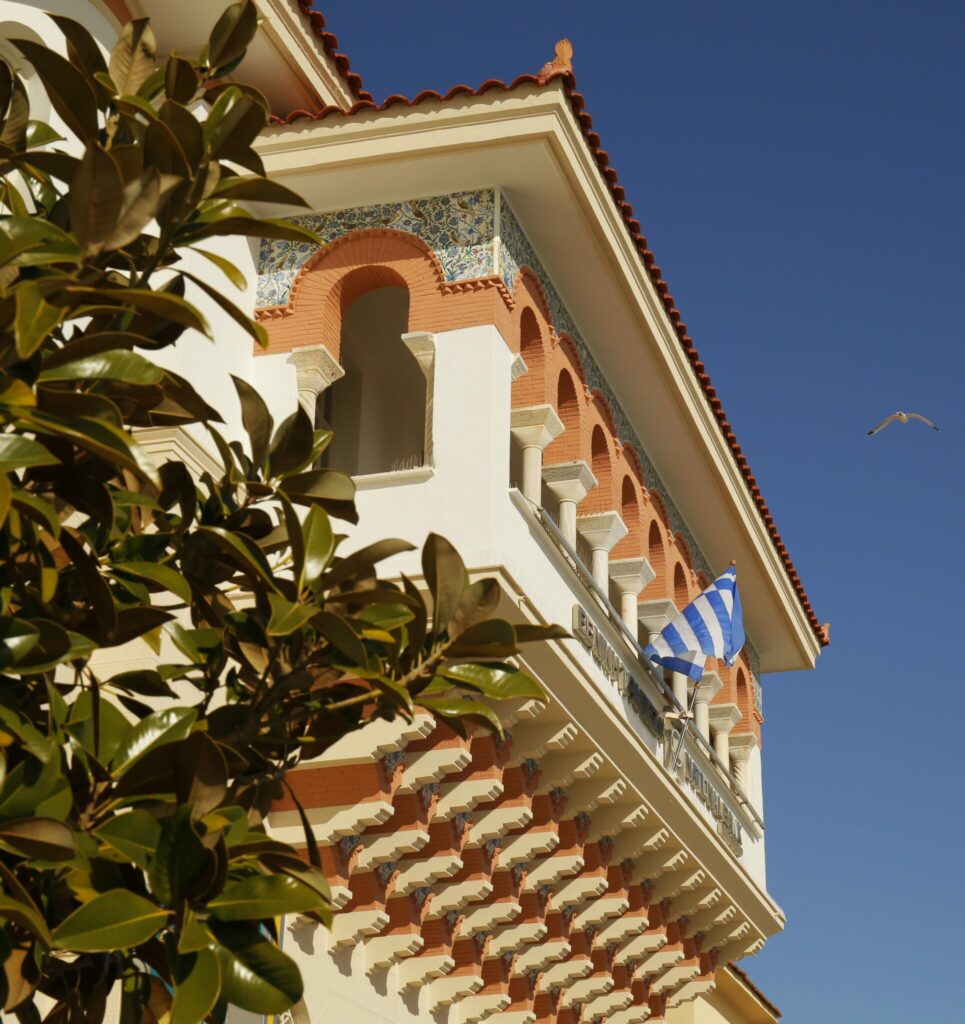
Bicarbonate water averaging 36 °C rolls out metres from Ionian lagoons where herons tiptoe. Paediatricians once sent rickets patients here; cardiologists now approve it for capillary stress. Between dips, sail to the Ambracian Gulf for raw oyster lunches.
Behind the virgin Frakto forest, a 47 °C sulphur spring anchors a hamlet open only May–October. Chronic skin disease patients bunk in stone cottages, waking to woodpecker percussion and baths that smell of warm matchsticks. Wild boar have right-of-way on the access road.
A fully accessible hydro-complex where 38-41 °C water mingles with underwater physiotherapy gear: jets, hoists, even aqua-spin bikes. Dancers, athletes and weekend warriors come for circulation boosts, then cool down in the Strymonas River. Espresso freddo is served pool-side — this is still Greece.
Not a bath but worth the sip: naturally carbonated table water bottled since 1912, gentle on digestion and famously endorsed by Aristotle Onassis. Locals pair it with ouzo, tourists tote cases home as liquid souvenir. Bubbles so fine they rival Franciacorta.
At the foot of Mt Oiti, a 33 °C spring rich in magnesium, calcium and dissolved carbon dioxide tackles migraines, cardiovascular stress and nerve fatigue. Hercules is said to have cooled his labours here; you’ll just feel like you could lift the Nemean lion. Between sessions, hike to the waterfall that vapourises into rainbow mist.
" ["post_title"]=> string(52) "Plunge In: The 38 Best Natural Spa Escapes in Greece" ["post_excerpt"]=> string(131) "From ancient baths to cliff-edge mud pools, an insider guide to the waters, myths, and retreats driving Greece’s wellness travel." ["post_status"]=> string(7) "publish" ["comment_status"]=> string(6) "closed" ["ping_status"]=> string(6) "closed" ["post_password"]=> string(0) "" ["post_name"]=> string(27) "best-natural-spas-in-greece" ["to_ping"]=> string(0) "" ["pinged"]=> string(0) "" ["post_modified"]=> string(19) "2025-07-25 13:28:06" ["post_modified_gmt"]=> string(19) "2025-07-25 10:28:06" ["post_content_filtered"]=> string(0) "" ["post_parent"]=> int(0) ["guid"]=> string(31) "https://www.travel.gr/?p=474846" ["menu_order"]=> int(0) ["post_type"]=> string(4) "post" ["post_mime_type"]=> string(0) "" ["comment_count"]=> string(1) "0" ["filter"]=> string(3) "raw" ["post_views"]=> string(4) "9914" } [181]=> object(WP_Post)#5322 (25) { ["ID"]=> int(473160) ["post_author"]=> string(2) "19" ["post_date"]=> string(19) "2025-07-14 11:54:04" ["post_date_gmt"]=> string(19) "2025-07-14 08:54:04" ["post_content"]=> string(14062) "Family travel is never just a holiday - it’s an exercise in logistics, lugging, and low-level suspense. Between the tote bags stuffed with snorkels and the inevitable hunt for a parking spot within stroller distance of the sand, parents know that a “day at the beach” can feel like a full-contact sport.
Happily, Greece offers a handful of strands where the planning all but melts away. Picture powder-pale dunes shaded by cedar, miniature coves cupped in golden light, and shallow turquoise water so clear even the most distracted toddler can spot fish darting at their toes.
From the Cyclades to the Peloponnese, these six impeccably serviced beaches turn family duty into something closer to bliss - proof that the right setting can make even the bulkiest floatie feel weightless.
Simos is famously among Greece’s most stunning beaches, and justifiably so. Leaving your car before the campsite, you’ll take a short stroll to reach perhaps the most exquisite sandy shore you've ever laid eyes on. The sand is soft, remarkably pale, and dotted with gentle dunes adorned with shrubs and cedar trees.
As soon as you lift your gaze from the sand, the crystalline turquoise waters beckon irresistibly, prompting an immediate dash for a refreshing plunge, leaving flip-flops and toys scattered behind. While umbrellas and sun loungers are available, the expansive beach provides plenty of space to set up your own gear and craft the ultimate sandcastles.
In the Cyclades, Agia Anna stands out as a prime family destination. Located approximately seven kilometers south of Naxos Town, this western-facing stretch boasts fine golden sand, crystal-clear shallow waters, and excellent amenities including beach bars and quaint tavernas nearby.
Access is effortless via a well-maintained road, and parking is more convenient than at many other beaches on the island. A mini-market located just behind the beach ensures you’ll never run out of essentials. For those without a car, local buses run frequently from Naxos Town, making it a stress-free choice for all ages, especially when sunset paints the sky.
On Rhodes’ northeastern coast lies Tsambika, an impressively wide beach with soft, golden sand and translucent, shallow waters. Situated around 27 kilometers from Rhodes Town and just 10 kilometers from Archangelos village, this beach offers comprehensive amenities, from beach bars and sun loungers to ample open space for laying towels.
Watersports options add extra excitement for families seeking a bit of adventure along the shoreline.
Just north of Parga town, approximately 10 kilometers away, Sarakiniko enchants beach-goers with its crystal-clear azure waters and with fine sand and small pebbles. The lush greenery encircling the area enhances its natural charm, extending even behind the beachfront accommodations. While the sand isn't ideal for elaborate castles, rocky areas at the edges provide excellent spots for exploration. Sun loungers and umbrellas are available, alongside ample space to comfortably use your personal beach gear.
A mere 10 kilometers northwest of Halkida, Alykes unfolds into a vast sandy expanse with delightfully warm and shallow waters, ideal for families with children. Easily accessible with convenient parking if you arrive early, this organized beach offers multiple beach bars serving food and refreshments. The nearby village also features cozy tavernas perfect for family meals post-swim. For those preferring their own setup, ample space is readily available.
Stoupa is one of mainland Greece’s cherished family beaches, particularly popular in Messinia. Known for its emerald-green waters and pristine sandy shore, the beach is thoroughly organized with beach bars ready to serve essential cocktails and ice-cold beers. Just behind the beach, the vibrant village of Stoupa offers numerous charming tavernas ideal for mealtime breaks, along with plenty of accommodation options. Located just seven kilometers from Kardamyli, easy access further enhances its appeal.
" ["post_title"]=> string(34) "6 Greek Beaches Ideal for Families" ["post_excerpt"]=> string(119) "Swim at these safe, stunning beaches with crystal-clear waters, wide stretches of sand, and shallow seas ideal for kids" ["post_status"]=> string(7) "publish" ["comment_status"]=> string(6) "closed" ["ping_status"]=> string(6) "closed" ["post_password"]=> string(0) "" ["post_name"]=> string(34) "6-greek-beaches-ideal-for-families" ["to_ping"]=> string(0) "" ["pinged"]=> string(0) "" ["post_modified"]=> string(19) "2025-07-17 09:36:51" ["post_modified_gmt"]=> string(19) "2025-07-17 06:36:51" ["post_content_filtered"]=> string(0) "" ["post_parent"]=> int(0) ["guid"]=> string(31) "https://www.travel.gr/?p=473160" ["menu_order"]=> int(0) ["post_type"]=> string(4) "post" ["post_mime_type"]=> string(0) "" ["comment_count"]=> string(1) "0" ["filter"]=> string(3) "raw" ["post_views"]=> string(4) "3658" } [182]=> object(WP_Post)#5320 (25) { ["ID"]=> int(471843) ["post_author"]=> string(2) "19" ["post_date"]=> string(19) "2025-07-10 13:09:25" ["post_date_gmt"]=> string(19) "2025-07-10 10:09:25" ["post_content"]=> string(17248) "The global star-chef on choosing Paros for his latest Greek outpost and the curiosity that still fuels him. Seated at Matsuhisa Paros, within the serene surrounds of the Avant Mar hotel, Nobu Matsuhisa radiates a quiet equilibrium.
At 75, the man who reshaped the global perception of Japanese cuisine speaks with the calm assurance of someone who’s devoted his life to what he loves. Yet behind his composed gaze still flickers the curiosity and fire that took him from the backstreets of Tokyo to the pinnacle of world gastronomy.
We begin by discussing how Japanese technique met Latin American flavor—and something original was born. “It was a natural evolution,” he explains. “When I lived in Peru, I began to understand that taste has no borders. My techniques were Japanese, but my heart started to beat with a Latin rhythm. The 'Nobu Style' didn’t come from planning—it came from emotion.”
Today, that style is a global reference point. But how does he maintain its authenticity in an industry that never stands still? “Authenticity isn’t a museum piece,” he says with a smile. “It’s a living thing. My style evolves, but always around three principles: simplicity, quality, and feeling. As long as I stay true to those, I can experiment without losing myself.”
If one dish captures his philosophy, Matsuhisa doesn’t hesitate. “The black cod with miso,” he says. “It’s simple in concept, but complex in execution. I wanted to offer Western diners a taste that moved them without intimidating them. The miso brings sweetness and umami from Japanese tradition, and the cooking technique gives the complexity today’s palate seeks. This dish is my culture, translated for the world.”
With over 50 restaurants across five continents, consistency is no small feat—but for Matsuhisa, it’s an art. “Each restaurant has the soul of its place,” he explains. “New York has a different energy than Mykonos. London isn’t Madrid. That variety is a strength, not a challenge. Consistency doesn’t come from sameness—it comes from principles.”
The greatest lesson of building a global brand? “That people are everything. You can have the best recipe, but if you don’t have a team that believes in what you’re doing, you have nothing. Philosophy spreads through collaboration, not instruction.”
Does he still dream of new destinations? “Africa fascinates me—the flavors, the aromas, the vitality. But more than where I’ll open next, what matters is whether I can keep inspiring my people to give their best.”
What does a young chef need most today? His answer is clear: “Patience. Everyone wants things fast, but technique and mastery take time. Technique can be taught, but the soul of a chef grows through unwavering dedication. When I see a young chef cooking with heart, I know they have a future.”
Matsuhisa speaks of Greece with deep affection. When asked about his relationship with the country, he gestures toward Tasos Ioannidis, his longtime business partner in all European Matsuhisa locations, who is also present.
“Tasos and his brother Nikolas brought me to Greece,” he says warmly. “Greece was my first contact with Europe. Here I learned that hospitality isn’t taught—it’s something you carry in your character. Greeks have a natural ability to make you feel like family.”
Paros, and particularly Naoussa, made a distinct impression on him. “Here, I find the authenticity I seek—the simplicity we all need,” he says. The Avant Mar hotel itself reflects that ethos. With just 38 rooms and suites designed in Cycladic style, white marble accents, and a 55-meter pool that seems to flow into the sea, the hotel blends contemporary luxury with traditional hospitality. The architecture honors the past while embracing the future—just like Matsuhisa’s cuisine.
What connects him to Greek cooking? “Respect for ingredients. In Japan, in Greece, in Peru—great food starts with great products. The Greek salad is the perfect example—few, honest ingredients that speak for themselves.” It’s no surprise that his Nobu-style take on the Greek salad has become one of the most beloved dishes in his restaurants worldwide.
Which Greek product would he want the whole world to know? “Feta. It’s unique—the texture, the saltiness, the way it combines with other flavors. Every time I use it, I discover something new.”
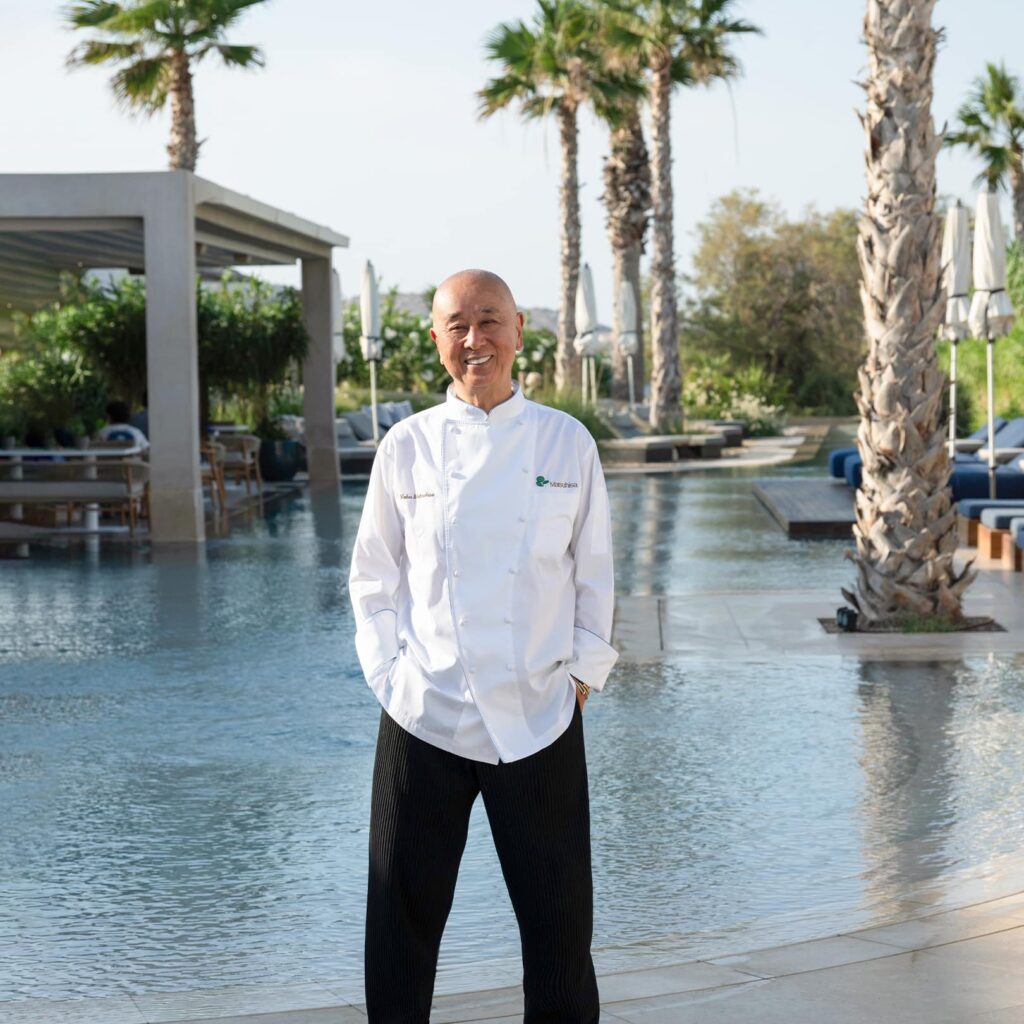
What does he see for the future of fine dining? “A return to essence. People are tired of performance. They want flavor. They want truth. Sustainability isn’t a trend—it’s a necessity. Restaurants must have a role in society—to educate, to inspire, to bring people together.” What keeps him creative? “Curiosity. Every new flavor, every new collaborator, every new place offers something. I don’t cook to survive. I cook to live.”
If he could speak to his 38-year-old self, the man opening the first Matsuhisa in Beverly Hills, what would he say? He pauses before answering: “Don’t be afraid. Failure is a teacher, not an enemy. And remember—success comes when you stop chasing it and start chasing excellence. Everything else follows naturally.”
As the interview winds down, Matsuhisa turns his gaze to the sea. “Cooking is a language. When you cook with love, everyone understands you—no matter where they’re from. That’s the magic—turning flavor into feeling, food into memory.”
At 75, Nobu Matsuhisa continues to travel, to create, and to inspire. And he does so with the same quiet humility that has always defined his work—rooted in tradition, open to the future. In the end, authenticity remains the most refined taste of all.
The next morning, as I prepare to leave Avant Mar, I spot him one last time in the hotel lobby. He’s about to head to Mykonos, where he’ll visit his namesake restaurant as part of the annual Nobu Festival. That same calm smile on his face, the same quiet reverence for the path he’s chosen.
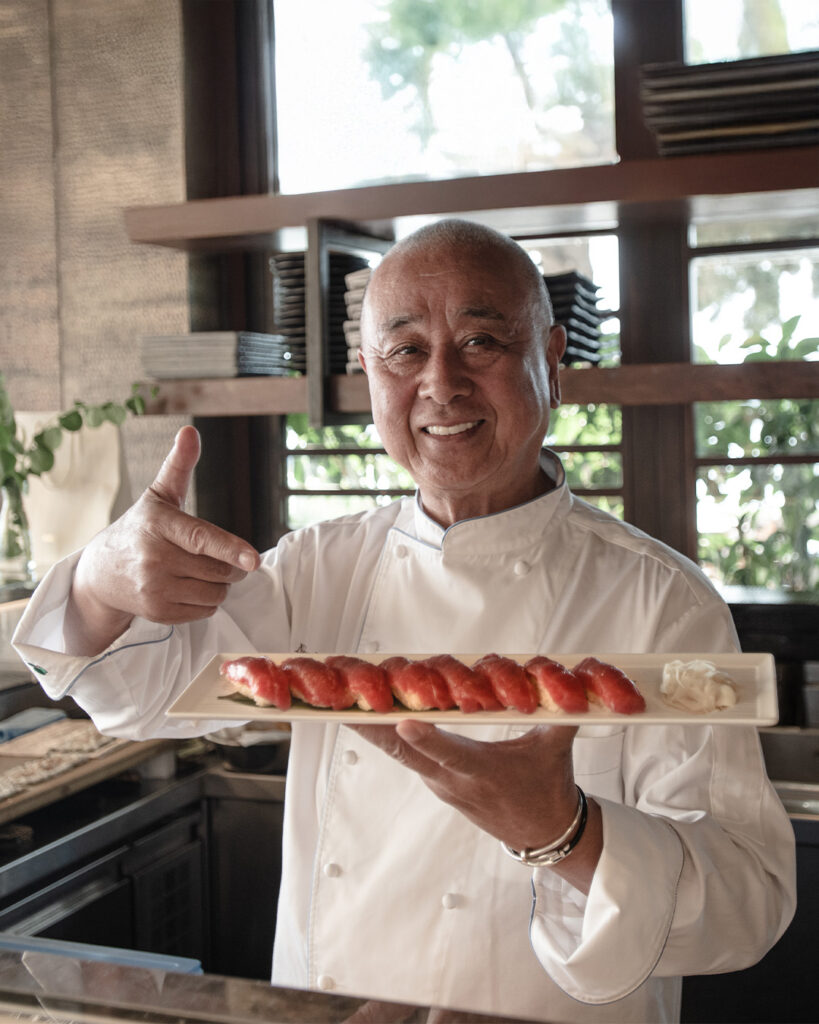
I watch him walk away and realize I’m looking at a man who has never stopped being a traveler—of taste, of thought. In every destination, every dish, every encounter, he’s chasing the next authentic moment. And maybe that’s his secret: never stopping, always learning, always tasting life as if for the very first time.
Read more:
Paros' Best Restaurants
Paros' Best Hotels
Nikos Tsepetis is a Cretan-born hotelier, design aficionado, and trendsetter whose aesthetic flair has transformed Chania’s hospitality landscape and earned admiration far beyond Greece.
Raised in a family rooted in seaside hospitality since the 1970s, he inherited not just a hotel but a deep connection to place, culture, and creativity.
His reinvention of the beloved Ammos Hotel on the beach outside Chania marked a turning point in the island’s design narrative. What began as a family-run property became a benchmark of soulful, style-driven hospitality, blending curated interiors, joyful details, and a lived-in sense of ease. Ever evolving, Ammos remains his flagship—a place where daily rituals, impeccable design, and personal guest connection coexist effortlessly.
Tsepetis' ventures also extend into food with Red Jane Bakery, where design meets local flavor and storytelling. His projects expresses his belief that beauty lies in the details—and that design should be both intuitive and emotional.
The hotelier has been credited with quietly reshaping the way Greek boutique hotels are imagined, bringing a new level of depth and international relevance to the Cretan experience. His influence is felt across travel, design, and culture, both at home and abroad.
As he says, “I never wanted to create perfect places—I wanted to create places with soul. Somewhere between a dream and a memory.”
Now, as someone who knows Chania not only as a native but as a keen observer of its shifting moods, rhythms, and hidden corners, Nikos Tsepetis shares his personal guide to the city he calls home—offering thoughtful, stylish, and heartfelt recommendations for travelers who want to experience Chania beyond the obvious.
Visit the well known ceramist Manousos Chalkiadakis, at his home and studio in the small traditional village of Paidochori (about 35 minute drive from ammos). Then continue on to the tiny Venetian village of Maza. In the village square have a meal at a small kafeneion and taverna (the owner can also unlock the door to a small chapel for you to see magnificent 13th century frescoes).
Another great idea is to drive to Sougia village (90 minutes from ammos) and take a one hour walk to Ancient Lissos. You swim there and then go back to Sougia either walking again or taking a taxi boat (there are many). You can then either eat at Sougia village at Polifimos taverna or drive to go and eat at nearby inland Agriles village at Old Petrol Station.
Great beaches can be found near Paleochora village (90 minutes from Ammos). You either go to Anidri beach and then eat at Sto Scholio taverna in Anidri village (go early and never on Sunday) or you can go to Krios (the second small cove, the one at the far end, which has the most amazing waters) and then eat at taverna Grammenos at Grammenos beach. Again Sundays might be too busy.
Drive to Therisso village (30 minutes' drive through the most amazing gorge) and then continue to Drakona village and sample the most exciting traditional cuisine at Dounias slow food taverna. On the way back drive through Zourva, Meskla and then back to Chania.
Nicest gorge is Aradena gorge at Sfakia region (90 minutes from Ammos to Chora Sfakion and then another 20 minutes to reach the beginning of the gorge). As soon as the three hour hike ends, one is found at magnificent Marmara beach. After your swim, eat at Chrisostomos the prettiest taverna on the south coast.
Near Kissamos another great place of great archaelogical value is ancient Polirinia (45 minutes from Ammos). Go there mabe after a swim at Falasarna beach and walk around the village, see the ruins and stay for dinner at Acropolis taverna (to enjoy stunning views). It's best to call them before you go as they have only a few tables (Tel: 6949 476239).
Favorite Hotels – Ammos, Casa Delfino Hotel & Spa (for its old world charm), and Aisha Hotel, for its vintage aesthetics.
Swim at Kedrodassos and Obrosgiallos (Apokoronas).
Eat-with-reckless-abandon at Almyriki taverna in Stavros.
Bars/cafés for sunset mischief: Thealassa for dramatic sunsets.
Chania, through the eyes of Tsepetis, therefore comes into existence as a city of gestures, textures, stories and visionary revelations. This guide is his way of seeing the glorious Cretan city, so slow down, look closer, and let the city unfold.
" ["post_title"]=> string(57) "A Sense of Place: Hotelier Nikos Tsepetis’ Chania Edit" ["post_excerpt"]=> string(189) "Nikos Tsepetis is a Cretan-born hotelier, design aficionado, and trendsetter whose aesthetic flair has transformed Chania’s hospitality landscape and earned admiration far beyond Greece." ["post_status"]=> string(7) "publish" ["comment_status"]=> string(6) "closed" ["ping_status"]=> string(6) "closed" ["post_password"]=> string(0) "" ["post_name"]=> string(21) "chania-insiders-guide" ["to_ping"]=> string(0) "" ["pinged"]=> string(0) "" ["post_modified"]=> string(19) "2025-07-17 09:38:22" ["post_modified_gmt"]=> string(19) "2025-07-17 06:38:22" ["post_content_filtered"]=> string(0) "" ["post_parent"]=> int(0) ["guid"]=> string(31) "https://www.travel.gr/?p=472297" ["menu_order"]=> int(0) ["post_type"]=> string(4) "post" ["post_mime_type"]=> string(0) "" ["comment_count"]=> string(1) "0" ["filter"]=> string(3) "raw" ["post_views"]=> string(4) "6353" } [184]=> object(WP_Post)#5318 (25) { ["ID"]=> int(471919) ["post_author"]=> string(2) "19" ["post_date"]=> string(19) "2025-07-08 15:16:57" ["post_date_gmt"]=> string(19) "2025-07-08 12:16:57" ["post_content"]=> string(24329) "Some trips you plan. Others sneak up on you after hearing about caramelized onion fava or a friend who swears he had the best shrimp pasta of his life in Syros. That’s often how the most memorable road trips begin — with a craving, a spark of curiosity, and a wide-open appetite for discovery.
This time, the road led to Syros, a Cycladic island with a dual soul: Catholic and Orthodox, cosmopolitan yet unmistakably Greek. Between neoclassical mansions and seaside tavernas, it’s the kind of place where driving and savoring go hand in hand — where distances are short, but pleasures are long.
We set off from Athens, choosing to drive so we could travel on our own terms. No schedules, no stress — just the ease of rolling onto the ferry and setting off with everything we needed from the get-go. The Avis car we rented gave us the flexibility to explore freely, to take detours for a dip or a bite, and to cruise the island’s winding roads with comfort and ease. In Syros, a road trip doesn’t just get you from A to B, it transports you to memorable experiences, full of sea air, seafood, and spontaneous stops along the way.
Ermoupoli greets you amphitheatrically draped across the hillsides, with terracotta rooftops glinting beneath the sun and its two iconic hills—Anastasis and Ano Syros—rising like sentinels above the bay. Symmetrical neoclassical mansions in pale hues, bell towers, and Orthodox and Catholic churches coexist in quiet harmony, while the Apollo Theater—a miniature La Scala tucked into the heart of town—offers a brush with the city’s cultural past. At the harbor, the grand Town Hall by Ernst Ziller welcomes newcomers with a first glimpse of Syros’ noble, urban charm.
And to fuel us in the perfect way, we made some excellent food stops that deliciously enhanced our experience and understanding of this magnificent island. What follows is our guide to Syros' best places to eat.
First swim in the deep blue Aegean? Galissas is the natural choice—golden sands, clear waters, easy access, and a fully serviced beach. Right on the shore sits Iliovasilema, run by chef-owner Kostas Bougiouris for over three decades, where Syros’ culinary identity comes alive. Think fennel pie and loukoumades with San Michali cheese, orzo with veal cheeks, a velvet-soft seafood hünkâr beğendi with sea urchin, and bitter chocolate ice cream for the finish. Deeply rooted yet ever-evolving.
Galissas Beach
After an afternoon among Ermoupoli’s neoclassical landmarks, we made our way to the rooftop of the Argini Hotel—a masterful conversion of a 19th-century mansion. At Elexis, the hotel’s refined restaurant, the sunset glowed across Ano Syros as we sampled emotionally honest plates: smoked eggplant salad with eel, citrusy artichokes with yuzu hollandaise, and grilled dentex with lime. The pairing? Anatolikos orange wine. We ended with a pavlova of basil yogurt, red fruit, and handmade ice cream. Modern Syros, exquisitely framed.
Apollonos 11–13, Ermoupoli
Up on the hill above Finikas Bay, Meltemi is what a summer taverna should be: breezy, welcoming, and full of local flavor. We cooled off after swimming in Agathopes with zucchini and tomato fritters, grilled sausages with fennel, sizzling saganaki with San Michali, and clay-pot veal with eggplant. Vegetables come from the family garden, the food is served generously, and everything lands on the table with warmth and humility.
Agathopes, Poseidonia
Sun-soaked and still salty from the sea, we found ourselves in Kini at this beloved beachfront taverna. Between locals and in-the-know visitors, we dove into a green shrimp salad with lime dressing, grilled sardines and prawns with house-made cocktail sauce, and a rich, ocean-scented shrimp pasta. The crustless zucchini pie? Legendary. We toasted the sunset with ouzo, then closed the meal with homemade walnut cake and ekmek, already plotting our return.
Kini
One final meal before departure, and we trusted the locals. Ambix, across from the port, is where you come for proper Italian—homemade pasta, perfect pizza, and a charismatic host. Chef Roberto Brasola fell for Syros and stayed, turning out spinach ravioli, Calabrese spaghetti with anchovy and chili, and tortelli with prosciutto ragu and walnut sauce. The wood-fired pizzas—Sistina, Rugantina, and more—might just make you miss your ferry. And you won’t regret it.
Akti Papagou 26, Ermoupoli
We left Syros with more than memories. From loukoumi boxes by Denaxas, Kanakaris, and Korre to lemon and chocolate halvadopites, the island’s sweetness came home with us. We stocked up on thyme and sage honeys by Melisyros, sun-dried fennel, capers, fig jam, and “glykopantrema”—a dreamy marriage of nougat and dried figs. And of course, aged San Michali cheese and a bottle of Ousyra rosé, made from Fokiano grapes, to relive the elegance of Syros with every sip.
Ano Syros
Slung like an open-armed peninsula between the Aegean and Ionian seas, the Peloponnese unspools a seemingly endless ribbon of shore: scalloped coves where cicadas provide the only soundtrack, hushed fishing hamlets dozing in the midday glare, and beaches that oscillate from sugar-fine crescents to cinematic sweeps of marble-flecked shingle. It is a coastline brushed by myth - Helen sailed from here, Pausanias wandered here - and yet, even in high summer, you can still claim a patch of sand that feels entirely your own.
But abundance has its perils: confronted with so much raw, sun-struck beauty, where does one cast a towel? Below, a considered shortlist of the Peloponnese’s most transportive strands - each chosen for a singular alchemy of light, landscape and legend - so you can spend less time scrolling and more time drifting in that pellucid blue.
The name might not do it justice, but Voidokilia is one of the most breathtaking beaches in Greece. Shaped like a perfect horseshoe—almost a full circle—it’s as if drawn by a divine compass. Geologists marvel at the two symmetrical rocks that guard the mouth of the bay, and above it looms the steep bluff of Palaiokastro, the ruins of a medieval castle clinging to its summit.
More than a pretty face, Voidokilia is a dynamic, living ecosystem shaped by sea and wind. Its sandy arc is studded with high white dunes (Ammophila arenaria) and forms part of the wider protected wetland complex that includes Gialova Lagoon, Navarino Bay, and Sfakteria Island—key habitats recognized by the EU’s Natura 2000 network. The area is also an archaeological site.
Just north of Voidokilia hides Glossa, a tiny pebbled cove ringed by rocks and dense vegetation—ideal for those craving peace and privacy.
Close to Gialova lies Divari, a long, sandy coast framed by salt cedars and shallow, glassy waters. Its northern edge borders the wetland, while the western tip nearly touches Sfakteria Island. This is the secondary opening of Navarino Bay to the Ionian—too shallow for ships, but perfect for a tranquil swim. The beach offers multiple access points and parking, or you can hop on a boat cruise around the bay that drops you off here for a cooling dip.
This wide, golden-sand beach faces the open Ionian and is fringed by coves and small headlands. Sea turtles often nest here. A portion of the beach is organized, and nearby lies the famous Costa Navarino resort. Its Dunes Beach has been awarded a Blue Flag.
Just west of Finikounda, Mavrovouni is one of Messinia’s longest and most beautiful sandy beaches. Organized in spots with beach bars and water sports, it’s also home to seafront campsites.
A 4-kilometer stretch of fine golden sand begins at the base of Koroni’s Venetian castle. The eastern section is known as Zaga, while the western extension is called Memi. Both offer organized areas with sunbeds and umbrellas.
Locals and visitors alike enjoy Kalamata’s expansive urban beach year-round. With a long promenade lined with cafés, beach bars, tavernas, and hotels, it’s a city beach with full amenities—including water sports and a summer fairground. All this beneath the towering presence of Mount Taygetos.
Awarded the Blue Flag, Bouka is one of the region’s longest and most accessible beaches. Close to Messini and Kalamata, it offers everything from beach bars and umbrellas to quiet, undeveloped corners. The water is beautifully clear, the sand fine, and there are facilities for beach volleyball, football, and water sports.
The beloved beach of Ritsa is all pebbles and deep sapphire waters, with dramatic views of the Taygetos mountains. It’s organized in parts, shaded by tamarisks and olives, and offers canoe and pedal boat rentals. There are tavernas nearby and ample parking. Swim with a mask to explore the underwater world. Just offshore lies the wooded islet of Meropi—reachable for strong swimmers.
A lively seaside village built for summer, Stoupa is set between the mountains and the sea, just 45 km from Kalamata. Often dubbed the “Miami of Mani,” it draws thousands with its golden beach, organized facilities, and bustling tavernas, cafés, and shops.
Next to Stoupa, Kalogria is one of the most iconic beaches in the region, with powdery white sand and pool-like, emerald waters. It’s fully organized with diving schools, water sports, tavernas, beach bars, and volleyball courts. Author Nikos Kazantzakis lived here in 1917, alongside the real-life Zorbas who inspired his novel. Local legend says Zorbas built a wooden platform in the sea and took shelter in a cave at the beach’s edge.
Just outside Gytheio, Mavrovouni is a vast, golden beach that’s popular but never feels overcrowded. A portion is organized with beach bars and tavernas, and it’s a favorite for windsurfing and water sports.
One kilometer north of Gytheio, this enormous beach is a local favorite—ideal for families, with plenty of space and calm seas.
The small port village of Limeni is one of the most photogenic spots in the Laconian Mani. Crystal-clear waters lap at stone-built houses and tavernas serving fresh fish and seafood. It’s the maritime gateway to Areopoli and a summer magnet for travelers drawn to its unspoiled charm and graceful Maniot architecture.
This sandy beach is marked by an iconic shipwreck—the rusted hulk of the Dimitrios, a cargo ship that ran aground here in 1981 after being swept from the port during a storm. Now it stands abandoned in the surf, a surreal monument to time and tide.
A rare blend of old-world charm and modern comforts, Gerolimenas lines its turquoise cove with stone guesthouses, seafood tavernas, and a scattering of yachts. The water is so clear it glows, and the light here feels sharper, purer. From above, the village looks almost Sicilian—no surprise, as it lies at the same latitude. The sunrise over the cliffs of Cape Grosso is unforgettable.
Famed for its electric aquamarine waters and vast sands, Simos is one of the most stunning beaches in all of Greece. Tiny shells and red coral tint the shallows pink. A narrow strip of sand separates two bays—Sarakiniko (the larger beach) and Fragos (the smaller). Towering dunes and a cedar forest complete the surreal, desert-meets-sea atmosphere. The beach may be named after a Kalymnian diver who drowned here—or possibly a solitary hermit who once lived nearby.
Just 4 kilometers from Nafplio, Karathona is a favorite among locals. It features Blue Flag waters, soft sand and pebbles, tamarisks and palms. Fully organized and family-friendly, it’s also popular with walkers doing the scenic Arvanitia loop.
Seven kilometers south of Leonidio, the fishing hamlet of Sambatiki is postcard-perfect, with a small harbor and transparent waters over white pebbles. A handful of seaside tavernas and cafés complete the low-key atmosphere.
Further south lies Fokianos, a hidden gem reached via a winding 26 km road through Tsakonian highlands. Nestled in a secluded bay, it has bright white pebbles, pristine waters, and minimal development—just a few tavernas and umbrellas set out by the sea.
Coves with mesmerizing green-blue water surround the little chapel of Agios Aimilianos, perched just above the sea. Best accessed by boat, the area is magical at sunset, with views stretching to the island of Spetses.
Popular among locals and mainland Greeks, Kourouta features a wide, sandy expanse with organized areas, beach bars, and a bustling promenade lined with cafés and restaurants. It's a perfect place to stay for the sunset, with views toward Zakynthos on the horizon.
The northern coastline from Lechaio to Kiato and Xylokastro is dotted with beach towns that first flourished as summer retreats in decades past and have since grown into lively resorts. Xylokastro stands out with its clean waters, beach bars, seaside cafés, and broad promenade complete with a bike path.
At the edge of town lies the Pefkias, a rare coastal pine wood ideal for shaded walks and workouts. Its adjacent beach, partially organized and Blue Flag-awarded, is a local gem. Within the forest stands the storied villa of Angelos Sikelianos and Eva Palmer, built in 1916—an elegant mansion blending classical, Byzantine, and Venetian elements. It once hosted some of Greece’s literary greats, including Palamas, Kazantzakis, and Karyotakis.
" ["post_title"]=> string(62) "Swimming the Enchanting Peloponnesian Coastline's Best Beaches" ["post_excerpt"]=> string(108) "Discover bays and inlets, forested mountains that tumble into the sea, capes and coastlines of every variety" ["post_status"]=> string(7) "publish" ["comment_status"]=> string(6) "closed" ["ping_status"]=> string(6) "closed" ["post_password"]=> string(0) "" ["post_name"]=> string(31) "best-beaches-of-the-peloponnese" ["to_ping"]=> string(0) "" ["pinged"]=> string(0) "" ["post_modified"]=> string(19) "2025-07-07 13:47:58" ["post_modified_gmt"]=> string(19) "2025-07-07 10:47:58" ["post_content_filtered"]=> string(0) "" ["post_parent"]=> int(0) ["guid"]=> string(31) "https://www.travel.gr/?p=471359" ["menu_order"]=> int(0) ["post_type"]=> string(4) "post" ["post_mime_type"]=> string(0) "" ["comment_count"]=> string(1) "0" ["filter"]=> string(3) "raw" ["post_views"]=> string(4) "5847" } [186]=> object(WP_Post)#5316 (25) { ["ID"]=> int(470895) ["post_author"]=> string(2) "19" ["post_date"]=> string(19) "2025-07-04 05:36:06" ["post_date_gmt"]=> string(19) "2025-07-04 02:36:06" ["post_content"]=> string(28909) "The ferry whistles as it enters the harbor, and your first glimpse of island life comes to life—people moving swiftly between parked cars, traditional stores with sun-blistered postcards and tourists in flip flops and beach bags flowing along the streets. These places offer us an idyllic escape to sun-drenched Aegean mornings, the first dive into crystal-clear waters, towels spread on golden sands, and solitary evenings on secluded beaches of the Cyclades or the Dodecanese, alone with nature.
Yet, the Greek islands are far more than this. Each one brims with unique identity and rich history. Architectural gems rooted deeply in the past, fortresses perched above the sea, or monasteries everyone dreams of visiting. Maze-like alleys that intertwine, inviting exploration.
In the Choras - the main settlements - of Greece’s islands beats the genuine pulse of local culture. Despite tourism, many have maintained their authentic charm, making islands like Patmos, Astypalea, or Kea irresistibly enchanting.
A journey through some of Greece’s most captivating Choras offers an idyllic escape, immersing you deeply into the authentic essence of the Cyclades, Dodecanese, and Sporades. Here, history is tangible—from ancient days through medieval times to today.
The breathtakingly beautiful Chora of Patmos owes its very existence to the iconic Monastery of Saint John the Theologian, dramatically perched atop the island, seemingly suspended above the sea.
Steeped in Orthodox tradition, Patmos, famously known as the "Island of Revelation," leaves a profound impression on visitors, compelling many to return repeatedly. While continuously evolving due to tourism, its main settlement retains an irresistible blend of historic charm and contemporary luxury, with quaint houses giving way to elegant villas overlooking the azure Aegean.
Wandering through Hora's narrow lanes feels like stepping into a fairytale or traveling back through time. En route to the monastery, you'll pass magnificent mansions such as those of Vardikos, Paleologos, and the Fondis family (known locally as the “House of Lions”), as well as the homes of Valvis-Koutsanellos and Nikolaidis. The picturesque Agia Levia square, truly the heart of this cosmopolitan and historical village, features the venerable Simantiris mansion and the grand Malandrakis estate.
The Monastery itself exudes its own magic. Founded by Saint Christodoulos around 1090 AD, the structure saw significant expansion during Patmos’s 16th and 17th-century maritime prosperity. Highlights include numerous chapels and the famous Katholikon, filled with exquisite Christian art and carved wooden masterpieces. Its museum and renowned library, filled with rare manuscripts, are equally compelling but require special access.
Then, there is the Cave of Revelation—the sacred spot where, according to tradition, John received divine visions in 95 AD. Located between the port and Hora, this revered site draws thousands annually. Just above sits the historic Patmiada School, established in 1713, significantly contributing to Patmos's cultural legacy.
For nature enthusiasts, Alonnisos is a haven of lush pine forests, warm, welcoming coves, and breathtaking hiking trails. The charming town of Patitiri, gateway to the island, offers access to the expansive National Marine Park of Alonnisos, Europe's largest at 2,200 square kilometers.
Upon arrival at Patitiri, you’ll notice the modernized marina—a stark contrast to the romantic atmosphere elsewhere on the island, shaped largely by reconstruction following the devastating 1965 earthquake. Nevertheless, the emerald bay nearby is utterly dreamy, perfect for quick dips near the town center.
Most visitors immediately tour the Marine Park, a spectacular haven for marine life and dolphins frequently seen approaching boats—an unforgettable experience, especially for families. Stop by the MoM Information Center dedicated to the Mediterranean Monk Seal, deepening your appreciation of the island’s ecological significance.
Yet, the true jewel of Alonnisos is undoubtedly the Old Village (Palio Horio), perched at its highest point—a mesmerizing medieval citadel. Despite changes over time, especially since 1965, it remains a vibrant, living museum of traditional Sporades life.
Wander its labyrinthine cobbled streets, climb mysterious stairways, browse charming shops, and admire flower-filled courtyards. Don’t miss the exquisite 17th-century Church of Christ.
Beloved by campers, nightlife enthusiasts, and free spirits, Antiparos retains its bohemian charm while evolving into a more polished destination. Just a five-minute ferry ride from Paros, Antiparos’s quaint Chora is compact but rich in character.
Its main street, lined with fishing boats on one side and traditional tavernas on the other, leads to an enchanting pedestrian walkway—one of Greece’s loveliest island paths. Surrounding beaches such as Psaraliki and Kaloudia offer relaxation, while venturing further rewards with more secluded coves.
Visit the 15th-century Venetian Castle in late afternoon for comfort and spectacular sunset views. History lovers will enjoy the remaining tower foundations and surrounding ruins. Don’t skip the charming Arodo bookstore, well-stocked with contemporary and classic reads.
Astypalea’s stunning Chora, rising majestically between Pera Gialos and Livadi, resembles a butterfly in the Aegean. Its picturesque windmills—now home to a multilingual library and information center—greet visitors in the main square.
Here, whitewashed houses ascend steep slopes, intersected by winding paths and hidden courtyards, crowned by the imposing Venetian Querini Castle. Visit at sunset for unforgettable vistas. Nearby, the Archaeological Museum at Pera Gialos reveals treasures dating back to prehistoric times. Enjoy panoramic views from Panagia Portaitissa Church and vibrant nightlife beneath the illuminated castle walls.
Closest of the Cyclades to Attica, Kea is ideal for short escapes. A mere hour from Lavrio, it captivates with beautiful beaches, scenic hiking trails, and distinguished architecture. The capital, Ioulida, exudes aristocratic charm with its winding alleys, flower-filled balconies, and historic landmarks.
Start at the grand Ziller-designed Town Hall (1902), then explore neighborhoods reflecting past social hierarchies: elegant mansions in Kastro, modest dwellings in Katohori and Mesada, and simpler homes in Panohori, reflecting agricultural roots.
Visit the Archaeological Museum to delve deeper into Kea’s rich past, admire remnants of ancient walls and the Venetian Castle (built in 1210), and pay respects at Agios Charalambos Church. The atelier and home of celebrated artist Alekos Fassianos, now open to visitors, further enriches your exploration with his colorful artwork decorating the town’s covered arcades.
Read more:
Kea's Insider's Guide
The Island Hopping Series: Naxos-Paros-Antiparos
Astypalea: The Overlooked Jewel
Alonissos: The Quiet Isle
Patmos’ Timeless Appeal Explained
Picture Crete as a glossy coffee-table tome - only lighter than air and alive with movement - created for the Region of Crete. That is the promise of Travel.gr’s freshly launched Interactive Map of Crete, a digital tour-de-force conceived and executed by a posse of photographers, videographers, editors, art directors and web developers who chased every sunrise and lingered past every dusk.
Their labor of love distills the island’s Minoan palaces, Venetian harbors, cliff-top chapels and barefoot-empty beaches into pin-sharp stills and looped micro-films that load in a heartbeat. Tap, zoom and wander through emerald gorges or cobalt coves; each hotspot is annotated with insider notes that feel whispered rather than written. Designed for phones yet gorgeous on desktops, this map is your always-on boarding pass to the most beguiling corner of Greece.
" ["post_title"]=> string(69) "Crete, Unlocked: An Interactive Map That Redefines Island Exploration" ["post_excerpt"]=> string(137) "Original photography, bite-size films and on-the-ground intel fuse in an atlas that turns Greece’s largest island into a living gallery" ["post_status"]=> string(7) "publish" ["comment_status"]=> string(6) "closed" ["ping_status"]=> string(6) "closed" ["post_password"]=> string(0) "" ["post_name"]=> string(24) "interactive-map-of-crete" ["to_ping"]=> string(0) "" ["pinged"]=> string(0) "" ["post_modified"]=> string(19) "2025-07-07 16:40:26" ["post_modified_gmt"]=> string(19) "2025-07-07 13:40:26" ["post_content_filtered"]=> string(0) "" ["post_parent"]=> int(0) ["guid"]=> string(31) "https://www.travel.gr/?p=471417" ["menu_order"]=> int(0) ["post_type"]=> string(4) "post" ["post_mime_type"]=> string(0) "" ["comment_count"]=> string(1) "0" ["filter"]=> string(3) "raw" ["post_views"]=> string(4) "3753" } [188]=> object(WP_Post)#5312 (25) { ["ID"]=> int(208665) ["post_author"]=> string(2) "17" ["post_date"]=> string(19) "2025-06-25 15:31:52" ["post_date_gmt"]=> string(19) "2025-06-25 12:31:52" ["post_content"]=> string(24043) "Andros plays the great subversive of the Cyclades. One hour out of Rafina the ferry door yawns open not onto the expected dust-white moonscape, but onto a brilliant jigsaw of pine-stitched mountains, citrus valleys and waterfalls that feel borrowed from Epirus. Springs spill into stone fountains in every village square, carving ravines that tumble all the way to the sea - and it’s that constant duet of fresh water and Aegean salt that gives the island its improbable lushness.
The shoreline, meanwhile, refuses to be summarized. On the windward west, dunes unravel into golden runways built for kite-sails and long, languorous sundowners; a few coves later, cliffs fold inward to hide pebble amphitheaters where the only soundtrack is cicadas ricocheting off marble. The north offers a cinematic switchback of turquoise inlets - some lorded over by Venetian ruins, others littered with photogenic wrecks - while the east softens into river-lipped crescents where plane trees lean so close to the tide you can swap beach towel for hammock without moving a step.
What follows is a field guide to strands, organized by route, that trace this unruly coast: from bar-serviced family playgrounds to unmarked sweeps you’ll reach only after a dirt-road pilgrimage - or, better yet, by hiring the first caique captain who claims to know a shortcut. Pack reef shoes, patience, and more curiosity than plans; Andros rewards the traveler who chases its waterlines to the very last bend.
To the northwest of Gavrio, a large enclosed bay with sand, emerald and blue waters and is lined with tamarisks. The beach is not organized and is easily accessible by an asphalt road (four kilometers from Gavrio). Snorkellers favor Fellos and the two other small beaches nearby - Selki and Kourtali, which are challenging to access from the mainland. There is a traditional taverna nearby.
Just two kilometers from Gavrio, Andros' main port, this is a long beach with fine golden sand, beach bars and tavernas. A large part of it is organized, but it’s also exposed to the wind. It is located on the main road leading from Gavrio to Batsi.
One of the most famous beaches of the island, it is sheltered, with shallow waters and sandy sand, just below the main road from Gavrio to Batsi. There are umbrellas, sunbeds and a beach bar. It is family-friendly, with water sports, and is relatively sheltered. It is three kilometers from Gavrio.
An isolated beach north of Fellos, with turquoise waters. It is not organized and you will reach it by driving along a non-challenging dirt road. It is worth lingering here to watch the sunset in the direction of the Capo D’oro. It is eight kilometers from Gavrio.
Next to Hrysi Ammos, with a Surf Club, beach bar, umbrellas and sunbeds. It has sand and crystal clear waters.
A long and sandy beach in the northwest side, divided in the middle by a rock. It is not organized and is ideal for those who enjoy seclusion, and for those who love snorkelling. Further north there is Pyrgos, a smaller, sheltered and sandy beach, named after the ruined Venetian tower on the cliff. The two beaches are about 10 kilometers from Gavrio, to the northwest.
Looking at it from above, you’ll see one of the island’s prettiest beaches, with crystal-clear waters and impressive cliffs. It is organized in one area and has a taverna, but there is also plenty of free, open space. The beach is located on the northwest coastline of Andros, 17 kilometers from Gavrio and can be accessed by an asphalt road and a passable dirt road. Visiting it on windy days is not recommended.
A lovely beach on the northeast side of the island that’s easily accessible, with coarse pebbles and azure, crystalline waters. There is a beach bar and umbrellas and sunbeds. It is not sheltered from the wind.
This beautiful sandy beach is near the village of Arni, on the northeastern side of the island. It became famous thanks to the wreck of a Turkish ship on its rocks, one of two historical; treasures to explore here; the other is an underwater shipwreck from 1920 that’s ideal for snorkellers. It is reachable via a dirt road.
Sandy and easy to reach, with small dunes and a large gorge.
A beautiful fine pebbles and sand beach in the Stavropeda area, with a beach bar and plenty of open space. It is surrounded by impressive rocks and a typical Cycladic landscape with terraces, paddocks and the picturesque little chapel of Agios Ioannis. It is easily accessible via an asphalt road and is 14 kilometers from Hora. Don't visit when it is windy, unless you’d like to be sandblasted.
In the area that was once the island’s ancient capital and very close to the archaeological site, it has large stones and clear waters, and diving into the deep you can admire the impressive ancient breakwater. It can be accessed via a path that starts in Kato Paleopolis.
Located in Stavropeda, this is a beautiful enclosed cove with green waters and a beach bar. It is located very close to Halkolimiona and you will reach it via a dirt road.
The organized family beach on Batsi’s coastal road is sandy, with umbrellas and sunbeds, changing cabins and showers. In the non-organised part of the beach, there are tamarisks for shade. Around the beach, there are cafes and tavernas. It is sheltered from the wind.
A small sandy beach in the bay of Batsi that’s especially popular with families because it has shallow waters and is sheltered from the winds, It is organized, with a beach bar and a nice view of Batsi and is easily accessible on foot or by car.
A small sandy beach near Korthi is a major attraction for Instagrammers - you will rarely find it uncrowded. It is most well known for a towering, 15-meter-high monolith that rises from the sea. Its name, which means “old woman’s leap”, is said to relate to the story of a local old woman who helped the Turks to invade the castle of Faneromeni; when she realized the consequences of her actions, she leapt off the hill above the beach and landed into the sea as a giant rock. To find the beach, follow signs in Korthi and park to continue on foot, walking alongside the coast. The final descent is by a small path. You can also come on foot, starting from Agia Ekaterini in Ormos (around 15 minutes’ hike).
A long and sandy beach that’s ideal for windsurfing when the powerful meltemi winds pick up.
Tucked beneath a charming chapel and sheltered from northerly winds, Agia Ekaterini (also called Vitzi) has calm, shallow waters—a family-friendly gem. It’s compact and intimate, with a taverna and bar nestled among greenery overlooking the bay. Ideal for a relaxed beach day with easy parking.
A deep and impressive bay below Sineti village, with pebbles and deep cobalt waters, as well as a large cave that can be reached after a short swim. The Dipotamata Gorge also ends here. It is not organized and can be accessed via an asphalt road, around 16 kilometers from Korthi.
You’re likely to meet its permanent residents, the ducks and swans that live along the river that flows onto the beach. It has deep waters and a view of the Tourlitis lighthouse, and at the far end, there is a beach bar with umbrellas and sunbeds. Nearby you’ll find a tavern known for its meat specialities. Please note that when the north winds blow large tidal waves are formed and can be life-threateningly dangerous. To get there you have to go down the steps from Kairi Square or you can drive.
This long, wide sandy beach to the east of Hora is especially favored by families because of its shallow waters and because it is sheltered and easily reached along a boardwalk. There are several cafes, umbrellas and sun loungers and tavernas around has a nice view of Agia Thalassini, the square with the Vanished Sailor and the lighthouse of Tourlitis.
A pebble beach with clear waters, located next to the asphalt road, unlike Piso Gialia, which you’ll need to drive to and then walk up and down numerous steps to reach. There are tavernas and a large café, as well as a bridge that provides shade. You’re generally safe from the wind here.
In the northeast of the island, 24 kilometers from Hora and below the village of Vourkoti, is one of the most beautiful beaches of the Aegean. During the tourist season, it is filled with moored boats and people whose bucket list it has been on. The beach has very fine white pebbles, dreamy crystal clear waters, a beach bar at the top and the chapel of Agios Nikolaos. Many people also come to see or even camp out by the river here, which has glassy ponds and plane trees. Achla can be reached either by boat or by car.
" ["post_title"]=> string(30) "Andros' Most Beautiful Beaches" ["post_excerpt"]=> string(75) "Andros swaps Cycladic glare for rivers, cliffs - and a beach for every mood" ["post_status"]=> string(7) "publish" ["comment_status"]=> string(6) "closed" ["ping_status"]=> string(6) "closed" ["post_password"]=> string(0) "" ["post_name"]=> string(22) "best-beaches-of-andros" ["to_ping"]=> string(0) "" ["pinged"]=> string(0) "" ["post_modified"]=> string(19) "2025-06-26 11:29:38" ["post_modified_gmt"]=> string(19) "2025-06-26 08:29:38" ["post_content_filtered"]=> string(0) "" ["post_parent"]=> int(0) ["guid"]=> string(31) "https://www.travel.gr/?p=208665" ["menu_order"]=> int(0) ["post_type"]=> string(4) "post" ["post_mime_type"]=> string(0) "" ["comment_count"]=> string(1) "0" ["filter"]=> string(3) "raw" ["post_views"]=> string(5) "10639" } [189]=> object(WP_Post)#5313 (25) { ["ID"]=> int(135821) ["post_author"]=> string(2) "17" ["post_date"]=> string(19) "2025-06-26 19:24:24" ["post_date_gmt"]=> string(19) "2025-06-26 16:24:24" ["post_content"]=> string(42860) "Amorgos still greets you in Luc Besson blue - the exact cobalt he captured for The Big Blue three decades ago - yet its raw, wind-combed shoreline remains blissfully off the main Cycladic circuit. More recent lenses have lingered here, too: the German drama Tochter (2021) and the French comedy Les Cyclades (2022) both pressed the island’s wild beauty onto film.
Those frames hint at the reality: a paradise for explorers, divers and hikers, stitched together by pocket-size bays, mountain paths and bright-white churches. Yes, fame swelled the ferry manifests, but Amorgos stays defiantly unconventional. There is nightlife, though most evenings drift from a kafeneio espresso to a taverna plate of grandmotherly stews, then onward to a final drink under a star-flooded sky - no neon scoreboard required.
By day, be ready to roam. The seabed plunges for divers, sparkling beaches wink between capes, and meandering trails cut across imposing rock faces. Follow stone-cobbled lanes through sleepy villages to white-washed courtyards and pocket chapels, or climb the vertiginous steps to monasteries clinging, improbably, to cliff edges - pure white against black rock, their God-level views thrown in for free.
Above it all, a 13th-century kastro surveys Chora. Wander downhill into the bustle: boutiques, bakeries, bars and the easy mingling of visitors and locals in twisty alleys streaked with bougainvillea.
Pack light. Walk often. Amorgos reveals itself in gradients - of depth, of height, of silence - and always, unerringly, in blue.
This is the beach that made Amorgos world famous in 1988, when the celebrated Besson film starring Jean Reno was shot there. Just three kilometers from Hora, it has crystal-clear turquoise waters which, combined with the rocky coast and the views out to Mikro and Megalo Viokastro islands, create a postcard-perfect landscape. The beach is small and gets busy, so if you want to visit, you should go early in the morning or in the late afternoon. Make sure you bring everything you need because there are no services, although there is parking above the beach. Weddings and christenings are often held in the small chapel that gives its name to the beach.
One of the most famous beaches of Amorgos, with pebbles and wonderful deep waters. The seabed is ideal for snorkelling with underwater sea caves. It is about two kilometers from Kamari and can easily be reached by car from Hora. The impressive, vertical cliffs that frame the small bay provide a stunning background for photoshoots, but offer little respite from the sun. There is a taverna with a car park above the beach with far-reaching views and from there it is a 5-minute downhill path.
You can swim on the shores of this small uninhabited island located across from the beach of Agios Pavlos. The islet has three beaches, all with sand and stones, and a curious population of goats and sheep.
A pretty bay sheltered from the wind with the sandiest beach in Amorgos, Kalotaritissa is easily accessed by car, following the road to Arkesini. It has umbrellas, sunbeds, a beach bar, and tourist boats depart from here for the magical island of Gramvoussa. Make a detour on the way to the beach to visit the eerie shipwreck of the ‘Olympia’ in a nearby cove.
A sandy beach, about 20 minutes walk from Aegiali, it is one of the better beaches in the area. It used to be predominantly nudist, but nowadays it is popular with families with young children as the water deepens gradually and there is shade from trees. You can visit by boat, bus, or car, but parking spaces are limited. The path, starting at the parking area, is downhill and includes several steps, so it is not suitable for people with limited mobility. The beach is not serviced, but there is a taverna where you can eat, and you can also walk further to the smaller beaches of Psiliammos and Hoklakas.
This beach is located northwest of Katapola and is considered one of the most beautiful in the surroundings. It is serviced, sheltered, with fine sand and turquoise waters. Access to Maltezi is by boat from the port of Katapola or by walking for about 20 minutes and following the path from the tiny village of Xilokeratidi.
This is a shore with a distinctive shape; a curved finger of land entering the water. The beach is covered in large white pebbles and it has clear waters. It is serviced, with a beach bar, sunbeds, and umbrellas, while tourist boats depart here for the island of Nikouria.
From the bay of Kalotaritissa, you can take a tourist boat and visit the island of Gramvoussa, a short ride nearby. With golden sand, clear waters and a view back across to Amorgos, it is popular with speedboats and ribs that approach the islet during the summer months. On the beach, you will find sunbeds and umbrellas, however there are no other facilities, so make sure you have the necessary supplies. Impressively, considering its remoteness and harsh terrain, Gramvoussa was inhabited until the 1990s when the last family left.
The second oldest monastery in the Greece, it is an icon of the Cyclades, built so that it looks like it is clutching on to the edge of the cliff. Visible only from the sea, to reach its entrance you must climb 350 steps but the view from the top will reward you. After passing through the narrow door, you climb another eight floors so that you can admire the Catholicon with its Byzantine icons of Hozoviotissa.
The chapel of Agia Triada is located in Lagada and is of great interest because of its architectural peculiarity; it is built in a cave, high up on a steep cliff. To reach it, climb a narrow stone staircase with 65 steps. It was built during the years of pirate raids and the inhabitants occasionally used it as a hiding place. It is wedged into the rock and offers a spectacular view of the bay of Aegiali
Located in Hora and housed in the Tower of Gavras, a historical monument built during the Venetian rule. The main exhibits are sculptures, statues and reliefs dating from the Archaic period (6th century BC) to the Roman Empire (2nd century AD) mainly from the three ancient cities of Amorgos; Aegiali, Arkesini and Minoa. (tel. 2285 071831)
The museum is housed in a historic house in Hora, which has been preserved unchanged and offers visitors the opportunity to admire objects of everyday household use like pitchers and pots, agricultural and livestock tools, such as the shovel, the plough, the millstone, containers for collecting, transporting and storing fruit, and samples of basketry and photographic material showing the harsh conditions of everyday life in the past, at home, in the field or in the pasture and how they managed to tame the wild nature of the island. In addition, you will see the interior furnishings and decoration of a traditional Amorgos house.
The Venetian castle was built in the 13th century by Venetian rulers to protect the island from the Saracen pirates. It is 65m high, imposing its presence on Chora. Around the castle lies a traditional settlement with white Cycladic houses and winding narrow streets.
Across from the Venetian castle stand the traditional windmills that survive until today. For more than 300 years, dozens of windmills scattered all over the island supplied the locals with precious flour. Today, only eleven remain, adding their special aura to the idyllic setting of Hora.
In various locations around the island, you can see remnants of ancient civilizations, which prove that Amorgos has been inhabited since Prehistoric times. The point of greatest interest is the hill of ancient Minoa and the present-day site of Katapola, where a vaulted Mycenaean tomb and temple of Apollo have been discovered.
Located in Kato Meria, near the beach of Kalotaritissa, the ‘Olympia’ shipwreck is half-sunk, just a few meters from the coast, and is one of the most popular and impressive sights on the island. The ship was built in 1950 and wrecked in 1980, when, during a violent sea storm, it unsuccessfully tried to find shelter in the bay.
There are many trails on the island, some of them ancient, others more recent. Most of them are in excellent condition because they are still used today by the locals who keep farms and cattle in dispersed parts of the island.
There are 12 marked hiking trails, and you will find them on the map published by the Region of South Aegean, but in some places the signposting has suffered damage and elsewhere it has even been lost and you need to be careful.
The network includes routes for all levels of difficulty. In addition to the trails, the map accurately shows the beaches and all the sights. You can buy it in the shops on the island or at www.terrainmaps.gr. You can also get it in electronic form on your mobile phone from the Avenza Maps website.
Mountainous and barren, the island of Amorgos is home to thousands of sheep and goats grazing freely on the rocks in the mountains or by the sea. Meat is at the core of the island's cuisine with typical dishes such as Patatato (goat or lamb with spiced potatoes and red sauce), Aranista (stuffed goat with rice soup), and Xidato (tripe soup seasoned with vinegar).
The long tradition of livestock farming provides plenty of milk and many special goat and sheep cheeses, mainly home-produced: hard and salty Melipasto, Graviera, Myzithra, Xinomyzithra, and small quantities of Kopanisti.
The fava of Amorgos comes from the plant Katsouni, like the fava of Schinoussa, and differs from the Plantlathouri, which is the fava of Santorini. It is served as “Fava Pantremeni” (fava beans boiled with onion, capers, oil, and lemon) and also as “Favokeftedes”, fritters made by mixing boiled fava beans with fennel and chopped onion.
The island's green pies are traditionally made with wild chards and herbs. The abundance of these aromatic herbs creates ideal conditions for the development of beekeeping.
Thyme honey is the main product, but flower honey is also produced. The local olive groves, mainly around Aegiali, planted with the varieties “Manaki Koroneiki” and “Hontrolia”, produce good quantities of extra virgin olive oil.
The island also has small fleet of fishing boats that contribute to the local gastronomic character. Sun-dried Blotched Picarels are an island speciality; the fish are first salted and then dried in the sun, and served as a snack for ouzo.
In the lowlands, quantities of wheat and barley were traditionally grown, and several families still use wheat rye to make their own black yeast bread and Pavlus, a type of rusk. Traditional sweets include the Xerotigana, made with a thin dough shaped as a rose and covered in honey and sesame seeds, and the Sesame Pasteli (honey and sesame bar).
As for drinks, Roasted Raki, a kind of liqueur based on Greek grappa and honey, flavoured with herbs and spices, is famous. Even before it became known throughout the country, it was a concoction drunk hot to relieve colds and coughs. Similarly, women drank it on visits and at festivals to avoid the strong Raki that men drank. Today it is produced at a winery-distillery on the island under the name “Rakomelo” and it is served throughout Greece and exported to foreign countries.
Situated on Aegiali’s waterfront, this stylish taverna elevates traditional Greek cuisine with small‑plate tapas, artisanal rakomelo, and live local music nights. Known for standout dishes like cuttlefish with anise and cinnamon‑braised octopus, the friendly and professional service adds to its vibrant, bohemian‑chic atmosphere. Expect a buzzy, social crowd sipping local wine amid laid‑back Cycladic vibes.
Aegiali
A charming, long‑standing fish taverna tucked in a quiet alley of Aegiali, offering some of the island’s freshest seafood. Famous dishes include lobster pasta, patatato (lamb‑and‑potato stew), and octopus pie, all made with locally caught fish and home‑grown herbs. No‑frills wooden tables and relaxed seaside ambience create a warm, family‑run feel. A peaceful maritime eatery in Aegiali harbour.
Aegiali
A seafood‑focused Mediterranean taverna in Katapola, celebrated for fresh mussels linguini, sea bass with crispy skin and creamy tzatziki. Its cozy, nautically‑inspired interior is filled with locals and visitors alike, flocking for the generous portions and casual elegance. Highlighting locally sourced produce and fish, Youkali also offers meat and vegetarian options, alongside a selection of Greek micro‑brews and house‑pour wine.
Xilokeratidi, Katapola
Perched in Langada village, this contemporary restaurant merges Cycladic elegance with creative flavor. Its tight menu spotlights dishes like lamb shank glazed with honey and rosemary or saffron‑infused seafood risotto. The refined décor—whitewashed walls, minimalist wood, soft lighting—complements the modern spin on traditional ingredients. A chosen destination for foodies seeking chic ambiance outside the main ports.
Langada
A much-loved, family-run taverna in Arkesini (Kato Meria), Marousso serves traditional Cycladic and Amorgian dishes in a rustic, sun-dappled courtyard. Guests praise its fresh fish—especially grilled sardines—and homemade salads, along with generous portions and friendly service in a relaxed, village‑style ambience. With local olive oil, vegetables and herbs featured throughout the menu, it’s a true farm‑to‑table experience. Located just a short drive from Chora, Marousso offers scenic views over the valley and nearby Aegean Sea. Perfect for lunch or dinner in a charming countryside setting.
Arkesini
A beloved Katapola harbour institution serving authentic, homestyle Greek cuisine with stunning sea views. The classic menu includes grilled octopus, creamy moussaka, Greek salad, and daily‑caught seafood. Its relaxed setting—outdoor terrace shaded by vines—invites a slow‑paced, leisurely meal while watching fishing boats drift by. Ideal for families and couples craving comfort‑food quality.
Katapola
" ["post_title"]=> string(54) "Amorgos in Summer 2025: Where to Wander, Dine and Dive" ["post_excerpt"]=> string(120) "Cobalt coves, cliffside culture, and taverna tastes: The best sights, beaches and food of this exceptional Cycladic isle" ["post_status"]=> string(7) "publish" ["comment_status"]=> string(6) "closed" ["ping_status"]=> string(6) "closed" ["post_password"]=> string(0) "" ["post_name"]=> string(43) "amorgos-mini-guide-best-sights-beaches-food" ["to_ping"]=> string(0) "" ["pinged"]=> string(0) "" ["post_modified"]=> string(19) "2025-06-26 19:28:42" ["post_modified_gmt"]=> string(19) "2025-06-26 16:28:42" ["post_content_filtered"]=> string(0) "" ["post_parent"]=> int(0) ["guid"]=> string(31) "https://www.travel.gr/?p=135821" ["menu_order"]=> int(0) ["post_type"]=> string(4) "post" ["post_mime_type"]=> string(0) "" ["comment_count"]=> string(1) "0" ["filter"]=> string(3) "raw" ["post_views"]=> string(5) "14499" } [190]=> object(WP_Post)#5310 (25) { ["ID"]=> int(468803) ["post_author"]=> string(2) "19" ["post_date"]=> string(19) "2025-06-25 11:00:12" ["post_date_gmt"]=> string(19) "2025-06-25 08:00:12" ["post_content"]=> string(38130) "The archaeological site of Skarkos, the island’s museum, Panagia Gremiotissa, the windmills, Paleokastro, and the so-called Tomb of Homer—these are just a few of the places that offer a deeper look into the cultural and historical heart of Ios.
Long tagged as a party island for a young, international crowd, Ios has another, quieter story to tell—one rooted in antiquity and myth. For travelers looking beyond the beach bars and beach clubs, there’s no shortage of landmarks worth discovering. From the prehistoric settlement of Skarkos and the island’s archaeological museum to the chapel of Panagia Gremiotissa, the windmills of Chora, and the dramatic ruins of Paleokastro—not to mention the legendary burial place of Homer himself—Ios invites visitors to trace its past one sunlit step at a time.
Perched on the highest point of Chora since 1797, this whitewashed chapel takes its name from the rugged cliffside where it was built. Legend has it that her icon arrived on the shores of Mylopotas from Crete, carried on a makeshift raft during the Turkish occupation. Shepherds spotted its glow, brought it to the village, and the icon miraculously revealed the spot where her church should stand—facing Crete. Just above the chapel are three more tiny sanctuaries: Agios Nikolaos, Agios Ioannis, and Agios Eleftherios, each with sweeping views over the island.
At golden hour, visitors make their way to the “spring square,” or windmill square, to catch the last light dancing across Chora. Of the original mills, twelve tower-like structures still stand—some restored, others in romantic decay. A favorite photo spot, the square looks out across the hillside and the surrounding valleys. These mills operated until the 1960s, powered by wind and designed to grind wheat, barley, and corn into flour, sustaining the island and its neighbors for generations.
On the island’s northern edge, above the now-ruined village of Plakotos, stand the remains of a Hellenistic tower on the hill of Psathopyrgos. This is where, according to local lore and ancient sources, the poet Homer was laid to rest. Ios was said to be the birthplace of his mother, Klymene, and, according to Pausanias, an oracle from Delphi foretold that Homer would be buried here. One tale claims he died of sorrow after failing to solve a riddle posed by locals. The poet’s face later appeared on Classical and Hellenistic coins minted on Ios. And in 1774, part of a marble inscription linked to Homer was discovered on this very hill. Even if you're not chasing myths, the panoramic sea views make the short walk to the site worthwhile. You’ll find a small wooden kiosk along the path.
Since 1998, the neoclassical Amoiradakeio building has housed the island’s archaeological collection, curated with a modern museological touch. The first hall focuses on the Early Cycladic period and the story of the island’s excavations, featuring pottery, stone tools, and marble figurines. The second covers the Middle and Late Bronze Age, with all exhibits sourced from Skarkos. The third and fourth halls trace the island’s historical timeline through the Classical period, showcasing sculptures, inscriptions, and ceramics up to the 7th century. (Tel. +30 22860 91246)
Viewed from above, the spiraling walls of Skarkos resemble the coils of a snail—earning it the local nickname "Karavola." Set in a fertile valley with one of the Cyclades’ largest natural harbors, this is one of the most important prehistoric sites in the Aegean. Excavations have revealed a remarkably well-preserved Early Bronze Age settlement, complete with organized urban planning and multi-story homes with high stone walls enclosing inner courtyards.
First excavated in 1896, the site has since uncovered a wealth of domestic architecture on both sides of the hill. Finds include marble figurines, tools made of bone, metal, and stone, and beautifully crafted pottery—some imported from other Aegean islands, hinting at ancient trade routes. The abundance of finished stone vessels reveals a sophisticated tradition of lapidary craftsmanship, while obsidian tools trace back to the quarries of Milos.
More recent discoveries include seals and seal-impressed objects—rare for this period—and point to a skilled community of builders, potters, and stonemasons. You can walk to Skarkos from Chora in about 40 minutes, starting from the windmill square.
Set high between Agia Theodoti and Psathi on the island’s eastern side, Paleokastro is one of Ios’s most dramatic lookouts. Built in 1397 by Venetian ruler Marco Crispo atop the ruins of an earlier Byzantine fortress, it once guarded sea routes between the Aegean and Crete. Today, you’ll find remnants of the outer walls and the chapel of Panagiá Paleokastrítsa. The trail to the top skirts the edge of the cliff and offers sweeping views of Naxos, Amorgos, and Paros.
Tucked into the island’s northeastern corner, not far from the bay of the same name, stands the oldest church on Ios—Agia Theodoti. Built in the 16th century over the remains of an ancient temple to Apollo, the site has been declared an official archaeological zone. Nearby, remnants of a Hellenistic tower and an ancient aqueduct have also been uncovered, adding layers to the history of this quiet corner.
A delightful culinary surprise at Ios port, Ithaki combines a refined seafood‑meze concept rooted in Greek tradition with modern technique. Chefs Denni, Haris, and Natasha—each trained in award‑winning Athenian kitchens—launched this intimate spot in June. Amidst minimal décor along the waterfront promenade, you'll find dishes that catch you off guard in the best way.
Start with tomato‑crackers topped with diced veggies and smoky cauliflower sauce, followed by a lush smoked‑eggplant dip served with three house‑made breads (the focaccia is a standout). The grilled calamari arrives perfectly cooked atop a creamy fire‑charred cauliflower purée—balanced between sweet and bitter. Tuna tartare with ponzu, egg yolk powder, soy, and molasses dazzles with layered flavor. Rich seafood kritharaki and tuna over eggplant and mushroom purée continue the theme, while stuffed tomatoes with aromatic rice, grated feta and xinotyri, vegetable broth, and oven‑roasted potato deliver umami and comfort. Service is friendly and knowledgeable, with a thoughtful wine list under €60. A hidden gem offering innovative Greek seafood in a relaxed setting.
Port
Perched above the bay on the terrace of Liostasi Boutique Hotel, Grandma’s delivers an elegant yet relaxed evening with sea views, candlelight, and curated artwork. Under executive chef Alkiviadis Papadopoulos—formerly sous-chef to Sotiris Evaggelou—the menu elevates Greek tradition with sophistication.
Tuna carpaccio with kalamansi and cured fish roe melts with maritime freshness. Sea bream tartare in tomato‑cucumber water, accented by pickled cucumber and kritamo, feels light yet expressive. A summer‑fresh roasted vegetable cold soup brightens the palate, foamed with local xinotyri. Handmade spaghetti crowned with smoked‑riga cod caviar and aged local graviera offers smoky richness and acidity. Cod encrusted in sourdough crust arrives with a dense rock‑fish kakavia broth, while succulent lamb is paired with creamy chickpea puree from Sifnos. Local cheeses shine—the island’s dry mizithra drizzled with heather honey is unforgettable. Guests can also learn to cook traditional Greek dishes like stuffed zucchini flowers and watermelon fritters. Service is polished yet warm, all while sipping cocktails or wine during a scenic sunset.
Liostasi Boutique Hotel, Gialos
Since 1963, Fish Tavern Drakos has been a beloved family‑run seafood tavern at the far end of Mylopotas Beach. Its signature rope adorned with freshly caught octopuses beckons diners to a casual, breezy waterfront setting. Generations have refined dishes like grilled octopus, seafood orzo pasta, and daily‑fresh whole fish sourced directly from local fishermen. The menu highlights homemade seafood sauce pasta, Mediterranean lobster, and simply grilled fresh fish, all prepared with love and pride. Critics praise its authentic Greek cooking, welcoming service, and unbeatable seaside atmosphere—fresh flavors, a gentle breeze, and waves lapping nearby make for a memorable dining experience.
Mylopotas Beach
Katogi offers a lively modern twist on Greek cuisine in a cozy setting reminiscent of grandma’s kitchen—complete with charming décor and colorful stone‑wall ambiance. It’s one of Ios’s hottest restaurants, consistently praised as “one of the best” for Greek‑style tapas.
Popular dishes include pear‑stuffed pasta purses, lamb kofta drizzled with whipped feta, shrimp saganaki, smoked shrimp bruschetta, pork tacos, and truffle fries. Creative cocktails—like kiwi and cucumber concoctions—add playful flair. Food is beautifully plated, flavors are well-balanced, and service is personable, though the restaurant fills quickly, so booking ahead is essential. A true fusion of tradition and fun, leaving diners wanting more.
Hora
A beloved local gem near Koumbara Beach, Polydoros is celebrated for its warm, familial hospitality and superb Greek fare. The unpretentious seaside taverna specializes in grilled fresh fish, creamy gigantes beans, pastitsio, stuffed zucchini flowers, and marinated samphire (almira). Guests recommend starting with pastitsio, giant beans (gigantes), zucchini blossoms, and any fresh catch of the day, then lingering for Koumbara’s sunset. Authentic simplicity defines the experience—flavors that feel both rooted and delightful, served with genuine care.
Koumbara Beach
" ["post_title"]=> string(52) "Not Just a Party Island: Ios' Best Sights & Food" ["post_excerpt"]=> string(132) "Discover the real cultural, historical and gastronomic face of this Cycladic Island, popularly known for its legendary nightlife " ["post_status"]=> string(7) "publish" ["comment_status"]=> string(6) "closed" ["ping_status"]=> string(6) "closed" ["post_password"]=> string(0) "" ["post_name"]=> string(49) "not-just-a-party-island-ios-authentic-beauty-food" ["to_ping"]=> string(0) "" ["pinged"]=> string(0) "" ["post_modified"]=> string(19) "2025-06-25 11:06:35" ["post_modified_gmt"]=> string(19) "2025-06-25 08:06:35" ["post_content_filtered"]=> string(0) "" ["post_parent"]=> int(0) ["guid"]=> string(31) "https://www.travel.gr/?p=468803" ["menu_order"]=> int(0) ["post_type"]=> string(4) "post" ["post_mime_type"]=> string(0) "" ["comment_count"]=> string(1) "0" ["filter"]=> string(3) "raw" ["post_views"]=> string(4) "3539" } [191]=> object(WP_Post)#5307 (25) { ["ID"]=> int(464612) ["post_author"]=> string(2) "19" ["post_date"]=> string(19) "2025-06-18 03:01:12" ["post_date_gmt"]=> string(19) "2025-06-18 00:01:12" ["post_content"]=> string(25656) "Milos has quietly become the Cyclades’ best-kept secret, a place where wild beaches meet volcanic cliffs and turquoise water seems to glow from within. The hotel scene has finally caught up, blending raw natural beauty with smart design and genuine, low-key hospitality. Even the tiny syrmata - those boat garages carved into the waterfront in villages like Klima, Mandrakia and Firopotamos - have been lovingly refashioned into magical pieds-à-mer, so close to the sea you can taste the salt on the breeze when you wake.
Whether you want a discreet adults-only hideaway for maximum peace, a barefoot-luxury suite by the shore, a freshly restored syrma that puts the Aegean at your doorstep, or a design-forward villa with nothing but silence and stars, Milos delivers. These standout stays offer something for every mood - each one a destination in its own right, and each deeply connected to the island’s laid-back magic.
Perched on the cliffs of Milos, Skinopi Lodge offers a rare escape into nature, luxury, and privacy. Here, time slows down. Thoughtfully designed with sustainable architecture and panoramic views of the Aegean Sea, each villa blends organically into the landscape, creating an experience of quiet elegance and raw, unfiltered beauty. Founded in 2016, when Milos was still largely undiscovered, Skinopi Lodge has stayed true to its original spirit - authentic, intimate, and deeply connected to its surroundings. Nearly a decade later, the character and charm that first defined the lodge continue to shape every guest’s experience. A typical day here begins with a homemade breakfast, delivered to each villa in handwoven baskets. Guests can take a morning swim from the lodge’s private deck, then gather in the outdoor kitchen for a cooking class featuring traditional island recipes made with fresh, local ingredients.
Thavma Cyclades is dedicated to transforming traditional Cycladic spaces into unique, luxurious hospitality experiences that honor the rich cultural heritage of the islands. These residences, known as syrmata, were originally used as storage and shelter for fishing boats — the seaside "garages" of the Aegean. Today, through carefully targeted restoration, Thavma reveals the architectural beauty and authentic character of these structures, offering stays that celebrate the past while connecting meaningfully with the modern traveler. Respecting both the land and its people, Thavma does not purchase the properties, but instead enters into long-term lease agreements with local fishermen — many of whom have left the sea due to overfishing. In doing so, these former fishermen gain a stable and dignified annual income, while a significant share of Thavma’s revenue is reinvested into the local community, actively supporting its growth and revitalization.
Firopotamos
Built right above its own slice of wild Aegean coastline, Milos Cove is a five-star hotel offering upscale amenities and modern comforts. It's all about contemporary luxury with a secluded island feel. Suites and villas showcase natural textures, sculptural bathrooms, and floor-to-ceiling glass for panoramic sea views. Most have their own pool or sundeck. There’s a smart restaurant with a Med-inspired menu, two atmospheric bars, and an on-site spa offering holistic therapies. A private beach is reserved for guests, with service on hand for snacks or cocktails. The staff can organize everything from private yoga to sunset cruises. Expect peace, deep comfort, and a style-forward setting away from crowds. Guests can enjoy private pools, a full-service spa, gourmet restaurants, and exceptional hospitality. A perfect choice for those seeking relaxation in an atmosphere of total comfort and attentive service.
Agkali
A boutique retreat in Milos that feels as if it's suspended above the sea, with rooms built directly on an old fishermen’s pier that blends understated luxury with Cycladic authenticity. Its two light-filled suites feature private kitchens, modern comforts, and unobstructed Aegean views. Guests can step straight into the water from the terrace, enjoy breakfast by the waves, or unwind on the balcony overlooking the white lunar landscape of Sarakiniko. With thoughtful details, natural textures, and a serene setting away from the crowds, it's a dream hideaway for couples or small groups.
Mytakas
In the sleepy fishing village of Fourkovouni - arguably Milos’s most untouched pocket - The Cove is an authentic beach house set directly on the sand. The look is pared-back Cycladic: clean lines, sun-washed whites, nothing to distract from the horizon. A private terrace drops straight into the Aegean, delivering instant sea access and a soundtrack of waves. The agenda here is simple: relaxation, raw beauty and a gentle eco sensibility. Perfect for couples or families after a truly tranquil, right-on-the-water escape.
Fourkovouni
Located in Pollonia, Milos Breeze looks out to astounding panoramic views of the Aegean, offering a stay that blends elegance, serenity, and authentic Cycladic charm. With minimalist design, thoughtfully appointed rooms and suites - some with private pools or jacuzzis - it’s ideal for travelers looking for comfort, style, and a connection to nature. Just a short distance from beaches, tavernas, and traditional syrmata, this getaway is a haven for both relaxation and exploration on enchanting Milos.
Pollonia
" ["post_title"]=> string(28) "Milos' Fantastic 6 Top Stays" ["post_excerpt"]=> string(124) "Stunning volcanic rocks with turquoise waters, starkly beautiful architecture and Cycladic calm. Have it all at these places" ["post_status"]=> string(7) "publish" ["comment_status"]=> string(6) "closed" ["ping_status"]=> string(6) "closed" ["post_password"]=> string(0) "" ["post_name"]=> string(17) "milos-best-hotels" ["to_ping"]=> string(0) "" ["pinged"]=> string(0) "" ["post_modified"]=> string(19) "2025-06-18 19:42:21" ["post_modified_gmt"]=> string(19) "2025-06-18 16:42:21" ["post_content_filtered"]=> string(0) "" ["post_parent"]=> int(0) ["guid"]=> string(31) "https://www.travel.gr/?p=464612" ["menu_order"]=> int(0) ["post_type"]=> string(4) "post" ["post_mime_type"]=> string(0) "" ["comment_count"]=> string(1) "0" ["filter"]=> string(3) "raw" ["post_views"]=> string(4) "4036" } [192]=> object(WP_Post)#5308 (25) { ["ID"]=> int(467460) ["post_author"]=> string(2) "19" ["post_date"]=> string(19) "2025-06-18 19:35:42" ["post_date_gmt"]=> string(19) "2025-06-18 16:35:42" ["post_content"]=> string(23291) "With just 24 hours on Poros, swimming champion Ioannis Drymonakos offers us an adventure and his top tips of how to best enjoy our time.
There’s something undeniably magical about watching a swimmer cut through the Aegean like a dolphin - graceful, effortless, utterly free. And when that swimmer happens to be Ioannis Drymonakos, a three-time Olympian and Greece's European record holder in the 200-meter butterfly, the scene takes on a whole new perspective.
But this isn’t a competition, and there are no medals in sight. It's part of the Swimming Cruise, a sailing and swimming adventure dreamed up and helmed by Drymonakos himself, where the only goal is joy, discovery, and a deeper connection with the sea.
After a few days' stay on Hydra with a visiting friend, we had only one more - precious - day's holiday to spare. And there was no doubt in my mind of how I'd like to spend it. After a quick (only half hour) boat trip from one island to the next, we were immersed in the low-key and grounding vibe and picturesque scenery of Poros. The day's plan was to spend seven hours sailing on Ioannis' boat, as guests on his Swimming Cruise, a venture he launched two years ago.
First things first. Although the Swimming Cruise includes snacks and drinks that are provided on board, as well as a satisfying lunch stop, we'd been up at the crack of dawn so we could make it to the excursion and needed some essential fuel before heading off.
So before stepping aboard we went for a delicious breakfast at Ioannis' favourite hangout, Perel cafe, which doubles as the standard meeting point for guests joining the seafaring adventure, and is right across where the boat is docked. Not accidentally either, because Ioannis carefully scouted the island and locations where he takes his boat, way ahead of launching the Swimming Cruise, and like all those places this spot reflects his great taste. I am sharing some of them in this article.
At Perel we treated ourselves to one of Poros' most satisfying breakfasts. Here you can find yummy light meals throughout the day; the menu includes everything from sweet or savoury pancakes to eggs made in every which way, power bowls, salads and burgers.
Hopping onto the boat at 10 am accompanied by two guests from the U.K., we waved goodbye to Poros' sky-blue Clock Tower and neoclassical houses.
Launched after years of globetrotting, television hosting, and competitive accolades, the cruise is the kind of project born from pure love. Ioannis grew up in the water - he says he’s “swum more kilometers than [he’s] walked” - and Swimming Cruise is his way of sharing that lifelong intimacy with the sea.
Each of the Swimming Cruise experiences - which can be from one day to a week - is different, depending on the clients' demands and of course, the wind. Operating from a sleek 15-meter sailing yacht, the journey takes small groups - from solo travellers and couples to friends celebrating birthdays and athletes wanting only a hint of a break from their disciplined pursuits - through the Saronic Gulf, exploring the most idyllic open water spots at islands like Poros, Aegina, and Hydra. Trips can be centred entirely on an active swimming experience, with a recorded swimming analysis included for those dedicated to bettering their technique. Destinations include places like Moni islet in Aegina, an underwater archaeological site at Epidaurus or the Temple of Poseidon on Poros among many others.
Our blissfully lazy plan, tailor-made by Ioannis for a decidedly undemanding crowd that simply wanted to relax on the boat, swim just enough to cool off, and eat great food, was to reach Agios Georgios in Methana, in the Peloponnese. There we would be enjoying a terrific home-cooked-style lunch at Agiorgitikon, a peaceful, family-run taverna, with tables set on the sand, with a backdrop of the whitewashed church of St George gleaming in the sun. The trip is around one and a half hours each way, with plenty of time to bake on the deck, take photos, stop for cool, splashy dives off the boat and snooze away yesterday's late-night overindulgences.
When we approached Agios Georgios I bombed off the boat and heartily swam ashore, building up the perfect appetite for the fantastic home-cooked meal that was to come: fried freshly-caught calamari, Greek salad with dark red, juicy tomatoes glistening with tangy olive oil, spicy and smooth tirokafteri cheese dip, crisp, giant shrimp in feta and tomato sauce perfect for dunking bread into, and crunchy and succulent maridaki - tiny fried fish you pop into your mouth after dousing it in lemon juice - all washed down with icy-cold beer that makes you say "ahhh" like in an advert.
And then on the trip back, I floated into a long, restful nap on the deck, gently rocked by the boat, hypnotized by the sun and caressed by the wind, before being woken up and handed a chilled glass of prosecco to enjoy with lively conversation, music and laughter just before before having to return to land.
Upon returning we strolled along the pretty waterfront, observing the yachts, hearing laughter from kids playing along the street, taking in the last honey-coloured rays of the sun as everything and everyone glowed in a way that can be experienced on an island. There are many stores to enjoy dipping into here, selling everything from kaftans and silk dresses to evil eye bracelets, Greek herbs and olive oil. My favorite was actually right next door to our hotel; Think Greek sells modern accessories, home decor items and mementos that have a contemporary Greek design twist, and handmade jewelry.
Soon hungry (again) after a day at sea, we changed out of our swimsuits and headed to Apagio taverna for a dinner that Ioannis promised we would love - and he was right. White, well-spaced tables, a buzzy, elegant seafront ambiance and interiors featuring decor items that reflect the family-run restaurant's story since it opened in 2000 draw you in. Founded by Liz and Spiros - later joined by their sons Iakovos, who manages the restaurant and Alexandros, who's the executive chef - this place honors the island's tradition of serving up fresh, daily‑caught seafood with artful modern touches. Highlights include Liz's tuna pate, fried fennel croquettes, a savoury 'cheesecake' - with a rusk base, feta cream and tomato marmalade - alongside black‑and‑white taramosalata.
We found the black seafood risotto - made with cuttlefish ink, shrimp bisque and topped with mussels and prawns - so delightful that we talked about it for hours after; my travel companion even dreamt of it. The professional and friendly service, refined and delicious tastes and great ambiance made me definitely want to return and try more of the menu soon.
Your last few hours on an island with someone who's returning abroad the following day is not the time to call it a night, even when the sun, salty breeze and swimming have left you feeling delightfully satiated and sleepy.
There are many seafront cafe-bars to choose from, like Oceanis Rooftop Garden Cocktails, Ampelos Wine Bar or Cielo Sea Lounge, but we followed Ioannis' advice and returned to Perel to say a final goodbye to him over the perfect Espresso Martini.
Before leaving the gorgeous open view of the sea to return to gritty Piraeus and confining urban reality, we came across the newly opened Serenita, this time recommended by the receptionist at Hotel Saron where we stayed. A stylish all-day retreat that brings a refined and contemporary energy to the island's mostly traditional food scene, it has a crisp and coastal setting - white stone, natural wood, soft sea light - designed for lingering. We tucked into their signature Eggs Benedict, which arrived layered in a flaky, house-baked croissant, draped in golden, fluffy Hollandaise. There are several fresh smoothies and cold-pressed juices to choose from too - we tried the super refreshing and hydrating Energy juice with cucumber, green apple and ginger - which balanced the indulgence.
If you'd rather head there for lunch or dinner, try a creamy mushroom risotto with truffle oil that’s quietly decadent, and a burrata salad brightened by Aegina pistachio pesto and Black Angus ribeye with Porto sauce.
In just 24 hours on this Saronic gem, we left replete with colorful and rewarding impressions - from the natural and architectural charm of this historic place, to its people, culinary scene and wonderful ways to enjoy the sea's expansive allure on the Swimming Cruise - that would keep me feeling happy and tranquil for at good while. Above all, the mere knowledge that we can pop there again within an hour of escaping our desk, is the most refreshing feeling of all.
" ["post_title"]=> string(41) "Adventures Ahoy: 24 Hours on Poros Island" ["post_excerpt"]=> string(115) "With just 24 hours in Poros, swimming champ Ioannis Drymonakos offers us an adventure on his boat and his top tips " ["post_status"]=> string(7) "publish" ["comment_status"]=> string(6) "closed" ["ping_status"]=> string(6) "closed" ["post_password"]=> string(0) "" ["post_name"]=> string(40) "adventures-ahoy-24-hours-on-poros-island" ["to_ping"]=> string(0) "" ["pinged"]=> string(0) "" ["post_modified"]=> string(19) "2025-06-19 15:42:31" ["post_modified_gmt"]=> string(19) "2025-06-19 12:42:31" ["post_content_filtered"]=> string(0) "" ["post_parent"]=> int(0) ["guid"]=> string(31) "https://www.travel.gr/?p=467460" ["menu_order"]=> int(0) ["post_type"]=> string(4) "post" ["post_mime_type"]=> string(0) "" ["comment_count"]=> string(1) "0" ["filter"]=> string(3) "raw" ["post_views"]=> string(4) "5515" } [193]=> object(WP_Post)#5306 (25) { ["ID"]=> int(466508) ["post_author"]=> string(2) "22" ["post_date"]=> string(19) "2025-06-14 13:05:30" ["post_date_gmt"]=> string(19) "2025-06-14 10:05:30" ["post_content"]=> string(32606) "A confidently curated field guide by Yoni Eshet, the mindful hotelier behind Kea Retreat.
Kea is a study in contrasts: near enough to Athens that the ferry ride feels like a long exhale, yet quiet enough that night skies still bristle with stars. For years this proximity went largely unnoticed; the island’s terraced hills, oak forests, and sandy coves slipped beneath the holiday radar while flashier Cycladic neighbours soaked up the limelight. Word is finally out - sailboats now share anchorages with fishing caiques, and weekenders from the capital race to stake a spot on Friday’s first crossing - but the atmosphere remains refreshingly low-key.
The island resists hurry by design. Stone farmhouses in muted earth tones blend into slopes dotted with almond and olive trees, while a lattice of hiking paths links ancient towers, hidden ravines, and Ioulida’s red-tiled roofs. Beaches stay largely unorganised, forsaking rows of loungers for tamarisk shade and the hush of clear water meeting sand. Even peak season rarely overwhelms; Kea’s varied coastline simply folds visitors into its many inlets and bays.
Our family discovered this place three decades ago, standing spellbound on the headland of Kastriani Monastery. That single encounter nudged us toward a life closer to nature and eventually led to Kea Retreat, where we welcome guests who value simplicity as much as comfort. As the island steps into a well-deserved moment of attention, we’re sharing the addresses and experiences that have shaped our own story here - an invitation to enjoy Kea’s rising profile while its essence is still beautifully intact.
Our family’s original portal to island enlightenment. The blinding-white compound crowns a headland, its cobalt domes reflecting an Aegean that looks Photoshopped, and the resident icon is rumored to grant second chances to serial workaholics.
Four-thousand-year-old Doric columns rise from scrub and thyme like time-traveling totems. Hike 45 minutes down a goat track or glide in by boat, then picnic amid marble ruins with amphitheater acoustics for the crashing surf.
Almond alchemist Alexandros Xotaris coaxes liquid sunshine into every nut. Schedule a tasting, meet his heirloom donkeys, and exit stocked with jars of praline that will never survive the ferry ride back. (+306977262766)
A pocket–size cove tucked just south of Spathi Bay, Psathi trades its neighbour’s broad sweep of sand for a quieter mix of smooth pebbles and coarse grains. The same headland that shields Spathi from the meltemi also shelters Psathi, yet the smaller scale keeps visitor numbers low, so it often feels like a private swimming hole. Bring your own shade and supplies - there are no services here - then settle in for clear water, easy snorkeling, and the gentle percussion of stones shifting with the tide.
Two slim crescents - one mostly sand, the other a blend of pebbles - lie on either side of the rocky promontory crowned by the ancient city of Karthaia. Reaching them requires a forty-five-minute walk or a short boat ride, and that effort keeps the crowds away. Swimming beneath the temple columns lends the water a curious sense of ceremony; the past feels present in every echoing splash. When the climb back calls, pause by the little church of Panagia ton Polo, where the breeze cools sun-warmed skin and the view stretches unbroken to the horizon.
Hidden behind low cliffs and accessed only by boat or a demanding footpath, Agios Fillipos rewards determination with remarkable clarity of light and water. The narrow strand mixes fine pebbles and pale sand that slide into a sea the colour of blown glass; even waist-deep you can count each ripple on the seabed. Facilities are non-existent, so visitors arrive self-sufficient- water, shade, and a good book are essential cargo. Hours pass quickly here, marked only by the arc of the sun and the soft hush of waves on stone.
On Kea’s northern coast, Sykamia curves gently below terraced hills brushed with thyme and wild oregano. The shore is pebbled but comfortable, and rangy tamarisk trees supply natural shade for those who prefer a quiet patch over a rented umbrella. Because there are no services the ambience stays low-key: families spread picnics, locals cast fishing lines from the rocks, and the air smells faintly of pine. Sunset is the highlight, when the sky turns apricot and the sea answers back in muted bronze.
Three generations, one wood-fired oven, and bougatsa that could broker world peace. Stock up before boarding your boat or risk pastry FOMO. (+302288022182)
Korissia
Spyros cultivates, ferments, distills, and bottles everything from tsipouro to thyme honey, then lines it up on shelves like edible trophies. Grab a picnic kit of goat-milk cheese and sun-dried tomato pies for your next secret beach. (+306980368806)
Mylopotamos
The grill house that keeps Chora carnivores in a permanent meat coma. Order the spit-roasted Kontosouvli, chase it with a carafe of house red, and listen to locals debate football philosophy till midnight. (+302288022118)
Chora
A shrine to lamb chops so tender they practically send thank-you notes. Tables spill onto a stone terrace, and the only soundtrack is cicadas and satisfied groans. (+302288021690)
Korissia
Lygaria at Kea Retreat
Chef Uri Eshet channels Noma-grade wizardry through a Cycladic lens, cooking over a hand-built stone grill while salt breezes season the air. Guest chefs - from Café Frieda to Kiln London - drop in throughout summer, turning farm-fresh bounty into once-in-a-lifetime dinners. Book: lygaria@kearetreat.com, (+306986774151)
Psathi Bay
Spread across 65 hectares of terraced headland, One&Only drapes itself over Kea’s raw western cliffs like a cashmere throw - sleek, indulgent, utterly effortless. Villas (there are only 63) come with volcanic-stone fire pits, outdoor showers scented by wild oregano, and heated infinity pools so close to the lip of the Aegean you can practically back-stroke to Syros. Interiors fuse Cycladic minimalism with yacht-club gloss - think hand-hewn stone walls, sculptural oak, and custom ceramics that look stolen from a Milanese gallery.
Life beyond your villa is a crescendo of curated pleasures: Atria pairs line-caught dentex with Santorini assyrtiko under a trussed-beam ceiling, while BOND Beach Club serves DJ-scored crudo on loungers clad in Hermès terry. The three-tier spa worships sophrosyne with Ayurvedic-Greek mash-up rituals, a heated cave pool, and a cliff-edge hammam that steams open both pores and epiphanies. Private speedboats, heli-pads, and Mercedes transfers make arrivals cinematic; sunset cocktails at Kosmos make departures tragic. (+302288040000)
Imagine a monk’s cell redecorated by an enlightened surfer and you’re halfway to grasping Kea Retreat’s charisma. Seven 300-year-old kathikies snuggle into the hillside, their meter-thick stone walls cooled by sea breezes and perfumed by the resident herb garden; inside, rough-hewn lintels frame hand-loomed textiles and driftwood furniture sourced from the very bay you overlook. No screens, no room service buzzers - just cicadas, the occasional bleat of a goat, and the soft gong that summons you to sunrise meditation on a platform cantilevered over cobalt blue.
Days unfold in a slow, sacred rhythm: vinyasa at dawn, farm-foraged brunch, sound-bath siesta in the olive grove, then Uri Eshet’s fire-kissed dinners where aubergine meets miso and local grouper flirts with fennel pollen. Water comes from an on-site desalination plant, electricity from the sun, and leftovers from the kitchen feed tomorrow’s soil—sustainability here isn’t marketing, it’s muscle memory. Retreats cap at fifteen guests, ensuring your spiritual unravelling remains delightfully private. (+306906890030)
" ["post_title"]=> string(40) "Kea Unfiltered: An Insider's Perspective" ["post_excerpt"]=> string(88) "A confidently curated field guide by Yoni Eshet, the mindful hotelier behind Kea Retreat" ["post_status"]=> string(7) "publish" ["comment_status"]=> string(6) "closed" ["ping_status"]=> string(6) "closed" ["post_password"]=> string(0) "" ["post_name"]=> string(25) "kea-island-insiders-guide" ["to_ping"]=> string(0) "" ["pinged"]=> string(0) "" ["post_modified"]=> string(19) "2025-06-14 13:10:11" ["post_modified_gmt"]=> string(19) "2025-06-14 10:10:11" ["post_content_filtered"]=> string(0) "" ["post_parent"]=> int(0) ["guid"]=> string(31) "https://www.travel.gr/?p=466508" ["menu_order"]=> int(0) ["post_type"]=> string(4) "post" ["post_mime_type"]=> string(0) "" ["comment_count"]=> string(1) "0" ["filter"]=> string(3) "raw" ["post_views"]=> string(4) "8812" } [194]=> object(WP_Post)#5305 (25) { ["ID"]=> int(356519) ["post_author"]=> string(2) "19" ["post_date"]=> string(19) "2025-06-12 13:02:43" ["post_date_gmt"]=> string(19) "2025-06-12 10:02:43" ["post_content"]=> string(60156) "Corfu is more than postcard blues and bougainvillea pinks; its appeal runs from Venetian alleyways scented with kumquat to cypress-spiked hills that tumble into clear Ionian shallows. The island’s layered history, Greek, Byzantine, French and British, lingers in colonnaded esplanades, weathered forts and a food scene where sofrito can share a table with sashimi.
Our 2025 hospitality guide maps the island’s most beguiling high-end stays, a mix of shoreline hideaways, heritage mansions and eco-minded retreats. Whether you arrive with children in tow, a circle of friends or just one other passport, each hotel pairs thoughtful service with up-to-date ease: think seawater infinity pools, kitchen-garden tasting menus and kids’ clubs that feel more atelier than daycare, all framed by landscapes that do half the hosting for you.
An exclusive adults-only retreat, this hotel is situated in the renovated summer home of shipping magnate Aristotle Onassis. It is embraced by 500-year-old olive groves and stands over a secluded private beach that looks out to the mainland and Igoumenitsa. Its newer 'Panoramic wing' looks out to the Ioanian sea.
The hotel artfully combines a glamorous history with modern elegance. It is decked out in classic 1960s architecture - including original crystal chandeliers, an extensive art collection and marble floors - enhanced by contemporary touches. The hotel is divided into two sections, offering choices between immediate Seafront access or the privacy of the newer Panoramic wing with its modern suites and infinity pools. One of the most impressive additions are found in certain suites equipped with retractable roofs for stargazing.
Guests here enjoy uninterrupted views of the sea from an expansive private beach lined by olive trees and lush gardens. The setting is both pristine and private, offering a picturesque escape.
The hotel is renowned for its exemplary service and wide range of amenities. Activities available include various water sports, trips on its motorboat and a world class spa with a sauna and hammam. Gastronomy experiences range from refined local cuisine at the 1962 By the Sea, to 'MediterrAsian Fusion' at Raw at Korypho, and fine dining at Makris, which has been awarded by the FNL Best Restaurant Awards for three consecutive years.
Located in the bustling area of Dassia, this resort offers easy access to the stunning Ionian coastline and conveniently, is only a short drive from Corfu International Airport. The resort integrates organically into the landscape rather than imposing on it.
Ikos Odisia's design style features low-rise buildings that blend into the surroundings with their camel-colored stone and jade-green living roofs. Spread over 60 acres interspersed with pines and olive trees, the resort prioritizes space and tranquility, with public areas that combine eye-catching contemporary elements with an understated, welcoming calm. Apart from an exclusively serviced beach the hotel has 10 heated pools.
The resort looks out on splendid views of the azure Ionian Sea and is surrounded by natural beauty, enhancing the sense of privacy and exclusivity.
Ikos Odisia raises the bar with its 'unconditional luxury included' approach, offering an extensive all-inclusive package. It includes gourmet meals at six restaurants prepared by Michelin-starred chefs and bespoke cocktails. Great kids' activities and care, unique local experiences like museum visits, excellent sports facilities and the use of a Tesla for the day. Accommodations range from cozy double rooms to deluxe bungalows with private gardens or pools, all designed to maximize privacy and comfort. Children aged 4-17 are offered a host of activities to keep them happily entertained.
Built on a lush peninsula overlooking the Ionian Sea, Grecotel Eva Palace offers romantic sophistication and rewarding wellness and gastronomy experiences. This luxury property caters to couples and solo travelers, offering elegantly appointed rooms and suites, many with private pools or outdoor hot tubs. The hotel’s gourmet restaurants serve a range of cuisines, from Mediterranean and Italian to Steak & Sushi, and put a strong emphasis on organic, locally sourced ingredients. Facilities include a fitness center and the Elixir spa with bespoke treatments, a seawater infinity pool, and direct access to a secluded beach.
The hotel's design reflects timeless elegance with contemporary touches and opulent interiors, marble finishes, and expansive, scenic outdoor spaces. Manicured gardens and pathways create a harmonious connection to the natural surroundings.
Spectacular panoramic views of the Ionian Sea and Corfu’s dramatic coastline. These jaw-dropping vistas provide a stunning backdrop for sunsets, to be enjoyed from private terraces or the open-air restaurant.
Ideal for those seeking tranquility, the hotel provides a feel-good escape centered on indulgence and rejuvenation. Whether relaxing at the spa, savoring fine dining, or exploring Corfu’s cultural treasures, guests are immersed in fined luxury, with warm service to boot.
Positioned above Glyfada Beach, Domes of Corfu stands in the island's tranquil western coast, enveloped by verdant pine forests. This generally quiet and secluded spot is ideal for a peaceful getaway.
The resort's design features a commanding seven-story building, characterized by distinctive arches and intricate brick floors. The interior hosts a dynamic, marketplace-like central area, lush with citrus and kumquat trees.
From the 113-room resort, guests are treated to broad views of Glyfada Beach's golden sands and, on clear days, the distant outlines of Italy. The lush gardens and array of pools add to the picturesque setting.
Domes of Corfu has gained quite a reputation for its cuisine. It offers diverse dining options, like the Asian-inspired Yaosai, the Meze family restaurant, and the Spianada food court with an array of food market-style dishes. Its main restaurant, Agora, is a place for peaceful dining with sea views and a varied international menu. The resort also features multiple pools, a luxury spa, and activity clubs for all ages, ensuring a fulfilling and enjoyable stay for families.
Angsana Corfu Resort & Spa is the first property of Banyan Group in Europe and an idyllic 5-star hotel in Corfu. The resort offers a panoramic view over the soft sands and crystal waters of the picturesque Benitses Bay. Known for its expansive, all-inclusive luxury, the design and services it caters impeccably to both romance and family travel.
The interior features a mix of grand elements like a soaring lobby ceiling and sleek water features, balanced with a relaxed decor including rattan rockers and gentle lighting, creating an inviting and informal atmosphere.
Many of the rooms and suites boast furnished balconies that provide stunning views of the sea, enhanced by the thoughtful layout of the resort’s buildings.
The resort offers a diverse range of dining options, from Michelin-starred dishes to local Greek specialties, set in various thematic settings. Additional luxuries include extensive spa services, sports facilities, and unique experiences like windsurfing and museum visits included in the stay.
Coastal Ikos Dassia is designed to reflect the beauty and energy of its surroundings, offering a peaceful retreat away from typical tourist spots.
The resort features buildings that beautifully integrate with the landscape mainly through the use of natural materials and colors. Sustainability-friendly, the hotel has created living green roofs atop structures positioned among ancient olive trees. Inside, the decor maintains a sophisticated yet relaxed ambiance with high ceilings, minimalistic water features and plush seating areas.
The resort is blessed with views stretching over Dassia Bay to the distant Albanian coast, providing guests with a spectacular panorama of the Ionian Sea. Rooms and suites are strategically placed to offer the said expansive sea views, complete with private balconies or terraces.
Here, guests get to enjoy a luxurious all-inclusive experience that extends beyond traditional programs. The resort boasts a variety of gourmet dining options, with cuisine ranging from Asian fusion to traditional Greek, all planned by internationally acclaimed chefs. The comprehensive spa facility is the largest on Corfu, equipped with saunas, steam rooms, and a range of treatments that emphasize relaxation and rejuvenation. With its diverse range of amenities, including multiple pools and a selection of watersports, Ikos Dassia provides both relaxation and adventure. Accommodations vary from well-appointed rooms to lavish villas with private pools, all designed to offer an elite level of comfort and exclusivity.
This exquisite property, situated on a secluded wooded peninsula with sweeping views of sandy coves or those lined with pine trees, epitomizes luxury in every corner - from marble fixtures to baroque furnishings. It is ideal for well-traveled and eclectic guests who appreciate a blend of vintage and contemporary styles, also making it suitable for families and groups seeking ultimate convenience in a unique setting. Additionally, special amenities for kids enhance the experience.
The resort dazzles with its decor, which ranges from hand-painted murals and gilded furnishings in some rooms and bungalows to minimalist setups. The spacious Palazzo Villas feature vaulted ceilings, larger pools, and panoramic sea views. Notable amenities include several large pools (most by the water), private beaches, the Elixir Spa, and an array of dining options for discerning diners. The ambiance exudes effortless elegance, complemented by easy beach access.
Accommodations range from plush rooms to expansive multi-room villas with private pools. Each room boasts modern amenities and most offer magnificent sea views.
The vistas are nothing short of spectacular, with tiered gardens and olive groves framing endless sea views - or simply the sea right at your feet. The surrounding terrain adds a tranquil element to an already serene retreat.
Guests at this complex, which includes the new Medusa Estate - your very own Corfiot palace located on the most privileged spot of the Kommeno Peninsula - and Villa Peninsula / Palazzo Imperiale, are treated to a unique stay characterized by bright, airy rooms, high-end service, and a plethora of recreational activities, including excellent sports facilities.
The resort's appeal is further underscored by its culinary offerings, which range from Greek classics to European fine dining across five on-site restaurants, including French cuisine at Aristos, seafood at Yali and Asian & Latin American food at Merlin's. There are also four bars, ranging from morning to night operations, and one specifically for enjoying the sunset, serving refreshments and signature cocktails. This hideaway stands out for its attention to detail and commitment to providing a sublime retreat from everyday life.
Located on the southeastern coast of Corfu, just 30 minutes from the town center and renowned for their exceptional service, are two hidden gems from the Mar-Bella Collection: MarBella and Nido.
The MarBella hotel caters to friends, families, and couples alike, offering an experience of unparalleled serenity and pampering. Families will particularly appreciate the exceptional premium all-inclusive dining program and a well-organized kids' club, which offers everything from waterpark adventures to free classes in robotics and pottery. On the other hand, the boutique all-suite Nido hotel next door welcomes couples and solo travelers, offering a private and secluded Corfiot holiday setting where peaceful surroundings and high-end gastronomy, curated by renowned Greek Chef Sotiris Evaggelou, prevail.
MarBella is nestled within lush gardens, featuring serene outdoor pools that immerse guests in nature. The accommodations include fully renovated rooms and suites, some with private pools, designed for ultimate comfort and luxury. Dining is a highlight, with a premium all-inclusive program and four à la carte restaurants offering a range of cuisines: Mediterranean, Italian, French, and Pan-Asian. Ingredients such as fish and vegetables are super fresh, seasonal, and mostly local.
The two hotels, set next to each other, boast stunning views of the Ionian Sea against a backdrop of verdant landscapes. These panoramas can be enjoyed from various points across the property, providing a constant connection to the serene and beautiful natural environment of Corfu.
Staying at the MarBella hotel by Mar-Bella Collection is memorable for its blend of relaxation, culinary delights, and active engagement. Facilities include a spa, a fully equipped gym, and tennis courts, providing guests with a variety of activities to choose from. For those seeking a quieter, more private experience, the adults-only Boutique Nido hotel offers a laid-back atmosphere and unique Corfiot design, making it the perfect haven for a rejuvenating springtime getaway. Both the MarBella and Nido hotels have been consistently recognized by Condé Nast Traveller's Reader’s Choice Awards, ranking among the top ten resorts in Greece for six and three years respectively.
Located on Corfu’s northern coast, Kerkyra Blue is a modern seaside getaway that's especially ideal for families and couples seeking a relaxed, stylish Mediterranean escape. The hotel emphasizes an active and family-oriented experience. There are multiple outdoor pools, a private beach, and well-designed accommodations ranging from family suites to premium sea-view rooms. For children aged 5-12, the supervised kids' club and waterpark provide hours of entertainment, while adults can indulge in spa treatments or beachfront yoga sessions. Dining options include Naiada All Day Dining and Fiki Japanese fusion as well as Greek cuisine at Alati. All focus on fresh, local ingredients.
The property combines contemporary elegance with coastal charm, showcasing minimalist design elements inspired by the surrounding landscape. Interiors feature soothing tones and spacious layouts, complemented by lush outdoor spaces that integrate seamlessly with Corfu’s natural beauty.
Remarkable views of the Ionian Sea are a defining feature of Kerkyra Blue, offering a tranquil connection to the azure waters and verdant hills that frame the property. Guests can savor these vistas from private balconies, poolside loungers, or dining alfresco.
A stay at Kerkyra Blue offers an experience of relaxation and recreation, with activities ranging from water sports to cultural excursions. Idolo Spa, inspired by the elements of the Mediterranean, offers numerous feel-good treatments and Germaine de Capuccini therapies in a cocoon-like environment. A welcoming ambiance and plenty of tailored services create an ideal setting for memorable family holidays or romantic escapes.
Set between the Ionian Sea and the emerald wetlands of Lake Antinioti, Costa Botanica unfolds across a 350-acre former estate of orchards and cane fields on Corfu’s quiet north shore. The low-rise resort borrows the easy rhythm of a country village, with stone lanes, whitewashed archways and secret gardens, yet keeps the sea close enough that you can hear it from your veranda.
Costa Botanica feels more curated than constructed. Sand-coloured façades echo the island’s 19th-century mansions while rattan loungers, hand-painted tiles and vintage wicker trunks nod to Corfu’s grand-tour past. Most rooms open onto kitchen-herb courtyards or reed-framed lagoons; the newer Suites on the Dunes sit right on the water, their interiors washed in sage and bone to match the surrounding wetlands. A clutch of two-bedroom Botanica Residences hides deeper in the estate for guests who favour seclusion over spectacle.
Wherever you stand, something green meets something blue. Dawn silhouettes Mount Pantokrator behind the wetlands while sunset turns the Ionian a shade that makes you linger on the jetty long after your phone has captured it. The estate’s private mile-long beach is edged by tamarisk trees, so the horizon stays uncluttered, just sea, sky and the occasional sailing boat ghosting toward Paxos.
A 40-slide waterpark, screened by eucalyptus, keeps younger guests in thrall, leaving the main pool and the bamboo-canopied spa whisper-quiet; complimentary bikes invite slow loops through the Natura-protected marshes where kingfishers are a common sight; six restaurants orbit the estate garden, from botanically driven Corfiot plates at Anthemis and spit-roasted lamb at the weekly farm feast to seafood crudo with ginger-lime foam at toes-in-sand Kokkinos; evenings close around the waterfront fire pits, where a local trio might slide from rebetiko to a muted cover of Leonard Cohen before the cicadas reclaim the soundscape.
Read more:
" ["post_title"]=> string(36) "Corfu Hotels 2025: Where to Stay Now" ["post_excerpt"]=> string(111) "Travel.gr's handpicked 2025 list of hotels and resorts overflowing with luxurious comforts and natural splendor" ["post_status"]=> string(7) "publish" ["comment_status"]=> string(6) "closed" ["ping_status"]=> string(6) "closed" ["post_password"]=> string(0) "" ["post_name"]=> string(20) "best-hotels-in-corfu" ["to_ping"]=> string(0) "" ["pinged"]=> string(0) "" ["post_modified"]=> string(19) "2025-06-12 13:05:04" ["post_modified_gmt"]=> string(19) "2025-06-12 10:05:04" ["post_content_filtered"]=> string(0) "" ["post_parent"]=> int(0) ["guid"]=> string(31) "https://www.travel.gr/?p=356519" ["menu_order"]=> int(0) ["post_type"]=> string(4) "post" ["post_mime_type"]=> string(0) "" ["comment_count"]=> string(1) "0" ["filter"]=> string(3) "raw" ["post_views"]=> string(5) "14419" } [195]=> object(WP_Post)#5304 (25) { ["ID"]=> int(465409) ["post_author"]=> string(2) "17" ["post_date"]=> string(19) "2025-06-10 15:13:37" ["post_date_gmt"]=> string(19) "2025-06-10 12:13:37" ["post_content"]=> string(19116) "Tilos sits quietly between Nisyros and Halki, a compact Dodecanese gem that still moves at the leisurely tempo of summers past. Days unspool on unserviced beaches where the only soundtrack is cicadas and the soft rustle of a paperback—or the scratch of a crossword pencil—rather than the clatter of cocktail shakers and jet-ski engines.
Long before “sustainable” became a travel-site keyword, Tilos wired itself for the future: a pioneering hybrid system supplies the island with 100 percent wind- and solar-generated power, making it the Mediterranean’s first fully energy-independent destination. The same respect for the land extends to its flora; Tilos and the islets sprinkled around it form a Natura 2000 sanctuary, sheltering more than 150 rare or endemic plant species.
Come for what the island lacks - traffic, crowds, neon - and stay for what it offers in abundance: footpaths that thread through sage-scented hills, pebble coves you may have to yourself, and tavernas where the day’s catch is announced, not marketed. If your idea of escape is measured in pages read rather than miles logged on a speedboat, book the slow boat to Tilos.
The capital of Tilos, known as Chora, is Megalo Chorio, located in the interior of the island. Particularly picturesque, it is quite reminiscent of the Cycladic villages with its white houses and bougainvilleas. Its alleys are a small labyrinth, while the courtyards of some churches are paved with beautiful pebbles.
A little further up, on the slope of the mountain that rises behind the village, there is a medieval castle, built by the Knights of St. John on the site of the island's ancient acropolis. There you can still see the water tanks, the ruins of the city, and the half-ruined church of Agios Taxiarchis.
The most organized settlement on the island is Livadia, the island's port, where you will find more accommodation options and many taverns to sample the local delicacies. There are also two smaller settlements, Eristos and Agios Antonios, which are ideal for those seeking greater seclusion.
Tilos has wonderful beaches for you to enjoy your summer swims. Livadia, located in the island's port, is a long pebble beach next to the village, with a few tamarisk trees for shade, as well as umbrellas and sunbeds.
Further up, Letra beach is accessible via a footpath. It is not organized, so you will need to take care of all your needs, including shade. The pebbly ground, both in and out of the water, can be a little difficult, but tranquility is almost guaranteed.
To the west, Agios Antonios beach is not very large, but it offers wonderful sunsets and easy access. A little further south, Plaka beach is larger, with amazing waters and a pebbly shore.
To the south, Eristos beach is wide, with sand mixed with pebbles and beautiful tamarisk trees behind it. Agios Sergios beach also requires a walk to reach, but offers beautiful and somewhat wild scenery. Despotiko Nero beach is also accessible with some effort, but it is worth it to dive into its clear waters. Finally, Agios Zacharias beach offers seclusion and beautiful waters.
In addition to the medieval castle in Megalo Chorio on Tilos, you will find another one, which you will look for between Messaria, Megalo Chorio, and Livadia on a hill with a beautiful view. In Messaria, there is also the Charkadio Cave, where a cemetery of dwarf elephants was discovered.
The findings are exhibited in a small Paleontology Museum. However, the cave itself is not open to visitors. In Megalo Chorio, you will also find the island's Archaeological Museum, while it is also worth visiting Mikro Chorio, a 15th-century settlement that was abandoned after World War II and is now in ruins.
The chapels of Tilos are also small, beautiful stops, while the 15th-century Byzantine monastery of Agios Panteleimon is one of those places that should be on your list. If you visit it in the late afternoon, you will be able to admire a magnificent sunset as it is located on the west side of the island.
The island also has a large network of trails for its size, so if you enjoy hiking, prepare yourself accordingly and explore the Tilos countryside. For extra trips, rent a boat to explore its islets, Gaidaros to the north, and the long Antitilo to the southeast.
Located on the top floor of a building overlooking the sea, it offers magnificent views and serves mainly seafood dishes.
Livadia
On Livadia beach, overlooking the sea, it has a menu that will satisfy both fish and meat lovers.
Livadia
Located on the coastal road, it also has a sea view and a menu.
Livadia
A cute little tavern also on the seafront, serving Greek cuisine such as goat stew with noodles, moussaka, etc.
Livadia
A small tavern with a simple menu offering a variety of meze dishes.
Megalo Chorio
A stone's throw from the sea, serving home-cooked meals, fresh fish, and meat dishes.
Agios Antonios
" ["post_title"]=> string(42) "Tilos: A Secluded, Solar-Powered Sanctuary" ["post_excerpt"]=> string(119) "Known as Greece's most eco-friendly island, this serene getaway offers the chance to really let go and relax, old-style" ["post_status"]=> string(7) "publish" ["comment_status"]=> string(6) "closed" ["ping_status"]=> string(6) "closed" ["post_password"]=> string(0) "" ["post_name"]=> string(31) "tilos-an-eco-friendly-sanctuary" ["to_ping"]=> string(0) "" ["pinged"]=> string(0) "" ["post_modified"]=> string(19) "2025-06-11 22:39:19" ["post_modified_gmt"]=> string(19) "2025-06-11 19:39:19" ["post_content_filtered"]=> string(0) "" ["post_parent"]=> int(0) ["guid"]=> string(31) "https://www.travel.gr/?p=386015" ["menu_order"]=> int(0) ["post_type"]=> string(4) "post" ["post_mime_type"]=> string(0) "" ["comment_count"]=> string(1) "0" ["filter"]=> string(3) "raw" ["post_views"]=> string(4) "4019" } [196]=> object(WP_Post)#5302 (25) { ["ID"]=> int(465055) ["post_author"]=> string(2) "19" ["post_date"]=> string(19) "2025-06-08 10:47:39" ["post_date_gmt"]=> string(19) "2025-06-08 07:47:39" ["post_content"]=> string(12738) "Samothraki has a mesmerisingly unique geographic profile. The entire island is essentially a towering mountain—Mount Saos—soaring to nearly 1,600 meters. Its highest peak is called Fengari, meaning “Moon,” because it’s so tall it seems to obscure the moon itself. The island’s name, in fact, comes from ancient Greek: Saos (Moon) and Thrace, meaning “Moon-Thrace.”
Samothrace’s steep, rocky slopes tumble down into the deep blue Aegean, sometimes ending in sheer cliffs, sometimes giving way to narrow, rugged paths winding through stone, and—on rare occasion—opening to sandy beaches where the serenity of nature meets the rhythmic crash of waves.
If you’re looking for organized beaches with fine sand and easy access, this island might not be for you. But if you crave adventure, unspoiled landscapes, and the raw beauty of ancient myths, Samothrace delivers. Here, you’ll sail past towering gray cliffs, explore lush forests, and sense the presence of stories centuries old—like the Kabeirian Mysteries once held at the Sanctuary of the Great Gods, where, legend says, Alexander the Great’s father first saw Olympias.
This is an island where winged Nikes seem poised to take flight, where time stands still, and where you’ll either be completely drawn in—or turned away by its wildness.
Pachia Ammos is the most popular and easily accessible beach on the island, located about 15 kilometers from the main port of Kamariotissa. A paved road leads southwest from Chora to this long stretch of golden sand and clear waters, perfect for swimming and playing with kids.
The route offers beautiful views of the island’s nature and passes through charming villages like Lakkoma and Alonia.
Kipos, the island’s most remote beach, lies on the southeastern tip, far from Kamariotissa. Covered in fine, reddish pebbles and surrounded by a stark, almost volcanic landscape, Kipos is the ideal place for those seeking peace and isolation.
The rocky terrain meets the sea in dramatic harmony, and the energy of ancient myths feels tangible here. As a bonus, Kipos offers one of the most dazzling sunsets on the island.
Vatos is a beach of otherworldly beauty, located just east of Pachia Ammos. It’s a long, white-sand beach backed by a dramatic seascape where jagged rocks rise straight out of the Aegean.
The best way to get there is by boat—a route that reveals the cascading Kremastos waterfall plunging directly into the sea, and a rock formation known as “Tis Grias ta Pania,” resembling great folds of fabric caught in the wind. Expert hikers can also reach it on foot via the rugged Vatos Gorge, one of Mount Saos’ most challenging and remote trails, recommended only for experienced trekkers.
Fonias Tower beach takes its name from a crumbling medieval tower that still stands at one end. With gray pebbles and turquoise waters, it’s one of Samothrace’s most atmospheric beaches—remote, mystical, and timeless.
A local legend tells of a murder committed long ago in the tower, lending the area its name, which translates to “Murderer.” Nearby flows the Fonias stream, which forms some of the island’s most stunning natural pools or "vathres," for which Samothrace is famous.
Therma Loutra, located in the village of the same name, is a relaxed pebble beach with a casual beach bar, sun loungers, umbrellas, and a canteen for essentials. Behind you rises the forested mass of Mount Saos, offering a striking contrast to the sea.
This is one of the island’s most picturesque swimming spots and is easily reached by car from the port.
" ["post_title"]=> string(45) "Mystical Samothraki's Stunning Swimming Spots" ["post_excerpt"]=> string(120) "Wild, untouched, and steeped in legend, this raw, unspoiled island of rare natural beauty instantly captures your heart " ["post_status"]=> string(7) "publish" ["comment_status"]=> string(6) "closed" ["ping_status"]=> string(6) "closed" ["post_password"]=> string(0) "" ["post_name"]=> string(44) "mystical-samothrakis-stunning-swimming-spots" ["to_ping"]=> string(0) "" ["pinged"]=> string(0) "" ["post_modified"]=> string(19) "2025-06-08 11:15:29" ["post_modified_gmt"]=> string(19) "2025-06-08 08:15:29" ["post_content_filtered"]=> string(0) "" ["post_parent"]=> int(0) ["guid"]=> string(31) "https://www.travel.gr/?p=465055" ["menu_order"]=> int(0) ["post_type"]=> string(4) "post" ["post_mime_type"]=> string(0) "" ["comment_count"]=> string(1) "0" ["filter"]=> string(3) "raw" ["post_views"]=> string(4) "3475" } [197]=> object(WP_Post)#5301 (25) { ["ID"]=> int(464130) ["post_author"]=> string(1) "9" ["post_date"]=> string(19) "2025-06-03 10:59:10" ["post_date_gmt"]=> string(19) "2025-06-03 07:59:10" ["post_content"]=> string(32814) "Is there a better way to kick off summer than with a delightful family getaway with the kids? Just a few hours from Athens, discover a slice of paradise where you can spend a few blissful days by the sea. The Holy Spirit long weekend is the perfect excuse for your first escape of the season—an ideal opportunity to embrace the sun, sand, and freedom of summer. Overlooking the spectacular Gulf of Kyllini, the four unique hotels of Riviera Olympia & Aqua Park, each with its own distinctive character and vision of premium luxury, open their welcoming doors once again to offer an unforgettable experience for guests of all ages.
As always, children up to 12 stay absolutely free in their parents’ room and enjoy an adventure-filled holiday at Grecoland, plus endless fun at the spectacular Aqua Park, with dozens of water slides spread across 20,000 square meters. Surrounded by lush green forests, where you can play paintball or go horseback riding, and next to sparkling blue seas, where you’ll create lasting memories together, you’ll get closer than ever in one of Greece’s most idyllic resorts. This is a summer adventure designed for the whole family, where relaxation and excitement go hand in hand.
Here, sophistication and timeless elegance meet contemporary luxury comforts and modern décor, giving rise to one of the world’s most enchanting hotels. Mandola Rosa makes a lasting impression with its stunning central building—an exquisite pink façade, a spacious sunlit terrace, and sweeping views over the Gulf of Kyllini. The experience is perfected by its privileged setting, right on one of Greece’s most beautiful beaches.
Staying in the suites and private villas of Mandola Rosa is a truly unique experience in itself, combining privacy, seclusion, and the tranquility of a genuinely exclusive hotel with the endless hours of fun and excitement offered throughout the expansive Riviera Olympia & Aqua Park resort.
Children and teens can enjoy nonstop interactive activities at Grecoland, outdoor movie nights, evenings filled with live music and entertainment, and exceptional dining at one of the resort’s many restaurants—every corner designed for unforgettable memories.
An iconic culinary destination, the à la carte Cap Voyage restaurant is a must—reserve a table on its spectacular terrace for unforgettable sea views. At L’ Orient, inspired by the flavors of Asia, you’ll savor the very best of Far Eastern cuisine. And whatever you do, don’t miss breakfast at Le Salon’s buffet, where, beneath Mandola Rosa’s elegant pink umbrellas, you can enjoy your coffee alongside delicious handmade pastries and savory specialties—a true embodiment of refined hospitality.
Just steps away, La Riviera evokes carefree days and laid-back luxury reminiscent of your favorite Cycladic island. Here, blue and white set the tone both in the décor of the rooms and bungalows and throughout many of the common spaces. The airy lobby, with its beautiful artworks and plush sofas, makes even waiting a pleasure as you gaze out toward the sea, while the breathtaking views from Riviera Sunset are pure movie magic.
A true highlight of your stay here is the main outdoor infinity pool, where you can lean back at the water’s edge and soak in the stunning natural scenery surrounding La Riviera and the entire Grecotel resort in Kyllini. Time seems to flow at its own dreamlike pace—peaceful and unrushed—as you start looking forward to lunch or dinner.
The hotel’s main restaurant features a lavish, delicious buffet with abundant choices, while the Hot Stone restaurant offers a unique experience: grill your own meat exactly as you like it, and pair it with excellent wines and a tempting array of sides. For those who crave the flavors of the sea, Sea Dunes is open daily for lunch from 12:30 to 4:30 pm, and at the inviting Ouzeri, classic Greek tastes take center stage.
All of this, of course, comes after the ultimate reset—thanks to the expert care of the staff at Elixir Spa, one of the finest wellness centers you’ll find at any hotel in Greece. The spa itself is truly stunning, but the option to enjoy most specialized treatments in the comfort of your own room is always a tempting indulgence.
A true paradise for children and a haven of relaxation for parents, LUXME Oasis stands out for its iconic cluster of outdoor pools with crystal-clear waters. Every morning, as you gaze out from the balcony of your room or bungalow, you’re greeted with a view that evokes a real oasis.
From the start of the day, whether you head to the comfortable loungers around the pool or settle onto the warm, white sands of the beach, every moment at LUXME Oasis is designed for family relaxation. Enjoy leisurely afternoons at The Seasons restaurant, savoring your meal while gazing out at the sea. Here, everything comes together to give families the perfect setting to unwind, truly recharge, and spend meaningful time together.
If the kids start craving a crêpe or ice cream, the Crêperie-Gelateria Bon Bon is open from morning until afternoon—just steps away from Souvlaki & Sandy Burgers, the perfect spot for a quick but delicious meal.
The carefree spirit of all-inclusive living takes on a whole new meaning at LUXME Oasis, where you can enjoy everything in abundance, all day long, without a single worry about unexpected expenses.
Just steps from the resort entrance, a modern luxury hotel welcomes guests to spacious rooms filled with contemporary comforts and unmatched views of the resort’s verdant landscapes. LUXME Palms is strategically located close to the Aqua Park, where countless adventurous water slides invite you again and again to experience the fun and excitement of summer in the water. There are attractions perfect for even the youngest visitors, as well as thrilling slides designed just for older kids and teens—making the Olympia Riviera & Aqua Park a haven of joy and entertainment for both children and parents.
And if you need a break, the snack bar with its colorful tiles and vibrant loungers is the perfect place to unwind and recharge under the warm Peloponnesian sun, before heading to the main restaurant at LUXME Oasis, where breakfast for LUXME Palms is served, along with dinner for those who have chosen the half-board option.
Whatever “quality family vacation” means to you—whether you dream of spending a few days wrapped in aristocratic luxury or want to share the ultimate adventure of fun and play with your little ones—at Riviera Olympia & Aqua Park you’ll find everything you could imagine and more. On one side, the magical Kyllini beach; on the other, the state-of-the-art, premium facilities of four outstanding hotels. This is a summer haven for all ages, perfect for both the young and the young at heart.
The year 2025 marks a milestone for Grecotel, Greece’s leading hospitality group, as it celebrates 50 years of continuous innovation and excellence. With a unique portfolio of 40 properties in 15 of Greece’s most beautiful destinations, Grecotel stands out for its unparalleled quality of service and guest experiences. The group proudly promotes the identity of Greece—its history, culture, nature, gastronomy, and traditions—sharing the very best of the country with the world.
" ["post_title"]=> string(39) "Greek Summer Ignites at Riviera Olympia" ["post_excerpt"]=> string(99) "Comfort, effortless luxury and plenty of fun for guests of all ages await at Grecotel's Mega Resort" ["post_status"]=> string(7) "publish" ["comment_status"]=> string(6) "closed" ["ping_status"]=> string(6) "closed" ["post_password"]=> string(0) "" ["post_name"]=> string(35) "riviera-olympia-holy-spirit-weekend" ["to_ping"]=> string(0) "" ["pinged"]=> string(0) "" ["post_modified"]=> string(19) "2025-06-03 12:27:29" ["post_modified_gmt"]=> string(19) "2025-06-03 09:27:29" ["post_content_filtered"]=> string(0) "" ["post_parent"]=> int(0) ["guid"]=> string(31) "https://www.travel.gr/?p=460232" ["menu_order"]=> int(0) ["post_type"]=> string(4) "post" ["post_mime_type"]=> string(0) "" ["comment_count"]=> string(1) "0" ["filter"]=> string(3) "raw" ["post_views"]=> string(4) "4711" } [198]=> object(WP_Post)#5300 (25) { ["ID"]=> int(179057) ["post_author"]=> string(2) "16" ["post_date"]=> string(19) "2025-05-29 14:22:51" ["post_date_gmt"]=> string(19) "2025-05-29 11:22:51" ["post_content"]=> string(31506) "In the Ionian night, Corfu hums like a well-kept secret. Along the old Venetian port, storefronts flicker to life - glassware catching the last blush of sunset, playlists segueing from Balearic house to ’70s funk, the perfume of crushed citrus sneaking past lacquered doors. Summer brings impromptu concerts on the Esplanade and, in September, the island’s namesake festival folds opera arias into salt air, but the true overture begins after midnight, when cocktails turn chromatic and conversations loosen in the heat.
Beyond the capital, the shoreline unspools into after-dark satellites: Ipsos, a neon spine of tavernas and late-night discos; Kavos, forever tuned to the holidaymakers’ heartbeat; Glyfada, Dassia, Sidari and Paleokastritsa, each with its own cocktail grammar and bassline frequency. Whether you board a moonlit cruiser to watch the citadel glow from the water or simply follow the swell of voices through the labyrinth of cobbled lanes, Corfu delivers its nocturne with style.
Here, seven bars that distill the island’s current mood - equal parts meticulous mixology, impeccable track lists and a crowd that refuses to call it a night.
Imabari offers a chic, laid-back atmosphere on the waterfront of Corfu Town. With its wooden deck, swinging seats, and stunning views of the Old Fortress, it's perfect for socializing over cocktails and light bites. The venue transitions seamlessly from daytime relaxation to vibrant evening gatherings.
Faliraki Beach, Corfu Town
Located in the heart of Corfu's Old Town, Bristol Café is known for its elegant décor and lively ambiance. By day, it's a cozy spot for coffee; by night, it transforms into a bustling bar with expertly crafted cocktails and music from resident DJs.
Evgeniou Voulgareos 49, Corfu Town
Situated near the Old Harbor, NAOK Azur combines a refined Mediterranean lounge with breathtaking sea views. Open from morning till late, it offers specialty coffees, wellness meals, and a diverse cocktail menu, complemented by weekend DJ sets.
Leoforos Dimokratias 1, Corfu Town
A cornerstone of Corfu's nightlife, 54 Dreamy Nights boasts a massive sound system, impressive light shows, and a retractable roof for dancing under the stars. It hosts a variety of local and international DJs, attracting a vibrant, youthful crowd.
Ethnikis Antistaseos 54, Corfu Town
Situated on Disco Strip, a road famous for its many bars and clubs, this bar is surrounded by popular nightspots such as Why Bar and 54 Dreamy Nights. Tartaya stands out for its Tiki-Corfu atmosphere and stylish Hawaiian-inspired feel, complete with a large outdoor space and palm trees. The bar has a vast cocktail menu with both classic drinks and Tiki cocktails made with rum and tropical juices. A must-try is the Zombie, a potent mix of four rums, apricot brandy, and fruit juices. With late-night DJs, Tartaya can get busy, staying open until almost 4am.
Dasia
Situated in Ipsos, Passoa Cocktail Bar is known for its tropical-themed décor and vibrant atmosphere. The bar offers a wide selection of fruity cocktails and hosts themed nights with live DJs, making it a popular spot for both locals and tourists.
Ipsos
This haunt offers a unique nightlife experience with innovative cocktails and eclectic music selection. Located just outside the city center, the bar features a creative interior design and a lively atmosphere that keeps patrons coming back.
Ethnikis Antistaseos 36, Corfu Town
Ream more:
Best Hotels in Corfu
Best Restaurants in Corfu
On Skiathos, dinner is a sunset ritual. The island’s cliff-side tavernas and barefoot-smart bistros spill onto whitewashed terraces, the Aegean glittering like cut glass just beyond the tables. One night might mean grilled lavraki pulled from the bay that morning, drizzled with neon-green olive oil; the next, a candle-lit courtyard where Cycladic minimalism frames plates of citrus-cured tuna and garden herbs.
Whether you’re chasing the brine of a perfect taramosalata or the crunch of tempura zucchini blossoms, Skiathos serves it with an easy, insider hospitality—staff who remember your wine, music set to the murmur of the tide, and a breeze perfumed with wild thyme. In short: every appetite, every mood, one glittering island dining scene.
This all-day café by the harbor pulls you in with its breezy charm and keeps you there with its laid-back vibe and unpretentious style. Sunlight and shade play through the pines while you sip cold beer or a well-built cocktail. Small plates are where the flavor lives: nduja-laced anchovies, silky fava, juicy tomato layered with mozzarella and basil, pizzetta with a whisper of chorizo. Everything feels fresh but familiar, easy to share and hard to forget. A place you think about even before you’ve left.
Papadiamadi Street, Chora
Behind the school, past the hum of town, you’ll find this tucked-away ouzeri where islanders come for a quiet bite and a full table. The décor leans maritime and modest—nets on the wall, a striped tent overhead—but the food tells stories of the sea. Cod with garlic mash, cuttlefish and zucchini in olive oil, shrimp fritters fried crisp and golden. Don’t skip the pickled octopus or grilled skipjack, and if you catch them on the right day, the cuttlefish eggs and stuffed island zucchini are a rare delight.
Karaiskaki 9, Chora
A veranda with a view, a story rooted in family, and a kitchen that speaks in modern Greek. You’re close enough to hear the sea but far from anything flashy. The brothers behind it walked away from academia and into something warmer—serving dishes that are bold, thoughtful, and proudly local. You might find red porgy wrapped in onion textures or garden-fresh creations with a seasonal spin. The atmosphere is slow, sincere, and made for lingering. Come early, stay long, and taste how personal good cooking can be.
Megali Ammos House, Megali Ammos, Chora
Perched above Skiathos Town, Agnadio offers a serene dining experience with panoramic views of the island and sea. The menu features traditional Greek dishes with a modern twist, such as fried feta wrapped in filo with fig jam, lamb chops, and seafood risotto. Vegetarian and vegan options are also available, including mushroom pasta and fava dip. The elegant decor and attentive service create a welcoming atmosphere, making it a favorite for both locals and visitors seeking a memorable meal away from the bustling town center.
Vigles, Chora
High above the bay, with a view that folds out across the Aegean, this tavern delivers not just scenery but deep island heritage. The menu is a quiet ode to Skiathos: slow-stewed grouper with melting tomato, sweet zucchini pairing with lobster, sea bream braised in onion, and smoked monkfish liver with a briny edge. Everything feels like it came from memory—passed down, not written out. The family behind it cooks with intention and roots, reminding you why this kind of food matters.
Akropolis Skiáthou
Acropolis (Behind the Health Center)
Behind a bold red gate and beneath a canopy of bougainvillea, this courtyard hums with conversation and clinking glasses most nights of the week. A former townhouse garden now sets the stage for Greek cooking with a twist—vegan moussaka that’s anything but an afterthought, calamari tangled with capers and wild greens, and ceviche that zings with citrus and sea. It’s the kind of place that feels both relaxed and refined, where tradition meets a touch of surprise, and every dish carries a bit of sunshine.
Evangelistrias 30, Chora
Set inside one of Skiathos’ oldest buildings—a restored 1880 windmill rising above the town—this spot pairs jaw-dropping views with a menu that shifts with the season. The cooking draws from both sides of the Atlantic: think seared salmon with lemon gremolata, slow-braised lamb with herbs from the hills, and house-made hummus brightened with local citrus. You'll also find the occasional burger or classic dessert sneaking in. It’s romantic without being fussy, with wraparound views of the sea and scattered islands that make the climb worthwhile.
Kontroni, Above Skiathos Town
Only reachable by boat, this barefoot escape looks effortless but is built with care. You’ll eat on decks anchored to trees, surrounded by hammocks, sea air, and people who know how to disappear for a while. The food is humble in origin but plated with thought—stuffed zucchini blossoms with herbs and rice, fish grilled with wild greens, homemade stews with island vegetables. There’s always something off-menu from the owner’s mother’s kitchen, cooked low and slow. Somehow, even the salt tastes better here.
Koutsouri Beach, Diamanti
Set directly above the water on a wooden deck, this taverna lives at the edge of town and the edge of the tide. The tables are rarely empty, the faces behind the counter familiar, and the hospitality unmistakable. Fish come straight from the sea—sometimes even from friends’ boats—and turn into grilled octopus, mussel pilaf, Alonnisos tuna, and a deeply satisfying baked cod in tomato. It’s not about reinvention here. It’s about trust, tradition, and knowing that what’s on your plate was swimming earlier.
Paraliakos Skiathou
High on a hilltop with views stretching to Skopelos and beyond, this family-run taverna serves food that tastes like your grandmother’s best Sunday. The kind of flavors that don’t follow trends—just time. Braised goat, cinnamon-scented soutzoukakia, stuffed courgette flowers, spiral pies, and vinegary anchovies with foraged greens. Everything here has roots: recipes passed from mother to daughter, memories folded into filo. You won’t find polished plates or a playlist—just honest food cooked with hands that remember.
Kalyvia
" ["post_title"]=> string(52) "Skiathos, Served: 10 Essential Tables Worth the Trip" ["post_excerpt"]=> string(115) "From barefoot tavernas to view-drenched restaurants, pristine ingredients and sweeping Aegean vistas steal the show" ["post_status"]=> string(7) "publish" ["comment_status"]=> string(6) "closed" ["ping_status"]=> string(6) "closed" ["post_password"]=> string(0) "" ["post_name"]=> string(61) "dining-on-the-cosmopolitan-island-of-skiathos-top-restaurants" ["to_ping"]=> string(0) "" ["pinged"]=> string(0) "" ["post_modified"]=> string(19) "2025-04-25 14:38:09" ["post_modified_gmt"]=> string(19) "2025-04-25 11:38:09" ["post_content_filtered"]=> string(0) "" ["post_parent"]=> int(0) ["guid"]=> string(31) "https://www.travel.gr/?p=191201" ["menu_order"]=> int(0) ["post_type"]=> string(4) "post" ["post_mime_type"]=> string(0) "" ["comment_count"]=> string(1) "0" ["filter"]=> string(3) "raw" ["post_views"]=> string(5) "18692" } [200]=> object(WP_Post)#5298 (25) { ["ID"]=> int(460641) ["post_author"]=> string(2) "19" ["post_date"]=> string(19) "2025-05-19 19:31:04" ["post_date_gmt"]=> string(19) "2025-05-19 16:31:04" ["post_content"]=> string(37774) "Sifnos sits quietly in the Aegean, a study in whitewashed walls, bougainvillea blush and the slow rhythm of island life. Chapels dot the ridgelines, potters still turn clay in open-air studios, and goat paths give way to secret coves that feel borrowed from another century. Here, the Cycladic recipe of stone, light and salt remains reassuringly intact.
For travelers with an eye for detail, the island’s hospitality has evolved into a considered portfolio of stays: hillside villas that frame the sunset, converted farmhouses scented with thyme, discreet boutique hotels where linen drapes billow like sails. Each property honors its setting while adding a thoughtful layer of comfort, proof that Sifnos can welcome the present without dimming its timeless glow.
The newest addition to Sifnos’ luxury stays, Mythic Villa is a private sanctuary set on 8 acres in the island’s heart. It masterfully pairs minimalist design with Cycladic architecture. Surrounded by ancient olive trees, the six-bedroom estate offers sweeping views of the historic Kastro and the endless blue of the Aegean. Two infinity pools appear to merge with the horizon, while outdoor fitness spaces and fully equipped kitchens raise the standard of luxury living.
Every corner is designed for ultimate privacy and comfort, and personalized breakfasts—crafted from premium local ingredients—are delivered daily. Available as a full villa or in four- and two-bedroom configurations, Mythic Villa invites guests into a world where time slows and daily cares dissolve under the island sun.
This five-star resort cascades amphitheatrically from the Cycladic hillsides to the sandy bay of Vathi, one of Sifnos’ most serene and protected coves. Surrounded by olive groves and lush gardens, it bathes in sunlight and offers uninterrupted sea views. Elegant rooms, suites, and villas—some with private pools—blend understated luxury with warm Greek hospitality.
Guests can dine at the Psammos restaurant or the Alkimo Pool Bar, unwind at the Holmes Place Spa with hammam, sauna, and jacuzzi, stay active in the gym or on the tennis court, and enjoy wine tastings and cooking classes. The main pool is the resort’s lively center, while the on-site boutique showcases curated fashion and jewelry from Greek and international designers.
Set in a less touristy corner of the island, Sigma Residences is a refined retreat embodying authentic island hospitality. With panoramic views of the iconic Kastro and the Aegean, each residence offers a unique perspective—some carved into rocks, others inspired by traditional stone threshing huts. Surrounded by wild thyme, sage, and oregano, the landscape itself becomes part of the experience.
Interiors feature breezy colors, curated furnishings, and cutting-edge, eco-conscious technologies. A discreet team provides top-tier concierge service, ensuring a seamless stay. Whether exploring the beaches, walking the trail to Kastro and the chapel of Agios Ioannis, or simply enjoying the view from a private terrace, guests are immersed in the essence of Greek summer
This refined newcomer blends understated elegance with a deep sense of belonging, inspired by both the local dialect and the Latin word for “we.” Thoughtfully integrated into Sifnos’ natural landscape, NÓS celebrates the handcrafted charm and effortless grace of the Cyclades. Airy interiors connect fluidly to private courtyards, terraces, and balconies, blurring the lines between indoors and out.
At the restaurant, led by Executive Chef Athinagoras Kostakos, the menu honors Greek tradition, local ingredients, and a zero-waste philosophy, encouraging communal dining. The NÓS Spa, featuring treatments by award-winning Ariadne Athens, combines Sifnian botanicals with advanced skincare techniques for a holistic wellness journey. A bespoke open-air gym with wooden Matrix equipment offers stunning sea views, while the stone wine cellar holds over 80 select Greek and international labels curated by expert sommeliers.
Set in Poulati, Verina Astra is a haven where architectural balance meets breathtaking views of the Aegean. Named after the celestial show visible from its grounds, this retreat features independent suites styled like private villas—each named after a constellation. Surrounded by landscaped gardens, each suite has a spacious terrace with seating and panoramic views.
At the heart of the property is an infinity pool that seems to melt into the horizon. The open-air lounge is the perfect setting for evening drinks beneath a starry sky. Just three kilometres from the neoclassical charm of Artemonas and the ancient acropolis of Kastro, Verina Astra offers easy access to Sifnos’ cultural highlights. The on-site kitchen serves local fare throughout the day, whether poolside, at the scenic restaurant, or in the privacy of your suite.
A sophisticated retreat just a 10-minute walk from vibrant Apollonia, NiMa offers four stylish apartments that marry modern design with Cycladic tradition. Each features a spacious terrace with mesmerizing views of the Aegean, a fully equipped kitchen, and sleek, minimalist décor.
Breakfasts—made using certified local ingredients—include fluffy omelets, artisan breads, handmade jams, traditional pies, fresh juices, and Sifnian honey, with accommodations for dietary needs (vegan, vegetarian, gluten- or lactose-free). With a commitment to sustainability and cultural authenticity, NiMa delivers an experience that feels both refined and deeply rooted in place.
A warm, elegant hideaway that feels like home, Sifnos House blends boutique luxury with heartfelt hospitality. Located in Kamares, the island’s port, it offers easy access to the beach while remaining a quiet escape. The welcoming hosts go above and beyond to share their local insights and passion for the island.
Modern rooms are thoughtfully laid out, while spacious suites exude relaxed elegance with earthy tones and large terraces overlooking the sea and surrounding village. Plush beds, premium linens, Molton Brown products, and Nespresso machines elevate the stay. The on-site spa, inspired by Sifnos’ tranquil energy, offers wellness treatments to both guests and visitors.
A true beachfront sanctuary in the heart of Platis Gialos, one of the Cyclades’ most stunning beaches. Named after the Greek word for “of the sea,” Enalion captures the magic of waves gently meeting the sand. Each suite is right on the water, offering soul-soothing views.
The design is both thoughtful and aesthetically refined, with luxurious amenities to enhance relaxation and well-being. Guests can enjoy coffee, breakfast, light meals, or evening drinks in private, beautifully designed spaces. Sun-filled terraces and classic Cycladic architecture make Enalion a serene escape rooted in genuine Greek hospitality.
Perched in a prime location, Astarte stands out for its breathtaking aesthetics and seamless connection with the natural landscape. Each apartment offers sweeping views of the turquoise Aegean, best enjoyed from a private terrace or the inviting infinity pool.
Even in the cooler months, Astarte offers a sense of cozy luxury, framed by unforgettable sunsets and starlit skies. Interiors are minimalist yet refined, using top-quality materials. Meticulous cleanliness and advanced safety protocols ensure guests a worry-free, peaceful stay.
Friendly, relaxed, and refreshingly affordable, Xerolithia offers stylish comfort in a cool, contemporary setting. Located in Kamares with stunning views and just steps from the sea, it features a sleek design with built-in furniture, soothing tones, and soft lighting that foster a sense of peace.
Modern bathrooms feature glass doors, sleek fixtures, and polished cement finishes that complement the Cycladic aesthetic. The poolside café-bar serves generous breakfasts, refreshing drinks, coffee, and curated cocktails—perfect for unwinding in laid-back island style.
" ["post_title"]=> string(60) "The 10 Sublime Sifnos Hotels That Redefine the Aegean Escape" ["post_excerpt"]=> string(106) "Handpicked, elegant properties that put the whole of Sifnos - sea, village, and kitchen - at your doorstep" ["post_status"]=> string(7) "publish" ["comment_status"]=> string(6) "closed" ["ping_status"]=> string(6) "closed" ["post_password"]=> string(0) "" ["post_name"]=> string(18) "sifnos-best-hotels" ["to_ping"]=> string(0) "" ["pinged"]=> string(0) "" ["post_modified"]=> string(19) "2025-05-19 19:31:07" ["post_modified_gmt"]=> string(19) "2025-05-19 16:31:07" ["post_content_filtered"]=> string(0) "" ["post_parent"]=> int(0) ["guid"]=> string(31) "https://www.travel.gr/?p=460641" ["menu_order"]=> int(0) ["post_type"]=> string(4) "post" ["post_mime_type"]=> string(0) "" ["comment_count"]=> string(1) "0" ["filter"]=> string(3) "raw" ["post_views"]=> string(4) "3805" } [201]=> object(WP_Post)#5296 (25) { ["ID"]=> int(459714) ["post_author"]=> string(2) "19" ["post_date"]=> string(19) "2025-05-15 17:33:23" ["post_date_gmt"]=> string(19) "2025-05-15 14:33:23" ["post_content"]=> string(51188) "Beneath the honey-colored marbles of the Acropolis, Plaka unspools like a film set: neoclassical façades draped in bougainvillea, lanes scented with jasmine and woodsmoke, the echo of a bouzouki floating over limestone steps. For decades, this oldest quarter of Athens meant one thing to the hungry traveler: the reliable taverna, where enamel platters of keftedes and clay pots of stewed lamb arrived exactly as they had since your grandparents’ honeymoon.
That orthodoxy still thrives - thankfully - but over the past three years a quiet culinary renaissance has threaded itself through Plaka’s cobbles. A new guard of chefs, many trained abroad, have returned home to remix Greek flavors with levity and precision: think sea urchin ladled over warm trahanas, or mastiha-perfumed profiteroles finished with a drizzle of island honey. The result is a neighborhood in rare equilibrium, where you can chase a lunch of charcoal-licked souvlaki with a dinner tasting menu that riffs on Cycladic terroir.
The following guide maps Plaka’s edible time warp, from the candle-lit institutions where the wine is still served in tin carafes to the sleek dining rooms where Acropolis views meets playlist-curated minimalism. Whether you crave the comfort of vine-wrapped dolmades or the thrill of a deconstructed galaktoboureko, Plaka now contains multitudes - and every alley (and rooftop) seems eager to feed you.
At the base of the Ancient Agora, Dioskouri gives you a delicious slice of Athens' culinary history. Small tables shaded by lush trees overlook the timeless Temple of Hephaestus. Dig into classics like smoky souvlaki, comforting makaronia me kima, or fresh, vibrant mezedes paired perfectly with chilled ouzo. Here, eating isn't just dining - it's savoring moments that linger.
Adrianou 37
"O Glykis" serves nostalgia alongside its thick, aromatic Greek coffee. Picture worn blue tables and woven chairs soaking in sunshine - this is Athens at its dreamy best. Enjoy bites of marinated anchovies or sizzling grilled sausages while time softly slows around you, turning simple pleasures into memorable moments.
Geronda Aggelou 2
Open since 1836, To! Kafeneio carries Plaka’s culinary soul. Savor hearty grilled lamb, flavorful beef stifado, or nourishing fasolada amid walls adorned with vintage photographs. Dining here feels cozy and welcoming, like an intimate gathering at a dear friend's home.
Epiharmou 1
Since 1932, Platanos Taverna has defined classic Plaka dining beneath its shady plane trees. Enjoy Greek staples like tzatziki, horiatiki salad, mince and rice dolmades covered in a warm egg-lemon sauce, moussaka, ocra cooked with fresh tomato, and lamb roasted golden-brown. Surrounded by playful shadow puppets and photos of Athens past, every bite here connects you gently to tradition.
Diogenous 4
Tucked quietly on Kydathineon Street, Saita charms diners seeking genuine, homey flavors. Grilled lamb chops, savory meatballs, and the irresistible bakaliaros skordalia highlight a kitchen that feels like home. Comfortable and inviting, Saita warmly welcomes every guest.
Kydathinaion 21
Since 1898, The Old Tavern of Psarras has remained the heart and soul of Plaka’s culinary landscape. Dine on rich moussaka or tender grilled octopus accompanied by lively Greek music. Every meal here is spirited and memorable, celebrating Athens through taste, sound, and tradition.
Erechtheos 16
In the bustling heart of Plaka, Scholarchio has been serving up authentic Greek fare for decades, making it a local favorite. This timeless taverna is tucked away from the main tourist flow, offering a slice of traditional Athens that’s perfect for a relaxed, memorable meal. The menu features a range of classic dishes - grilled meats, comforting stews, and creamy feta encased in filo and drizzled with honey - all made with simple, quality ingredients. The atmosphere is warm and inviting, with a casual, serene and down-to-earth vibe.
Tripodon 14
Step into the charming world of a cafe where the spirit of Greece’s iconic actress turned Minister of Culture Melina Mercouri lingers in every corner. Located near the actress’s former apartment, this café is a tribute to her legacy, with walls adorned with photos and memorabilia from her life. The café serves a selection of traditional Greek dishes, from hearty meze to sweet, flaky bougatsa (Greek pastry). It’s a place where locals and visitors come together, whether for an early morning coffee or a late-night treat, all in a cozy, intimate setting. Melina Mercouri Café isn’t just a place to eat - it’s a space where the history of Athens comes alive, one delicious bite at a time.
Lysion 22
Perched atop the Grecotel The Dolli, this rooftop restaurant offers sweeping views of the Acropolis. The menu at The Dolli fuses Mediterranean cuisine with Asian influences - think a highly satisfying sushi variety, as well as dishes like crispy duck with steamed pancakes, but also ravioli with goat cheese and truffle, or lamb chops in pan with artichoke sauce. The decor is minimalist, and the open-air setting gives the space a relaxed yet sophisticated feel. Whether you’re after a refined dining experience or a meal accompanied by one of the best views in Athens, this restaurant delivers both in abundance.
Mitropoleos 49
Close to the Athens Metropolitan Cathedral, Barbounaki stylishly brings fresh seafood to the forefront. Crispy red mullet, tender grilled octopus, smoked trout salad, several tartare and carpaccios and succulent casseroles like sardine fillets in tomato sauce pair effortlessly with Greek wines. Vibrant, modern, and effortlessly chic, it's an ideal spot to share flavors and laughter.
Mitropoleos Square 4
A relatively new arrival in the Plaka dining scene that's already talked about because of its phenomenal Acropolis view, Athinaiki Taratsa offers rooftop dining centred around bright Mediterranean-Levantine flavors. The open kitchen lights up with fires, and foods are stewed or baked in the wood-fired oven and robata. Try the ambelodolmas with beef tartare, grilled lamb with harissa, creamy labneh, and salads bursting with freshness. Sleek yet warm, Taratsa is open from breakfast to dinner.
Mitropoleos 60
The Zillers combines sophisticated Mediterranean dishes with stunning rooftop Acropolis views. Dishes from two tasting menus, with creations like crispy Simian shrimps with sea urchin, guinea fowl with wild mushrooms and fig or steamed monkfish with ossetra caviar are paired with an expertly curated wine list. Elegant and refined, dining here feels like a celebration, and it gets even better when you discover they have their own organic food garden where plenty of its materials come from.
Mitropoleos 54
In the peaceful courtyard of the Electra Palace, Zohós presents a fresh, contemporary take on Greek meze, and more. It serves up vibrant dishes like hortopita - wild greens wrapped in flaky phyllo with a touch of pomegranate molasses - and grilled sardines paired with olives and rock samphire. The ambiance blends neoclassical elegance with a lush, natural backdrop, creating a sensory journey. Sustainability is key here, with local, seasonal ingredients taking center stage. The wine list features over 60 labels, carefully selected to match the bold flavors of the menu.
Navarchou Nikodimou 18-20
Ergon House blends marketplace freshness with modern dining excellence. Enjoy seafood straight from the market, perfectly roasted meats, and fresh, flavorful salads. The men here is extensive, with plenty of options depending on tastes and moods. You can choose among home baked traditional pies, rich risottos, slow cooked stews, grilled meats, fresh fish and an array of meze dishes. Stylish and comfortable, infused with natural light and lively chit chat, this urban meeting spot successfully showcases the best of fresh, authentic and topical Greek produce, and is perfect for casual meals or leisurely gatherings.
Mitropoleos 27
Okio boldly blends Mediterranean and Asian flavors into dishes lthat are deeply flavourful with vibrant seasonings and combinations. Try miso-glazed aubergine, or cod with nori, beurre blanc, mussels and celeriac, or the lamb with cream, kalathaki cheese, peppers and olives. Minimalist design highlights the creative cuisine, making every meal exciting and memorable.
Nikis 33 & Navarchou Nikodimou 3
A great place to start they at because of its exceptional brunch, stop at mid central Athens flurry for a tasty panini or focaccia or enjoy an assortment of deli treats with some excellent pairings in the evening. Its intimate, minimalist vibe and cheerful menu creates a perfect atmosphere for relaxed, sophisticated dining, and the familial vibe adds to the charm.
Mitropoleos 28
Read more:
Athens' Best Restaurants
Athens' Best Hotels
Atlantis Books in Santorini has found a new home. After relocating from its legendary perch in Oia, it now resides in the northern village of Firostefani, where it’s quietly thriving. Despite rumors it would close due to relocation challenges, this Atlantis hasn’t vanished. It remains one of the world’s most beloved bookstores—a place with a brave history and a hopeful future. Founder Craig Walzer introduces us to the newest chapter of Atlantis Books.
“For 19 years, we were in the heart of Oia—in a stunning spot, close enough to feel the pulse of the town but just far enough from the noise to enjoy caldera views for free and have space to read. Through years of personal work, we had nearly finished building the bookstore exactly how we had dreamed it. Then, after nearly two decades, we were forced to leave.
"Oia no longer had room for a bookstore. So, we came to a completely different place, and—older, maybe wiser—we rebuilt the space using the same pieces of wood and the same recycled philosophy. The hardest part was getting back into the mindset I had twenty years ago: that whatever space I was given—even if it were public restrooms—I’d still be grateful to make my dream real. And the truth is, any place has the potential to become what you envision. You either adapt, or you start over.”
Craig Walzer has stayed loyal to his dream—and to Santorini.
The story of Atlantis Books and Craig Walzer began in 2004 when he and college friend Oliver Wise traveled to Santorini on a whim, catching the first ferry from Piraeus. The summer before, Craig had been living in Paris, swept up in the world of Shakespeare & Company. He rented a small attic on Rue Dauphine and taught English to get by. The son of a doctor, an Oxford graduate, Craig was drawn to ideas that subverted the ordinary—to the offbeat and poetic.
By the time he was graduating from Brown, he had already been accepted into a joint Harvard program spanning the Law School and the Kennedy School of Government. But he deferred it—for a year, he thought—to open a bookstore on a Greek island with four friends.
The vision took root one night after too much wine. Craig and Oliver had read all the books they brought, and when they searched the island for new ones, all they found were a few touristy Stephen Kings. That same evening, they imagined a bookstore that would offer something better: a place for stories, for inspiration, for future generations.
The next morning—sober—Oliver asked, “Are we really doing this?” Craig replied, “Let’s do it.” And like true wayfarers, they began their journey.
What the two American philosophy students were seeking was a sanctuary—a quiet, beautiful place with a view of Santorini where their dream could take root. They found it. And while island life was far from idyllic—no longer a vacation but real work—the local community embraced them. “We couldn’t have done it at the beginning without the support of the locals,” Craig says. “People were suspicious at first—some still joke that I’m with the CIA—but they gave us their positive energy, their building materials, their word-of-mouth. Shopkeepers would recommend us to tourists. The people of Santorini are generous, and we do our best to give back to the community, even during the off-season when every day feels the same for the locals.”
Asked whether people truly appreciate the bookstore—even though it’s not a high-profit business like a hotel or restaurant—Craig is honest. “Some value us because we add something important to Santorini’s character. A town without a bookstore isn’t a real town. Some smile but haven’t stepped inside in 20 years, and that’s okay too. Some come in and find books they’d never otherwise access. And yes, some would prefer a hotel in our place. We need a bit more love on this island lately. The past few months have been very hard for us, and I don’t know if people noticed, but we could use a little extra care—just like books do. We’re deeply grateful to those who’ve stayed loyal to Atlantis Books for two decades.”
Of the original group, Craig is the only one who still lives permanently on Santorini. And for the record, he did eventually begin those Harvard studies in the fall of 2005.
For those entering Atlantis Books for the first time, Craig’s advice is simple: “It’s best to come with no expectations. One of the loveliest things about our new location is that we’re a surprise. People come in once in their life—or once a year—often when they weren’t even looking for a bookstore. That’s when it really works. Most people don’t even know we’re here, so I hope they’re surprised—in the best way. Just say hello, and let us give you a tour with good vibes and no pretense. Some visitors are on the hunt for books. Others don’t usually have the luxury to lose themselves in one. But here, they can.”
Craig believes that no one really needs a book in 2025—with libraries and digital options everywhere. But the desire for a book, and a beautiful place to read it, still matters. Often, he leaves notes for visitors—only the ones who seem like they’d want them—suggesting books or tips about the island. He reads anything, as long as it’s good.
“I’m not a big fan of dragons, but if it’s a great book, I’ll read about them too.” Craig admits his audience is a tough one: “My biggest competition is the beauty of Santorini itself. It’s hard to convince someone enjoying that view to sit down and read a book.” The bookstore still holds rare and curious titles. “We search for books that keep us curious and engaged. Even though we lost a precious rare collection during the move from Oia, we’ve built a library that isn’t just for book nerds—it’s for anyone looking for a bit of extra magic in a story. Over time, we kept the most special books that passed through our hands. That’s how this unique collection grew.”
So Craig, after all this time—what does a book mean to you today? “Even after twenty years of Atlantis Books, I still love reading. It’s like asking a fisherman if, after all these years, he still wants to smell a fish. I do. I still want to hold a book at night and read it.”
Read more:
" ["post_title"]=> string(78) "Iconic Atlantis Books in Santorini’ is Among World’s Most Beautiful Stores" ["post_excerpt"]=> string(114) "After relocating from its legendary perch in Oia, the store is now thriving in the northern village of Firostefani" ["post_status"]=> string(7) "publish" ["comment_status"]=> string(6) "closed" ["ping_status"]=> string(6) "closed" ["post_password"]=> string(0) "" ["post_name"]=> string(72) "iconic-atlantis-books-in-santorini-is-among-worlds-most-beautiful-stores" ["to_ping"]=> string(0) "" ["pinged"]=> string(0) "" ["post_modified"]=> string(19) "2025-06-08 11:27:39" ["post_modified_gmt"]=> string(19) "2025-06-08 08:27:39" ["post_content_filtered"]=> string(0) "" ["post_parent"]=> int(0) ["guid"]=> string(31) "https://www.travel.gr/?p=465145" ["menu_order"]=> int(0) ["post_type"]=> string(4) "post" ["post_mime_type"]=> string(0) "" ["comment_count"]=> string(1) "0" ["filter"]=> string(3) "raw" ["post_views"]=> string(4) "5131" } [203]=> object(WP_Post)#5295 (25) { ["ID"]=> int(342894) ["post_author"]=> string(2) "19" ["post_date"]=> string(19) "2025-05-13 17:11:04" ["post_date_gmt"]=> string(19) "2025-05-13 14:11:04" ["post_content"]=> string(40728) "Naxos treats the beach bar as a small stage set: sun-bleached cabanas, low teak decks that slip almost imperceptibly into the Aegean’s bright blue. The soundtrack drifts from Balearic lounge to crate-digged disco, cocktails arrive in ceramics the shade of sea glass, and the horizon offers its nightly fade from tangerine to violet. What follows is a hand-picked itinerary of the island’s most magnetic enclaves, each one tuned to a different moment - noon’s barefoot lull, dusk’s salt-sweet aperitivo, midnight’s easy thrum. Consider it a field guide to the art of lingering, Naxos style, best explored photo by photo.
Please note: Opening hours may vary. We are not associated with these businesses, so we recommend verifying their operating hours before your visit. New entries? Contact us here.
Effortlessly stylish with a breeze of island decadence, 520 Premium on the seafront knows exactly how to flirt with both your appetite and cocktail cravings. It opens early and keeps the lights gleaming into the night, making it a versatile hangout.
Expect elevated Greek flavors—octopus carpaccio, smoked eggplant dips—and inventive drinks laced with herbs and island fruit. The vibe? Chic without trying too hard. A DJ spins on weekends, ramping things up after sunset.
Part beach bar, part lazy-day dreamscape, Naxaki hums with that barefoot luxury that’s impossible to fake. Tucked just outside Naxos Town on the sand, it opens from mid-morning and stretches into dusk.
The menu leans toward Mediterranean cuisine with a healthy twist—think quinoa bowls, zesty ceviche, and cold-pressed juices—but you can just as easily settle in with a frozen margarita and do nothing. Live DJ sets drift in with the sea breeze on select afternoons.
Right across Plaka Beach, where sun loungers and umbrellas are rented throughout the day and until sunset, Yucca is a trendy bar restaurant offering a chilled out experience under the canopy of a grand juniper tree, in a verdant and rocky beach setting. Its limited seating ensures an intimate atmosphere, ideal for those in search of something particularly romantic, all while looking out at the stunning sunsets that illuminate the sky and sea in dazzling hues.
The menu celebrates local ingredients, reimagined through a modern lens and inspired by the Cycladic kitchen, with a range of options including crisp, aromatic salads, fresh fish, quality meats, and indulgent desserts. The bar stands out for its inventive use of local ingredients used in distinctive signature cocktails, like innovative versions of the Bramble and Mai Tai.
Toro is where the night gets its second wind. With an energizing sea view, this moody, low-lit cocktail den is all velvet shadows and bass-heavy beats.
The bartenders mean business, slinging serious drinks—smoky mezcal concoctions, citrusy gin fusions—with the flair of a magician. Open from early evening till late, it’s more intimate than rowdy, with DJs keeping things sultry and slow-burning. Not for early risers.
A magnet for both locals and travelers, this hangout is celebrated for its quality drinks menu and upbeat beach vibes. This venue is a popular nightly haunt where the atmosphere is alive with music, dynamic lighting, plush white cushions, and buzzy crowds. On the shores of Agia Anna, one of Naxos's most exquisite beaches, Island offers a front-row seat to the sea, with a side of top-shelf spirits. Classic cocktails like the Old Fashioned, Zombie and Margarita are on offer as well as signature drinks.
The bar presents a choice between highchairs and soft couches, ensuring comfort as you sip on your chosen spirit or a seasonal beverage, all while the beats set the rhythm for your night under the stars, which in peak season easily goes on till the early hours of the morning.
Like Home bar, true to its name, envelops you in a familial embrace, pairing delicious classic and signature cocktails with stunning views from its balcony. The venue features an open-air terrace for those serene golden light moments that transform as the night unfolds into a vibrant dancefloor inside and out, pulsing with mainstream dance rhythms.
Southeast Asian wooden carvings, platters of top-notch sushi, and people dancing under the open sky are the essential Like Home ingredients, where the atmosphere is as inviting as the panoramic views of Naxos Town’s harbor and castle.
A longtime legend on the Naxos nightlife circuit, The Ocean Club plays many roles: beachfront café by day, sleek cocktail haunt by night, and full-on indoor dancefloor come midnight. Set right by the port, it pulls a mixed crowd—locals, travelers, yacht-set nomads—and serves everything from freddo espressos to champagne spritzers.
The music you'll bop along to here is mainly, but not only, deep house and retro funk, with seasonal guest DJs that keep the beats rolling till sunrise.
Located on the seafront in Naxos' main town near the Old Market, this place stands out as one of the Cyclades' premier destinations for molecular mixology. This unique bar invites customers to experience cocktails like never before with creations such as the experimental Jelly Mojito or Melon Bubble, artfully served on spoons.
For those who prefer their drinks in a more traditional form, the outdoor terrace offers sunset views accompanied by the rhythmic beats of swing music. Space is a premium, so arriving early is advised to secure seating or be prepared to enjoy your drink standing.
Keep your toes in the sand from morning till very late at night at this quintessential beach bar. As dusk descends on Banana Beach Bar, the ambiance shifts, heralding the beginning of cocktail hour with a change in the musical backdrop. It's the perfect moment to savor a refreshing G&T, a zesty mojito, or a sweet strawberry daiquiri, or to delve into the array of unique mixes featured on the extensive cocktail list.
Situated on Agia Anna beach, Banana Beach Bar is ideal for both lively parties and a quiet, romantic meal, and often also serves as a popular wedding party venue.
Rum Bar offers a fantastic vantage point and year-round service, with original and well-mixed drinks made with (as its name suggests) a variety of top-notch rums that keep it in people's minds and hearts. Rock classics and occasional live music performances set the tone, while their inventive drinks menu, featuring local ingredients that add a unique taste dimension to classic recipes, delight the senses.
The Rum Bar has the bonus of offering glorious sunset vistas over the sea from its terrace, set over the yacht harbor in Naxos' main town where it stands.
If you’re craving a break from the party pace, Peppermint is the island’s slow-sipping sanctuary. Calm, earthy, and stylish in an unfussy way, it celebrates authentic Greek and Naxian cuisine with a focus on fish, seafood, and refined meat delicacies.
Think light fish fricassee, tender grilled calamari tagliata, octopus paired with velvety fava, succulent beef picanha, and aged dry beef steak - all perfectly balanced with the laid-back charm of island dining.
Yazoo Summer Bliss on Plaka beach is renowned for its wild full moon parties and romantic wedding events. The large, sea facing bar restaurant draws a youthful, jubilant crowd thirsty for handcrafted cocktails and often happy to pause for its delectable Cretan-Naxian dishes. Get there early and start with breakfast and coffee and stay for a party vibe that makes cocktail drinking second nature, especially as some are made using herbs and fruit from the bar's garden.
Signature creations to try include the Walking Dead (pineapple puree, spices & four different rums) and the Pink Fizz (gin-based, with rosemary cordial and grapefruit soda).
Read more:
Naxos Best Hotels
Naxos Best Restaurants
Sommelier Christos Theodoropoulos spends his days pouring at Hervé and his weekends chasing bottles across the islands. For this summer short-list he’s rounded up the Greek wines he keeps coming back to: sea-sprayed whites, bright rosés made for the golden hour, even a chill-able red that loves anything off the grill.
Each bottle marks a recent stop on his road-and-ferry circuit across the mainland and the Aegean and Ionian seas. Stock a few and you’re set for long lunches, late swims and every table that smells of oregano and sun-cream.
"Strawberries, cherries and an
angel's kiss in spring,
My summer wine is really made
from all these things..."
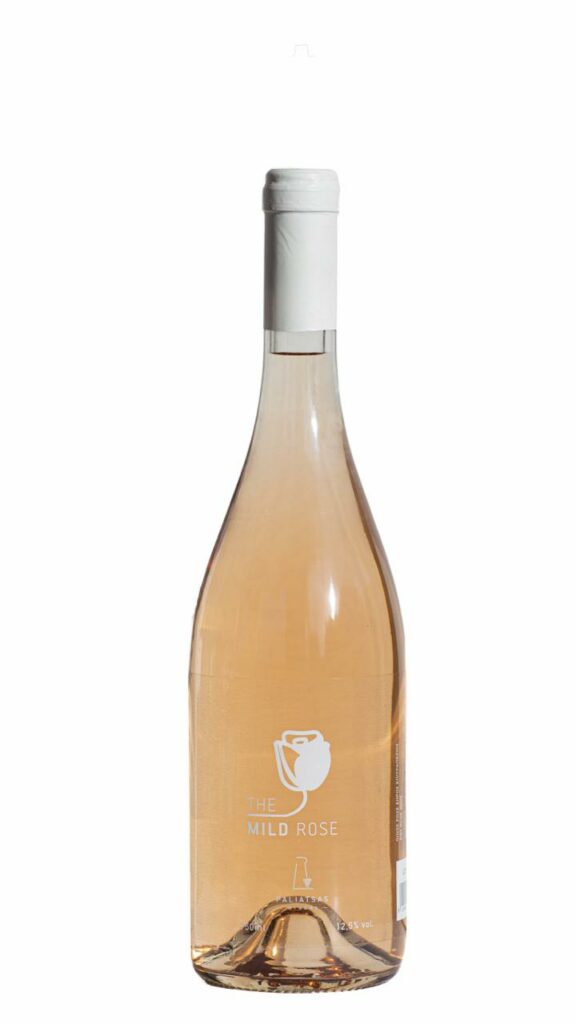
"Let's start with the first wine, a rosé called Wild Rose 2024 from the Paliatsas Winery, located near the lighthouse of Avlida, just outside Chalkida," Christos says. "It's made from 98% Muscat of Psamathousa in Samos, with grapes influenced by sandy soils, and 2% Merlot. This blend gives the wine a refreshing summer character, with floral notes reminiscent of jasmine petals, while the Merlot contributes richness and color. It's a perfect wine for sipping at sunset after a hot summer day, cool and relaxing."
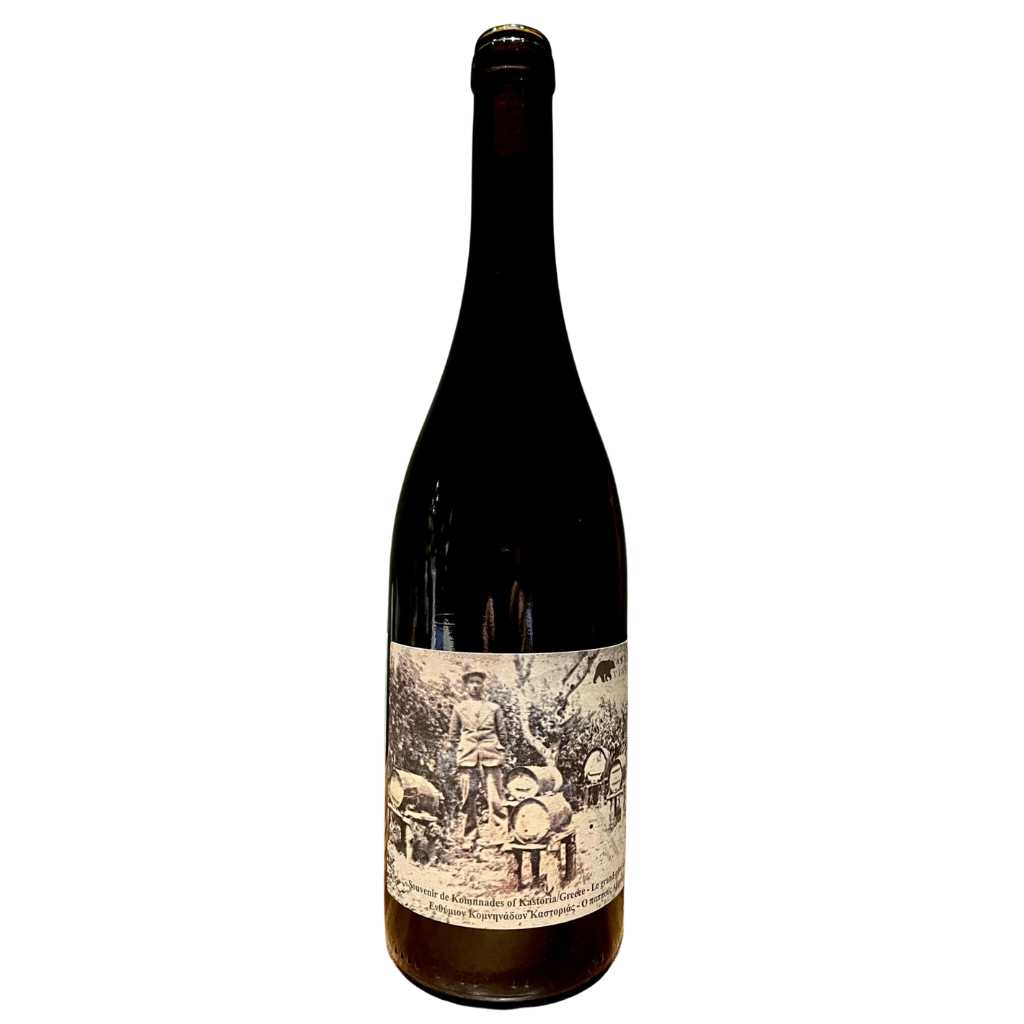
"Next is a special Malagousia I discovered on a recent Easter trip to Amyndeon," Christos, who never stops researching wineries around the country, shares. "It comes from Abraam's Vineyards located in Komninades, northern Greece near the Albanian border - a stunning landscape, almost biblical in its beauty. The Malagousia IGRA 22 offers distinctive aromas like orange peel and bitter orange, balanced by refreshing acidity and richness. This wine is perfect for a leisurely summer lunch; it's the kind of wine you'd enjoy while relaxing at a tavern, savoring the tranquility."
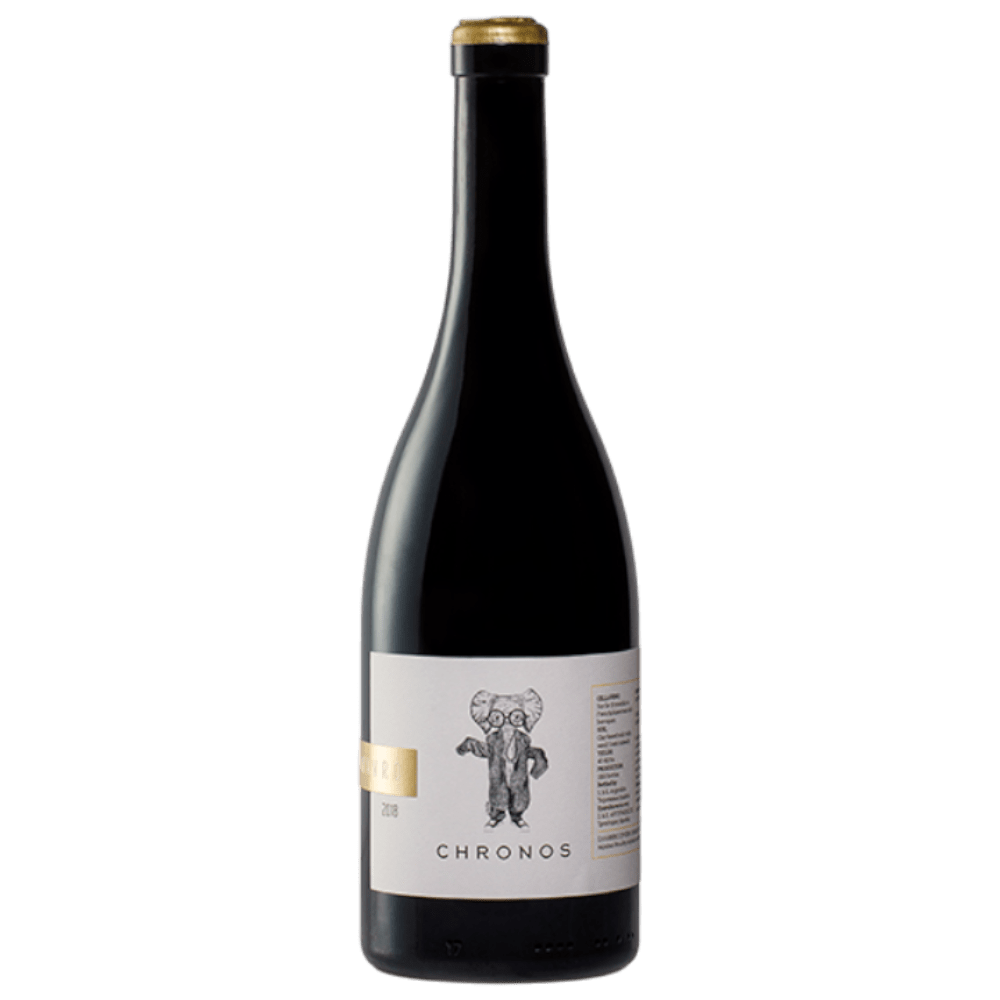
"Moving on, we have a wine from Naousa by Argyrakis Estate- two young winemakers doing fantastic work. Named Chronos 2020, this is a Xinomavro blanc de noir, meaning it's a white wine made from red grapes. It features peppery notes, depth, and a creamy texture. It pairs wonderfully with grilled fish, creamy sauces, or pork dishes, versatile enough for casual dining or a fine dining experience," Christos says, adding his dream scenario for enjoying this wine to the fullest: "I imagine drinking this wine somewhere beautiful, having caught some big fish that you're grilling over beachside charcoal, enjoying good company and perfect views - that's the vibe this wine inspires."
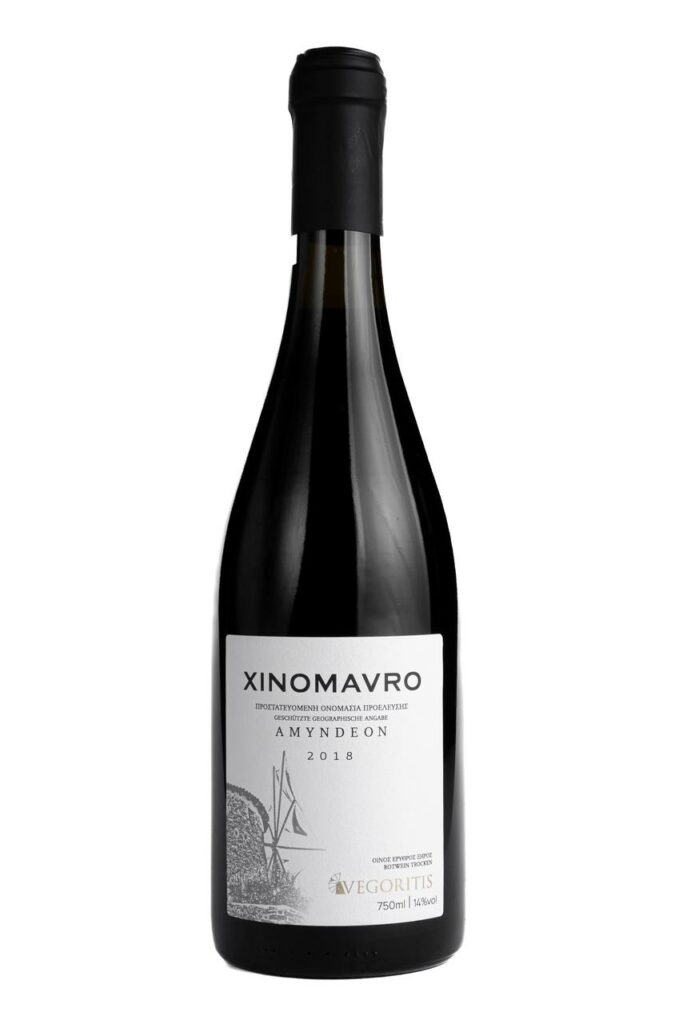
"Next is a red wine from a recent visit to Amyndeon, a region renowned for its reds. At Vegoritis Winery, owned by Christos Boskos, I discovered this elegant 2018 Xinomavro," Christos says. "It's refined, filled with aromas of strawberry, tomato, red cherries, and herbal hints. Slightly chilled, it's perfect after a day hiking in the mountainous regions of inland Greece. Picture yourself in the evening, under plane trees at a quaint tavern, a crisp, cool breeze, enjoying local meat dishes with red sauces—this Xinomavro provides a perfect, refreshing contrast."
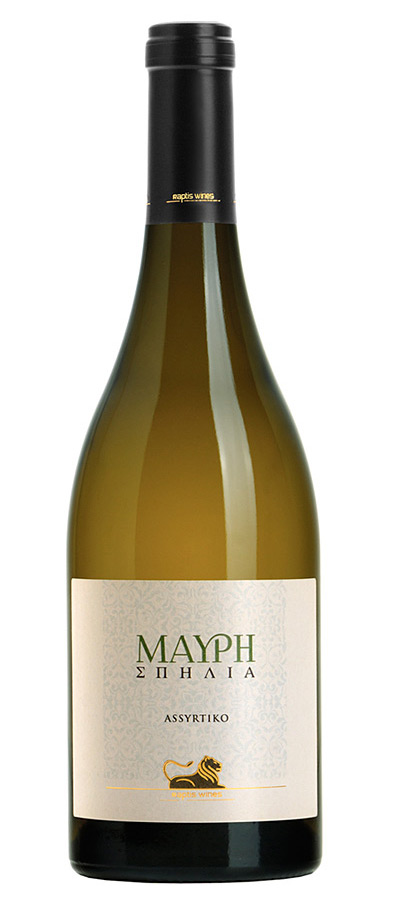
"Next, we have an Assyrtiko from southern Greece, from Leontio in Nemea. Produced by Raptis Winery, it's named Mavri Spilia (Black Cave), after a historical cave used by locals as a hideout during wars," Christos reveals. "The 2021 vintage is mineral-driven and lemony, ideal for pairing with raw seafood dishes like ceviche or carpaccio at a refined restaurant."
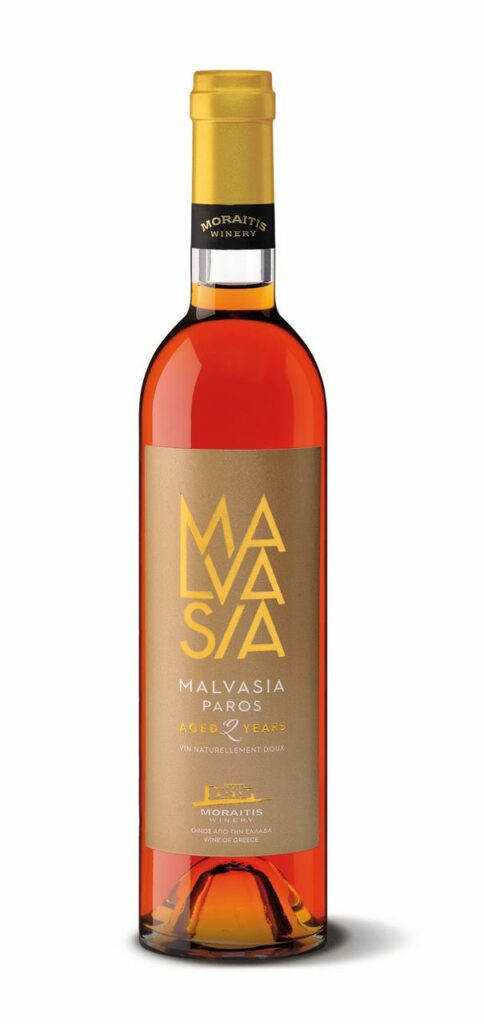
"Now onto a sweet wine: a Malvasia from Moraitis Winery in Paros. The 2016 Malvasia varietal evokes late summer celebrations. Perhaps at a friend's house at dusk, pairing beautifully with desserts like a traditional orange cake from the Peloponnese topped with vanilla ice cream—a delightful way to end a meal!" Christos says.
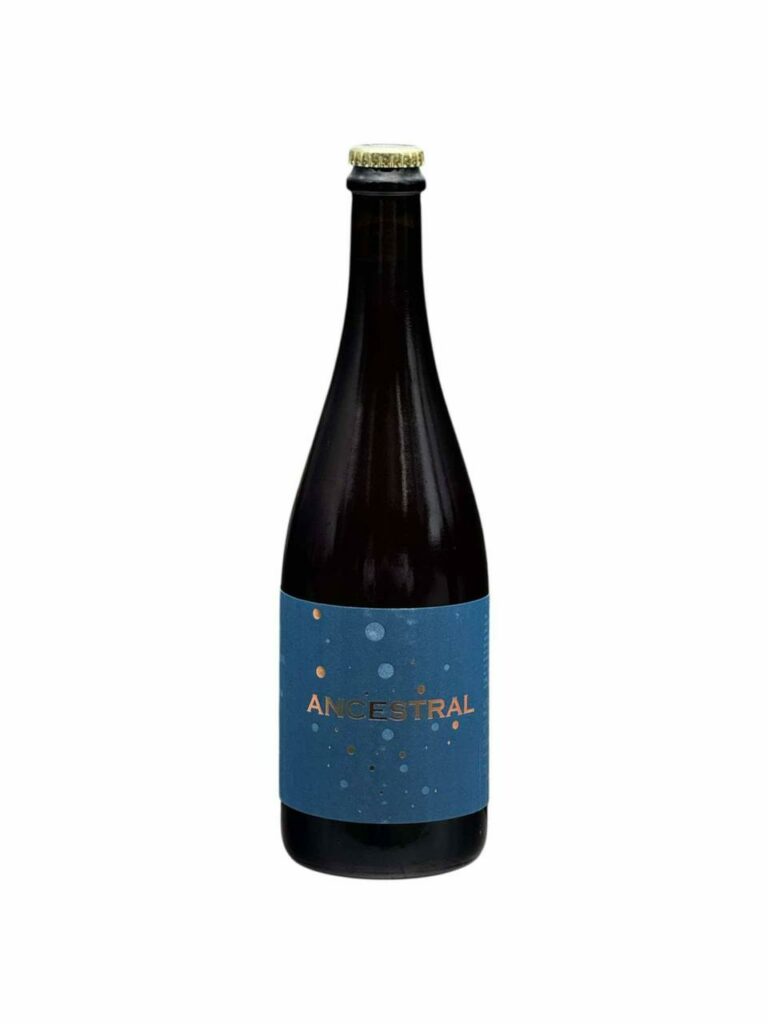
"Now let's enjoy some sparkles," Christos says. "Ancestral, from northern Greece, is a sparkling wine from Olenos Estate, where they use the ancestral method with the Limniona grape. It has vibrant notes of sour cherry and strawberry, a lively acidity, and a gentle fizz. It's ideal for a beach picnic under a shady tree, chilled in a cooler, paired with a simple salad of salted cherry tomatoes and cheese—a wonderful complement to swimming and seafront summer chilling."
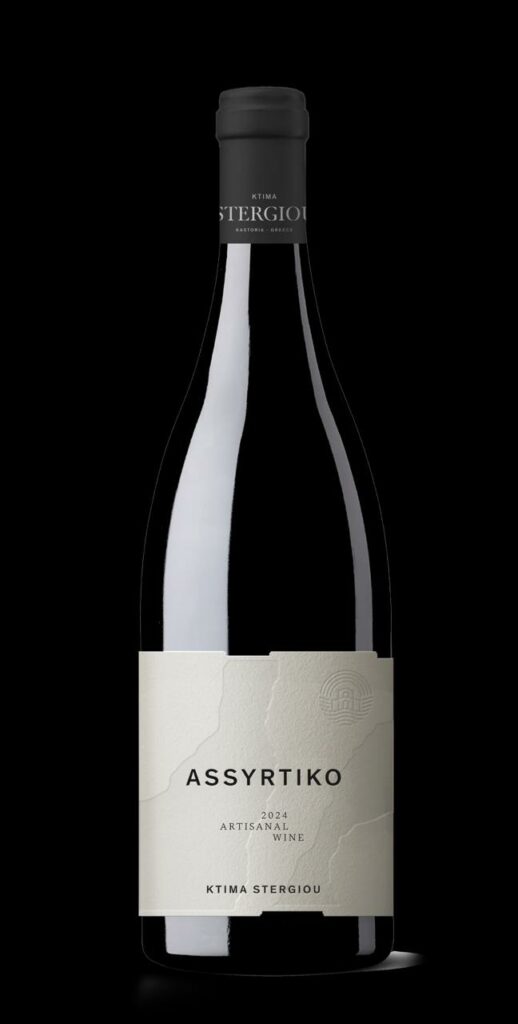
"Lastly, from Kastoria, we have the Assyrtiko 2024 from Domaine Stergiou, a winery set against a picturesque lakeside backdrop," Christos says. "This wine has herbal notes, aromas of bread and yeast from lees aging, and a rich, satisfying texture. I can imagine using it to surprise or impress friends during a blind-tasting adventure, for it's sure to spark curiosity and conversation during an exploration of different regions through their distinctive flavors."
Read more:
The Best Restaurants in Athens
The Best Restaurants in Thessaloniki
The Best Restaurants in Mykonos
The Best Restaurants in Santorini
The Best Restaurants in Paros
The Best Restaurants in Naxos
The Best Restaurants in Halkidiki
The Best Restaurants in Chania
The Best Restaurants in Corfu
There's an aura of mystery, hinting that you've stumbled upon one of those rare villages that, although located on superstar tourist islands, remain raw, hidden gems. Leaving the car at the parking lot near the entrance of Megalochori, a road that gently descending toward the village center naturally draws you in.
This authenticity is found just nine kilometers from cosmopolitan Fira. Megalochori is a village defined by its elaborate bell towers that create uniquely cinematic frames: children playing ball beneath them, others gliding downhill on skateboards, couples strolling hand-in-hand through romantic settings, locals casually going about their day under whitewashed bell-topped arches. It's also home to two renowned wineries, an innovative cultural center, and relaxed rhythms exemplified by its iconic traditional café, where everyone becomes part of one group, sipping Santorini ouzo, sampling freshly cooked handmade meze, and learning firsthand from residents about local happenings.
On one hand, you want to keep this discovery to yourself, feeling a sacred obligation to protect its charm from hordes of tourists. On the other, you're eager to announce that even the world-famous Santorini still has authentic corners—a breath of genuine life amidst infinity pools with admittedly stunning views and trendy cafés.
On our spring journey to Santorini, our first stop was the Paradosiako (traditional) Café of Megalochori. With its pebbled courtyard, mismatched tables, colorful cushions, outgoing hostess Magda at the entrance accompanied by her loyal dog Sa and white cat Beethoven, this spot immediately signals you're in a welcoming, timeless village. Although this café, now central to Megalochori’s social life, opened only a few years ago, it already feels brimming with stories from the past. Maybe it's the heirloom furniture from Veria, brought here by smiling Magda, or perhaps it's the furnishings donated by villagers when her initial plan for a women's accessories shop turned into a café.
Perhaps it’s Magda’s own journey—her studies in psychology in Ioannina, Epirus and costume design and scenography at Vakalo School, followed by her decision in 2014 to leave her hometown and Athens permanently for the island that had captured her heart since her first visit in 1993. Or maybe it's the stories shared by locals and visitors on summer nights, gathered around a vivid red piano brought out to fill the whitewashed alleyways with melodies.
These days, a frequent conversation topic is the recent seismic activity. Magda’s disarming reply is characteristic: pointing at glasses and plates balanced precariously in an antique cabinet, she firmly states, "Not one fell or broke." Locals quickly add, "There was no damage to any homes," eager to set things straight. They admit the phenomenon was unusual in intensity and frequency but stress they never felt the panic portrayed by the media. "Some initially slept in cars or front rooms, but few left Megalochori," they say, proudly indicating reinforced early-20th-century homes that survived even the great 1956 earthquake. Indeed, everything around us speaks of normalcy—not a return to it, as the locals' routines were barely disturbed.
Fresh mezes continually flow from the kitchen alongside Santorini’s microbrew beers and locally distilled ouzo. On the marble counter atop yet another antique wooden cabinet from Veria, trays arrive filled with tomato fritters, creamy fava, sizzling meatballs, hearty mushroom soup, savory slow-cooked pork, and buttery xinochondros (cracked wheat soup) directly from Crete. All dishes come from Magda’s welcoming hands—with help from two additional girls in summer—who readily joins your table, reminding you to save room for delectable grape spoon sweets and Mrs. Margarita's traditional melitinia pastries from a neighboring village.
You leave Megalochori’s café not saying goodbye, but promising to return—a promise eagerly kept as you stroll downhill towards iconic village landmarks. These include remarkable bell towers like the Zoodochos Pigi Church or the stunning pyramid-shaped arch with six bells arranged across three levels, surely among the most impressive sights of Santorini’s lesser-known side.
Wandering aimlessly through sun-drenched cobblestone alleys, you'll reach vivid blue or pristine white domes and the majestic Church of Agii Anargyri, named prominently on its twin bell towers visible throughout the village. Such sights, along with the intricate wooden-carved iconostasis of Panagia Trani Church, old Russian icons from Odessa, and the post-Byzantine calendar with 365 saint miniatures (one for each day), define Megalochori’s stunning architectural heritage. The nearby small square hosts enthusiastic village-wide festivals, including the raising of Lazarus before Palm Sunday, one of Santorini's most eagerly awaited Easter traditions.
At Venetsanos, above Athinios Bay, constructed by the family in 1949, tastings occur across four breathtaking levels. Amid vaulted museum spaces and stone-hewn tunnels, tables bathed in sunlight overlook the breathtaking caldera, perfect for savoring the complex flavors of Assyrtiko, understanding the origins of Nychteri, being surprised by a semi-dry rosé, or leisurely sipping sweet Vinsanto paired perfectly with culinary bites.
At Gavalas, tastings unfold in picturesque courtyards or rooftop terraces amid modern winemaking facilities juxtaposed with traditional stone cellars and grape presses. Here, visitors delve into the story of one of Santorini's oldest winemaking families, whose five generations passionately preserve and revive rare indigenous grape varieties like Katsano, Mavrotragano, and Voudomato.
Yet, while Megalochori’s architecture initially captivates, the two village wineries elevate your exploration by showcasing the unique qualities of Santorini’s volcanic vineyards and wine heritage. Venetsanos and Gavalas wineries, esteemed representatives of Santorini’s wine culture, offer immersive tastings.
Hidden within Megalochori's narrow streets, a former winery now houses the Symposion Cultural Center, a dynamic cultural space where music, mythology, art, and history blend uniquely. Created by musician and instrument-maker Giannis Pantazis and his wife, this multipurpose center exhibits ancient musical instruments, hosts workshops, and offers diverse artistic performances.
In this stunning vaulted cellar, guests experience forgotten sounds, experiment with crafting flutes, explore historic texts in the tiny vaulted library, view a photographic exhibit detailing the building’s former life as a wine storage space, and enjoy serene summer evenings with a glass of Santorini wine amid a charming mini botanical garden. Such intimate, unforgettable experiences define why this modest Santorini village truly earns the name Megalochori—meaning “large village.”
Read more:
" ["post_title"]=> string(51) "Santorini Beyond the Surface: Exploring Megalochori" ["post_excerpt"]=> string(92) "How many secrets can hide between the blue Aegean waters and a handful of pure-white houses?" ["post_status"]=> string(7) "publish" ["comment_status"]=> string(6) "closed" ["ping_status"]=> string(6) "closed" ["post_password"]=> string(0) "" ["post_name"]=> string(50) "santorini-beyond-the-surface-exploring-megalochori" ["to_ping"]=> string(0) "" ["pinged"]=> string(0) "" ["post_modified"]=> string(19) "2025-05-12 22:46:21" ["post_modified_gmt"]=> string(19) "2025-05-12 19:46:21" ["post_content_filtered"]=> string(0) "" ["post_parent"]=> int(0) ["guid"]=> string(31) "https://www.travel.gr/?p=459136" ["menu_order"]=> int(0) ["post_type"]=> string(4) "post" ["post_mime_type"]=> string(0) "" ["comment_count"]=> string(1) "0" ["filter"]=> string(3) "raw" ["post_views"]=> string(4) "5284" } [206]=> object(WP_Post)#5293 (25) { ["ID"]=> int(458122) ["post_author"]=> string(2) "19" ["post_date"]=> string(19) "2025-05-08 15:36:40" ["post_date_gmt"]=> string(19) "2025-05-08 12:36:40" ["post_content"]=> string(55126) "Athens has never been shy about reinvention - or about putting that reinvention on public view. Since 1 May, the fourth annual This Is Athens City Festival has been scattering twilight concerts, curb-side film screenings, pop-up dance floors, and big-think salons across every compass point of the capital. The result is a month-long mixtape of art, ideas, and unfiltered joie de vivre that seeps into parks, markets, rooftops, and waterfronts from dawn till well past midnight.
Festival Director Nikos Barlas describes this year’s edition as “as richly layered as the city itself, a kind of cultural palimpsest where antiquity and avant-garde overlap at every turn.” Below, he unpacks that vision - while we flag 20 essential happenings drawn from the 200-strong roster, giving you a fast-track pass to the festival’s irresistible core and the many stories Athens is ready to tell.
“The City of Athens Festival, now in its fourth year, was created with a clear purpose: to introduce Athenians and international visitors to lesser-known sides of Athens through cultural events held in public spaces—parks, squares, pedestrian streets and more. Many of these spots are unfamiliar or rarely visited, and the public has embraced the initiative wholeheartedly. As a result, the festival has expanded to neighbourhoods across the city with remarkable success.”
“The events cater to all age groups, with many designed for families and children, including storytelling sessions, guided tours for locals and tourists, concerts, street fairs, film screenings, classical-music performances and, of course, the festival’s signature massive street parties.”
“A central aim of the festival is to spotlight Greek artists—especially from the younger generation—to highlight the talent and creativity of the local artistic scene. The festival has brought attention to places and events such as the Academy of Plato, the Varvakeios Central Market, the Kypseli Municipal Market, the parking lot of the Lycabettus Theater, the open-air sculpture garden at the First Cemetery of Athens, Omonia Square, Bei Park and many more.”
“Through the festival, Athens showcases its authenticity as a destination, something that resonates deeply with both Greeks and international visitors who take part in the events. After a decade marked by economic hardship, the city and its residents have emerged with a renewed vitality and openness that is both striking and compelling.”
“The festival reflects this transformation—not by glossing over the past, but by celebrating the fact that the city is alive and thriving, fuelled by incredible human potential and filled with overlooked or forgotten corners that deserve a fresh perspective, all under the singular light of the Attica sky.”
(In no particular order)
Date: May 15, 2025
Location: National Observatory of Athens
Experience the magic of midnight cinema under the stars with a special screening of the original Star Trek film. Set in the enchanting garden of the National Observatory, this event revives the nostalgic charm of Athens' legendary late-night movie culture. Film critic Akis Kapranos brings this iconic sci-fi adventure back to the big screen, offering both longtime fans and newcomers a chance to engage with visionary storytelling in a historic setting. Admission is free, but booking is required.
Date: May 8, 2025
Location: Plato’s Academy Park
Celebrate the creativity of young performers at the inaugural Athens International Youth Theatre Festival. Held in the historic Plato’s Academy Park, this event showcases a diverse array of theatrical productions by youth groups from around the globe. Attendees can expect a vibrant mix of performances that reflect the perspectives and talents of the next generation of theater artists. This festival offers a unique opportunity to witness fresh narratives and innovative storytelling in a setting steeped in philosophical heritage.
Date: May 9, 2025
Location: Protogenous Street, Psyrri
Join the lively celebration of spring on Protogenous Street, where the heart of Psyrri comes alive with music, fashion, and culinary delights. This vibrant street party features DJ sets, live performances, pop-up markets, and street food, transforming the once-forgotten alley into a bustling hub of urban culture. Collaborations with local businesses and artists ensure a dynamic atmosphere that captures the essence of Athens' creative spirit. The festivities kick off at 5:00 PM and continue into the night, offering a free and inclusive experience for all.
Date: May 9, 2025
Location: Trianon Cinema
Immerse yourself in the rich tapestry of LGBTQI+ cinema at Queer Movie Nights, a dedicated platform for queer storytelling through film. Since its inception in 2022, this event has become a cornerstone for showcasing short films, features, and documentaries that explore diverse queer experiences. Held at the historic Trianon Cinema, the evening offers a safe and expressive space for audiences to engage with powerful narratives that challenge and inspire. Tickets are priced at €5, with screenings running from 6:00 PM to 11:30 PM.
Date: May 10, 2025
Location: Eleftherias Park
Dance the evening away at Street Outdoors Soundsystem, where the renowned party collective brings their signature energy to Eleftherias Park. Known for hosting some of the city's most electrifying street parties, Street Outdoors curates a lineup of cutting-edge dance music that resonates with Athens' vibrant nightlife. From 5:30 PM to 11:00 PM, attendees can enjoy an open-air celebration that blends music, community, and the urban landscape. This free event invites everyone to experience the pulse of Athens' contemporary music scene.
Date: May 12, 2025
Location: National Garden of Athens
Embark on a unique journey through Athens with the "Apprenticeship Walk: 20+1 Stops." This guided tour offers participants an opportunity to explore various significant points within the National Garden, each representing a unique aspect of the city's rich history and culture. While the specific details of each stop are provided in Greek, the overall experience promises an immersive exploration of Athens' heritage in one of its most iconic green spaces.
Date: May 16, 2025
Location: Anafiotika, Athens
Join archaeologist Michalis Giohalas for a captivating walking tour through the historic Anafiotika neighborhood and the Rizokastro area. Discover the layered history of this picturesque part of Athens, nestled beneath the Acropolis, as you explore its unique architecture and cultural significance. This free event offers a rare opportunity to delve into the city's past with expert guidance.
Date: May 17, 2025
Location: National Garden, Athens
Experience the rich tapestry of Greek folk traditions with a performance by the Lykeion ton Ellinidon Dance Group. Established in 1911, this esteemed organization showcases traditional dances from various regions of Greece, accompanied by live music and authentic costumes. Enjoy this vibrant cultural display in the serene setting of the National Garden.
Date: May 17, 2025
Location: Dragatsaniou Arcade, Athens
Step back into the golden age of disco at the Athens Disco event. Dance the night away to rare vinyl sets from top Athenian DJs and collectors, celebrating the legendary sounds of the early '70s. This free, open-air party transforms the heart of Athens into a vibrant dance floor under the mirrorball.
Date: May 18, 2025
Location: First Cemetery of Athens
Explore the artistic heritage of Athens with a guided tour of the First Cemetery, led by archaeologist Michalis Giohalas. Discover the cemetery's remarkable sculptures and monuments, reflecting the city's history and artistry. This free event offers a unique perspective on Athens' cultural landscape.
Date: May 18, 2025
Location: Lycabettus Hill Parking Lot, Athens
Join the ultimate open-air gathering at the Athens All Star Party, where dance crews, music collectives, locals, and visitors converge to party under the stars. With sweeping views of the city, this hilltop event transforms into Athens' most electric dance floor for one night only. Admission is free.
Date: May 20, 2025
Location: Roman Agora, Athens
Experience the Greek debut of internationally acclaimed cellist Dobrawa Czocher, presented by the Embassy of Poland in Athens and the Athens City Festival. Performing live with pianist and synth artist Natalia Czekała, Czocher blends classical and contemporary music, exploring new dimensions of the cello's sound.
Date: May 21, 2025
Location: Elytis' House – Museum, Athens
Join poet Ioulita Iliopoulou and ELIVIP President Nikios Bakounakis for a discussion on the creation of the Elytis House Museum. This free event offers insights into the life and work of Nobel laureate Odysseas Elytis, providing a deeper understanding of his literary legacy.
Date: May 22, 2025
Location: National Museum of Contemporary Art (EMST), Athens
Celebrate the evening with a rooftop cocktail party at EMST, featuring panoramic 360° views of Athens and music by Italian electronic maestro Glass Coffee. This event offers a unique blend of art, music, and stunning cityscapes.
Date: May 23, 2025
Location: From Attiki Square to Agios Panteleimonas Square, Athens
Join the lively street parade led by Agia Fanfara, a 25-piece brass, woodwind, and percussion band renowned for their energetic performances. The parade starts at Attiki Square and dances its way to Agios Panteleimonas Square, creating a full-blown Balkan street party.
Date: May 24–25, 2025
Location: National Garden, Athens
Rejuvenate your body and mind amidst the lush greenery of Athens' National Garden during the Wellness Weekend led by fitness expert Niki Petroulaki. This holistic two-day event offers a rich program of Yoga, Pilates, Fitness, and Meditation sessions, complemented by soulful music experiences and insightful talks on self-awareness and wellbeing. Open to all and free of charge, it's a unique opportunity to reconnect with nature and yourself in the heart of the city.
Date: May 25, 2025
Location: Mayor Dimitris Beis Park, Athens
Immerse yourself in the vibrant rhythms of Crete at this grand feast featuring Psarogiorgis, a master of the Cretan lute (laouto). Hailing from a legendary musical family, Psarogiorgis brings the soul of Anogeia to Athens, spotlighting traditional Cretan music in a lively outdoor setting. Join the celebration of heritage and melody, free for all to enjoy.
Date: May 26–29, 2025
Location: Eleftherias Park, Athens
Experience the magic of Greek cinema under the stars during four enchanting nights at Eleftherias Park. Gather with fellow film enthusiasts on the grass to watch a curated selection of contemporary Greek films, celebrating the country's rich storytelling tradition. Admission is free, making it a perfect cultural outing for all.
Date: May 28, 2025
Location: Omonia Square, Athens
Witness a captivating performance by students of the State School of Dance as they take to the streets of Athens. Under the artistic direction of Dafni Kokkinou, these talented dancers will transform Omonia Square into a dynamic stage, showcasing contemporary choreography in an open-air setting. This free event invites all to experience the vitality of modern dance.
Date: June 1, 2025
Location: Athinas Street, Athens
Conclude the Athens City Festival with a spectacular street party on Athinas Street. Dance the night away to electrifying sets by renowned DJ Liva K, amidst a stunning light show and vibrant atmosphere. This grand finale transforms the heart of Athens into an open-air dance floor, celebrating the city's dynamic spirit. Admission is free, welcoming all to join the celebration.
Read more:
Athens Best Street Food
Athens Best Restaurants
Athens Coolest New Bars Downtown
Where the Mediterranean’s classic cerulean turns suddenly other-worldly, Lasithi’s shoreline looks less like a Greek cliché and more like a Kubrick set dusted with salt. Picture ash-blond sand sliding into pewter coves, date palms swaying like extras in a Seventies surf film, and rock formations so sculptural you half-expect a Calder mobile to pivot overhead. This is the remote eastern edge of Crete, and it is where the Travel.gr team has been roaming at dawn, catching the hush before beach cafés stir and the first caiques cut the mirror-flat sea.
Our new visual dossier pairs original stills with 15-second video shorts, sequenced like daydreams: a drone’s-eye glide over Vai’s palm forest tilts to reveal a shoreline dappled in apricot light; Chrissi Island’s sandbar dissolves into two seas at once, its tones sliding from aquamarine to lapis as shadows lengthen; the lunar flats of Xerokambos show wind-carved limestone meeting water so clear it seems back-lit. Each clip lingers just long enough to taste salt on your lips, then cuts to the next clandestine cove.
This is your passport to the untamed: a place where Bronze Age myths mingle with free-divers, where the soundtrack is cicadas in high fidelity, and where remote still means no cell signal between coves. Dip in at the moment the sun brews over the Libyan Sea horizon, and stay until your screen goes dark.
Vai is the headliner, the beach the locals whisper about once the boats pull away. Picture a sweep of porcelain-gold sand fronting water the color of mouth-blown glass, then let your gaze drift inland: an undulating grove of Phoenix theophrastii palms, nearly 250 acres strong, the largest wild palm forest in Europe. The name is literal - vai is Cretan dialect for “palm” - yet the scene feels lifted from the Caribbean, a Mediterranean meets tropics mash-up found nowhere else. Thousands of slender trunks rise like natural colonnades, their fronds rattling in the sea breeze while cicadas supply the backbeat. Despite the Edenic set design, creature comforts await: sun-beds, a beach bar pouring freddo espressos, even discreet Wi-Fi for the incurably connected. Step a few meters away, though, and the modern world falls silent, leaving only salt, sun, and the rustle of prehistoric leaves.
Locals still call it Donkey Island, a nod to the era when worn-out pack animals were ferried across to live out their days in peace. On the charts it reads Chryssi, “Golden,” a slim, protected sandbar lounging just off Ierapetra. The moment you step ashore the color wheel spins: milk-pale beaches bleach into jade shallows, while wind-pruned juniper and the odd palm tree bend over coral rubble the texture of sea salt. The entire isle is a Natura 2000 reserve, so the soundtrack is limited to water fizzing over shells and the whirr of cicadas. Arrive on the first boat, skirt the main sun-bed cluster, and mainland Crete might as well be on another planet.
Lefki, as the ancients called it, drifts in the Libyan Sea like a bleached shard of marble, empty of people yet thick with stories. Limestone cliffs rise in chalky folds, hemming in wind-etched cedar groves and salt flats that glitter like broken mirrors at noon. Archaeologists have teased out Minoan pottery shards and faint foundations, proof that this speck once hosted life long before the tourist era. Today the entire island sits inside a Natura 2000 envelope, its only guardians the gulls and the hiss of surf against stone. Step onto its shelving beach and you feel time contract, history and raw nature colliding in the same bright breath.
A few coves north of Vai, the coastline splinters into three flawless crescents locals lump together as Itanos, or Erimoupolis if you trace the older maps. Sand the texture of pastry flour meets water painted in layers of teal, yet underfoot the past keeps surfacing: toppled columns, mosaic shards, the faint grid of streets from the city of Itanos that thrived here before Rome had an emperor. Stand ankle-deep and you can scan two timelines at once. In one, the beaches read as untouched paradise; in the other, they are an open-air dig, every tide teasing out another artifact. Pack a snorkel along with your towel; marble fragments hide just beyond the break. History lessons seldom come wrapped in scenery this pristine.
Midway between Agios Nikolaos and Ierapetra, a pocket-size cove trades sand for smooth, gunmetal pebbles that clink like glass in the wash. The water is surgeon-clear, pinched on both sides by sculptural cliffs that turn rose at sunset. You get the hush of a hideaway but without the survivalist logistics; a short stroll up the lane delivers a taverna for octopus on the grill and rooms to rent should you decide the day deserves an encore. Call it seclusion with room service, a sweet spot where off-grid ambiance meets on-grid ease.
At Almiros the river slips into the sea as if testing the temperature, cooling the shallows to a soft mineral chill that feels almost alpine. Along the banks a mixed chorus of reeds, date palms, and sky-high eucalyptus leans in to form a braided canopy, their scents—green sap, resin, salt—braiding too. The sand is pale, the water a blue so lucid you can count each ripple. Despite the Edenic staging the setup is turnkey: sun loungers in neat rows, lifeguard tower, a kiosk for iced café frappé. Families claim the gentle shallows, snorkelers drift toward the rivermouth, and everyone paddles in water clear enough to double as a mirror. Nature shows off, organization keeps the peace, and Almiros earns its spot as the area’s perennial crowd-pleaser.
Kato Zakros feels like a secret slipped between two epochs. Hike out of the so-called Gorge of the Dead, a silent corridor of honeycomb caves once used as Minoan tombs, and you spill onto a cove so calm the water barely whispers. Behind it a quilt of silver-leafed olive trees rolls toward the village taverna grills. Ruins of a Minoan palace lie a few footsteps inland, their stone thresholds still cool at dawn. Way-marked trails spider off along the cliffs, rewarding walkers with balcony views of the Libyan Sea and the occasional pottery shard underfoot. For beachgoers who measure paradise in both sea vistas and archaeological breadcrumbs, Zakros checks every box without raising its voice.
Where the Sitia Mountains taper into farmland and the farmland sighs into sea, a sleepy beach curls beside its namesake village like a comma at the end of a long sentence. The sand is silk-fine, the water glassy, and the plain behind it glows green with citrus and garden plots fed by hidden springs. Look east and the cliffs of Agios Antonios Gorge rise sheer and untouchable; look west and Goudouras Gorge cleaves the rock in pleats of ocher and gray. The pair frames the cove in a kind of natural proscenium, making every swim feel cinematic. Village life hums softly in the background - goats bell, a taverna grill smokes, someone strings octopus to dry - while the landscape trades in grandeur on a scale that feels almost private.
Xerokampos is a place where the island’s skeleton shows through: raw limestone ridges bleached almost white, dotted only by squat thyme bushes that release their perfume each time the wind changes its mind. The hamlet itself is little more than a scatter of rooms-to-let and a single mini-market, enough creature comfort to keep the edge off the remoteness without dulling it. Fan out along the coast and you’ll meet a trio of beaches, each with its own mood. Alona unrolls a ribbon of powder-soft sand; Alatsolimni hides pockets of healing clay you can smear on like a seaside spa; Amatou is the silent one, a crescent where even August feels like a private booking. Everywhere the water is so clear it turns boat shadows into floating ink. Stark mountains behind, liquid sapphire in front, and thyme-scented air all around - Xerokampos is contrast distilled into pure, quiet pleasure.
Kolokitha lies across from Elounda on the calm side of the Spinalonga Peninsula. Drive over the Poros causeway beside the salt flats, park at Agios Loukas chapel, then walk the short trail to the sand. The cove’s fine gold beach meets luminous turquoise water, and the view of Spinalonga’s ruined walls completes the quiet, facility-free setting.
Voulisma sweeps along Istros Bay beneath the sheer face of Vrocastro hill. Its golden sand and glass-clear water are backed by sunbeds, a snack kiosk, and a lifeguard, yet the cove still feels airy and natural. A recently uncovered Minoan settlement just inland adds a layer of history to an already standout swim spot.
Koutsouras is a discreet arc of slate-gray pebbles just before the village that shares its name, its water clear enough to mirror the pines. Behind the shore, the Thripti and Orno slopes wear a dense green coat; trails thread upward to the Red Butterfly Gorge where rust-colored moths pulse against limestone walls. The scene is part swim, part forest ramble, all quiet luxury.
Makrigialos earns its name, a broad ribbon of pale sand laid along a glass-calm bay on the Libyan Sea. Sunbeds line up in measured rows, with beach bars and cafés delivering iced espresso to the water’s edge, yet conversation rarely rises above the tide’s hush. The bay’s curve keeps the swell muted, inviting unhurried laps and all-day lounging that feels more retreat than resort.
Koutsounari, known locally as the Great Beach, stretches for kilometers along Lasithi’s south coast in a smooth sweep of graphite-gray sand. Clusters of loungers and cafés anchor the center, yet a short stroll in either direction trades music for cicadas and room enough to walk without another footprint in sight. The bay stays calm, the water glassy, and the beach so vast that a single afternoon can feel like three distinct escapes layered side by side.
Achlia, nicknamed Galini, folds into a petite bay of dark, grainy sand and see-through turquoise. Pine-blanketed hills rise close enough to study while you float. A lone taverna serves grilled sardines and cold beer; its row of sunbeds keeps parents pleased, yet the mood stays hushed and slow.
Read more:
Chania's Best Beaches
Heraklion's Best Beaches
Greece, that sun-struck amphitheater of islands and olive groves, knows how to greet a stranger: with a glass of something chilled, a plate you did not order, a view you will not forget. Yet it never insists on company. Here, solitude is treated as an art form, something to be preserved, like a temple.
Slip into a jade-clear cove at dawn and the only sound is your own heartbeat echoing off marble cliffs. Linger at a taverna where the proprietor communicates chiefly through extra ladles of aubergine stew. Drift through the ghosts of Delphi or Mycenae with no guide but your imagination. Greece trusts you to decipher its myths at your own pace, then rewards you with a cicada-scored hush the moment you close the guidebook.
We have only begun to trace the country’s quiet corners, but the discoveries already feel boundless. Think of this not as an exhaustive inventory but as a starter set of possibilities: a beach where silence laps against your ankles, a vineyard terrace pouring conversation-starter reds, a guesthouse where friendships form over a single shared socket for phone charging.
Choose a backdrop that speaks to you and let serendipity handle the rest. A single ticket is more than enough.
Athens. Best for urban culture buffs. Visit in spring.
The Peloponnese. Best for history-loving road-trippers. Visit in autumn.
Crete. Best for adventure-minded all-rounders. Visit in late spring.
Sifnos. Best for food-centric slow travelers. Visit in early autumn.
Tinos. Best for spiritual and artistic seekers. Visit in spring.
Milos. Best for beach-hopping photographers. Visit in late summer.
Antiparos. Best for chill minimalists. Visit in early summer.
Kefalonia. Best for nature-loving swimmers. Visit in early autumn.
Lesvos. Best for literary and culinary wanderers. Visit in spring.
Ithaka. Best for introspective hikers. Visit in late spring.
Kythera. Best for off-grid explorers. Visit in autumn.
Corfu. Best for socially curious multi-activity seekers. Visit in spring.
Samos. Best for history and nature lovers. Visit in late spring.
Alonissos. Best for eco-minded solitude seekers. Visit in autumn.
Skiathos. Best for sociable beachgoers. Visit in early summer.
Pelion. Best for storybook hikers. Visit in autumn.
Athens is where solo travel becomes a sensory sport. You’ll find ancient drama on every corner - and no one to rush you through it. Start with the Acropolis, of course, but don’t skip the backstreets of Anafiotika, a whitewashed maze straight out of a Cycladic fever dream.
The National Archaeological Museum is a fantastic stop for starting from the very beginning, as is the Acropolis Museum. You’re alone, and that’s a good thing - you can linger as long as you like. Safe? Absolutely. And oddly intimate, despite the sprawl. Read more about Athens' best museums here.
Sit solo with a plate of grilled whatever in nostalgic Plaka, lively Koukaki or leafy yet edgy Exarchia, where anonymity feels like luxury. Rooftops, stoops, wine bars - take your pick. Athens does solo better than most cities do company. Hostels, boutique stays, artsy rentals - there's a place here for every kind of loner. And then there are a plethora of theater, dance and music performances you can attend, going on all around the city and often into the late hours. Stop for a drink at an award-winning bar before heading to an open-air cinema to see the latest blockbuster or a retro movie under the stars.
The Peloponnese is a sprawling, myth-drenched region disguised as a peninsula. One minute you’re standing in the ghostly theatre of Epidaurus, the next you’re scrambling up to a fortress in Nafplio, or plunging into the crystalline waters near Kardamyli with no audience but the fish. This is where solo travel becomes a kind of pilgrimage - to ruins, mountains, olives, and your own thoughts.
The Mani region is gloriously stark and cinematic; the Arcadian villages of the interior are so quiet you’ll hear your soul rearranging itself. Safe? Utterly. Locals are warm and curious, but never intrusive. The choice of hotels is spectacular, connecting you with nature, excellent local gastronomy and luxurious comforts at once.
You’ll eat well, swim freely, and sleep soundly in a range of stays that don’t assume you’ve come with a ring on your finger or toddlers in tow. Take a ceramics class, a slow food tour, or just take your sweet time - the Peloponnese won’t rush you.
Crete is a solo traveler’s fever dream - wild, hospitable, ancient, defiant. You could lose yourself for weeks here and still not scratch the surface. Start with the Minoan grandeur of Knossos, then get blissfully lost in the back alleys of Chania or Rethymno’s old towns. Hike the Samaria Gorge with goats for company and silence as your soundtrack. Meanwhile there are endless possibilities for activities in in Crete if you love the outdoors.
The south coast is for the rugged and the restless - think barefoot beaches, caves, and cliffside ruins. Crete’s safety record is solid, and its people treat you like a cousin who wandered off and finally came home.
Eating alone? A joy. Especially in old port tavernas or mountain villages where the food is slow and the conversation slower. Solo swims are to be enjoyed everywhere - from Balos’ pink shores to unmarked southern coves. Join a wine tasting, olive harvest, or cooking class if you want a social fix. And accommodations? Take your pick - rustic guesthouses, seafront studios, mountain lodges, all-inclusive resorts - all solo-welcome, no wedding-party energy in sight.
Sifnos is for the solo traveler who likes a little poetry with their chickpea patties. This Cycladic island is all olive trees, whitewashed houses, cobblestone roads and quiet sophistication. You’ll find joy in the rhythm here - morning treks along thyme-scented trails, afternoons dipping into the sea at Vathi or Faros, and long, languid dinners in the soft hum of Apollonia.
The island is known for its food - and eating alone here doesn’t feel awkward, it feels luxurious. Walk into any square and you’ll find tables full of writers, dreamers, and soloists like you. Safety? Rock solid. The hiking trails are well-marked and the buses reliable (more or less).
Pottery studios welcome drop-ins, and cooking classes or food walks offer low-pressure ways to meet people if you’re feeling social. Boutique stays are everywhere - chic but low-key, and blissfully free of family pool games and honeymoon banners.
Tinos is a paradox wrapped in marble - sacred and secular, busy and deserted, a place where artists and pilgrims rub shoulders at the bakery. It’s ideal for a solo traveler with a taste for contrast. Wander the Catholic-Protestant-Orthodox fusion of its villages, marvel at the intricate pigeon houses dotting the hillsides, or hike to Volax, where boulders lie scattered like the gods got careless.
The energy here is meditative, never manic. The Panagia Evangelistria Church draws devout crowds, but a few streets away you’ll find quiet cafés and marble workshops offering a slower pulse. Safety? No issues. Tinos is deeply local, deeply proud, and quietly welcoming. And then there's the island's coastal beauty - there are many wonderful beaches to enjoy and find your vibe - or even tribe at.
Eating alone in villages like Pyrgos, Agapi or Kardiani is a joy - nobody rushes you, nobody stares. From brunch to dinner, you'll find a fantastic array of cuisine, from purely local to quirkily international. Watch the light shift on a plate of grilled cheese and herbs and feel gloriously free. Accommodations tend toward the charmingly modest or the artfully spare - and all solo-friendly.
Milos is what happens when geology gets high on color and shape. This island has become well known for beaches that feel hand-sculpted, all volcanic quirks and lunar beaches. Sarakiniko is the poster child - white rock and sea like spilled ink - but there’s more: Papafragas caves, catacombs older than sin, and fishing villages where you can sit alone and count the bobbing boats.
It’s a solo traveler’s dream - minimal fuss, maximum impact. Safety? Absolutely. And people are used to wanderers here - geologists, photographers, loners with notebooks. There is much to see beyond its waters. Dining solo is easy in beachside tavernas and sleepy village squares, especially in Pollonia or Tripiti. The local cuisine is famously memorable.
There’s a growing creative community too, with photography and ceramics workshops that are easy to drop into. As for stays: plenty of small, thoughtful options that don’t assume you're toasting an anniversary or wrangling a toddler.
Antiparos is Mykonos’ unbothered little cousin - quieter, cooler, and far more comfortable with solitude. You come here to slow down. Swim, write, nap, repeat. The main village is compact, whitewashed, and ideal for solo flâneuring - no schedule, no drama. You’ll feel safe from the moment you dock. There are plenty of great activities to engage in here, just you, yourself and you!
Sit outside with a glass of something cold and no one asks who you're waiting for. The laid-back café culture is welcoming, especially near the central square or along the breezy waterfront. Take a sea kayak out, rent a bike, or catch a film at the open-air cinema under the stars. And don't miss out on the cave of Antiparos.
Accommodations generally run small, personal, and utterly suited for one. It’s like the island respects your space because it values its own.
Kefalonia is big, green, and beautifully unbothered. You can roam for days here without feeling like you're missing a thing or being watched. Start at Myrtos Beach - that almost absurdly beautiful arc of turquoise and white - then duck into caves like Melissani and Drogarati, where the air smells like myth. Argostoli has just enough buzz, but head to Assos or Fiskardo for real peace. Read more about activities on Kefalonia.
This is a solo swimmer’s paradise: pebbled coves, pine-fringed bays, sea turtles that won’t judge your tan lines. It’s safe, spacious, and lets you slip between anonymity and community on your terms.
Dining alone? Ideal in sleepy port towns or mountainside villages - no menu in sight, just what’s fresh, but there are all kinds oif wonderful options to explore for every taste. You’ll find local wine tastings, day hikes, and quiet monastery visits if you want a bit of structured solitude. The accommodations are varied - solo-welcome and romance-optional - from sea-view rooms to olive grove hideaways.
Lesvos is a whole country’s worth of character packed into one island - briny, poetic, and beautifully odd. It’s a place for thinkers and bathers, for ouzo-sippers and birdwatchers. Wander through Molyvos, all stone and bougainvillea, then descend into the steaming hot springs of Eftalou, where solo silence is practically a dress code. The petrified forest is a strange, still wonder. Read more about what to see on Lesvos.
And the food - oh, the food - comes in waves of small plates perfect for solo nibbling. Sit in the square in Plomari or Skala Eresou and let the breeze keep you company. Safety? As good as it gets. Lesvos has a strong local identity, a rich literary past, and a kind of welcome that’s deep but quiet.
Want to take a poetry workshop, learn to distill ouzo, or join a women’s collective weaving class? All here, with no pressure to chat unless you want to. The places to stay? Intimate, independent, and in no rush to turn over your room.
Tiny, tangled Ithaka is Odysseus’ homeland and yours, if you’re solo and slightly wistful. It’s a place that rewards wanderers: hiking trails through cypress forests, sea-view ruins with no fences, and beaches you reach by goat path and guesswork. Vathi’s harbor is quiet, almost shy, and solo-friendly in the best way. Stop anywhere, eat anything, talk to no one - or everyone - as you please. It’s safe, slow, and not remotely slick.
The island reads like a footnote in the guidebooks, which makes it perfect for a traveler seeking calm and clarity. Drop into a philosophy reading group or olive oil tasting, hike to the Cave of the Nymphs, or just float in the Ionian with zero agenda.
Accommodations are few but charming - guesthouses, studios, and old stone homes that don’t ask for a plus-one.
Kythera is the kind of island that feels like it’s hiding from the world - and invites you to engage with its unspoken beauty. Hanging off the southern edge of the Peloponnese, it’s a solo traveler’s dream: waterfalls and Venetian castles, wild herbs underfoot, and not a cruise ship in sight. Walk from ghost towns to cliffside chapels, then cool off in a cove with no name and no company.
Kapsali is a lovely base for solo dining - low-key, lantern-lit, and uninterested in spectacle. Safety? Rock solid. The locals are soft-spoken but welcoming, and the vibe is all about solitude without loneliness.
There are music workshops, walking festivals, even cheese-making classes if you’re in a social mood. Guesthouses here are soulful and often run by people who actually care if you slept well.
Corfu is flamboyant, layered, and surprisingly great for going it alone. Beneath the British leftovers and Venetian balconies lies a genuine, lively place that never minds your company - or lack of it. Start in the UNESCO-listed Old Town and let the alleys decide where you’re going.
Take your pick: beaches in the west for solo serenity, northeast coves for boat-hopping and book-reading, or Achilleion Palace for a touch of imperial allure. Corfu feels safe and lived-in, never hollowed out. Solo dining works especially well in the alley cafés of the Old Town or in sleepy villages like Pelekas or Lakones.
It's a great place for action-seekers. Cooking classes here are fun without being forced, and the local food markets are catnip for curious eaters. As for Corfu's restaurants - they will never leave you asking for more. You’ll find a wide range of places to stay - from monastic quiet to arty social hubs - no romance package required.
Lefkada is for the solo traveler who likes their cliffs dramatic, their beaches cinematic, and their freedom total. Porto Katsiki and Egremni might be famous, but head inland and you’ll find mountain villages where time yawns and waits for you to catch up.
And, action! Rent a scooter or electric bike and just ride - pine forests, olive groves, and cobalt water around every bend. Nidri is busy, but go north or west for quiet coves where you can swim alone and dry off on hot rocks. It’s safe, simple, and wonderfully indifferent to your relationship status. If you'd like to delve into the island's cultural history, there are several museums that you can wander at your own pace.
You’ll eat well alone in the old-town alleys of Lefkada Town or by the harbor in Vasiliki - no side-eyes, just sea views, and if you'd like to linger on till the late hours, there are many great places for a night cap. Paragliding, windsurfing, waterfall hikes, island-hopping boats - it’s all here if you want it. And if not? A hammock and a bottle of local wine will do just fine. Accommodations range from boho studios to chill beach lodges - all solo-welcome.
Samos is for solo travelers who want their history with a side of honey and glorious beaches with a chorus of cicadas. It’s lush - absurdly so - and dotted with ruins, monasteries, villages and forests that smell of pine and warm earth. Hike to the Heraion, where gods once played politics, then head to secluded beaches like Tsamadou or Mikro Seitani.
Karlovasi and Pythagoreio are good bases for exploring, indulging in the local cuisine, or people-watching without the pressure. It’s very safe, and locals have that wonderful Greek habit of welcoming without hovering. Sit in a shaded courtyard café in Manolates or Vourliotes and you’ll never feel out of place.
Wine tastings, hiking tours, and ceramic workshops are just some of the activities that offer inspiring perspectives and low-key social options, but the real magic’s in wandering. The island’s slower rhythm makes it easy to drop out and check back in whenever you please. Stays are low-key, charming, and refreshingly non-couple-centric.
Alonissos is a quiet rebel - part of the Sporades but far less interested in impressing you. Which makes it perfect for solo travelers. It’s all green hills, sleepy harbors, and waters so clear you’ll want to write poetry in them. Home to the National Marine Park, it’s one of the best places in Greece for snorkeling, diving, or spotting monk seals with nobody around but your echo.
Chora, the old town, is ideal for lone wandering - cobbled paths, sea views, and quiet cafés where your book is welcome company. It’s safe, deeply laid-back, and perfect for introverts or curious extroverts in need of a reset. The island draws nature-lovers and creatives, so you’ll find painting retreats, sailing lessons, and the occasional yoga circle in an olive grove.
You’ll sleep soundly in studios, eco-stays, and hillside guesthouses that respect your need for solitude. Read more about Alonissos here.
Skiathos is the most sociable of the Sporades - buzzing, bright, a little flashy - but still solo-friendly if you know where to wander. Koukounaries Beach is a stunner, all golden curves and pine shade, while Lalaria (reachable by boat) feels like the edge of the world. The town is lively, yes, but go early or late in the season and it shifts into a slower, more contemplative gear.
Hike the inland trails to monasteries and viewpoints - well-marked, safe, and scented with herbs. Solo diners can feel at ease in the island's colorful range of restaurants, from buzzy harbor cafés to tucked-away backstreets; it’s a chat-optional kind of place. And restless night owls will be happy to discover a lively bar scene.
Take a boat trip, a cooking class, or just linger at the water’s edge with a glass of something cold and no plans. Plenty of lodgings here are geared toward the flexible and independent - no wristbands, no all-inclusives, just room to breathe.
Pelion is where solo travel starts to feel like a fairy tale - the kind with foggy trails, enchanted forests, and sea views from the branches of apple trees. This mountainous region on the mainland is Greece’s best-kept not-so-secret, where stone villages cling to slopes and the sea sparkles below like it’s showing off.
You can hike for hours between villages like Tsagarada, Makrinitsa, and Milies, dipping in and out of cobbled squares, chestnut forests, and mountain springs. There are also art classes, wellness retreats, cooking workshops, and even traditional dance sessions if you're brave. After your hike, try the regional cuisine, known for its authentic ingredients, feel-good flavors and traditional style.
Pelion is safe, deeply local, and gloriously uncrowded. Sit alone in a kafeneio under a 1,000-year-old tree and you’ll feel more connected than you ever did in a crowd. Beaches like Fakistra and Mylopotamos are wild and rewarding, perfect for solo swims and zero small talk.
As for accommodations, think cozy and hospitable mountain inns, sea-view stone houses and forest lodges - solo-traveler gold that guarantee re-centering to the max.
" ["post_title"]=> string(54) "Solo in Greece: 17 Places for the Independent Traveler" ["post_excerpt"]=> string(100) "Planning a solo escape? From Athens to Ithaka, these Greek stops give independence room to breathe " ["post_status"]=> string(7) "publish" ["comment_status"]=> string(6) "closed" ["ping_status"]=> string(6) "closed" ["post_password"]=> string(0) "" ["post_name"]=> string(44) "the-best-places-in-greece-for-solo-travelers" ["to_ping"]=> string(0) "" ["pinged"]=> string(0) "" ["post_modified"]=> string(19) "2025-05-06 18:54:21" ["post_modified_gmt"]=> string(19) "2025-05-06 15:54:21" ["post_content_filtered"]=> string(0) "" ["post_parent"]=> int(0) ["guid"]=> string(31) "https://www.travel.gr/?p=457392" ["menu_order"]=> int(0) ["post_type"]=> string(4) "post" ["post_mime_type"]=> string(0) "" ["comment_count"]=> string(1) "0" ["filter"]=> string(3) "raw" ["post_views"]=> string(4) "5663" } [209]=> object(WP_Post)#5261 (25) { ["ID"]=> int(429813) ["post_author"]=> string(2) "19" ["post_date"]=> string(19) "2025-01-09 16:06:12" ["post_date_gmt"]=> string(19) "2025-01-09 13:06:12" ["post_content"]=> string(20842) "Athens is a ready playground for outdoor fitness enthusiasts and runners. From scenic trails and historic parks to panoramic hilltops and urban oases, the Greek capital offers a wealth of spaces for staying active in the open air.
Whether you’re keeping fit on holiday, training for a marathon, looking for a group to work out with, or simply some pheromone-hiking action, Athens has plenty of places to combine your routine with a sense of connecting to the city. Jump into our guide to discover the best places to work out with a group or solo, run, and train, always with a satisfying natural or urban backdrop.
The Stavros Niarchos Foundation Cultural Center (SNFCC) in Kallithea, southern Athens, dynamically runs programs that celebrate wellness and community through various almost daily outdoor sports and fitness programs. Surrounded by lush green spaces, it offers free yoga, Pilates, tai chi, and workout sessions for all ages, as well as running programs and other classes. Events are led by expert instructors, in a verdant place with state-of-the-art facilities and inspiring architecture.
Fitness is experienced through an adventurous perspective with the 'Outdoor Games' programs. From training experiences at parks and urban spaces across Athens to sessions that include running, functional training, and team-building activities, these courses are designed for all fitness levels. Emphasizing community and creativity, they create a fun and supportive environment for participants to stay active while having a memorable time. Certified trainers and adaptable programs make this a prime choice for those seeking fresh air and innovative workouts.
'Street Workout' specializes in dynamic group fitness classes like Spinning, Pilates, and their signature “Not a Runner” running program, catering to all fitness levels. Training sessions are held in top quality facilities in both Athens and Piraeus. You'll have access to modern equipment, spacious workout areas indoors and al fresco and professional trainers. They also offer workouts in nearby parks and other urban spaces. Flexible memberships and tailored packages are available to suit individual needs.
At the Olympic Athletic Center of Athens (OAKA), popular gym Holmes Place elevates the fitness experience with outdoor programs in the stadium's expansive grounds. The 2,000 square meter Open Gym and Tennis Court host activities like TRX, bootcamps, cycling, yoga, and XFIT, tailored for all levels. Holmes Place combines cutting-edge workouts with the invigorating buzz of open-air instruction under expert trainers, making the stadium a top fitness destination in Athens.
+
Lycabettus Hill is a central Athens landmark (and the city's highest point) from where you can take in stunning views of the Acropolis and the city. There are dirt paths and ring roads that provide varied routes, from flat 3.3 kilometer circuits to 800-meter shaded trails ideal for beginners and advanced runners. With easy access, ample greenery, and panoramic vistas, it’s perfect for jogging or training amidst nature. Be mindful of light traffic along the ring road.
This scenic five kilometer oute circles Athens’ iconic Acropolis and Philopappos Hill, offering a mix of paved and dirt paths. Starting at Dionysiou Aeropagitou, it passes historical landmarks, lush greenery, and quiet pedestrian streets. Though ideal for moderate-paced runs, some areas may require caution due to cyclists. Combining breathtaking views and rich history, it’s a favorite route for runners craving an inspiring backdrop.
Zappeion offers a one kilometer running route in central Athens, blending urban and natural elements. The circular path around Zappeion Megaron is made up of wide, flat asphalt roads with minimal traffic, ideal for steady runs or interval training. Accessible from Syntagma Metro, it’s perfect for evening workouts with adequate lighting. While route options are limited, its proximity to the National Garden provides an opportunity to extend your run.
Head here for a morning job from 07:30 am till 09:00 am. Please note however that in order to jog within the stadium you are required to have filled in a declaration form accepting the safety regulations of the Stadium. You can download the form here and fill it in prior to your arrival at the Stadium.
The Running Track Behind the Stadium. On the other side of the Panathenaic Stadium is a 500-meter track that can be accessed via a green gate on Archimidous Street. The track is open to the public and free to use, though entry into the stadium is restricted. Early mornings are serene and ideal for a peaceful run, while afternoons see a livelier crowd enjoying this hidden gem. The views are fantastic.
Located in Haidari, the Diomidous Botanical Garden is a serene running spot with shaded paths and over 4,000 plant species. Spread across 1,900 acres, it offers runners a 1.5 kilometer circular route and the chance to combine exercise with botanical exploration. Ideal for all levels, its soft trails and tranquil environment make it a top pick. Open mornings and weekends, with easy access via public transport or nearby parking.
This historic park in northwestern Athens offers a peaceful 800-meter dirt path surrounded by trees, perfect for jogging or interval training. Located near metro stations and central bus routes, the Plato Academy Park is easily accessible. The park features ancient ruins, benches, and shaded paths for varied workouts. While lighting is limited at night, its proximity to the city center and connection to Greece’s philosophical heritage make it a unique running destination.
Syngrou Park, near Kifissia in the northern suburbs of Athens, is ideal for marathon training, offering a 4.2-kilometer loop - perfectly aligned with a tenth of the Athens Marathon course. The park’s expansive trails provide a tranquil environment to build endurance, while its scenic setting features a Gothic Orthodox church, a vineyard, and even a small theater. Start your run from Kifissias Avenue, across from KAT hospital, and enjoy a mix of training and relaxation in this quiet oasis.
Mt Parnitha, just an hour from Athens, combines challenging runs with breathtaking views at 1,413 meters above sea level. With 30,000 hectares of trails and marked routes, it’s a favorite for solo and group runners. Every October, the Parnitha Lake Run takes place at Beletsi Lake, organizing six and 10 kilometer races. Beyond running, the mountain hosts hiking, rock climbing, and mountain biking, making it a top spot for outdoor enthusiasts.
" ["post_title"]=> string(60) "Athens in Motion: The Best Outdoor Fitness and Running Spots" ["post_excerpt"]=> string(115) "Stay active (and social) with scenic workouts - from group fitness classes to outdoor exercise spots across Athens." ["post_status"]=> string(7) "publish" ["comment_status"]=> string(6) "closed" ["ping_status"]=> string(6) "closed" ["post_password"]=> string(0) "" ["post_name"]=> string(59) "athens-in-motion-the-best-outdoor-fitness-and-running-spots" ["to_ping"]=> string(0) "" ["pinged"]=> string(0) "" ["post_modified"]=> string(19) "2025-01-09 16:09:22" ["post_modified_gmt"]=> string(19) "2025-01-09 13:09:22" ["post_content_filtered"]=> string(0) "" ["post_parent"]=> int(0) ["guid"]=> string(31) "https://www.travel.gr/?p=429813" ["menu_order"]=> int(0) ["post_type"]=> string(4) "post" ["post_mime_type"]=> string(0) "" ["comment_count"]=> string(1) "0" ["filter"]=> string(3) "raw" ["post_views"]=> string(4) "8078" } [210]=> object(WP_Post)#5288 (25) { ["ID"]=> int(346529) ["post_author"]=> string(2) "19" ["post_date"]=> string(19) "2025-04-29 11:05:02" ["post_date_gmt"]=> string(19) "2025-04-29 08:05:02" ["post_content"]=> string(32033) "Along the white-washed labyrinths of Parikia and Naoussa, shopping feels less like an errand than a cameo in a Technicolor film. Boutiques curate their edits for the Aegean light: linen in pistachio-gelato hues, silk that ripples like a mainsail, all seducing the fashion set who now nickname Paros the “new Mykonos” between sips of pét-nat.
Inside, every rack is either handmade or hand-picked: Athens up-and-comers, Paris weekender tailoring, sandals tanned two coves away. Hammered-gold cuffs and sea-glass pearls nod to the island’s marble pedigree while reading utterly of the moment.
The addresses that follow are compulsory fieldwork. Each one fuses Cycladic ease with a sly polish, proof that Paros’s style agenda is as vivid as its seas.
Located in the heart of Parikia, this store attracts the style-savvy, presenting a curated collection of boho chic and island-style clothing. It is a treasure trove of summery fashion — think breezy boho, Indian and floral dresses, eco-friendly cloth bags, elegant Greek sandals, and an eclectic mix of enamel-decorated jewelry and silk scarves. It's a celebration of island chic, ideal for indulging the fashion-forward explorer.
Leto sells unique collections that blend timeless Greek elegance with contemporary flair. Specializing in women's and men's fashion, the boutique features an exquisite selection that celebrates local craftsmanship. Their clothing is ethically made from chic, breathable fabrics such as linen, cotton and silk that are produced in very small quantities exclusively for the store and are perfect for the island's climate, to unique designs that speak to the laid back modern fashionista.
A real find for the style-hunting traveler, Petit Tipota is a seasonal boutique in Naoussa that brings a touch of Mediterranean elegance to its selection of clothing and classic-with-a-twist beach essentials. With items from Italy and France, shoppers can expect women's beachwear, stylish summer dresses, tops, shirts, skirts and more, sunglasses and versatile beach bags. The boutique, designed by French journalist Stephanie Artarit, has an ambience of modern minimalism with Cycladic charm.
Here you'll find a pleasing selection of high-quality women's clothing and jewelry for all occasions. Customers can find high-style evening dresses and daywear, chic sandals, and beautiful jewelry from esteemed brands such as Ancient Kallos, Celia D, Sante, Sofia Manta, and HERMINA. The boutique's selection ranges from Greek-inspired clothing that embodies the aesthetic of the island to contemporary jewelry designs that blend traditional motifs with modern elegance.
A vibrant boutique known for its passionate and playful selection of colorful and patterned items and fashion accessories. They offer a variety of clothing centered on creative design that aims to inspire joy and optimism in their clientele. Their range includes unique jewelry like the whimsical Ice Cream Earrings and a mix of clothing like the terracotta Sky Shirt and the playful Luna Skirt, which enhance a view of life through rose-tinted lenses.
Paros' first surfing destination since the early 1990s, this store is located in Asteras, with a smaller shop in Naoussa. It is a treasure trove for surfing fanatics, offering a wide range of equipment from the essential to the extraordinary. In addition to these, the shop sells a wide and trendy range of beachwear, footwear and eyewear for all ages. A surfboard and sail repair service is also available. With top brands like Arnette and Nixon, the shop ensures a fully outfitted trip for the watersports enthusiast.
Atelier1935 in Paros creates handmade Greek sandals that blend tradition with contemporary designs. Founded on the ethos of quality and craftsmanship, the shop sells a diverse range of sandals for men and women, including designs such as "Pink Gold Venus" and "Chocolate Paros". Each pair echoes the legacy of Greek sandal making, tailored for comfort and style and rooted in antiquity. With options ranging from boho chic to classic elegance, Atelier1935 ensures a unique range of the island's stylish profile.
At Casa Alma, Lebanese designer Rania Choueiri curates a joyful edit of easy island pieces and artisan accessories. Alongside her signature block-colour dresses, leather sandals and bags, you’ll find Sorbet Island’s made-in-Greece swimwear, Celeste’s French-made kaftans and tees, and vibrant African-print clutches. For the home, think relaxed Mediterranean style: stoneware dishes by Diane Alexandre and embroidered linen napkins. It’s the sort of breezy, beautiful boutique where everything feels like a sun-drenched souvenir.
In a tucked-away corner of Naoussa, Heel (short for Hellenic Ethical Eco Lab) is a slow-fashion sanctuary where everything is designed with sustainability in mind. Expect organic fabrics, earthy tones and versatile, seasonless cuts: slouchy shirt-dresses, cargo pants with clever drawstrings, and soft patchwork tops. Clothes are displayed on tree-trunk racks and linen-draped walls, with a serene, natural aesthetic that mirrors their ethos. Every piece is made in Greece, with minimal waste and maximum care.
Soft as butter and crafted with love: Egg in Parikia is a tiny treasure trove for handmade leather bags and sandals. Everything is produced in Thessaloniki from premium Greek leathers, with an emphasis on vibrant colours — from sunny yellows to deep cobalt blues. Styles range from minimalist totes to playful crossbody purses, all finished with impeccable stitching. Whether you’re after a timeless classic or a pop of summer color, Egg delivers effortless island chic.
Read more:
Paros Best Hotels
Paros Best Restaurants
Gastronomy explorers are on an endless quest to discover the most extraordinary dishes. Dishes rich in delightful flavors and high-quality ingredients. Food prepared using advanced culinary techniques and presented in a dream-like art de la table atmosphere, with impeccable service and excellent wines. In Halkidiki, the renowned peninsula near Thessaloniki (see here for Thessaloniki's best restaurants) where Northern Greece summers, a series of restaurants located within luxury resorts rival those of Athens, Mykonos, or Santorini in quality and experience.
Several of the restaurants featured in this article are culinary destinations in their own right; visitors in Halkidiki put them on their agenda with little interest in any of the other amenities the resort in which they are located may provide. Many are helmed by famous, outstanding chefs known to all. In others, extraordinary lesser-known chefs are at the helm. It makes no difference, as they all cook wonderfully and are equally worth visiting.
A belle epoque-style veranda with a white marble floor, suspended over the azure sea, sets a thoroughly atmospheric stage for this restaurant. Indoors you'll find leather sofas, large mirrors, furniture from France, Italy and Spain, and views of the sea framed by massive windows. In contrast to the vintage architecture, the fine dining menu presented by the hotel's outstanding executive chef is highly modern, borrowing from French and Greek cuisine.
Tart with pulled pork cheeks and herbal mayonnaise, terrine with foie gras and textures of cherry and almond, sunflower seed and anise crackers, lightly smoked mackerel, pickled onion, blackberries, cheese cream, fresh slow-cooked cod on remoulade, mussels with champagne foam, celery, apple cubes and caviar, beef bavette, mashed potatoes, rosti potato sandwich with truffle, espresso powder and sofrito sauce.
In the same vein, the dessert menu includes a crispy butter biscuit with vanilla cream and apricot, marinated in Samos wine, ice cream from Samos wine, and orange-vanilla powder. Impeccable service, and a unique wine list with about 1,600 labels are added plusses.
Nikiti Sithonia, Danai Beach Hotel
An outstanding seafood restaurant, one of the finest in the country. Revamped, with resplendent white as its dominant element, decorative silver fish scattered throughout, and an airy and modern ambiance. Marina guarantees exquisite service and the most masterful flavors inspired by the sea. An insistence on sourcing only the highest quality raw materials and the broad experience of owner Konstantinos Kanakaris makes the most of super fresh fish and shellfish. It includes vegetables, a native variety of tomatoes, olive oil specially produced for the restaurant, bread, and even unique salt.
Top-notch ingredients shine in dishes that aim to deeply satisfy the palate. Classics include the classic Kakavia fish soup with vegetables and a rockfish broth, linguine with seafood, and of course, perfectly grilled fish. There are many standout dishes to try, such as the seafood risotto with prawns, clams, and mussels, cooked in lobster butter and flavored with seaweed and pepper. The wine list will satisfy even the most demanding drinkers, featuring rare wines and champagnes, and quite a few distillates.
Potidaia
Overlooking the quiet waters of Sani Marina, Over Water is a refined fine-dining restaurant helmed by acclaimed French chef Stéphanie Le Quellec. The space is minimal and elegant, designed to frame the sea views, with neutral tones, soft lighting, and carefully spaced tables that allow for a calm, composed dining experience. The menu draws from Le Quellec’s Paris restaurant La Scène, with French technique adapted to Mediterranean ingredients. Highlights include beef cheek Tender beef cheek braised, celery root, chestnuts and truffles from Halkidiki, a dish both polished and well-balanced, and the risotto with scallop, lobster, langoustine and garden herbs. Desserts are light and precise, such as verbena sorbet with peach and meringue.
The wine list is international, with strong representation from both France and Greece, and the service is attentive, discreet and highly professional. Open only to guests aged 12 and over, this is a quiet, focused space for those seeking well-executed modern European cooking in a refined seaside setting.
Sani Asterias, Kassandra, Sani Resort
Also at the Danai Beach, this is a highly esteemed cosmopolitan fine dining destination. You'll enjoy an enchanting ambience, impeccable table decor, and a decidedly exclusive character. With only five tables strategically positioned on the marble veranda beneath towering pines, an uninterrupted, serene dining experience is ensured. The infinite blue of the sea frames the restaurant's authentic art pieces and fountain.
At the helm in the kitchen, the resort's executive, using high-level techniques, crafts a subtly sophisticated modern cuisine. His creations bear significant French influences and draw from an extensive range of international ingredients. Service is of an international calibre. The unique wine list boasts over 1,600 labels. Please note the restaurant caters exclusively to adults. Reservations are essential.
Nikiti Sithonia, Danai Beach Hotel
The playful ethos that permeates this entire resort finds its most unabashed expression in this special fine-dining restaurant. Tucked away amongst the cooling branches of an enormous pine tree and comprising just 10 tables, Treehouse awakens a sense of roguish childhood memory. An all-wooden deck, tables adorned with lace and embroidered handiwork, and a breathtaking view of the sunset over the sea all add to the magic.
The single tasting menu is based around a few recognizable international and Greek ingredients, with a mix of both luxurious and more 'humble' items. There is an emphasis on fresh organic vegetables, which are hand-picked daily from the hotel's garden. The chef composes a bold proposal with unexpected combinations of ingredients and zero compromise on taste. Among the snacks, a standout dish is the club sandwich with anchovy, ajvar and mussels.
Main courses that make an impression include the fermented conch with valley shrimp, bisque and finger lime. Flan foie gras with Kampot pepper, pineapple and lemon cream is surprising. Try also the waffle with caesar cream, raspberry and oscietra caviar. The absolutely most unexpected dessert of corn with passion fruit and sea buckthorn sorbet or, for a more familiar taste, the hazelnut with vanilla parfait and caramel, make for the perfect finale.
Vourvourou, Ekies All Senses Resort
Facing the water, furnished in a modern design style, and with a tranquil backyard, Bubo exudes a carefree holiday atmosphere subtly. The low-key yet attentive staff stay active just enough to ensure every customer, from couples to families with small children to gastronomic travelers, relishes the exceptional menu. There's a view of the sea, the bay, and the stunning sunset to heighten the dining experience.
The cuisine could be described as a modern interpretation of Greek cuisine, enhanced by organic vegetables from the hotel's garden. Sprinkled throughout the menu are a variety of characteristic local Greek cheeses that add their own special note. An intriguing dish is the Evia goat cheese with an assortment of cooked and raw beets, garnished with a beet-raspberry sorbet.
Again, with an emphasis on textural variety, there's a tartare made from the fish of the day, paired with fresh cucumber, chili granita, and tomato-watermelon juice. The sweet tarhana with truffle
from Halkidiki is rich in comforting flavors. For meat, the black pig from Olympus
with celery root, foamy egg-lemon sauce, smoked eel and crab apple is intriguing.
For dessert, we tried the baba au rum with pineapple confit, ginger sorbet and vanilla whipped cream, which contrasted beautifully with the bitter chocolate creme with orange cream, cocoa tuile, and
saffron ice cream.
Vourvourou, Ekies All Senses Resort
Established in 1996, Boukadoura is a well-regarded taverna located in Porto Koufo, known for its expansive menu and focus on quality ingredients. The setting is rustic but inviting, with stone and wood elements and a shaded terrace overlooking the harbour. Founder Makis Zafirakos set out to create a space that combined local flavours with consistency—and the kitchen continues to deliver.
The menu spans more than 100 items, from fresh grilled fish and shellfish to slow-cooked meats, stews, and a wide range of vegetarian options. Standouts include grilled octopus, shrimp saganaki with tomato and feta, and a seafood orzo that’s become a house specialty. Chickpea stew and baked vegetables appeal to plant-based diners, and salads are made with seasonal produce.
The restaurant also produces its own organic wines, which feature prominently on the list. Service is friendly and knowledgeable, and staff are happy to recommend pairings or off-menu items. Boukadoura strikes a balance between tradition and range—ideal for diners who want variety without compromising quality.
Porto Koufo
Experience a cinematic ambience on a large veranda at Kamares, the fine dining restaurant of a luxurious hotel, softly illuminated by romantic lighting and an impeccable art de la table. Enjoy your dinner under towering pines, overlooking Athos Bay, the islet of Ammouliani, and a captivating sunset painted with countless colours.
The menu has distinctive character. The chef brings together traditional Greek flavors and ingredients from across the entirety of Greece with contemporary techniques and an international outlook. When we visited, a refreshing and texturally intriguing 'Greek salad' took center stage with burrata from Lake Kerkini, fresh pickled onion, olive 'soil', watermelon 'snow', and a 'sheet' of horiatiki salad paired with horiatiki salad 'water'. The pork dish (reminiscent of fricassee) was equally delicious, served with an egg-lemon foam, leeks a la dauphinoise, leek chips, dill distillate, and a pickled celeriac gel in a celery sauce.
Dessert was memorable too. The Canoli filled with espresso mousse, cubes of mandarin, caramel gel, yoghurt foam, chocolate sponge, and chocolate ice cream perfumed with cardamom perfectly conclude the experience. The renovated cellar, with approximately 500 labels, also offers private lockers where repeat customers can store the rare wines they have bought.
Ouranoupolis, Eagles Resort
Perched on the marina at the Sani Resort, Tomata exudes a chic, summer vibe, underscored by its crisp white colour palette and abundant wood features. Diners come here to enjoy the unique style and daring flavor combinations of celebrated chef Chrysanthos Karamolegkos, who curated the menu. One dish that aptly articulates the chef’s culinary temperament is the pork loin skewer with ouzo, tzatziki and tomato harissa.
Seafood and shellfish feature heavily, as do vegetarian options. For a unique and refreshing dish, try the fresh mussels with caper sauce and panfried tarama. Desserts are divine too. Don't miss out on the bitter chocolate croquettes with mango sorbet and Mandarin Napoleon syrup.
Sani Marina, Kassandra, Sani Resort
A cool, sheltered terrace marked by reed lighting fixtures, wicker chairs, and comfortable sofas and armchairs sets the stage, surrounded by lush greenery. The poolside menu proposes a multitude of classic Greek dishes like briam, playfully and modernly rendered, in concert with 'great' Greek products like feta, fava beans, Kozani saffron and Santorini cherry tomatoes.
Notable starters include crunchy squid with santorini green fava and lemon. The seabass carpaccio with Greek salad dressing, tarama and lemon is pure and summery, and the 'moussaka' beef ragout with glazed eggplant is light and delectable. For something more indulgent go for the prime beef ribeye main, with Halkidiki truffle and San Michali cheese from Syros.
For dessert, try the Sokolatopita chocolate pie, withy hazelnut cream, orange tuille and Tsoureki Ice cream, or the reviving yogurt semifreddo with tahini cream, wild cherries and pistachio.
Sani Marina, Kassandra, Sani Resort
Set beside the pool of Antigoni Beach Resort, Rendez Vous offers a polished yet relaxed approach to contemporary Greek cuisine, shaped by chef Petros Mouratidis. The space is elegant without being formal, with linen-covered tables, subtle lighting, and a view of the garden and sea beyond.
The menu focuses on local ingredients treated with care and modern sensibility. A starter of grilled octopus with smoked fava purée and tomato oil is balanced and clean, while mains like pork tenderloin glazed in petimezi (grape molasses) with braised leeks show a thoughtful use of regional flavours. Seafood is well represented—fresh grouper with fennel purée and shellfish sauce is precise and flavourful, while vegetarian dishes like zucchini blossoms with smoked cheese stand out for their clarity and execution.
A compact but well-chosen wine list leans Greek, with organic and small-producer labels alongside a short cocktail menu. The service team is courteous and well-paced, guiding guests through the menu with ease. Rendez Vous delivers an assured dining experience that’s grounded in place but quietly contemporary.
Trani Ammouda, Ormos Panagias
The menu, created by Chef Ettore Botrini (a Michelin star awardee), is authentically Italian. What sets it apart is its use of supremely high-quality ingredients and flawless execution of dishes. From a classic Vitello Tonnato, you'll progress to pappardelle with duck ragout served with fresh truffle, followed by a robust beef tagliata served with porcini mushrooms and pepper sauce.
Dessert options include a lemon meringue tart, chocolate cake and tiramisu. A breezy terrace overlooks the verdant surroundings and the lagoon-like pool, with tables tucked under giant white parasols. The space exudes an effortless elegance complemented by friendly service.
Sani Marina, Kassandra, Sani Resort
Authentic concepts and unique ingredients are enhanced with innovative gastronomy techniques in a rustic yet refined setting here. Sourcing prime cuts of meat and rare breeds like the Greek Blond cattle, the chef presents both stable classics and daily specials influenced by inspiration and seasonal availability. Signature dishes include the tender beef heart, marinated in Florina peppers and cumin, crisped to perfection and served with a silky black garlic mayonnaise.
Not to be overlooked are the velvety roasted bone marrow with sea urchin and a tangy yuzu-lime vinaigrette, and a sophisticated tart featuring bird livers, smoked eel, and guanciale jam on a bed of celery root puree. Each dish showcases a staunch commitment to creativity and flavor, ensuring that Marigoula remains a gastronomic surprise to anyone who visits, even again and again.
Polygiros
This beachside taverna in Pigaidaki, Sithonia, lives up to its name—just five steps from the sand, with a direct view of the sea and a relaxed, unpolished charm. Wooden tables sit under a reed canopy, and diners often arrive in swimsuits and sandals. The atmosphere is informal, but the kitchen takes care with its ingredients and preparation.
Grilled calamari, fried anchovies, and fresh sea bream are staples on the menu, alongside a strong selection of traditional meze. House salads are large, made with ripe tomatoes, capers, and thick cuts of feta. Octopus is sun-dried on site and grilled over charcoal, while the eggplant baked with tomato and onion is rich and sweet.
There’s a short list of wines and a reliable house ouzo. Service is friendly and relaxed, matching the laid-back setting. 5 Βήματα Στην Άμμο is a straightforward, well-run taverna, popular with both locals and returning visitors for its combination of location, simplicity, and well-executed classics.
Pigaidaki, Sithonia
Known for exclusively sourcing the "cream of the crop" of daily catch of local fishermen, Trizoni always presents the freshest - and sometimes rarest - fish. This much-lauded, modern fish tavern is defined by its commitment to quality, using top-notch raw materials and an exceptional charcoal grill.
Its beautifully presented menu features a range of mouthwatering classic dishes, including its '40 Years Kakkavia' a classic fish soup that has been loved for four decades, freshly caught fish expertly prepared to emphasize their natural flavors. Not to be missed are the ceviche with exotic fruits, the Calamata shrimp pasta 'Bougiourti', the Fisherman's Risotto and the local steamed mussels with feta and lemon.
Kryopigi
A fixture in Neos Marmaras since 1950, Ta Kymata is a traditional seafood taverna located directly on the waterfront, with tables set just steps from the fishing boats. Still run by the founding family, the restaurant maintains a consistent focus on fresh, local seafood, simply cooked and generously served.
The menu includes a wide range of grilled fish, shellfish, and classic meze plates. Highlights include grilled sardines, fried calamari, steamed mussels with garlic and wine, and a well-executed fish soup made from the day’s catch. Lobster or shrimp spaghetti is also a popular option for groups, served in large portions for sharing. Salads and vegetable sides are made with produce from the family’s own fields.
Wine is local, served in unlabelled carafes, and there’s always house-made tsipouro on offer. Ta Kymata is informal and family-friendly, with a relaxed pace and unpretentious atmosphere. Ideal for lunch or dinner by the sea, especially for those looking to enjoy fresh seafood in a traditional setting.
Neos Marmaras
" ["post_title"]=> string(39) "In Halkidiki's Leading Kitchens of 2025" ["post_excerpt"]=> string(104) "Stellar restaurants, many in premium resorts, where gourmet, modern and authentic greek cuisine converge" ["post_status"]=> string(7) "publish" ["comment_status"]=> string(6) "closed" ["ping_status"]=> string(6) "closed" ["post_password"]=> string(0) "" ["post_name"]=> string(26) "halkidikis-top-restaurants" ["to_ping"]=> string(0) "" ["pinged"]=> string(0) "" ["post_modified"]=> string(19) "2025-04-22 11:40:25" ["post_modified_gmt"]=> string(19) "2025-04-22 08:40:25" ["post_content_filtered"]=> string(0) "" ["post_parent"]=> int(0) ["guid"]=> string(31) "https://www.travel.gr/?p=255859" ["menu_order"]=> int(0) ["post_type"]=> string(4) "post" ["post_mime_type"]=> string(0) "" ["comment_count"]=> string(1) "0" ["filter"]=> string(3) "raw" ["post_views"]=> string(5) "28632" } [212]=> object(WP_Post)#5299 (25) { ["ID"]=> int(460895) ["post_author"]=> string(2) "19" ["post_date"]=> string(19) "2025-05-20 19:22:21" ["post_date_gmt"]=> string(19) "2025-05-20 16:22:21" ["post_content"]=> string(36620) "Celebrating its 70th anniversary, the Athens Epidaurus Festival 2025 transforms Greece’s summer nights into a symphony of art and culture. Born in 1955, this iconic festival has long been a platform for ancient drama and contemporary creativity.
What sets this year apart is not only its monumental anniversary but also the festival’s vibrant commitment to bridging past and future, embracing bold experimentation, and spotlighting groundbreaking women and global artists.

"This anniversary isn't just a chance for historical reflection," says festival director Katerina Evangelatos, a distinguished theatre director known for her innovative and dynamic interpretations of classical and contemporary works. "It's a creative springboard into the future. We must present works that navigate challenging times—works that awaken, disturb, and inspire. The Athens Epidaurus Festival embodies a tradition passed from generation to generation, shaping the future of artistic expression."
Evangelatos further emphasizes, "Our responsibility is to create a platform that boldly embraces new voices, radical approaches, and the artistic challenges of our time."
On the southwest slope of the Acropolis, the Odeon of Herodes Atticus was built in 161 CE by the wealthy Roman senator Herodes Atticus in memory of his wife, Aspasia Annia Regilla. This grand amphitheatre originally had a wooden roof and could seat up to 5,000 spectators. Today, it remains one of the world's most striking venues, famed for its impeccable acoustics and the breathtaking fusion of classical architecture and open-air drama beneath the Athenian sky.
Puccini’s iconic final opera returns spectacularly to the Herodes Atticus, blending fairy-tale enchantment with dramatic tension. Director Andrei Șerban teams with Chloe Obolensky’s striking designs, under Pier Giorgio Morandi’s baton, presenting a globally acclaimed cast exploring themes of love, vengeance, and forgiveness.
Max Richter, the groundbreaking British neoclassical composer, revisits Herodes Atticus for an intimate evening. Joined by a string quintet and narrator, Richter will blend electronic and orchestral sounds, performing selections from his acclaimed albums The Blue Notebooks and In a Landscape.
Australia’s acclaimed Sydney Dance Company delivers Rafael Bonachela’s Impermanence, accompanied by Bryce Dessner’s poignant score performed live by the Zaïde Quartet. A breathtaking exploration of human fragility, Impermanence intertwines contemporary ballet and modern movement with striking athleticism, intensity, and grace.
Celebrating Festival’s 70th and Theodorakis’ centennial, Axion Esti, Elytis’ poetic masterpiece set to Theodorakis’ visionary score, returns majestically to Herodes Atticus. George Dalaras and Athens State Orchestra, conducted by Myron Michailidis, promise an emotionally profound evening, paired brilliantly with Kalomiris’ demanding Symphonic Concerto.
Renowned pianist Daniil Trifonov returns to Herodes Atticus, captivating audiences with exceptional artistry. Featuring Tchaikovsky, marking his career triumph; Chopin, central to his celebrated discography; and Barber’s notoriously complex Piano Sonata, Trifonov showcases profound emotional depth and unmatched virtuosity in a deeply memorable recital.
Constructed in the late 4th century BCE by the architect Polykleitos the Younger, the Ancient Theatre of Epidaurus is a masterpiece of classical Greek architecture. With a capacity of approximately 14,000 spectators, it was part of the sanctuary of Asklepios, the god of medicine, reflecting the belief in the healing power of drama. Celebrated for its near-perfect acoustics and symmetry, it continues to serve as the symbolic heart of the Athens Epidaurus Festival, preserving the legacy of ancient Greek tragedy and comedy.
Ulrich Rasche directs Sophocles’ Antigone at Epidaurus, creating a powerful visual spectacle with Greek actors. Following his acclaimed Agamemnon, Rasche’s radical approach promises a striking premiere, enhancing Epidaurus’ growing reputation for groundbreaking international co-productions. An electrifying opening for the Festival's 2025 anniversary.
Michail Marmarinos returns to Epidaurus, exploring three Homeric rhapsodies in his unique theatrical style. Following NEKYIA and Trackers, this profound new production delves into the timeless mystery of storytelling, reimagining ancient sources with evocative power, connecting audiences deeply with the roots of drama itself.
Charismatic conductor Teodor Currentzis brings Utopia Orchestra to Epidaurus for Mahler’s haunting Symphony No. 4 and poignant Kindertotenlieder. Featuring celebrated sopranos Regula Mühlemann and Eve-Maud Hubeaux, this stirring evening offers an emotional and philosophical journey through Mahler’s profound musical universe.
Celebrated playwright Wajdi Mouawad presents Europa’s pledge at Epidaurus, inspired by ancient drama heroines. This multilingual world premiere, commissioned for the Contemporary Ancients Cycle, explores timeless themes of identity, conflict, and catharsis, making it a standout international co-production and highlight of the Festival.
Theodoros Terzopoulos' monumental Oresteia returns to Epidaurus, concluding this year's programme. Praised internationally, this profound philosophical and political performance resonates deeply with audiences, masterfully transcending boundaries through its stunning visual and emotional power, reaffirming the timeless relevance of Aeschylus’ trilogy.
Built in the 4th century BCE and originally dedicated to Dionysus, the Little Theatre of Epidaurus once served the civic needs of the nearby ancient city. Smaller and more intimate than its larger counterpart, it seats around 2,000 people and was rediscovered and gradually restored starting in 1970. Its modern revival has transformed it into a cherished venue for more experimental and contemporary performances, highlighting the timeless allure of Hellenistic theater.
A poetic folk fable by Kiriakos Haritos, inspired by Antigone and directed by Olia Lazaridou. Blending memory, music, verse, and dream, this lyrical performance shifts through time and tone to conjure a vanished city haunted by language, longing, and fragments of the past.
Seven Greek filmmakers reinterpret Sophocles’ Electra in a bold cinematic relay of seven chapters, each marking a decade of the Festival. A landmark Contemporary Ancients production by the Athens Epidaurus Festival and Hellenic Film Academy, merging ancient drama with Greece’s vibrant contemporary cinema scene.
The D Project, led by Dimitris Dessyllas and joined by Aliki Kayaloglou under Miltos Logiadis’ baton, honours Astor Piazzolla’s legacy in an enchanting concert at Epidaurus. A dynamic encounter between Greek musicians and the dreamlike, passionate world of Nuevo Tango.
Maria Farantouri and Tassis Christoyannis join forces at the Little Theatre of Epidaurus to celebrate Theodorakis’ lyrical legacy. Featuring lesser-known gems from his late works alongside iconic classics, this emotional tribute bridges generations and reaffirms his enduring place in Greece’s cultural soul.
Singer-songwriter Marina Spanou returns to her childhood sanctuary—the Little Theatre of Epidaurus—for a confessional musical evening. Blending her original work with timeless theatrical songs, she invites us to meet the Epidaurus within, where memories echo and melodies carry our younger selves back to life, on the last event of the festival at this venue.
Once an industrial furniture factory in the heart of Athens’ port district, Piraeus 260 has been repurposed into a contemporary cultural venue since the early 2000s. Its raw, post-industrial charm and flexible performance spaces have made it an incubator for avant-garde productions and interdisciplinary works. The site is emblematic of the city’s creative renewal and a key venue during the Athens Epidaurus Festival, reflecting a dynamic blend of past and present.
Marking Théâtre du Soleil’s 60th anniversary, Ariane Mnouchkine presents a sweeping historical epic tracing the roots of totalitarianism from 1917 to today. A chorus of 40 actors, ritual theatre, and Brechtian politics converge in this urgent, poetic resistance to modern despotism.
A searing assembly-meets-performance interrogating AI, identity, and power—led by actors with intellectual disabilities by Back to Back Theatre. Sharp, subversive, and unflinchingly human, this award-winning work challenges what we define as “normal,” asking who gets to speak and be heard in an increasingly mechanised world.
Bodies interlock, breathe, and dissolve in a choreography of sound, scent, and touch. Faye Driscoll’s acclaimed Weathering is part ritual, part sculpture, and wholly visceral—an elemental, shape-shifting meditation on ecology, collective form, and how we move through a world that remakes us.
Six figures stand amid history’s rubble, giving voice to war’s enduring scars. Fusing theatre and music, War Correspondents probes truth, trauma, and the power structures behind conflict reporting—raising urgent questions on memory, mediation, and what war really means when it’s made for us.
Five women trace a life—and a century—through memory’s shifting lens. In this luminous stage version of Annie Ernaux’s The Years, Eline Arbo conjures postwar Europe and feminist awakening with musicality, intimacy, and sociological force. A triumph of ensemble direction and evocative theatrical storytelling.
A spectral house of images, Tenant reclaims video as protagonist. Makkas’ immersive installation reframes Euripides, Shakespeare, and Molière through the lens of visual art—unbinding text from theatre to reveal new tensions, textures, and truths. A bold proposal for re-seeing the classical stage.
Now in its third year, grape continues to elevate Greek performing arts globally, welcoming over 90 international guests and launching a major partnership with the European Festivals Association to foster global artistic exchange.
The Subset Festival returns with an expanded international lineup and vibrant programming aimed at younger audiences, spotlighting experimental music, workshops, and commissioned works.
This year’s Peiraios 260 programme celebrates trailblazing women artists from around the world, showcasing their visionary and diverse contributions to the stage.
Eight literary-based productions—three of which are inspired by Nobel laureates—bring powerful contemporary literature to life on stage, exploring deep themes of the human experience.
Rooted in Greek tradition and theatrical origins, this cycle revives classic forms and folklore with a modern lens, including August performances dedicated entirely to music.
Four major productions supported by the Stavros Niarchos Foundation, and a new eco-integrated pavilion sponsored by PPC, mark the 70th anniversary of the Festival at Ancient Epidaurus with grand artistic and infrastructural milestones.
Legendary opera diva Maria Callas first captivated audiences at the Odeon of Herodes Atticus in 1961, marking an unforgettable moment in operatic history.
World Famous Stars: From dancers like Rudolph Nureyev and Margot Fonteyn, actors such as Helen Mirren, Juliette Binoche, Ethan Hawke, and Jeremy Irons, and singers like Sting, Elton John, Monserat Caballe, Luciano Pavarotti and Jose Careras have performed at the festival, bridging cinematic fame with ancient drama.
A Healing Heritage: The design of the Epidaurus Theatre allows even the softest whisper on stage to be heard clearly in the back rows, a testament to ancient Greek architectural ingenuity that continues to astonish modern acousticians. But the theater isn't just renowned for its acoustics; it's part of the Sanctuary of Asclepius, a UNESCO World Heritage site. In ancient times, attending performances here was believed to have therapeutic effects, blending art with healing practices.
Political Culture: In 1959, Greek director Karolos Koun's avant-garde production of Aristophanes' "The Birds" at Epidaurus, with music by Manos Hadjidakis, faced governmental censorship due to its bold artistic choices, highlighting the festival's role in challenging societal norms.
A Stage for Social Issues: In 1995, choreographer Dimitris Papaioannou, who created magic choreographing the Athens Olympic Games in 2004, staged "A Moment's Silence" at the (then) Athens Festival. It was groundbreaking, being one of the first Greek stage works to address the AIDS crisis directly, showcasing the festival's engagement with pressing global issues.
When Nature Calls: Performances at the open-air theatres have occasionally been paused due to unexpected natural occurrences, like sudden summer storms or curious wildlife, adding an unpredictable element to the live experience.
Reviving Ancient Texts: The festival has been instrumental in bringing lesser-known ancient plays back to life, offering audiences rare glimpses into the breadth of classical Greek drama beyond the commonly performed tragedies.
Legendary Composer Mikis Theodorakis premiered iconic works such as "Zorba the Greek" at the festival, creating an enduring global legacy.
Educational Outreach: Beyond performances, the festival has initiated workshops and seminars aimed at educating the next generation of artists and audiences, emphasizing its role in cultural education and preservation.
Archival Treasures: The festival's archives house a wealth of materials, from original scripts to costume designs, providing invaluable resources for researchers and historians studying the evolution of performing arts in Greece.
" ["post_title"]=> string(62) "The Essential Highlights of the 2025 Athens Epidaurus Festival" ["post_excerpt"]=> string(106) "We distill more than 3,000 performances into a curated shortlist of the must-see theater, dance, and music" ["post_status"]=> string(7) "publish" ["comment_status"]=> string(6) "closed" ["ping_status"]=> string(6) "closed" ["post_password"]=> string(0) "" ["post_name"]=> string(52) "the-highlights-of-the-athens-epidaurus-festival-2025" ["to_ping"]=> string(0) "" ["pinged"]=> string(0) "" ["post_modified"]=> string(19) "2025-05-21 11:53:38" ["post_modified_gmt"]=> string(19) "2025-05-21 08:53:38" ["post_content_filtered"]=> string(0) "" ["post_parent"]=> int(0) ["guid"]=> string(31) "https://www.travel.gr/?p=460895" ["menu_order"]=> int(0) ["post_type"]=> string(4) "post" ["post_mime_type"]=> string(0) "" ["comment_count"]=> string(1) "0" ["filter"]=> string(3) "raw" ["post_views"]=> string(4) "8962" } [213]=> object(WP_Post)#5287 (25) { ["ID"]=> int(455579) ["post_author"]=> string(2) "22" ["post_date"]=> string(19) "2025-04-28 11:29:05" ["post_date_gmt"]=> string(19) "2025-04-28 08:29:05" ["post_content"]=> string(29249) "Slip off the map of summer clichés and follow us west, to a stretch of Crete where the water writes its own color wheel - neon lapis to blush quartz, ivory surf to ink-blue drop-offs. For this portfolio, we drove the hair-pin roads, hiked goat paths and boarded rust-painted caiques, camera rigs in tow, to capture sixteen beaches that locals whisper about and GPS sometimes forgets. The resulting stills and fifteen-second shorts are less travel guide than mood piece: salt on skin, wind in the lens, a slow dissolve from limestone cliff to liquid glass.
Southeast of Chania, on the craggy tip of the Akrotiri Peninsula, Seitan Limania slips between razor-steep limestone walls. The Ottomans nicknamed these inlets the Cursed Ports, nodding to rip currents that still muscle through the channel. That sinister label has only burnished the allure. Each season, sun seekers pick their way down the switchback trail for water as turquoise as oxidized copper and a slice of sand no wider than a postcard.
Twin scalloped coves bookend a sliver of peninsula crowned by the whitewashed chapel of Agioi Apostoloi. The water reads Pantone-level turquoise, the sand is soft as sifted flour, and loungers line up in neat, photogenic rows. All of it sits minutes from Chania’s old harbor, close enough to reach by city bus or an unhurried bike ride along the coast.
Chrissi Akti, locally known as Golden Beach, glows with talcum-fine sand the color of raw honey. The shallows stay glass-clear, cafés pour freddo espressos within flip-flop range, and rental boards wait for a breeze. A slim belt of pine connects the strand to Agioi Apostoloi next door, so a swim can segue into a shaded stroll. Chania’s city bus stops at the entrance; the rest is barefoot ease.
Kolymbari, sometimes spelled Kolymvari, sits west of Chania where sand fades into pebble and the sea turns a deeper cobalt. Fishing boats idle in a postcard-small port, then motor out toward the untamed Rodopou Peninsula. There, serrated cliffs hide pocket coves that feel borrowed from another era, perfect for a swim in near silence.
Balos Lagoon unfurls between the Tigani Peninsula and Gramvousa Cape, under the shadow of Mount Geroskinos. The sand reads white with a veil of shell-pink, and the knee-deep water grades from milky turquoise to clear glass. Protected under Natura 2000, the cove feels both fragile and other-worldly, a postcard that asks visitors to tread lightly.
A ribbon of sand unspools along low limestone bluffs, breaking into one cove after another. At its heart lies Pachia Ammos, fully kitted with loungers, tavern decks, and water-sport kiosks, yet still magnetic for the surreal green-blue of its shallows. By dusk the beach turns amphitheater; diners post up for sunsets that smear the sky in molten orange and magenta.
Elafonissi rests in Crete’s far southwest, where glass-clear shallows part a walkable strip of sea and reveal a tiny islet just offshore. Wind-rippled dunes sprout sand lilies, the white sand blushes pale pink from crushed shells, and the water glows electric turquoise. Listed under Natura 2000, the scene feels both pristine and fragile, inviting slow steps and long looks.
Paleochora tucks two very different beaches side by side. Pachia Ammos spreads wide with silky sand, shallow water, and every comfort from loungers to snack bars. A short stroll away, Gialiskari hides behind tamarisks; its fine pebbles drop into deeper blue and the vibe still echoes the barefoot freedom of its 1970s hippie days. Choose ease or quiet—or wander between the two until sunset finds you.
Kedrodasos lives up to its name in the island’s southwest, where low sand dunes weave between clusters of sea cedars that look like miniature pines. Fine white sand slopes into water the shade of cut aquamarine, usually calm and clear enough to spy ripples on the seabed. The entire cove is part of a protected ecosystem, so amenities are few, crowds are thin, and the soundtrack is mostly wind through cedar needles and the hush of small waves.
Agia Roumeli rests where the Samaria Gorge pours into the Libyan Sea. A ribbon of dark, fine sand drops fast into deep cobalt water, great for a post-hike plunge. Most visitors hike down the gorge or sail in from Hora Sfakion, Paleochora, or Sougia, stepping off the boat to find a modest run of umbrellas and plenty of unclaimed shoreline backed by sheer cliffs and silence.
Loutro curls into a protected nook of Cape Mouri, its sugar-cube houses reflecting off water as clear as blown glass. A fringe of smooth pebbles shelves into calm blue, perfect for lazy swims or a mask-and-snorkel wander. You can reach it on foot along the E4 from Sfakia or by boat from Sfakia, Sougia, and Paleochora; once ashore, time slows to the rhythm of taverna clinks and softly bobbing fishing skiffs.
Potamos, Gavdos Island’s signature strand, sits where a narrow gorge opens to the Libyan Sea. Reddish sand laced with mineral clay invites DIY mud masks, while sea-cedar canopies cast cool, dappled shade. The water stays crystal clear, and the only way in is a footpath from Ampelos, so serenity feels built into the landscape.
Agios Ioannis beach borrows its name from the white chapel that crowns the hill behind it, a tiny landmark that glints in the sun. Below, a broad swath of fine golden sand stretches out, tufted with scattered sea cedars that throw pockets of cool shade. The water stays glass–clear and shallow for a long wade, perfect for easy swims or lazy floats. Even when visitors fill the shore, the scene feels spacious and serene, a blend of soft dunes, green cedars, and quiet turquoise sea.
Agios Pavlos beach lies halfway between Agia Roumeli and Loutro, sign-posted by the small 11th-century church of the same name that sits just above the shore. A sweep of dark pebbles meets luminous blue water, ringed by the scented pine forest of Selouda so the air carries a hint of resin. You can reach it only on foot along the E4 from Agia Roumeli; the effort keeps the cove hushed and nearly empty, ideal for a solitary swim beneath crags, pines, and the quiet stone walls of Byzantium.
Glyka Nera nestles between sheer limestone cliffs, its white pebbles shelving into vivid turquoise water. The only access is by boat from Hora Sfakion, which keeps the cove calm and uncrowded. Freshwater springs rise through the stones and even bubble into the shallows, cold and sweet enough to drink between swims.
Georgioupoli sits between Chania and Rethymno, offering a broad sweep of blond sand, clear water, and every amenity from sun beds to beach bars. A rocky spit leads out to a tiny islet where the white chapel of Agios Nikolaos gleams against the sea; follow the wave-splashed causeway, ring the bell, and enjoy a plunge before strolling back to the lively promenade.
Read more:
16 Heraklion Beaches in Motion
Athens’ passport stamp comes ink‑black and arrow‑sharp in Koukaki. Just south of the Acropolis, this once‑sleepy grid of 1930s apartment blocks now counts more languages on a Tuesday night than Syntagma sees all week; the neighborhood has become the city’s most international postcode, a culinary arrivals hall without the jet lag.
Cafés roast Ethiopian beans next door to mezcal bars shaking habanero sours, while chefs traffic in ideas as fast as ingredients - kimchi folded into spanakopita, bottarga shaved over ramen‑thin trahana. Brunch queues snake past bauhaus balconies; by dusk, tables spill onto cobblestones for Levantine‑Greek mezze, Nordic‑mannered tasting menus, or smash‑burgers that swear allegiance only to umami.
Koukaki’s kitchen lights flicker on, off, and on again with every fresh opening, each one upping the ante on technique, provenance, or sheer swagger. For the food‑obsessed, this is ground zero: a living menu where yesterday’s local secret is tomorrow’s global headline.
Just off the Acropolis’ southern flank, Esthiō feels more studio loft than taverna: concrete, vinyl spinning low‑fi instrumentals, and the faint clink of Zitsa in Zalto stems. Chef Elvi Dimitris Zyba—Michelin‑cited, Balkan‑born—pirouettes between borders, grafting smoked Florina pepper onto flakey byrek, finishing squid‑ink trahana with citrus butter. The result is Greek cuisine seen through a Southeastern (and very Balkan) kaleidoscope: familiar, but electrically refracted.
Come for the curious collision of Tirana memories and Koukaki edge; stay because every plate behaves like a sketchbook line—fast, precise, slightly subversive. Esthiō isn’t just feeding Athens’ creatives; it’s drafting the city’s next culinary manifesto.
Dimitrakopoulou 7
A velvet hush settles the instant you slip off pedestrian Syngrou Avenue and into Gallina’s 105 square meters of marbled calm. The room reads like a tactile poem - veins of green marble, pale oak ribs, silk panels that billow, wool benches that invite a longer stay. The mood: Nordic serenity meets Athenian midnight.
Chef Pavlos Kyriakis (yes, the award‑magnet) sketches flavor in three dialects - French technique, Greek seasonality, Nordic purity. Think monkfish wrapped in vine‑leaf beurre blanc, or a beetroot tartlet hiding smoked Metsovo cheese snow. Sommelier Yiannis Gougutoudis answers with bottles that roam from Santorini’s ashy terraces to Jura’s oxidative fringes.
Dining here feels less like a meal, more like being folded into a piece of soft‑spoken design. Gallina isn’t shouting for attention; it’s whispering, and Athens’ aesthetes are already leaning in.
Markou Mpotsari 49
Twelve plates, one philosophy: edit hard, cook louder. Dodekapiata lives behind a glass door on a Koukaki side street, its neo‑Athenian shell hiding an ever‑spinning culinary playlist. A single chalkboard lists a dozen dishes - no more, never less - reset at each new moon.
Chef Manos Lygizos scavenges the micro‑seasons: raw amberjack splashed with bergamot from Kythera; slow‑roasted lamb neck under a rubble of pickled capers and smoked yogurt; a closing act of sour‑cherry loukoumades dusted with fennel pollen. The wine flight is equally concise, leaning on natural growers from Drama to the Peloponnese, poured in Zalto stems that almost disappear in your hand.
The room is stripped brick, bare tables, and a long birch counter that invites elbows and conversation—think taverna minimalism with Tokyo discipline. Reserve early; once the twelfth plate sells out, the kitchen goes dark and the night belongs to the lucky.
Odissea Androutsou 36 & Zan Moreas 26
Opened in July 2021, Hippy Hippo quickly became a beloved brunch destination in Athens. With a cozy, urban atmosphere and large windows that showcase fresh sandwiches and pastries, it offers unique menu items like Cilbir Eggs with spicy yogurt and the Workout Rice Bowl with furikake. For a sweet finish, enjoy the creamy Basque cheesecake or the decadent Chocolate Moelleux from their dessert selection.
Anastasiou Zinni 37
Set within a restored neoclassical building (with accommodations) from the 1930s, this cafe bistro has a hint of Parisian allure, but also captures the essence of old-world Athens. Its interiors are elegant, with tastefully chosen furnishings with vintage undertones. Here, you can savor aromatic coffees and indulge in delectable brunch dishes presented in generously hearty portions. Try the uncommon trahanas dish, but also the burgers, bruschetta options, and open sandwiches. And naturally, no brunch is complete without pancakes. A must-try is the Greek-style pancakes drizzled with honey, sprinkled with feta and a dash of cinnamon – they are simply exquisite.
Zan Moreas 6 & Veikou
After a morning stroll through the Acropolis and Philopappos Hill, Morning Bar in Koukaki is the go-to for top-notch coffee and quick bites. The space, formerly occupied by the Greek streetwear brand ME THEN, now resides in the basement, allowing the cafe's minimal design and large windows to fill the neighborhood with the aroma of freshly roasted coffee. Morning Bar bakes its own sourdough bread, used in its exquisite sandwiches. Must-tries include the English scones with cheddar and fresh onion, and the oven-baked egg brioche. Daily freshly made cinnamon rolls, cardamom buns, marble cake, French biscuits, and other treats are highlights, not to mention the irresistible burnt cheesecake, of which one slice is never enough.
Odyssea Androutsou 36
Sense, on the seventh floor of the Athens Was boutique hotel, offers a delighful mix of delicious Greek food and drinks with sumptuous views. It looks out on a panoramic view that includes the Acropolis and Lycabettus Hill to the Arch of Hadrian and Temple of Olympian Zeus, offering a full-on contact with the city’s best sights. The menu is Greek in character and based on traditional recipes, presented as more modern and creative renditions. The appetizers, served on a tray with a map of Greece as its base, over the locations that inspired them, make a great first impression.
Dionysiou Areopagitou 5
A modern, inviting space with sweeping views of the Acropolis and the city skyline. The terrace features sleek, minimalist decor with comfortable seating arrangements that create an intimate yet open atmosphere. The drink menu is thoughtfully curated, showcasing a selection of signature cocktails, local wines, and premium spirits. Whether you’re unwinding by the pool during the day or enjoying the vibrant evening ambiance, Noema provides a memorable setting for both locals and visitors looking to experience Athens from a new perspective.
Mouson 13
For a memorable night out with one of the best views of the city, this rooftop bar-restaurant at the Herodion Hotel is a must-visit. The bar is perfectly positioned between the lounge and dining areas, offering an unobstructed view of the Parthenon that adds a magical touch. What sets this spot apart is the thoughtful pairing of complimentary tapas with each cocktail, like the delightful handmade loukoumades (Greek doughnuts) served alongside a mastic-infused Greek cocktail, which enhances the experience of indulgence with a taste of local flavor.
Rovertou Galli 4
This place serves slow-cooked meals in the form of tweaked traditional Greek recipes in a space inspired by industrial and art deco elements. Many of the goods used here are produced exclusively for this restaurant, including olive oil from Zakynthos, touloumotyri cheese from Kozani, as well as manually prepared olives from Astros in northeast Peloponnese’s Kynouria region. The chef buys the fresh goods needed for the menu daily. The majority of recipes here are meat-based, but you’ll also enjoy special salads, homemade pies and certain fish and seafood selections, including caramote prawns from Vonitsa. The portions are hearty and ideal for sharing. The crisp and incredibly tasty Smyrna-style mince pie with feta, Kalamata graviera cheese, pistachios, and raisins is singular. The itsli kefte, bulgur wraps, with minced beef and pine nuts, fried golden and served with refreshing yogurt seasoned with sumac and fresh rocket, is another menu highlight.
Anastasiou Zinni 34
The unpretentious atmosphere and attention to quality ingredients sets this place apart. The El Capone burger stands out with a juicy 200g beef patty, cheddar, crispy bacon, and spicy BBQ sauce for a bold flavor combination. For a spicier kick, try the Bonnie & Clyde burger. It features a 160-gram patty, jalapenos, cheddar, and hot sauce for a balance of heat and creaminess. Those looking for a more decadent option can indulge in the Truffle Shuffle, in which truffle mayo elevates the rich beef patty with layers of cheddar and caramelized onions. The menu leans toward robust, well-seasoned creations, with fresh-cut sweet potato fries and craft beers on the side. With a focus on artisanal takes on classic American flavors, Tarantino maintains a neighborhood feel with a contemporary twist on comfort food. Vegetarians will love the portobello mushroom burger with truffle mayo and grilled haloumi cheese.
Dimitrakopoulou 17
Wine O’Clock hosts casual, approachable tastings in a welcoming, wine-bar atmosphere. Participants can explore a wide variety of local and international wines led by friendly and enthusiastic experts. The focus is on enjoying wine in a relaxed setting, making it a perfect introduction for those looking to expand their knowledge unpretentiously.
Lempesi 10
BoBo, in Koukaki, is a fusion of its owners’ bohemian spirit and a minimalist 70s style, a laid-back bar set in a converted garage. Dedicated to its loyal clientele, it specializes in Greek and eclectic international wines, which are listed on the daily chalkboard. Enjoy a curated selection of around 25 biodynamic and organic wines by the glass and tasty tidbits like carpaccios and salads in a vibrant yet unpretentious atmosphere.
Anastasiou Zinni 36
Exploring new flavors that might change your dining habits is essential, especially with handmade, delicious vegan dishes and sweets available. Highlights include a gluten-free bean steak with kombucha and soy sauce, garnished with celeriac, onion, and nutritional yeast flakes, served with sweet potatoes, seasonal salad, and vegan BBQ sauce. Another must-try is the young jackfruit burger enhanced with onion, coriander leaves, chili powder, organic baked potatoes, homemade vegan mayo, and chickpea flour bread. Desserts like apple pie with organic apples and maple syrup, cinnamon-scented, and brownies with vegan dark chocolate, royal dates, and vegan Nutella, make a sweet part of a plant-based diet.
Dimitrakopoulou 95
This renowned sandwich shop in Athens, has been making queue-worthy sandwiches since 1988. Located in Koukaki, near the Syngrou Fix metro, this venue prides itself on constant improvement and high-quality ingredients. Known for its highly diverse selection of breads and eclectic fillings, it allows customers to create their dream sandwich or helps them along the way. Over the years, their menu has expanded to include nourishing salads and juices made from fresh fruit and vegetables, maintaining their commitment to unbeatable quality at affordable prices.
41 Veikou
At Tzaiant, fortune indeed favors the brave, and their daring fusion of pizza with traditional dishes has worked marvelously. Chef Yiannis Simotas’s philosophy was to create the perfect dough and top it with whatever delectable ideas came to mind. Here you’re eating a truly “different” pizza. We adore the gourmet fig pizza, a blend of figs, anchovies, and olives. Indeed, we have a slew of favorites, including the one with potato and squash, the vegan options, and another beloved one featuring pesto, peppers, onions, and olives. Tzaiant doesn’t shy away from bold combinations, allowing you to taste pizzas beyond imagination. The pizza dough is a “closely guarded secret.” What we do know is that it matures for 48 hours and is handled with utmost care and reverence, as if it were a delicate flower. Moreover, all ingredients are sourced from Greece.
G. Olympiou 21
El Burro is a must-visit place for Mexican food lovers. This restaurant charms with its quirky décor, blending a canteen’s appeal with 90s nostalgia, with neon rainbows and bright, colorful details. Its menu, rich in fresh, quality ingredients, includes favorites like tacos, burritos, and quesadillas, guacamole, alongside unique dishes such as Carne Tirada con Pina and Pollo Asado. The bright atmosphere is enhanced by their signature frozen margarita.
102 Dimitrakopoulou
At Athens' first birrieria in Koukaki, expect tortillas stuffed with tender, slow-cooked beef, melted cheese, and pickled onions. The rich broth, simmered for six hours with smoked Mexican chilies and spices, is served on the side for dunking. Originally a Mexican goat stew, birria was transformed into tacos in Tijuana, becoming an LA street-food staple. At Señor Picante, the birria meat is wrapped in corn tortillas from local Los Mexikanos, dipped in flavorful fat, and grilled to a crisp golden-red. For extra kick, ask for Valentina sauce or house-made salsa soon arriving on the menu.
Falirou 40
Tuk Tuk, one of Athens’ most fascinating Thai restaurants is situated in the multi-faceted Koukaki district, on Veikou St. This eatery, pint-sized, takes its name from the famous motorbike-taxis seen on Bangkok’s busy and frenetic streets. Tuk Tuk stands out for its comfort-style cuisine, fulfilling portions, and marvellous balance of Thai food flavours. Outside, colourful tables set along the pavement create a fun atmosphere. Inside, fancy colours, including pink-coloured walls, are the spot’s trademark, while various memorabilia such as small lanterns, flags, umbrellas and golden Buddha figurines decorate the space, offering guests a first taste of Thailand. A bench running the length of the open kitchen is the shop highlight. It is worth sitting here to observe the cooks applying their skills to their woks for extremely delicious dishes. The eatery is run by Kostas Lalas and Babis Askeridis, also the chef. To summarise, Tuk Tuk serves comfort Thai food closely resembling the traditional flavours of Thailand in generous portions at very fair prices.
Veikou 40
If ice cream is art, then it would be no exaggeration to say that Django is its temple. In this bright space, the knowledgeable staff will happily recommend the best combination to showcase each flavor’s intensity and fullness. The strawberry sorbet with the seeds that make you forget you’re having ice cream, goes great with the yogurt sorbet that has a bit of lemon, and the 70% cocoa Aztec chocolate with almonds and cinnamon is a perfect match with Crema Catalana that contains citrus fruit. Fruits like lemon and tangerine become refreshing sorbets. Quince is perfectly combined with cinnamon and anise, and fig becomes a marmalade to go with the pistachio in Oriental Kaimaki. Try the PDO Pistachio from Aegina with plain or salted chunks of pistachio, that balances sweetness with mildly savory; a flavor that will make you go back to Django for more.
Veikou 15, Koukaki
Read more:
Athens' Best Restaurants: The 20 Restaurants That Matter
Kolonaki's Best Restaurants: Where to Eat Now
Pangrati's Best Restaurants: Where to Eat Now
" ["post_title"]=> string(51) "Koukaki's Best Restaurants: Athens’ Global Pantry" ["post_excerpt"]=> string(131) "The city’s most international neighborhood serves a border‑hopping tasting menu of ideas, ingredients, and irresistible swagger" ["post_status"]=> string(7) "publish" ["comment_status"]=> string(6) "closed" ["ping_status"]=> string(6) "closed" ["post_password"]=> string(0) "" ["post_name"]=> string(33) "best-places-to-eat-in-koukaki-now" ["to_ping"]=> string(0) "" ["pinged"]=> string(0) "" ["post_modified"]=> string(19) "2025-04-22 14:22:15" ["post_modified_gmt"]=> string(19) "2025-04-22 11:22:15" ["post_content_filtered"]=> string(0) "" ["post_parent"]=> int(0) ["guid"]=> string(31) "https://www.travel.gr/?p=414638" ["menu_order"]=> int(0) ["post_type"]=> string(4) "post" ["post_mime_type"]=> string(0) "" ["comment_count"]=> string(1) "0" ["filter"]=> string(3) "raw" ["post_views"]=> string(5) "21031" } [215]=> object(WP_Post)#5285 (25) { ["ID"]=> int(454577) ["post_author"]=> string(2) "22" ["post_date"]=> string(19) "2025-04-23 13:41:53" ["post_date_gmt"]=> string(19) "2025-04-23 10:41:53" ["post_content"]=> string(30518) "Salt-whipped air, the glint of white‑hot limestone, a swell that slides from aquamarine to inkwell blue - welcome to the sliver of Crete locals simply call “our coast.” From the wind‑polished coves east of Hersonissos to the sun‑soaked, lunar stretches that meet Libya’s warmer waters in the south, this is a shoreline of delicious contradictions: cosmopolitan yet rough‑hewn, ancient yet startlingly fresh.
To capture its full spectrum, we traded postcards for prime lenses, drones and 4K reels, letting the beaches script their own light. The result: A kinetic portfolio where sand grains sparkle like sequins, tamarisk shadows flicker in real time, and the soundtrack is pure surf. Slip off your sandals - Heraklion’s untamed edges are ready for their close‑up.
Tucked between the storied Sarandaris Cape and Hersonissos’s lively yacht‑filled harbor, the Limanakia of Hersonissos unspool like a film reel of mood‑shifting vignettes. One minute it’s a broad, sandy set piece - sun loungers aligned with geometric precision, children engineering sandcastles - the next, a slender, rocky alcove where silence wraps around you like a linen throw. Each pocket of shoreline has its own tempo, yet all share the same calling card: crystalline water that makes snorkel masks feel superfluous. For anyone tracing Heraklion’s coastal curve, Limanakia is the scene‑stealing stop that satisfies both the barefoot wanderer and the stroller‑pushing entourage.
A vast, sun‑drenched canvas unfurls at Potamos Beach, the undisputed crown jewel of Malia. Here, the sand seems limitless, with room enough for every lounger, paddleboard, and impromptu beach volley match, yet the setup remains impeccably harmonious and is the most polished on this stretch of coast. When the urge for time travel strikes, a short wander inland delivers you to the excavated stones of the Minoan palace of Malia. Pivot seaward again, and the hush of Valtos marsh replaces the surf, its reeds sheltering native birds. Potamos is where Crete’s natural theater, Bronze Age lore, and resort‑smart comforts gleam under the same sky.
Just 23 kilometers northwest of Heraklion, Agia Pelagia rises amphitheater‑style above a tranquil bay where neon‑clear waters lap a sweep of sand. The hamlet is named after a whitewashed chapel dedicated to Agia Pelagia, a reminder of the 1960s fishing village that once stood here. Today, sleek hotels mingle with bougainvillea‑draped tavernas and laid back cafés, a modern resort that has miraculously kept its lace‑work charm. Families claim the broad main beach, while the surrounding coves reward water‑ski, SUP, and diving lovers.
On Crete’s quiet south coast, Lentas is like the hush after the drumroll. The village curls around a sheltered strand set neatly between two bold capes. Overhead, Vigla Peak of the Asterousia Mountains vault into a cobalt sky, its jagged outline a steadfast compass. Stroll along the sand and you'll be wandering through centuries: a scatter of Roman‑period ruins rests near the surf, with marble shards catching the same sun as today’s loungers. Unspoiled and unrushed, Lentas layers geological drama with monastic calm, proving that serenity can be every bit as spellbinding as spectacle.
At the southwest lip of Crete’s lush Mesara Valley, Matala Beach stages a golden proscenium. Soft sand unfurls beneath limestone cliffs pocked with man‑made caves, first hollowed in antiquity, later commandeered by barefoot hippies in the 1960s and 70s who worshipped the sunset with guitar chords. The counterculture may have rolled on, yet its incense lingers in the salt air, mingling with the buzz of waterfront cafés and crafts stalls. Matala today is equal parts postcard and time capsule, a place where geological drama, ancient history, and a forever‑young bohemians share the same tideline.
Tucked at the mouth of a cathedral‑steep ravine, Agiofarago Beach, which locals call the Gorge of the Saints, feels like a secret signed in turquoise ink. Fine pebbles click underfoot, the water is so clear it steals the sky’s color outright, and silence settles once the last cliff swallow wheels away. Reaching it is half the spell. Hike the stone‑walled passage where thyme perfumes the air, or glide in by boat from Matala, Agia Galini, or Kali Limenes, the limestone towers growing taller with each swell. However you arrive, the payoff is the same: a pocket of untouched Crete where adventure and stillness share the shimmering stage.
Just minutes from Heraklion, Ammoudara is an expansive ribbon of golden sand that seems to carry the sun’s signature. Clear water slides onto the shore while a neat lineup of umbrellas, cafés, and rental shacks answers every practical wish. Kite sails and windsurf boards streak the horizon for those who crave speed, yet there is always room to simply drift in the shallows. Framed by the mouths of the Amyros and Xiropotamos rivers, this beach balances ease of access with a holiday soundtrack of crashing surf and distant laughter, the reason locals and visitors keep returning to the same gleaming strand.
Once the deep‐water doorway for the Minoan city of Knossos, Amnisos now swaps cargo holds for beach towels. A sweep of soft sand meets crystalline water where triremes once anchored, and the archaeological site of ancient Amnissos sits only a short stroll away, its tumbled stones still warm with legend. From the shoreline a lone islet punctuates the horizon, a postcard flourish that underscores the blend of storybook past and sun‑kissed present. Amnisos is equal parts open‑air museum and effortless swim, a place where history buffs and barefoot loungers share the same glittering view.
On the quiet south flank of the Asterousia Mountains, Kali Limenes unfolds as a small parade of hidden coves. The opener is Makria Ammos, a pebbly crescent where the sea sounds like glass tumbling in a drum. A short walk east, Psili Ammos trades stones for fine sand that squeaks beneath bare heels. Just offshore, the island of Mikronisi, also called Agios Pavlos, rises like a stony sentinel, its chapel dome catching every last scrap of daylight. Together these elements create a hush in which sun, salt, and slow time do all the talking, the very definition of a tranquil retreat.
Cradled at the foot of Mount Kofina, Koudoumas Beach lies far from crowds, a quiet sweep of smooth pebbles lapped by ink‑blue water. Caves pierce the surrounding cliffs, their mouths framing shards of sky, while the historic Monastery of Koudoumas watches from a ledge above, overlooking the scenic Koudoumas Gorge. Here, the only soundtrack is that of the surf echoing off rocks and the rustle of cedar trees, a meeting of rugged nature and calm devotion that turns this hidden corner of Crete into a small sanctuary.
Set on the edge of the fertile Gouves plain, Gouves Beach stretches out in soft, family‑friendly sand and shallow, clear water. Only a short drive from Heraklion, it offers the convenience of sun‑beds, cafés, and water‑sport rentals without losing its easygoing feel. The beach is well sheltered, so waves are usually gentle, and nearby shops and tavernas make it simple to spend a full day by the sea. For visitors who want Crete’s coastal charm with city comforts close at hand, Gouves is a straightforward, pleasant choice.
Halfway between the busy resorts of Malia and Hersonissos, Stalida Beach offers a broad sweep of golden sand with a mood that is lively yet unhurried. Sun‑beds, cafés, and water‑sport rentals line the shore, making things easy for both families and more active visitors. Look for the rare Cretan palms that lean toward the sea, giving the scene a subtle tropical note. If you want a change of pace, a marked path climbs from the beach to the mountain village of Mohos, where narrow lanes and stone houses feel a world apart from the coast below.
Where the Mindris and Tsoutsouras gorges meet the sea, the village of Tsoutsouras curls around two sheltered bays lined with a mix of soft sand and fine pebbles. Calm waters and a few seafront tavernas make the beach an easy place to spend a relaxing day. Caves cut into the nearby cliffs, adding a portal to exploration for anyone seeking adventure. To the west, the Asterousia Mountains rise in rugged contrast to the shoreline’s gentle sweep. With its quiet setting and straightforward comforts, Tsoutsouras is a relaxed, scenic retreat.
Set in the middle of Messara Bay and only a short walk from Matala, Kommos Beach offers a broad sweep of fine sand and clear, turquoise water. Tamarisk trees and low sand dunes frame the shore, giving plenty of spots for shade and quiet. Just behind the beach, scattered ruins hint at the area’s ancient past. Offshore, the twin islets of Paximadia punctuate the horizon; at sunset they turn the sea rose‑gold and make Kommos one of the island’s more romantic places to end the day.
Reachable via a short downhill trail, Listis feels tucked away from the island’s busier shores. A high cliff called the Rock of Listis rises above the sand, giving the cove its name and a striking backdrop. The water is shallow and crystal clear, perfect for an easy swim or a quiet float. With no rows of umbrellas or loud beach bars, the atmosphere stays calm even in midsummer. For anyone who enjoys a bit of effort in exchange for space and scenery, Listis is a straightforward escape into Crete’s rugged coastal beauty.
In the small south‑coast hamlet of Diskos (or Dytikos), a long ribbon of pebbles stretches below the stark slopes of the Asterousia Mountains. The setting is simple - just clear water, a few unassuming tavernas, and plenty of room to spread a towel. Evenings are the highlight: as the sun drops behind the crags, the sea and stones pick up a warm, amber glow that lingers well after dusk. Quiet and unfussy, Diskos is made for unhurried swims and sunset watching.
" ["post_title"]=> string(65) "Sunlit Crests & Cobalt Dreams: 16 Heraklion Beaches in Motion" ["post_excerpt"]=> string(109) "Journey across Crete’s dazzling strands through first‑release photography and pulse‑raising short films" ["post_status"]=> string(7) "publish" ["comment_status"]=> string(6) "closed" ["ping_status"]=> string(6) "closed" ["post_password"]=> string(0) "" ["post_name"]=> string(64) "sunlit-crests-and-cobalt-dreams-heraklion-best-beaches-in-motion" ["to_ping"]=> string(0) "" ["pinged"]=> string(0) "" ["post_modified"]=> string(19) "2025-04-23 14:44:36" ["post_modified_gmt"]=> string(19) "2025-04-23 11:44:36" ["post_content_filtered"]=> string(0) "" ["post_parent"]=> int(0) ["guid"]=> string(31) "https://www.travel.gr/?p=454577" ["menu_order"]=> int(0) ["post_type"]=> string(4) "post" ["post_mime_type"]=> string(0) "" ["comment_count"]=> string(1) "0" ["filter"]=> string(3) "raw" ["post_views"]=> string(4) "6390" } [216]=> object(WP_Post)#5254 (25) { ["ID"]=> int(12722) ["post_author"]=> string(1) "2" ["post_date"]=> string(19) "2024-10-14 14:08:20" ["post_date_gmt"]=> string(19) "2024-10-14 11:08:20" ["post_content"]=> string(46902) "One of the greatest draws to visiting Athens is the sunshine and mild climate, which despite periods of icy cold and rainfall in the heart of winter, can be enjoyed year-round. On balmy evenings, even when there's a little nip in the air, and especially during the sizzling summer months, eating al fresco is an enormous pleasure. If that's the kind of experience you're yearning for, you're in luck.
As you will read here, some of the city's best restaurants have stylishly designed gardens as well as sophisticated, delectable food and drinks. These hidden gems are the ideal place to enjoy a memorable dinner, whether you're planning a romantic outing or a chilled evening with friends. Decorated with plants, fairy lights or other soft, atmospheric lighting and creative decor, they offer a lovely getaway from the noise and concrete of urbanity.
'Monzu' is the name for Italian chefs who received French culinary training and worked for the Neapolitan aristocracy at the end of the 18th century. This Italian restaurant with rich, authentic tastes is housed in a neoclassical building with a large, wonderful garden dreamily lit with fairy lights and hanging globes and lanterns. Chef Giannis Liokas prepares crunchy pizza dough, succulent pasta and risotto dishes, as well as beautifully seasoned and cooked meat and fish dishes. The drinks menu is dominated by aperitivi - the Aperol Spritz, Negroni and Campari in various renditions are excellent - and there is also a pleasing wine list.
Since it opened in 2006, Aleria, led by acclaimed chef Gikas Xenakis, has been a standout in Athens' dining scene. Known for its forward-thinking modern Greek cuisine, it offers two thematic tasting menus, 'Earth & Sea' and 'Garden & Nature,' always highlighting local, seasonal ingredients. Dishes like the 'Spanakopita' amuse-bouche and 'Yiouverlaki' tartare are must-taste experiences that showcase the chef's innovative approach. Located in a renovated neoclassical mansion, Aleria features an atmospheric garden adorned with fairy lights, funky touches and plenty of greenery for a truly refreshing summer dining experience. The elegant interiors and high-quality service enhance the sophisticated yet cozy ambiance.
Chef Christophoros Peskias masterfully blends the bar and restaurant experience at Balthazar, a cool summer hotspot in Athens. Situated in an airy neoclassical mansion with a verdant courtyard, here you can enjoy being in a summer oasis with date palms, elegant touches and colored lanterns. Peskias's menu features Mediterranean dishes with exotic Asian touches and a selection of finger foods, as well as refreshing summer dishes that include modern and creative Mediterranean touches. The venue attracts a fun, cosmopolitan crowd that keeps returning for the vibe as much as great drinks and a delightful dining experience.
Chef Alexandros Tsiotinis’ multi-awarded restaurant was one of the first in the city to bring a progressive spirit to Athens' culinary scene. The restaurant serves a highly inventive Greek cuisine with classic French techniques and global influences. The CTC Voyage, an 11-course 'Blind Tasting' menu, features dishes like corn soup with lobster essence and avant-garde avocado desserts, paired with a curated wine selection. Greek nostalgia blends with 'out-there' concepts straight from the chef's imagination. The menu evolves seasonally with a focus on sustainability. The restaurant is set in the elegant garden of a neoclassical mansion, offering an alfresco dining experience that is both relaxing an impressive.
This is a low-profile urban garden hidden right in the centre of Athens, just off Athinas street in Monastiraki. Go down a few steps and a lush scenery is revealed between blocks of flats, with colorful fairy lights and tables set amphitheatrically under the trees. Six d.o.g.s’ garden is an oasis where you can have an evening meal prepared by the Greek Lebanese Chef Fahd Alexandros Hassan Kassem, highly popular among the youth crowds for bites and drinks. The menu here centers mainly around vegan dishes and takes you on a culinary journey to Beirut, accompanied by a bright and fresh signature cocktail. Above it is the popular club venue where live gigs regularly take place.
A cool garden near Vassilissis Sofias avenue, in the verdant Eleftherias Park, Noah's has a vibrant, colorful ambiance. Shielded from the hum of city traffic nearby and surrounded by plants, it features a transportive signature sculpture that spells out "I love you" in sign language. This upbeat spot's courtyard is the perfect antidote to those who feel stuck in gthe city whilst longing for summer holidays, with a decor that resembles a Mexican hacienda, surrounded by large trees. Comfortable tables, colourful details, and the scents of the jasmine and honeysuckle permeate the air. As for the cuisine, it’s a mixture of tasty Mediterranean and Mexican flavors, served alongside well-made cocktails.
Located in the Ilisia area below busy Vas. Sofias Avenue, this soothingly relaxed restaurant offers a stylish and friendly dining experience in a lush garden setting under the trees of Madritis Park. Known for its famous taramosalata (cured fish roe dip) among other dishes, the fish-centric restaurant serves dishes like warm octopus salad with string beans and grilled sea bass with sauteed greens. With a 100-year history, Vassilenas has evolved from a humble yet highly popular fish tavern in Piraeus to a classic modern venue with an eight-course set menu paired with wines. Dinner is complemented by excellent wine selections and helpful tips from the in-house sommelier.
Located in a beautiful, renovated 1925 neoclassical building (and in summertime in its beautiful two-level courtyard), Soil is led by Chef Tasos Mantis, who follows a farm-to-table philosophy using ingredients from his personal gardens in Attica. The 'earthy gastronomy' restaurant with a Green Michelin star offers a serene and exploratory experience centered around with two degustation menus, with dishes that are like works of art decorated with flowers and microgreens. Dishes include green salad with buttery oyster, scallop with yuzu kosho, and cucumber sorbet with green apple and jalapenos. The ambiance blends old-world charm with modern elegance, offering a cozy, sophisticated experience and impeccable service.
Hidden away in the gardens of the Athens Concert Hall, Fuga is a modern restaurant with a creative decor that offers a welcomingly tranquil garden dining experience in the heart of the city. The restaurant's menu is based on a concept of fusing Italian and Japanese cuisines, with small and large dishes designed for sharing. Highlights include innovative sushi and pasta creations. It's an ideal escape for a business, romantic or family dinner that offers the feeling of getting away from the hub of the city and enjoying exotic flavors without having to go far.
Set in the garden of the Goulandris Museum of Natural History in the northern suburb of Kifissia, this recently renovated restaurant is surrounded by tall cypresses, olive trees, laurels, myrtle shrubs, aromatic herbs and a pretty lily pond. Softly lit at night, it provides a dreamy backdrop for a delicious meal inspired by Italian-Mediterranean cuisine and based on quality seasonal ingredients. The selection of cocktails is creative and refreshing, with several choices being ideal for a hot summer night.
Every summer, Black Duck Multiplarte moves to the garden of the Athens City Museum, originally the home of Stamatis Dekozis Vouros built in 1833. The garden, originally designed by Queen Amalia of Greece in the early 19th century, is a peaceful and elegant spot you can gladly escape to in busy central Athens. Today, this small oasis includes a bistro with a menu of contemporary Mediterranean dishes, to be enjoyed in a chic and calm ambiance. It's an ideal place for catching up with friends in a quiet environment.
Just below Strefi Hill, on Kallidromiou Street, this popular eatery housed in a former nursery school is filled with greenery and exudes unpretentious and welcoming old Athens charm. Expect a lively garden atmosphere buzzing with locals and international visitors. The menu showcases a variety of meze dishes, some with creative and modern touches, as well as a good selection of Greek cheeses, refreshing salads and local PDO delicacies. The focus is on generously sized, tasty shared plates rather than mains. Highlights include fresh seafood specials, quality meats and sausages, and standout options like Karpathos macaroni and ouzo-infused meatballs. Service is quick, knowledgeable, and friendly.
" ["post_title"]=> string(49) "Secret Garden Dining at 12 Top Athens Restaurants" ["post_excerpt"]=> string(107) "Discover the best places where you can indulge in delicious food and drinks in an atmospheric, leafy oasis " ["post_status"]=> string(7) "publish" ["comment_status"]=> string(6) "closed" ["ping_status"]=> string(6) "closed" ["post_password"]=> string(0) "" ["post_name"]=> string(30) "best-garden-restaurants-athens" ["to_ping"]=> string(0) "" ["pinged"]=> string(0) "" ["post_modified"]=> string(19) "2024-10-14 15:37:29" ["post_modified_gmt"]=> string(19) "2024-10-14 12:37:29" ["post_content_filtered"]=> string(0) "" ["post_parent"]=> int(0) ["guid"]=> string(30) "https://www.travel.gr/?p=12722" ["menu_order"]=> int(0) ["post_type"]=> string(4) "post" ["post_mime_type"]=> string(0) "" ["comment_count"]=> string(1) "0" ["filter"]=> string(3) "raw" ["post_views"]=> string(5) "21163" } [217]=> object(WP_Post)#5265 (25) { ["ID"]=> int(436953) ["post_author"]=> string(2) "19" ["post_date"]=> string(19) "2025-02-06 15:33:42" ["post_date_gmt"]=> string(19) "2025-02-06 12:33:42" ["post_content"]=> string(21149) "Thessaloniki is a city where the past continues to reign supreme in local memory via the vestiges of Roman, Byzantine, and Ottoman legacies that remain imprinted on its walls and roads. The White Tower, once a fortress and a prison, now watches over a buzzing waterfront. The Rotunda, built for an emperor, became a church, then a mosque, and today welcomes visitors to explore the city's past. Ottoman hammams stand quiet, their watery echoes not quite gone, and Byzantine churches hum with candlelit devotion.
And between them, new landmarks emerge - Momus, a contemporary cultural hub, and the Thessaloniki Concert Hall, a sleek venue overlooking the sea and reshaping the skyline. Here we guide you to the most unmissable landmarks and monuments in Greece's northern capital, although there are a multitude of other sights to see there beyond these top picks. If you have the time, make sure to explore this historically layered city as far and wide as you can.
Architect Eli Modiano designed the Agora Modiano in 1925. The market originally opened in 1930, following the devastating fire of 1917 that destroyed much of Thessaloniki, including the Jewish Quarter where the market is located. The renovation has transformed it into a vibrant food hall featuring around 75 vendors offering a variety of products, including cheeses, seafood, and meze, while maintaining its historical significance as a central market in Thessaloniki
In 2014, Thessaloniki's waterfront promenade underwent a significant transformation, becoming known as the city's "comeback kid." Architects Nikiforidis-Cuomo reimagined this 3.5-kilometer stretch to include sculpted gardens, bike lanes, and art installations. The area is now popular for jogging, cycling, and leisure activities, with notable features like The Umbrellas, an installation by artist George Zongolopoulos. The picturesque views of Mount Olympus and the Thermaic Gulf enhance its appeal during sunset
The OTE Tower, completed in 1966, stands at 76 meters tall and was designed by architect Alexandros Anastasiadis. Originally intended for broadcasting state television, it offers stunning panoramic views from its revolving Skyline Cafe Bar, allowing visitors to enjoy vistas of Thessaloniki's diverse architecture
Designed by architect Arata Isozaki, the Thessaloniki Concert Hall combines modern materials like steel and glass with classical elements while integrating ancient ruins. It serves as a venue for symphonies, avant-garde theater productions, and the annual Dimitria Festival, which showcases creativity in the arts. Additionally, it hosts educational programs for school children. Find out more about the Thessaloniki Concert Hall.
The MOMus gallery has evolved from a tobacco warehouse into a contemporary art hub showcasing works by diverse artists, including Yoko Ono and local photographers. Its exhibitions address themes such as migration and the digital age, reflecting Thessaloniki's vibrant artistic scene
Scheduled to open in 2026, this €30 million memorial will be located on the site of the old railway station and will honor Thessaloniki's lost Sephardic community. Designed in the shape of a fractal Star of David, it will feature interactive exhibits to preserve the memory of the approximately 50,000 souls sent to Auschwitz during World War II This revised text ensures all facts are accurate and reflects recent developments regarding these landmarks in Thessaloniki.
The White Tower is a prominent landmark in Thessaloniki, reflecting the city's complex history. Built in the late 15th century, it served various roles, including as a fortress, garrison, prison, and execution site during the Ottoman period. Originally named the "Tower of Blood" due to its grim history, it was whitewashed in 1890 by a convict seeking freedom, which led to its current name. Standing at approximately 34 meters tall, it is located on the waterfront along Nikis Street and now houses a museum dedicated to Thessaloniki's history, showcasing artifacts from Roman times to the present. Visitors can enjoy panoramic views of the Thermaic Gulf from its upper levels.
The Rotunda, commissioned in 306 AD by Emperor Galerius, was initially intended as part of his imperial complex, possibly serving as a mausoleum or temple. Over time, it transformed into a Byzantine church in the late 4th century, adorned with stunning mosaics, and later became an Ottoman mosque featuring the city's last standing minaret. Its impressive structure stands 30 meters high with walls six meters thick, having endured numerous earthquakes and conflicts. Today, it is recognized as a UNESCO World Heritage site, representing Thessaloniki's rich historical past.
Constructed in 305 AD to commemorate Galerius's victory over the Persians, the Arch of Galerius, also known as the Kamara, features intricate marble reliefs depicting scenes of battle and conquest. This arch served as an entrance to Galerius’s palace complex and remains a vibrant public space where students and street musicians gather. It is located at the intersection of Egnatia and Dimitriou Gounari Streets16.
The Church of Agios Dimitrios is Thessaloniki’s most significant religious site, dedicated to its patron saint. Built in the 7th century over earlier church ruins, it marks the site where Saint Dimitrios, a Roman officer executed for his Christian faith in the early 4th century, was martyred. The basilica has undergone several reconstructions due to fires and invasions and features early Christian mosaics and Byzantine frescoes. Under Ottoman rule, it was converted into a mosque but was restored later. Today, it is also a UNESCO World Heritage site and remains central to religious life in Thessaloniki.
Dating back to the 8th century, the Church of Agia Sofia is one of Thessaloniki’s key Byzantine monuments, influenced by Constantinople’s Hagia Sophia. Built over an earlier basilica, it played an essential role during the Iconoclasm period. Its grand dome showcases intricate mosaics representing Byzantine artistry. During Ottoman rule, it was converted into a mosque; however, many Christian elements remained intact. Now recognized as a UNESCO-listed site, Agia Sofia symbolizes the city’s evolving spiritual and historical landscape.
Constructed in 1444 by Sultan Murad II after the Ottoman conquest of Thessaloniki, Bey Hammam was the city's first public bathhouse. Strategically located near Agia Sofia, it served both purification and social purposes for the Muslim community. Unlike simpler hammams of its time, this facility featured separate sections for men and women. The bathhouse operated for centuries before closing in the mid-20th century. Today, its well-preserved architecture stands as an important remnant of Thessaloniki’s Ottoman heritage.
" ["post_title"]=> string(51) "Thessaloniki's 6 + 6 Best Monuments & Landmarks" ["post_excerpt"]=> string(108) "We explore the 12 most unmissable sights in a city with many faces and many stories, from ancient to modern " ["post_status"]=> string(7) "publish" ["comment_status"]=> string(6) "closed" ["ping_status"]=> string(6) "closed" ["post_password"]=> string(0) "" ["post_name"]=> string(41) "thessaloniki-best-monuments-and-landmarks" ["to_ping"]=> string(0) "" ["pinged"]=> string(0) "" ["post_modified"]=> string(19) "2025-02-06 15:33:45" ["post_modified_gmt"]=> string(19) "2025-02-06 12:33:45" ["post_content_filtered"]=> string(0) "" ["post_parent"]=> int(0) ["guid"]=> string(31) "https://www.travel.gr/?p=436953" ["menu_order"]=> int(0) ["post_type"]=> string(4) "post" ["post_mime_type"]=> string(0) "" ["comment_count"]=> string(1) "0" ["filter"]=> string(3) "raw" ["post_views"]=> string(4) "4236" } [218]=> object(WP_Post)#5253 (25) { ["ID"]=> int(199634) ["post_author"]=> string(2) "17" ["post_date"]=> string(19) "2024-06-06 15:43:18" ["post_date_gmt"]=> string(19) "2024-06-06 12:43:18" ["post_content"]=> string(17806) "Heraklion is home to some of the island's most spectacular beaches, most of them with multi-varied natural surroundings and clean, crystalline waters. And then there are the magnificent sights to see very close to these shores, which means you can combine sightseeing and swimming for an extra-rewarding experience.
Many of the beaches are well-organized with sunbeds, umbrellas, and watersports facilities, while others remain unspoiled and secluded, some reachable only by foot or by boat. Since many of the beaches and sights we mention here are situated beyond the town's limits, personal transportation is indispensable.
(In close proximity to the city and must-see)
This large sandy beach is fully organized and near numerous hotels, restaurants, and more.
A popular beach 18 kilometers from the city, it is in an area filled with hotels, rental rooms, restaurants, shops, and more. There are also organized diving schools and plenty of opportunities for watersports.
Popular especially among youths, this organized beach is surrounded by hotels, shops, restaurants, and beach bars (that play loud music).
An organized beach east of the city, favored by young locals from Heraklion and the surrounding areas.
A four kilometer sandy beach connecting these two tourist resorts. It is organized in parts, with many visitors and watersports facilities. For a quieter experience, head towards the archaeological site of Malia (read below).
A sandy beach named after the cafe that once operated there. There are tavernas, hotels, cafes, and more.
Open to north-northwest winds, this beach has sand, pebbles, and tamarisk trees. It is partially organized, with a large hotel dominating one side. There are shops, restaurants, and rental rooms available.
A coastal zone that is a nightlife hotspot, with loud music and swimming at Limenas beach, which has umbrellas and coarse gray sand. The area is popular with young foreign tourists.
Built on Kefala Hill, this was Crete's ancient center from the Neolithic Era until the 5th Century AD. Thrilling myths like those of Theseus and the Minotaur, and Daedalus and Icarus are connected to it.
One of Greece's most important museums, showcasing 5,500 years of Cretan history. Highlights include Minoan masterpieces like the Snake Goddesses, the Bull-Leaping frescoes, and the Phaistos Disc. Exhibits from Knossos, Phaistos, and other sites illustrate Minoan culture’s grandeur.
Located in Fodele, 34 kilometers from Heraklion, opened in 1998 in a restored stone house, it's thought to be El Greco’s parental home. The museum displays replicas of his works, information on his family, and rare photographs. In the courtyard is a cafe and El Greco's bust.
The impressive museum explores Earth's evolution beyond human history. Its five floors include exhibits on Mediterranean Sea's biodiversity, maquis shrubland and northern Mediterranean forests, showcasing both digital and physical displays of regional ecosystems.
Located in Gouves, near Heraklion and Kokkini Hani beach, CretAquarium is the Mediterranean's largest aquarium. It features 61 tanks with over 2,000 marine creatures from 200 species, showcasing Mediterranean and tropical marine life through interactive exhibits and modern audio-visual presentations.
Read more about Herakleion's cultural and religious sights.
(Very far from the city, but unmissable).
While lying on the beach, you can gaze up to the high cliffs of a gorge forming a protective circle above you. With fine pebbles, sand, and beautifully clear waters, this beach offers a break from daily stress. Visit early in the summer or in the fall to avoid the crowds and the numerous anchored boats during peak season.
With startling, turquoise waters, a deep sandy bay and uniquely shaped rocks, this beach is accessible via a nine kilometer dirt road that starts near the Odigitrias Monastery, or by boat from Agia Galini, Kokkinos Pyrgos, or Matala.
A large sandy beach with cedar trees and sand dunes, where Caretta Caretta sea turtles lay their eggs. In summer, the beach gets crowded, and umbrellas and sunbeds are set up. There are taverns above the southern part of the beach where you can enjoy the sunset.
Matala is a small, charming sandy beach in front of the caves (see below). The summer throngs can be overwhelming, so for a quieter experience head to the adjacent (and impressive) Red Beach (Ammoudi).
Matala, 70 km south of Heraklion, was an ancient port for Phaistos and Gortyn. Its famous caves, carved by hand in the Neolithic Age, were used as homes and later became a 1960s hippie haven. Today, the caves are protected and open to visitors.
This 4.6 kilometyer-long gorge runs from Chondros to Keratokampos in southeastern Crete. Popular with experienced canyoneers, it features narrow passages, rivers, waterfalls, and ponds. The route is challenging but rewarding, with a parallel hiking path available. The Richtra Waterfall, over ten meters tall, is a highlight.
The Palace of Phaistos, on Kastri Hill, was built around 1900 BC. It controlled the Messara Plain and nearby ports. The palace, rebuilt after earthquakes, shows three construction phases. Flourishing again in later centuries, it was ultimately destroyed by Gortyn in 160 BC. Today, the site near Agios Ioannis showcases this history.
Surrounded by olive groves, the Kamilari Tholos Tomb, discovered by Doro Levi in 1959, exemplifies Minoan burial practices. This circular tomb, dating to 2000 BCE, features stone walls and multiple rooms. It housed around 400 burials and yielded artifacts like the "Kamilari Dancers," now in the Heraklion Archaeological Museum.
The Museum of Cretan Ethnology showcases Crete's diverse cultural history, influenced by Minoans, Romans, Egyptians, Arabs, Venetians, Ottomans, and Greeks. It features seven sections: food, architecture, weaving, handicrafts, transport, customs, and social organization. With 3,000 artifacts, it highlights unique Cretan traditions, including rare basket weaving techniques and traditional household items.
Read more about Heraklion's cultural and religious sights
↓
Where to stay and what to do in Heraklion.
" ["post_title"]=> string(49) "The Best Beaches & Nearby Sights in Heraklion" ["post_excerpt"]=> string(104) "A brief guide to the top beaches of Crete's largest city, from buzzy organized strips to secluded coves." ["post_status"]=> string(7) "publish" ["comment_status"]=> string(6) "closed" ["ping_status"]=> string(6) "closed" ["post_password"]=> string(0) "" ["post_name"]=> string(44) "heraklions-beaches-sun-sand-and-sea-on-crete" ["to_ping"]=> string(0) "" ["pinged"]=> string(0) "" ["post_modified"]=> string(19) "2024-06-06 20:24:31" ["post_modified_gmt"]=> string(19) "2024-06-06 17:24:31" ["post_content_filtered"]=> string(0) "" ["post_parent"]=> int(0) ["guid"]=> string(31) "https://www.travel.gr/?p=199634" ["menu_order"]=> int(0) ["post_type"]=> string(4) "post" ["post_mime_type"]=> string(0) "" ["comment_count"]=> string(1) "0" ["filter"]=> string(3) "raw" ["post_views"]=> string(5) "31918" } [219]=> object(WP_Post)#5282 (25) { ["ID"]=> int(452441) ["post_author"]=> string(2) "19" ["post_date"]=> string(19) "2025-04-13 21:49:31" ["post_date_gmt"]=> string(19) "2025-04-13 18:49:31" ["post_content"]=> string(31754) "For those seeking to understand Crete's viticultural renaissance, Heraklion offers an enlightening day's journey. Here, on the island's most hospitable terrain, especially in its heart, lies a landscape that seems predestined for winemaking.
The region's vineyards - now the most sophisticated on Crete, with two-thirds bearing the coveted PDO designation - have mastered a delicate dance with the elements. In summer, they catch the cooling breath of the northern Meltemi winds while staying sheltered from the scorching southern breezes.
In Peza, vines climb to breathtaking heights of 800 meters, where altitude lends complexity to the wines. The area has become a sanctuary for both indigenous treasures like Vilana (Crete's most planted variety, known for its vibrant, fruit-driven character), Dafni, and Plyto, as well as aromatic varieties such as Moschato Spinas and Malvasia Aromatica.
What follows is a carefully curated selection of wineries that exemplify the region's excellence. For those wishing to explore beyond these selections, our comprehensive guide to Heraklion's wineries provides an exhaustive overview.
Note: Advance booking is essential for all winery visits.
The family-run Daf Wines winery sits in the foothills of Dafnes, from where it derived its name. This family’s devotion to viticulture spans over a century, with their first recognition achieved by Evangelos Douloufakis in 1952 at the International Exhibition of Thessaloniki. Today, the baton has been passed to the third generation. Noteworthy among the winery’s labels is the trilogy “Aspri Gi,” its name honoring the white soils that dominate Dafnes. The white wine is a refreshing blend of two Cretan varieties - Muscat of Spina and Vidiano. The rosé version is made from Muscat of Spina and Liatiko, while the red wine, created from Liatiko, is characterized by its fruity aroma and mild tannins. The winery is open to visitors by appointment.
The enterprise and history of the Boutari winery in Crete began in 1989 with the acquisition of the Scalarea Estate in Skalani, Heraklion. The estate was revitalized with vines in 2015, and a state-of-the-art winery with impressive hospitality spaces was created. The winemaking complex is complemented by three luxurious dwellings known as Scalani Hills Residences. Distinguished among the estate’s labels are the aromatic and balanced Fantaxometocho,” a perfect marriage of Chardonnay and Assyrtiko, the full-bodied and rich '“'Scalarea White” from Vidiano and Athiri varieties, and the “Scalarea Red,” a highly commended blend of Kotsifali and Syrah. The winery operates as a visitor destination, also offering wine picnics and culinary experiences.
In the village of Siva, the Silva Winery, built by the Daskalaki family in 1998, stands as a tribute to the region’s rich mythology. The village’s name harks back to the deity Siva, also known as Dionysus, who was widely worshipped in the surrounding territory. The resurrection of a 90-acre vineyard began in 1998, organically farmed at an elevation of 500 meters. Beyond this, 20 acres in the coastal region of Fodele are cultivated, alongside an additional 50 acres of cooperative vineyards at altitudes of 600 and 750 meters. The estate’s labels include noteworthy offerings such as the ‘Psithiros’, made from Moschato Spinas, the ‘Enstikto’, crafted from Vidiano that delivers a robust body and an oily texture, and the sweet ‘Emilia’, produced from sun-dried grapes of the Liatiko variety, aged for ten years in French oak barrels. The winery welcomes visitors.
Lyrarakis, positioned amid vineyards near Alagni village, champions Crete’s rare indigenous varieties. Founded in 1966, this winery revitalizes grapes such as Dafni, Plyto, and Melissaki, previously near extinction. Particularly compelling is their aromatic Dafni wine, distinguished by its herbal undertones reminiscent of laurel, as well as Plyto, crisp and vibrant. The lush surroundings provide an ideal setting for tours, wine tastings, and leisurely walks through vineyards, all available by reservation.
The tale of the Gavalas Estate arches back to 1906 when the first vineyards were planted by Emmanouil Gavalas in the Boria Monofatsiou region. In 2001, the vineyards were brought under the regime of organic cultivation and presently, their total expanse reaches 150 acres. Notable among the estate’s labels are the ‘Vilana’ white wine, which ferments in stainless steel tanks, and the red ‘Mandilari’ and ‘Kotsifali’. The winery is open to visitors.
Named after the ancient region Idaia, now modern Venerato, this winery harmonizes Crete’s wine heritage with contemporary techniques. Established by dedicated winemakers who treasure local varieties, Idaia produces wines from Vilana, Vidiano, and Kotsifali. Among their highlights is a refreshing Vilana, bright and balanced, alongside the expressive Kotsifali-Mandilari blend, delivering velvety tannins with ripe red fruits. Idaia’s intimate tasting room invites visitors to sample these creations firsthand, by appointment only.
Domaine Paterianakis occupies a scenic plot near Melesses village, standing out as Crete’s first organic winery. The family’s respect for nature and sustainable practices underpins every bottle produced from local varieties, such as Thrapsathiri and Kotsifali, alongside international grapes. Exceptional among their collection is a balanced Thrapsathiri, floral and mineral-rich, as well as their lively Kotsifali red, layered with cherry notes. Visitors can enjoy tastings accompanied by panoramic vineyard views, with prior booking required.
Tucked into the lush landscapes of Heraklion, this winery adopts a modern approach rooted in tradition. Since its inception, the winery has focused exclusively on native Cretan varieties, including Thrapsathiri, Vidiano, and Mandilari. Their stand-out labels include a vibrant Vidiano with hints of tropical fruit, and a robust Mandilari offering a nuanced, earthy depth. Efrosini’s wines reflect meticulous care, highlighting the island’s terroir with clarity and precision. Tours and tastings are available through advance reservation.
" ["post_title"]=> string(60) "Heraklion's Finest Wineries: One Perfect Day Among the Vines" ["post_excerpt"]=> string(106) "Distinguished cellars, memorable tastings and views that command the Cretan landscape. Reserve your place." ["post_status"]=> string(7) "publish" ["comment_status"]=> string(6) "closed" ["ping_status"]=> string(6) "closed" ["post_password"]=> string(0) "" ["post_name"]=> string(58) "heraklions-finest-wineries-one-perfect-day-among-the-vines" ["to_ping"]=> string(0) "" ["pinged"]=> string(0) "" ["post_modified"]=> string(19) "2025-04-18 10:43:20" ["post_modified_gmt"]=> string(19) "2025-04-18 07:43:20" ["post_content_filtered"]=> string(0) "" ["post_parent"]=> int(0) ["guid"]=> string(31) "https://www.travel.gr/?p=452441" ["menu_order"]=> int(0) ["post_type"]=> string(4) "post" ["post_mime_type"]=> string(0) "" ["comment_count"]=> string(1) "0" ["filter"]=> string(3) "raw" ["post_views"]=> string(4) "4402" } [220]=> object(WP_Post)#5278 (25) { ["ID"]=> int(215761) ["post_author"]=> string(2) "17" ["post_date"]=> string(19) "2025-04-01 13:08:29" ["post_date_gmt"]=> string(19) "2025-04-01 10:08:29" ["post_content"]=> string(30786) "Rising from the plains of Thessaly, Meteora stands as a masterpiece of nature's architecture - a protected sanctuary where towering pillars of stone pierce the Greek sky. Beyond its celebrated monasteries perched like eagles' nests on weathered cliffs, this UNESCO-protected landscape harbors secrets known only to those who venture on foot. Here, the ancient valleys of Peneus and Lithaios rivers carve through forests of plane and oak trees, while hidden paths wind through a wilderness where rare flora flourishes and protected species find refuge.
This guide opens the door to Meteora's maze of trails, each offering its own revelation of this sacred landscape. Whether you seek the whispers of medieval monks or the call of wild peaks, these paths will lead you through one of Europe's most extraordinary convergences of natural wonder and human devotion.
The significant flora here includes endemic species such as the Kalambaka Centaury (Centaurea kalambakensis), Milky Centaury (Centaurea lactiflora), and the protected Cretan Anthem (Anthemis cretica). The area is crucial for the breeding of birdlife and hosts populations of protected species such as the Egyptian vulture (Neophron percnopterus), owls, eagles, and other predatory birds. In the Meteora region, otters (Lutra lutra), wolves, bats (myotis and rhinolophus), turtles, dormice, tree frogs, pipistrelles, alpine newts, snakes, and lizards, among others, can also be found.
However, this habitat is threatened by the deforestation of oak forests, the expansion of the road network, illegal hunting, overgrazing, light pollution from giant spotlights, and the mass tourism that the monasteries attract.
Whether you are a novice or a seasoned hiker, there is a path for everyone. The trails lead through lush forests, past babbling brooks, and over rocky terrain, taking you to ancient monasteries perched high atop the cliffs. You will also come across steep cliffs that offer a robust challenge to adrenaline junkies looking to push their limits.
As you hike, you’ll be rewarded with stunning vistas of the surrounding countryside, including distant mountains, valleys, and the sky. The natural beauty of this region is unrivaled, and it has inspired artists, writers, and photographers for centuries.
It's a real shame that there is absolutely no signage on the paths of Meteora. This area could be the top destination for cultural hiking in Greece as it combines a unique natural landscape with impressive cultural wealth (the monasteries). The TERRAIN hiking map accurately captures all the well-trodden paths in the Meteora area, but you'll need a good pedometer app on your phone to calculate distances, as well as a compass and a good sense of direction to avoid getting lost. Make sure you have water with you, and some nourishing power snacks.
Wherever you walk in Meteora, the landscape’s beauty is astounding, but we recommend these seven routes, which offer the best tried and tested hiking experience in this area.
A scenic and relatively easy hiking trail that will take you to two of the most beautiful monasteries in Meteora. It starts from the eastern edge of the village, at the end of the cobbled road behind the Geological Formations Museum. The path rises upwards on the vertical southern side of the impressive rock called Holy Spirit. Built on top of it is one of the oldest hermitages in Meteora, and from below the rock, it’s impossible to conceive how the monks managed to climb up there. But after 500 metres (from the start of the trail), you'll see the branch of the trail that leads up to the top, where you’ll be rewarded with a magnificent view. Note that this part has many exposed and dangerous points and requires a lot of attention.
Once you cross the main asphalt road, you'll enter the most beautiful part of the trail, a stone path between the rocks of Meteora, surrounded by dense vegetation. About 400 meters after the road, you'll see the intersection of the path that climbs to the right (east) and after 300 meters leads to Varlaam Monastery. The main path continues north and climbs between the openings of the majestic rocks to end after 200 meters at the Transfiguration of the Saviour Monastery.
At the eastern entrance of Kalambaka, follow the central Trikalon road and immediately after the Divani Hotel, turn right onto Zacharias Pseira Street (northeast) until its end. From there, follow the dirt road towards the east. At approximately 1200 meters from the Trikalon road, you’ll see the hiking trail on your left, ascending towards the north. After 400 meters, you’ll reach the deserted chapel of Analipsi. Continue northwards along the dirt road, and after 50 metres from the chapel, turn left onto the hiking trail.
This section of the hiking trail, leading to Agiou Stefanou Monastery, is incredibly beautiful, especially in autumn, as it passes through a dense oak forest. The trail ends at the back garden of the monastery, where, unfortunately, the nuns have placed a large iron gate that prevents you from entering. Instead, you will have to climb up to the top of Pyrgos Hill, north of the monastery (offering an excellent view from above), and then descend to the monastery’s entrance from the asphalt road.
The three hiking trail sections that continue north of Pyrgos Hill give you the opportunity to continue your hiking adventure on Route 5 towards other monasteries of Meteora. Another good option is to go to the Agia Triada Monastery and follow Route 3 from there to return to Kalambaka.
If you love walking through forests, then this is the most enjoyable hike in Meteora. Starting from the parking lot of Great Meteoro, follow the path that climbs up the rock towards the northeast. After 300 meters, you'll reach a crossroad in five different directions. Take the one heading eastwards, and halfway through the hike, you'll come across the charming chapel of Agios Athanasios, a perfect spot to rest and take in the view, just 400 meters off the path.
This is a wonderful hike along the rocks of Meteora, with stunning views of the thickly wooded forest and the plane-tree-covered bed of the river Tranos Lakkos to the north. With a short detour, you can also visit the abandoned Monastery of Hypapante, the ruins of the Monastery of Agios Dimitrios next to it, as well as the peak of the Ftelia rock with its mesmerizing views.
Take your vehicle towards the Metochi of the Monastery of Varlaam and about 300m before the monastery, turn right (east) onto the dirt road, all the way to the end. From there, a beautiful circular trail through the dense oak forest will lead you to the stone chapel of Panagia Kanaliotissa. After that, the trail ascends to the forested mountain slope towards the southwest and then follows the stream towards the northwest, until it brings you back to the starting point.
A short and very easy hike - more of a stroll - that will give you a great idea of the magnificent nature of the Meteora. You will walk through a small section of the oak forest, hike on top of a rocky peak, enjoy a breathtaking view towards the forests and streams to the north, see monasteries from above, all within a distance of a little over 1,000 meters.
The first part of this hike is a beautiful trail right at the foot of the majestic rocks of Bandova, Agia, and Amparia. In the second part, you will need to walk a little on asphalt and dirt roads, but the third and final part is also an exquisite trail in the shade of the rocks of Pyxari and Marmara. It is worth taking a small detour to visit the Monastery of Agios Nikolaos Kofinas, a large cave that has been transformed into a six-story hermitage.
The impressive cliffs of Meteora are a rock-climbing destination unlike any other in the world. The combination of limestone rock, stunning landscapes, and the culmination of every climbing route at the peak of these towering giants, with its spectacular views and deep cultural significance, is truly unique!
Nearly 800 climbing routes, across 15 climbing fields of all levels of difficulty, offer a one-of-a-kind climbing experience. For detailed technical information on the climbing fields of Meteora, check out the climbing guide "Sport Climbing Guide/Meteora and Theopetra" by local climber Vangelis Batsiou and "Greece Sport Climbing/The Best Of" by Aris Theodoropoulos.
For Meteora, TERRAIN has just released a detailed hiking map on a 1:12,500 scale, which depicts all the trails in the area, hostels, temples, monasteries, museums, and all the attractions with the utmost accuracy.
The most famous climbing spot in Meteora and an ideal destination even for beginners is the rock of Doupiani. The meeting point is usually the camping area Vrahos in Kastraki, which is loved by climbers and rappellers alike, so a short hike before the rappelling is necessary.
Following the old path of the monks and hiking among monasteries and ancient hermitages, you will reach Doupiani. After receiving the necessary training in rappelling techniques, you will make the descent with a rope of about 20 meters in length. Trekking Hellas is a well-trusted adventure tourism organization that offers rappelling experiences in Meteora.
" ["post_title"]=> string(45) "The Secret Trails of Meteora: A Hikers' Guide" ["post_excerpt"]=> string(85) "Ancient paths, sacred heights, and hidden routes through Greece's vertical wilderness" ["post_status"]=> string(7) "publish" ["comment_status"]=> string(6) "closed" ["ping_status"]=> string(6) "closed" ["post_password"]=> string(0) "" ["post_name"]=> string(45) "a-guide-to-hiking-and-climbing-around-meteora" ["to_ping"]=> string(0) "" ["pinged"]=> string(0) "" ["post_modified"]=> string(19) "2025-04-01 14:14:07" ["post_modified_gmt"]=> string(19) "2025-04-01 11:14:07" ["post_content_filtered"]=> string(0) "" ["post_parent"]=> int(0) ["guid"]=> string(31) "https://www.travel.gr/?p=215761" ["menu_order"]=> int(0) ["post_type"]=> string(4) "post" ["post_mime_type"]=> string(0) "" ["comment_count"]=> string(1) "0" ["filter"]=> string(3) "raw" ["post_views"]=> string(5) "24024" } [221]=> object(WP_Post)#5279 (25) { ["ID"]=> int(85965) ["post_author"]=> string(2) "12" ["post_date"]=> string(19) "2025-04-02 18:36:58" ["post_date_gmt"]=> string(19) "2025-04-02 15:36:58" ["post_content"]=> string(31156) "The journey south from Athens unfolds like a classical narrative: first along the pristine Tripoli-Kalamata highway, then veering west toward Messini, where the modern world begins to recede. Past Petalidi, the road becomes a ribbon of asphalt hugging the Messinian Gulf, threading through ancient olive groves and drowsy villages, each curve revealing another glimpse of the eternal Aegean. Here, at the peninsula's tip, rises Koroni's Venetian fortress, a limestone sentinel where two seas meet - the Messinian Gulf surrendering to the Ionian's deeper blues.
Koroni, the town's very name, carries centuries of survival in its syllables. What we now call Koroni was once Asini, until the 7th century when Byzantine villagers fled their vulnerable coastal settlement—then named Koroni, now Petalidi—seeking refuge behind the fortified heights of Asini. They brought with them not just their possessions but their identity, bestowing their old town's name upon their new sanctuary. As Asini faded into myth, Koroni emerged, a testament to the endurance of both place and memory.
Koroni, built around the slopes of a small peninsula at the southwestern tip of the Peloponnese, looks like an island. Down below at the port, the esplanade, lined with fishing boats, tavernas and cafes, creates a lively setting at this small town. The cobbled alleys, too, featuring old mansions with flowered facades and impressive corbels supporting their balconies, are also filled with positive energy.
At the centre of Koroni, Agiou Dimitriou Square is one of the Peloponnese’s most impressive squares. It features palm trees and an imposing church of the same name. It is shady, cool and filled with life. Narrow alleys to the square’s left reach the port, while picturesque cobbled paths to the right head to the upper districts.
The town’s magic captivates visitors, quietly winning them over. Koroni offers a combination of serenity and liveliness, which gradually absorbs visitors, who, from a certain point onwards, no longer feel as if they are visiting something of the past, but grow into the timeless quality of the place.
A series of wide, paved steps rising between elegant houses with flowered balconies lead to the main gate of the Koroni castle, one of the country’s few that remain inhabited. This point can also be reached by vehicle. Motorists may park in front of the castle or at the school’s public parking space.
Strolling through the cobbled alleys and alongside well-preserved walls takes you back many centuries. Features include underground vaulted tanks for water supply during sieges, the ruins of Agia Sophia church, built in the 12th century over the remains of an ancient temple, as well as the Agios Haralambos church and cemetery.
The view from the Old-Calendar nunnery Timios Prodromos, at the highest point of the caste, is incredible. The Messinian Gulf is spread endlessly at the back, while Koroni’s small port is nestled to the right, surrounded by the town’s houses. The main beach, stretching as far as the eye can see, is situated directly behind. Along the northern side of the castle, towards the port and the Messinian Gulf, the wall rises vertically to then round off, forming two imposing round towers, on the coast.
A major feast is staged at Panagias Tis Eleistrias church, celebrating the day of Zoodochos Piyi (Life-Giving Spring), on the Friday following Easter Sunday. Slightly beyond the gate, look for the Resalto Monument, in remembrance of 48 Greeks who unsuccessfully attempted to reconquer the castle from the Ottomans on the night of February 13, 1824.
The renowned fortified city stretches as far back as the Byzantine era’s 7th century. The Franks then took control, followed by the Venetians, who rebuilt the castle in the 13th century. Koroni, along with Methoni, gained major strategic significance for the Venetian fleet’s interests in the eastern Mediterranean. The Ottomans followed, but struggled to gain control of the castle, succeeding after six wars with the Venetians. The French took control next, followed by the Greeks.
The legendary castle remained involved in warfare until World War II. Its eastern bastion was used by the occupying Nazi German forces as an ammunition depot. It was blasted during their departure, in 1944.
Despite being a small regional town, Koroni boasts a lively cultural scene, covering most of the year. Europeans from Switzerland, Germany and Austria, many of them artists – painters and musicians - have bought houses in the area. They exhibit paintings and perform concerts as part of the Koroni Arts Festival. The musicians have also formed a philharmonic orchestra with a number of local musicians.
The marvellous neoclassical building housing the Maniatakeion Foundation, which becomes even more impressive at night, when lit up, stages many cultural events, especially during the summer. The building, featuring large arched doors on the ground floor and windows with elegant wooden shutters on the first floor, was donated by a prominent local family.
Ceramic art remains a fascinating part of Koroni’s folk art, best known for its large clay pots, locally referred to as tzares. They were an important part of everyday life, used for carrying olives from the port, olive oil and food in general, as well as for exporting local goods to other parts of Greece and abroad.
Miniature versions of Koroni’s clay pots and details on their history are available at the village Kompoi, 10 kilometers from Koroni. They are sold at Kiari Wine & Deli, an active spot whose many initiatives include tasting events for wine and virgin olive oil of exceptional quality. The Koroni Mediterranean Diet Festival, supported by the Pylos-Nestor Municipality and the Maniatakeion Foundation, ranks as an important gastronomic and cultural event.
The Mediterranean diet has been listed on a UNESCO Intangible Cultural Heritage list since 2010. Seven Mediterranean countries – Greece, Croatia, Cyprus, Italy, Morocco, Portugal and Spain – have each chosen a flagship city for this list. Greece is represented by Koroni for its traditional cultivating methods, dietary habits, local products and food-related social events.
Seminars, street parties involving cooking, and preparation of local recipes are all integrated into the festival, along with dance performances and exhibitions of traditional products. This festival, alone, is good enough reason to spend a weekend in Koroni.
Koroni’s main beach, at the back of the town, features two serviced sections at either end, Zagas beach at one side, and Memi beach at the other, as well as a two-kilometre stretch in the middle for more detached, private holidays. Zagas beach, with restaurants and bars, is below the castle. Memi beach, at the other end, has a surf and kayaking school, a restaurant - To Limanaki (+30 2725 022480) - as well as a canteen. Rooms for rent and villas of varying quality and prices are available at the long stretch in the middle.
Three sandy beaches, Gargarou, Agia Triada and Agios Ioannis, are relatively unknown. Another beach option, Tsapi, quite remote, is situated between Koroni and Vounaria. Peroulia beach, below the village Kompoi, is more cosmopolitan. This beach, preferred by younger people, is serviced. It is lined with hotels, beach bars and cafes.
Very satisfying meals are promised at Koroni, the pork roast with crispy crackling being a top selection. Fresh fish, local meat dishes and a range of well-prepared traditional dishes also feature. Seek the Messinian kayiana (eggs with tomato and cured meat); rooster in tomato sauce with traditional hilopites noodles; baked fish in tomato sauce with garlic and bay leaf; sfela (local white cheese), galatopita (milk pie), and lalaggia (fried dough strips).
Artaki, a seaside taverna at a synonymous beach, serves grilled meat, casserole and pork dishes. Making reservations is advised here.
Nikos' taverna (+30 2725051289) in the village Vasilitsi, around four kilometers from Koroni, serves exceptional local meat dishes and casserole recipes. They include ingredients produced by the spot’s proprietor, Nikos Hristopoulos, a true personality. Diners are strongly advised to make reservations.
The fish taverna Kagelarios, at the port, is a top spot for fresh fish and seafood, as well as terrific skordalia (garlic dip). The menu selections are much the same at Palios Kagelarios (+30 6977194084).
Bogris 2, a traditional taverna, serves homemade cured meat, kayiana, grilled meat, as well as very good bifteki (seasoned beef patties). The tzieri, pluck in tomato sauce with wine, a superb meze dish to be shared, is highly recommended.
Resalto Sailing Cove (+30 2725 023064) serves Mediterranean cuisine and looks out on an incredible view of the castle.
Wedged between the square and beach, the traditional Café Synantisi (+30 2725 022195), more commonly known as Varvoutsis, the proprietor’s surname, serves coffee, sweet preserves, as well as ouzo with meze. The spot also serves customers ypovrichio, sweet vanilla-flavoured paste immersed in a tall glass of cold water, for dessert.
For souvlaki wraps, go to Ovelistirio Diamantakis (+30 6984068082), where the gyro is homemade and marinated; or Gyrokomeio (+30 2725022302).
Continental breakfast, including cereal and eggs, is served at Mikro Briki (+30 2725023014), at the port, as well as Versus (+30 2725022800), an all-day spot that carries on as a bar in the evening hours.
Athinaikon is Koroni’s most popular sweet shop. It sells amygalota (almond cookies), for which the city is renowned, superb galaktoboureko (semolina custard in filo), traditional milk pie, as well as loukoumades (fried balls of dough, with honey and cinnamon). Retro dessert enthusiasts will appreciate the pasta (syrup-soaked cake topped with a thick layer of cream) selections, made the authentic way with pure ingredients, including fresh butter, eggs and milk.
For drinks, the Roses Bar (+30 2725023063), next to the Varvoutsis kafeneio, serves quality spirits and selects rock music for the stereo. Kamares Bar, at the end of the beach, also plays rock music. Both these bars are open from the morning hours, serving breakfast.
Colonides Beach Hotel, a luxury hotel at a lush setting in the Vounaria area, about a ten-minute drive from Koroni, offers a swimming pool. Two fine beaches, Kolonides, a secret beach, and cosmopolitan Peroulia, are located relatively near, a few hundred metres away.
Camvillia a luxury, stone-built resort in Vounaria, is comprised of independent units. It is built amphitheatrically within gardens reaching the sea. The hotel offers indoor and outdoor swimming pools, as well as private swimming pools.
Sofotel, at Koroni’s entrance, offers simple rooms with superb views from the balconies. Breakfast may be enjoyed at the large veranda or the hotel’s breakfast area.
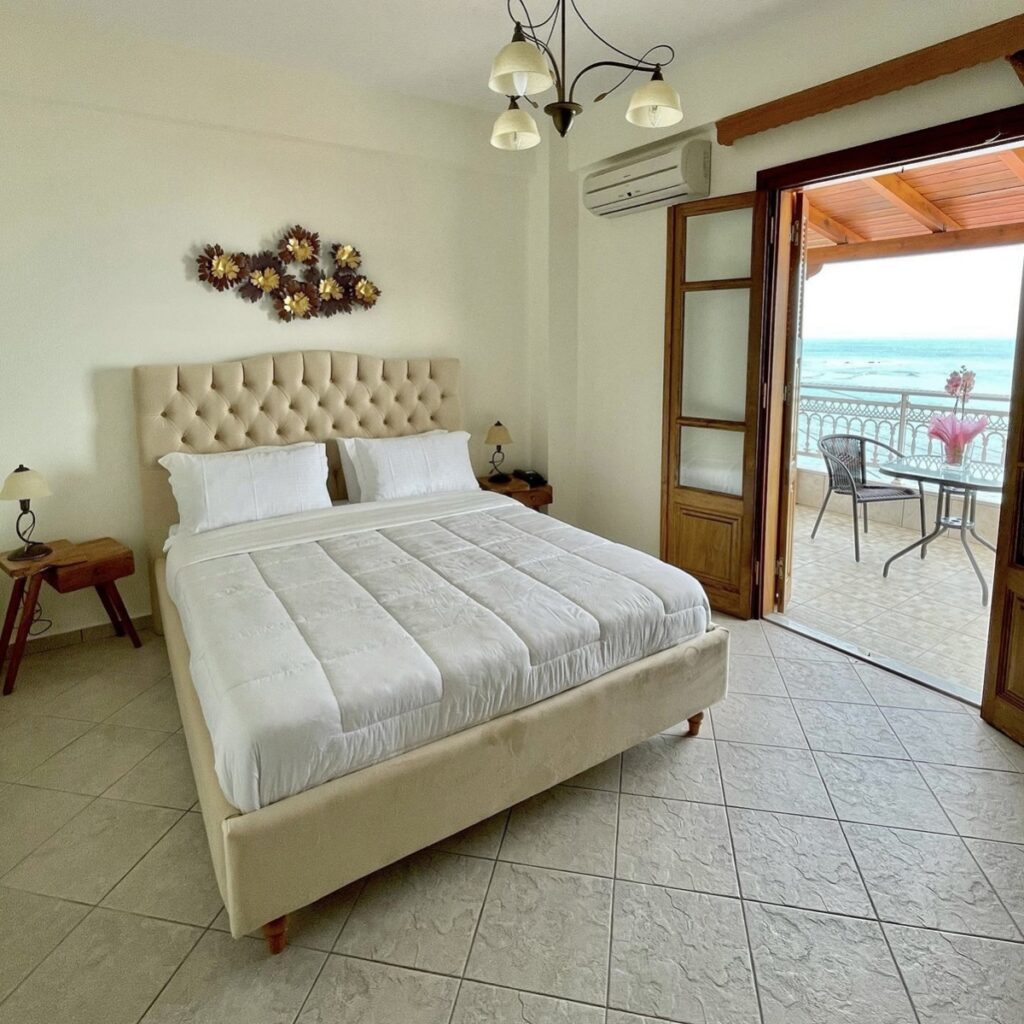
Ζaga Beach Hotel, a two-storey seaside facility, has big rooms with simple décor and soft colors. The sea view is great from this spot, also running a taverna with traditional cuisine. It is a ten-minute drive from Koroni.
Ζaga Mylos Hotel, surrounded by a garden, offers spacious rooms with simple furniture and décor. It is a ten-minute drive from Zaga beach.
" ["post_title"]=> string(56) "Where Byzantium Still Breathes: A Long Weekend in Koroni" ["post_excerpt"]=> string(96) "A guide to sleeping, eating and wandering in one of the Peloponnese's most poetic fortress towns" ["post_status"]=> string(7) "publish" ["comment_status"]=> string(6) "closed" ["ping_status"]=> string(6) "closed" ["post_password"]=> string(0) "" ["post_name"]=> string(53) "weekend-in-koroni-medieval-atmosphere-magical-sunsets" ["to_ping"]=> string(0) "" ["pinged"]=> string(0) "" ["post_modified"]=> string(19) "2025-04-02 18:37:01" ["post_modified_gmt"]=> string(19) "2025-04-02 15:37:01" ["post_content_filtered"]=> string(0) "" ["post_parent"]=> int(0) ["guid"]=> string(30) "https://www.travel.gr/?p=85965" ["menu_order"]=> int(0) ["post_type"]=> string(4) "post" ["post_mime_type"]=> string(0) "" ["comment_count"]=> string(1) "0" ["filter"]=> string(3) "raw" ["post_views"]=> string(5) "41336" } [222]=> object(WP_Post)#5280 (25) { ["ID"]=> int(451280) ["post_author"]=> string(2) "22" ["post_date"]=> string(19) "2025-04-06 14:27:49" ["post_date_gmt"]=> string(19) "2025-04-06 11:27:49" ["post_content"]=> string(15688) "Some places aren't merely visited - they're chosen as settings for memories. These destinations seamlessly blend understated elegance with authenticity, nurturing care with rejuvenation, creating experiences that linger long after departure.
When such a place intersects with spring's renewal and Easter's contemplative traditions, something transcends the typical family getaway: a journey into sensory discovery and the quiet pleasure of togetherness.
In our increasingly disconnected world, finding genuine connection takes on particular resonance. I'm drawn to places where details feel considered rather than curated, where hospitality remains discreet yet human, and where luxury manifests through tranquility and experiences that resonate authentically.
I find myself anticipating the moment when my partner, our children, and I depart for our Easter retreat to Riviera Olympia in the Peloponnese. This coastal haven sits directly on Kyllini's shoreline, where the untouched Peloponnesian landscape meets a horizon that could belong to more distant shores.
The property - resembling a small village built upon the golden sands of this remarkable coastline - opens mid-April, just in time for the Easter season, offering a thoughtful interpretation of this meaningful holiday.
What appeals most is the property's versatility: accommodations that honor comfort without sacrificing connection to place, quiet moments for adults alongside engaging activities for children through their Grecoland program, the meditative quality of sea views contrasted with the verdant forest backdrop, and the understated Elixir Spa, where treatments feel restorative rather than merely indulgent.
For more active moments, options range from horseback riding to water sports, including the admittedly spectacular water features at Olympia Aqua Park, which I suspect will delight my children as much as it might tempt me.
This Easter, we've chosen between two of the property's hotel options: Mandola Rosa with its subtle pink accents, and Oasis, each offering a distinct approach to the coastal experience while maintaining the essential elements of family accommodation.
The central building of Mandola Rosa suggests a private residence rather than a hotel. Around it, villas with private pools and gardens offer an enhanced sense of seclusion. Meanwhile, Oasis features thoughtful outdoor spaces with cobblestone pathways and a well-designed pool complex dotted with small islands and framed by palm trees - a setting that acknowledges both Mediterranean tradition and contemporary preferences.
Both properties seem to understand that true hospitality means striking the right balance between festive abundance and authentic local touches, something particularly important during a holiday stay.
Upon arrival on Good Friday, after settling into our sea-view room - practically designed with dividing doors separating adult and children's spaces - we'll experience the traditional fasting cuisine that characterizes this day in Greek culture, followed by a performance of Karagiozis shadow theater. The day naturally concludes with attendance at the Good Friday service at Saints Anargyroi Church and the Epitaphios procession that winds through the grounds - a moment of unexpected solemnity in a resort setting.
Breakfast here transcends the typical hotel offering, becoming instead a genuine introduction to regional cuisine. Fresh produce, local specialties, handmade pastries, and made-to-order hot dishes create a morning ritual worth anticipating.
At Mandola Rosa's Salon, the white veranda with its signature umbrellas frames views of the pool and central staircase, while Oasis's main restaurant terrace captures the sweeping vista of Kyllini beach - a morning tableau that gently eases one into the day.
Holy Saturday might bring exploration beyond the property - perhaps to Ancient Olympia with its profound historical significance. For those preferring to remain closer, the grounds offer varied options regardless of temperament or energy level.
Children discover entertainment ranging from organized games to performances featuring jugglers and stilt walkers, evening cinema to treasure hunts, while adults find quiet corners for reading or treatments at the spa - a balance that acknowledges the varied rhythms of family travel.
Easter Sunday arrives with its own gentle ceremony. After the previous evening's Resurrection service and the traditional midnight meal, the day unfolds with music and dancing amidst the gardens. The celebration includes the customary red eggs and regional specialties alongside the classic spit-roasted lamb, complemented by evening music at the hotel bar.
These observances connect us not only to the holiday's significance but to something more fundamental: those values worth transmitting to our children - the importance of shared moments and togetherness that resist articulation but must instead be experienced.
The most challenging aspect of a considered stay - whether at Mandola Rosa with its thoughtful design and water views, or Oasis with its refreshing approach to Mediterranean aesthetics - is the inevitable departure.
On Easter Monday, before leaving, we'll make time for a final horse ride through the adjacent forest and a leisurely bicycle exploration of the grounds. And perhaps quietly acknowledge that this Easter in Kyllini might become the beginning of a family tradition worth sustaining - one that balances discovery with the comfort of the familiar.
" ["post_title"]=> string(60) "Easter in Kyllini: A Refined Escape on Greece's Golden Shore" ["post_excerpt"]=> string(118) "Our editor and her family discover the subtle elegance of Mandola Rosa and Oasis, where Easter traditions come to life" ["post_status"]=> string(7) "publish" ["comment_status"]=> string(6) "closed" ["ping_status"]=> string(6) "closed" ["post_password"]=> string(0) "" ["post_name"]=> string(53) "easter-in-kyllini-an-escape-to-mandola-rosa-and-oasis" ["to_ping"]=> string(0) "" ["pinged"]=> string(0) "" ["post_modified"]=> string(19) "2025-04-10 15:21:27" ["post_modified_gmt"]=> string(19) "2025-04-10 12:21:27" ["post_content_filtered"]=> string(0) "" ["post_parent"]=> int(0) ["guid"]=> string(31) "https://www.travel.gr/?p=451280" ["menu_order"]=> int(0) ["post_type"]=> string(4) "post" ["post_mime_type"]=> string(0) "" ["comment_count"]=> string(1) "0" ["filter"]=> string(3) "raw" ["post_views"]=> string(4) "1605" } [223]=> object(WP_Post)#5277 (25) { ["ID"]=> int(24881) ["post_author"]=> string(1) "2" ["post_date"]=> string(19) "2025-03-28 19:53:40" ["post_date_gmt"]=> string(19) "2025-03-28 16:53:40" ["post_content"]=> string(22319) "Monemvasia is a place that defies easy categorization, where the drama of nature meets the intricacy of human history. A towering rock rising majestically from the azure waters of the Aegean, this fortified islet connects gently to the southeastern tip of the Peloponnese by a slender causeway. Approaching Monemvasia feels like stepping into a lost chapter of time, where medieval fortifications, Byzantine chapels, and winding cobblestone paths whisper tales of sieges, commerce, and poetic inspiration.
Known affectionately as the Gibraltar of the East, Monemvasia was established by Byzantine settlers in the 6th century, swiftly emerging as a critical maritime outpost. Over centuries, Venetians, Ottomans, and Greeks have each left their mark, layering architectural elegance with rugged resilience. Strolling the ancient lanes, you'll discover homes carved into cliffs, Venetian mansions echoing past splendor, and the striking Byzantine church of Agia Sofia standing atop the cliff, from where you can savor panoramic vistas of endless sea and sky.
Nature and culture coexist harmoniously here. Golden beaches surround the rock, offering leisurely respite after days exploring historical treasures. The region's culinary traditions, deeply rooted in local olive oil, honey, and wine, enrich the sensory experience, bridging past and present.
A mere four-hour, mostly scenic, drive from Athens, mostly along smooth highways through the Peloponnesian countryside, Monemvasia promises travelers an experience of the timeless beauty and enduring legacy of a town that history could never overlook.
Monemvasia’s name originates from the Greek words "Moni" and "Emvasis," translating as the single entrance, aptly describing the solitary bridge linking the island to the mainland. Crossing this bridge sets the tone for a captivating three-day adventure in a town steeped in history since at least the 12th century.
Just inside the entrance, the residence of celebrated Greek poet Yiannis Ritsos immediately captures attention. Born here, Ritsos (1909-1990) maintained an enduring bond with Monemvasia throughout his life. The poet’s home, soon to open as a municipal museum in mid-2025, was acquired by the municipality in 2021 from his daughter Ere. Personal belongings, furniture, original artwork, and photographs donated by the family will create an immersive tribute to Ritsos' profound connection with the town.
Continuing along the Byzantine-era cobblestone pathway leads visitors into the central square, dominated by the historic Elkomenou Christou church and an old cannon. Facing the church, a beautifully preserved 16th-century mosque hosts the Monemvasia Archaeological Collection. This modest yet intriguing museum showcases architectural sculptures and everyday ceramics unearthed primarily during monument restoration and archaeological surveys. Among these treasures are significant finds from Agia Sofia church and the mid-Byzantine ruins at the Georgoulas residence, dating back to the late 12th century.
From the square, narrow streets extend toward various sections of the medieval fortress, perched approximately 100 meters above sea level on a sprawling plateau. An invigorating 15-minute ascent leads to Ano Poli (Upper City), rewarding visitors with extraordinary panoramic views of the lower town, fortress walls, and expansive sea. Slightly beyond, the remarkable Agia Sofia church sits dramatically atop steep cliffs, adding to the area's majestic allure.
Evenings in Monemvasia invite leisurely dining at traditional tavernas serving regional dishes complemented by breathtaking vistas. The Enetiko Café & Cocktail Bar serves exceptional drinks and scenic perspectives of the sea and town below. Alternatively, Di Porto on the square, near the charming harbor provides an idyllic setting to unwind outside the fortress area.
For food, Within the fortress of Monemvasia, Matoula delights diners with traditional Greek dishes served beneath lush vines overlooking the sea; don't miss their acclaimed saitia. Chrisovoulo pairs regional and international flavors with an extensive wine selection, set in an elegant castle ambiance. Family-run Voltes reinterprets classic Greek recipes using fresh local produce, alongside their own wines and craft beers.
In Gefyra town, Mateo's offers warm hospitality and freshly caught seafood right on the waterfront and Athivoli invites guests into its serene garden, highlighting dishes crafted from premium local ingredients.
Pori beach, stretching over two kilometers, ranks among the most scenic beaches in the Peloponnese. Its expansive sands offer ample space for leisurely walks, energetic runs, or a friendly match of beach volleyball. Gentle waves and shallow waters make it welcoming for swimmers of all ages and abilities. From its shores, visitors enjoy breathtaking views of Monemvasia’s fortress and the historic settlement of Palia Monemvasia. Convenient amenities, including sunbeds, umbrellas, and a beachside canteen, ensure a relaxing day by the sea.
When it's too chilly to head to the beach, a trek to Larnaka Gorge near Molai offers an enchanting alternative. Accessible from the town’s main square, the gorge's trail begins with an inviting cobblestone path, surrounded by lush vegetation and the soothing sounds of birds and flowing water. Four distinct trails range from one to six hours, suitable for most fitness levels. Shorter trails lead visitors to peaceful spots such as Agia Paraskevi church, nestled against the mountain backdrop. Adventurous hikers can tackle the challenging ascent to Mt Kourkoulas, rewarded with panoramic vistas.
Although Paleomonastiro requires a drive of over an hour from Monemvasia, its historical significance and striking location make the journey worthwhile. Set within a cliffside cave overlooking the Evrotas river gorge, this Byzantine monastery is dedicated to the Most Holy Lady, the Theotokos, and Saint Nikitas the Great Martyr, as commemorated by an ancient inscription. Visitors can marvel at meticulously preserved Byzantine frescoes adorning the monastery walls. Paleomonastiro is also a poignant historic site, memorializing the tragic events of 1825, when villagers from nearby Vrontamas, resisting Ottoman forces under Ibrahim Pasha, perished heroically after being trapped inside and subjected to an explosion. The site remains a solemn testament to Greek resilience.
On your third day, before the journey back to Athens, dedicate some time to cultural exploration at Mystras. Situated just five kilometers from Sparta, Mystras is one of Greece's most significant and exceptionally preserved archaeological wonders from the Byzantine era. Founded in the mid-13th century, during the Frankish occupation of the Peloponnese, the fortress town began when William II of Villehardouin constructed his imposing castle atop the steep slopes of Mt Taygetus, known historically as Mystras or Myzithras.
The fortress swiftly evolved into a thriving city, eventually becoming the esteemed capital of the Despotate of Morea, a crucial Byzantine stronghold in medieval and early modern Greece. Mystras remained influential until the early post-Revolution years, after which it was gradually abandoned.
Visitors should leave their vehicles at the second entrance, which provides easy access to Pano Hora (Upper Town), home to Mystras' most remarkable landmarks. The archaeological site is structured across three distinct levels: the fortress itself dominates the peak, with Pano Hora just below, followed by Kato Hora (Lower Town).
Plan your visit early in the morning to enjoy cooler temperatures and wear comfortable walking shoes, as thoroughly exploring the site takes at least two hours. Remember to carry water to stay refreshed during your adventure. While wandering Mystras' stone-paved alleys, ancient monasteries, and Byzantine churches, visitors experience an immersive sense of daily life from centuries past. Ascending to the highest point rewards explorers with panoramic views of the Peloponnesian landscape.
After your enriching exploration, replenish your energy at one of the area's excellent tavernas, celebrated particularly for their succulent meat dishes. In Mystras, Chromata Restaurant in Pikoulianika provides Mediterranean cuisine within a beautifully restored 1930s tavern setting. Palaiologos, in the town center, specializes in hearty grilled dishes and authentic Greek flavors. Taverna Pikoulianika combines classic Mediterranean fare with warm hospitality in a scenic village atmosphere. Ktima Skreka has offered home-style Greek meals made from local Laconian produce since 1935. Veil Bistrot serves coffee and casual bites paired with panoramic views, while O Ellinas offers diners flavorsome traditional dishes in an inviting family-run setting.
" ["post_title"]=> string(41) "A Floating Fortress: 3 Days at Monemvasia" ["post_excerpt"]=> string(119) "Deep in the Peloponnese, an ancient rock city defies gravity and time, offering refuge in its maze of medieval passages" ["post_status"]=> string(7) "publish" ["comment_status"]=> string(6) "closed" ["ping_status"]=> string(6) "closed" ["post_password"]=> string(0) "" ["post_name"]=> string(29) "three-day-break-at-monemvasia" ["to_ping"]=> string(0) "" ["pinged"]=> string(0) "" ["post_modified"]=> string(19) "2025-03-30 14:37:34" ["post_modified_gmt"]=> string(19) "2025-03-30 11:37:34" ["post_content_filtered"]=> string(0) "" ["post_parent"]=> int(0) ["guid"]=> string(30) "https://www.travel.gr/?p=24881" ["menu_order"]=> int(0) ["post_type"]=> string(4) "post" ["post_mime_type"]=> string(0) "" ["comment_count"]=> string(1) "0" ["filter"]=> string(3) "raw" ["post_views"]=> string(5) "23492" } [224]=> object(WP_Post)#5259 (25) { ["ID"]=> int(419309) ["post_author"]=> string(2) "17" ["post_date"]=> string(19) "2024-12-10 22:54:42" ["post_date_gmt"]=> string(19) "2024-12-10 19:54:42" ["post_content"]=> string(14724) "On an island that has commanded center stage in the Greek world since prehistoric times - from the Minoan era through Hellenistic years and the Roman Empire, to modern Greek history - Crete has cultivated significant settlements and given birth to crucial chapters in our country's economic, cultural, and political narrative.
For those passionate about archaeology and history, for seekers of our past's how and why, few places today offer such compelling interest, possessing a series of archaeological sites and museums capable of narrating in exquisite detail the yesterday and today of this extraordinary homeland.
In Crete's northwestern edge lies ancient Kydonia, situated precisely where modern Chania stands today, specifically on Kasteli hill. In fact, most of the ancient settlement now lies buried beneath contemporary Chania. This was a place that experienced substantial economic growth during Roman times and evolved into one of Crete's most influential commercial centers.
Today, visitors to ancient Kydonia's archaeological site can view significant discoveries unearthed during excavations, including tombs, Minoan-era palace ruins, ceramic pieces, Linear B script inscriptions, mosaics, statues, sculptures, and an important collection of frescoes. Most artifacts are housed in Chania's Archaeological Museum, revealing that this area - where today's beautiful, bustling Chania stands - supported a significant settlement with remarkable economic and cultural development since Neolithic times.
Approximately 15 kilometers from Chania spreads Ancient Aptera, which ranked among Crete's most significant city-states. This beautiful, powerful, and wealthy site, constructed at 200 meters altitude, acquired tremendous naval and commercial strength during the Minoan period. However, Aptera continued to exist through Hellenistic, Roman, and Byzantine periods, albeit in decline. Commanding spectacular views over Souda Bay and two mighty ports - Minoa (today's Marathi) and Kissamos - the city-state reached its zenith in early Hellenistic times, with Aptereans renowned as exceptional archers who served as mercenaries, bringing wealth and glory to their homeland.
Near today's village of Rodovani in Chania stood the harbor of the Doric city Elyros, which experienced significant economic and commercial prosperity during Hellenistic, Roman, and Early Byzantine periods. It's worth stopping at the site of the famous Asclepieion of Lissos, where patients arrived from every corner of Crete seeking healing in the area's therapeutic waters. Though the Asclepieion was destroyed by a powerful earthquake, visitors can still admire the beautiful mosaic floor featuring animal and geometric patterns. While in the area, explore the Lissos valley to see the Roman-era cemetery and capitals emerging from dense undergrowth.
A significant commercial and naval power in Crete during Hellenistic times, ancient Falasarna served as Polyrrhenia's port, experiencing its greatest flourishing from the 4th to 3rd century BC. Today, visitors can still see traces of the ancient walls encircling the hill where Falasarna's acropolis stood, while carved into the rocks at the ancient settlement's entrance remains a throne that strongly draws visitors' attention. Equally impressive are two towers standing at the harbor's northern and southern sections, dating back to the 4th century BC.
In the Halepa district stands the new Archaeological Museum of Chania, housed in an ultra-modern building operating on bioclimatic principles, respecting environmental sustainability. The museum showcases 3,500 archaeological artifacts that reveal Crete's magnificent, rich, and extensive history from prehistoric times through the Byzantine era. The Prehistoric and Historic periods stand out, presented through discoveries from the Chania region, along with the section titled "Caves at the Dawn of the Minoan World" which focuses on the final phase of cave habitation and western Crete's strong connections with the Cycladic island complex. The collection includes hundreds more exhibits revealing significant and fascinating information about daily life among local residents in Crete's various city-states, from ancient Minoan fishermen to farmers and women.
At Chania's harbor entrance, you'll find the Maritime Museum of Crete, located precisely at the entrance of Firkas Fortress, housing significant exhibits from Greece's naval history in general and Crete's in particular - an island that played a decisive role in our country's naval evolution and progress. A large portion of the exhibits arrived at the museum through donations from the Hellenic Navy. The Maritime Museum also includes a special space in the eastern Neoria of the city, housing the Museum of the Minoan Ship.
This is an exhibition space dedicated to renewable energy sources and their vital importance for our environment and planet. The artificial lake of Agyia and its Small Hydroelectric Plant were transferred to the Region of Crete in 2011, leading to a series of renovation projects, lakeside pedestrian paths, and environmental improvements around the plant using natural materials compatible with the area's character and landscape.
Just outside the city in Souda's Industrial Park stands Greece's first museum entirely dedicated to Typography. This represents the personal vision of Yannis Garedakis, founder of "Haniotika Nea" newspaper, and his wife Eleni, developing across two main wings and three additional halls covering approximately 1,500 square meters. Through a series of rare and interesting exhibits, plus numerous interactive activities, you'll discover typography's connection to Crete's local history and learn the secrets of an invention that played its own significant role in our world's progress.
A house-museum that represents far more than a characteristic 19th-century mansion, Eleftherios Venizelos's residence falls into the category of documentary houses, as it chronicles the life of a significant personality and preserves authentic objects, mostly in their original positions. The former Greek Prime Minister's residence comprises three floors with 18 visitable points along its museum route, all containing authentic museum material. Within this highly revealing museum's spaces, visitors gain knowledge and truly connect with the past, not only of Eleftherios Venizelos himself but also of Crete through a journey of knowledge and memory into modern Greek history.
Read also:
First Time in Chania? Here’s What Not to Miss
The 6 Best Chania Hotels with Stunning Views
Recently crowned first in the London Times' "Top 25 Lesser-Known Greek Islands," Alonnisos emerges as a sanctuary where nature still dictates the rhythm of life. Here, travelers seeking refuge from the modern world find themselves immersed in a tableau of old-world tranquility: stone villages perched on hillsides, crystalline waters that harbor ancient secrets, and paths that wind through olive groves to reveal sudden, breathtaking vistas of the Aegean.
At the heart of the island's allure lies its National Marine Park, established in 2003 as a testament to conservation over commerce. The waters here serve as one of the Mediterranean's last havens for the enigmatic monk seal, while an intricate tapestry of marine life thrives beneath the surface, creating what marine biologists consider one of Europe's most pristine aquatic ecosystems.
The island's evolution into an eco-destination wasn't left to chance. In 2015, Alonnisos made headlines as the first Greek island to ban plastic bags – a decision that would later inspire similar initiatives across the Mediterranean. This pioneering spirit, coupled with a steadfast commitment to preserving its unspoiled character, has earned the island growing recognition. The latest accolade comes from Lonely Planet, which has just named Alonnisos among its 23 best destinations for solo travelers in 2025, citing its rare combination of wilderness and authenticity.
The Hora, or main town, Patitiri (which means wine press), is linked to the island’s wine production, something that Alonnisos was famed for from antiquity until the mid-1950s, when unfortunately 'phylloxera', a pest that eats away at the roots of vines and withers its leaves, destroyed almost all of Alonissos’s grapes. Another disaster beset the town in 1965 in the form of a devastating earthquake. It had to be almost completely rebuilt thus its current newish architectural style. Upper Hora’s old world mazey cobblestone streets and low-built houses are gorgeous to ramble around. While hiking up to the town’s highest point is well worth the effort, to enjoy a full view of the picturesque village, whose close-knit houses were built to create a fort-like effect, protecting the villagers against marauding Mediterranean pirates.
The history of Alonissos is in fact anything but little but here's a mini synopsis. Evidence of human activity at Cyclops’ cave on the islet of Gioura and Kokkinokastro stretch back 9,000 years to the Mesolithic and early Neolithic ages. Later Bronze age Minoan settlers lead by the legendary hero Stafylos (the term for Grape and an indication that the island was becoming a major hub for wine making) colonised.
Hiking across the island you'll come across ruined watch towers, vestiges of churches and monasteries and the rubbled remains of settlements destroyed by natural disasters and waves of invaders. Kokkinokastro is touted as being the burial place of Peleus, the father of the mighty Achilles.
The most renowned beach on the island, known for its distinctive shape, bright-blue crystal waters, has a long, pebbled coastline. Part of the seafront has beach bars that rent umbrellas and sunbeds, but there’s also plenty of space to lounge on freely.
A small bay surrounded by pine trees that reach the sea, with a pebbled beach. It has beach bars and a very exciting seabed, ideal for snorkelling in its green-blue waters, which is why it attracts many visitors.
An impressive setting with a kaleidoscope of colors: bright blue waters, golden sand, green trees and red rocks. It is only reachable by steps (60 of them) so it’s not ideal for people with mobility issues. It has a beach bar with sunbeds and umbrellas for rent, and warm shallow waters.
Located near Hora and Patitiri, the fine-sand beach has blue-green, shallow waters and trees that encroach right to the sea's edge. Ideal for families with young children with an organized section with loungers and umbrellas, but as with many beaches on Alonnisos there’s plenty of space away from the beach bar for those seeking a more peaceful plunge.
As you approach the beach through the woods, you’ll see its bright blue waters and white pebbles. It’s a serviced beach with beach bars renting sunbeds and umbrellas.
A tranquil, sandy beach with some fine pebbles, next to Vrisitsa beach. It’s easily accessible via a paved road, but there’s also a dirt-road leading there from Alonia. On a hill above the beach there’s an old, restored windmill.
A popular beach that’s easily reachable via a paved road from Hora. It’s serviced, with tavernas, bars and beach bars that rent umbrellas and sunbeds.
Valitsa is a small, low-key beach that’s almost secluded and covered in white pebbles. It’s near Megalos Mourtias, which is reachable via a short trail.
The island is ideal for outdoor, nature-based activities like cycling, kayaking, sailing and hiking. You can rent gear and receive training by highly skilled instructors. In addition, if you’d like to discover the hidden beauties of Alonnisos, you can rent a boat and explore the other nearby Sporades islands or, alternatively, take an organized day cruise.
Alonnisos Underwater Museum is ideal for skilled swimmers who love diving. It is located across from Alonnisos, near the island Peristera, at about a 30 meter depth. The Underwater Museum opened in 2020 and is considered the oldest and most important shipwreck open to the public in the world. It’s one of the largest Classical era shipwrecks, 30m long and 10m wide, and is estimated to weigh more than 150 tonnes. It dates back to approximately 425-450 BC and its size suggests it was among the largest merchant ships of its time, which is said to have been carrying around 3,000 wine amphorae from Skopelos. The museum is open to recreational divers, who can explore the site with the guidance of an experienced, certified diver. Be aware that to be able to dive at the museum you need to at least be an Advanced Open Water Diver.
The National Marine Park of Alonnisos and Northern Sporades is the largest marine park in Europe, and can be visited by boat. Opened in 2003, it is home to the Mediterranean Monk Seal and many other protected species. More than 80 bird species and 300 fish species, as well as various animals and reptiles, with the Mediterranean monk seal being the most prominent among them, live at the Marine Park. The Mediterranean monk seals live in sea caves along the rocky coast, but it’s not certain you’ll see one. It’s more probable that you’ll see dolphins playing in the sea. A tour of the park usually includes visits to secluded beaches that are not accessible by land. During your tour, you’ll also visit the small neighbouring islands, each one a unique experience:
Kira-Panagia, also known as Pelagonisi, is the largest uninhabited island of the National Marine Park of Alonnisos and Northern Sporades. It’s named after the monastery of Geniseos tis Theotokou that is located at its top.
The second largest island in the Marine Park, Peristera has two natural harbours, Peristeri and Vasiliko, and it also is home to many lovely beaches.
Skantzoura is an islet located between Alonnisos and Skyros and home to seagulls and Eleonora’s falcons. There was a fortress there during Hellenistic times, and there are ruins of farm houses. At the island’s tallest spot, there’s an abandoned monastery with an amazing view.
Psathoura, a volcanic island with low vegetation is reachable via a short swim. Visit to admire the wild beauty of its beach, since the golden sand is scattered with volcanic rocks. In addition, there’s an impressive 29m tall 19th century lighthouse on the island.
Alonissos is great for hiking. There’s a widespread trail network on the island, covering almost the entirety of the island, except the very rough, inaccessible northern part. The routes through thick vegetation, scattered with chapels, and with amazing sea views, make the hikes a one-of-a-kind experience. One stunning route we recommend is the Kastanorema Gorge, at the northeast part of Alonnisos.
The Historical and Folklore Museum is housed in an impressive stone building in Patitiri. On the first floor, ancient Greek heirlooms, guns, and objects found in warships and pirate ships are on display. You can also see traditional everyday objects and various tools, like a barber’s razor and an olive press, as well as traditional costumes.
Alonissos is also home to the International Academy of Classical Homeopathy, where medicine students and other health professionals travel from across the globe to receive training from the godfather of homeopathy, Professor George Vithoulkas and work towards acquiring a Classical Homeopathy Diploma.
Alonissos is a foodie’s paradise. The flavours you’ll find here are unpretentious and authentic, with freshly sourced local and seasonal ingredients offered up in various flavoursome dishes. The famous white Alalunga Alonnisos tuna, prepared at almost every tavern on the island, the fresh fish, lobsters, langoustines and shrimp straight from the fishing boats are some of the island’s characteristic delicacies, while fish soup and lobster pasta is available almost everywhere. Alonissos’ local pies (pittes) are very popular, mostly prepared in a pan (octopus pie, cheese pie, twisted spinach pie). The “hamalia” a wedding dessert, is an almond cookie wrapped in filo and sprinkled with sugar, with lemon or bitter orange flavour, spiced with cinnamon, clove and nutmeg. Other traditional desserts include fouskakia (fried dough balls) and soultana (a type of custard pie). Alonissos’ winemaking culture may have died down, but its modern winemakers continue to produce small quantities of wine for private consumption from the Roditis, Vradiano, Limnio, Mavrokountoura (Mandilaria) and Moschato grape varieties.
On the small port of Steni Vala, here you’ll find fresh fish from the owner’s caique and vegetables plucked straight from their garden. Well-made traditional dishes, many including fish (scorpionfish with lemon juice, lobster pasta, grilled mackerel), fried stuffed courgette blossoms, penne with Alonnisos tuna and Alonnisos cheese pie with homemade filo dough are some of the must-try specialties.
Steni Vala
A taverna that hangs over the water, with a mesmerising sea view, this scenic place serves a wonderful array of mainly fish and seafood dishes including one starring the local tuna, served plain or with tomato. The tuna pasta, the garfish with garlic sauce, and the crispy fried fish are all delicious, as are the char-grilled beef patties. The menu also includes a wide selection of meze dishes that pair beautifully with tsipouro.
Patitiri
Within a complex next to the sea that includes a tavern, with a café and a beach bar, in a verdant area within an olive grove, the homonymous tavern mainly serves fresh fish (both grilled and fried) and seafood. The menu also includes Mediterranean dishes (homemade shrimp ravioli, seafood linguine) and modern Greek cuisine (shrimp orzo, risotto with apaki and artichokes). It’s one of the few places where you’ll find some particularly well made dishes representative of the island’s unique culinary tradition, such as octopus pie, wild greens pie, onion pie, twisted spinach and cheese pie, all of them fried, soutzoukakia with local artichokes and Alonnisos tuna pasta. They serve local wine.
Leftos Gialos
Soft, minimal lines inspired by traditional architecture set the tone here, while high-end furnishings meet earthy tones and natural textures to create a calming atmosphere. The hotel is made up of 15 suites, each with sweeping views of the Aegean and a distinct decorative identity drawn from nature. There are two main pools with swim-up deck loungers, a small additional pool, and a snack bar.
Palio Chorio
Set against the Aegean blue of Palio Chorio and tucked among timeworn village houses, this bright white boutique stay includes three unique suite-apartments and eight modern rooms. It channels old cultural influences and traditional design, layered with modern comforts and thoughtful touches. The result feels both personal and quietly elegant — like staying in a well-loved private villa.
Palio Chorio, Alonissos
Sprawling across 27 acres of lush greenery beside the sandy beach of Chrisi Milia, just five kilometres from Patitiri, this hotel complex unfolds amphitheatrically to offer panoramic sea views. Indoors and out, the spaces are inviting — from the poolside bar with its deep armchairs and the modern leather-furnished lobby, to the welcoming rooms and sea-view suites, some with private pools or Jacuzzis. There's also a beach bar, spa centre, gym, and a restaurant with a range of culinary options.
Chrisi Milia
Just 150m from Roussoum Gialos beach in Patitiri, this fully renovated eco hotel is both stylish and sustainable. Rooms are airy and filled with light, with balconies overlooking the sea or mountain. Family rooms are available, and every unit is equipped with anatomical mattresses and pillows, air conditioning, and free WiFi. A generous breakfast made with local ingredients and traditional Greek recipes is served daily in the bright breakfast lounge.
Patitiri
If elegance and downtime top your list, this is your place. Pamper yourself with a massage or a full-body treatment, then enjoy the outdoor pool, Jacuzzi, or sauna. The residence also includes free WiFi, concierge service, and an on-site salon. It’s about a 10-minute drive from both Patitiri and Palio Chorio.
Provincial Road Patitiri–Alonissos
" ["post_title"]=> string(36) "A Guide to Alonnisos: The Quiet Isle" ["post_excerpt"]=> string(130) "In Greece's Sporades archipelago, an island teeters between pristine solitude and conscious discovery. Here's all you need to know" ["post_status"]=> string(7) "publish" ["comment_status"]=> string(6) "closed" ["ping_status"]=> string(6) "closed" ["post_password"]=> string(0) "" ["post_name"]=> string(76) "alonnisos-island-mini-guide-the-best-things-to-see-do-in-an-ecological-oasis" ["to_ping"]=> string(0) "" ["pinged"]=> string(0) "" ["post_modified"]=> string(19) "2025-03-25 10:58:17" ["post_modified_gmt"]=> string(19) "2025-03-25 07:58:17" ["post_content_filtered"]=> string(0) "" ["post_parent"]=> int(0) ["guid"]=> string(31) "https://www.travel.gr/?p=135709" ["menu_order"]=> int(0) ["post_type"]=> string(4) "post" ["post_mime_type"]=> string(0) "" ["comment_count"]=> string(1) "0" ["filter"]=> string(3) "raw" ["post_views"]=> string(5) "27878" } [226]=> object(WP_Post)#5272 (25) { ["ID"]=> int(434137) ["post_author"]=> string(2) "19" ["post_date"]=> string(19) "2025-02-23 11:41:58" ["post_date_gmt"]=> string(19) "2025-02-23 08:41:58" ["post_content"]=> string(50902) "Today's most up-and-coming Cycladic tourist magnet, Paros is stepping into the global spotlight for all the right reasons. Known for its unpretentious charm glossed with a layer of glamor, the island offers a refreshing alternative to its more well-glazed neighbors. Its villages, a characteristic maze of whitewashed walls, blue shutters and blooming bougainvillea, spill into harbors where fishing boats and sleek yachts sit side by side. Golden beaches stretch lazily into shallow, crystal-clear waters, while inland, rolling hills hide ancient paths and quiet olive groves.
It’s not just the scenery drawing people in - Paros is evolving. Sophisticated dining, contemporary art spaces, shops selling designer gear and stylish hotels have put it on the radar of those seeking something authentic yet elevated. Whether it’s a slow morning by the sea, a sundrenched afternoon exploring Lefkes, or a lively evening in Naoussa, the island offers an experience that feels effortless. As Paros continues to redefine itself in 2025, these 10 hotels capture its essence, each offering a different way to live the island’s understated magic.
Spacious suites and villas combine Cycladic minimalism with natural textures, and guests have private terraces, some with infinity pools, and uninterrupted views of the Aegean. The clifftop infinity pool provides a serene focal point with phenomenal vistas, while experiences like private boat trips, winery visits and guided hikes connect guests with the island’s nature and culture. Parocks restaurant serves Cycladic-inspired cuisine made with fresh local ingredients and complemented by hypnotic sunset views. At the spa, sophisticated beauty and body treatments and packages enhance the peaceful escape.
Naoussa
This boutique retreat is surrounded by lush olive and citrus groves, offering Cycladic rooms, suites and maisonettes with private terraces and understated elegance. The pool, framed by palm trees, is a tranquil centerpiece, while activities like kite surfing, scuba diving, hikes and cycling can be organized. The intimate Nefeli Restaurant offers Mediterranean cuisine with modern twists, with dishes, signed by acclaimed Michelin-star chef Lefteris Lazarou focusing on locally sourced produce. At the open-air Yria spa, guests can enjoy treatments based on ancient Greek healing techniques and modern practices, that treat the body following a soul-soothing holistic approach.
Parikia
This all-suite design hotel combines striking geometric architecture with calming earth tones and natural textures. Modern Greek art pieces sit alongside objets d’art by leading European designers and impressive ceramics from the Marrakech based studio of LRNCE. Suites and villas have private terraces or plunge pools, with expansive views of the surrounding landscape. All day, guests can lounge by the cross-shaped pool with rocks on either end of it and order light meals from Circe bar or Mr. E restaurant. Paron Restaurant, led by twice awarded with two Michelin stars and a Michelin Green star chef Thanos Feskos, who reimagines Greek cuisine with dishes rooted in local ingredients and sustainable ethics. At the Elios Spa, guests can indulge in holistic treatments inspired by the Aegean islands.
Kolymbithres
Designed to reflect effortless comfort and style, this beachfront hotel features modern signatire suites with private pools, decorated with neutral palettes, soft lighting, and private outdoor spaces. The sleek infinity pool, bordered by cabanas, is a central spot for relaxation, while the sprawling beach is just steps away. Rada restaurant brings a fresh perspective to dining, showcasing the refined culinary artistry of Michelin star chef Gikas Xenakis, showcasing Aegean-inspired cuisine with a focus on fresh seafood and Mediterranean flavors. Chillout time is to be enjoyed at the outdoor spa.
Agioi Anargyroi - Naoussa
This eco-conscious beachfront property celebrates 'slow-motion luxury' and integrates sustainable design with minimalistic aesthetics, using organic materials and solar energy. Rooms are on various lkevels - garden, upper level and even rooftop, looking out to the water. Located at buzzy Punda beach, this place is ideal for fans of extreme water sports, especially kitesurfing and windsurfing, but there are also experiences like yoga and guided eco-tours on offer. The poolside restaurant bar serves a rich breakfast and all day snacks and cocktails, with a 'sunset show' at magic hour.
Punda Beach
This adults-only retreat is set on a hillside above Agia Irini, offering panoramic views of the Aegean but significantly out of its reach, so not ideal for beach lovers but perfect for anyone seeking real seclusion. Spacious seaview suites and rooms feature private pools or hot tubs, Bohemian-chic textures and bespoke, hand-crafted wooden furniture by Mythic. Wellness is a big deal here, with the retreat offering a combination of treatments at the Cavo cave spa and nutritious food options as well as fitness at the on-site gym and yoga at the Somana Flo Studio. Dinner with mesmerizing views is served at the Muzzein Cliffside Experience restaurant, while the all-day poolside bar keeps guests happy with delicious meals and cocktails. Sustainability is key here. Mythic’s Paros Gaia Project, launched in 2022 with La Tatti, drives its commitment to sustainability through renewable energy, resource conservation, refillable bottles, and eco-friendly materials. Efforts also include waste management, recycling, and reducing plastic use.
Agia Irini, South-West of Paros
This expansive resort, just a few minutes walk from watersports-centered Punda beach, is designed for ultimate relaxation. Featuring two large pools, lush gardens, and stylish accommodations that blend nature-inspired decor with modern comforts. Suites, some with freshwater pools, have sea or garden views. Guests can participate in culinary workshops or guided island tours. Dining options include Galazia Hytra, in collaboration with Michelin star restaurant Hytra in Athens, where innovative Greek cuisine with an international twist is paired with exceptional wines, and Gaia restaurant which offers island-inapired cuisine. At the Anassa Spa by Idolo, treatments like stress-relieving massages and hydrating facials ensure complete pampering.
Punda Beach
This waterfront retreat by Marriott's Luxury Collection is a modern take on Cycladic architecture, with neutral-toned suites bedecked with bespoke furnishings and private terraces. The infinity pool overlooks Naoussa Bay, where the hotel also has its own private Beach Club, and makes the most of its view by also having a Stargazing Deck. Parostiá, the on-site restaurant, presents Paros-inspired dishes with a creative twist made by chef Yiannis Kioroglou, while guests can also dine at two other restaurants. Guests can unwind at the Elixir Spa, which offers sea-inspired treatments like algae wraps and salt scrubs.
Naoussa
Modern and vibrant, this boutique property spoils guests with its stylish rooms and suites, many with private terraces and sea views. The chic infinity pool serves as the hotel’s social hub, while activities such as snorkeling trips and private yoga classes cater to adventurous guests. The hotel's restaurant, Matsuhisha Paros, is the first of its kind to bring Nobu-style cuisine to guests, while for Mediterranean food guests can dine at the Thymes all-day concept restaurant and sooth their sweet tooth at Figs Pastry Shop. The Avant Mar spa with its circular pool specializes in water therapies (Water Circuit) as well as ancient healing-inspired beauty and relaxation treatments.
Piperi Beach
In northern Paros above Kolympythres beach, this boutique retreat made up of private suites exudes understated elegance with its earthy interiors, whitewashed suites and sea-view terraces. Easy access to the nearby coastlines (to Kolympithres, Monastiri and Santa Maria beaches) and a well sized infinity pool add to its charm. Hikers will also enjoy several walking routes that start nearby. Kymo is more about elegant simplicity and self-sufficiency, with accommodations having their own kitchenettes for on-site cooking to be enjoyed on private balconies overlooking the water.
Kolympithres beach
" ["post_title"]=> string(61) "A Deliberately Quiet Ascent: The 10 Hotels Defining Paros Now" ["post_excerpt"]=> string(123) "The best places to stay on an island where serene landscapes, coastal beauty, and modern refinement create the ideal escape" ["post_status"]=> string(7) "publish" ["comment_status"]=> string(6) "closed" ["ping_status"]=> string(6) "closed" ["post_password"]=> string(0) "" ["post_name"]=> string(17) "paros-best-hotels" ["to_ping"]=> string(0) "" ["pinged"]=> string(0) "" ["post_modified"]=> string(19) "2025-02-27 14:00:16" ["post_modified_gmt"]=> string(19) "2025-02-27 11:00:16" ["post_content_filtered"]=> string(0) "" ["post_parent"]=> int(0) ["guid"]=> string(31) "https://www.travel.gr/?p=434137" ["menu_order"]=> int(0) ["post_type"]=> string(4) "post" ["post_mime_type"]=> string(0) "" ["comment_count"]=> string(1) "0" ["filter"]=> string(3) "raw" ["post_views"]=> string(4) "6353" } [227]=> object(WP_Post)#5256 (25) { ["ID"]=> int(415532) ["post_author"]=> string(2) "19" ["post_date"]=> string(19) "2024-11-14 17:57:38" ["post_date_gmt"]=> string(19) "2024-11-14 14:57:38" ["post_content"]=> string(45911) "Exarchia (with an extra letter - 'Exarcheia'- in Greek), Athens' legendarily 'anarchic' neighborhood known for its spirited counterculture, is also a culinary playground where diverse flavors and buzzy creative settings thrive. Each venue reflects the district's unique energy and culinary evolution from traditional tavernas celebrating Greece’s gastronomic heritage to trendy wine bars and inventive fusion spots.
Whether you are craving Mediterranean classics, vegan delicacies, or globally inspired plates, there's something for every palate, seasoned with an edgy charm that only this neighborhood could deliver. Join us as we explore the best places to eat here now.
Pharaoh’s defiant modern Greekness and back-to-roots approach embrace the national tradition with open arms. It blazes out with a dedication to traditional Greek cuisine, presented with a modern narrative that respects the integrity of its ingredients. It’s a must-visit for those seeking a heartwarming taste of Greece combined with cool minimalism, quirky decor, and excellent DJ sets with vinyl records. The essence of Pharaoh’s menu is an homage to Cretan “cucina povera”. This is a philosophy of using minimal, high-quality ingredients to create dishes that are simple yet profoundly flavorful. Chef Papoutsakis certainly draws inspiration from his Cretan roots. He offers a menu that pairs the island’s culinary traditions with his heartful and sophisticated touch. The wine list focuses on minimal intervention wines, sourced from organic or biodynamic grapes, to complement the meal. Ingredients are sourced directly from small Greek producers, ensuring freshness and quality in every dish.
Solomou 54, Exarcheia
This restaurant’s Mediterranean-inspired menu is a treat for the senses, made using premium Greek ingredients and served in a relaxed, welcoming atmosphere. Start with juicy beef patties paired with truffle-infused mashed potatoes or enjoy the grilled seabass with fresh greens. The warm salad with goat cheese and glazed figs, alongside comforting dishes like baked eggplant with feta and grilled salmon, adds variety to the offerings. The pizzas are a standout, especially the truffle oil pizza with its crisp crust and rich flavor. Other favorites include the goat cheese and arugula pizza, the Mediterranean-style, and the classic Margherita with a hint of mint. Even kids have their favorites here, like the crispy potato 'rocks', making it an ideal spot for families and food lovers alike.
Emmanouil Benaki 94
Situated below Strefi Hill, this beloved eatery in a former nursery school exudes an unpretentious charm reminiscent of old Athens, surrounded by greenery. The lively garden space draws locals and visitors alike, offering a relaxed and welcoming atmosphere. The menu is focused on shareable meze plates with generous portions, highlighting traditional flavors with modern touches. Expect an array of Greek cheeses, crisp salads, and regional delicacies, along with fresh seafood, quality meats, and memorable dishes like Karpathos-style macaroni and ouzo-spiced meatballs. Service is attentive, knowledgeable, and friendly.
Methonis 66
This vibrant vegan food bar in Exarcheia serves as a cultural crossroads, showcasing a menu inspired by Kurdish, Palestinian, Syrian, and Greek influences. Founded in 2021 by Sanem and Zelal, it offers affordable, health-focused options with highlights like Turkish gozleme, filled crepes with greens, mushrooms, and spices, as well as red lentil soup, vegan Smyrna meatballs, and the traditional ekmek dessert. Freshly made drinks, including zingy lemonade, kefir, and a rich, unique tahini hot chocolate, round out the warm, community-centered experience.
Themistokleous 43-45
The chef brings his mother’s cherished recipes and a wealth of experience from years in the restaurant business in Lebanon to his newly launched vegan shop, Vicky’s. Named after his beloved dog, a gift from a homeless man in Lebanon, Vicky’s offers a menu centered around fresh, handmade pita, baked in a traditional saj oven, infusing the air with inviting Mediterranean aromas. The soy mince vegan lahmacun has quickly become a bestseller, and a summer pita with watermelon and feta is set to debut soon, adding a cool, refreshing twist to the menu’s bold, spiced flavors.
Arachovis 29
Cookoomela stands out as a pioneer in transforming the traditional Greek souvlaki by offering a completely vegan version - possibly the first worldwide - that even non-vegans consider among the best. Shifting from souvlaki’s meat-based roots, Cookoomela, named after a local term for a type of mushroom, fills its wraps with inventive options like mushroom “gyros” and homemade sauces, such as fresh herb sauce and organic soy yogurt. Their commitment to sustainability shines through in the use of biodegradable packaging, underscoring an environmentally conscious approach.
Themistokleous 43-45
Located in Exarchia, Hayat offers a true taste of Kurdish cuisine in a relaxed, inviting setting. The open kitchen adds an engaging element, allowing diners to watch as each dish comes together, from thin, crispy lahmajoun to toasted buns. Highlights include the robust eggplant salad with garlic, savory mercimek kofte, and spicy Adana kebabs. The menu’s centerpiece is the handmade, boat-shaped peinirli, topped with options like fragrant kebabs or a perfectly cooked egg, while lighter bites like the pastourmas cake complete the experience. Hayat’s authentic flavors and warm ambiance make it a local favorite for Eastern specialties.
Ippokratous 78, Exarchia
Lacantina, a quaint eatery established in 2016 in Exarcheia, is inspired by the owner's travels in Asia and Europe. A canteen that doubles as a compact restaurant, it speciallizes in ethnic street food, and takes one on a culinary journey from Lebanon to India. Highlights include uniquely prepared falafel with fava beans, as made in Egypt, and unconventional salads like that with mung beans with goat cheese and balsamic dressing. The bestseller, the Chicken Curry Wrap, is a must-try, with chicken cooked in coconut milk with mushrooms and peppers. Also, the daily selection of seven velvety soups, ranging from classic celery root to chestnut soup with cognac, offer feel-good warmth on a cold day.
Zodochou Pigis 24 & Koleti
In Exarcheia, this eatery brings a taste of Russian culinary tradition with its expertly crafted piroski, drawing in locals and visitors alike. Known for a fluffy, melt-in-your-mouth texture, the piroski selection here suits every craving. The menu includes crispy, fried versions stuffed with savory fillings like meat, potato, or mushrooms, as well as lighter, baked options for a softer bite. During the summer, a popular choice is the diet-friendly wholemeal piroski filled with mizithra cheese, offering a wholesome twist on the classic. For those with a sweet tooth, the berry-filled piroski delivers a burst of natural sweetness, complemented perfectly by refreshing granitas that make an ideal pairing for warm days.
Stadiou 27 & Solonos 81
Since 1970, I Lesvos on Emmanouil Benaki Street has drawn a diverse crowd to its charming setting, where an old piano, vintage jukebox, and mosaic-tiled floor set the scene for an exceptional meze experience. This ouzeri celebrates the traditional flavors of the Aegean with a focus on fresh fish and seafood, light golden frying, and homemade marinades that highlight the best of local ingredients. Guests are treated to a daily selection of freshly baked bread and flavorful dips, along with a wide array of Mytilene ouzo, offering a true taste of Lesvos. With its warm, authentic atmosphere, I Lesvos remains a staple for anyone seeking genuine Greek meze. Due to its popularity, reserving a table in advance is highly recommended.
Emmanouil Benaki 38
This historic Exarchia tavern has been welcoming diners since 1975 in a beautifully restored neoclassical building on Mavromichali Street. The ambiance is nostalgic, with 1919-era mirrors, murals, antiques, and vintage photos adorning the walls. The menu, crafted by a chef known for his skill with traditional flavors, centers on Chian dishes, featuring roasted mastelo cheese from Chios, a smoky eggplant dip, mastic-flavored pork, and delicate croquettes of wild greens and herbs. A standout comfort dish is the pork served with freshly fried, hand-cut potatoes. More than a dining spot, this tavern is a gathering place for local artists and students, with rebetika music adding to its lively, communal spirit.
Mavromichali 152
Heading down Emmanouil Benaki, you’ll discover the Cretan taverna Rakoumel. They serve authentic, utterly delicious, and generously portioned dishes that transport you to Crete. Fennel pie with fresh herbs, small mizithra cheese pies, zucchini flowers stuffed with rice, potatoes with staka butter, omelet with sygklino, xigalo cheese from Siteia, pork fry-up with honey, skioufichta pasta with sausage, eggplant and ‘stakovoutyro’, among other equally tantalizing options. All of these pair excellently with the organic rakomelo (raki, cooked with honey and spices) from Toplou Monastery and Rethymnian beer.
Emmanouil Benaki 71
After three years of experimenting with flours and techniques, this bakery developed a unique, naturally leavened dough that’s flavorful, easily digestible, and free from raising agents. Their flour—semi-milled, three-grain, and vitamin-rich—comes from Italy’s Bongiovanni family mill, while the oil, low in acidity, is sourced from Mani, Greece. Black Salami Microbakery offers a variety of artisanal breads, focaccia, and standout sandwiches, like the BLT with smoked pancetta from Serres and pulled pork with gravy, goat cheese, and rocket.
Zoodohou Pigis 71
" ["post_title"]=> string(34) "Best Places to Eat in Exarchia Now" ["post_excerpt"]=> string(117) "Explore Exarchia’s rebellious spirit through its eclectic dining scene, where Greek tradition meets global flavors." ["post_status"]=> string(7) "publish" ["comment_status"]=> string(6) "closed" ["ping_status"]=> string(6) "closed" ["post_password"]=> string(0) "" ["post_name"]=> string(41) "best-places-to-eat-in-athens-exarchia-now" ["to_ping"]=> string(0) "" ["pinged"]=> string(0) "" ["post_modified"]=> string(19) "2024-11-25 15:29:02" ["post_modified_gmt"]=> string(19) "2024-11-25 12:29:02" ["post_content_filtered"]=> string(0) "" ["post_parent"]=> int(0) ["guid"]=> string(31) "https://www.travel.gr/?p=415532" ["menu_order"]=> int(0) ["post_type"]=> string(4) "post" ["post_mime_type"]=> string(0) "" ["comment_count"]=> string(1) "0" ["filter"]=> string(3) "raw" ["post_views"]=> string(5) "13992" } [228]=> object(WP_Post)#5255 (25) { ["ID"]=> int(218525) ["post_author"]=> string(2) "17" ["post_date"]=> string(19) "2024-10-23 12:03:24" ["post_date_gmt"]=> string(19) "2024-10-23 09:03:24" ["post_content"]=> string(20860) "Stunning Pelion is home to 24 picturesque villages, scattered over 44 kilometres from its northwest to southeast tips. Until the 1960s, a dense network of footpaths connected these villages, which, along with the Volos-Milies highway, served as their only means of communication. Over time, and thanks to the care and dedication of local communities, many of these footpaths have remained well-maintained, allowing visitors to safely discover the magic of Pelion from within.
Specialized organizations have mapped out and signposted customized routes for solo walkers or larger groups, using well-known or lesser-known footpaths suitable for hiking, cycling, or even horse riding. Here, we recommend five hiking routes of varying degrees of difficulty that will immerse you in Pelion’s beautiful nature and offer you a great workout at the same time.
Your starting point is the Agia Paraskevi Square in Tsagarada. The Agnanti viewpoint stands out with panoramic views of the Aegean Sea. From there, the path plunges downward towards the sea, offering views of Damouchari - a section that locals call "kagkiolia". After crossing the wooden bridge over the stream of Halorematos, you'll reach Damouchari. From there, you can continue towards Papa Nero beach and eventually arrive at Ai Giannis.
This trail, which connects two villages, starts at Agia Marina in Kissos. As you walk through the lush nature, you'll see the church of Aghios Konstantinos and pass by the striking Kissiotiko stream, the most picturesque part of the route. You'll make a stop at Mouresi, at the square where the church of Agia Triada stands. From there, continue towards Ai Giannis beach.
This trail starts at the parking area at the Agrioleukes ski resort in Hania village, and ends in the village of Makryrrachi, with a total length of 9.2 kilometers. Due to its relatively long length, it is a suitable route for hikers in excellent physical condition. The route takes hikers north of the peaks Agriolefkes (at 1,470 meters) and Agrioni (at 1,160 meters), from where dozens of springs emerge that feed small streams and ravines, all of which eventually end up in the impressive Feloukas gorge. This gorge passes through the village of Makrirrachi and flows into the Aegean Sea, at the point of the eastern coast of Pelion, where the beautiful Banikas beach is located.
This entire mountainside is covered with a dense forest of oak trees, chestnut trees, plane trees in the ravines, and many ferns. In 2019 the Volos Mountaineering Club (EOS Volou) marked the route with red paint on the tree trunks and managed to clear some entirely blocked sections in the lower parts of the mountainside, creating one of the most beautiful hiking routes in Pelion. The hike is 9,2 kilometers long and takes around 4,5-5 hours (with breaks) to hike.
The so-called Centaurs' Path is one of the easiest and most enjoyable walking routes in Pelion, and is relatively short. According to legend, this path was used by the Centaurs, mythical creatures that were half-human and half-horse, to travel to eastern Pelion. A landscape of immeasyurable beauty awaits you once you pass through the stone gate of Adamaena – the entrance to the path – located at the first streambed as you leave Portaria and head towards Makrinitsa.
The route, indicated by a sign near the starting point, leads from Portaria to the Mana spring, which supplies water to the settlement. The cobbled path, which has been cleared, maintained and signposted by local scouts, is gently uphill and passes through shady plane trees, ivy and tall ferns. The sound of running water surrounds you, forming streams and small pools. As you ascend, you will encounter and cross seven small wooden bridges, which make the route even more picturesque. Since the path is completed in less than an hour and does not pose any significant challenges, it’s also suitable for children.
The first part of this easy-going route, which can be traversed by bicycle, will take you through some popular summer destinations popular for family holidays due to child-friendly beaches with shallow, clear waters in Kato Gatzea, an area also renowned for its seaside tavernas. As you continue towards Kala Nera, you will come across a village adorned with plane trees, willows, and tall eucalyptus trees that line its streets. From there, as you make your way to Koropi, you'll be impressed by the rich vegetation, including various fruit trees like quinces, pear trees, and plum trees, all taking their turn along the path. Approaching the sea, the trail is shaded by ancient olive trees, and if you look, you’ll spot an old stone watermill. If you’re cycling, this is the point when you’ll have to leave your bike behind and continue on foot.
At this part of the hike, the landscape changes as you enter the forest. In this part of the mountain, you'll find flowing waters that create beautiful cascades and small pools. If you’re feeling daring, jump in and take a dip in the cool, crystal-clear waters. If you want mower action, take the somewhat challenging trail leading to Milies, or stay in the Koropi forest for a picnic.
" ["post_title"]=> string(35) "5 Wonderful Hiking Routes in Pelion" ["post_excerpt"]=> string(115) "A perfect winter adventure: Combine forest bathing and waterfalls with adrenaline-pumping hikes through lush nature" ["post_status"]=> string(7) "publish" ["comment_status"]=> string(6) "closed" ["ping_status"]=> string(6) "closed" ["post_password"]=> string(0) "" ["post_name"]=> string(47) "top-hiking-routes-around-the-mountain-of-pelion" ["to_ping"]=> string(0) "" ["pinged"]=> string(0) "" ["post_modified"]=> string(19) "2024-10-23 18:30:55" ["post_modified_gmt"]=> string(19) "2024-10-23 15:30:55" ["post_content_filtered"]=> string(0) "" ["post_parent"]=> int(0) ["guid"]=> string(31) "https://www.travel.gr/?p=218525" ["menu_order"]=> int(0) ["post_type"]=> string(4) "post" ["post_mime_type"]=> string(0) "" ["comment_count"]=> string(1) "0" ["filter"]=> string(3) "raw" ["post_views"]=> string(5) "21803" } [229]=> object(WP_Post)#5269 (25) { ["ID"]=> int(439877) ["post_author"]=> string(2) "19" ["post_date"]=> string(19) "2025-02-19 14:36:45" ["post_date_gmt"]=> string(19) "2025-02-19 11:36:45" ["post_content"]=> string(62143) "The Peloponnese has quietly become one of Greece’s most refined escapes, where history meets effortless luxury. Restored Byzantine mansions, discreet beachfront retreats, and design-led wellness resorts set the tone—steeped in heritage yet elegantly contemporary.
This is where indulgence feels organic. Think infinity pools overlooking Mycenaean ruins, sunlit terraces framed by olive groves, and private villas blending seamlessly into the rugged coastline. The hospitality scene is defined by understated opulence, with pampering personalized services, farm-to-table dining and exotic gourmet cuisine, and plenty of experiences to take your vacation to another level.
Beyond the hotels, the Peloponnesian landscape itself is a joy to experience. Pristine beaches like Elafonissos, Arcadian mountain hideaways, Mani's rugged, memorable landscapes, castles, and Monemvasia’s stone-clad beauty create a setting where time slows. Michelin-level gastronomy, world-class wineries, and an air of effortless sophistication make the Peloponnese a mainland paradise for those who appreciate elegance without excess. Here, we offer you 15 of our top selections to discover.
Amanzoe rises above the Peloponnesian coastline, a sprawling, white-marble sanctuary where classical symmetry meets modern restraint. Each pavilion and villa is designed for absolute privacy, with plunge pools and terraces looking out over olive groves and the Aegean. The resort’s Beach Club sits on a secluded bay, offering open-air dining and cabanas. Gastronomy leans Mediterranean with Greek and Japanese influences (Nama restaurant serves authentic traditional Washoku cuisine), and the spa, drawing on Hippocratic traditions, incorporates local herbs and cutting-edge therapies. Guests drift between yoga sessions, private boat excursions, and quiet contemplation.
Agios Panteleimonas, Kranidi
In the mountain village of Synevro, Area Synest bends myth and design into a retreat like no other. The centerpiece: a towering, human-sized nest, conceived by French designer Martik Manikian, set amid thick greenery. Interiors fuse stone, reclaimed wood, and handmade textiles, balancing raw nature with comfort. A short walk away, the Krion River's nymph-inspired thematic park adds a surreal quality to the experience. The retreat is a launchpad for guided foraging, storytelling evenings, and slow explorations of the surrounding Peloponnesian landscape.
Synevro, Achaea
Sophisticated yet understated, The Romanos delivers a high-end escape within Costa Navarino. Villas and suites balance earthy textures with Ionian panoramas, some equipped with infinity pools that merge into the horizon. Gastronomy spans Greek, Levantine, and Japanese flavors, while the award-winning - 4000 meters squared - Anazoe Spa weaves ancient Greek wellness philosophies into contemporary treatments. Guests split their days between sailing excursions, wine tastings at nearby estates, indulgent spa sessions, tennuis, golf, indoor climbing and starlit beachfront dinners.
Navarino Dunes, Messinia
The newest addition to Messinia’s coastline, Mandarin Oriental Costa Navarino, reinterprets luxury through a contemporary lens. Architects Tombazis & Associates and K-Studio built the resort to integrate into its natural setting, with suites and villas arranged in low-slung terraces facing the bay. Mediterranean flavors dominate the restaurant lineup, while the holistic spa draws on Eastern traditions. From morning tai chi by the water or golfing on expansive green fields to late-night cocktails under olive trees, every moment is designed for quiet indulgence.
Navarino Bay, Messinia
A stone-clad holistic retreat in the lush mountains of Messinia, this place is ideal for those who crave slow, nature-infused mornings and fireside evenings. Guestrooms carry the scent of aged timber, with cozy nooks designed for introspection. The restaurant serves organic, locally sourced dishes, while yoga and meditation classes take place under open skies and in the yurt. Hiking trails wind through chestnut forests and guests are encouraged to explore nature and their inner self at once.
Abeliona, Messinia
In the shadow of Mystras’ UNESCO-listed ruins, Euphoria Retreat reimagines wellness in a setting where Byzantine architecture meets modern holistic science and ancient spirituality. Personalized nutrition plans, fitness sessions, and therapeutic spa treatments guide guests toward deep transformation, and the natural setting and comfortable rooms with features like stone and wood in soothing tones only serve to enhance the process. The centerpiece: a spherical, domed pool designed to realign energy flow. Slow-cooked, plant-based meals and therapeutic teas fuel the experience, while silent walks through the forest bring an added layer of clarity.
Mystras
On the sands of Kourouta Beach, Dexamenes Seaside Hotel rewrites the story of an abandoned winery, transforming industrial relics into a minimalist beachfront retreat. The original concrete fermentation tanks now house sleek, design-forward suites softened by natural textures, with linen-draped beds, timber accents, and glass doors that open onto the Ionian. The beachfront taverna serves contemporary Greek dishes made with locally sourced ingredients, while the bar curates an evolving selection of wines, celebrating the site’s oenological roots. Sustainability runs deep here, as structures are repurposed, energy is self-generated, and the hotel collaborates with nearby farms. With experiences ranging from snorkeling and horseback riding to yoga and cooking classes, Dexamenes is a masterclass in reinvention, where raw history meets refined simplicity.
Kourouta Beach, Amaliada
High in the fir forests of Arcadia, MANNA takes over a 1920s sanatorium with quiet precision. Restored to honor its past, the retreat balances sleek interiors with historic bones. Chef Athinagoras Kostakos brings contemporary Greek cuisine to the fore, using PDO ingredients sourced from the region. The wellness center, complete with a cave pool, hammam, and sauna, reflects the building’s original therapeutic intent. A year-round haven for those who move to the rhythm of nature.
Magouliana, Arcadia
At the water’s edge in Mani, Kyrimai Hotel revives a 19th-century merchant’s house, its weathered stone walls and wooden beams imbued with history. Rooms are a study in restrained elegance, with antique furnishings, exposed stone, and deep-set windows framing views of the sea. The hotel’s restaurant takes Maniot flavors seriously, with dishes that highlight fresh seafood, local herbs, and traditional recipes interpreted with a modern touch. The outdoor pool, set against the rugged coastline, invites lingering afternoons of quiet reflection.
Gerolimenas, Mani
A retreat in Stemnitsa’s highlands, this hotel inhabits a neoclassical building that marries rustic warmth with contemporary comforts. Wood-beamed ceilings and stone details create an inviting atmosphere in rooms designed for slow mornings and fireside evenings. The lounge, with its deep armchairs and panoramic windows, is the perfect spot for reading, while the breakfast hall serves up farm-to-table specialties. The surrounding mountain trails offer an open invitation to explore.
Stemnitsa, Arcadia
Above Monemvasia, Kinsterna Hotel turns a Byzantine-era estate into a working vineyard and five-star retreat. The mansion’s arched doorways and original stonework frame a setting of citrus groves, private pools, and a hammam-inspired spa. Guests can take part in olive harvesting, sip wines produced on-site, or simply watch the light shift over the Aegean from a secluded terrace. The kitchen plays with tradition, serving seasonal plates that celebrate the estate’s own produce.
Agios Stefanos, Monemvasia
Set in a restored neoclassical mansion in Nafplio’s old town, Hotel Ippoliti embraces its Venetian and Tuscan influences. Interiors are lined with antique furniture and polished wood floors, while rooms come with marble bathrooms and wrought-iron balconies that overlook the sea or town. Guests start their mornings with a Greek breakfast in the courtyard and end the day unwinding by the small outdoor pool. Steps away, Nafplio’s winding alleys and historic fortresses invite exploration.
Nafplio
At the edge of the Peloponnese, where the land falls into the sea, Tainaron Blue Retreat transforms a centuries-old stone tower into an intimate escape. The three-room guesthouse holds onto its original structure, with thick stone walls and deep-set windows framing endless sea views. Guests sip coffee on the rooftop terrace, cool off in the infinity pool, and dine on Maniot specialties prepared with locally sourced ingredients. Sunrises here stretch across the horizon, slow and golden.
Vathia, East Mani
A study in old-world grandeur, this dreamy getaway stretches along the golden beaches of Kyllini, its colonnaded villas and suites offering unobstructed sea views. Interiors evoke classical European elegance, with plush fabrics, four-poster beds, and marble details. The resort’s dining options range from fine Mediterranean cuisine to casual beachfront fare, while the wellness center delivers high-end spa treatments. Days are spent meandering between the infinity pool, private cabanas, and the resort’s pristine stretch of sand.
Loutra Kyllinis
Overlooking Nafplio’s historic Syntagma Square, Castellano Hotel & Suites is a lesson in refined minimalism. Housed in a 19th-century mansion, its seven rooms and suites are awash in soft tones, high-end linens, and curated art pieces. Mornings begin with breakfast made from local produce, served in-room or on the shaded terrace. Nafplio’s Venetian harbor and ancient fortresses are a short stroll away, while evenings are best spent with a glass of wine on the balcony, watching the city lights flicker to life.
Nafplio
Greece, with its sun-kissed beaches, crystal-clear waters, and rich history, is a dream destination for families seeking both adventure and relaxation. The country is dotted with an endless number of wonderful hotels and resorts that cater to family needs, offering an abundance of amenities and services designed to make vacations both fun and stress-free. In this article, we have curated a list of the very best family holiday hotels and resorts in Greece, selected for their exceptional facilities, welcoming atmosphere, and plethora of child-friendly services.
From the many sprawling seafront resorts of Crete and Corfu to the charming retreats in Halkidiki and the Peloponnese, there are numerous options that promise unforgettable family experiences. Additionally, Attiki and the idyllic islands of Mykonos, Santorini, Rhodes, Skiathos, and Zakinthos boast top-rated family-friendly hotels, ensuring that your family will be met with comfort, convenience, and a warm Greek welcome. Whether you are looking for all-inclusive resorts with extensive kids’ clubs, beachfront properties with water sports, or serene spots with cultural activities, these places offer the perfect combo of relaxation and adventure for families.
Attica
Corfu
Zakynthos
Mykonos
Santorini
Crete
Skiathos
Rhodes
Peloponnese
Halkidiki
Kos
Located just 10 miles south of Athens, along the scenic Athens Riviera, this resort offers a luxurious retreat among pine trees, with a stunning view of the Temple of Poseidon in Sounio. The resort features arcaded buildings inspired by ancient Greek architecture, set around a decorative pool, and surrounded by tall palms and vibrant bougainvillea.
This seafront getaway provides a broad variety of amenities and activities for all ages. Kids will love the stargazing experience and visiting the nearby Temple of Poseidon. The resort includes two private beaches with loungers, an Olympian-sized seawater pool, a freshwater pool, and a glassed-in indoor pool. Families can enjoy floodlit tennis courts, a mini football pitch, and scuba diving nearby. Spacious bungalows and villas provide comfort, with open-plan living areas and private terraces. The hotel's restaurant options include Greek and international cuisine, and breakfast features a buffet with Greek specialties and exotic treats.
Nestled on the lush Vouliagmeni peninsula, this is an expansive family-friendly oasis that effortlessly blends timeless 1960s glamour with slick modern opulence. The resort offers a perfect balance of peacefulness and adventure, promising an experience that guests of all ages will not forget.
The resort’s “Kids For All Seasons” program features supervised activities for kids ages 4 to 12 year-round, including arts, crafts and games, allowing parents a little peace of mind and relaxing knowing their children are busy and well entertained. Families have three private beaches and two on-site, outdoor pools, including a family-friendly pool, within walking distance along the Athenian Riviera. Water sports enthusiasts can just kayak, SUP or snorkel in the crystal-clear Aegean waters. For parents hoping to unwind, the spa has treatments rooted in ancient Greek approaches to wellness. And the resort is close to the capital, which means family-friendly day trips to nearby historical sites, like the Acropolis, and interactive museum experiences.
With glorious historical charm and energetic elements, the Four Seasons AstirPalace Hotel Athens is a perfect blend for families looking for a stay that holds ease as well as cultural discovery.
Situated on the Athenian Riviera, this place offers a luxurious escape near several beaches. The resort’s atmosphere feels like an island retreat, with a mix of classic and contemporary styles, including dark marble, heavy wood furnishings, and colorful art. The resort's natural beauty and exclusive setting make it a special destination.
Families will find this resort ideal, with amenities like a Kids Club, babysitting services, and water sports. The private beaches, especially the sandy coves on the west side, provide safe and fun environments for children. It also has tennis and basketball courts, a mini soccer court, and a well-equipped gym with impressive sea views. Accommodation ranges from rooms to bungalows and villas, with the latter offering the most comfort and privacy, many with direct sea views and private pools. Dining options are diverse, from the buffet breakfast at Aphrodite to traditional Greek dishes at Ouzeri and fine Asian cuisine at Kohylia.
Sprawled along the tranquil shores of Kos, Grecotel LUX Me Kos offers a harmonious blend of relaxation and excitement for families. The resort boasts six expansive pools, including a lazy river, and lush gardens that create a serene environment for guests of all ages.
Children can delight in the lazy river and participate in engaging activities at the Grecoland Kids’ Club, which offers cooking lessons and family-focused discos. The tennis academy provides an excellent opportunity for young ones to learn their first serve. For families traveling with infants, the resort offers a pre-arrival order form to ensure all necessary items - cots, potties, bottle sterilizers, and baby monitors -are ready upon arrival, eliminating the need to bring them along. Parents can indulge in the resort's sophisticated restaurants and bars, while children delight in the ice cream stand and crêpe station by the pool.
Located on the private Kommeno peninsula in Corfu, Corfu Imperial offers a luxurious stay with golden sand beaches and clear turquoise waters. The resort showcases contemporary style with a touch of old-world glamour, featuring immaculate gardens, pools, fine dining, and aristocratic furnishings. Despite its sophisticated appearance, the resort warmly welcomes families.
Families will find plenty to enjoy at Corfu Imperial. The resort has the 'Grecoland', a spa, and numerous high-class dining options, including unlimited ice cream and sweets. Accommodations range from family villas and bungalows to hotel suites, providing comfortable and spacious options for all. The resort offers a broad and brilliant variety of child-friendly activities and amenities, including free hire of cots, pushchairs, bathtubs, potty seats, and changing mats. The 'Discovery' activity program engages children aged seven to 14, while older teens can participate in activities like cooking, fishing, waterslides, cinema, photography and language learning. Its proximity to the historic town of Corfu adds an extra layer of exploration for families.
Located in the secluded bay of Dassia, this resort offers an exceptional family-friendly experience with luxurious accommodations, numerous pools, and a private sandy beach. Since it opened a few years ago, it has quickly become a favorite for families seeking high-end luxury and tailor-made services. Its proximity to Corfu airport and historic Corfu Town makes it a convenient all-inclusive destination.
Families will find Ikos Dassia perfect for both young children and teens. The resort features an in-resort gelaterie, free kids’ clubs, a child-friendly theatre, and a Blue Flag awarded beach. There are also swimming pools, a small water park, and a variety of educational and leisure activities. Parents can enjoy the spa, bars, late-night shows, and round-the-clock babysitting. Unique offerings include complimentary use of a Mini or Tesla for island exploration, and a ‘dine out’ program that includes meals at local Corfu Town restaurants. The resort’s extensive facilities, from the seven pools to two Anne Semonin spas and multiple bars, ensure a truly fuss-free and enjoyable experience.
A Mar-Bella Collection Hotel, this place is located on the organized beach of Agios Ioannis Peristeron. The resort offers world-class service and features two pools, a spa center, and family rooms and suites with spectacular views of the Ionian Sea or the hotel’s lush gardens. It’s just 17 kilometers from Corfu’s main town and a 30-minute drive from Corfu International Airport.
This family-friendly resort has been a favorite since the early 1960s, offering a mix of thrills for children and relaxation for parents. MarBella Corfu boasts the first aqua park with water slides in Corfu, an adventure playground, and a Blue Flag beach. Family rooms and suites provide stunning views of both southeast Corfu and the salt and freshwater pools. The private beachfront offers an array of watersports, including snorkeling and scuba lessons for kids, along with plenty of loungers for parents to unwind.
Ikos Odisia, the second Ikos resort on the island of Corfu, is a luxurious all-inclusive haven on the east coast. This stunning resort embraces the sandy shoreline with thoughtfully designed structures that blend seamlessly with the natural landscape of beaches, coves, and peninsulas. The resort’s design features camel-colored stone cubes with jade-green living roofs, nestled among umbrella pines and olive trees.
Families have access to six quality restaurants providing highchairs and chic plastic cutlery for babies and toddlers. The Kid's Club is extensive and staffed with fantastic caregivers, accepting children as young as three months old. The resort is meticulously planned to cater to family needs, ensuring a stress-free and enjoyable experience. From the moment families arrive, they are treated to high-end amenities and services designed to make their stay comfortable and memorable.
Located in Psarou on the iconic island of Mykonos, Mykonos Blu Grecotel is a haven of luxury and service. This exclusive resort offers an elegant ambiance with chic decor and modern style, perfectly positioned on one of Greece’s most popular islands. The setting, with its private beach and breathtaking views, provides a serene backdrop for a memorable family getaway.
Families will find everything they need here for an enjoyable stay. The resort offers a range of accommodations, from spacious family rooms to private villas, ensuring comfort for all. Kids can play safely on the private beach while parents relax. The wellness center, several restaurants, and babysitting services cater to all family members. Additional amenities include a top-notch fitness center and a spa, making it easy for parents to unwind while kids are entertained.
Located on the Greek island of Mykonos, Santa Marina offers a serene escape from the island's famous nightlife. This hotel is perfect for families with children slightly older than toddlers, offering a friendly atmosphere and stunning views. Overlooking Ornos Bay with its charming boats and whitewashed houses, or the turquoise sea towards Paros and Naxos, the setting is idyllic.
Families will appreciate the amenities designed for a relaxing stay. The kids' club, situated next to the main pool, welcomes children aged two to 12 with a variety of games and activities, overseen by cheerful English-speaking staff. The resort also features a tennis court with a resident coach, a well-equipped playground, and a picturesque beach. For convenience, choose connecting rooms to avoid the many steep steps. Parents can unwind at the spa with a range of Ila treatments, and enjoy the vibrant atmosphere of Buddha-Bar Beach restaurant and bar, which offers front-row views of the Aegean Sea and a resident DJ.
Located in Imerovigli, Andronis Concept Wellness Resort offers a sanctuary away from the bustling crowds of Oia. This cliff-topping spa hotel is the only luxury family wellness resort on Santorini. It caters to families with unique experiences designed for children and adults alike, making it a perfect retreat for a family vacation.
Families will appreciate the variety of activities tailored for both kids and parents. The resort offers photo safaris, cooking lessons, tween yoga, and parent-child massages. Each room features a private pool, ensuring an intimate and luxurious stay. The stunning Greek Islands sunset that Santorini is famous for adds to the magical experience, making this resort a true holiday jackpot.
Santorini's breathtaking beauty calls for a stay that matches its allure, and Canaves Oia delivers just that. This renowned collection of hotels, suites, and villas offers the ultimate in exclusive luxury. Perfectly perched to provide stunning views, the ambiance is one of refined elegance, making it an ideal choice for families seeking a memorable getaway.
For families, especially those with young children, Canaves Oia provides exceptional options like the Canaves Eden Villa or Epitome. These private villas feature secure gardens and private pools, ensuring a safe and comfortable environment for kids. The resort offers a variety of amenities to enhance your stay, including private dining, a relaxing spa, and unique Santorini experiences. With facilities tailored for older children and family groups, Canaves Oia guarantees a mix of privacy, luxury, and unforgettable moments.
Andronis Arcadia, a standout among Santorini's predominantly adult-only hotels, is a perfect find for families. One of five Andronis properties on the island, this hotel maintains the island's authentic charm with suites and villas that feature bright-white and earthy-neutral interiors, creating a natural, carved-from-rock aesthetic.
Accommodations at Andronis Arcadia are spacious, with the largest villa accommodating up to 12 guests. Each suite and villa opens to a private infinity pool. Additionally, the property boasts three more pools, including one specifically for kids, all offering stunning views of the caldera. Activities for children include yoga, family cooking classes, and the ARCADemy kids clubkids' club focused on holistic learning. Dining options are diverse, with the Pacman Sunset Restaurant offering a standout sushi menu, and the Beef Bar specializing in carnivorous street food with vegetarian options. The exceptional staff ensures a welcoming and personalized experience for every family member.
Surrounded by lush gardens of banana trees, palms, and cacti, Cretan Malia Park offers a laid-back, bohemian escape on the island of Crete. The low-rise architecture, designed decades ago with a modernist touch, allows the 204-room property to feel intimate and uncrowded. Inside, natural textures of wood, stone, and ceramics create a soothing retreat, while shaded pathways and grassy lawns keep the air cool, even at the height of summer.
Family rooms are cleverly designed with separate kids’ bedrooms—complete with bunk beds and a sofa bed—and offer views of the gardens, pool, or sea. Young guests leave the kids’ club laughing before diving into the winding, river-like pool, while teens find their own space at The Place, an outdoor hangout with hammocks and a big-screen cinema where parents aren’t exactly invited. Meanwhile, Mouries restaurant transforms from a daytime cooking school, where kids help prepare garden-fresh dishes, into a laid-back taverna by night. For extra comfort, book a deluxe family bungalow, which includes built-in bunks and separate sleeping spaces for the grown-ups.
Located in a serene olive-tree-lined cove in Crete, Daios Cove is a sanctuary for exhausted parents. This sprawling resort, with its 300 rooms and 39 villas, offers top-notch service and luxurious amenities. Each stone-built villa, with its modern decor and smooth marble floors, promises a relaxing escape. Electric buggies whisk guests quietly to their rooms, adding to the seamless experience.
Families will find the layout of the villas ideal, with two-story accommodations featuring a sitting room that opens to an infinity pool and terrace, and a master suite below. Kids can enjoy their own space with a sofa bed and bathroom upstairs. The resort provides a wealth of luxurious extras like extensive pillow menus, personalized air-conditioning scents, and gourmet room service. Children will love the daily surprises of treats like macarons and cupcakes.
The resort offers multiple dining options spread across different levels of the bay, accessible by funicular rail car. Evenings are relaxed with family-friendly buffets featuring Greek classics. The kids' club keeps little ones entertained with mini discos and games nights, while parents can unwind knowing babysitting services are available. The shallow sea at the beach is perfect for kids, who can also enjoy complimentary beach toys.
Domes of Elounda, situated in the northeastern part of Crete, is a family-focused resort featuring suites and family villas. Each accommodation option, varying in size and amenities, is designed with contemporary flair. As part of the Marriott Autograph Collection, this resort prioritizes family comfort and luxury, offering a perfect blend of relaxation and activity.
Domes of Elounda excels in providing a wide range of activities for families. The state-of-the-art Family Activity Zone includes workshops, sports facilities, a climbing wall, an open-air cinema, and an i-museum. There is a spa offering treatments for kids, a creative eco kids club, and a teen room equipped with video games. The resort also features an open-air eco playground, a BMX park, and organized island tours, ensuring that children of all ages are entertained and engaged. For parents, the beach, spa, and pools provide a relaxing retreat. The resort's focus on sustainability, healthy eating, and gardening adds an educational aspect to the fun.
Creta Maris Beach Resort, located in Hersonissos just 30 minutes from Heraklion, resembles a charming Greek village with cobbled alleys and vibrant bougainvillaea. This all-inclusive, family-friendly beach resort offers a nostalgic ambiance as you explore narrow paths leading to shaded squares under ancient Ficus trees. The resort’s staff, many of whom have been there for decades, add to the welcoming and timeless atmosphere.
This resort is a haven for families, offering a plethora of activities and amenities. The large waterpark, free for all-inclusive guests, features five slides connected by towers and pools, perfect for kids and adults alike. Families can relax at the two spacious main pools overlooking the sea or enjoy the resort’s Blue Flag beach. The kids and teens clubs, separate children’s pools, and the “Creta Maris Water Park” ensure endless entertainment for younger guests. Additionally, the resort provides watersports and various sports activities, catering to every family member's interests. Rooms blend traditional Greek style with modern luxury, ensuring a comfortable stay for all.
Domes Zeen Chania represents a new wave of family-friendly hotels in Greece, combining stylish design with engaging activities for children. Originally opened as Casa Cook Chania, this resort features concrete villas cascading down a hillside from a modernist reception, crafted by the renowned Athenian architects K-Studio. The focal point of the resort is its sleek, black-tiled pool, surrounded by family-friendly and couple-friendly areas, all leading to a nearby pebbly beach.
Families will find Domes Zeen Chania perfect for a luxurious yet child-friendly vacation. The resort offers rooms with convertible window seats and multi-room villas, all with private or shared pools. Interiors feature child-proof yet stylish muted textiles and rattan touches. The kids' club follows an environmentally conscious, Montessori-led approach, offering activities like crafting tic-tac-toe sets, decorating photo frames with shells, baking cookies, and practicing yoga. Families can explore Chania with recommended spots like Kross coffee roastery and Ginger Concept restaurant/shop or take a boat trip to the picturesque village of Loutro.
On-site dining includes the all-day Beach House, serving healthy Cretan-inspired dishes, and the new Estia restaurant. Parents can relax at the Elemis-backed spa while the kids enjoy their activities. For families with young children, the resort provides baby baths and other essentials upon request.
Anemos Luxury Grand Resort, located opposite a vast sandy beach, is an elegant five-star destination that blends family-friendly amenities with a peaceful atmosphere. The resort features extensive water elements and enchanting night lighting, creating a magical ambiance. The design carefully separates different zones, ensuring tranquility even with many families around.
Families will find numerous appealing options, including family rooms, maisonettes, and bungalows. The children’s play area, complete with its own pool, is strategically placed away from the main buildings to minimize noise. The resort’s centerpiece is a large outdoor pool surrounded by lagoons, offering stunning views from the Ostria Mediterranean restaurant, which serves creative Cretan cuisine. The kids' club, various pools, and well-planned layouts make it ideal for family stays.
Rooms are spacious and luxurious, featuring high-quality finishes, ornate lamps, tiled floors, and comfortable beds. Sixty suites and bungalows come with shallow private or shared pools, while large maisonettes offer lounges and mezzanine bedrooms. The breakfast buffet at Meltemi restaurant includes a wide range of hot and cold dishes, fresh smoothies, and local specialties. Evening dining options range from Greek and international dishes at Meltemi to a rooftop Asian restaurant and a poolside brasserie that transforms into a Cretan and Italian eatery at night.
Nana Golden Beach Resort is a premier all-inclusive destination on the coast of Crete. The resort features six pools, eight restaurants, and a new waterpark designed for children aged eight and above. With private beach areas and a variety of water sports, it promises a luxurious and action-packed family holiday.
This resort caters perfectly to families, offering spacious two-bedroom family rooms and suites. The new waterpark, along with six pools, ensures endless fun for children. A comprehensive range of activities includes fitness classes, a tennis academy, and a scuba diving center next door. For younger guests, there are kids' clubs for ages 3-12 and teen clubs for ages 13-17, along with a mini disco and evening shows in open-air amphitheatres. The on-site spa and wellness center, complete with a beauty salon, provides a relaxing retreat for parents.
The Peligoni Club in Zakynthos isn’t your typical hotel or resort; it’s a family-run, members-only beach club with high-end villas and bohemian-chic farmhouses nestled in the hills. While sandy beaches are sparse, most accommodations offer stunning views of the Ionian Sea. Booking a villa includes club membership, making this an ideal spot for family vacations.
Families will find a plethora of activities designed to keep everyone entertained and relaxed. The club features water sports, a crèche, and babysitting services. Kids can enjoy a variety of activities organized by London-based events company Sharky & George, ensuring a fun and engaging experience. The spacious villas, like the five-bedroom Villa Kyanos, provide ample room for multi-generational families, offering a blend of privacy and communal space.
At the club, surrounded by cypress trees and ancient olive groves, the laidback vibe allows families to unwind completely. Children can participate in obstacle courses at the crèche, teens can engage in water sports and social activities, and parents can relax on sun loungers by the sea. The attentive staff cater to every need, making it a truly relaxing break. For dining, explore local tavernas such as La Storia, or visit the club’s sister restaurant, Mikro Nisi, for fresh seafood.
Porto Zante, located on the Ionian island of Zakynthos, offers a private retreat with the amenities of a top-tier hotel. This exclusive hideaway features nine villas built into the rocks overlooking a secluded sandy beach. The resort combines luxurious decor, including Armani Casa furnishings and art by Alekos Fassianos, with a welcoming atmosphere perfect for families.
Families will find Porto Zante ideal for a luxurious yet child-friendly vacation. The villas are equipped with high-end amenities like Bang & Olufsen gadgets and Bulgari toiletries, while also accommodating young guests with pre-ordered cots, high chairs, and plastic dinnerware. Babysitting services and daily activities can be arranged effortlessly. Kids will love the playground, mini-golf, table tennis, and pony riding from nearby stables. Water activities are abundant, with snorkeling, jet skiing, wakeboarding, and fun rides like banana and donut boats available in the adjacent bay.
Dining options include two beachfront restaurants offering Greek, Mediterranean, and Asian fusion cuisine, a chill-out bar, and 24-hour room service. The comprehensive spa provides a relaxing escape for parents, while the whole family can enjoy the private beach and pools.
Lesante Cape, situated just a mile from Zante’s historic center, offers a blend of seclusion and accessibility. With its vernacular architecture, this resort features stone archways, low buildings, and paved alleys around a central courtyard. The vast, high-ceilinged reception area, with its glass atrium and ancient olive tree, sets a soothing tone. The resort boasts expansive infinity pools, a traditional kafenion, and a large organic garden supplying fresh produce to its restaurants.
Lesante Cape is ideal for families with its array of amenities and activities. Kids and teens can enjoy dedicated clubs and games rooms, while toddlers will love the adventure playground with swings and slides. The resort features three infinity pools, including a toddler pool and an adults-only pool. The beach, accessible via steps carved into the rock, offers crystal-clear waters and stunning views. The Armonia Wellness & Spa provides relaxation with saunas, hammams, and a heated indoor pool. There’s also a fitness center, tennis and padel courts, and a supermarket for essentials.
Accommodation includes 55 spacious suites and 10 villas, each with sea or garden views and nature-inspired decor. Rooms are equipped with modern amenities, including tea and coffee facilities and Bluetooth docking stations. Dining options are diverse: Elea offers a copious breakfast buffet and Mediterranean-inspired dinners, Novita serves sophisticated dishes with a sea view, and Fiore provides fine dining with spectacular sunset views over Kefalonia and the Peloponnese.
This beautiful hotel offers a unique blend of boho-glamour and family-friendly amenities. The resort features spacious, comfortable rooms, although some minor issues like dripping air conditioning units and fuzzy TV channels can occur. Many rooms offer stunning views over the hotel’s lawns leading directly to the pristine Agia Paraskevi beach, one of the best on the island.
Families will find Skiathos Princess ideal for a relaxing beach holiday. Agia Paraskevi beach is a beautiful crescent of golden sand with safe, shallow waters perfect for young swimmers. The resort provides numerous activities for children, from hiking trails and dog shelter excursions where kids can walk puppies, to inflatables and motorized watersports at the public end of the beach. The new YogAqua craze is available for adventurous kids aged seven and up. Additionally, Katerina’s Californian-style, calorie-controlled meal plans add a touch of health-conscious sophistication to the dining experience.
A sprawling 699-room haven located beside Kallithea Bay, this hotel is renowned for its extensive amenities, this resort is designed for ultimate relaxation and family fun. With its five-slide waterpark, lazy river, and separate zones for adults and families, it caters to every type of holidaymaker.
Families will find endless entertainment at Amada Colossos Resort. The vast waterpark, complete with daily performances by magicians, singers, and comedians, keeps kids engaged for hours. The resort features four pools, a sandy beach with private gazebos, and numerous activities including beach volleyball, tennis, and various water sports. With 16 dining options and a 400-seater amphitheatre, meal times are a treat. The three kids’ clubs cater to different age groups, ensuring that children of all ages are entertained. Parents can also take advantage of the babysitting service to enjoy some downtime at the spa, indulging in a well-earned massage.
Rodos Princess Beach Hotel, located on the picturesque Kiotari beach, offers a vibrant and family-friendly environment perfect for creating unforgettable holiday memories. This resort boasts an array of activities and amenities, ensuring that both relaxation and entertainment are at your fingertips.
The hotel’s animation team organizes a variety of morning and evening entertainment for both adults and children, making sure everyone is entertained throughout their stay. Kids will love the splash park with water slides, included in the all-inclusive program. For those seeking relaxation, the hotel features six pools and a private beach just a short walk away. Family rooms can accommodate up to five guests, and opting for a sea view room is highly recommended for a small additional fee, offering stunning views over the Aegean Sea.
Additionally, the hotel offers a children's mini-club, playground, and various sports activities such as tennis, beach volleyball, and mini-golf. Dining is also a pleasure here, with several restaurants providing a range of cuisines, from traditional Greek dishes to international fare. Parents can unwind at the spa, which offers a variety of treatments and a fitness center.
Located on a sprawling estate along a 2 km sandy beach near ancient Olympia, Grecotel Riviera Olympia & Aqua Park is a mega-resort that promises an unforgettable family holiday. Facing the Ionian Islands, this luxury resort offers a vast array of accommodations, dining options, and activities set against the backdrop of warm Greek hospitality.
Families will find this resort to be a paradise of fun and relaxation. The highlight is the largest resort water park in Greece, located right next to the hotel, featuring numerous slides and attractions that cater to all ages. The resort offers a variety of family accommodations, including family bungalows and suites, catering to different budget levels.
Kids can enjoy the dedicated Grecoland kids clubs, which offer activities for every age group, from toddlers to teens. Sports camps and various outdoor activities keep children engaged and active. The resort's extensive facilities include multiple swimming pools, a choice of restaurants serving delicious Greek and international cuisine, and a private sandy beach perfect for sunbathing and water sports.
Parents can relax knowing their children are entertained and safe, while they enjoy the spa, fitness center, and other adult-focused amenities. The combination of exceptional service, luxurious accommodations, and a plethora of activities makes Grecotel Riviera Olympia & Aqua Park an ideal destination for a family vacation.
Kinsterna Hotel, set amidst olive groves and citrus trees in the Peloponnese, offers a unique blend of history and luxury. This child-friendly resort, located on an ancient Byzantine estate, provides a tranquil escape reminiscent of a bygone era, distinct from the high-style resorts found on most Greek islands.
Families will find a wealth of activities to engage children and create lasting memories. Kids can explore the estate on a horse-drawn carriage tour, harvest grapes, make soap, ride donkeys, or delve into a good book in the manor’s cozy library. The resort features a stunning pool and a luxurious spa, perfect for relaxation after a day of activities.
For parents and older children, the hotel’s own vineyard offers a chance to enjoy exquisite local wines while taking in breathtaking sunsets. The blend of historical charm, educational activities, and modern amenities makes Kinsterna Hotel an exceptional destination for families seeking both adventure and relaxation.
Located in the Peloponnese, Westin Resort Costa Navarino offers a perfect family escape with its deluxe rooms, family suites, and breathtaking sea and pool views. This resort, recognized among the Best Resorts in Europe by Condé Nast Traveler, combines luxury with a welcoming, relaxed atmosphere on a scenic green hillside.
Families will find a wealth of activities and amenities tailored to all ages. The resort features an aqua park, a long sandy beach, multiple swimming pools, and modern playgrounds. Sports enthusiasts can enjoy the climbing wall, tennis courts, golf courses, and the go-karts Speed Experience. A special youth hub provides programs for infants and toddlers from 4 months to 3 years old, as well as engaging activities for children aged 4-12. Parents can take advantage of these facilities to relax at the Anazoe Spa, ensuring everyone has a memorable and enjoyable stay.
Sani Resort, an award-winning collection of luxury 5-star hotels and private villas, is located by the stunning Cape Sani in Halkidiki, Greece. This resort has been a go-to destination for families seeking personalized concierge services and luxury vacations. With its continuous innovation, Sani remains one of the most successful resorts in Greece.
Families will love the resort's amenities, including the lagoon-style swimming pools, spa center, shops, and family-friendly buffet restaurants offering international flavors. The awarded Sani Beach is perfect for relaxation and play. Kids can enjoy a range of activities like baby swimming, dance lessons, football camps, and sailing classes. The resort is stroller-friendly and staffed with outstanding personnel. For teens, the Rafa Nadal tennis center, Chelsea FC academy, and Bear Grylls survival bootcamp provide endless adventures. With its own marina, numerous beaches, pools, and sports academies, Sani Resort offers something exciting for every family member.
Eagles Palace, an exclusive resort on the Athos peninsula in Halkidiki, offers a family-oriented haven with a perfect blend of luxury and kid-friendly amenities. The resort's design includes terraces, swimming pools, and gardens that lead to a beautiful coastline, providing a picturesque setting for a memorable vacation.
At Eagles Palace, children are the priority. The resort features dedicated kids’ clubs and playgrounds endorsed by Ofsted, ensuring a safe and engaging environment for young guests. Meal times and menus are specifically tailored to children, making dining a breeze for families. Activities abound with options like guided sea kayaking and speedboat trips available for those looking to explore. Parents can enjoy some relaxation at the swim-up bar, knowing their kids are well taken care of. The resort’s layout, with its multiple terraces and pools, makes it easy for families to navigate and enjoy their stay.
" ["post_title"]=> string(50) "The Look-No-Further Guide to Family Hotels in 2025" ["post_excerpt"]=> string(125) "There are so many wonderful hotels to choose from, but which is best for your family? Here's the latest on the best in Greece" ["post_status"]=> string(7) "publish" ["comment_status"]=> string(6) "closed" ["ping_status"]=> string(6) "closed" ["post_password"]=> string(0) "" ["post_name"]=> string(28) "best-family-hotels-in-greece" ["to_ping"]=> string(0) "" ["pinged"]=> string(0) "" ["post_modified"]=> string(19) "2025-02-05 13:17:11" ["post_modified_gmt"]=> string(19) "2025-02-05 10:17:11" ["post_content_filtered"]=> string(0) "" ["post_parent"]=> int(0) ["guid"]=> string(31) "https://www.travel.gr/?p=368176" ["menu_order"]=> int(0) ["post_type"]=> string(4) "post" ["post_mime_type"]=> string(0) "" ["comment_count"]=> string(1) "0" ["filter"]=> string(3) "raw" ["post_views"]=> string(5) "12393" } [231]=> object(WP_Post)#5271 (25) { ["ID"]=> int(341104) ["post_author"]=> string(2) "19" ["post_date"]=> string(19) "2025-02-21 20:13:04" ["post_date_gmt"]=> string(19) "2025-02-21 17:13:04" ["post_content"]=> string(28181) "Beyond its historical and cultural significance, Corfu offers a wealth of outdoor adventures amidst its multifaceted landscapes. From the rugged mountains of the north to the golden beaches of the south, the island's natural beauty captivates visitors with its lush valleys, olive groves, and crystal-clear waters.
Embark on a hike through the rugged trails of Mount Pantokrator, where you'll be rewarded with panoramic views, or dive into the crystal-clear waters like at Paleokastritsa, where snorkelers and scuba divers explore hidden caves, vibrant marine life and remnants of the past. Glide along the picturesque coastline like at Sidari on a kayaking excursion, passing by iconic rock formations and secluded beaches. For a bird's-eye view of Corfu's beauty, paraglide over the cliffs of Agios Gordios, or pedal through charming villages like Pelekas and Sinarades, for direct contact with the island's rich culture and history.
Below are some recommended activities along with suggested vendors. While we have no affiliation with these businesses, we have selected them based on popularity and experience.
Hike the trails of Mount Pantokrator and enjoy unparalleled views of Corfu from the highest point on the island, at 917 meters. On a hike that takes between two and four hours, depending on the route you choose, you'll navigate through dense pine forests, tranquil meadows and picturesque villages to the island's summit, where the small monastery of Pantokrator offers solace. Alternatively, you can opt for a less strenuous Corfu 4x4 tour to the top. Starting from Old Perithia, one of the oldest villages on the island, the hike to this highest point reveals a variety of magnificent scenery and sweeping views of Albania across the water, from the green slopes to the deep blue of the Ionian Sea.
Just below the picturesque village of Afionas, embark on an exciting journey to Porto Timoni Beach, a twin bay paradise on the western coast of Corfu. These shimmering twin bays with their turquoise waters are among the most beautiful seaside retreats on the island. Getting to Porto Timoni can be an adventure in itself; you can choose between a scenic hike from Afionas or a leisurely boat ride from the nearby resort of Agios Georgios Pagon. Although reaching this secluded haven requires navigating rocky paths, it's an achievable trek for the avid hiker. Keep in mind that sturdy footwear is key, especially for navigating the more challenging parts of the trail. If you don't like crowds, get there as early as possible, and since the beach is not organized, bring supplies with you.
Embark on a horseback riding adventure in Corfu. From the soft sands of Glyfada Beach to the rustic paths of the Ropa Valley, riders can explore a variety of terrains. These tours cater to all abilities, from beginners to advanced riders, ensuring a safe and enjoyable experience. Riding schools and guided tours throughout the island offer personalized sessions that emphasize interaction with nature and cultural immersion. This inclusive activity offers families, couples and solo travelers an exceptional way to experience Corfu in earnest. Tours offer a unique perspective of the island's diverse landscapes, from serene beaches to lush olive groves, as well as on the daily life of its inhabitants.
Embark on an enriching journey from Corfu by sailing to Gaios in Paxos and from there to the island of Antipaxos, which is only 3.9 kilometers in length. A bustling center during the high season, with a population that dwindles to just 30 during the quieter months, Antipaxos is famous for its remarkable beaches, such as Vrika, where the waters blend shades of blue, green, and turquoise, reminiscent of the Caribbean. The only access is by sea, with daily water taxis departing from Gaios from mid-June to mid-September. Departing from Corfu's bustling harbor, this full-day excursion weaves through the waters of the Ionian Sea, offering panoramic views and memorable moments. The expedition also gives you a chance to explore the impressive Blue Caves and offers ample opportunities to snorkel in crystal-clear waters.
Immerse yourself in Corfu's diving paradise, which is suitable for all levels of divers, from beginners to advanced. Explore the underwater wonders of the island with a choice of five shipwrecks, ranging in depth from eight to 42 meters, offering a fascinating glimpse into maritime history. Marvel at the variety of marine life along the numerous wall dives that vary in depth from six to thirty meters and discover the reefs that are scattered all over the island. Adventure into the depths to see various caves, accessible from four to 30 meters in depth, each offering unique views of Corfu's underwater world. For those wishing to enhance their dive with enriching air, Achilleon Diving Center and other similar businesses offer various types of diving courses. Snorkelers aren't left out either, with trips that include basic equipment inviting everyone to partake in the serene beauty of Corfu's aquatic life.
Stretching over 220 kilometers from north to south, the Corfu Trail offers the opportunity to ride through a variety of landscapes, from rugged cliffs to tranquil olive groves, while for those seeking a less demanding ride, the coastal paths around Paleokastritsa provide breathtaking sea views and access to isolated coves. Cycling in Corfu is also a deeply cultural experience; routes pass through picturesque villages such as Pelekas and Vatos, where time seems to stand still, and the warm hospitality of the locals is effusive.
Bicycle rentals and guided tours are readily available, offering a deeper glimpse of the island's rich heritage, including visits to Byzantine churches, Venetian fortresses and the ruins of ancient temples. Corfu's cycling trails offer a rewarding and eco-friendly way to explore the island's unique blend of natural and historical treasures, whether it's the challenge of the mountainous terrain in the north or the lure of hidden archaeological sites and unspoiled nature reserves.
Experience the exhilaration of water skiing and wakeboarding, with Dassia Beach, Daphnilia Bay, Sidari, Barbati and Kalami as aquatic playgrounds for adrenaline-pumping adventure. Perfect for both beginners and experienced enthusiasts young and old, these places and more offer top-notch instruction and state-of-the-art equipment in a safe environment. Corfu Watersports has schools and equipment in both Dassia and Kalami. Try your hand at jet sailing and flyboarding or hop onto inflatable water toys for hours of laughter. Most of these places also offer other accessories like paddle boards and rent equipment for most sports including scuba and surfing.
Dive into Paxos' Blue Lagoon for a breathtaking snorkeling destination that has oft been hailed as a paradise with its crystal clear, turquoise waters that are similar to the serene beauty of the Caribbean. The island's rich seascape beckons adventurers to discover underwater wonders, from shipwrecks at between eight and 42 meters deep, to walls teeming with marine life at depths of six to 30 meters. Many visitors to the Blue Lagoon combine the thrill of exploration with leisure, enjoying boat cruises that include snorkeling, swimming and sun-drenched picnics. Trips to the Blue Lagoon are often combined with a visit to nearby Sivota. Corfu Extreme Sports offers tours worth checking out.
Corfu offers magnificent spots for paragliding enthusiasts seeking thrilling aerial vistas. Famous for its stunning scenery and reliable winds, the northwest coast, especially around Palaiokastritsa, is ideal for paragliding. Agios Gordios, with its sandy beach and emerald waters, is another excellent launch site. Operators such as Corfu Paragliding offer guided flights to ensure a safe and unforgettable experience. Visitors can enjoy panoramic views of rugged cliffs, olive groves and the azure sea, making Corfu a top choice for paragliding adventures.
For an unforgettable family adventure in Corfu, immerse yourself in the pleasures of Aqualand. Aqualand stands out as a premier destination for families looking to add fun and excitement to their vacation. This water park boasts an impressive collection of 49 exhilarating slides, offering something for everyone from adrenaline junkies to those seeking a gentler thrill. It promises a day of heart-pounding fun and is famous for having some of the most daring slides in Europe. Adding to the charm is the park's lazy river, which meanders through lush palm trees. The ride is calming and allows you to enjoy the beauty of the park.
" ["post_title"]=> string(52) "The Adventure Seeker's Corfu: Top Outdoor Activities" ["post_excerpt"]=> string(101) "From under the sea to high in the sky and many places in between, Corfu is a paradise for adventurers" ["post_status"]=> string(7) "publish" ["comment_status"]=> string(6) "closed" ["ping_status"]=> string(6) "closed" ["post_password"]=> string(0) "" ["post_name"]=> string(41) "top-outdoor-adventure-activities-in-corfu" ["to_ping"]=> string(0) "" ["pinged"]=> string(0) "" ["post_modified"]=> string(19) "2025-02-21 20:48:53" ["post_modified_gmt"]=> string(19) "2025-02-21 17:48:53" ["post_content_filtered"]=> string(0) "" ["post_parent"]=> int(0) ["guid"]=> string(31) "https://www.travel.gr/?p=341104" ["menu_order"]=> int(0) ["post_type"]=> string(4) "post" ["post_mime_type"]=> string(0) "" ["comment_count"]=> string(1) "0" ["filter"]=> string(3) "raw" ["post_views"]=> string(4) "8512" } [232]=> object(WP_Post)#5268 (25) { ["ID"]=> int(438578) ["post_author"]=> string(2) "19" ["post_date"]=> string(19) "2025-02-13 20:46:39" ["post_date_gmt"]=> string(19) "2025-02-13 17:46:39" ["post_content"]=> string(46134) "Thessaloniki’s culinary identity shines through its extraordinary seafood scene, where the freshest local ingredients meet refined techniques and bold, innovative vision. This coastal city has long been a haven for seafood lovers, blending the traditions of its seafaring past with a modern approach that elevates even the simplest dishes.
From delicate raw creations and masterfully grilled fish to inventive takes on regional recipes, these restaurants embody the city’s legendary food culture. With each plate, the northern capital's adeptly chefs honor Thessaloniki’s rich culinary heritage while consistently pushing the boundaries of flavor and presentation. Here, we present the most up-to-date list of tried and tested restaurants to not miss if you love fish and seafood in its most satisfying, surprising and memorable renditions.
This all-time classic restaurant is nearing its centennial. Established in 1926 in Toumba, it later moved to its current location in Kalamaria, leaving a lasting mark on Thessaloniki's seafood gastronomy. Its reputation as one of the city’s top spots for premium seafood remains unshaken.
Mavri Thalassa’s culinary success lies in three principles: high-quality ingredients, simplicity in preparation, and flawless technique. The result is a menu full of rich, iodine-laden flavors, featuring dishes like shrimp tartare from Thermaikos Gulf, white tarama, boiled and grilled octopus served with olive oil and vinegar, and grilled shrimp bursting with aroma. Standout dishes include filleted red mullet from Thermaikos, tender grilled calamari from the Northern Aegean, and steamed John Dory with olive oil and lemon, a truly delicate creation.
The local Greek sea provides most of the restaurant’s produce. The dining room has a refined, luxurious aesthetic, with a cozy urban charm across two levels and an expansive sea view. An elegant art de la table and a wine list with over 300 labels complete the experience.
Nik. Plastira 3, Kalamaria
Located on the timeless Kalapothaki Street, this place stands out as a one-of-a-kind seafood restaurant. Chef-owner Apostolos Rigas, with nearly 30 years of experience since his debut in 1994, continues to elevate his art year after year. The menu combines Greek culinary traditions with international inspirations, offering perfectly cooked fish, creative pairings, and a strong focus on top-tier ingredients and techniques.
Highlights include sweet shrimp ceviche with tomato cubes, pickled red onions, and basil oil, as well as red mullet fillets coated in aromatic herb crust and served with bouillabaisse broth. A must-try is the grouper bourdeto with crispy potatoes, carrots, and a shrimp bisque infused with thyme. Another noteworthy dish is the fish fricassee with wild greens, spinach, and celery in an avgolemono sauce, featuring balanced flavors and an artistic presentation. For dessert, indulge in the aromatic coffee cream with bitter chocolate, pear, and vanilla ice cream.
Grada Nuevo also serves a refined selection of shellfish delicacies, such as Gillardeau oysters from France, Portuguese Setubal oysters, and rare Sturia Oscietra caviar. The modern, gleaming dining space revolves around a central bar, creating a cosmopolitan yet cozy atmosphere.
Kalapothaki 14
This unique fish restaurant combines a fishmonger's and a dining spot on a charming pedestrian street. Owner Petros Semkos started Fisheria to create the perfect place for fresh seafood with unparalleled quality. The fish is sourced from various Greek locations, including Monemvasia, Lesvos, the northeast Aegean, and Michaniona’s fish market.
Petros personally prepares the dishes, letting diners select their fish to be grilled, pan-fried, or steamed. Special techniques include smoking certain fish, aging others, or serving them raw. The standout dry-aged seabream tartare is a velvety delight. The cod with garlic dip and crispy batter reinterprets a Greek classic into a modern dish full of texture and flavor. Another highlight is the buttery, lightly salted pickled bonito from Lesvos.
The interiors echo maritime themes, with fish-scale-inspired tiles, blue couches, and gull-shaped sculptures. The restaurant also features a spacious, glass-enclosed outdoor area perfect for all weather conditions.
Vagdamali 3
The third and most innovative venue from the Mezen group based in Volos redefines seafood dining. Fresh fish from Michaniona’s fish market is cleaned in-house, aged in a dedicated fridge, and prepared in an open kitchen by chefs Nikos Angelis and Grigoris Helmis. Guests can sit at the counter, enjoying their meal, and watching the cooking action.
The centerpiece is a deli counter offering handmade seafood charcuterie, including fish pastourma and pastrami, with pickles and spreads. Ready-to-cook fish products like tuna sausages and schnitzels are also available. The bright dining area is inviting, with oak furniture and mosaic floors.
The menu changes daily, reflecting the freshest catch. Dishes like ray steak with pepper sauce, dry-aged tuna "pork belly," and fish bolognese with cream cheese showcase the chefs' creativity. Don't miss the house-smoked feta or the tarama mousse, which pair perfectly with a glass of tsipouro.
Skra 8
Originally known as Pezodromos, Mourga gained fame for its minimalist cooking style and dedication to fresh, local ingredients. Chef Lefteris Ioannou focuses on reviving traditional Greek dishes with modern techniques. The small, daily-changing menu offers vegan and vegetarian options alongside seafood specialties.
Highlights include white tarama with smoked mussels and grilled cuttlefish with celery root cream. The chargrilled tuna kebab served with flatbread and Jerusalem artichoke chips is another standout. Mourga’s interior is simple yet charming, featuring photographs by artist Nikos Vavdinoudis, adding to its understated appeal.
Christopoulou 12
Set on the sandy shores of Kalamaria, Akti Doville combines elegant design with sweeping views of Thermaikos Gulf. The architecture by Minas Kosmidis Architects creates a luxurious space, while Chef Panagiotis Delithanasis curates a menu rich in flavor and influenced by Athonite cuisine.
Dishes like scallop carpaccio with chili oil and sea bass with prunes reflect the chef’s refined approach. The wine list features over 100 Greek and international labels, making it easy to pair your meal with the perfect glass. For dessert, try the traditional galaktoboureko.
Themistokli Sofouli, Kalamaria
Launched by brothers Stavros and Christos Sotiroudis in 2007-2008, Glykanisos transformed a then-remote area of Pylaia into a bustling dining destination. Known for its emphasis on top-quality ingredients, the restaurant sources fresh fish daily from Chalkidiki, maintaining an in-house fish market.
Chef Dimitris Agoratzis brings innovation to the menu with dishes like handmade tuna bacon with sesame, smoked olive oil, and lime, as well as the buttery, traditional-style pickled bonito. The Valerian salad with sesame-covered Thessaloniki koulouri, manouri cheese, and beet chips is a delightful mix of textures. Among the standout small plates is the octopus with saganaki-style spicy cheese.
Memorable creations include fava gnocchi with octopus and fish stock—a tribute to the flavors of Chalkidiki. For dessert, try the pavlova with pistachio parfait and red fruits or the semifreddo lemon with white chocolate, matcha, and passion fruit. The extensive wine list features over 150 labels alongside a rich selection of spirits.
Meg. Alexandrou 46, Pylaia
Situated in the historic Ladadika district, Trizoni Exclusive is the city sibling of a renowned Chalkidiki seafood restaurant founded in 1983. The restaurant brings modern flair to a neoclassical building with a warm brasserie-style interior and a lovely outdoor courtyard for sunny days.
Signature dishes include raw creations like tuna carpaccio with citrus sauce or sea urchin in tomato gazpacho. Nigiri is given a twist with rice croquettes topped with in-house smoked eel or marinated anchovies. The hearty "Monastic" dish pairs grouper with organic chickpeas from Feneos for a deeply flavorful, comforting creation.
Trizoni also follows sustainable practices, sourcing fresh, wild fish from its exclusive fishing network and avoiding farmed or air-freighted seafood. Grilling is done over oakwood charcoal from northern Chalkidiki. For dessert, the classic Armenovil ice cream is a satisfying finish to the meal.
Doxis 1 & Salaminos 12, Ladadika
Marea brings a modern touch to Thessaloniki's seafood scene. Owned by Stavros and Christos Sotiroudis (of Glykanisos fame) and Theoktistos Sarasidis, this chic restaurant offers a sophisticated urban dining experience. The bright, high-ceilinged space features marble tables and a central bar, with large windows connecting the vibrant pedestrian street to the airy interior.
The menu, crafted by Chef Dimitris Kotsivos, is rich with inspired flavors. Highlights include taramosalata paired with crispy pita chips, marinated greens dolmades with seafood, and linguine with shrimp and bottarga. The standout dish is seabass with clams, vetch (similar to risotto), spinach pasta, and a sauce made from wild sea greens, delivering a harmonious blend of ocean and earth.
End your meal with the almond tart topped with kumquat cream and lime custard, or a perfectly crafted Armenovil ice cream. A well-curated wine list and a selection of premium spirits enhance the dining experience.
Kallari & Lori Margariti 13
" ["post_title"]=> string(51) "The 9 Best Fish Restaurants in Thessaloniki in 2025" ["post_excerpt"]=> string(123) "Exploring the art of seafood in Thessaloniki's legendary culinary landscape, we handpicked these superb restaurants for you" ["post_status"]=> string(7) "publish" ["comment_status"]=> string(6) "closed" ["ping_status"]=> string(6) "closed" ["post_password"]=> string(0) "" ["post_name"]=> string(45) "best-fish-restaurants-in-thessaloniki-in-2025" ["to_ping"]=> string(0) "" ["pinged"]=> string(0) "" ["post_modified"]=> string(19) "2025-02-14 02:10:16" ["post_modified_gmt"]=> string(19) "2025-02-13 23:10:16" ["post_content_filtered"]=> string(0) "" ["post_parent"]=> int(0) ["guid"]=> string(31) "https://www.travel.gr/?p=438578" ["menu_order"]=> int(0) ["post_type"]=> string(4) "post" ["post_mime_type"]=> string(0) "" ["comment_count"]=> string(1) "0" ["filter"]=> string(3) "raw" ["post_views"]=> string(5) "19574" } [233]=> object(WP_Post)#5270 (25) { ["ID"]=> int(440006) ["post_author"]=> string(2) "19" ["post_date"]=> string(19) "2025-02-19 14:52:57" ["post_date_gmt"]=> string(19) "2025-02-19 11:52:57" ["post_content"]=> string(35369) "Carving its way through one of Greece’s most dramatic landscapes, the Arachthos River is a force of nature that pours from the misty heights of the Pindus Mountains near Metsovo. The river surges through deep gorges, tumbles over waterfalls, and winds past ancient stone bridges before finally spilling into the Ambracian Gulf. Spanning approximately 110 kilometers, its waters shift between exhilarating rapids and serene stretches, making it one of Greece’s most rewarding rivers for rafting.
Located in north Tzoumerka in Epirus, a region well worth exploring every corner of, the Aracthos makes for a great destination away from the tourist crowds, in the heart of glorious nature and surrounded by wonderful villages. Apart from rafting along it, which we provide you a comprehensive guide for doing here, you can hike, climb and mountain bike along its banks while staying at a plush hotel nearby or refueling with a hearty meal at a top-ranking taverna. Here we offer you a guide on the full Arachthos experience.
The Arachthos cuts through the formidable Tzoumerka region, its course flanked by dense forests, sheer limestone cliffs, and centuries-old stone bridges. The highlight? The Plaka Gorge, where towering canyon walls soar above the rushing water, and the legendary Plaka Bridge—one of Greece’s largest single-arch stone bridges—spans the river like something out of a medieval tale.
The most popular rafting route runs from Politsa Bridge to Plaka Bridge, covering around 10 kilometers. It’s a sweet spot for both beginners and experienced rafters: thrilling but manageable rapids, crystal-clear pools perfect for a quick swim, and a midway stop at the Klifki Waterfall, a hidden 20-meter cascade feeding into a natural rock basin.
For those craving more adrenaline, longer and more challenging sections await. The Politsa to Tzari Bridge route introduces more technical maneuvers, while the Charkopou Bridge to Plaka Bridge stretch delivers stronger currents and steeper drops. Seasoned rafters can tackle the two-day Plaka to Skoupa Gorge expedition—a wild ride through narrow passages, deep gorges, and some of the region’s most secluded terrain.
With water levels shifting throughout the year, the river transforms with the seasons. Spring and autumn bring heavier flows and bigger rapids, while summer and early autumn offer a gentler ride with warm, emerald-green waters.
Rafting the Arachthos isn’t just about riding the rapids, but also about immersing yourself in a excitingly scenic natural world. The upper reaches cut through fir-cloaked mountains, giving way to riparian forests of plane trees, willows, and silver poplars. Wild chestnuts and ancient oaks lean over the banks, their roots drinking from the rushing current.
The area is a sanctuary for wildlife. Along the river, you might spot otters slipping through the shallows or golden eagles riding the thermals above the gorges. Birdwatchers can glimpse rare species, from white storks and kingfishers to the elusive Egyptian vulture, while the wetlands at the river’s mouth shelter wild swans, herons, and marsh harriers. In the water itself, endemic fish like the Arachthos stone loach share the currents with trout, eels, and barbel. Further up on the mountains over the river, you'll find wild goats, foxes and horses.
Rafting on the Arachthos is suitable for all fitness levels, with beginner-friendly routes available. Most excursions require participants to be at least 8 years old and to have basic swimming skills. No prior rafting experience is needed—expert guides lead every trip, ensuring safety while making the experience unforgettable.
You won’t need to bring special gear—helmets, life vests, and wetsuits are provided. However, bring a swimsuit, quick-dry clothes, and a towel. In cooler months, thermal layers are recommended. Waterproof shoes or old sneakers with good grip are essential, as the rocks along the river can be slippery.
Rafting is possible year-round, but spring and autumn offer the most exciting conditions, with higher water levels and faster currents. Summer is ideal for a more relaxed ride, perfect for families and first-timers.
The Arachthos River is best reached via Ioannina, the closest major city. From Athens, take a KTEL bus to Ioannina or Arta, both of which have connections to villages near the river. From there, taxis or pre-arranged transport are necessary, as public transit is limited. If driving, take the national highway toward Arta, then follow signs to rafting and hiking access points like Plaka Bridge.
Rafting on the Arachthos isn’t something you just show up for—you need the right guides to navigate its twists, drops, and wild beauty. Professional rafting organizers not only provide the necessary gear and safety instructions but also bring a deep knowledge of the river’s unique routes, from beginner-friendly sections to high-adrenaline rapids. Whether you’re after a scenic float or a heart-pounding descent, these expert-led tours ensure an unforgettable adventure, tailored to your skill level and sense of thrill.
One of Greece’s most established adventure companies, Trekking Hellas offer a Politsa–Plaka rafting tour with a stop at the Klifki waterfall. All equipment included.
Led by expert river guides, Active Nature specializes in rafting tours for all skill levels, with an emphasis on safety and fun. They also offer GoPro footage of your adventure.
A team dedicated to outdoor sports, Via Natura organizes rafting experiences across Epirus, with routes tailored for beginners and experienced adventurers.
Specializing in river activities, Alpine Zone offers rafting on both the Arachthos and Voidomatis rivers, highlighting the region’s untouched beauty.
Staying near the Arachthos means waking up to mountain air, the sound of rushing water, and landscapes untouched by time. The region offers a mix of charming guesthouses, modern hotels, and cozy retreats set against a backdrop of dense forests and rugged peaks. Whether you’re here for adventure or relaxation, these stays provide the perfect base for exploring the river’s natural wonders, local villages, and rich cultural heritage.
On the slopes of Tzoumerka, just outside Pramanta in the settlement of Tsopela, this refined high-aesthetic hotel offers an indoor heated pool and a sauna. Warm, inviting spaces provide relaxation and tranquility, while the thoughtful decor harmonizes beautifully with the surrounding landscape. The hotel’s services elevate the stay into a unique experience. Anavasi is an excellent base for exploring the region and engaging in alternative outdoor activities. Breakfast features carefully selected options, prioritizing taste and quality.
Tsopela Pramanta
Also in Pramanta, at the foot of Stroggoula, within a lush cedar and fir forest, this hotel boasts breathtaking views of the surrounding landscape. It offers 12 elegantly appointed rooms that reflect the region’s character. The on-site restaurant serves both traditional and contemporary dishes, using locally sourced ingredients. Guests can also enjoy a wellness center with a heated pool overlooking the mountain slopes, along with modern gym facilities, a sauna, and a hammam.
Pramanta
Housed in a landmark three-story stone building that once served as the village’s elementary school, this boutique hotel in Syrrako is designated as a modern monument. With a century of history, it stands out from afar and was once a meeting place for local students. Now transformed into a warm and welcoming retreat, it features flokati rugs, dark wooden furnishings, rich color palettes, and plush beds and mattresses. Some rooms include a fireplace, while breakfast is served in one of the two cozy dining halls, focusing on high-quality, locally sourced ingredients.
Syrrako
Named after the second wife of King Pyrrhus, this hotel is housed in a traditionally built country residence that has stood for three centuries. Located in the village of Kostitsi in Northern Tzoumerka, it offers luxurious and spacious rooms, suites, and chalets, as well as a pool, sauna, hammam, and jacuzzi. The hotel's restaurant highlights regional flavors, emphasizing simple, high-quality local ingredients.
Kostitsi, Ioannina
Epirus is known for its bold, hearty flavors, like mountain meats, hand-rolled pies, and fresh river fish cooked with generations-old expertise. Dining near the Arachthos means tasting authentic Greek cuisine rooted in the land, from slow-roasted lamb to tangy feta baked in honey. Whether it’s a rustic taverna with home-style dishes or a modern spot reinterpreting regional classics, every meal here is a connection to the landscape, the seasons, and the tradition of true Greek hospitality.
Across from the main square of Pramanta, beneath the historic plane tree, this long-standing tavern has been serving quality meats since 1957. Known for its exceptional lamb chops and premium cuts sourced directly from the family’s butcher shop, it’s a favorite among locals. The fresh, home-style fries make the perfect side, while the slow-cooked lamb kleftiko and handmade cheese pie are equally noteworthy. The view from the glass-fronted dining area adds to the experience.
Pramanta
The first tourist-oriented business in Syrrako, Stavraetos has been family-run since its founding in 1976. It remains a staple for visitors and locals alike, serving expertly grilled lamb chops with golden, hand-cut fries. The galotyri cheese spread is a must, while the handmade cheese pie balances savory and subtly sweet flavors. The standout? The succulent, well-seasoned lamb burger.
Syrrako
Akanthos is a living piece of Kalarrytes' history, where time seems to have paused. Housed in an old-world space with antique shelves, scattered grocery goods, and snug wooden tables, it radiates effortless authenticity. The menu stays true to local tradition, featuring rustic dishes like rabbit stifado and pork with leeks and celery. Owner Napoleon Zagklis ensures guests order only what they need, while a hidden door leads to "Bimsa," a secluded, domed chamber with striking stonework.
Kalarrytes
" ["post_title"]=> string(69) "Where Wild Waters Flow: Greece's Hidden Rafting Paradise is Arachthos" ["post_excerpt"]=> string(119) "Set off on an invigorating adventure in glorious Tzoumerka, Epirus, with excellent accommodation and food along the way" ["post_status"]=> string(7) "publish" ["comment_status"]=> string(6) "closed" ["ping_status"]=> string(6) "closed" ["post_password"]=> string(0) "" ["post_name"]=> string(52) "adrenaline-highs-in-arachthos-river-in-around-epirus" ["to_ping"]=> string(0) "" ["pinged"]=> string(0) "" ["post_modified"]=> string(19) "2025-02-19 15:13:12" ["post_modified_gmt"]=> string(19) "2025-02-19 12:13:12" ["post_content_filtered"]=> string(0) "" ["post_parent"]=> int(0) ["guid"]=> string(31) "https://www.travel.gr/?p=440006" ["menu_order"]=> int(0) ["post_type"]=> string(4) "post" ["post_mime_type"]=> string(0) "" ["comment_count"]=> string(1) "0" ["filter"]=> string(3) "raw" ["post_views"]=> string(4) "4052" } [234]=> object(WP_Post)#5267 (25) { ["ID"]=> int(419182) ["post_author"]=> string(2) "24" ["post_date"]=> string(19) "2025-02-09 08:49:43" ["post_date_gmt"]=> string(19) "2025-02-09 05:49:43" ["post_content"]=> string(26343) "With the historic city of Chania at its heart, western Crete remains the island's most intriguing and unexplored region. Home to millennia-old heritage sites and diverse landscapes of natural wonder, the Chania prefecture offers dynamic activities that blend exploration with adventure, inviting visitors to discover a lesser-known side of Crete.
Chania emerges as a world-class cycling destination, where natural splendor meets historical significance. The region offers spectacular routes with challenging ascents and descents for experienced cyclists, including the scenic Akrotiri peninsula circuit and circular routes through Theriso. These paths lead riders past historical landmarks like the Gouverneto Monastery and the Venizelos Tombs, with routes tailored to every cyclist's experience level, endurance, and equipment.
Just sixteen kilometers south of Chania, the Theriso Gorge stands as the region's premier climbing destination. Its five-kilometer stretch offers challenging routes graded from five to eight, most of them well-secured for experienced climbers. The southeast-facing gorge provides optimal climbing conditions, with welcome shade during early morning and late afternoon hours.
Known for its untamed natural beauty, Chania boasts some of Crete's most renowned gorges. These dramatic landscapes feature unique geological formations, rare flora and fauna, and mountain hiking trails, establishing themselves among Crete's most significant natural attractions. Each gorge offers visitors an unforgettable experience and spectacular vistas for those adventurous enough to explore them.
On the western flank of the White Mountains in the Selino province lies the Agia Irini Gorge. Stretching approximately 7.5 kilometers, this gorge takes its name from a small village near its entrance and features a stream that flows into the southern Cretan Sea. As Chania's second most visited gorge, it distinguishes itself with the Byzantine churches of Christ and Saint George nestled within its walls, offering hikers a blend of natural wonder and historical significance.
Just six kilometers from Chania city, the Theriso Gorge - also known as Eleftherios Venizelos Gorge - extends for nine kilometers through a landscape dotted with oleanders and plane trees. The Kladisos River flows through its length, eventually reaching the beach of Nea Chora. The gorge's slopes provide sanctuary to various endemic flora and fauna species. Visitors can combine their gorge exploration with a visit to the historic village of Theriso, which played a pivotal role in Crete's unification with Greece.
Aradena stands as Chania's deepest and most precipitous gorge, where towering cliffs create an ideal setting for both mountain hiking and bungee jumping. The hiking trail presents moderate challenges due to large boulders that narrow the path, with installed ladders facilitating passage through difficult sections. Beginning at the underground river of Drakolaki Cave at the foot of Thodoris peak in the White Mountains, the gorge extends for 15 kilometers. The journey concludes at the picturesque Marmara Beach, renowned for its pristine waters and scenic beauty.
While Chania is celebrated for its crystal-clear beaches and countless historical monuments, its territory harbors rare ecosystems with unique flora and fauna, offering unparalleled routes through verdant mountain landscapes. Gorges, forests, shelters, rugged peaks, and flowing streams compose the mountainous tapestry of Chania, gifting visitors with unforgettable vistas and lasting memories.
Fifty kilometers south of Chania, nestled in a distinctive location within the White Mountains, lies the Askyfou Plateau. Named after the ancient Greek skyphos (cup) due to its bowl-like shape, the plateau hosts four small settlements where residents primarily engage in livestock farming. Today, it records the highest rainfall in Crete, with winter snowfall creating an enchanting spectacle.
Perched at 1,200 meters above sea level on the Tavris plateau near Askyfou, this mountain refuge is accessible via a hiking trail from Ammoudari village. From here, a path leads to the Kastro peak of the White Mountains. Built in 1992 with a capacity for 45 people, the shelter operates by arrangement with the Chania Mountaineering Club.
Named in honor of the Chania Mountaineering Club president who envisioned its creation, this shelter sits at 1,980 meters on the Katsiveli plateau, occupying a strategic position in the heart of the White Mountains' Mountain Desert. Accessible via the Sfakian Madara trail and various sections of the E4 European Path, the shelter accommodates 20 people and serves as a base for summit expeditions, operating by arrangement with the Chania Mountaineering Club.
The Samaria Gorge and White Mountains National Park spans nearly one-fifth of Chania prefecture, covering 51,000 stremmata (12,600 acres). This protected wilderness hosts rare flora and fauna unique to Greece, including more than 100 bird species and 70 plant varieties. The park distinguishes itself internationally for its pure freshwater springs and numerous caves scattered throughout its expanse. While initially encompassing only Samaria Gorge and adjacent areas, today it protects most of the White Mountains, preserving Chania's natural wealth.
Europe's most renowned hiking gorge draws thousands of visitors annually to experience its 16-kilometer journey through southern Chania's dramatic landscape. Starting from Omalos plateau at 1,250 meters altitude and descending to the Libyan Sea at Agia Roumeli, this 5-7 hour trek traverses landscapes from dense cypress and pine forests to narrow passages between towering cliffs. The gorge's most impressive feature, the "Gates" or "Sideroportes," narrows to just 4 meters wide between 500-meter-high walls, offering hikers an awe-inspiring passage through this natural cathedral.
Since its 1962 designation as a National Park, Samaria has served as a sanctuary for the endangered Cretan wild goat (agrimi) and numerous endemic species. At its heart lies the abandoned village of Samaria, offering hikers a glimpse into old Cretan life. Spring presents the optimal hiking season, with cooler weather, peak vegetation, and flowing streams. Early morning or late afternoon starts help avoid peak crowds during summer months.
This captivating 11.8-kilometer coastal path connects Marmara to Chora Sfakion, offering hikers an authentic taste of Cretan nature and history. Part of the international E4 trail, the route begins at idyllic Marmara beach, accessible by sea or through Aradena Gorge. Following the coastline, hikers encounter pristine beaches like Phoenix and Glyka Nera, passing through historic Loutro with its Venetian castle. This moderate 4-hour hike includes 690 meters of ascent and 662 meters of descent, reaching a maximum elevation of 106 meters, with clear yellow-black E4 markers guiding the way.
Above 2,000 meters in Crete's White Mountains lies a landscape unique to the Northern Hemisphere: the Mountain Desert. This lunar plateau features dozens of conical peaks known as "Sori," culminating in Pachnes summit at 2,453 meters. The slopes, inclined at 30 degrees, create an apparent desert, though hardy plants survive in this harsh environment. Access comes primarily via the Madara road from Anopoli Sfakion, used by local shepherds reaching their traditional stone dairy huts (mitata) where they produce the region's renowned graviera cheese.
Winter transforms this landscape into an alpine wonderland, with snow lasting into mid-summer in some areas. While challenging even for experienced mountaineers, the Mountain Desert reveals many secrets, including medieval hunting artifacts that prove Sfakian hunters reached far higher altitudes than previously thought.
The Regional Unit of Chania stands among Greece's most richly endowed areas for medieval monuments and beyond. Its multicultural historical legacy has bestowed remarkable architectural treasures throughout both Chania city and its broader region. Here are the essential landmarks that warrant a visit during your exploration of Western Crete.
The Venetian Harbor, Chania's most iconic landmark, draws visitors worldwide to its historic waters. This 14th-century maritime marvel, originally serving commercial purposes, features defensive structures like the Firka Fortress that once protected against pirate raids. The harbor's crown jewel, the "Egyptian Lighthouse," stands as one of the world's oldest surviving beacons. Today, the old port enchants visitors with elegant cafes, art shops, and tavernas celebrating Cretan cuisine. A stroll through the Old Town's narrow lanes reveals Chania's timeless allure - a city where Arab, Venetian, Ottoman, and Jewish influences merge in architecture and atmosphere.
At Crete's western tip near Cape Gramvousa stand two uninhabited islets: Imeri Gramvousa and Agria Gramvousa. Imeri Gramvousa captivates with its pristine beach waters, a 1968 shipwreck, and most impressively, its commanding Venetian fortress. This 137-meter-high defensive tower, built in the late 16th century under Latino Orsini's supervision, features an irregular triangular design with walls and bastions on three sides. Beyond its architectural significance, the castle offers breathtaking panoramic views.
Twelve kilometers east of Hora Sfakion lies this remarkable example of Venetian military architecture. Originally named Saint Nikitas by the Venetians, locals dubbed it Frangokastello ("Castle of the Franks," their term for Catholics). The rectangular fortress, with its four corner towers and the preserved relief of Saint Mark's Lion above its main gate, tells tales of Venetian nobility through surviving coats of arms. The castle gained legendary status after the May 1828 battle where 600 Greeks under Hatzimichalis Dalianis fought against Turkish forces, giving rise to the myth of the Drosoulites - shadow warriors said to appear in late May mornings, marching from the castle toward the sea.
Located on Chalidon Street in the Old Town, this cathedral dedicated to the Presentation of the Virgin Mary replaced a 14th-century church that briefly served as a soap factory during Ottoman rule. Legend holds that a miracle by the Virgin Mary, saving the local Pasha's child, restored its religious function. The current structure, completed in 1860, features a three-aisled basilica design with an elevated central aisle.
Natural heritage vistas greet visitors at every turn in this remarkable region. From azure lakes to untamed mountains, from the Libyan Sea coast to deeply forested gorges, Chania Prefecture showcases rural Crete at its finest. These natural attractions, crafted by time itself, narrate the land's history and concentrate the essence of what Crete offers.
Europe's second-longest gorge graces exceptional Crete. As Sfakian locals proudly declare, "There is only one Farangas of Samaria - all others are merely gorges." South of Omalos plateau, nestled in the White Mountains' heart, the gorge begins at Xyloskalo at 1,200 meters. Part of the E4 international trail and the White Mountains National Park (one of Greece's oldest natural reserves), it stretches 16 kilometers to Agia Roumeli on the Libyan Sea coast. The journey features highlights like the Sideroportes (Iron Gates), where walls narrow to 4 meters with 400-meter heights. The mostly descending 5-7 hour trek passes small caves including Demonospilos, twenty-two pristine springs, dense forests, and churches like the one in abandoned Samaria village, named after Saint Mary's Church built in 1379. This biodiversity haven hosts 450 plant species and unique fauna, including the Kri-Kri wild goat, Cretan badger, golden eagles, and griffon vultures. Typically open May through October, spring offers optimal hiking conditions, avoiding crowds while enjoying perfect temperatures amidst blooming vegetation.
This unique freshwater lake nestles at Mount Dafnomadara's foot, spanning 579 stremmata with a maximum depth of 22.5 meters, fed by two natural springs. Its distinctive white sand shores, just 2.5 kilometers from the Libyan Sea coast, create a maritime atmosphere. Summer transforms it into a resort destination with umbrellas and pedal boats. The name likely derives from the Arabic "kourna" meaning lake, though anciently known as Korisia. Its wetland hosts ducks, geese, 130 bird species, and the rare two-colored Terrapin turtle. The lake lies 43 kilometers from Chania via the National Road.
No better way exists to know a land than to walk it. The E4 European Long Distance Path, marked by the European Ramblers Association, traverses Crete's length and all its major mountain ranges. Starting from Kissamos in Chania, it descends to Elafonisi, reaches Kato Zakros, and finally climbs north to Sitia. Encompassing 91 distinct hiking routes, it showcases Crete's diverse natural beauty. Trails follow coastlines, gorges, monasteries, valleys, living and forgotten villages, archaeological sites, and mountains including the White Mountains and Psiloritis. Marked with yellow and black blazes in 1993-1994 through collaboration between the Region of Crete and local mountaineering clubs, this cross-island journey rewards challenging hikes with comprehensive views of Cretan landscapes.
Just 9 kilometers from Chania city lies Lake Agia, a 450-stremma artificial reservoir beside its namesake village. Created for irrigation and water supply to Alikianou area, it connects with Fasa Valley, considered among Crete's wettest regions, fed by White Mountains waters and Xekolomenos River springs. This Natura 2000 wetland provides ideal habitat for large bird populations and migratory species. While supplying water to Chania city and surrounding agriculture, it offers nature trails around its unique ecosystem for bird watching. Visitors can learn about Chania's electrification history at the Small Hydroelectric Station, operating since 1928.
" ["post_title"]=> string(56) "The Ultimate Guide: Adventures and Experiences in Chania" ["post_excerpt"]=> string(92) "Discover hidden gorges, epic trails and must-see landmarks through our stunning photography." ["post_status"]=> string(7) "publish" ["comment_status"]=> string(6) "closed" ["ping_status"]=> string(6) "closed" ["post_password"]=> string(0) "" ["post_name"]=> string(51) "experiences-in-chania-where-history-meets-adventure" ["to_ping"]=> string(0) "" ["pinged"]=> string(0) "" ["post_modified"]=> string(19) "2025-02-09 08:55:58" ["post_modified_gmt"]=> string(19) "2025-02-09 05:55:58" ["post_content_filtered"]=> string(0) "" ["post_parent"]=> int(0) ["guid"]=> string(31) "https://www.travel.gr/?p=419040" ["menu_order"]=> int(0) ["post_type"]=> string(4) "post" ["post_mime_type"]=> string(0) "" ["comment_count"]=> string(1) "0" ["filter"]=> string(3) "raw" ["post_views"]=> string(4) "4336" } [235]=> object(WP_Post)#5266 (25) { ["ID"]=> int(437218) ["post_author"]=> string(2) "19" ["post_date"]=> string(19) "2025-02-07 21:48:02" ["post_date_gmt"]=> string(19) "2025-02-07 18:48:02" ["post_content"]=> string(33424) "Athens is a city that refuses to sit still. One moment, your eyes zoom in on sparkling millennia-old marble ruins casually scattered in a park, the next, you're walking past a brazen graffiti mural splashed across a cobbled side street that leads to the city's trendiest gourmet restaurant. There are paradoxes and pleasing attractions at nearly every turn. In some neighborhoods, more than others.
In its most scenic areas, time plays tricks - Byzantine chapels stand beside renovated boutique hotels, grandiose neoclassical mansions with crumbling balconies sag under creeping vines, and staircases twist up steep hills like forgotten treasure maps. Some streets hum with voices and traffic sounds, while others momentarily grasp you in their silence. Walking around Athens, there’s always something just around the corner; a hidden courtyard, a rooftop view, a cat watching you intently from an open window.
Importantly, Athens is simple to traverse on foot, or by hopping onto the well-spread metro network, exploring it is an easy pleasure. Here we present you with the city's most aesthetically immersing and atmospheric areas, ideal for a long stroll at any time of day.
Built into the Acropolis' northeastern slope, picturesque Anafiotika is like having a slice of the Cyclades in the heart of Athens. Built in the 19th century by skilled stone masons from Anafi, who came to work on King Otto’s palace, the neighborhood still carries the island's imprint. Narrow paths and steps in unexpected spots lead you past whitewashed facades with wooden shutters, bougainvillea spilling over and colorful plant pots lining the streets. Weathered by time and in parts, sprayed over with graffiti artworks, cracks in denigrated walls reveal astounding views of the city and the Parthenon above. This neighborhood, once the home of immigrants and today part of some of the city's priciest real estate, offers a peaceful and romantic escape where only the occasional toll of a church bell or a cat shifting in the sun breaks the stillness.
Closest metro: Akropoli
Once an aristocratic enclave, now a meeting point of classical grandeur and modern energy, Makrigianni (really Koukaki) unfolds beneath the Acropolis drawing tourists and Athenians out for a lovely stroll, especially during the weekend. Named after Greek War of Independence hero Ioannis Makrigiannis, whose mansion still stands here, the district is best known for the New Acropolis Museum, with its glass panels mirroring the Parthenon above. Pedestrianized streets, chiefly Dionissiou Aeropagitou, which leads from Sygrou Avenue around the foothills of the Acropolis, are lined with beautiful neoclassical buildings that are now offices, homes of wealthy Greeks, museums and embassies. As the sun sets, marble facades take on a soft glow, and between the elegant architecture, bursts of greenery and street art, the air is abuzz with a sense of getting away from the monotonous hum of the city. For an idyllically scenic walk, come at dawn or on a rainy, moonlit night.
Closest metro: Akropoli
The city’s oldest inhabited neighborhood, Plaka has worn many faces - an Ottoman stronghold, a Byzantine enclave, and a neoclassical retreat. Today, its tangled, greenery-framed alleys and ivy-wrapped staircases wind toward hidden courtyards, lively cafes, Byzantine chapels, and quaint tavernas that have outlasted waves of tourism. Neoclassical buildings, some residential, others turned into boutique hotels, offices or stores, stand resilient, some left to near-ruin, others beautifully renovated. Street musicians nestle to play in corners and softly lit, artsy cafes add to the atmosphere, while antique stores and designer souvenir haunts contrast with bold flashes of graffiti. Layers of history unfold in every corner, from Roman ruins to forgotten hammams, making this so-called “Neighborhood of the Gods” feel timeless yet ever-changing.
Closest metro: Monastiraki or Akropoli
Mets, especially its upper part, is where Athens slows down, revealing a city within the city—one shaped by history, artistry, and a quiet elegance. Its name traces back to Bavarian brewer Karl Fuchs, who set up shop here in the 19th century, when the Ilissos River still ran along Ardittou Street. By the early 20th century, it had become a refuge for artists and intellectuals, drawn to its neoclassical townhouses with wrought-iron balconies, interwar villas with arched windows, and mid-century apartments softened by bougainvillea. Narrow streets curve past pastel façades and hidden courtyards, leading up to Ardittos Hill, where pine trees frame glimpses of old and new Athens—marble columns, terracotta rooftops, and the distant hum of the city. Walk its paths at sunset, and you’ll understand why poets, architects, and dreamers have never left.
Closest metro: Akropoli
History clings to the ancient stones of Thissio, where neoclassical mansions line a promenade (Apostolou Pavlou street) with one of the best views of the Acropolis soaring above. Once a gathering place for ancient philosophers, the area still exudes an introspective calm, its quiet streets concealing remnants of workshops and shrines lost beneath the surface, with views of the National Observatory above. Across the station and alongside the metro railway lines, Adrianou Street is lined with cafes and eateries, from where one can gaze out to the ancient agora, in which the Temple of Hephaistos stands. In Thissio, Byzantine churches nestle among leafy squares, the park outside the train station is lined with peddlars selling everything from crystals and jewelry to home decor items and portraits, and further up along Apostolou Pavlou Street modern cafes sprawl out, In the heart of the neighborhood, Iraklidon Street is alive with youths drinking coffee or raki and playing backgammon or death scrolling on their phones. At night, the Acropolis glitters above against the midnight blue sky.
Closest metro: Thisseio
In the lower part of Kolonaki, grand 19th-century townhouses, art deco façades, embassies and museums like the Benaki sit behind gates and tall trees. Roads branch from Vas. Sophias Ave up to the Flikis Etairias main square. This is where all the action is - the streams of cafes, restaurants, bars and polished stores. Heading up towards Xenokratous street, you'll find roads that turn into seemingly endless staircases (Marasli, from Evangelismos station, Ploutarchou and Loukianou) leading up to the greener, upper part of the neighborhood, where on Aristippou there's the cable car that takes you up to the Church of St George atop Lycabettus hill, or stairs for the brave. Along theses verdant paths, the city’s gritty urban energy quietens down and fades into something more refined - pine-scented forest trails bursting with nettles, prickly pears, cactuses, bay, wild poppies and mustard flowers accompany you all the way up the hill, and all the while you can pause anywhere to gawp at many stunning vistas of the city below.
Closest metro: Evangelismos
A neighborhood of raw contrasts, Exarchia has long been Athens’ epicenter of anarchic spirit and counterculture. Emerging in the late 19th century as an intellectual and artistic hub, it remains a place where history, resistance, and creativity collide. Politically charged graffiti covers derelict neoclassical facades with beautiful, detailed carvings and large windows, while tucked between the urban grit are tree-shaded squares and communal areas like Navarinou Park, indie bookstores, vinyl record shops and hidden rooftop cafés with soul-pleasing views of Lycabettus Hill. Beneath the layers of street art and activism, Exarchia pulses with an independent, unapologetic energy that can be felt just by traipsing its streets, in places filled with tables outside cool, awarded wine bars, trendy restaurants and youthful meze haunts perfect for flirting and gossip. For soulful respite via beautiful city views, hike up to Strefi hill.
Closest metro: Omonia
Monastiraki is Athens at its most frenetic - a crossroads where Byzantine churches, Ottoman mosques, and ancient ruins sit shoulder to shoulder with a bustling flea market. By day, vendors spill onto cobbled streets selling everything from antiques to street food, while musicians and dancers turn the neighborhood into an open-air stage. By night, low-lit alleyways lead to hidden courtyards and trendy rooftop bars with some of the city’s most mesmerizing Acropolis views. Monastiraki impacts the senses with its cacophony of colors and mishmash of architecture. Packed with people during the day, the Flea Market is on Ifestou Street, which starts on the right side of the Monastiraki train station, is lined with tourist triket and sandal stores. Heading up, you'll reach the sunken Byzantine Kapnikarea Church on Ermou the city's key shopping street. To the left of the station is Athinas street where the rowdy, pungent Varvakeios Market stands and maze-like roads lead to the spice shops of Psyrri, and down from the station on Ermou you'll reach Avissinias Square, where antiques are sold.
Closest metro: Monastiraki
Once a stronghold of craftsmen and revolutionaries, Psiri has evolved into Athens’ creative playground. Neoclassical townhouses now house eclectic bars, artisan studios, antique shops and concept cafés, while its walls serve as an ever-changing canvas for street artists - bold murals, surrealist sketches, and intricate scribbles weave stories of the city’s restless spirit. By day, its quiet courtyards, shisha bars, cafes, souvlaki joints and century-old workshops recall a different time; by night, the glow of streetlights and the throng of crowds out for a good time at its many restaurants and bars transform it into one of Athens’ most electric pockets. Surrounding the central area of the neighborhood are small streets leading to an endless variety of stores selling everything from spices and cured meats to Indian or Pakistani foods and sweets to crockery, artificial foliage, horse accessories and olives. Definitely worth exploring.
Closest metro: Monastiraki
" ["post_title"]=> string(59) "Visual Treats & Unique Vibes: Athens' Most Scenic Areas" ["post_excerpt"]=> string(108) "Ready for a good walk? Explore neighborhoods where the mix of history, edgy urbanity and beauty create magic" ["post_status"]=> string(7) "publish" ["comment_status"]=> string(6) "closed" ["ping_status"]=> string(6) "closed" ["post_password"]=> string(0) "" ["post_name"]=> string(24) "athens-most-scenic-areas" ["to_ping"]=> string(0) "" ["pinged"]=> string(0) "" ["post_modified"]=> string(19) "2025-02-09 09:03:02" ["post_modified_gmt"]=> string(19) "2025-02-09 06:03:02" ["post_content_filtered"]=> string(0) "" ["post_parent"]=> int(0) ["guid"]=> string(31) "https://www.travel.gr/?p=437218" ["menu_order"]=> int(0) ["post_type"]=> string(4) "post" ["post_mime_type"]=> string(0) "" ["comment_count"]=> string(1) "0" ["filter"]=> string(3) "raw" ["post_views"]=> string(4) "2566" } [236]=> object(WP_Post)#5257 (25) { ["ID"]=> int(419221) ["post_author"]=> string(2) "17" ["post_date"]=> string(19) "2024-11-27 12:10:59" ["post_date_gmt"]=> string(19) "2024-11-27 09:10:59" ["post_content"]=> string(16072) "From the labyrinthine alleys of Chania's Old Town to the rugged peaks of Therisso, from Kissamos's cosmopolitan beaches to the remote island of Gavdos, this enchanting region weaves together Crete's rich tapestry of history, culture, and natural splendor. Traditional villages, historic monuments, dramatic gorges, and crystalline beaches compose a unique mosaic that reveals the authentic essence of Crete.
Discover the magic of Chania, where past and present dance in perfect harmony. Crete's second-largest city welcomes visitors with its rich history and vibrant atmosphere. Wander through the Old Town, where narrow lanes reveal treasures of Venetian architecture. The iconic Venetian harbor, crowned by its 16th-century lighthouse, offers idyllic views and romantic promenades. Visit Kasteli Hill, the ancient acropolis, where layers of civilizations tell their stories through stone.
For culture enthusiasts, Chania presents a wealth of museums - Archaeological, Maritime, the Venizelos House Museum, Typography Museum, and School Life Museum. Don't miss the contemporary side of the city. Sip coffee in cosmopolitan Koum Kapi and find respite in the verdant Municipal Garden and Peace and Friendship Park. Chania's unique blend of history, culture, and modern life promises an unforgettable journey.
Discover picturesque Therisso, an enchanting village nestled at the foot of the White Mountains, just 16 kilometers from Chania. The journey through the impressive Therisso Gorge is an experience itself. The village, intimately connected with Eleftherios Venizelos, reveals its rich history through the historic headquarters-house and the Museum of Cretan Revolution. Savor local flavors in traditional tavernas, explore cool mountain paths, and marvel at the White Mountains' vista. Adventure seekers will find thrilling climbing routes in the gorge. Don't miss the Kato Sarakina Cave, an archaeological treasure that bears witness to the region's ancient history.
Where the northwestern tip of Crete meets the Aegean, Kissamos (also known as Kasteli) emerges as a tapestry of traditional Cretan hospitality and breathtaking landscapes. In its timeless alleyways, where moments seem suspended in Mediterranean light, traditional tavernas line the waterfront, offering both culinary delights and sweeping sea views. Kissamos serves as the perfect base for exploring some of Crete's most celebrated beaches - the ethereal pink sands of Elafonisi, the turquoise lagoons of Balos, and the crystalline waters of Falassarna. History buffs will find solace in the Archaeological Museum and Venetian fortress, while the charming fishing village of Limni offers fresh catches served against spectacular sunsets.
Just 27 kilometers from Chania, Voukolies stands as a testament to Crete's enduring spirit, where past and present coexist in harmonious balance. The village's crowning glory is its legendary Good Friday bazaar, a tradition dating back to the mid-19th century that has evolved from a simple market into a vibrant festival drawing visitors from across Crete. The 1866 Turkish tower stands as a silent sentinel to the village's rich history, while the fertile Tavronitis River valley continues to sustain traditional agriculture and livestock farming, offering visitors an authentic glimpse into rural Cretan life.
Seventy-five kilometers from Chania, Paleochora rises from the southwestern coast like a perfectly preserved diorama of Cretan life. This popular destination masterfully balances its traditional village charm with modern resort amenities. Stone-paved streets lined with elegant boutiques and traditional tavernas lead to the restored 13th-century Selino Castle, offering panoramic views of the twin bays embracing the peninsula. With over ten beaches stretching along 18 kilometers of coastline, and regular boat connections to Sougia, Agia Roumeli, and Gavdos, Paleochora serves as both sanctuary and gateway to southern Crete's treasures.
Twenty-five kilometers from Chania, Vamos presents itself as an exquisitely preserved village in the foothills of the White Mountains. This semi-mountainous settlement, with its rich history and impressive architecture, offers an authentic immersion into Cretan tradition. The contrast between luxurious konakia (mansions) and humble kamarospita (arched houses) tells the social history of the region, while the 13th-century Chapel of the Virgin Mary and the Monastery of Karydi with its impressive 12-arched olive mill stand as monuments to centuries of cultural heritage.
In the heart of Apokoronou, just kilometers from Chania, Vryses emerges as a picturesque town where fewer than 1,000 residents maintain the delicate balance between past and present. History flows through its streets like the converging Boutakas and Vrysianos rivers, from the ancient ruins of Amphimalion and Philippos to the historic Greek Kamara bridge. The crown jewel is the village's central park, where massive plane trees shade casual cafés, visiting ducks wade in crystalline waters, and the gentle sound of flowing streams creates nature's own symphony. The local economy, rooted in tourism and agriculture - particularly citrus and olive cultivation - offers visitors a taste of contemporary Cretan life while maintaining its traditional essence.
On Crete's southern coast, Hora Sfakion stands as a testament to resilience and beauty. This settlement of 300 souls, 74 kilometers south of Chania, serves as the gateway to the mountainous Sfakia region, positioned near the terminus of the Imbros Gorge. Its dual harbors connect adventurous travelers to Agia Roumeli, Loutro, Gavdos, Paleochora, and Sougia, while summer brings Samaria Gorge hikers to its welcoming shores. Despite its modest size, the village offers all essential amenities, with regular bus connections to Chania complementing local taxi services. The serene Vrysi beach to the west and numerous pebbled coves provide maritime respite, while accommodations range from simple rooms to full apartments.
Fifty kilometers south of Chania, the Askyfou Plateau unfolds like a natural amphitheater in the heart of the majestic White Mountains. At 1,200 meters above sea level, this natural wonder presents an ever-changing canvas - snow-draped in winter, emerald-carpeted in summer. Its name, derived from the ancient Greek "skyphos" meaning cup, perfectly describes its unique topography. Four small settlements house the few residents who maintain traditional livestock farming and agrotourism practices.
The plateau's history proves as dramatic as its landscape. The Koules, ruins of two Ottoman fortresses, stand as silent sentinels to the region's turbulent past, while the 1821 battle marks a pivotal moment in the struggle against Ottoman rule. Nature enthusiasts find paradise in the neighboring Imbros Gorge, while the smaller Tavri and Niatos plateaus offer additional natural splendor. The Tavri mountain refuge serves the European E4 path, providing a base for exploration. The War Museum in Kares village showcases an impressive collection of military artifacts, primarily from World War II.
Thirty square kilometers of untamed beauty, Gavdos floats like a dream 32 nautical miles south of Crete, marking Europe's southernmost point. The island captivates with its magical beaches, particularly Sarakiniko and Agiannis, while its interior flourishes with pines, juniper trees, and aromatic herbs. This sanctuary serves as a crucial stopover for migratory birds and provides refuge for endangered species, including the Mediterranean monk seal and Caretta caretta sea turtles.
The island's history stretches back to Neolithic times, its shores having welcomed various civilizations and served as a place of exile. Despite limited infrastructure and a small permanent population, Gavdos attracts thousands of summer visitors seeking its unique charm. Travelers can explore the island's network of paths, visit the historic Ambelos lighthouse, and embrace the simplicity of island life. Gavdos offers an authentic escape for those seeking respite from the modern world's constant buzz, its unique beauty and character providing an experience that feels increasingly rare in today's Mediterranean.
Read also:
First Time in Chania? Here’s What Not to Miss
The 6 Best Chania Hotels with Stunning Views
In Crete, wild landscapes, hidden trails, and intimate local encounters lie just beyond its celebrated beaches. Whether scaling rugged mountains, sailing leisurely along azure coasts, hiking ancient paths, or diving into turquoise depths, the island is a paradise that's tailor-made for the adventurous traveler.
From Heraklion's historic caves and secluded eco-parks to Chania’s trails steeped in history, and Lasithi's secret waterfalls, every corner offers something raw, real, and thrilling. Here's your guide to exploring Crete's less trodden paths, filled with rich experiences you'll remember long after the journey ends.
Embark on a stylish sailing journey from Crete to the scenic Dia Island aboard a premium catamaran designed for relaxation and comfort. With an experienced crew handling every detail, guests are free to lounge on spacious decks, indulge in authentic Greek dishes freshly prepared on board, and sip chilled drinks. The trip invites leisurely swimming in crystal-clear waters and offers activities like snorkeling, paddleboarding, and fishing. An inflatable unicorn adds playful entertainment, ensuring fun for all ages.
Explore Heraklion's natural landscapes through four unique canyoning adventures: Canyon Portela offers beginner-friendly rappels and slides amid picturesque terrain near Viannos. Canyon Kavousi challenges adventurers with diverse terrain and dramatic geological formations. Canyon Arvi delivers thrilling waterfall descents suited to moderately fit explorers, while Canyon Panagia provides a scenic route with serene landscapes, perfect for nature lovers. Each canyon heightens adrenaline while immersing you in its lush, dramatic beauty.
Discover more adventures in Herakleion
In Chania, cycling means venturing beyond postcard views. Whizz along routes winding through olive-scented fields, quiet vineyards, and paths that reveal secret beaches or abandoned chapels. Pedal casually or climb rocky mountain trails, it's your call. Along the way, expect stops for local bites or wine from small, family-run vineyards. Bikes are smooth, maps detailed, guides unobtrusive.
Travelers are led beyond typical routes to Preveli Palm Forest, a lush riverside oasis spilling gently into the Libyan Sea. Hike shaded paths through date palms and oleanders, dip your feet in the cool freshwater river, or lounge on sand that feels improbably Caribbean, and visit the Preveli Monastery. Guides share hidden spots and stories of pirates, monks, and wartime resistance, turning the journey into an easy-going adventure layered with local lore.
Discover more adventures in Chania
Embark on a captivating dive adventure with Paradise Diving near Petres, just west of Rethymno. Discover the sunken Skorpios, once a popular tourist boat, now resting 25 meters underwater, offering divers a unique exploration amid vibrant marine life and crystal-clear waters.
Become part with authentic, rural Crete in Apladiana village, engaging with friendly locals who introduce you to their age-old shepherding and beekeeping traditions. Watch goats roam freely, savor freshly made Cretan specialties, and learn the intricate art of beekeping, finishing with delightful honey-infused pastries and heartwarming hospitality.
Discover more adventures in Rethymno
Starting at Exo Mouliana, this scenic 3-hour trek winds down to the remote Richtis beach near Kalavros village. Along the way, hikers are treated to lush vegetation and the spectacular sight of a 20-meter waterfall cascading into a natural pool, continuously fed by the streams of the Orno mountain range, even during the dry summer months.
Experience traditional Crete at its best: beekeeping, honey harvesting, and family-style dining in the charming village of Fourni. Accompany welcoming locals through daily farm life, capped by handmade delicacies served in warm, genuine hospitality.
Discover more adventures in Lasithi
" ["post_title"]=> string(47) "Trading Beach Umbrellas: Crete's Top Adventures" ["post_excerpt"]=> string(123) "From canyoning to beekeping and everything in between, Crete is a land of opportunity for adventurers who love the outdoors" ["post_status"]=> string(7) "publish" ["comment_status"]=> string(6) "closed" ["ping_status"]=> string(6) "closed" ["post_password"]=> string(0) "" ["post_name"]=> string(47) "adventuring-beyond-beaches-top-crete-adventures" ["to_ping"]=> string(0) "" ["pinged"]=> string(0) "" ["post_modified"]=> string(19) "2025-03-13 19:44:32" ["post_modified_gmt"]=> string(19) "2025-03-13 16:44:32" ["post_content_filtered"]=> string(0) "" ["post_parent"]=> int(0) ["guid"]=> string(31) "https://www.travel.gr/?p=445758" ["menu_order"]=> int(0) ["post_type"]=> string(4) "post" ["post_mime_type"]=> string(0) "" ["comment_count"]=> string(1) "0" ["filter"]=> string(3) "raw" ["post_views"]=> string(4) "1712" } [238]=> object(WP_Post)#5262 (25) { ["ID"]=> int(433855) ["post_author"]=> string(2) "19" ["post_date"]=> string(19) "2025-01-23 20:06:57" ["post_date_gmt"]=> string(19) "2025-01-23 17:06:57" ["post_content"]=> string(30381) "Santorini is a postcard-perfect paradise with stunning landscapes, beaches and villages, that has gained global fame for its romantic and glamorous appeal. But it’s also a leading destination for oenophiles seeking exceptional wines rooted in volcanic soils.
From Assyrtiko, by today served at top restaurants around the world, to Aidani, the island’s indigenous grape varieties come alive in unique tasting experiences set against awe-inspiring caldera views, with walks through vineyards, and visits to traditional cellars. Here we list the island's best wineries to visit, each offering its own flavorful narrative and immersive ambiance and rewarding tasting experiences.
Nuzzled into the charming village of Megalochori, Gavalas Winery is a family-run treasure focusing on rare local varietals like Katsano and Voudomato. With over five generations of expertise, the Gavalas family preserves time-honored techniques while embracing innovation. Their “Katsano” label is particularly noteworthy, offering a delicate yet vibrant expression of this rare grape.
By appointment, visitors can sample homemade wines in a rustic courtyard. A series of packages of ten different wines are available for tasting. Highlights include the barrel-aged Nykteri and the red Mavrotragano. Don't miss the scenic stroll through the family’s quaint, historic cellars. Open from April to October.
Megalohori
With its sleek design and commitment to quality, Vassaltis Vineyards epitomizes modern winemaking on Santorini. Founded by Yiannis Valambous and named after the island’s volcanic rock, Vassaltis champions Assyrtiko’s bold, mineral-driven profile. Signature labels include “Vassaltis Barrel,” a rich, oaked Assyrtiko, and “Gramina,” a single-vineyard gem showcasing the grape’s finesse.
Guided tastings are paired with gourmet dishes, offering a refined experience. Their Assyrtiko-Malagousia blend is a standout, celebrated for its balance and complexity.
Vourvoulos
High above the caldera, Santo Wines invites guests to indulge in the island’s iconic Assyrtiko while soaking in panoramic sea and sunset views. Established in 1911 as the Santorini Vine & Wine Protection Fund winemaker's cooperative, it continues to unite local growers to preserve Santorini’s rich viticultural heritage. The winery’s flagship wines are mainly created from the Assyrtiko, Athiri and Aidani grapes, and the famous Vinsanto is one of its specialties. Santo Wines prides itself on combining modern winemaking with traditional practices, ensuring every bottle reflects the unique volcanic terroir.
Savor a curated selection of wines paired with artisanal cheeses and Cycladic delicacies, or an elaborate meal at the restaurant, all while learning about the unique volcanic terroir. Group tours, events like weddings and private tastings catering to wine lovers of all levels can be organized from may to October.
Pyrgos
Tucked away in the idyllic countryside of Oia, Domaine Sigalas offers a serene escape where heritage meets innovation. Founded by Paris Sigalas, a mathematician turned winemaker, the winery is celebrated for its precise, terroir-driven wines. The estate specializes in the Assyrtiko grape, with acclaimed labels like “Kavalieros” and “Aa” showcasing the grape’s complexity. Lesser-known varieties such as Aidani and Mavrotragano also shine here, reflecting the diversity of the island’s viticulture.
Enjoy seated tastings featuring up to 12 wines, paired with farm-to-table small plates. To delve deeper into the winemaking process, guests can also opt for 'Volcano Divers', a wine tour and taste immersion in five of Sigalas’ limited edition premium wines. The winery also hosts events.
Oia
Perched dramatically on a cliff, Venetsanos Winery merges history with truly jaw-dropping views that will make you want to reach for a perfect glass of wine. Built in 1947 by the visionary Venetsanos family, it was Santorini’s first industrial winery, cleverly designed to utilize gravity for efficiency. Today, it’s known for volcanic wines like Nykteri and Mandilaria, produced with the same ingenuity and respect for the land. The Venetsanos legacy lives on through passionate stewardship and a commitment to sustainable practices.
Guests can enjoy tastings of wines like the robust Nykteri in atmospheric spaces that blend traditional aesthetics with contemporary elegance. Optional food pairings include Cycladic meze for a full sensory journey. Weddings and other events are regularly organized here.
Megalohori
Modern yet rooted in tradition, Artemis Karamolegos Winery offers a relaxed atmosphere in the lush countryside near Exo Gonia. The Karamolegos family’s dedication to quality is evident in their standout labels, such as “Pyritis,” an elegant Assyrtiko with exceptional minerality, and “Mystirio,” a bold Mavrotragano. Their commitment to blending modern techniques with respect for the land has earned them numerous accolades.
Tastings are hosted in a picturesque garden setting, featuring both classic and experimental wines. Pairings with local dishes such as fava dip and tomato fritters make it an indulgent affair.
Exo Gonia
" ["post_title"]=> string(62) "Sip, Savor, and See: Santorini’s Most Unforgettable Wineries" ["post_excerpt"]=> string(128) "Immerse yourself in the island's rich viticulture, with gorgeously scenic vineyard tours, al fresco meals and outstanding wines " ["post_status"]=> string(7) "publish" ["comment_status"]=> string(6) "closed" ["ping_status"]=> string(6) "closed" ["post_password"]=> string(0) "" ["post_name"]=> string(56) "sip-savor-and-see-santorinis-most-unforgettable-wineries" ["to_ping"]=> string(0) "" ["pinged"]=> string(0) "" ["post_modified"]=> string(19) "2025-01-24 18:29:22" ["post_modified_gmt"]=> string(19) "2025-01-24 15:29:22" ["post_content_filtered"]=> string(0) "" ["post_parent"]=> int(0) ["guid"]=> string(31) "https://www.travel.gr/?p=433855" ["menu_order"]=> int(0) ["post_type"]=> string(4) "post" ["post_mime_type"]=> string(0) "" ["comment_count"]=> string(1) "0" ["filter"]=> string(3) "raw" ["post_views"]=> string(4) "6117" } [239]=> object(WP_Post)#5311 (25) { ["ID"]=> int(432287) ["post_author"]=> string(2) "19" ["post_date"]=> string(19) "2025-06-25 14:48:22" ["post_date_gmt"]=> string(19) "2025-06-25 11:48:22" ["post_content"]=> string(14668) "Rhodes, a Dodecanese Island steeped in history, is a treasure trove of archaeological wonders. Its strategic location in the Aegean has shaped a rich past, with influences spanning ancient Greece, the Byzantine Empire, and the Knights of St John. These layers of history are reflected in its remarkable sites, from ancient temples to well-preserved medieval landmarks. For history enthusiasts and curious travelers alike, Rhodes offers an immersive journey through time.
This article highlights the island’s most fascinating archaeological destinations. Whether exploring ancient acropolises, grand fortresses, or mythical ruins, you’ll uncover the history that has shaped Rhodes into what it is today.
It was not fortified, but monumental, and consisted of sanctuaries, large temples, public buildings and mysterious underground places of worship. It is said that the great mathematician/astronomer Hipparchus (190-120 BC father of trigonometry and the man who discovered the procession of the equinoxes) made his observations from here.
In 1924, excavations revealed a Doric temple dedicated to Apollo Pythios (four restored columns stand upright today). An ancient stadium, also restored, lies beneath the temple of Apollo. Next to it you can see the Roman Odeon and Gymnasium, while to the north the remains of the Doric temple of Zeus Polias and Athena Polias have been found.
Step into Rhodes’ medieval old town, where cobbled alleys wind through centuries of history. Byzantine domes, Gothic facades, and Ottoman mosques sit side by side, revealing the island’s layered past. The Palace of the Grand Master stands as its centerpiece, while the Street of the Knights provides a vivid connection to the Crusaders. Today, the old town’s lively atmosphere, filled with cafes and shops, blends modern energy with its historic roots, making it an unforgettable place to explore.
Before entering the Old Town, stop to look at the Porte de la Marine, once an integral part of Rhodes’ medieval defenses. Today, it is the entryway to the bustling old town.
This remarkable ancient site, rising above Lindos village, is as much about dramatic views as historic significance. This was the most well fortified point of the island, rising above the settlement on top of a cliff. The area enclosed by the mediaeval walls stretches round 8,400 meters. At the top of the acropolis you can see a ship’s stern carved into the rock, the work of master sculptor Pythocritus, which dates back to the 2nd century BC. Pythocritus also created the magnificent Nike of Samothrace which is on display at the Louvre.
The Temple of Athena Lindia, built to honor the island’s protector goddess, dominates the acropolis. The steep climb to the top is immediately rewarded when one looks out on jaw-dropping panoramas of the coastline. The ruins provide a glimpse into the island’s spiritual and architectural heritage. Both visually and historically captivating, it’s a highlight of any visit to Rhodes.
Kritinia Castle: Once an imposing stronghold on Rhodes’ western shore, Kritinia Castle offers visitors a chance to step back into the island’s defensive history. The ruins, built in the 15th century, include towers and corridors that evoke its role as a watchful guardian of the Aegean. Elevated above the sea, the castle provides impressive views, while its nearby village offers a taste of local life. Its remote charm and historical appeal make it a must-see destination.
Monolithos Castle: Set on a cliff on Rhodes’ southwestern coast, this 15th-century castle was built to guard against seaborne threats. Though much of it has weathered away, its walls and towers still offer a sense of its strategic importance. Reaching the site requires a climb, but the reward is worth it: unparalleled views of the Aegean, especially at sunset.
The Archaeological Museum of Rhodes, previously the Hospital of the Knights, dating back to 1489, encloses a historic Byzantine courtyard. This erstwhile hospital, which catered to knights and townsfolk, now exhibits relics from Rhodes' ancient cities of Ialysos, Kameiros, and Lindos, as well as neighboring islands. Its collection boasts a splendid array of ceramic amphoras and oenochoe, evidencing the island's affluent trade history.
The museum sequentially presents the evolution of Attic pottery, ranging from early geometric patterns to the distinguished red-on-black figures from the 5th century BC. Amongst its treasures are two famed representations of Aphrodite, including the "Aphrodite of Rhodes" and "Aphrodite Thalassia," and two 6th-century BC kouros statues from Kameiros.
Founded in 1793, this library reflects Rhodes’ intellectual pursuits during the Ottoman period. The collection, filled with rare manuscripts, is housed in a tranquil space near the Sulemaniye Mosque.
The library's understated architecture and serene atmosphere offer a quiet contrast to the old town’s buzzing energy. For those interested in Rhodes’ diverse cultural heritage, this library provides a meaningful stop to reflect on the island’s literary and scholarly history.
" ["post_title"]=> string(41) "Six Steps Through Rhodes' Ancient Culture" ["post_excerpt"]=> string(79) "In an island brimming with ancient wonders, here's where to begin your journey." ["post_status"]=> string(7) "publish" ["comment_status"]=> string(6) "closed" ["ping_status"]=> string(6) "closed" ["post_password"]=> string(0) "" ["post_name"]=> string(39) "the-6-must-see-ancient-sights-of-rhodes" ["to_ping"]=> string(0) "" ["pinged"]=> string(0) "" ["post_modified"]=> string(19) "2025-06-25 14:48:25" ["post_modified_gmt"]=> string(19) "2025-06-25 11:48:25" ["post_content_filtered"]=> string(0) "" ["post_parent"]=> int(0) ["guid"]=> string(31) "https://www.travel.gr/?p=432287" ["menu_order"]=> int(0) ["post_type"]=> string(4) "post" ["post_mime_type"]=> string(0) "" ["comment_count"]=> string(1) "0" ["filter"]=> string(3) "raw" ["post_views"]=> string(4) "4658" } [240]=> object(WP_Post)#5323 (25) { ["ID"]=> int(323800) ["post_author"]=> string(2) "19" ["post_date"]=> string(19) "2025-07-16 13:21:10" ["post_date_gmt"]=> string(19) "2025-07-16 10:21:10" ["post_content"]=> string(65682) "Athens is better known for its sun-bleached marbles than its emerald canopies, yet thread between the Doric columns and neoclassical façades and you’ll discover a city quietly unfolding its own Arcadia. From the National Garden - King Otto’s 38-acre folly of palms and pergolas behind Syntagma Square - to the scrub-scented switchbacks of the surrounding mountains, pockets of chlorophyll offer a momentary hush from the motorbike whir and café chatter below.
What follows is an edited itinerary of those retreats: shady lawns for afternoon reveries, wild hillsides perfumed with thyme, and miniature squares where a single jacaranda dyes the pavement violet. The ancients prescribed nature for equilibrium of mind and spirit; two millennia later, the prescription still holds.
Consult the map, lace up your sandals and step into the green - proof that, even in Athens, escape is only ever a few leafy footsteps away.
Situated in the heart of Athens and measuring 154,000 square meters, the National Garden ('Ethnikos Kipos' in Greek) emerged as modern Greece’s first organized park. Its development began in 1839, initiated by Queen Amalia, whose home was the Royal Palace (now the Greek Parliament Building). Approximately 15,000 ornamental plants were transported from Milan, other parts of Europe and north Africa, along with native plants, for the garden’s development, initially designed as part of the surrounding area of the palace.
The National Garden is an ideal place for a short or long break from the city’s frenetic pace. Besides taking a stroll along some of the garden’s shady paths, visitors can also marvel at the hundreds of trees and plants, relax by the pond with ducks and swans, and visit the small zoo with ibex, peacocks and rabbits. The Roman mosaic floor, at the garden’s Vas. Sofias avenue end, and the sundial with gigantic and impressive Washingtonia palm trees behind it, by the Vasilissis Amalias Ave entrance, are other highlights. Scatterings of ancient marble pieces and statues add to its charm.
Entrances: Vasilissis Amalias Ave, two entrances at Akakion Street (behind the Zappeion building), two entrances at Irodou Attikou St (one near the garden cafe, the other opposite the Presidential Mansion). The entrance from Vas. Sofia Ave is currently closed due to projects in progress.
Built in 1888 and designed by Danish architect Theophilus Hansen, Zappeion Hall was the first building to be constructed specifically for the revival of the Olympic Games in the modern world. Named after its benefactor, Evangelos Zappas, the semi-circular neoclassical building with a Corinthian facade has played a versatile role, from hosting the Olympic fencing in 1896 to serving as an important venue for political and cultural events throughout Greek history and until the present day. The pretty and peaceful gardens that surround it, with a marble water fountain, are ideal for young kids or pets, include a playground and blend into the National Garden.
Known and loved for its fabulous panoramic views of the capital, the Acropolis and the sea, Lycabettus is ideal for activities such as jogging, yoga, dog walking, family strolls and romantic outings. It is crowned by the 18th-century whitewashed St George's Church, which can be seen from the city centre, topped by the Greek flag, and the nearby Sky Bar.
Halfway up the hill, visitors can also enjoy a meal or a drink at the Prasini Tenda cafe-restaurant, with its sweeping views. Accessible on foot (around a 15-minute steep trek up) or by funicular (on Aristippou street, at the end of Loukianou, Ploutarchou and Marasli streets, which end in stairs, or Aristodimou street by car), it is also home to the open-air Lycabettus Theatre of the City of Athens, a recently renovated venue for summer concerts and events.
Located near the Acropolis (and reachable via a pedestrian road and park designed by architect Dimitris Pikionis that forks off Dyionissiou Aeropagitou street), the 147-metre-high Filopappou Hill is a wonderful place to enjoy panoramic views of the city as well as the chance to get a singular view of the Acropolis and Lycabettus Hill almost side by side, making it a popular destination for walks and hikes.
Notable attractions include the 16th-century church of Agios Dimitrios Loumbardiaris, with its frescoes and marble floors and made using different pieces of ancient ruins. The summit is marked by the monument to Julius Antiochus Philopappos, a second-century prince.
The Pnyx, which derives its name from the Greek "pyknos" meaning dense, was an open-air meeting place in ancient Athens with a capacity of about 15,000 men who in the 5th Century BC meeting place gathered there for the all-male assembly of Athenians, known as the Ekklesia. Prominent orators such as Aristides, Demosthenes, Pericles and Themistocles delivered speeches here, forging the process of Democratic thinking.
Situated between Filopappou Hill and Nymphs' Hill, one of its notable features is a large niche in the eastern rock wall near the speakers' platform, thought to contain a statue of Zeus Hypsistos and smaller votive offerings.
Sprawling behind the palace of the Duchess of Plaisance, now the Byzantine and Christian Museum, this one-hectare park rich in fruit trees, herbs and an abundance of shrubs, lies along the historic path of the ancient Ilissos River. Under-recognised, especially considering its enchanting natural landscape and open-air exhibitions, this park remains a welcome oasis in the urban landscape.
Alsos Ilisiou, just a 10-minute walk from Evangelismos metro station, covers an area of approximately 60 hectares. Geographically, it lies to the southeast of the Acropolis and near the Panathenaic Stadium. It can be entered from Iona Dragoumi Street, next to the courtyard of Agios Charalambos Ilisia Church, for a scenic walk among pine and cypress trees, and a playground.
Located close to the Athens War Museum and where you'll find the entrances to Evangelismos metro station, the park is rich with Mediterranean flora and is a legacy from 1844. It honours Georgios Rizaris, a former member of the Filiki Eteria, (the key group in Greece's fight for independence from the Ottoman Empire), who had envisioned a central city garden for the recreation of young people. The park has floor tiles with words from Samuel Beckett's poem 'Cascando' (1936), chosen by David Harding: "If you do not love me, I shall not be loved / If I do not love you, I shall not love".
A hilly expanse near Megaron Mousikis metro station, this park is a popular green space in Athens overlooking Vas. Sophias Avenue. Despite the traffic below, it offers a verdant escape and is ideal for dog walkers and office workers on a break. The park is home to the Noah cafe-restaurant and next door to the gardens of the Athens Concert Hall, where summer music events are held, and where you'll find the trendy bar-restaurant Fuga.
Ardittos Hill is named after the ancient hero Ardittis, who is historically linked to the city's judicial system and according to legend, united the ten tribes of Athens. It was here that the members of the Supreme Court of Eliaea took an annual oath to judge fairly. The geographical importance of Ardittou is evidenced by its role in the construction of the original Panathenaic Stadium, which dates back to 339 BC under Lycurgus.
Next door on tiny Agras Hill stands a stone platform for a life-size ship used in the Great Panathinaic Festival, which celebrated Athena's birthday with various competitions and rituals. The rich biodiversity, historical monuments and scenic beauty of these two hills make them wonderful getaways for walking and connecting with ancient history.
Also known as "Achesmos", this is a small hill in the Exarcheia and Neapolis neighbourhoods, opposite Lycabettus Hill. Originally a quarry from the 1840s to the 1920s, it was first planted in 1926, mainly with pine trees and bequeathed to the Municipality of Athens by the Strefis family in 1963.
Today you will find steep stone paths, an open-air theatre, a playground with a statue of Zeus, a basketball court and a snack bar. This park is suitable for various activities including picnics, trekking, concerts and sports.
The archaeological site of Aristotle's Lyceum, located on Rigillis Street between the Sarogleio Mansion and the Athens Conservatory, is a significant historical landmark. Originally a prominent lyceum in ancient Athens, it was an educational centre outside the Diochares Gate, known for its lush surroundings. Discovered in 1996, the site is now a well-maintained area that combines archaeological remains with Mediterranean flora, offering visitors a chance for contemplation.
The official seat of the Holy Synod of the Orthodox Church of Greece, this small but significant site both spiritually and environmentally, is located on Gennadiou Street in Kolonaki and is open to the public daily.
The monastery's immaculate garden displays a variety of Attica's flora, including cypress, pine and palm trees, as well as numerous plants that offer an aromatic experience in early spring. Seated on a bench, with eyes open or closed, visitors can enjoy a sense of renewal and tranquility, just 200 metres from busy Vasilissis Sofias Avenue.
The 93-hectare 'Ares Field' was created in the 1930s to commemorate the heroes of the 1821 revolution.It is situated in the central part of the city, in the neighborhood of Kypseli, near Alexandras Avenue. This tranquil park, ideal for walking and jogging, has a rich variety of plane and olive trees and Mediterranean plants, with shaded benches, a playground, a cafe, churches and an amphitheatre. There are busts of revolutionaries and a memorial statue of Athena the Defender.
In 388 BC, on the sacred site of one of the city's ancient gymnasiums for the training of athletes since the 6th century BC, Plato founded his famous philosophical academy. This modest open-air archaeological site offers the unique experience of walking in the footsteps of the father of Western philosophy. Explore the archaeological remains, enjoy the tranquil atmosphere of the park and visit the Plato's Academy Digital Museum, which offers interactive exhibits about Plato's life nearby on Monastiriou Street.
On the outskirts of Haidari at the end of Iera Odos, the Diomedes Botanical Garden is a remarkable but often overlooked natural retreat, that is today easier to reach thanks to the extension of the metro to Aghia Marina station.
Covering 186 hectares, this botanical haven boasts 4,000 species of endemic and exotic plants, with a network of 25 lakes and various water features, as well as more than 100 species of roses and numerous flower beds. Group and school tours can be booked here upon request, or you can simply visit independently.
The largest metropolitan park in Athens, the Antonis Tritsis park, is located in the west suburbs of Attica, covering around 120 hectares, with water having a leading role. Six artificial lakes surrounded by verdant vegetation unite in a large artificial channel that ensures the constant flow of water between the lakes and also the recycling of the waters. At the same time, the park’s rich flora and fauna make it a unique destination that will make you feel as if you were in the heart of a wild, natural landscape, outside the city borders. Thousands fruit-bearing trees were planted on the farm, 3,700 mulberries, hectares of pistachio trees, around 18 hectares of vines, thousands of olive trees, rare varieties of ornamental plants from abroad. Large parts of the land were farmed, growing cotton, corn, clover, oats, briza, potatoes, broad beans, beans.
The area surrounding Tritsis Park has a long history from 1833, just a few years after the Greek Independence (1821). At that time, many Turkish estates in Attica were bought by wealthy Greek and foreign landowners, including Ioannis Papatheodorou Lefakis from Andros. The Lefakis estate, around 30 hectares, was in the Dragoumanos neighbourhood, at today’s location Pyrgos Vasilissis (Queen’s Tower). The latters was the former summer residence of Queen Amalia of Greece, with stables, gardens and a winery.
Located in the western suburbs, this park along Dekelias Avenue is a popular meeting place for locals throughout the day. On weekends, especially in summer, it is a hive of activity as groups and families meet, play or have a drink before heading to the open-air cinema. The park offers safe cycle and skate paths for children and a designated dog park for four-legged companions.
Located in Kifissia, this charming park has been a delightful stop for locals and visitors alike since its inauguration in 1885, when the Attica Railway extended its HSAP electric railway line (green) to Kifissia. Although there's no playground, the park has two picturesque ponds with goldfish. At Christmas, the park comes alive with exciting rides, games and stalls and at the beginning of May it hosts the annual flower show.
In the northern suburbs of Attica, very close to Kifissia, this is one of the few large green spaces you’ll find so close to the center of Athens, offering a wide range of activities for the whole family. The Syngrou Estate (also known as Syngrou Forest and Syngrou Park) is a gorgeous, wooded area ideal for a stroll in nature without having to drive far without crowds. A stop at the small ancient theatre that’s located within the forest is a must, as well as at the two lakes where you’ll see gorgeous goldfish in various colours. Finally, for the honey lovers, the Beekeeping Museum is very interesting, since it the only museum in Greece with such rare beehives from all over Greece.
To reach Syngrou Park head towards Kifissia on Kifissias avenue and when you reach the KAT hospital, cross the park’s main gate. There is free parking available, while the park is open to the public from early in the morning until sunset, as there is no lighting to allow strolls during the night.
This park spans 104 hectares, inviting visitors to delight in its natural allure and engage in various activities. It is perfect for sports enthusiasts, featuring facilities like a soccer field, basketball and tennis courts, a running track, and a bike path. It also includes a 4.7-km loop trail ideal for hiking, running, and walking, especially in warmer months.
The enduring popularity of this park is no surprise, with attractions including a dog park, a large playground, a pond, an impressive fountain and statues of Greek revolutionaries placed throughout. It also has an amphitheatre for musical and theatrical performances, and a popular bar-cafe called Piu Verde. It is a 10-minute walk from Ethniki Amyna metro station.
Opened in 2015, the modern Stavros Niarchos Park offers a reviving escape from the city. Accessible by tram or free shuttle service from Syntagma, it offers visitors the refreshing sea air and a range of daily activities (see the events page on the SNFCC website) including free yoga, art and other classes for adults and kids, outdoor film screenings and cultural performances. This 20-hectare park features lush greenery, a vegetable garden and amenities such as playgrounds, a sports field, a jogging track and a giant chessboard.
Europe's largest coastal park, just off the Athens Riviera, is a relaxing place for strolls, outdoor gatherings and children's activities. The park features fountains and a lush landscape with 55,000 plants and 500 trees, making it perfect for morning walks and evening chilling. The playground is inspired by the history of civil aviation, with wooden climbing frames and colourful rides. With over 70,000 square metres of space, it's also great for running, cycling or outdoor yoga.
Covering five hectares, Nea Smyrni Park is a green oasis in the heart of the city. Established in the 1920s, it is one of the largest parks in the Attica region, with various species of trees and dense greenery. Situated between central roads, it's easily accessible. The park has a lively children's playground and hosts occasional summer events, making it a popular urban retreat. It's an ideal place for jogging, with well-maintained paths and has a large area dedicated to pigeons. Although there are no sports facilities, the park has walking and cycling paths.
Explore Parnitha, a sprawling nature reserve just outside the city that is popular among fitness enthusiasts and nature lovers alike, especially at weekends. Despite a devastating fire in 2007, Parnitha's 30,000 hectares are home to a wide variety of wildlife.
Start your adventure at the Bafi or Flabouri Refuges, which offer packages for groups of two or more. Join mountain bikers, dedicated runners, speed walkers and even rock climbers. Keep an eye out for the mountain's red deer, Cervus elaphus, or the majestic golden eagle soaring above. If you're feeling adventurous visit the mysterious Pan's Cave.
Located on the eastern slope of mount Parnitha, at an altitude of about 600 m, a beautiful, secret place will satisfy even the most demanding people in search of a short break near Athens. Lake Beletsi, also known as Lake Kithara (guitar in Greek) due to its shape, is on the borders of the Ippokratios Politia quarter, and is ideal for a lovely stroll in nature, offering moments of pure calm and peace.
To get there all you have to do is to go on the Athens-Lamia national road and turn left at the Afidnes Junction. After you cross Agia Triadas street, through the quarter, you’ll have arrived to your magical destination. If you’re feeling the need to completely decompress from your daily routine, just take your book and sit on the lake’s banks, looking at the birds, the geese and the swans in the lake. Or if you like cycling, here you’ll find beautiful paths to ride for hours.
There is a specially designed area for picnics, with tables and benches, but bring your supplies with you, since there aren’t any canteens in the area. You’ll also find organised playgrounds for endless playing near the artificial lake that was created between 1973 and 1975, as a water reserve for constructions in the area, and also as a future aquatic habitat.
Tatoi Estate, a stunning natural destination just 27 kilometres from the centre of town, graces the south-eastern slope of Mount Parnitha. Once a royal retreat and the summer home of the Greek royal family, it became state property in 1973 after the abolition of the monarchy.
This vast area is covered in a lush forest with Aleppo pine, oak, arbutus, olive, strawberry and plane trees. Outdoor enthusiasts flock here, especially on the weekend, to explore the 90 kilometres of unmarked trails. The highlight of the estate is Europe's smallest summer palace, built in 1874. The Tatoi Estate is a great place to hike, cycle, jog and picnic.
Mt Ymmitos, a 20-minute drive from central Athens, offers nature lovers and outdoorsy folks a peaceful retreat in the crisp, fresh air. Its vibrant ecosystem is home to over 100 species of birds, while an extensive network of trails makes it ideal for running, hiking and mountain biking. A scenic 30-minute hike takes you to the Church of the Ascension for breathtaking views of the city. For quick access from the city center, take bus no. 224, or a 20-minute taxi ride away.
In Greek it is described as the Ymittos 'balcony” due to its unique view of the whole of Athens. It's a beautiful mix of nature and culture, with ancient ruins and the 11th-century Kaisariani Monastery, a great example of the lovely Byzantine architecture built in the end of the 11th century and dedicated to the Entry of the Most Holy Theotokos into the Temple (it stopped operating in 1833). Green stretches, wooden bridges, running water, and gorgeous nature welcome visitors who arrive from all over Attica to feel the joy of a short, fun, “excursion” just outside of Athens.
On the Marathon valley, about 40 km from Athens, you’ll meet the most important coastal ecosystem in the whole of Attica, a place with a fragile aquatic balance that will engage children and make them interested in the environment, igniting a love for the land’s flora and fauna.
Stretching 138,400 hectares (including the sea area) the Schinias national park consists of the forest of Koukounaria (one of the few remaining in Greece), the Mega Elos, the Kinosura peninsula (a Mediterranean ecosystem of great natural beauty with shrubs and grass), the coastal and the marine zone. Here you can enjoy the magic of a large wetland that attracts thousands of visitors each year, and is great for rare birdwatching, and for relaxing in nature.
The area around the Marathon Lake is historically known due to the Battle of Marathon, while you can also see the location of the Persian army camp, as well as the Monument (trophy) of the Battle that was built near Mega Elos. Researchers believe that that is the location where the Greek armies gathered before the fight. Some claim that the monument was erected as a symbol of the Athenians’ victory, while others that it is the site of the mass tomb of thousands of Persians who fell in battle.
The park is part of the Natura 2000 network and hosts 19 habitats, 115 bird species, while endangered freshwater fish, amphibians and reptiles live in its waters. Make sure you stop at Makaria Pigi, the spring between the two lakes. Eels, turtles and the endangered endemic fish Pseudophoxinus stymphalicus marathonicus can be found there. Admire the wetlands with the fresh, brackish and saltwater surrounded by reeds, tamarisk trees and lush vegetation and wet valleys. Rare fowl nest in the area, while in the lowest part, in lake Stomi, you can also see many endangered aquatic birds like Phoenicopterus ruber, Falco naumanni and Himantopus himantopus. A truly educational, valuable experience for young and old a stone’s throw from Athens.
Read more:
" ["post_title"]=> string(54) "Athens' 31 Best Parks: Shade, Lush Greenery & Calm" ["post_excerpt"]=> string(116) "As the sun beats down during summer's hottest months, there are plenty of great parks, hills and landscapes to enjoy" ["post_status"]=> string(7) "publish" ["comment_status"]=> string(6) "closed" ["ping_status"]=> string(6) "closed" ["post_password"]=> string(0) "" ["post_name"]=> string(20) "best-parks-in-athens" ["to_ping"]=> string(0) "" ["pinged"]=> string(0) "" ["post_modified"]=> string(19) "2025-07-17 09:36:11" ["post_modified_gmt"]=> string(19) "2025-07-17 06:36:11" ["post_content_filtered"]=> string(0) "" ["post_parent"]=> int(0) ["guid"]=> string(31) "https://www.travel.gr/?p=323800" ["menu_order"]=> int(0) ["post_type"]=> string(4) "post" ["post_mime_type"]=> string(0) "" ["comment_count"]=> string(1) "0" ["filter"]=> string(3) "raw" ["post_views"]=> string(5) "21691" } }