



Greece is easing into the summer of 2026 with a subtly redrawn coastline. By joint ministerial decision, the country’s register of “untrodden beaches” — shores deemed to hold exceptional aesthetic, geomorphological or ecological value — has grown to 251, a quiet but consequential expansion. On these beaches, the leasing of sand for commercial use is no longer permitted, and any intervention that might alter the natural contour of the place is off the table. The premise is disarmingly simple: here, the dunes, the junipers, the sea caves, the nesting grounds and the water itself are the attraction.
The decision arrives in a season already attuned to the idea. Two summers ago, a grassroots gesture known as the towel movement – sparked on Paros, where residents laid out their towels between encroaching rows of sunbeds – rippled across the Aegean and prompted a national conversation about who, exactly, the coast belongs to. The state has since answered with tools of its own: MyCoast, a citizen-reporting app that lets anyone photograph and flag infringements on public shoreline, and a program of drone surveillance that has already produced fines for illegal beach occupation. Taken together, they amount to a soft but steady recalibration.
For the traveler, the appeal is less about policy than about pace. These are places that ask something of you – a boat, a walk, a packed lunch, a pair of shoes that can handle stone – and return the favor in the oldest currency the Greek summer has to offer: heat, salt, wind and the long, pacifying silence between swims. What follows are ten of them, chosen for the particular way each one rewards the effort.
01
Galazia Nera, Polyegos, Cyclades
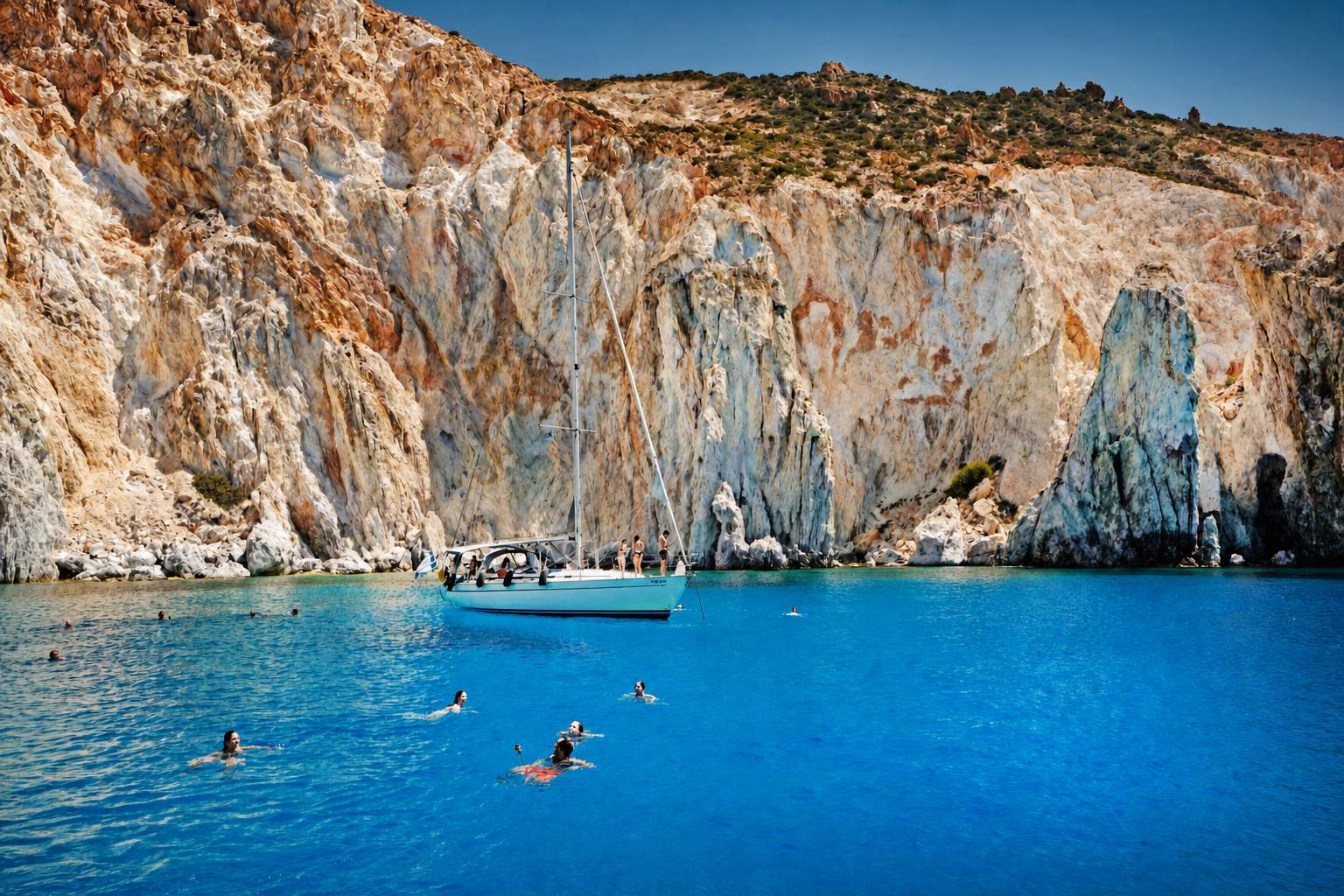
Polyegos is the largest uninhabited island in the Aegean, a Cycladic landscape of pale limestone, rare endemic flora, seabirds and free-ranging goats. It lies just east of Kimolos, which in turn sits off the northeastern tip of Milos in the western Cyclades, and the only way in is by excursion boat — typically a day caique from Pollonia on Milos or from Kimolos’s port at Psathi. Galazia Nera, often translated as Blue Bay, is the island’s most arresting swimming place: mineral cliffs fall into water so luminously turquoise it reads as unreal in photographs, and there is nothing on shore to dilute the rawness of the place.
02
Palatia, Saria, Dodecanese
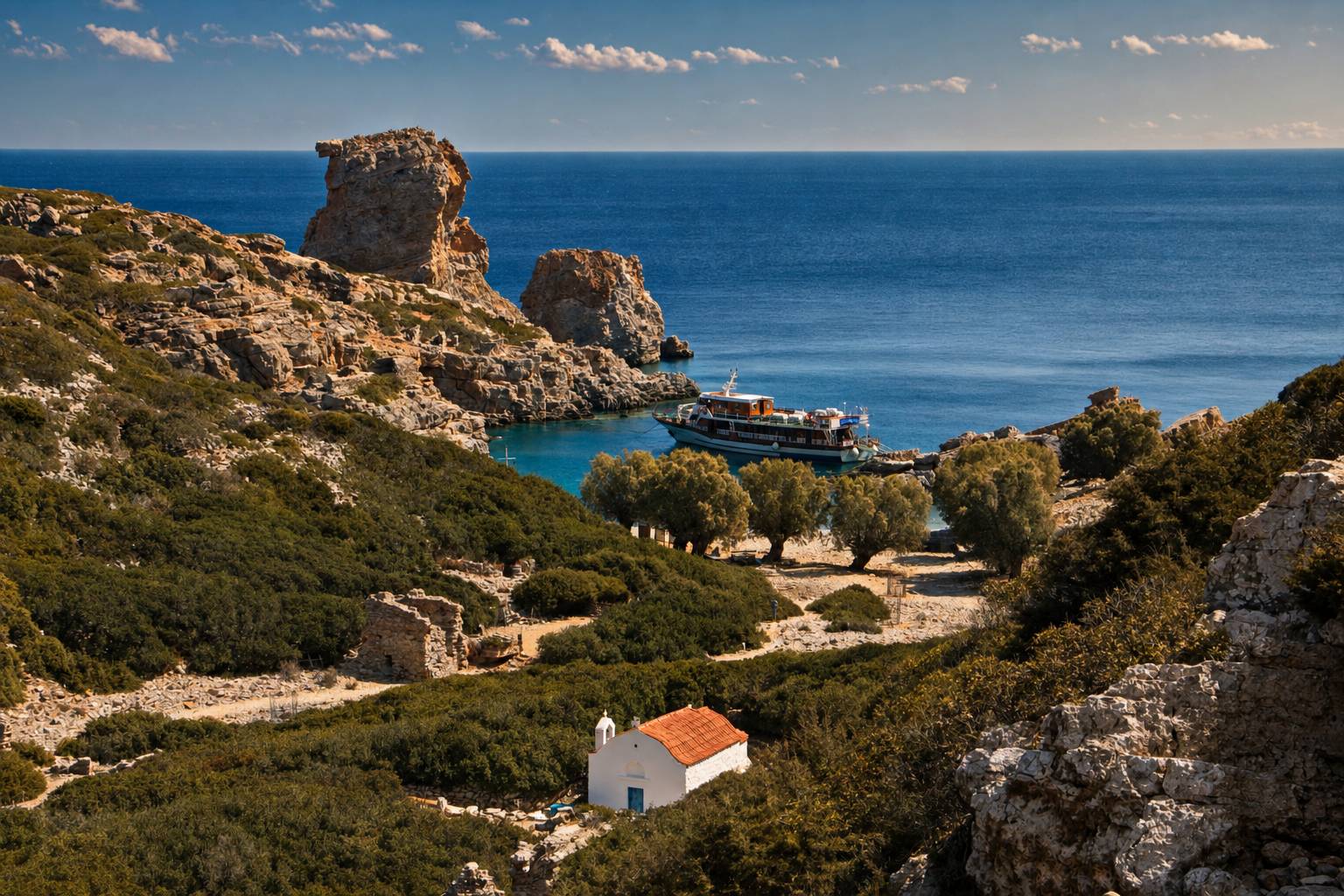
Saria is the small, uninhabited island off the northern tip of Karpathos, in the southern Dodecanese between Rhodes and Crete. Palatia makes the case that in these waters, the journey is half the pleasure: a caique from Diafani — the quiet northern port reached by local ferry from Karpathos town (Pigadia) on the south coast — drops you on a shore of sand, pebbles and tamarisk shade. Behind the beach, the ruins of a Byzantine settlement climb the hillside, with no café, kiosk or concession to interrupt the view.
03
Alimia, Iraklia, Cyclades
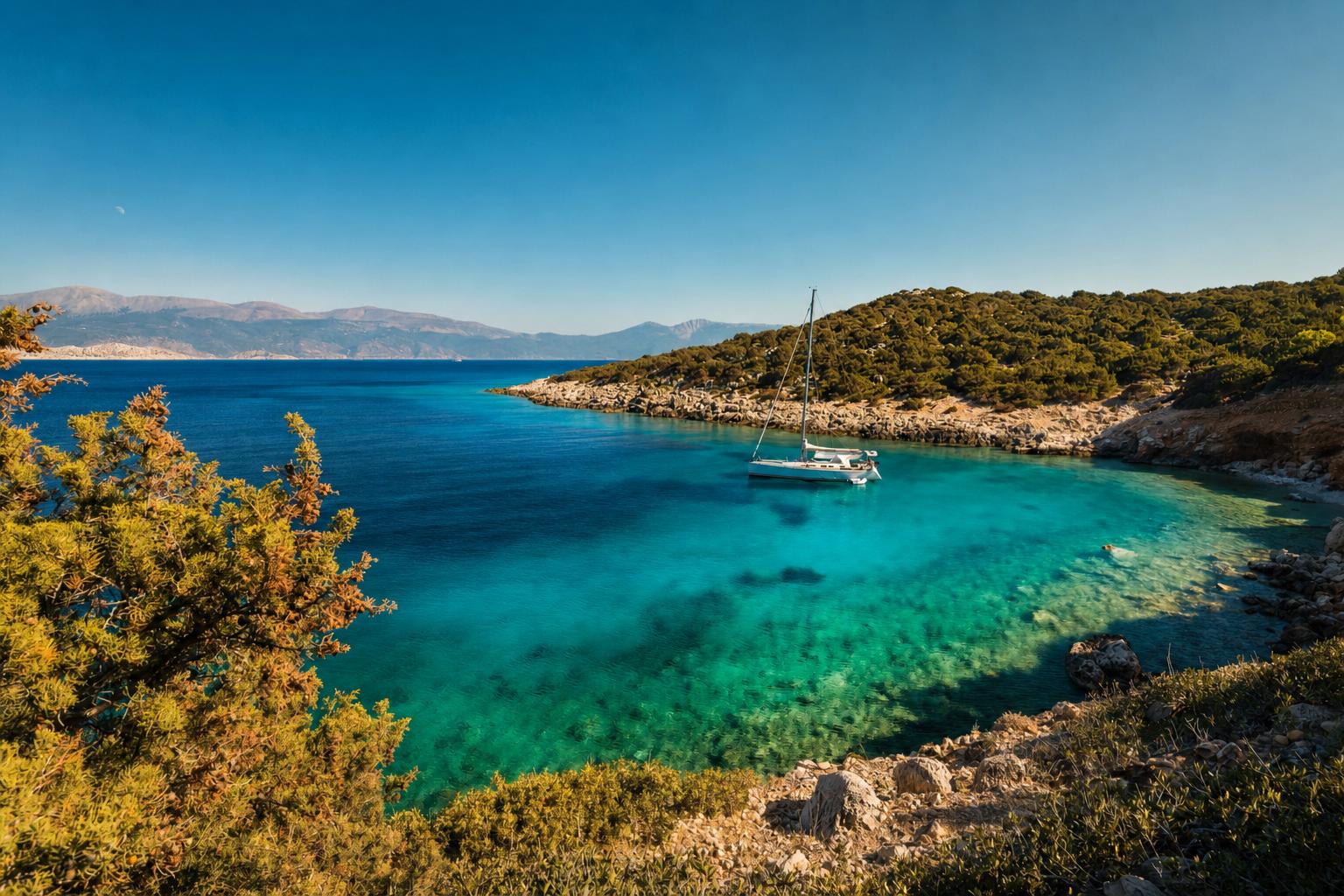
Iraklia is the westernmost of the Small Cyclades, the cluster of islands strung between Naxos and Amorgos, and Alimia sits on its southwestern flank. Access is by boat taxi from Agios Georgios, the island’s only port, or — for the well-shod and weather-wise — a demanding hike from the interior. The cove offers fine sand, a sliver of natural shade, and water clear enough that the wreck of a Second World War German aircraft, lying nine meters down just offshore, is visible to snorkelers on a calm day.
04
Grammata, Syros, Cyclades
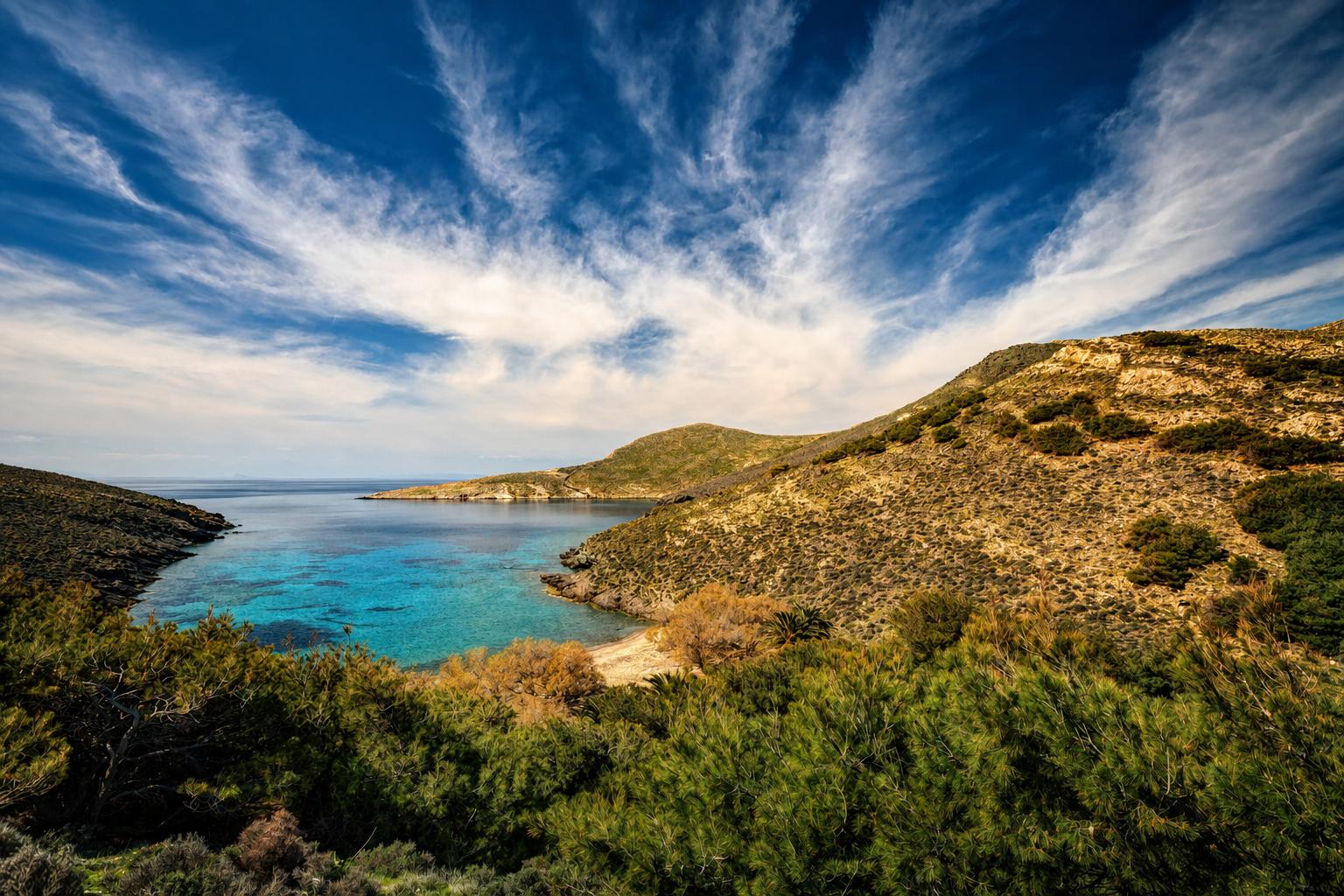
Grammata lies on the far northern side of Syros, a world away from the easy southern beaches and the neoclassical bustle of Ermoupoli, the island’s port and capital. Syros itself sits near the center of the Cyclades, a short ferry hop from Piraeus, Mykonos or Tinos, and Grammata is reached either by chartered boat from Kini on the western coast or along one of the old footpaths crossing the wild Apano Meria plateau. The reward is sand, clear water and, etched into the surrounding rocks, the inscriptions of ancient and medieval sailors who once sheltered here and left their prayers behind.
05
Italida, Ano Koufonisi, Small Cyclades
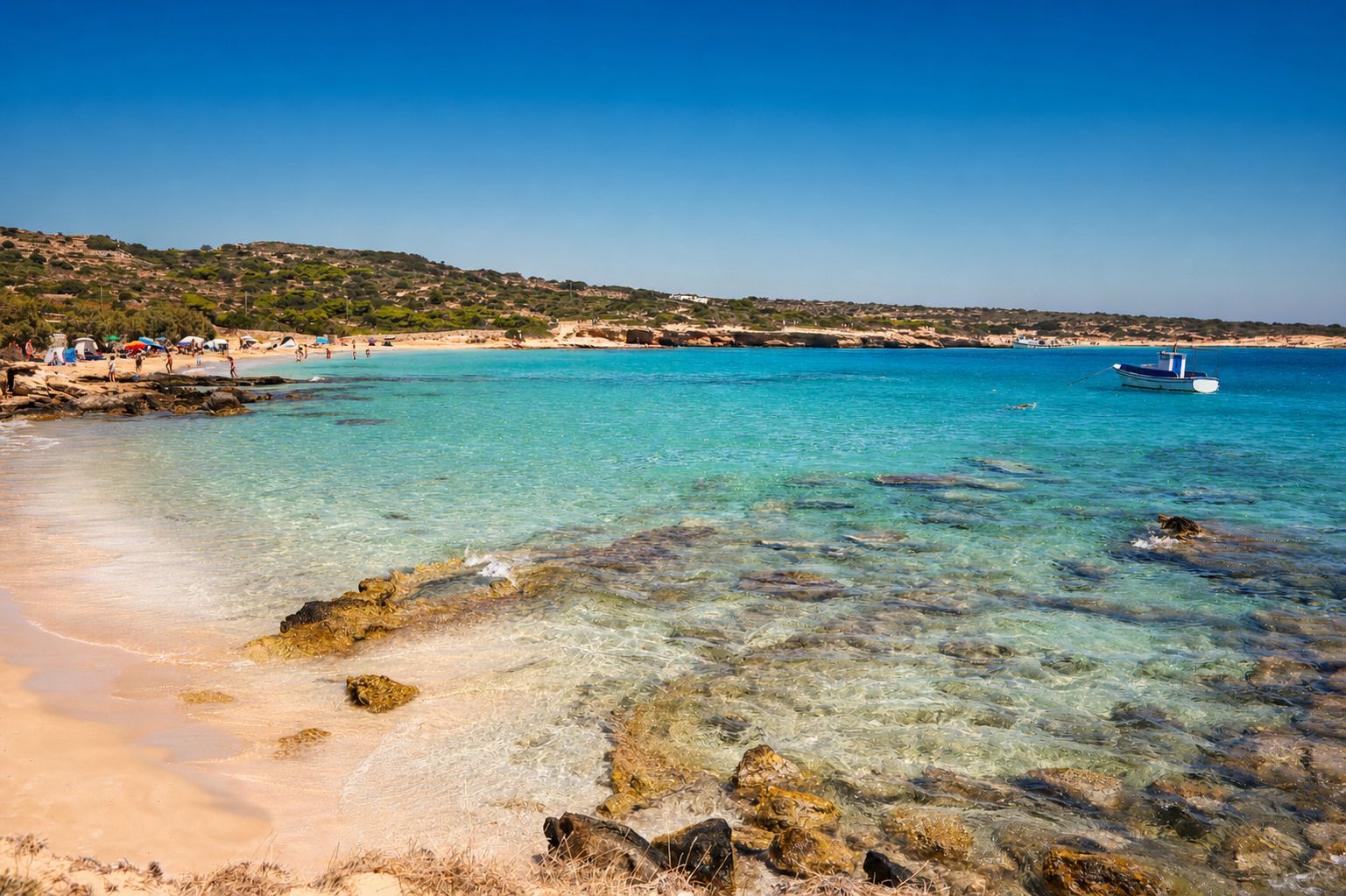
Also known as Platia Pounta, Italida has become one of the most photographed shores in the Small Cyclades precisely because of what is absent — no rows of furniture, no heavy structures, just a curve of fine sand meeting water the color of a swimming-pool ad. Ano Koufonisi, reached by ferry from Naxos or Amorgos, is the smaller and more walkable of the two Koufonisia islands, and Italida lies along its southern coast, an easy stroll on the coastal path east of Chora (the island’s single village) past the beaches of Finikas and Fanos.
06
Megalo Seitani, Samos, North Aegean
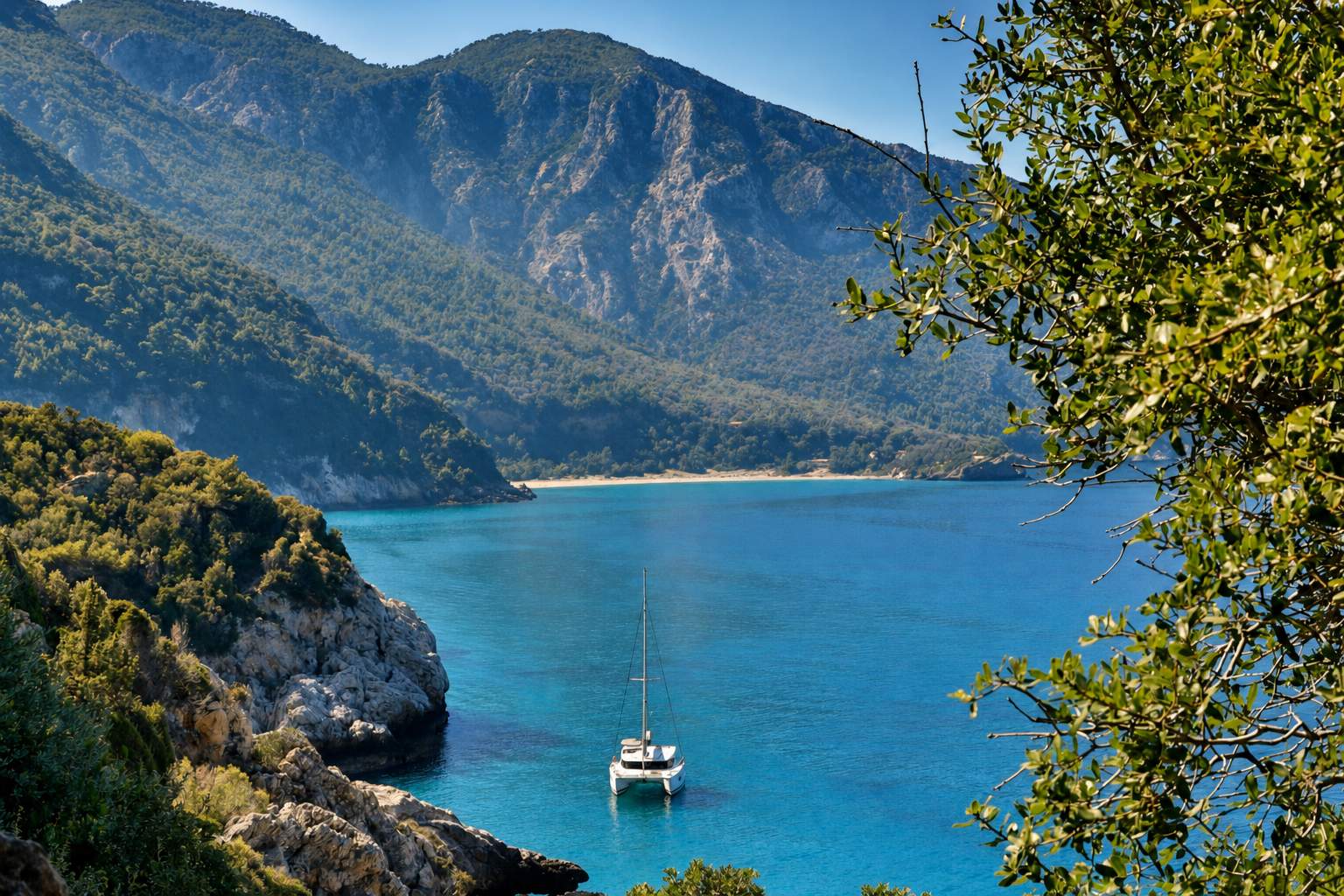
Samos, one of the larger North Aegean islands, sits close to the Turkish coast and is reached by ferry from Piraeus or by air from Athens. Megalo Seitani lies along the island’s wild northwestern shore, inside a Natura 2000 zone that protects one of the last Mediterranean monk seal populations. There is no road in: arrive by small boat from the port of Karlovasi, or walk the coastal path from the hamlet of Potami, about an hour on foot through a gorge and over low cliffs. The beach itself opens into a broad sweep of pale sand backed by steep slopes, unserviced and, on most days, almost empty.
07
Tripiti, Gavdos, Crete
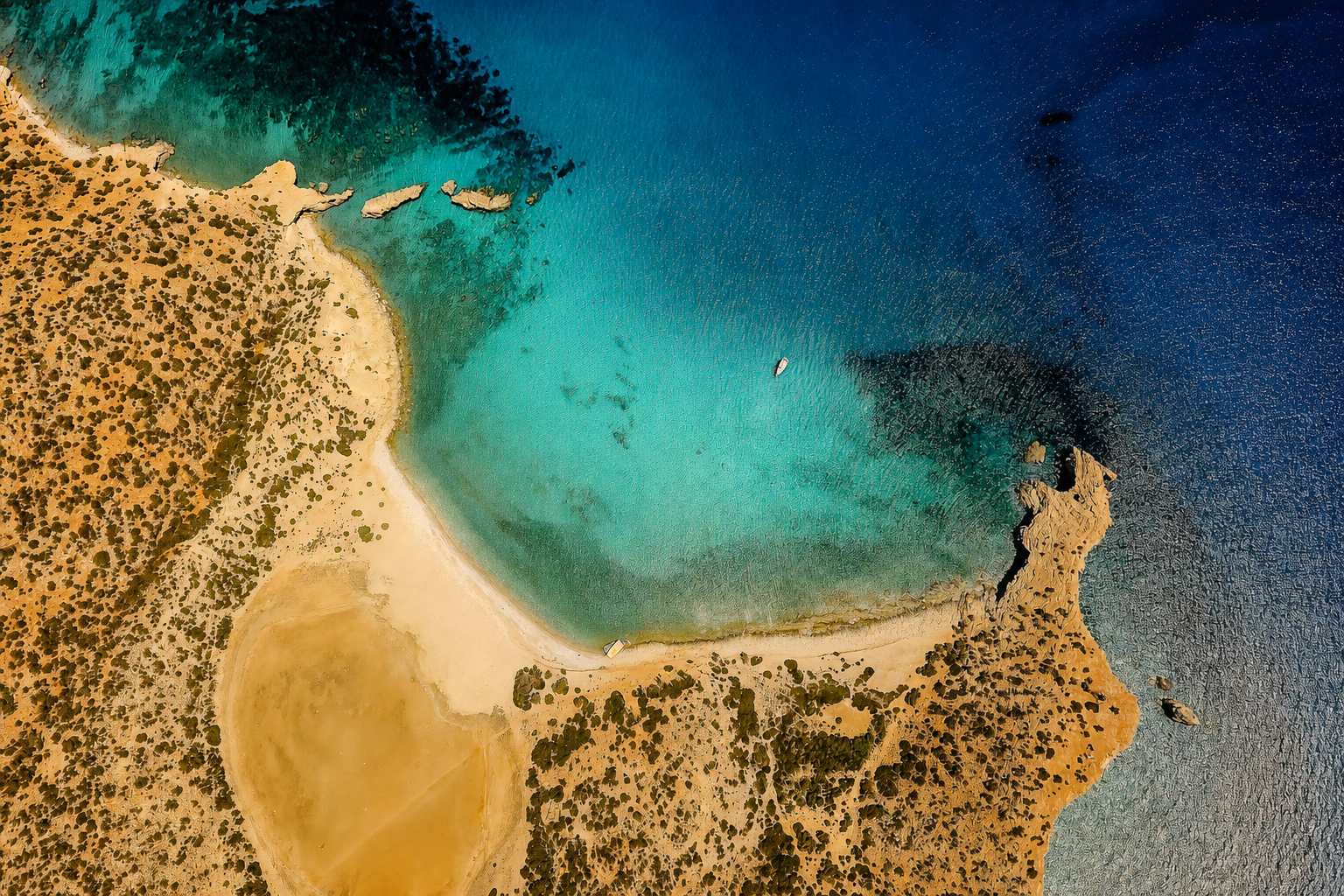
Gavdos is the southernmost inhabited point of Europe, a small island in the Libyan Sea about two hours by ferry from the port of Sfakia on Crete’s south coast. Tripiti sits at its remote southern edge and is reached either by on-demand boat from the island’s small harbors or on foot along the sandy tracks that cross the island from the tiny settlements of Vatsiana and Korfos. There are no facilities on the beach, which is precisely why it still feels — correctly — like the end of something. Just inland stands the famous oversized wooden chair marking the southernmost point of Europe.
08
Katergo, Folegandros, Cyclades
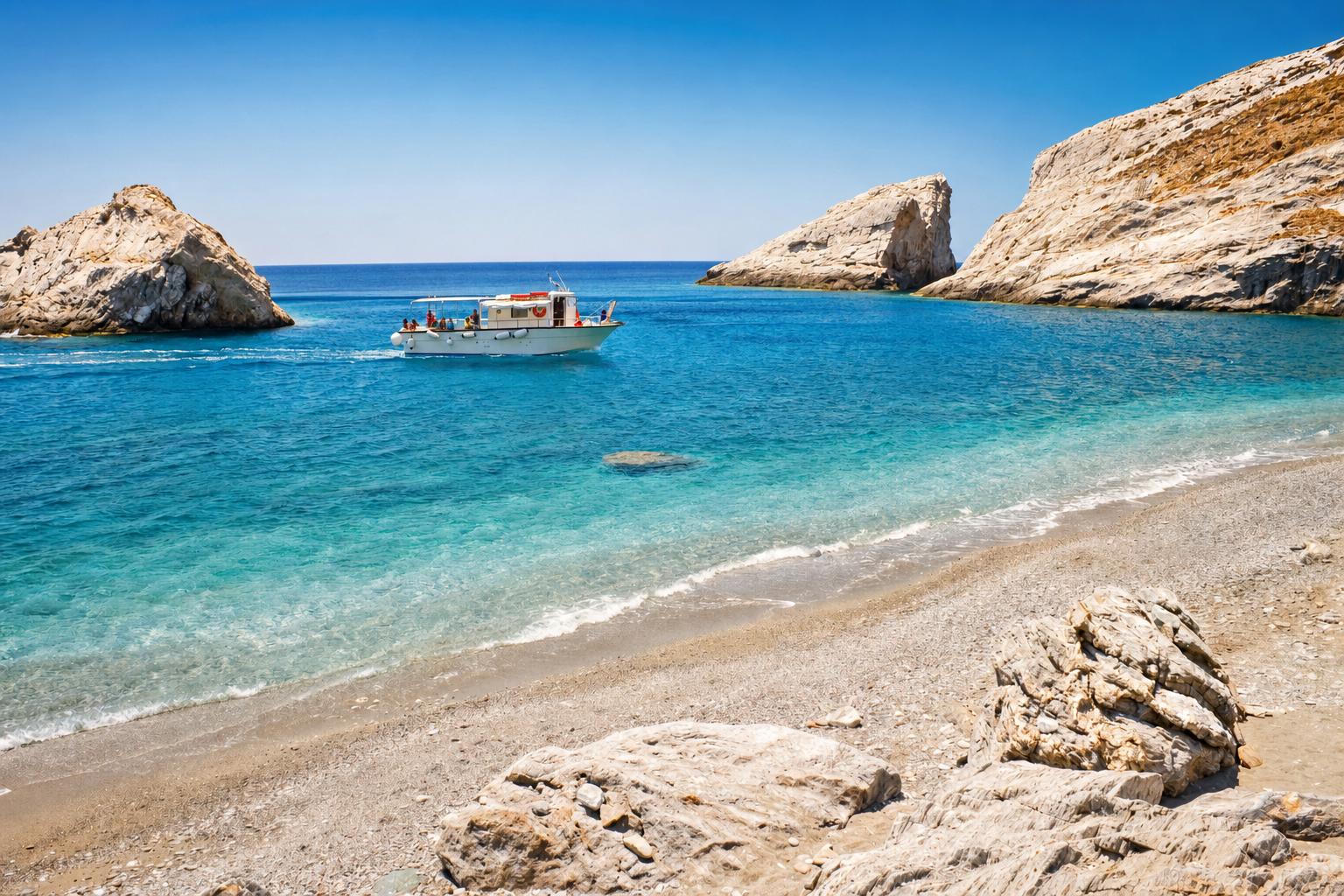
Folegandros is a small, cliff-sided island in the southern Cyclades, reached by ferry from Piraeus, Santorini, Milos or Naxos, and Katergo is one of its great raw beaches — a long shore of smooth pebbles and clean blue water on the southern coast. Access is by local caique from Karavostasis, the island’s port, or on foot from the nearby hamlet of Livadi along a rocky footpath that rewards sturdy shoes and an early start. There is little shade and nothing to buy, which is the point.
09
Kedrodasos, Crete
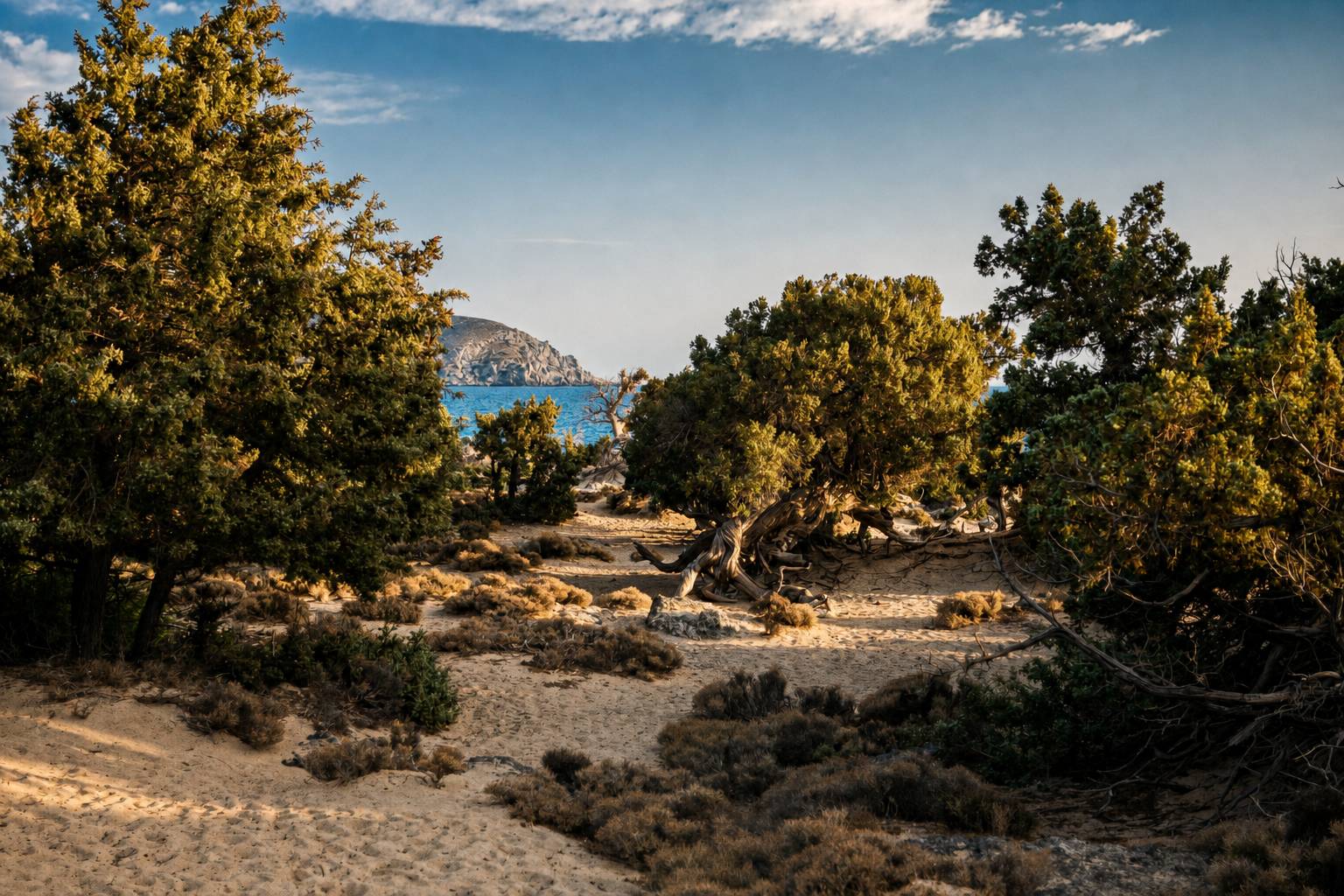
Kedrodasos sits at the far western tip of Crete, just beyond the famous pink sands of Elafonissi, and is reached by a rough coastal footpath from the Elafonissi parking area (about twenty minutes on foot) or by the E4 European long-distance trail. The name means “cedar forest,” though the trees are in fact Phoenician junipers — a protected species whose gnarled, low-slung canopies shelter pockets of pale sand and translucent water. There are no umbrellas or shops, and the landscape itself is the reason to come.
10
Achla, Andros, Cyclades
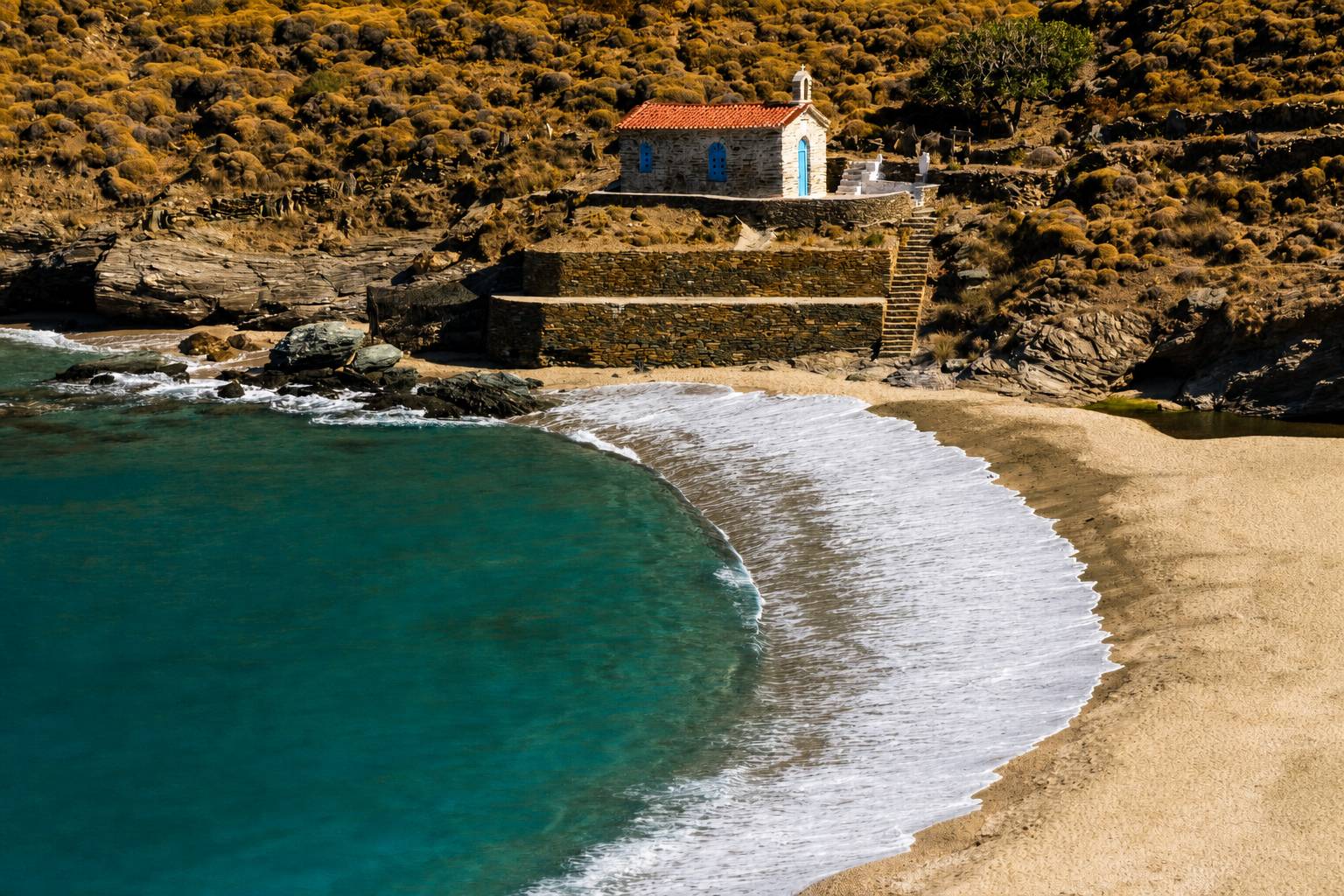
Andros is the northernmost of the Cyclades, a quick ferry ride from the port of Rafina, east of Athens, and Achla lies on its wilder eastern coast. Reach it by boat from Chora, the island’s main town, or by a long dirt road best attempted in a high-clearance vehicle. The beach itself is a small masterpiece of Cycladic geography: white pebbles and sand, emerald water, a freshwater river running down from the mountains, a stand of plane trees, a modest wetland, the chapel of Agios Nikolaos at one end and the Gria lighthouse at the other. The shore is unserviced, and the surrounding ONAR estate — a cluster of stone villas that hosts occasional retreats — is the only trace of human design for miles.