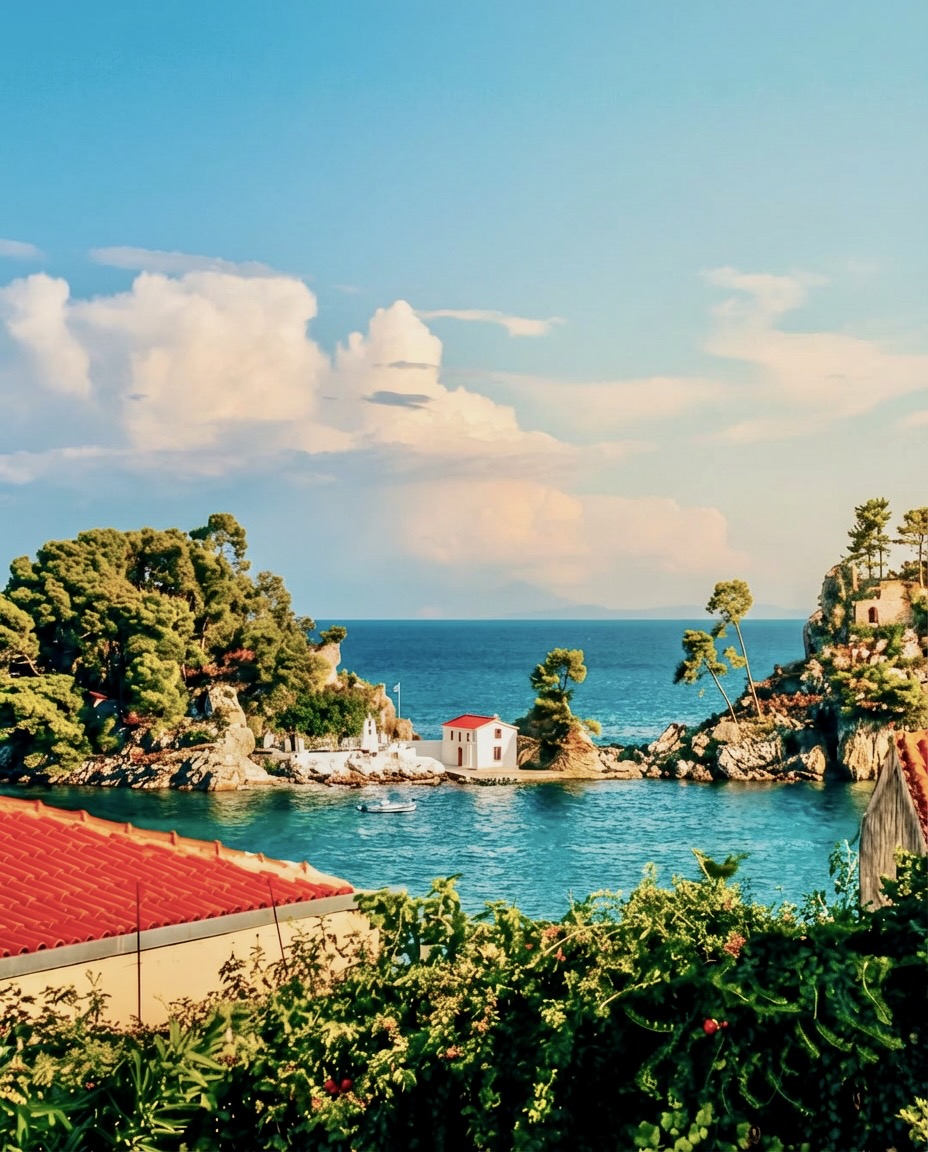



Most people who come to Greece follow a familiar itinerary: Athens, the islands, near or far, great food and drinks, a sunset. There’s nothing wrong with that kind of itinerary. But it accounts for only a fraction of what the multifaceted country actually contains – and misses out entirely on parts of Greece that is, by almost any measure, more historically dense, more scenically dramatic, and more genuinely alive than most of what ends up on the feed.
Arcadia is one of those parts. Not the mythological Arcadia of pastoral poetry – though that association is not entirely accidental – but a real administrative region in the central Peloponnese, defined by mountain ranges, river gorges, stone villages, and a depth of cultural and intellectual history that most visitors to Greece never encounter. It is roughly three hours from Athens. It is largely unknown to international travelers. And in summer, or early spring, or almost any season that isn’t the height of August, it is exactly where you should go.
A Village That Made History
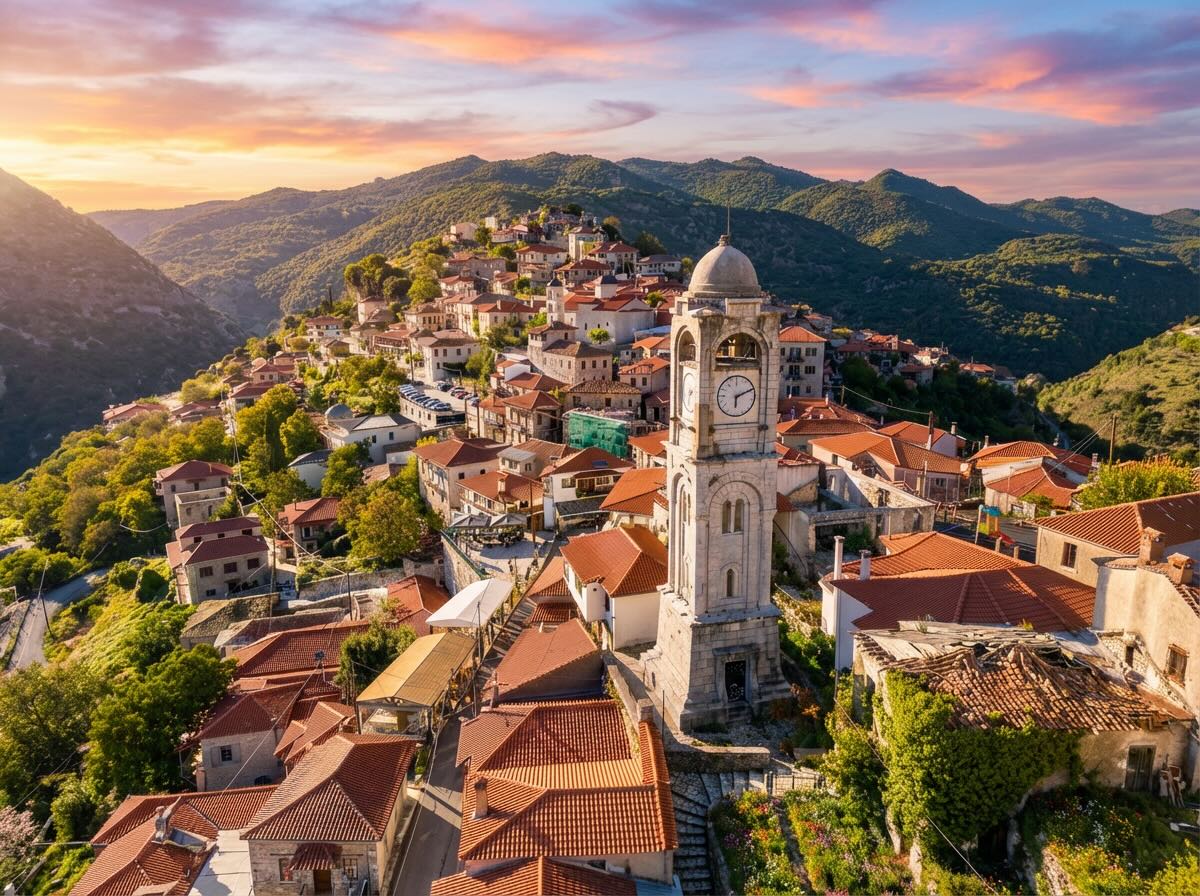
Dimitsana sits at about 950 meters above sea level, in the mountains of Gortynia, above the Lousios Gorge – one of the most dramatic river landscapes in the Peloponnese. The village has steep stone lanes, tall houses with slate roofs, churches, schools, old public buildings, and ravines that drop abruptly into forested landscapes. It is the kind of place that makes you realize the word “village” has been applied to things that don’t really deserve it.
It also has history in the most literal sense. The Public Historical Library of Dimitsana was founded in 1764 – twenty years before the United States had a constitution – and the village played a meaningful role in the Greek War of Independence of 1821. Below it, monasteries built into the rock face of the Lousios Gorge date back centuries further. This is not a place that has been retrofitted with heritage. The heritage was always here.
Visiting in spring, when Greek weather taunts and teases us with sharp contrasts of hot, bright sun and sudden ominous skies and iced, biting winds, we arrived with an appetite for crackling fireside hospitality, strong cooking, and action well suited to the region: visits to old cafes and pretty villages with dramatic views and friendly, ruddy-faced folk, all within less than three hours from Athens.
In summer, the region opens outward rather than shutting down. Days begin with clean, crisp air and long light, which continues through village drives, museum visits, rafting adventures and gorge walks, and dims at a much slower tempo, usually while people gather animatedly around a table to start the night.
The Guesthouse
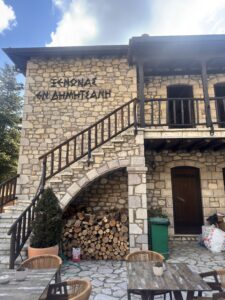
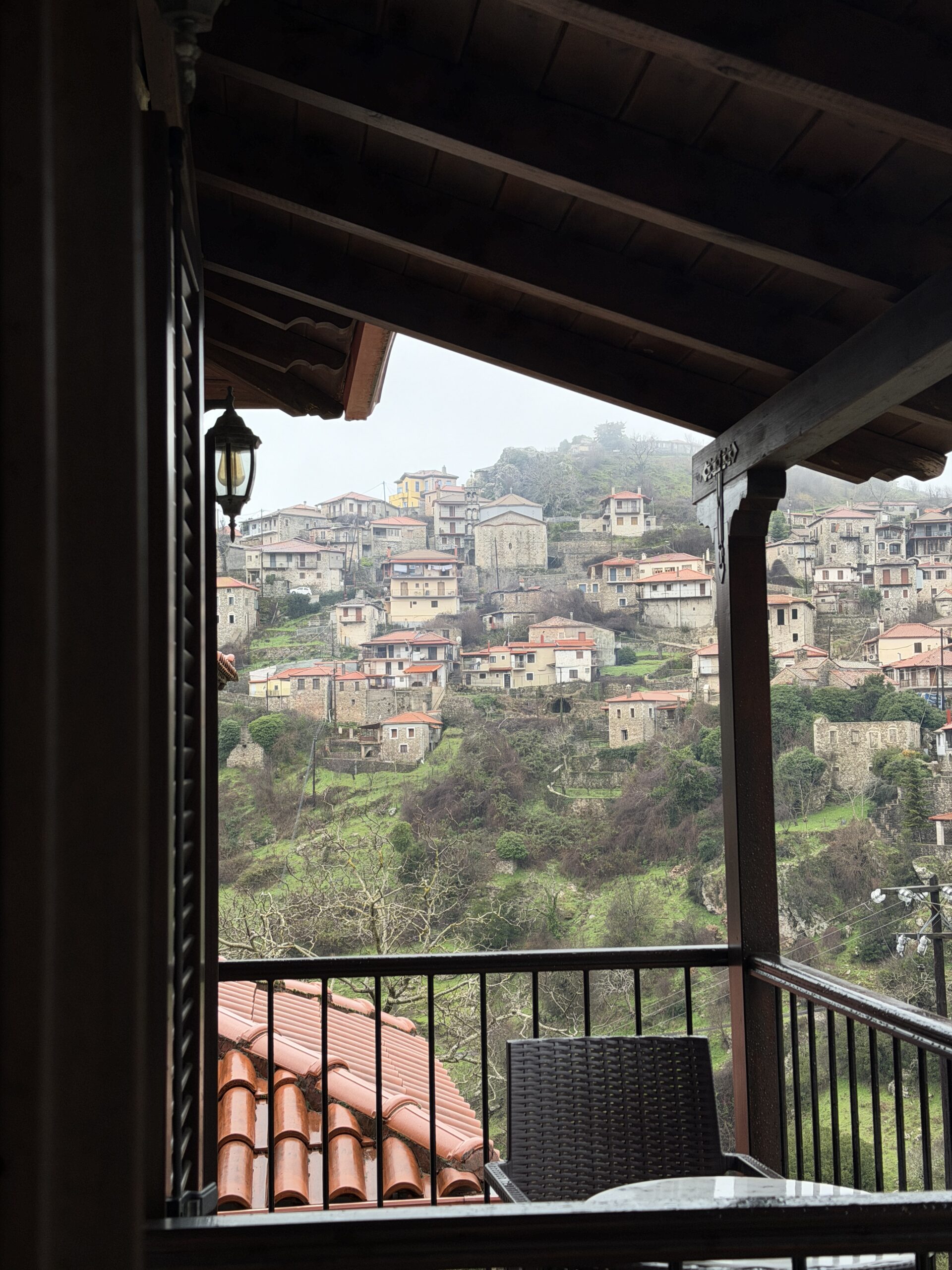
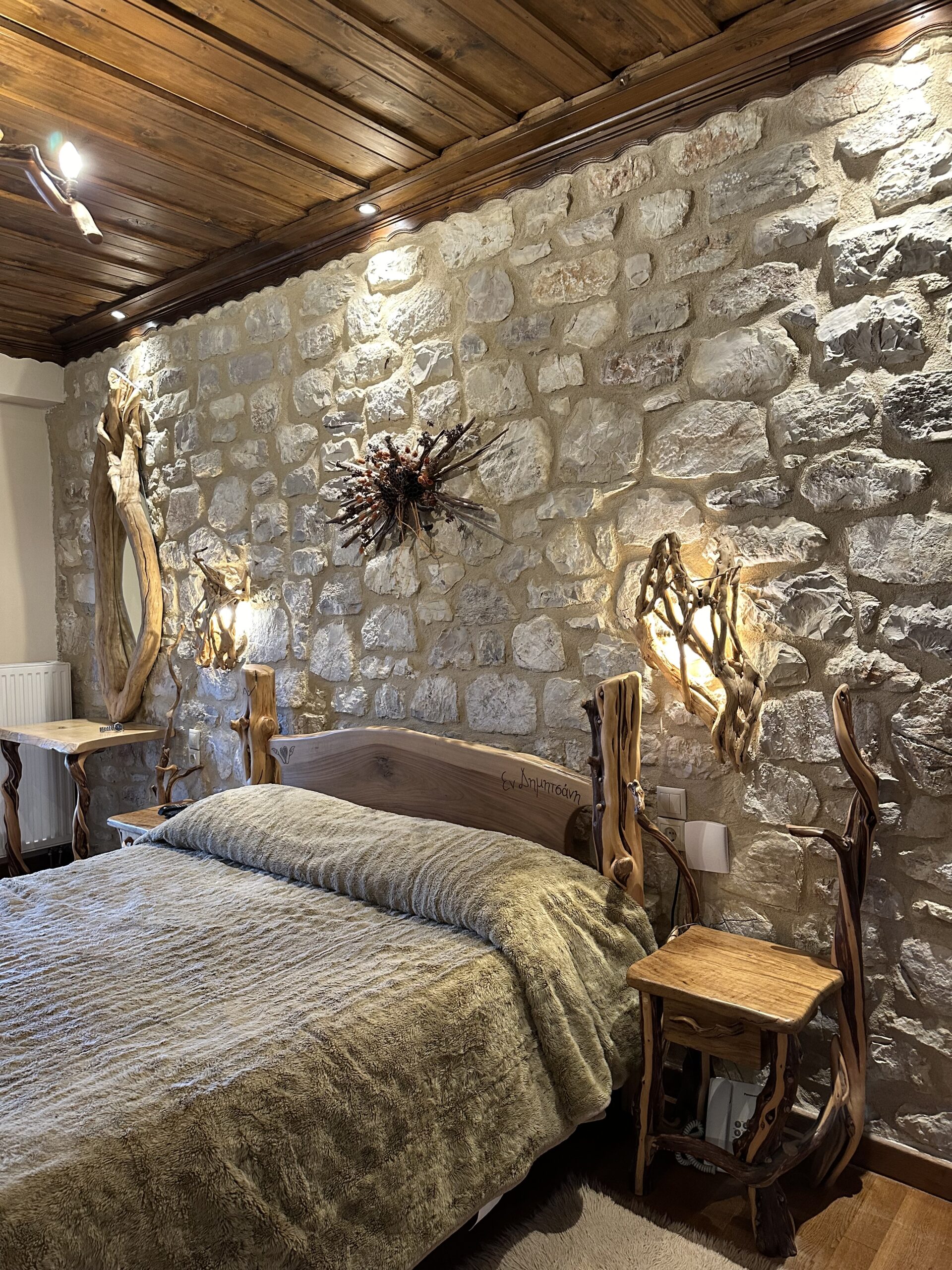
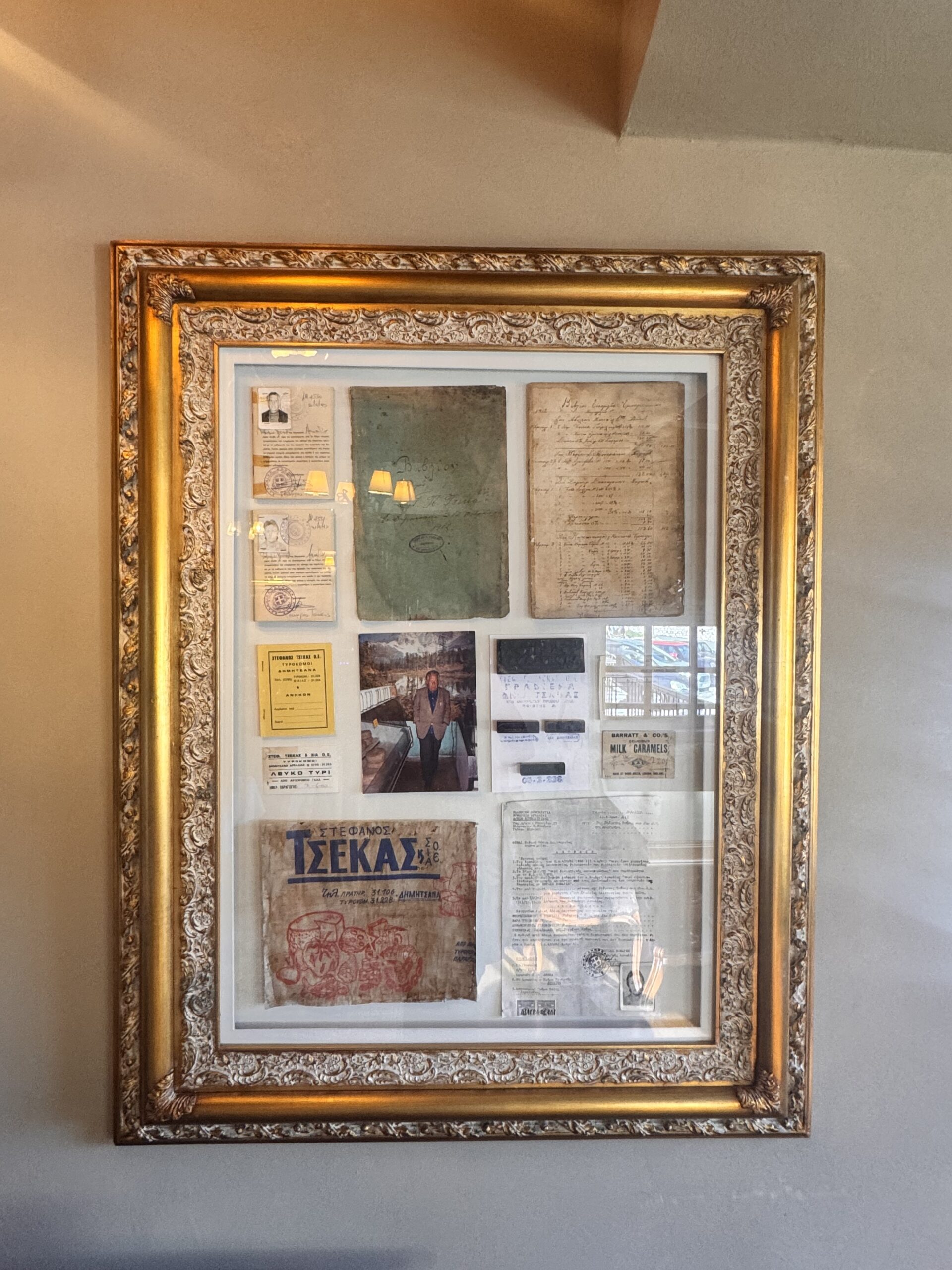
En Dimitsani stands at the entrance to the village, and that placement tells you something about the project. This is not a hospitality concept imported into Dimitsana from elsewhere. Its owner, Stefanos Tsekas, built the guesthouse on a family site – the very place where his grandparents once kept their cheesery, remembered locally as the first of its kind in the Peloponnese. It grows directly out of local family presence, local food memory, and the material culture of the place.
The building follows the architectural grammar that suits this part of Arcadia: stone walls, timber, fireplaces, carved details, and a direct relationship to the green, open views. Ten rooms, each named after a flower or plant, each with traditional furnishings, warm plush textiles, and balconies looking onto the village and the gorge. The decor stays within the region’s own visual world while making room for modern comforts and hints of artfulness. The result is homey without sacrificing ease.
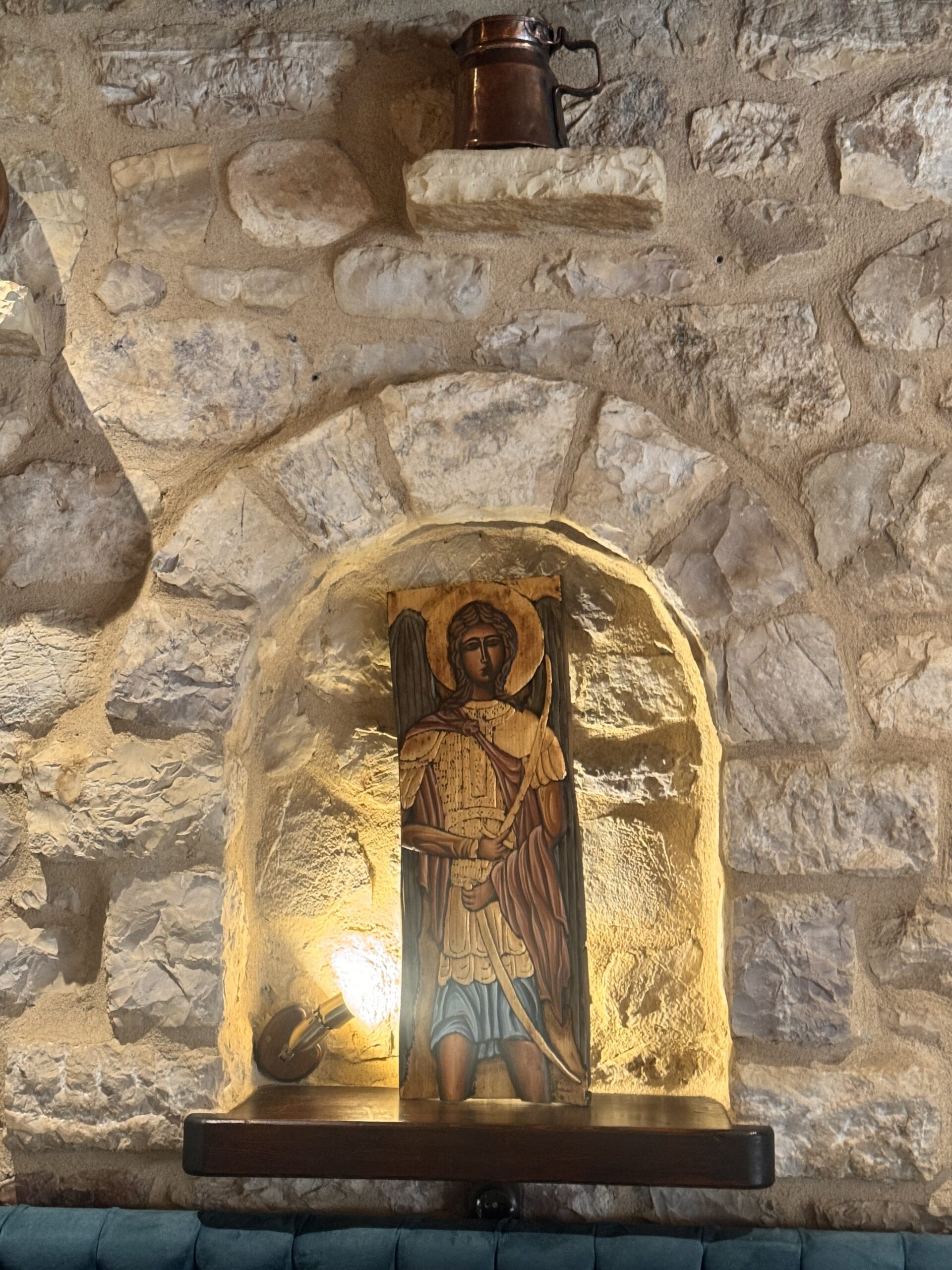
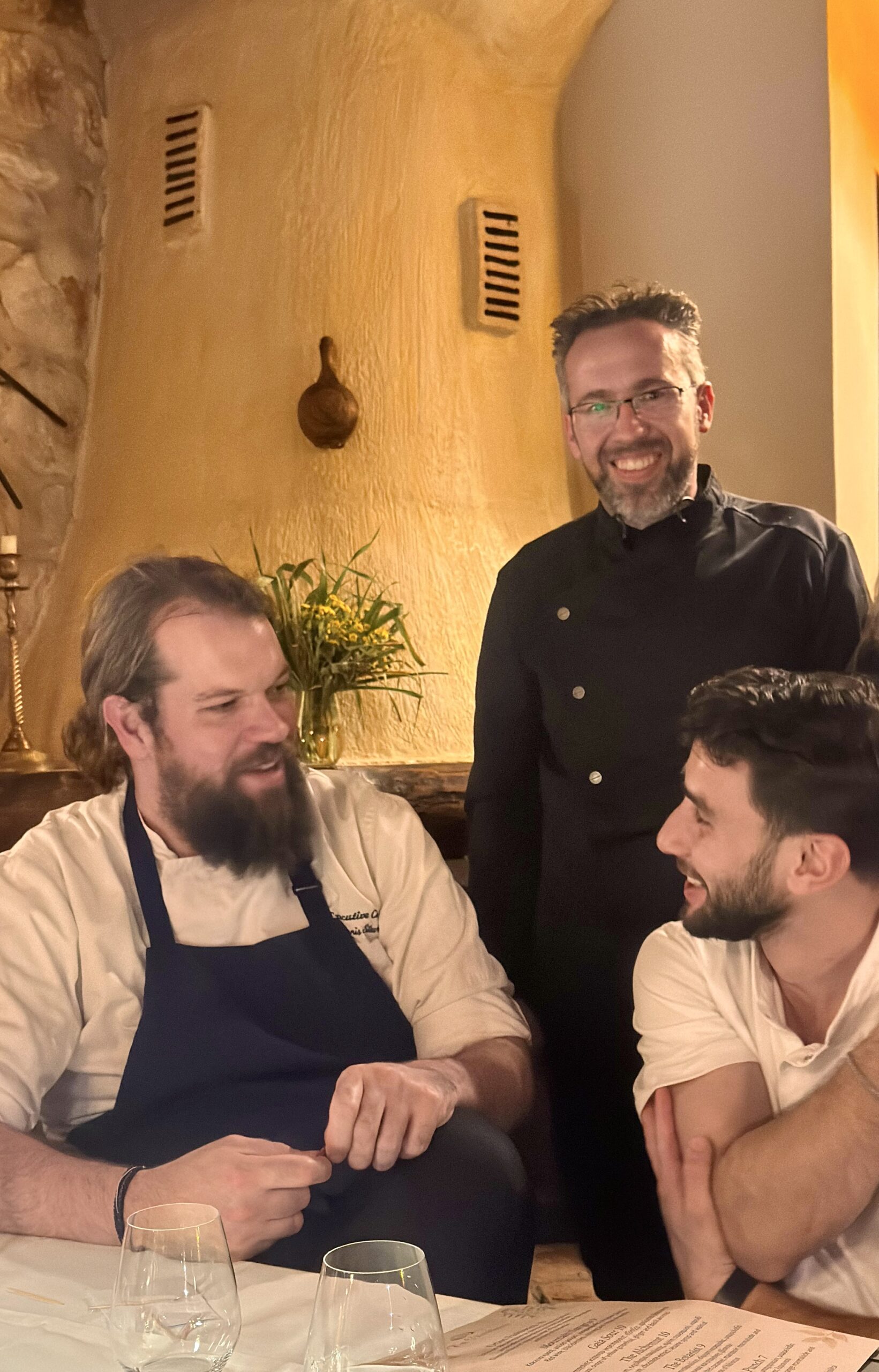
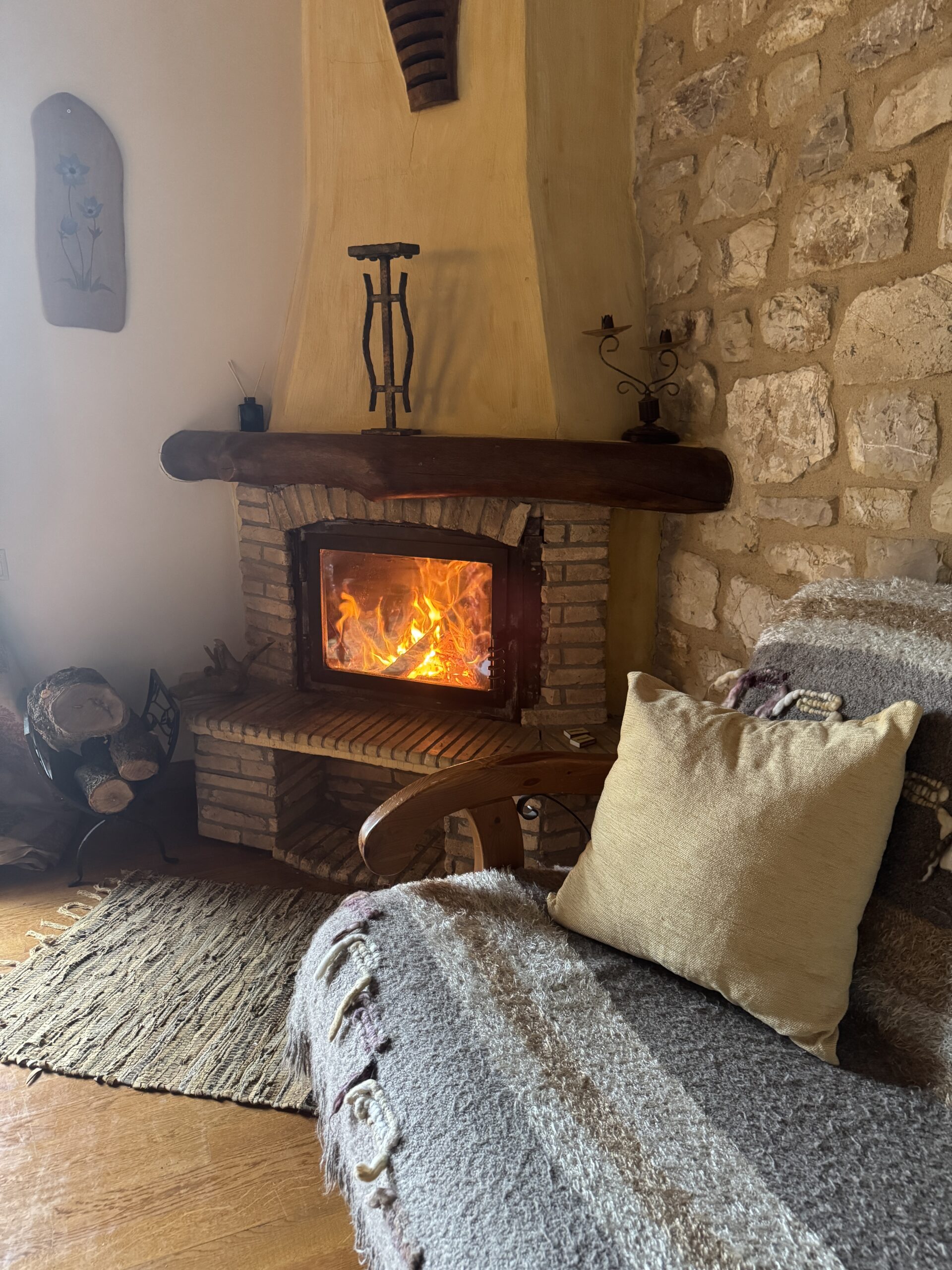
The guesthouse also reflects Tsekas himself, and that is part of the reason it has such a clear identity. He is a host with deep local knowledge, an instinct for gathering people, and a serious understanding of food – he often finds himself in the kitchen to cook. On our visit, he walked us through the basement level where a spa is currently being built; even unfinished, it was easy to visualize something special coming into the making. His is not an approach of create-and-settle. Every detail is continuously reconsidered.
The experience extends beyond the building itself: village drives through Mainalo, time in old coffee houses, long meals and music by the fire, local products on the table, and a practical introduction to the way Arcadian life still works when it remains tied to lived local habits. That gives En Dimitsani more weight than a conventional mountain stay. With only 10 rooms and a village that gets busy on weekends, booking ahead is essential.
3 More Places to Stay
Mikri Arktos Boutique Hotel: One of the most polished stays in Dimitsana, this 11-room boutique hotel brings together the village’s stone-built architecture with a more current interior language, and several rooms open onto wide views toward the Lousios Gorge. It suits travelers who want a more refined base without losing contact with the scale and texture of the village itself.
Enastron Guesthouse: A strong choice in the center of Dimitsana, Enastron occupies a renovated traditional building and keeps the focus on warmth, comfort, and easy access to the village on foot. It has the kind of straightforward mountain-guesthouse character that works especially well here, where the setting does much of the work.
Archontiko Deligianni: One of the best-known traditional stays in the village, this mansion-style guesthouse leans fully into the historic fabric of Dimitsana, with stone, wood, and the formal character of an older Arcadian house. Well suited to travelers who want a stay with a stronger sense of period and place.
The Cuisine
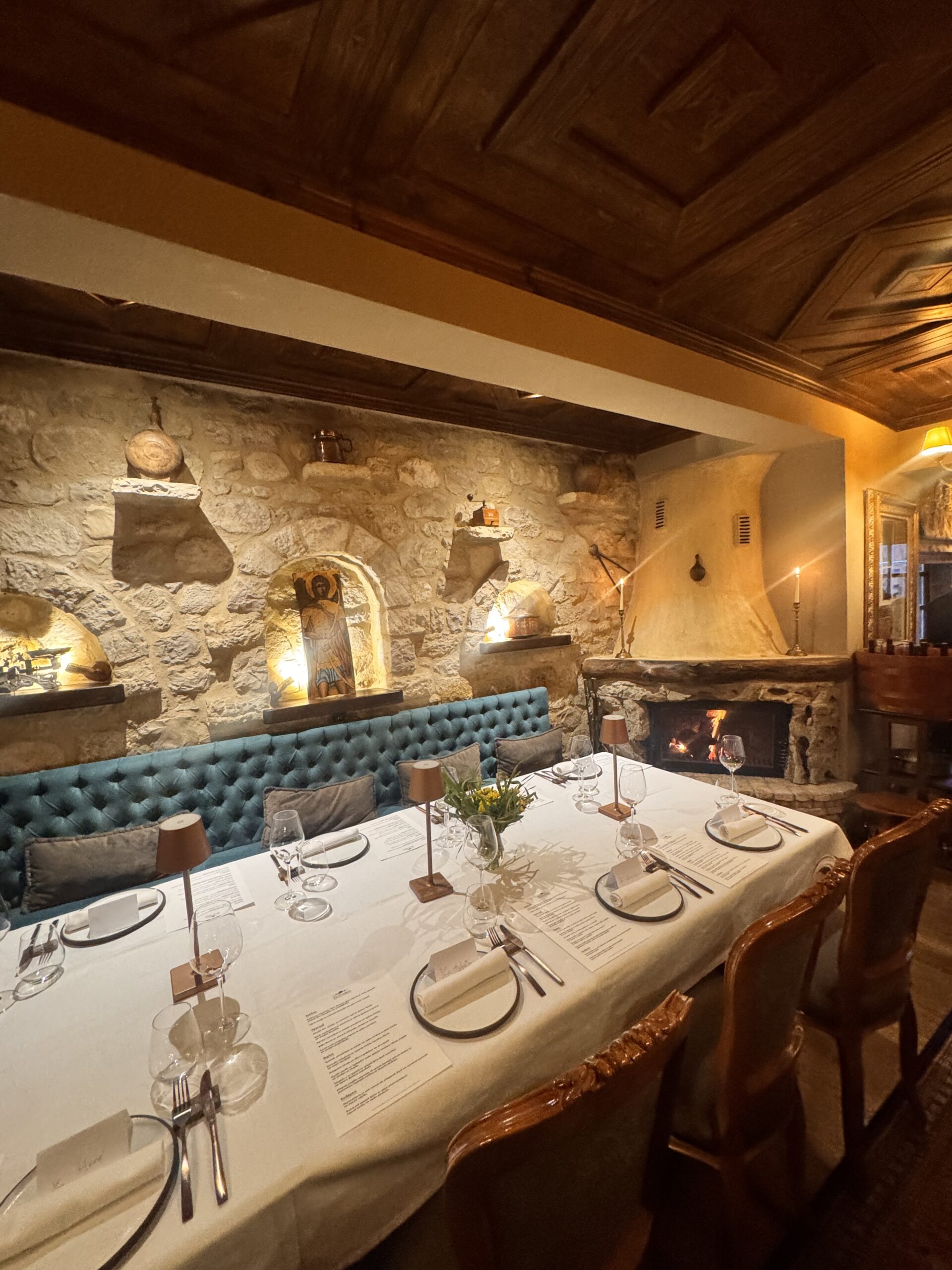
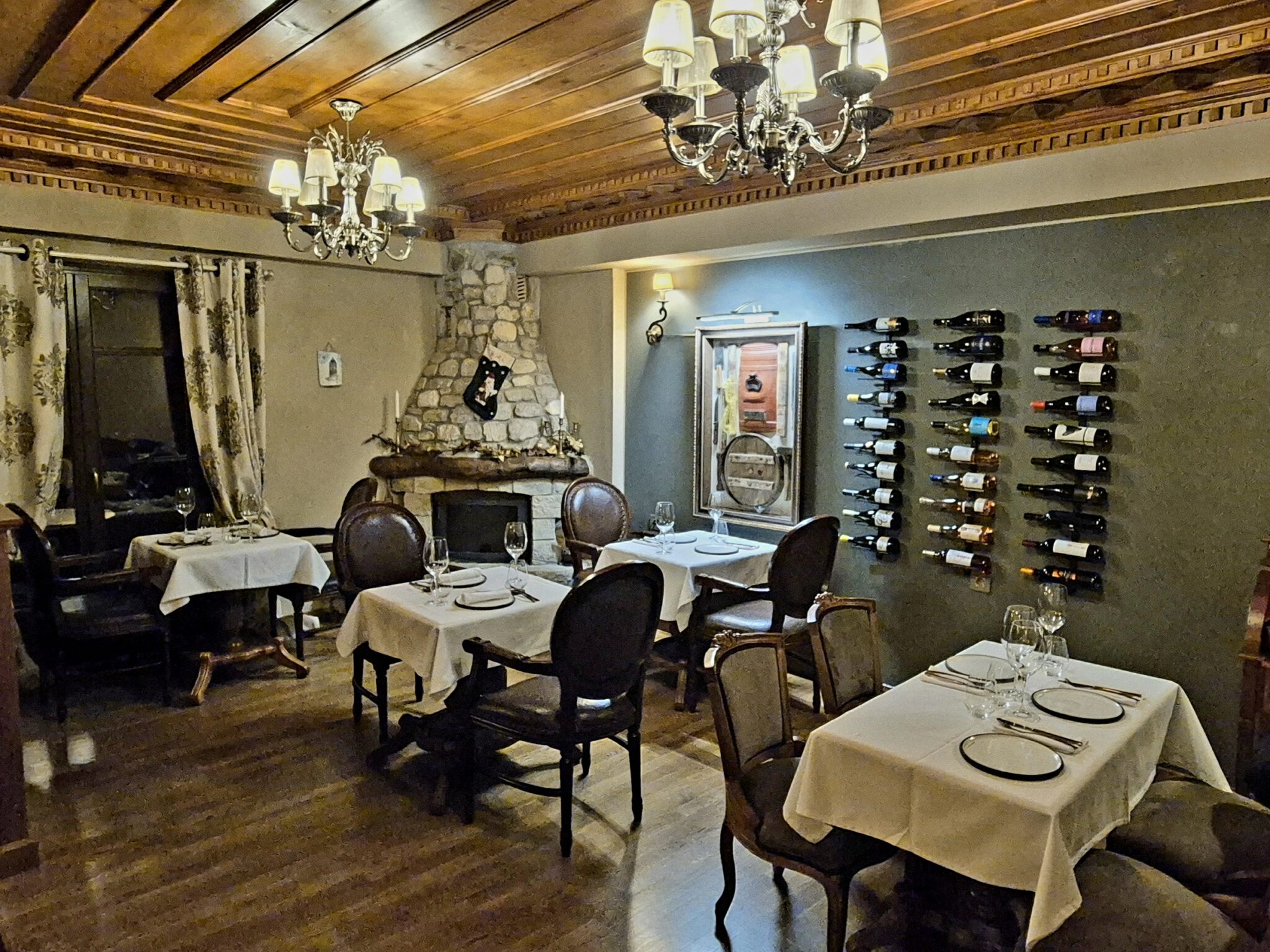
Food is central to the En Dimitsani project, and the restaurant makes that clear from the moment you walk in. It occupies the renovated lobby area – a spacious room with fireplaces, stone walls, windows looking out to greenery, wooden tables, rugs, kilims, objects from older domestic life, and tools linked to the family cheesery. It is warm without being overdesigned, and local in a way that feels earned. In summer, outside tables extend the space further.
The menu is created by Chef Stavros Koustenis, who has operated as a consultant for the restaurant for five years, and his background gives the restaurant its center of gravity. Meanwhile also in the key role of chef patron, Tsekas cooks the food throughout the year, completely aligned with Koustenis’ vision because of his own roots, expertise and lifelong gastronomic experience, with the assistance of sous chef Dionyssios Boulis. Like Tsekas, Koustenis is from the village. His culinary concepts orbit the memory of Arcadian food already in him – traditional preparations, local produce, family dishes, mountain ingredients – but that is only his foundation. His work outside the region, including at Cesar Meze Bar, his awarded restaurant in Rhodes, have brought him a broader culinary vocabulary, technical range, and a more sophisticated structure. The combination gives his cooking both roots and reach.
The menu draws on traditional Greek and Arcadian cooking while maintaining a clear restaurant sensibility. Dishes are built from local butter, milk, flour, regional cheeses, alpine meats, trout, fresh truffle, and familiar preparations reworked just enough to feel current without losing their connection to place. For a first-time visitor to this part of Greece, it offers the ideal introduction: food that is distinctly, specifically Greek, without being reducible to the clichés of Greek food.
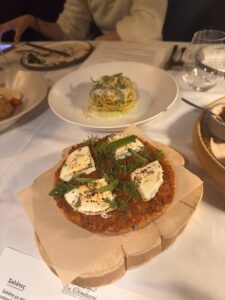
The summer 2026 menu followed that logic closely: a pitta-bread pie based on briam, built for sharing; a cool zucchini spaghetti crispy nest with mint and a fiery fresh garlic cream; green Feneos fava — a protected regional legume almost unknown outside Greece — with smoked trout, spring onion and capers. Among the mains, beef-cheek croquettes, rabbit kebab, and rooster bolognese. Desserts returned to classic form: a galaktoboureko with crisp phyllo and rakomelo syrup that must be ceremoniously broken to be entered, and a syrupy orange pie with kaimaki ice cream.
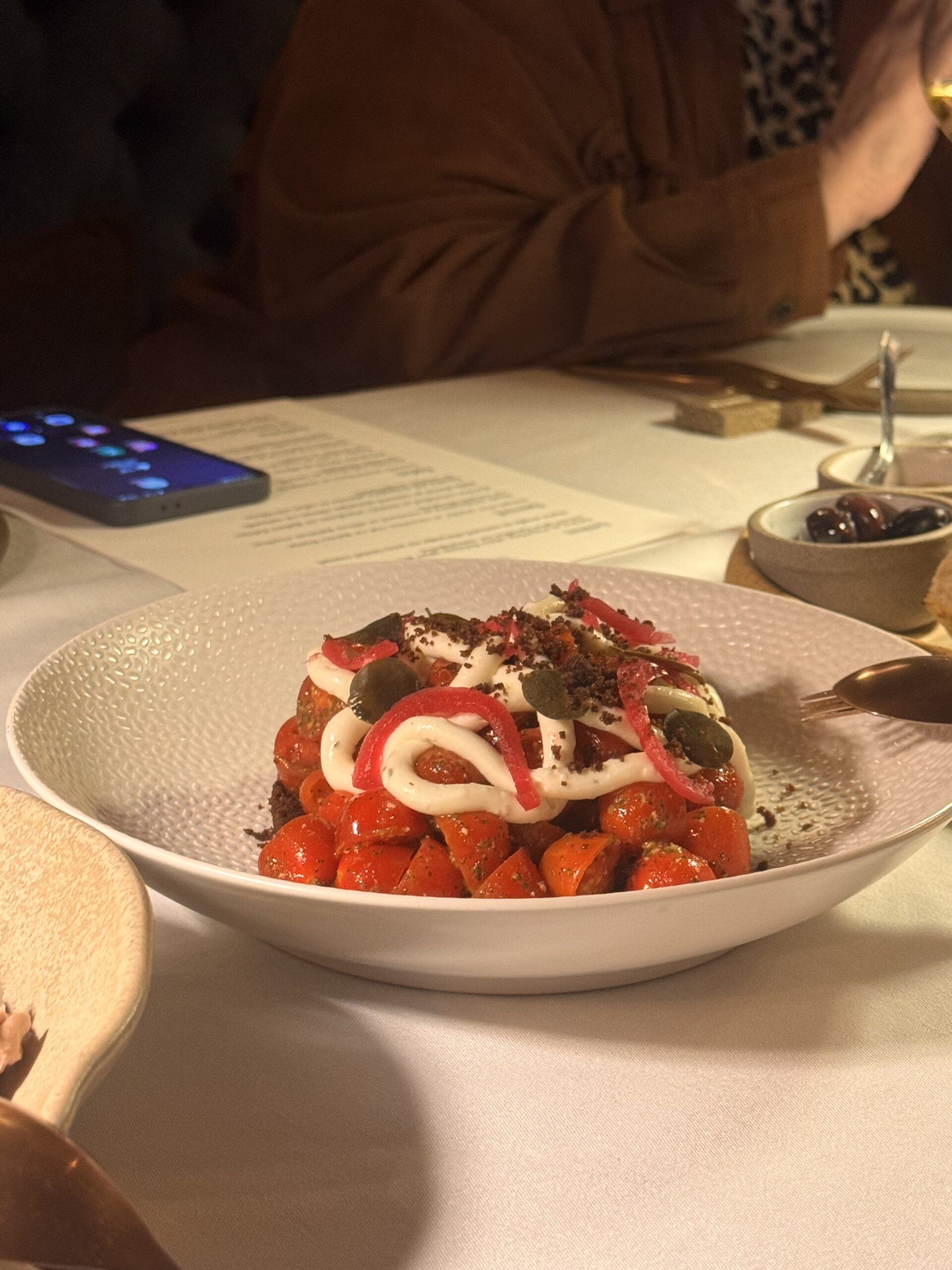
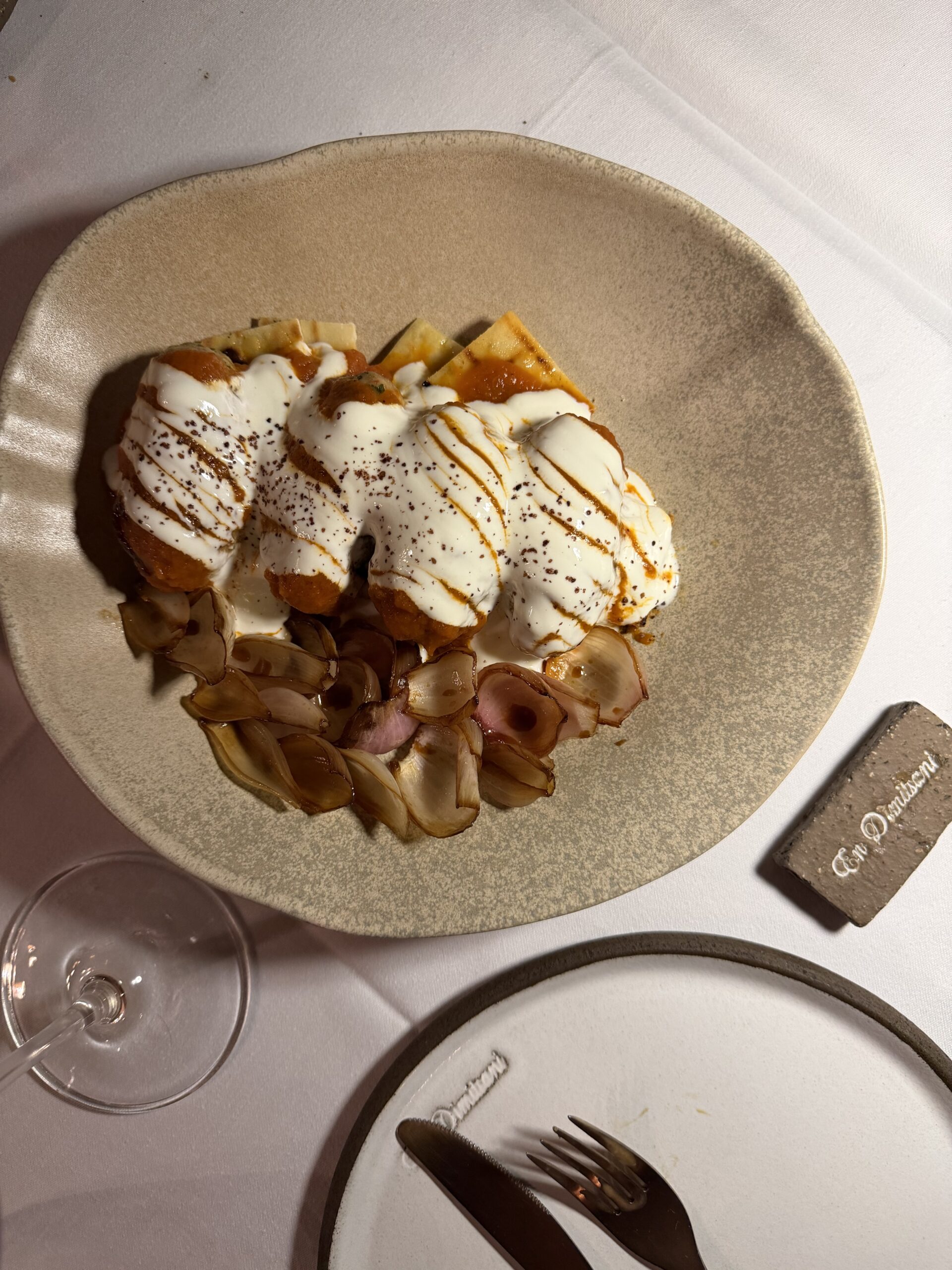
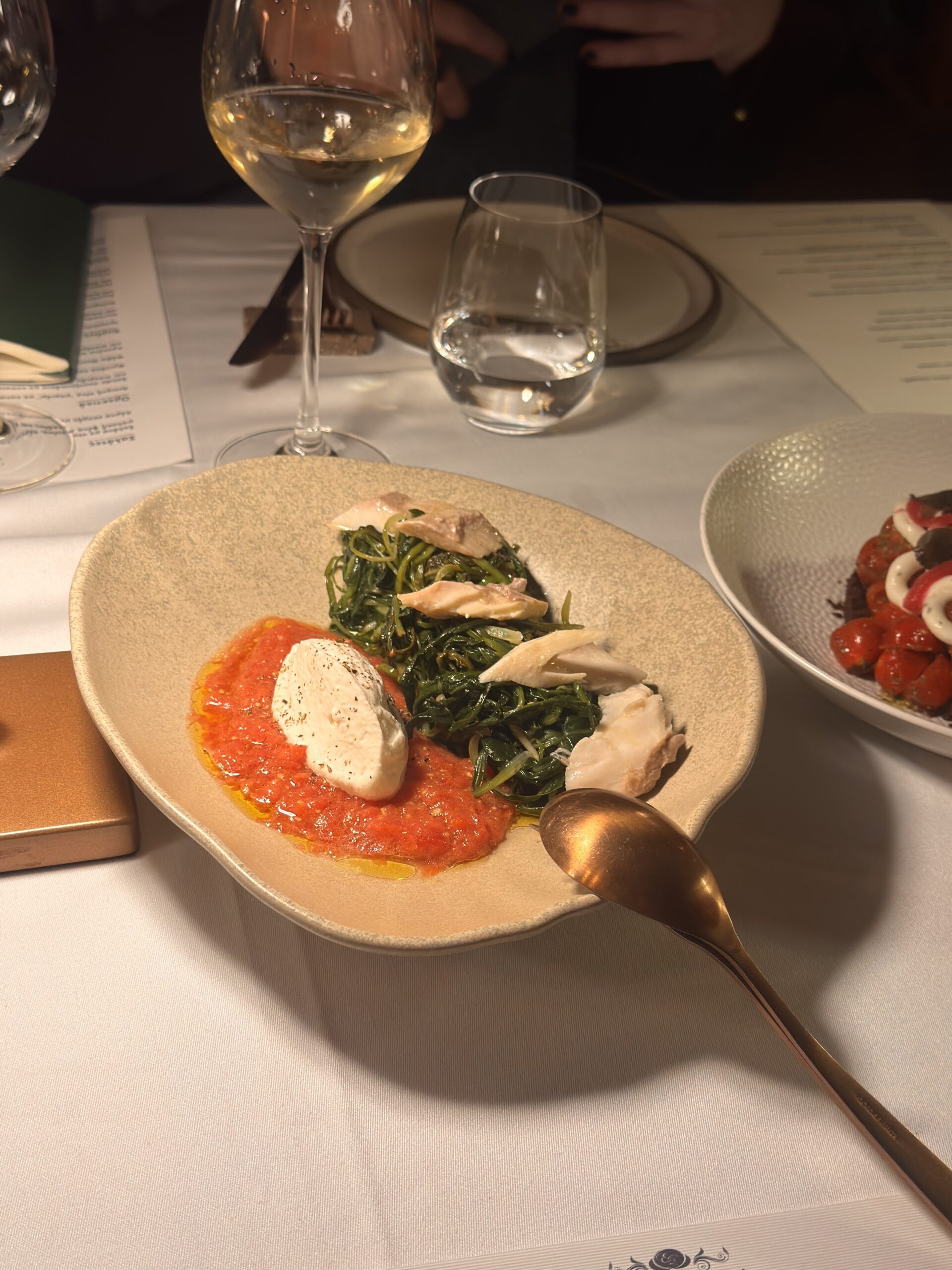
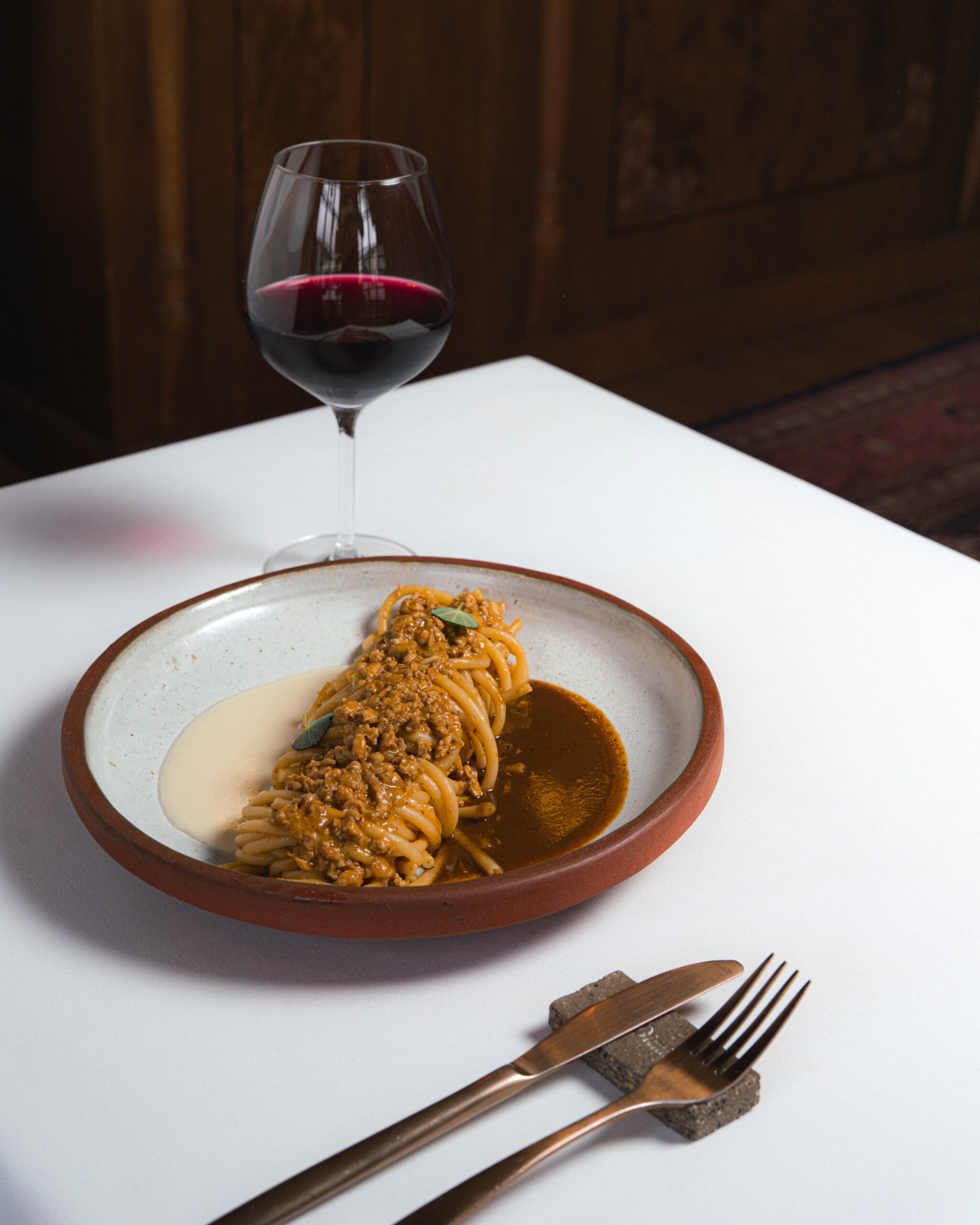
The wine list was curated by Christos Theodoropoulos, head sommelier of the award-winning Hervé Restaurant, and spans 40 labels from across the Peloponnese, with particular emphasis on Mantinia and Arcadia – appellations that serious wine drinkers are beginning to pay attention to, and that most casual visitors to Greece have never encountered.


The cocktail program was developed by internationally award-winning bartender Ntina Nikolitzi, who created six drinks using traditional Greek spirits and distillates – ouzo, tsipouro, Metaxa, liqueurs, and wine – combined with local honey, chestnuts, herbs, spices, nuts, and seasonal fruit. What makes the dining experience here persuasive is not the range of references but the fact that the food remains legible to the region while still showing confidence. Arcadia is fully present in the ingredients, the structure of the menu, and the instinct behind it. Nothing feels imposed.
What to See & Do in Dimitsana

Once you have settled in and eaten well, Dimitsana itself easily fills several days – which will surprise visitors who arrive expecting a quick scenic stop.
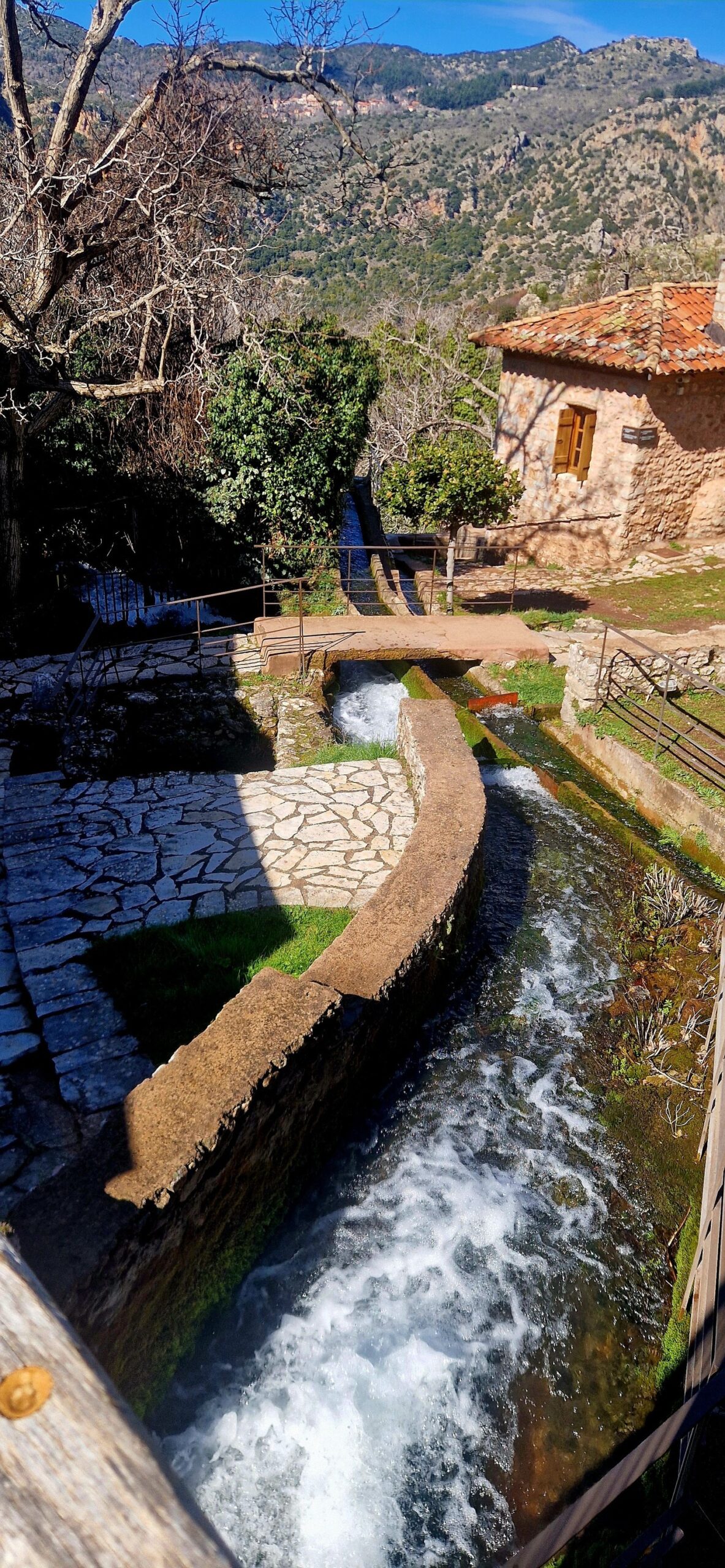
The first essential is the Open-Air Water Power Museum, just outside the village in a green setting threaded by running water. It is one of the clearest museum visits in Greece because it explains something practical and fundamental to the region: how water powered workshops, mills, and local production before industrial systems replaced them. It also deepens your understanding of Dimitsana itself — the village becomes easier to read once you have seen the productive world around it.
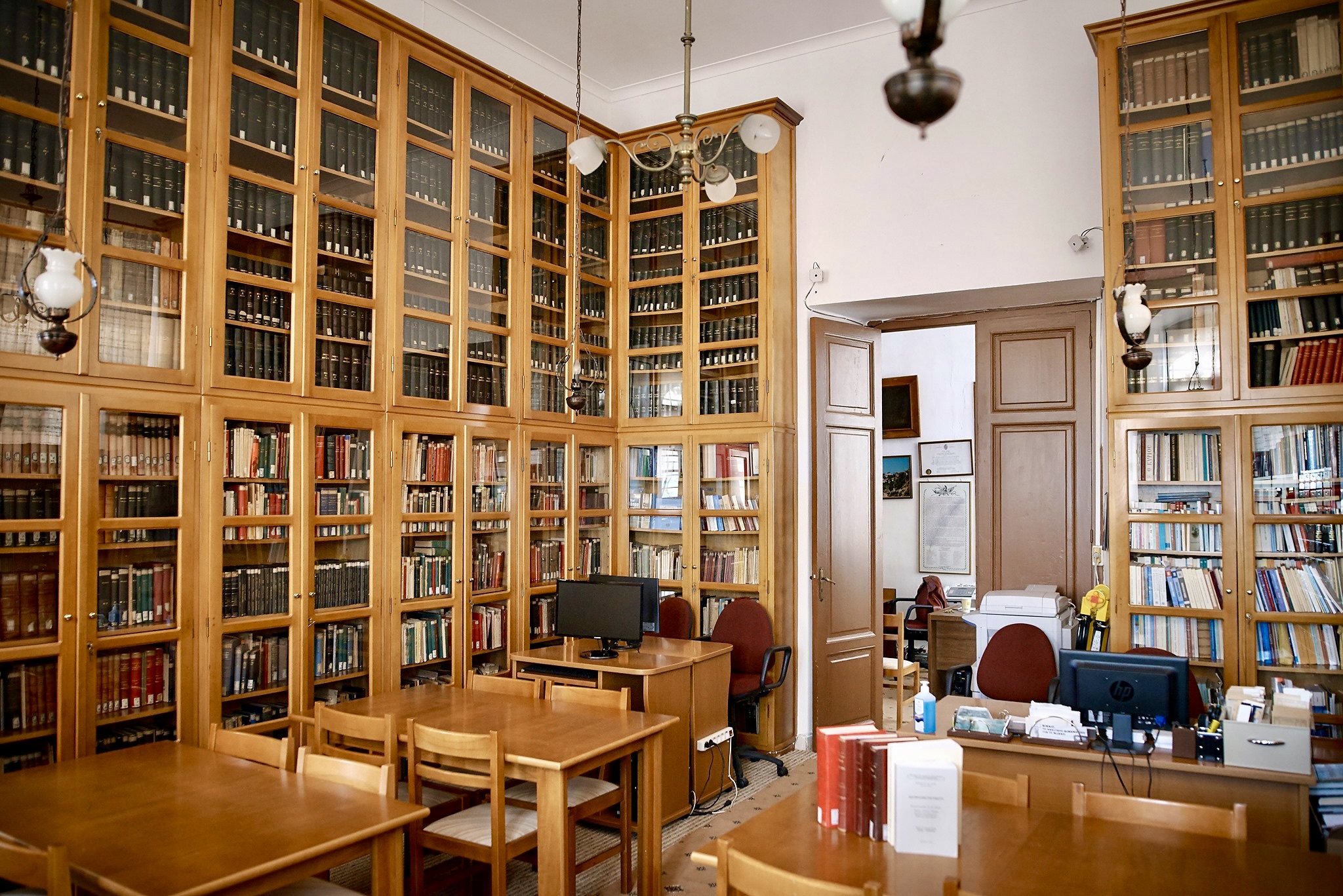
Back in the center, the Public Historical Library of Dimitsana gives the settlement its intellectual scale. This is not a token cultural stop. The library belongs to the educational history of the village and to the broader learned culture that made Dimitsana more than a mountain outpost. A visit there shifts the atmosphere of the place. The houses, schools, and public buildings begin to register differently once that history is in view.

Then there is the route into the Lousios Gorge – the valley that runs directly below the village and that, for first-time visitors, tends to be the moment Arcadia stops being a place on a map and becomes somewhere they understand viscerally. The path toward the Monastery of Philosophos, with its older and newer foundations linked through the gorge landscape, brings together religion, rock, vegetation, altitude, and time in a way characteristic of this part of Greece. Even travelers who are not usually drawn to monastic sites tend to respond to this route, because the setting is so exact.

An essential part of the Greek School of Dimitsana and inextricably linked to it from the very beginning was its library. Manuscripts of various content, also rewards less formal wandering. Walk the lanes, pause in the square, stop for coffee, look into the shops, and give the village some unstructured time. The cafes are part of the daily life of the village, not simply service points for visitors. A coffee in Dimitsana works best when it is allowed to take longer than planned.
The Villages Around Dimitsana
From Dimitsana, the surrounding area opens up naturally into a wider landscape that most visitors to Greece will find entirely unfamiliar — and immediately addictive.
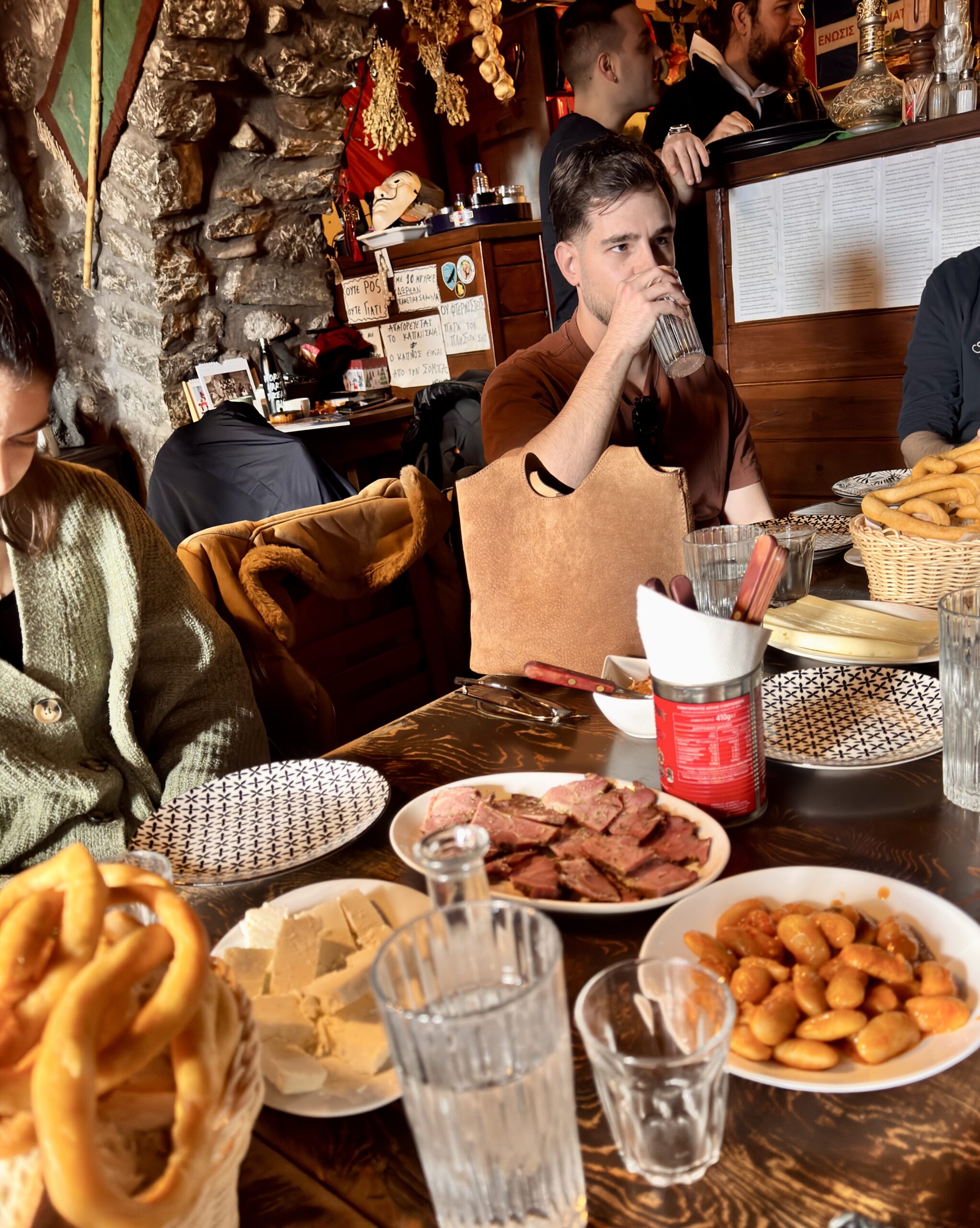
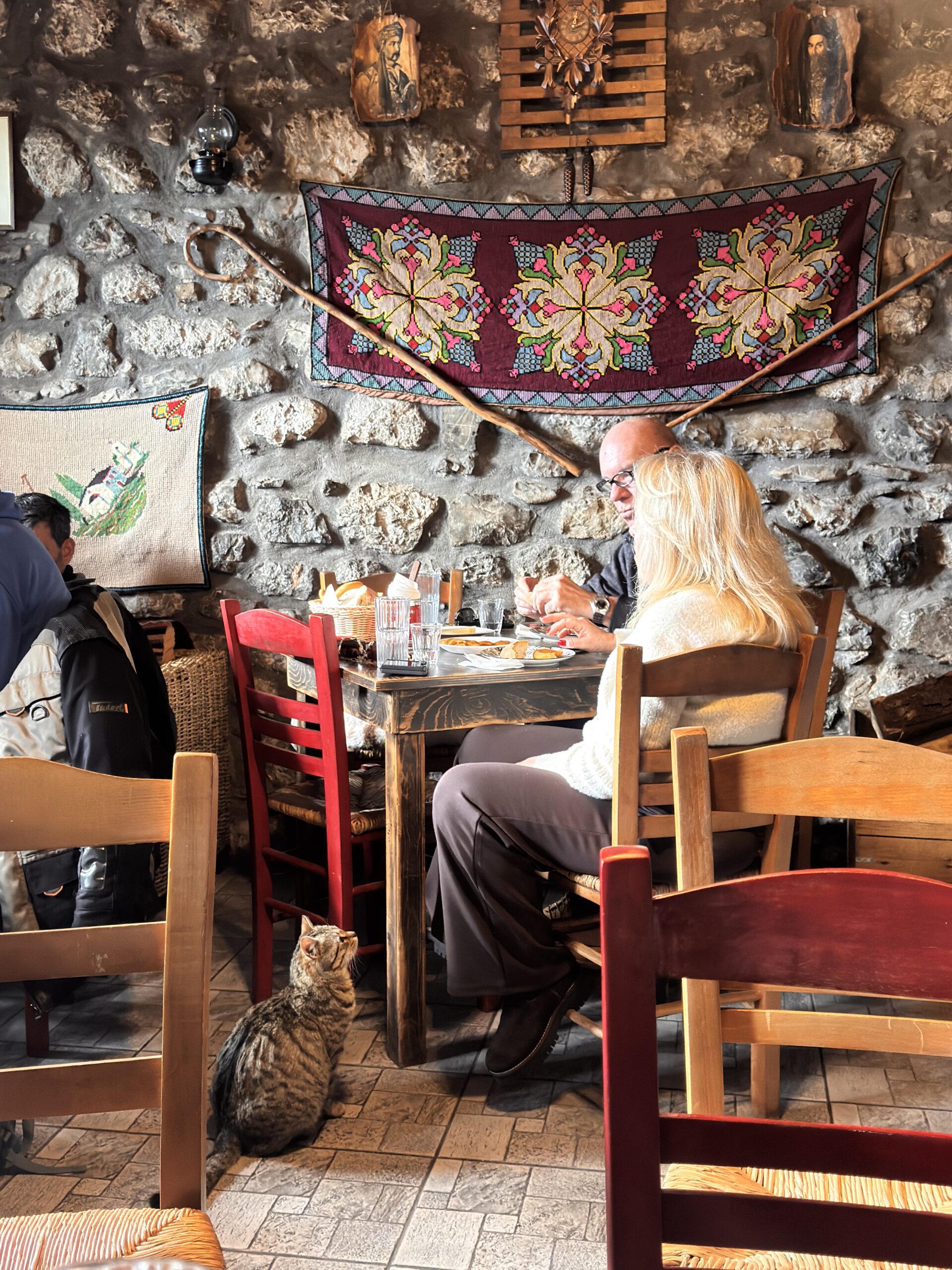
On the drive in via Tripoli, Alonistaina is one of the quieter mountain villages on Mainalo, with stone houses, slate roofs, old fountains, and a denser forest setting. The reason to stop is Kafeneion Trichimia, a traditional cafe that functions as a genuine part of everyday local life. The food is simple and direct: graviera cheese, local sausage cooked with peppers, apaki, olives, and melt-in-your-mouth tomatoey gigantes beans. It is the kind of breakfast or mid-morning stop that recalibrates your expectations for the rest of the day.

Stemnitsa is one of the most handsome mountain villages in Gortynia and still carries the silversmithing tradition for which it is known. It suits a slow walk, a stop for coffee, a look in the shops, and an hour or two without agenda.


Zatouna has a quieter profile – altitude, stillness, and a slower pace that sets it apart from the better-known stops. Karkalou is smaller still, best as a brief halt rather than a destination in itself.
Magouliana deserves a deliberate detour for one very good reason: Iosif, the meat taverna there. The village itself has the high-altitude reserve characteristic of these mountain settlements, and the taverna gives you exactly what you want in that setting — prime-quality meat cooked with skill and gusto, a direct link to local production, and the feeling that lunch is an immediate part of the landscape. In an area like this, such places matter.
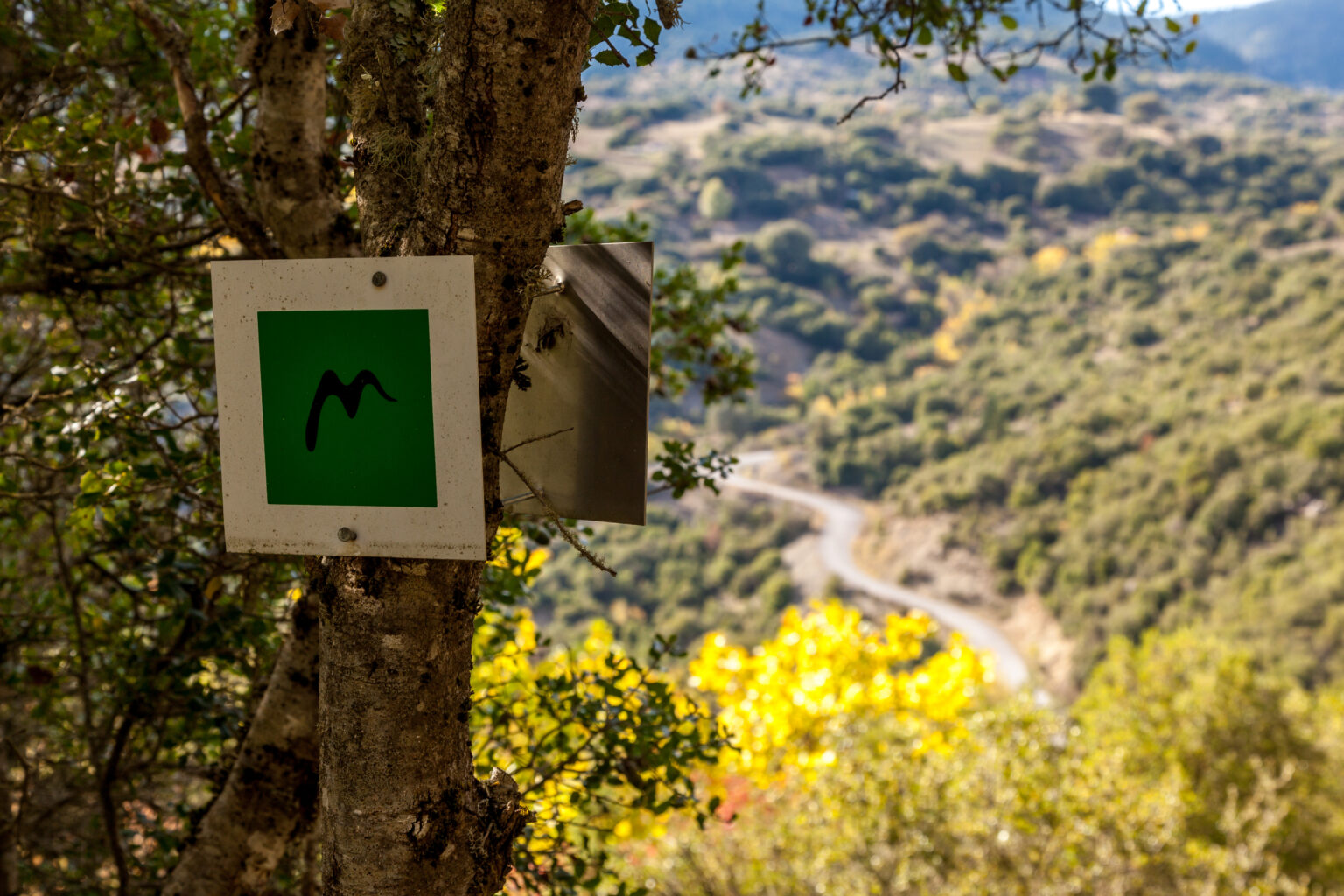
The wider landscape makes summer travel especially rewarding. The Menalon Trail links several of these villages through one of Greece’s most important walking networks – largely unknown outside the country, and one of its genuine surprises. The Lousios and Alfeios river systems make rafting one of the area’s principal warm-weather activities, while horseback riding in the Mainalo region offers another way into the landscape for those who want movement without committing to long hikes.
This is one of the reasons Dimitsana works so well in spring and summer. You can move between trail, river, village, museum, coffee, and dinner within the same day – and none of it feels forced together. For travelers who have already done Greece and want to understand what they missed, this is the answer. For those coming for the first time and willing to venture beyond the obvious, it may turn out to be the best decision of the trip.