







We were late for the appointment. The road to the village is full of turns, the weather unstable. One moment there is a fine, cold drizzle; the next the sun is cutting through the clouds.
At 793 meters, Doló, with its few permanent residents, is a place where time flows differently. Mrs. Anna is waiting for us at the door. She makes no comment about our delay. She does not even show it on her face. And here is the day’s first lesson: up here, a few minutes late mean nothing when the sweet we’re making needs five days to dry.
A Kitchen Filled with Fall Aromas
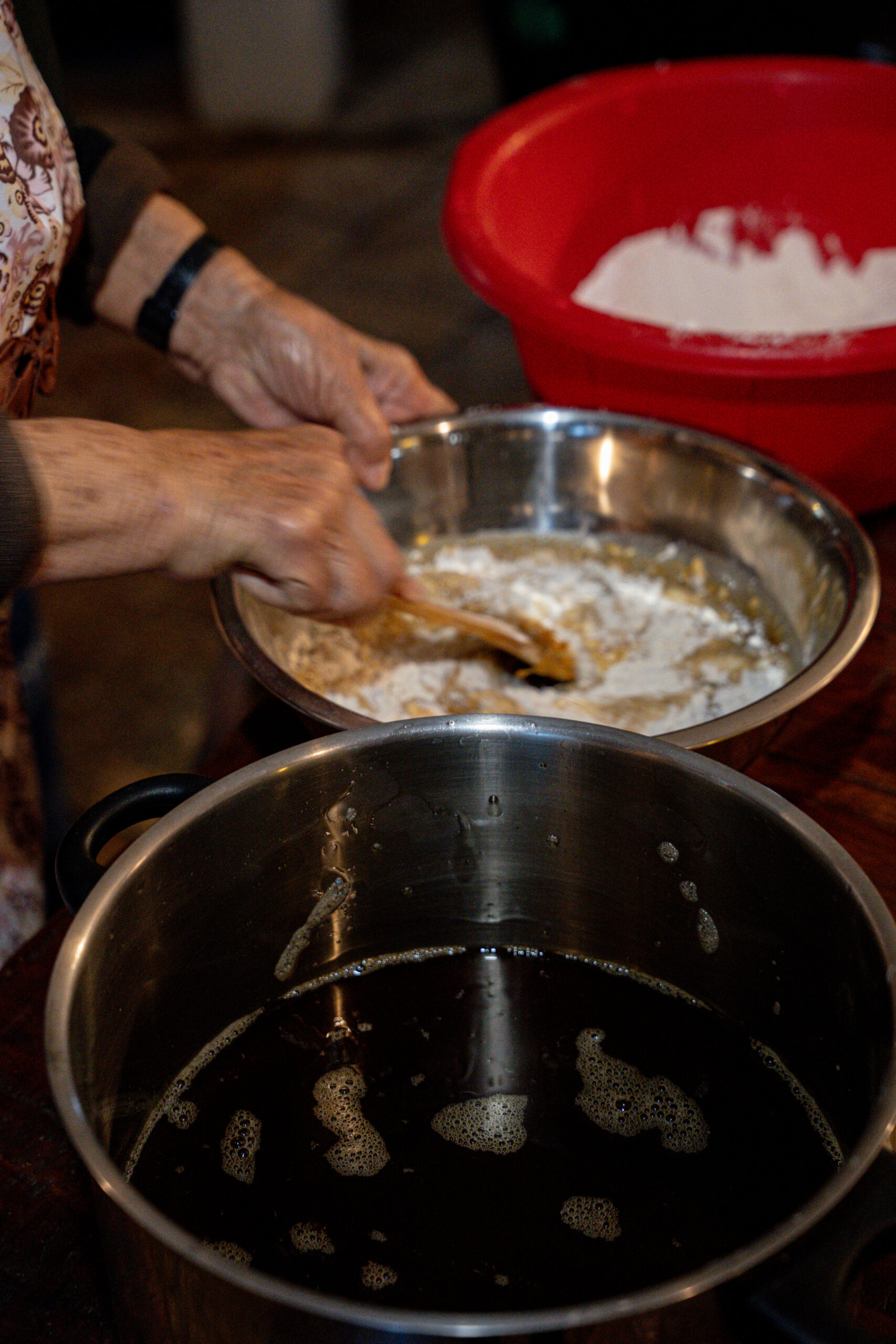
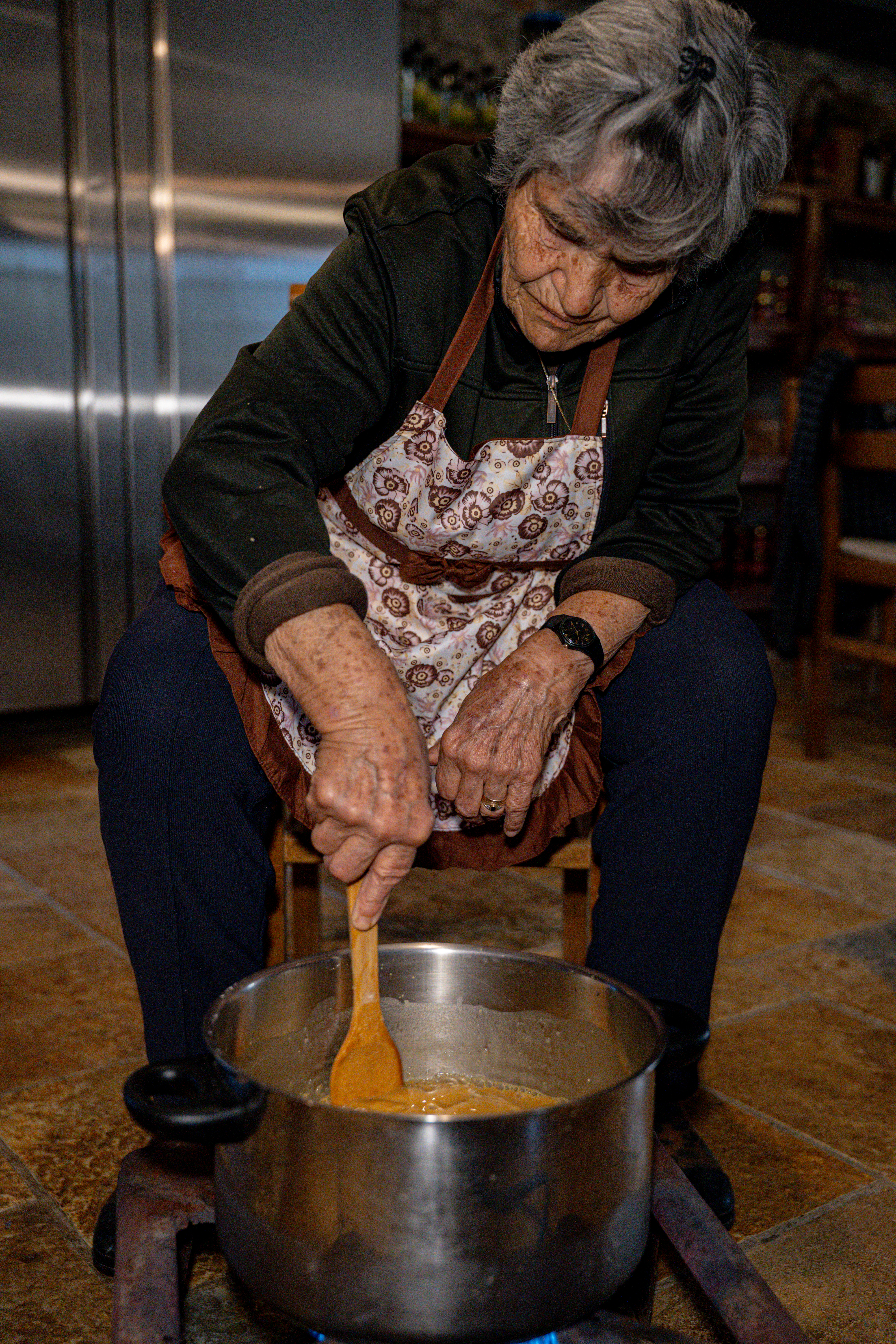
The moment you enter, the smell hits you. Thick, sweet, with notes of caramel and earth. In the pot, the grape must is already boiling. Mrs. Anna put it on early so it would thicken. “The feast begins,” as they say in the villages about the boiling of must. She removes a sprig of rose geranium from the pot. “For the aroma,” she explains. In other places they use basil, but here they prefer rose geranium because it “cuts” the overwhelming sweetness of the molasses. But let’s stop here to answer the essential question: What is Tsoubéki?
The “Energy Bar” of Ancient Warriors!
Tsoubéki, or Zmpék as they call it here, is a Lenten sweet with only two main ingredients: grape must and walnuts. But don’t underestimate it. What looks like a simple treat is actually the Epirus link in an ancient gastronomic chain that begins in the Caucasus. The exact same sweet, with different names, is made in Georgia as churchkhela, in Cyprus as soutzoukos, and in Turkey as cevizli sucuk. And its name reveals its origin: “Zmpék” is most likely a distortion of the Turkish word sucuk, which describes its sausage-like shape.
Its history is military. Georgian warriors took it with them on campaigns. Why? Look at the nutritional facts: 345 calories, 80.6 grams of carbohydrates, 3.5 grams of protein per 100 grams. It is almost pure, concentrated energy sealed in a waterproof coat of grape molasses. The perfect survival food for the rugged mountain massifs of Pogoní.


The “Silent Revolution”
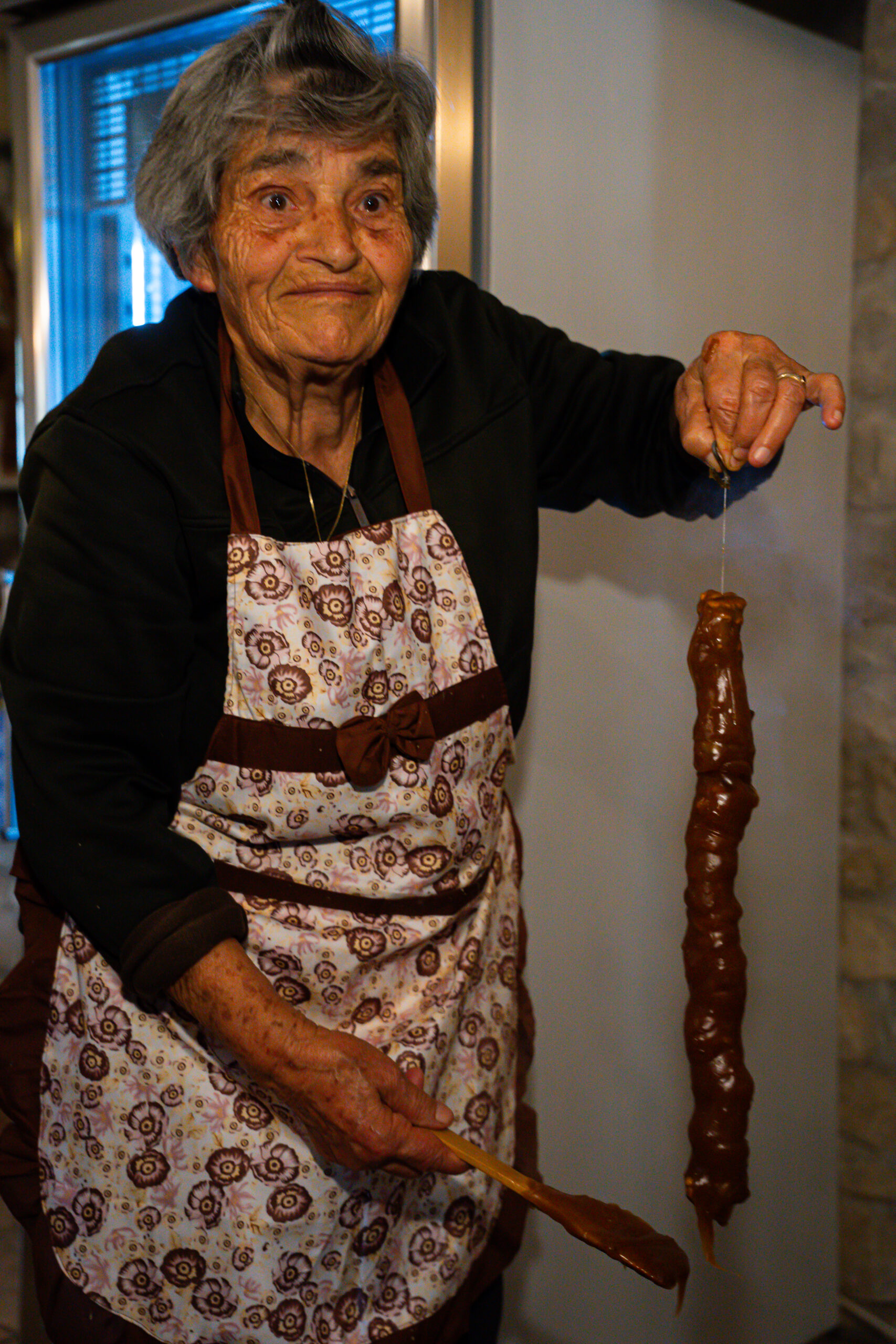
Mrs. Anna shows us the preparation she has already done. The walnuts are strung on fishing line. Not on traditional sewing thread, as all the old recipes recommend, but on fishing line. “Thread breaks,” she explains simply. This small detail conceals something important. Fishing line is far more durable, waterproof, does not absorb must, does not rot, and is more hygienic. Without advertising it, Mrs. Anna has “upgraded” the technique. Tradition, after all, is not frozen in time; it is a living organism that adjusts. The walnut garlands hang like strange ornaments, waiting. The job of collecting them, piercing them one by one, threading them – everything has already been done before we arrived.
“Sculpting Time” with 3 Dips and 3 Dryings
The must has thickened. It has turned dark and viscous like honey. Mrs. Anna takes the first garland. Her movement is slow, steady, almost ritualistic. She immerses the entire garland in the hot sweet mass. She leaves it for a few seconds. She pulls it out slowly. The walnuts are covered with a thin, shiny coating. The must drips heavily back into the pot. “I’ll do it three times,” she says, “so it holds as much must as I want.” Why exactly three? It is not a magical number. It is a technical necessity. The key is drying between dips. You don’t simply “dunk” – you build layers.
The key is drying between dips. You don’t simply “dunk” – you build layers.


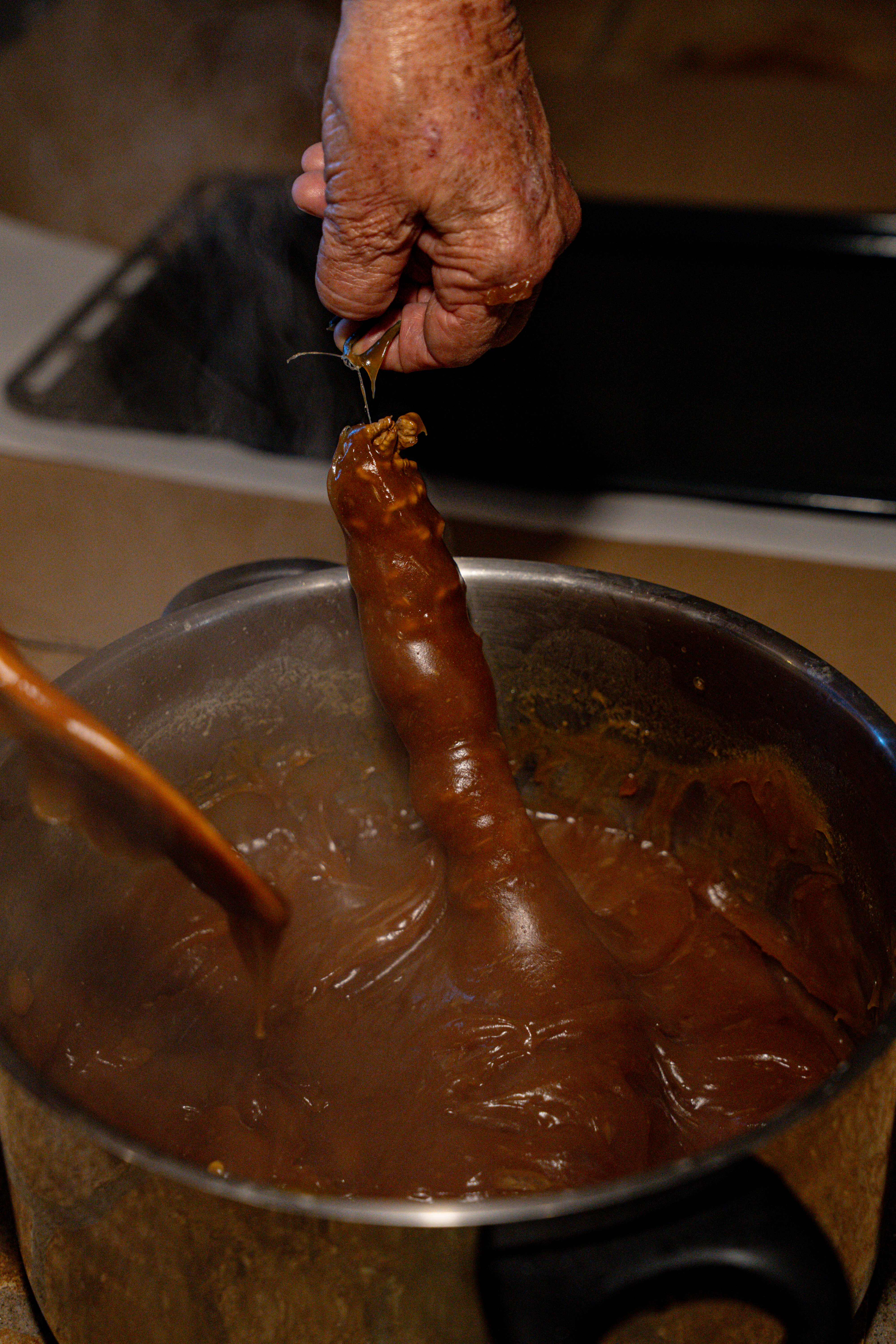
First dip: the basic undercoat. The garland is hung from a hook.
First pause: we wait. The cool air dries the layer, turning it into a thin “skin.” We, who came from the city with our tight schedules, are now forced into its rhythm.
Second dip: the must adheres to the first dry layer. The thickness doubles.
Second pause: hung again, waiting again. Outside, the rain has started once more. The rhythm of the weather – action and pause, rain and drying – finds its counterpart inside: dipping and drying.
Third dip: the final “finishing,” however, will be completed a few days later, when we will already be back in the city. That is when the thick and resilient shell will be fully ready.
Mrs. Anna mentions “three” as the classic homemade version. Other recipes say two to three times, some three to five, and commercial production can reach fifteen to seventeen dips. But the principle remains the same: it is sculpture with time as its raw material.
And Five Days of Air Drying
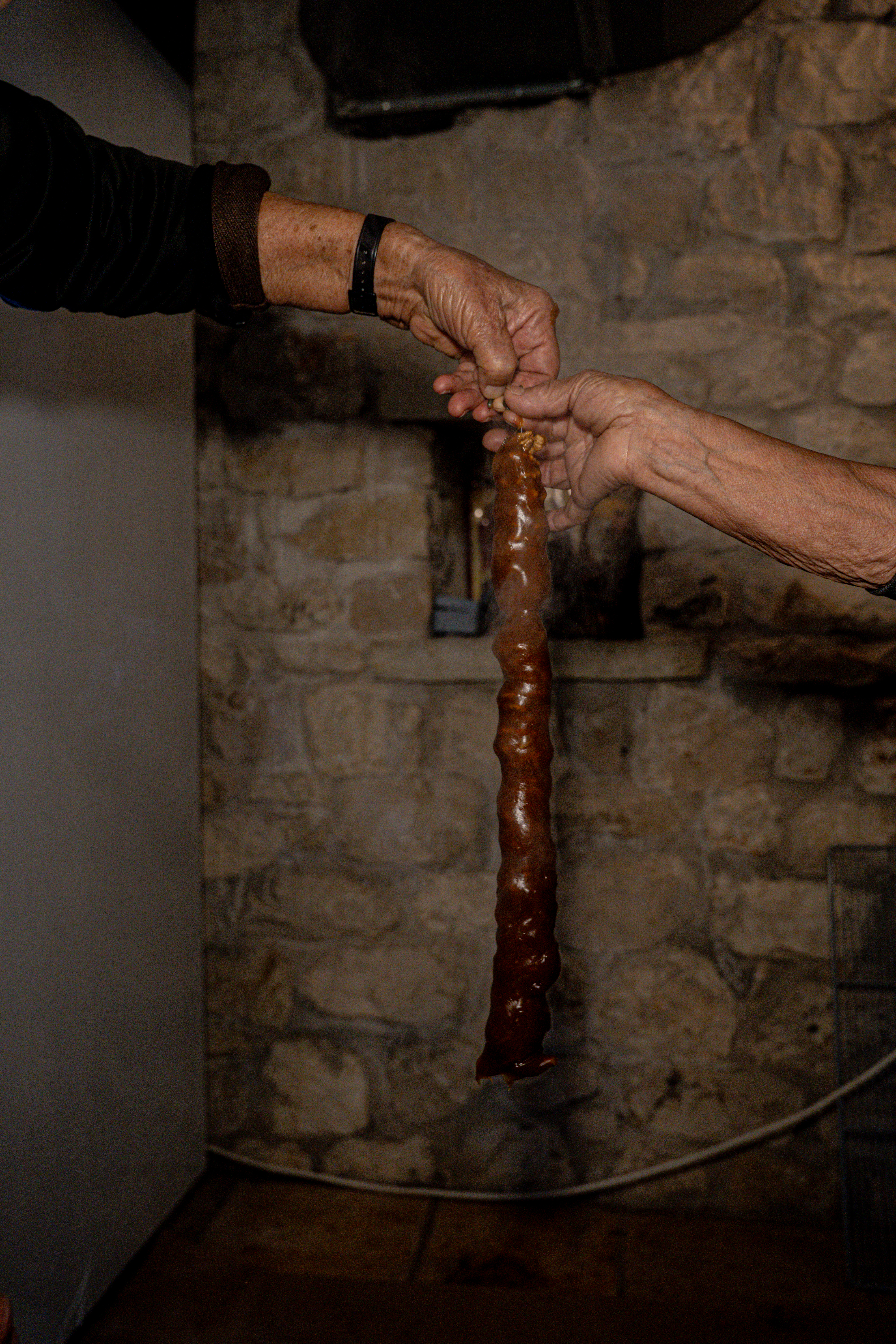
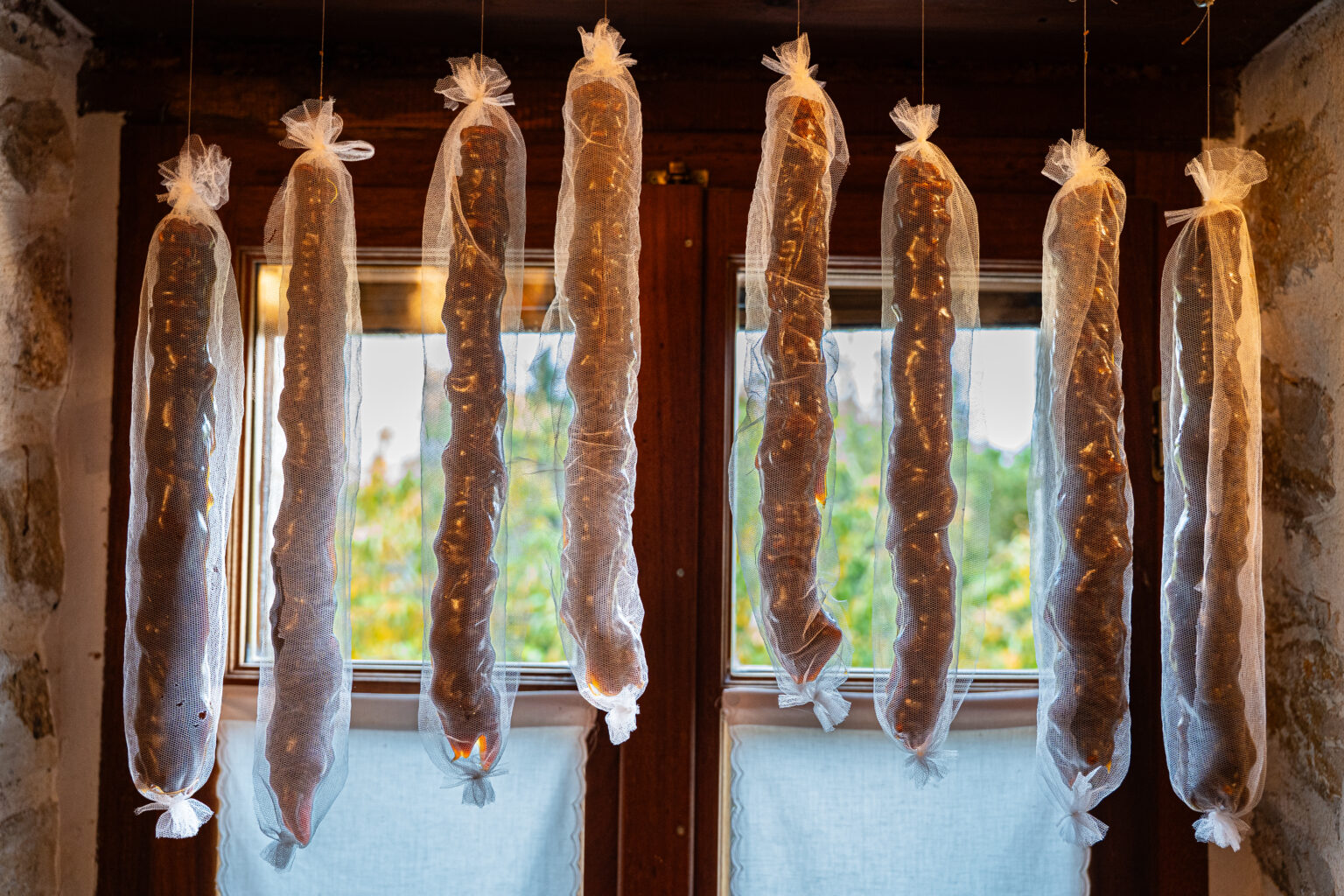
The process is completed for all the garlands. The now-heavy “sausages” of Zmpék hang from a wooden rod between two cupboards. They drip only slightly. The house smells of must, walnut, and satisfaction.
But we are not done. “Now it needs five to six days,” Mrs. Anna explains. The garlands stay there, in the air, until they harden on the outside and become elastic inside.
We leave Doló as the sun sets, painting the wet stones in gold. Mrs. Anna has given us something precious.
Tsoubéki is not must and walnuts. It is must, walnuts, and time. It is the very essence of Epirus, distilled into a sweet, tough bite. A dessert made from the humblest ingredients that requires the most precious one: the patience to wait for the rain to stop, for the must to thicken, and for each layer to dry before building the next. The patience to stop counting the minutes of delay and start counting the days of drying..
Mrs. Anna’s Recipe
Ingredients:
- Grape must (boiled until it thickens into a dense cream)
- Walnuts (strung on fishing line or thick thread)
- Rose geranium (optional, for aroma)
Method:
Let dry completely for five to six days.
Boil the must until it becomes thick and viscous.
Dip the walnut garlands into the hot must.
Hang to dry (20–30 minutes).
Repeat two to three times in total.
Repeat once more after a day.


