


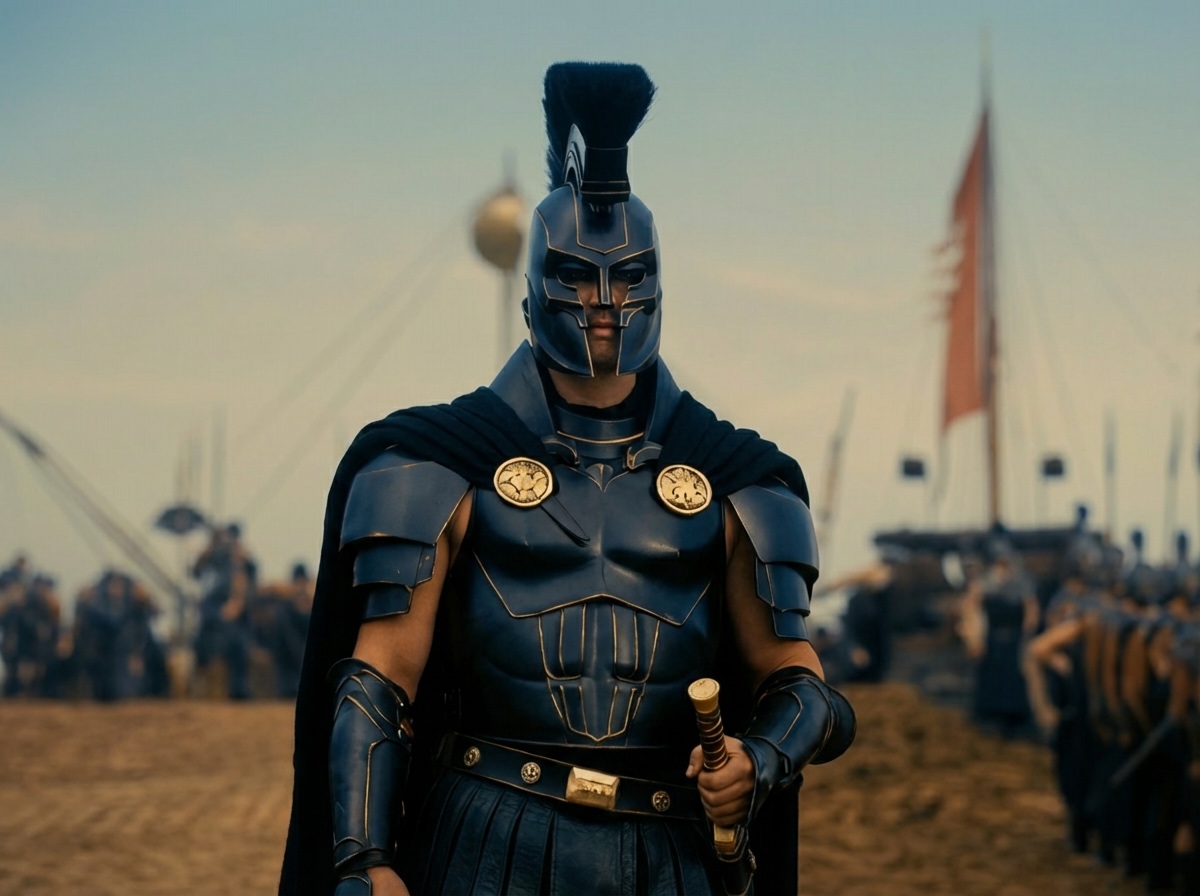
Christopher Nolan’s ‘The Odyssey’, due for release on July 2026, arrives with a charm that many historical epics lack: the story is rooted in a living landscape. Homer’s epic poem is a tale of adrenaline-soaked sea passages, devastating wrecks, false starts, seductive detours, violent reckonings, and the long yearning for return. It gave Western literature one of its great archetypes in Odysseus, “the man of many ways,” and shaped everything from Athenian drama to James Joyce’s Ulysses.
Yet for all its grandeur, the epic poem is grounded in practical things: harbors, thresholds, caves, strongholds, household goods, olive trees, ships, and the aching matter of how one can find the way back to a life. That is why Greece matters so much in relation to The Odyssey’s realization as a modern-day film.
Some of the locations used are existing, authentic spots in the Peloponnese, with fortifications, beaches, caves, and archaeological sites that require little to no cinematic embellishment. Others belong to the broader Greek afterlife of Homer: islands and coastlines that have infused cultural imagination from the text over centuries of reading, translation, argument, and travel.
Taken together, they offer a richly satisfying way to see Greece as a country whose terrain still makes the scale of the epic relatable. Here, we guide you to locations that will appear in the film, and were used as a set, and areas or places that feature in the poem, and direct you to what you can see and where you can stay if you choose to travel there.
Plan Your Trip
The clearest way to approach this journey is the film-first version. Begin in Athens, head to Acrocorinth (conveniently in Corinth) for a stop or overnight, then continue southwest into the Messinia (Messenia) region and spend the heart of the trip there.
Three to five nights around Pylos, Gialova, or the mega resort Costa Navarino gives enough time for Methoni Castle, Voidokilia, Nestor’s Cave, the Palace of Nestor, and the surrounding coastline without turning the week into a procession of check-ins and departures.
From there, the route can expand according to interest. Ithaca suits travelers drawn to the poem’s emotional center and to a quieter Ionian rhythm. Corfu offers a greener island counterpoint.
The mainland core, however, remains the strongest argument. It is the section that keeps closest to Nolan’s Greek locations while also offering what the best travel, and the best classical reading, have always shared: the pleasure of finding that a place is fully itself before it is ever asked to carry a story.
01 Messinia
Shooting Locations & Castles


If there is one part of Greece that should anchor a journey inspired by Nolan’s Odyssey, it is Messinia, in the southwestern Peloponnese. This is where the film’s Greek presence feels most substantial, and where the country’s topography does much of the storytelling by itself. The coast here is broad and exposed, with fortresses set against the sea, low hills above lagoons, and archaeological sites that connect Homeric memory with the material world of Bronze Age Greece.
Methoni Castle is the right place to begin. Built by the Venetians in the early 13th century on a rocky projection into the sea, it remains one of the grandest fortified complexes in the Mediterranean. The approach is memorable: a long stone bridge, an arched gate, walls weathered by salt and wind, and offshore the small Bourtzi tower standing alone in the water. The fortress has room, silence, and the kind of sea-facing exposure that gives a coast its authority.
Further north, Voidokilia offers a different register. The horseshoe-shaped beach is often described through the perfection of its crescent, but what makes it most remarkable is the wider composition around it: the pale arc of sand, the calm lagoon behind, the surrounding slopes, and the cave above the bay. Nearby, the Palace of Nestor provides the historical ballast. Protected under a modern shelter, the site preserves the plan of a Mycenaean palace complex, with rooms, courts, storerooms, and traces of administrative life. In Homer, Telemachus travels to sandy Pylos in search of news of his father. In Messenia, that phrase starts to feel less literary and more exact.
Pylos and Gialova make the most sensible bases for this stretch of coast. They place beach, cave, fortress, and archaeological site within easy reach, and they keep the journey from dissolving into long drives.
Where to Stay
The Romanos, a Luxury Collection Resort
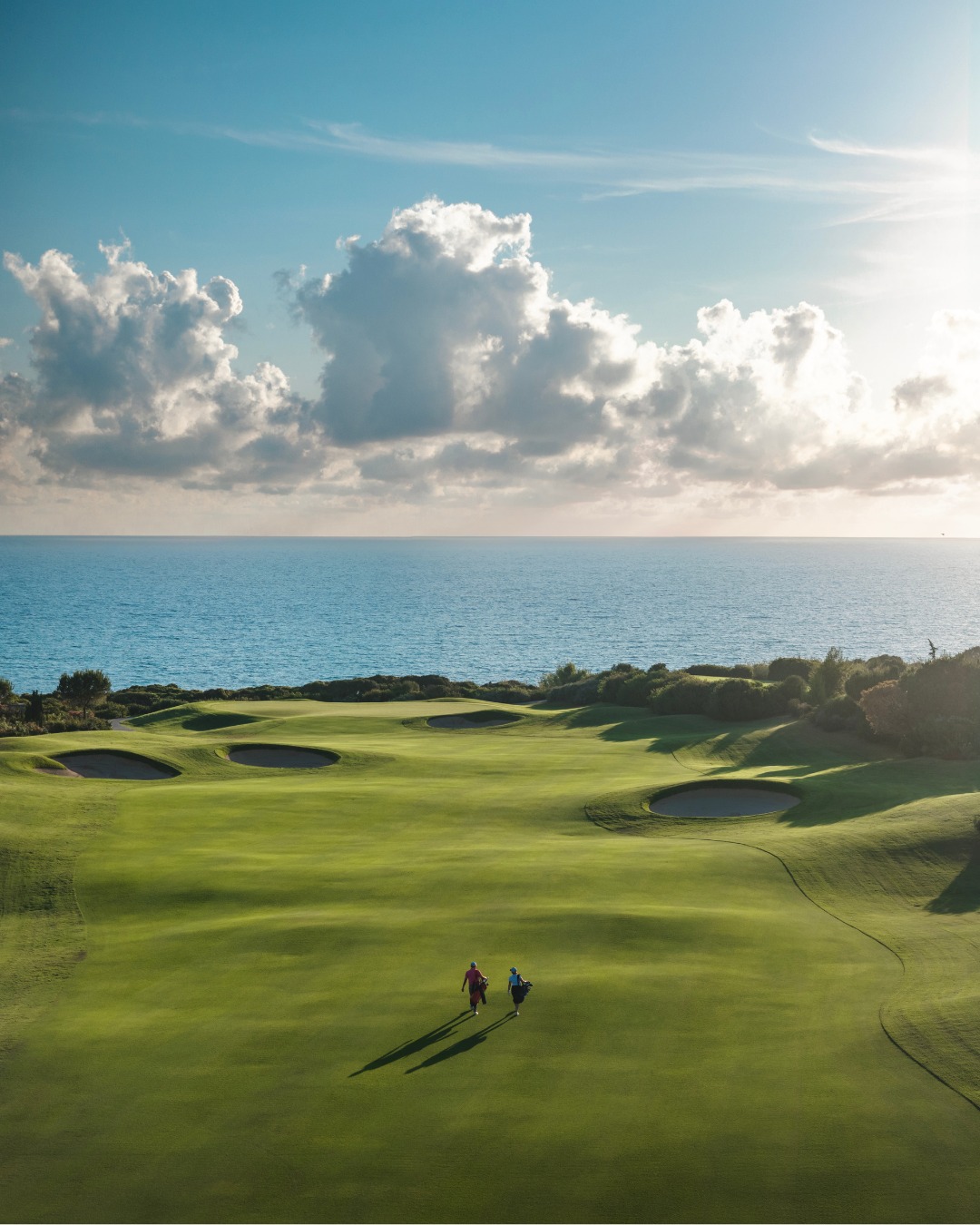
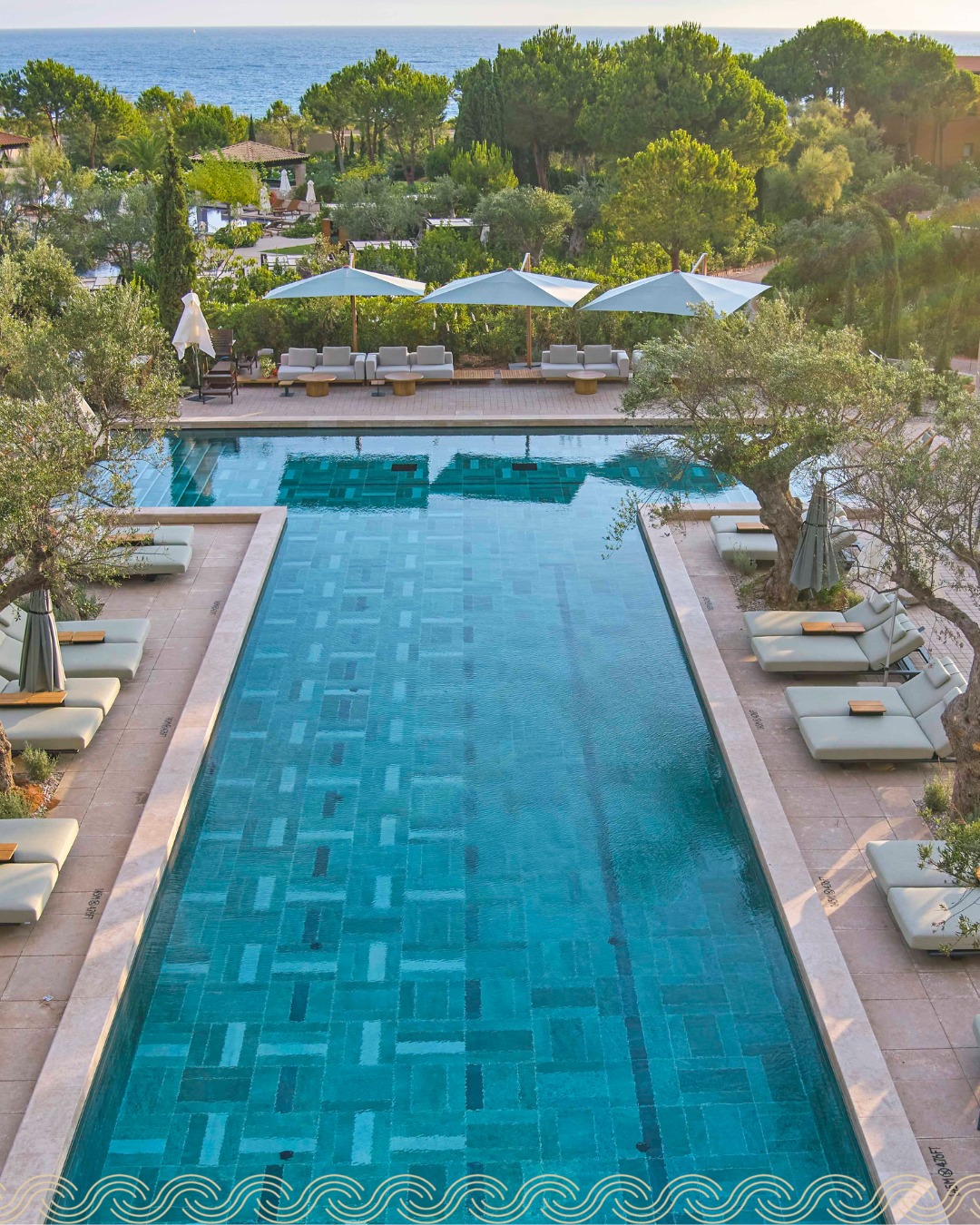
Set within Costa Navarino’s dune landscape, Romano is a large-scale resort combines Messinian architectural references with broad views of gardens, golf courses, and the Ionian Sea. It suits visitors who want a full-service stay with multiple restaurants, beach access, pools, and the option of suites or villas with considerable privacy.
Mandarin Oriental, Costa Navarino

Built into a hillside above Navarino Bay, the newer, Mandarin Oriental resort has a calmer, more contemporary profile, with suites and villas arranged to make the most of the coastal light and open views. It is particularly appealing for travelers who want polished service, strong wellness facilities, and a setting that feels slightly more secluded than a classic beachfront hotel.
Karalis Beach
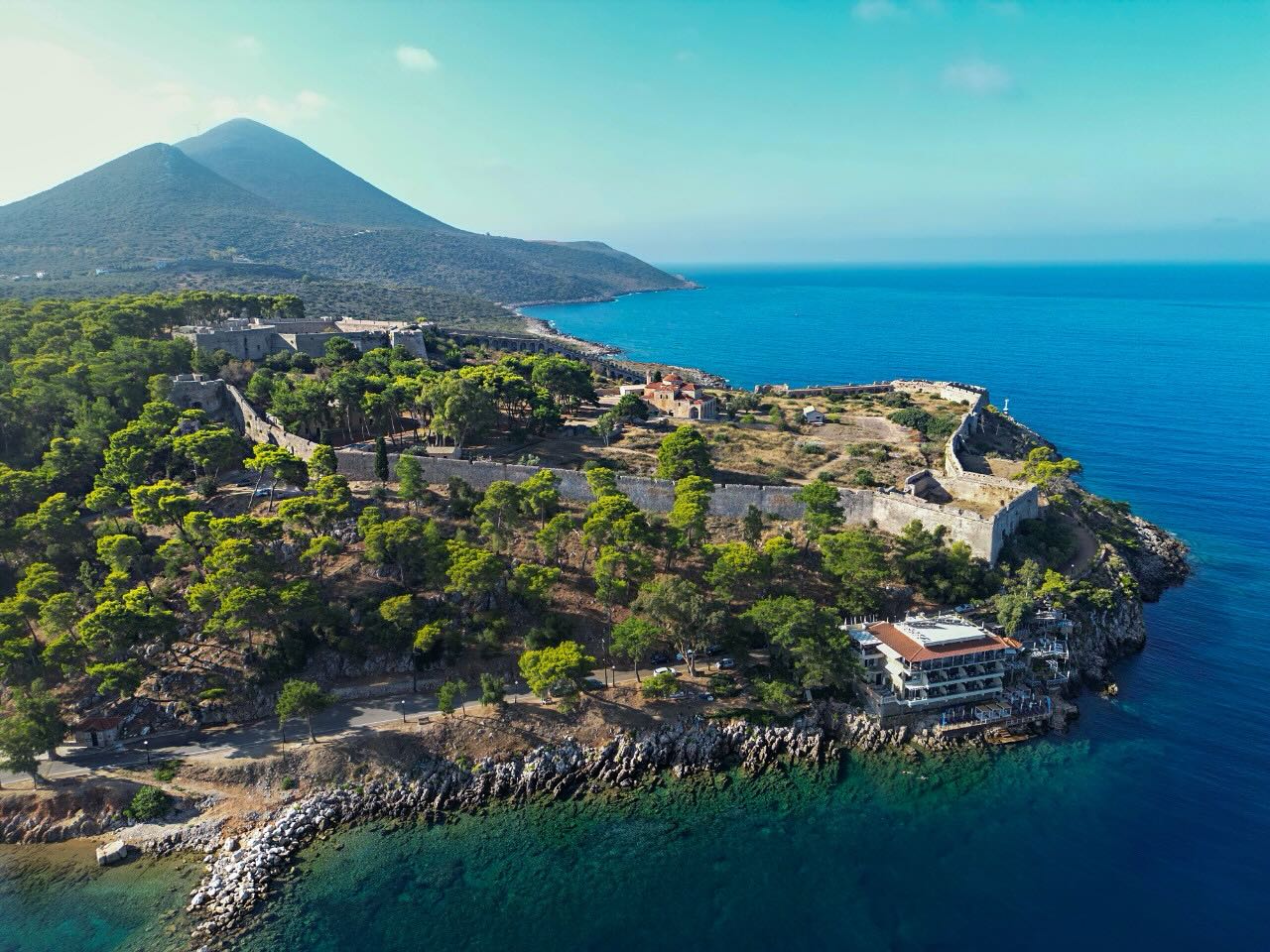
Right on the water in Pylos, Karalis Beach has the advantage of immediacy: balconies above Navarino Bay, the town within walking distance, and the castle rising nearby. Its scale is modest, which makes it a good base for travelers who prefer to stay close to the harbor rather than retreat into a resort compound.
02 Acrocorinth
Shooting locations and a fortress above the plain
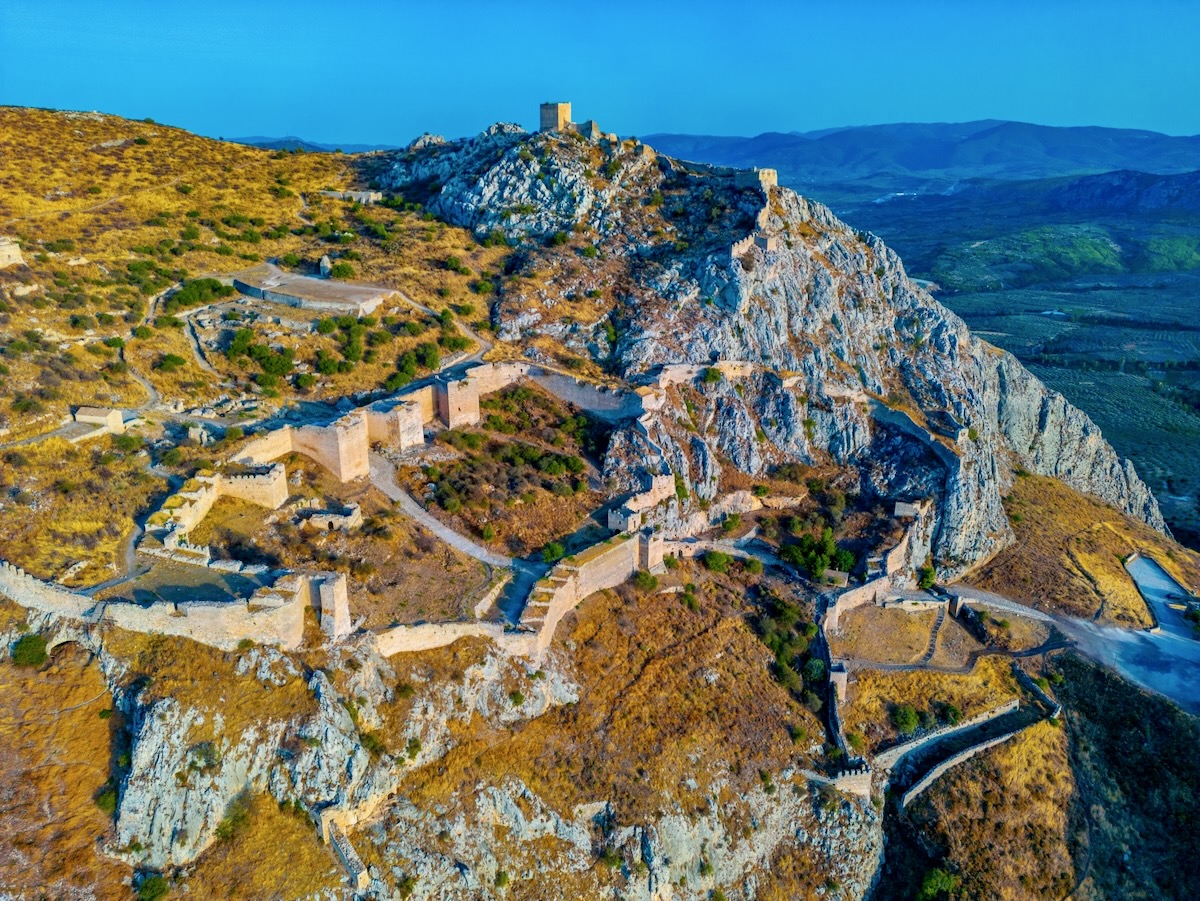
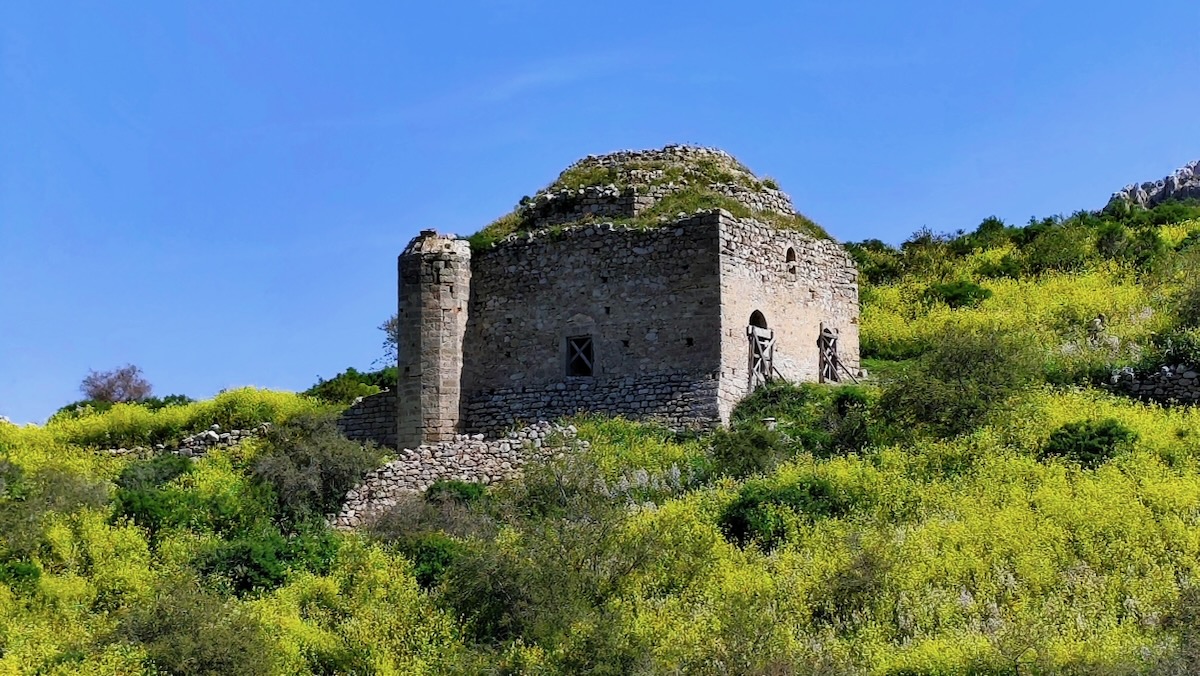
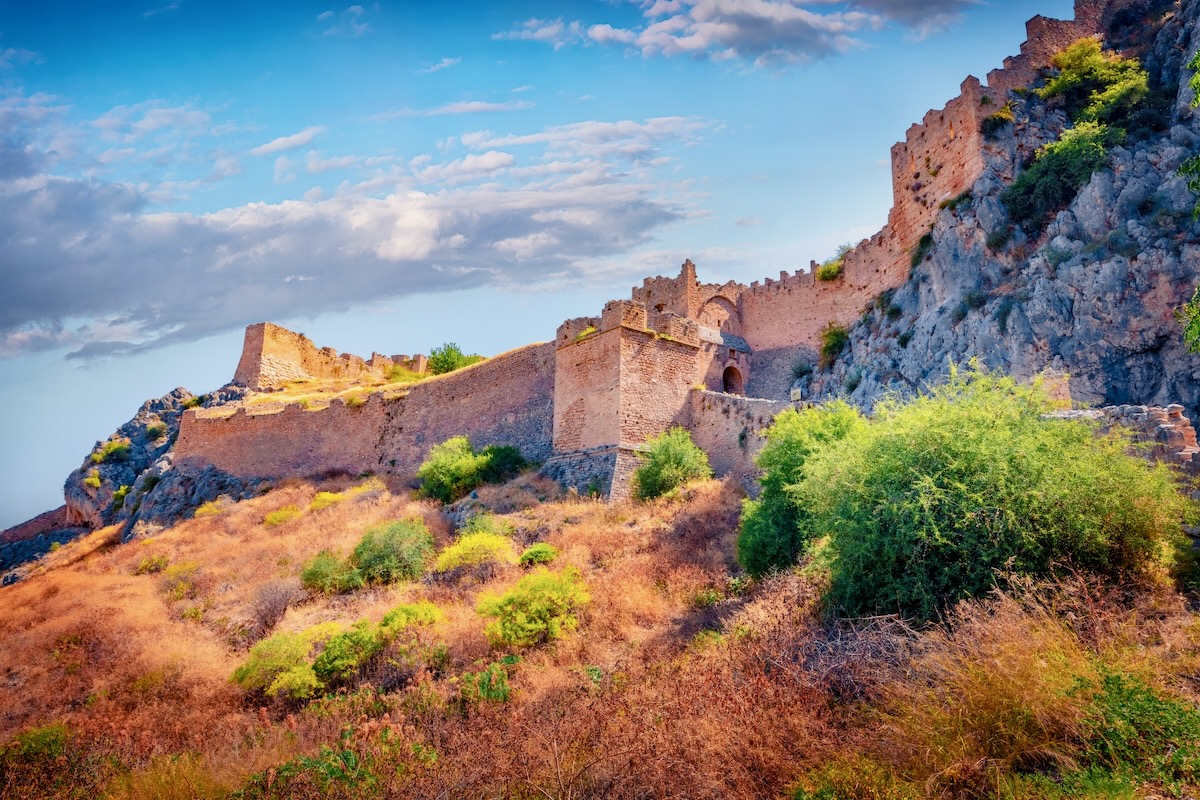
From Messinia, the journey turns northeast to Acrocorinth, and with it the mood changes. Here the Peloponnese exchanges shoreline for elevation. The fortress rises above Ancient Corinth on a commanding rock, with walls that still communicate the old political logic of height: whoever held this summit held the plain, the roads, and a broad field of vision. Acrocorinth was publicly listed as one of the Greek filming locations for The Odyssey by the Greek Film Commission, alongside Nestor’s Cave, Voidokilia Beach, Almyrolaka Beach, and Methoni Castle, but it is not mentioned in Homer’s poem.
Rich in historical atmosphere, Acrocorinth is one of those places where the practical purpose of the architecture remains legible even after centuries of change. The ascent is steep enough to feel earned, and once at the top the panorama unfolds with satisfying clarity. Below lies Ancient Corinth, one of the most rewarding archaeological sites in mainland Greece, with the Temple of Apollo, the forum, the museum, and an accumulation of remains that make the city feel continuous rather than remote. Sculpture, pottery, inscriptions, architectural fragments and intact structures, and domestic objects lend proportion to the larger history. One begins to understand, standing between fortress and city, why Greece never ceases to indulge the imagination.
This is an excellent stop between Athens and the deeper Peloponnese, or a short overnight for travelers who prefer the rhythm of a road trip to that of a fixed base.
Where to Stay
Amanzoe


Near Porto Heli, Amanzoe is one of the Peloponnese’s most rarefied luxury stays, with freestanding pavilions, long views over olive groves and sea, and a stripped classical vocabulary that suits a mainland itinerary built around major sites. It works best for readers treating Acrocorinth as part of a broader high-end journey through the eastern Peloponnese rather than as a simple overnight near Corinth itself.
Euphoria Retreat


In Mystras, Euphoria Retreat offers a different kind of luxury, centered on wellbeing, spa treatments, Byzantine surroundings, and a calmer, more restorative pace after days on the road. It is particularly well suited to travelers who want to combine archaeology and landscape with a stay that has a more inward, health-focused character.
100 Rizes Seaside Resort
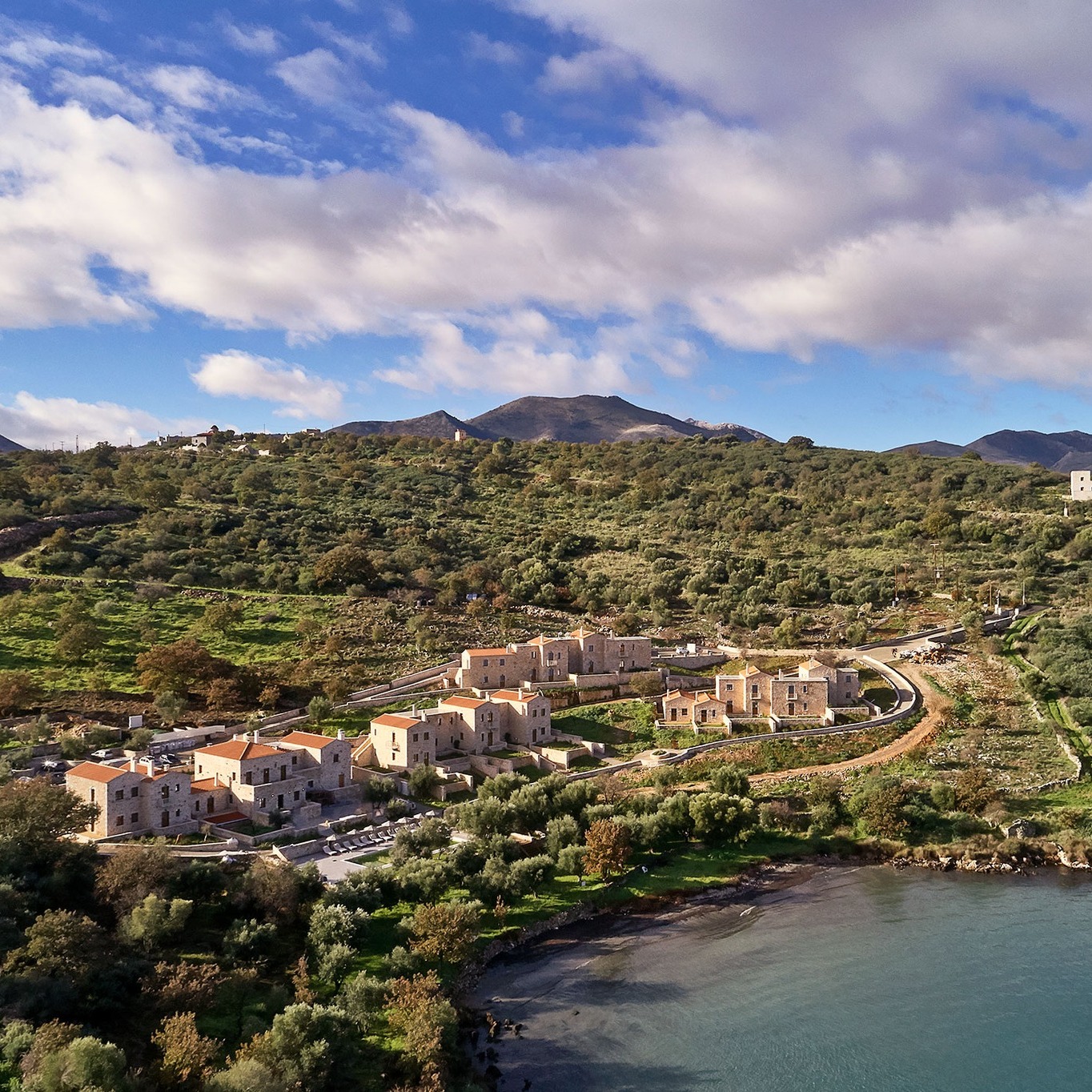
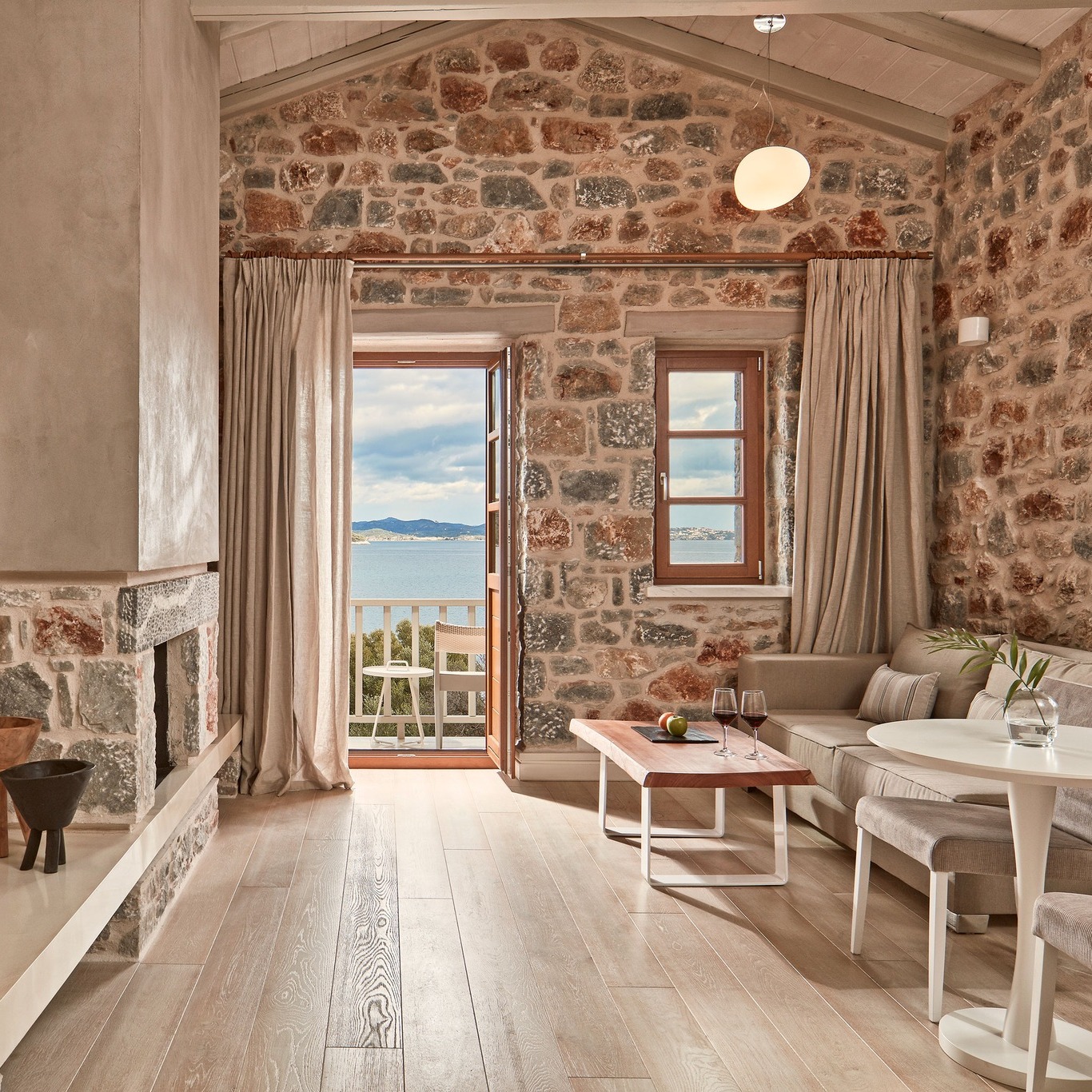
Farther south and better suited to travelers continuing deeper into the Peloponnese, 100 Rizes has more character than a standard stopover hotel, with stone-built architecture and a quiet coastal setting. It works especially well for readers who prefer smaller properties that feel tied to landscape and locality rather than simply functional.
Read more about where to stay in the Peloponnese here
03 Ithaca
Shooting locations and the Island of Return


No place belongs more deeply to the idea of The Odyssey than Ithaca. Whether or not it forms part of the film’s direct geography, it remains the destination toward which the poem leans from beginning to end. Odysseus may encounter lotus-eaters, Cyclopes, enchantresses, storms, wreckage, and the dead, yet the structure of the story is domestic. He wants his island, his household, his bed, his wife, his son. “There is no place more dear than one’s own country,” as one translation has it, and Ithaca exists in literature as the place where that claim must finally be tested.
The island today still carries the quiet authority of return. It is smaller in scale than neighboring Kefalonia, more inward in feeling, and best appreciated without theatrical expectations. In Vathy, the harbor curls inward and the town gathers around it in a calm semicircle.
The Archaeological Museum introduces the island through objects rather than legend, with finds that connect local life to longer historical continuities. In the north, the debate around places associated with Odysseus continues to attract curious visitors, but Ithaca is most persuasive in its ordinary textures: olive groves, stone paths, low hills, small coves, and roads that encourage a slower pace. It is a place that rewards walking, pausing, and rereading.
Where to Stay
Perantzada 1811
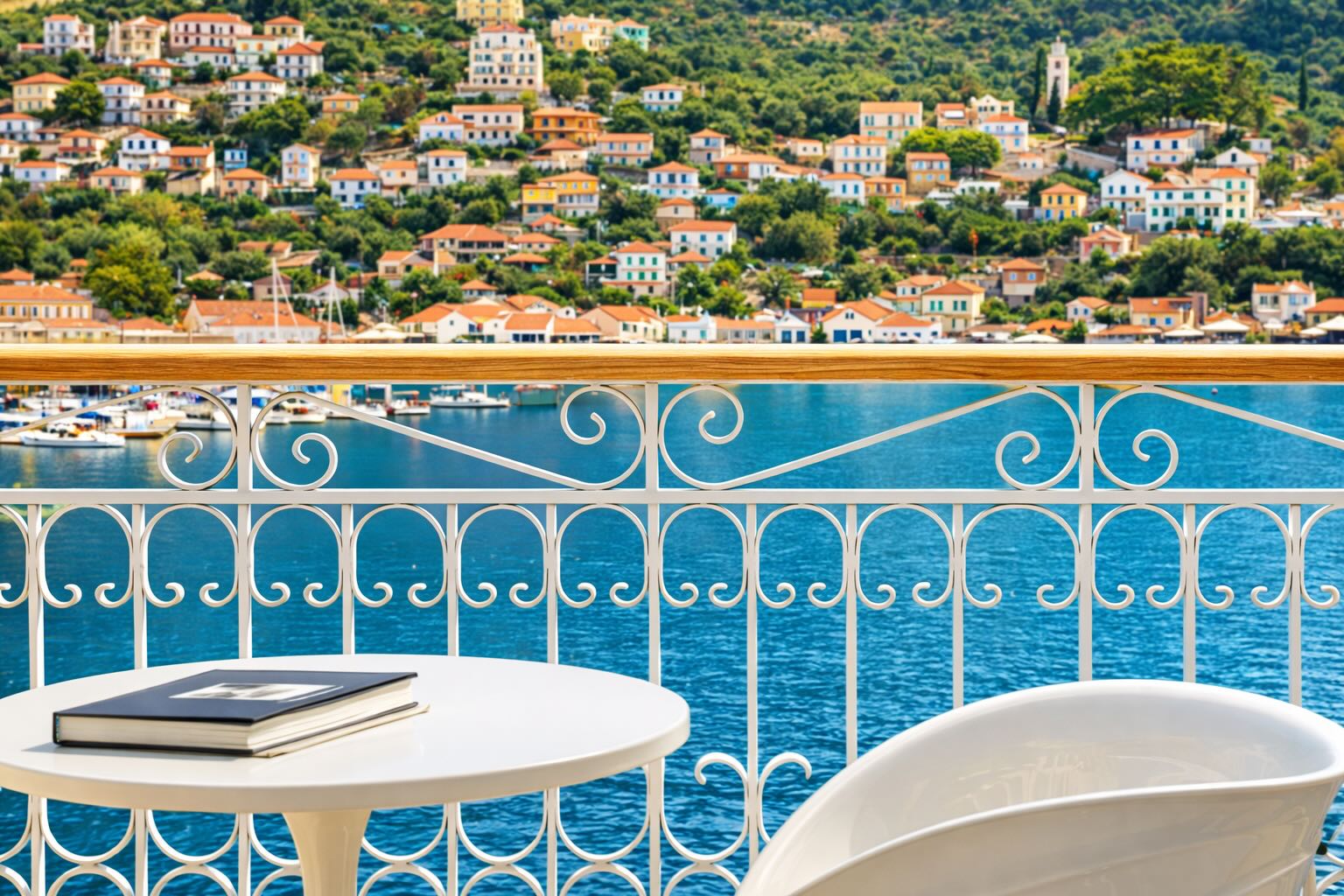

Overlooking the harbor in Vathy, Perantzada 1811 is the island’s top luxury address, combining a restored 19th-century building with contemporary interiors and a more elevated design sensibility than most stays in town.
Adastra Ithaca Luxury Suites
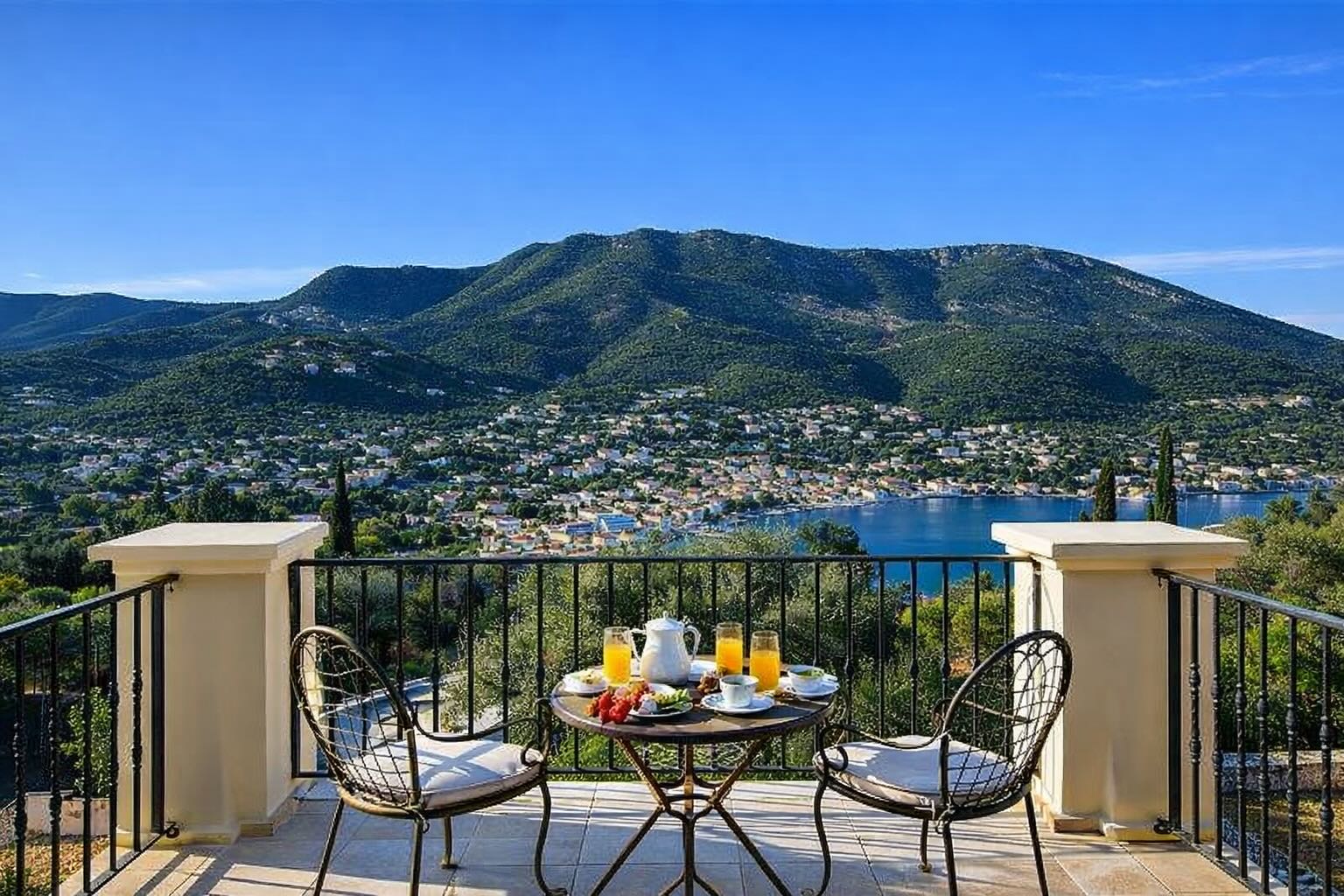
A chic and contemporary Ithaca stay: more spacious than a standard hotel room, and well suited to travelers who want comfort without moving into full villa territory. Adastra’s suites come with sea views and the kind of layout that works well for couples or smaller parties staying several days at a time.
Villa Nadoria

For travelers who want a larger private villa with a pool and enough room for a family or a small group, this remains one of the clearer choices near Vathy. Villa Nadoria is set in the Marathias area, close to Kaminia Beach, and accommodates up to six guests. It includes three bedrooms, a private pool with jacuzzi, balconies, a garden, parking, and a fully equipped kitchen.
Read more about where to stay in Ithaca here
04 Corfu
Shooting locations and the Greener Afterlife of the Epic
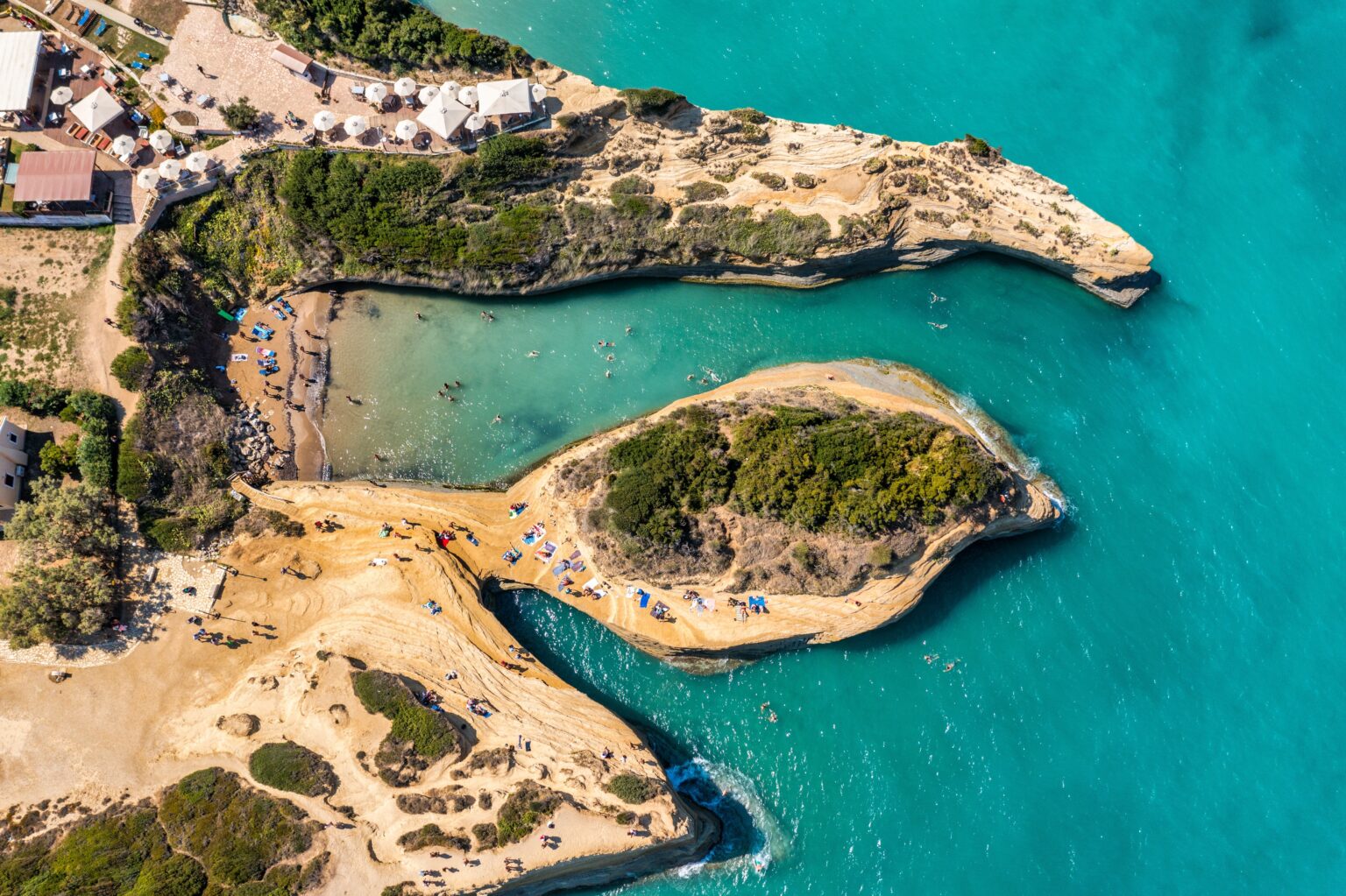
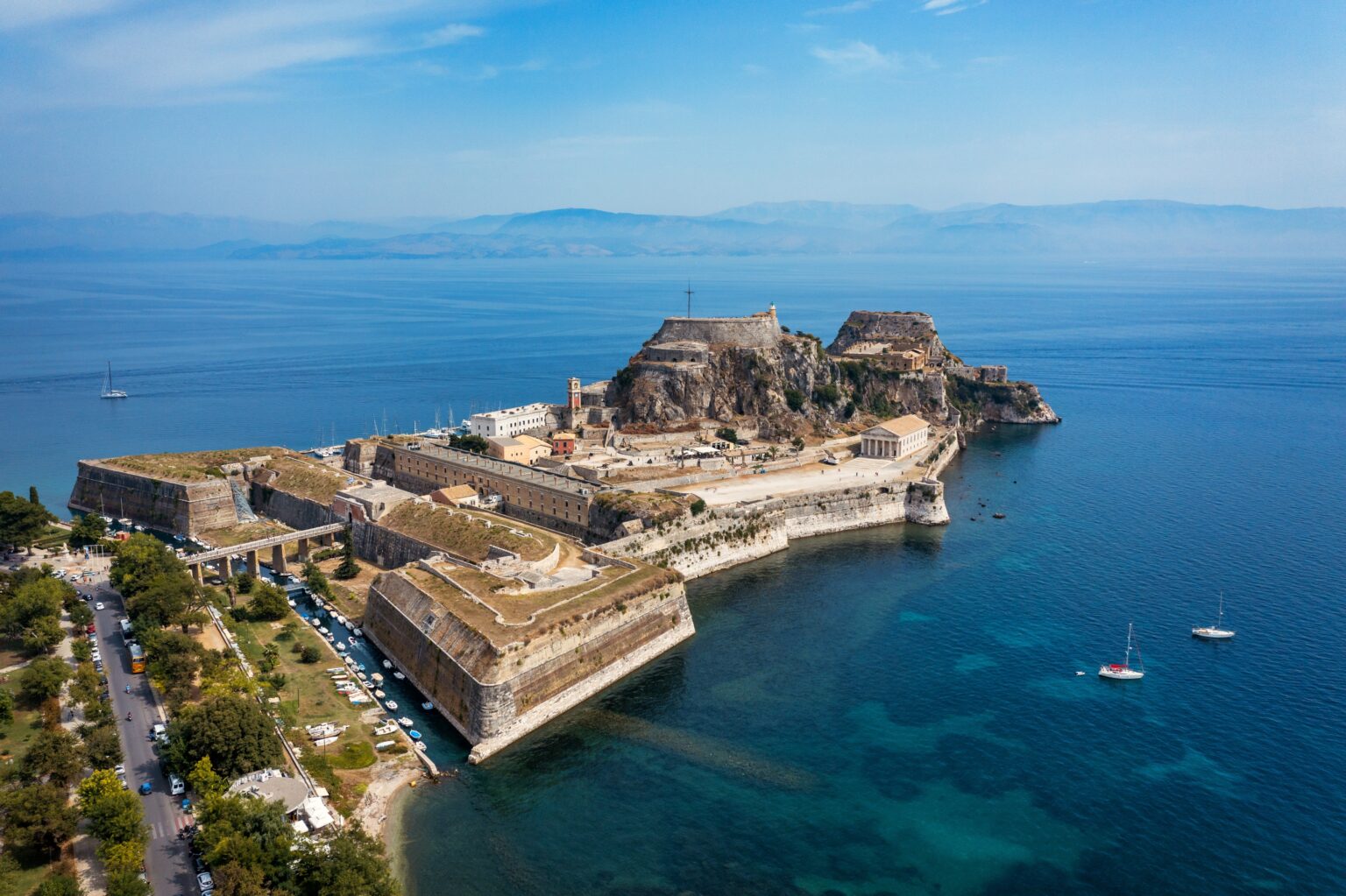

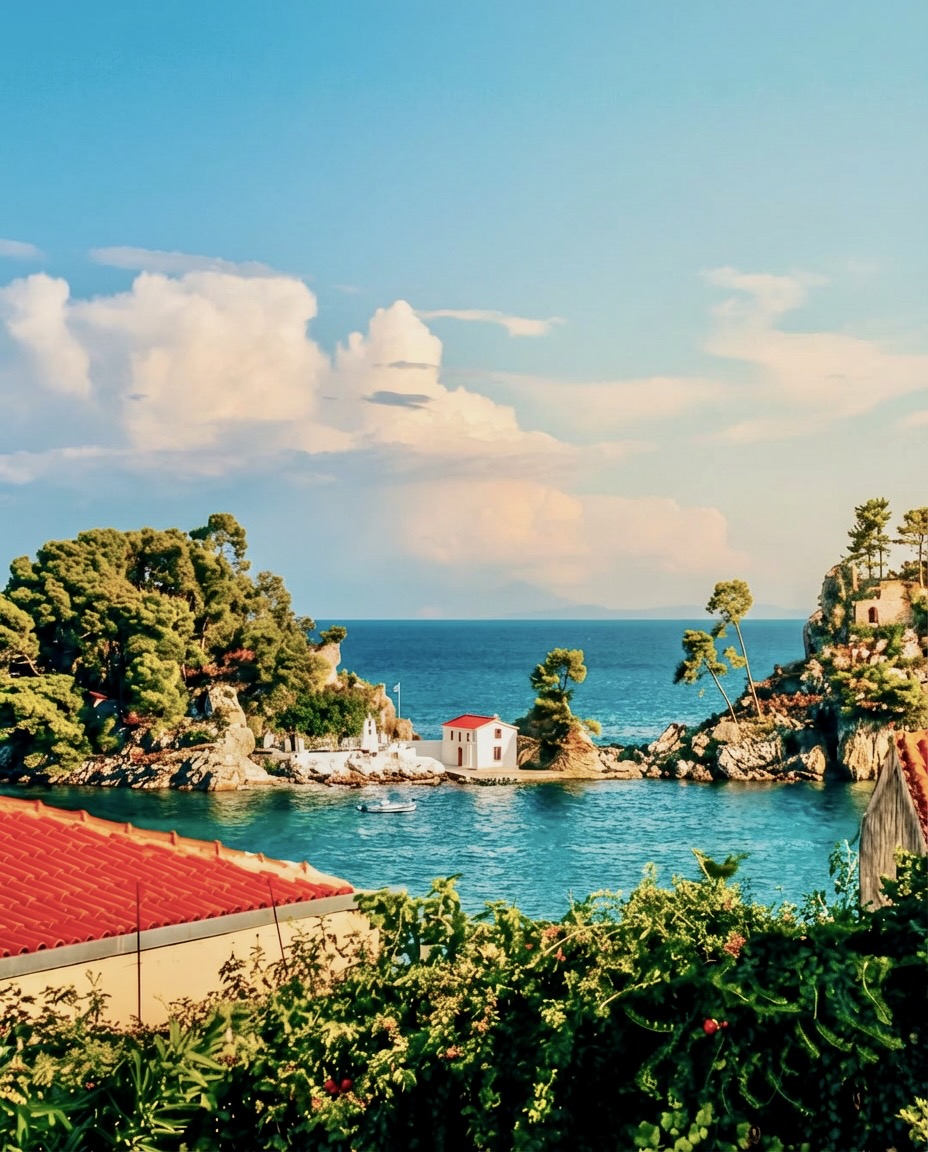
Corfu belongs in this article through one of the Odyssey’s most enduring later associations: the island has long been linked with Scheria, where Odysseus is washed ashore before the final passage home. It fits beautifully. After the harsher coasts and exposed thresholds of the poem, Corfu introduces a different mood, with green headlands, sheltered bays, Venetian elegance, and the kind of cultivated ease that makes the island feel like a natural setting for the Odyssey’s last great act of welcome.
Paleokastritsa on the northwest coast provides the clearest example. Its coves, steep slopes, and clear water create a coastline that feels richly articulated rather than simply scenic. Above the bays, the monastery gives the headland form and continuity. Scenic Corfu Town adds another dimension altogether.
Venetian arcades, fortresses, squares, and narrow streets make this one of the most layered urban settings on any Greek island. In the context of an Odyssey-themed journey, Corfu is pleasing precisely because it broadens the terms. Homer’s world was never only about ordeal. It also included hospitality, social order, feasting, music, and cultivated life. Corfu supplies that civilizing counterweight.
Where to Stay
Domes Miramare


On Corfu’s southeastern coast, Domes Miramare brings together an adults-oriented atmosphere, a distinguished seafront setting, and a more cultivated vision of island luxury. It suits readers who want beach time, strong dining, and quick access to Corfu Town without giving up privacy and calm.
The Olivar Suites
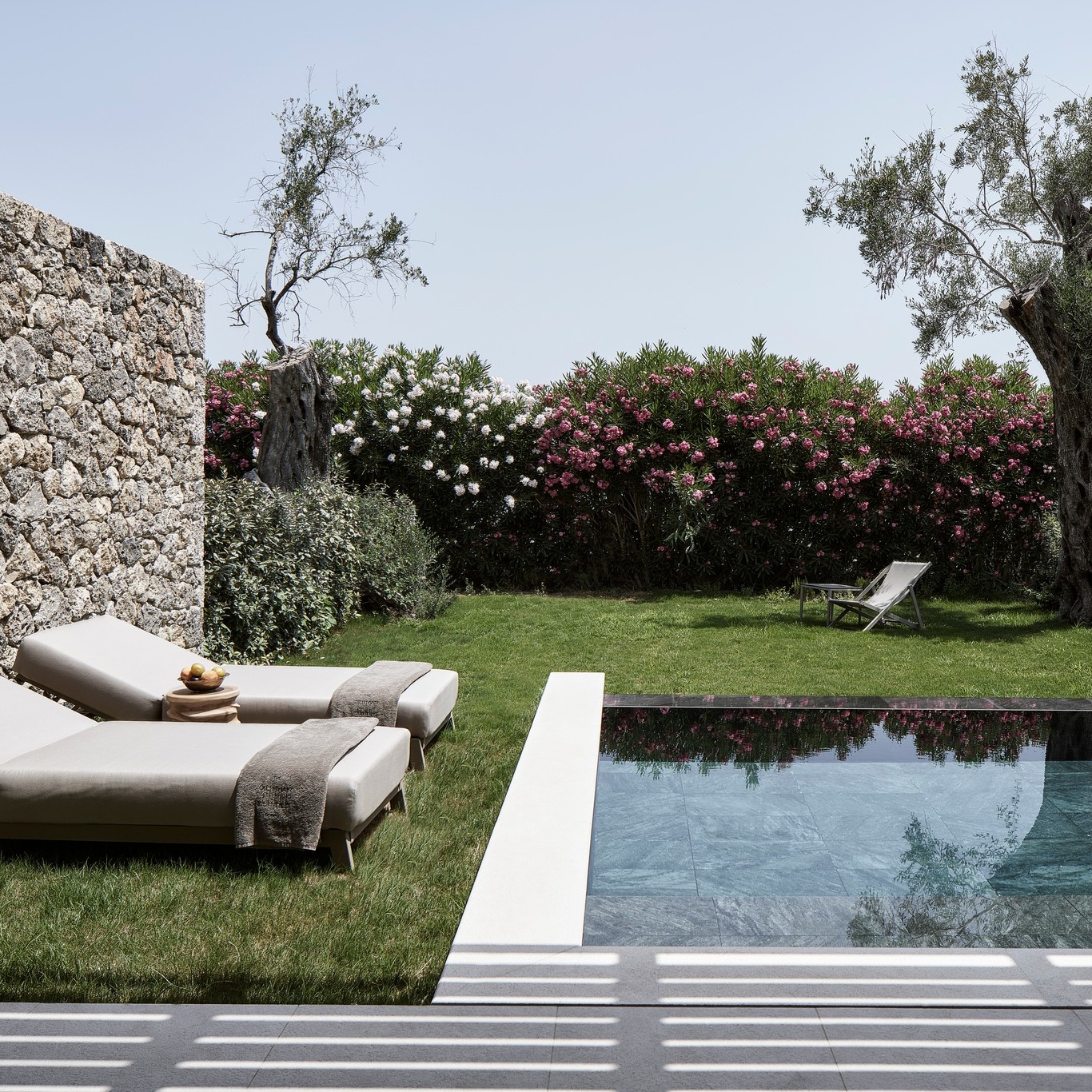
Set in Messonghi on the site of a former olive mill, The Olivar Suites has a strong sense of structure and place, with suites arranged around privacy and indoor-outdoor living. It works well for travelers who want contemporary comfort, private pools in many categories, and a gentler southeastern-coast setting.
Ikos Odisia

Ikos Odisia raises the bar with its ‘unconditional luxury included’ approach, offering an extensive all-inclusive package. It includes gourmet meals at six restaurants prepared by Michelin-starred chefs and bespoke cocktails. Accommodations range from cozy double rooms to deluxe bungalows with private gardens or pools, all designed to maximize privacy and comfort.