


There is a version of wellness that exists mostly as aspiration: the cucumber water, the white robe, the Instagram-ready infinity pool. And then there is the kind that shows up in the data – the measurable proximity of a population to places where they can, on a regular Tuesday, get a massage, sit in a steam room, or simply slow down. A new European study from the wellness provider Drip Hydration has attempted to map the latter, ranking 25 major destinations by the number of spa and wellness facilities per 10,000 residents. The results are striking, and the city at the top is not the one most people would guess.
The stars of the study: Athens and Mykonos
Mykonos – yes, the Cycladic island better known for its beach clubs and late-night hedonism – leads the continent by an extraordinary margin, with 51 wellness facilities per 10,000 residents. That figure is more than five times higher than the second-place finisher, Gstaad, and it reframes the island not as a place of excess but as one of uncommon access. The concentration of spas, yoga studios, and meditation spaces, combined with notably clean air (a PM2.5 reading of just 5), creates an environment where recovery is not something you plan a holiday around – it is simply part of the infrastructure.
What makes the Greek story especially compelling is that it doesn’t end at Mykonos. Athens, with its dense urban fabric and well-documented air quality challenges (PM2.5 of 14.6), still places tenth on the index, with 3 spa and wellness facilities per 10,000 residents. That two Greek cities appear in the top ten speaks to something deeper than tourism economics. It suggests a cultural orientation toward physical restoration – one with roots in the ancient tradition of the loutra, the public baths that were, for centuries, as central to Greek civic life as the agora.
👉🏻 Discover the best Spas in Athens
The full ranking reveals a varied and sometimes counterintuitive picture of European wellness:
| Rank | City | Spa & Wellness Facilities per 10,000 Residents | Green Space Access (1 = limited, 4 = high) | Air Quality PM2.5 (lower = cleaner) |
|---|---|---|---|---|
| 1 | Mykonos, Greece | 51 | 3 | 5 |
| 2 | Gstaad, Switzerland | 10 | 4 | 0.5 |
| 3 | Brussels, Belgium | 7 | 3 | 10 |
| 4 | Paris, France | 5 | 1 | 11.7 |
| 5 | Geneva, Switzerland | 5 | 2 | 0.5 |
| 6 | Lisbon, Portugal | 5 | 2 | 7.5 |
| 7 | Zurich, Switzerland | 4 | 3 | 0.5 |
| 8 | Barcelona, Spain | 4 | 1 | 11.6 |
| 9 | Florence, Italy | 3 | 3 | 11.9 |
| 10 | Athens, Greece | 3 | 1 | 14.6 |
| … | ||||
| 24 | Oslo, Norway | 0.6 | 4 | 6.7 |
| 25 | Istanbul, Turkey | 0.3 | 1 | 17.9 |
For the complete list of 25 cities and full methodology, visit Drip Hydration.
Not a surprise: The case of Switzerland
Switzerland, predictably, makes a strong showing. Gstaad, Geneva, and Zurich all land in the top ten, reinforcing the country’s longstanding identity as Europe’s benchmark for spa culture. Gstaad, in particular, deserves attention: officially certified as a “Wellness Destination” by Switzerland Tourism, the car-free Alpine village pairs pristine air (PM2.5 of just 0.5) with 10 facilities per 10,000 residents and a life satisfaction index of 6.9. It is perhaps the clearest example on the list of wellness woven organically into a place’s character rather than layered on top of it.
At the opposite end: Istanbul
Despite its centuries-old hammam tradition and global reputation as a cultural capital, the city ranks last. It has 455 spas – a number that sounds substantial until you divide it among a population of roughly 15 million. The resulting density of 0.3 per 10,000 residents, combined with limited green space, few yoga and meditation studios, and significant air pollution (PM2.5 of 17.9), paints a picture of a metropolis where wellness remains difficult to access on any regular basis. Istanbul’s position at the bottom of the index is a reminder that even deep cultural heritage around bathing and restoration can be overwhelmed by the pressures of rapid urbanization.
The broader argument of the index is worth taking seriously. At a moment when stress-related illness, burnout, and recovery needs are rising across Europe, the proximity of wellness services is becoming less a marker of luxury and more a genuine indicator of quality of life. Cities where spas and recovery spaces are abundant and nearby tend to see them used more frequently — and the health implications of that regularity are well documented.
“Access is just as important as the treatment itself,” says Dr. Neal Kumar, a board-certified dermatologist, MBA holder in healthcare administration, and co-founder of Drip Hydration. “When wellness facilities are close by, residents use them more often. The science shows that spa sessions and hydrotherapy can lower blood pressure, reduce cortisol levels, improve sleep quality, and support muscle recovery. Even moderate but consistent use can strengthen cardiovascular and mental health, helping prevent stress-related conditions.”
For Greece, the takeaway is clear: a small island in the Cyclades, with a permanent population that could fit inside a single Athenian apartment block, has built a wellness infrastructure denser than anything else on the continent. It is an unlikely achievement – and one that suggests the future of European well-being may have as much to do with cultural memory as with clinical innovation.
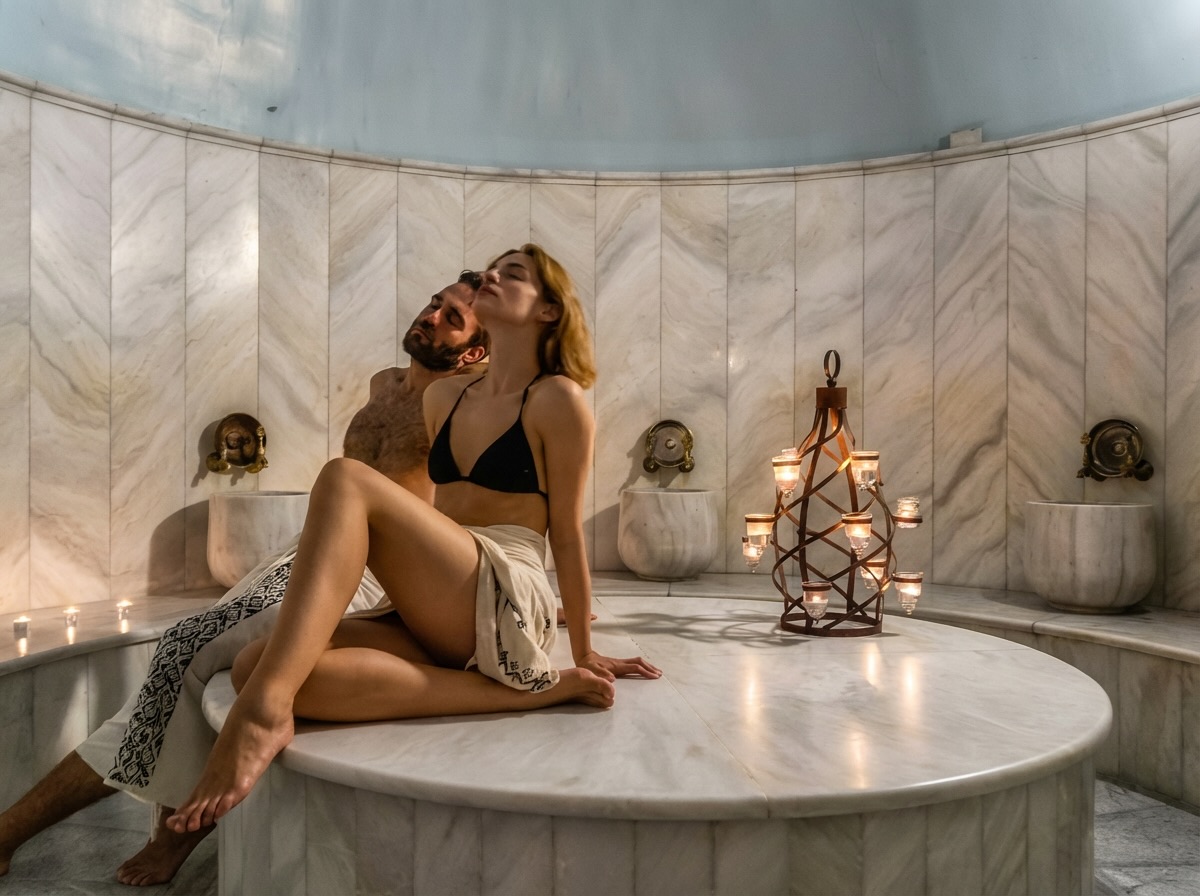
Cover photo: Cocoon Urban Spa in Athens