


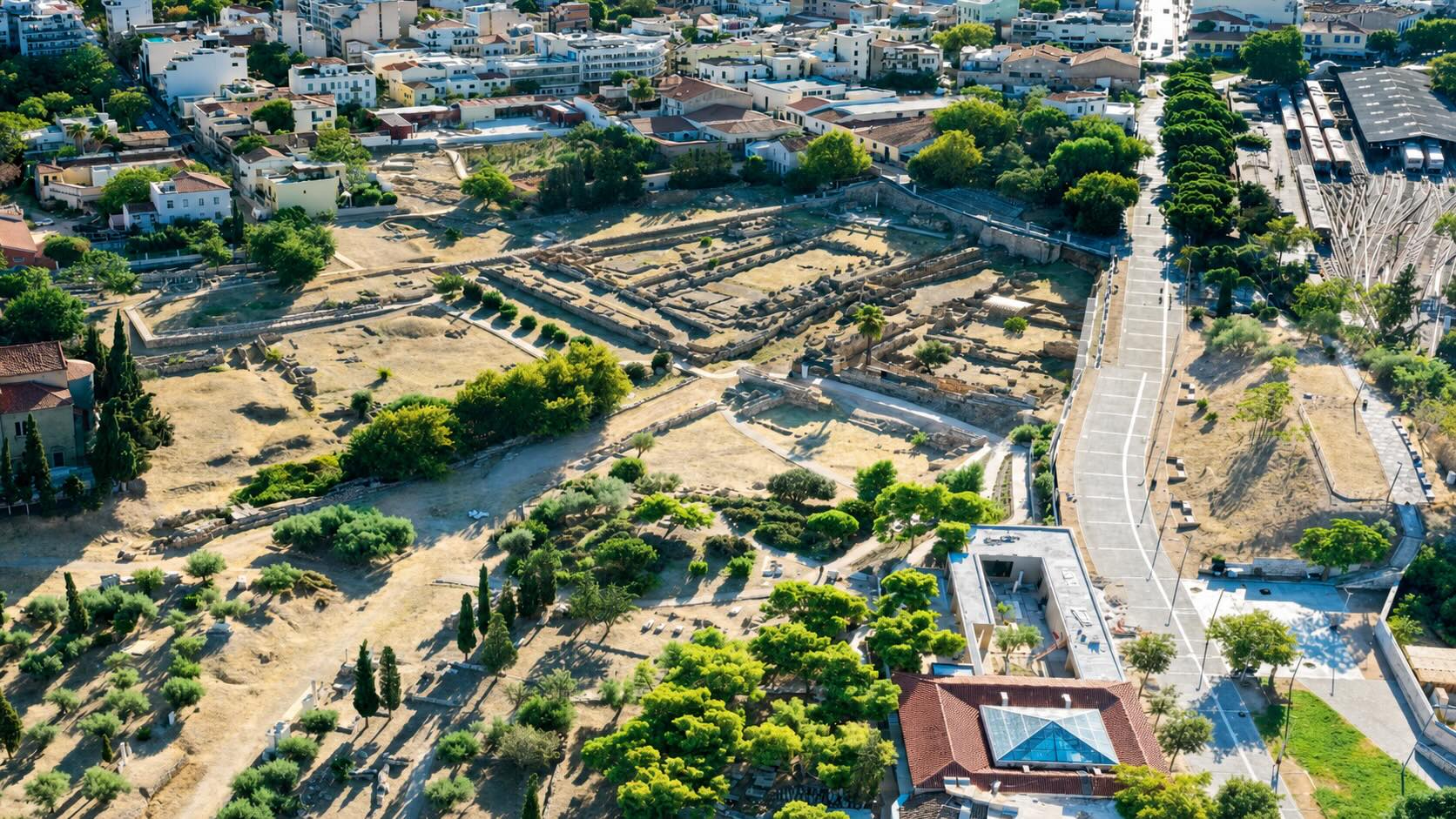
At the western end of Ermou street, the central shopping boulevard that start at Syntagma square, just before the pedestrian street runs into Pireos Avenue, the pavement looks down several meters onto the level of an ancient city. The Kerameikos, the main cemetery of classical Athens, was reopened in mid-September after three years of major restoration work that cost €4 million. Visitors now have extensive and fascinating ground to explore as well as a new exit at the far end of the impressive site.
Few archaeological sites in Greece cover so long a stretch of history in one place. Athenians buried their dead here from around the 12th century BC into the Roman period, well over 1,500 years, and the graves record changing customs, beliefs and tastes across that time.
The city’s defenses are here too. Sections of wall, the foundations of two gates and the roads that passed through them survive beside the tombs, so visitors can still see on the ground where ancient Athens ended.
A video tour of the updated archaeological site
Some of the most important objects in Greek art came out of this site. In the 8th century BC, wealthy families marked graves near the Dipylon Gate with huge painted vases. Their bands of mourners and funeral processions are among the earliest human figures in Greek painting, and the best of them, including the Dipylon Amphora, are now in the National Archaeological Museum. A wine jug found here in 1871 carries a line of verse scratched around 740 BC, one of the oldest known inscriptions in the Greek alphabet.
The site also records the working of Athenian democracy. Thousands of ostraka, the pottery shards on which citizens scratched the name of a politician they wanted sent into exile, have been recovered from the bed of the Eridanos river.
Grave monuments grew more elaborate over the generations until around 317 BC, when a law restricted lavish tombs. That is why the finest sculpture on the Street of Tombs dates from the century before. When the Roman general Sulla took Athens in 86 BC, his troops broke through the walls close to this spot.
Newly opened ground
Roughly 4,500 square meters have been added to the visitor route. Of these, 2,700 square meters had been fenced off from the public until now, and they contain fortifications, houses and workshops from the Hellenistic and Roman periods.
More than 3,500 trees, shrubs and smaller plants have been planted across the site, creating an even more immersive experience for visitors. The Staktothiki, a mound formed from the waste of an old soap factory and the spoil of earlier excavations, has been reshaped and landscaped and no longer looks out of place.
A second gateway
Until now, visitors entered from Ermou, looped around the site and left the way they came. A new exit on Agion Asomaton Street, opposite Dipylou Street, leads out through a 1,700-square-meter building. It has a café, a shop, rooms for study and rest, and space for exhibitions and children’s programs, and it was designed to be easier for older visitors, families and people with disabilities. The Roman sarcophagus of Philotera stands in a glass case facing the street.
At the Ermou entrance, a new reception building replaces the temporary ticket booth put up in 2011. In front of it stands a replica of the funerary shrine of Aristonautes, one of the finest pieces of Attic sculpture from the 4th century BC. Maria Loizidou’s installation A Transfer, donated by the NEON cultural organization, is now on permanent display on the site.
Between city and countryside
The new route suits the place. For centuries, the Kerameikos was where Athenians passed between the city and the country beyond it. Its name comes from the potters who worked the clay banks of the Eridanos, a stream that still runs through the site.
After the Persians sacked Athens in 480 BC, the Themistoclean Wall was built in a hurry, with gravestones used among its building blocks. The wall split the district in two, with workshops and shrines inside and the cemetery outside. The road to Eleusis, the route of the procession to the Mysteries, left the city through the Sacred Gate.
The Panathenaic procession gathered in the Pompeion, a building between the two gates, and entered the city through the double Dipylon Gate on its way to the Acropolis. Outside the walls lay the public burial ground for the war dead, where Pericles gave his Funeral Oration in 431 BC.
The Street of Tombs
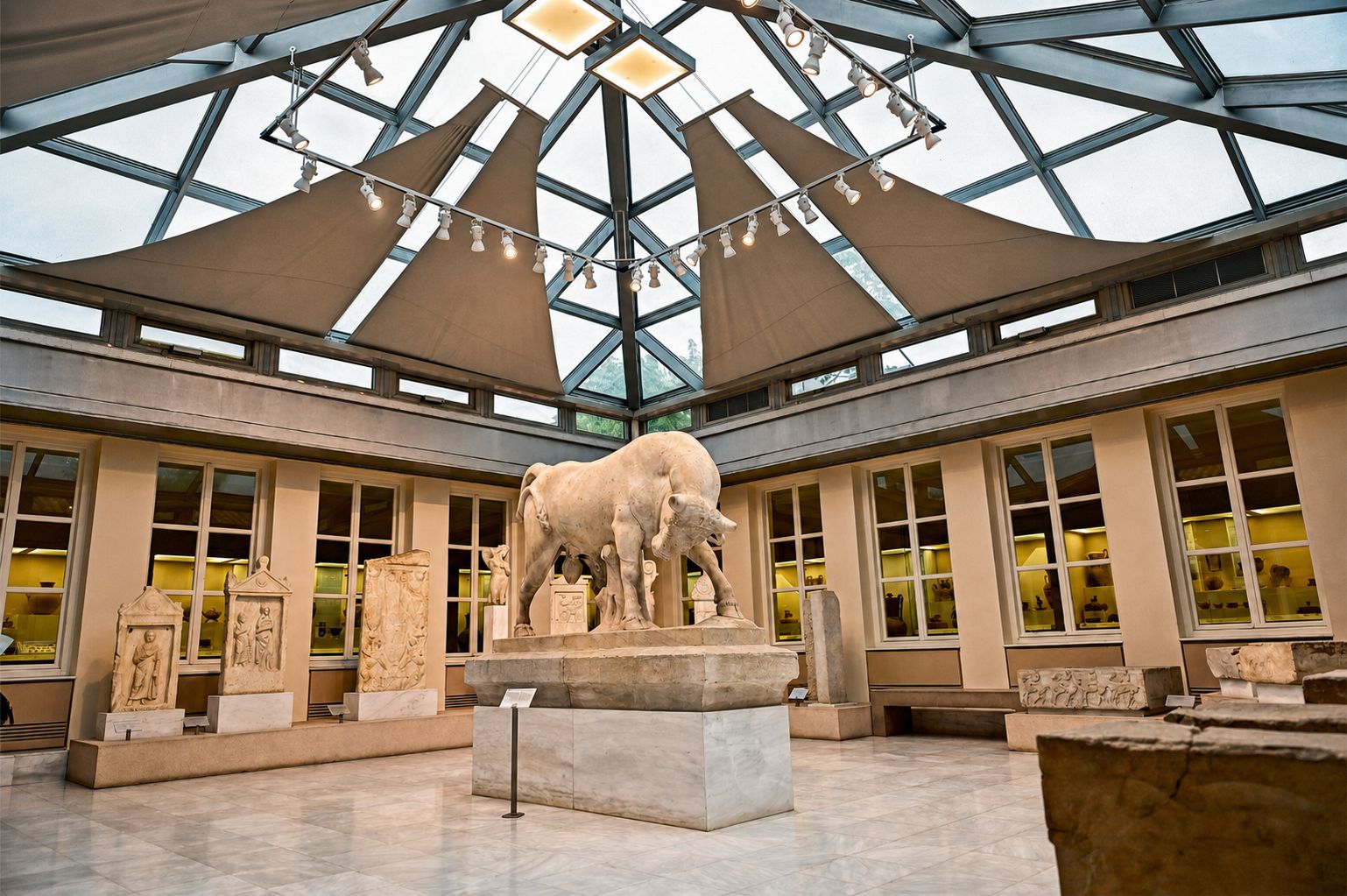
Wealthy families of the 4th century BC lined this street with terraced burial plots and sculpture. Look for the marble bull above the grave of Dionysios of Kollytos and the Molossian hound of Lysimachides. There is also a replica of the stele of Hegeso, which shows a seated woman taking a piece of jewelry from a box held by her maid.
Inside the museum

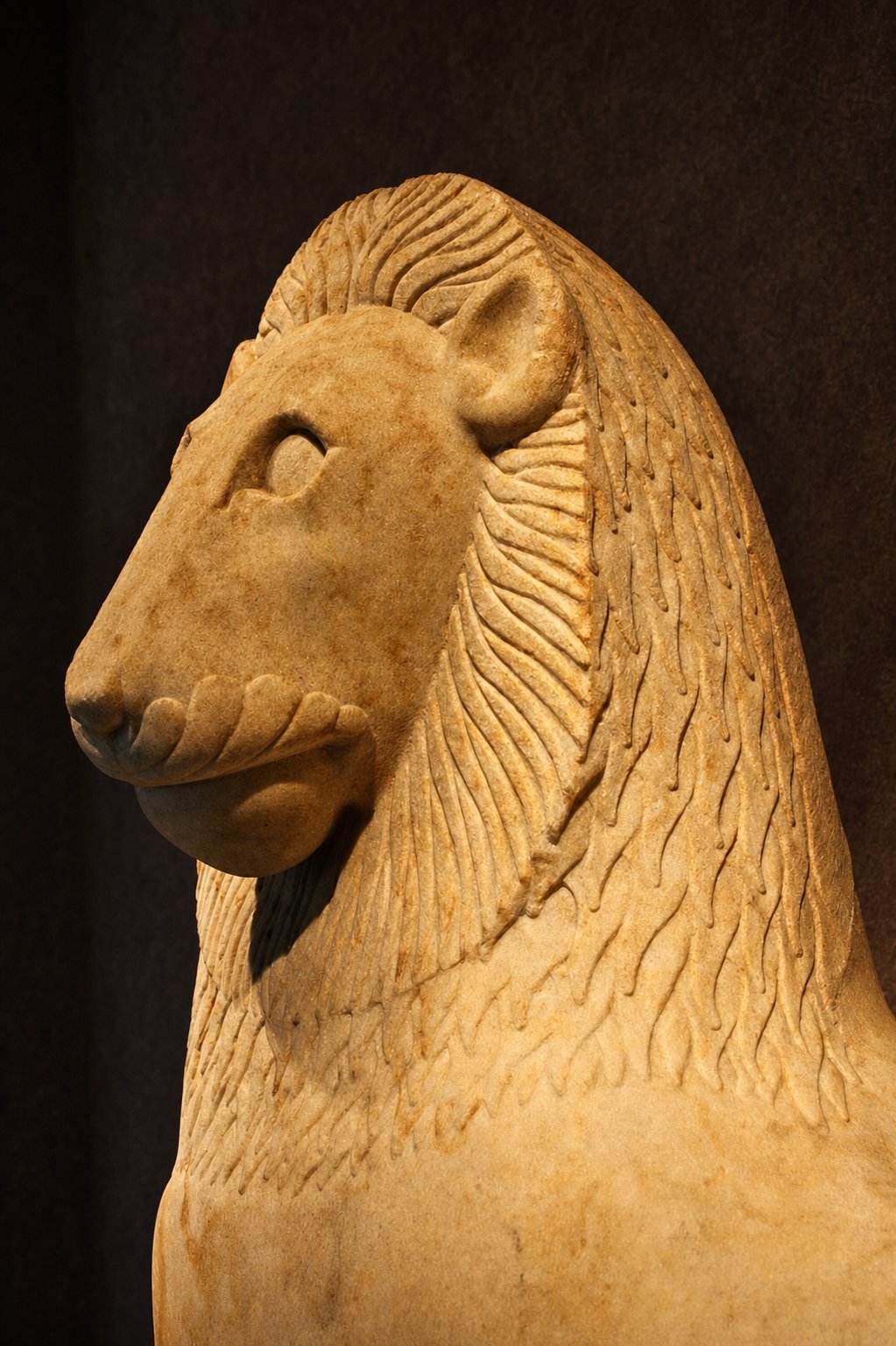
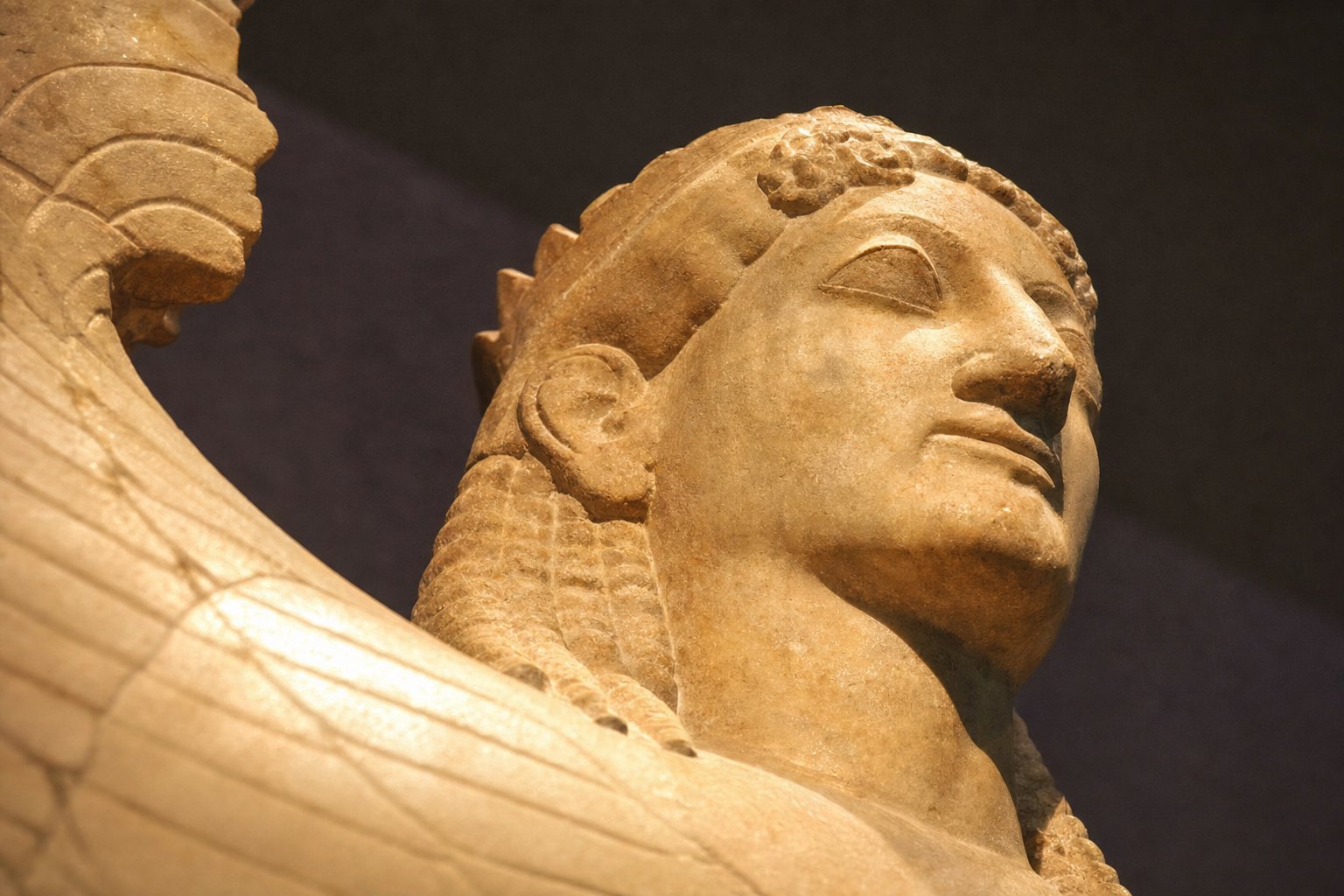
Several of the best originals are housed in the small museum near the entrance. It was built in 1937 with money from German-American industrialist Gustav Oberlaender to hold finds from the German Archaeological Institute, which has excavated the site since 1913. The stele of Dexileos shows a 20-year-old cavalryman, killed near Corinth in 394 BC, riding down an enemy. Nearby are the relief of Ampharete holding her infant grandchild, a sphinx carved around 560 BC and the 2.1-meter kouros found near the Sacred Gate in 2002. Cases of Geometric pottery show the work of the potters who gave the district its name.
Planning your visit
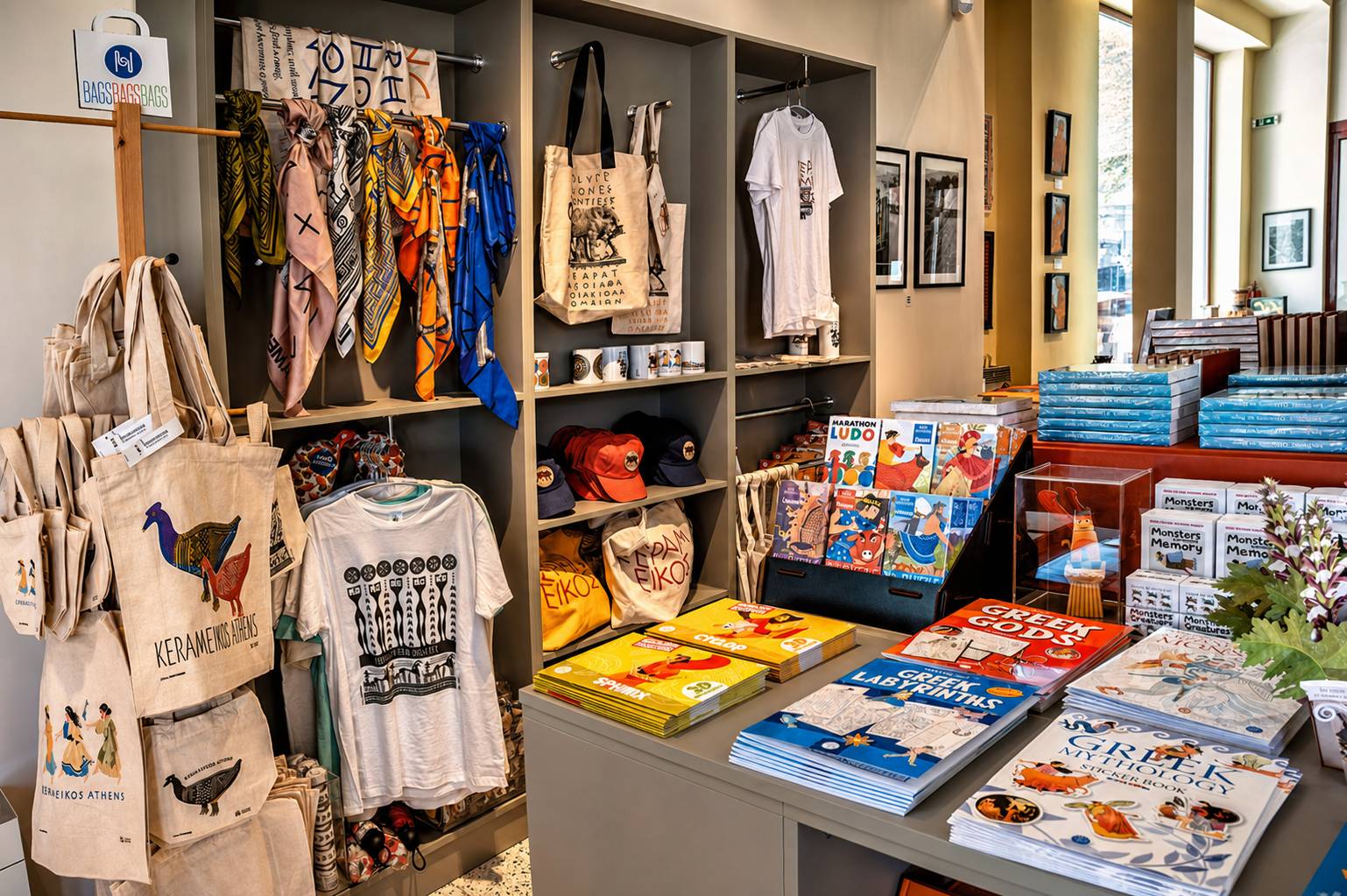
The new shop sells white-ground lekythoi hand-painted by vase painter Thomas Kotsigiannis, along with prints of the Hirschfeld Krater, a large Geometric vessel found on the site. The Ancient Agora, a short walk east, reopened its own restored routes this summer, and the two sites can be covered in one morning. Tickets cost €10 and include the museum. Through October, the site opens from 8am (10am on Tuesdays) until 7pm.
Around the Kerameikos
The modern district of Kerameikos wraps around the archaeological site and continues north across Pireos Avenue. It is best explored on foot, starting from the new exit. Once you visit the newly restructured and extended site, it’s well worth taking a stroll in the surrounding neighborhood and visiting the following places.
Cultural Spots
Center for the Study of Modern Ceramics
A few steps east on Melidoni Street, an 1875 house that once belonged to the Petropoulos family holds the pottery collection of Betty Psaropoulou. She founded the center in 1987 after years of recording the work of village potters across Greece. The collection spans the 16th to the 20th century and includes a full room of large storage jars. The center also runs pottery classes for adults.
Etz Hayyim and Beth Shalom
The city’s two synagogues face each other on Melidoni. Etz Hayyim, the oldest synagogue in Athens, was built in 1905 by Romaniote Jews from Ioannina. Beth Shalom, the Sephardic synagogue, dates from 1935 and has a facade of Pentelic marble. Visits are by appointment through the Jewish Community of Athens.
Holocaust Memorial
Where Melidoni meets Ermou, a memorial unveiled in 2010 stands in a small garden overlooking the archaeological site. It commemorates Greek Jews who were detained at the synagogue in 1944 and deported to Auschwitz.
The Sacred Way
Two ancient roads started from the Kerameikos. The Sacred Way led to Eleusis, and a broad avenue ran north-west to the grove where Plato founded his Academy around 387 BC. The modern Iera Odos, which begins at Pireos Avenue, still follows the line of the first road.
The streets of battles
Across Pireos, several streets in the grid are named after battles of the Persian and Peloponnesian Wars: Salaminos, Plataion, Artemisiou, Mykalis and Sfaktirias. Most are lined with low 19th-century houses and former workshops, and many of these now house galleries, studios and restaurants. The pedestrian stretch of Salaminos is busiest in the evening.
Food, Coffee & Drinks
Amante
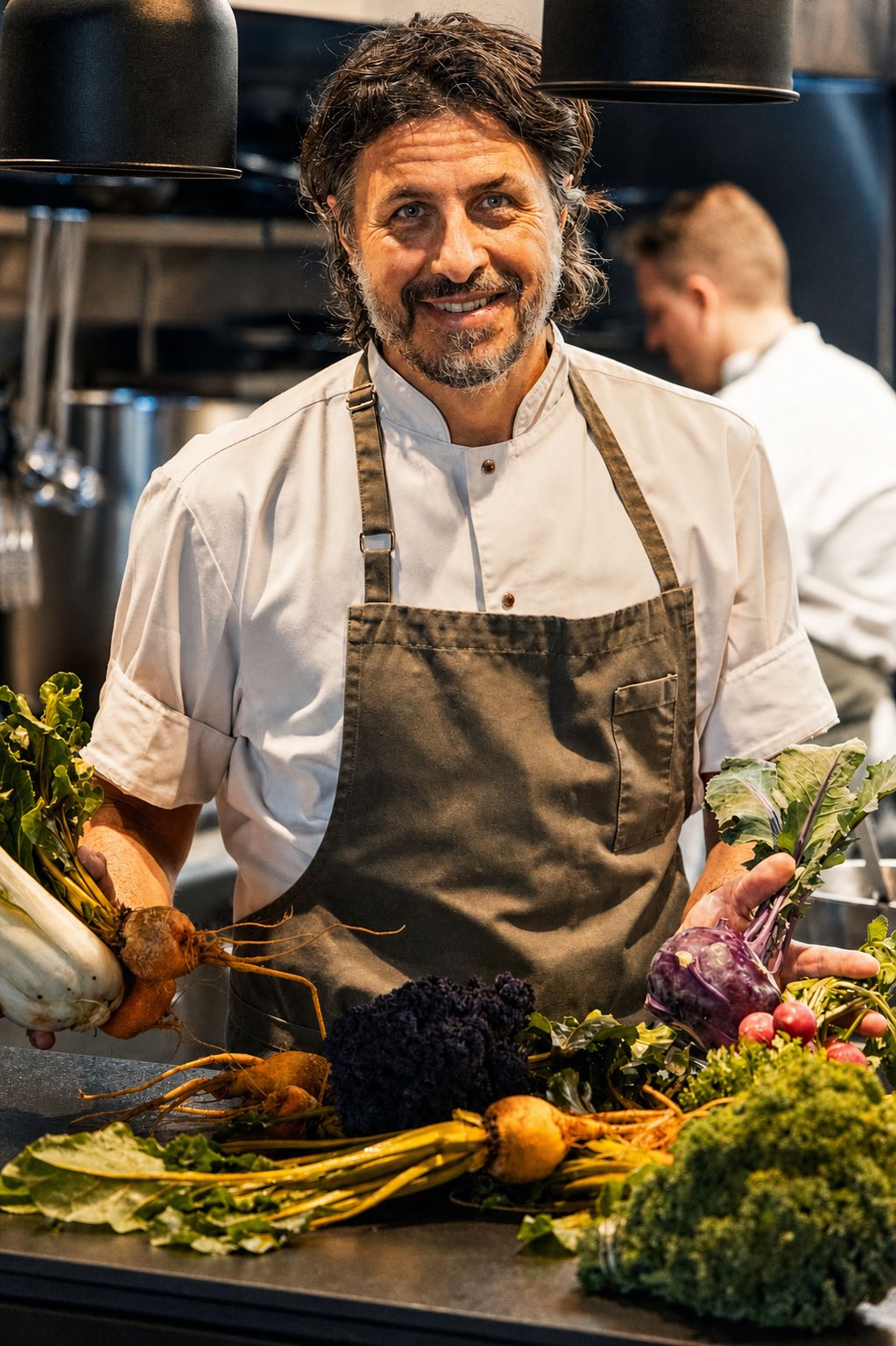
The neoclassical corner building on Paramythias that once housed the two-Michelin-starred Funky Gourmet now serves rustic Italian cooking in generous portions. The kitchen is run by veteran chef Daniele Chiantini.
Osteria Mamma
On Salaminos, the open kitchen doubles as a shop window, and the arcade in front serves as the first dining room.
Armando
Farther along Salaminos, this pizzeria is named after Maradona’s middle name and serves neo-Neapolitan pizza in 10 versions. Stefanakis also runs it, along with Osteria Mamma.
CTC
In a turn-of-the-century house on Plataion Street, chef Alexandros Tsiotinis serves an 11-course blind tasting menu he calls a voyage. His signature dish is corn soup with lobster. In fine weather, tables are set out under the trees in the garden. The restaurant has held a Michelin star since 2021 and won a Golden Chef’s Hat, Greece’s leading restaurant award, this year.