


By October the sun sits lower, the hills are walkable at midday again, and even the busiest stretches of the center loosen up. These routes run from the national garden and a pine-covered hill to a whitewashed island village and a climb to a lookout on one of the city’s prettiest parks.
Each comes with things to see along the way and a few places to step indoors when the afternoon cools: small cafés, workshops, galleries and bars where the regulars have been the same for years.
01
The National Garden
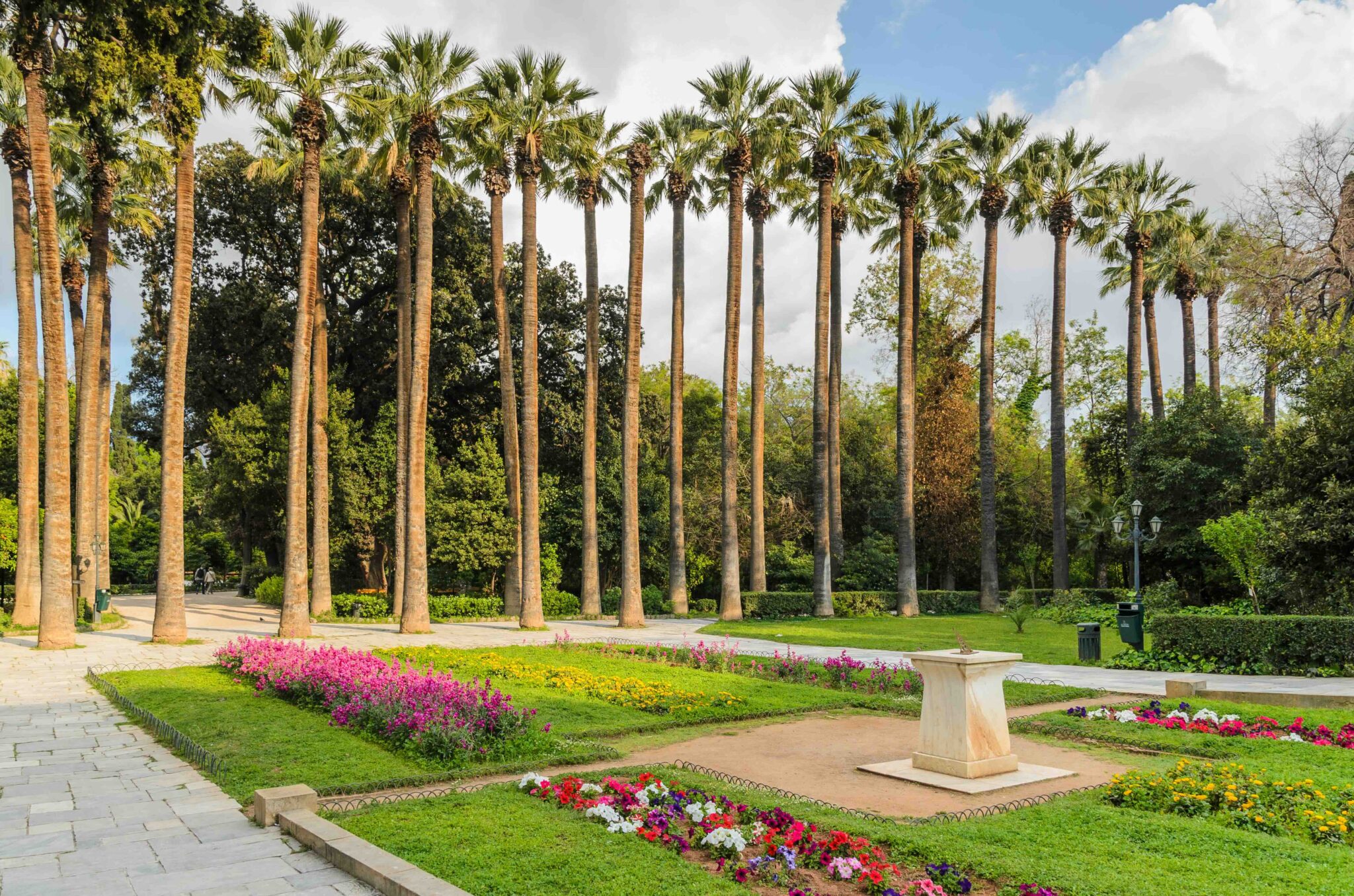
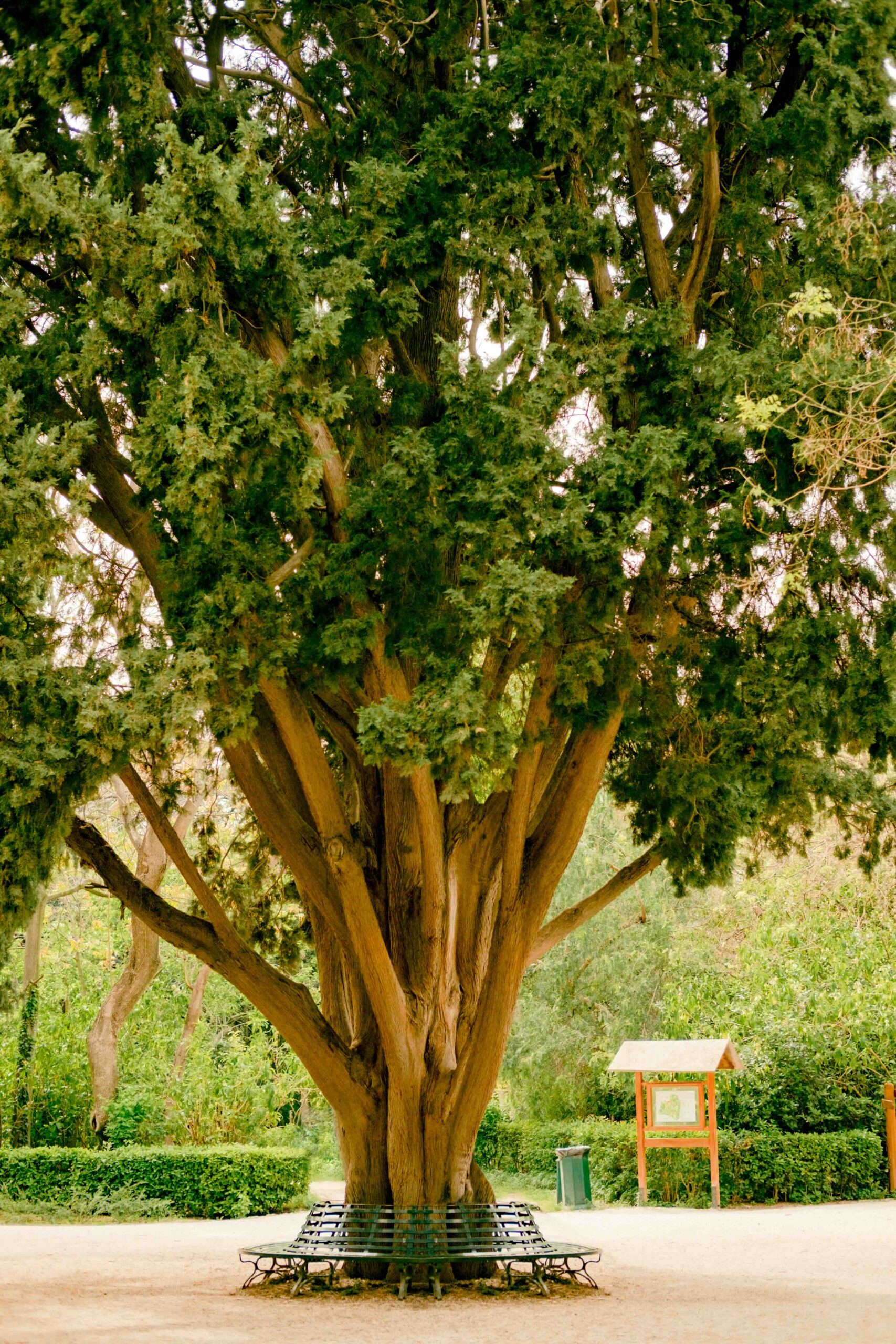
Queen Amalia, consort of King Otto, had this garden laid out behind the royal palace, now the Parliament, from 1839, and its 15.5 hectares (about 38 acres) still hold the density she intended: palms, pines, pergolas and gravel paths that wander and double back on themselves. Originally a royal garden with limited public access, it became a public park in the 1920s and is now open daily from sunrise to sunset. Gates face Amalias Avenue at the Syntagma end, Vasilissis Sofias Avenue, beside the Presidential Mansion on Irodou Attikou Street and the Zappeion Gate in the southern part of the park.
In fall-time, there’s an introvert romanticism about the place. The heat that makes the garden an idyllic refuge in August has gone, the light comes in low through the canopy, there are less crowds, and there is no reason to hurry. Enter from Syntagma and keep roughly south, letting the paths decide the rest. There is no direct route through it and no need for one, so allow an hour or more. The garden fills with families at weekends, which makes a weekday morning the calmer choice. Leave by the Zappeion gate, where the walk continues toward the Panathenaic Stadium.
Highlights
The Roman mosaic floor. Excavations in the 19th century uncovered the courtyard floor of a Roman villa close to the Vasilissis Sofias entrance, its geometric patterns still visible after some 1,700 years. Column drums and capitals lie scattered along the paths nearby, so the garden doubles as a small open-air archaeological site, with ancient fragments left among the trees.
The Botanical Museum. A small neoclassical building on the northern side of the garden, among the plant nurseries, devoted to the garden’s plant life. It is a reminder that this was designed as a botanical showcase, laid out for Queen Amalia from 1840 with species brought from across the world, and it is a quiet stop for anyone curious about how the garden came to be. Not always open.
The pond. The largest pond sits near the centre, crossed by a small wooden bridge and home to ducks. Shaded by tall trees, it is the garden’s most popular resting spot, where families, readers and strollers slow down far from the traffic outside. Kids especially enjoy looking at the resident ducks, swans and frogs.
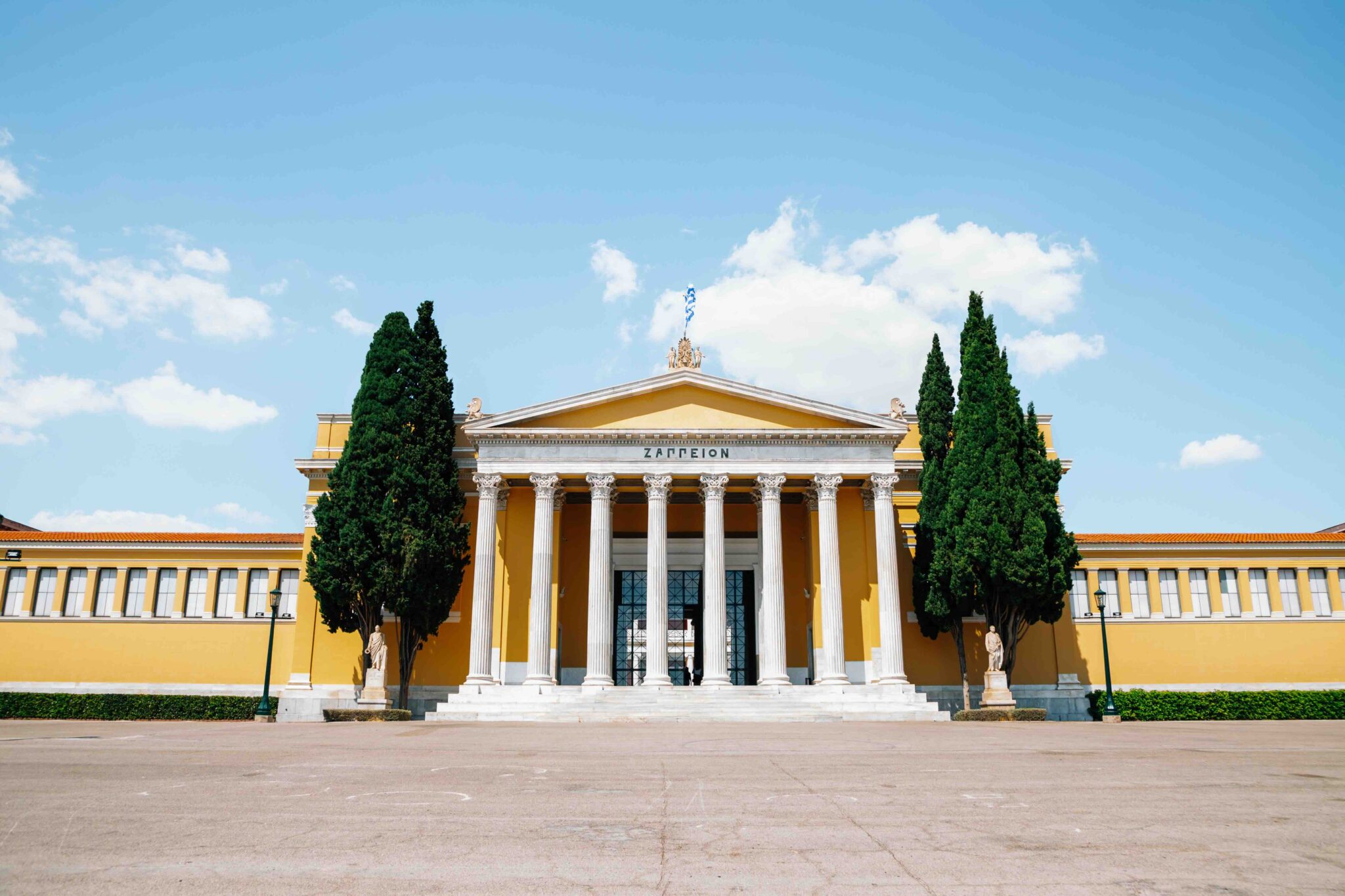
The Zappeion and the Byron statue. At the garden’s southern edge stands the Zappeion, the exhibition and conference hall designed by the Danish architect Theophil Hansen and funded by the wealthy benefactor Evangelos Zappas. Completed in 1888, it served as a fencing venue at the first modern Olympic Games in 1896, and its columned circular courtyard is among the grandest in Athens. At the corner of its grounds, a marble group shows Greece crowning Lord Byron with a palm branch, a tribute to the poet who died in 1824 supporting the Greek War of Independence.
Where to stop
The Numismatic Museum café. The museum occupies Iliou Melathron, the ‘Troy Mansion’ that archaeologist Heinrich Schliemann commissioned from architect Ernst Ziller and completed in 1880, its painted walls and mosaic floors echoing the antiquities he dug up. Inside, more than 600,000 coins and related objects trace the story of money from the first electrum issues of the seventh century BC to the present, including the famous Athenian ‘owls’. Behind the mansion, an 800 square metre garden of local plants and replicas of ancient statues shelters a quiet café, hidden from the traffic of Panepistimiou Street.
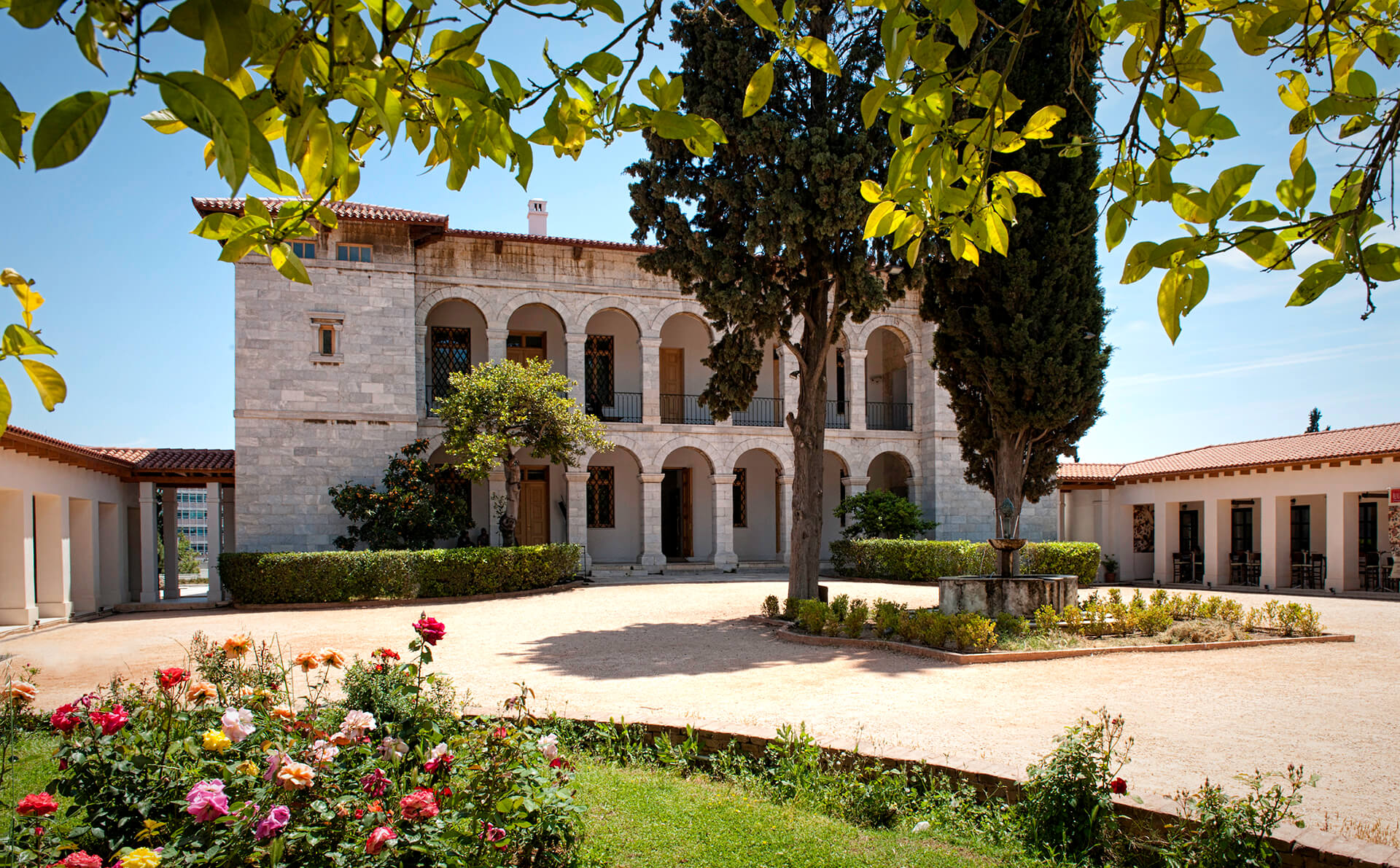
The Byzantine and Christian Museum and Ilissia and its cafe. The museum fills Villa Ilissia, built in the 1840s for the Duchess of Plaisance, a French-born philhellene who made Athens her home, and designed by Stamatios Kleanthis in an Italianate style. Its icons, frescoes and textiles follow a thousand years of Byzantine art, from early Christian carvings to gold-ground panels. In the garden, Ilissia, a café-bistro, sits in the shade of the villa, a calm pause on a busy avenue.
13 Mosaic Studio. A loft studio on the fourth floor above pedestrian Ermou Street, a short walk from Syntagma, where beginners can book to cut and set marble into a mosaic of their own, continuing a craft that runs from the pebble floors of ancient Pella to the glittering walls of Byzantine churches. The workshop is given in English, Spanish or Greek, with materials and designs provided, and it is worth booking ahead.
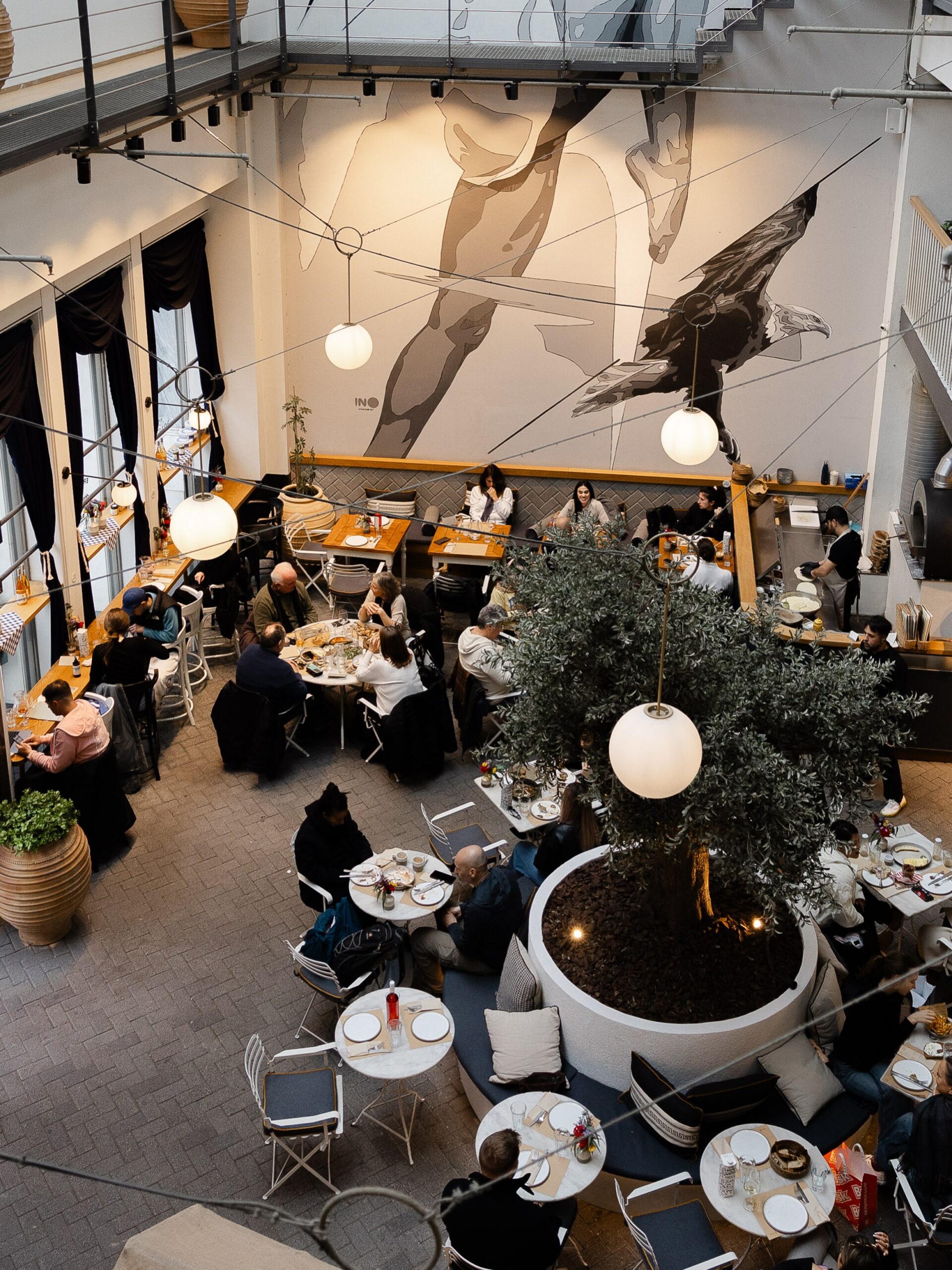
Ergon House. A unique concept that delights foodies: A food hall, restaurant, cafe, and boutique hotel on Mitropoleos Street, a minute from Syntagma, built around a 25 meter glass atrium. The ground-floor agora holds a greengrocer, butcher, fishmonger, bakery, deli and roastery stocked with Greek products from small producers, and the café, bar and restaurant serve brunch through to late evening. It holds a Michelin Key for 2026, and it is the place to buy ingredients if you cook.
Kimolia Art Cafe. A colorful café in a house from 1925 on Iperidou Street, a quiet Plaka lane, open since 2011 and decorated by its owners with their own paintings, handmade pieces and fresh flowers. It serves coffee, herbal teas, cocktails and small cold dishes to a jazz and blues soundtrack, and occasionally hosts art shows, live music and book readings. A small room at the back is hung with the owner’s paintings.
02
Lycabettus Hill
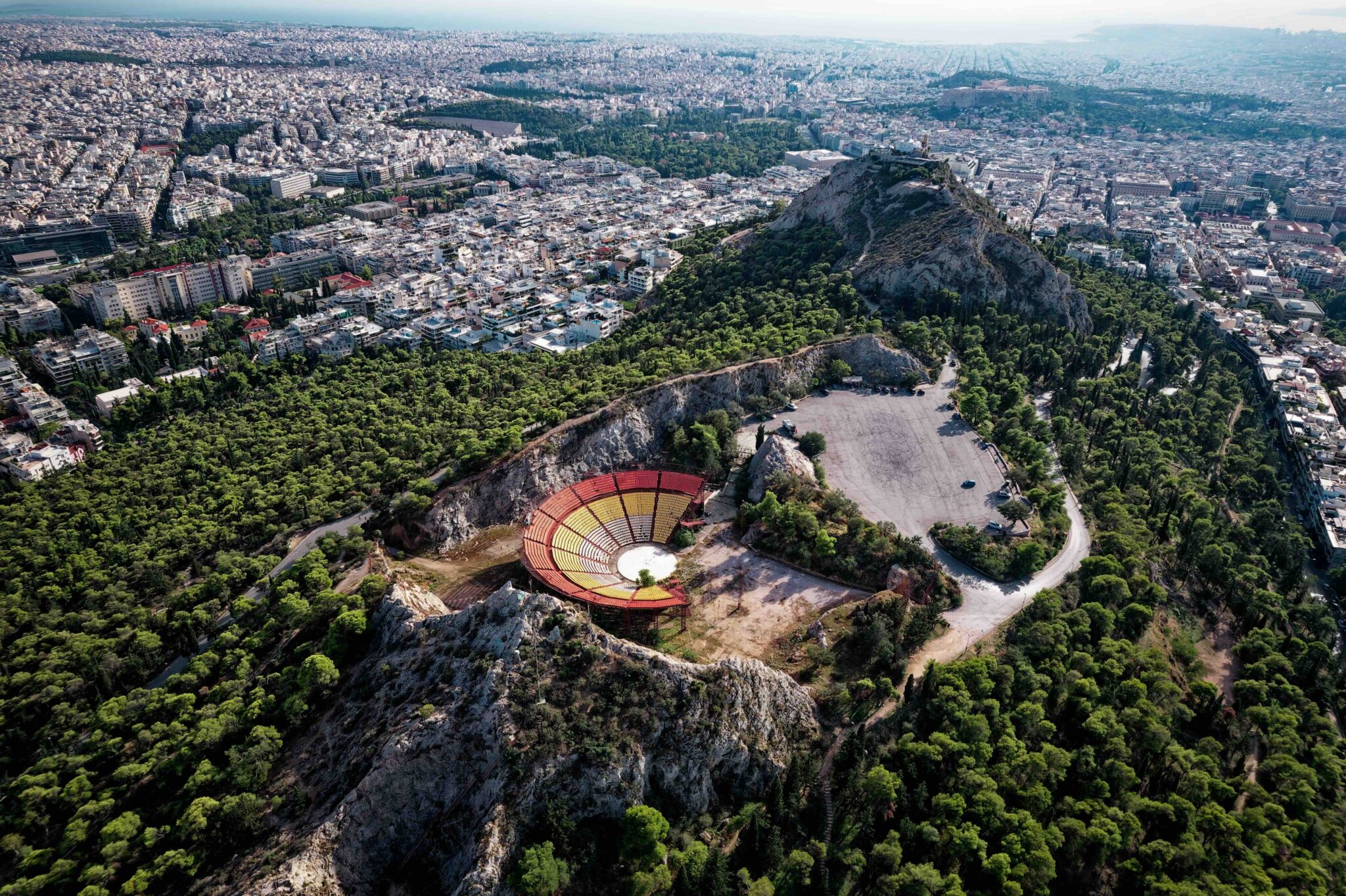


At 277 meters (about 909 feet), Lycabettus is the highest point in central Athens, and the best way up begins in Kolonaki, among the mansions and cafés of the streets below. Walk rather than ride the funicular from Aristippou Street. Stepped paths climb through pine woods in about 30 to 45 minutes, and the view widens a little at every turn.
At the top, a whitewashed chapel and a small terrace face the Acropolis and, beyond it, the Saronic Gulf. October and November are the perfect months for the climb, since the heat no longer takes the pleasure out of it and the sun sets early enough to be watched before dinner. Aim to reach the summit as the lights come on across the city, then descend by the winding staircase on the eastern side, which ends back in Kolonaki at Dexameni Square. Wear shoes with some grip, as the steps are steep in places and the descent in fading light needs care.
Highlights
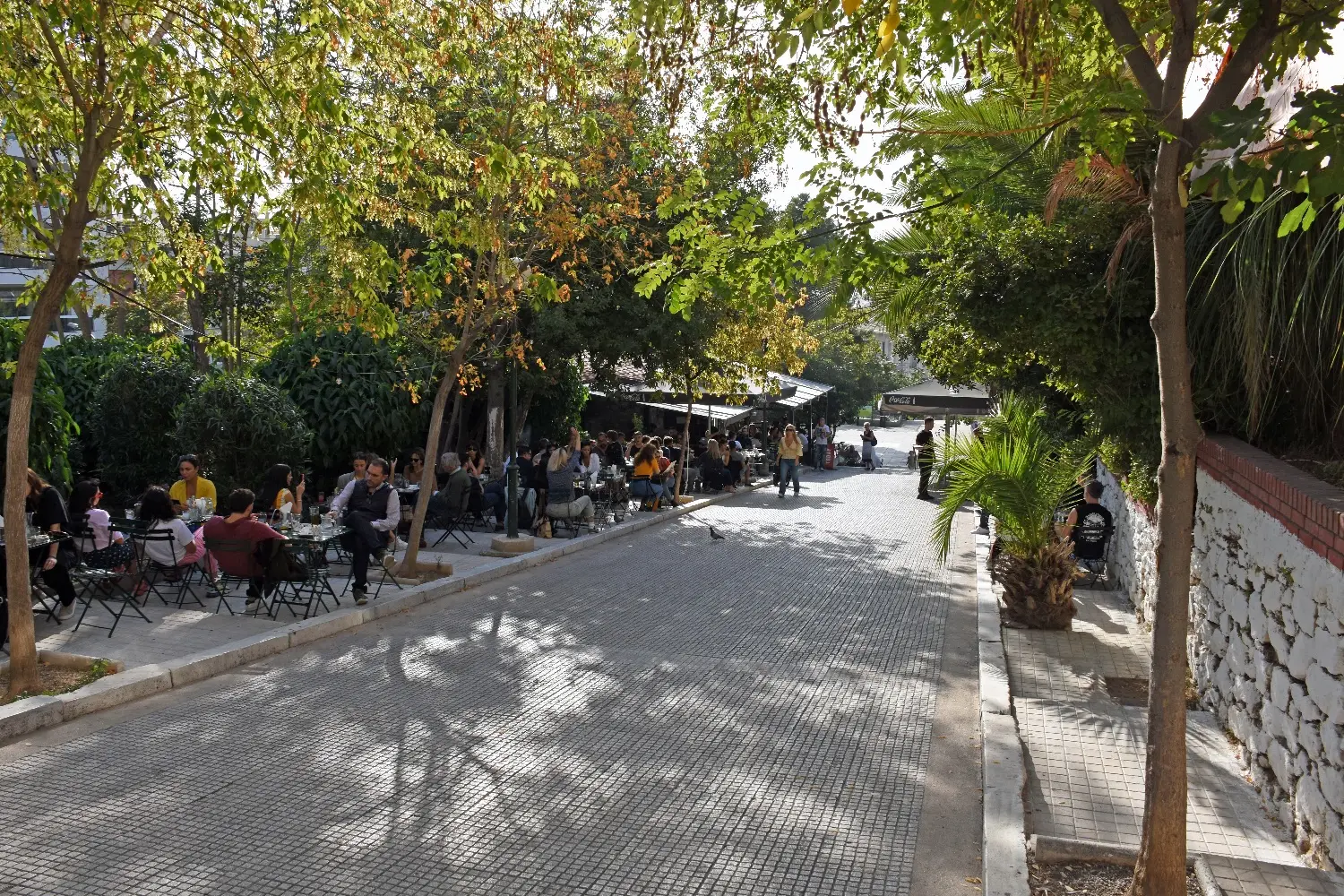
The Dexameni reservoir. The square, which includes a summer cinema and all-year (oopen on fine-weather days only) cafe, takes its name from the Roman reservoir at its edge, built in the second century as the terminus of the Hadrianic aqueduct that carried water to Athens from the slopes of Mount Parnitha. A statue of the poet Odysseas Elytis stands among the trees, so this small, shady square is a place for a pause as much as a landmark, right at the foot of Lycabettus.
The Chapel of Agios Isidoros. A small chapel at the foot of the hill, tucked into pine and rock, and a quiet first stop before the paths turn steep and shaded. After the cafés of Kolonaki, it is the point where the city noise begins to fall away.
The Chapel of Agios Georgios and the Lycabettus Theatre. The whitewashed 19th-century chapel crowns the summit, 277 metres above the city, and still holds services. Legend says Athena dropped the rock here while carrying it to the Acropolis, and the 360-degree view over rooftops, the Acropolis and the sea explains why it draws Athenians at sunset. Just below, the open-air theatre, carved into a former quarry, hosts concerts and performances through the summer festival season.
Where to stop
Filion café on Skoufa Street, a few steps from the visit-worthy neoclassical Catholic cathedral of Agios Dionysius the Areopagite. The cafe has become a gathering spot for writers, journalists and academics, who linger and discuss under its green awning over coffee and old Greek desserts. The dense chocolate cake is the one to order, though hot dishes are served as well from the busy kitchen.
Free Thinking Zone. A bookshop and café on Skoufa Street that opened in 2011, built around the idea that a coffee is better with something to read and something to argue about. A burgundy Chesterfield sofa anchors the room, with specialty coffee and homemade kombucha, while regular talks on current issues turn it into a small public forum.
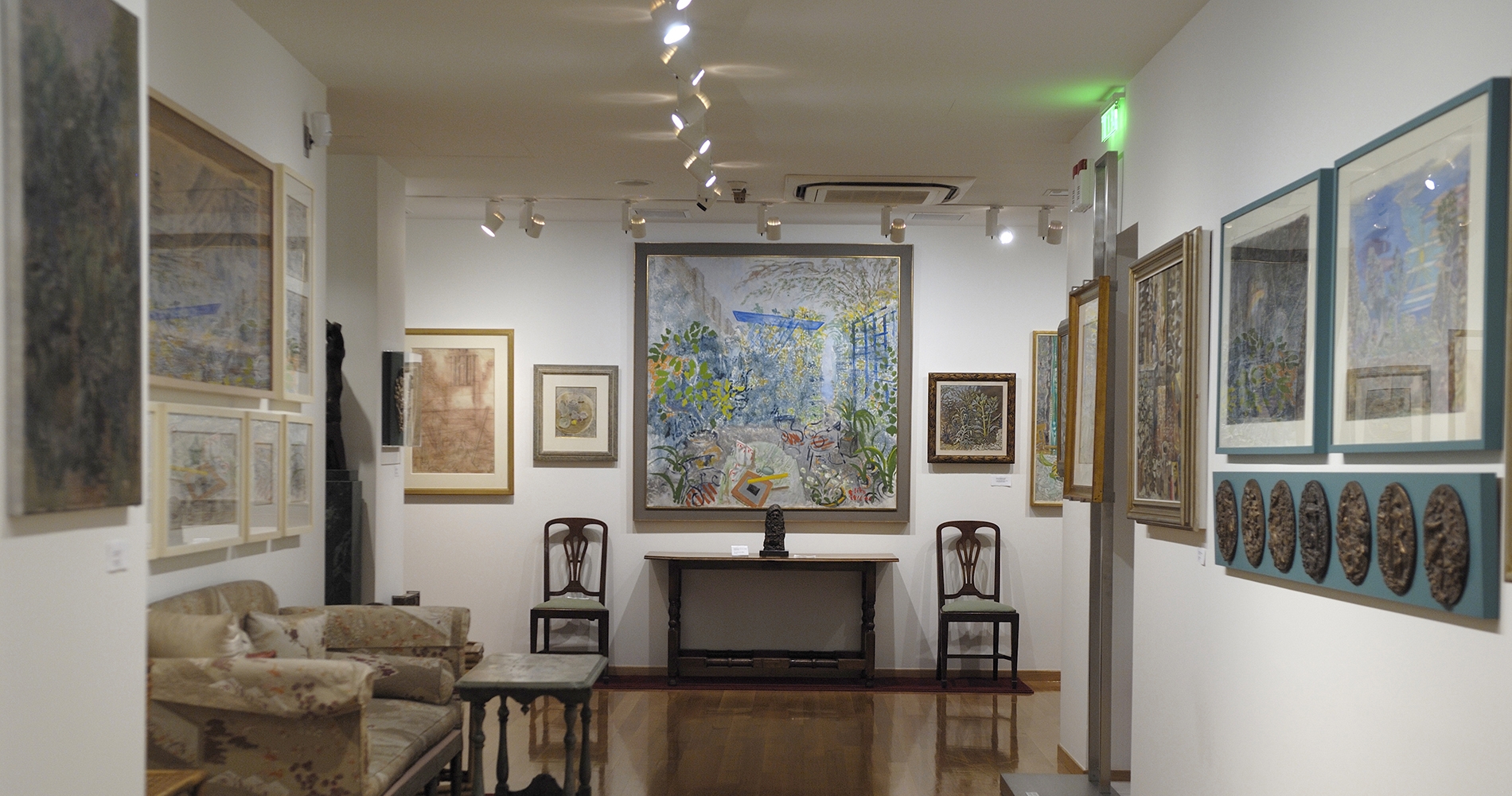
The Ghika Gallery. The Benaki’s house-museum on Kriezotou Street, in the building where the painter Nikos Hadjikyriakos-Ghika lived and worked for almost 40 years. Ghika blended the angles of Cubism with the light and vernacular architecture of Greece, especially the island of Hydra, and seeing his works in the rooms where he made them gives the visit an unusually personal feel. A shop of contemporary Greek craft sits alongside, and opening days are limited, so check before you go.

Kalfayan Galleries. A contemporary art gallery on Haritos Street in Kolonaki, open since 2000, with a program centred on Greece, the Balkans and the wider Middle East and North Africa. It shows artists from regions rarely seen side by side in Athens, acting as a bridge between Eastern and Western visual culture. Opening hours are weekdays from 11:00 to 19:00, with shorter hours on Monday and Saturday, and exhibitions change every few weeks, so there is usually something new to see.
Brunello. A small Italian wine bar and bistro on Loukianou Street, a quieter part of Kolonaki on the (steep) slope toward Lycabettus. The wine list leans Italian but also carries Greek estates, and the menu runs from cheese and cured meats to handmade pasta and pizzetti. It suits the aperitivo hour best, with tables outside under fairy lights and foliage, and it is open daily for lunch and dinner, when the lighting is low and the atmosphere particularly cozy and chic.
03
Filopapou, Pnyx & Anafiotika


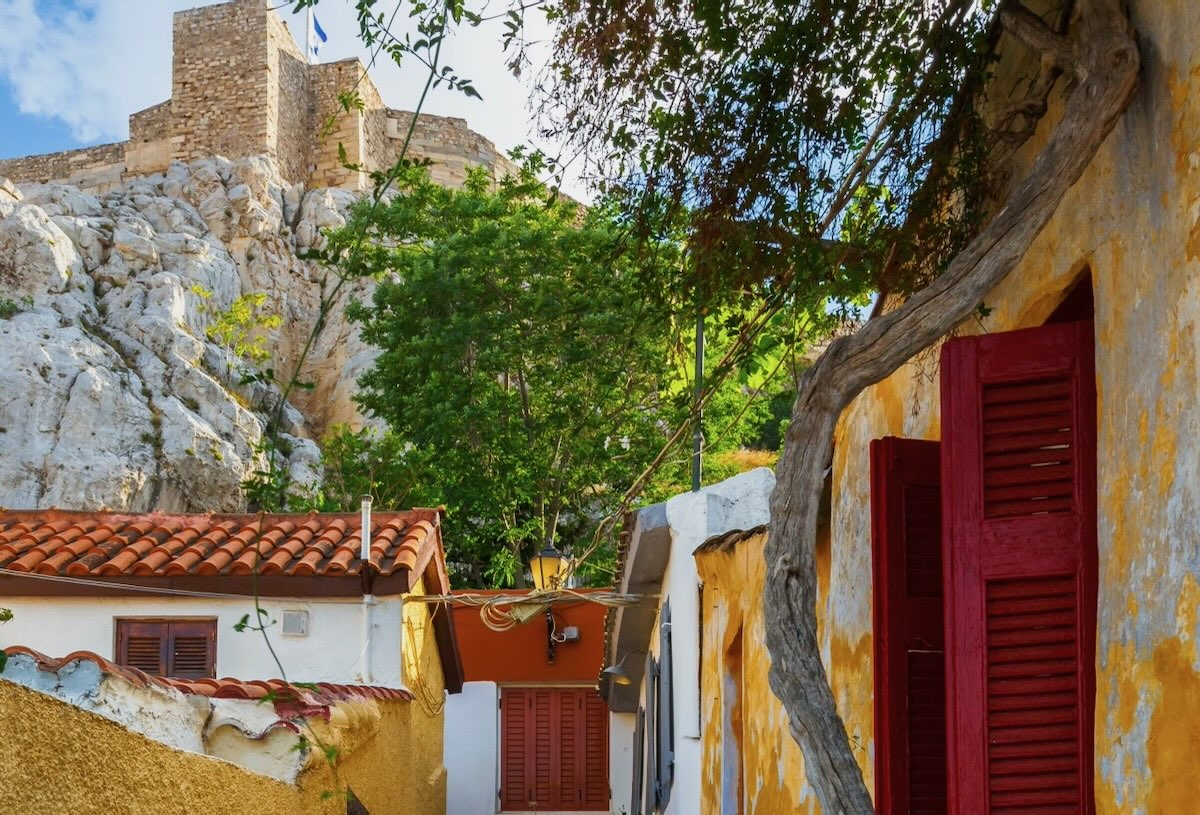
This walk joins two sides of the Acropolis into one walk: the whitewashed lanes of Anafiotika on the northern slope and the pine-covered hills of Filopappou and the Pnyx to the southwest. Start in Plaka early in the morning and climb by Prytaniou Street to Anafiotika, where builders from the Cycladic island of Anafi settled in 1843 and put up houses on the model of those at home. Roughly 45 of them survive, joined by steep steps and lanes lined with bougainvilleas and potted geraniums. The area is pedestrian only and people still live there, so voices stay low. The more moody fall weather adds a deeper sense of nostalgic romance, especially if you’re accompanied by your favorite person, or pet, as you wind through the narrow alleys and stop to take in awesome vistas.
Return through Plaka to Dionysiou Areopagitou Street, the pedestrian promenade below the Acropolis, and step onto the stone-paved paths designed by the architect Dimitris Pikionis, which fork through the pine woods toward the summit. The path to the Pnyx is the gentler of the two, closer to a stroll than a climb. The way up Filopappou is steeper but short. Leave the hills for the last hours of daylight, when the Acropolis takes the low sun and the pines throw long shadows across the paths. Allow half a day with stops, wear shoes with some grip, and stay on the main paths and finish before dark. The lushness of this zone, the singular ancient energy and the quietness you’ll experience at this time of year make the experience introspective and adventurous at once.
Highlights

The Church of Agios Nikolaos Rangavas. A small Byzantine church at the corner of Prytaniou Street and the Epicharmou steps, dating from the 11th century and named after the Rangavas family, who held the site. Columns and blocks from an ancient temple are built into its walls, a sign of how Athenians reused older stone. The Acropolis rises directly behind it, and the church is said to have rung its bell to mark the liberation of Athens in 1833.
The Churches of Agios Georgios tou Vrachou and Agios Simeon. Two 17th-century churches mark the edges of Anafiotika, the whitewashed corner of the Plaka built by islanders from Anafi, who came to work on the royal palace in the 19th century and recreated a Cycladic village under the Acropolis. The first, St George of the Rock, perches above the lanes with a view across the rooftops toward Lycabettus. The second houses an icon of the Virgin Kalamiotissa, and the two together give a short, quiet walk through one of the city’s most unexpected neighbourhoods.
The Church of Agios Dimitrios Loumbardiaris. A 16th-century church with frescoes, restored by the architect Dimitris Pikionis, who also designed the stone paths that lead up the hill. Its odd name means “the gunner”, from a story that a lightning strike blew up a nearby powder store but spared the church. It stands at the junction where the paths to the two hills part, so it makes a natural place to pause and choose your route.

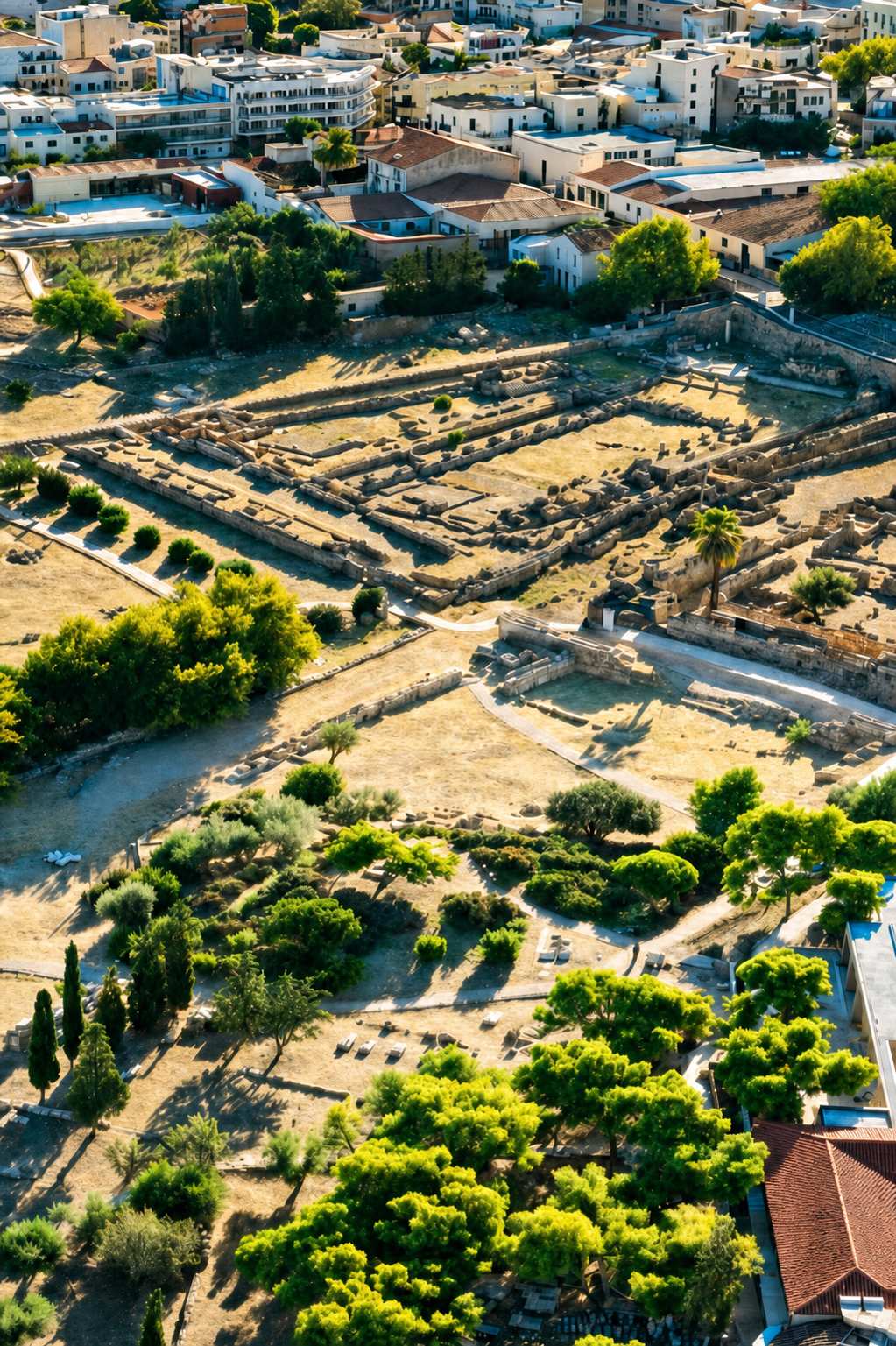
The Pnyx. The open hillside where the democratic assembly of Athens met from the 5th century BC, with a stepped speaker’s platform cut from the rock. Citizens gathered here to vote on war, peace and law, and orators such as Pericles and Demosthenes are said to have addressed them from this very platform. Today the slope is quiet and pine-shaded, with the Acropolis close by, and one of the calmest places in the city to watch the sunset.
The Monument of Philopappos. The 12-metre marble tomb at the summit was built in the early second century for Gaius Julius Antiochus Epiphanes Philopappos, a Roman consul and prince of Commagene who became a benefactor of Athens. Carved reliefs show him as consul riding in a chariot, a reminder of how far Roman power reached into Greece. Its terrace frames the Acropolis from across the valley, making it the classic spot for the postcard view.
The National Observatory. On the neighbouring Hill of the Nymphs, the neoclassical Sina building houses the National Observatory of Athens, founded in 1842 and the first research institution in Greece. It was designed by the Danish architect Theophil Hansen and paid for by the banker Baron Georgios Sinas, and its columned, temple-like front shows how science and ancient ideals were meant to go hand in hand in the young Greek state. The hill’s open sky and sweeping views of the city explain why astronomers chose it.
Where to stop

Yiasemi. A snug café on the Mnisikleous steps, the old stairway named after Mnesikles, architect of the Acropolis Propylaia, which climbs the slope of the rock between Plaka’s old houses. Its leafy garden of jasmine (the name means exactly that) is a cool, scented pause on the climb, with homemade pies and desserts.
Athens University History Museum. The museum fills the house of the architect Stamatios Kleanthis on Tholou Street, where the University of Athens first opened its doors, and which served as its building from 1837 to 1841. Old books, manuscripts, scientific instruments and portraits are arranged around a courtyard, telling the story of how the young Greek state set about educating itself. It keeps weekday morning hours.
DotAhart. A small art lab and shop on Afroditis Street in Plaka, run by two Athens School of Fine Arts graduates, Voula and Athena. In a district of mass-produced souvenirs, it offers the alternative of making your own, with ceramic workshops for beginners alongside handmade ceramics, jewellery and art souvenirs by Greek artists. Upon appointment only.
Brettos. A small bar on Kydathineon Street, in the building of the oldest distillery in Athens, founded in 1909. Floor-to-ceiling shelves of backlit bottles glow in every colour behind the counter, and the house liqueurs and spirits are poured by the glass, so a drink here feels like stepping into the distillery’s own shopfront.
Little Tree Books & Coffee. A bookshop café on Kavalloti Street, just behind the Acropolis Museum and open since 2015. Its shelves of Greek literature in English translation make it a good place to pick up something to read before or after the galleries, with filter coffee, handmade sweets and a pavement bench that faces the museum. It keeps shorter hours in winter and is closed on Mondays.
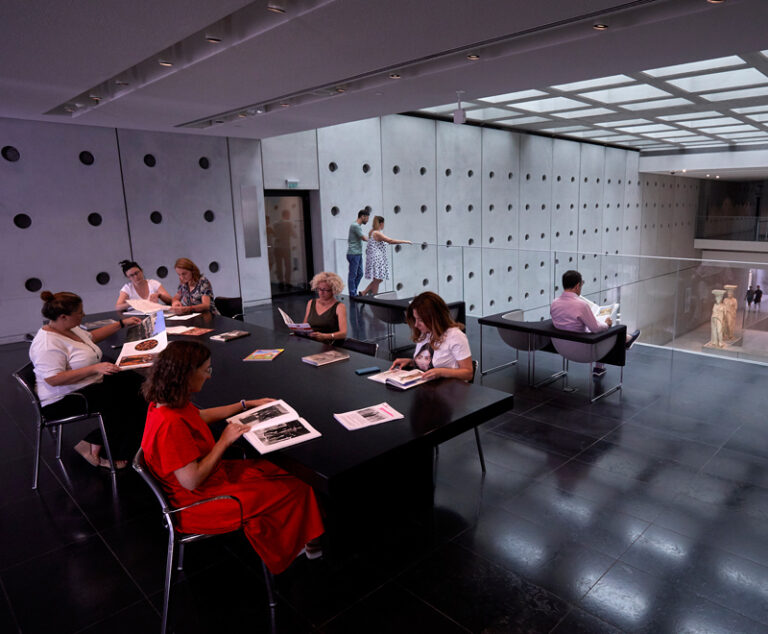
Acropolis Museum Reading Lounge. A quiet room on the second floor of Bernard Tschumi’s glass-and-concrete museum, which opened in 2009 to bring the Parthenon sculptures home to the foot of the rock. Comfortable chairs, books on the Acropolis and the classical world, free wifi and a view of the Caryatids make it a place to sit with the history rather than rush past it. The museum’s café-restaurant sits on the same floor, with a large terrace facing the rock.
Ilias Lalaounis Jewelry Museum. A museum in two 1920s and 1930s houses at the corner of Kallisperi and Karyatidon streets, in the former workshops and home of the renown jeweller. Lalaounis drew on ancient Greek, Byzantine and natural forms, and the collection shows how those motifs became modern jewellery. Two live workshops, where artists in residence work, let you watch the craft in progress (upon appointment), and there is also a shop, a coffee shop and a research library. This year’s anniversary exhibition on the art of hosting, from the banquet to the coffee table, runs until 28 December. Opening days are limited, so check before you go.
Drupes and Drips. A tiny corner room in Makrygianni, a short walk from the Acropolis Museum, that serves specialty coffee in the morning and turns to spritzes and Italian wines from lunchtime. Cheese, cured meats and sandwiches go with them, so it works as a coffee stop and an aperitivo stop in one. There’s a sweet buzz in this pocket of Makriyianni that can really take you away from the mundanity of an ordinary day.