


“The way things are here is simple. We do not lock our houses, and in summer the children play in the streets until midnight.” With a single sentence, Mr. Ilias, a kind and smiling airport taxi driver, captures the quiet soul of Skyros.
This is an island of living traditions, rich folklore, and a deliberate, unhurried rhythm that one immediately wishes to adopt. A first stroll through the Village – as locals refer to the beautiful town – quickly confirms his words. In the main square, children play freely without the weight of constant supervision, and residents greet you warmly the moment your eyes meet.
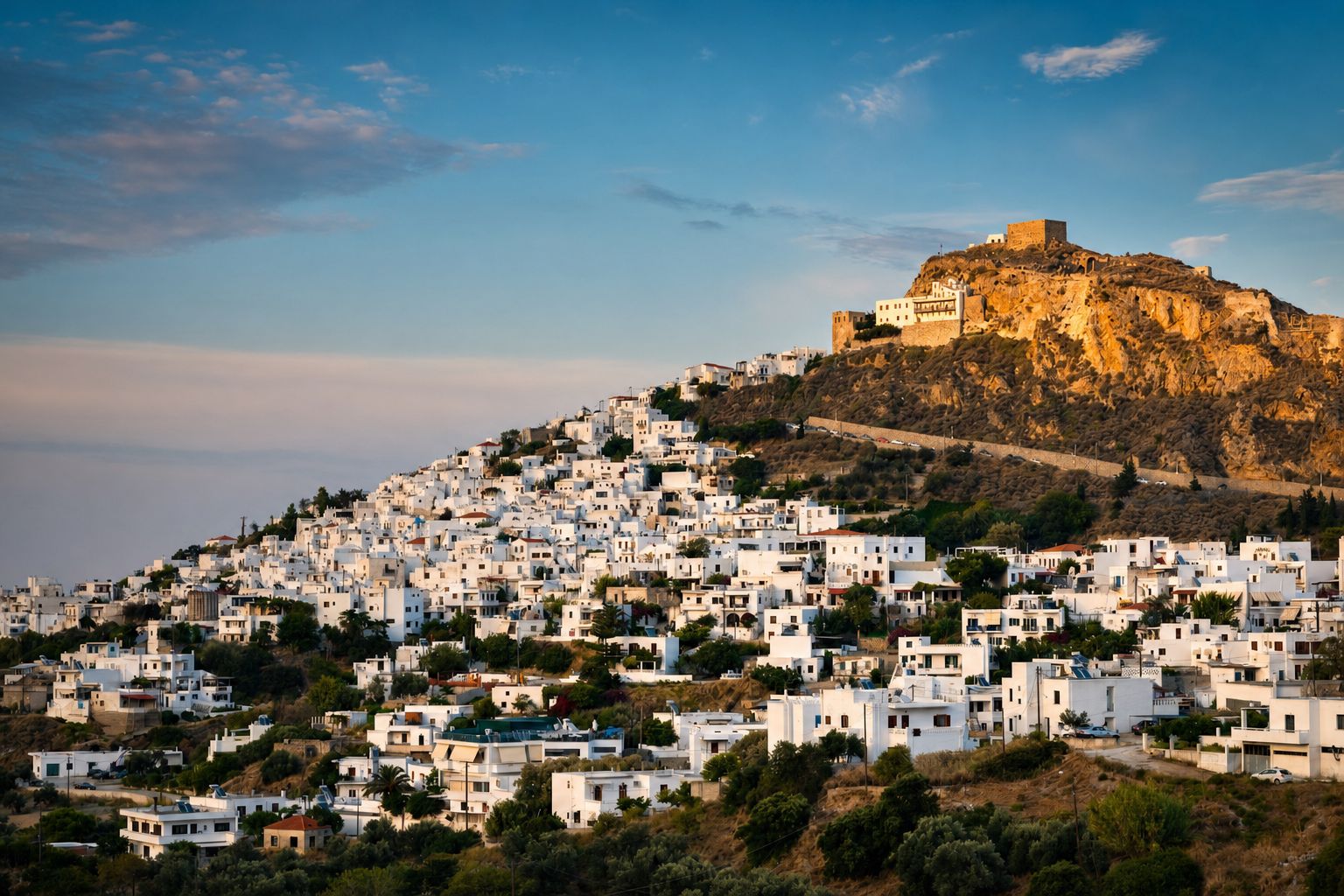
Many describe Skyros as an island of contrasts. Although it is the largest of the Northern Sporades, it belongs administratively to the Regional Unit of Evia in Central Greece. Its lush green landscape, particularly vibrant at this time of year, clearly aligns it with the Sporades, yet its white, unadorned houses and whitewashed alleys climbing the rugged rock could easily belong to the Cyclades.
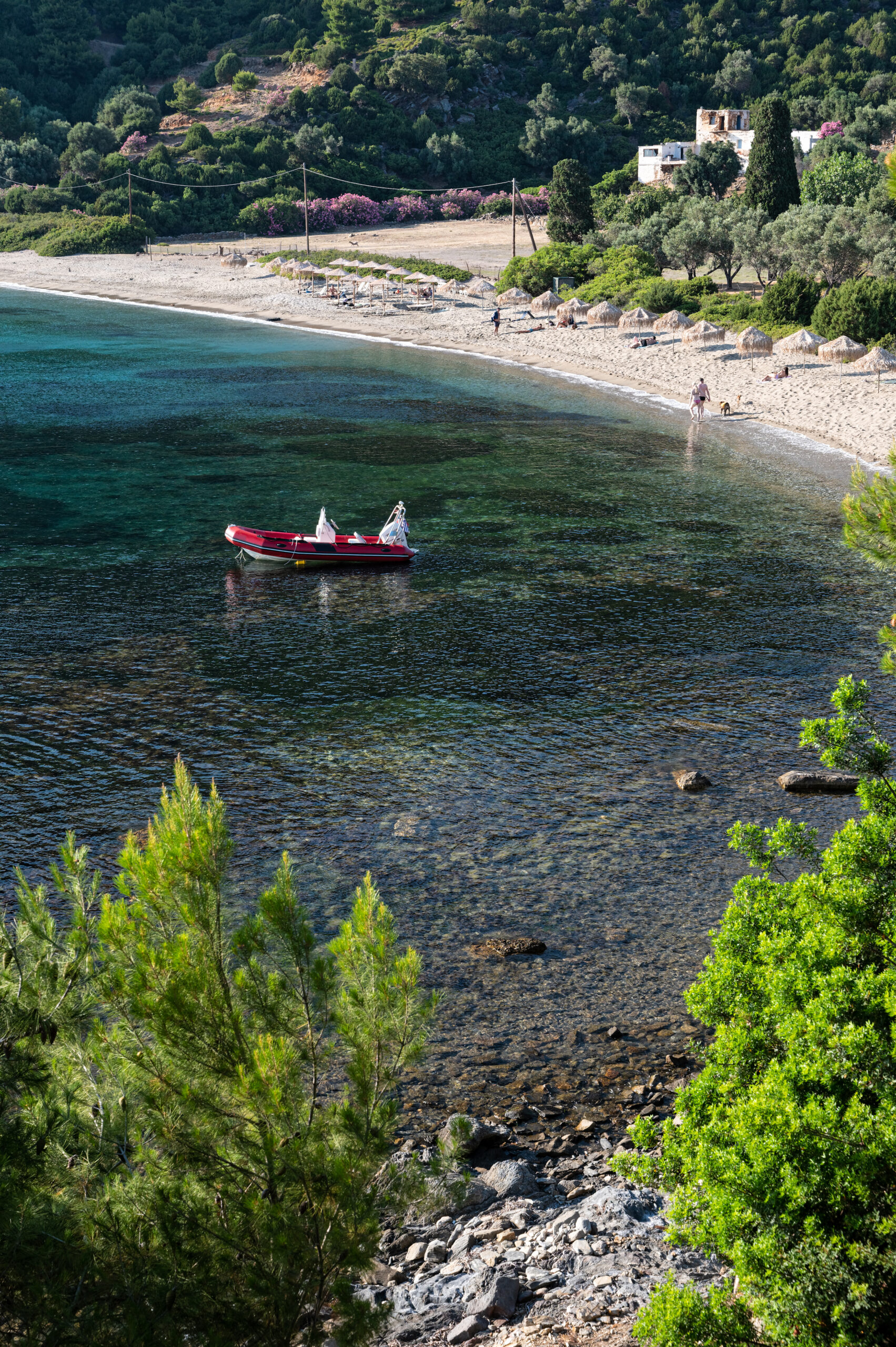
With convenient access by ferry or plane and a collection of beautiful beaches, Skyros possesses all the elements of a major destination. Yet, remarkably, it preserves its truly unique identity and slow pace. On this island of contrasts, everything eventually falls into place, gently nudging you to adjust to a slower way of life. The very position of the amphitheatrically built capital demands it, while the surrounding nature draws you in.
As time seems to expand, a brief 2-day escape to Skyros Town becomes surprisingly rich with distinct experiences – suspended between the Byzantine Castle at its highest peak and the sweeping sandy stretch of Magazia beach below. What follows is a curated collection of our absolute favorites, a sensory roadmap designed to guide you through the town’s most evocative corners.
To help you make the most of every step, we have compiled a complete directory of these local landmarks, artisans, and culinary spots below, ensuring you can easily find and fully immerse yourself in each experience.
Directory ↓
01
Wandering the Pirate Alleys of a Secret Village
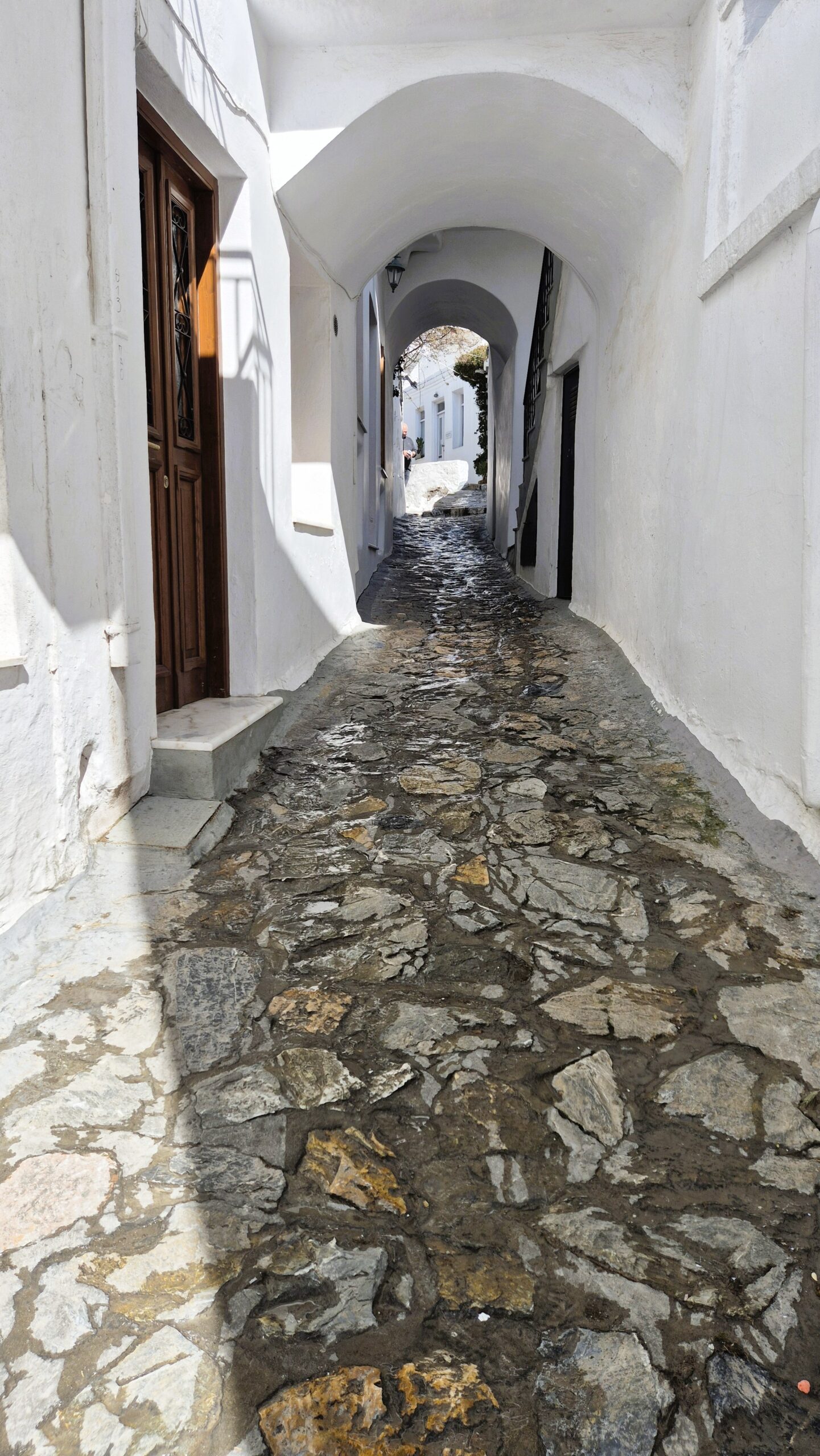
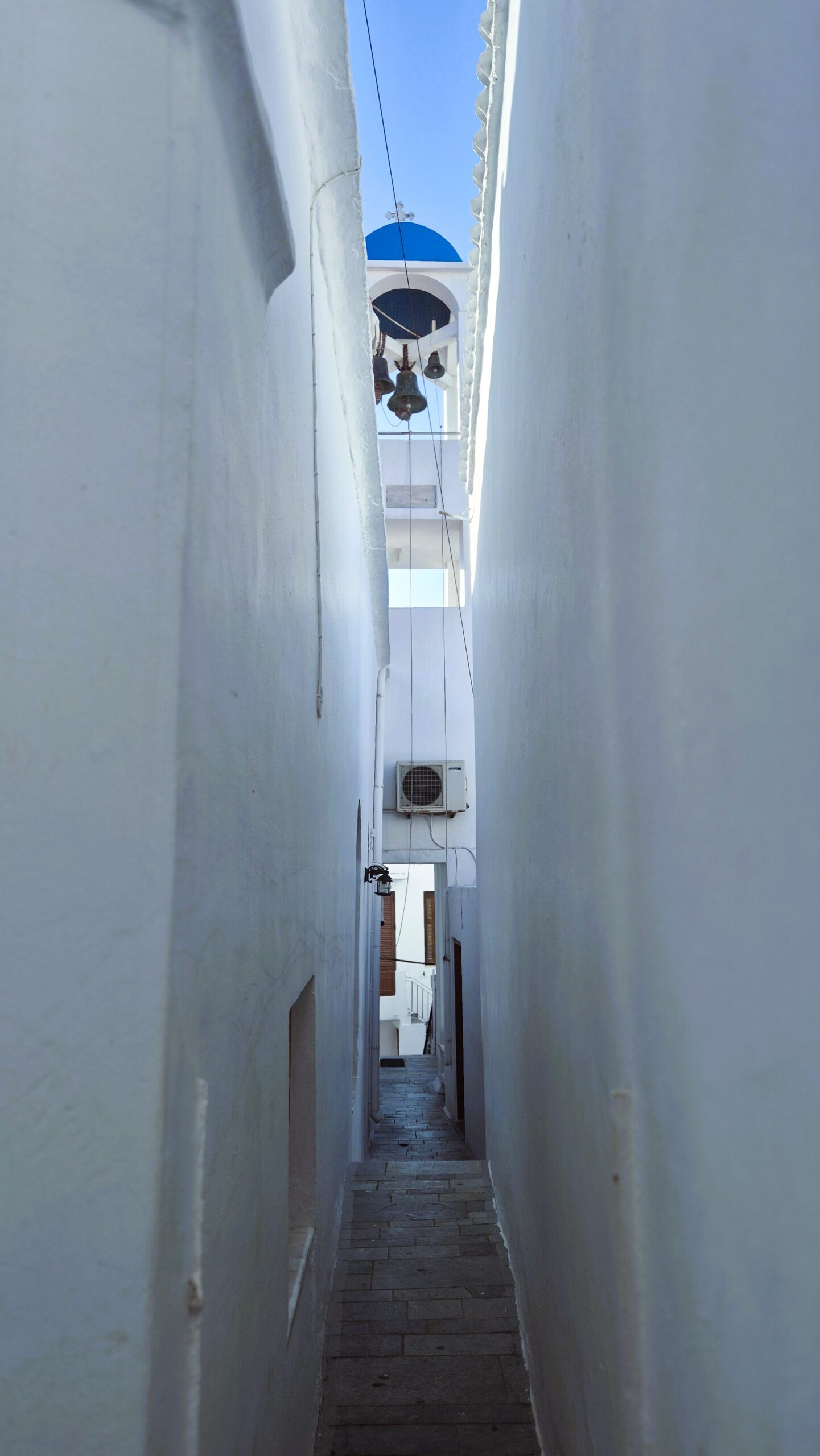
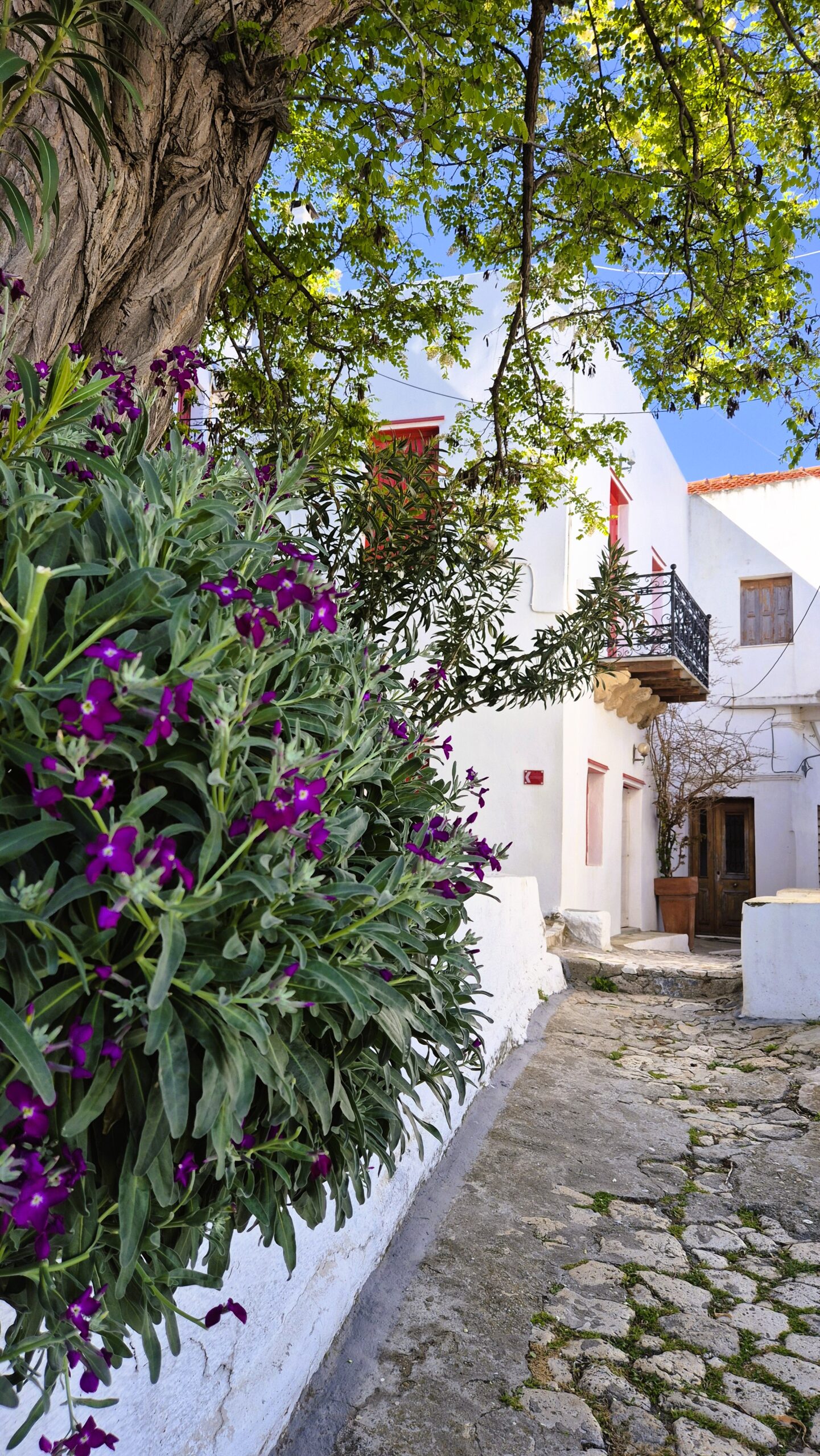
To truly understand the island’s defensive soul, one must get lost in the labyrinth climbing the northeastern slopes. Clinging to a steep, 179-meter rock, the Town was deliberately built to remain entirely unseen by pirates and raiders approaching the coast. For added protection, the houses stand close together, often built side by side, surrounded by a tangle of intricate alleys that add to the settlement’s character and invite you to lose yourself as you wander up and down countless steps.
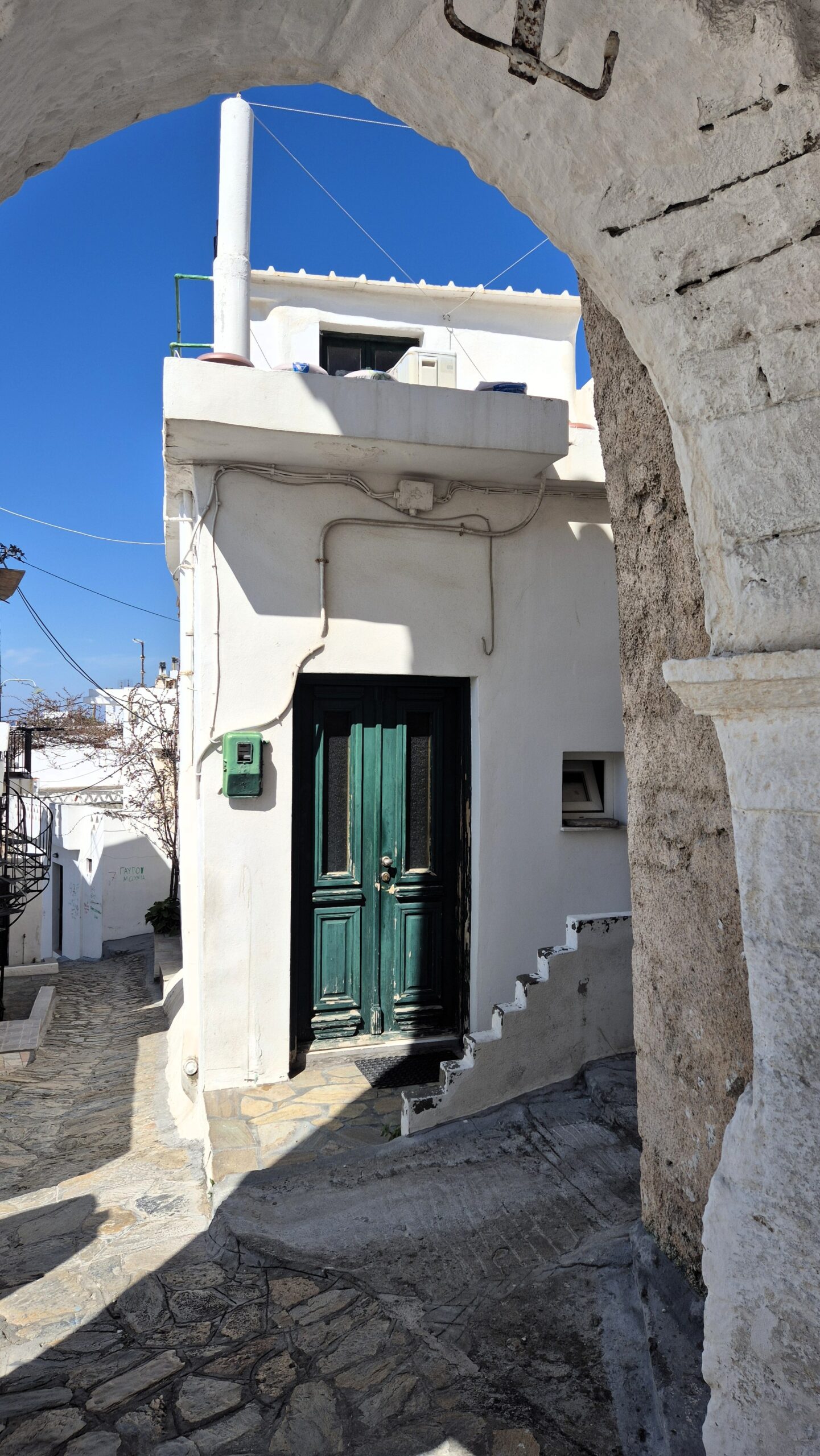
These are the so-called “pirate alleys,” as Skyrians call the uphill cobbled lanes that led residents to the safe refuge of the fortified former acropolis while confusing invaders during raids. The dominance of white is interrupted by doors and windows in vivid colors, bougainvillea crowning passages, and violets appearing everywhere with their sweet scent.
As one postcard-like image follows another, notice the small details: the way the lowest step on the exterior staircases of houses is narrower to save space, or the gray line painted along the bottom of exterior walls where they meet the lanes, known locally as the “frydatsi.”
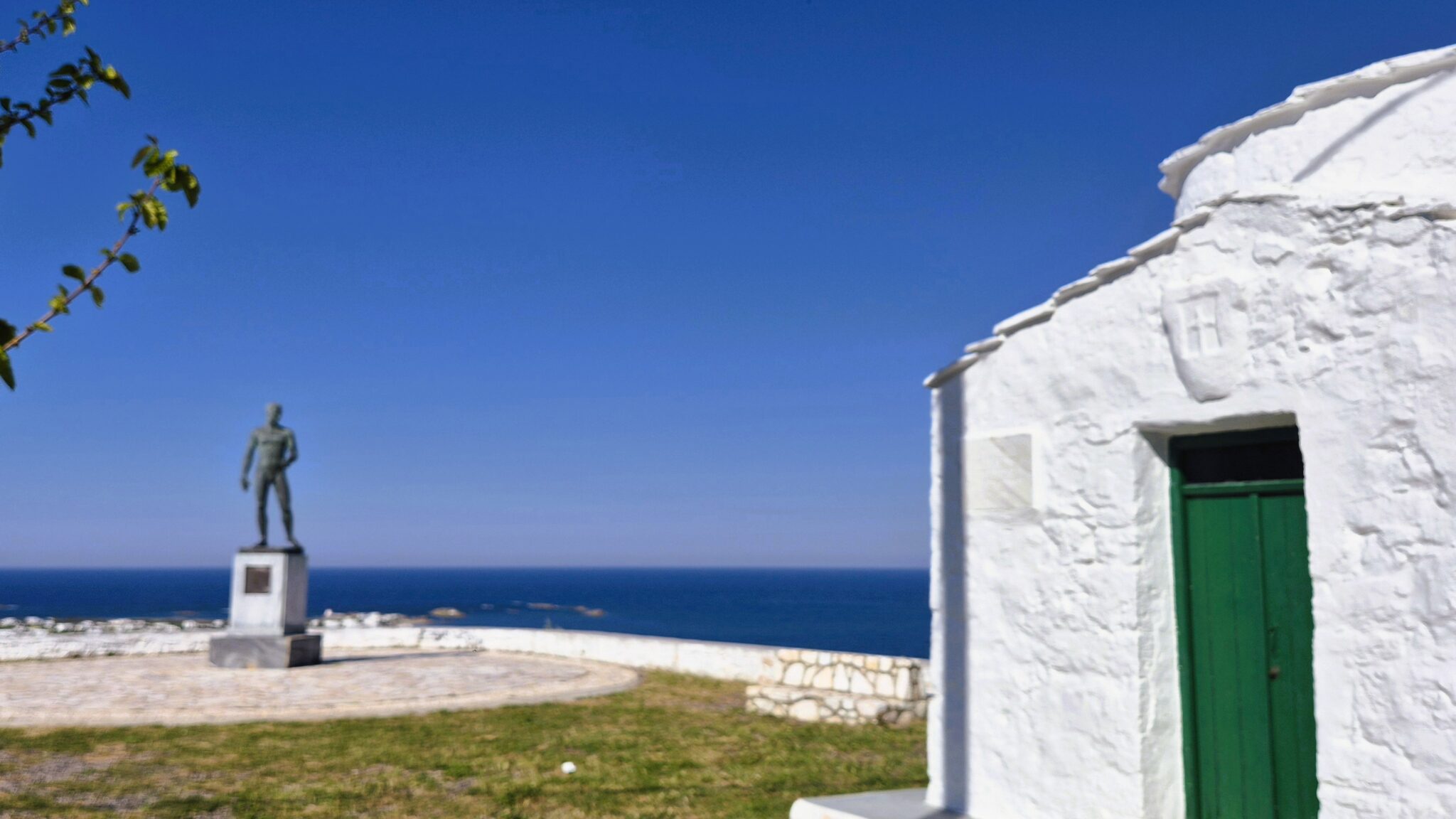
The central pedestrian street of the Town, Megali Strata, crosses the settlement and leads easily from the main square to Eternal Poetry Square, or Brooke Square, as everyone calls it. There stands the statue of the English poet and philhellene Rupert Brooke (1887-1915).
Created by sculptor Michalis Tombros in 1930, the statue of the young man gazing toward the open Aegean honors the fact that Brooke died on a ship anchored off Skyros and was buried in an olive grove on the island.
To help you make the most of every step, we have compiled a complete directory of these local landmarks, artisans, and culinary spots below, ensuring you can easily find and fully immerse yourself in each experience.
Directory ↓
02
Tracing 7,000 Years of History at the Archaeological Museum
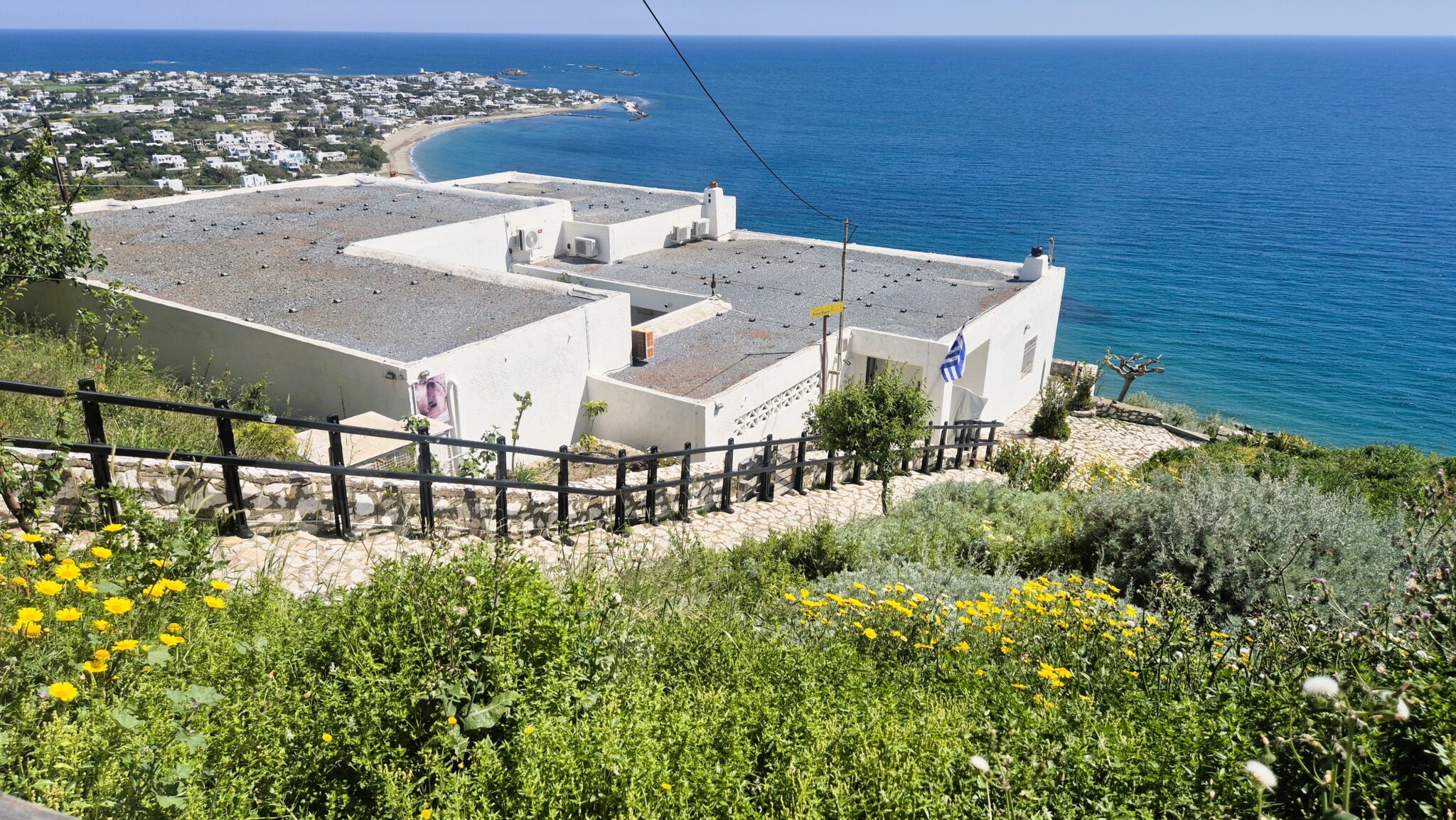
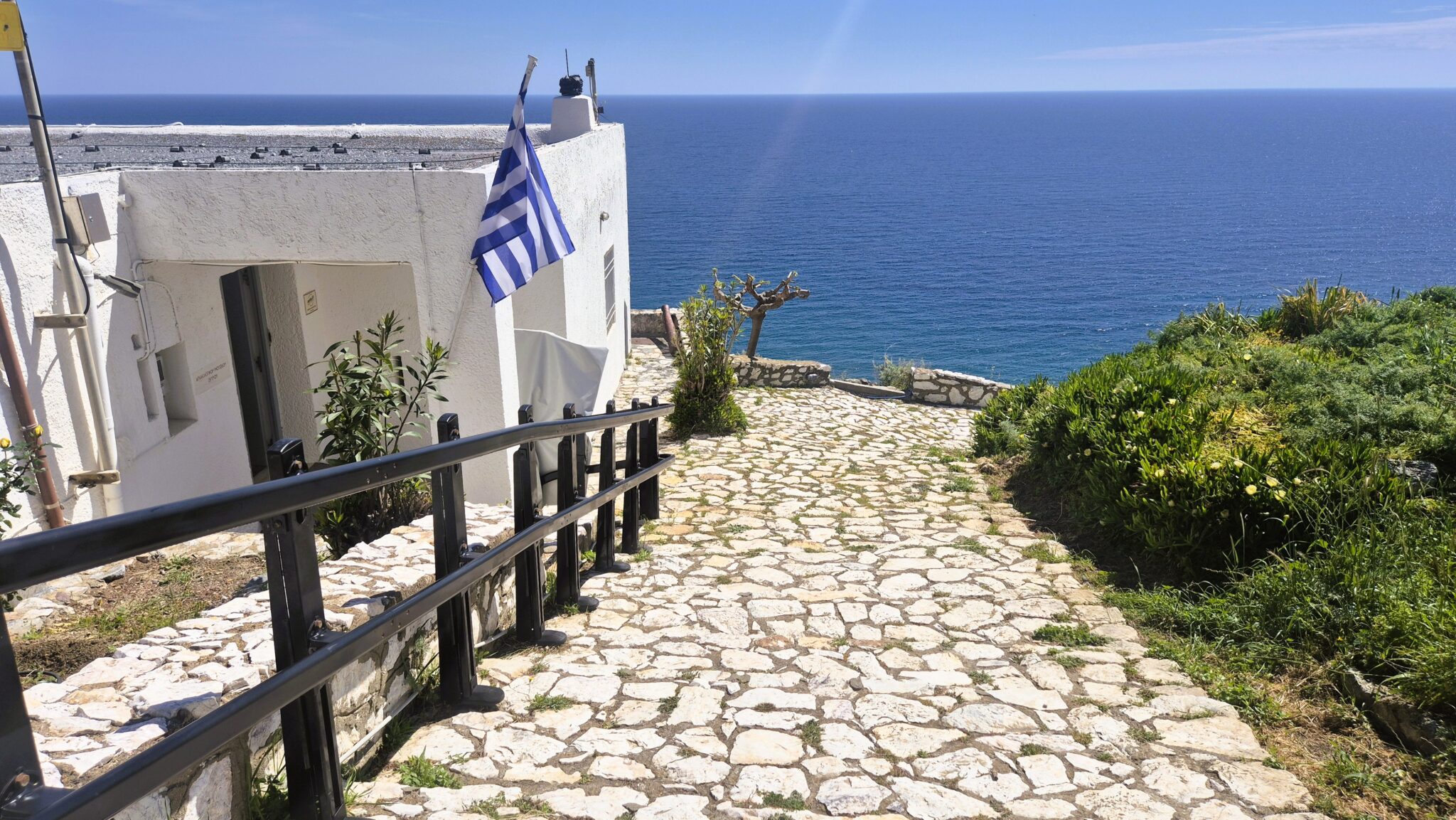
Just steps from the monument, the town’s deep past is preserved in two quiet sanctuaries standing almost face-to-face, each illuminating a different chapter of an island first settled 7,000 years ago. At the Archaeological Museum of Skyros, a small but substantial collection covers the period covers the period from the Early Helladic era to Roman times. The exhibits come from several parts of the island, including the archaic temple of Apollo at Fourka, the temple of Poseidon at Markesi, and the fortified settlement at Palamari.
Among cult vessels, burial finds, and jewelry made of gold, faience, and crystals, do not miss the folklore collection that forms part of the museum. It vividly recreates the distinctive layout and furnishing of a traditional Skyrian house.
From the elaborate boulmes partition to furniture representing the island’s important woodcarving tradition, from painted handmade ceramics decorating the fireplace and walls, exactly as they still do today, to woven textiles and embroideries filled with bright motifs and symbols, the domestic life of the island’s inhabitants seems to come alive.
03
Exploring Rare Local Heirlooms at the Manos Faltaits Museum
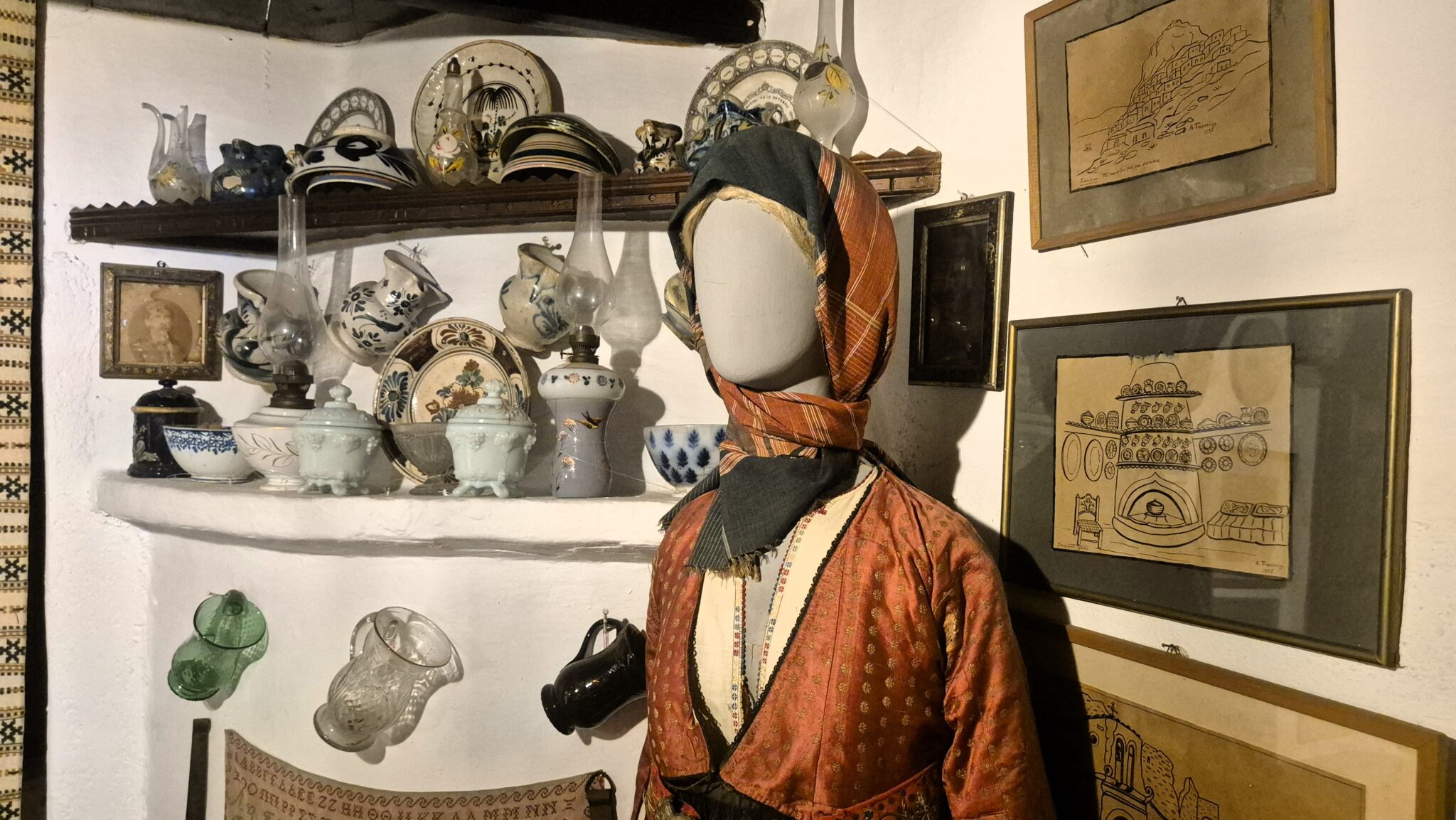
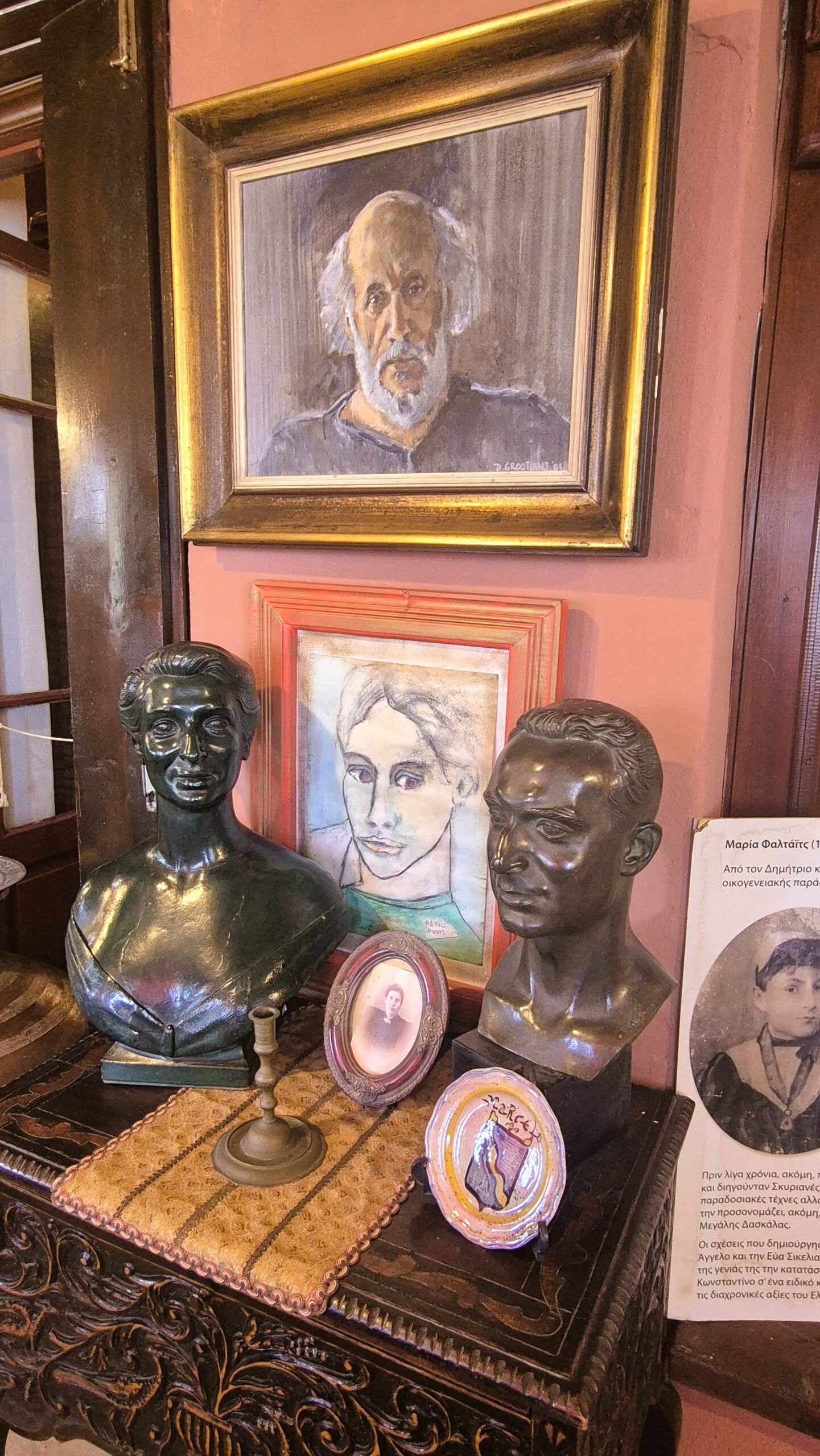
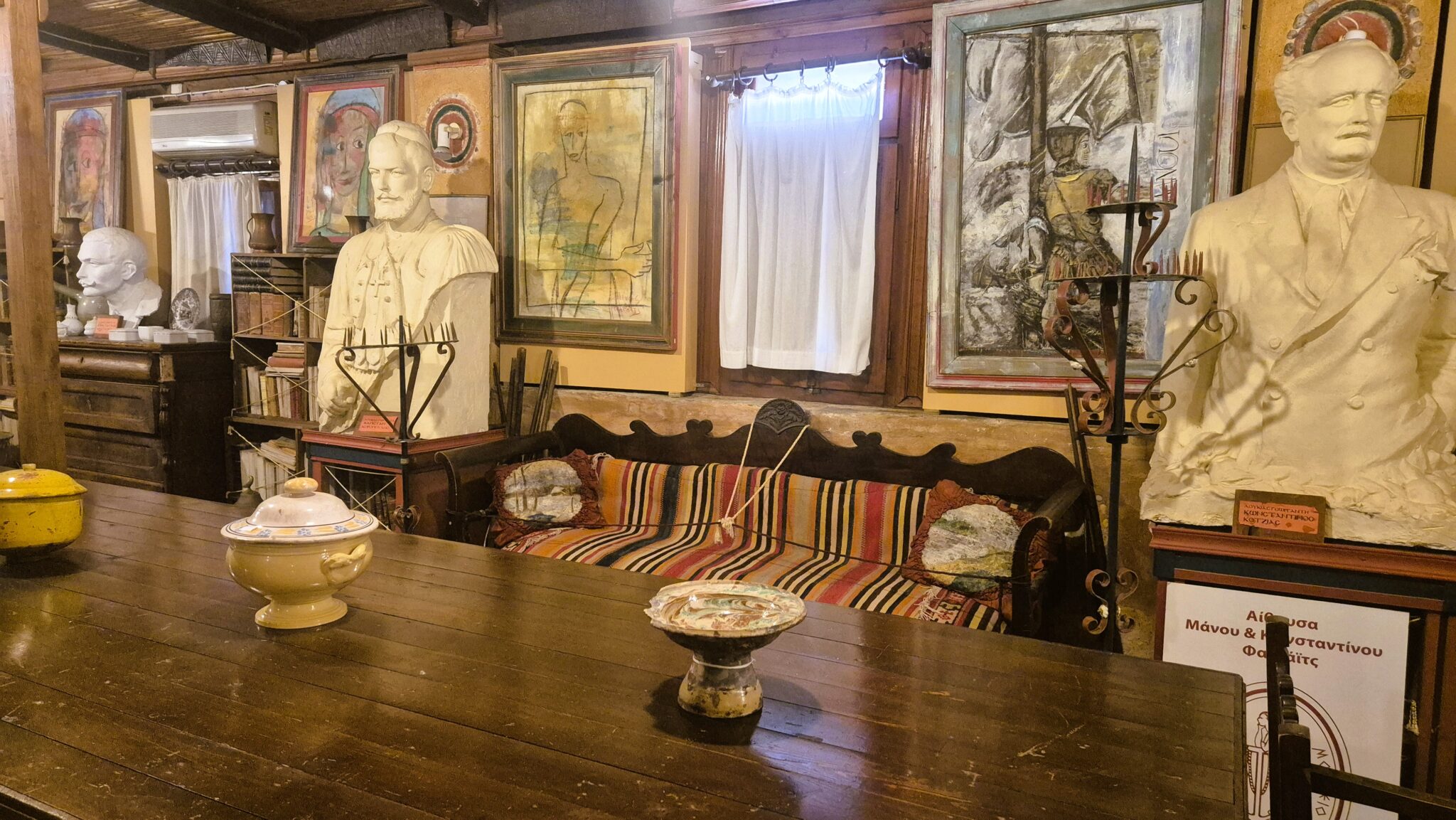
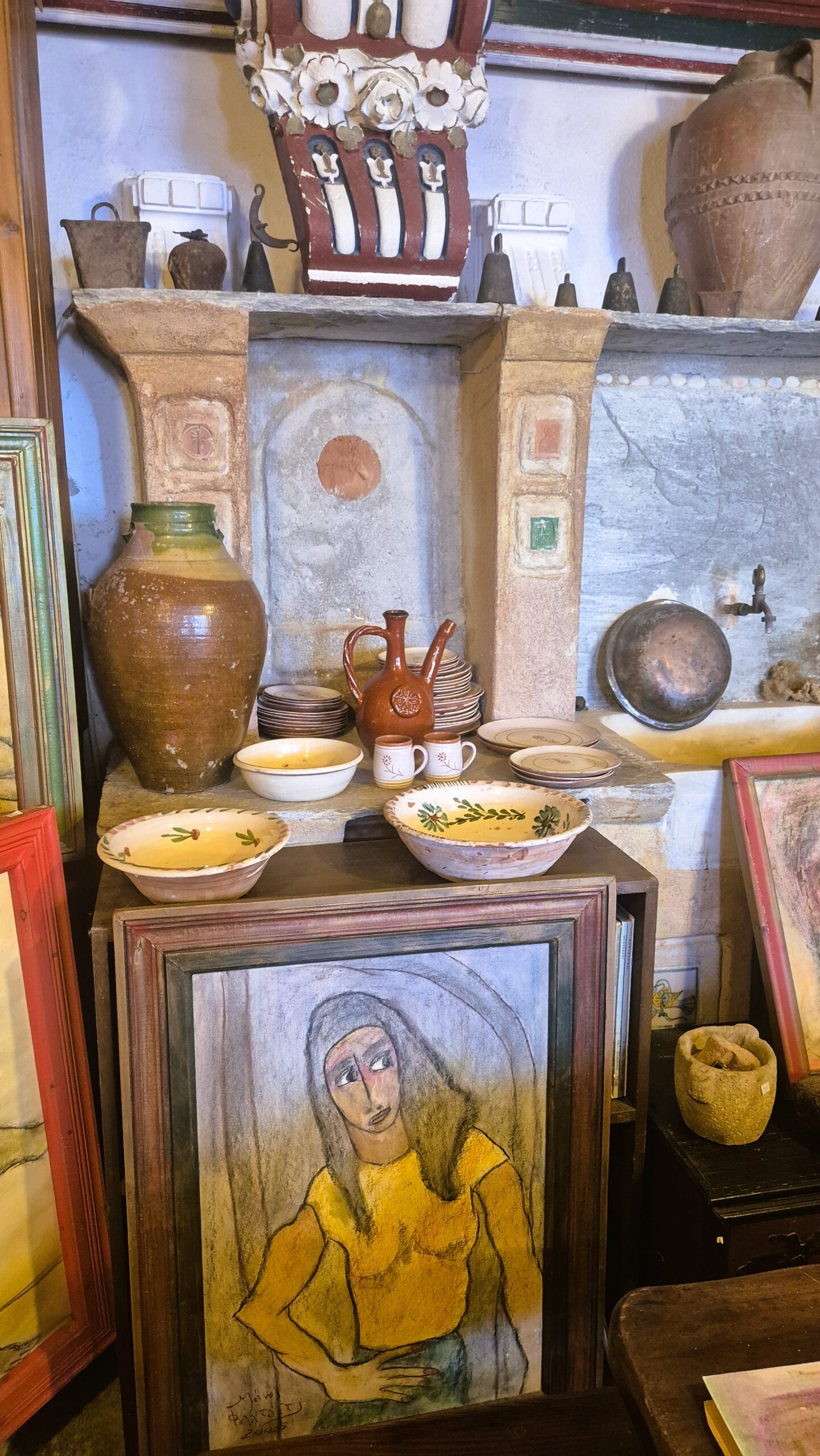
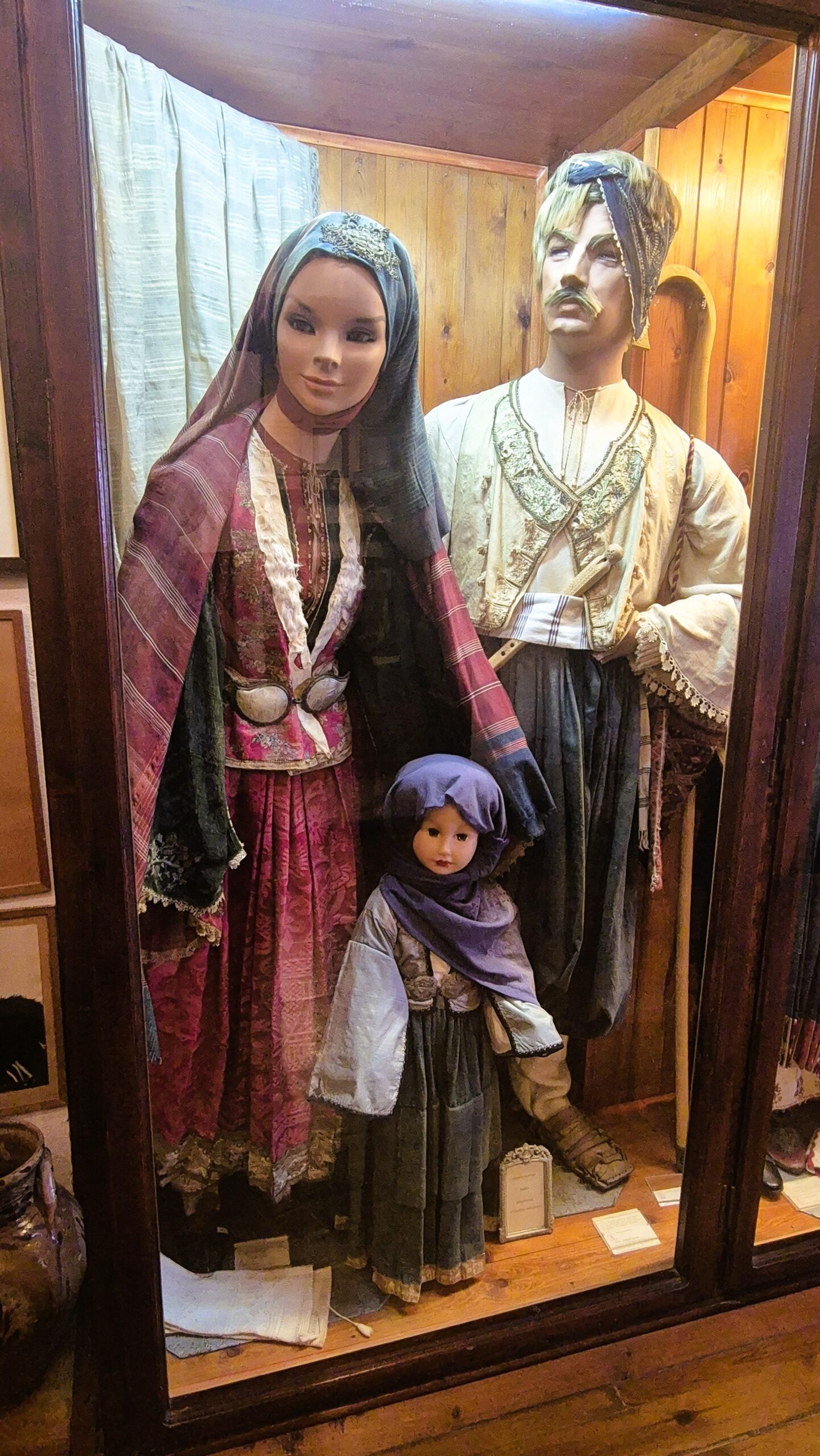
For a deeper, more intimate descent into the island’s living memory, one crosses over to the Manos Faltaits Historical and Folklore Museum. Established in 1964 as one of Greece’s very first private folklore institutions, this extraordinary space feels less like a formal exhibition and more like a labyrinthine Aladdin’s cave filled with rare heirlooms.. It is housed in the old Faltaits mansion, beside the tower of the island’s ancient Pelasgian walls.
Manos Faltaits, continuing the legacy of his father Konstantinos, devoted himself to preserving and presenting every aspect of Skyrian history and culture. Objects representing all branches of Skyrian handicraft coexist with items connected to the primary and secondary economy of Greece as a whole, in spaces marked by the patina of other eras while still seeming alive.
Each area contains a striking surprise: rare testimonies and editions by the writer and journalist Konstantinos Faltaits from the Asia Minor Catastrophe; traditional needlework requiring countless hours of labor; 16th-century volumes on the library shelves; bust models of important figures by Loukia Georganti; old icons; and a valuable iconostasis of exceptional workmanship.
Look for the manuscripts of Papadiamantis, the unique documents connected to the Filiki Eteria and the Greek Revolution of 1821, and do not miss the vivid reconstruction of a Skyrian house framed by traditional costumes. Also worth seeing is the personal creative space of the prolific Manos Faltaits, with paintings that represent 30 years of artistic work and have notable psychological depth.
04
Climbing to the Byzantine Castle for Sweeping Aegean Views
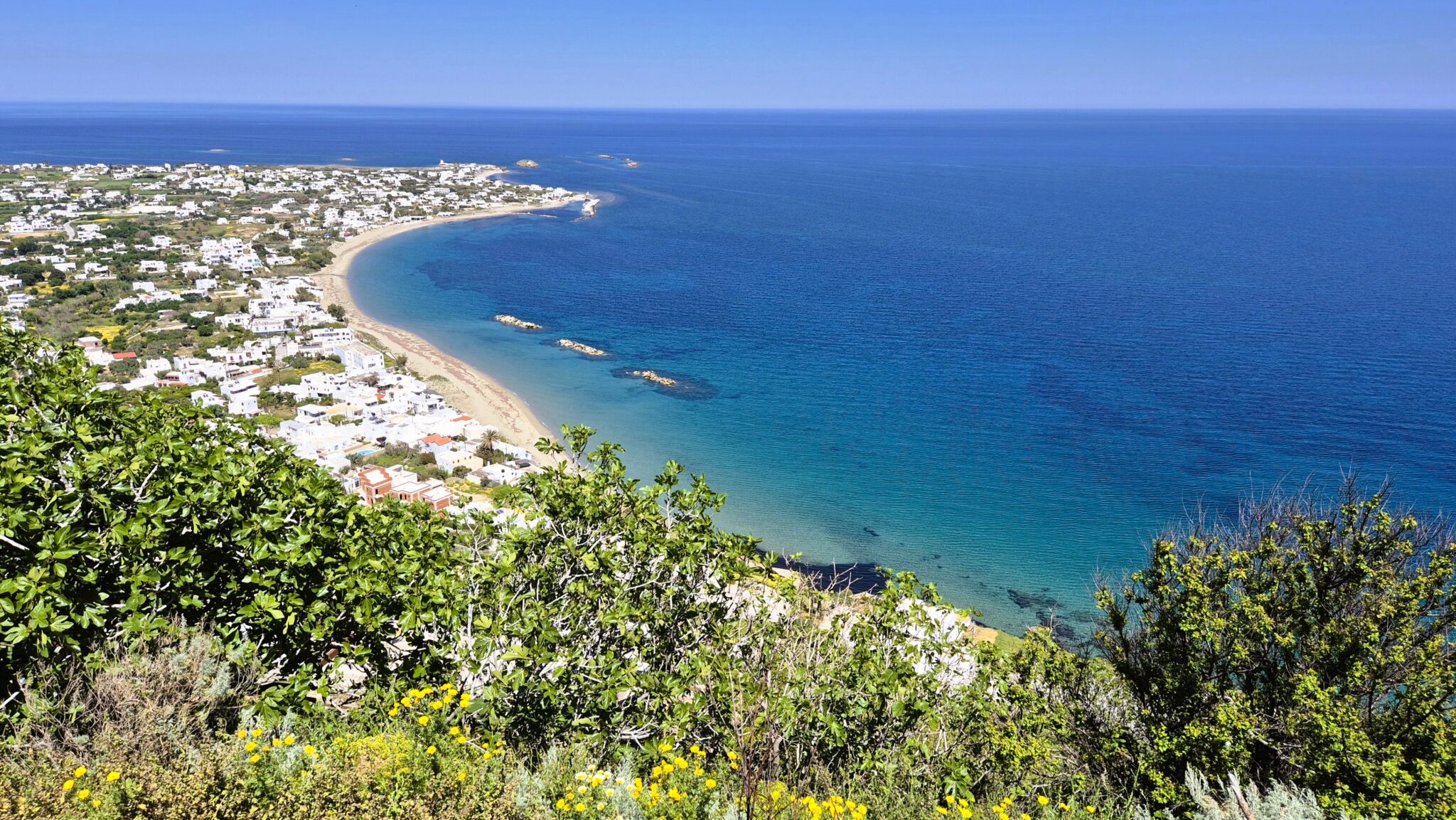
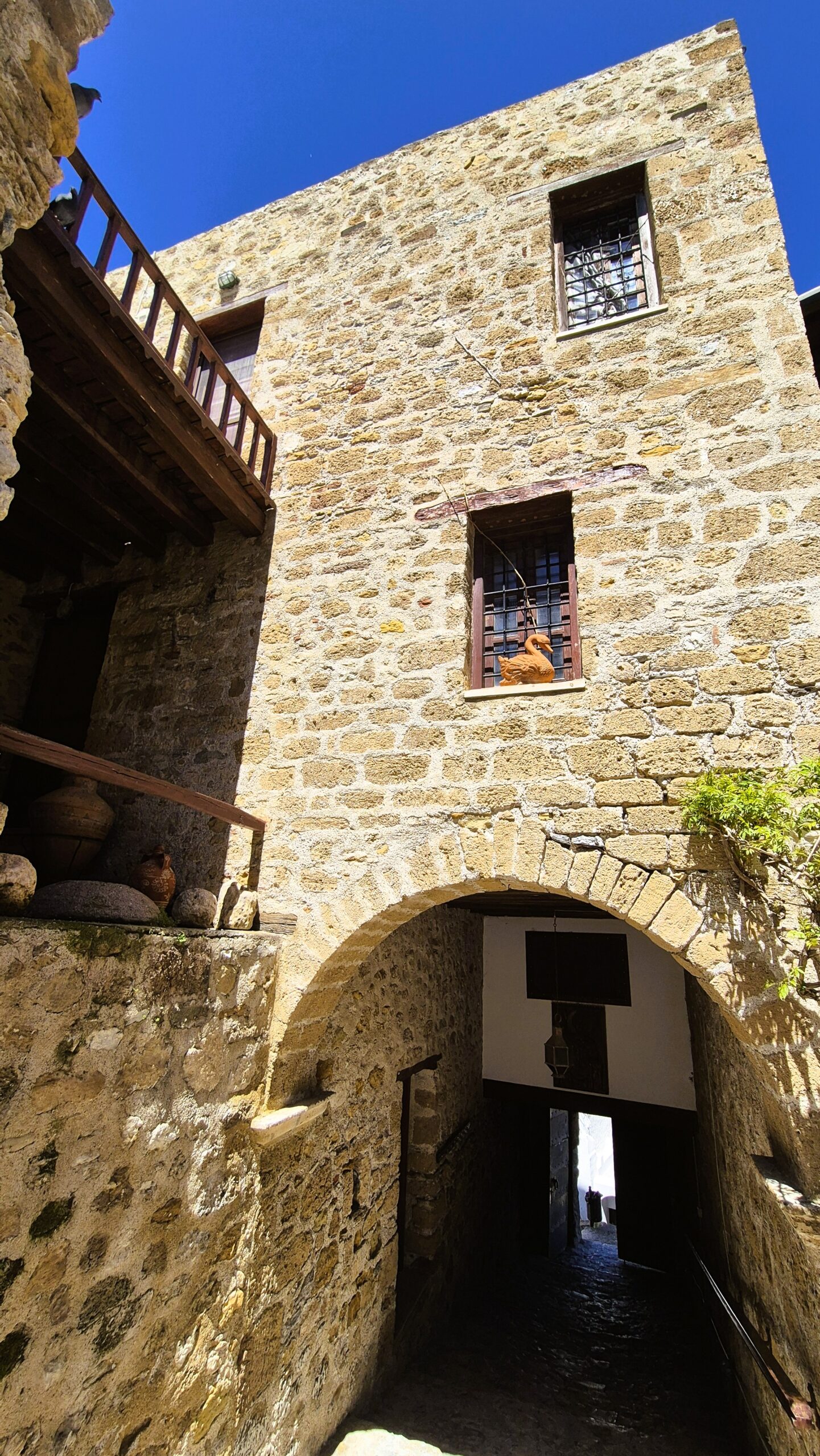
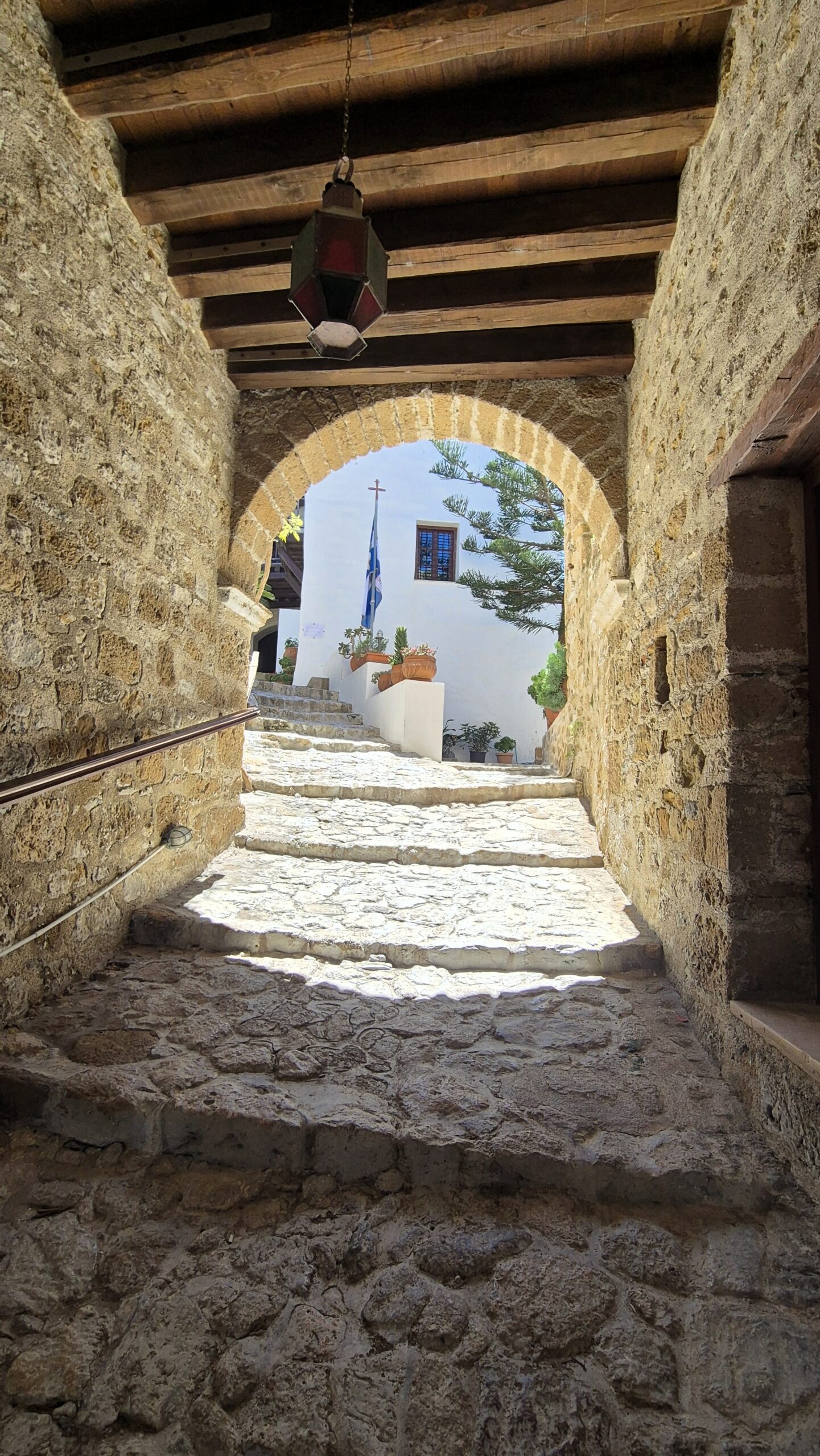
Looming above every corner of the town is its crown jewel: a sheer rock face rich in myth, once the ancient acropolis of King Lycomedes, the legendary hiding place of Achilles, and later a fortified Byzantine stronghold. Reaching the Castle requires climbing what appear to be endless steps, although it is also possible to drive fairly close and continue uphill on foot for a few minutes. In either case, the panoramic view is ample reward, especially when looking toward Magazia beach.
Magazia is the closest shore to the Town and an ideal end point for a short walking route from the island capital. Afterward, a first swim can be combined with a meal by the broad sandy beach.
05
Visiting the Historic Monastery of Saint George
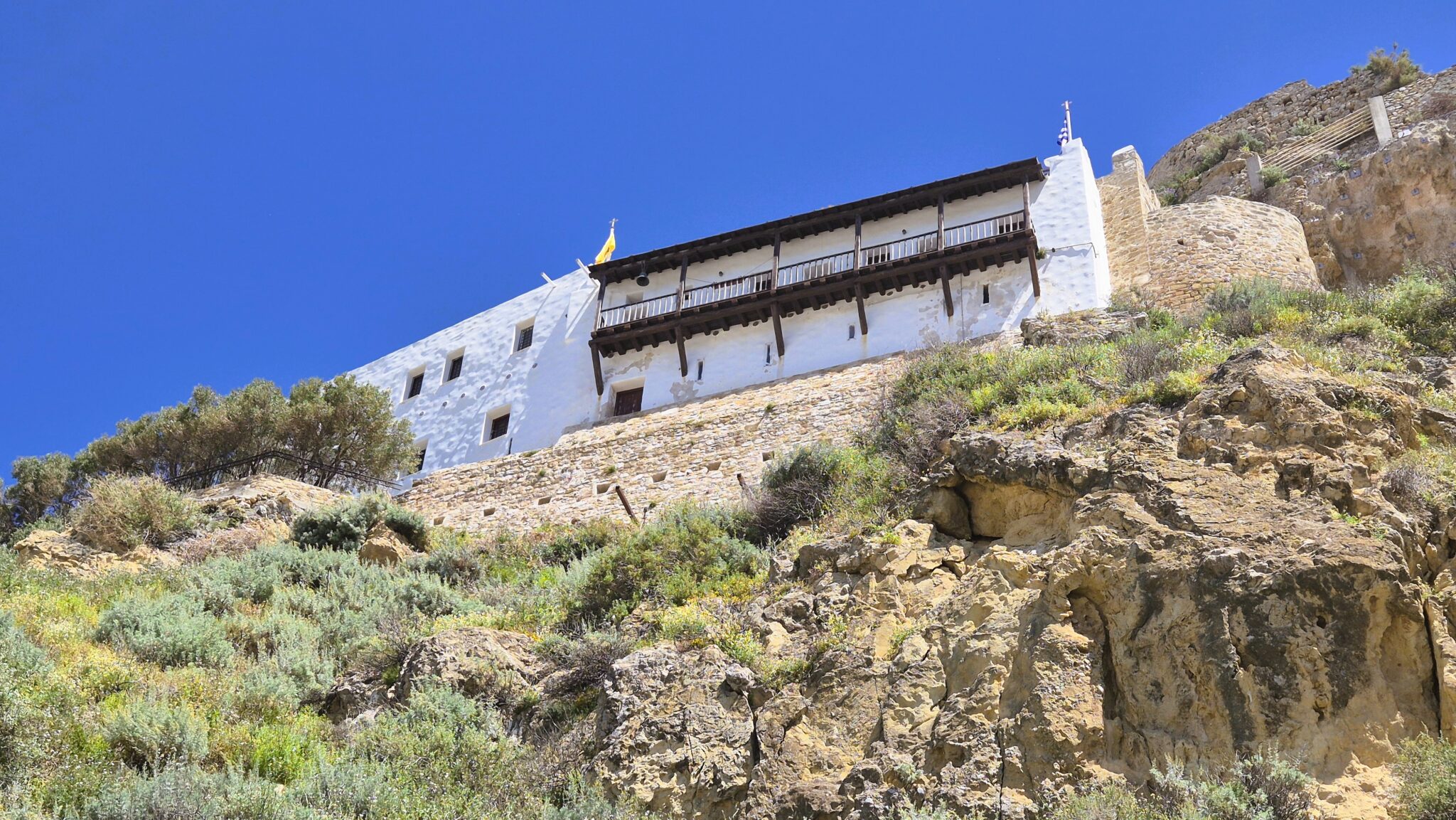
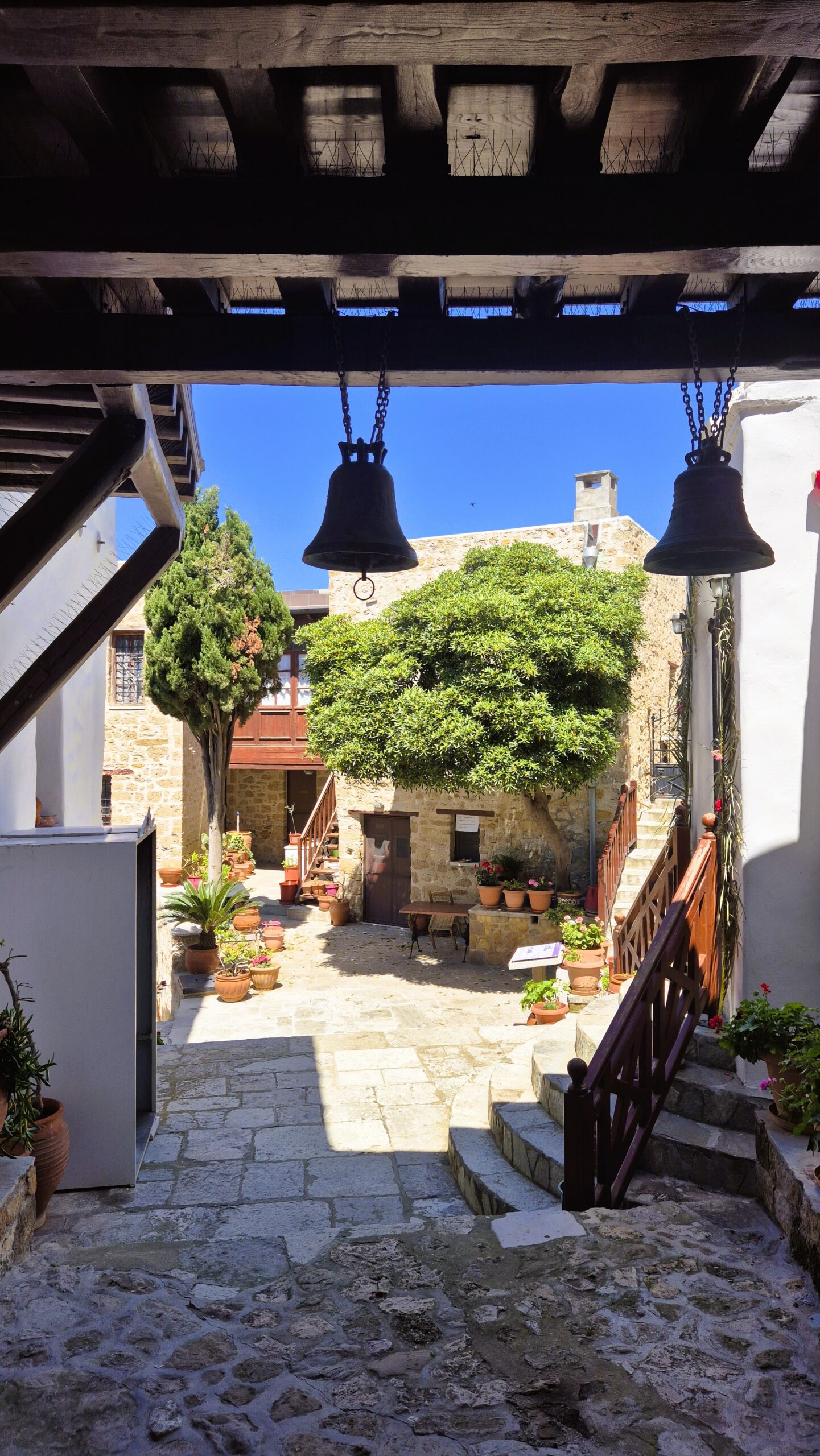
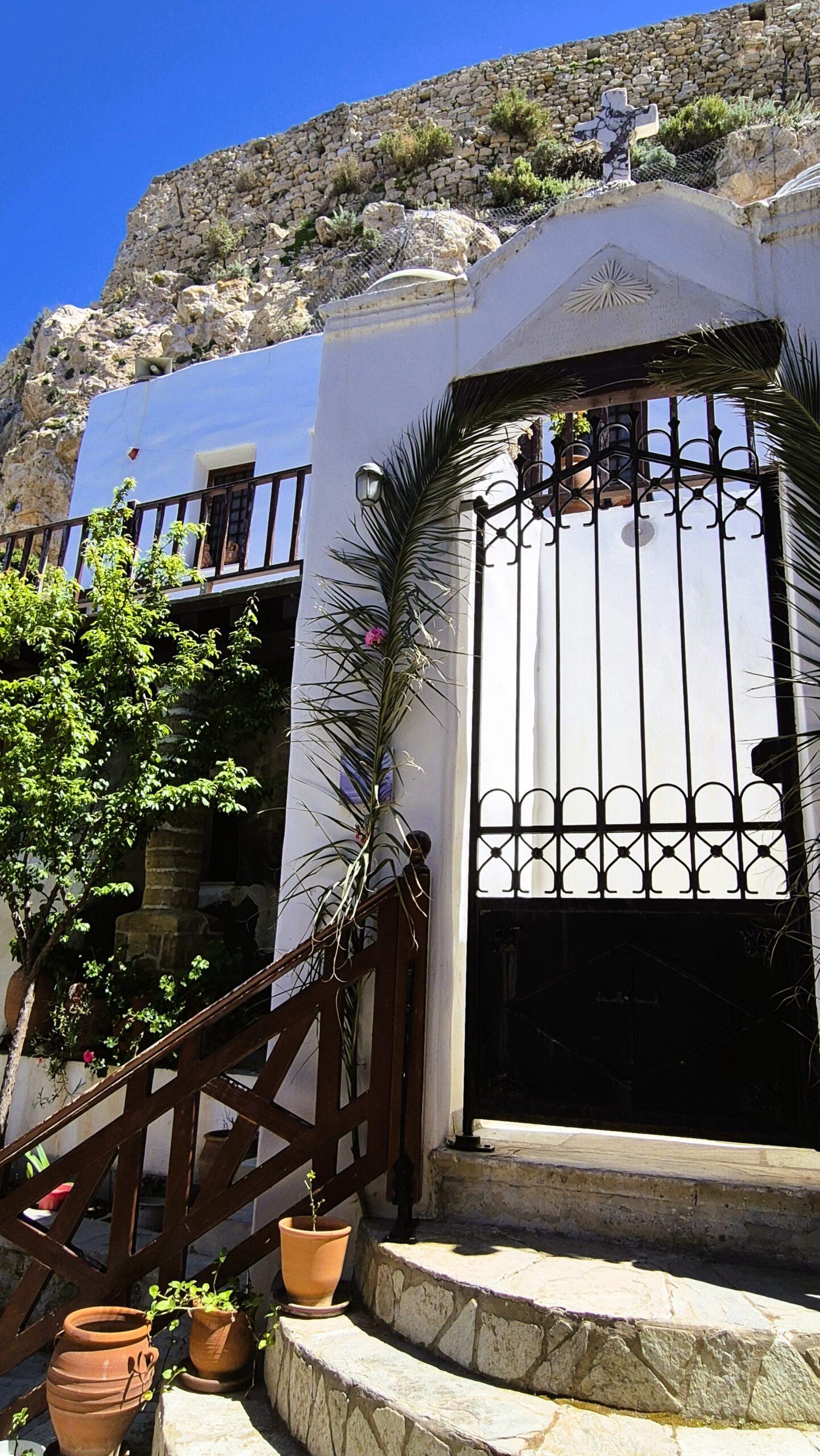
Beyond the panoramic vistas, the summit holds the island’s spiritual heart. Nestled within the medieval fortress walls is the historic monastery dedicated to Skyros’ patron saint. While the original foundation dates back to 960 AD under Nikephoros Phokas, a marble inscription on the bell tower indicates that the present church dates to 1600.
From the 15th century onward, the monastery gained renown throughout Greece, and it was the reason Venetian documents and maps referred to Skyros as Isola San Giorgio, meaning the island of Saint George. In addition to two important icons of the patron saint of Skyros and the 18th-century frescoes in the katholikon, the castle monastery holds an unexpected surprise for the faithful: the gold Olympic medal of Spyridon Louis, which the great athlete offered as a votive gift.
06
Savoring Traditional Pies and Bougatsa for Breakfast
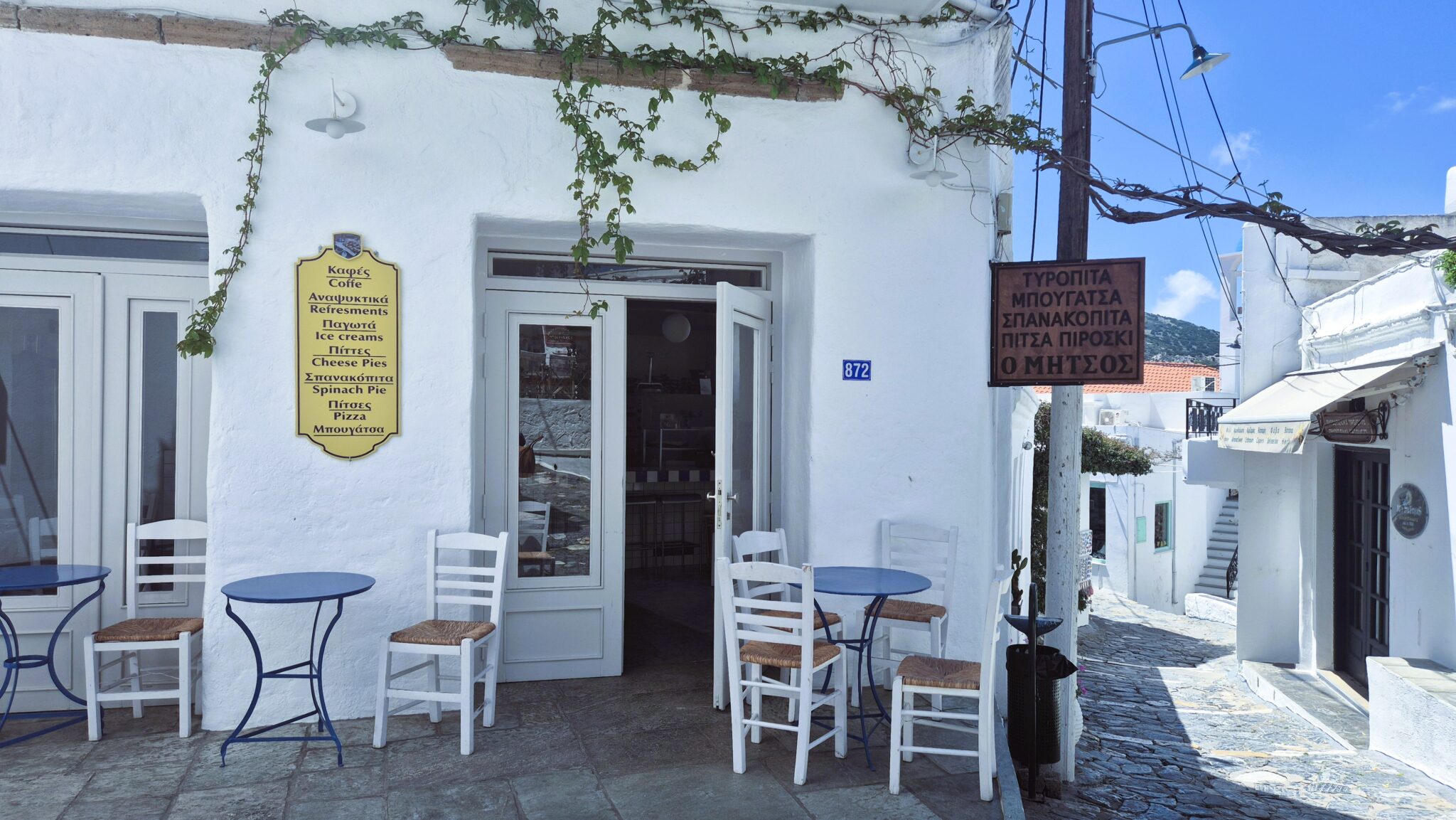
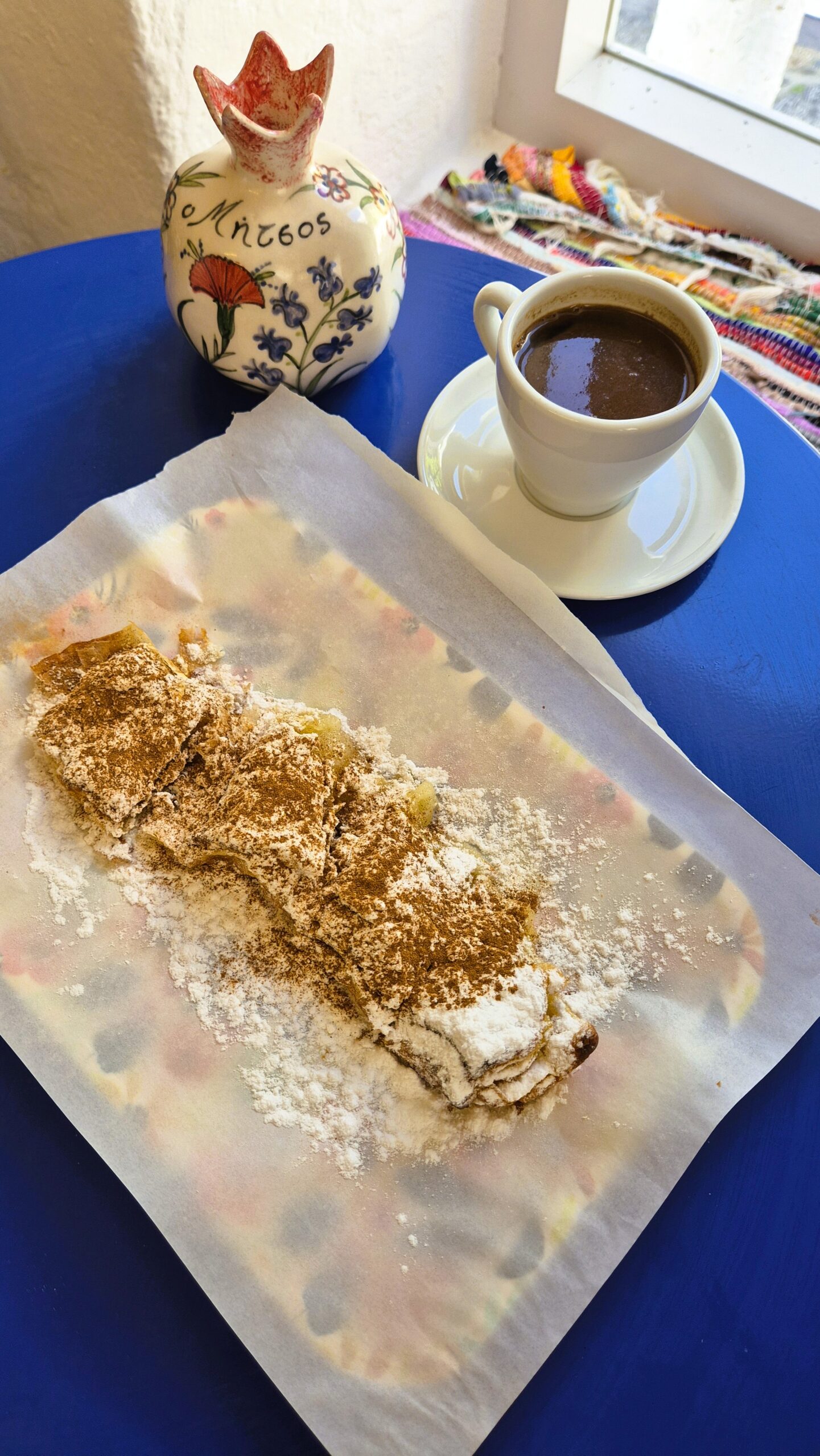
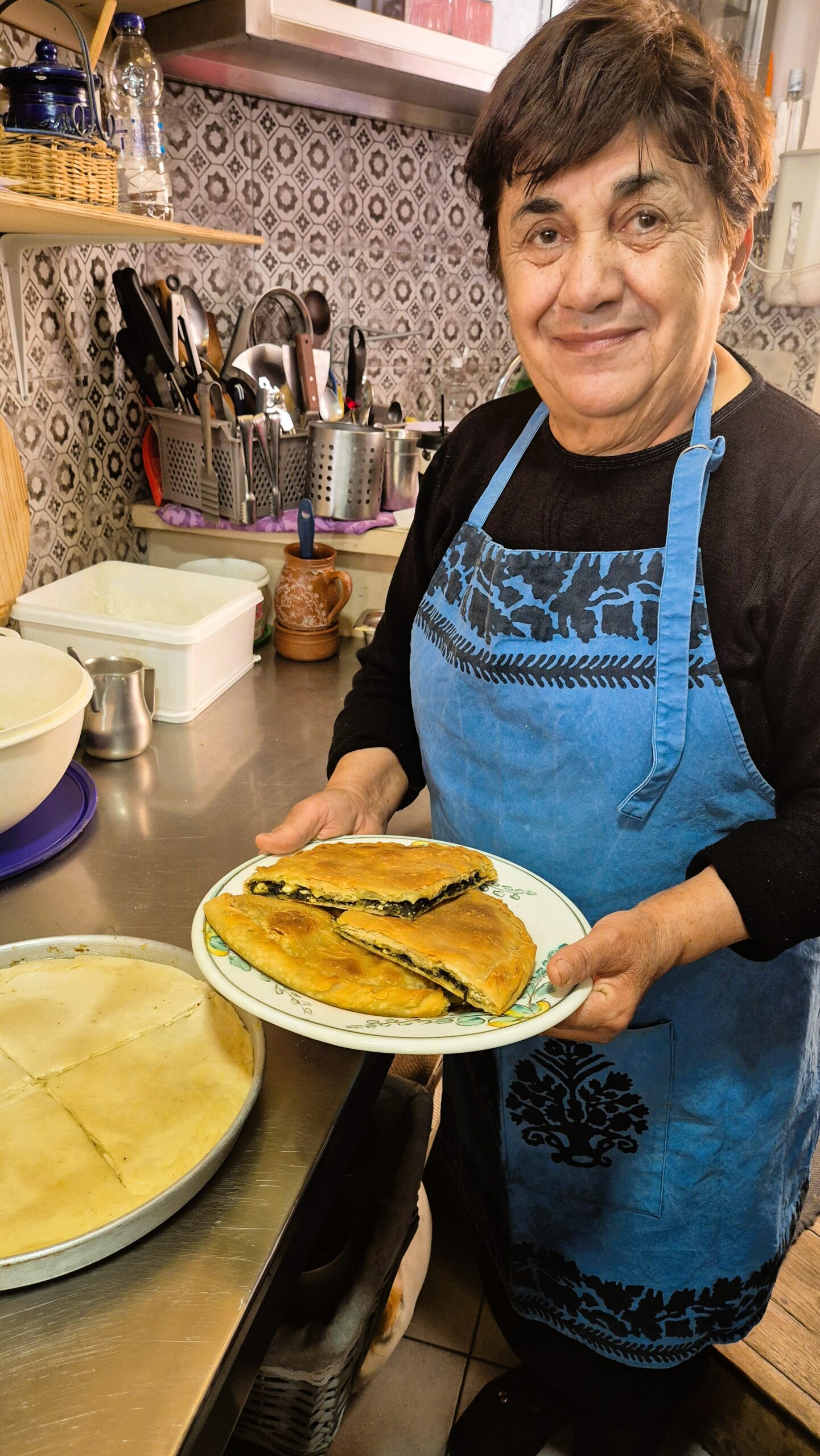
Descending back into the village, the physical exertion of the climb provides the perfect justification for indulging in the town’s morning rituals. Here, traditional recipes have been preserved in family notebooks for generations, honored daily by local cooks who rely on pristine island ingredients.
The day must begin with Skyrian pie. On one hand, the corner bougatsa shop Mitsos tempts every passerby with the aromas of butter and cinnamon spilling into the surrounding lanes. For Skyrians it is an open secret, while visitors are surprised by Mrs Kali’s freshly baked bougatsa at Mitsos, which are rich in cream. She has been at work since 1975, when her husband opened the island’s first pie workshop so locals would have something delicious to accompany their coffee.
Also essential are the handmade pies of Kyria Maria, opposite the main square. The shop has been a point of reference for 26 years, drawing loyal customers who form lines from early morning and visitors who have learned where to find the island’s most delicious pies. In charge of the workshop is Mrs Maria Ftouli Mavriki, a master at rolling phyllo, who turns tradition and craft into savory baked goods every day.
Come early and be certain to try everyone’s favorite marmarita, a distinctive pumpkin pie made with red pumpkin, mizithra, plenty of sautéed onion, and dried mint. Also try the onion pie, whose secret ingredient is lamb caul fat, and her own version of Skyrian ladopita with cheese filling.
07
Enjoying Meze and Grilled Meats at Local Cafés and Tavernas
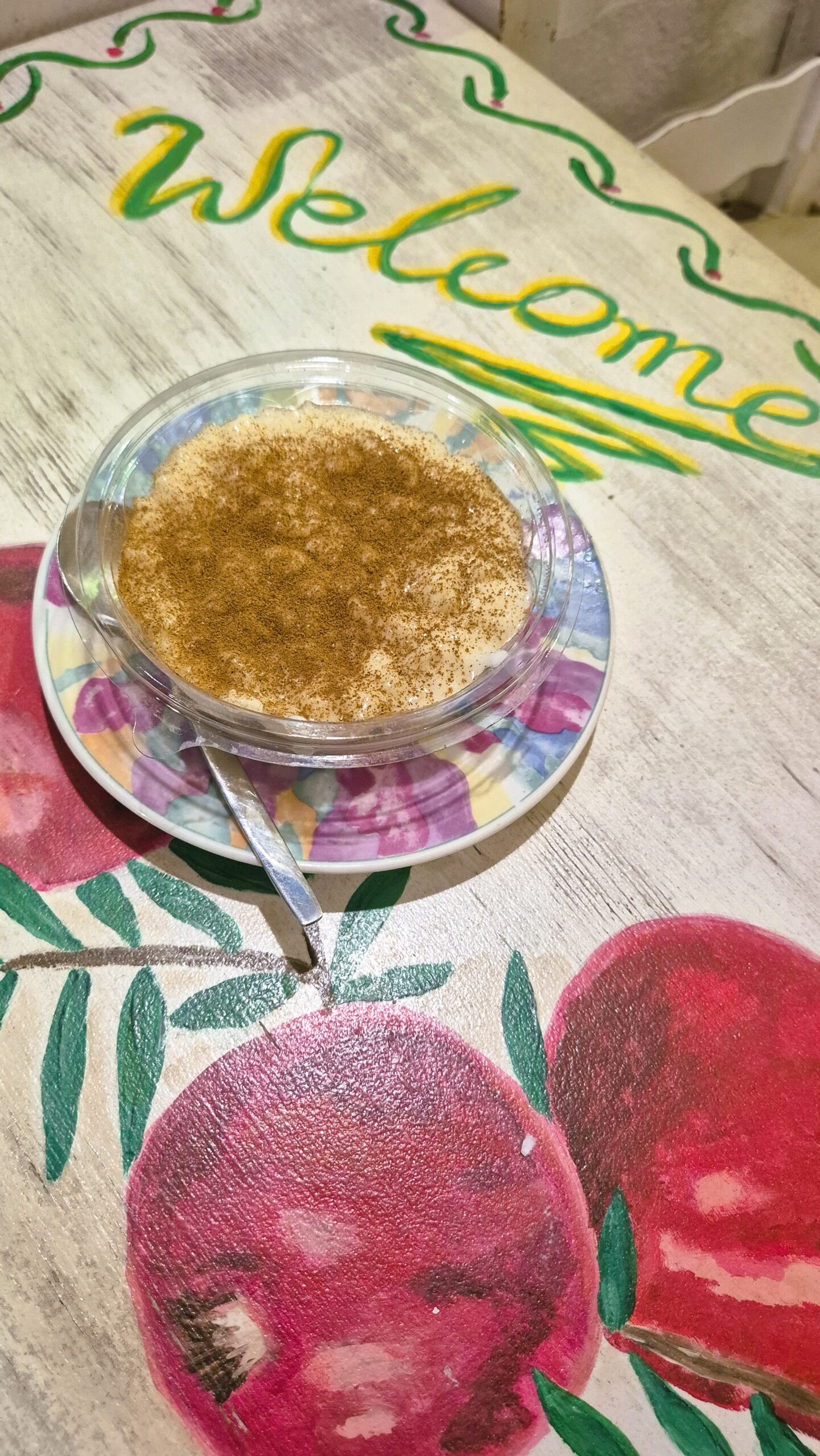
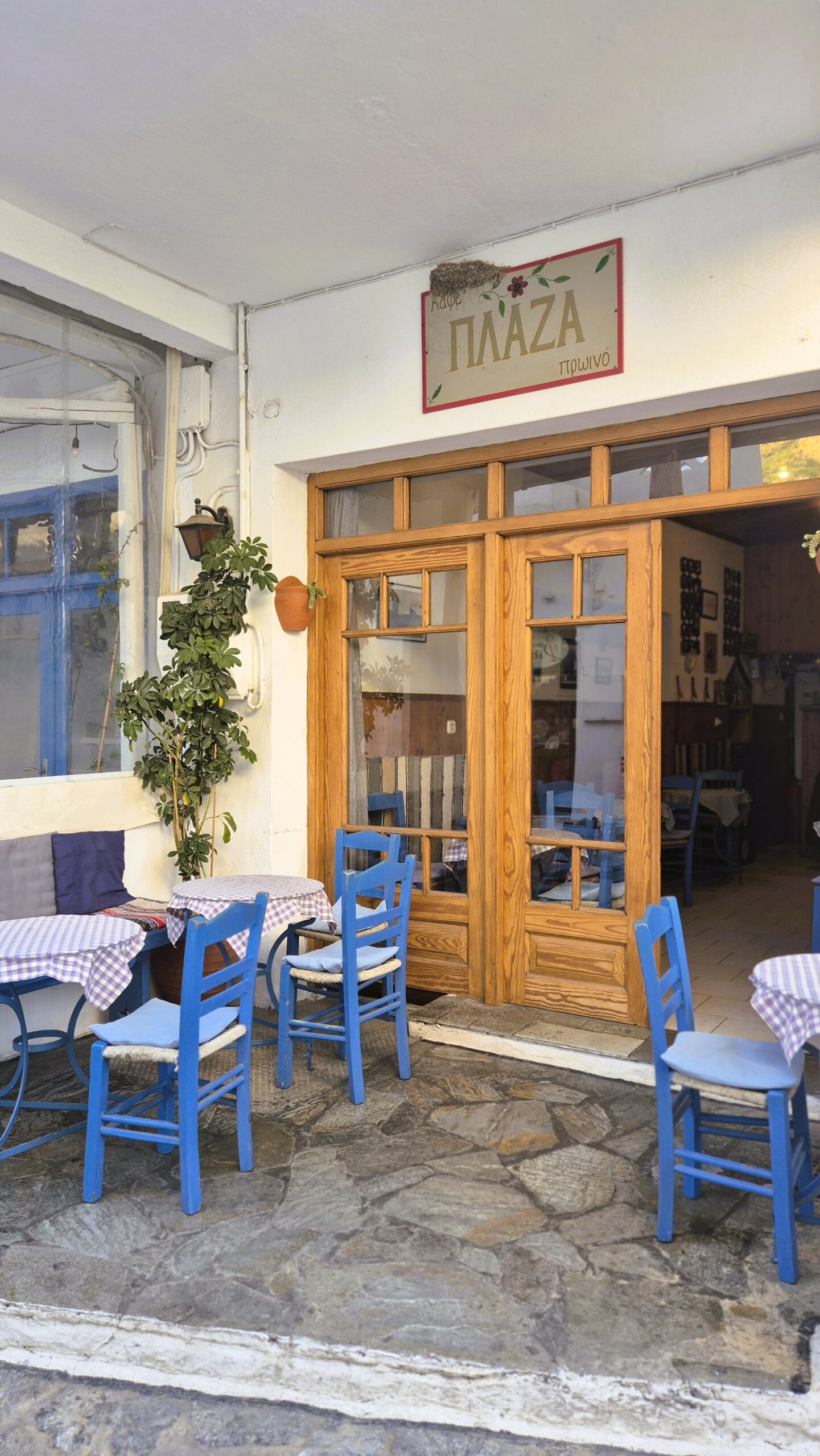
The culinary journey continues as afternoon transitions to evening and the town’s small squares fill with tables. At Plaza café, the day’s simple pleasures include freshly fried ladopita paired with sharp xinotyri, while down the street at Goniako café, which can be recognized by the straw hats hanging beneath the painted tables on the pedestrian street, dishes range from cooked food made with seasonal vegetables from their own garden to tasty meat plates. Its homemade rice pudding can easily be eaten at any hour of the day.
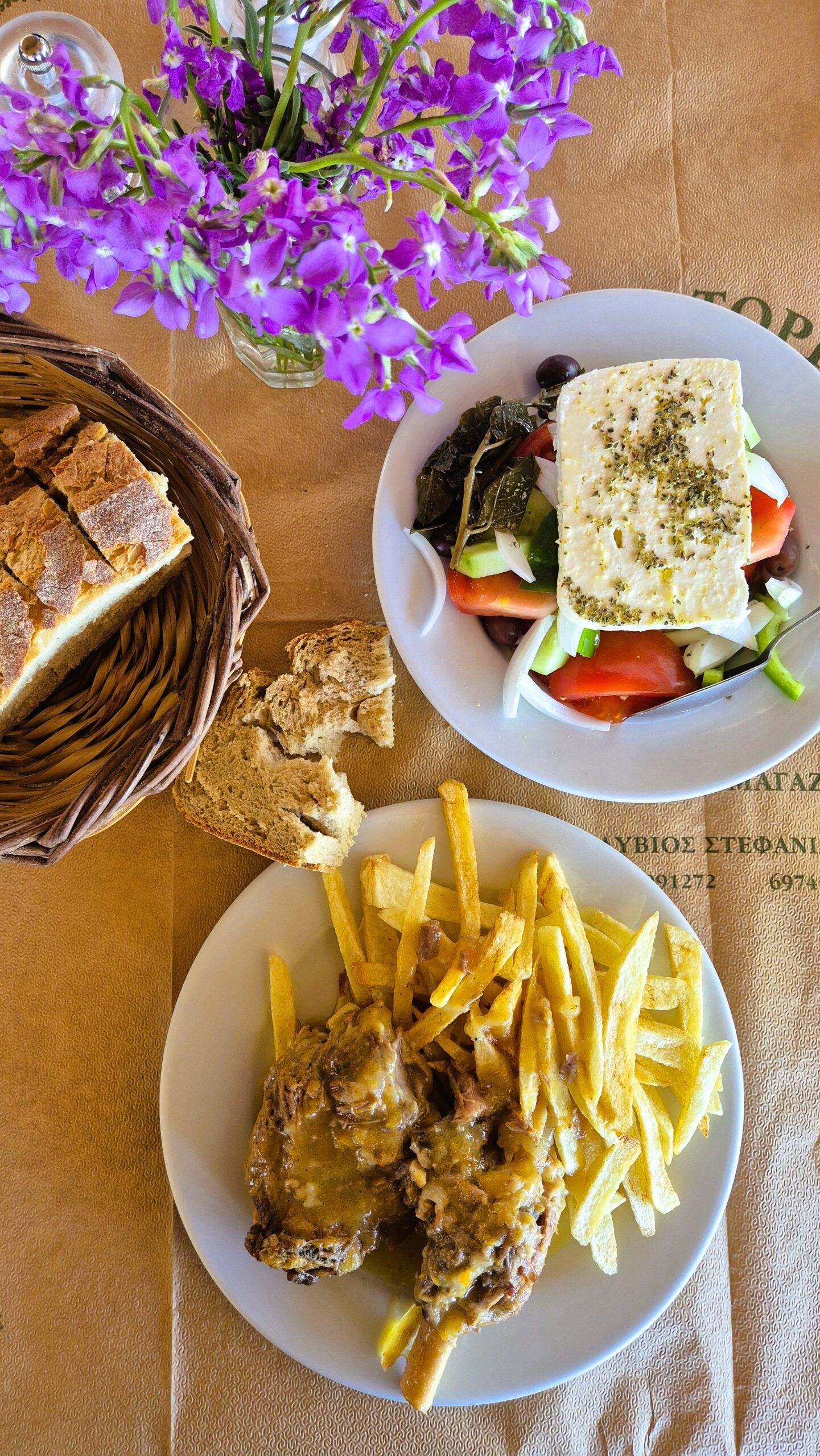
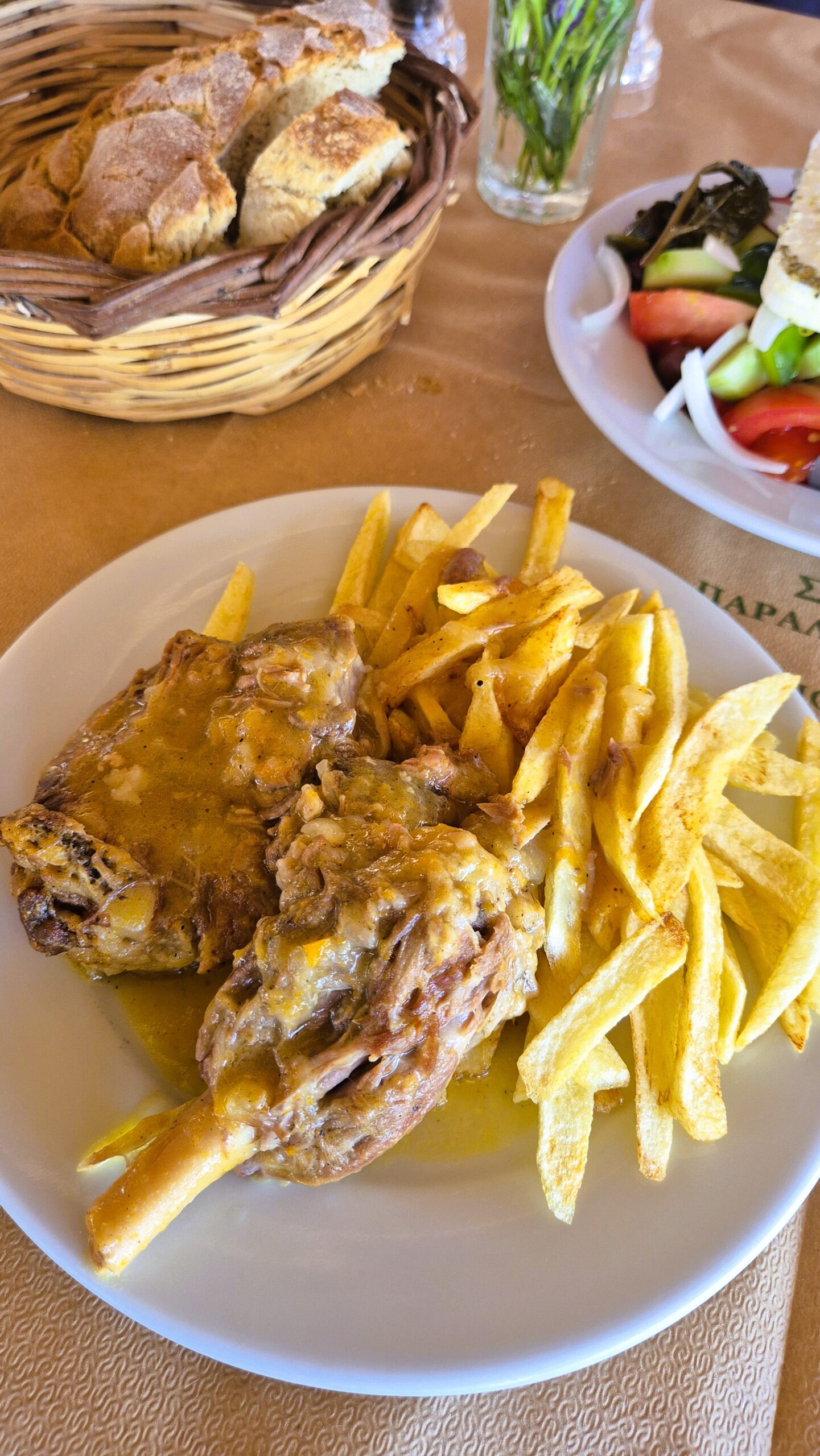
Excellent charcoal-grilled meats are served at Margetis in the evenings, while local fresh fish is also available depending on the weather. It would be an omission not to devote one meal to the terrace of Stefanos taverna, overlooking Magazia beach.
With the third generation now running the kitchen first started by grandfather Polyvios, the seaside tables have been consistently full since Carnival season, when the taverna opens for lunch and dinner. Lobsters appear on platters of generous lobster pasta, one of the culinary signatures of Skyros, along with red mullet, groupers, saddled seabream, scorpionfish soup, and Skyrian goat with honey.
Honey is a local star. The aromas of the Skyrian countryside, especially thyme, the island’s most widespread herb, can be taken home in the excellent Skyros honey produced by Melissonas Fergadis.
At the elegant grocery store in the heart of the Town, the fourth generation of a family of dedicated beekeepers continues a tradition of 86 years. In addition to thyme honey, they produce heather honey, pine honey, honeycomb, pollen, handmade pasteli, jams in which part of the sugar is replaced with honey, and traditional beeswax balm made with pure beeswax and organic virgin olive oil.
08
Indulging in Award-Winning Amygdalota and Spoon Sweets
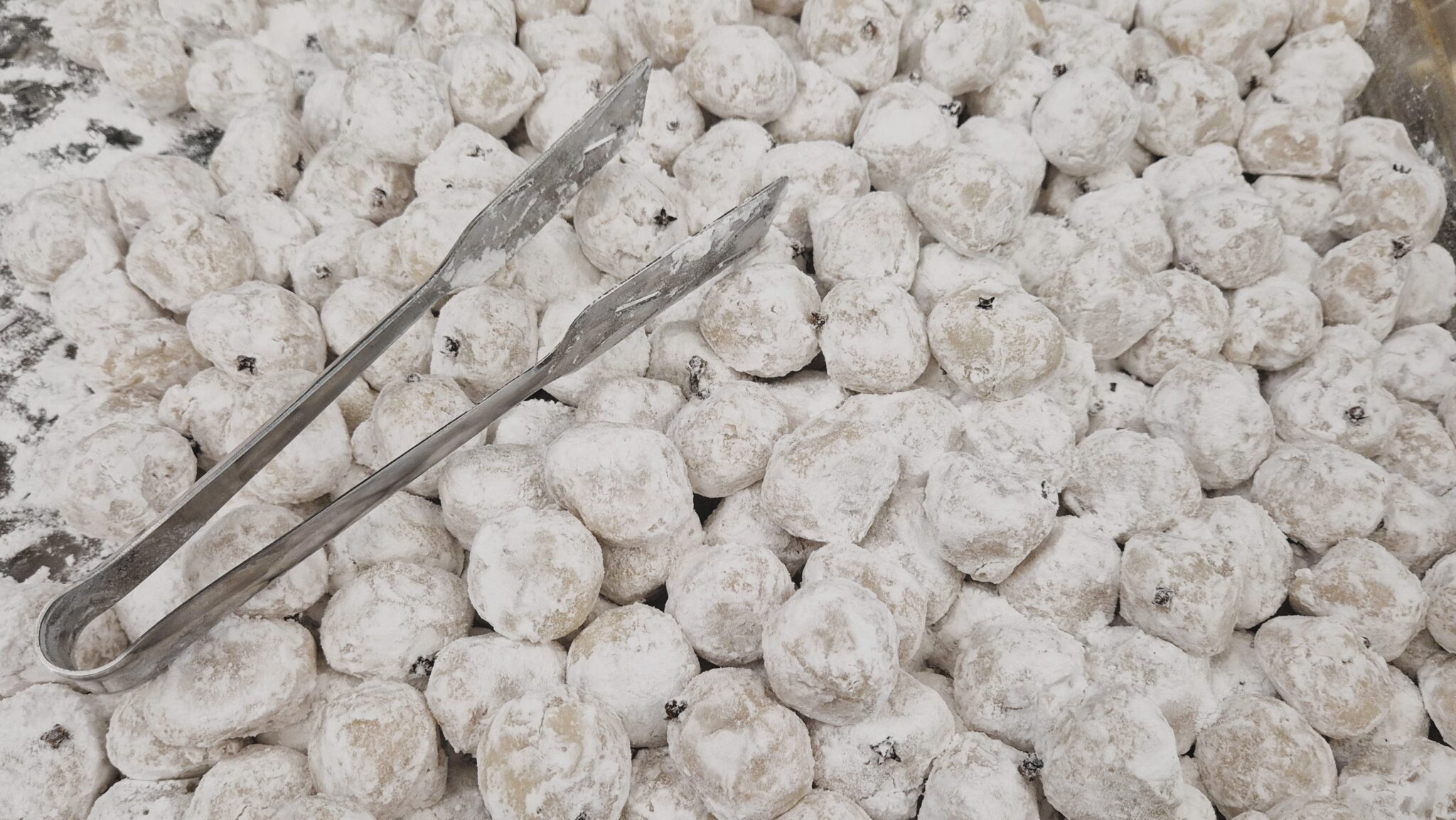
No exploration of the town’s culinary landscape is complete without a stop dedicated entirely to its sweet legacy. The undisputed destination for this is Ta Glyka tis Faltainas, a beloved confectionery whose reputation has traveled far beyond the island’s shores thanks to its award-winning amygdalota.
Made from an exclusive family recipe, with a filling of thyme honey and walnut, and with clove adding extra aroma to each snowy white ball, they have received enthusiastic praise from distinguished Greek chefs and won first place unanimously in a gastronomic competition for Evia and Skyros.
They can be enjoyed while walking through the lanes as a sweet, wholesome snack, or as ice cream, one of the pure homemade flavors prepared daily in the family workshop outside the Town. They also make an ideal edible souvenir or gift. Do not overlook the 38 varieties of spoon sweets, among them sour cherry with Amaretto, watermelon, olive, tsapela, and lemon blossom. The last disappears as soon as it reaches the shelves.
09
Discovering the Living Tradition of Skyrian Ceramic Art
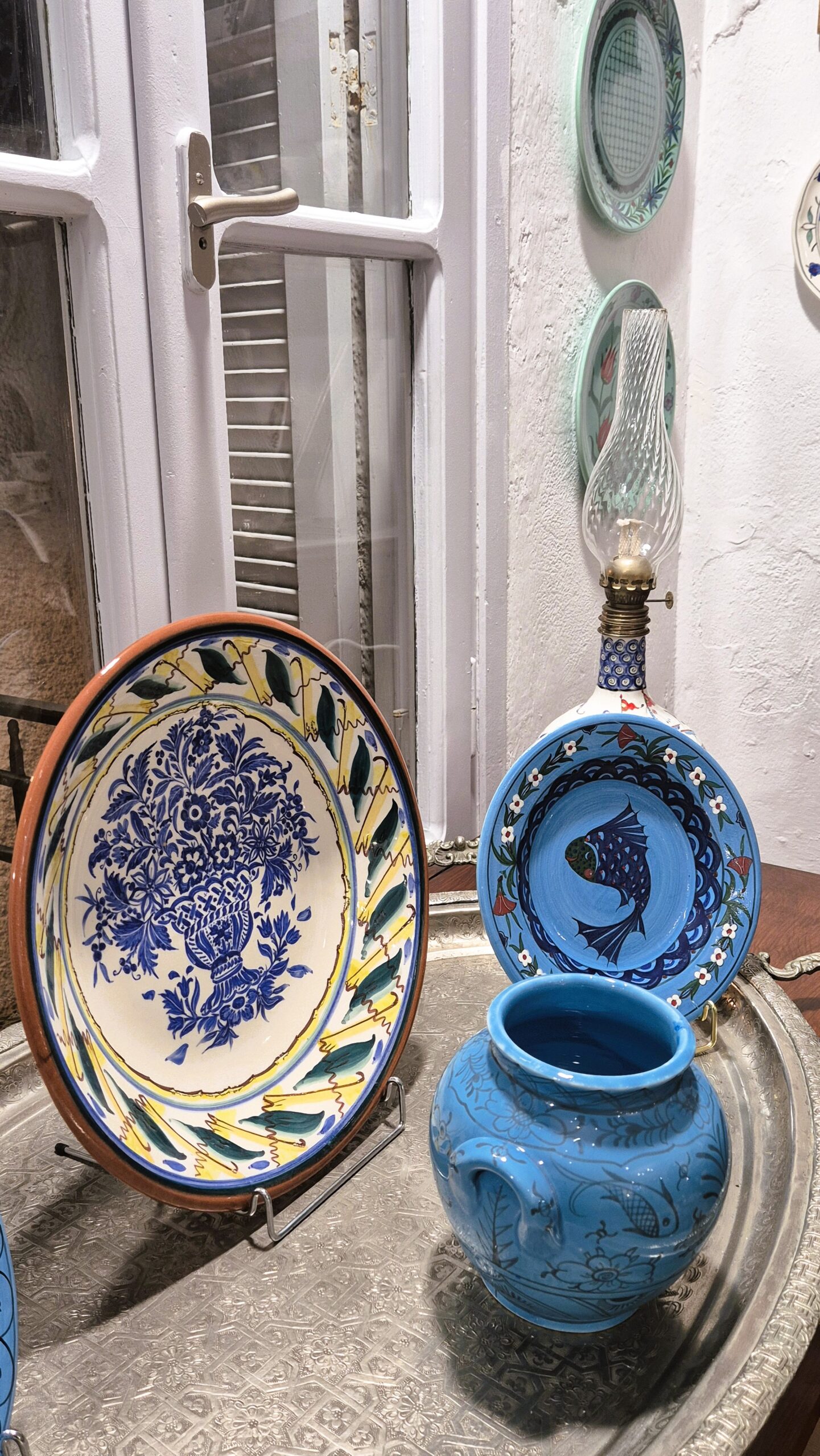
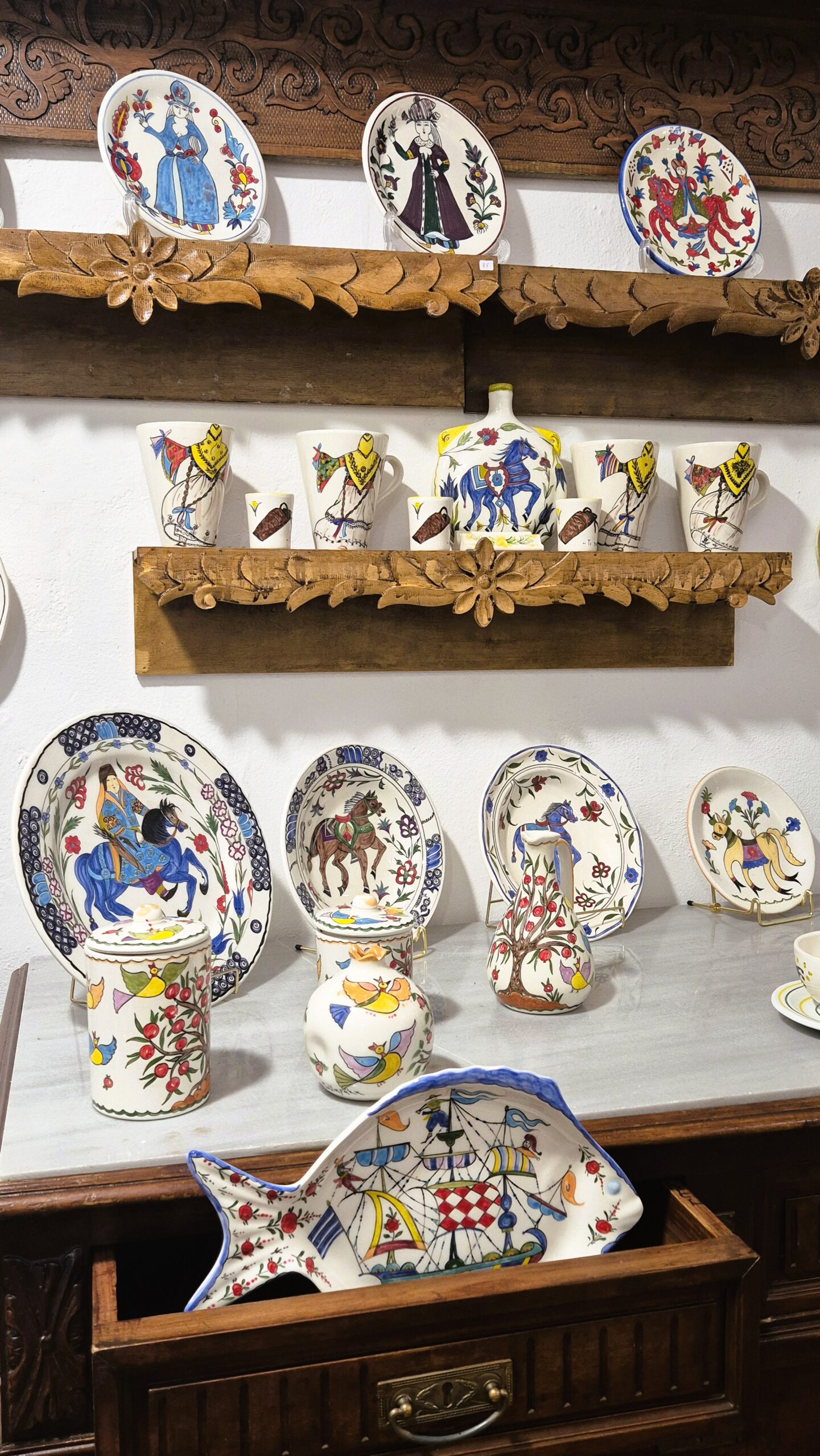
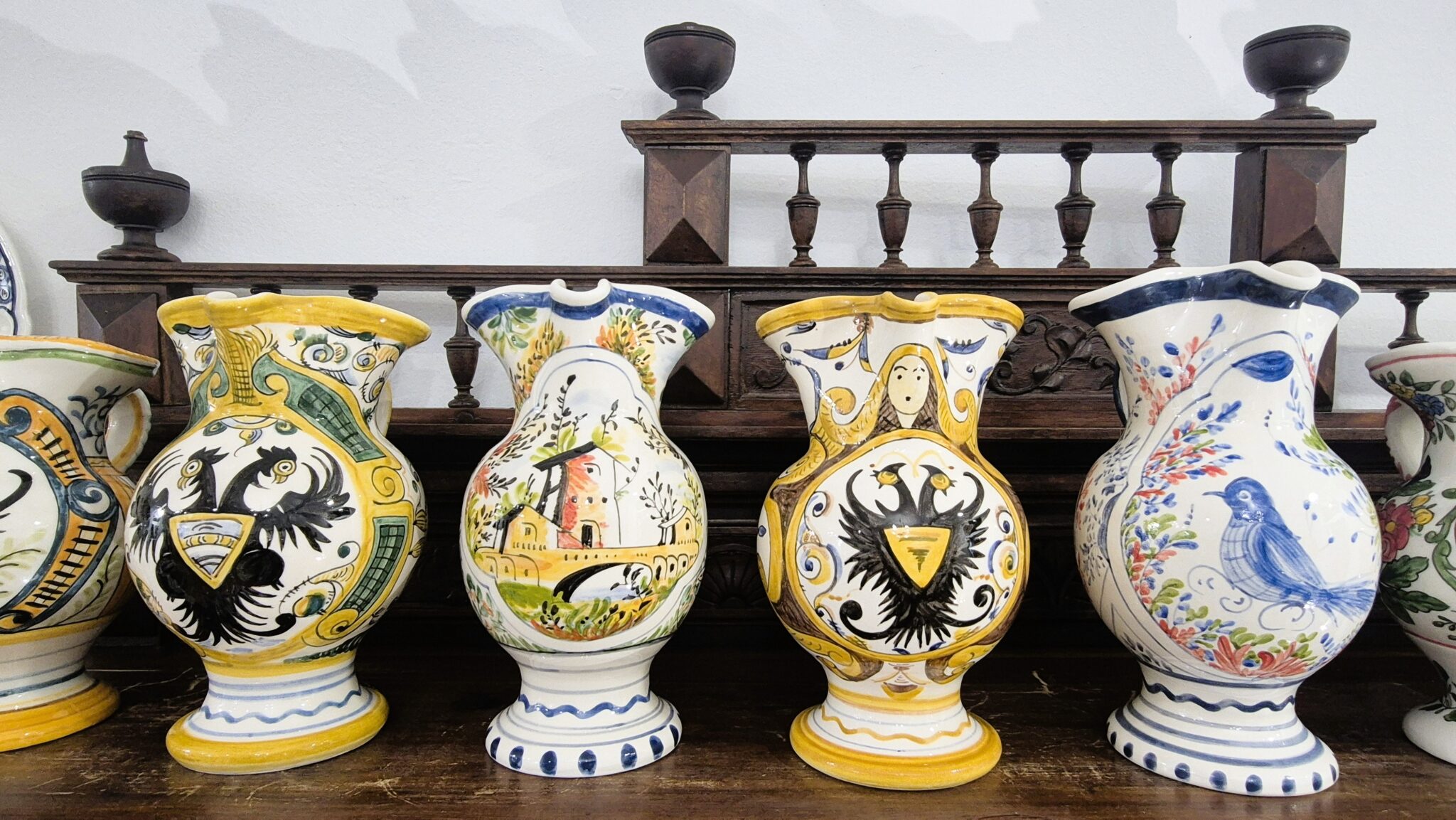
To step inside a Skyrian home is to realize that art here is entirely domestic. Every household takes immense pride in its ceramics, displaying them prominently on carved wooden shelves and using them in daily life. This living heritage is kept alive on Megali Strata by two deeply devoted artisans who display their creations in open dialogue with the present. The shop windows where they display
The shop windows where they display their ceramic creations on Megali Strata are certain to attract attention. It is worth going inside to enter a world where tradition remains in open dialogue with the present, filled with distinctive motifs, colors, and forms, where every object tells its own story.
Above all, it is worth meeting the makers themselves and listening to them speak about the roots of Skyrian ceramic art, which stretch far back through the centuries.
Olga Zacharaki, who has deep knowledge of the island’s folklore and has published particularly interesting books on the subject, creates handmade ceramics together with her son Michalis. Their works are faithful copies of old designs dating from the 15th century onward.
He shapes the clay, preparing deep and shallow platters, traditional household vessels, pitchers, utilitarian and decorative objects. In his mother’s hands, these become true ornaments for any interior. She dedicates hours, sometimes days, to painting each one. From the first moment, it is clear that she has devoted her life to ceramics and the study of folklore.
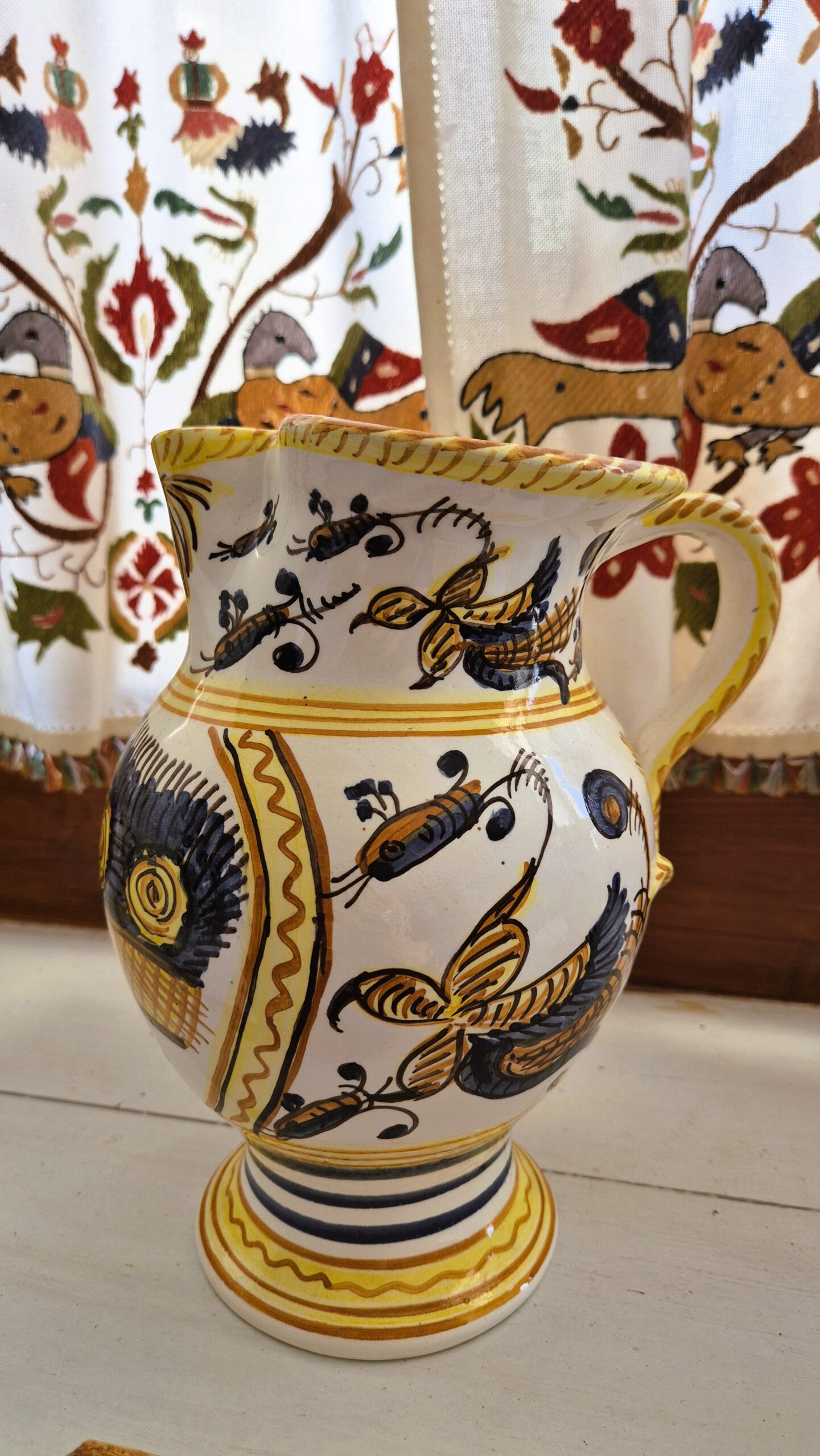
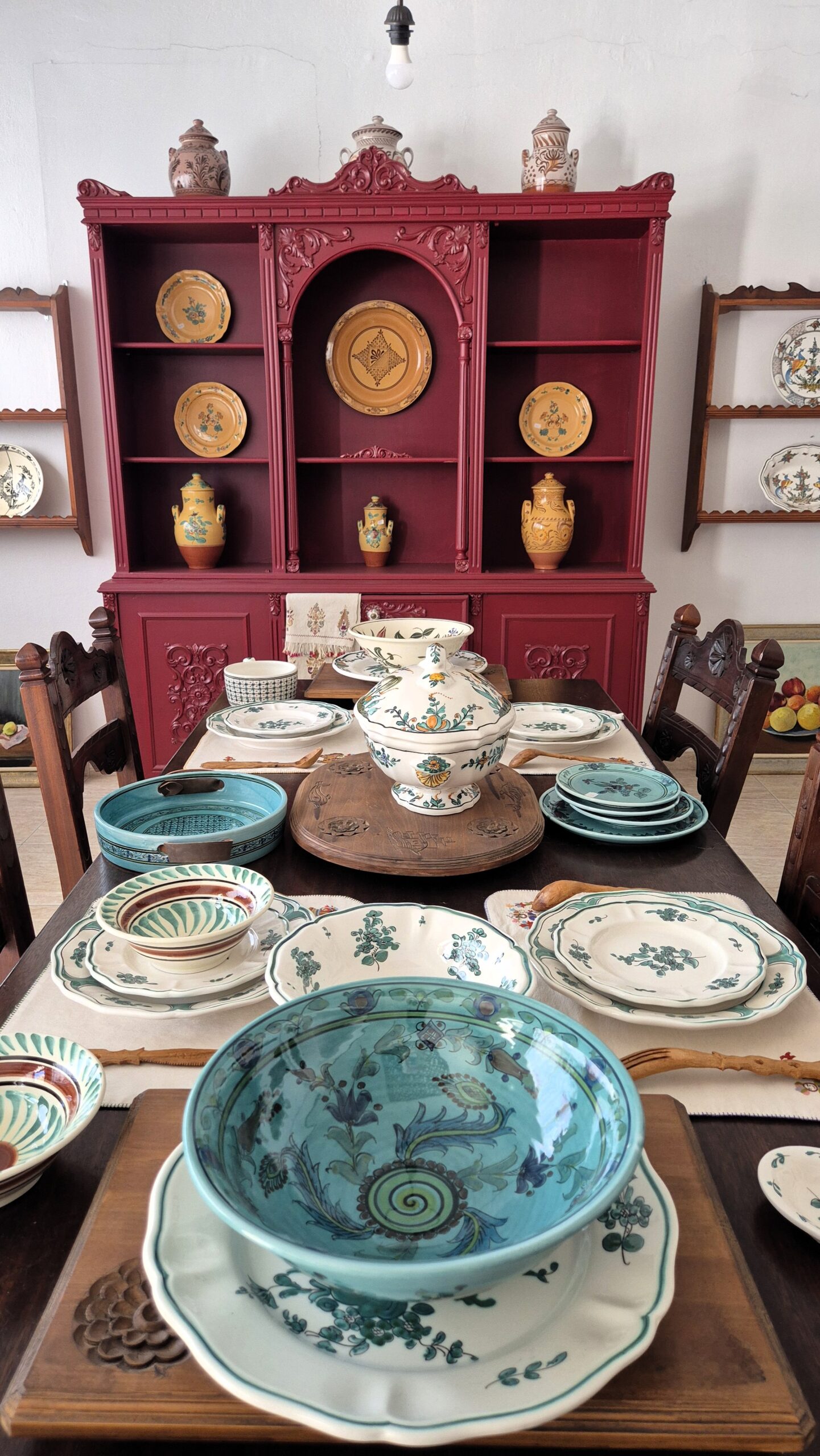
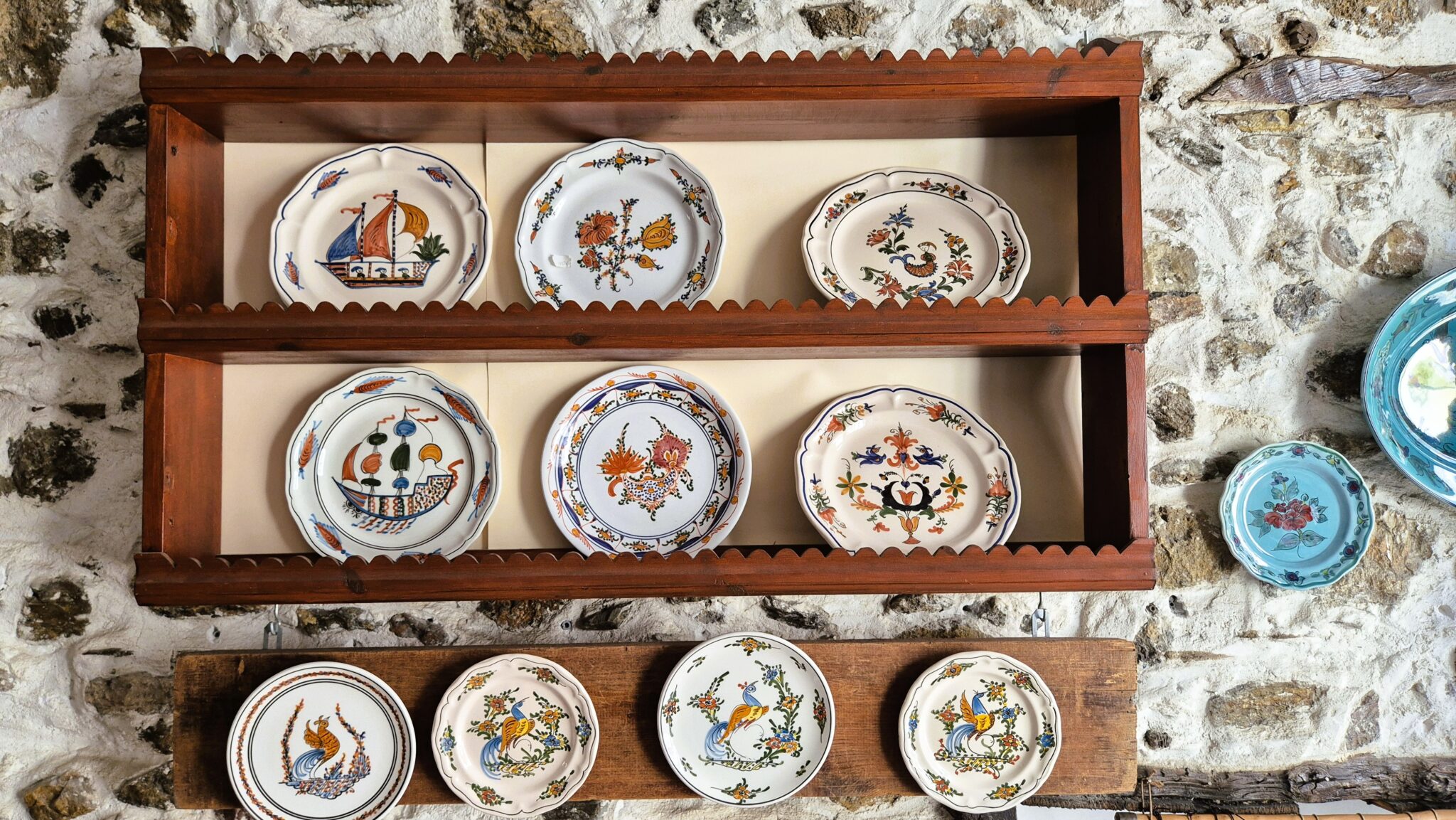
Equally dedicated, Yiannis Ftoulis does not hide his enthusiasm when he speaks about his own handmade pieces, mostly traditional designs, along with his own creations that play with lines and two-color compositions.
Continuing the art of his father, Stamatis, and with the Aegean shimmering through the window of his workshop in Magazia, he takes up his brushes and paints ceramics made either by himself or by his collaborators. The designs capture the identity of his place, an island where authenticity and folk tradition remain non-negotiable.
Photography by Arietta Pouliou
Skyros Town Directory — Places & Businesses
A curated resource of cultural landmarks, bakeries, tavernas, and local artisans mentioned in this story.
🏛️ Cultural & Historical Landmarks
• The Byzantine Castle (Kastro)
Location: Skyros Town (Chora) — crowning the highest point of the village.
Skyros Castle Information
• The Holy Monastery of Saint George
Location: Skyros Town (Chora) — nested within the Byzantine Castle walls.
Monastery of Saint George Guide
• Archaeological Museum of Skyros
Location: Skyros Town (Chora) — near Brooke Square.
Ministry of Culture – Archaeological Museum of Skyros
• Manos Faltaits Historical and Folklore Museum
Location: Skyros Town (Chora) — adjacent to Brooke Square.
Faltaits Museum Official Website
🥐 Bakeries & Sweet Shops
• Mitsos Bougatsa Shop
Location: Skyros Town (Chora) — on the central pedestrian street (Megali Strata).
Bougatsa Instagram
• Traditional Phyllo Workshop “Kyria Maria” (Maria Ftouli Mavriki)
Location: Skyros Town (Chora) — opposite the main square.
Kyria Maria Facebook Page
• Ta Glyka tis Faltaina
Location: Skyros Town (Chora) — central market (Agora) / workshop outside Chora.
Faltainas Pastry Shop Official Website | Faltainas Pastry Shop Facebook
🍽️ Tavernas & Cafés
• Plaza Café
Location: Skyros Town (Chora) — central square.
Plaza Cafe Facebook Page
• Goniako Café
Location: Skyros Town (Chora) — pedestrian street (Megali Strata).
Goniako Cafe Instagram
• Margetis Taverna
Location: Skyros Town (Chora) — pedestrian street (Megali Strata).
Margetis Taverna Facebook Page
• Stefanos Restaurant (Polyvios)
Location: Magazia Beach (coastal settlement directly below Chora).
O Stefanos Restaurant Facebook Page
🍯 Local Artisans & Producers
• Melissonas Fergadis (Fergadis Apiary)
Location: Skyros Town (Chora) — central boutique grocery store.
Melissonas Fergadi Official Website Melissonas Fergadi Facebook Page
• Olga Zacharaki & Michalis (Handmade Ceramics)
Location: Skyros Town (Chora) — Megali Strata.
Olga Zacharaki Ceramics Info
• Yiannis Ftoulis (Handmade Ceramics)
Location: Magazia (workshop) / Skyros Town (Chora – Megali Strata shop).
Yiannis Ftoulis Facebook Page Yiannis Ftoulis Instagram