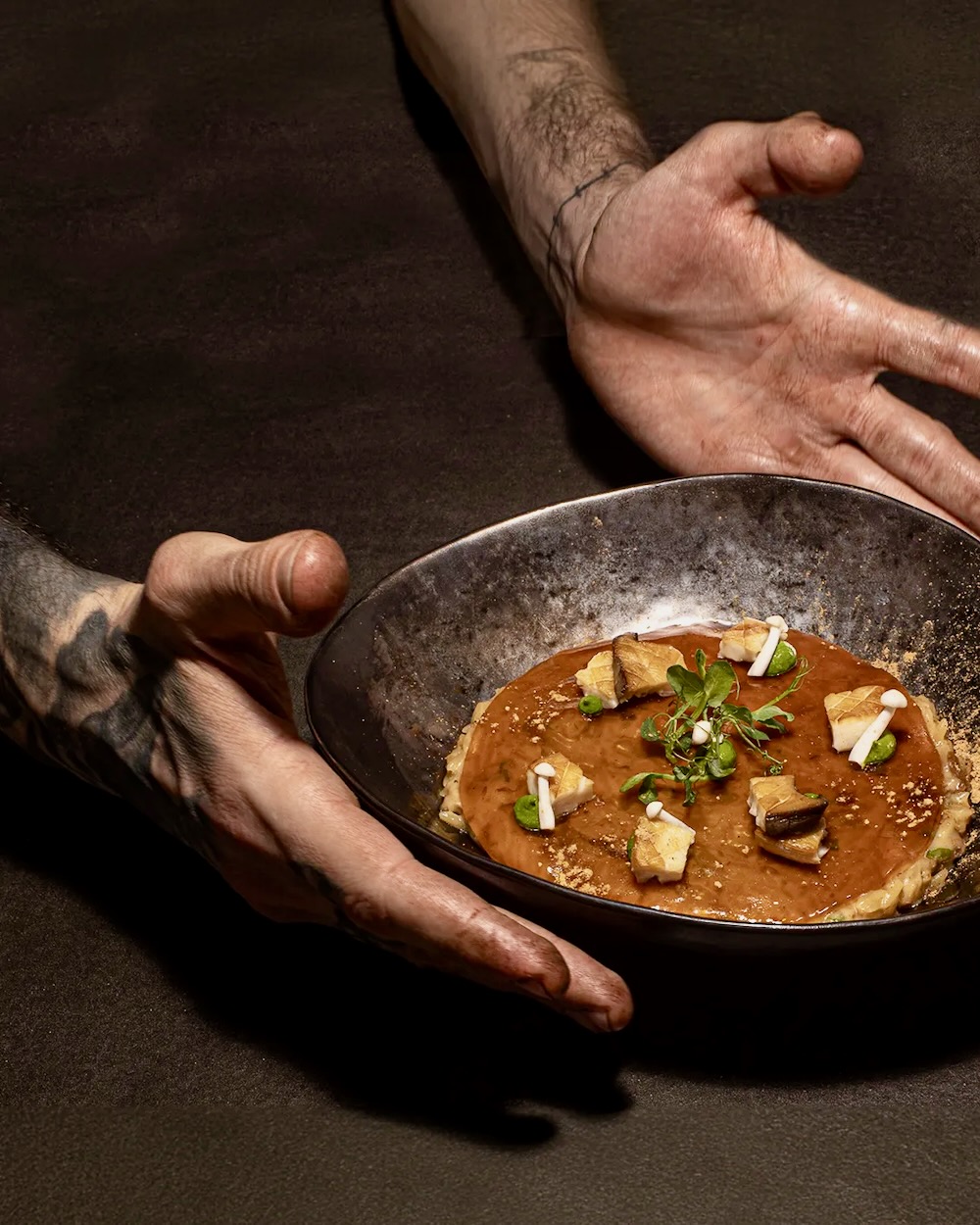



Paros is famous across the world, and for many different reasons. For generations of Greek and foreign travelers, it has been tied to a sense of youth, freedom, and the intoxicating allure of the Cycladic isles. As early as the 1980s, the island offered the full Aegean promise: nature, whitewashed villages, lively lanes, the sea in its most elemental form, ease, and pleasure.
Just before the arrival of the intense summer season, certain moments, places, flavors, smells, and above all people reveal another part of this magnificent island, an aspect that is still authentic and deeply attractive.
A Morning in Prodromos
The rain was heavy, pouring down the windshield of my rented car beneath a dark mass of cloud.
A few minutes later it had quickly passed, and the warm sun evaporated the humidity, creating an atmosphere that was weird and briefly stifling. The ring road of Parikia was already offering a clear preview of traffic and the inevitable congestion to come. Beautiful, hospitable islands may be generous in spirit, but they have limited space for the number of cars that demand to circulate along their roads. At the familiar little grove of pine trees, I turned right toward Naousa, heading for the whitewashed villages beneath the shadow of Agios Antonios. Since a previous visit to the island, I had been harboring an unmet desire: to visit the Tsitsanis taverna in Prodromos.
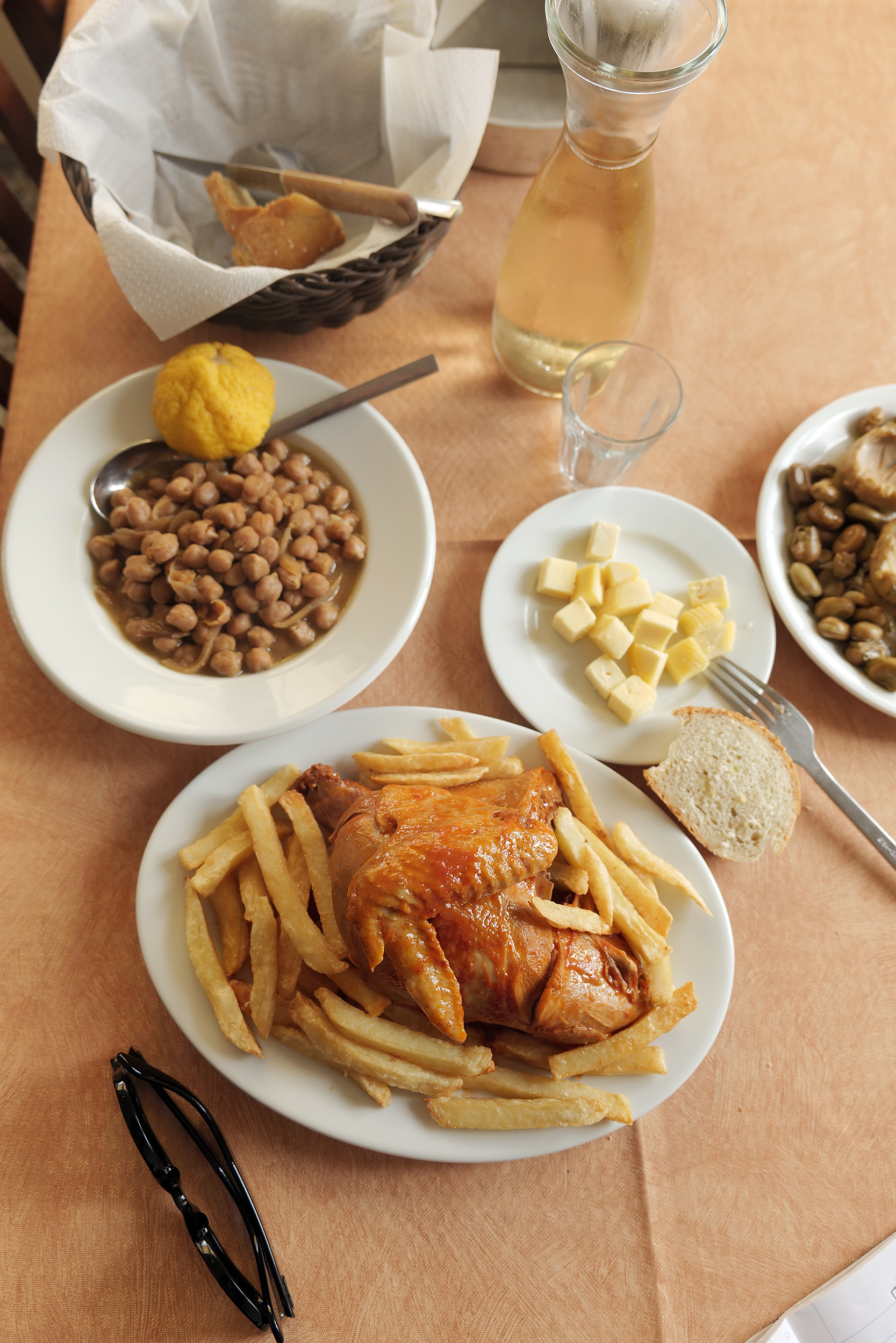
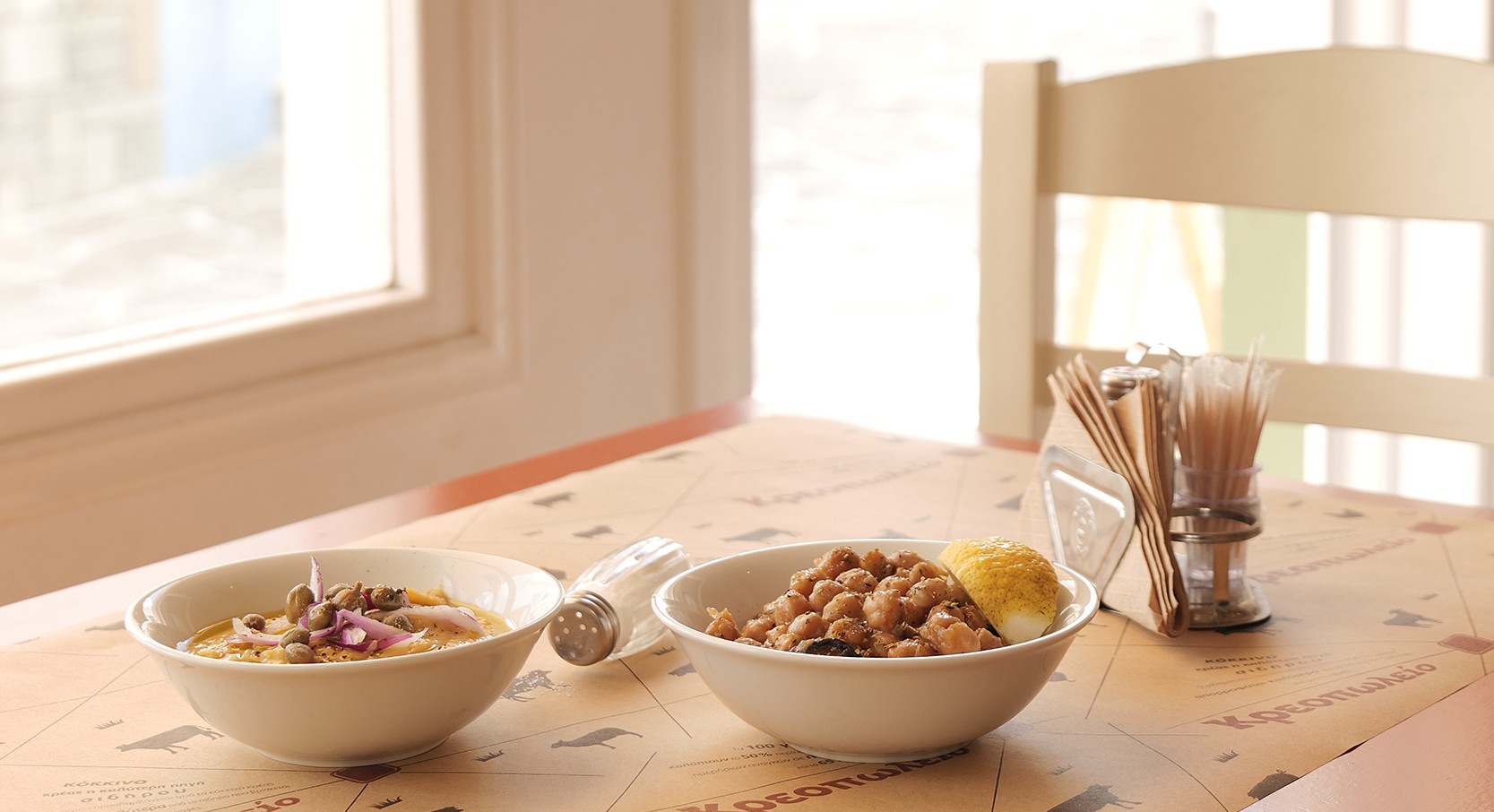
Although it was still early in the morning, well before noon, Vlassis Roussos had no qualms about serving up local Parian kefalotyri, chickpeas, and broad beans with artichokes, which completely immersed me in their flavors, and a portion of rooster in a rich red wine sauce, a traditional recipe executed beautifully.
Tsitsanis is the oldest taverna in eastern Paros, operating since 1969. Vlassis’s father, Ioannis Roussos, opened it originally as a little bit of everything: part grocery, part meze shop. Over the years, it has maintained its local character and has become a reference point for visitors who want to understand the cooking of the area.
The Lute Player of Marmara
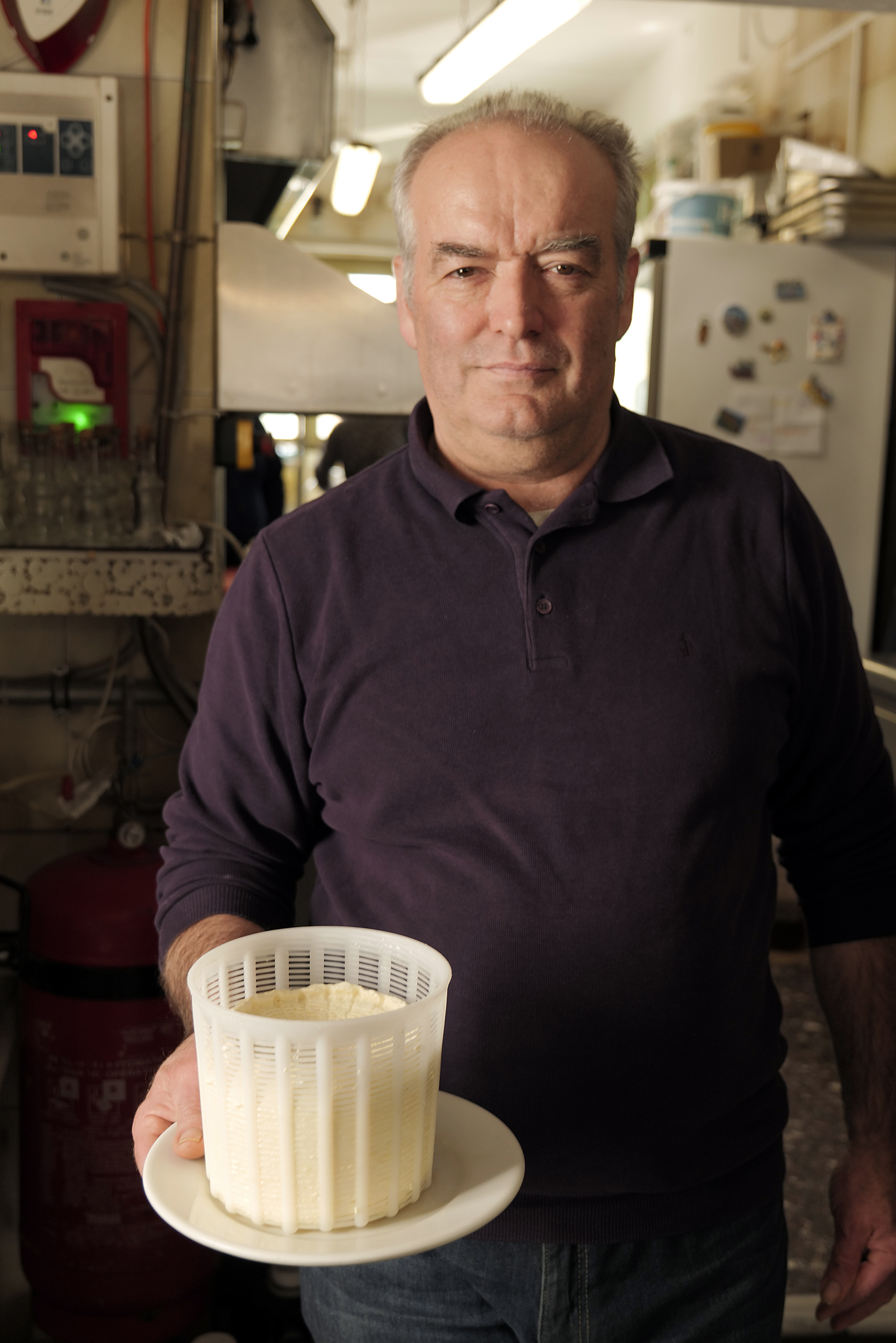
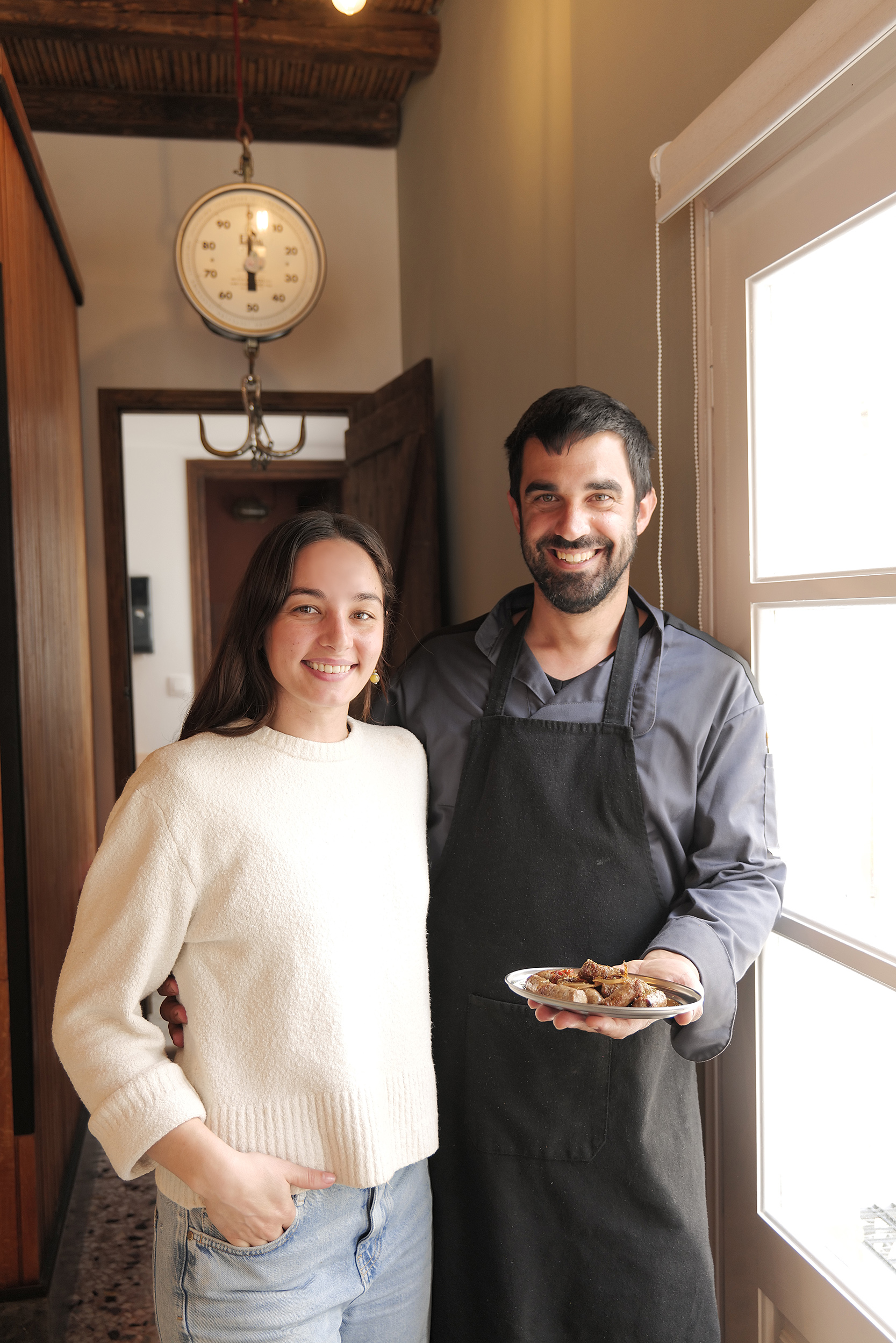
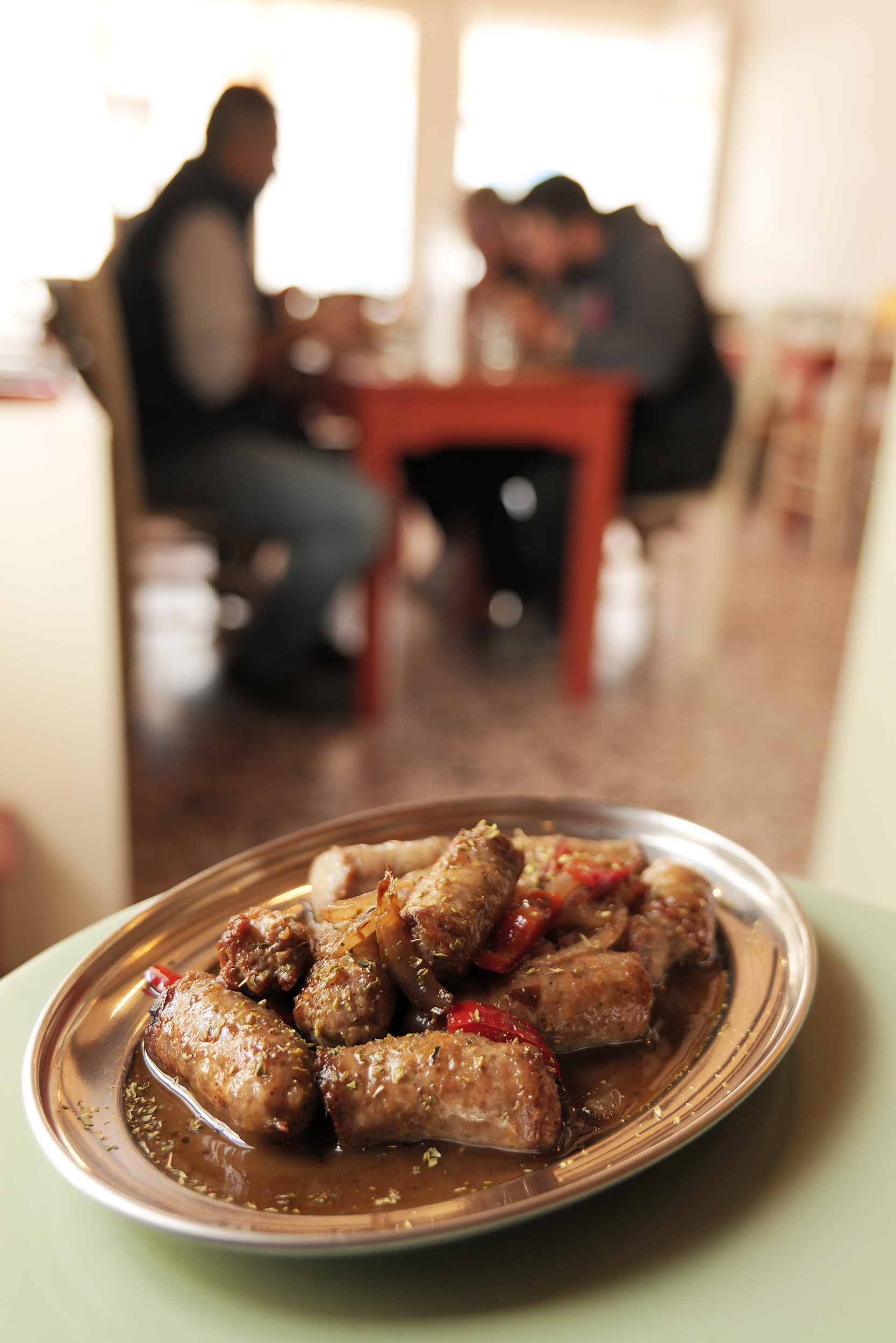
The walk through the white villages on the island’s eastern side continued a few meters farther on, in Marmara. By midday, I was searching through the labyrinthine lanes for Pezoula (not to be confused with the famous pastry shop in Lefkes), for a relatively new meze spot, which opened in its current form in 2025. The large wooden refrigerator behind the counter reveals the premises’ former life as the butcher shop of the family of Fanouris Petropoulos, who now runs the place with his partner, Aimilia Karkoulia. Traditional village elements are presented throughout the space: the ceiling, the wooden shelves filled with products, baskets of fruit, braids of garlic hanging overhead, simple wooden tables, and, of course, the smells escaping from the small kitchen at the back.
Fanouris is a shepherd, farmer, cook, and musician. He plays the laouto, a long-neck fretted instrument of the lute family, and gatherings with friends are one of the defining elements of Pezoula, as well as one of the main reasons it opened. “People had no reason to enter the narrow lanes of the village, so we gave them one,” he told me as he prepared the dishes for my second meal of the day. Aimilia, meanwhile, is from Haidari in Attica, studied architecture in Athens, spent one year gaining professional experience in Barcelona, and worked for four years at a local construction company in Paros. Meeting Fanouris changed everything, and judging by her constant smile, it brought the change she had wanted. We all sat together at the table beside the large front window, enjoying, among other things, a remarkable fava made from Fanouris’s own crop, grown from the Amorgos seed known as katsouni.
High Among the Sheepfolds
During my travels around the Greek islands, I have returned to the traditional habit of reading an up-to-date printed map instead of relying on electronic navigation, an old-school practice that works better for anyone with an appetite for exploration.
More than once, a navigator has read an almost impassable dirt road as the preferred route through places with grazing land, private plots, wire fences protecting animals, eroded uphill tracks, and dead ends. The home of Maro Voulgari, Giannis Loukis, also known by the nickname Fountoukos, and their son Argyris lies in just such a part of Paros, high up among sheepfolds, on the road to the island’s highest point, with views across the sea and toward Antiparos.
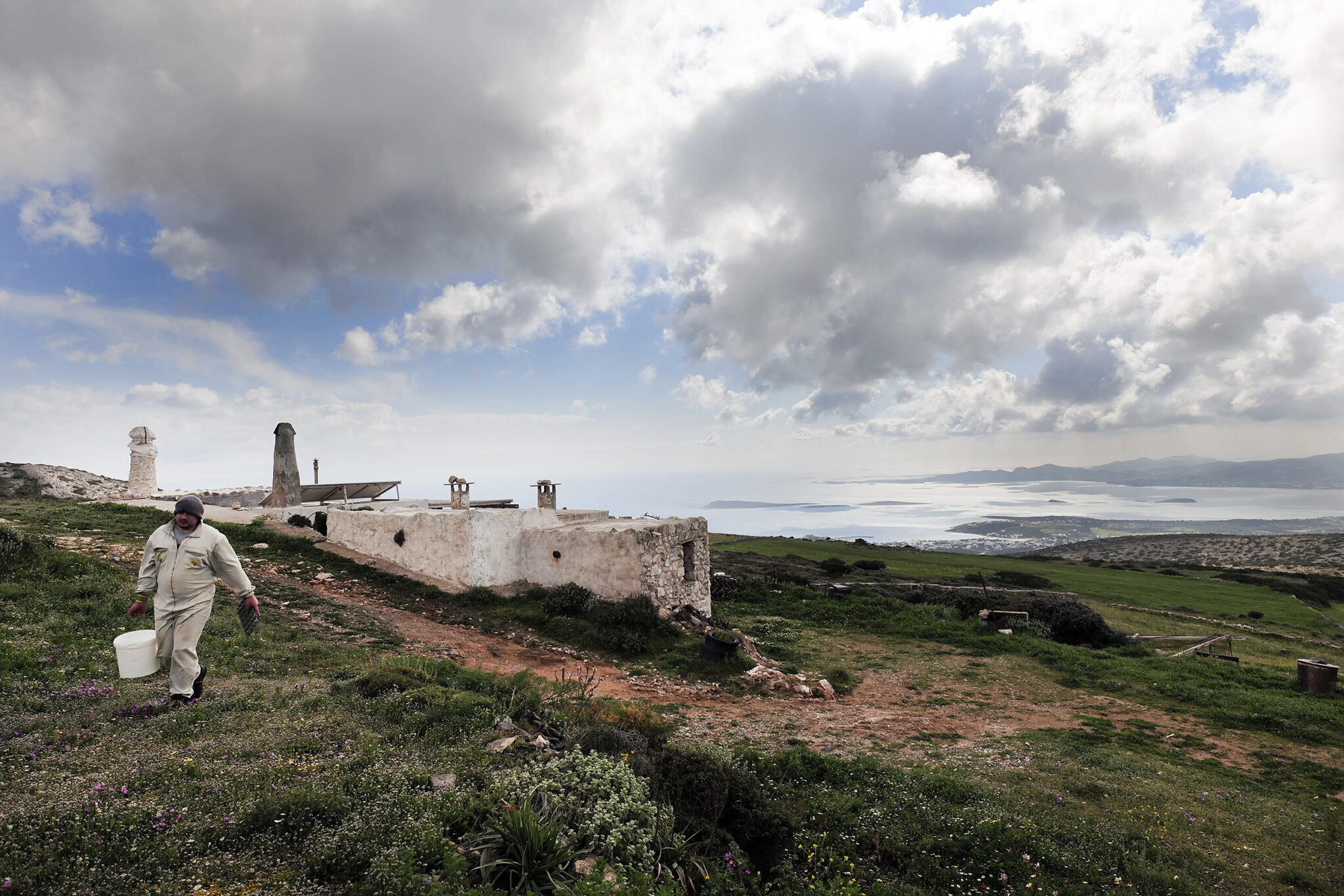
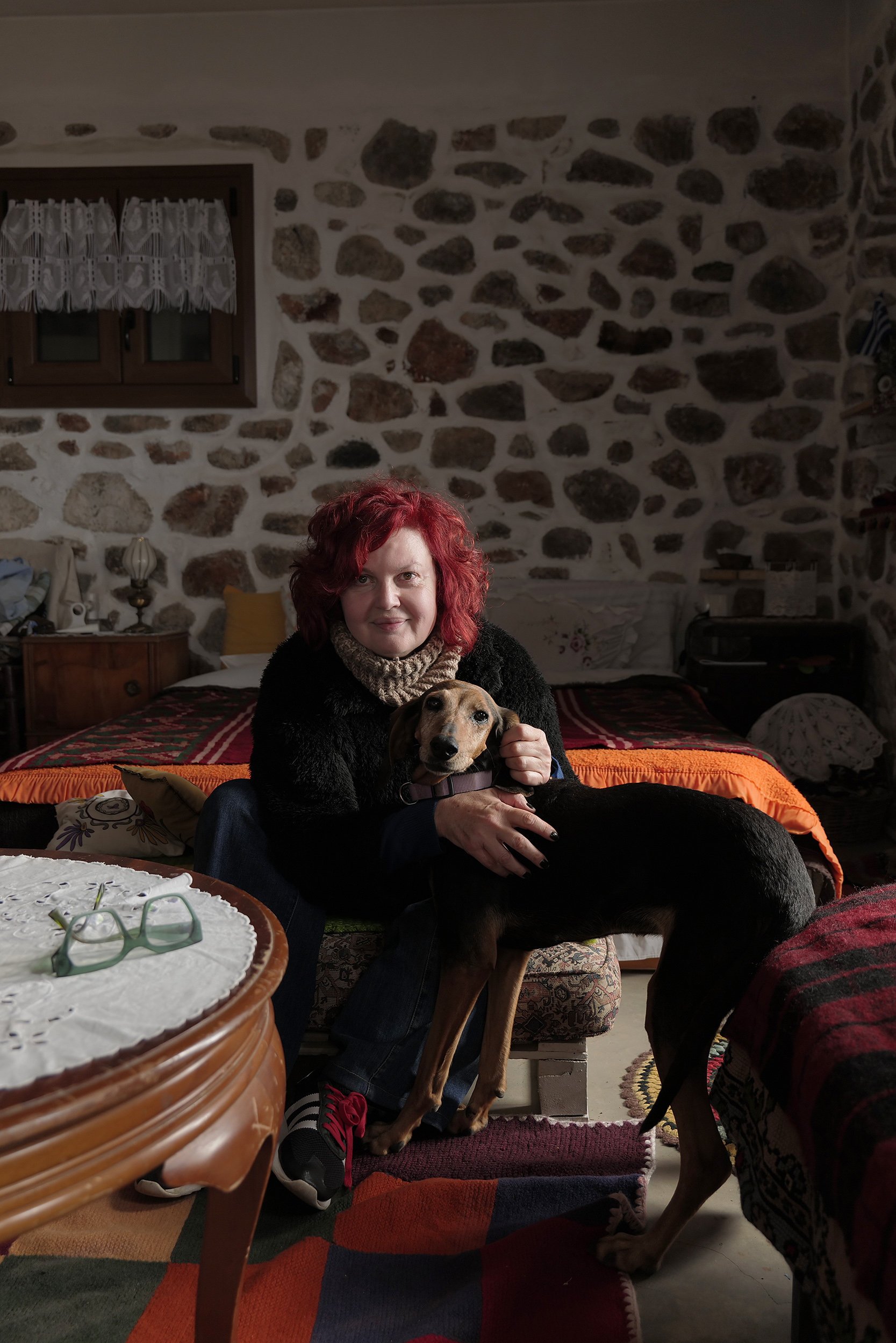
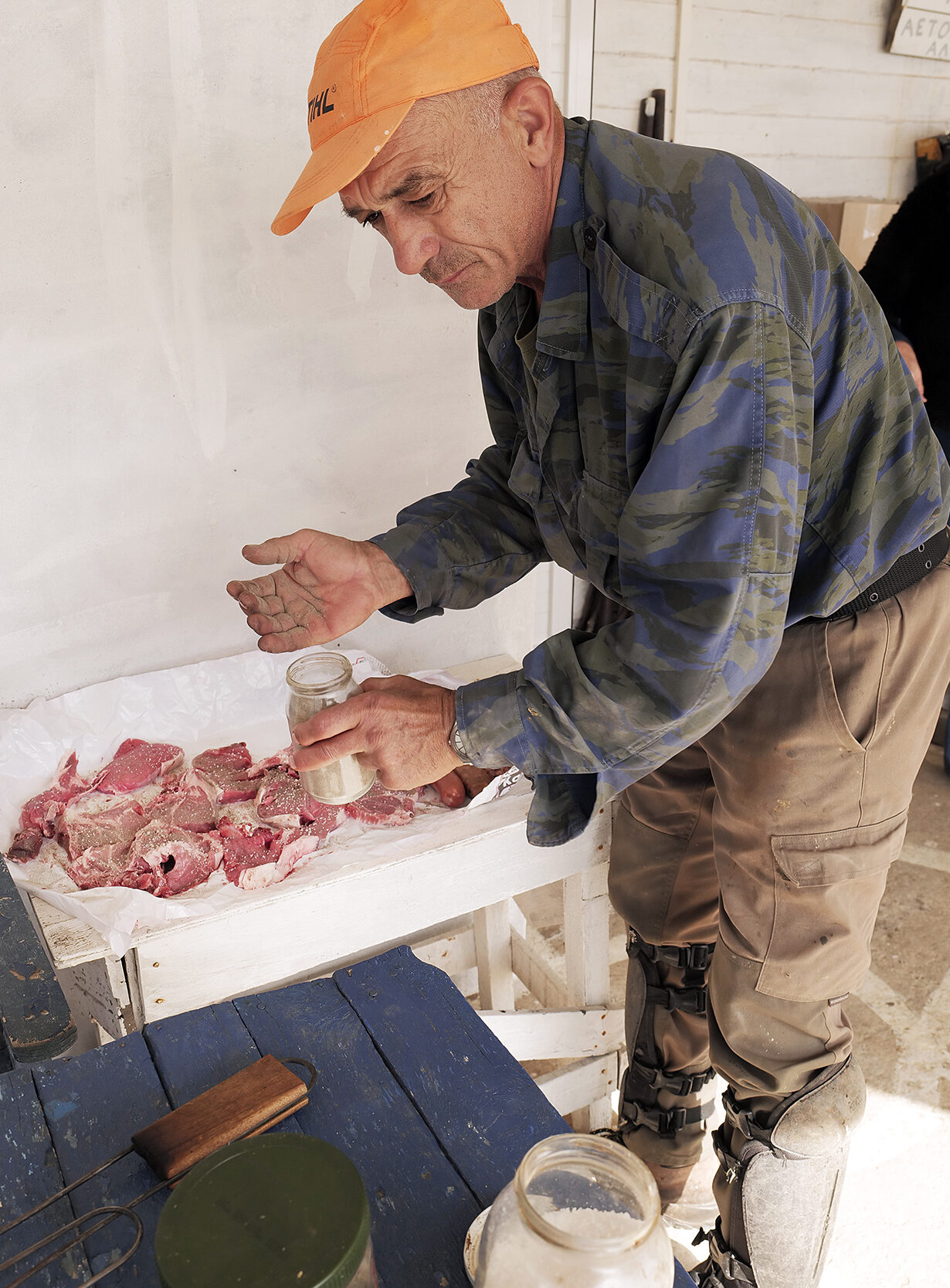
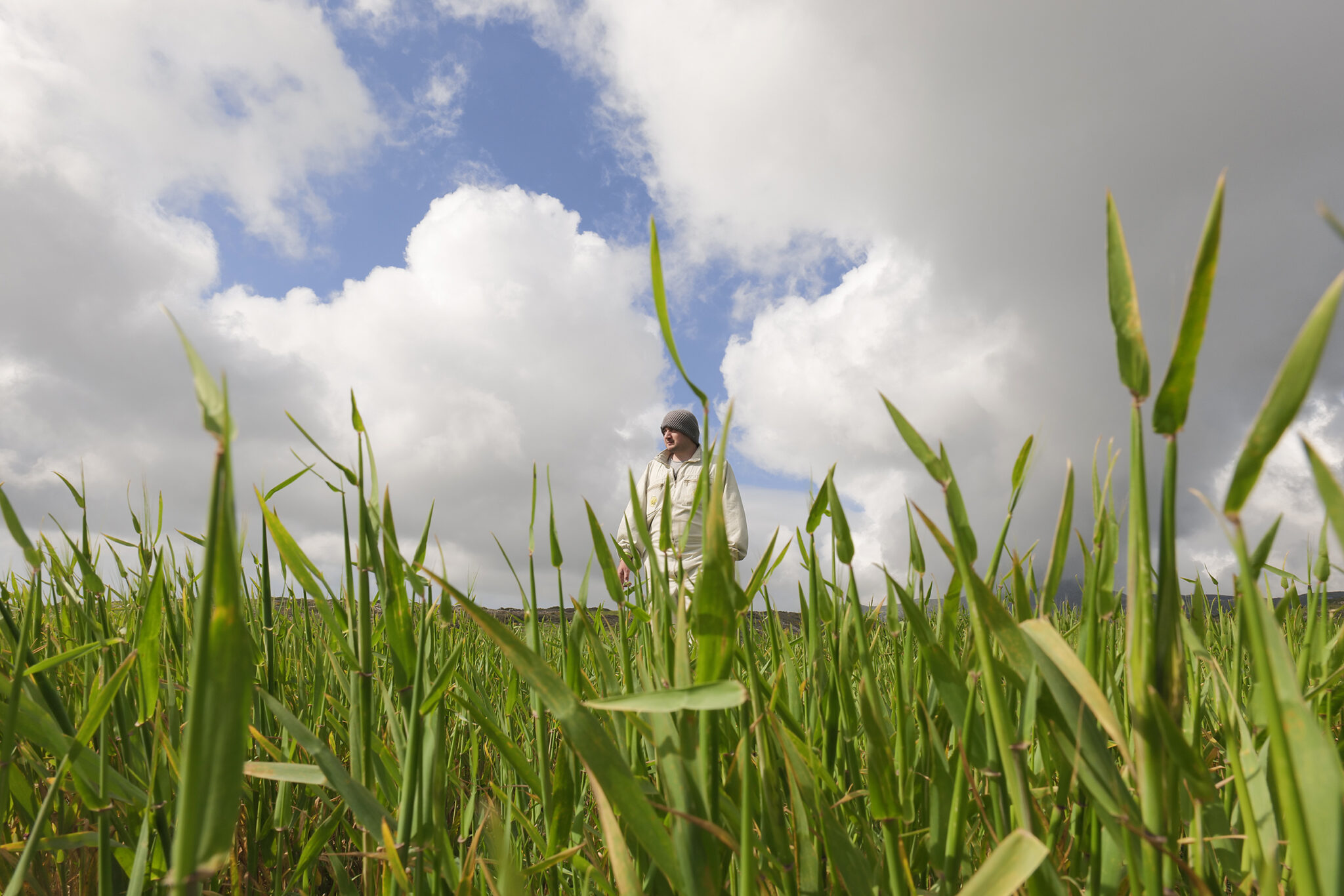
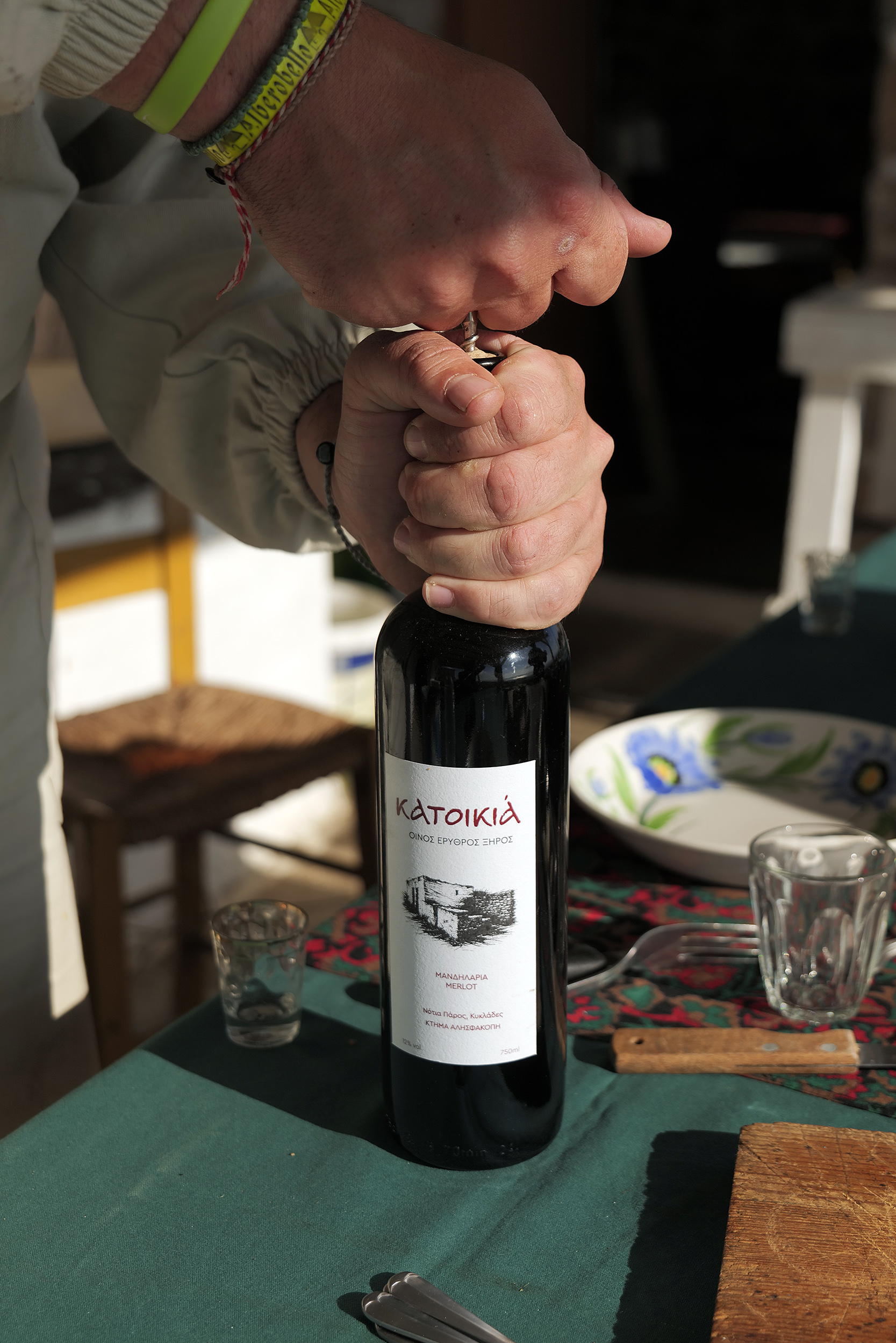
Their estate is called Alisfakopi, and I had the great honor of being invited there for an afternoon grill accompanied by wine of their own production. As Maro set the large wooden table beneath the shelter, the sun began to sink deeper into us as it moved toward the west. Giannis, having prepared the meat, had gone to collect eggs from the chicken coop, while Argyris walked downhill with the two dogs through the field of grain directly in front of us. Here, Parian nature leaves no space for doubt. The sound of the wind fills the gaps in our silences, and the pleasures of the senses accumulate with the essence of the Cyclades.
Maro also takes an active part in Naoussa life through the delicatessen she runs, offering products that help visitors become acquainted with the island’s primary production.
By the Water in Aliki
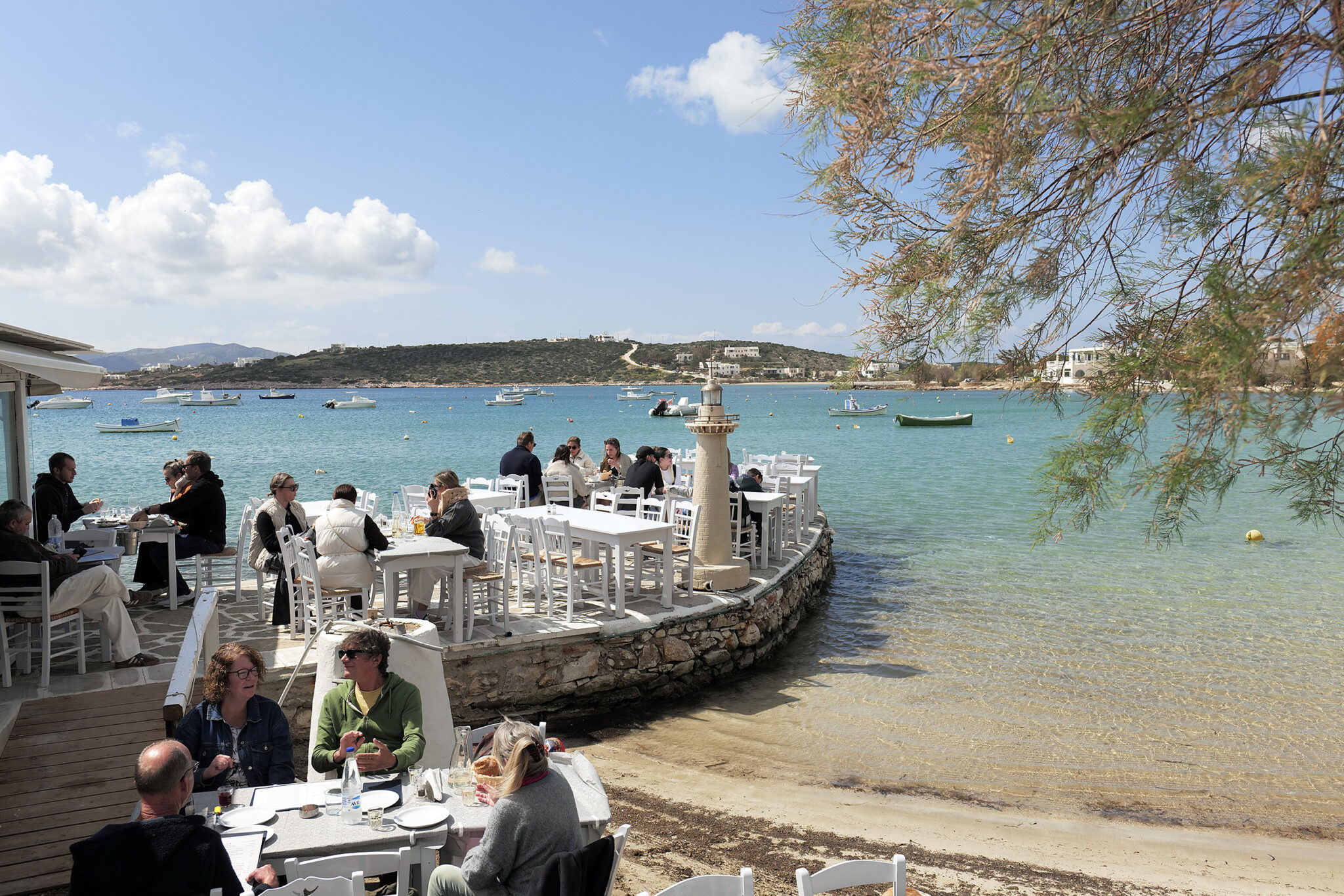
Smells and flavors were everywhere. At a difficult moment for a famous and delicious seafood restaurant, I stepped into To Balkoni tou Aki in Aliki. A little after one in the afternoon, guests had already begun filling the tables downstairs beside the water, as well as the upstairs interior, and the kitchen was operating at full steam. I apologized for the inconvenient timing of my visit, though, as it quickly turned out, there was no need. After the first mild shock, Akis Skandalis displayed the full extent of his hospitality. He seated me at a large table near the kitchen and immediately offered souma with a cured-fish meze while he prepared the rest.
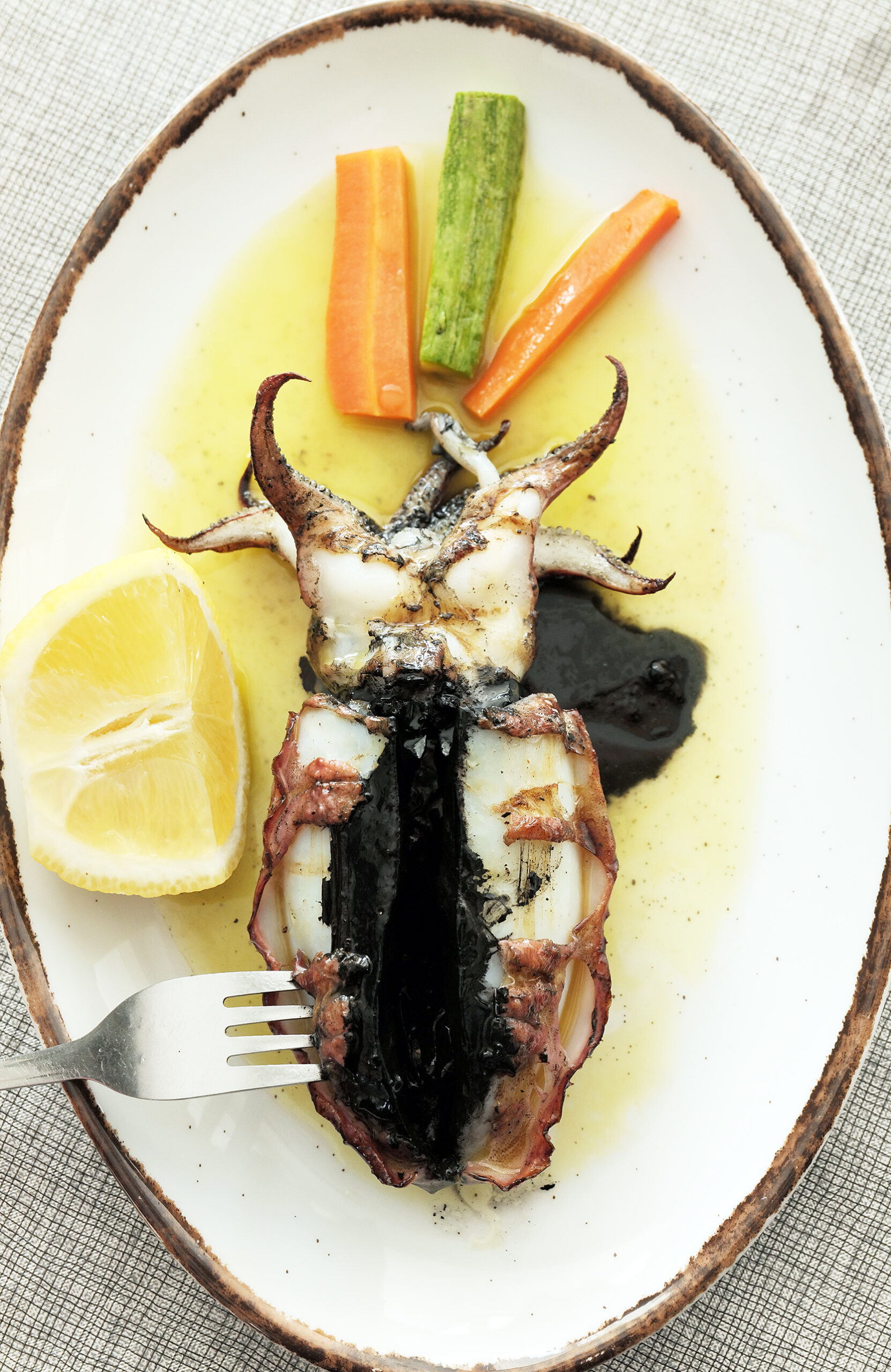
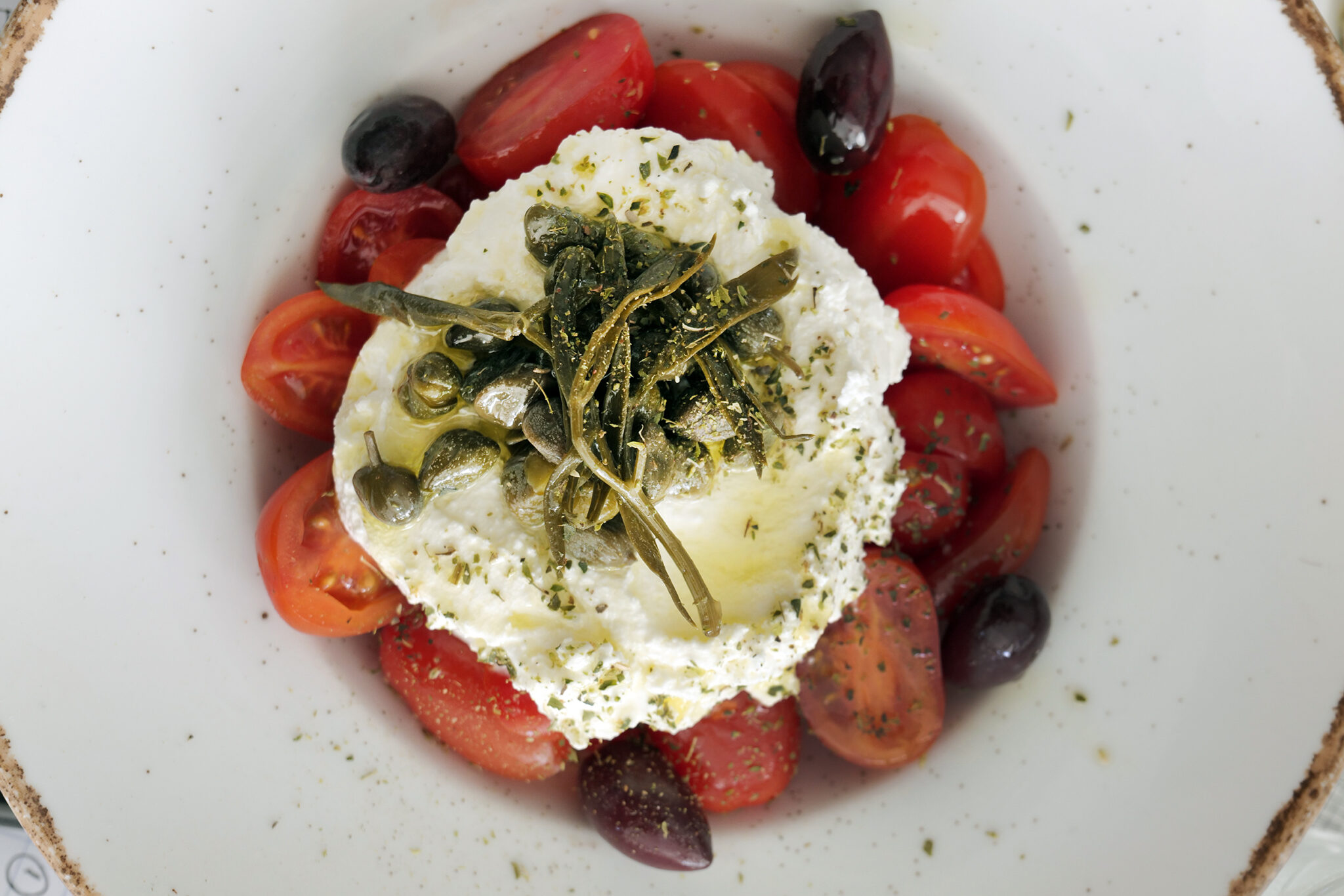
The dishes began to flow from the pass in quick succession: tuna carpaccio with wakame, cherry tomatoes with xynomyzithra from a local shepherd, shrimp pasta, kakavia with dusky grouper, which, with permission, I watched Akis prepare himself in the kitchen, and cuttlefish in its ink, as striking as a painting. Akis sources all his fish from the fishermen of Aliki: scorpionfish, squid, red mullet. Before closing the circle of flavors, he offered me a portion of kalfa, wild local greens known in Paros and Naxos, as well as on other Cycladic islands such as Tinos and Andros.

Naoussa from the Rooftops
On my last day on the island, the wider Naousa area held hospitable secrets, home recipes, local tradition, and wine. Early in the morning, Mrs. Loula, whose full name is Stavroula Vavanou, asked me to visit her at her home in Pano Panagia, Naousa.
“You’ll see the cacti outside. You can’t miss it,” she told me, and she was right. She was already prepared and had seen me from behind the screen of her kitchen window, making sure I had found the right place, like the privacy of tinted windows in a luxury car. I heard her voice calling me, but I saw her only when she came to the door. “Before you come into the kitchen, go up to the roof terrace and see Naousa from above. There is no view like it,” she urged me. The flat, connected terraces allowed me to reach a point from which the scene carried beauty, architectural completeness, and a desire to preserve that visual impression.
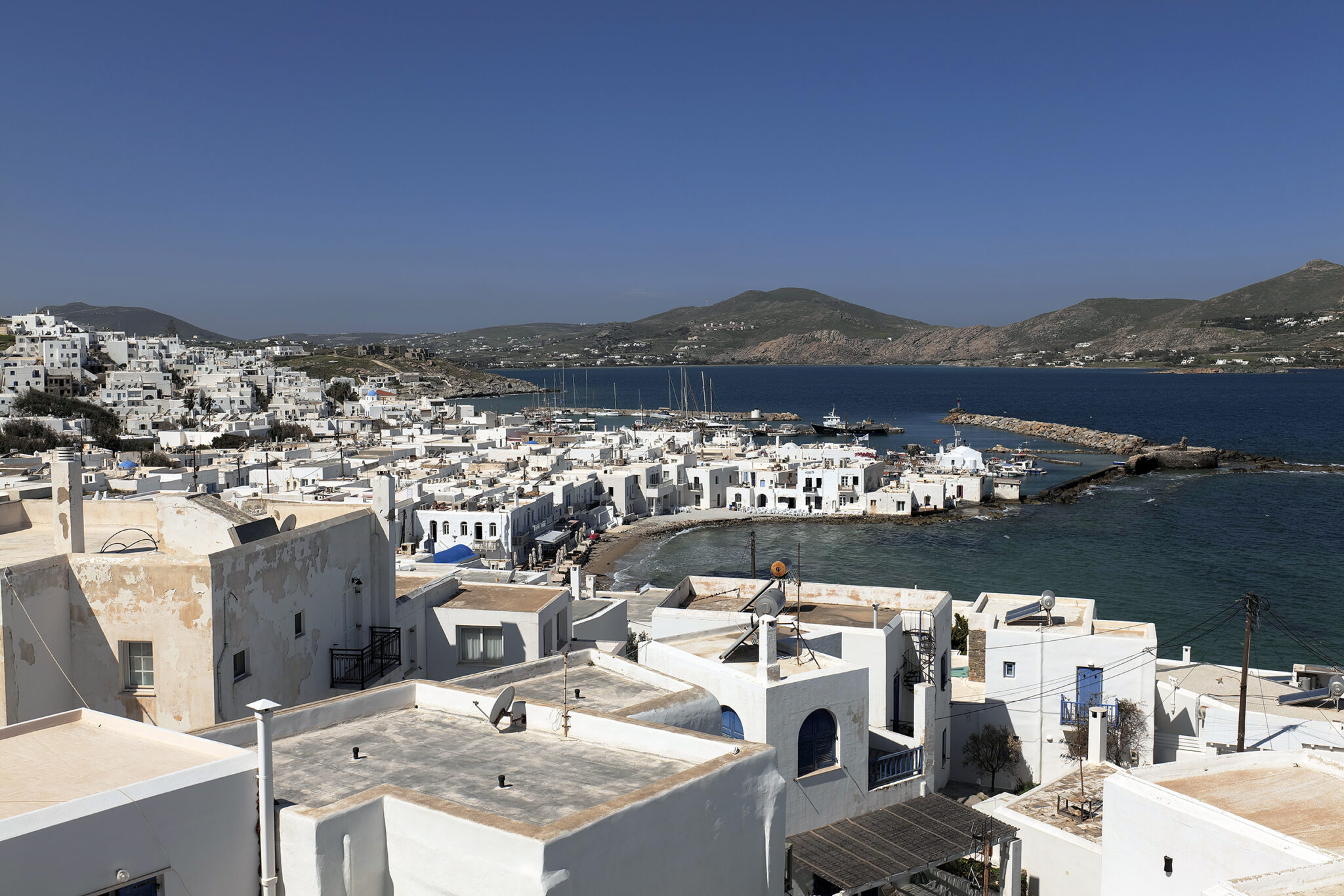
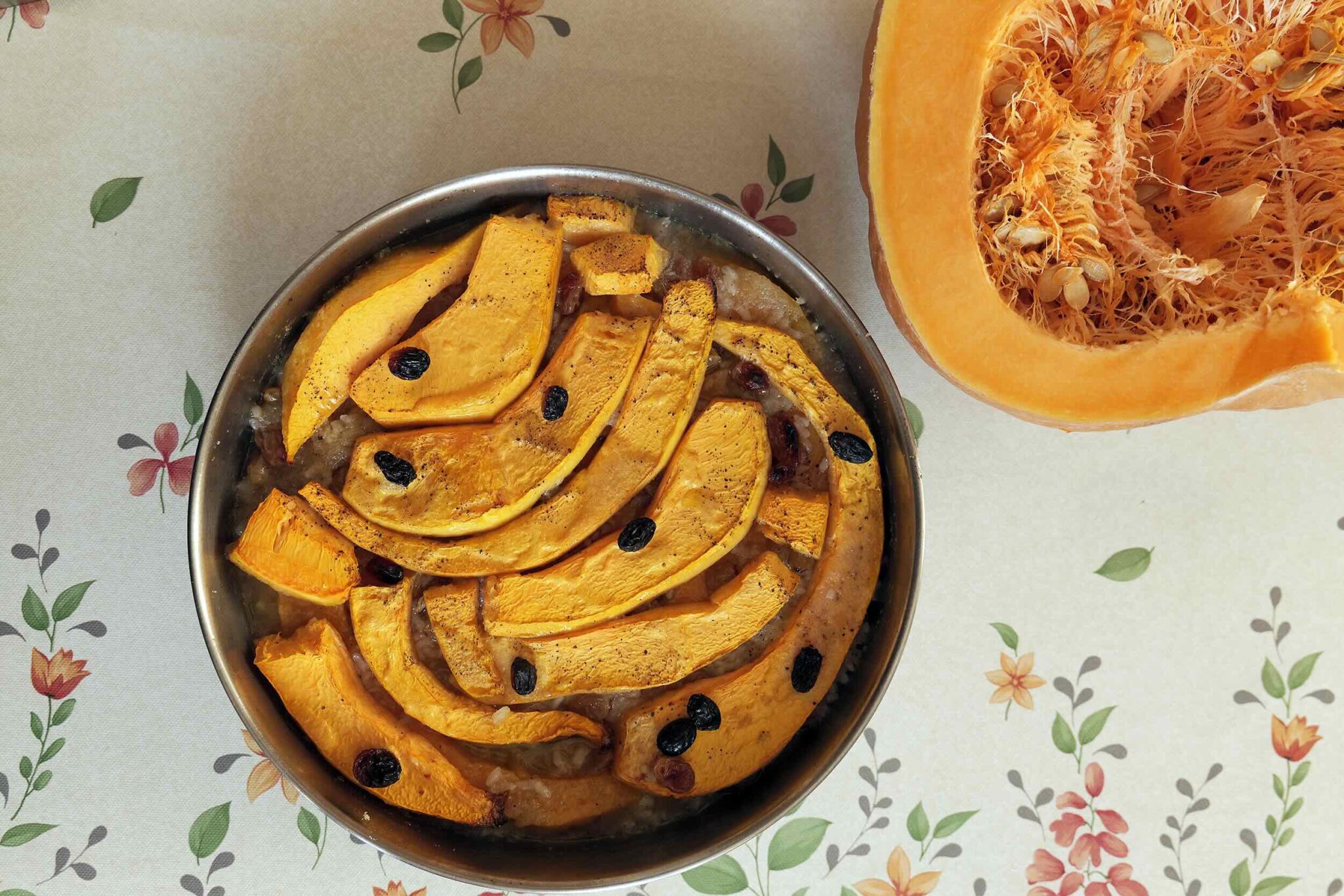
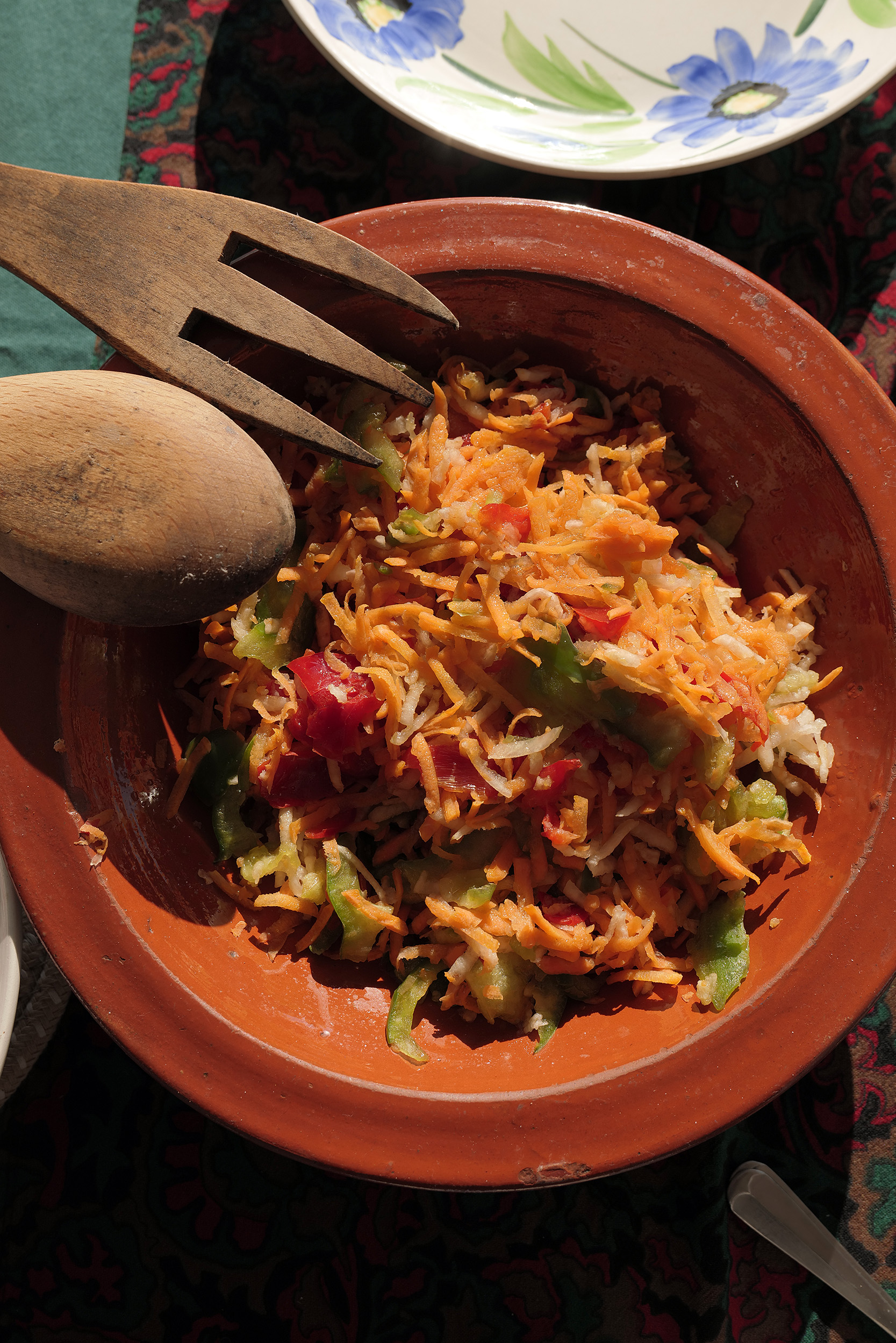
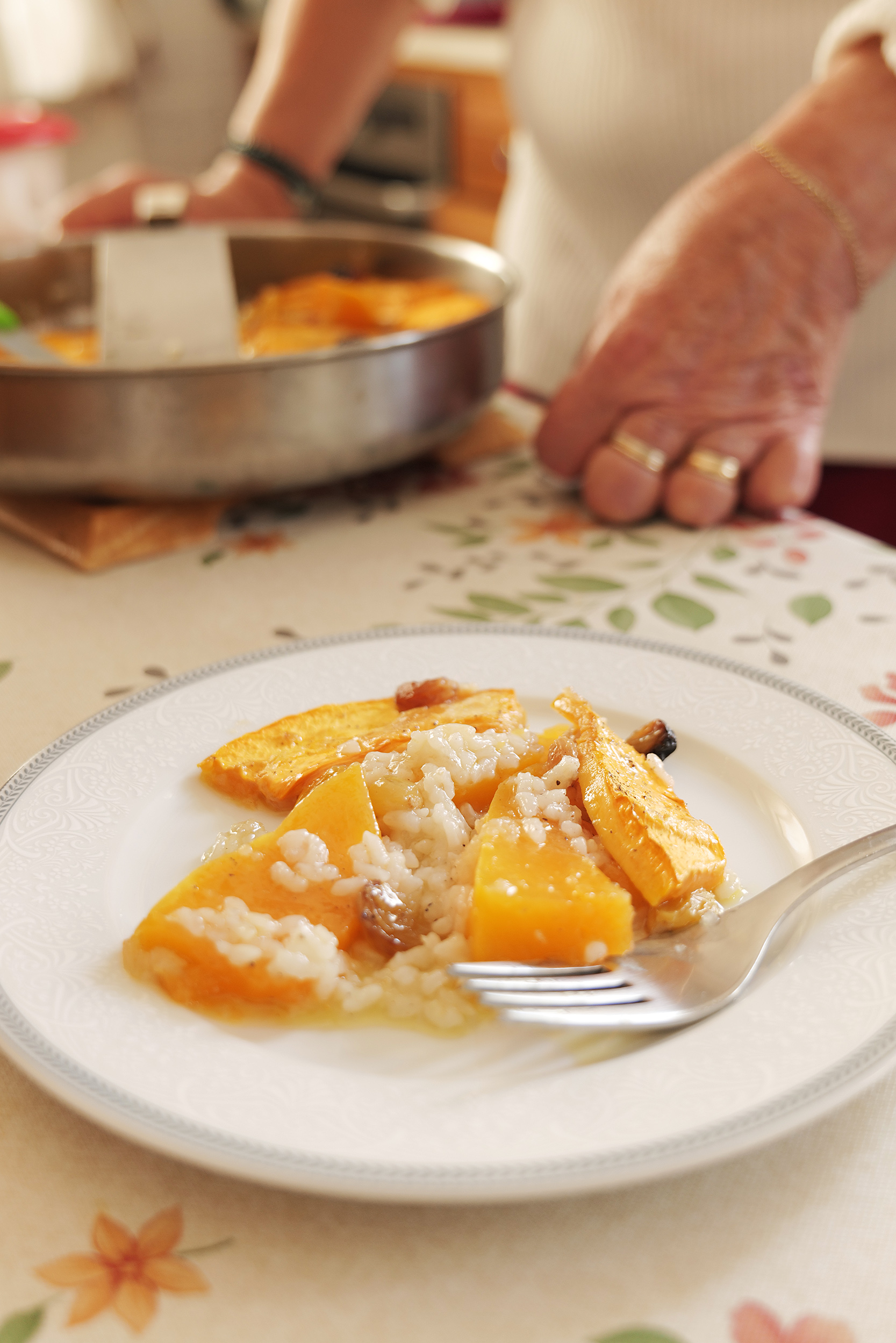
Mrs Loula prepared some kolokythoryzo, a sweet-and-sour pumpkin and rice dish that is much-loved in this place, which is both a treat and a meal. We talked about various subjects concerning Naousa while she cooked. The sweet scent of the pumpkin had filled the spacious kitchen, along with Mrs Loula’s pride. “In the summer months, I also act as a traffic officer,” she said, since cars looking for a parking space before heading down toward the well-known little harbor get tangled in the narrow lanes and even lose their way. A difficult situation. A necessary situation for the locals, I imagined. I ate the freshly cooked dish greedily and dared to ask for a second portion of this distinctive Parian specialty.

The Linear Vines of Asteras
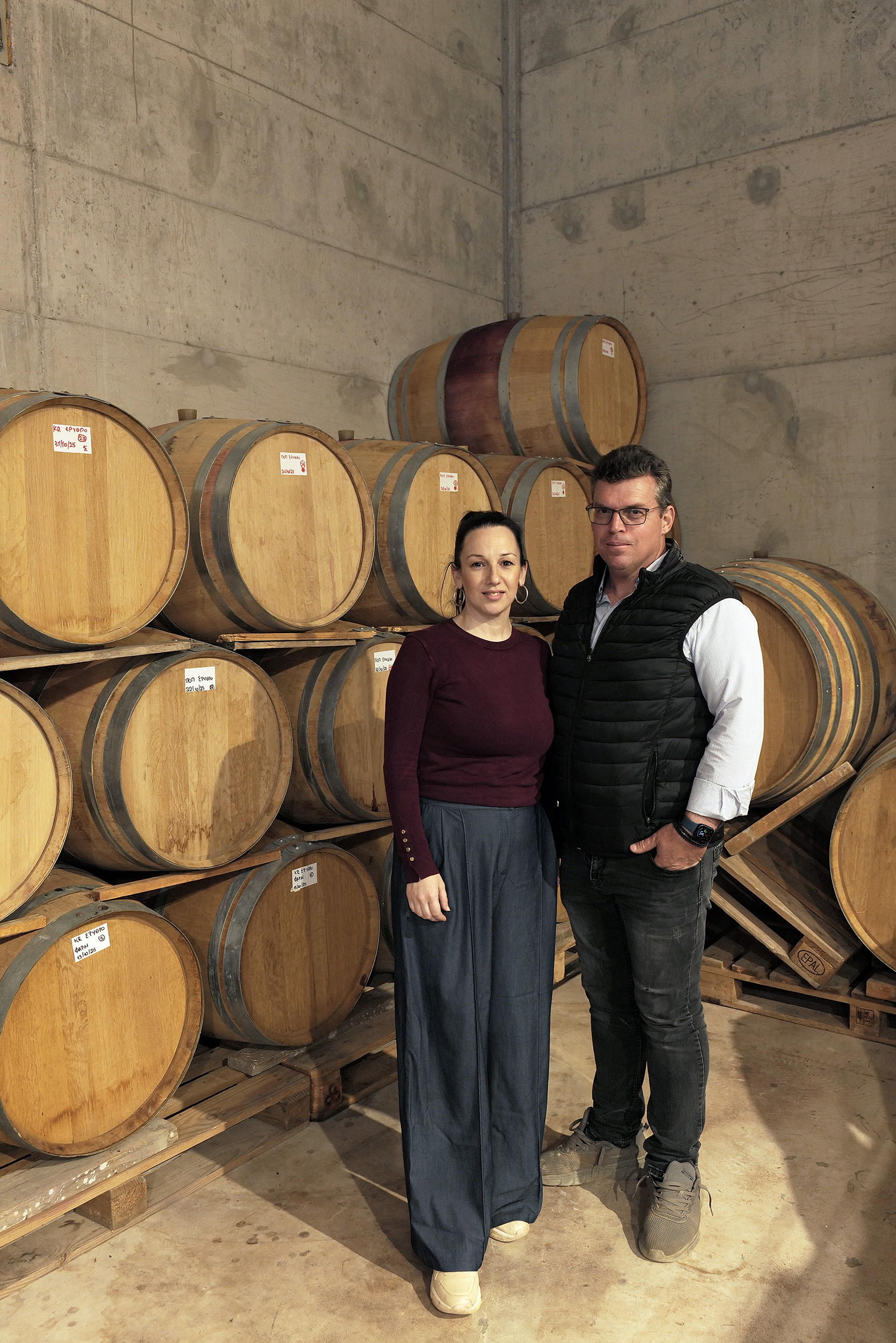
I left on foot, walking down the paved lane to the parking area beside the stream, where in May, I still had the luxury of finding a space easily. I was going to visit Asteras Winery (Ktima Roussos), only a few kilometers from the seaside settlement, in the area known as Asteras. Konstantinos Roussos and his wife, Eftychia Kritikou, welcomed me with a hospitality that felt honest and immediate.
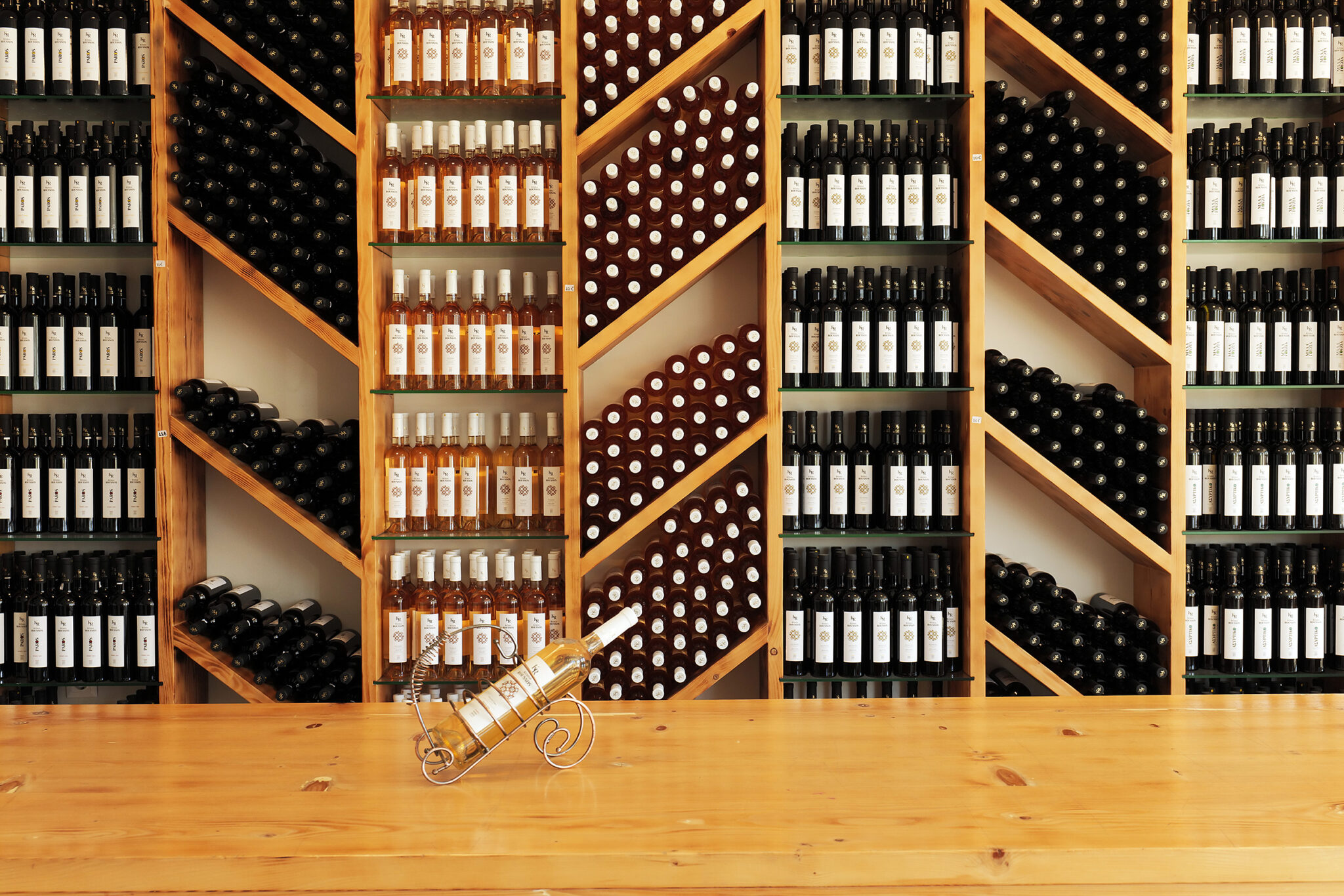
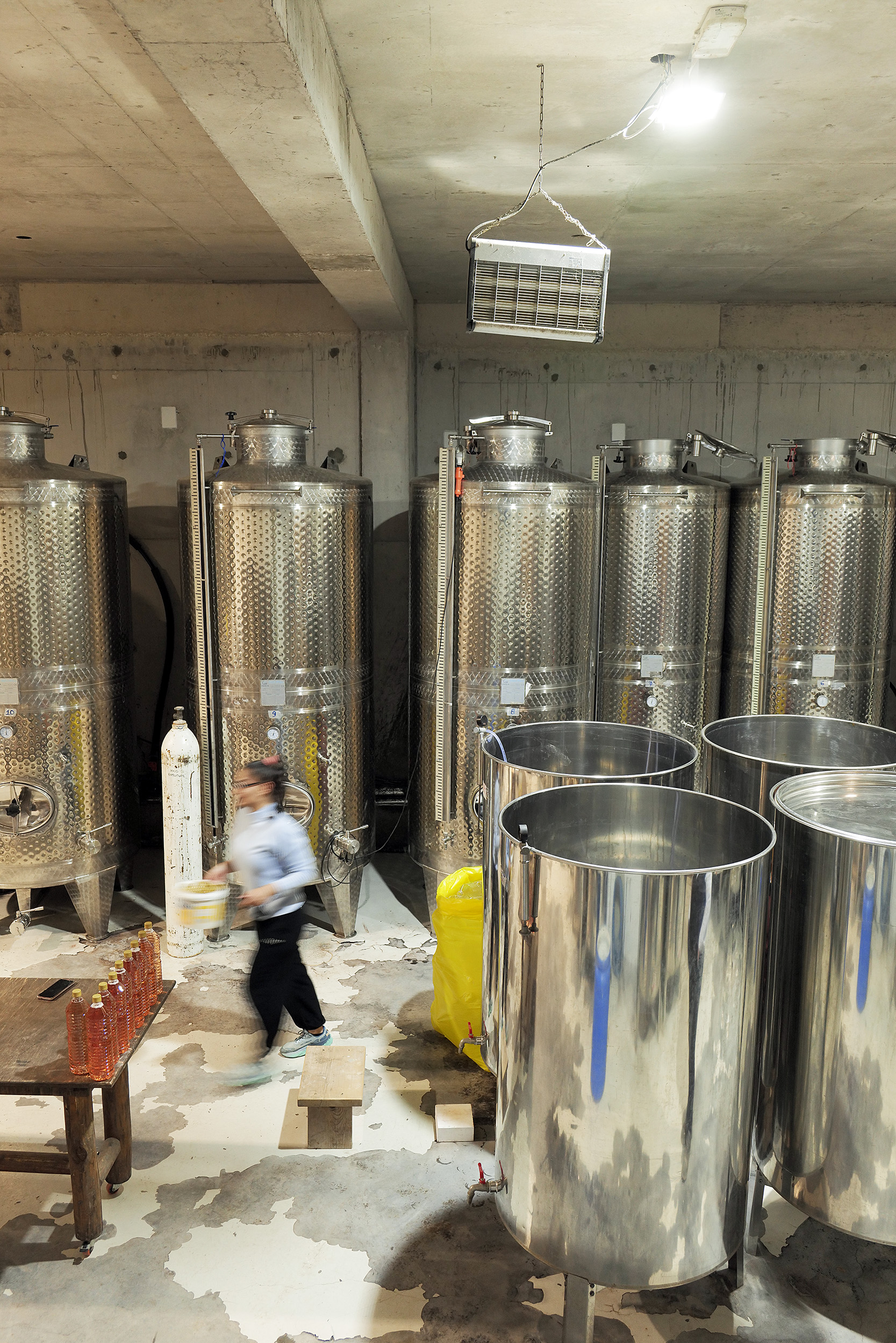
From the first moment, they were happy to show visitors the work they had put in. The reception area is plain and simple, with one wall holding the bottles produced through their labor in beautiful order. Since their first production in 2017, they have been making wine from native Greek and Cycladic varieties: Malagouzia, Assyrtiko, Monemvasia, Mavro Aidani, Aspro Aidani, and Mandilaria.
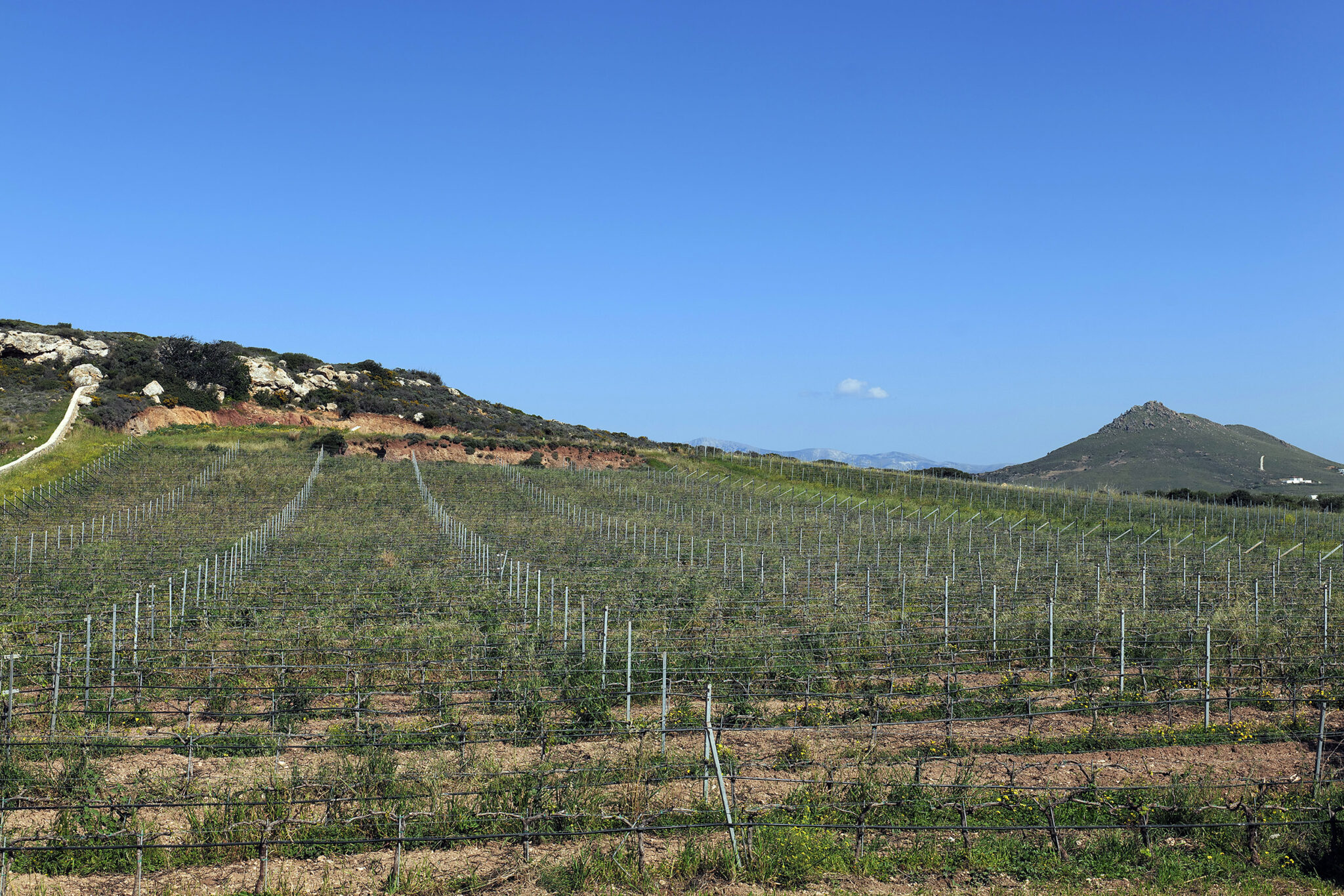
Today, the winery releases seven PDO and PGI labels, some of which have received international awards. Konstantinos Roussos, the owner and producer, continues the family’s traditional viticulture with passion, following the work of his grandfather and father. He first expanded the existing family vineyards by planting new local varieties in linear rows. He intends to expand production in the coming years, since the response to his efforts is already clear. Having tasted his wines over the course of a month after returning from Paros, I can only agree.
Salt, Turpentine, and Cured Fish
Before driving across, past the famous Kolymbithres, to the boatyard of Stathis Aliprantis for a special gathering, I spoke briefly with the Skiadas brothers, Vangelis and Dimitris, as they tended their nets after the night’s fishing. Dimitris, who is also the president of the Naousa fishermen, spoke warmly about fishing, overfishing, the protection of marine catches, and the tradition of fishing itself, an activity and process closely bound to the island morphology of Greece.
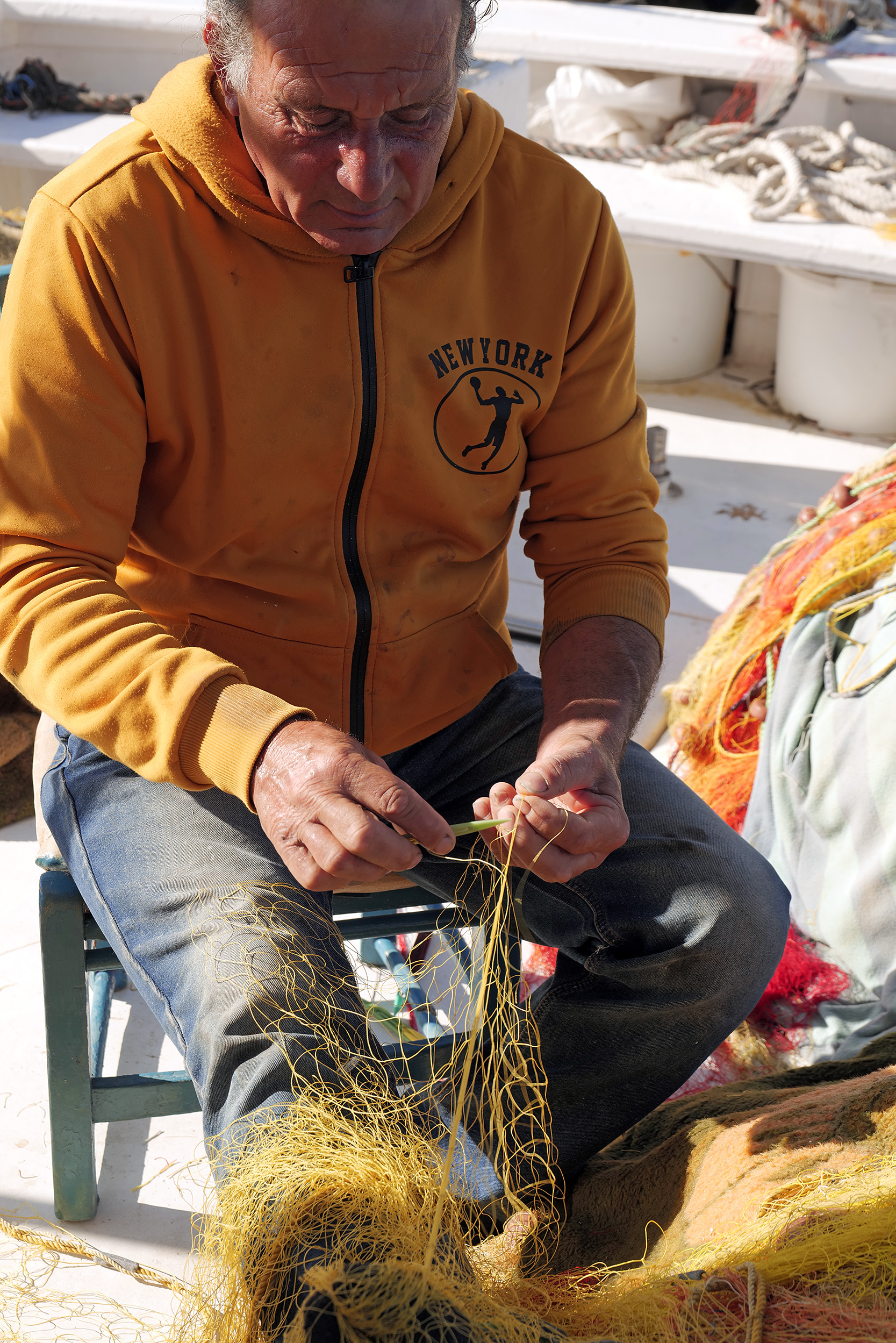
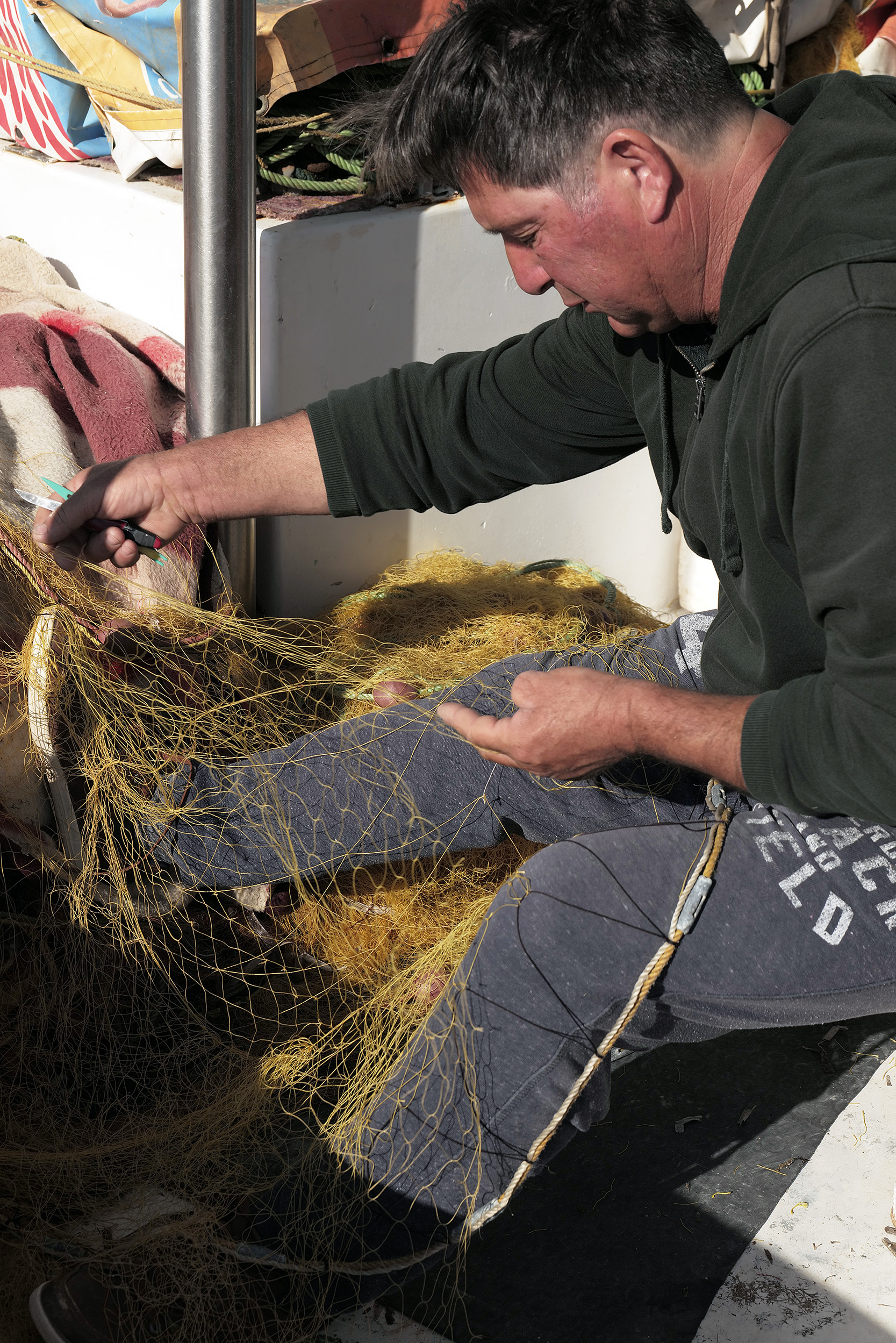
The smell of iodine, the roughness of the hands of those who work at sea, the sunburned skin, and the love of place are images and sensations deeply carved into my mind for years. The yellow nets trap memories and a connection to processes far removed from city life.
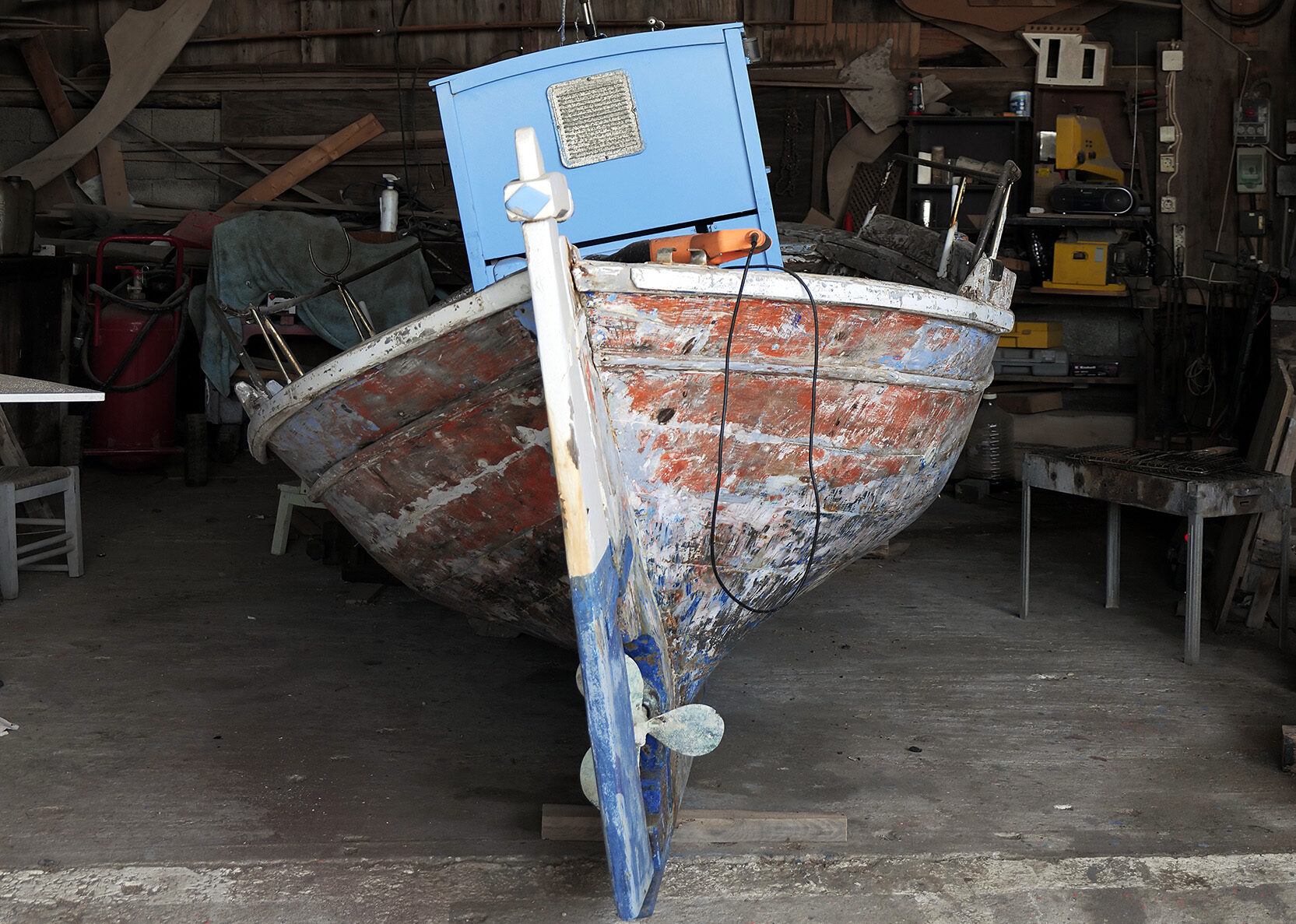
At the boatyard, after parking outside, there was the kind of movement one expects at the end of spring. A large bulldozer was pulling an impressive big vessel, guiding it toward the slipway so it could feel the salt of the Aegean against its sides for the first time that year. Smells of paint and turpentine filled the outdoor space, while wood and cloth were being prepared to complete the last pieces before departure.
The Cured Fish of Takimi
Antonis Barbarigos led me into the small building at the back of the yard, then into the back room, where the windows were salted by drops from the waves breaking on the rocks below. There were Stathis, Ilias, Loukas, whom they call the head chef, and Katerina.
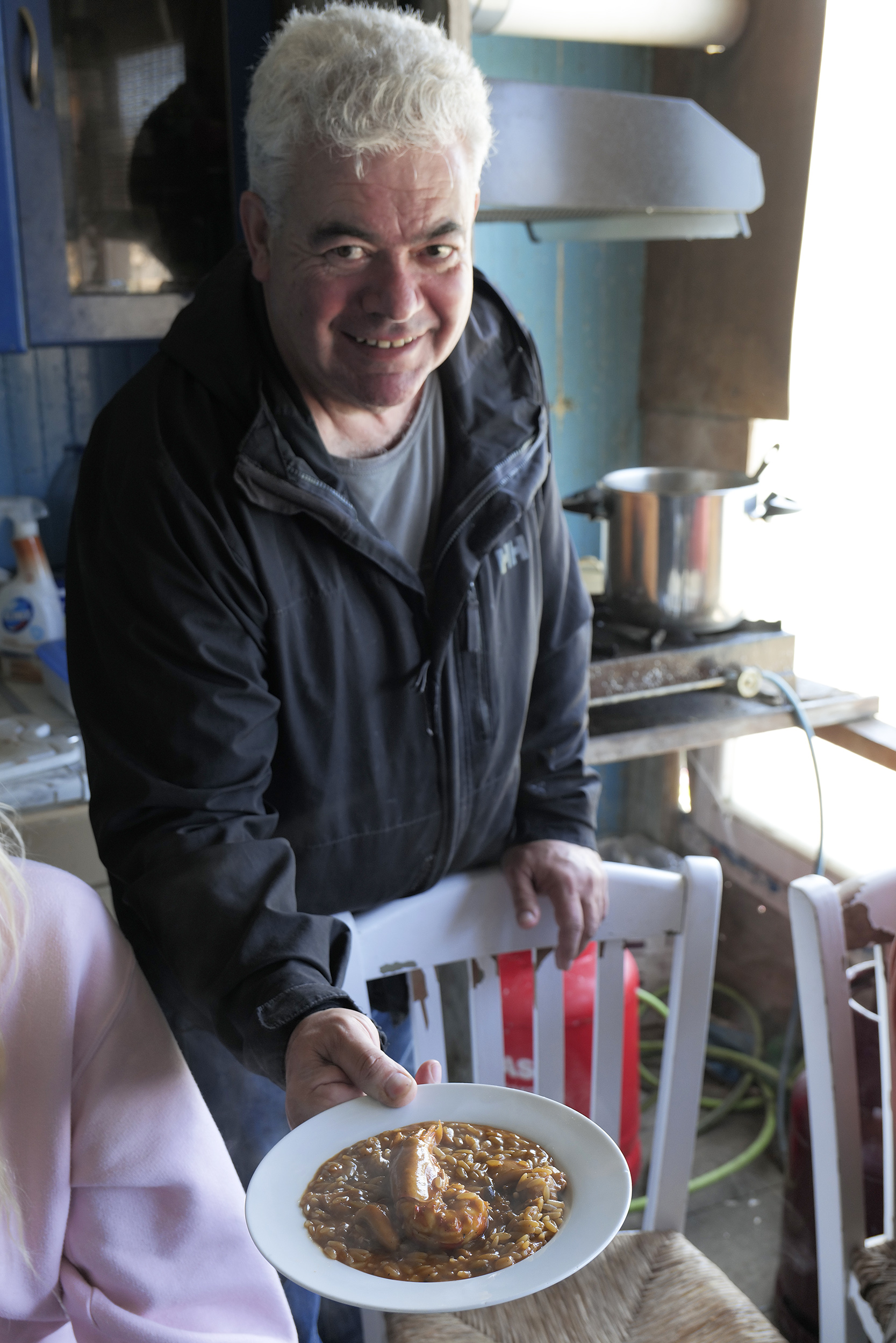
Loukas was making shrimp kritharoto (orzo) and was responsible for fogging the windows from the inside this time. Souma was poured into glasses from a miniature gas pump, a playful gesture full of humor. Antonis had brought cured fish: sardine, bonito, and marinated mackerel. His involvement with cured fish comes from the desire to preserve a local gastronomic tradition, and also from the fact that cured fish makes an excellent meze.
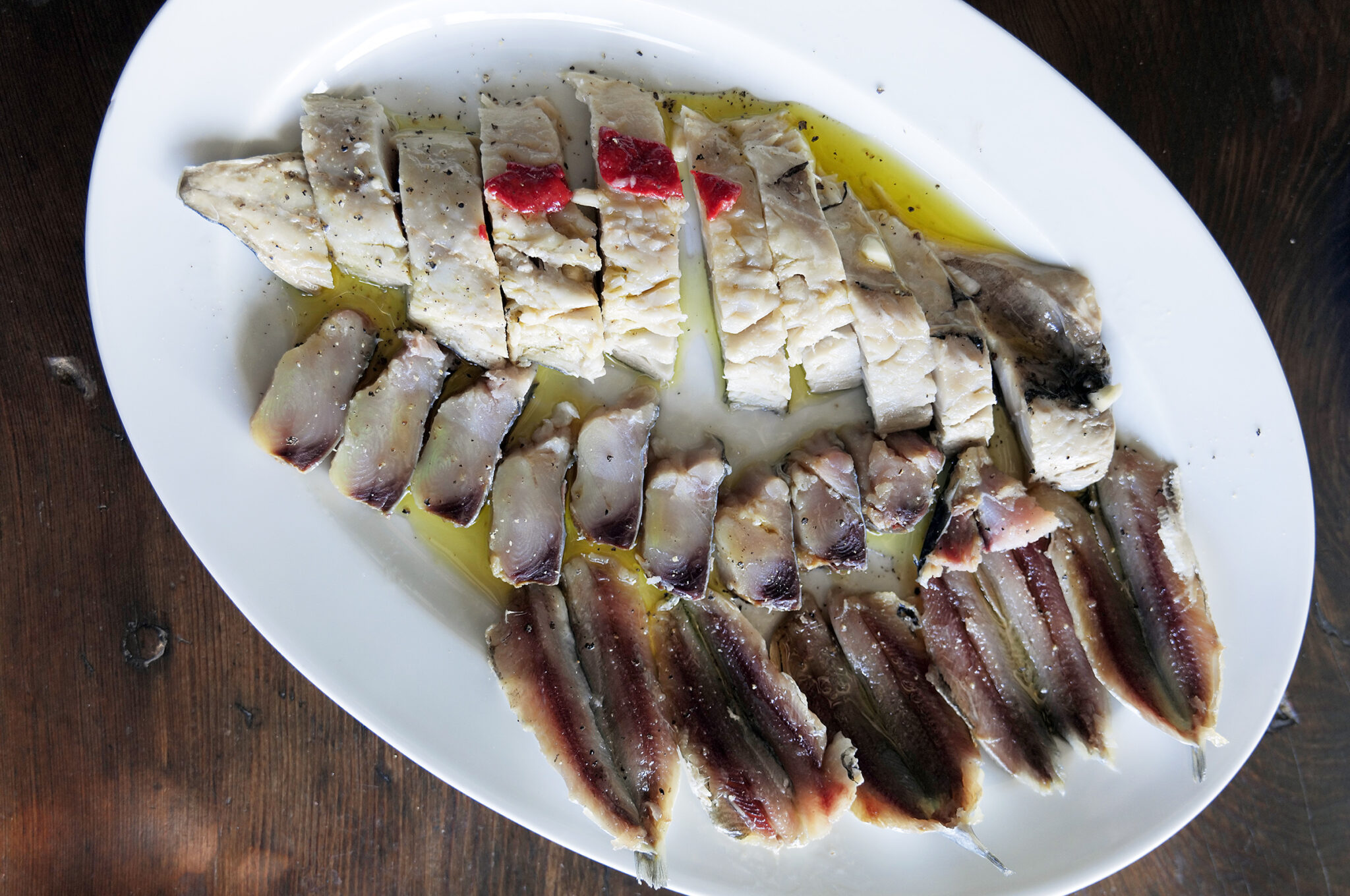
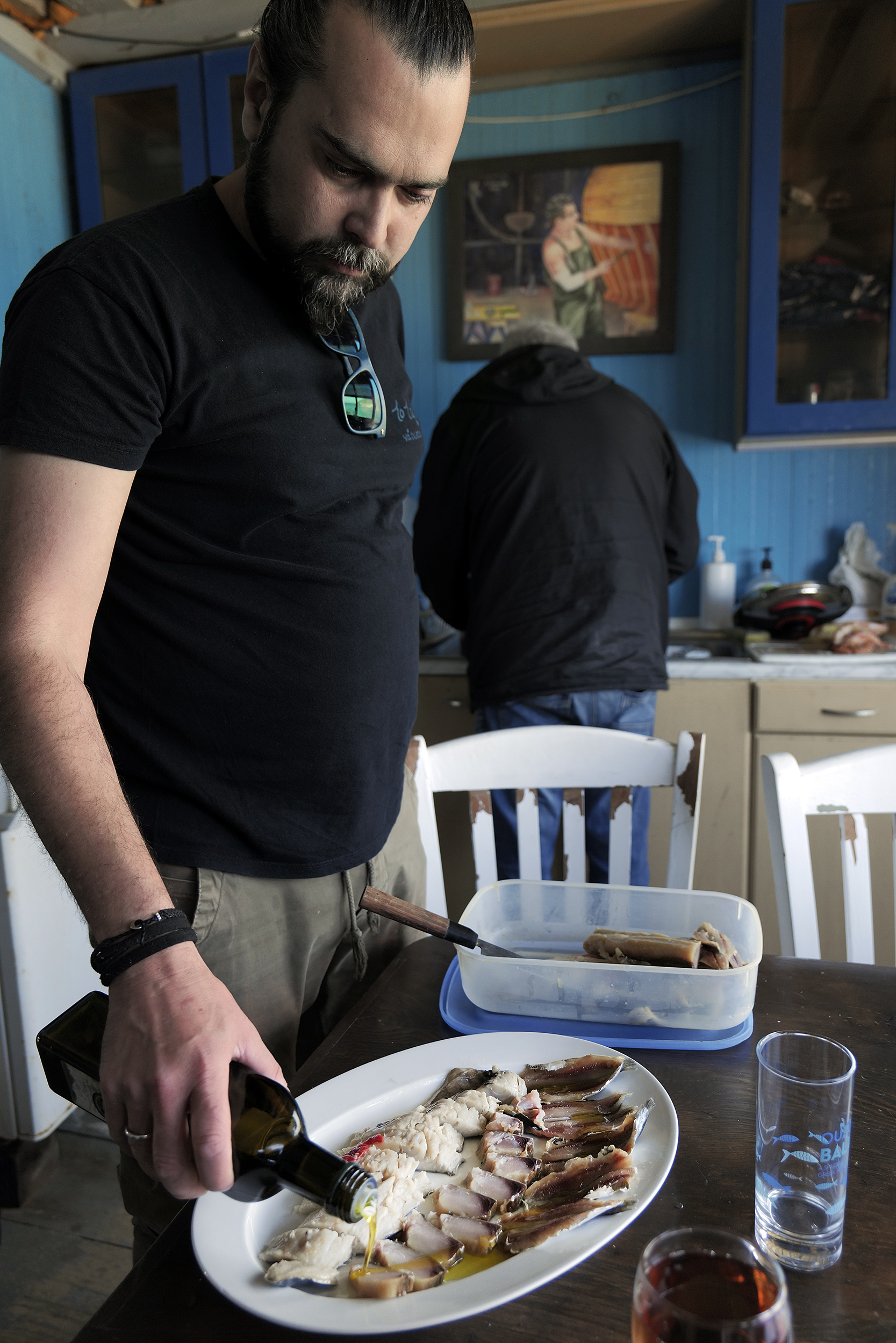
“Cured fish has always existed,” he told me. “It was the way people preserved the abundance of fish the place offered, from the time before refrigerators.” He learned how to make it from older people, and also because he owns Takimi, a meze restaurant in Naousa where, naturally, he served it as meze. Sometimes, through social media, he organizes workshops on curing fish, usually before March 25, because of the holiday and the free time before the start of the tourist season.
“What I feel is missing from restaurants today is the grandmother, the mother, that sense of gastronomic love, of home, of hospitality,” he told me, while admitting that every kind of gastronomic proposal in restaurants is necessary.
Photography by Nikos Kokkas
Your Cheatsheet to Secret Paros
Tsitsanis Taverna
Key People: Vlassis Roussos Phone: +30 22840 41375 / +30 22840 42258 Physical Address: Prodromos 844 00, Paros Registry Profile: https://www.e-kyklades.gr/showroom/tourism/OTSITSANIS
Pezoula
Key People: Fanouris Petropoulos & Aimilia Karkoulia Phone: +30 22840 45629 Email: paros.pezoula@gmail.com Physical Address: Marmara Village, Paros 844 00 Registry Profile: https://www.e-kyklades.gr/travel/showroom/tourism/PEZOULA_PAROS
Alisfakopi Estate
Key People: Maro Voulgari, Giannis Loukis, and Argyris Loukis Physical Address: High-altitude sheepfold region (on the road to Profitis Ilias), Paros
To Balcony tou Aki
Key People: Akis Skandalis Phone: +30 22840 91512 / +30 6947 684861 Email: akisbalcony@gmail.com Physical Address: Aliki Harbor, Paros 844 00 Facebook Page: https://www.facebook.com/akisskandalis.balcony
Home of Mrs. Loula
Key People: Stavroula Vavanou Physical Address: Pano Panagia neighborhood, Naoussa, Paros 844 01
Asteras Paros Winery
Key People: Konstantinos Roussos & Eftychia Kritikou Phone: +30 22840 51798 Mobile: +30 6932 616782 Email: info@ktimaroussos.gr Website: https://www.ktimaroussos.gr/ Instagram Page: https://www.instagram.com/ktima_roussos/ Facebook Page: https://www.facebook.com/ktimaroussos/ Physical Address: Asteras, Paros 844 00
Aliprantis Shipyard “Ai Giannis”
Key People: Petros Aliprantis & Efstathios Aliprantis Phone: +30 22840 53300 Fax: +30 22840 53350 Email: shipyard@aigiannis.com Website: https://aigiannis.com/paros/ Physical Address: Naoussa, Paros 844 00
To Takimi
Key People: Antonis Barbarigos & Giolanta Alexandropoulou Phone: +30 22840 55095 Mobile: +30 6973 735416 email: musiccafetakimi@gmail.com Instagram Page: https://www.instagram.com/takimiparos/ Facebook Page: https://www.facebook.com/takimiparos Physical Address: Unnamed Road, Naoussa, Paros 844 01
Continue reading:
The 34 Most Delectable Restaurants in Paros
A Deliberately Quiet Ascent: The 10 Hotels Defining Paros Now