


The Pindus is the long, mountainous spine that runs down the heart of mainland Greece, a broken cordillera of fir forests, river gorges and high pastures where villages cling to slopes and roads thread through endless hairpin turns. It’s less a single peak than a world: bear country and shepherd country, stone bridges and misty plateaus, the quiet, rugged interior that binds the gorgeous Greece regions of Epirus and Thessaly and feels, even now, a step removed from the Mediterranean clichés on the coasts.
To cross the Pindus from one end to the other is exciting, demanding, and deeply rewarding. It also comes with a fair amount of suspense. Endless bends, steep changes in elevation, and landscapes of striking beauty define both sides of this northern mountain spine.
This is a difficult drive, ideal for travelers who love nature and are willing to explore some of Greece’s (and the world’s) most mountainous regions. This suggested journey begins in quaint Metsovo, among lush green slopes, and ends at the imposing rock formations of Meteora, on the eastern side of the range.
Starting Point: Metsovo

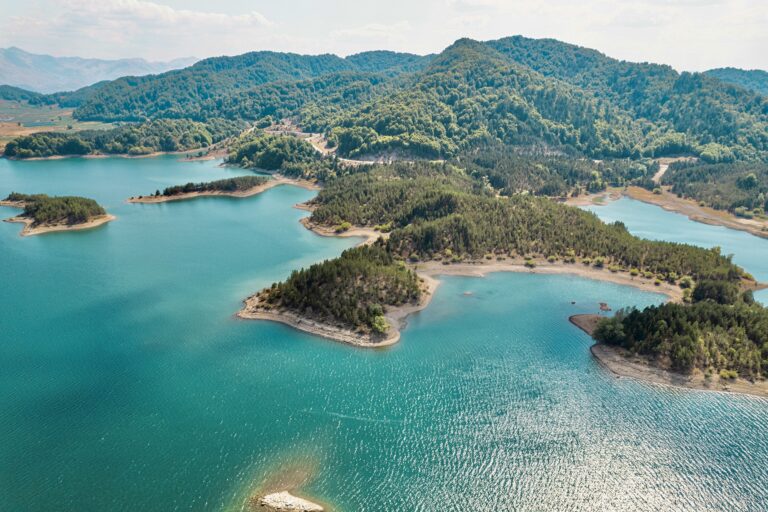

In Metsovo, a classic winter destination that turns green in spring, you get a close look at life in mountainous Epirus. This is an exceptional mountain town, sustained not only by tourism but also by cheesemaking, livestock farming, and woodcarving. It also preserves an important intellectual and cultural legacy – the nation’s top polytechnic school is named after it.
In the wider Metsovo area, you will find the beautiful Aoos Springs / Aoos Artificial Lake, the well-known Pindus National Park (Valia Calda) / National Park of Northern Pindos, and the village of Milia, known for its woodcarving tradition. The region is also home to numerous historic monasteries, excellent trails through wild natural landscapes, and two main ski centers that operate throughout the winter season.
Two Routes


From there, following the Egnatia Motorway, you can turn toward Trikala and Kalambaka and begin the descent toward the Thessalian plain, along mountain roads that gradually give way to the lowlands.
If, however, you enjoy mountain driving and have solid experience behind the wheel, there is an alternative route of remarkable beauty, though it is far more demanding.
Starting from Metsovo, you head farther south toward the village of Chaliki, a traditional Vlach settlement on the eastern side of the Pindus. (The Vlachs – often called Aromanians in Greece – are an Eastern Romance–speaking ethnic group who historically lived along the spine of the Pindus and other Balkan ranges. They were known for transhumant herding – moving flocks between high summer pastures and lowland winter quarters – but also for being traders, craftsmen, and carriers of ideas and capital across the region.)
Along a route of countless turns and dramatic changes in elevation across mountain plateaus, you reach the Monastery of Panagia Galaktotrofousa (that literally means “The Mother of Christ Who Feeds with Milk” or “the Milk‑giver”), built beside the bed of the Achelous River, in a densely green landscape of slopes, peaks, and thick conifer forests. From there, you continue east toward Aspropotamos, crossing one of the most mountainous parts of the Trikala region, an area that until 1912 marked the border of the Greek state.
From this point, you can return to the main road to Meteora via Kastania village. Along the way, you will also come across the Church of the Exaltation of the Holy Cross (the name of a Christian feast and a common church dedication that honors the discovery and veneration of the True Cross on which Jesus was crucified) in Aspropotamos village.
Keep in mind that this route is fairly long, around 100 kilometers, or roughly two and a half to three hours of driving, and is directly affected by weather conditions. Depending on your stamina, you may need to stay overnight somewhere along the way.
On to Meteora

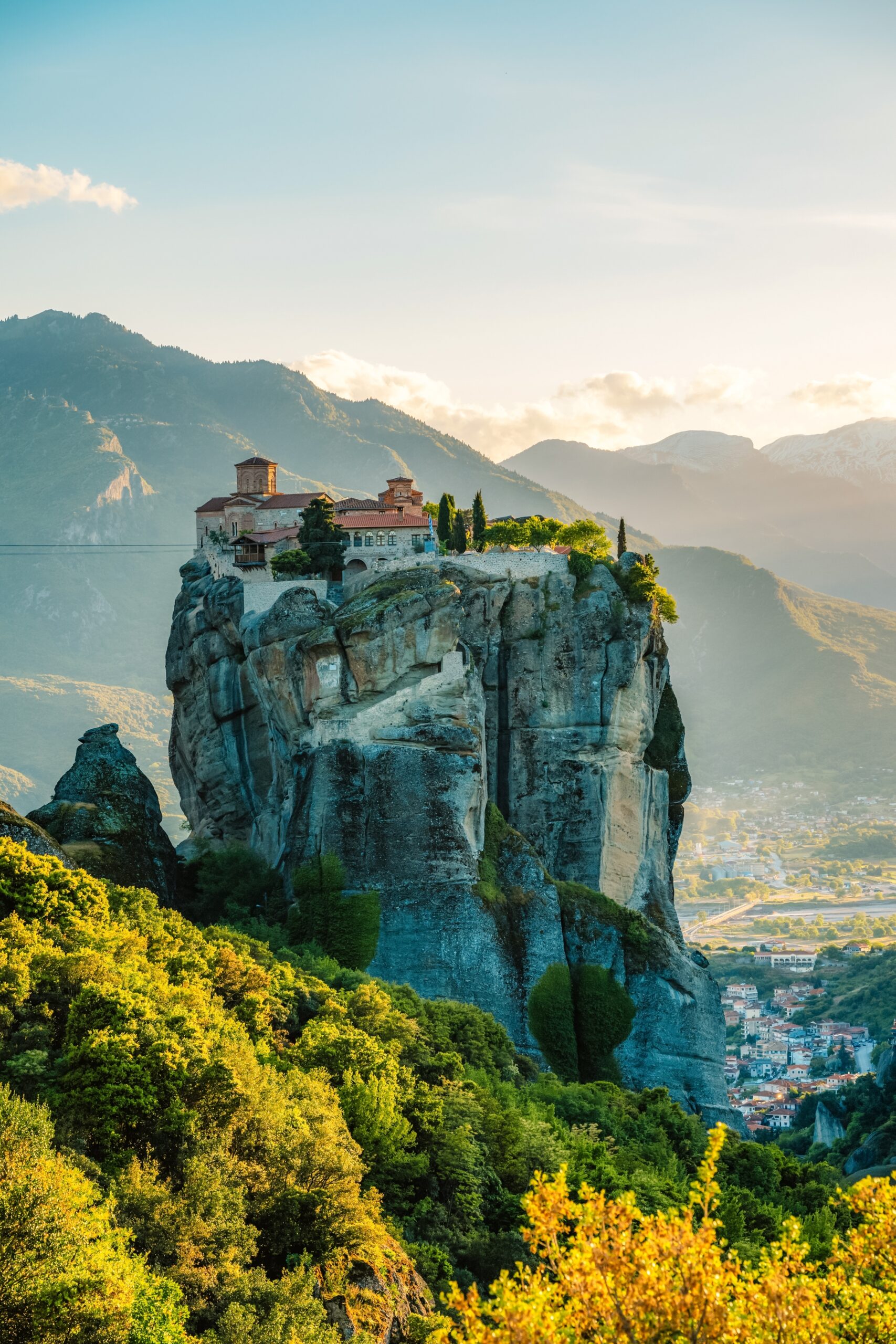
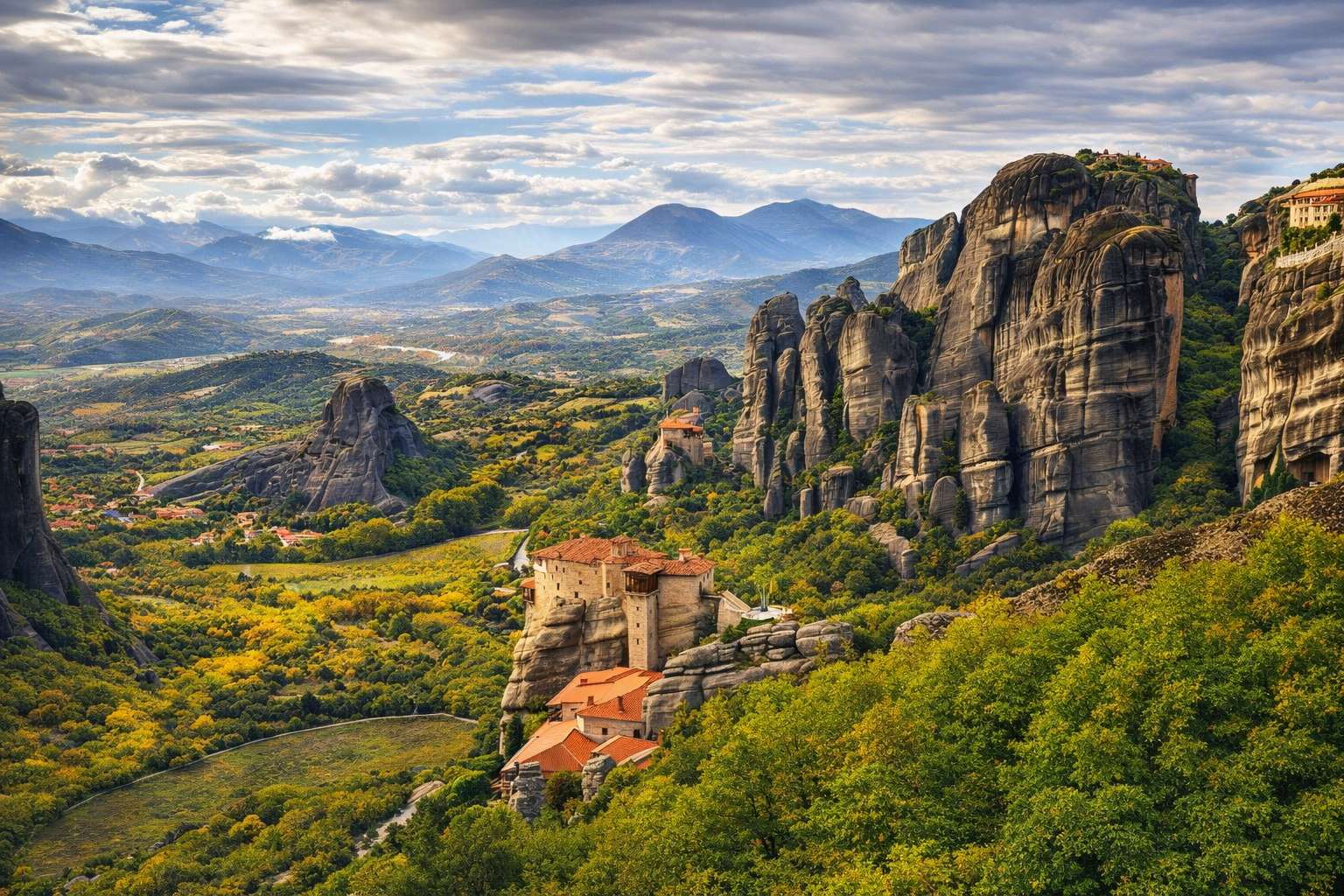
Once you arrive at Meteora, it becomes clear how well the landscape suits spring. Color, form, and scent fill the western edge of the Thessalian plain, creating a landscape of rare beauty.
At Meteora, you can visit the extraordinary monasteries built on top of the rock pillars, which have been recognized as UNESCO World Heritage Sites since 1988. They are distinguished by their exceptional frescoes and are considered major landmarks in the development of post-Byzantine painting across the wider regions of Epirus and Thessaly. Each monastery has its own visitation rules so check ahead.


For climbing enthusiasts, the area offers around 800 climbing routes across 15 climbing fields, suitable for every level of experience. Particularly popular is the Doupiani rock in Kastraki village, which is suitable even for beginners. Other activities in the area include paragliding, horseback riding, bike tours, and seasonal mushroom-foraging excursions, with specialized operators based in Kalambaka.
What makes this route memorable is not only its beauty, but its rhythm: forest and rock, village and river, ascent and descent, all unfolding across the mountain spine of mainland Greece. By the time Meteora appears, the journey already feels complete.