






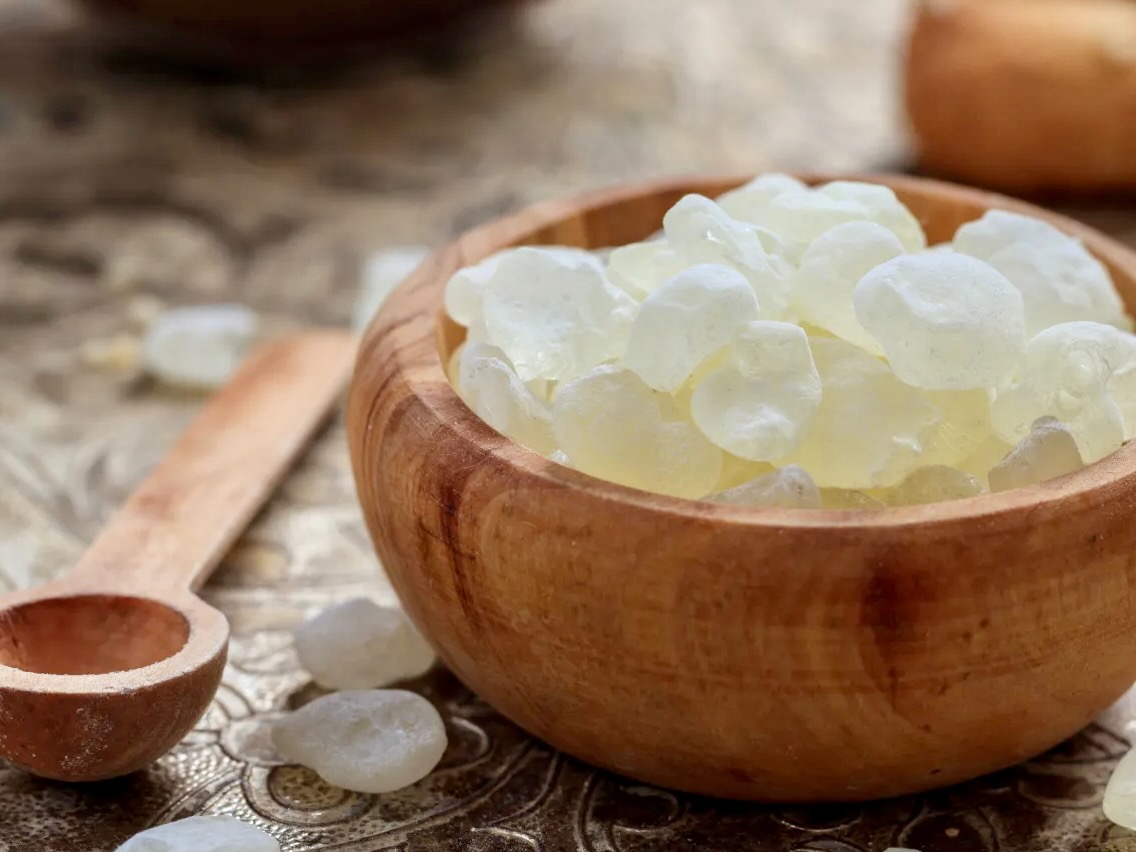
If you have ever chewed mastic gum, tasted chewy ice cream with something resinous in it, ordered a cocktail with a clean, piney finish, or used a Greek natural toothpaste, you have already encountered mastic. You just may not have known where it comes from – or that it comes from only one place on earth.
Mastic (or mastiha, as it is known in Greece) is the aromatic resin of the mastic tree, and while the tree grows across the Mediterranean, it only produces resin in meaningful quantities on the southern tip of Chios, a Greek island in the northeastern Aegean. Something in the limestone soil and the local microclimate makes this narrow stretch of land the sole viable source. Attempts to replicate production elsewhere in the Mediterranean have never approached the scale or quality of Chios. This is why authentic Chios mastic carries a Protected Designation of Origin, and why a small bag of it costs what it does in a London deli or a New York specialty shop.
Where you already meet mastic: In Greek kitchens, it flavors tsoureki (Easter bread), loukoumi (Turkish delight), ice cream, liqueurs, and ouzo. Across the Levant and North Africa, it appears in pastries, smoked foods, and sweets. The English word “masticate” derives from the Greek mastichein – to chew – because mastic was the original chewing gum of the ancient world. Today, it is also found in natural cosmetics, digestive supplements, and niche perfumery.
A History Written in Resin
Hippocrates is said to have used mastic in his treatments. The Romans stirred it into wine and sweets. By the Middle Ages, Genoese merchants had built fortified villages across southern Chios to protect what had become one of the most valuable commodities in the eastern Mediterranean. When the Ottomans took control, they guarded the trade with equal seriousness – theft of even a small quantity was punishable by law. For centuries, mastic functioned simultaneously as medicine, fragrance, sweetener, and currency.
Settlements Built Around a Tree


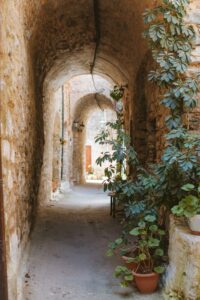

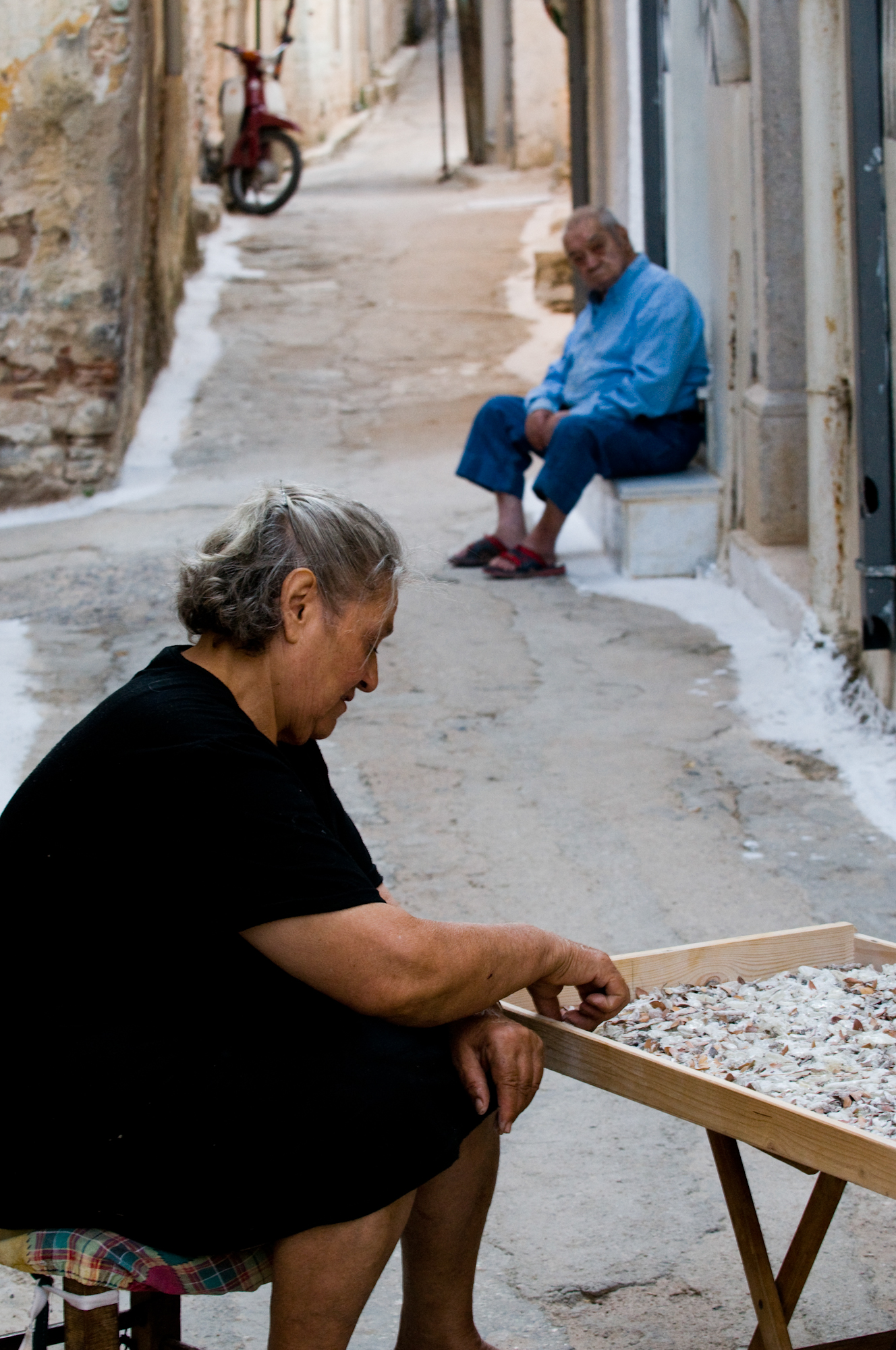
Twenty-four settlements in southern Chios still form the heart of mastic production. Mesta, Pyrgi, Olympi, Kalamoti, Vessa, and Elata are among the most prominent – tightly built medieval villages with cobbled lanes, fortress-like stone houses, and a distinctly Genoese architectural character that feels closer to central Italy than to the rest of the Aegean. In Mesta, the streets are narrow enough to touch both walls at once, the houses sealed and inward-facing, built for defense as much as for daily life.

These are not preserved museum towns. They are working agricultural communities where visitors can taste mastic liqueurs, try mastic ice cream, buy cosmetics and soaps made with the resin, and – during harvest season – watch the collection process firsthand. The villages are the reason the product exists, and seeing them explains why it costs what it costs.
How the ‘Tears’ Are Collected

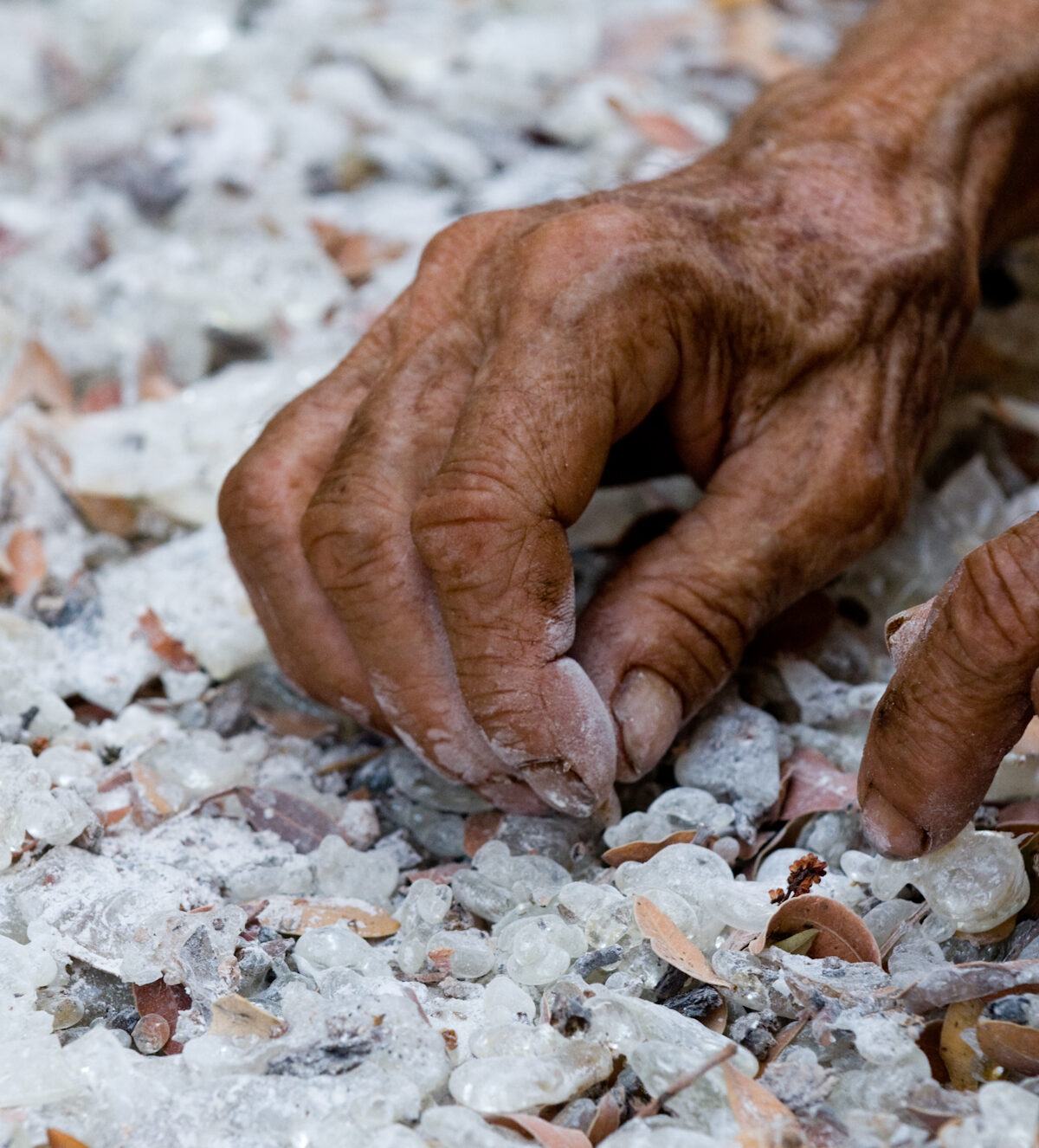
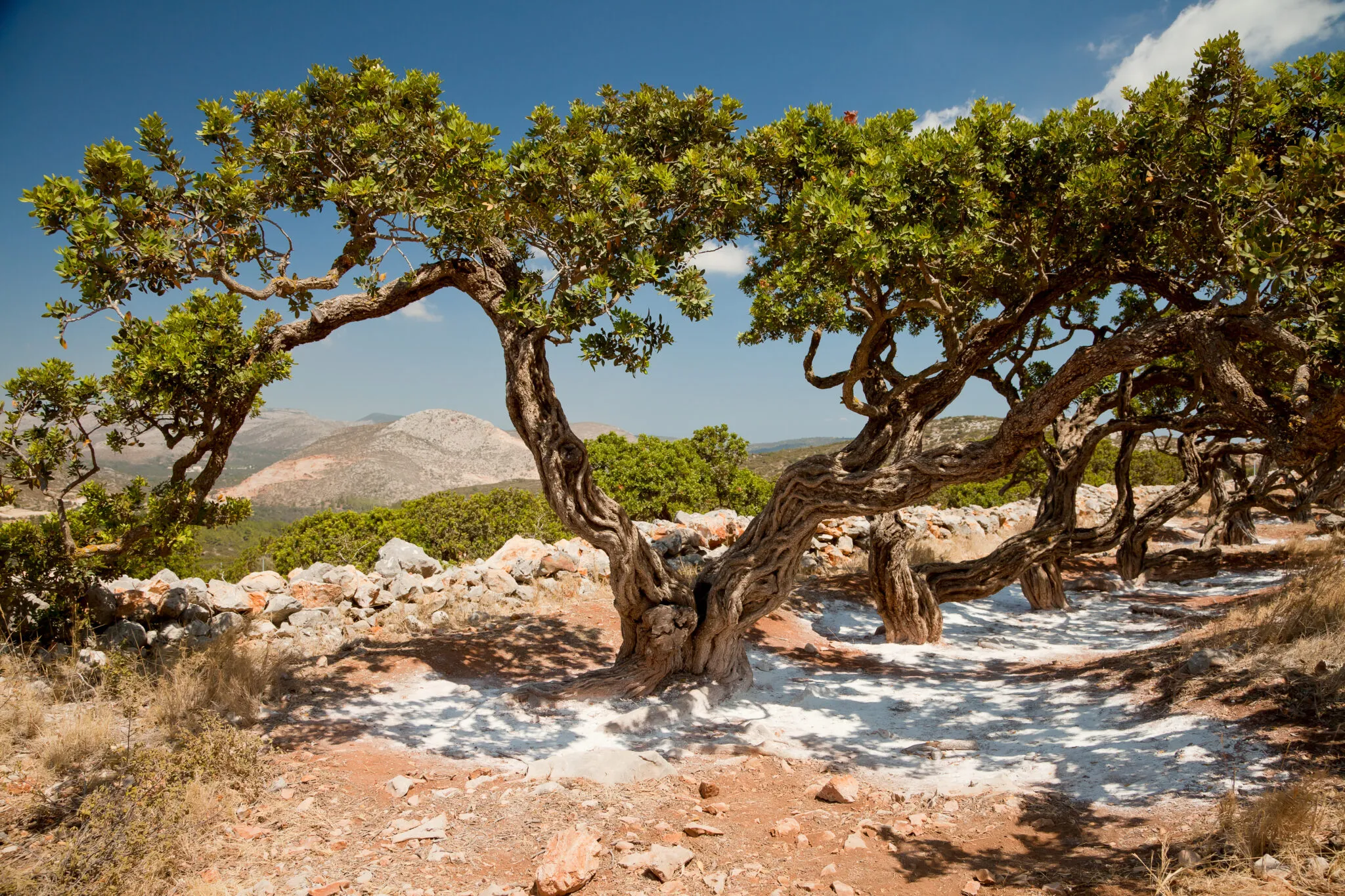
Every spring, producers clean the ground beneath the trees and spread it with asprochoma, a fine white limestone that cushions the falling resin. In summer comes the kentima – the careful scoring of the bark, a series of small incisions that allow the sap to emerge.
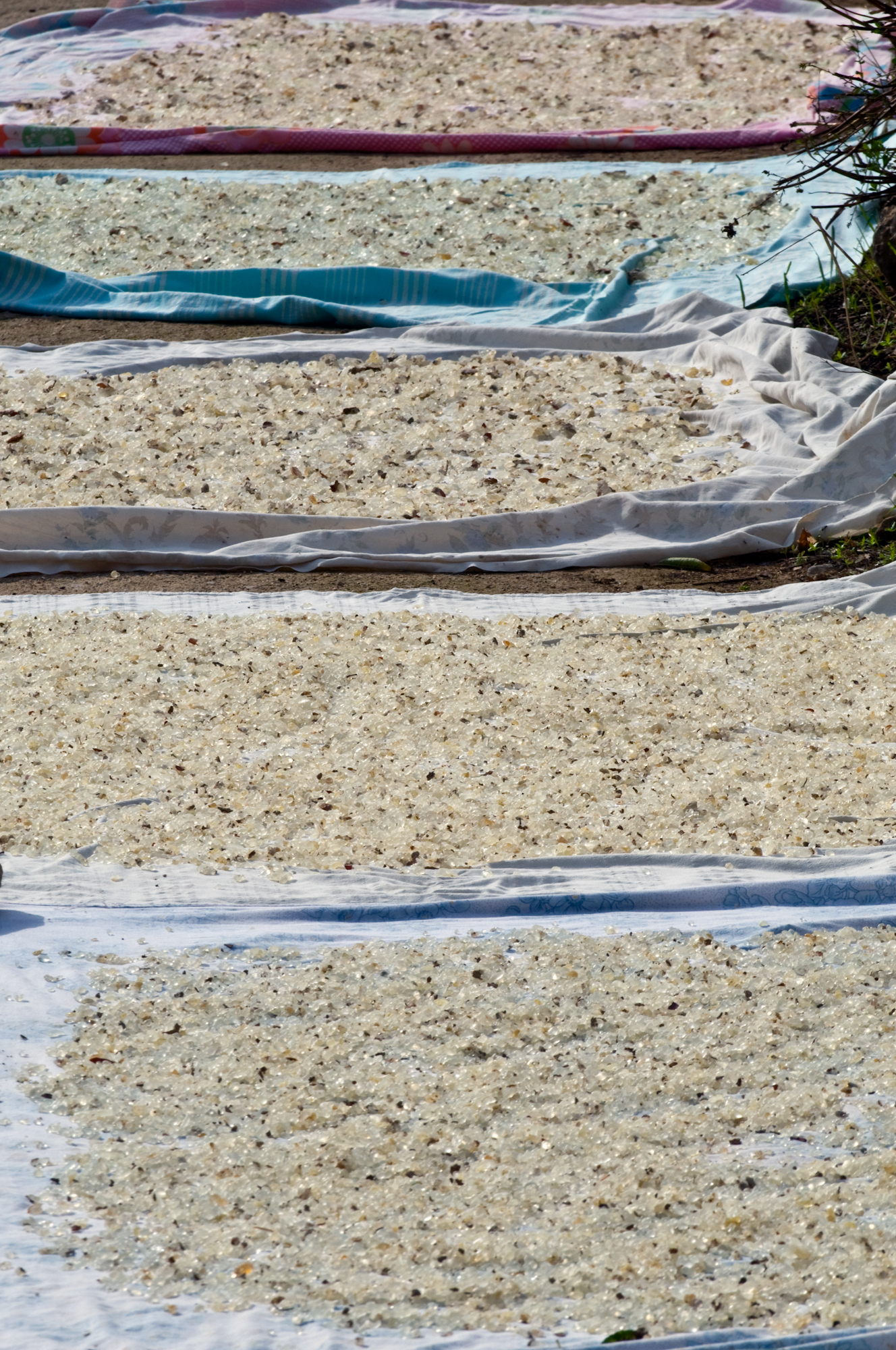
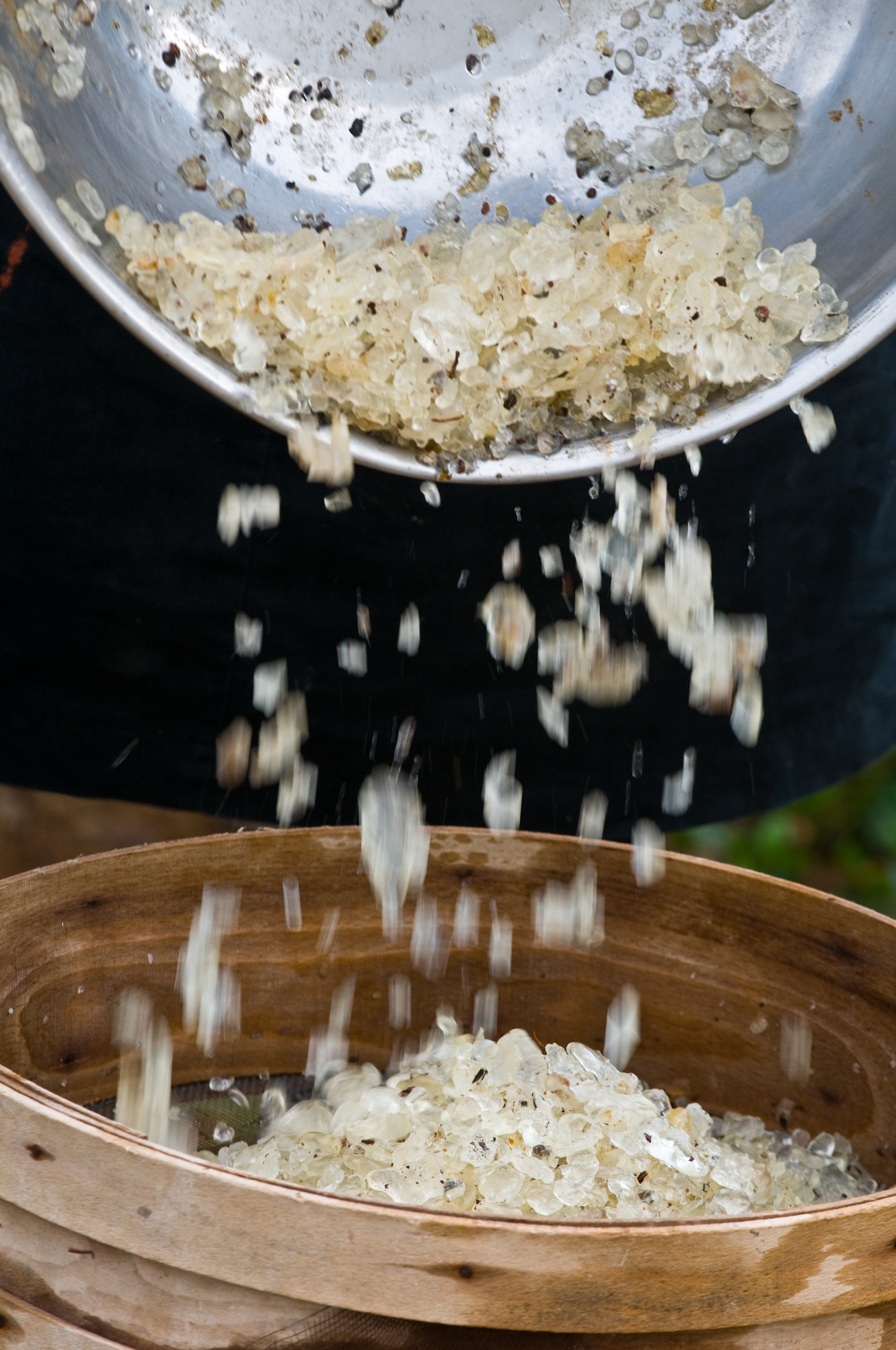
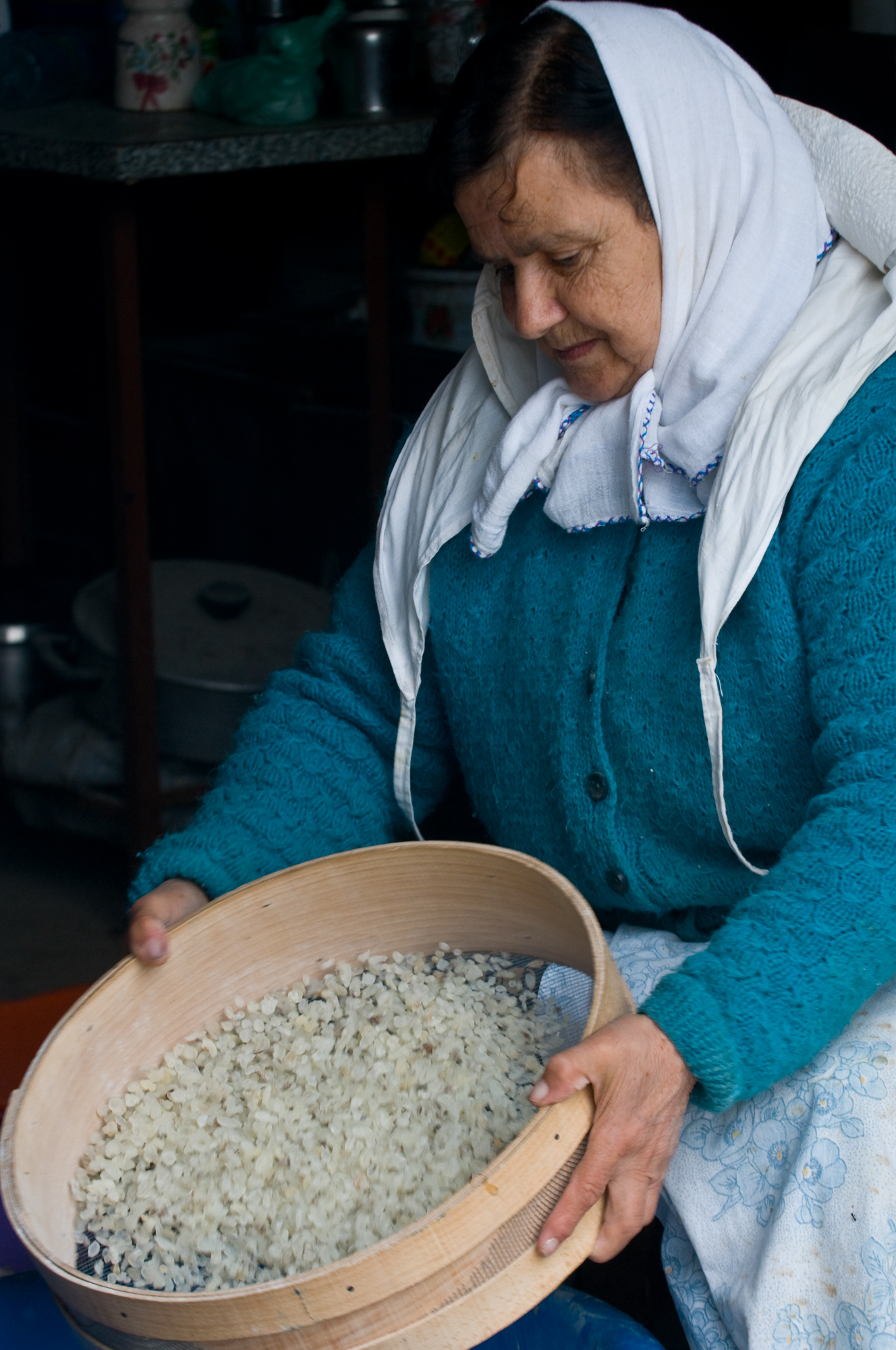
The resin drips slowly, sometimes over days, and hardens into small translucent crystals as it reaches the ground. These are the ‘tears‘ – collected by hand, sorted, and cleaned of dust and bark throughout the winter, one crystal at a time. The method has not changed in centuries, and in 2014 UNESCO recognized it as intangible cultural heritage.
It is this painstaking, entirely manual process that explains mastic’s price: you are paying for seasonal handwork on a single island, not industrial extraction.
Why Chios, and Nowhere Else

Scientists have studied the question for decades without a definitive answer. The mastic tree (Pistacia lentiscus) grows across the Mediterranean basin, but only on Chios does it produce resin in commercial quantities. The island’s limestone soils, mild winters, dry summers, and coastal microclimate appear to create conditions that cannot be replicated.
The resin is, in the most literal sense, a product of place – which is precisely what makes a trip to southern Chios feel less like tourism and more like visiting the source of something you already know, without ever having known where it began.
A Flavor That Travels

Without mastic, tsoureki is just brioche. Loukoumi is just sugar. Ouzo is just anise. A few translucent grains from a single island give some of Greece’s most iconic flavors the one quality that cannot be substituted.


