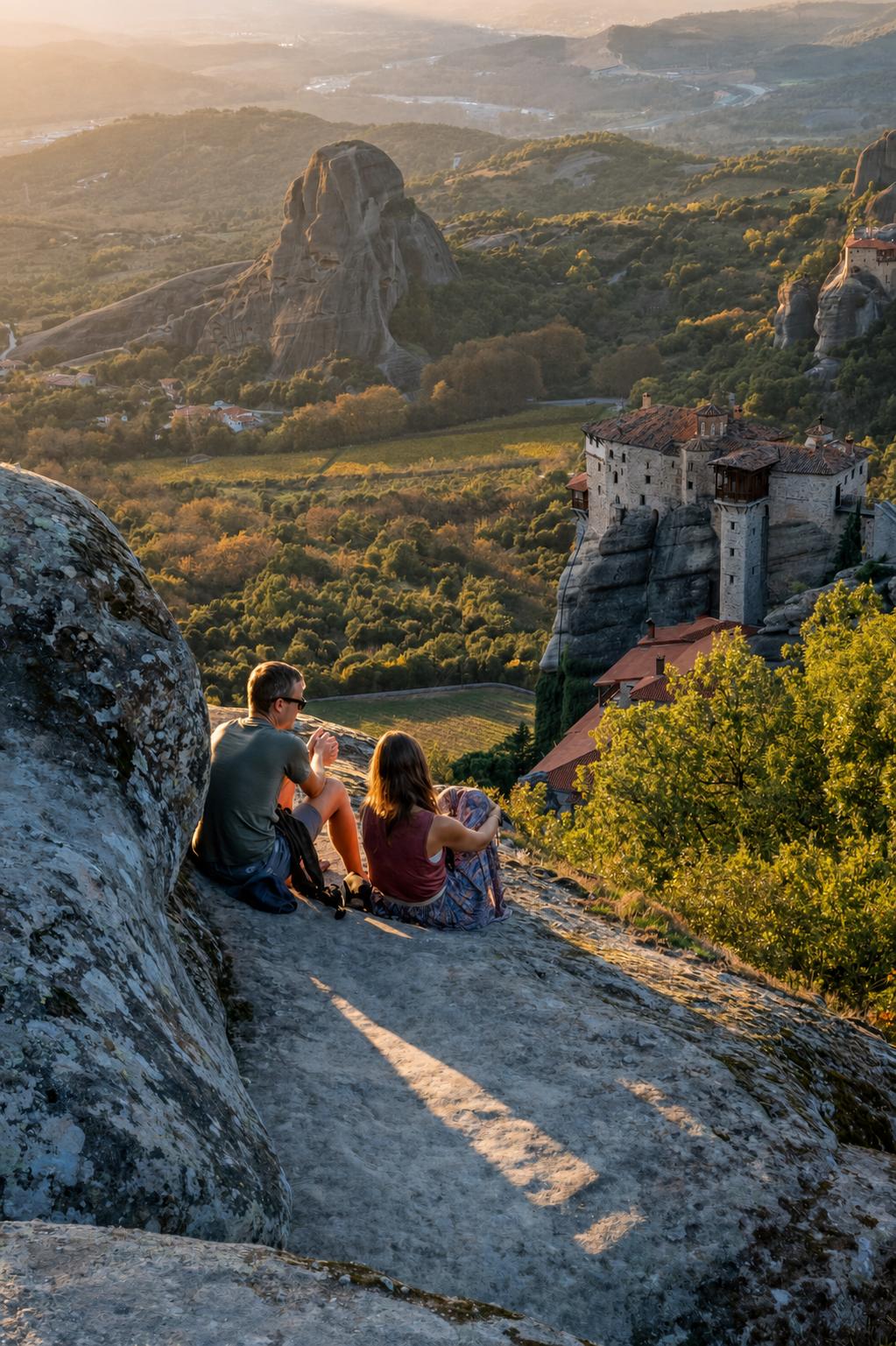



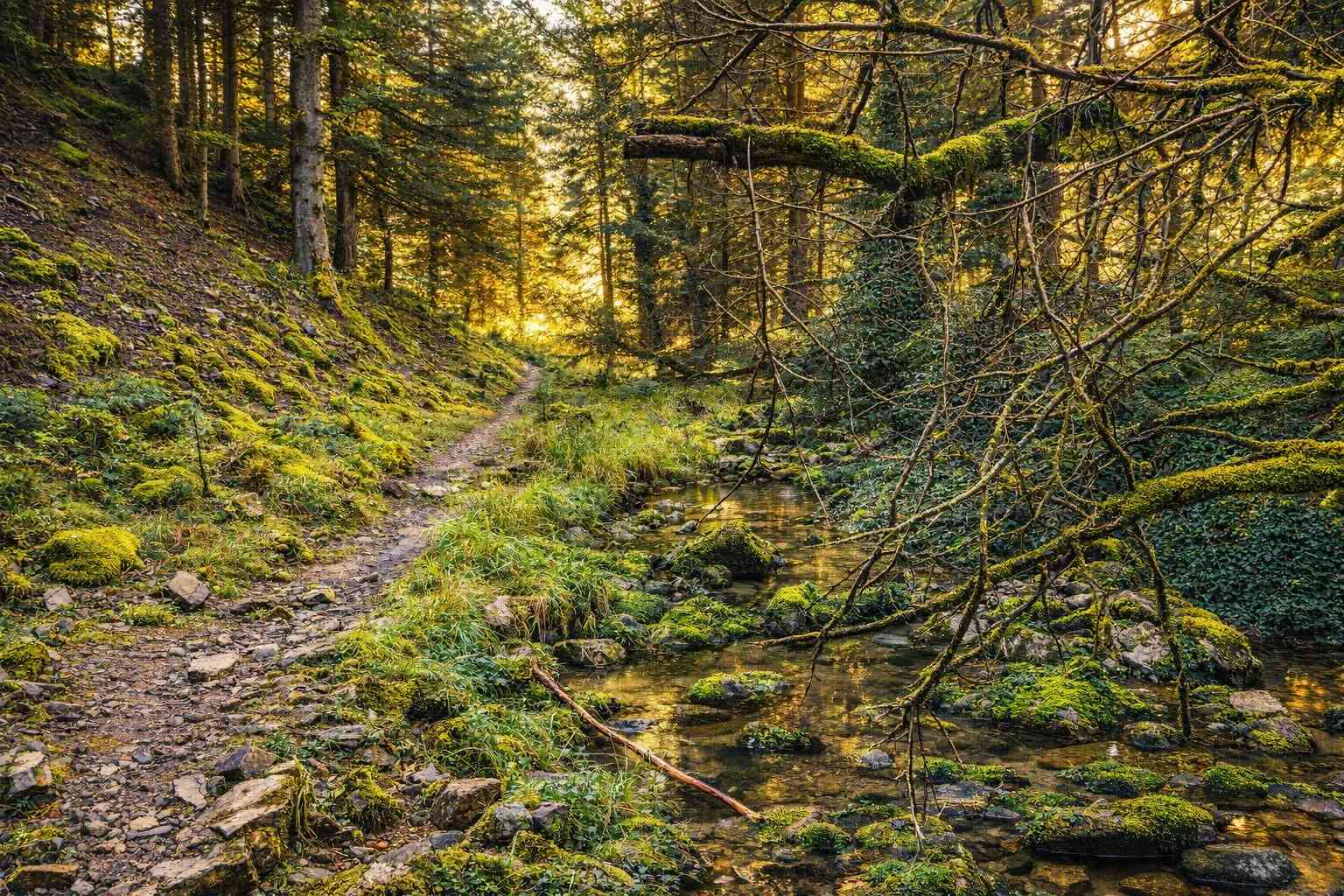
Spring is when hiking in Greece feels most persuasive. The mountains turn green, the trails soften under wildflowers, and the air has that rare balance of warmth and freshness that makes long walks feel easy.
This is the season when gorges carry more water, forests recover their depth, and old stone paths through mountain villages seem to return to use almost naturally. Lakes, streams, peaks, and hidden corners of the landscape all come into sharper focus in spring, when the country feels briefly more open, more fragrant, and more alive.
Each of these routes offers a different version of that experience: a long trail through Arcadia, a gorge on Olympus, a forest plateau in the Peloponnese, orchards in bloom outside Veria. Some ask for stamina, others simply for timing. All are best approached now.
01
Menalos Trail, Mountainous Arcadia
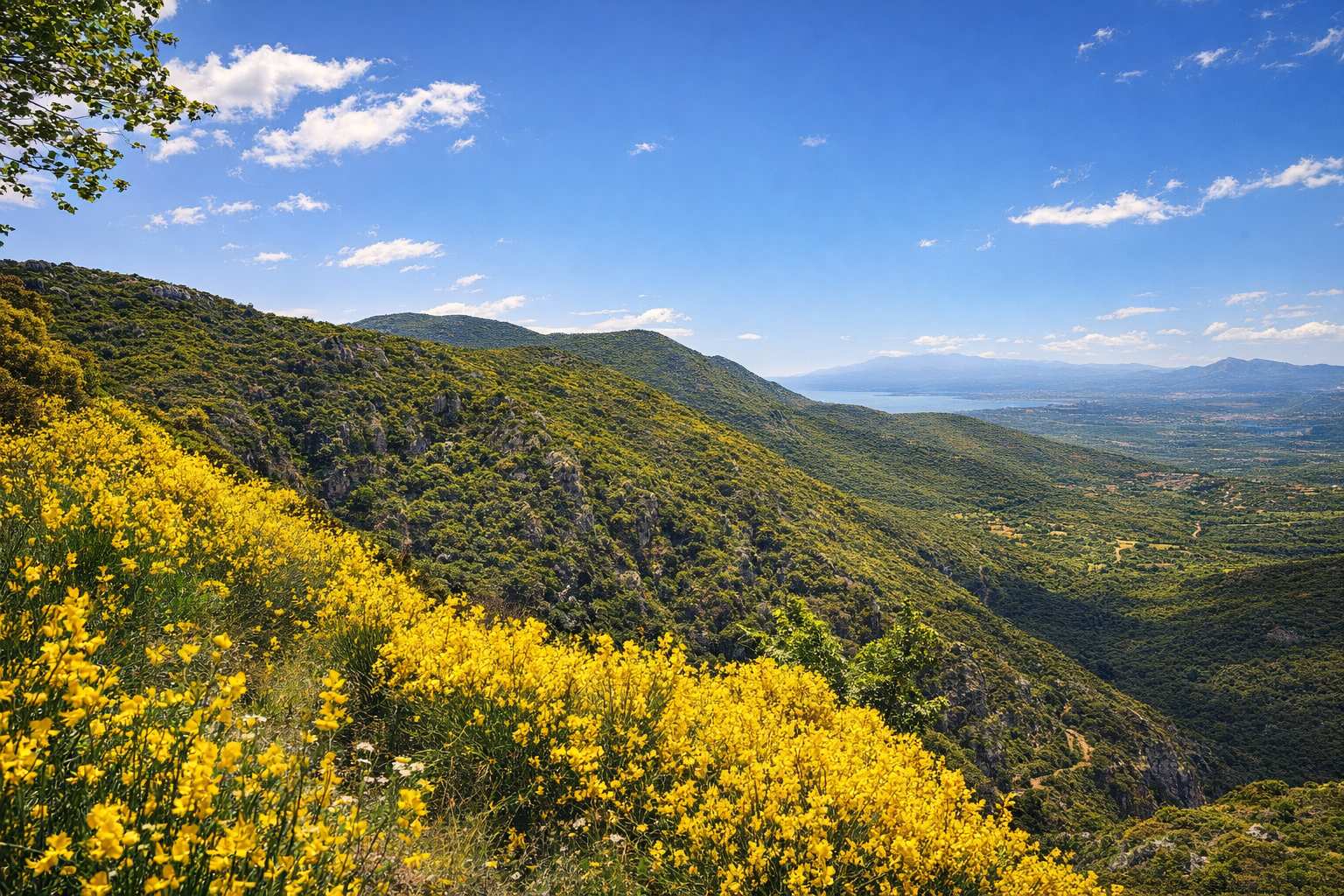
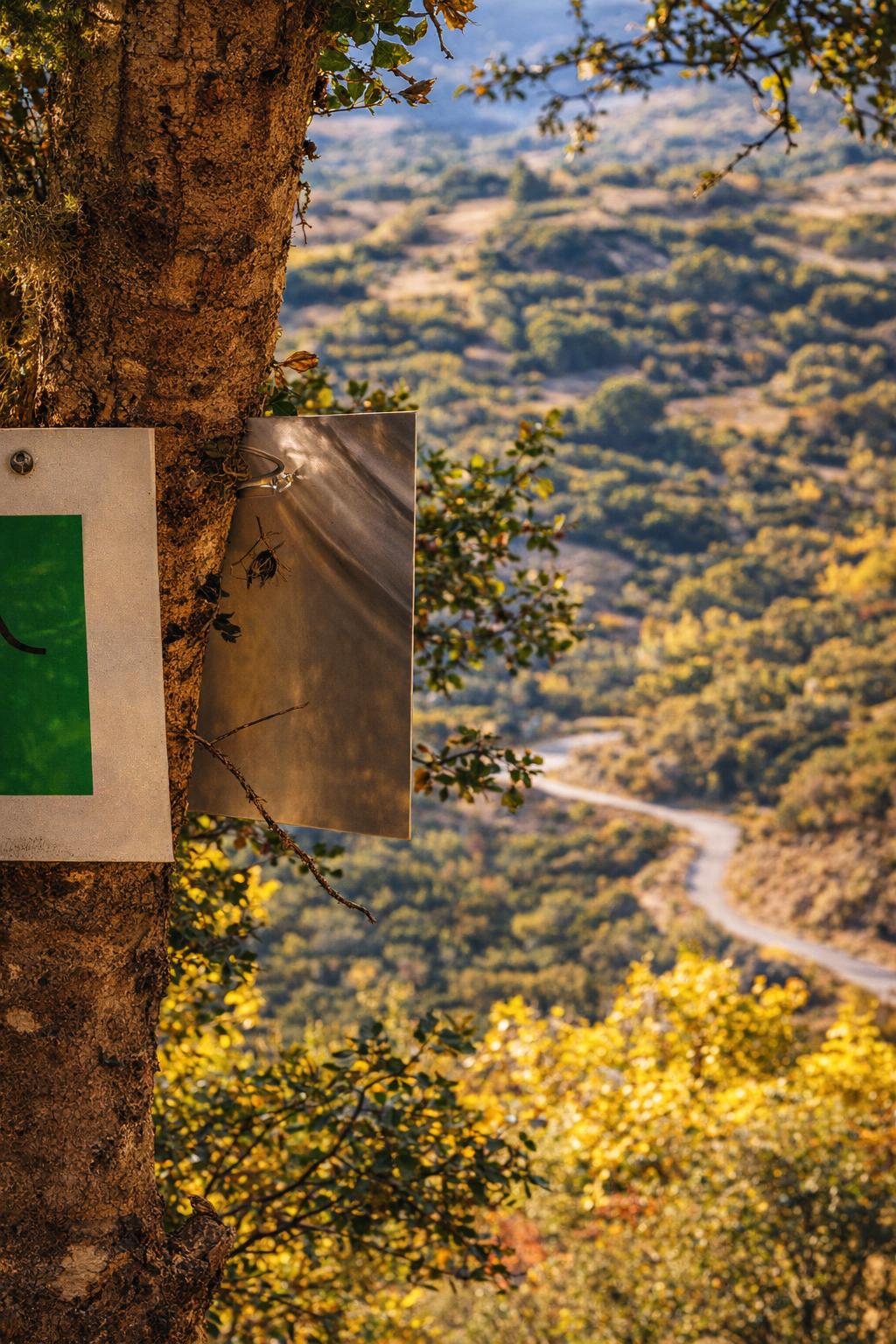
The Menalos Trail, also known in Greek as Mainalos, is one of the Peloponnese’s most important walking routes and still one of the best organized in Greece. Stretching for around 75 kilometers, it links nine villages across mountainous Arcadia and was the first trail in the country to receive certification from the European Ramblers Association as a Leading Quality Trail. In practical terms, that means clear waymarking, good maintenance, and a route designed for walking rather than improvisation.
In spring, Arcadia has a particular depth to it. Fir forest, ravines, old footpaths, and stone-built villages all sit within the same landscape, while the Lousios valley gives the area both water and a sense of historical weight. It is the kind of route that accommodates different ambitions: enough for a short day out, but also substantial enough to unfold over several days on foot.
02
Enipeas Gorge, Mt Olympus
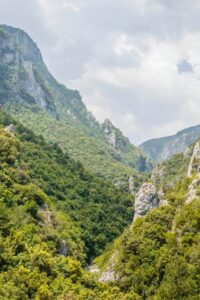
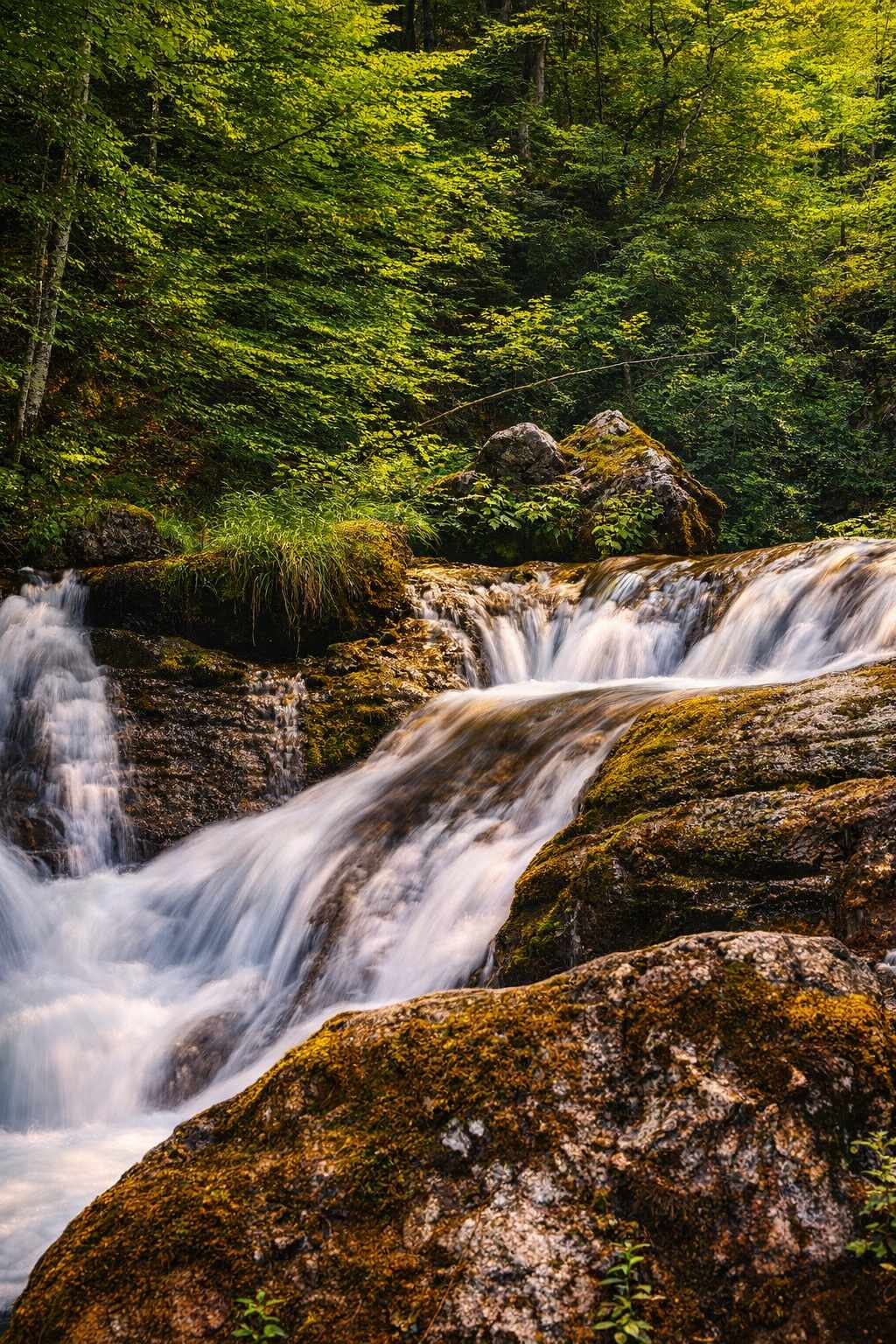
Enipeas Gorge is one of the defining walks on Mount Olympus and one of the most satisfying spring routes in mainland Greece. The trail from Prionia to Litochoro runs for about 11 kilometers and forms part of the international E4 route. Beginning at Prionia makes the walk more manageable, since much of it is downhill, though what stays with you is less the logistics than the setting itself.
Olympus was declared Greece’s first national park in 1938, and its ecological richness remains one of its defining qualities. Mythology is never far away here, but on foot the mountain feels less symbolic than physical: steep relief, dense vegetation, cold water, and a gorge that keeps the walker close to the landscape for long stretches. In spring, all of it feels sharper.
03
Drimonas Waterfalls, Northern Evia
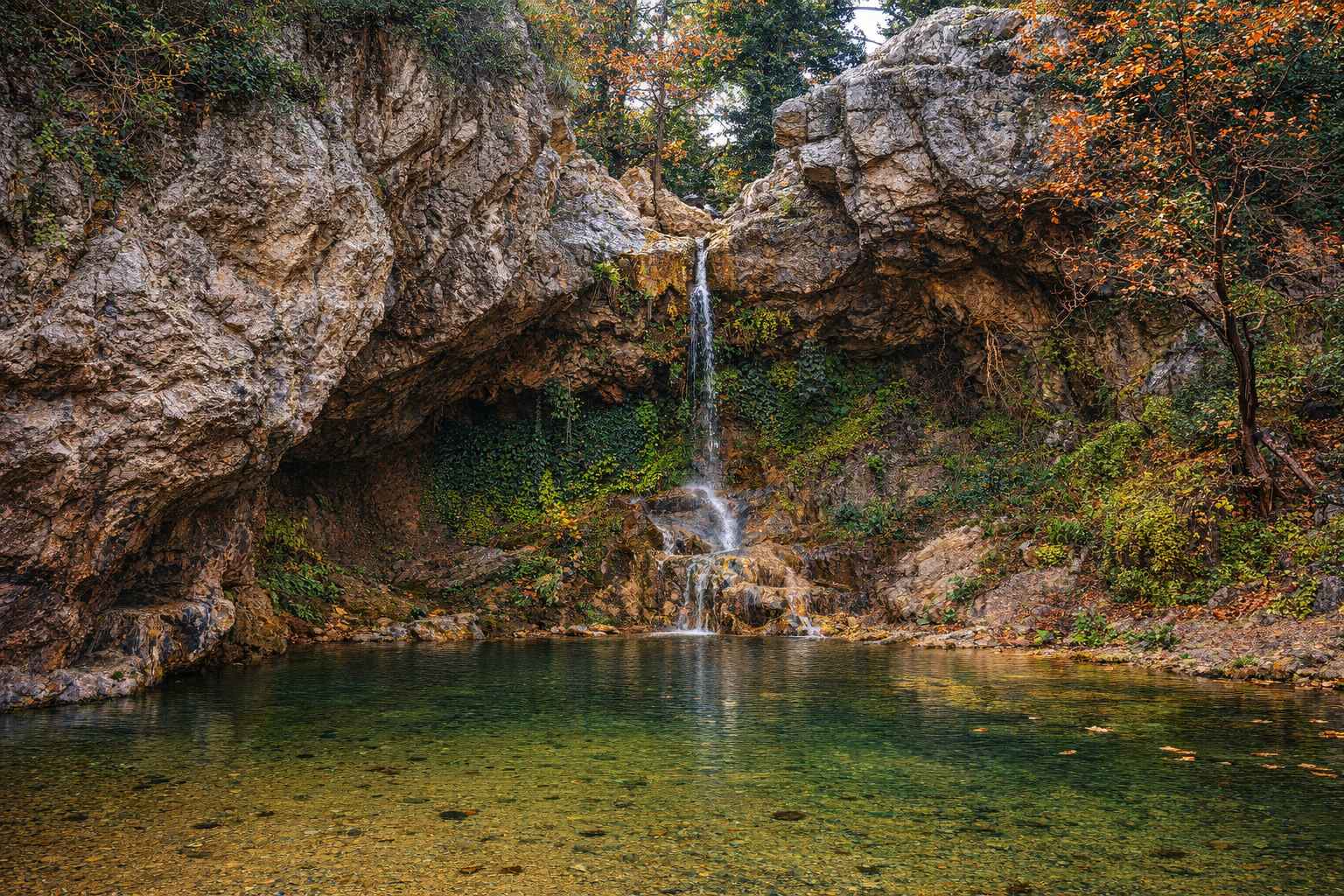
The Drimonas (also Drymonas) waterfalls are one of the easier spring outings on this list, but they lose nothing for being accessible. They lie at about 620 meters in northern Evia, between Drimonas and Kerasia, in a wooded landscape where the approach is short and the reward immediate.
The waterfall drops from about 15 meters and is fed by the Sepias River, forming small pools below. Spring is the right moment to come, when winter rainfall still gives the water force and the surrounding greenery has not yet hardened into summer. Even for those not setting out for a full hike, this is an easy, beautiful way into the landscape.
04
Foloi Oak Forest, Mt Erymanthos


Foloi belongs to a different category of spring walk. Broad, level, and set on a plateau at the foot of Mount Erymanthos, it feels unusual in Greece simply because of its scale and quietness. The forest extends across roughly 42 square kilometers and is known for its stands of broadleaf oak, which take on a particularly soft beauty in spring.
In ancient tradition, this was the land of the centaur Pholus, and the association still feels strangely apt. The landscape has an old, enclosed quality, as if it belongs to an earlier rhythm of the Peloponnese. It is also part of the Natura 2000 network. For walkers, the pleasure lies less in exertion than in atmosphere: gentle slopes, clearings, filtered light, and the rare feeling of moving through a forest that seems to hold itself apart.
05
Blooming Peach Trees, Veria
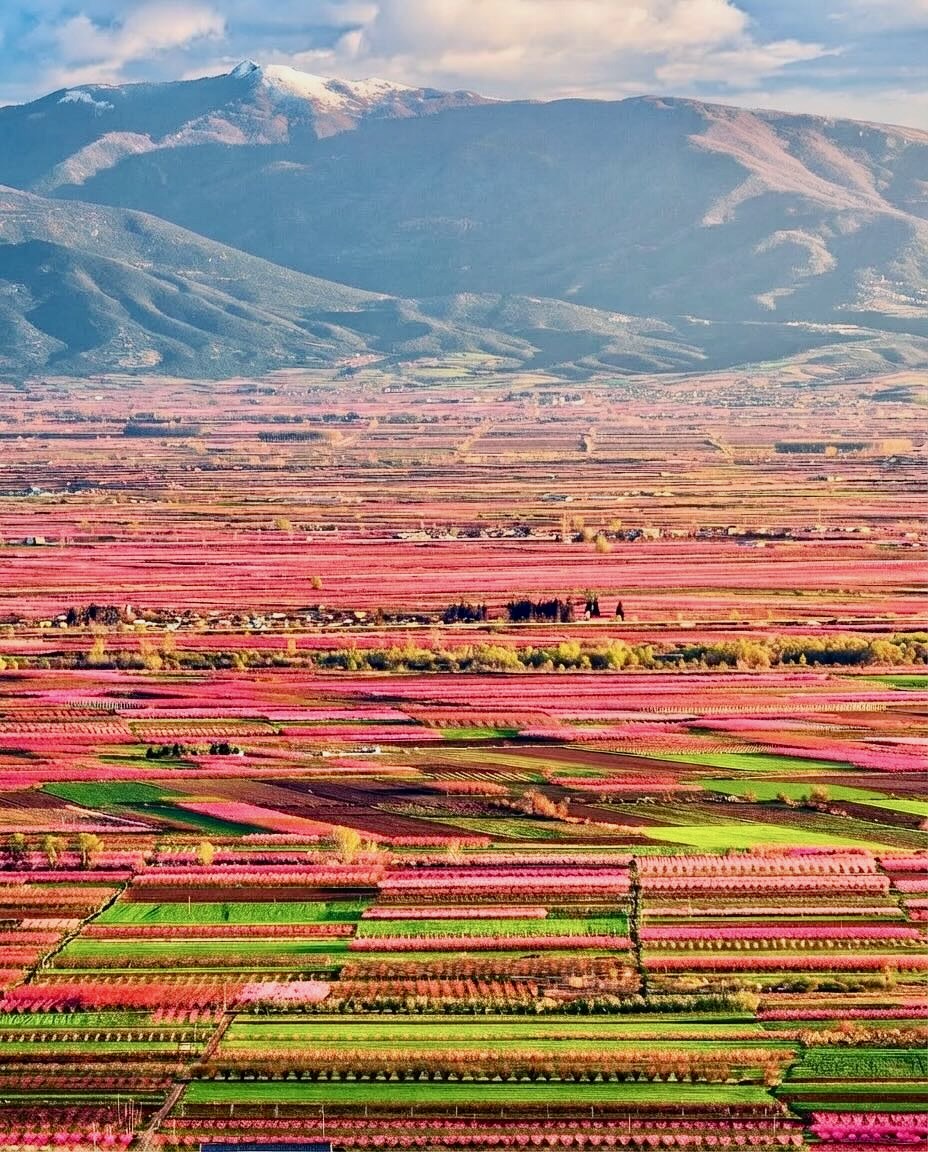
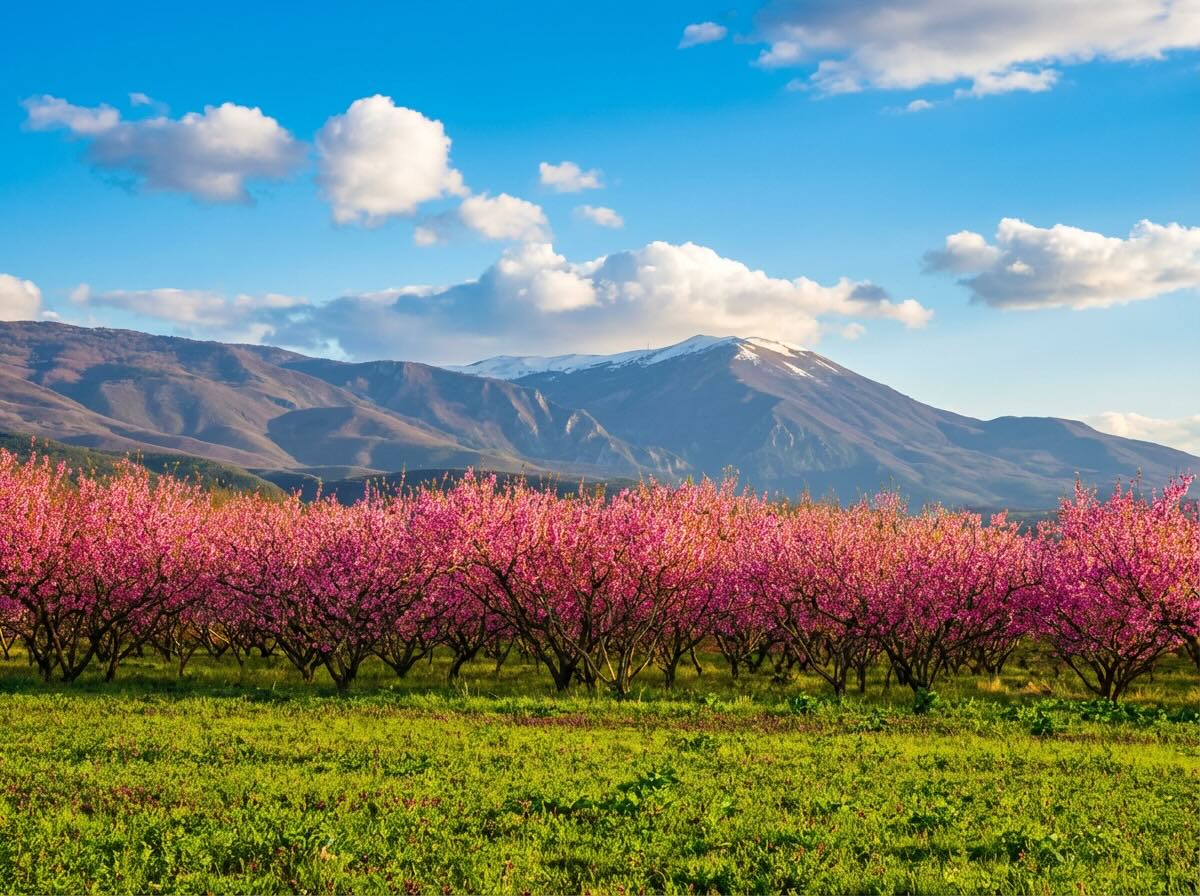
The peach blossom plains around the town of Veria are not a trail in the strict sense, but they remain one of the most striking spring landscapes in Greece. From early to late March, the plain of the Imathia region turns pink and white as thousands of peach trees bloom at once. It is farmland rather than wilderness, and that distinction is part of the appeal.
The beauty here comes from repetition, scale, and timing. In recent years, the blossom has become a destination in its own right, drawing visitors during the short flowering period. Outside those weeks, these are simply working orchards. In bloom, they become something else entirely: one of northern Greece’s most fleeting and memorable seasonal scenes.
06
‘Panta Vrechei’ Gorge, Evrytania

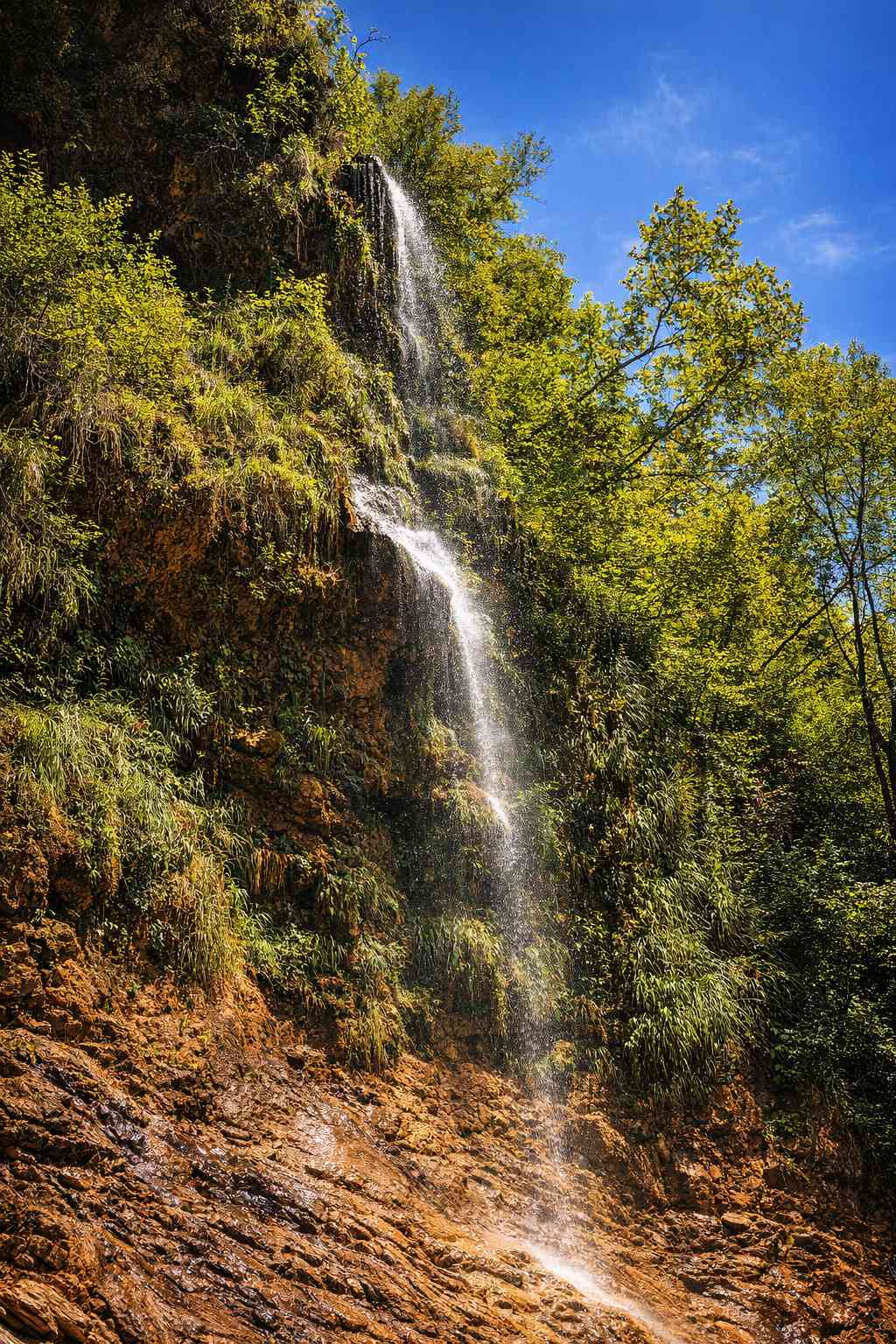
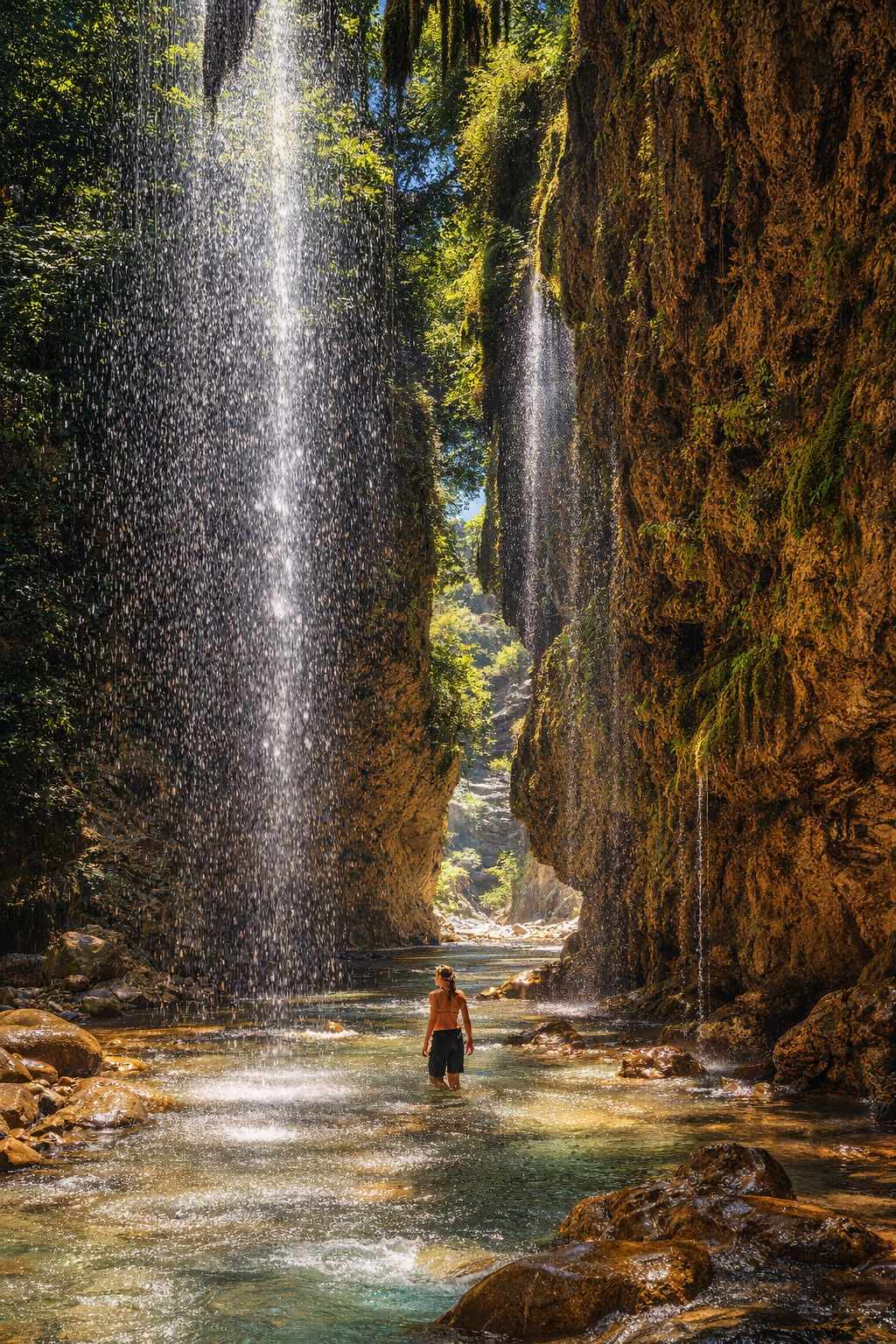
‘Panta Vrechei’ is one of the strangest landscapes in Greece, and one of the most memorable. The gorge lies in southern Evrytania, between the villages of Roska and Doliana, and is crossed by the Krikelopotamos River in the wider landscape between Kaliakouda and Platanaki. Its name, meaning “it always rains,” comes from the water that falls continuously from springs high in the rock face and drifts down in fine threads over the river below. That is what gives the place its peculiar beauty.
This is not a waterfall viewed from a distance, but a corridor of water and rock entered on foot, often by walking directly through the riverbed. Access depends on water levels, which is why it is more often associated with warmer weather, but spring gives the gorge a freshness and intensity that suit it especially well.
07
Vouraikos Gorge, Peloponnese
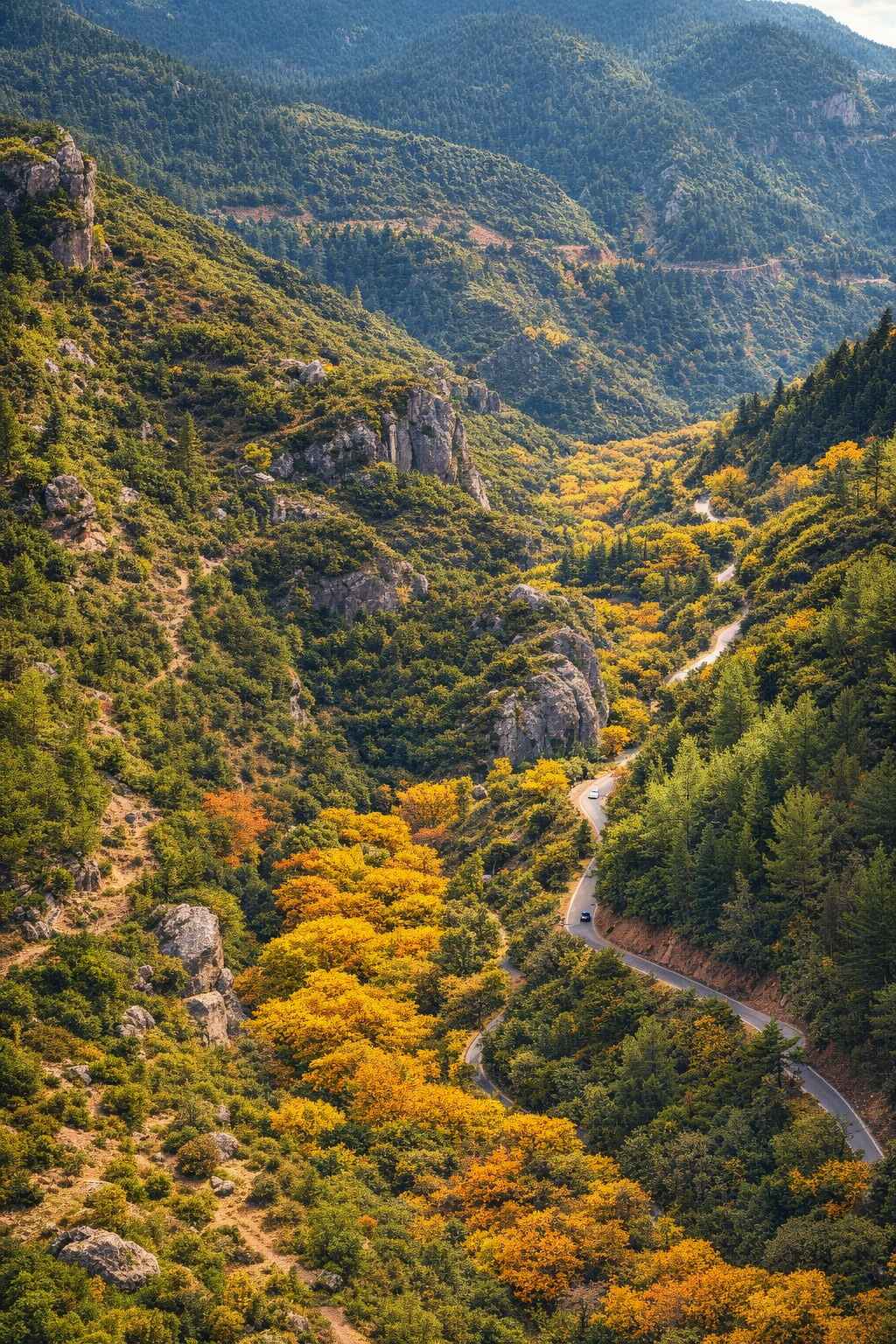
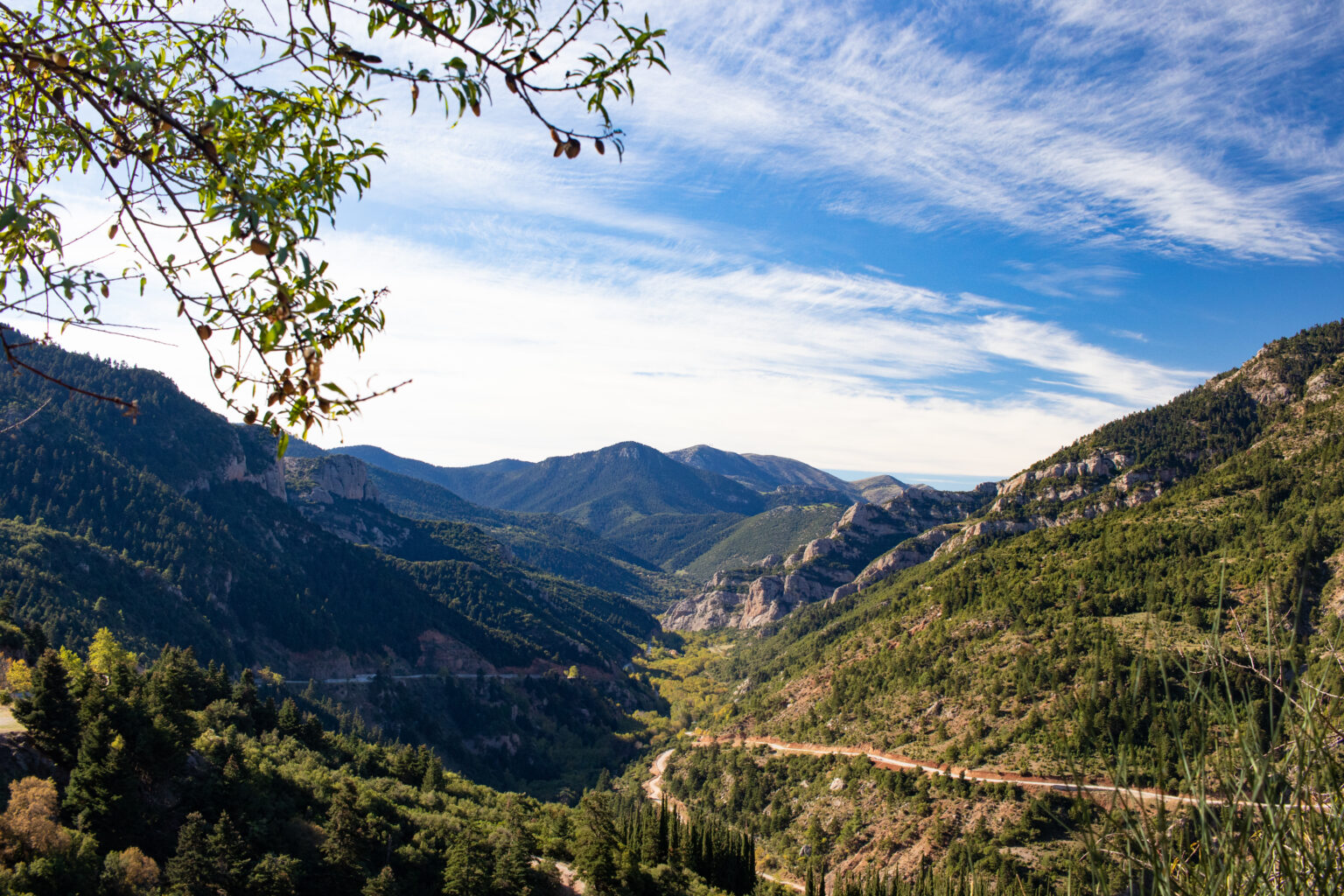
The Vouraikos route stands apart for the way it brings geology, railway history, and hiking into the same narrow passage. The trail follows the line of the Odontotos rack railway between Diakopto and Kalavryta, a narrow-gauge mountain railway that has been operating since 1896. Over about 22 kilometers, the line cuts through one of the most striking gorges in the northern Peloponnese, passing cliffs, dense vegetation, and the village of Zachlorou.
The area is also part of the Chelmos-Vouraikos UNESCO Global Geopark, which adds geological significance to its obvious scenic appeal. But what makes the route memorable on foot is the constant interplay between landscape and infrastructure: tunnels, exposed rock walls, river crossings, and the railway itself, always present, always shaping the experience.
08
Valley of the Butterflies, Rhodes

The Valley of the Butterflies on Rhodes is a habitat first and a walking route second, which is precisely what makes it so distinctive. The valley is known for the seasonal arrival of Panaxia quadripunctaria, commonly called the Jersey tiger moth, which gathers here from May to September. The familiar name is misleading: these “butterflies” are, in fact, moths.
The site is also associated with the Oriental sweetgum tree, Liquidambar orientalis, and with the cool, humid conditions created by the valley’s abundant water. In spring, before the summer concentration begins, it is still one of the island’s most rewarding walks: shaded, green, and quietly structured by bridges, springs, and a contained landscape that feels far removed from the drier image many people have of Rhodes.