




Spring is the best season for hiking and time in the glorious outdoors. The mountains are carpeted with all shades of green, trails are covered with wildflowers of every color and scent, and the weather feels exactly right: sunny, yet cool enough to refresh, with a mild warmth that settles in gradually.
The gorges that cut through the mountains catch light and shadow across their rock walls, while small flowers push through the old stone footpaths of traditional villages and mark the route underfoot. Rivers run fast this time of year, and the forests are full of color and fragrance. Nature is in bloom. Lakes and clear streams, mountain peaks lit by spring sun, and hidden landscapes that reveal themselves only to those who make the effort to reach them.
Every route we reveal here has its own character and surprises, and each invites you to follow it. There is no shortage of choice, all you need is good spirits, hiking shoes and great company.
01
Mainalo Trail, Mountainous Arcadia

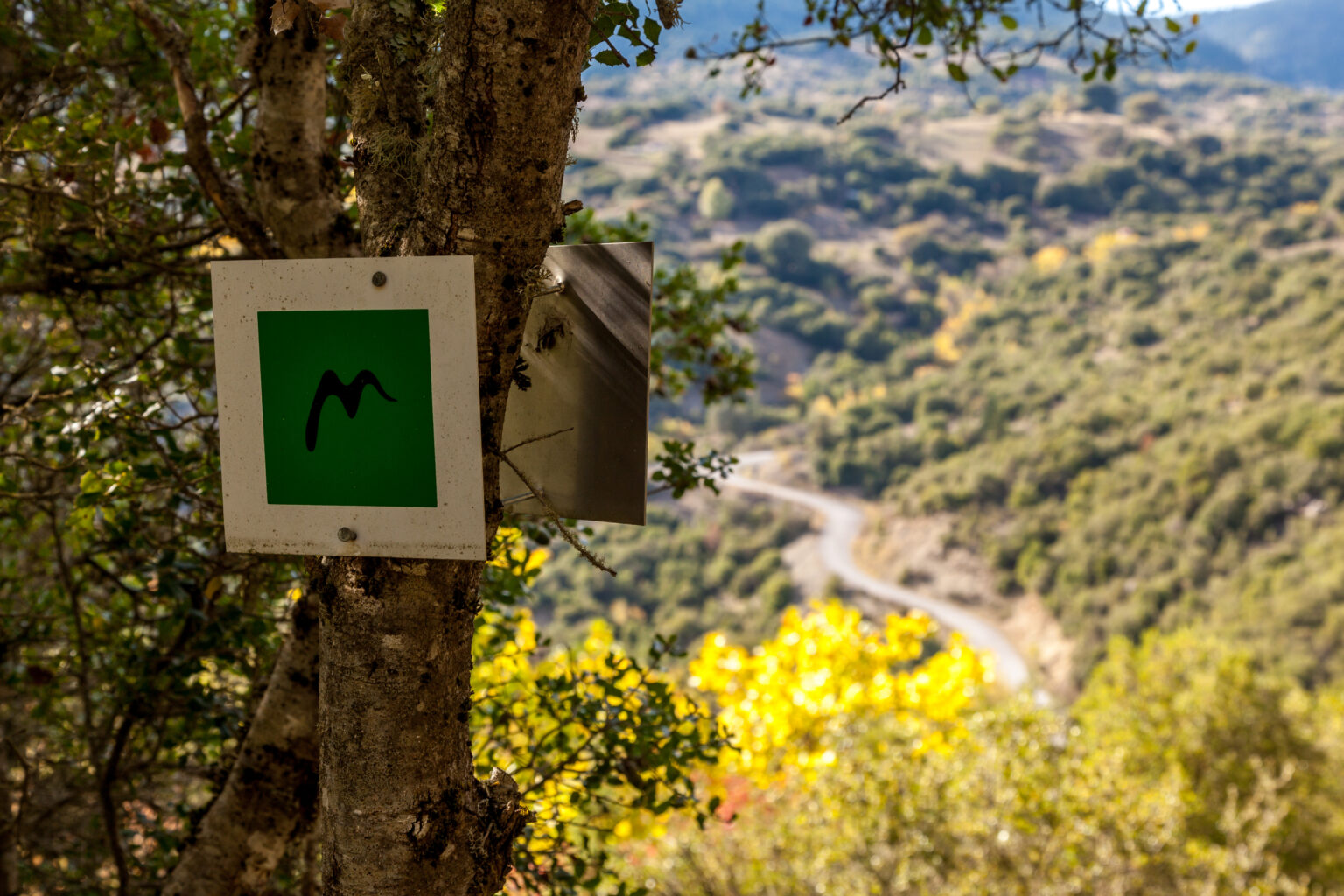
The Mainalo Trail is one of the most important walking routes in the Peloponnese, and still one of the best-organized in Greece. At about 75 kilometers, it links nine villages across mountainous Arcadia and was the first trail in Greece to receive certification from the European Ramblers Association as a Leading Quality Trail. That matters on the ground: the route is structured, signposted, and built for hiking rather than occasional excursion use.
In spring, Arcadia has clarity and depth. Fir forest, ravines, old footpaths, and stone-built settlements sit within the same system, and the Lousios valley gives the area both water and historical weight. This is a route with range, which is why it works for both less experienced hikers and people who want to cover longer sections over several days.
02
Enipeas Gorge


Enipeas Gorge is one of the defining walks on Mount Olympus, and one of the best springtime routes to visit in mainland Greece. The trail between Prionia and Litochoro runs for about 11 kilometers and forms part of the international E4 route. The direction is downhill from Prionia, which makes the elevation change more manageable, but the setting is what gives the route its force.
Olympus was declared Greece’s first national park in 1938, and its ecological scale is unusual even by Greek mountain standards: more than 1,700 plant species have been recorded here, representing roughly a quarter of the country’s flora. The mythology is built into the setting too. This was in Greek mythology the ‘mountain of the gods’, but on foot what comes through most strongly is its natural drama: deep gorges, abrupt changes in relief, dense vegetation lower down, and a route that keeps the walker in close contact with water for long stretches.
03
Drymonas Waterfalls, Northern Evia

The Drymonas waterfalls are one of the easiest spring stops on this list, but they are not minor. They sit at about 620 meters in northern Evia, between Drymonas and Kerasia, in a wooded area where the path is short and the destination is immediate.
The waterfall itself drops from about 15 meters and is fed by the Sepias River, forming small pools below. In practical terms, this is one of those places where spring enhances the experience significantly: winter and early spring bring stronger water flow, so the falls have more volume at exactly the time when walking conditions are also at their best. It is the kind of route that works even for people who are not setting out for a full hike, because the approach is simple and the landscape does the work quickly.
04
Foloi Oak Forest


Foloi has a different scale and a different logic from the mountain trails. This is a plateau forest, broad and level, and unusual in the Greek landscape for that reason alone. It is also widely described as the only oak forest of its kind in the Balkans, and one of the largest and oldest in Europe, covering about 42 square kilometers at the foot of Mount Erymanthos. The dominant tree here is the broadleaf oak, and spring is when the whole forest shifts from winter bareness into soft green cover.
In ancient tradition this was the land of the centaur Pholus, and the association has stayed with the forest because the setting still feels self-contained and old. The protected status matters too: it is part of the Natura 2000 network, which helps explain why the landscape retains such continuity. For walking, the advantage is the terrain itself. The routes pass through clearings and mild slopes, so the experience is less about exertion and more about moving through a rare ecosystem at ground level.
05
Blooming Peach Trees, Veria
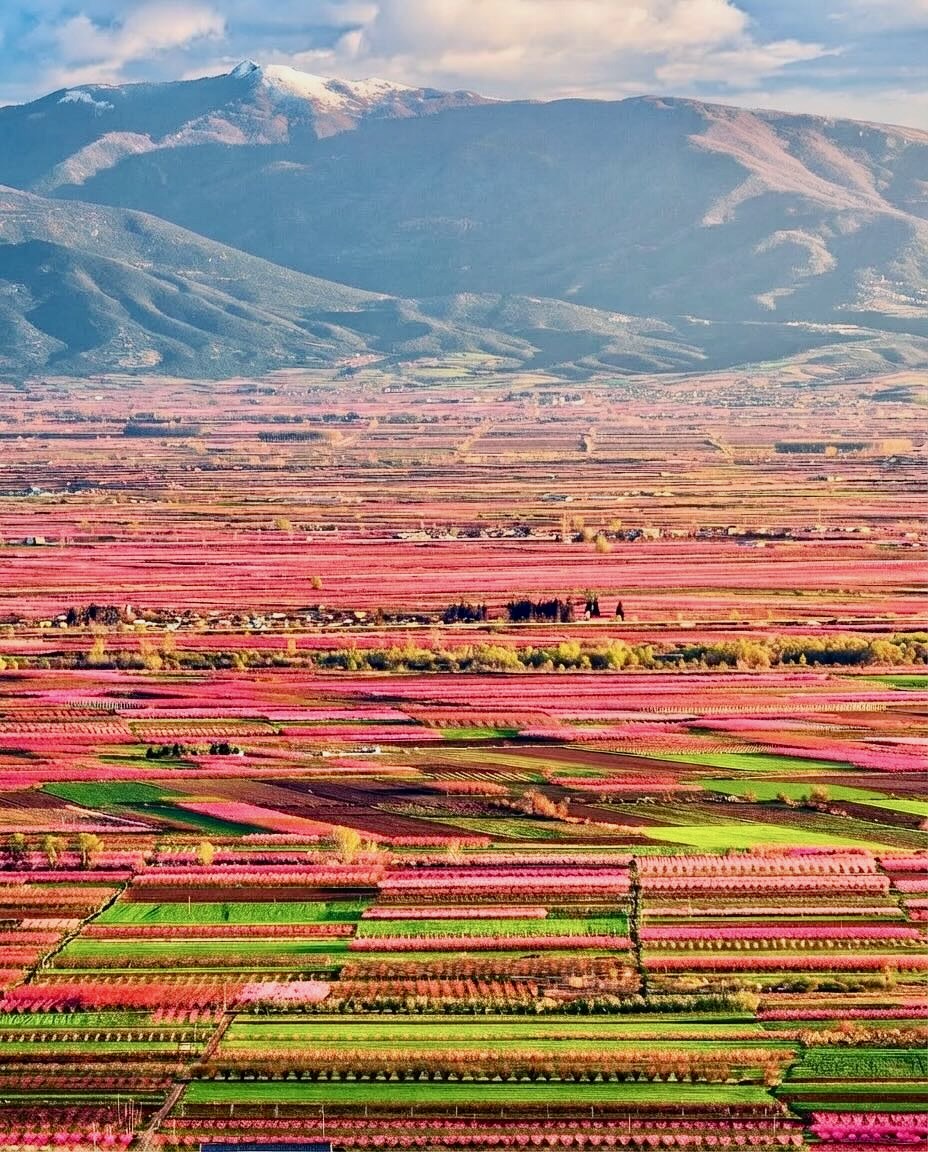
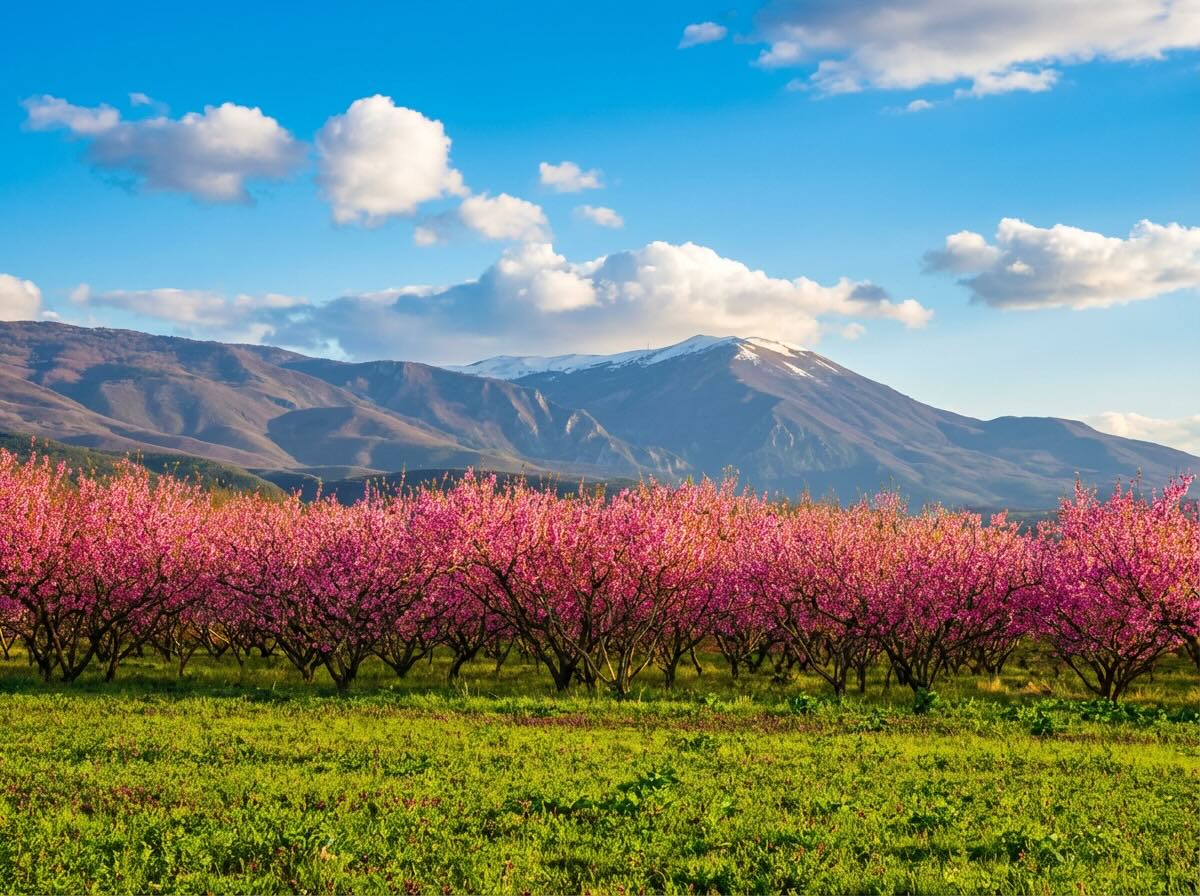
The peach blossom plains around Veria are not a mountain trail in the usual sense, but they are well worth visiting because the scale of the phenomenon is so specific to the season. From the beginning through the end of March, the plain of Imathia turns pink and white as thousands of peach trees bloom at once. This is agricultural land rather than protected wilderness, which is part of its appeal.
The landscape is organized in long cultivated lines, and the effect comes from repetition and extent rather than from dramatic terrain. In recent years the bloom has become a spring destination in its own right, with the area around Veria drawing large numbers of visitors during the flowering period. For anyone walking here, the key is timing. Outside those few weeks, the same fields are simply productive orchards. In bloom, they become one of the most distinct seasonal landscapes in northern Greece.
06
Panta Vrechei Gorge, Evrytania


Panta Vrechei is one of the most unusual hydrological sights in Greece. The gorge lies in southern Evrytania between the villages of Roska and Doliana and is crossed by the Krikelopotamos River, in the wider landscape between Kaliakouda and Platanaki. The name, which means “it always rains,” comes from a specific section of the gorge, about 80 meters long, where water falls continuously from springs high on the rock face and descends in fine streams over the river corridor below. That is why the place feels different from a standard waterfall stop.
The effect is not a scattering of drops or a small plunge pool but a hanging screen of water that you enter by moving up the riverbed itself, often knee-deep in the stream. Access depends on water levels, which is why the route is mainly associated with the warmer part of the year, but spring is exactly when the setting has force and freshness.
07
Vouraikos Gorge
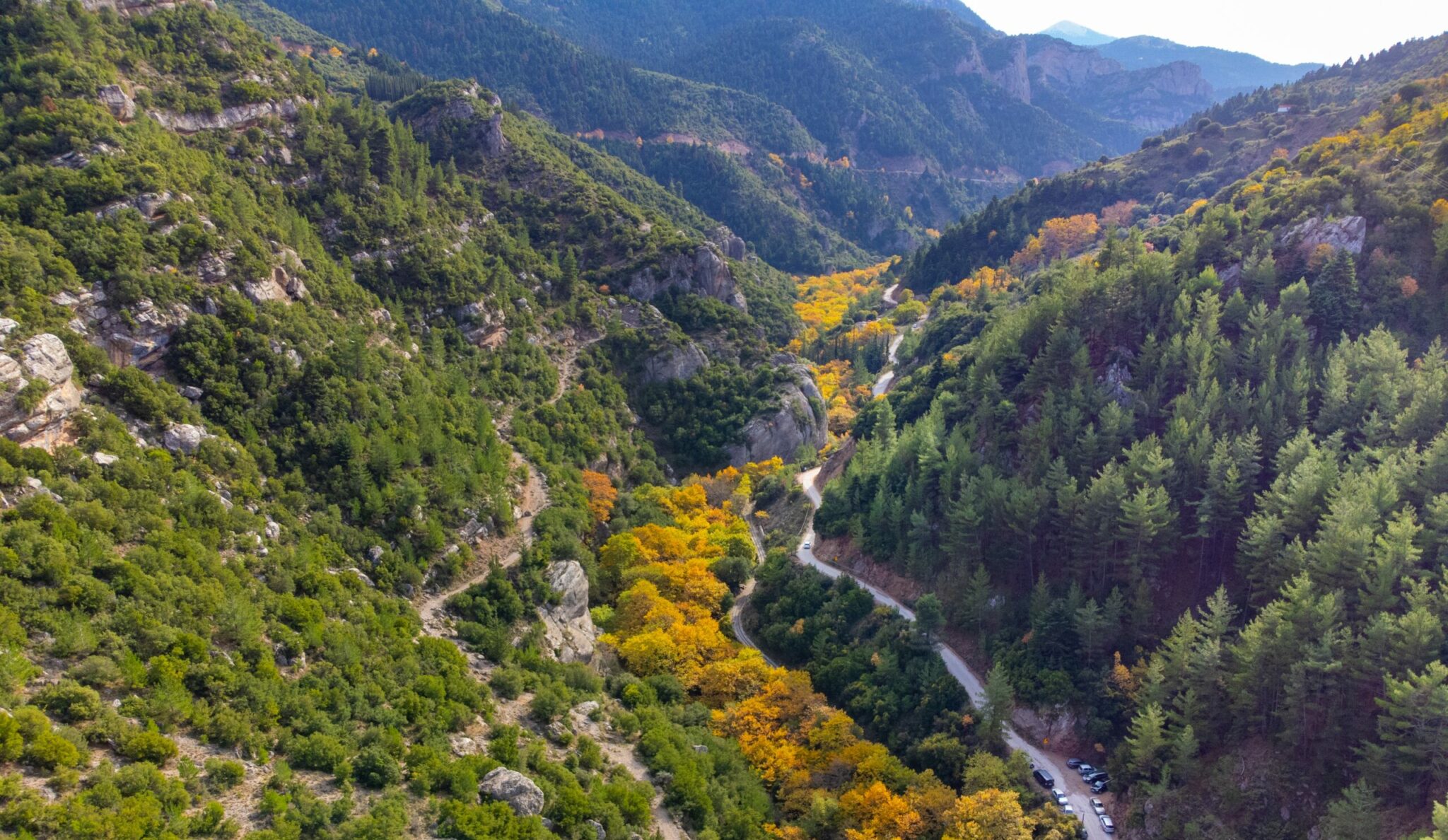

The Vouraikos route stands apart because it combines geology, railway history, and hiking in the same corridor. The trail follows the line of the Odontotos rack railway between Diakopto and Kalavryta, a narrow-gauge mountain railway that has been in operation since 1896. The rail line covers about 22 kilometers and cuts through one of the most striking gorges in the northern Peloponnese, passing cliffs, dense vegetation, and the village of Zachlorou along the way.
The wider area is also part of the Chelmos-Vouraikos UNESCO Global Geopark, which means the gorge is recognized not only for scenic value but for geological significance as well. On foot, that comes through in the structure of the place: narrow passages, exposed rock walls, tunnels, river crossings, and long sections where the route is defined by the meeting of infrastructure and landscape. It is one of the few Greek walks where engineering history is part of the scenery from beginning to end.
08
Valley of the Butterflies, Rhodes


The Valley of the Butterflies on Rhodes is a habitat first and a walking route second, which is exactly what makes it distinct. The valley is known for the seasonal presence of Panaxia quadripunctaria, commonly called the Jersey tiger moth, which gathers here from May to September. That detail matters, because the famous “butterflies” are in fact moths.
The site is also associated with the Oriental sweetgum tree, Liquidambar orientalis; according to the valley’s own materials, this is the only natural forest of that species in Europe, and the moths are drawn to the area by substances emitted by the trees along with the humidity created by the valley’s abundant water. In spring, before the summer concentration begins, the route is still one of the best walks on Rhodes: shaded, green, and structured by bridges, springs, and a contained valley landscape that feels separate from the drier image many visitors have of the island.