


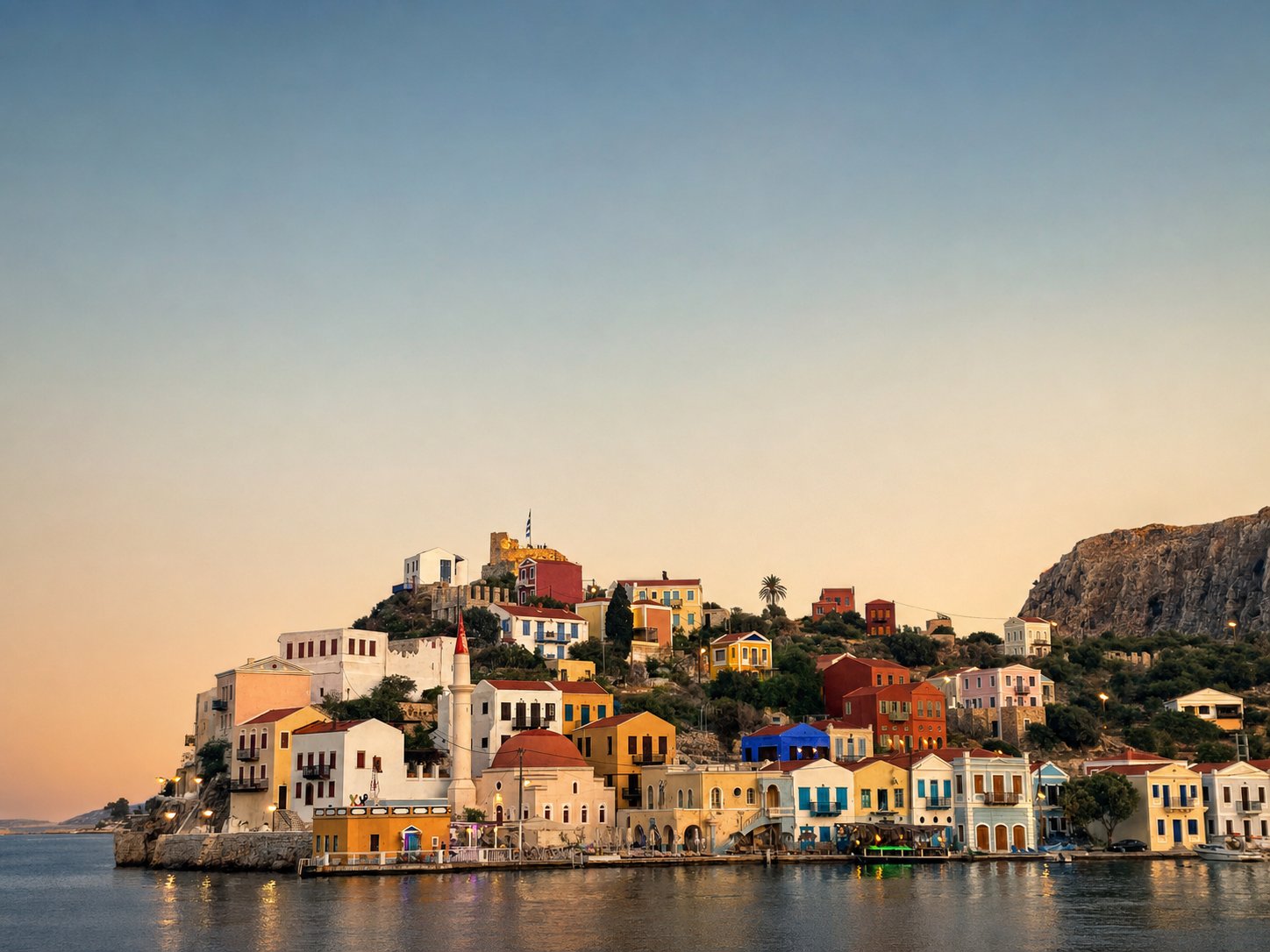
The first and most powerful impression that lands upon a traveler arriving in Kastellorizo is its singular, almost theatrical beauty. A small harbor lined with Italian-style pastel houses, deep cobalt-blue water, and a rocky slope rising behind the town is the first sight that meets the eyes (a stark departure from the whitewashed architecture typically associated with Greece).
For travelers who know the country through popular destinations like Athens, Mykonos, or Santorini, this tiny, remote island feels almost unrecognizable at first glance. Officially named Megisti, it sits in the far southeastern corner of the Dodecanese, close to the coast of Turkey and far from the better-known island routes, yet unusually rich in its visual impact.
Lately, however, Kastellorizo has undergone a quiet but profound shift. Once a remote secret, it has suddenly been crowned the ultimate destination for those in the know by expert editors at the likes of Condé Nast Traveler and Travel + Leisure. This global spotlight is well-deserved, yet it remains highly unexpected and not entirely welcomed by the locals, who cherish the island’s fragile, slow-paced tranquility.
Its immediate charm is reflected in its single natural harbor: the colored facades, tiled roofs, bobbing boats, stone steps leading into the town, an antique mosque, a castle, and swimmers entering the water from ladders along the quay. But the deeper impression comes from understanding its history, culture, gastronomy, and somewhat cosmopolitan allure.
The truth is that Kastellorizo is not for everyone. It requires a long, tedious journey to reach, and its rewards are reserved for those who appreciate raw, unfiltered authenticity over manicured luxury. In keeping with Travel.gr’s signature honesty, this guide is designed to align expectations with reality, ensuring that only those who truly fit the island’s unique, rugged character make the voyage to this exceptional destination.
01
Geography & Location: Greece’s Remote Easternmost Outpost
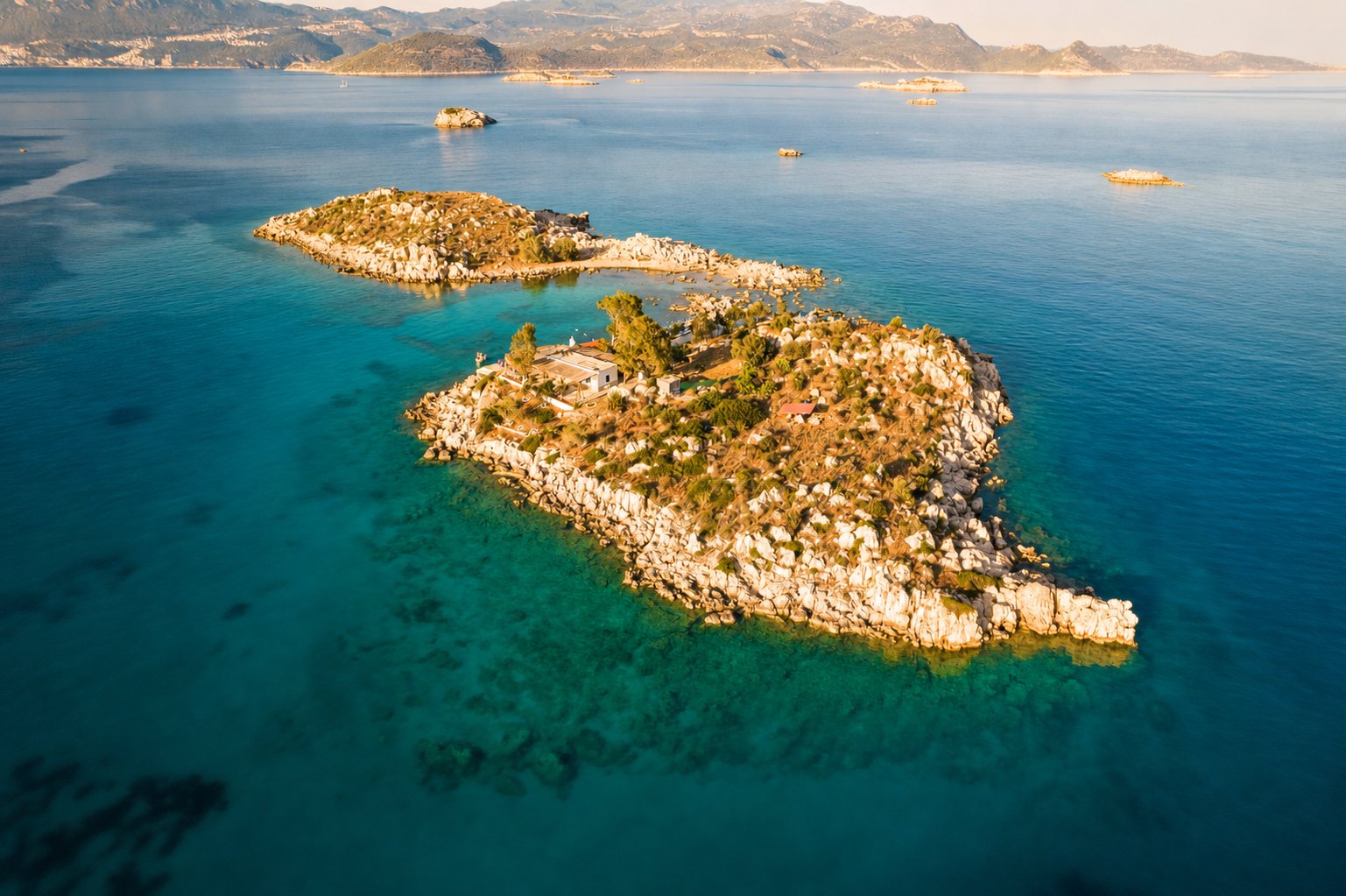
Kastellorizo belongs to the Dodecanese, the island group that includes Rhodes, Kos, Patmos, Symi, and Karpathos, but it sits apart even within that family. It lies at Greece’s southeastern edge, opposite the Turkish town of Kaş, around 72 nautical miles from Rhodes and just over one nautical mile from the Asia Minor coast. Ancient writers knew it as Megiste: the Periplus of Pseudo-Skylax, a navigational text from antiquity, mentions it as an island of the Rhodians off the Lycian coast. That old geographical fact still explains much of the island’s character. Kastellorizo has always looked both toward the Aegean and the eastern Mediterranean, with Rhodes, Lycia, Cyprus, the Levant, Italy, Australia, and modern Greece all present in its story.
Its official name, Megisti, means “largest,” because it is the biggest island in a tiny surrounding cluster that includes Ro, Strongyli, Agios Georgios, Psomi, Psoradia, and other rocky islets. The irony is useful: Megisti covers just over nine square kilometers and has one main settlement around the harbor. There are no long beaches, no large resorts, and no scattered villages.
Instead, the island offers a protected harbor that once supported a prosperous shipping community, a borderland position of sea caves, old footpaths, swimming ladders, neoclassical houses, and constant views toward another coast. Marie Rivalant, the architect behind the island’s Hotel Mediterraneo, described the waterfront as “a theatre set,” with the backstreets revealing the island’s real local life. That is a good way to read Kastellorizo: front row first, deeper story behind it.
02
History & Heritage: From Ancient Roots to Modern Allure
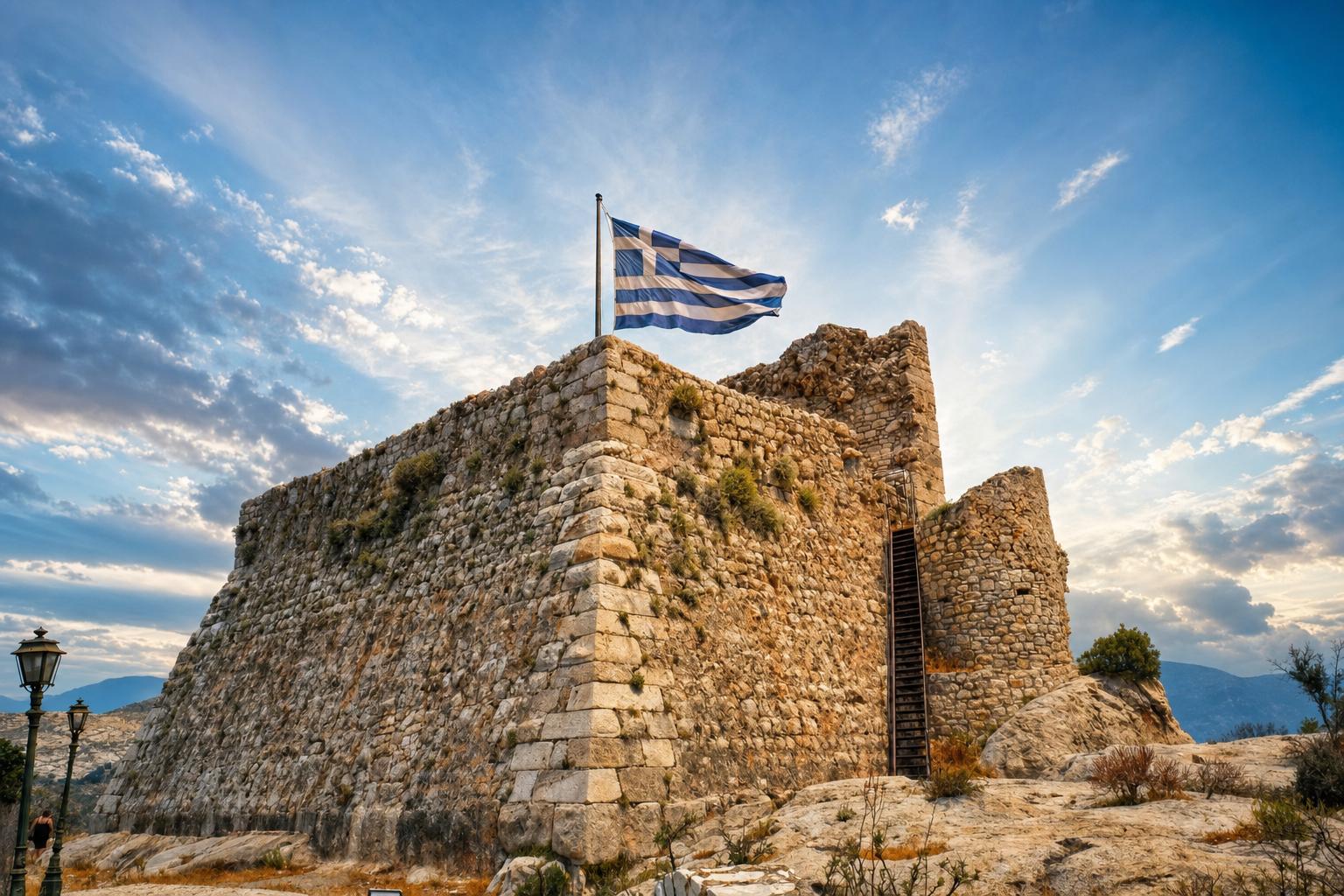
Megisti has been inhabited since antiquity, with traces of prehistoric settlement and later Dorian presence. Its position gave it importance: close to Asia Minor, connected to Rhodes, and placed along maritime routes between the eastern Mediterranean and the Aegean. Roman, Byzantine, and later medieval layers followed.
The island’s archaeological heritage is often encountered outdoors, during ordinary movement. Palaeokastro, the ancient acropolis of Megisti, stands above the settlement and gives a clear sense of the island’s strategic position. The Lycian rock-cut tomb below the castle is one of the most striking visible signs of the island’s closeness to Asia Minor. Ancient wine presses cut into the rock appear along walking routes, showing cultivation, local production, and older patterns of use on a stony island with limited land.
The Knights of St. John built the castle known as Castel Rosso in the 14th century, and that name helped shape the island’s later identity.
The 19th century brought extraordinary maritime prosperity. Shipbuilding, trade, and seafaring created wealth, and the settlement around the harbor filled with substantial houses. Then the 20th century brought occupation, bombardment, destruction, hardship, and migration. Kastellorizo was held by different powers, suffered heavily during wartime, and was incorporated into Greece on March 7, 1948. Its present calm sits over a history of repeated rupture and return.
03
Culture & Landmarks: A Walkable Harbor Town Tour
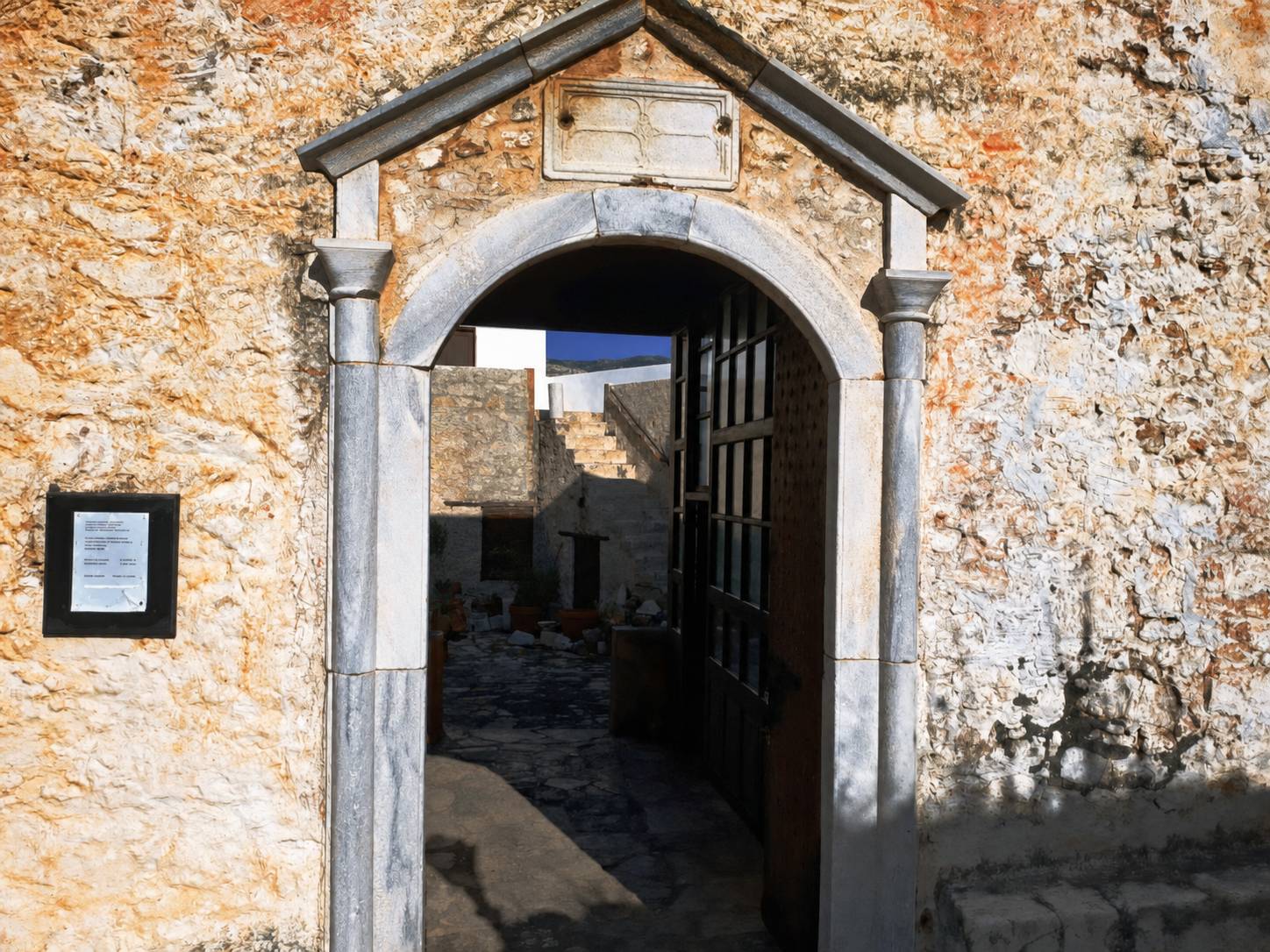
For a small island, Kastellorizo has a surprisingly rich cultural circuit, and much of it can be reached on foot. Start below the Castle of St Nicholas, where the Diachronic Museum of Kastellorizo brings together archaeological, Byzantine, and folklore material in a building whose own history belongs to the island’s layered past. The museum is the clearest place to begin if you want to understand Megisti across time: ancient finds, objects of daily life, traditional dress, ecclesiastical material, and traces of the island’s maritime and domestic culture.
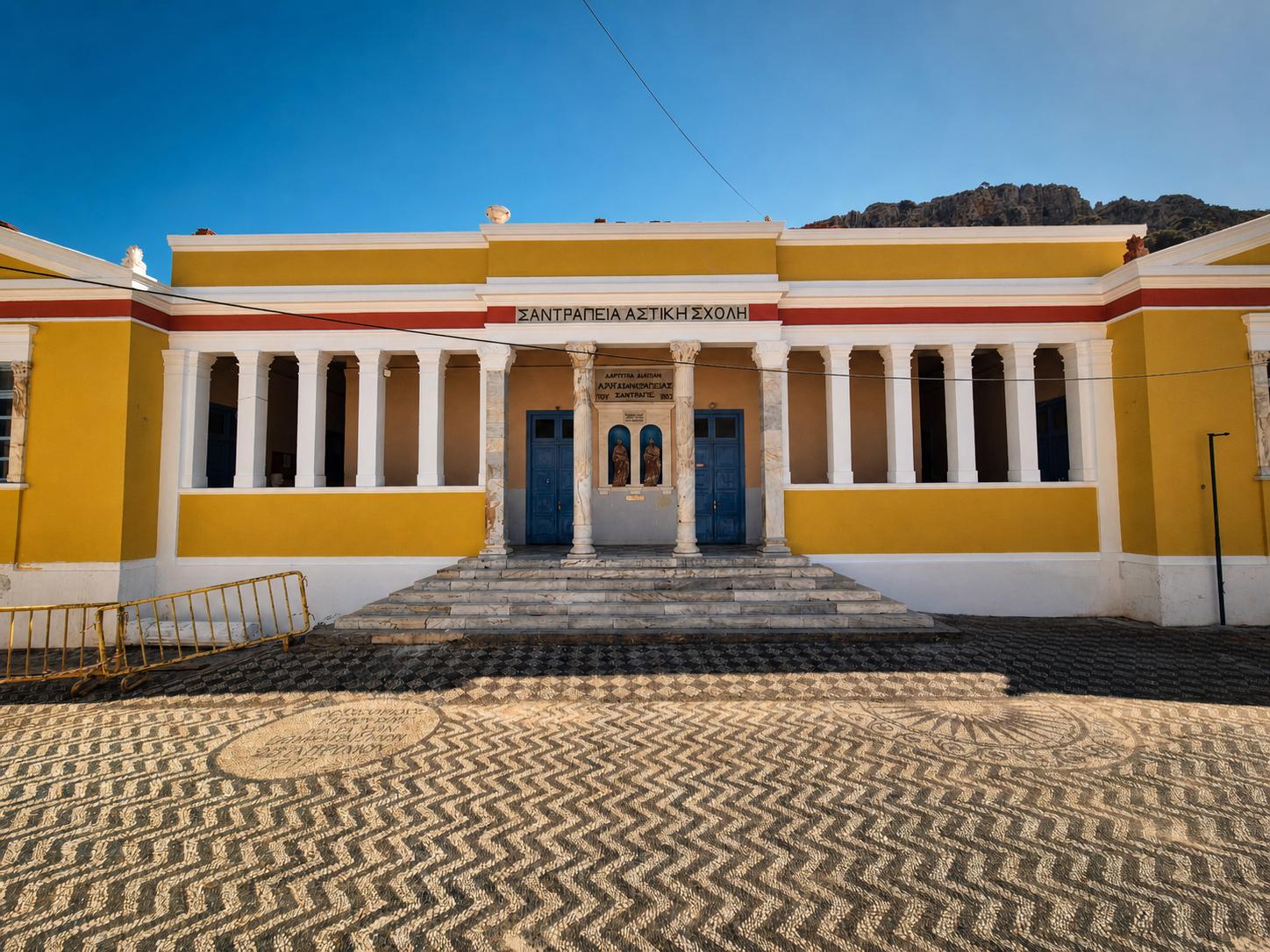
Keep the former Ottoman mosque as a separate stop. Built in 1755 and set near the harbor, it now houses a historical and folklore collection connected with the island’s more recent story. Together with the Church of Saints Constantine and Helen, built in 1835, and the Santrapia School, completed in 1903 through the benefaction of Loukas Santrapes, these buildings give Kastellorizo something rare: a complete cultural walk in miniature, from antiquity and faith to education, trade, occupation, and civic ambition.
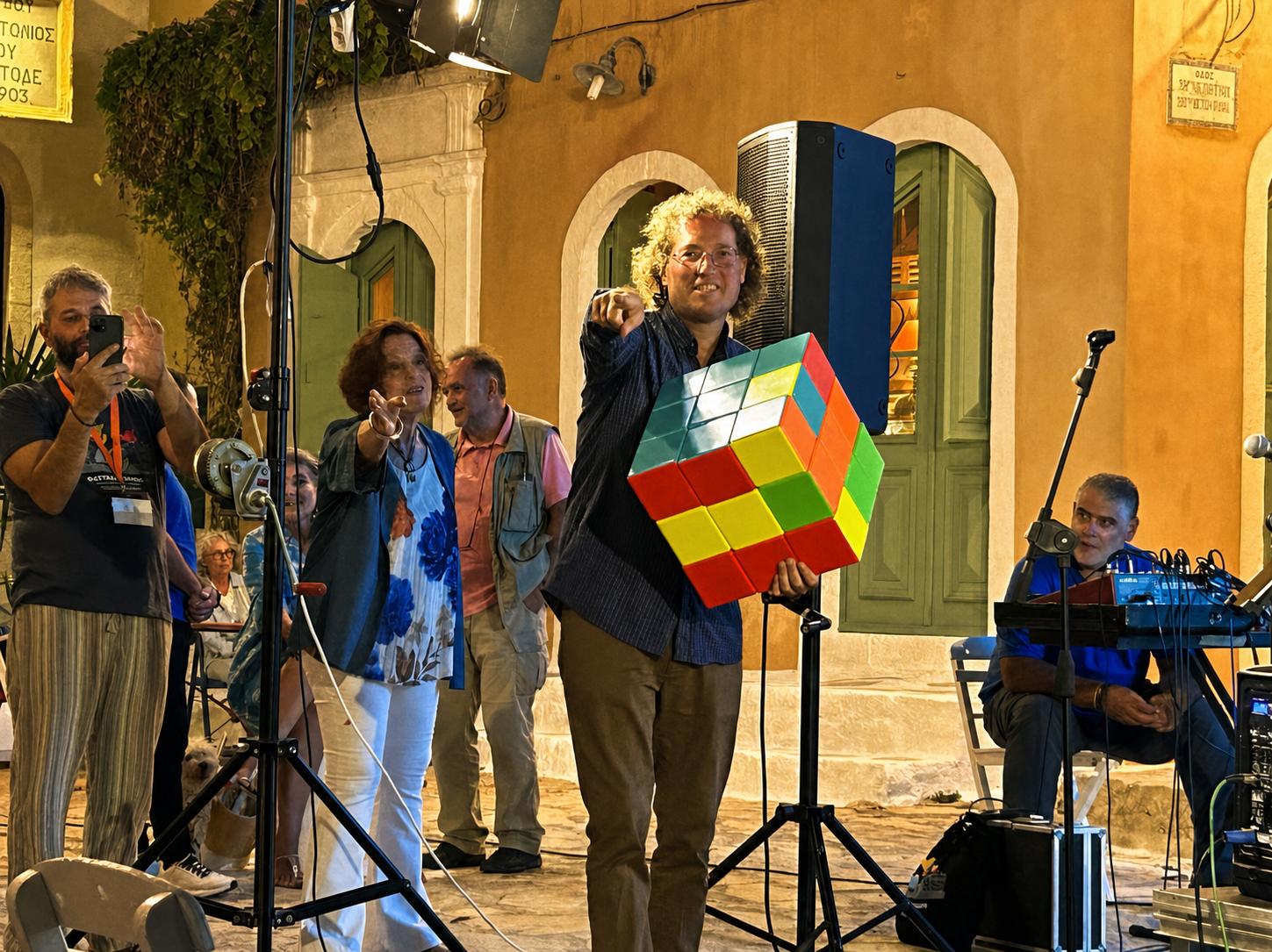
A different kind of museum to visit is the Puzzle Museum, one of the island’s most unexpected cultural spots. It was created by mathematician and puzzle maker Pantazis Houlis, who was born in Perth, Australia and grew up on Kastellorizo, studied mathematics, spending decades collecting and constructing puzzles. The museum contains thousands of puzzles and games of logic, many of them interactive. Its presence gives the island a clever, eccentric dimension that visitors rarely expect.
The museum has also helped give Kastellorizo a small but distinctive role in science culture. The Kastellorizo Puzzle Festival, also known through its “Science Games” identity, brings workshops, talks, experiments, competitions, and hands-on activities to the island. Its recent editions have connected education, mathematics, creativity, and play in a setting usually associated with sea views and summer leisure.
04
Cinema & Music: The Island’s Pop Culture Legacy
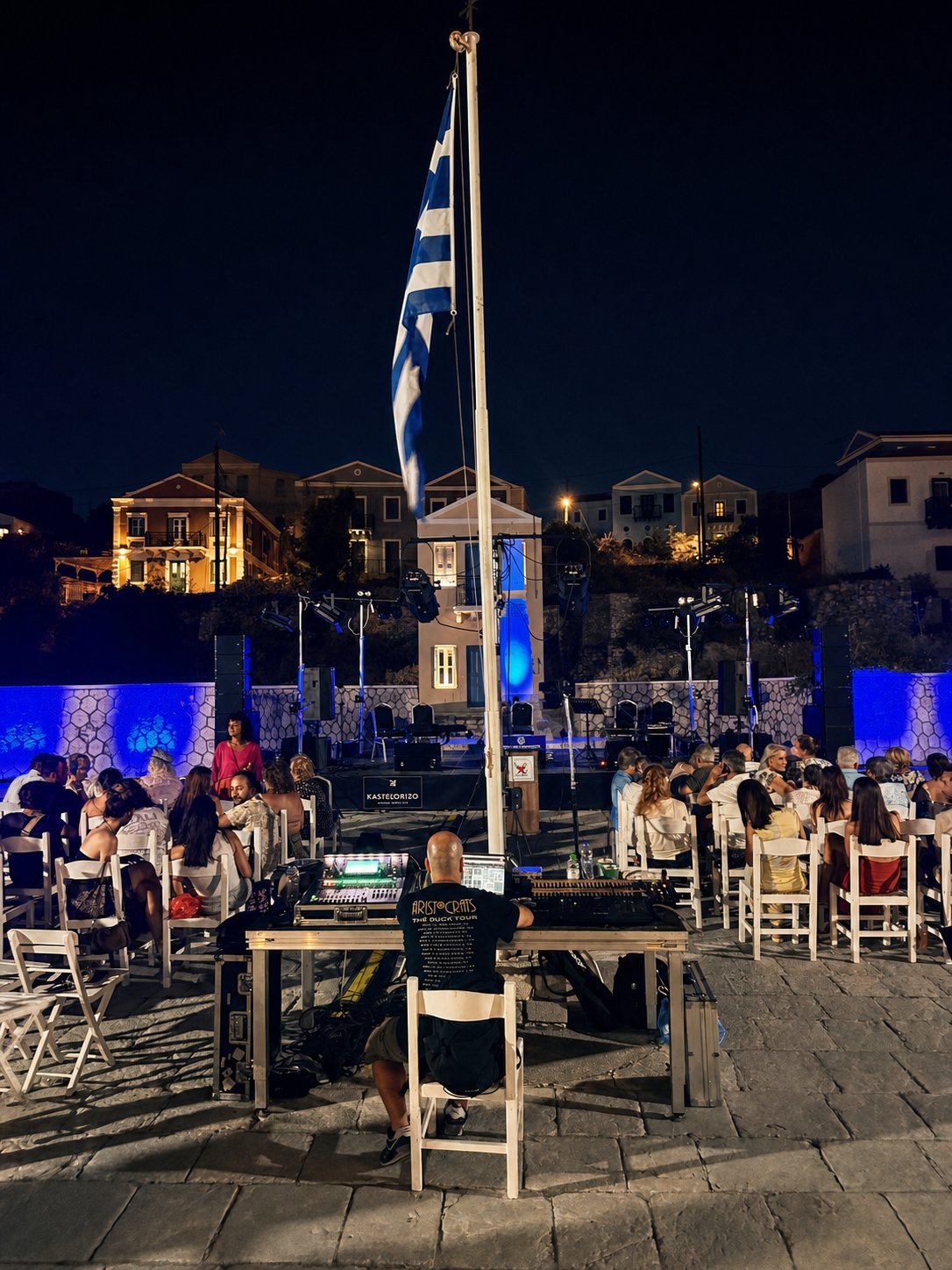
Kastellorizo entered the imagination of many international travelers through cinema. Gabriele Salvatores’ 1991 film Mediterraneo was shot on the island and later won the Academy Award for Best Foreign Language Film. The film used the harbor, houses, wartime setting, and Mediterranean atmosphere in a way that carried the island’s image far beyond Greece.
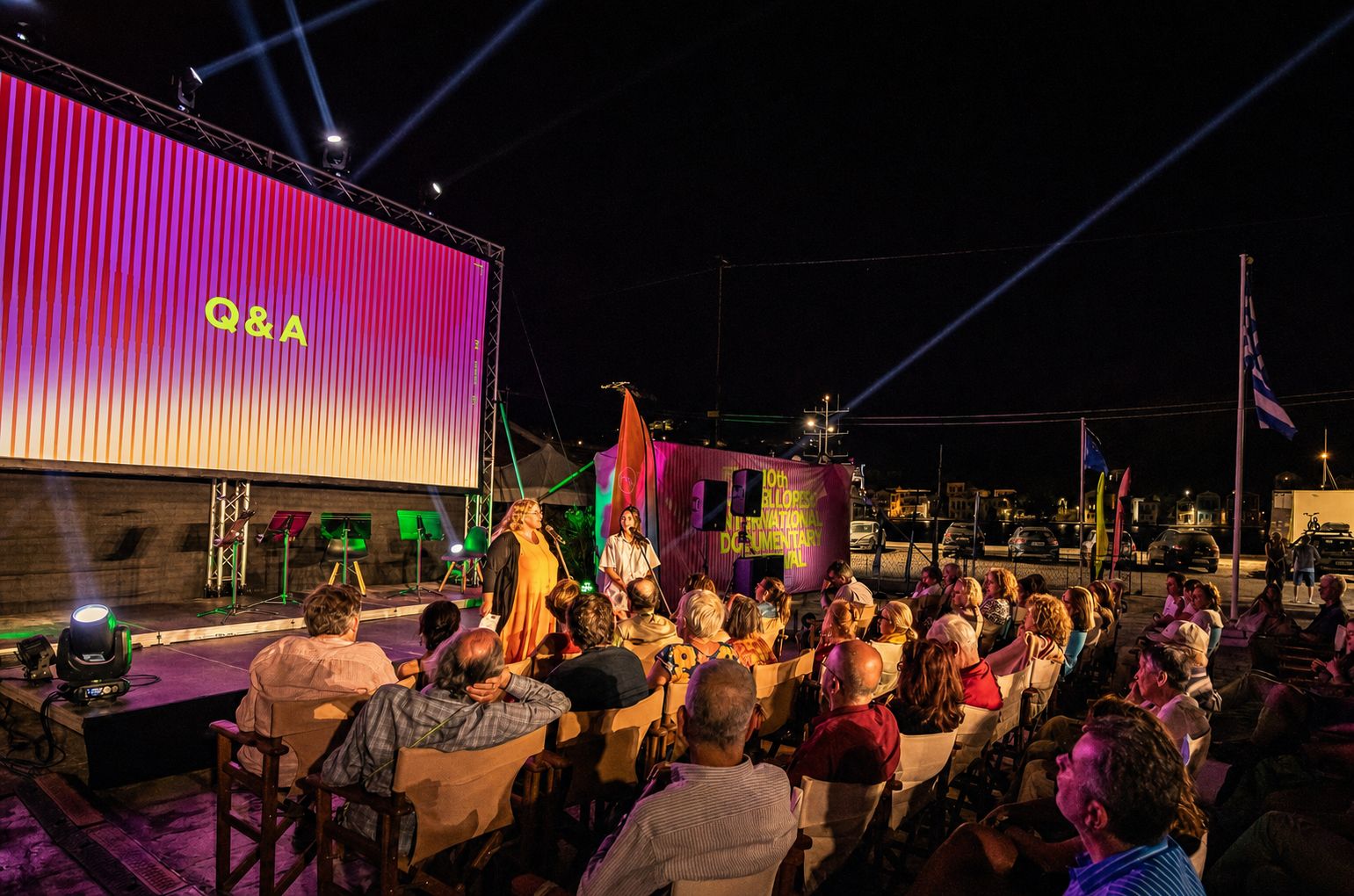
The island also honors film and music through two major events. The Beyond Borders Kastellorizo International Documentary Festival, returns from August 23 to 30 for its 11th edition. Beyond Borders gives Kastellorizo a serious place on the international documentary map. The 2026 edition’s full film lineup was still to be announced at the time of writing. Expect the festival’s familiar structure of main competition, short-film section, premieres, industry meetings, pitching activity, and parallel cultural events, with documentaries focused on history, political life, human rights, memory, and cross-cultural stories. On this island, those subjects arrive with unusual force.
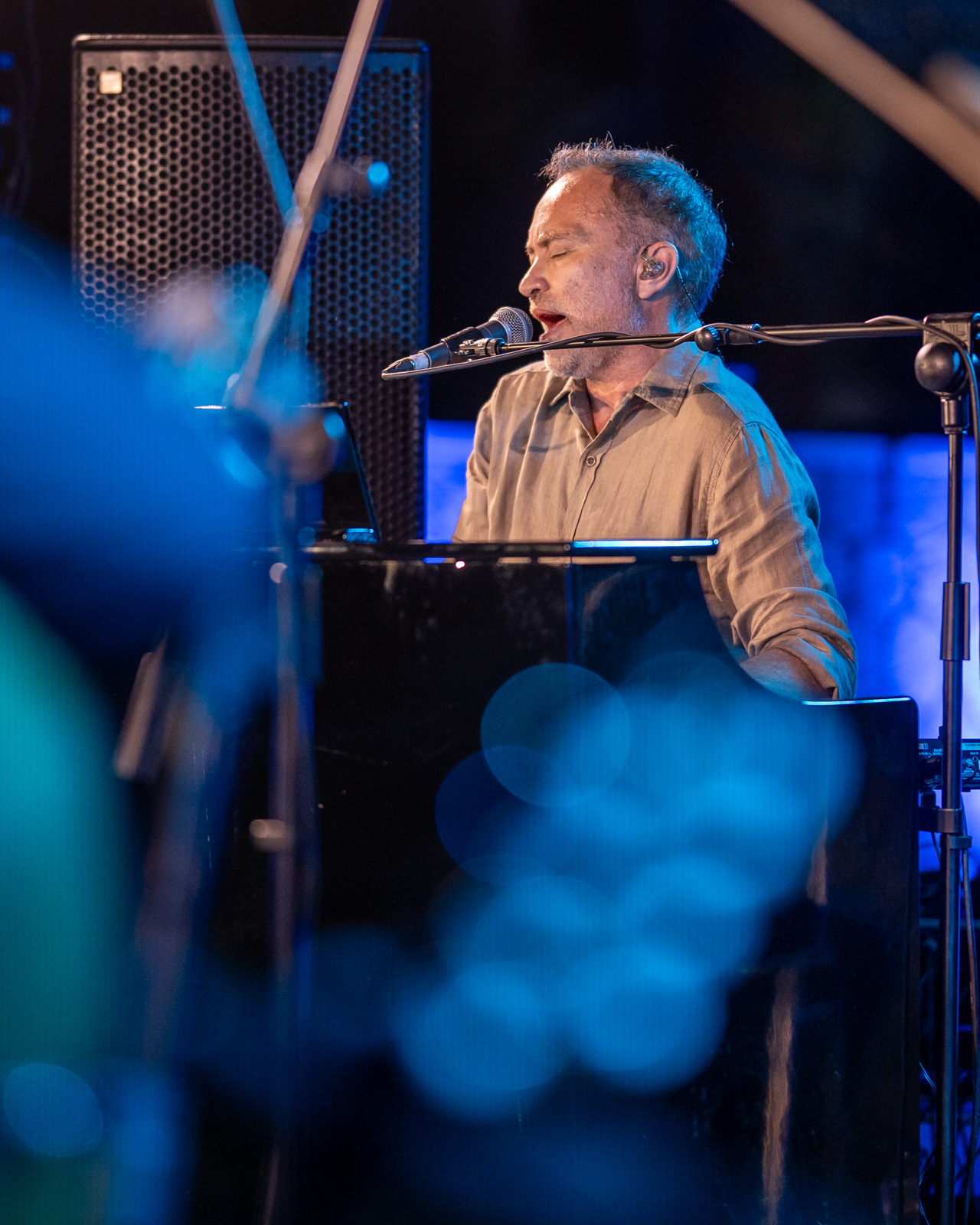
Meanwhile, Near & Far Kastellorizo International Festival, scheduled for June 25 to 28, brings music and performance into the island’s summer. It hosts four days of concerts and public events shaped by the island’s position between Greece, the eastern Mediterranean, and the diaspora. Founded by composer Pericles Kanaris, the festival gives the harbor live musical evenings open to all.
05
Architecture & Design: The Iconic Pastel Waterfront Mansions
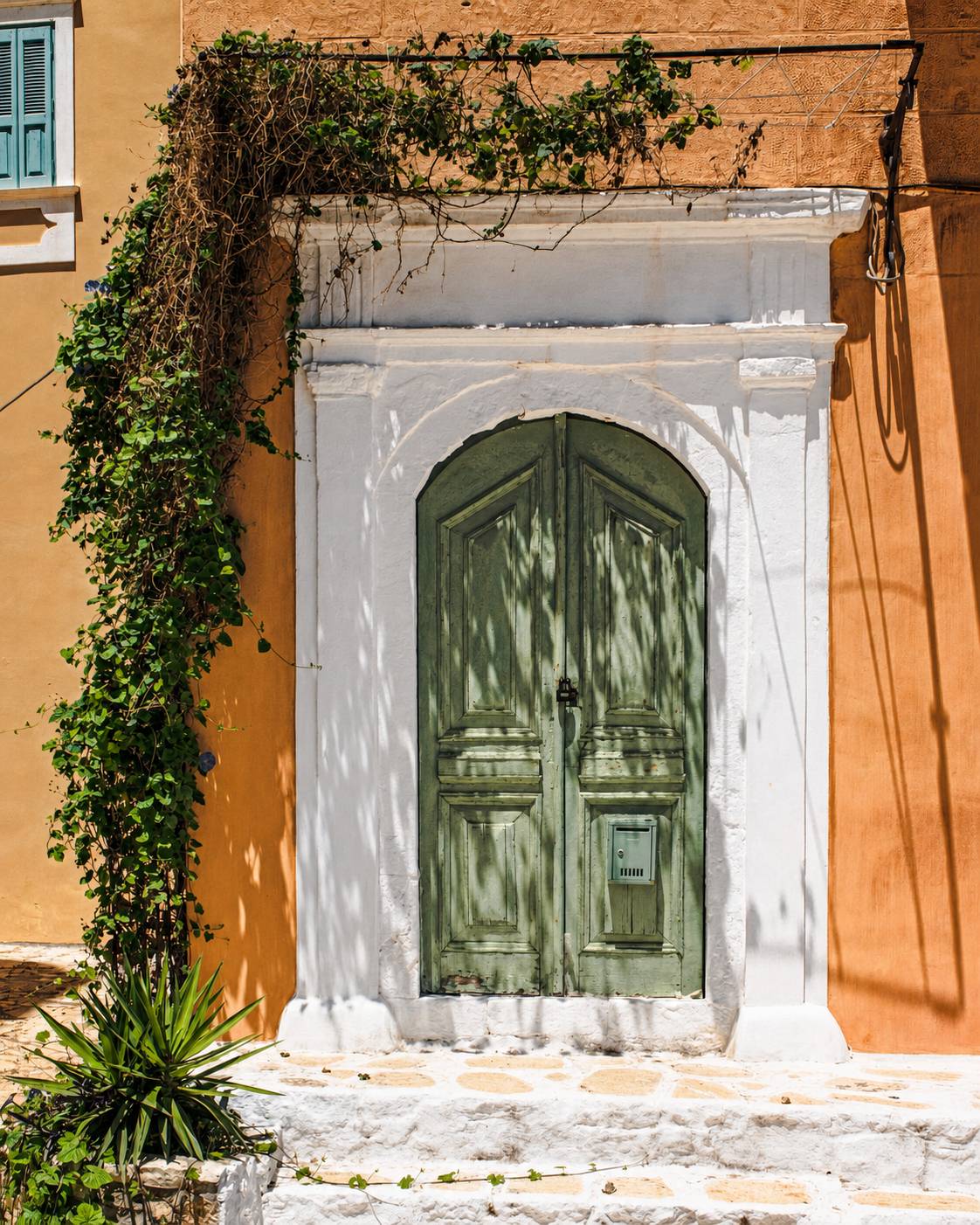
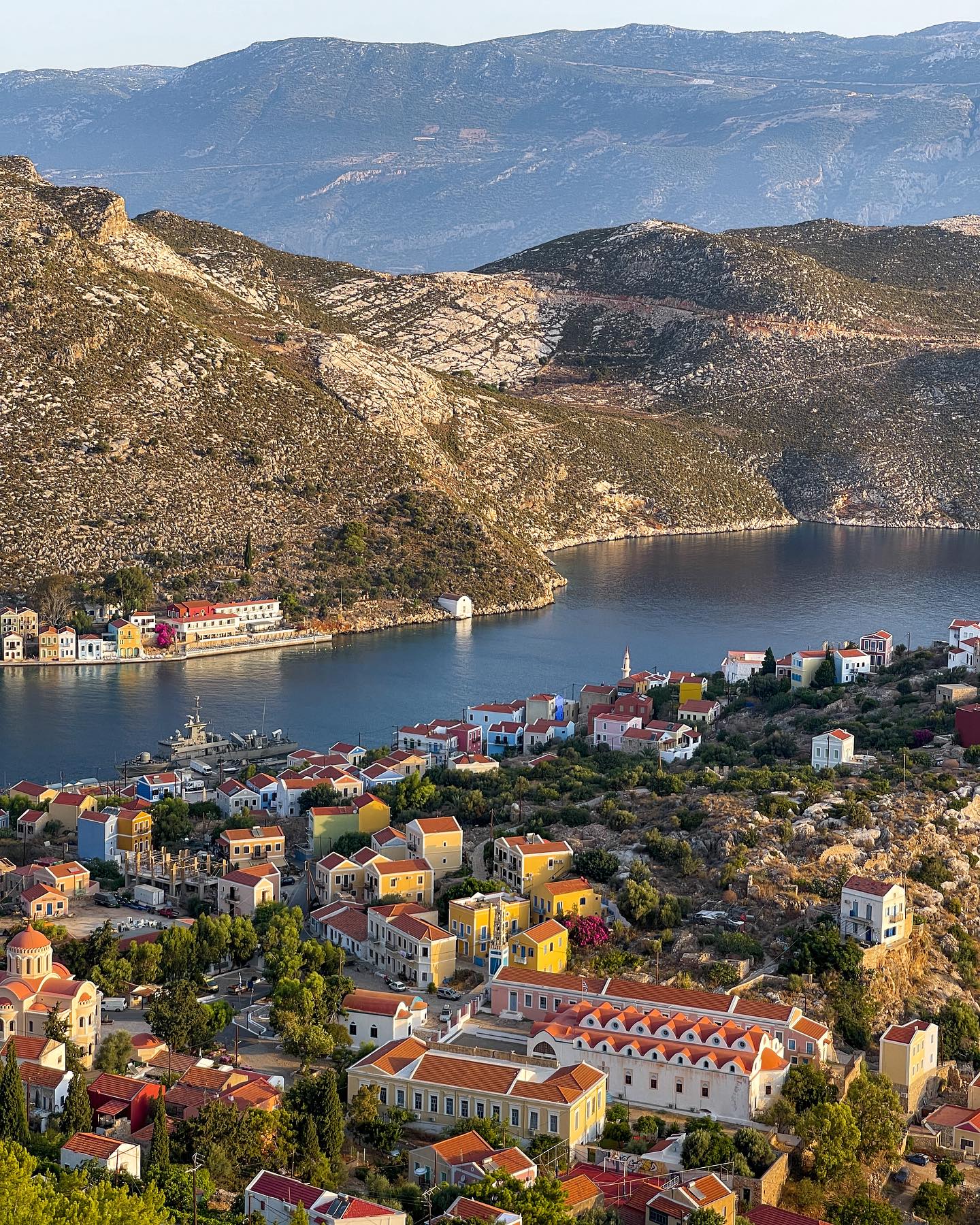
The houses around the harbor are among the great sights of the Dodecanese. Their colors create the first impact: ochre, coral, blue, green, cream, terracotta, and white against the water and rock. Their form tells a deeper story. Neoclassical facades, balconies, tiled roofs, shutters, staircases, and narrow lanes recall the island’s shipping wealth and its relations with the eastern Mediterranean.
Some houses have been restored with care and are lived in again during summer. Others remain closed or weathered, pointing to absence, migration, and the interruptions of the last century. This mixture gives the settlement its seriousness. Kastellorizo is beautiful in photographs, yet the architecture is more than a surface. It shows the scale of a former maritime community, the damage of war, the force of emigration, and the renewed attachment of families who still return.
06
Beaches & Swimming: The Best Spots to Dive In
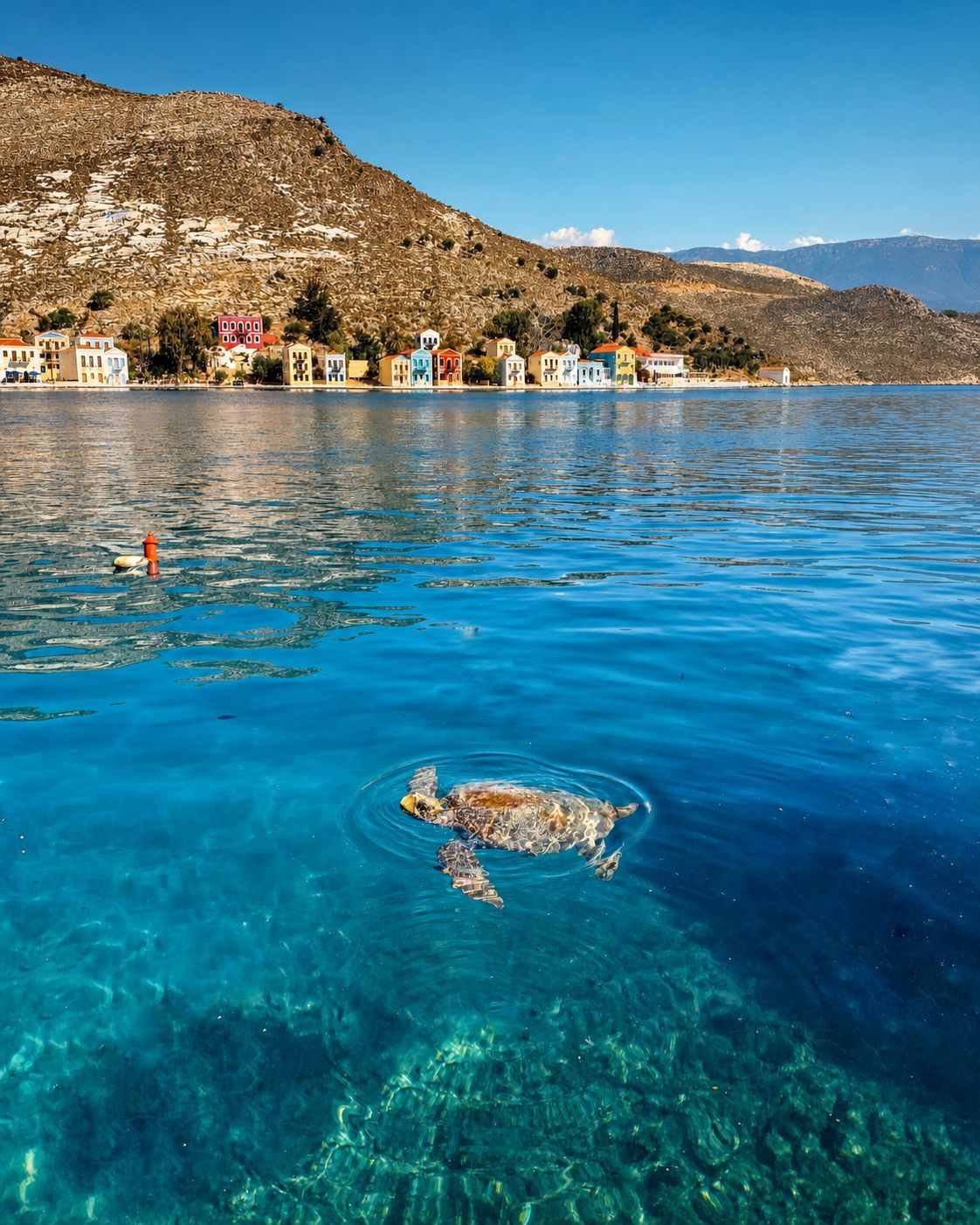
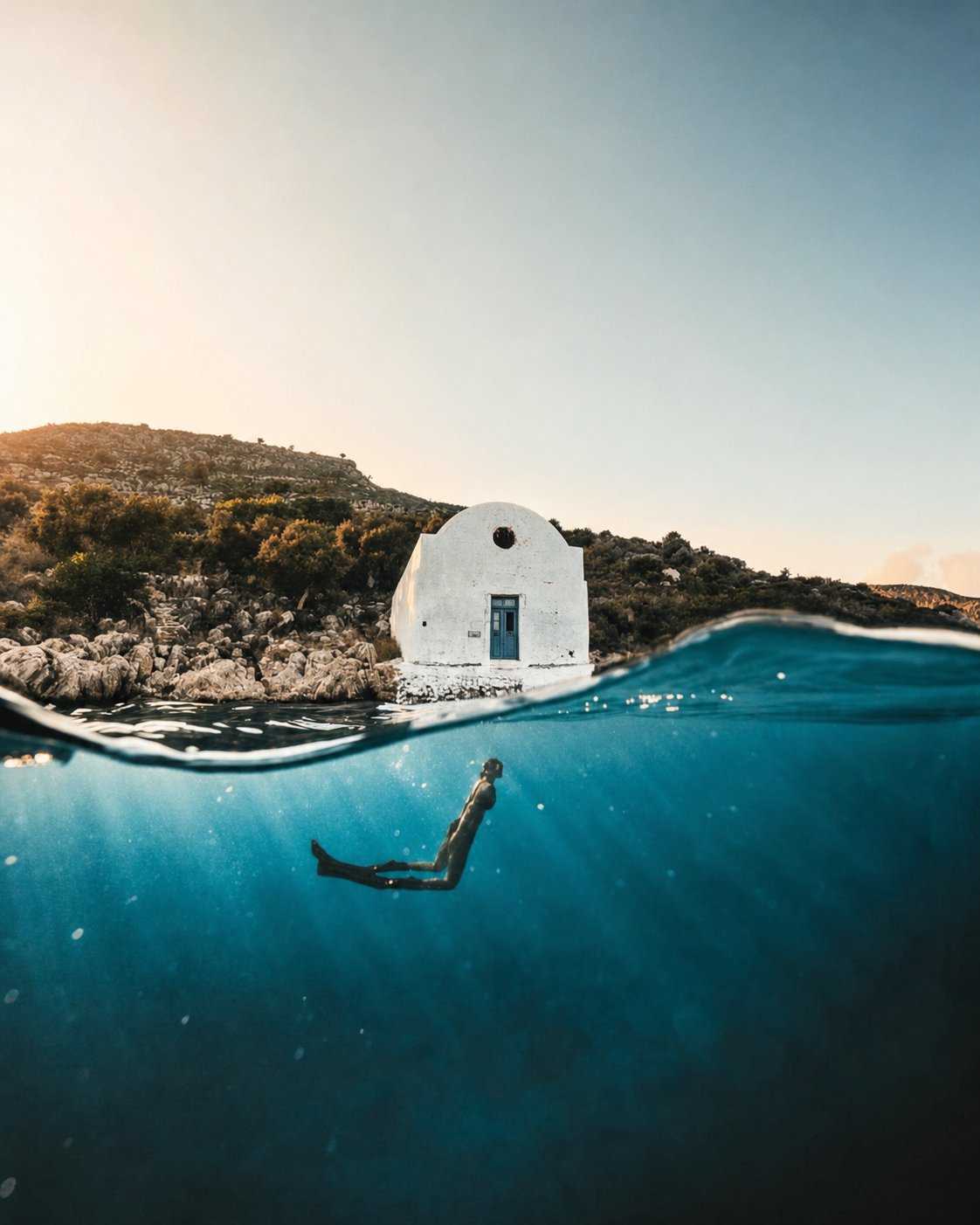
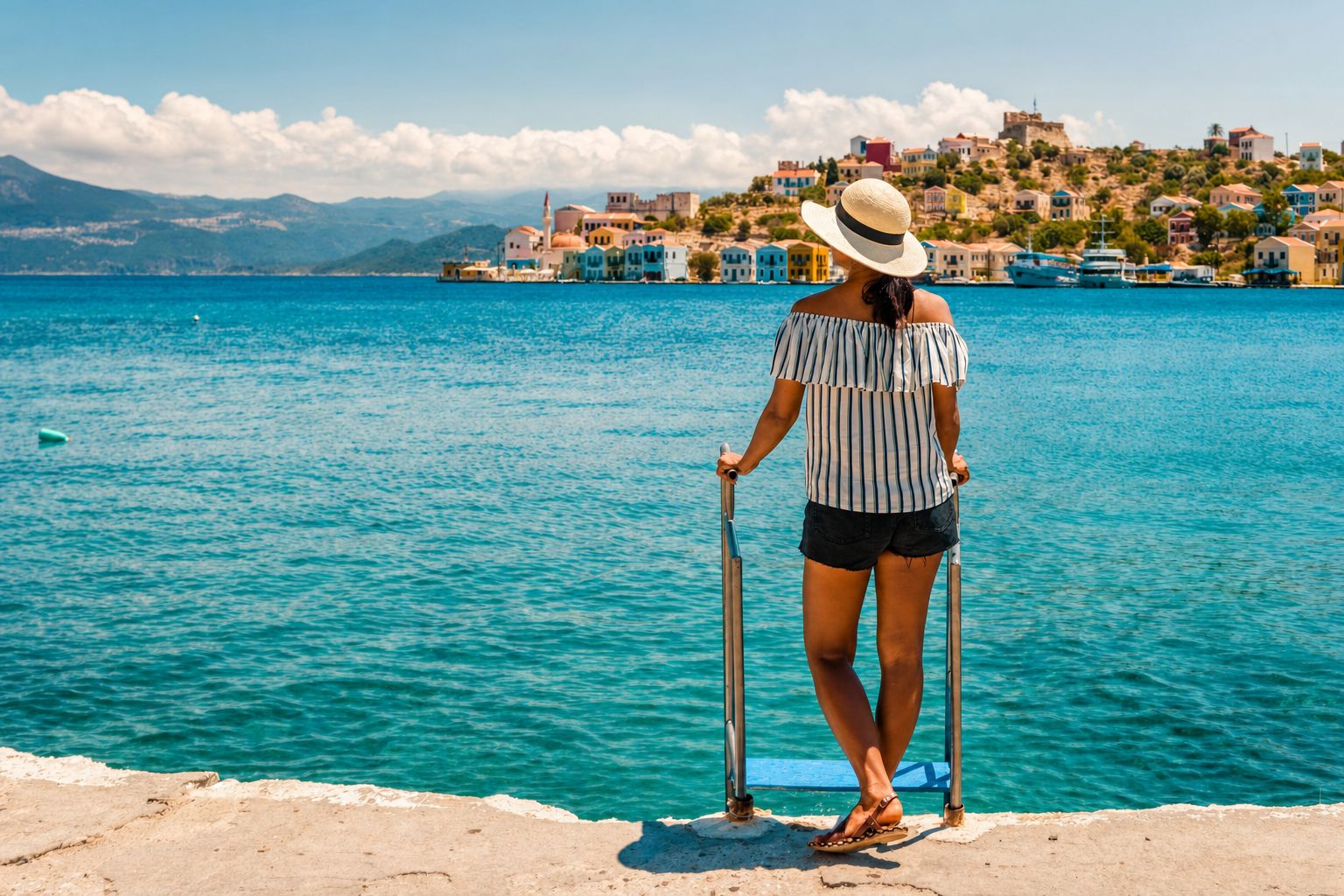
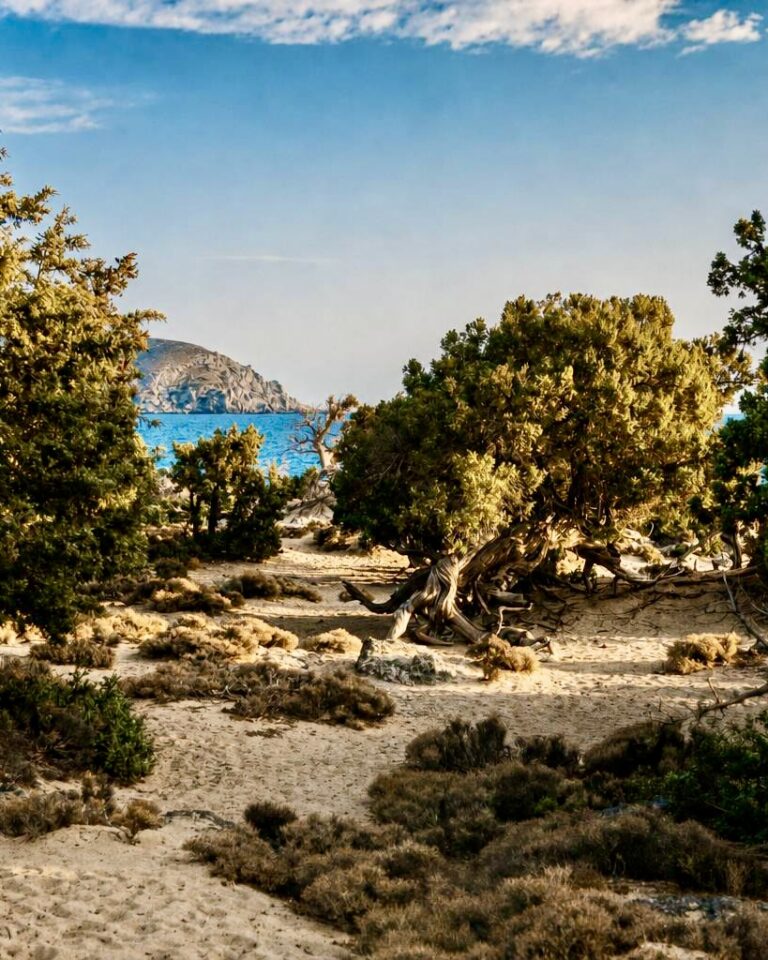
Kastellorizo is a rocky island, and that fact should be understood before arrival. The coastline has no long sandy beach culture. Swimming happens from ladders, platforms, rocks, boats, and small coves. This makes the sea feel immediate and informal. You leave breakfast, take a few steps, and enter the water. The best experiences here are simple: those who like clear water, rock, boats, walking, and compact distances will quickly fall in love with it. The absence of large beaches protects the island from the usual summer throngs and gives daily life a more fluid rhythm.
Take a boat when the sea allows it. Sit on the quay after dinner and watch the opposite coast appear in lights. The Blue Cave is the island’s natural headline. It is reached by small boat, and the visit depends on wind and sea conditions. The best time is usually early, when the light enters the cave and turns the water an intense blue that seems to come from below the surface. It is one of the most memorable boat trips in the Dodecanese, and it should be planned with the captain rather than forced into a fixed schedule.
Boat days also help visitors understand the island group around Megisti. Ro is associated with Despina Achladioti, known as the Lady of Ro, who became part of modern Greek memory for raising the Greek flag there.
07
Hiking & Trails: Climbing the 400 Steps for Scenic Views
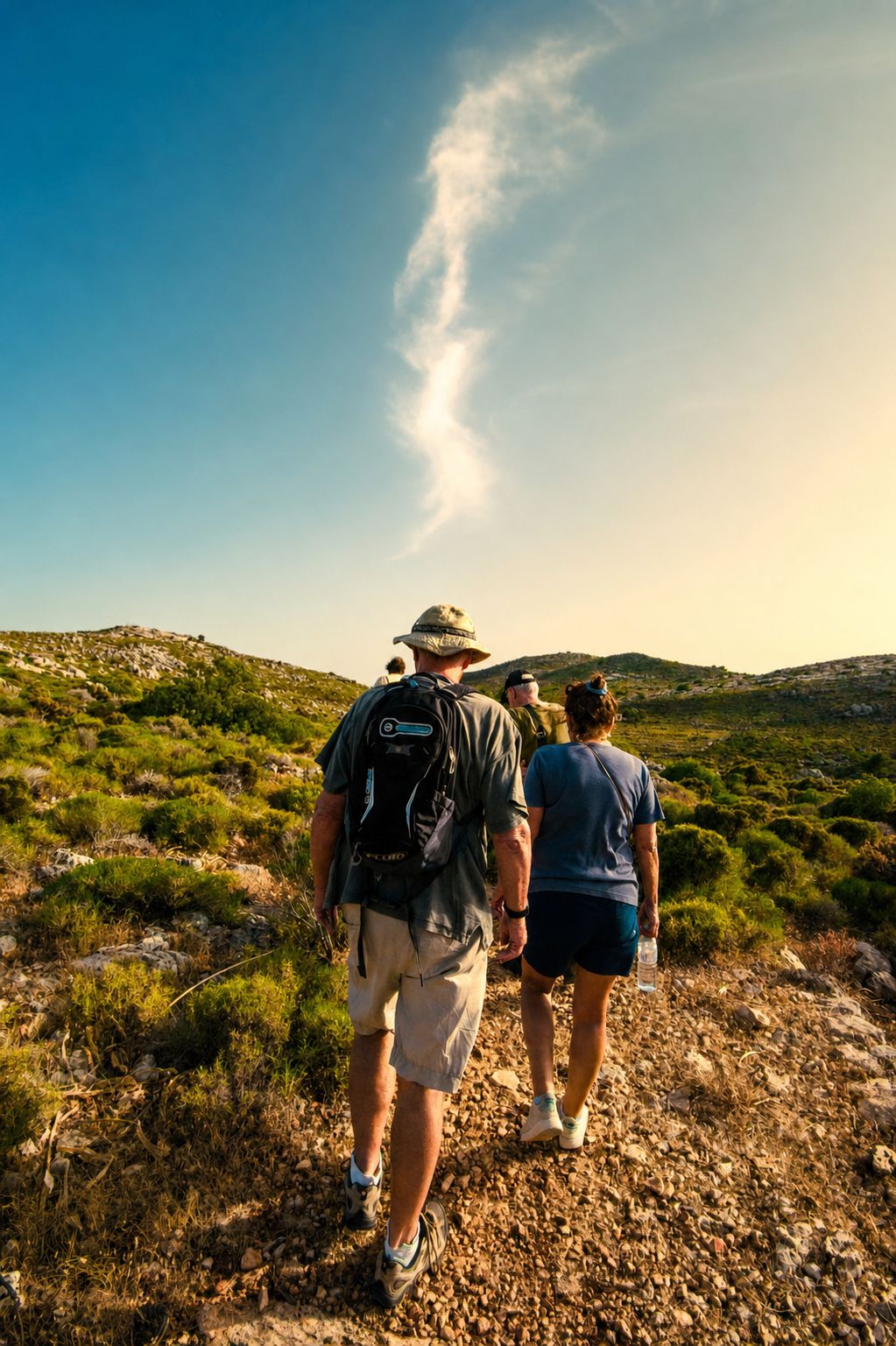
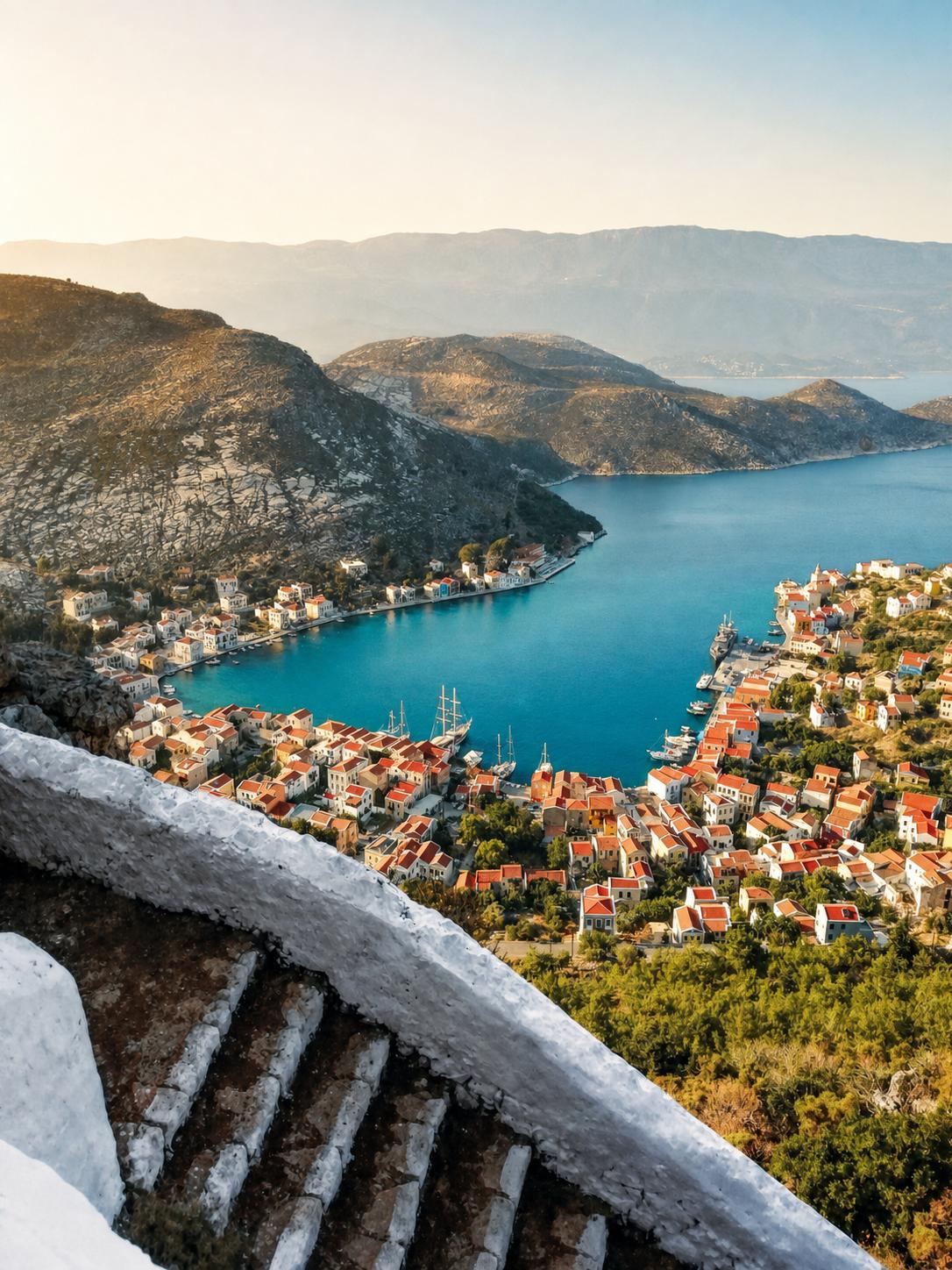
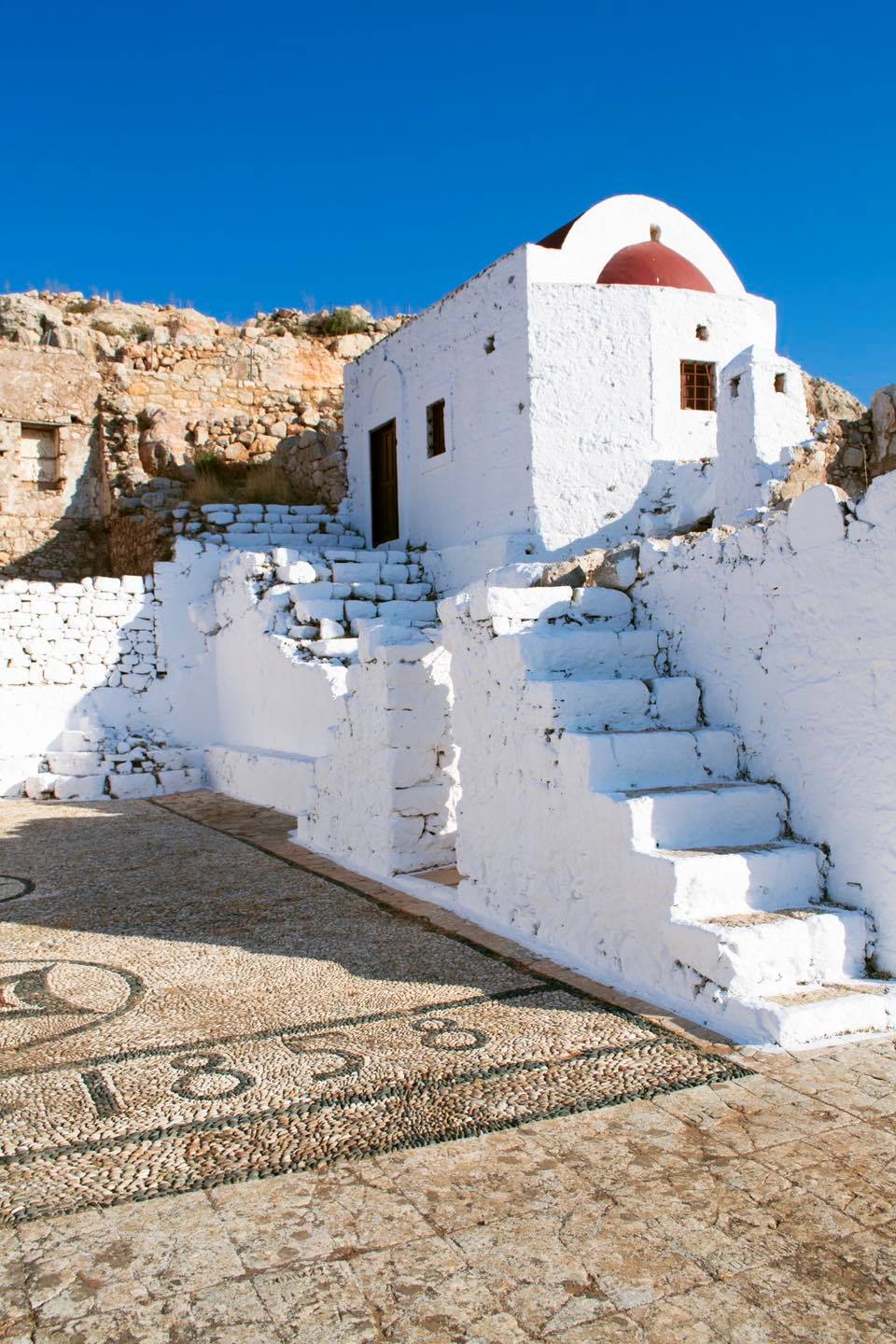
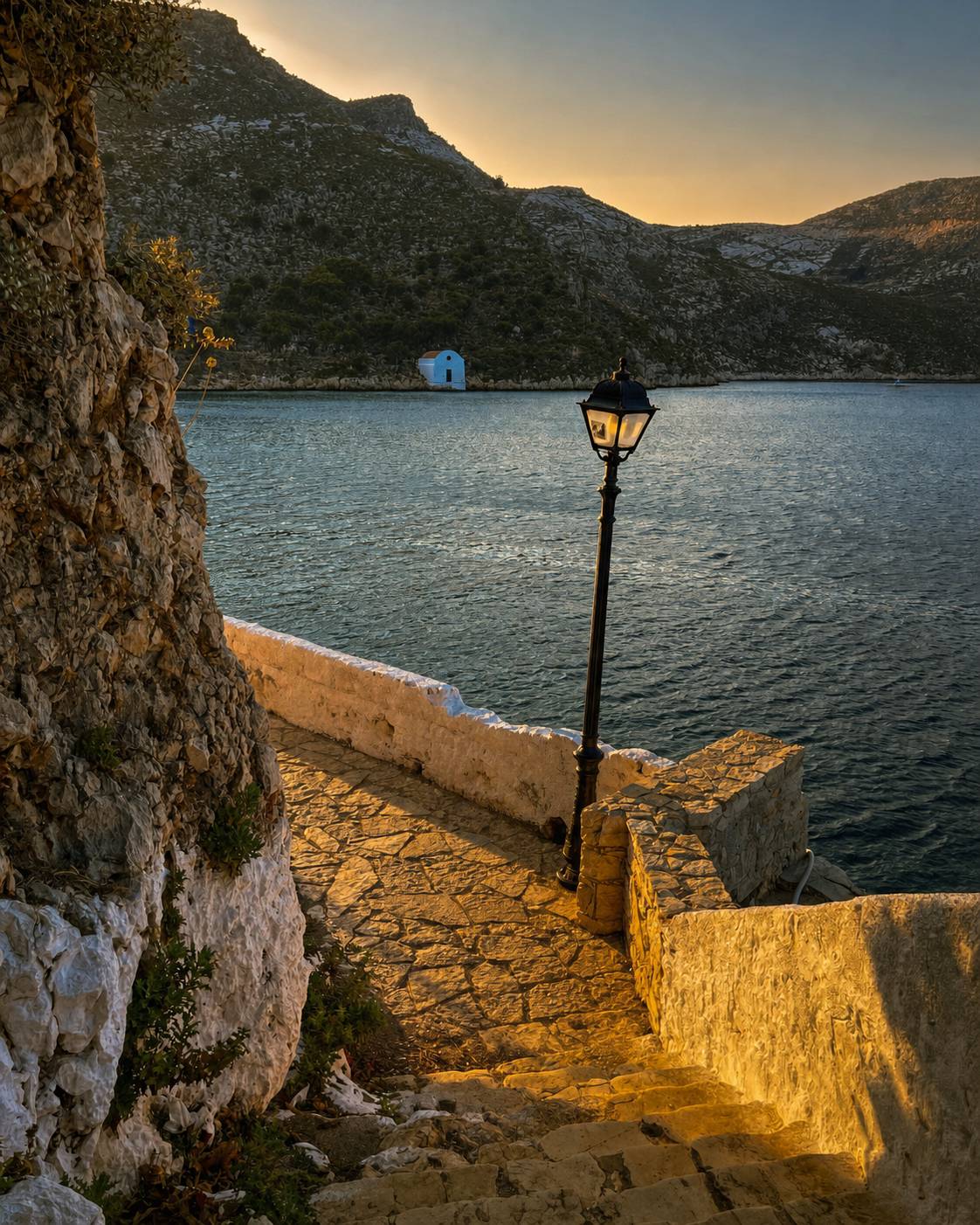
Kastellorizo is small, rocky, and excellent on foot. The best-known walk starts at the edge of the settlement and climbs roughly 400 steps to the plateau and the Monastery of Agios Georgios tou Vounou, built in 1759 on the site of an earlier Christian basilica. For an easy historical route, walk 1.2 kilometers to Palaeokastro, the island’s ancient acropolis, or continue as a 4.7-kilometer loop.
The path to Agios Stefanos is about two kilometers and ends with swimming from rocks, while the three-kilometer route to Naulakas follows the French Path, a stone-built military road from 1915. The distances are short, but the terrain is exposed. Go early, wear proper shoes, carry water, and expect views, ruins, cisterns, goats, dry stone, and open sea at every turn.
08
Diaspora & Community: The Global Village of the Aegean
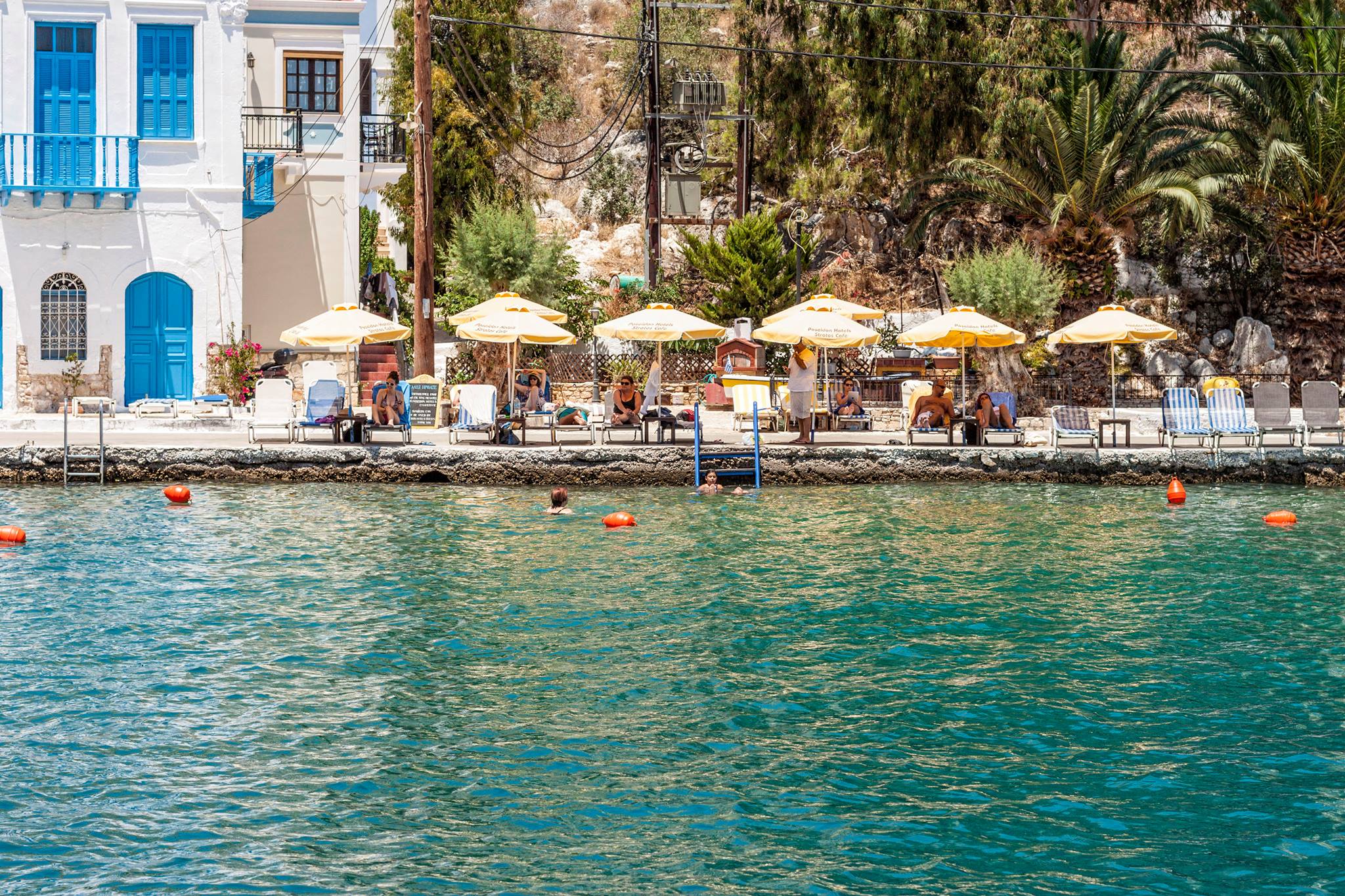
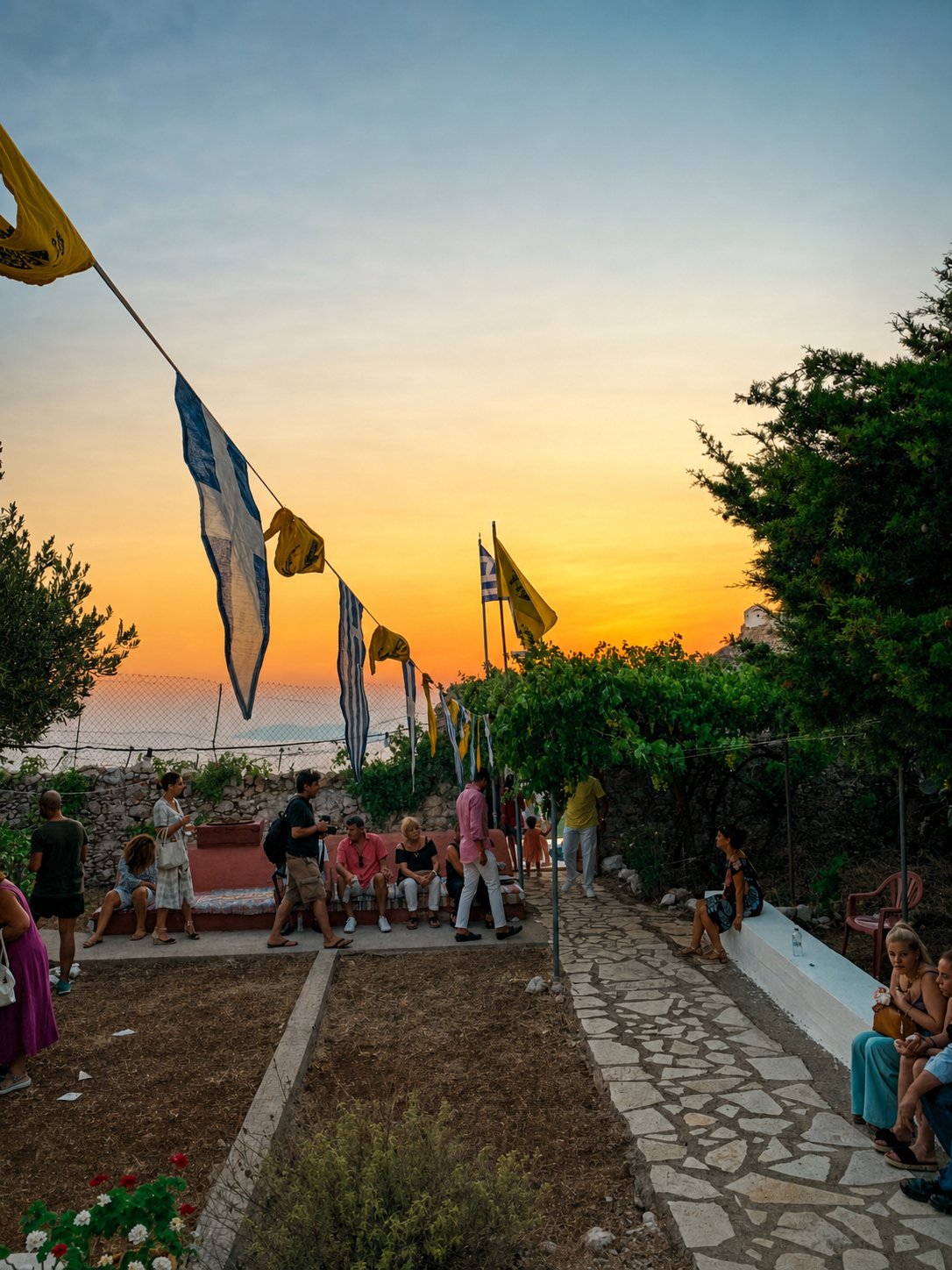
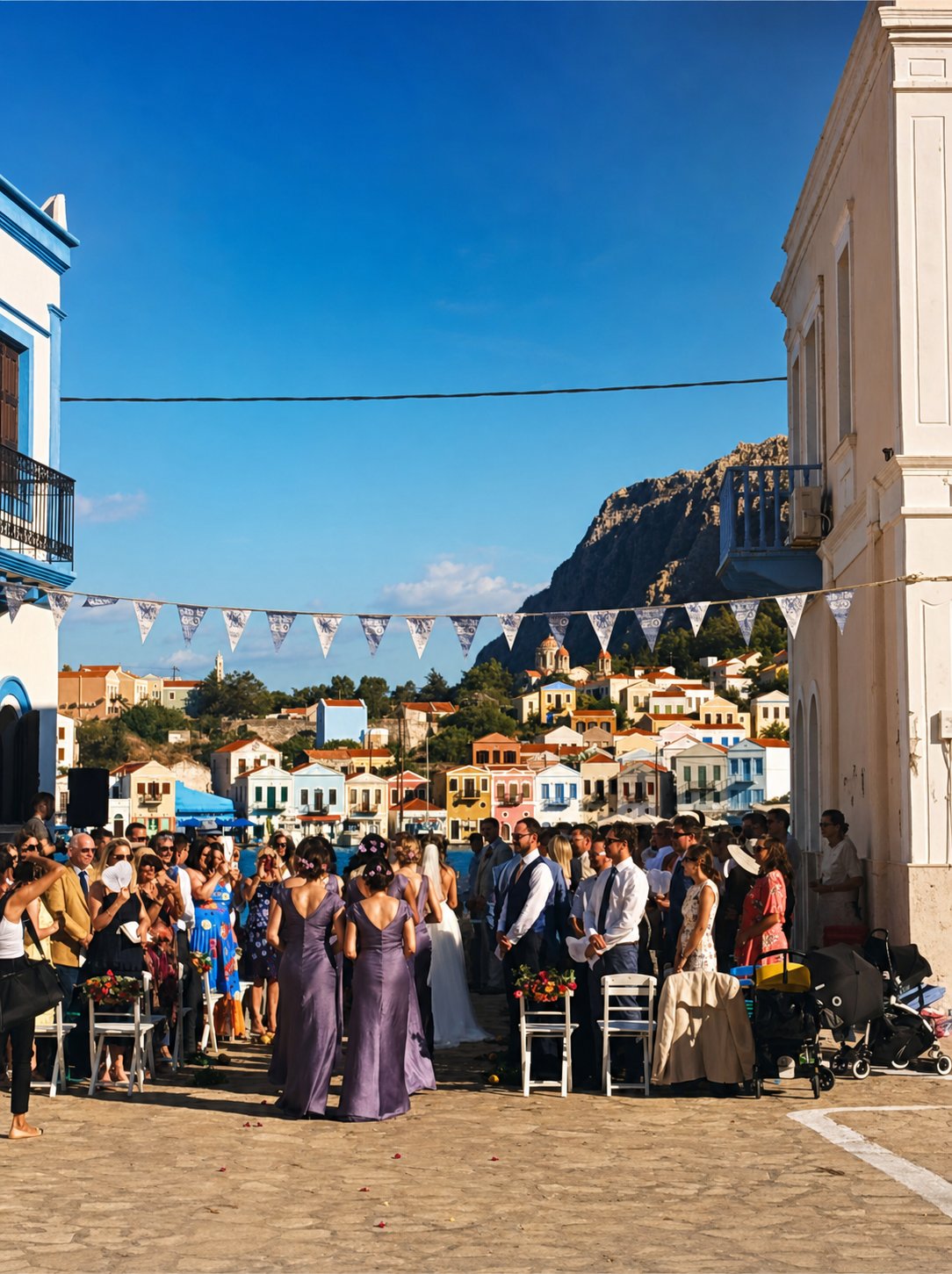
Kastellorizo’s community cannot be understood only by counting year-round residents. The island once had a large, prosperous maritime population; war, fire, economic hardship, and migration scattered many families abroad. Australia became especially important, and the Kastellorizian diaspora remains one of the defining facts of the island’s life.
That connection is visible in summer, when families return, houses reopen, benefactions appear in public buildings, and old names keep circulating in conversation. The harbor can feel unusually international without losing its small-scale order: local families, returning Australians, Greek travelers, Italians, Turkish day visitors from Kaş, boat crews, documentary people, and repeat visitors who know the island’s habits. The result is neither resort anonymity nor village enclosure. It is a social world shaped by departure, return, and recognition.
09
Gastronomy & Dining: Where to Eat by the Water
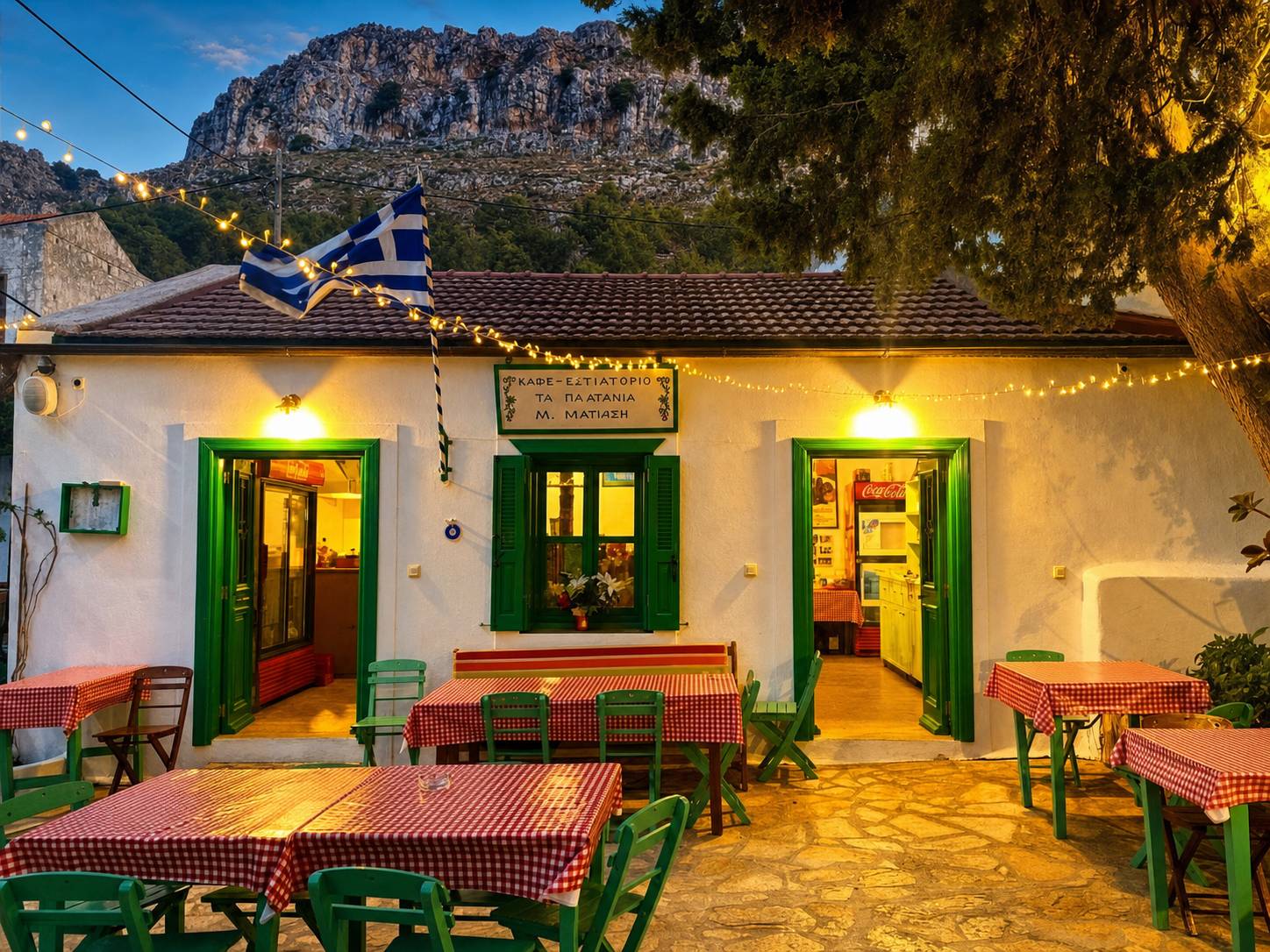
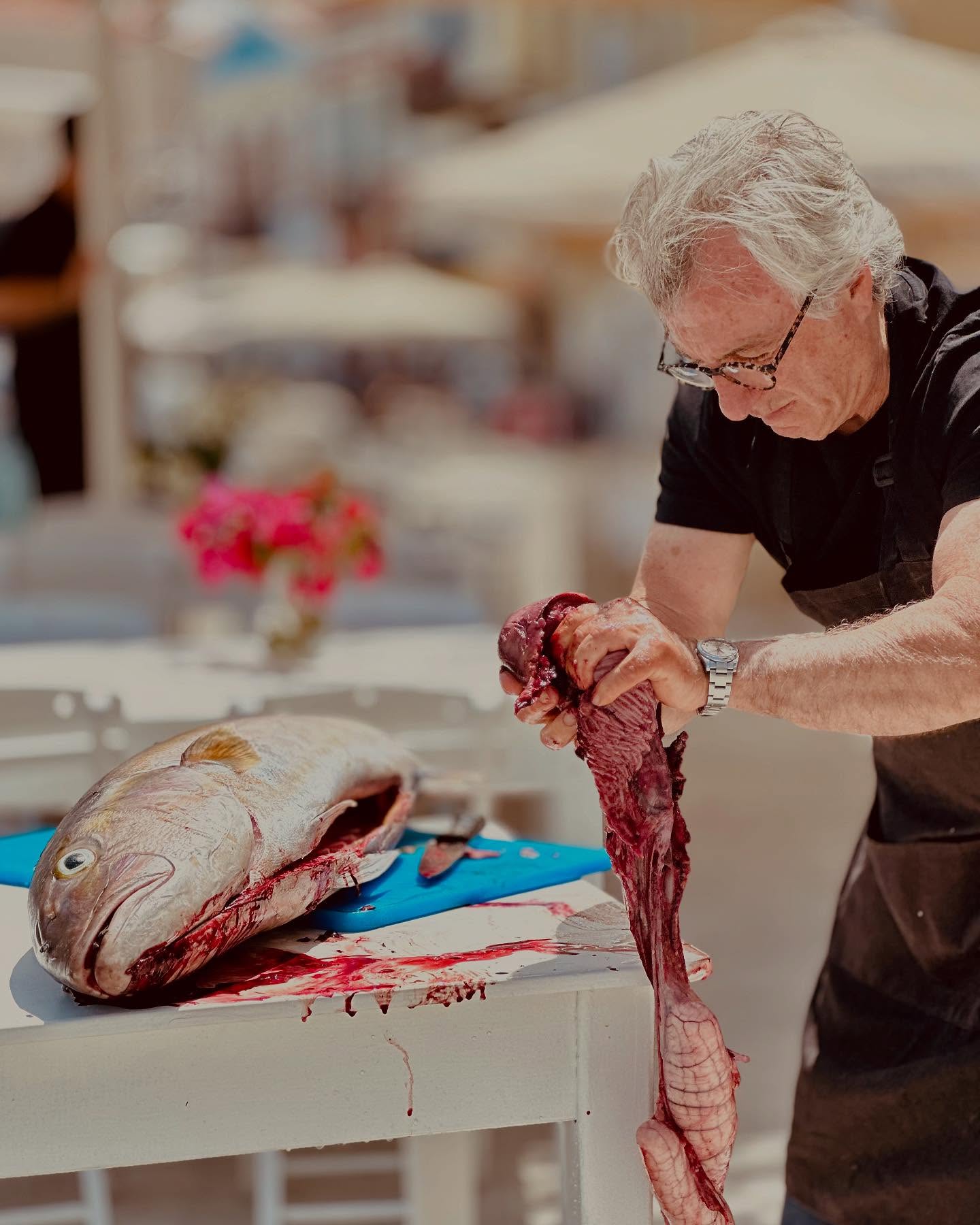
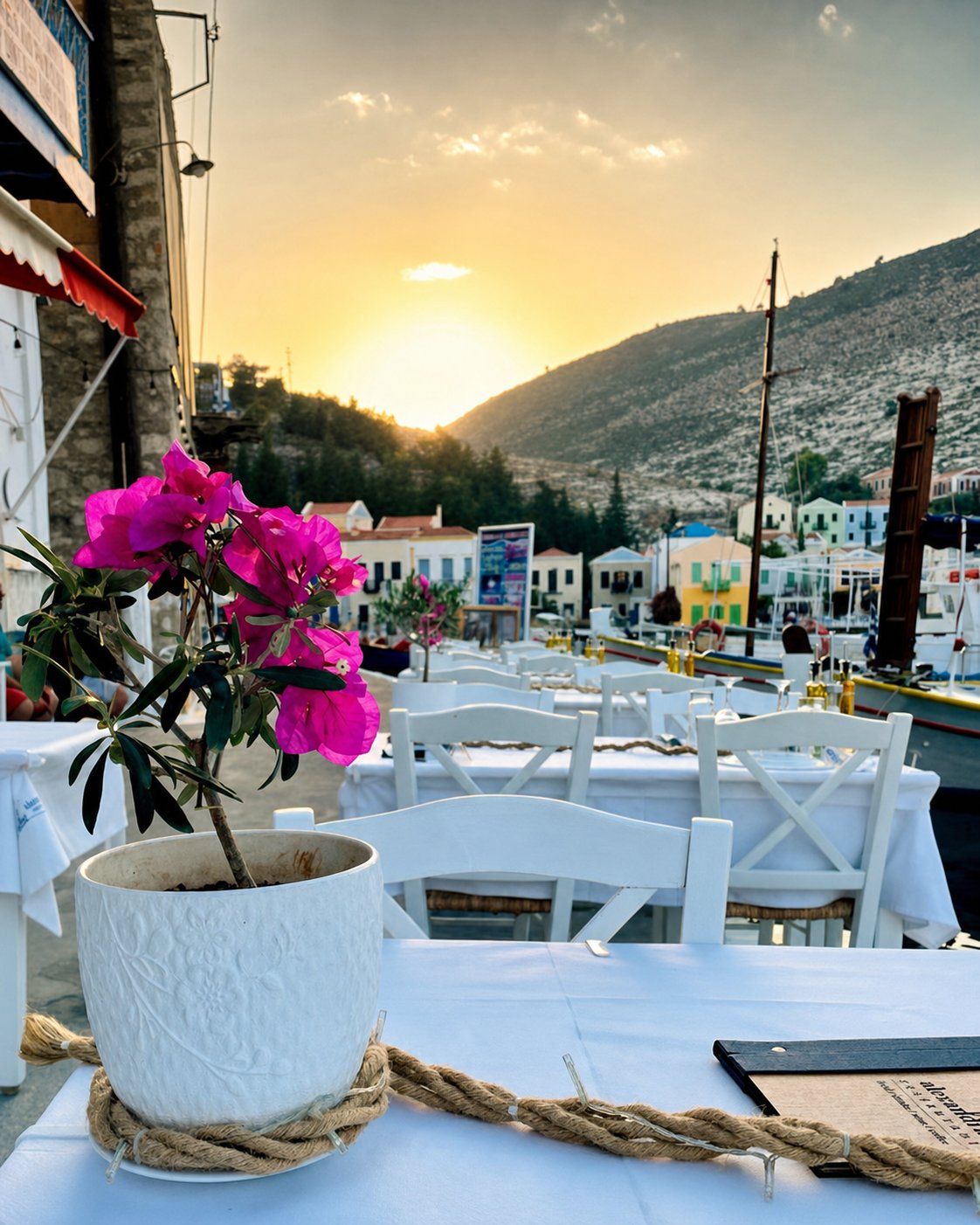
Kastellorizo’s cooking belongs to the sea, the Dodecanese, family kitchens, and the old closeness of Asia Minor. Look for fish, small seafood, shrimp, octopus, stuffed onions, chickpea fritters, dolmades, goat, lemony stews, ladera, spoon sweets, katoumari, and strava.
Billy’s keeps the old kafeneio-ouzeri feeling on the waterfront, with grilled fish, seafood, and a direct connection to local fishermen. Ta Platania, up in Horafia, is a taverna for home cooking: stuffed onions, chickpea fritters, lemony goat, ladera, bamies, soutzoukakia, and spoon sweets, served with the ease of a long-established family restaurant.
Alexandra’s Restaurant sits on the quay with traditional recipes, seafood, and a stronger restaurant rhythm, while Lazarakis has deep roots, beginning as a kafeneio in 1947 before developing into one of the island’s established fish restaurants, with wine, jazz, amberjack carpaccio, caramelized octopus, and raw shrimp among its more contemporary dishes.
Lazarakis adds a more composed harborside seafood table, with roots in a family kafeneio opened in 1947 and a current reputation for Symi shrimp, grilled octopus, lobster pasta, raw or lightly prepared seafood, and Greek wines.
After dinner, the island stays close to the water. For drinks, keep to the harbor: Stratos works from coffee and brunch way into evening cocktails; Meltemi, open since 1985, is the old-faithful café-bar for an iced coffee, wine, or late drink; and Faros, near the former mosque, is the name to know for sunset cocktails, quayside lounging, and swims between rounds. Kastellorizo has no large-scale nightlife. Its evenings are built around the waterfront, a second glass, and the lights across the strait.
10
Hotels & Accommodations: The Best Places to Stay Near the Sea
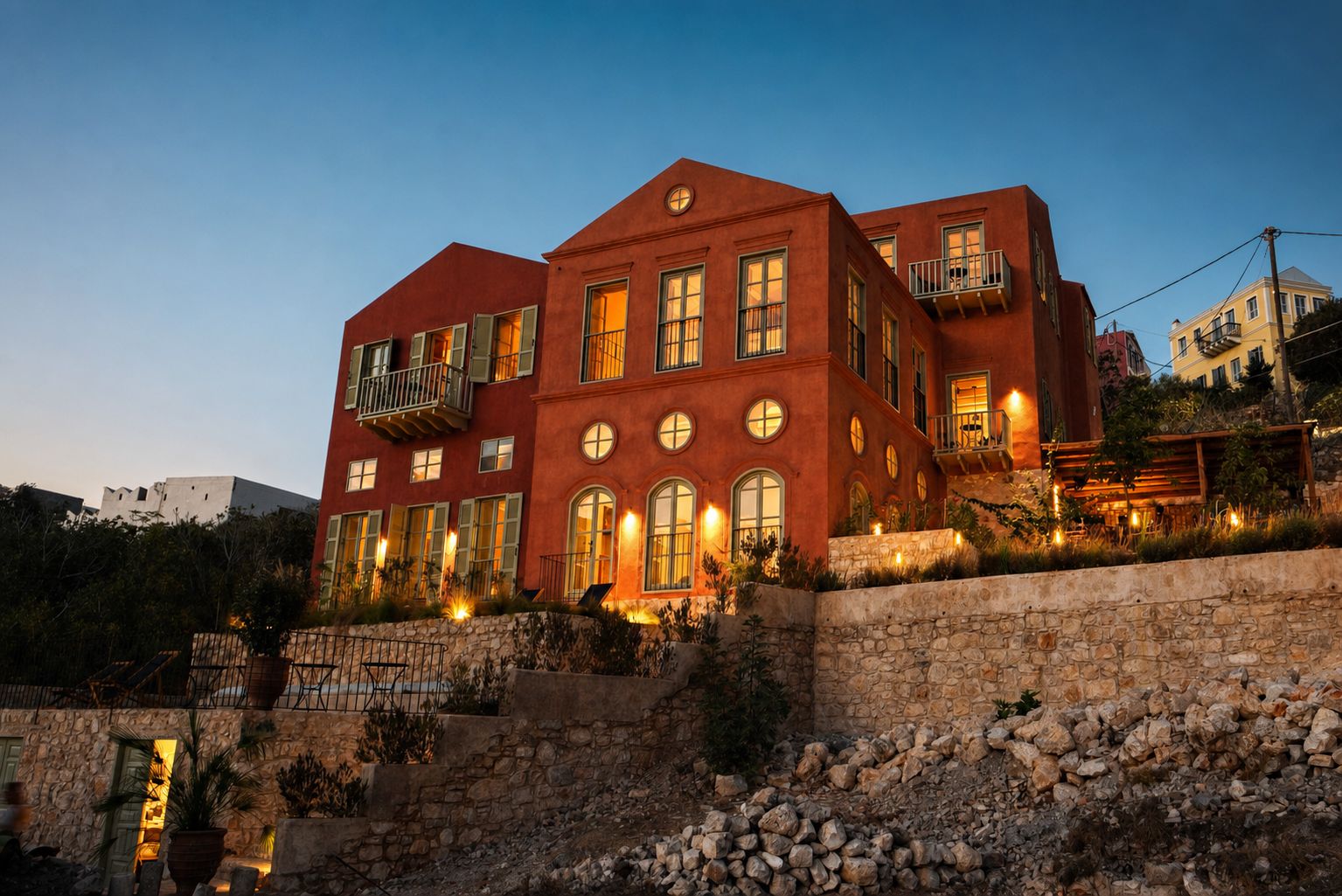
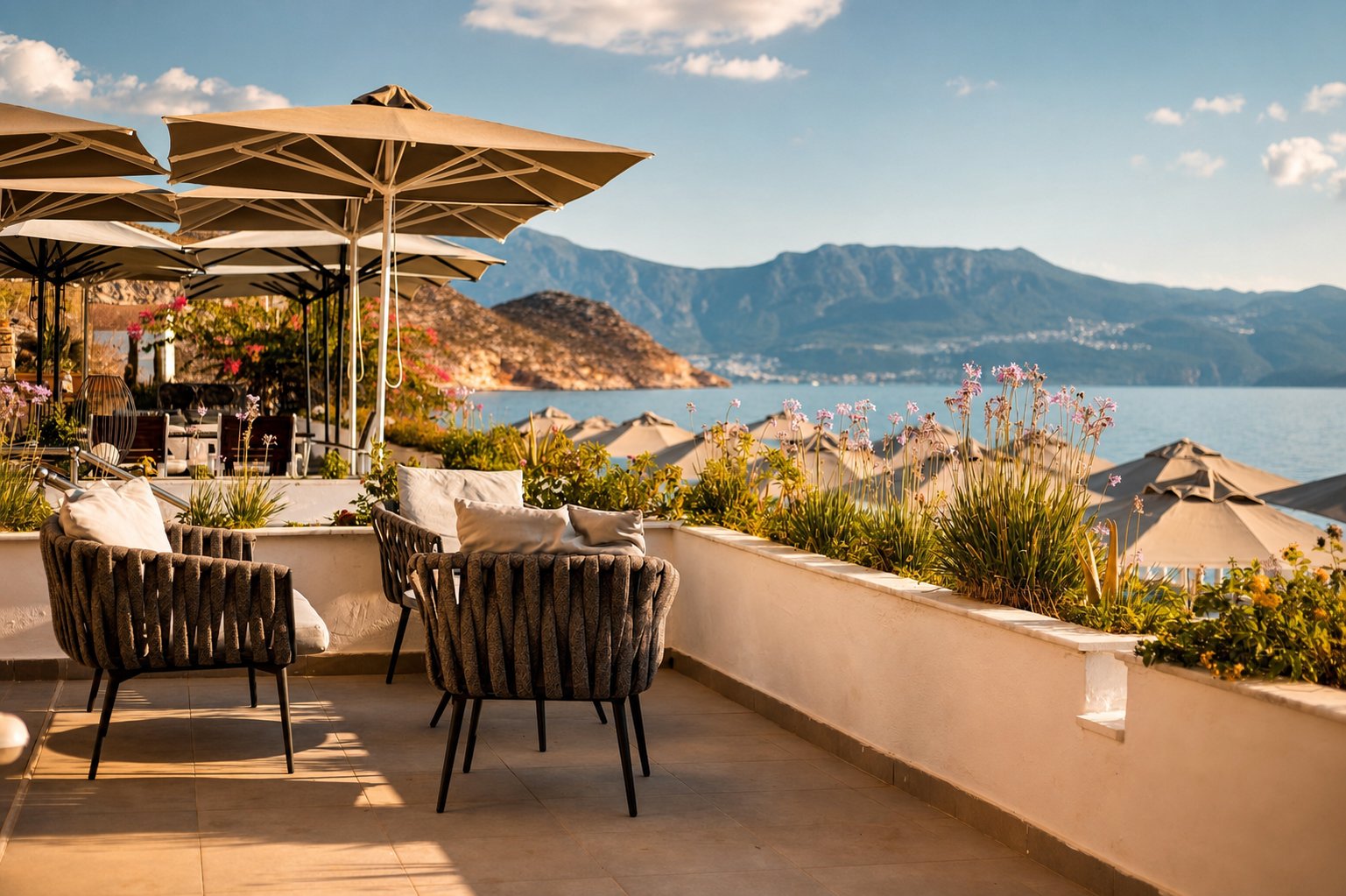
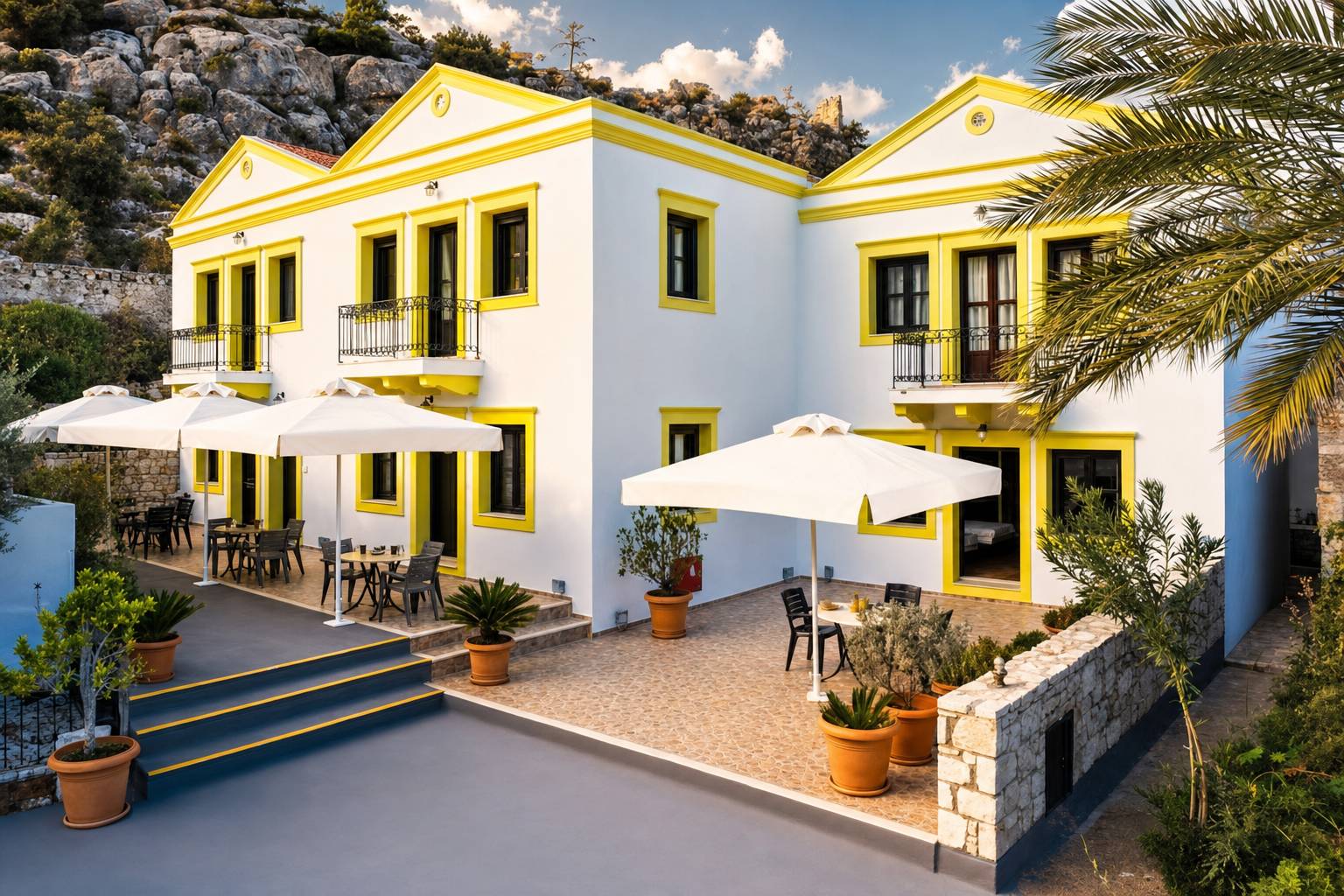
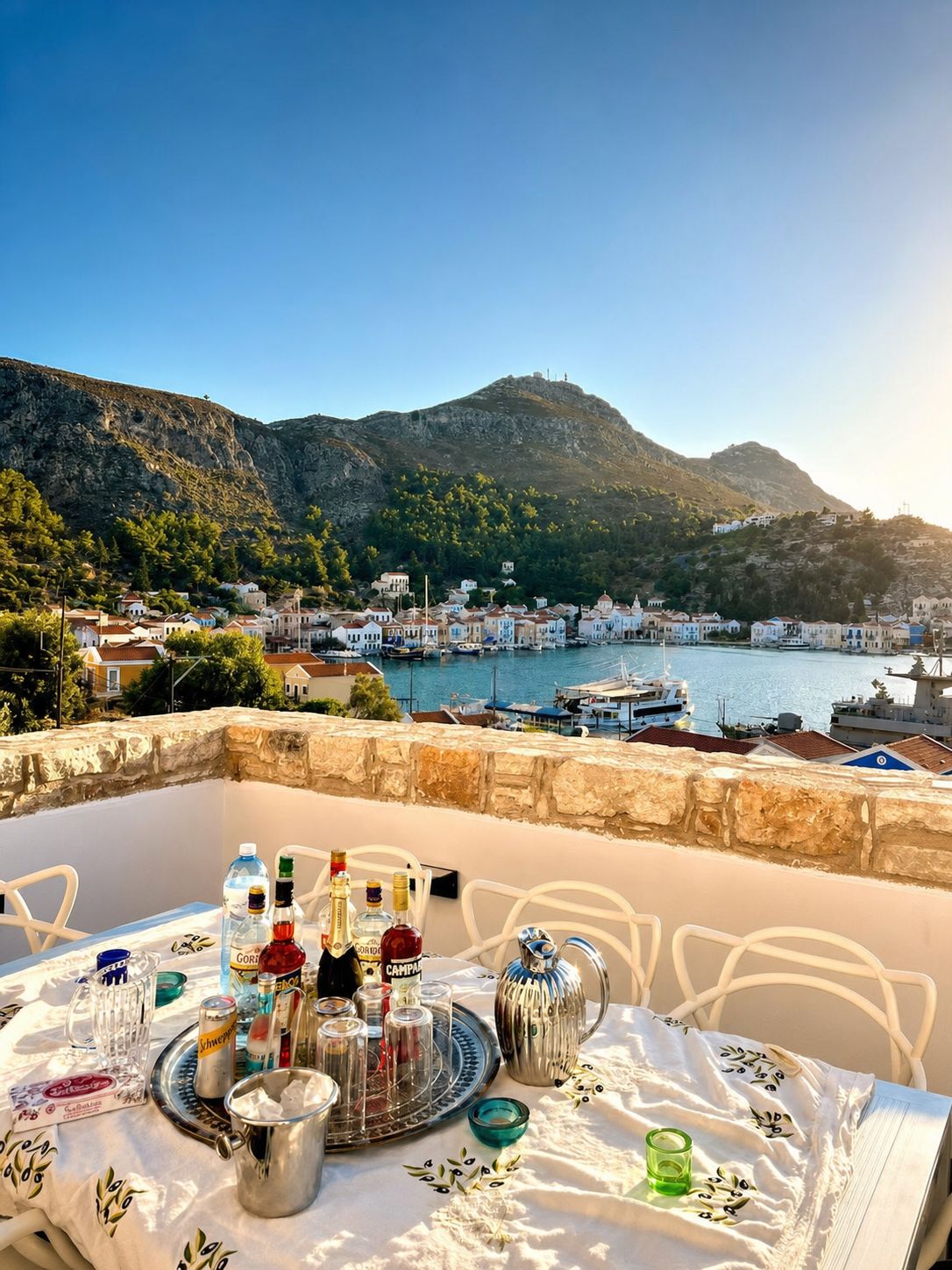
Accommodation on Kastellorizo is limited, so the best places go early. For atmosphere, start with Hotel Mediterraneo, a seven-room seafront guesthouse, bright with color, shared breakfasts on the terrace, and harbor views that place you directly inside the island’s daily rhythm. Casa Mediterraneo, by the same owner, is more private and grown-up villa with six sea-view suites in three restored mansions above the port, with terraces, garden breakfasts, and a quieter sense of retreat.
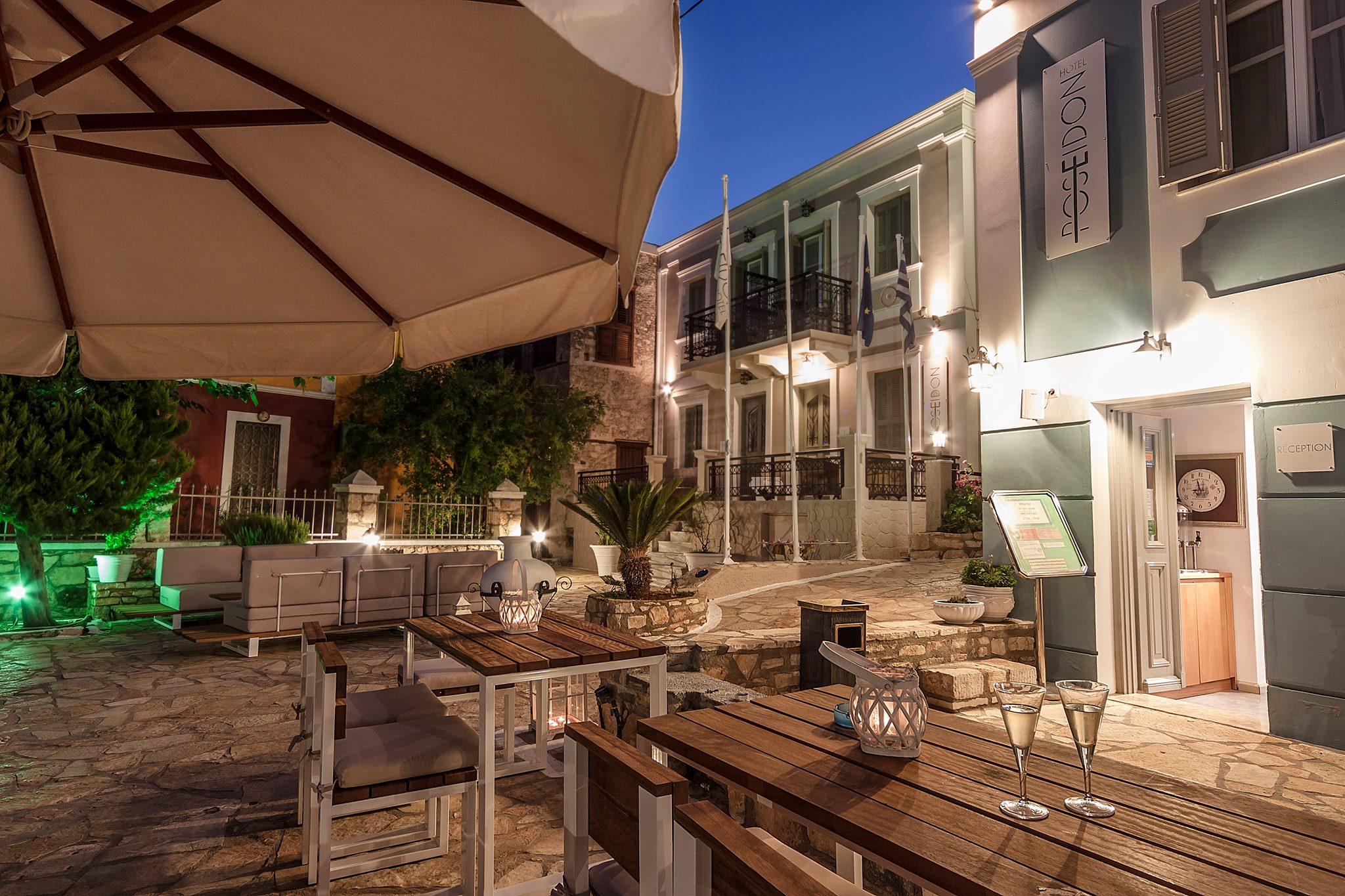
Megisti Hotel is the more conventional polished choice, set on the east side of the harbor with sea views and direct access to swimming. Poseidon offers studios and apartments in a family-run seafront complex, practical for travelers who want independence and a kitchenette. For groups, The Admiral’s House is the one to check first, a three-bedroom seafront villa with terraces, a kitchen, and space for a family or friends.
There is also always Airbnb, though options are highly curated. We identified just 39 properties on the island, with weekly prices ranging from 3,000 euros for fabulous villas to 600 euros for modest but worthy apartments. Note that Airbnb’s search system does not fully understand the local archipelago geography, so results often include listings in Rhodes or Kaş (in Turkey) – beware not to book the wrong destination. Interestingly, some owners of the cutest local properties have actually listed them under Rhodes (most likely due to postal code confusion). Do not be discouraged from checking these out, as long as they appear correctly on the Kastellorizo map.
How to Get To Kastellorizo
Reaching Kastellorizo is neither easy nor impossible, but with a bit of planning ahead, the journey is entirely worth the effort.
By Air (Via Rhodes)
- The Route: Fly into Rhodes (RHO), then take a direct Olympic Air flight to Kastellorizo (KZS).
- Duration & Frequency: The flight takes just 30 minutes and runs 3 to 4 times a week year-round. Because the planes are small 37-seat turboprops, tickets sell out quickly in the summer.
By Ferry (Via Rhodes)
- The Fast Catamaran: Dodekanisos Seaways runs a weekly summer service taking 2 hours and 20 minutes.
- The Standard Ferry: Blue Star Ferries operates twice a week, offering a highly stable 3-hour-and-30-minute crossing.
- The Local Ferry: Saos Ferries runs a slower regional connection a few times a week, taking roughly 5 hours.
Directory
Culture & Festivals
Diachronic Museum of Kastellorizo
Website
+30 22460 49283
Beyond Borders Kastellorizo International Documentary Festival
Website | IG | FB
Near & Far Kastellorizo International Music Festival
Website | IG | FB
Dining & Nightlife
Billy’s (Kafeneio-Ouzeri)
+30 22460 49224
Ta Platania (Taverna)
FB
+30 22460 49206
Alexandra’s Restaurant
FB
+30 2246 049019
Lazarakis (Seafood Restaurant)
IG | FB
+30 2246 049370
Stratos (Cafe-Bar)
IG | FB
+30 2246 049257
Meltemi (Cafe-Bar)
FB
+30 2246 049249
Faros (Cafe-Bar)
FB
+30 22460 49509
Accommodations & Hotels
Mediterraneo / Casa Mediterraneo
Website | IG
+30 22460 49007
Megisti Hotel
Website | IG | FB
Poseidon (Studios & Apartments)
Website | IG | FB
The Admiral’s House
+30 697 5321804