






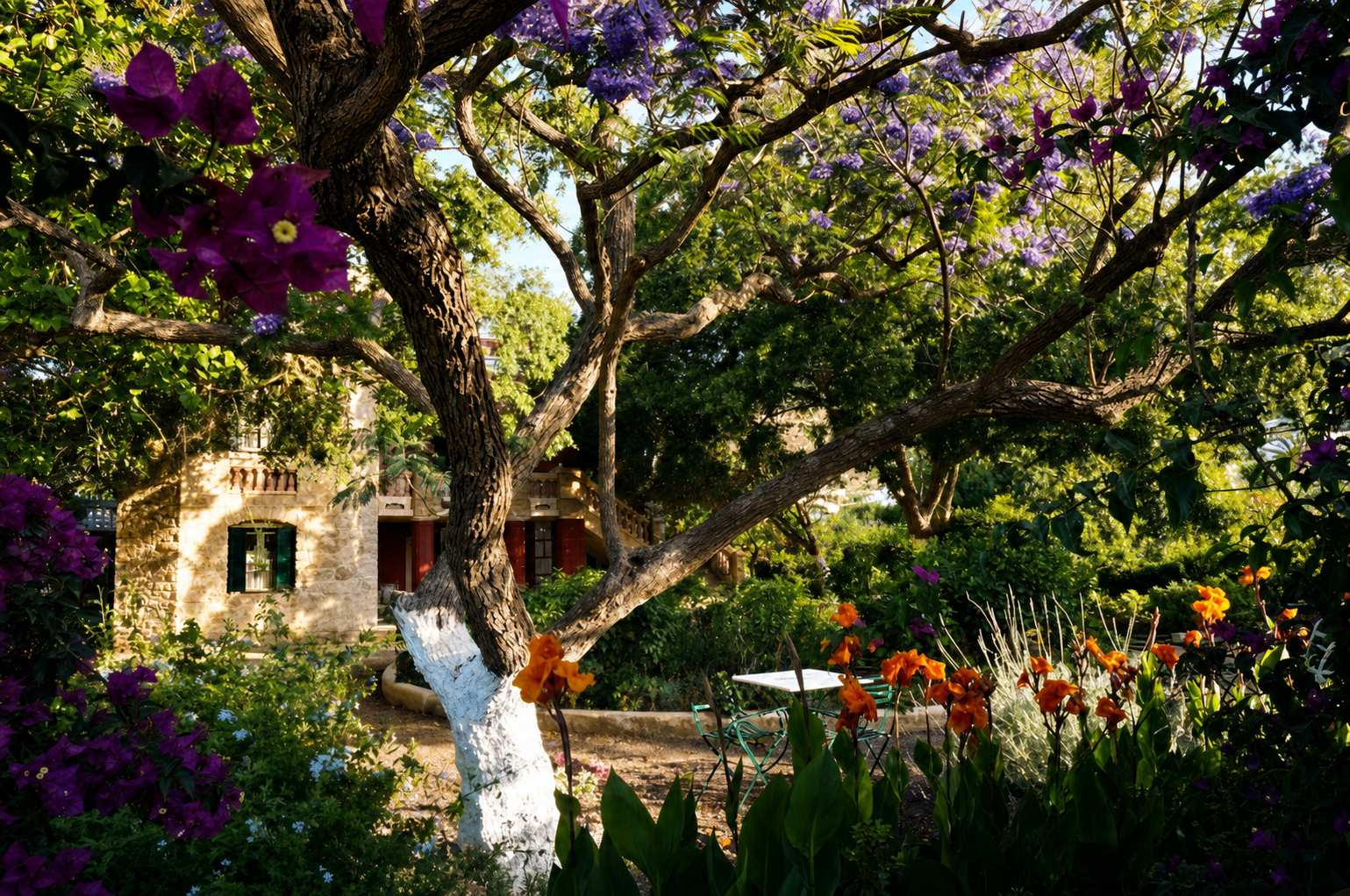
Leros sits between Kalymnos and Patmos, closer to Turkey than to Athens, and greener than almost anywhere else in the Dodecanese. Pine, oak, olive and eucalyptus climb hills that elsewhere in the Aegean would be scorched to bare rock. The island rarely feels like one place. It unfolds instead as a scatter of bays and villages, each keeping its own mood, its own light, joined by roads short enough to drive without thinking twice. Renting a car here isn’t a convenience; it’s how the island actually opens up.
What gives Leros its texture is history, layered rather than curated. Above the capital, an 11th-century Byzantine castle still holds the high ground. Below, Lakki survives almost untouched, a town of 1930s Italian rationalist architecture built when the island served as Mussolini’s naval base in the Aegean, its wide avenues looking more like interwar Rome than the rest of the Dodecanese. Just outside town, the War Museum of Merikia sits inside the same tunnels where the Battle of Leros played out in 1943, rock walls still bearing the weight of what happened there. The century held harder chapters too, taken up later in this guide.
None of it was built for an audience. Leros works for a living. Travelers who slow down find it rewarding anyway.
01
First Look
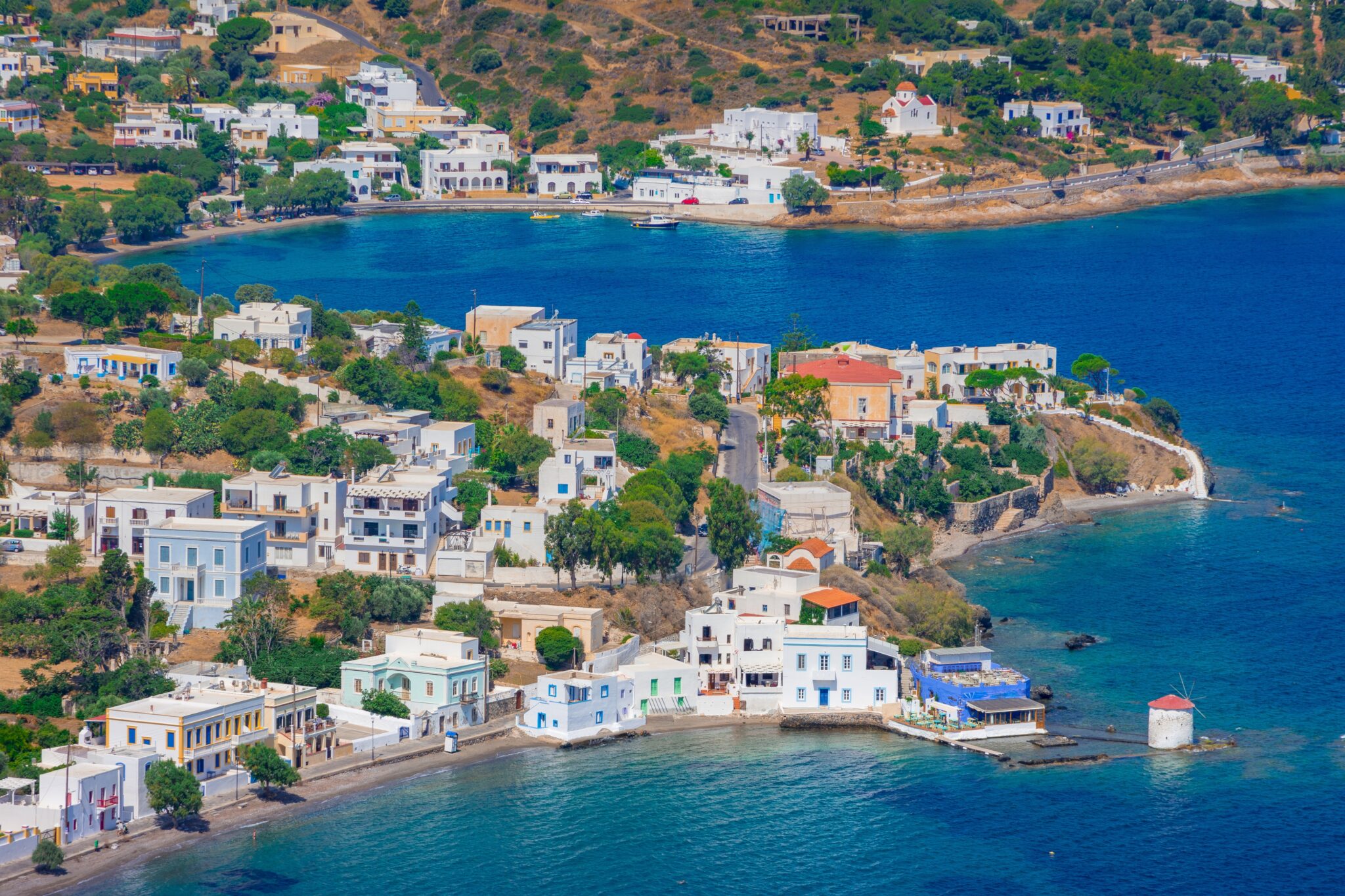
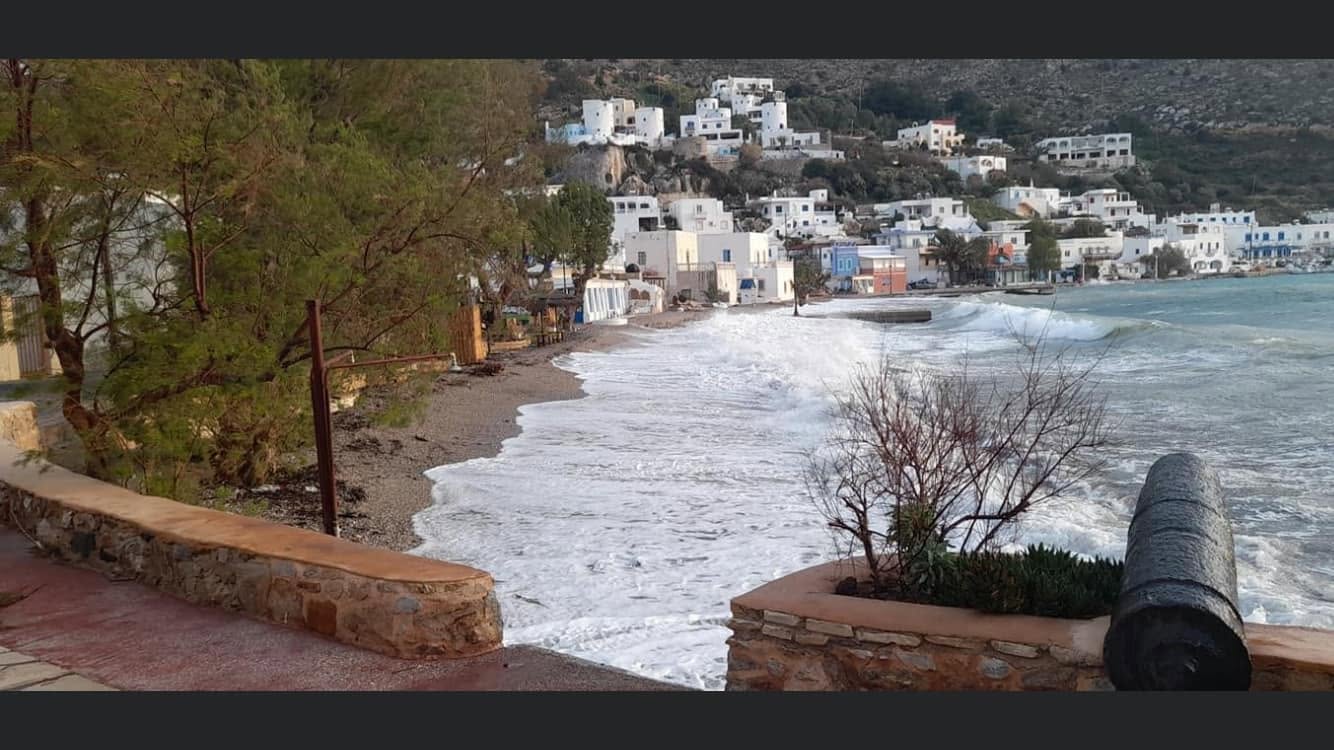

Agia Marina is the island’s second port and the arrival point for hydrofoils and catamarans, its 19th-century Italianate waterfront lined with cafés and restaurants. It sits almost fused with Platanos, the capital, just ten minutes uphill, and with Panteli, the old fishing village on the other side, both gathered beneath the hill of Pityos and its castle.
Lakki, a few kilometers south, is the island’s main port and its most distinctive settlement: a planned Italian town from the 1930s, wide avenues and rationalist civic buildings still standing much as they were built, closer to an open-air museum than a present-day port town, which remains very much a working one.
Alinda, on the opposite side of the island, is the busiest resort village, spread along a long sandy bay with most of the tourist infrastructure. Vromolithos, Xirokampos, Gourna and Partheni round out the map, each quieter, greener and more spread out than the last.
02
Villages
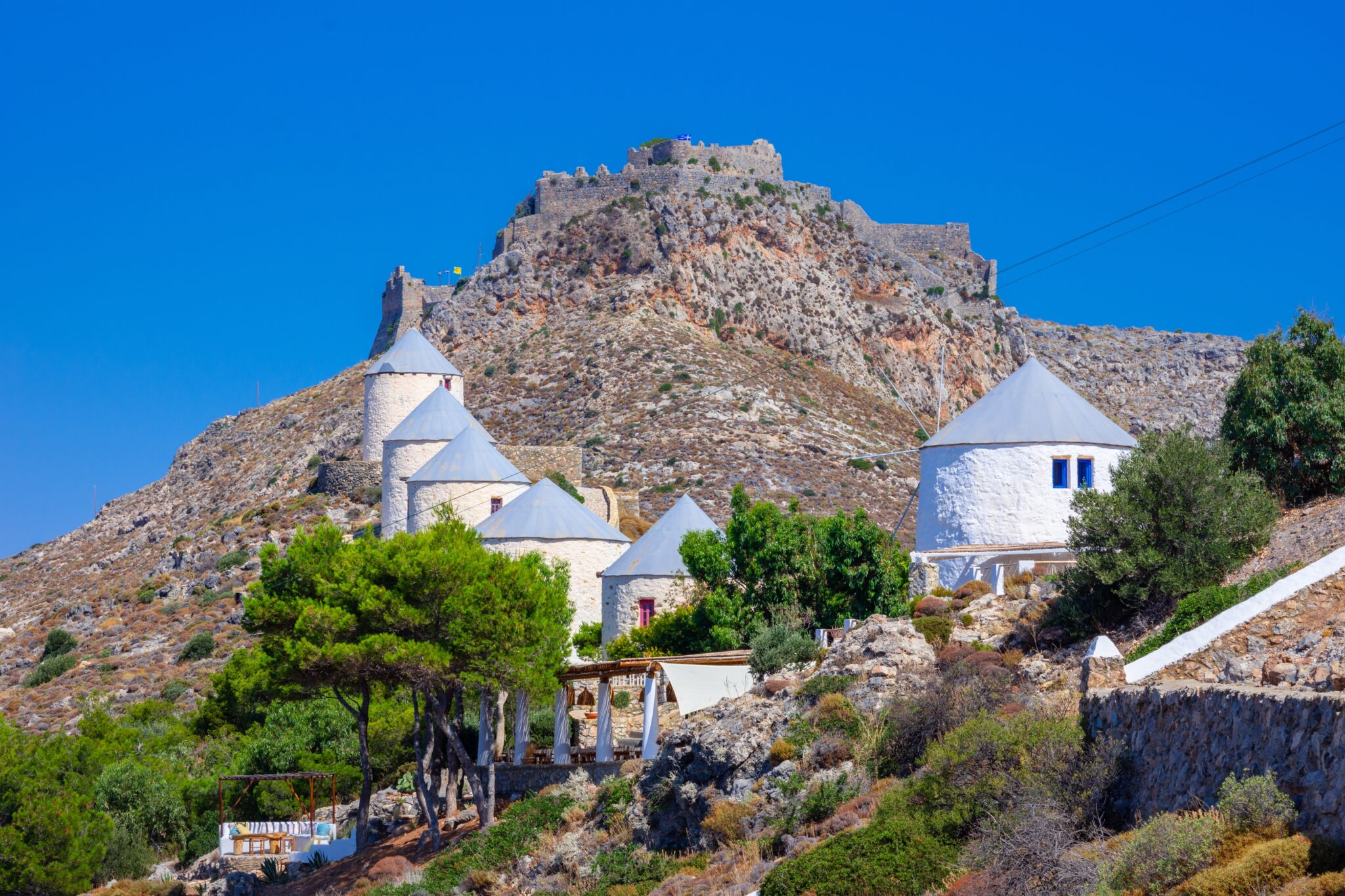

Platanos, Agia Marina and Panteli feel more like one continuous settlement than 3 separate villages, linked by short walks along the slopes of Pityos Hill. Platanos itself centers on a small square shaded by its namesake plane tree, with the town hall on one side and a scatter of shops and kafeneia on the others; the atmosphere is unhurried, an active island capital rather than a resort. Panteli, just below, keeps its identity as a fishing village, with boats still pulled up along the small harbor beneath the castle walls, and a small chapel of Agios Ilias just behind the castle that makes a quiet spot to watch the sun set over Alinda Bay.

Lakki is a village to stroll rather than rush through. Built as Portolago, the Italian naval station, in the 1930s, it remains one of Greece’s only intact examples of Italian rationalist town planning: the former Naval Administration building, the covered market with its circular atrium and clock tower, and the church of Saint Nicholas, originally Catholic, all still stand, laid out around wide avenues and eucalyptus-lined squares that feel closer to interwar Italy than to the rest of the Dodecanese. Alinda, by contrast, is Leros at its most relaxed and social: a mile-long beach lined with tamarisks, cafés and restaurants, with the twin-towered Belenis mansion, now a museum, anchoring its northern end.
03
Museums and Culture
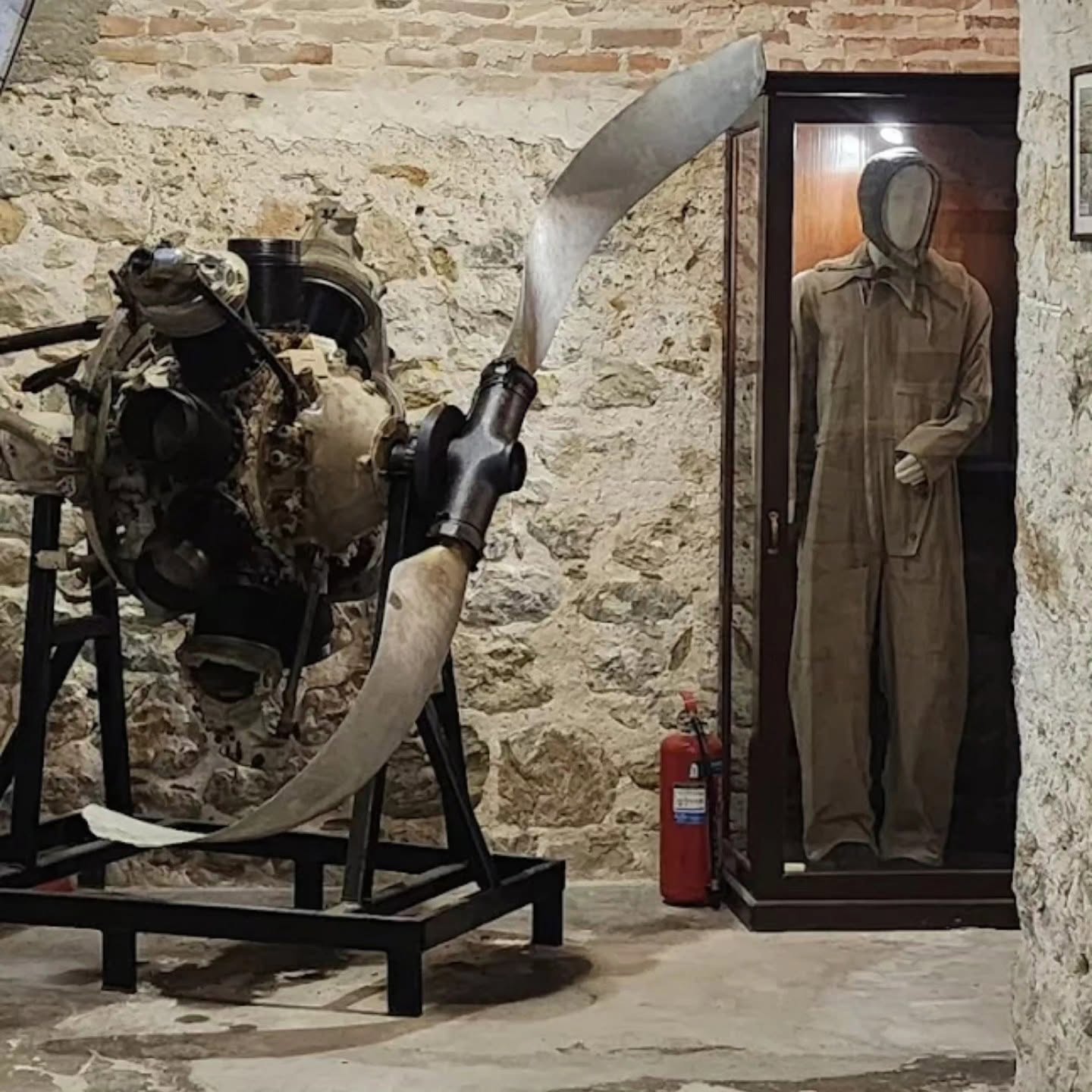
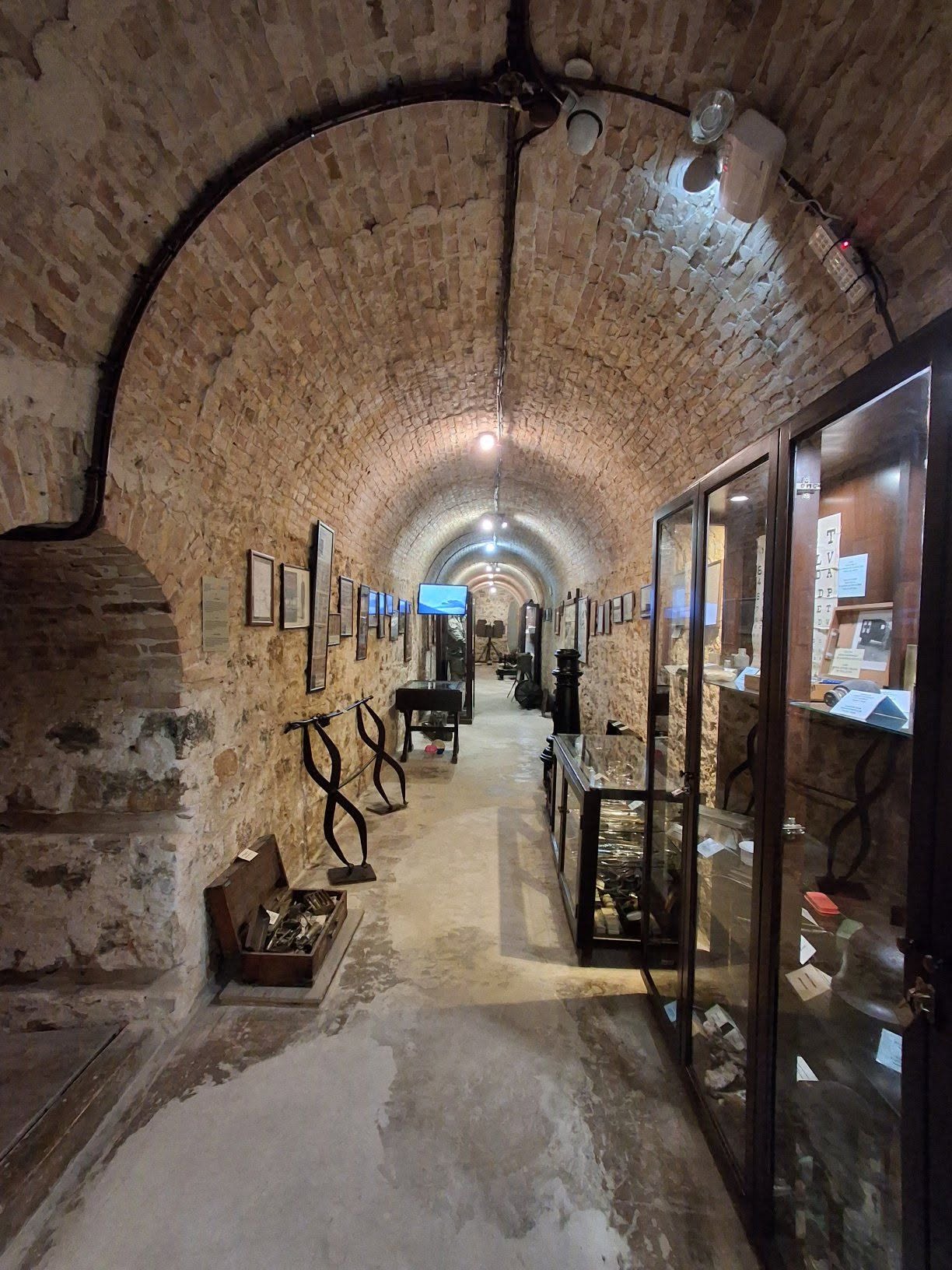
The War Museum at Merikia, just outside Lakki, is Leros’s essential stop: a genuine Italian ammunition tunnel from the 1930s, its winding rock-cut corridors now lined with weapons, uniforms, photographs and personal letters from the Battle of Leros, with a small military park of decommissioned vehicles and a fighter plane outside. It is a sober, unsentimental account of one of the bloodiest engagements fought in the Dodecanese, and worth the visit even without a particular interest in military history.
In Alinda, the Belenis Tower, a fortified 1920s mansion built by an expatriate benefactor, houses the island’s Historic and Folklore Museum: embroideries, traditional costume, wood-carved icons and domestic objects from Leros’s prosperous bourgeois period around 1900, alongside a small WWII-era hospital room preserved from when the tower briefly served as a field hospital.
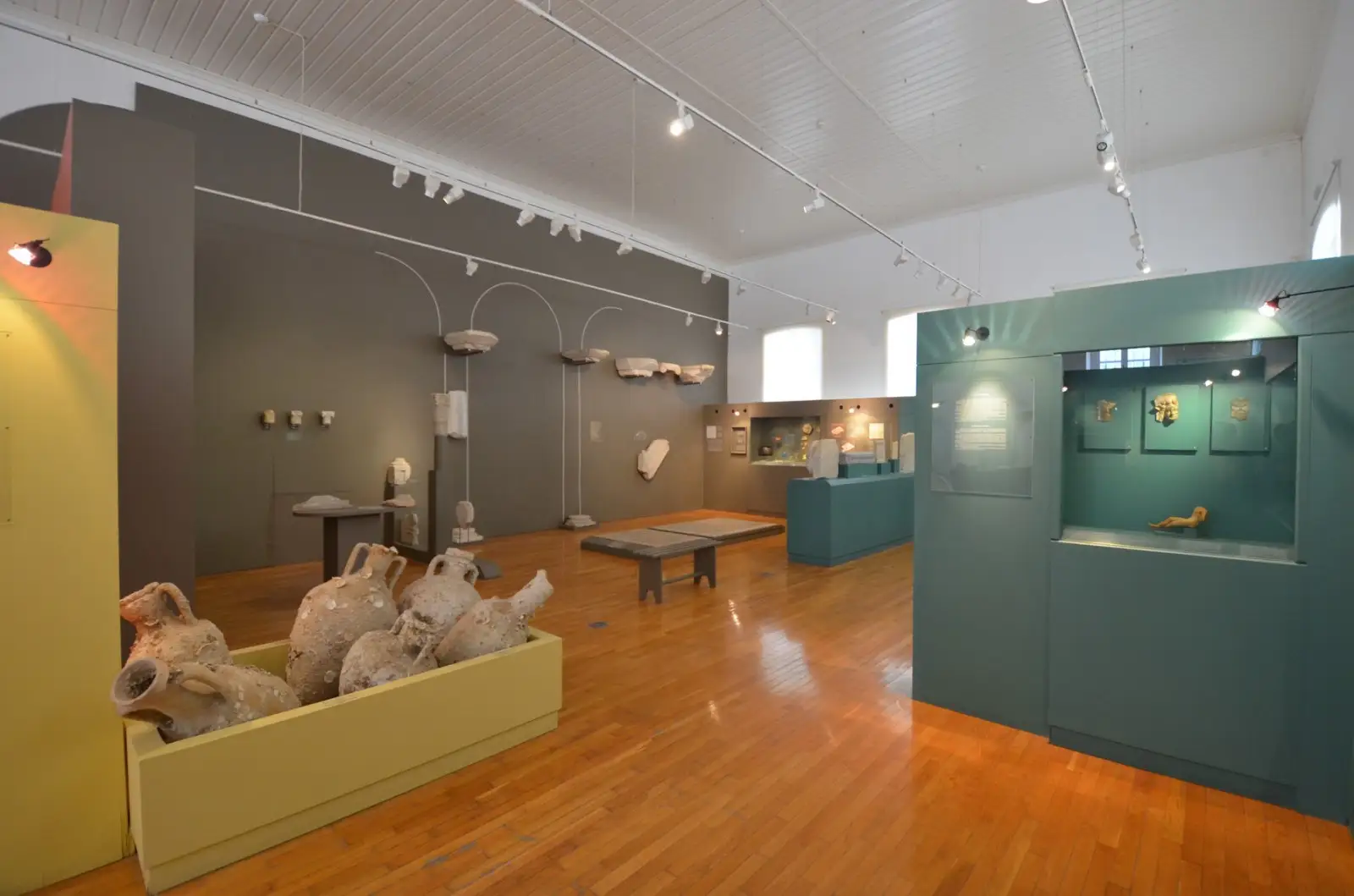
The Archaeological Museum in Agia Marina, built with funding from the Lerian expatriate community in Cairo, holds coins, inscriptions and grave stelae spanning the island’s ancient history, while the Ecclesiastical Museum, set inside the castle itself alongside its underground cisterns, keeps a collection of rare manuscripts, vestments and icons.
Above it all, the Castle of Panagia, Byzantine in origin and rebuilt under the Knights of St John, still holds an annual festival inside its walls each August. A second, older fortress, the Castle of Lepida, stands above Xirokampos on the island’s oldest inhabited hilltop, its fourth-century chapel floor still holding fragments of an early mosaic.
Two smaller sites round out the island’s harder history. Near Partheni, excavations have uncovered the remains of a Hellenistic-era sanctuary believed to honour Artemis, for whom the island was known in antiquity, layered beneath an early Christian church built from the same reused stone. Nearby, the tiny blue-domed chapel of Agia Kioura was decorated by political prisoners, among them the resistance figure Manolis Glezos, held at the Partheni army base during Greece’s 1967-74 military dictatorship, and is now a protected monument.

Leros’s most difficult modern history is also among its most significant. From 1957, a state psychiatric institution operated near Lakki, eventually holding well over a thousand patients transferred there from institutions across Greece, many with no remaining family contact. Conditions inside deteriorated badly over the following decades and remained largely unknown outside the country until 1990, when a British newspaper investigation and a Channel 4 documentary “Island of Outcasts” exposed severe overcrowding and neglect, prompting international outcry and European Union-backed reform. The long-standing medical neglect became a turning point for psychiatric care across Greece, as patients were gradually moved into smaller, community-based housing through the 1990s. It is not a tourist site, and this guide does not treat it as one. Yet this history remains essential to understanding Leros, alongside the island’s wartime past and Italian-era architecture.
04
Beaches


Leros keeps its coastline uncrowded, and that alone shapes how each bay feels. Dyo Liskaria sits at the far end of the Alinta gulf, sheltered enough that even a strong meltemi barely ruffles the water. Sand gives way to fine pebble underfoot, tamarisk trees lean in for shade, and a beach bar tucked among them (Zephyros, with hammocks strung beneath the eucalyptus trees) keeps the pace relaxed. Families favor it in the morning; the crowd shifts younger by late afternoon.
Blefouti lies at the opposite end of the island, near the airport at Partheni, and is the quieter counterpart. Offshore, one of the more accessible wartime relics in Leros waters, a German bomber downed in 1943, rests close enough to shore to be reached with a snorkel rather than diving equipment. It is easy to miss and worth asking locally for current guidance before swimming out.

Xirokampos, on the southern coast facing Kalymnos, is the largest of the three and the most geared toward staying a while, with a diving center, several campsites, and water deep enough close to shore to draw divers rather than paddlers. A short walk east brings you to the chapel of Panagia Kavouradena and a smaller rocky cove beside it, for anyone who finds even Xirokampos too busy.

For a change of scenery entirely, the White Islands (Aspronisia) are a cluster of low limestone islets a short boat ride from Agia Marina, their pale rock throwing the water into an improbable turquoise. Wooden caiques run there daily through the summer, usually combined with a stop at Archangelos for lunch; a seat is best booked the afternoon before, directly at the port. No ferry timetable applies, and no two operators keep quite the same hours, so asking at the harbor still works better than searching online.
05
Hiking and Old Paths

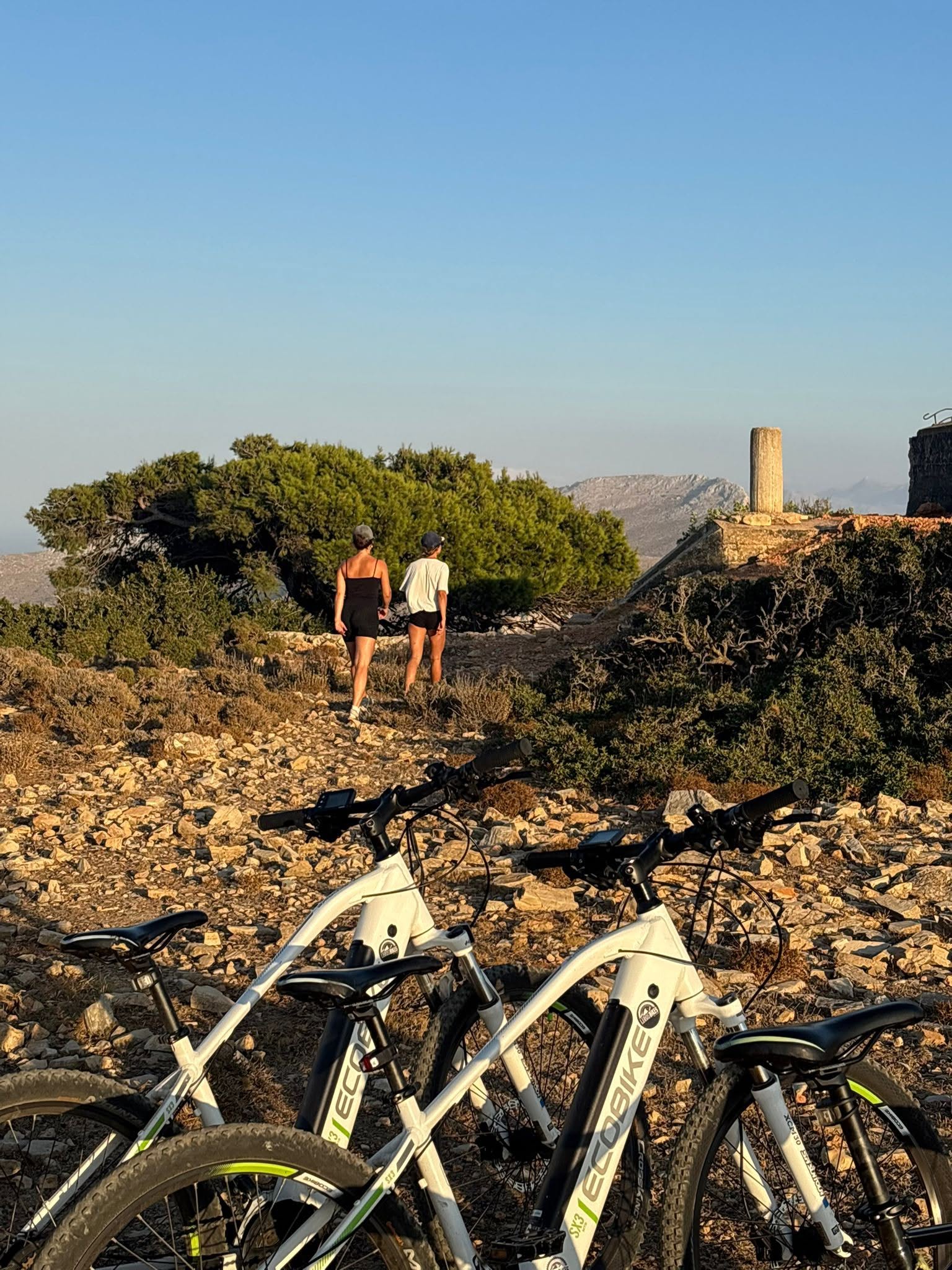
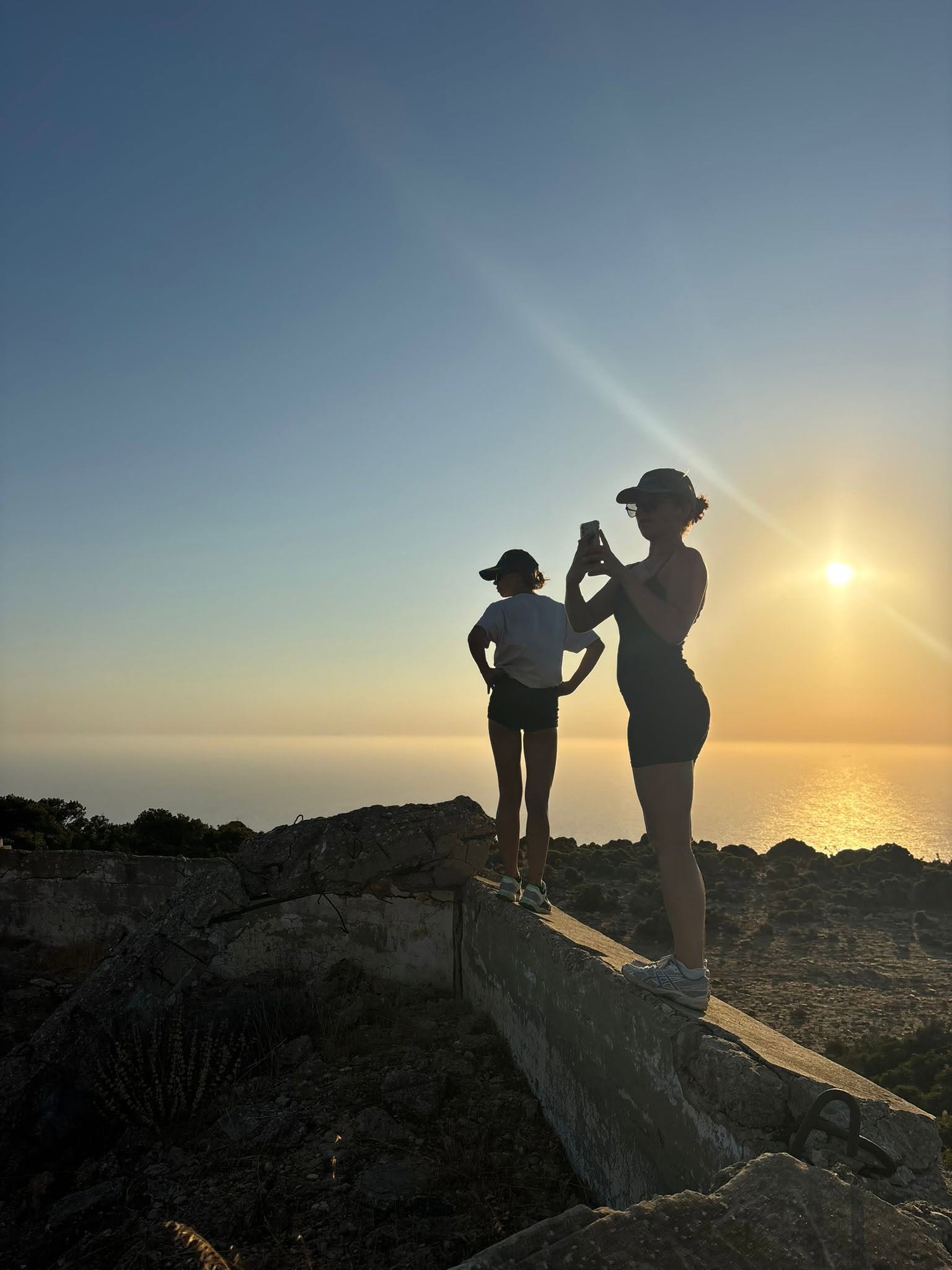
Leros is an island full of experiences and activities, and hiking and cycling are among the best ways to experience it. The climb up from Platanos to the Kastro, the fortress crowning the island, follows roughly 500 steps through the lanes of Agia Paraskevi, past the scent of wild thyme, before delivering a view over both coasts at once; islanders still make the ascent as a pilgrimage to the chapel inside. Further south, the trail from Xirokampos up to the summit of Skoumbardos climbs an old zigzagging dirt road through Italian-built gun emplacements and barracks left over from the 1943 battle, with Kalymnos filling the horizon from the top.
A gentler coastal path from the same starting point leads along the water to the chapel of Panagia Kavouradena, its stone approach kept in good repair by the municipality, with the option to continue inland toward the ruins at Paleokastro.
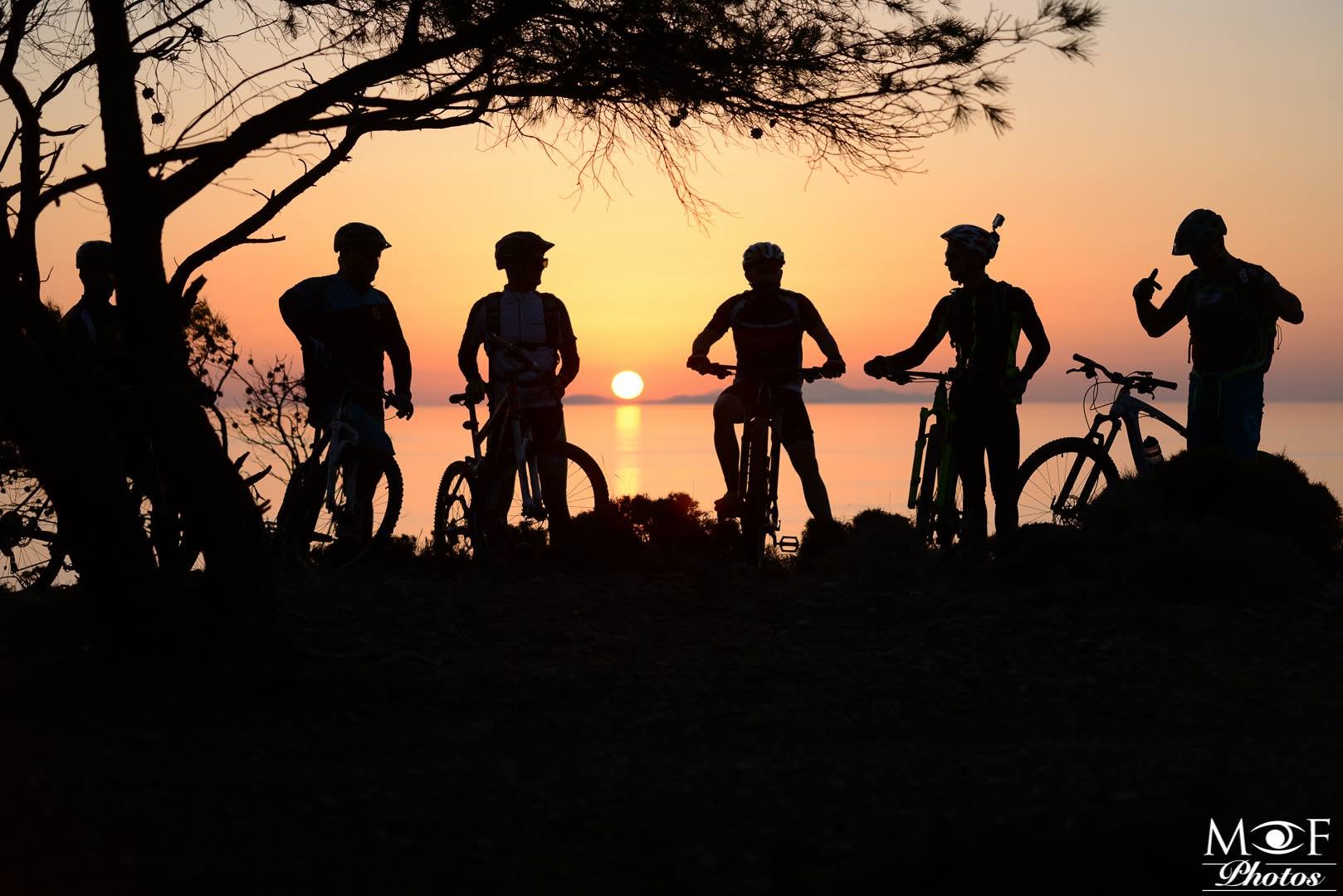
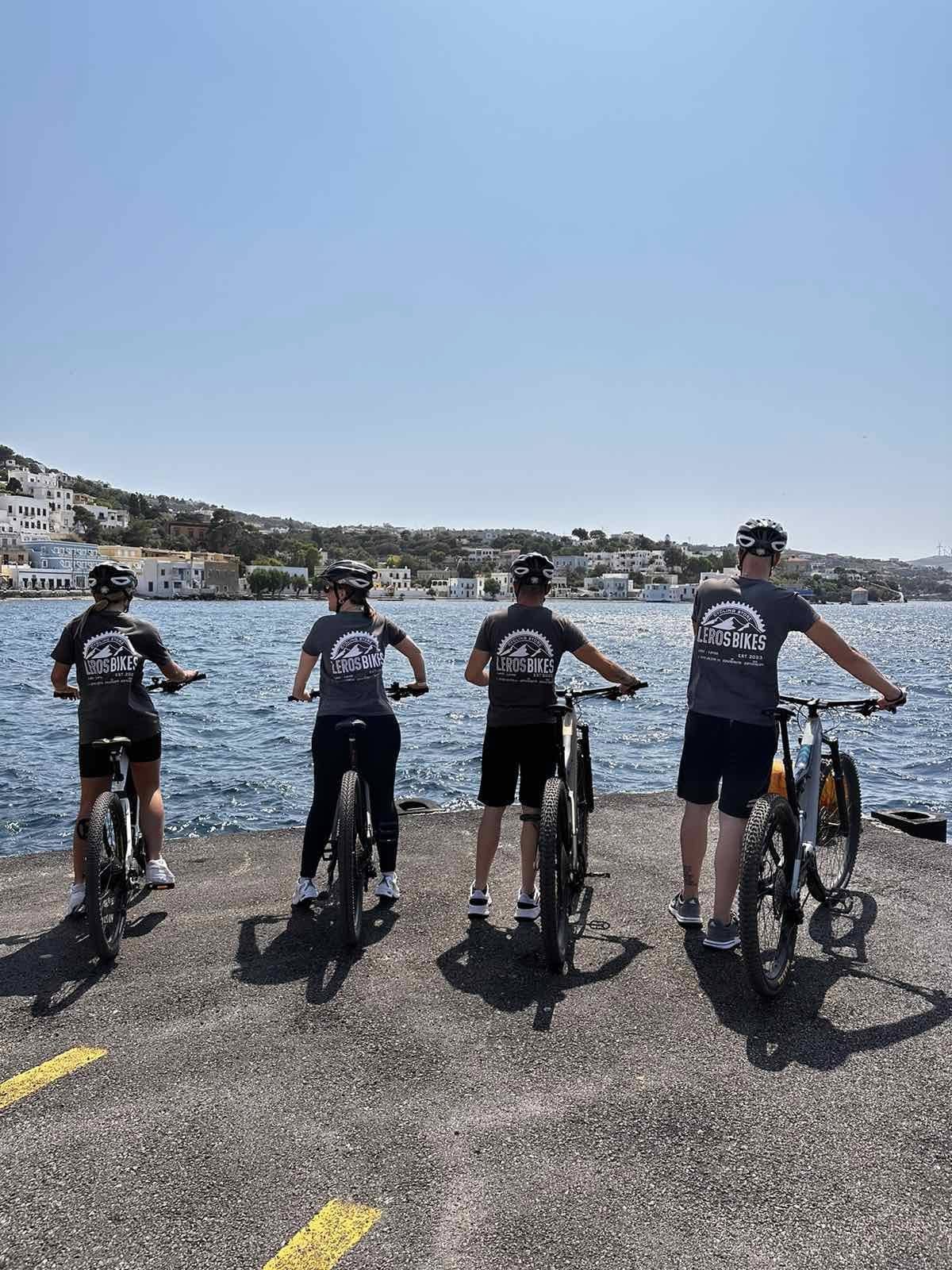
Cycling has become the quieter counterpart to all this walking. Leros holds official Bike Friendly status, with its own Cycling Club, and the municipality has mapped and signed a genuine network rather than a handful of token routes; laminated copies turn up at the tourist information points near the port. The flattest riding links Merikia, Lakki, Temenia and Xirokampos, an easy loop past the rationalist Italian architecture of the old capital that suits a first afternoon on two wheels.
Leros Bikes, based in Lakki, rents both standard and electric bicycles and runs guided tours graded from historical rides through soft, hard and full mountain-biking outings, with child seats and trailers available for families.
06
Traditions and Feast Days
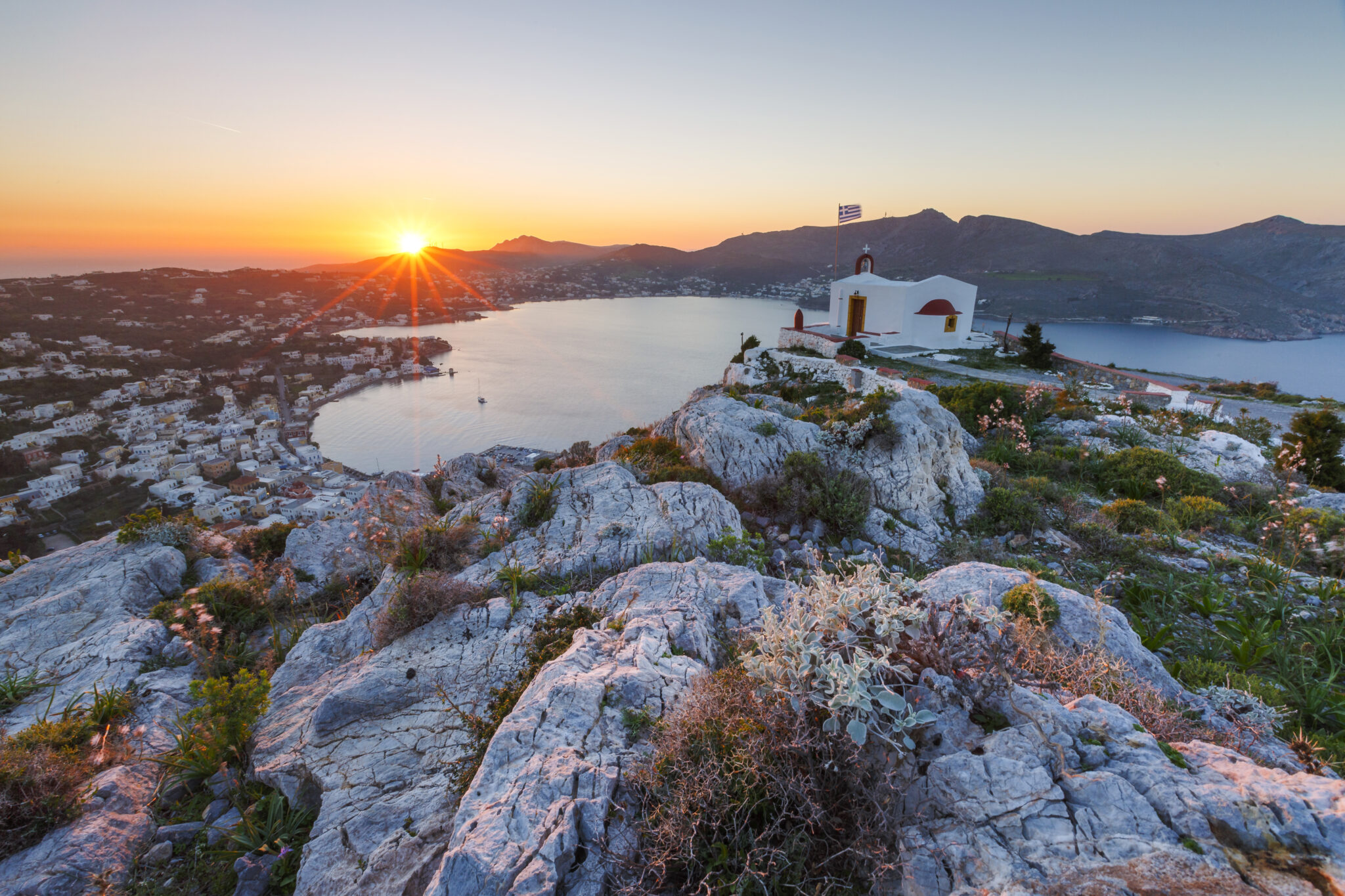

The island’s biggest religious feast is Panagia tou Kastrou, celebrated at the castle church above Platanos on August 14 and 15, drawing crowds from across Leros for the vigil and procession. Agia Marina keeps its own two-day feast on July 16 and 17, filling the harborfront with music and food. At Xirokampos, the feast of Agios Fanourios on August 26 and 27 is one of the liveliest on the calendar, traditionally including a reenactment of grape-treading as part of the island’s wine-making customs.
Holy Week has its own local rhythm: on Good Friday, three separate epitaphios processions, from the churches of the Annunciation, Agia Paraskevi and Christ, converge in the streets of Platanos in one of the more striking small-island Easter traditions in the Dodecanese. Each August, Alinda also hosts the Alindeia, a nautical sports festival now in its ninth decade, built around swimming and other water-based competitions along the bay.
07
Where to Eat
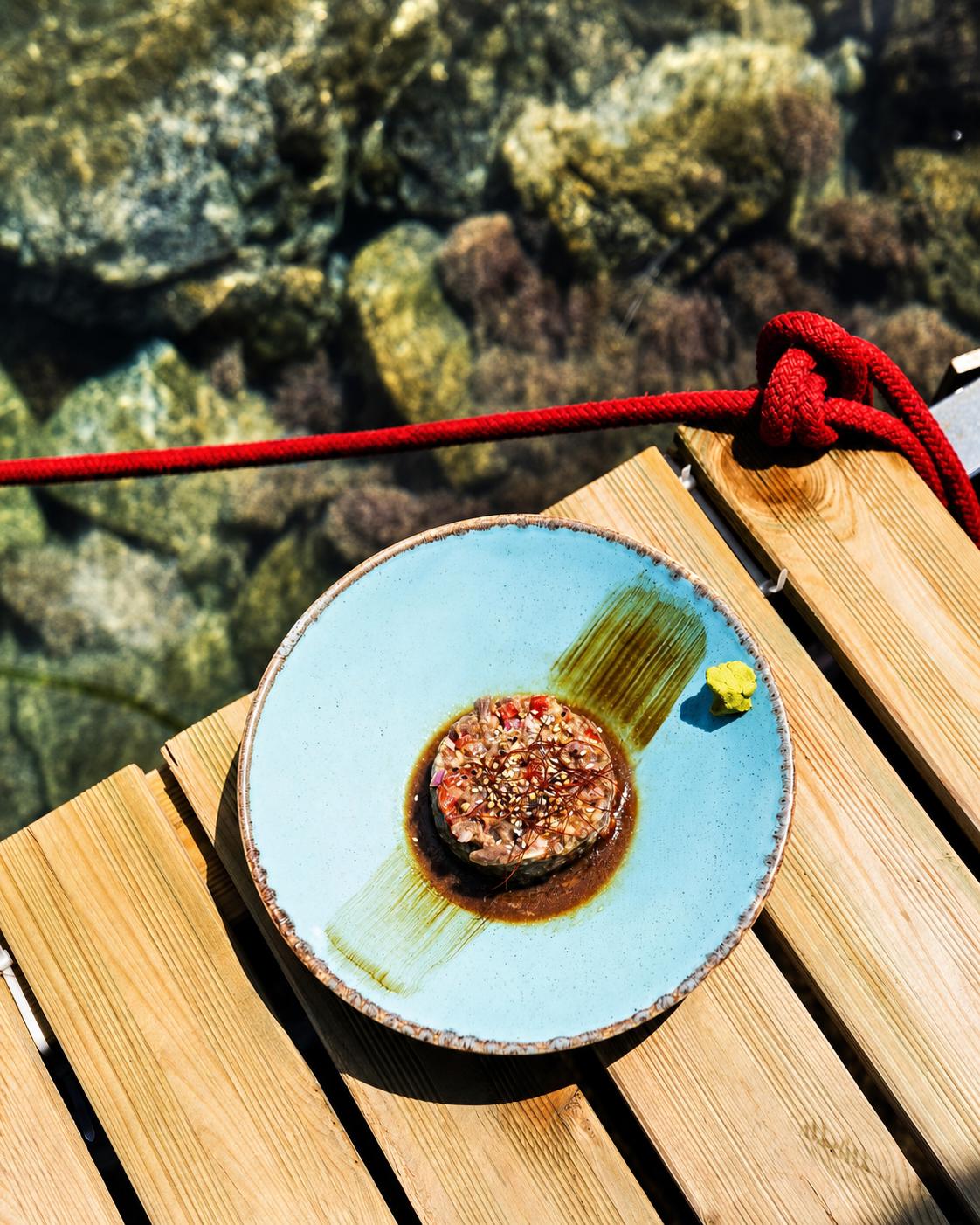
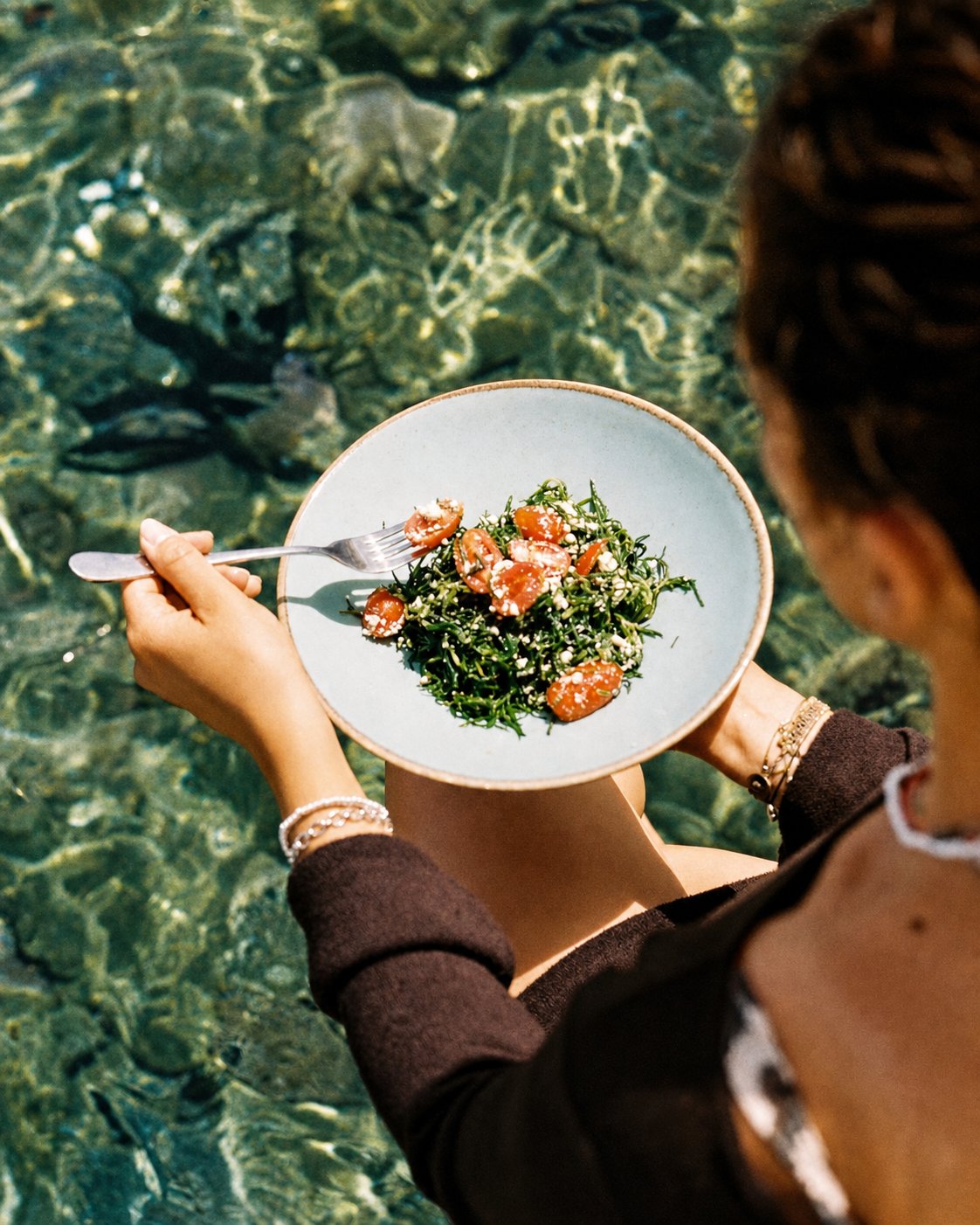
Mylos By The Sea, set in front of a working windmill on the Agia Marina waterfront, is the most acclaimed table on Leros, awarded a Top Notch distinction in Athinorama’s 2026 Golden Hats. Run by two brothers, one of them chef, it specializes in dry-aged and raw seafood technique alongside grilled fish and an unusually serious wine list, and books out fast in summer.
Psaropoula, on the beach at Panteli, has been run by the same family since 1962 and remains Leros’s most enduring seafood address, its tables close enough to the water that the waves reach the front row. Psaropoula’s stewed octopus and lobster spaghetti, now something of a local legend, are the dishes mentioned first.
Tis Kakomoiras, on the cliffs above Vromolithos, pairs modern meze, fresh oysters and its signature shrimp-and-kataifi dish with broad sea views.
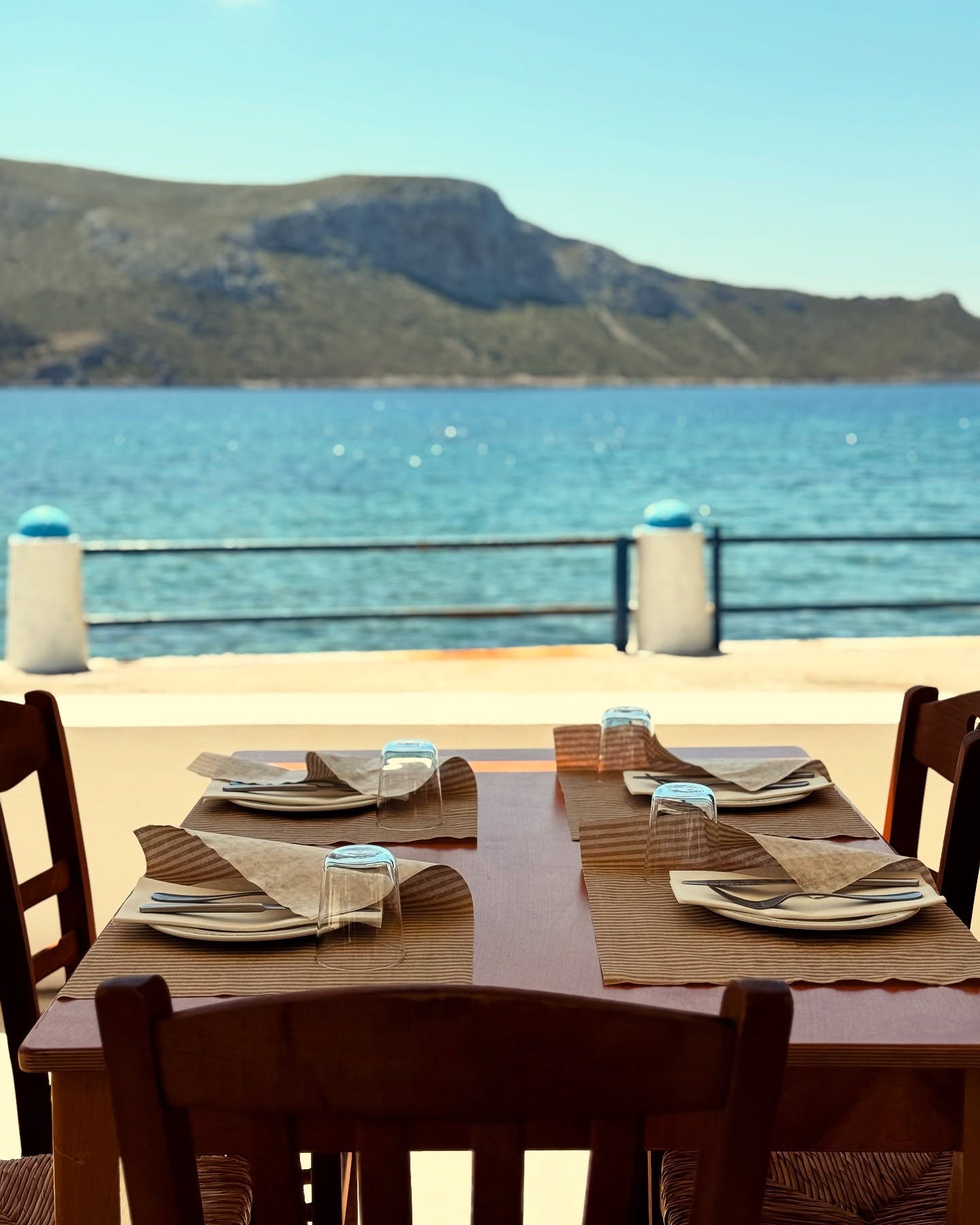
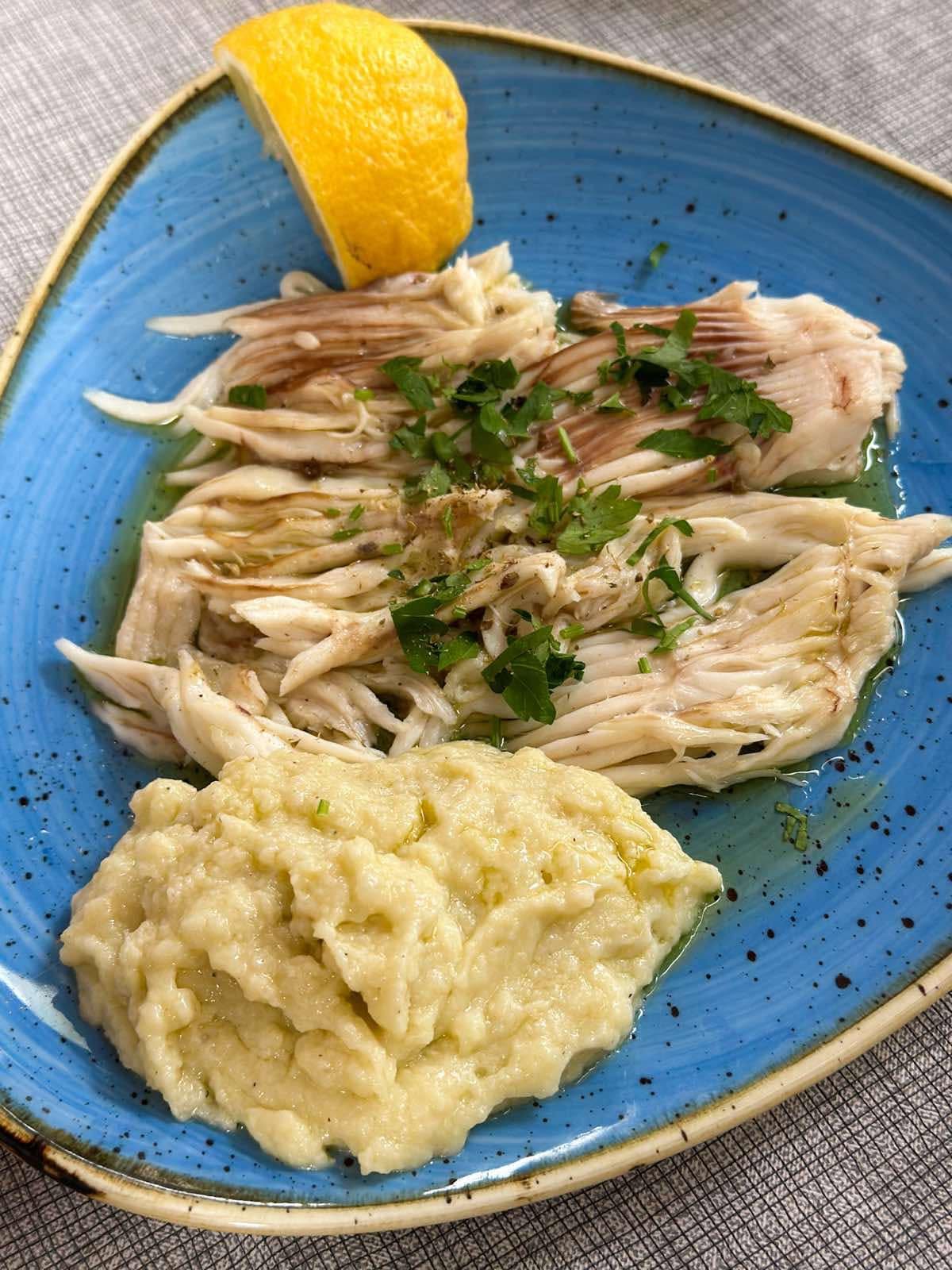
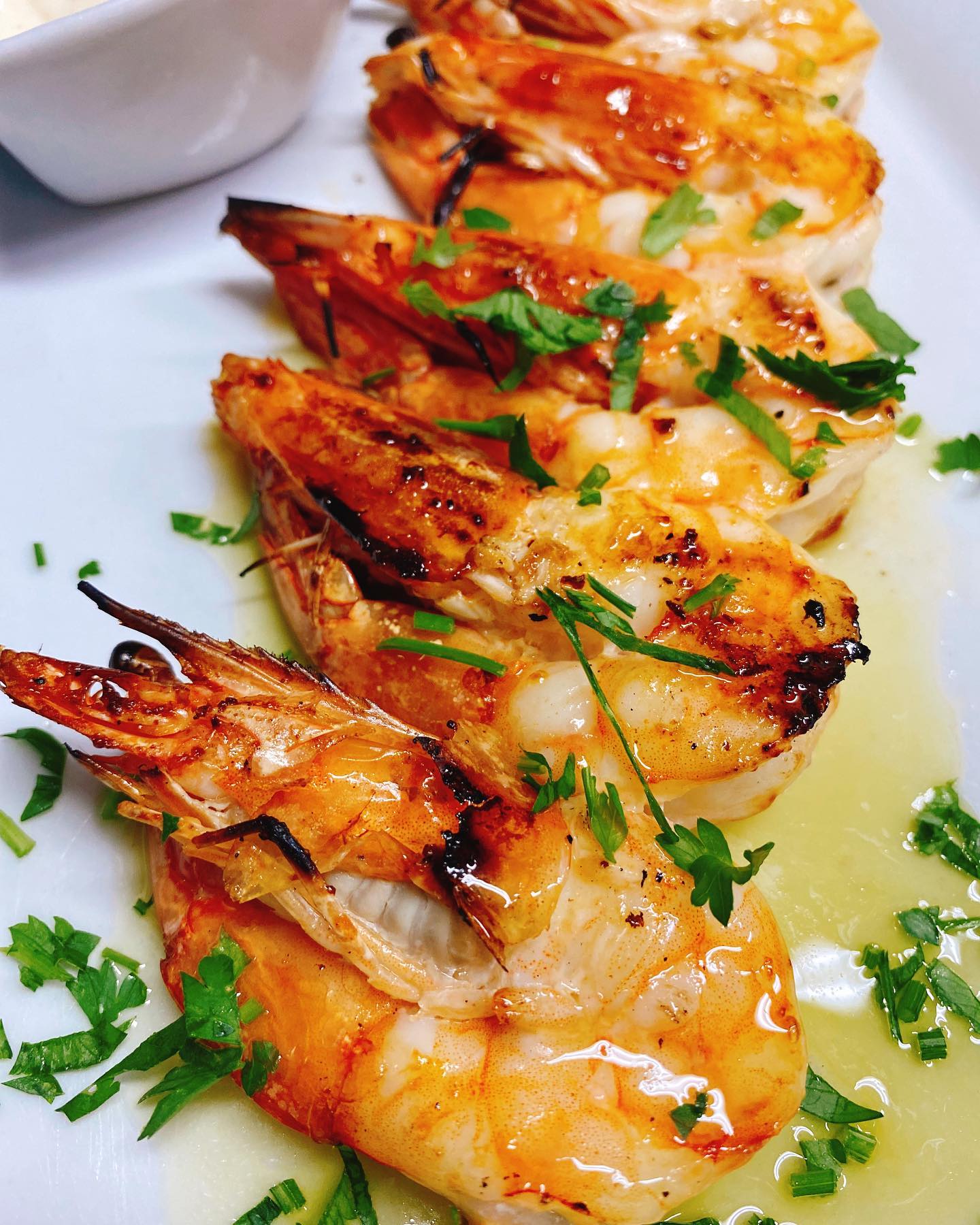
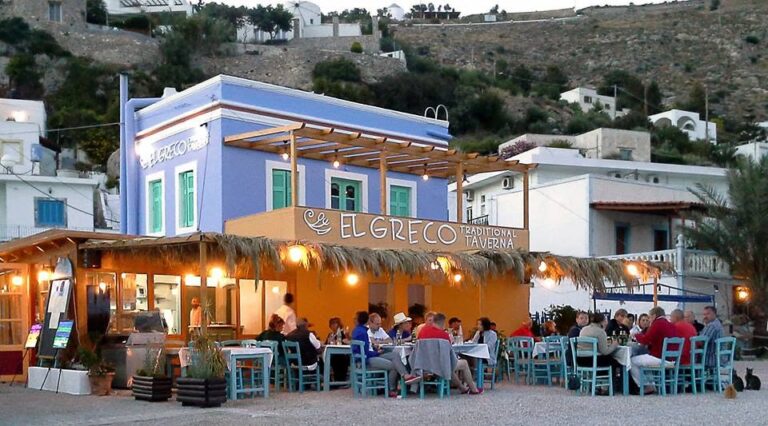
El Greco has operated under the same chef, known locally as Patimenos, since 1989, though the taverna itself moved from Panteli to Lakki in 2023; its wood-fired lamb and grilled ray fish with roasted beetroot are worth seeking out at its new address.
Serza Leros, near Merikia beach, sets its tables in a courtyard with sea views and leans more contemporary than most island tavernas, built around whatever chef Theodosis Theodosiou finds each morning, from Kalymnos-style octopus meatballs to a serious Greek and international wine list.
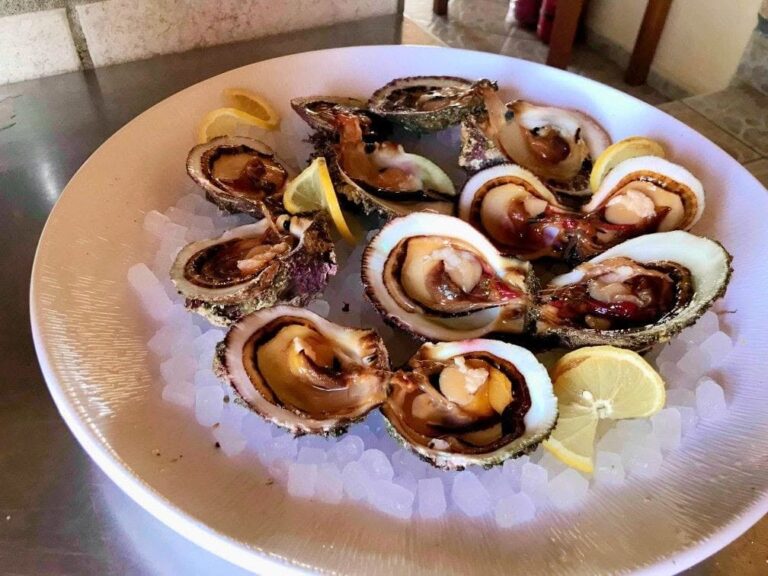
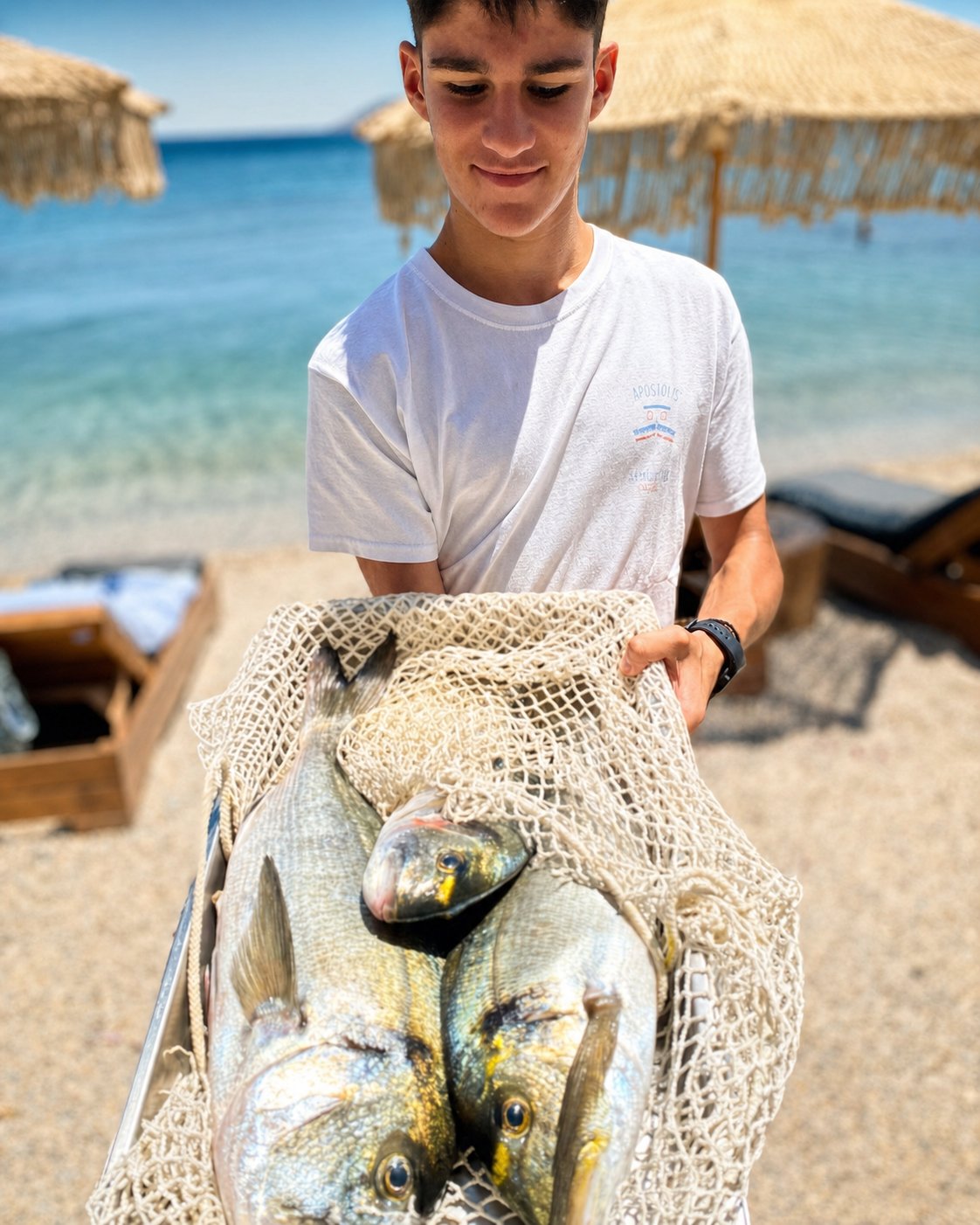
Ouzeri o Sotos, at the far end of the small settlement of Drymonas, is barely more than a seaside fish shop with tables, run by a fisherman who cleans the day’s catch in full view of diners; the grouper souvlaki and shellfish are the reason people make the drive.
Aloni, built on an old threshing floor above Xirokampos beach, is a family-run taverna serving home-style Greek cooking, particularly its Sunday specials of slow-cooked lamb or goat, in a setting that doubles as a good excuse to spend the whole day at the beach below it.
08
Where to Stay
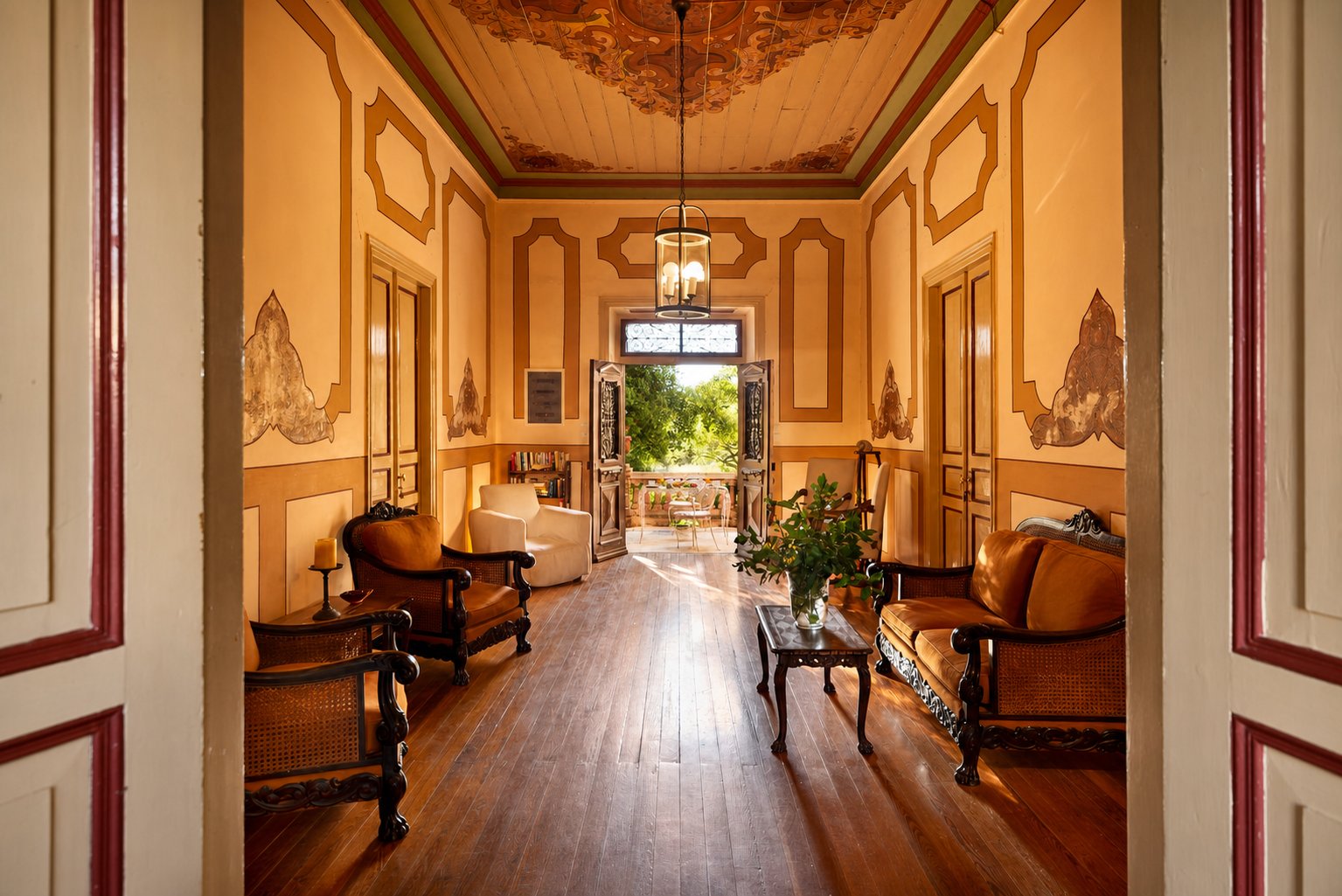
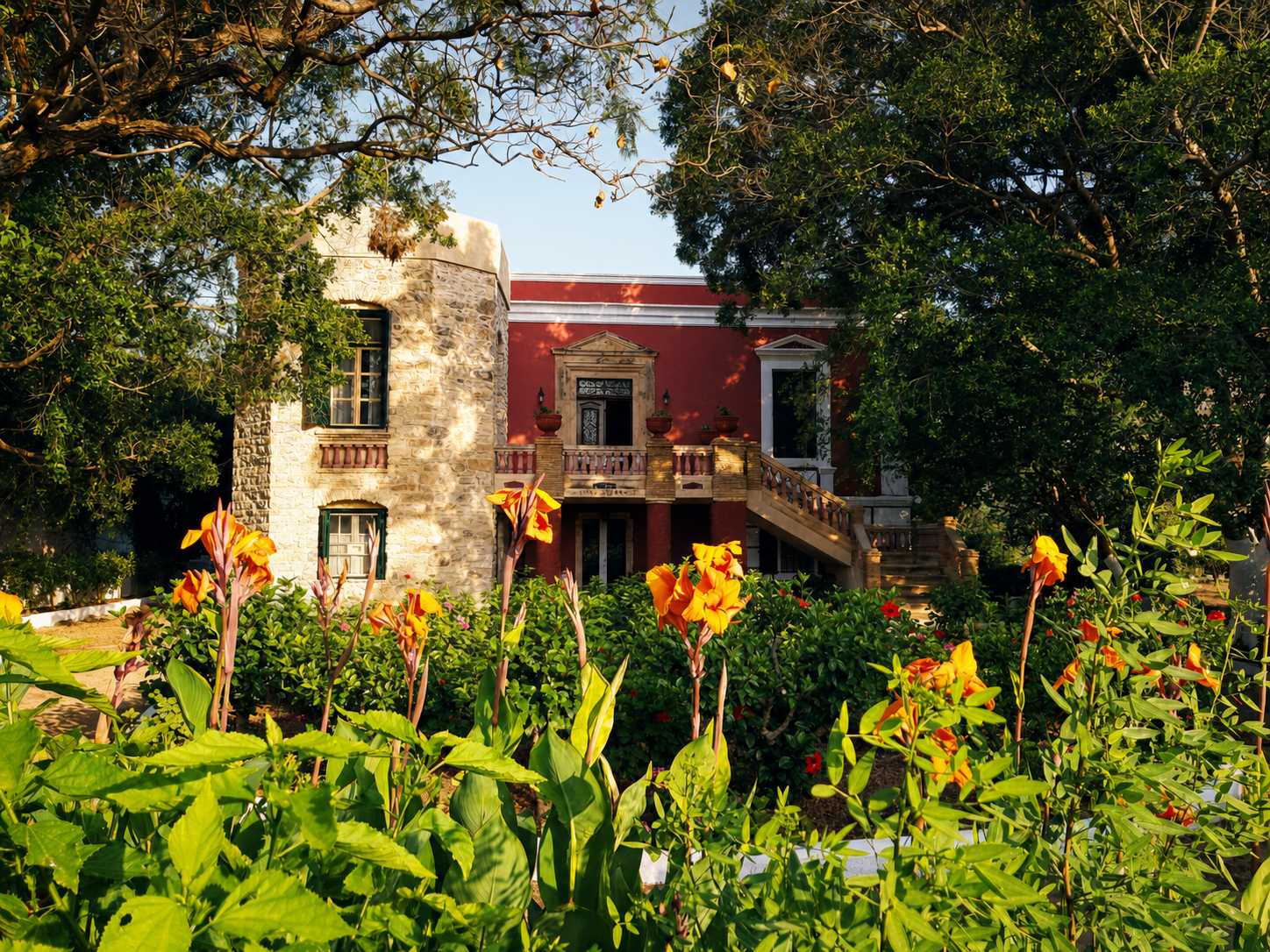
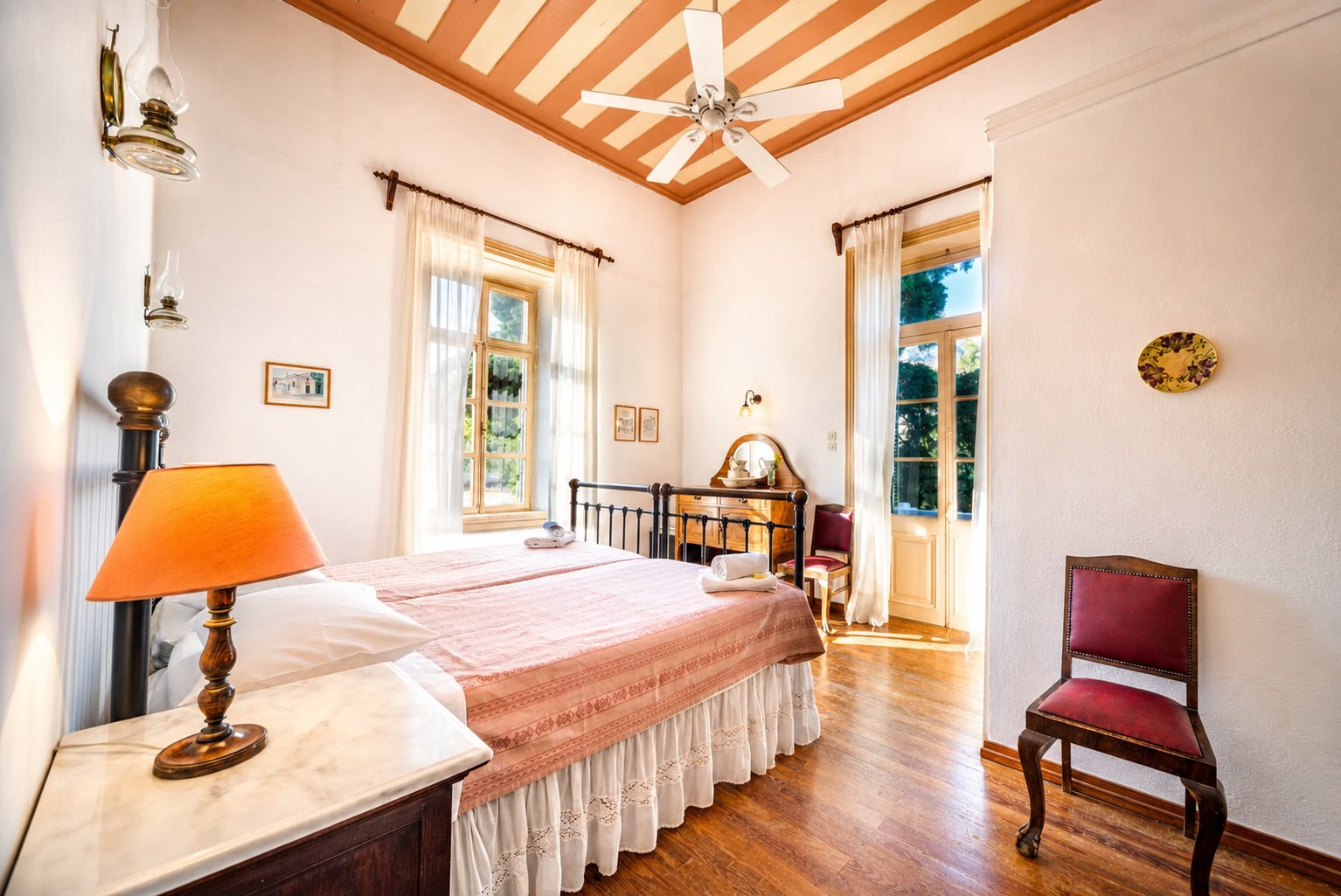
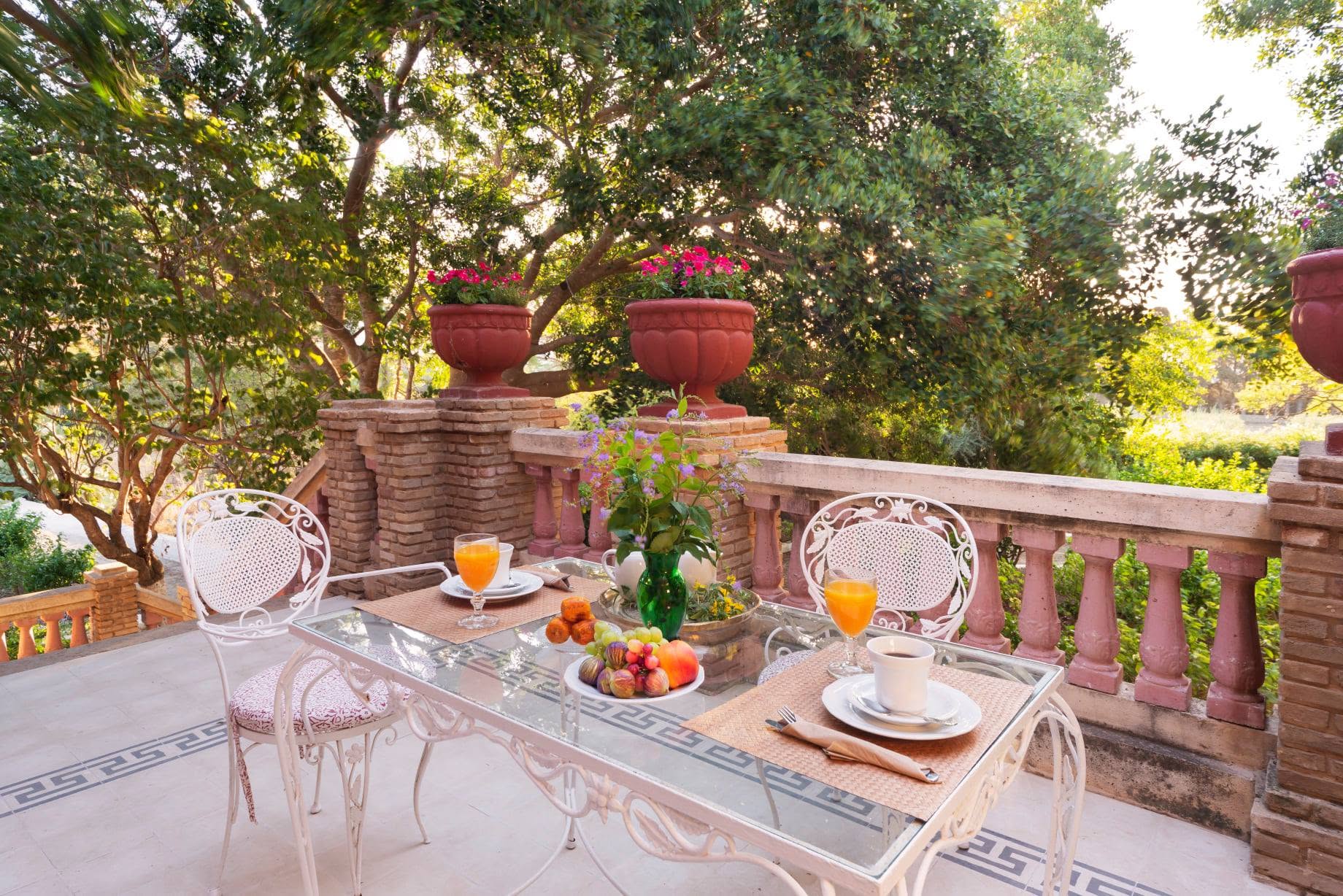
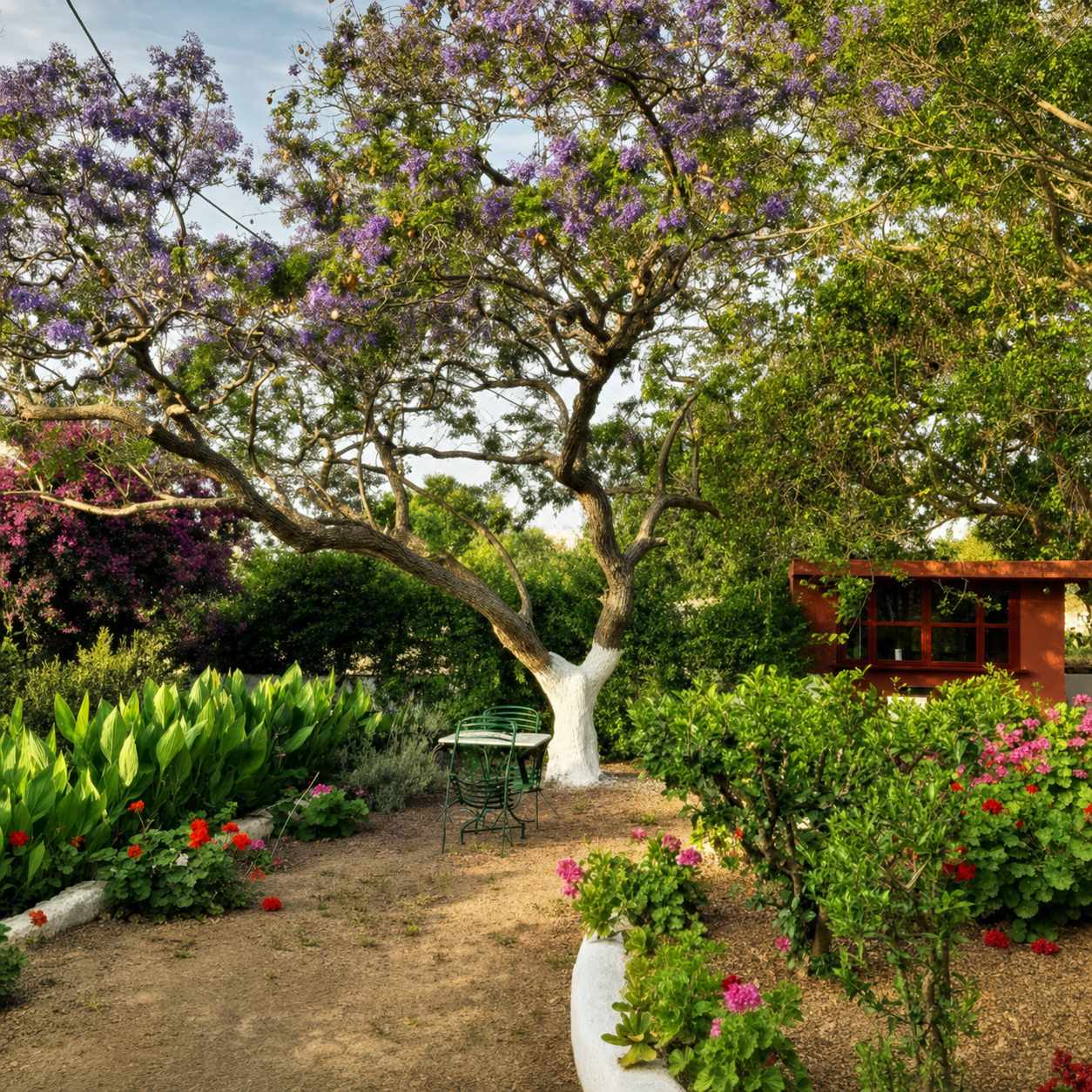
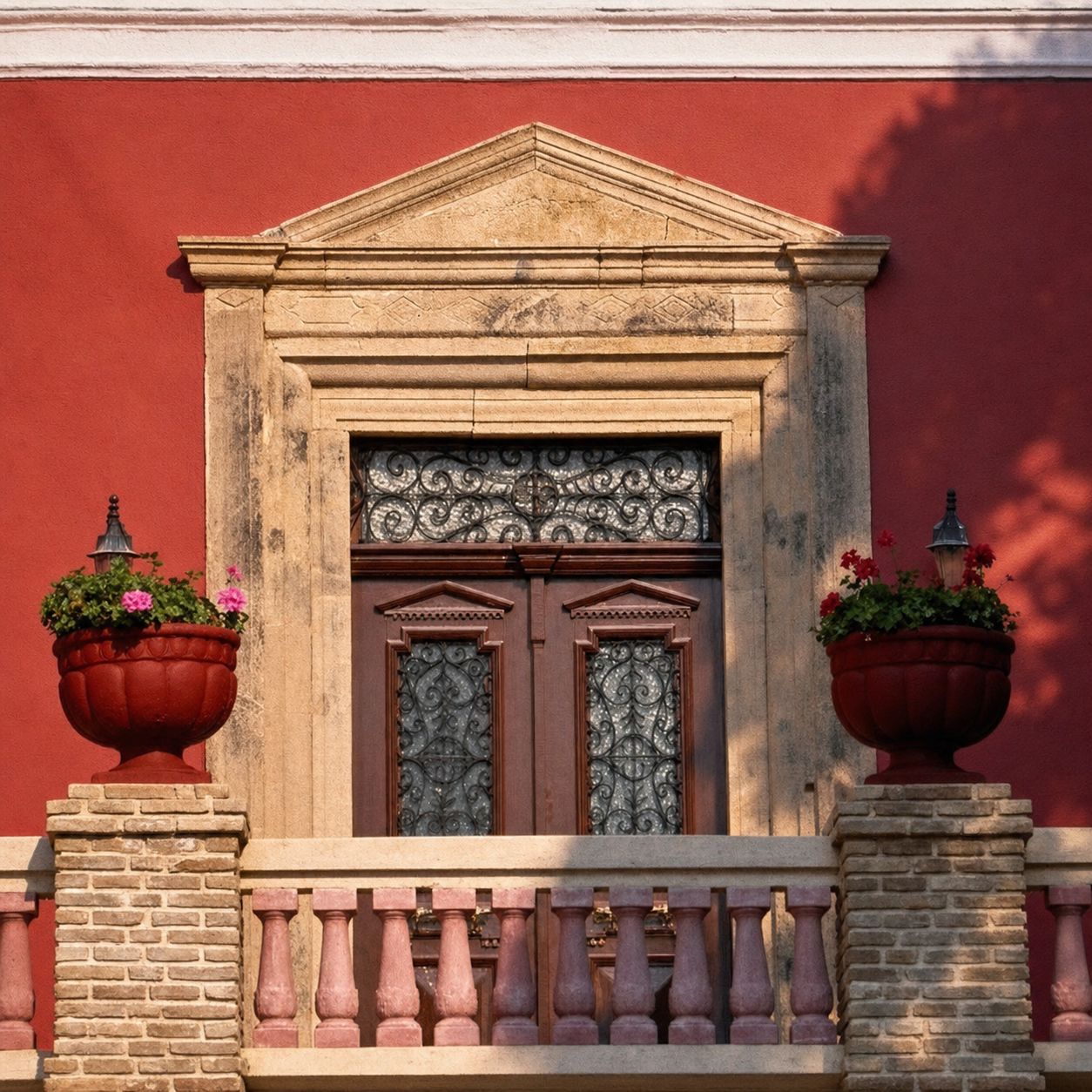
Archontiko Angelou, a 19th-century family villa just behind the Alinda seafront, is the most characterful stay on the island: original stonework, a shaded garden, and homemade bread and preserves at breakfast, all overseen personally by the family that has run it for decades.
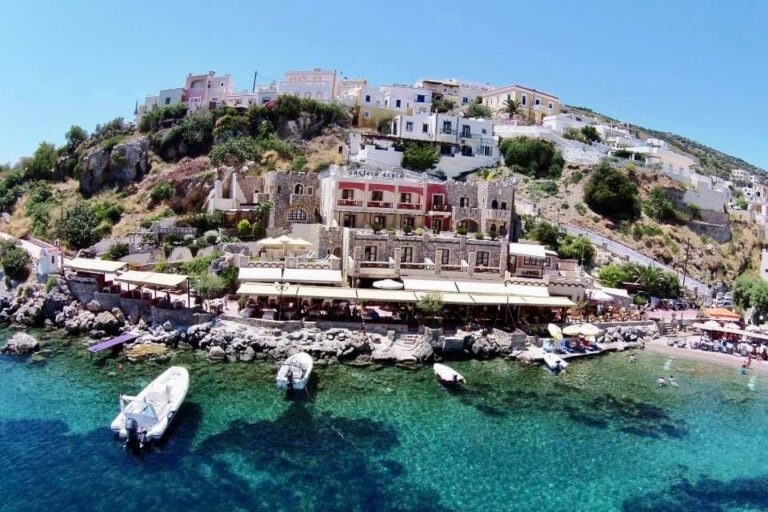
Castelo Beach Hotel, on the beach at Panteli, takes its medieval-style architecture from the castle on the hill above it; a straightforward, well-located budget choice with sea and castle views from most rooms and the fishing village on its doorstep.
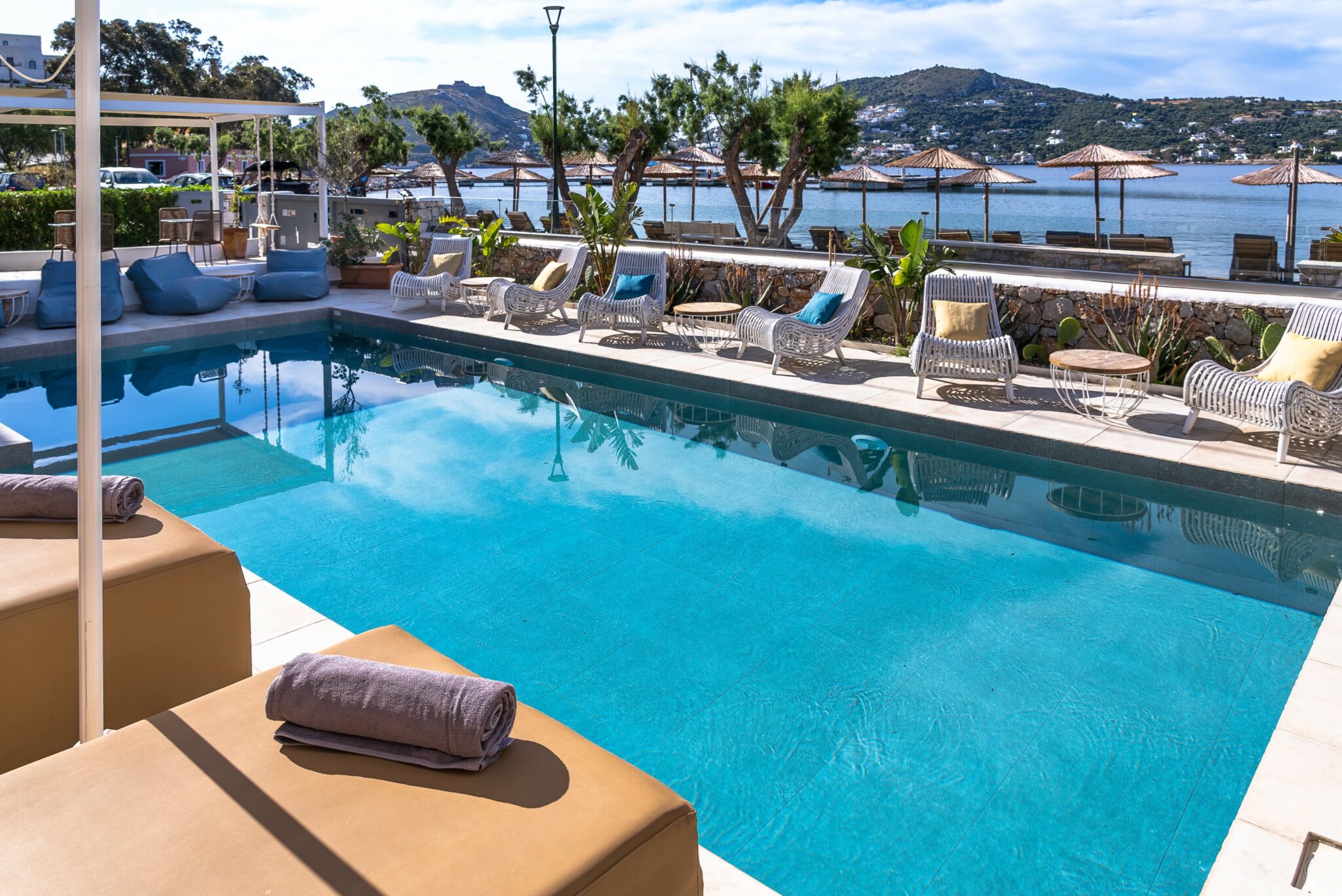
Alidian Bay Suites, right on Alinda’s beachfront, is the more design-led choice: rooms and suites with kitchenettes, a pool, a private beach, and an on-site restaurant.
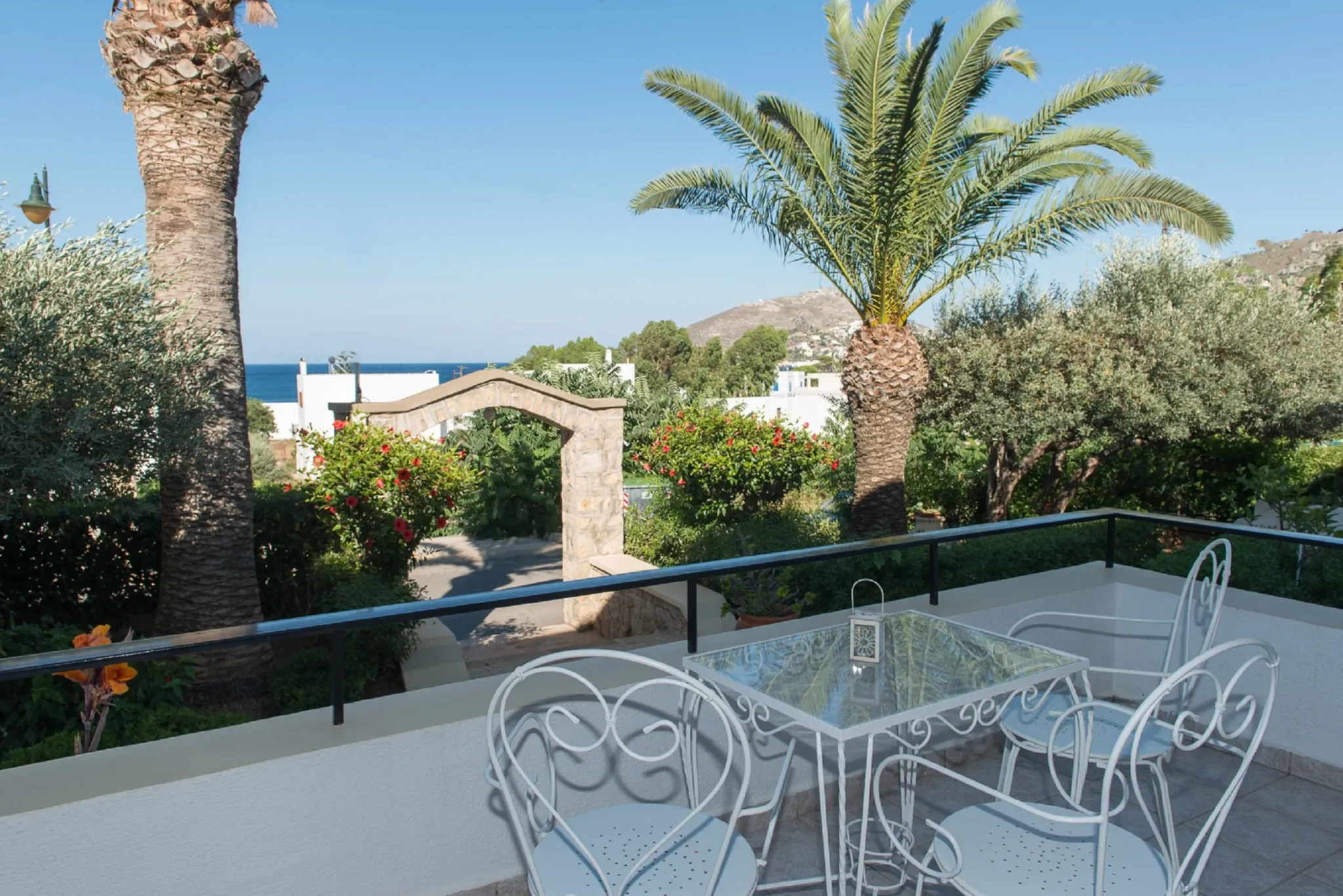
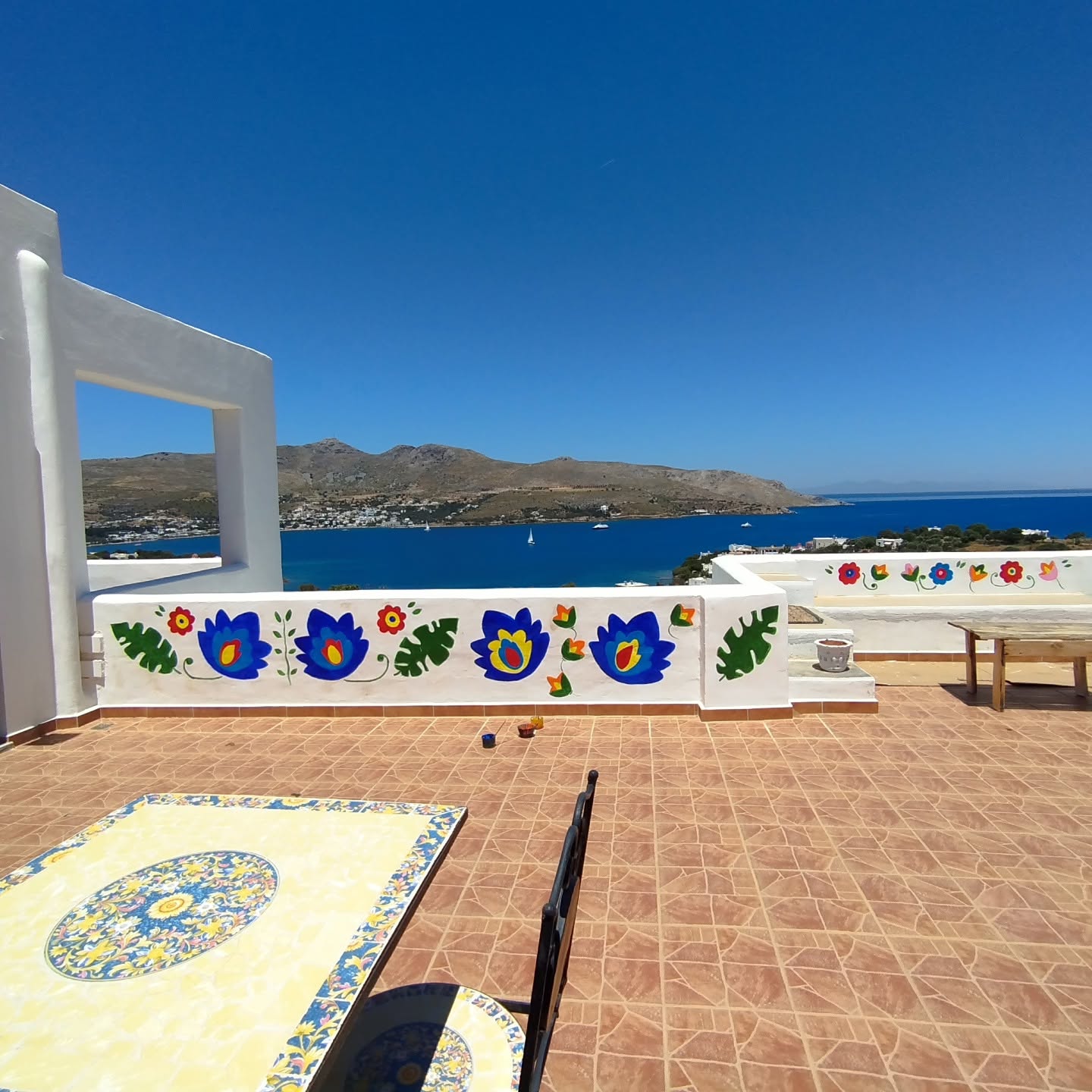
Hotel Elena, a small family-run apartment complex on a rise above Alinda bay, pairs sea and castle views from every balcony with proper kitchens rather than kitchenettes, run for three generations by a family who tend to know most guests by name within a day.
Il Canto delle Cicale, tucked into an olive grove above Krithoni bay, is the most intimate stay on the island: four individually decorated rooms, a garden with hammocks and a hot tub, and a homemade Italian breakfast served by Ambra and Davide, who have lived on Leros for years and dispense the best local tips along with it.
Crithoni’s Paradise, on the coast between Agia Marina and Alinda, is Leros’s largest and longest-running resort hotel, open year-round since 1996, with gardens, a pool, spa facilities and a restaurant built around Mediterranean cuisine. It remains the island’s most complete option for a family stay or a longer holiday.
09
Getting There and Around
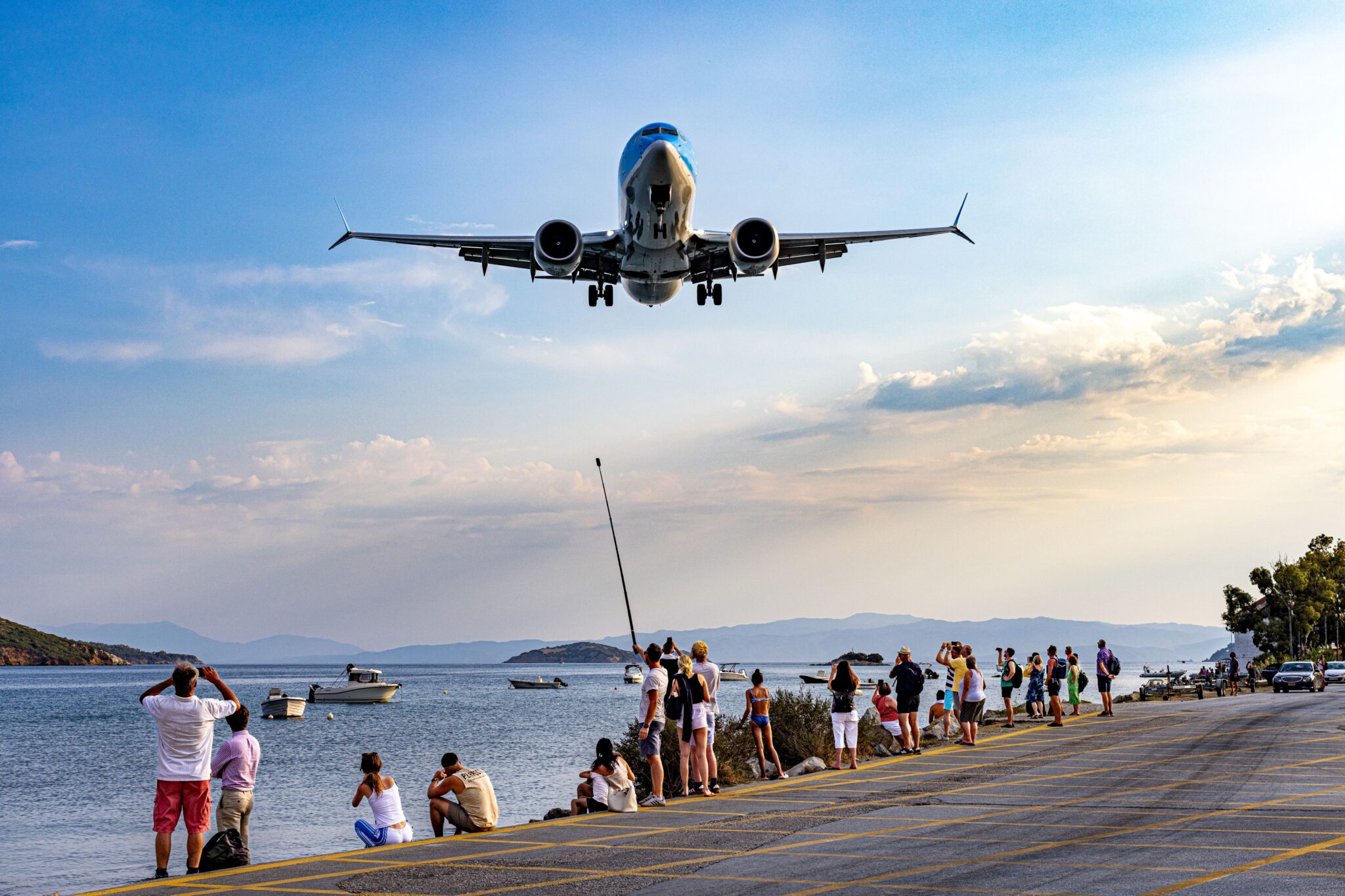
Leros has its own small airport at Partheni, with domestic flights connecting to Athens and other islands, alongside a regular ferry network from Piraeus that takes roughly eight to eleven hours depending on the route, arriving at Lakki. Faster connections run from Kos, Kalymnos and other Dodecanese islands by hydrofoil and catamaran, arriving instead at Agia Marina.
Once on the island, distances between villages are short but genuinely spread out compared to a single-village island: a local bus connects Agia Marina, Platanos, Alinda, Lakki and Xirokampos, though schedules thin out considerably outside peak summer. Most visitors staying more than a couple of days rent a car or scooter, both widely available in Agia Marina, Lakki, Panteli and Alinda, since several of the island’s best beaches and paths sit down unpaved or unbussed roads. Three to four nights are enough to cover the essentials.
10
Useful Phone Numbers
European emergency number: 112
Leros General Hospital: +302247360100
Leros Police Department: +302247022222
Leros Port Authority: +302247022224
Leros Airport: +302247022275
Municipality of Leros: +302247360200
Taxi: +302247023070
More to discover on Leros
The Villages That Give Leros Its Shape
A closer look at Agia Marina, Lakki, Panteli and the settlements that reveal the island’s different rhythms.
What Leros Tastes Like
From seafood and thyme honey to gavafa and local pies, a deeper guide to the island’s culinary identity.
The Dodecanese at Its Most Remote
A candid 2026 guide to another history-rich island shaped by distance, architecture and the sea.


