


There is a tradition here, powerful and steadfast, rooted in religious faith and passed from hand to hand across generations, a celebration of connection, sharing, and well-wishing that holds firm against time. The panigiria* of the Cyclades are a way into each island’s soul, its history, its folklore and, by extension, its people.
*A panigiri is a traditional Greek village festival, held to celebrate the feast day of their patron saint.
Photography by Nikos Kokkas.
Part I: Sifnos
July 16th 2026
Just a few hours after arriving on Sifnos, my conversations with local residents and business owners are already sketching a first outline of my subject: the life and rhythms of the island, the side of it that runs parallel to the tourism development now necessary for its survival. Amid the flood of information comes the first mention of a local event, a festival at a remote chapel, high up, at the end of a rough dirt road, on a ridge with a view to the west. That very evening, no less. The first evening of my stay on beautiful Sifnos. With respect and a measure of trust, in a few words full of humility and, on my part, a great deal of gratitude, we arrange our visit to this annual event, one of real significance to its organizers and to those closest to it.
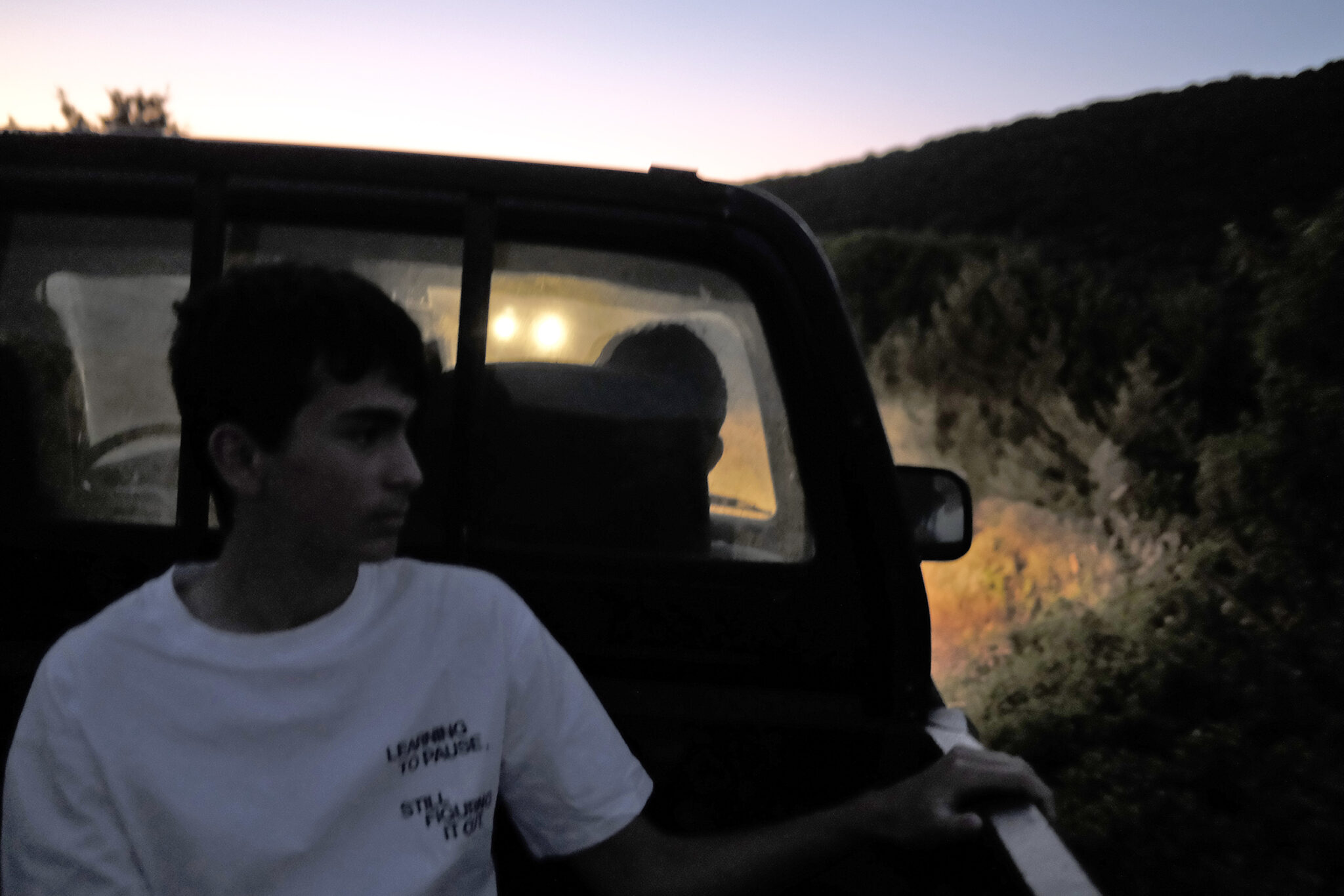
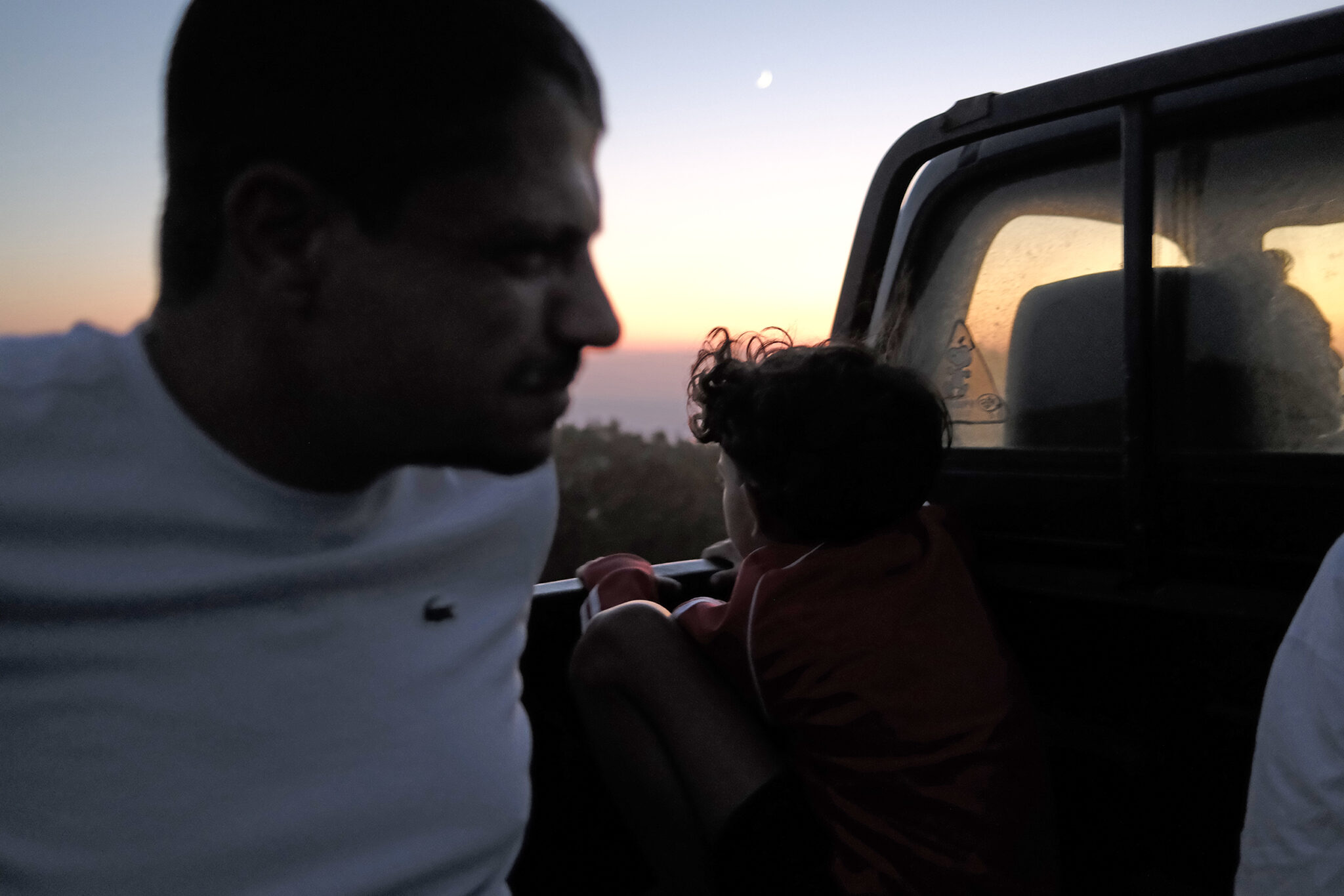
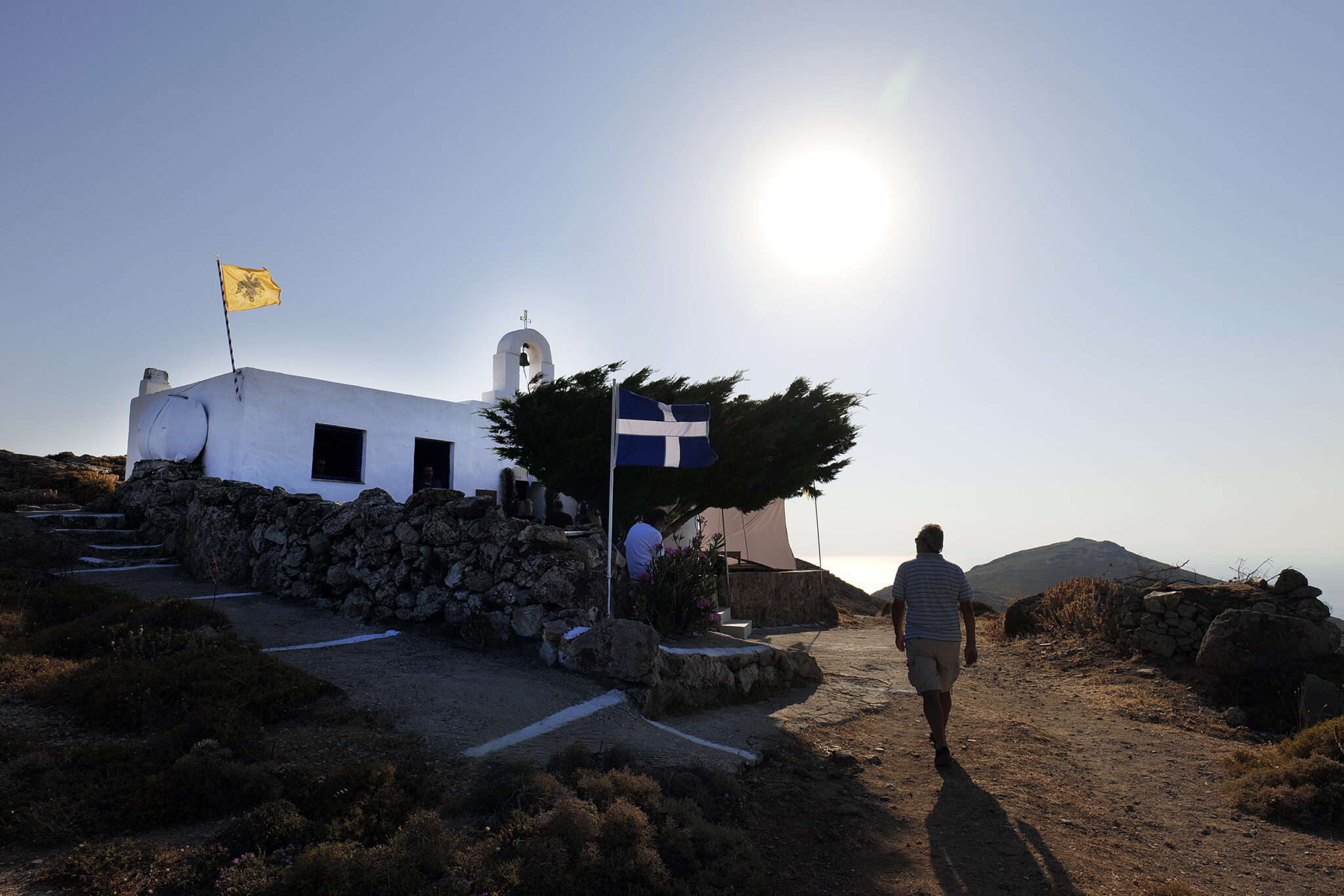
The meeting takes place late in the afternoon at a crossroads a few kilometers from Apollonia. We park our scooters at the side of the road, beneath the lush branches of an olive tree, and wait for one of the “panigyrades,” as its organizers are called, to come by and pick us up in his “tough” pickup truck, capable of carrying us to the path that leads to the entrance of Saint Marina’s chapel at Flambouro.
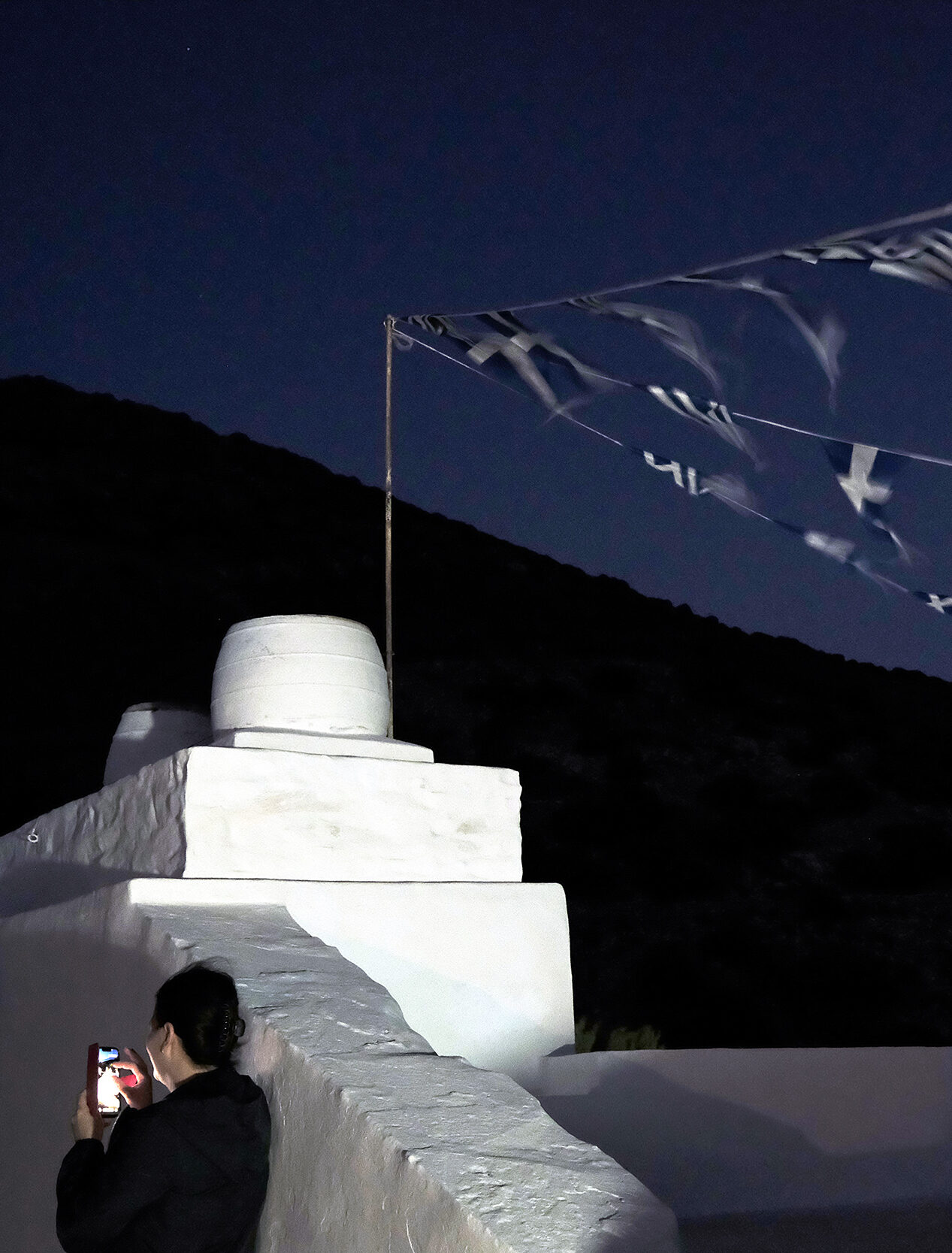
The feast day falls tomorrow, July 17, and the celebrations take place the evening before. Along the way, I understand why everyone laughed, when I suggested riding up alone on the Vespa: being jolted around in the truck bed as we rode over boulders and rain-cut ruts demanded a firm grip on its rails, as well as pressing a foot hard against the floor to keep from being thrown from side to side, all of it a wonderful mix of childhood memory and adventure. The sun has set, and the colors of the sky, mixed with the clouds of dust kicked up by the truck, create paintings, distinctly Cycladic in character. Amid laughter, and an attempt to capture some photographs of the experience, in the half-light, we reach the top of a ridge where a few other rugged vehicles are already parked. The smell of manure reveals a sheepfold somewhere nearby. After climbing down from the truck bed, the church appears in the distance, all in white, lit up against the darkness of the hillside and beneath the deep purple of the sky.
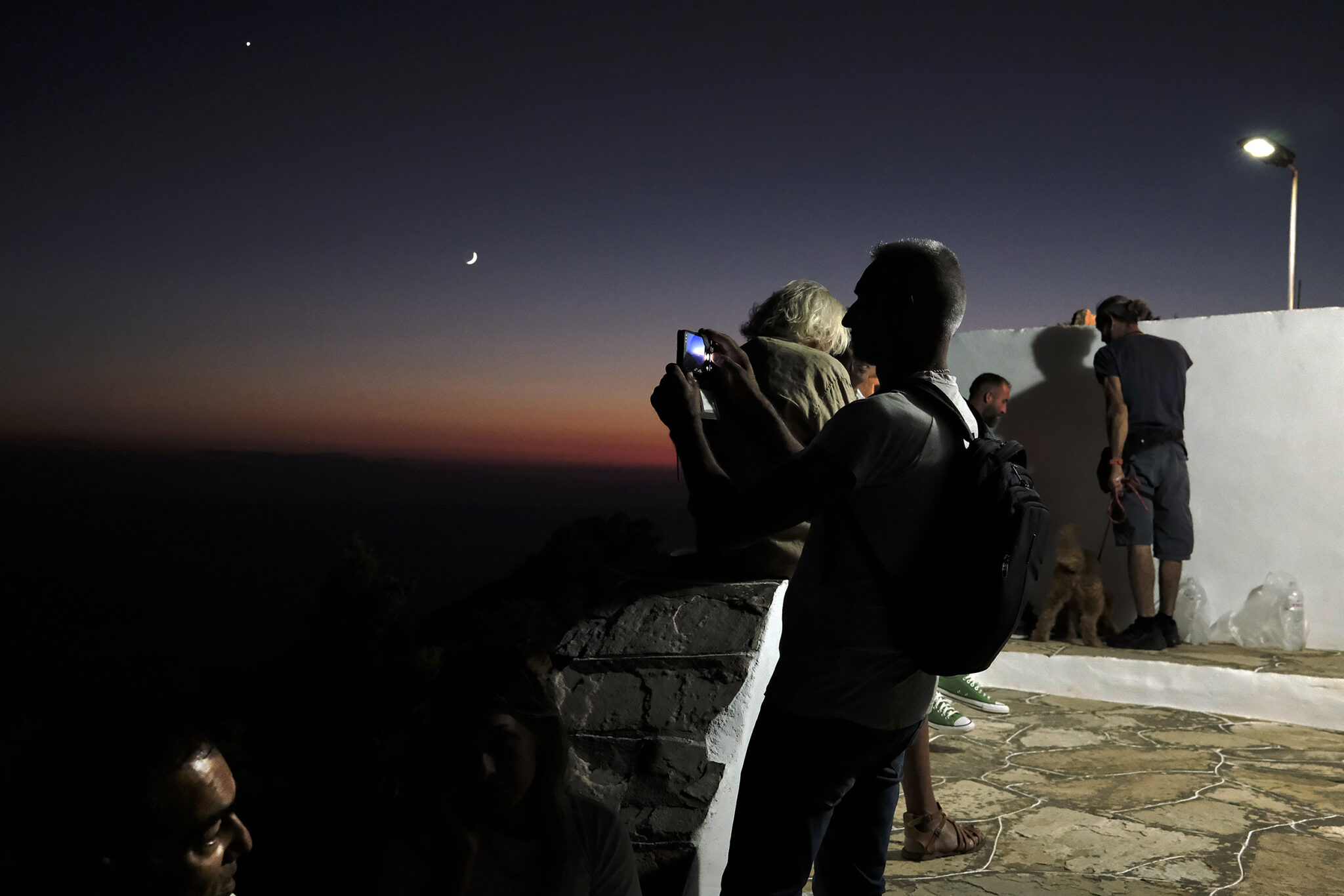
The moon and the brightest stars already hang lit against the canvas of the sky as we walk the broad flagstones of the path to the entrance steps. Lampposts running on solar power make for safer walking amid the rugged geology of the Cyclades. The church courtyard comes into view as we pass through the stone-built archway, and it is full of people. Mostly local Sifnians, along with others who have roots here, they have already attended the Divine Liturgy and fanned out into every corner of the stone-walled courtyard, forming little clusters, trading cheerful conversation and catching up on news. A few phones capture the moments as they unfold, from the extraordinary sky to the sharing of the consecrated bread, carried around in an enormous basket and offered to everyone present, local or visitor alike.
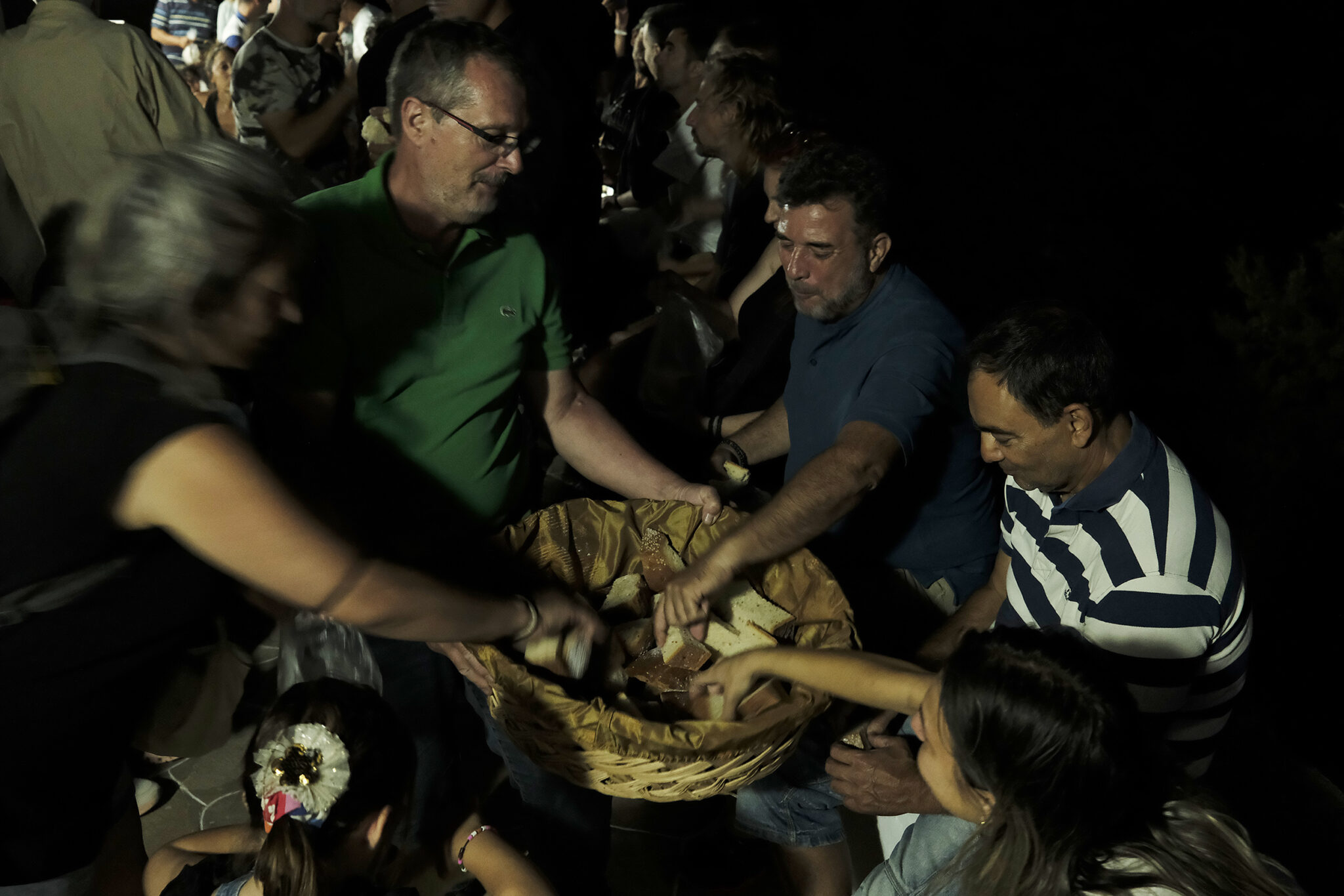
The tradition of these festivals runs deep in the local culture and keeps the spirit of hospitality and community alive. There is no month, winter or summer, when at least one of the island’s 235 chapels or monasteries isn’t celebrating its feast day. These festivals are not organized by the churches or the local authorities but by the residents themselves, known as the “panigyrades,” who take on the entire preparation and cost of the celebration. The sacred icon of the saint is carried off each year by whichever residents are organizing that year’s festival, and kept safe by them for the full year, until the next appointed date and the next “panigyras,” who will take the icon in turn, keeping a centuries-old tradition alive.
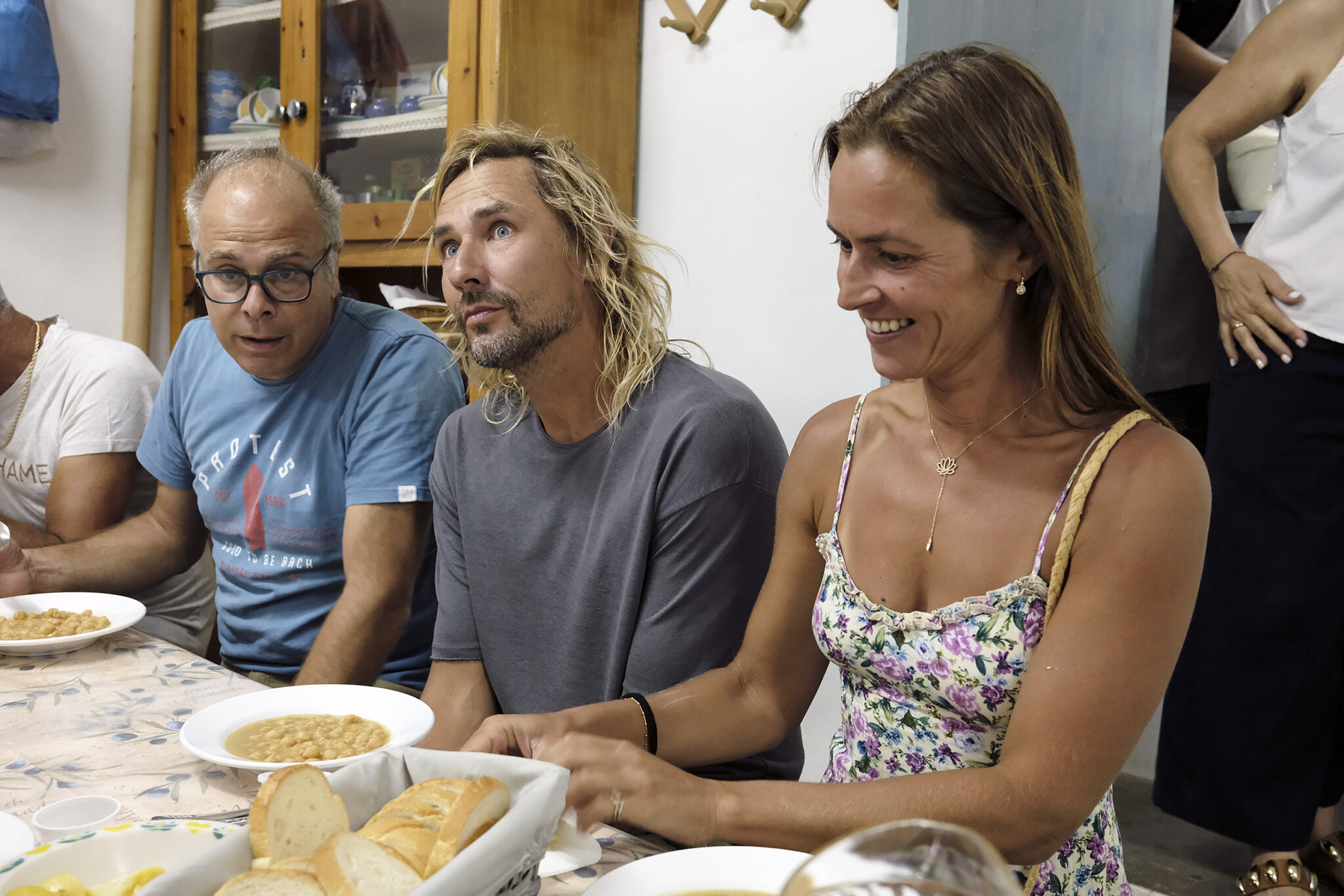
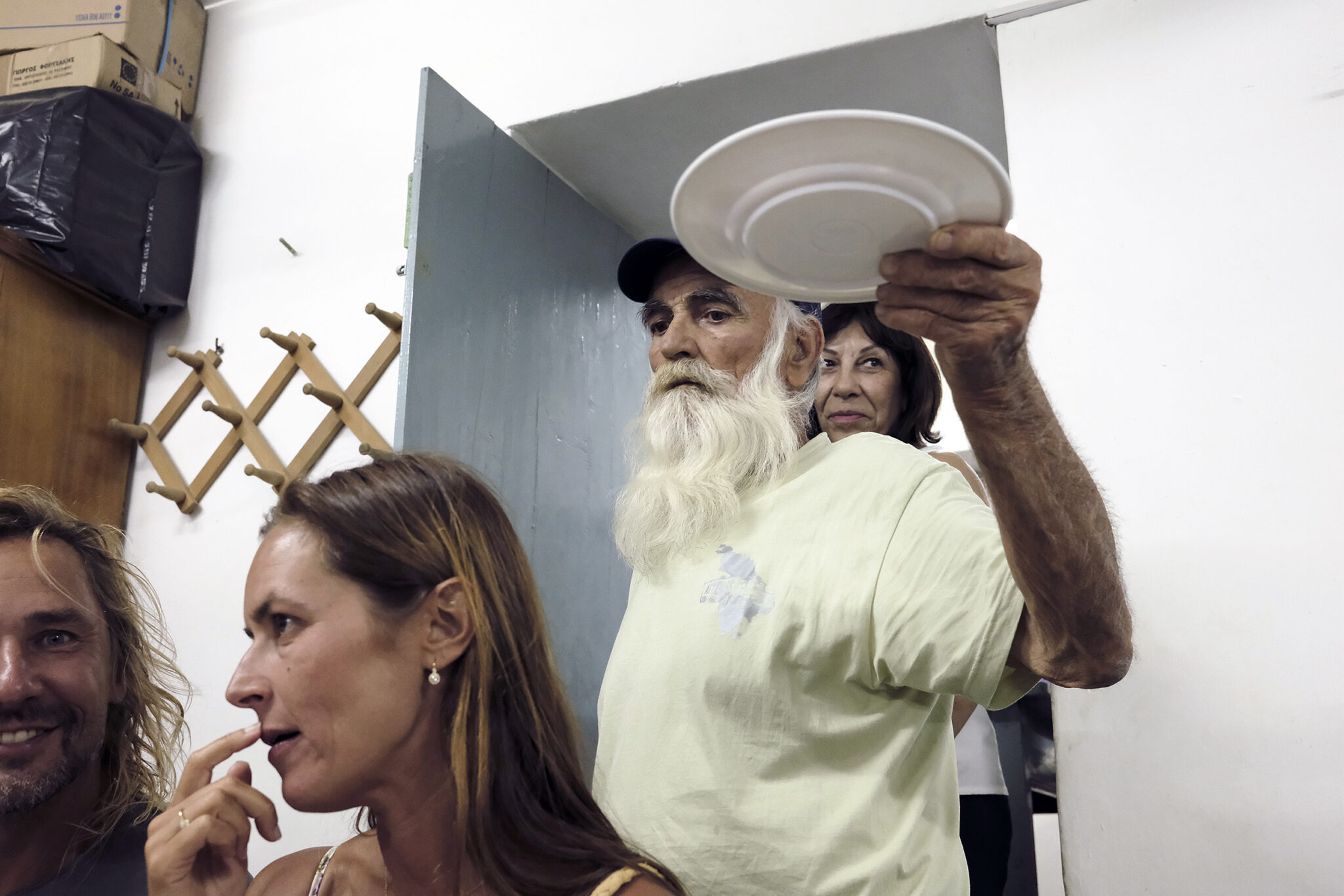
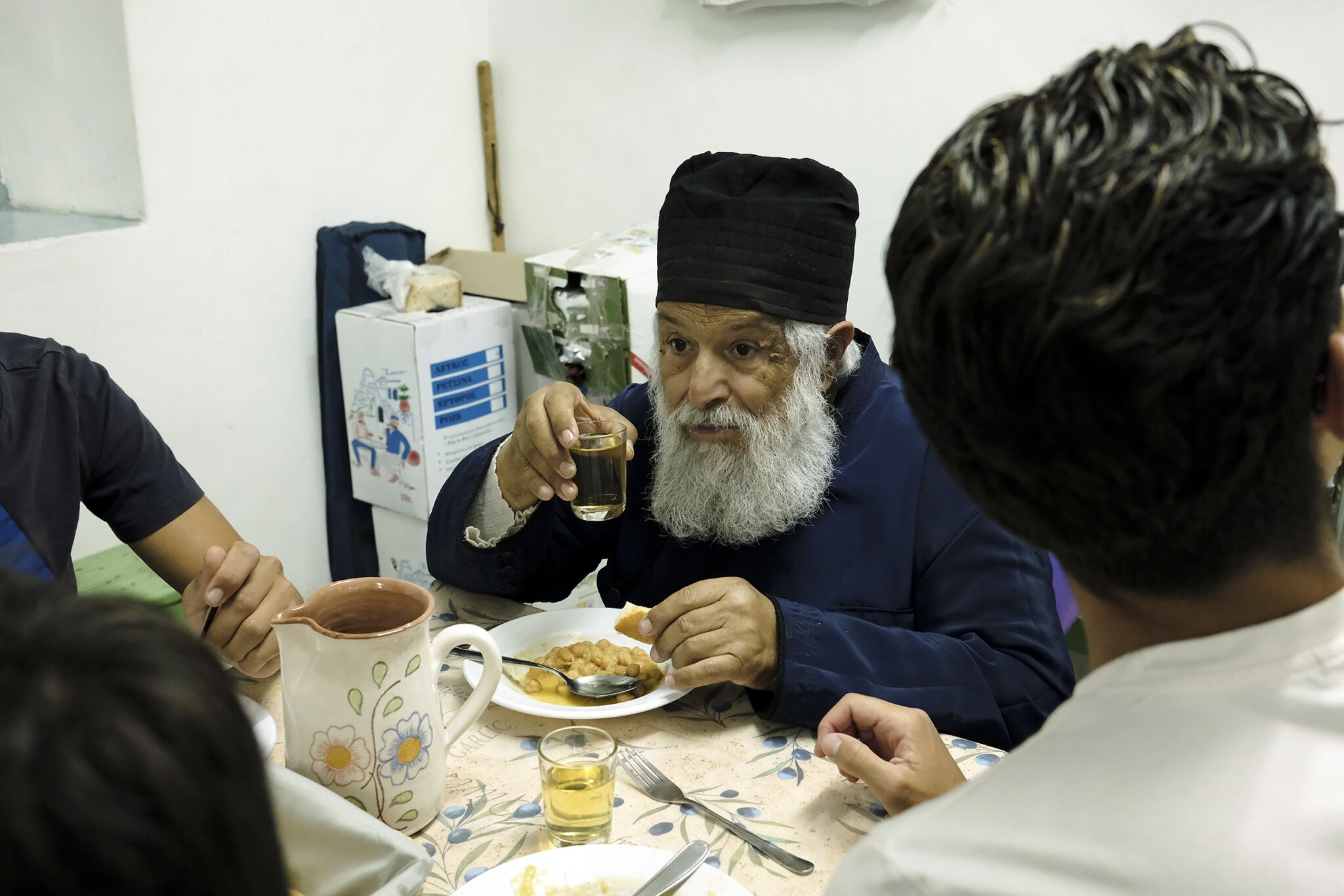
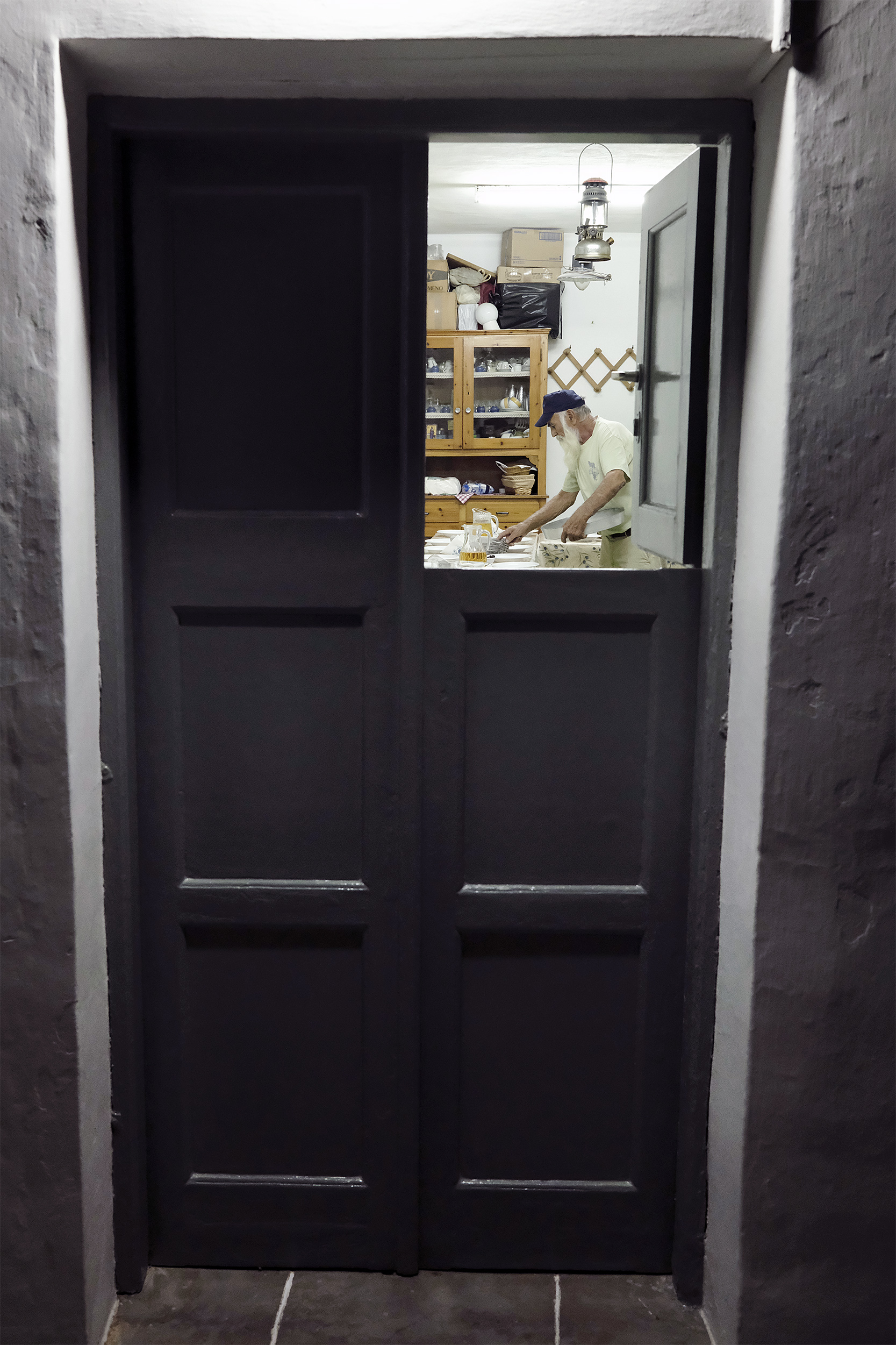
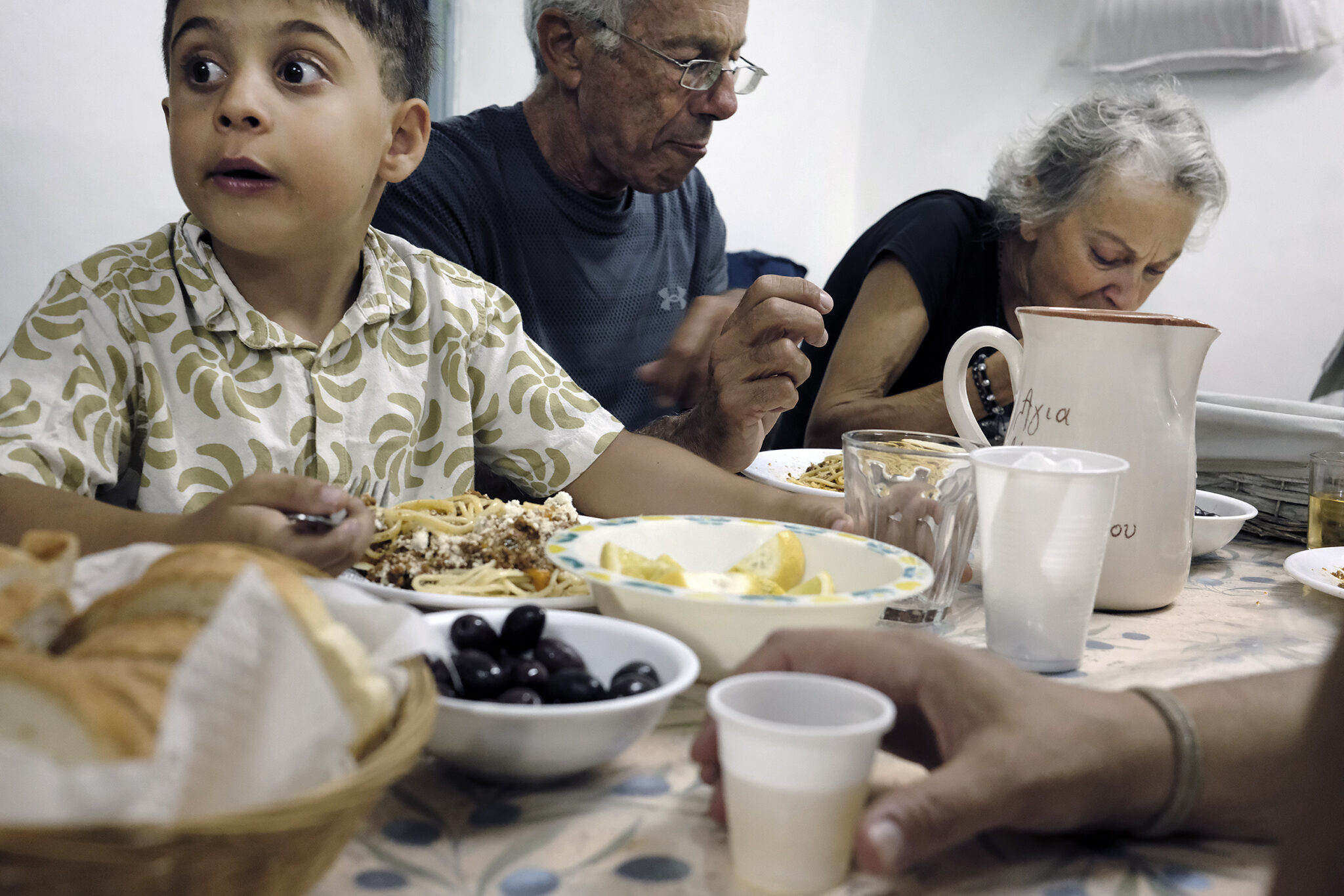
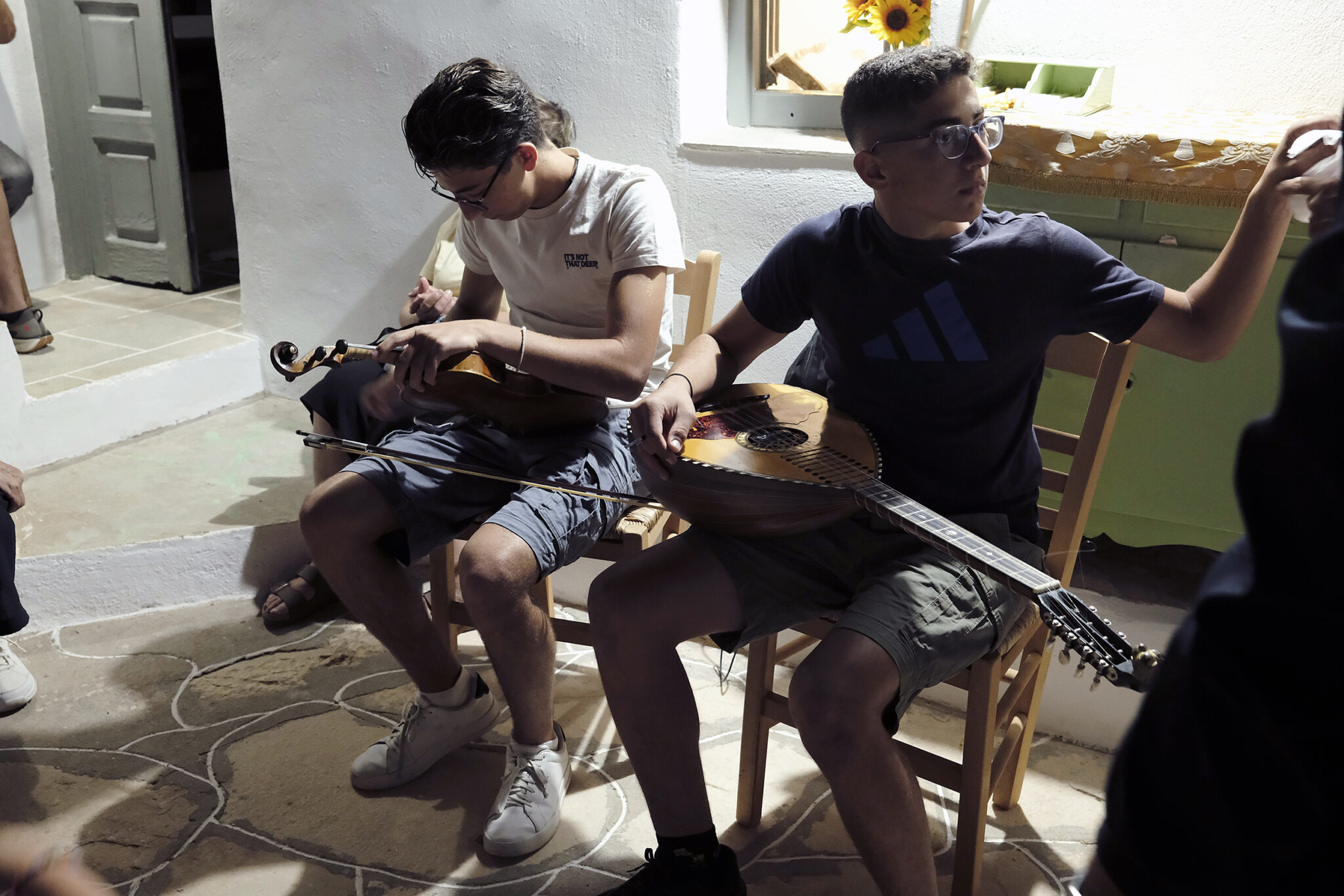
In the room next door, the rhythmic clatter of cutlery on plates can be heard, prompted by one of the panigyrades in honor of the servers, the cooks, or the organizers of the celebration themselves. As the two traditional instruments, the violin and the laouto (the “takimi,” as they call it), are already being tuned up in the small forecourt, we, the next group, are called into the dining hall. There, at a table pulled from the deepest annals of timelessness, arranged in an L-shape, as many of us as can fit sit down, side by side and facing one another, and enjoy chickpea stew, pasta with ground meat, and abundant, unending local wine.
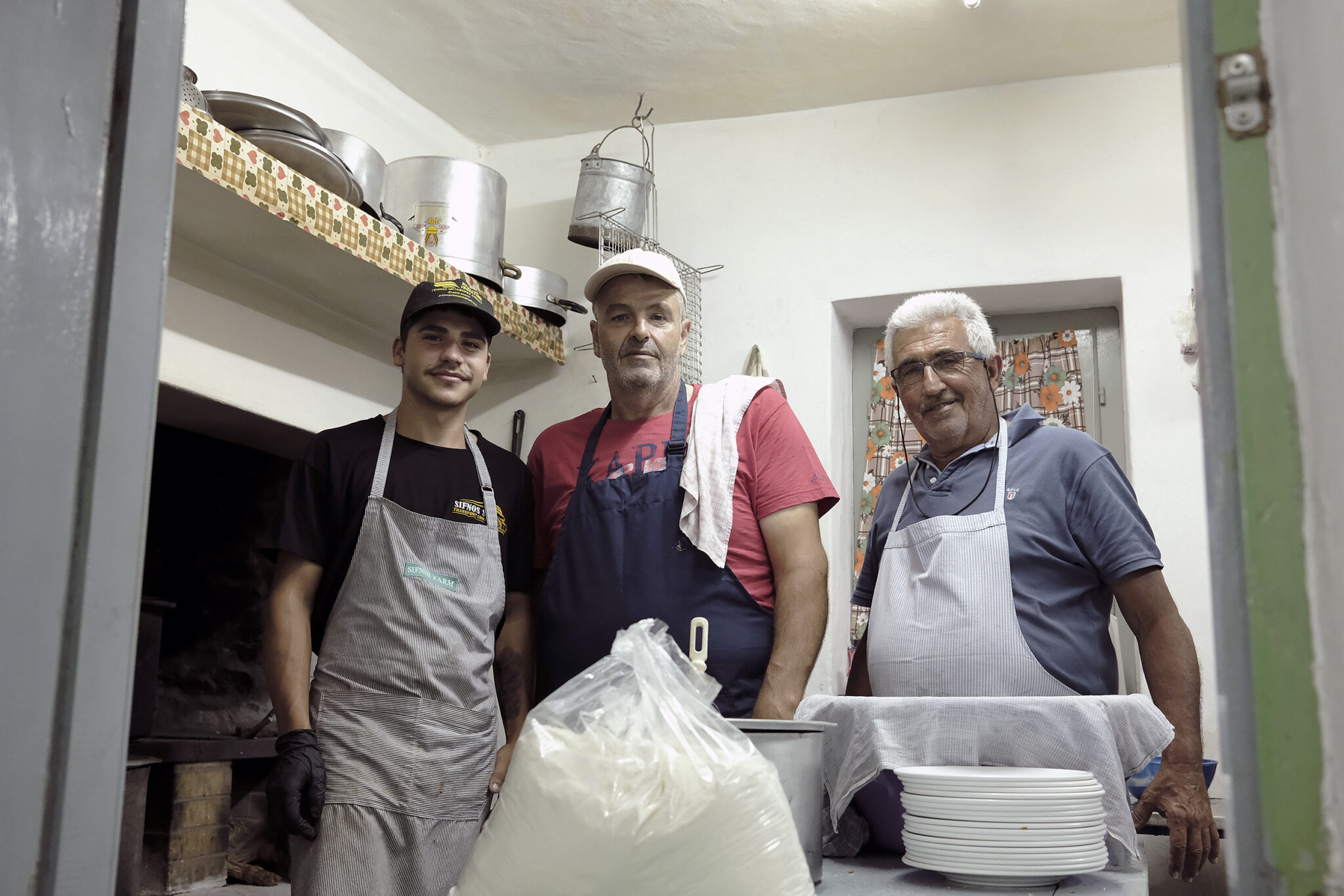
Our turn comes too, to take up the call in honor of the cooks and the rest of the organizers, and we fill the small space with an enthusiastic, powerful note struck by forks on our plates. The dishes come out through the interior windows, and return there empty once our turn passes, so the hall can be reset from scratch for the next group. Outside, the Aegean wind alive and raging, fully night by now, the young hold sway: descendants of the islanders carrying its authentic traditions forward, untouched by commercialization. Glasses are not allowed to sit empty, and the music has found its tempo and the force that marks the sound and words of the songs, mostly about love, from this blessed corner of the world. On the way back, along the rough path to the makeshift parking area, in the dark of night and after my own blessed presence at this event, unique every single time, even the sound and the pain of a pulled muscle in my right calf, from an awkward step, could not take anything away from this experience. Perhaps it even served as a reminder of a certain fragility, and of inevitable mortality.
Part II: Serifos
July 19th 2026
“Be ready by around eight in the morning tomorrow,” announces Yiannis Spilanis, professor emeritus of environmental studies at the University of the Aegean, a resident of Serifos and, for the past few hours, my volunteer ‘guide’ on the island. It is July 19, the eve of the feast of Profitis Ilias (Prophet Elijah), a saint of great importance across all our islands, honored with numerous and varied celebrations marking his ascension into the heavens, according to Christian tradition. From the nighttime festival on Sifnos to the morning one on Serifos, this time held on the feast day itself rather than the eve.
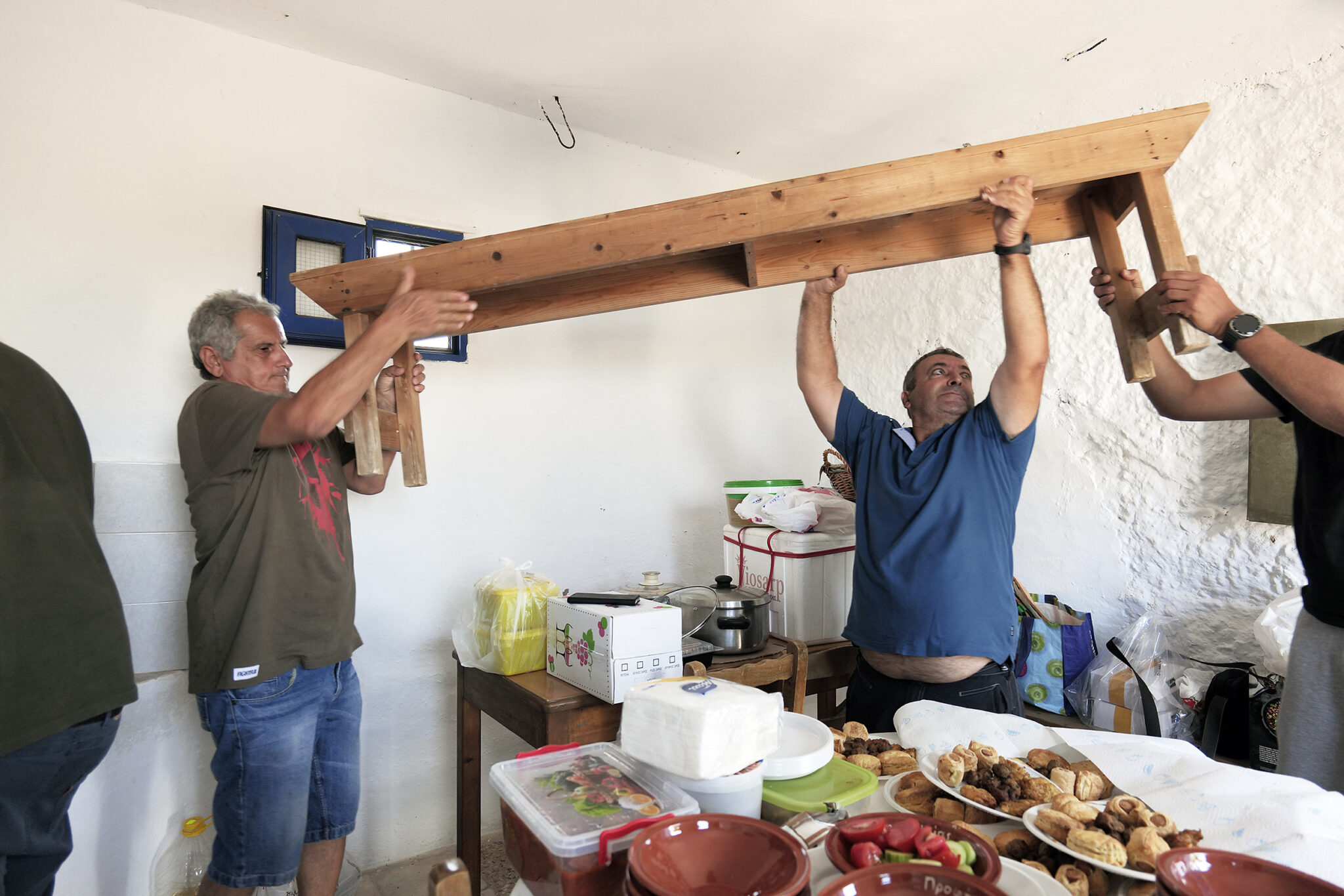
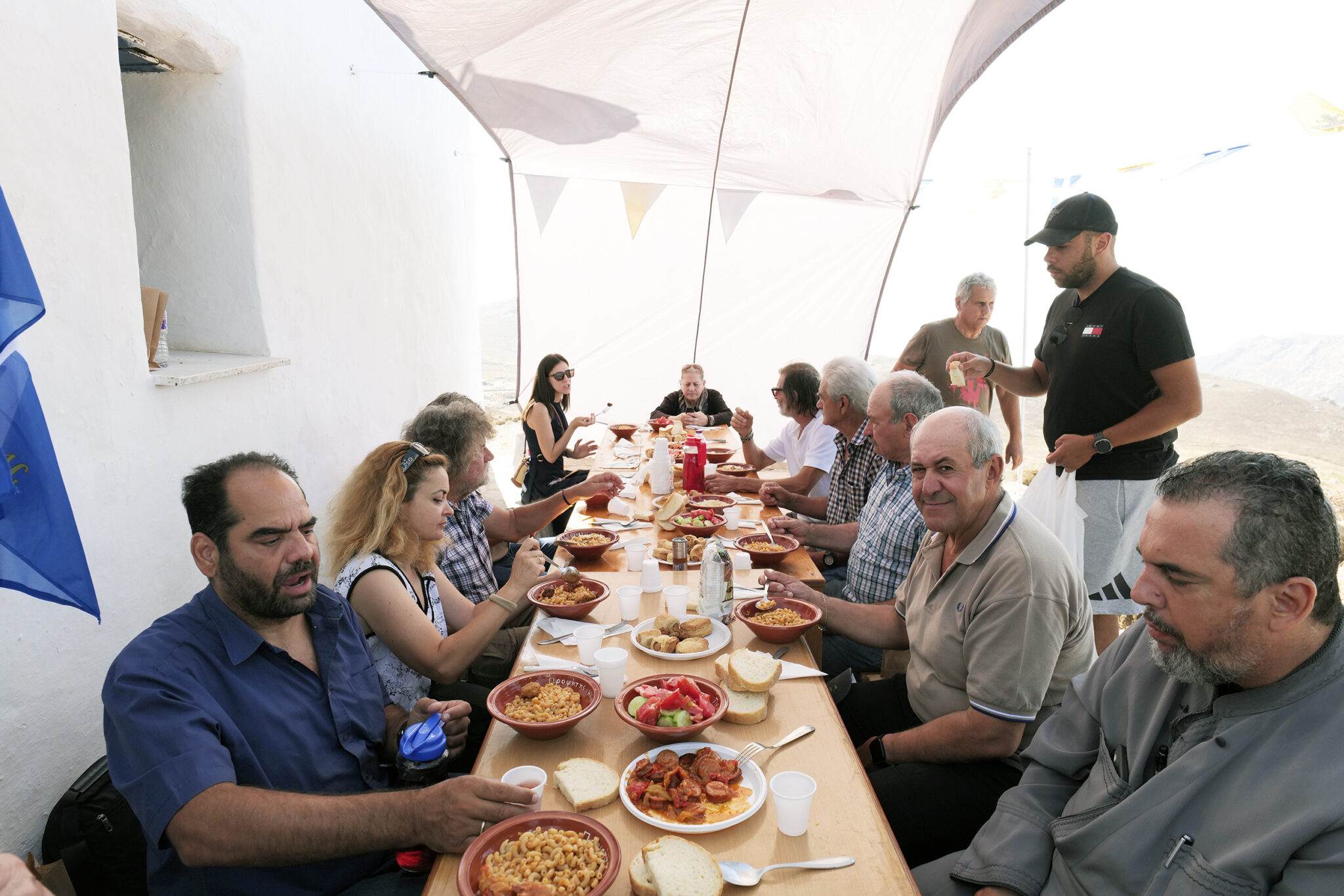
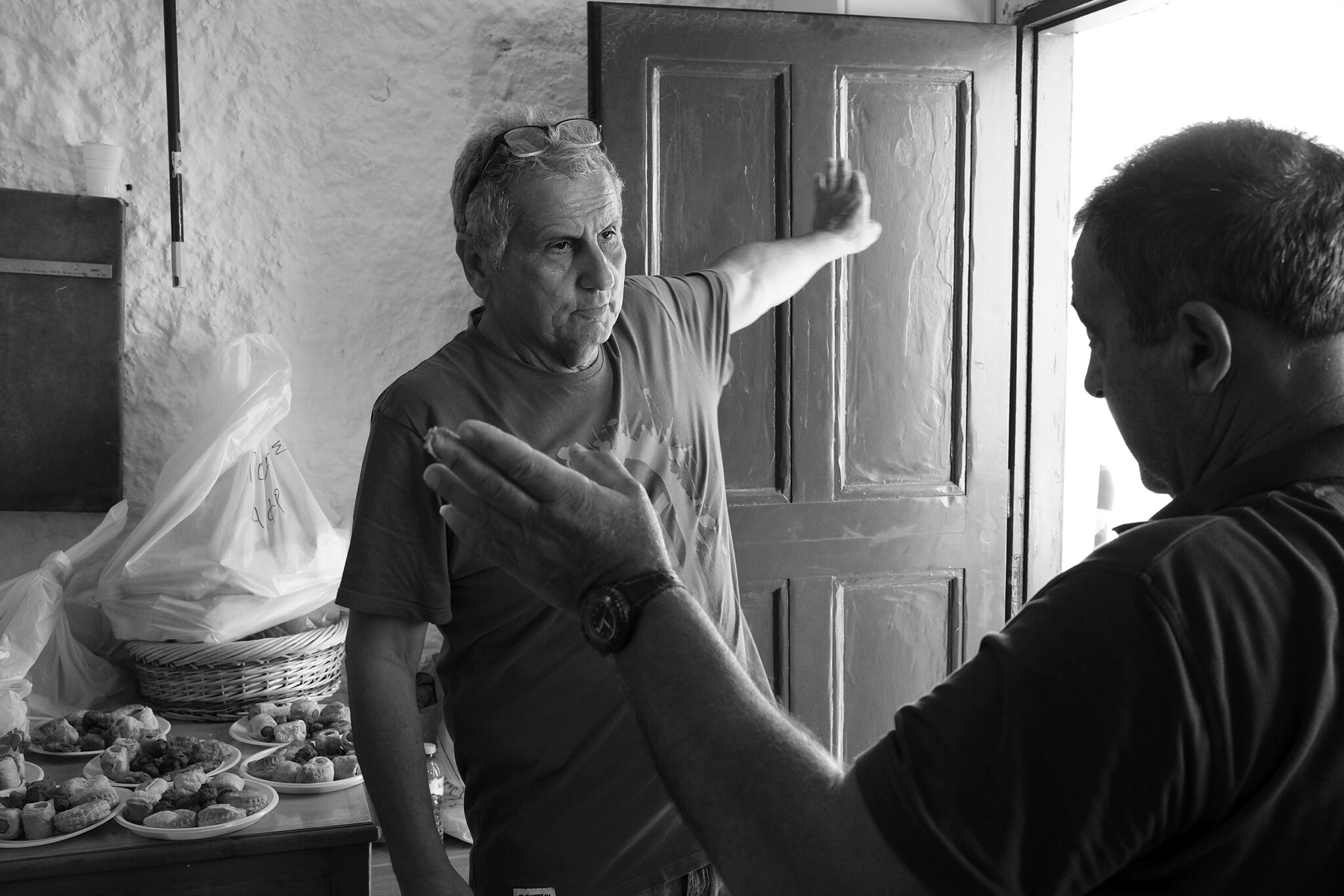
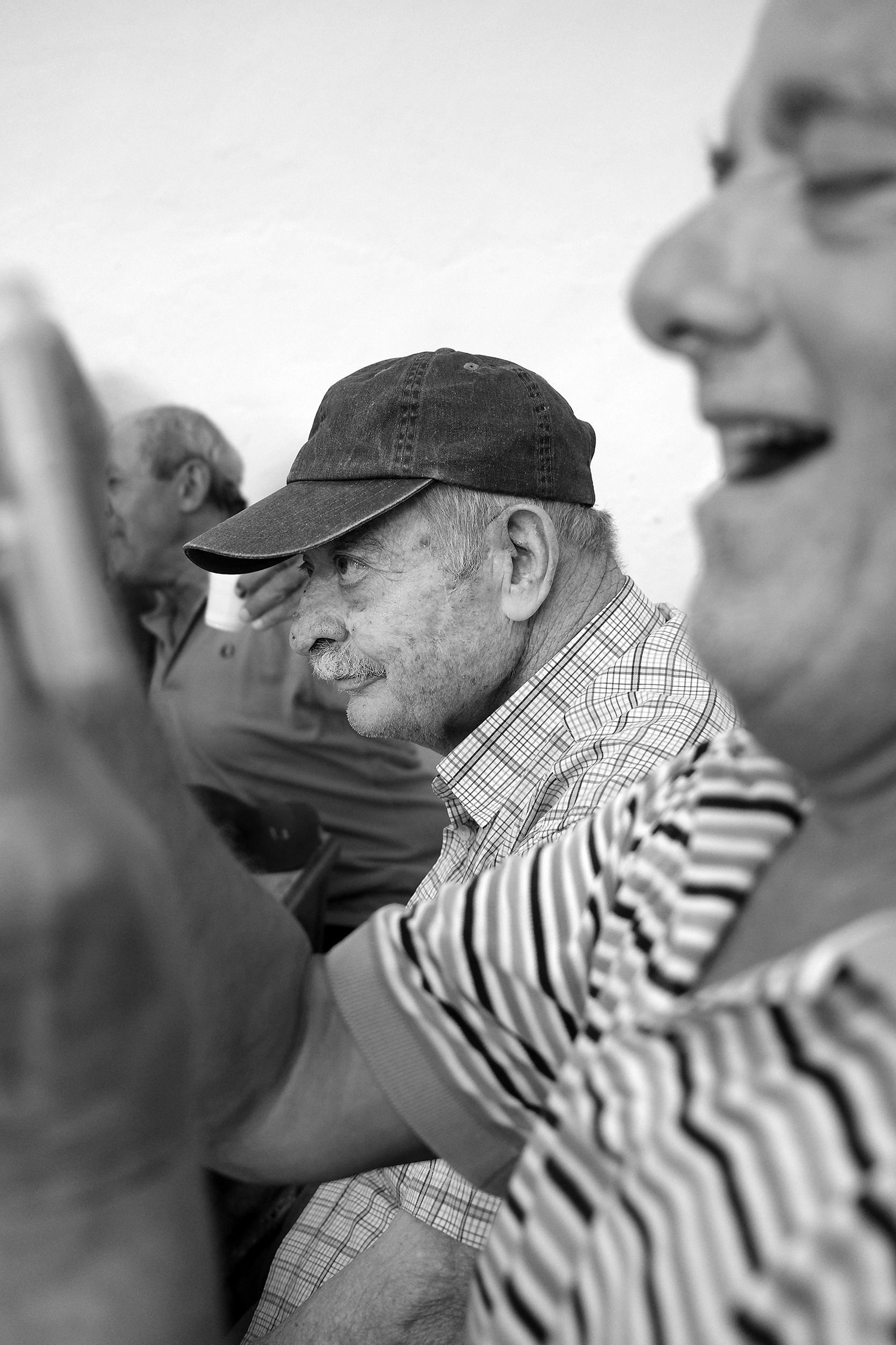
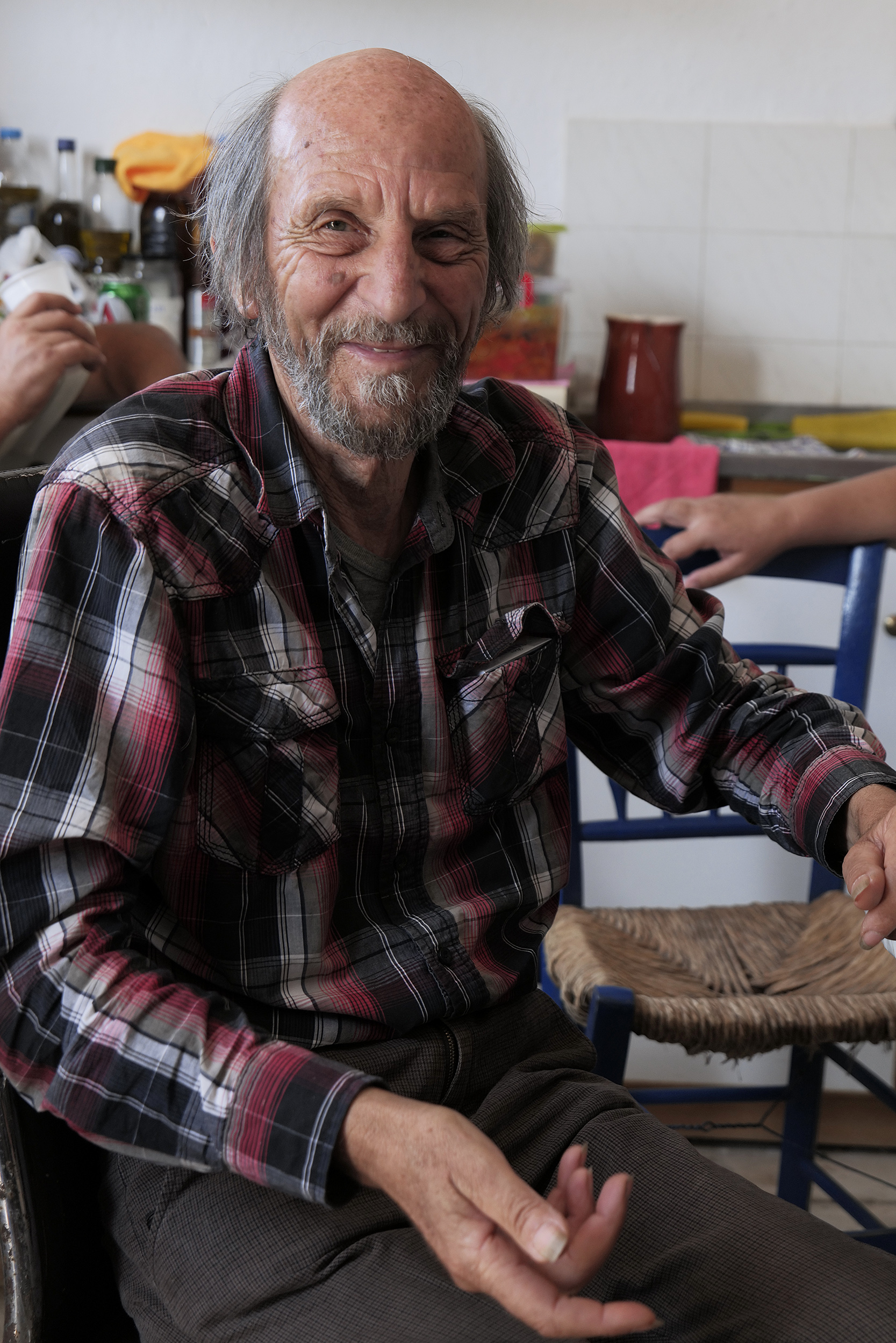
The sun is already high by the time we set off from our meeting point, at the little bridge in Livadi, and the temperature is forecast to climb to the edge of what’s bearable. The summer’s first heat wave is now a reality, and my gratitude at finding myself in the Aegean rather than amid the concrete of Attica cannot be measured in words.
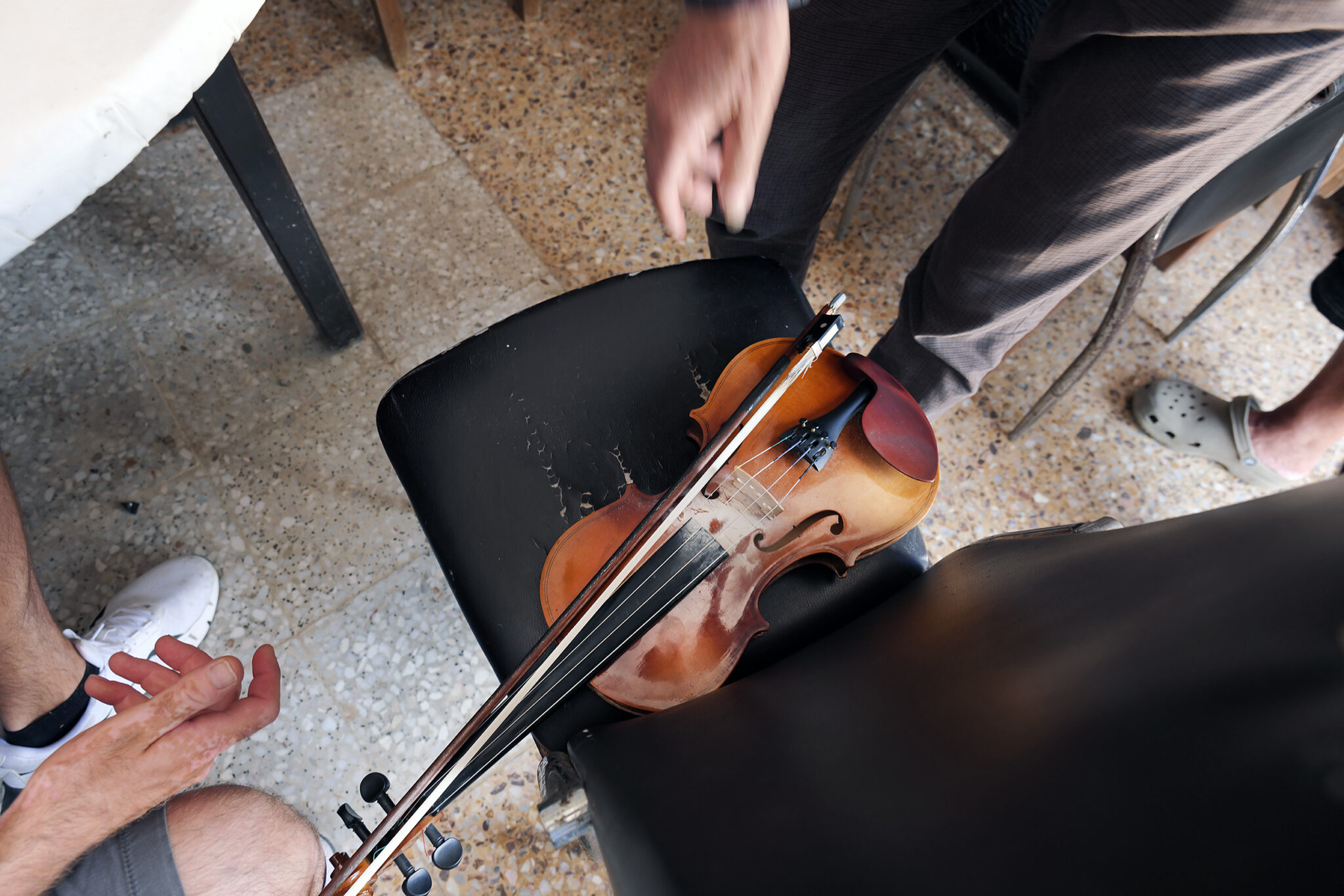
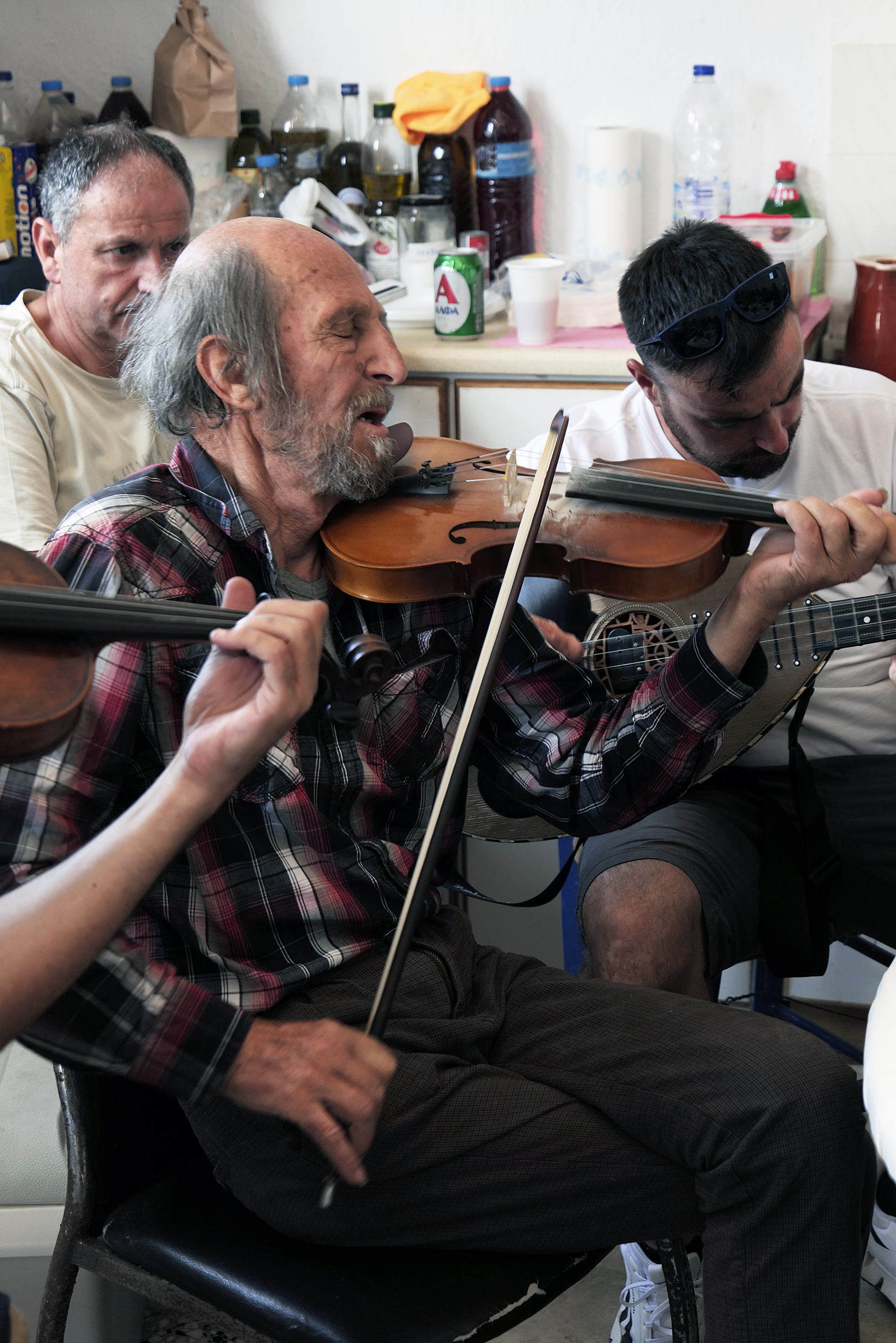
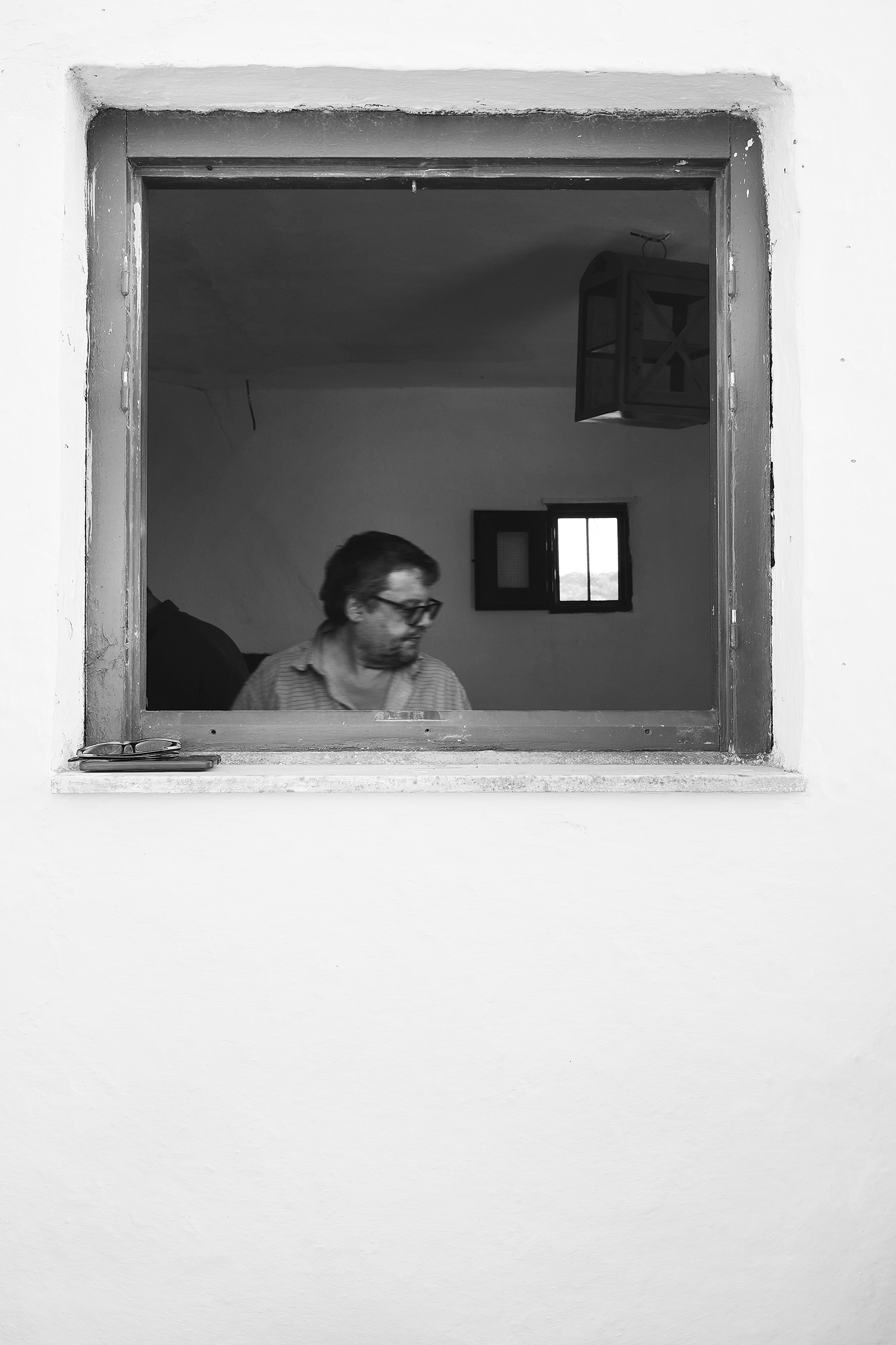
The color on the hillsides as we drive from Chora toward the island’s interior is uniform, that of parched vegetation, stone, and soil. The smell is a blend of savory, oregano, and thyme. As we arrive at the chapel of Prophet Elijah at Vounia, the glare reveals cars parked right outside the entrance, so we decide to park a few meters before the final climb and walk the rest of the way. A sunshade has been set up in the small courtyard, over the large table where the food will be served. Visitors are few, mostly locals and a handful with roots in Serifos. I am the only outsider. The welcome, though, from the “ktitores” (the celebration’s organizers, as they’re called on Serifos) is warm and heartfelt. At most of the island’s chapels and monasteries, traditional festivals are held at least once a year, with communal dinners that recall the feasting of antiquity and the New Year’s “agape” gatherings.
In the small temple, the service is under way, and to the sense of devotion is added a further wave of emotion, since a memorial service is also being held alongside it. In the room next door (a plain cube of a space with no electricity, able to hold the small and devoted group of festival pilgrims), the food preparation is in full swing. The meat fills the room with its aromas, the water on the gas burner beside it is nearly boiling, ready for the pasta to be thrown in the moment the Divine Liturgy ends.
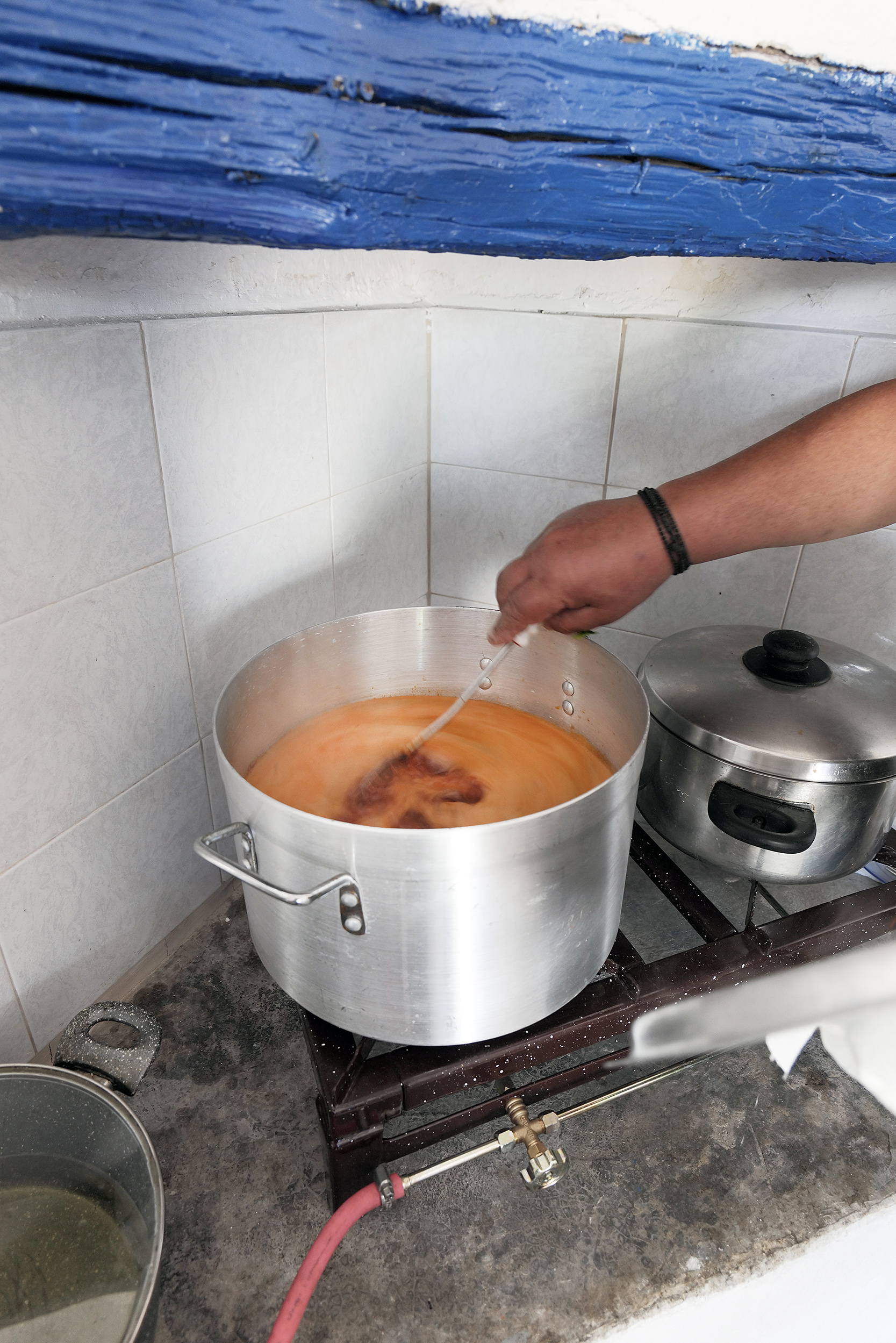
The devotion to the duty of carrying out the festival is plain on the faces and in the movements of the organizers. The preparation is flawless. The heat has begun to make its presence strongly felt. The lush tree in the courtyard is home to a wasps’ nest, and the breeze sends the insects on constant reconnaissance flights, since their routine has been “broken” today by the crowds and the unfamiliar smells. The table has been laid. The bread is shared out among the ktitores.
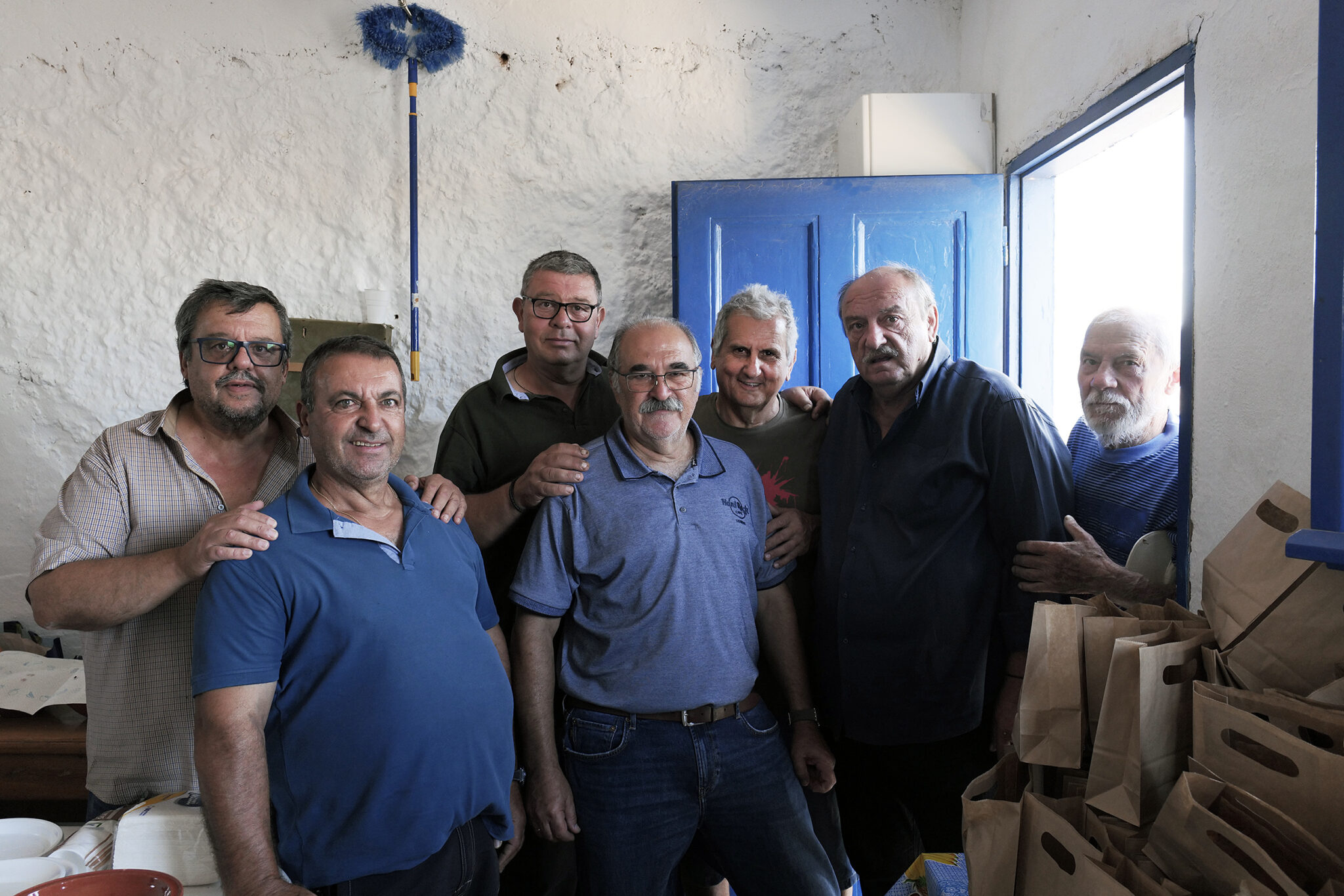
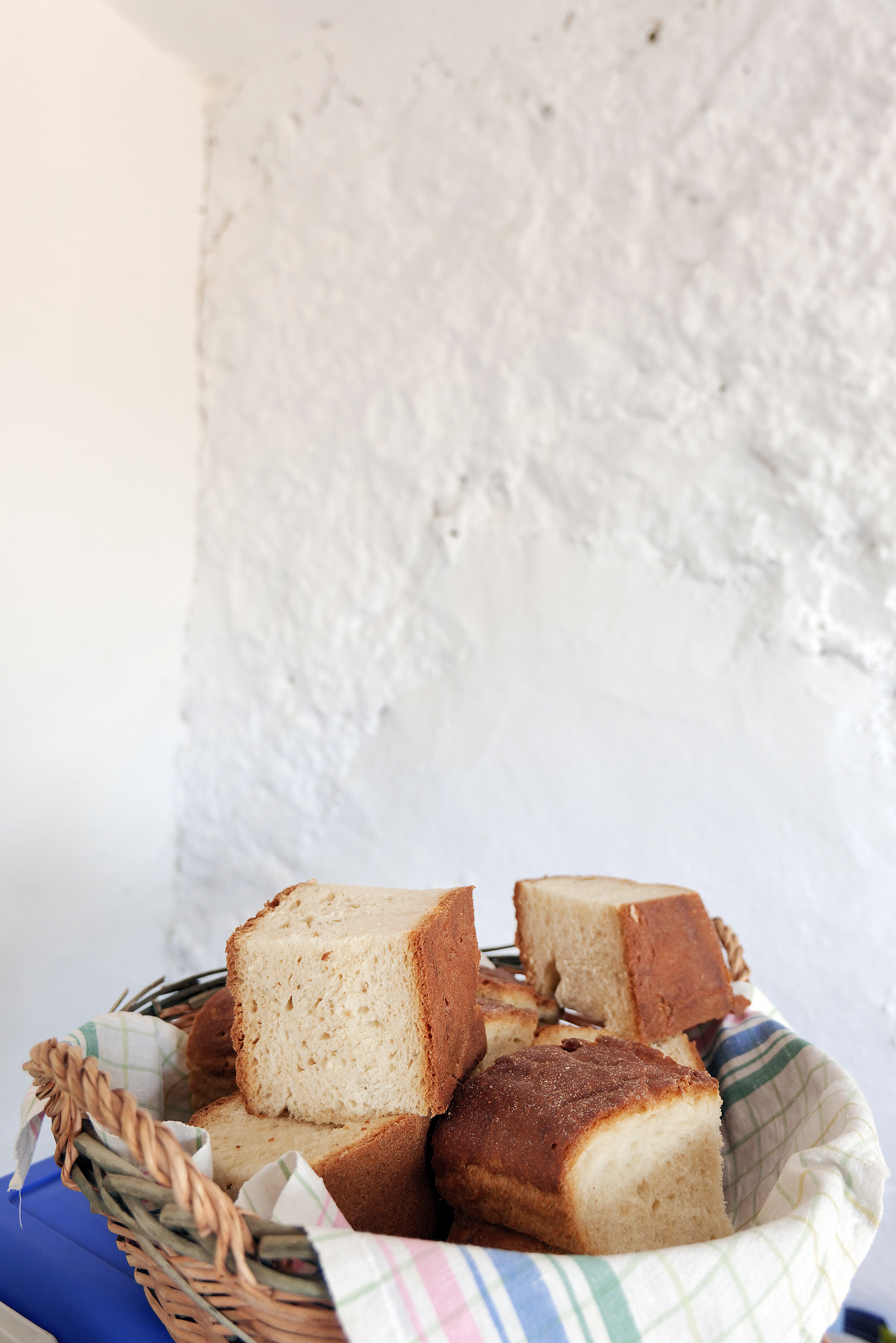
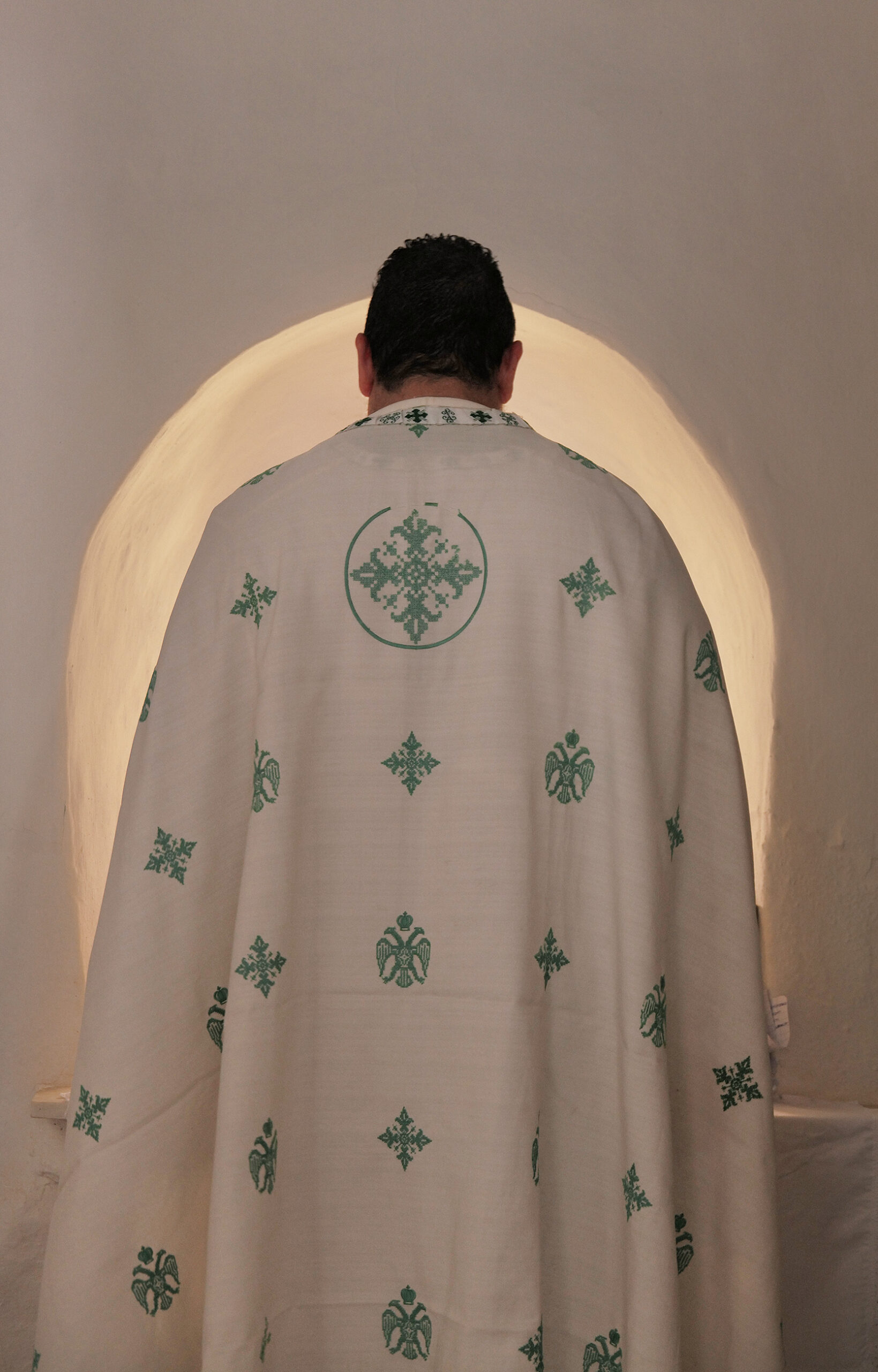
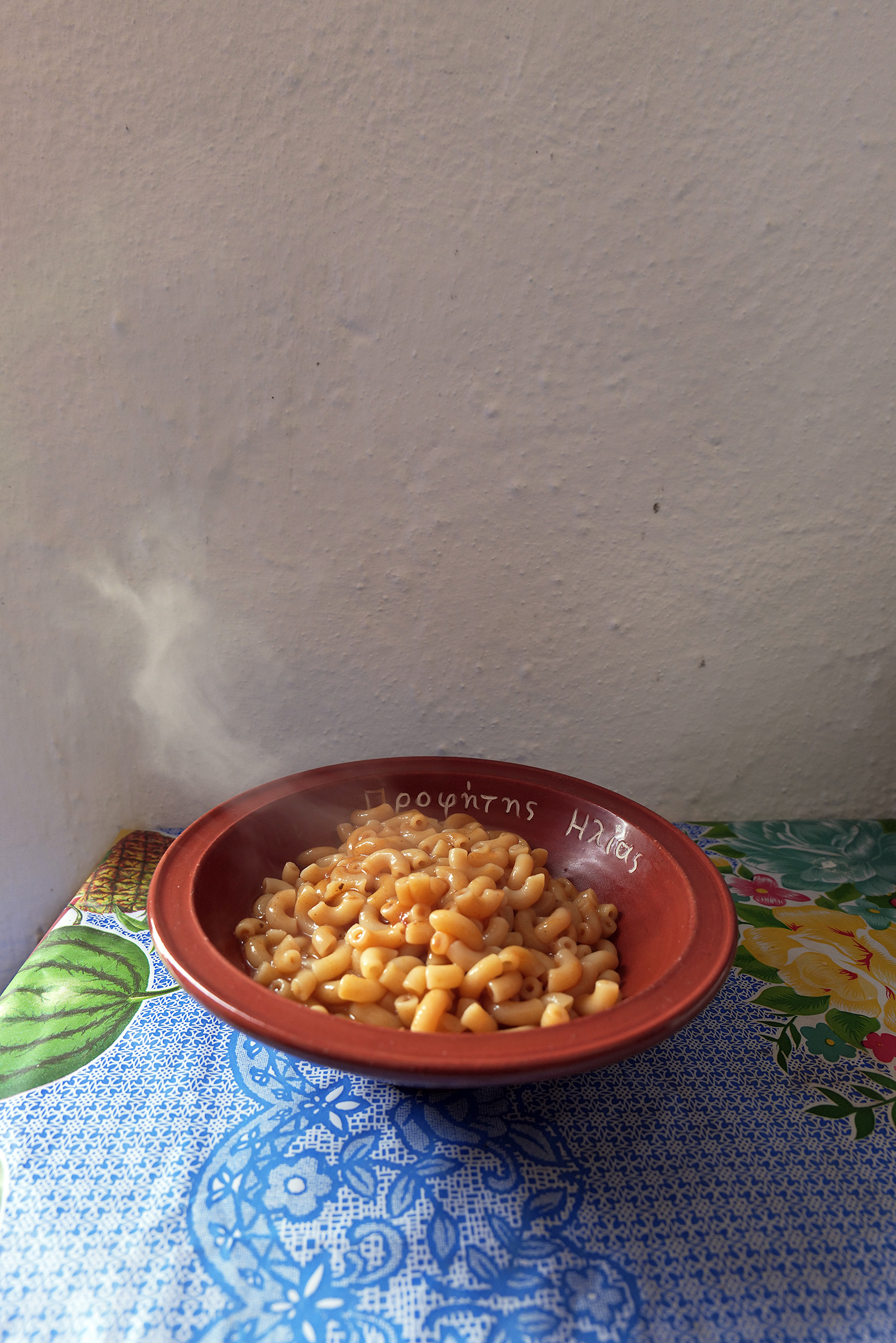
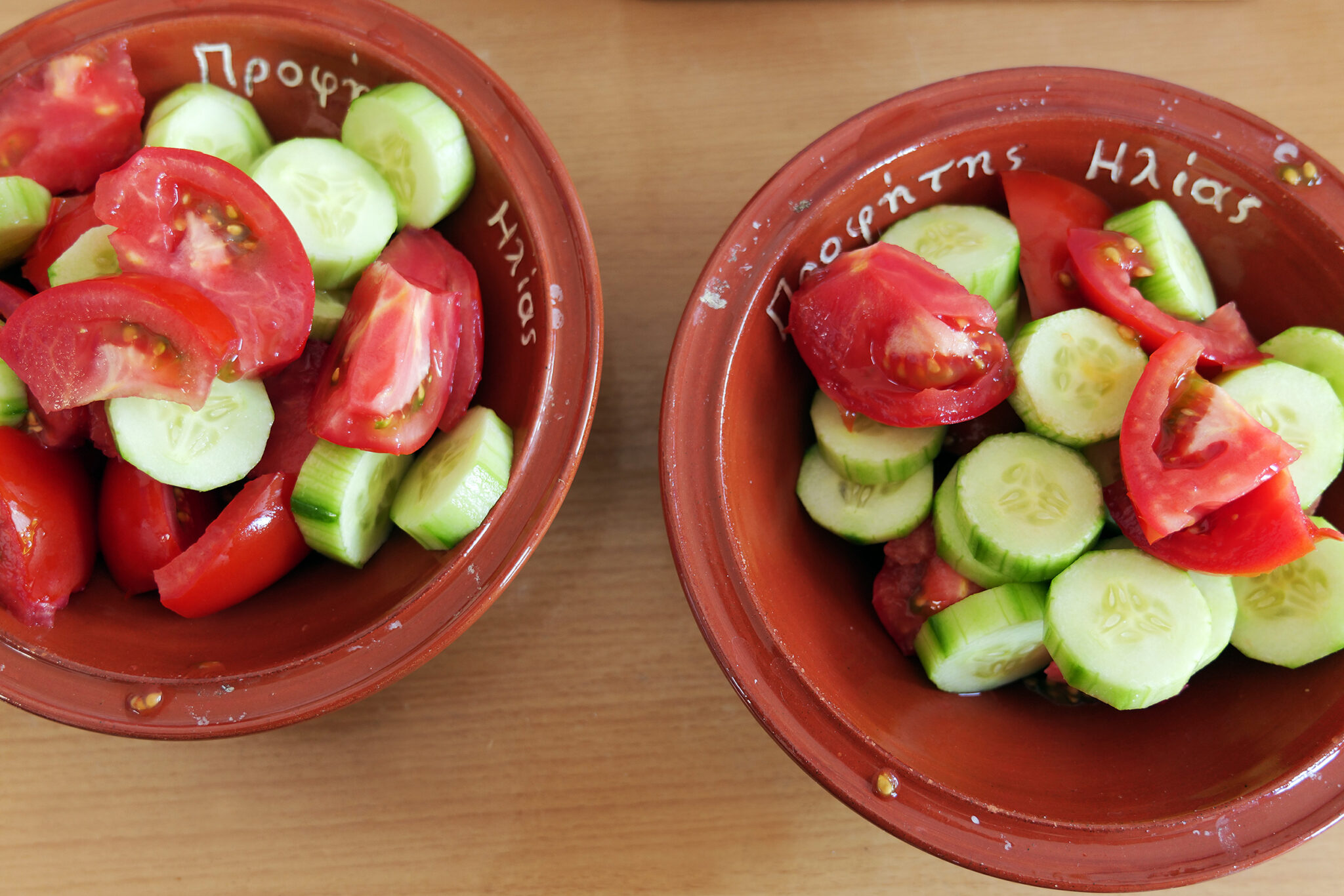
The priest blesses the gathering. There are not even 30 of us, but that is enough to feel it, to understand this energy, this continuation of the tradition. The “souloudiko” pasta has boiled just right and is served out on clay plates with the saint’s name written across them. The wine has begun to flow. Serifos wine. Well known and incomparable of its kind.
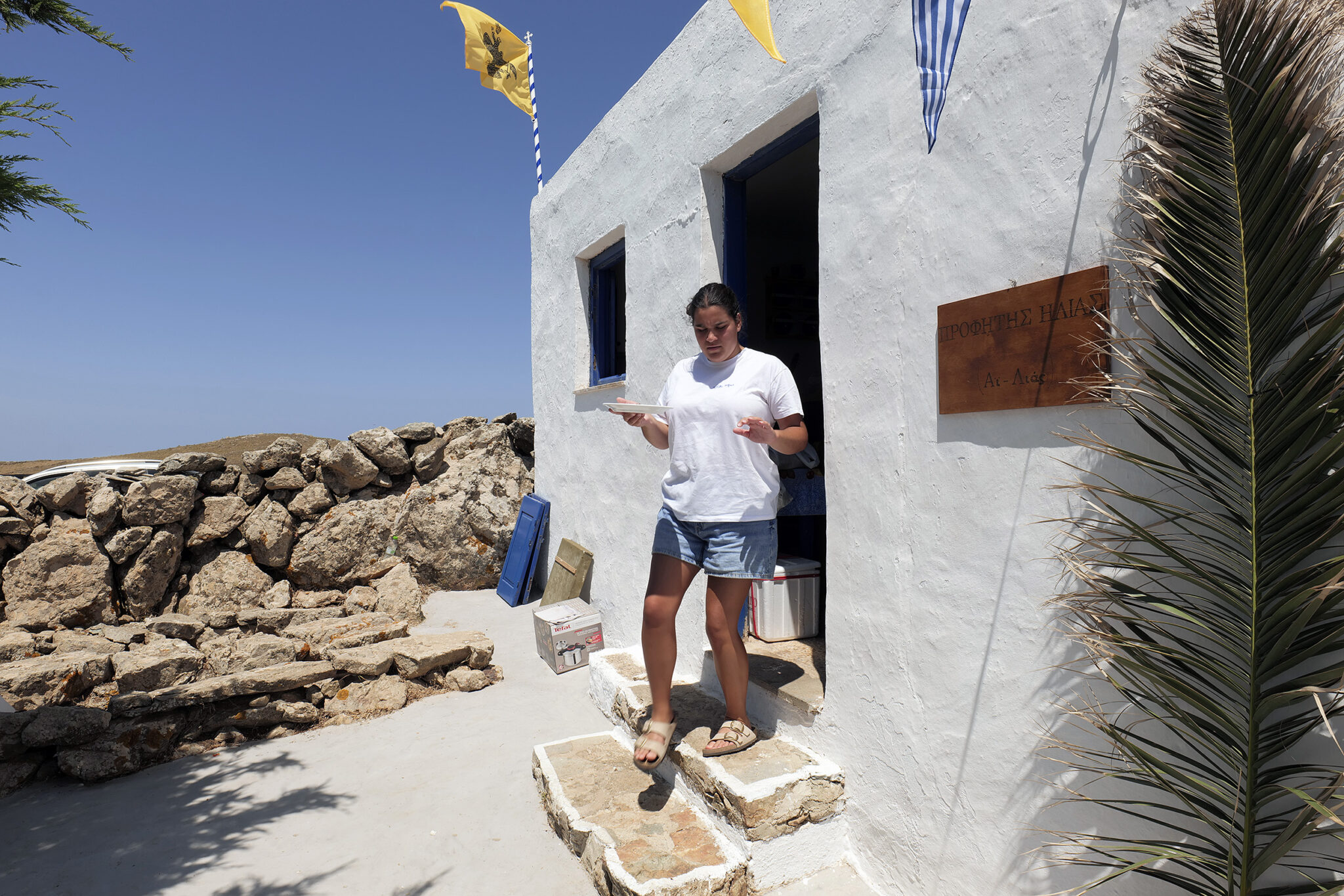
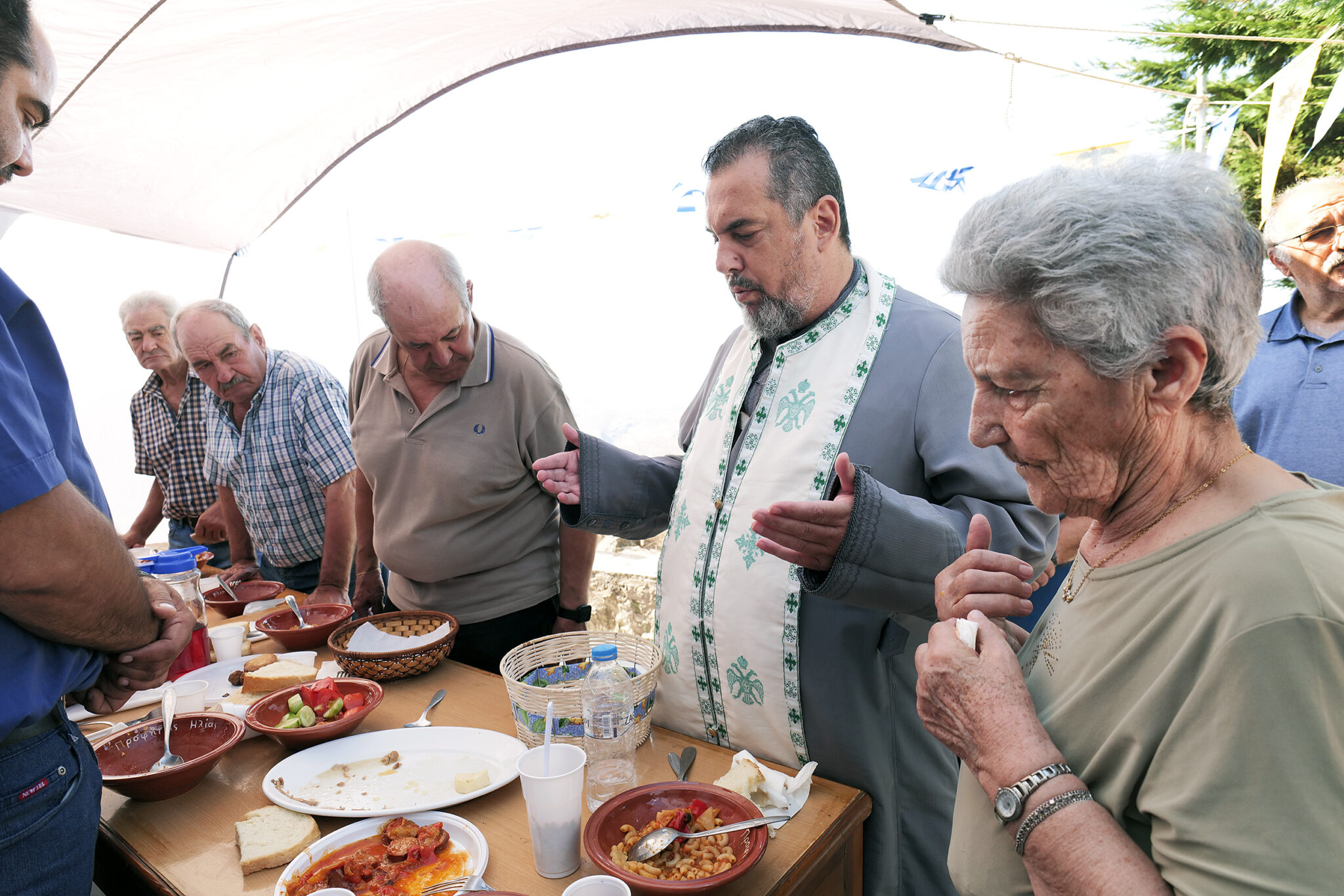
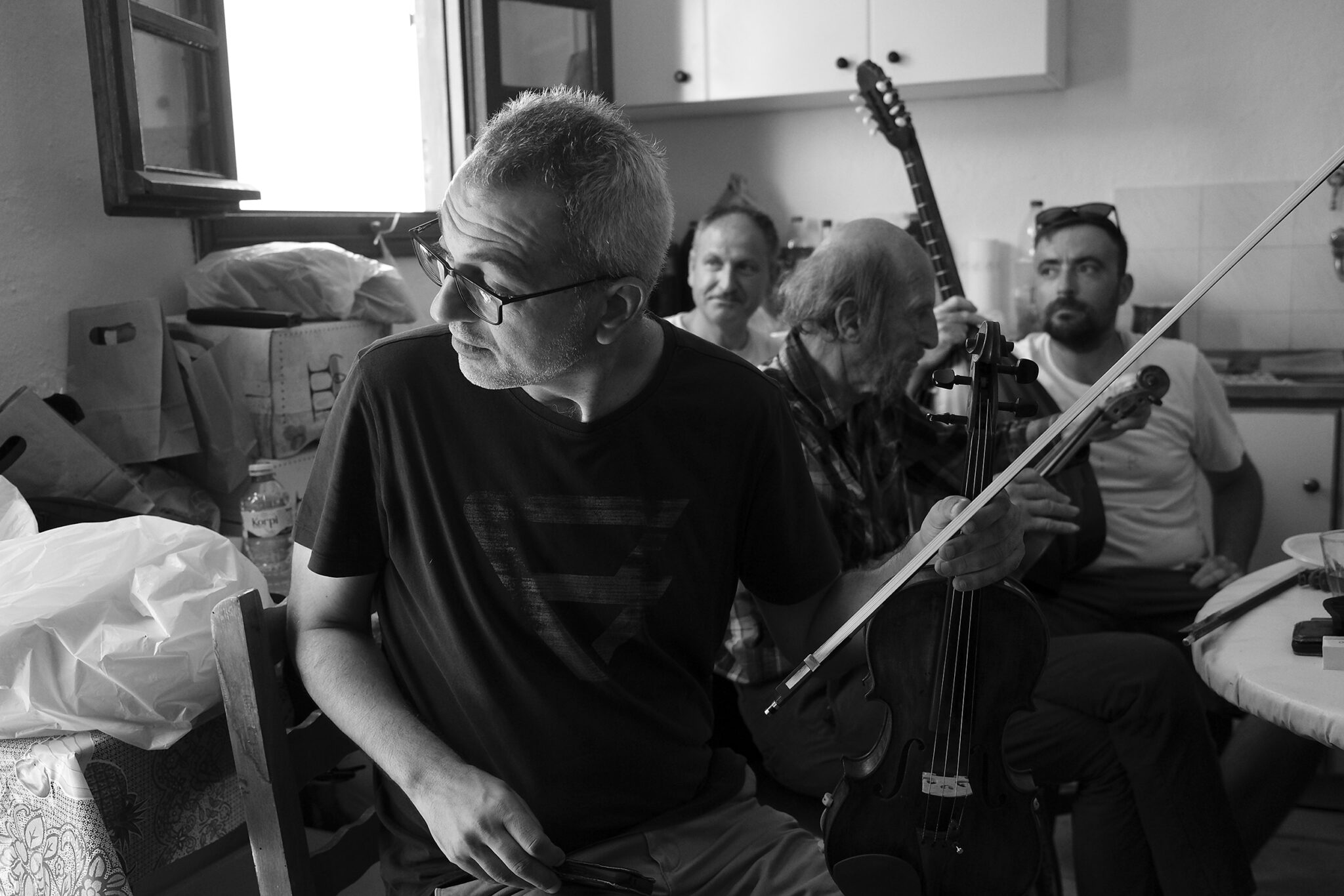
Some begin to head off. They embrace and say their goodbyes, perhaps making plans to meet again next year. The few of us who remain move inside the cube-shaped room, for coolness and shade. We spread out across the benches and chairs filling the space. The instruments have come out of their cases.
With the help of the wine, the nicknames of those present have also started to be heard. Nicknames are a habit here, almost a custom, kept alive for fun and good humor as much as for the ease of teasing, and for telling apart everyone who shares the same name. The songs begin, the strong voices fill the space. Everyone sings. They know all the words, all the songs. The styrofoam coolers under the tables are packed with ice and water. The violin of Nikos Livanios, or “Katsoulis,” sings out. The wine seems endless. The songs magnify time…