


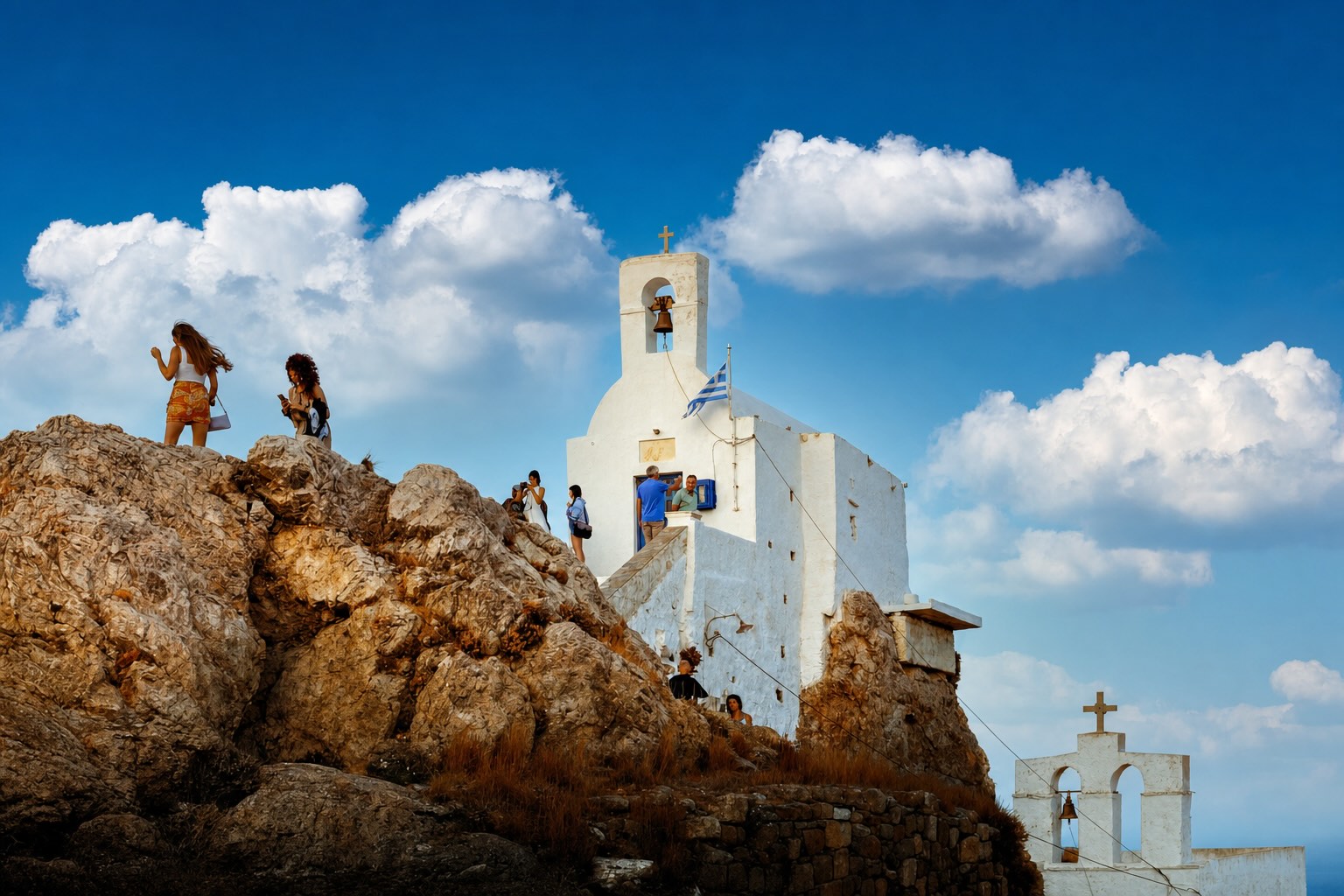
Serifos sits in the Western Cyclades, close enough to Piraeus for a direct summer crossing and different enough from its neighbors to feel like a fresh proposition. The island has no need for decorative persuasion. Rock, wind, dry hills, mining scars, white chapels, hard paths, tamarisk shade, and beaches reached by road or boat give it a character that is immediately visible and not easy for all. But that very challenge is part of its appeal.
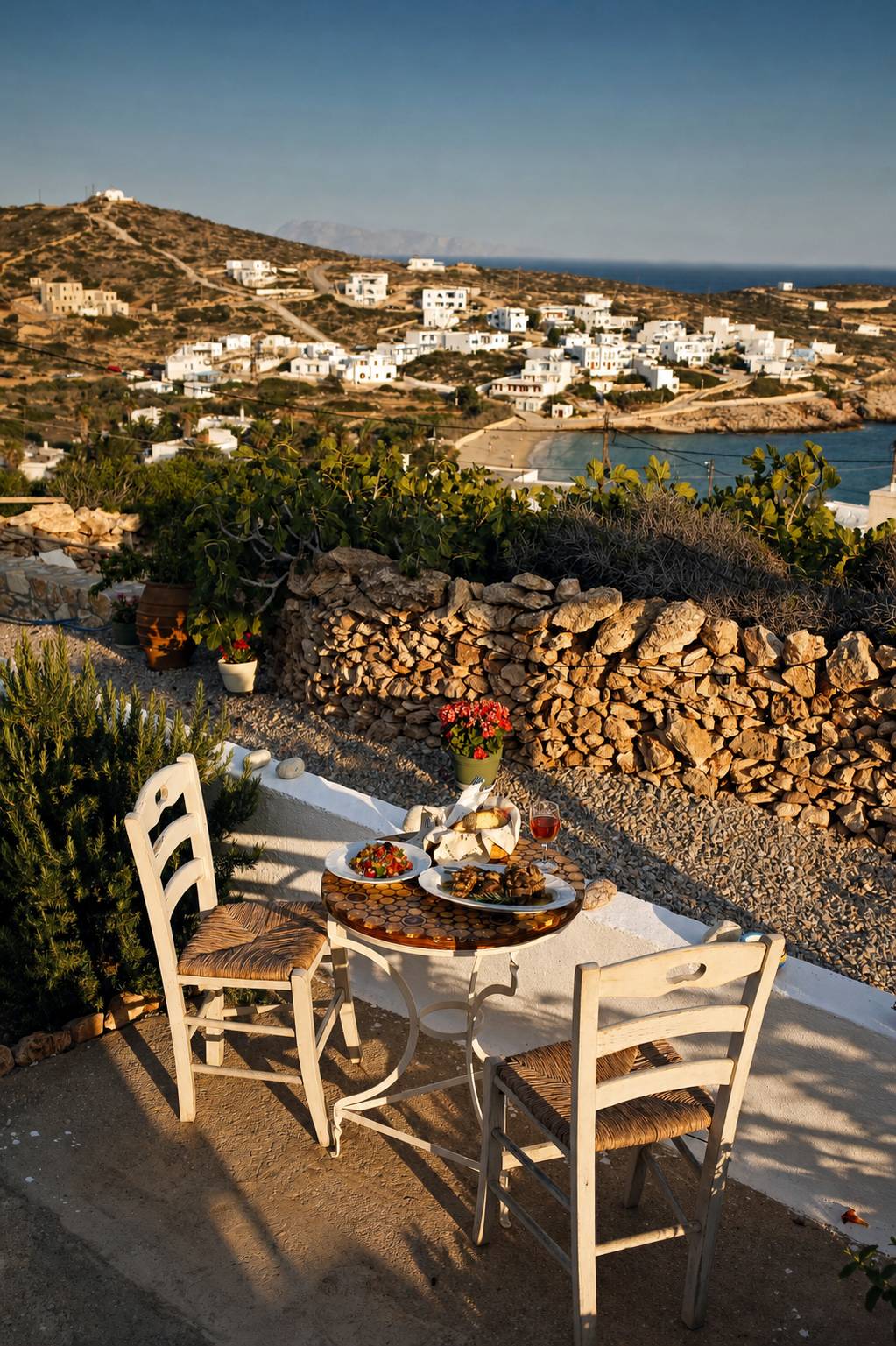
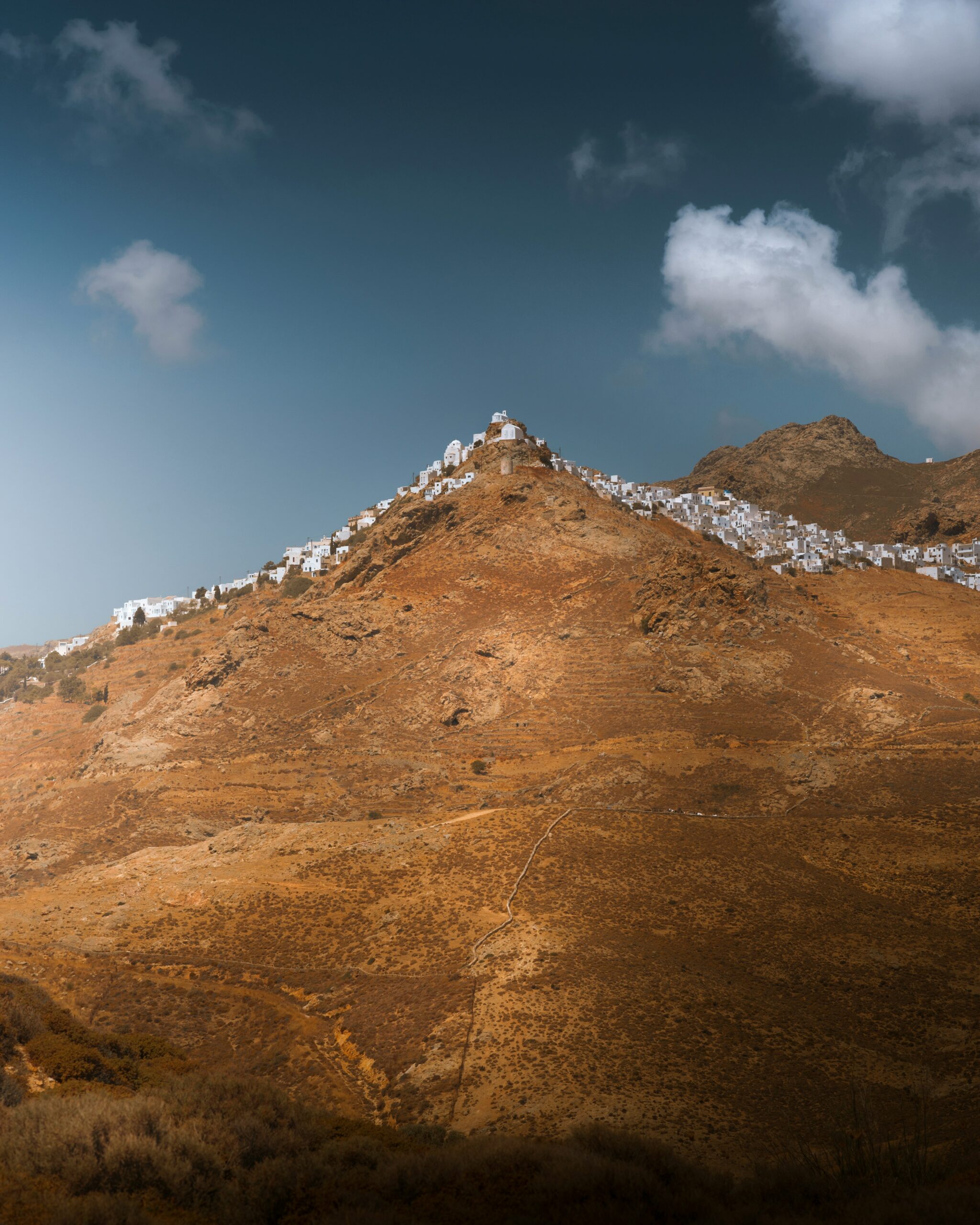
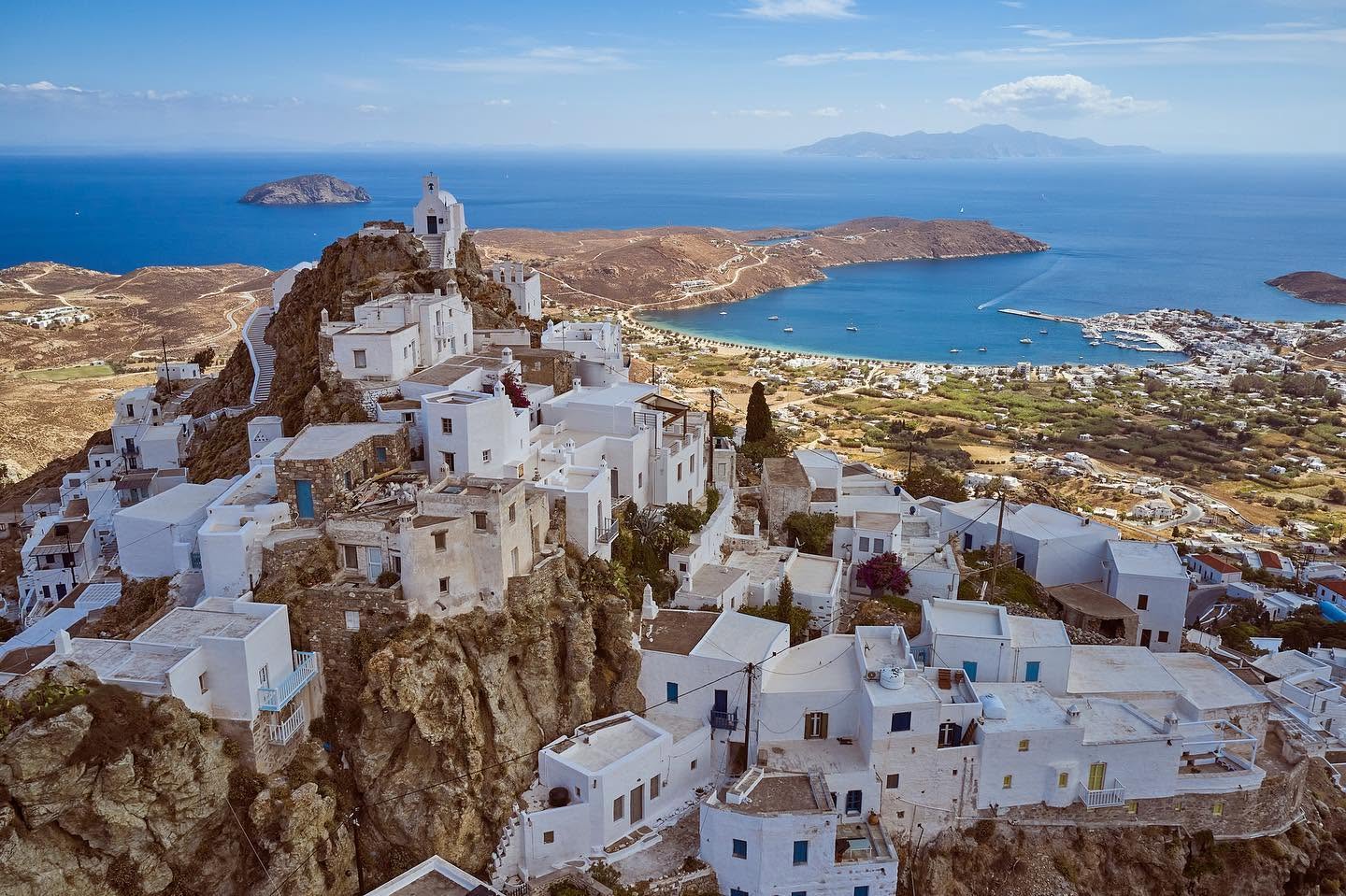
The ferry arrives at Livadi, the port and practical base of the island, set below the high white settlement of Chora. The bay provides the first usable ‘map’ of Serifos: ferries, cafes, rental offices, restaurants, the long beach of Avlomonas, the smaller curve of Livadakia, and the steep road climbing toward the island’s capital. Above it all, Chora holds the image most visitors remember – that of a Cycladic settlement piled high on the slope, with the Kastro on top, looking out across the water.
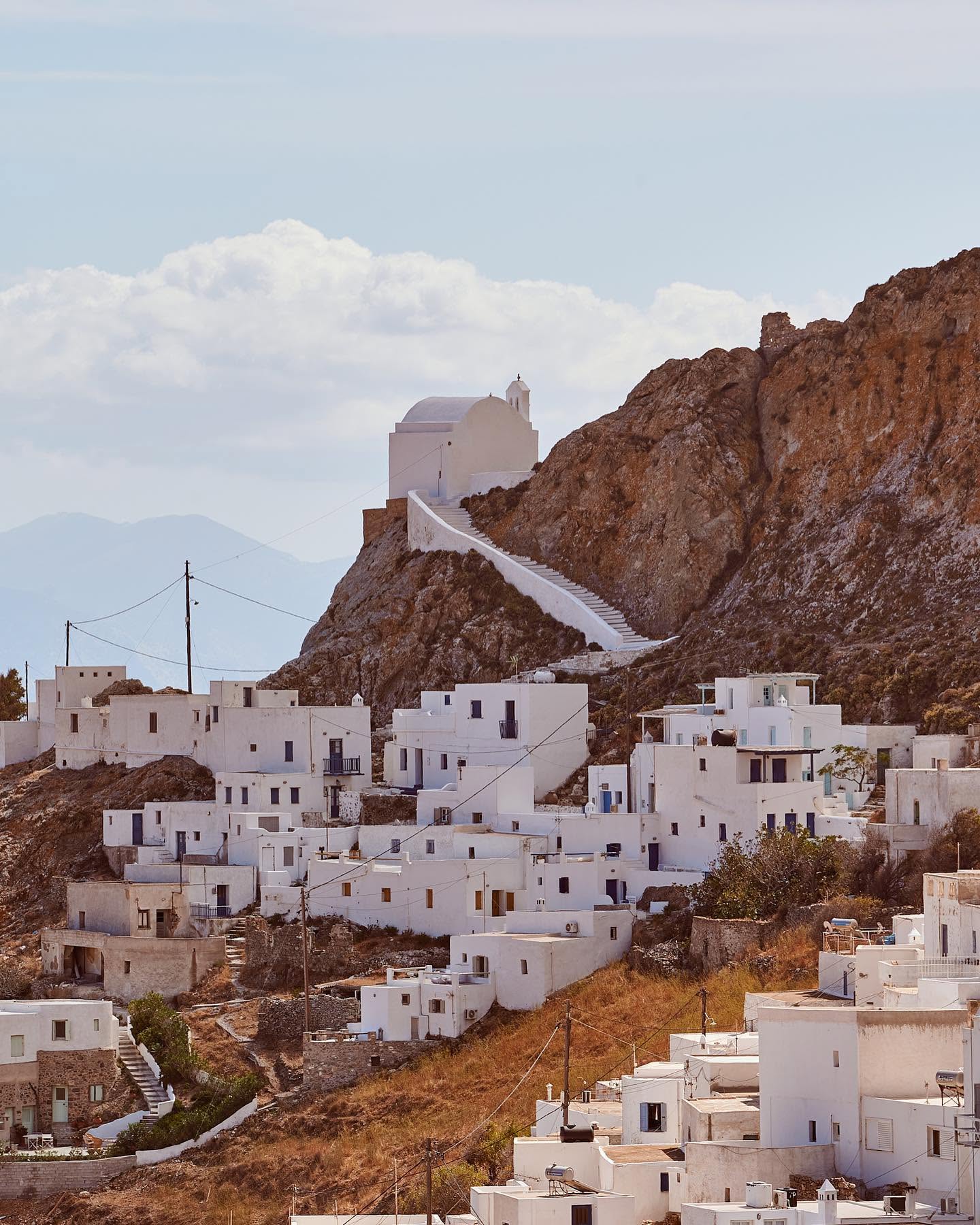

Serifos is often described as simple, but the island is certainly not lacking in substance, and its land carries many layers of history. There is the mythic Serifos of Danae and Perseus. There is the ancient island, visible in the archaeological finds of Chora and in the marble White Tower near Megalo Chorio. There is the medieval hilltop settlement, built for height and protection. There is the mining island of the southwest, where iron extraction shaped labor, wealth, violence, and memory. There is also the contemporary Serifos of ceramics, design-led stays, yoga retreats, restored miners’ houses, and small restaurants that still depend on chickpeas, capers, fennel, honey, goat, fish, and local cheese.
The result is one of the most rewarding islands in the Western Cyclades for travelers who like landscape with a past attached to it.
01
First Look: The Western Cyclades in a Rougher Key


Livadi is the point of arrival and the useful center for first-time visitors. It has the port, transport, shops, all-day cafés, restaurants, and immediate access to beaches. Chora, above it, gives the island its strongest visual identity and a more memorable base for evenings. The south and southwest hold some of the best beaches and the mining landscape. The north is wilder and more open, with villages, churches, rougher roads, and beaches that feel more remote than their distance suggests.
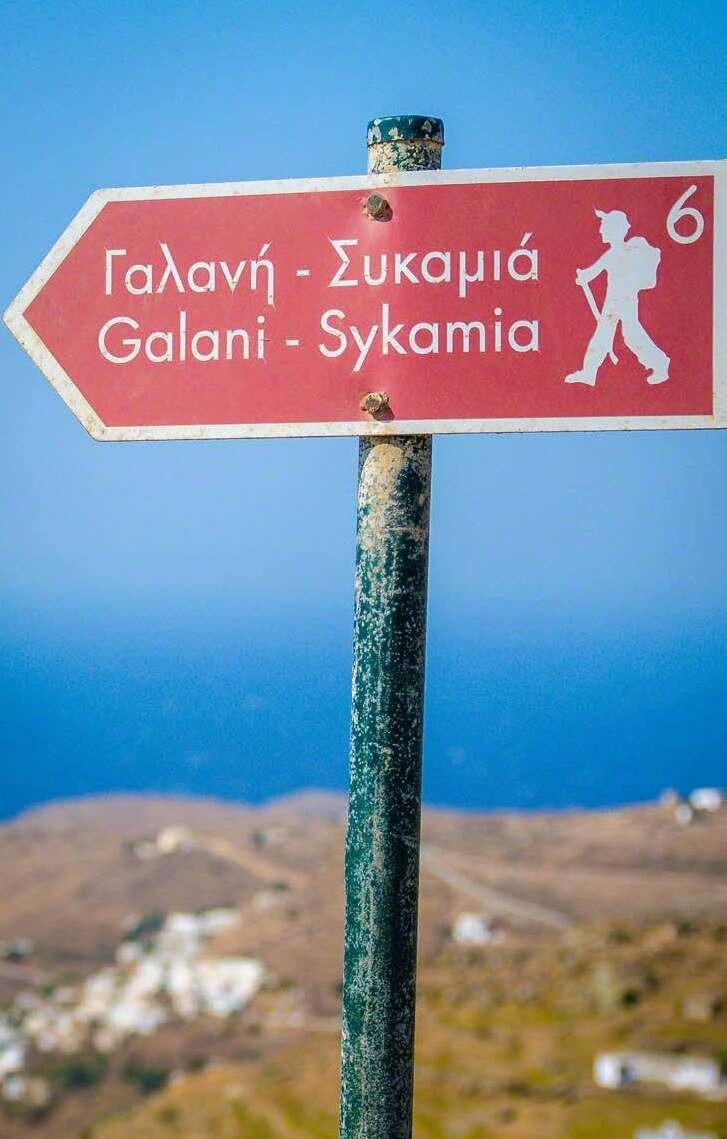
Northern Serifos has a character of its own. The road toward Panagia, Galani, Pyrgos, Sykamia, and Platis Gialos passes through an exposed part of the island where the landscape becomes drier, quieter, and less visited. Sykamia is one of the island’s best northern beaches, broad and open, with a strong sense of distance. Platis Gialos, on the north side, forms part of a small beach grouping with Mesiano and Vorino. This side of Serifos depends heavily on wind and road conditions, but it gives the island one of its most attractive qualities: space without display.
02
The Chora, Mines, Archaeology, and the Island’s Memory
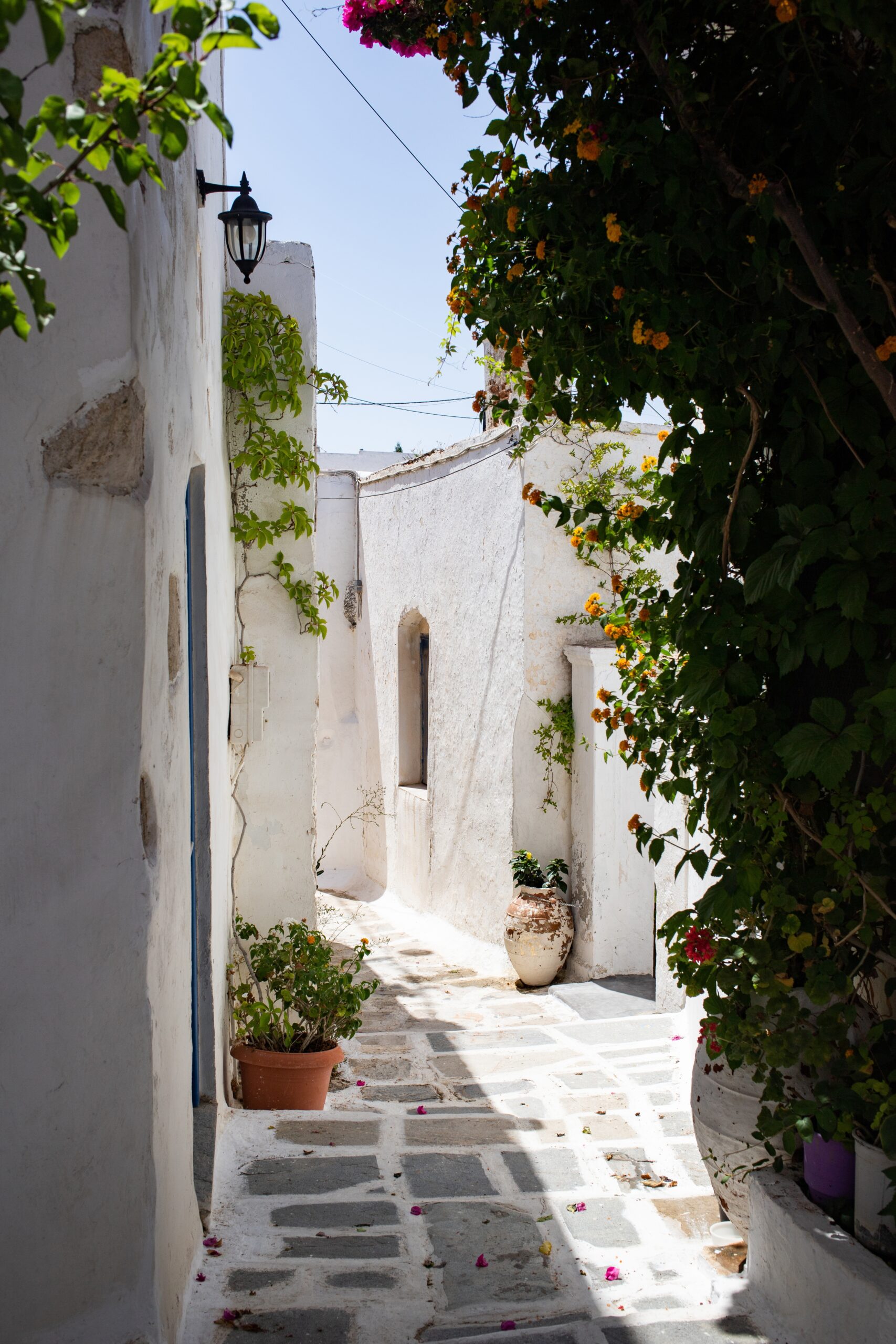
Chora is best explored slowly and on foot. It is divided between Upper (Ano) and Lower (Kato) Chora, with the upper settlement gathered around the Kastro, churches, whitewashed lanes, steep stairs, and houses that follow the slope. From the top, the view reaches Livadi, the surrounding hills, and the sea lanes that connect Serifos with the rest of the Cyclades. Near the entrance to the settlement, the windmills create one of the island’s most recognizable scenes, especially in late afternoon.
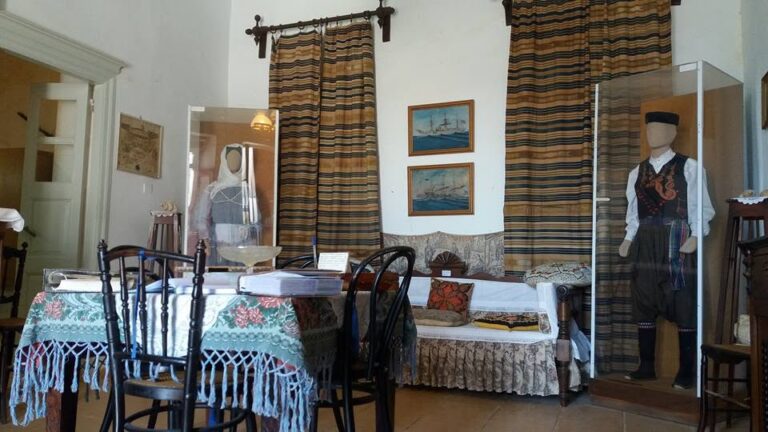
Lower Chora has a quieter domestic texture. The Folklore Museum, founded by the Serifians Association, preserves tools, textiles, costumes, domestic objects, and traces of everyday life on the island. It fits naturally into a walk through Kato Chora, where Serifos feels less like a summer view and more like a working settlement with its own rhythms and memory.
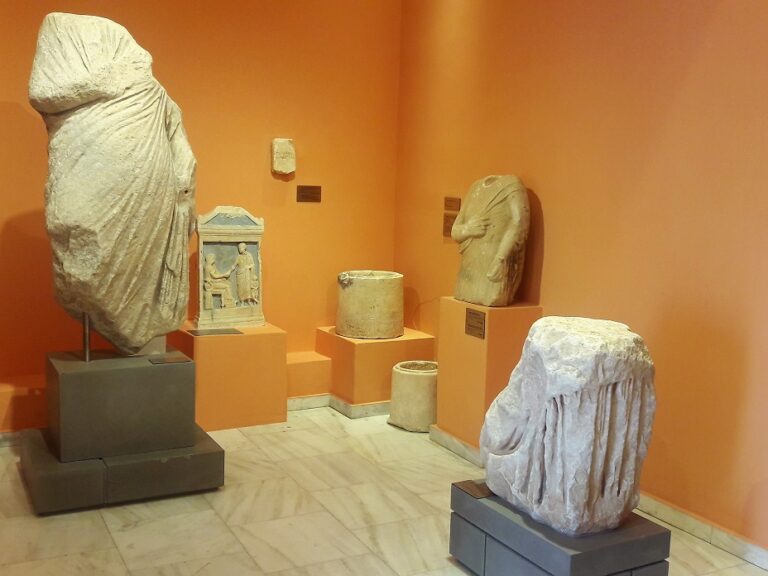
The Archaeological Collection of Serifos, in Livadi, adds another necessary stop. Its finds from the Classical, Hellenistic, and Roman periods place the island inside the longer history of the Cyclades. The Kastro area itself also includes ancient material incorporated into later walls, a reminder that height, defense, and settlement mattered here long before the white Cycladic village took its present form.
The old path between Livadi and Chora remains one of the best short walks on the island. Before the modern road, it was the natural connection between port and capital. Today it gives a useful sense of Serifos’ vertical geography. It should be done early or late in summer, with water and proper shoes, but it rewards the effort with one of the clearest introductions to the island.
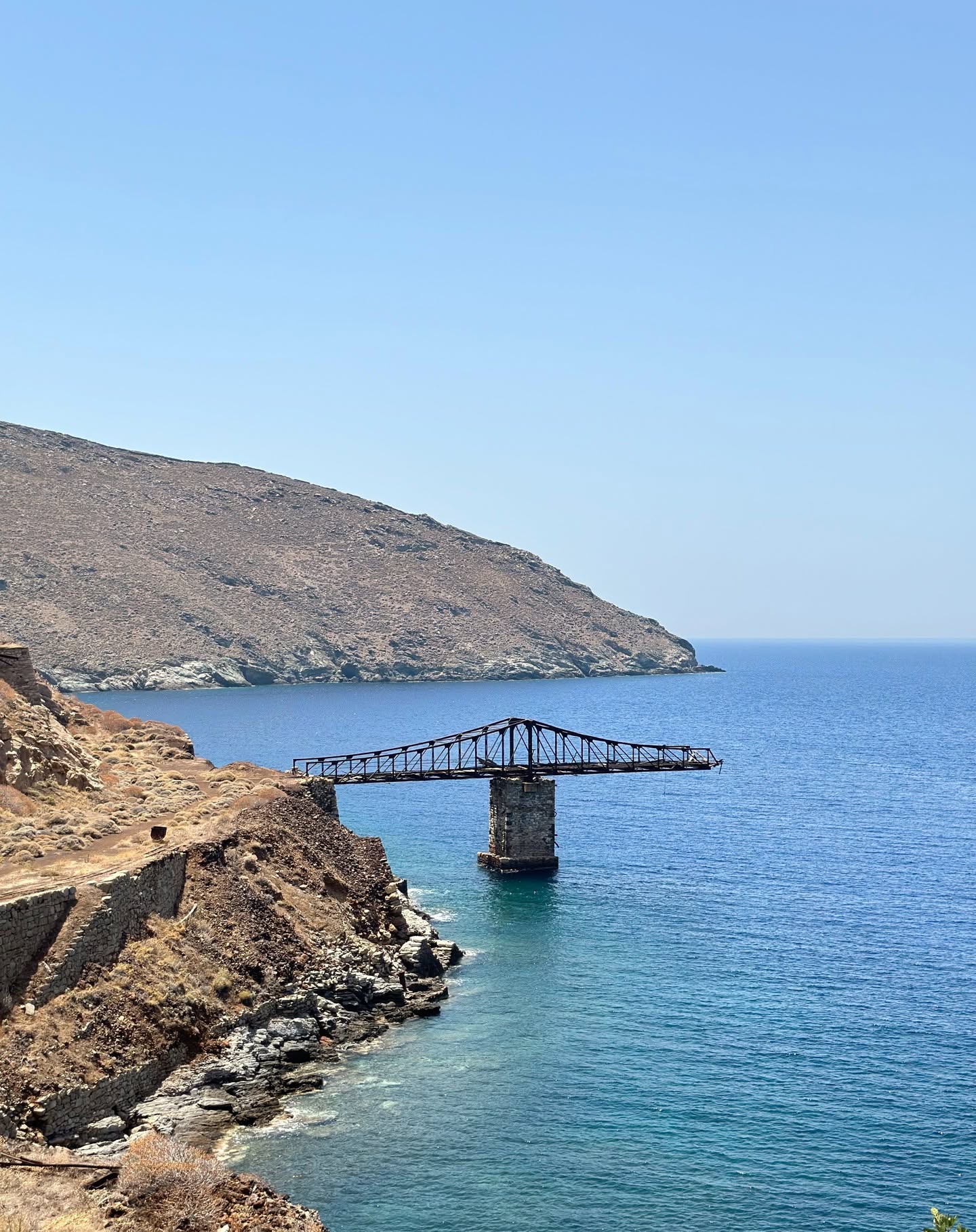
The mood changes in the southwest. The road toward Koutalas, Megalo Chorio, and Megalo Livadi enters the mining landscape that shaped modern Serifos. Iron mining was active here from the late 19th century until the 1960s, and the remains are still visible: loading bridges, rails, wagons, tunnels, company buildings, workers’ houses, and the former administrative headquarters at Megalo Livadi. This is one of the most prominent industrial landscapes in the Cyclades and one of the island’s defining cultural sites.
In August 1916, miners on Serifos went on strike, demanding better working conditions, fair wages, and the eight-hour workday. The strike ended in violence at Megalo Livadi and became an important episode in Greek labor history. Today the bay holds sea, shade, ruined infrastructure, and the memory of that struggle in the same frame. A swim here comes with the sight of rusting structures and abandoned buildings on the shore. The setting is beautiful, but its beauty is not ornamental.
Two ancient landmarks near this wider area deserve attention. The White Tower, near Megalo Chorio, is a Hellenistic marble tower associated with the island’s ancient landscape. Psaropyrgos, widely known as the Throne of the Cyclops, is a large rectangular construction made of long schist slabs in the southwest. Its date is usually placed in the late fourth century BC or the Hellenistic period, although the absence of systematic excavation means that the claim should remain modest. The nearby Cyclops Cave is no longer accessible, but the name belongs naturally to an island where myth, stone, and exposed land often meet.
03
Beaches: Easy Sand, Chapel Coves, Northern Wildness


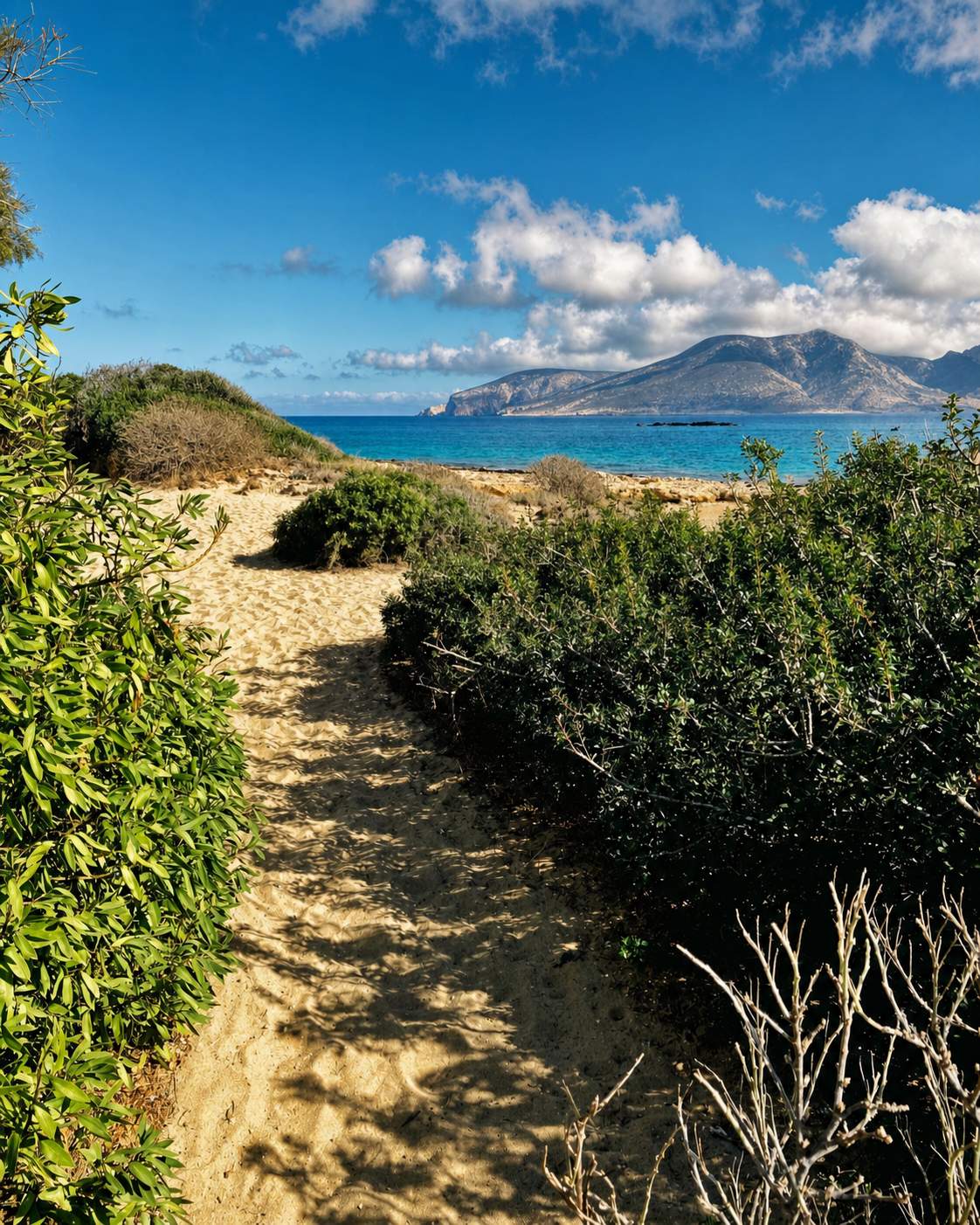
Serifos is an excellent beach island because it offers different kinds of days. Some beaches are close to the port. Some have tavernas. Some have tamarisk trees. Some require a walk. Some are best by boat. Many remain lightly organized or unorganized, and wind matters more than reputation.
Livadakia, Livadi, and Avlomonas are the practical beaches. They are great for arrival day, families, short stays, and travelers who want to stay close to ferries, restaurants, and accommodation. Livadakia has the easiest holiday rhythm, while Avlomonas gives Livadi a proper sandy beach within walking distance of the port.
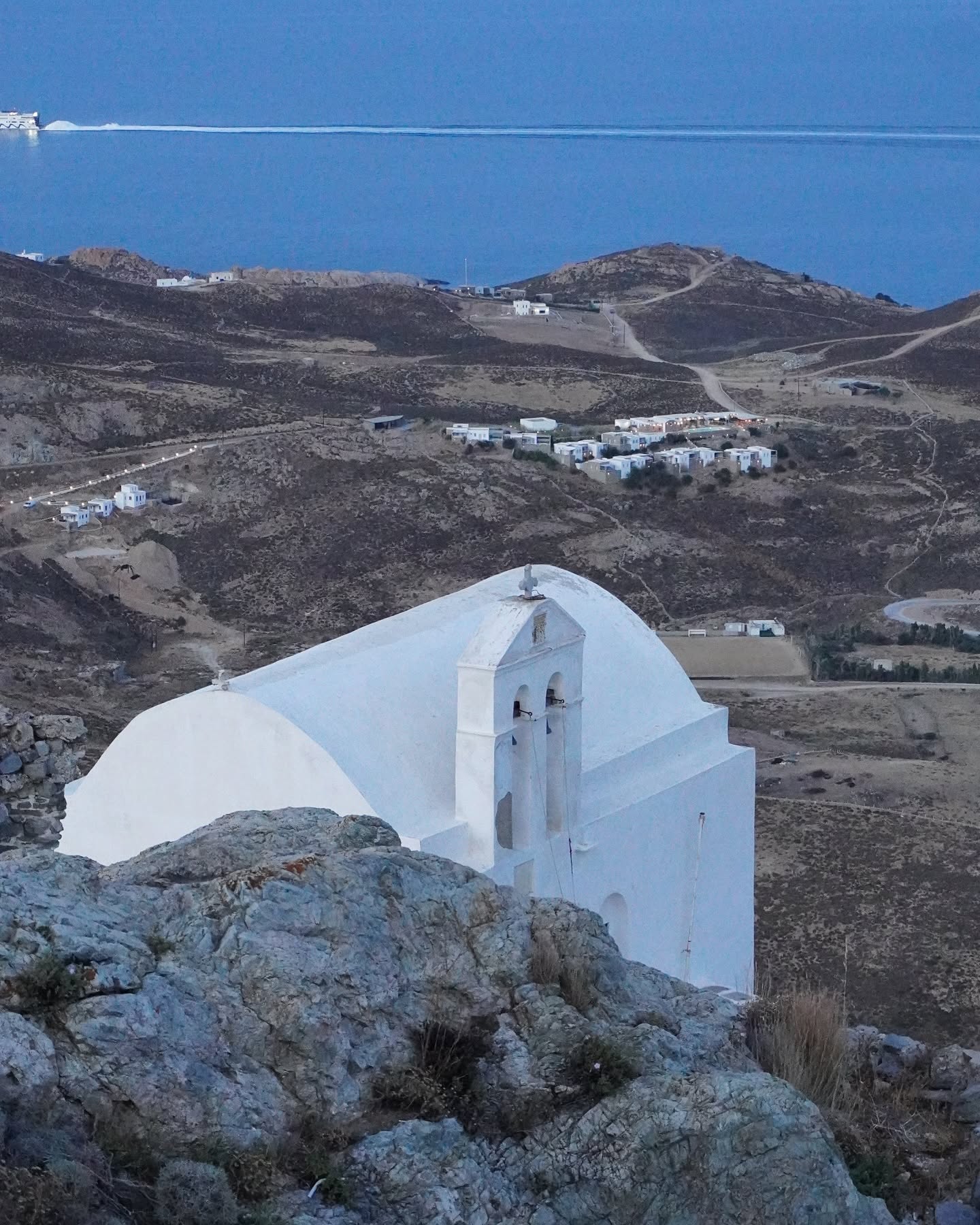
Psili Ammos is one of the island’s best-known beaches, with pale sand, shallow water, and a chapel above the shore. It is popular and best visited early in high season. Nearby Agios Sostis has one of Serifos’ most beautiful beach-and-chapel settings, with a small white church above the water and a wide Cycladic horizon. Lia, on the eastern side, is a quieter option when the weather allows it.


The southern and southwestern beaches give the island much of its summer character. Ganema is one of the largest, with a long curve of sand and pebbles, tamarisk shade in parts, and enough scale to absorb people even in busy weeks. Vagia has a more direct connection with Serifos’ mining history, since restored former miners’ houses sit near the beach. Kalo Ampeli requires a walk and is better for travelers who like to earn a swim. Maliadiko and Koutalas continue the same rougher coastal line, with less convenience and more exposure.
The north has a different character. Sykamia is broad, open, and remote in feeling, especially outside the peak of August. Platis Gialos, reached through the northern road network, forms a small beach group with Mesiano and Vorino. These beaches are not the automatic choice in strong northerly winds, but they are essential for anyone who wants to understand Serifos beyond the classic Chora, Livadi, Psili Ammos circuit.
04
Walking Serifos: Old Paths, Mining Routes, and High Views
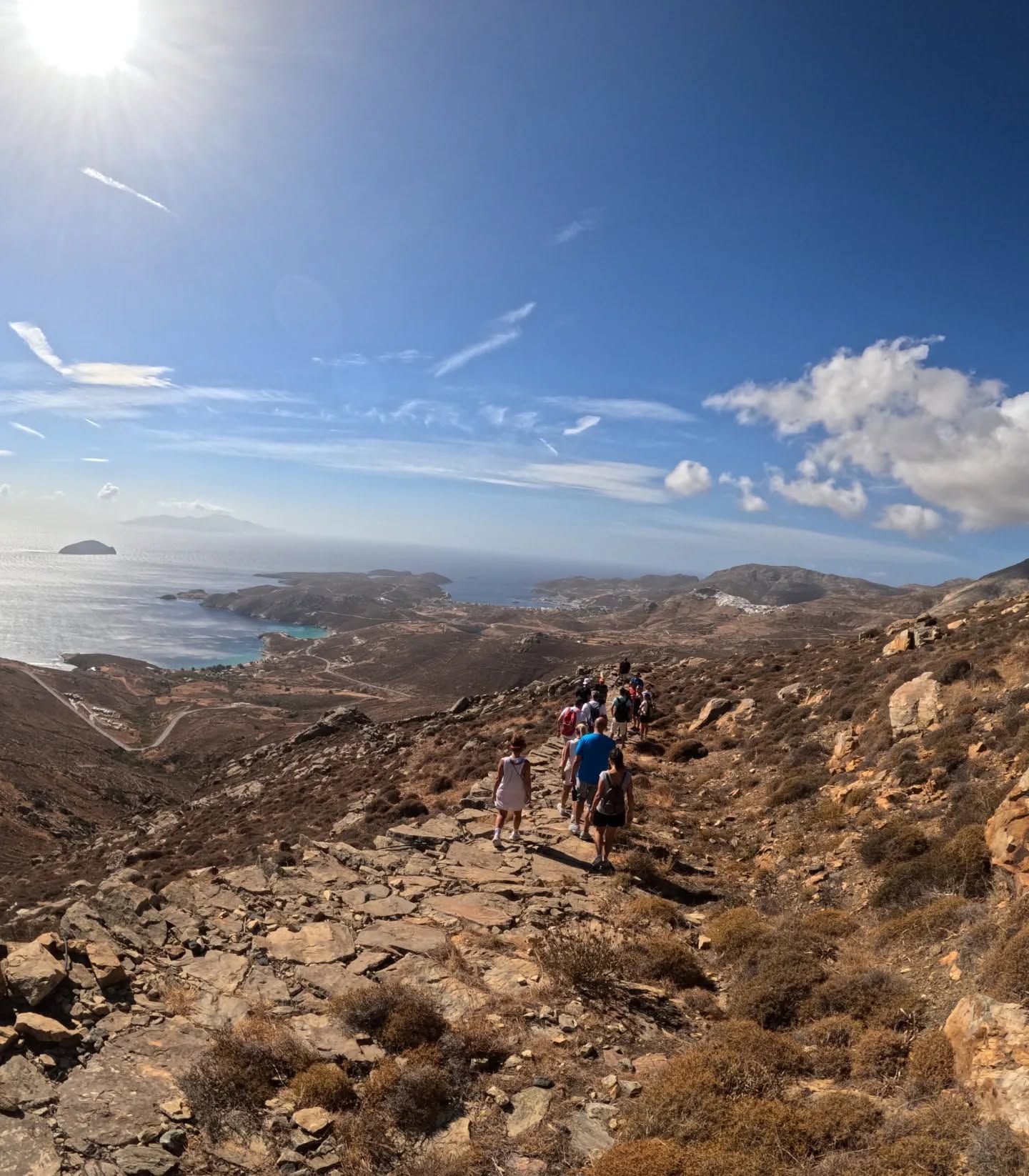
Walking makes Serifos much easier to understand and merge with. The island’s paths connect port, Chora, beaches, chapels, villages, ancient remains, mining sites, and viewpoints. Several routes have been mapped and digitized in recent years, which has made the island easier to explore without removing the need for common sense.
The Livadi to Chora route is the best introduction. It climbs from the port to the settlement and shows how dramatically the capital sits above the sea. A shorter walk through Chora, the Kastro, and the windmills works well in late afternoon.
The Livadi, Ramos, Kalo Ampeli route connects walking with swimming. The Vagia circular route belongs naturally to the south, where beach, slope, and mining memory meet. The Panagia to Sykamia route introduces northern Serifos, with its villages, exposed hills, and descent toward the beach. The Mining Gallery route belongs to the southwest and should be treated with respect for both safety and history.
Summer walking on Serifos should be done early or after the heat drops. Take water, a hat, and proper shoes, and check the current status of routes before setting out. Some paths may be closed or difficult at different times, and local advice is valuable.
05
Culture and Tradition: Panigyria, Museums, Summer Events
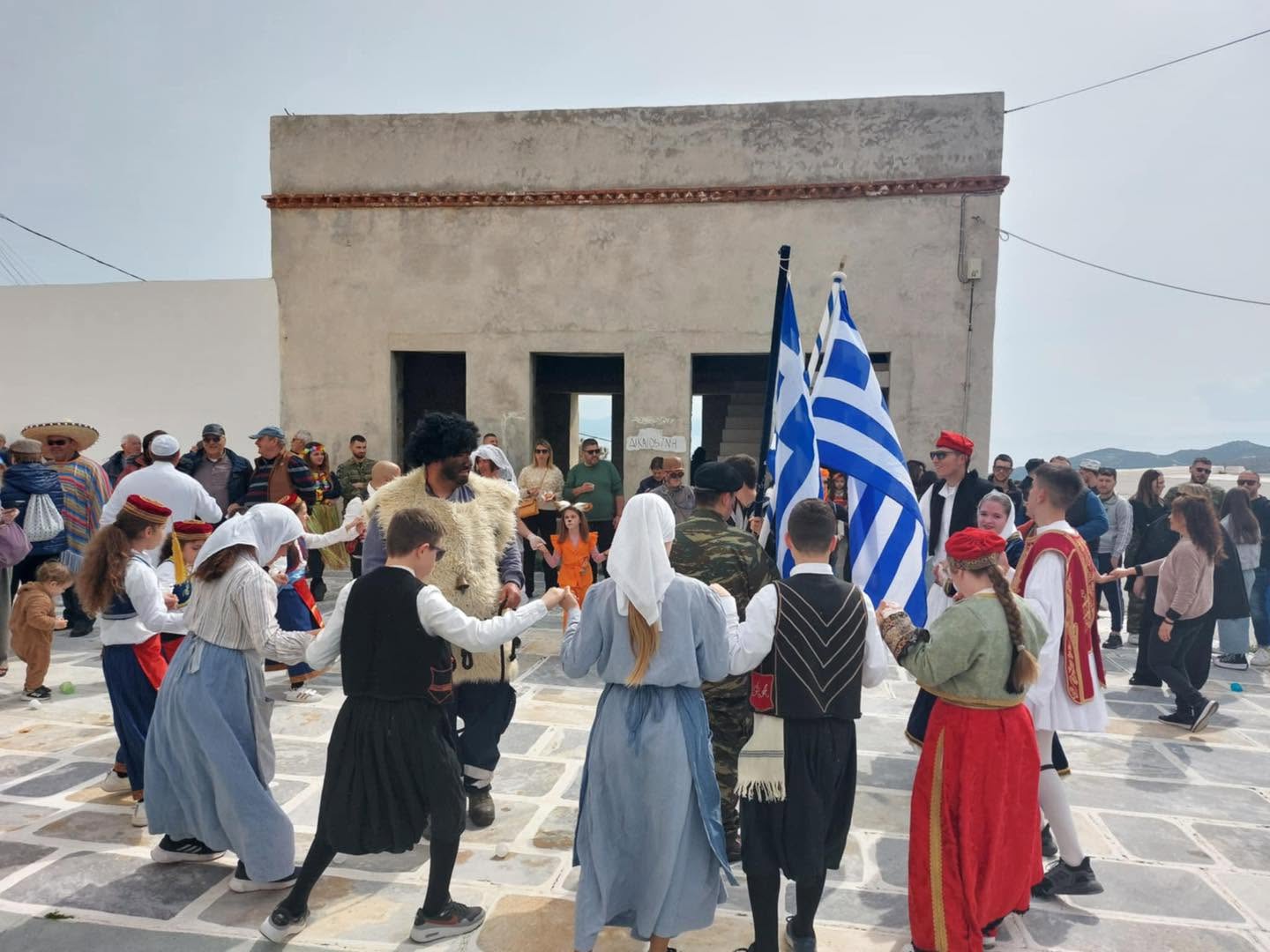
Serifos has more than 100 churches and chapels, and many of them are still celebrated each year on the feast day of the saint to whom they are dedicated. These panigyria usually last two days. On the eve of the feast, the service of vespers is held, followed in many cases by a communal meal at the church’s holy table. The priest sits at the head of the table and gives the blessing, while the organization, serving, and upkeep of the church are handled by the ktitores, the lay custodians of each chapel.
The role of the ktitores is one of the most meaningful elements of local religious life. Traditionally, they were descendants of the families who owned the land around the chapel and took responsibility for maintaining it in honor of the local saint. Over time, others have also joined this role, even without ancestral ties to the specific area, because they wish to serve the church and keep the custom alive. In practice, the panigyri becomes a form of continuity: a religious observance, a family inheritance, a village duty, and a shared meal.
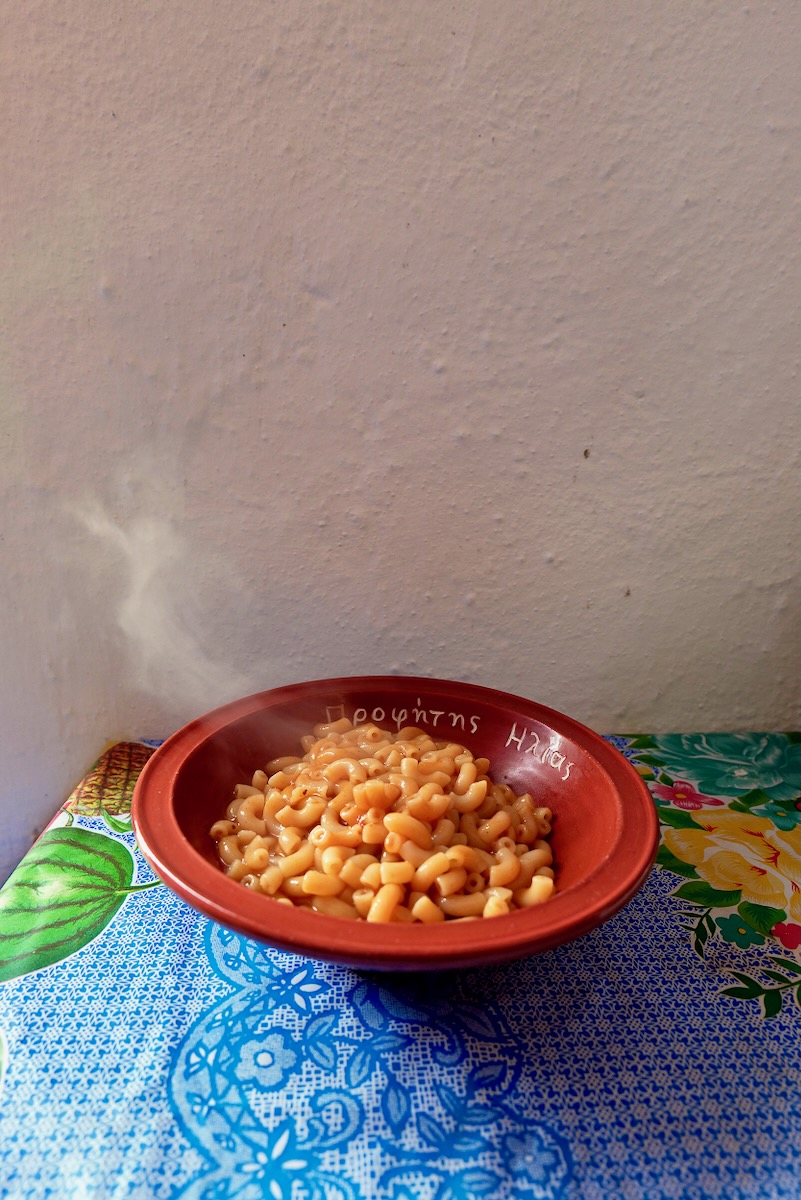
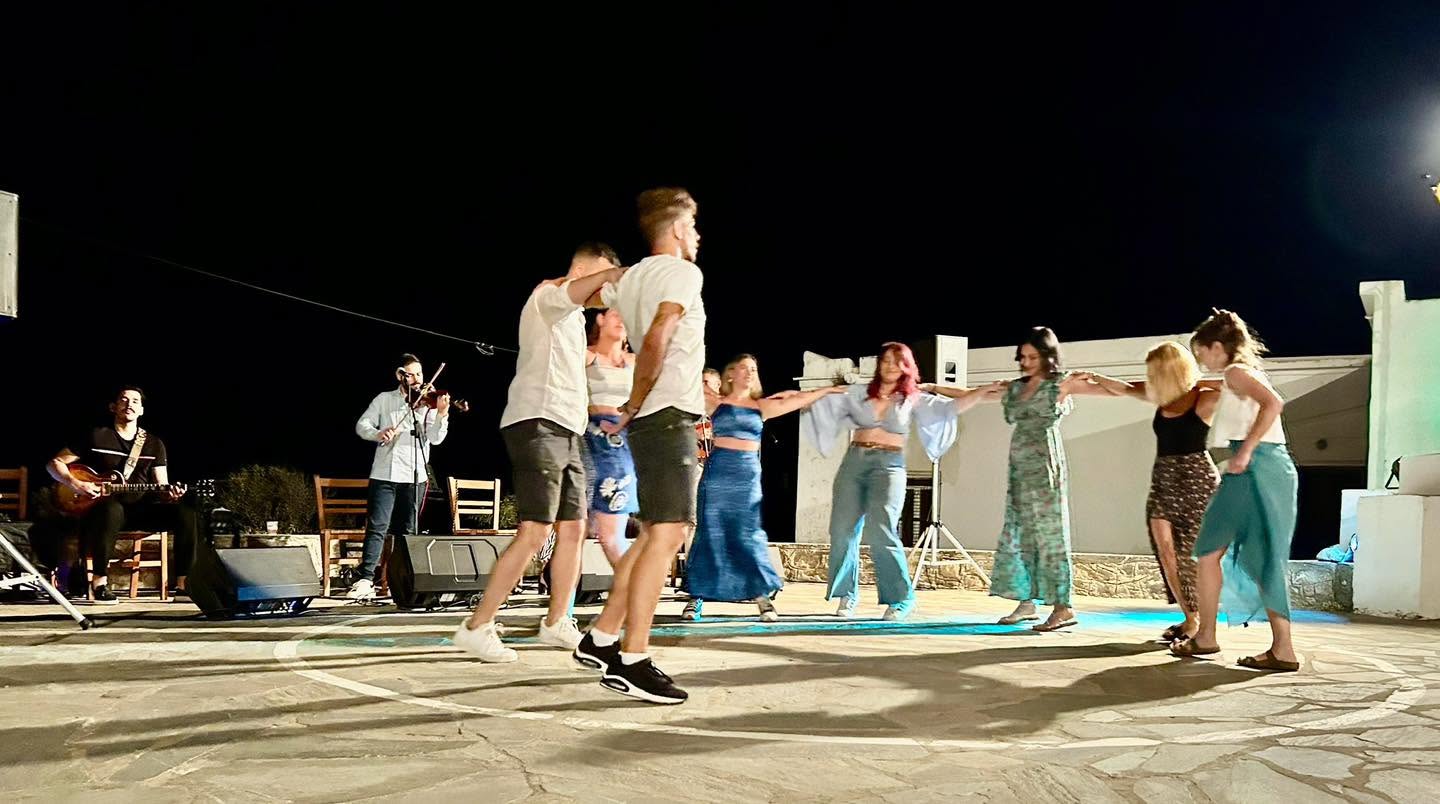
The food served at Serifos’ panigyria is part of the experience. The table often includes fava with olives, tomatoes, and onion; short-cut pasta with goat in tomato sauce; tourlou; and boiled goat with potatoes cut in thick wedges. Local wine is central to the gathering, passed from jug to jug as the evening loosens. Some feasts include live music with traditional island musicians and dancing that can continue until the early morning hours. The following day, the Divine Liturgy is held, followed again by a communal meal, and sometimes another round of music and dancing.
This tradition gives Serifos’ summer calendar a local structure that does not depend on staged events. Visitors may come across a chapel feast in Panagia, Galani, Megalo Livadi, Chora, or one of the island’s rural areas, but dates and details should always be checked locally. Some feasts are large and festive, while others are quieter and centered on the service and meal.
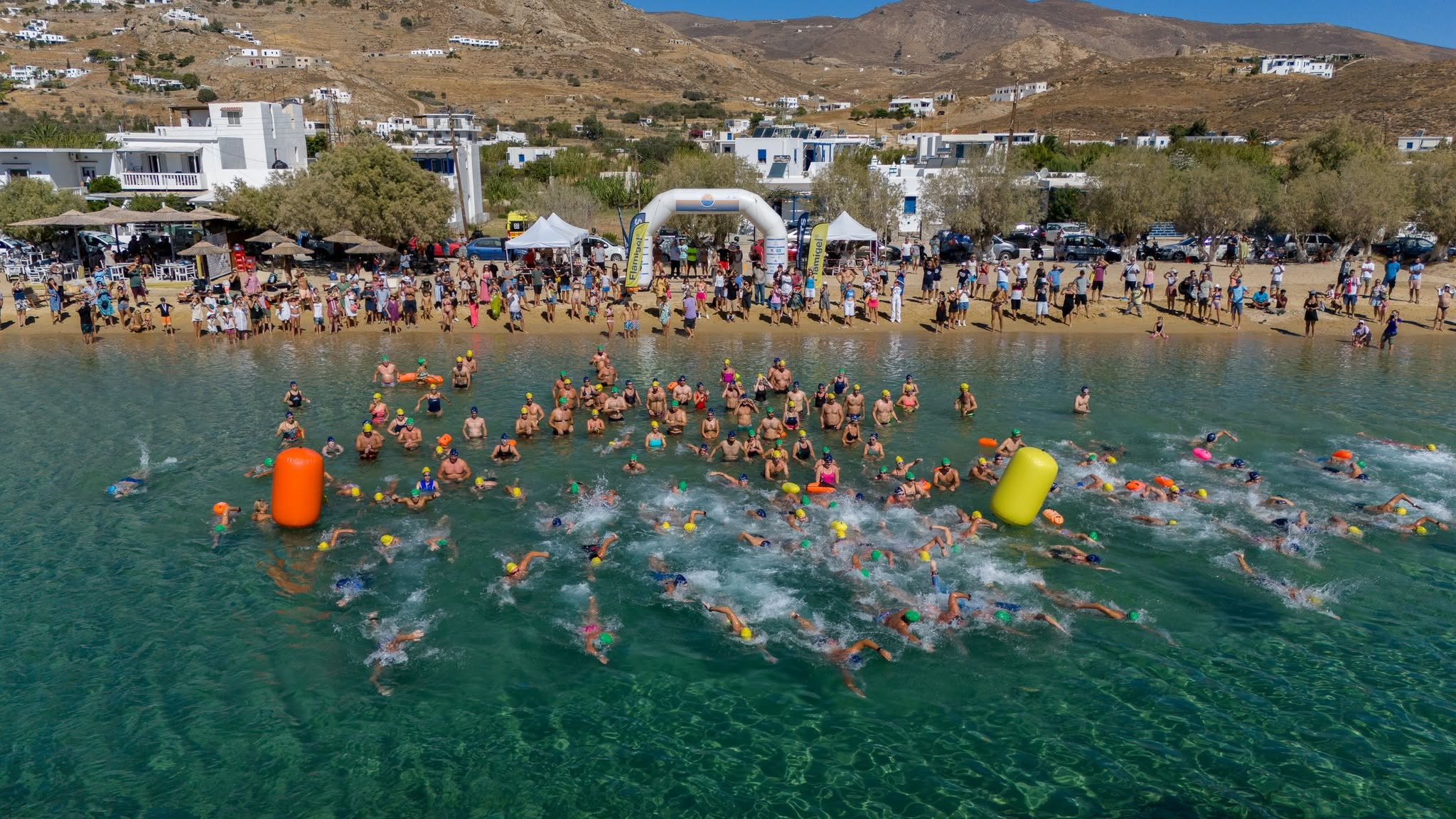
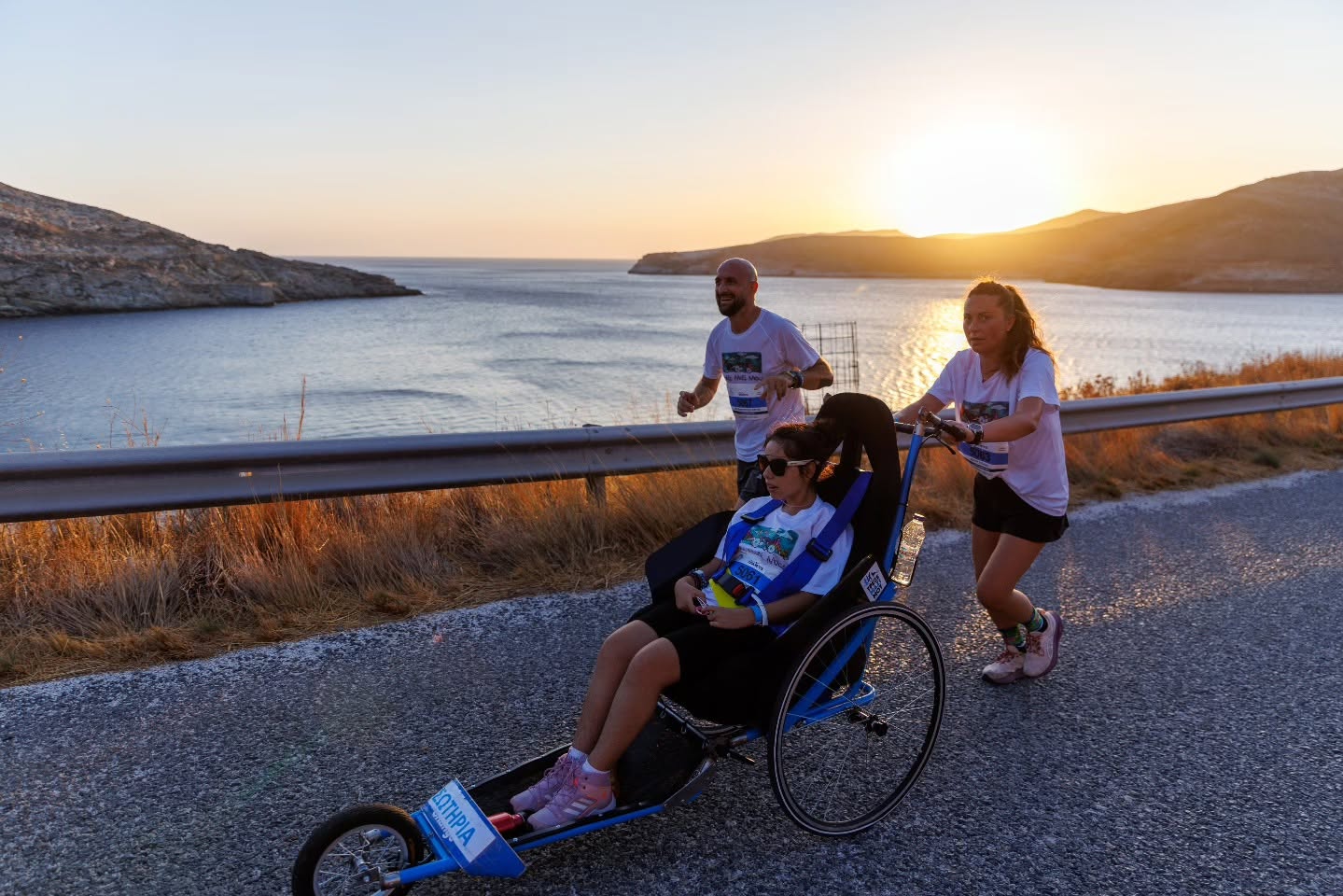
Serifos Sunset Race gives the island a late-summer sporting event, with the 2026 edition scheduled for September 12 and 13. Its running and swimming routes use the island’s coastal landscape directly, especially around the Koutalas, Vagia, and Ganema area.
06
Gastronomy: What to Eat and Where to Book
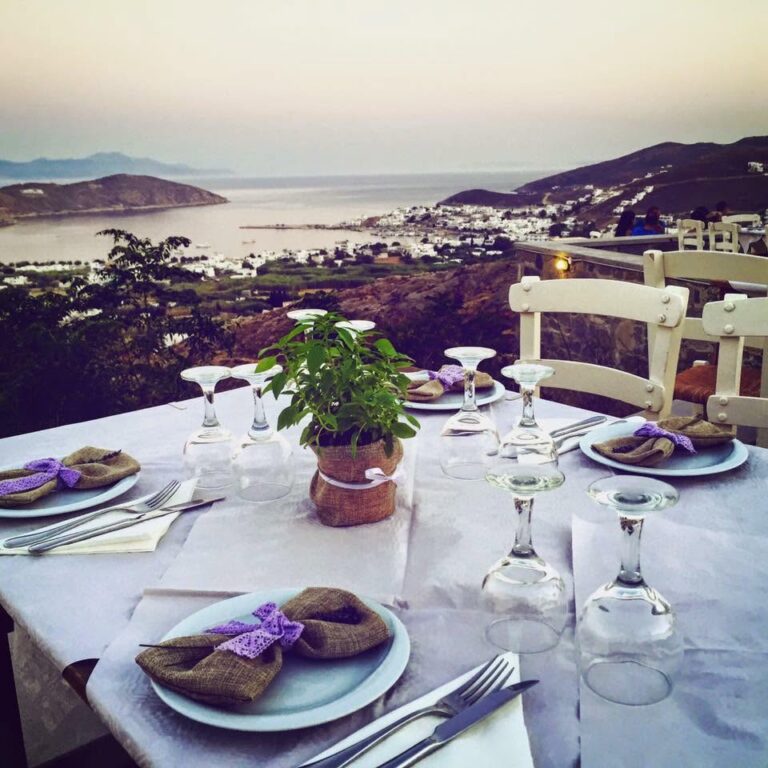
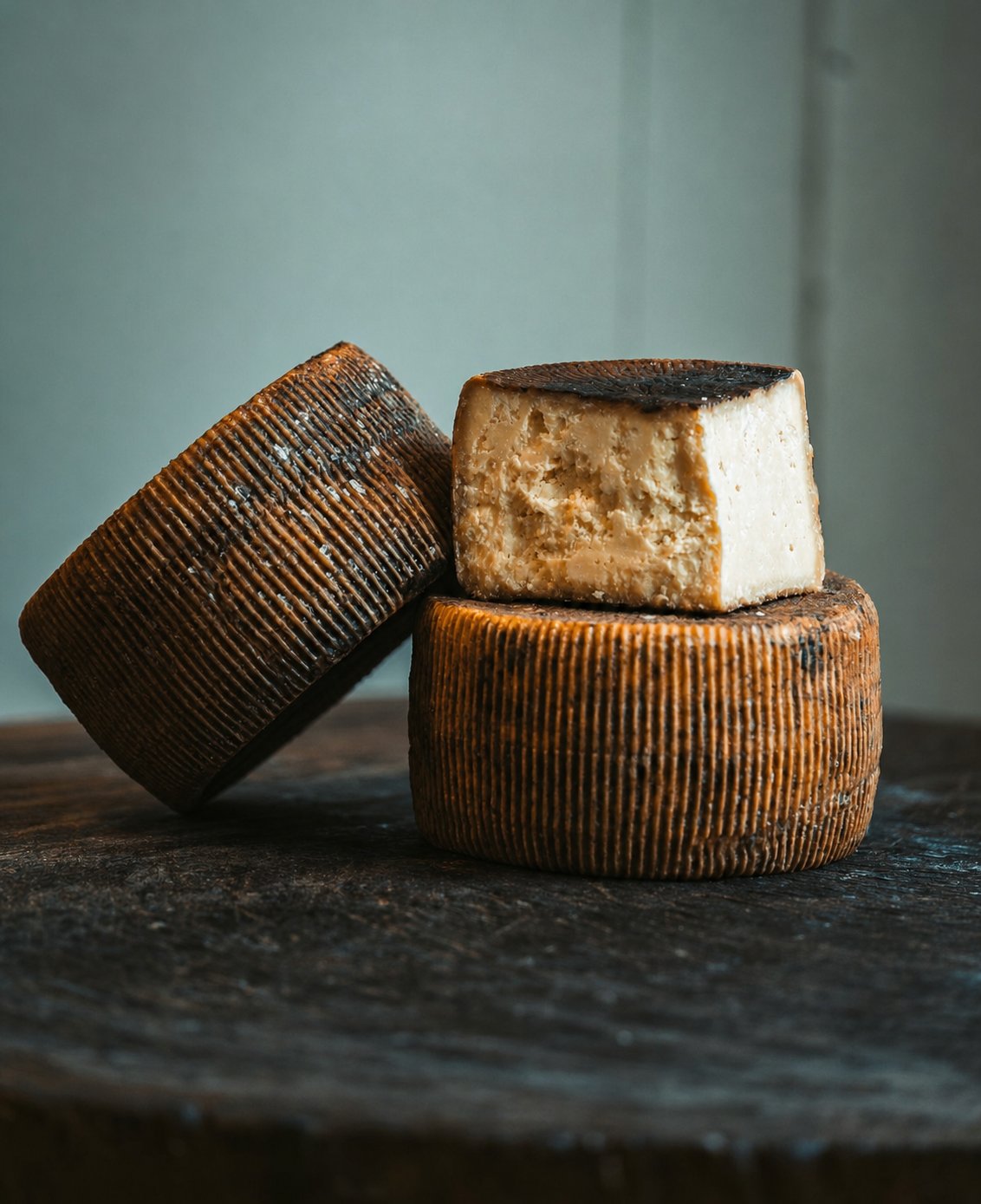
Serifos is not a gastronomic island in the Sifnos sense, and that is part of its appeal. Food here works best when it stays close to the island’s products: chickpeas, capers, fennel, local cheeses, cured pork, thyme honey, goat, fish, summer vegetables, and Serifiotiko, the island’s white grape variety, which has returned in limited production. Look for revithada, the slow-baked chickpea dish common across the Cyclades; marathotiganites, the island’s fennel fritters; caper stews; local louza and sausages; matsi, the handmade pasta of Serifos; and bread or rusks from old-style bakeries.
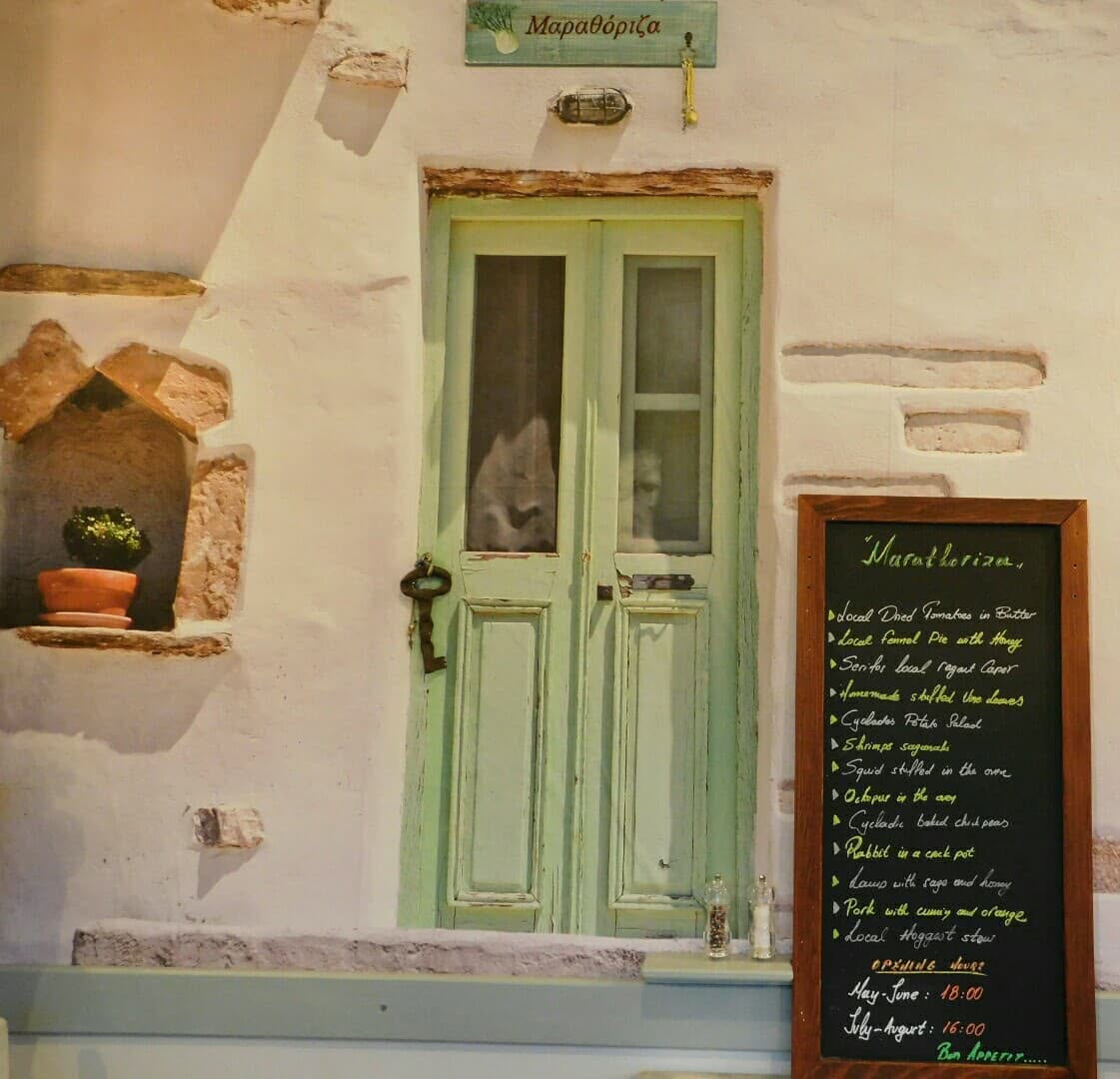
In Chora, the evening usually begins around the squares, windmills, and lanes between Upper and Lower Chora. Marathoriza remains one of the most useful addresses for Serifian cooking rather than a generic island dinner. The dishes include chickpeas baked in clay, fennel fritters, capers, stews, lamb, rabbit, local sausages, louza, and other food drawn from the island’s domestic repertoire. Its location near the windmills makes it practical after a walk through Chora.
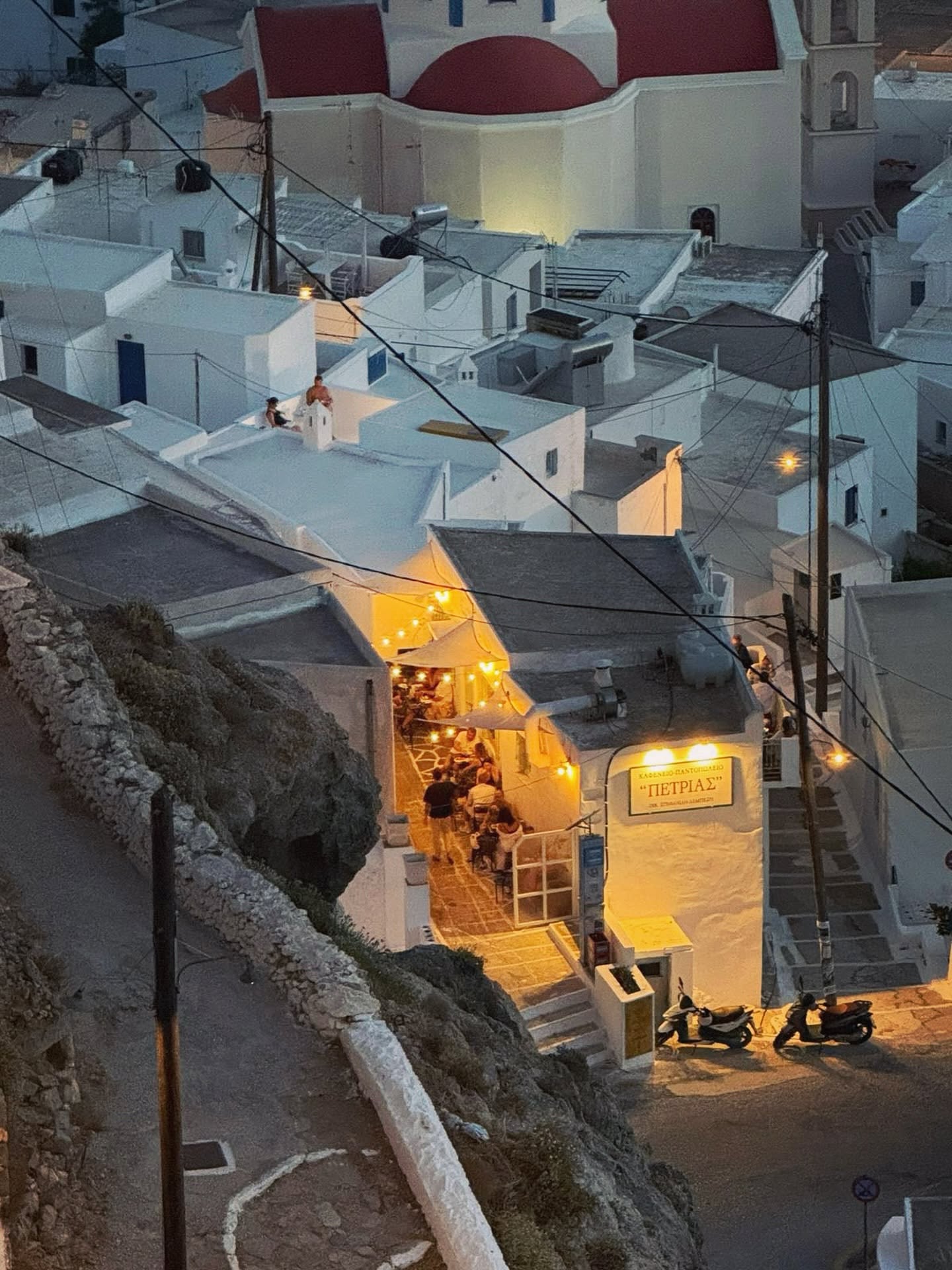
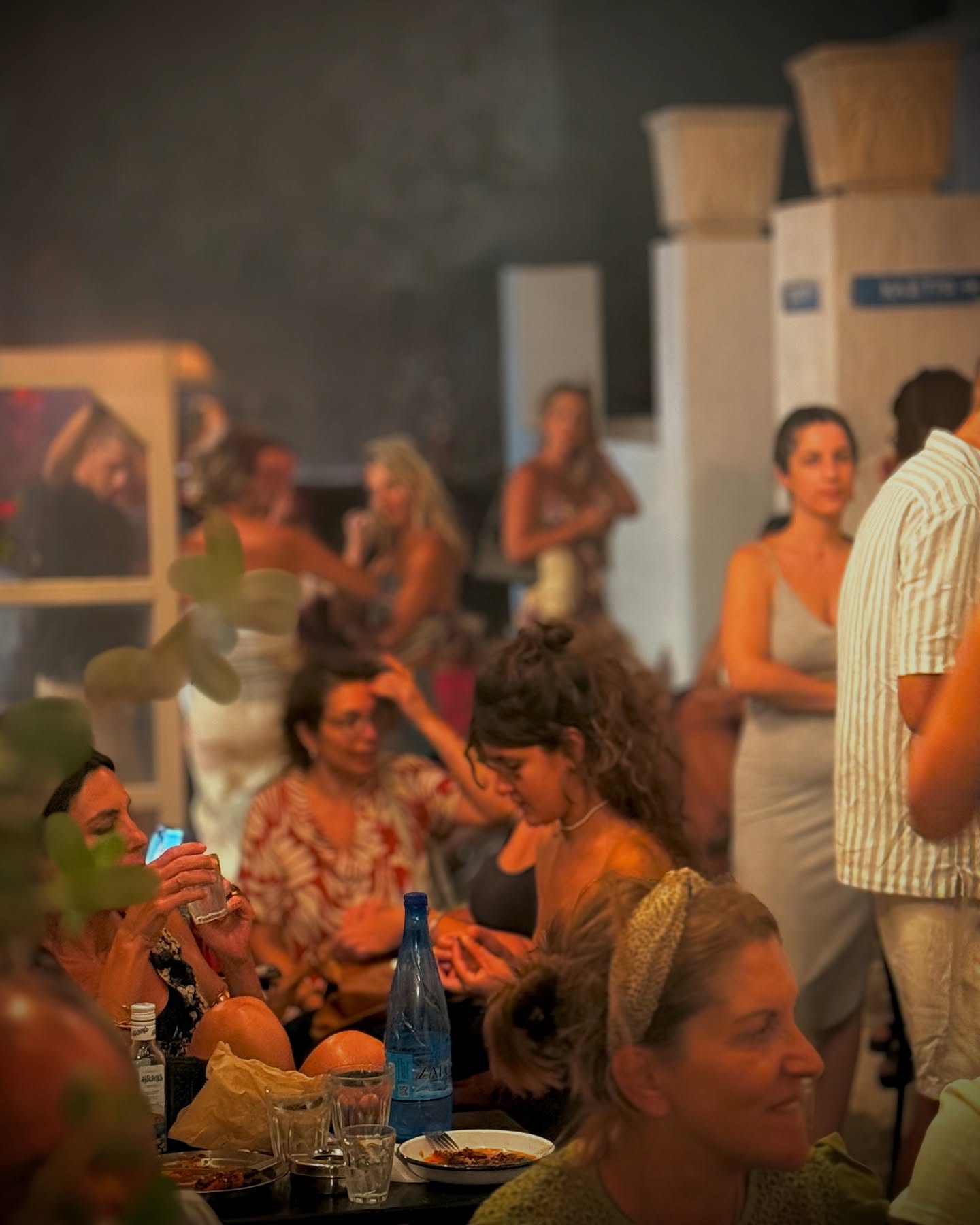
Aloni, on the hillside outside Chora, is a different kind of island table, with a terrace view, grilled meats, and Greek cooking. It suits travelers who want a fuller meal outside the tighter lanes of the settlement. In Kato Chora, Petrias has added a more contemporary note. Created by chef Stefanos Stefanidis, owner and chef of the Athens restaurant, with his sister Dimitra Stefanidi, it opened in the old post office as a grocery, café, and meze place. The original idea was built around Greek and Cycladic ingredients, with dishes such as wood-fired okra with smoked mussels, tarama with lakerda, buffalo kebab with handmade pita, hummus made with Serifos chickpea stew, smoked herring, melon, and local cheese.
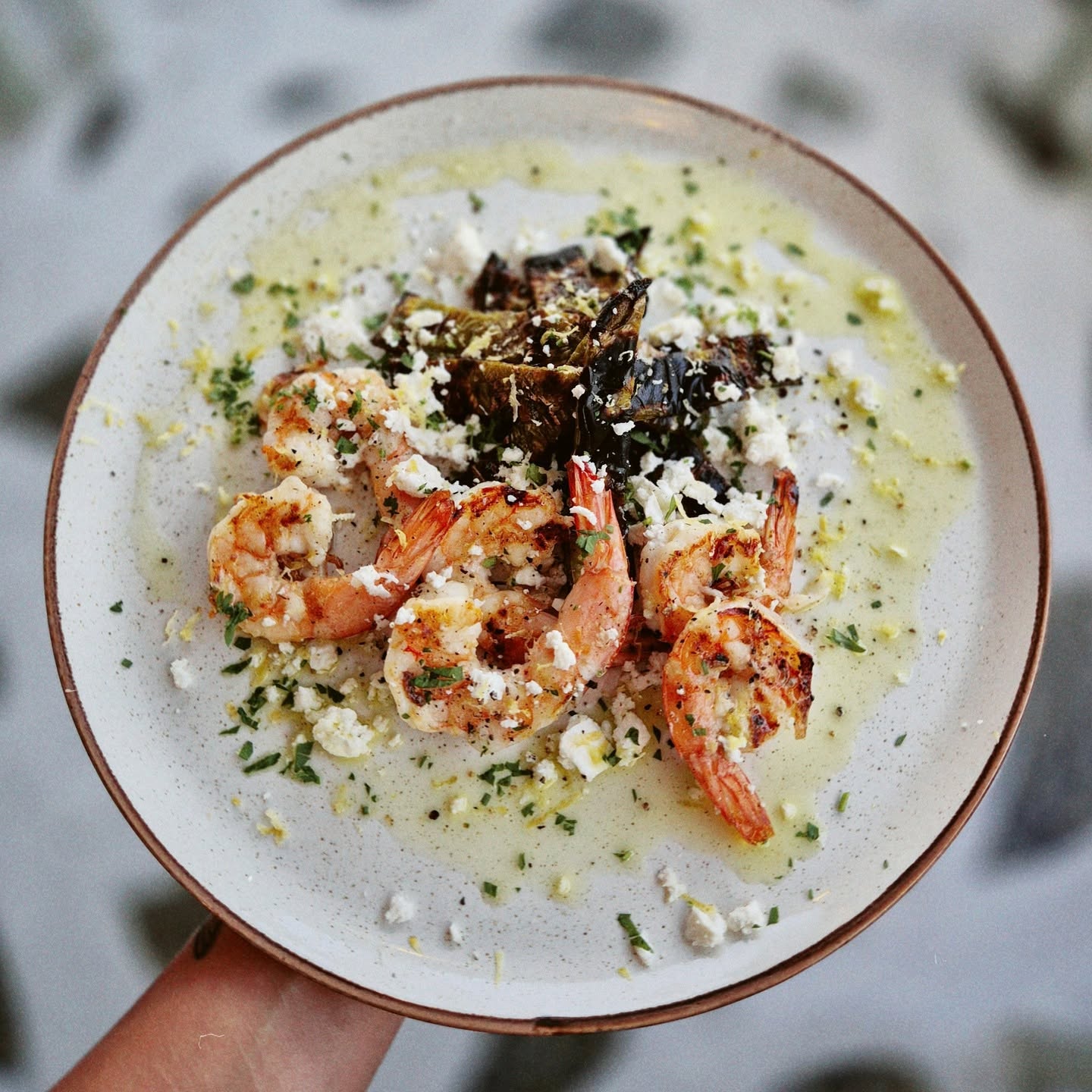
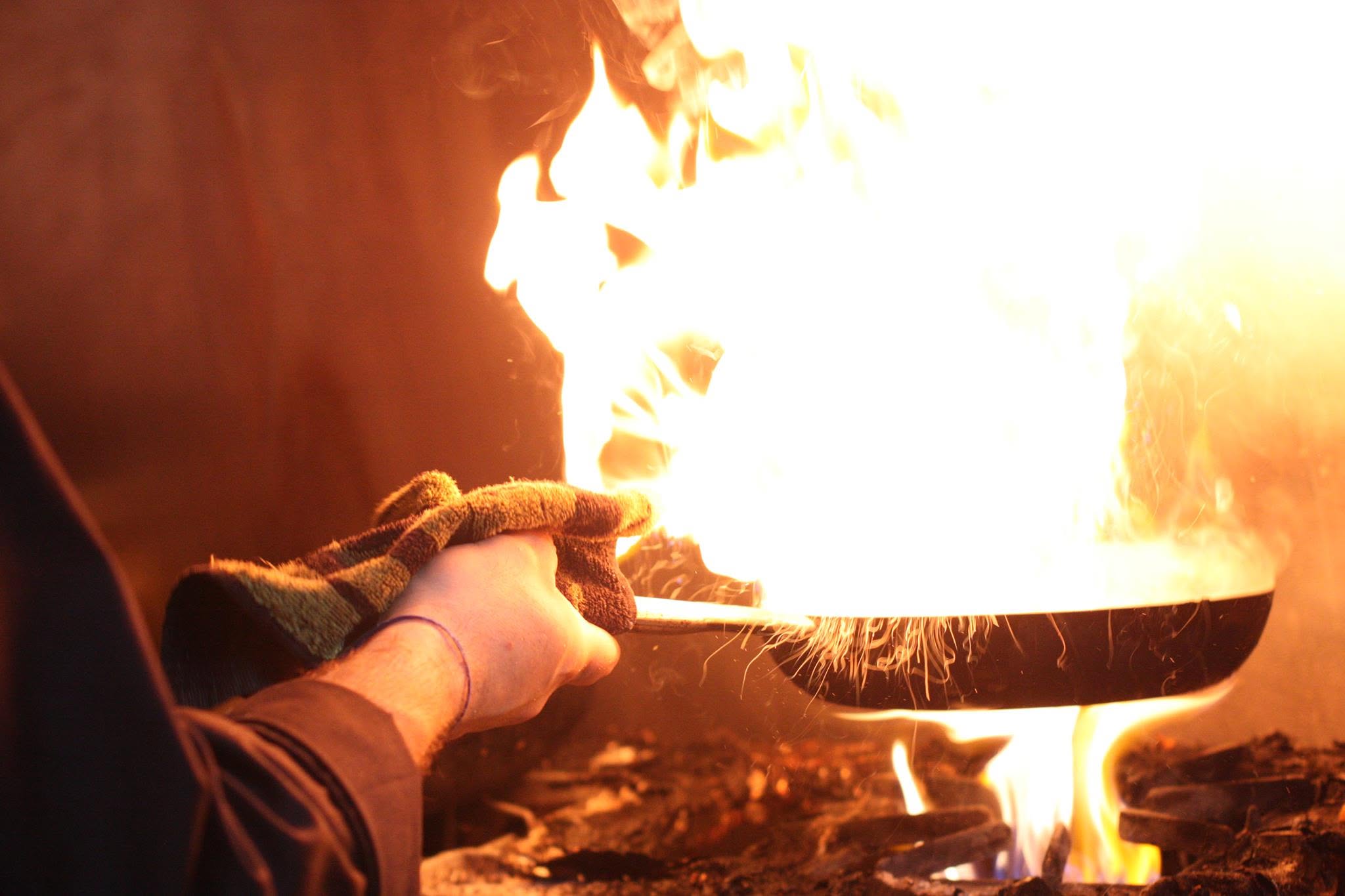
Livadi gives the island its most practical food scene. Kalis is the established seafood address by the port, useful for fish, seafood, and a table close to the water. Axinos, also in Livadi, is a more contemporary seaside restaurant with a Mediterranean direction, a full wine list, and an active official presence for the current season. Metalleio remains one of the island’s better-known long-standing bar-restaurants, with a menu that has moved beyond the simplest taverna model and a setting that works for dinner as well as drinks. Takis, on the Livadi side, is the classic fish-taverna choice for tables close to the beach and daily fish.
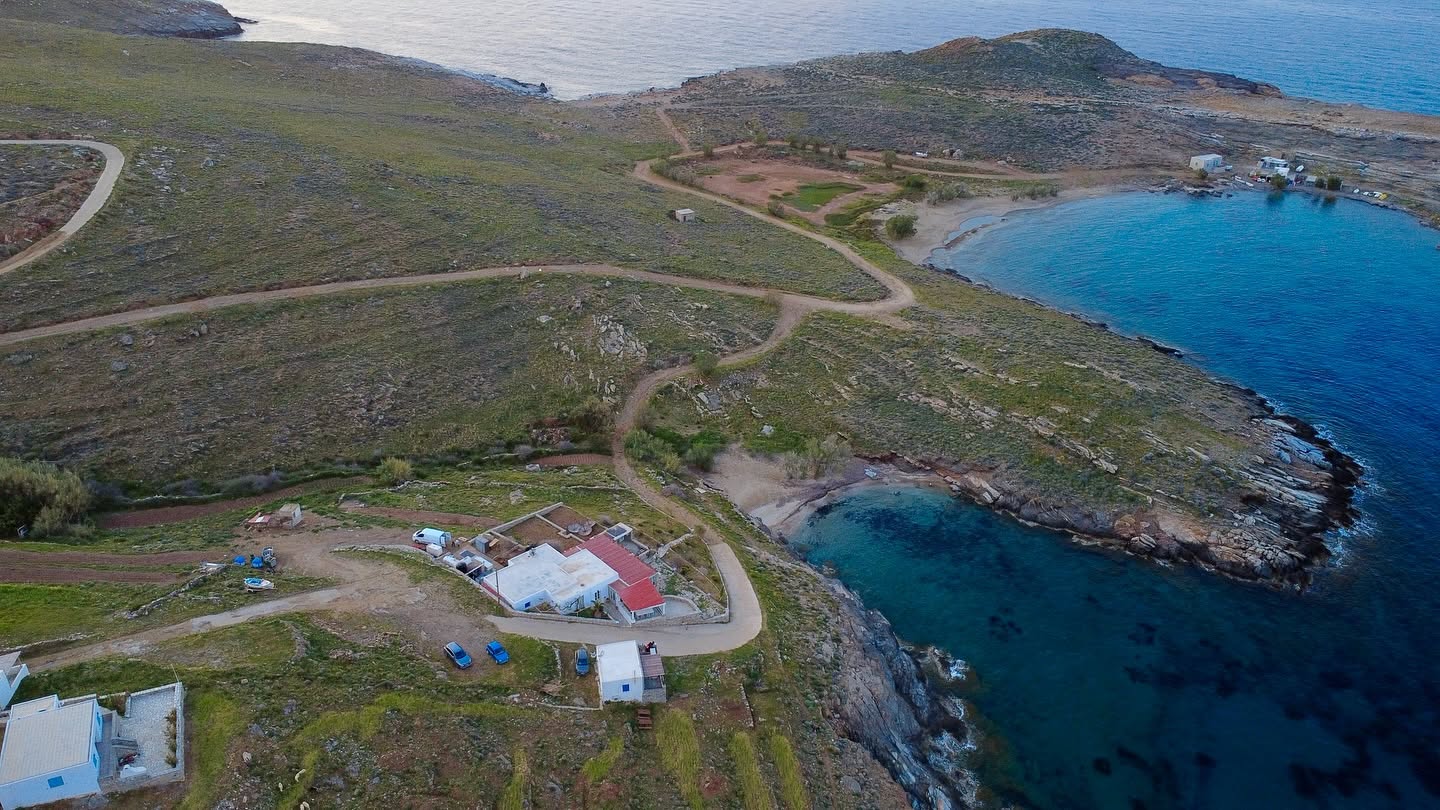
The north and the beaches need a lighter plan. Nikoulias, near Platis Gialos, is useful for travelers exploring northern Serifos, where food options are fewer and distances feel longer. Psili Ammos usually has seasonal beach tavernas, including long-running names such as Manolis and Stefanakos, but beach operations should be checked close to travel. The same applies to Ganema, Sykamia, Koutalas, and Megalo Livadi, where setting often gives the meal much of its appeal, but opening periods can shift.
07
Where to Stay
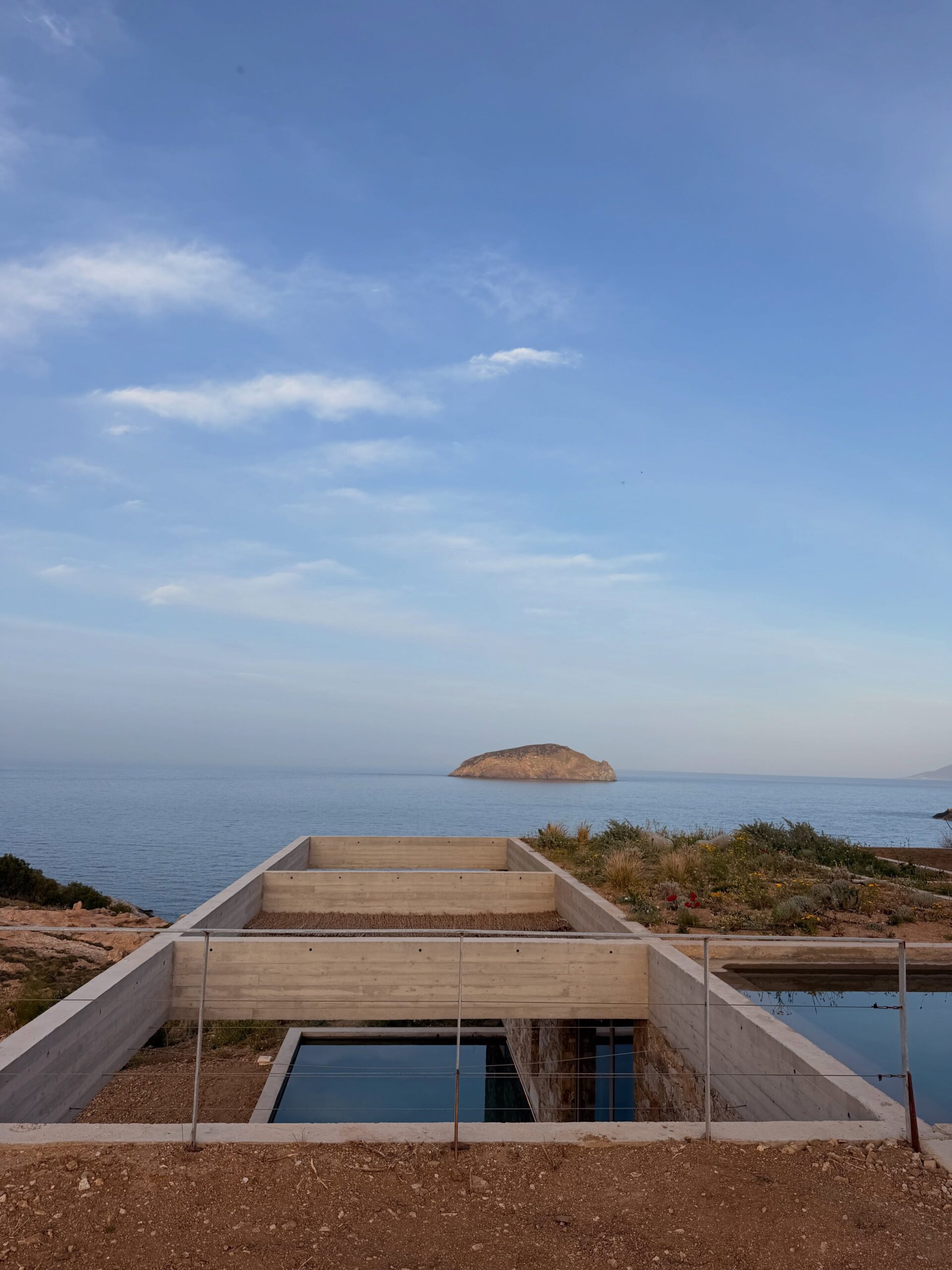
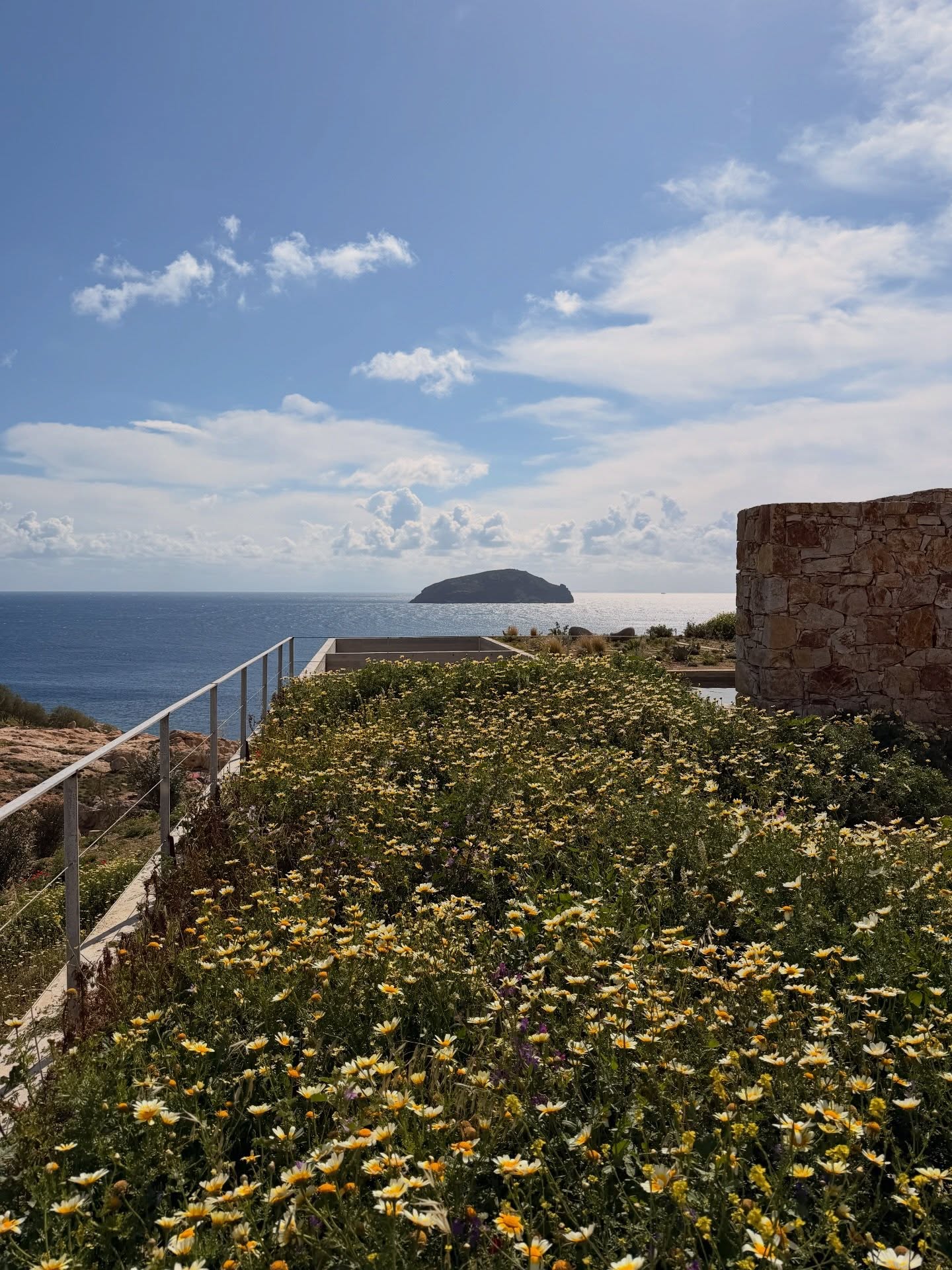
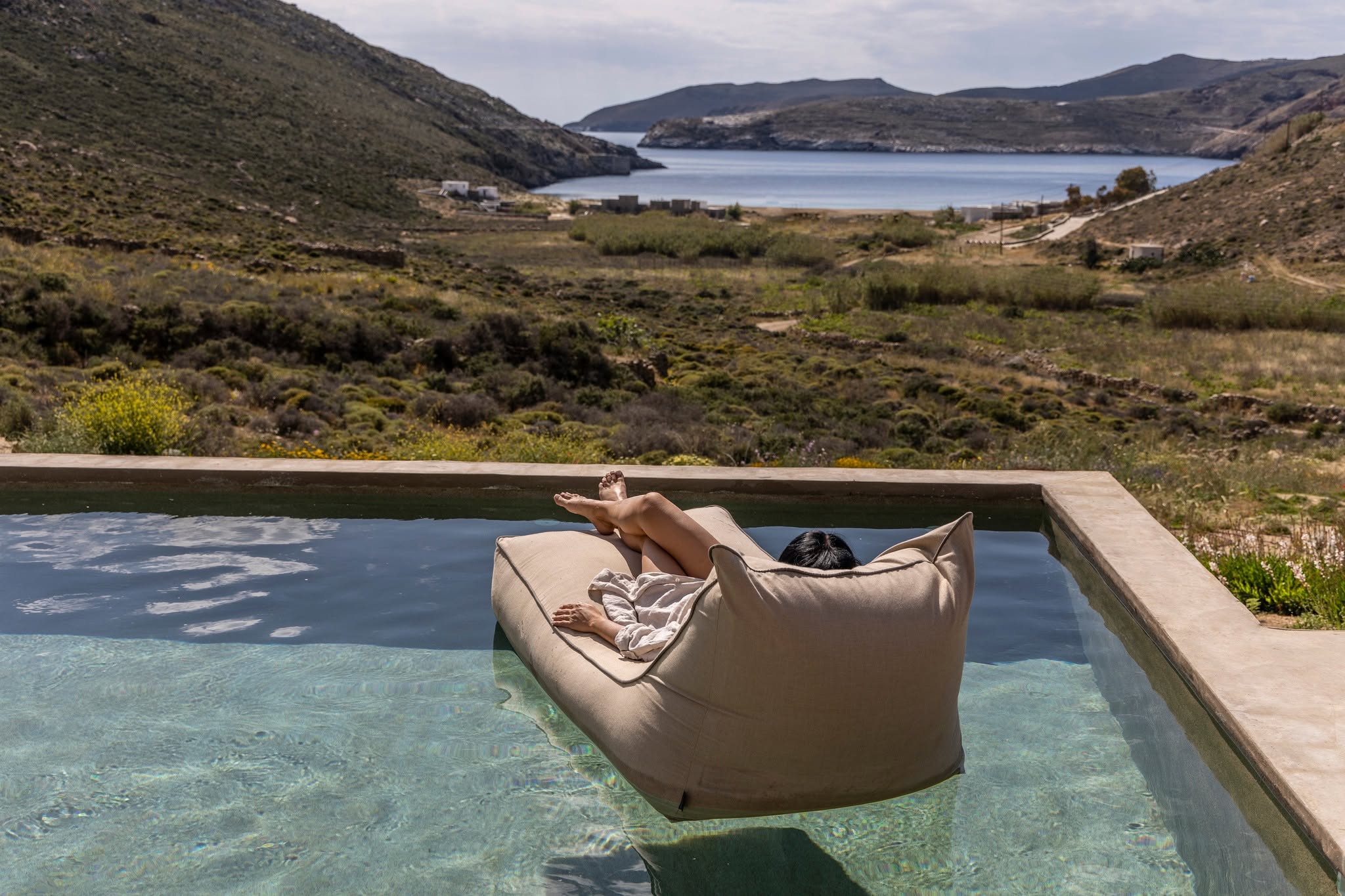
Where to stay on Serifos depends on movement. Chora gives atmosphere, views, evening walks, and the island’s most beautiful settlement. Livadi and Livadakia give the easiest logistics, with the port, beaches, restaurants, shops, rentals, and buses close at hand. Vagia and the south coast work better for travelers who want quieter beach access and have a car. Agios Ioannis and the eastern side suit villas and design-led stays. The west, around Megalo Livadi and Koutalas, belongs to travelers who want mining history and a slower base.
COCO-MAT Eco Residences Serifos remains one of the island’s most meaningful places to stay because it connects hospitality with the mining past. Set at Vagia, the property occupies restored miners’ houses dating from 1910 and uses natural materials, the brand’s bedding, and simple interiors oriented toward the beach and dry southern landscape. It is not the most convenient base for travelers who want to walk everywhere, but it is one of the strongest choices for a quiet beach stay with historical context.
Nōstos Boutique Hotel is one of the island’s notable boutique-hotel entries. Listed by the Michelin Guide and Tablet Hotels, the small hotel in Livadi has design by C-O Lab, the Athens and Serifos architecture studio closely associated with the island’s contemporary built language. Its appeal is logistical as well as aesthetic: it gives access to the port side of the island while offering a more designed stay than the average rental.
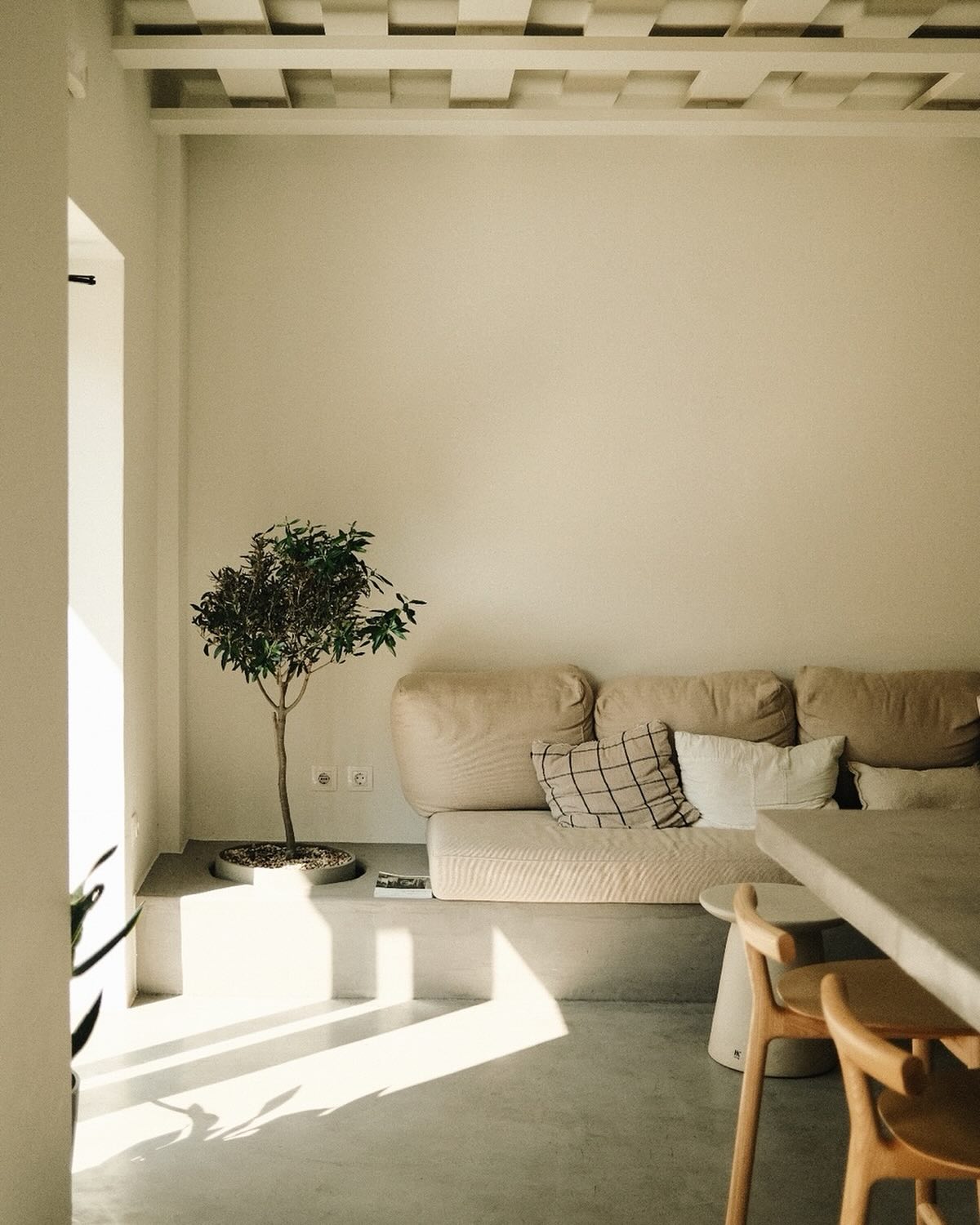
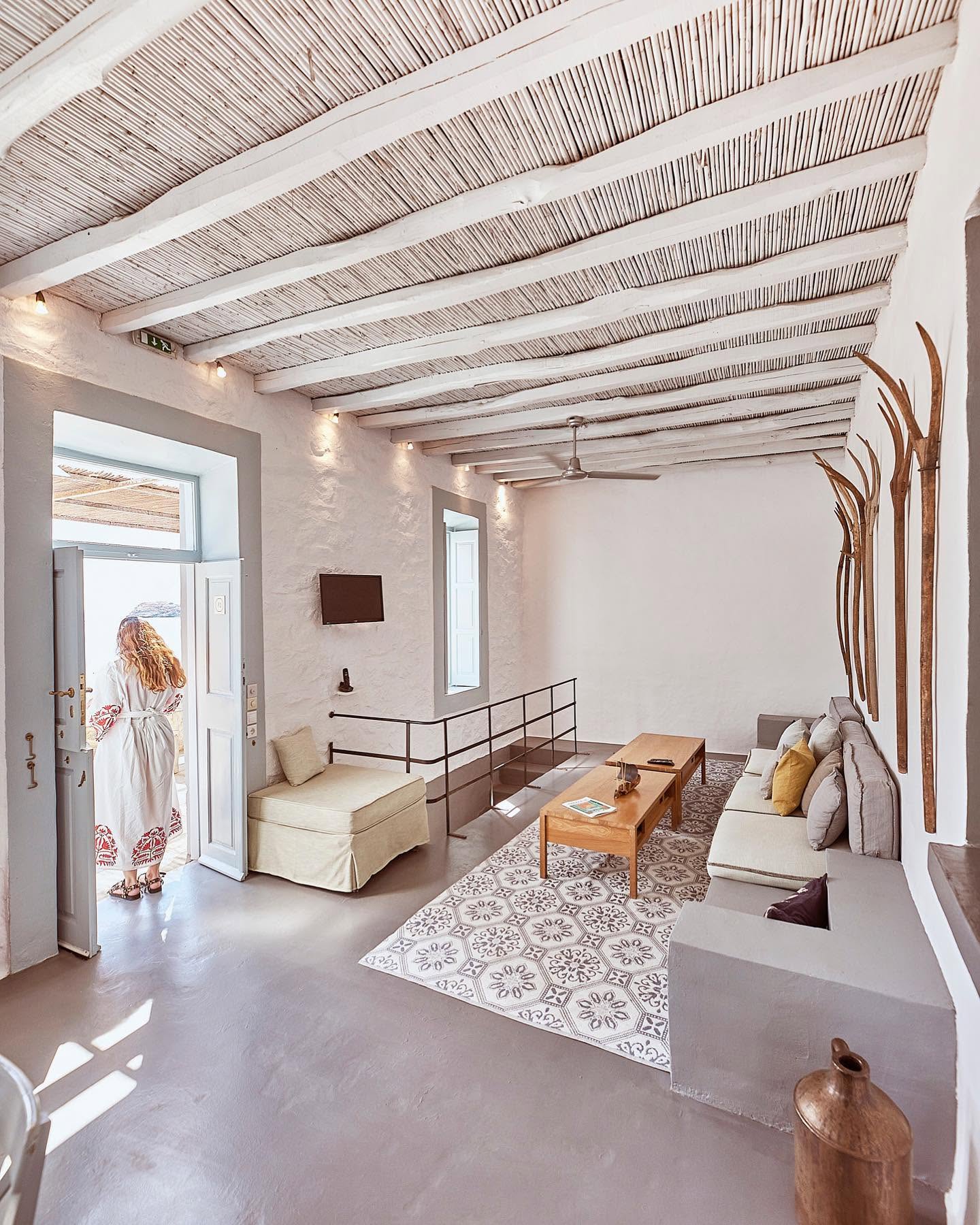
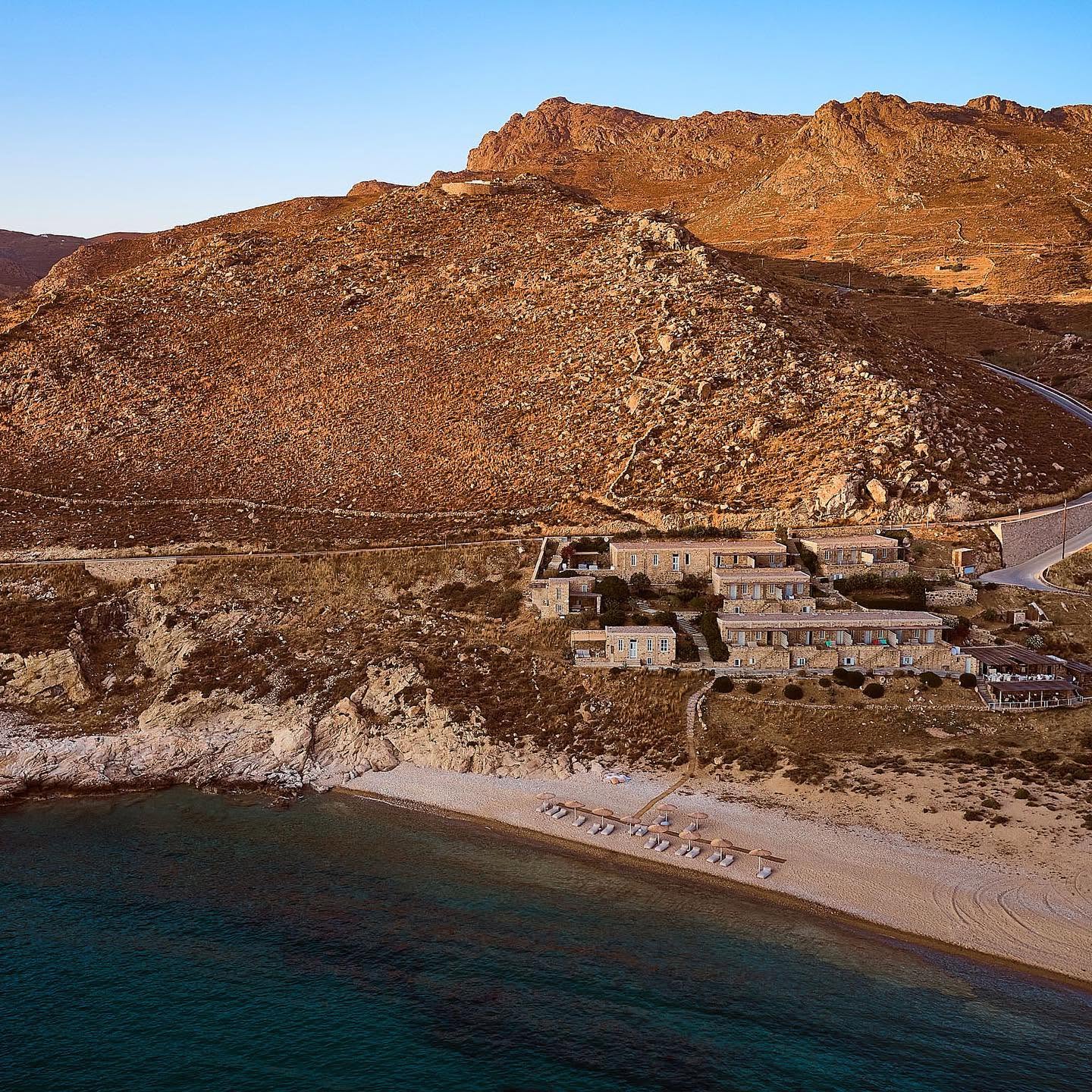
Perma Serifos brings a different profile. It is an adults-only wellbeing hideaway near Lia Beach, with five suites and a retreat character. This is the strongest option for those seeking a small, quiet, design-conscious stay with a wellbeing angle, and it connects naturally with the island’s newer holistic identity.
Rizes Hotel, above the Livadi and Livadakia area, remains a useful boutique-hotel choice for travelers who want views, a pool, an on-site restaurant, and a base that is quieter than the port but less remote than Vagia or the western coast. Its current material includes apartments and suites, breakfast, food and drink, yoga retreat references, personal training, and massage.
Homa Serifos Pool Villas, above Vagia, belongs in the design-led stay category. The three two-bedroom villas, designed by Mold Architects, sit close to Vagia beach and use sand-colored volumes, terraces, private pools, and a built-into-the-slope architectural language.
Seriphos Estate, at Agios Ioannis, is another design-conscious villa option. Its two villas, Kelyphos and Edaphos, overlook Agios Ioannis beach and have been noted in recent design travel coverage for their architecture and interiors. It works best for travelers who want privacy, views, and a stay away from the port’s practical rhythm.
For a first visit, the most dependable choices are Chora for atmosphere, Livadi or Livadakia for ease, Vagia for a quieter beach stay, and Agios Ioannis for villas. Serifos is small, but location still matters. A beautiful stay in the wrong part of the island can become inconvenient without a car.
08
Shopping & Art Visits
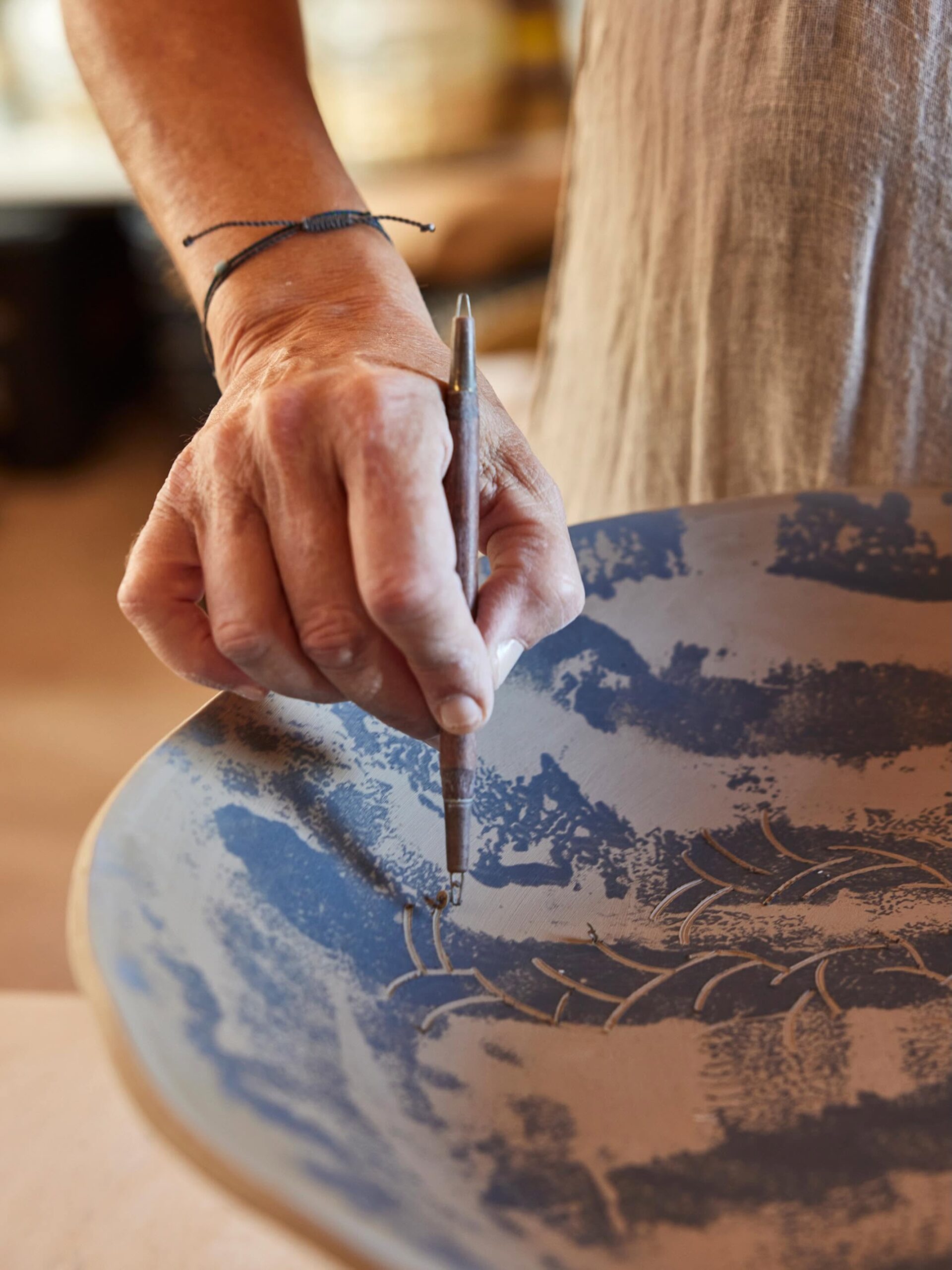
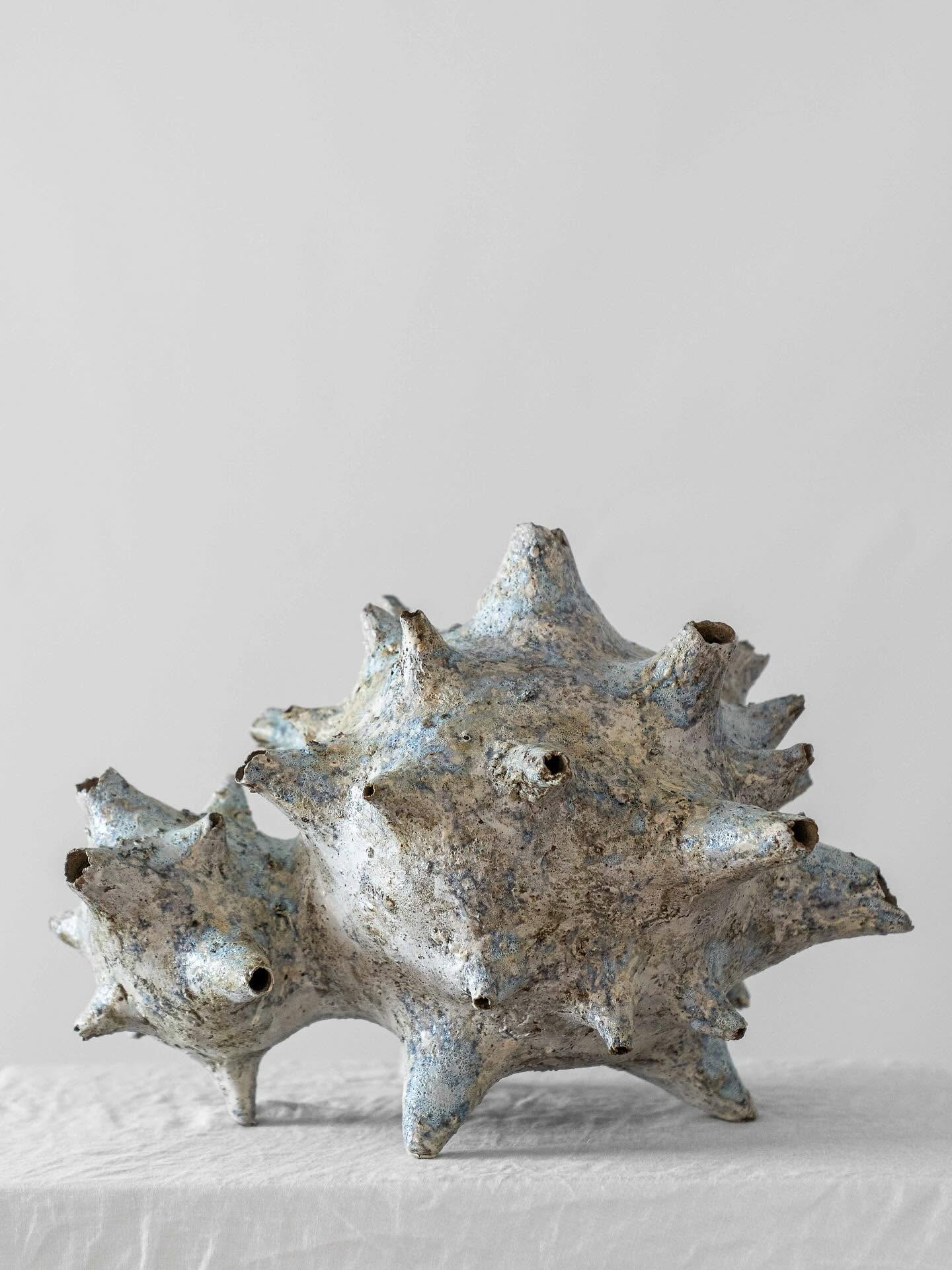
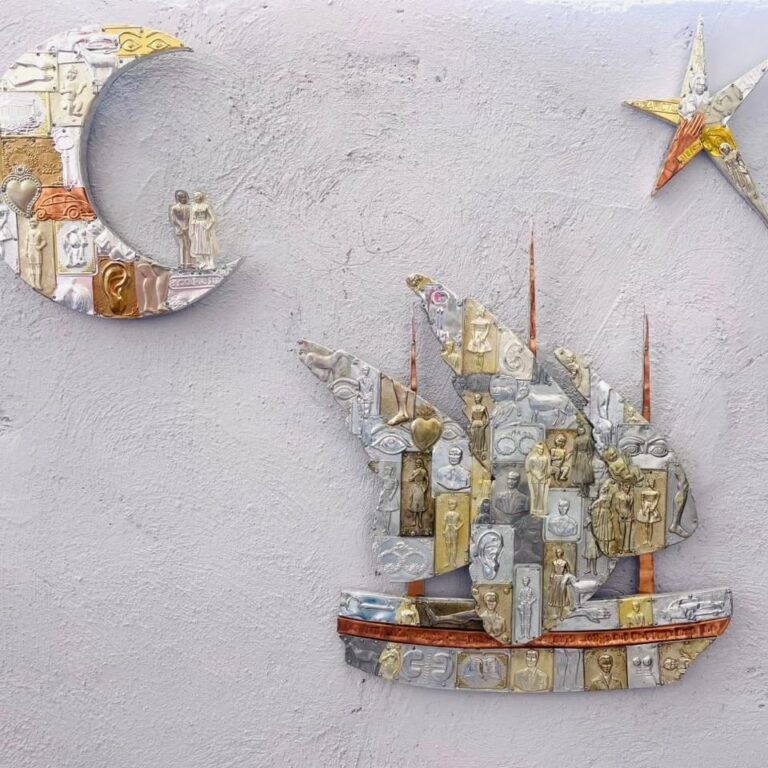
Shopping on Serifos is best approached through objects with a sense of hand, material, and place. Chora and Livadi have small shops for jewelry, clothing, ceramics, design pieces, and gifts, but the island’s most distinctive creative address is Kerameio, the ceramic studio founded by Natasa Kalogeropoulou in Kato Chora. The studio works with stoneware clay and produces tableware, decorative objects, jewelry, and limited pieces shaped by the island’s dry colors, mineral land, and simple forms. It also presents work by Greek traditional and contemporary ceramists, which makes it one of the most worthwhile stops for anyone interested in contemporary Greek craft.
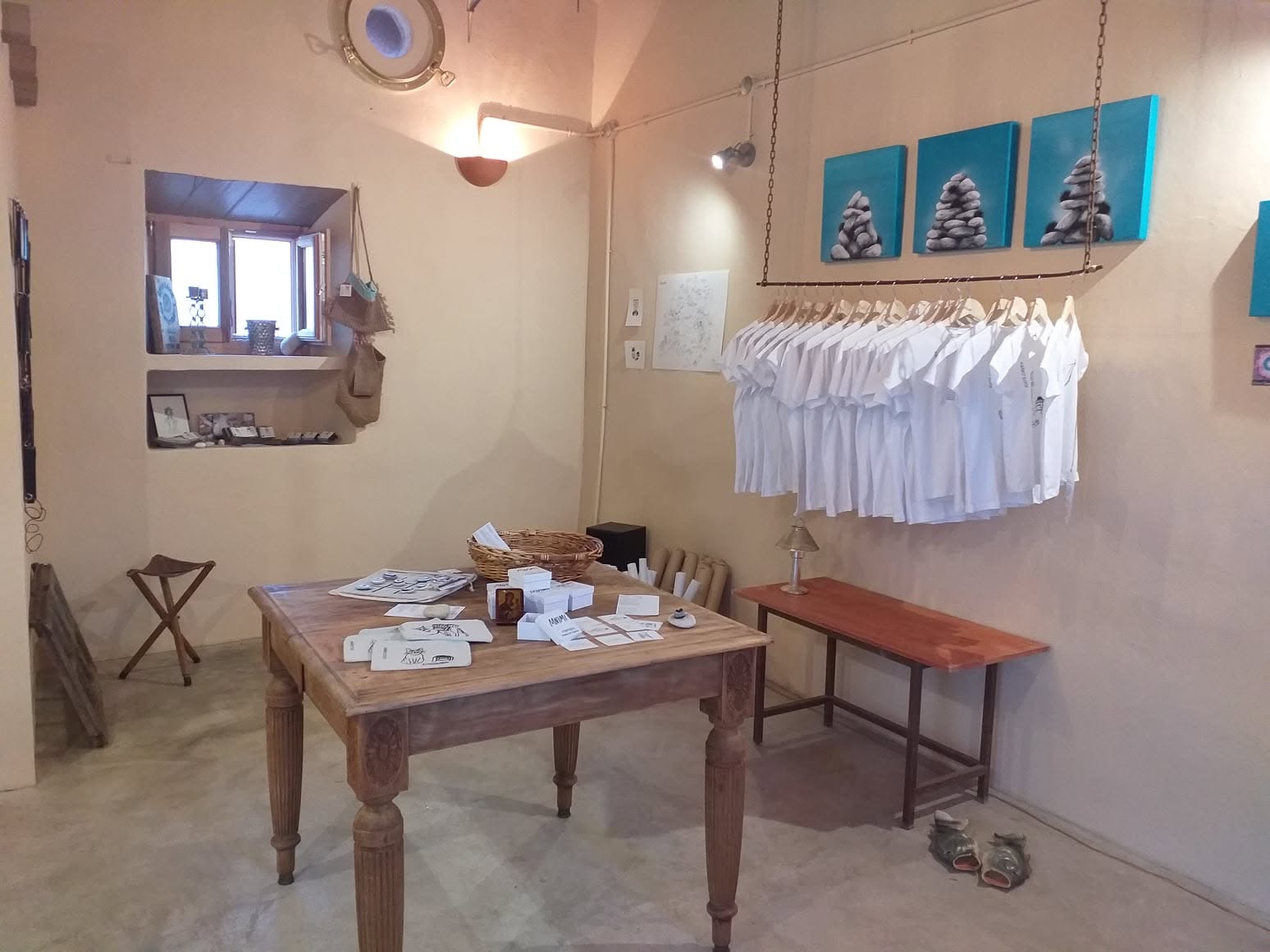
Serifos also has a small art-and-workshop scene rather than a formal gallery circuit. Think of Serifos ART LAB, on Avlomonas beach in Livadi, hosts exhibitions of painting, photography, ceramics, and other arts, along with workshops for adults and children. Argilos Gallery Shop in Chora combines functional and decorative ceramics, jewelry, clothing, and art courses. For visitors looking for art editions, 100% GREEK in Chora focuses on limited art editions and design objects, while Fe Jewelry in Livadi carries handmade jewelry by Greek designers as well as its own Nora Jo line.
09
How to Get There & Around
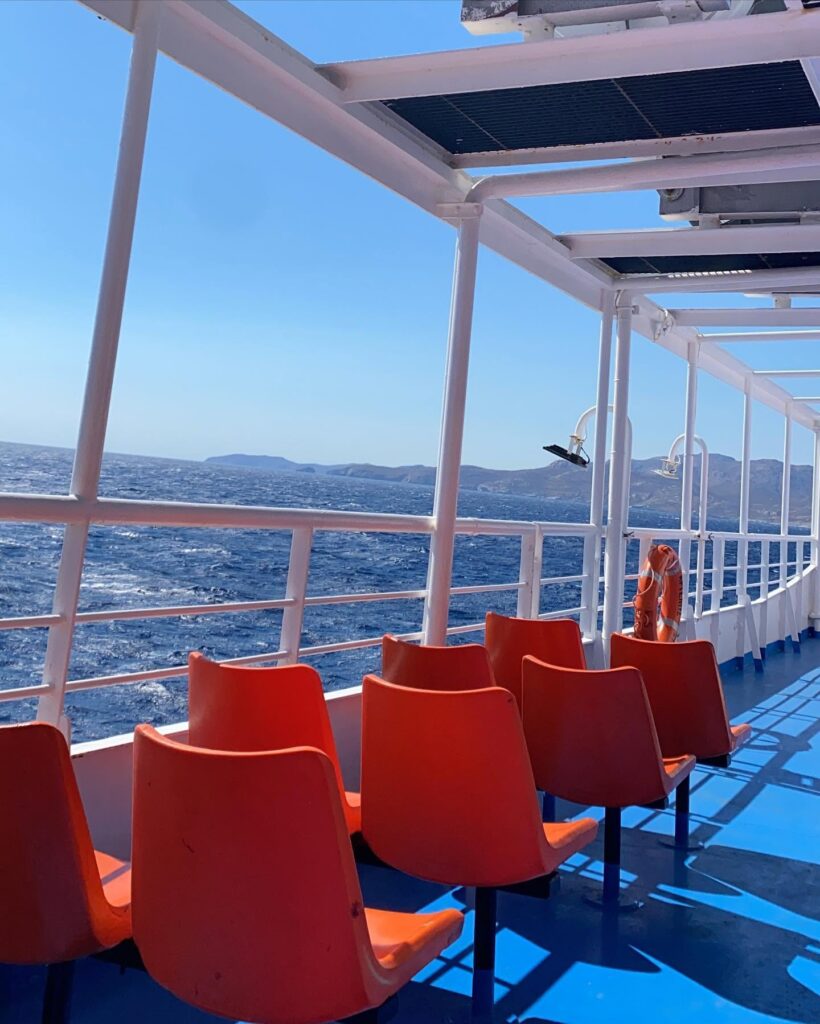
Serifos is reached by ferry, mainly from Piraeus, with the fastest crossings taking around two hours depending on vessel and season. Seasonal Lavrio connections may also operate from late spring into early autumn. The island connects by ferry with several Cycladic islands, including Sifnos, Milos, Kythnos, Paros, and Santorini, which makes it easy to include in a Western Cyclades route.
A car, scooter, or ATV is strongly useful unless the trip is limited to Livadi, Livadakia, Chora, and a few bus-served beaches. The road network reaches many of the main beaches, but some coves require walking and some roads demand patience. Taxis and buses operate on the island, although summer frequency and availability should be checked close to travel.