


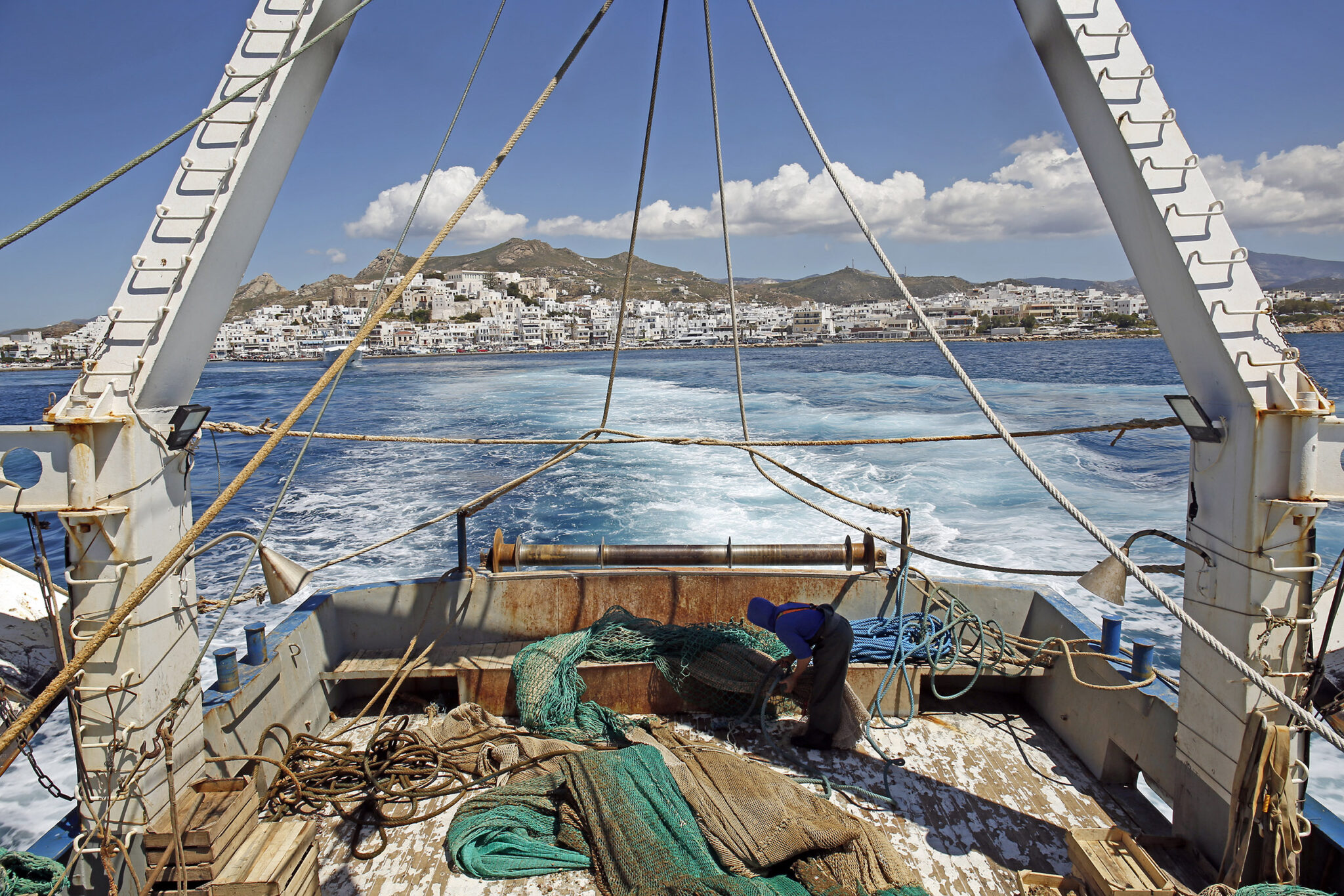
Naxos is so much more than what the tourist maps reveal. The long pier at the island’s port demands a walk all the way to the parking area, under the gaze of the Portara, standing proud for centuries on the left. The progress of passengers with their suitcases to the end of that narrow concrete structure feels like a pilgrimage to the entrance of the adventure this island can offer.
There I was, right in the center of the Cyclades, in the middle of the blue Aegean. Green, lush, fragrant, and beautiful. Large, round, mountainous, full of valleys, low ridges, fields, and brackish grazing lands. I went on a two-day wander in search of flavors, aromas, producers, ‘artists’ of the land, to experience primary production, and the remarkable transformation of products into foods that are singular and unforgettable.
My car is there, ready, white, and gleaming in the light. The exit toward the villages proves to be an exercise in patience, as happens with every ship arrival. But very quickly, a few kilometers farther east, the landscape, the traffic, and the mood all change at once. Marble yards, car-repair shops, and business warehouses give way, as the kilometers pass, opening to the first cultivated fields of mainly potatoes and various vegetables.
The Little Farm of Naxos
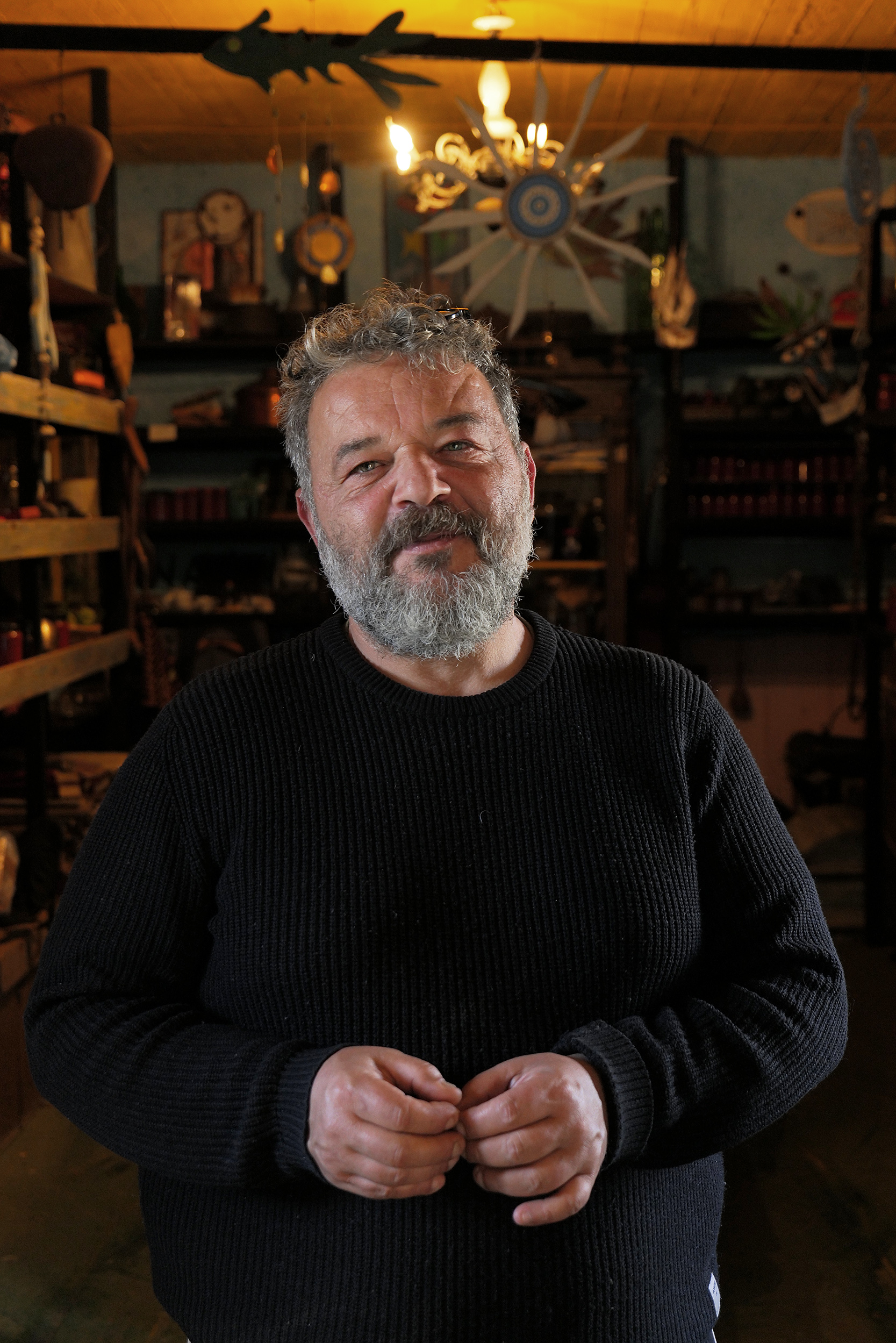
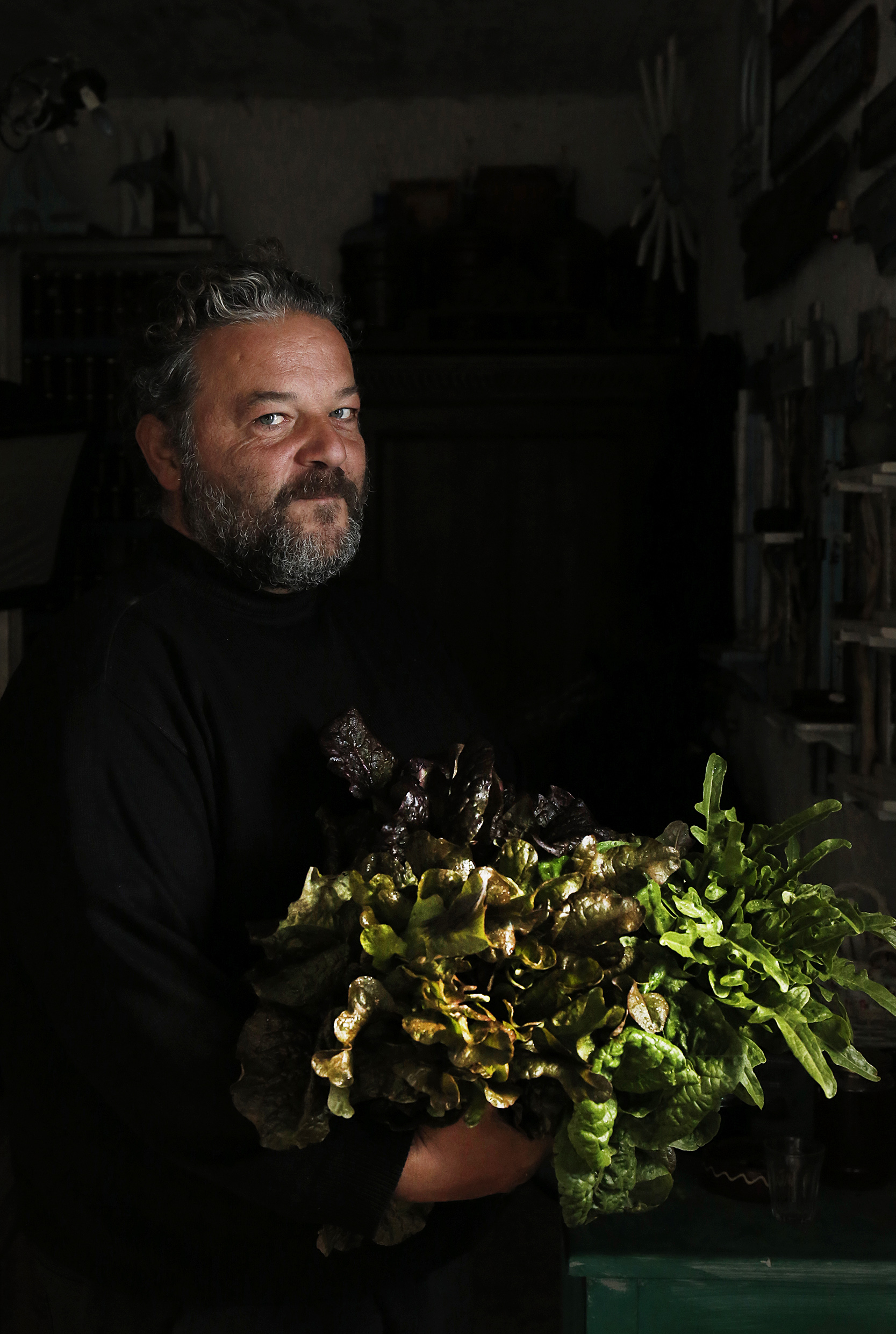
The view of Chora as the road climbs toward the mountains resembles a marble-white colony set amid the deep green of cultivated acres and the intense blue of the sky. Arrival on the regular ferry is usually a little in the afternoon, and now, a short while later, as the sun drops toward the west, the mountain silhouettes appear, with chapels on their summits, the sea turning gold, and Paros peeking through in between. My destination is Apeiranthos and my compass is the growling in my stomach, but I stop at Toubakades, in Vivlos, to meet my dear Kostantis Chouzouris, or Pharaoh, as he has been nicknamed,at his “Little Farm of Naxos.”
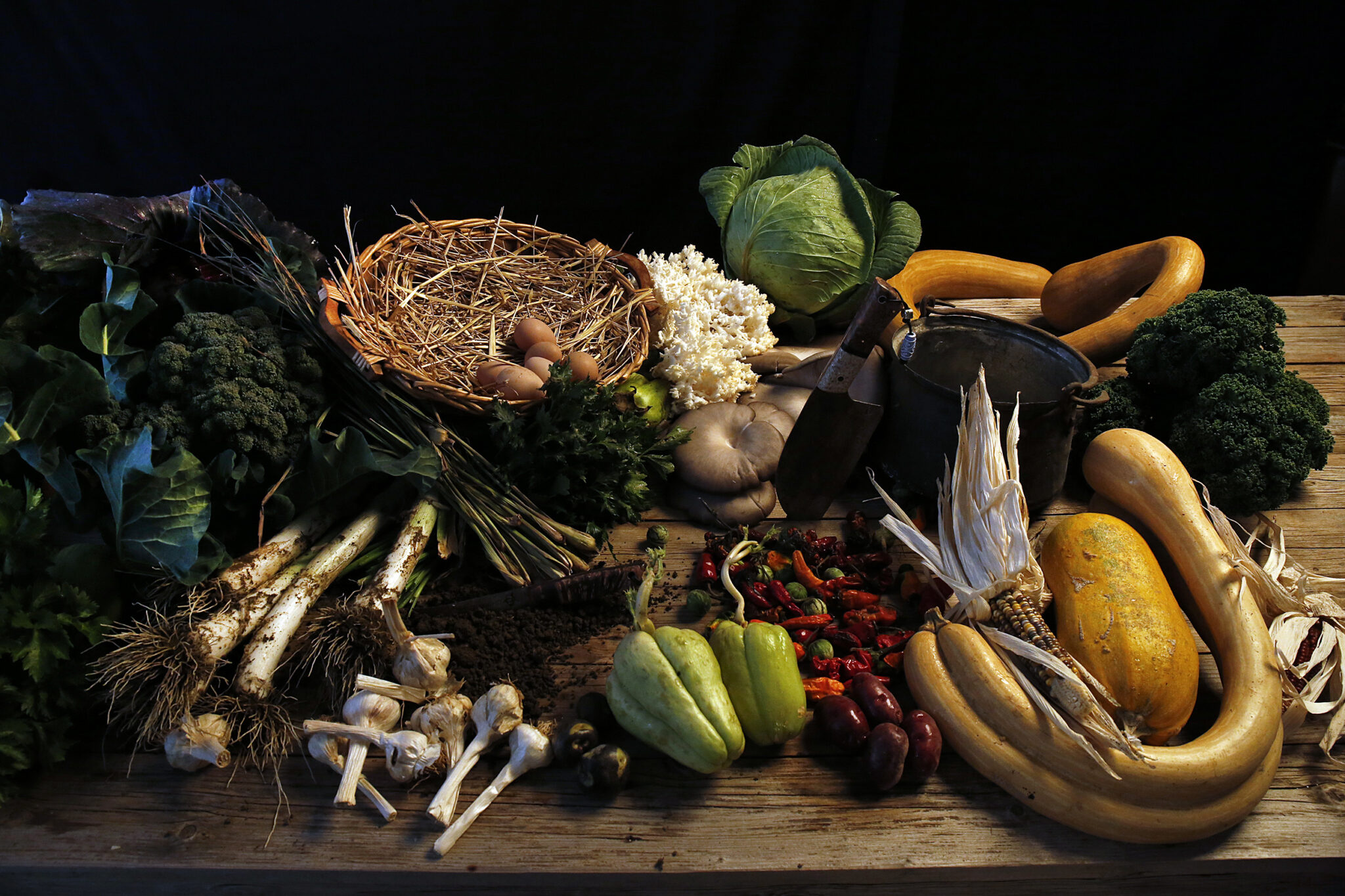
The entrance to the farm looks like a scene from a road movie, with colors on the low walls that shield it from view. The welcome from this singular cultivator, lover of nature and of its products, is always a warm, tight embrace and a greeting in the shade of his deep voice, with a characteristic rasp. Kostantis cultivates almost anything that can grow in Naxian soil. Countless varieties of cherry tomatoes, peas, broccoli, greens of every kind depending on the season, peppers, and herbs, searching for memories and for a pure, clean era, somewhere back in the 1950s and 1960s, in the way he handles the land.
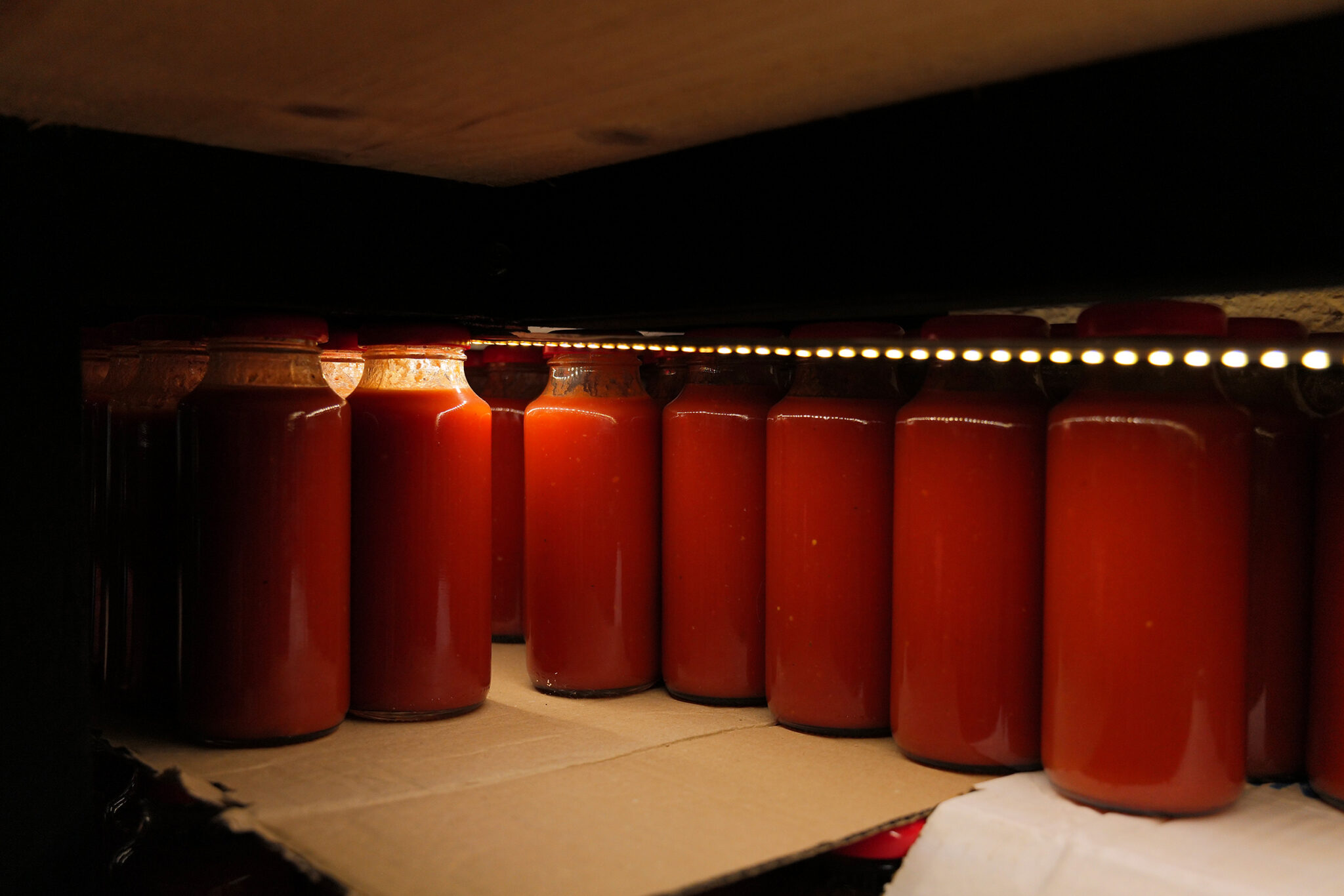
A bit of an anarchist, he seems to set his own rules at his post, offering the local residents of the island everything they need. He sees a future in primary production on Naxos, so that touristification does not prevail entirely, with a large number of young people, mainly livestock farmers from Filoti, quietly and unobtrusively moving in that direction. As I leave, he gives me a small glass bottle of tomato juice, “to open the appetite,” as he says. As though I needed any help with that.
Mountain Air and Cured Meats in Apeiranthos
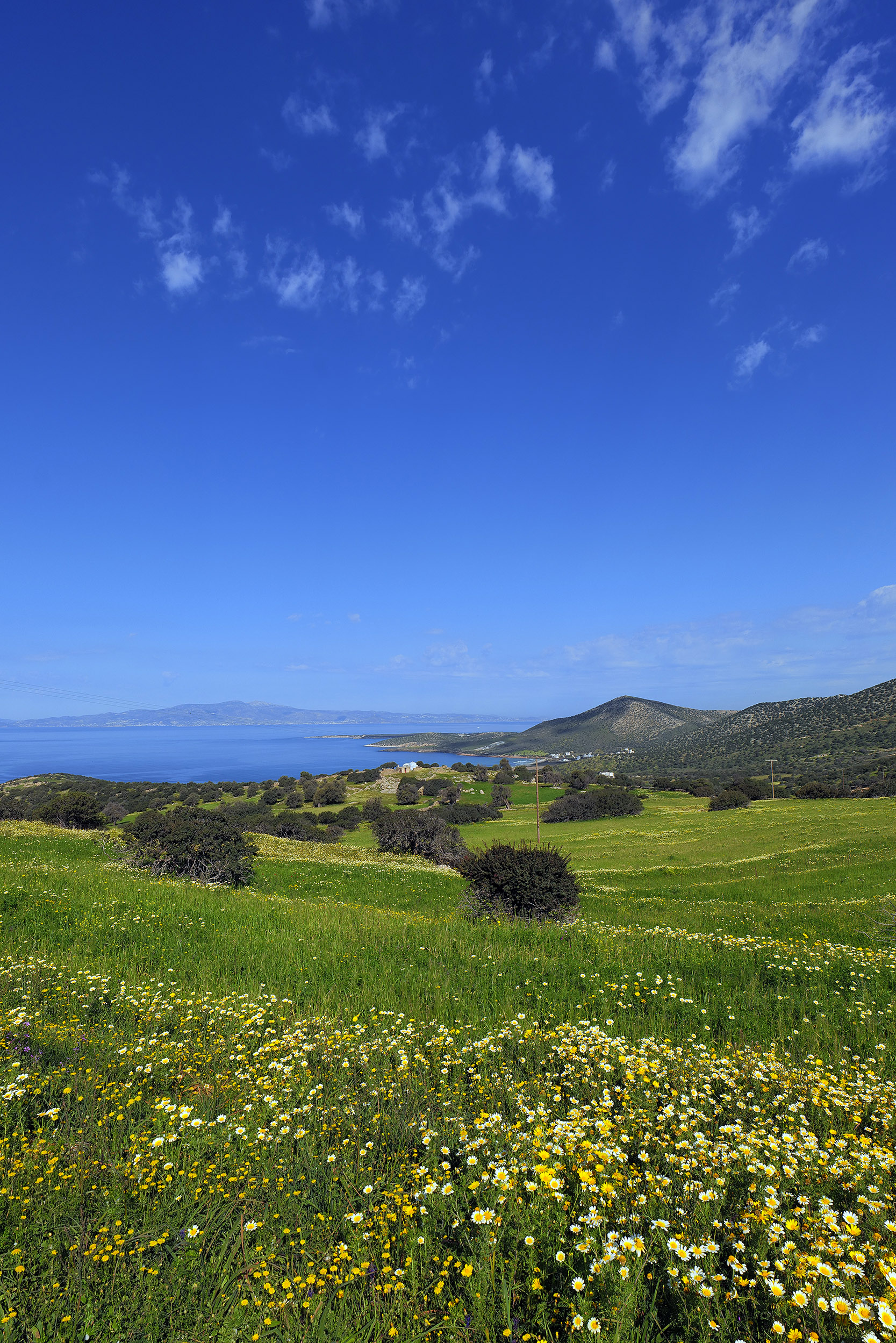
In Apeiranthos, nature is fragrant. Wildflowers have colored the green carpets of the fields, and the aromas waft about loose and uncontrolled. There are several ways to enter the village. I choose the lower entrance, with the many steps that take you straight to the small square with the plane tree.
A few tourists wander through the spotless marble lanes of the beautiful, mountainous, historic village. A few steps farther on, the scents of nature are snagged by that of perfectly grilled lamb chops, the sweet note of tomato in rosto, and hand-cut fried potatoes. Giorgos Amorginos, Katerina, and Voula are there.

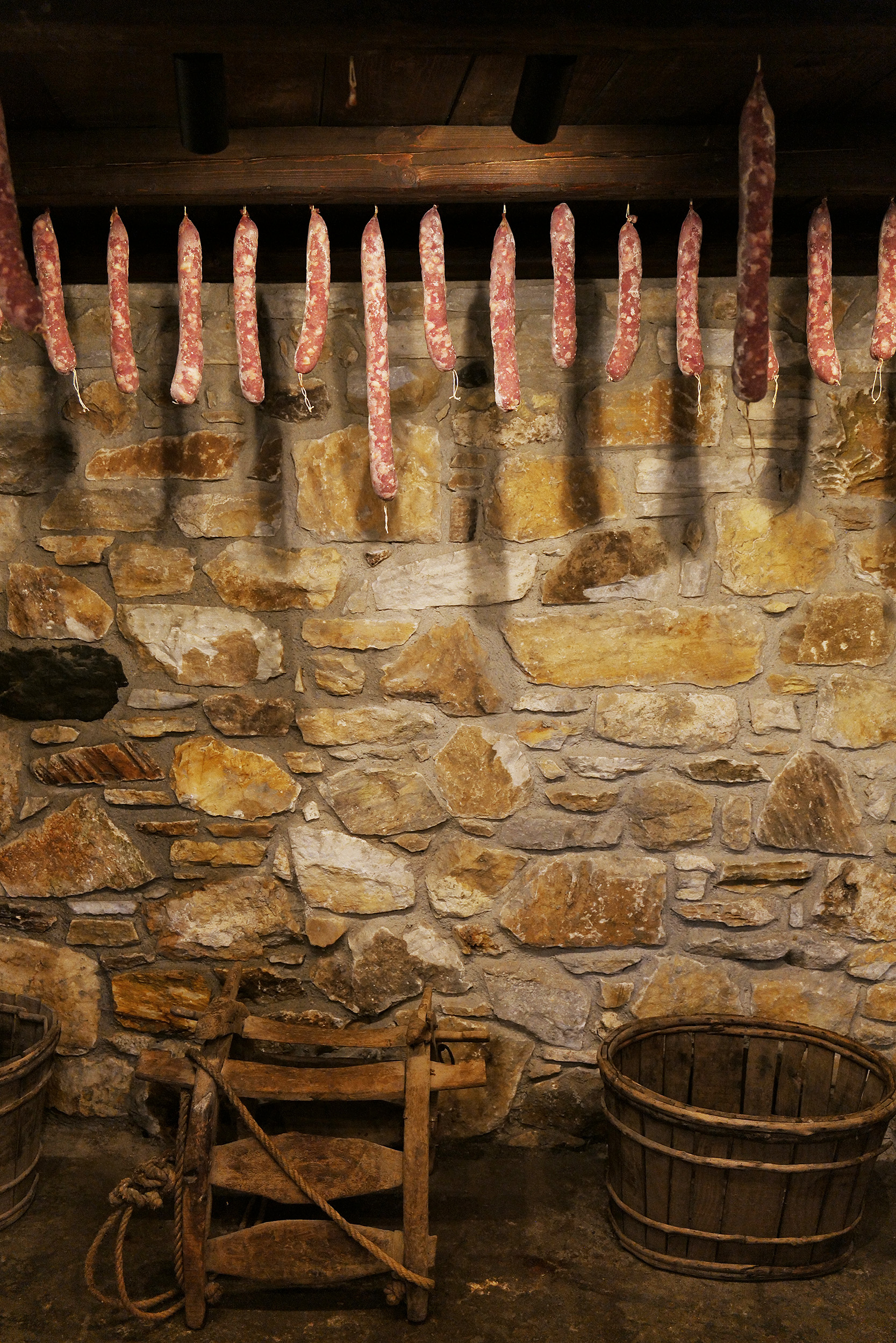
The table is almost instantly set. Questions and news are exchanged between delicious mouthfuls, authentic flavors, and tastes that are wonderfully forceful, zesty, and aromatic. Thinly sliced Zamboni (a traditional cured meat from mountainous Naxos with an intense flavor and a reason all its own for someone to visit Apeiranthos) with graviera and a little anthotyro go perfectly together on a Naxian table, adorning the white plate like painterly strokes. Giorgos shows me around a beautiful place with strong traditional elements, where he guides visitors into a room with cheeses that are patiently aging, and cured meats dangling like decorations from heavy wooden beams.
On the return, with no particular plan, I follow the road between mild hills, sharp turns, and small settlements embraced by olive groves, only a few kilometers on the speedometer, perhaps irritatingly slowly for the vehicles behind me. Time has stopped in certain parts of this island, fortunately. The mountains, with their insides open and the marble quarries illuminating both the present and the history of Naxos; the fallen, slightly broken kouroi bearing witness to the pursuit of perfection in the DNA of the Naxians; the well-preserved towers, legacy of noble families from the past; the tended terraces: all reveal a place where life moves at natural rhythms, all year round, in a harmonious marriage of the environment with the contemporary way of living.


The Sweet Aromas of Halki
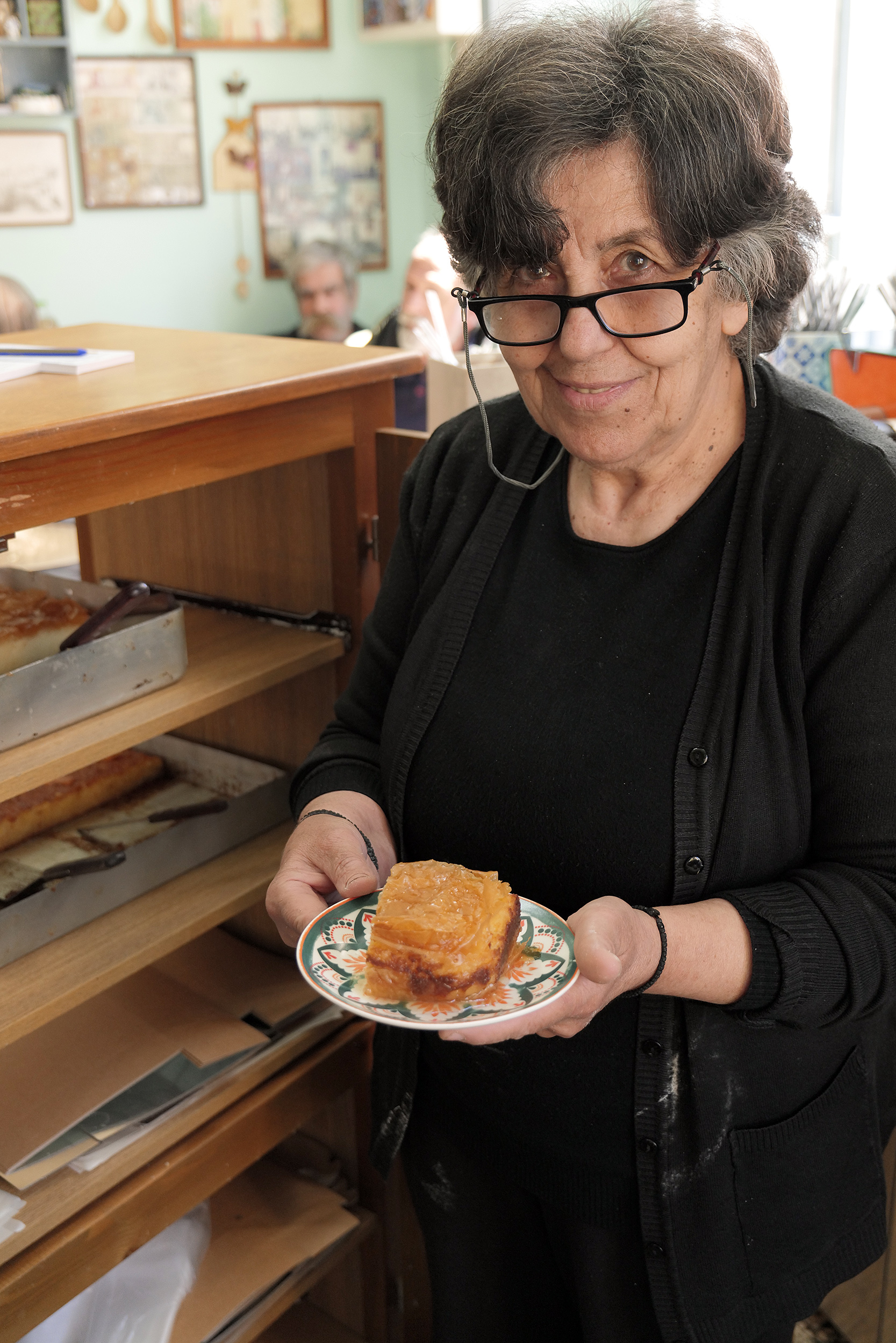
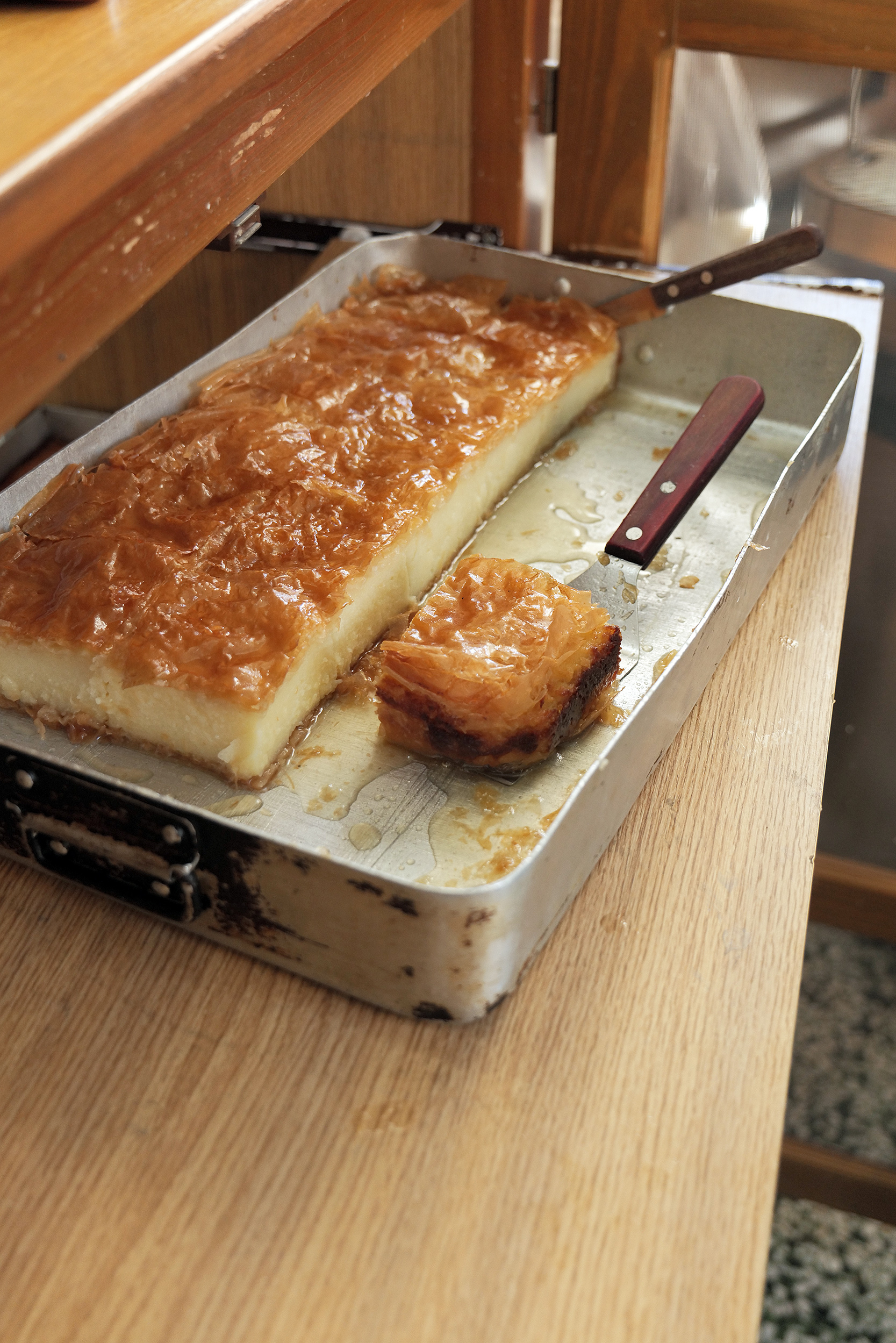
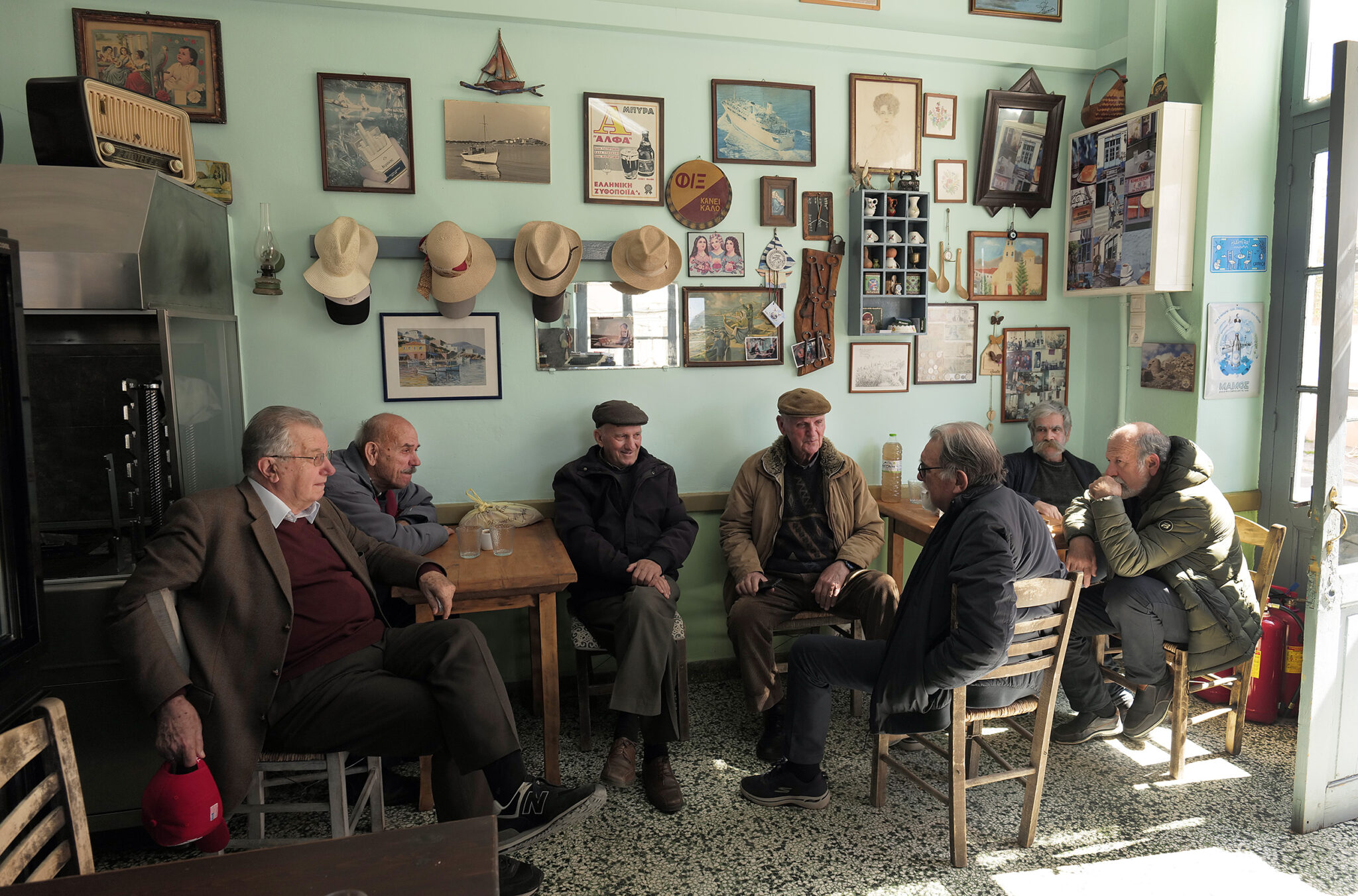
In Halki, a stop is required for Spitiko Galaktoboureko from the hands of Katerina Galani at the traditional kafeneio, as is a visit to the citron distillery that has always been housed in a beautiful building in the center of the village. Aromas everywhere here too, from the buttery sweetness of the syrupy tray to the particular nose of the greenish fruit, Naxos’ trademark when it comes to distillates.
A Necessary Stop in Kastraki
The second day has the character of mapping: gastronomic, geographic, and experiential. The first appointment is very early in the morning, in the far south of the island, in the area of Yialous, in Agiassos. I had met Maria Krassa the previous afternoon at the one and only Axiotissa, in Kastraki.
The taverna of Yiannis Vasilas and Sofia Dimakopoulou is, and will always be, my necessary and unfailing stop every time I come to the island. Aromas, flavors from seasonal cooking, wines from Cycladic fruit, colors, contact with nature, and our primal relationship with food.
Nothing can go wrong here, from the cooking and raw materials, for which Kostantis is partly responsible, to the contact with the people of the business and the respect given off by respectful visitors, with very few exceptions. Yiannis Vasilas lets me go into the kitchen to photograph colors and aromas, and Maria Krassa is there too.
Arseniko from the Southern Cliffs
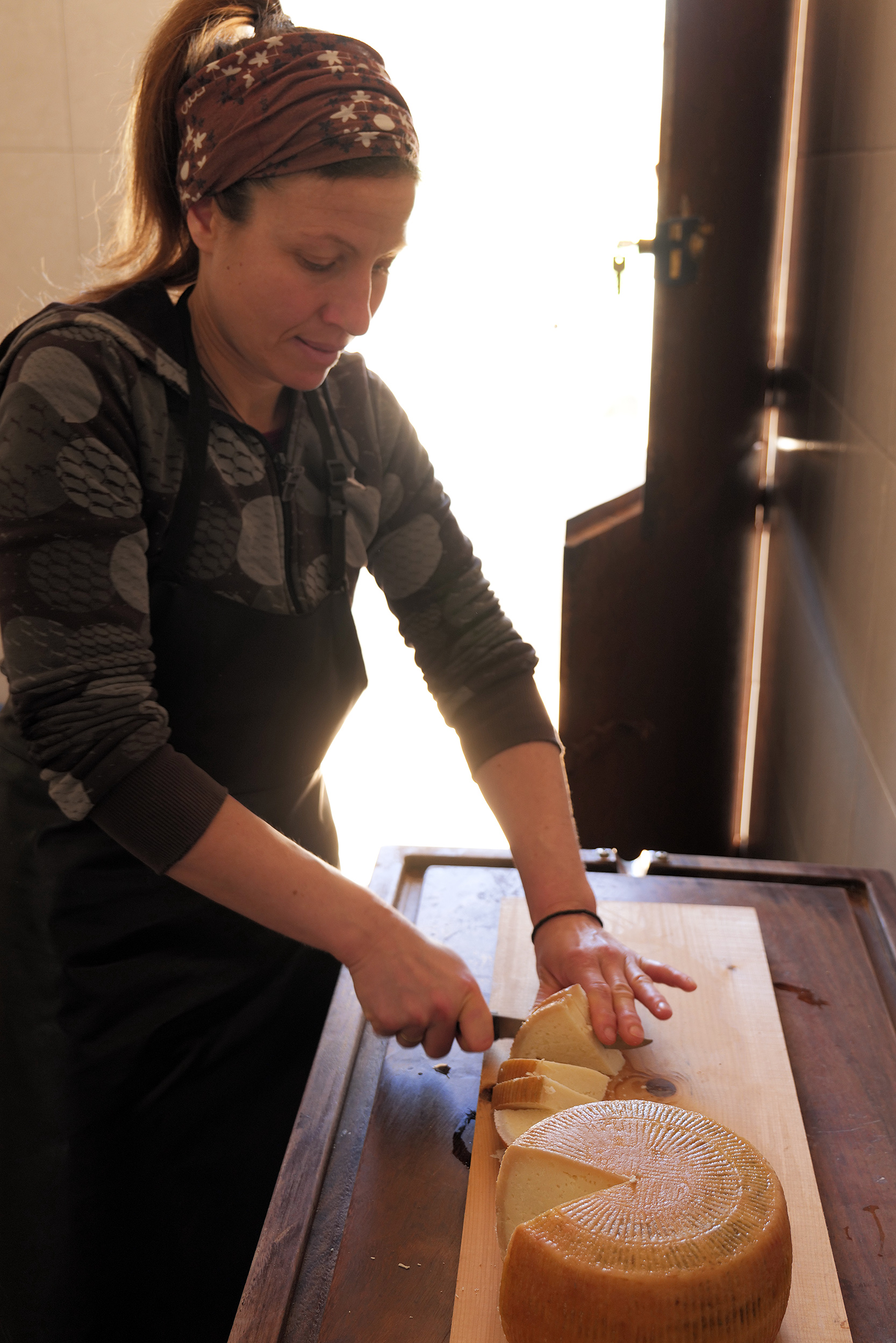
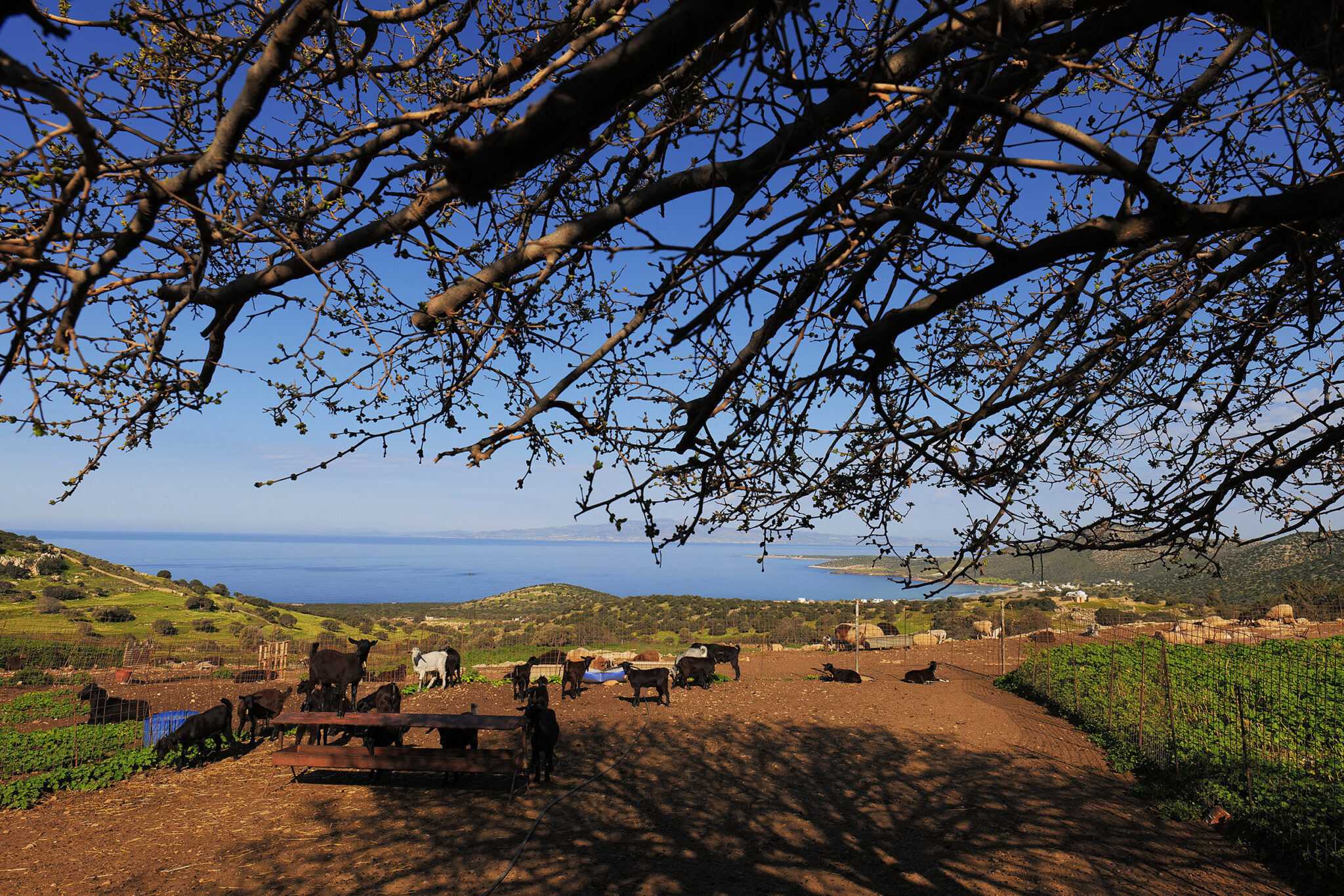
The following day she and her son Dimitris welcome me to her husband, Dimitris Kalavros‘ farm, with bright energy and a eagerness to show me around. The two kilometers of rough dirt road before I reach this height above the large beach of Agiassos are automatically forgotten, with the smell of Greek coffee filling a small arched room with beds covered in throws, a large table in the middle, and a television playing something uninteresting, simply for company. They guide me to the milking room, where appointments do not allow for postponement or cancellation, and bleating sounds like conversations, gossip, and also a sign of trust. Next stop, the refrigerators with the Naxian treasure: PDO Arseniko cheese.
Maria and her son radiate a sense of pride and fulfilment in which physical fatigue, in the face of their production and their goals, doesn’t matter. Maria and her husband have officially been selling their dairy products since September 2025, but the quality of the flavor shows an experience and knowledge of many more years in the work. Until recently, she confides, they were milking around 300 sheep and goats in the old traditional way, twice a day, by hand, until they recently acquired a milking unit.

The Cheese Vault of Melanes
As I depart for my next appointment, on the other side of the island in Melanes, I realize that none of the producers I have met so far spoke to me about financial satisfaction of their work. Instead they talked about their passion, the continuation of traditions inherited from their ancestors, and their love for this way of life. I expected that, when visiting the livestock unit and cheese dairy of Nikolas Pittaras, I would encounter a more technocratic approach, relatively speaking.
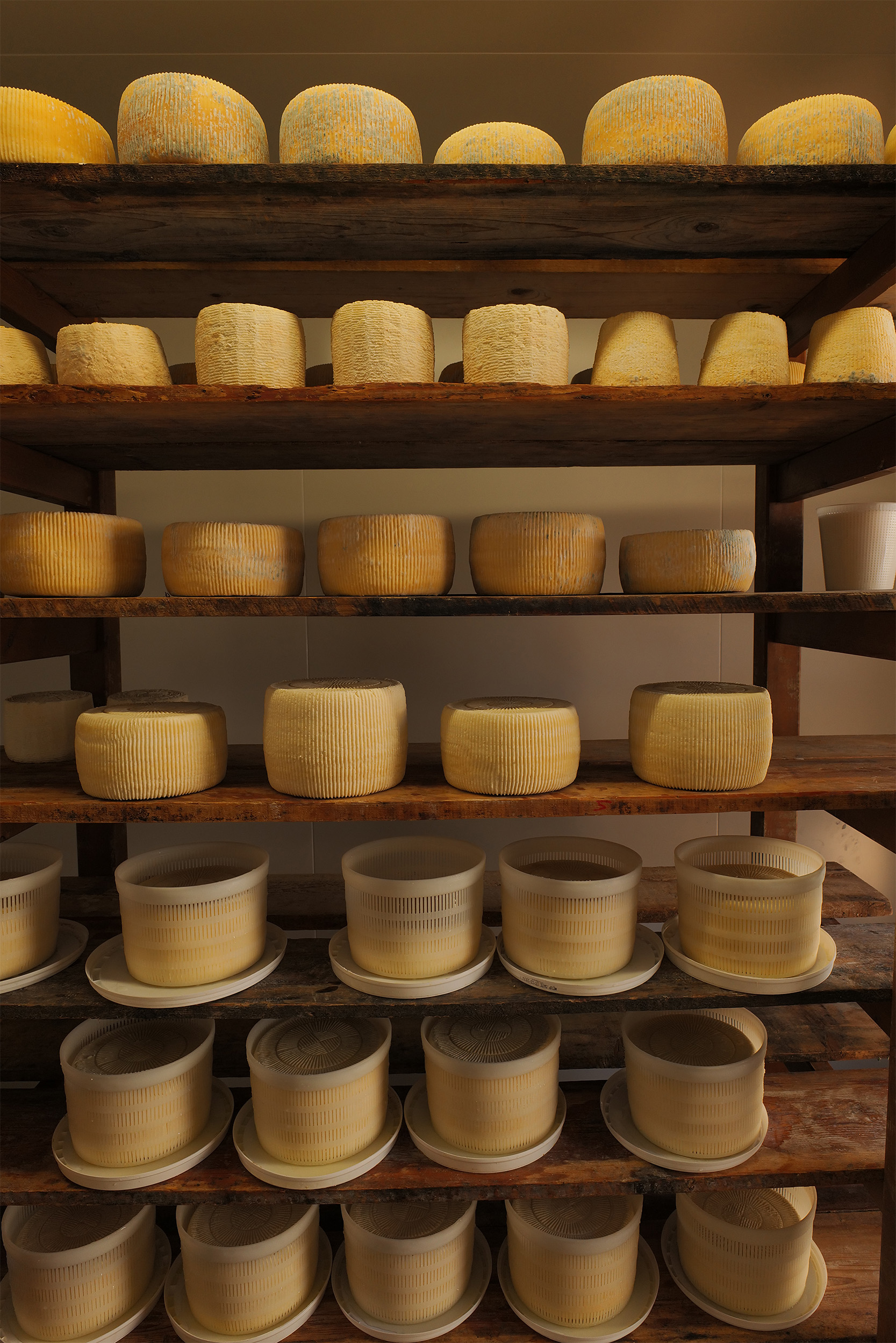
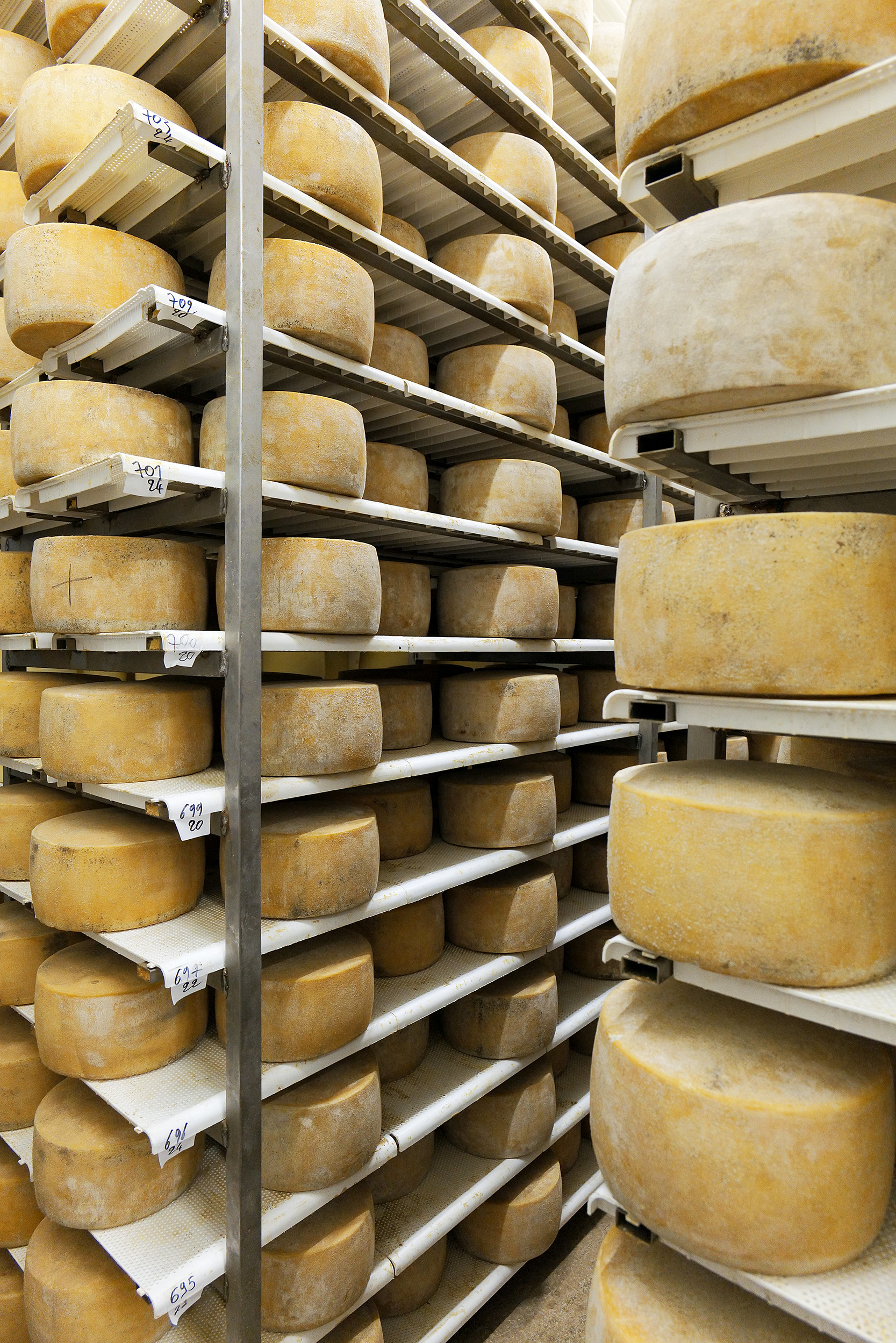
Nikolas’ business is a significantly sized unit, with major milk and dairy production. But the differences between him and the smaller units only come down to scale. Nikolas Pittaras’ enthusiasm, as he shows me around the refrigerators, the cheese-production areas, the stables with the animals, and the small office where his young son is practicing the violin with his teacher, reflects a man with self-knowledge. From the way to started to where he has reached today, his only weapon has been his hard work. He makes cheeses for the people of Naxos, who have authentic local tastes in their minds, their bodies, and their souls.
“Some visitors call this place a vault,” he tells me as we move through the corridors with shelves full of cheeses up to the ceiling, “and it is a vault,” he admits. In the year Nikolas was born, his father got a heifer so they could drink milk, and since then they have never slaughtered a female animal. His aim is for every bite of cheese to be a unique work of art, made exclusively for the person who tastes it, and his own reward is the expression on the face of the person tasting it. I wonder whether he noted my expression as I enjoyed his achievements. “It’s impossible for someone involved in primary production not to be proud,” he tells me as he waves goodbye, leaving me with an open invitation for my next visit to the island.
Reviving 250-Year-Old Vines
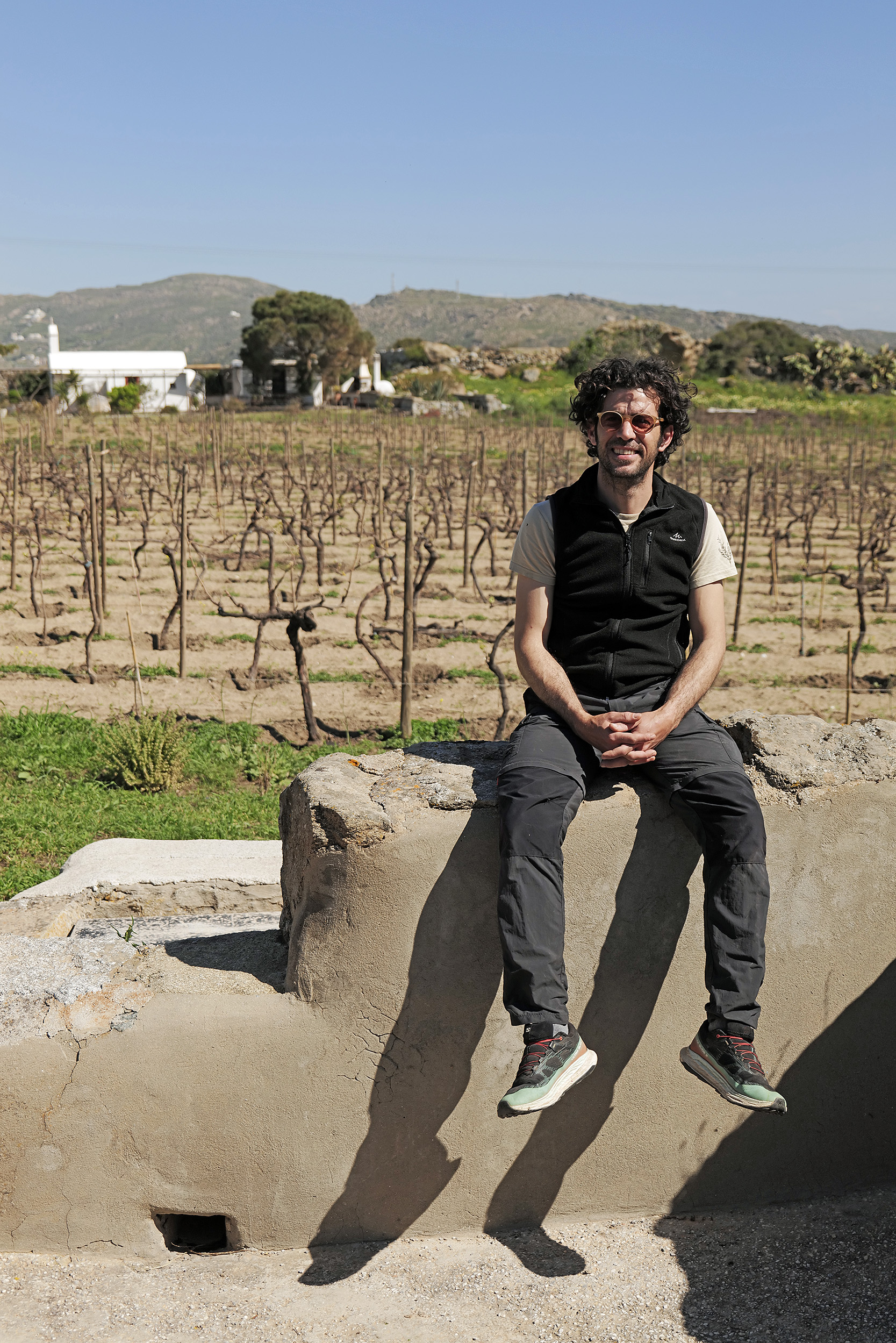
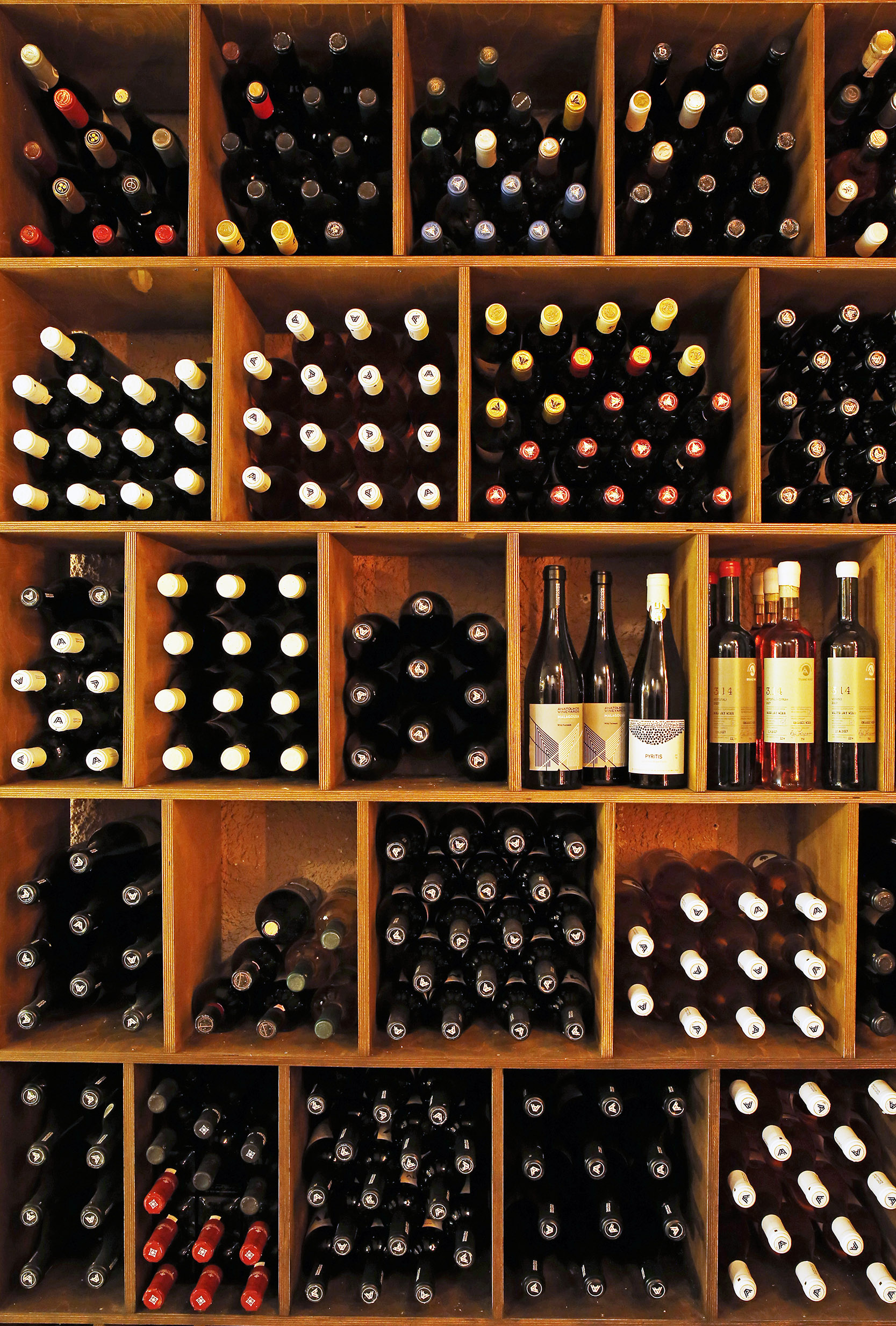
Mighty vineyards, well known for their production. Strong plants, resilient, and growing in very good soil. In the area of Glinado, winegrower Konstantinos Makrydimitris has revived and cultivates vineyards whose history reaches as far back as 250 years. Potamisi, Monemvasia, Assyrtiko, Aidani, Kountoura, Fokiano, Mandilaria, Mavro Potamisi, Mavro Aidani, Mavrotragano. Local varieties, always here, in certified organic cultivation. Konstantinos makes wine in the old way, with the logic of the field blend, in which one vineyard contains all the varieties within it, a chaos, the “viticultural paradox,” as he calls it.
The varieties coexist without exactness but with a strange, delicate balance. A blend in the field, not in vinification. Each bottle has, on average, seven varieties. Nature sees to the balance. Since I first met Konstantinos, around ten years ago now, his passion for wine has not retreated by even one root.
He shows me the newest part of the estate, where he cultivates one plant per stake, and crumbles in his palms the “pasparo,” the soil that characterizes the terroir of the area. Since 2018, he has collaborated with agronomist and oenologist Lefteris Anagnostou, with whom he bottled the single-varietal Potamisi for the first time. Aromas of Naxos drawn from its heart, its soils, and its wine history.
A Gastronomic Pilgrimage to Kinidaros
Konstantinos and I arranged to visit a new gastronomic venture in Mesi Potamia a few hours later, so the clock’s odometer brings me, in the meantime, climbing toward Kinidaros to meet Vasilis Klouvatos at the restaurant and butcher shop Stou Vasilarakiou. Few words fit here to describe the quality and evolution Vasilis has brought to Naxos’ meat culture, from cooking methods and cuts to aging. In combination with the working butcher shop at the entrance, a selection of local cheeses on the menu and in the display case, and the unexpectedly large wine selection for the area, curated by his brother Angelos, a visit to Stou Vasilarakiou belongs among the gastronomic pilgrimages of Naxos.
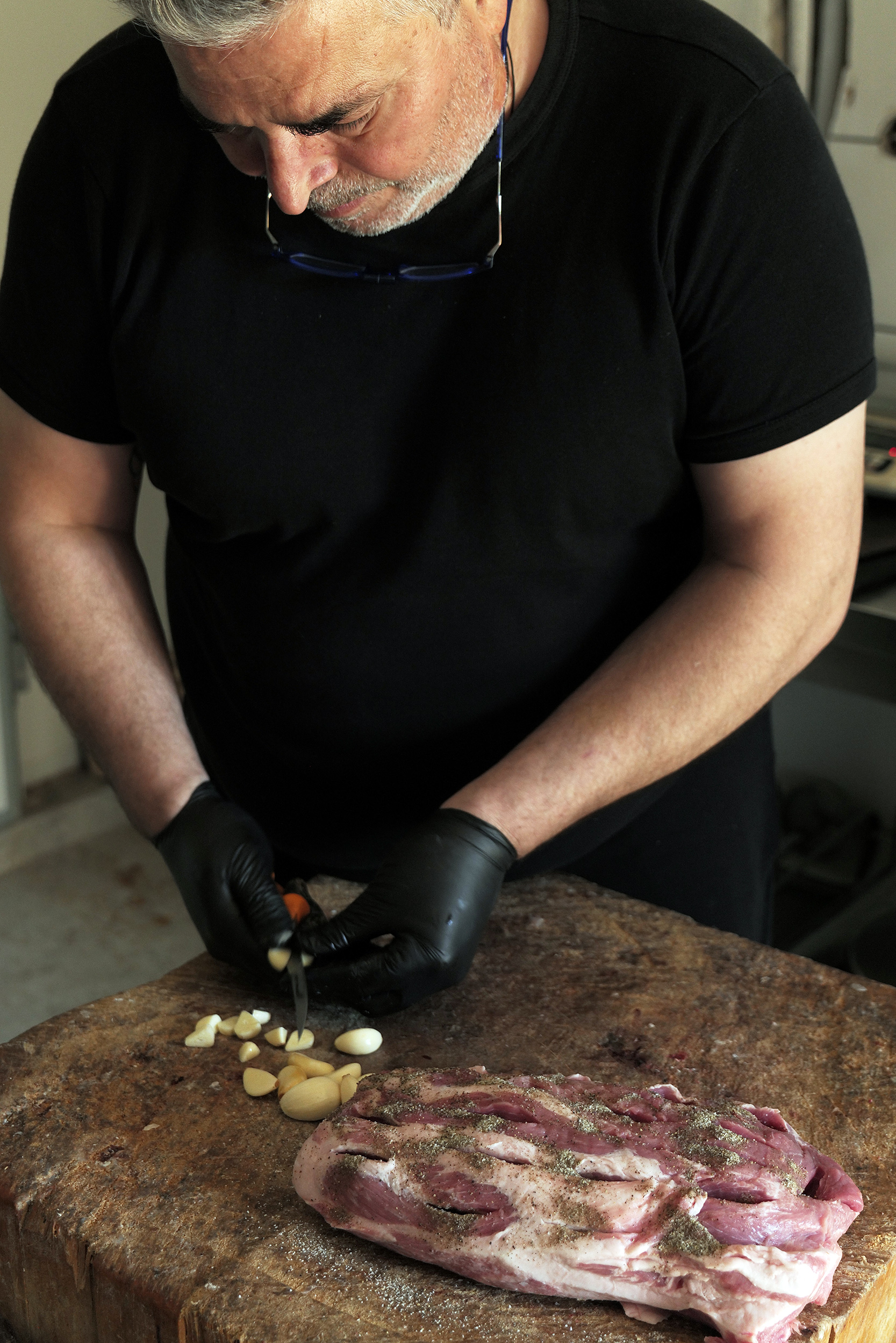
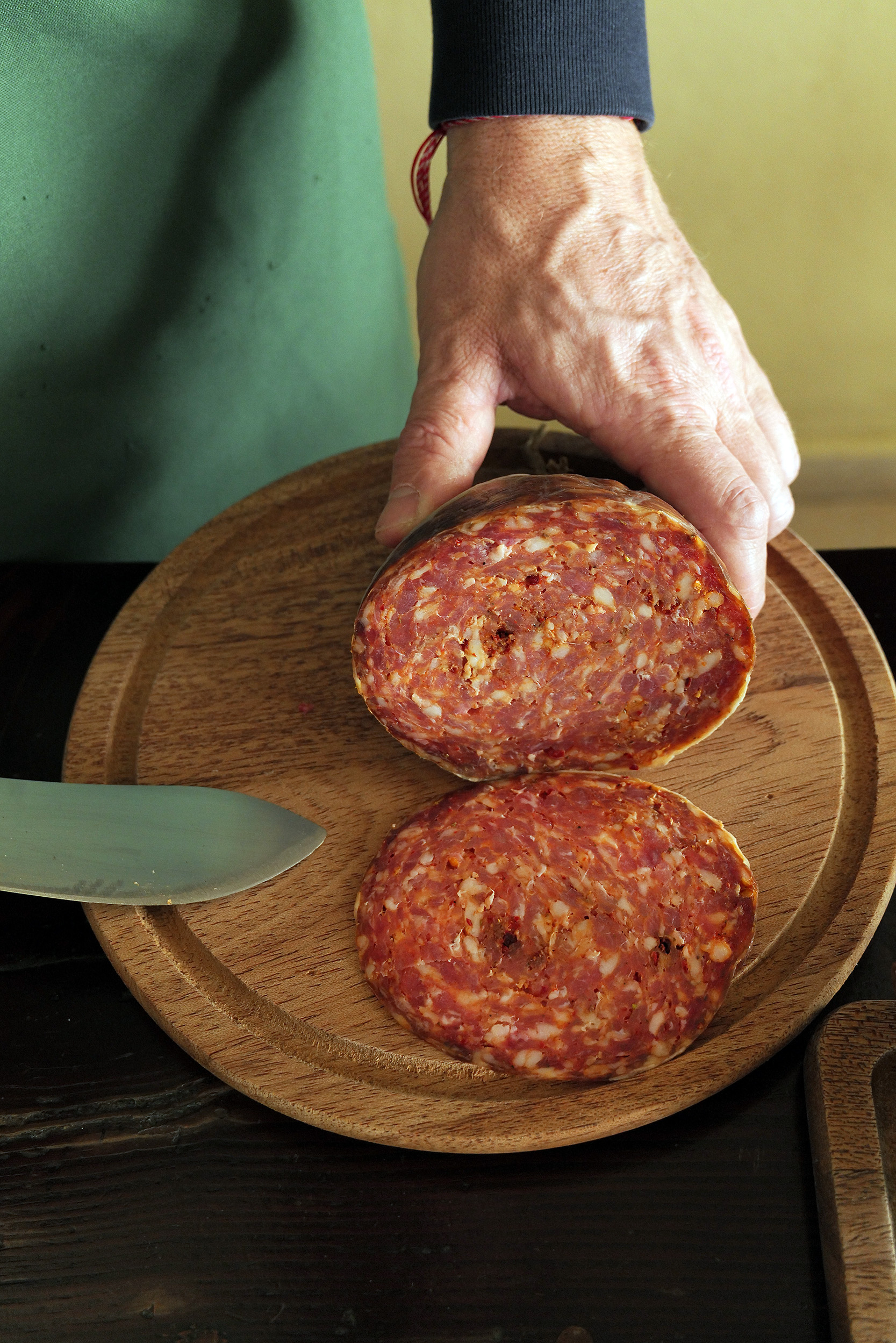
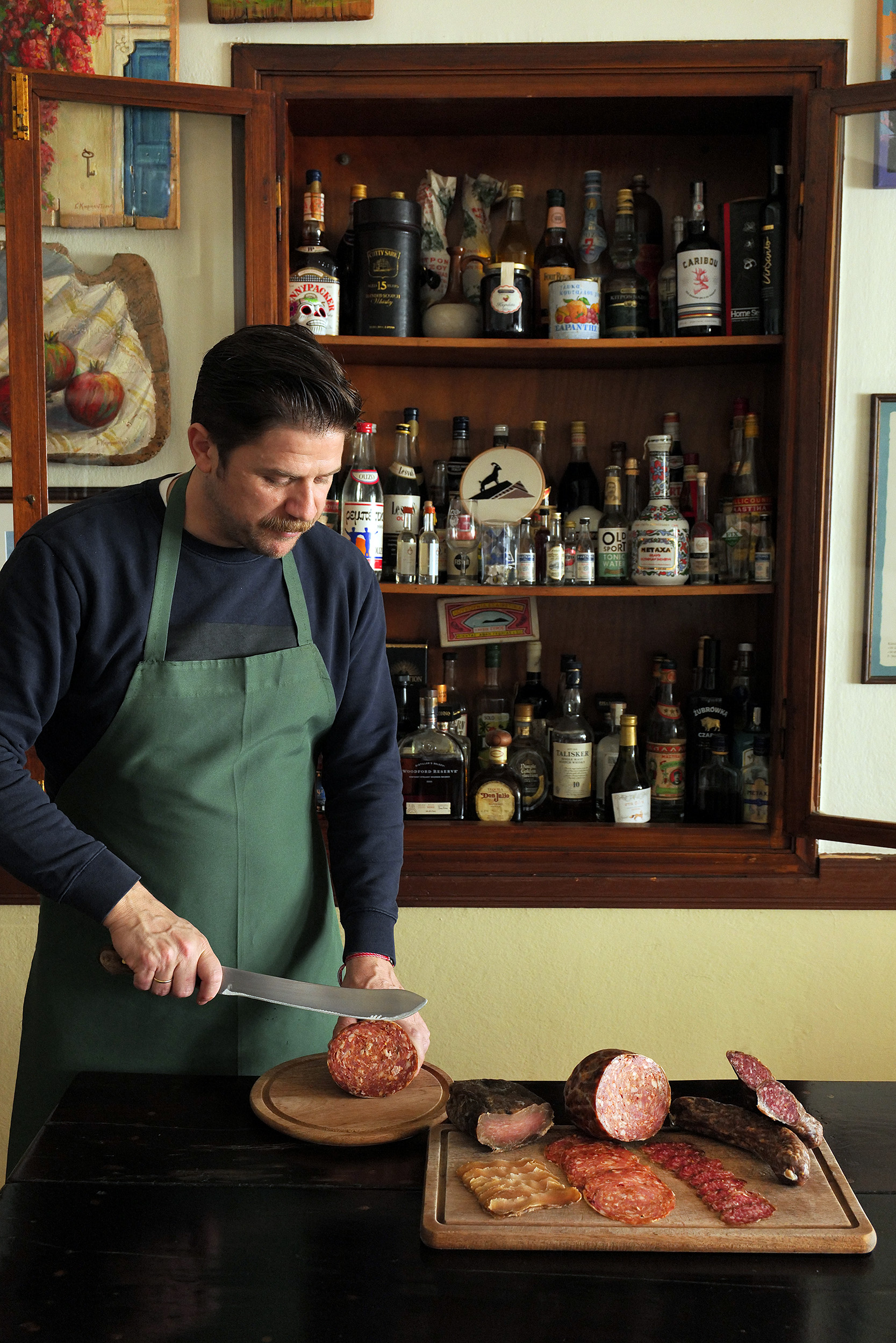
With calm in movement and speech, Vasilis talks to me about his new occupation with cured meat production. He brings out an air-dried salami, a spicy chorizo-style one, and two mortadellas, one pork and one beef. Together with a louza ham, we compose a photographic scene, since his amateur engagement with photography is notable. While we photograph and taste the cured meats, we talk about the terroir of milk and meat, according to the place where the animals live and feed on the island, exchanging valuable knowledge.
Sourdough and Heritage Recipes in Mesi Potamia
A few hours now before my departure from springtime Naxos, as I descend toward Mesi Potamia and the taverna O Charchalias, I feel a strange sense of what is real and what is dreamlike on this island. Without losing my attention on the road, I feel so lucky to enjoy a place without the hordes of tourists who will soon begin arriving, in its genuine form, its historical continuity, its gastronomic culture. We discuss all this with Konstantinos and Yiannis Oikonomou at his taverna, Charchalias, where he cooked only for us. Of Apeiranthos origin, with credentials from major hotels and important collaborations, Yiannis, at 32, returned to his island, got married, had two children, and cooks local recipes as well as his own proposals, with results that revive even the already full.
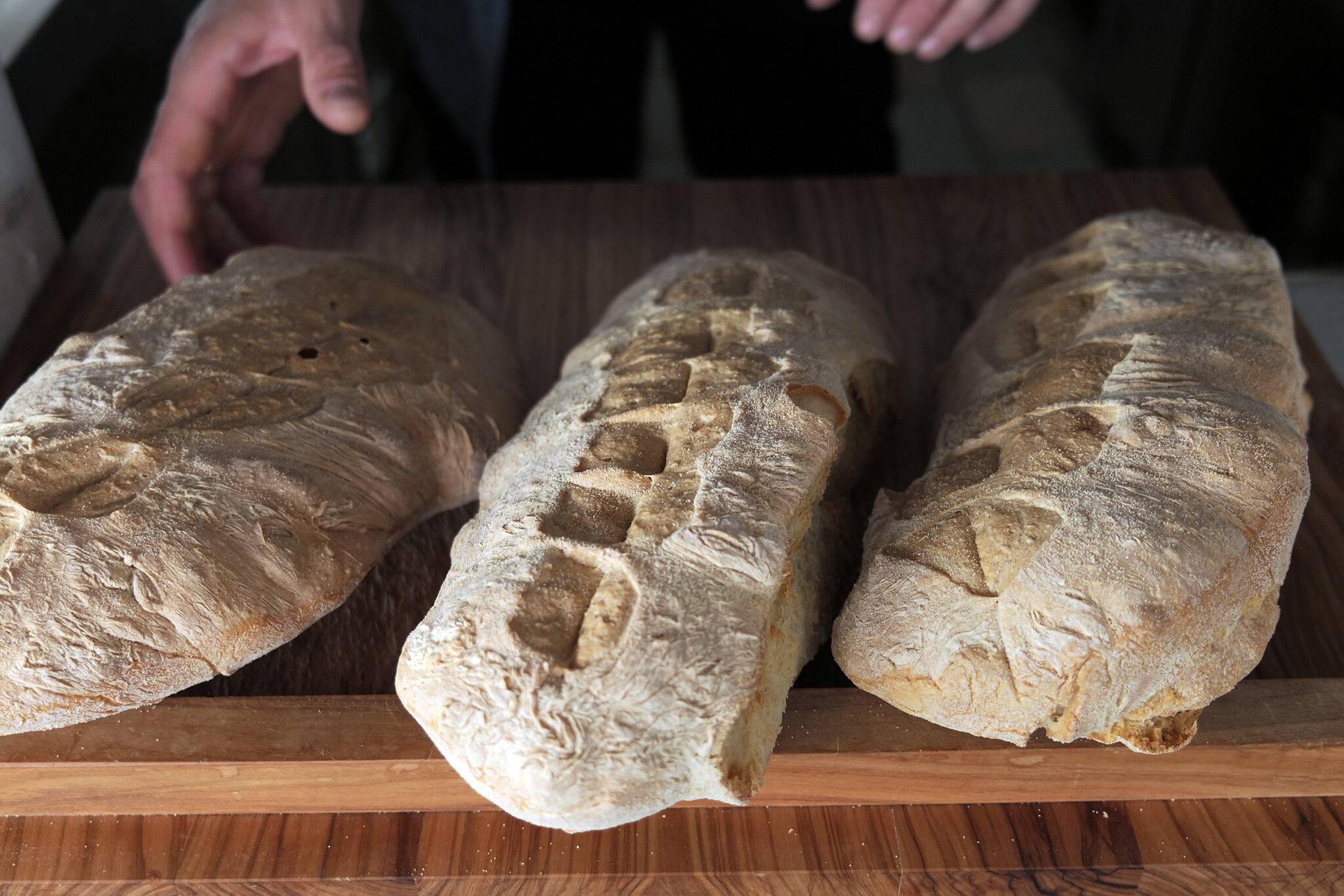
Raw materials from the island, seasonal products, and his own bread with old sourdough from his village draw his profile. Tzatziki with cabbage instead of cucumber, singed greens, sweet-pumpkin briam, “patatavghoura” or “patatavghoula” in the Apeiranthos dialect, meaning potatoes with eggs, and kid goat tsigaristo adorned our table and, together with Konstantinos’ wines, made me think about missing the plane home.
From the fishing boat that hosted me for two days for the experience of the catch, the nighttime full-moon photography of what may be the world’s oldest olive tree, the free running among the remains of an abandoned hotel skeleton, the long dive into the crystalline waters of Mikri Vigla, the “wet” Epitaphios in Kastraki, to the feeling of the beginning of summer a few years ago, Naxos fills its traveler with memories and sensations. Aftertaste and aromas. And they remain resistant to time.