


Kimolos sits just a kilometer from Milos, at the narrowest point of the channel between them – yet the two islands have taken very different paths. Milos draws crowds with its long list of famous landscapes. Kimolos asks for something slower: one real village, a small port, fishing hamlets carved into pale rock and beaches that still feel spacious, even in high summer.
The island is compact, but never empty. Its volcanic, mineral-rich terrain shifts quickly – gray cliffs give way to white sand and water so clear it seems lit from within. Chorio, the island’s only true village, folds around a medieval Kastro. Old paths wind past chapels, abandoned farmhouses and Skiadi, the island’s extraordinary mushroom-shaped rock formation. Just offshore, Polyaigos holds some of the clearest water in the entire western Cyclades.
Kimolos rewards travelers who value swimming, walking, good food and quiet evenings over organized nightlife. Two nights are enough for the essentials. Three or four let the island’s pace truly settle in.
01
What to See
Kimolos may be small, but its landscape holds layers of history, geology and island life. Most sights are close enough to combine without rushing, leaving ample time for the sea.
Chorio and the Kastro
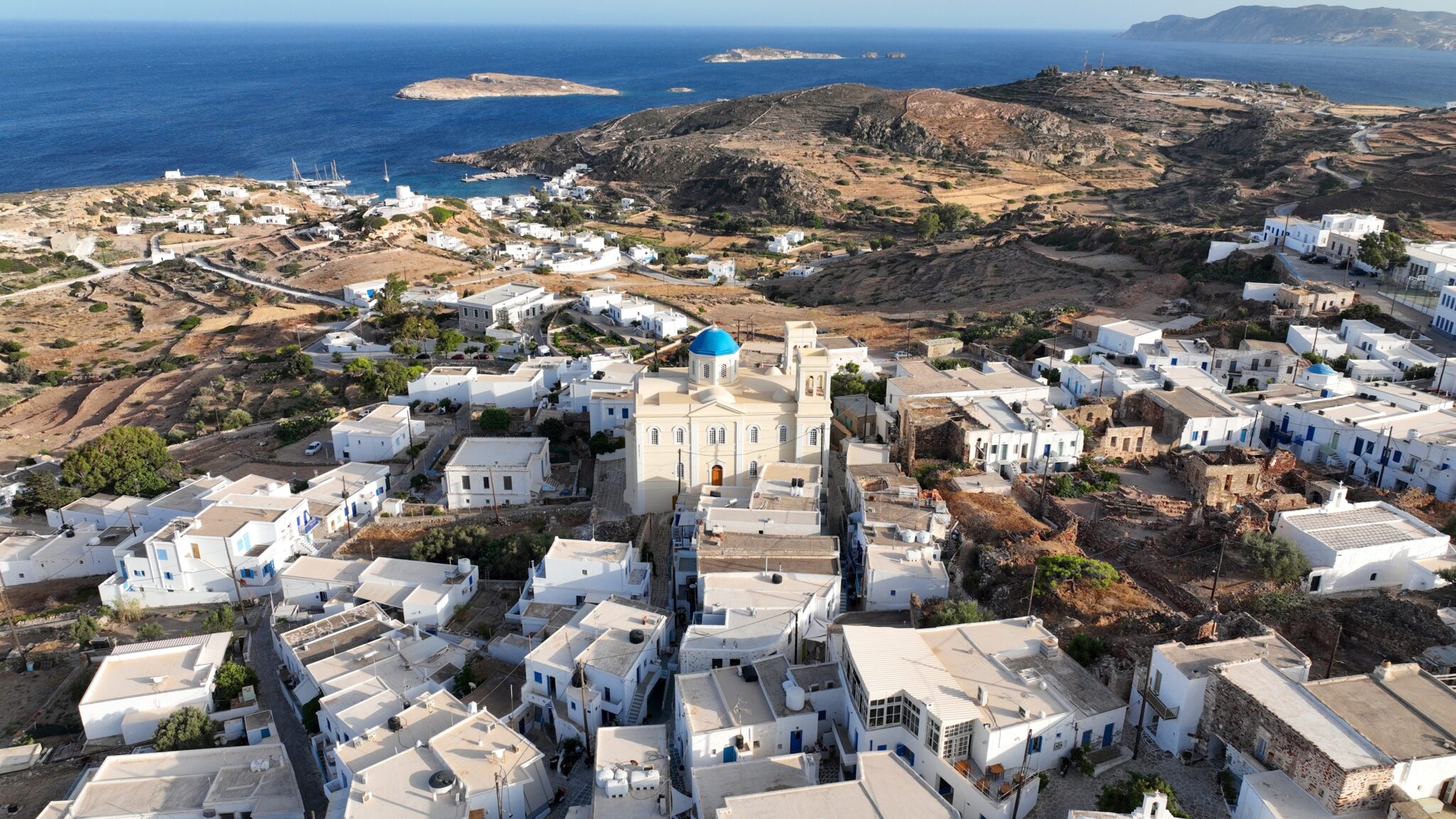
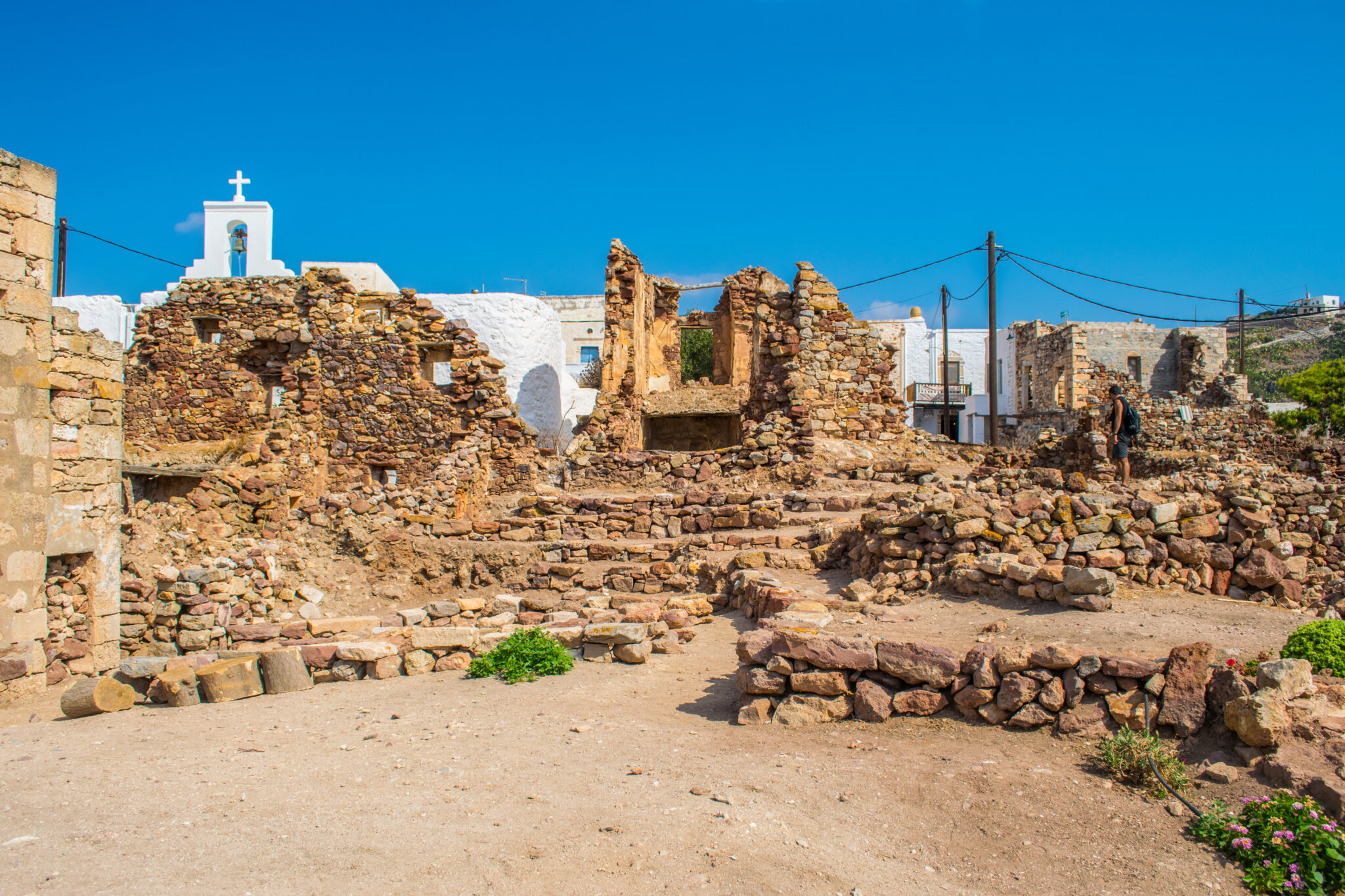
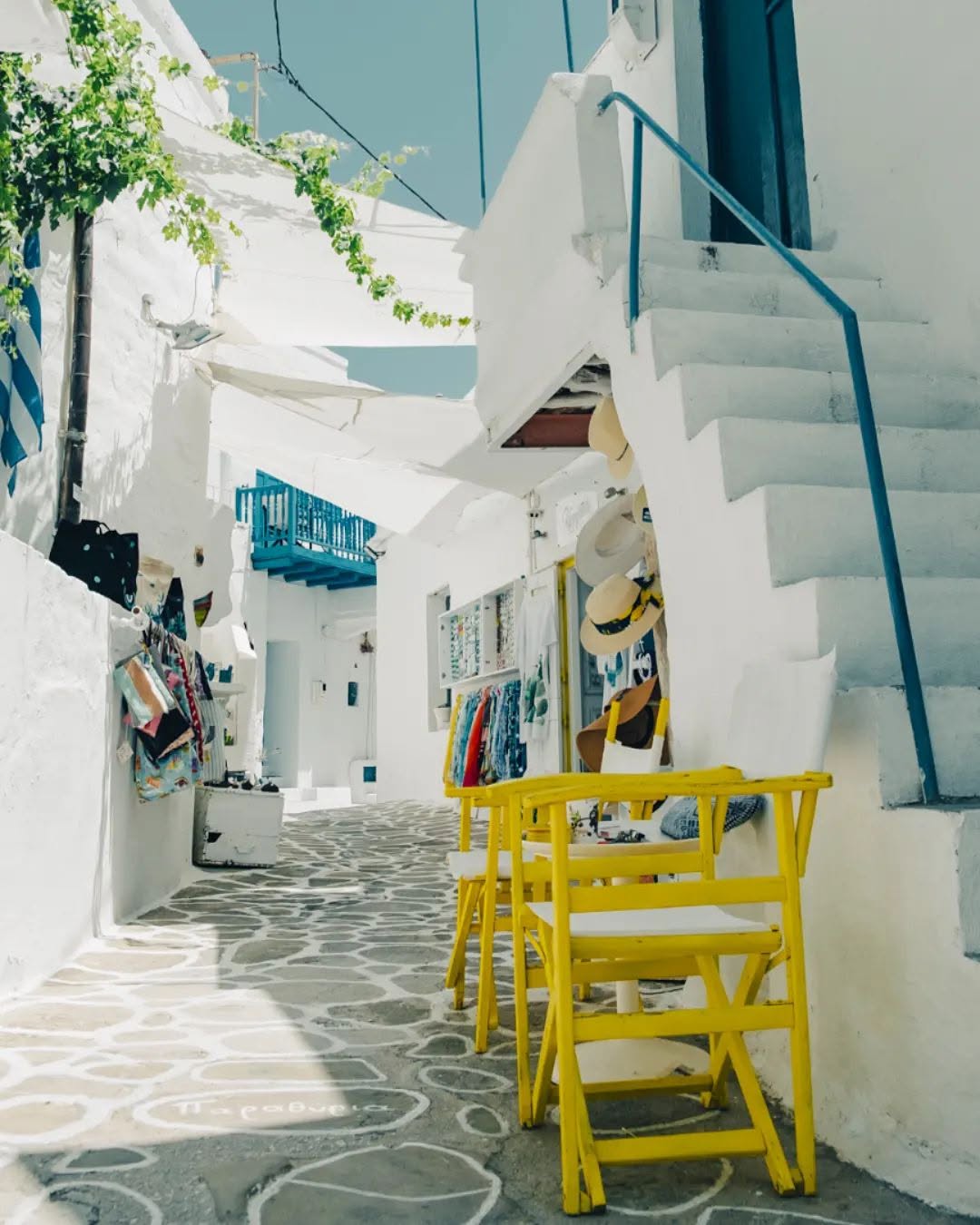
Kimolos has one main village, properly called Chorio, not Chora. Its oldest section is the Kastro, a medieval fortified settlement formed by 2 nested complexes of houses. The outer walls of the houses were part of the fortification, while a narrow lane once ran between the inner and outer sections. People still live in the surviving houses, so the Kastro feels like a neighborhood rather than a preserved exhibit.
Begin around Kambos, one of Chorio’s small squares, then walk toward the Metropolitan Church of Panagia Odigitria. Built between 1867 and 1874 with unpaid labor from island residents, the church contains a 15th-century icon of the Virgin. From there, follow the Agora, the narrow commercial lane lined with small shops, bars and workshops, before entering the Kastro’s twisting alleys.
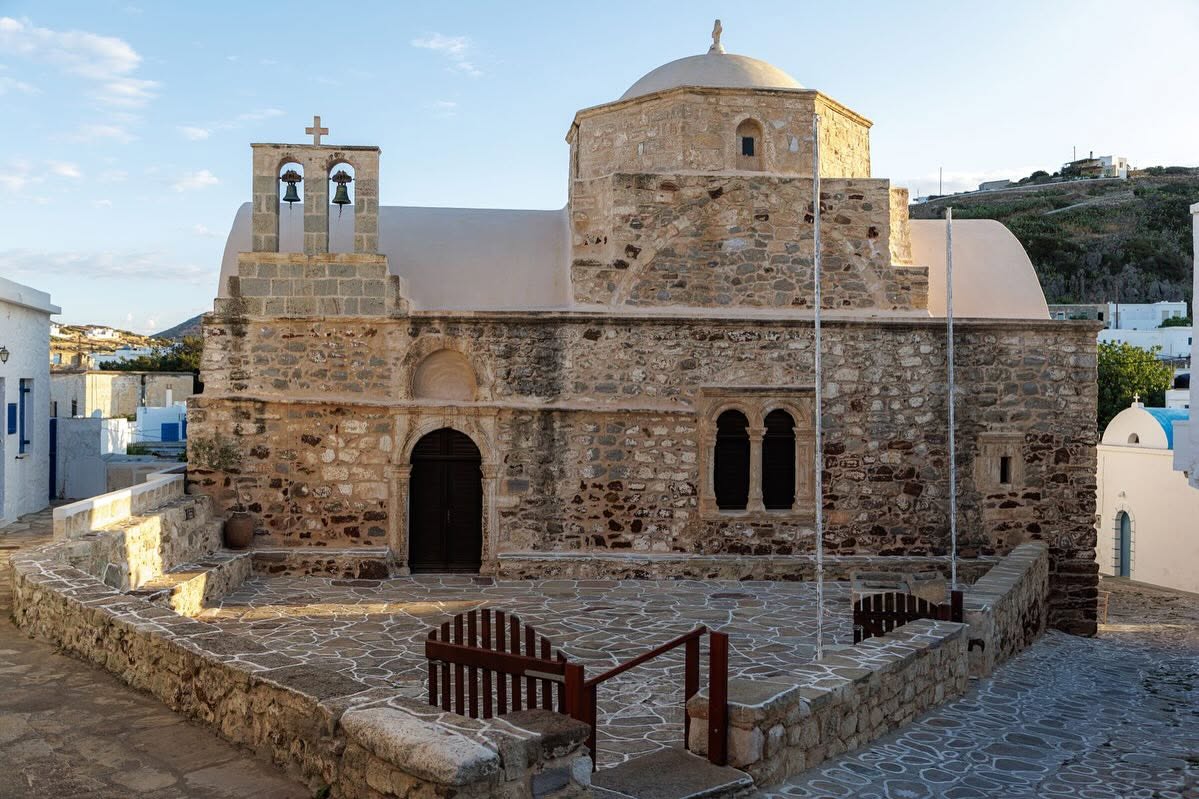
The Church of the Birth of Christ, inside the Inner Kastro, dates to 1592 and is the island’s oldest protected church. Above the village, the windmills on Xaplovouni provide a broad view over Chorio and toward Polyaigos. Late afternoon is the most comfortable time to walk up.
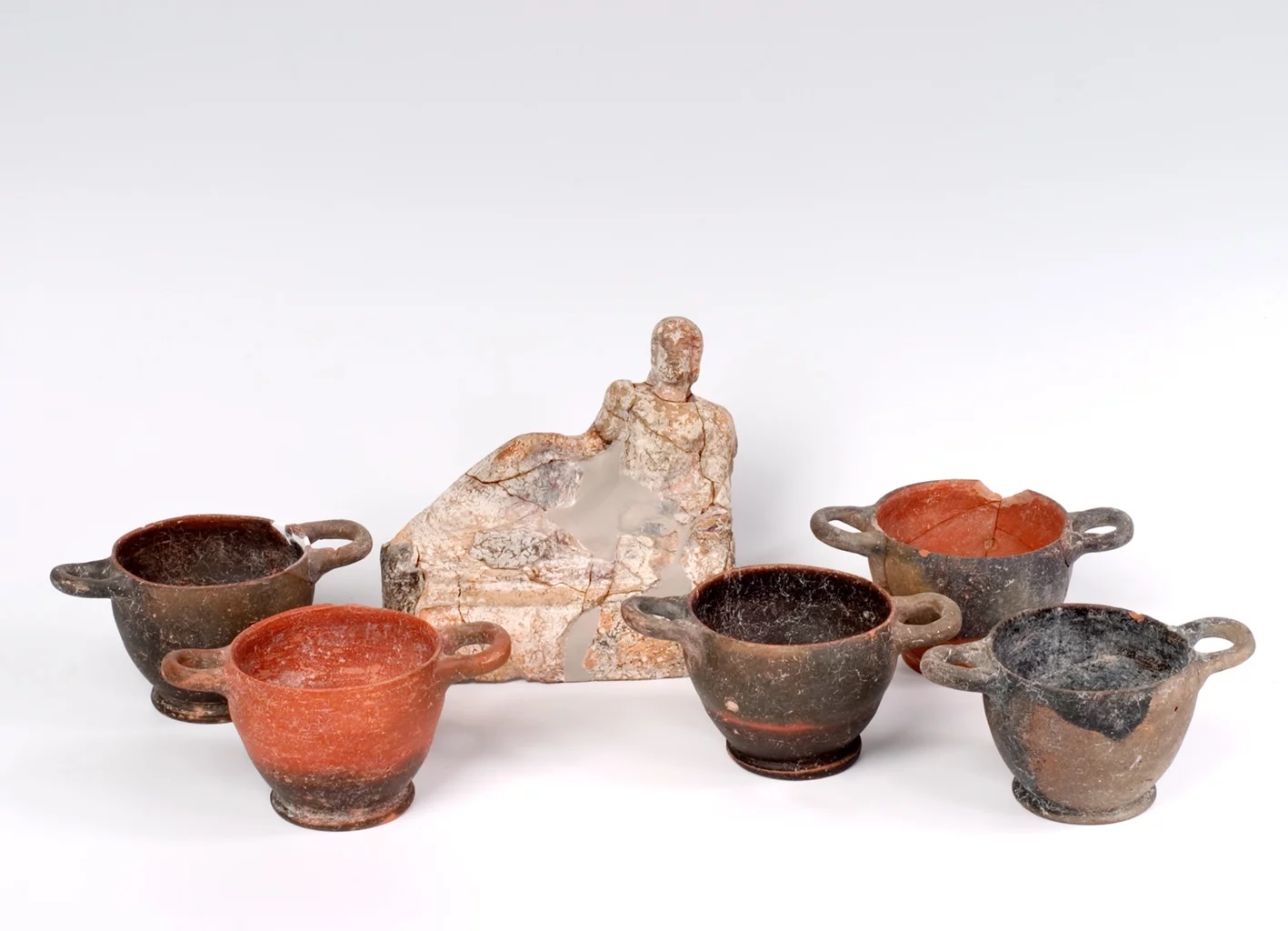
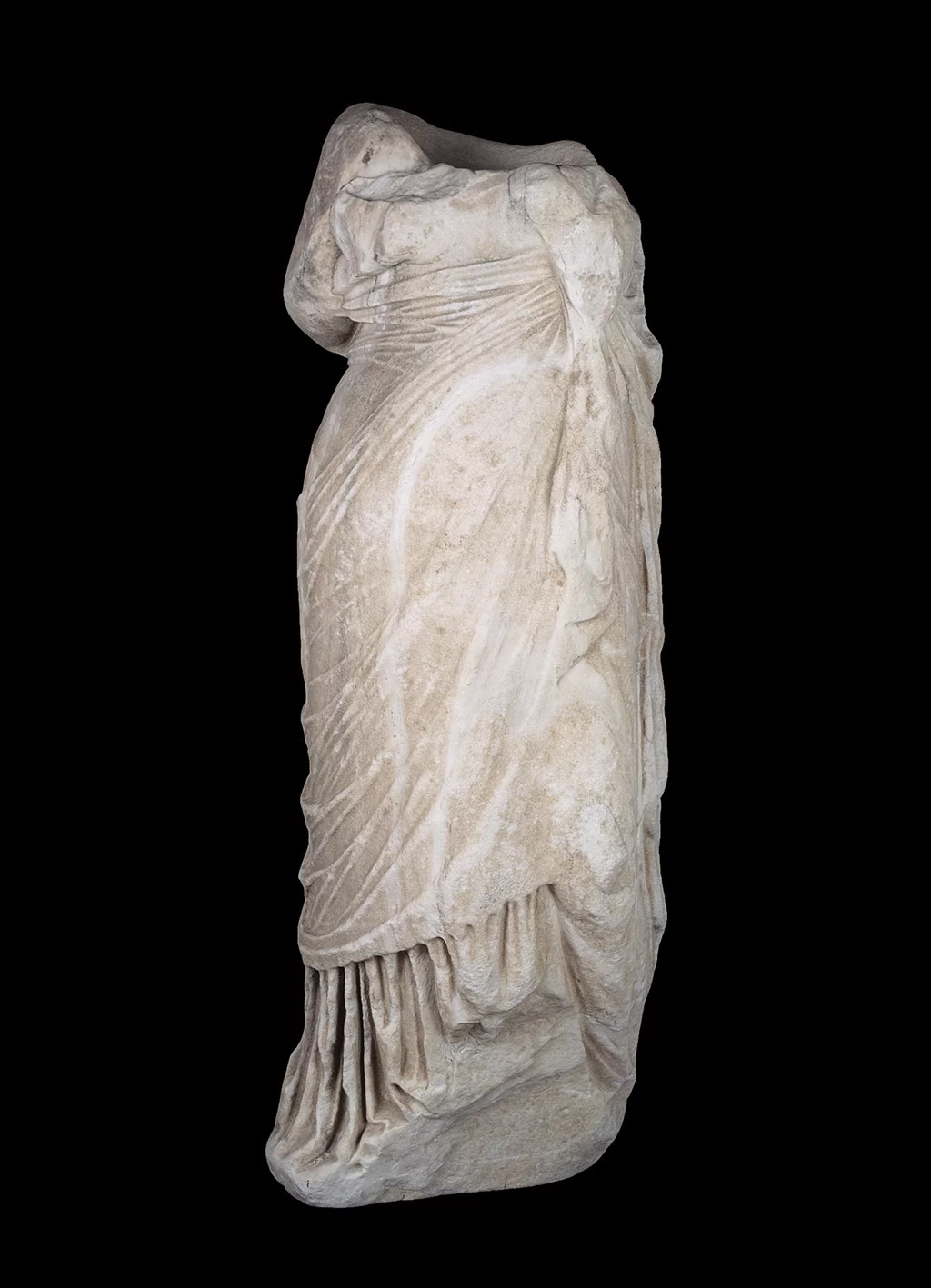
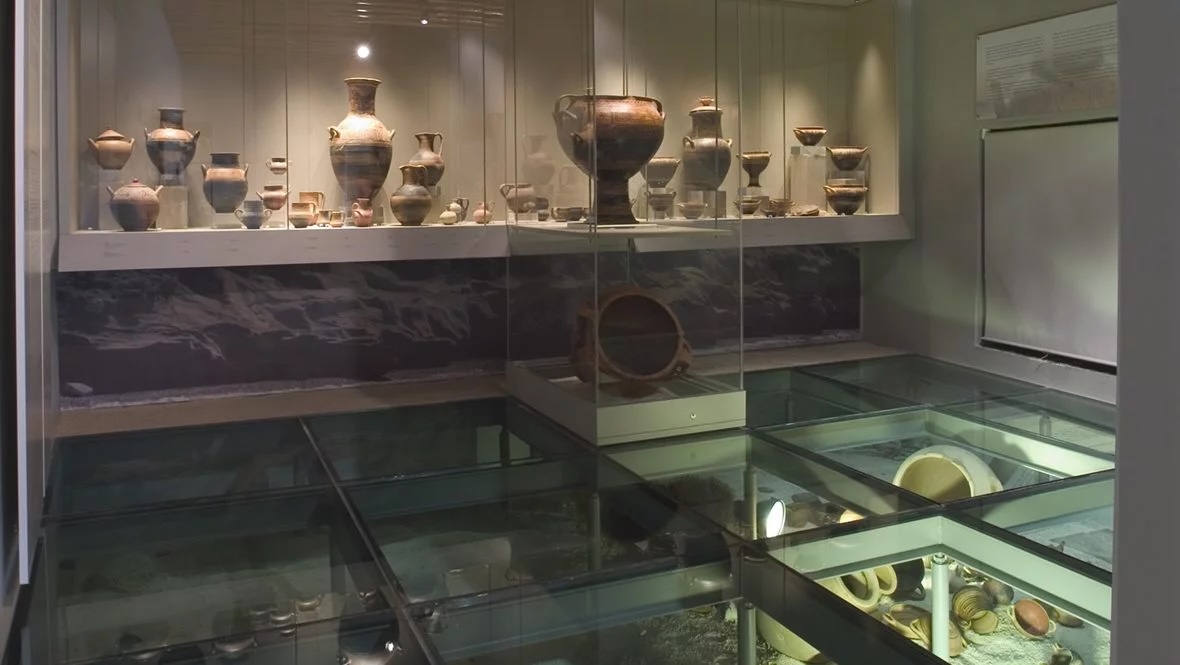
Archaeological Museum of Kimolos
The Archaeological Museum occupies a traditional 19th-century residence opposite Panagia Odigitria. Its collection draws mainly on finds from the cemetery of the ancient city at Ellinika, with material spanning prehistory to late antiquity. In the 2026 summer season it is open from 8:30 a.m. to 3:30 p.m. and closed on Tuesdays, but hours should still be checked before visiting.
Folk and Maritime Museum
Inside the Kastro, the Folk and Maritime Museum records the island’s domestic, agricultural and seafaring life. Its rooms hold looms, tools, household objects, embroidery, ceramics, nautical instruments and the furnishings of a traditional Kimolian house. Together, the 2 museums require little more than an hour, but they give useful context to everything seen outside them.
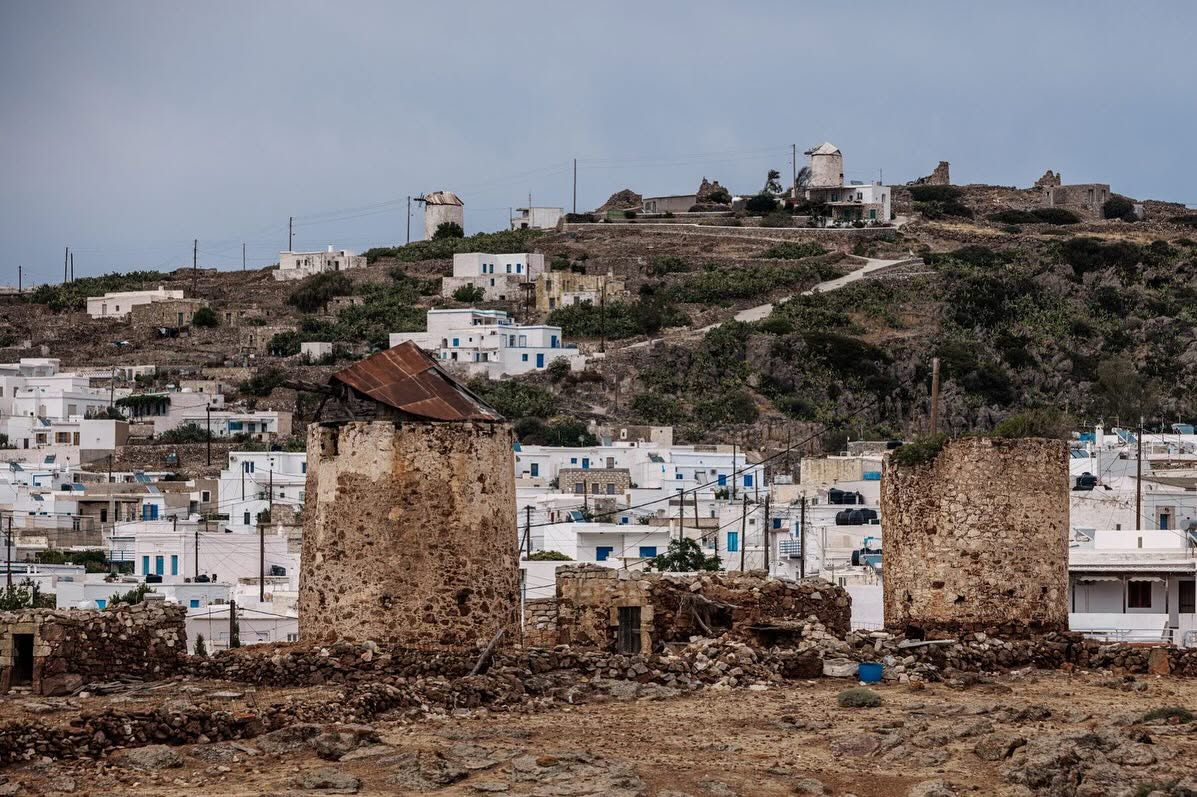
Goupa, Rema and Karas
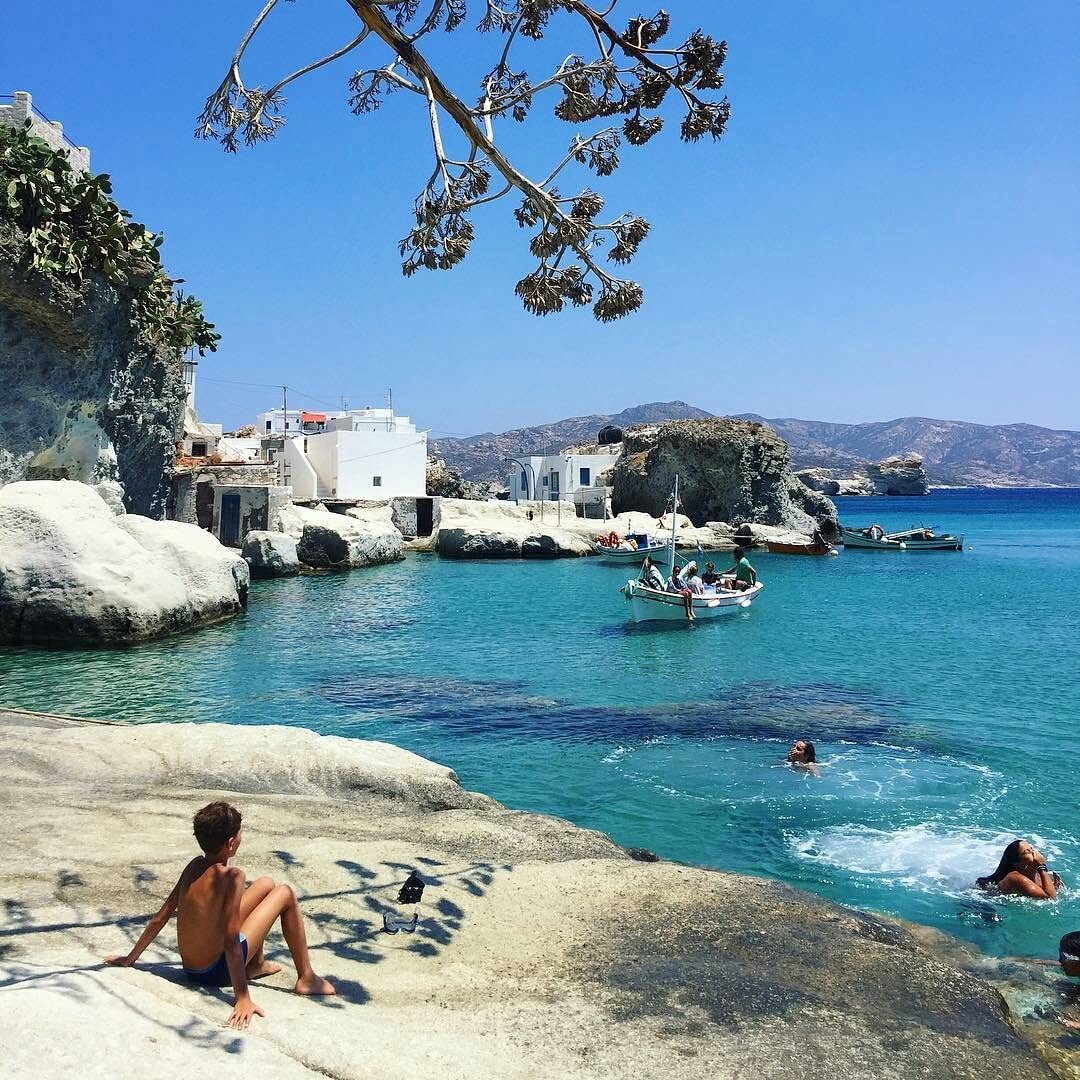
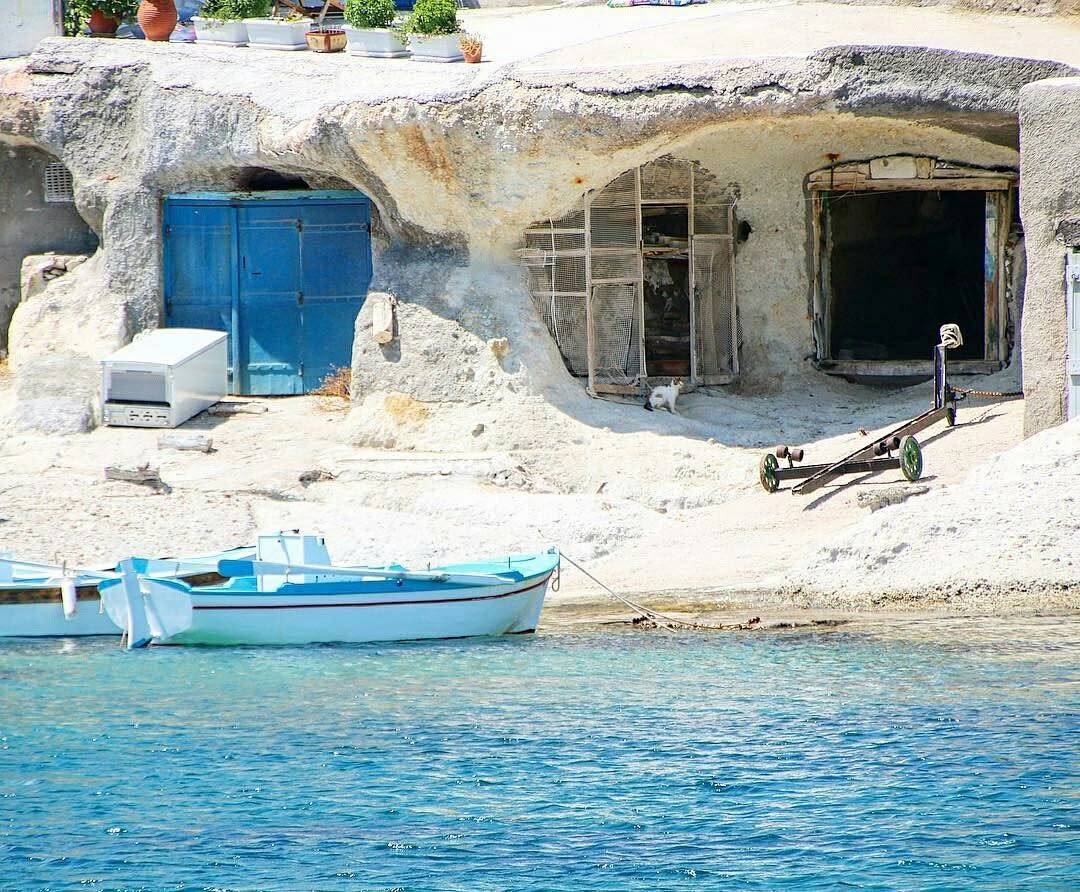
Goupa and neighboring Rema form the island’s most distinctive coastal settlement. Here, fishermen cut syrmata, boat shelters with brightly painted doors, into the soft volcanic rock. Rema is a small, sheltered cove, while the white rocks of Karas form natural swimming platforms rather than a conventional beach. Along the shore, erosion has produced the formation known locally as the Elephant.
02
What to Do
Life here follows a natural rhythm of early walks, long swims and evenings in Chorio. The island’s most memorable experiences require little planning beyond attention to the sun, wind and sea.

Walk to Skiadi
Skiadi is Kimolos’s essential land-based excursion, a massive stone formation shaped like a mushroom as wind eroded the softer rock beneath a harder cap. It stands on Sklavos hill and belongs to the Atlas of Geological Monuments of the Aegean.
The shortest official approach follows the road toward the 2 Profitis Ilias chapels. Leave the vehicle between them and continue on foot for about 30 to 35 minutes along the marked path. There is almost no shade, so go early or late, carry water and wear proper shoes.
For a longer walk, marked Route 2 runs from Chorio through Sklavos and Skiadi to Mavrospilia. The full route is about 8 kilometers, easy as far as Skiadi and more demanding beyond it.
Follow the Old Paths
Kimolos’s marked paths cross dry-stone walls, olive groves, chapels, terraces and abandoned farm buildings. Official routes connect Chorio with Ellinika, Agioklima, Paliokastro, Monastiria and other parts of the island. Conditions change, especially after winter, so check locally before attempting the longer or more difficult trails and avoid the hottest part of the day.
Take a Boat to Polyaigos
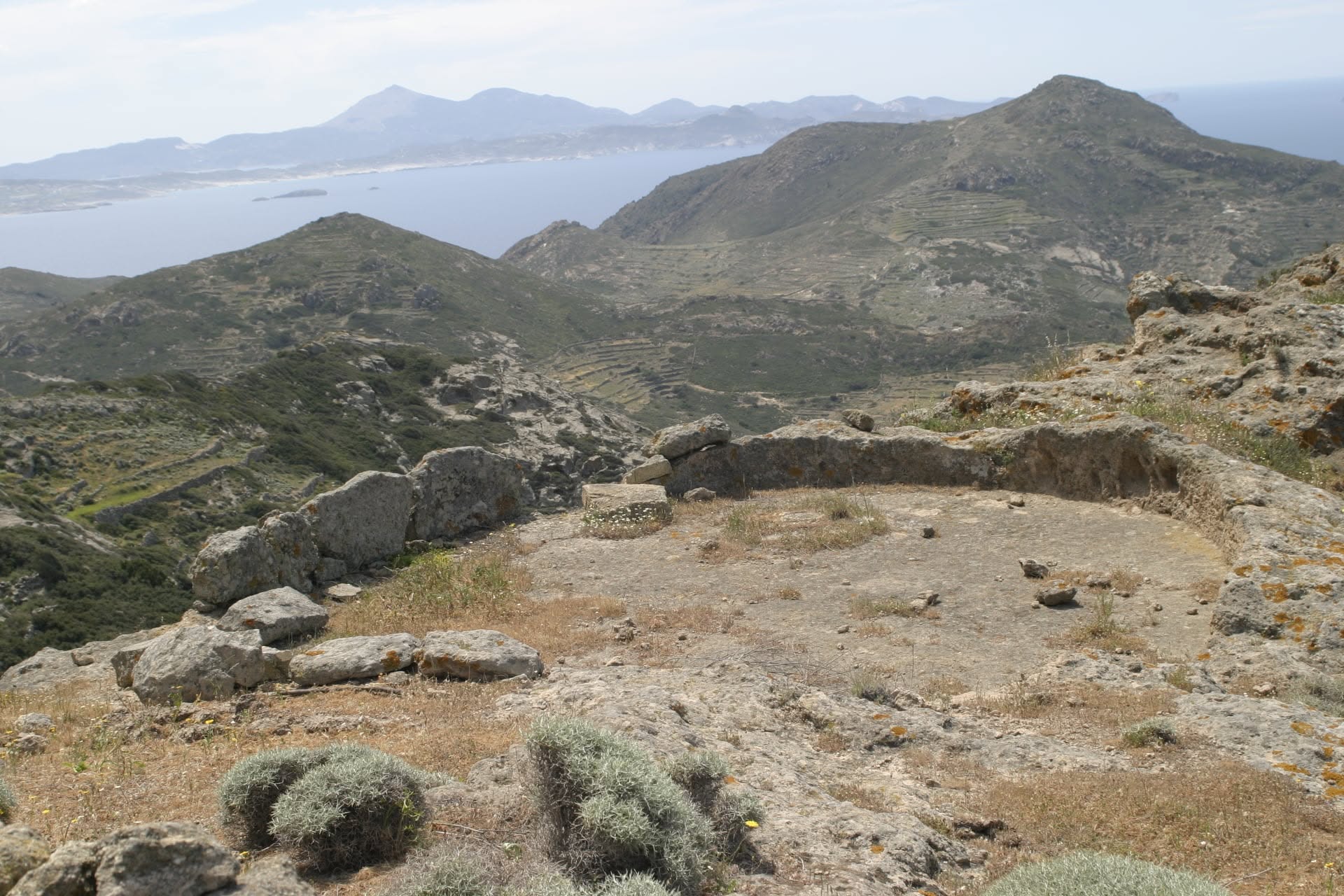
Uninhabited Polyaigos lies northeast of Kimolos and is known for pale cliffs, sea caves and intensely blue coves. Day trips and private excursions depart from Psathi, subject to weather. There are no visitor services on the island, and the point of the trip is the swimming rather than a list of sights.
Watch a Film Outdoors
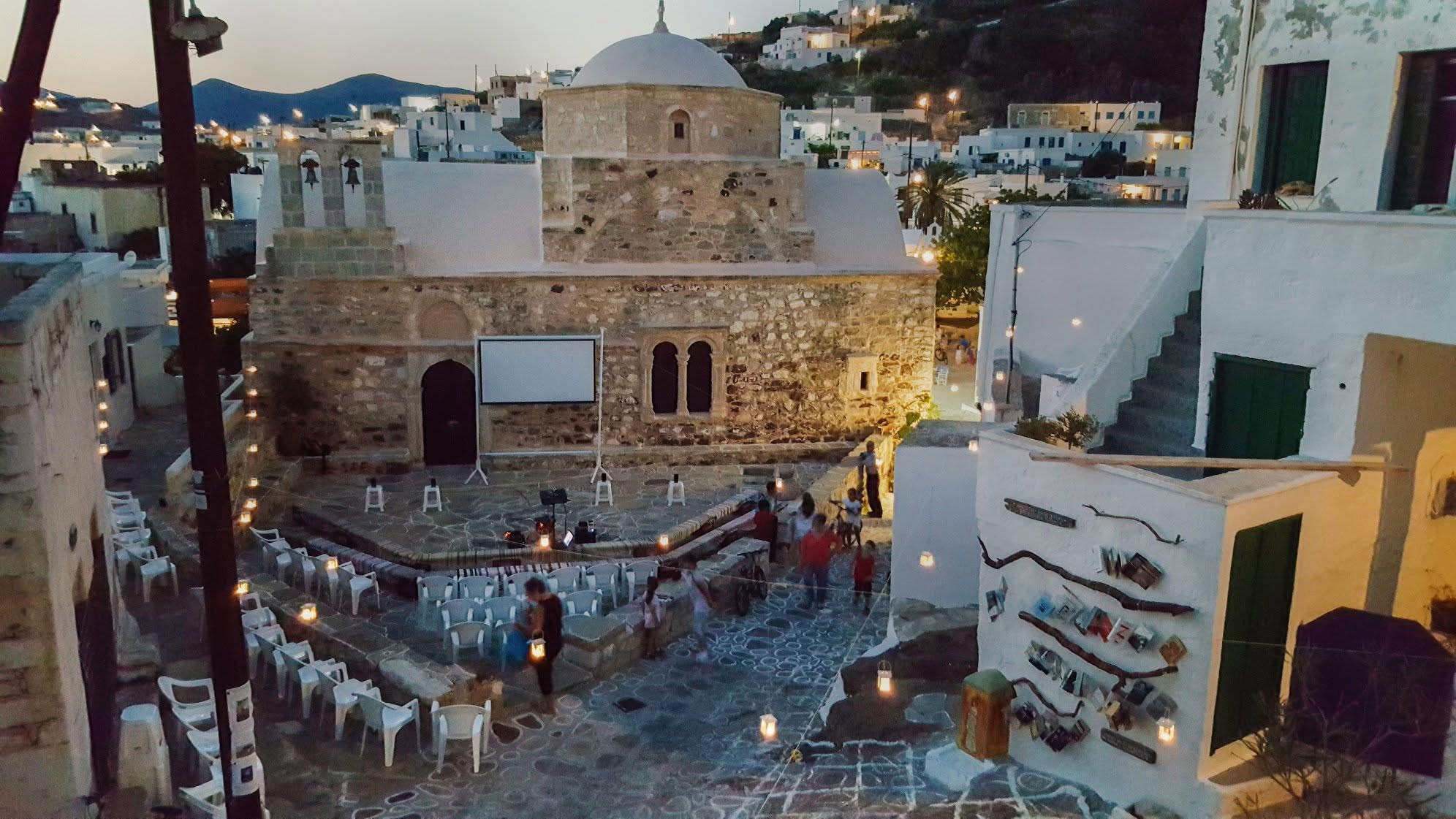
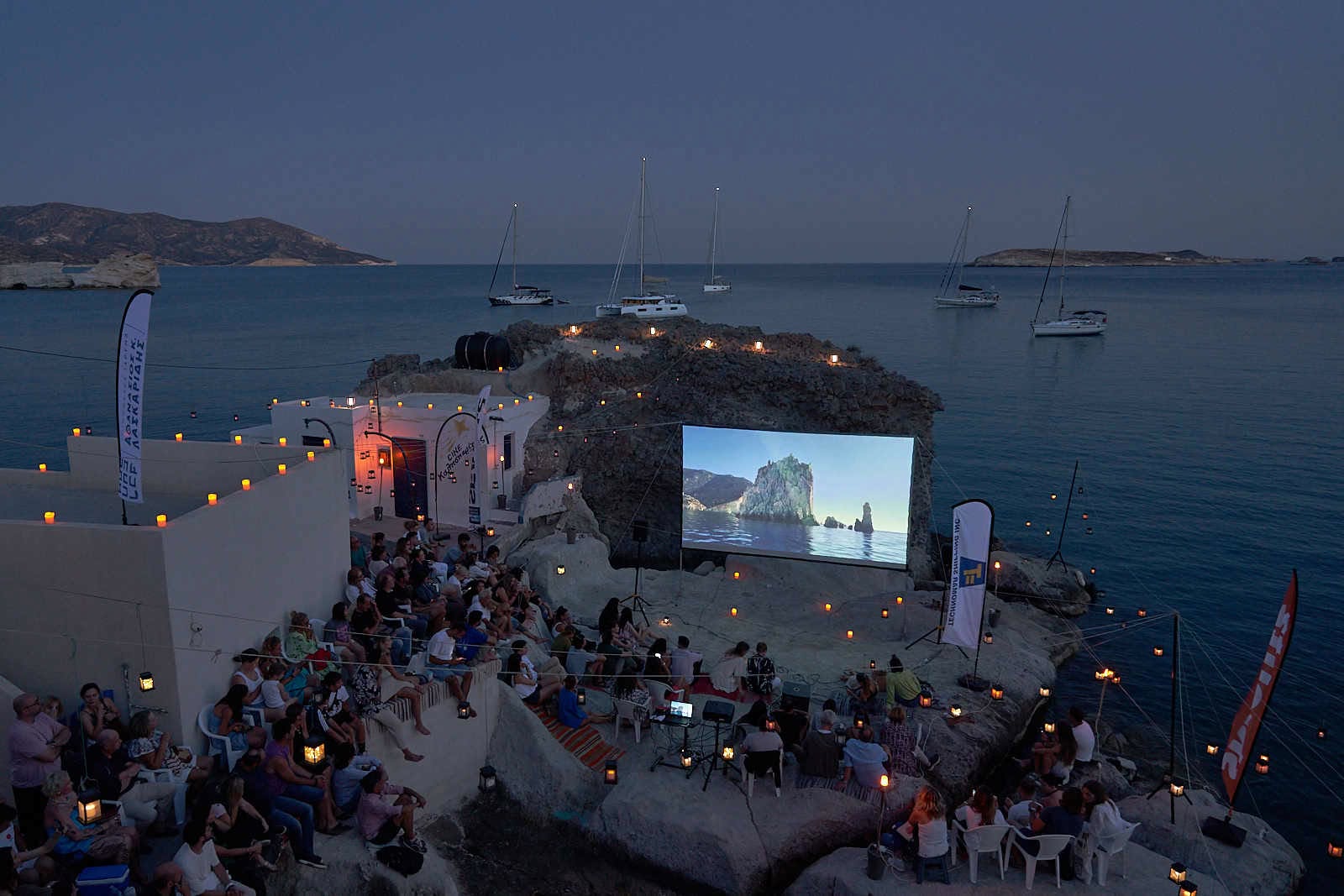
The volunteer group Kimolistes runs Cine Kalisperitis, a free open-air cinema that appears in changing locations around the island, from church courtyards to beaches and the Kastro. Screenings usually run from June through September, once or twice a week depending on weather.
Kimolos also hosts the Kimolos International Film Festival. In 2026, the festival is scheduled for September 2 to 6. Check the current program rather than planning around dates from previous years.
Snorkel With History in View
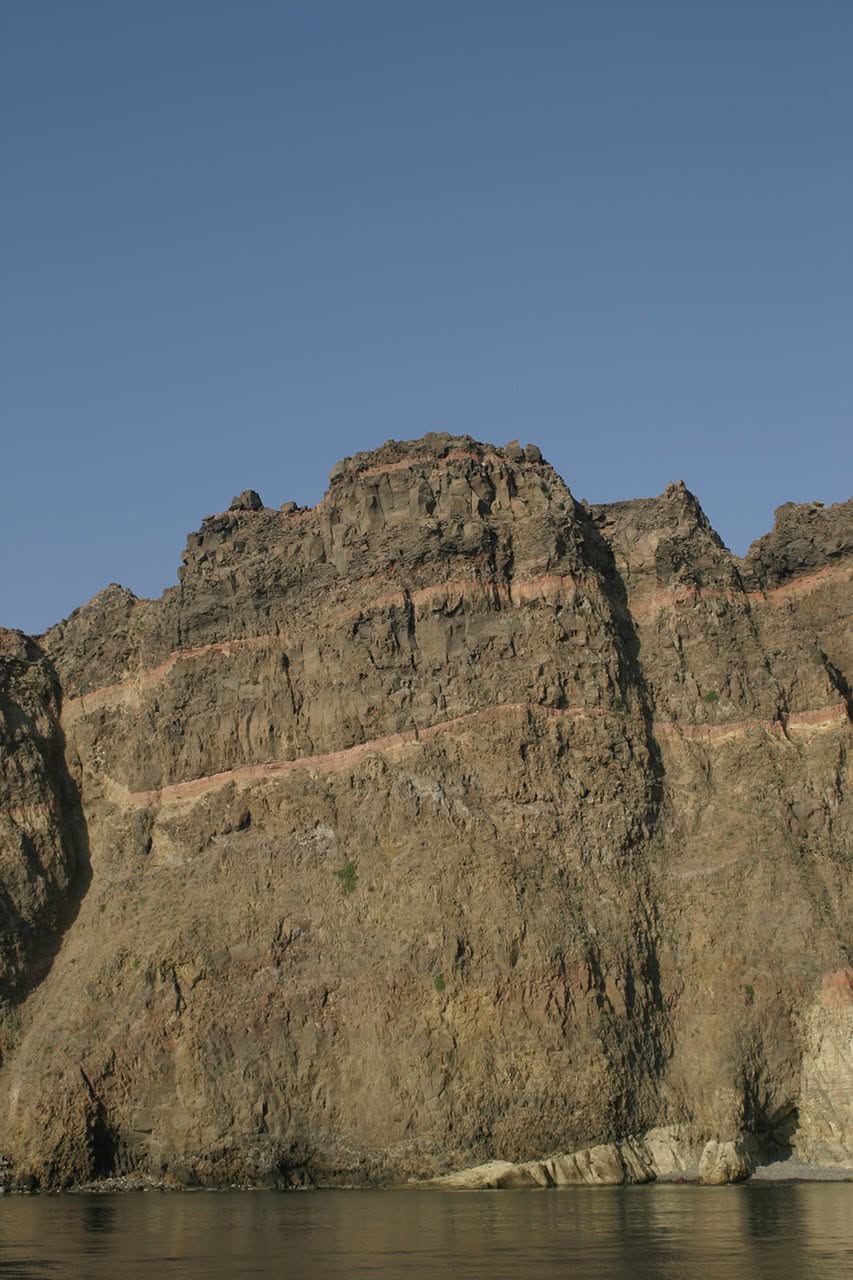
Ellinika is the easiest place to combine swimming with underwater archaeology. The remains are shallow enough to see with a mask and snorkel, but the site should be treated as archaeology, not as a source of souvenirs. For deeper or more exposed sites around Kimolos and Polyaigos, use a licensed local operator.

Follow the Traditions
Kimolos keeps a genuinely local religious calendar. The island’s patron, Panagia Odigitria, is honoured on November 21 with a procession of her icon through the village, part of an older custom in which families keep a saint’s icon in their own home all year, then carry it to church in procession on the feast day before passing it to another household for the next.
Summer brings a steadier rhythm of panigiria: Profitis Ilias on July 20, Agios Panteleimonas in Prassa on July 27, with music and food that runs late, and Panagia Konomou on August 15, alongside a smaller island-wide festival built around ladenia, the local flatbread, that same week. Osia Methodia, on October 5, closes the year with one of the biggest gatherings on the island.
03
Where to Swim
Kimolos offers both easy family beaches and remote coves reached by rougher road, footpath or boat. Wind direction matters: a beach that is glassy one day can be exposed the next. Ask locally before crossing the island for a swim.

Prassa
Prassa, also known as Agios Georgios, is Kimolos’s best-known organized beach. Thick white sand, bright turquoise water and the pale mineral landscape behind it make the bay unlike anywhere else on the island. Summer facilities usually include umbrellas and places for food or drink.
Bonatsa
Bonatsa is a long, sandy beach with shallow water and tamarisk trees, making it one of the easiest choices for families. Seasonal services nearby allow visitors to stay through lunch without carrying a full day’s supplies.
Aliki
Aliki mixes sand and pebbles along a broad, easily reached shore. Behind it, a small salt pan holds migratory birds in spring and autumn before drying out in summer. Tamarisk trees provide natural shade, and seasonal food and lodging options sit close to the beach.
Kalamitsi
Kalamitsi is not one continuous beach but 2 adjoining shores, one sandy and one pebbled, both facing the channel toward Milos. Tamarisk shade and a taverna beside the water make it an easy place to combine a swim with lunch.
Rema and Karas
Rema is a small pebbled cove set among the syrmata near Goupa. The water is usually sheltered and the boat shelters give the landscape its character. Karas is a sequence of smooth white rocks and natural platforms where swimmers enter directly into green-blue water. Both are close enough to Chorio to visit on foot.
Ellinika
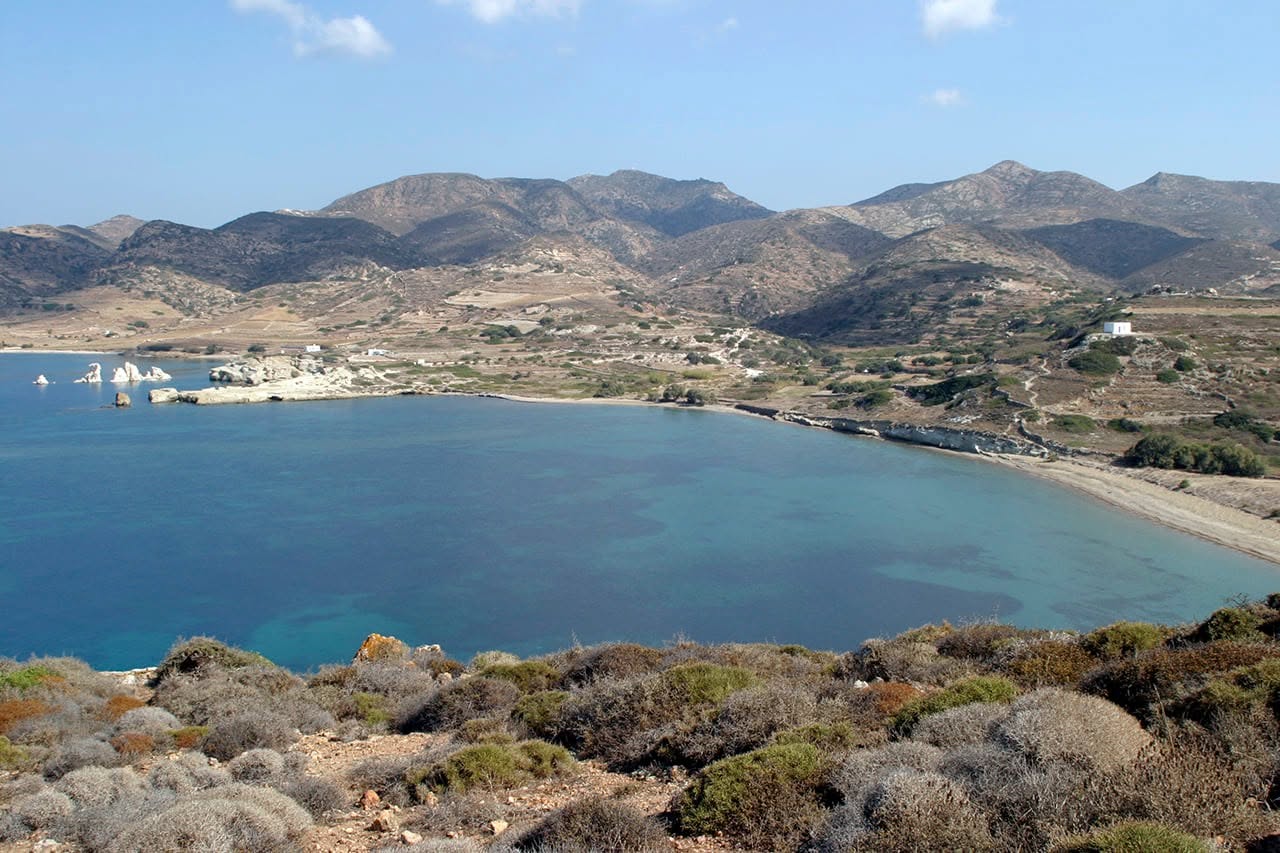
Ellinika, on the west coast, combines a spacious beach with one of Kimolos’s most important archaeological landscapes. Traces of an ancient settlement lie in shallow water, roughly 1 to 2 meters below the surface, while burial grounds extend along the shore. A mask and snorkel reveal part of the site, but nothing should be touched or moved.

Mavrospilia
Near Ellinika, Mavrospilia is a west-facing beach known for sunset and the pale offshore rocks of Aspragremna. It is less developed than the south-coast beaches, so carry what you need.
Agioklima and Gerakia Cave
Agioklima is a secluded beach with a hot spring at the waterline. Gerakia is a sea cave hidden among large rocks, with shallow turquoise water inside. Both are reached by boat, and access depends entirely on sea conditions.
Klima, Dekas and Fikiada
Klima mixes coarse pebbles and sand with generous tamarisk shade, but it is exposed when the north wind rises. Dekas and Fikiada sit farther from the main village circuit and reward travelers prepared for rougher approaches. Check the day’s bus route and road conditions before setting out.
04
Where to Eat & Drink
Kimolos’s food is built on a short list of island ingredients: tomatoes, onions, capers, honey, local cheeses, fish and goat. Restaurant hours and opening periods are seasonal, so confirm before making a special journey.

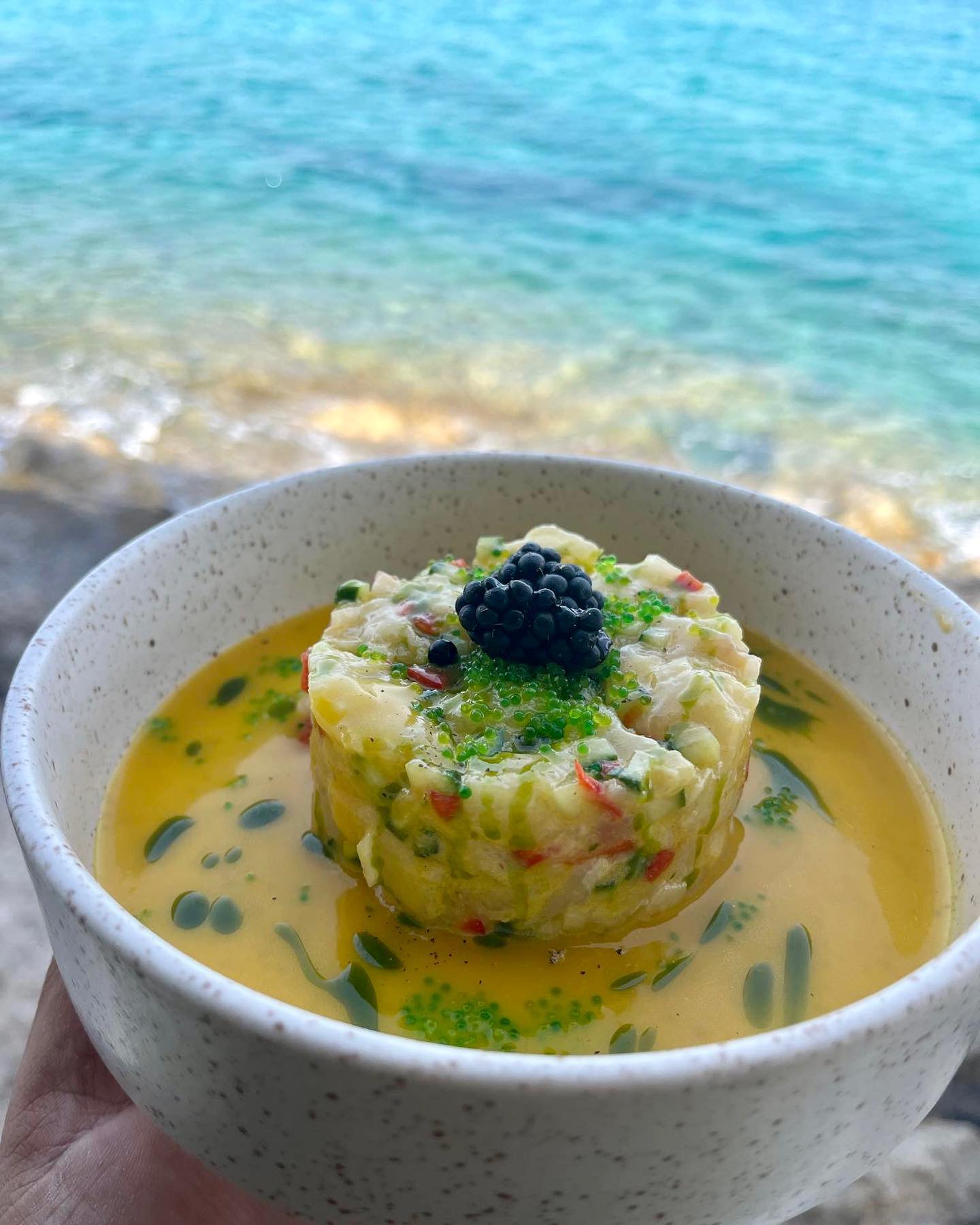
Amoni, at Espera Suites, is Kimolos’s most refined table – a kitchen that elevates Kimolian ingredients into something quietly spectacular, paired with sweeping sunset views and a dining room made for lingering. It’s the kind of meal worth building an evening around. Reservations are essential in high season.
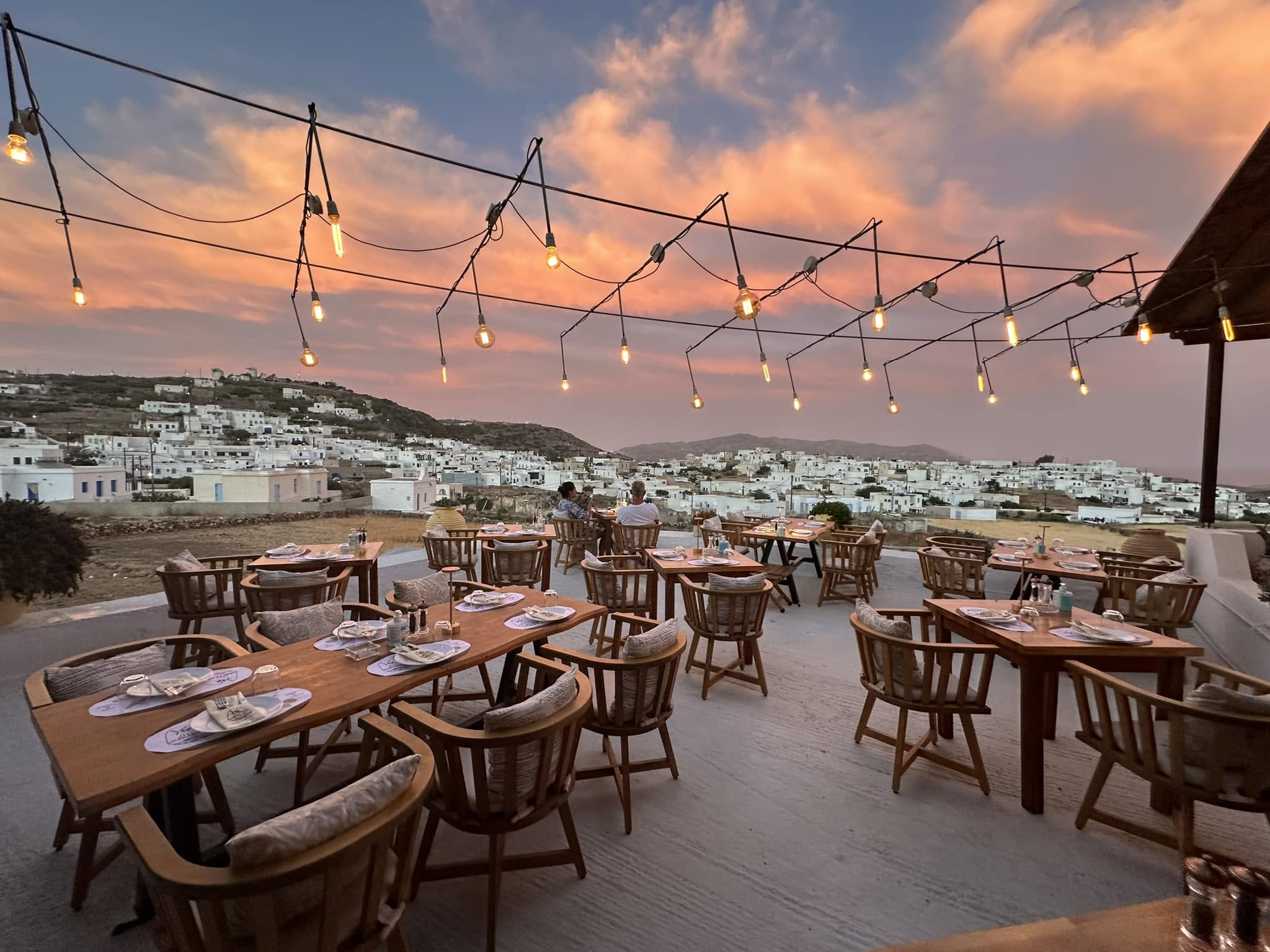
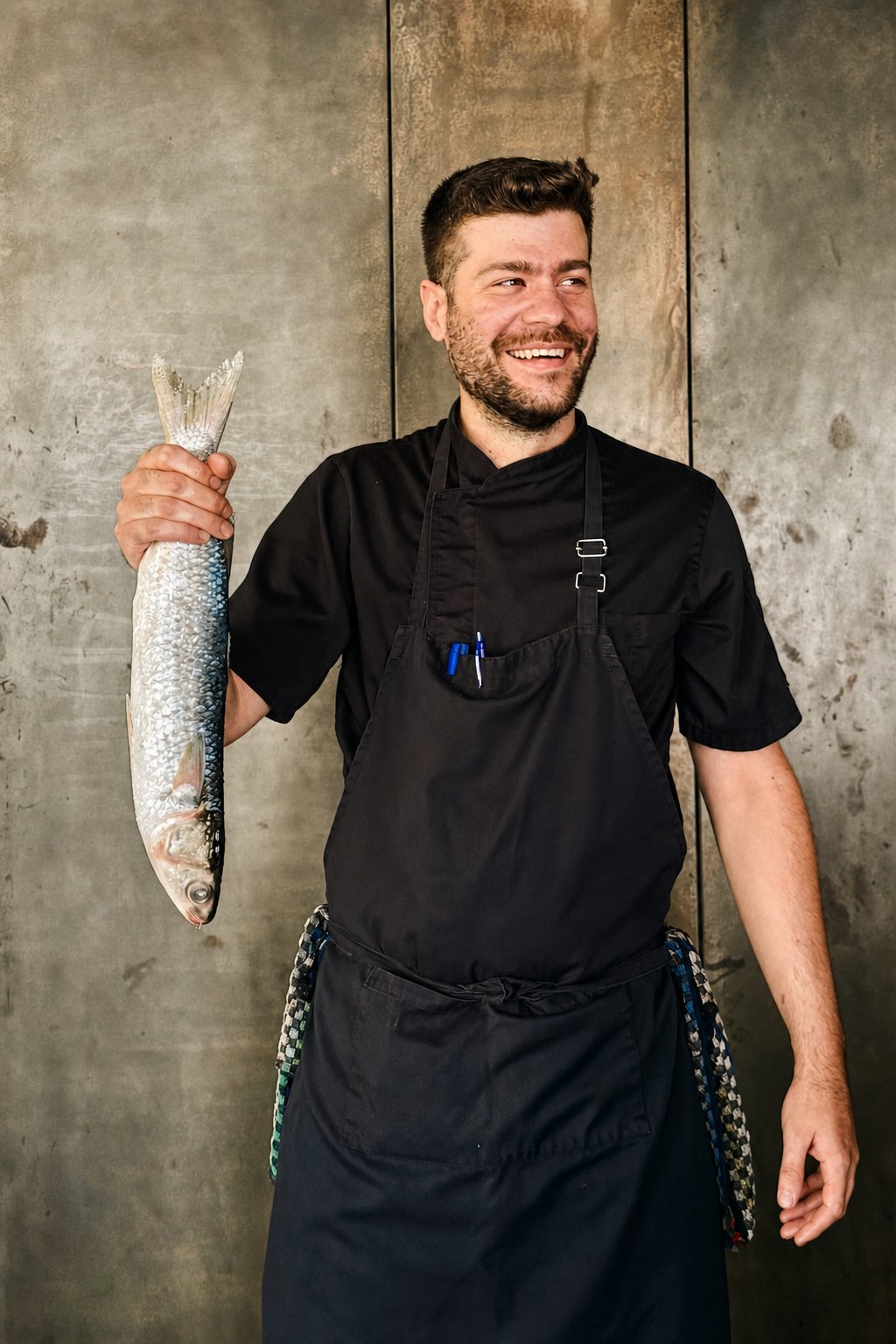
Meltemi, on the western side of Chorio, is the village’s more creative kitchen. Chef Augoustis Galanos works with local cheeses, capers, herbs, seafood and meat, building a menu that looks beyond the standard taverna repertoire. Go for dinner and the view across the settlement toward Polyaigos.
Prasonisi, above the water near Prassa, is one of the island’s established seafood stops. The setting is direct and unpretentious, with fresh fish and the turquoise bay doing most of the work.
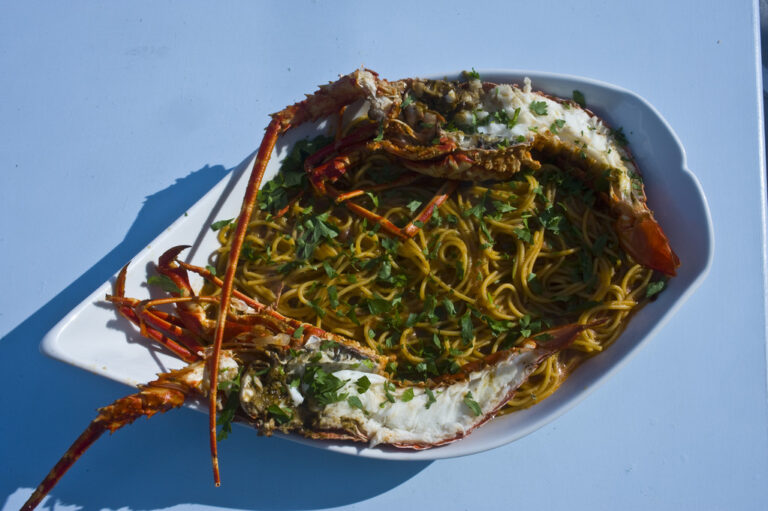
Sardis, beside Aliki beach, is a family-run restaurant known for home cooking, fish from the family’s boat, local dishes and goat in tomato sauce. Its adjoining rooms make it an easy choice for visitors staying on the south coast.
Kalamitsi Tavern serves fish, seafood, vegetables from the family’s garden and straightforward Greek cooking a few steps from the water. It is the sort of place that makes a swim become lunch, and lunch become most of the afternoon.
In Chorio, leave room for the old-fashioned cafes and bakeries around Kambos and the Agora. Ask what has been baked or cooked that day. On Kimolos, the most memorable food is not always announced by the longest menu.
What to Eat
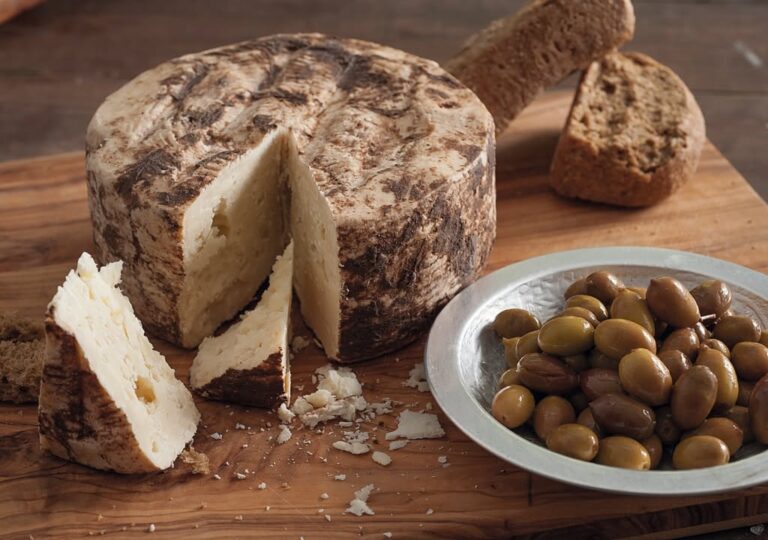
The dish most closely associated with Kimolos is ladenia, a soft, open bread topped with tomato, onion and generous olive oil. Also look for tirenia, a cheese-filled bread; elenia, made with olives; local honey and capers; xino, a fresh sour cheese; and manoura, a dry cheese traditionally wrapped in grape-must residue.
For the fuller culinary story, including Kimolos’s breads, pies, rusks and handmade pasta, read Travel.gr’s guide to the traditional pies and food of Kimolos.

Where to Drink
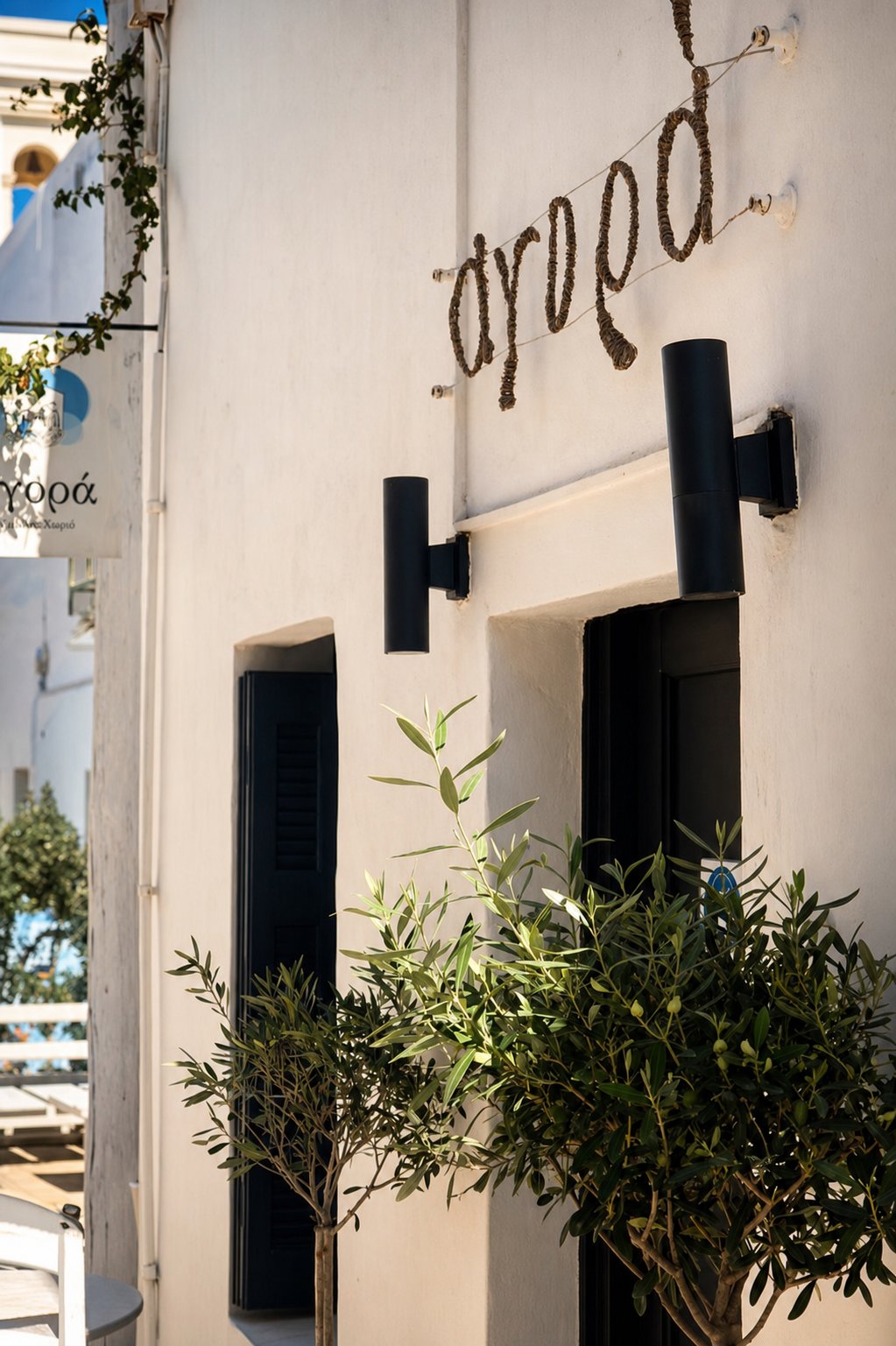
Agora, in Palaia Agora beside the Kastro gate, is Kimolos’ established cocktail bar and the place where Chorio gathers after dinner. The drinks are carefully made, the music well chosen and the atmosphere lively without feeling forced, making it the island’s clearest choice for a late-night drink.
05
Where to Stay
Kimolos remains a small-scale destination. Its rooms are scattered among polished suites, studios, converted windmills, farm stays and former fishermen’s boat shelters. Book early for July and August, when the island’s limited supply fills quickly. There are no mega resorts, and distances are short enough that location matters less here than on larger islands, though staying near Chorio still makes the most sense for a first visit.
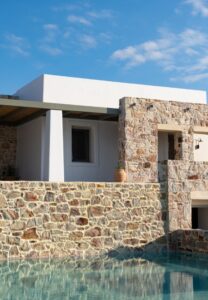
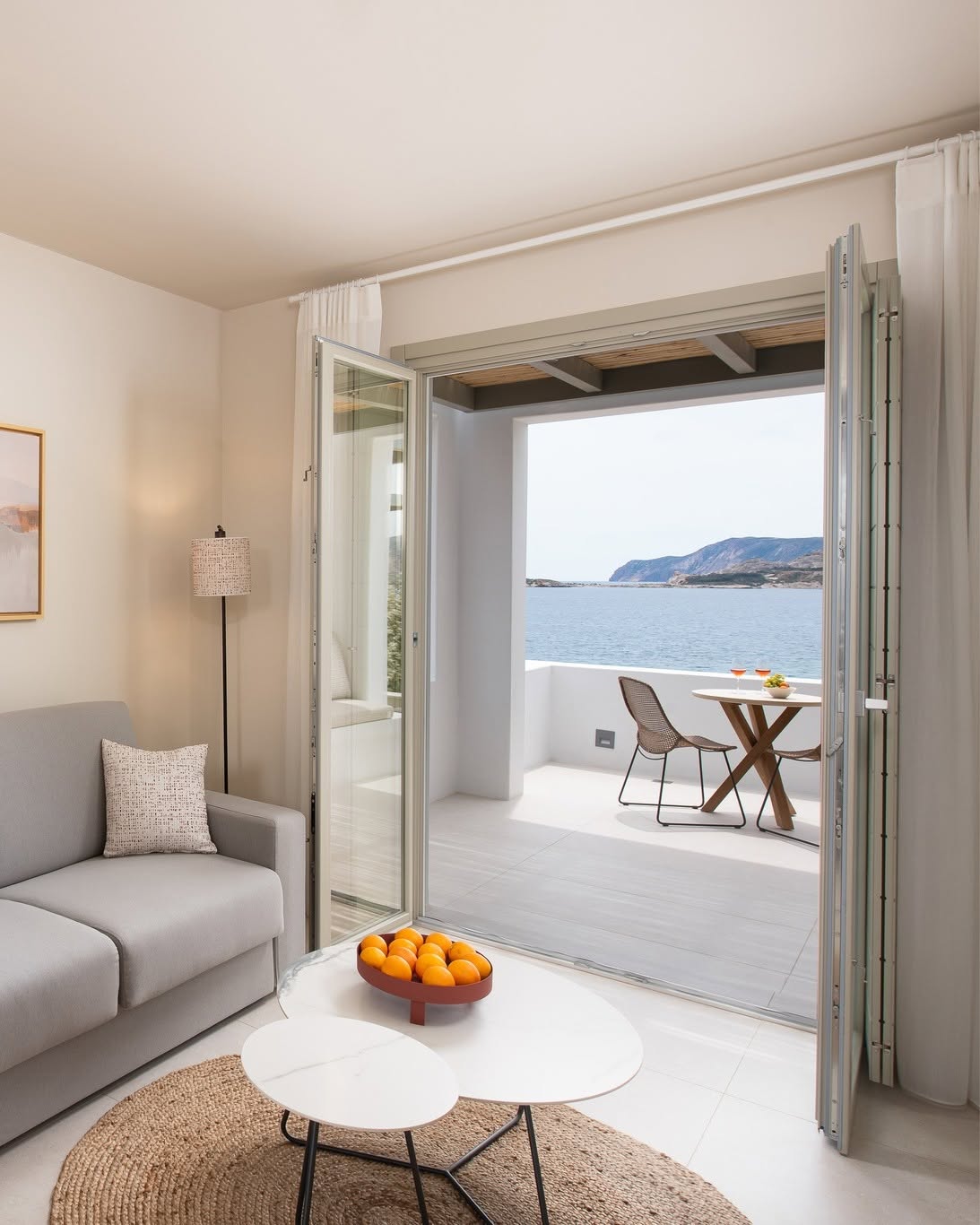
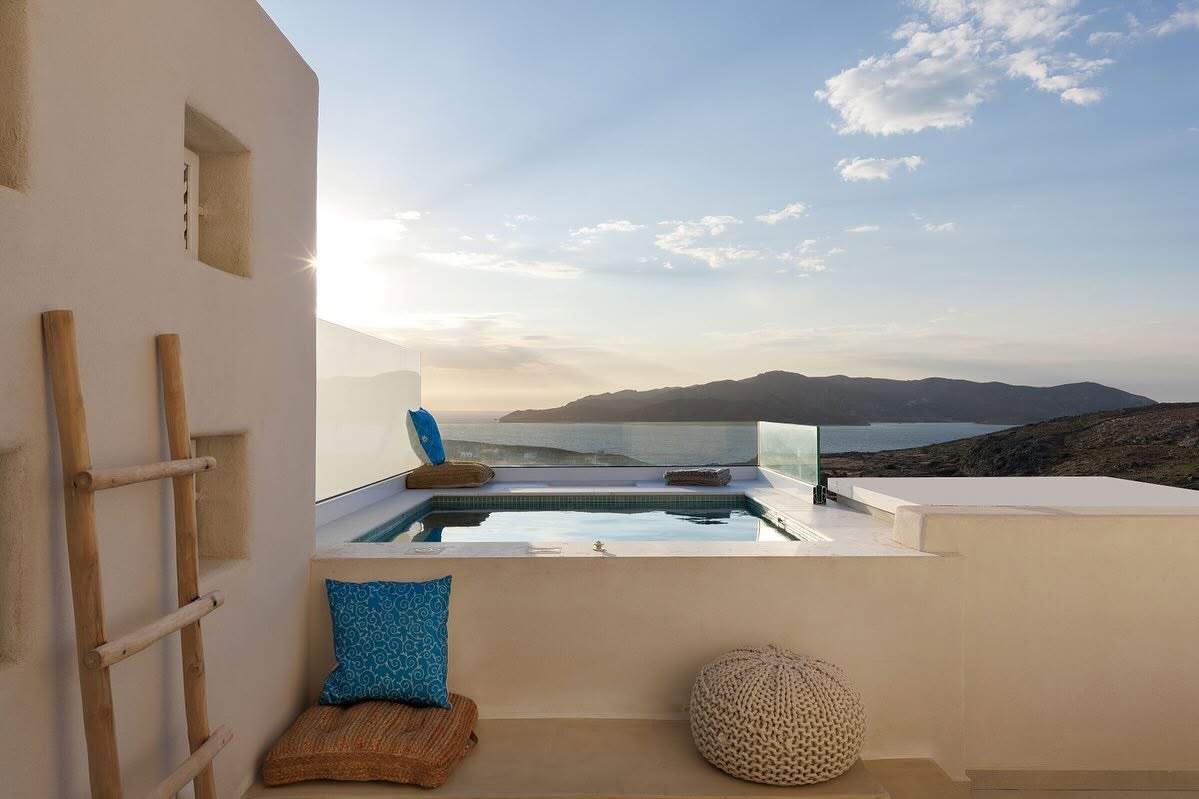
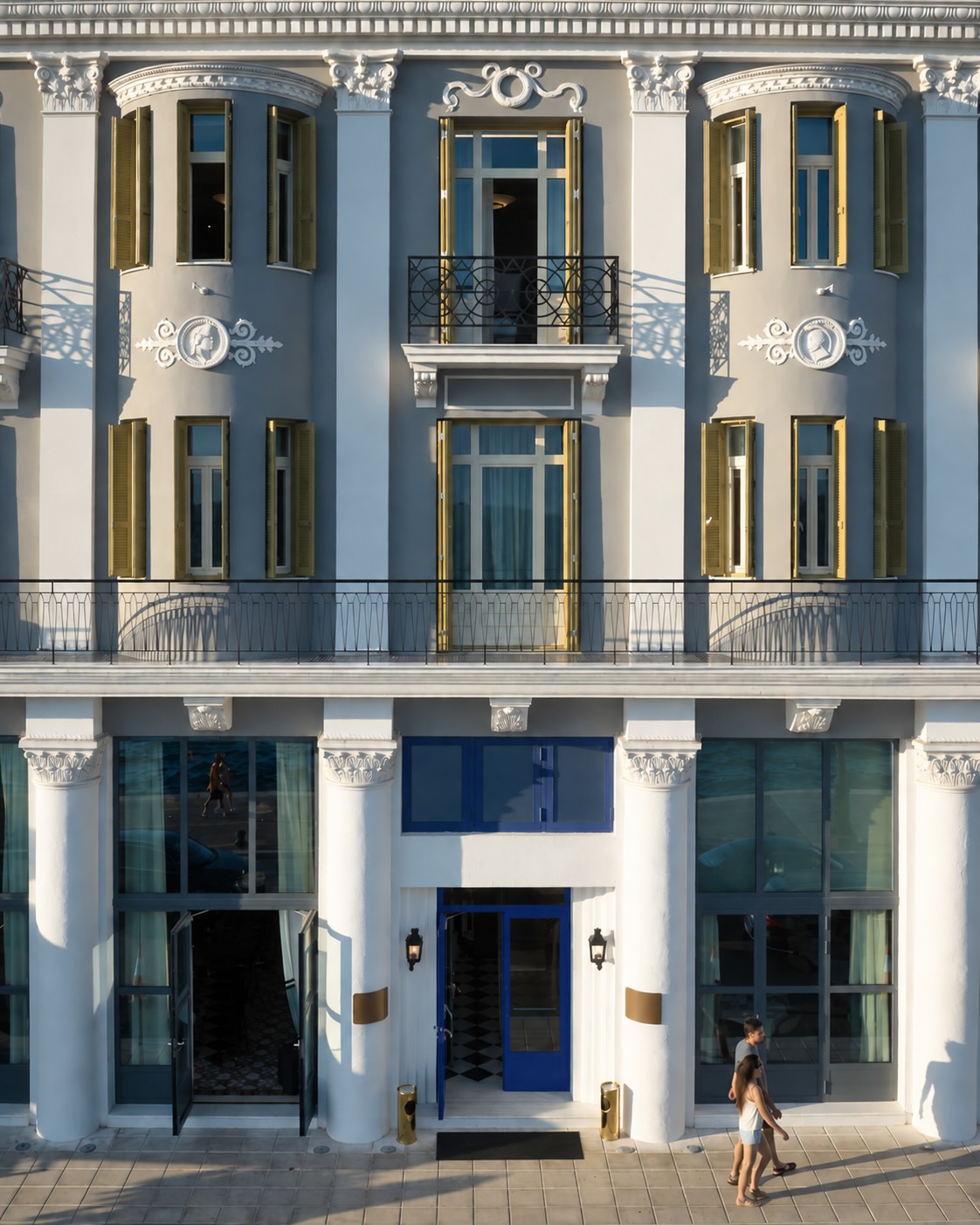
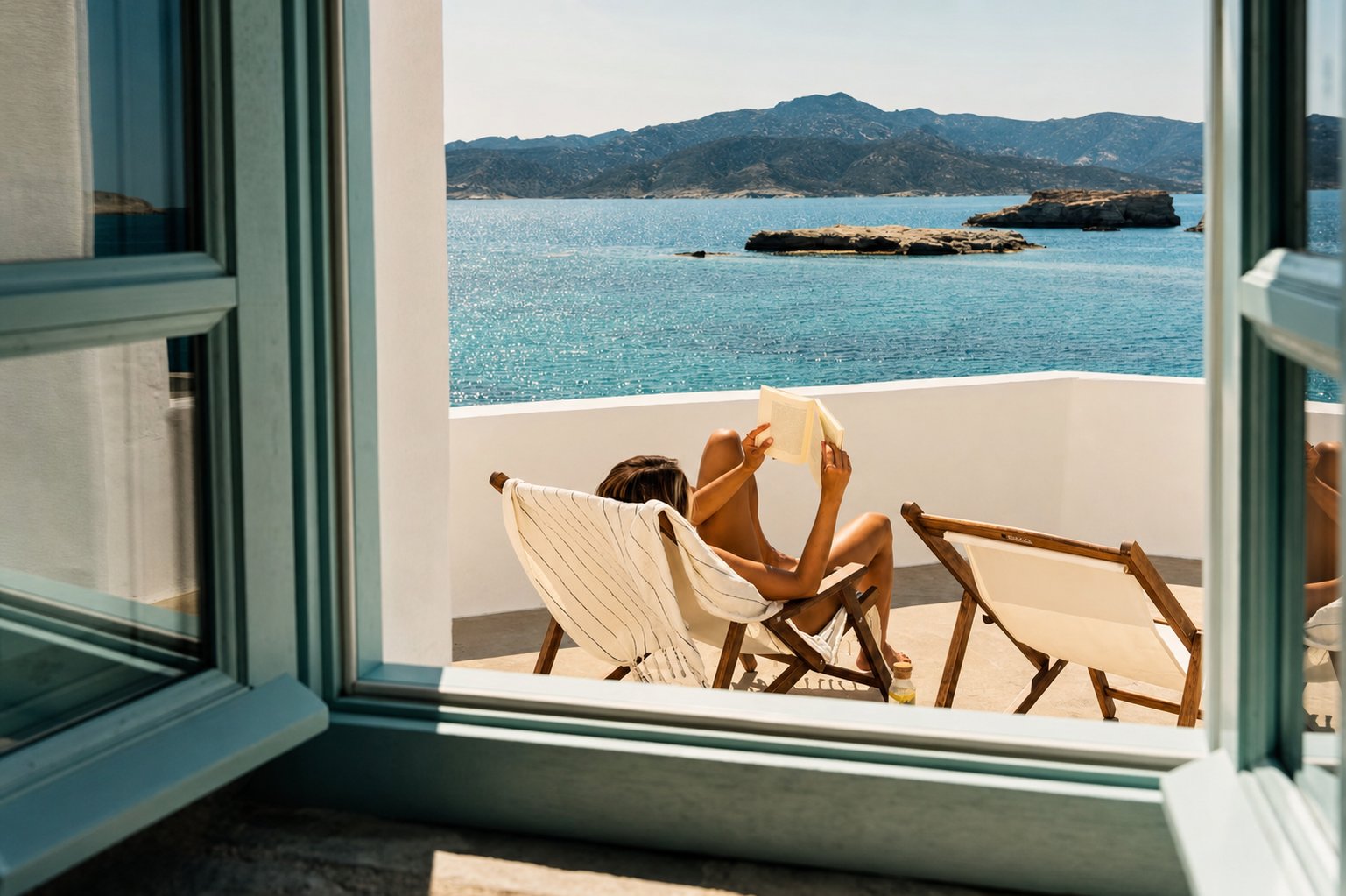
Espera Suites, in Kalamitsi, is Kimolos’ standout 5-star retreat – a newly opened boutique property that has quickly become the island’s most talked-about address. Sea-facing accommodations range from sleek suites to expansive units with private pools, all designed with the kind of understated elegance more often found on better-known islands. Amoni, the on-site restaurant, is reason enough to stay in for dinner. For couples and design-minded travelers seeking Kimolos’s most polished hotel experience, this is it.
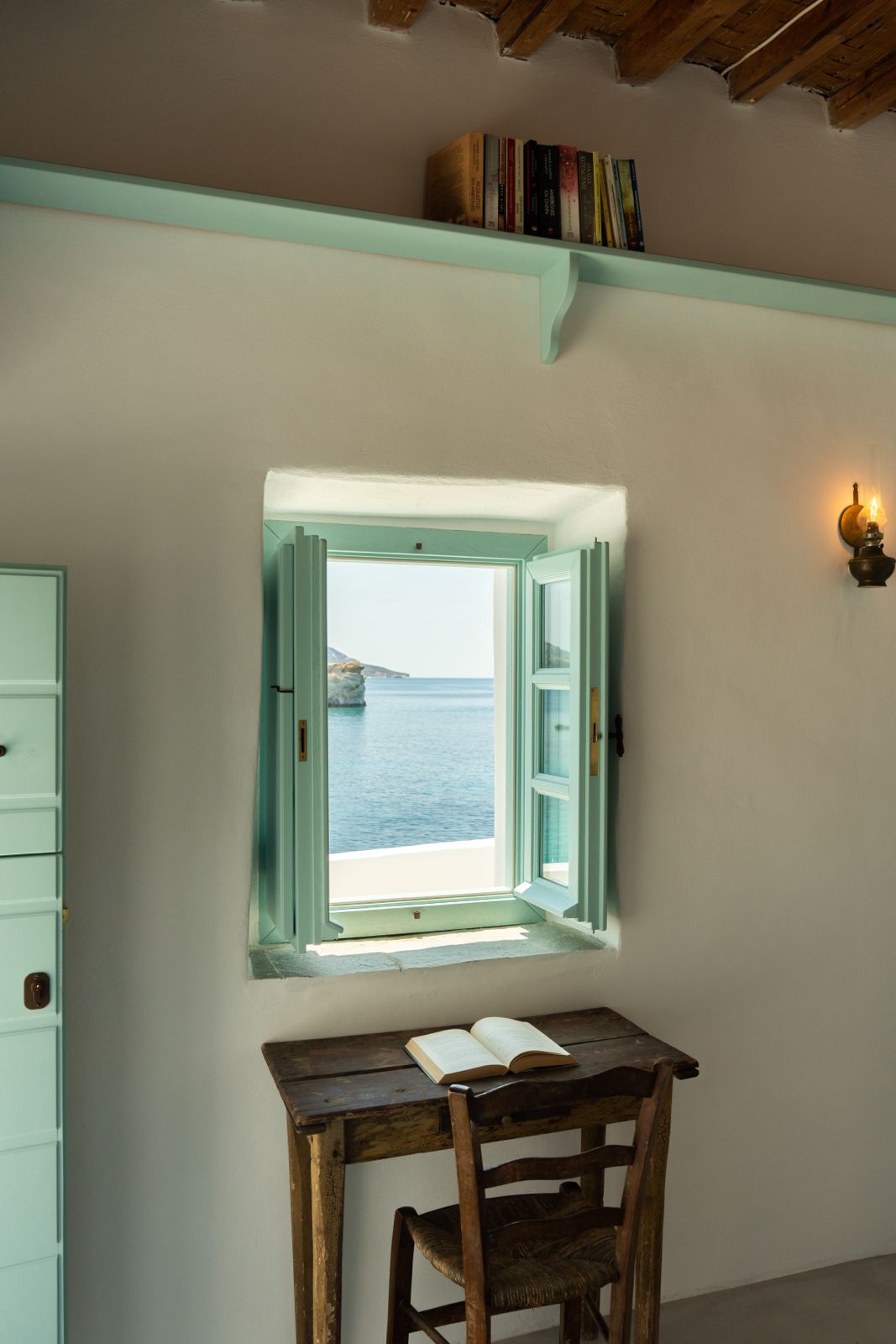
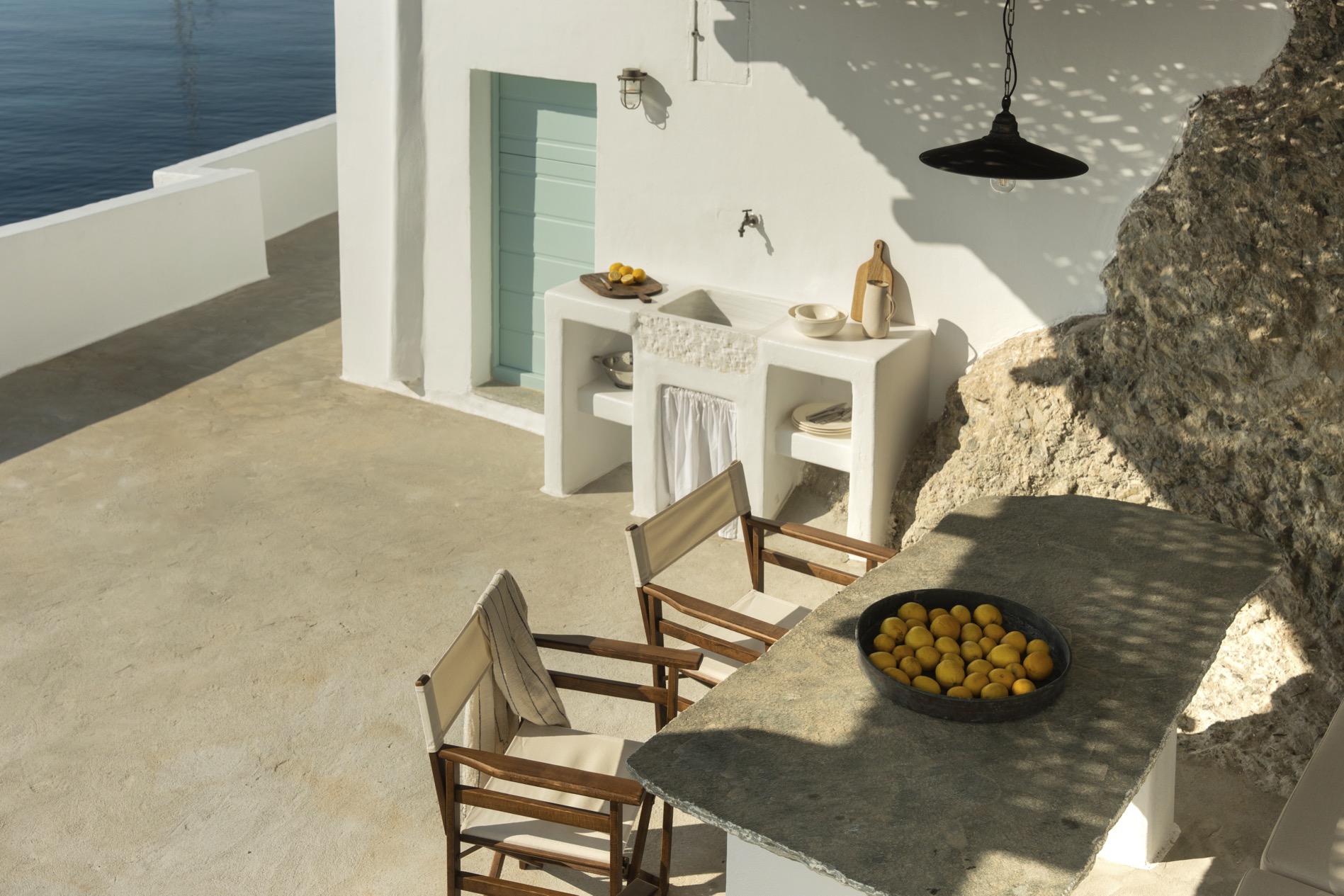
Thavma Kimolos transforms a traditional fisherman’s boathouse into a refined waterfront retreat. Known locally as syrmata, these simple buildings were constructed at the water’s edge so fishermen could pull their boats inside and protect them during winter. Its sensitive restoration has made it a favorite within the design community and earned it well-deserved attention. Sleeping up to 3, it is ideal for travelers seeking privacy, character, and the sea just outside their door.
Anemolethe Suites sits perched on a rocky slope just five minutes from Chorio, with sweeping Aegean views that make it one of the island’s most scenic stays. Rooms and family suites open onto that same wide horizon, while select units add a private hot tub or pool for a little extra indulgence. It’s the rare combination on Kimolos: real seclusion, paired with the village always just a short walk away.
Kimolia Gi, near Prassa, offers a stay that feels genuinely rooted in the island – a working farm turned into one of Kimolos’s most characterful retreats. Expect home-grown produce, generous outdoor space and a slower rhythm all its own, tucked into the quieter northeast corner of the island. It’s an ideal fit for travelers who want their stay to feel like part of the landscape, not just a room within it.
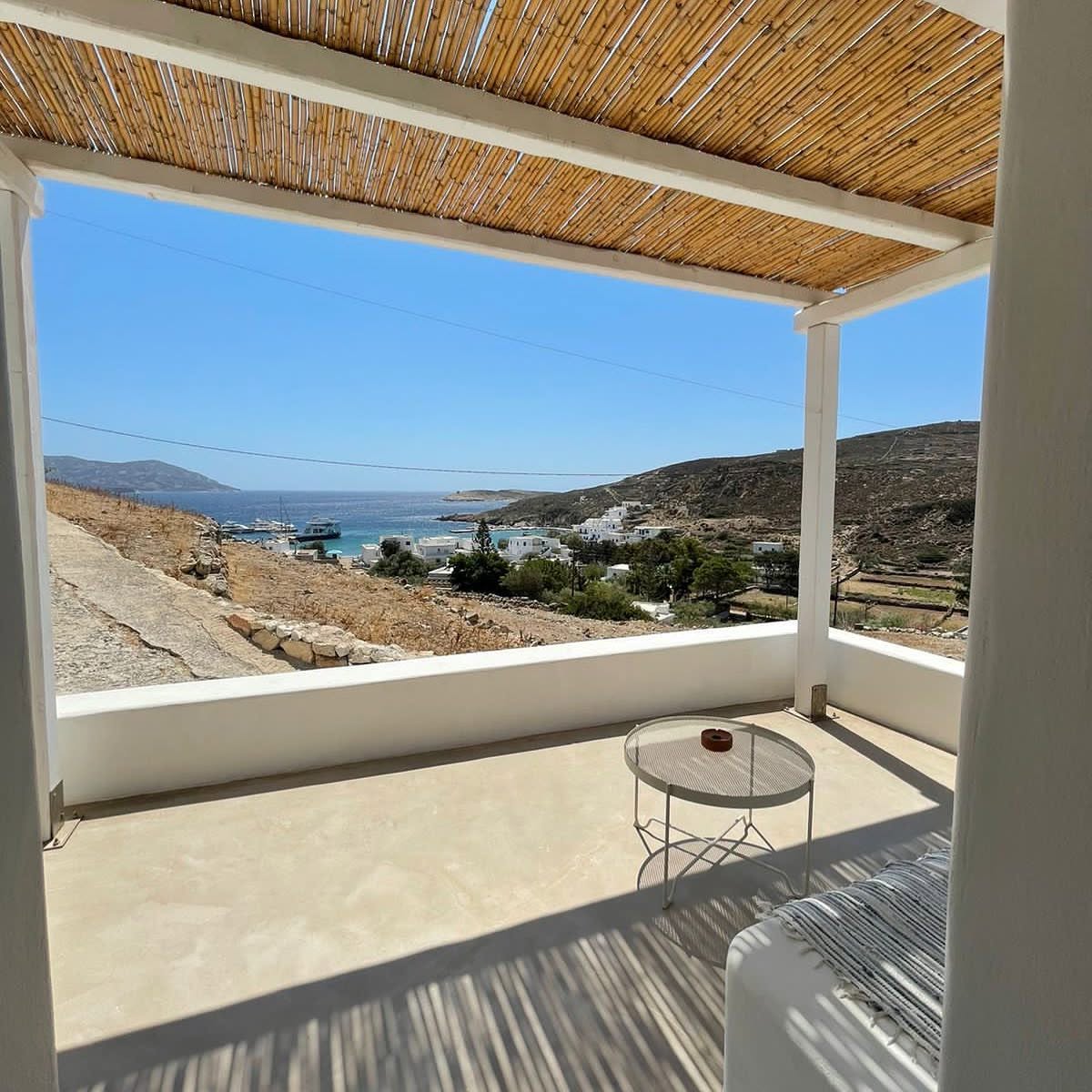
Psathaki brings easy charm to the port town, with 4 rooms and 2 studios arranged around a sun-dappled courtyard and views that stretch toward the harbor. It’s a smart, unfussy choice for a short stay or an early departure — and with Chorio just a walk away, guests never feel far from the island’s heart.
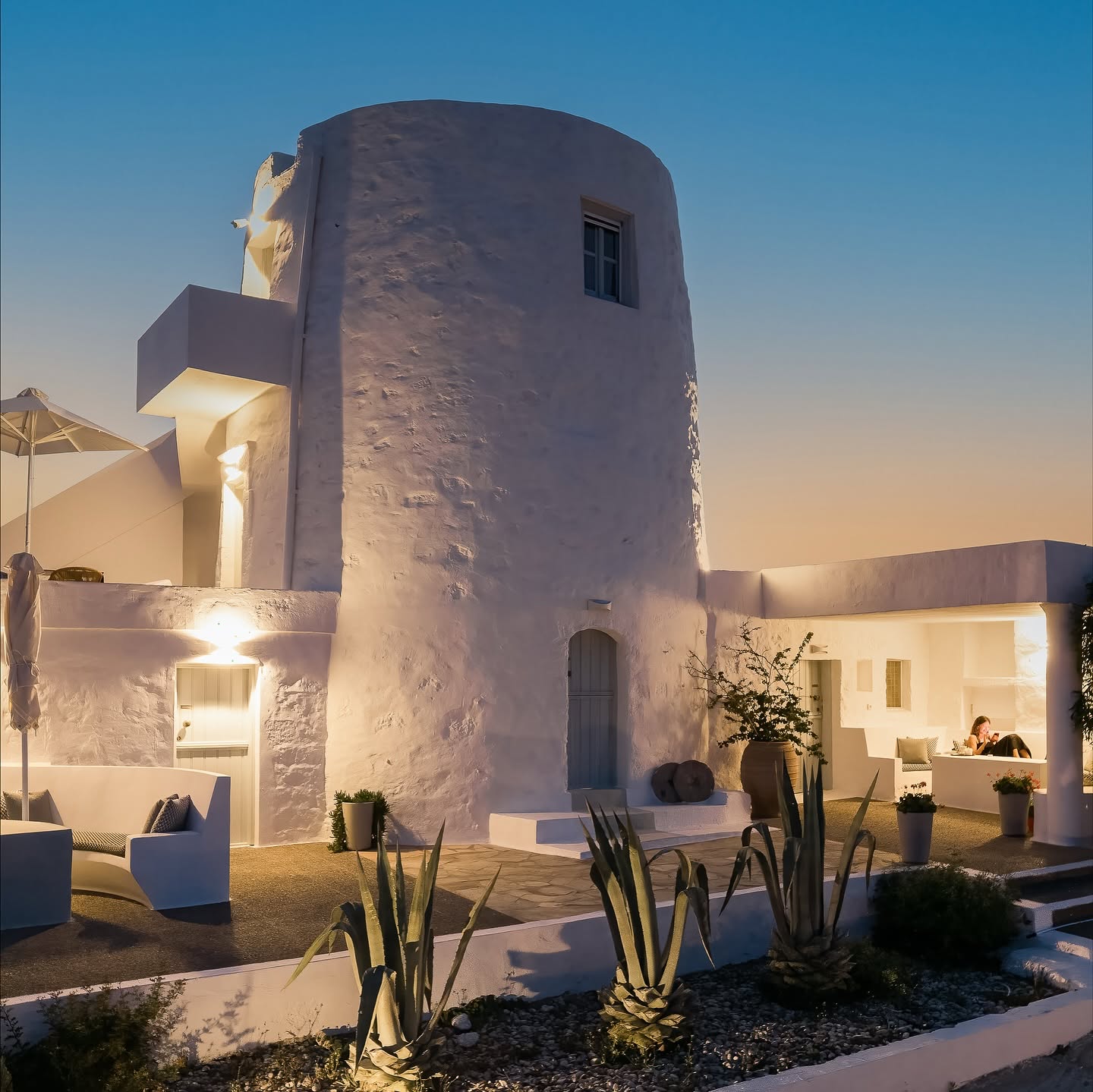
The Windmill Kimolos turns a restored 1852 windmill into one of the island’s most distinctive stays, set on the quiet stretch between Psathi and Chorio. Its 5 rooms and sweeping panoramic views give it a sense of history and character rarely found in a conventional island hotel — all without straying far from daily conveniences.
06
A Simple 3-Day Kimolos Itinerary
Three days offer enough time to experience Kimolos without fighting its unhurried pace. This itinerary balances the village, the coast and one signature excursion while leaving room for spontaneity.
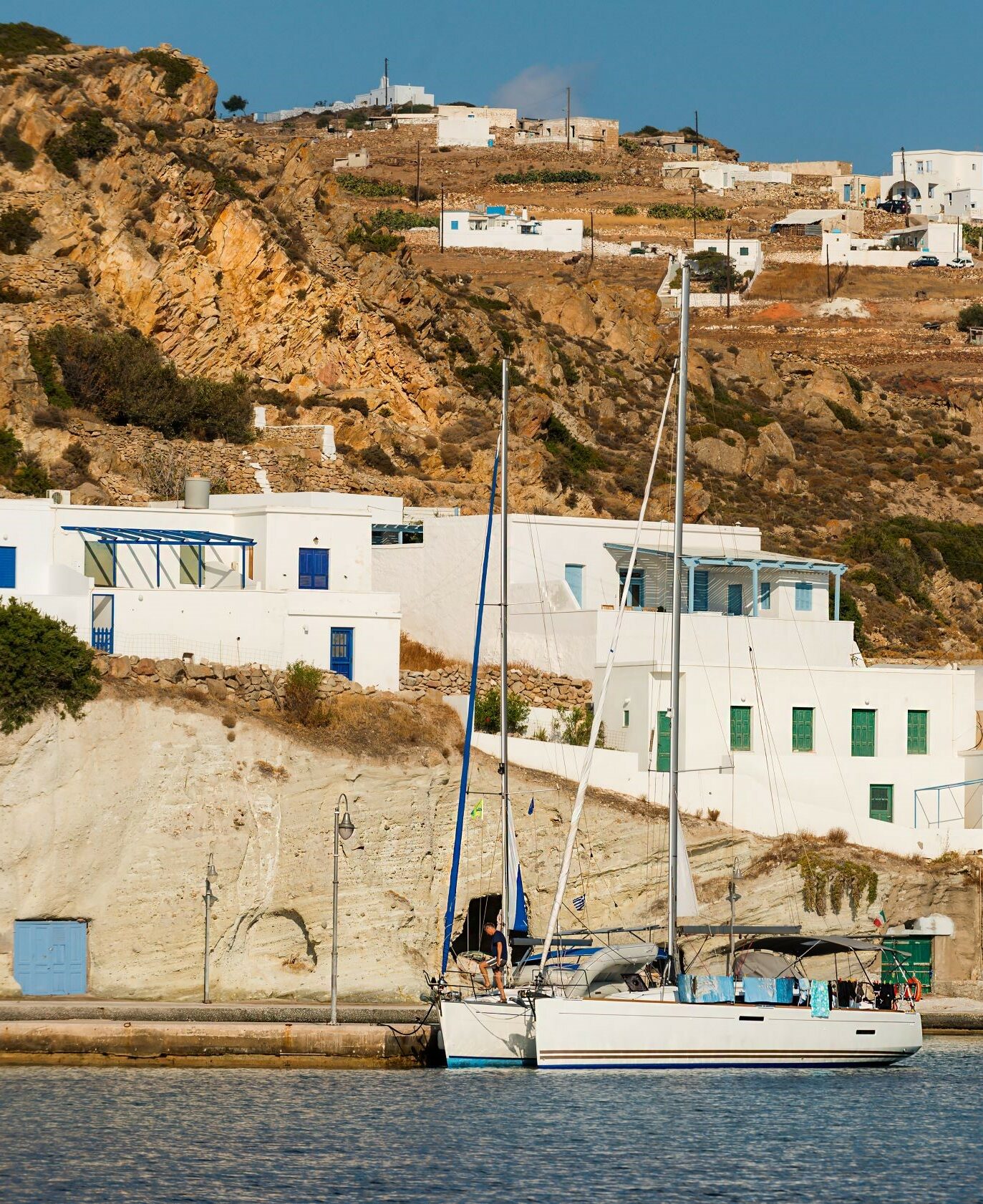

Day 1: Arrive at Psathi, settle in and walk up to Chorio. Explore Kambos, the Agora and the Kastro in the late afternoon. Continue toward the windmills for the view, then have dinner in the village.
Day 2: Swim at Prassa in the morning, before the beach becomes busy. Return via Goupa, Rema and Karas for a short coastal walk among the syrmata. Try ladenia from a bakery and book a longer dinner at Meltemi or Amoni.
Day 3: Choose between a boat trip to Polyaigos and a land day. On land, walk to Skiadi early, then spend the afternoon at Ellinika and Mavrospilia, staying for sunset only if you have reliable transportation back.
With a 4th day, slow the plan down. Add Kalamitsi or Bonatsa, visit both museums when they are open and leave time for a long lunch rather than another circuit of the island.
07
Getting There and Around & Whether You Need a Car
Kimolos has no airport. Visitors arrive by sea at Psathi, the island’s only port. Direct ferries connect the island with Piraeus, while, as of mid-July 2026, there is also daily service from Lavrio. Routes and frequencies change by season, so check the operator’s current schedule before traveling.
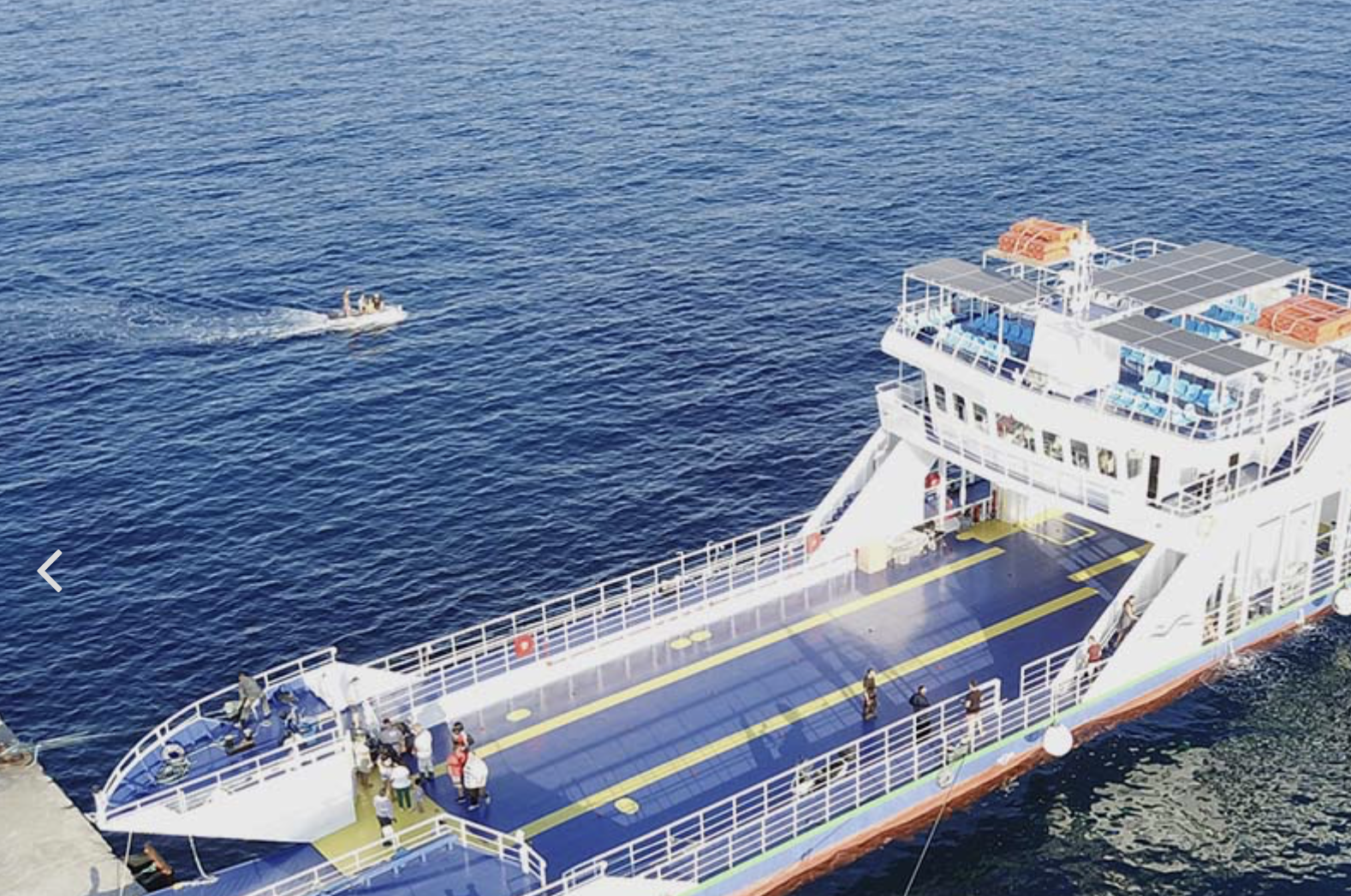
The other useful route is through Milos. Fly or sail to Milos, continue to Pollonia on the northeast coast and take the local ferry to Psathi. The crossing is short and runs several times a day in summer, weather permitting.
Psathi and Chorio are the island’s 2 practical hubs. The uphill walk between them takes about 20 minutes; a taxi covers it in a few. Chorio contains most shops, restaurants and cultural sights, while Psathi is useful for arrivals, waterfront meals and a quick swim beside the port.
A seasonal bus links Psathi and Chorio with several beaches. In mid-July 2026, the published schedule includes multiple daily services to Aliki, Bonatsa and Kalamitsi; check the current Kimolos bus timetable, as a new schedule is due after July 19.
A car or scooter is useful for travelers who want to move independently, but it is not essential for a short stay. Some of the island’s secondary roads are unpaved, and a high-clearance vehicle handles some approaches better.
Tip: For a first visit, staying in or near Chorio makes evenings easiest and gives the widest choice of food. Psathi suits shorter stays and early departures. Kalamitsi, Aliki and Prassa trade village convenience for immediate access to the sea. Two nights are enough to see the essentials, but Kimolos, more than most islands, rewards those who stay for three or four.
08
Practical Information
A little preparation goes a long way on a small island.
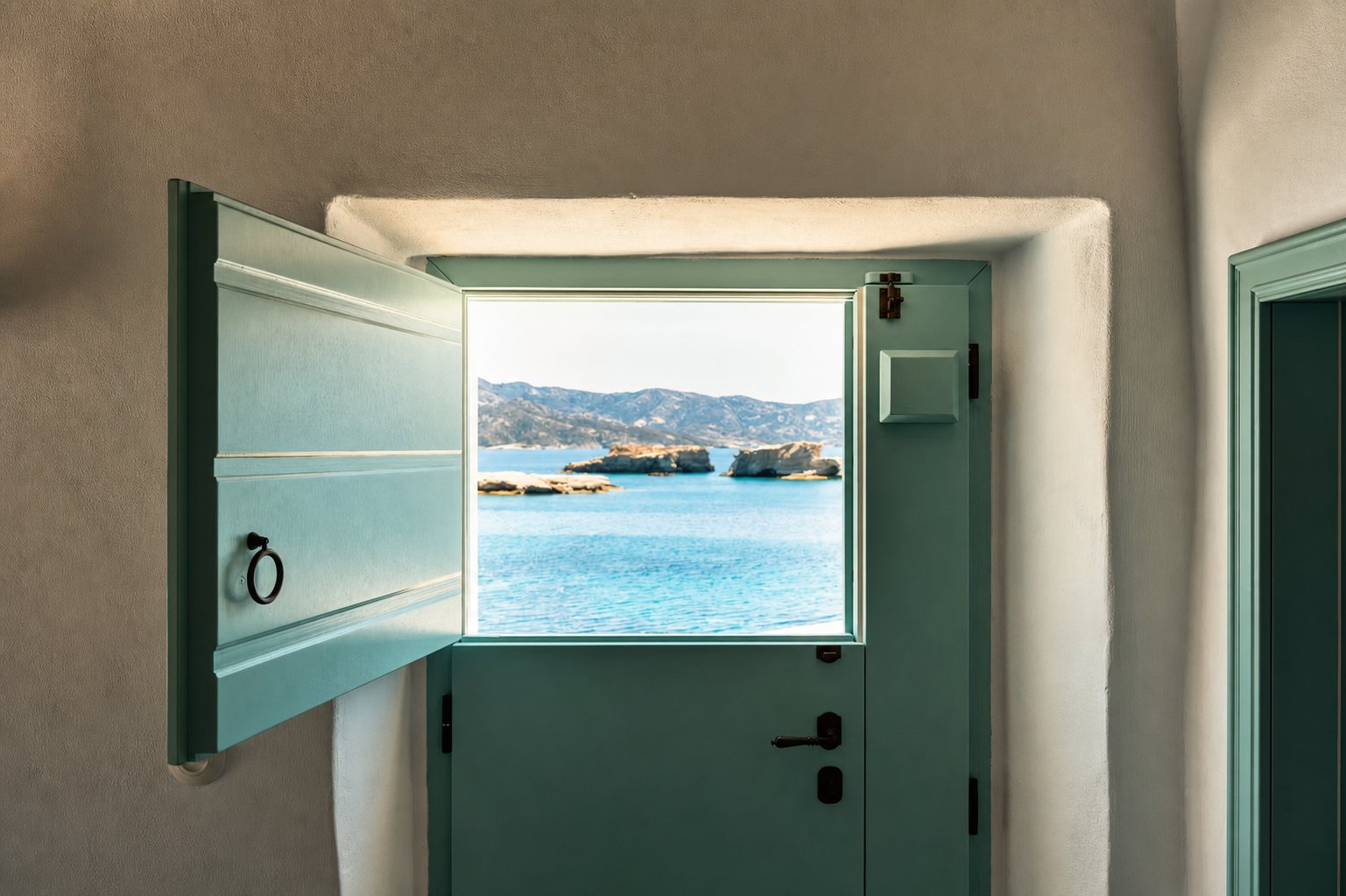
Summer planning: July and August put the most pressure on the island’s limited accommodations and restaurants, so book ahead. Ferry, bus and business schedules remain seasonal.
Sun and wind: Many paths and beaches have little shade. Bring sun protection, walking shoes and plenty of water. Check conditions before choosing a remote beach or boat excursion.
Useful numbers:
- Rural Surgery: +30 22870 51222
- Police Station: +30 22870 51205
- Port Authority of Kimolos: +30 22870 51071
- Municipality of Kimolos: +30 22870 51218
The Municipality of Kimolos maintains the current list of local emergency and service contacts.
Verify seasonal timetables, opening hours and reservations directly before traveling. On Kimolos, weather and the rhythms of a very small island still shape the day. That remains the strongest reason to go.
Read more about what matters now and during your visit:
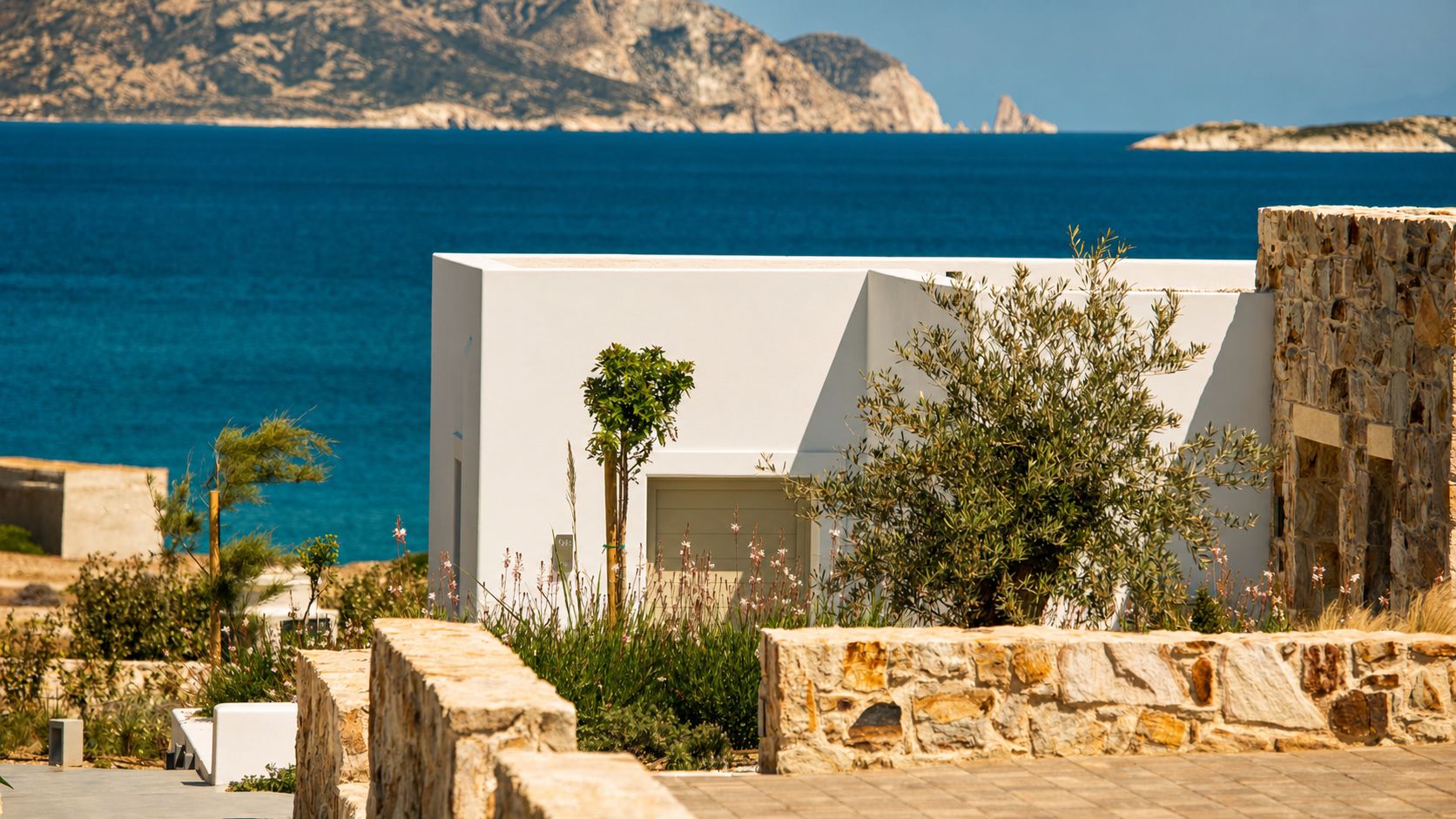
Milos: The Complete Guide
From Sarakiniko and Kleftiko to Plaka, Pollonia and the island’s volcanic history, everything you need to explore one of the Aegean’s most cinematic destinations.
Serifos: The Cycladic Art of Keeping Things Simple
Discover the beaches, food, mining landscapes and design-led stays transforming understated Serifos into the Cyclades’ quietly ascendant island.
Astypalaia: A Guide to the Aegean’s Butterfly Island
A complete guide to the spectacular Chora, secluded beaches, local cooking and contemporary spirit of the Aegean’s butterfly-shaped beauty.
Prassa: Kimolos’ Postcard-Perfect Beach
White sand, dazzling turquoise water and an otherworldly mineral landscape make Prassa one of the most memorable beaches in the Cyclades.
The Traditional Pies of Kimolos
From tomato-rich ladenia to local cheeses, breads and handmade pasta, a delicious introduction to Kimolos’ distinctive culinary traditions.