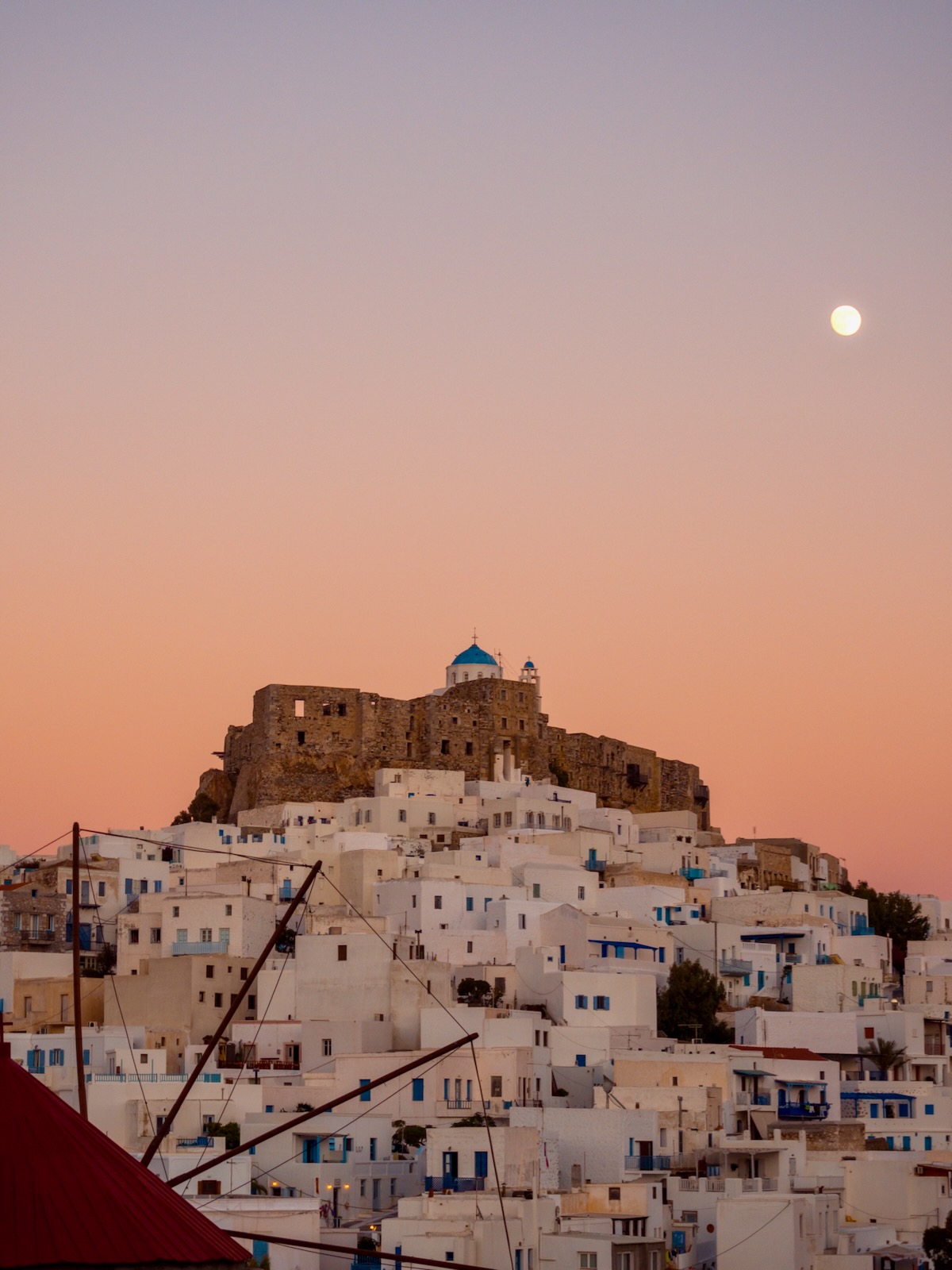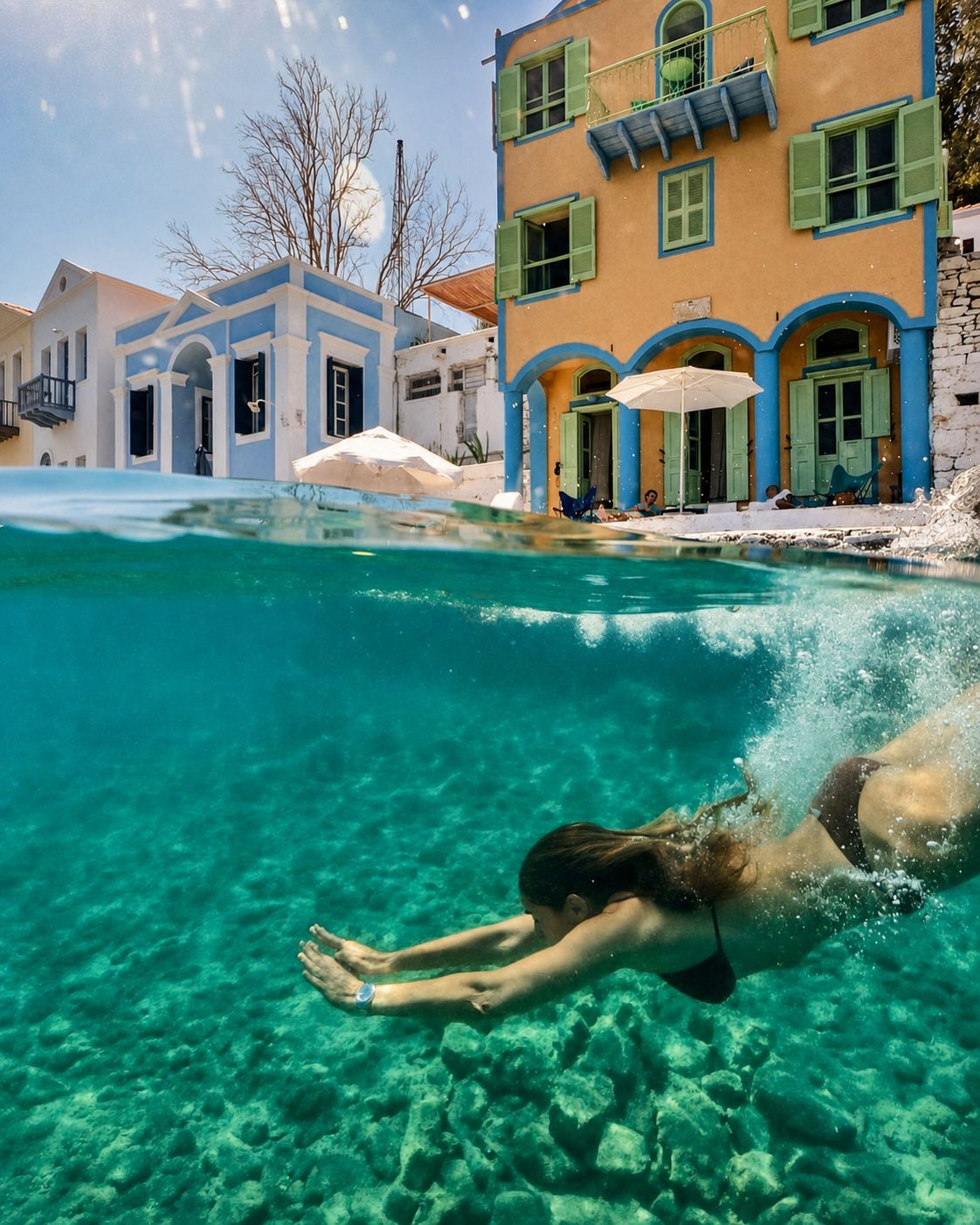





Karpathos is not simply another Greek island with handsome beaches and a harbour town. Set between Rhodes and Crete, it unfolds almost in stages: pale southern bays, wind-beaten plains, mountain villages, western sunsets, severe northern roads and, finally, Olympos, where tradition still has sound, costume, bread, ritual and consequence.
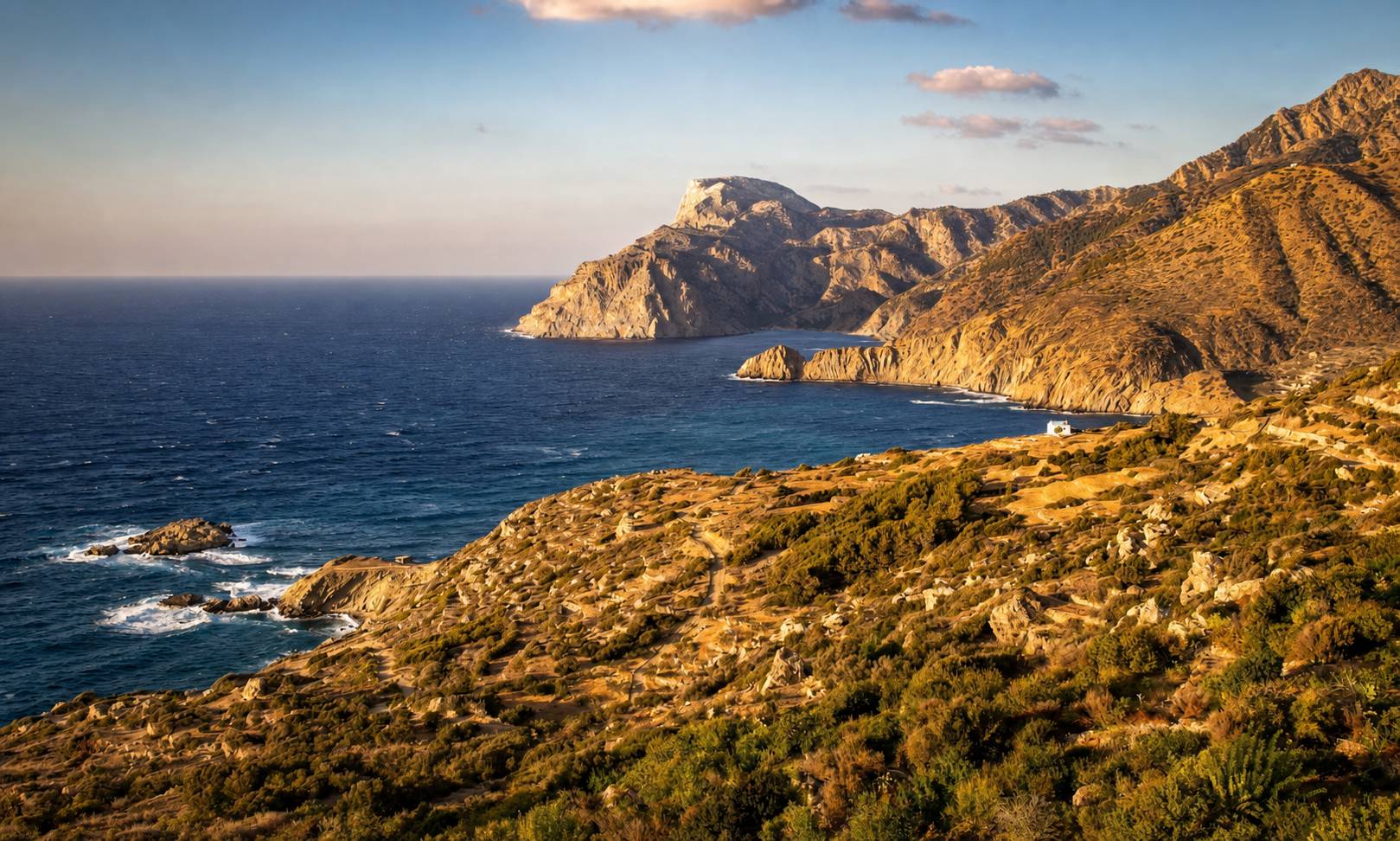
The island’s force lies in these contrasts. In a single day, Karpathos can move from shallow turquoise water to dry-stone terraces, from fishing tavernas to high settlements, from easy port-town life to a north that feels almost outside the present tense. Its distances are longer than they look, its winds matter, and its villages are not interchangeable. The south is open and practical, the west more maritime and sunset-facing, the centre shaped by memory and altitude, and the north by isolation, music and vertical drama.
Karpathos also has a rare kind of loyalty around it. Visitors who understand the island tend to return with unusual devotion, while its diaspora remains deeply present: restoring houses, supporting feasts, sustaining family ties and helping keep customs from becoming decorative relics. That continuity is part of what gives the place its emotional weight. It is beautiful, certainly, but it is also lived-in, worked for and defended.
This is the part of Karpathos that rarely fits into the usual international travel-magazine recommendations. The real story is not only where to swim, eat or sleep, but how many separate worlds the island manages to hold without softening their edges. Somehow, as always, we beg to differ.
01
First Look

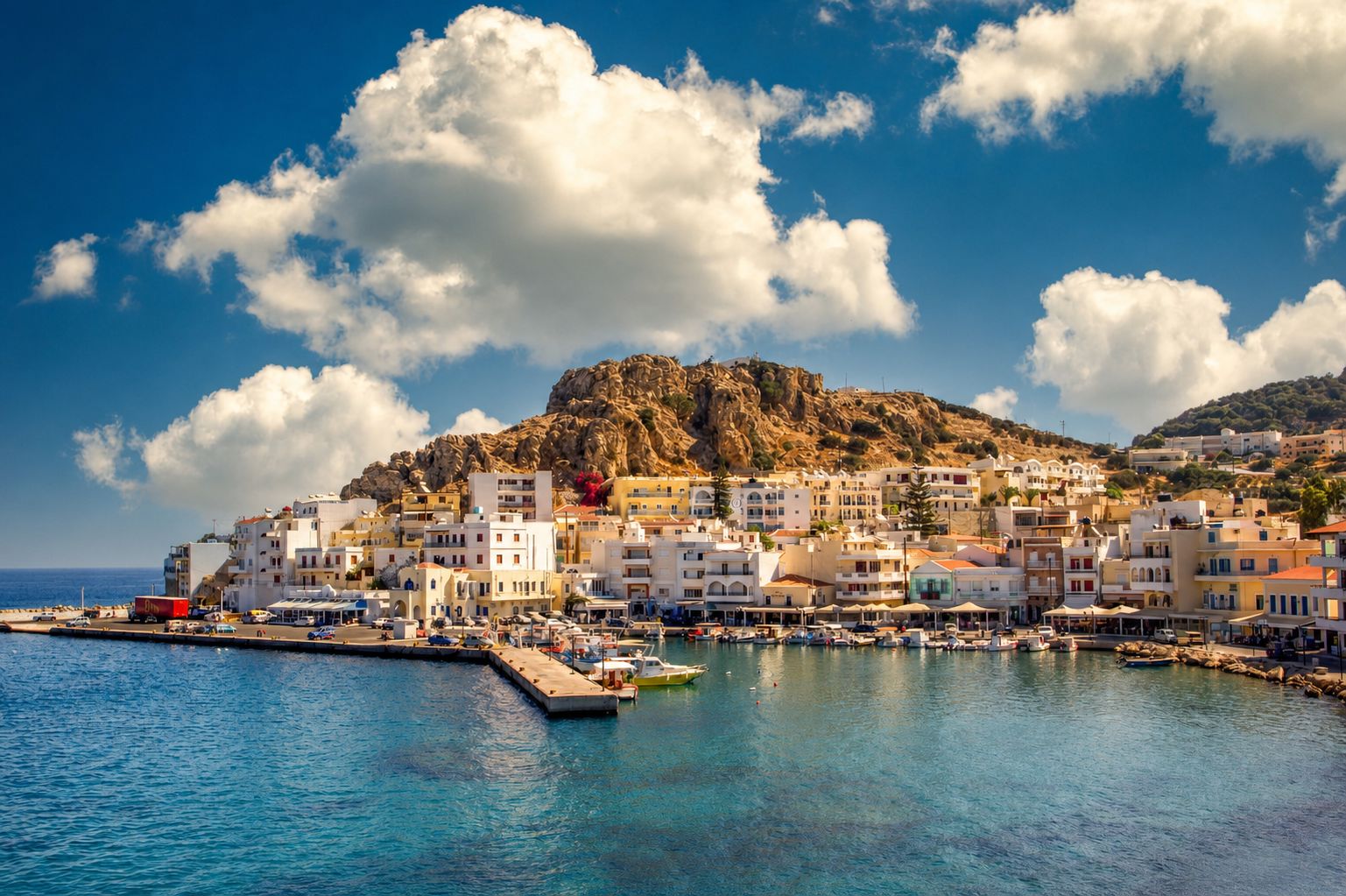
Karpathos is best understood by region. Pigadia is the practical base, with the main port, museum, accommodation, boat departures, waterfront life and town beach. It is not the island’s most atmospheric place, but it works well for arrivals, short stays and travellers who prefer easy logistics.
Amoopi, south of Pigadia, offers clear water, coves, hotels, tavernas and an easy beach rhythm. Further south, toward Afiartis and the airport, the landscape opens, the wind strengthens, and Damatria, Diakoftis and the Afiartis bays attract both swimmers and windsurfers.


The west coast feels different. Arkasa has a village centre, sunset views, Agios Nikolaos beach and traces of antiquity at Palaiokastro. Finiki is small and maritime, Lefkos offers sandy bays and a relaxed seaside base, while Mesochori is one of the island’s best villages for a late-afternoon walk.
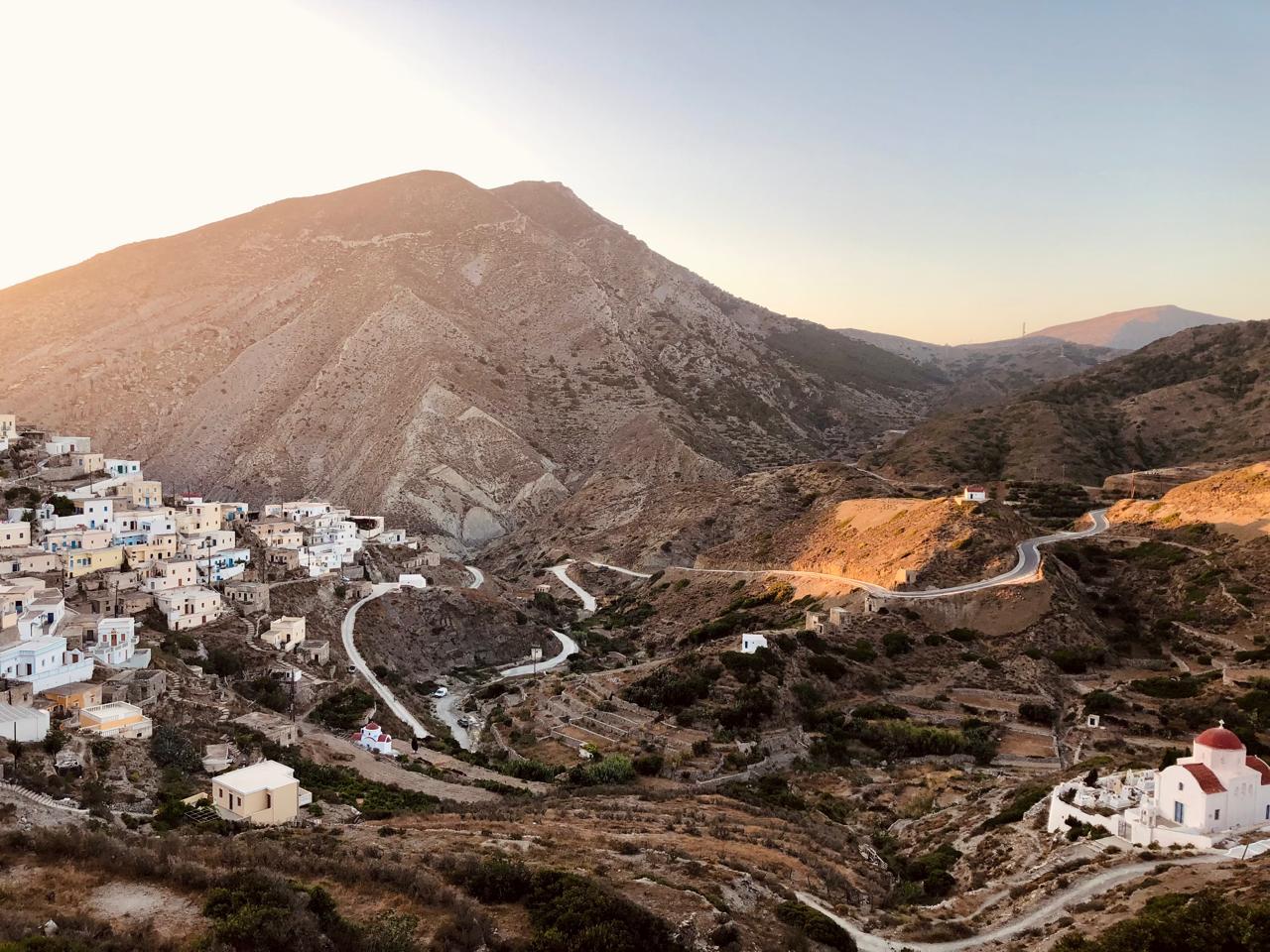
The central villages give Karpathos much of its character. Menetes, above Pigadia, is visually striking; Aperi, once the island’s capital, remains important to local life; and Volada, Othos and Pyles add museums, workshops, agricultural memory and highland quiet.
The north is the island’s strongest argument for staying longer. Olympos is the best-known village, but Avlona explains the old agricultural landscape, while Diafani gives the area its maritime base and access to Saria and northern beaches. This is Karpathos at its most dramatic and remote.
02
Olympos and the North

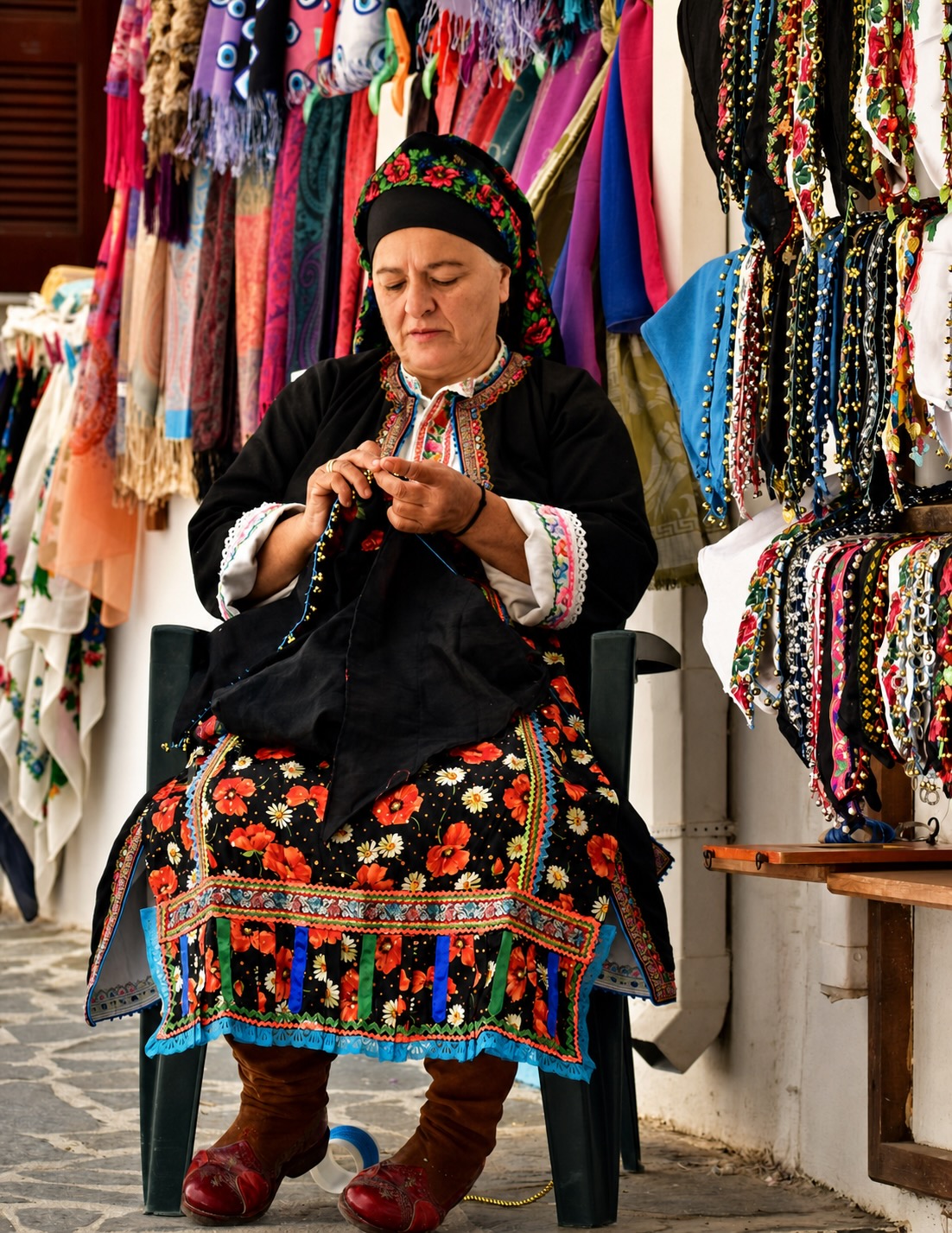
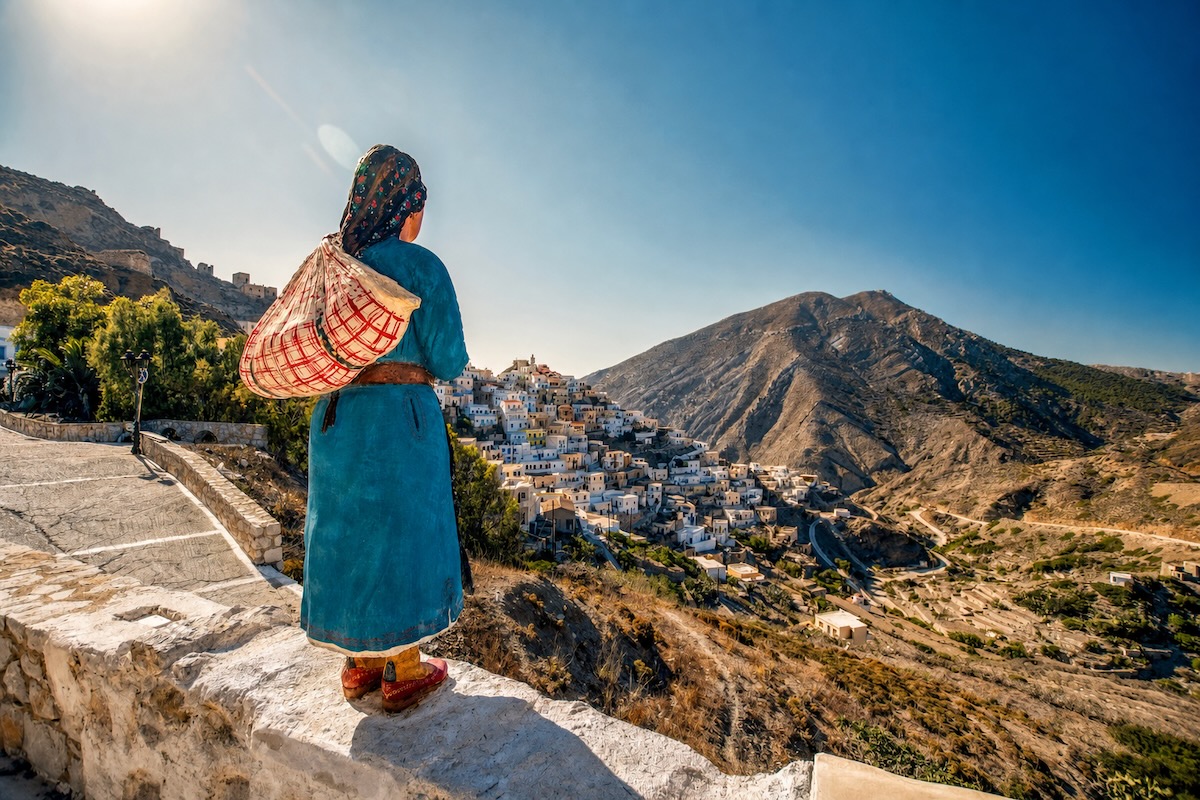
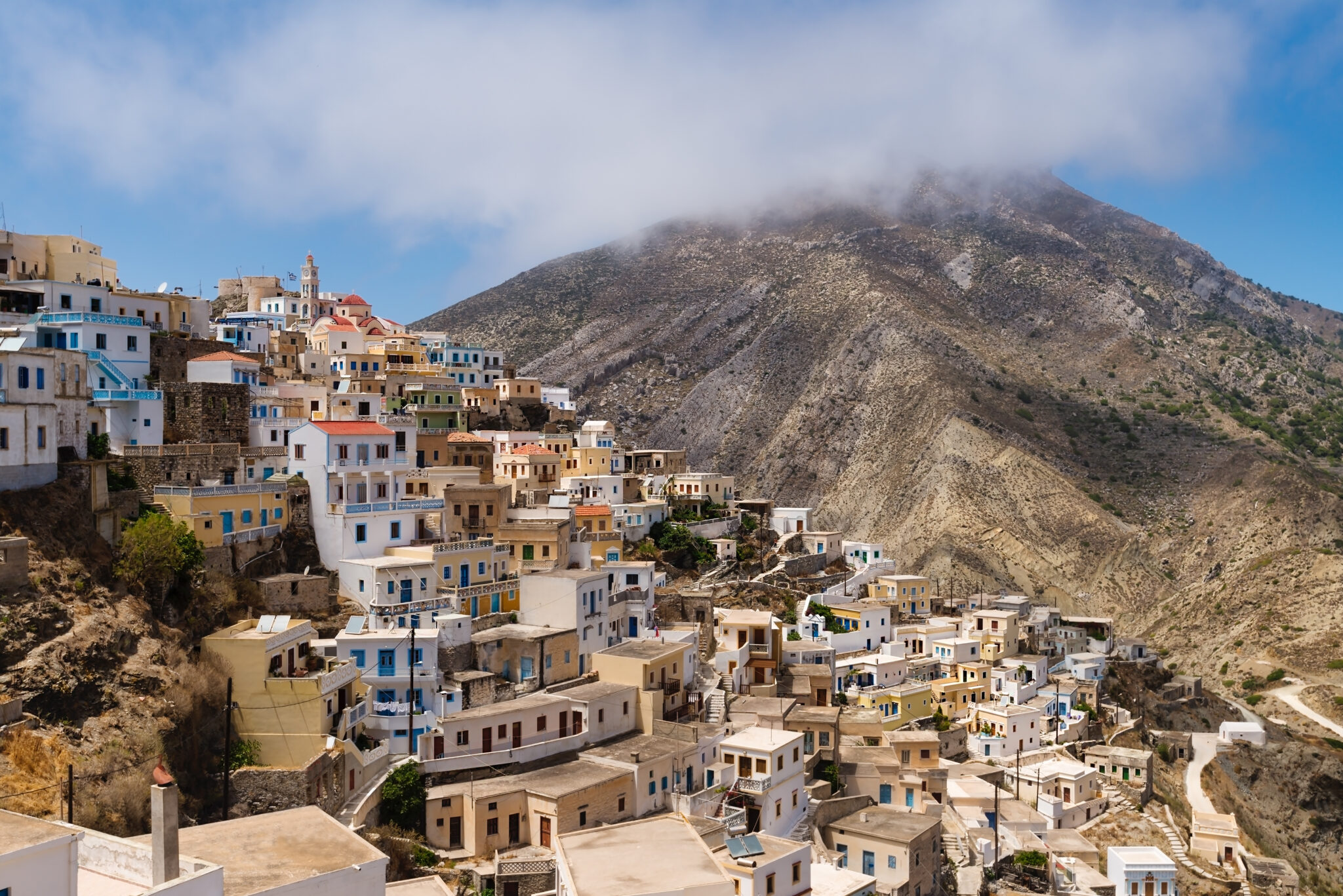
Olympos is the cultural centre of northern Karpathos and one of the most singular settlements in the Aegean. Built high on the mountain and long protected by difficult access, it preserved customs, music, dress, language and domestic architecture with unusual intensity.
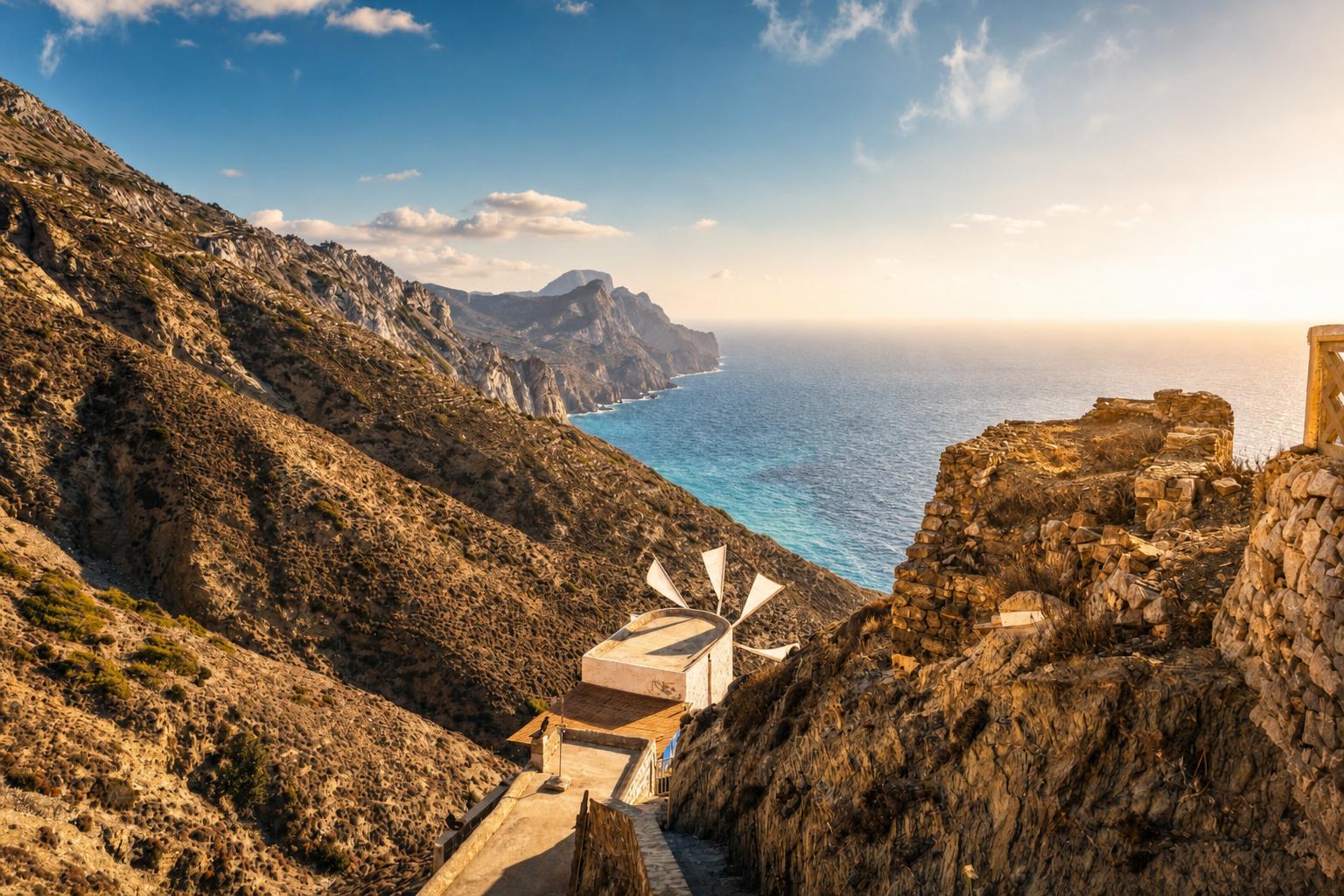
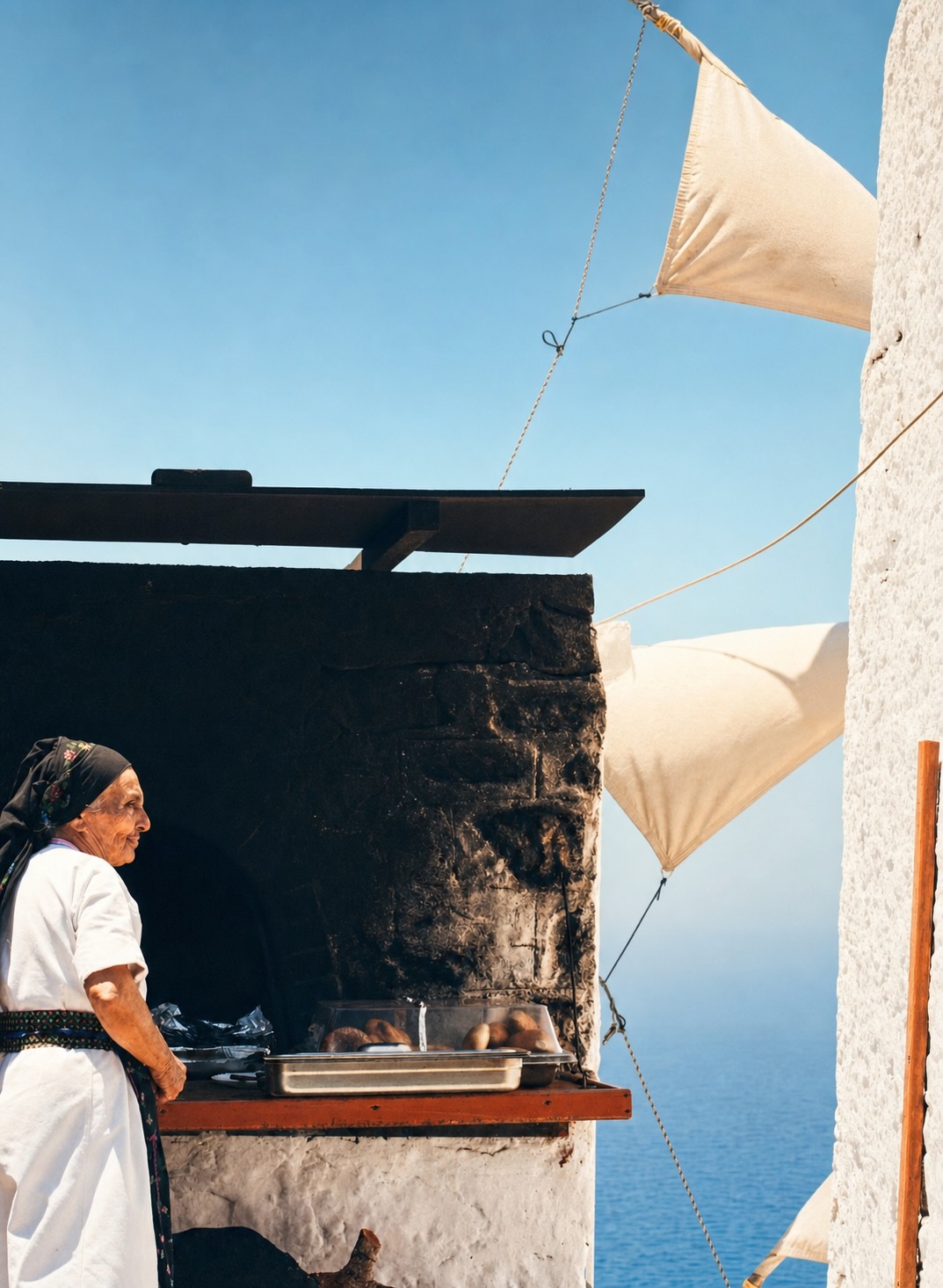
The village is often crowded during day-trip hours, so it is best experienced early or late, when the lanes are quieter. Walk beyond the souvenir stretch and notice the houses built into the slope, decorated interiors, oven rooms, terraces, windmills, steep lanes and views toward sea and mountain.
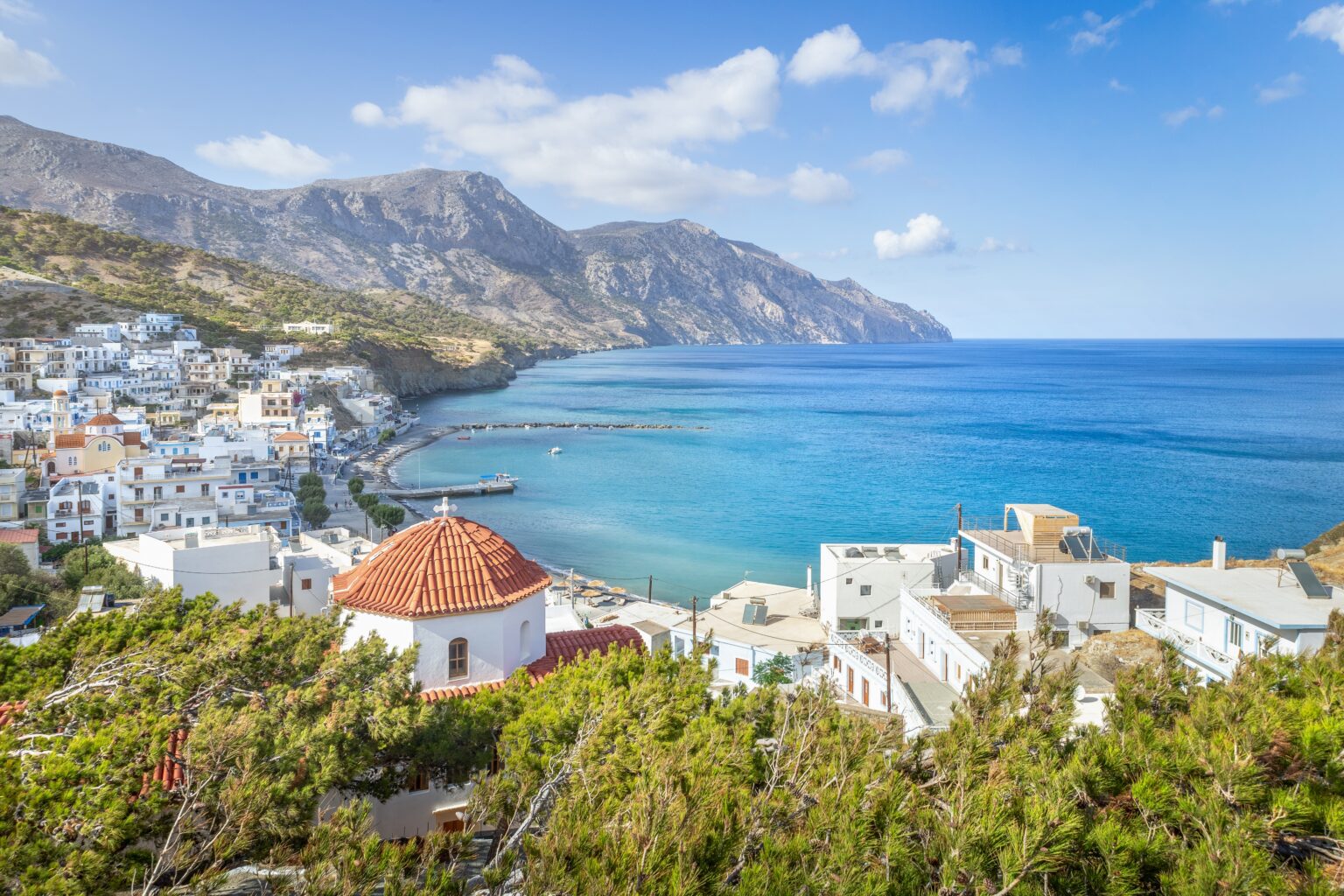
Traditions are most visible around major feasts, especially the Assumption of the Virgin Mary on August 15, when dress, music, ritual and community memory come together. Visitors should approach such events with respect. These are not tourist shows, even when visitors are present.
Avlona, north of Olympos, is essential for understanding the area’s older agricultural life, with its plateau, fields, storage buildings, dry-stone structures and walking routes. Diafani, the northern port, is quieter and more maritime, with a pebble beach, tavernas, simple accommodation and boat connections to beaches and Saria.
Saria island, separated from Karpathos by a narrow strait, is one of the most rewarding boat excursions, with ruins, coves, walking possibilities and a dry, exposed landscape best explored with a local boat.
03
Museums and Village Culture
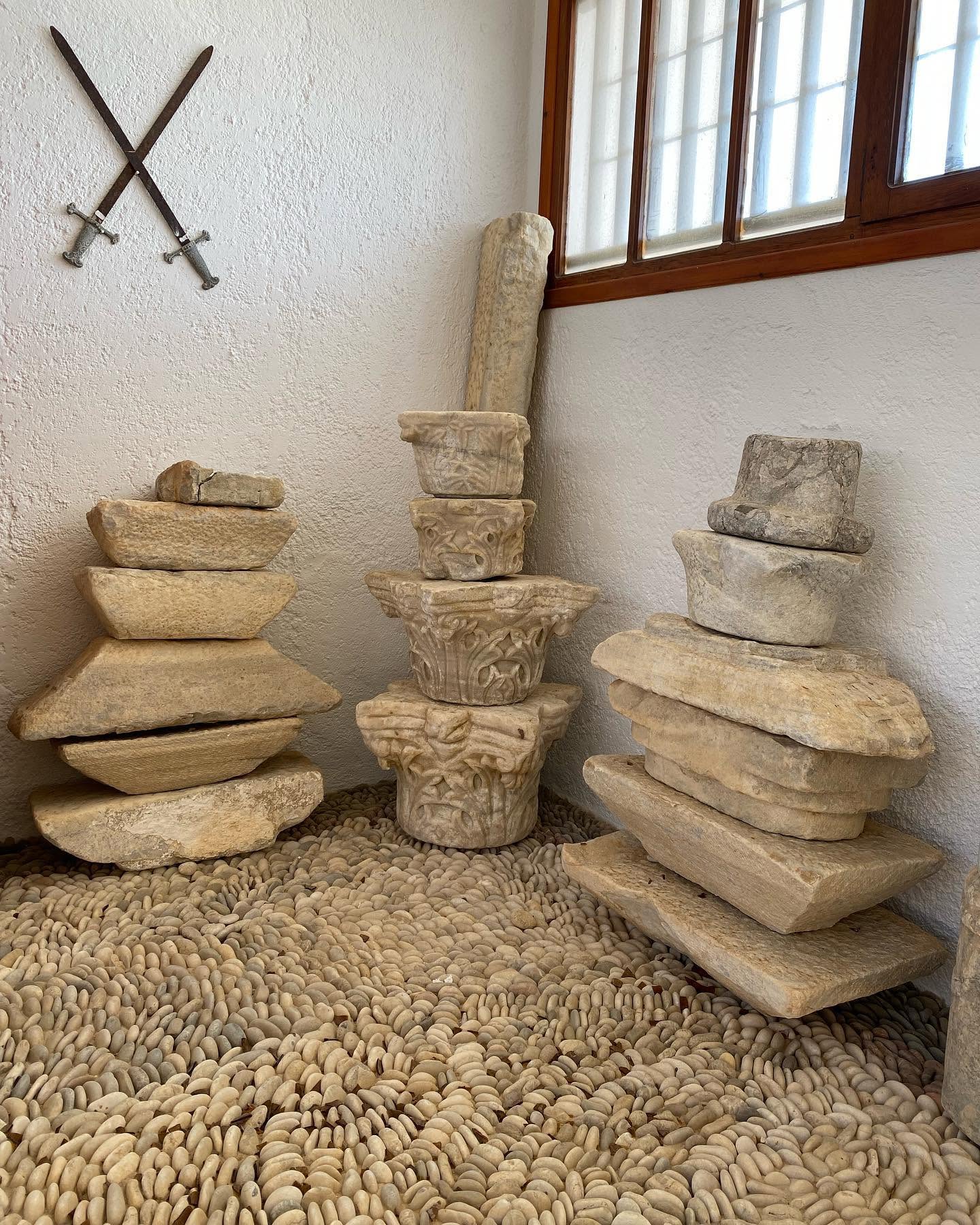
Karpathos has a deeper history than many visitors expect. In Pigadia, the Archaeological Museum, housed in the Eparcheio complex from the Italian occupation period, presents finds from prehistoric settlements, ancient cities, early Christian basilicas and Byzantine sites.
Arkasa adds another historical layer. Palaiokastro, above the modern settlement, is associated with ancient Arkesia and later remains, while the Folklore and Archaeological Museum of Arkasa connects religious, domestic and local memory. The west-facing setting also makes it an easy stop before dinner in Arkasa or Finiki.

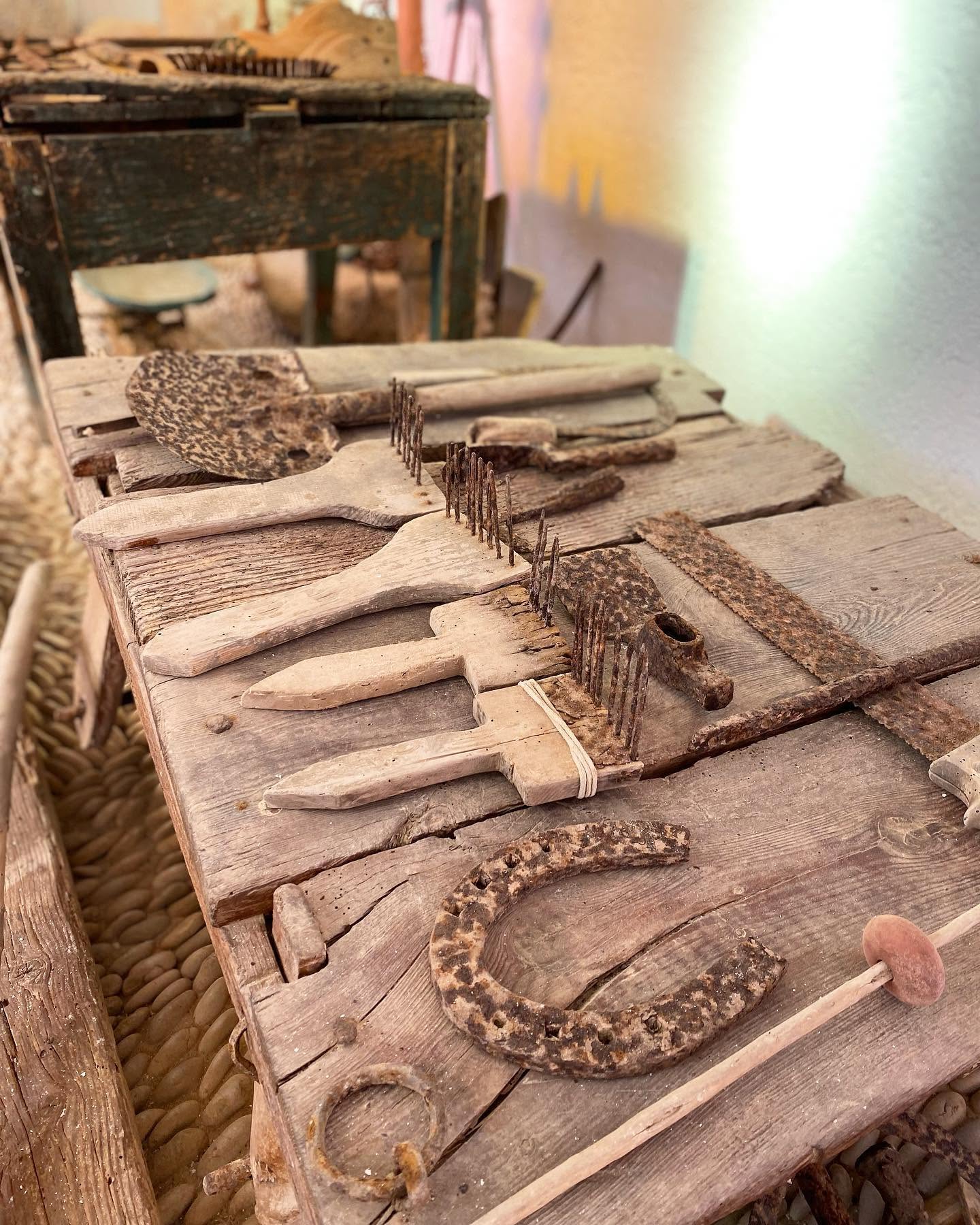
Menetes deserves time beyond the usual photograph. Its folklore museum preserves everyday objects, photographs, tools, textiles and domestic material, while the church of the Dormition of the Virgin Mary anchors the village. Othos, one of the island’s highest settlements, has a folklore museum recreating a traditional house interior, with sleeping platform, textiles, carved wood and household objects.
Pyles, on the western side, has an agricultural museum that reminds visitors Karpathos is not only maritime. Farming, grain, livestock, bread, wine, honey and seasonal work all belong to its identity.
The cultural route is best approached through village visits: Pigadia for archaeology, Menetes for colour and memory, Othos for domestic culture, Pyles for rural life, Arkasa for antiquity and ecclesiastical heritage, Olympos for living tradition, and Diafani for the maritime north.
04
Beaches
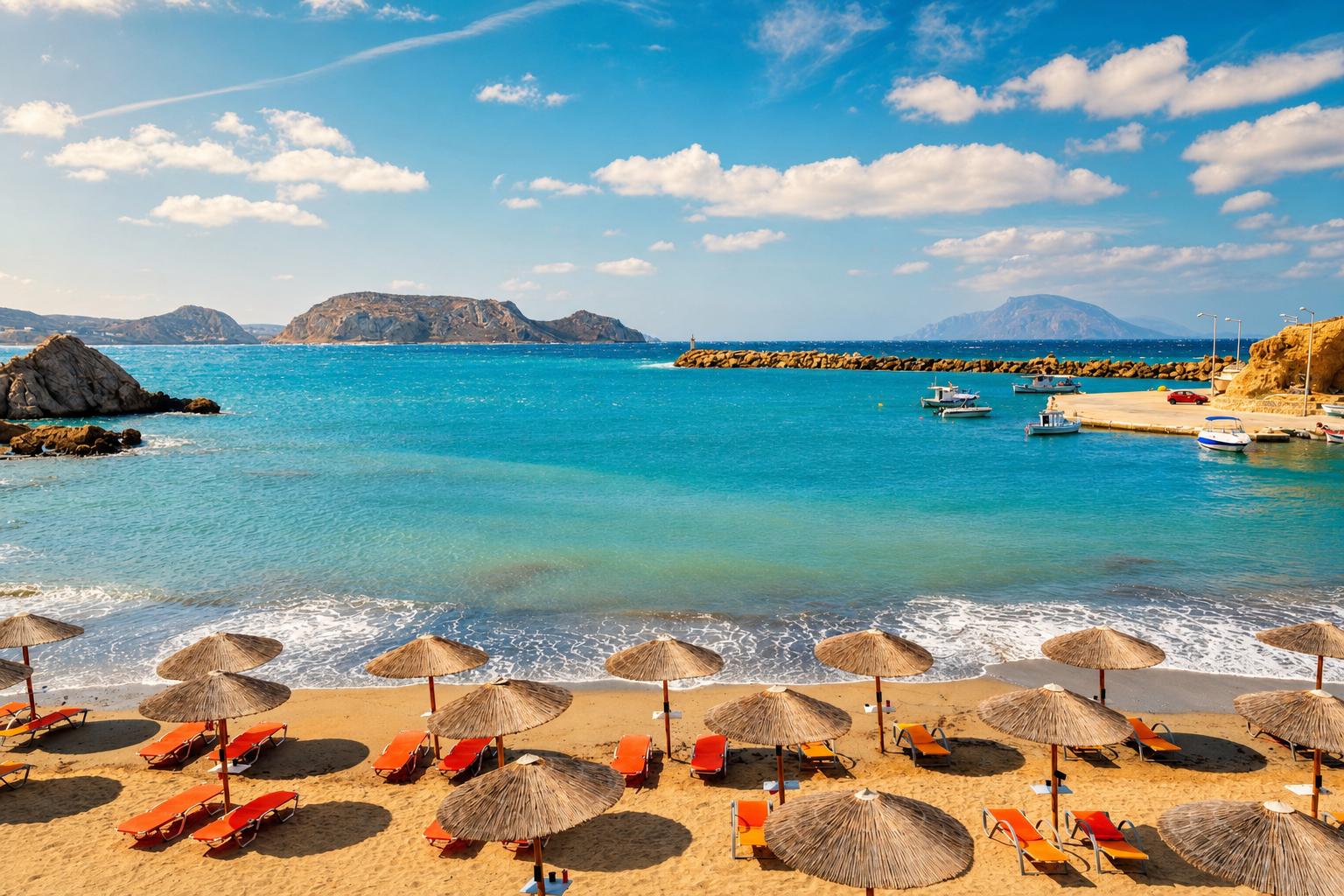

Karpathos has some of the most varied beaches in the Dodecanese, but beach days depend on wind, distance and road conditions. A bay that is perfect one day may feel exposed the next.
Apella is the most famous, set below steep slopes with pine trees, pale pebbles and blue-green water. It can be reached by road or, in season, by boat from Pigadia, and is best early in high summer. Nearby Achata is narrower and rockier, while Kyra Panagia combines a photogenic bay, a church above the beach and tavernas, though it draws crowds in busy weeks.
Amoopi is easier and more practical, with several sandy and rocky coves, clear water, accommodation and food close by. The south and southeast are shaped by wind: Damatria has pale water and an open feel, Diakoftis has shallow turquoise water near the airport, and Afiartis is the island’s windsurfing centre.

The west coast gives Karpathos its sunset beaches. Agios Nikolaos near Arkasa is good for sand, waves and late light; Finiki has a small harbour beach and fishing-village mood; and Lefkos offers several bays, tavernas and accommodation nearby.
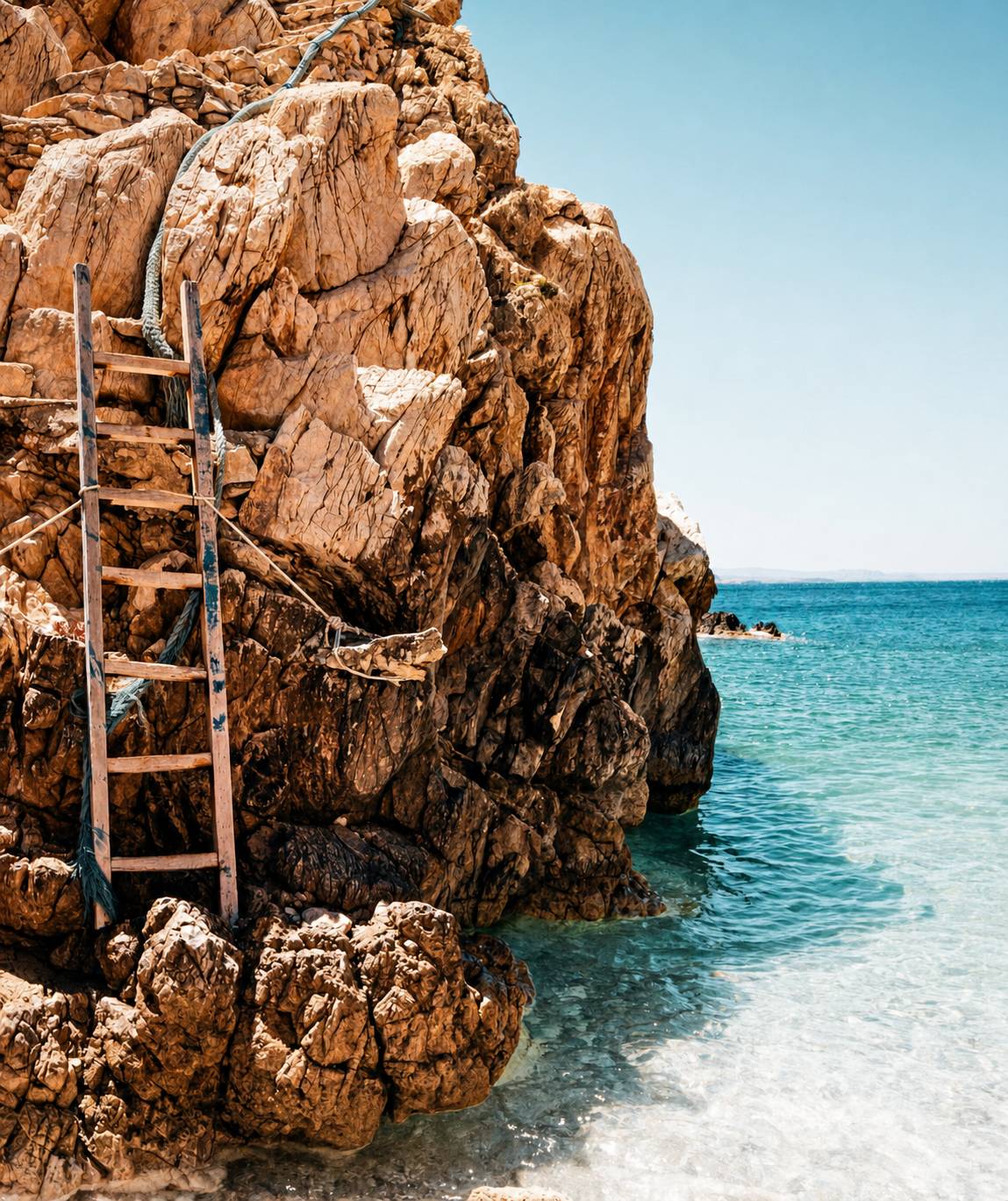
The north is for travellers willing to go further. Diafani has its own pebble beach, while Vananda, Forokli and other northern beaches feel more remote, often with little or no organisation. Saria’s coves are among the island’s most memorable swimming experiences when the sea allows the trip.
05
Hiking and Old Paths
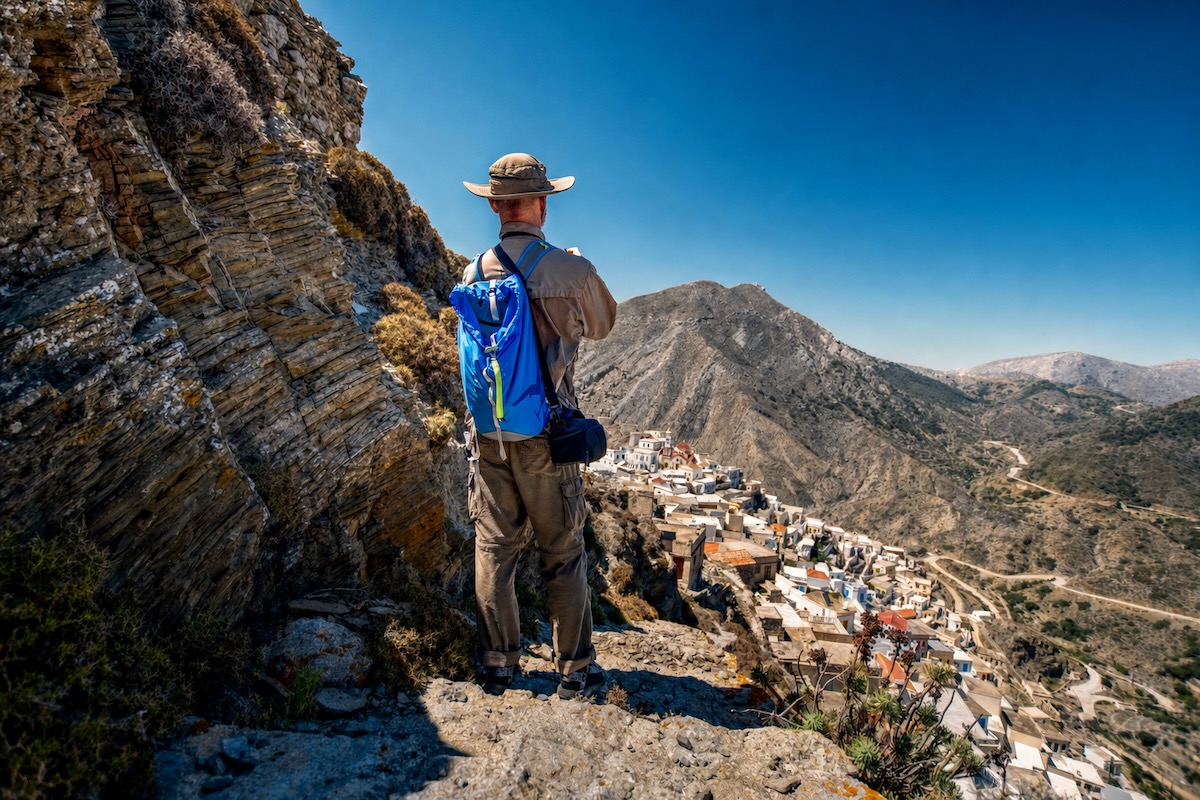
Walking is one of the best ways to understand Karpathos, especially outside the strongest summer heat. Old paths connect villages, chapels, fields, ancient sites, beaches and mountain slopes, with the north offering some of the island’s most rewarding routes.
The area around Olympos, Avlona and Diafani is the most distinctive. Paths cross agricultural land, chapels, ridges, abandoned structures, pine-shaded stretches and sea views that explain why the north feels so separate. These walks should not be rushed; exposure, hard light and distance are part of the experience.
Official routes include Avlona–Tristomo–Vananda–Diafani, a long and demanding walk that can be combined with swimming; Avlona–Vananda–Diafani, shorter but still substantial; and Kato Lastos–Spoa, linking mountain and sea. They require water, proper shoes, realistic timing and local advice.
Diafani is a useful walking base, with routes toward nearby beaches and the northern landscape. Central Karpathos also has rewarding village walks through Menetes, Aperi, Volada, Othos and Pyles, combining views, churches, old houses and agricultural traces.
06
Traditions and Feast Days

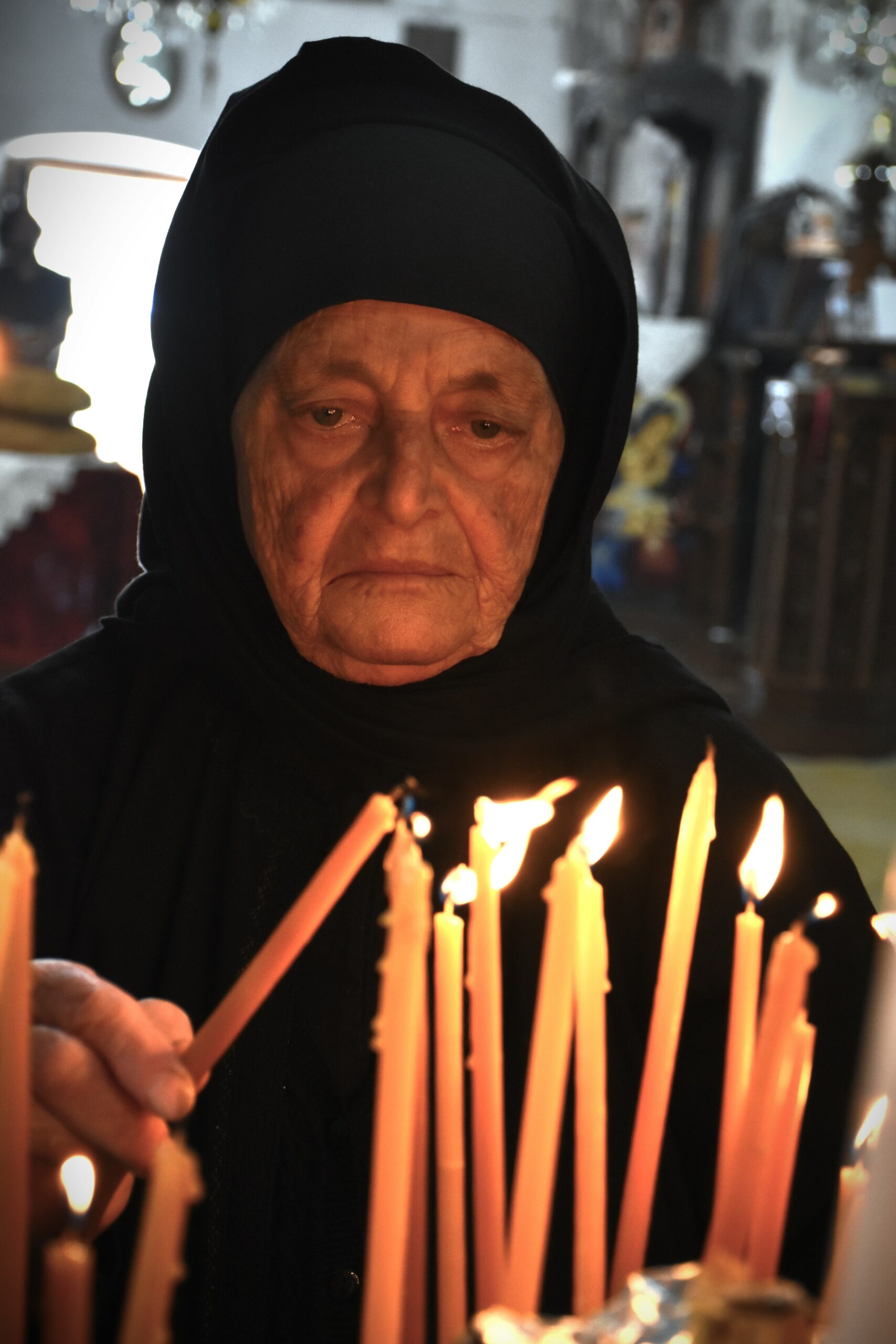

Karpathos has an unusually strong cultural identity, most visible in Olympos but present across the island. Music, dance, costume, dialect, church feasts, bread-making, embroidery and family rituals remain part of its social fabric.
The musical tradition is one of its great treasures. The lyra, laouto and tsambouna belong to local celebrations, and the songs often have an improvised, poetic character. A Karpathian feast is not simply an evening with music, but a gathering built around church, family, food, memory and participation.
Panigyria take place across the island in summer and around major religious dates. The most famous is August 15 in Olympos, but Menetes, Aperi, Arkasa, Othos, Pyles, Mesochori and other villages also have important feast days, often with services, communal meals, music and dancing.
Dress is another visible part of Karpathian culture. In Olympos especially, traditional clothing is still worn by some women in daily life or on formal occasions, while festive costumes, jewellery and embroidery carry family, marital, economic and symbolic meaning.
Food is closely tied to tradition too, from handmade pasta, breads and cheeses to goat, pulses, honey and festival dishes. For visitors, attentiveness matters: ask before photographing people, avoid blocking church entrances during feasts, and stay longer than the day-trip hour if possible.
07
Where to Eat
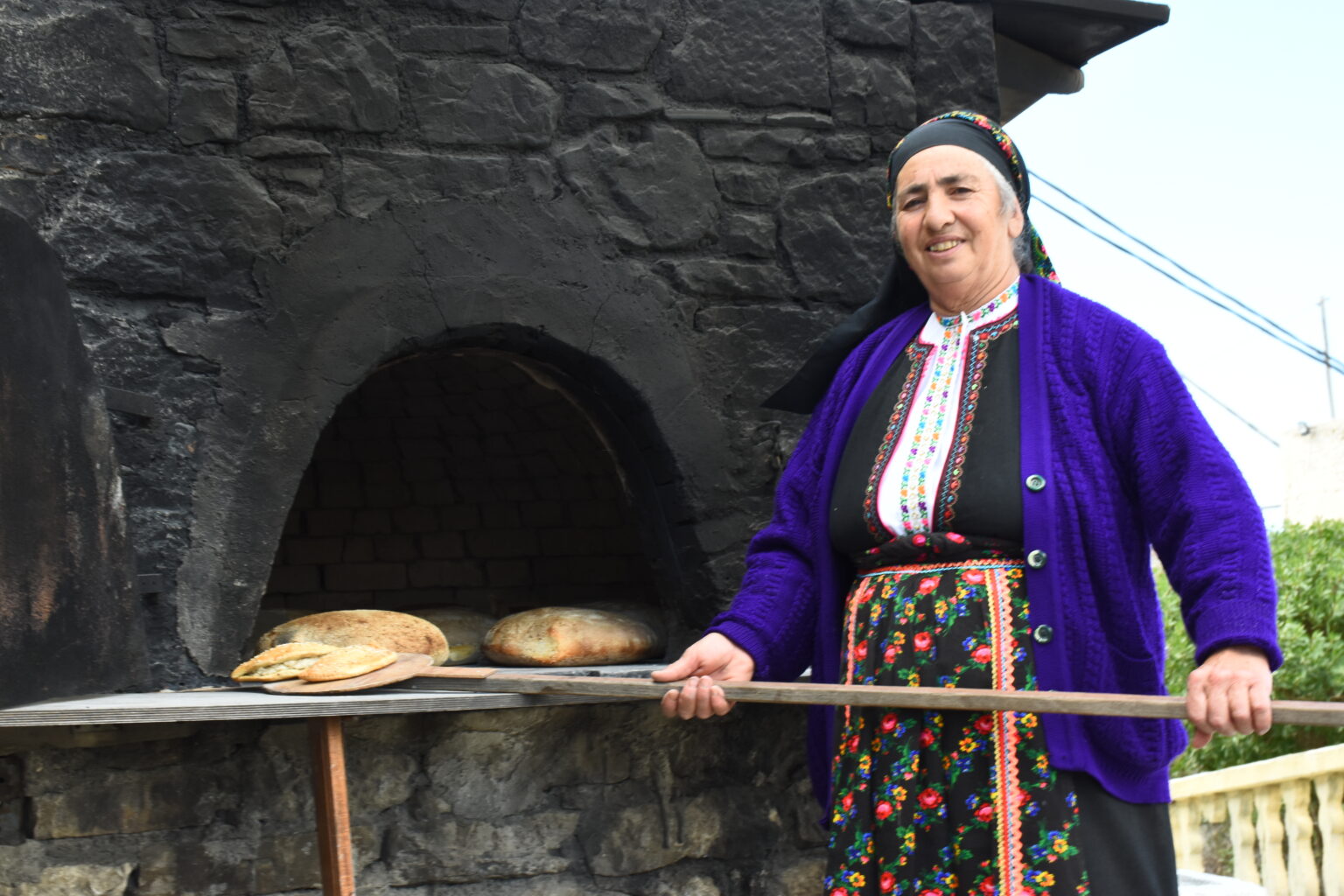
Karpathos has one of the most distinctive food traditions in the Dodecanese. The island’s cooking is shaped by mountain villages, pastoral life, agriculture, fishing, migration and the old need to make generous food from local ingredients.
Makarounes are the dish to look for first. These handmade pasta pieces are usually served with browned onion and local cheese, often sitaka or stakovoutiro, giving one of the simplest and most satisfying plates on the island. Goat is central too, usually braised, roasted or cooked in tomato sauce with potatoes. Look also for psilokouloura, the island’s sesame biscuits; breads and rusks from village bakeries; local honey; pies; stuffed courgette flowers; wild greens; legumes; seafood in the coastal villages; and byzanti, the Easter dish of stuffed lamb baked slowly in a wood oven.
Orea Karpathos
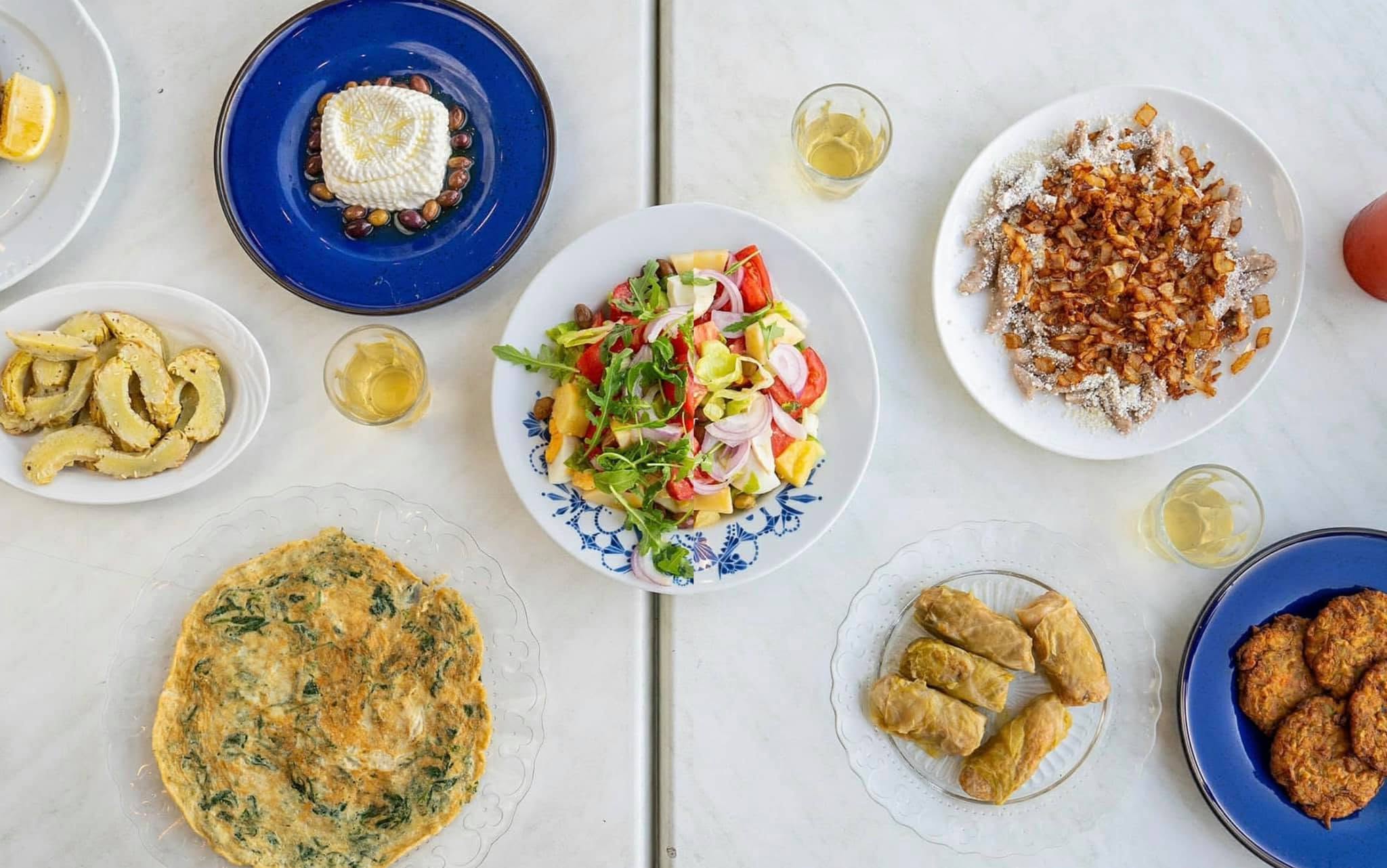
Set by the harbour in the island’s capital, this is one of the most dependable choices for travellers who want to try Karpathian food without leaving town. The cooking is traditional and direct, with handmade makarounes, local cheese, dolmadakia, omelette with wild greens, sardines from local fishermen, meatballs and Karpathian sausage among the dishes that make sense here. The setting is central, but the kitchen is closer to a family taverna than to the more generic port restaurants that can surround it.
Anixi
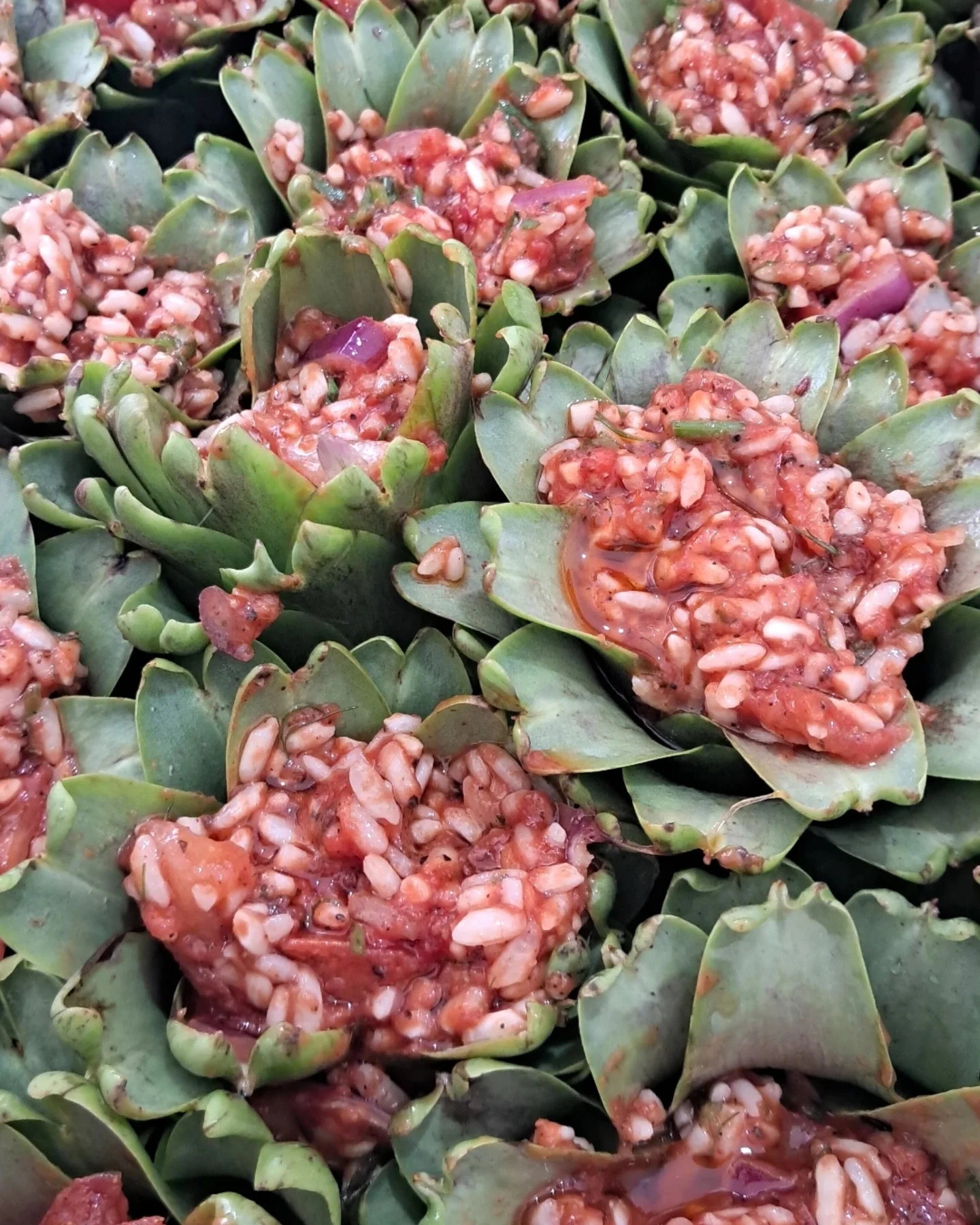
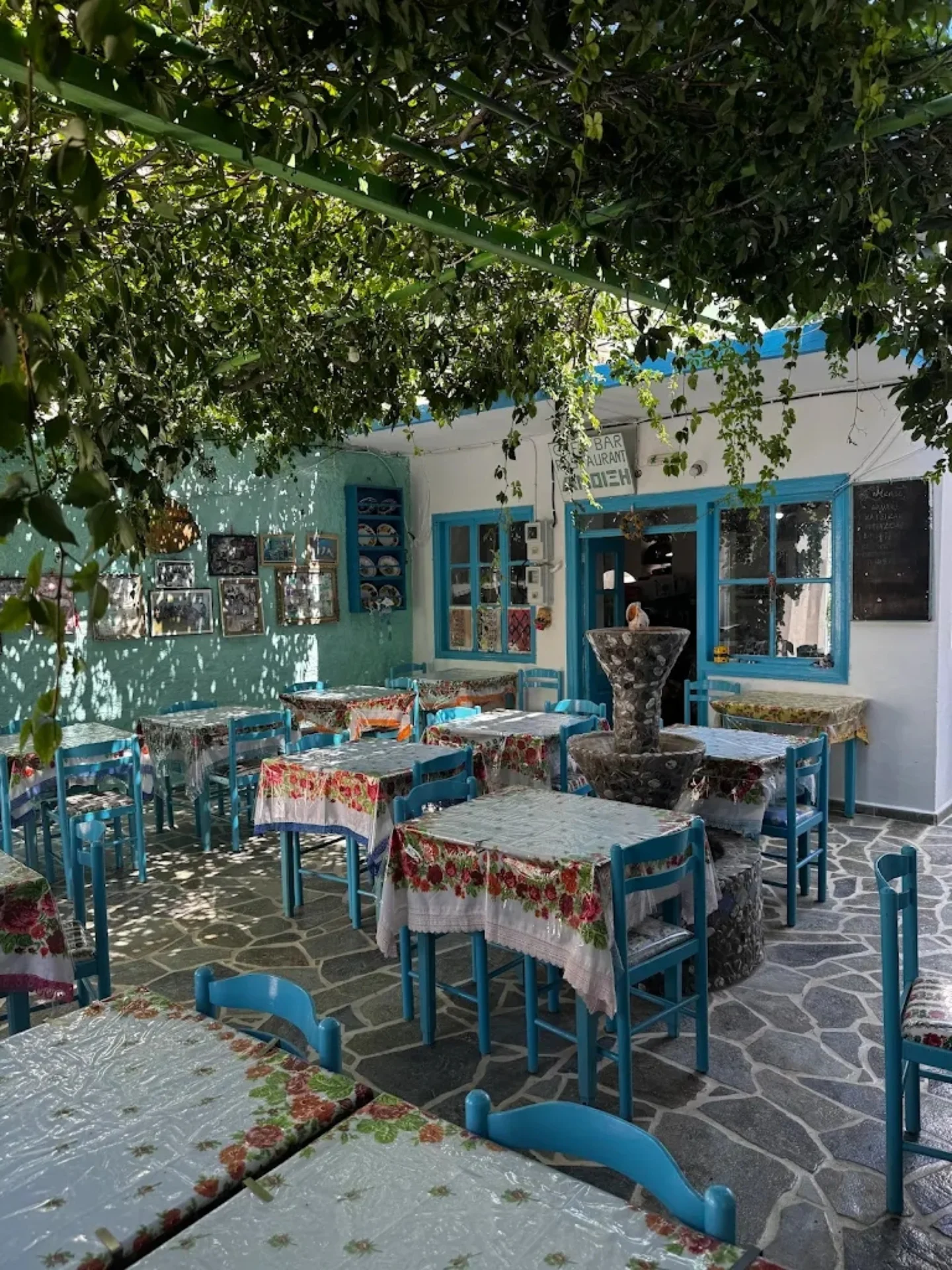
In the northern port below Olympos, this traditional taverna is a useful address for anyone spending proper time in the wilder part of the island. Tables sit in a lane behind the sea, under vine shade, and the food stays close to the local repertoire: makarounes with stakovoutiro, goat with potatoes, chickpea salad, stuffed courgette flowers, grilled meats and generous home-style plates. It works especially well after a visit to Olympos, a swim near Diafani, or a boat trip along the northern coast.
Kedros
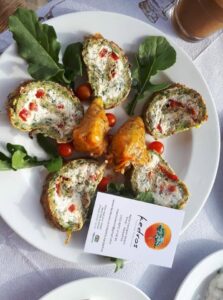
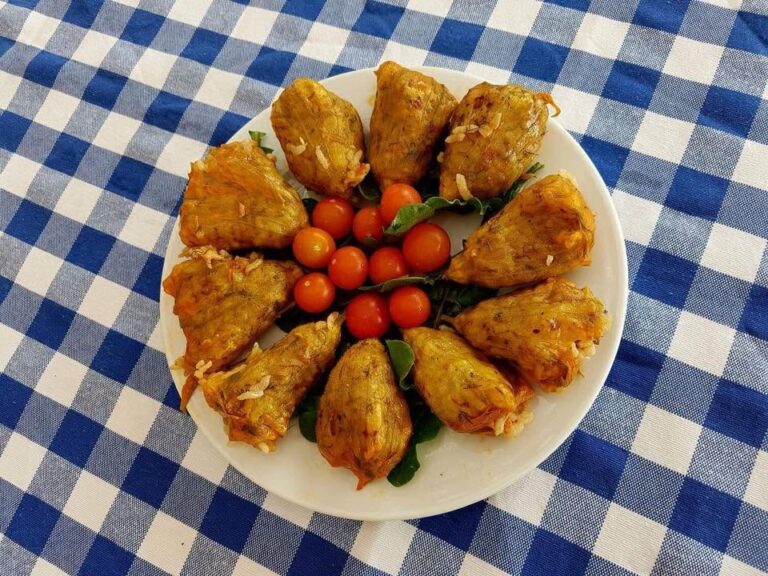
Above Agios Georgios beach, close to Finiki and Arkasa, this is one of the strongest west-coast choices for travellers who want sunset with substance. The owners’ agricultural background gives the meal its base, with vegetables, meat and simple cooked dishes connected to local production. Goat, grilled meats, homemade bread, salads and Greek taverna staples are the point here. Arrive late in the afternoon if you want the view to do some of the work.
Poseidon Blue
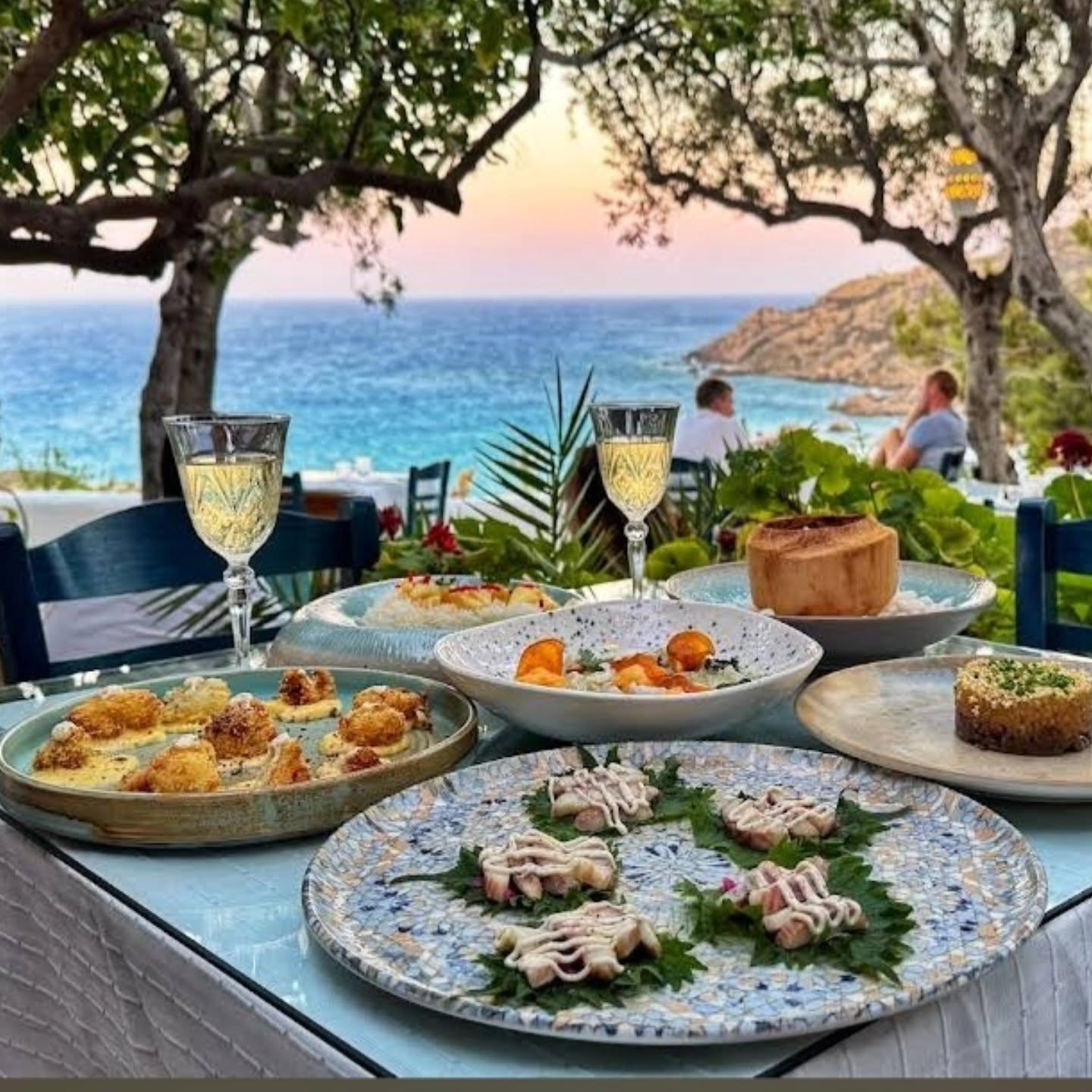
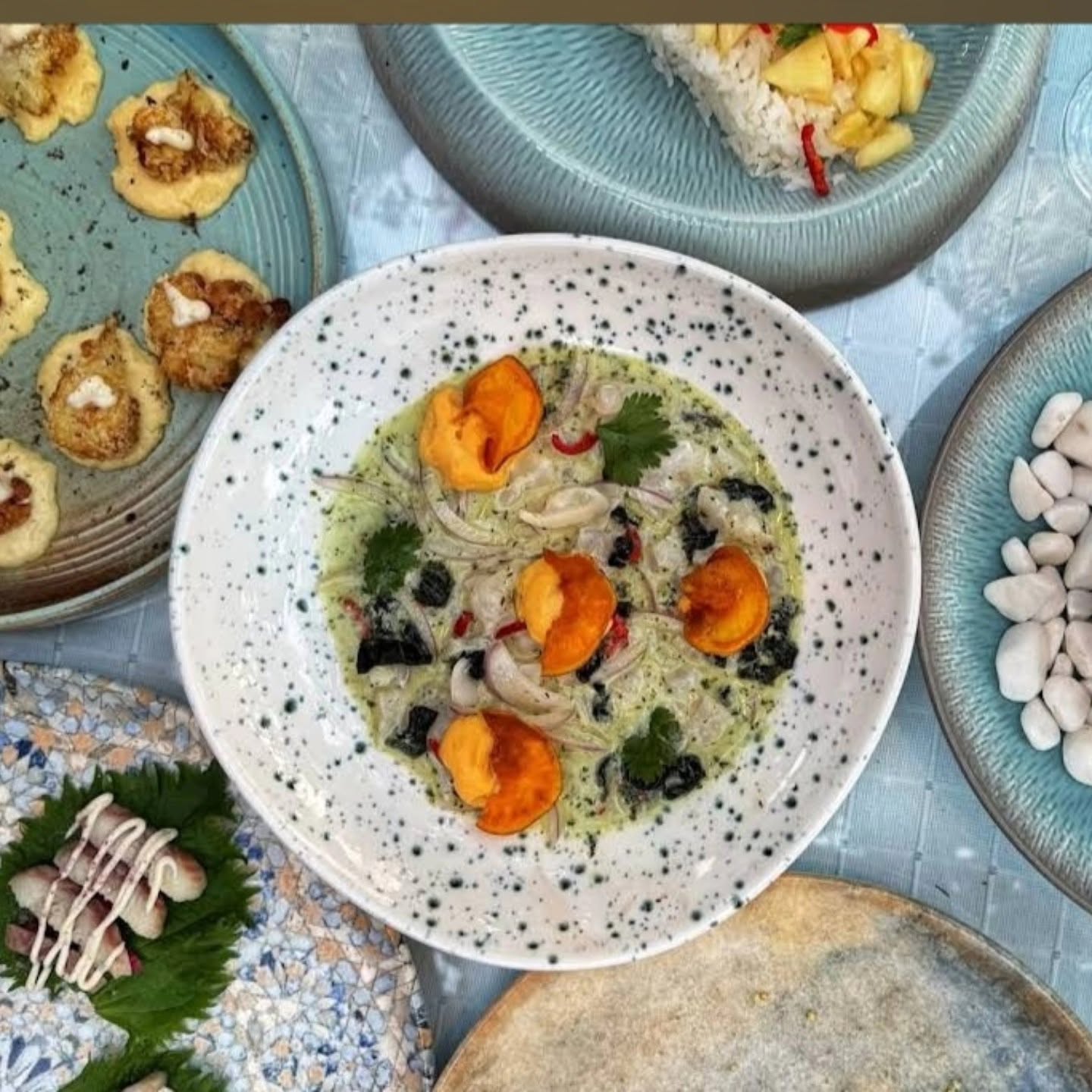
On the southern side of the island, near Damatria and the windsurfing coast, this is the most clearly chef-led restaurant in the selection. Chef Angela Papavassiliou works with local ingredients and a more contemporary language, combining Karpathian and Greek references with Mediterranean influences. The setting, under trees with sea views below the hotel, makes it especially useful for a different kind of dinner: less taverna, more composed, but still connected to the island through produce and place.
Milos Taverna
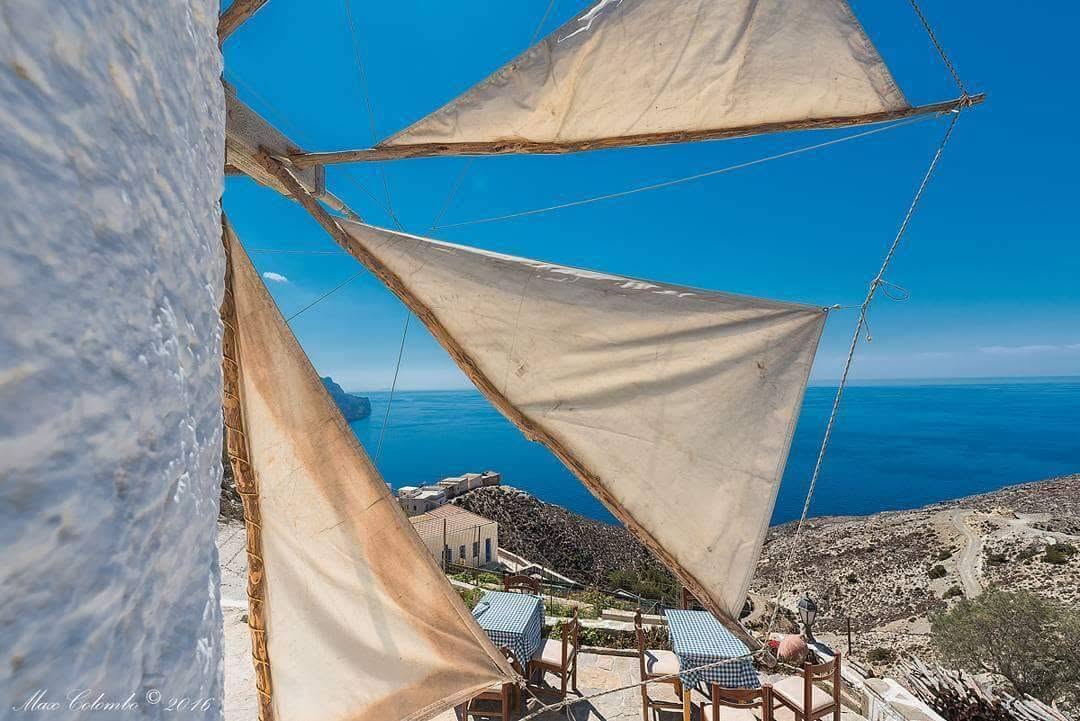
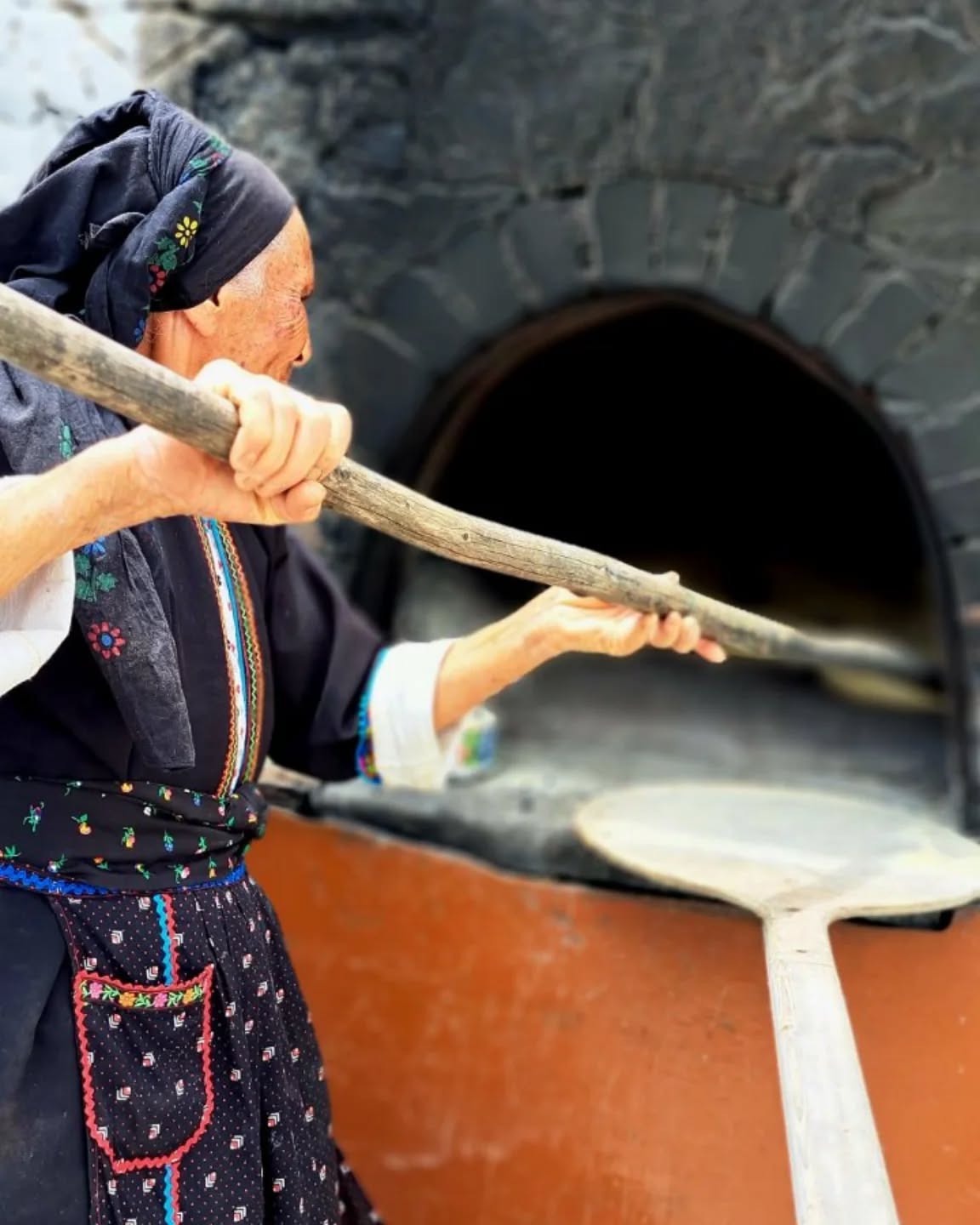
In Olympos, a meal should feel connected to the village rather than detached from it. This family-run taverna is one of the better-known choices in the settlement, with traditional food, local dishes and a terrace view that makes the climb into the village feel worthwhile. It is best approached outside the most crowded day-trip hours, when Olympos becomes quieter and the meal can feel less like a stop on an excursion route.
Kelaria
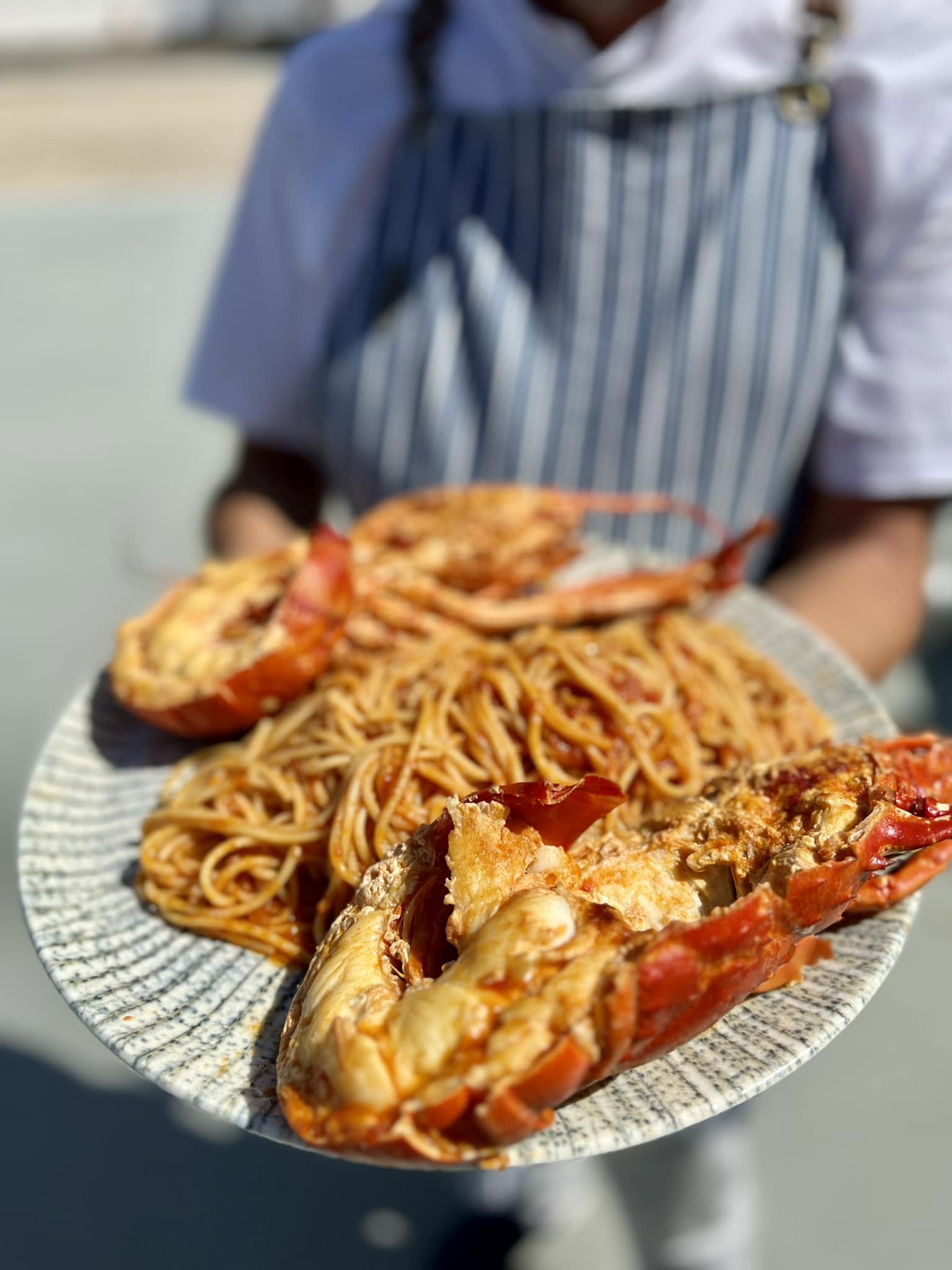
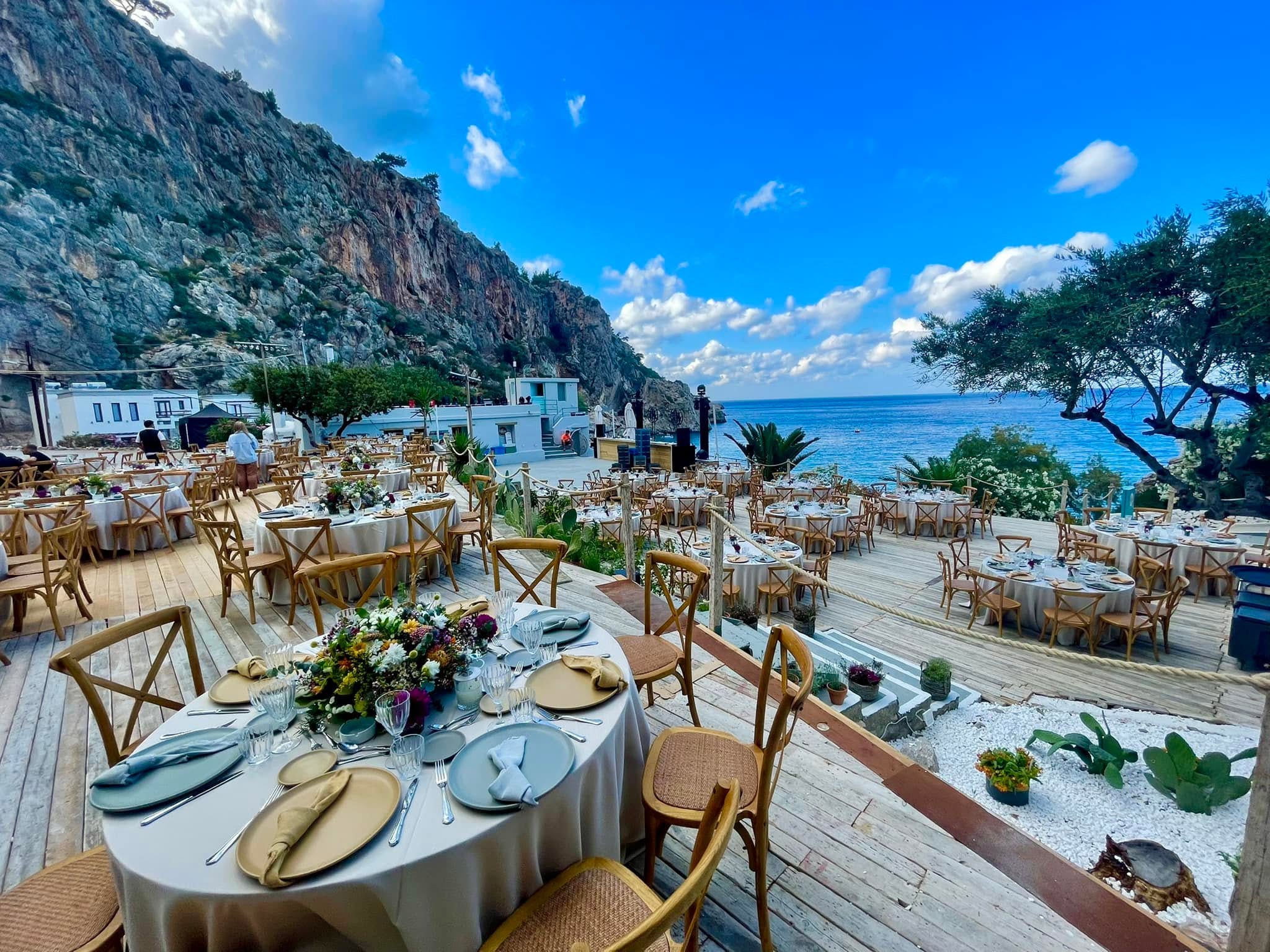
At one of the island’s most photographed bays, this is a more polished seaside choice than the classic beach taverna. The menu moves through Greek and Mediterranean cooking, with local products, appetisers, pasta and a full beach-day rhythm. The view over Kyra Panagia gives the meal its atmosphere. It suits travellers who want to stay for lunch or an early dinner after swimming, especially when the east-coast beaches are calm and the setting is at its best.
For a first visit, use Pigadia for convenience, Diafani and Olympos for northern food culture, Finiki and Agios Georgios for west-coast sunsets, Afiartis for a more contemporary kitchen, and Kyra Panagia for a scenic beach meal. The best food days on Karpathos usually come from matching the table to the part of the island you are already exploring, rather than driving long distances for a single reservation.
08
Where to Stay
Where to stay on Karpathos depends heavily on movement. The island is long, mountainous and slower to cross than it looks on a map. Pigadia gives the easiest logistics, Amoopi gives accessible beach days, Arkasa and Finiki give west-coast atmosphere, Lefkos gives a slower seaside rhythm, and Diafani or Olympos make sense for travellers who want the north to be central to the trip.
A car is strongly useful for almost every stay, unless the plan is limited to Pigadia, Amoopi, taxis and organised excursions. Location matters here more than on smaller islands. A beautiful hotel in the wrong part of Karpathos can become inconvenient, especially for dinner, northern excursions, or repeated beach changes according to the wind.
Althea Boutique Hotel
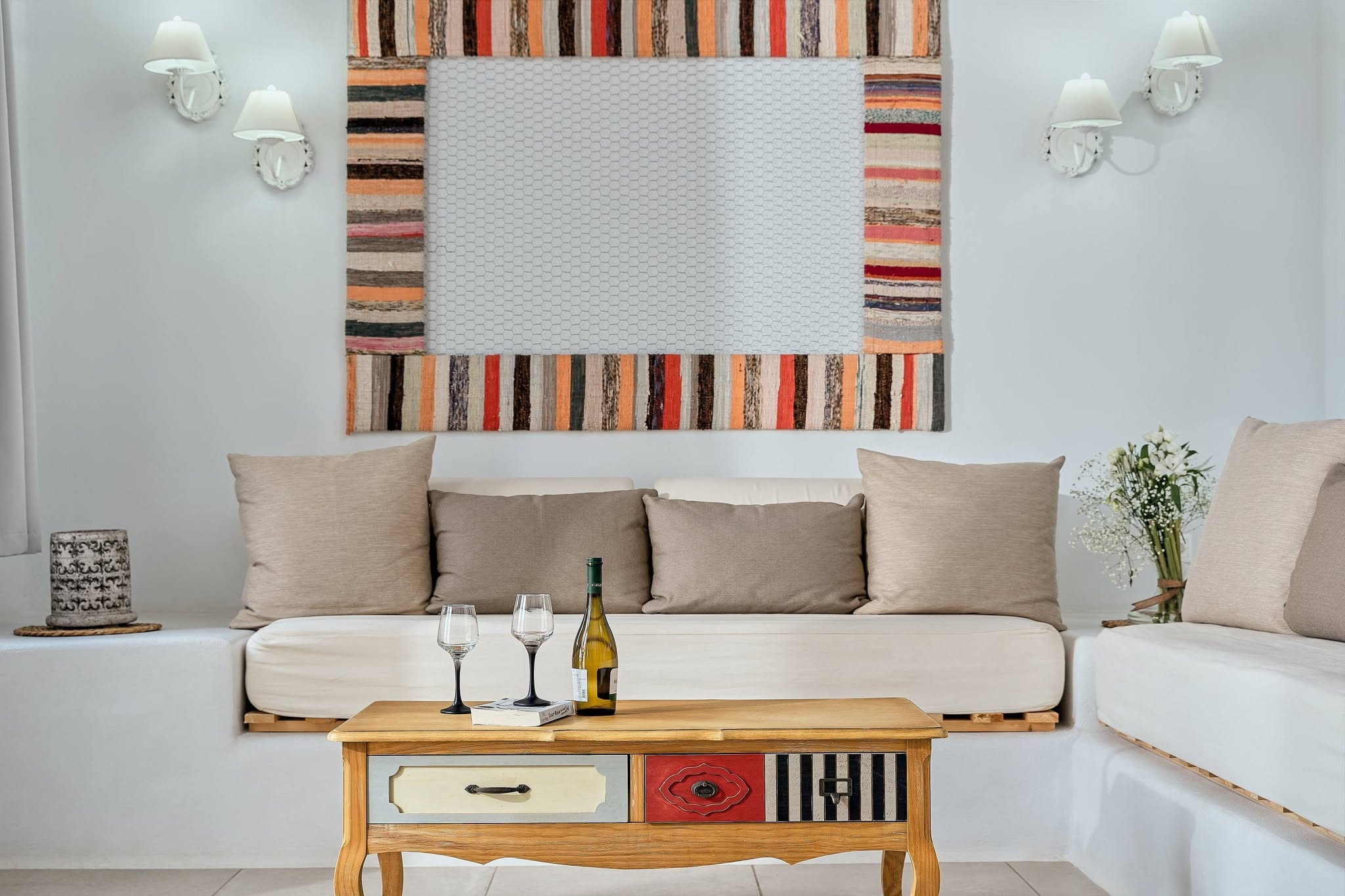
This adults-only boutique hotel is one of the island’s most appealing small stays for travellers who want a quieter base close to good swimming. Set above Amoopi, with access to the area’s coves and a short drive from Pigadia, it combines practical location with a more personal, design-conscious mood than the larger beach hotels. The rooms and apartments are individually styled, and the property suits travellers who want independence, calm and a beach base without feeling isolated.
Sophid Wellness Suites
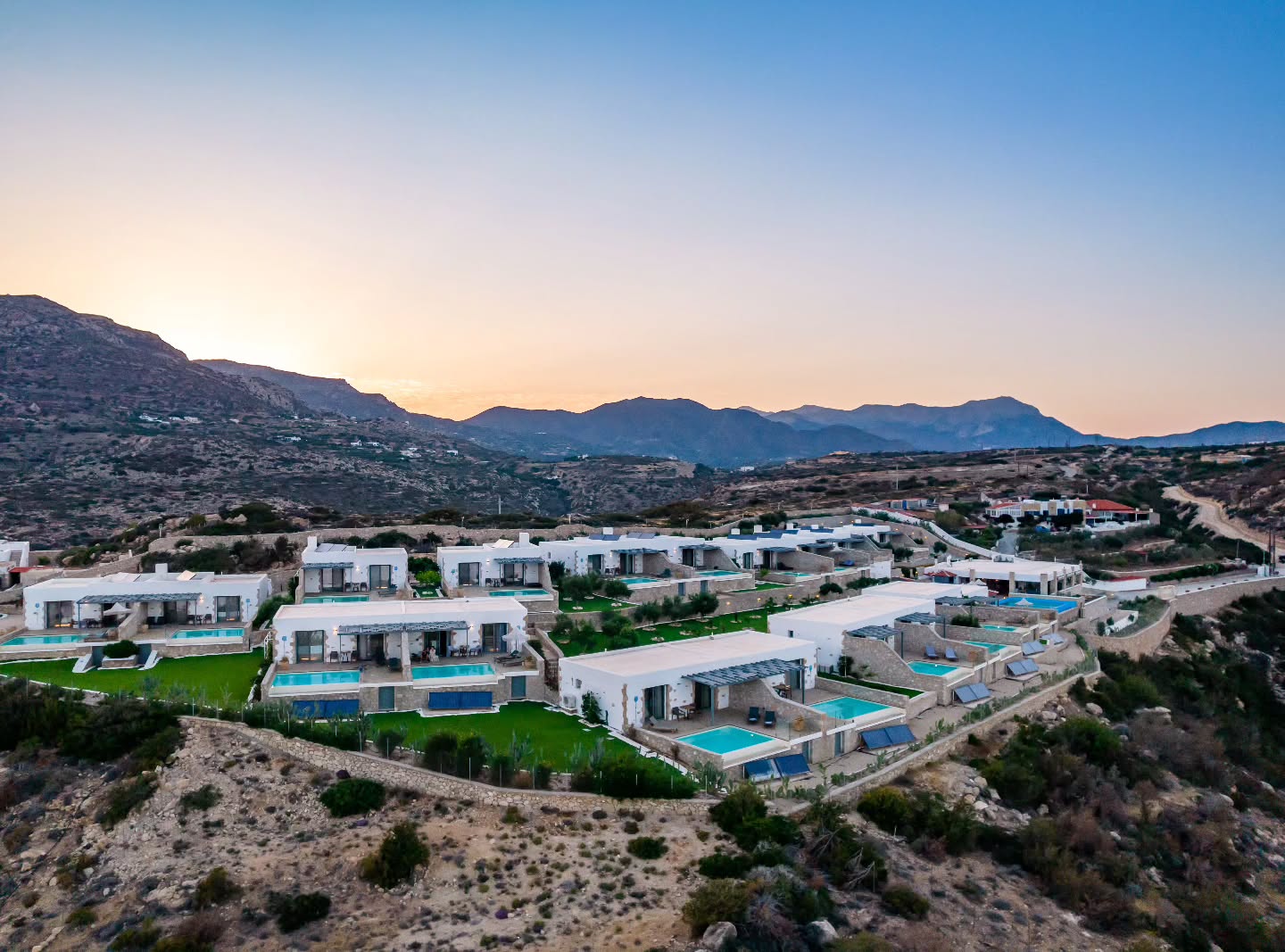
This is one of the island’s stronger wellbeing-oriented stays, with suites, a retreat atmosphere and a location that works for travellers who want the southern half of Karpathos without staying in the middle of Pigadia. The appeal lies in the combination of privacy, views, modern comfort and a wellness language that fits the island’s open-air, slow-living side. It is best for couples or travellers who want a quieter, more polished stay and will have a car.
Arpathea Villas
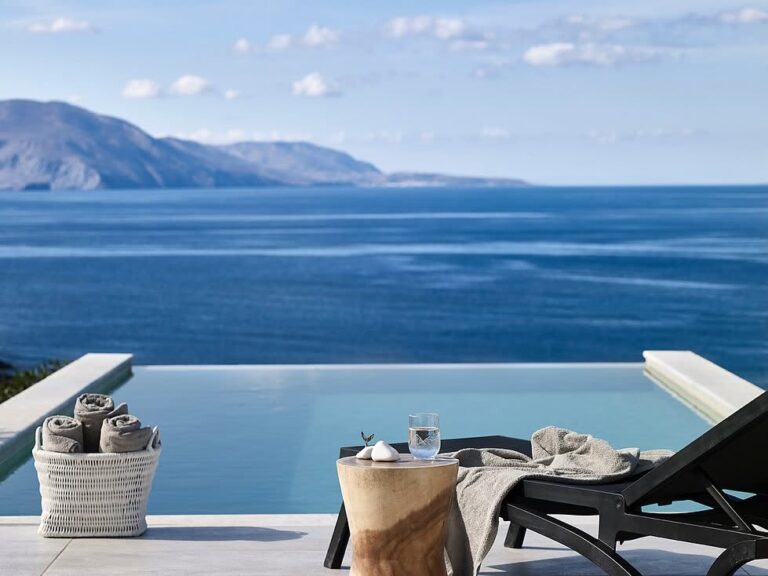
Above Finiki, this villa-style property is one of the best choices for travellers who want privacy, sunset views and a west-coast base. The accommodation is designed around independent stays, with private pools, terraces and views over the Aegean and the rocky slopes around Finiki. It works well for those who prefer evenings on the quieter side of the island, with fish tavernas, Arkasa, Agios Nikolaos beach and Lefkos all within practical reach by car.
Alimounda Mare
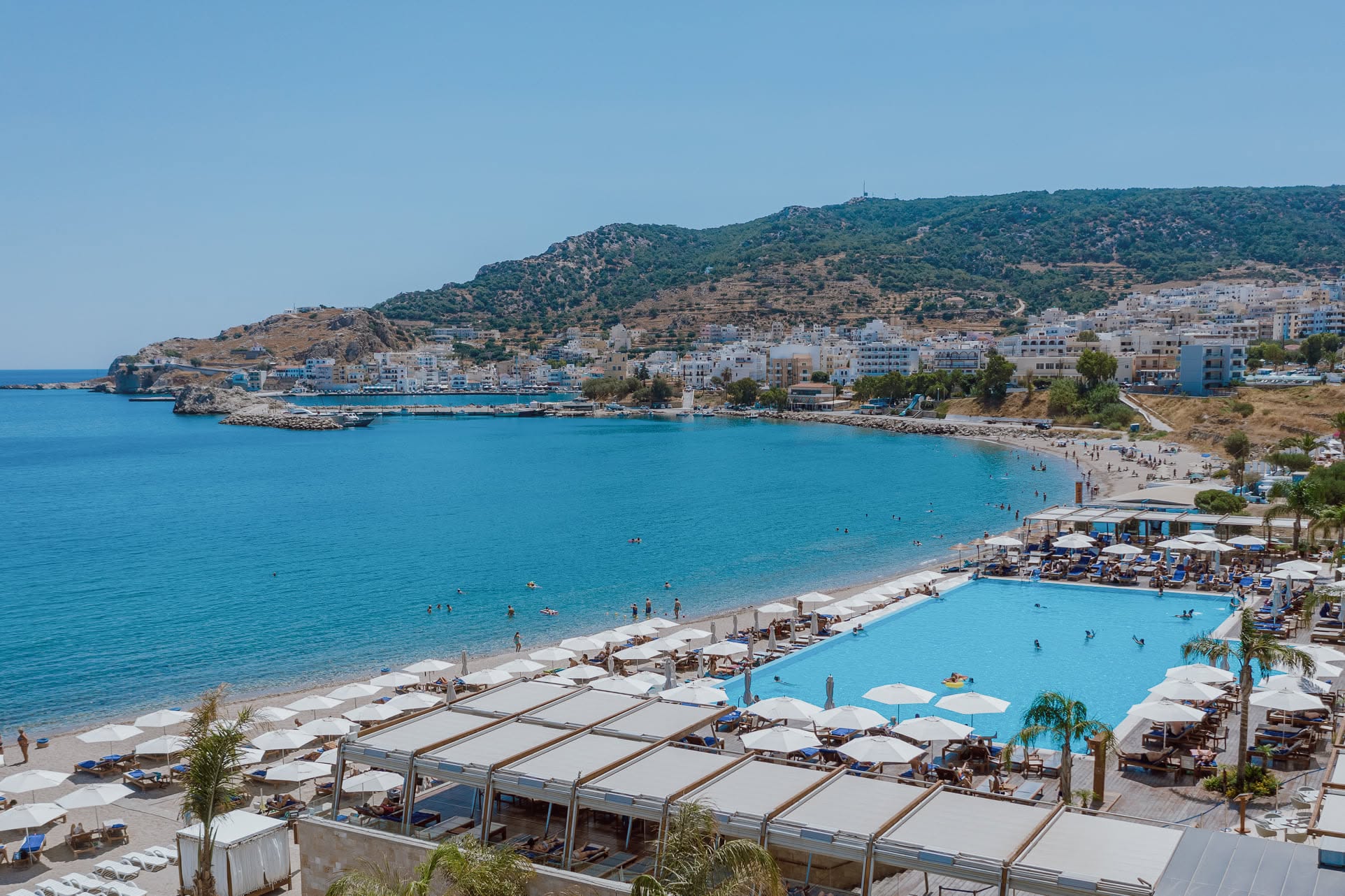
This five-star beachfront hotel remains one of the island’s most complete full-service options. Set close to Karpathos Town, it gives direct access to the sea, a large pool, spa facilities, restaurants and the convenience of being able to walk or take a very short ride into the capital. It is the right choice for travellers who want comfort, services and logistics more than village atmosphere, especially on a short trip or a first night after arrival.
Konstantinos Palace
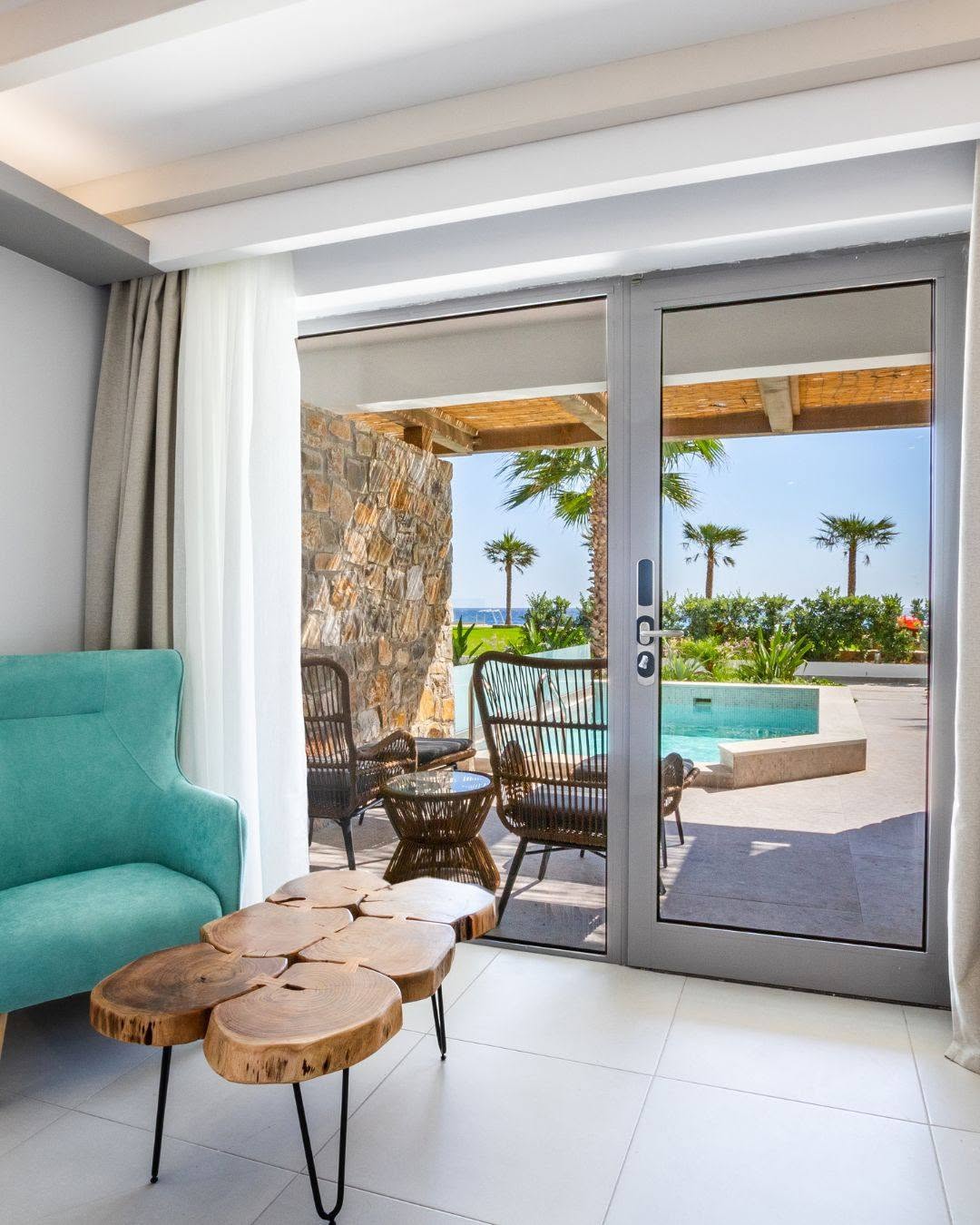
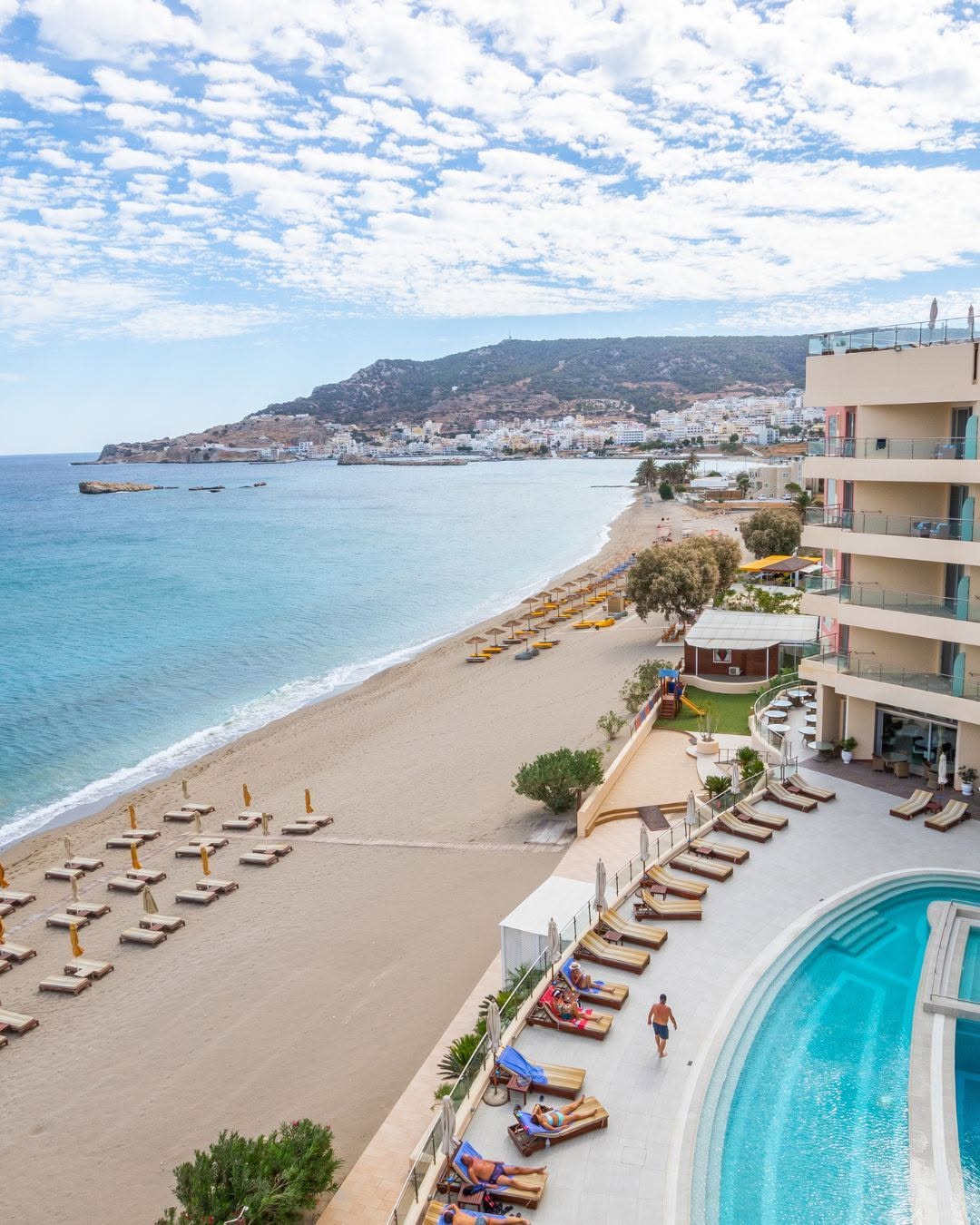
Also on the Pigadia side, this large beachfront hotel suits travellers who want resort facilities, sea views and easy access to town. The scale is very different from Karpathos’ smaller boutique stays, but the location is useful: the beach is close, the capital is nearby, and the hotel works for guests who prefer a structured, full-service base. It is less intimate than the smaller properties, but convenient for those who want everything within easy reach.
09
Shopping and Local Craft
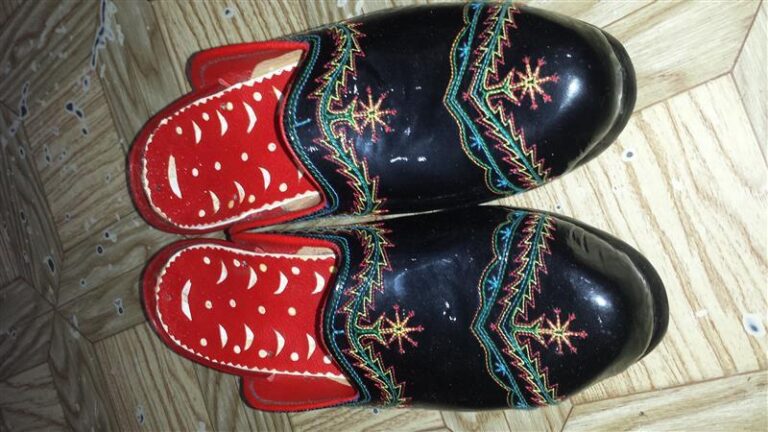
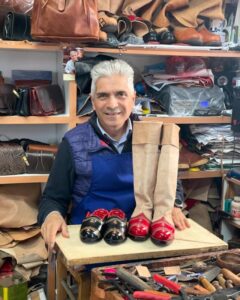
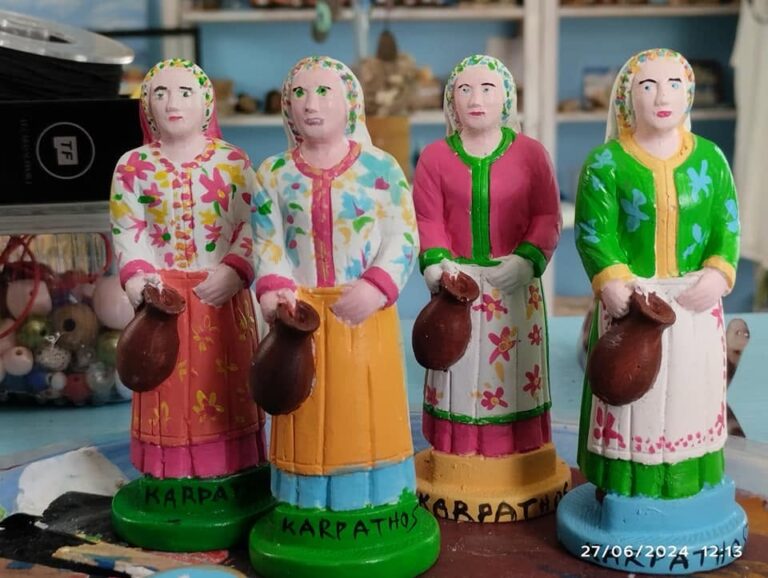
Karpathos is not a polished Cycladic shopping island, and that is part of its appeal. The best finds are connected with food, leatherwork, embroidery, jewellery, ceramics, local art, honey, herbs and village craft rather than fashion-led browsing.
Olympos is the strongest place for traditional craft, although the main lane can feel tourist-oriented at peak hours. One address worth seeking out is J. Prearis Hand Made Shoes, where the island’s traditional leather stivania are still made by hand. ND Creations is another useful stop in the village, especially for handmade jewellery and small craft pieces that feel more connected to Karpathos than standard souvenir stock.
In Pigadia, Kipseli Greek Market is practical for edible gifts such as honey, olive oil, herbs, cosmetics and other Greek products. Minas Vlahos Art Center adds a more personal note, with works by the Karpathian artist in his Pigadia gallery.
For village art, Bonendis Art Center in Menetes is worth including on a route through the central settlements, particularly for travellers interested in local painting, sculpture and handmade objects. Elsewhere, the best purchases may come from bakeries, small groceries and low-key village shops rather than formal boutiques.
Food products remain the easiest things to take home: psilokouloura, local honey, herbs, rusks, pasta, spoon sweets and, when transport allows, cheese. On Karpathos, the best recommendation often comes from a baker, taverna owner or neighbour at the next table.
10
Getting There and Around

Karpathos has an airport, with domestic flights from Athens and seasonal international flights in summer. Ferries connect it with Piraeus and other islands in the Dodecanese and southern Aegean, including Rhodes, Kasos, Sitia, Heraklion and Santorini, though the Piraeus journey is long.
The island has two main ports: Pigadia in the south-central east and Diafani in the north. Not all routes serve both in the same way, so arrival and departure details matter when choosing where to stay.
A car is strongly recommended unless the trip is limited to Pigadia, Amoopi and organised excursions. Karpathos is long, the north is far from the south, and public transport does not give enough freedom to understand the island properly. Roads to main villages and beaches are generally manageable, but distances, wind, curves and night driving should be taken seriously.
For a short stay, base yourself in Pigadia or Amoopi and take one long trip north. For a fuller trip, divide time between the south or west coast and the north. Karpathos deserves at least five days; a week is better. Anything shorter risks turning one of Greece’s most culturally distinctive islands into a beach-and-Olympos dash.
Karpathos Directory
Where to Stay
Alimounda Mare Hotel
Area: Pigadia
Phone: +30 22450 23902 / reservations +30 22420 29551
Website: Website
Best for: full-service beachfront stay near Karpathos Town
Althea Boutique Hotel
Area: Amoopi
Phone: +30 22450 81152
Website: Website
Best for: adults-only boutique stay close to beaches
Sophid Wellness Suites
Area: Amoopi
Phone: +30 693 469 9916 / +30 22454 40900
Website: Website
Best for: polished suites, privacy and wellness mood
Arpathea Villas
Area: Finiki
Phone: +30 694 534 6847
Website: Website
Best for: west-coast privacy, sunset views and villa-style stays
Konstantinos Palace
Area: Pigadia / Afoti Beach
Phone: +30 22450 23401
Website: Website
Best for: resort facilities and easy access to town
Food
Orea Karpathos
Area: Pigadia
Phone: +30 22450 22501
Website: Website
Best for: Karpathian dishes in town
Acropolis
Area: Pigadia
Phone: +30 22450 23278
Website: Website
Best for: steak, grill and central-town dining
Ellinikon
Area: Pigadia
Phone: +30 22450 23932
Website: Website
Best for: traditional Greek cooking
To Kyma
Area: Pigadia
Phone: +30 697 691 3002
Website: Website
Best for: harbour seafood
Al Porto Pizza Spaghetti
Area: Pigadia
Phone: +30 22450 22772
Website: Website
Best for: pizza, pasta and an easy town dinner
Anixi
Area: Diafani
Phone: +30 22450 51226
Website: Website
Best for: traditional food in the north
The Dolphins / Delfinia
Area: Diafani
Phone: +30 22450 51354
Website: Website
Best for: seafood after Olympos or northern beach trips
Kedros
Area: Agios Georgios / Finiki
Phone: +30 697 241 4686
Website: Website
Best for: west-coast sunset meal
Delfini
Area: Finiki
Phone: +30 22450 61060
Website: Website
Best for: seafood and lobster spaghetti
Marina’s
Area: Finiki
Phone: +30 22450 61100 / +30 697 268 2270
Website: Website
Best for: dolmadakia, meze and seafood
Poseidon Blue
Area: Damatria / Afiartis
Phone: +30 22450 91066
Website: Website
Best for: more composed, chef-led island cooking
Stin Ygeia Mas
Area: Amoopi
Best for: chicken and casual taverna food
Note: no reliable public phone/site found in quick search
Folia
Area: Spoa
Phone: +30 22450 71341 / +30 698 270 9663
Website: Website
Best for: meal stop on the northern route
Milos Taverna
Area: Olympos
Phone: +30 22450 51333
Website: Website
Best for: traditional food and village views
Parthenon
Area: Olympos
Phone: +30 22450 51307
Website: Website
Best for: morning coffee or traditional meal in Olympos
Kriti Cafe
Area: Olympos
Phone: +30 22450 51222
Website: Website
Best for: traditional coffee stop
Zografidis Cafe
Area: Olympos
Phone: +30 22450 51251
Website: Website
Best for: coffee in Olympos
Kalliopi Drakou Bakery
Area: Olympos
Best for: traditional bakery stop
Note: no reliable public contact found in quick search
Kelaria
Area: Kyra Panagia
Phone: +30 698 857 3498
Website: Website
Best for: scenic beach meal at Kyra Panagia
Museums & Culture
Archaeological Museum of Karpathos
Area: Pigadia
Phone: +30 22450 23441
Website: Website
Best for: island history from prehistoric to Byzantine periods
Historical and Folklore Museum / Arkasa Museum
Area: Arkasa
Website: Website
Best for: local history, ecclesiastical and domestic memory
Menetes Folklore Museum
Area: Menetes
Best for: everyday objects, textiles, photos and local memory
Othos Folklore Museum
Area: Othos
Phone: +30 22450 31460
Website: Website
Best for: traditional Karpathian house interior
Agricultural Museum of Pyles
Area: Pyles
Phone: +30 697 643 3067
Website: Website
Best for: rural life, farming tools, windmill and wine press
Palaiokastro
Area: Arkasa
Best for: ancient Arkesia and sunset-side history
Church of the Dormition of the Virgin Mary
Area: Menetes
Best for: village landmark and views
Shopping & Craft
J. Prearis Hand Made Shoes
Area: Olympos
Phone: +30 22450 51310 / +30 694 417 5959
Website: Website
Best for: traditional leather stivania and handmade shoes
ND Creations
Area: Olympos
Phone: +30 690 912 2026
Website: Website
Best for: handmade jewellery and local craft
Kipseli Greek Market
Area: Pigadia
Phone: +30 22450 29099
Website: Website
Best for: honey, olive oil, herbs, cosmetics and edible gifts
Minas Vlahos Art Center
Area: Pigadia
Website: Website
Best for: local art and gallery visit
Bonendis Art Center
Area: Menetes
Phone: +30 22450 81138
Website: Website
Best for: handmade objects, local art and village craft
Villages & Areas
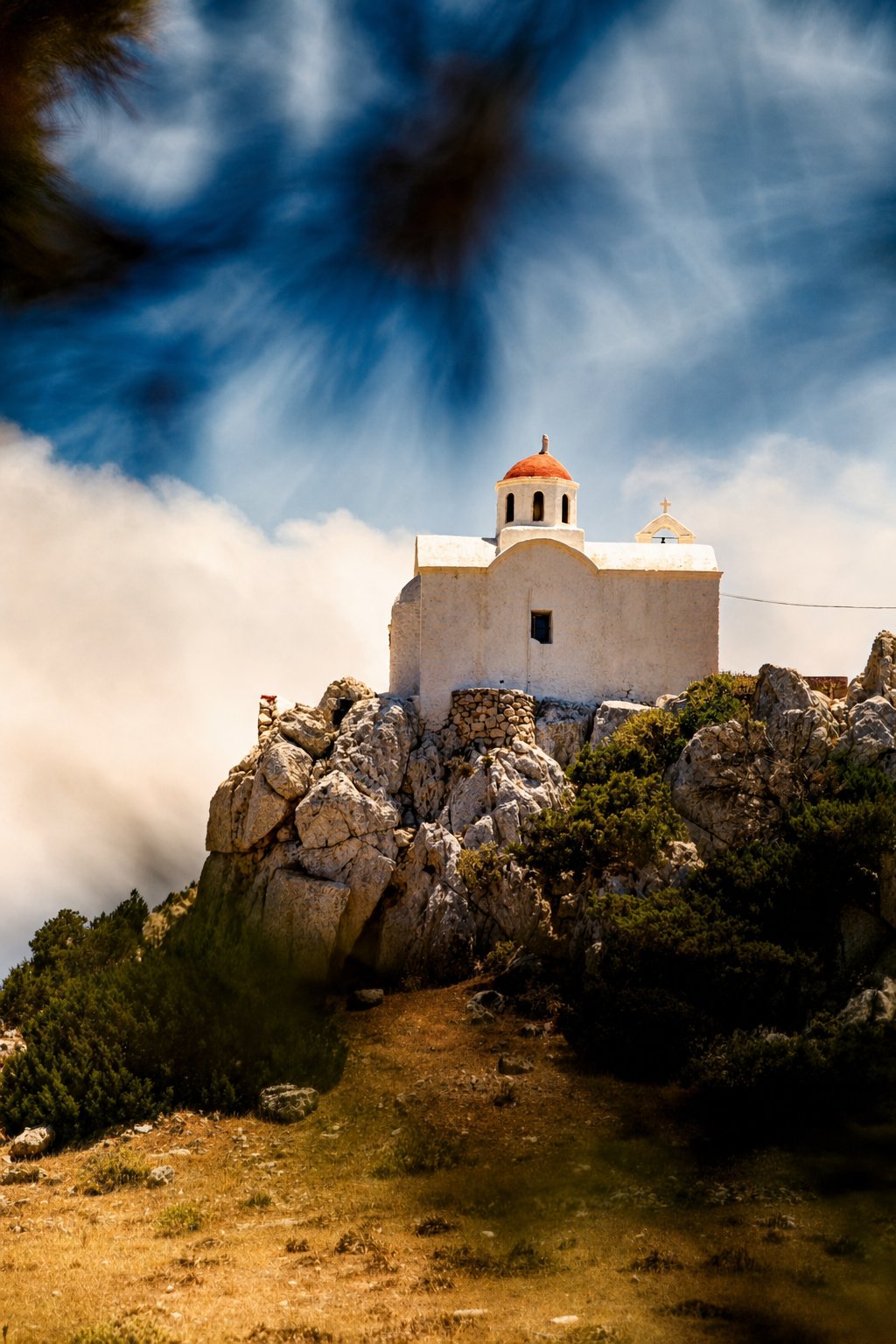
Pigadia / Karpathos Town
Best for: port, museum, hotels, shops, waterfront meals and logistics
Amoopi
Best for: easy beach base south of Pigadia
Afiartis
Best for: windsurfing coast and airport-side beaches
Arkasa
Best for: west-coast base, antiquity and sunset side
Finiki
Best for: fishing-village meals and west-coast seafood
Lefkos
Best for: slower seaside stay and sandy bays
Mesochori
Best for: late-afternoon village walk
Menetes
Best for: views, colour, church and folklore memory
Aperi
Best for: former capital and central-village route
Volada
Best for: highland quiet and central Karpathos
Othos
Best for: folklore museum and mountain-village culture
Pyles
Best for: agricultural museum and rural island memory
Spoa
Best for: stop between south and north
Olympos
Best for: living tradition, architecture, music and early/late visits
Avlona
Best for: old agricultural landscape and northern walks
Diafani
Best for: northern port, Olympos access and boat trips
Beaches & Nature
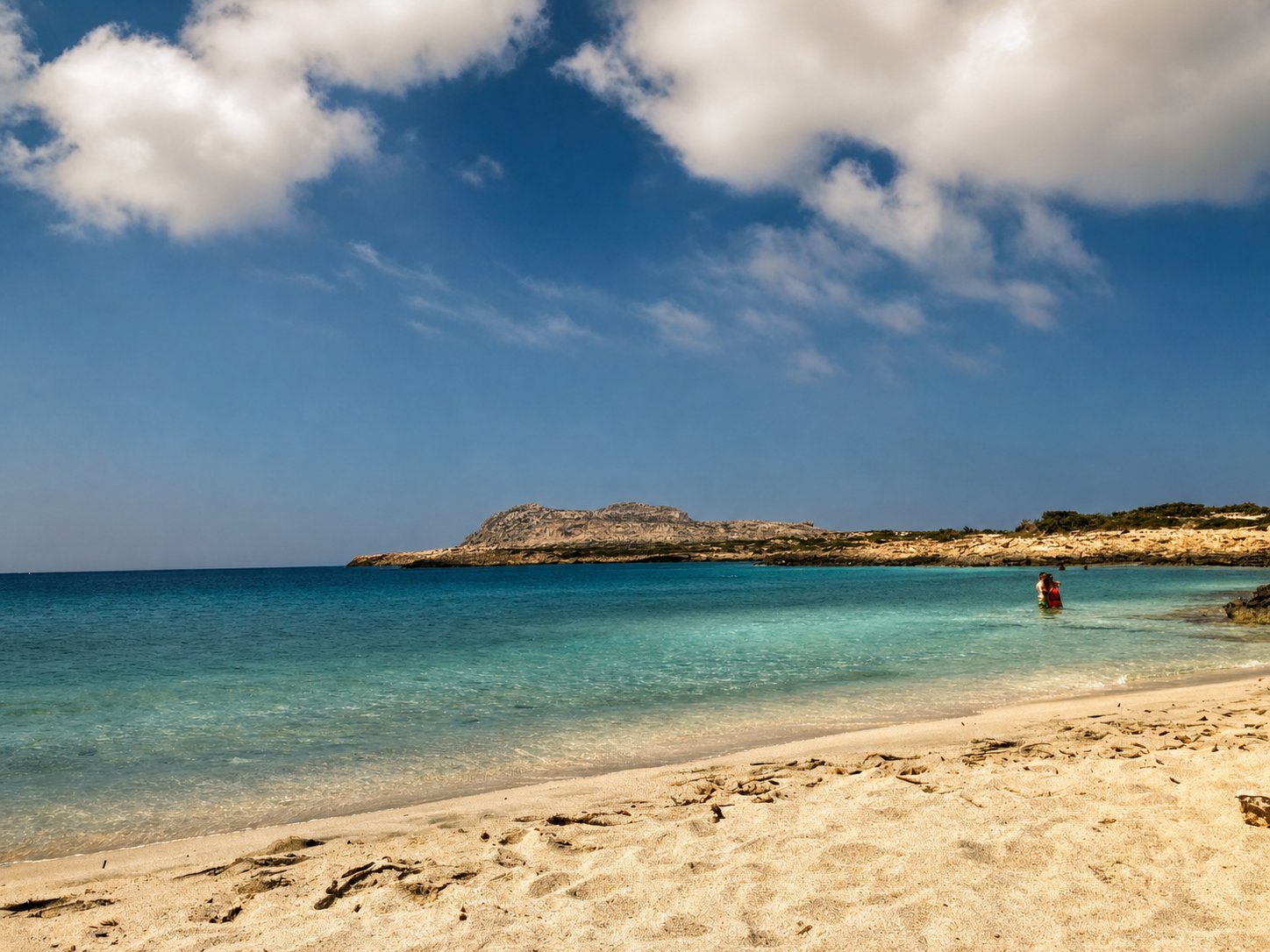
Diakoftis
Area: Afiartis / south
Best for: shallow turquoise water
Damatria
Area: Afiartis / south-east
Best for: pale water, beach meal or breakfast stop
Christou Pigadi
Area: Afiartis
Best for: south-coast swim near the airport
Chicken Bay
Area: Afiartis
Best for: windsurfing scene
Agios Nikolaos
Area: Arkasa
Best for: sand, waves and sunset light
Agios Theodoros
Area: Arkasa
Best for: west-coast beach day
Apella
Area: East coast
Best for: classic Karpathos beach, early in high summer
Achata / Ahata
Area: East coast
Best for: narrower, rockier bay near Apella
Kyra Panagia
Area: East coast
Best for: iconic beach, church view and tavernas
Lefkos
Area: West coast
Best for: several sandy bays and easy beach rhythm
Finiki Beach
Area: Finiki
Best for: small harbour beach before or after seafood
Diafani Beach
Area: Diafani
Best for: simple northern-port swim
Vananda
Area: near Diafani
Best for: quiet northern swim, reachable from Diafani
Forokli
Area: northern/eastern Karpathos
Best for: remote, unorganised beach; check access locally
Papa Mina
Area: near Diafani
Best for: secluded pebbly beach and walking route
Saria
Area: north of Karpathos
Best for: boat excursion, ruins, coves and exposed landscape
Hiking Routes
Avlona-Tristomo-Vananda-Diafani
Best for: long, demanding northern walk
Avlona-Vananda-Diafani
Best for: shorter but still substantial northern route
Kato Lastos-Spoa
Best for: mountain-to-sea walking route