


Balos and Falassarna may bring travelers to Crete’s far west. A restored mountain village, a shaded gorge, an ancient hilltop city and an exceptional early Christian church offer compelling reasons to stay longer.
Kissamos forms the western edge of the Chania region, an area most international visitors already know through its Venetian harbor, the White Mountains and some of the island’s most photographed beaches. It lies 38 kilometers west of Chania, the capital of western Crete, a roughly 40-minute drive.
For many visitors, Kissamos begins with an image of water. Balos Lagoon, framed by the Gramvousa Peninsula, appears in almost every visual account of western Crete. Falassarna is known for its long sweep of sand and west-facing sunsets, while Elafonissi is often the next name on the itinerary. Travelers who choose to stay in or around Kissamos are usually already familiar with these places, even if only from photographs.
The wider region, however, extends well beyond its famous coastline. South of Kissamos town, the landscape rises through olive groves, chestnut woods, gorges and villages before reaching some of western Crete’s most absorbing historical sites.
The 4 places that follow do not form a single conventional sightseeing circuit, and they are better experienced without trying to fit them all into 1 day. Milia is a destination in its own right. Sirikari Gorge and ancient Polyrinia make a natural pair. The Rotunda of Michael the Archangel is a separate eastward detour. Together, they reveal why Kissamos deserves more than a quick journey to the beach.
Milia: A Restored Village With a Modern Idea of Luxury
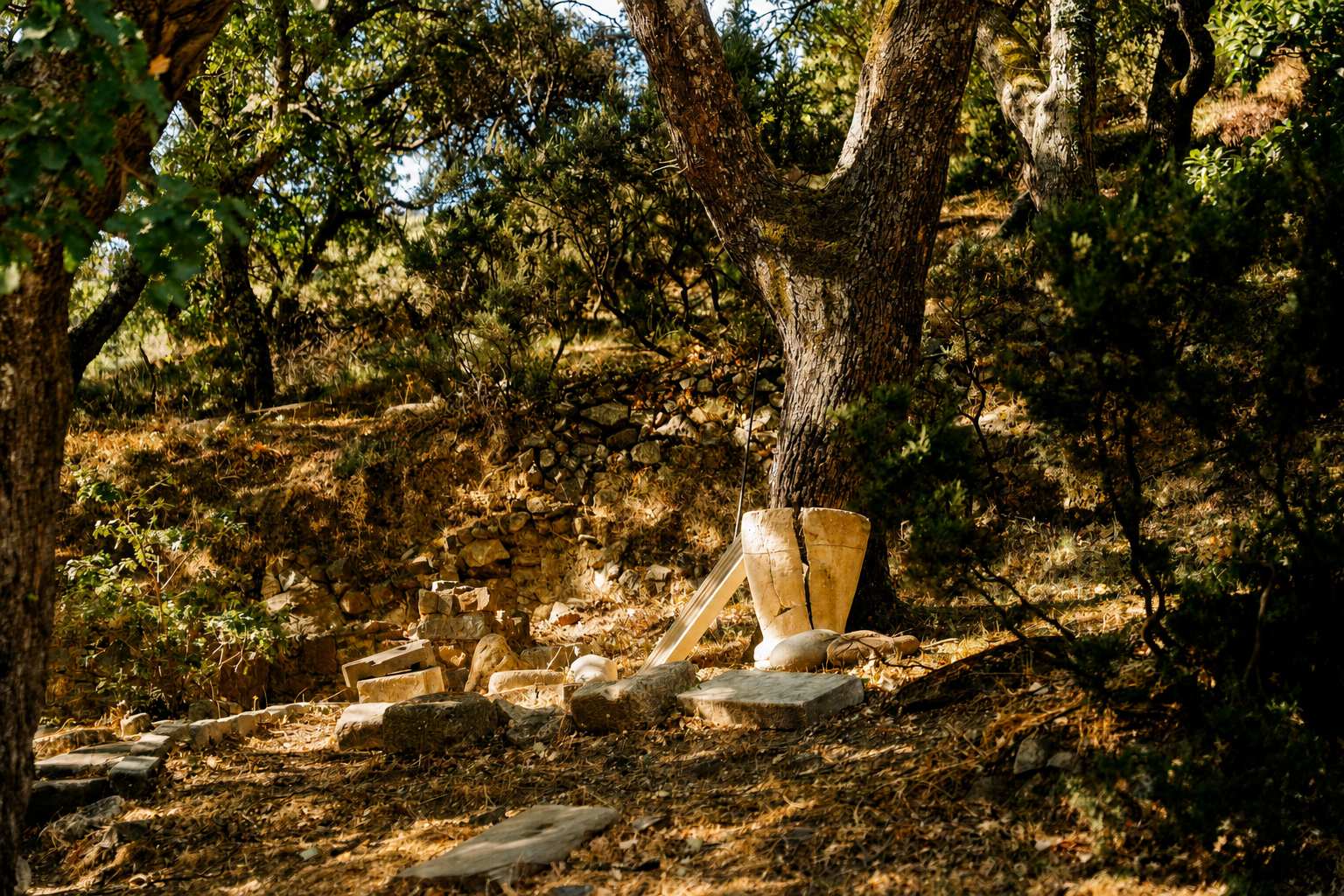
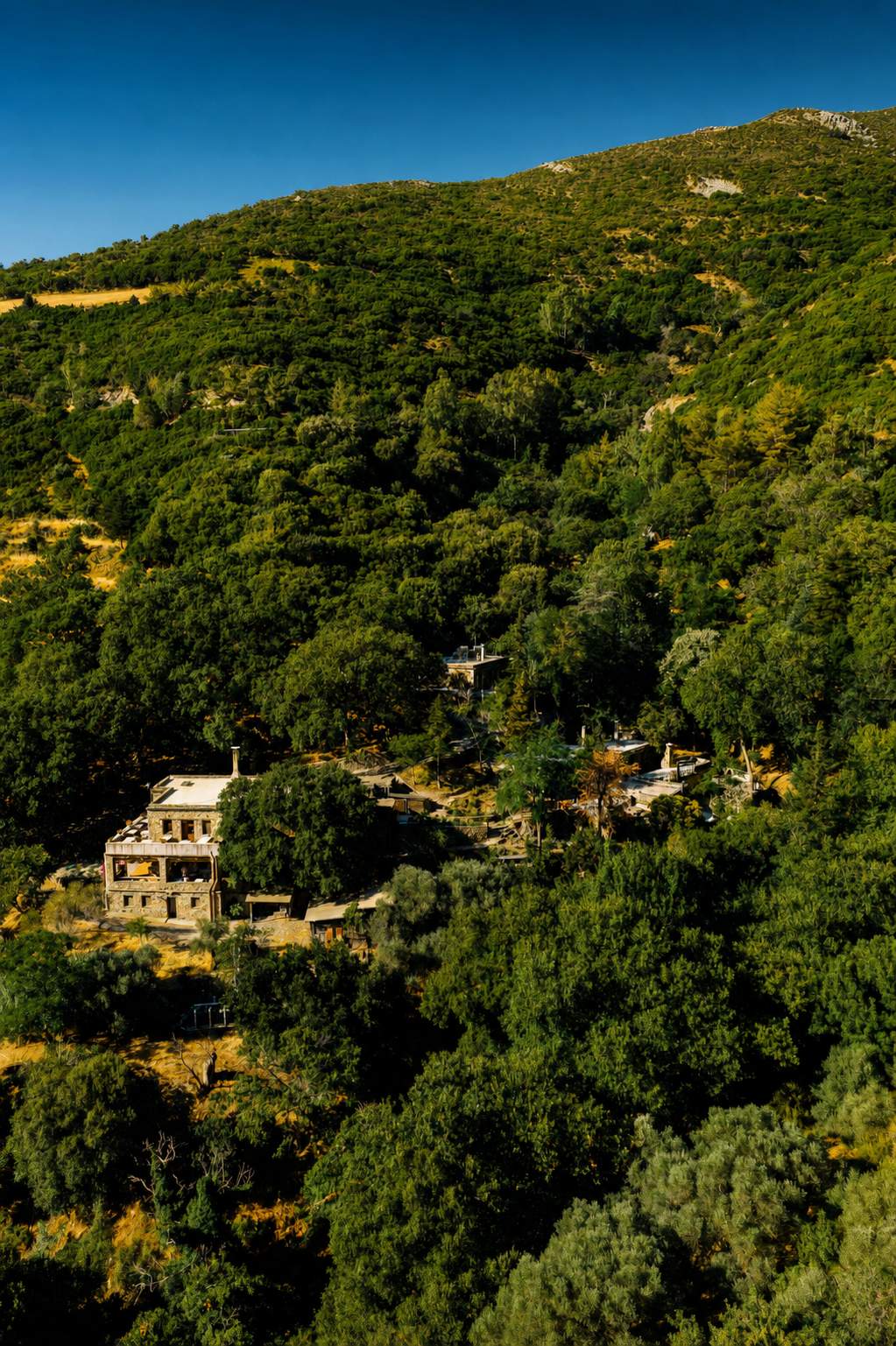
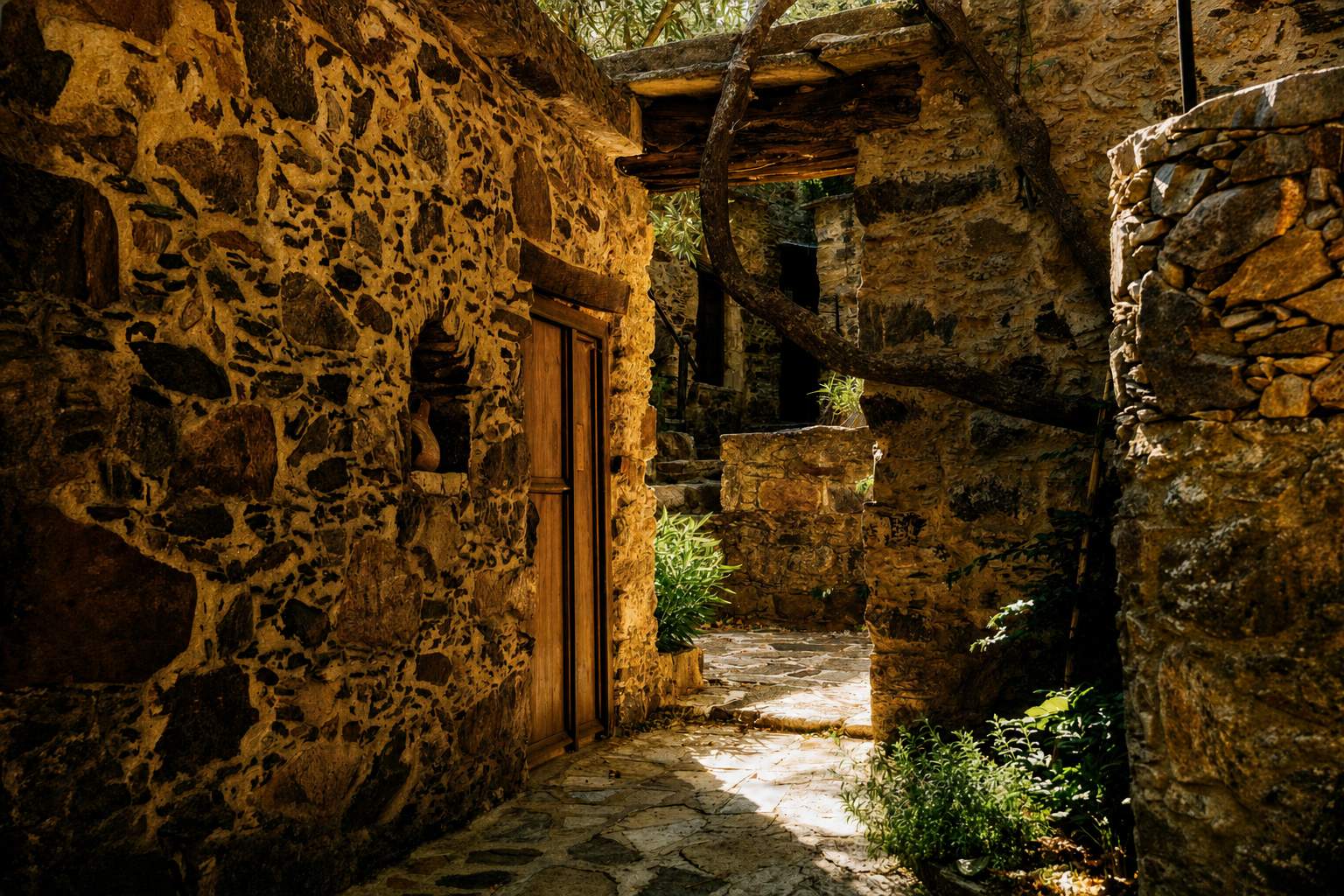
Hidden in the hills near Vlatos, Milia Mountain Retreat occupies a medieval settlement that had been abandoned for decades. Its revival began in the 1980s, when 2 local families set out to restore the ruined houses, revive the surrounding land and create an environmentally responsible place to stay. The first guesthouses and restaurant opened in 1993, long before sustainability became a standard part of the hospitality vocabulary.
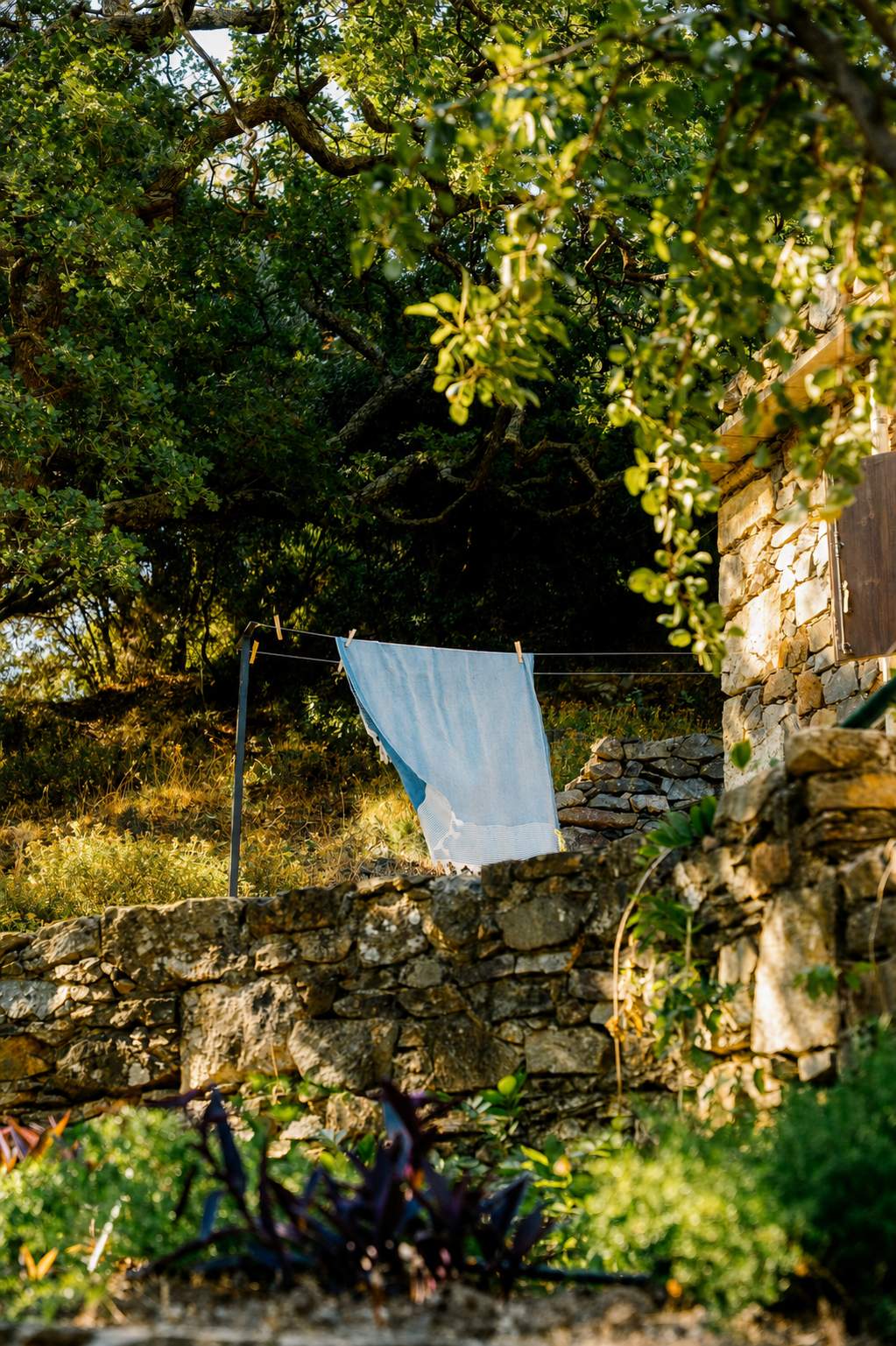
Much of the original stone and wood was reused during the restoration. Today, electricity and hot water are supplied by solar energy, while the rooms deliberately do without air-conditioning, refrigerators and other high-consumption appliances. The result is not a reproduction of village life, but a quieter form of hospitality shaped by the landscape.
The old houses are now guest rooms, linked by stone paths and small terraces. The restaurant draws much of its produce from Milia’s farm and nearby growers, and it also welcomes visitors who are not staying overnight. A meal here is reason enough to make the drive, particularly when combined with one of the surrounding walks.
Milia is best approached as a half-day excursion or an overnight escape, rather than a quick photo stop. The surrounding trails, dense vegetation and lack of urban lighting create a striking contrast with the exposed, sunlit coast. After dark, the silence and clear sky become part of the experience.
Sirikari Gorge: A Path From Forest to History
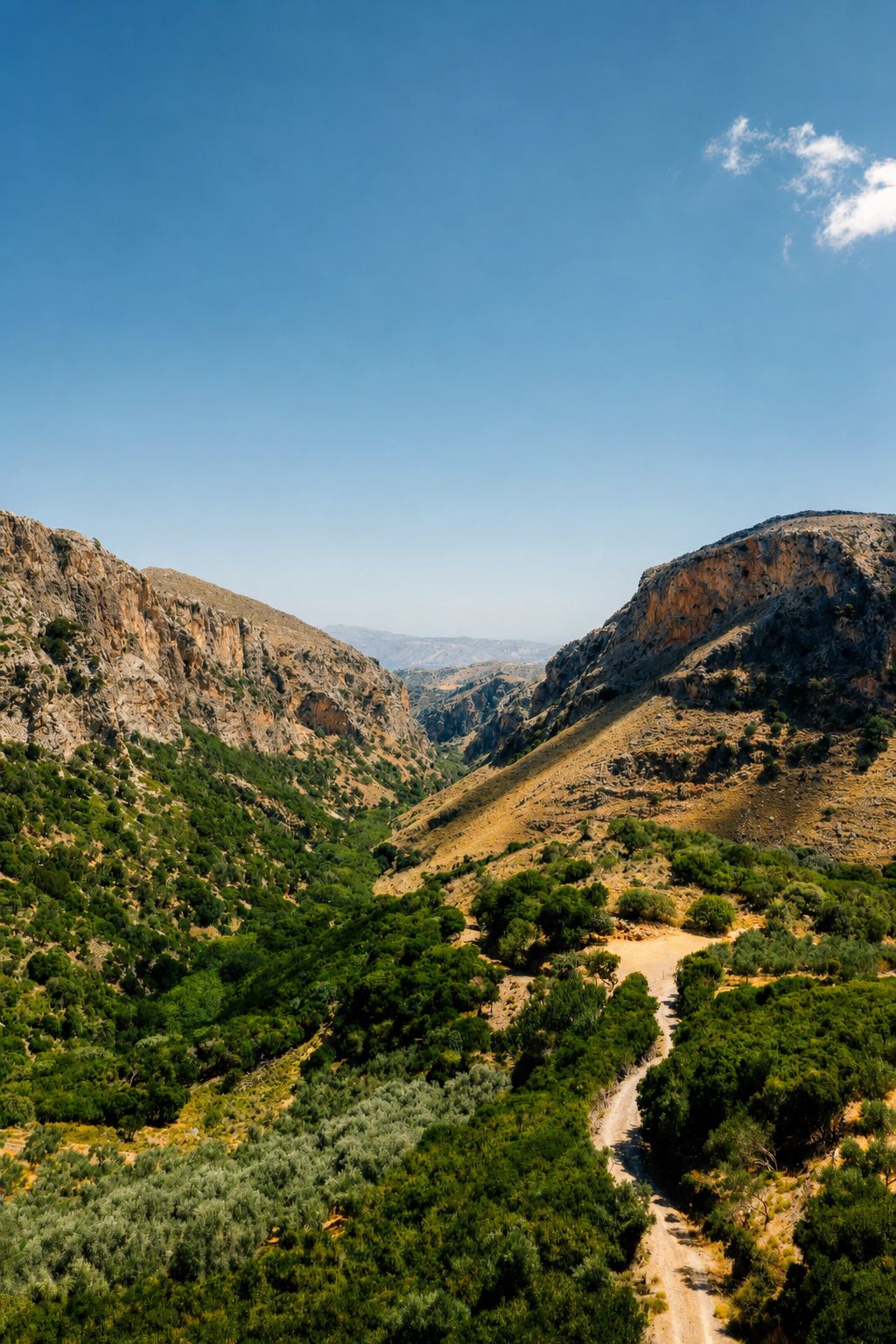
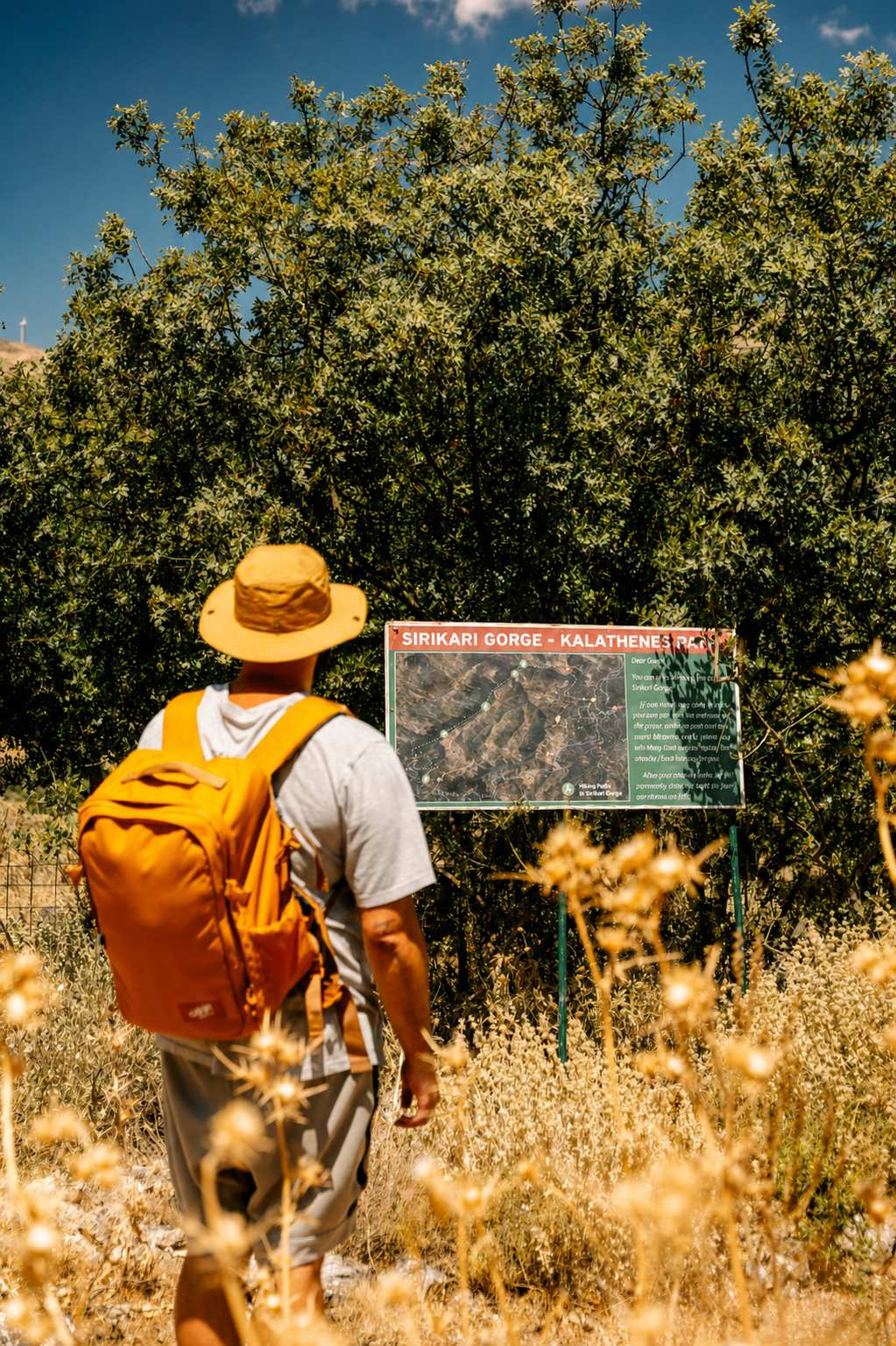
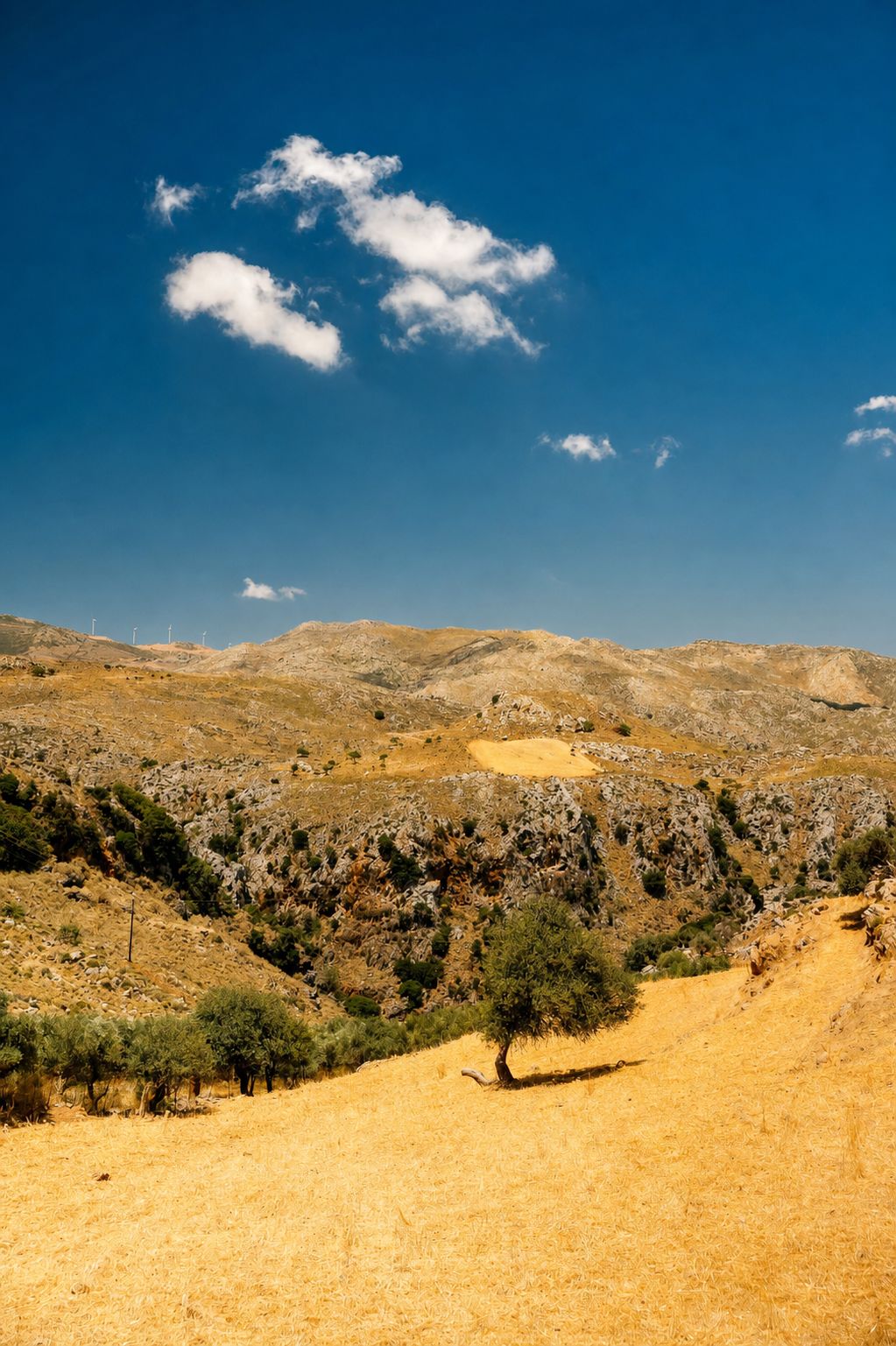
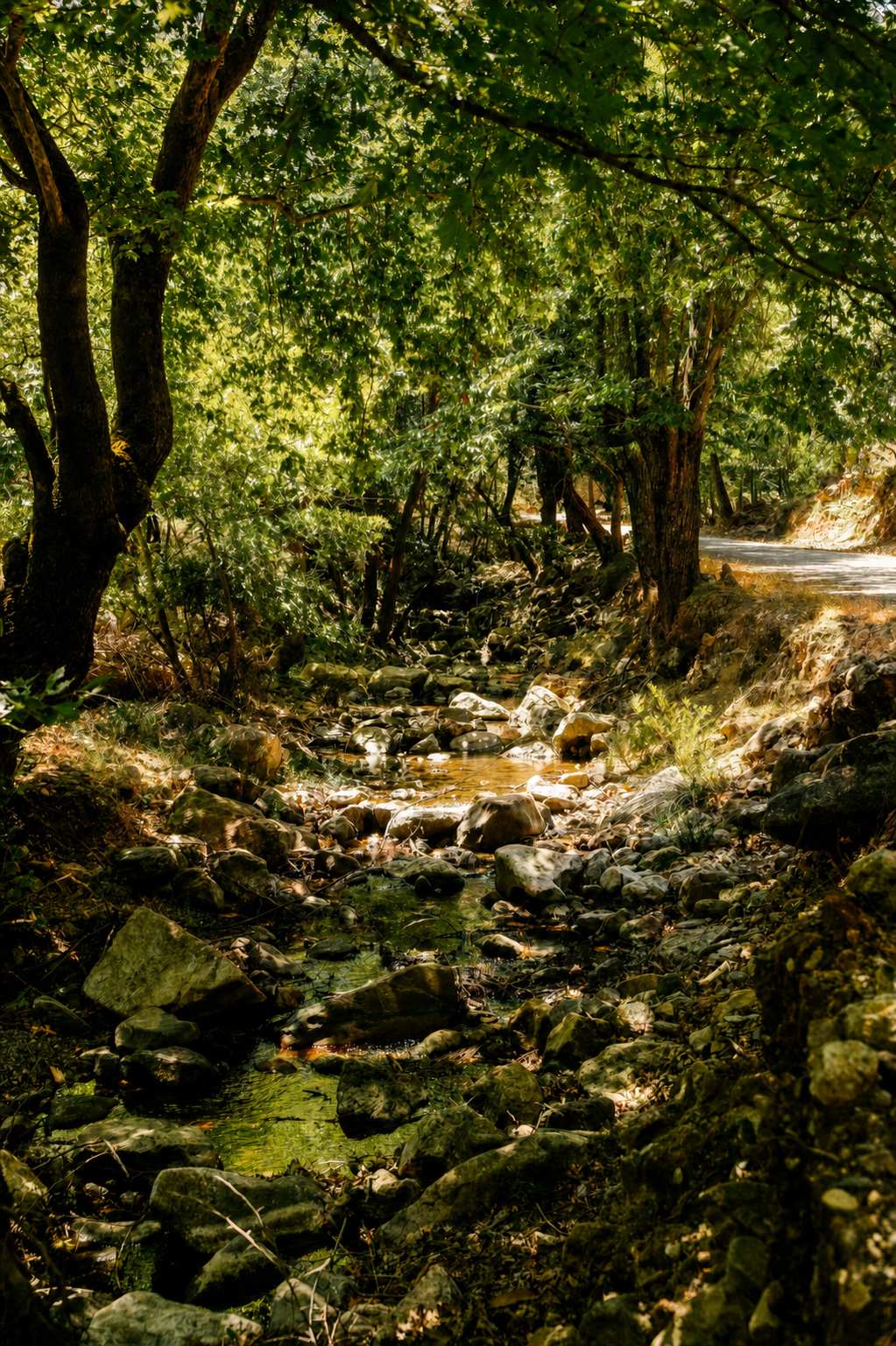
Around 17 kilometers south of Kissamos, the landscape around Sirikari is unexpectedly green. Plane trees, chestnuts and dense vegetation soften the gorge, while running water and small cascades may appear depending on the season.
The principal walk takes approximately 2.5 hours and follows the gorge toward Polyrinia. This geographical connection makes Sirikari and the ancient city the most logical pair in the story: the landscape gradually leads from mountain village and woodland to one of western Crete’s most important historical sites.
Sirikari is far less crowded than Samaria, but that does not mean the hike should be treated casually. Parts of the gorge are steep or narrow, and conditions can vary with the weather and season. Proper walking shoes, water and advance confirmation of the route are advisable. If walking it as a point-to-point trail, arrange transport for the return journey before setting out.
The reward is not a single dramatic landmark. It is the gradual change in the landscape: shade replacing open coastline, the sound of water, and the sense of moving through a part of Crete that many beach-focused itineraries overlook.
Ancient Polyrinia: The Hilltop City Above Kissamos Bay
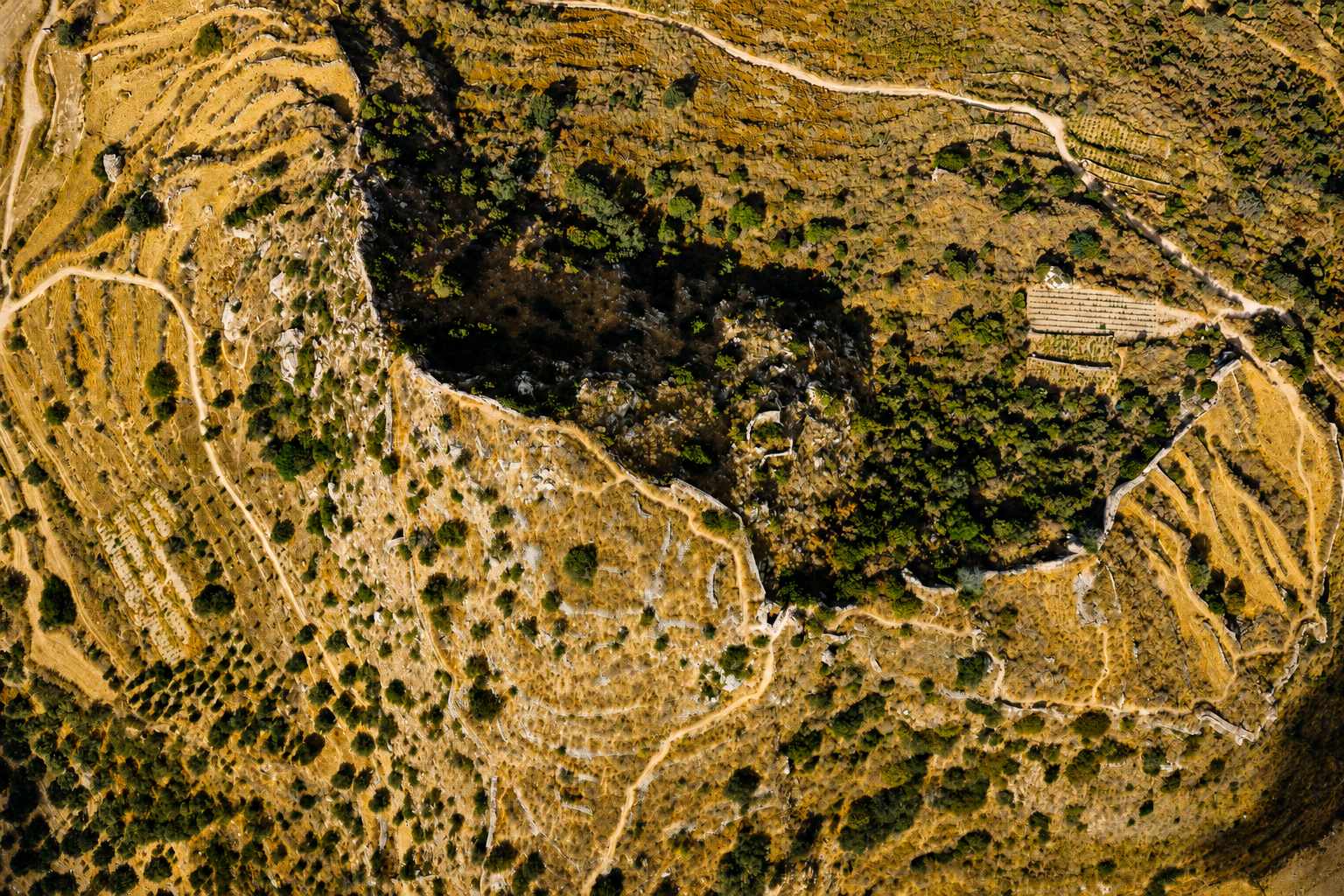
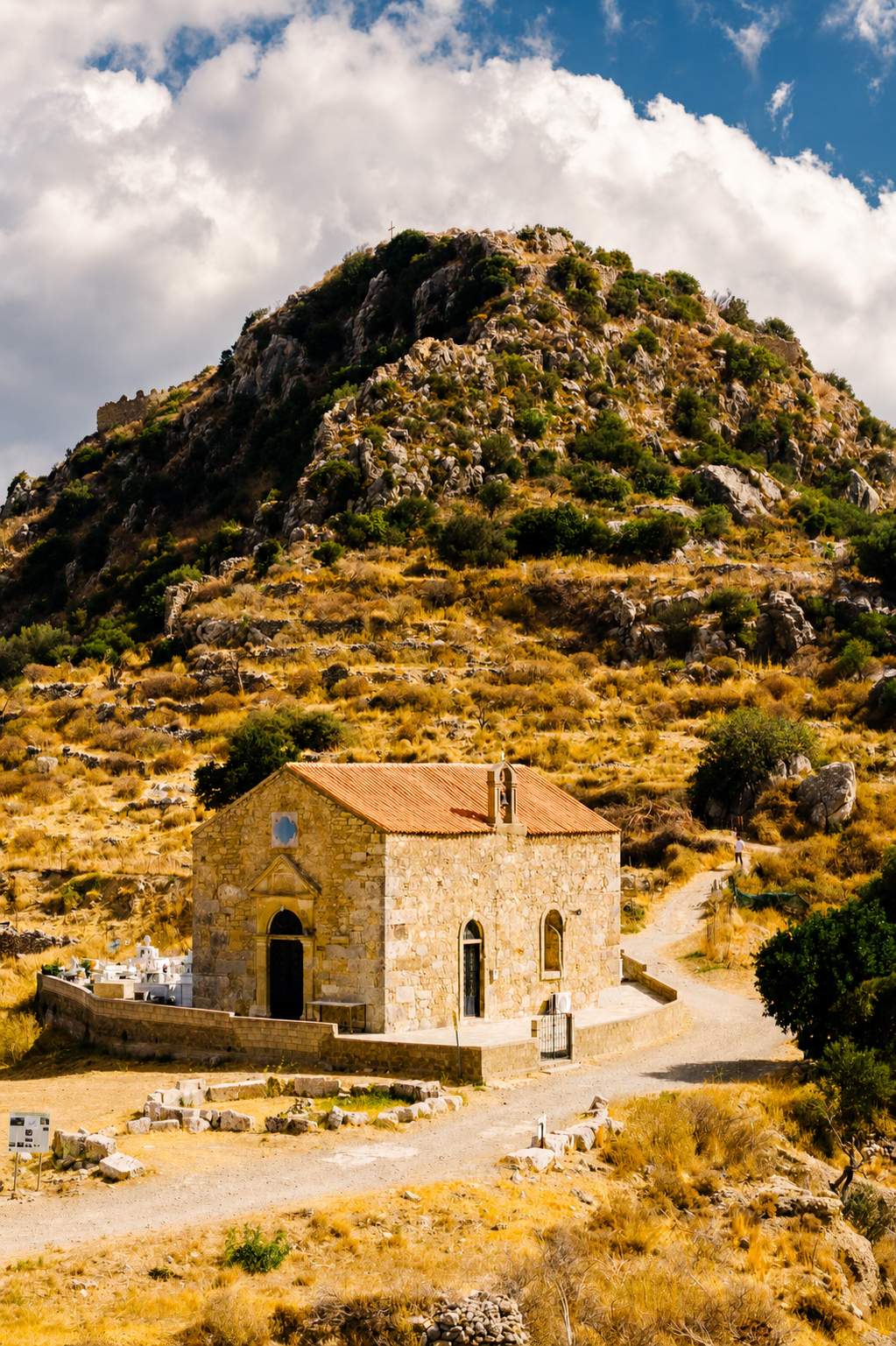
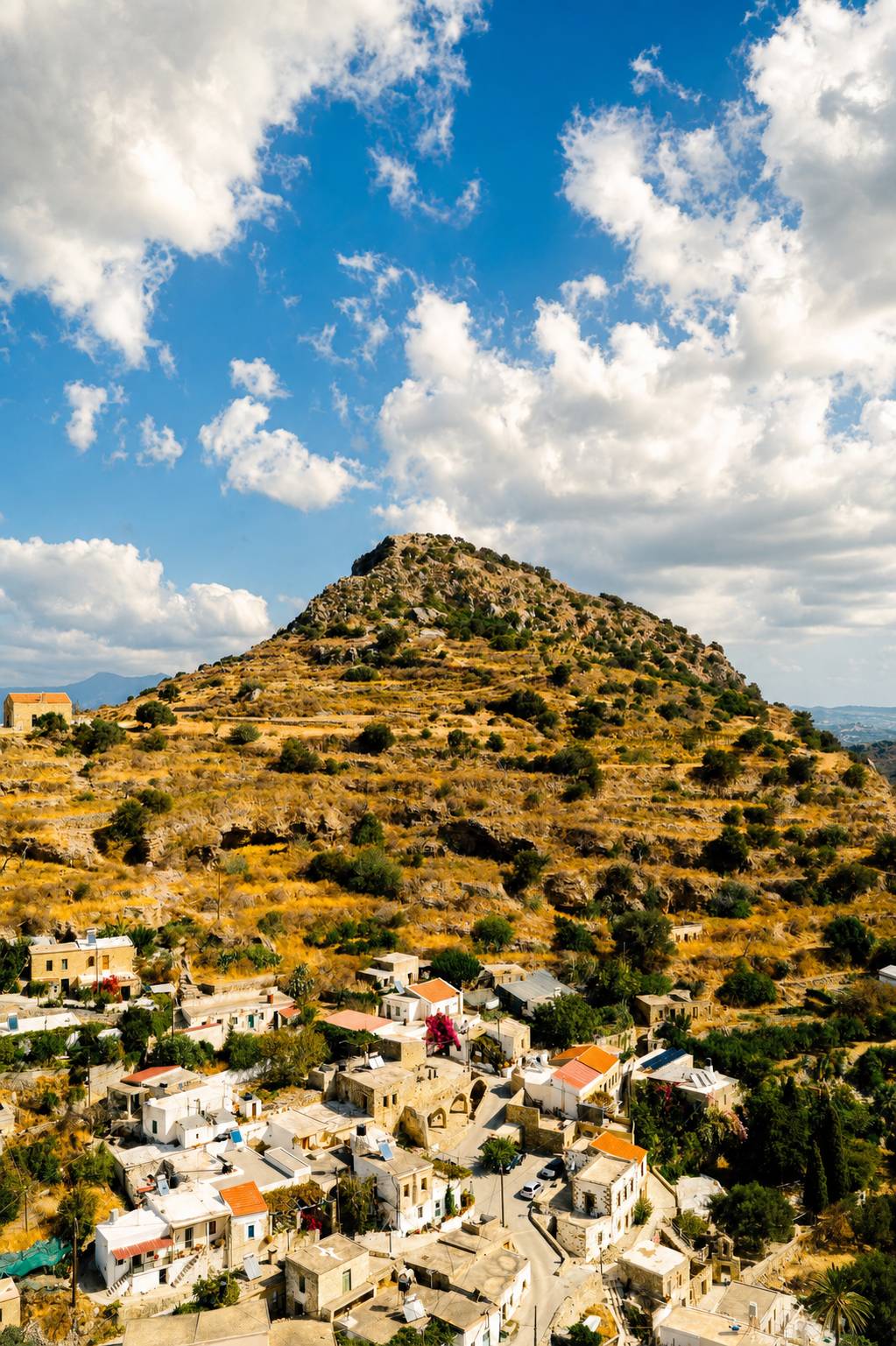
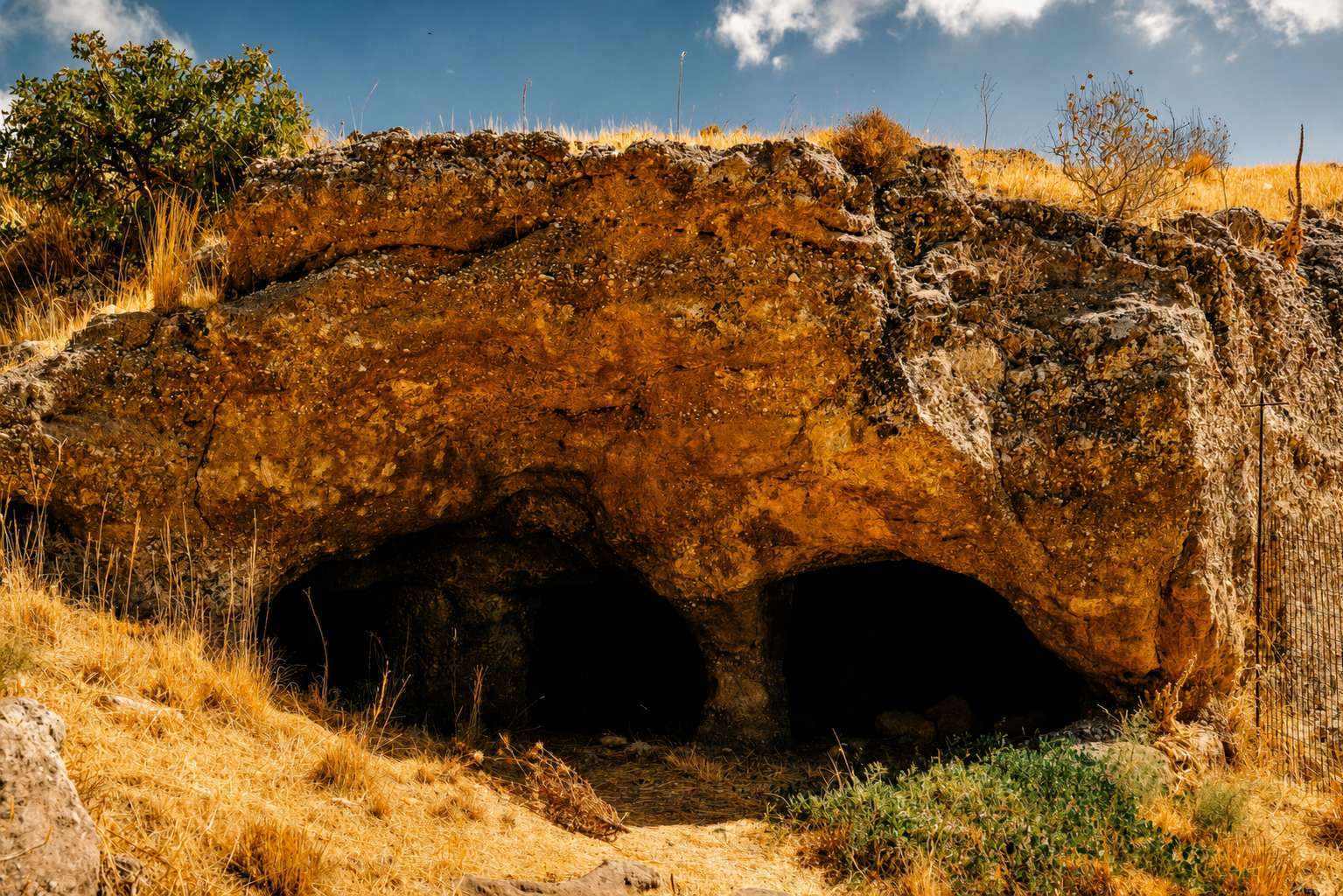
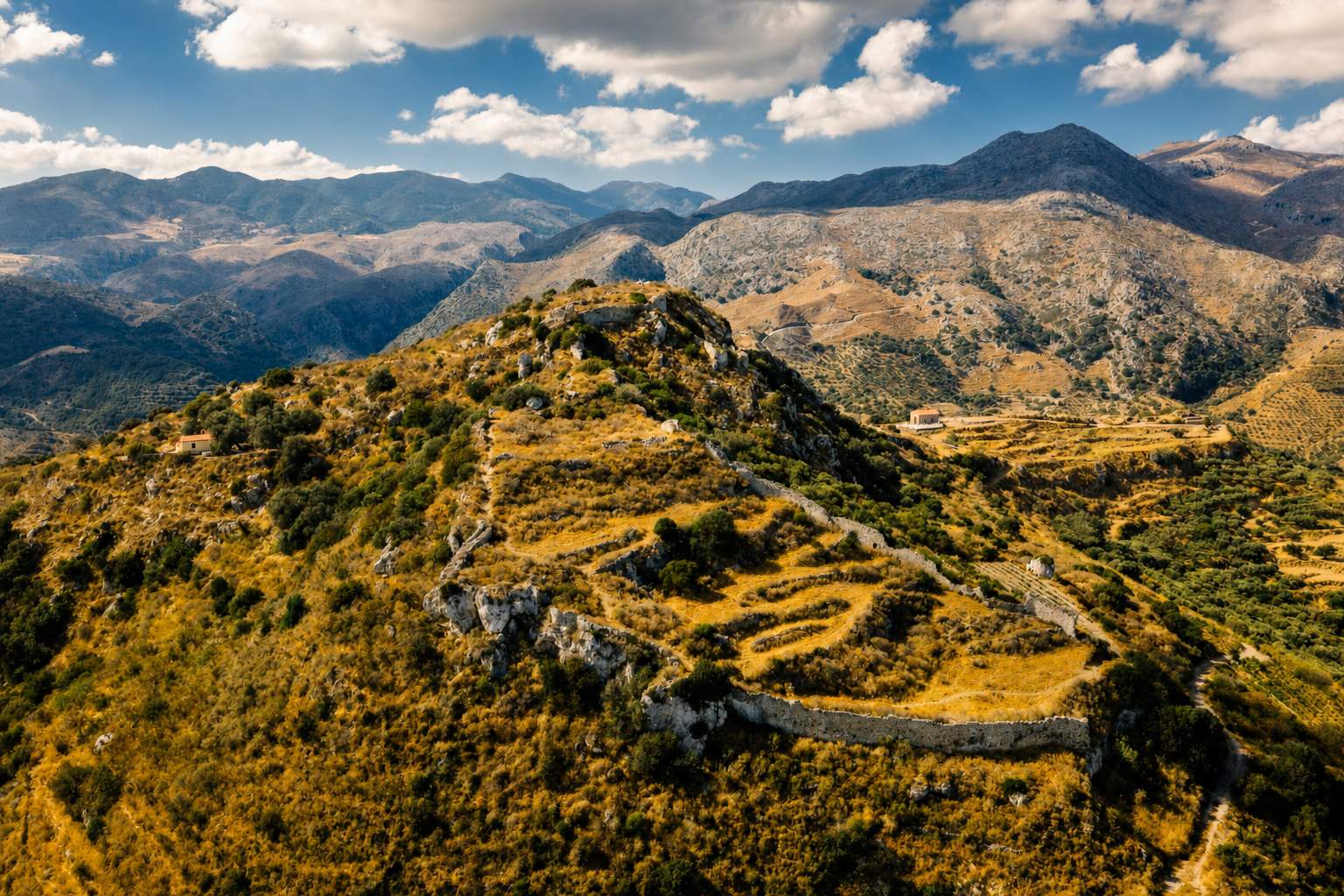
Ancient Polyrinia (also spelled Polyrrhenia) stands roughly 6 kilometers south of Kissamos, on a naturally fortified hill above the modern village. Visitors can arrive by road or approach it on foot from Sirikari Gorge.
Polyrinia was one of the most powerful cities of western Crete during the Hellenistic period and continued to prosper under Roman rule. Its name is generally associated with the large numbers of sheep once raised in the surrounding territory, but the city’s wealth and influence extended far beyond pastoral life. Its position allowed it to oversee a wide area and maintain connections with the ports of Kissamos and Falassarna.
The remains are scattered rather than concentrated around one monumental centerpiece. Sections of the fortifications, cisterns, an aqueduct and architectural fragments appear across the hillside and within the present village. The Church of the Holy Fathers, built in 1894, incorporates material associated with an earlier sanctuary of Diktynna Artemis.
This dispersed quality is part of Polyrinia’s appeal. The visitor has to walk, look closely and understand the ancient city in relation to the terrain. From the acropolis, the view opens toward Kissamos Bay and across the mountains of western Crete, making the strategic importance of the location immediately clear.
Allow time for the uphill walk and wear suitable shoes. Polyrinia is not simply an archaeological stop on the way somewhere else. It is one of the places that best explains the geography and historical importance of the entire Kissamos region.
The Rotunda of Michael the Archangel: 15 Centuries Under One Roof
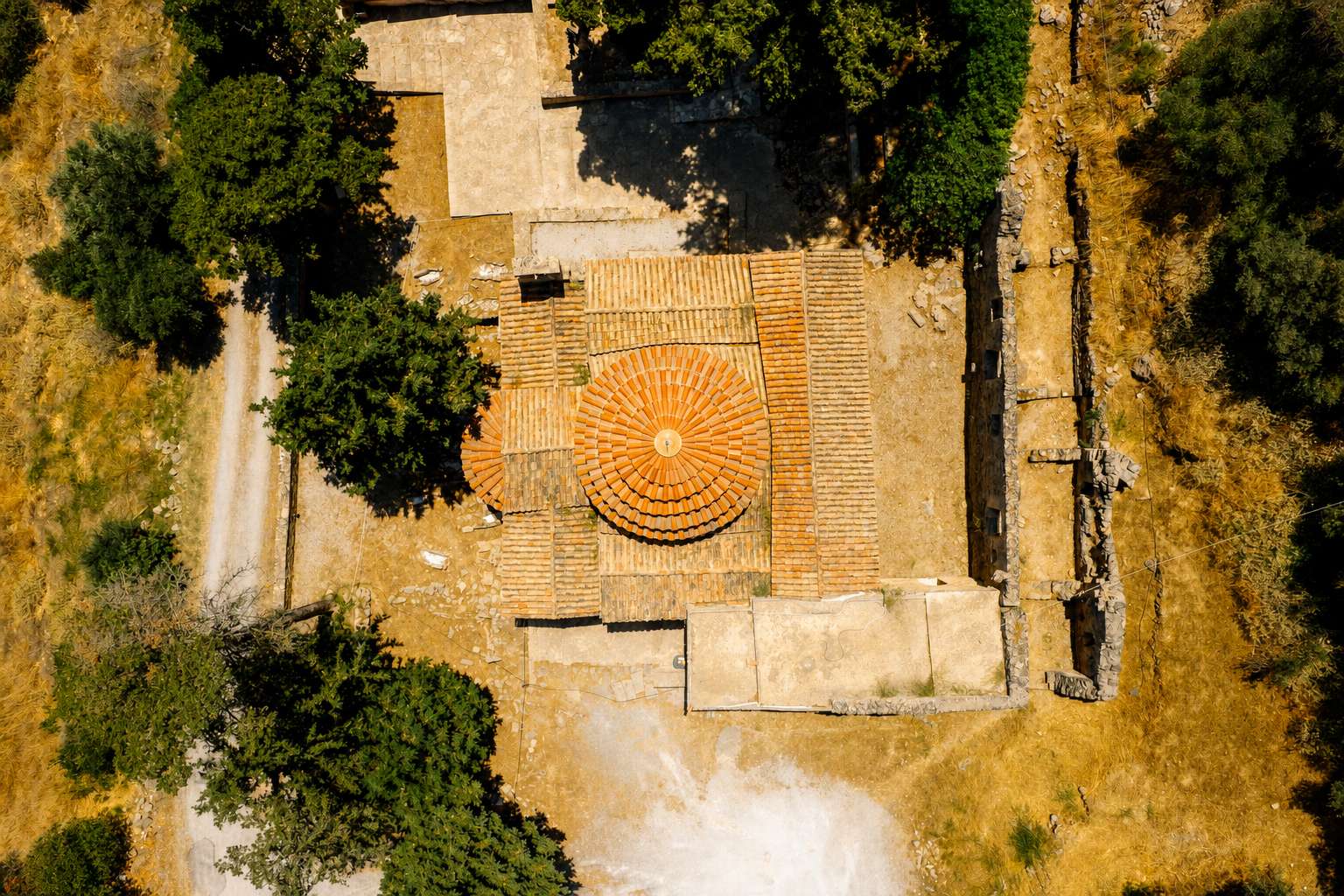
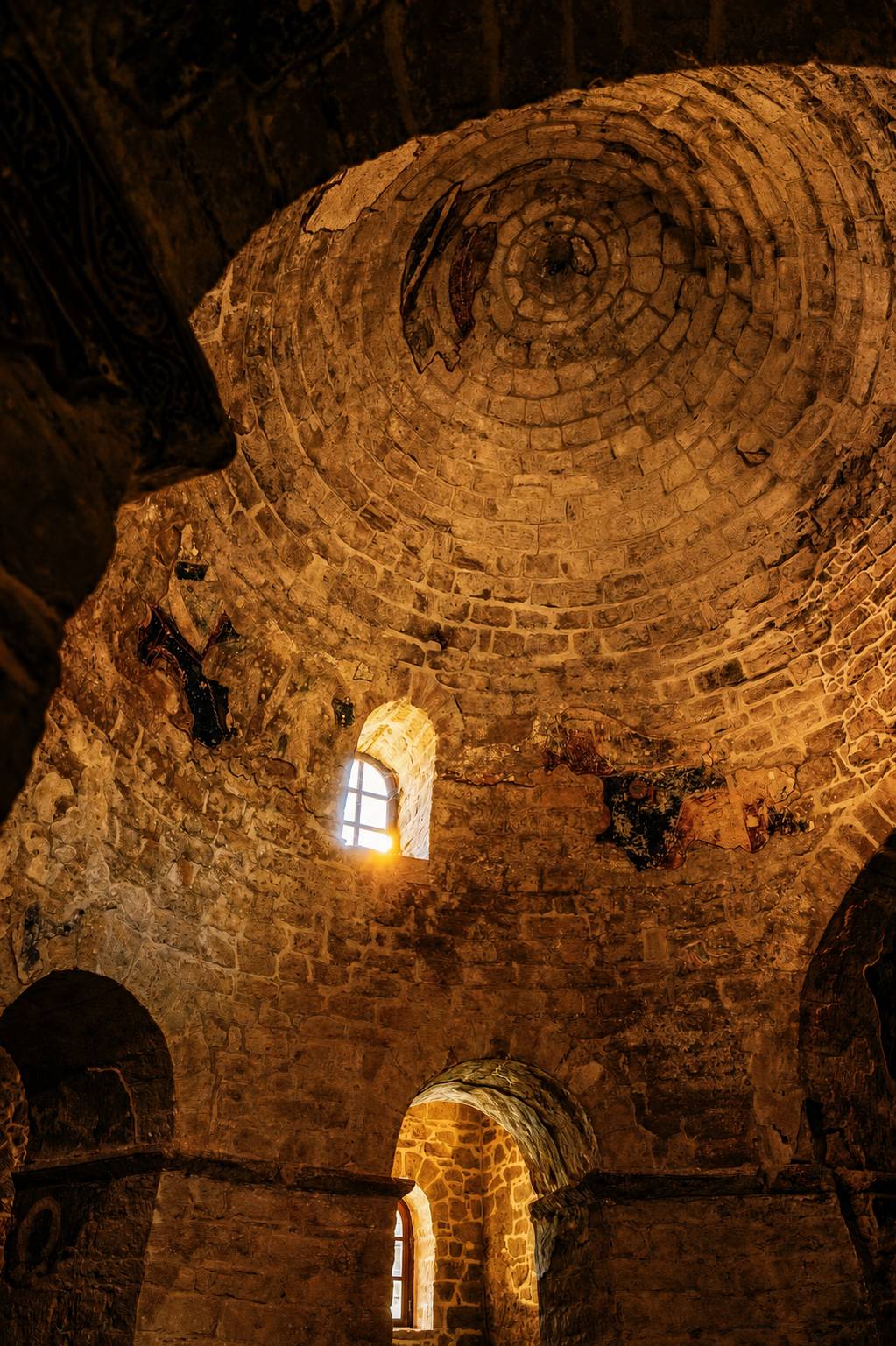
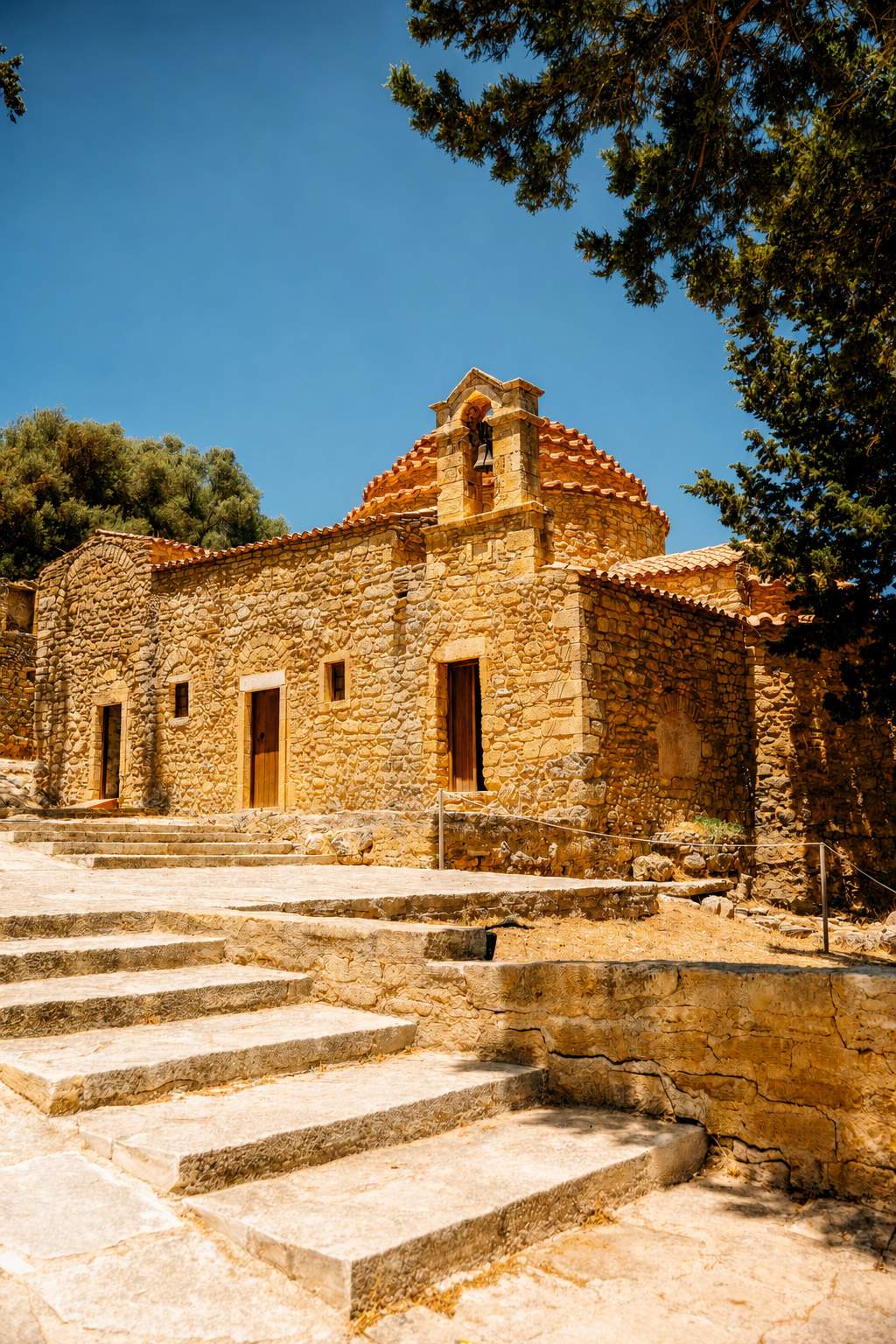
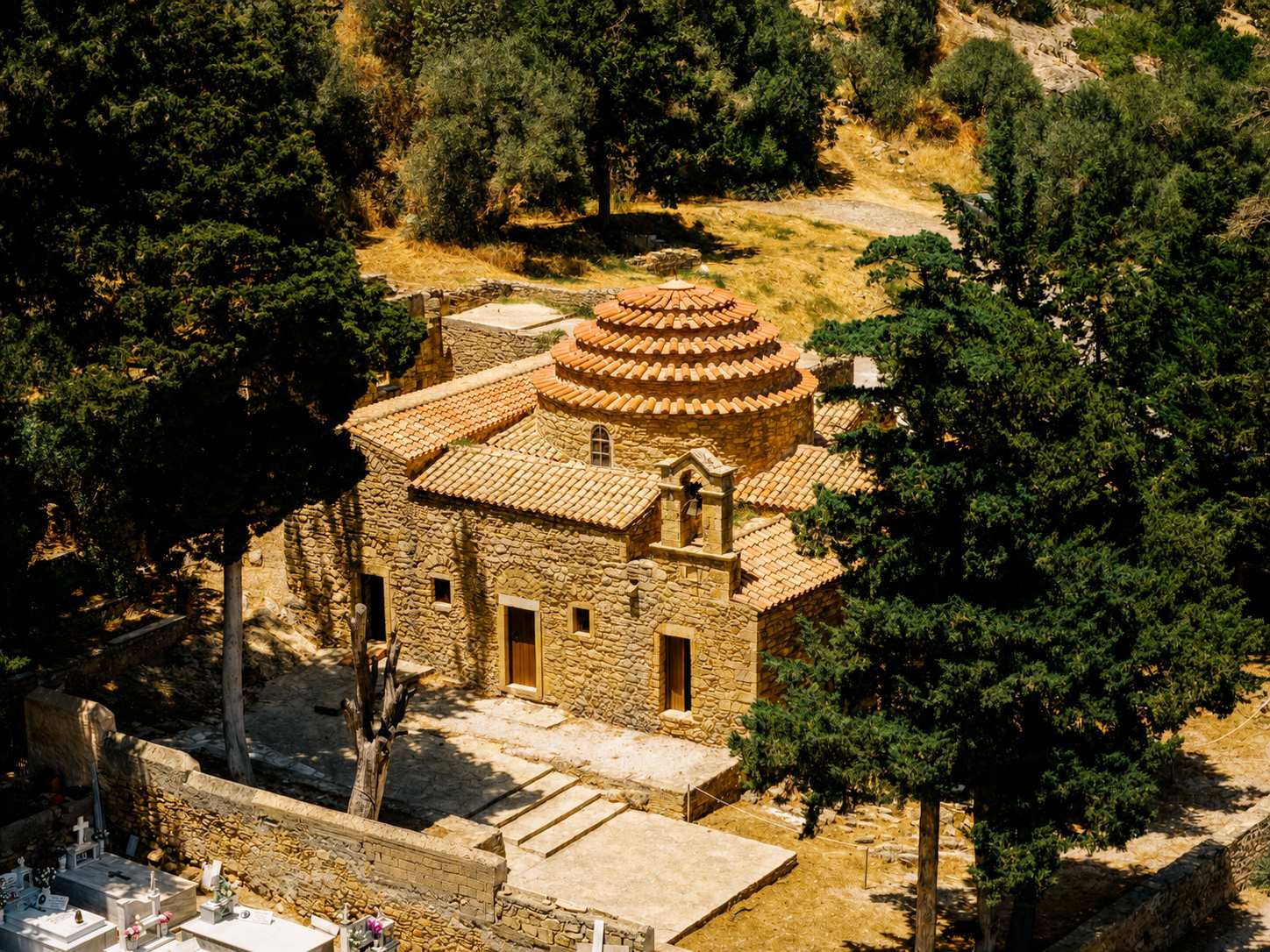
Outside Kato Episkopi, east of Kissamos, the Church of Michael the Archangel is one of Crete’s most important early Christian monuments. Usually known simply as the Rotunda, it dates from the second half of the 6th century and was originally created as a church and baptistery.
Its architecture is unusual, organized around a central domed space. Inside, the surviving mosaic floor is decorated with vines, ivy leaves, fish and geometric patterns. The walls preserve several layers of frescoes, beginning in the 7th century and continuing through later medieval periods. These successive layers make the building particularly valuable: they record how the monument was used, altered and renewed over many centuries.
The church later served as an episcopal seat and cathedral. Yet its significance is not immediately obvious from the quiet rural setting. Its relatively modest exterior conceals an interior in which early Christian architecture, Byzantine painting and local history occupy the same compact space.
The Rotunda is a separate detour from Milia, Sirikari and Polyrinia, rather than the final stop on a continuous route. Access arrangements can change, so visitors should confirm locally before making a dedicated journey.
How to Plan the 4 Excursions
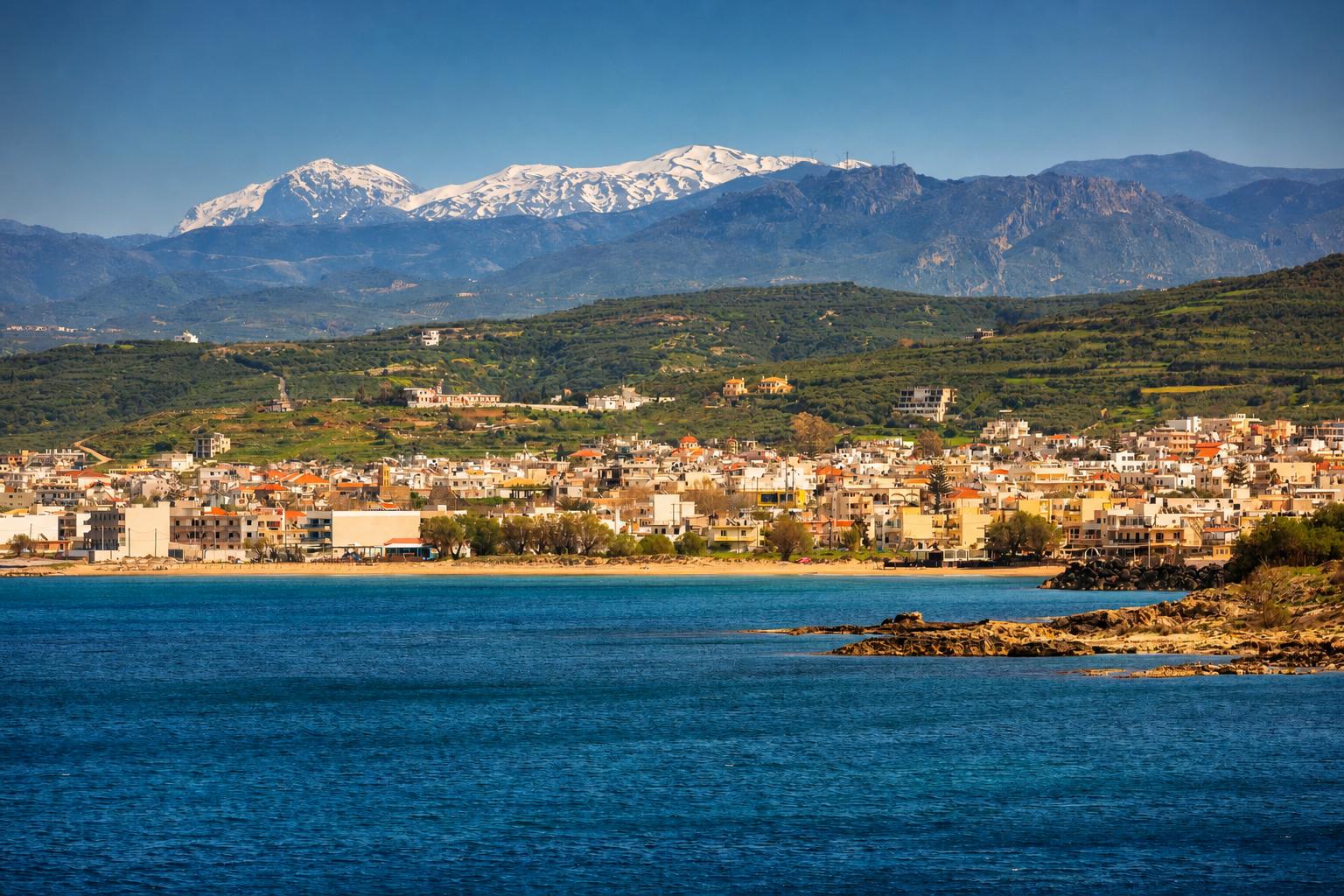
Kissamos town or one of the nearby coastal resorts makes the most practical base. A car is highly useful, as public transportation does not conveniently connect all 4 places.
Sirikari Gorge and Polyrinia work best together, provided return transport is arranged for the point-to-point walk. Milia deserves at least half a day, especially if the visit includes lunch or dinner. The Rotunda can be visited separately when traveling between Kissamos and the eastern side of the Chania region.
Avoid treating the inland roads as a race between map pins. Distances may appear short, but the mountain routes can be narrow and winding. In summer, begin hikes early, carry water and reserve the middle of the day for a long meal or a shaded historical site.
A Different Reason to Remember Kissamos
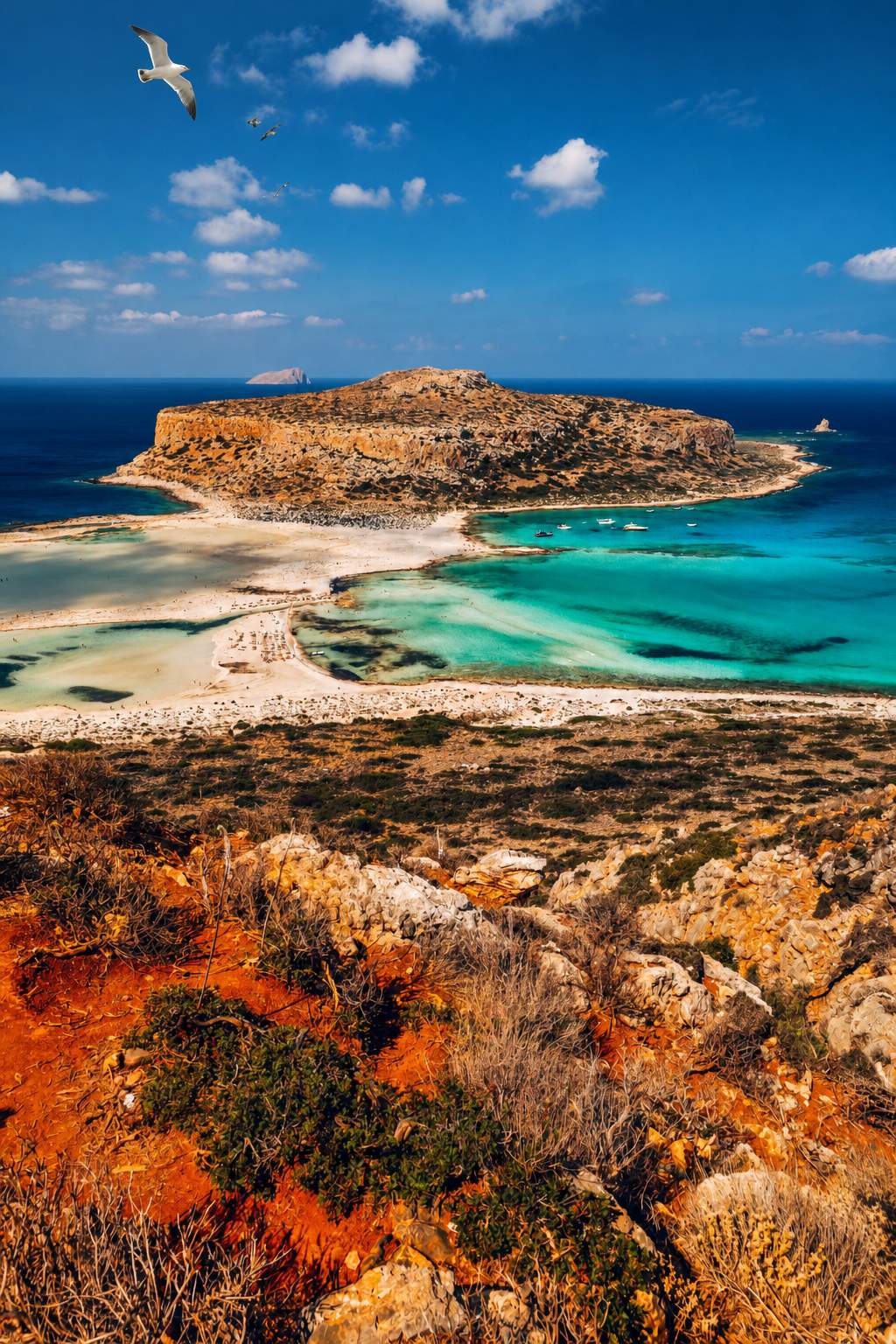
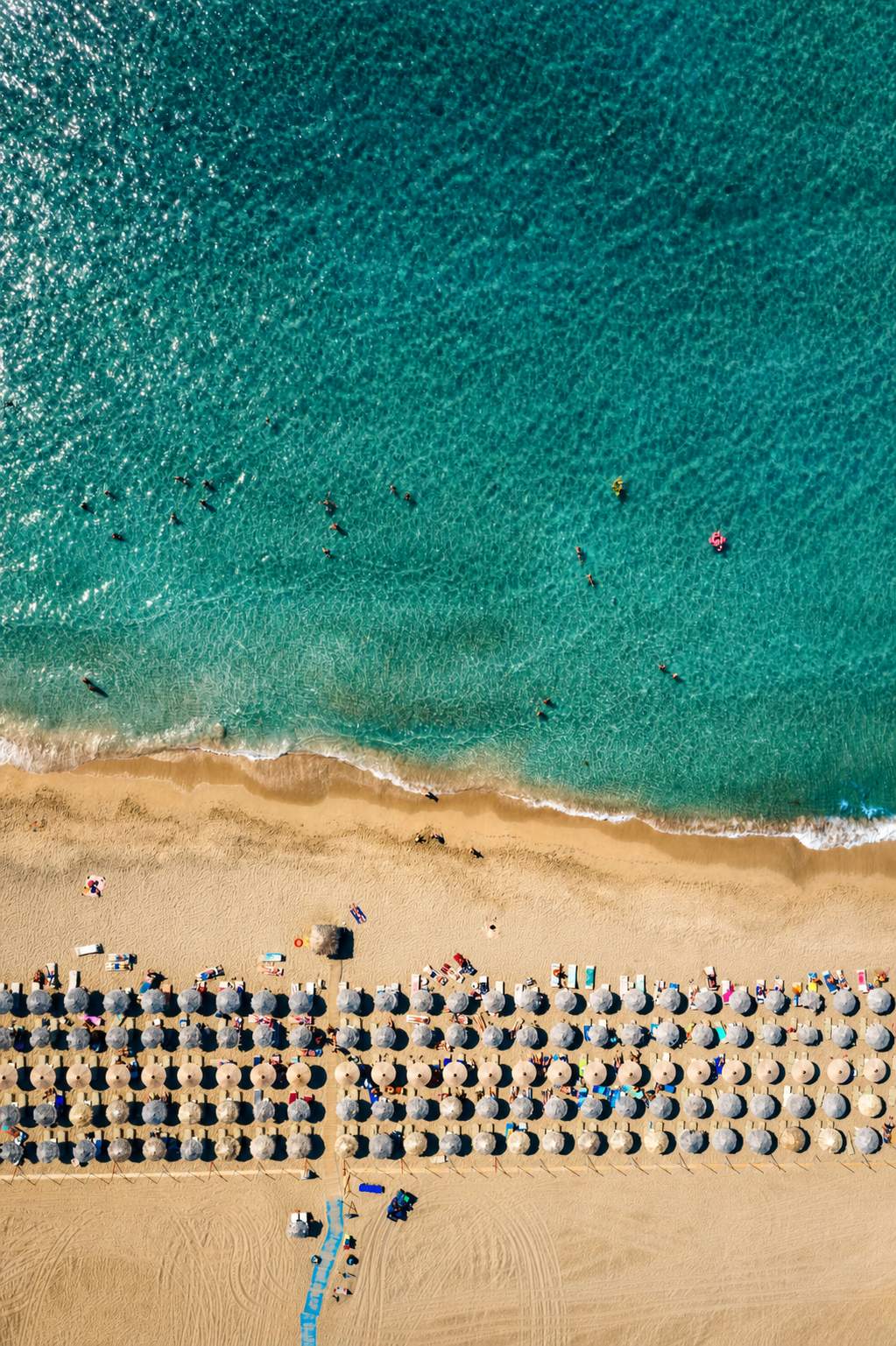
The beaches remain essential. Balos is every bit as extraordinary as its photographs suggest, while Falassarna and Elafonissi belong on almost any first journey through western Crete. But they tell only the most visible part of the story.
Milia demonstrates how an abandoned settlement can return to life without losing its relationship with the land. Sirikari turns the region’s interior into a walking experience. Polyrinia explains the strategic importance of the hills above the bay. The Rotunda holds 15 centuries of art and worship inside a small rural church.
These places are not substitutes for the coast. They are what make a stay in Kissamos feel larger, richer and more complete.
Read More
Where to Eat in Chania: The Best Restaurants for 2026 moves from fire-cooked village food to the city’s sharpest contemporary kitchens, with the addresses defining Chania’s dining scene now.
Chania’s 10 Most Beautiful New Hotels in 2026 covers the region’s most compelling new and newly relevant stays, including Tella Thera in Kissamos, coastal resorts and restored houses in the Old Town.
Sand, Not Sunbeds: 10 Wild Greek Beaches to Visit in 2026 extends the journey to Greece’s protected, uncommercialized shores, including Kedrodasos, just beyond Elafonissi in western Crete.