


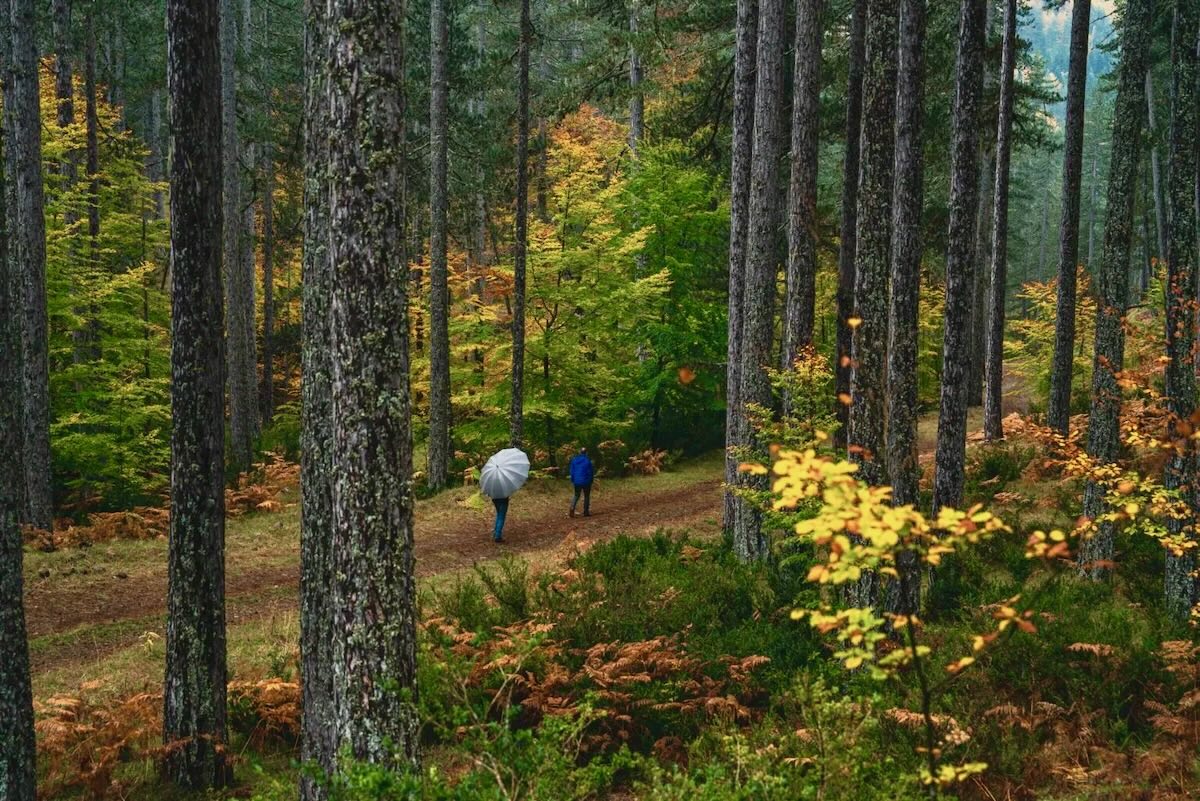
In fall, the mountains that cover most of Greece get ready for winter by putting on their warmest colors. In the villages the air smells of woodsmoke, and fallen leaves pile up into endless autumn ‘carpets.’
Small scenes full of romance and charm turn up around every corner. The cozy, old-fashioned mood and the first chill are your cue to pack a warm sweatshirt and hiking boots, which aren’t what most people pack for a Greek vacation. In these places, the change of season shows wherever you look, in big and small signs and in meaningful and seemingly trivial moments. This is the most harmonious time of year, when red, orange, gold and brown create scenes that seem to come straight out of a fairy tale. Acorns, apples, chestnuts, pomegranates and walnuts weigh down the branches of wise old trees, while pumpkins, carrots, radishes and beets are pulled fresh from the earth.
If you only know Greece from its summer beaches, the forests are where you’ll feel the true pulse of nature in fall. Some are steeped in myth and others are centuries old. Some are cradled by mountains, while others stretch across vast open land. Each has its own magic and will captivate, enchant and disarm you with its beauty. For every forest, we recommend the easiest way to get there.
01
Valia Calda
Seclusion in the Pindus Mountains

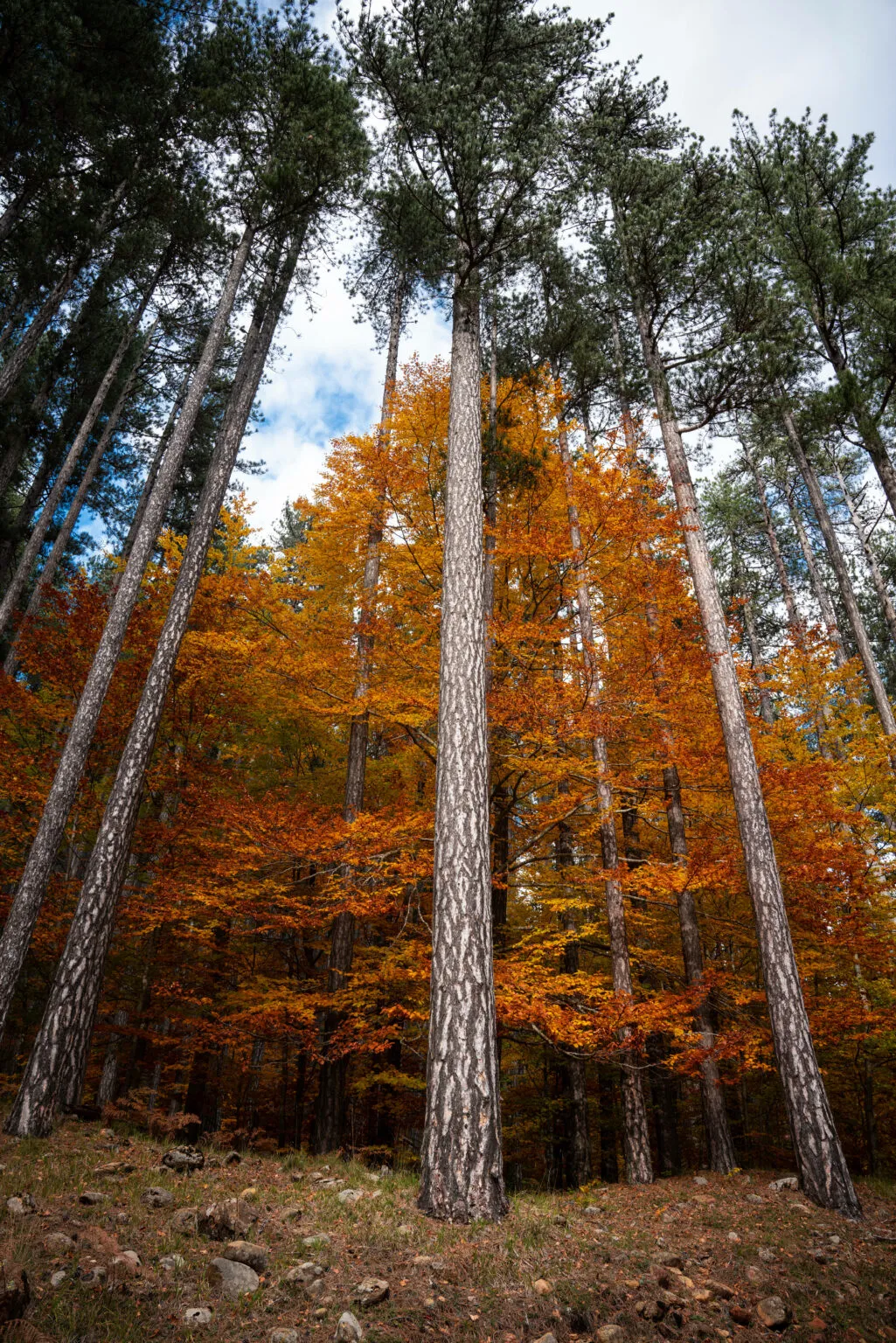
At the heart of Pindus National Park (near the Greek-Albanian border), among steep ravines, cold streams, and forests of black pine and beech, lies Valia Calda. Although its name means ‘Warm Valley’ in the Aromanian language (spoken by the Aromanians, also called Vlachs, an ethnic group scattered across the southern Balkans), it is one of the coldest places in Greece, with winters lingering into spring and nature softening its rugged character during summer.
Here, in a valley at around 1,400 meters above sea level, mist drifts among the foliage. The Arkoudorema stream, a tributary of the Aoos river, runs through dark stands of centuries-old Bosnian pines. Against these evergreens, the changing leaves bring patches of color to the mountainsides, giving autumn walks their particular appeal.
On foot: Join a guided outing from Perivoli or Krania, combining 4×4 transfers with a one- to three-hour forest walk toward Arkoudorema. Trekking Hellas adapts the walk to the group’s ability and returns to the meeting point; allow 4.5–6 hours overall. Walk details.
How to Get There
By car: Valia Calda is approximately 460 kilometers (286 miles) from Athens, with a driving time of around six hours to the village of Perivoli. Follow the A1 and E65 highways toward Trikala and Kalambaka, then continue toward Grevena. From Grevena, take the mountain road through Mavranaioi and Ziakas to Perivoli, one of the main gateways to the national park. Reaching the more remote parts of the forest may require a 4×4 vehicle or a guided excursion.
By bus: KTEL Grevena operates intercity services from Athens’ Kifissos Bus Terminal to Grevena. From there, arrange a private transfer or rental car to Perivoli, approximately 43 kilometers (27 miles) away. Public transportation does not extend reliably into the national park itself.
Closest airport: Ioannina ‘King Pyrros’ Airport (IOA).

02
Foloi
The Oak Forest of Myths
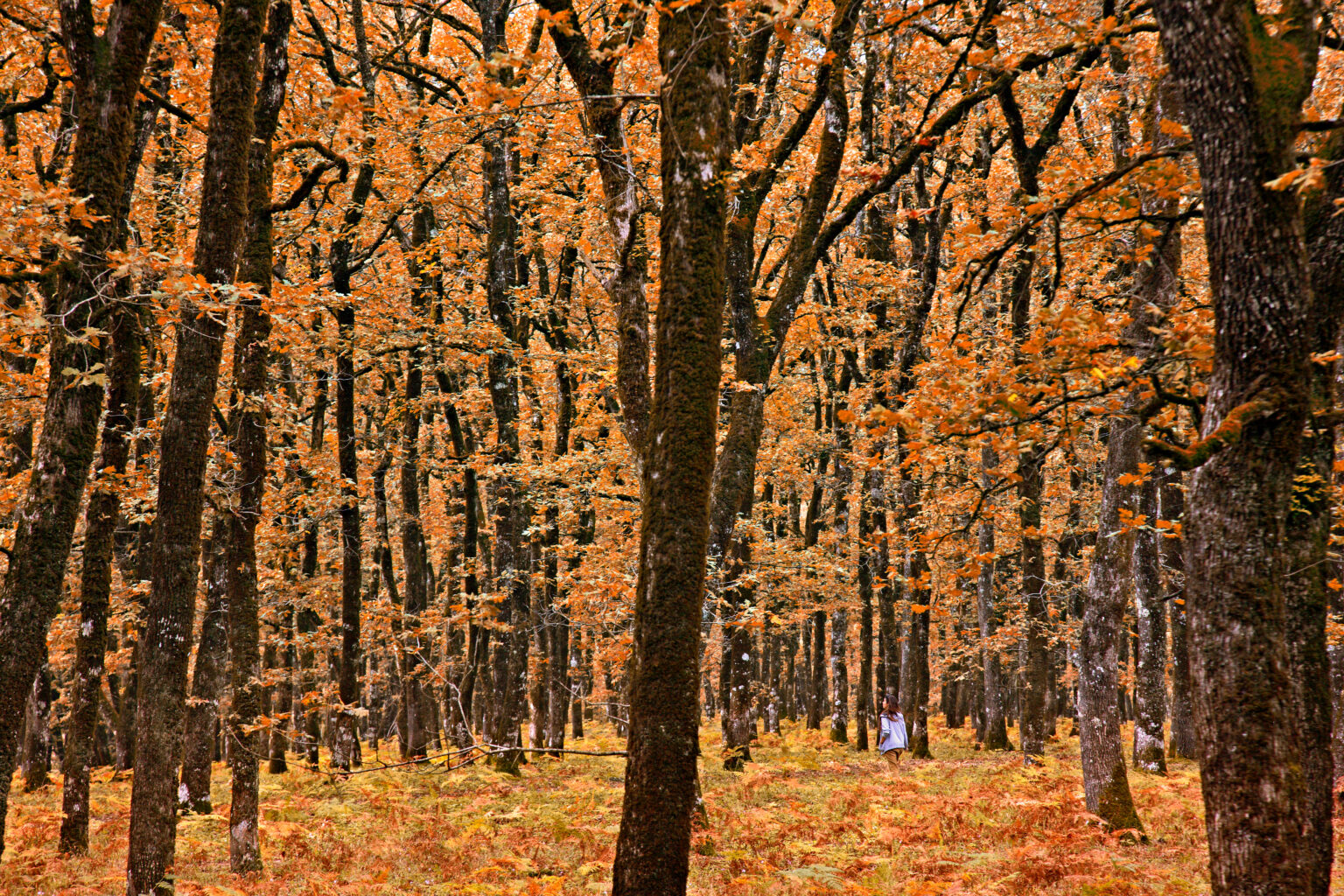

From the depths of the Pindus Mountains, we head south to the Elis region of the Peloponnese, at the foot of Mount Erymanthos, where the Foloi forest stretches out, a landscape that seems to have emerged from mythology, and with good reason. The ancient Greeks associated it with the centaur Pholus, a companion of Hercules, and the woodland nymphs.
Across the Foloi plateau, thousands of oak trees form a broad natural canopy that covers approximately 42,000 stremmas (4,200 hectares). In fall, the leaves take on warm hues, and reddish-brown carpets spread across the flat plateau as sunlight filters between the trunks. The level ground and long views between the trunks invite an unhurried walk.
On foot: Olympia Adventures leads an 8.5-kilometer walk through Foloi and the Centaurs Gorge, taking around three to four hours. Expect some moderately demanding gorge terrain; confirm the meeting point, return arrangements, and conditions when booking. Walk details.
How to Get There
By car: Foloi Forest is approximately 250 kilometers (155 miles) from Athens, around a 3.5-hour drive. Take the A8 highway toward Corinth, then the A7 toward Tripoli. Exit toward Vytina and Ancient Olympia, and follow the inland road toward Ancient Olympia before turning for Foloi. Local roads provide access to different parts of the oak forest.
By bus: Take a KTEL Ilia intercity bus from Athens’ Kifissos Bus Terminal to Pyrgos, then connect to a local service toward Foloi, where available. Check local departures in advance, as services to smaller villages are limited. A taxi or rental car from Pyrgos or Ancient Olympia is a more flexible option for reaching the forest.
Closest airport: Araxos Airport (GPA); flights are seasonal, so check availability for your dates.
03
Strofilia
Where the Forest Meets the Sea
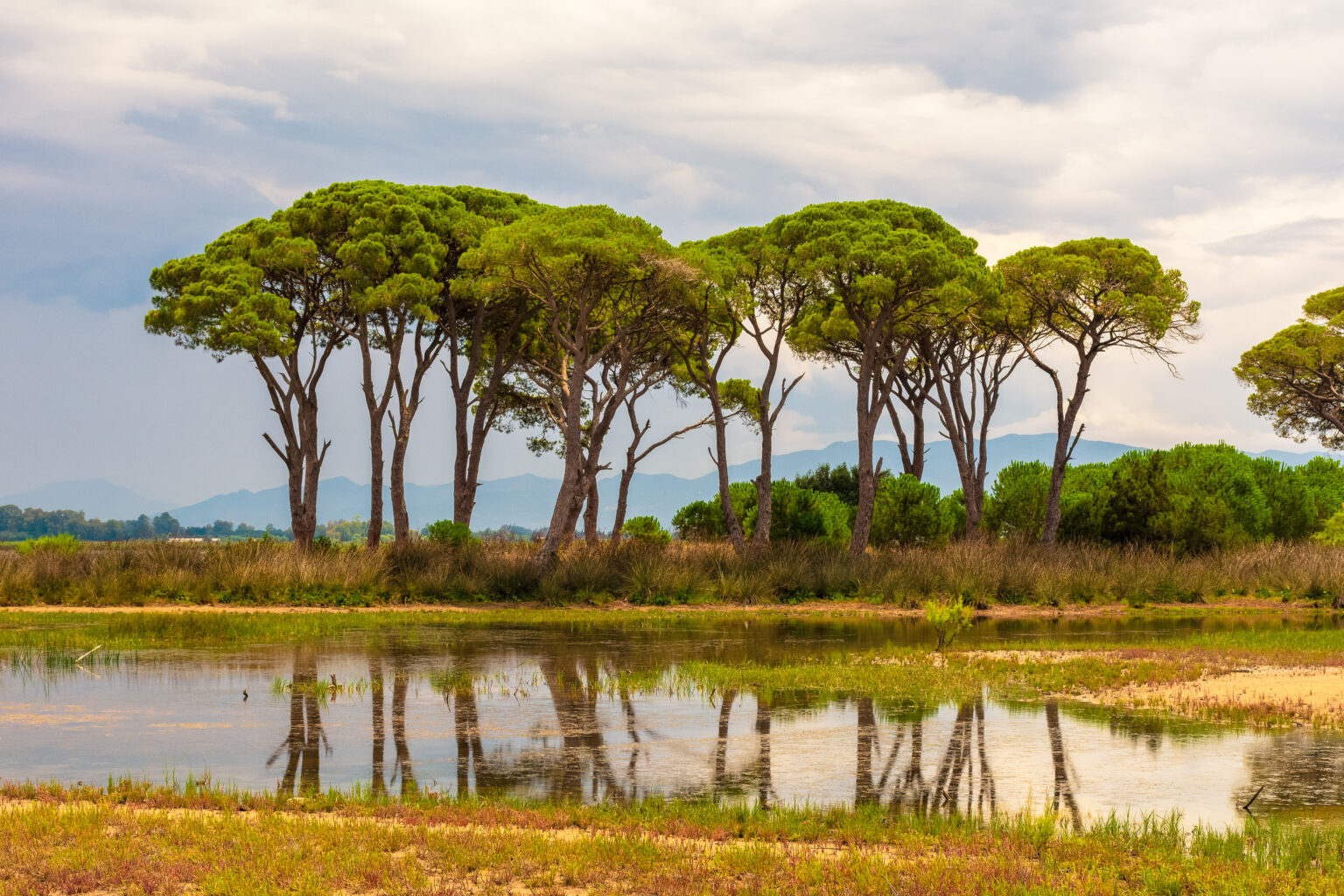

In the northwestern Peloponnese, Strofilia brings woodland and wetlands to the edge of the Ionian Sea. The landscape of this coastal forest is shaped by standing water, canals, and strips of centuries-old trees. Together with the Kotychi Lagoon and Lake Prokopos, it forms one of Greece’s most important wetland habitats, included in the Natura 2000 Network.
Here, stone pines rise almost directly from the sand, pine trees form passageways leading to the sea, and birds find abundant shelter. The air carries the scent of salt, and paths lead from woodland shade toward the open coast. Walking or cycling here gives you both forest scenery and views of the Ionian Sea.
On foot: Follow the easy H4 “Umbrella Pines” loop from the wooden kiosk on the Araxos–Manolada road. The 1.93-kilometer circuit returns to the same point through stone pines and Mediterranean undergrowth. Trail map.
How to Get There
By car: Strofilia Forest is approximately 270 kilometers (168 miles) from Athens, with a driving time of around 3.5 hours. Follow the A8 highway toward Patras, then continue south toward Lappa and Kalogria Beach. From Lappa, the northern section of the forest is approximately 10 kilometers (6 miles) west, near Lake Prokopos.
By bus: Take a KTEL Achaia bus from Athens’ Kifissos Bus Terminal to Patras. From Patras, regional KTEL services connect to Lappa and nearby settlements. Direct connections to Kalogria Beach are generally seasonal, so a taxi or rental car may be needed for the final stretch, particularly outside summer.
Closest airport: Araxos Airport (GPA); flights are seasonal, so check availability for your dates.
04
Elatia
Greece’s Largest Forest
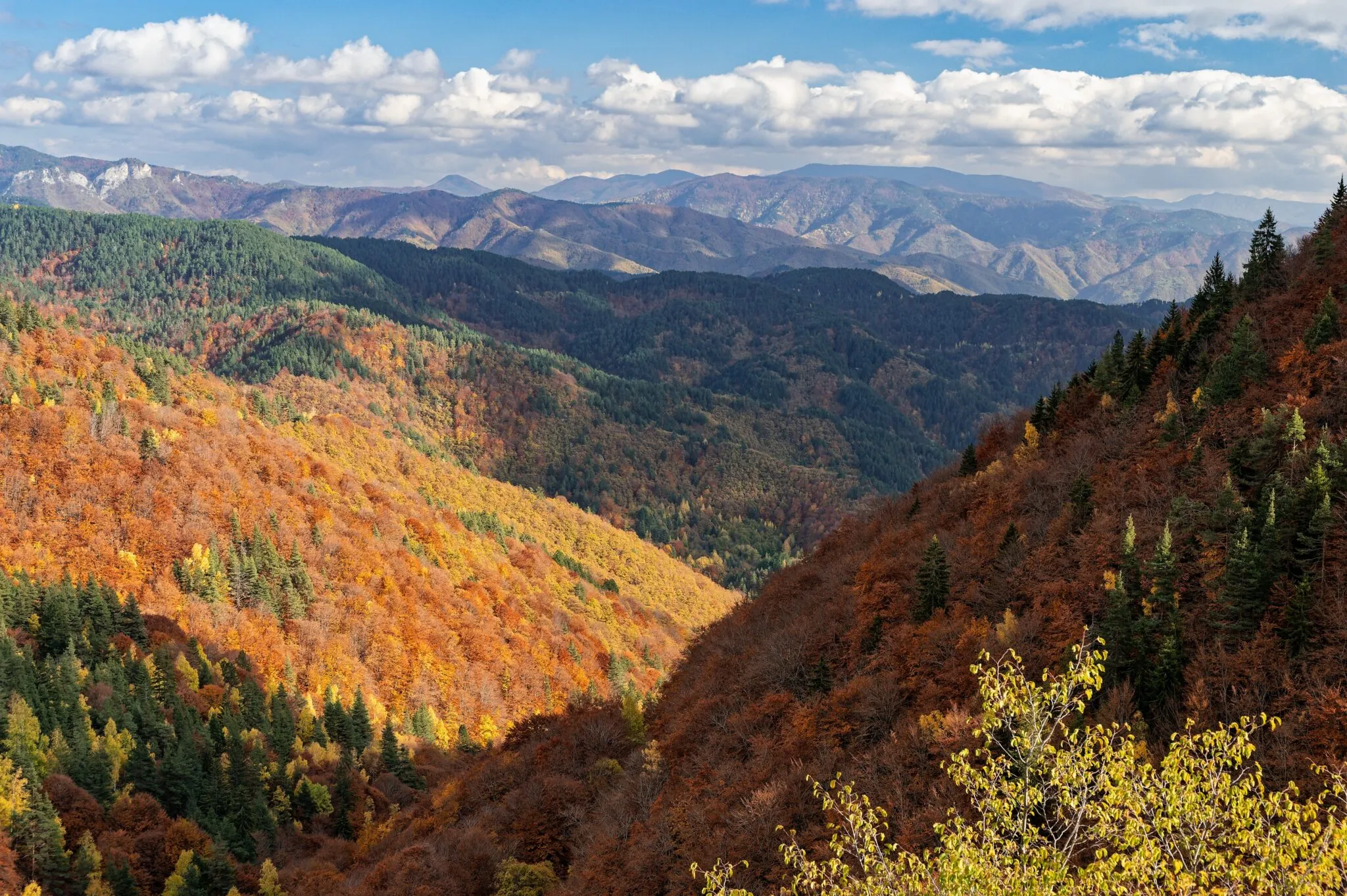


Along the country’s northern border, near the Greek-Bulgarian frontier, stretches Elatia, also known as Kara Dere, meaning ‘Black Stream.’ It is Greece’s largest continuous forest, covering mountain slopes where firs, beeches, oaks, birches, and rare conifers create a mosaic of vegetation across huge patches of land. In fall, the slopes become colorful, the trails fill with mushrooms of every shape and size, and the air smells of damp earth.
Tall Norway spruces are among the forest’s most striking trees, lending its wooded slopes a distinctly northern character. The flowing waters of the Rhodope Mountains form small streams and waterfalls, creating an ideal refuge for wildlife. Around the forest village of Koutra, approximately 72 kilometers north of Drama, tall conifers stand against the changing colors of the deciduous trees.
On foot: The forest village at Koutra is the starting point for Elatia’s woodland paths, with Stravorema’s riverside scenery nearby. Arrange a locally guided walk suited to the day’s conditions, confirming its length, difficulty, and return before setting out. Planning information.
How to Get There
By car: Elatia Forest is approximately 700 kilometers (435 miles) from Athens, around an eight- to nine-hour drive, depending on conditions. Follow the A1 highway toward Thessaloniki, then the Egnatia Odos toward Drama. From Drama, continue north through Livadero, Sidironero, and Skaloti toward the Elatia Forest Village at Koutra, approximately 72 kilometers (45 miles) from the city. The main approach is paved, but some forest trails and secondary roads are unpaved.
By bus: KTEL Drama operates intercity services connecting Athens with Drama. From Drama, a rental car or prearranged private transfer is the most practical way to reach Elatia. There are no regular public bus services into the forest, and visitors should check mountain road conditions before traveling.
Closest airport: Kavala ‘Alexander the Great’ Airport (KVA).
05
Frakto
Heaven in the Rhodope Mountains
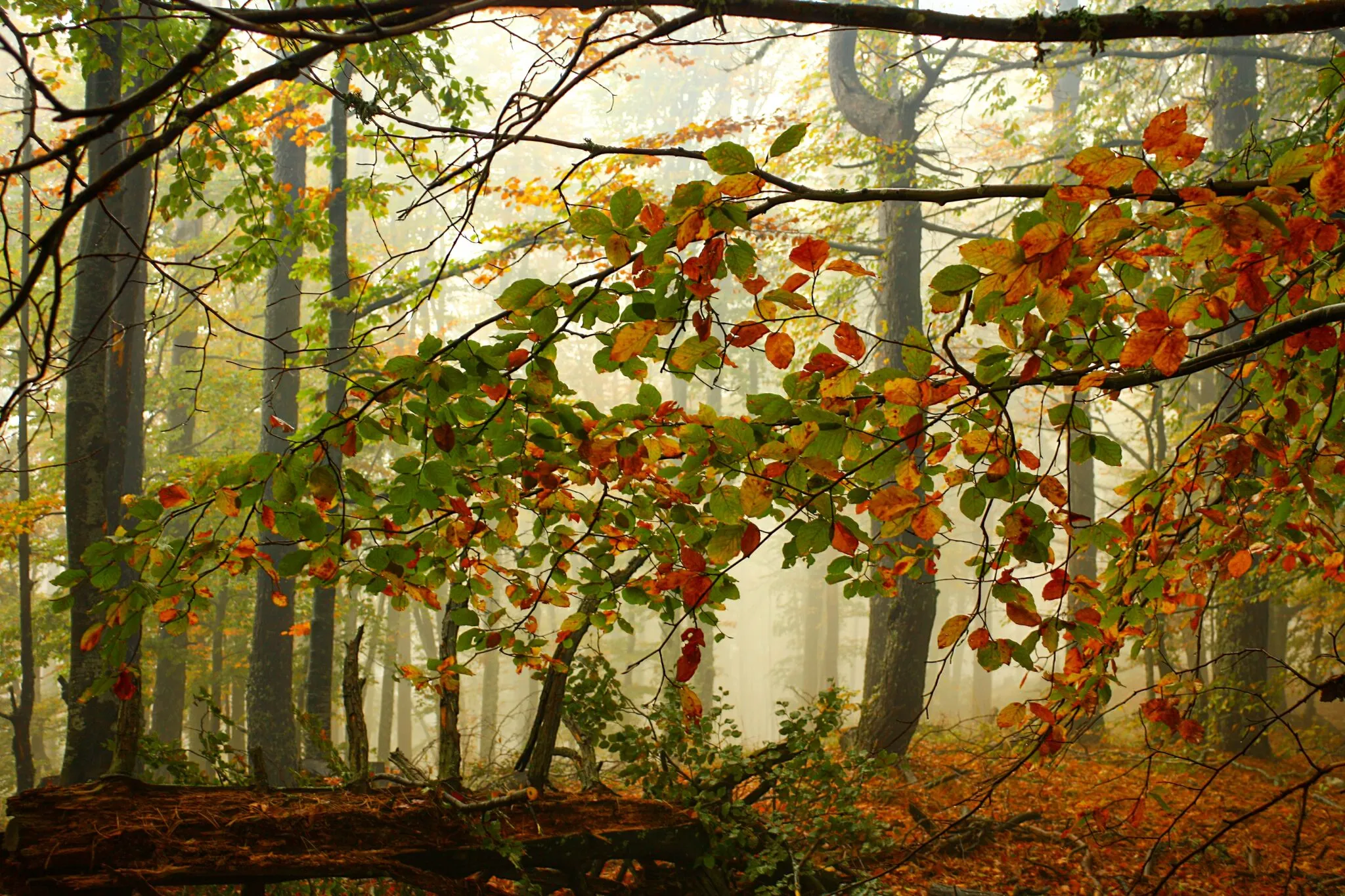
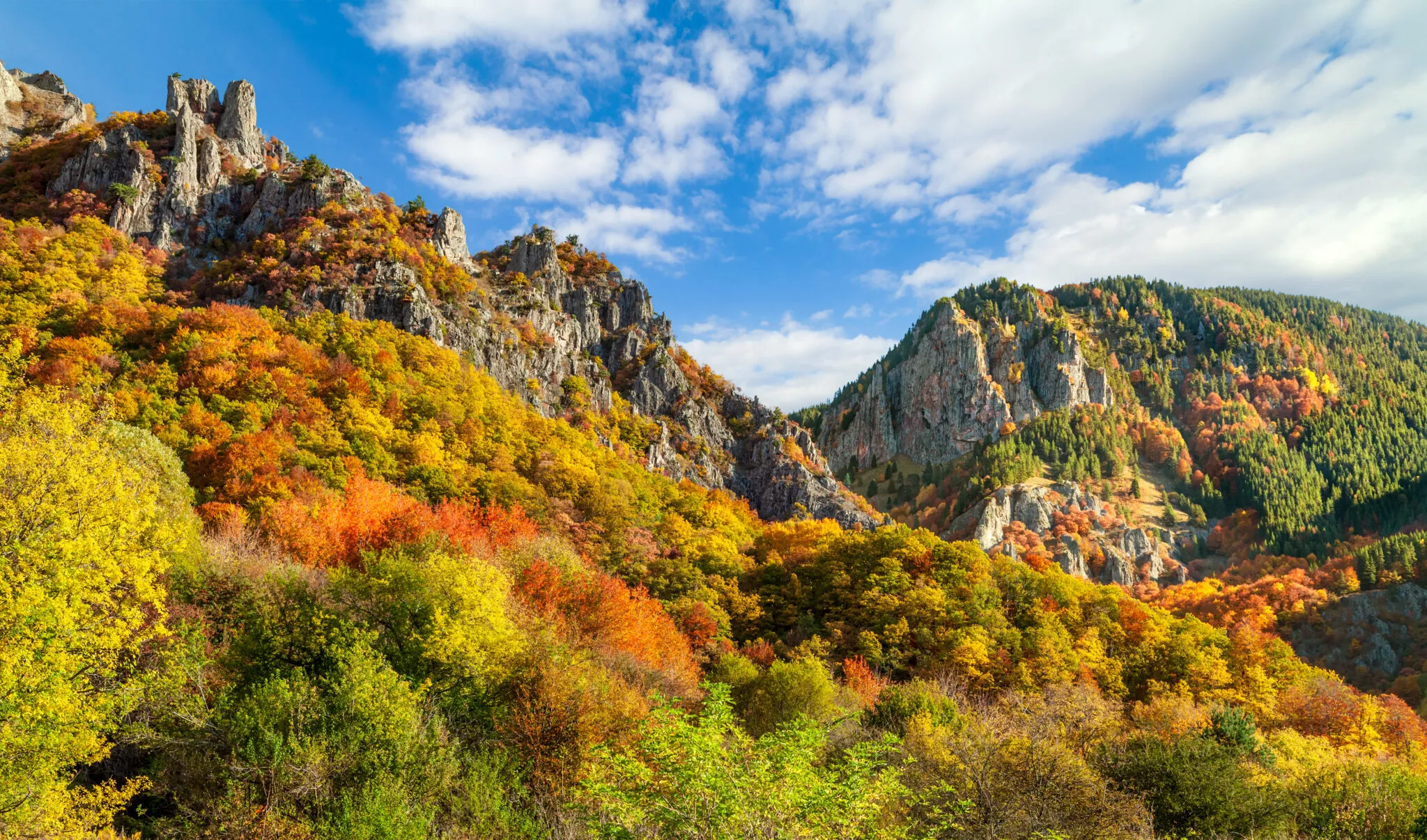
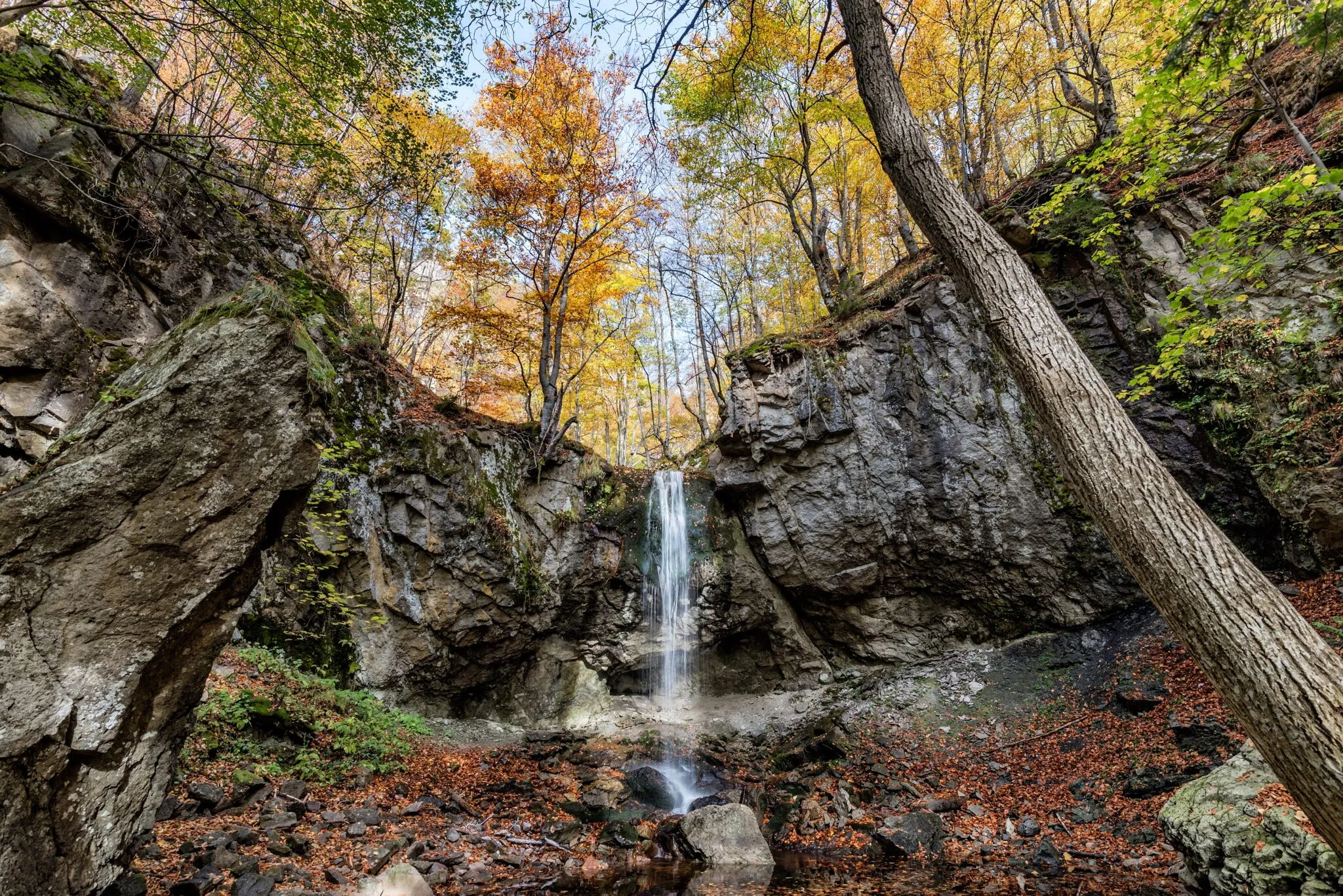
North of Drama lies the Virgin Forest of Frakto, one of the last virgin forests not only in Greece but in all of Europe, a place that has remained untouched by human intervention. The virgin core is strictly protected and is not open for recreational walks. With a suitable vehicle and after confirming access with the forestry authorities, visitors can reach the Frakto Forest Village and explore permitted routes in the surrounding forest, outside the protected core, among beeches, oaks, and birches. Streams and small waterfalls add the sound of running water to walks through the surrounding woodland.
On foot: Plan a walk on permitted waterfall trails in the wider Frakto forest, outside the strictly protected virgin core. Confirm access and a suitable route with the forestry authorities before traveling, particularly in late fall. Protected-area guidance.
How to Get There
By car: From Athens, drive approximately 650 kilometers (404 miles) to Drama via the A1 and Egnatia Odos highways. Continue east toward Paranesti, the main gateway to the Frakto area. Access beyond Paranesti involves remote mountain roads and unpaved sections, requiring a suitable 4×4 vehicle.
By bus: Take a KTEL Drama bus from Athens to Drama, then arrange a rental vehicle or private transfer toward Paranesti. There is no regular bus service into Frakto Forest.
Closest airport: Kavala ‘Alexander the Great’ Airport (KVA).
NOTE: The virgin core is reserved for scientific research and conservation management. For visits to the surrounding forest, contact the forestry authorities in advance to confirm which routes are open, whether authorization is required, and current road conditions. Do not assume access is possible in late fall.
06
Steni
At the Foot of Mount Dirfys
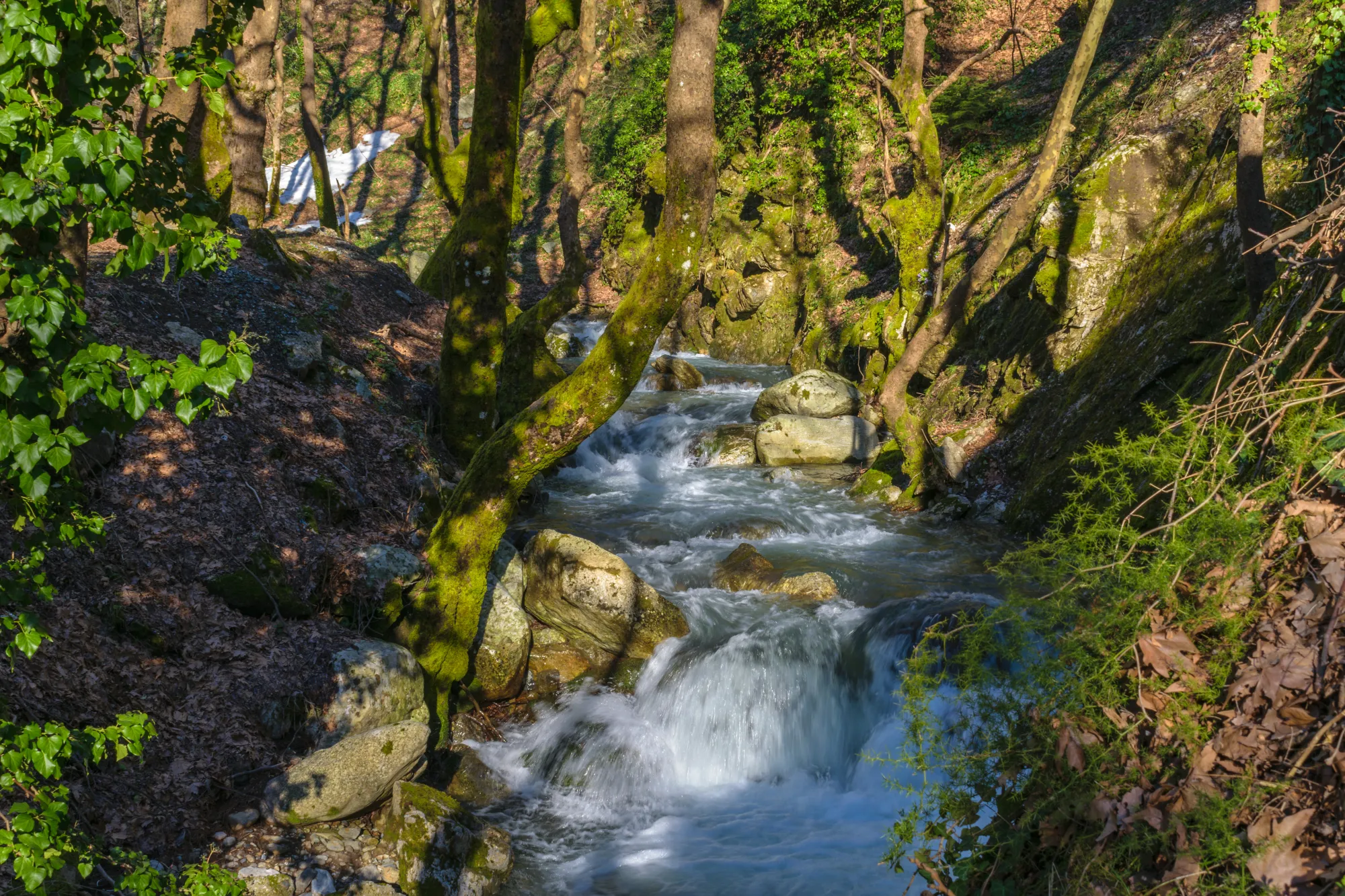
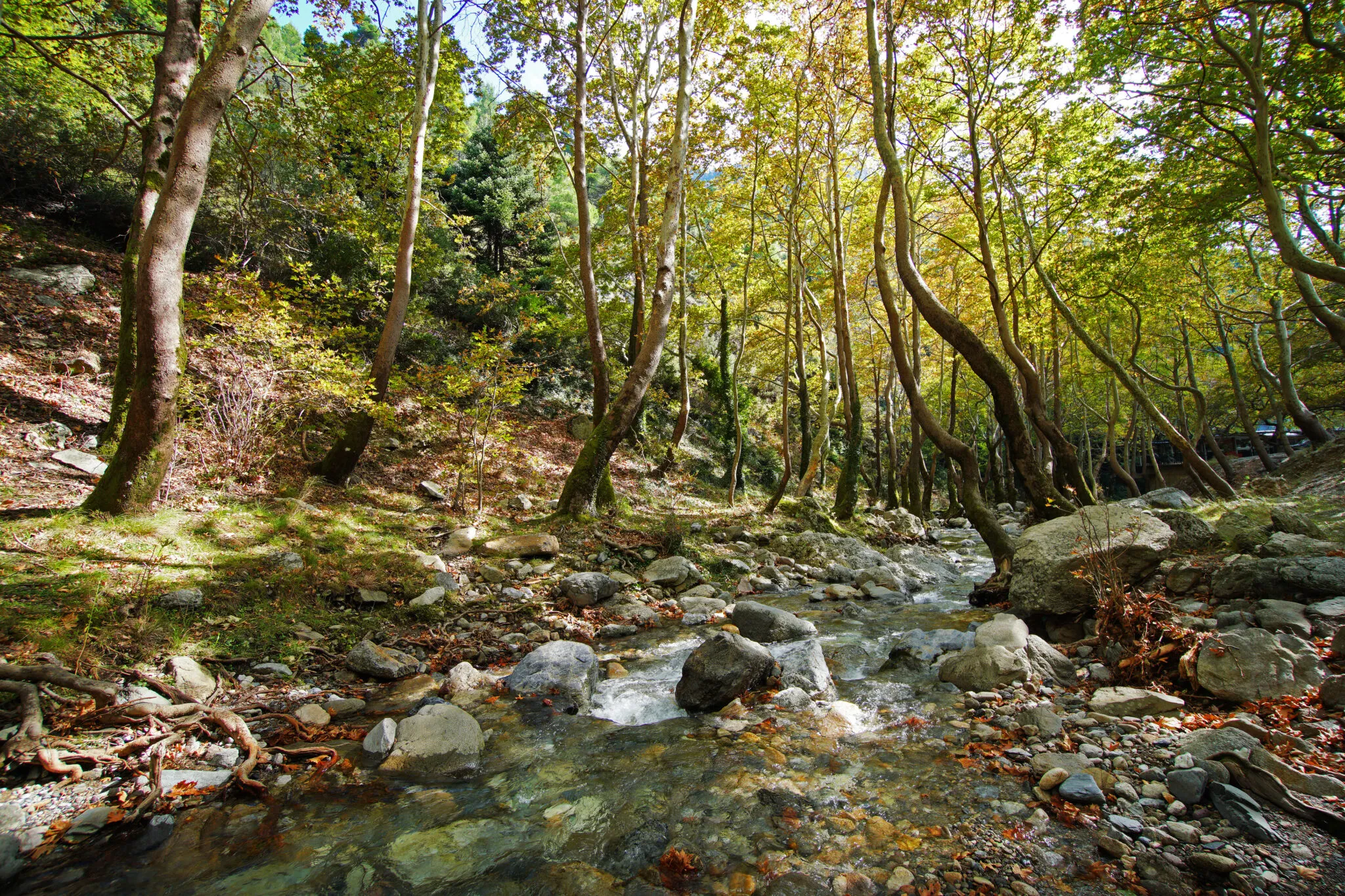
On Evia, at the foot of Mount Dirfys, lies the Steni Aesthetic Forest. Plane trees line the streams, chestnuts take on their autumn colors, and trails lead to clearings with mountain views. Light filters through the leaves, while the smell of food cooking on the village grills gives walkers a reason to linger over lunch.
Within reach of Athens for a day trip, Steni offers forest walks that can be paired with lunch in the village. It is also a base for hikes on the mountain, the island’s highest peak, but the summit ascent is a more demanding outing that requires appropriate experience, equipment, and weather conditions.
On foot: Trekking Hellas offers a beginner-friendly, four-hour guided loop from Steni’s central square, climbing to Steni Rock before returning through woodland beside the Steniotiko stream. The route covers approximately 10 kilometers. Walk details.
How to Get There
By car: Steni is approximately 110 kilometers (68 miles) from Athens, around a 1.5- to two-hour drive. Follow the A1 highway north toward Chalkida, cross the bridge onto Evia, and continue through Nea Artaki and Psachna toward Steni. The forest and its walking trails are easily accessible from the village.
By bus: KTEL Evia operates frequent services from Athens’ Liosion Bus Terminal to Chalkida, with a journey time of approximately one hour. From Chalkida, local buses serve Steni on limited schedules, particularly on weekdays. Alternatively, take a taxi or rent a car for the approximately 30-minute drive to the village.
Closest airport: Athens International Airport (ATH), with onward travel by road via Chalkida.
Read More
Discover Meteora beyond the monastery gates, following old stone paths through oak woods and between towering rocks, with seven walks to help you find your way.
Make a longer mountain escape with Greece’s welcoming refuges, from misty Dirfys to Tzoumerka, where woodland trails, warming meals, and sweeping views invite you to linger.
Follow the trees toward the water on ten walks with a sea view, from Pelion’s chestnut-shaded paths to the lighthouse at the wild tip of Mani.