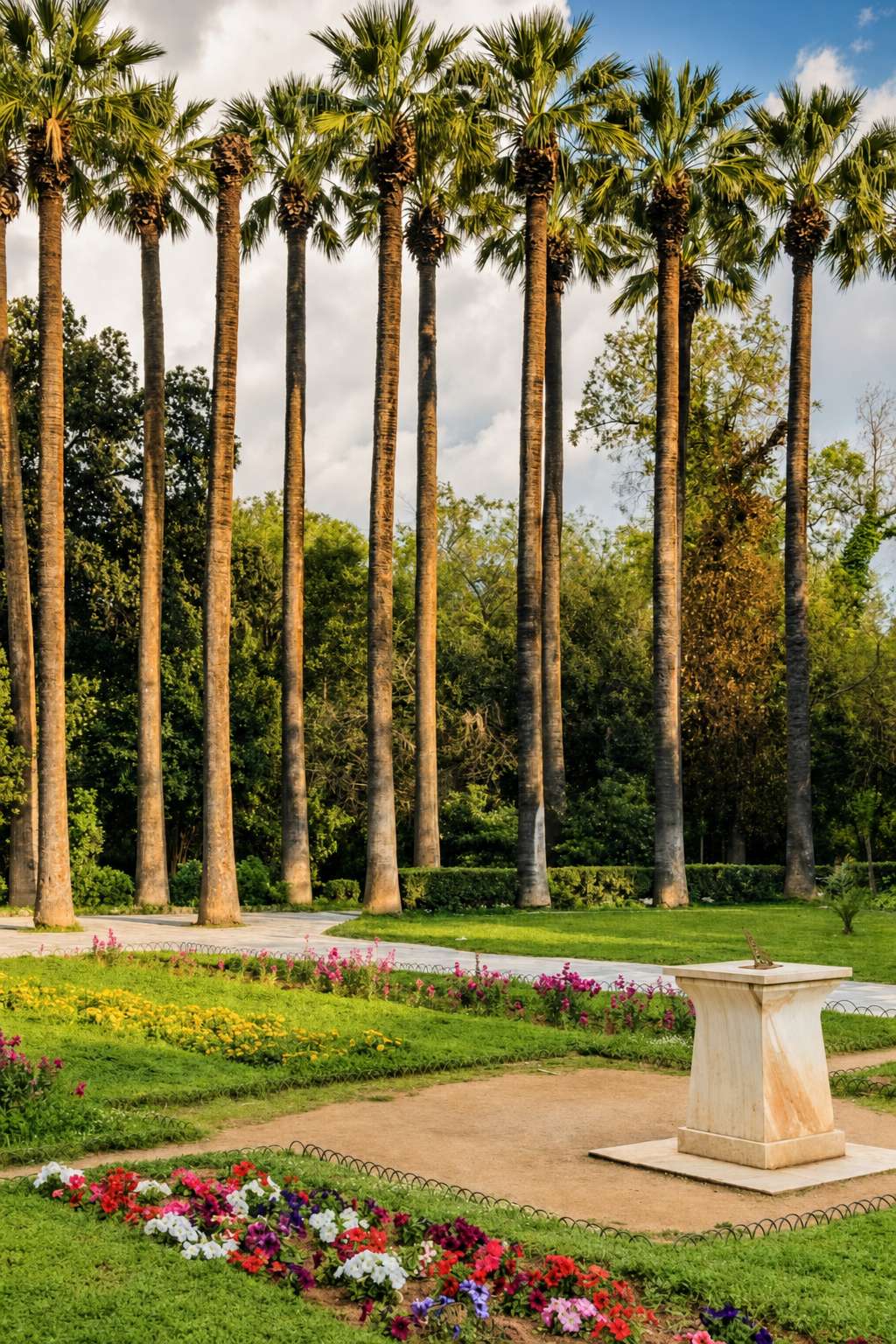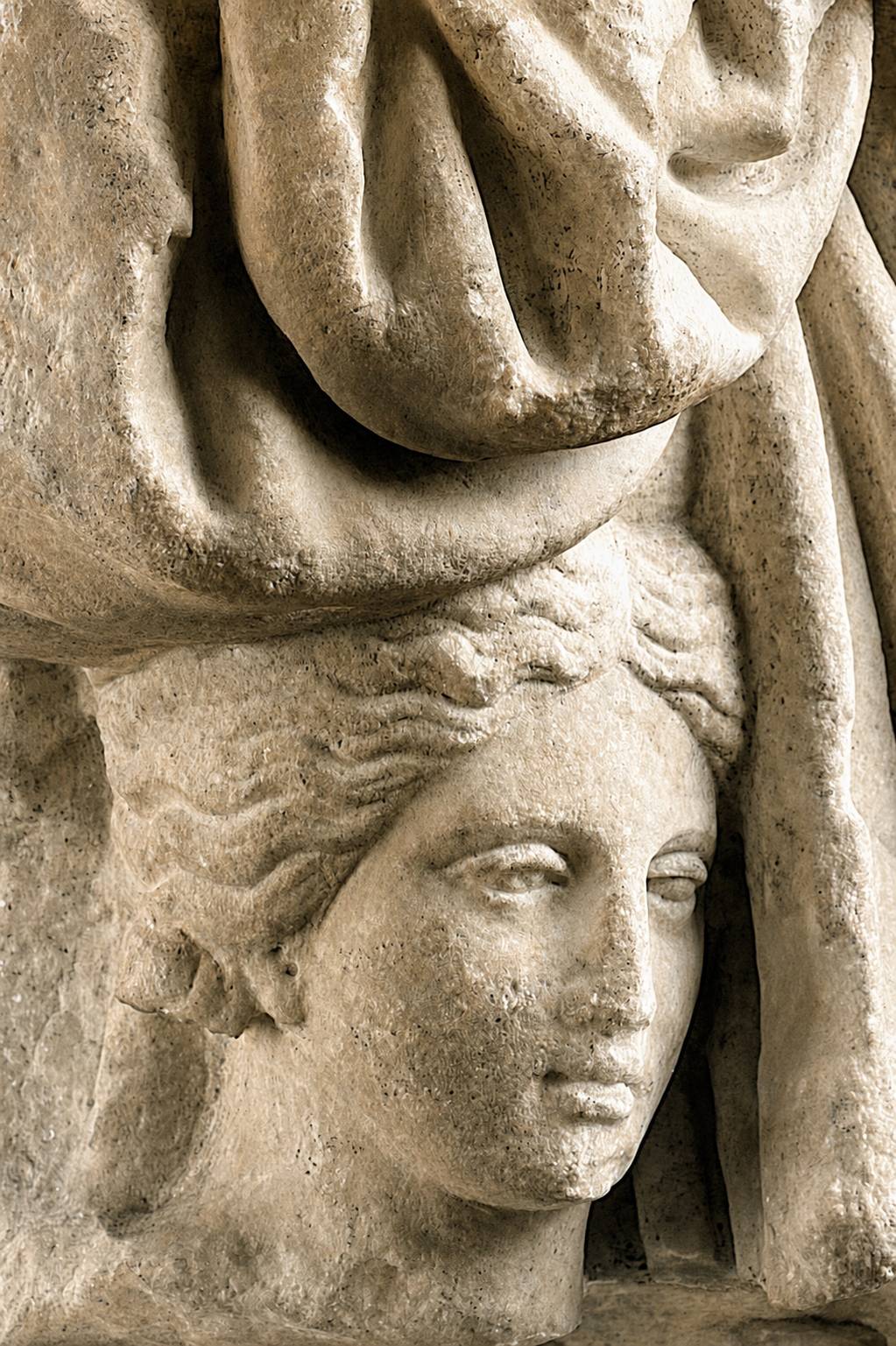



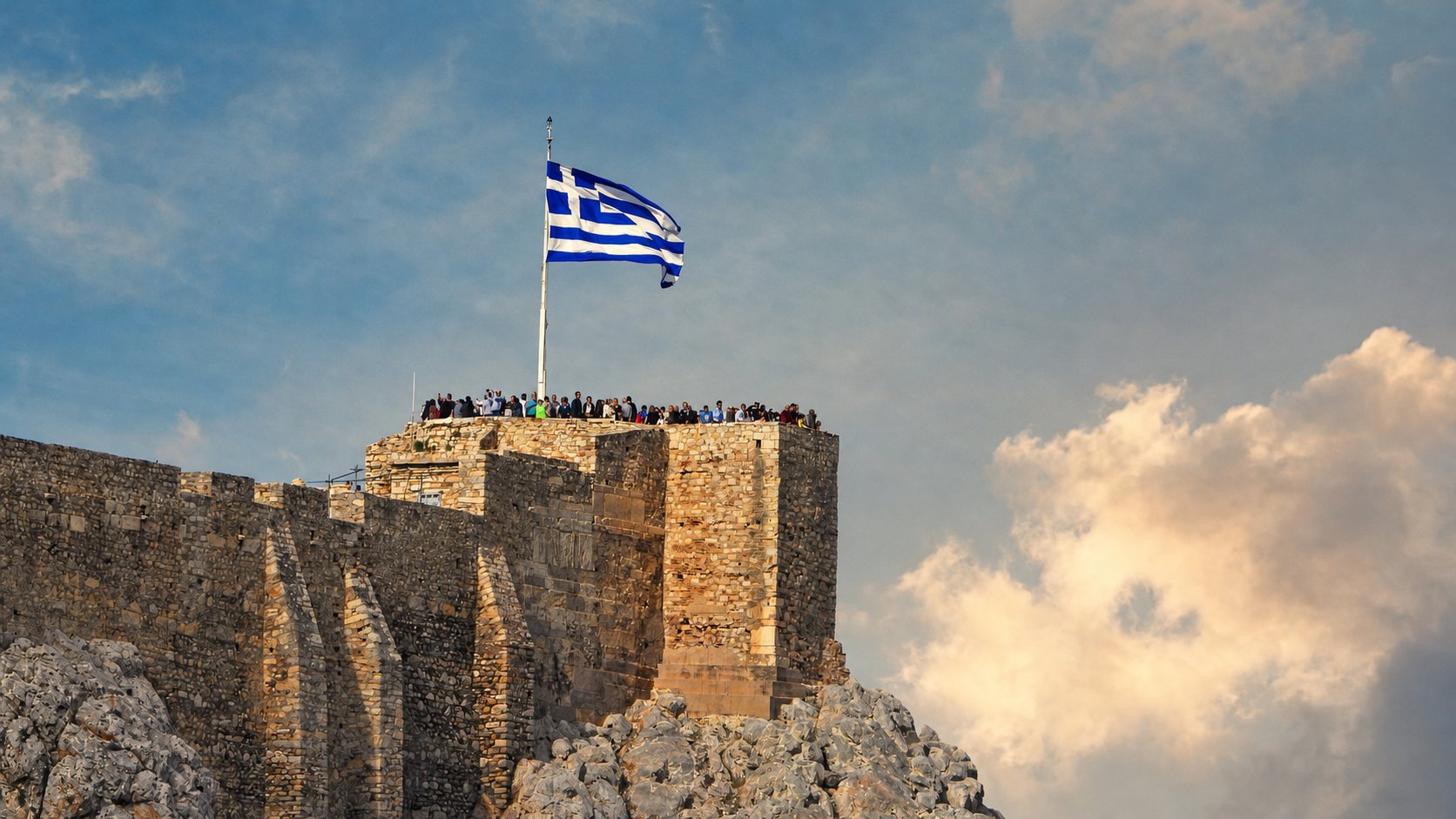
Every year on 28 October, Greece turns blue and white. Flags hang from balconies, schoolchildren march through village squares, military bands fill the streets and wreaths are laid at war memorials. From remote mountain hamlets to the boulevards of Athens and Thessaloniki, one word comes back to the centre of national memory: Ochi (OH-hee), Greek for “No”. It’s a simple word for an extraordinary chapter in European history. In 1940, Greece refused an ultimatum from Fascist Italy. What followed was an unexpected victory on the battlefield, then the German invasion and years of brutal occupation.
Eighty-six years on, it remains one of Greece’s most deeply felt holidays, as much about remembrance, family tradition and shared identity as about patriotism. Unlike Independence Day on 25 March, which marks the 1821 uprising against Ottoman rule, Ochi Day doesn’t celebrate how a war ended. It honours the moment a nation refused to give up its sovereignty. In the days before, schools put on ceremonies, poetry readings and performances of wartime songs, and being chosen to carry the flag makes a family very proud. The date also has a spiritual side: the Orthodox Church celebrates the Holy Protection of the Virgin Mary (Agia Skepi) on the same day, a feast long linked with the Greek soldiers of 1940.
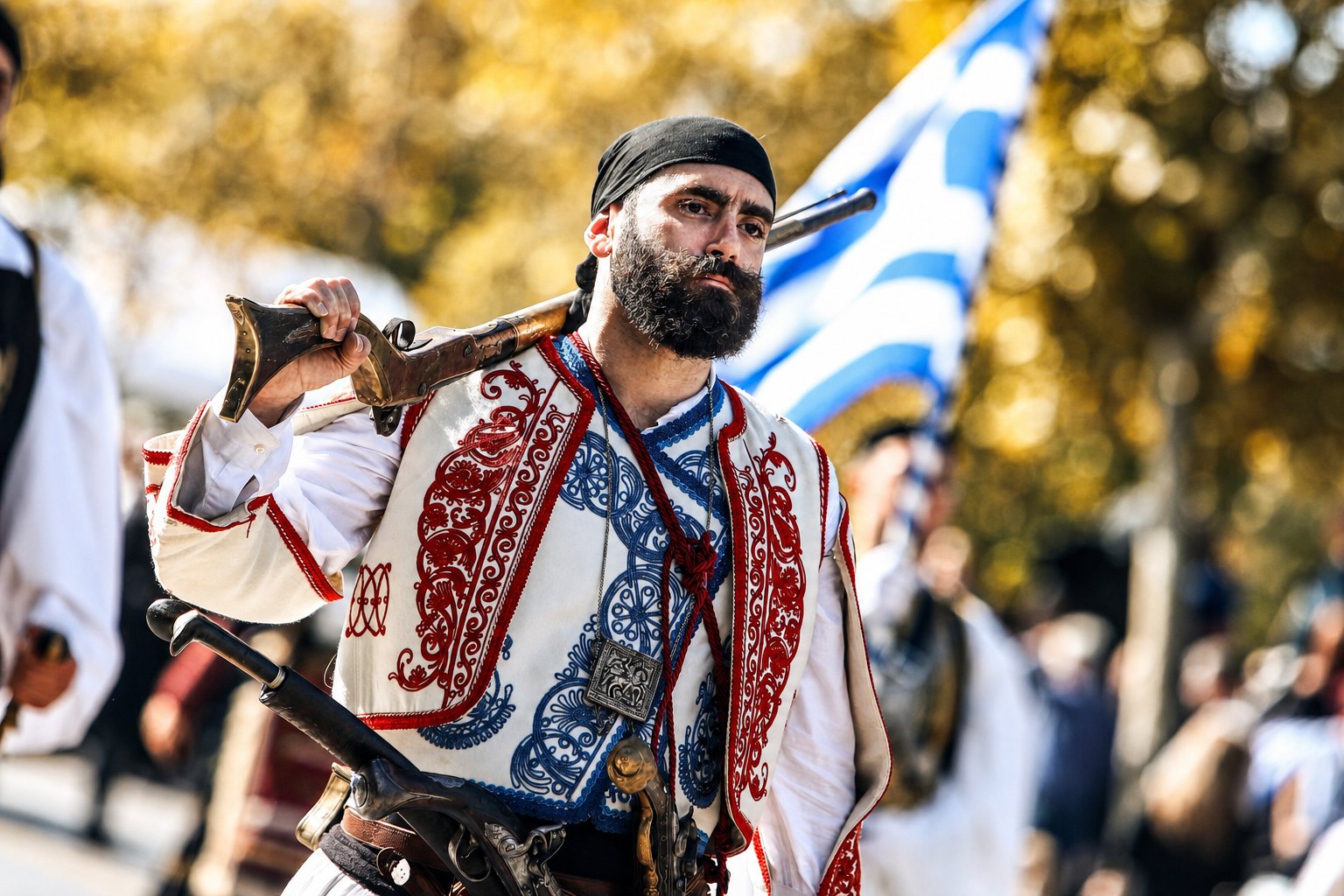
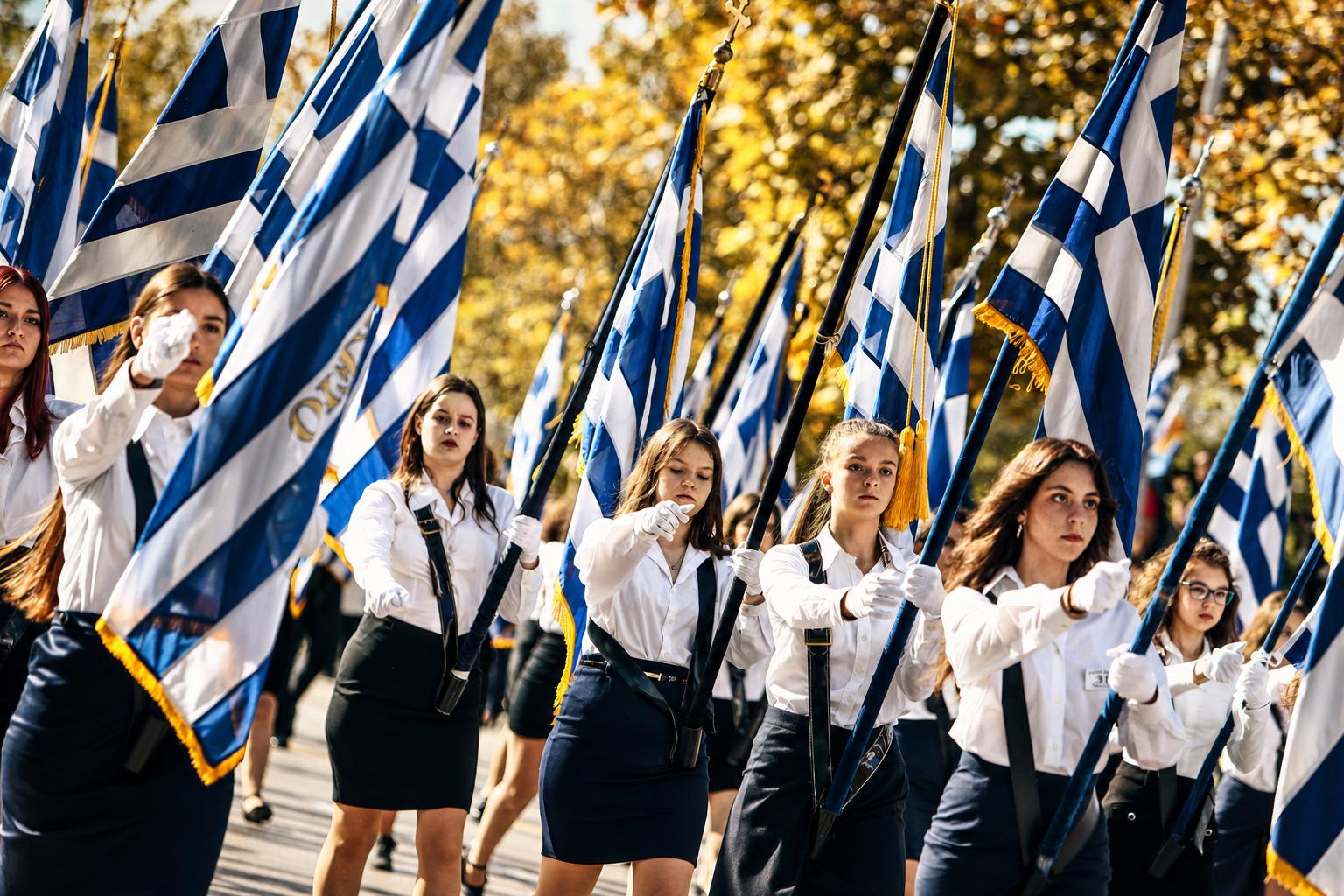
For travellers, it’s a rare, close-up look at Greek public life. The ceremonies may be official, but their heart belongs to families, children and local communities. In Athens, the student parade outside Parliament is followed by a full day of cultural options. In Thessaloniki, the celebrations last three days and end with the country’s main military parade along the waterfront. And since many state museums and archaeological sites are free on 28 October, it’s the perfect excuse to explore Greece beyond its best-known sights.
Weather note: The severe-weather bulletin covers 26–27 October. For Wednesday 28 October, the current outlook suggests possible morning rain in Athens; Thessaloniki looks more favourable, though cooler and breezy. Alongside holiday opening hours, check the latest forecasts and official parade and transport announcements. If rain is expected, confirm indoor seating when booking a meal.
In this guide
The History Behind It · The Poetry, Music and Art
Athens: Option 1: A leisurely afternoon in Plaka · Option 2: Wartime history and wine in Kolonaki · Option 3: Ancient sites and dinner in Kerameikos · Option 4: Museum treasures and café life in Exarcheia
Thessaloniki: Monday, 26 October: Saint Demetrius and the city’s liberation · Tuesday, 27 October: The student parade · Wednesday, 28 October: The military parade beside the Thermaic Gulf · Option 1: Bougatsa, sea views and a leisurely lunch · Option 2: Discovering Thessaloniki through its museums · Option 3: Roman monuments and cafés around the Rotunda · Option 4: Upper Town lanes and panoramic views · After dark: Wine, cocktails and dinner in central Thessaloniki
Places mentioned: Contacts and useful links: Athens: Sights and walks · Athens: Food and drink · Thessaloniki: Sights and walks · Thessaloniki: Food and drink
The History Behind It
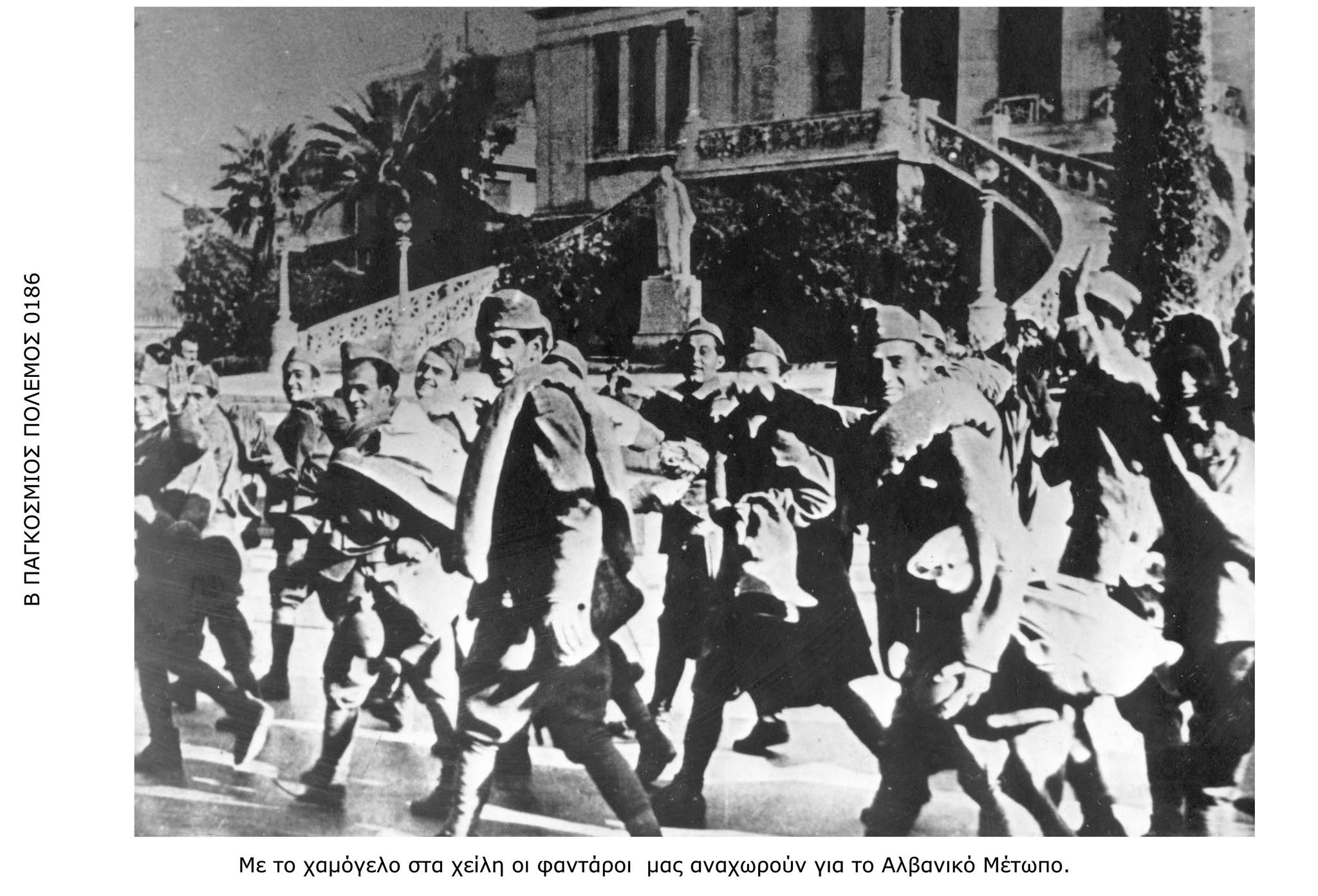
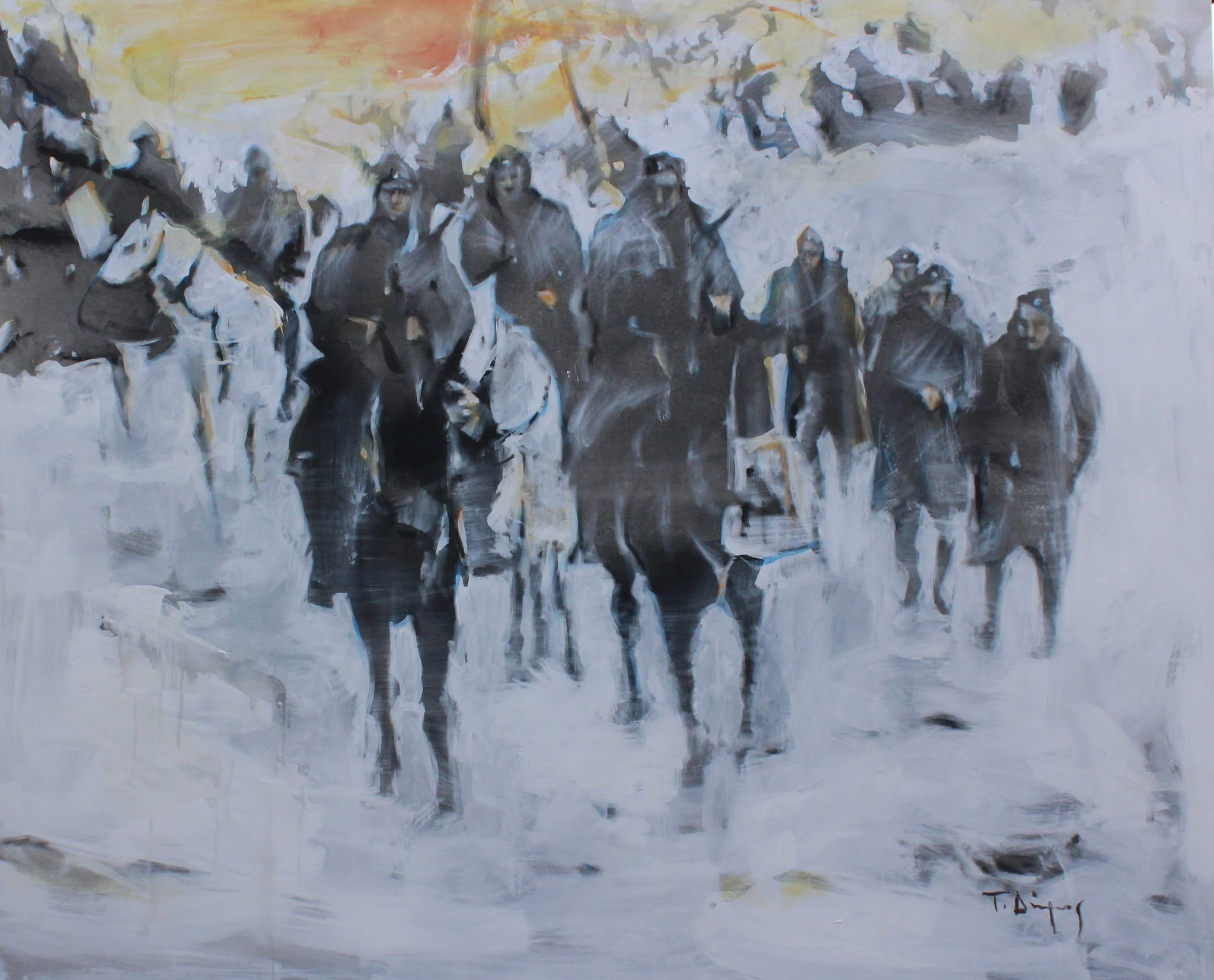
Shortly before 3am on 28 October 1940, Italy’s ambassador to Greece, Emanuele Grazzi, arrived at the home of Prime Minister Ioannis Metaxas in Kifissia, a northern suburb of Athens. He carried an ultimatum from Benito Mussolini demanding that Greece allow Italian troops to enter its territory and occupy unspecified strategic positions. Refusal would mean war. Metaxas responded in French, then the language of diplomacy, with words traditionally recorded as Alors, c’est la guerre, meaning “Then it is war”. He probably never actually uttered the Greek word Ochi during the encounter, but his rejection quickly became distilled into that emphatic expression.
Italian forces attacked Greece from Italian-occupied Albania before dawn. What followed surprised much of Europe. Rather than collapsing before a seemingly stronger opponent, Greek troops resisted the invasion in the mountains of Epirus and Pindus. They then launched a successful counter-offensive, pushing Italian forces back into Albania during the bitter winter of 1940 and 1941. The campaign became one of the first significant Allied land successes of the Second World War.
Among its enduring images are not only the soldiers fighting in snow-covered mountains but also the women of Pindus, who carried ammunition, food and other supplies along treacherous mountain paths. The celebrations, however, conceal a more complicated history. Metaxas had ruled Greece as a dictator since 1936. Yet the rejection of the Italian ultimatum transcended his regime, becoming a powerful symbol of the Greek population’s determination to resist foreign domination.
The victories could not prevent what came next. Nazi Germany invaded in April 1941. Greece endured occupation, famine, reprisals, the destruction of communities and the Holocaust, in which the overwhelming majority of Greek Jews were murdered. That history explains the dual character of Ochi Day: pride in the refusal, alongside remembrance of those who suffered and died.
The Poetry, Music and Art
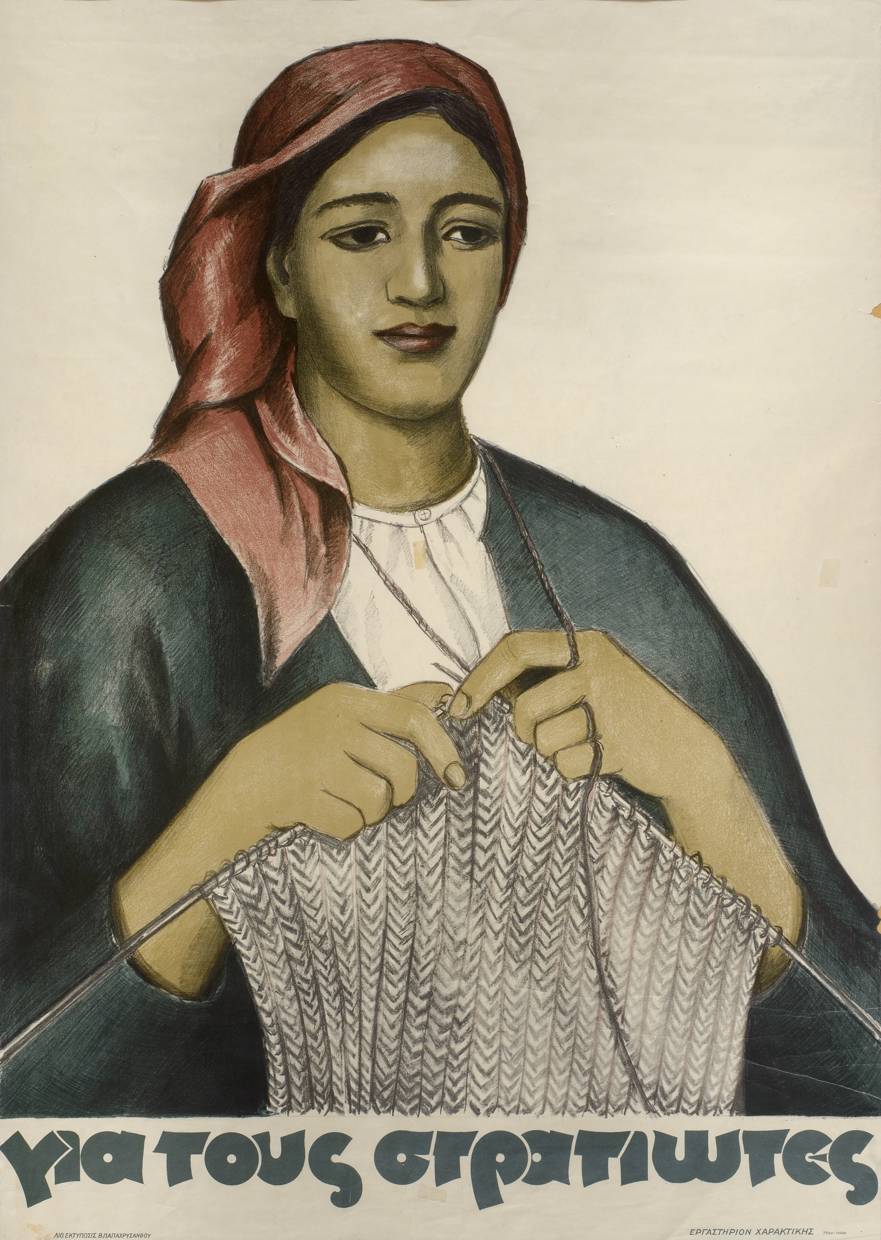
From Nobel laureate Odysseas Elytis to Sofia Vembo’s wartime songs, the cultural legacy of 1940 lives on. The Greek resistance of 1940 inspired some of the country’s most memorable poetry. Odysseas Elytis, who served on the Albanian front, captured the tragedy of war in Heroic and Elegiac Song for the Lost Second Lieutenant of Albania (1945). Days after the Italian invasion, Kostis Palamas addressed the nation’s youth in To Our Youth (1 November 1940), urging them to draw strength from the Greek War of Independence:
This alone keeps light amid the storm
Kostis Palamas, To Our Youth (1 November 1940). Editorial rendering from the Greek.
My aged head, worn by the world’s clamour;
I have but one thing left to tell you:
Drink deeply of the immortal wine of 1821!
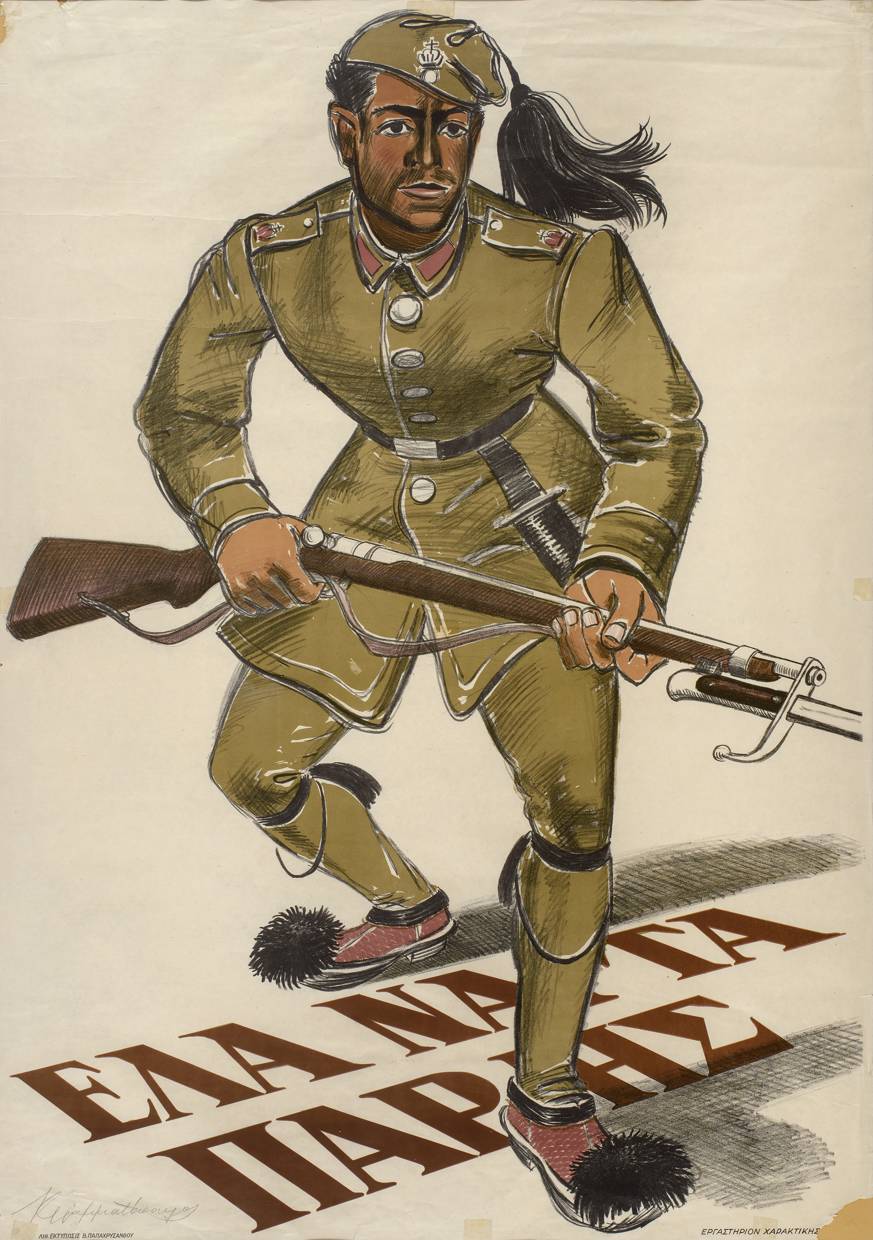
Music proved equally powerful. Sofia Vembo, celebrated as the Songstress of Victory, lifted morale with Children of Greece, Children, while her satirical Foolish Mussolini mocked the Italian dictator. In visual art, Alexandros Alexandrakis, himself a veteran, immortalised soldiers enduring the Albanian mountains in This Is How We Fought. Four striking wartime posters by Kostas Grammatopoulos, Vasso Katraki and A. Tassos depicted the women of Pindus, soldiers and civilian solidarity.
The anniversary’s defining words remain “Alors, c’est la guerre” (“Then it is war”), the response attributed to Prime Minister Ioannis Metaxas that became immortalised as Ochi (“No”). Together, these words and artworks preserve the courage, sacrifice and defiance commemorated every 28 October.
01
Athens
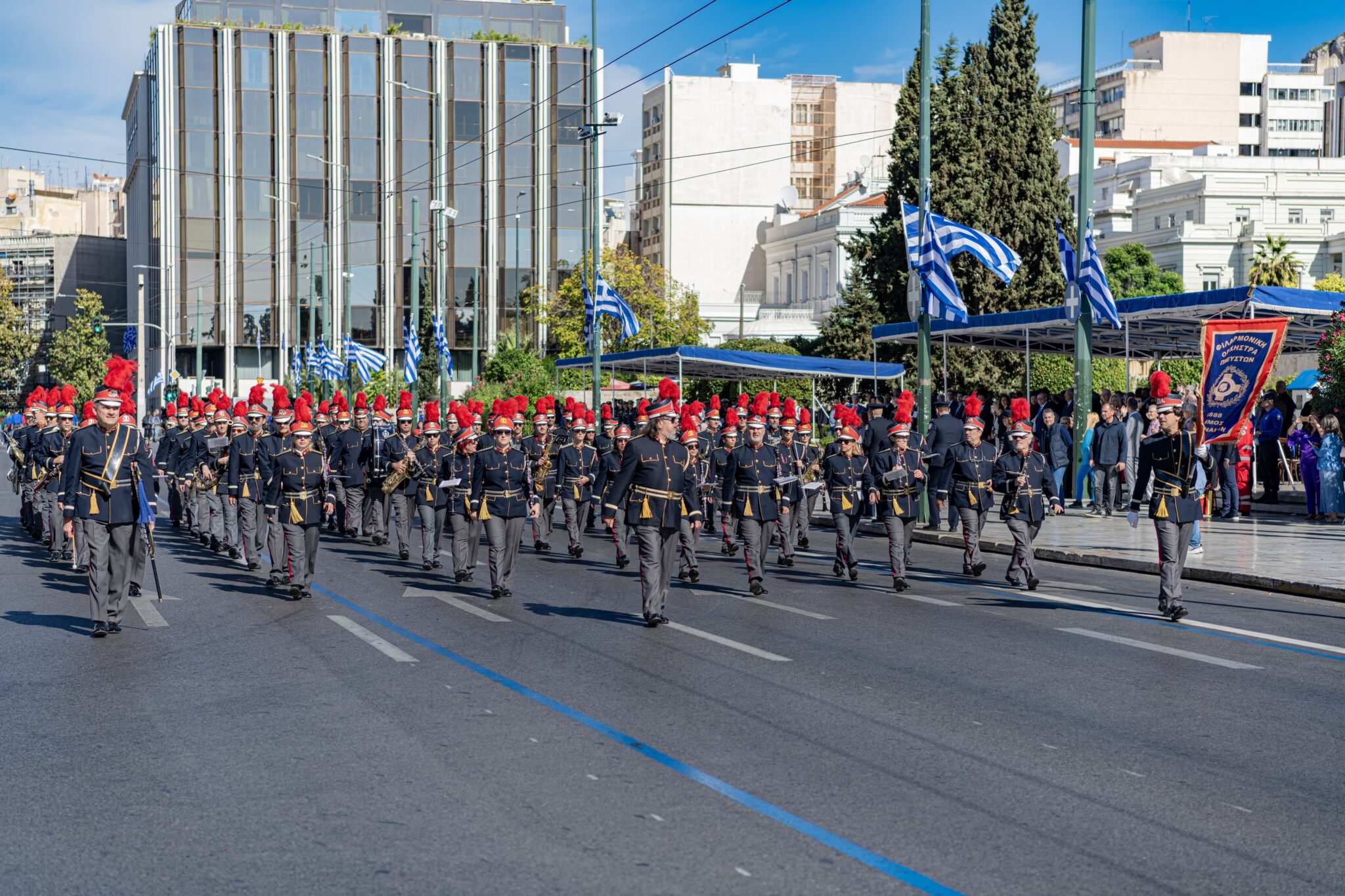

Athens marks Ochi Day differently from Thessaloniki. The Greek capital stages a student parade in the historic centre, with schoolchildren, scouts and other participating groups marching near the Tomb of the Unknown Soldier outside Parliament.
The morning traditionally begins with an official doxology, or thanksgiving service, at the Metropolitan Cathedral of Athens on Mitropoleos Square, followed by a wreath-laying ceremony at the Tomb of the Unknown Soldier. The parade is expected at approximately 11am, although the final 2026 timetable and traffic arrangements should be checked closer to the holiday.
The ceremonial setting is particularly evocative. The Tomb of the Unknown Soldier stands directly beneath the Greek Parliament, its monumental relief depicting a fallen ancient warrior. Behind the permanently stationed Evzones, the marble wall bears words from Pericles’ funeral oration, recorded by Thucydides:
“The whole earth is the tomb of famous men.”
On Ochi Day, that ancient tribute to the war dead takes on renewed significance.
Where to stand: Syntagma Square is the natural place to watch the ceremonies, although the areas immediately around the memorial are subject to security restrictions. Arrive by around 10am and follow police directions to designated spectator areas. The regular changing of the Evzone guard is also worth seeing, but access and ceremonial arrangements may differ during the official commemorations.
Getting there: Central streets are closed to traffic, while public transport may operate on a holiday timetable. Syntagma Metro station can be affected by temporary restrictions, so Monastiraki, Evangelismos and Akropoli are useful alternative stations, depending on the day’s police announcements.
For visitors planning to remain in the centre, the holiday is best explored on foot. After the parade, choose one of the following four neighborhood itineraries, each combining sightseeing with stops for food and drinks. If it rains, favor the Hellenic War Museum or National Archaeological Museum, saving outdoor walks and café terraces for clearer spells.
Option 1: A leisurely afternoon in Plaka

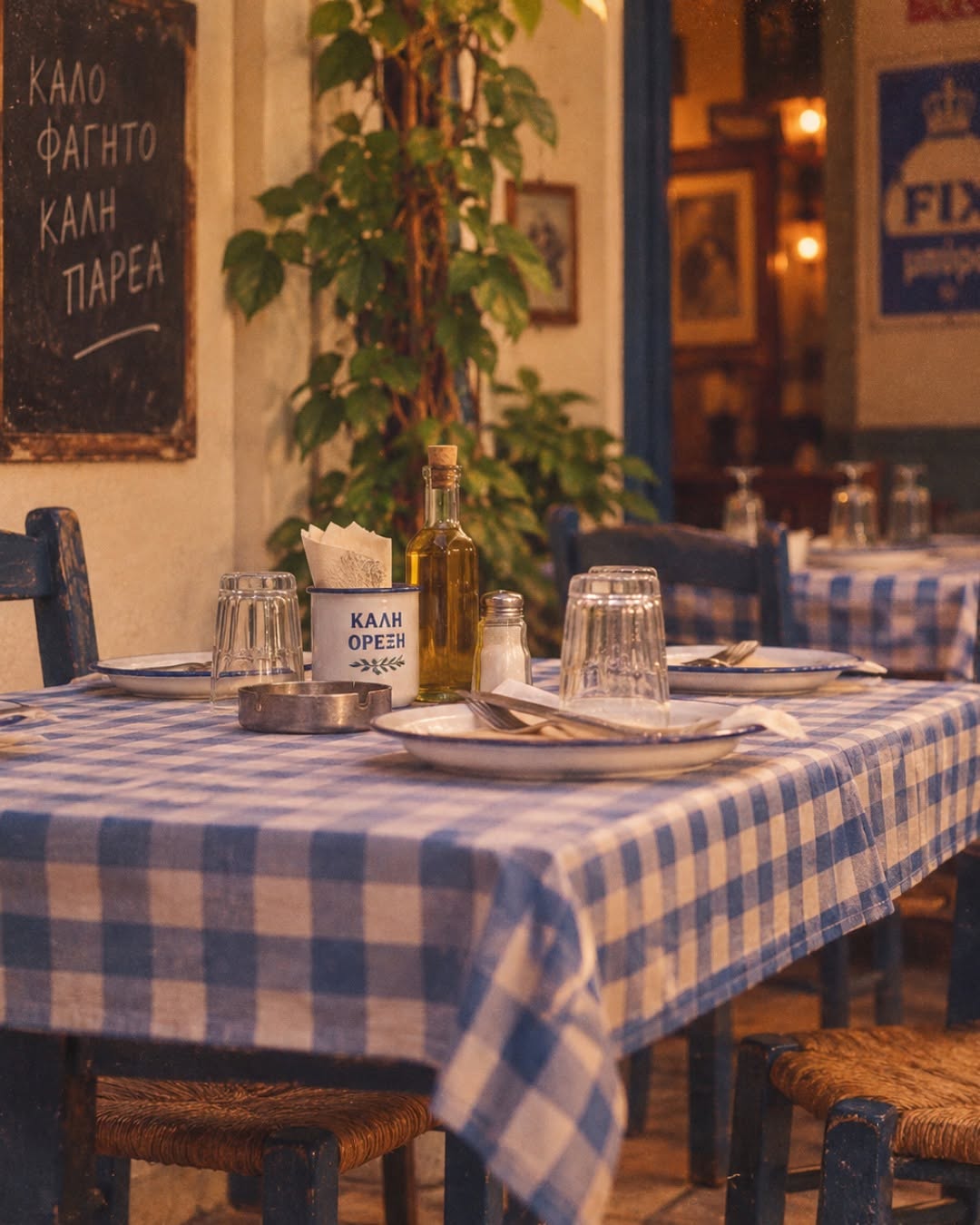
After the parade, head to Plaka, a short walk from Syntagma, where neoclassical houses, Byzantine chapels and atmospheric lanes invite exploration. For coffee, try Kimolia Art Café on Iperidou Street, Melina Café on Lysiou Street or the traditional O Glykys on Angelou Geronta Street.
For lunch, Nonnas Athens on Filomousou Eterias Square serves contemporary Greek home-style cooking. Alternatively, Platanos Taverna on Diogenous Street and Saita on Kydathineon Street offer traditional favourites.
If the weather is dry, climb towards Anafiotika, the tiny Cycladic-style neighbourhood beneath the Acropolis, with whitewashed houses and narrow lanes. Respect its residential character. Finish with Greek spirits at Brettos, the historic bar on Kydathineon Street, or wine at Heteroclito near Mitropoleos Street or Drunky Goat on Navarchou Nikodimou Street.
Discover the hidden corners and layered history of Plaka.
Find your next meal among Plaka’s traditional tavernas and modern restaurants.
Option 2: Wartime history and wine in Kolonaki
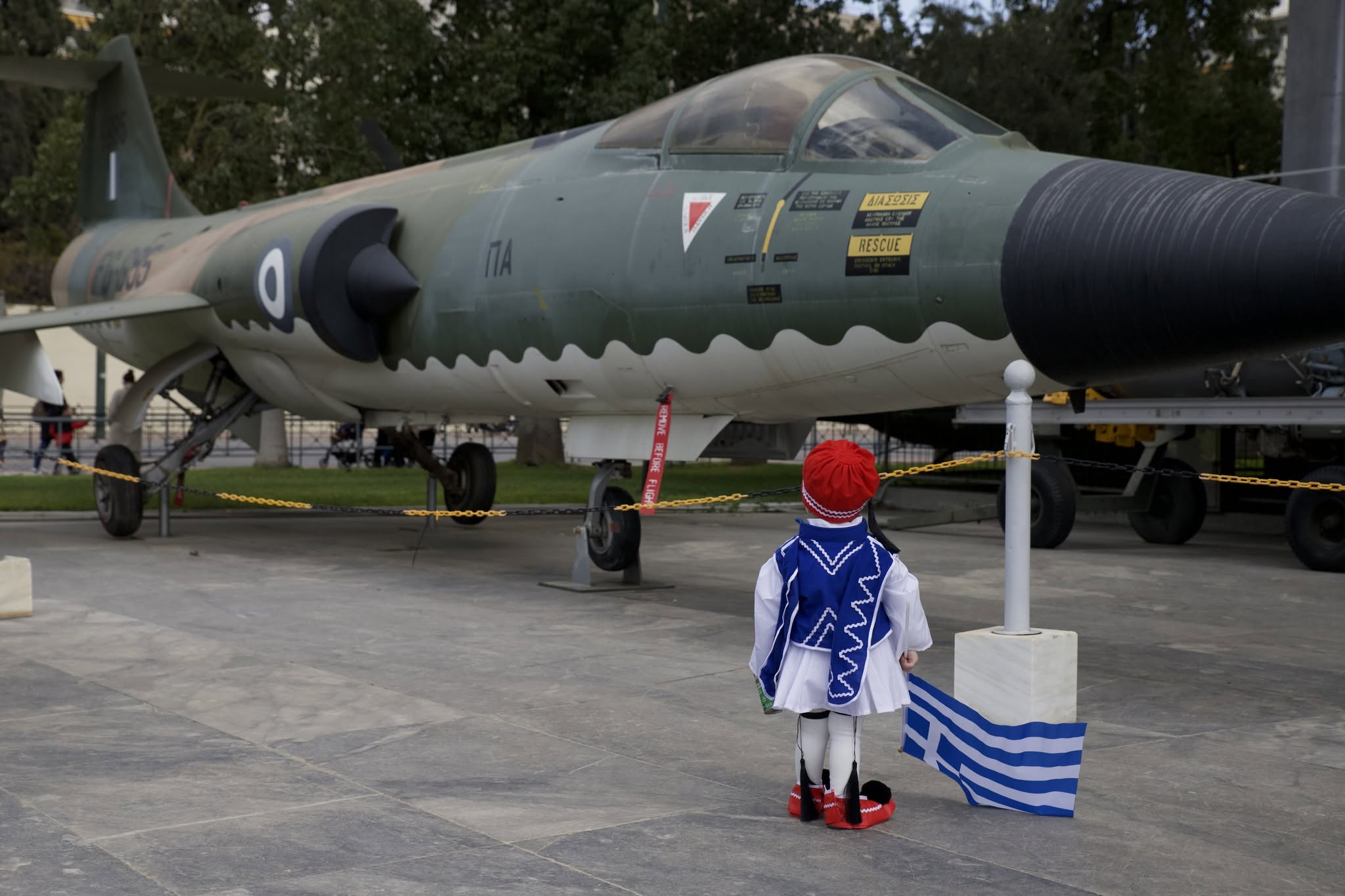
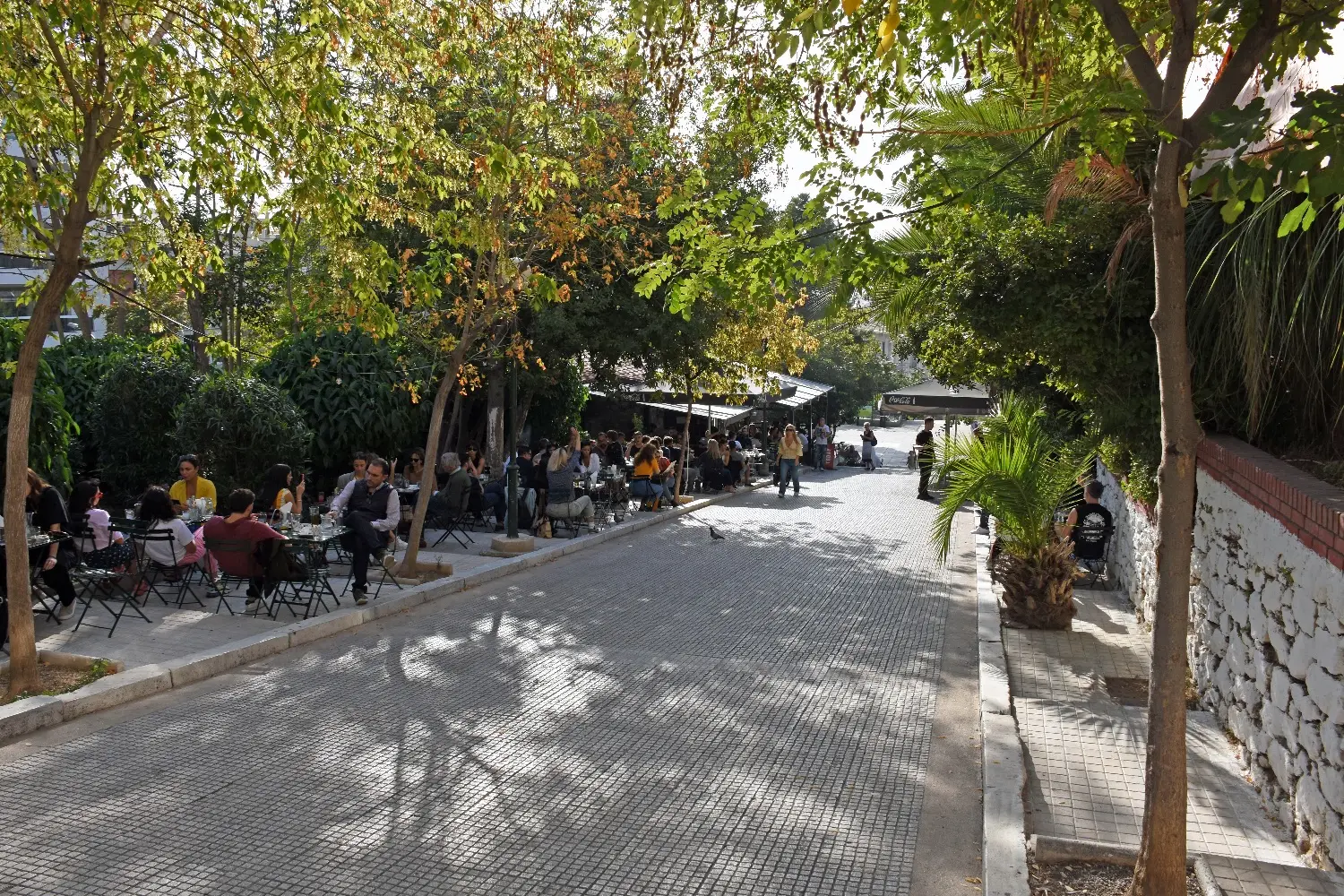
The Hellenic War Museum (Rizari 2–4, near Evangelismos Metro) explores Greece’s military history, with particularly relevant exhibits on the Greco-Italian War and World War II. Admission is normally free on 28 October; confirm holiday opening hours. Nearby, Aristotle’s Lyceum, founded in 335 BC, offers a peaceful glimpse into classical Athens. Continue into Kolonaki for coffee at Queen Bee on Patriarchou Ioakeim Street, Da Capo on Kolonaki Square or Wild Souls on Irodotou Street.
For lunch, Oikeio on Ploutarchou Street and To Kafeneio 1987 on Loukianou Street offer home-style cooking. For wine, try Brunello on Loukianou Street or Le Rosé. If the weather allows and it is still open for the season, Dexameni, the historic outdoor café on its leafy namesake square, is another option for drinks and meze; check before making the detour.
Explore the places shaping Kolonaki’s dining scene in 2026.
Option 3: Ancient sites and dinner in Kerameikos
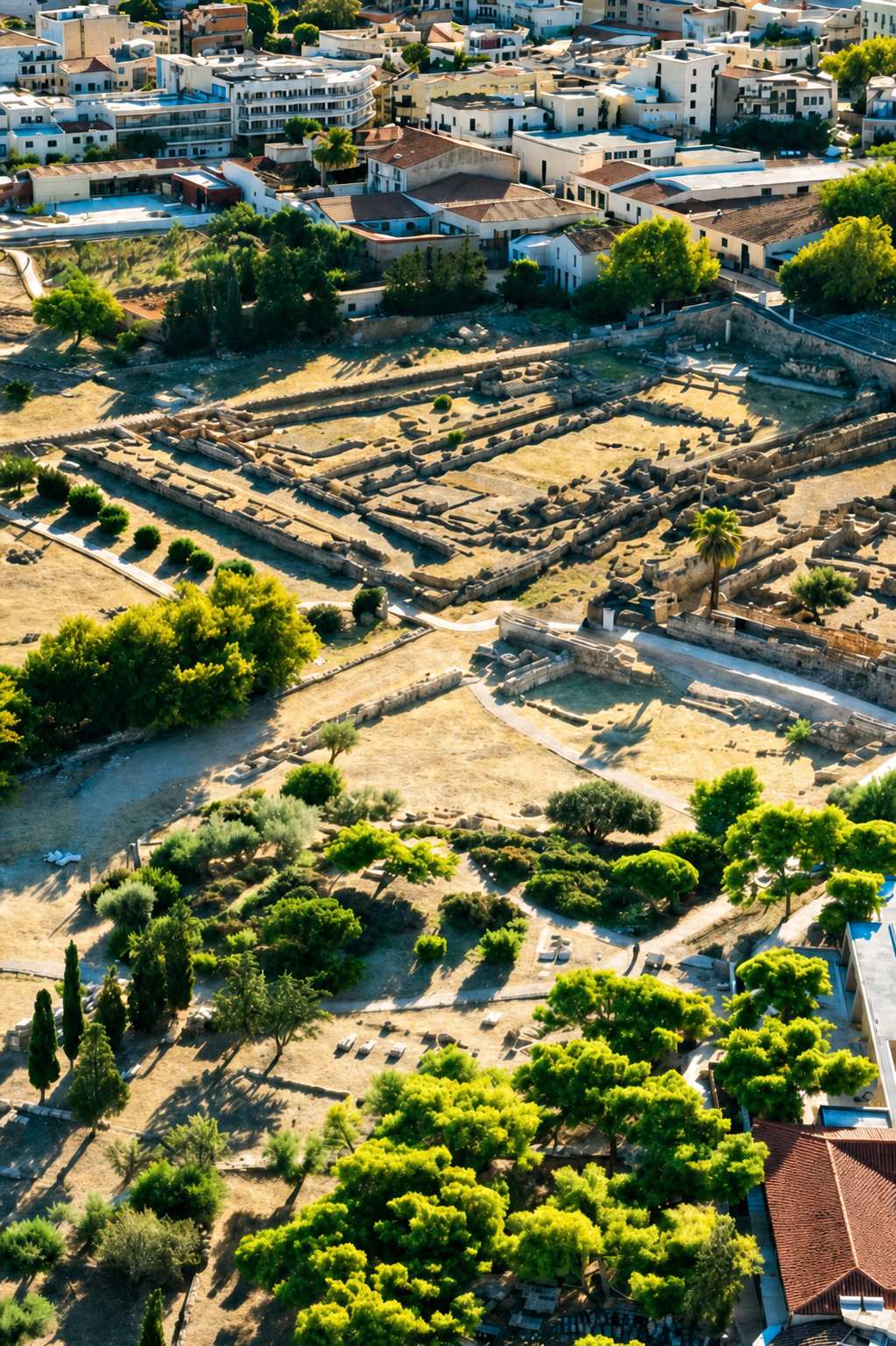
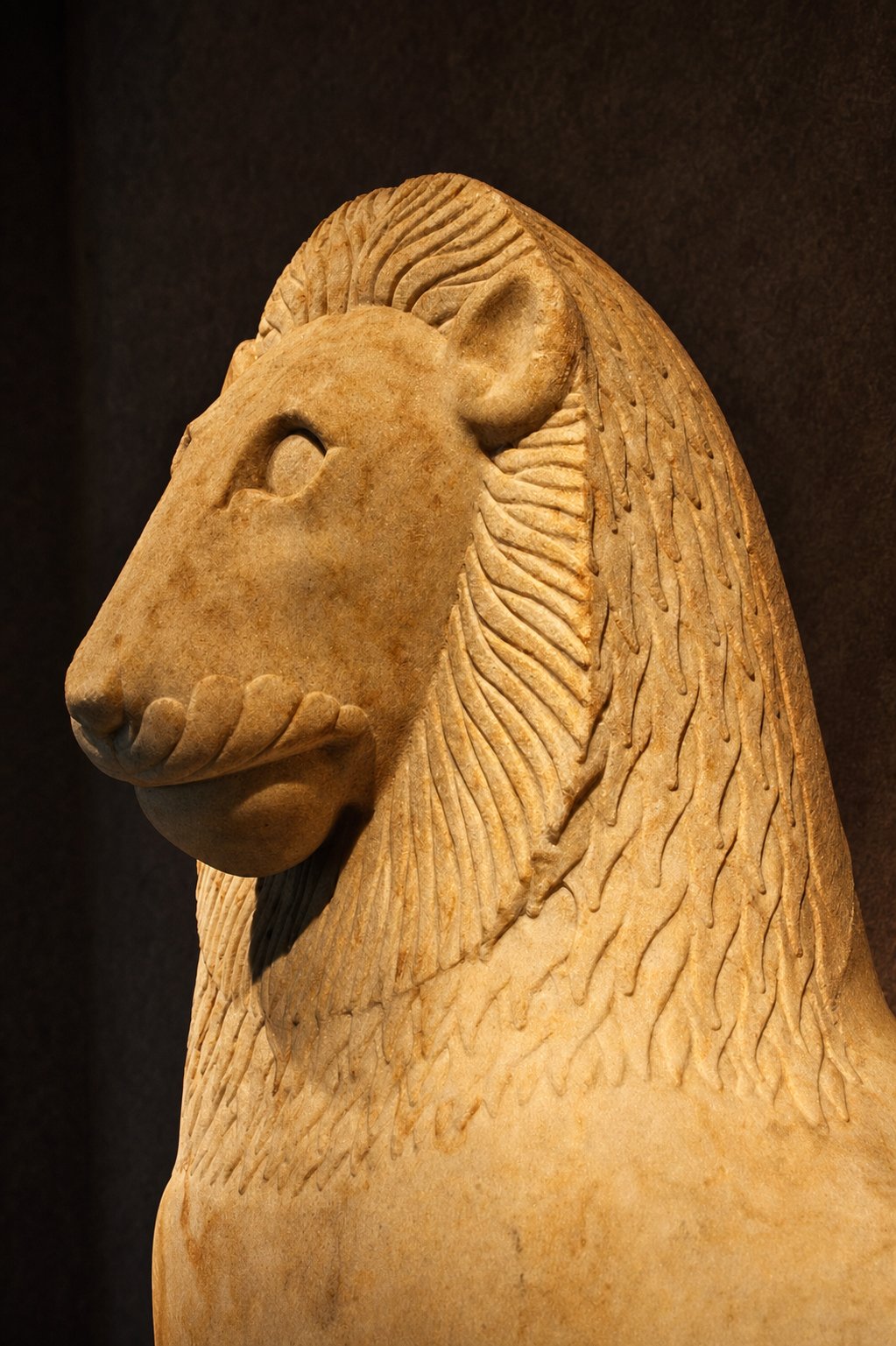

In dry weather, begin at the Ancient Agora, birthplace of Athenian democracy, where highlights include the remarkably preserved Temple of Hephaestus and the reconstructed Stoa of Attalos. Continue to Kerameikos, Athens’ ancient cemetery, closely associated with public remembrance of fallen soldiers. Reopened in September 2026, the restored site features expanded visitor routes, the Dipylon and Sacred Gates, ancient walls and funerary monuments. The connection to Ochi Day is especially poignant: words from Pericles’ funeral oration are inscribed on the Tomb of the Unknown Soldier at Syntagma.
Afterwards, enjoy coffee with archaeological views in Thiseio, or head towards Kerameikos and Gazi for dining and nightlife. For a more relaxed meal after sightseeing, Seychelles on Keramikou Street, near Avdi Square, serves inventive Greek dishes and sharing plates. For dinner, Osteria Mamma on Salaminos Street offers comforting Italian cooking and handmade pasta, while nearby Amante specialises in Italian cooking. Both are evening options on Wednesdays; confirm their holiday hours before booking. For a special evening, CTC on Plataion Street offers Michelin-starred contemporary fine dining.
Take a closer look at the newly reopened, greener Kerameikos.
Follow ancient Athens on a walk through the Agora, Pnyx and Kerameikos.
Option 4: Museum treasures and café life in Exarcheia

For an indoor cultural experience, visit the National Archaeological Museum, home to outstanding Mycenaean treasures, Cycladic art, classical sculpture, bronzes and ancient jewellery. Allow sufficient time, as it is best enjoyed as a separate itinerary. Then explore nearby Exarcheia, known for street art, independent bookshops and lively cafés.
For lunch, Ama Lachei, in a former school on Kallidromiou Street, serves Greek dishes in a charming courtyard. Warehouse is an excellent choice for coffee or wine. For an outdoor finale in dry weather, consider Strefi Hill, subject to access and path conditions.
Discover where to eat among Exarcheia’s lively streets and courtyards.
02
Thessaloniki
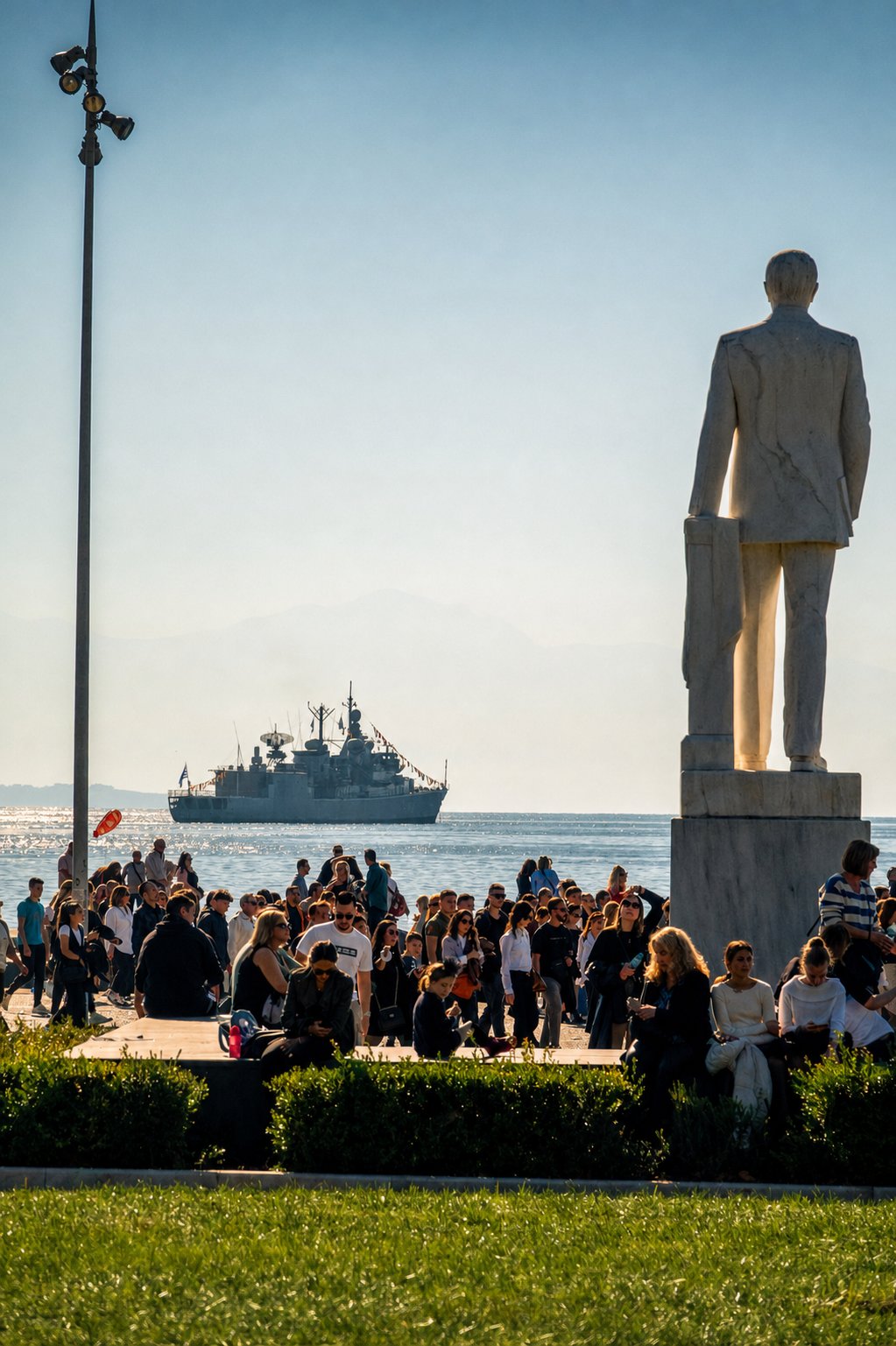
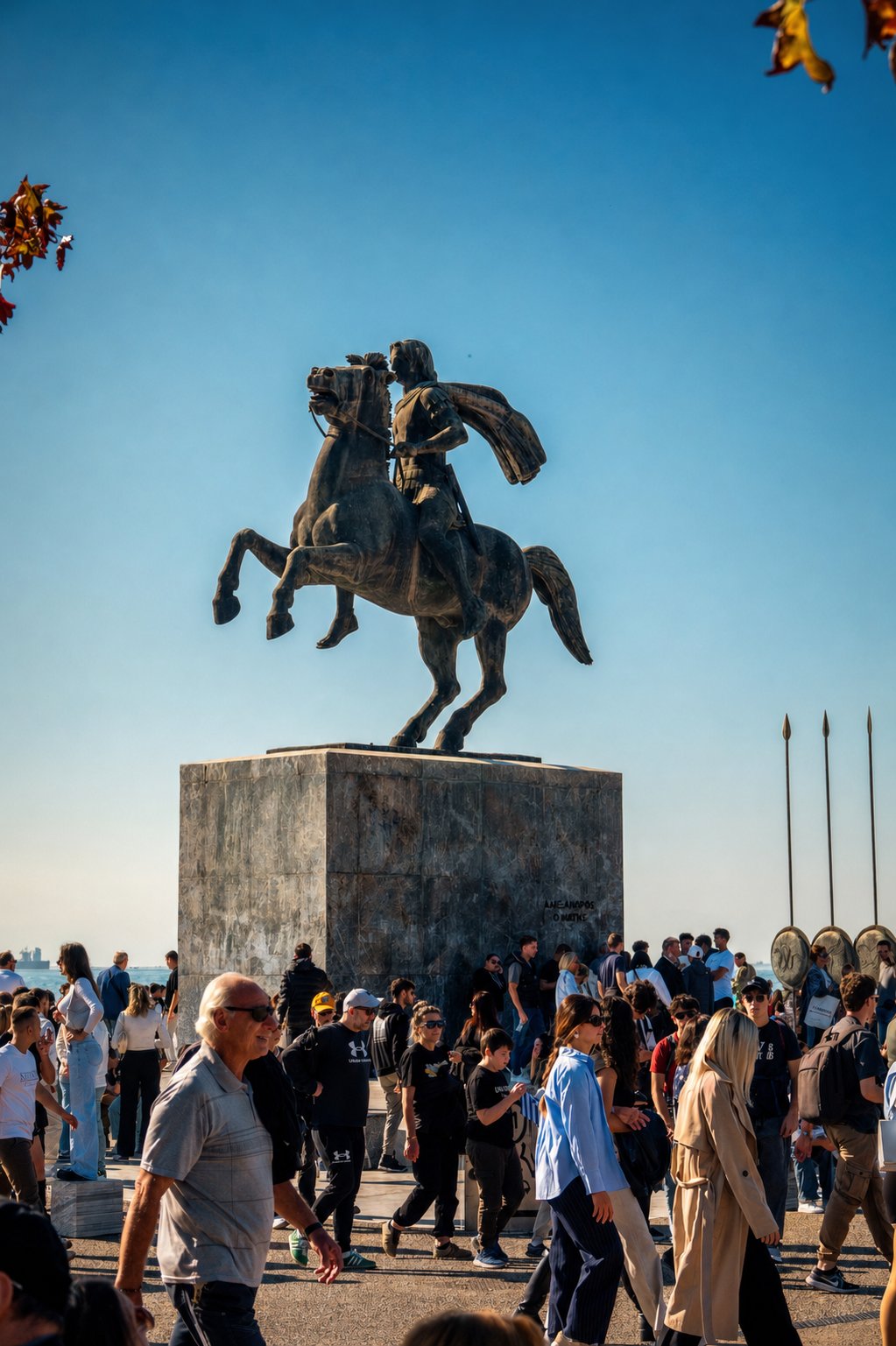
In Thessaloniki, Ochi Day feels different. The city celebrates three major occasions in succession: the feast of its patron saint, Saint Demetrius, and its liberation from Ottoman rule in 1912, both on 26 October, followed by Ochi Day on 28 October. From 26 to 28 October 2026, religious ceremonies, student and military parades bring a festive atmosphere to Greece’s northern capital.
Monday, 26 October: Saint Demetrius and the city’s liberation
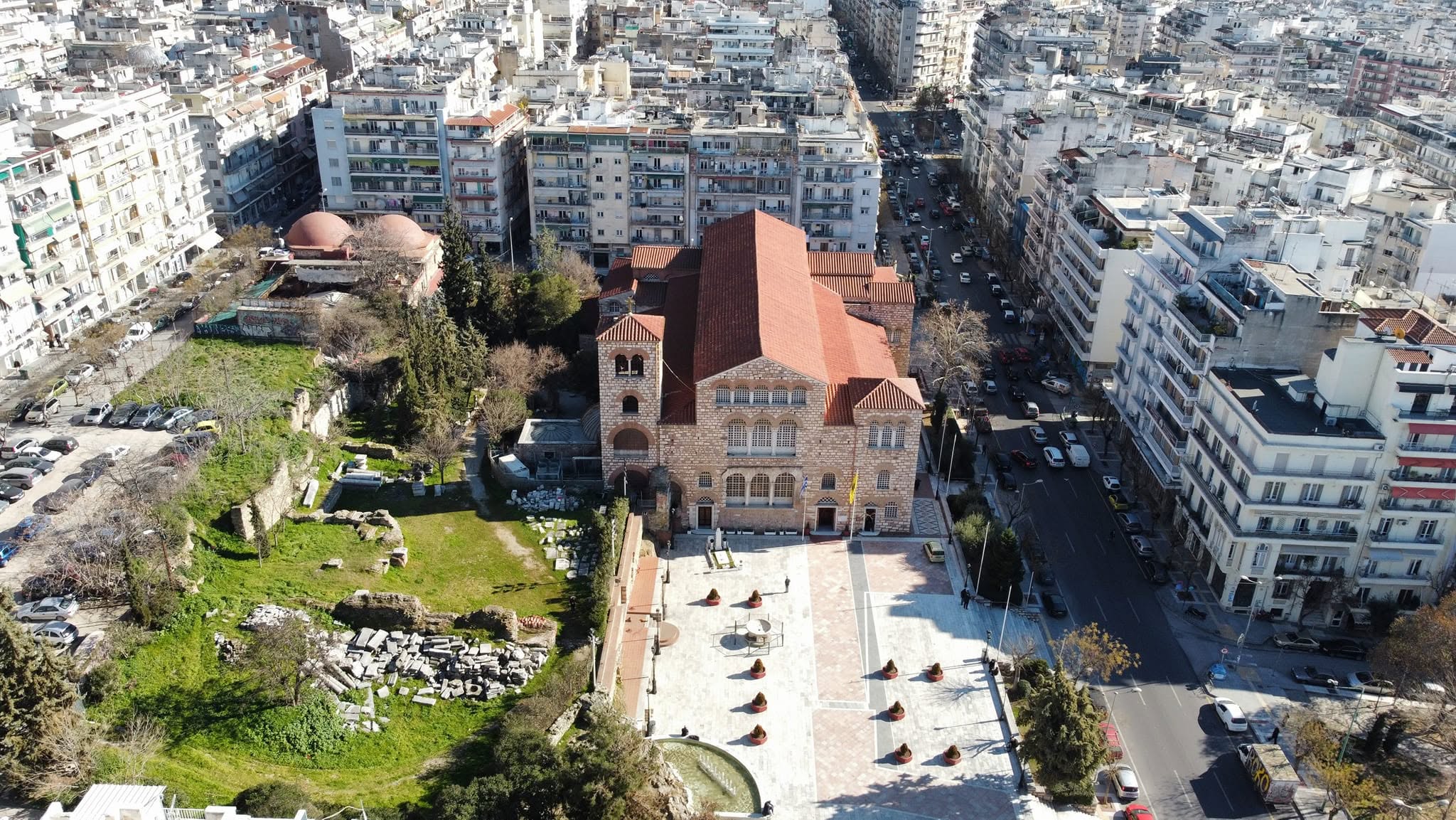
Celebrations include an official thanksgiving service at 11am at the Church of Agios Dimitrios, a UNESCO-listed Byzantine basilica whose crypt is associated with the saint’s martyrdom. The day also commemorates Thessaloniki’s liberation in 1912. Visitors can explore the nearby Roman Forum and historic streets, while an official evening event is scheduled at Aristotle University. The Roman Forum is closed on Tuesdays, so plan an interior visit for Monday 26 or Wednesday 28 October.
Tuesday, 27 October: The student parade
The student parade begins at 11am on Tsimiski Street, with schoolchildren and local organisations taking part. The area near Aristotelous Square offers a convenient viewing point; arrive early to secure a place. Wreath-laying ceremonies at memorials across the city complete the day’s commemorations.
Wednesday, 28 October: The military parade beside the Thermaic Gulf
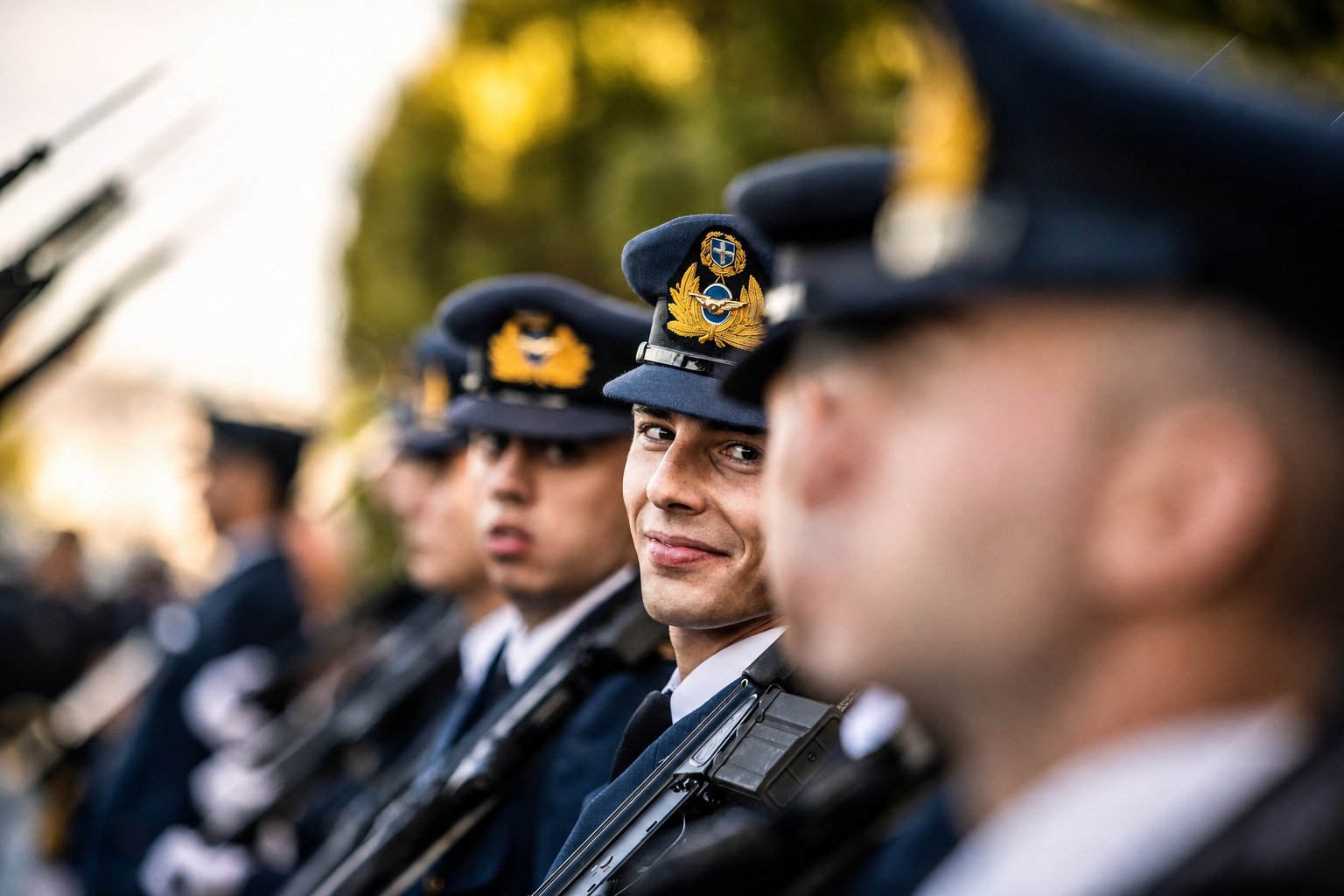

The main military and civilian parade begins at 11am on Megalou Alexandrou Avenue, following memorial ceremonies and a presidential wreath-laying at 10.15am. Military units, bands, students, veterans and regional associations parade along the Thermaic Gulf, with the White Tower providing an impressive backdrop. Arrive around 10am, preferably farther along the avenue to avoid the heaviest crowds near the White Tower. Bring a warm layer for the exposed seafront. At 5.30pm, the lowering of the Greek flag at the White Tower, accompanied by a ceremonial cannon salute, concludes the celebrations.
Around the celebrations, choose from these four ways to explore Thessaloniki, combining them as time allows.
Option 1: Bougatsa, sea views and a leisurely lunch
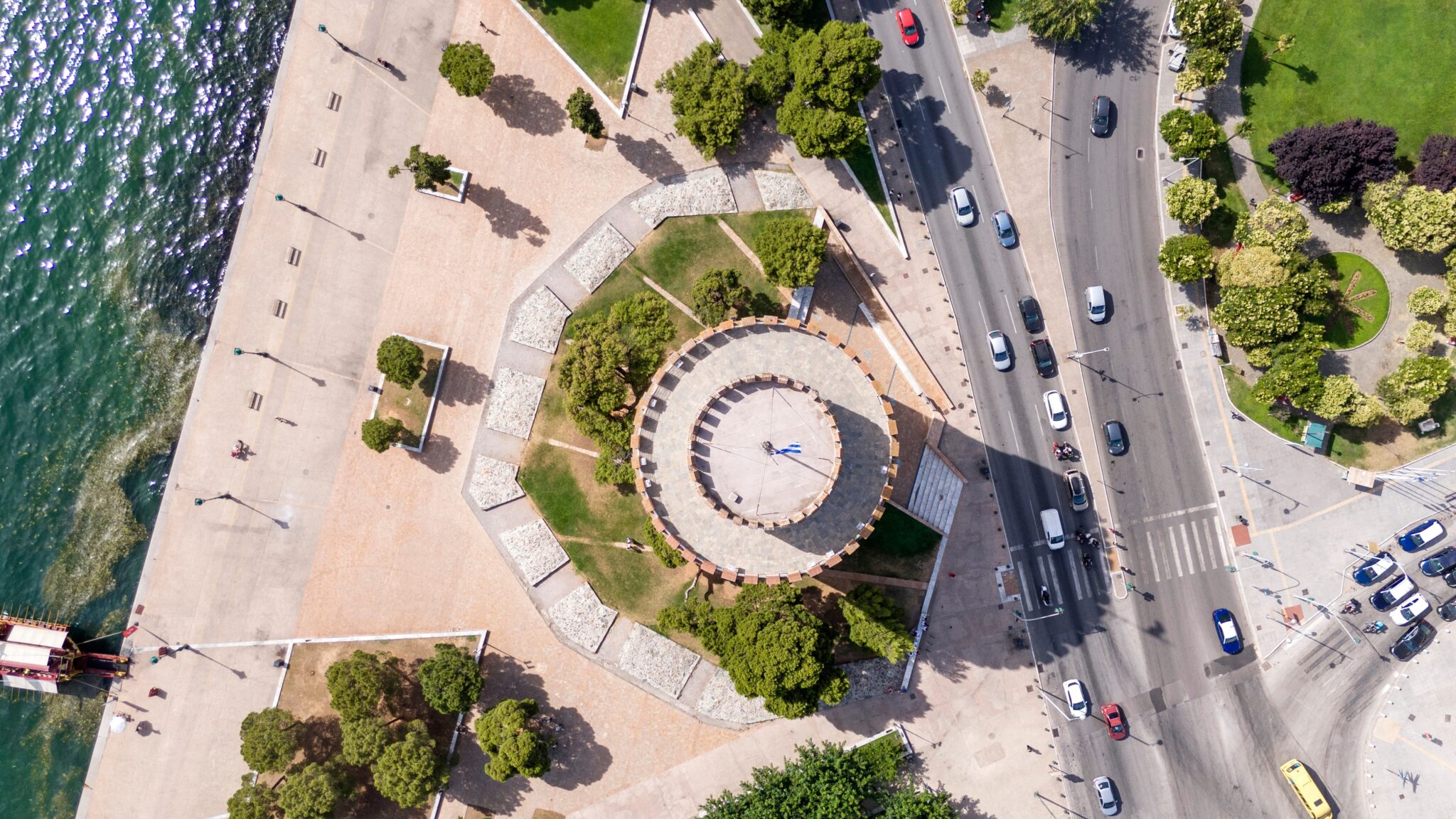
Start with Thessaloniki’s famous bougatsa at Bougatsa Giannis near the White Tower, or try Estrella on Pavlou Mela Street for inventive brunch. ERGON Agora, also on Pavlou Mela, combines Greek food and café culture. For speciality coffee, head to Valenio Coffee Vibes on Iktinou Street or Deka.Epta on Alexandrou Svolou Street. After the parade, enjoy a waterfront walk before lunch at Mourga on Christopoulou Street for contemporary seafood or Mezen on Rogoti Street for seafood meze and tsipouro.
Spend 48 delicious hours exploring Thessaloniki’s food scene.
Find more memorable meals in our guide to Thessaloniki’s best restaurants for 2026.
Option 2: Discovering Thessaloniki through its museums
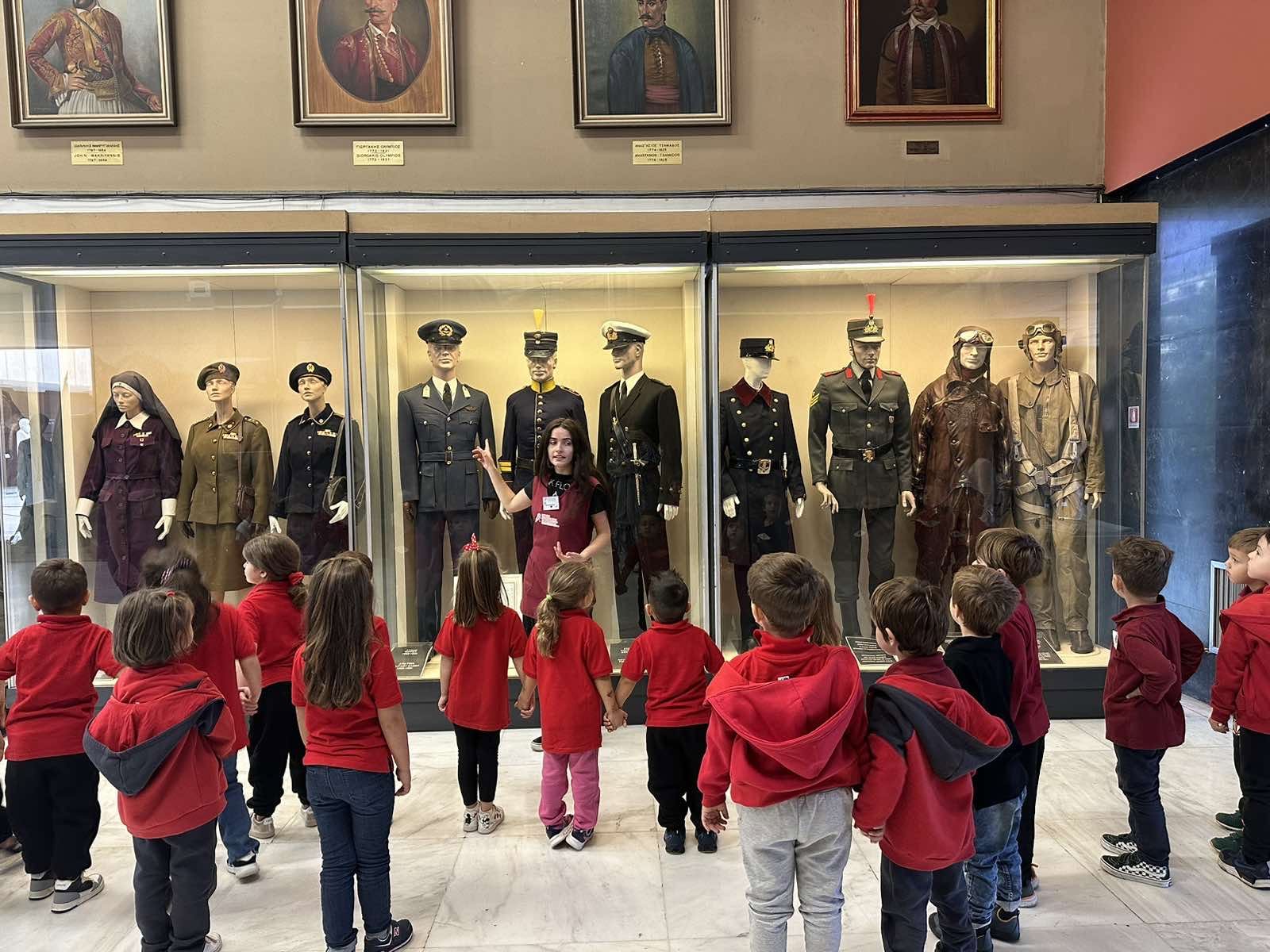
The White Tower houses exhibitions on Thessaloniki’s history and offers panoramic rooftop views. Nearby, the Archaeological Museum displays Macedonian treasures, including the Derveni Krater, while the Museum of Byzantine Culture explores the city’s Byzantine heritage through icons, mosaics and artefacts. For Ochi Day, the War Museum of Thessaloniki on Grigoriou Lambraki Street is particularly relevant, covering Greece’s military history and 20th-century conflicts.
Explore Thessaloniki’s past through its most compelling museums.

Option 3: Roman monuments and cafés around the Rotunda
Walk inland to the Rotunda, a monumental fourth-century building, followed by the Arch of Galerius and the remains of the Palace of Galerius around Navarinou Square. The Rotunda is closed on Tuesdays; visit inside on Monday 26 or Wednesday 28 October. The surrounding streets are filled with lively student cafés. For lunch, Dangara near the Rotunda serves northern Greek regional dishes.
Discover the monuments and landmarks that tell Thessaloniki’s story.
Option 4: Upper Town lanes and panoramic views
For a quieter escape, explore Ano Poli, with its traditional houses, Byzantine churches, winding streets and surviving city walls. The imposing Eptapyrgion (Yedi Kule), a former fortress and prison, and viewpoints overlooking the Thermaic Gulf are highlights. Confirm the fortress’s opening days and hours before planning to go inside. Take a taxi uphill and walk downhill through the neighbourhood. Visiting on 26 or 27 October leaves Ochi Day free for the waterfront ceremonies. For a meal on the way back towards the centre, Iliopetra on Aeschylus Street offers inventive cooking.
After dark: Wine, cocktails and dinner in central Thessaloniki
After the celebrations, head to Ladadika, the historic commercial district near the port, now filled with restaurants, bars and atmospheric streets.
Elsewhere in the city centre, try Giulietta Spritzeria on Paleon Patron Germanou Street for Italian-style spritzes or Wine Hideout on Pavlou Mela Street for Greek and international labels. Around Athonos Square, Super Ioulios on Mitropolitou Gennadiou Street is an option for natural wines. Purovoku Project in the Bezesteni market offers inventive cocktails, while Le Cercle de Salonique in Ano Ladadika combines drinks with historic architecture.
Find your next favourite night out among Thessaloniki’s best bars for 2026.
Explore Thessaloniki’s tables, from traditional meze to contemporary dining.
Contacts and useful links
Use the official websites and social pages below to check holiday opening hours and make reservations before setting out. City tourism guides are linked for neighbourhoods and selected landmarks; Da Capo’s entry also uses the official Athens guide. For outdoor walks, check access and weather conditions.
Athens: Sights and walks
1. Metropolitan Cathedral of Athens — Mitropoleos Square, historic centre; +30 210 335 2300.
2. Syntagma Square, Parliament and the Tomb of the Unknown Soldier — Vasilissis Amalias Avenue, Syntagma.
3. Plaka and Anafiotika — Below the northeastern slopes of the Acropolis.
4. Hellenic War Museum — Rizari 2–4 & Vasilissis Sofias Avenue; +30 210 725 2974.
5. Aristotle’s Lyceum — Pavlou Mela Square, near Evangelismos; +30 210 725 1348.
6. Ancient Agora, Temple of Hephaestus and Stoa of Attalos — Entrance at Adrianou 24, Monastiraki; +30 210 321 0185.
7. Kerameikos archaeological site and museum — Ermou 148; +30 210 341 6117.
8. Thiseio, Kerameikos and Gazi — West of the Ancient Agora; around Thisseio and Kerameikos metro stations.
9. National Archaeological Museum — Patission (28 October) 44; +30 213 214 4891.
10. Exarcheia and Strefi Hill — Around Kallidromiou Street and the hill to its northeast.
Athens: Food and drink
11. Kimolia Art Café — Iperidou 5, Plaka; +30 211 184 8446.
12. Melina Café — Lysiou 22, Plaka; +30 210 324 6501.
13. O Glykys — Angelou Geronta 2, Plaka; +30 210 322 3925.
14. Nonnas Athens — Filomousou Eterias Square 3, Plaka; +30 210 321 9024.
15. Platanos Taverna — Diogenous 4, Plaka; +30 210 322 0666.
16. Saita — Kydathineon 21, Plaka; +30 210 322 6671.
17. Brettos — Kydathineon 41, Plaka; +30 210 323 2110.
18. Heteroclito — Fokionos 2 & Petraki, Syntagma; +30 210 323 9406.
19. Drunky Goat — Navarchou Nikodimou 5, Syntagma; +30 210 331 9966.
20. Queen Bee — Patriarchou Ioakeim 45, Kolonaki; +30 210 720 9933.
21. Da Capo — Tsakalof 1, Kolonaki; +30 210 360 2497; Official city guide; call for hours.
22. Wild Souls, Kolonaki — Irodotou 14 & Karneadou, Kolonaki; info@wildsouls.gr.
23. Oikeio — Ploutarchou 15, Kolonaki; +30 210 725 9216.
24. To Kafeneio 1987 — Loukianou 26, Kolonaki; +30 210 723 9600.
25. Brunello — Loukianou 21, Kolonaki; +30 210 724 8889.
26. Le Rosé — Kapsali 6, Kolonaki; +30 210 729 0171.
27. Dexameni — Dexameni Square 3, Kolonaki; +30 210 722 4609; Seasonal outdoor venue; call ahead.
28. Seychelles — Keramikou 49, Kerameikos; +30 211 183 4789.
29. Osteria Mamma — Salaminos 64, Kerameikos; +30 693 660 7794.
30. Amante — Paramythias 13, Kerameikos; +30 210 524 3429.
31. CTC — Plataion 15, Kerameikos; +30 210 722 8812.
32. Ama Lachei — Kallidromiou 69, Exarcheia; +30 210 384 5978.
33. Warehouse — Valtetsiou 21 & Mavromichali, Exarcheia; +30 215 540 8002.
Thessaloniki: Sights and walks
34. Church of Agios Dimitrios and its crypt — Agiou Dimitriou 83; +30 231 027 0008.
35. Roman Forum and museum — Filippou & Agnostou Stratiotou; +30 231 026 4569.
36. Aristotle University — University campus, central Thessaloniki; +30 231 099 6000; Check event venue and admission arrangements.
37. Aristotelous Square and the waterfront — From Aristotelous Square along Nikis Avenue to the White Tower and Megalou Alexandrou Avenue.
38. White Tower — Nikis Avenue, on the waterfront; +30 231 026 7832.
39. Archaeological Museum of Thessaloniki — Manoli Andronikou 6; +30 231 331 0201.
40. Museum of Byzantine Culture — Stratou Avenue 2; +30 231 330 6400.
41. War Museum of Thessaloniki — Grigoriou Lambraki 4; +30 231 024 9803.
42. Rotunda — Agiou Georgiou Square 5; +30 231 020 4868.
43. Arch of Galerius (Kamara) — Egnatia Street, at Dimitriou Gounari.
44. Palace of Galerius — Navarinou Square; +30 231 026 9622.
45. Ano Poli and the city walls — Upper Town, north of the city centre.
46. Eptapyrgion (Yedi Kule) — Upper citadel, Ano Poli; efapoth@culture.gr.
47. Ladadika and Ano Ladadika — Around Morichovou Square and the streets north of Tsimiski, near the port.
Thessaloniki: Food and drink
48. Bougatsa Giannis — Mitropoleos 106; +30 231 025 7375.
49. Estrella — Pavlou Mela 48; +30 231 027 2045.
50. ERGON Agora — Pavlou Mela 42; +30 231 028 8008.
51. Valenio Coffee Vibes — Iktinou 6; +30 231 129 1518.
52. Deka.Epta — Alexandrou Svolou 24; +30 231 027 0063.
53. Mourga — Christopoulou 12; +30 231 026 8826.
54. Mezen — Rogoti 3; +30 231 023 2749.
55. Dangara — Armenopoulou 26, near the Rotunda; +30 231 020 4452.
56. Iliopetra — Aischylou 5; +30 231 405 5553.
57. Giulietta Spritzeria — Paleon Patron Germanou 33; +30 231 024 2020.
58. Wine Hideout — Pavlou Mela 38; +30 231 026 3527.
59. Super Ioulios — Mitropolitou Gennadiou 6; +30 231 027 6562.
60. Purovoku Project — Karipi 3, Bezesteni; +30 231 027 0275.
61. Le Cercle de Salonique — Vasileos Irakleiou 7, Ano Ladadika