


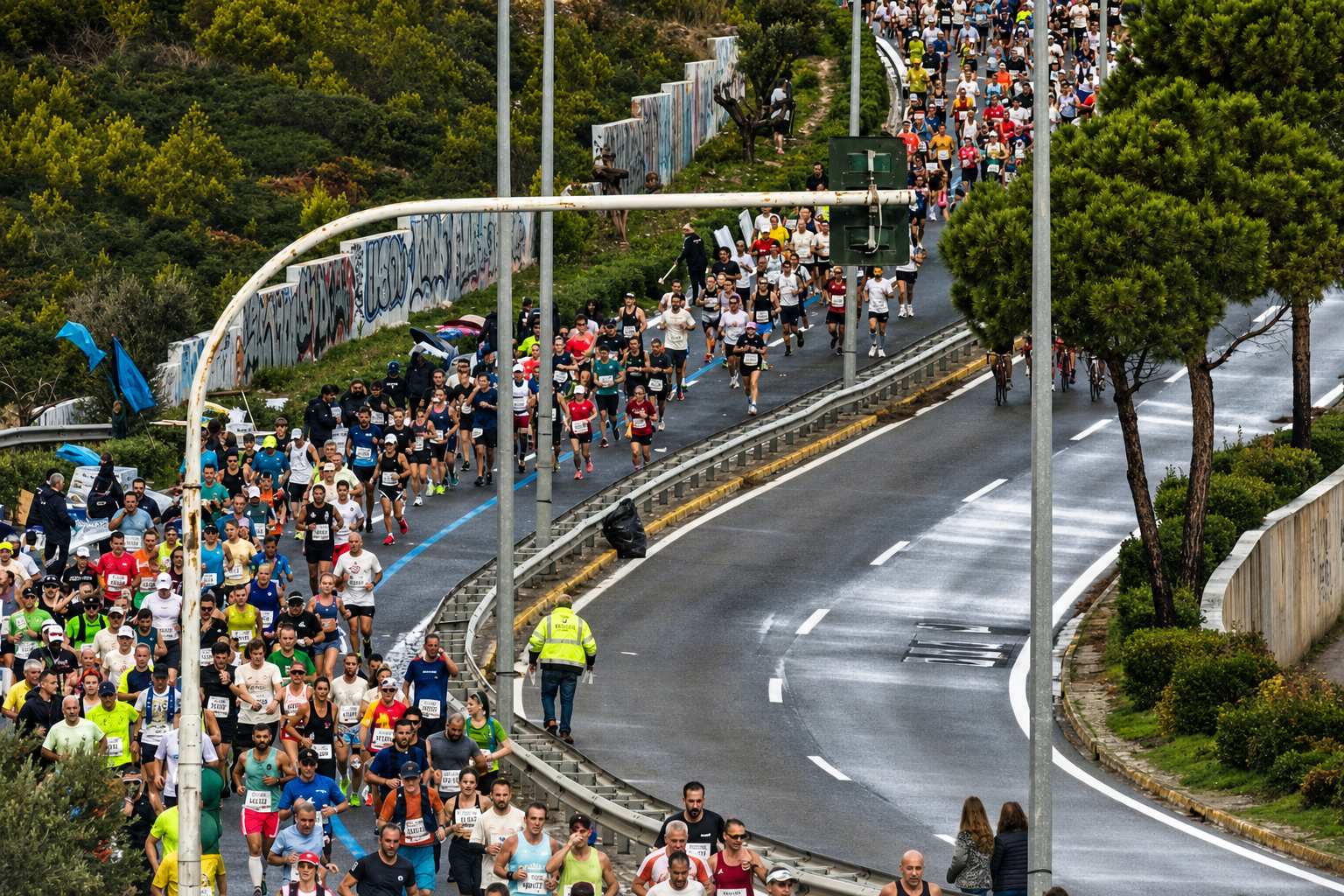
For one Sunday each November, the road between a battlefield on the Attic coast and a marble stadium in the center of Athens belongs to the runners.
Last year more than 73,000 people took part across the weekend’s races, 24,000 of them in the full marathon, and the avenues of the capital were closed from early morning until evening to let them through. This year the race falls on Sunday, November 8, and it arrives at a good moment to be in the city.
The summer crowds have gone, temperatures typically sit between 54 and 64 degrees Fahrenheit (12 and 18 degrees Celsius), and the light over the Acropolis is low and clear. For runners, it is a chance to cover the original course. For the friends and family who come with them, and for anyone who likes to see a city organized around a story, it is an unusually good reason to visit.
For companions planning their own itinerary, or anyone staying a little longer, our guide to Athens in 48 hours brings together the city’s sights, museums and places to eat.
This is Where it All Began


The origins of the Athens Marathon are fascinating. In 490 BC, an Athenian army met a Persian invasion force on the plain of Marathon, some 25 miles northeast of the city, and defeated it. The best-known part of the story, a lone messenger who ran to Athens with the news and collapsed after delivering it, is less certain than it sounds. Herodotus, the earliest source, has a runner named Pheidippides covering more than 140 miles to Sparta to ask for help before the battle, but he says nothing of a run from Marathon to Athens. That version appears centuries later, and it was the writer Lucian, in the second century, who attached the name Pheidippides to the Marathon run.
The legend did its work in 1896. When Greece hosted the first modern Olympic Games, the French scholar Michel Bréal proposed a race from Marathon to Athens to his friend Pierre de Coubertin, who founded the modern Games, and it became the event that mattered most to the home crowd. On April 10, 17 men set off along a dusty road of roughly 25 miles. The winner, a Greek water carrier named Spyridon Louis, ran into the Panathenaic Stadium in 2 hours, 58 minutes and 50 seconds, the highlight of the Games for the Greeks.
The next day, Stamata Revithi, who had been refused an entry, ran the same course alone in about five and a half hours, with witnesses recording her times, and was turned away at the stadium entrance. Women would not run an Olympic marathon until 1984.

The distance that now defines the event, 26.2 miles or 42.195 kilometers, was set after the 1908 Olympics in London, when the course ran from Windsor Castle to the stadium, and has nothing to do with Greece. The Athens Marathon has been held as an annual race since 1972. It follows the road from Marathon to the stadium, the course used in 1896 and again for the 2004 Olympic marathon.
The Marathon as a Reason to Travel
Running has become one of the few sports people travel to take part in rather than to watch. The London Marathon in April recorded 59,830 finishers, the most at any marathon, and applications for next year’s ballot passed 1.3 million, also a record. New York’s 2025 race, with 59,226 finishers, was close behind.
An industry has formed around the demand: tour operators now sell the “runcation”, an entry bundled with flights and hotel nights, because places in the biggest races are so hard to secure. Athens sold out its 2026 field within days of registration opening in April. For many of these runners the setting matters as much as the finishing time, and a course that starts at a battle site and ends in an Olympic stadium suits that appetite better than most.
The Race, From Start to Finish
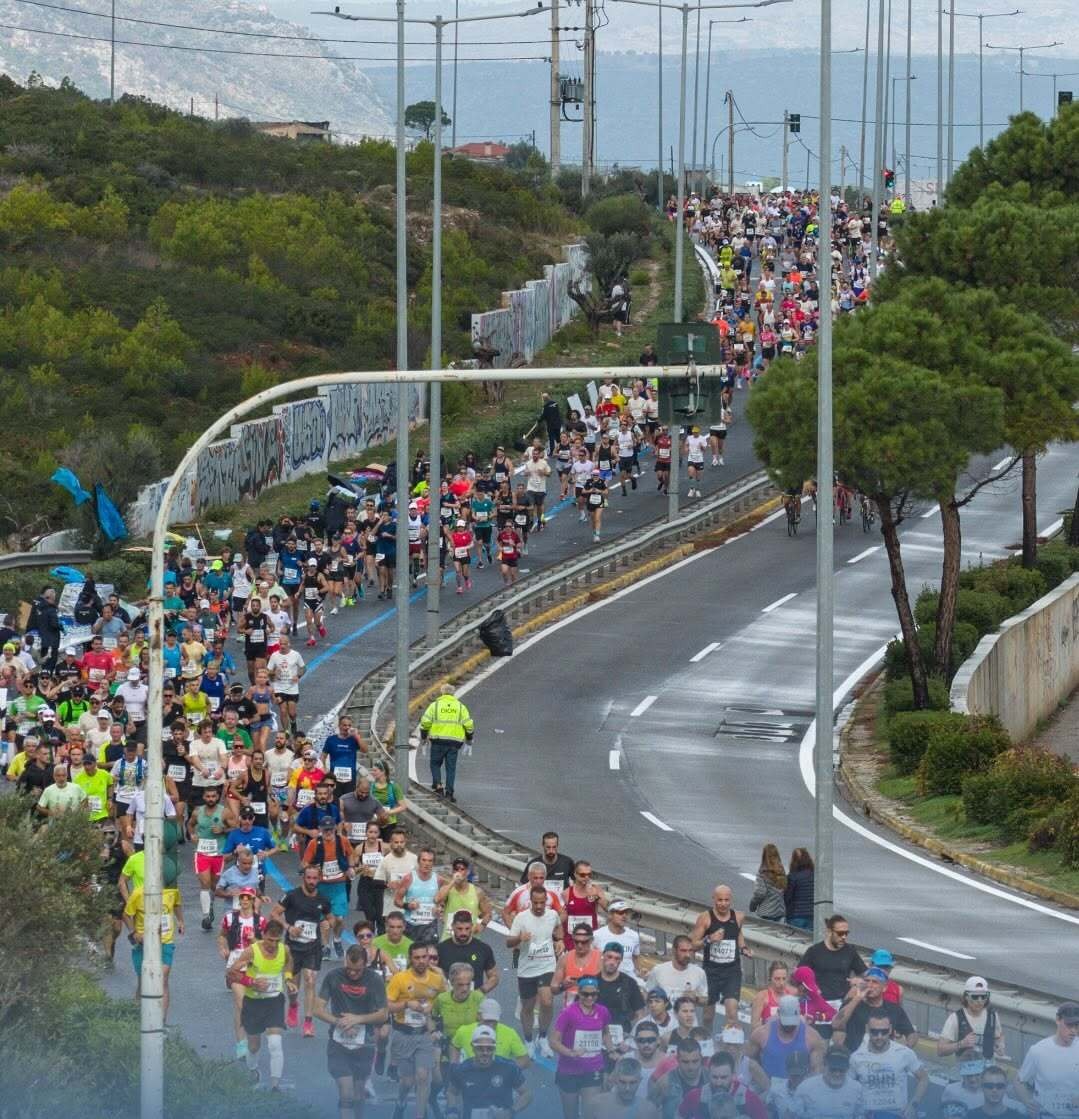
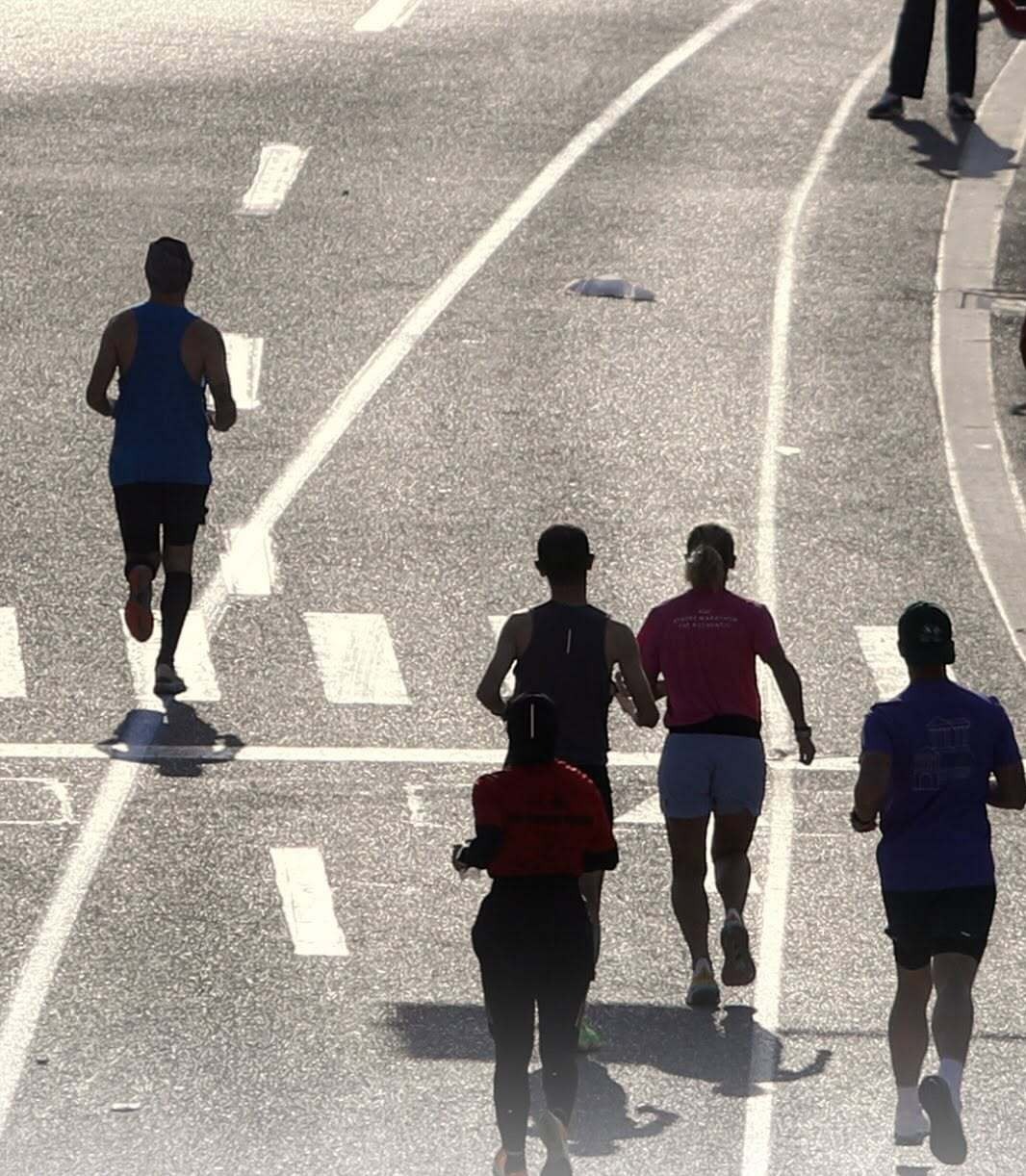
The marathon starts at 8:30 am on Sunday at the municipal stadium in the town of Marathon, with runners released in waves, and the course stays open for eight hours. The first four kilometers tilt gently downhill, and the field then loops around the Marathon Tomb, the burial mound of the 192 Athenians who died in the battle. The road is flat as far as Nea Makri, then climbs, with little relief, through Pikermi and Pallini to a high point near kilometer 31. A long descent follows to Agia Paraskevi, and runners then take Mesogeion Avenue into the city.
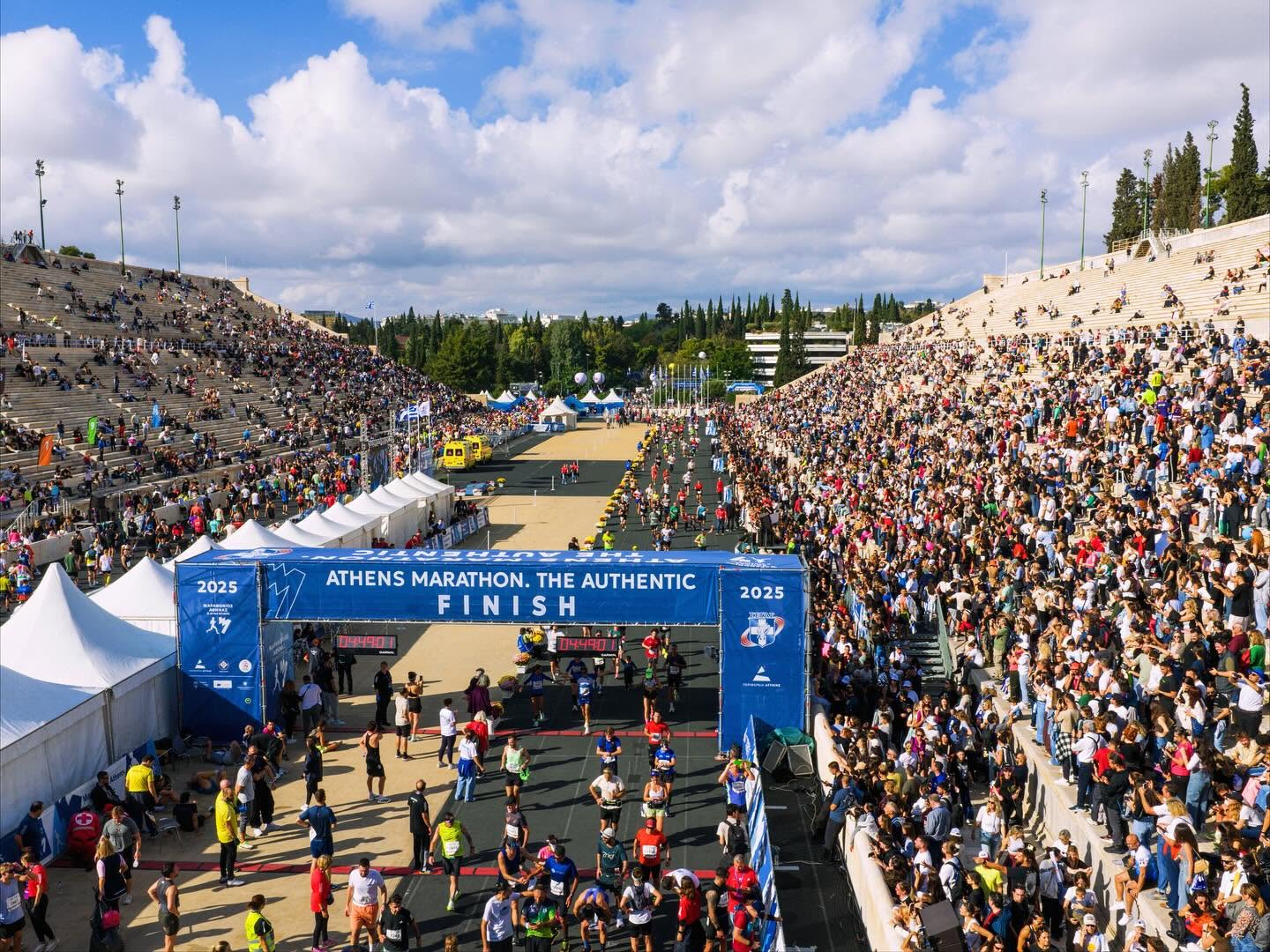
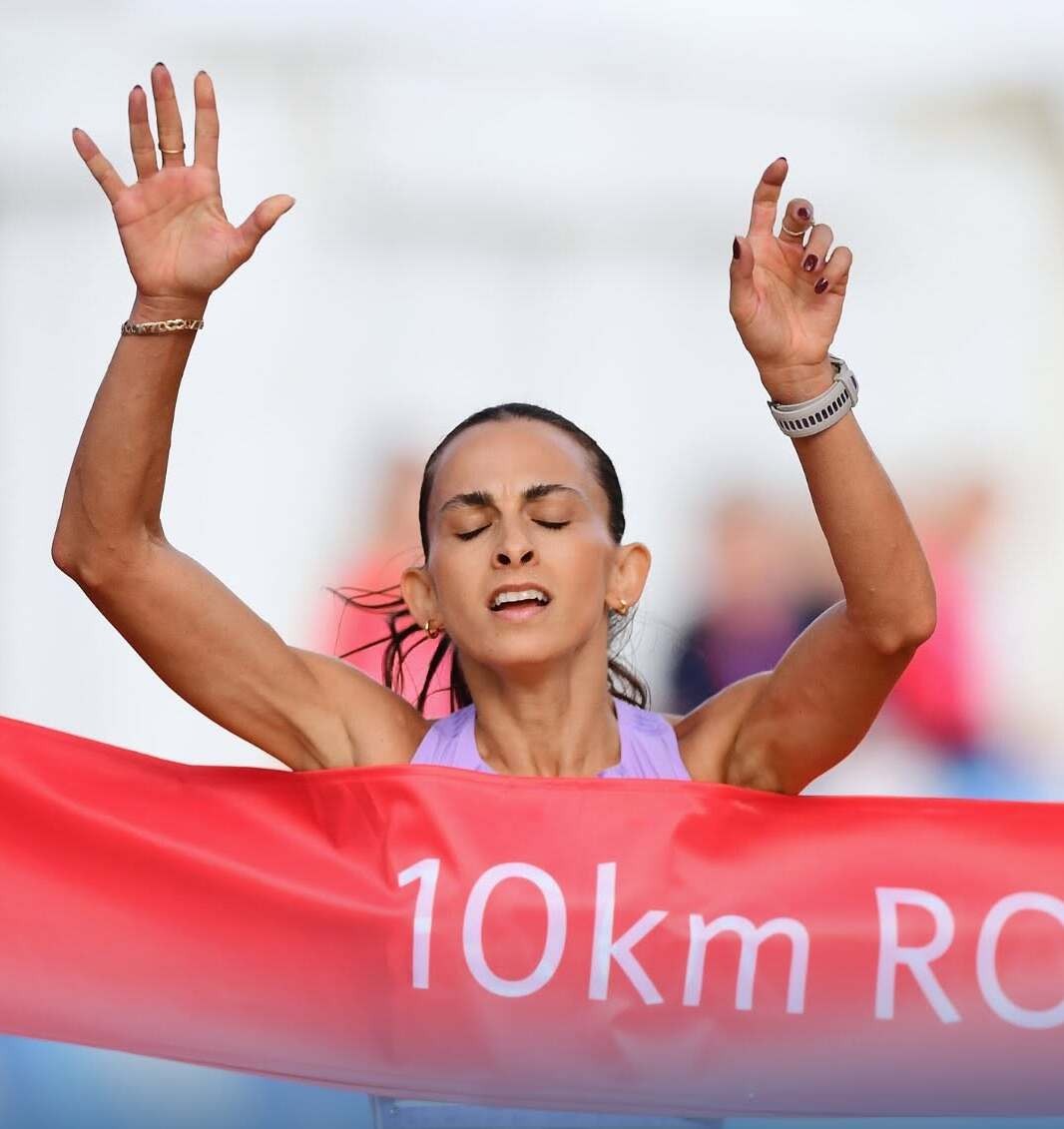
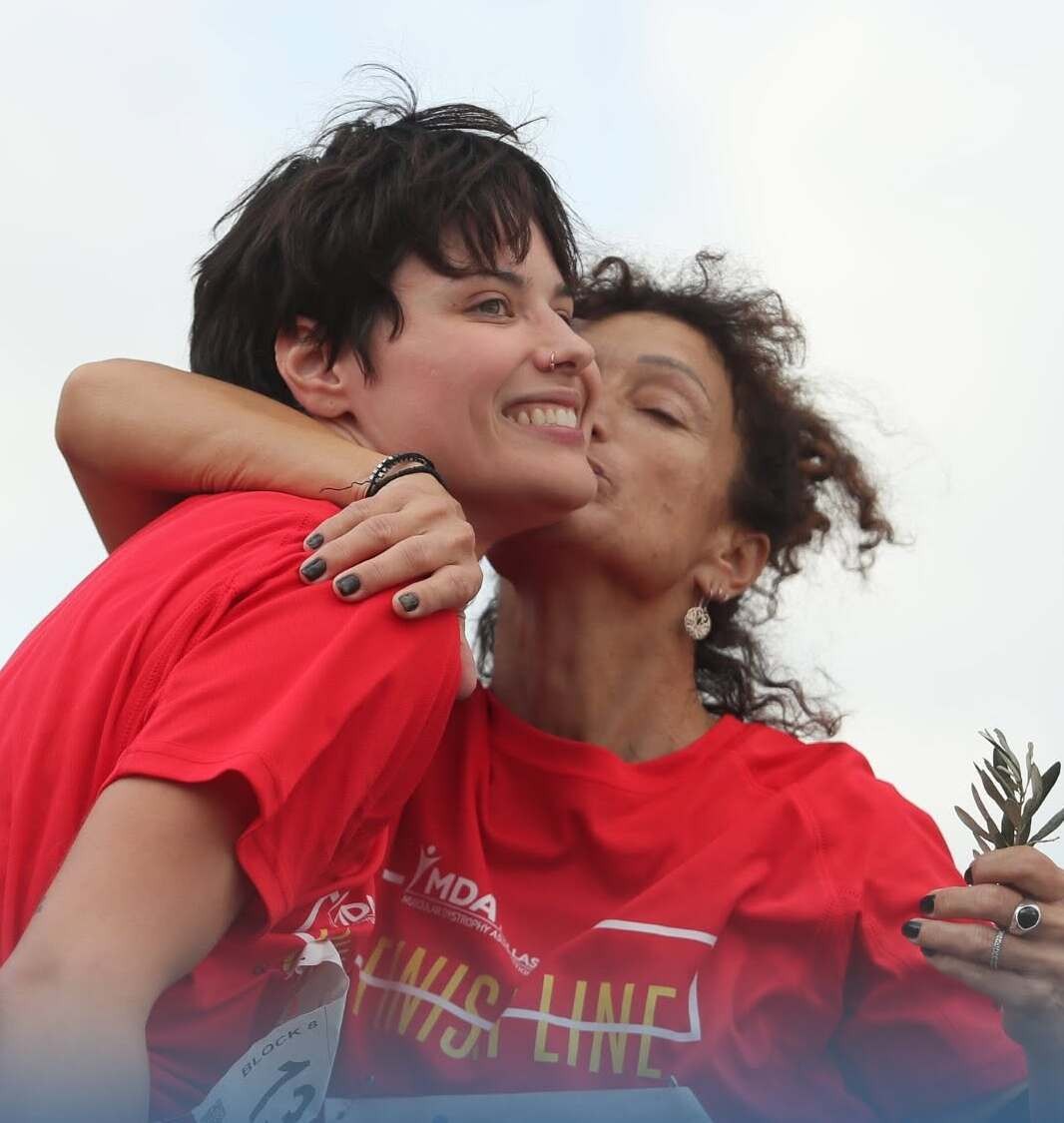
The last stretch is the one visitors come to see. Runners pass along Vasilissis Sofias Avenue, by the American Embassy, the Athens Concert Hall and the Park of Freedom, where the final refreshment point stands at kilometer 40. They then turn toward Syntagma Square and Parliament before following Irodou Attikou Street beside the Presidential Mansion and the National Garden. Athenians gather along Vasilissis Sofias, around Syntagma and on the avenues beside the garden, and the noise builds the closer the stadium gets. The final 170 meters are run on the stadium’s own track.
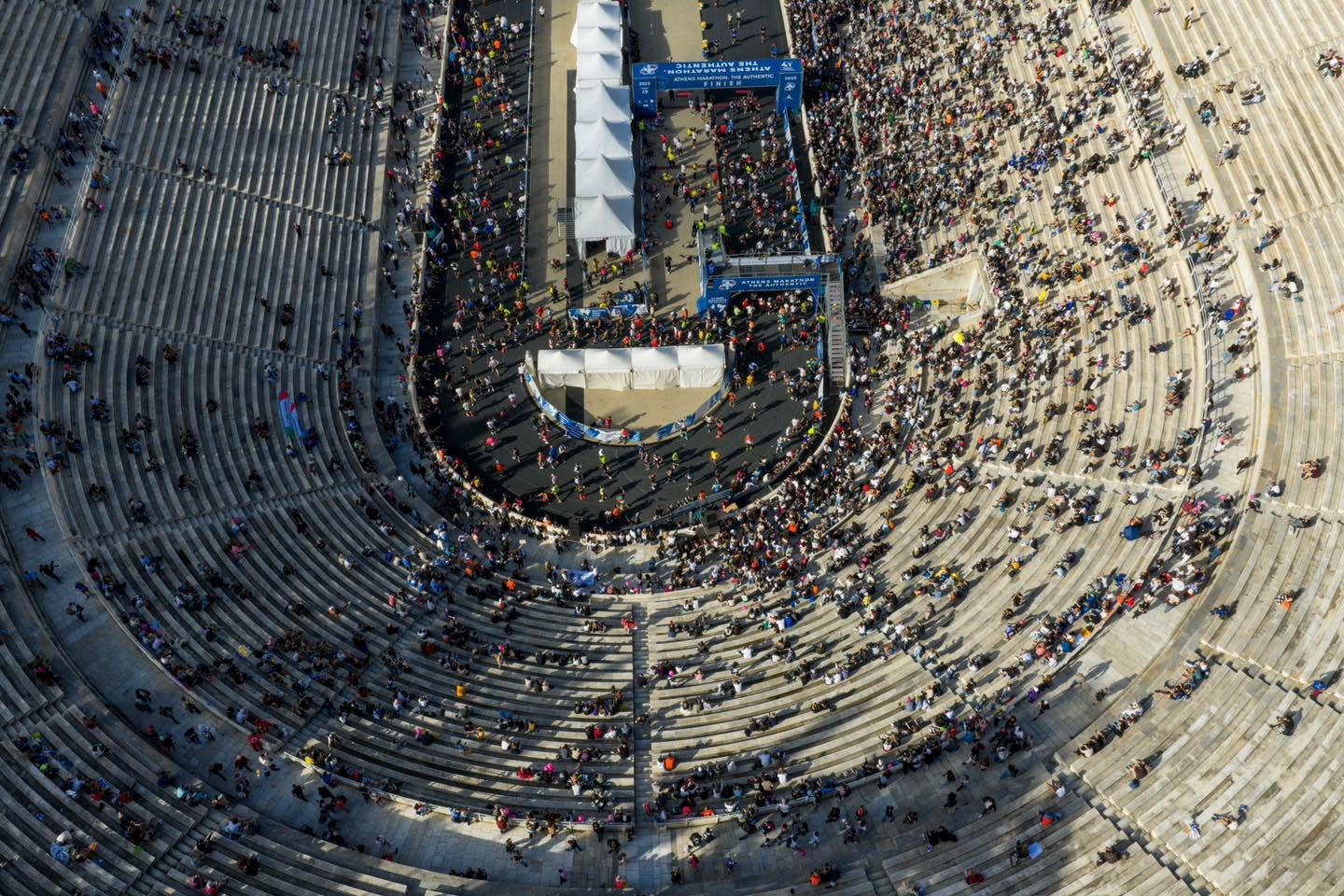
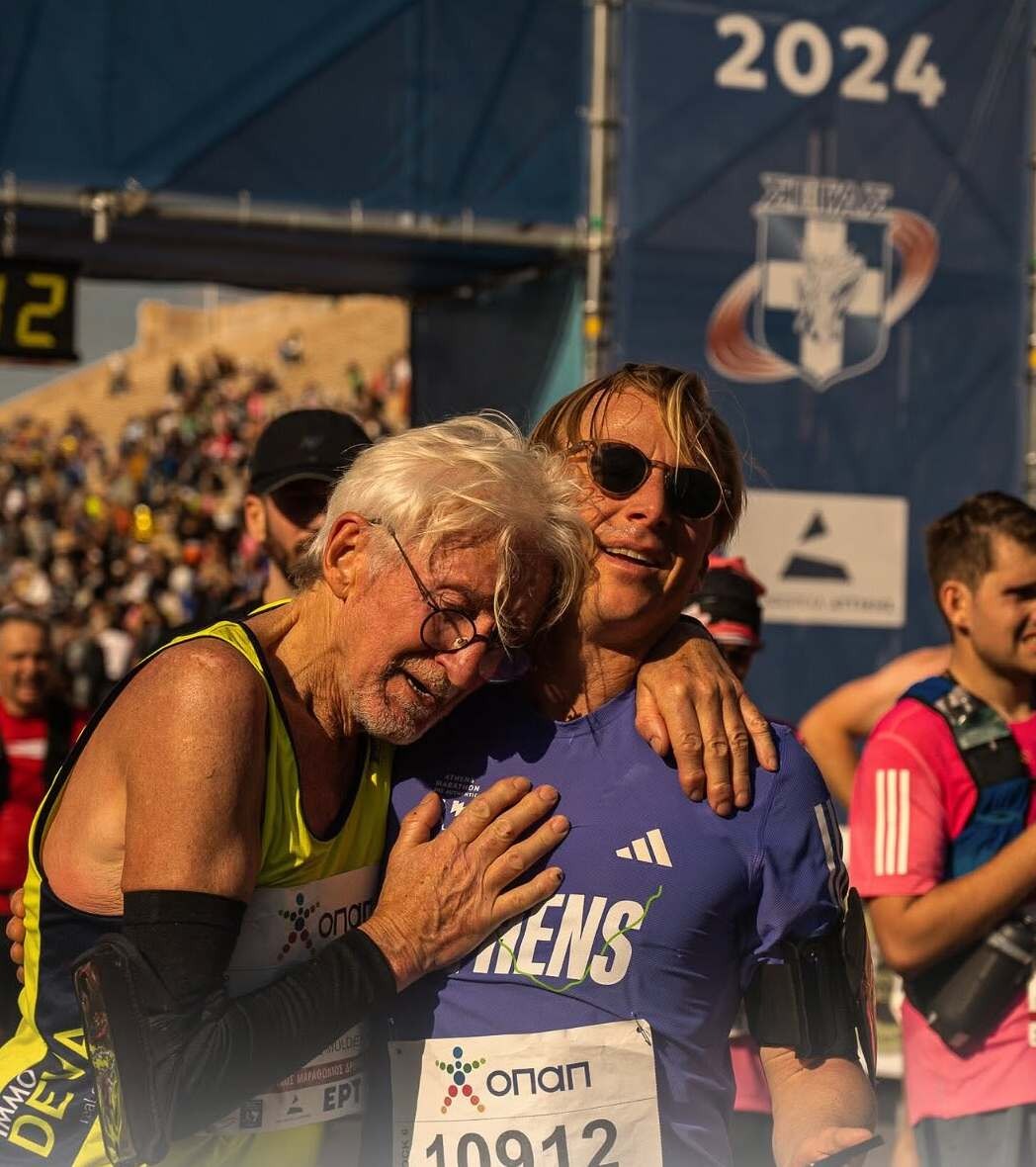
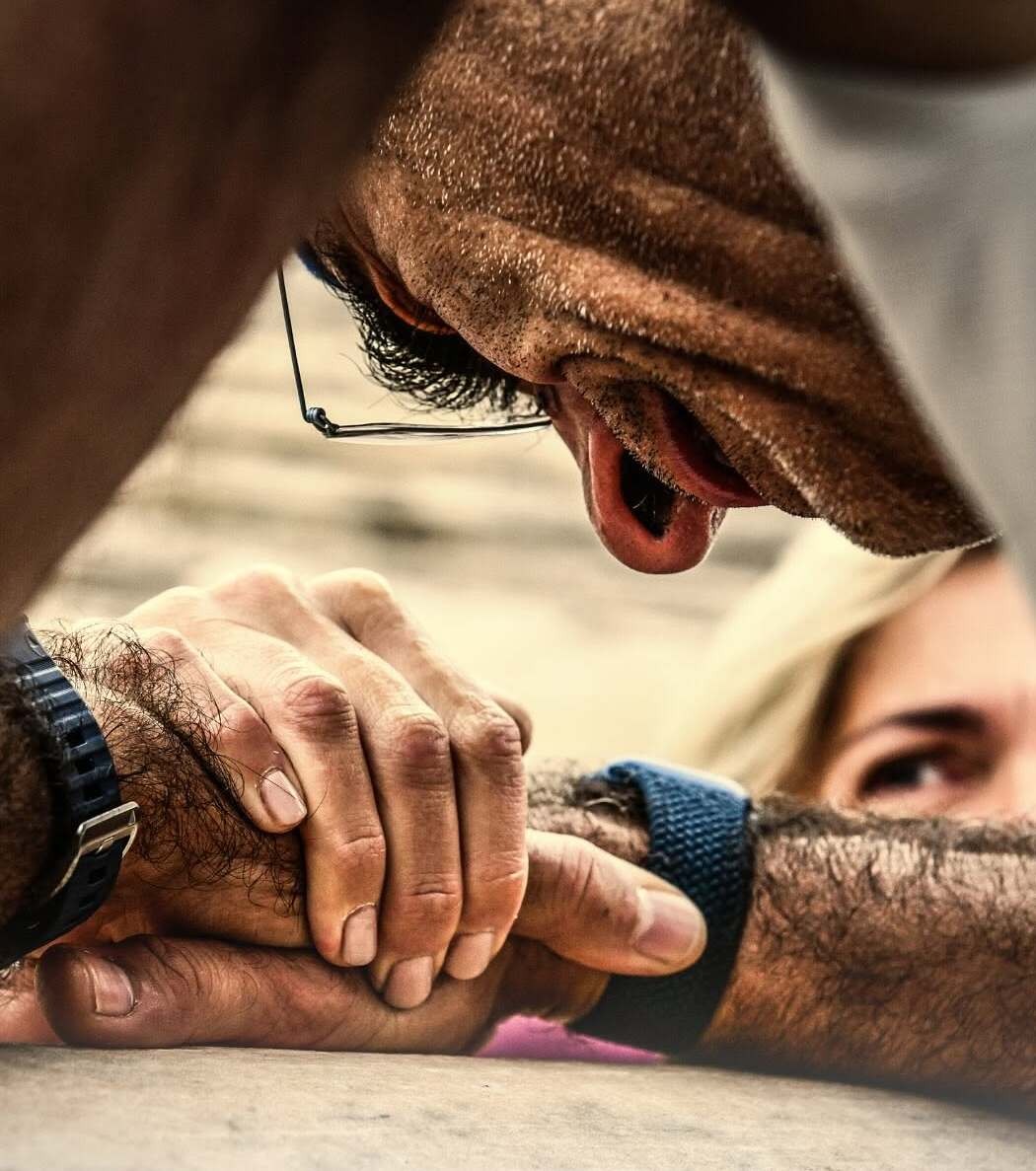
The Panathenaic Stadium, coloquially known as Kallimarmaro, or “the beautifully marbled,” sits in a ravine between the pine-covered hills of Ardettos and Agra. A racecourse stood here by the sixth century BC, and the statesman Lycurgus built the first stadium around 330 BC for the Panathenaic Games, the festival in honor of Athena. In the second century, the benefactor Herodes Atticus rebuilt it in white marble for about 50,000 spectators.
The marble was later carried off for other buildings, and the site was excavated in 1869. For 1896, a restoration funded by the benefactor Georgios Averoff clad it again in marble from Mount Penteli. It staged the opening and closing ceremonies of the first modern Olympics, and in 2004 it hosted the archery and the marathon finish. It seats about 45,000 today and is often described as the only stadium in the world built entirely of marble.
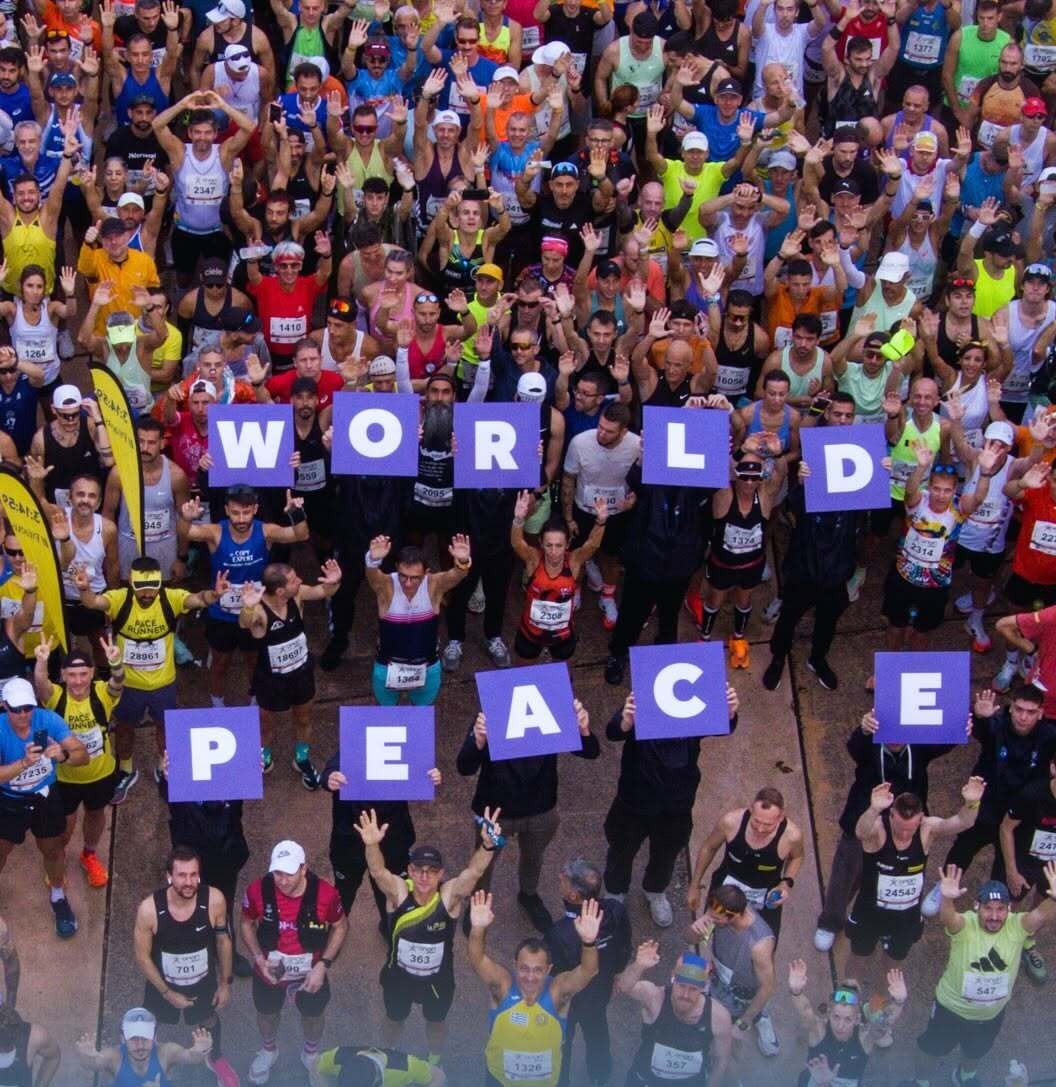

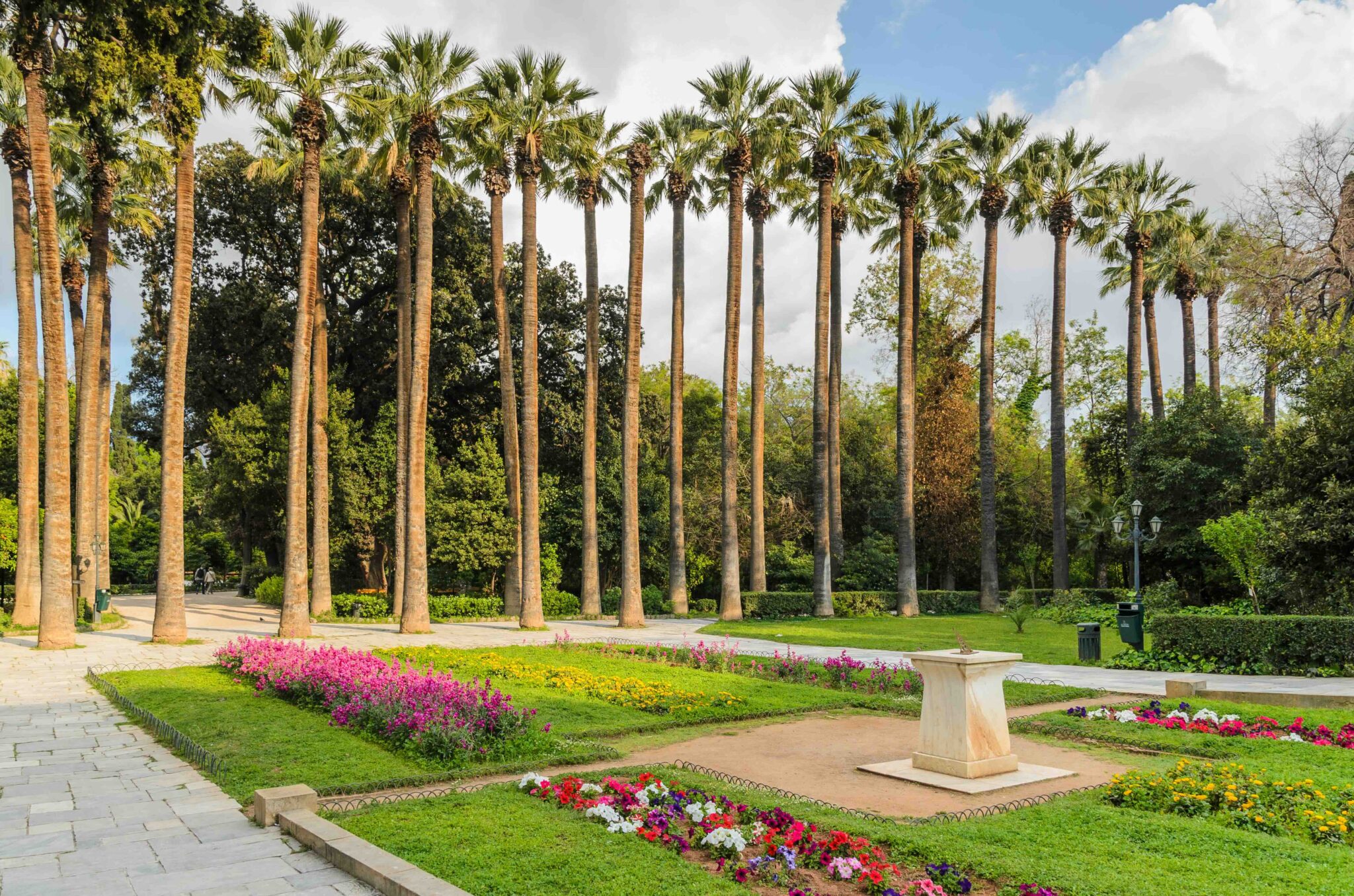
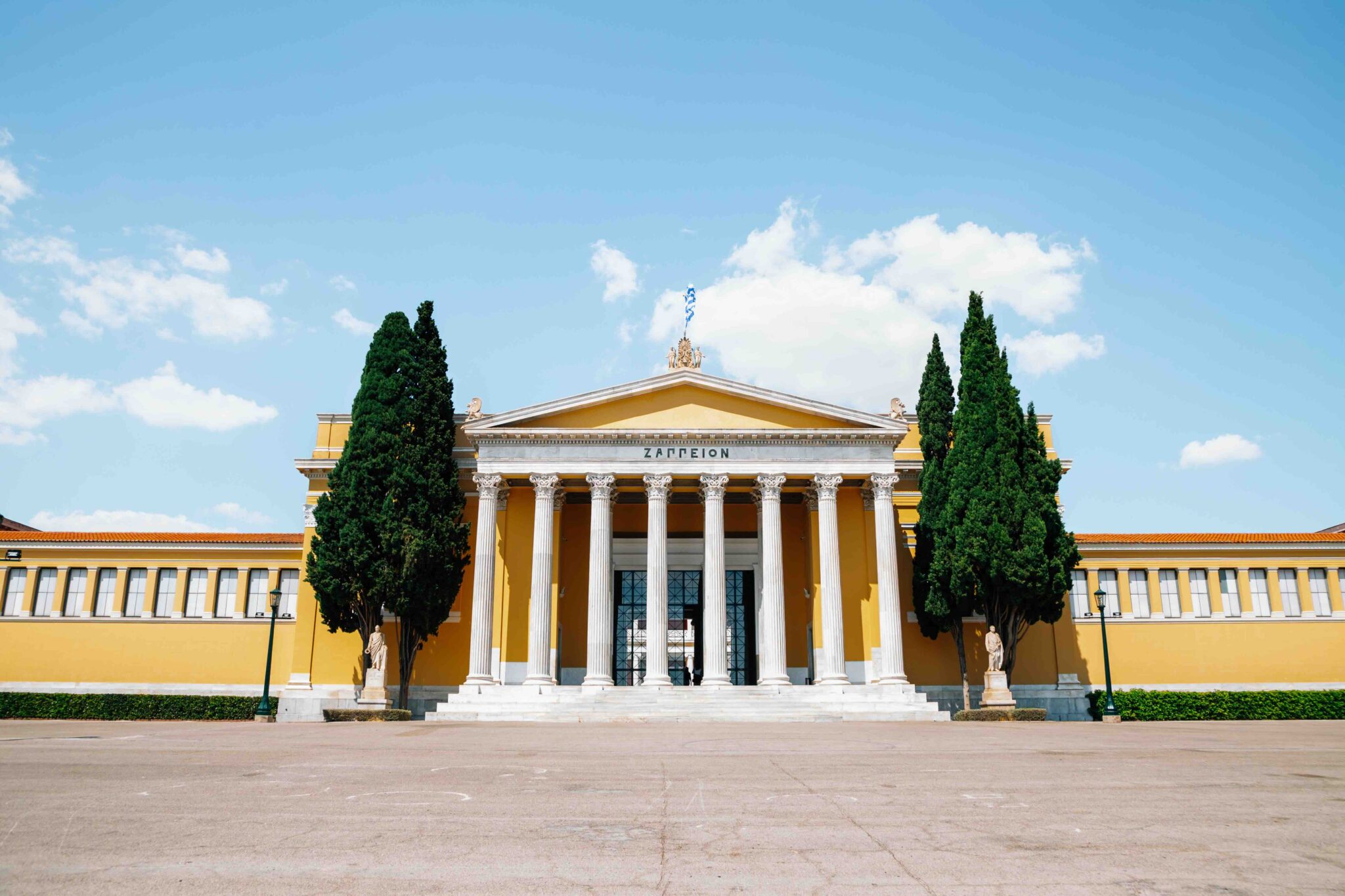
The National Garden and the Zappeion exhibition hall lie to the west, with the Temple of Olympian Zeus beyond them. To the east and south are the residential neighborhoods of Pangrati and Mets (see more below), where the cafes and tavernas are within walking distance of the finish.
The Marathon Weekend
Stay near Syntagma Square or in the streets around the Acropolis Museum, where the metro lines that serve race day meet. Alternatively, stay in the neighborhoods of Pangrati or Mets if a short walk to the finish matters more than the sights. Rooms fill early in race week, so book well ahead.
For a wider choice of places to stay, explore our selection of Athens’ best hotels for 2026.
Friday
Runners collect their bibs in person at the Marathon Expo, held in the former Tae Kwon Do arena at the Faliro Indoor Hall on the coast at Palaio Faliro, which the tram serves from the center. There is no bib pickup on Sunday. The expo is open from 10 am to 9 pm on Friday and entry is free, so companions can browse the 180 or so brands on show. Marathon runners also drop their clothing bags here, until 9 pm on Saturday. On Friday evening the organizers hold the Authentic Talks, a program of open discussions on the history and culture of the race, from 6:30 pm.
Spend the rest of the day on foot and on the flat. Walk from Syntagma along Amalias Avenue through the National Garden to the Zappeion, then on to the stadium and the Temple of Olympian Zeus, so that you have seen the finish before the crowds arrive.
For dinner, Pangrati has the best concentration of places near the stadium. Runners will want something plain and heavy on carbohydrates the night before, and almost any taverna can oblige with pasta, rice, potatoes and grilled fish. Pangrati and neighbouring Mets have become two of Athens’ most interesting areas for eating out, with everything from old-fashioned tavernas to some of the city’s most exciting contemporary cooking.
At Akra, on Amynta Street, chefs Giannis Loukakis and Spiros Pediaditakis work with seasonal Greek ingredients, a wood-fired oven and an excellent bakery, with a menu that changes daily. For something more traditional, Vyrinis has been serving home-style Greek food since 1940, with a leafy courtyard that is particularly lovely in warmer weather. Mavros Gatos, a neighbourhood fixture since 1963, is the place for grilled meats, lamb chops and classic cooked dishes. Also worth seeking out are Mavro Provato, for creative Greek meze, and Karavitis, a venerable taverna known for its charcoal-grilled meats and old-Athens atmosphere.


Saturday
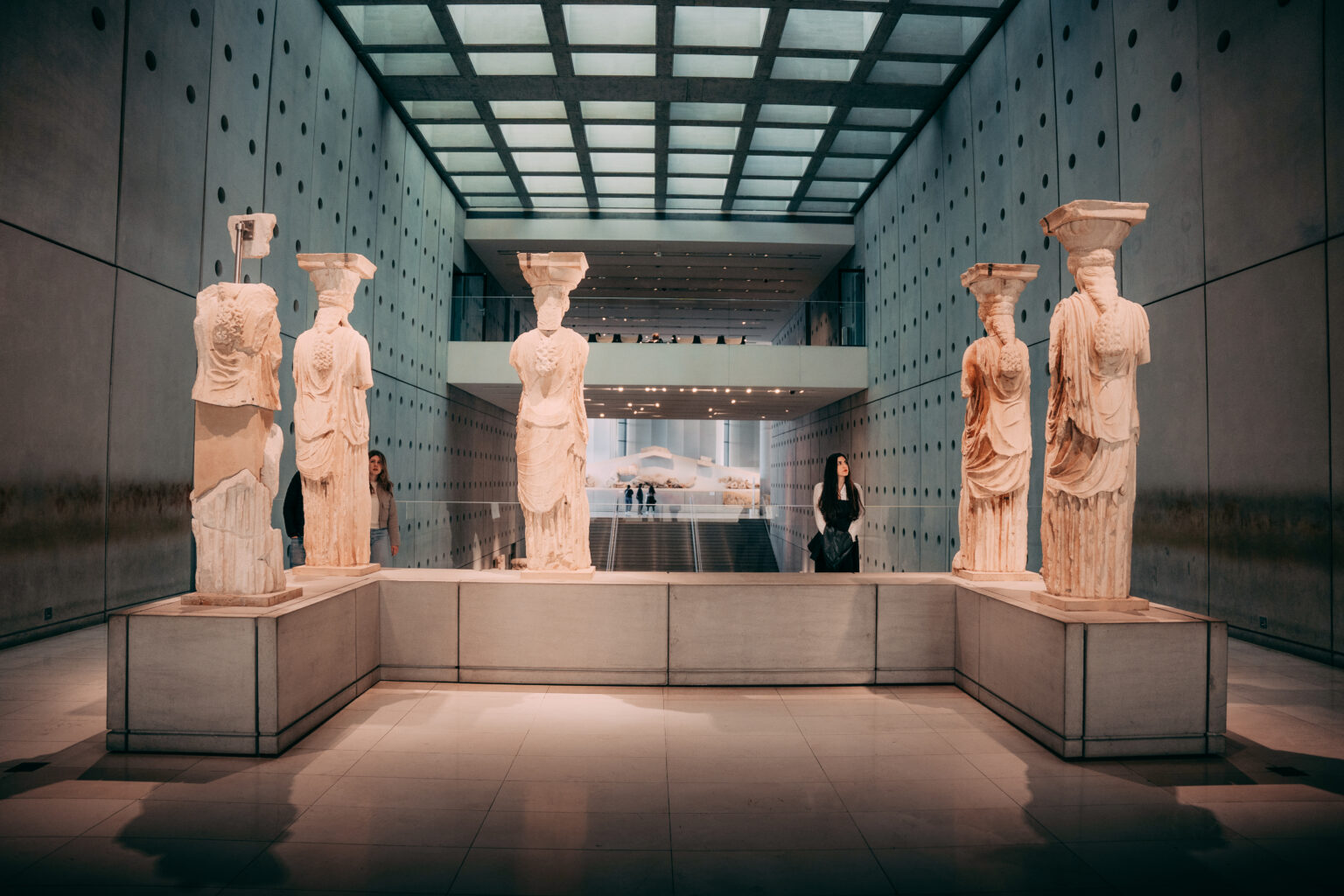
Book a timed slot for the Acropolis, which opens at 8 am in winter, and go first thing, before the sun is high and the paths are crowded. Runners should keep the climb short and the walking gentle, and follow it with the Acropolis Museum at the foot of the hill, which is flat, warm and a better use of tired legs than a long afternoon of sightseeing. A short, easy shakeout run is fine if it is part of your routine. Our guide to Athens’ outdoor fitness and running spots includes routes around Zappeion and the Acropolis.
Companions with a free afternoon can drive or take the bus out to Marathon, about 25 miles from the center. The opening ceremony takes place at the Marathon Tomb at 12:30 pm, when the Marathon Flame is carried to the start venue, and the cauldron is lit shortly before 2 pm.

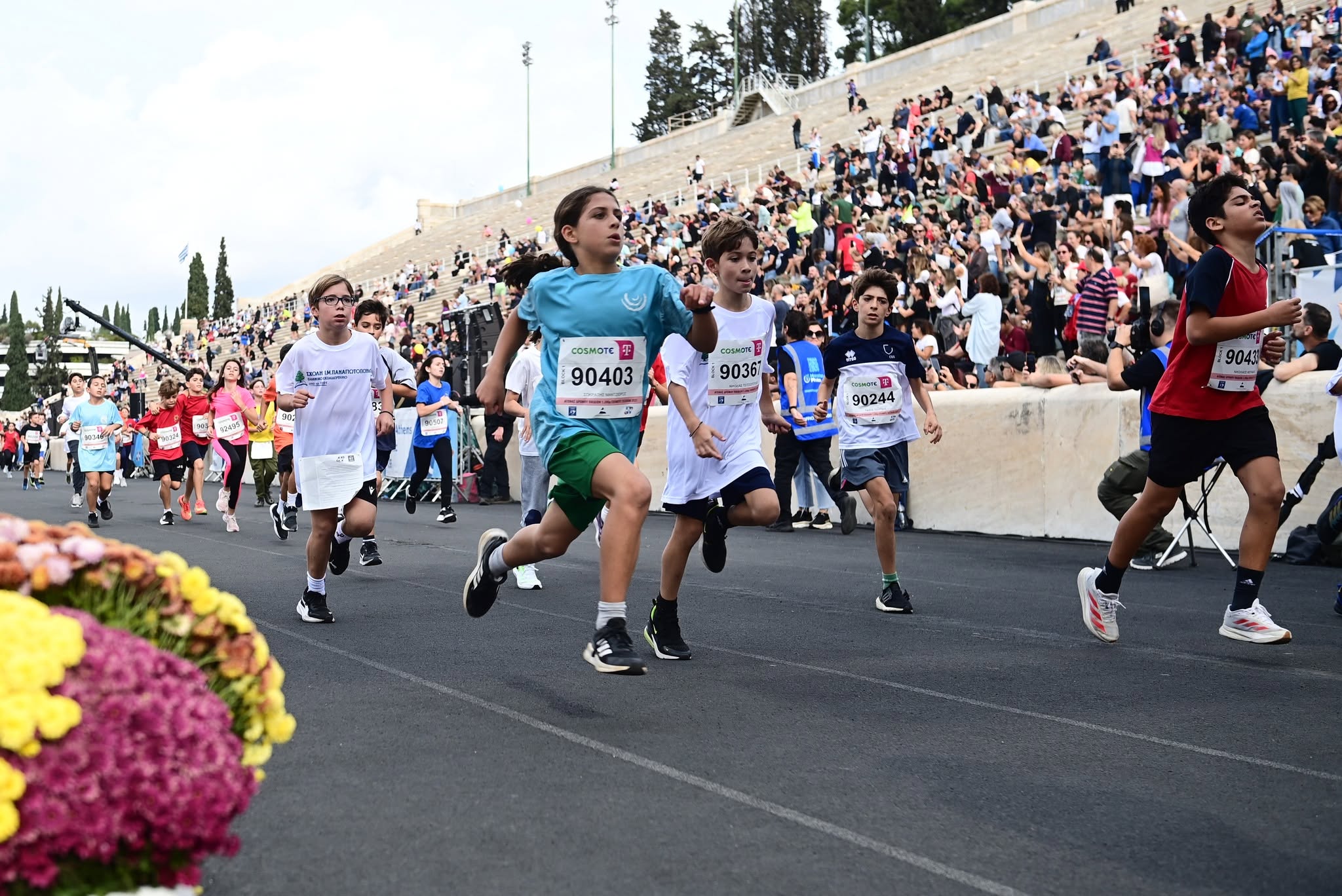
Back in town, the weekend’s shorter races fill the center: a children’s race runs along Vasilissis Sofias at 4 pm, and the five-kilometer race starts on Vasilissis Amalias Avenue at 5 pm, with a second wave in the evening. For those who aren’t running, this is an ideal opportunity for exploring the areas near the Panathenaic Stadium where the race concludes. Take a stroll in Syntagma, Kolonaki or Pangrati to enjoy some of the city’s most beautiful architecture, cafes, restaurants and streets.
Marathon-Centered Hotel Stays & Meals
These 3 hotels in Athens are offering special deals for stays and marathon-focused dining.
507 Athens
Runners looking for a pre-race carb-loading dinner should check out 507 Athens in Koukaki. The hotel has announced a special dinner menu for Saturday 7 November, the eve of the Athens Marathon. Its marathon package also includes breakfast, a welcome drink, 10% off food and drinks during the stay, and a shuttle transfer to the official race-day departure zone. Details of the dinner menu and its price have yet to be published, as has confirmation of whether non-residents can book separately.
Titania Hotel
Titania Hotel, on Panepistimiou Street in central Athens, is offering a special package for marathon weekend, with stays from 7 to 9 November. Runners can look forward to an early breakfast, a breakfast box for race morning and a complimentary athlete-friendly dinner, as well as access to the fitness room and 24-hour reception support.
Herodion Hotel
Herodion Hotel, close to the Acropolis, has a well-established routine for welcoming marathon runners, working with specialist travel agents who bring groups to Athens several days before the race. A dedicated reception desk provides guests with marathon schedules, practical information and maps throughout their stay. On Saturday 7 November, the hotel will host a pasta buffet at 6pm, primarily for runners but also open to other hotel guests. On race day, breakfast begins at 5am with a special menu, while coaches arranged by the travel agents transport runners to the starting area.
Sunday
Organized coaches, included with entry, carry marathon runners from central Athens to the start in the early morning, and runners should plan to be at the start at least an hour before their wave. The 10-kilometer race starts at 8 am on Amalias Avenue and also finishes in the stadium. The official app tracks runners live, which helps companions plan where to stand.
Choose your spot by what you want to see. Mesogeion Avenue near Agia Paraskevi or Cholargos, on the metro’s Line 3, shows runners at kilometers 31 to 35, after the climb, when the crowds are thinner and a familiar face counts for more.


Vasilissis Sofias between the Athens Concert Hall and Evangelismos, and the stretch around Syntagma Square, are the liveliest zones for marathon fans and supporters. The leaders usually reach the stadium a little over two hours after the start, and finishers keep arriving until the course closes.
Cars are of little use. Last year the main avenues were closed from 5 am, the last closures lifted around 6:30 pm, extra metro trains ran on Lines 1, 2 and 3, and the tram stops at Syntagma and Zappeio were out of service until the evening.
Recovery and Nourishment After the Finish
Congratulations! You did it! Now it’s time to focus on celebrating and recovering. The first step after is a plain one: warm clothes, something to drink, great food to eat and to keep moving, because stopping dead is what makes legs seize. Recovery proper comes later.
Cold immersion helps significantly after a run of this massive scale. For cold water therapy, the most convincing address in the center is Banya, a Russian-style bathhouse in Thissio, which by its own description pairs an 80-degree Celsius sauna (176 degrees Fahrenheit) with an ice plunge of about five degrees (41 degrees Fahrenheit). It is a short taxi ride from the stadium. Go once you have eaten and rehydrated, keep the plunge to a minute or two, and skip the heat if you feel light-headed. Anyone with a heart or circulation condition should check with a doctor before alternating extreme heat and cold. Physiotherapy center SOMA offers cold plunge ice baths, cryotherapy and contrast therapy, in the area of Ag. Dimitrios. Another one to book a cryotherapy and/or physiotherapy massage for the day after the marathon, as they’re closed on Sundays, is at Andreas Dakolias.
Runners who prefer something gentler have the sea, and weather permitting, a coastal rip can offer an extremely pleasant post-marathon experience. Along the Athens Riviera the water is at that time of the year estimated to be at around 21 degrees C (70 degrees Fahrenheit) and a short swim is sure to offer some relief to tired legs.
If you’d like to let off steam the day after the run, you can also enjoy hamam, sauna and a broad choice of massage treatments at these favorite city healing hubs.
Dinner should be the reward the day has earned: slow-cooked meat, wood-fired grills, big plates of beans or potatoes and bread to finish the sauce. A gastro-taverna, where traditional Greek dishes are cooked with more care than the old tavernas allowed, suits the mood, and so does a pasta kitchen for those who still want carbohydrates. Book before race day, because tables near the stadium go quickly and some kitchens close or shorten their hours on Sundays. For more ideas for a celebratory dinner, explore our selection of Athens’ best restaurants. The following day, if you have time, don’t miss out on the city’s excellent selection of brunch spots.