


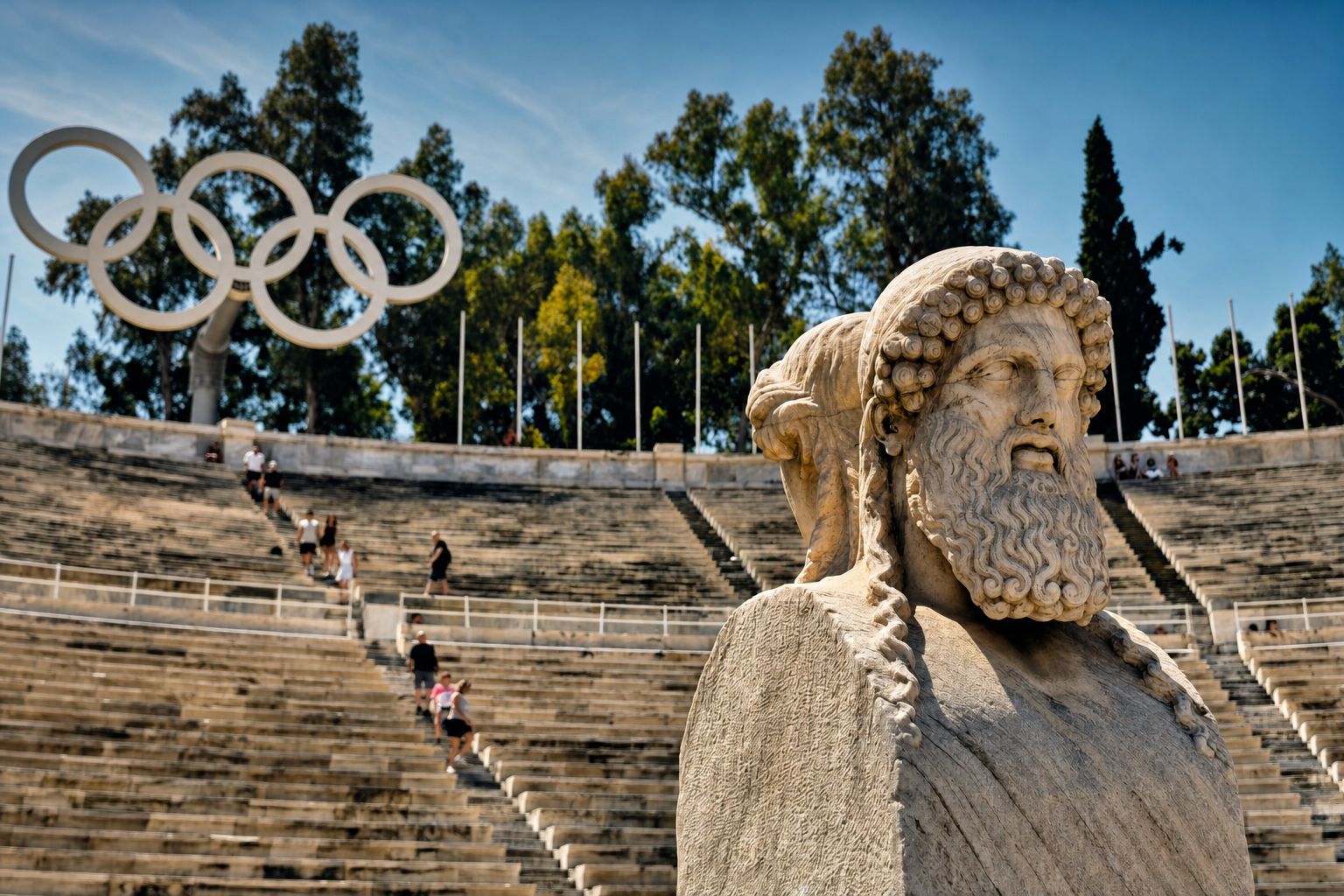
Above the Panathenaic Stadium, the city changes scale. Marble seating gives way to wooded slopes; beyond them are apartment balconies, neighborhood squares and streets that open unexpectedly toward the Acropolis. Down in Mets, a café table might be a few doors from a marble workshop, with some of Athens’ most remarkable sculpture waiting inside the cemetery at the end of the road.
Pangrati and Mets belong together on foot. The pleasure is in the transitions: from a monument known around the world to the streets behind it, from a museum’s paintings to the houses outside, from a busy square to a quiet hillside. Follow the walk below as a loose sequence, leaving room for a side street, a long coffee or lunch. Along the way, there are places to stop for something small and tables worth coming back to in the evening.
Start with the stadium
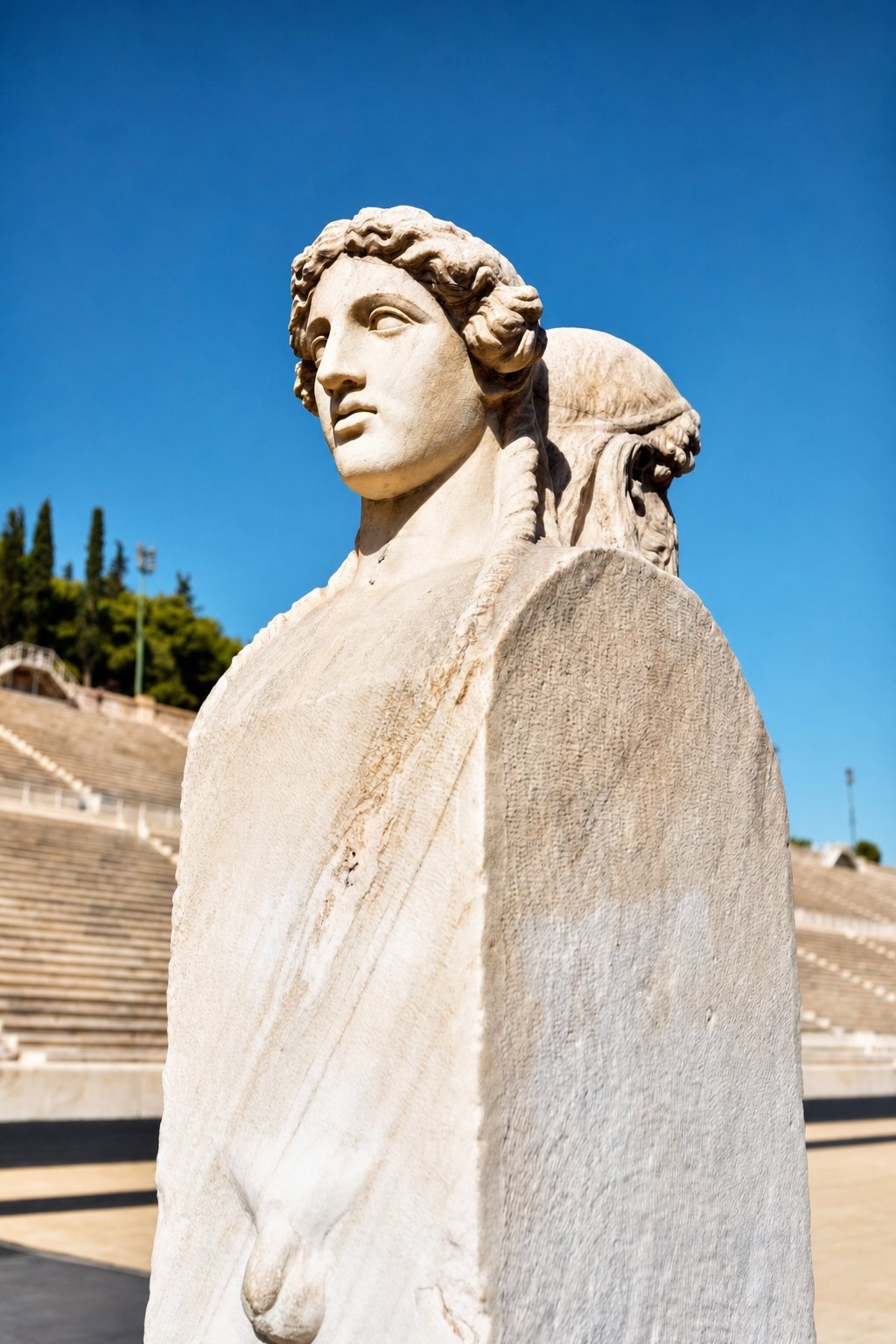
Begin in front of the Panathenaic Stadium and look along the sweep of its marble stands. The natural hollow between the hills of Agra and Ardittos helps explain why a stadium was built here in antiquity. Even before you know its history, you can see the relationship between the arena and the slopes that hold it.

The site was developed in the 4th century BC, rebuilt in marble under Herodes Atticus in the Roman period, and reconstructed with funding from Georgios Averoff for the first modern Olympic Games in 1896. It remains part of the city’s sporting life: the Athens Marathon ends here, bringing runners back into the marble arena.
A visit inside deserves time of its own. For this walk, the stadium is also a point of orientation. Keep its shape in mind as you head into the streets of Pangrati; later, from higher ground, you will see how closely the neighborhood wraps around it.
Into Pangrati, with a stop for art
Follow Eratosthenous Street into the neighborhood. At number 13, the Basil & Elise Goulandris Foundation, a museum of modern and contemporary art, offers a compelling reason to interrupt your progress almost immediately. Opened in 2019, the museum brings the couple’s collection into public view, with works by Van Gogh, Cézanne, Monet and Picasso, alongside major Greek artists including Yannis Tsarouchis and Nikos Hadjikyriakos-Ghika.
Choose how much of the day to give it. The collection can be a substantial visit, while the museum café provides a gentler pause. Temporary exhibitions add another reason to return; check the current program when planning your visit.

Outside, Pangrati’s cultural life continues at a more domestic scale. The poet George Seferis and composer Manos Hadjidakis both lived in the area, and its cafés and small venues still give it the feel of a neighborhood where a conversation can comfortably take up an afternoon.
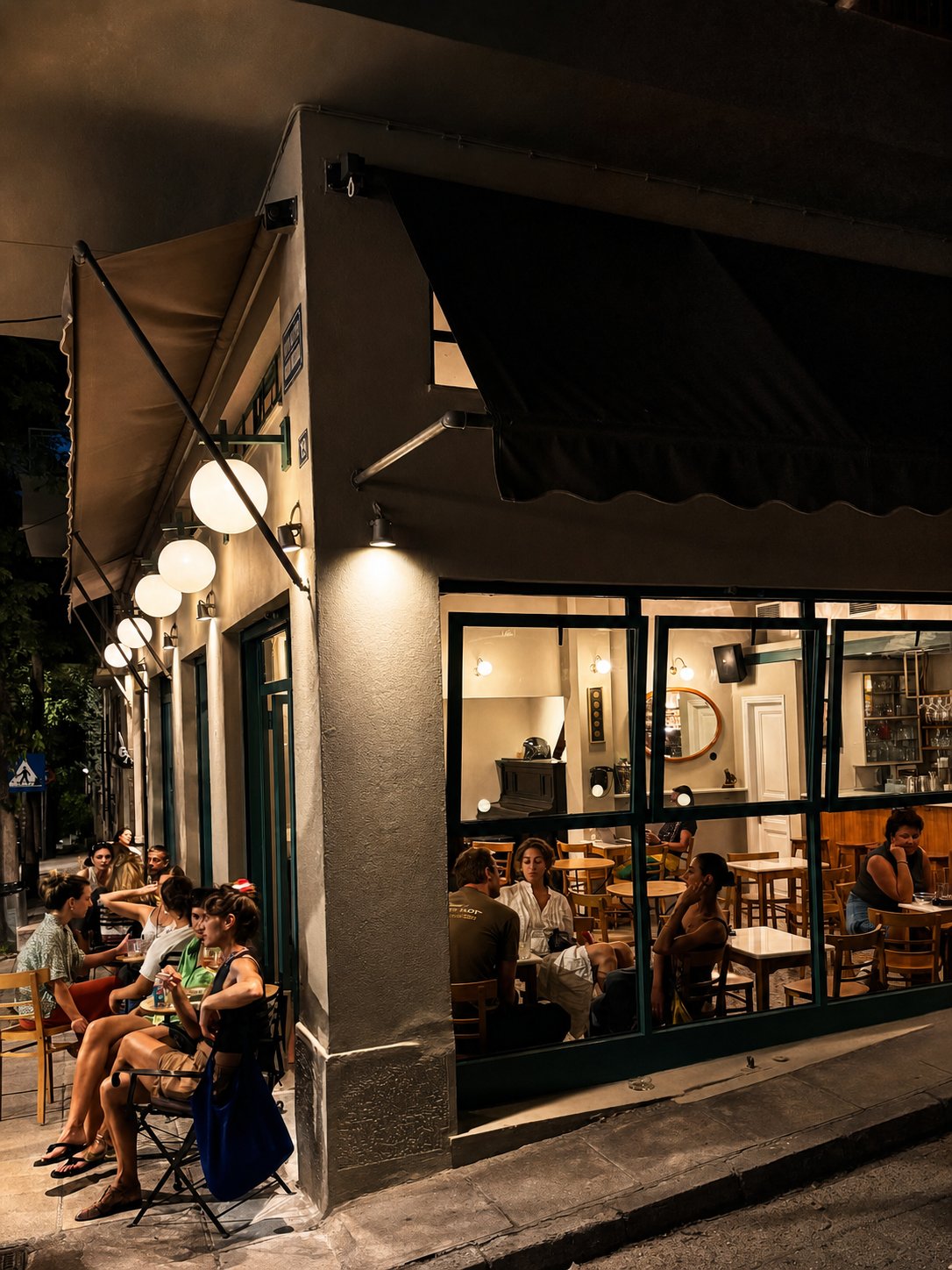
Make your way toward Proskopon Square and the streets around Aminta and Archelaou. Here, café tables, bistros and bars bring much of the neighborhood’s social life out onto the pavement. It is a good part of the walk to let your appetite decide the pace.
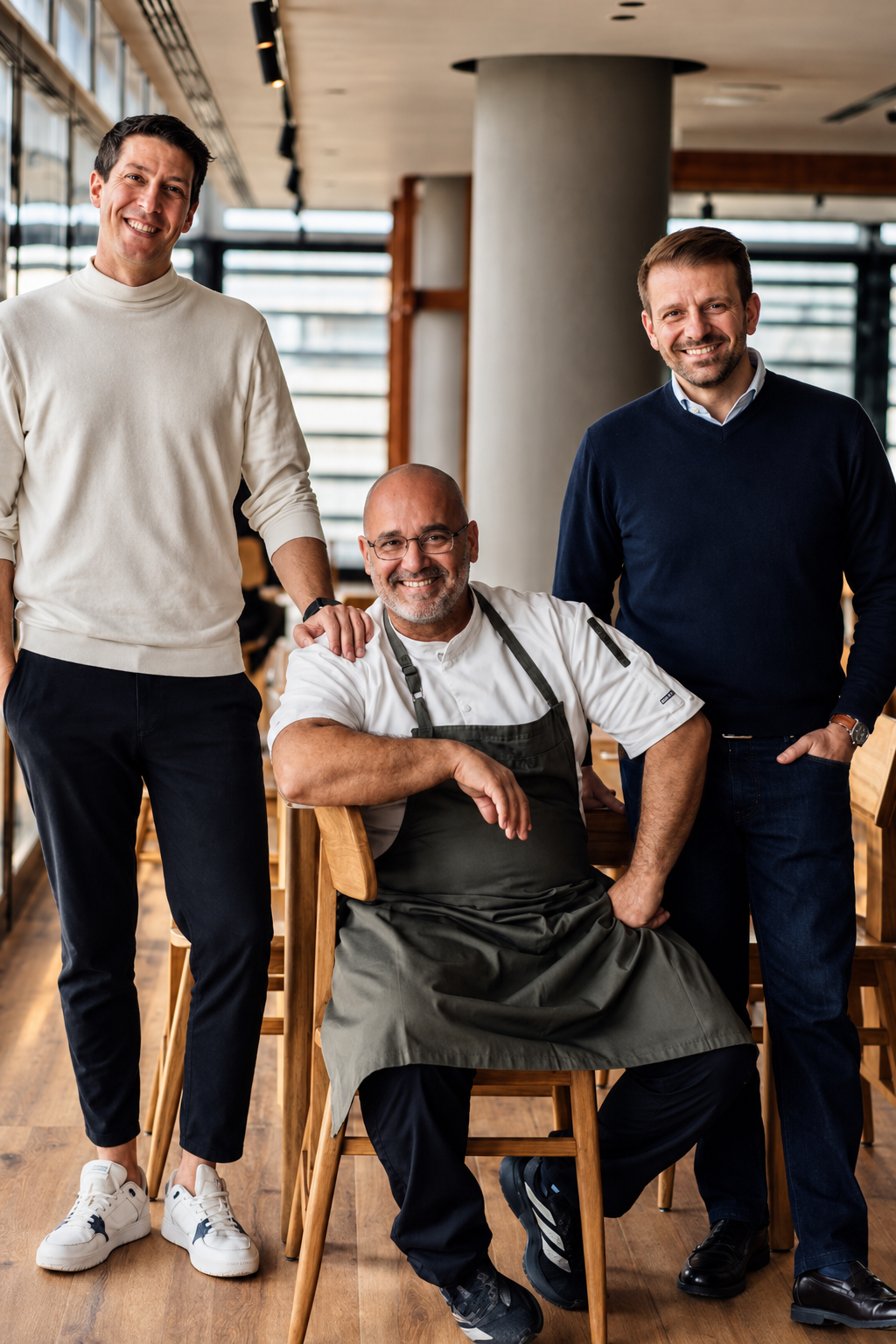
Akra, the restaurant and bakery at Aminta 12, brings you close to the cooking: an open fire, a bakery counter and a seasonal menu that changes daily. Chef Yannis Loukakis and pastry chef Spyros Pediaditakis give it plenty of reasons to hold your attention beyond a quick bite. For a classic Greek taverna, head to Mavros Gatos on Polemonos, where black-cat murals accompany lamb chops, grilled liver and hortopita, a savory greens pie.

On Archelaou 32, Ohh Boy is a café-bistro for vegan-friendly brunch, a pastrami sandwich or coffee and carrot cake. On the same street, the small Italian deli and sandwich shop Borghese offers another tempting lunch: a mortadella sandwich to take along when you would rather keep exploring.
If you want to extend this part of the outing, make a separate detour toward Vrazilias Square for Lot 51, an all-day café-bar with specialty coffee and brunch. Its cocktails and music also make it an option for a return visit after dark.
Follow the squares
Continue your exploration toward Plastira and Varnava squares, giving yourself time for the residential streets between them. Neoclassical houses stand beside postwar apartment blocks, and a balcony, doorway or patch of garden can be as rewarding to notice as a named attraction. The neighborhood’s character comes from the way these buildings share the same streets.
Around Plastira Square, Chelsea Hotel offers a bohemian café-bar setting for a pause. Its name nods to New York’s celebrated hotel; here, coffee or a drink gives you a reason to settle into Pangrati’s own social life.
Around Varnava, much of the activity gathers along the edges of the square and spills into the surrounding roads. Empedokleous Street, with its shaded stretches, cafés and bars serving small Greek dishes to share, invites a slower pace. Find a table, order something small and watch the neighborhood carry on around you.
For a longer meal, seek out Flaros on Damareos. This contemporary Greek restaurant takes its inspiration from the kafeneio, the traditional Greek coffeehouse, with wood-fire cooking and veal giouvetsi, a comforting baked meat-and-orzo dish, among its draws.
There are other ways to branch off among Pangrati’s squares. On Vryaxidos, the gin bar Mother’s Ruin has rare bottles and a long red counter for an evening pause. At Profiti Ilia Square, Monsieur Cannibale is a French-style café-bistro with playful decor, weekend brunch and cocktails. Choose this extension if you want to spend more time in the neighborhood before heading back toward the stadium.
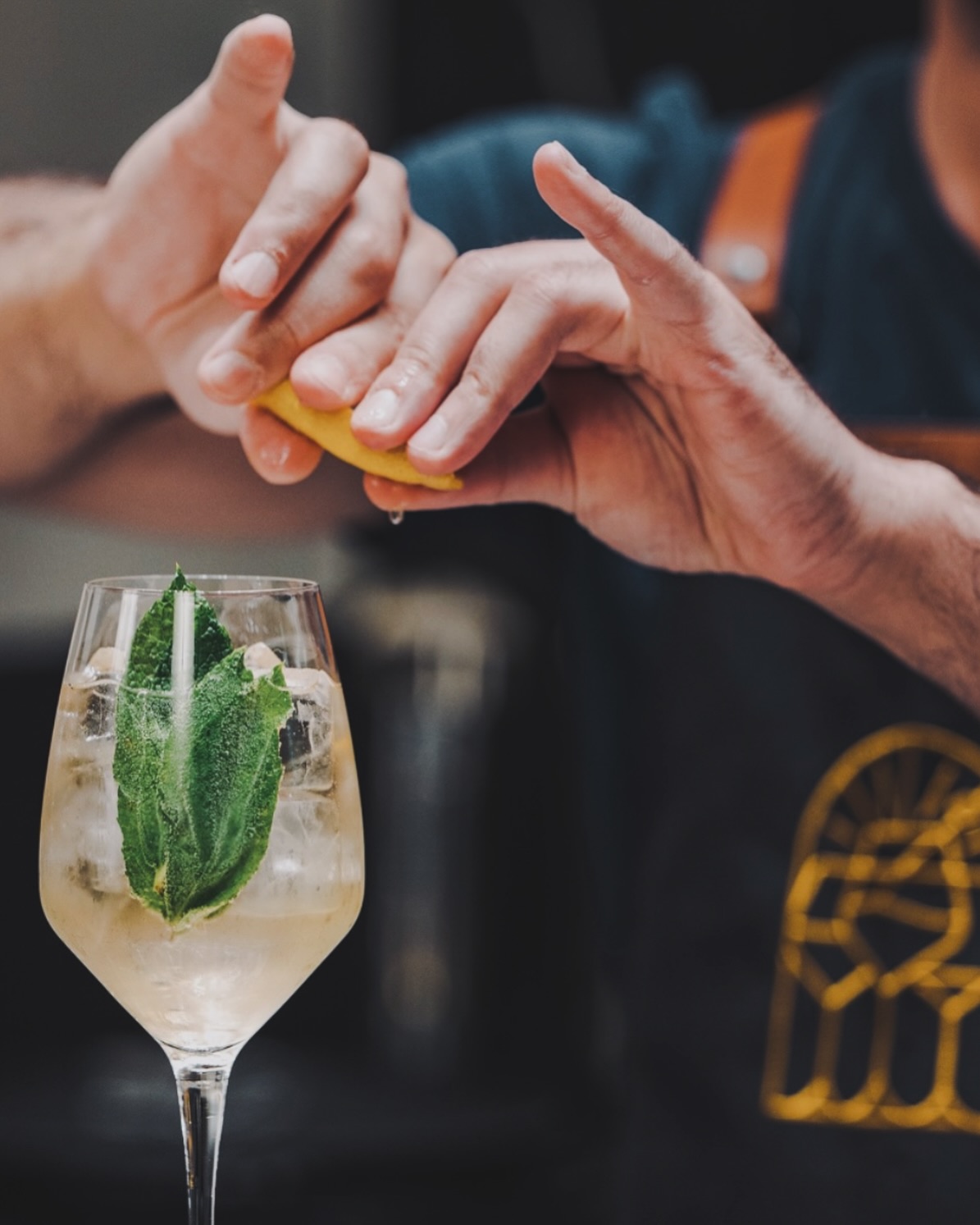
Another address to keep for aperitivo is Aperitif on Dikearchou, a spritz bar with outdoor tables beneath a plane tree. Italian cicchetti, small bites to accompany a drink, make it an appealing stop for a leisurely evening in this part of Pangrati.
Return to higher ground
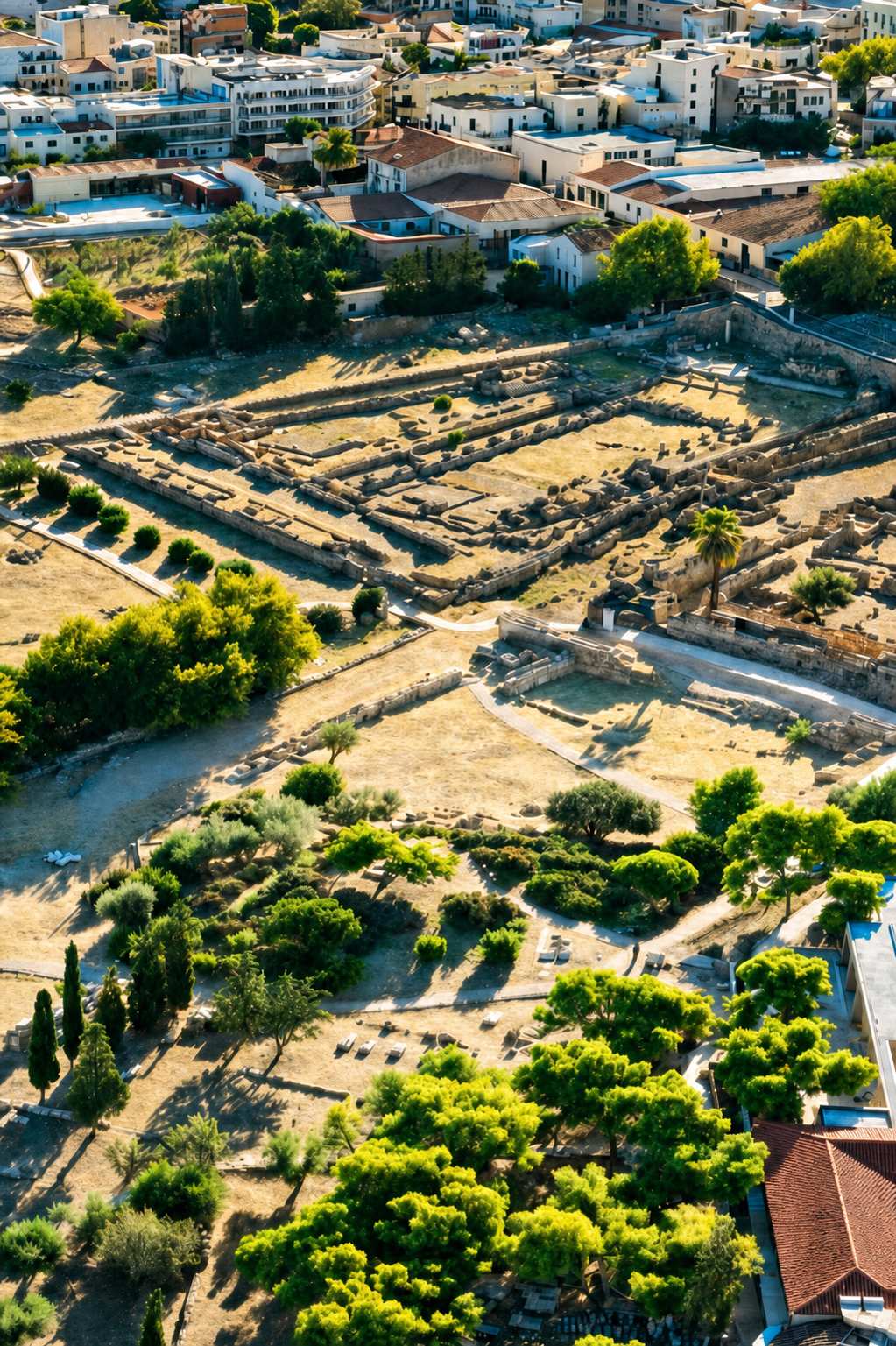
From the squares, turn your attention back toward the stadium and Agras and Archimidous streets. This is the part of the outing where the slopes become impossible to ignore. The climb brings you closer to Ardittos, the wooded hill beside the marble stands, and gives the walk its broadest perspective on Athens.
The reward is the relationship between things: the stadium below, the residential streets around it and the Acropolis beyond. After walking among buildings, seeing them together helps the city fall into place. Allow time to stop and look, rather than treating the ascent as a shortcut to the next café.

Approach the hill from the rear-stadium area around Archimidous. Access to the paths is through gates, so check locally before making the hill part of your plans. The outdoor walk and admission to the stadium interior are separate visits. If the hill entrance is closed, continue through the surrounding streets toward Mets.
The streets behind the stadium also hold 2 reasons to come back for dinner. At Ferekidou 5, Soil is a fine-dining restaurant where Tasos Mantis’s tasting menu draws on herbs and produce from his garden in Alepochori. At Archimidous & Agras, Humain by Jul’s pairs creative Mediterranean cooking with a neoclassical house and a leafy roof terrace. Either deserves time at the table; plan the evening around your choice.
Slow down in Mets
Continue into Mets, using Markou Mousourou, one of its main streets, as your next point of orientation. The neighborhood’s smaller scale becomes part of the pleasure: neoclassical houses, wrought-iron balconies, garden walls and stretches of greenery give you plenty to look at without needing a long list of sights.
Mets sits between Ardittos and Logginou hills, and the changes in level help explain its shifting views. Take the side streets at an unhurried pace, looking back as well as ahead. The Acropolis can reappear between buildings, making the city’s best-known landmark feel newly connected to the places where people live.
Even the neighborhood’s name begins with a place to sit down. It comes from a 19th-century beer garden opened by a member of the Fix family and named after the French city of Metz.
Today, Odeon, the neighborhood café-bar at Markou Mousourou 19, makes an inviting pause, with marble tables, a piano and an easygoing atmosphere. Stay for coffee or an evening drink. If you would rather stop for a meal, the Italian restaurant Alio Olio & Peperoncino, also on Markou Mousourou, serves made-to-order pasta and other Italian specialties.
For another evening in Mets, there is Garum at Kelsou 10. Chef Christos Glossidis’s restaurant combines Greek ingredients with Asian techniques and a particular interest in fermentation. Its name refers to the ancient fermented sauce that helps inspire the kitchen, giving the neighborhood’s dining scene a distinctive direction.
Continue toward Anapafseos Street. Restaurants and cafés share this street with businesses serving the cemetery: flower sellers, funerary shops and marble workshops. The proximity is striking. Carving stone is still a working trade here, close to the monuments for which the area is known.
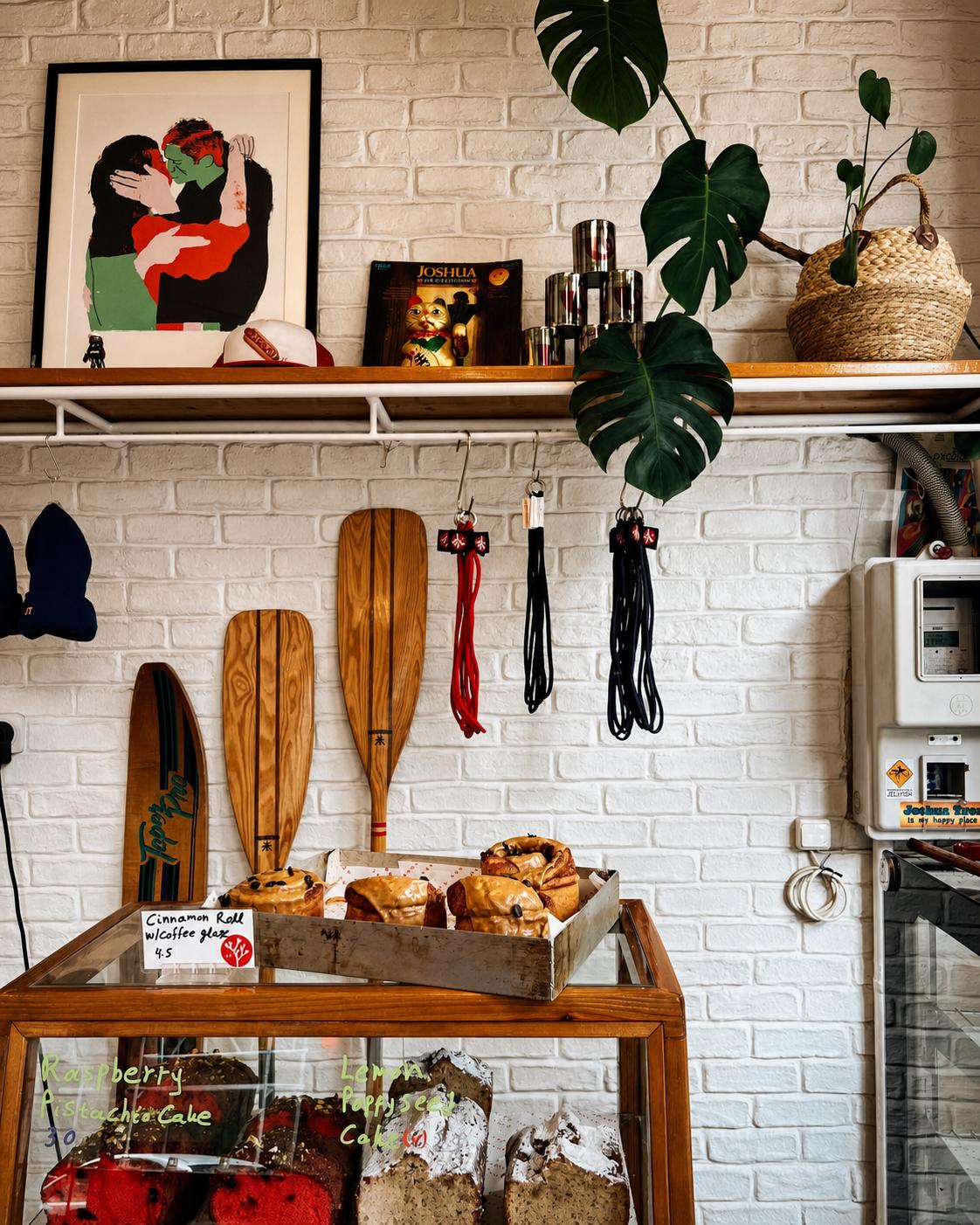
Along Anapafseos, the bright blue window frames of Joshua Tree Cafe mark a vegetarian café with a California-inspired menu, including turmeric lattes and tahini pancakes. Colibri, a casual pizza and burger restaurant on the same street, offers the friendly atmosphere of a longstanding neighborhood favorite. Both are easy choices for a break before or after the cemetery.
End among the marble sculptures
Anapafseos leads to the First Cemetery of Athens, founded in 1837. Allow it to become a proper part of the outing. Among the trees are sculpted figures, elaborate family tombs and memorials that give modern Greek history a tangible, often moving presence.
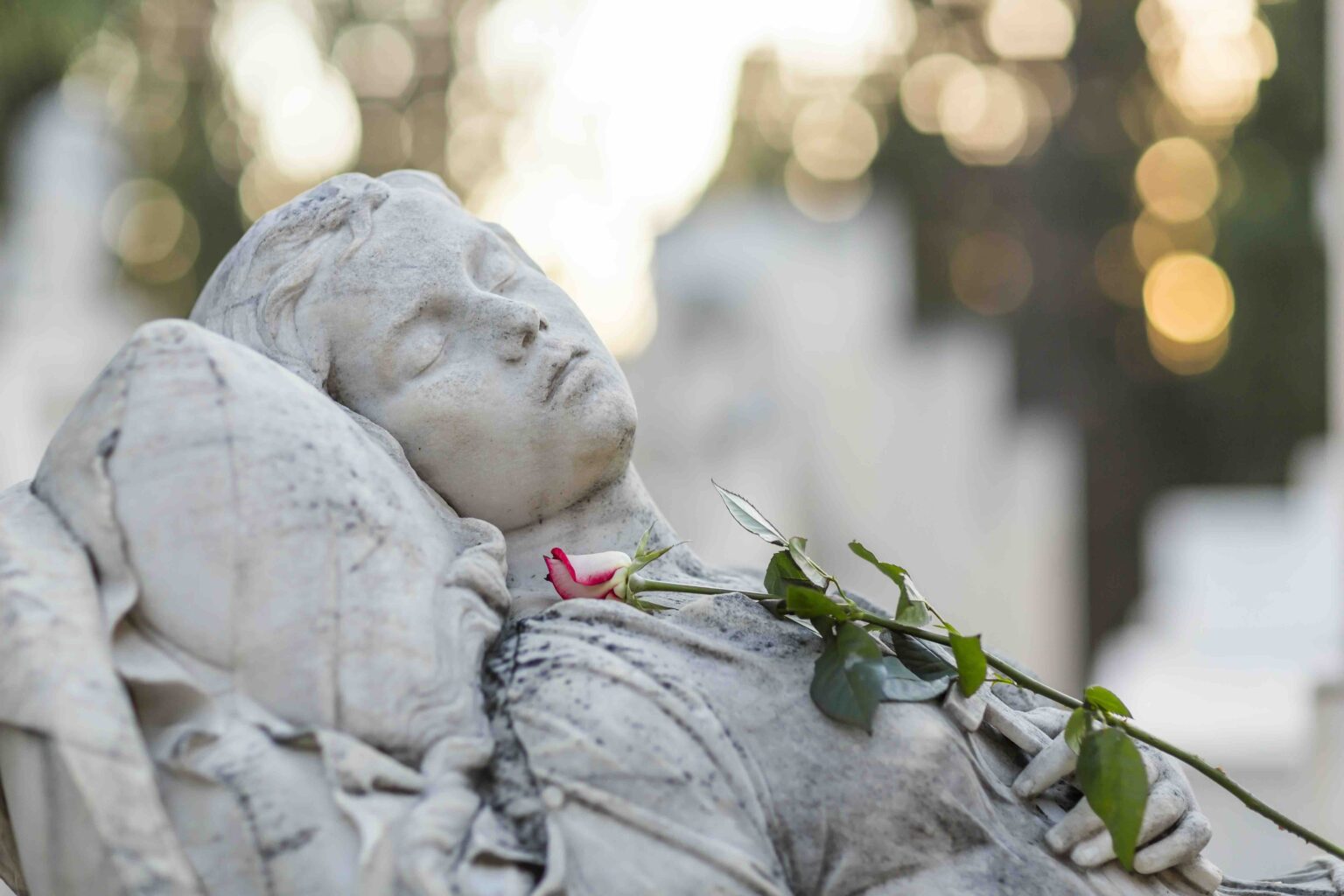
Look for Yannoulis Chalepas’s Sleeping Maiden, the reclining marble figure made for the grave of Sofia Afentaki, and the temple-like tomb of Heinrich Schliemann, designed by Ernst Ziller. Their different scales and treatments of remembrance are worth taking time to absorb. Many other graves reward the same close attention, whether or not you recognize the names.
Among those buried here are Melina Mercouri and Jules Dassin, Odysseas Elytis and Georgios Averoff, whose funding helped restore the stadium where the walk began. That last connection brings the outing full circle: the same city’s public ambitions and private memorials, expressed in marble.
Return along Anapafseos when you are ready. The street has an evening life of its own: Kain is an all-day café-bar that moves from coffee to cocktails, with a small dance floor for those who stay late. For a glass of wine, Diefchon combines church candles and a name borrowed from an Orthodox blessing with a list focused on Greek grape varieties. Both are on Anapafseos.
If the day is turning into a night out, finish with a performance at Half Note Jazz Club on Trivonianou. Its longstanding program brings together international and Greek performers; check the listings and book for the music you want to hear. After the museum, hills and marble monuments, a live set gives the outing a different kind of finale.
Before you set out
The sequence: Panathenaic Stadium, Goulandris Foundation, the streets around Proskopon, Plastira and Varnava squares, the rear-stadium area and Ardittos, Markou Mousourou, Anapafseos and the First Cemetery. The café and restaurant choices let you shorten the outing or extend it into the evening.
Give yourself room: Set aside an unhurried half-day if you want to include a museum visit and a meal. This is a suggested allowance, not a timed route. There are hills and steps, and access to the Ardittos paths should be checked locally. Visit the cemetery during its opening hours and be considerate of mourners and services. Check the museum’s program and opening times before you go.