


Long before making much from little became fashionable in grand kitchens, Greek cooks were getting on with it. Cucina povera is now an international touchstone: established chefs and aspiring ones alike have taken up its zero-waste logic, its respect for sustainability, its habit of using ingredients with judgment rather than abandon. Greek cooking has been doing all of this for generations, without waiting for the vocabulary.
It grew from a plain necessity: to use everything a place could offer, and to waste nothing it could not spare. Up and down the country, seasonal ingredients and the humblest materials, from a handful of pulses and a bitter green to the last of the pork, became dishes of real flavor and quiet wisdom. This inventive domestic economy produced food that is still loved, still made, still argued over.
Nowhere is that legacy more fully expressed than in the islands of the South Aegean, a microcosm of incomparable beauty, singular traditions, and exceptional culinary wealth. Here, humble ingredients can be misleading. The simplest recipes hold a creativity, a depth of flavor, and an authenticity that have kept them alive for centuries, and that continue to send chefs around the world back to first principles.
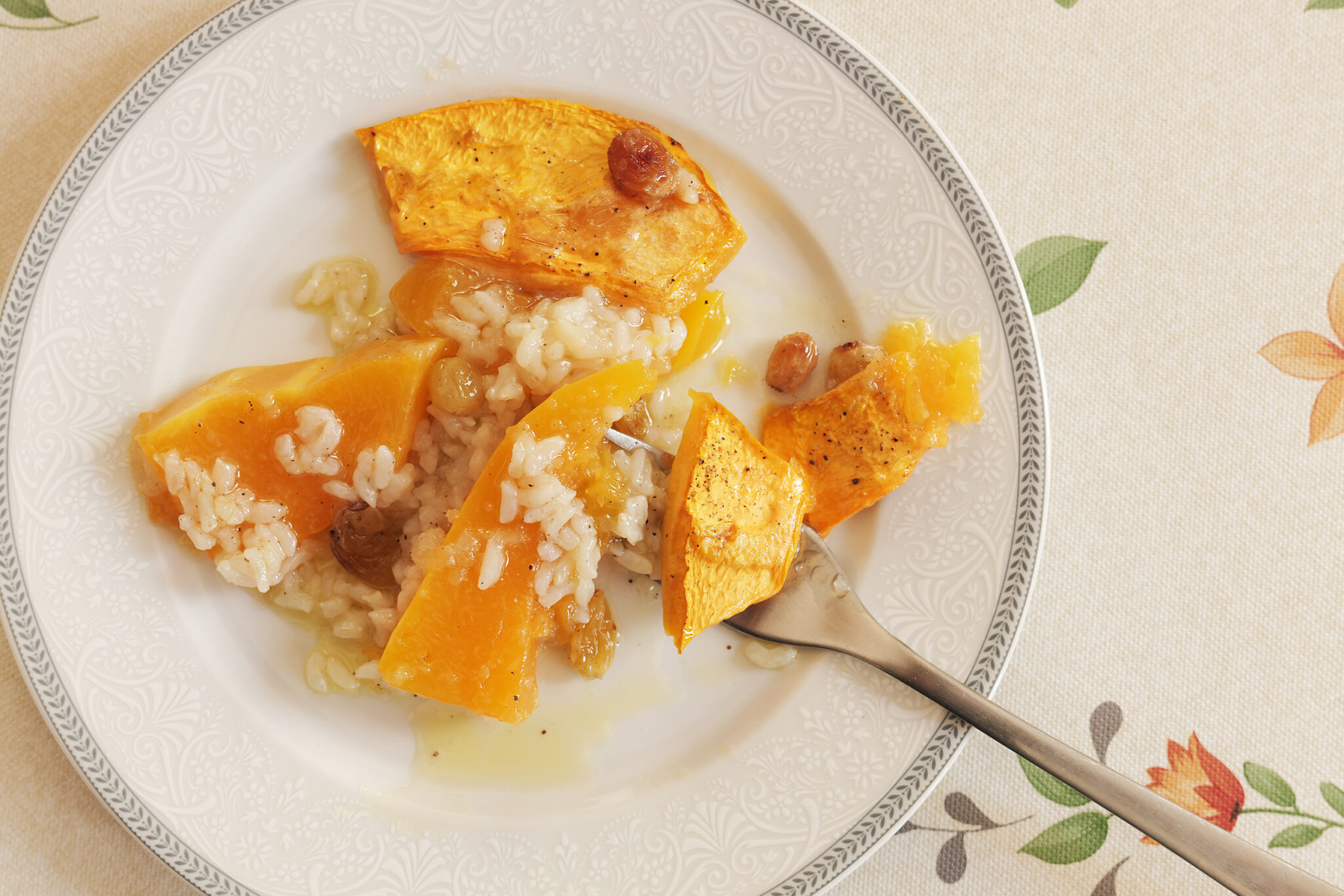
Pumpkin rice / Photo: Nikos Kokkas
The cuisine is as varied and layered as the islands themselves. Each one keeps faith with the character of its place, its own traditions, and makes a virtue of restraint. Aegean light, volcanic soil, distinct microclimates, the salt that travels on the sea breeze and settles on everything – all of it leaves a mark on the plate. Call it a wisdom born of necessity. It runs through the Dodecanese and the Cyclades, where 50 beautiful inhabited islands hold fast to their own identities while remaining bound to one another by the open sea and a shared set of values.
In the South Aegean, each meal becomes a small feast, one that honors local ingredients and traditional recipes. The dishes arrive in quantity, and they gather residents and visitors around the same tastes, customs, traditions, and stories handed down from one generation to the next. They are a genuine occasion for human connection, and they carry the spirit of the place and its people.
That spirit belongs not only to the ones at the stove, kneading dough and sliding food into the oven for the table. It belongs to the fishers who set out for the day’s catch; to the herders and the cheesemakers; to the people bent over vegetable plots, lifting honey from hives, walking the hillsides for wild aromatic herbs. It belongs to those who preserve, showcase, and vinify indigenous grape varieties under conditions that forgive nothing, and to those who keep faith with older ways of preserving and making use of nature’s gifts. Together they take the simple, high-quality ingredients of land that is often arid and turn them into gastronomic “gems,” honoring the long bond between people, land, and sea.
Techniques Shaped Over Time, Seasonal Ingredients, and Scarcity Remade as Plenty
In Tinos / Photo: Shutterstock
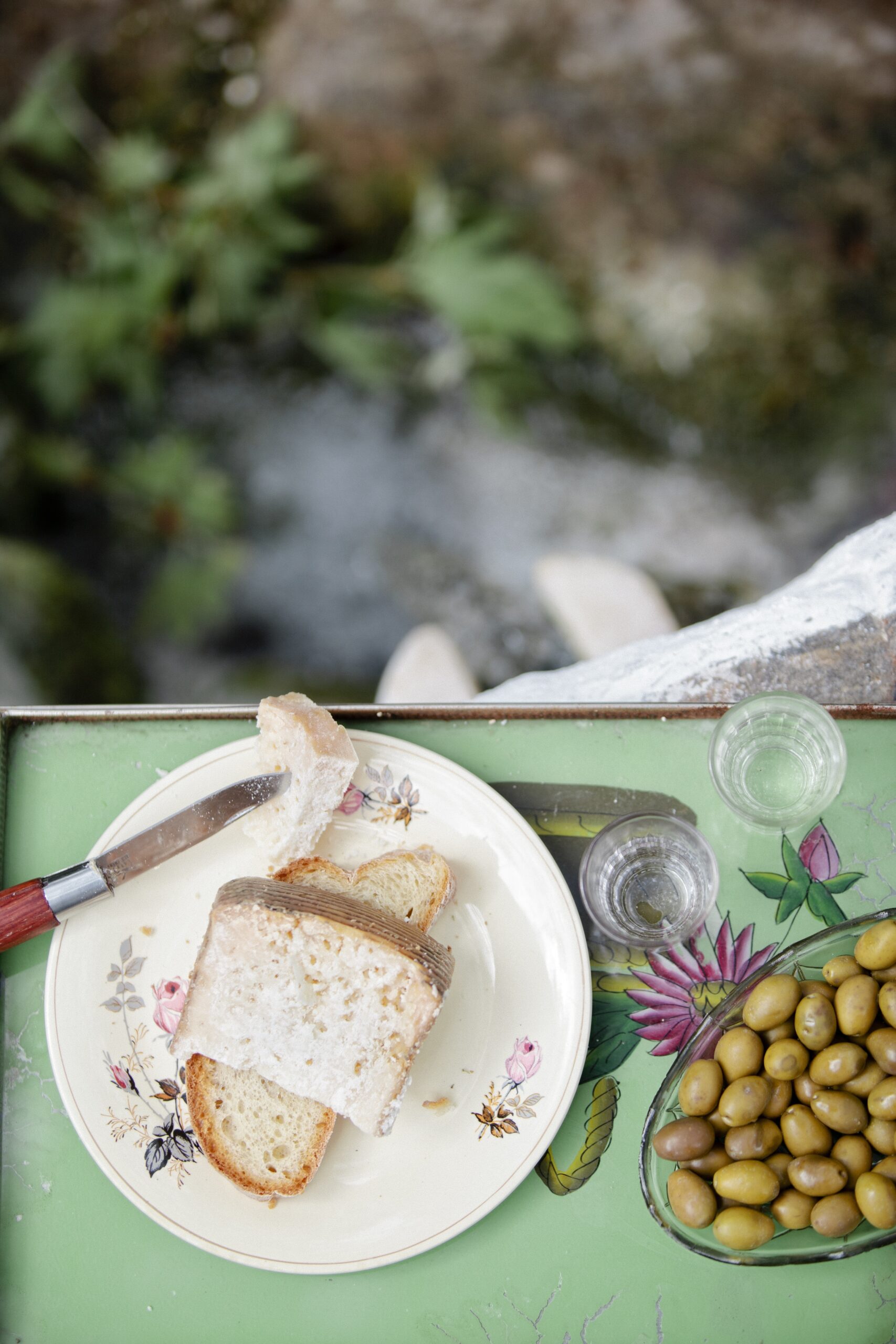
Photo: Shutterstock
The Cyclades offer a wind-swept, austere beauty, all whitewash and bare rock. The Dodecanese combine cosmopolitan appeal with landscapes of unspoiled splendor. Both carry a history that reaches back centuries, a global profile as travel destinations, and a cuisine shaped by the sea, the limits of the land, the wind, and human determination.
Here, gastronomy extends far beyond the kitchen. It takes in the evolution of cooking and recipes; the ways food is sourced, cultivated, and preserved; the long traffic of contact, trade, and cultural exchange between East and West; and an entire system of religious, philosophical, and dietary ideas and symbols.
The foodways and familiar flavors of the South Aegean are therefore not simply part of a tourism offer. They are an expression of the culture, history, identity, and way of life of its island communities. Archaeological finds point to early food systems built on preservation, maritime trade, and adaptation to island environments. Ancient texts return again and again to figs, honey, vine leaves, pulses, sesame, and barley – ingredients that still sit at the center of the South Aegean kitchen.
They also point to a remarkable body of practical knowledge. Across the Aegean, fish was dried and sauces made from fermented fish were prepared, allowing coastal populations to carry valuable marine resources through the lean stretches of the year. The region’s cooking is inseparable, too, from its crafts and material culture. Pottery was essential to preparing, storing, and serving food, and the differing shapes and materials of its vessels reveal a sophisticated understanding of cooking and preservation. They drank in the aromas and flavors of one preparation and enriched the next, and were so closely associated with what they held that vessel and dish became one and the same.
These histories summon vivid scenes. In the harbor of Rhodes, ships once cast off with wine, olive oil, honey, dried fish, and ceramics, and came back laden with Eastern spices, grain, and new agricultural knowledge. In small harbors shaded by tamarisks, octopuses dry in the fierce sun to the sound of cicadas. Goats graze the rugged slopes of Mount Zas in mountainous Naxos, destined for the oven with wild thyme and rosemary. Capers push out of fissures in bare stone, while the vine wreaths planted low in volcanic earth wait for the morning anedosá to quench their thirst.
There are jars of pickles and spoon sweets, another ingenious way of holding on to a season. There are cloth bags hung to drain fresh myzithra and yogurt. There are flour-dusted hands shaping zucchini fritters over hot pans, and then those same hands linked in dance at village festivals, where traditional dishes and celebratory treats come without limit. There are glasses raised with PDO Assyrtiko, and pieces of kneaded bread that leave no trace of the sauce from a festive pork dish with cracked wheat, or from a rich salt-cod brandada.
Today, cooks are returning to old techniques and recipes with a contemporary eye. Modern culinary experimentation revives traditional methods and refines them where scientific research meets inherited knowledge. The innovative side of South Aegean cooking does not displace tradition; it walks beside it. It brings the islands’ wealth of flavor into focus, celebrates locality, respects seasonality, and earns its place on the international gastronomic map.
Celebrated Foods and Local Dishes That Make Gastronomy a Cultural Marker
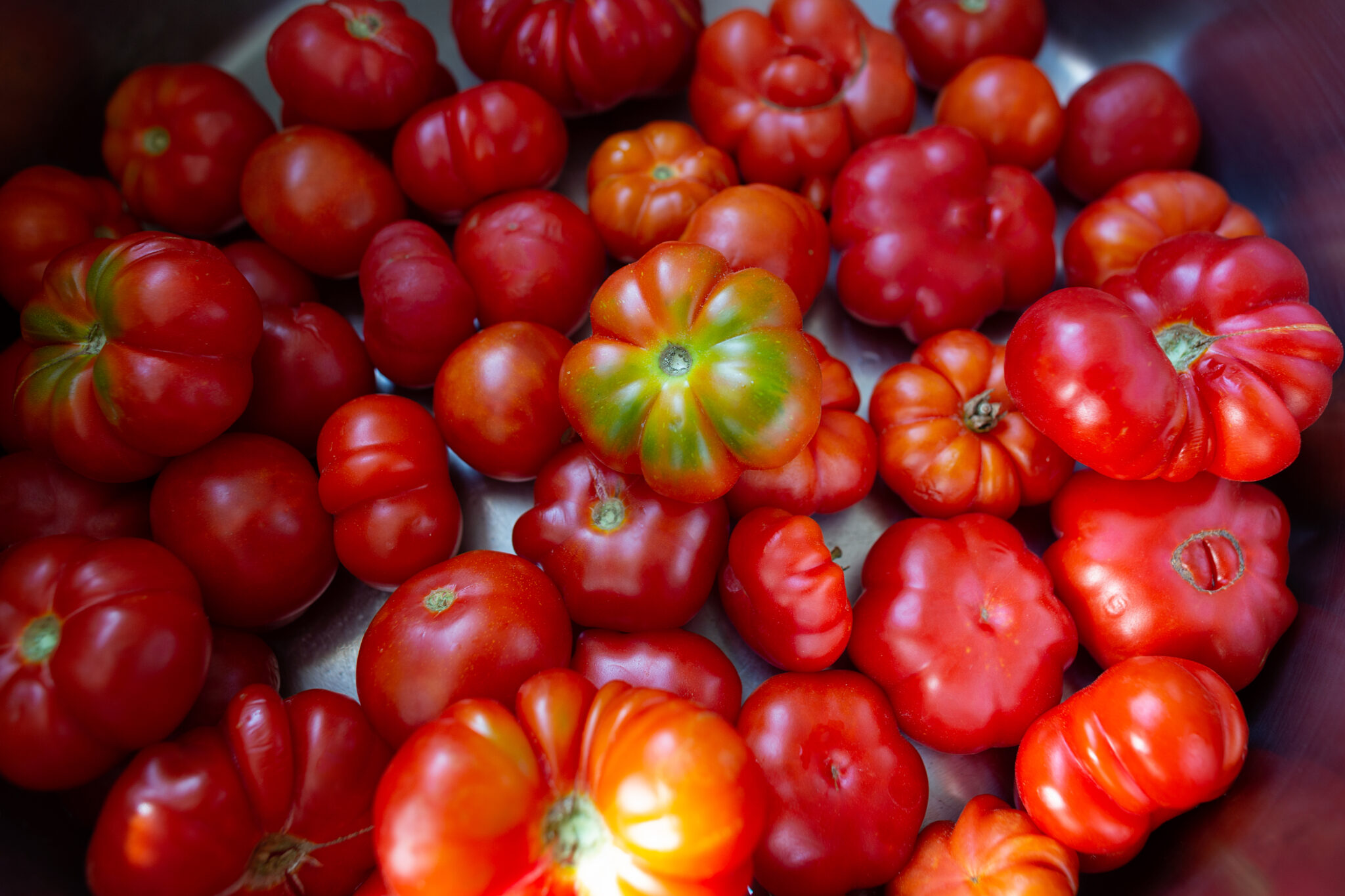
Santorini cherry tomatoes / Photo: Nikos Pilos
On the “Island of the Winds,” as Mykonos has been known for centuries, sun-dried sausages and sissera – pork skin and trimmings simmered down, then fried crisp in their own fat – are made by hand from the leftover cuts of the pig, then perfumed with savory, oregano, fennel seed, bay leaf, and cinnamon. Served with souma, the clear spirit the islands distill for themselves, they are the ideal meze. From there the list runs the length of the archipelago, each island answering the same problem in its own accent: Naxian zamboni, a whole leg of pork salt-cured at the carnival pig-slaughter, coated in cracked pepper and garlic, and hung for months until it slices as thin as prosciutto – its name a souvenir of Italian rule; sheep pastourma from Amorgos, packed in a crust of garlic and spice; lagaro and zonari from Anafi, named for the cuts themselves – the lean one, the sash; spicy sausages from Karpathos; aniseed sausages from Kos and wine sausages from Rhodes; pork loza from Kea, also marinated in red wine; and, of course, louza from Tinos – loin salted, spiced, and hung in the wind until it slices nearly translucent – from the island with the greatest variety of cured meats of all. Together they make a simple point: in the South Aegean, zero-waste practice began as necessity, centuries before sustainability became a trend.
Naxos graviera – firm, faintly sweet, made from the island’s cow’s milk – is the cheese that has drawn international gastronomy’s attention to the dairies of the largest island in the Cyclades, and it sits alongside graviera from Mykonos, Tinos, and Ios, and buffalo graviera from Lipsi. As they mature, these cheeses take in the aromas of their islands and give them back, each with its own flavor profile. After them come the cheeses named for what is done to them, or for what they resemble. Syros’s PDO San Michalis is hard and peppery, made for grating. Naxos arseniko means “the male one,” for its sharp, salty bite – and because the strongest part of the curd goes into it. Mykonos kopanisti is pounded and left to ripen into something sharp and spreadable. Andros volakia are small cheeses shaped by hand into little rounds, which is exactly what the name describes; fresh, they are used as the rest of Greece uses feta, and aged they turn hard and peppery. Milos kefalotyri is shaped, as its name says, like a head. Sifnos manoura is matured in wine lees until it takes on a dark, edible rind; Paros touloumotyri is aged in a goatskin, the touloumi that gives it its name; Kos krasotyri is literally “wine cheese,” ripened in grape must; and Kasos sitaka, a dark, buttery reduction of whey, is what transforms the island’s hand-rolled makarounes pasta. The region reveals itself as not merely self-sufficient in dairy but astonishingly varied.
The dishes are simple, never simplistic. Syros makes its tyrititim in a single pan – a zucchini omelet bound with the island’s own San Michalis. Andros answers with the generous froutalia, thick with potatoes and local sausage, shared among friends after long swims in the island’s crystalline waters. Kimolos’s ladenia, a flatbread of tomato, onion, and olive oil, holds its own against any Italian pizza, and the famous pitarakia, small cheese pies fried to order, are eaten with sandy fingers on Milos’s dazzling beaches. Amorgos fava fritters and Santorini tomato fritters, which demand a practiced hand at the pan, are only the first page of the Cyclades’ rich and inventive recipe book.
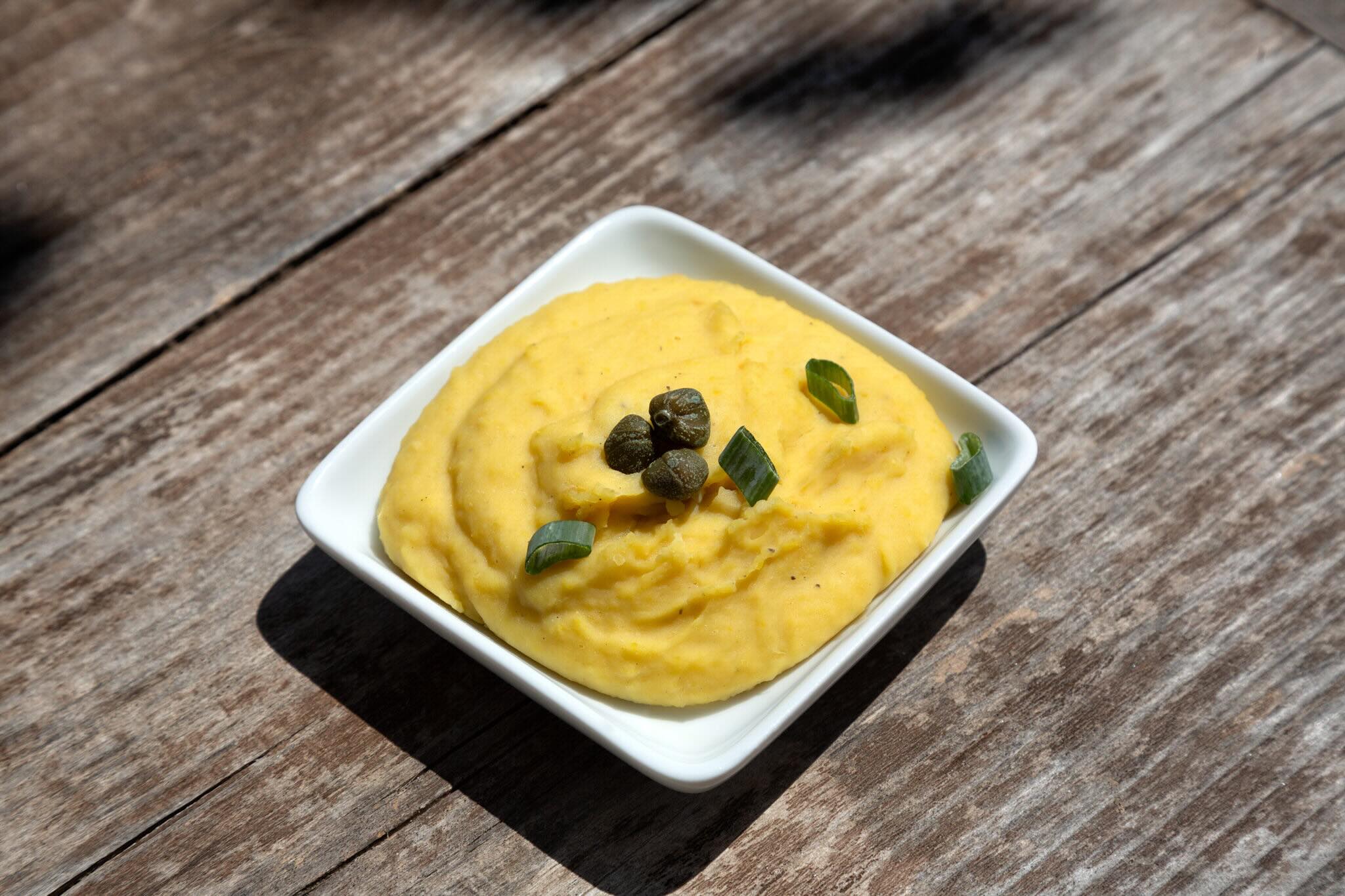
They are joined by the roasts and stuffed dishes that mark a Sunday or a feast day: the pork roast of Apeiranthos, the mountain village high in Naxos; stuffed kid goat from tiny Irakleia; petinos patido, a rooster with a rich stuffing, from Antiparos; Santorini yaprakia, wrapped in leaves from the island’s own vines; and the celebrated Sifnian mastelo, lamb slow-cooked with dill and wine in the clay pot that gives the dish its name. Then come the PDO products: fava, the split peas grown in volcanic soil and cooked to a purée; Santorini cherry tomatoes; Naxos potatoes. All of it meets the emblematic dishes and irresistible meze of the Dodecanese – the sweet little Symi shrimp, eaten whole; Rhodian pitaroudia, chickpea fritters fragrant with cumin and onion; Leros cheese pie; Nisyros black-eyed peas with parsley and caramelized onions; octopus fritters; and stuffed squid at the colorful, far-flung edge of the country, in Kastellorizo, the easternmost inhabited island in Greece.
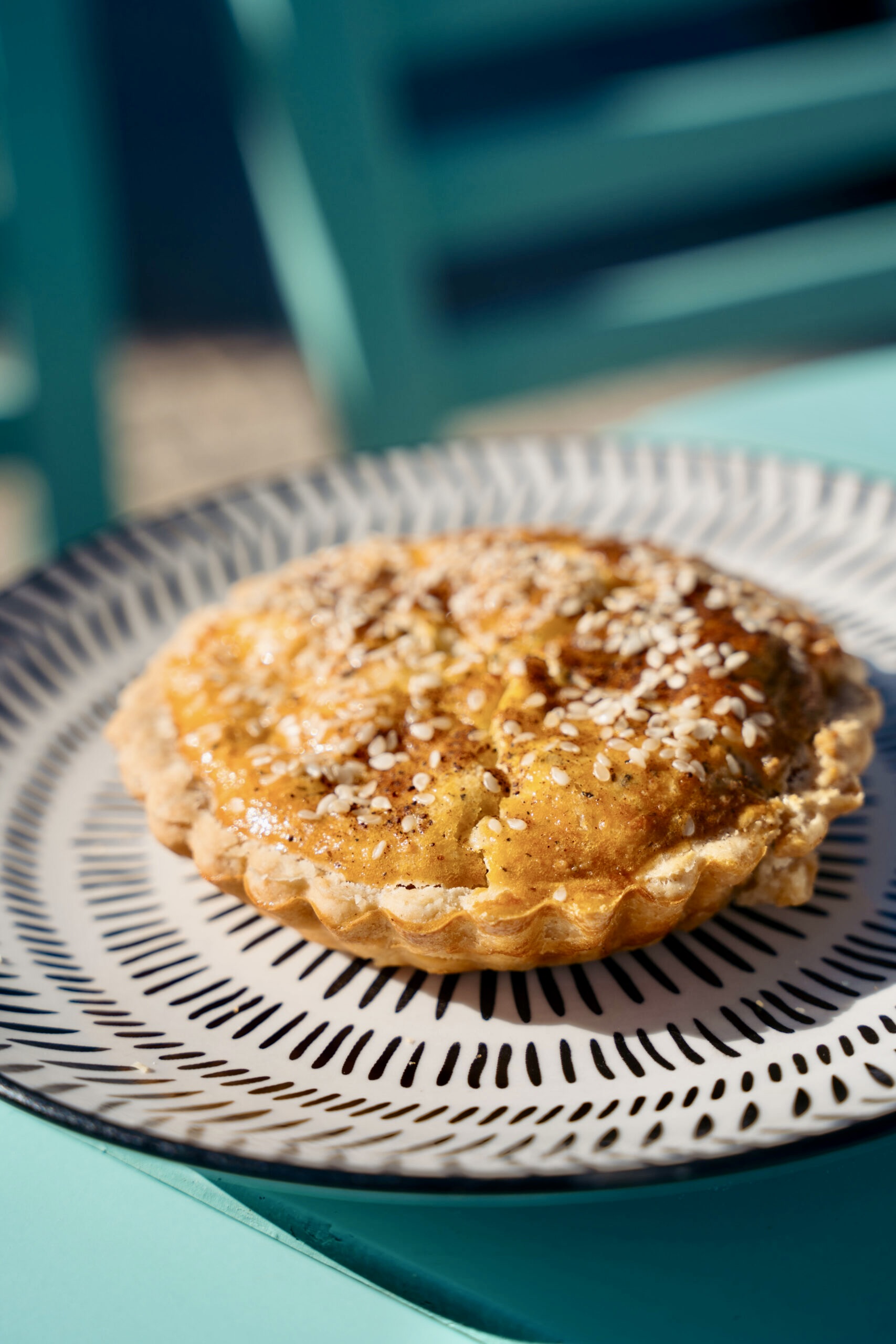
Cheese pie in Leros / Photo: Kostis Angelopoulos
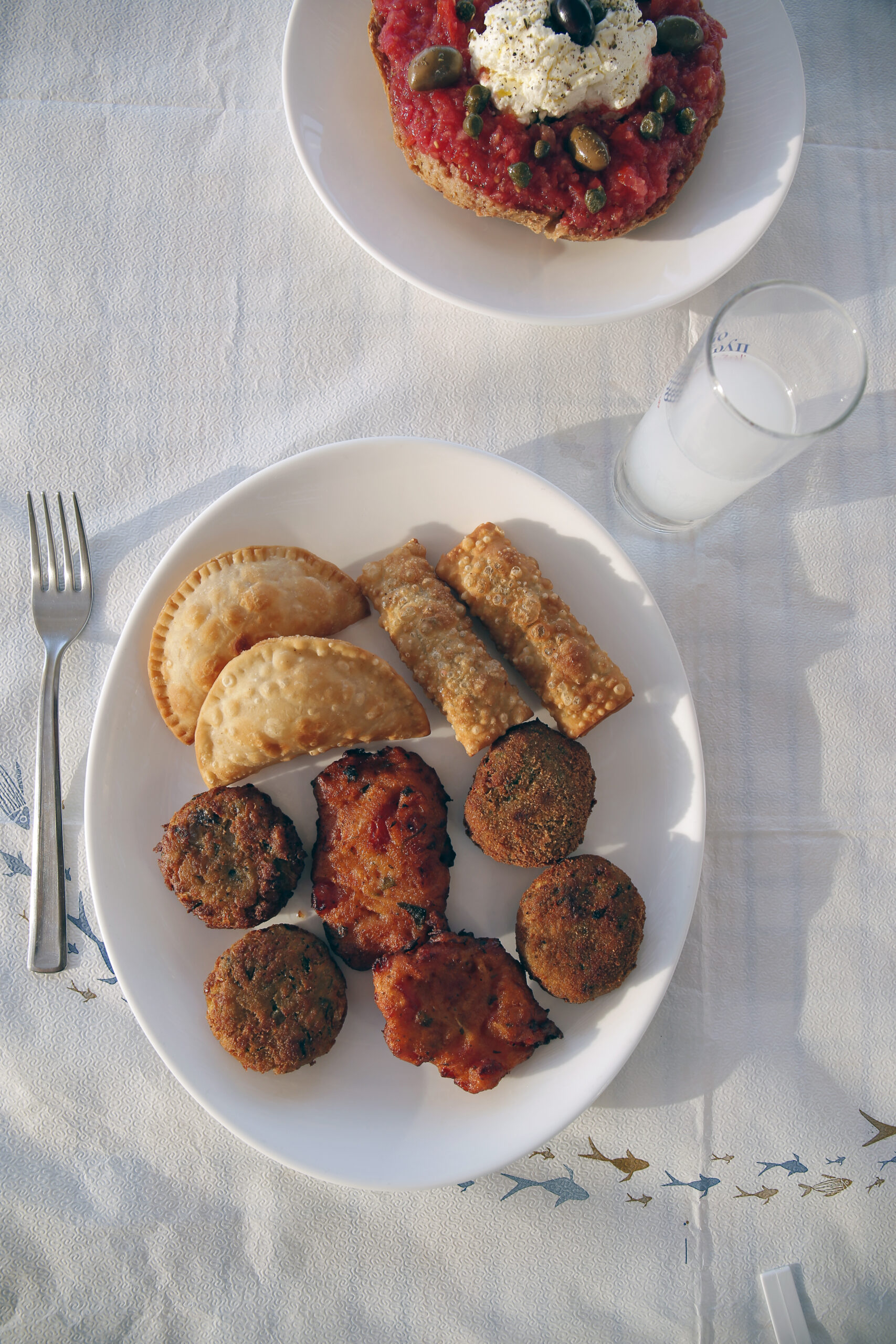
A selection of fritters in Empourios, Milos / Photo: Nikos Kokkas
Over the centuries, the South Aegean’s range of flavors has been shaped by the habits and influences of merchants, travelers, and conquerors. It arrives at a multifaceted sweet conclusion, and it is further distinguished by the region’s wine culture. On Kos, cherry tomatoes become spoon sweets – fruit preserved whole in syrup and offered, by the spoonful, to whoever comes to the door. In Naxos, citron is kept in jars as a succulent treat and distilled into a singular aromatic spirit. On Andros, pambiloni is another word for hospitality itself: a spoon sweet made from a large aromatic Andriot citrus that no one eats raw, de-bittered through repeated changes of water and then candied in heavy syrup, offered to every guest who arrives. There, too, the island’s urban confectionery tradition rises to meet the stately character of Chora, its elegant capital, in historic pastry shops that still turn out airy nougatines, soft pastitsakia, refreshing soumada – an almond cordial served cold – and amygdalota, almond sweets whose fragrance lingers on the palate long after the plate is cleared.
Ripe fruit, unripe fruit, wild fruit, along with nuts and vegetables from gardens and orchards, become jams and the wholesome end of the sweet table. Such offerings have long done every home cook proud, while finding a use for even nature’s most modest gifts.
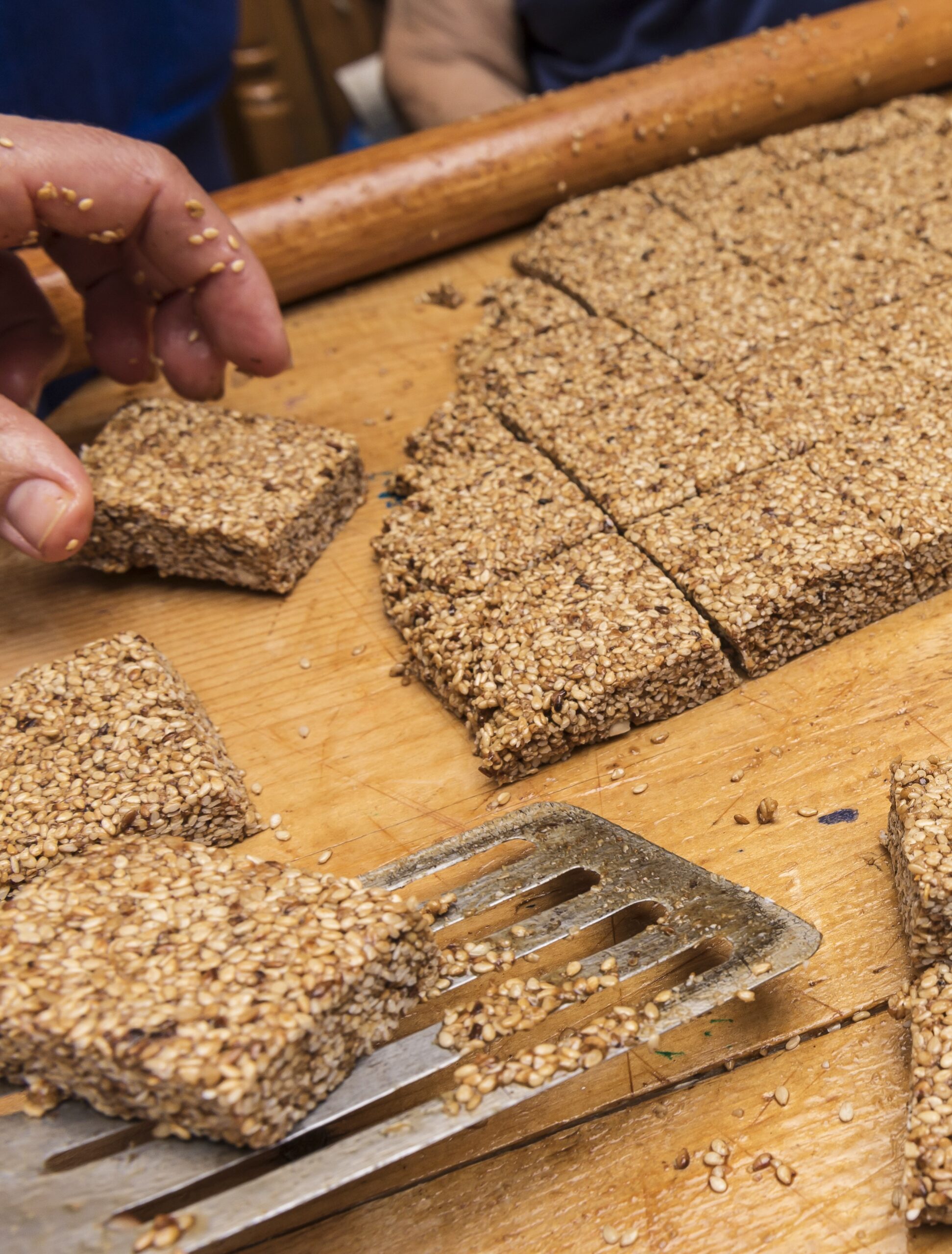
Melekouni from Rhodes / Photo: Shutterstock
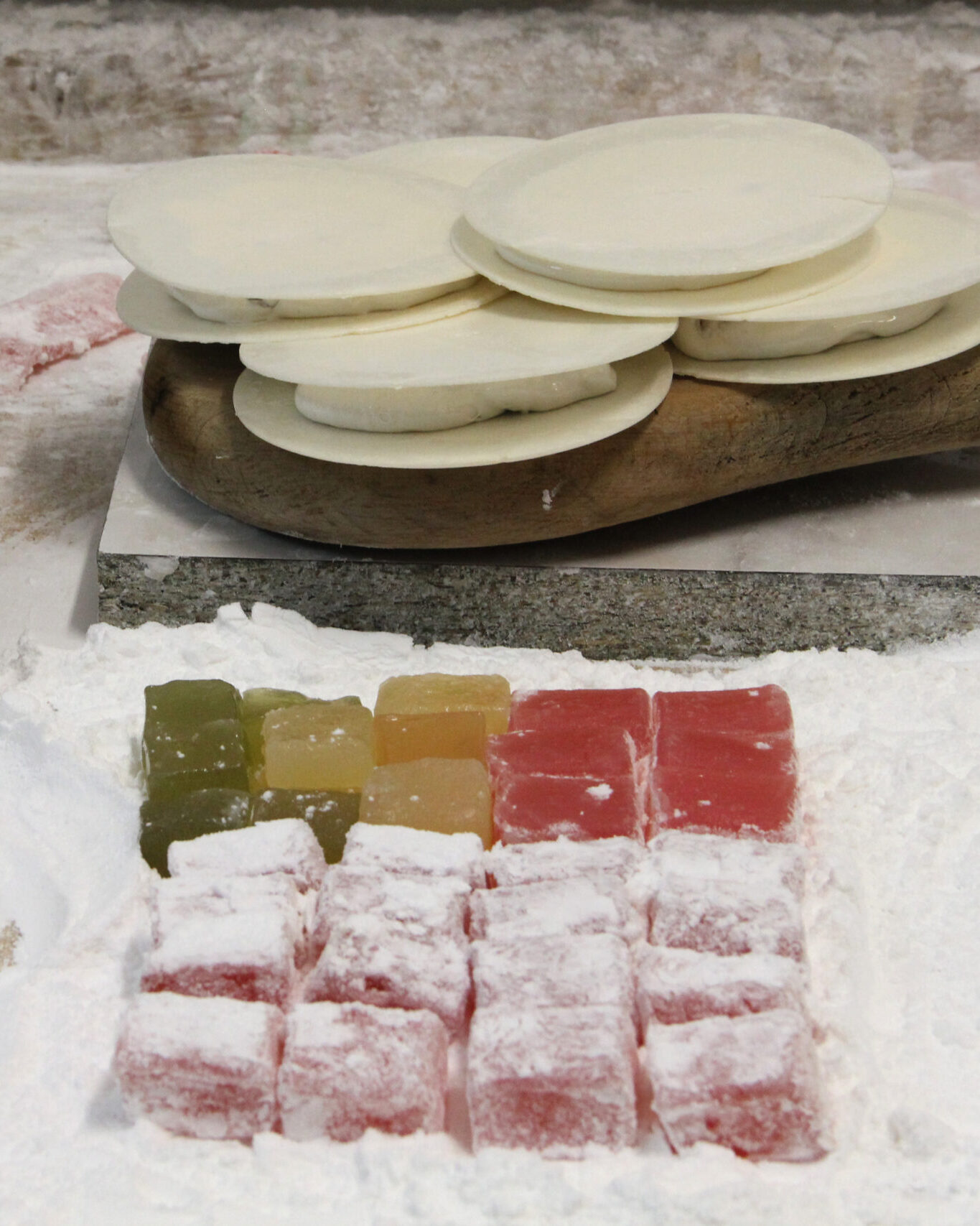
The first reference to loukoumia is in Arabic as rāḥat al-ḥulqūm, meaning “that which soothes the throat” / Photo: Municipality of Syros-Ermoupoli
Fresh spring cheeses are worked together with eggs, sugar, and spices to fill the pastries of Easter: Santorini melitinia, Mykonos melopites, Tinos tsimpita, Milos lychnarakia – “little lamps,” for their shape – and Folegandros manouropites. Made with such skill that they come out of the oven looking like miniature works of sculpture, they still draw generations to the same table to honor custom and to work side by side in a festive atmosphere.
Syros’s semolina Catholic cheese pie, from the island’s Catholic villages, attests to the centuries-long Venetian presence in the Cyclades. And who passes through the “Lady of the Cyclades,” as Syros and its neoclassical capital, Ermoupoli, have long been known, without giving in to chewy halvadopites, nougat pressed between thin wafers, and the island’s celebrated loukoumia? The name of that last one travels as far as the sweet does: the first reference appears in Arabic as rāḥat al-ḥulqūm, “that which soothes the throat.” Patmos cheese pie is both cheese-filled and sweet; the pougia – “little purses” – filled with walnuts and honey and scented with spices, are another choice offering on the island. Cinnamon and cloves, together with citrus, perfume PGI Rhodes melekouni, a sesame-and-honey bar that is the quintessential celebratory treat, linked since antiquity with joyous occasions as a symbol of prosperity, unity, and continuity. It is also an excellent, healthful snack, built from simple ingredients of high nutritional value.
Together, these foods form another compelling facet of the South Aegean’s vast culinary universe. They show how its gastronomy holds both dietary wisdom and cultural identity, reflecting the core principles of the Mediterranean diet and the rational use of local resources.
A Bid for World Region of Gastronomy 2028
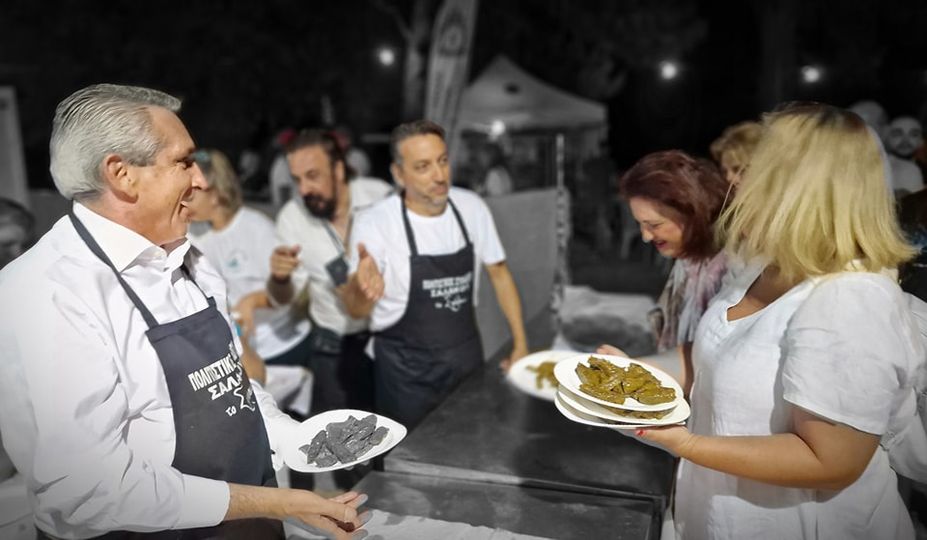
The South Aegean Region supports more than 40 gastronomic events and festivals each year
These are ingredients that have sustained island communities for millennia. They are not merely agricultural products but cultural touchstones, records of how people adapted to island landscapes, climatic constraints, and maritime connections. Their flavors are a way into islands of remarkable beauty and deep historical heritage.
But the region is also shaped by intense seasonal tourism, large hotels, cruise-ship arrivals, and international travel networks. Those forces have made cosmopolitan destinations of some islands, places where global influences meet local traditions on the same street. They have unquestionably brought economic prosperity and international visibility. They have also created the challenge of protecting the authenticity of local cultural and gastronomic heritage in the face of mass tourism.
Many islands retain strong ties to traditional food cultures rooted in agriculture, seasonal produce, small-scale cultivation, handmade production, animal husbandry, maritime life, and cooking techniques centuries old. Gastronomy here remains bound to the landscape and to the community. Food festivals, village celebrations, and religious feasts keep those traditions active and relevant in contemporary life.
Yet the dramatic growth of tourism has turned Mykonos, Santorini, and Rhodes into global luxury destinations. It puts significant pressure on local resources and risks eclipsing cultural identity and local traditions. International restaurants, imported ingredients, and globalized models of hospitality can leave less room for traditional food practices. The pressure has also galvanized local communities. Producers, chefs, cultural institutions, and local authorities increasingly recognize the need to protect and promote an authentic gastronomic heritage, and initiatives that preserve local crop varieties and strengthen local culinary identity are steadily gaining ground.
Against this shifting backdrop, the South Aegean Region has become the first Greek region to bid for the World Region of Gastronomy 2028 title. The distinction recognizes regions that use gastronomy as a driver of sustainable development, cultural outreach, social cohesion, and economic progress. The bid rests on a conviction: that food can be a powerful source of cultural resilience under the weight of tourism.
This is not an isolated gesture. It extends a long-term strategy that the South Aegean Region has pursued with consistency and ambition, connecting primary production with tourism, culture, and entrepreneurship. The aim is to make gastronomic heritage a source of identity, sustainability, and pride.
That strategy has a tangible presence across the islands. Each year, the South Aegean Region supports more than 40 gastronomic events and festivals, tightening the connection between local production, culinary traditions, the communities themselves, and visitors. The Region treats gastronomy as a strategic resource: a way to reconnect local communities with their cultural roots and to create new forms of sustainable development. The goal is to make food culture a bridge between past and future, and to establish a strong, recognizable gastronomic destination with international reach. The World Region of Gastronomy program offers the international framework in which to do it.
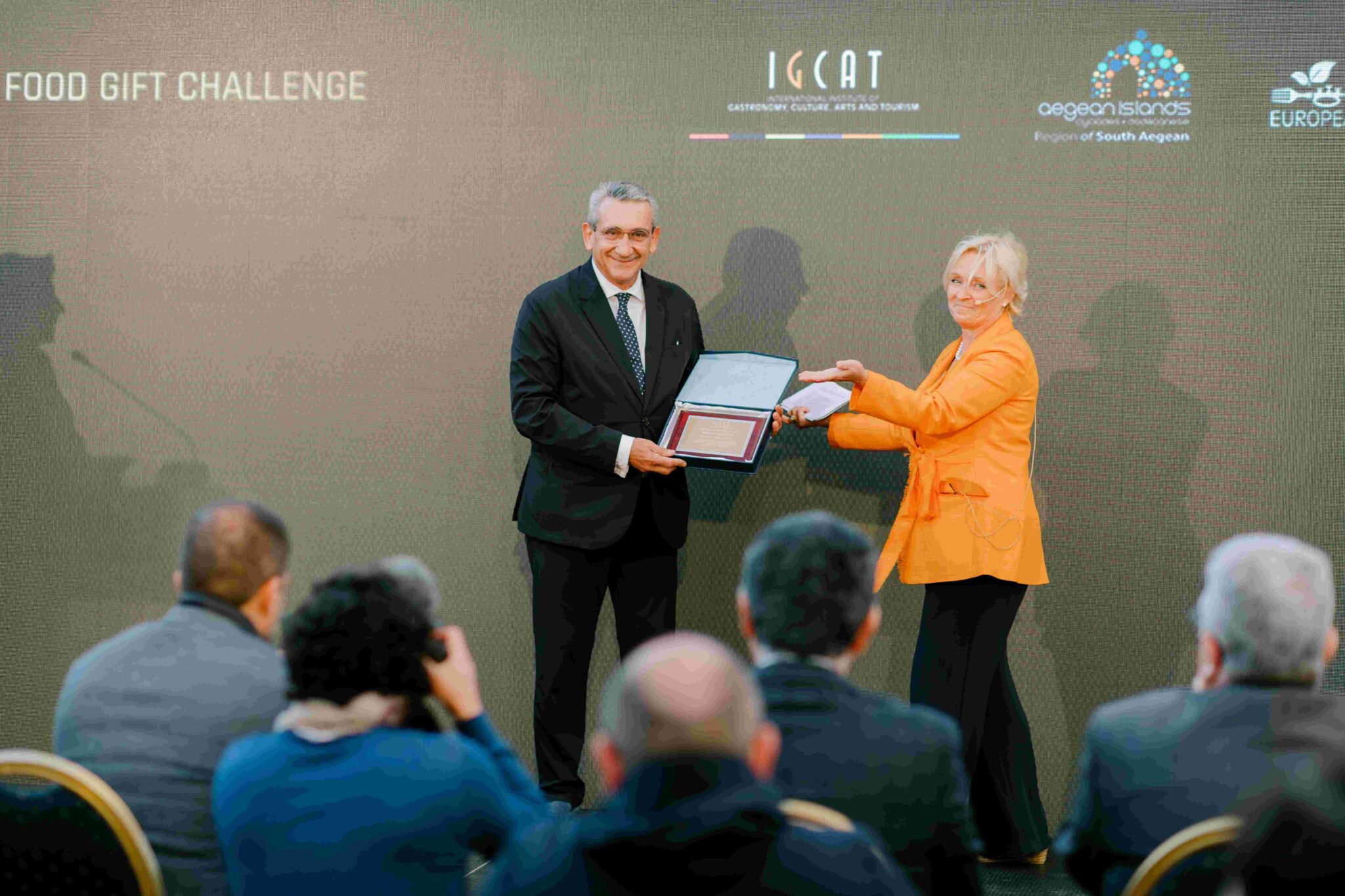
His appointment as Gastronomy Ambassador by the International Institute of Gastronomy, Culture, Arts and Tourism (IGCAT)
The Regional Governor of the South Aegean, Giorgos Hatzimarkos, has also been named a Gastronomy Ambassador by the International Institute of Gastronomy, Culture, Arts and Tourism (IGCAT), one more international recognition along the Region’s gastronomic trajectory. The work has deep roots and remains very much alive. The Aegean Cuisine Network, built through the systematic labor of the Cyclades Chamber of Commerce and the Dodecanese Chamber of Commerce, is its living center.
Aegean Cuisine drew local production, food service, and tourism closer together, creating a shared framework for promoting the islands’ products, flavors, and culinary traditions. Its mark has become a recognizable sign of quality and authenticity, tying a gastronomic product to its place, its people, and its production. Today, Aegean Cuisine continues to deepen that connection, working to ensure that gastronomy is not simply a feature of a place but a force for its future, and bringing visitors closer to the authentic experience, flavor, and memory of each island.
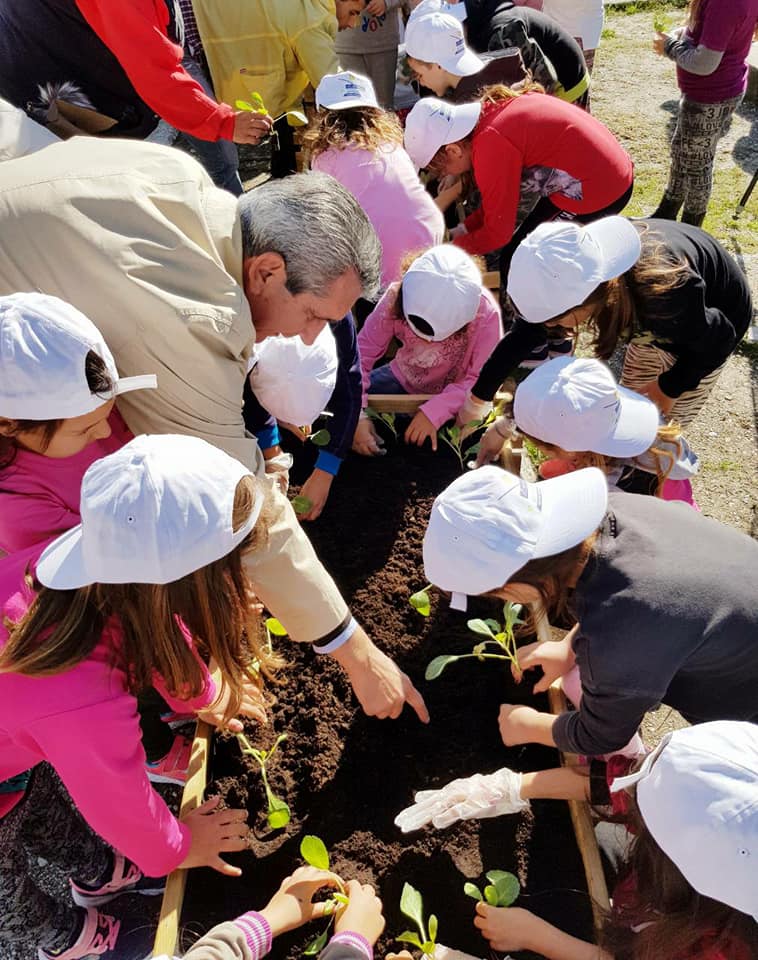
The gardeners of the Aegean with the Regional Governor
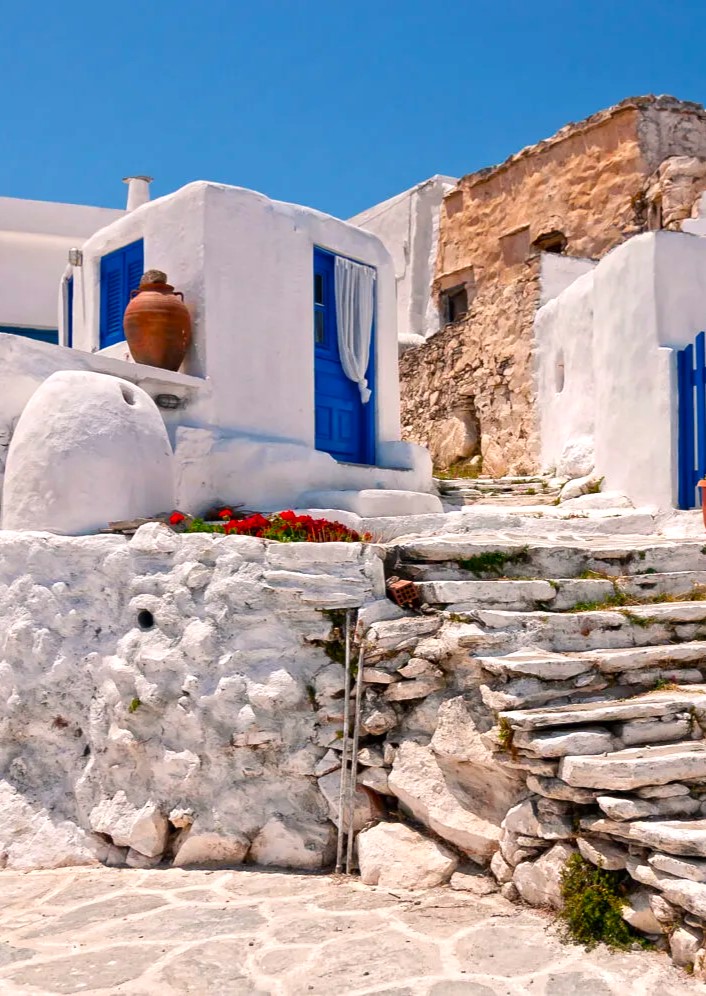
Sikinos / Photo: Shutterstock
The legacy of the South Aegean’s designation as European Region of Gastronomy 2019 – an effort begun in 2016 that became a milestone for the gastronomic identity of the region’s islands – is the foundation of the present candidacy. But the bid is about more than winning an international title. It is a collective effort to build on one of the islands’ most important comparative advantages and to shape a new development model grounded in quality, authenticity, sustainability, and knowledge.
By placing local products at the center and joining traditional knowledge to contemporary creativity, the South Aegean Region has developed a model for how tourism and cultural heritage can coexist in a more balanced and sustainable way. To that end it is developing integrated gastronomic routes and partnerships between producers and hospitality businesses. It promotes circular practices in food management and waste reduction, supports producers’ outward reach, runs educational initiatives in schools and local communities, and offers professional training in gastronomy. It also records and documents the islands’ culinary traditions systematically, through contemporary media. The goal is to establish gastronomy as a central driver of sustainable regional development, cultural continuity, and the well-being of local communities.
From the cosmopolitan harbor of Rhodes to the agricultural landscapes of Naxos and the fishing villages of the smaller islands, gastronomy in the South Aegean is a living link between communities, landscapes, and stories. It is both memory and strategy: a living expression of history, landscape, and identity, and at the same time a practical tool for building resilience, creating opportunity, and shaping a more balanced future for island communities.