


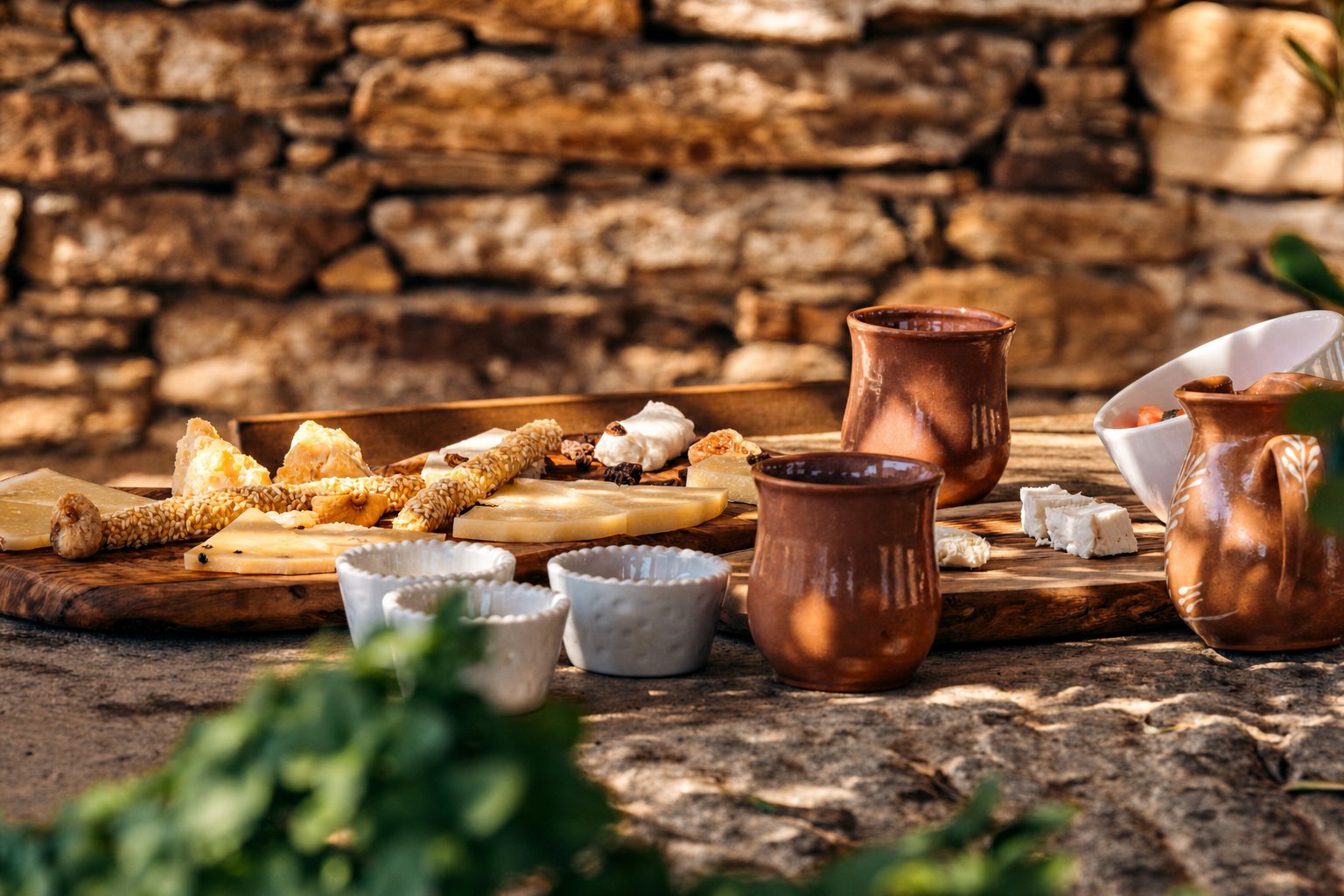
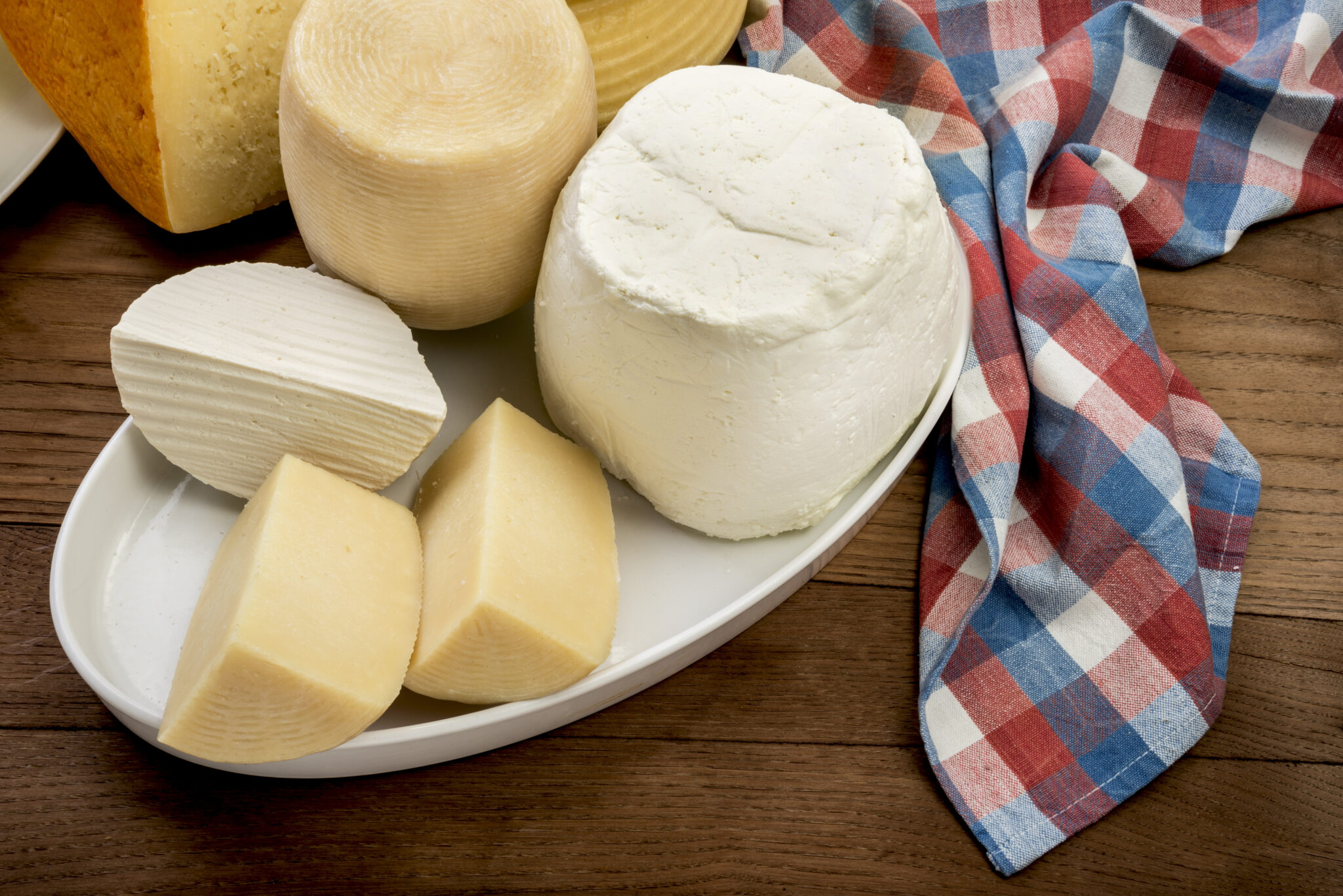
The cheeses of the Dodecanese are the pride of local herders, crafted with skill and meraki by island cheesemakers. Each tells a story of self-sufficiency, ingenuity and tradition, and on the wider culinary map of the South Aegean they find natural kin in the cheeses of the Cyclades. Kos has its krasotyri and Nisyros its cheese of the grape harvest. Kasos offers sitaka and elaiki, while Karpathos has manouli, armyrotyri and meriari. A little further north lie San Michali and Naxos graviera, kopanisti, arseniko, Tinos petroma, Andros volaki, manoura, skotyri, touloumotyri and dozens more, each with a distinctive name and a flavour inseparable from the place where it is made. Which raises the question: how many of the South Aegean’s island cheeses do we really know? And, more tellingly, how many have we actually tasted?
From Kos to Kasos, Karpathos to Nisyros, and Rhodes to the smallest of the Dodecanese, every cheese expresses the character of its island. That holds whether it is celebrated or barely known, and whether it comes from a modern facility, an established creamery, a small producer or a home kitchen. Each one reflects its terrain and microclimate, its herding heritage, and the resourcefulness of islanders who learned to be self-sufficient with whatever lay at hand.
Sea breeze and salt, scarce water, fierce sun, wild herbs, wine and olive oil have all shaped one of the great chapters of Aegean cuisine. So have the traditional tools, practices and expertise handed down through the generations. In the Dodecanese, the sheer diversity of the islands draws different expressions from the same raw material. Agricultural, wine-growing Kos yields one result and pastoral Kasos another. Karpathos, deeply devoted to its local recipes, produces something else again, and tiny volcanic Nisyros something different still.
Kos
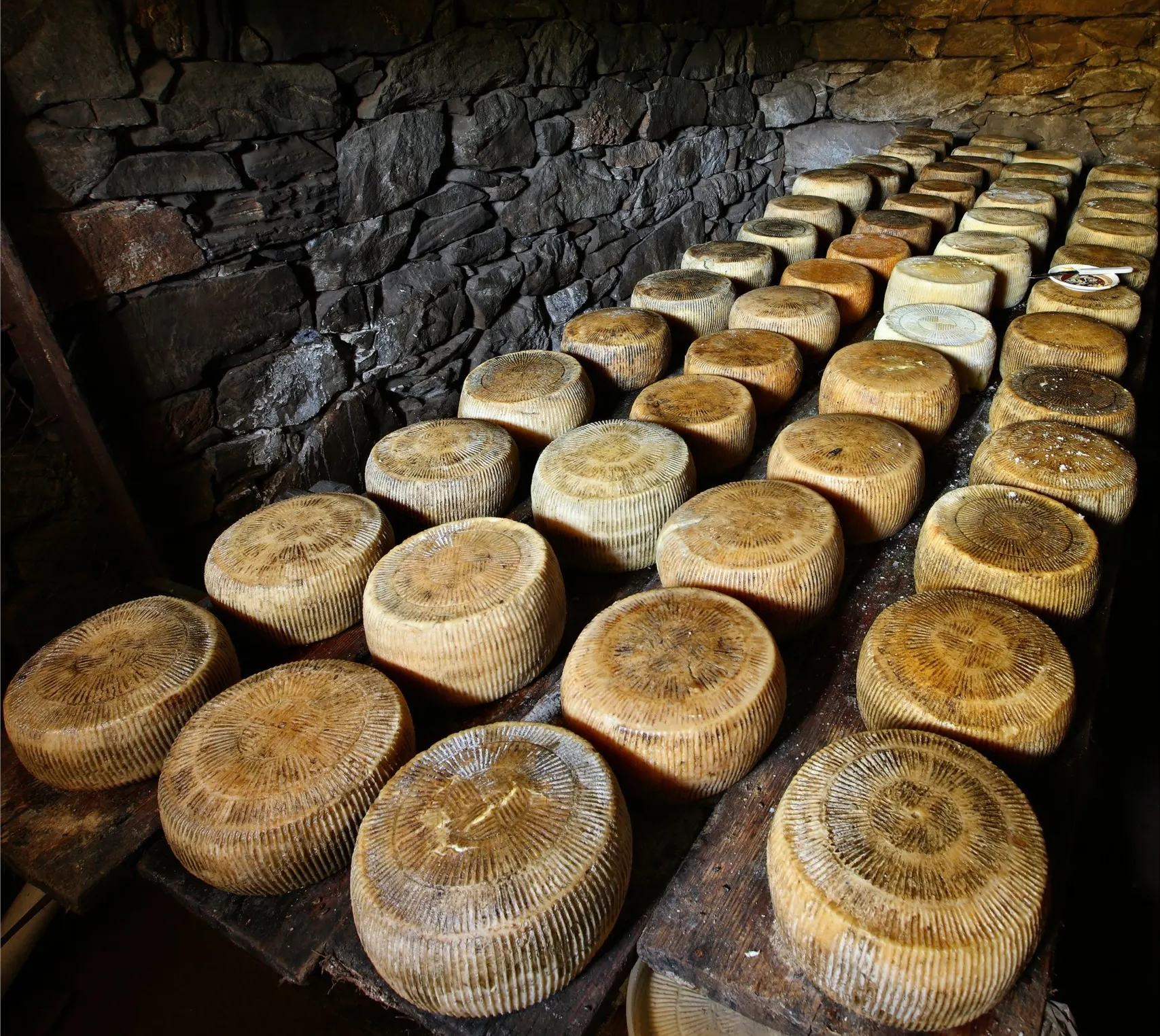
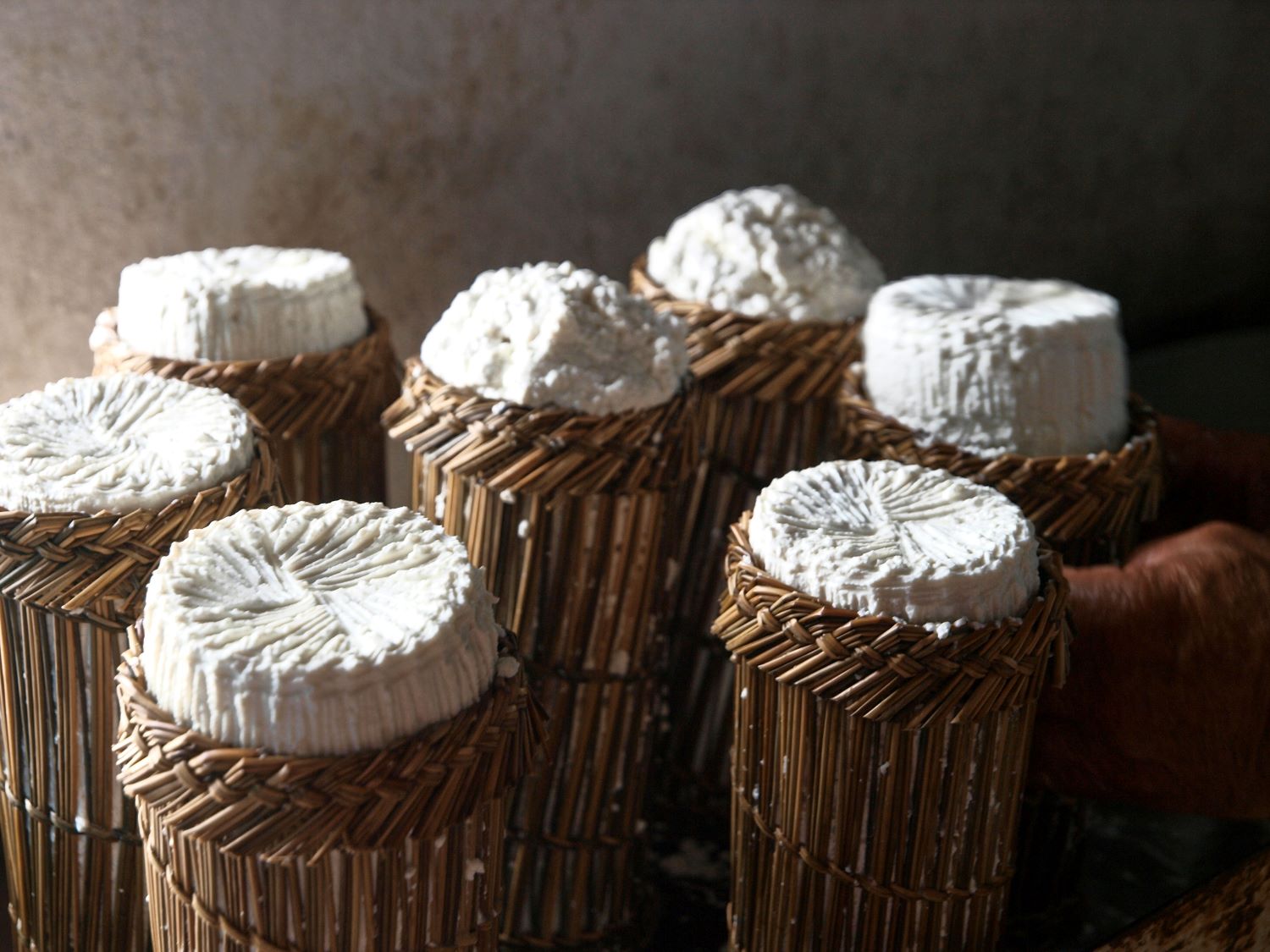
With its snow-white heart, purple rind, heady perfume of wine and subtly tangy taste, this cheese brings together two of Kos’s oldest traditions: herding and winemaking. Krasotyri Ko, also known as Tyri tis Possias PGI (Protected Geographical Indication), is one of those rare cases where the way a cheese is made tells the whole story of where it comes from. It is made only from sheep’s or goat’s milk, or a blend of the two, from animals raised on the island. The curd is traditionally pressed into long, narrow cylindrical moulds. These were once hand-woven from fine rush or reed, and they left deep grooves in the surface of the cheese, which remain its most recognisable feature to this day.
Then the possia takes over. This is the Koan word for wine lees, the sediment left behind after winemaking, and it gave the cheese its name. Once thoroughly drained and salted, the cheese is buried in the lees to mature for at least a month. There, the sugars and tannins of the wine give it its reddish rind and rich, winey character.
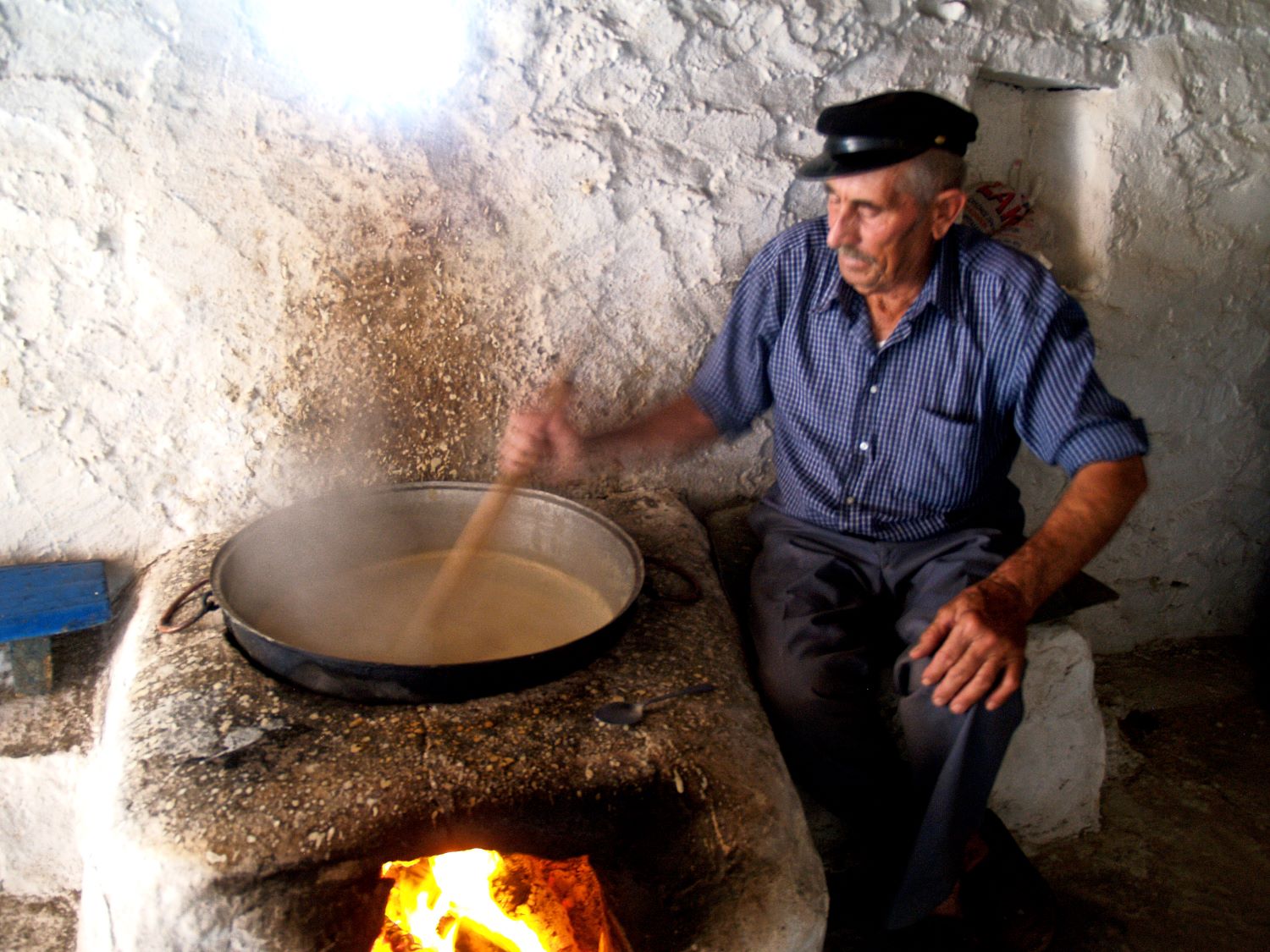
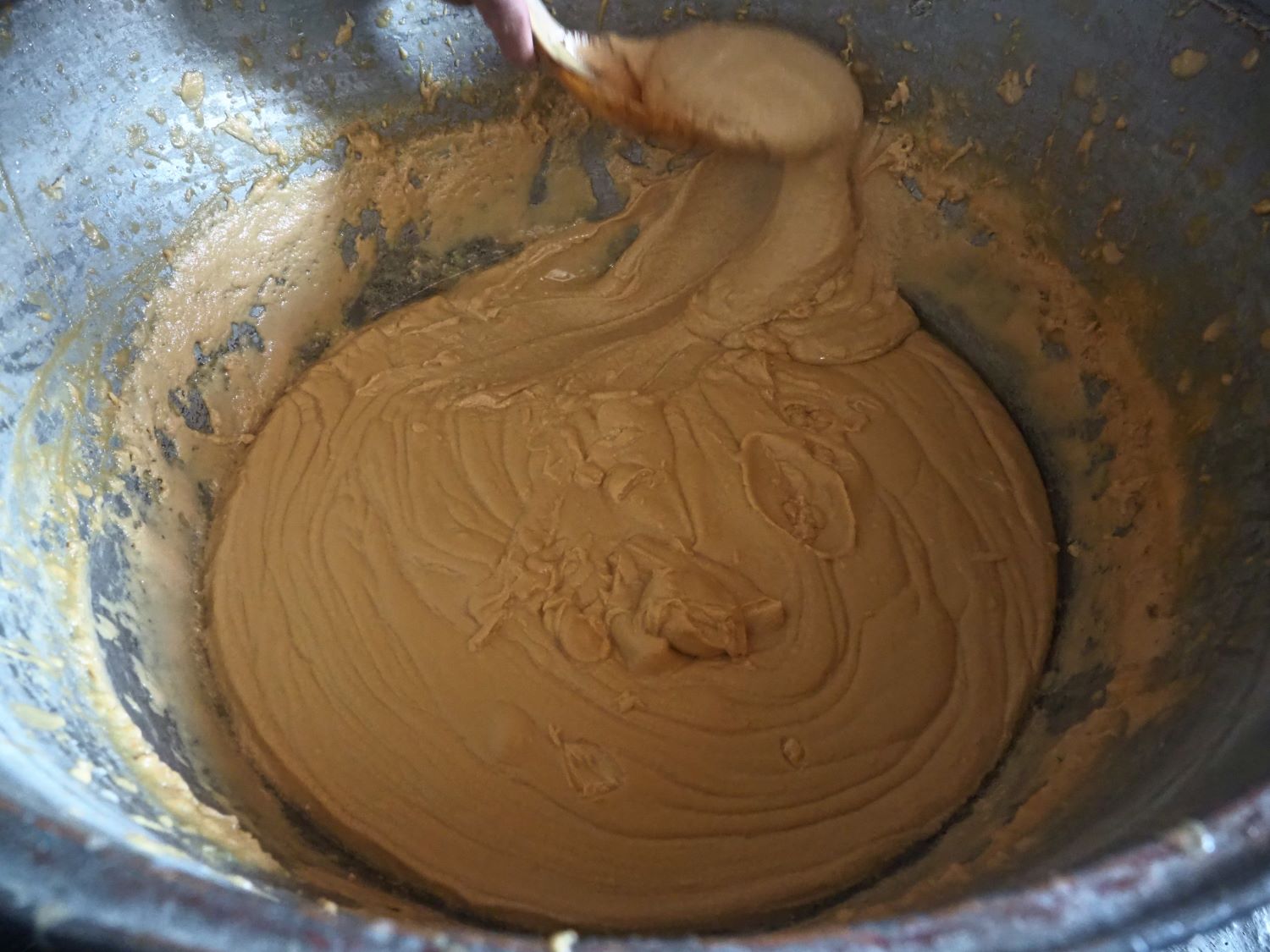
Intriguingly, the technique wasn’t born of culinary experiment but of necessity. It was a clever way to use a valuable by-product of winemaking while preserving cheese naturally in a world without refrigeration. Today this age-old practice could easily serve as a model of sustainability and the circular economy. The old sheepfolds and reed moulds have given way to modern, well-organised creameries, and the tools have changed, but the cheese’s bond with the island remains intact. Granted European PGI status in 2019, Krasotyri Ko / Tyri tis Possias continues to show how human ingenuity can turn a landscape and its raw materials into a small culinary marvel.
Kasos
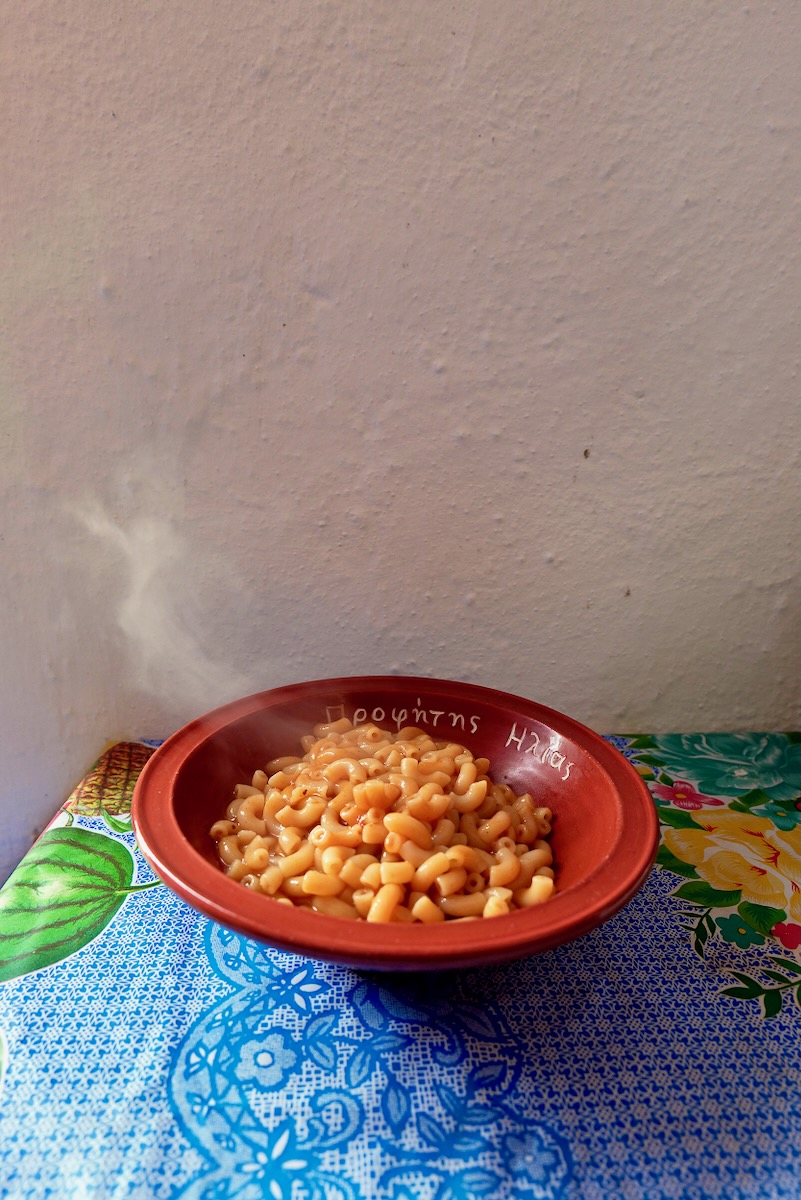
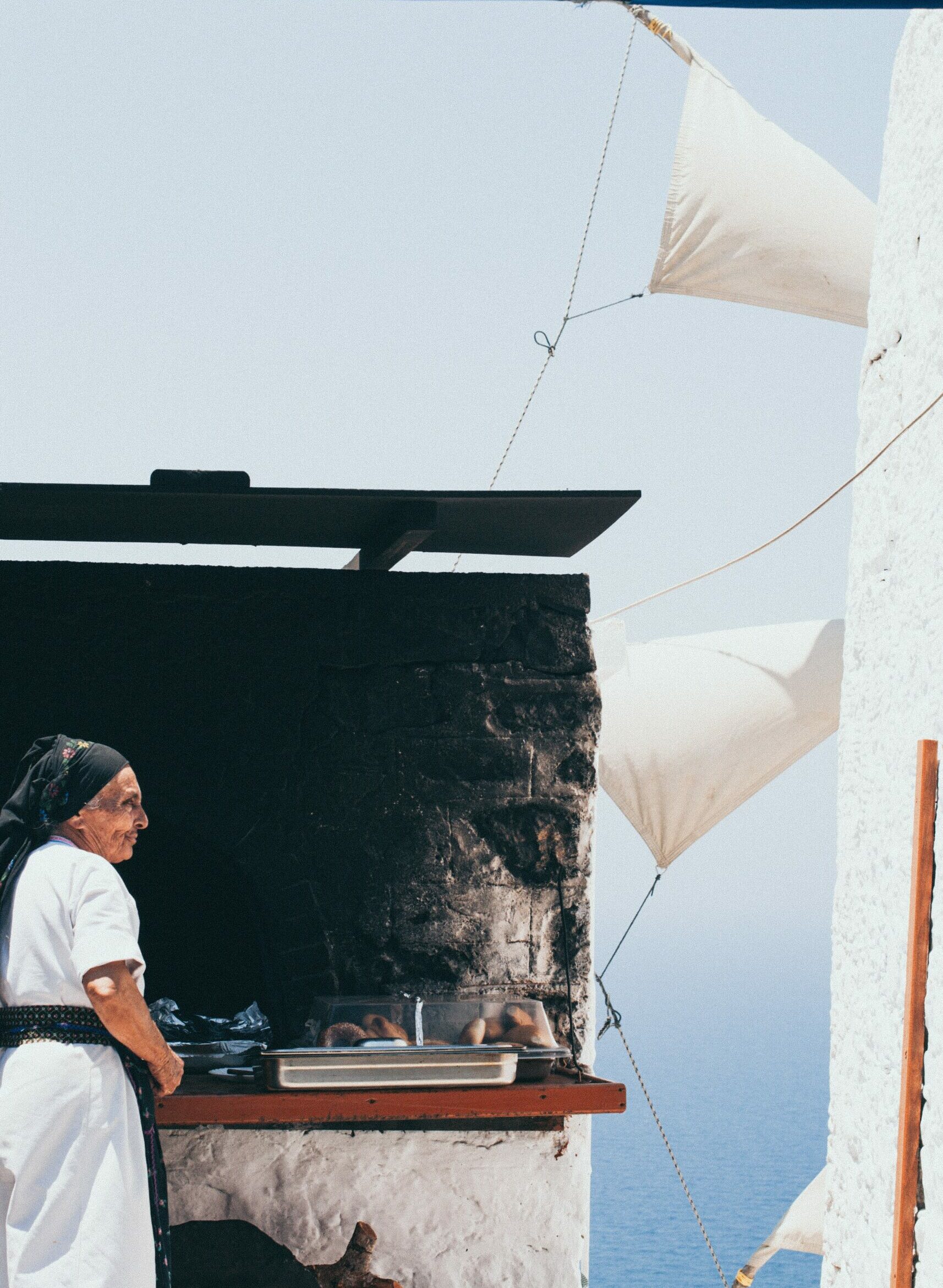
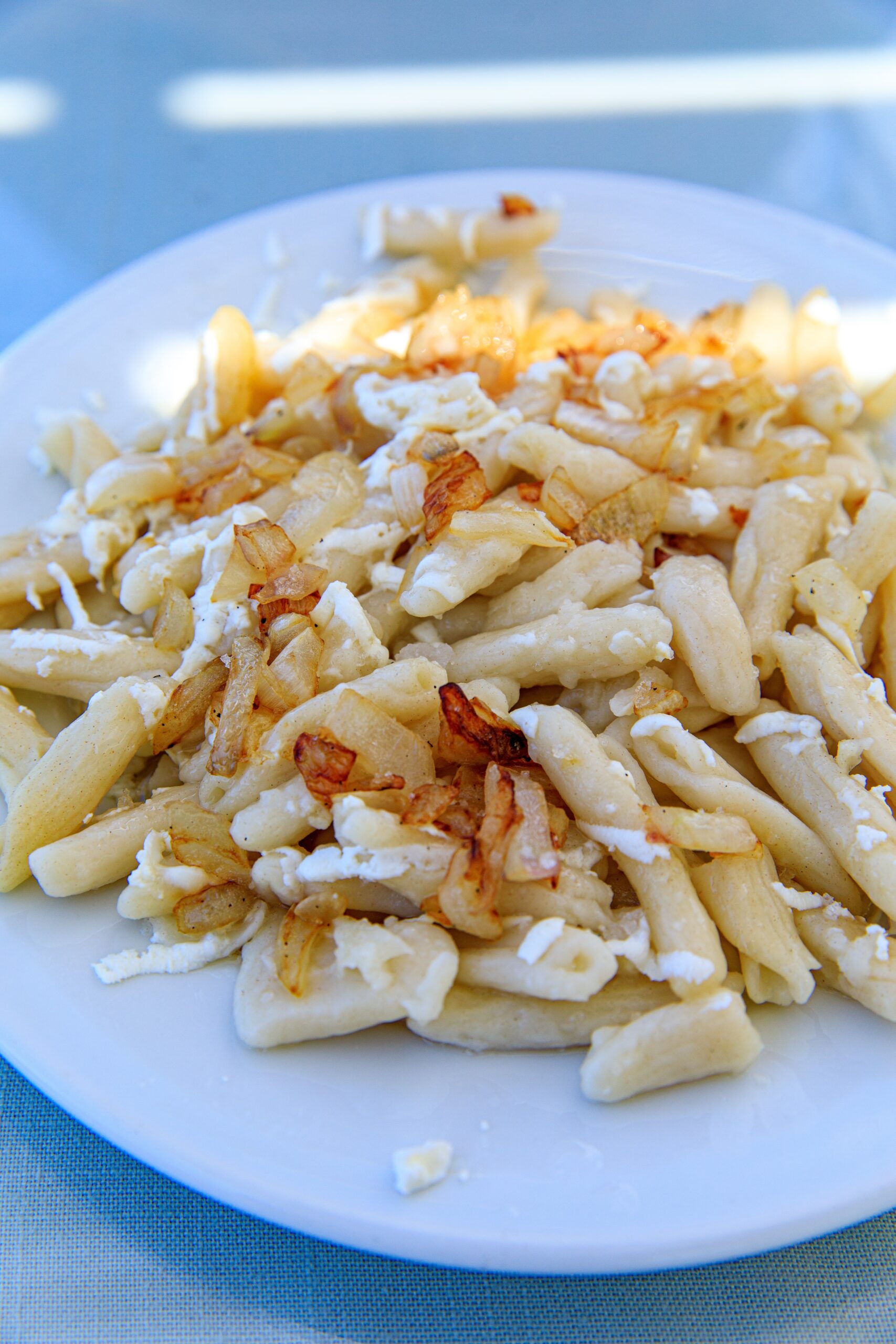
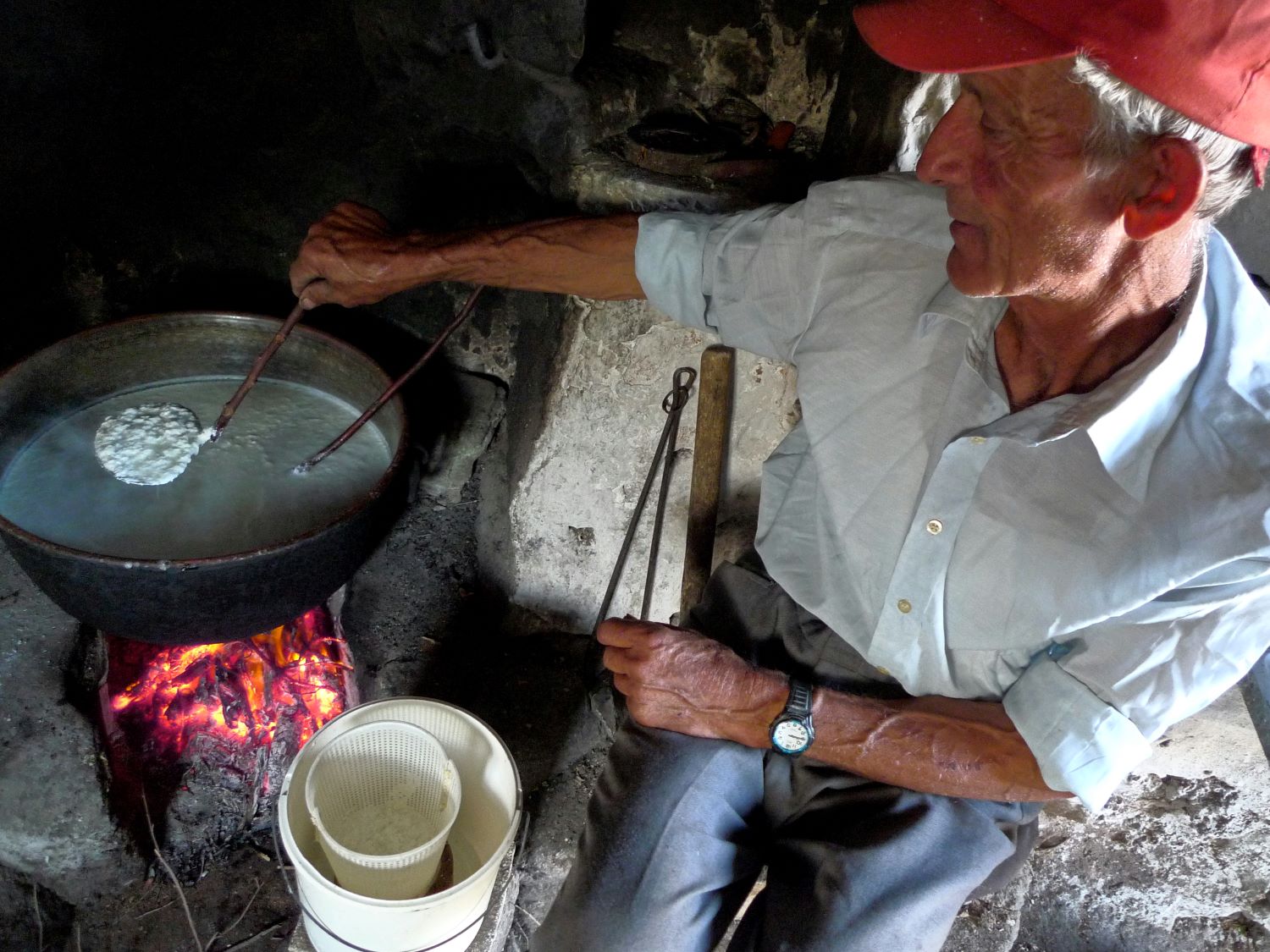
On Kasos, food remains closely tied to community and family, and sitaka is a living part of the island’s culture. Soft and creamy, with a distinctive, gently sour finish, it demands time, hard work and great patience over the cauldrons of the mitata, the shepherds’ stone huts. At a Kasiot table you’ll find it spread on traditional bread rings, but it is at its finest in the island’s celebrated makarounes. This handmade pasta is tossed with sitaka, doused in sizzling butter and crowned with onions fried until caramelised (the traditional tsiknoma). Humble ingredients are transformed into a dish that is genuinely moving to eat.
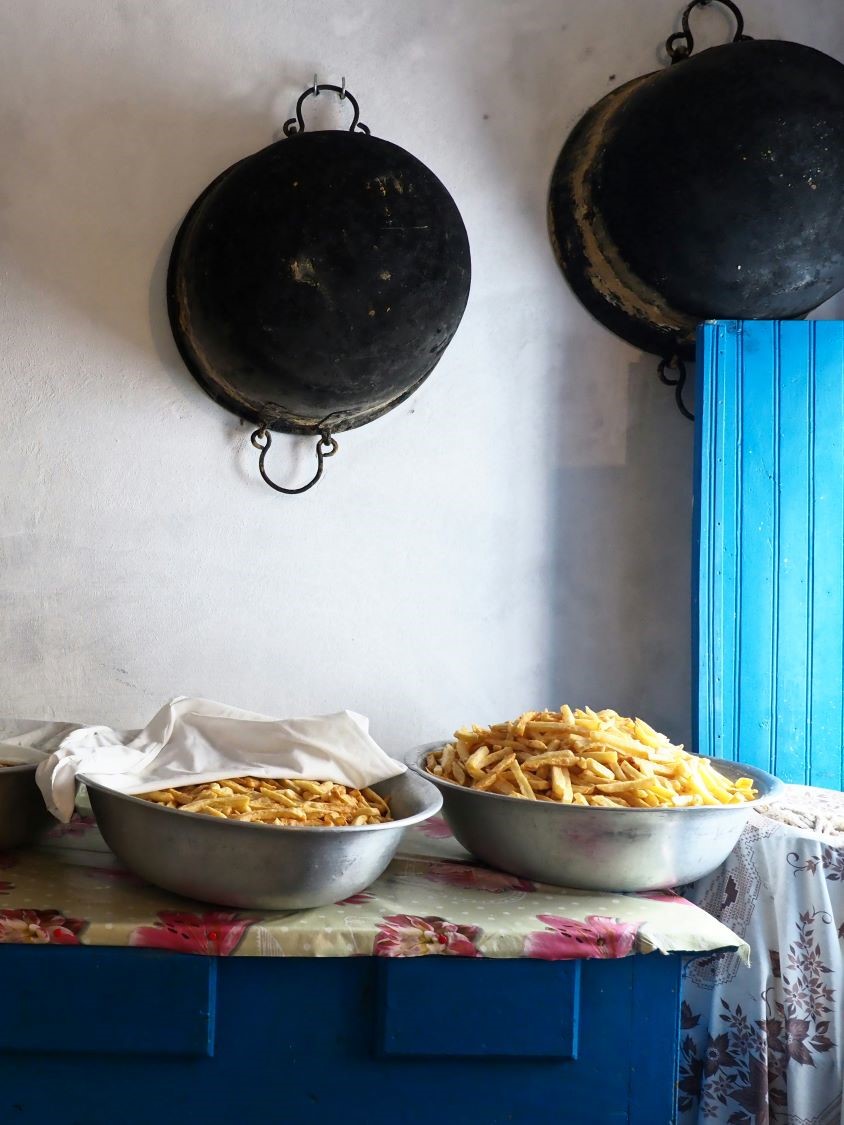
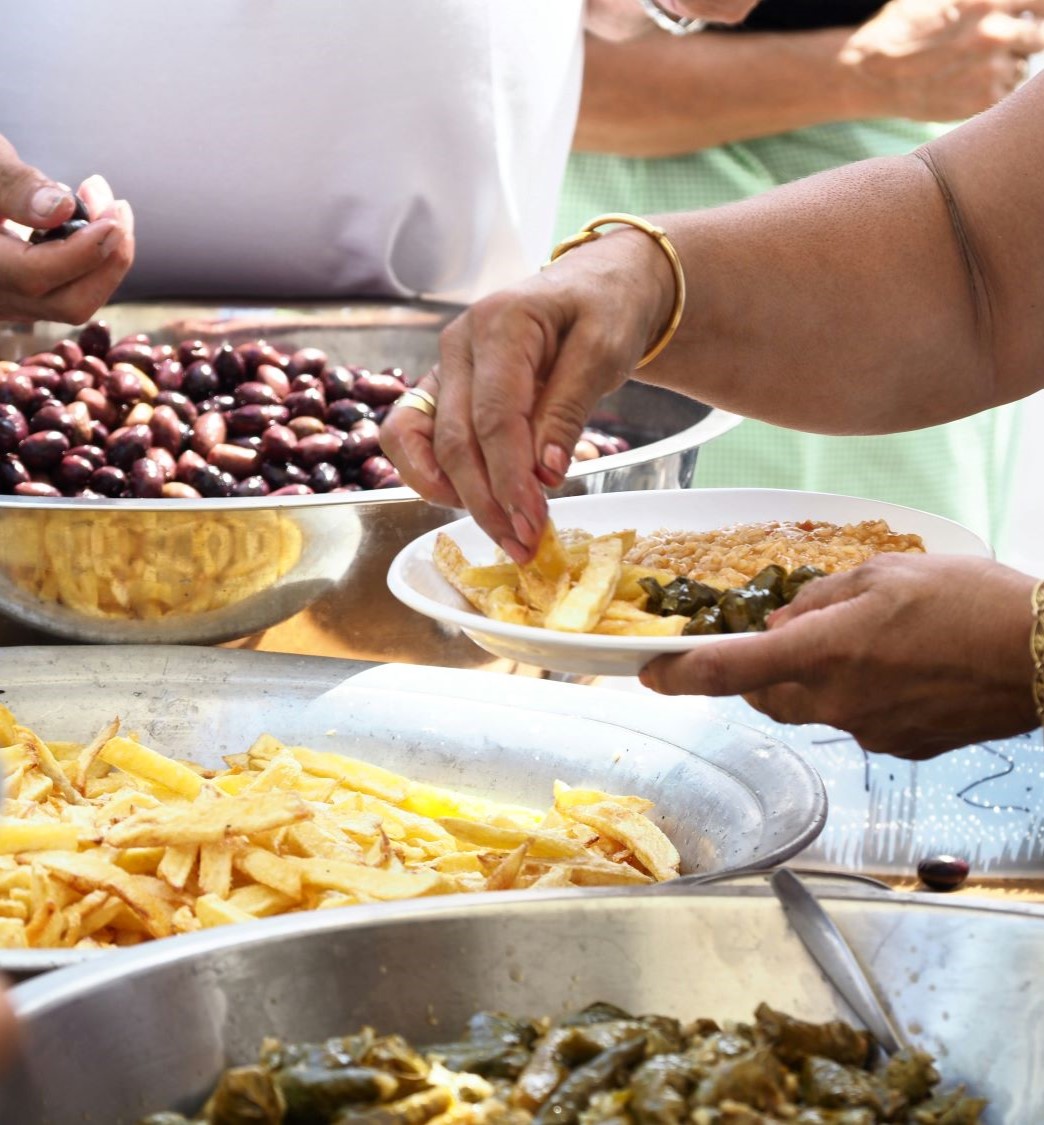
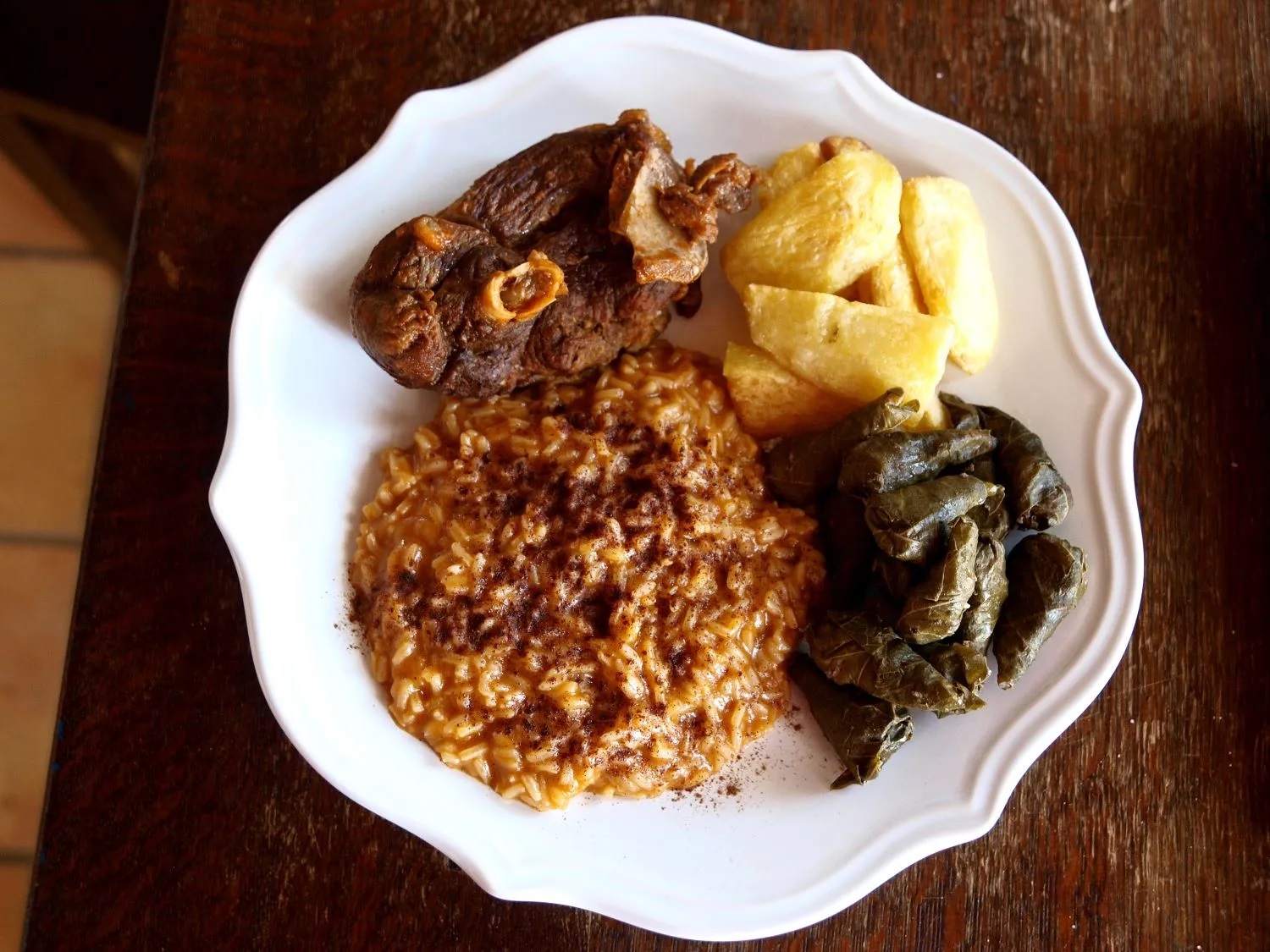
When the island celebrates, this culinary ritual becomes more powerful still. At the great religious feasts, in churchyards and around communal tables, food becomes part of the ceremony itself. The famous Kasiot pilaf, tiny dolmades (stuffed vine leaves), slow-cooked meat and makarounes are all prepared together. Cooking doesn’t stand on the sidelines of the celebration. It is the heart around which the community gathers.
Alongside sitaka, elaiki reveals another secret of island ingenuity. It is a salty myzithra, a traditional whey cheese, sealed in jars beneath a full layer of melted local butter, which shields it from the passage of time. Here, too, nothing is left to chance: the cheese is transformed, made to last, and develops a deep, entirely distinctive flavour. On rugged land with strictly limited resources, cheeses such as sitaka and elaiki embody the wisdom of a whole way of life, one in which nothing of value was ever allowed to go to waste.
Karpathos
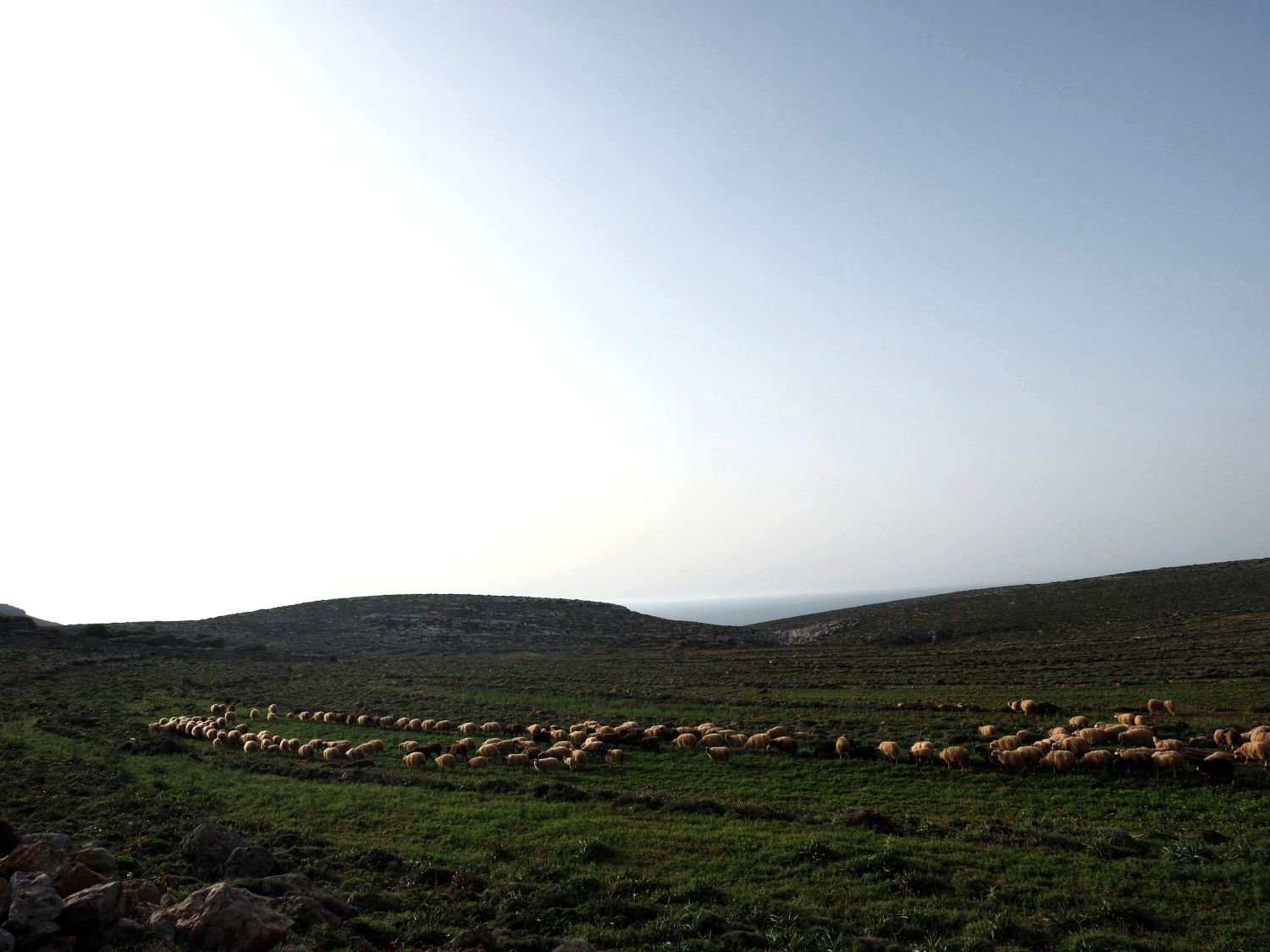
Neighbouring Karpathos has a rich family of cheeses all its own. Manouli, armyrotyri and meriari remain the pillars of the island’s food tradition, all made only from the milk of local, free-grazing flocks. Fresh, velvety manouli, firm and intensely salty armyrotyri, and complex, piquant meriari show vividly how the same pure milk can become entirely different cheeses in the hands of a skilled and passionate cheesemaker. Therein lies the true wealth of island cheesemaking: not in industrial quantities, but in a chorus of small, singular local voices.
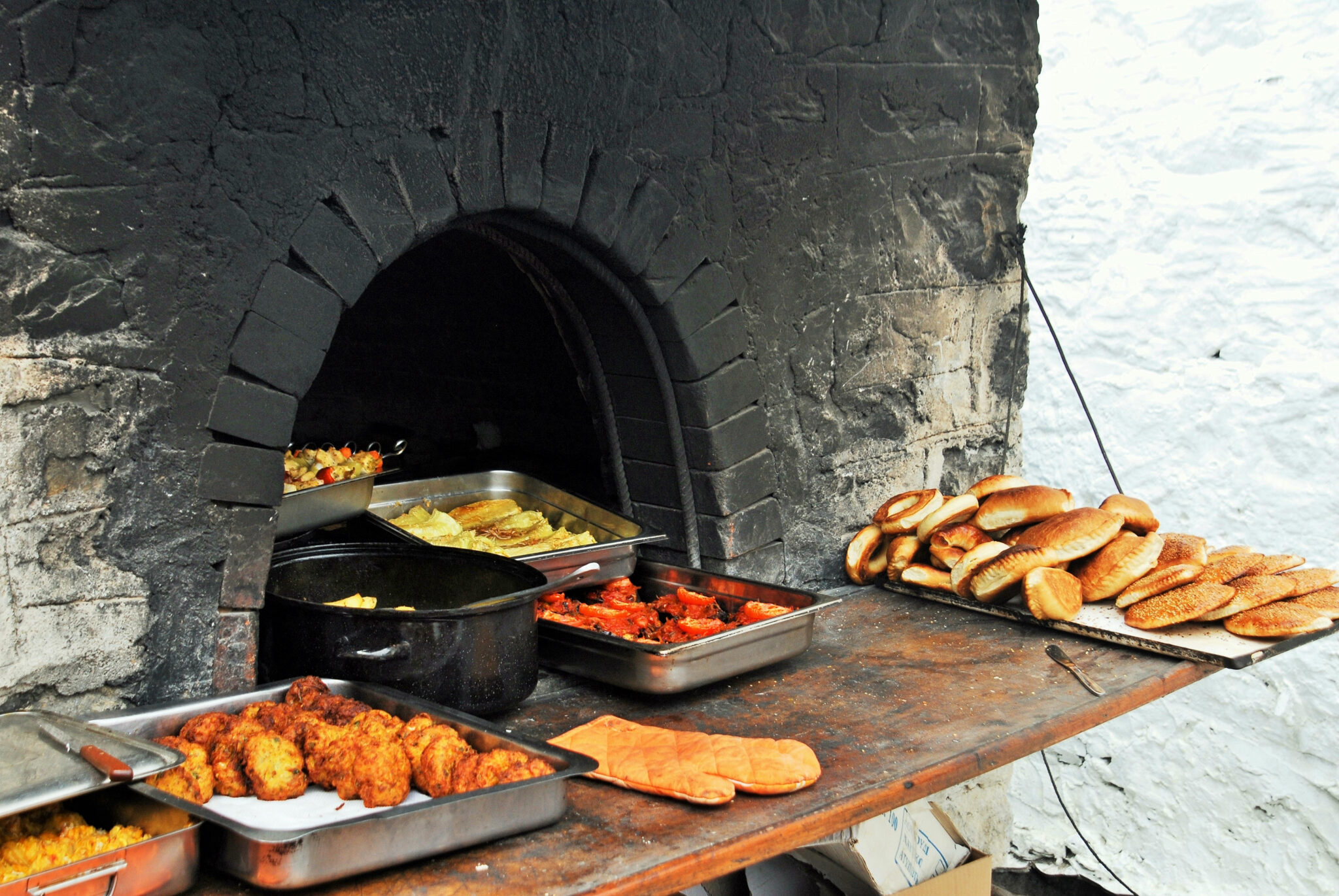
In Karpathos’s renowned makarounes, cheese returns triumphantly to the heart of local cooking. The handmade pasta arrives bathed in hot fresh butter, with caramelised onion (the traditional tsiknoma) and generous handfuls of grated armyrotyri. It is a captivating combination that unites on one plate the gold of wheat, the richness of milk and the matchless skill of the island’s women, who still shape and roll the makarounes by hand, one by one. On Karpathos, food is bound tightly to the cycle of local production. The famous breads and rusks, the deep-hued wine, the fragrant honey, the wild greens and the cheeses are all chapters of the same cultural story. It is a living heritage of ancient techniques, handmade tools and those special occasions when sharing food gives the community its meaning.
Nisyros
Amid the dramatic volcanic landscape of Nisyros, cheesemaking shows once again how inventive the Dodecanese can be. Here the tyri tis trygias, the cheese of the grape harvest, confirms the ancient bond between vine and flock. Submerged and protected in red wine and lees, it recalls the similar practice on neighbouring Kos, yet it carries the distinctive mineral imprint of the local soil. Beside it, sakouliasti reflects an entirely different approach to flavour. Pristine, white and velvety, with a fresh, gently sour character, it has the texture of an exceptionally thick yoghurt. It is patiently strained in traditional cloth bags, and it belongs to those rare, precious foods that seldom travel beyond their birthplace. Perhaps that is why tasting it on home ground, overlooking the caldera, is an experience you won’t find anywhere else.
Krasotyri on Kos; sitaka and elaiki on Kasos; manouli, armyrotyri and meriari on Karpathos; tyri tis trygias and sakouliasti on Nisyros. Within a small geographical area, the variety is already more than enough to dispel for good the myth of a single, uniform “Dodecanese cheesemaking”. Its real strength lies not in sameness but in its remarkable, exhilarating diversity.
Rhodes, Leros and the Smaller Islands: Variations on Shared Knowledge
Yet the cheeses of the Dodecanese don’t end with the leading names. On Rhodes, farming, herding and trade have long shaped a cuisine rich in cosmopolitan influences, and local cheeses sit naturally alongside grains, pulses, aromatic herbs and the fruits of the vine. On Leros, fresh cheeses find inventive uses in everyday dishes and traditional pies, such as the famed Lerian pougkia (small pastry parcels), a reminder of how deeply cheesemaking remains rooted in home cooking. Meanwhile, on the smaller, remote islands, from Tilos and Halki to Leipsoi, small-scale, free-range herding still brings its pure, unpretentious honesty to the daily table.
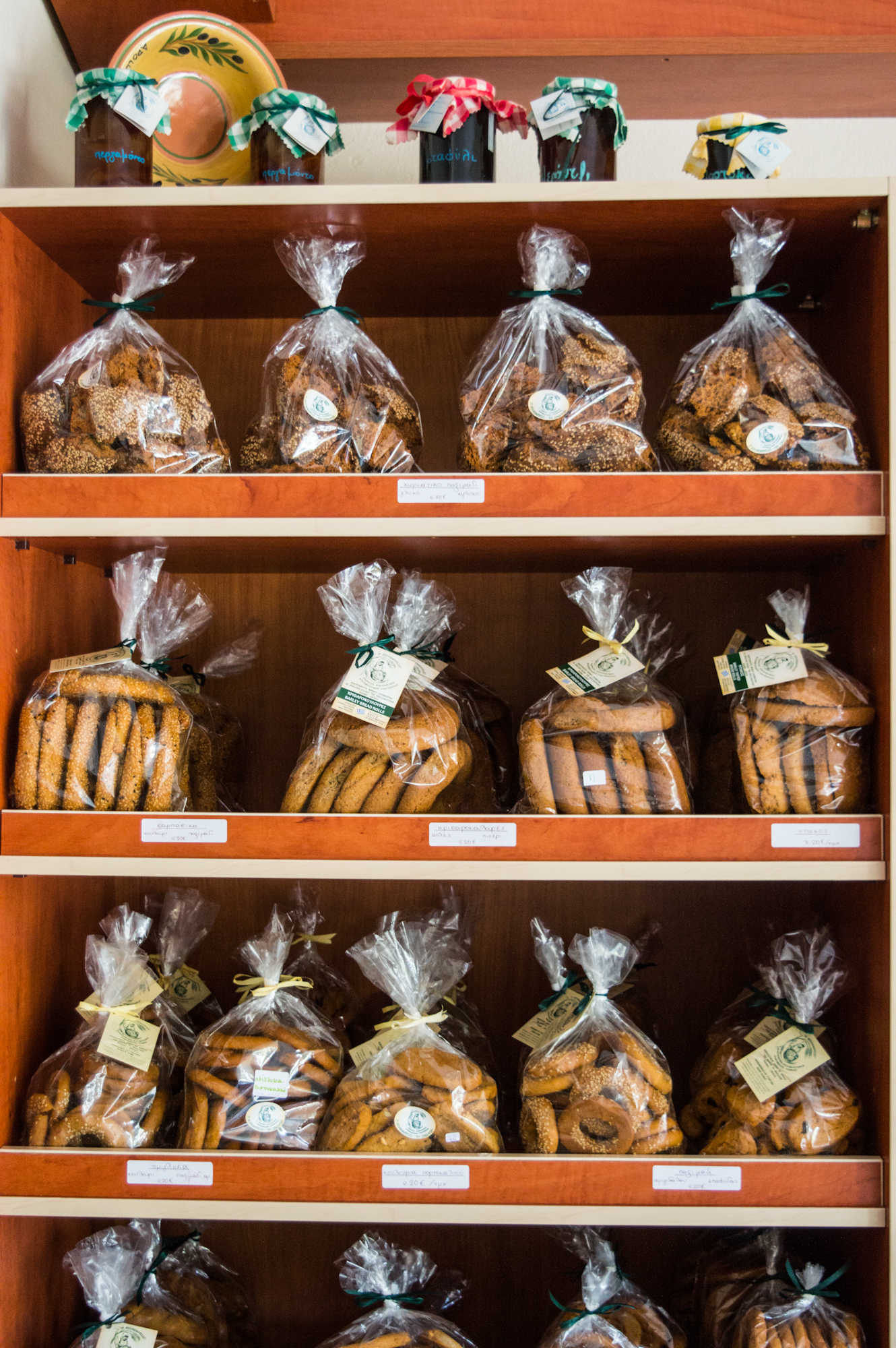
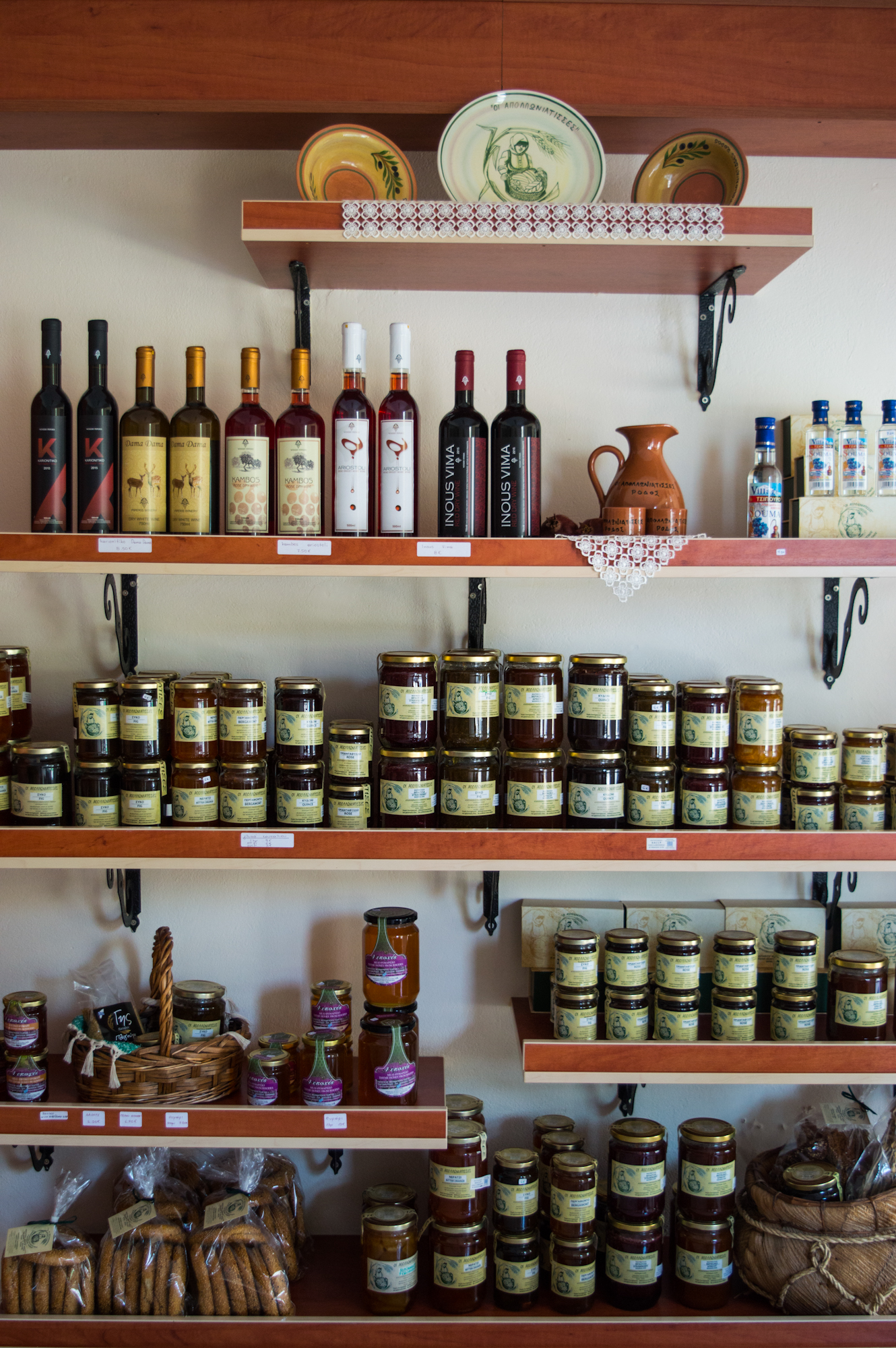
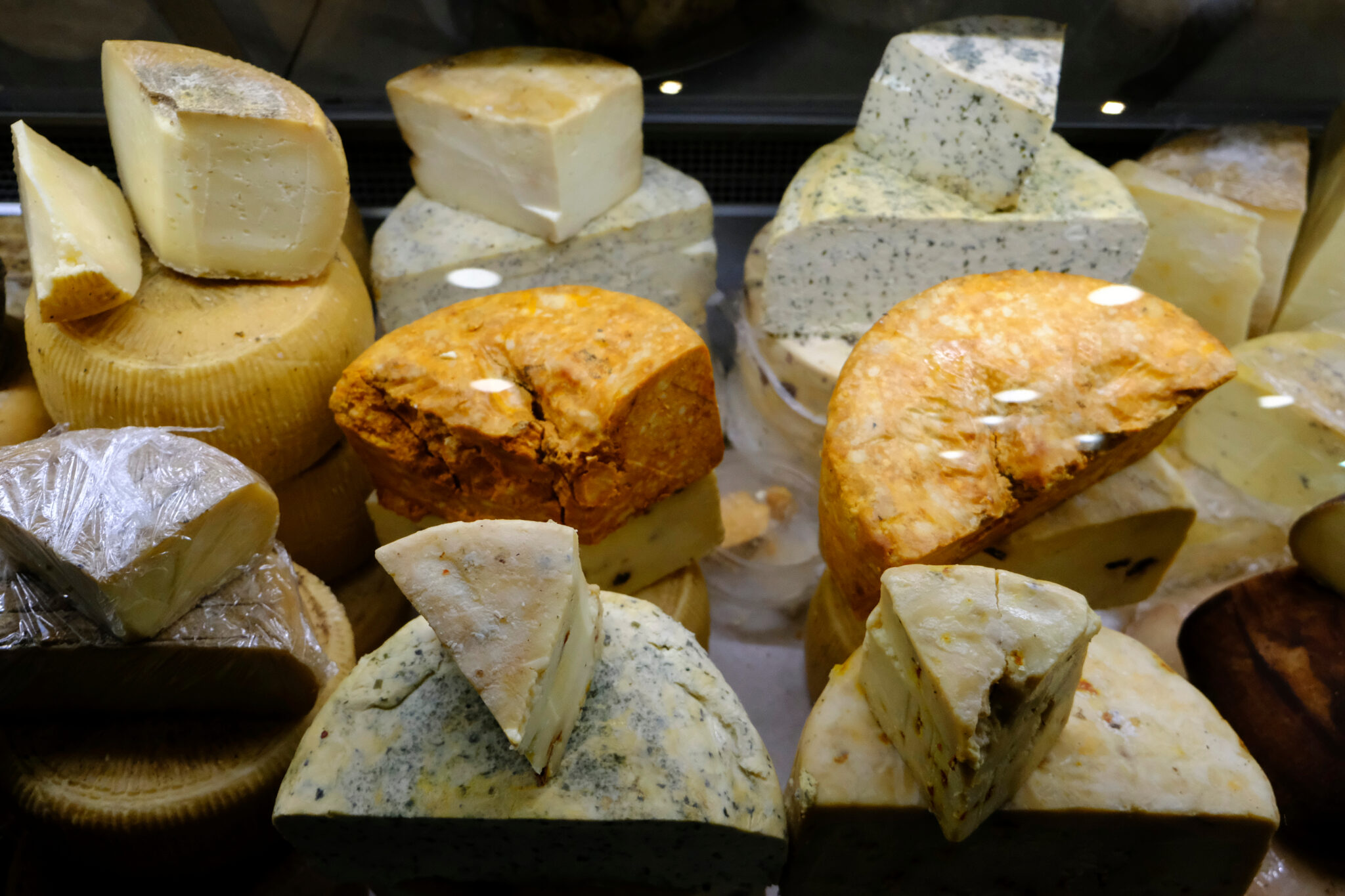
These lesser-known cheeses may tell us the most about Dodecanese food. They resist uniformity and are not standardised products. Instead, they reveal a long line of small, local solutions: different kinds of milk, varying ageing times, inventive ways of preserving and, above all, the many roles they play in a living cuisine. That is why travel in the Dodecanese is at its most rewarding when it leads through small creameries, neighbourhood grocers, authentic markets and the hospitable tables of the islanders. There, travellers can taste these foods where they were born, hear their local names, and discover the small stories behind how they are made. They can also grasp something precious: these cheeses have not yet been cut off from daily life and turned into lifeless “gourmet products” for a shop window. A piece of cheese, a jar of thyme honey, a bottle of local wine or a packet of handmade pasta become the truest souvenirs of a journey. That isn’t because they bear the name of a destination, but because they carry a whole way of life, a deep cultural memory and a story still being written every day in the Aegean.
The Cyclades: A Kindred Tradition Centuries Old
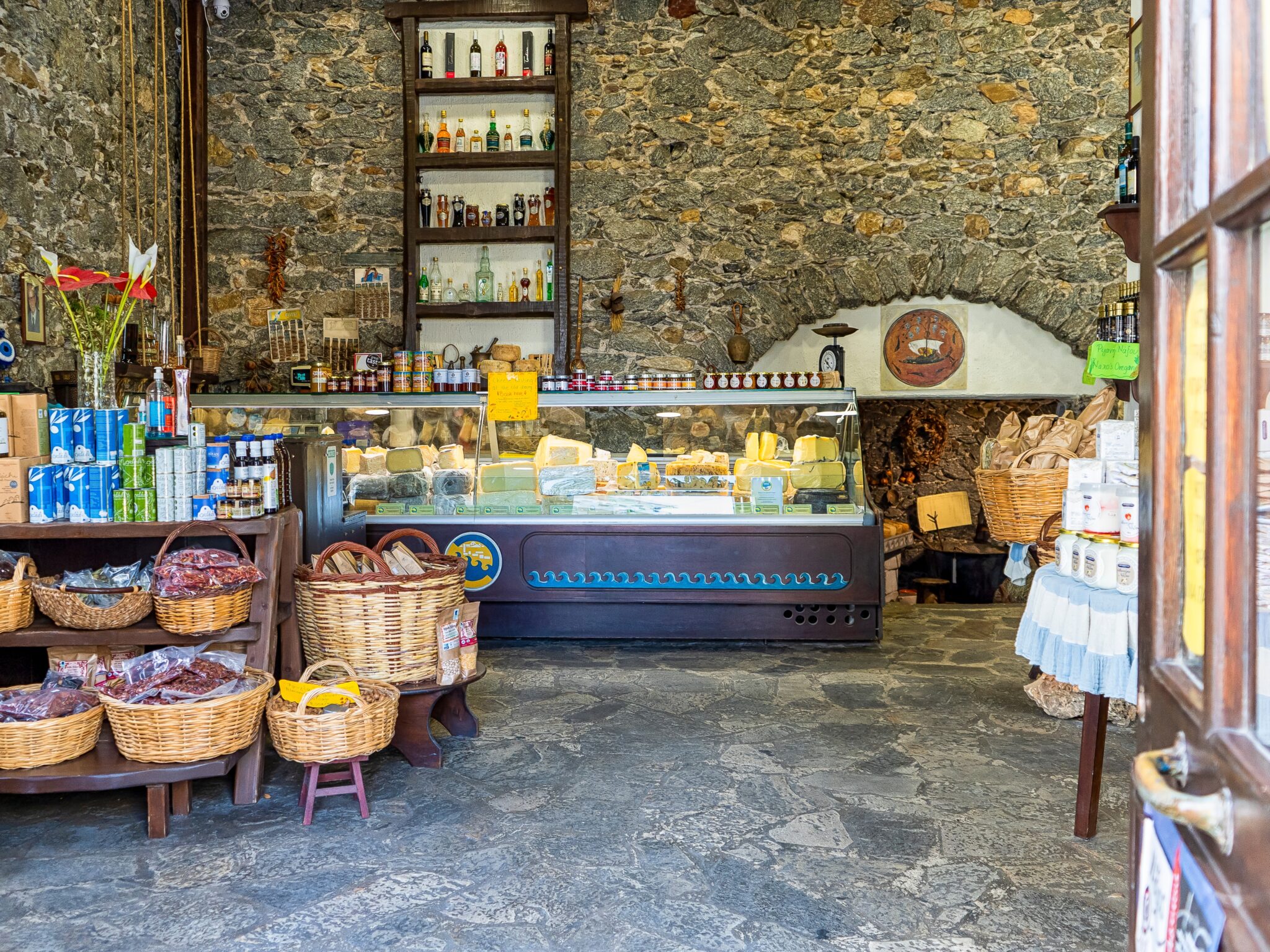
The same resilient ingenuity continues further north in the Cyclades. There, traditional cheesemaking was officially recognised in 2024 with its inscription on Greece’s National Inventory of Intangible Cultural Heritage. Arid soils, fierce north winds, low aromatic scrub and the harsh realities of island herding combined to produce a striking, almost unexpected variety of cheeses, with kopanisti, Arseniko and Naxos Graviera among the most iconic. Writing about his travels on Mykonos in 1947, the eminent Greek architect Aris Konstantinidis singled out “the tasty cheese, kopanisti” among the island’s true delicacies. Two centuries earlier, the French physician and well-travelled explorer Pitton de Tournefort had already praised the island’s unique soft cheese.
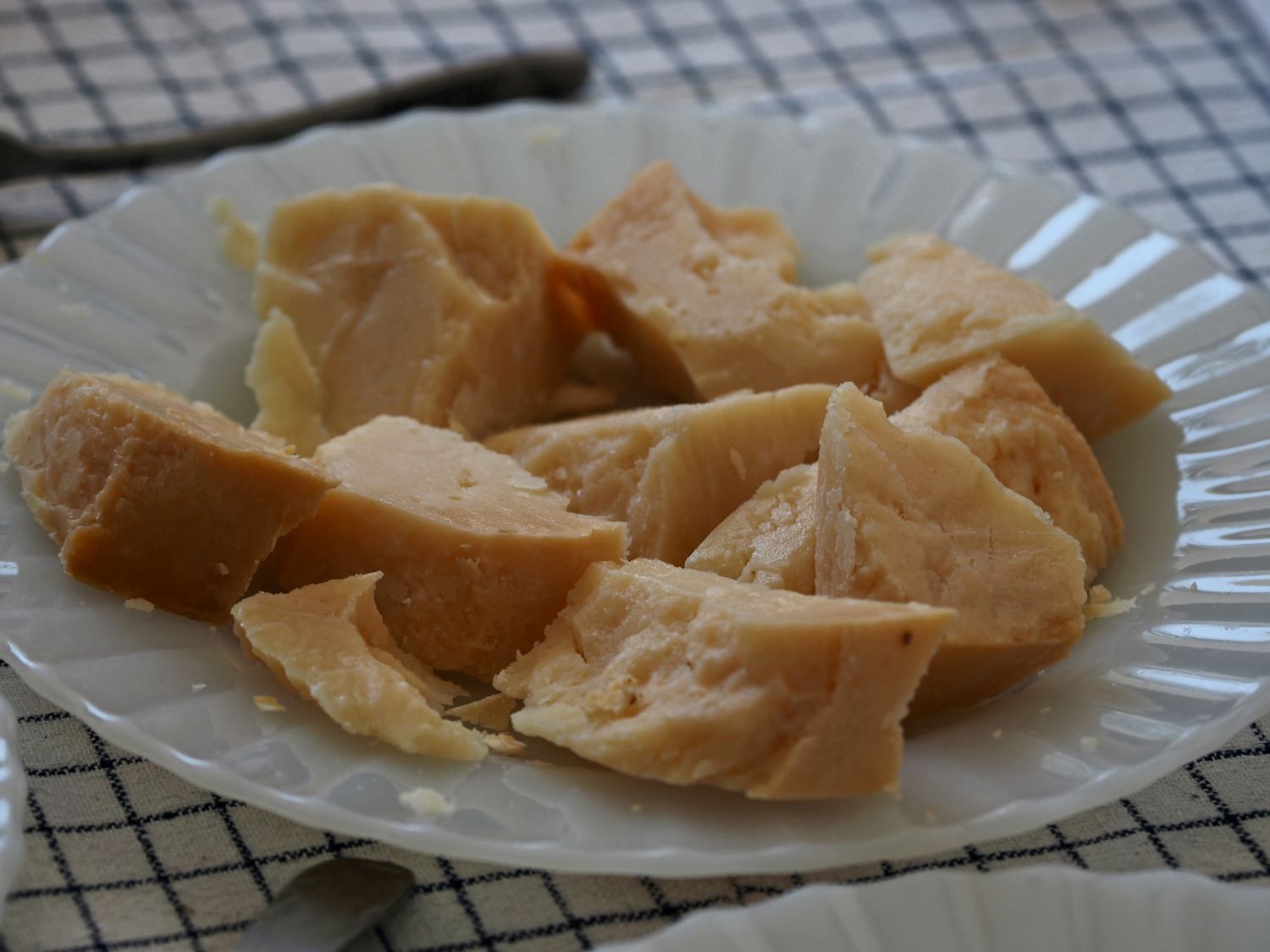
Spicy and peppery, with a beautifully smooth, spreadable texture, kopanisti is made on several Cycladic islands, yet it has become wholly identified with the spirit of Mykonos. Repeated kneading, successive drainings and slow ageing demand deep knowledge and time. Local names such as niari, zymithra and tyri tis bournias preserve charming variations of the same ancient tradition. In the wild, mountainous heart of Naxos, Arseniko PDO (Protected Designation of Origin) remains inseparable from the stone mitata and the proud herders of Apeiranthos, Koronos, Kynidaros and Filoti. The manoura, the first stage of the curd, drains slowly in tsimiskia, traditional moulds woven from dried rushes. The wheels then rest on wooden shelves and are rubbed from time to time with mourga, the thick, beneficial sediment of olive oil, which protects the cheese. The longer it ages, the more intense, robust and piquant its flavour becomes.
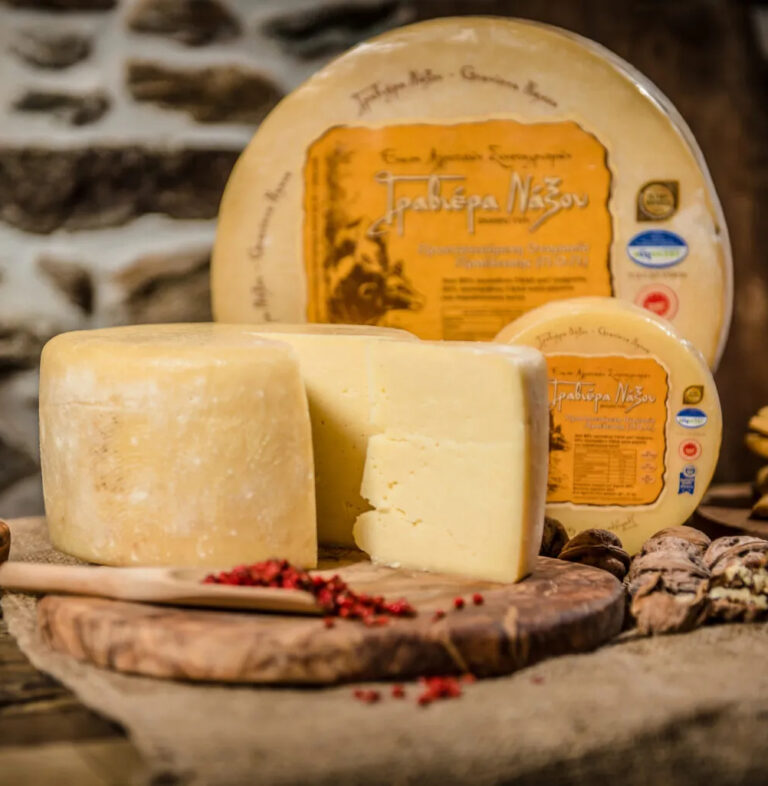
Beside it, Naxos Graviera PDO, a hard cheese whose name comes from the Swiss gruyère, fittingly represents the modern, outward-looking face of Cycladic cheesemaking with its soft, sunlit yellow colour, firm texture and generous aroma of fresh butter. From younger, suppler versions to long-aged wheels, its flavour evolves beautifully as it matures. Together with the fine graviera cheeses of the other islands, it reveals something of the magic of the Aegean: how exactly the same type of cheese can take on an entirely different and captivating identity from one island to the next.
Cheese as a Living Memory of Taste
Each of these cheeses holds the soul of its place. There is the toil of the herder following his flock across parched, windswept slopes, and the devotion of the woman shaping traditional pasta for the family table. There is the wisdom of the cheesemaker who can tell by touch when the curd is ready and when it still needs time. The traditional tools themselves also preserve hands-on knowledge that no written recipe can capture: woven tsantiles (draining cloths), reed moulds, clay vessels and wooden ageing shelves.
This craft reveals how island communities have long coped with the seasonal flow of milk, the pressing need to preserve food, the swings between plenty and scarcity, and their own isolation. It also mirrors human relationships: cooperation within the family, secrets passed on through practice from one generation to the next, and the central place of shared food at great festivals, joyful occasions and everyday gatherings. That is precisely why protecting the Aegean’s local cheeses cannot, and should not, end with registering a legal name. The very conditions that gave rise to them must be kept alive. These include traditional herding, artisanal know-how, small producers able to keep working on their own land, and above all the real presence of these foods in everyday island cooking. Only then will taste remain what it truly is: a living culture that continues to nourish and unite us.
From Cheesemaking Tradition to the South Aegean’s Gastronomic Strategy
This knowledge lives in the traditional moulds of Kos, the cauldrons of Kasos, the home workshops of Karpathos, the volcanic produce of Nisyros and the similar centuries-old traditions of the Cyclades. Today it forms one of the most precious chapters in the cultural identity of the South Aegean Region. In the Dodecanese especially, world-famous destinations such as Rhodes and Kos coexist with the unspoilt charm of smaller islands like Kasos, Halki, Tilos and Leipsoi, and that makes safeguarding this heritage truly urgent. Food must stay closely bound to local farming and living communities, so it can act as a bulwark against the homogenising pressures of mass tourism.
The South Aegean’s designation as European Region of Gastronomy 2019 laid a strong foundation for this sustained effort. Today the Region is aiming even higher, with a serious bid for the title of World Region of Gastronomy 2028. The thinking behind the bid links culinary heritage with education, sustainable business, culture and the vitality of the countryside. It is a circular model in which a rare cheese, a local wine or an ancient recipe isn’t treated as a mere commodity for visitors. Instead, each is a link in a chain that begins with the producer and returns as wealth to the local community.
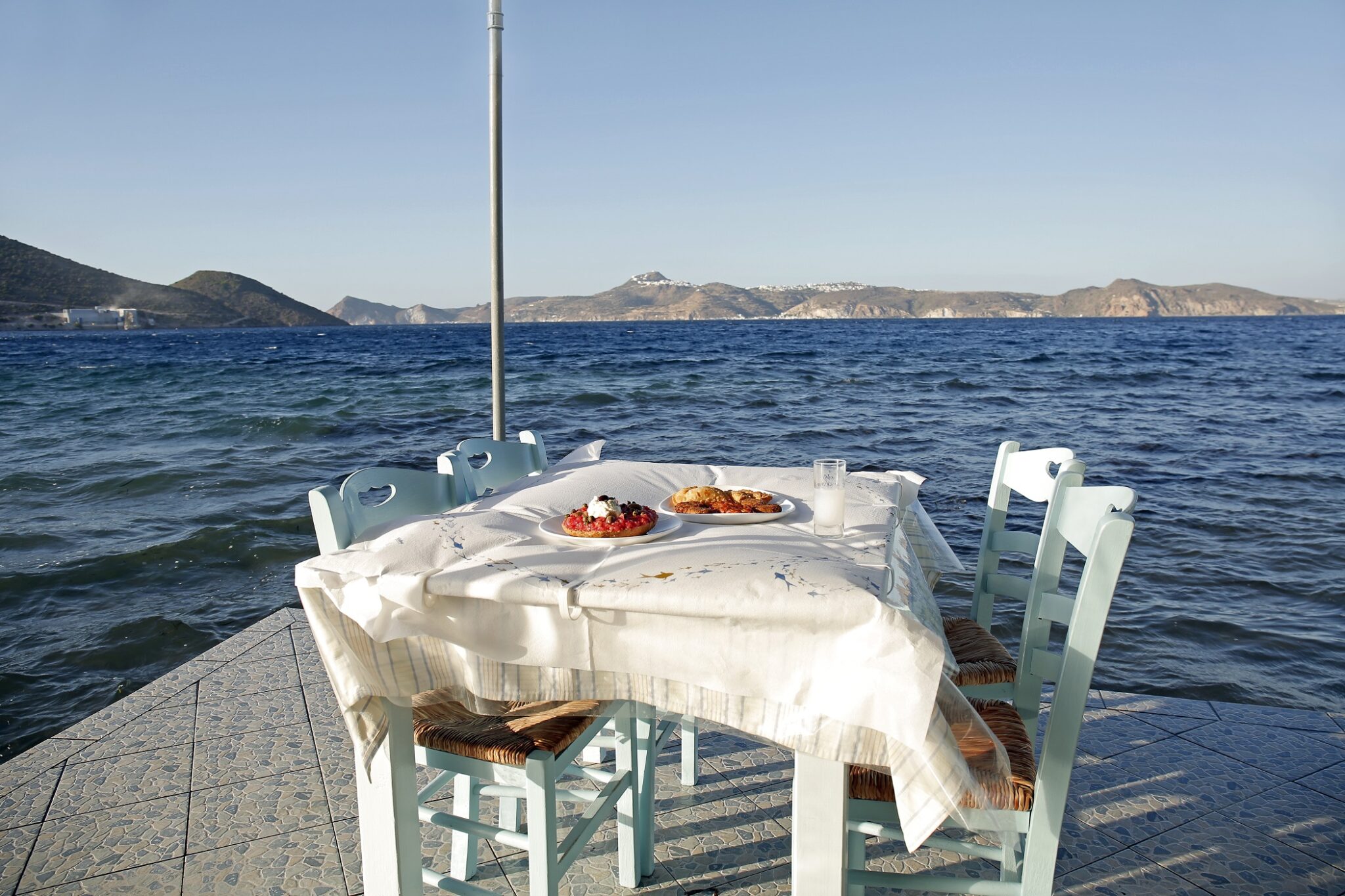
The Aegean Cuisine network plays a key role in this. It grew out of fruitful cooperation between South Aegean bodies and the Dodecanese and Cyclades Chambers of Commerce, with the aim of protecting and promoting the islands’ food and wine culture. In the Dodecanese, the network carries a particular responsibility: to bridge the dynamic international tourism market and the small, vulnerable local producers who give the islands their true, authentic character.
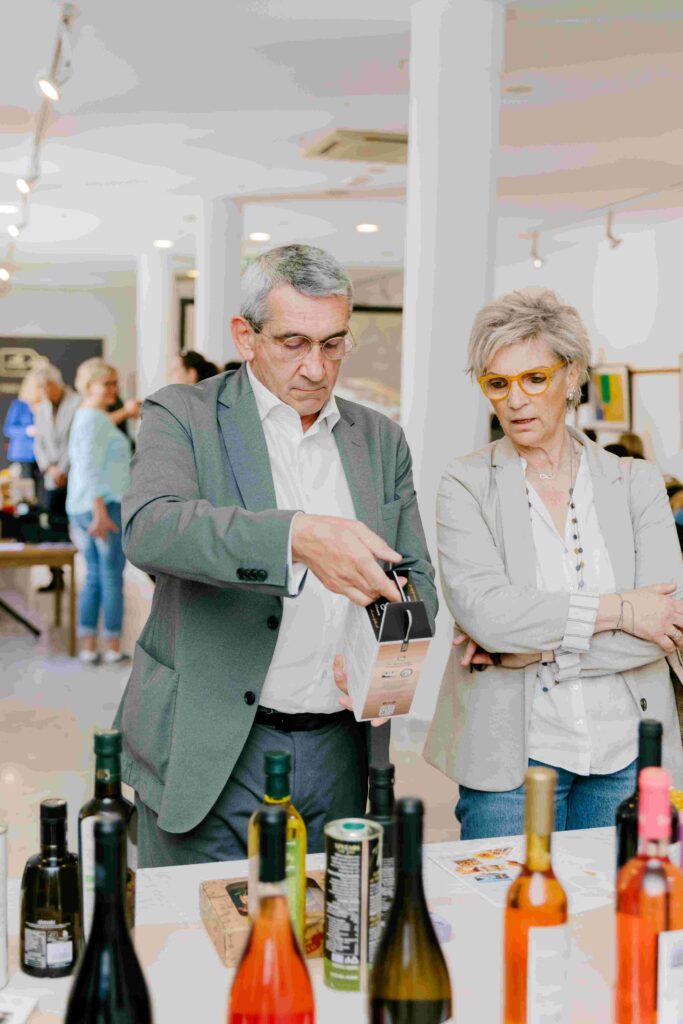
The architect and driving force behind this outward-looking strategy is the Regional Governor of the South Aegean, Giorgos Hatzimarkos, who made linking economic growth with promoting the islands’ cultural heritage a priority. His international contribution was officially recognised by the International Institute of Gastronomy, Culture, Arts and Tourism (IGCAT), which named him an IGCAT Honorary Ambassador. From the European title of 2019 to the global bid for 2028, the aim has remained constant: food should be more than another tourist spectacle. It should be a serious tool for protecting production, strengthening local economies and preserving a precious cultural memory.
Anyone who wants to understand what this identity means in practice has no need for theory. It is enough to seek out the foods themselves: the possia cheese of Kos, the sitaka of Kasos, the manouli and meriari of Karpathos, the tyri tis trygias of Nisyros and, a little further north, the kopanisti of Mykonos and the Arseniko and graviera of Naxos. Behind every bite lies the same unbroken, sacred bond between people, raw material and place. Together, the cheeses of the Aegean draw a different, living map of the archipelago, one that shows how its true strength and culinary identity are built, day by day, on its own captivating diversity.