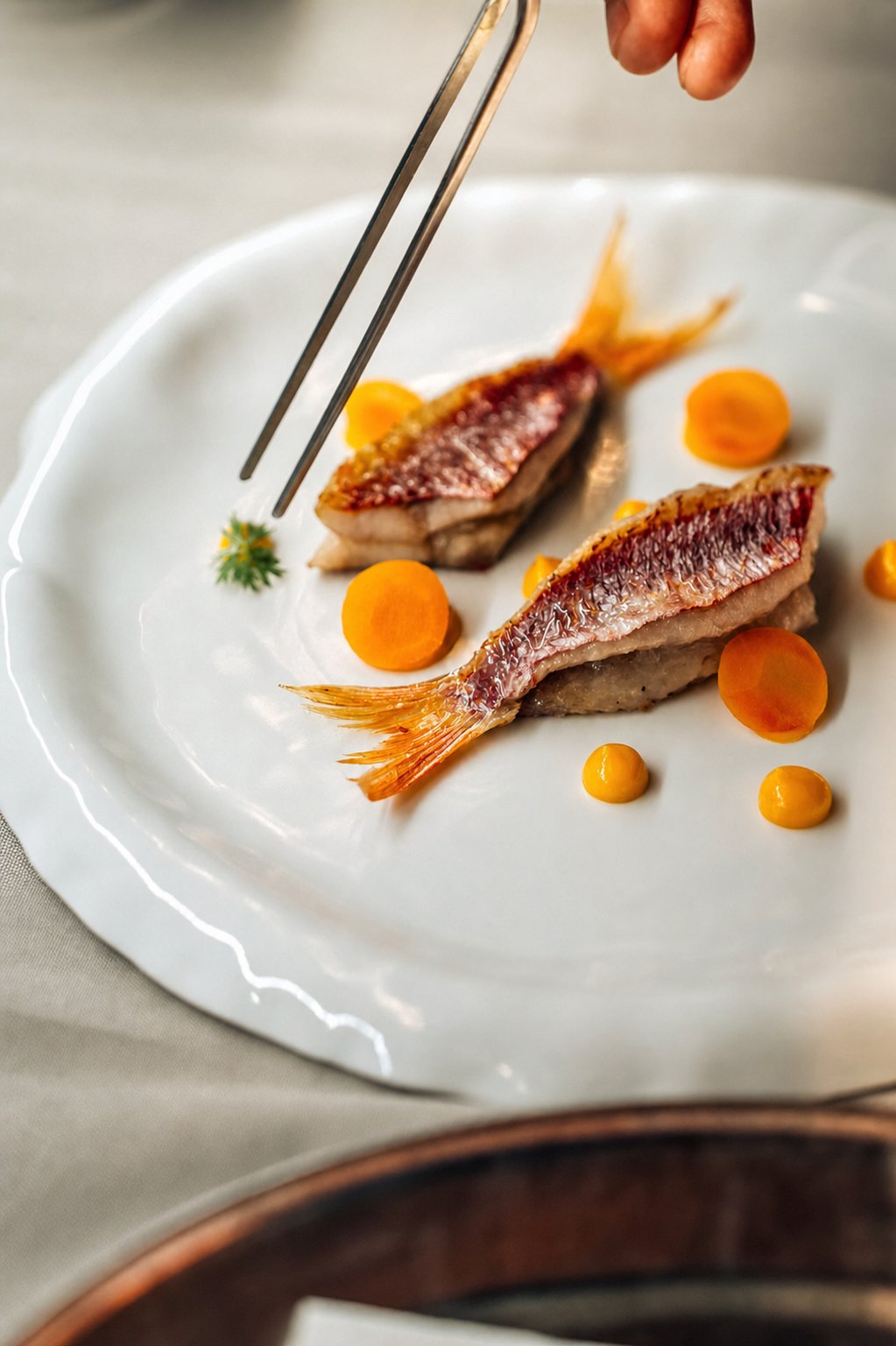



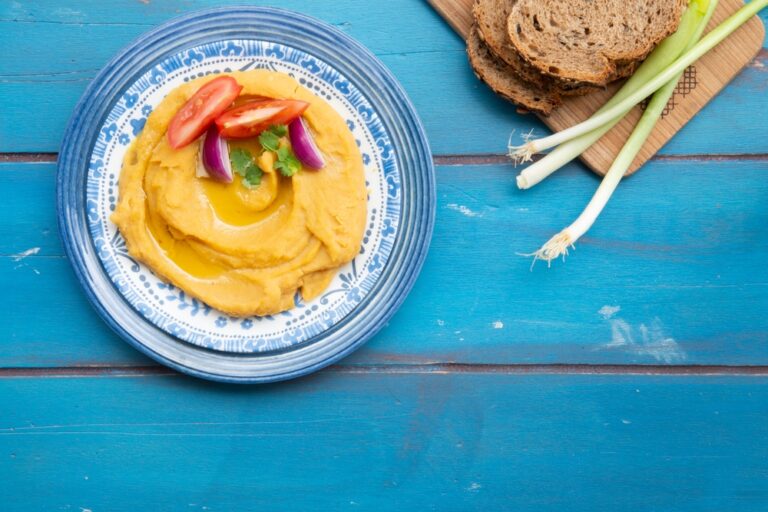
A spoonful of velvety fava, the yellow split-pea purée Greeks love, finished with a thread of olive oil and a scattering of raw onion. Chickpeas left to soften for hours in a wood-fired oven. A slice of hand-kneaded bread with a crackling crust and real depth of flavor. None of it is fancy, and that’s exactly the point. Each dish holds the memory of a place, the habits of the people who live there and a way of cooking handed down from one generation to the next.
Across the Dodecanese and the Cyclades, legumes and grains have always been the backbone of island cooking. Chickpeas, beans, wheat, barley and bulgur, along with the breads, rusks and pasta made from them, tell the story of the islands’ farming past one plate at a time. They’re still very much on the table today.
Farming here has never been easy. It has taken hard work, patience and ingenuity, and islanders learned to make the most of whatever their soil would give them. Those few staples became recipes that still belong to the places that created them.
Rhodes turns chickpeas into golden pitaroudia fritters. Kalymnos bakes barley into bread rings, and on Karpathos, flour and water are shaped by hand into curled makarounes. Each island gives the same ingredients a character of its own.
Legumes are also rich in plant protein, fiber, vitamins and minerals, and they’re a cornerstone of the Mediterranean diet. Paired with grains, vegetables, fragrant herbs and olive oil, they make dishes that are as nourishing as they are full of flavor.
Explore the island kitchensRhodesKarpathosKasosKosNisyrosTilosKalymnosPatmosThe Cyclades
Rhodes: From Pitaroudia to the Lopia Beans of Kattavia
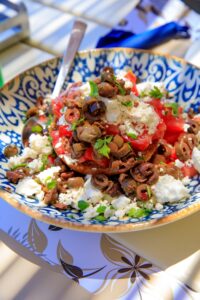
On Rhodes, chickpeas are turned into pitaroudia, traditional fritters that are among the most distinctive dishes on any Rhodian meze spread (small dishes served for sharing). The chickpeas are mixed with onion, tomato, herbs and cumin, a spice Rhodian cooks reach for often, then fried until golden outside and soft inside.
The island’s relationship with legumes has a very local expression in Fasolia Kattavias Rodou, also known as Lopia Kattavias Rodou. This small white dried bean is grown around Kattavia, a village near the southern tip of Rhodes, and holds Protected Geographical Indication (PGI) status. That EU label formally recognizes a crop tied closely to one specific place and its traditional farming methods.
Lopia are also the star of lopada, the Rhodian take on fasolada, the bean soup often called Greece’s national dish. It can be made with goat meat, tomato and vegetables, and sometimes finished in a wood-fired oven. In this form the humble bean becomes a full meal, and it shows how resourceful older island kitchens were. Nothing the land produced went to waste, and recipes followed the seasons and whatever was in the larder.
Grains are just as distinctive in Rhodian cooking. Pourgouri, the local name for bulgur (wheat that has been boiled, dried and cracked), goes into pilafs and other dishes. In lakani, one of the island’s signature meals, meat is combined with chickpeas and chondros, or cracked wheat, then cooked slowly in the oven. The name comes from the deep earthenware pot it’s traditionally baked in. A single dish brings together the two great staples of island life: legumes and grains.
Rhodes has been a crossroads of cultures for centuries, so its cuisine took in influences from one era after another without losing its own character. Pitaroudia are still served in tavernas, at family tables and at local celebrations, which keeps alive a recipe built on affordable everyday ingredients. Alongside them, lopia, pourgouri and dishes made with cracked wheat show a less familiar side of Rhodian food. It’s a cuisine rooted in the land, one that grew up alongside the island’s seafaring identity and lives on in family recipes and local produce.
Karpathos: Wheat and the Traditions Passed Down Through Generations
Grains have a special place in the cooking of Karpathos. Chondros, coarsely cracked wheat, is a defining preparation and has long had a place at the wedding table. Cooked with meat and tomato, it was traditionally served at weddings, and it still appears at the island’s panigyria, the village festivals held on saints’ feast days. Other versions use milk, or simply water, with fried onion stirred in at the end. Its many uses show how much wheat mattered, both in daily life and on the occasions that marked life’s milestones.
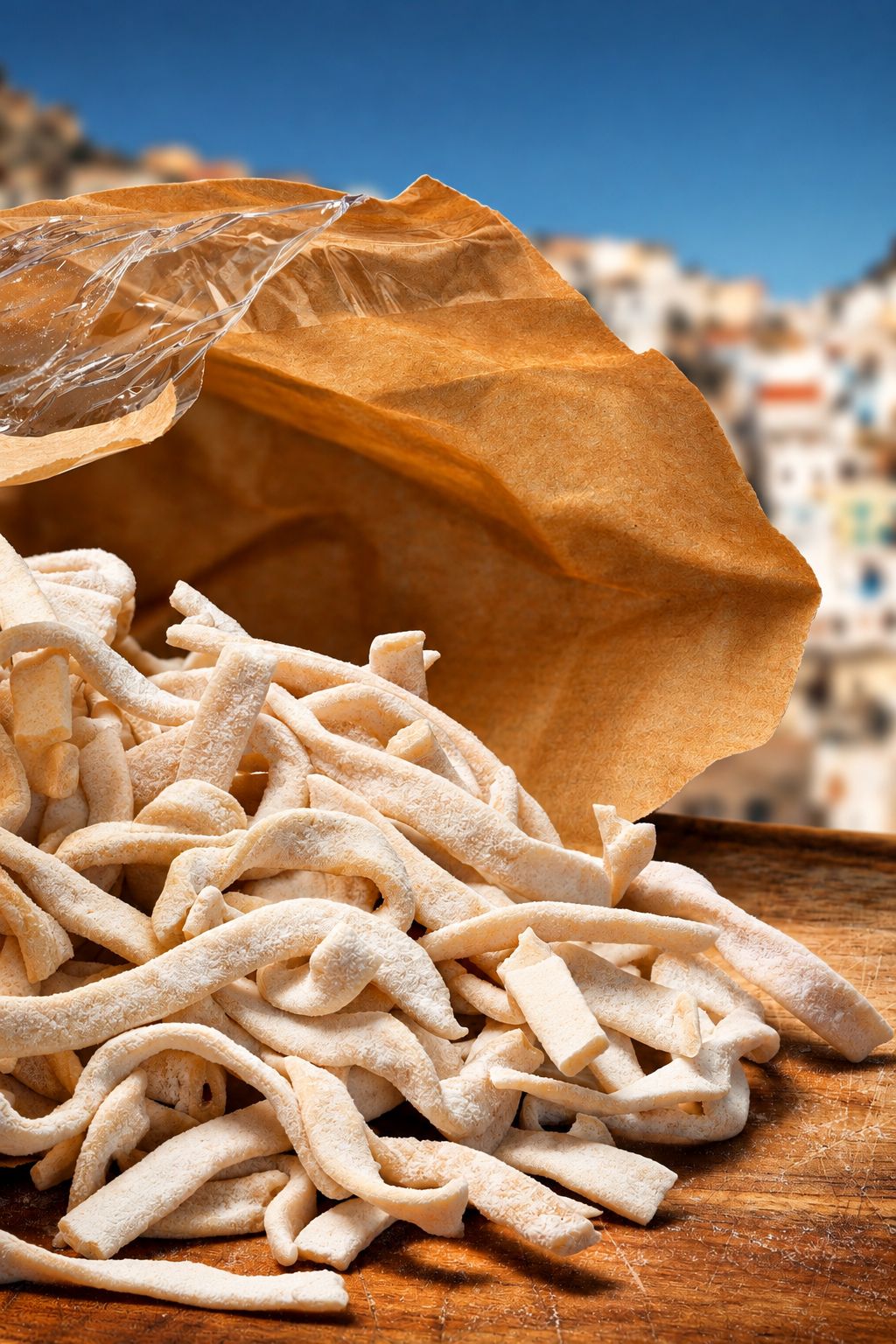
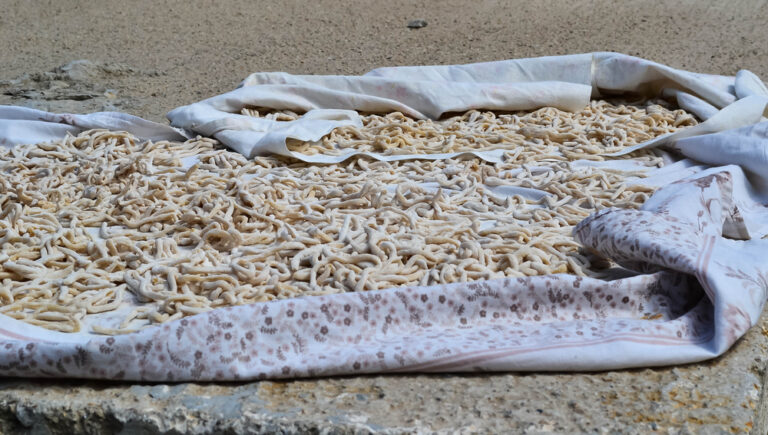
The island’s famous makarounes are shaped by hand and are among its best-known dishes. The dough is just flour and water, and it’s pressed and rolled with the fingertips into the pasta’s distinctive curled shape. It’s served with fried onion and sitaka, a tangy, creamy dairy specialty made from fermented sheep’s or goat’s milk. A few ingredients and a technique learned at a grandmother’s elbow are all the recipe needs.
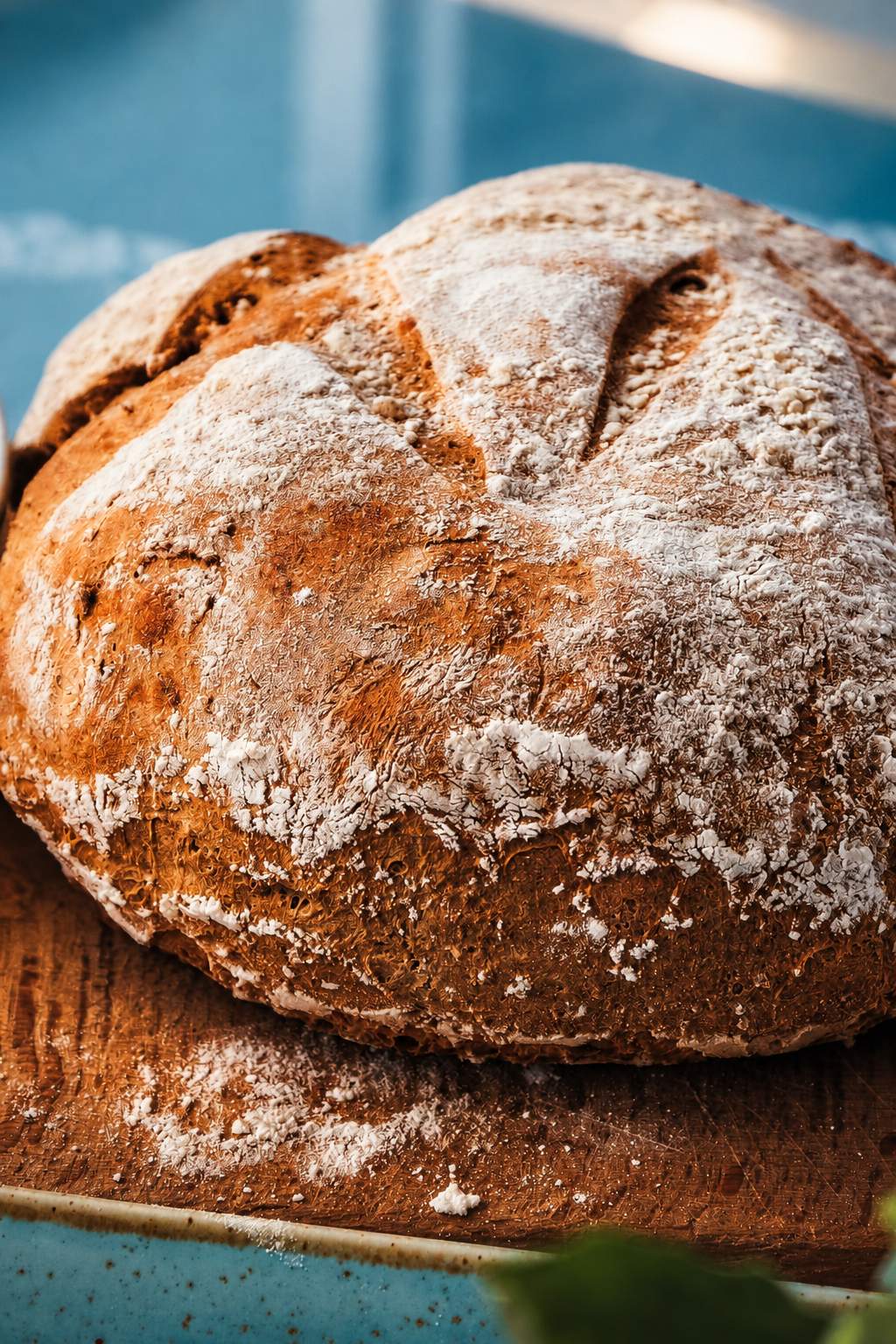
Karpathos’s grain traditions extend to bread and rusks. Kneading by hand and baking in wood-fired ovens still happen on the island, where wheat and barley were once ground in local mills for bread and handmade pasta. Traditional rusks called kousoumas and sourdough bread complete the picture.
Karpathos is especially revealing because grains appear at almost every stage of social life. From daily bread to makarounes, and from village festivals to wedding feasts, the same raw ingredient takes a different form to suit the occasion. Here, food is a way of keeping a community’s memories alive.
Kasos: Makarounes and Sitaka
On Kasos, makarounes with sitaka is one of the island’s defining dishes. The pasta is paired with sitaka, the island’s creamy dairy specialty, and tsiknosi, a topping of onions fried until sweet and golden. Together they make a combination closely tied to local cooking.
The recipe is another example of how differently the same basic ingredient can be used across the Dodecanese. On Karpathos, the focus is on the hand-shaped pasta itself. On Kasos, the dish’s identity rests on another element: sitaka. The two islands sit just a few miles apart, but being neighbors has never meant cooking the same way. Instead it has produced a family of culinary traditions that are closely related but clearly distinct.
Kos: Pitaridia, Bulgur and Chickpeas
Kos adds its own variation to the Dodecanese pasta tradition. Pitaridia, handmade pasta cooked in broth, are a characteristic part of the island’s cooking. Bulgur has its place at the table too: pork with bulgur, fragrant with cumin, is a local specialty, and meat baked with chickpeas is another familiar dish.
Having both grains and legumes on the menu reflects a pattern that repeats in different forms all over the Dodecanese. These ingredients store well, adapt to many preparations and make the base of a satisfying family meal.
Nisyros: Chickpeas Become Pities
On Nisyros, chickpeas are made into pities, the island’s own chickpea fritters. Soaked chickpeas are mixed with onion, garlic, a generous handful of fresh mint and other herbs, then fried. Think of an herb-scented cousin of falafel.
They also point to an older farming economy. Grains and legumes were grown in the island’s volcanic soil, and barley mattered most of all. So pities are a living link to a time when most of what people ate came from the island’s own land.
Tilos: From Chondros to Tsouvras
On Tilos, chondros (coarsely cracked wheat) is the base of many traditional dishes, whether it’s cooked with milk or served alongside meat. These preparations show again how big a role grains played in the island’s diet in earlier times.
Another characteristic dish is tsouvras, a simple tomato soup made with rice or bulgur. It sums up the thinking behind island cooking better than any elaborate recipe could: a handful of whatever is to hand, close attention to the seasons and a meal whose first job is to nourish.
Kalymnos: The Enduring Importance of Bread and Barley Rings
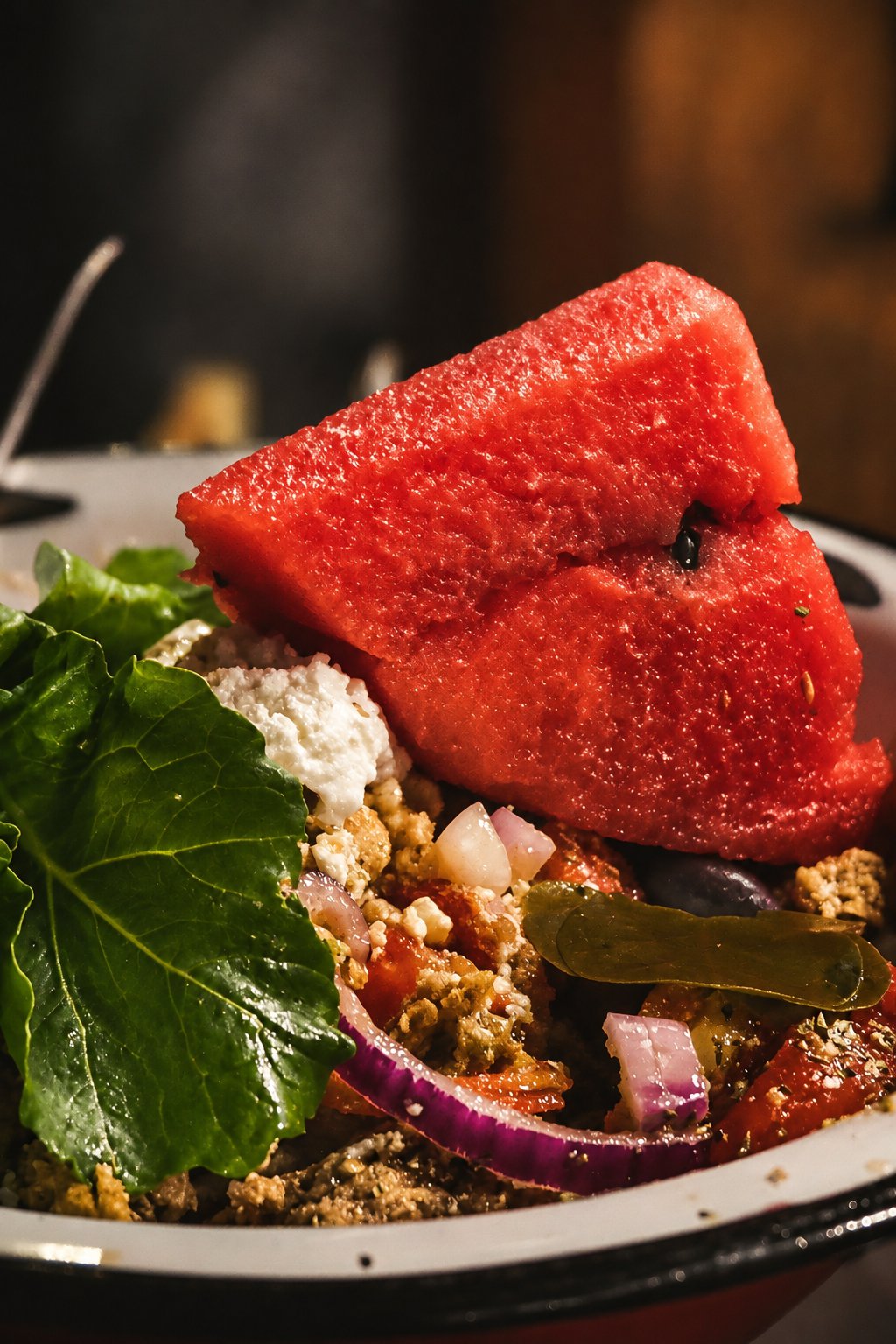
On Kalymnos, grains shine brightest in the island’s baking. Eptazymo bread flavored with aniseed and ouzo, rusks and barley bread rings are among its signature baked goods. Eptazymo is traditionally leavened with a chickpea-based starter, bringing legumes and grains together in the same loaf. The barley ring is also the base of mirmizeli, the island’s best-known salad. The ring is briefly softened in water and topped with tomato, olive oil, local kopanisti (a soft, tangy, peppery fermented cheese) and other ingredients.
It’s easy to see why dried breads were so valuable on an island. They kept for a long time, which made them indispensable when food had to last and travel well. That practical need has faded, but the barley ring is still one of the flavors most closely linked to Kalymnos. A food born of necessity survived because it became part of the island’s identity.
Patmos: A Different Island Take on Chickpeas
On Patmos, chickpeas are cooked with eggplant in a traditional dish that brings together two classic Mediterranean ingredients. It shows how easily the same legume changes character across the Aegean. Depending on where you are, it might become fritters, be slow-cooked in the oven or be paired with seasonal vegetables.
This is one of the most compelling things about Dodecanese cooking. Instead of a single recipe repeated from island to island, there’s a shared set of ingredients that each small community has turned into a culinary language of its own.


The Cyclades: Santorini’s Fava and Sifnos’s Revithada
The Cyclades have their own traditions, and they’re behind some of the Aegean’s best-known legume dishes. Santorini fava and the revithada of Sifnos are two of the most emblematic.
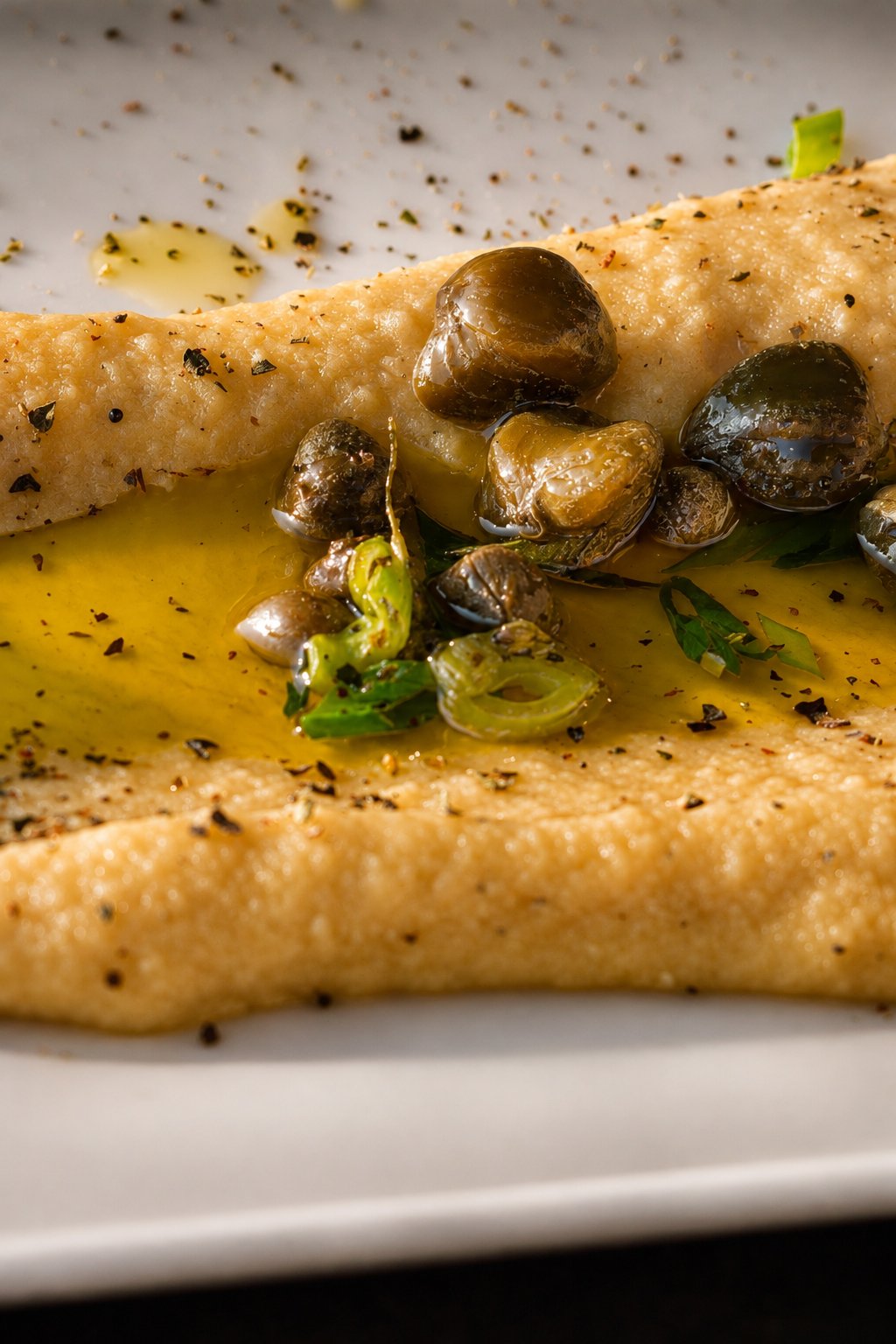
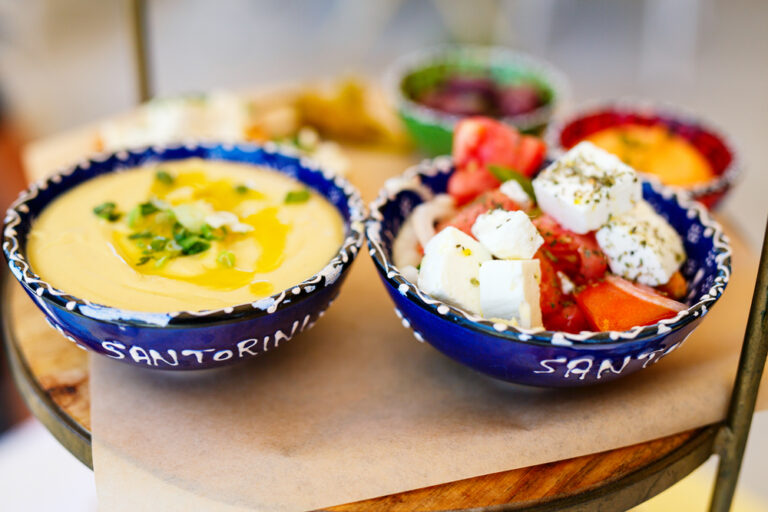
Few foods are as closely tied to their birthplace as Santorini fava. Golden yellow, velvety and subtly sweet, it’s one of the most recognizable specialties of Cycladic cooking. A quick note on the name: despite how it sounds, Greek fava has nothing to do with the broad (fava) beans of Italian or Spanish cooking. Its history goes back thousands of years. Finds at Akrotiri, the ancient town preserved under volcanic ash by the island’s great eruption, show the plant was there as early as the Bronze Age. Volcanic soil, scarce water and strong winds created the particular conditions it has always been grown in.
Santorini fava holds Protected Designation of Origin (PDO) status, the EU’s strictest geographical label. It’s made from the seeds of Lathyrus clymenum L., a legume related to the sweet pea, and its distinctive character can’t be separated from the island’s environment and long history of cultivation.
Amorgos has a tradition of its own. Fava tis Amorgou, which now has PGI status, comes from Pisum sativum, a field pea that islanders call katsouni. The finished dish and its everyday name are both fava, but the Amorgos crop is a different plant from Santorini’s Lathyrus clymenum. Katsouni is also traditionally grown on Schinoussa, one of the Small Cyclades, where it’s a signature local product.
On Sifnos, the celebrated revithada, a slow-baked chickpea stew, is synonymous with Sunday lunch. The chickpeas go into a traditional lidded clay pot called a skepastaria and bake for many hours. Traditionally the pot goes into the oven on Saturday evening so the stew is ready the next day. The custom shows how closely cooking was woven into the rhythms of daily and community life.
Wheat, Barley and Hand-Kneaded Bread: Another Side of Island Tradition
Grains matter just as much as legumes in the islands’ food history. Wheat and barley were staple crops for centuries, supplying flour for everyday bread, pies, rusks and handmade pasta, including the koulouria of Tilos. Easy to store and versatile in the kitchen, a grain could become a side dish or an entire meal.
Breads, rings and pasta also took on their own roles at weddings, celebrations and village festivals. Food kept people going, and it gave them a way to take part in community life.
Barley rusks, hardy and easy to store, were especially useful during farm work and long sea voyages. Today they’re still a favorite partner for local cheeses, tomatoes, olives and olive oil.
Limited farmland and the need to preserve food for long stretches taught islanders to value every ingredient. The recipes that grew out of those constraints have lasted, with distinctive variations just a few dozen nautical miles apart.
Bidding for the Title of World Region of Gastronomy 2028
Behind these foods are farming traditions, local crop varieties, family recipes and knowledge passed down through generations. As tourism evolves and eating habits change with it, protecting this culinary heritage is becoming more urgent. Safeguarding local varieties, supporting small producers and passing traditional know-how on to younger generations are essential if these flavors are to stay part of island life.
This is the thinking behind the South Aegean Region’s bid to become World Region of Gastronomy 2028. Already named European Region of Gastronomy in 2019, it is the first Greek region to seek the global title, under the banner “Archipelago 50 – From Ancient Pride to Future Legacy”. Following its November 7–13, 2026 visit, IGCAT’s international jury unanimously recommended the South Aegean for the title. Formal ratification is expected on December 16, 2026; the title has not yet been awarded.
The bid puts the culinary diversity of the Dodecanese and the Cyclades in the spotlight and links it to local production, tourism and the islands’ cultural heritage. More than 50 initiatives are planned. They range from food trails and projects that document culinary heritage to training for young people and professionals, support for agrifood businesses and measures to cut food waste.
The strategy is already reaching the people who produce the region’s food and drink. In October 2026, the first South Aegean Open Farm Days saw farms, apiaries, dairies, wineries and other producers and processors across the Dodecanese and the Cyclades open their doors to the public. The initiative connects food directly with the people behind it, making primary production part of the visitor experience and a chance to learn.
The Aegean Cuisine network also plays an important role. Developed through cooperation between the Dodecanese and Cyclades chambers of commerce and organizations across the South Aegean, it promotes local products and island cooking. Its main aims are to showcase the Aegean’s food and wine culture, introduce people to island produce and strengthen its presence in Greek and international markets.

The South Aegean Region also supports food events and festivals every year, bringing producers, hospitality professionals, residents and visitors together around the islands’ flavors and traditions. Regional Governor Giorgos Chatzimarkos has made an important contribution to this work and to promoting the region’s gastronomy internationally.
Cooperation with the International Institute of Gastronomy, Culture, Arts and Tourism (IGCAT), the organization that awards the Region of Gastronomy titles, has already given the South Aegean a firm place in its international network. From the 2019 title to the current bid for 2028, the region has followed a consistent approach that links food with production, tourism and the local economy.
With few ingredients and a lot of know-how, each island developed a culinary language of its own, and it still tells the story of the place it comes from.