


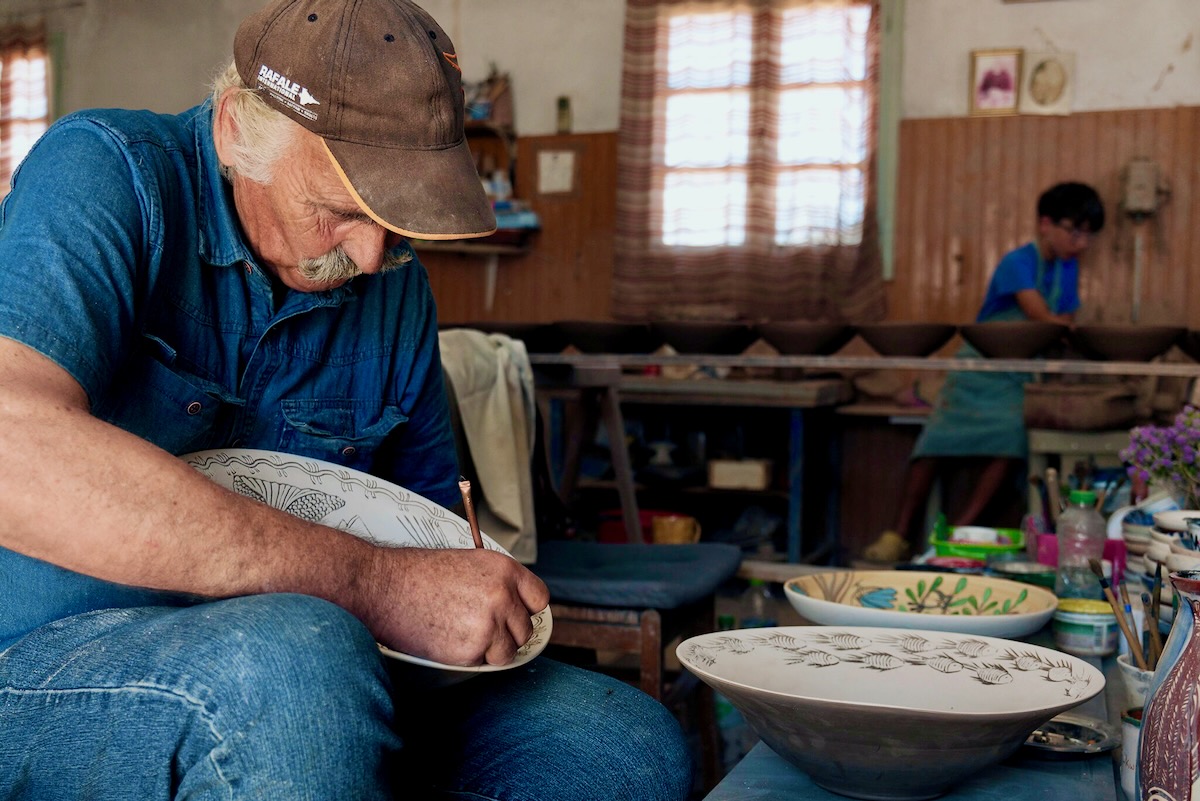
At Cherronisos, on the northern tip of Sifnos, I pick my way around the towels spread across the wet sand and knock on the door of a building that seems to have stepped out of an old photograph. Kostas Depastas, a potter since 1948, looks at me with clear, curious eyes, a plate of beans in his hand. I have interrupted his cooking.
He turns down the heat, sets the plate on a wooden table in the dim kitchen and leads me next door. Here is his workshop, which also serves as a shop for the ceramics he makes. Outside, people are swimming and sunbathing. Inside, the day follows the familiar business of working clay.
In Cherronisos, Visitors Keep an Old Workshop Going
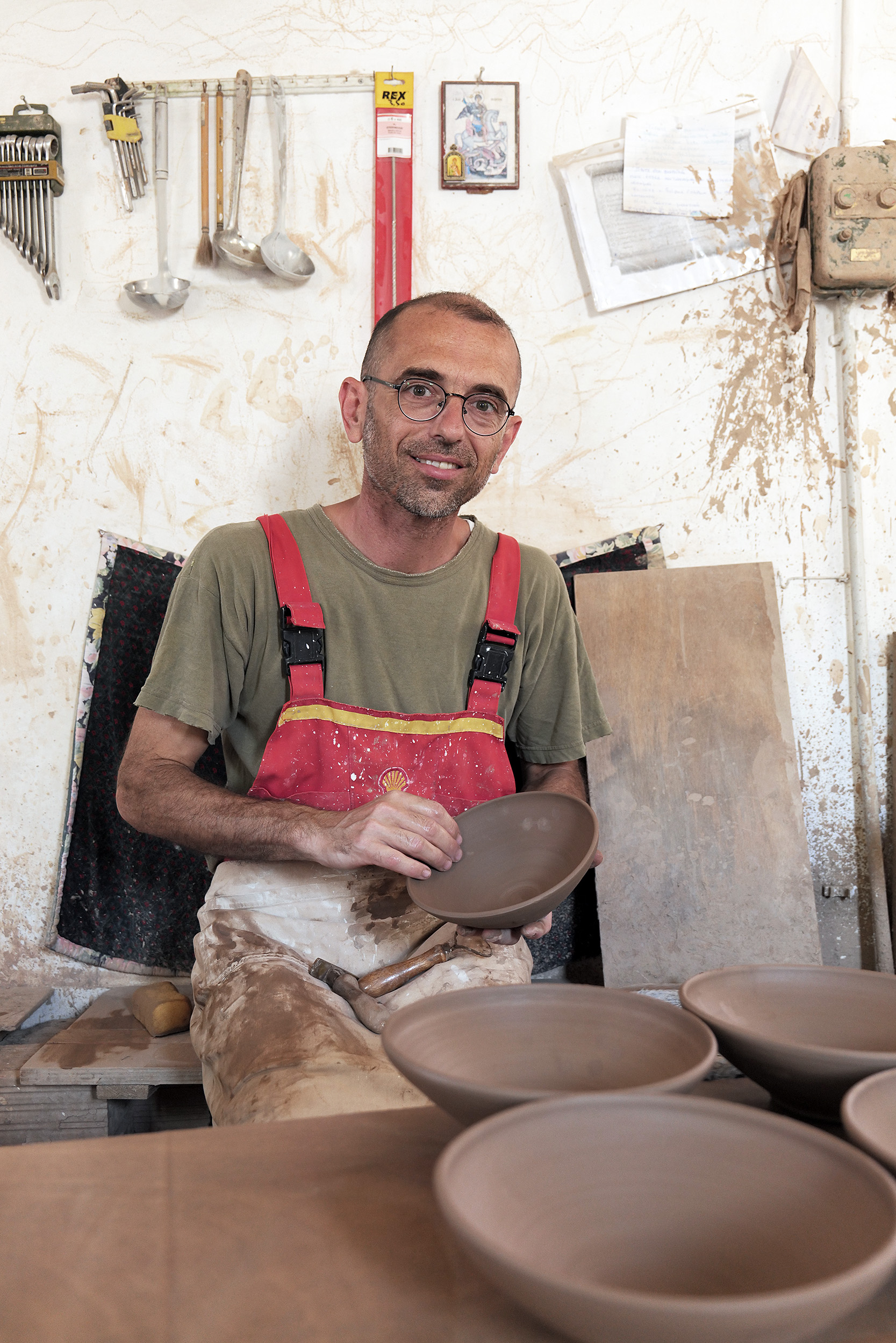
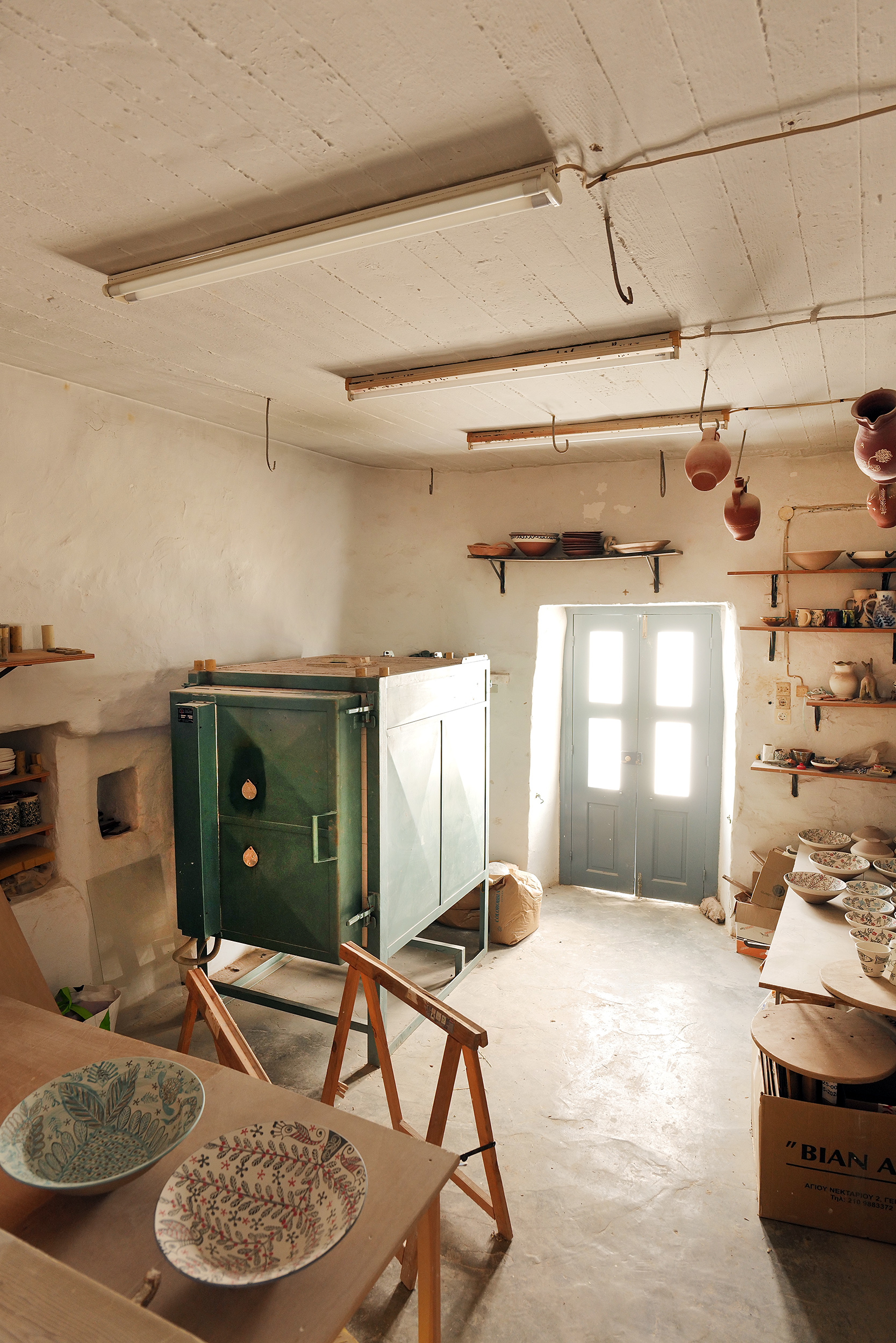
Light and the voices of bathers drift through the open door and two windows with wooden shutters. The room is all reddish earth, beige and ochre. Finished bowls and mugs crowd the shelves and a large table, alongside gavathes, the deep serving bowls, and tsikalia, the traditional cooking pots. Two potter’s wheels stand side by side in the strongest light: one foot-powered, the other electric.
Depastas remembers an island where this work seemed to be everywhere. “The whole island was one pottery workshop,” he tells me. “Everything you see on the coast today, shops, hotels, rooms, all of it was workshops, because the craftsmen had to be near the sea so the ceramics could easily be loaded onto the ships.”
That coastal geography has its own history. As the municipality’s account of Sifnian pottery explains, workshops once stood inland for protection from pirates. When the danger receded, potters moved toward the shore, where they could more easily ship their wares beyond the island. Some stayed at their coastal workshops through the working week, returning to their village homes on Saturday afternoons and setting off again on Monday mornings.
The trade depended on many hands: people to gather fuel, dig and transport the clay, and prepare it for the potter and his assistant. The vessels that left these workshops belonged to everyday life, made to store, cook and serve. Their usefulness carried Sifnian pottery far beyond Sifnos.
A visitor comes in straight from the sea, water still glistening on her skin, and asks about pieces and prices. Depastas answers in halting English. For a moment, the contrast is striking: the elderly craftsman, his timeworn workshop and a customer in her swimsuit. Yet the beach and the pottery are closely connected. The people outside are also the people who come through his door.
“If it weren’t for all this chaos outside, as you called it,” he tells me, “I would have ceased to exist here.”
In Artemonas, the Lebesis Family Passes On the Craft
The next day, I walk through Artemonas with Depastas’s words in mind. Summer is still here. In the shade, the slanting light brings a first suggestion of autumn coolness, but in the sun the heat has barely loosened its grip. The village’s bright, immaculate lanes could belong to photographs from the archives of Cartier-Bresson or Boissonnas. Along the uphill stretches and flagstone passages, visitors meet only occasionally, at a junction or glimpsed a lane away.
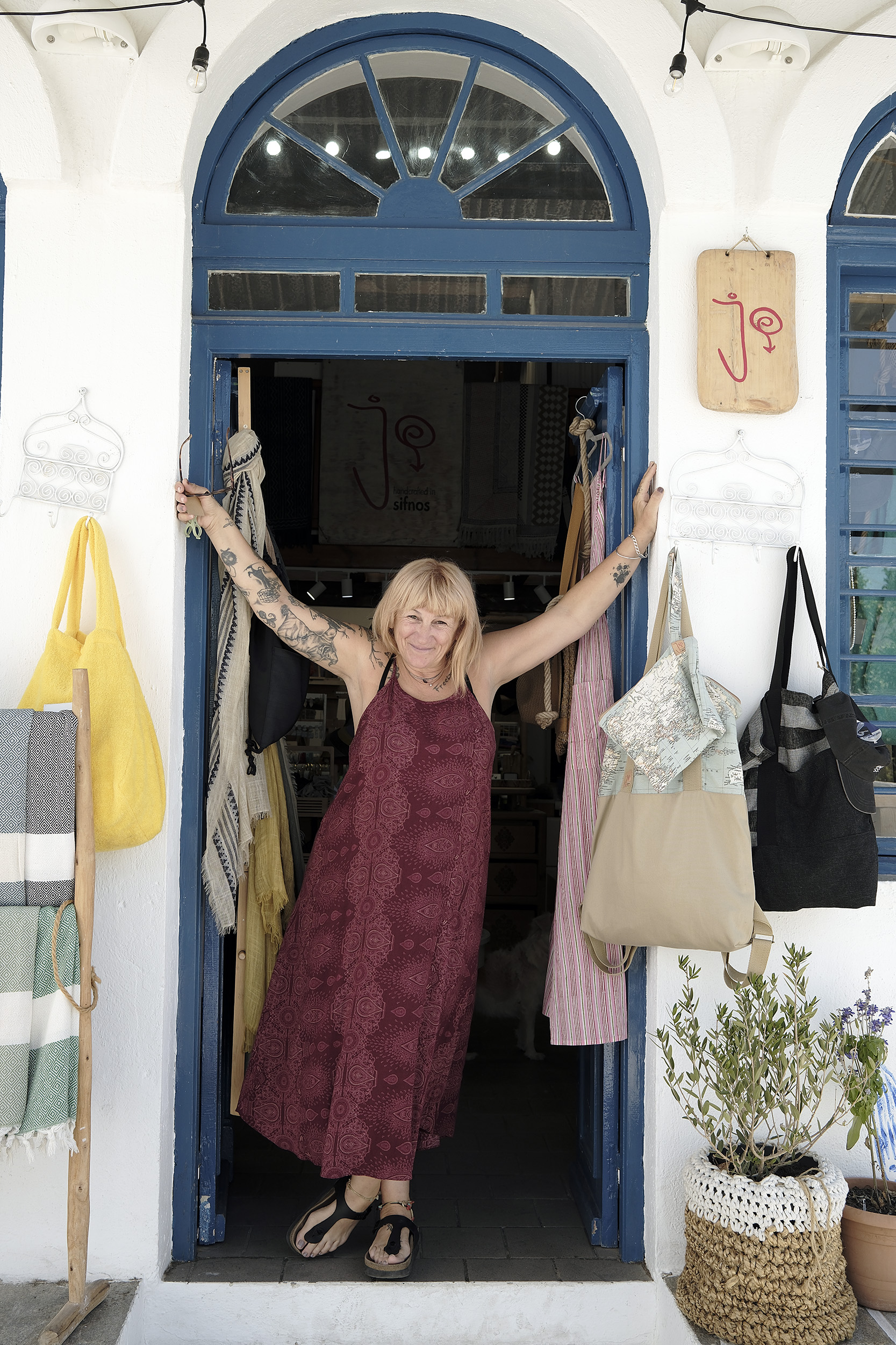
The island is settling after the summer crowds. The cafés are quiet; the bougainvillea is still rich with color. Georgia Mitsika, known as Jo, stands on the landing of her shop with her little dog, Klairi, greeting passersby. Inside are handmade accessories. After several years in Apollonia, this is her first season in Artemonas.
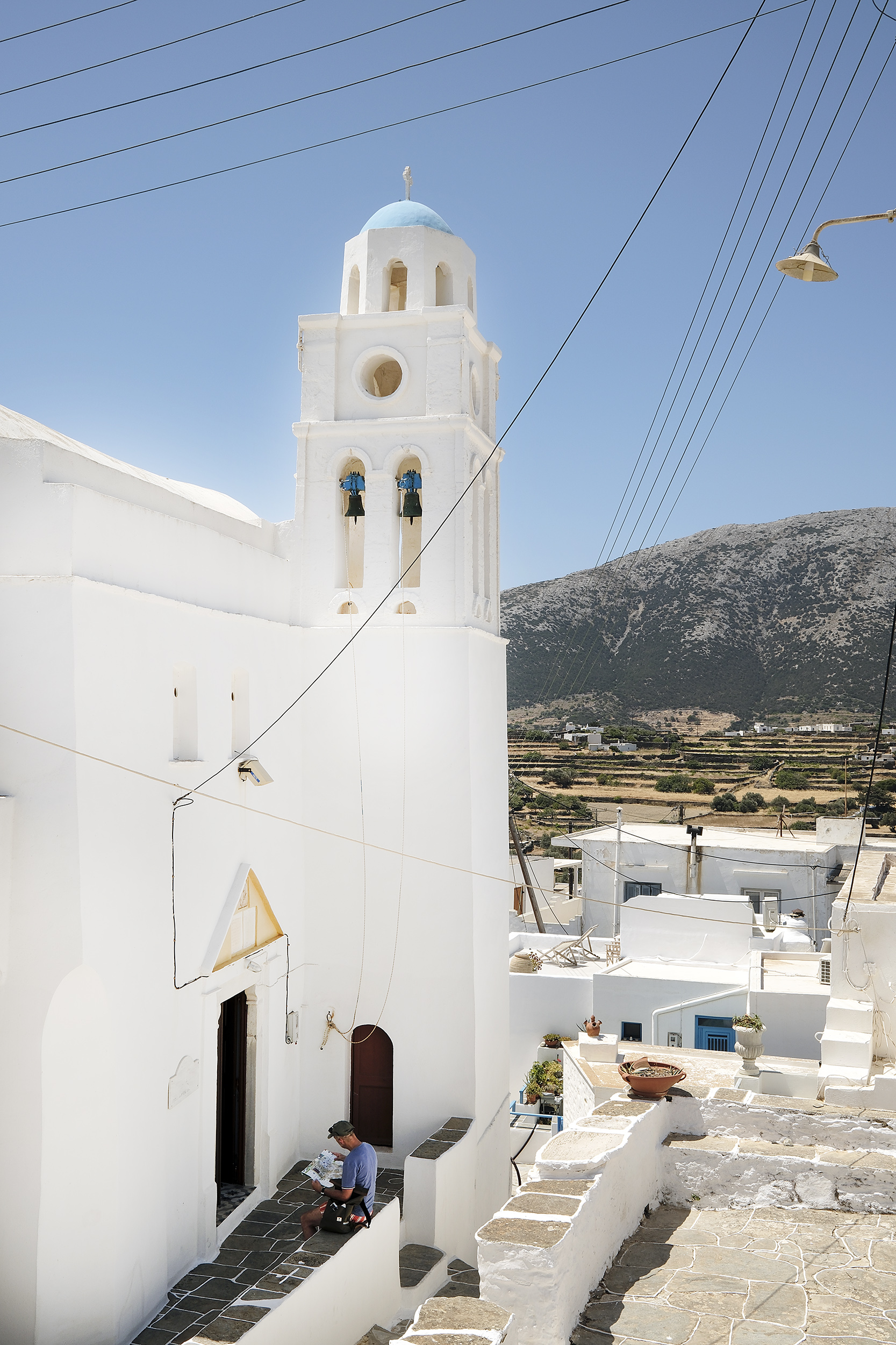
In the small courtyard of Panagia tou Bali, a church dating to 1783, a French walker studies a paper map, marking it with a pencil in the shade of the bell tower. Above the low roofs, the clay chimney pots known as flaroi bring me back to the reason for my walk. Pottery is part of the village itself.
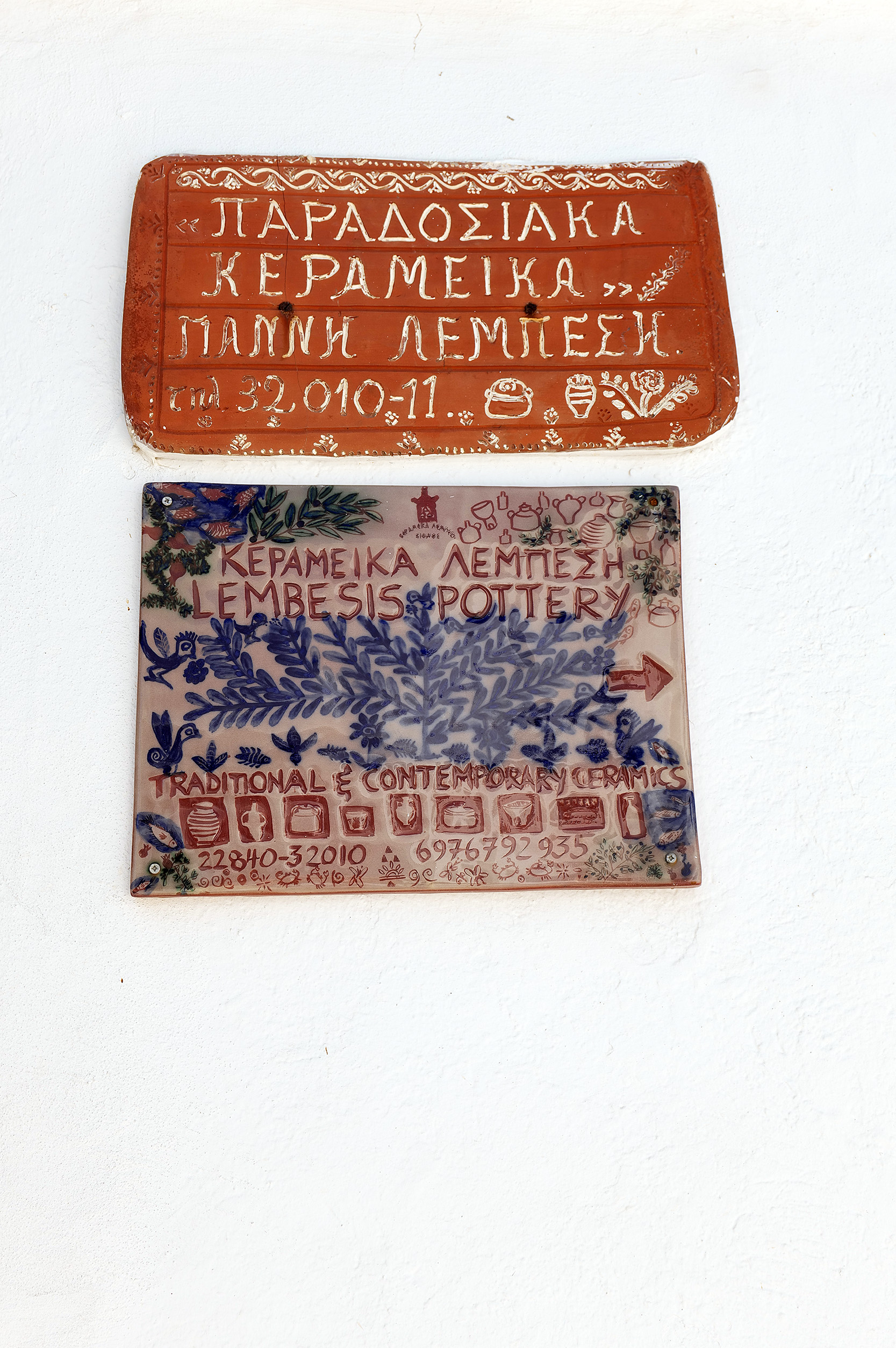
At the Lebesis family workshop, glossy ceramic signs on a white wall announce the craft practiced inside. The family’s pottery is now in its fourth generation. Nikos Lebesis, his brother Spyros, their father Giannis and young Ionas carry that history into the working day.
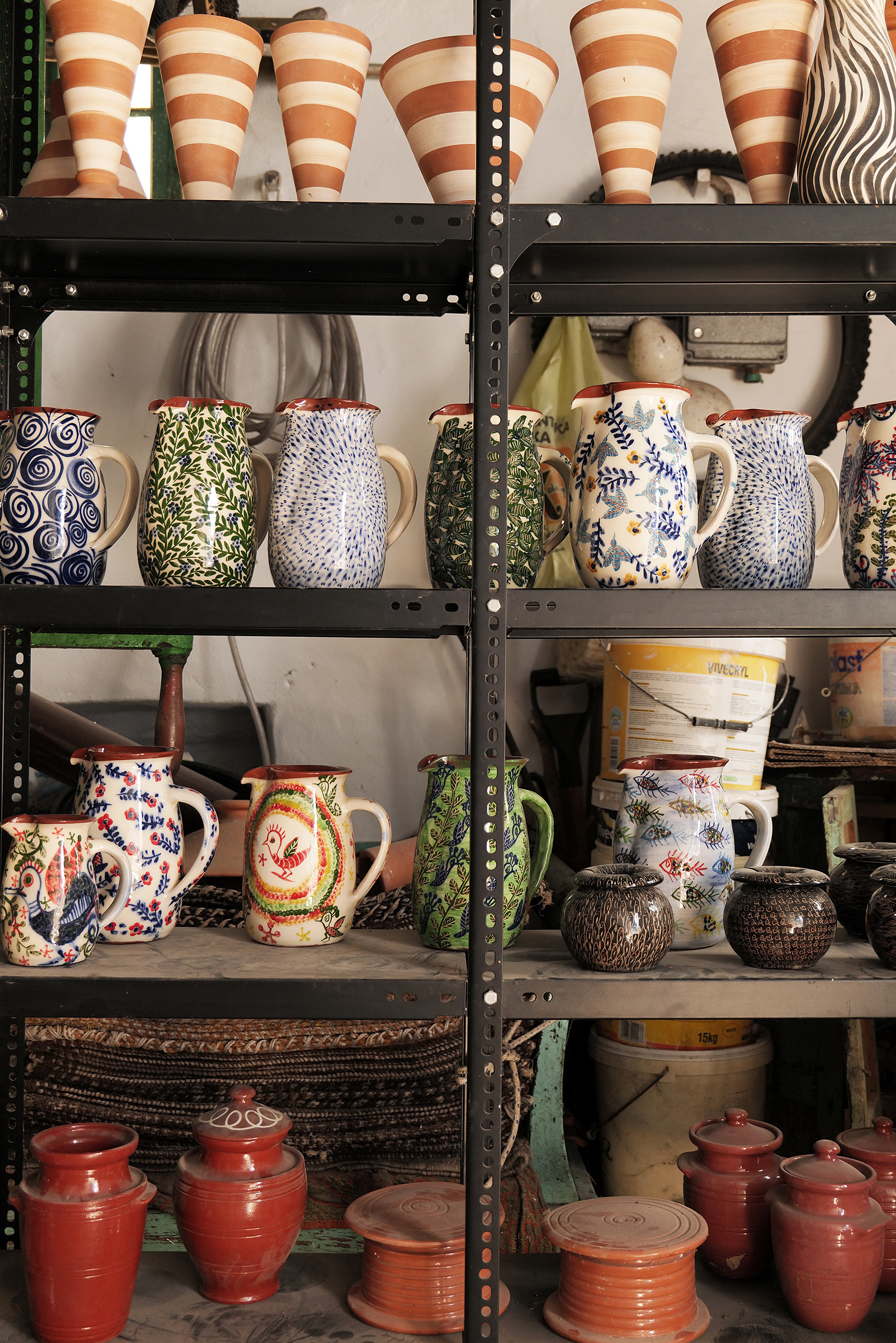
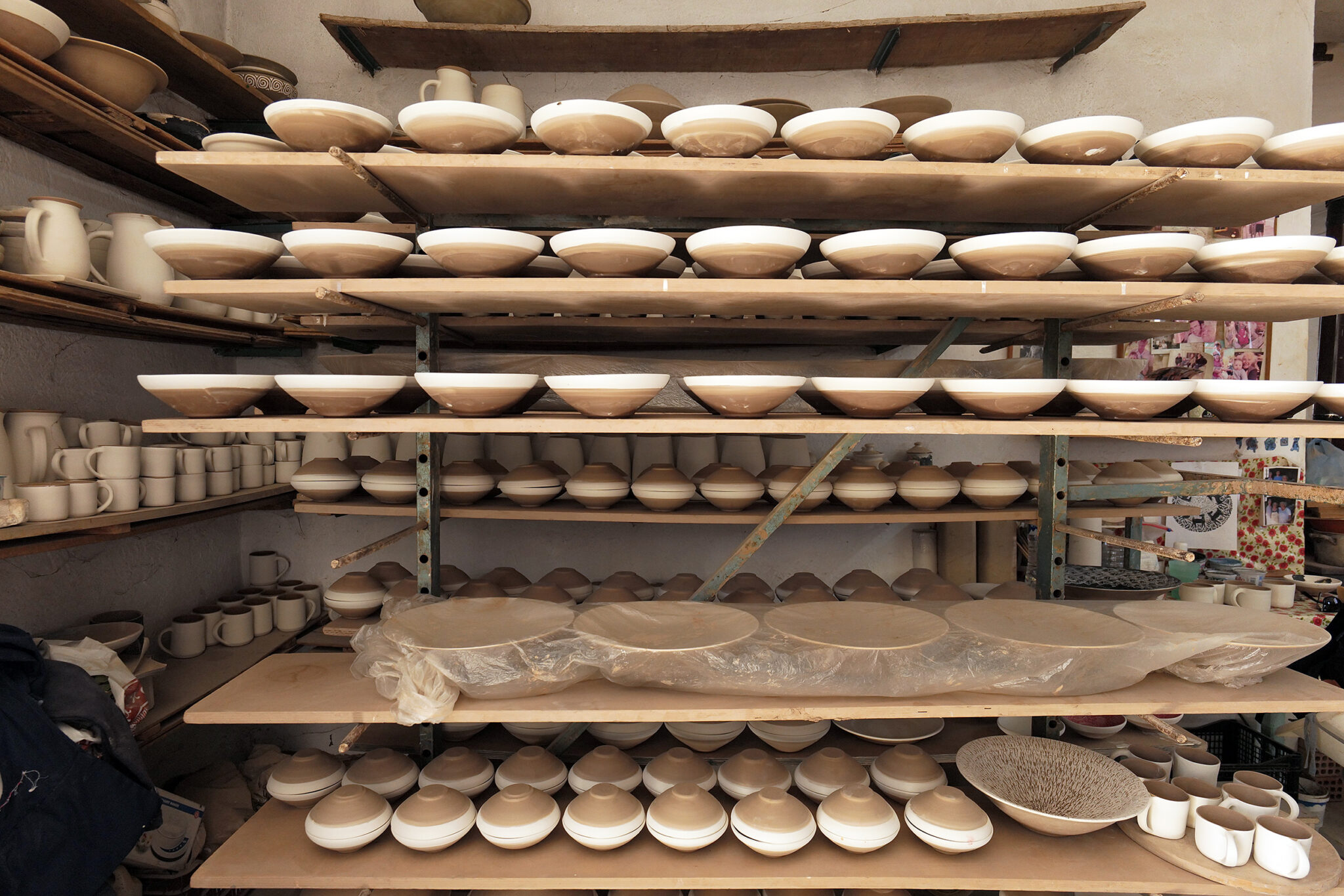
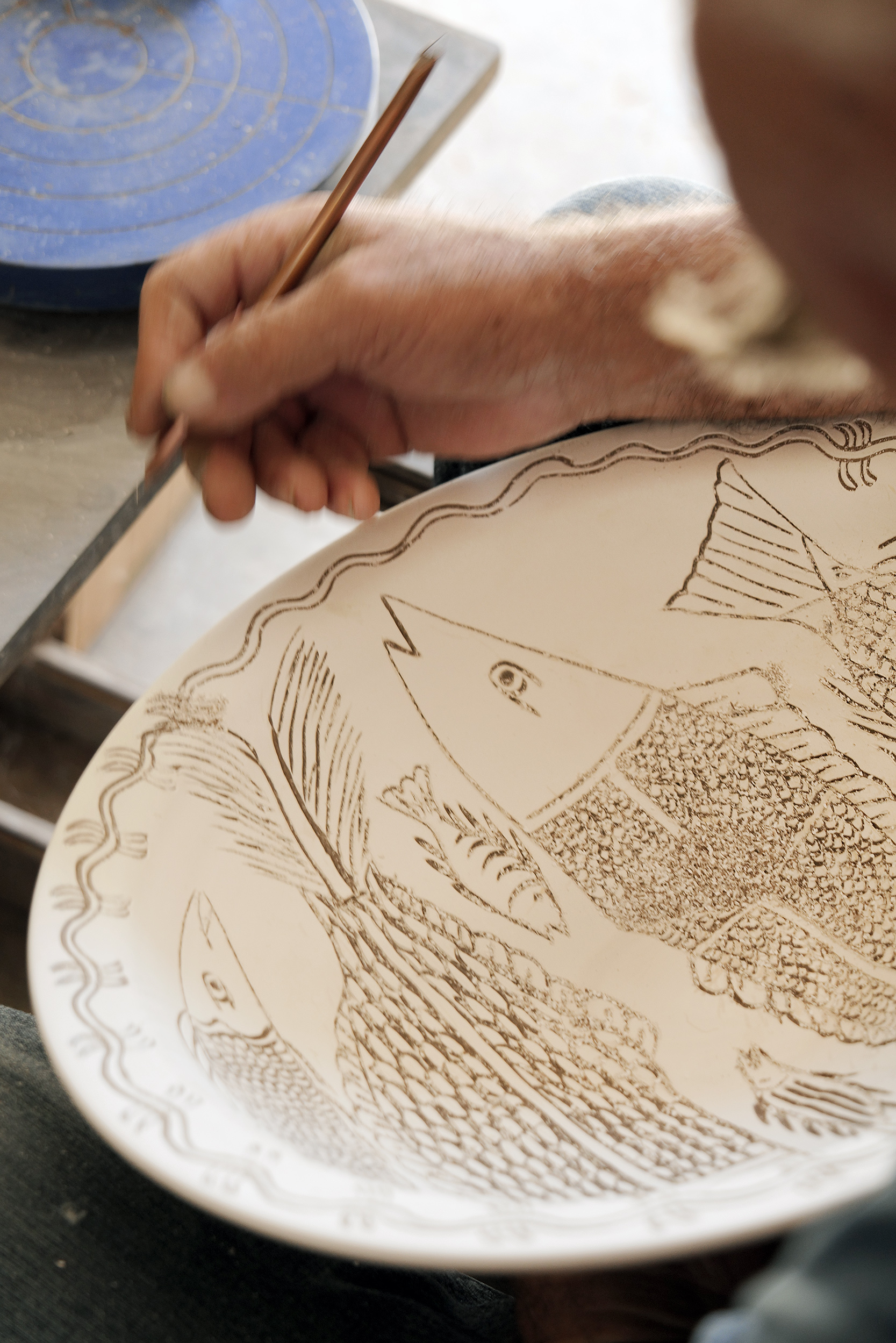
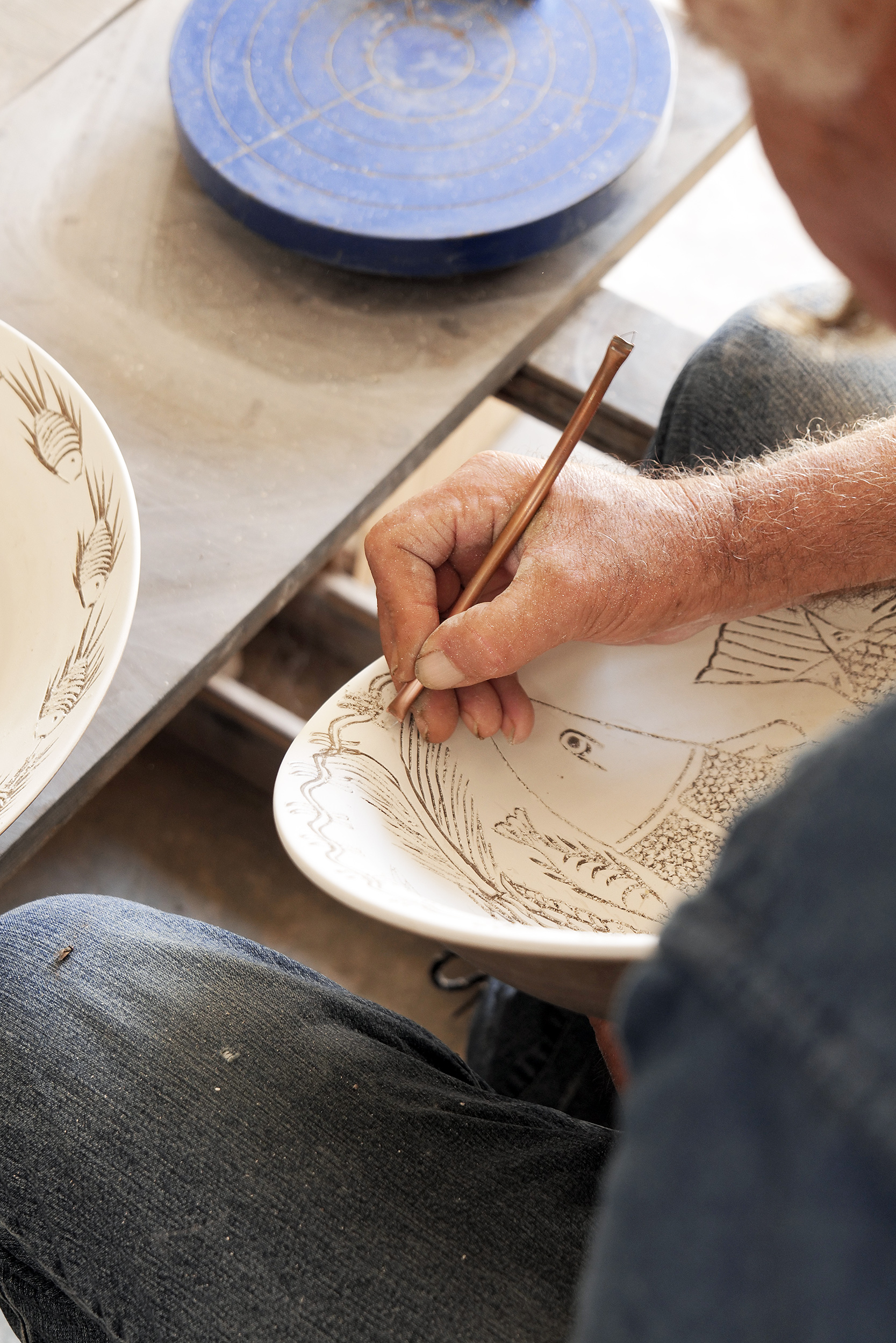
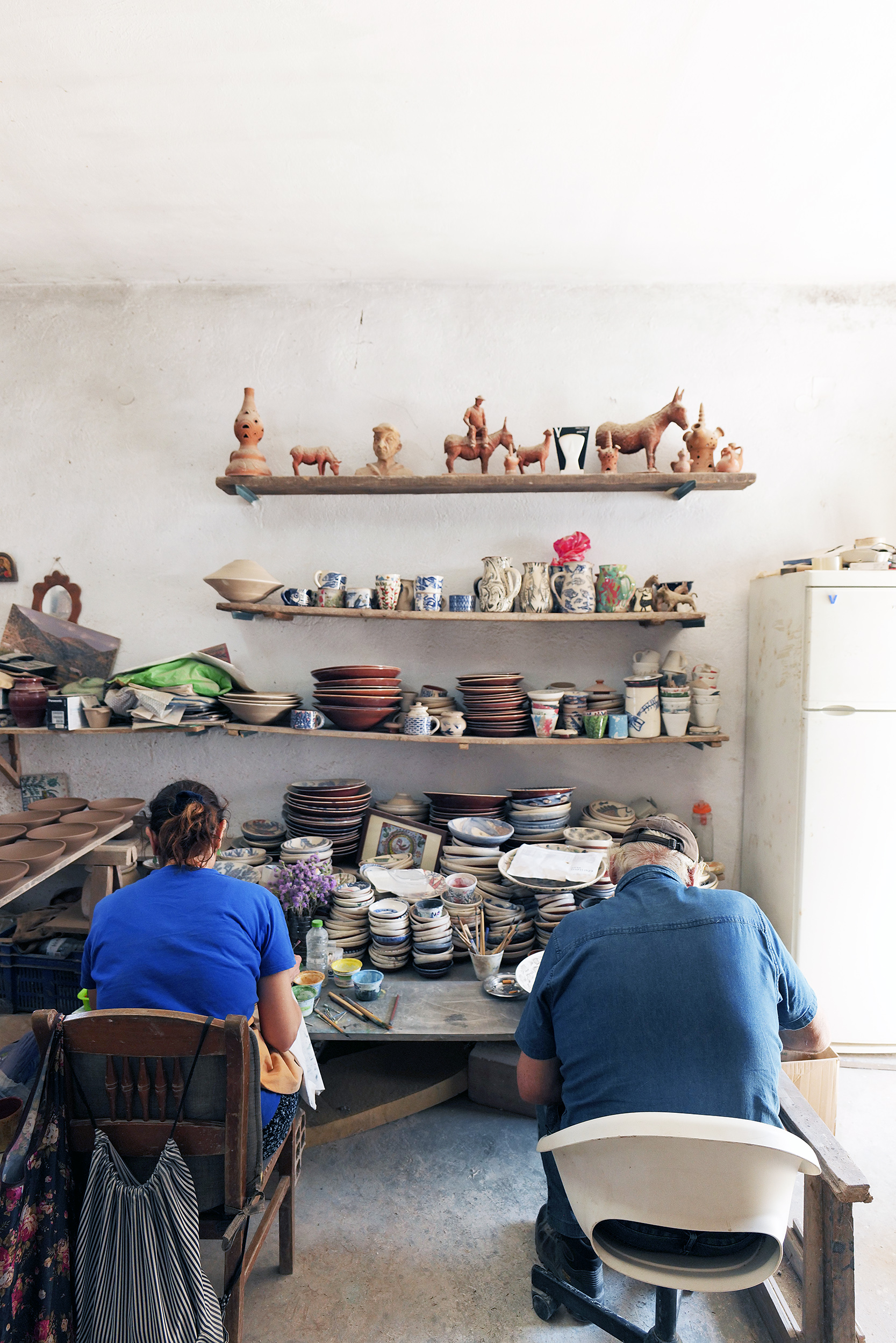
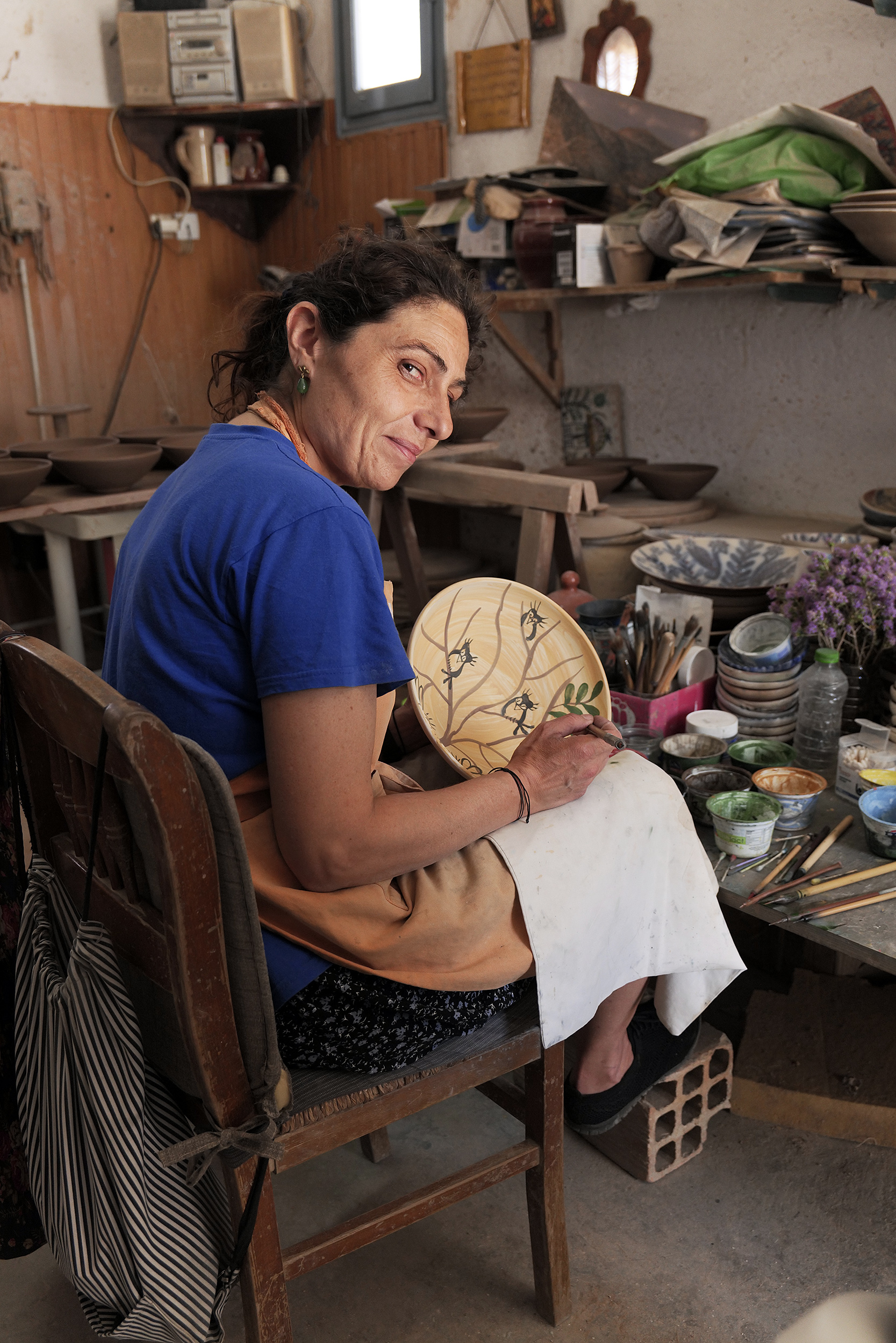
Sunlight cuts a bright corridor through the main production space. Near the door, Vasiliki Mandalou decorates plates and bowls with fine incised lines and color. The familiar shapes acquire their own character in the details: a line worked into the surface, a brushstroke, the patient attention given to a single piece.
There is a practical reason for the island’s long relationship with clay. Sifnos has deposits of refractory clay, valued for its resistance to heat. The Sifnos Pottery Museum traces the reputation of its cooking vessels to this material and the skill of the people working it. A pot’s beauty and its ability to withstand an oven have long belonged to the same craft.
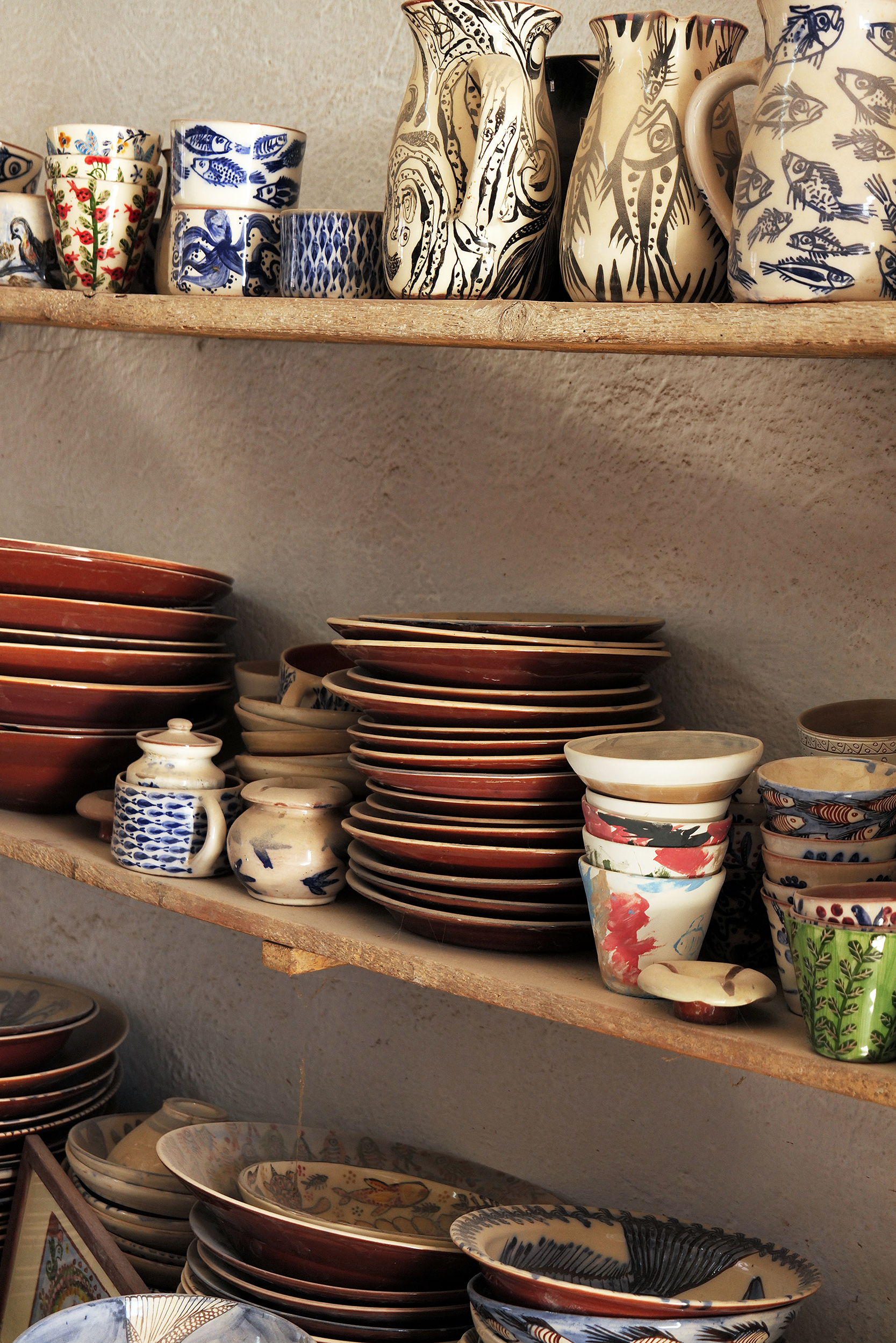
The range extends from large storage jars, or pithoi, to jugs, plates, covered baking dishes and cooking pots. Even the distinctive flaros has found a life beyond the chimney: its form becomes a decorative object, a souvenir or a lamp. These are familiar objects continually finding new uses.
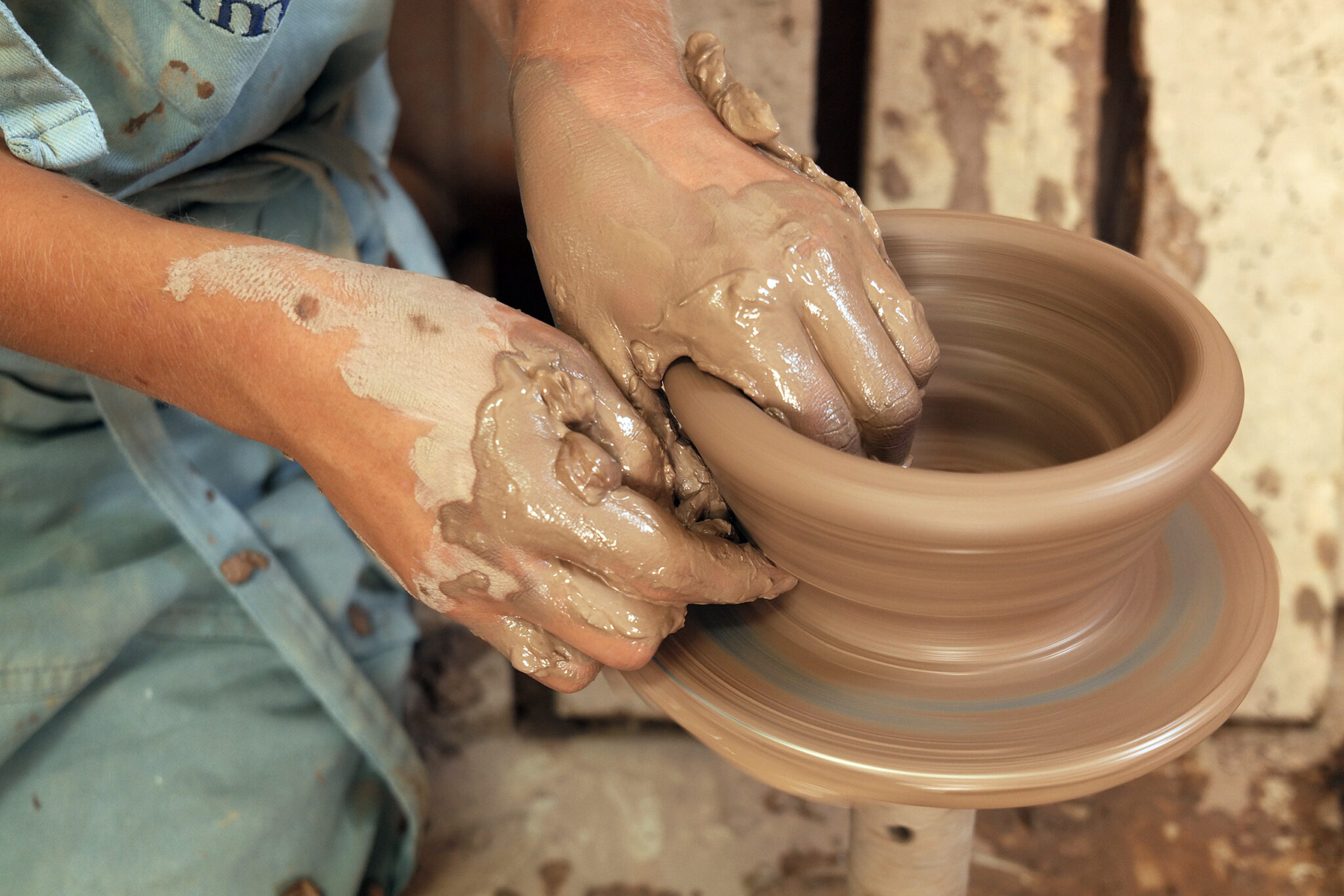
Tourism supports much of this work, especially the decorative pieces visitors choose to take home. But the family also receives strong demand for everyday bowls, mugs and plates, with orders shipped largely off the island. The old connection between the workshop and distant households continues, even as tastes and destinations change.
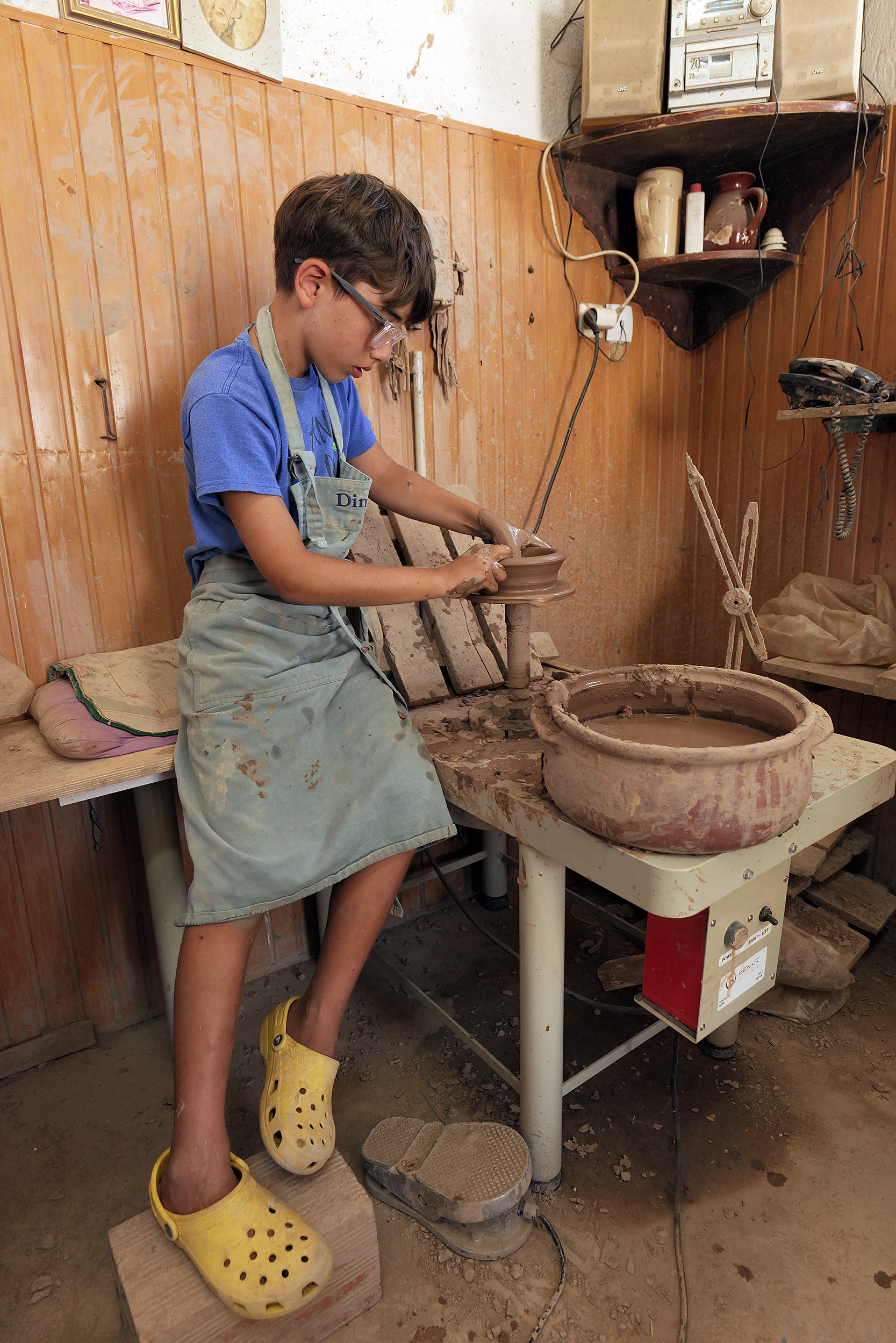
On a board nearby sit the mugs Ionas and his friends painted the day before. Their playful designs record another afternoon in the workshop, and another way of learning. Here, the fourth generation is already handling the material, watching the work and trying things for itself.
As I leave, it is Ionas’s hands that stay with me, wet and muddied with reddish clay. The piece turns on the wheel, circling again and again as it takes shape beneath his fingers.
There is still work ahead before it can leave the workshop: finishing, decoration and firing. Then it, too, will travel, to be used, kept and remembered for years to come.
(This is an English adaptation of a story first published in Travel.gr’s Greek edition by Nikos Kokkas, one of our senior photographer with a deep affection for the Cyclades.)