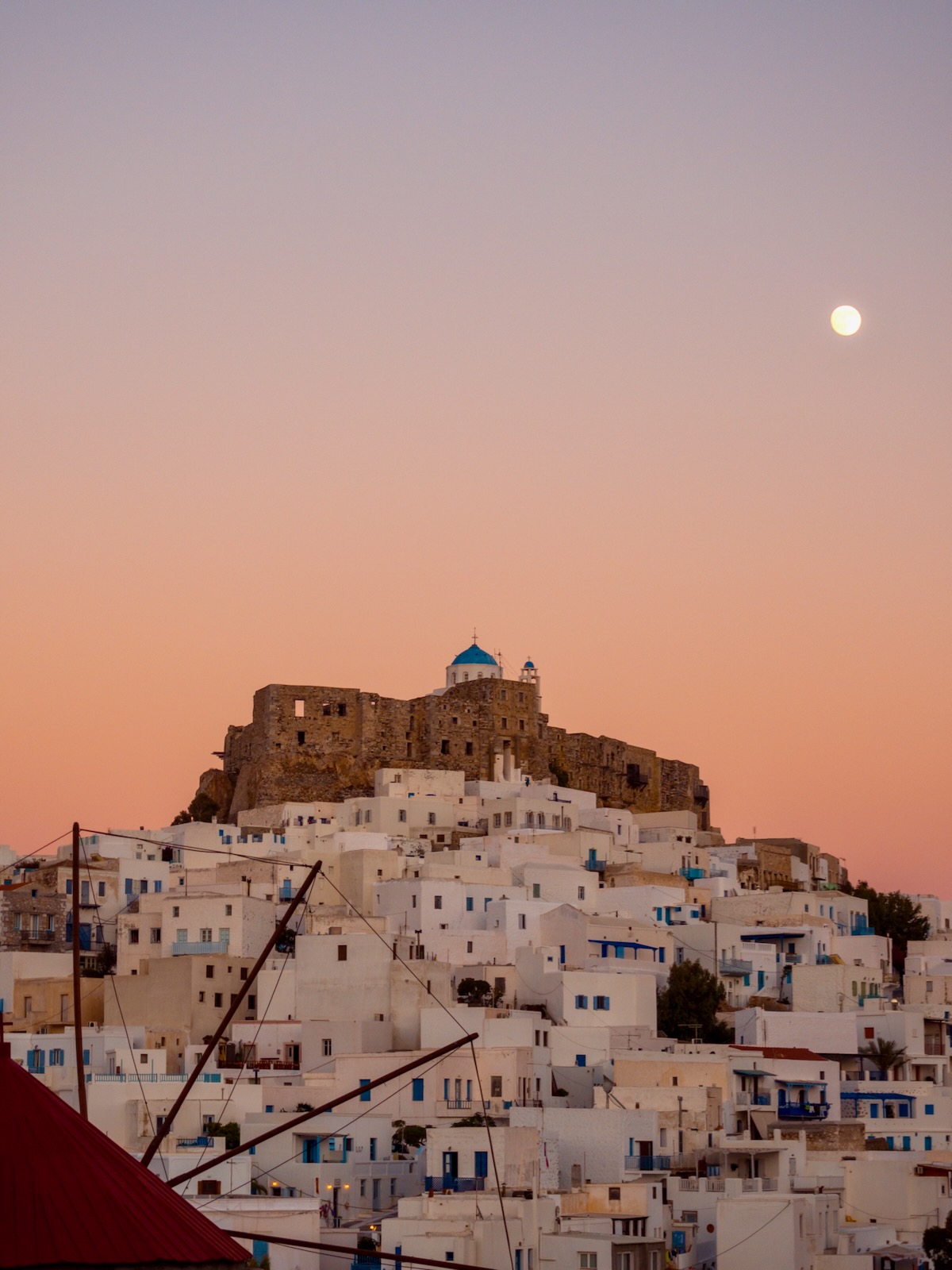



For centuries, Patmos has been known as the “Island of the Apocalypse,” the place where St. John the Theologian is said to have written the Book of Revelation. Pilgrims and history lovers still climb to its hilltop monastery and wander the whitewashed lanes of Chora. Yet this small Dodecanese island guards another, quieter revelation: a coastline that can stand beside the most celebrated shores in the Aegean.
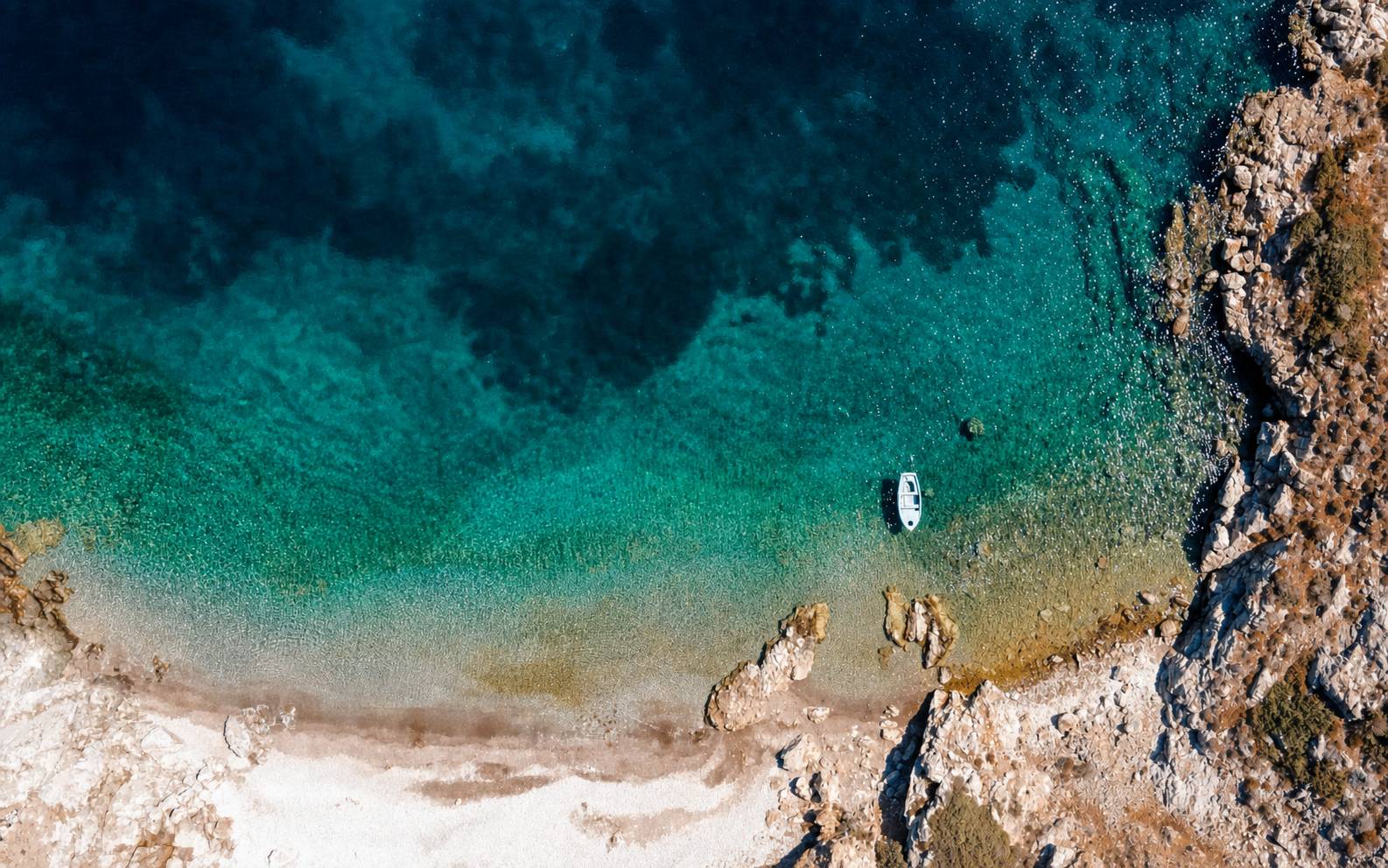
Here, wild capes give way to sheltered coves, sandy stretches meet smooth pebbled bays, and the water shifts from deep sapphire to pale turquoise as the light moves across the day. Some beaches arrive fully styled, with sunbeds, umbrellas, and seaside tavernas grilling the morning’s catch just steps from the water. Others remain blissfully untouched, reached only by boat or a scenic coastal path, and reward the effort with a rare sense of seclusion. Traveling with family and craving calm, shallow waters? Seeking a romantic hideaway or simply a stretch of sand far from the crowds? Patmos has a beach for every mood. These are the island’s finest.
South and Southeast Coast
01
Grikos
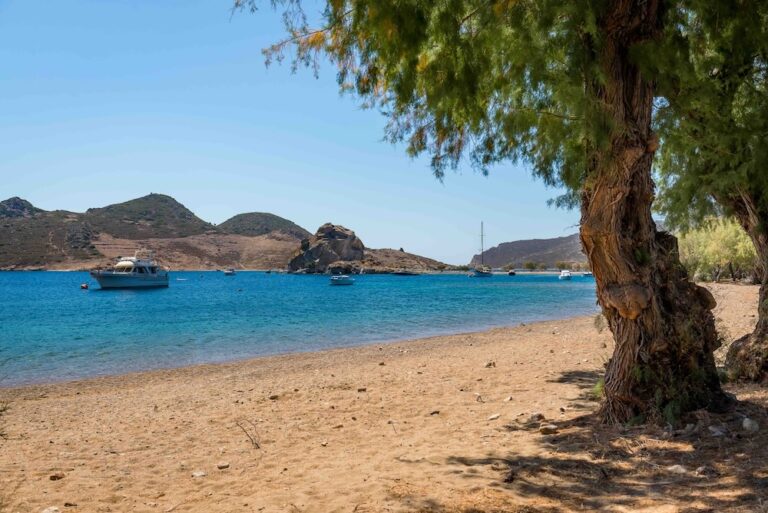
Best known for: Calm, sheltered water and leisurely lunches beside the sea.
Protected by 2 small peninsulas, Grikos feels more like a calm lagoon than an open Aegean bay. Its mix of sand and fine pebbles, views of Kalikatsou Rock, and waterfront tavernas make it an easy choice for an unhurried swim followed by lunch. Boats often anchor offshore.
Where to eat: Plefsis, directly on the beach, for seafood meze, daily fish, local dishes, and Patmian cheese pie.
02
Petra
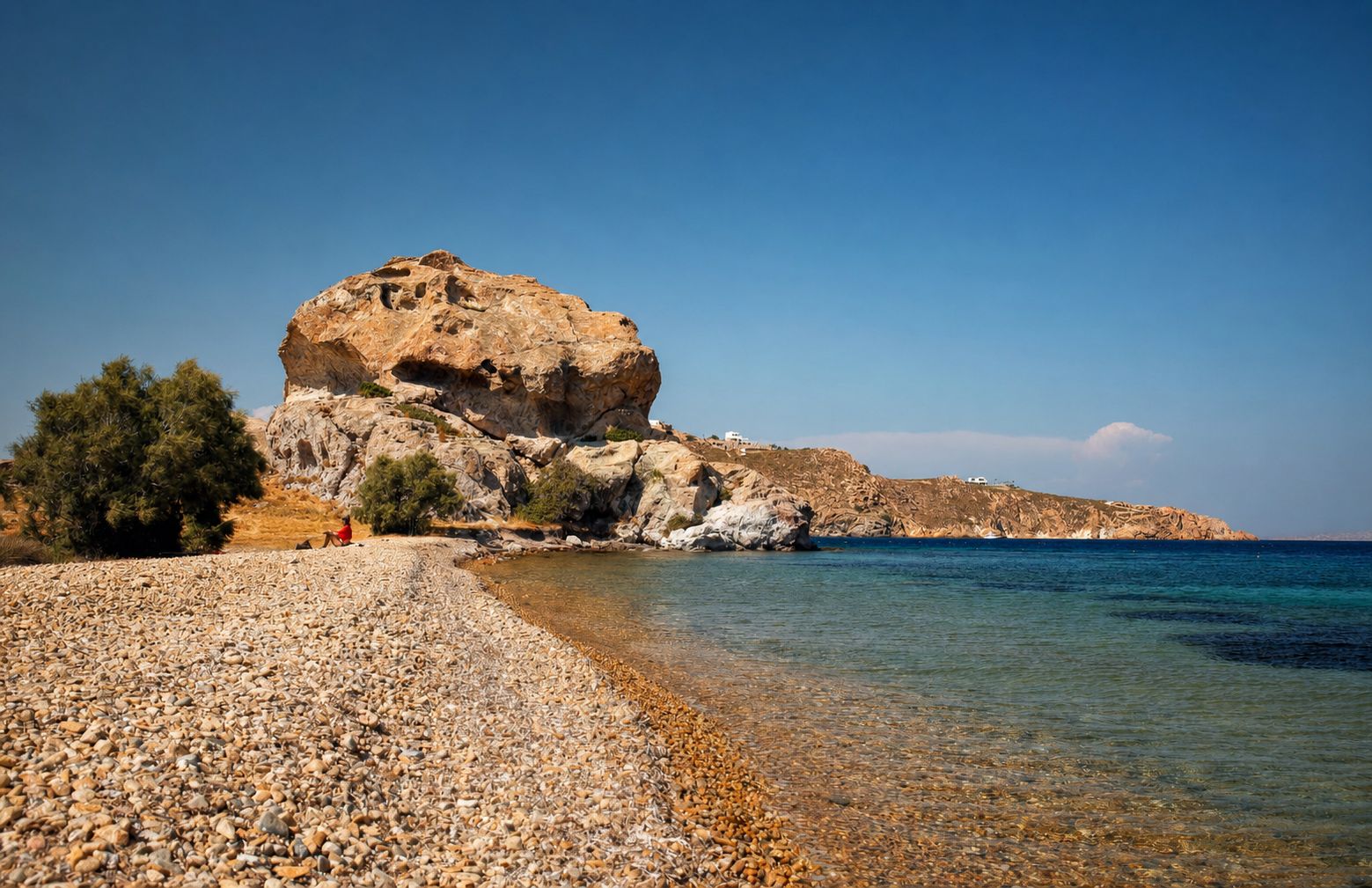
Best known for: Kalikatsou Rock, birdlife, and a choice between sheltered and organized shores.
Just beyond Grikos, Petra opens toward Kalikatsou Rock and the rocky islet of Tragonisi. Choose the more sheltered shore inside the bay or the larger, organized beach on the outer side, where restaurants and water sports add convenience. A small wetland behind the beach attracts birdlife.
Where to eat: Ktima Petra, a short walk from the beach, for carefully prepared Greek food, wood-fired dishes, and vegetables from its own garden.
East and Northeast Coast
03
Livadi Geranou
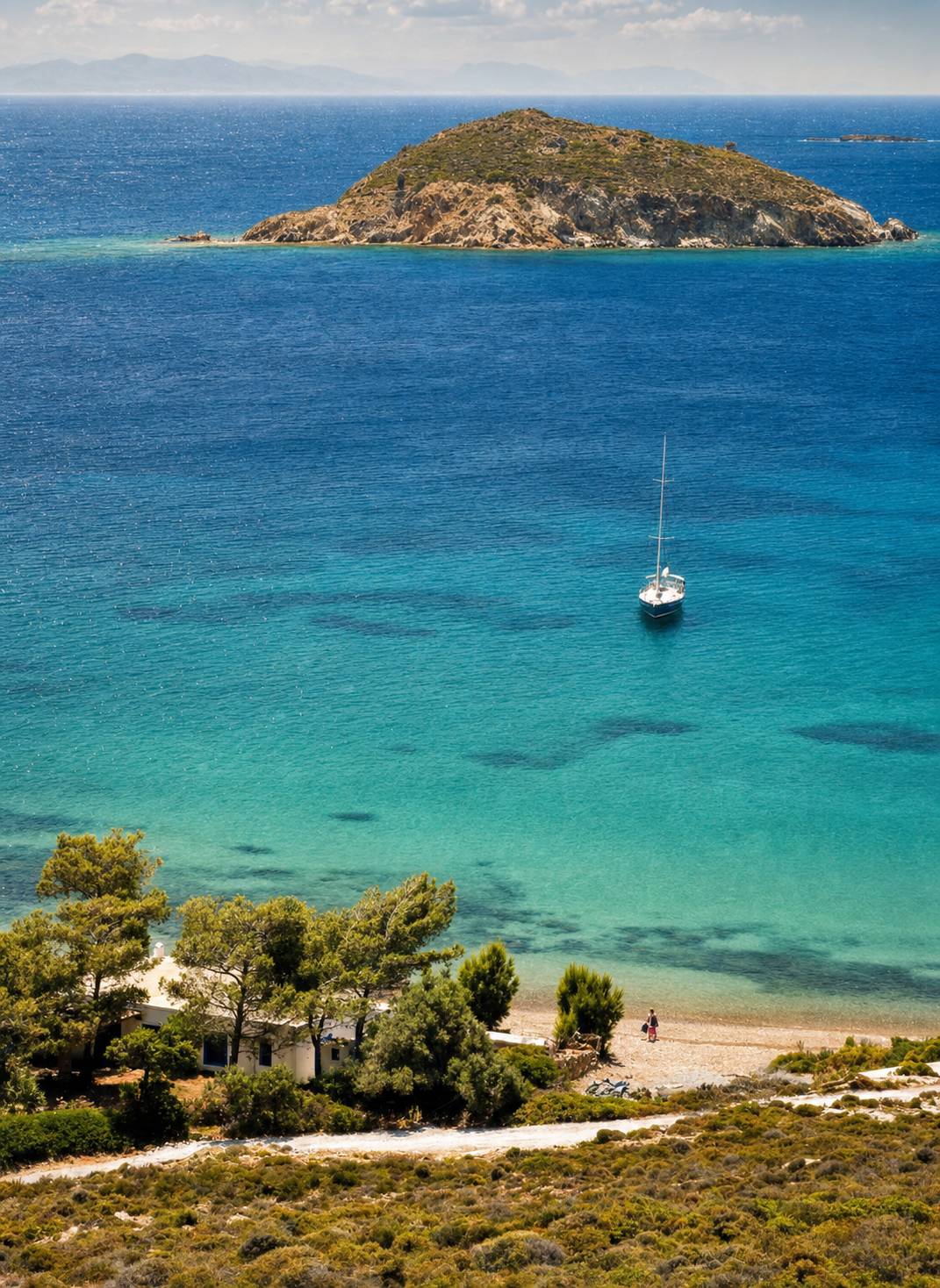
Best known for: Peaceful swimming and open views toward the islet of Agios Georgios.
Livadi Geranou is a quiet beach of sand and small pebbles, shaded by tamarisks and protected by the islet of Agios Georgios. The calm setting suits travelers who want a less developed beach without being entirely cut off from food and basic facilities.
Where to eat: The beachside Livadi Geranou taverna is the convenient choice for a Greek salad, seafood, and a simple lunch overlooking the bay.
04
Agriolivado
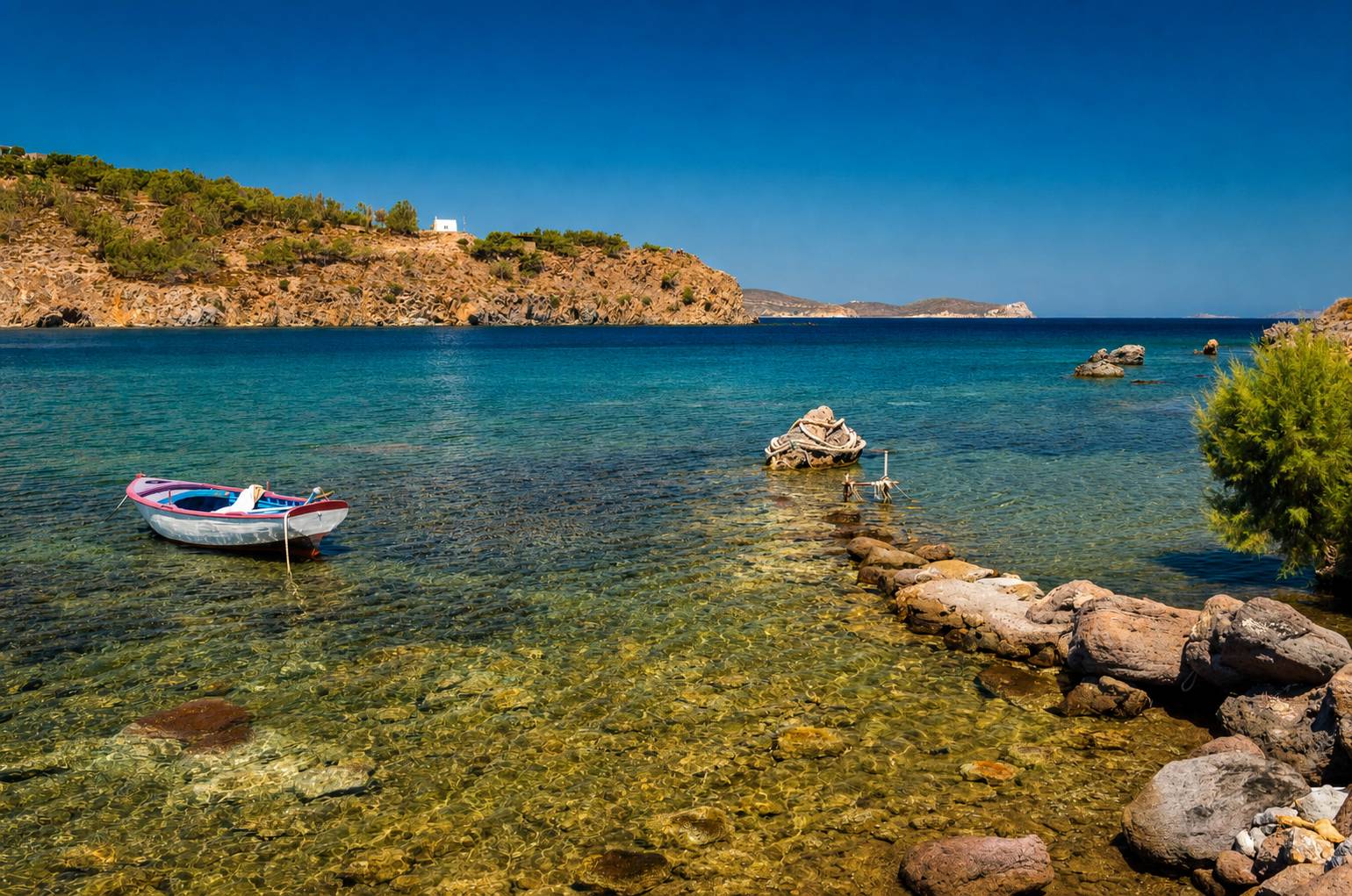
Best known for: Warm, shallow family water and a full range of beach facilities.
Agriolivado is one of Patmos’ easiest beaches for families: a sheltered cove with shallow water, sand and pebbles, and tamarisks for natural shade. Sunbeds, umbrellas, a beach bar, water sports, and a traditional restaurant keep the day effortless, while the islet of Agia Thekla completes the view.
Where to eat: Skipper Beach Bar and Agriolivadi Restaurant. Choose Skipper for coffee, cocktails, and light dishes, or the traditional restaurant for a more substantial Greek meal.
05
Kampos
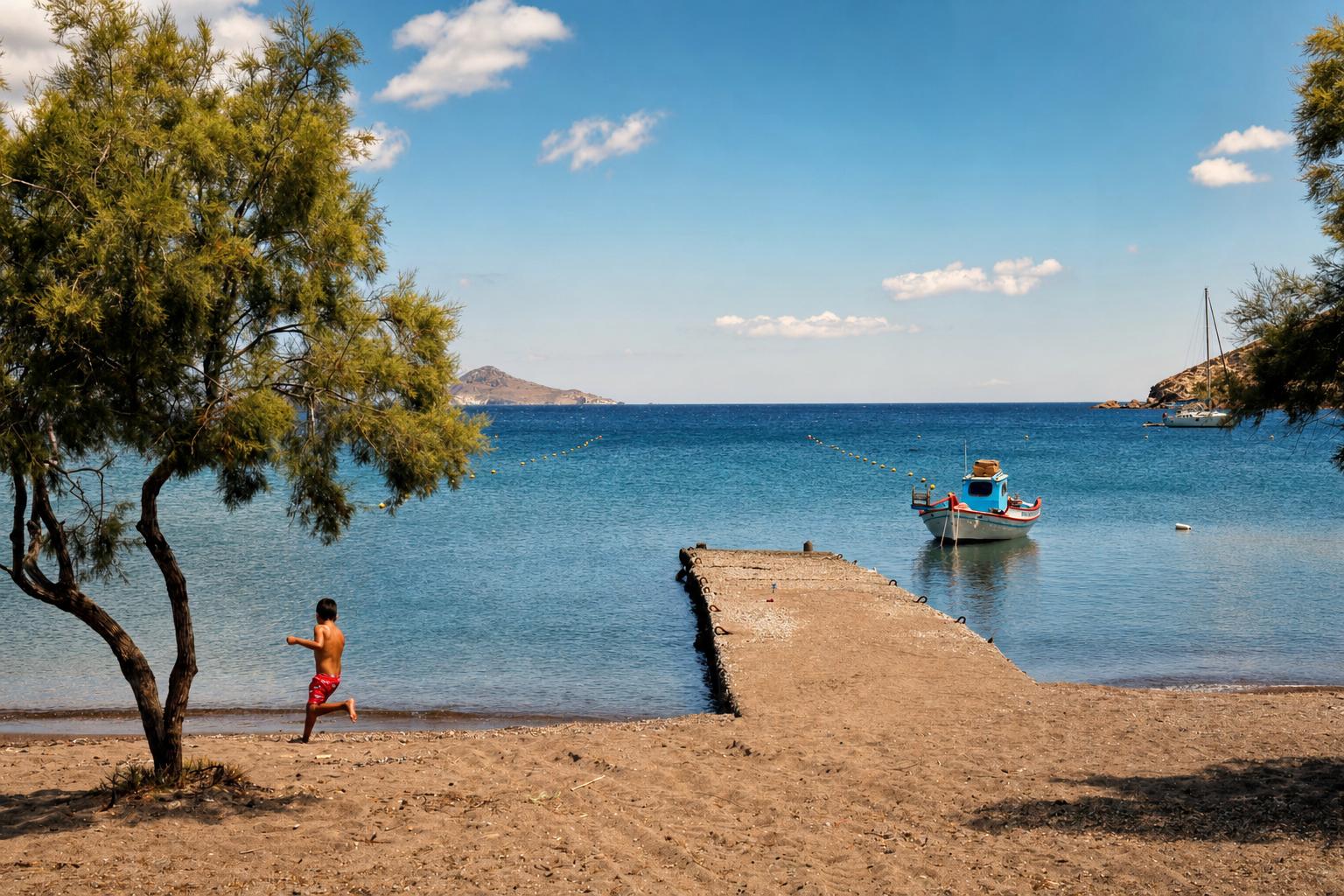
Best known for: Patmos’ liveliest organized beach and an easy all-day experience.
Wide, sandy, and fully organized, Kampos is the island’s classic all-day beach. Its shallow water suits families, while tavernas, cafés, water sports, and nearby rooms make it easy to stay from morning until sunset.
Where to eat: Sea n’ Sun for seafood linguine, grilled dishes, cocktails, and an uninterrupted view of the beach.
06
Lambi
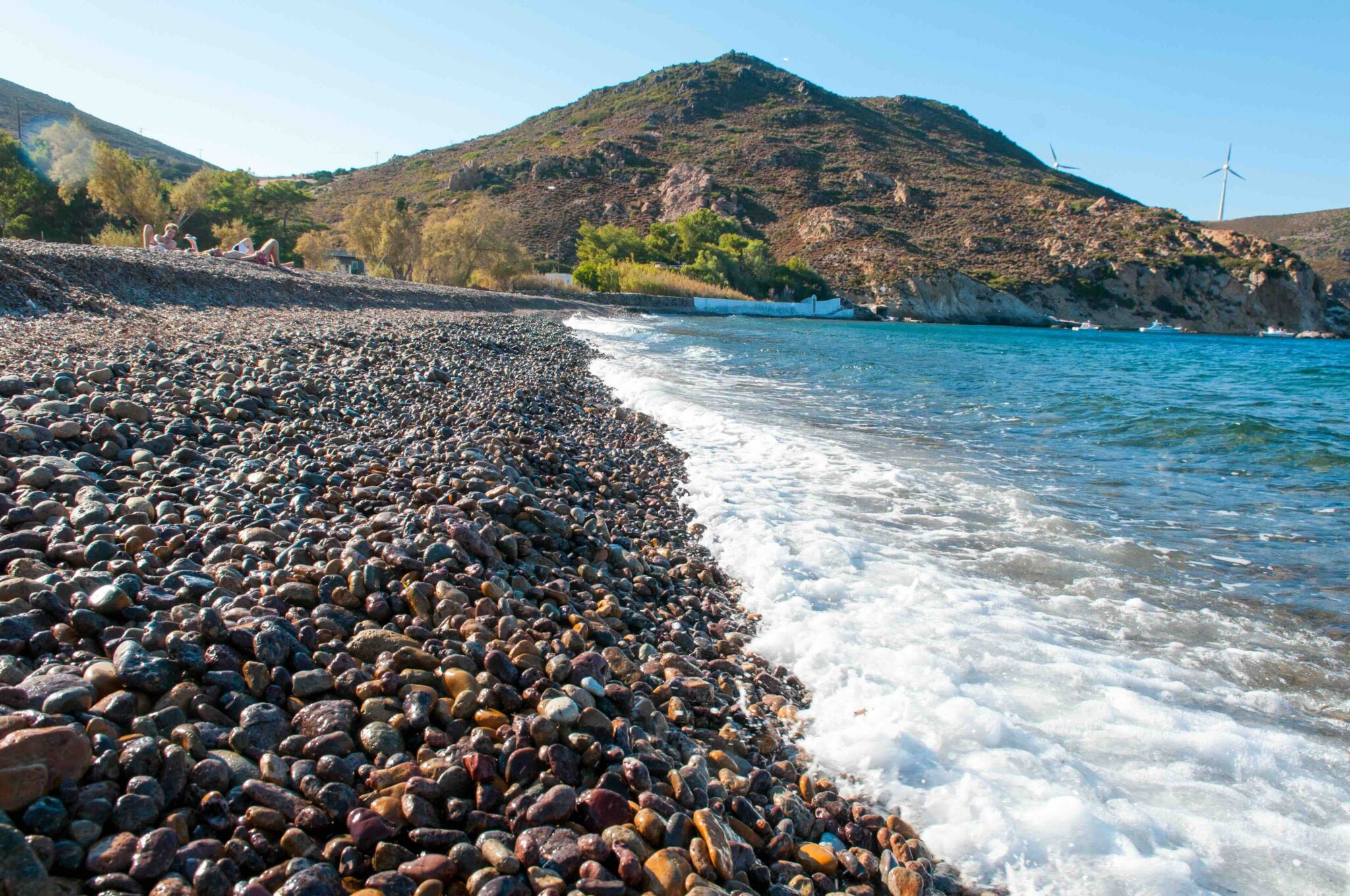
Best known for: Rare, multicolored pebbles that shine beneath the sun.
Lambi is known for the polished, multicolored pebbles that shimmer at the waterline and give the beach its name. Clear water, tamarisk shade, and its remote northeastern setting have earned it a loyal following, especially among repeat visitors.
Where to eat: Lambi Taverna, a family-run fish tavern operating since 1955, for daily fish, seafood, wine-infused octopus, fried calamari, and produce from its own garden.
07
Vagia
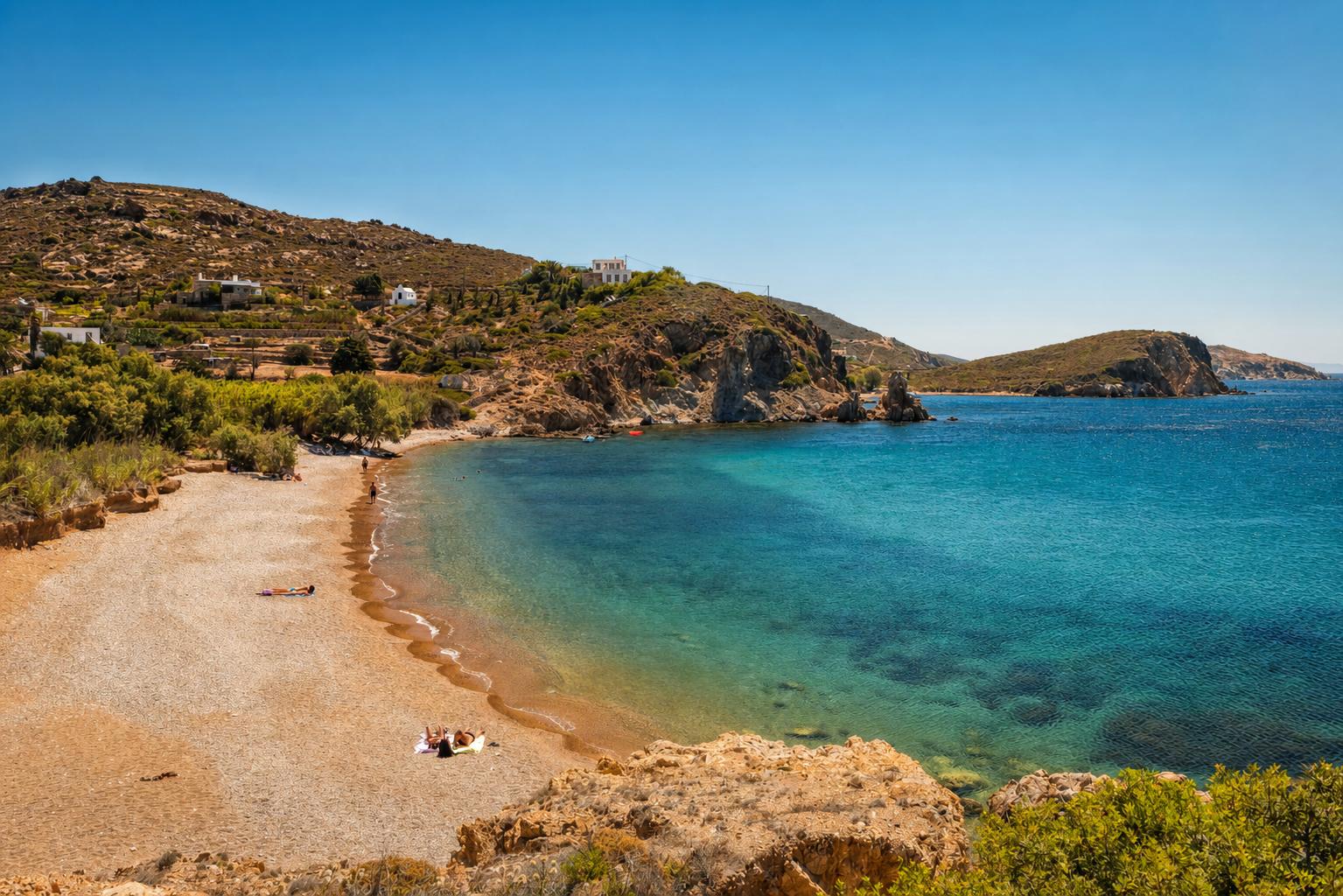
Best known for: Cool water, a quiet pebble shore, and natural tamarisk shade.
Near Kampos, Vagia offers a quieter contrast: a broad pebble shore, refreshingly cool water, and tamarisks that provide welcome shade. The beach itself remains unorganized, so bring water and anything else you may need.
Where to eat: Vagia Café, perched above the beach, for coffee, omelets, homemade pies, light dishes, and its much-loved chocolate cake.
08
Ligginou (Didymes)
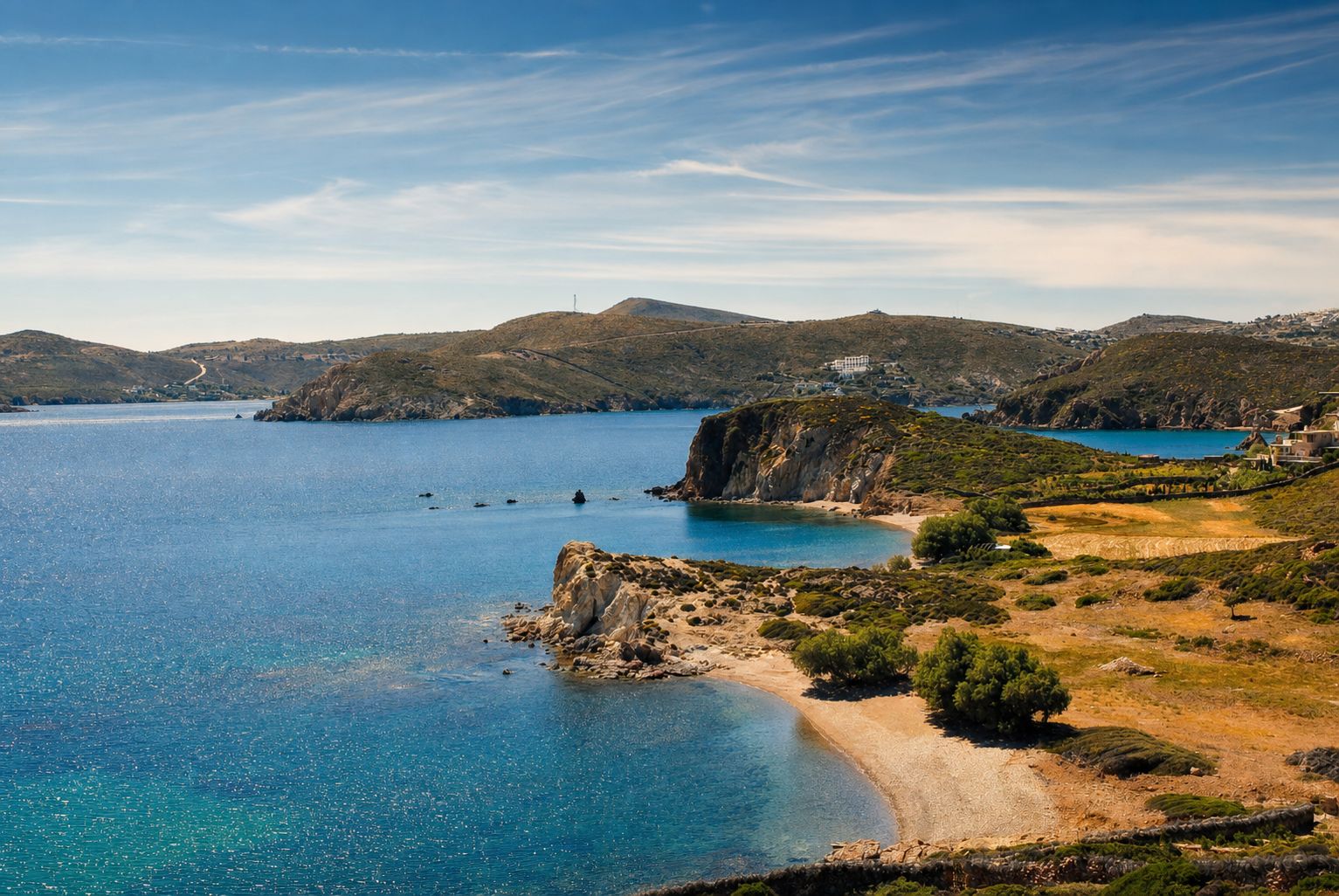
Best known for: 2 secluded coves divided by a sculptural rock.
Ligginou, also known as Didymes, consists of 2 clear-water pebble coves separated by a striking rock formation. A roughly 15-minute path from near Vagia leads to the shore, making it a rewarding choice for swimmers who prefer some distance from the organized beaches.
There are no food facilities at the beach, so bring water, snacks, and anything else you will need.
West and Southwest Coast
09
Diakofti
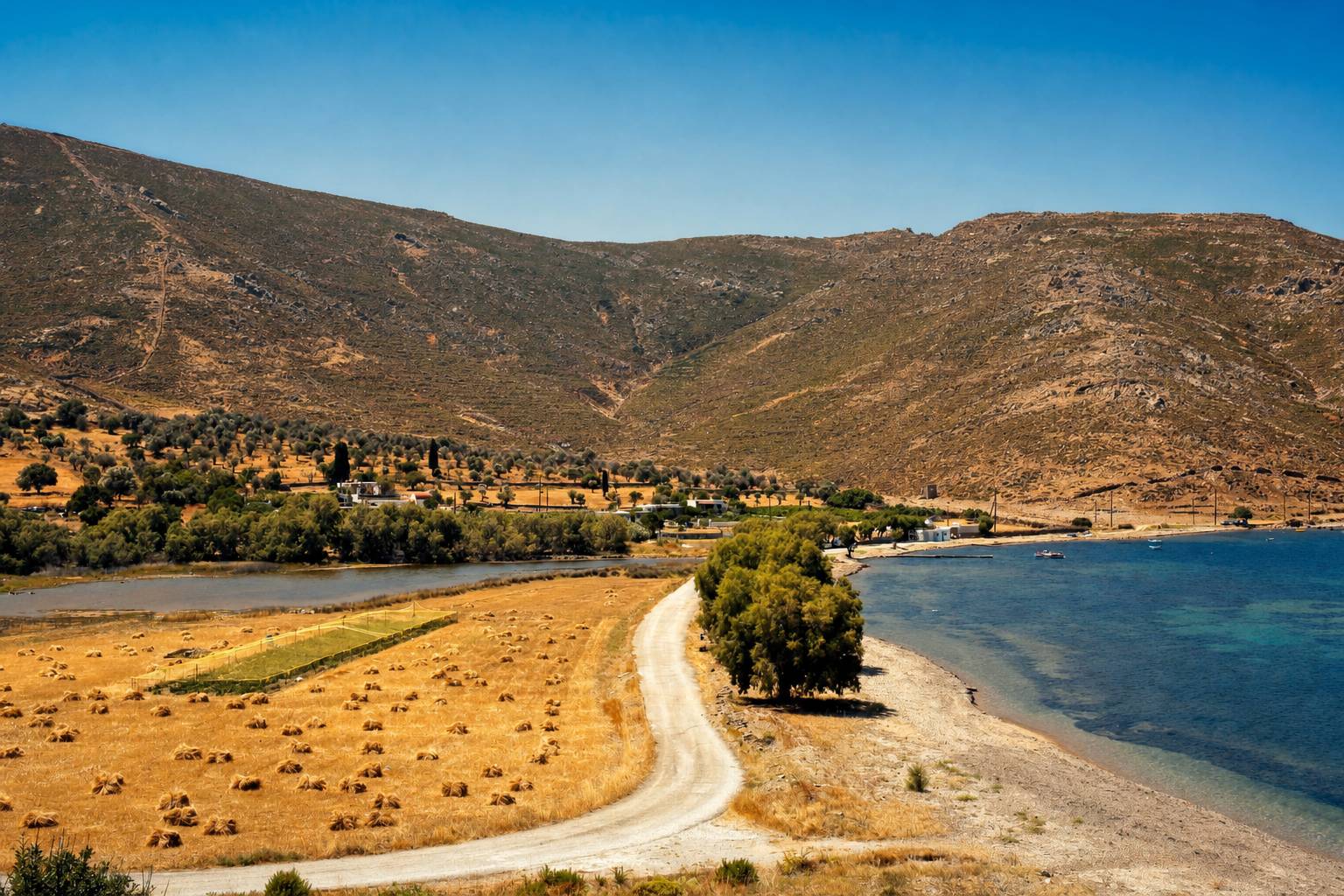
Best known for: Its working shipyard atmosphere and the trailhead to Psili Ammos.
Diakofti is a simple pebble beach on the southwest coast, with a small shipyard at one end. It is also the starting point for the 30-minute path to Psili Ammos, making it the practical gateway to the island’s wildest beach.
Where to eat: Tarsanas, set within the shipyard, for fish, seafood, traditional cooked dishes, and locally sourced ingredients.
10
Psili Ammos
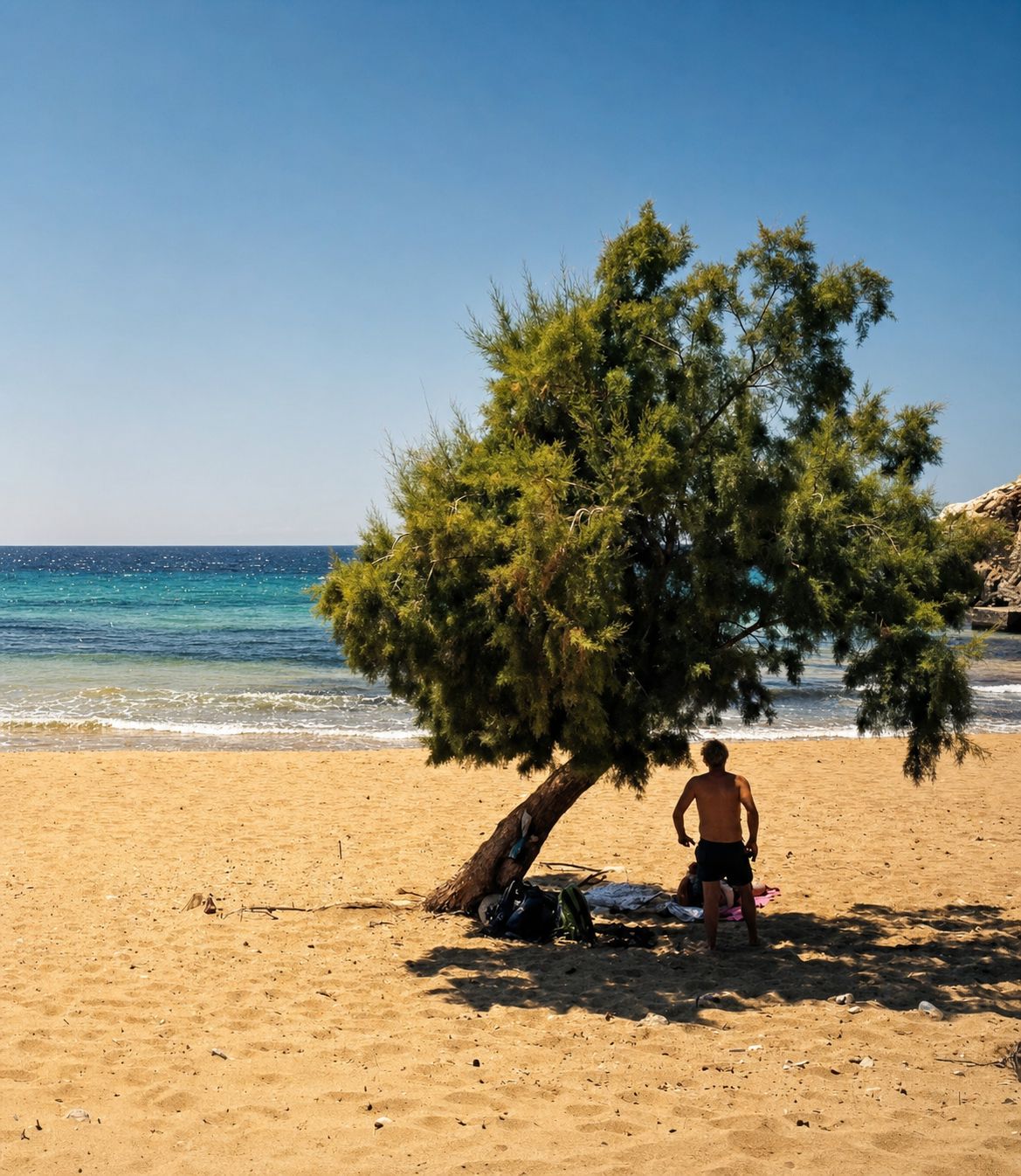
Best known for: Golden sand, turquoise water, and a remote setting reached on foot or by boat.
Psili Ammos reveals Patmos at its most elemental: golden sand, shallow turquoise water, broad tamarisks, and richly colored rocks. The setting feels wonderfully remote, reached by a 30-minute walk from Diakofti or by boat. When the sea turns rough, boat access can change quickly, so check conditions before setting out.
Where to eat: Psili Ammos Taverna, a simple seasonal beach taverna known for roast goat, chicken with potatoes, soutzoukakia, and omelets served beneath the tamarisks.